



A pork shoulder that slides apart with a fork after a long, lazy cook is one of those kitchen wins that feels bigger than it should. The lid comes off, and there’s that first puff of garlic, onion, vinegar, and warm pork steam. Not sharp. Not greasy. Just deep, savory, and a little sweet at the edges.
People love to call slow cooker pork “set and forget” food, and this is one of the rare times the cliché earns its keep. The trick is choosing the right cut, seasoning it with enough backbone, and letting the slow cooker do what it does best: hold the meat in steady, moist heat until the connective tissue softens and the whole roast turns tender enough to shred with almost no resistance.
What I like about this approach is that it doesn’t need a bottle of sauce to make it taste finished. Pork shoulder has enough richness on its own. Give it onion, garlic, a smart braising liquid, and a little acid at the end, and it comes out tasting like somebody was watching the pot all day, even when nobody was.
Why This Slow Cooker Pork Shoulder Works So Well
- The cut does the heavy lifting. Pork shoulder has the marbling and connective tissue that slowly melt into juicy strands instead of dry slices.
- It stays useful after dinner. One roast turns into sandwiches, tacos, rice bowls, baked potatoes, or chopped leftovers with almost no extra effort.
- The seasoning is built for repeat use. Smoked paprika, cumin, garlic, and cider vinegar work with barbecue sauce, mustard, slaw, pickles, or plain pan juices.
- The cooking window is forgiving. A shoulder can sit for an extra 30 to 45 minutes on warm without collapsing into mush, which is part of why it works for busy days.
- You get real flavor without babysitting. Onion, broth, Worcestershire, and the pork’s own drippings build a sauce that tastes cooked, not dumped.
- It freezes well in portions. Shredded pork reheats cleanly if you save a little cooking liquid with it.
Time, Yield, and Difficulty at a Glance
A 4-pound pork shoulder gives you a proper batch of shredded meat, not a stingy little pile. It’s enough for dinner, then a second meal that feels like you planned ahead even if you didn’t.
Yield: Serves 8
Prep Time: 15 minutes
Cook Time: 8 to 10 hours on Low or 5 to 6 hours on High
Total Time: 8 hours 15 minutes to 10 hours 15 minutes, or 5 hours 15 minutes to 6 hours 15 minutes if you use High
Difficulty: Beginner — the method is straightforward, but the results depend on using the right cut and letting it cook until it is actually shred-tender, not merely “done.”
Chill/Rest Time: 10 minutes before shredding
Best Served: Warm, after the meat has rested and been tossed with a little of its cooking liquid
What Goes Into the Pot
For the Pork:
- 3 1/2 to 4 pounds boneless pork shoulder (Boston butt), trimmed of any thick fat cap
- 2 teaspoons kosher salt
- 1 1/2 teaspoons smoked paprika
- 1 teaspoon ground cumin
- 1 teaspoon garlic powder
- 1 teaspoon onion powder
- 1 teaspoon dried oregano
- 1 teaspoon packed light brown sugar
- 1/2 teaspoon black pepper
- 1/2 teaspoon chili powder
- 1/4 teaspoon cayenne pepper, optional
For the Slow Cooker Liquid:
- 1 large yellow onion, cut into 1/2-inch slices
- 5 garlic cloves, minced
- 1 cup low-sodium chicken broth
- 1/4 cup apple cider vinegar
- 2 tablespoons Worcestershire sauce
- 1 bay leaf
For Finishing:
- 1 tablespoon apple cider vinegar
- 1/2 cup reserved cooking liquid, plus more as needed
Why Each Ingredient Matters
The Pork Shoulder
- What to use: 3 1/2 to 4 pounds boneless pork shoulder, sometimes sold as Boston butt.
- Preparation: Trim away any thick, rubbery fat cap, but leave the marbling that runs through the roast; that’s the part that keeps the meat juicy.
- Substitutions: Bone-in shoulder works fine; add about 30 to 45 minutes if the roast is dense or awkwardly shaped.
- Tips: Look for a roast with visible fat seams, not a lean, tidy cut. Shoulder is supposed to look a little rough around the edges.
The Dry Rub
- What to use: Kosher salt, smoked paprika, cumin, garlic powder, onion powder, oregano, brown sugar, black pepper, chili powder, and optional cayenne.
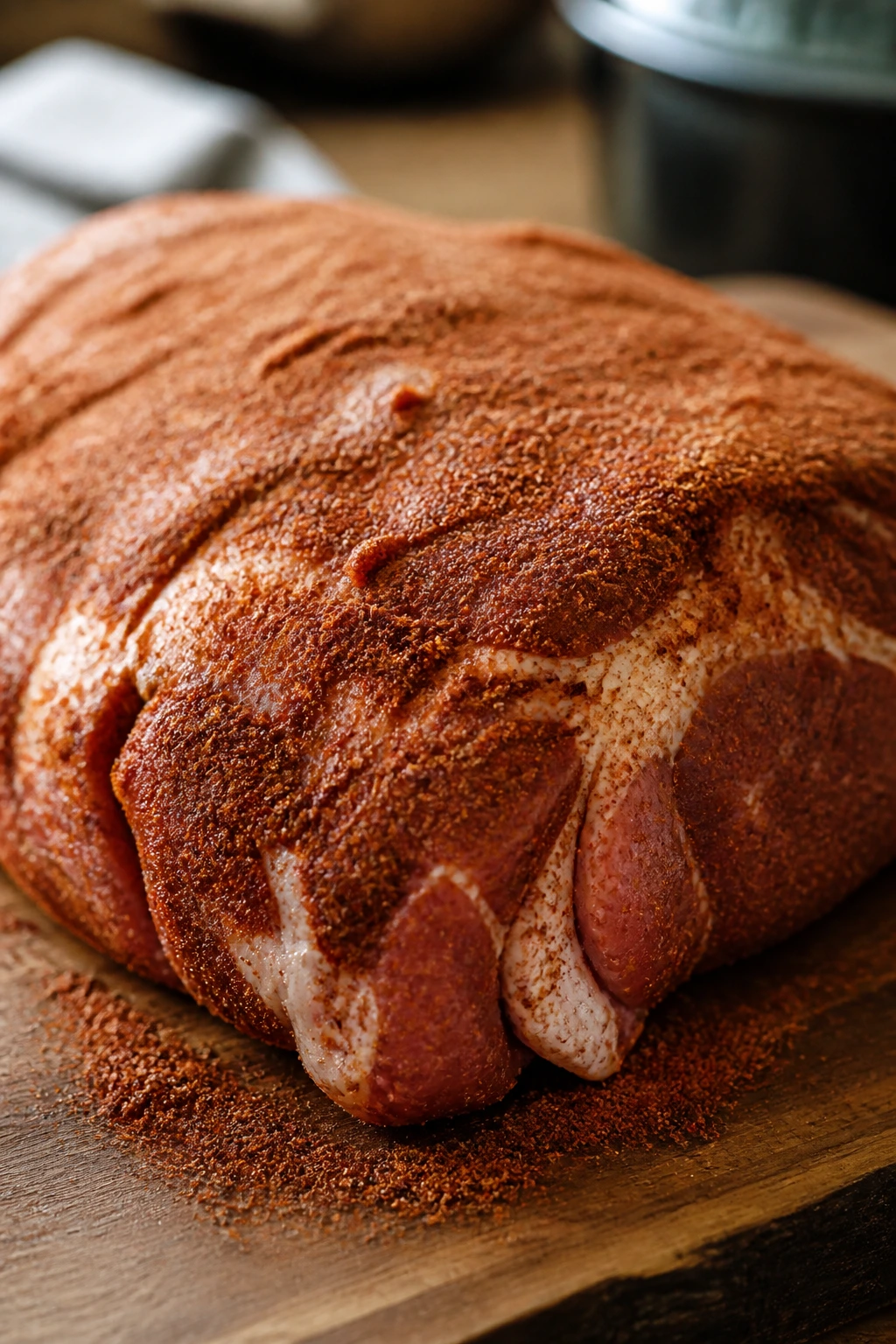
- Preparation: Mix the spices until the salt disappears into the blend, then press the rub onto every side of the pork so it clings instead of falling off.
- Substitutions: Smoked paprika can become regular paprika plus a pinch of chipotle powder; if you don’t want heat, leave out the cayenne.
- Tips: Salt needs to reach the meat, not just sit on the surface. If you only season the top, the bottom will taste like plain roast pork.
The Braising Liquid
- What to use: Onion, garlic, broth, apple cider vinegar, Worcestershire sauce, and a bay leaf.
- Preparation: Slice the onion thick enough that it doesn’t dissolve into nothing during the cook; mince the garlic so it perfumes the liquid.
- Substitutions: Cider vinegar can be swapped with white wine vinegar in a pinch. If you need a pork-free version of the liquid for another dish later, the same flavor base works with chicken broth too.
- Tips: The liquid should come partway up the roast, not cover it. Too much liquid turns this into boiled pork, and boiled pork tastes flat.
The Finish
- What to use: A spoonful of reserved cooking liquid and a little more cider vinegar to wake up the shredded meat.
- Preparation: Skim off the obvious fat before you stir the juices back in. That little step makes a bigger difference than people expect.
- Substitutions: If you like a richer finish, replace part of the reserved liquid with a splash of barbecue sauce or pan juices from another roast.
- Tips: Taste after shredding, not before. Pork shoulder can look seasoned enough in the pot and still need a final pinch of salt or a hit of acid.
Why the Slow Cooker Turns Pork Silk-Tender
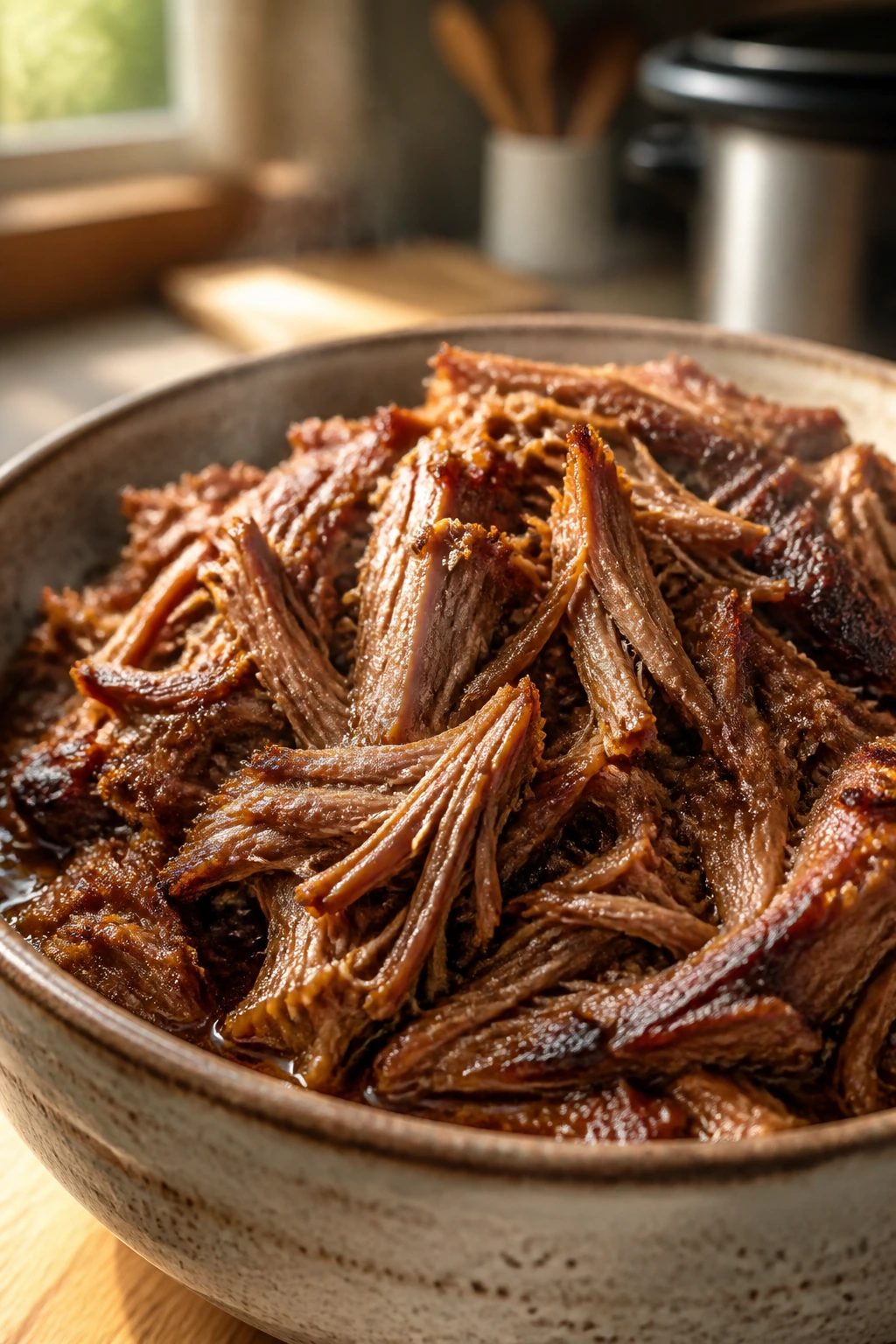
The reason this method works has less to do with luck and more to do with what pork shoulder actually is. Shoulder is a working muscle. It carries connective tissue, collagen, and enough fat to benefit from long, gentle heat. That combination is exactly why it turns tender instead of stringy when you give it time.
Collagen Is the Real Payoff
As the roast cooks, the collagen in the shoulder slowly breaks down into gelatin. Gelatin gives the shredded meat that glossy, rich mouthfeel you can’t fake with a quick roast. It’s also why the pot juices feel a little silky instead of watery if you don’t drown the meat in broth.
Why 195°F to 205°F Matters More Than 145°F
Pork is safe to eat once it reaches 145°F, and that’s the right target for chops or slices. This recipe is different. If you want meat that pulls apart cleanly, you need the internal temperature to climb much higher, usually into the 195°F to 205°F range. At that point, the fibers loosen, the shoulder gives up, and a fork slides through without resistance.
The Slow Cooker Is Braising, Not Boiling
A good slow cooker setup keeps the roast in a humid environment with steady heat, not a furious boil. That matters. Boiling can strip flavor and make the texture grainy. Braising lets the roast stay moist while the onions, garlic, vinegar, and drippings build a sauce that tastes deeper than the sum of its parts.
The vinegar is doing a quiet job here. It doesn’t make the pork sour. It sharpens the edges so the meat doesn’t taste sleepy. The onion softens and sweetens the liquid. The Worcestershire adds a savory base note that makes the pot taste like it worked harder than it did.
A Short List of Tools That Make It Easier
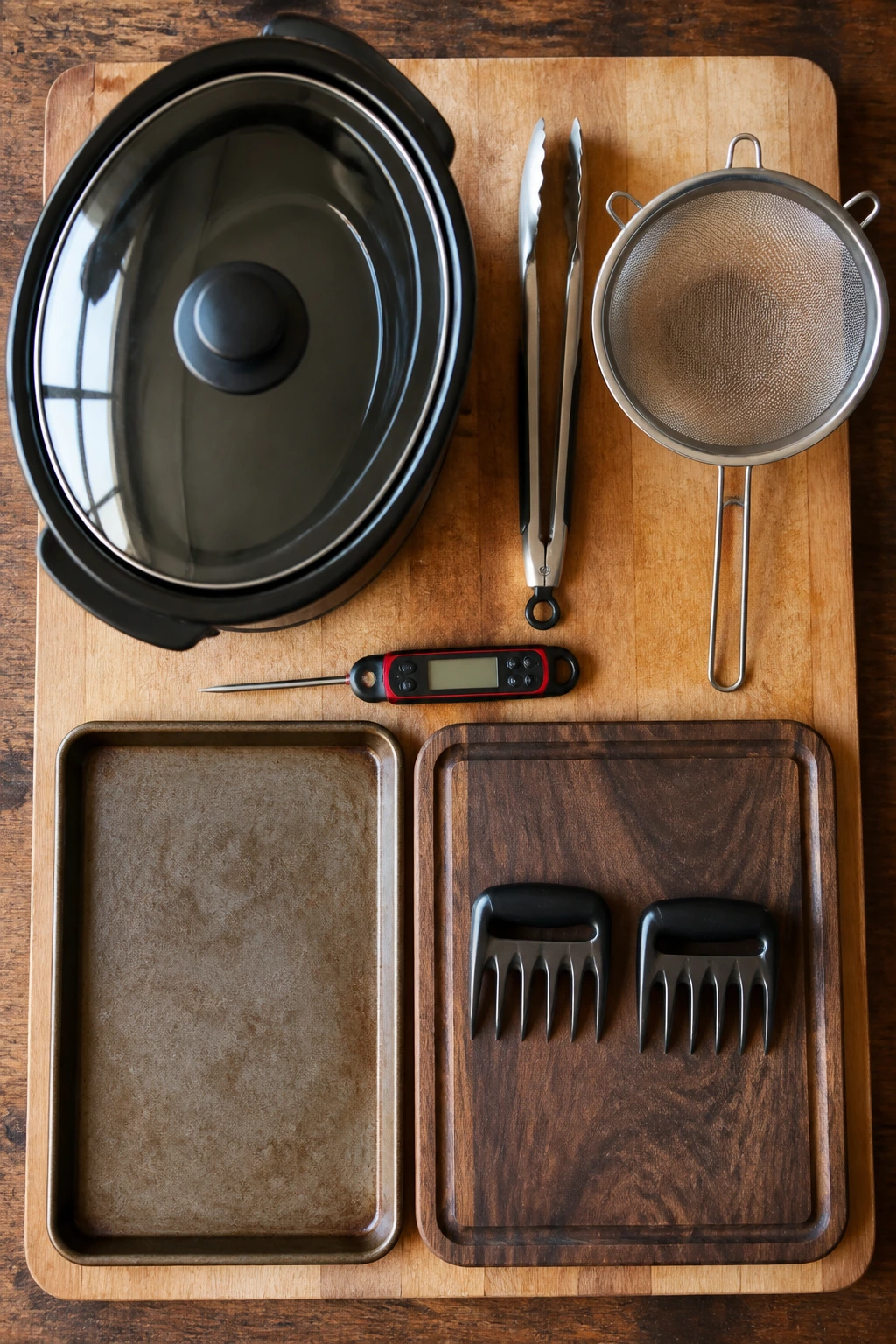
- 6-quart slow cooker — A 4-pound shoulder fits best in a cooker with room to spare, so the roast isn’t jammed against the lid.
- Instant-read thermometer — The only reliable way to know when the pork is actually shred-tender.
- Large cutting board — You’ll need a flat surface for resting and shredding the roast without chasing it around the counter.
- Two forks or meat claws — Forks work fine; claws speed things up if you’re shredding a hot roast.
- Tongs — Useful for lifting the pork out without tearing it apart too soon.
- Fine-mesh strainer or spoon — Handy for skimming fat from the cooking liquid.
- Rimmed baking sheet, optional — If you want browned, crispy edges after shredding, this is the piece that makes it happen.
Step-by-Step: From Raw Roast to Shredded Pork
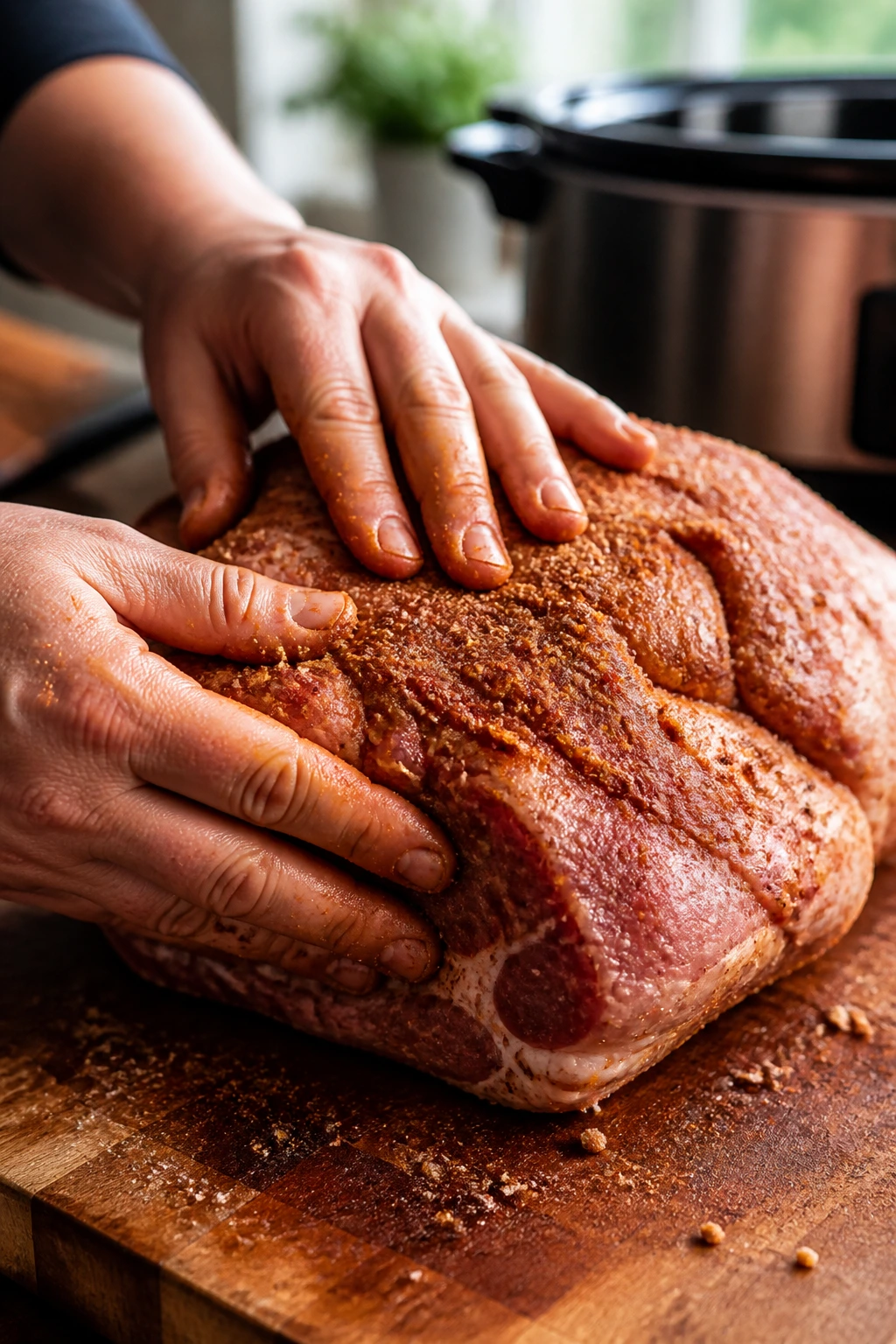
Prep the Pork and Rub
- Pat the pork shoulder dry with paper towels. A dry surface grabs seasoning better, and you’ll get more flavor where the rub meets the meat.
- In a small bowl, stir together the salt, smoked paprika, cumin, garlic powder, onion powder, oregano, brown sugar, black pepper, chili powder, and cayenne, if using.
- Rub the spice mixture all over the pork, pressing it into the creases and seams. Do not leave a thick, clumpy pile of spice on the board; most of it should end up on the meat.
- Let the seasoned pork sit for 10 to 15 minutes while you prep the slow cooker. That little pause helps the salt start pulling flavor inward.
Build the Slow Cooker
- Scatter the onion slices and minced garlic across the bottom of a 6-quart slow cooker.
- Pour in the chicken broth, apple cider vinegar, and Worcestershire sauce, then tuck in the bay leaf.
- Set the pork shoulder on top of the onions. If the roast is oversized or oddly shaped, cut it into 2 large pieces so it sits more evenly in the cooker.
- Cover the slow cooker and cook on LOW for 8 to 10 hours or HIGH for 5 to 6 hours, until the pork reaches 195°F to 205°F and a fork twists through the thickest part with almost no resistance. Do not keep lifting the lid to check on it; every peek drops the temperature and adds time.
Shred and Finish
- Move the pork to a cutting board and let it rest for 10 minutes. This keeps the juices from rushing out the moment you shred it.
- Remove and discard the bay leaf. Skim the fat from the cooking liquid, then reserve about 1/2 cup of the juices. If you want a smoother sauce, strain the liquid through a fine-mesh strainer.
- Shred the pork with two forks, discarding any large pockets of fat or gristle that haven’t broken down.
- Return the shredded pork to the slow cooker and stir in the reserved cooking liquid and 1 tablespoon apple cider vinegar. Let it sit on WARM for 10 to 15 minutes so the meat drinks back some of the juices.
- Taste and adjust with a pinch more salt or another splash of vinegar if the flavor feels flat. If you want browned edges, spread the pork on a rimmed baking sheet and broil it for 3 to 5 minutes, watching closely so the tips crisp rather than burn.
How to Serve It Without Making It Boring
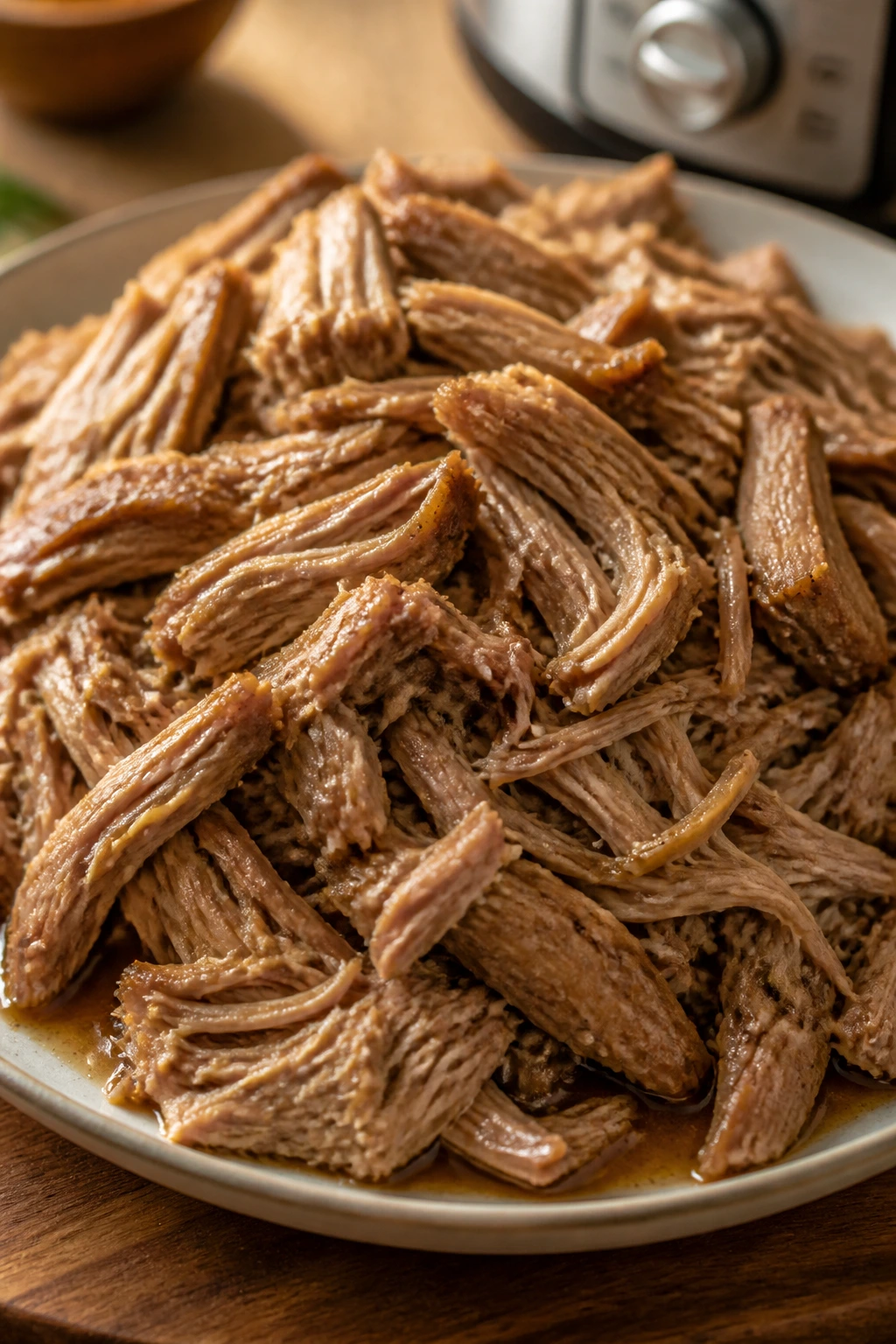
Presentation: Heap the shredded pork high, then spoon a little of the cooking liquid over the top so it glistens instead of drying into a pile. On a sandwich bun, I like a loose mound of pork, a handful of crunchy slaw, and a few pickles so the plate has texture, not just softness. On a bowl, the pork looks best when it sits over something creamy or grainy, like rice, mashed potatoes, or grits.
Accompaniments: Toasted brioche buns are the obvious move, and they’re good because the butter in the bread stands up to the pork’s richness. You can also go with corn tortillas, roasted sweet potatoes, buttered rice, potato salad, collard greens, or a sharp cabbage slaw. If you want one side that cuts through the pork without stealing the show, make a vinegar-dressed slaw with thin-sliced cabbage, carrots, and a pinch of celery seed.
Portions: A 4-pound shoulder usually gives about 8 servings if you’re serving it as a main dish, or 10 to 12 smaller portions if it’s going into tacos, sliders, or bowls with plenty of sides. For sandwiches, plan on about 3/4 cup of shredded pork per bun. For bowls, 1/2 cup to 3/4 cup is usually enough unless the rest of the bowl is very sparse.
Beverage Pairing: A cold lager or pale ale works because it scrubs the richness off your palate. If you want something nonalcoholic, iced tea with lemon or sparkling water with lime keeps the plate from feeling heavy. Hard cider is a nice match too, especially if you leaned a little sweeter with the rub.
Small Tweaks That Improve the Pot
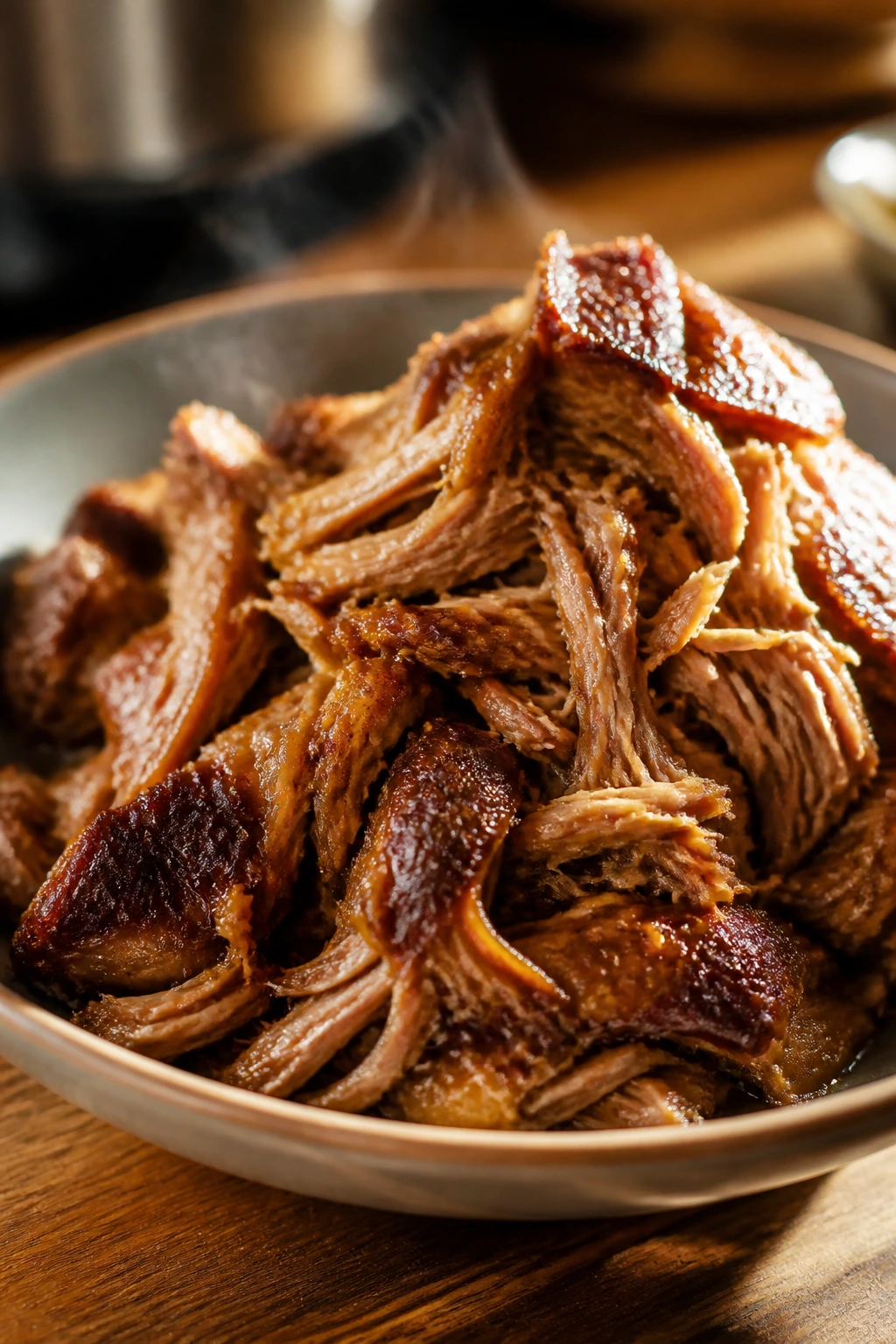
Flavor Enhancement: Stir in the last tablespoon of cider vinegar after shredding, not before. It gives the pork a clean finish that wakes up the fat without making the whole batch sour. If you like a deeper, darker flavor, let a little of the cooking liquid reduce in a saucepan for 5 to 8 minutes before you mix it back in.
Time-Saver: If your roast is thick and awkward, cut it into 2 large pieces before seasoning. It cooks more evenly and gives the rub more surface to cling to, which is a small change that pays off all day long.
Pro Move: Broil the shredded pork on a rimmed sheet pan for 3 to 5 minutes after mixing in some cooking juices. The edges take on little dark, sticky bits, and that contrast is worth the extra minute of attention.
Cost-Saver: Use a plain yellow onion and a garlic clove or two from a standard bulb. You do not need pre-minced garlic or a fancy sweet onion for this. The slow cook softens everything enough that basic pantry produce works fine.
Make-It-Yours: If you want a sweeter sandwich-style pork, add barbecue sauce only after shredding. If you add it during the cook, the sauce can taste one-note by the time the pork is done. For a brighter, less sweet version, skip the brown sugar in the rub and lean harder on the vinegar and smoked paprika.
Mistakes That Leave Pork Dry or Flat
- Using pork loin because it looks leaner. Loin is too lean for this long cook, so it tends to go chalky or dry before it becomes shreddable. Use pork shoulder or Boston butt and let the fat and collagen do their job.
- Pouring in enough liquid to cover the roast. That gives you a boiled texture and a thin, muddy-tasting sauce. Keep the liquid low, just enough to come partway up the meat and build steam.
- Stopping at “safe” instead of “shreddable.” A roast can be safe at 145°F and still be tight as a drum. For this recipe, wait until the temperature is closer to 195°F to 205°F and the fork slips in without a tug.
- Lifting the lid every hour. The pork isn’t fragile, but the heat inside the cooker is. Every peek pushes the cook time back and can leave the center lagging behind.
- Skipping the final taste test. Slow cooker pork often needs a pinch of salt or another spoon of vinegar after shredding. If it tastes a little sleepy, it usually needs brightness more than more cooking.
Variations for Tacos, Sandwiches, and Bowls
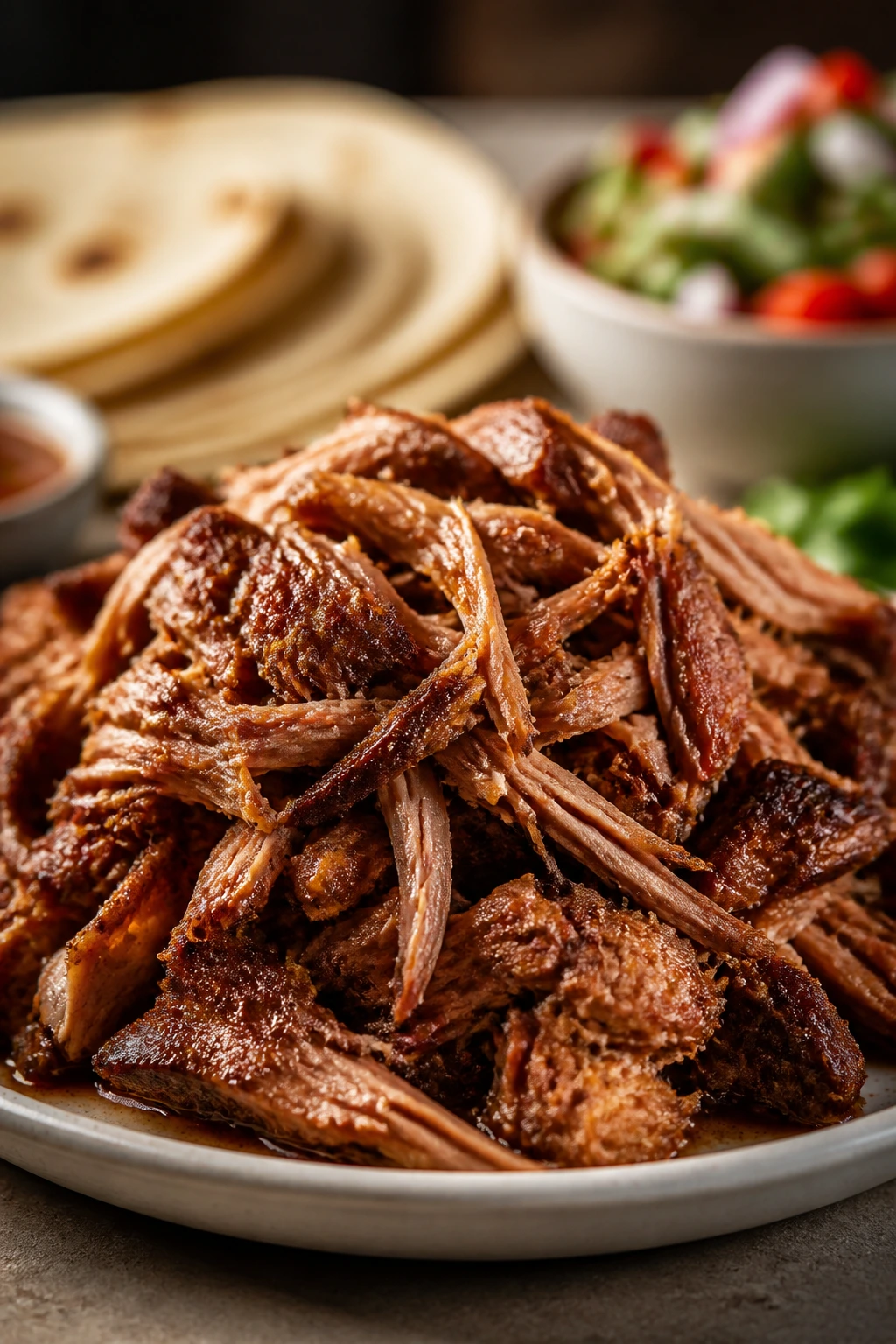
Smoky BBQ Pork: After shredding, toss the meat with 3/4 cup of your favorite barbecue sauce and a few spoonfuls of cooking liquid. Broil it for 3 to 4 minutes if you want sticky edges. This is the version for toasted buns and dill pickles.
Carnitas-Style Pork: Swap the chili powder for a little extra cumin and oregano, add the peel of one orange to the slow cooker, and finish the shredded pork under the broiler until the tips brown. A squeeze of lime at the table makes the whole batch taste brighter and less heavy.
Garlic-Herb Pork: Trade the chili powder and cayenne for 1 tablespoon chopped fresh rosemary and 1 tablespoon chopped fresh thyme. The flavor turns more roast-dinner than barbecue, which makes it good over mashed potatoes or creamy polenta.
Vinegar-Forward Sandwich Pork: Keep the brown sugar out of the rub and add an extra tablespoon of cider vinegar at the end. The meat ends up sharper and less sweet, which works well with slaw and pickles on a soft roll.
Mild Family Version: Leave out the cayenne and cut the chili powder in half. You still get smoked paprika, cumin, and onion-garlic depth, but the heat stays low enough for a wide range of eaters.
Make-Ahead, Storage, and Reheating for Slow Cooker Pork
Cooked pork shoulder keeps well, and in some ways it gets better after a night in the fridge. The seasoning settles, the juices redistribute, and the flavor feels a little more unified the next day. That’s one of the nice side effects of a dish built around fat, salt, and collagen.
Refrigerator
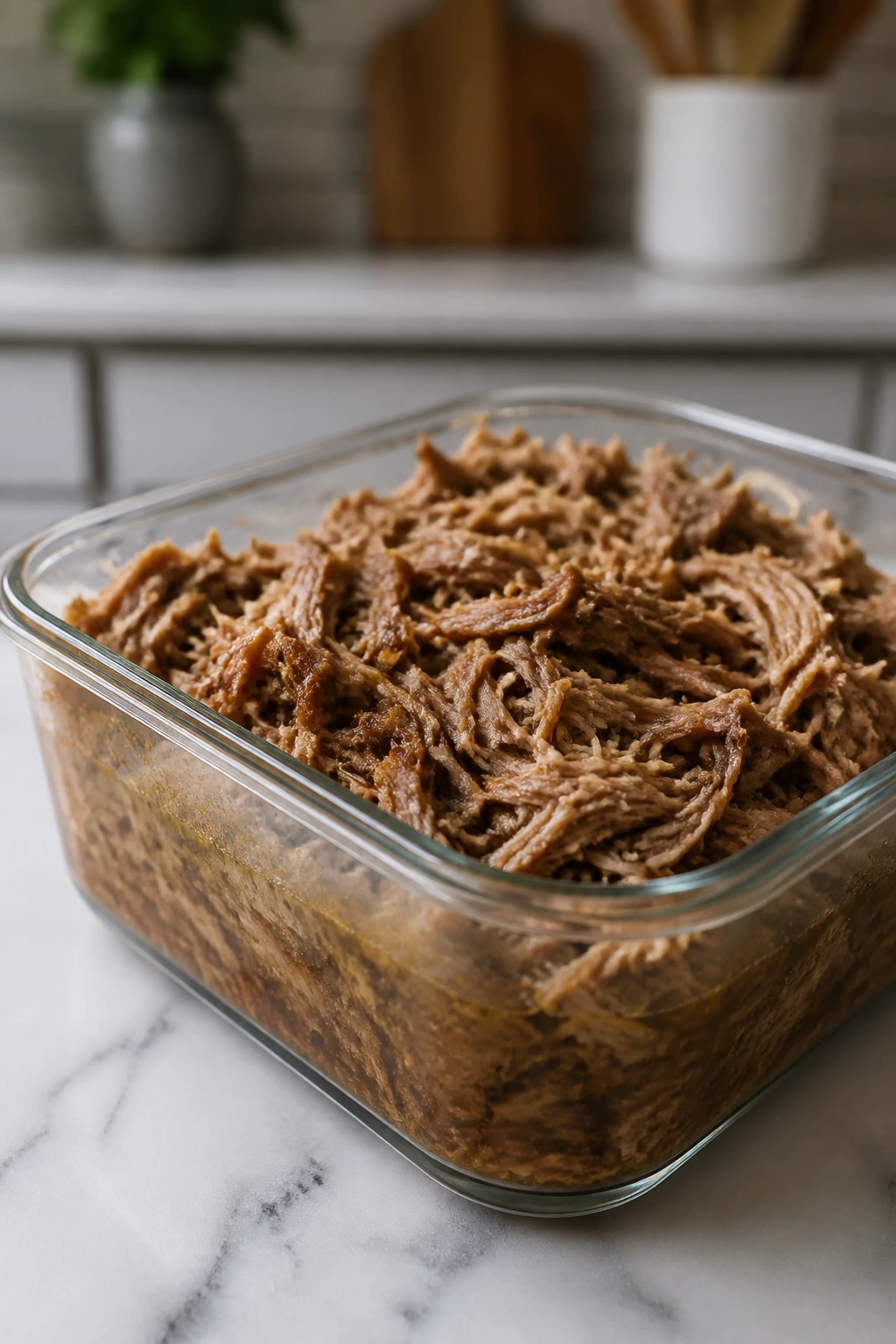
Cool the pork quickly after cooking and get it into shallow containers within 2 hours. It will keep in the refrigerator for 3 to 4 days. Store the pork with enough cooking liquid to keep it moist, but not so much that it sits in a greasy puddle.
Freezer
Portion the shredded pork into 1- to 2-cup bags or containers, along with a few spoonfuls of strained cooking liquid. Press out extra air before freezing. It keeps well for up to 3 months and reheats much better when frozen flat instead of in a solid clump.
Reheating
For the stovetop, warm the pork in a skillet over low heat with a splash of broth or reserved juices. Stir it every minute or so until it’s hot all the way through and glossy again. For the microwave, cover it loosely and heat in short bursts at 50% power so the edges don’t dry out before the center is hot.
If you want the browned bits back, spread the reheated pork on a sheet pan and broil it for a minute or two. That’s the quickest way to wake up leftovers that have gone a little soft in the fridge.
Make-Ahead
You can mix the rub a few days ahead and keep it in a jar. The onion can be sliced the night before, and the pork can be trimmed and seasoned a few hours in advance if you want to shorten the morning routine. The fully cooked pork can also be made a day ahead, chilled, and reheated in its juices the next day; honestly, it’s one of the rare slow cooker dishes that does not mind waiting.
Questions People Ask Before They Start
Can I use pork loin instead of pork shoulder?
You can, but I wouldn’t for this recipe. Pork loin is leaner and cooks into sliceable meat long before it reaches the soft, shreddable texture you want here. If loin is all you have, shorten the cook and expect a firmer result.
Do I need to sear the pork first?
No. Searing adds a little extra flavor, and if you have the time, it’s a nice upgrade, but this recipe is built to work without that step. The onion, spice rub, and cooking juices do enough on their own that the pork still tastes finished.
Can I start with frozen pork?
I wouldn’t. A slow cooker takes too long to bring frozen meat through the safe temperature range, and that’s a food safety problem. Thaw the pork in the refrigerator first, then season and cook it as written.
Why is there so much liquid after cooking?
Pork shoulder releases a fair bit of moisture as it cooks, and the onions add more. That liquid is useful, not a problem. Skim the fat, then use some of the juices to moisten the shredded meat so it doesn’t eat dry.
Can I cook it on High instead of Low?
Yes. High works if your day is tight, and it usually takes 5 to 6 hours. Low gives you a little more margin and a slightly gentler texture, which is why I prefer it when time allows.
How do I know when the pork is actually done?
Don’t rely on time alone. The roast should reach about 195°F to 205°F and, more importantly, a fork should twist through the meat with almost no resistance. If it still feels springy or slices instead of shreds, keep cooking.
What if the finished pork tastes bland?
That usually means it needs salt, acid, or both, not another hour in the cooker. Stir in a little more apple cider vinegar, a pinch of salt, and a spoonful of the reserved juices, then taste again. Pork shoulder wakes up fast when you season it at the end.
A Pork Shoulder Worth Keeping in the Rotation
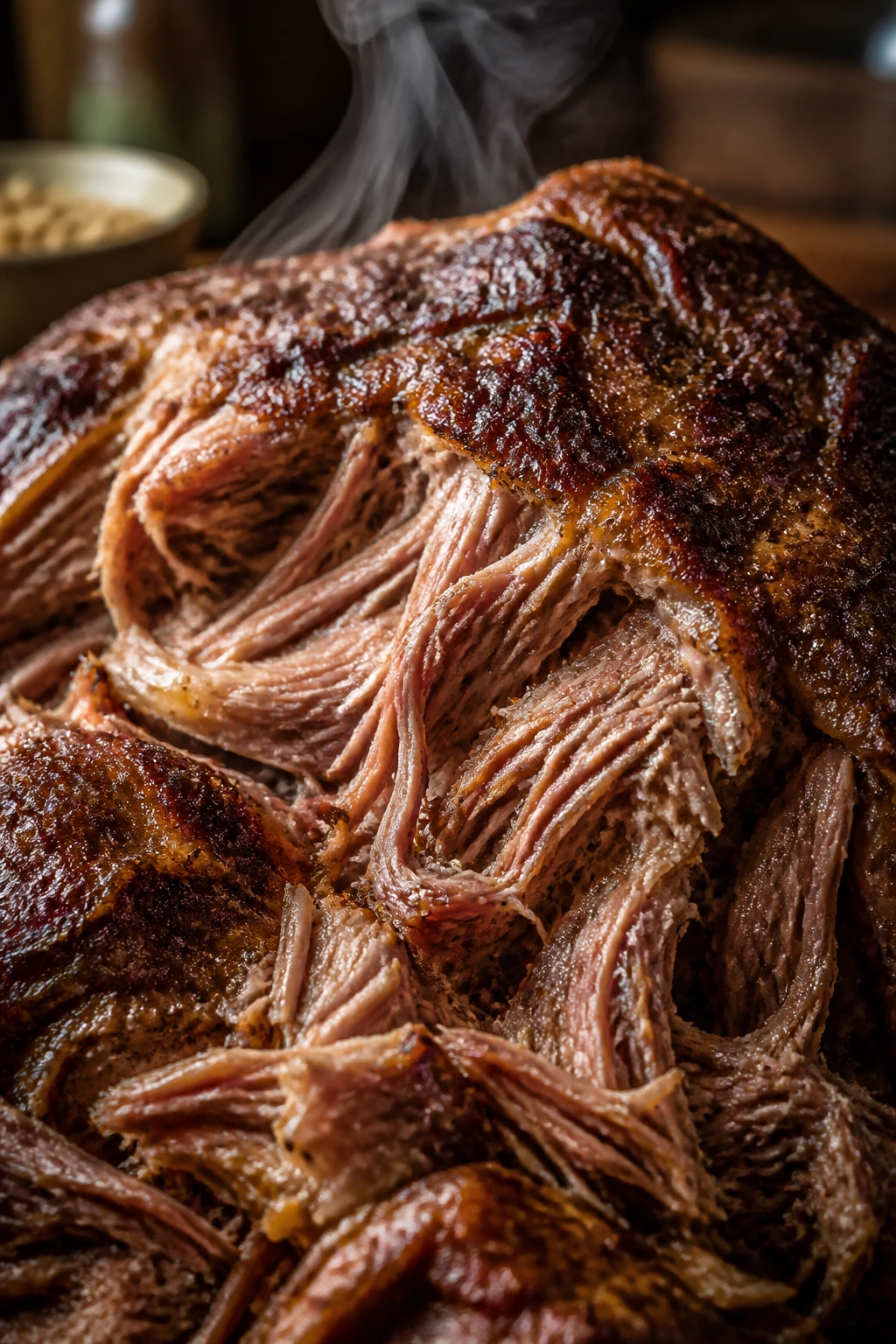
There’s a reason this kind of slow cooker pork keeps showing up in real kitchens and not just in neatly styled photos. It’s practical, yes. But more than that, it gives you a lot back for very little active work, and the payoff is bigger than the ingredient list suggests.
The part I like most is the way it stays flexible. One batch becomes sandwiches one night, tacos the next, and a baked potato topper after that. Keep a pork shoulder in the freezer, a jar of the spice mix in the cabinet, and a good onion on the counter, and dinner stops being a scramble.
Tender Slow Cooker Pork — Recipe Card
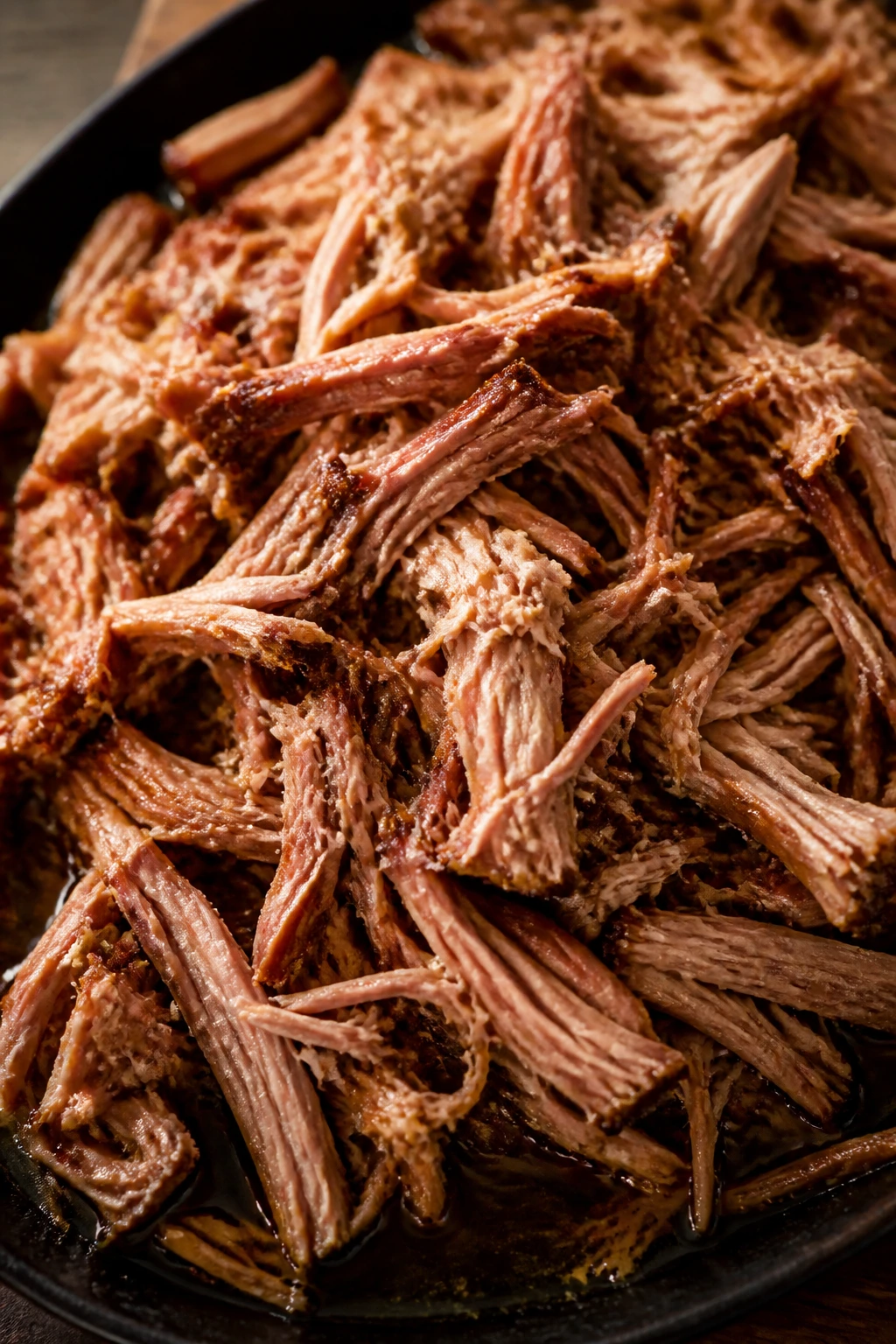
Recipe Name: Tender Slow Cooker Pork
Description: Pork shoulder is rubbed with smoked paprika, cumin, garlic, and oregano, then slow-cooked with onion, garlic, broth, vinegar, and Worcestershire until it turns soft enough to shred. A little reserved cooking liquid goes back in at the end so the meat stays juicy for sandwiches, tacos, bowls, or potatoes.
Prep Time: 15 minutes
Cook Time: 8 to 10 hours on Low or 5 to 6 hours on High
Total Time: 8 hours 15 minutes to 10 hours 15 minutes, or 5 hours 15 minutes to 6 hours 15 minutes
Course: Main Course
Cuisine: American
Servings: 8
Calories: about 330 kcal per serving
Ingredients
For the Pork:
- 3 1/2 to 4 pounds boneless pork shoulder (Boston butt), trimmed of any thick fat cap
- 2 teaspoons kosher salt
- 1 1/2 teaspoons smoked paprika
- 1 teaspoon ground cumin
- 1 teaspoon garlic powder
- 1 teaspoon onion powder
- 1 teaspoon dried oregano
- 1 teaspoon packed light brown sugar
- 1/2 teaspoon black pepper
- 1/2 teaspoon chili powder
- 1/4 teaspoon cayenne pepper, optional
For the Slow Cooker Liquid:
- 1 large yellow onion, cut into 1/2-inch slices
- 5 garlic cloves, minced
- 1 cup low-sodium chicken broth
- 1/4 cup apple cider vinegar
- 2 tablespoons Worcestershire sauce
- 1 bay leaf
For Finishing:
- 1 tablespoon apple cider vinegar
- 1/2 cup reserved cooking liquid, plus more as needed
Instructions
- Pat the pork dry. Mix the salt, smoked paprika, cumin, garlic powder, onion powder, oregano, brown sugar, black pepper, chili powder, and cayenne, then rub it all over the pork.
- Scatter the onion and garlic in the bottom of a 6-quart slow cooker. Add the broth, apple cider vinegar, Worcestershire sauce, and bay leaf.
- Set the pork on top, cover, and cook on Low for 8 to 10 hours or High for 5 to 6 hours, until the pork reaches 195°F to 205°F and shreds easily with a fork.
- Transfer the pork to a cutting board and rest for 10 minutes. Remove the bay leaf, skim the fat from the cooking liquid, and reserve 1/2 cup of the juices.
- Shred the pork with two forks, return it to the slow cooker, and stir in the reserved cooking liquid plus 1 tablespoon apple cider vinegar. Keep warm for 10 to 15 minutes.
- Optional: spread the shredded pork on a rimmed baking sheet and broil for 3 to 5 minutes for crisp edges.
Notes: Use pork shoulder, not pork loin, for shreddable texture. Taste at the end and add salt or vinegar if the pork needs a little more snap. Refrigerate leftovers in their juices for the best reheating.