



Family-style lunch for kids will actually eat looks a little messy on purpose, and that is the point. A platter of turkey slices, buttered noodles, cucumber coins, strawberry halves, crackers, and one small bowl of ranch does more for appetite than a carefully stacked plate that makes everything touch. Kids like to see what they’re getting. They like to reach for things. They like a lunch that feels chosen, not assigned.
I have watched the same thing happen over and over at real tables: a child ignores a sandwich that has been assembled into one tight, slightly soggy square, then happily eats the bread, the cheese, the cucumber, and the turkey once those pieces are laid out beside each other. Strange? Maybe. Practical? Absolutely. When lunch is broken into clear parts, the food stops feeling like a puzzle.
The best family-style lunch is not fancy, and it doesn’t need a theme board with seventeen tiny bowls. It needs a few foods that behave well next to each other, a serving style that keeps crunchy things crunchy, and enough choice to make a picky eater feel safe. Once you get that rhythm right, lunch gets calmer for everybody.
Why This Approach Works Better Than a Mixed-Up Plate
A mixed plate asks too much of a kid before the first bite even happens. The peas rolled into the noodles. The sauce touched the cracker. The cheese got warm and soft in the wrong place. Adults shrug at that stuff. Children often do not.
Choice lowers resistance. When the food is arranged family-style, a child gets a say in what lands on the plate. That tiny bit of control matters more than most people think. A kid who would reject a pre-built wrap may happily take the tortilla, the turkey, and the cucumber separately, then build the thing in pieces. Same foods. Different mood.
Separate textures keep the meal interesting. A lunch table that includes one soft item, one crisp item, one juicy item, and one protein gives the mouth something to do. That’s not fancy nutrition talk; it’s plain sensory truth. Soft bread next to crunchy carrots and cold grapes is more appealing than a bowl of gray mush with nothing to break it up.
Food stays edible longer. A soggy sandwich gets worse by the minute. A family-style spread lets you keep the wet stuff in one bowl, the crisp stuff on a dry plate, and the warm stuff under foil until the last second. That matters on rushed days, and it matters when somebody eats slowly.
Kids also trust food more when they can recognize it. A roasted carrot still looks like a carrot. A sliced chicken breast still looks like chicken. A strange casserole blob? Harder sell. I’m not saying children can’t learn to like mixed dishes. They can. I am saying family-style lunch makes the path easier, and sometimes easier is the whole game.
Choice lowers the drama
A child who gets to pick between apple slices and cucumber rounds feels less cornered. The lunch table becomes a set of options instead of a demand. That shift sounds small. It isn’t.
Separation protects the good parts
Crunchy crackers, toasted pita, and cut fruit all have a short window before they go limp or bruised. Serving them in separate piles gives them a fighting chance. That means more bites, not fewer.
The table does the coaxing
You do not have to narrate every item. Put the food out, keep the portions modest, and let curiosity do some of the work. Kids usually come closer when the table looks manageable instead of crowded.
The 1-1-2-1 Lunch Formula That Keeps Things Simple
I keep coming back to one formula because it works on days when your brain is tired and the fridge looks strange: one anchor, one protein, two produce items, and one dip. That is enough for a family-style lunch without turning the table into a cafeteria line.
The anchor is the thing that makes the meal feel like lunch. It could be buttered noodles, toast fingers, pita wedges, rice, crackers, or a small pile of roasted potatoes. The protein is the steady part: turkey, chicken, eggs, cheese, hummus, beans, or yogurt-based dip. The two produce items do the color work and the freshness work. The dip or sauce makes the whole plate feel less dry and gives hesitant eaters something to chase.
What I like about this formula is that it keeps you from overbuilding. Too many lunch spreads fall apart because there are six almost-good things on the table and no clear center. A child sees a crowd of options and does none of them. With the 1-1-2-1 setup, there’s a quiet little structure under the food. Enough structure. Not so much that it feels rigid.
You can use the formula hot or cold, which is one reason it survives real life. Cold version: crackers, turkey slices, apple slices, cucumber coins, ranch. Warm version: rice, scrambled eggs, peas, cherry tomatoes, soy-ginger dip. Same idea. Different clothes.
One anchor: the food that makes it lunch
Without an anchor, the spread becomes snacks. That can still work, but it tends to leave kids hungry again twenty minutes later. A real anchor gives the meal weight.
One protein: the part that quiets the hunger
Keep the protein plain enough to be recognizable. Kids usually do better with sliced chicken, egg wedges, cheese cubes, or plain beans than with heavily sauced meat hiding under other things.
Two produce items: one safe, one slightly interesting
I like pairing one familiar fruit or vegetable with one that has a little more personality. Strawberries and cucumbers. Apple slices and snap peas. Grapes and roasted broccoli florets. The familiar thing keeps the plate friendly. The second one stretches the edges a little.
One dip or sauce: the tiny detail that changes the whole lunch
A ramekin of hummus, ranch, yogurt dip, pesto, ketchup, or mild salsa gives kids a reason to keep going. Use a small cup. A giant bowl of dip turns into a mess and teaches nobody anything.
Proteins Kids Reach For Without a Lecture
A family-style lunch lives or dies on the protein, because that is the part adults often overthink and kids often distrust. Dry chicken breast cut too thick? Hard pass. Fancy tuna salad with chopped celery and a lot of pepper? Maybe not. The goal is not culinary applause. The goal is a protein that feels familiar in the hand and soft enough in the mouth.
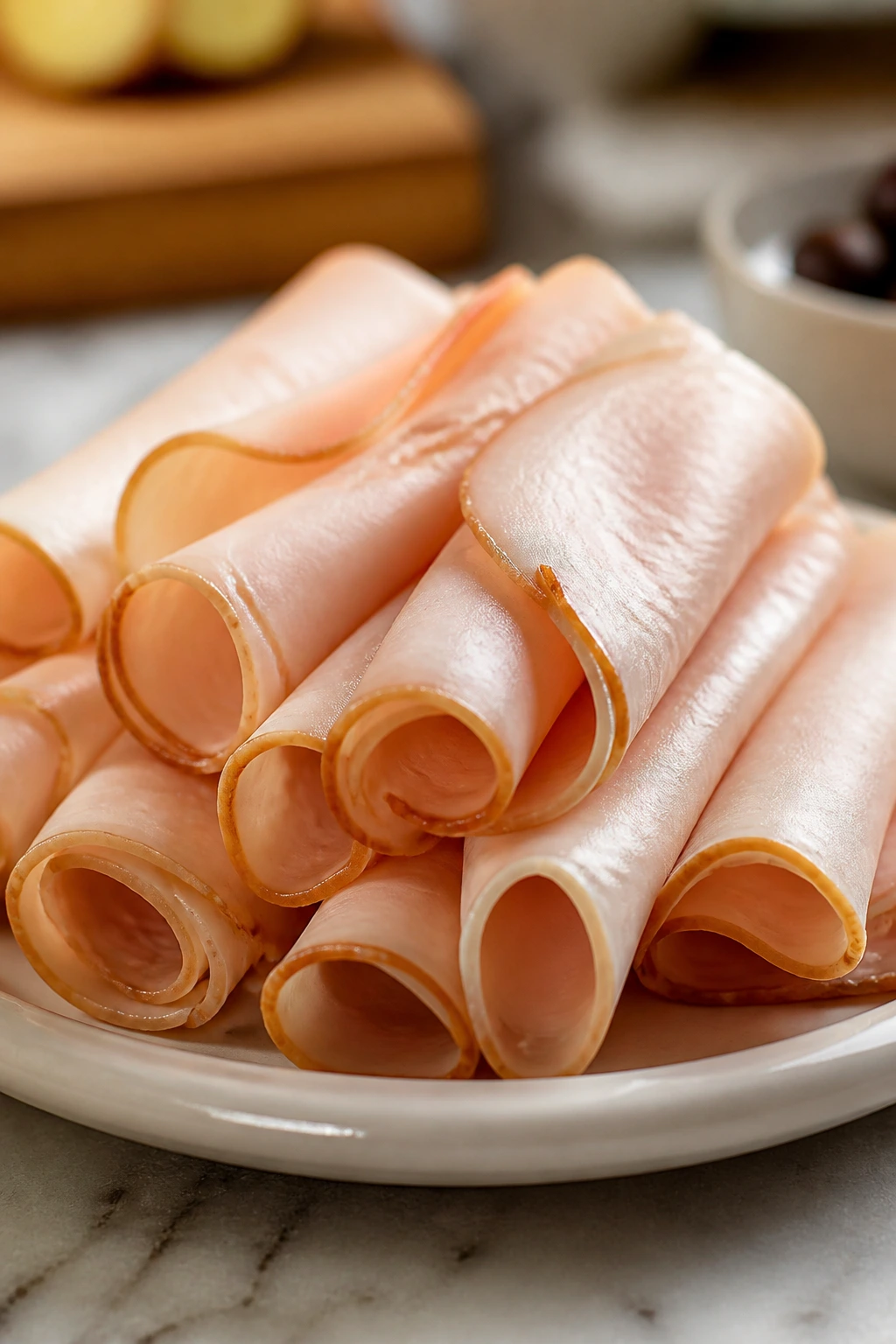
Sliced turkey is the workhorse here. It folds neatly, tastes mild, and behaves well on a platter. I like it rolled loosely instead of stacked flat because the edges are easier for little fingers to grab. Rotisserie chicken works too, but only if you pull it into bite-size pieces and trim away the dry corners. Kids notice dry edges. They always do.
Eggs deserve more love than they get in lunch planning. Hard-boiled eggs cut into halves or quarters, egg salad spooned beside crackers, or scrambled eggs cooled and packed into a lunch board can all work. The key is texture. If the egg is rubbery, the whole thing gets rejected fast. If it’s tender and lightly seasoned, it vanishes with almost no commentary.
Cheese is a protein and a peace treaty at the same time. Cubes of cheddar, strips of mozzarella, or slices of mild Swiss tend to do well. Keep the pieces small enough that a child can finish one bite before moving on. Large hunks of cheese often get bitten once and abandoned. That is an annoying pattern, but it is a pattern.
Plant proteins can work beautifully when they stay simple. Hummus, roasted chickpeas, edamame for older kids, white beans mashed with olive oil and a little salt—these give the table a softer option and help if you’re cooking for mixed diets. No need to force a sermon here. Just put the bowl out and let it sit among the other foods.
Cold proteins that behave well
Turkey slices, ham, cheddar cubes, hard-boiled eggs, hummus, and shredded chicken all hold up well at a table for a little while. They’re easy to portion and easy to rescue as leftovers.
Warm proteins that need timing
Scrambled eggs, small chicken meatballs, mini sausages, and baked tofu can work, but they need to arrive at the table at the right temperature. If they sit too long, the appeal drops fast.
Plant-based picks that don’t feel like punishment
Hummus, beans, edamame, tofu cubes, and nut or seed butter on toast can carry a lunch spread on their own. Keep the seasoning mild and the texture smooth enough that kids aren’t fighting the food.
Carbs and Sides That Hold Their Shape
The carbohydrate side of a family-style lunch is where a lot of parents accidentally create disappointment. Bread gets wet. Rice gets clumpy. Pasta gets sticky. Crackers shatter under the wrong topping. The fix is not to avoid carbs. It’s to choose ones that keep their shape long enough to be eaten.
Buttered noodles are almost unfairly useful. Toss them with a little butter or olive oil and a pinch of salt, and they become a neutral base that kids can eat plain or with a dab of sauce. Short pasta is better than long pasta for shared lunch tables because it piles neatly and doesn’t turn into a stringy wrestling match. Small shells, rotini, farfalle, and penne all do the job.
Toast fingers, pita wedges, mini bagel halves, and soft rolls behave well because they can be handled without much cleanup. I prefer slightly toasted bread to soft bread if the lunch will sit out for a few minutes. The toast gives the table a little grip and a little sound. Kids notice that. They may not say so, but they notice.
Rice, quinoa, and couscous can work, though they need a little more care. Rice does best in a shallow bowl with a spoon and a cover if you want it warm. Couscous can dry out if it sits uncovered. Quinoa is fine if your kid already likes the texture; if not, it can feel like tiny pebbles and you’ll know it immediately from the face they make.
Potato wedges, roasted sweet potatoes, and simple corn muffins give you something more sturdy. I especially like roasted potatoes because they stay edible at room temperature and hold onto a little seasoning without getting noisy about it. That sounds odd, maybe. I mean this: they’re present, not fussy.
The sturdy starches
Short pasta, toast fingers, pita wedges, crackers, rice, roasted potatoes, and mini muffins do better than delicate bread or over-sauced noodles. They’re easy to lift, dip, and finish.
The starches to treat carefully
Anything steamed, stewy, or heavily dressed needs more attention. If the sauce soaks in, the texture can tip from comforting to mushy in a very short time.
My blunt opinion on soggy bread
Skip it. Or split the bread and keep the wet fillings in a separate bowl. Soggy bread is one of the fastest ways to make lunch look tired before the child even sits down.
Fruits and Vegetables Kids Reach for First
The produce on a family-style lunch table has one job: get picked up without a speech. That means it should be easy to hold, easy to chew, and easy to recognize. Kids often eat fruits and vegetables better when they are plain, cut neatly, and placed where they can see them without having to move three other things out of the way.
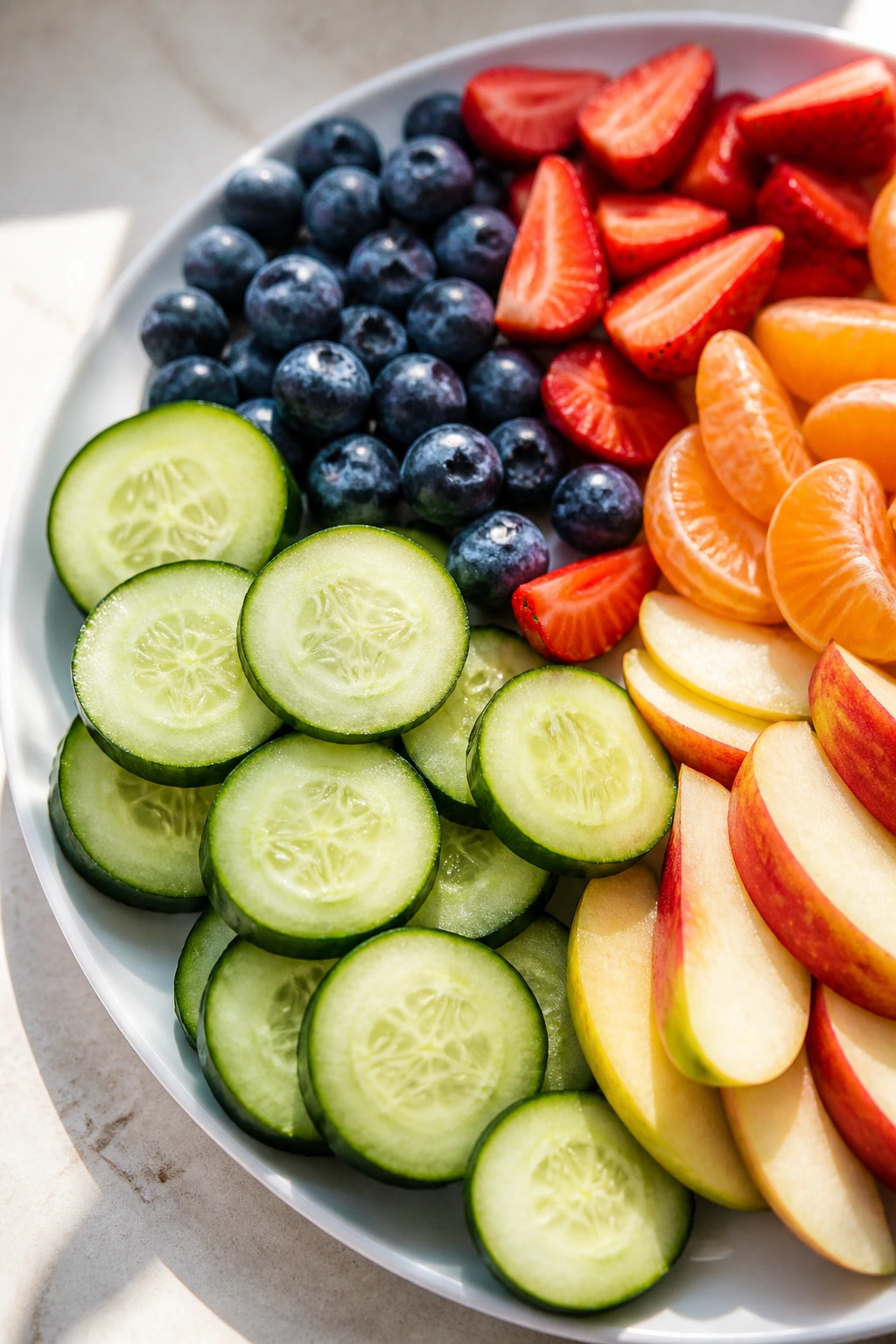
Cucumber coins are reliable because they are crisp, cool, and low-stakes. I like them sliced thick enough that they don’t bend in the hand. Baby carrots are fine for older kids, but for younger ones I cut them into matchsticks or thin sticks so there’s less choking risk and less jaw work. Snap peas have a nice springy bite, especially if you trim the stem end and pull away the string on tougher pods.
Fruit is where lunch tables get rescued. Berries, grapes cut in half for younger children, melon cubes, clementine segments, pear slices, and apple wedges all bring water, sweetness, and a break from saltier foods. Apples and pears brown quickly, so I toss them with a little lemon juice if I know they’ll sit for a while. Nothing dramatic. Just enough to keep the cut edges from turning sad.
Roasted vegetables deserve a place here too, though I do not serve them buried under cheese sauce if the goal is independent eating. A few roasted carrot coins, broccoli florets, or sweet potato cubes can work if they’re cooked until tender and slightly caramelized at the edges. That browned edge matters. It tastes like something happened in the oven. Kids can sense that even if they don’t use those words.
Crunchy produce
Cucumbers, snap peas, carrots, jicama sticks, and bell pepper strips give the table a clean bite. They work best when cut into shapes that are easy to grip and not too thick to chew.
Juicy produce
Grapes, strawberries, melon, orange segments, and blueberries add the sweet, cool part of the meal. Keep wet fruit in its own bowl or it will leak into everything else.
Cooked vegetables that still feel friendly
Roasted broccoli, carrot coins, zucchini rounds, and sweet potato cubes can win over kids who won’t touch raw vegetables. The trick is to roast until the edges show some color and the centers are soft, not pale and floppy.
Dips, Sauces, and Small Finishes That Change the Mood
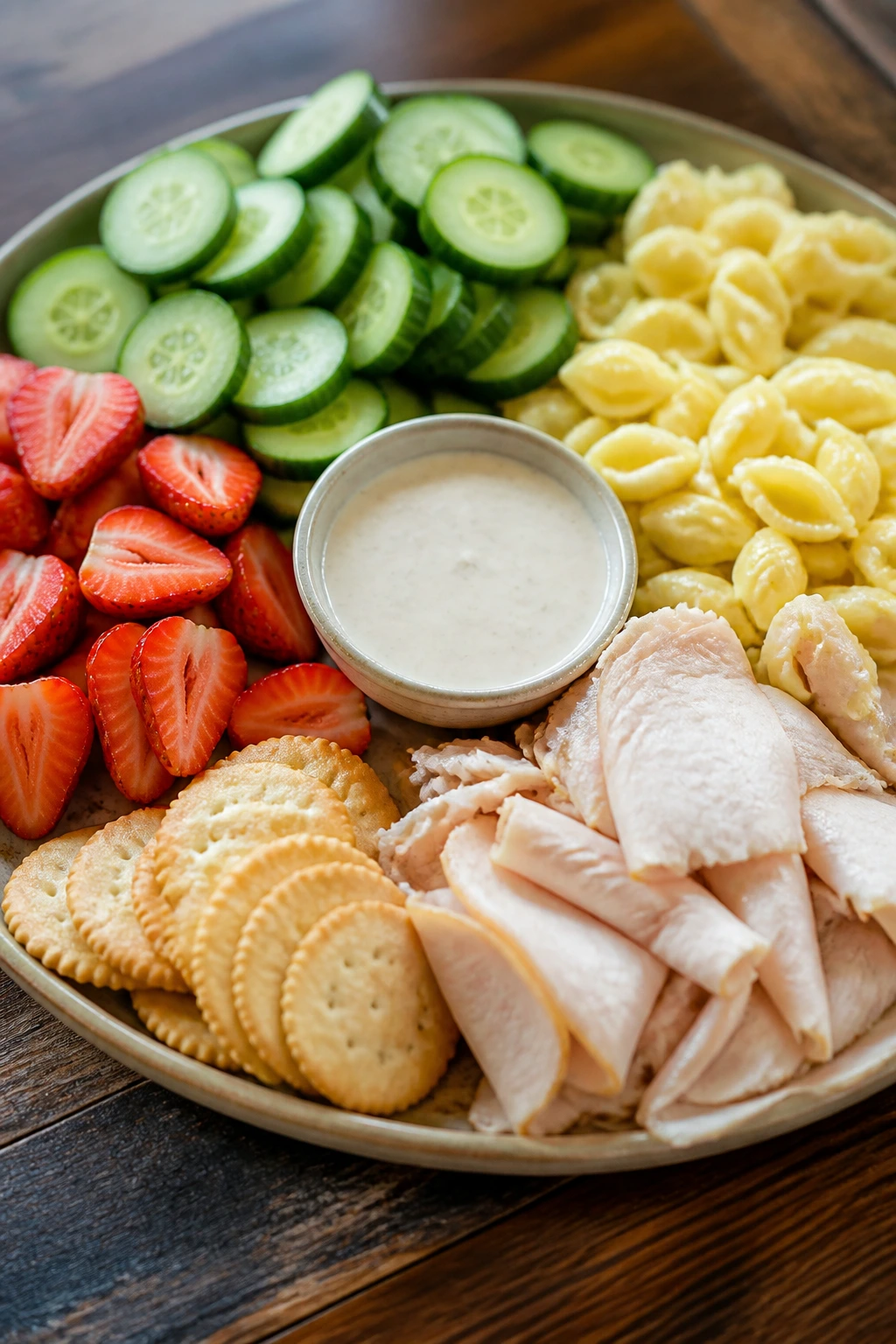
A dip can turn a suspicious lunch into a lunch that gets eaten. I say that with no shame at all. A child who won’t touch a plain cucumber may dip it in ranch. A kid who refuses chicken may eat chicken if ketchup is involved. We do not need to act above that. It works.
The best dips are mild, thick enough to cling, and served in tiny portions. Ranch, hummus, plain yogurt mixed with a pinch of salt, peanut butter or sunflower seed butter, mild salsa, pesto, and even a little honey mustard can all have a place. Keep them in small ramekins or squeeze bottles. A spill-proof cup saves more lunch than a pretty giant bowl ever will.
Texture matters here too. Thin sauces slide off and make a mess. Thick sauces coat, which is what you want. If I’m serving a dip with sliced fruit, I keep the dip optional and tiny. If I’m serving it with chicken or toast fingers, I’m a bit more generous. Still not huge. Kids do not need a lake of sauce. They need a sidecar.
Salt, lemon juice, a little butter, and a dusting of cinnamon can do the same job without looking like a dip at all. A sliced apple with peanut butter is one thing. A sliced apple with peanut butter and a sprinkle of cinnamon is something kids tend to remember. Small change. Big effect.
The everyday dips
Ranch, hummus, yogurt dip, ketchup, and peanut butter are the usual suspects for a reason. They are familiar, thick, and easy to portion into little cups.
The saucier options
Pesto, mild salsa, tahini sauce, and honey mustard bring more flavor, but they need a kid who already tolerates stronger tastes. Start small. One teaspoon can be enough.
The finishing touches that matter
A pinch of salt on tomatoes, a squeeze of lemon on apples, or a little butter on noodles can make plain food more inviting. These aren’t fancy tricks. They’re small corrections.
How to Build the Table So Kids Can Serve Themselves
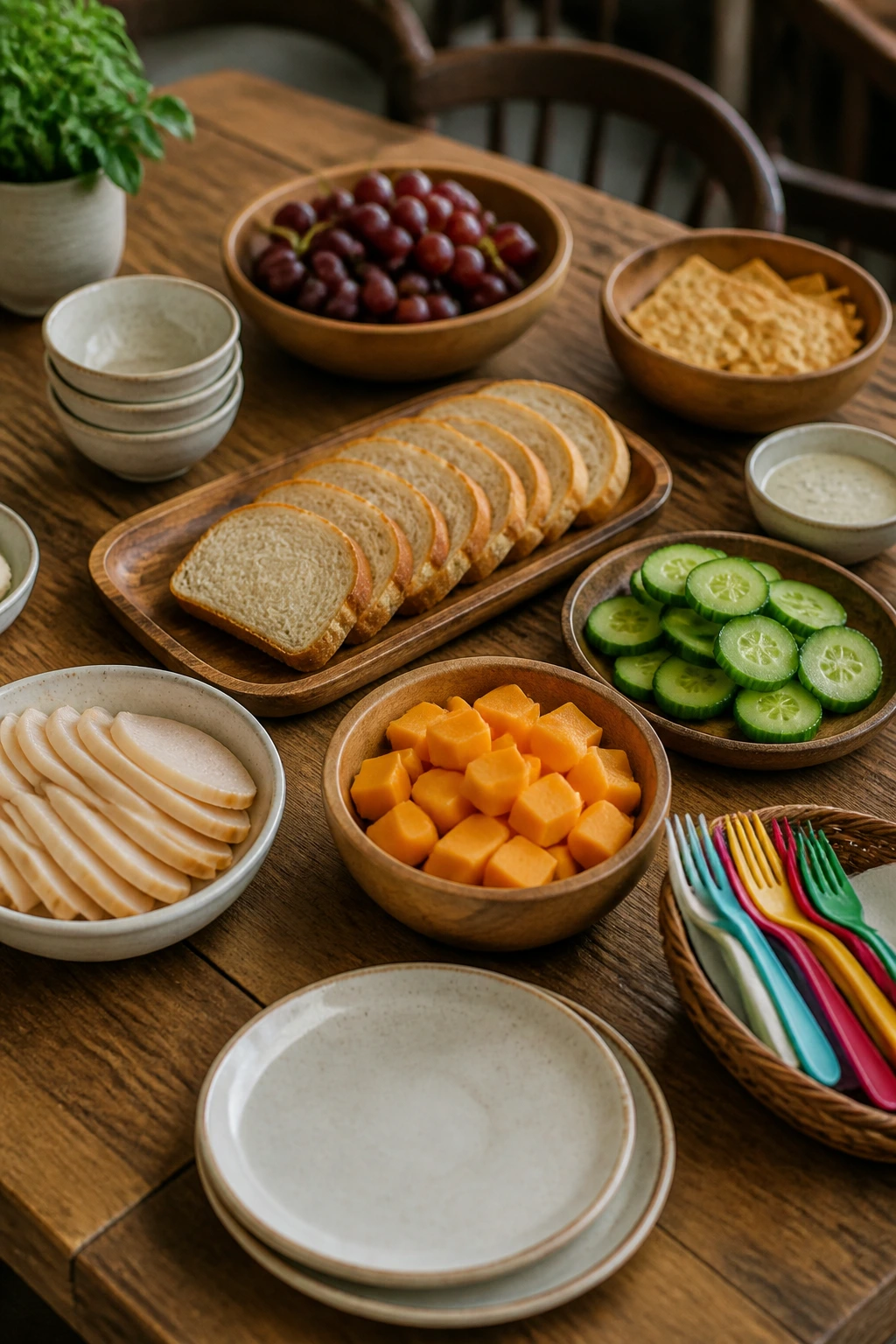
A good family-style lunch table doesn’t look perfect. It looks usable. That’s a different skill. The food should make sense at a glance, and the easiest foods should be the most visible ones. If a child has to reach around a mountain of serving spoons to find the crackers, you’ve already lost some momentum.
Put the safest food where the smallest hands can get to it. That could be bread, fruit, or one familiar protein. Then place the anchor starch next, followed by the protein, followed by the vegetables and dips. I like leaving a little empty space on the table too. A packed table can feel louder than the food itself.
Put the safe food first
A child who sees one thing they trust tends to stay at the table longer. For some kids that’s grapes. For others it’s toast or cheese. Put that food in the easiest spot and let it act like a handshake.
Keep utensils obvious
Small tongs, a serving spoon, and a child-size fork should not be hidden under a napkin or placed behind the centerpiece nobody asked for. Give every bowl a tool. If you use the wrong utensil—tiny spoon for noodles, giant ladle for grapes—you’ll see the chaos instantly.
Leave some breathing room
A cluttered table can make cautious eaters shut down. Four or five foods, not ten, is often the sweet spot. If you want to offer more, keep some of it in reserve and bring it out only if the first round disappears.
Keep hot and cold apart when you can
Warm noodles, cold fruit, and room-temperature crackers can coexist, but not all in the same pile. A little separation keeps the lunch from slipping into lukewarm sameness.
How to Serve It: Presentation, Accompaniments, Portions, Beverage Pairing
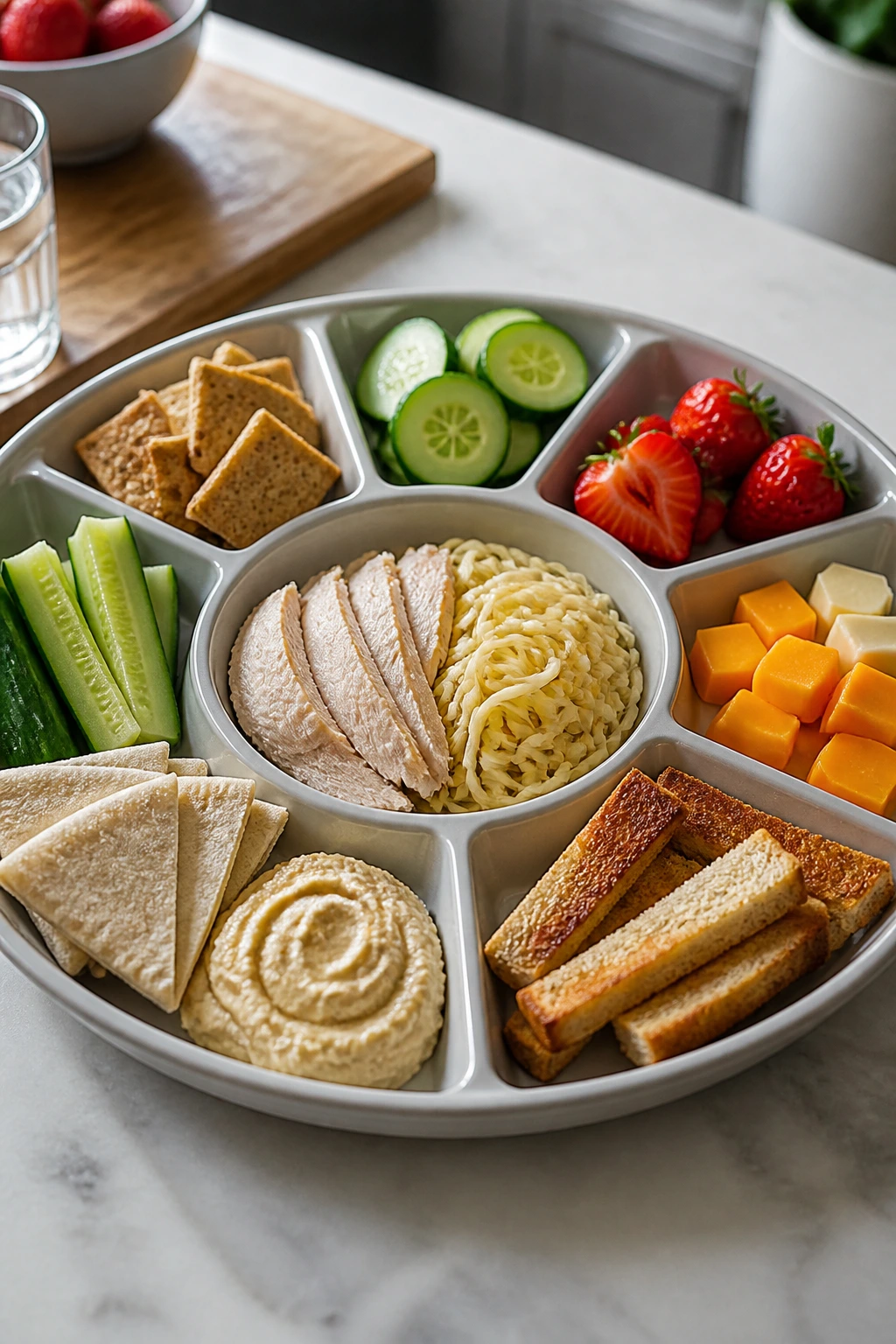
Presentation:
Serve the lunch in shallow bowls, small platters, or a tray with separate zones instead of a giant mixed bowl. Kids usually eat more when they can see the edges of each food, and a little visual order helps the table feel calm. I like putting the most familiar food in the center and the louder colors—berries, cucumbers, carrots—around it.
Accompaniments:
Keep the sides simple and specific: buttered noodles with sliced turkey, pita wedges with hummus and cucumber, toast fingers with scrambled eggs, or crackers with cheese cubes and fruit. If you want one extra item, make it a plain soup in a thermos or a handful of pretzels, not three complicated extras that compete with the main food.
Portions:
Start smaller than you think you should. A family-style lunch works better when kids can ask for more than when they stare down a mountain of food. For younger kids, two or three bite-size portions from each food is enough to start. For older children, build the plate a little larger and let them return for seconds if the first round disappears.
Beverage Pairing:
Cold water is the cleanest default. Milk fits well with sandwiches, crackers, pasta, and fruit. For a sweeter lunch, a small amount of diluted juice works, but I would keep it secondary, not the main event. A thermos of plain or lightly flavored milk can be useful on colder days when you want the meal to feel more substantial.
Lunch Menus by Age and Appetite
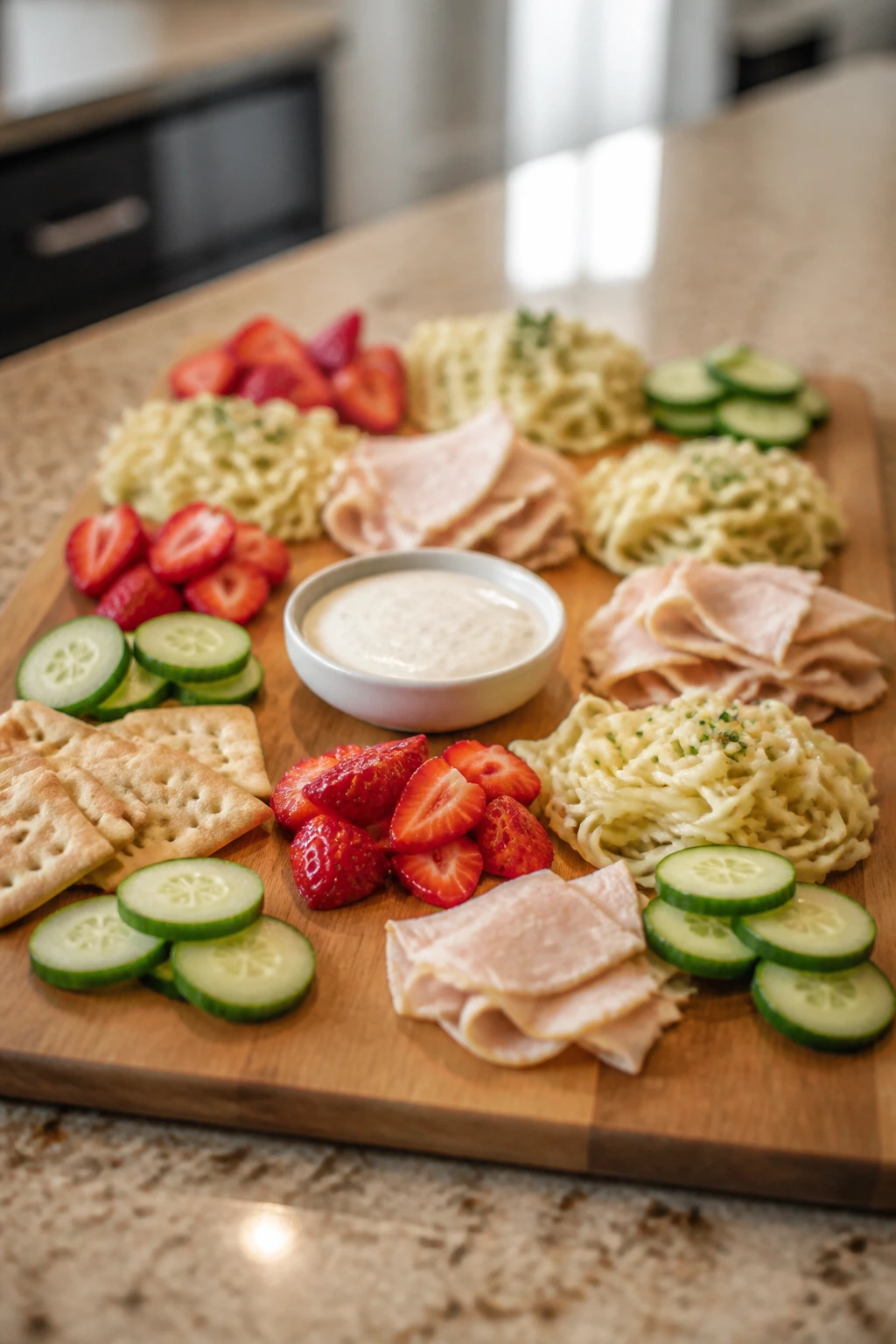
Age matters less than appetite pattern, but it still helps to think in broad stages. A toddler wants small, simple, low-risk food. A school-age kid usually wants to build their own plate and feel in charge of the process. A hungry older child may need a second starch and a bigger protein. Same lunch logic. Different portion sizes.
Toddlers who eat in tiny bursts
For younger children, I like very small shapes: quartered grapes, pea-sized cheese cubes, soft pasta, thin cucumber sticks, and toast fingers cut into short lengths. They often do better with one dip and one familiar anchor than with a spread that feels like a crowd. Keep the food mild and the pieces easy to stab or pinch.
Preschoolers who want to do it themselves
This is the age where family-style lunch starts to feel magical. Give them a small plate, a spoon, and a short list of foods they can choose from. Turkey rolls, apple slices, crackers, and cucumbers are good bets. Dips suddenly matter a lot here. They give the child a little job.
School-age kids who want control
Older children usually want a say in the arrangement. That means you can put out a lunch board and let them decide what goes where. Mini wraps, pasta salad, cheese, berries, carrots, and hummus all work. If they’re coming in from sports or a long morning, add more starch and maybe a second protein.
Bigger appetites that need more than snacks
If lunch has to carry someone through a long afternoon, build a fuller plate: chicken, rice, roasted vegetables, fruit, yogurt dip, and bread or crackers. I’d rather add one solid carb than keep piling on tiny side foods that disappear before the child feels fed.
Busy-Day Lunches and Make-Ahead Assembly
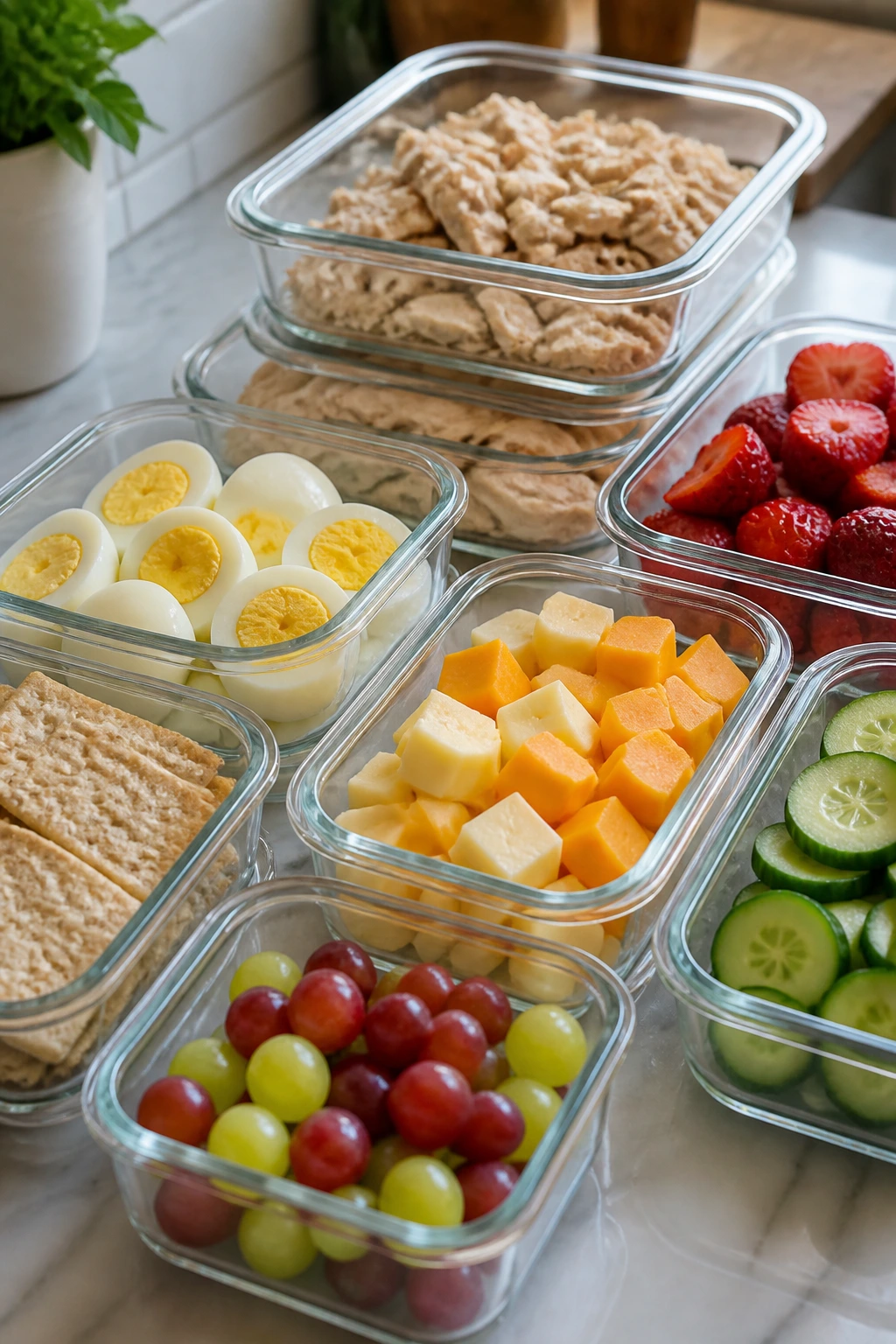
The nicest family-style lunch ideas are the ones that don’t collapse when the morning gets loud. That means choosing foods that can be prepped ahead without turning limp, sticky, or weird. I care a lot about this because lunch has a way of arriving right when the sink is full and somebody needs socks.
Cooked chicken, hard-boiled eggs, cut fruit, washed vegetables, and simple dips can all be prepared ahead and held in the fridge. When I know lunch will be assembled later, I keep the wet items and dry items separate until the last minute. That one habit saves crackers, toast, and cucumbers from a sad, mushy end.
A good make-ahead lunch often comes down to one warm component and several cold ones. You can roast potatoes or chicken in the morning, then set them next to fruit, cheese, and crackers later. Or you can make the whole thing cold and avoid the reheat dance entirely. Both versions work. The difference is which one buys you more peace.
I also like thinking in parts. If I already have leftover rice, a few sliced cucumbers, and some cheese, I’m halfway to a lunch board before I’ve even opened the pantry. That is the whole reason this approach survives real life: you can assemble it from scraps without making the meal feel like scraps.
The foods worth making early
Hard-boiled eggs, shredded chicken, roasted vegetables, pasta, rice, hummus, yogurt dip, and washed fruit all hold up well for later use. Keep them in separate containers so they don’t trade textures in the fridge.
The foods that should wait
Toast, crackers, cut apples, and anything meant to stay crisp should usually be assembled right before serving. If you make them too early, they lose the one thing that made them worth serving.
The best kind of shortcut
Not all shortcuts are ugly. Rotisserie chicken, bagged salad greens, pre-washed berries, and store-bought hummus can save the meal without making it feel lazy. I’d call that smart, not lazy.
Practical Tips That Get More Food Eaten
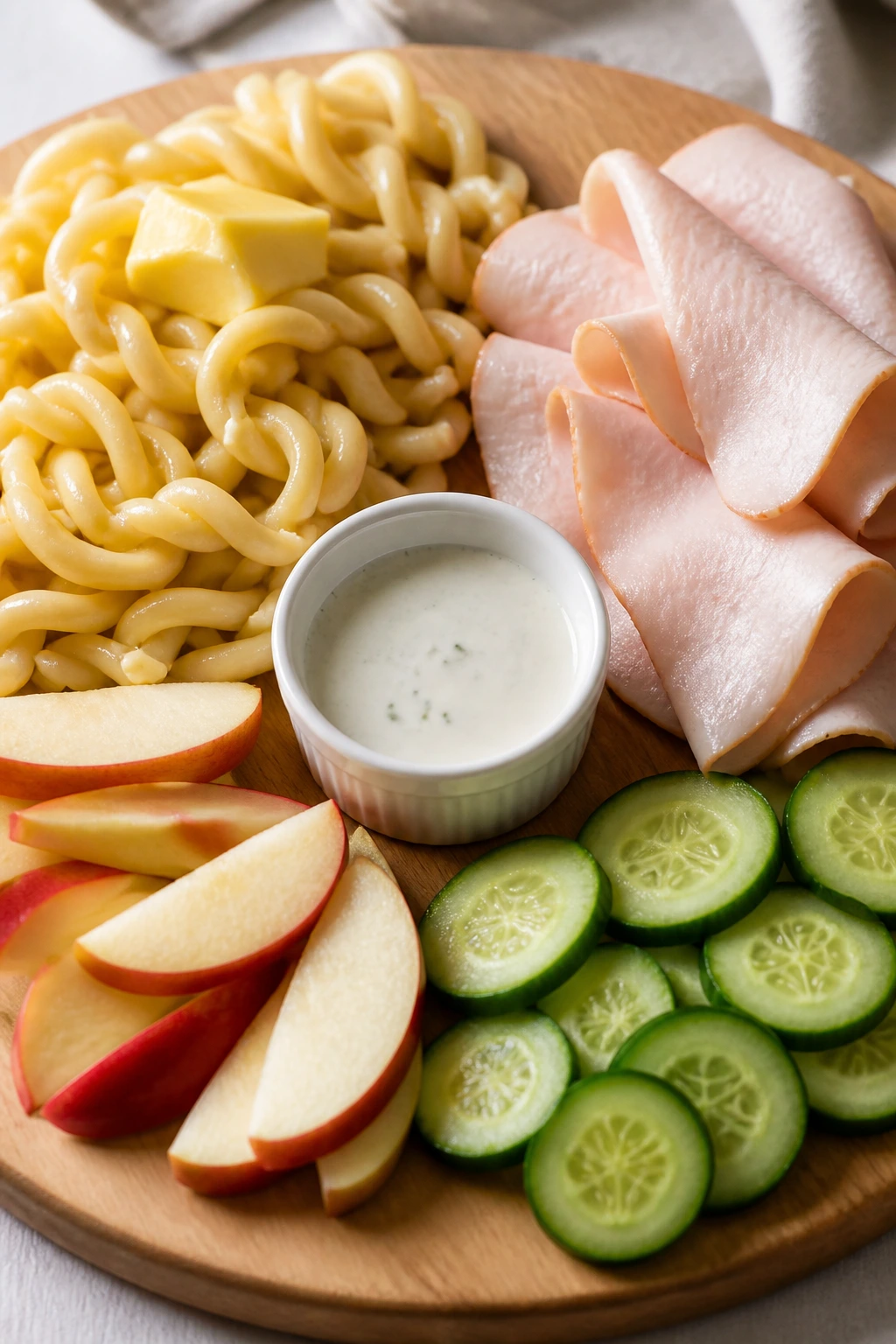
A few small moves change the whole lunch. Not because kids are fragile little machines, but because appetite is fussy and visual cues matter. The job is to make food feel easy enough that a child starts eating before they start negotiating.
Start with one safe food. Put the item they already trust closest to their plate. If the child knows grapes, crackers, or cheese will be there, they relax faster.
Keep portions tiny at first. A full scoop of every food can be intimidating. Two bites of each is often a better opening move than a plate that looks like a challenge.
Use one dip, not four. Too many sauces can make the lunch look like a tasting menu. One dip gives the child a clear path.
Separate wet and crisp. Tomatoes, fruit, and sauces need their own space. Once crackers absorb moisture, they stop being lunch and start being disappointment.
Warm only what truly benefits from warmth. Hot food has to be hot enough to matter. Lukewarm noodles, oddly enough, are less appealing than cold ones with butter or olive oil. If you can’t keep it warm, serve it cold on purpose.
End on a favorite. Save the best-loved item for the end of the meal, or at least keep it visible. A little reward at the edge of the plate keeps some kids moving.
One more thing. Do not ask a child to eat every item before they can ask for seconds of anything they like. That turns lunch into a negotiation. You want a meal, not a tribunal.
Common Mistakes That Make Kids Push Food Away
The biggest mistake is also the most common: putting too much on the table at once. A crowded lunch spread makes hesitant eaters freeze. The fix is painfully simple—start with four or five foods, and keep the rest back until you know they’re needed.
Another problem is mixing wet and crisp foods too early. Cucumbers sitting in dressing, crackers near juicy fruit, and toast under sliced tomatoes all turn limp fast. Serve wet foods in separate bowls and add them last if you can.
Overcooking the textures is another trap. Mushy vegetables, dry chicken, and pasta that sits in a pot too long are a hard sell. Cook things until tender, not beaten into submission. If the chicken feels dry on the cutting board, it will feel drier on the table.
A lot of parents also serve portions that are too big. Kids can get overwhelmed before they even start. Smaller servings leave room for seconds and make the first bite feel easier.
Then there’s assuming sauce can rescue anything. A good dip helps. It does not fix burnt toast, limp carrots, or stringy chicken. Sauce is a helper, not a miracle.
And finally, waiting too long to serve can ruin the meal. Warm foods cool, cold foods warm, and everything slides toward the same bland middle. Time the final arrangement so the table gets set right before it’s eaten, not twenty minutes before.
Variations and Alternative Lunch Styles
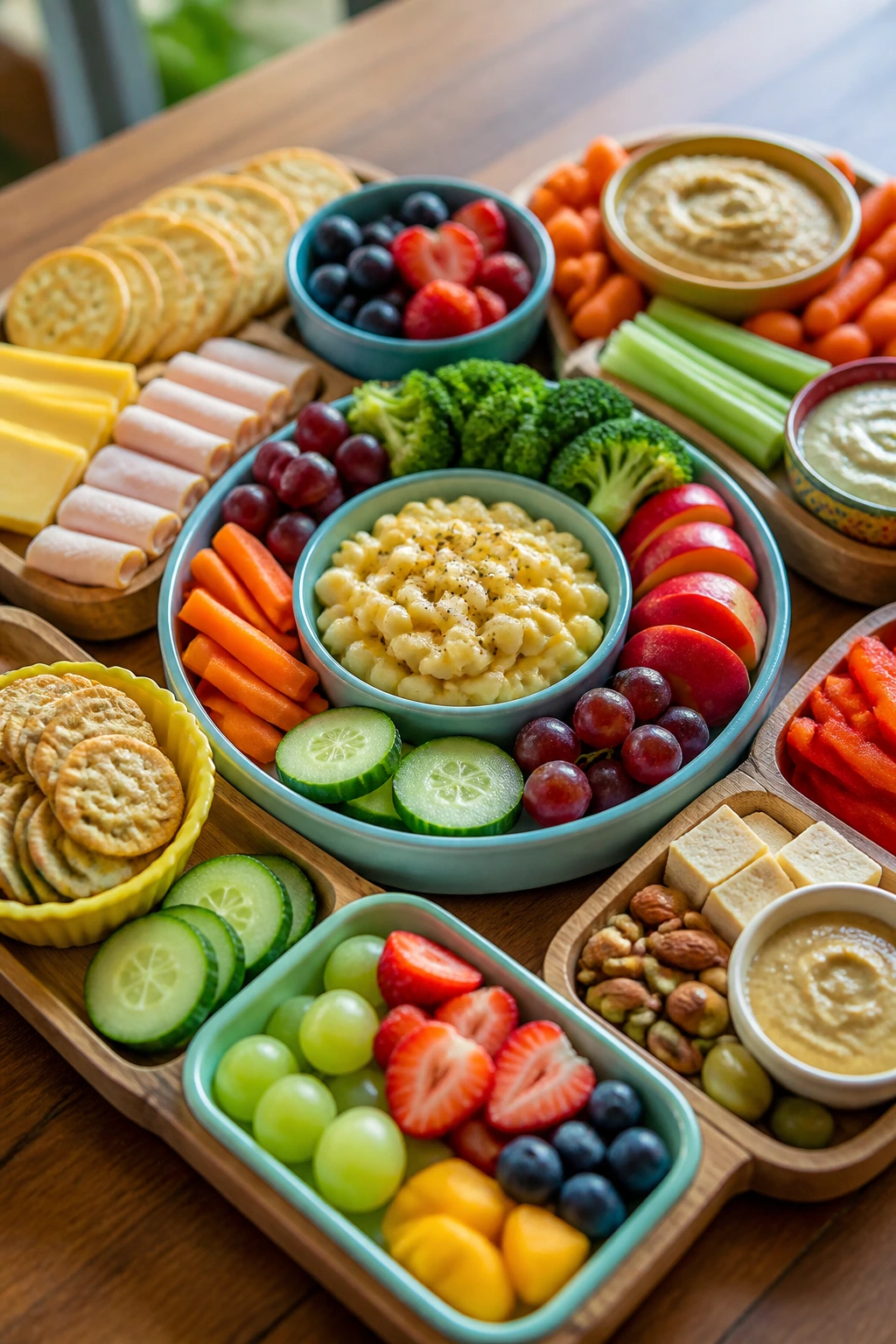
The Snack-Plate Lunch
This is the low-pressure version: crackers, cheese, turkey, fruit, and cucumbers arranged like a grazing board. It works well on days when everybody is too tired for a “real” lunch but still needs something decent in front of them. Keep the portions small and the food familiar.
The Warm-and-Cool Split
Put one warm item in the center—rice, noodles, eggs, or roasted potatoes—and surround it with cold fruit, vegetables, and dip. This setup gives the meal more body without requiring every part to be hot. It is one of my favorite options for colder months or post-practice hunger.
The Picnic Tray
Go fully no-cook: sliced turkey, cheese, grapes, apple wedges, crackers, hummus, and carrots. This version is tidy, fast, and useful when you want lunch on the table in under ten minutes. It also travels well if the meal is happening away from the kitchen.
The Allergy-Safe Board
Swap nut butter for sunflower seed butter, use dairy-free cheese if needed, and stick with fruit, vegetables, beans, and safe crackers. The key is not making the allergy-friendly version feel like the compromise plate. Keep the arrangement as neat and appealing as any other version.
The Soup-and-Sides Lunch
Serve a mild soup in a thermos or bowl and add bread, cheese cubes, fruit, and cucumbers on the side. This works especially well for kids who like to dip bread or who eat better when one part of the meal is warm and soft. Tomato soup, chicken noodle, or simple vegetable soup all fit.
Tools and Equipment for a Calmer Lunch Table
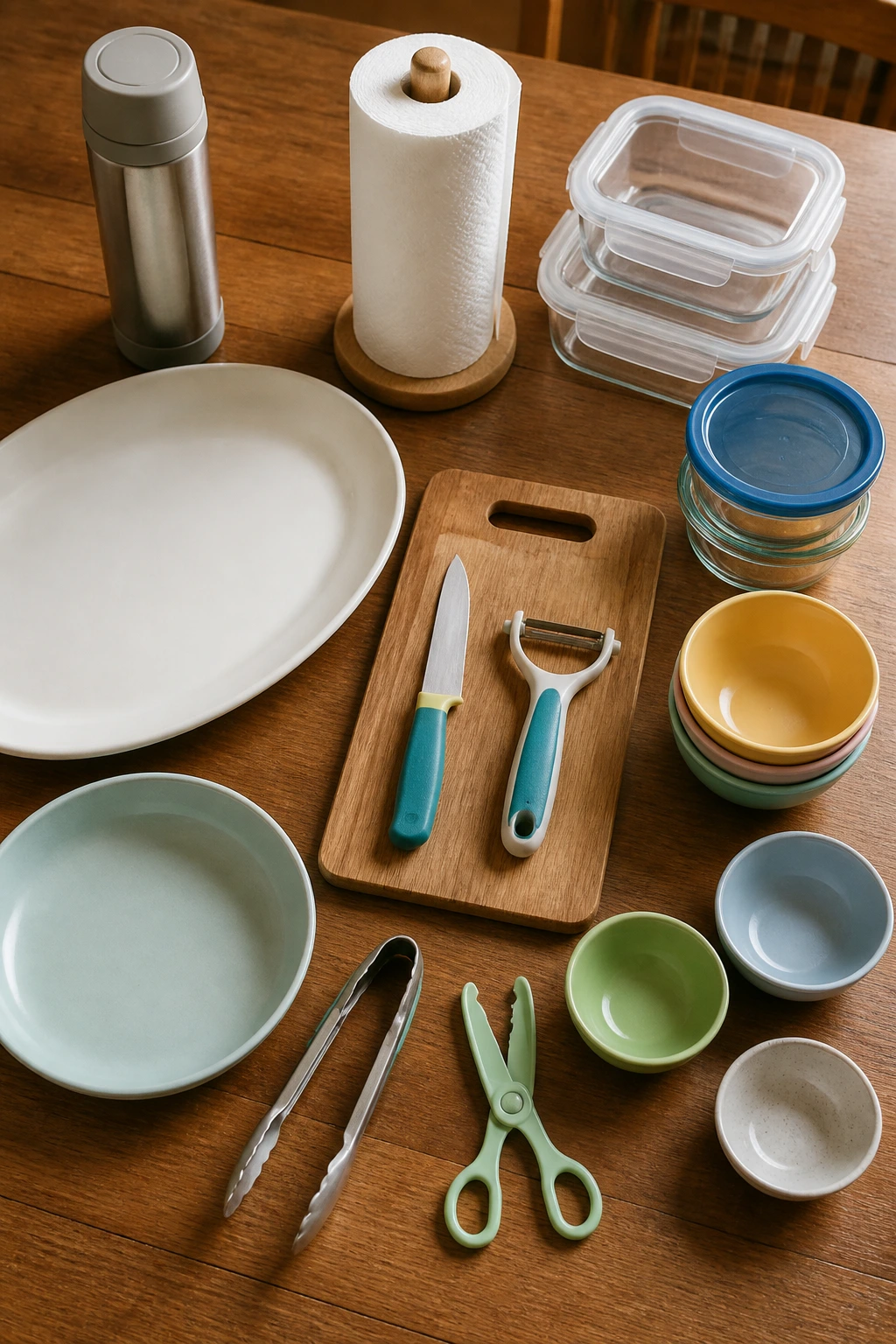
- Shallow platters or rimmed trays — These keep food visible and stop small items from rolling off the edge.
- Small bowls or ramekins — Perfect for dips, olives, fruit, or anything wet that needs its own spot.
- Child-size serving tongs or spoons — Easier for small hands than oversized serving tools.
- Sharp knife and cutting board — Clean cuts make fruit, cheese, and bread feel easier to eat.
- Vegetable peeler — Handy for carrots, cucumbers, and even wide strips of zucchini if you want a softer bite.
- A few airtight containers — These keep make-ahead pieces from drying out or picking up fridge smells.
- Insulated thermos — Useful for soup, warm pasta, or rice when you want the lunch to stay warm until serving.
- Paper towels or a clean kitchen towel — Dry fruit and vegetables before they go onto the table; moisture is the enemy of crisp food.
Make-Ahead, Storage, and Leftover Safety
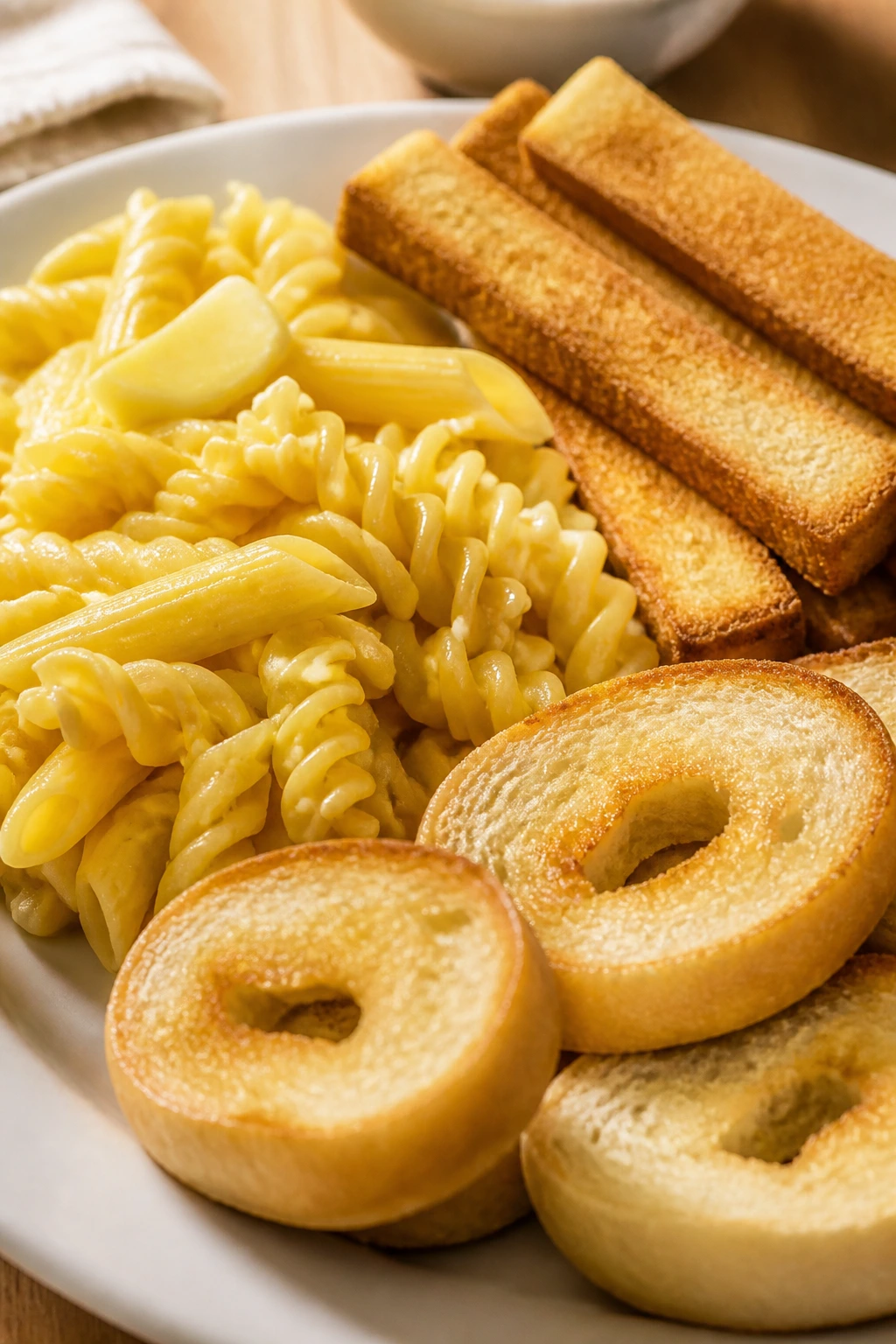
Family-style lunch gets easier when the parts are ready before the table is. Most cooked proteins—sliced chicken, turkey, or meatballs—keep well in the fridge for 3 to 4 days in a sealed container. Reheat them until steaming hot, or at least to 165°F, if you want them warm again. A skillet with a splash of water works better than blasting them dry in a microwave.
Cooked pasta, rice, and roasted potatoes usually hold for 3 to 4 days refrigerated. Rice should cool quickly and go into the fridge within about 2 hours so it doesn’t sit around warm and damp. When reheating, add a teaspoon or two of water, cover loosely, and warm until the steam comes up and the texture loosens again.
Cut fruit is where people get sloppy. Apples and pears usually look best for 1 day once sliced, though a little lemon juice can stretch that a bit. Berries hold for 1 to 2 days if they’re dry and stored in a breathable container or a paper towel–lined box. Grapes and melon cubes do fine for about 2 to 3 days.
Vegetables like cucumber sticks and carrot sticks usually stay pleasant for 2 to 4 days if they’re dried well before storage. Keep them in a sealed container with a paper towel if you want them to stay crisp. Hummus, yogurt dip, and similar sauces are usually fine for 3 to 4 days refrigerated, as long as you don’t dip directly from the serving bowl and then store the leftovers.
If you want to freeze anything, freeze the sturdier parts: cooked chicken, rice, meatballs, or bread. Most of those hold for up to 2 months in the freezer if wrapped tightly. I would not freeze cut fruit or cucumbers and expect them to come back in good shape. They won’t.
One rule saves headaches: once a perishable food has sat out on the table for more than 2 hours—or 1 hour if the room is very warm—put it away or discard it. That’s the boring part. Also the part that keeps the next lunch from becoming a problem.
Frequently Asked Questions
How many foods should I put out for a family-style lunch?
Four to six items is usually the sweet spot. That gives kids a choice without making the table feel crowded or confusing. If you have more than that, keep the extras in the kitchen and bring them out only if the first round gets eaten.
What if my child only eats two foods?
Start with the two foods they already trust and add one tiny “bridge” item next to them, like a new fruit or a different shape of the same carb. I would not make a battle out of it. Repeated low-pressure exposure works better than a dramatic lunch showdown.
Can family-style lunch work for very picky eaters?
Yes, and often better than a plated meal. Kids who resist mixed foods can handle separate components more easily because they control the order and the bite size. The trick is to keep the new item small and keep one safe food on the table every time.
How do I keep warm food warm while the kids eat?
Use a covered bowl, a thermos, or a small casserole dish wrapped in a towel. If the food needs to stay truly hot, serve it last and keep the cold items ready before the warm dish comes out. Warm food loses appeal fast once it hits the table.
Is it okay to use leftovers for this kind of lunch?
Absolutely. Leftover chicken, rice, roasted vegetables, pasta, and even plain veggies can become a lunch board with almost no extra work. Leftovers are often better here than in a composed meal because each part can keep its own texture.
What should I do if the fruit makes everything else soggy?
Put fruit in its own bowl and dry it well after washing. Berries, melon, and cut apples are fine if they’re not dripping. Juicy fruit should never sit against crackers or toast unless you want lunch to go soft in a hurry.
How do I handle different ages at the same table?
Use the same foods, but cut and portion them differently. Quarter grapes for younger kids, leave them whole for older ones, make carrot sticks thinner for toddlers, and offer bigger protein portions to bigger appetites. Same spread. Different serving.
Can I make this lunch without dairy or nuts?
Yes. Use hummus, beans, turkey, chicken, fruit, vegetables, and seed butter instead of dairy or nut-based items if needed. The lunch format itself does not depend on any one ingredient; the structure is what matters.
A Table Kids Want to Come Back To
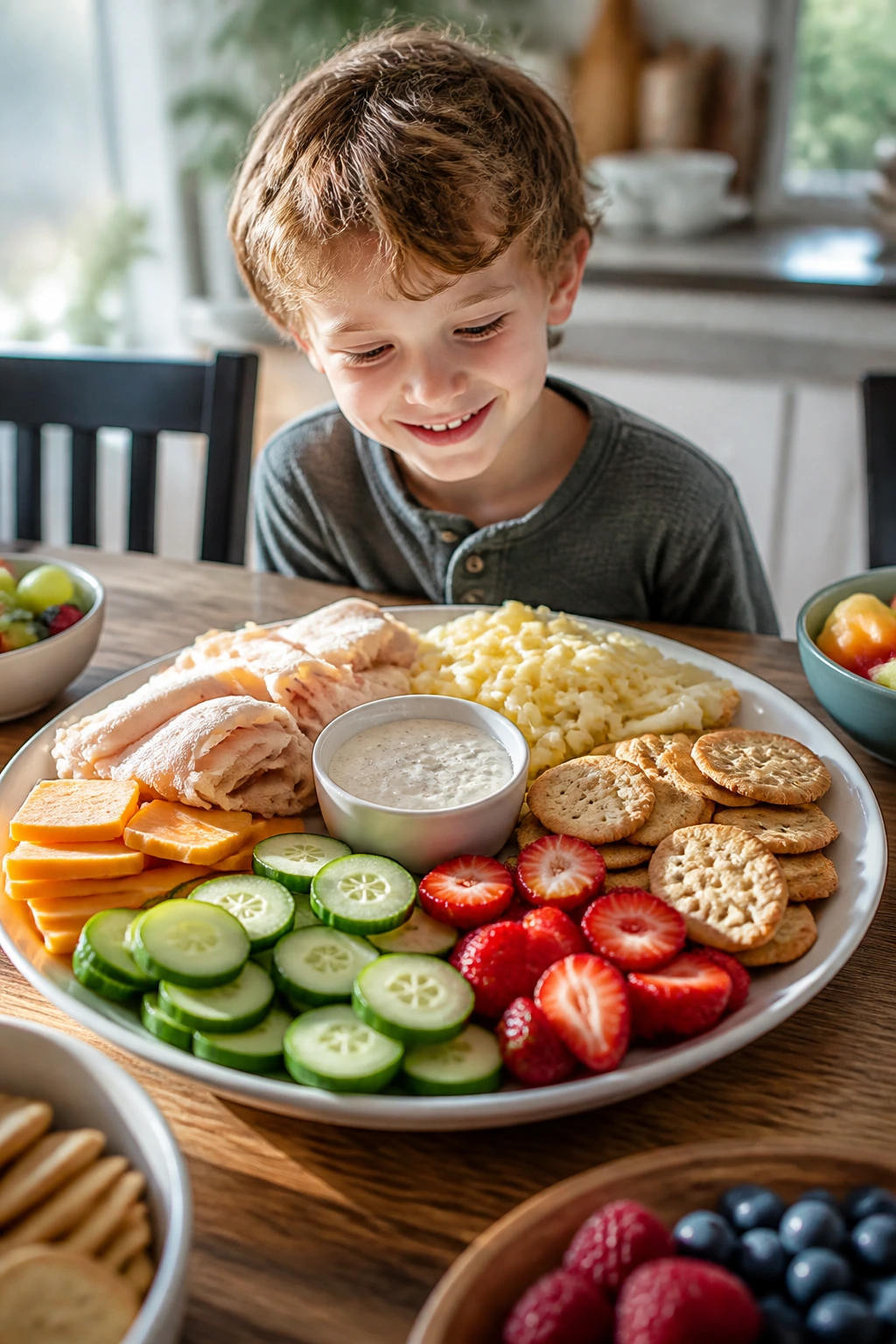
A family-style lunch for kids will actually eat is usually not the prettiest lunch on the internet. Good. Pretty is not the point. A table with a few familiar foods, a couple of good textures, and one dip children trust tends to get more bites than a plate built to impress adults.
The nice part is how repeatable it is. Once you learn the rhythm—anchor, protein, produce, dip—you can build a decent lunch from almost anything in the fridge. That kind of lunch is practical on busy days and comforting on slower ones. It also gives kids enough choice to stay interested, which is half the battle.
Serve it before the food gets tired, keep the textures separate, and leave some room for seconds. That’s the whole trick, really.