



A bubbling casserole of chicken, pasta, and broccoli has a way of pulling people into the kitchen. Kids drift toward the oven because the cheese smells like dinner is happening for real. Adults hover because they know a tray like this usually means fewer dishes, fewer complaints, and a table that fills up fast.
That is the appeal of a family-style weeknight kid friendly dinner recipe done well: it has to behave like a shortcut without tasting like one. The pasta needs to stay tender but not soft. The sauce has to cling instead of pooling. The vegetables need to disappear into the mix enough that nobody starts an argument over “the green bits.” Tricky? A little. Worth it? Absolutely.
I like this kind of dinner because it gives you one pan that does three jobs at once. It feeds the room. It calms the room. And if you build it right, the leftovers still taste like somebody cared the next day. The version below uses cooked chicken, short pasta, broccoli cut small enough to blend in, and a creamy cheese sauce that stays mild on purpose.
Why This Family-Style Weeknight Kid-Friendly Dinner Works So Well
-
One dish, one trip to the table: The casserole goes straight from oven to table in the same 9×13-inch dish, so the top stays crisp longer and nobody has to juggle separate bowls.
-
Mild without tasting flat: Cream cheese, mozzarella, a little cheddar, and a small hit of Dijon keep the sauce gentle for kids but not bland for adults.
-
Fast because the chicken is already cooked: Rotisserie chicken or leftover roast chicken keeps the active work near the half-hour mark instead of turning dinner into a project.
-
The vegetables are built in, not argued about: Small broccoli florets and peas blend into the pasta, which makes the whole thing feel less like “eat your vegetables” and more like a normal casserole.
-
Leftovers reheat with dignity: A splash of milk brings the sauce back to life, and the texture holds up better than a lot of baked pastas that go dry by the next day.
Timing, Yield, and What to Expect at the Table
Yield: Serves 6
Prep Time: 25 minutes
Cook Time: 25 minutes
Total Time: 50 minutes plus 10 minutes resting
Chill/Rest Time: 10 minutes
Difficulty: Beginner — the sauce is a straightforward stovetop mix, and the oven finishes the job.
Best Served: Warm, after a short rest, right from the baking dish
This is not a dinner that asks for a hundred tiny moves. The active work is mostly boiling pasta, making a quick white sauce, and folding everything together without crushing the pieces. The oven does the last part, which is the part most weeknights need.
The 10-minute rest matters more than people expect. Skip it and the sauce slides around the plate. Wait a few minutes and it turns into a casserole that scoops cleanly, with cheese on top that stays in place instead of running straight to the edges.
The Mild, Creamy Flavor That Kids Tend to Trust
The flavor here is gentle on purpose. Not dull. Gentle. There’s a difference, and if you’ve cooked for kids for any length of time, you already know it.
Mozzarella brings stretch and softness. Mild cheddar adds a little more flavor without crossing into sharp territory. Cream cheese is the unsung piece that makes the sauce taste smooth rather than chalky. It gives the whole pan a soft, almost velvety middle, which is exactly what helps this feel like comfort food instead of cafeteria food.
Broccoli and peas play a quiet role. Broccoli gives you a little green edge and a bit of bite if you catch it before it goes limp. Peas bring a sweet pop that works especially well with the creamy sauce. If your household treats broccoli like a personal betrayal, cut the florets tiny. Small pieces melt into the pasta more easily and cause far less drama.
I also like the tiny spoonful of Dijon in the sauce. It does not make the casserole taste like mustard. It wakes the cheese up. Without that kind of nudge, a cream sauce can go flat fast, especially after a few minutes in the oven.
Ingredients for the Casserole
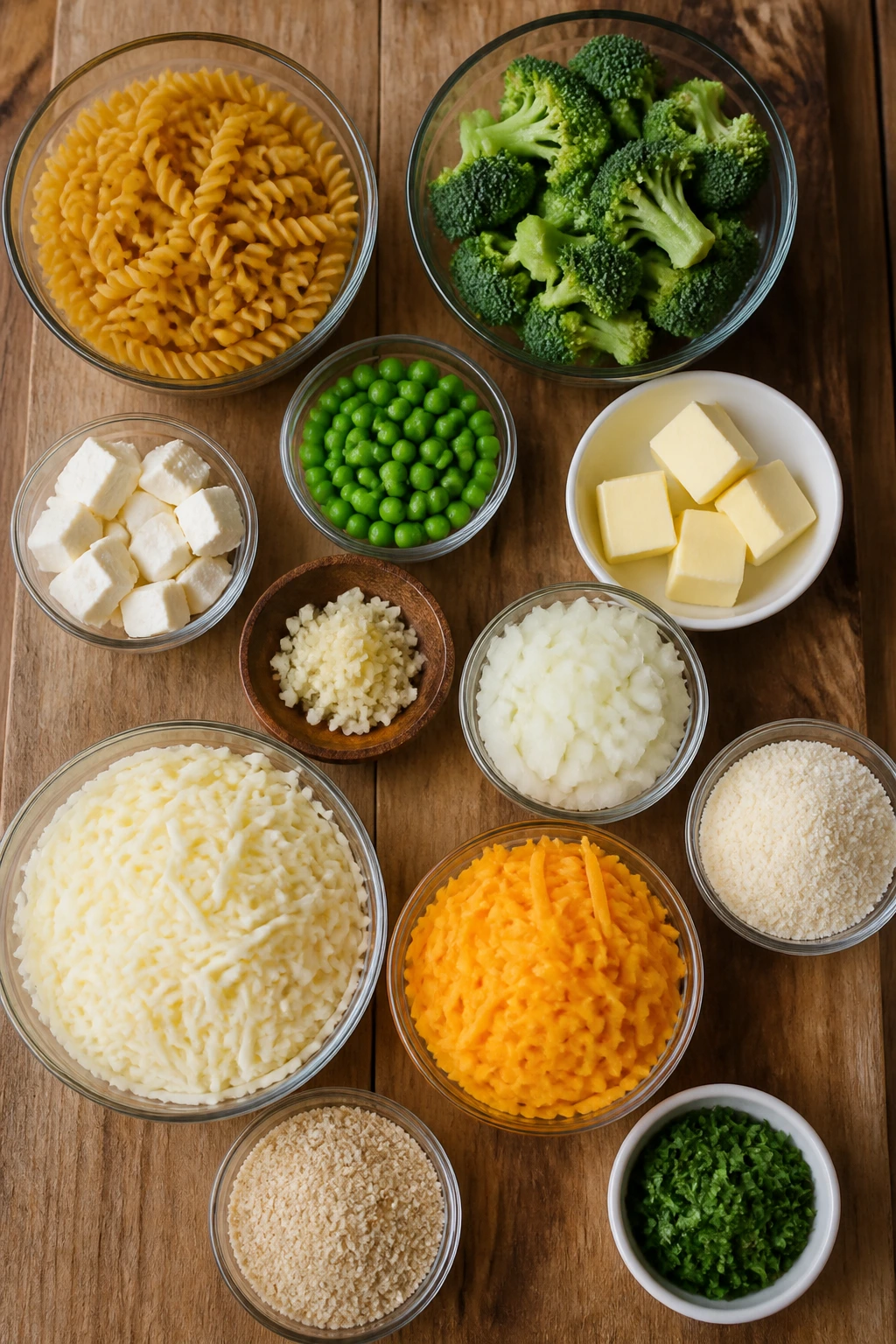
For the Pasta and Vegetables:
- 12 ounces short pasta, such as penne, rotini, or fusilli
- 3 cups small broccoli florets, cut into bite-size pieces
- 1 cup frozen peas, thawed
For the Creamy Sauce:
- 3 tablespoons unsalted butter
- 1 small yellow onion, finely diced
- 2 cloves garlic, minced
- 2 tablespoons all-purpose flour
- 2 cups low-sodium chicken broth
- 1 1/2 cups whole milk
- 4 ounces cream cheese, softened and cubed
- 1 teaspoon Dijon mustard
- 1 teaspoon kosher salt
- 1/2 teaspoon black pepper
- 1/2 teaspoon dried Italian seasoning
For the Chicken and Topping:
- 3 cups cooked shredded chicken, about 1 pound
- 2 cups shredded mozzarella
- 1 cup shredded mild cheddar
- 1/4 cup grated Parmesan
- 1/2 cup panko breadcrumbs
- 1 tablespoon melted unsalted butter
- 1 tablespoon chopped fresh parsley, for serving, optional
What Each Ingredient Is Doing in the Pan
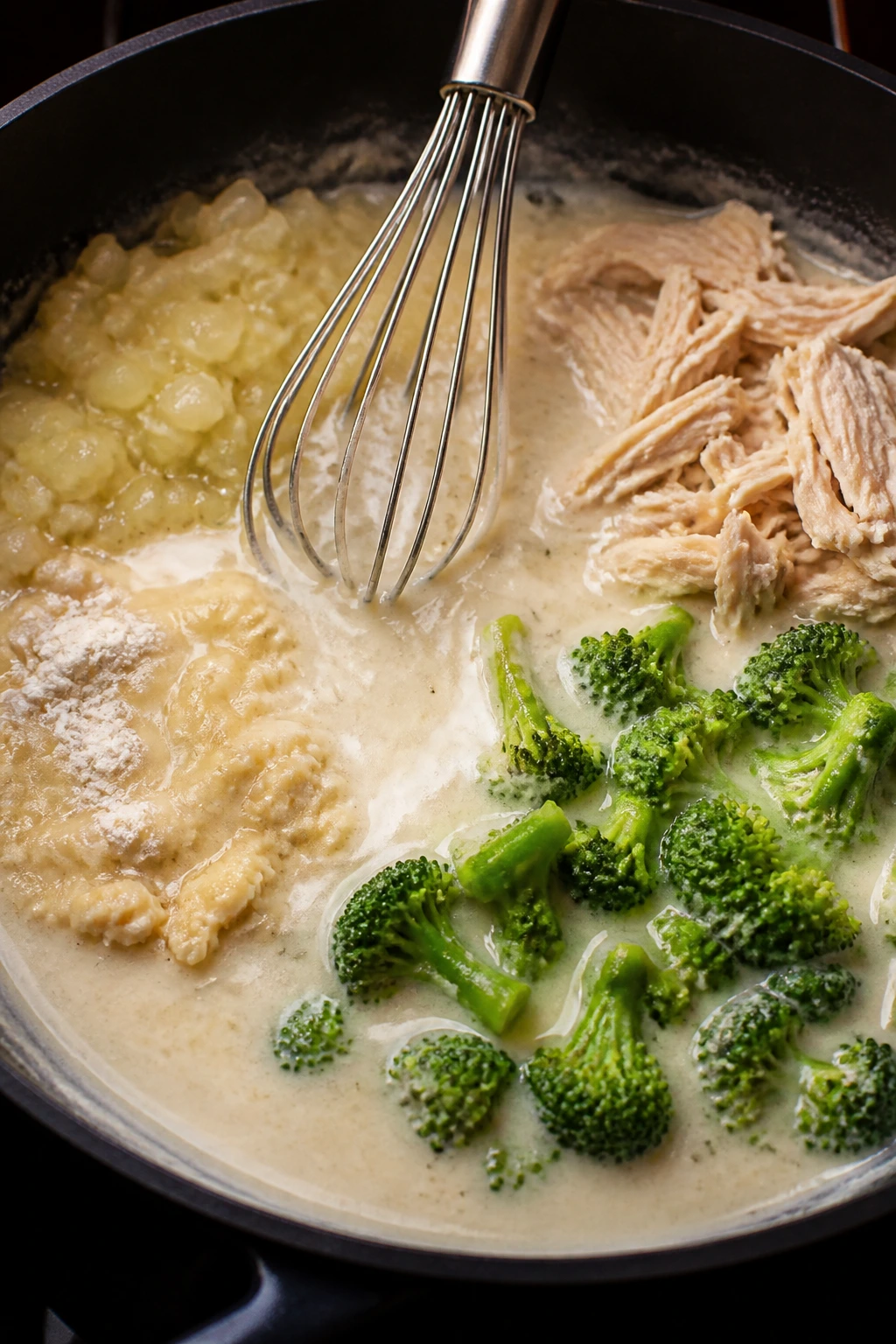
Chicken
What to use: 3 cups cooked shredded chicken, which is usually about 1 pound once it’s pulled apart.
Preparation: Shred it into bite-size pieces so every forkful gets some chicken without forcing anyone to wrestle a giant chunk from the casserole.
Substitutions: Leftover turkey works cleanly here, and chopped rotisserie chicken is the fastest path on a busy night. Diced cooked chicken breast also works if that’s what you’ve got.
Tips: If the chicken is refrigerator-cold, let it sit out while you make the sauce. Cold chicken sinks the temperature of the pan and makes the cheese seize a little harder when you mix everything together.
Pasta and Vegetables
What to use: 12 ounces of short pasta, 3 cups broccoli florets, and 1 cup thawed peas.
Preparation: Cut the broccoli smaller than you think you need to. The florets should be bite-size, not tree-size. Add the broccoli to the pasta water near the end so it stays green and doesn’t turn soft and swampy.
Substitutions: Cauliflower, chopped green beans, or a small handful of spinach can stand in for the broccoli if that’s what’s in the fridge. Corn also works if you want the casserole a little sweeter.
Tips: Use ridged pasta if you can. Penne, rotini, and fusilli hold the sauce better than smooth shapes, and this dish depends on the sauce clinging to the pasta instead of sliding off.
Sauce Base
What to use: Butter, onion, garlic, flour, chicken broth, milk, cream cheese, Dijon mustard, salt, pepper, and Italian seasoning.
Preparation: Dice the onion finely so it softens into the sauce instead of staying as little crunchy bits. Soften the cream cheese before it goes in; cold cream cheese is the fastest way to end up with lumps.
Substitutions: Half-and-half can replace the milk if you want a richer finish. For a dairy-light version, unsweetened oat milk and dairy-free cream cheese can work, though the sauce will be a little less plush.
Tips: Whisk the broth in slowly at first. That keeps the flour from clumping at the bottom of the pan. I’d rather spend one extra minute whisking than spend ten minutes trying to mash out little flour pebbles later.
Cheese and Crunch
What to use: Mozzarella, mild cheddar, Parmesan, panko breadcrumbs, and melted butter.
Preparation: Shred the cheese yourself if you have time. Pre-shredded cheese works in a pinch, but block cheese melts smoother and gives you that stringy top everyone likes. Toss the panko with melted butter before it goes on top.
Substitutions: Monterey Jack can step in for mozzarella, Colby can replace the cheddar, and if you hate crunchy tops, skip the panko and use extra cheese instead.
Tips: Add the cheese after the sauce comes off the strongest heat. Boiling cheese sauce goes grainy and annoying fast. Gentle heat. Always gentle heat.
Tools That Make the Job Easier
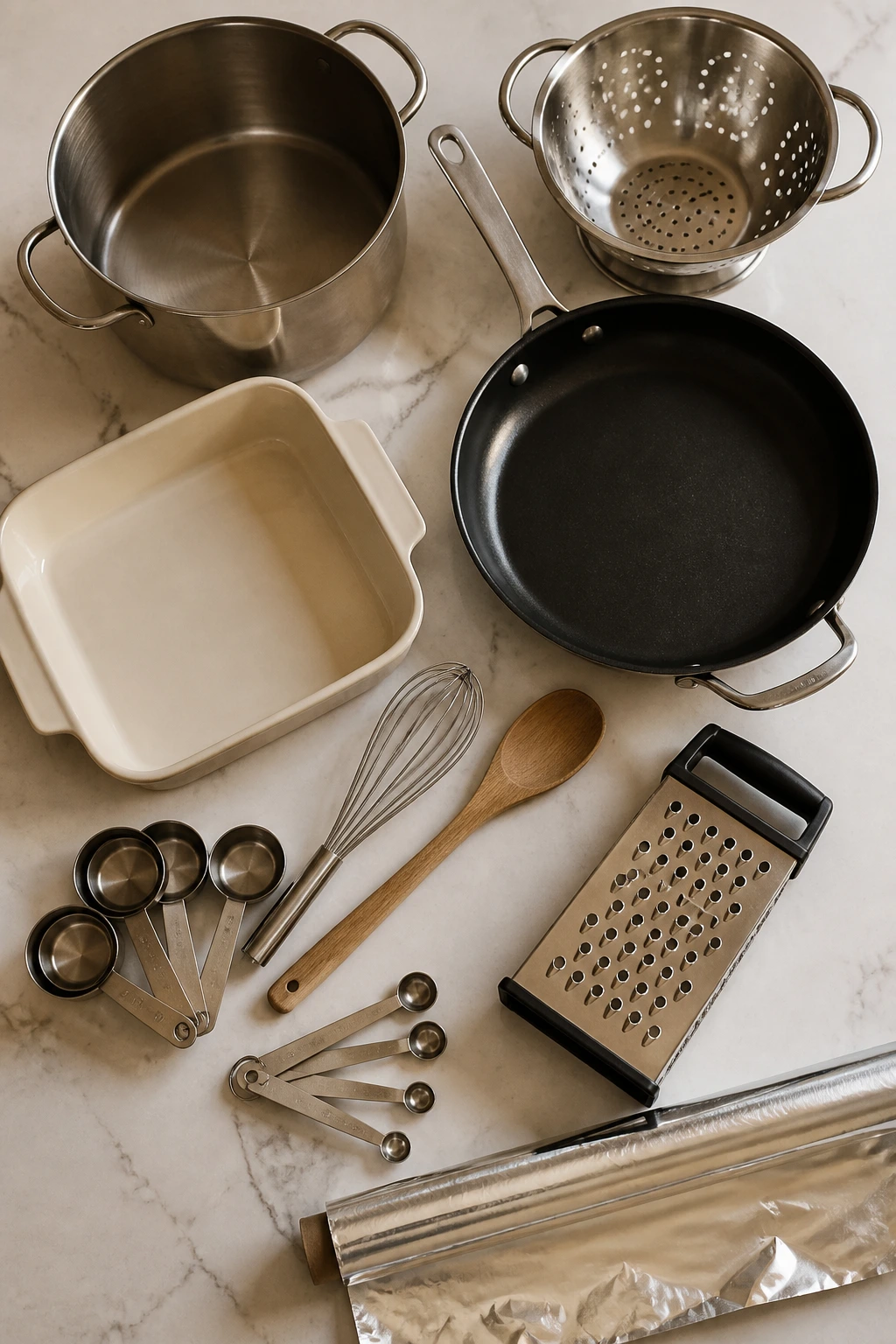
- 9×13-inch baking dish: The casserole needs room to bubble without spilling over the sides.
- Large pot: Use this for the pasta and broccoli so they cook evenly.
- Large skillet or deep sauté pan: This is where the sauce comes together without splattering everywhere.
- Colander: You want the pasta drained fast and well, not sitting in a wet heap.
- Whisk: Essential for a smooth sauce; a spoon will not do the job as cleanly.
- Wooden spoon or silicone spatula: Helpful for folding the chicken and pasta into the sauce without smashing the noodles.
- Measuring cups and spoons: The sauce depends on the liquid balance, so eyeballing is a bad idea here.
- Box grater or food processor: Useful if you’re shredding cheese from a block.
- Aluminum foil: Handy if the top browns before the center is hot.
How the Pasta, Sauce, and Chicken Come Together
Prep the Pan and Pasta:
-
Preheat the oven to 400°F (205°C). Grease a 9×13-inch baking dish with butter or nonstick spray and set it aside.
-
Bring a large pot of well-salted water to a boil. Add the pasta and cook it for 2 minutes less than the package directions. Add the broccoli during the last 2 minutes so it softens slightly without losing its color. Drain well. Do not rinse the pasta; that starch helps the sauce cling later.
Build the Sauce:
-
While the pasta cooks, melt the butter in a large skillet over medium heat. Add the onion and cook for 4 to 5 minutes, stirring now and then, until it turns soft and glossy but not browned.
-
Stir in the garlic and cook for 30 seconds, just until fragrant. Sprinkle in the flour and stir for 1 minute so it forms a smooth paste and loses that raw flour smell.
-
Whisk in the chicken broth a little at a time, then pour in the milk. Keep whisking as the sauce comes together, then simmer for 3 to 4 minutes until it thickens enough to coat the back of a spoon.
-
Lower the heat and whisk in the cream cheese, Dijon mustard, salt, pepper, and Italian seasoning until smooth. Stir in 1 1/2 cups of the mozzarella, 3/4 cup of the cheddar, and the Parmesan. If the sauce looks too thick, add 2 to 4 tablespoons of milk. If it looks thin, give it another minute on the heat.
Assemble and Bake:
-
Fold the chicken, pasta, broccoli, and peas into the sauce until everything is evenly coated. Scrape the mixture into the prepared baking dish and spread it into a level layer.
-
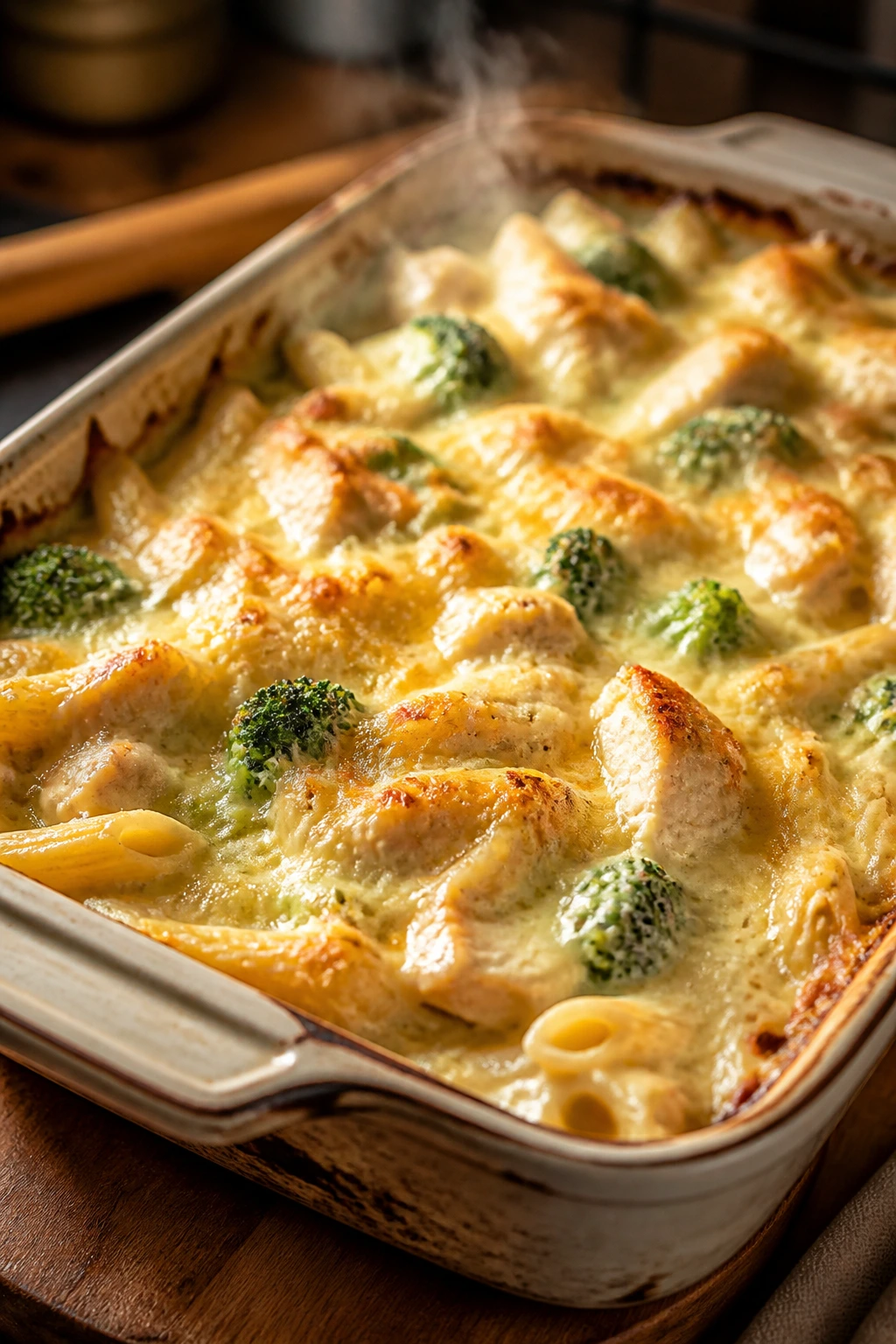
Mix the panko with the melted butter in a small bowl. Sprinkle the remaining mozzarella, the remaining cheddar, and the buttery panko over the casserole. Bake for 15 to 18 minutes, until the edges are bubbling and the top is lightly golden. If you want a deeper brown top, broil for 1 to 2 minutes, watching closely the whole time.
-
Let the casserole rest for 10 minutes before serving. Skip this rest at your own risk. The sauce thickens as it settles, and the whole dish slices and scoops better after it has a minute to calm down. Garnish with parsley if you want a little color on top.
How to Serve It Family-Style
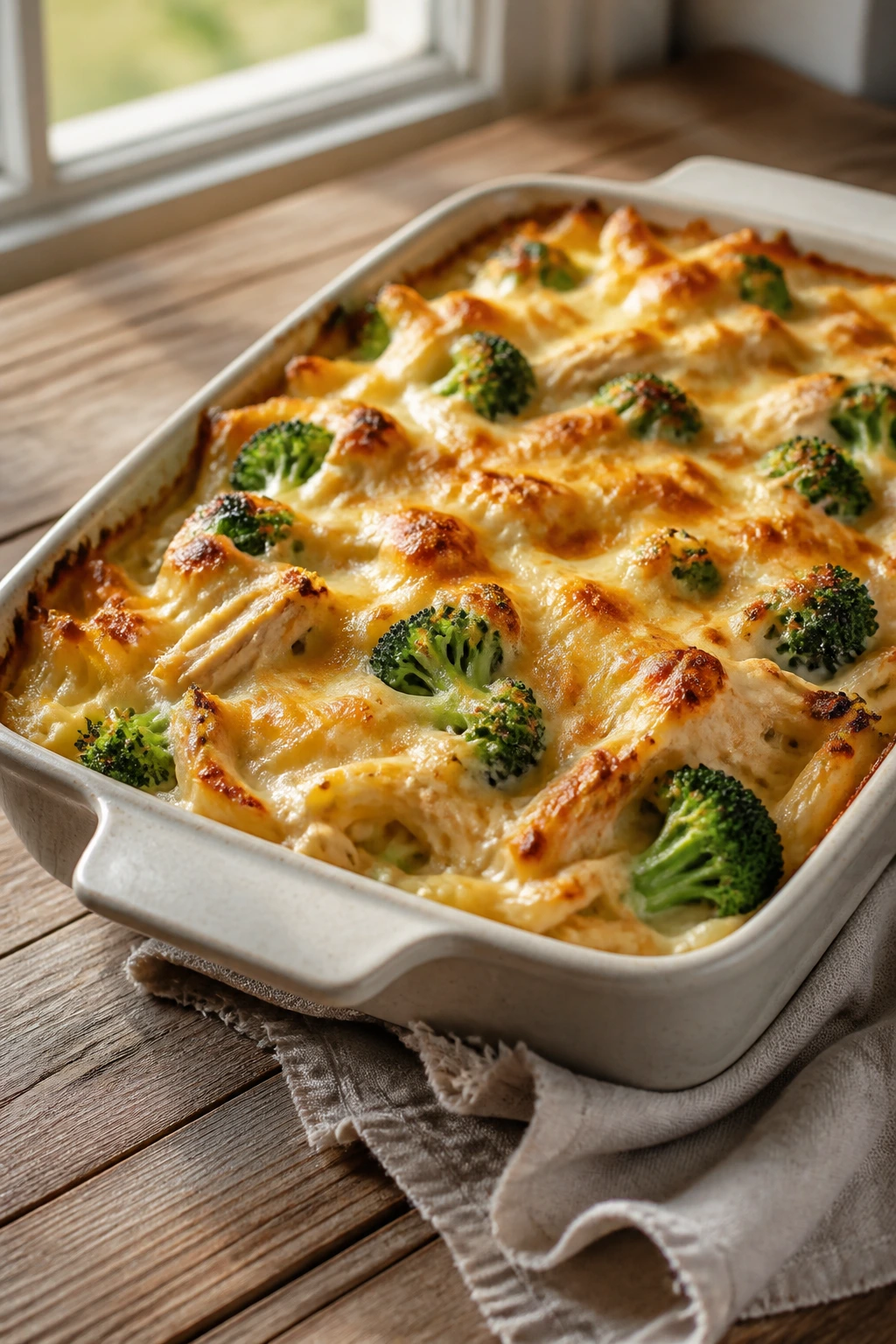
Presentation: Bring the casserole to the table in the baking dish and set it on a trivet or folded towel. I like to serve it directly from the pan because the cheesy top stays intact longer that way, and it feels more relaxed than plating everything in the kitchen and carrying it out one bowl at a time.
Accompaniments: A simple green salad with a lemony dressing keeps the meal from feeling heavy. Garlic toast is a safe move if your crowd wants bread. Sliced cucumbers, apple wedges, or steamed carrots fit nicely on the side without competing with the casserole’s creamy texture.
Portions: Six generous servings is the honest answer. If you’ve got small kids, it can stretch to eight smaller portions. Big appetites will be happier if you add bread or a salad and call it a full plate instead of pretending the casserole will magically feed everyone plus leftovers.
Beverage Pairing: Cold milk works well for kids, and it actually suits the mild cheese flavor. For adults, sparkling water with lemon or a glass of unsweetened iced tea keeps the meal from leaning too rich.
Practical Tips for Better Texture and Brighter Flavor
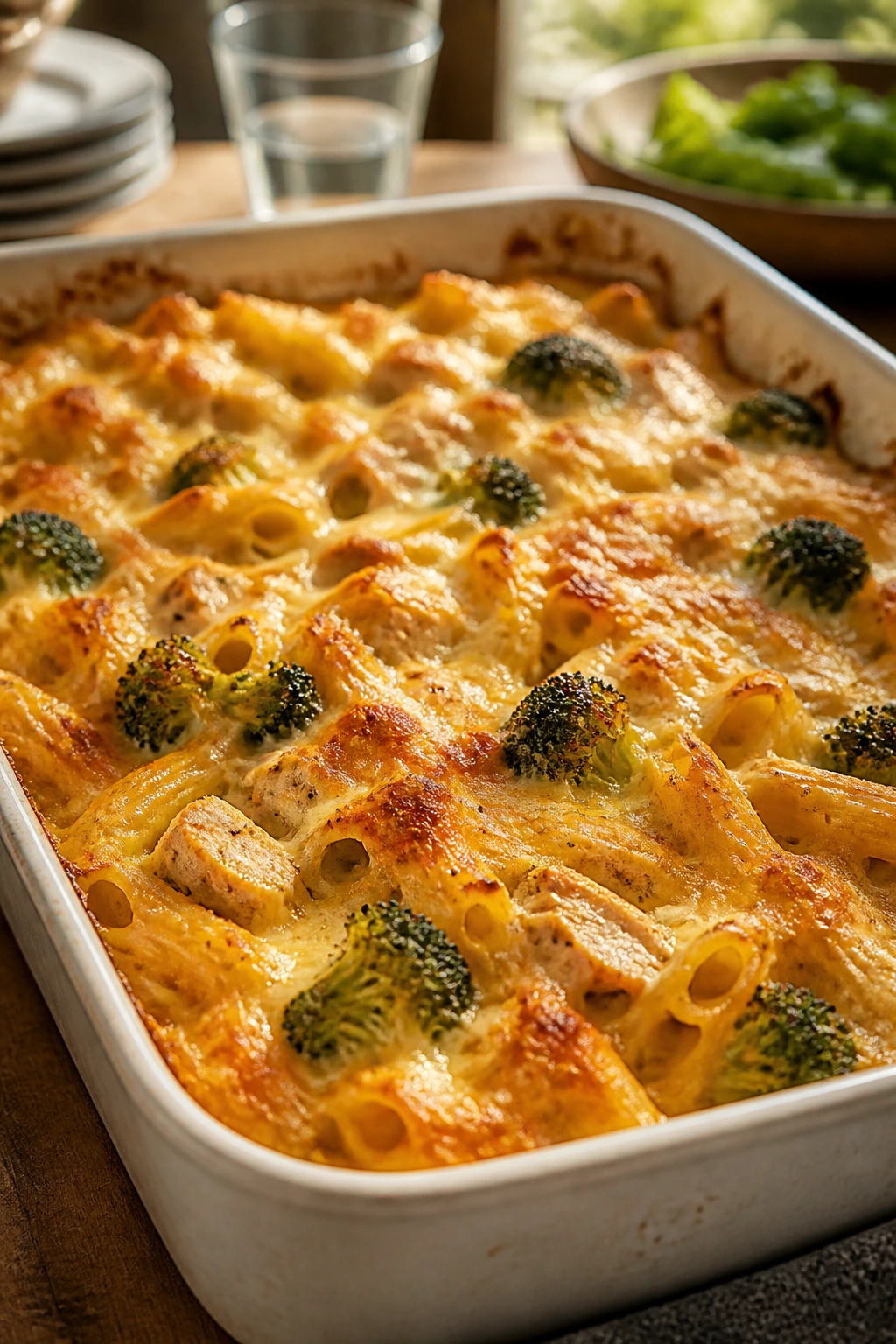
Flavor Enhancement: Stir a teaspoon of lemon zest into the sauce right before you fold in the chicken. It does not make the casserole taste lemony. It just keeps the cheese from flattening out after it bakes. A squeeze of lemon over the finished pan works too, but zest is quieter and more controlled.
Time-Saver: Buy rotisserie chicken and pre-cut broccoli florets if you need dinner moving fast. That trims the hands-on time without changing the shape of the dish. The sauce still tastes homemade because you’re making that part from scratch.
Texture Move: Pull the pasta slightly early and keep the broccoli in the water only for the final 2 minutes. If both are overcooked before they ever see the oven, the bake turns soft fast. This is one of those places where a little underdone is correct.
Cost-Saver: Block cheese usually gives you better melting, and a lot of times it costs less by the pound than the bagged stuff. If you already have pre-shredded cheese, use it. I’m not here to make a Tuesday more complicated. But if you’re choosing from scratch, the block wins.
Kid-Friendly Trick: If you know the broccoli pushback is real, reserve a plain scoop of pasta before you fold in the vegetables. Put that in one corner of the dish and make the rest as written. It’s a small bit of diplomacy that saves a lot of dinner noise.
Common Mistakes That Turn a Good Bake Soggy or Bland
-
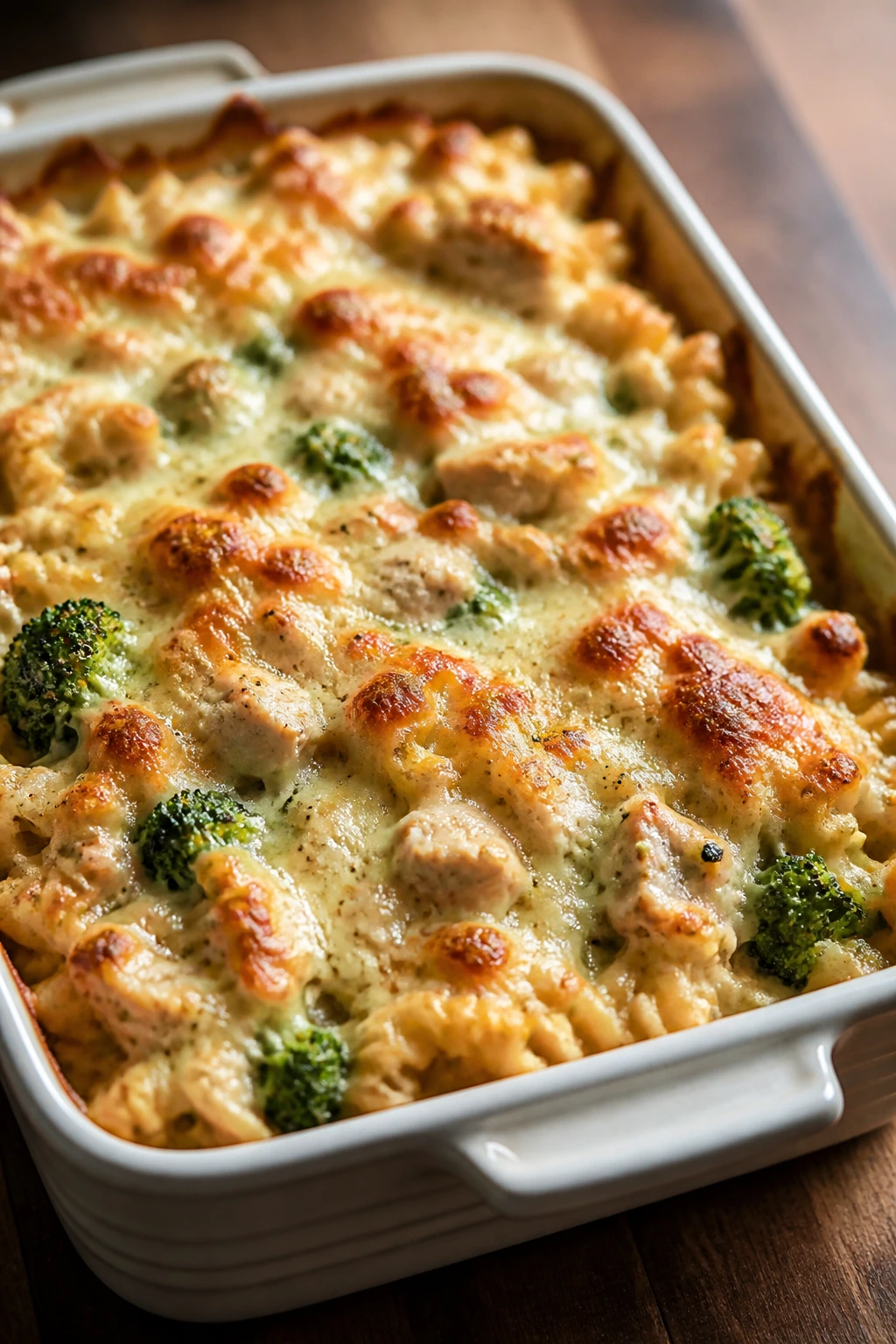
Cooking the pasta all the way through before baking. The noodles keep softening in the oven, so fully cooked pasta turns mushy fast. Fix it by stopping 2 minutes early and draining well.
-
Skipping the simmer on the sauce. If the sauce goes into the pan thin and loose, the casserole will look watery at the edges. Let it thicken enough to coat a spoon before you add the cheese.
-
Using huge broccoli florets. Big pieces stay firm while the pasta softens around them, which gives you an awkward texture. Cut the florets small enough that they can tuck between the noodles.
-
Adding cheese to a boiling sauce. Hotter is not better here. If the sauce is raging, the cheese can turn grainy or clump. Turn the heat down first and stir gently.
-
Skipping the rest after baking. The casserole is still moving when it comes out of the oven. Slice it too early and you get a shallow puddle instead of neat scoops.
-
Over-salting when the chicken is already seasoned. Rotisserie chicken and cheese both bring salt to the party. Taste the sauce before the final seasoning goes in, especially if your broth is not low-sodium.
Variations and Swaps That Still Taste Like Dinner
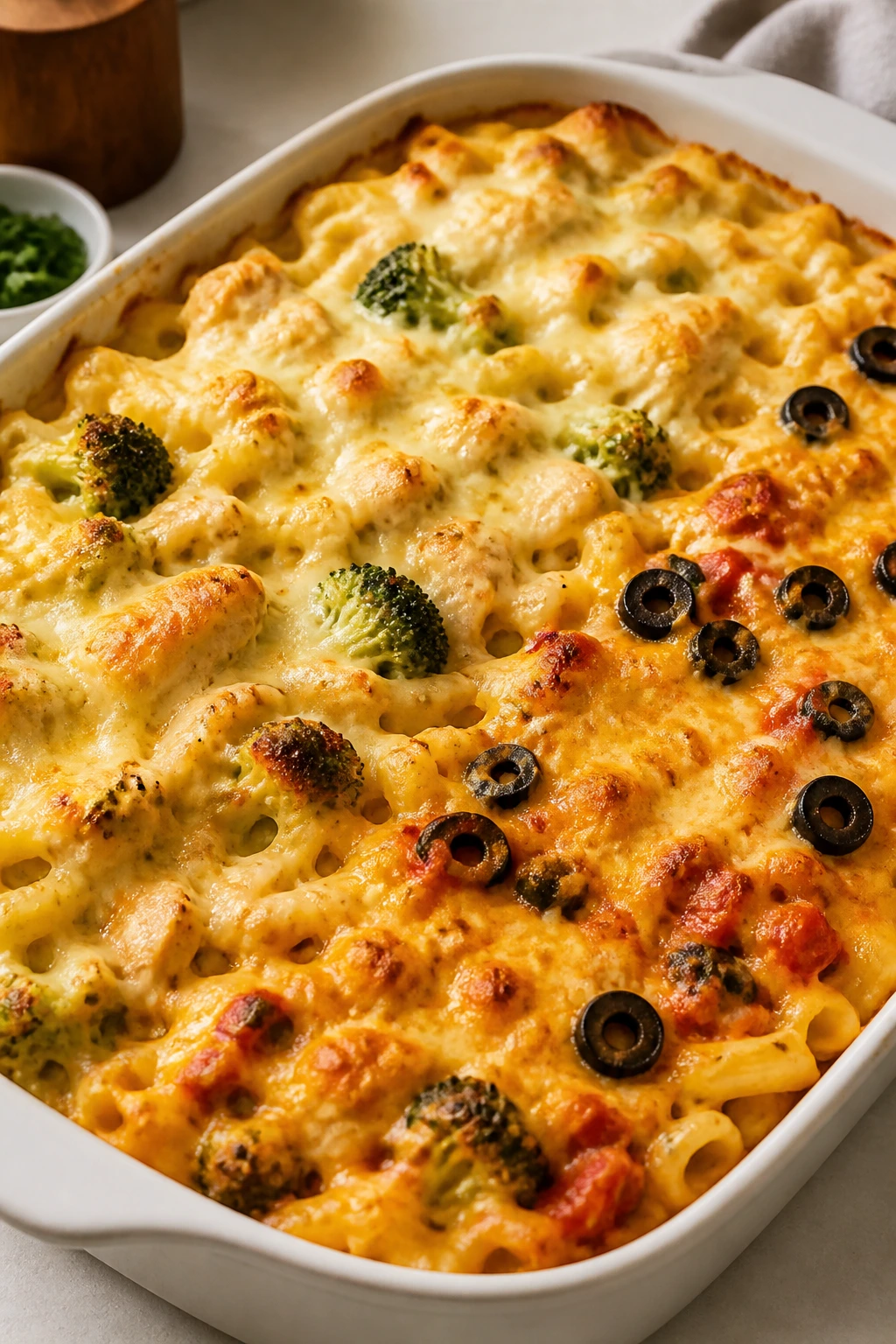
Rotisserie Shortcut Bake: This is the same casserole, just built for speed. Use store-bought rotisserie chicken, bagged broccoli, and pre-shredded cheese, and you can keep the prep moving without sacrificing the creamy texture. It’s the version I’d make on a night when the clock feels rude.
Hidden-Veggie White Sauce: Blend 1 cup of steamed cauliflower into the sauce after the milk thickens. It melts in smoothly and disappears under the cheese, which is handy if you’re feeding someone who inspects green things like they’re evidence in a trial.
Tex-Mex School-Night Bake: Swap the Italian seasoning for 1 teaspoon cumin and 1 teaspoon mild chili powder, then use Monterey Jack instead of mozzarella. Stir in 1 cup of corn and serve the casserole with salsa on the side. The whole dish shifts warmer and a little sweeter.
Ham-and-Pea Casserole: Replace the chicken with 3 cups diced cooked ham and keep the peas in the mix. Reduce the salt to 1/2 teaspoon because ham brings enough salt on its own. This is a smart leftover move after a holiday meal.
No-Crunch Comfort Version: Skip the panko and top the casserole with an extra 1/2 cup of mozzarella instead. This is the version for kids who dislike toasted crumbs or for anyone who wants a softer top and a more classic creamy bake.
Make-Ahead, Storage, and Reheating
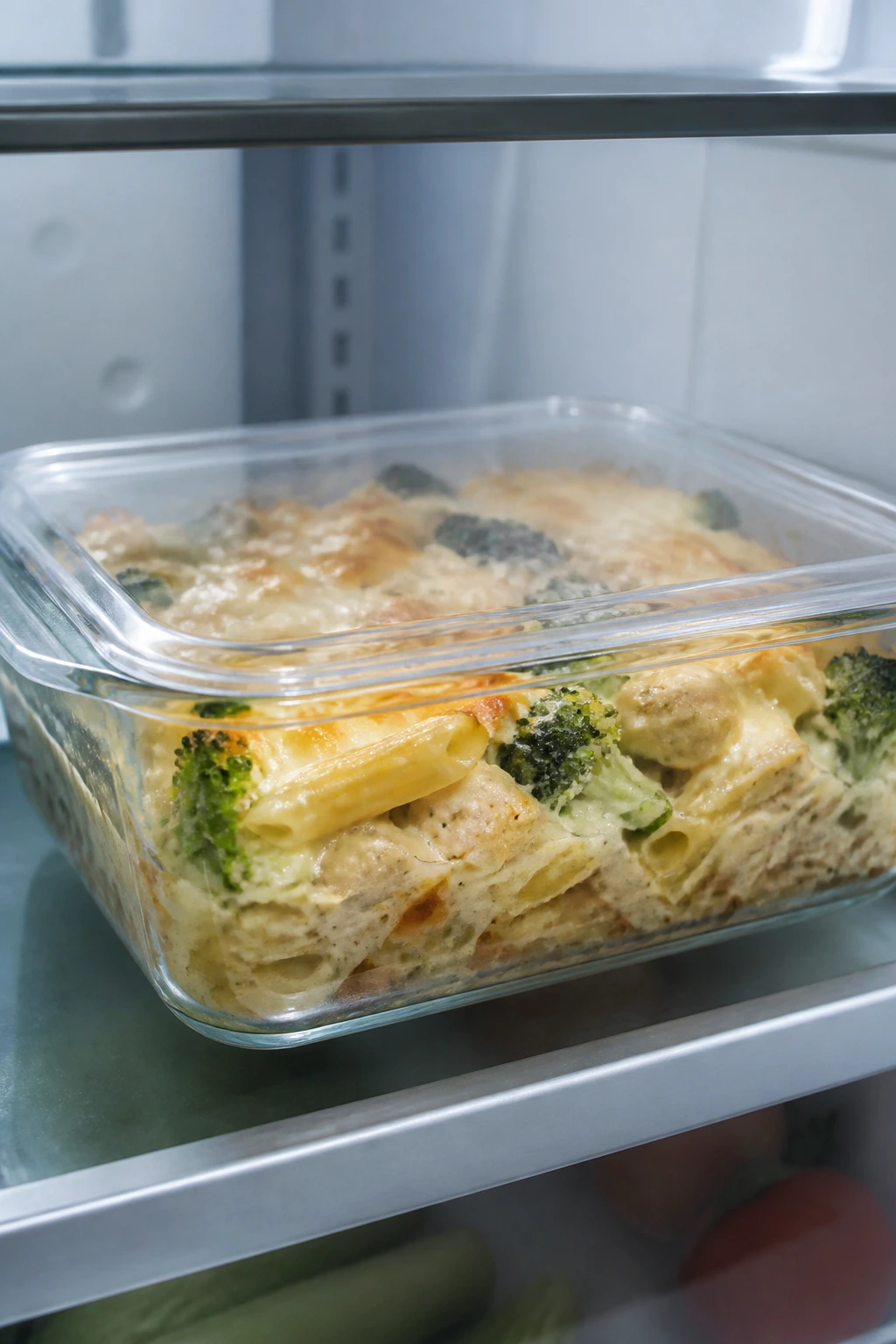
This casserole can be made ahead, but it behaves best when you treat the pasta and the sauce with a little respect. If you want to prep early, cook the pasta and broccoli, make the sauce, and assemble everything up to 24 hours in advance. Cover the dish tightly and refrigerate it. If you’re doing that, keep the panko topping separate until just before baking so it doesn’t turn soggy.
Once baked, the casserole keeps well in the refrigerator for 3 to 4 days. Let it cool for no more than 2 hours before covering and chilling. That timing matters more than people think, especially with chicken and dairy in the mix.
For freezing, portion it into airtight containers or wrap the whole pan tightly if you have freezer-safe cookware. It holds for up to 2 months. The texture is better if you freeze it before baking, but baked leftovers freeze too. Thaw overnight in the refrigerator before reheating if you can manage it.
To reheat a full pan, cover it with foil and bake at 350°F (175°C) for 20 to 25 minutes, adding a splash of milk or chicken broth before it goes in. For single servings, microwave in 60 to 90 second bursts, stirring once if the container allows it. If the sauce looks dry, a teaspoon or two of milk brings it back. That small touch saves a lot of disappointment.
Questions Parents Ask Before Making It

Can I use rotisserie chicken instead of cooking chicken from scratch?
Yes, and I’d argue it’s the smartest version for a weeknight. Pull off the skin, shred the meat into bite-size pieces, and you’re halfway done before the sauce even starts.
Can I make this with gluten-free pasta?
You can, but use a sturdy gluten-free shape and cook it a little less than the box suggests. GF pasta can go soft faster after baking, so stop early and check the texture before it heads into the oven.
What if my kids hate broccoli?
Cut the florets very small, or swap in peas, corn, or finely chopped cauliflower. The dish still works if you adjust the vegetables to match the people at the table instead of forcing one version on everyone.
Can I use frozen broccoli?
Yes. Thaw it first and pat it dry so extra water does not thin the sauce. If the pieces are big, chop them down after thawing; frozen broccoli often hides bigger stems than you expect.
What should I do if the sauce turns out too thin?
Let it simmer another minute or two before you add the pasta and chicken. If it is still loose, whisk 1 teaspoon of flour into 1 tablespoon of milk in a small cup, then stir that into the sauce and cook for another minute.
Can I leave off the breadcrumbs?
Absolutely. The casserole will still taste right with a cheese-only top. If you want a little crunch without breadcrumbs, add a few extra minutes under the broiler and keep a close eye on it.
Does this freeze well after baking?
It does, though the pasta softens a little more after thawing. Freeze it in portions if possible, because smaller containers reheat more evenly and keep the texture closer to fresh.
How do I keep leftovers from drying out?
Reheat covered and add a splash of milk or broth before the heat goes on. The sauce tightens as it chills, so that little bit of liquid helps it loosen up without turning soupy.
A Dinner Worth Pulling from the Oven
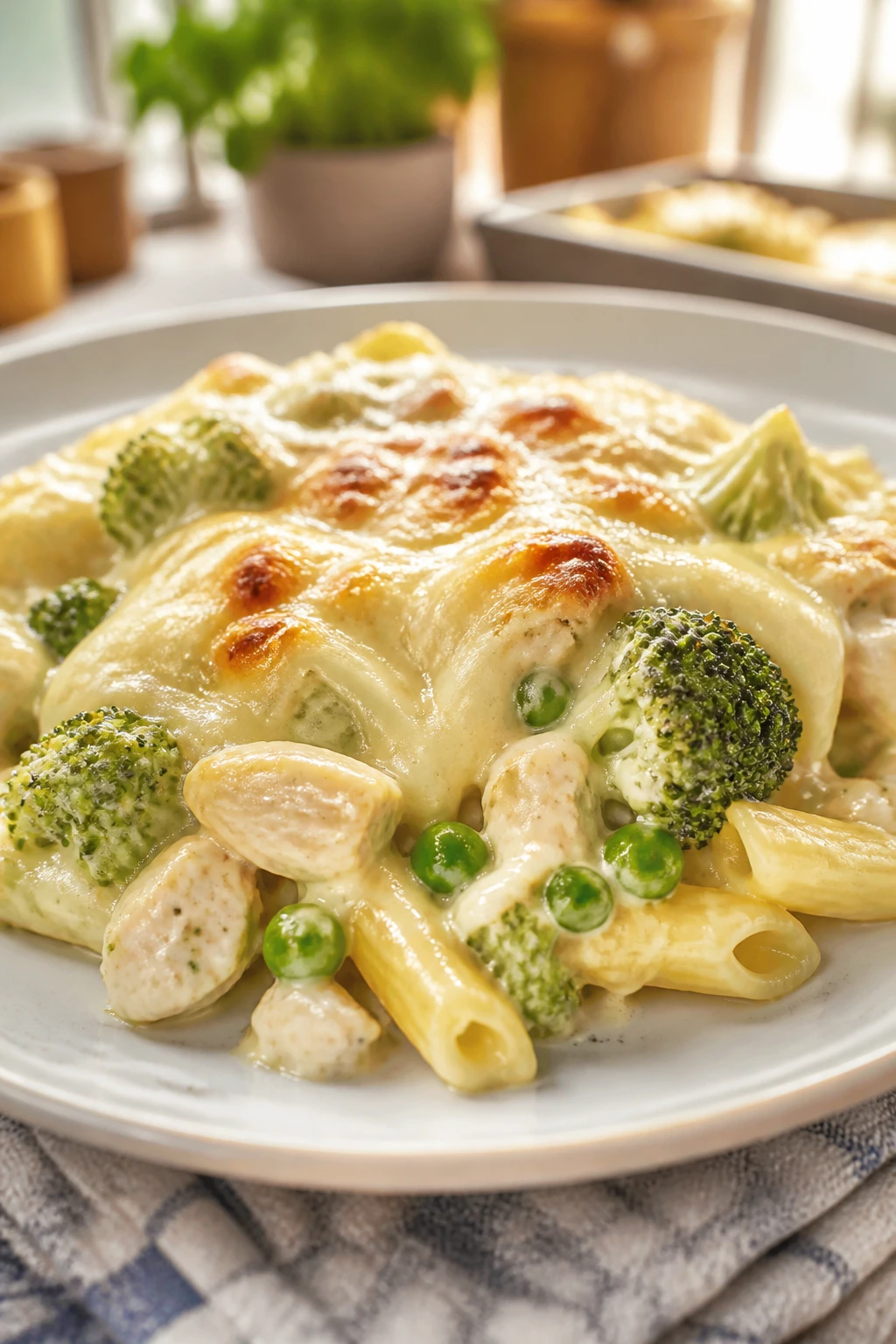
There’s a reason this kind of casserole keeps showing up in busy homes. It is plain enough to satisfy kids, sturdy enough to survive leftovers, and flexible enough to change shape depending on what’s already in the fridge. That combination is rare. Most dinners give you one of those things, maybe two if you’re lucky.
What I like most is the way it lands on the table. The cheese is still soft at the edges. The pasta gives a little when the spoon goes in. The broccoli is present, but not in a bossy way. It feels like dinner was planned, even if the afternoon felt like chaos.
Cheesy Chicken, Broccoli, and Pasta Bake — Recipe Card
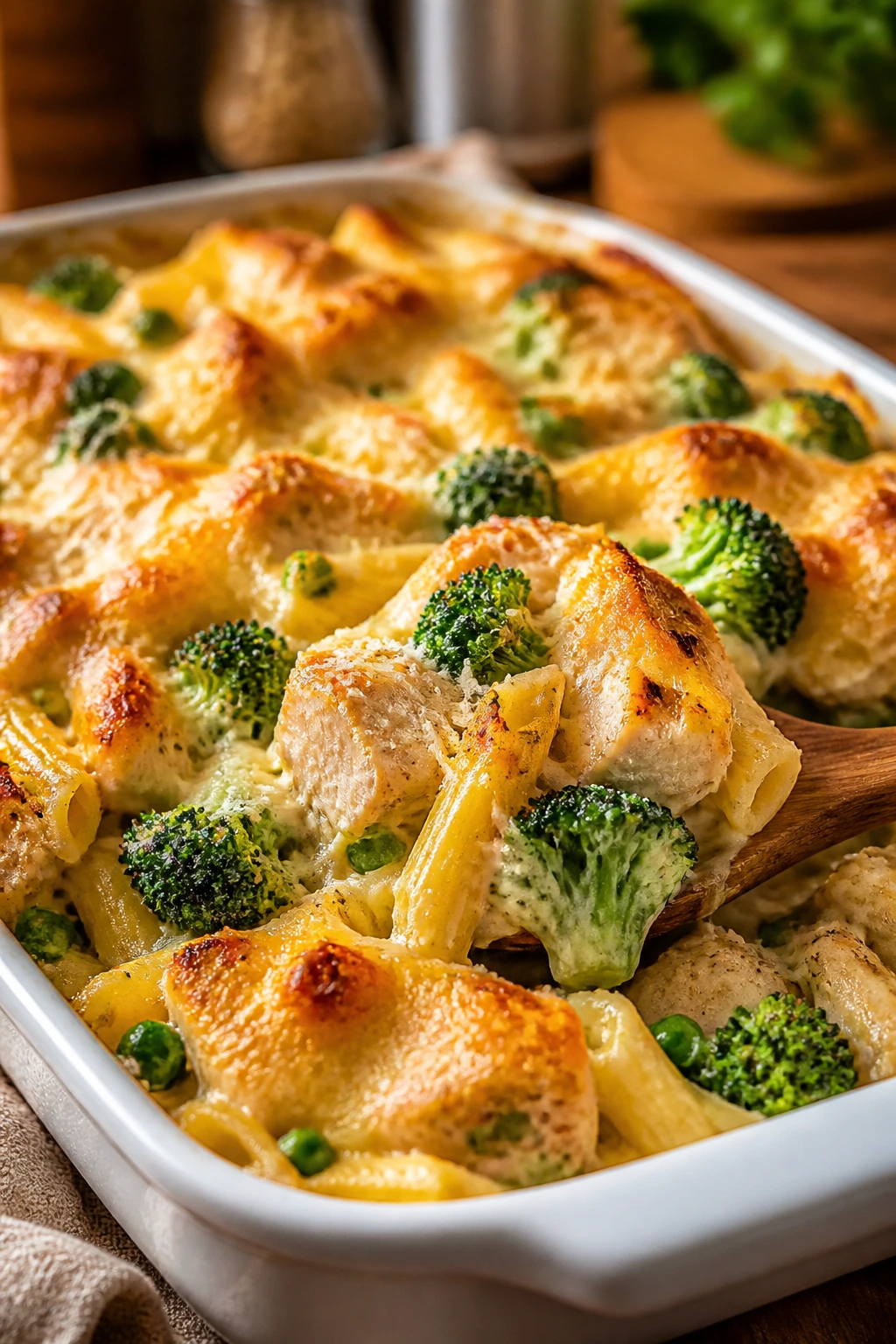
Recipe Name: Cheesy Chicken, Broccoli, and Pasta Bake
Description: A creamy, family-style chicken pasta casserole with broccoli, peas, mild cheddar, mozzarella, and a buttery panko topping. It bakes into a warm, scoopable dinner that works well for weeknights and reheats nicely.
Prep Time: 25 minutes
Cook Time: 25 minutes
Total Time: 50 minutes plus 10 minutes resting
Course: Dinner, Main Course
Cuisine: American
Servings: 6 servings
Calories: About 560 kcal per serving
Ingredients
For the Pasta and Vegetables:
- 12 ounces short pasta, such as penne, rotini, or fusilli
- 3 cups small broccoli florets, cut into bite-size pieces
- 1 cup frozen peas, thawed
For the Creamy Sauce:
- 3 tablespoons unsalted butter
- 1 small yellow onion, finely diced
- 2 cloves garlic, minced
- 2 tablespoons all-purpose flour
- 2 cups low-sodium chicken broth
- 1 1/2 cups whole milk
- 4 ounces cream cheese, softened and cubed
- 1 teaspoon Dijon mustard
- 1 teaspoon kosher salt
- 1/2 teaspoon black pepper
- 1/2 teaspoon dried Italian seasoning
For the Chicken and Topping:
- 3 cups cooked shredded chicken, about 1 pound
- 2 cups shredded mozzarella
- 1 cup shredded mild cheddar
- 1/4 cup grated Parmesan
- 1/2 cup panko breadcrumbs
- 1 tablespoon melted unsalted butter
- 1 tablespoon chopped fresh parsley, for serving, optional
Instructions
-
Preheat the oven to 400°F (205°C) and grease a 9×13-inch baking dish.
-
Bring a large pot of salted water to a boil. Cook the pasta for 2 minutes less than the package directions, then add the broccoli for the final 2 minutes. Drain well.
-
Melt the butter in a large skillet over medium heat. Cook the onion for 4 to 5 minutes, then add the garlic for 30 seconds.
-
Stir in the flour and cook for 1 minute. Whisk in the broth, then the milk, and simmer until thickened, about 3 to 4 minutes.
-
Lower the heat and whisk in the cream cheese, Dijon, salt, pepper, and Italian seasoning. Stir in 1 1/2 cups mozzarella, 3/4 cup cheddar, and the Parmesan until smooth.
-
Fold in the chicken, pasta, broccoli, and peas. Transfer the mixture to the prepared baking dish.
-
Mix the panko with the melted butter. Top the casserole with the remaining mozzarella, the remaining cheddar, and the panko mixture.
-
Bake for 15 to 18 minutes, until bubbling and lightly golden. Broil for 1 to 2 minutes if you want more color, watching closely.
-
Rest for 10 minutes before serving. Garnish with parsley if using.
Notes:
Use rotisserie chicken for the fastest version. Add a splash of milk when reheating leftovers. Let the casserole rest before scooping so the sauce thickens properly.