



Fresh creamy tuna salad has a bad reputation for a reason: most versions are either dry and chalky or so wet they slide off the spoon in a gray, mayo-heavy slump. A good bowl should be cooler than that. It should taste like tuna that was treated with a little respect — flaked, seasoned, brightened with lemon, and bound with a homemade dressing that actually tastes like food instead of a jar label.
That’s the version I keep coming back to. The dressing here is built from mayonnaise and Greek yogurt, so you get body and tang in the same bite. Celery brings a clean snap, red onion adds a sharp little edge, dill wakes up the whole thing, and a spoonful of pickle juice keeps the flavor from settling into that flat, one-note place tuna salad can fall into so easily.
There’s no cooking involved, which is part of the charm, but there is a wrong way to do it. Skip the draining, overdo the onion, mash the tuna into paste, and you end up with something that feels like cafeteria wallpaper paste. Handle the can carefully, season in layers, and give the bowl a short rest in the fridge. The difference is striking.
Why This Tuna Salad Earns a Spot in the Fridge
-
Creamy without feeling heavy: The mix of mayonnaise and Greek yogurt gives the dressing a smooth, spoonable texture without that dense, greasy finish that can make tuna salad drag on the palate.
-
Bright enough to taste fresh: Lemon juice, Dijon, and pickle juice keep the flavor sharp and clean, so the tuna tastes seasoned instead of muted.
-
Crunch that stays in place: Finely diced celery and onion give each bite a crisp edge, and the small cut keeps the salad from turning sloppy after it chills.
-
Flexible in real life: One batch works in lettuce cups, on toasted bread, with crackers, stuffed into tomatoes, or tucked into a pita for lunch.
-
Fast, but not careless: The whole thing comes together in about 15 minutes, yet the short chill time makes the dressing settle into the tuna instead of sitting on top of it.
-
Easy to steer: Add more dill, swap in extra yogurt, or bring in a little heat with pepperoncini and hot sauce. The bowl changes quickly without starting over.
Yield: Serves 4
Prep Time: 15 minutes
Cook Time: 0 minutes
Total Time: 15 minutes active, plus 15 to 30 minutes chilling
Difficulty: Beginner — there’s no stove, no oven, and no tricky technique beyond draining, chopping, whisking, and folding.
Chill/Rest Time: 15 to 30 minutes
Best Served: Chilled, after the flavors have had a short rest, and ideally the same day it’s made.
What Goes Into the Bowl
For the Salad:
- 2 cans (5 ounces each) tuna in water, drained very well
- 2 celery stalks, finely diced
- 1/4 cup red onion, finely diced
- 2 tablespoons dill pickles, finely chopped
- 1 tablespoon capers, rinsed and chopped, optional but sharp and briny
- 2 tablespoons fresh parsley, chopped
- 1 tablespoon fresh dill, chopped
For the Homemade Dressing:
- 1/3 cup mayonnaise
- 1/4 cup plain Greek yogurt
- 1 teaspoon Dijon mustard
- 1 tablespoon lemon juice
- 1 teaspoon pickle juice
- 1/2 teaspoon lemon zest
- 1/2 teaspoon garlic powder
- 1/4 teaspoon kosher salt, plus more to taste
- 1/4 teaspoon black pepper
Why Each Ingredient Earns Its Place
Tuna
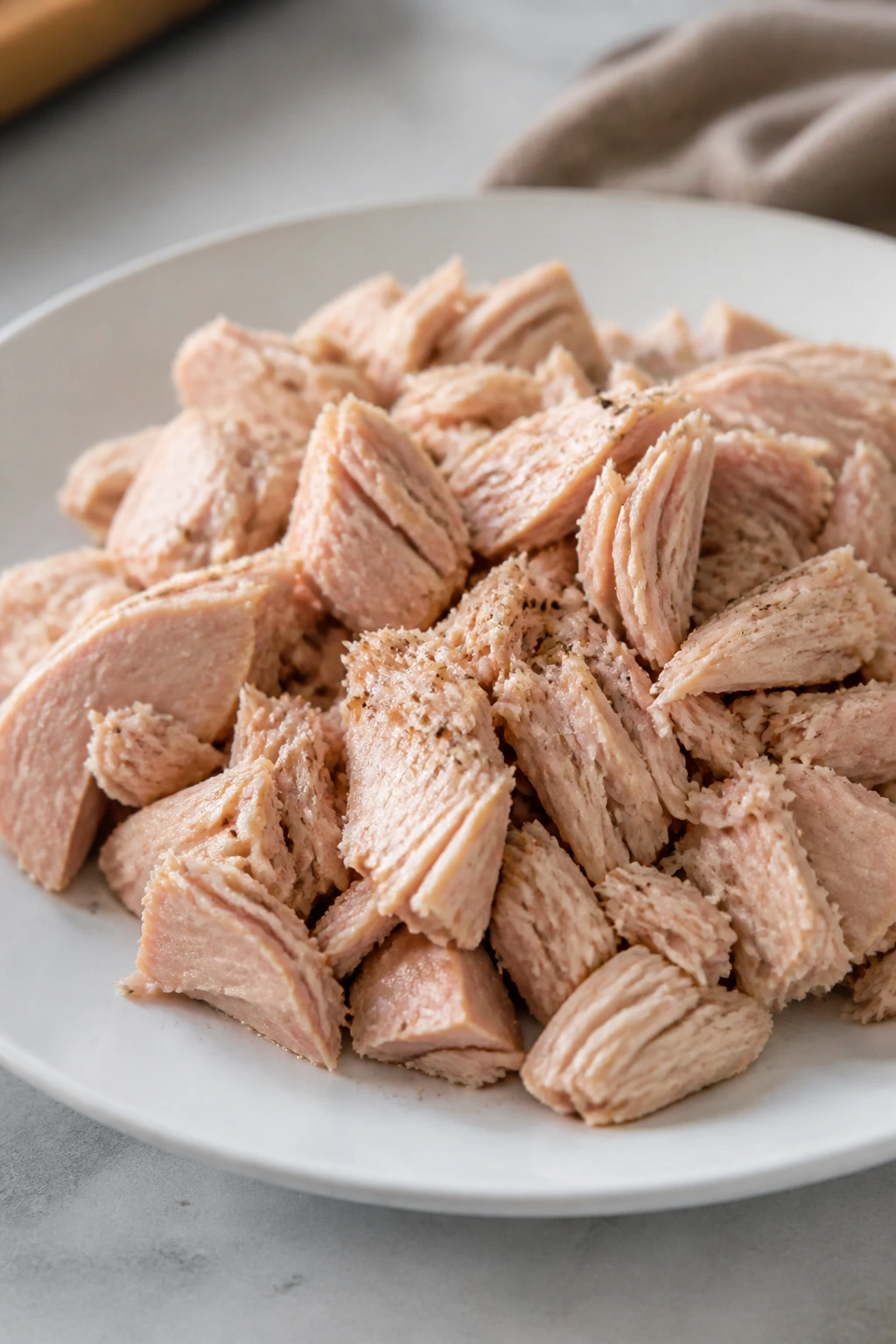
What to use: 2 cans of tuna in water, each 5 ounces, drained until no puddles remain. Chunk light gives a softer, more broken-up salad; solid white albacore gives firmer flakes and a cleaner look.
Preparation: Open the cans, tip the tuna into a fine-mesh strainer, and press gently with the back of a spoon. You want the tuna damp, not dripping.
Substitutions: Oil-packed tuna works if that’s what you have, but drain it very well; canned salmon or canned chicken can take the same dressing formula and still make sense.
Tips: The tuna carries the whole bowl, so bad draining shows up fast. If the fish is still wet, the dressing thins out and the celery starts floating in a milky puddle by the next hour.
Creamy Dressing
What to use: 1/3 cup mayonnaise, 1/4 cup plain Greek yogurt, 1 teaspoon Dijon mustard, 1 tablespoon lemon juice, 1 teaspoon pickle juice, 1/2 teaspoon lemon zest, 1/2 teaspoon garlic powder, salt, and pepper.
Preparation: Whisk the dressing in a separate bowl until glossy and smooth before it ever touches the tuna. That keeps you from overmixing the fish while trying to fix the seasoning later.
Substitutions: All mayonnaise makes a richer tuna salad. All Greek yogurt makes it tangier and a little looser. Sour cream can stand in for the yogurt, though it tastes rounder and less sharp.
Tips: Lemon zest matters more than people think. A teaspoon of juice brightens the dressing; zest makes it smell fresh the moment you open the container.
Crunch and Bite
What to use: 2 celery stalks, 1/4 cup red onion, 2 tablespoons dill pickles, and 1 tablespoon capers if you want a brinier profile.
Preparation: Dice everything small enough that you get a little crunch in each forkful without having to hunt for it. Big chunks make the salad clumsy and uneven.
Substitutions: Scallions can replace red onion for a gentler bite. Finely chopped cucumber works if you want a milder crunch, though it releases more water and needs extra drainage.
Tips: If raw onion feels too loud for you, soak the diced onion in cold water for 5 minutes, then drain and pat dry. It keeps the bite but loses the harsh edge.
Fresh Finish
What to use: 2 tablespoons fresh parsley, 1 tablespoon fresh dill, lemon juice, black pepper, and a light hand with salt.
Preparation: Chop the herbs right before mixing so they stay fragrant. Old, damp herbs taste tired, and tuna salad notices.
Substitutions: Chives can replace part of the parsley if you want a softer onion note. Tarragon gives a faint anise edge that works better than people expect with tuna and lemon.
Tips: Salt late, not hard. Pickles, capers, Dijon, and tuna already bring salinity; the final taste should be clean and lively, not aggressive.
The Tools That Make Mixing Easier
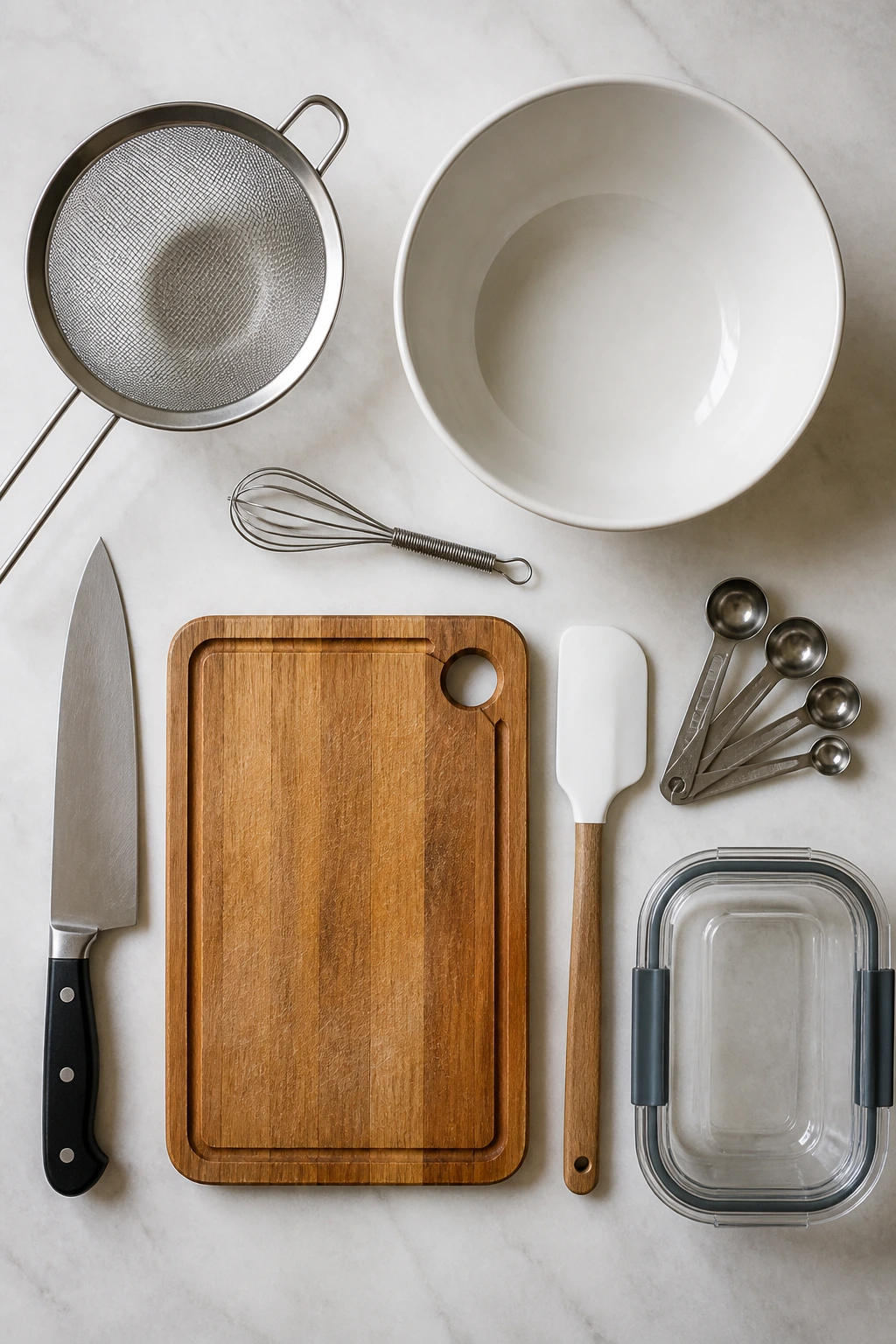
A tuna salad is humble, but the right tools keep it from getting messy.
- Fine-mesh strainer: Best for draining tuna cleanly and pressing out excess liquid without breaking the fish into dust.
- Medium mixing bowl: Big enough to fold the salad without spilling celery onto the counter.
- Small whisk or fork: A fork actually works well for the dressing here and leaves fewer dishes.
- Chef’s knife: You want clean, fine dice on the celery and onion so the salad eats evenly.
- Cutting board: A stable board matters because small dice is easier when the board isn’t sliding around.
- Rubber spatula or sturdy spoon: Better than a flimsy spoon for folding the tuna through the dressing.
- Measuring spoons and cups: The dressing is simple enough that precision helps. Too much lemon or mayo changes the whole bowl.
- Airtight storage container: If you’re making this ahead, a tight lid keeps the tuna from picking up fridge odors and helps the flavor settle evenly.
Building the Salad, Step by Step
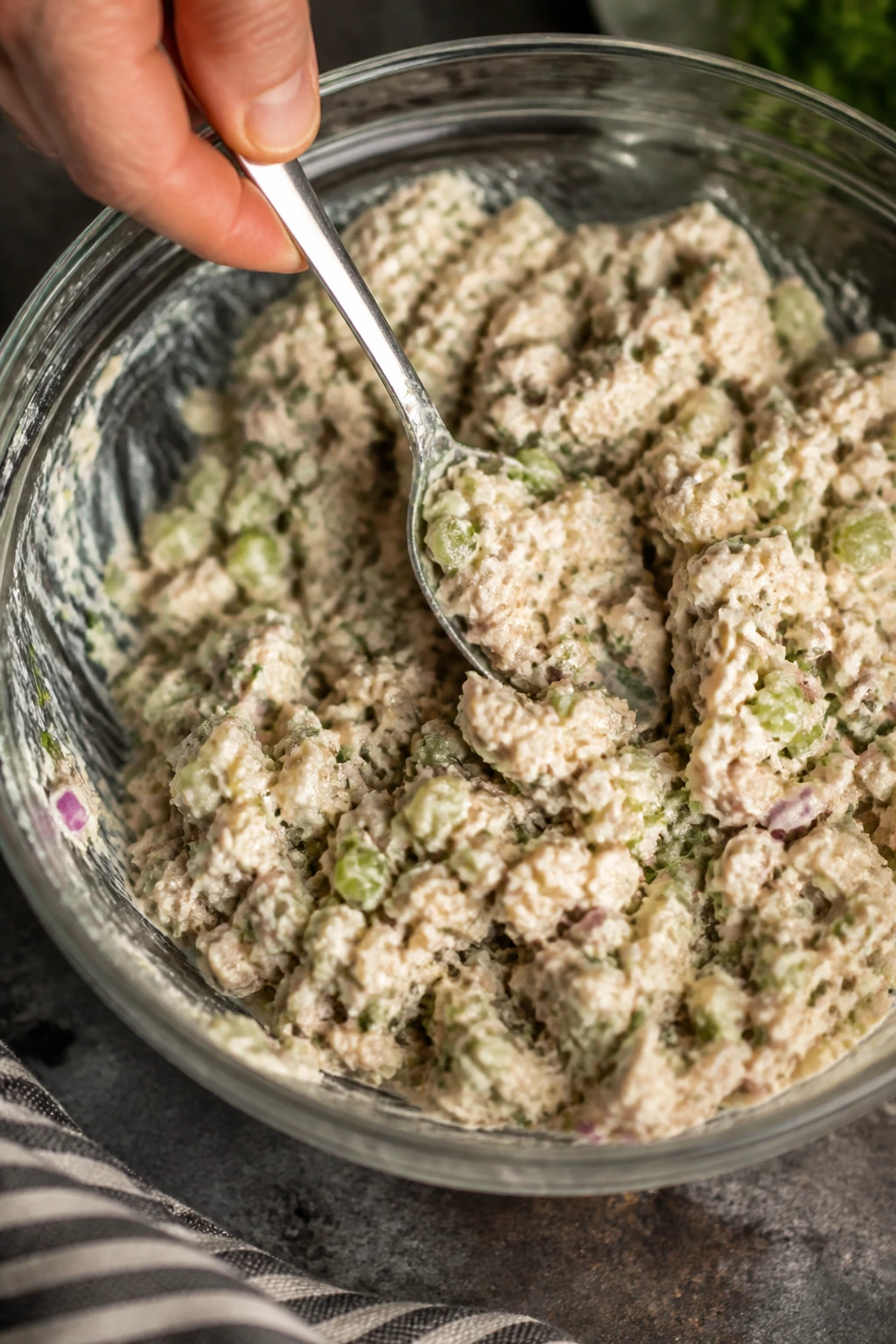
A tuna salad like this lives or dies on texture. The tuna should stay in flakes, not turn into a paste. The dressing should coat the fish, not drown it. And the celery should still sound a little crisp when you bite down, even after the bowl has chilled for a short while.
Prep the Tuna and the Crunch:
-
Set a fine-mesh strainer over a bowl and drain the tuna well, pressing gently with the back of a spoon to remove extra liquid. Transfer the tuna to a medium mixing bowl and flake it into medium pieces with a fork. Do not mash it into a smooth paste — you want texture left in the bowl.
-
Finely dice the celery and red onion, then chop the pickles, parsley, dill, and capers if you’re using them. Keep the pieces small enough that they distribute through the salad instead of landing in one sharp, salty bite.
Whisk the Homemade Dressing:
-
In a small bowl, whisk together the mayonnaise, Greek yogurt, Dijon mustard, lemon juice, pickle juice, lemon zest, garlic powder, salt, and black pepper. Whisk until the dressing looks smooth and glossy, with no streaks of yogurt left behind.
-
Taste the dressing before you add it to the tuna. It should taste bright and a little sharp on its own, because the tuna and vegetables will soften it once everything is mixed.
Combine and Finish:
-
Add the celery, onion, pickles, capers, parsley, and dill to the tuna bowl. Spoon the dressing over the top and fold everything together with a spatula or fork, turning the tuna gently so the flakes stay intact.
-
Check the texture. If the salad looks dry, add 1 teaspoon more mayonnaise or Greek yogurt at a time. If it looks too thick for sandwiches, add 1 teaspoon lemon juice or pickle juice. Stop as soon as the salad turns creamy and evenly coated; overmixing squeezes the tuna into a dense, tired pile.
-
Cover the bowl and chill the salad for 15 to 30 minutes. Stir once after chilling, then taste again and adjust the salt, pepper, or lemon if needed. Cold dulls flavor a little, so this final check matters.
-
Serve cold with whatever form you like best — toast, lettuce, crackers, or a spoon straight from the bowl if you’re having one of those lunches.
How to Serve It Without Losing the Texture
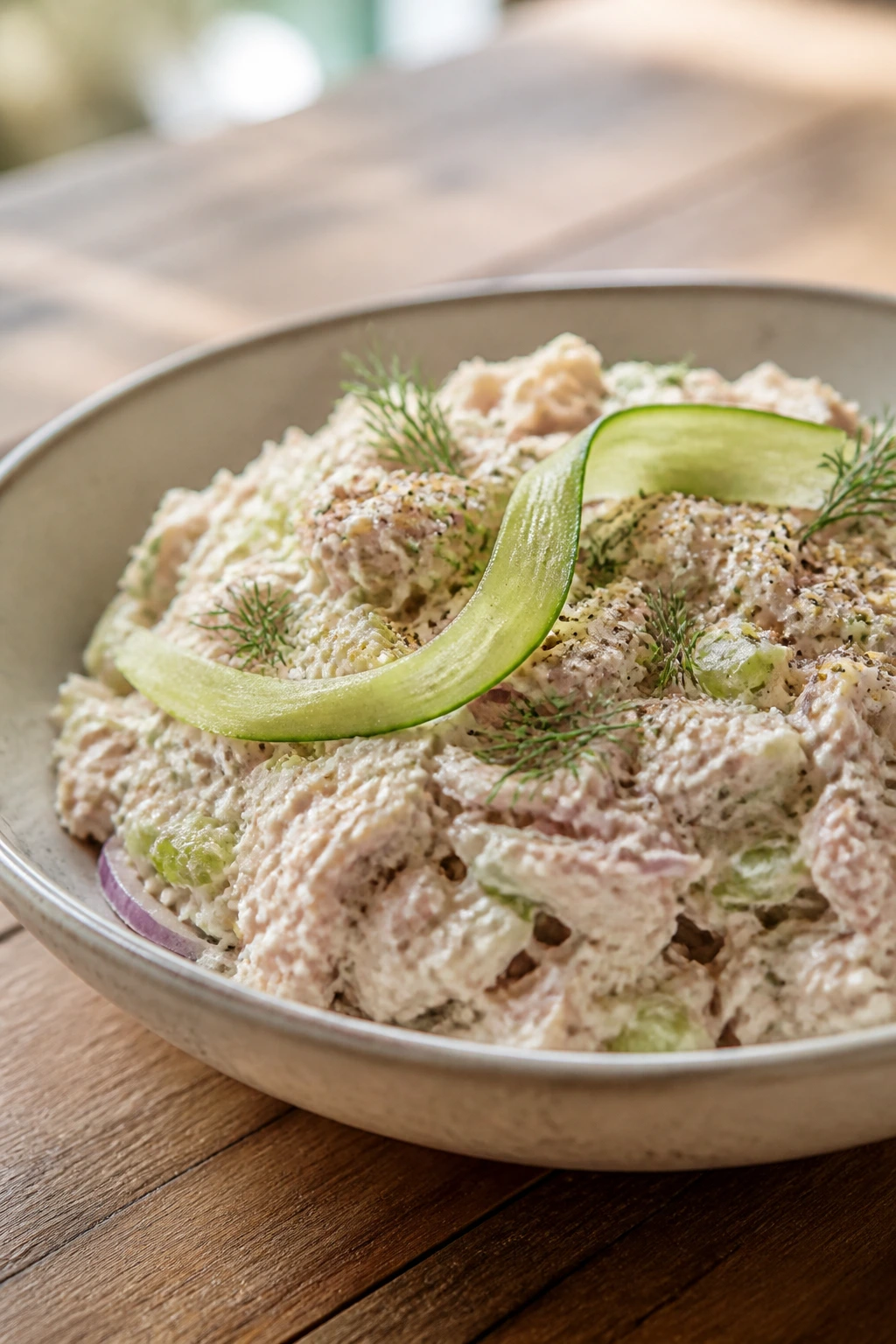
Presentation: Spoon the tuna salad into a shallow bowl if you’re eating it as a lunch plate, then finish it with a little black pepper, a few dill leaves, and one thin celery ribbon on top. If you’re serving it in sandwiches, toast the bread lightly on one side so the filling sits on a dry surface instead of soaking straight into the crumb.
Accompaniments: Crisp romaine leaves, butter lettuce cups, sliced cucumbers, seeded crackers, and tomato wedges all make sense here. I also like it with toasted sourdough or rye, because the bread has enough structure to hold the salad without collapsing halfway through lunch. A dill pickle spear on the side feels obvious for a reason.
Portions: Plan on about 1/2 cup per person for lettuce cups or a light plate, and closer to 3/4 cup per person for sandwiches. If you’re feeding bigger appetites, this recipe stretches nicely with extra celery and another spoonful of yogurt, but I’d rather make a second bowl than drown the first one.
Beverage Pairing: Cold sparkling water with lemon keeps the meal sharp and clean. Unsweetened iced tea works well too, especially if you’re eating the tuna salad on toast. If you want something stronger, a crisp lager or a dry white wine won’t fight the lemon and dill.
Small Tweaks That Change the Flavor Fast
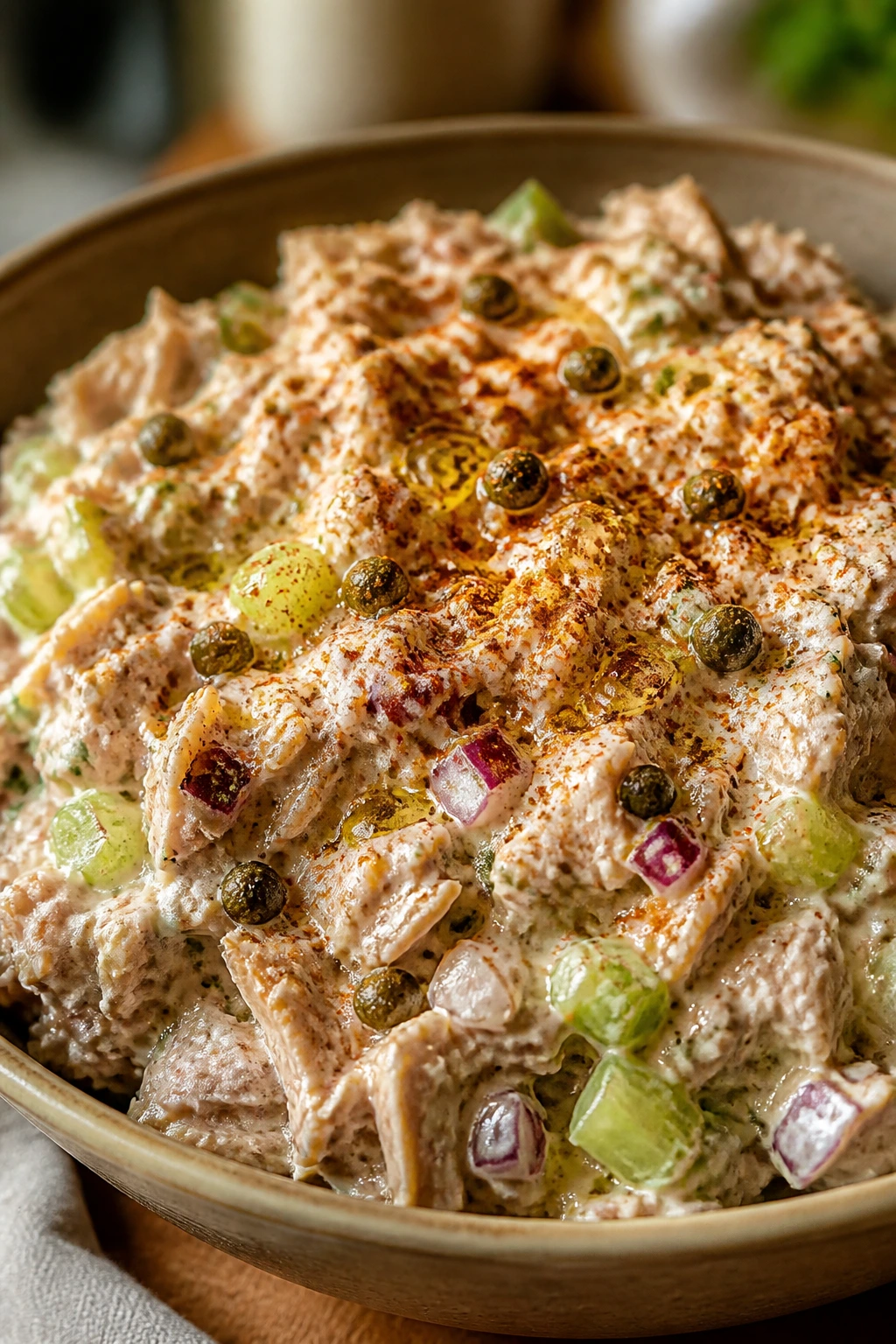
Flavor Enhancement: A half teaspoon of caper brine or a pinch of celery seed makes the dressing taste more alive without changing the base recipe. I like a tiny shower of smoked paprika on top too — not enough to turn it smoky, just enough to make the top layer smell warmer.
Time-Saver: Chop the celery, onion, herbs, and pickles before you drain the tuna. By the time the tuna is in the bowl, the rest of the ingredients are ready and you can mix once instead of stopping and starting.
Cost-Saver: Skip the capers if they’re not already in the pantry. A chopped dill pickle plus a teaspoon of pickle juice gives you most of the same briny effect without another jar to buy.
Make-It-Yours: If you like a richer bowl, use all mayonnaise and skip the yogurt. If you prefer tang, push the yogurt higher and add an extra teaspoon of lemon juice. For heat, a spoonful of chopped pepperoncini or a few drops of hot sauce changes the whole mood of the salad.
Common Tuna Salad Mistakes and the Fixes
-
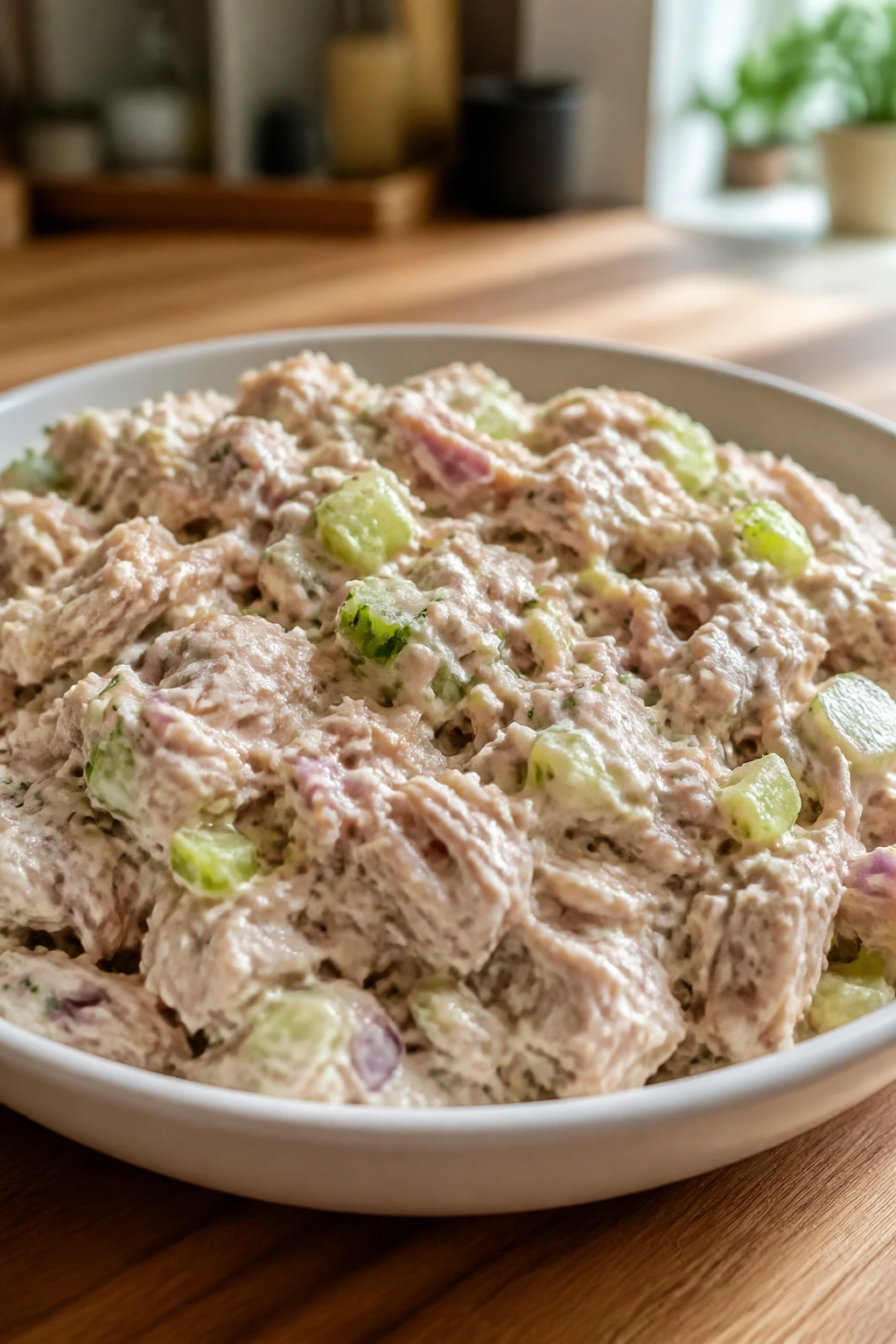
Starting with wet tuna: The salad looks fine at first, then a little puddle collects at the bottom of the bowl. Drain the tuna in a strainer and press it before mixing; that one step prevents the most annoying problem in tuna salad.
-
Turning the tuna into paste: If you stir hard with a spoon, the flakes collapse and the salad gets dense. Use a fork or spatula and stop as soon as the dressing clings to the tuna.
-
Cutting the vegetables too large: Big chunks of celery and onion make each bite uneven and throw off the texture. Keep the dice fine so the crunch feels distributed rather than random.
-
Over-salting too early: Pickles, capers, Dijon, and tuna already bring plenty of salt. Taste the salad after it chills, then adjust. Cold food often needs a little more seasoning than you think.
-
Skipping the short chill: Straight-from-the-bowl tuna salad tastes more separate, with the lemon, onion, and tuna all shouting at once. Fifteen minutes in the fridge gives the dressing time to settle and the sharp edges time to round off.
Variations for Different Cravings
Deli-Style Rye Stack: Add 1 tablespoon sweet pickle relish and serve the salad on toasted rye with sliced tomato and iceberg lettuce. It leans into old-school sandwich counter flavor, and it’s the version I’d make when I want lunch to feel unmistakably familiar.
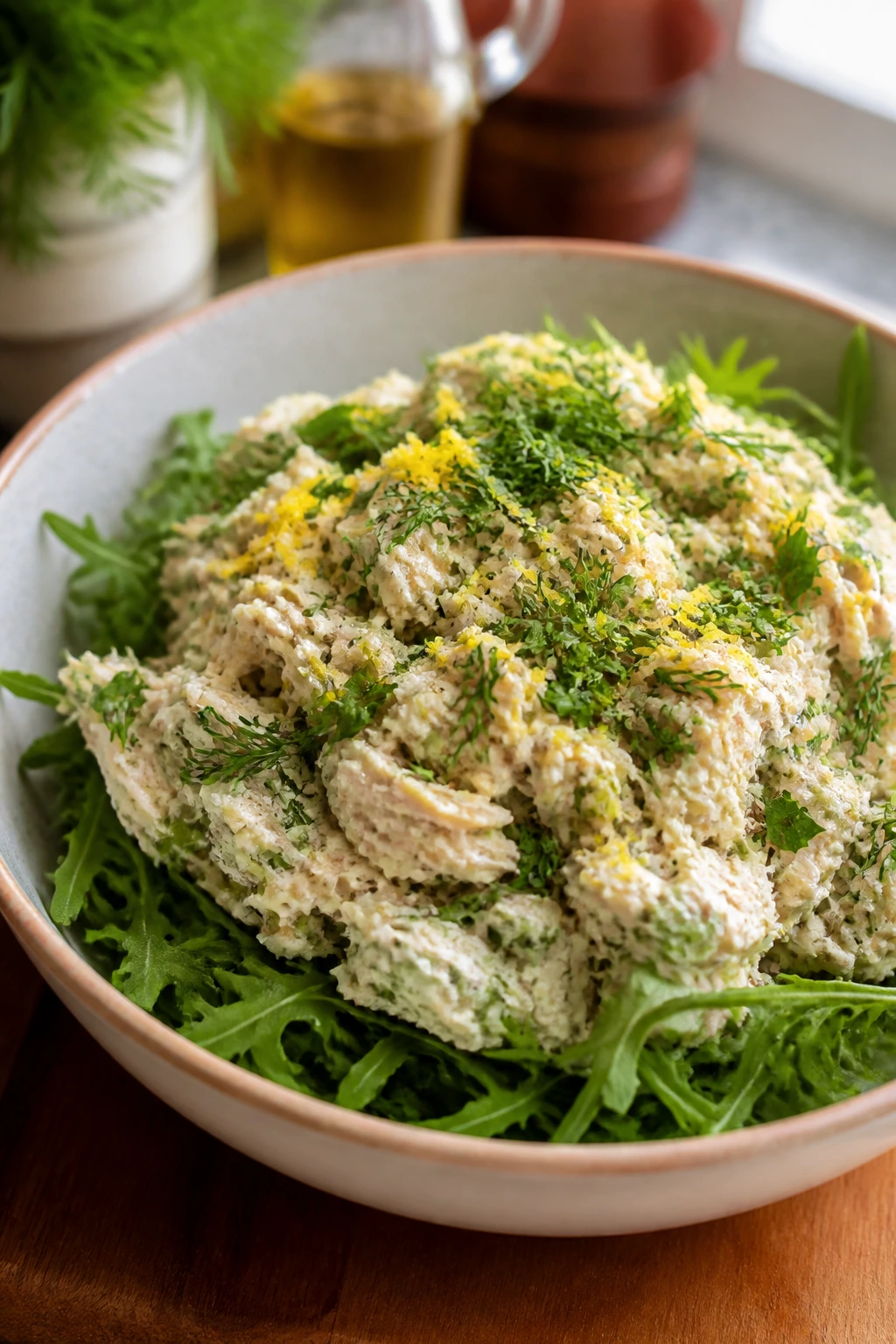
Bright Lemon-Herb Bowl: Increase the parsley to 1/4 cup and the dill to 2 tablespoons, then add another 1/2 teaspoon lemon zest. Serve it over arugula or baby greens instead of bread, and the whole bowl reads cleaner and greener.
Spicy Pantry Tuna: Stir in 1 to 2 teaspoons chopped pepperoncini, a few drops of hot sauce, and a pinch of cayenne. The heat doesn’t need to be loud; it just gives the creamy dressing a little edge.
No-Mayo Version: Replace the mayonnaise with more Greek yogurt plus 1 tablespoon olive oil, and mash in 1/4 ripe avocado for extra body. Eat this one the same day, because avocado browns and softens the salad faster than the standard version.
Egg-Loaded Lunch Bowl: Fold in 2 chopped hard-boiled eggs for a richer, more filling salad. It’s good on toast, but I think it’s even better in lettuce cups with an extra squeeze of lemon on top.
Storage, Chilling, and Make-Ahead Notes
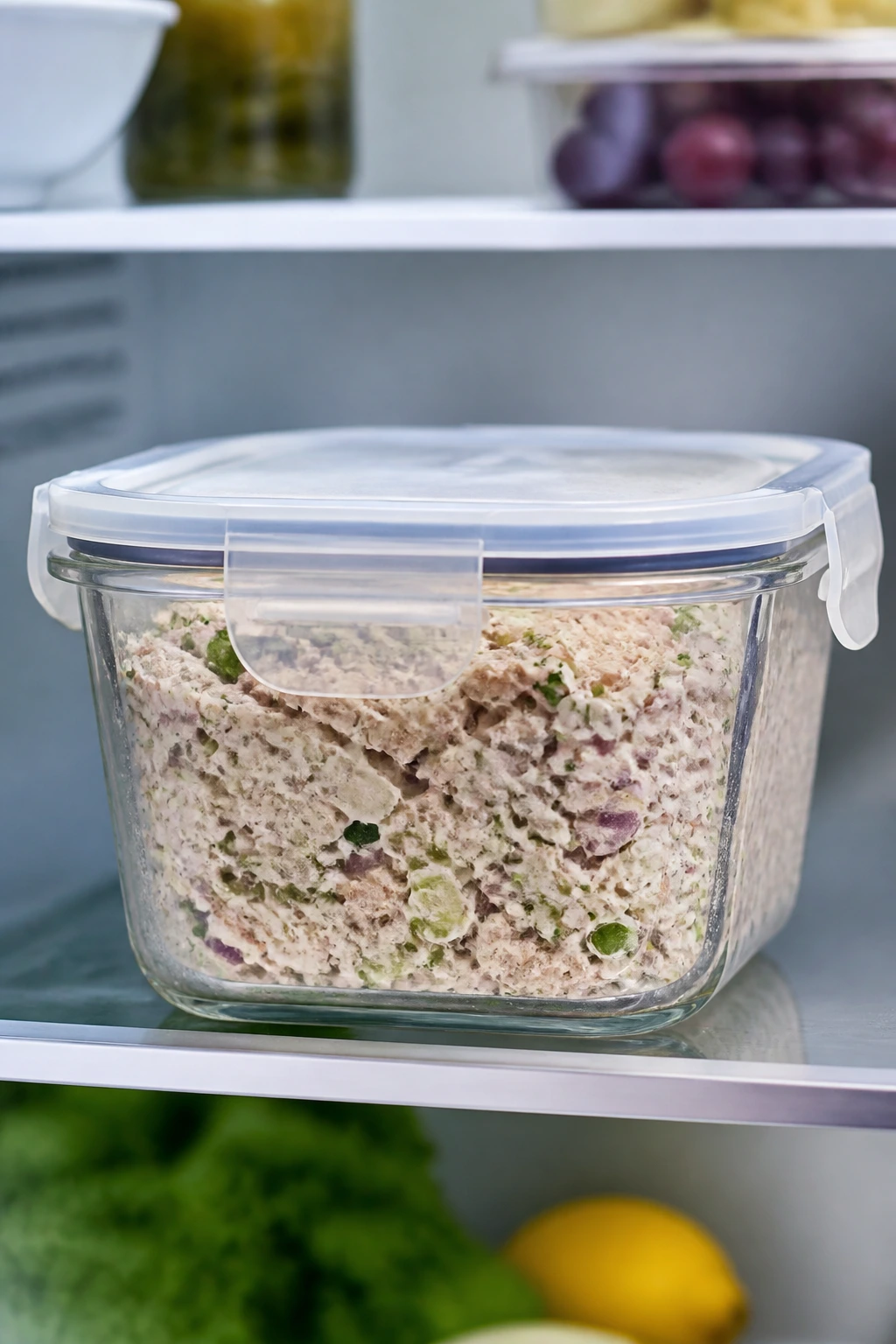
Fresh creamy tuna salad keeps best when it’s cold and tightly covered. In the fridge, it holds for up to 3 days in an airtight container, though the texture is best on day one and still very good on day two. After that, the celery starts to lose its crispness and the dressing gets a little looser.
If you want to make parts ahead, do it smartly. The dressing can be whisked together up to 3 days in advance and kept in the fridge. The celery, onion, pickles, and herbs can be chopped a day ahead if you store them separately, ideally with a paper towel in the container to catch extra moisture.
I do not recommend freezing tuna salad. Mayo and yogurt separate when thawed, and the celery turns limp in a way no amount of stirring can fix. If you absolutely must freeze something, freeze plain drained tuna by itself and build the salad fresh later, but even that is more of a workaround than a pleasure.
For food safety, don’t leave the salad sitting out for more than 2 hours at room temperature, and cut that to 1 hour if the kitchen is warm. If you’re packing lunch, use a cold pack and keep the container sealed until you’re ready to eat. Tuna salad is not the kind of food that forgives a warm backpack.
If the salad thickens in the fridge, stir in 1 teaspoon lemon juice or 1 teaspoon mayonnaise to wake it back up. A tiny adjustment is better than drowning the whole bowl in extra dressing.
Questions People Ask Before Making It
Can I use tuna packed in oil instead of water?
Yes, but drain it carefully. Oil-packed tuna gives a richer, softer flavor, so I’d use a little less mayonnaise if you go that route. The salad can turn heavy fast if you keep the dressing the same and add oil-packed fish.
What mayonnaise works best for tuna salad?
A full-fat mayo gives the smoothest texture and the best body. Light mayo can work, but the salad may taste thinner and need a little extra lemon or Dijon to keep it lively. If you use all yogurt, expect a tangier bowl with a looser feel.
Can I make this without Greek yogurt?
You can. Replace the yogurt with more mayonnaise for a richer salad, or with sour cream if you want a similar tang but a slightly softer finish. If you skip yogurt entirely, add a teaspoon more lemon juice so the dressing doesn’t taste flat.
How do I keep tuna salad from getting watery?
Drain the tuna more than you think you need to, and chop the celery and onions small so they don’t release water in big pockets. Also, salt the salad lightly before chilling and finish seasoning after it rests; that keeps you from overcorrecting while the flavors are still separate.
Is it okay to make this the night before?
Yes, and the flavor usually improves a bit after a few hours. The catch is texture: the celery loses a little snap by the next day, so I like to save a handful of fresh celery or dill to fold in right before serving if I know it’s for lunch later.
Can I freeze tuna salad?
No, not if you want a good texture. The dressing separates and the vegetables go limp when thawed, which leaves you with a grainy, watery bowl. This one belongs in the fridge, not the freezer.
What can I use instead of dill pickles?
Finely chopped cornichons, capers, or a spoonful of relish all work. Cornichons taste cleaner and snappier; relish is sweeter and more deli-style; capers bring salt and brine without the sweetness.
Why does my tuna salad taste flat after it chills?
Cold mutes salt, acid, and aroma. Before serving, taste again and add a pinch of salt, a squeeze of lemon, or a small spoonful of pickle juice. That last adjustment usually brings the whole bowl back to life.
A Bowl Worth Repeating
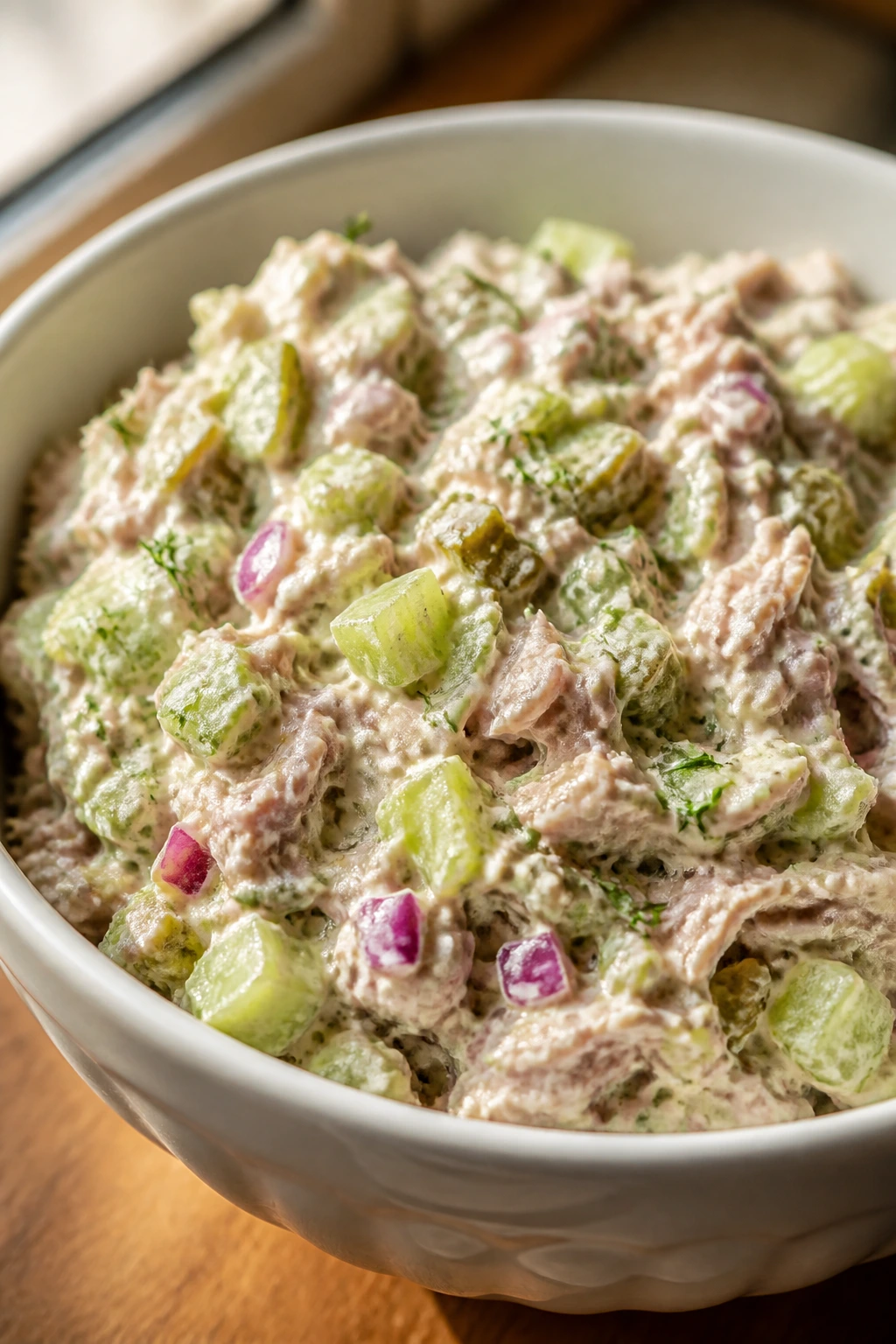
The best tuna salad isn’t trying to be fancy. It just needs enough brightness, crunch, and restraint to make canned tuna taste composed instead of lazy. This version does that by treating the dressing as a real sauce, not a gluey afterthought, and by keeping the vegetables crisp and finely cut so every bite feels deliberate.
Make it once, then tinker. A little more dill here, a touch more lemon there, maybe pepperoncini when you want heat. The bowl changes easily, which is why it earns a place in the fridge instead of becoming one more recipe you forget after the first try.
Fresh Creamy Tuna Salad with Homemade Dressing — Recipe Card
Recipe Name: Fresh Creamy Tuna Salad with Homemade Dressing
Description: Flaky tuna folded with celery, red onion, pickles, herbs, and a creamy lemon-Dijon dressing. Chilled briefly, it stays bright, spoonable, and sturdy enough for sandwiches, lettuce cups, or crackers.
Prep Time: 15 minutes
Cook Time: 0 minutes
Total Time: 15 minutes active, plus 15 to 30 minutes chilling
Course: Lunch, Salad, Main Course
Cuisine: American
Servings: 4 servings
Calories: About 210 kcal per serving
Ingredients
For the Salad:
- 2 cans (5 ounces each) tuna in water, drained very well
- 2 celery stalks, finely diced
- 1/4 cup red onion, finely diced
- 2 tablespoons dill pickles, finely chopped
- 1 tablespoon capers, rinsed and chopped, optional
- 2 tablespoons fresh parsley, chopped
- 1 tablespoon fresh dill, chopped
For the Homemade Dressing:
- 1/3 cup mayonnaise
- 1/4 cup plain Greek yogurt
- 1 teaspoon Dijon mustard
- 1 tablespoon lemon juice
- 1 teaspoon pickle juice
- 1/2 teaspoon lemon zest
- 1/2 teaspoon garlic powder
- 1/4 teaspoon kosher salt, plus more to taste
- 1/4 teaspoon black pepper
Instructions
-
Drain the tuna very well, press out excess liquid, and flake it into a medium bowl.
-
Whisk the mayonnaise, Greek yogurt, Dijon mustard, lemon juice, pickle juice, lemon zest, garlic powder, salt, and black pepper in a separate bowl until smooth.
-
Add the celery, red onion, pickles, capers if using, parsley, and dill to the tuna.
-
Spoon the dressing over the tuna mixture and fold gently until everything is evenly coated.
-
Taste and adjust with a little more salt, pepper, lemon juice, or mayonnaise if needed.
-
Cover and chill for 15 to 30 minutes, then stir once and serve cold.
Notes: Best after a short chill. Add a spoonful more mayo or yogurt if you want a looser texture. Do not freeze.