



A good tuna salad should taste cold, crisp, and faintly briny, not like it spent the afternoon under a cafeteria lid. The best light tuna salad with homemade dressing does something smarter: it keeps the tuna flaky, the celery snappy, and the dressing bright enough that you notice the lemon before you notice the mayonnaise.
Most tuna salad goes heavy because people overload it with mayo and forget the acid. The bowl ends up thick, dull, and a little greasy around the edges. I like a version that uses Greek yogurt, a little mayo, Dijon, lemon, and enough celery seed to give the whole thing that old-school deli smell the second you open the bowl.
The trick is not complicated, but it is specific. Drain the tuna hard, chop the vegetables small, and fold the dressing in by hand so the flakes stay visible instead of becoming a paste. Once you get that balance right, the salad works on toast, in lettuce cups, or spooned straight from the fridge when lunch needs to happen fast.
Why You’ll Love This Recipe
- Bright, not gluey: The homemade dressing leans on Greek yogurt, lemon, and Dijon, so the tuna tastes clean instead of coated in a heavy blanket.
- Crunch in every bite: Finely diced celery, red onion, and pickles keep the texture lively; no sad, soggy tuna mush here.
- Pantry-friendly: Two cans of tuna, a handful of refrigerator staples, and one bowl are enough to make it.
- Lunch-friendly: It holds up well on toast, crackers, lettuce cups, or sliced tomatoes, so you can use the same batch in a few different ways.
- Better after a short rest: Ten minutes in the fridge lets the celery settle and the dressing cling more tightly to the tuna flakes.
- Easy to tune to taste: More lemon, extra dill, a pinch of celery seed, or a little caper brine can shift the flavor without changing the whole recipe.
How Much It Makes and How Long It Takes
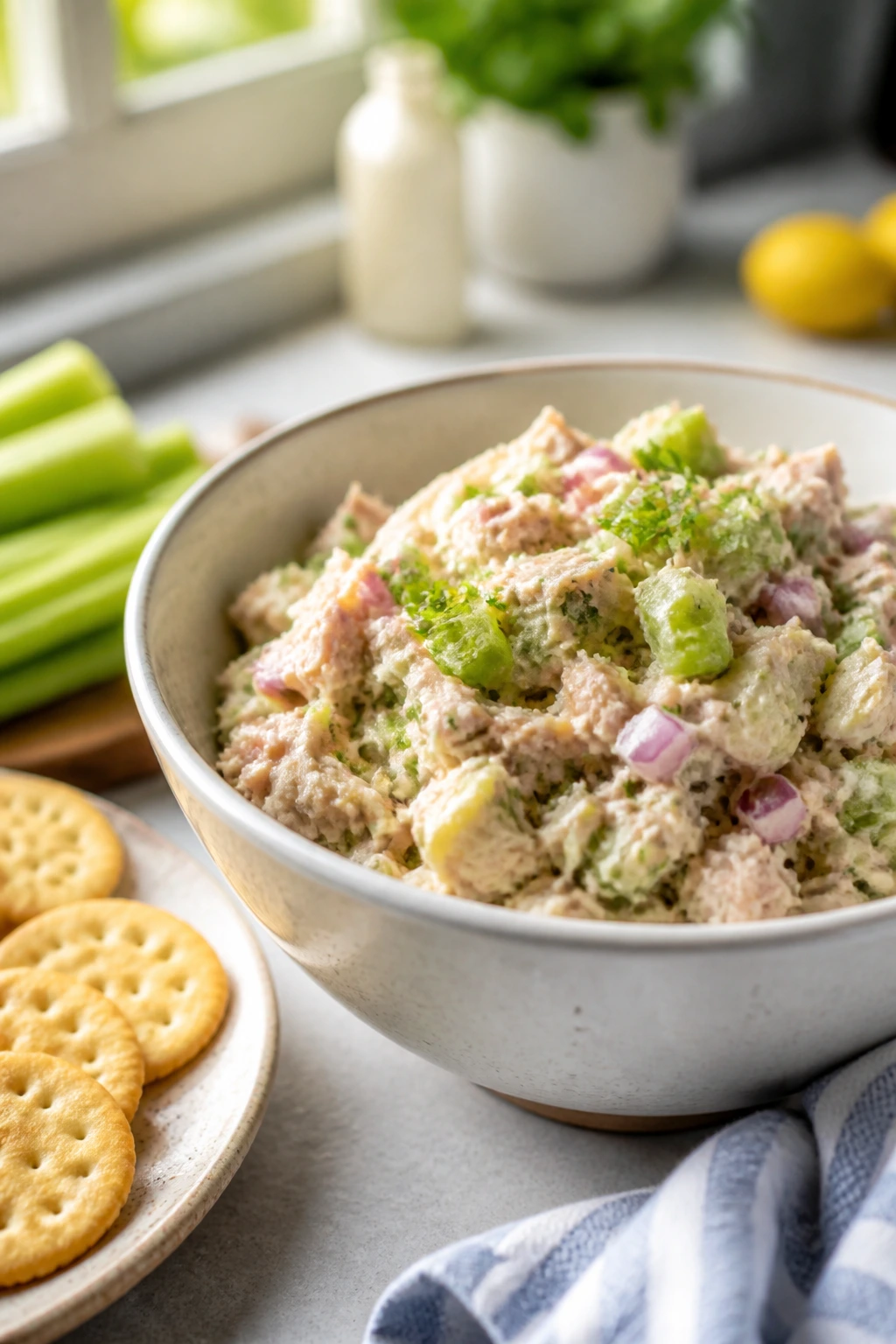
Yield: Serves 4
Prep Time: 15 minutes
Cook Time: 0 minutes
Total Time: 25 minutes, including a short chilling rest
Difficulty: Beginner — there’s no cooking, only chopping, whisking, and folding, but the texture depends on paying attention.
Chill/Rest Time: 10 minutes optional, 15 minutes if you want the flavors to settle
Best Served: Slightly chilled or at cool room temperature
Fifteen minutes is the real promise here. That’s all it takes if your knife is sharp and the tuna drains properly.
The rest time is optional, but I think it earns its keep. A few minutes in the fridge takes the sharp edge off the onion and lets the dressing settle into the flakes instead of sitting on top of them.
The Ingredients for a Cleaner Tuna Bowl
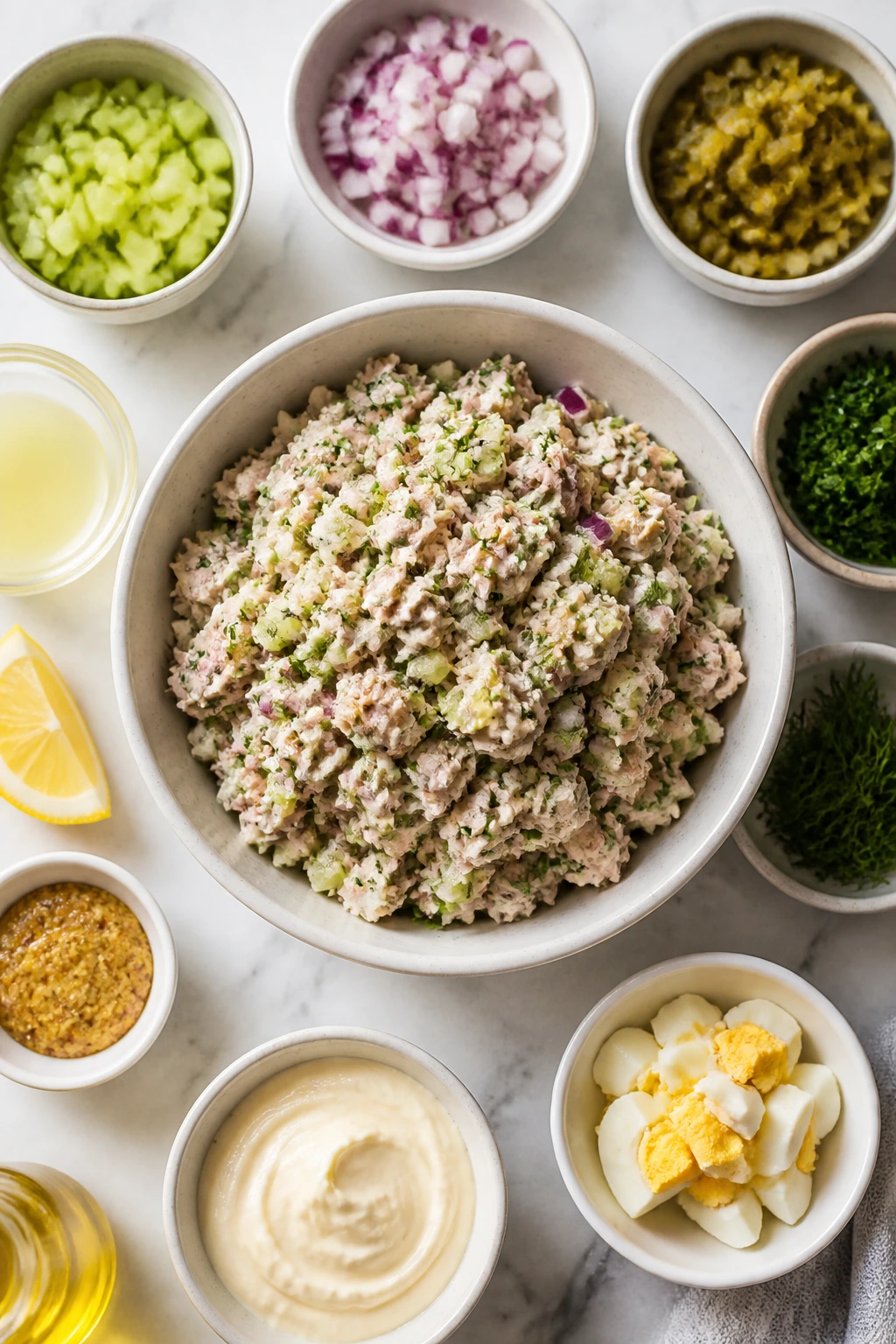
The ingredient list is short, which is exactly why the ratios matter. Tuna salad can go wrong fast when one ingredient takes over, so each item below has a job and a reason for being there.
For the Tuna Salad:
- 2 cans (5 ounces each) tuna in water, drained very well
- 2 celery stalks, finely diced
- 1/4 cup red onion, finely minced
- 2 tablespoons dill pickles, finely chopped
- 2 tablespoons fresh parsley, chopped
- 1 tablespoon fresh dill, chopped, optional
- 1 hard-boiled egg, chopped, optional
For the Homemade Dressing:
- 1/2 cup plain Greek yogurt
- 2 tablespoons mayonnaise
- 1 tablespoon Dijon mustard
- 1 tablespoon fresh lemon juice
- 1 teaspoon lemon zest
- 1 teaspoon apple cider vinegar
- 1/2 teaspoon celery seed
- 1/2 teaspoon kosher salt, plus more to taste
- 1/4 teaspoon black pepper
- 1 teaspoon olive oil
If you like a looser salad, keep a little extra yogurt nearby. If you want it more sandwich-style, let the bowl sit for a few minutes after mixing; the dressing thickens as the tuna absorbs it.
What Each Ingredient Is Doing in the Bowl
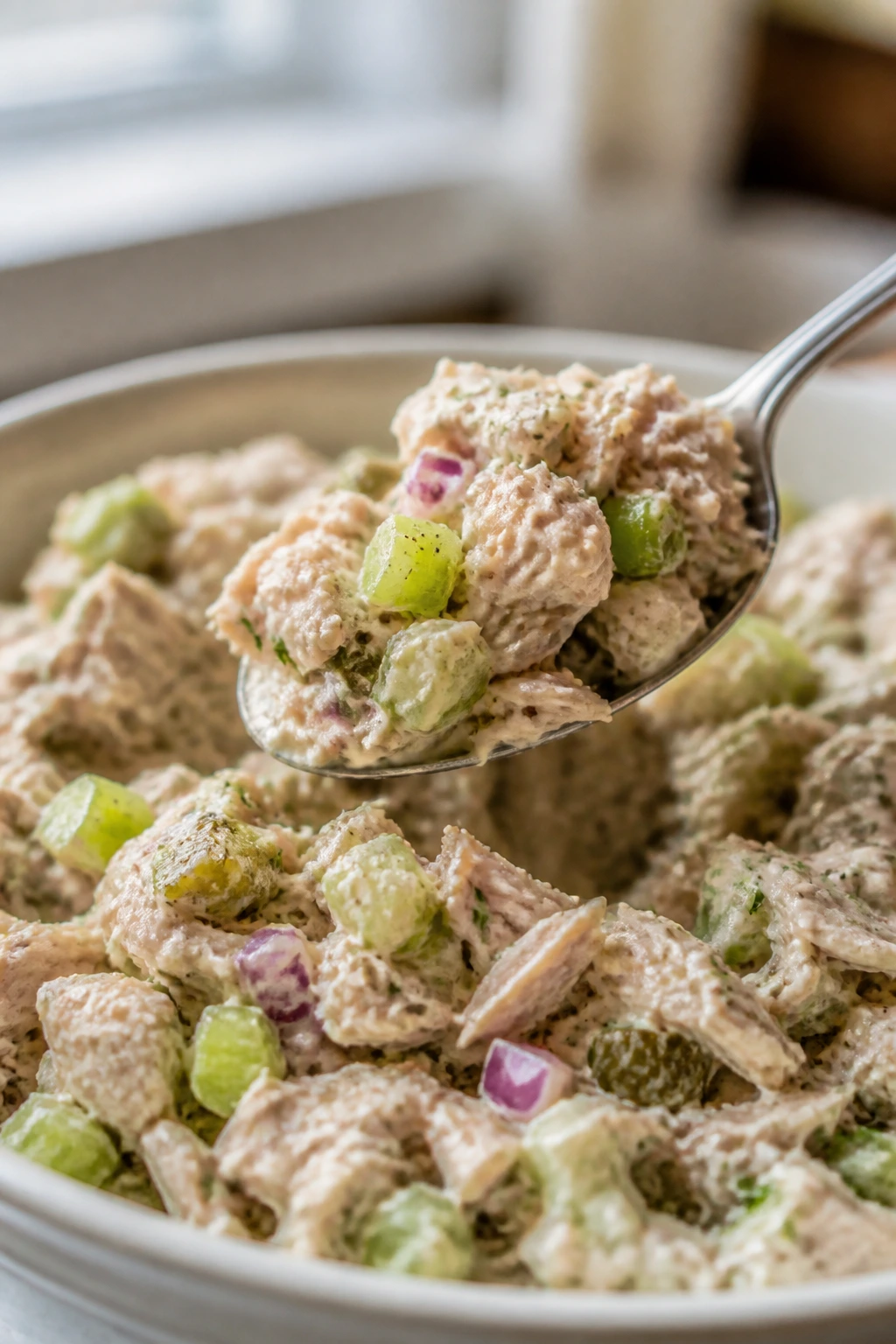
Why does one tuna salad taste sharp and lively while another tastes flat and wet? Mostly because the ingredients were treated like a shopping list instead of a structure. Each part of this bowl has a job, and the job gets clearer when you break the recipe into the pieces that actually matter.
The Tuna
What to use: 2 cans of tuna in water, about 5 ounces each, drained very well. I prefer chunk light for this salad because it stays soft and breaks into loose, tender flakes; albacore is firmer and a little drier, which some people love on toast.
Preparation: Open the cans, drain them in a fine-mesh strainer, and press lightly with a fork or the back of a spoon for 20 to 30 seconds. The tuna should feel dry on the outside but still hold together in flakes.
Substitutions: Oil-packed tuna works too if you drain it thoroughly; just expect a richer flavor and reduce the mayonnaise a little if needed. Canned salmon is the cleanest swap if you want something with the same general texture but a stronger, fishier note.
Tips: Tuna that is too wet never really comes back. If there’s liquid hiding in the can, squeeze it out now or you’ll taste it later as a gray, slippery note in the dressing.
The Crunch
What to use: 2 celery stalks, 1/4 cup minced red onion, 2 tablespoons chopped dill pickles, 2 tablespoons parsley, and 1 tablespoon dill if you want the herb note louder.
Preparation: Keep the dice small, about 1/8 inch. You want enough crunch to notice it, not chunks that poke out of the bowl like random furniture.
Substitutions: Finely sliced chives can stand in for red onion if you want less bite. Finely chopped fennel gives a clean, almost anise-like crunch, and chopped cucumber works only if you seed it first and dry it well.
Tips: If red onion feels too sharp, soak it in cold water for 5 minutes, drain it, and pat it dry. That one tiny step softens the edge without muting the flavor.
The Dressing
What to use: 1/2 cup Greek yogurt, 2 tablespoons mayonnaise, 1 tablespoon Dijon, lemon juice, lemon zest, vinegar, celery seed, salt, pepper, and a teaspoon of olive oil.
Preparation: Whisk the dressing in a small bowl before it goes near the tuna. You want it smooth and glossy, with no yogurt lumps and no streaks of mustard hiding at the bottom.
Substitutions: Use all Greek yogurt if you want it leaner, or swap in sour cream if you want a softer, rounder tang. For a dairy-free version, use unsweetened dairy-free yogurt and vegan mayo, though the taste will be a little less rich.
Tips: Salt matters here more than people expect. If the dressing tastes a little flat on its own, it will taste doubly flat once it hits cold tuna.
The Finish
What to use: The optional hard-boiled egg, plus a little extra black pepper, more parsley, or a pinch of paprika if you want a deli-style finish.
Preparation: Fold in the egg at the very end, after the tuna is already coated. That keeps the pieces from disappearing into the dressing.
Substitutions: Capers, chopped chives, or a tiny splash of pickle brine can take the place of the egg if you want the salad to stay lighter.
Tips: Finishers should stay in the background. They’re there to wake the bowl up, not to crowd out the tuna.
Why the Homemade Dressing Stays Bright and Creamy
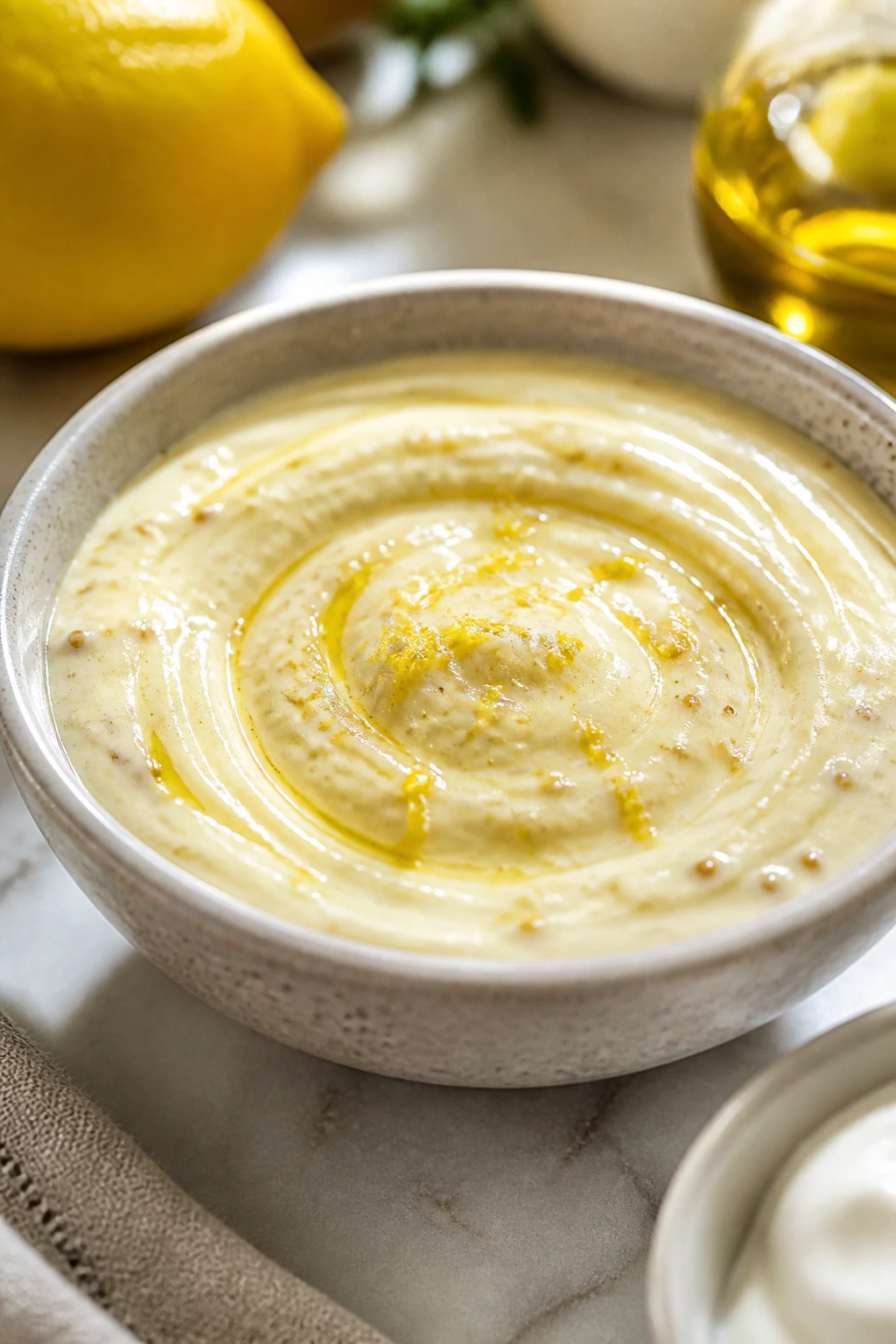
The dressing is where this salad wins or loses. A lot of tuna salads lean on plain mayonnaise and call it done, but mayo alone can sit on the tongue like a heavy coat. Greek yogurt changes that. It adds body, but it also brings a clean tang that keeps the bowl from feeling sticky or one-note.
Dijon does more than add mustard flavor. It helps the dressing cling to the tuna flakes and gives the lemon and yogurt something to hang onto. That’s why the bowl tastes more integrated after a few minutes of resting; the dressing doesn’t just sit beside the tuna, it wraps around it.
The acid matters too. Lemon juice and apple cider vinegar keep the flavor alert, and the lemon zest adds a smell you notice before the first bite. Without that bright top note, tuna salad can taste like a bowl that forgot why it existed.
Creaminess Without Weight
The sweet spot is a dressing that looks thick enough to mound on a spoon but still moves when you stir it. Too loose, and it slides off the tuna and pools in the bottom of the bowl. Too thick, and it grabs at the tuna instead of coating it.
I like the combination of yogurt and a little mayo because it gives you both brightness and roundness. Yogurt alone can taste thin and sharp; mayo alone can taste flat. Put them together in the right ratio and the dressing lands somewhere between lunch counter comfort and a fresher, cleaner bite.
Why the Salt and Acid Need to Be Balanced Early
Taste the dressing before it touches the tuna. That sounds fussy, but it saves you from overcorrecting later. Cold tuna dulls flavor, so a dressing that tastes just right in the bowl often ends up underseasoned after mixing.
If the dressing tastes too sharp, add a teaspoon more yogurt or a few drops of olive oil. If it tastes too mild, salt first, then a few more drops of lemon. Don’t drown it. Tuna salad should taste alive, not sour.
How to Mix the Salad Without Turning the Tuna to Paste
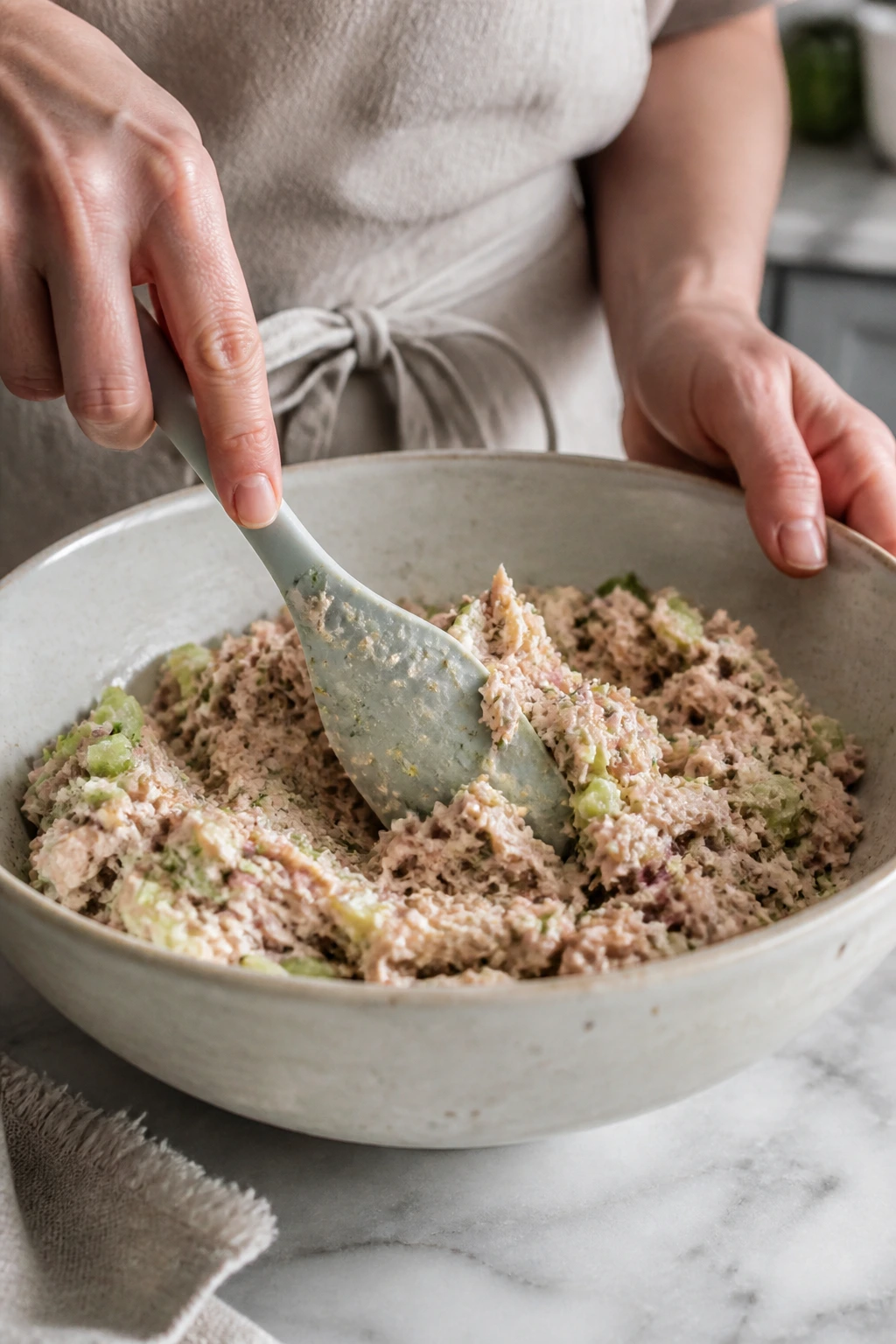
If you rush the mixing step, the bowl never quite recovers. Tuna salad is one of those dishes where the final texture depends on restraint, not force, and the difference between flaky and mashed is about three unnecessary stirs.
Prepare the Tuna Base:
- Drain the tuna in a fine-mesh strainer for 20 to 30 seconds, then press gently with a fork or spoon to push out extra moisture. Transfer it to a medium mixing bowl and flake it into loose pieces, leaving some larger chunks intact.
- Add the diced celery, minced red onion, chopped dill pickles, parsley, dill if using, and the chopped hard-boiled egg if you want it in the mix. Toss once or twice with a fork so the ingredients distribute evenly without getting crushed.
Whisk the Dressing: 3. In a small bowl, whisk together the Greek yogurt, mayonnaise, Dijon mustard, lemon juice, lemon zest, apple cider vinegar, celery seed, salt, black pepper, and olive oil until smooth. The dressing should look pale, glossy, and thick enough to cling to the whisk.
Combine and Finish: 4. Spoon about three-quarters of the dressing over the tuna mixture and fold gently with a fork or silicone spatula. Use broad, lifting motions rather than stirring in circles. Do not beat the tuna into tiny shreds — you want visible flakes and little pockets of crunch. 5. Taste a bite. Add the remaining dressing only if the bowl looks dry, then adjust salt, pepper, or lemon juice in small amounts. If the red onion still feels too loud, let the salad rest for 10 minutes before you judge it. 6. Chill the bowl for 10 minutes if you have the time, then serve cold or cool. Right before serving, add a scatter of parsley, a pinch of black pepper, or a tiny squeeze of lemon if the bowl needs a brighter finish.
A fork is better than a spoon for the first mix. It separates the tuna cleanly and helps you stop before everything turns into a soft, uniform paste.
How to Serve It So It Feels Like a Real Meal
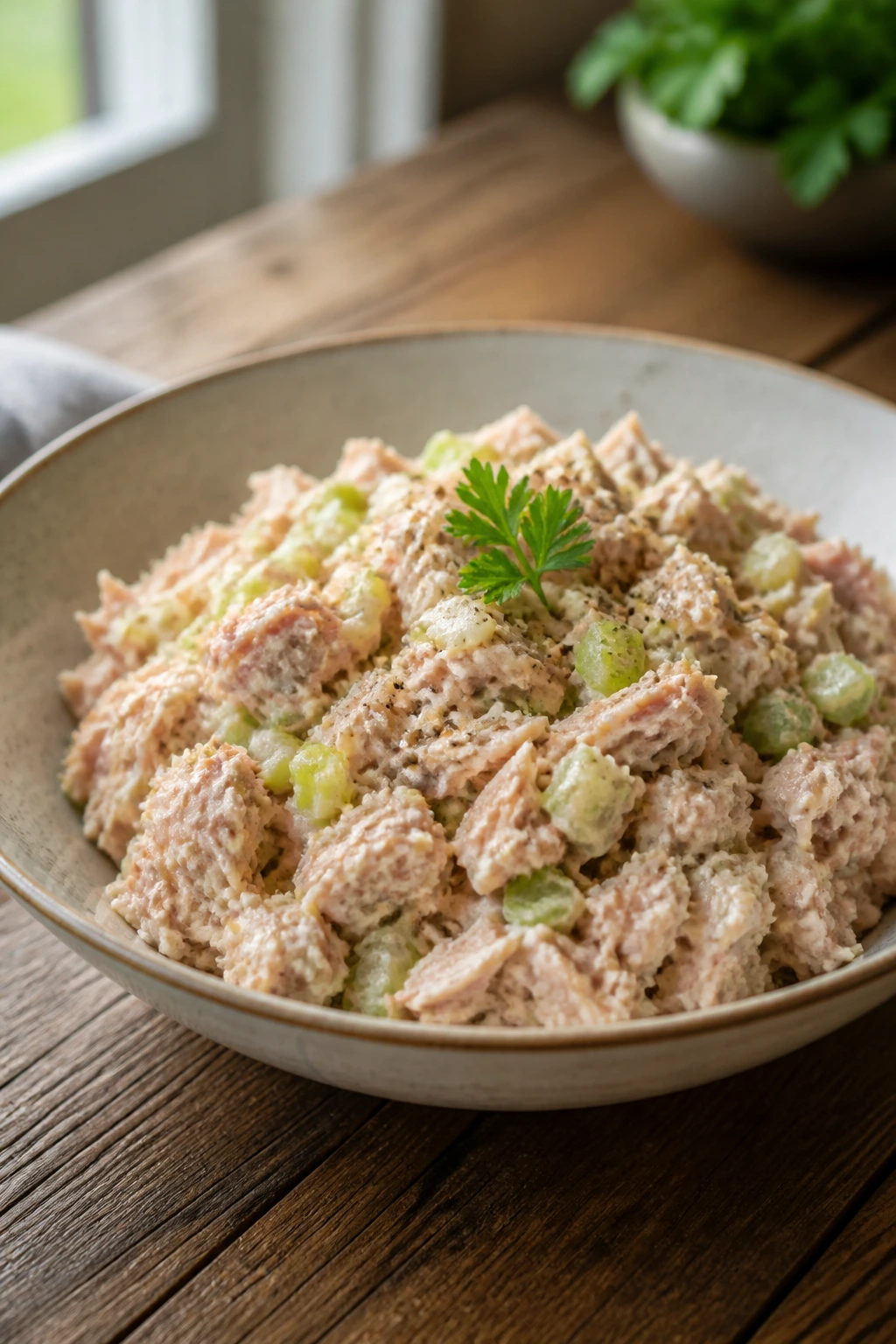
A tuna salad this clean deserves better than being shoved between two slices of sad bread. Put it somewhere it can breathe a little, and the whole thing feels sharper, fresher, and more intentional.
Presentation: Spoon the salad into a shallow bowl rather than a deep one so the celery, onion, and herbs stay visible. I like a final pinch of black pepper and a few parsley leaves on top; it takes ten seconds and makes the bowl look like you meant it.
Accompaniments: Butter lettuce leaves, toasted sourdough, rye crackers, sliced cucumbers, cherry tomatoes, and cold dill pickles all make sense here. If you want a bigger lunch, tuck the salad into a split croissant or pile it over a bed of romaine with extra lemon on the side.
Portions: Plan on about 1/2 cup for a sandwich, 3/4 cup for a generous lettuce-cup lunch, and about 1 cup if you’re serving it as the main part of a salad plate. If you’re feeding people with different appetites, serve the tuna in a bowl and let them build their own plate.
Beverage Pairing: Cold black tea with lemon keeps the meal crisp, and sparkling water with cucumber or lime works just as well. If you want something with alcohol, a dry white wine or a light lager handles the lemon and dill without fighting them.
One thing I’d avoid is burying it under too many extras. A few tomato slices and good bread are enough. Once you start adding cheese, heavy sauces, and three kinds of sprouts, the tuna disappears.
Practical Tips for Better Tuna Salad Every Time
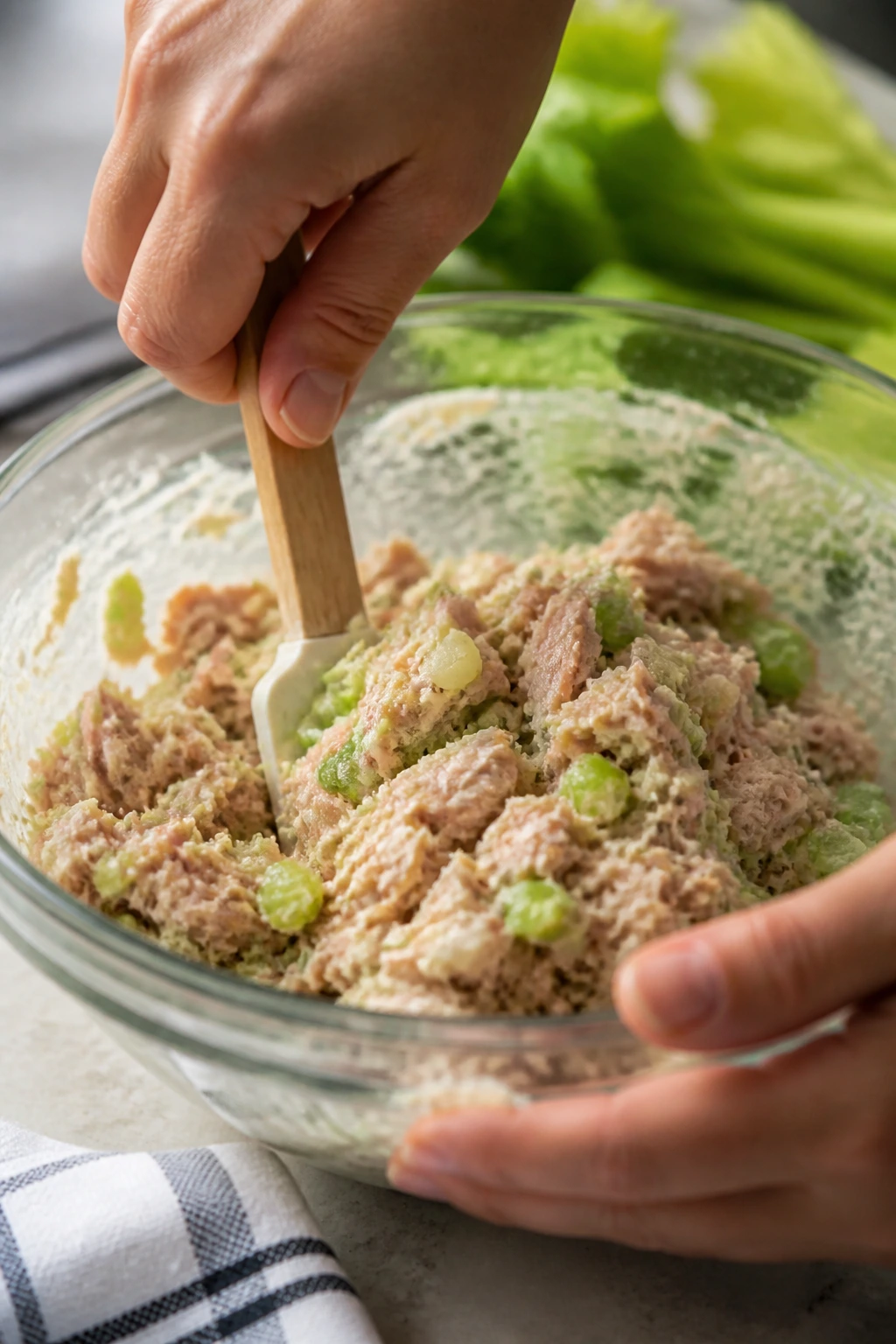
Drain Hard, Then Drain Again: If you think the tuna looks dry enough, give it ten more seconds in the strainer. Water left in the can is the fastest way to get a bowl that tastes diluted by the last teaspoon.
Cut the Crunch Small: Celery and onion should be tiny enough to spread through the salad, not big enough to announce themselves in one loud bite. Small dice also help the dressing coat everything evenly, which keeps the whole bowl from feeling patchy.
Taste After It Rests: A tuna salad that tastes a little sharp right after mixing may settle into itself after 10 minutes in the fridge. The lemon calms down, the celery seed blooms, and the salt moves through the bowl instead of sitting on top.
Use Olive Oil Sparingly: That teaspoon of oil is there for mouthfeel, not to make the salad rich. More oil starts pushing the bowl away from “light tuna salad” and toward something denser, almost spread-like.
Keep Extra Yogurt Nearby: If the salad tightens up after chilling, stir in a teaspoon or two of plain Greek yogurt rather than adding more mayo. That keeps the flavor bright and stops the dressing from turning greasy.
Make the Herb Finish Fresh: Parsley or dill sprinkled at the end tastes cleaner than herbs folded in hours ahead. The color stays brighter too, which matters more than people think when you’re staring at a bowl of pale tuna.
Common Mistakes That Make Tuna Salad Watery or Flat
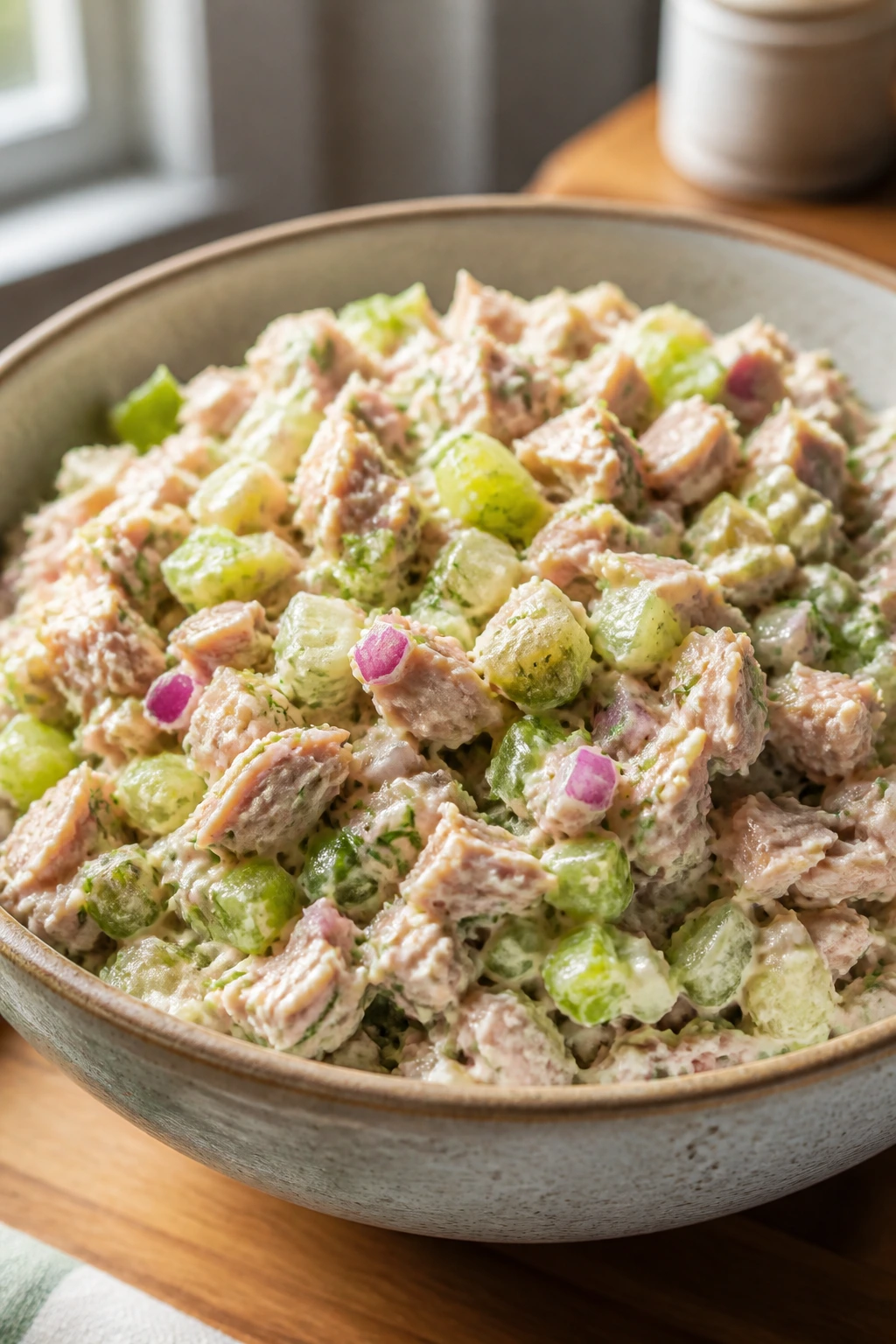
Three things ruin tuna salad fast: too much moisture, too much mixing, and too little seasoning. Most of the time, the fix is boringly simple, which is probably why people skip it.
-
Leaving water in the tuna: The salad turns loose and a little gray around the edges, especially after it sits. Drain the tuna in a strainer and press out the liquid before you put it in the bowl.
-
Chopping the vegetables too big: Big celery cubes and onion chunks make the texture awkward instead of crisp. Dice everything finely so the salad eats like one bite, not a pile of separate parts.
-
Using all the dressing at once: The bowl can go from neat to soupy in a second. Add about three-quarters first, fold gently, and only use the rest if the tuna still looks dry.
-
Skipping acid because the yogurt seems “tangy enough”: The result tastes dull, not fresh. Lemon juice and a little vinegar are what keep the dairy from feeling heavy.
-
Overmixing until the tuna breaks down: The flakes disappear, and the salad starts to look like a spread from a deli case that’s been sitting too long. Fold with a light hand and stop the second the dressing coats the tuna.
-
Not seasoning after chilling: Cold dulls flavor. If the salad tastes fine at the counter but flat from the fridge, it probably needs another pinch of salt or a small squeeze of lemon.
A lot of people try to fix these mistakes by adding more mayonnaise. That’s the wrong reflex. Usually the bowl needs better drainage, better chopping, or another round of salt before it needs more fat.
Variations and Swaps That Still Taste Like Tuna Salad
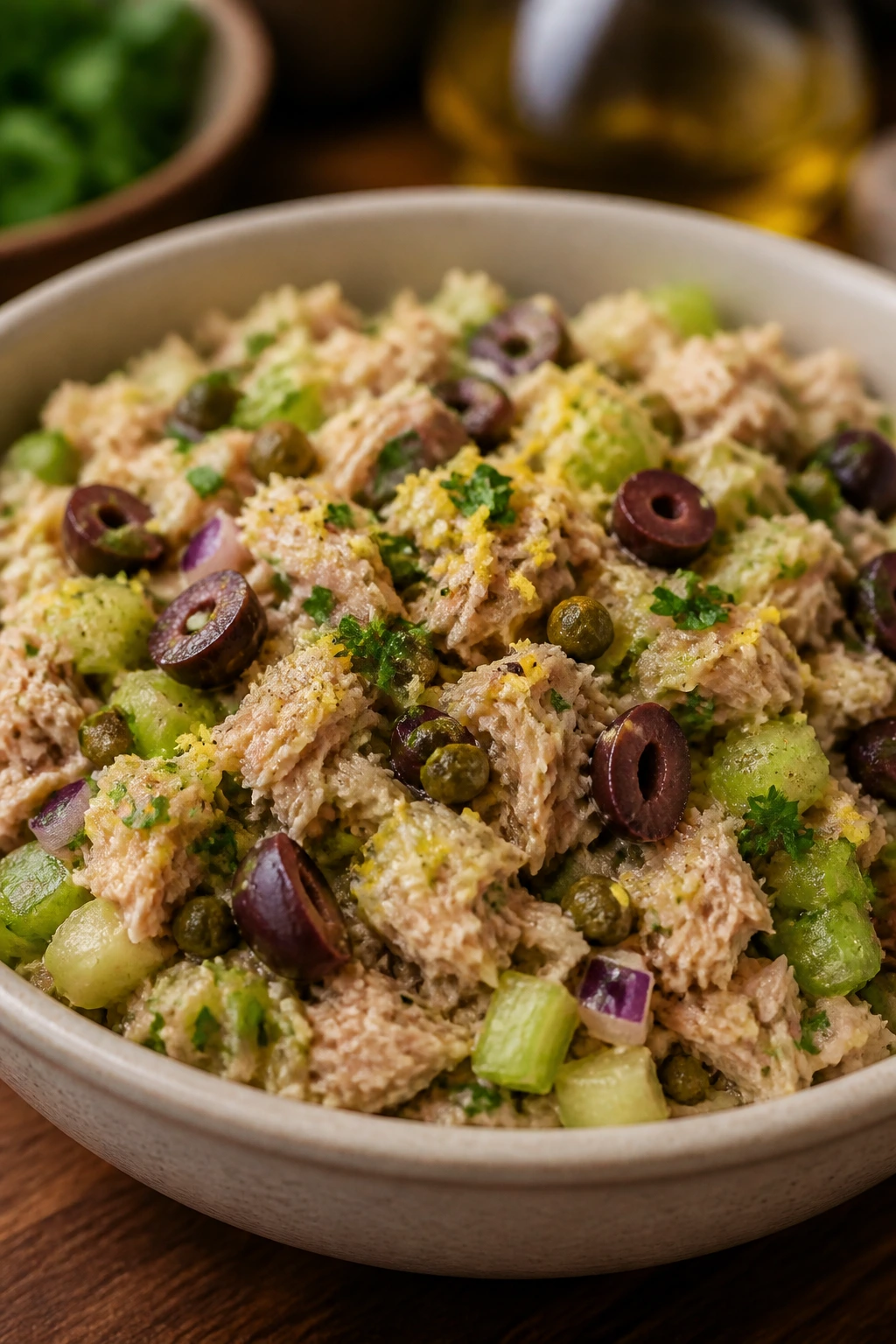
The base recipe is flexible, but the shape should stay the same: flaky tuna, something crisp, a dressing with body, and a clean finish. Once you understand that structure, the variations get easy.
Mediterranean Lemon-Caper Bowl: Swap the dill pickles for 1 tablespoon capers and add 2 tablespoons chopped Kalamata olives. A little extra lemon zest makes the whole thing smell brighter, and it’s especially good tucked into pita or scooped with cucumber spears.
Avocado Cream Version: Replace half the Greek yogurt with 1/2 ripe avocado, mashed smooth. The salad turns richer and a little greener, but it should be eaten the same day because avocado starts to dull and brown after it sits.
Pickle-Shop Deli Style: Use 1/4 cup finely chopped dill pickles and 1 teaspoon pickle brine instead of the apple cider vinegar. That version leans bolder and saltier, which makes sense on rye bread or toasted bagels.
Curried Apple Tuna Salad: Add 1/2 teaspoon curry powder and 1/4 cup finely diced tart apple, like Granny Smith. The apple brings a clean crunch, and the curry gives the bowl a warmer, slightly sweet edge without making it heavy.
Dairy-Free Bright Bowl: Use unsweetened dairy-free yogurt and vegan mayonnaise in place of the dairy ingredients. You may need an extra pinch of salt and a few drops of olive oil to rebuild some of the roundness that dairy normally brings.
If you want to keep the salad light, do not turn every variation into a loaded deli mash-up. A good swap should still let the tuna stay in charge.
Tools That Make the Prep Easier
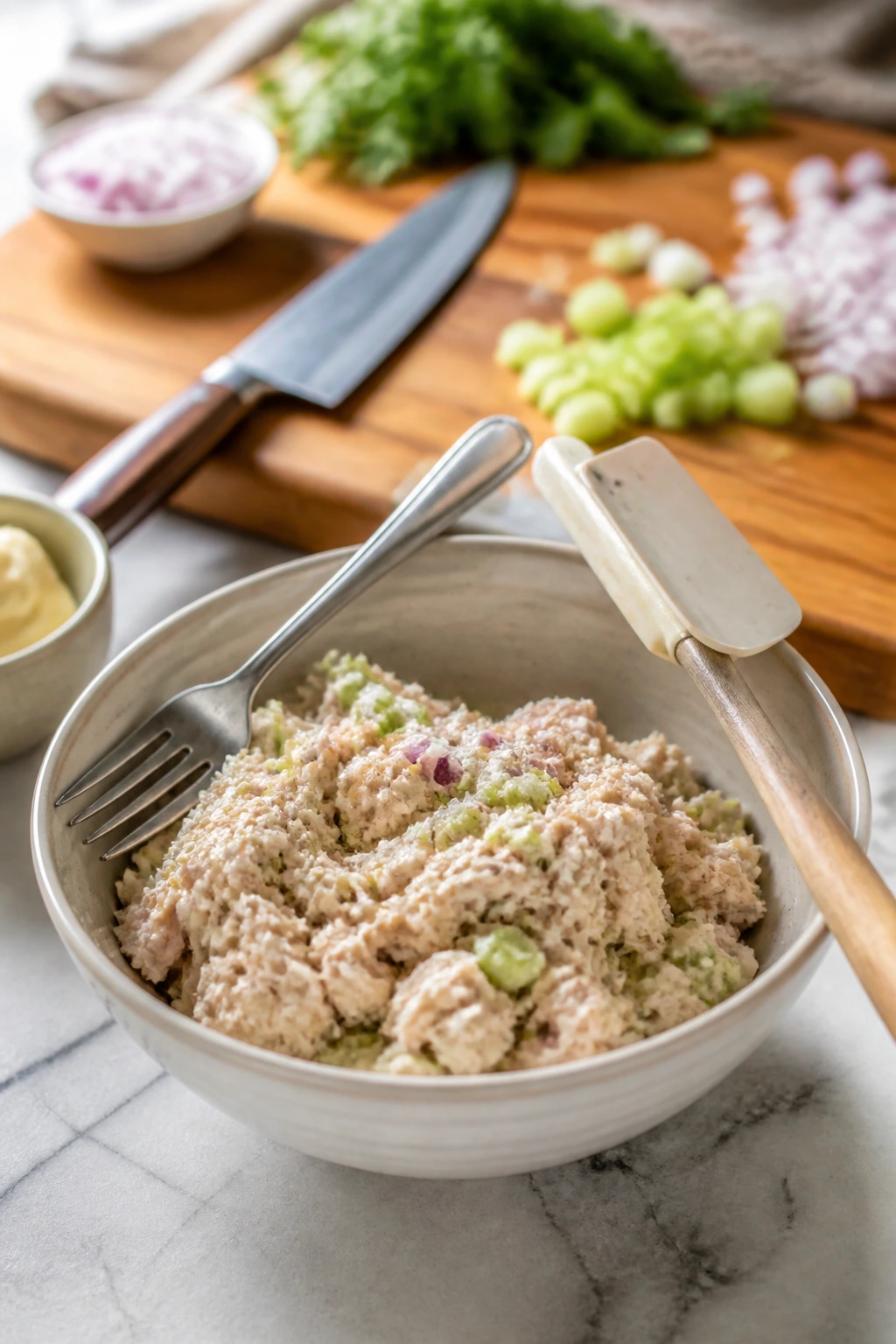
You don’t need special gear for this, and that’s part of the charm. Still, a few simple tools make the bowl cleaner, faster, and less annoying to assemble.
- Medium mixing bowl: Big enough to fold the tuna without spilling, but not so large that the ingredients spread out and become hard to judge.
- Small bowl or liquid measuring cup: Useful for whisking the dressing smooth before it meets the tuna.
- Fork: Better than a spoon for flaking the tuna and folding the salad without crushing it.
- Silicone spatula: Handy if you want to scrape the dressing bowl clean or fold in the final spoonfuls gently.
- Sharp chef’s knife: Makes the celery, onion, and herbs small and even instead of ragged and watery.
- Cutting board: A stable board matters more than people think when you’re chopping tiny dice for a salad like this.
- Fine-mesh strainer: The easiest way to get the tuna dry enough to behave.
- Citrus juicer or fork: Optional, but it helps if your lemon is stingy and you want every drop.
If your knife is dull, the onion and celery will bruise instead of slice cleanly. That extra damage throws off both texture and flavor.
Storage, Make-Ahead, and Fridge Life
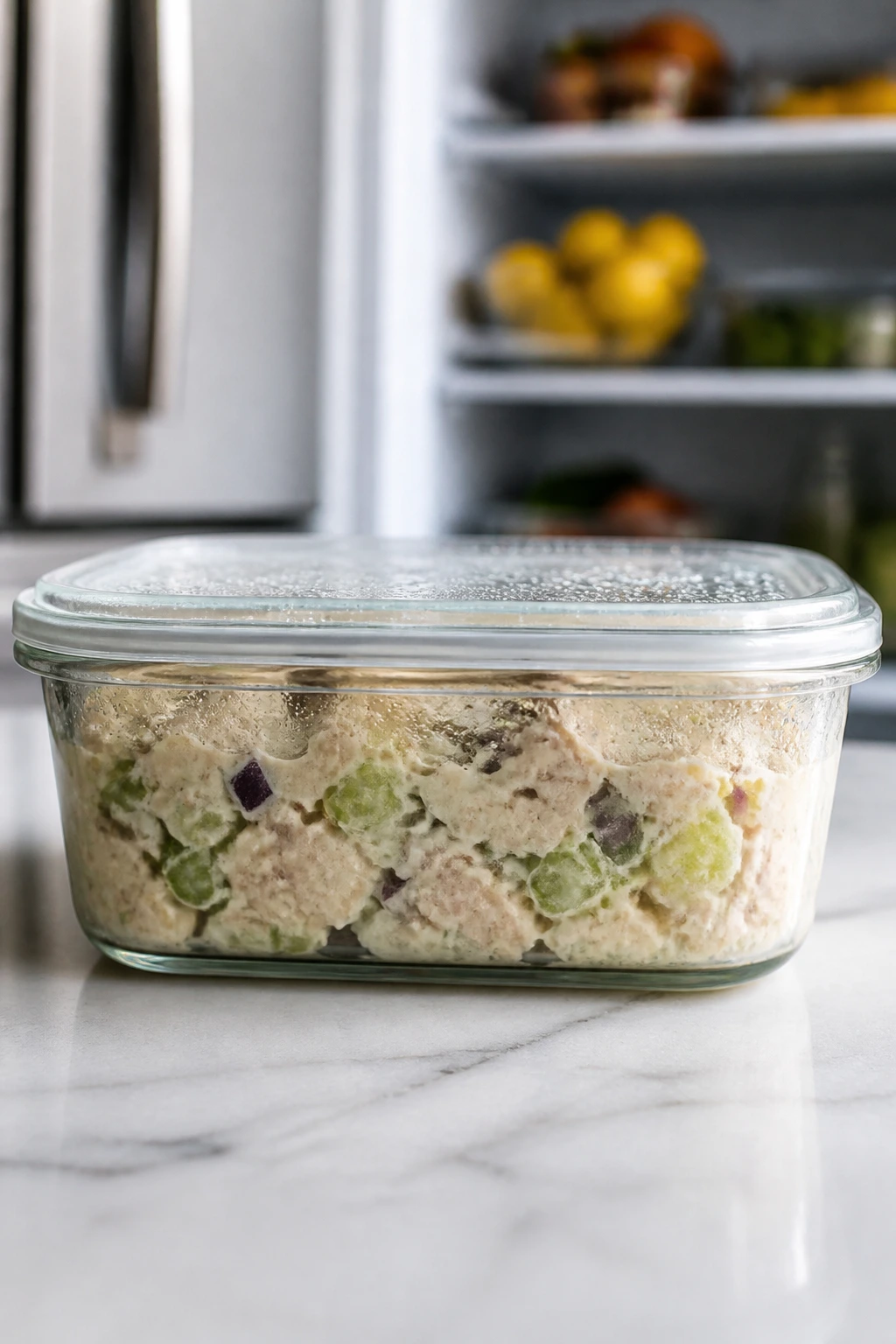
Tuna salad keeps fine in the refrigerator, but it has a short social life once the dressing goes in. Store it in an airtight container and keep it cold at all times; 3 days is the practical ceiling, and I think the texture is best within the first 24 hours.
It does not freeze well. The yogurt and mayo separate, the celery turns watery, and the whole bowl comes back in a soft, sad state that’s not worth saving. If you need something ahead of time, mix the tuna, celery, onion, pickles, and herbs separately from the dressing and combine them a few hours before serving.
For make-ahead lunches, keep the salad and bread apart until the last minute. Toasted bread can soften fast under tuna salad, and lettuce cups get limp if they sit too long with the dressing on them. If you’re packing it for work or a picnic, use an insulated lunch bag and an ice pack, and do not leave it out at room temperature for more than 2 hours.
If liquid collects in the container after a day, stir it back in or spoon off the excess if it looks too loose. A teaspoon of fresh yogurt can also bring the texture back to life.
Questions People Ask Before They Make It

Can I use oil-packed tuna instead of tuna in water?
Yes, and the salad will taste richer. Drain the tuna well and go a little easier on the mayonnaise, because oil-packed tuna already brings some of the fat that water-packed tuna lacks.
Is Greek yogurt enough by itself, or do I need the mayo too?
You can use all Greek yogurt, and the salad will stay lighter, but the texture will be sharper and a touch leaner. The small amount of mayo rounds it out and keeps the dressing from tasting too tangy.
How do I keep tuna salad from getting watery after it sits?
Drain the tuna hard, chop watery vegetables small, and keep the dressing slightly thicker than you think you need. If you make it ahead, combine the parts close to serving time and chill the finished bowl only briefly.
Can I make this the night before?
Yes, but the texture is best if you wait to add the dressing until the next day or mix it a few hours ahead at most. If you do make the whole bowl the night before, expect the celery to soften a little and the flavor to settle into a more deli-style taste.
What if the salad tastes too sharp?
Add a teaspoon of Greek yogurt or a tiny splash of olive oil, then let it sit for 5 minutes. Cold tuna mutes flavor, so a salad that seems overly tangy at first can calm down once it rests.
What if the salad tastes flat?
Salt it first. Then add a squeeze of lemon if needed, and only after that reach for more Dijon. Flat tuna salad usually needs seasoning, not more creaminess.
Can I use sweet pickle relish instead of chopped dill pickles?
You can, but reduce the vinegar a little because sweet relish brings sugar and brine. The result turns softer and slightly sweeter, which works better on soft sandwich bread than on a salad plate.
What bread works best if I want a sandwich?
Toasted sourdough, rye, or a sturdy whole-grain sandwich loaf all hold up well. Soft bread works too, but toast it first or the dressing will soak straight through and go soggy fast.
A Bowl Worth Making Again
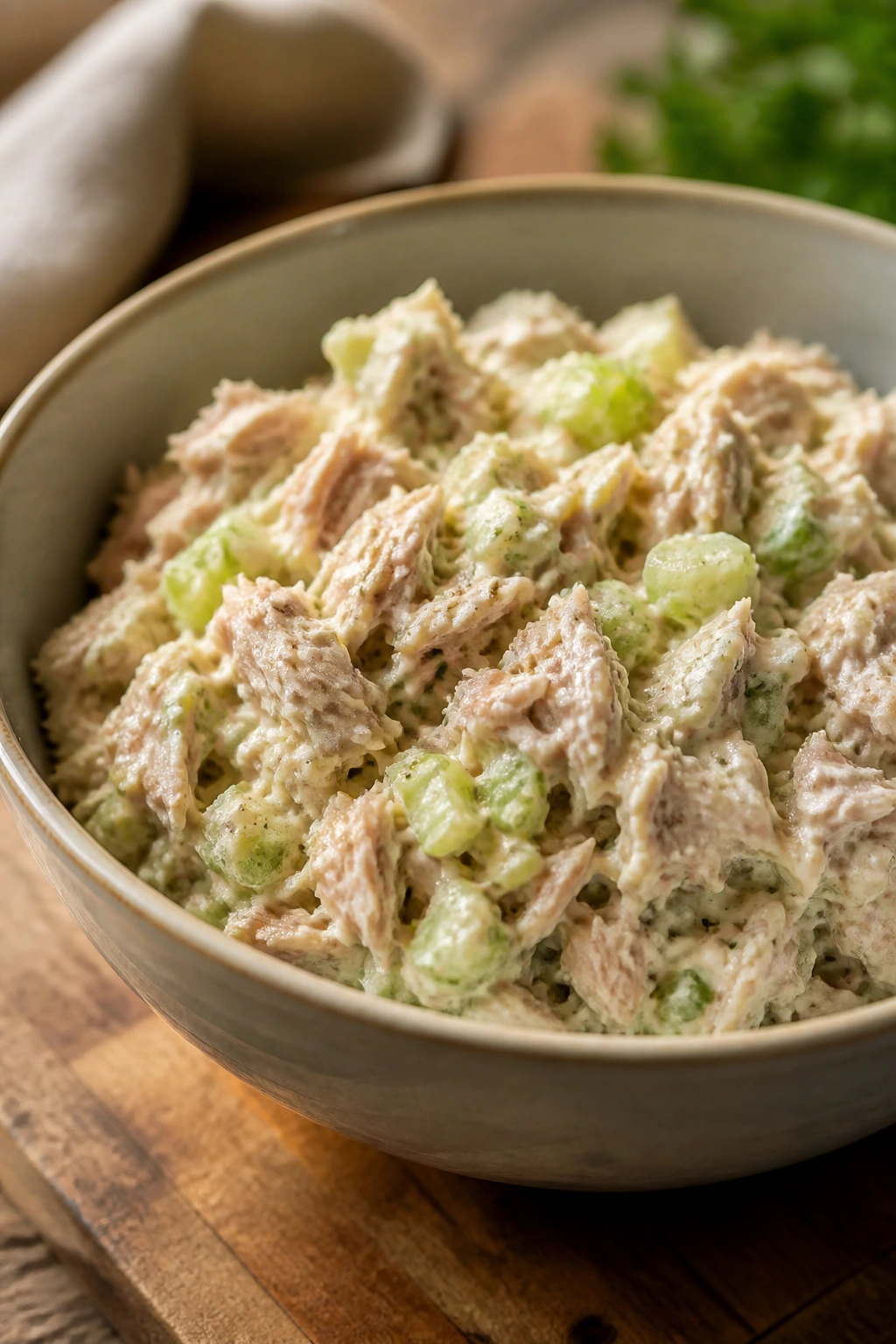
The best tuna salad isn’t crowded. It doesn’t need five add-ins, and it doesn’t need to pretend to be fancy. It needs tuna that’s dry enough to flake, a dressing with enough acid to wake it up, and vegetables cut small enough that every bite feels balanced.
Once you make it this way, the old heavy version starts to feel unnecessary. Keep a few cans of tuna in the pantry, and this becomes the kind of lunch you can put together without thinking too hard — which, on a good day, is about as much kitchen effort as anybody wants.
Light Tuna Salad with Homemade Dressing — Recipe Card
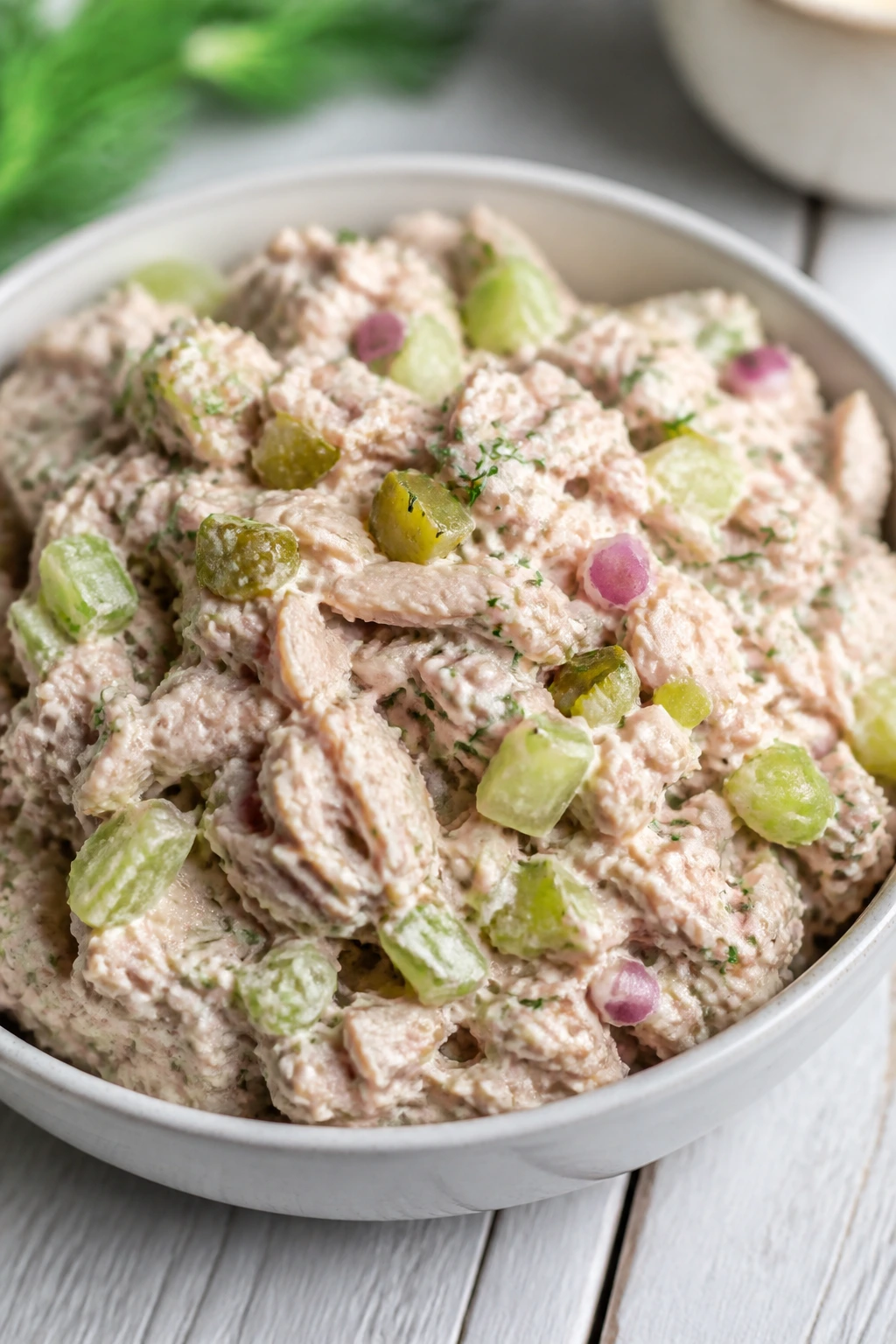
Recipe Name: Light Tuna Salad with Homemade Dressing
Description: A bright, creamy tuna salad made with Greek yogurt, a little mayonnaise, Dijon, lemon, celery, onion, and dill pickles. It stays light enough for lettuce cups and sturdy enough for toast.
Prep Time: 15 minutes
Cook Time: 0 minutes
Total Time: 25 minutes
Course: Lunch, Main Course, Salad
Cuisine: American
Servings: 4
Calories: about 165 kcal per serving
Ingredients
For the Tuna Salad:
- 2 cans (5 ounces each) tuna in water, drained very well
- 2 celery stalks, finely diced
- 1/4 cup red onion, finely minced
- 2 tablespoons dill pickles, finely chopped
- 2 tablespoons fresh parsley, chopped
- 1 tablespoon fresh dill, chopped, optional
- 1 hard-boiled egg, chopped, optional
For the Homemade Dressing:
- 1/2 cup plain Greek yogurt
- 2 tablespoons mayonnaise
- 1 tablespoon Dijon mustard
- 1 tablespoon fresh lemon juice
- 1 teaspoon lemon zest
- 1 teaspoon apple cider vinegar
- 1/2 teaspoon celery seed
- 1/2 teaspoon kosher salt, plus more to taste
- 1/4 teaspoon black pepper
- 1 teaspoon olive oil
Instructions
- Drain the tuna in a fine-mesh strainer, press out extra moisture, and flake it into a medium bowl.
- Add the celery, red onion, dill pickles, parsley, dill if using, and the chopped hard-boiled egg if using.
- In a small bowl, whisk the Greek yogurt, mayonnaise, Dijon, lemon juice, lemon zest, apple cider vinegar, celery seed, salt, black pepper, and olive oil until smooth.
- Add about three-quarters of the dressing to the tuna mixture and fold gently until coated.
- Taste and add the remaining dressing only if needed, then adjust salt, pepper, or lemon to taste.
- Chill for 10 minutes if desired, then serve cold or slightly chilled.
Notes: Drain the tuna very well or the salad will turn watery. For sandwiches, toast the bread first; for the cleanest texture, serve it within 24 hours.