



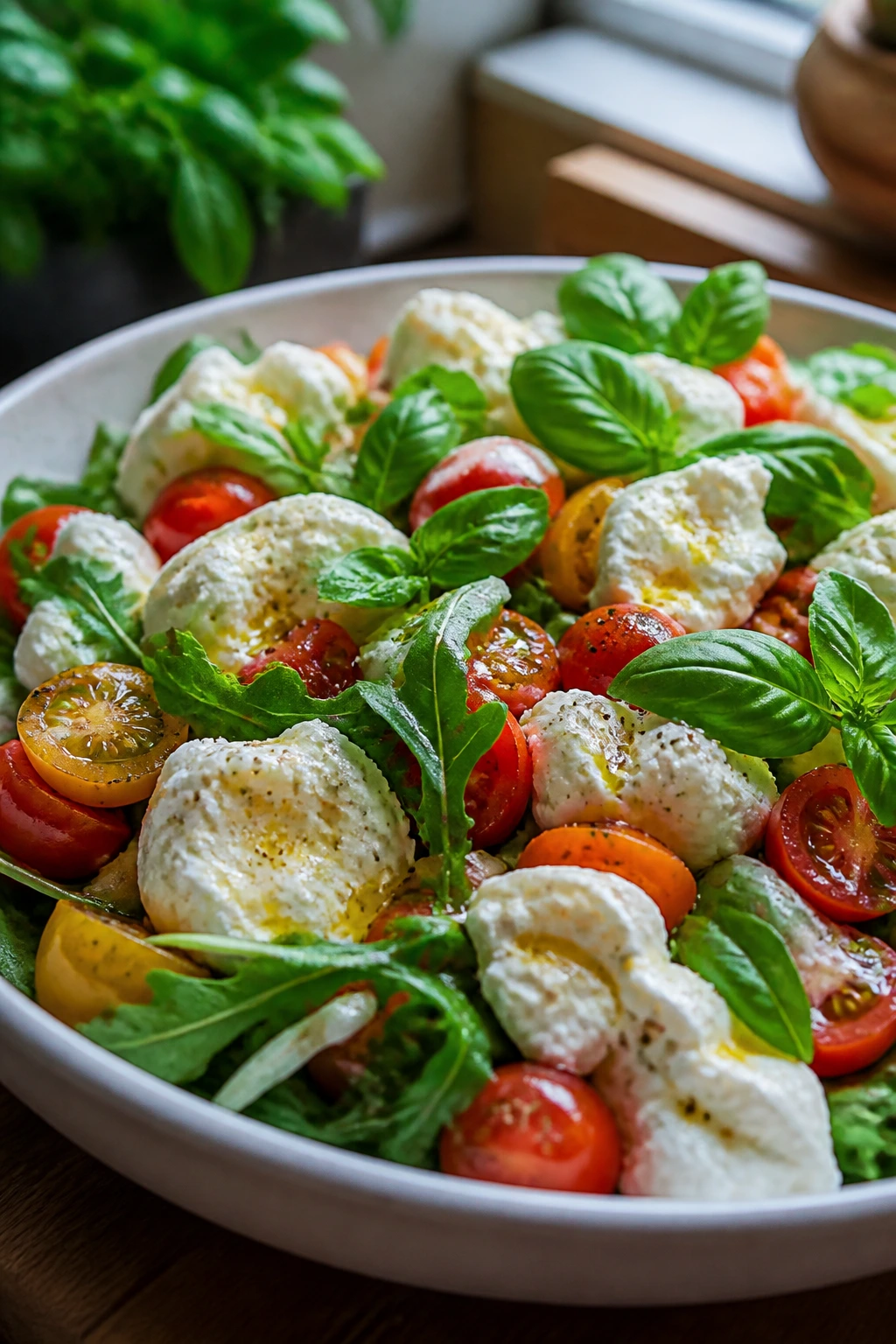
When lunch needs to feel like food and not a compromise, mozzarella salad recipes do a lot of quiet heavy lifting. Fresh mozzarella brings salt, milkiness, and enough soft chew to make a bowl feel finished, not fussy. The trick is choosing the right partners: tomatoes that actually taste like tomatoes, herbs that still smell green, and something with crunch so the cheese doesn’t get lost in a pile of wet greens.
I’ve always liked mozzarella in salads because it behaves differently from sharper cheeses. It doesn’t bully the bowl. It softens acidic dressings, rounds out peppery greens, and gives cold lunches a little substance without turning them into a brick. If you’ve ever opened a container at noon and found limp lettuce swimming in dressing, you already know why these salads need a better structure than “throw everything in and hope.”
A good mozzarella salad is mostly about restraint and timing. Drain the cheese. Dry the tomatoes. Salt at the end. Use enough herbs to make the whole thing smell alive. And if you’re packing lunch, build the bowl so the wet ingredients don’t sit on the greens for six hours. That’s where the good ones separate from the soggy ones.
Why These Mozzarella Salad Recipes Work So Well at Lunch
-
They hold up without feeling heavy: Mozzarella gives each bowl enough body that you’re not hungry an hour later, but it still eats like a salad, not a sandwich in disguise.
-
The cheese plays nicely with sharp flavors: Lemon, vinegar, pepperoncini, basil, and tomatoes all need something creamy and mild to soften their edges, and mozzarella does that without covering them up.
-
Most of these recipes pack well: Grain salads, bean salads, and chopped salads can be built in layers so the lettuce stays crisp and the cheese stays tender.
-
You can make them from ordinary groceries: Cherry tomatoes, canned beans, rotisserie chicken, orzo, arugula, cucumbers, and mozzarella pearls are easy to find without hunting through specialty aisles.
-
They work hot, cold, or room temperature: Some are best straight from the fridge. Others, especially grain salads, get better after ten minutes on the counter when the dressing loosens and the flavors stop acting so shy.
-
They give lunch some shape: A mozzarella salad feels more complete than a random mix of vegetables because the cheese, acid, salt, and crunch each have a job.
1. Caprese Lunch Salad with Crispy Breadcrumbs
A plain Caprese is lovely for five minutes. Then it starts asking for something more. This version keeps the tomato-basil-mozzarella core, then adds chopped romaine and garlicky breadcrumbs so the whole bowl works as lunch instead of a side dish. The breadcrumbs soak up a little dressing, which is half the charm here.
Why It Works:
Fresh mozzarella and ripe tomatoes need salt, acid, and crunch to feel complete. The romaine gives the salad a sturdier base, while toasted breadcrumbs keep the texture from going soft by the second bite. I also like this because it tastes fresh even when the tomatoes are room temperature, which is exactly where they should be.
Key Ingredients:
- 8 oz fresh mozzarella, patted dry and torn into chunks
- 3 medium ripe tomatoes, sliced 1/4 inch thick
- 4 cups chopped romaine or little gem lettuce
- 1 cup fresh basil leaves, torn by hand
- 1/2 cup plain breadcrumbs
- 1 garlic clove, minced
- 1/4 cup extra-virgin olive oil
- 1 tbsp red wine vinegar
- 1 tsp Dijon mustard
- 2 tbsp balsamic glaze
- 1/2 tsp kosher salt, plus more to taste
- 1/4 tsp black pepper
Quick Steps:
- Heat 1 tablespoon of olive oil in a small skillet over medium heat. Add the breadcrumbs and garlic, stirring for 3 to 4 minutes until the crumbs turn pale gold and smell nutty, not burnt.
- Whisk the remaining olive oil, red wine vinegar, Dijon, salt, and pepper in a large bowl until glossy.
- Add the romaine and toss lightly so every leaf gets a thin coat.
- Arrange the tomato slices and mozzarella over the greens, then scatter the basil across the top.
- Finish with the toasted breadcrumbs and a slow drizzle of balsamic glaze. Serve right away, while the crumbs still have crunch.
Equipment for This Recipe:
- Small skillet
- Large salad bowl
- Sharp knife
- Cutting board
- Measuring spoons
How to Serve This Dish:
Serve it on a wide plate or shallow bowl so the tomato slices can sit in a single layer instead of collapsing into a pile. A piece of olive-oil toast beside it turns this into a real lunch. If you want more protein, add sliced grilled chicken or a few hard-boiled eggs.
Pro Tips for This Recipe:
- Pat the mozzarella dry with paper towels or the dressing will slide off it.
- Use tomatoes that smell sweet at the stem end; bland tomatoes make this taste thin.
- Toast the breadcrumbs separately if your skillet runs hot. Burnt garlic ruins the whole bowl.
- Add basil at the end so it doesn’t darken and lose its perfume.
Variations on This Dish:
- Avocado Caprese: Add 1 sliced avocado for a softer, richer lunch bowl.
- Heirloom Tomato Mix: Use 3 colors of tomatoes and skip the romaine for a more classic Caprese feel.
- Whole-Grain Crunch: Swap the breadcrumbs for torn toasted sourdough cubes if you want more chew.
Common Mistakes to Avoid with This Dish:
- Using wet mozzarella: Waterlogged cheese makes the salad slippery. Dry it first.
- Over-dressing the romaine: The greens should look lightly coated, not glossy and drenched.
- Adding the glaze too early: Balsamic glaze belongs on top, or it sinks and stains the bowl.
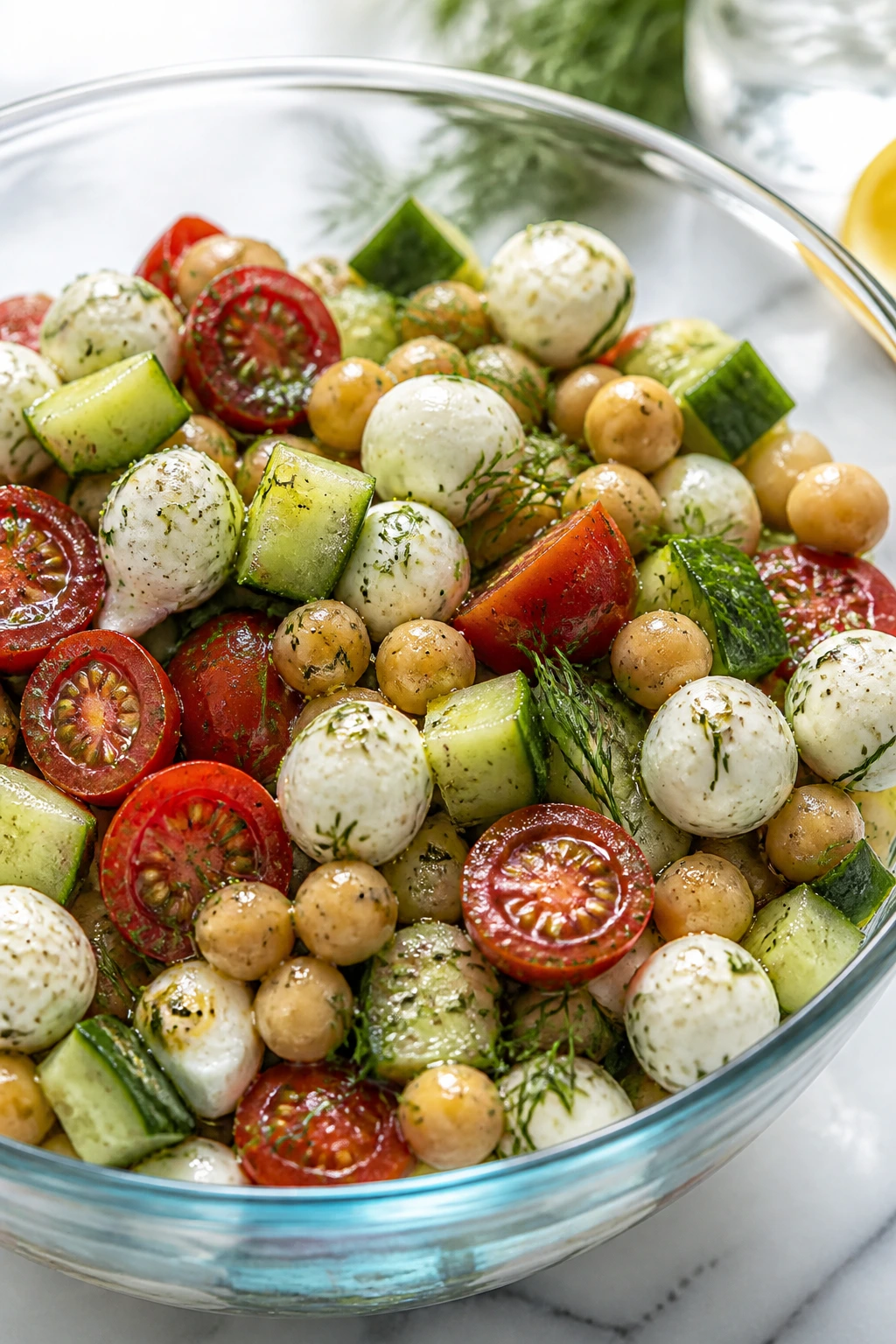
2. Chickpea Cucumber Mozzarella Salad with Lemon-Dill Dressing
This one is the clean, cold, fridge-friendly salad I reach for when lunch needs to happen without a stove. The chickpeas bring enough heft to carry the mozzarella, while cucumber and dill keep the bowl brisk and bright. It tastes like something you assembled with intention, which is more than most desk lunches can claim.
Why It Works:
Chickpeas and mozzarella solve the same problem from different directions: one gives structure, the other gives softness. Lemon and dill wake the whole thing up, and cucumber keeps the texture crisp. The salad improves after a short chill because the chickpeas absorb some dressing, but it still tastes fresh if you eat it right away.
Key Ingredients:
- 1 can chickpeas, 15 oz, drained and rinsed
- 1 large English cucumber, diced
- 1 pint cherry tomatoes, halved
- 8 oz mozzarella pearls
- 1/2 small red onion, thinly sliced
- 1/4 cup chopped fresh dill
- 1/4 cup chopped parsley
- 3 tbsp extra-virgin olive oil
- 2 tbsp fresh lemon juice
- 1 tsp Dijon mustard
- 1 small garlic clove, grated
- 1/2 tsp kosher salt
- 1/4 tsp black pepper
Quick Steps:
- Whisk the olive oil, lemon juice, Dijon, garlic, salt, and pepper in a large bowl until emulsified and slightly thickened.
- Add the chickpeas, cucumber, tomatoes, onion, dill, and parsley. Toss until everything looks lightly coated.
- Fold in the mozzarella pearls last so they stay intact.
- Taste and adjust the salt; chickpeas need more than people think.
- Chill for 10 to 15 minutes, then serve cold or at cool room temperature.
Equipment for This Recipe:
- Large mixing bowl
- Sharp knife
- Citrus juicer or fork
- Measuring spoons
- Colander
How to Serve This Dish:
Spoon it into a lunch bowl and add pita chips or a warm flatbread on the side. It also works well stuffed into a pita with a handful of greens. If you’re packing it ahead, keep the dressing on the bottom and the mozzarella near the top.
Pro Tips for This Recipe:
- Slice the red onion as thinly as you can; thick onion turns bossy fast.
- Rinse and drain the chickpeas well or the dressing gets cloudy.
- If your cucumber is seedy, scoop the center out before dicing.
- A little lemon zest makes the dressing smell sharper without extra sourness.
Variations on This Dish:
- White Bean Swap: Use cannellini beans instead of chickpeas for a softer texture.
- Herb Garden Bowl: Add mint and basil along with the dill.
- Peppery Version: Toss in a handful of arugula for a sharper bite.
Common Mistakes to Avoid with This Dish:
- Using giant cucumber chunks: They throw off the balance. Aim for bite-size dice.
- Skipping the chill: Even 10 minutes helps the beans take on more flavor.
- Adding extra lemon after tasting once: The salad gets brighter as it sits, so go easy at first.
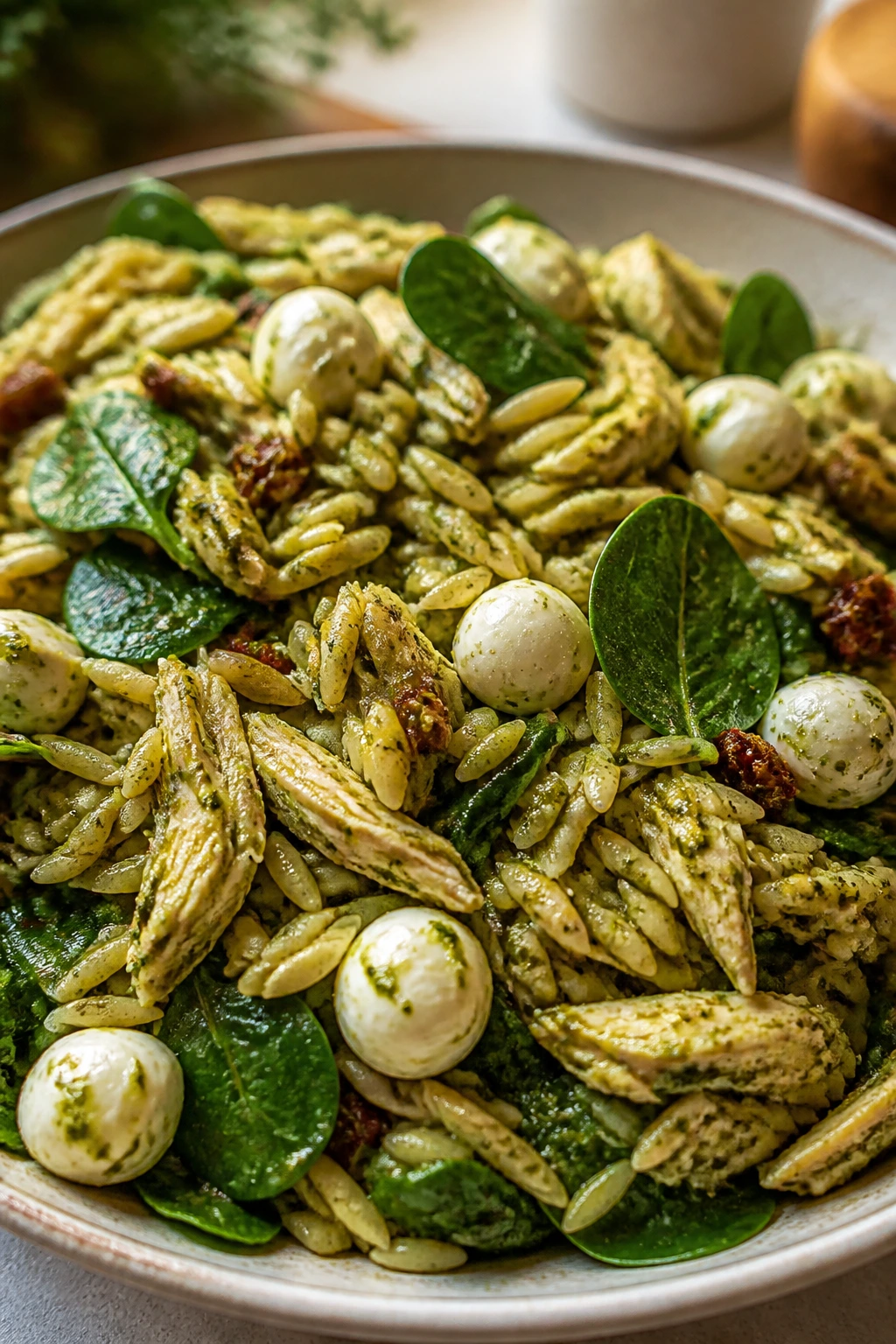
3. Pesto Chicken Orzo Salad with Mozzarella and Spinach
This is the lunch salad for people who want something substantial but still want it cold enough to pack. Orzo makes the bowl feel almost pasta-salad adjacent, the chicken gives it backbone, and mozzarella pearls tuck into the gaps so every forkful feels complete. It’s one of those salads that looks mild in the bowl and tastes louder than expected.
Why It Works:
Orzo takes on pesto quickly, which means the flavor reaches every corner instead of sitting on top in a green slick. Spinach softens under the warm pasta just enough to wilt, not collapse. The mozzarella pearls stay cool against the warm grains if you let the orzo cool for a few minutes first, which is the move here.
Key Ingredients:
- 8 oz orzo
- 2 cups cooked chicken, shredded or chopped
- 8 oz mozzarella pearls
- 2 cups baby spinach
- 1/2 cup sun-dried tomatoes, drained and chopped
- 1/4 cup pesto
- 2 tbsp olive oil
- 2 tbsp lemon juice
- 1/4 cup toasted pine nuts
- 1/2 tsp kosher salt
- 1/4 tsp black pepper
Quick Steps:
- Cook the orzo in salted boiling water for 8 to 9 minutes until tender but still springy. Drain well.
- Whisk the pesto, olive oil, lemon juice, salt, and pepper in a big bowl.
- Add the warm orzo and toss until it shines with sauce. Let it cool for 5 minutes.
- Stir in the chicken, spinach, and sun-dried tomatoes.
- Fold in the mozzarella pearls and pine nuts. Taste again, then add more lemon if the pesto feels flat.
Equipment for This Recipe:
- Medium saucepan
- Colander
- Large mixing bowl
- Wooden spoon
- Measuring cups
How to Serve This Dish:
Serve it cold or barely cool, with a few extra pine nuts on top for crunch. It’s good on its own, though a sliced cucumber or a handful of grapes on the side makes the plate feel more finished. For a bigger lunch, tuck it into a container with a small spoonful of extra pesto on the side.
Pro Tips for This Recipe:
- Cool the orzo for a few minutes before adding mozzarella or the cheese softens too much.
- If your pesto is thick, loosen it with 1 tablespoon of pasta water before tossing.
- Use rotisserie chicken when you want lunch fast; it works fine here.
- Toast the pine nuts in a dry skillet for 2 minutes, shaking often, until they smell buttery.
Variations on This Dish:
- Turkey Pesto Orzo: Use chopped turkey instead of chicken.
- Veggie Pesto Bowl: Skip the meat and add roasted zucchini or chickpeas.
- Sun-Dried Tomato Boost: Double the sun-dried tomatoes if you want a deeper, sweeter bite.
Common Mistakes to Avoid with This Dish:
- Adding cheese to piping-hot orzo: It gets floppy and loses shape.
- Underseasoning the pasta water: Bland orzo makes the whole salad taste dull.
- Using too much pesto: The salad should taste herbaceous, not oily.
4. Italian Chopped Salad with Salami, Mozzarella, and Pepperoncini
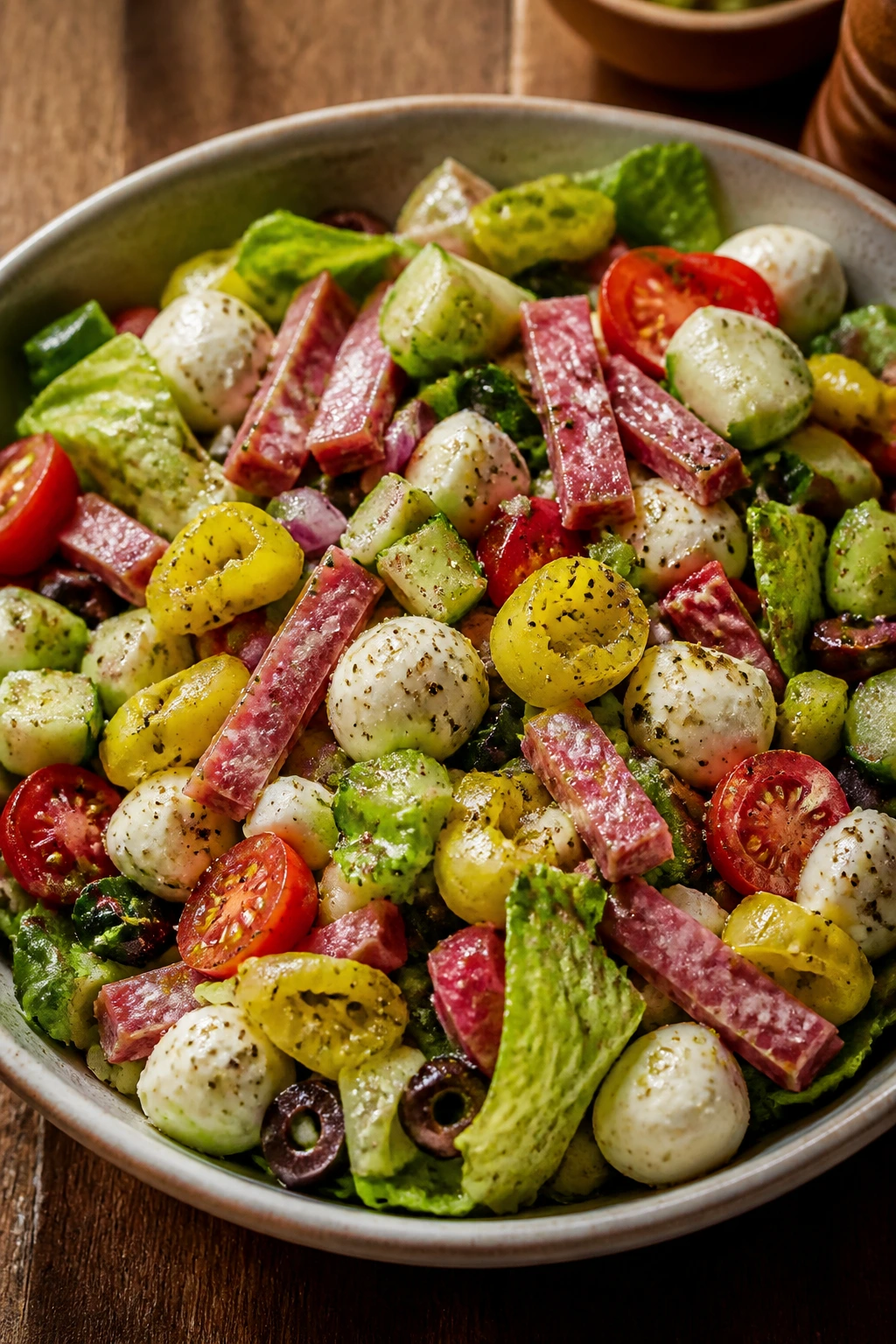
This is the kind of chopped salad that earns its keep in a lunch container. Everything is cut small enough to get on one fork, and the salami and mozzarella give enough richness that you don’t miss bread. The pepperoncini bring the sharp little bite that keeps the bowl from feeling heavy.
Why It Works:
Chopped salads work when every piece is about the same size, and this one benefits from that discipline. Salami adds salt and fat, mozzarella brings mild creaminess, and pepperoncini give the dressing some personality. Chickpeas make the bowl sturdier, which matters if you’re eating it hours after packing it.
Key Ingredients:
- 6 cups chopped romaine
- 4 oz salami, cut into thin strips
- 8 oz mozzarella pearls or small cubes
- 1 cup diced cucumber
- 1 cup halved cherry tomatoes
- 1/2 cup sliced olives
- 1/2 cup sliced pepperoncini
- 1/2 cup chickpeas, drained and rinsed
- 3 tbsp olive oil
- 2 tbsp red wine vinegar
- 1 tsp Dijon mustard
- 1 tsp dried oregano
- 1/2 tsp kosher salt
- 1/4 tsp black pepper
Quick Steps:
- Whisk the olive oil, red wine vinegar, Dijon, oregano, salt, and pepper in the bottom of a large bowl.
- Add the romaine, cucumber, tomatoes, olives, pepperoncini, chickpeas, and salami. Toss until the dressing is spread around instead of pooled at the bottom.
- Fold in the mozzarella last.
- Let the salad sit for 5 minutes so the chickpeas and lettuce pick up flavor.
- Toss once more and serve.
Equipment for This Recipe:
- Large salad bowl
- Sharp chef’s knife
- Cutting board
- Measuring spoons
- Tongs or salad servers
How to Serve This Dish:
Pack it in a rectangular lunch container so the chopped pieces don’t tumble around too much. It stands on its own, though a few crackers or a piece of crusty bread make the meal feel more complete. If you want it less salty, rinse the olives quickly before slicing.
Pro Tips for This Recipe:
- Chop everything to roughly the same bite size. The texture gets better immediately.
- Pat the pepperoncini dry if they’re packed in brine.
- Use a sharper salami if you want more spice; milder salami keeps the bowl gentle.
- Don’t drown the lettuce. Chopped salads need a light hand.
Variations on This Dish:
- Turkey Antipasto Chop: Swap salami for sliced turkey pepperoni or roasted turkey.
- Extra-Cheesy Version: Add a little shaved parmesan with the mozzarella.
- Mild Lunch Bowl: Skip pepperoncini and use chopped roasted red peppers instead.
Common Mistakes to Avoid with This Dish:
- Leaving pieces too large: You’ll end up spearing a whole cucumber slice with nothing else.
- Over-salting before tasting: Salami, olives, and pepperoncini already bring plenty.
- Mixing too early for lunch: Hold the mozzarella back if you’re packing it the night before.
5. Roasted Vegetable Farro Salad with Mozzarella
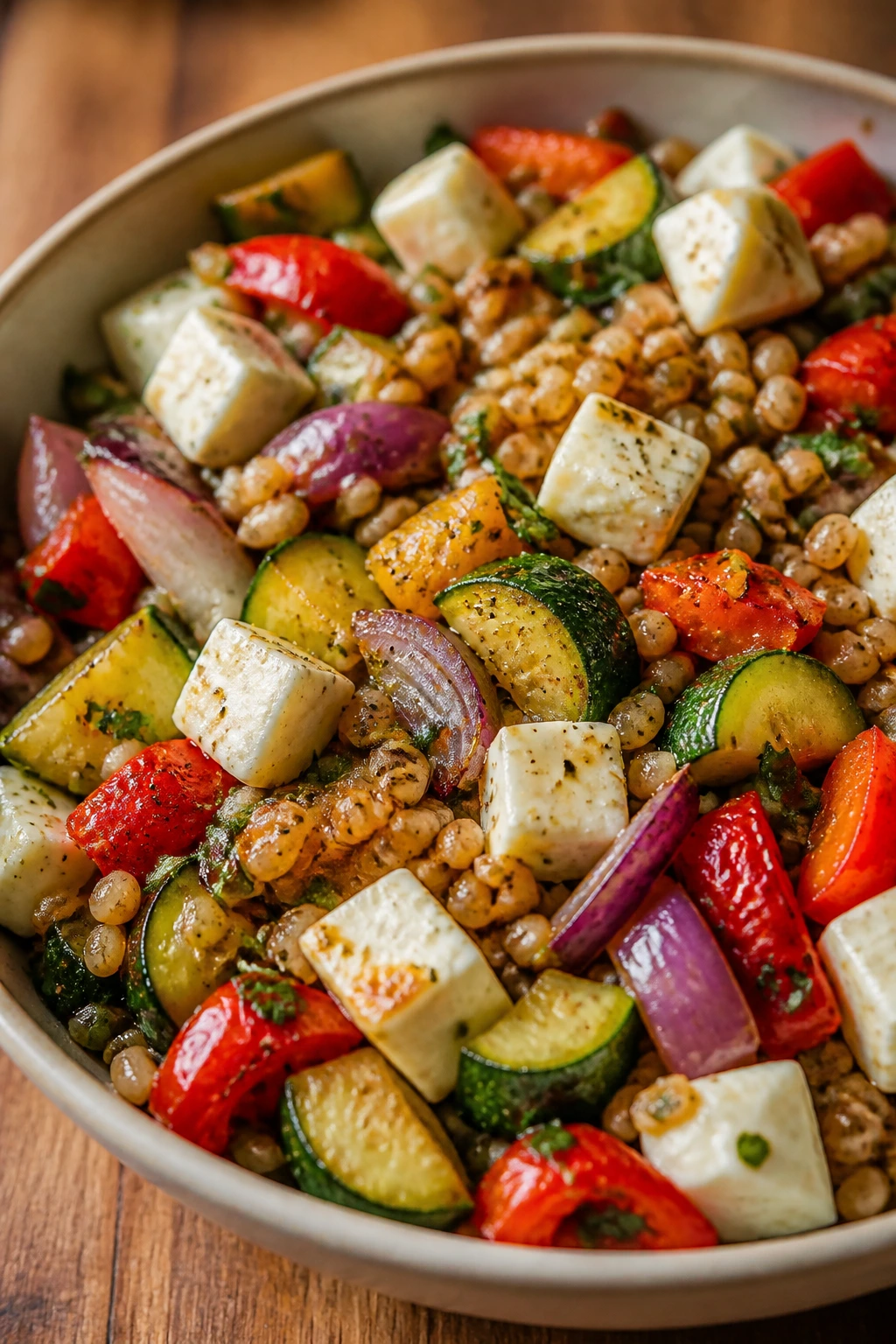
This one has the steady, grainy feel of a lunch that actually keeps you going. Farro gives the salad chew, roasted vegetables add sweetness, and mozzarella softens the edges so the bowl doesn’t read like a grain store exploded into a container. I like this most when the vegetables still have a little char on them.
Why It Works:
Farro has a nutty bite that stands up to acid and roasted vegetables. Mozzarella bridges the gap between warm grain and cool herbs, and the vinaigrette pulls everything together without making it slippery. You can eat it warm, cool, or somewhere in between, which is handy if lunch timing is messy.
Key Ingredients:
- 1 cup farro
- 1 medium zucchini, sliced into half-moons
- 1 red bell pepper, cut into strips
- 1 small red onion, cut into wedges
- 8 oz mozzarella, cubed or torn
- 1/4 cup chopped parsley
- 1/4 cup toasted sliced almonds
- 3 tbsp olive oil
- 2 tbsp red wine vinegar
- 1 tsp Dijon mustard
- 1 tsp honey
- 1 garlic clove, grated
- 1/2 tsp kosher salt
- 1/4 tsp black pepper
Quick Steps:
- Heat the oven to 425°F. Toss the zucchini, bell pepper, and onion with 1 tablespoon olive oil, salt, and pepper.
- Roast for 20 to 25 minutes, stirring once, until the edges are browned and the onions have collapsed a little.
- Meanwhile, simmer the farro in salted water for 20 to 25 minutes until tender but still pleasantly chewy. Drain well.
- Whisk the remaining olive oil, vinegar, Dijon, honey, garlic, salt, and pepper in a large bowl.
- Add the farro and roasted vegetables. Toss gently, then fold in the mozzarella, parsley, and almonds.
Equipment for This Recipe:
- Sheet pan
- Medium saucepan
- Large bowl
- Colander
- Measuring spoons
How to Serve This Dish:
Serve it as a room-temperature lunch bowl with a few extra herbs on top. It pairs well with sliced melon or a crisp apple on the side. If you want it richer, add a spoonful of pesto or a few torn olives.
Pro Tips for This Recipe:
- Roast the vegetables in a single layer or they steam instead of caramelize.
- Drain the farro well; extra water dulls the dressing.
- Add mozzarella after the farro cools for a few minutes so it keeps its shape.
- Toast the almonds until light gold for a cleaner, less raw flavor.
Variations on This Dish:
- Barley Version: Use pearled barley instead of farro.
- Spring Veg Swap: Replace zucchini and pepper with asparagus and peas.
- Creamier Finish: Stir in a spoonful of pesto just before serving.
Common Mistakes to Avoid with This Dish:
- Using soggy roasted vegetables: Crowded pans give you limp vegetables, not caramelized ones.
- Skipping the cool-down: Hot farro melts the mozzarella too much.
- Adding too little acid: Grain salads need a sharp dressing to stay lively.
6. Watermelon Cucumber Mozzarella Salad with Mint
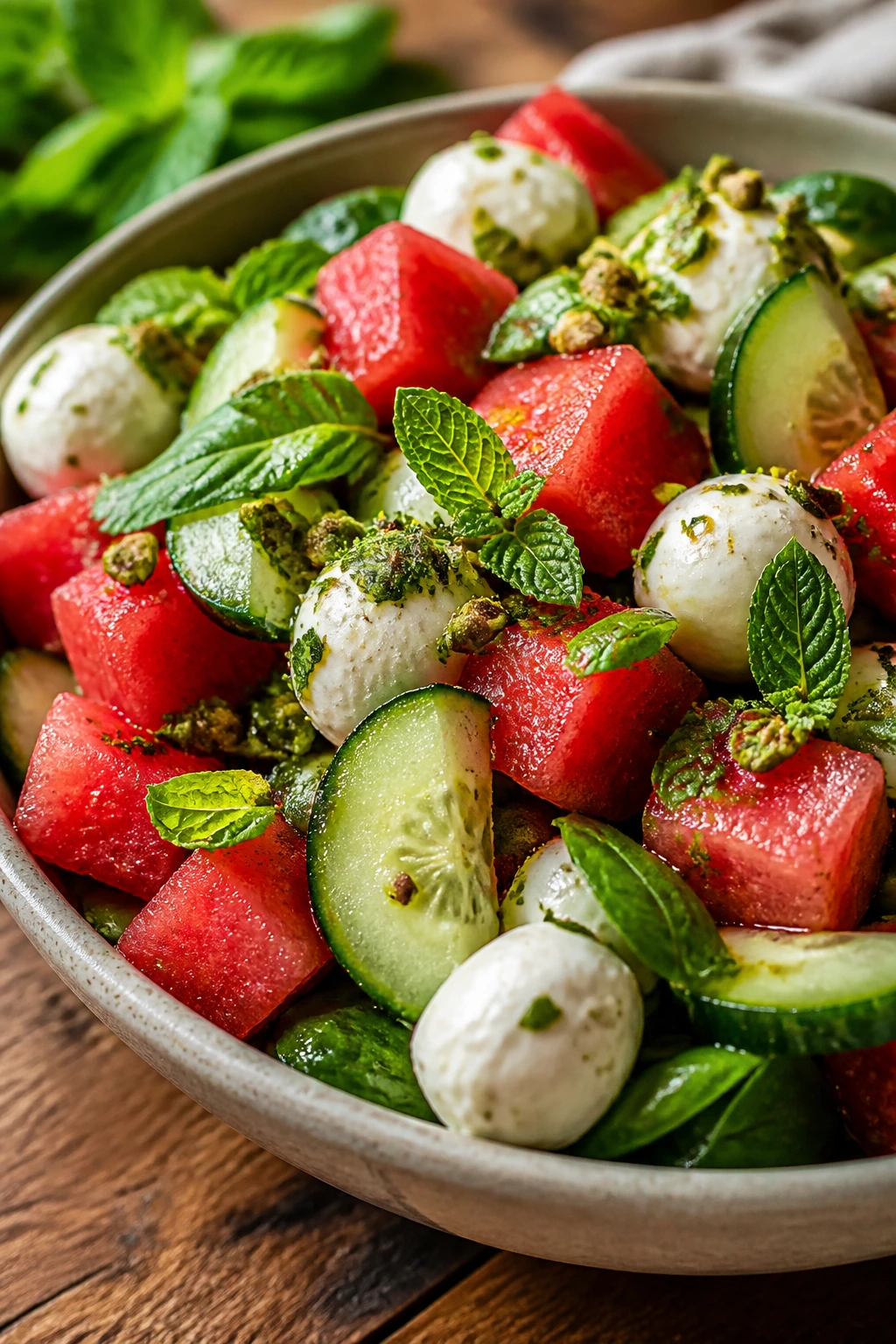
This is the salad that disappears fast because it tastes like a cold glass of water and a snack at the same time. Watermelon gives sweetness, cucumber keeps it crisp, and mozzarella turns the whole thing from fruit bowl into lunch. Mint and basil make it smell like someone took care with it.
Why It Works:
Watermelon and mozzarella look like a strange couple until you taste the salt-sweet contrast. The cheese needs the fruit’s juice, and the fruit needs the cheese’s salt. Arugula adds just enough peppery bite to keep the bowl from going flat, and pistachios give a final crunch that’s worth the extra minute.
Key Ingredients:
- 4 cups watermelon, cut into 1-inch cubes
- 1 large cucumber, sliced into half-moons
- 8 oz mozzarella pearls, drained and patted dry
- 2 cups baby arugula
- 1/4 cup fresh mint leaves
- 1/4 cup fresh basil leaves
- 1/4 cup shelled pistachios, roughly chopped
- 2 tbsp olive oil
- 1 tbsp lime juice
- 1 tsp honey
- Pinch of kosher salt
- Pinch of black pepper
Quick Steps:
- Whisk the olive oil, lime juice, honey, salt, and pepper in a small bowl.
- Place the arugula in a large bowl and add the cucumber, watermelon, and mozzarella.
- Drizzle on the dressing and toss very gently, using just enough motion to coat without smashing the fruit.
- Add the mint, basil, and pistachios on top.
- Serve immediately while the watermelon is still cold and the pistachios still crunch.
Equipment for This Recipe:
- Large bowl
- Small whisk or fork
- Sharp knife
- Cutting board
- Small spoon for peeling mint leaves if needed
How to Serve This Dish:
Serve it in a shallow bowl so the watermelon pieces don’t get buried under the greens. A slice of toasted sourdough makes this feel more like lunch and less like an appetizer. If you want more protein, add grilled shrimp or chilled shredded chicken.
Pro Tips for This Recipe:
- Salt the watermelon very lightly; too much and it turns watery fast.
- Dry the mozzarella well or the dressing won’t cling.
- Tear the herbs instead of chopping them to keep the aroma fresh.
- Cut the cucumber thick enough to stay crisp, but not so thick it overwhelms the fruit.
Variations on This Dish:
- Feta-Free Summer Bowl: Add sliced avocado for more richness without changing the flavor too much.
- Spicy Edge: Sprinkle in a few thin jalapeño slices.
- Berry Swap: Replace half the watermelon with strawberries for a sharper sweet-tart mix.
Common Mistakes to Avoid with This Dish:
- Making it too far ahead: Watermelon leaks, and the bowl loses its texture.
- Using bruised mint: The flavor goes muddy.
- Overloading the dressing: This salad needs just enough to wake it up, not pool at the bottom.
7. Peach, Prosciutto, and Mozzarella Arugula Salad
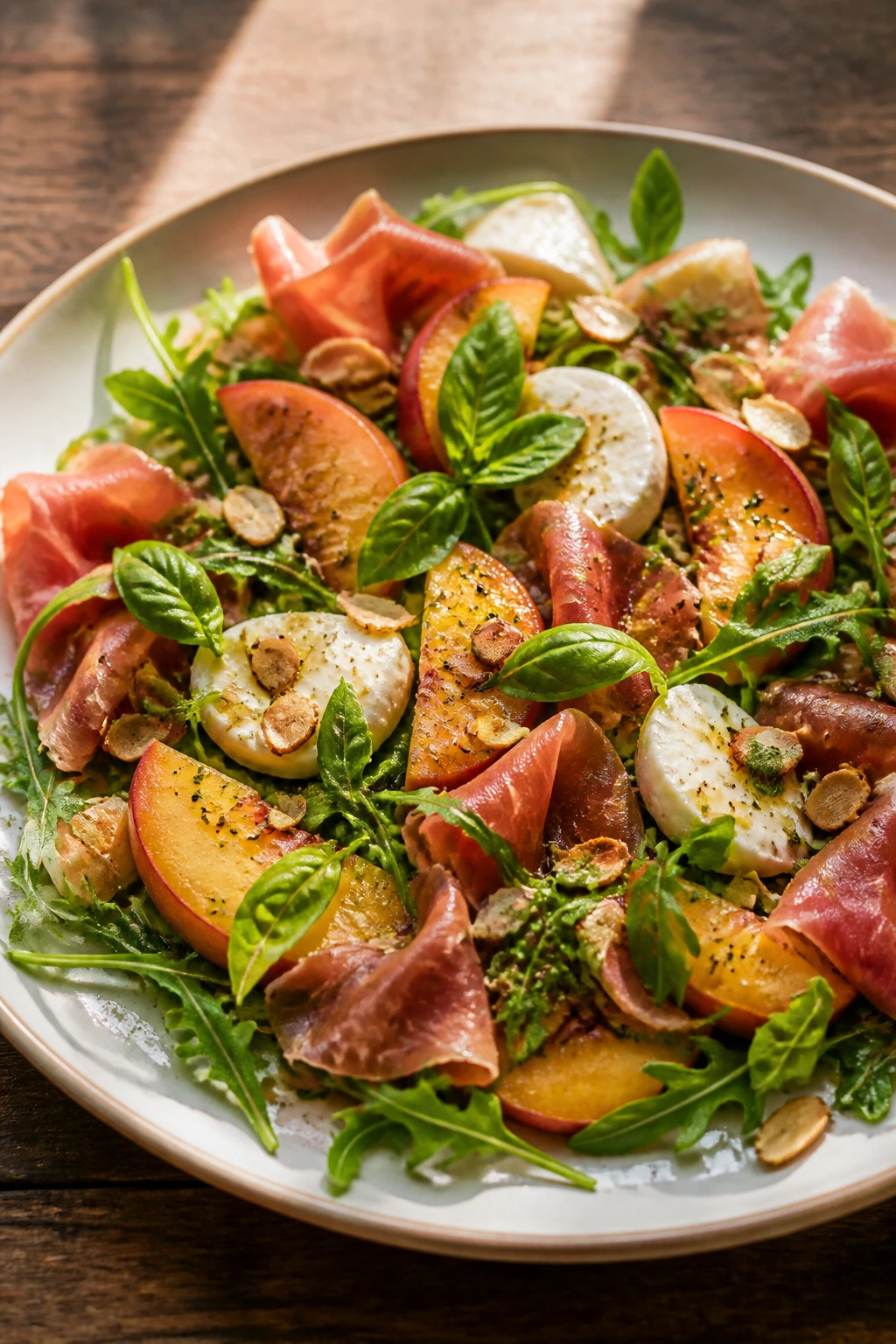
Peaches and mozzarella have a way of making lunch feel a little less routine. The fruit brings perfume and juice, the prosciutto adds salt and chew, and arugula keeps the whole plate from drifting into dessert territory. If the peaches are ripe enough to smell like they exist, you’re halfway there.
Why It Works:
Sweet peaches need something salty and milky next to them or they taste fragile. Prosciutto handles the salt, mozzarella softens the edges, and arugula gives the bowl some backbone. White balsamic dressing is sharper than regular balsamic here, which keeps the fruit from getting buried.
Key Ingredients:
- 3 ripe peaches, sliced into wedges
- 4 oz prosciutto, torn into ribbons
- 6 oz fresh mozzarella, torn or sliced
- 4 cups arugula
- 1/4 cup basil leaves
- 1/4 cup toasted almonds or walnuts
- 2 tbsp extra-virgin olive oil
- 1 tbsp white balsamic vinegar
- 1 tsp honey
- Pinch of kosher salt
- Pinch of black pepper
Quick Steps:
- Whisk the olive oil, white balsamic, honey, salt, and pepper in a small bowl.
- Spread the arugula over a large platter or bowl.
- Arrange the peach wedges, prosciutto, and mozzarella over the greens.
- Scatter the basil and nuts on top.
- Spoon the dressing over the salad right before serving so the peaches stay bright.
Equipment for This Recipe:
- Large platter or salad bowl
- Small whisk
- Sharp knife
- Cutting board
- Small skillet if you want to toast the nuts
How to Serve This Dish:
I like this as a plated lunch with a slice of baguette, because the juices at the bottom are too good to waste. It also works beside a bowl of chilled gazpacho if you’re building a lighter meal. Keep portions modest; the prosciutto and mozzarella carry more weight than the greens suggest.
Pro Tips for This Recipe:
- Use peaches that yield slightly to pressure but are not mushy.
- Tear the mozzarella instead of cutting perfect slices if you want a looser, more natural look.
- Toast the nuts just until fragrant. Dark nuts taste bitter against the fruit.
- Dress the arugula lightly so it doesn’t steal the focus from the peaches.
Variations on This Dish:
- Nectarine Swap: Nectarines work the same way if the skin is better.
- No-Prosciutto Version: Skip the meat and add a few more nuts plus extra salt.
- Herb Forward: Add a few mint leaves with the basil for a cooler finish.
Common Mistakes to Avoid with This Dish:
- Using hard peaches: They’ll taste woody and throw off the balance.
- Letting the salad sit dressed too long: Arugula wilts fast.
- Cutting prosciutto too neatly: Torn ribbons give a better bite and look less stiff.
8. Tuna, White Bean, and Mozzarella Salad
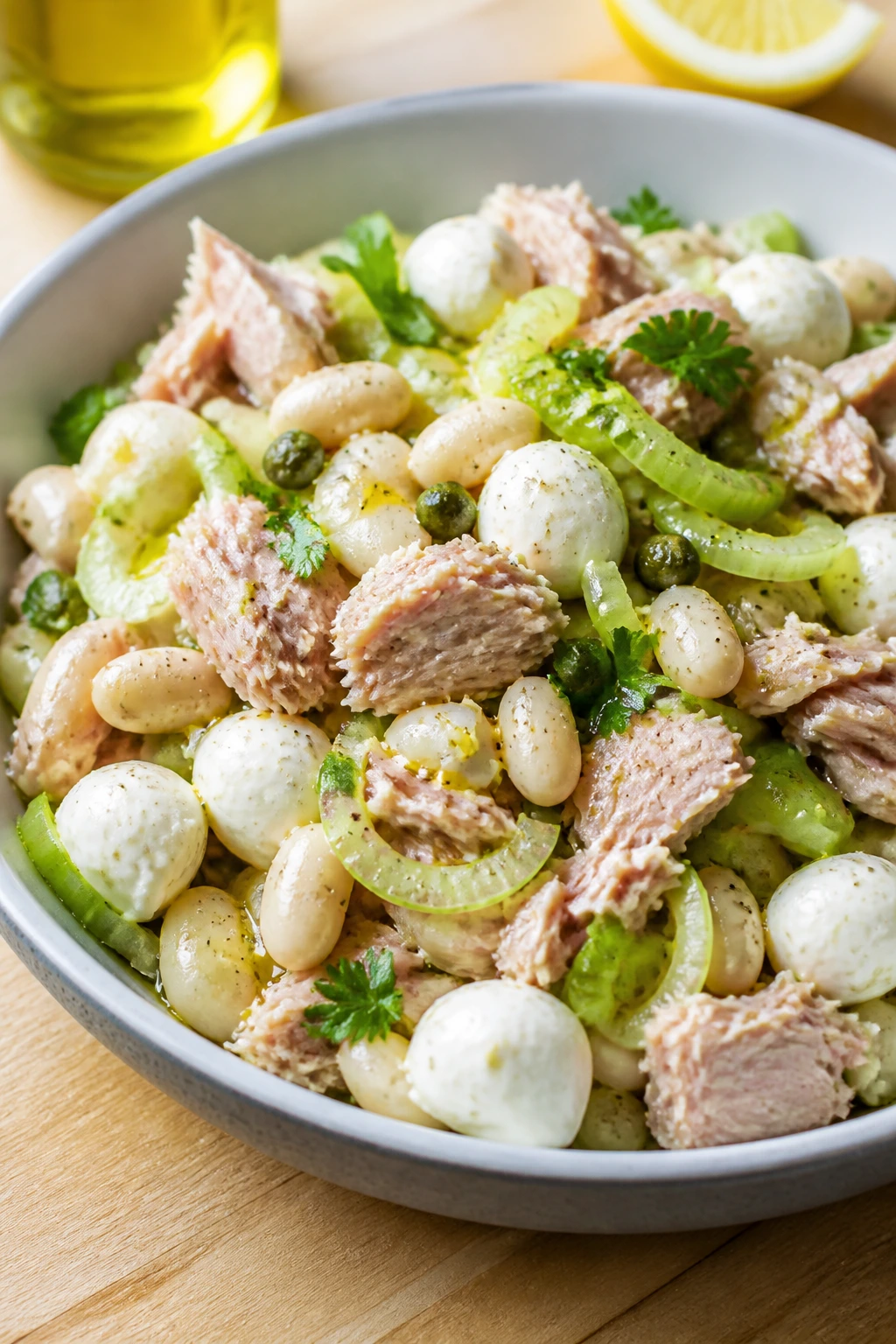
This salad eats like a composed lunch rather than an afterthought. Tuna and cannellini beans bring protein and heft, mozzarella softens the saltiness, and capers give the whole bowl a briny snap. It’s especially good on days when you want something cold but not flimsy.
Why It Works:
Tuna can taste dry if it isn’t paired with something creamy or juicy, and mozzarella handles that job without turning the bowl into tuna salad. White beans make the texture bigger and more satisfying. Lemon and capers keep everything moving; without them, the cheese and beans can feel a little sleepy.
Key Ingredients:
- 2 cans tuna in olive oil or water, 5 oz each, drained
- 1 can cannellini beans, 15 oz, drained and rinsed
- 8 oz mozzarella pearls
- 2 celery stalks, thinly sliced
- 1/2 small red onion, finely chopped
- 2 tbsp capers, drained
- 1/4 cup chopped parsley
- 3 tbsp extra-virgin olive oil
- 2 tbsp lemon juice
- 1 tsp Dijon mustard
- 1/2 tsp kosher salt
- 1/4 tsp black pepper
Quick Steps:
- Whisk the olive oil, lemon juice, Dijon, salt, and pepper in a large bowl.
- Add the tuna and break it into large flakes with a fork.
- Stir in the beans, celery, onion, capers, and parsley.
- Fold in the mozzarella pearls gently so they stay whole.
- Taste and add more lemon if the bowl needs brightness, then chill for 10 minutes or serve right away.
Equipment for This Recipe:
- Large bowl
- Fork
- Cutting board
- Sharp knife
- Measuring spoons
How to Serve This Dish:
Serve it over a handful of arugula or tucked into lettuce cups for a cleaner lunch. Crackers or toasted bread make sense here, especially if you want a more traditional tuna-meets-salad feel. It also packs well in a lunch container with the greens on the bottom and the tuna mixture on top.
Pro Tips for This Recipe:
- Tuna in olive oil gives a softer, richer result.
- Rinse the beans well so they don’t make the salad murky.
- Chop the celery finely; big pieces interrupt the texture.
- Capers are salty, so taste before adding extra salt.
Variations on This Dish:
- Mediterranean Version: Add chopped cucumber and olives.
- Creamier Bowl: Stir in 1 tablespoon of plain yogurt or mayo.
- Herb-Lemon Finish: Add dill with the parsley for a fresher edge.
Common Mistakes to Avoid with This Dish:
- Mashing the mozzarella: Fold, don’t stir aggressively.
- Using too much onion: It should sharpen the salad, not dominate it.
- Skipping the acid: Tuna and beans need lemon to taste finished.
9. Strawberry Spinach Mozzarella Salad with Poppyseed Dressing
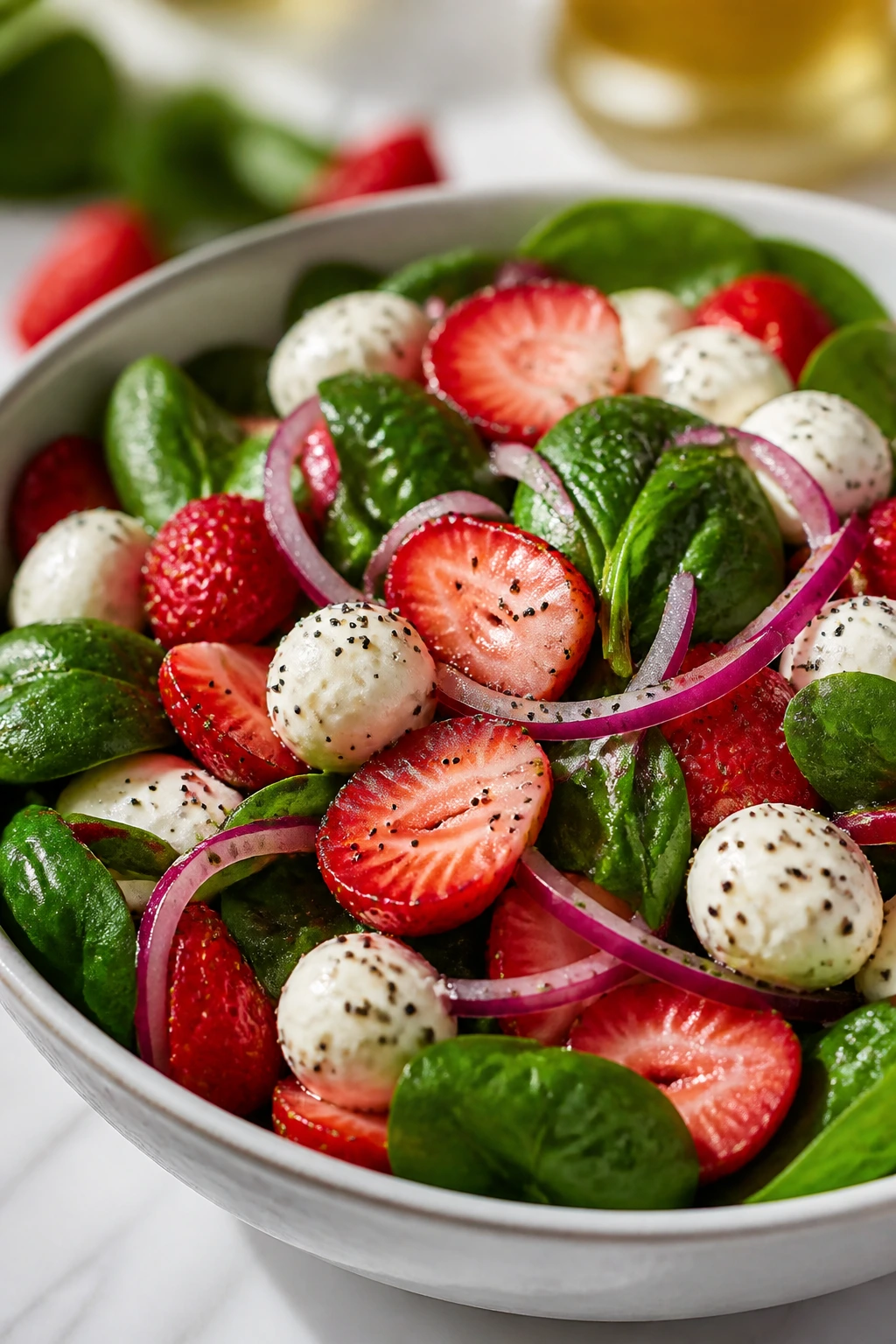
Strawberries and mozzarella make an easy lunch salad feel a little brighter than it has any right to be. The berries bring juice and perfume, spinach gives the base, and mozzarella pearls mellow out the sweet-tart dressing. This is the salad I make when I want something cold that still feels thought through.
Why It Works:
Spinach is soft enough to carry a sweeter dressing without collapsing. Strawberries need a salty counterpoint, and mozzarella is mild enough to stay in the background while still adding body. Poppyseed dressing gives the whole bowl a faint crunch and a little tang, which keeps it from tasting like fruit on leaves.
Key Ingredients:
- 5 cups baby spinach
- 2 cups strawberries, hulled and sliced
- 8 oz mozzarella pearls
- 1/3 cup thinly sliced red onion
- 1/2 cup toasted pecans
- 3 tbsp olive oil
- 1 tbsp apple cider vinegar
- 1 tbsp honey
- 1 tsp Dijon mustard
- 1 tsp poppy seeds
- Pinch of kosher salt
- Pinch of black pepper
Quick Steps:
- Whisk the olive oil, vinegar, honey, Dijon, poppy seeds, salt, and pepper in a small bowl until the dressing looks slightly thick.
- Add the spinach to a large bowl.
- Top with strawberries, mozzarella, red onion, and pecans.
- Drizzle with dressing and toss very lightly, just enough to coat the leaves.
- Serve immediately, while the strawberries are still bright and the pecans still snap.
Equipment for This Recipe:
- Large salad bowl
- Small whisk or fork
- Sharp knife
- Cutting board
- Measuring spoons
How to Serve This Dish:
This works as a light lunch with a piece of grilled chicken or a scoop of cottage cheese if you want more protein. It also sits nicely beside a cup of tomato soup. If you’re packing it ahead, keep the dressing separate and add the nuts at the last second.
Pro Tips for This Recipe:
- Choose berries that are red all the way through, not pale at the center.
- Toast the pecans until their smell turns buttery and warm.
- Slice the onion thin enough that it disappears into the bowl instead of taking over.
- Add the dressing in small amounts; spinach clings quickly.
Variations on This Dish:
- Blueberry Swap: Use blueberries and a little lemon zest instead of strawberries.
- Goat Cheese Version: If you want a sharper bite, replace half the mozzarella.
- Crunchy Apple Twist: Add thin apple slices for a colder, firmer texture.
Common Mistakes to Avoid with This Dish:
- Dressing too early: Spinach loses its snap fast.
- Using underripe berries: They taste sour instead of bright.
- Forgetting the salt: Fruit salads still need salt to taste complete.
10. Pesto Orzo Salad with Peas and Mozzarella
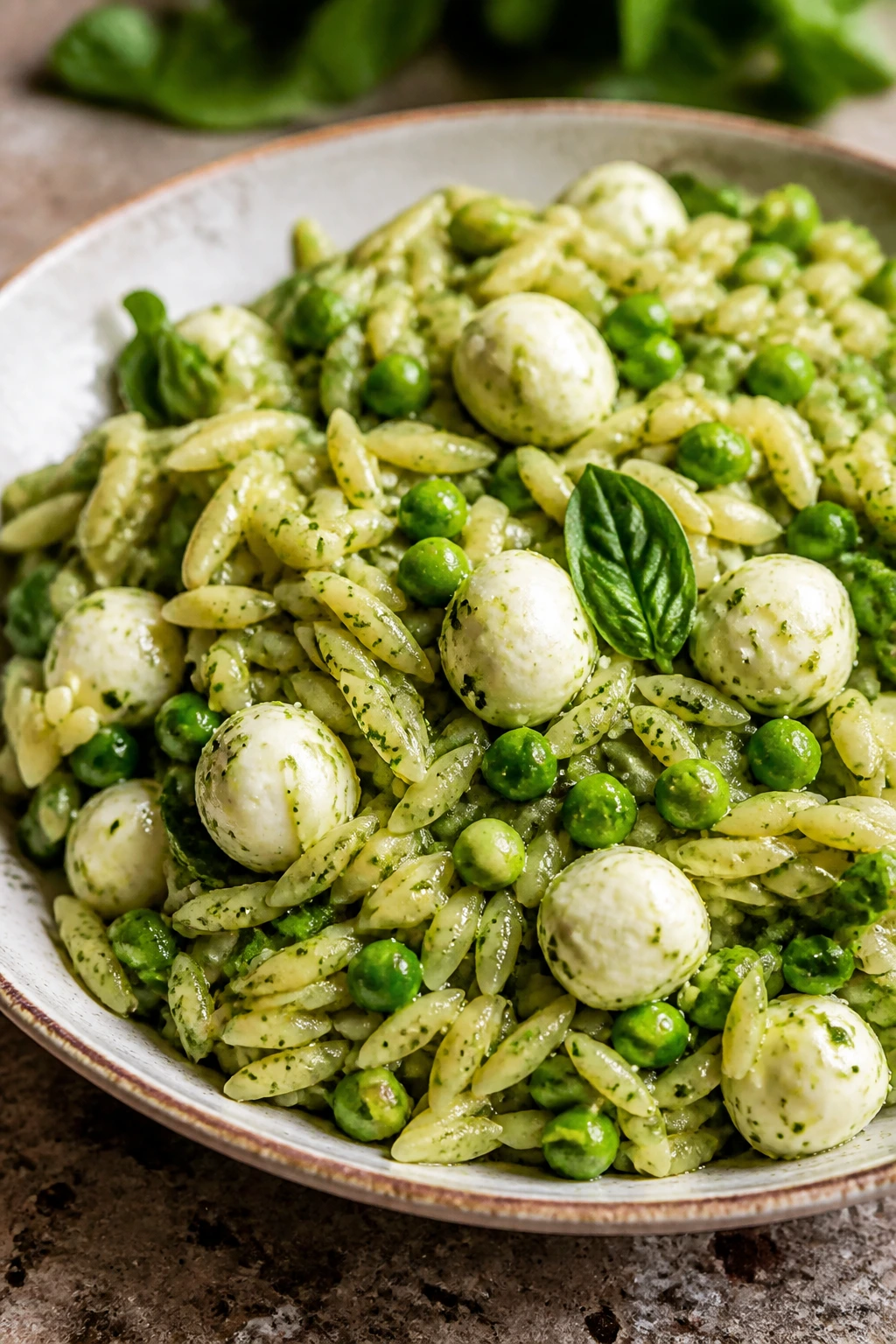
This is the salad I reach for when I want lunch to feel a little more like a proper bowl and a little less like a side dish. Orzo, peas, and mozzarella are a friendly trio, and pesto ties them together with enough herb flavor to keep the salad from going bland. It’s soft, but not mushy, if you respect the cooling time.
Why It Works:
Orzo gives this salad a smooth, spoonable texture, while peas add tiny bursts of sweetness. Mozzarella pearls stay cool and gentle against the pasta, and pesto clings to the small shapes better than it would to a bigger noodle. A few tomatoes and scallions keep the flavors from settling into one note.
Key Ingredients:
- 8 oz orzo
- 1 cup peas, fresh or frozen
- 8 oz mozzarella pearls
- 2 cups baby spinach
- 1 pint cherry tomatoes, halved
- 1/3 cup basil pesto
- 2 tbsp lemon juice
- 2 scallions, thinly sliced
- 1/4 cup toasted pine nuts
- 1/2 tsp kosher salt
- 1/4 tsp black pepper
Quick Steps:
- Cook the orzo in salted water for 8 to 9 minutes. Add the peas during the last 1 minute if they’re frozen. Drain well.
- Spread the orzo on a tray or in a bowl and let it cool for 5 minutes.
- Whisk the pesto, lemon juice, salt, and pepper in a large bowl.
- Add the orzo, spinach, tomatoes, and scallions. Toss until the spinach starts to wilt.
- Fold in the mozzarella pearls and pine nuts. Taste and adjust the lemon if needed.
Equipment for This Recipe:
- Medium saucepan
- Colander
- Large bowl
- Sheet pan or tray for cooling
- Measuring cups
How to Serve This Dish:
Serve it cool, not ice-cold, because the pesto tastes fuller once the pasta is out of the fridge for a few minutes. A handful of baby arugula on top sharpens it nicely. If you’re packing lunch, keep a little extra pesto in a separate cup and stir it in just before eating.
Pro Tips for This Recipe:
- Cool the orzo before adding mozzarella or the cheese starts to slump.
- Frozen peas work well here; just don’t overcook them.
- A little lemon zest gives the pesto more lift.
- Toast the pine nuts carefully, because they go from pale to bitter in a blink.
Variations on This Dish:
- Chicken Pesto Orzo: Add 2 cups chopped cooked chicken.
- Asparagus Spring Bowl: Swap peas for chopped blanched asparagus.
- No-Pesto Backup: Use basil, olive oil, garlic, and lemon if pesto is not in the fridge.
Common Mistakes to Avoid with This Dish:
- Rinsing the orzo with cold water: You lose too much flavor.
- Adding spinach while the pasta is scorching: It gets limp and dark.
- Overdoing the pesto: Small pasta shapes need coating, not a paste bath.
11. Corn, Avocado, and Mozzarella Salad with Lime
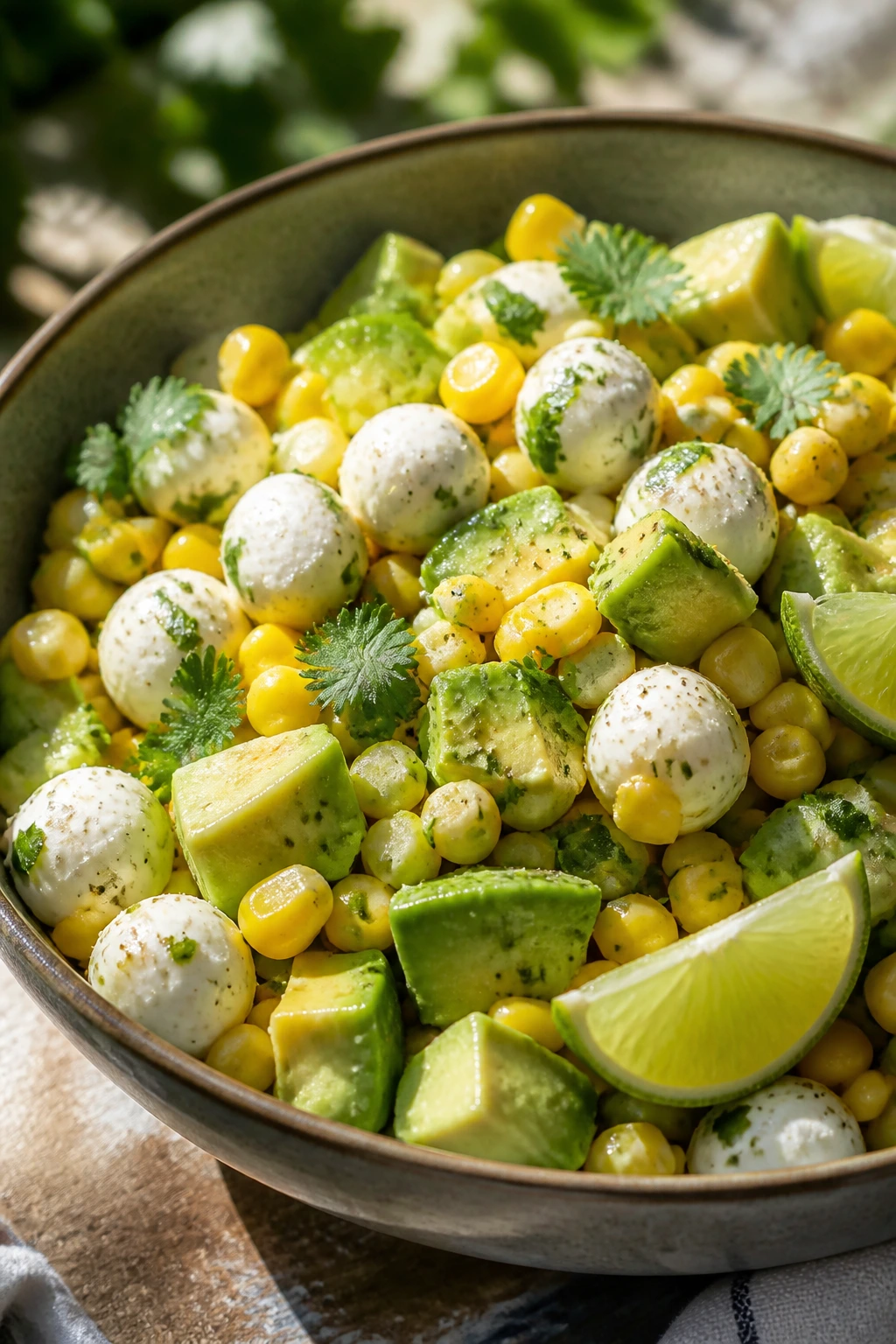
This salad has a sunny, slightly creamy feel that makes lunch less predictable. Corn gives sweetness and crunch, avocado makes the bowl richer, and mozzarella keeps it grounded. Lime and cilantro stop the whole thing from tasting too soft.
Why It Works:
Corn and avocado both lean sweet and mellow, so mozzarella and lime do the balancing. Black beans add a little weight and make the bowl more filling. If you char the corn in a hot skillet, the salad gets a roasted edge that makes it taste more deliberate than a simple mix of leftovers.
Key Ingredients:
- 2 cups corn kernels, fresh or thawed frozen
- 1 avocado, diced
- 1 pint cherry tomatoes, halved
- 8 oz mozzarella pearls
- 1/2 cup black beans, drained and rinsed
- 1/4 cup chopped cilantro
- 1/4 cup thinly sliced red onion
- 2 tbsp olive oil
- 2 tbsp lime juice
- 1 tsp honey
- 1/2 tsp ground cumin
- 1/2 tsp kosher salt
- 1/4 tsp black pepper
Quick Steps:
- Heat a skillet over medium-high heat and cook the corn for 4 to 5 minutes, stirring once or twice, until the kernels pick up a few brown spots.
- Whisk the olive oil, lime juice, honey, cumin, salt, and pepper in a large bowl.
- Add the corn, tomatoes, black beans, red onion, and cilantro. Toss to coat.
- Fold in the avocado and mozzarella pearls gently.
- Taste, then add a little more lime if you want it sharper.
Equipment for This Recipe:
- Skillet
- Large bowl
- Sharp knife
- Cutting board
- Measuring spoons
How to Serve This Dish:
Serve it with tortilla chips if you want something crunchy alongside the bowl. It also works spooned over shredded lettuce or alongside grilled chicken. Keep the avocado last if you’re packing it, and press plastic wrap directly against the top of the salad.
Pro Tips for This Recipe:
- Charred corn tastes better than plain boiled corn here.
- Add avocado at the end so it stays in chunks.
- If your tomatoes are very juicy, scoop out some of the seeds.
- Don’t skip the cumin; a small amount gives the salad a deeper, rounder flavor.
Variations on This Dish:
- Street-Corn Angle: Add a little crumbled cotija on top, if you don’t mind mixing cheeses.
- Spicy Version: Add diced jalapeño or a pinch of chili flakes.
- Bean-Heavy Lunch: Increase the black beans to 1 cup for a fuller meal.
Common Mistakes to Avoid with This Dish:
- Cutting the avocado too early: It browns fast.
- Skipping the char on the corn: Plain corn makes the bowl flatter.
- Using too much cilantro if you dislike it: The herb should support, not dominate.
12. Antipasto Tortellini Salad with Mozzarella
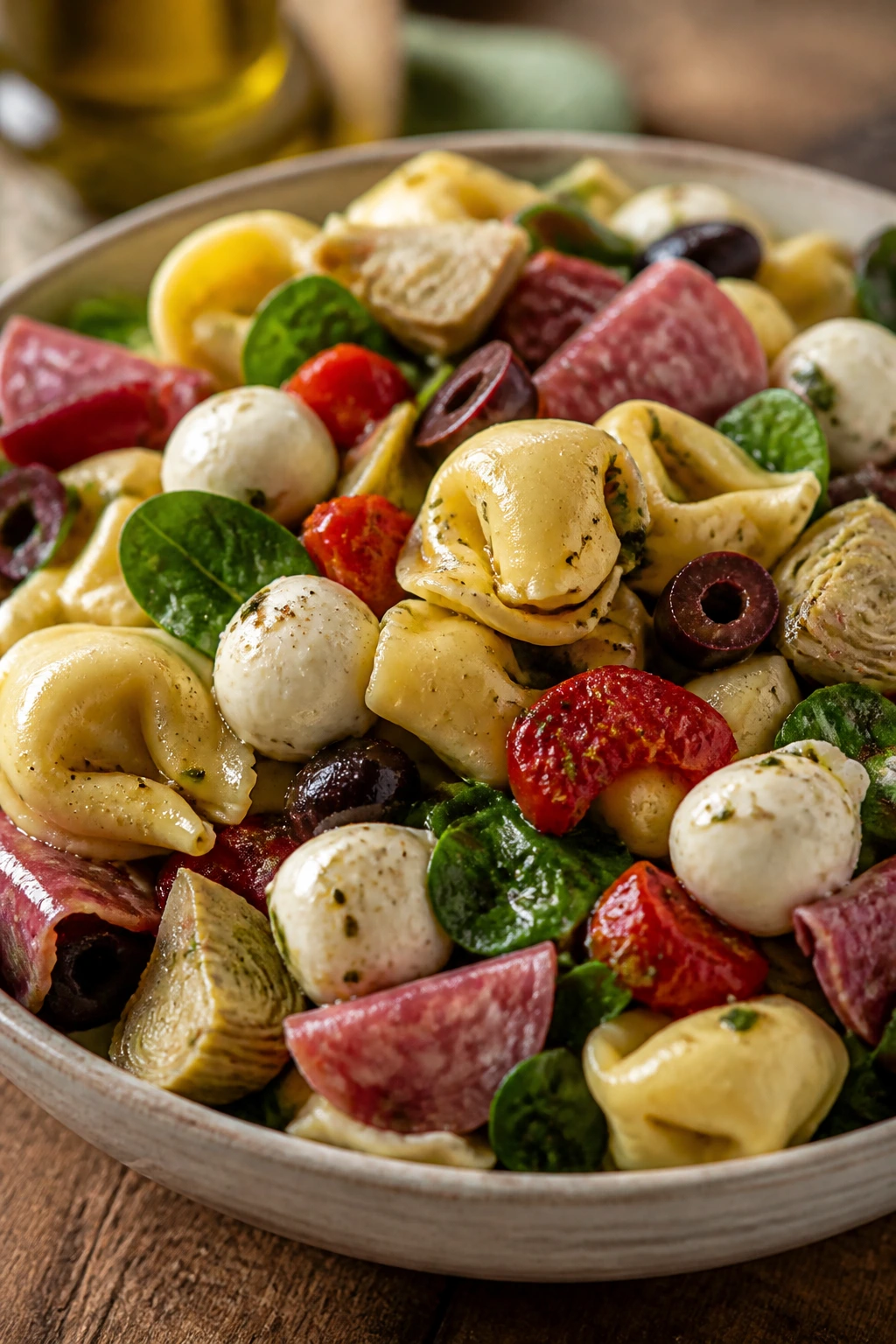
This is the most lunch-box-friendly salad in the batch because it eats like a full meal and stays satisfying even after chilling. Tortellini adds a soft, cheesy base, salami and olives bring salt, and mozzarella pearls round everything out. It’s busy in the bowl, in a good way.
Why It Works:
Tortellini gives the salad substance without needing a separate side. Mozzarella is mild enough to fit in with stronger antipasto flavors, which matters because olives, salami, and artichokes can get loud fast. The trick is to cool the pasta before mixing so the cheese stays in little separate bites instead of smearing into the dressing.
Key Ingredients:
- 1 lb cheese tortellini
- 4 oz salami, chopped
- 8 oz mozzarella pearls
- 1 cup marinated artichoke hearts, drained and chopped
- 1 cup olives, sliced
- 1 cup roasted red peppers, sliced
- 2 cups baby spinach
- 1/4 cup chopped parsley
- 3 tbsp olive oil
- 2 tbsp red wine vinegar
- 1 tsp Dijon mustard
- 1 tsp dried oregano
- 1 garlic clove, grated
- 1/2 tsp kosher salt
- 1/4 tsp black pepper
Quick Steps:
- Cook the tortellini in salted water according to the package until just tender. Drain and spread it out to cool for 5 to 10 minutes.
- Whisk the olive oil, red wine vinegar, Dijon, oregano, garlic, salt, and pepper in a large bowl.
- Add the tortellini, salami, artichokes, olives, roasted peppers, spinach, and parsley. Toss until coated.
- Fold in the mozzarella pearls last.
- Chill briefly or serve at room temperature.
Equipment for This Recipe:
- Large pot
- Colander
- Big salad bowl
- Cutting board
- Sharp knife
How to Serve This Dish:
This is the one I’d put in a meal-prep container and call lunch without apology. A few extra spinach leaves on top make it look fresher when you open the lid. If you want more crunch, serve it with seeded crackers or celery sticks.
Pro Tips for This Recipe:
- Salt the tortellini water well or the pasta tastes flat.
- Drain the artichokes and peppers thoroughly so the dressing stays clean.
- A little extra oregano goes a long way; don’t turn it into dust.
- If the tortellini clumps, toss it with a teaspoon of olive oil while it cools.
Variations on This Dish:
- Chicken Tortellini Antipasto: Add chopped cooked chicken for even more heft.
- Milder Version: Use fewer olives and more roasted peppers.
- Herby Upgrade: Add basil with the parsley for a fresher finish.
Common Mistakes to Avoid with This Dish:
- Overcooking the tortellini: Soft pasta falls apart in the salad.
- Mixing while the pasta is hot: The mozzarella loses shape.
- Using too many briny ingredients at once: Olives, artichokes, and salami already bring plenty of salt.
13. Cucumber, Radish, and Dill Mozzarella Salad with Smoked Salmon
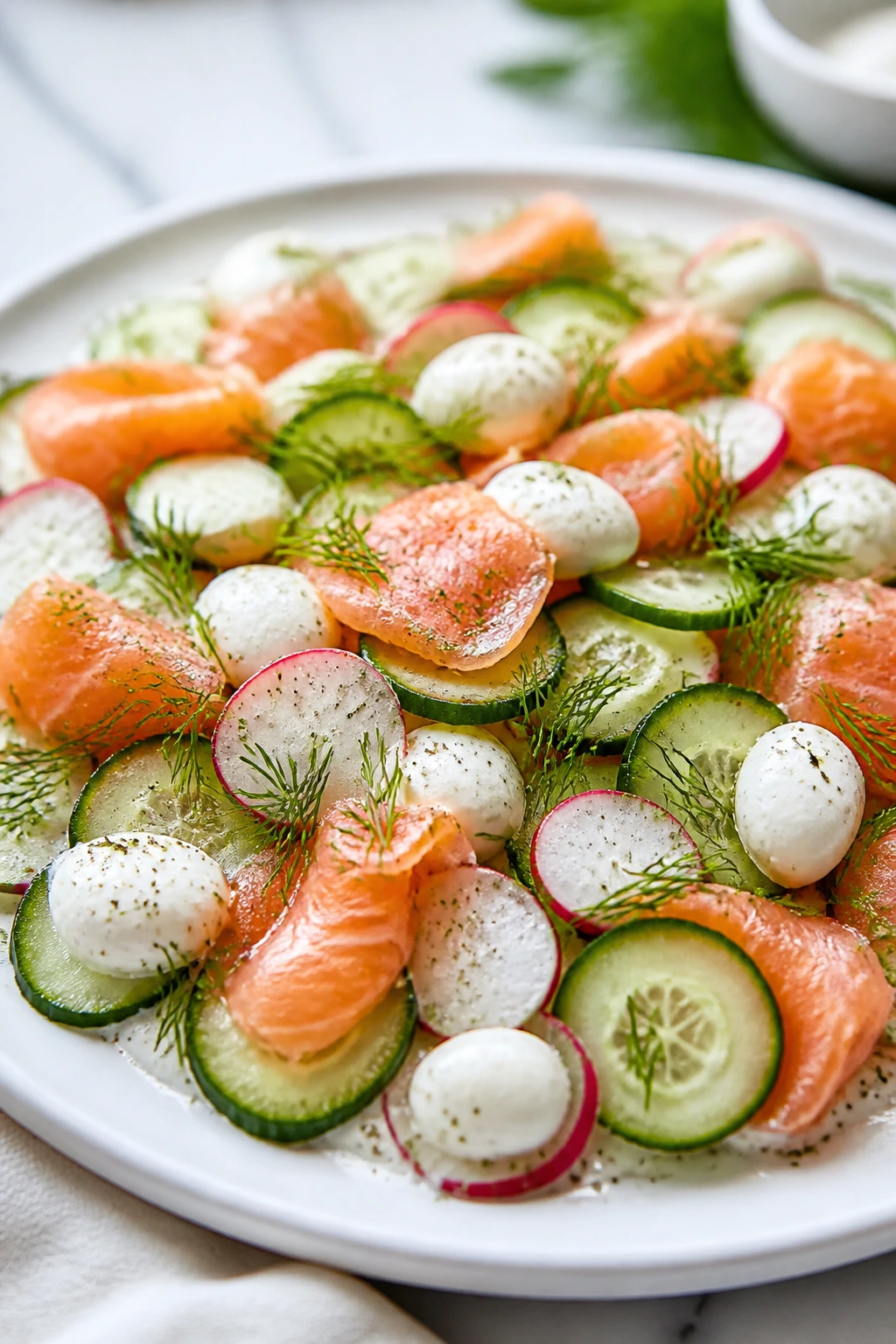
This salad has a cool, crisp, almost breakfast-for-lunch feel that I like more than I probably should. The cucumber and radish stay snappy, mozzarella makes the bowl softer, and smoked salmon adds a savory layer that turns the salad into a complete meal. Dill is the bridge that ties everything together.
Why It Works:
Smoked salmon needs fresh, watery, crunchy companions or it can taste heavy. Cucumber and radish keep each bite bright, and the mozzarella gives the bowl some roundness without fighting the fish. A lemon-yogurt dressing is the right move here because it’s creamy enough to coat but sharp enough to keep the cheese and salmon from getting sleepy.
Key Ingredients:
- 1 large cucumber, sliced thin
- 6 radishes, thinly sliced
- 4 oz smoked salmon, torn into pieces
- 8 oz mozzarella pearls
- 2 cups butter lettuce or baby greens
- 1/4 cup fresh dill
- 2 tbsp capers, drained
- 3 tbsp plain Greek yogurt
- 1 tbsp lemon juice
- 1 tbsp olive oil
- 1 tsp Dijon mustard
- 1/2 tsp kosher salt
- 1/4 tsp black pepper
Quick Steps:
- Whisk the yogurt, lemon juice, olive oil, Dijon, salt, and pepper until smooth.
- Place the lettuce in a bowl or on a platter.
- Add the cucumber, radishes, smoked salmon, mozzarella, capers, and dill.
- Spoon the dressing over the top or serve it on the side.
- Toss lightly only if you’re eating it right away.
Equipment for This Recipe:
- Large bowl or platter
- Small bowl for dressing
- Sharp knife
- Cutting board
- Spoon
How to Serve This Dish:
Serve it with rye crackers, seed crackers, or a thick slice of buttered toast. It feels especially good when the salad is very cold and the salmon has just enough texture to separate cleanly. If you’re packing it, keep the dressing in a small container and add it at the desk.
Pro Tips for This Recipe:
- Slice the radishes very thin so they don’t overpower each forkful.
- Drain the mozzarella pearls well; extra liquid softens the greens.
- If you want a stronger dill note, add a pinch of lemon zest.
- Smoked salmon is salty, so taste before adding more salt to the dressing.
Variations on This Dish:
- Smoked Trout Swap: Trout gives a softer, less salty finish.
- No-Fish Version: Add sliced hard-boiled eggs instead.
- Garden Bowl: Replace capers with thinly sliced celery for a gentler crunch.
Common Mistakes to Avoid with This Dish:
- Overmixing the salmon: It should stay in ribbons, not shredded paste.
- Too much dressing: The yogurt should coat the salad, not bury it.
- Skipping the chill: This bowl tastes cleaner when it’s cold.
14. Lentil Mozzarella Salad with Herbs and Roasted Tomatoes
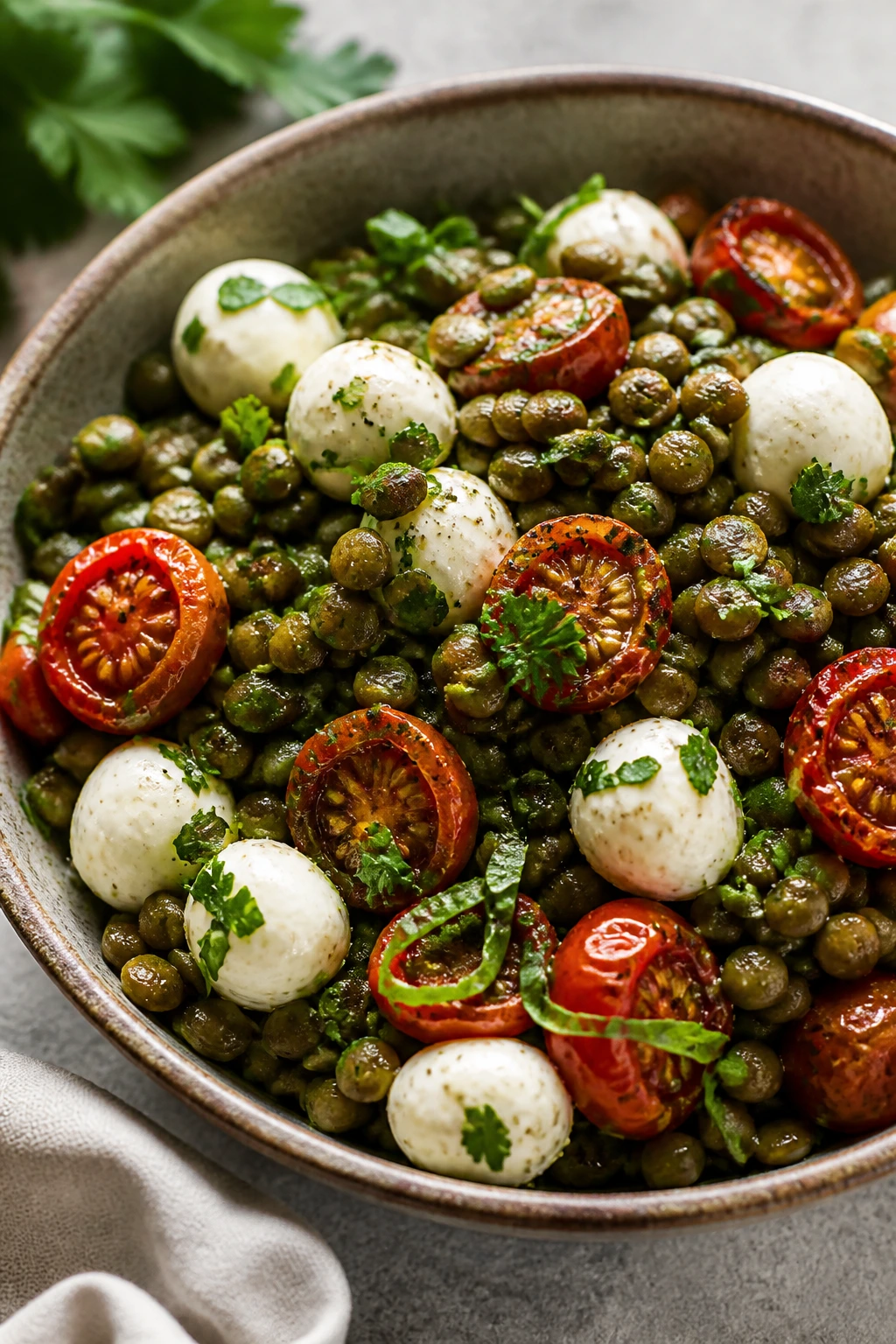
Lentils make this salad sturdy enough for a real lunch, and mozzarella keeps the whole thing from feeling too earthy. Roasted tomatoes bring sweetness, herbs bring life, and the mustard vinaigrette gives the lentils a sharper edge. It’s one of the most useful salads in the bunch because it stays good for lunch the next day.
Why It Works:
Lentils take on dressing without turning soft, which makes them a smart base for meal prep. Roasted tomatoes collapse a little and release their juices, so they act like built-in flavor. Mozzarella turns a plain lentil salad into something you actually want to eat cold, which is not a small thing.
Key Ingredients:
- 1 cup dry green or brown lentils
- 2 cups grape tomatoes
- 8 oz mozzarella pearls
- 1/2 small red onion, thinly sliced
- 1 cup chopped parsley
- 1/2 cup chopped basil
- 2 cups arugula or baby spinach
- 3 tbsp olive oil
- 2 tbsp red wine vinegar
- 1 tsp Dijon mustard
- 1 garlic clove, grated
- 1/2 tsp kosher salt
- 1/4 tsp black pepper
Quick Steps:
- Heat the oven to 400°F. Toss the tomatoes with 1 tablespoon olive oil and a pinch of salt, then roast for 12 to 15 minutes until blistered and a little collapsed.
- Simmer the lentils in salted water for 18 to 22 minutes until tender but not mushy. Drain and cool for a few minutes.
- Whisk the remaining olive oil, vinegar, Dijon, garlic, salt, and pepper in a large bowl.
- Add the lentils, roasted tomatoes, onion, parsley, basil, and greens. Toss gently.
- Fold in the mozzarella pearls and serve warm, cool, or room temperature.
Equipment for This Recipe:
- Sheet pan
- Medium saucepan
- Colander
- Large bowl
- Measuring spoons
How to Serve This Dish:
Serve it with a slice of toasted country bread or a small bowl of olives. Because the lentils carry the meal, the portion can be generous without feeling unwieldy. If you like it looser, add a few spoonfuls of extra vinaigrette just before eating.
Pro Tips for This Recipe:
- Keep the lentils firm. Mushy lentils make the salad muddy.
- Roast the tomatoes until they wrinkle, not until they collapse into sauce.
- Add the mozzarella after the lentils cool a bit so the pearls keep their shape.
- Fresh basil matters here; dried basil will taste dusty.
Variations on This Dish:
- French Lentil Bowl: Use black or French green lentils for a firmer bite.
- Roasted Pepper Version: Add chopped roasted peppers with the tomatoes.
- Lemon Herb Change: Swap vinegar for lemon juice if you want a brighter, cleaner edge.
Common Mistakes to Avoid with This Dish:
- Undercooking the lentils too much: They’ll taste chalky.
- Cooking them too far: They turn soft and lose their shape.
- Adding greens while the lentils are scorching: They wilt too aggressively.
15. Warm Mushroom, White Bean, and Mozzarella Salad
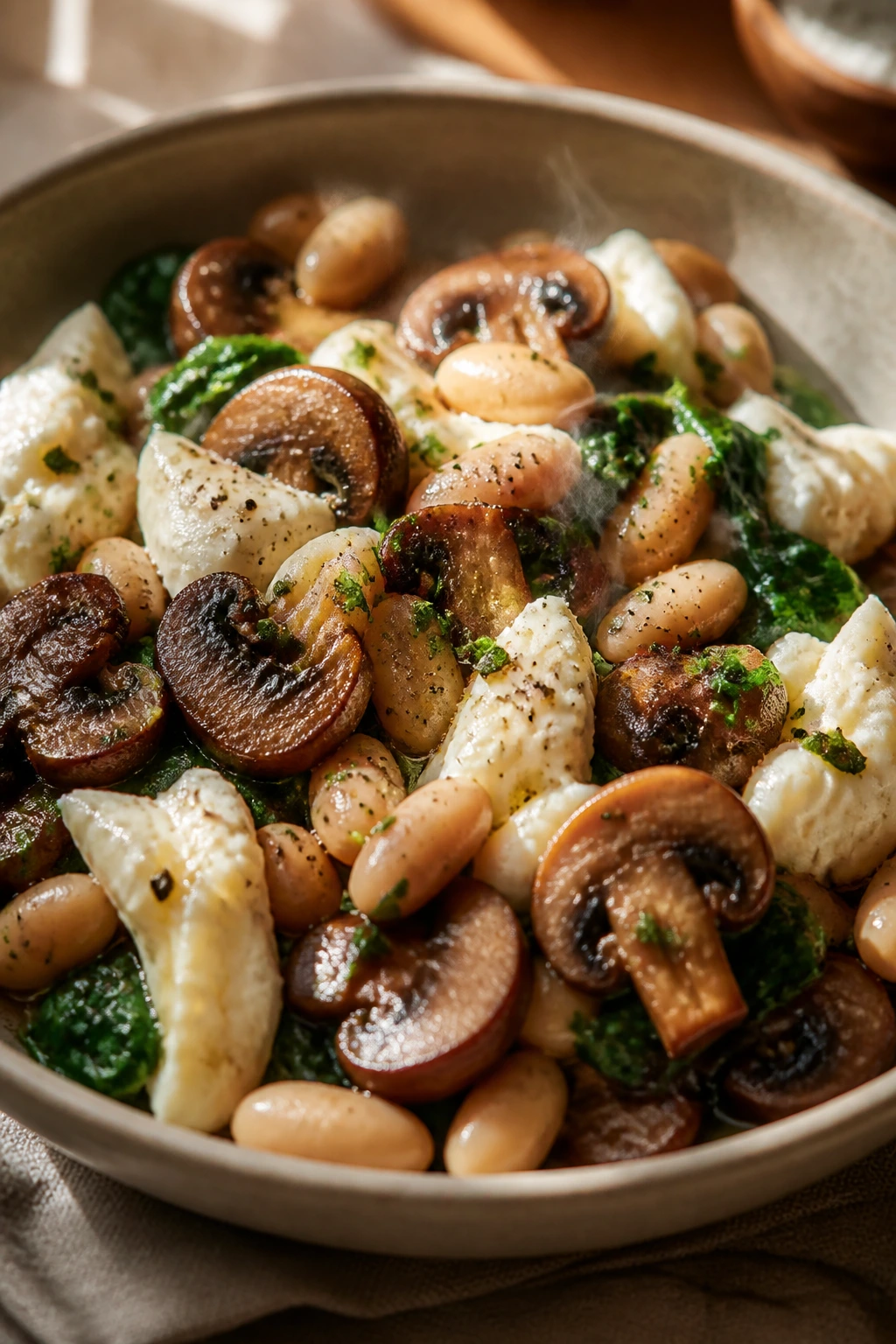
This is the bowl for people who want a salad with actual warmth in it. Mushrooms get browned and savory, white beans make the salad filling, and mozzarella melts just enough at the edges to feel cozy without turning stringy. It’s the most comforting recipe here, and still absolutely lunch-friendly.
Why It Works:
Mushrooms bring deep, savory flavor when they’re cooked hard enough to brown. White beans give the salad a soft base, while mozzarella cools the salt and keeps the whole thing from tasting too earthy. A splash of vinegar at the end wakes the mushrooms up, which is the detail that keeps this from becoming one-note.
Key Ingredients:
- 16 oz cremini mushrooms, sliced
- 1 can cannellini beans, 15 oz, drained and rinsed
- 8 oz mozzarella, torn into small pieces
- 4 cups baby spinach or chopped kale
- 1 shallot, thinly sliced
- 2 tbsp olive oil
- 1 tbsp butter
- 1 tbsp sherry vinegar or red wine vinegar
- 1 tsp fresh thyme leaves
- 1 tbsp chopped parsley
- 1/2 tsp kosher salt
- 1/4 tsp black pepper
Quick Steps:
- Heat the olive oil and butter in a large skillet over medium-high heat.
- Add the shallot and mushrooms with salt and pepper. Cook for 8 to 10 minutes, stirring occasionally, until the mushrooms brown and release their liquid, then start to sizzle again.
- Stir in the thyme and vinegar. Cook for 30 seconds more.
- Add the beans and greens. Toss just until the greens wilt.
- Remove from the heat and fold in the mozzarella and parsley. Serve warm.
Equipment for This Recipe:
- Large skillet
- Wooden spoon or spatula
- Cutting board
- Sharp knife
- Colander
How to Serve This Dish:
Serve it in a shallow bowl with toasted bread on the side for scooping up the beans and mushrooms. A little extra black pepper on top helps the mozzarella stand out. If you want more volume, add a handful of arugula right before serving.
Pro Tips for This Recipe:
- Don’t crowd the skillet or the mushrooms steam instead of brown.
- Wait to add vinegar until the mushrooms have color, not while they’re still pale.
- Mozzarella should go in after the pan comes off the heat so it softens, not melts away.
- Kale needs a minute longer than spinach, so pick your green based on how much heat you want.
Variations on This Dish:
- Garlic Mushroom Version: Add one grated garlic clove with the thyme.
- Farro Upgrade: Stir in 1 cup cooked farro for a bigger lunch.
- Balsamic Finish: Use balsamic vinegar if you want a sweeter edge.
Common Mistakes to Avoid with This Dish:
- Cooking mushrooms over low heat: They won’t brown well.
- Adding the mozzarella too soon: You’ll lose the soft, distinct pieces.
- Forgetting the vinegar: Mushrooms need acid or they taste flat.
Why Mozzarella Fits Salad Lunches So Easily
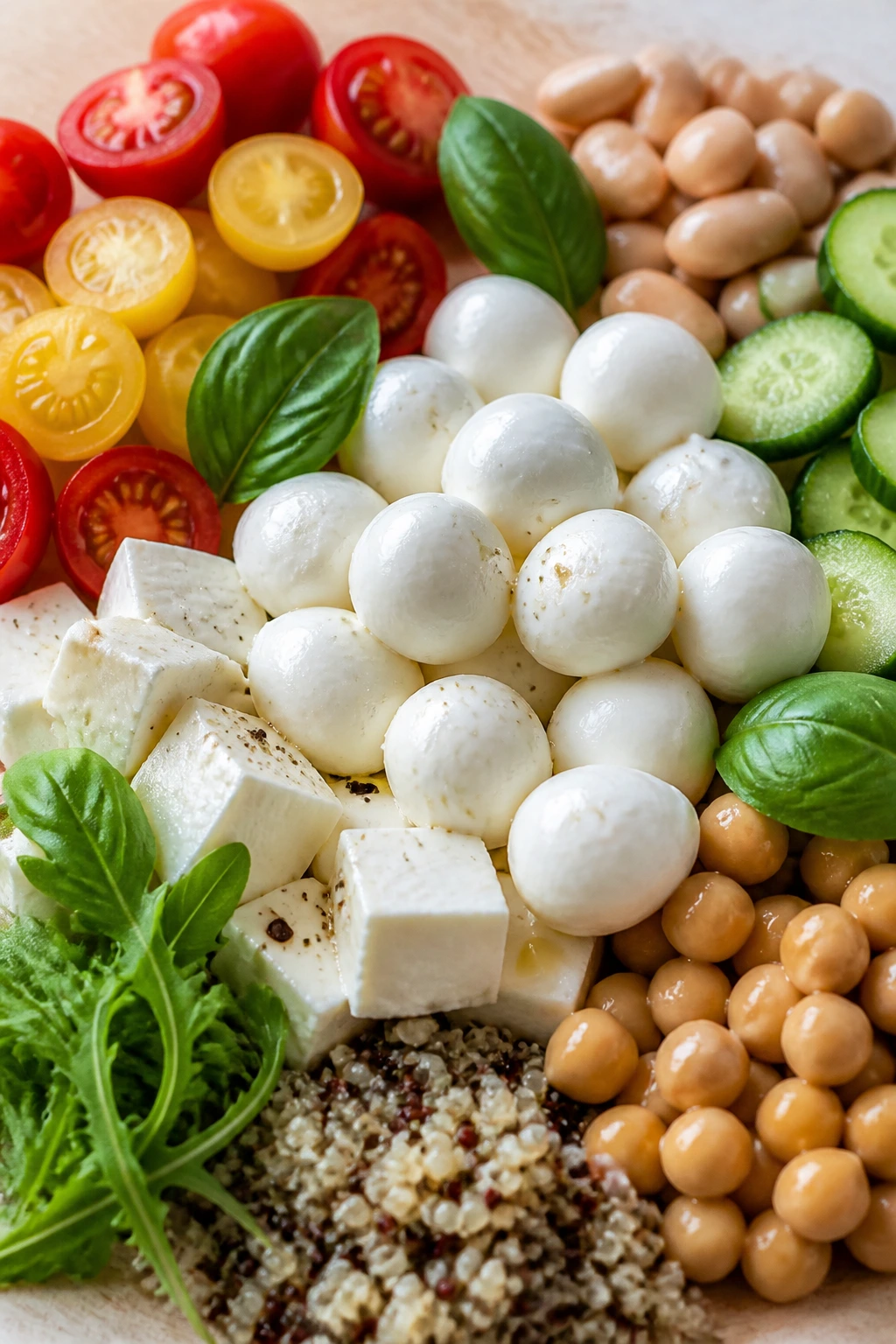
One thing I keep coming back to is how forgiving mozzarella is. Fresh mozzarella has that clean milk flavor and a soft pull when you bite into it, while mini pearls and cubes fit neatly into chopped salads without turning the bowl clumsy. It’s a cheese that can sit beside tomatoes, herbs, beans, fruit, grains, and fish without fighting for attention.
That makes it useful in lunch food, which is usually where good intentions go to die. You want something fast, but not boring. Filling, but not heavy. A mozzarella salad can do that if you treat the cheese like an ingredient with a job instead of just a garnish.
Drain it well. Salt the rest of the bowl thoughtfully. Keep watery produce from soaking the greens. Those three habits carry almost every recipe in this collection.
Essential Equipment for These Recipes
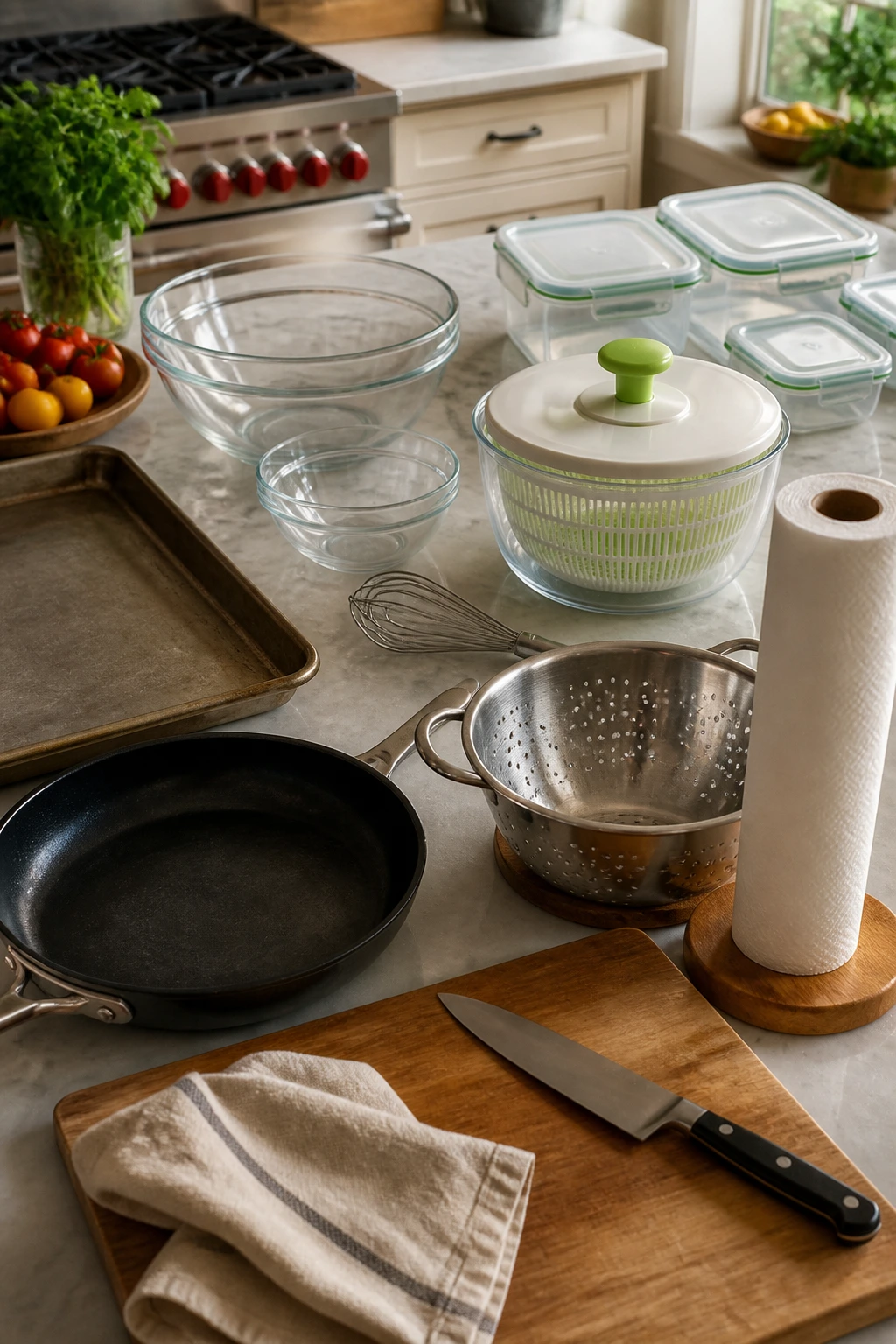
- Large mixing bowls: You’ll need at least two, because a cramped bowl makes salads toss badly and break apart.
- Sharp chef’s knife: Clean cuts matter for tomatoes, mozzarella, herbs, and chopped salads.
- Cutting board with a damp towel underneath: Stops the board from skating when you’re slicing slippery produce.
- Colander or fine strainer: Essential for beans, pasta, lentils, and draining mozzarella.
- Sheet pan: Useful for roasting vegetables, toasting breadcrumbs, or cooling grains quickly.
- Skillet: A small or medium skillet handles breadcrumbs, corn, mushrooms, and quick charred vegetables.
- Whisk or fork: For emulsifying dressings without dragging out extra tools.
- Salad spinner: Helpful if you wash your greens yourself; dry leaves cling to dressing better.
- Airtight containers: Flat containers work better than tall ones for packed lunch salads.
- Paper towels: Not glamorous, but they’re the difference between dry mozzarella and a watery bowl.
Smart Shopping for Mozzarella Salad Recipes
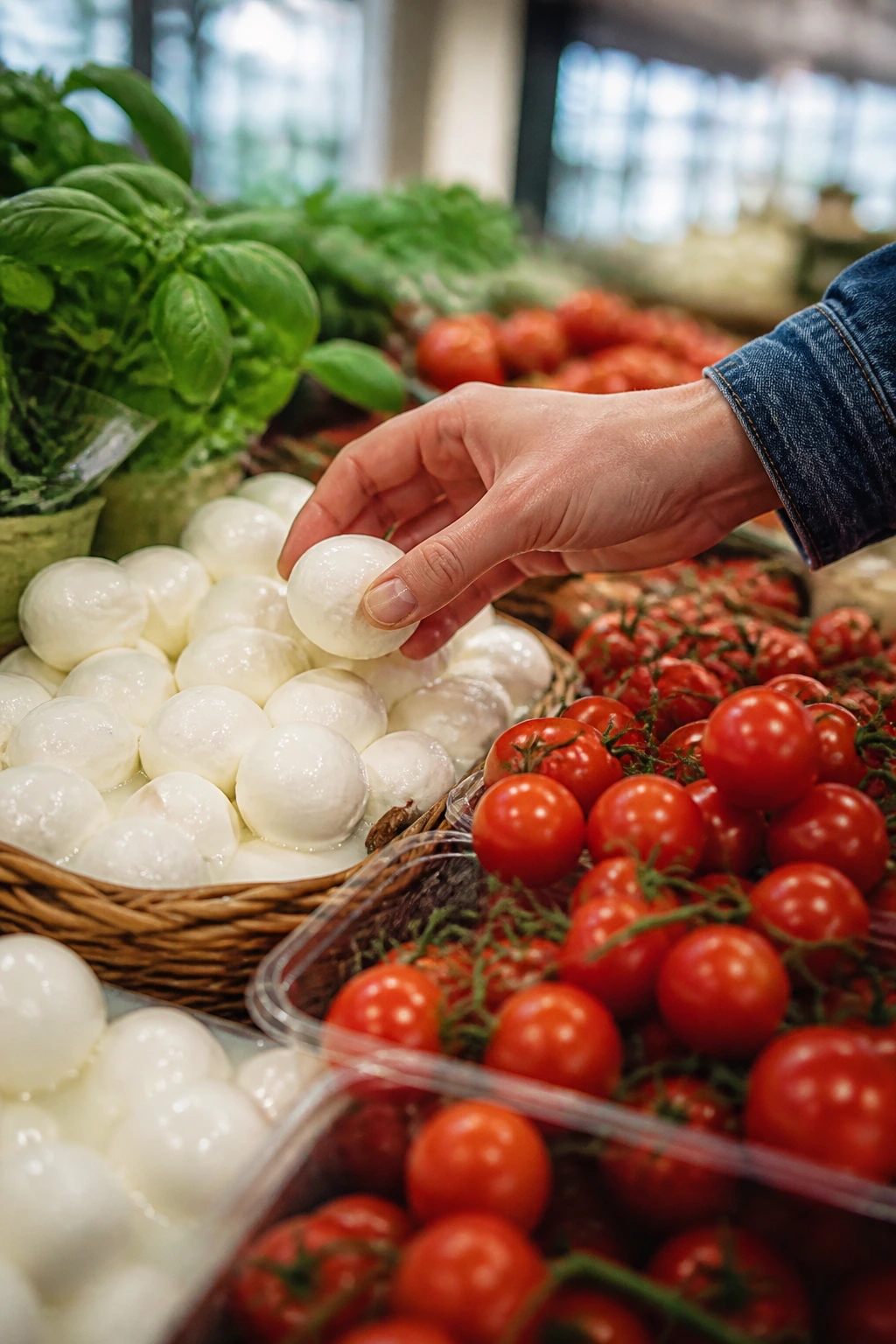
Start with the cheese. Fresh mozzarella sold in water or whey should be drained, then blotted dry before it hits the bowl. Mozzarella pearls are the easiest lunch option because they’re already sized for salads, but a larger ball of fresh mozzarella torn by hand has a better texture if you want a more rustic feel. Low-moisture mozzarella can work in a pinch, though it tastes firmer and less delicate than fresh cheese.
Tomatoes matter more than people want to admit. If they smell like nothing, the salad will taste thin. Cherry tomatoes are the safest choice because they stay sweet and don’t collapse instantly, while larger slicing tomatoes should be fully ripe and salted just before serving. If you’re using watermelon, peaches, or strawberries, buy fruit that yields slightly and smells aromatic at the stem end.
Greens should match the weight of the cheese. Arugula and spinach are good for softer salads, while romaine and little gem help chopped bowls stand up in the fridge. For grain salads, farro, orzo, lentils, and tortellini all give different textures, so choose the one that suits how hungry you are. I like farro when I want chew, orzo when I want something slippery and easy, and lentils when I need the salad to survive until the next day.
Dressings don’t need to be complicated. Olive oil, lemon, vinegar, Dijon, salt, and pepper cover most of this collection. The important bit is balance: mozzarella likes acid, but not so much that the bowl tastes sharp and watery. A small spoonful of honey or a little balsamic glaze can round things out when tomatoes or fruit are doing the heavy lifting.
How to Serve These Recipes
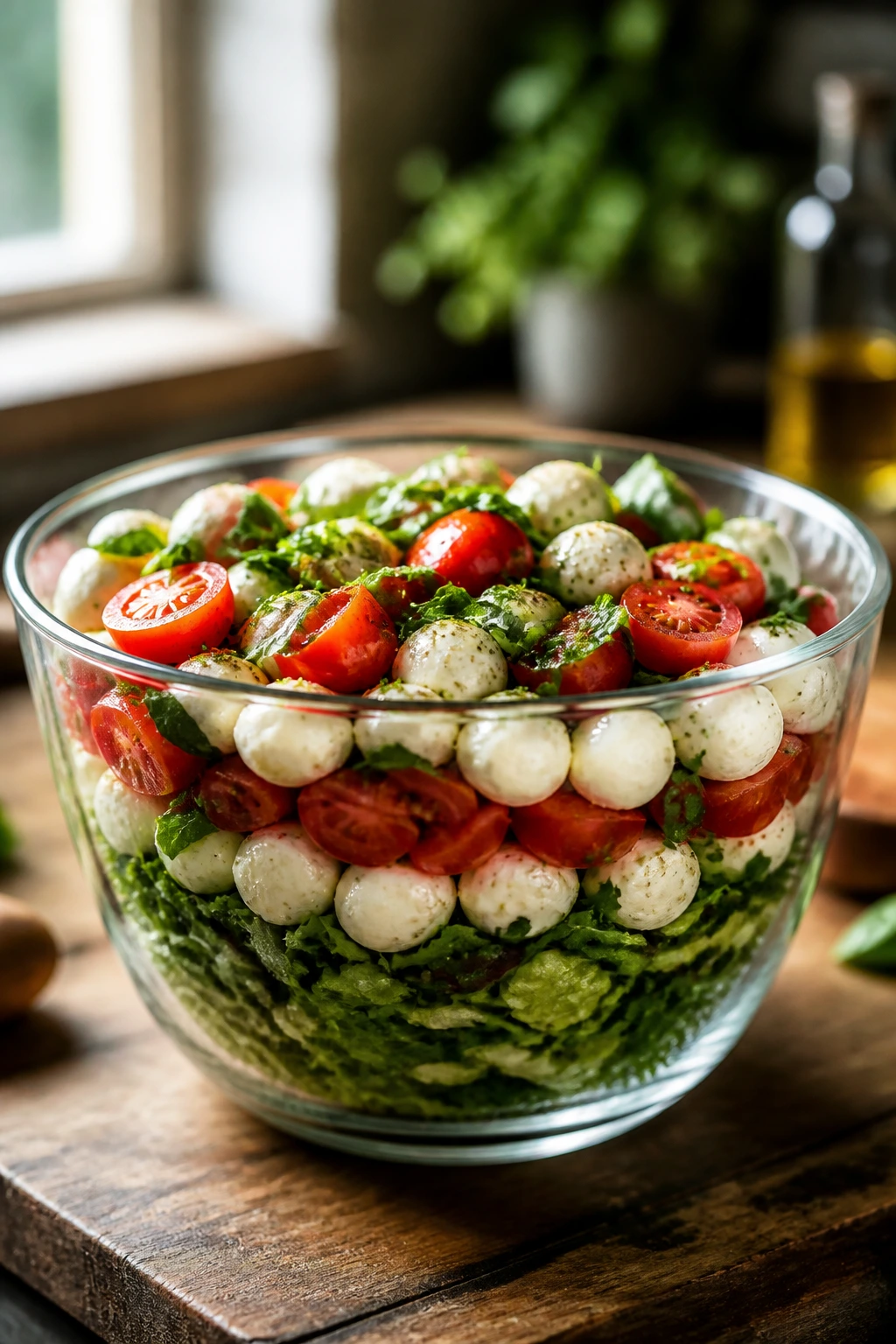
Presentation: Build the salad in layers, not as a tumble. Put greens or grains down first, then the main vegetables, then the mozzarella, then herbs, nuts, or breadcrumbs on top so the bowl looks alive when you open it.
Accompaniments: Crusty bread, pita chips, seeded crackers, or a simple piece of toast works well with the more substantial salads. Fruit on the side suits the fruit-forward bowls, while soup fits the grain and bean salads nicely.
Portions: Most of these recipes land at 2 to 4 lunch servings, depending on how much chicken, beans, or pasta you add. For a lighter meal, keep portions around 1 1/2 cups per person. For a fuller lunch, aim closer to 2 1/2 cups, especially with the farro, tortellini, or orzo salads.
Beverage Pairing: Sparkling water with lemon is the easy answer, but cold iced tea with no sugar also works with the sharper salads. If you want something a little richer, a lightly chilled white grape spritzer or cucumber-mint water fits the fruit and herb salads without crowding them.
Additional Tips and Flavor Boosters
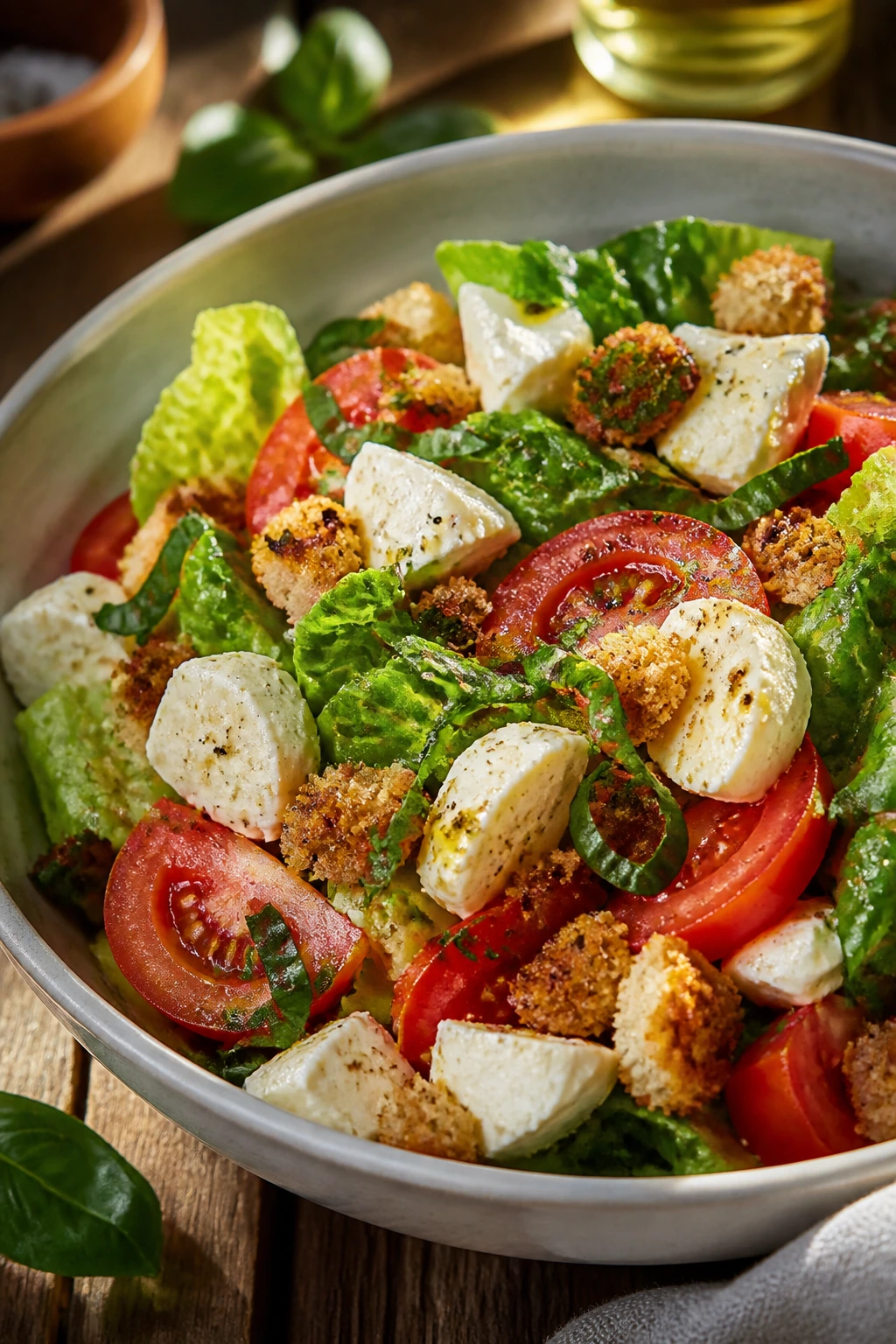
Flavor Enhancement: A small finishing hit makes a big difference. Try lemon zest on the bean salads, black pepper on the tomato bowls, or a spoonful of pesto stirred into the grain salads right before serving. That last bit matters more than it should.
Customization: Add chopped olives, roasted peppers, cucumbers, avocado, or fresh herbs depending on what the fridge has. The salads with grains, beans, or pasta can absorb a lot more than the delicate fruit-and-mozzarella bowls, so match the add-ins to the base.
Serving Suggestions: Toasted breadcrumbs, pine nuts, sliced almonds, pistachios, or croutons give the softer salads enough crunch to feel finished. A few extra herb leaves on top never hurt either. Neither does a little flaky salt, if you’re careful with it.
Make-It-Yours: For a vegetarian version, lean on chickpeas, lentils, farro, or tortellini. For a dairy-light bowl, use less mozzarella but make it count by cutting it into small pieces. For a higher-protein lunch, add chicken, tuna, smoked salmon, or hard-boiled eggs. For a lower-sodium version, rinse beans well and scale back olives, capers, salami, and pepperoncini.
Make-Ahead, Storage, and Reheating Guidance
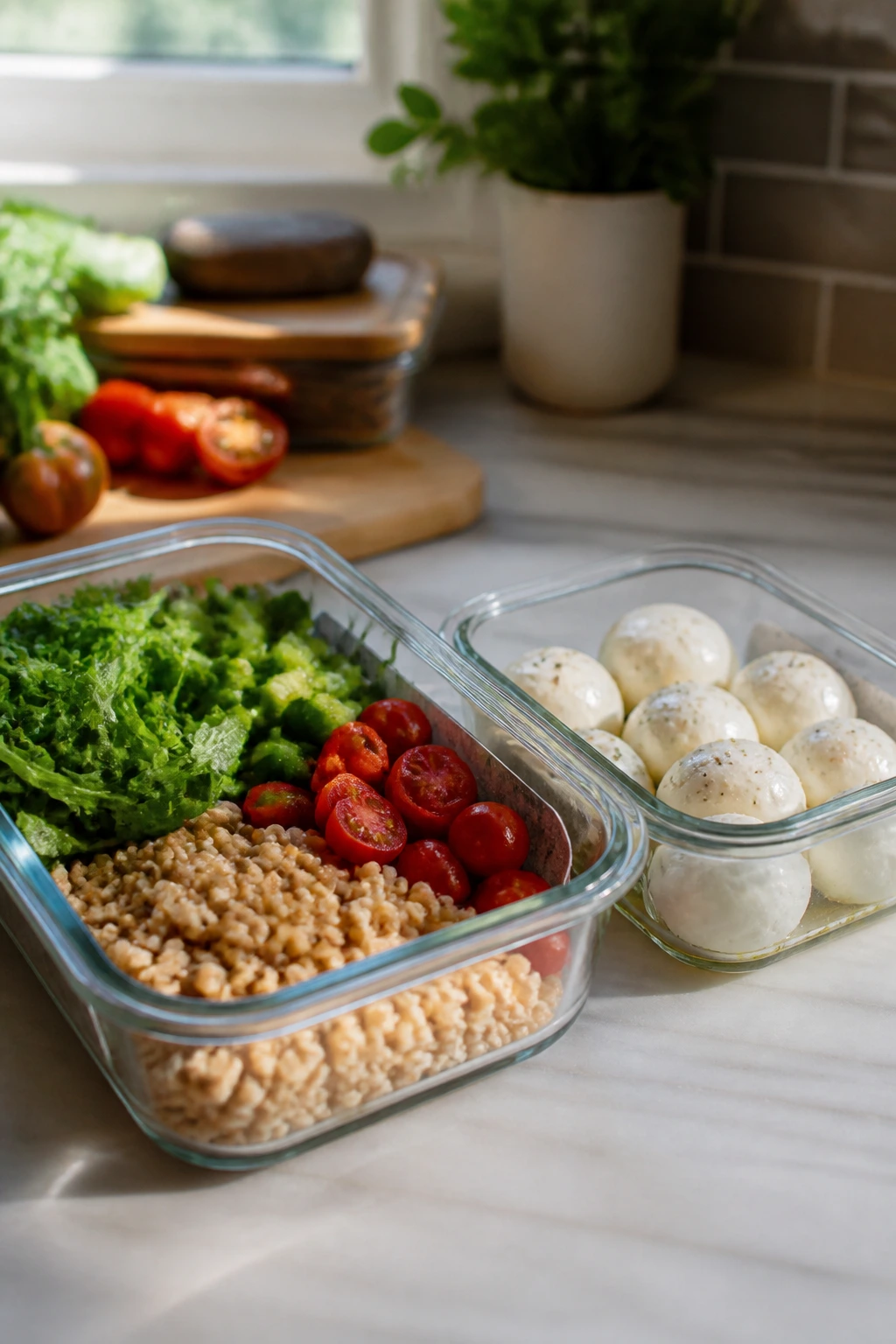
Most of these salads keep best when the wet pieces are stored separately from the dry ones. Grain salads, bean salads, and tortellini salads hold up for 3 to 4 days in the refrigerator if you keep them in airtight containers. Fruit-heavy salads with watermelon, peaches, or strawberries are more fragile; they’re best the day they’re made, and after that the fruit starts releasing juice and softening the greens.
Fresh mozzarella deserves its own rule. Once it’s drained and packed into a salad, it should stay refrigerated and be eaten within 2 to 3 days for the best texture. If the cheese came packed in brine, drain it well before storing. Otherwise, the bowl gets watery fast.
For meal prep, keep dressing in a small jar and add it just before eating. If you’re packing a chopped salad, put sturdy ingredients like chickpeas, beans, pasta, or farro at the bottom, then greens, then tomatoes, then mozzarella, then herbs on top. That layering keeps the lettuce from getting crushed and buys you a better lunch.
Reheating is only for the warm or grain-based salads. Orzo, farro, lentils, and mushrooms can be warmed gently in a skillet over low heat with a teaspoon of olive oil or a splash of water. Stop as soon as the food is warm through. You are not trying to make it hot. Overheating mozzarella turns it soft in a bad, stringy way.
Variations and Adaptations to Try
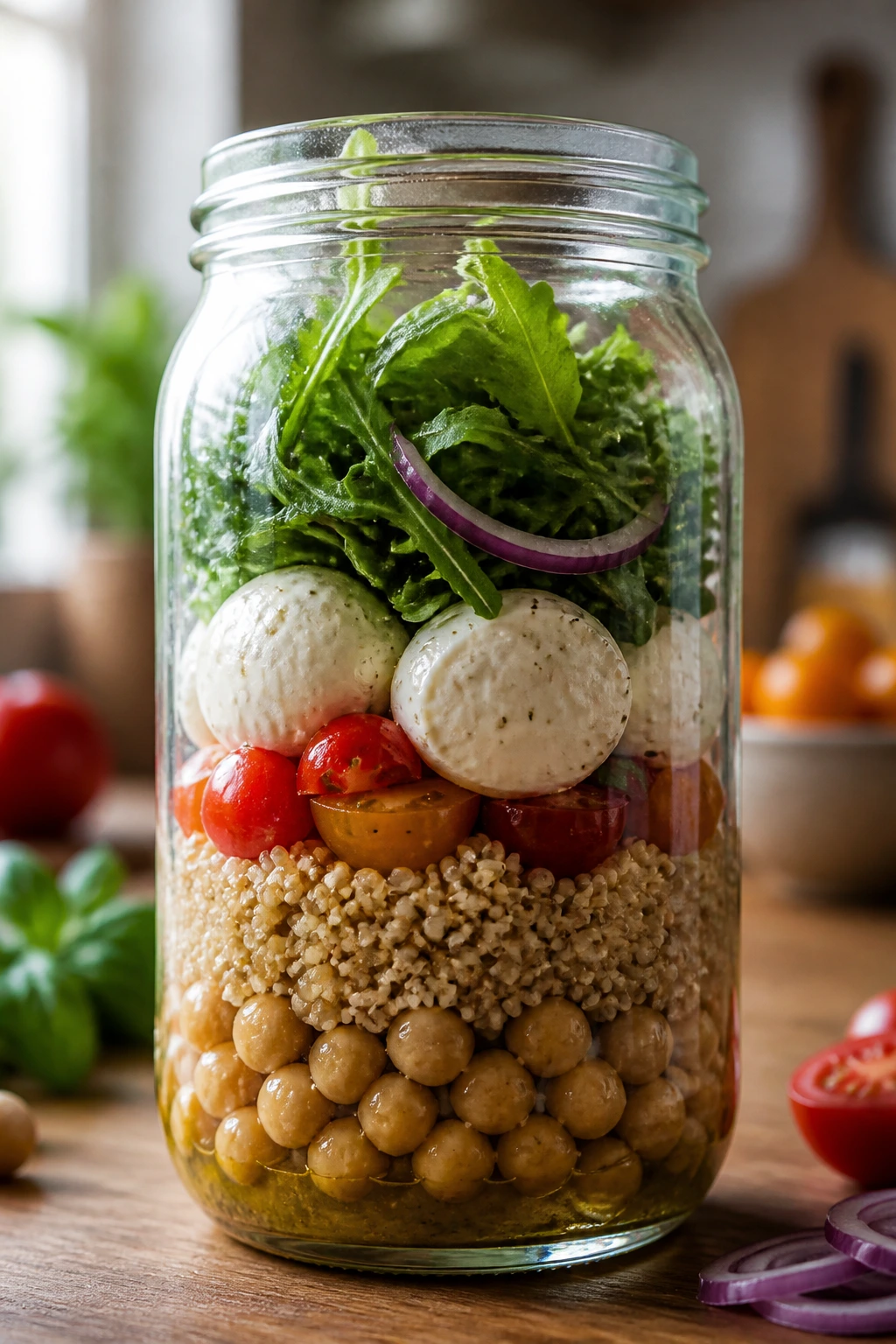
Jar-Lunch Stack: Build the salads in a wide-mouth jar with dressing on the bottom, followed by sturdy vegetables, grains or beans, then mozzarella, then greens on top. Shake only when you’re ready to eat. This works best for the chickpea, lentil, orzo, and farro salads.
High-Protein Build: Add grilled chicken, tuna, smoked salmon, hard-boiled eggs, or extra beans. The mozzarella can stay in the background while the protein does the heavy lifting. This is the cleanest way to turn the lighter bowls into a full meal.
Lower-Sodium Path: Use unsalted or lightly salted mozzarella if you can find it, rinse canned beans well, and cut back on olives, capers, pepperoncini, salami, and smoked fish. Lean harder on lemon, vinegar, herbs, and black pepper so the bowl still tastes finished.
Dairy-Light Swap: If you want less cheese, use half the mozzarella and double down on herbs, nuts, beans, or avocado. You keep the roundness without pushing the salad into dairy-heavy territory. This works especially well in the grain and chopped salads.
Kid-Friendly Mild Version: Skip the onions, pepperoncini, capers, and strong herbs, then use cherry tomatoes, cucumbers, pasta, chicken, and mozzarella pearls with a simple olive oil and lemon dressing. The result is quieter and easier to eat, which matters more than cleverness.
Common Mistakes to Avoid with Mozzarella Salad Recipes
The first mistake is using mozzarella straight from its liquid and then wondering why the bowl tastes watery. Dry the cheese first. Seriously. A few paper towels save the whole salad from puddling at the bottom.
Another common slip is dressing the greens too early. Romaine can handle a little advance dressing, but arugula, spinach, and basil wilt quickly. For packed lunches, keep dressing separate or tuck it at the bottom of the container under the sturdier ingredients.
People also overdo the acid. Lemon, vinegar, balsamic glaze, and pickled ingredients all help the cheese wake up, but too much turns the bowl sharp and thin. Taste after tossing, then add more acid only if the salad still feels flat.
Hot ingredients can be a problem too. Warm farro, tortellini, or roasted vegetables should cool for a few minutes before mozzarella goes in. Otherwise the cheese softens too much and stops tasting like distinct pieces.
Last, do not treat every mozzarella salad like a green salad. Some of these bowls are grain salads, some are chopped salads, some are fruit salads, and some are warm lunches. The base changes the rules, and once you respect that, the recipes start behaving.
Questions Readers Always Ask About Mozzarella Salad Recipes
Can I use shredded mozzarella instead of fresh mozzarella?
You can, especially in the orzo, tortellini, or warm mushroom salads, but shredded mozzarella feels firmer and less creamy. For the cold tomato, fruit, and cucumber salads, fresh pearls or torn mozzarella give a better bite.
How do I keep a mozzarella salad from getting soggy in a lunch container?
Pack the wettest ingredients separately when you can, and put dressing at the bottom only if the salad uses grains or beans. Keep tomatoes, cucumbers, and fruit drained, and use a container that doesn’t leave a lot of empty space for ingredients to slide around.
What type of mozzarella works best for meal prep?
Mozzarella pearls and well-drained fresh mozzarella are easiest because they’re already bite-sized. If you’re packing a salad for later, pearls hold their shape a little better than large torn pieces.
Can I make these salads the night before?
Most of the grain, bean, or pasta salads can be made the night before and held in the fridge. The fruit-forward salads are better assembled the same day, because watermelon, peaches, and strawberries release juice fast.
What if my tomatoes are bland?
Salt them lightly and let them sit for 10 minutes before adding them to the salad. That draws out some juice and gives the dressing something to work with. If they still taste dull, add more basil, pepper, and a sharper vinegar.
Is burrata okay here?
Yes, but use it in the salads that are meant to be eaten immediately, like the Caprese or peach salad. Burrata is too delicate for meal prep, and once you cut into it, the center escapes in a way that is charming at the table and messy in a lunch box.
Can I use low-moisture mozzarella?
You can, especially if you want firmer pieces in chopped salads or pasta salads. It won’t taste as soft or milky as fresh mozzarella, so you may want a little extra olive oil or a sharper dressing to compensate.
How do I stop onions from taking over the whole bowl?
Slice them thin, soak them in cold water for 5 to 10 minutes if they’re sharp, and use them as an accent instead of a main ingredient. Red onion should wake the salad up, not make your eyes water halfway through lunch.
A Better Lunch Habit
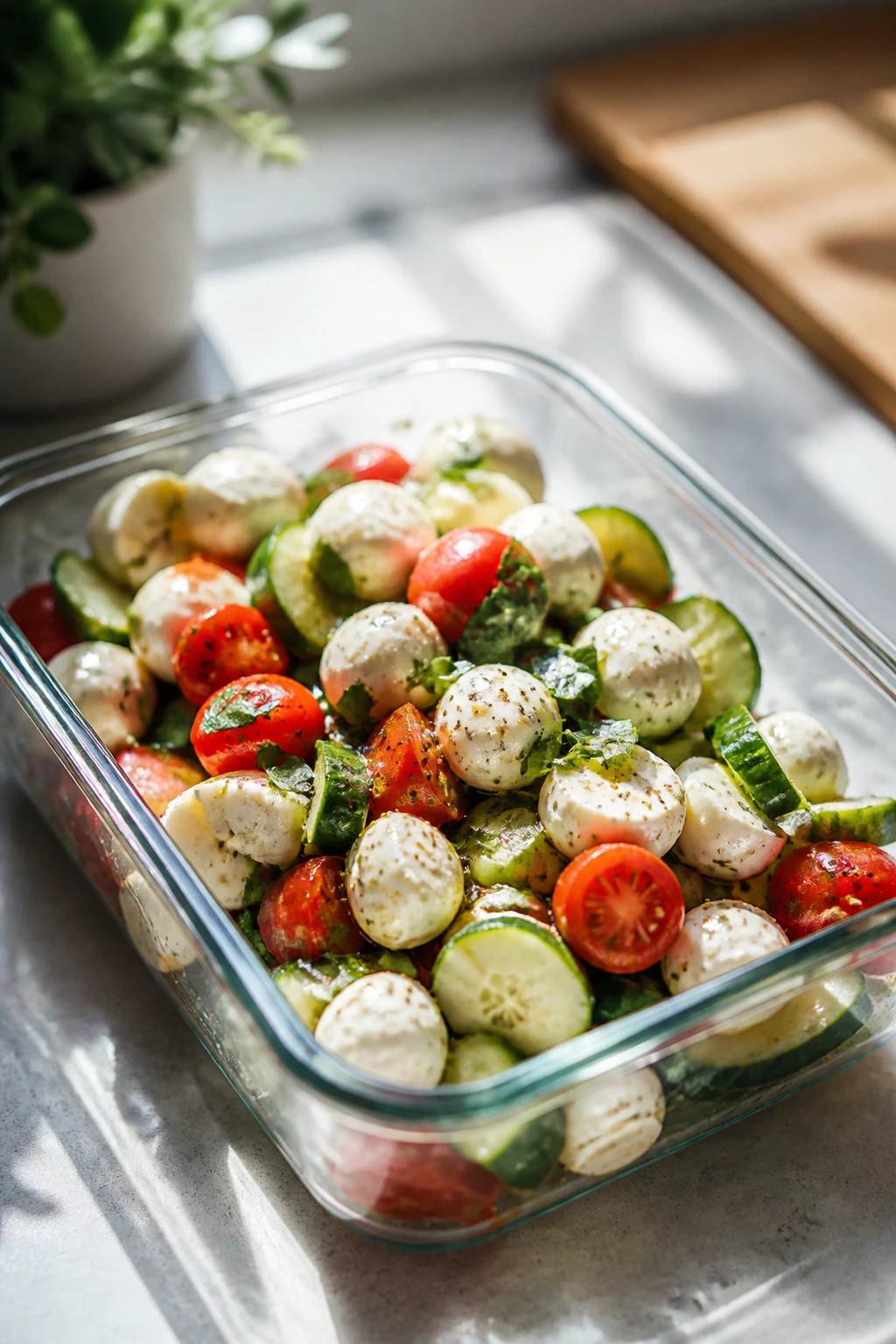
A good mozzarella salad doesn’t need a dramatic trick. It needs clean ingredients, a decent dressing, and a little attention to texture. Once you start thinking that way, lunch gets easier to solve. Tomato bowls, bean bowls, pasta bowls, fruit bowls, warm mushroom bowls — they all start from the same simple idea and end up tasting different enough that you won’t get bored after two days.
What I like most here is the flexibility. Keep mozzarella on hand, and you can build lunch from what’s already in the fridge without falling into the same sad greens-and-dressing rut. That’s a small victory, but it’s a useful one.