



A zesty fruit salad with homemade dressing can fall apart in two very different ways. It can turn into a sweet puddle that tastes like canned syrup, or it can feel like a pile of separate fruits that happened to share a bowl. Neither version earns a second spoon.
The fix is not complicated, and that’s the nice part. A handful of ripe fruit, cut with a little restraint, plus a citrus dressing built with lime, orange, lemon, honey, and salt, gives you something sharper and cleaner than the usual picnic bowl. The strawberries still taste like strawberries. The pineapple keeps its bite. The kiwi adds that soft, tart edge that makes the whole thing feel awake.
What matters most here is balance. Fruit salad gets dull when the dressing is too sweet or too heavy, and it gets sloppy when the fruit is wet or chopped too small. Once you understand those two traps, the rest is easy work — the kind of kitchen task you can do on a cutting board with one bowl, one whisk, and a few minutes of actual attention.
Why This Bowl Earns Repeat Status
Bright, not syrupy: The dressing uses citrus juice as the base, so every piece gets a glossy coating instead of a sticky glaze that pools at the bottom.
Built on real texture: Grapes snap, pineapple bites back a little, blueberries burst, and kiwi softens the mix without turning the bowl to mush.
Fast enough to make on a busy morning: If your knife is sharp and your fruit is washed and dry, the whole bowl comes together in about 20 minutes.
Flexible without losing its shape: You can swap in or out one or two fruits based on what looks good, and the dressing still behaves.
Good from brunch to dinner: It sits comfortably next to pancakes, grilled chicken, salmon, or a plain bowl of yogurt and granola.
The salt matters: A small pinch makes the fruit taste fuller and less flat, especially if your oranges are sweet and your berries lean mild.
Quick Facts for the Bowl
Yield: Serves 6 to 8 as a side, or 4 to 5 as a light fruit-forward snack
Prep Time: 20 minutes
Cook Time: 0 minutes
Total Time: 20 minutes, or about 35 minutes if you chill it briefly before serving
Difficulty: Beginner — there’s no heat, just careful cutting, gentle tossing, and a quick whisk.
Chill/Rest Time: 15 minutes optional
Best Served: Cool or lightly chilled, ideally within a few hours of tossing
A short rest in the fridge helps the citrus wake up the fruit without draining the life out of it. Longer than that, and the softer pieces start giving up juice faster than you want.
What Goes Into the Bowl
For the Fruit Salad:
- 2 cups strawberries, hulled and halved
- 1 1/2 cups seedless red or green grapes, halved if large
- 1 1/2 cups fresh pineapple, cut into 1/2-inch chunks
- 1 cup blueberries, rinsed and dried
- 3 kiwis, peeled and sliced into half-moons
- 2 mandarins or clementines, segmented and pith removed
- 1 mango, peeled and diced
- 1 medium Honeycrisp or Pink Lady apple, diced
- 2 tablespoons chopped fresh mint
- 1/2 cup pomegranate seeds, optional, for crunch
For the Homemade Zesty Dressing:
- 3 tablespoons fresh orange juice
- 2 tablespoons fresh lime juice
- 1 tablespoon fresh lemon juice
- 1 tablespoon honey
- 1 teaspoon finely grated lime zest
- 1 teaspoon finely grated orange zest
- 1/2 teaspoon pure vanilla extract
- 1/4 teaspoon fine sea salt
- Pinch of ground ginger, optional
Why Each Ingredient Matters
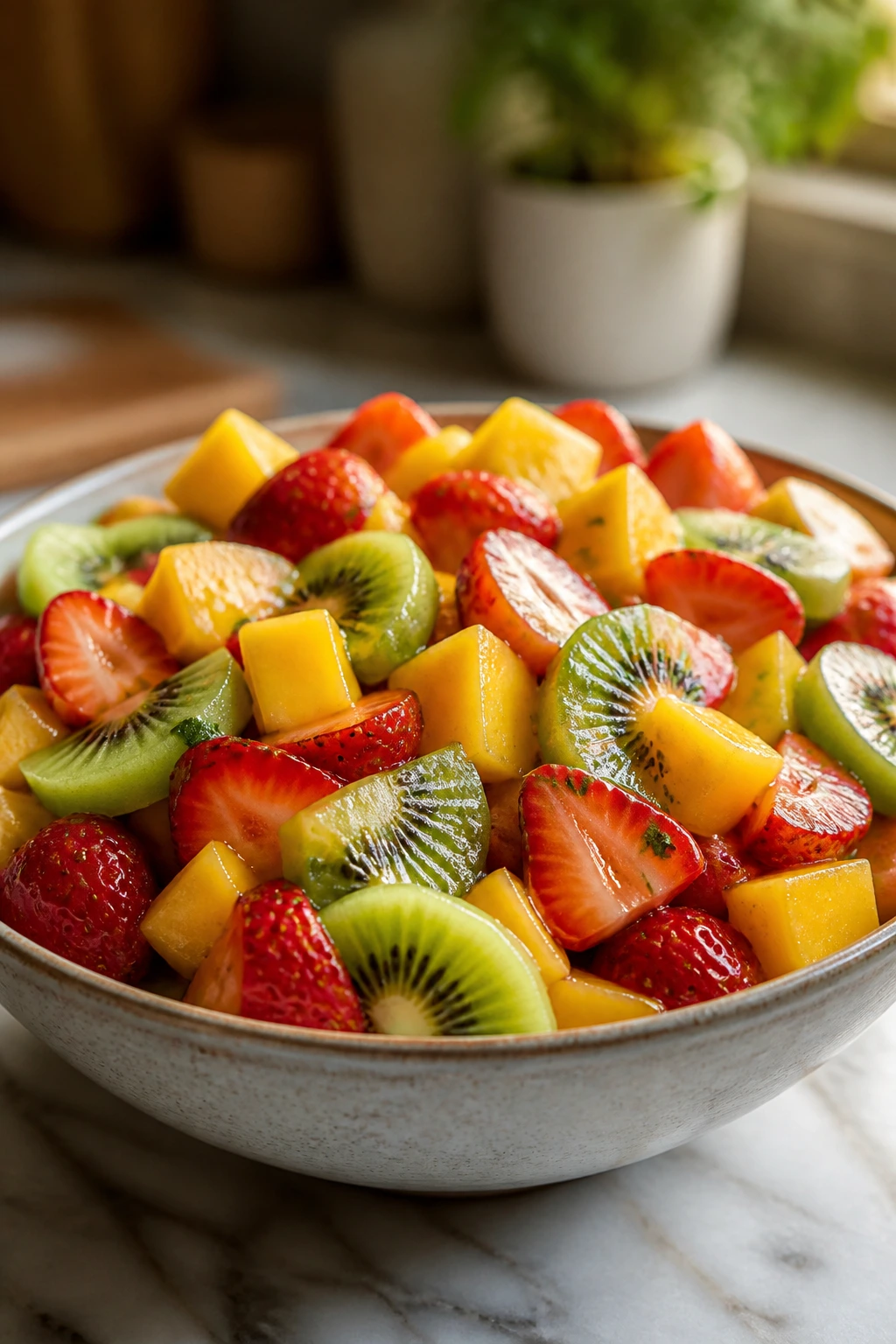
Fruit That Can Hold Its Shape
What to use: The core of the bowl is the mix of strawberries, grapes, pineapple, blueberries, kiwi, mandarins, mango, and apple. That combination gives you soft fruit, firm fruit, tart fruit, and juicy fruit in a single spoonful.
Preparation: Keep the pieces on the larger side — about 1/2 to 3/4 inch for most of the fruit — so they stay distinct after tossing. Hull the strawberries, halve the grapes if they’re large, and cut the apple only after the rest of the fruit is ready.
Substitutions: If mango is pricey or underripe, swap in extra pineapple or more grapes. If you want a sharper bowl, use Granny Smith apple instead of Honeycrisp.
Tips: Fruit salad is not the place for fruit that’s nearly falling apart on the counter. Choose fruit that smells ripe and feels firm, because once the citrus hits it, soft fruit softens fast.
Citrus, Honey, and the Dressing That Pulls the Bowl Together
What to use: Orange juice, lime juice, lemon juice, honey, lime zest, orange zest, vanilla, salt, and a tiny pinch of ginger if you want a little edge.
Preparation: Zest the citrus before juicing it. That sounds basic, but I still see people trying to do it backward and scraping half a peel into the juice, which is a miserable way to get bitterness into the dressing.
Substitutions: Maple syrup can replace the honey if you want a vegan version. If you only have one citrus fruit on hand, lean harder on that juice and use a little more zest so the dressing still tastes bright.
Tips: The dressing should smell like citrus peel first and sweetness second. If the honey takes over, you’ve gone too far. Add more juice, not more sugar.
Fresh Finishers and Little Extras
What to use: Fresh mint and, if you like a bit of crunch and color, pomegranate seeds.
Preparation: Chop the mint fine enough that it disperses through the bowl instead of sitting in clumps. Pomegranate seeds can go in whole; don’t chop them, obviously.
Substitutions: Basil can step in for mint if you want a more herbaceous, less candy-like finish. Toasted coconut is another good swap if you’re leaning tropical.
Tips: Add herbs at the end. If mint sits in citrus too long, it starts to taste dull and a little grassy, which is not the direction you want.
The Tools That Make Fruit Prep Easier
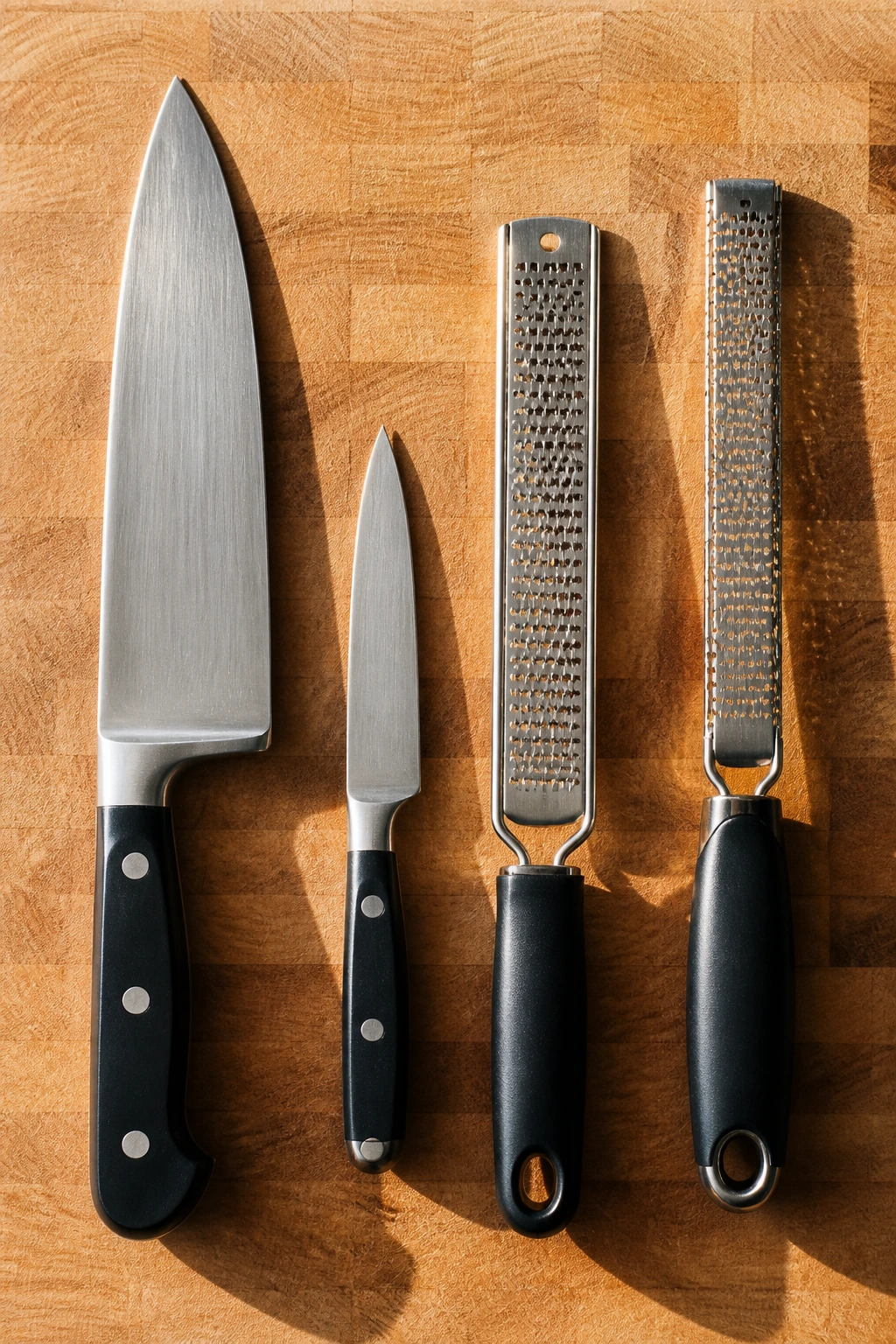
A fruit salad doesn’t need special gear, but the right tools keep the whole thing cleaner and faster. A dull knife makes a mess of strawberries and mangoes. A too-small bowl crushes fruit before you even get to the dressing.
- Sharp chef’s knife: The single most useful tool here; it cuts fruit cleanly and keeps the pieces from bruising.
- Paring knife: Handy for kiwi, citrus, and any little trim work around the strawberry hulls.
- Large cutting board: Give yourself room. Fruit prep gets sloppy fast on a board that’s too small.
- Microplane or fine zester: Best for the lime and orange zest; it catches the oils without digging into the bitter white pith.
- Small mixing bowl: For whisking the dressing before it touches the fruit.
- Large serving bowl: Use one that’s bigger than you think you need so the fruit can toss without getting mashed.
- Citrus juicer or reamer: Optional, but useful if you’re squeezing oranges, limes, and lemons by hand.
- Paper towels or clean kitchen towels: Dry fruit matters more than most people think. Wet berries dilute the dressing and make the bowl slippery.
- Colander or mesh strainer: Good for rinsing berries and grapes without trapping water underneath them.
How to Build the Salad Without Bruising the Fruit
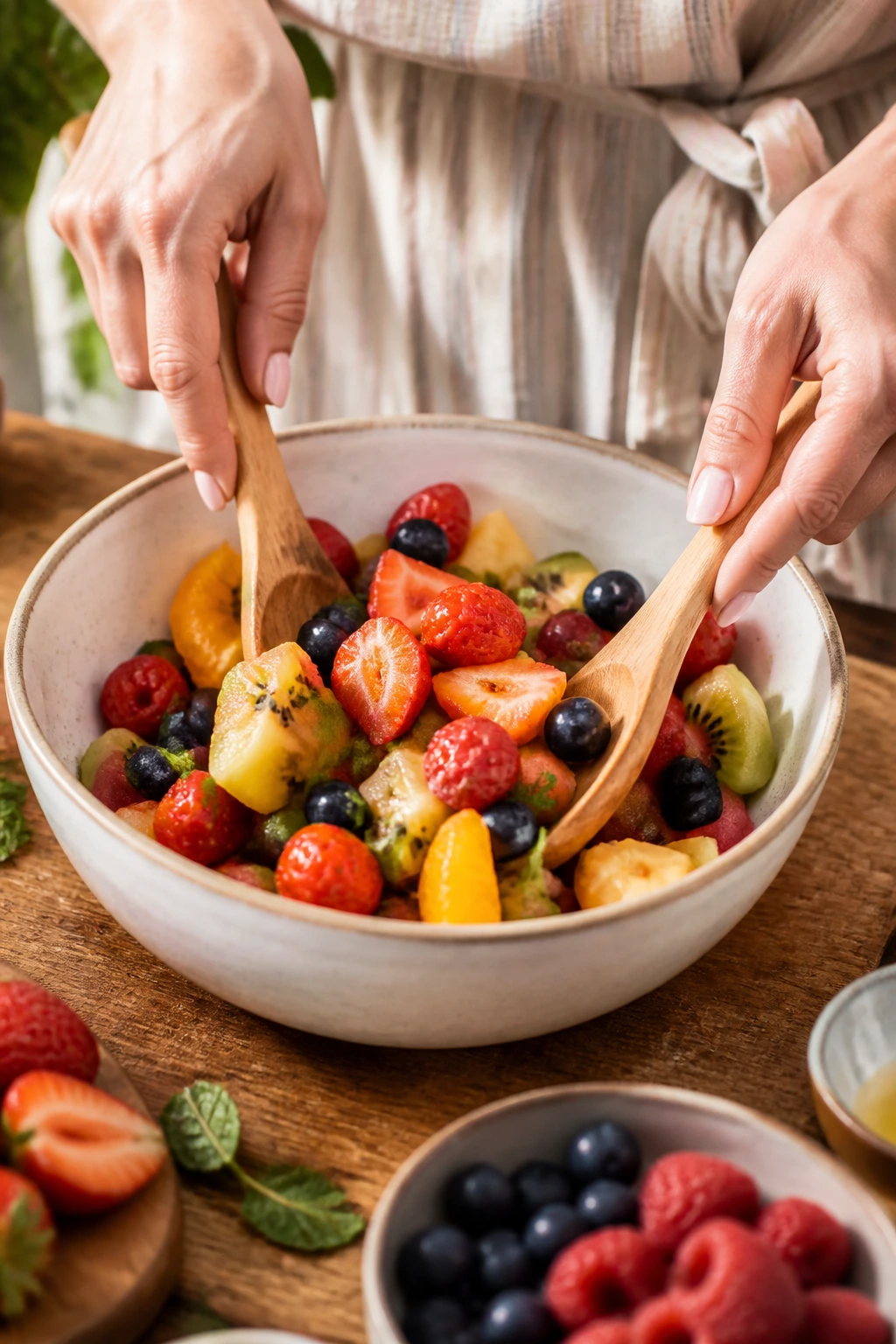
Prep the fruit first.
-
Rinse the strawberries, blueberries, and grapes under cold water. Drain them well, then spread them on paper towels or a clean kitchen towel and pat them dry. Do not skip the drying step; wet fruit makes the dressing slide off and gather in the bottom of the bowl.
-
Hull and halve the strawberries. Peel and dice the mango. Peel the kiwi and slice it into half-moons. Segment the mandarins and remove any obvious bits of white pith. Cut the apple into 1/2-inch cubes and set it aside last so it does not brown while you work.
Whisk the dressing.
- In a small bowl, whisk together the orange juice, lime juice, lemon juice, honey, lime zest, orange zest, vanilla, salt, and optional ginger until the honey fully dissolves. The dressing should look smooth and lightly glossy, not thin and separated.
Assemble the bowl.
-
In a large mixing bowl, combine the grapes, pineapple, mango, and apple first. These sturdier fruits can take the first toss without collapsing.
-
Pour in about half of the dressing and toss gently with a wide spatula or large spoon. The fruit should look shiny, not wet.
-
Add the strawberries, blueberries, kiwi, mandarins, mint, and pomegranate seeds if you’re using them. Fold with broad turns instead of stirring hard. If you see blueberries splitting open, you’re being too rough.
Finish and serve.
- Drizzle on the rest of the dressing, taste a piece of fruit, and decide if you want a tiny squeeze more lime or a pinch more salt. Chill the bowl for 15 minutes if you want it colder, then give it one last gentle toss before serving.
A chilled bowl helps the dressing cling better. A brutally cold bowl from the back of the fridge? Not as nice. If the fruit tastes numb, let it sit on the counter for 5 to 10 minutes.
Why the Homemade Dressing Stays Bright
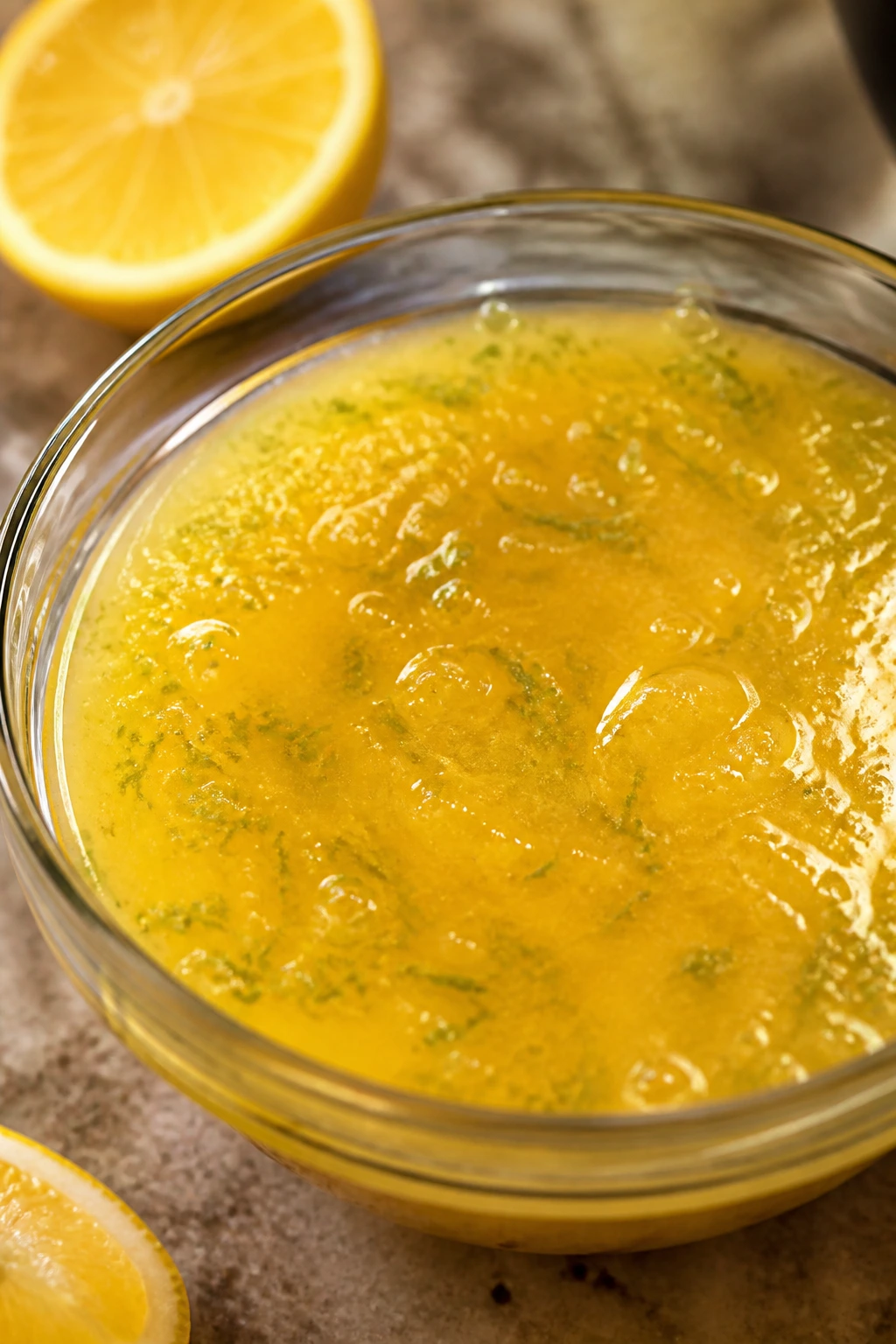
Citrus is doing most of the work here, and that’s the point. Orange juice gives you round sweetness, lime brings a sharper edge, and lemon keeps the whole dressing from drifting into candy territory. Fruit salad needs that little jolt.
Honey is the quiet part of the equation. It doesn’t just sweeten; it helps the dressing coat the fruit so it looks polished instead of washed out. Use only a tablespoon. More than that starts to flatten the fruit, and you lose the clean snap you were trying to build in the first place.
Salt gets treated like an optional add-on in a lot of fruit recipes, which is a mistake. One quarter teaspoon is enough to make strawberries taste more like strawberries and citrus taste less sharp. You don’t notice the salt as salt. You notice that the fruit tastes fuller.
Zest is where the real smell lives. Juice alone tastes fine, but zest carries the oils that make the dressing smell fresh the second you whisk it. If you hit the white pith, though, you’ll know. The dressing turns bitter in a way that lingers at the back of your mouth, and there’s no sugar fix for that.
Vanilla and ginger are small moves. Not required, but worth knowing about. Vanilla rounds the citrus edges. Ginger gives the bowl a little lift, almost like the fruit woke up and stretched.
Serving It So It Stays Cold and Crisp
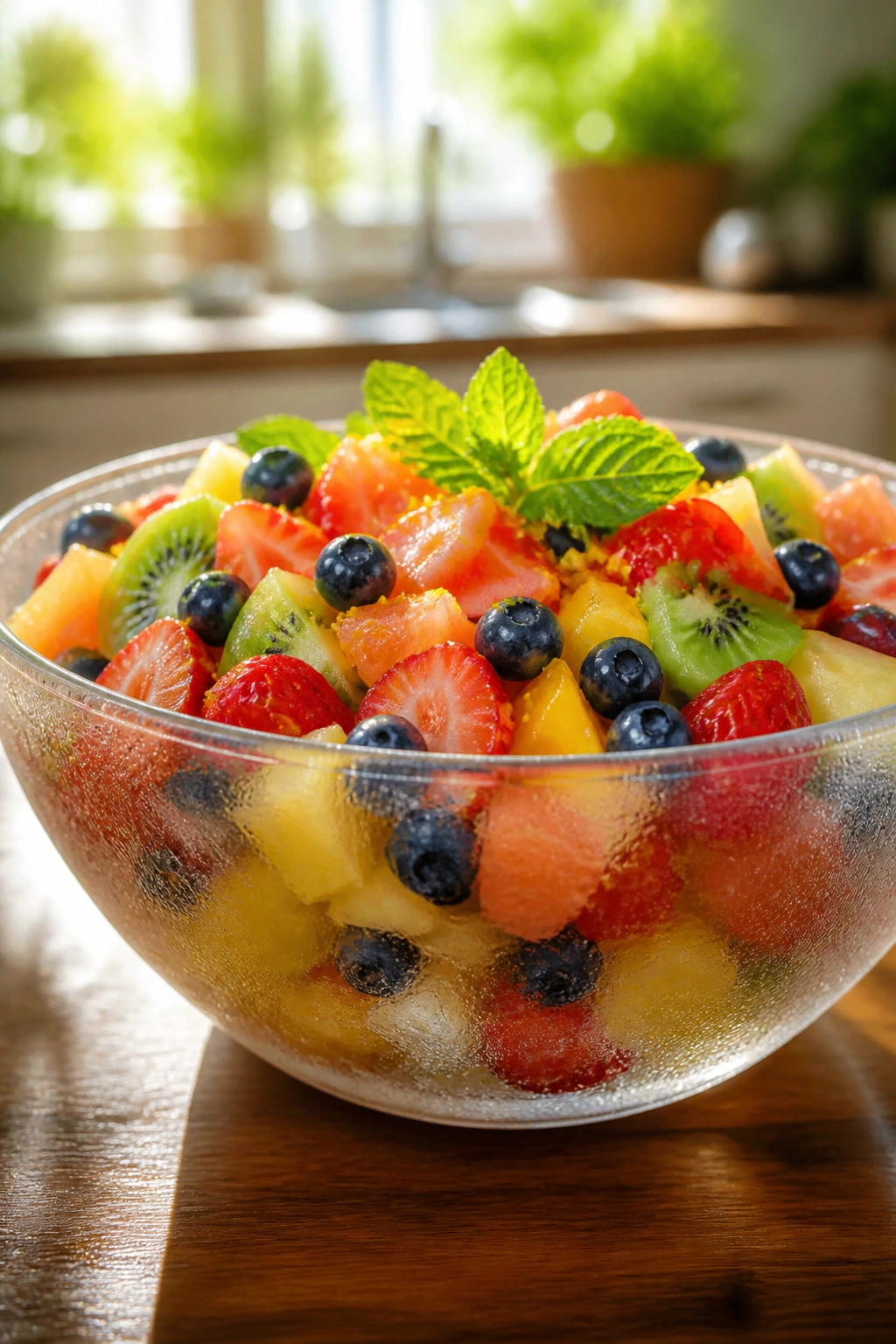
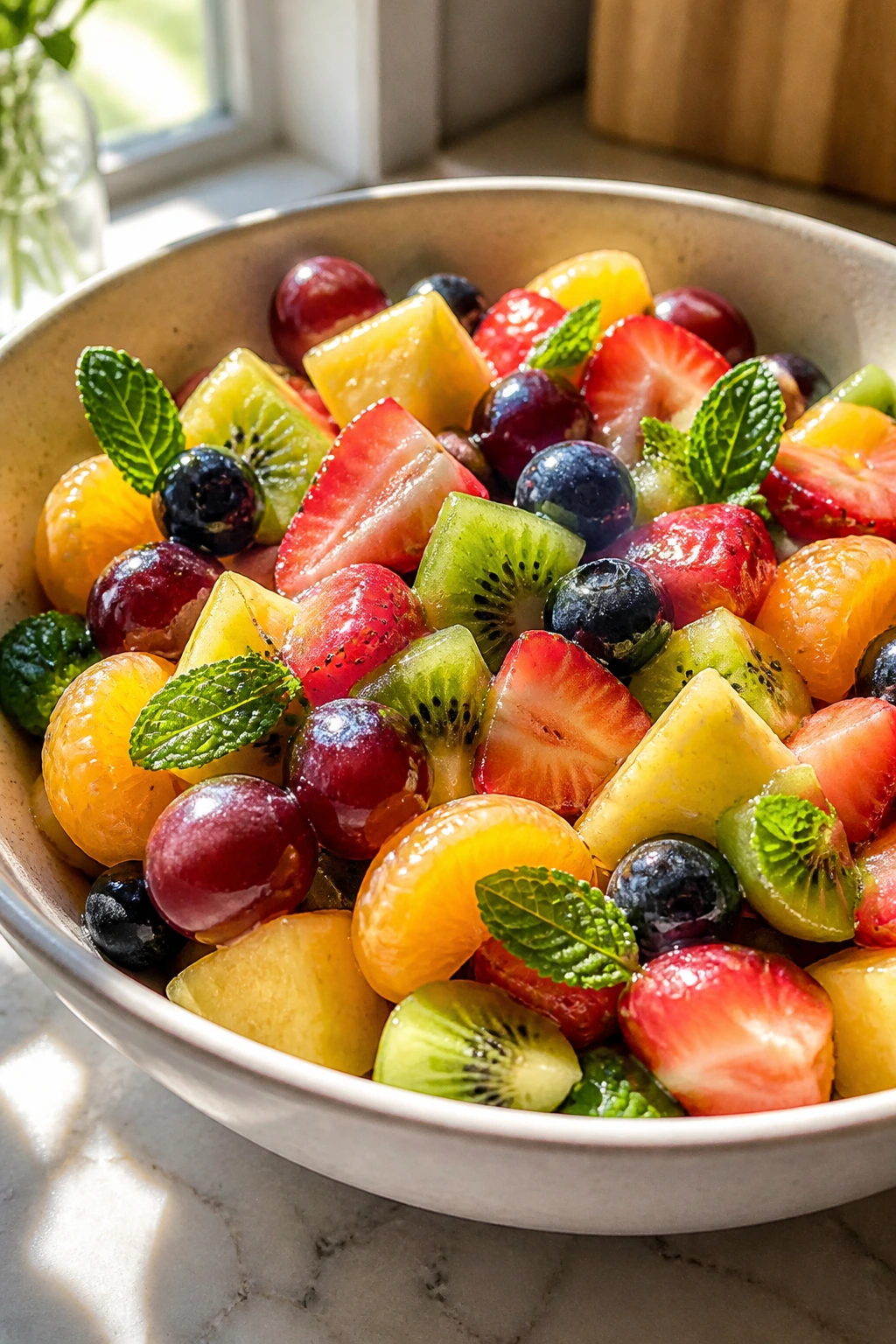
Presentation: Spoon the fruit salad into a chilled glass bowl or a shallow ceramic dish so the colors stay visible and the juice doesn’t hide at the bottom. A few mint leaves and a whisper of extra zest on top make the bowl smell brighter before anyone takes a bite.
Accompaniments: This sits well beside thick yogurt and granola at breakfast, pancakes or waffles on a brunch table, and grilled chicken or salmon if you’re using it as a side. If you want to lean dessert-like, serve it with angel food cake or plain shortbread instead of anything frosted.
Portions: Figure about 1 cup per person for a side dish and closer to 1 1/2 cups if it’s standing in for dessert. If you’re feeding a bigger group, double the fruit but make the dressing in a separate bowl and toss in batches so the fruit doesn’t get crushed under its own weight.
Beverage Pairing: Sparkling water with lime keeps the whole plate feeling crisp. Unsweetened iced tea with mint works too, especially if the fruit bowl is part of a lunch spread or brunch buffet.
I like this best when it’s cold enough to feel refreshing, but not so cold that the fruit tastes locked up. That’s a tiny difference, and it matters more than people think.
Small Fixes That Change the Whole Bowl
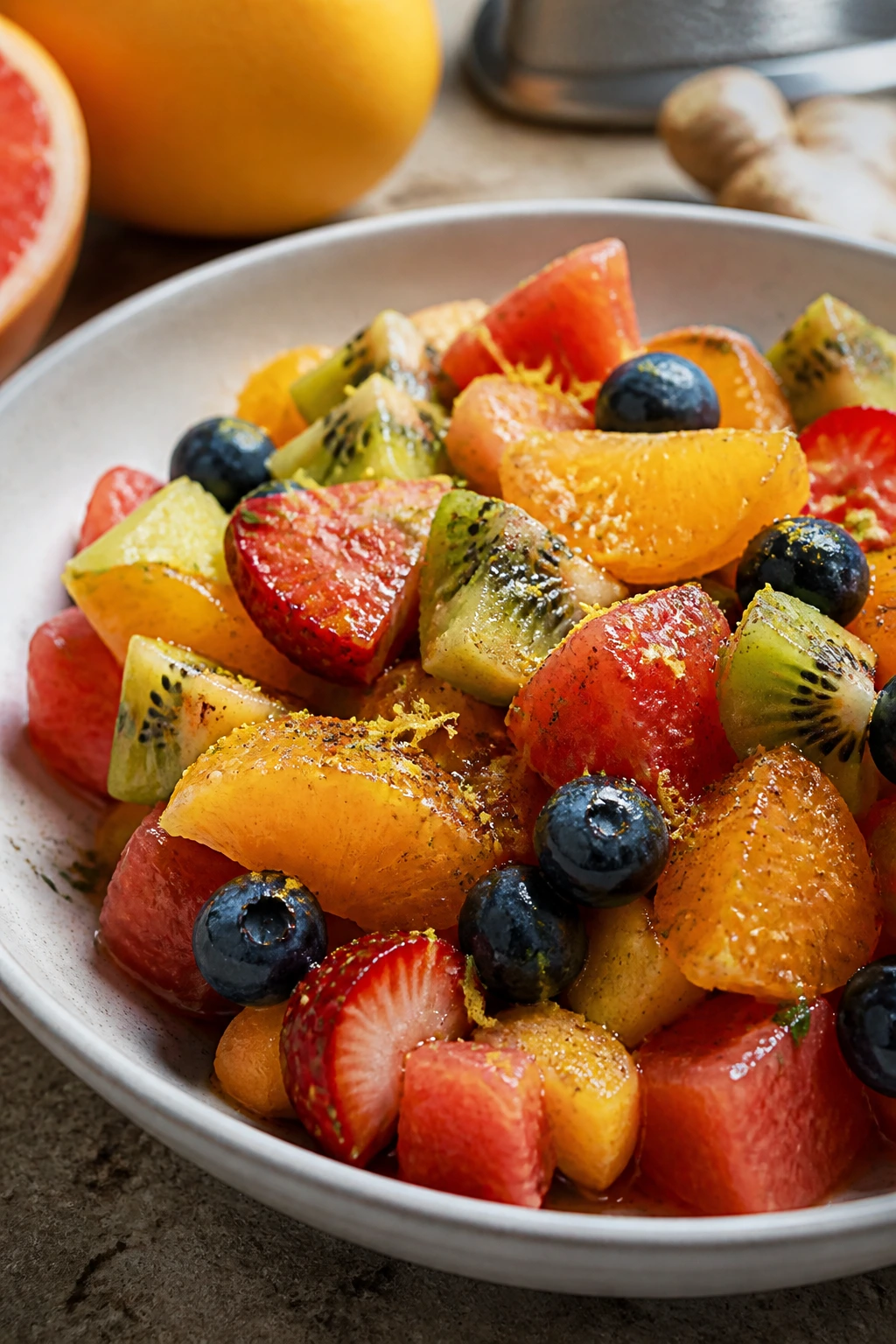
Flavor Enhancement: Add 1/8 teaspoon ground cardamom or a little finely grated ginger to the dressing if you want the citrus to smell warmer. Cardamom leans floral; ginger leans sharp. Both work, but I would not use both at once unless you want the dressing to start arguing with the fruit.
Time-Saver: Buy pre-cut pineapple only if it looks clean and smells fresh. If the pieces are sitting in syrup or look wet and pale, skip it. Drain any packaged fruit on paper towels for 10 minutes before it goes into the bowl.
Pro Move: Toss the apple with a spoonful of the dressing the second you cut it. That keeps the edges pale and also seasons the apple from the inside out, which is better than trying to save browning with extra lemon at the end.
Cost-Saver: Use whatever fruit looks best at the market and skip the expensive one. If mango is out of budget, add more grapes. If blueberries are expensive, use extra strawberries or clementines. This recipe is less about the exact lineup and more about keeping the texture mix balanced.
Make-It-Yours: Swap honey for maple syrup if you want a vegan bowl, or add toasted coconut if you want a more tropical finish. For a sharper version, add a few raspberries at the very end so they collapse a little into the dressing and tint it pink.
A small pinch of flaky salt on top right before serving is also worth trying. It sounds strange until you taste it.
Mistakes That Turn Fruit Salad Watery
-
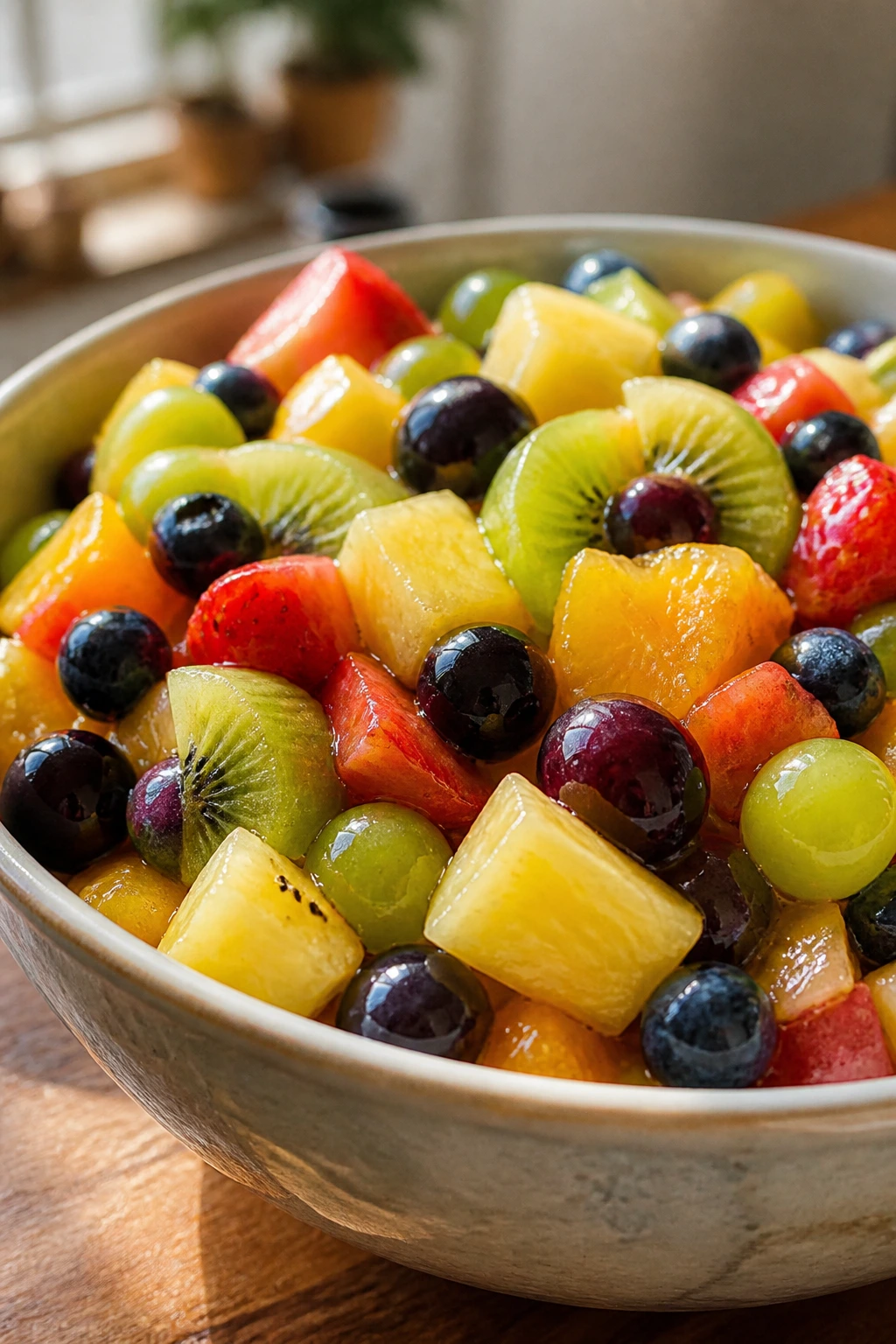
Starting with wet fruit: If the berries and grapes go into the bowl still damp from rinsing, the dressing will thin out almost immediately. The fix is boring but effective: dry the fruit on towels until no droplets remain.
-
Cutting everything too small: Tiny pieces turn mushy fast and give up juice faster than larger chunks. Keep most fruit in 1/2- to 3/4-inch pieces so the bowl still feels like fruit, not salsa.
-
Adding the soft fruit first: Strawberries, blueberries, and kiwi bruise fast when they sit under heavier fruit. Put grapes, pineapple, mango, and apple down first, then fold in the softer pieces near the end.
-
Overdoing the honey: Too much honey makes the bowl taste sticky instead of bright. Stick to the tablespoon in the dressing, taste the fruit after tossing, and only add more citrus if you want to adjust the flavor.
-
Mixing too hard: A spoon that stirs like you’re making mashed potatoes will break blueberries and smear strawberries. Use a wide spatula or large spoon and fold gently.
-
Letting it sit too long after tossing: Fruit keeps leaking juice in the fridge. If you need to hold it longer than about an hour or two, keep the dressing separate and combine them just before serving.
A fruit salad can survive a lot, but it can’t survive being treated like soup.
Bright Variations Worth Trying
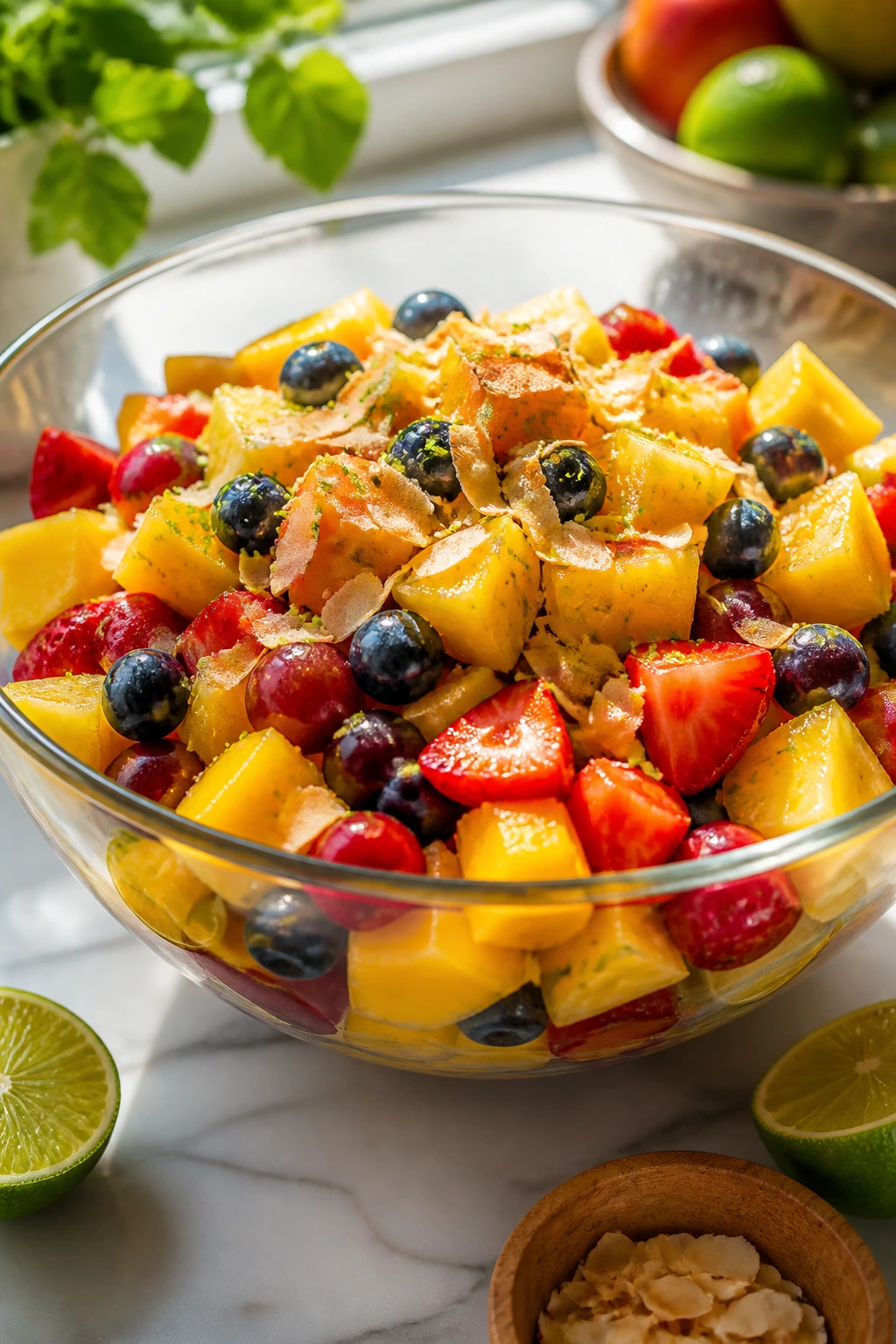
Tropical Sunburst Bowl: Swap the apple and some of the grapes for more mango and pineapple, then add toasted coconut right before serving. Use lime as the lead citrus and skip the lemon if you want the flavor to stay softer and more tropical.
Berry-Basil Brunch Bowl: Replace the mango and mandarin with raspberries and blackberries, then use basil instead of mint. The basil tastes less sweet than mint and works nicely if the bowl is sitting next to eggs, toast, or a savory tart.
Stone Fruit Spark: When peaches, nectarines, and cherries are actually ripe, they make a better fruit salad than a lot of people expect. Add a little extra lemon zest and keep the dressing lighter so the stone fruit keeps its perfume.
Creamy Citrus Bowl: Fold 1/2 cup plain Greek yogurt or coconut yogurt into a separate portion right before serving. It becomes closer to a dessert salad or breakfast bowl, and it should be eaten right away because the dairy changes the storage life.
Spicy Citrus Twist: Add a tiny pinch of chili powder or Tajín to the dressing if the bowl includes mango and pineapple. The heat stays in the background, but it sharpens the sweetness in a way that’s hard to ignore.
Keeping It Fresh for Later
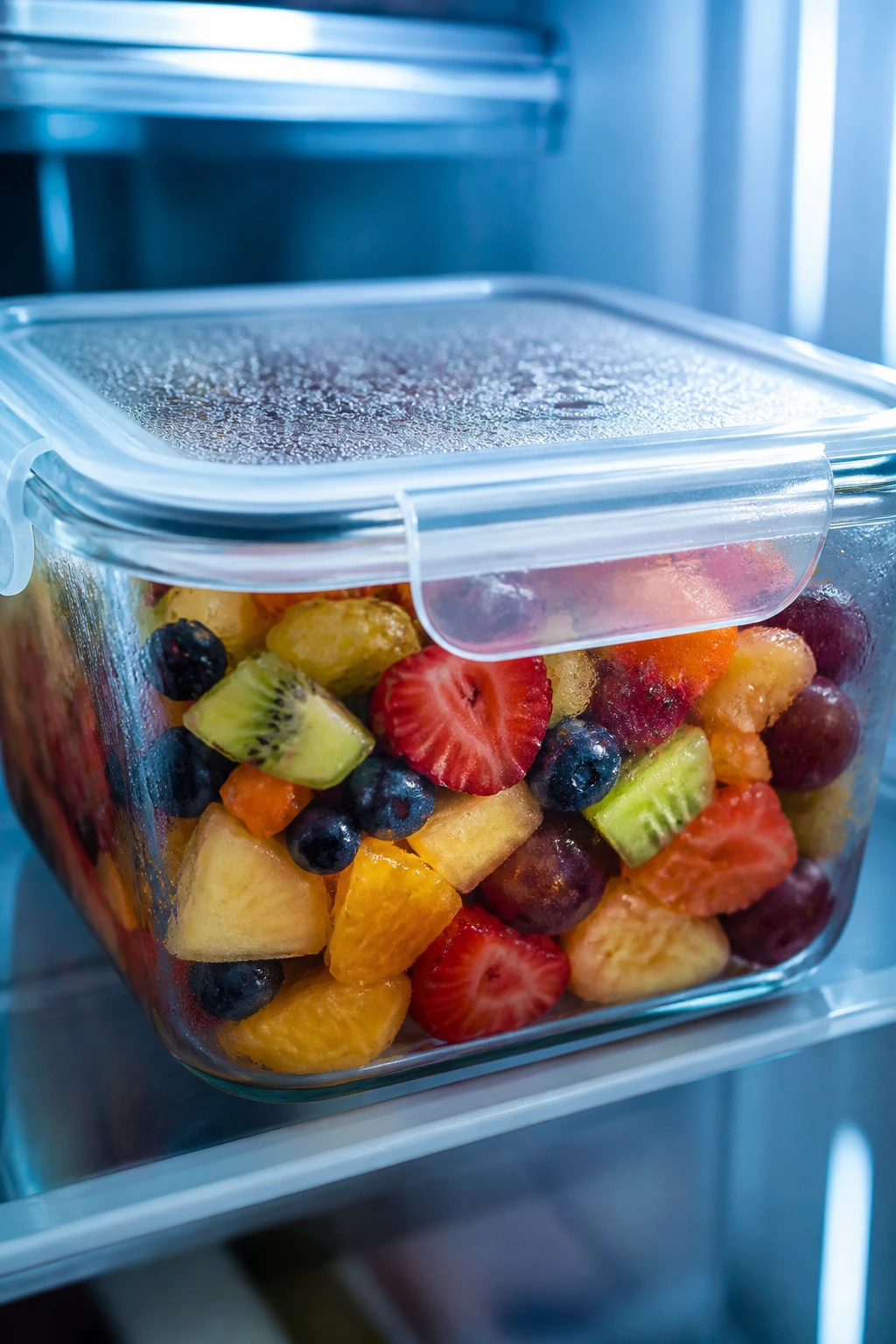
Refrigerator Life
The finished fruit salad keeps best for about 1 day in the fridge, though it can stretch to 2 days if the fruit is firm and you’ve kept the dressing light. After that, the berries begin to slump, the kiwi softens too much, and the juices collect at the bottom. A sealed container helps, but it does not stop fruit from releasing liquid.
If you’re serving it after a short chill, cover the bowl loosely so condensation doesn’t drip back onto the fruit. Tight plastic wrap traps moisture and that moisture turns into a slick, watery layer on top.
What Can Be Prepped Ahead
The dressing can be made up to 5 days ahead and stored in a jar in the fridge. Give it a hard shake or whisk before using, because the citrus and honey separate a little while sitting.
Most of the fruit can be cut 1 day ahead if you store the pieces separately in airtight containers. Keep the apples for last, or cut them no more than 1 to 2 hours early and toss them with dressing right away. Strawberries and kiwi are the first to soften, so they’re better cut closer to serving time if you can manage it.
Why Freezing Doesn’t Work Here
Freezing fruit salad is a bad fit. The ice crystals break the fruit cells, and when the bowl thaws, you get limp fruit and juice everywhere. If you have leftover fruit you don’t want to waste, freeze it for smoothies instead of trying to save the salad itself.
Room Temperature and Transport
Fruit salad should not sit out more than 2 hours, and less if the room is warm. If you’re taking it to a picnic or a potluck, pack the salad in a cooler with an ice pack and keep the dressing separate until you get there. A cold bowl tastes cleaner. It also lasts longer before it starts leaking.
Questions People Actually Ask
Can I make this fruit salad the night before?
You can prep the fruit and dressing the night before, but I would not toss everything together that early. Keep the dressing in a jar and add it 15 to 30 minutes before serving so the fruit stays glossy instead of soggy.
What fruits hold up best in this kind of salad?
Grapes, pineapple, mango, apples, and mandarins hold their shape well. Strawberries, kiwi, and blueberries are softer and should be folded in near the end so they don’t get crushed under the firmer fruit.
Can I use bottled citrus juice instead of fresh juice?
You can, but the dressing loses some of its clean smell and tastes flatter. Fresh juice plus fresh zest gives you a sharper, more lively result. If bottled juice is all you have, add extra zest to keep the dressing from tasting dull.
How do I keep apples from browning?
Cut them last and toss them immediately with the dressing or with a little lemon juice. Honeycrisp, Pink Lady, and Granny Smith are the best choices because they stay crisp longer than soft apples do.
Can I make the salad less sweet?
Yes. Reduce the honey to 2 teaspoons and add another squeeze of lime. If your pineapple or mango is already very ripe, you may not need the honey at all.
What should I do if the salad turns watery?
Spoon off the excess liquid or drain the bowl lightly, then add a fresh pinch of salt and a little more zest to wake the flavor back up. If you catch the problem early, the fruit still tastes fine; it just needs the dressing brought back into focus.
Can I turn this into more of a dessert?
Yes. Serve it with shortbread, angel food cake, or a spoonful of whipped cream on the side. I would keep the salad itself light and let the dessert part come from what you serve with it, not from over-sweetening the fruit.
Can I leave out the mint?
Absolutely. Mint adds freshness, but it is not required. If you leave it out, a little extra zest or a basil leaf or two can give the bowl a similar lift without changing the flavor too much.
A Bowl Worth Making Again
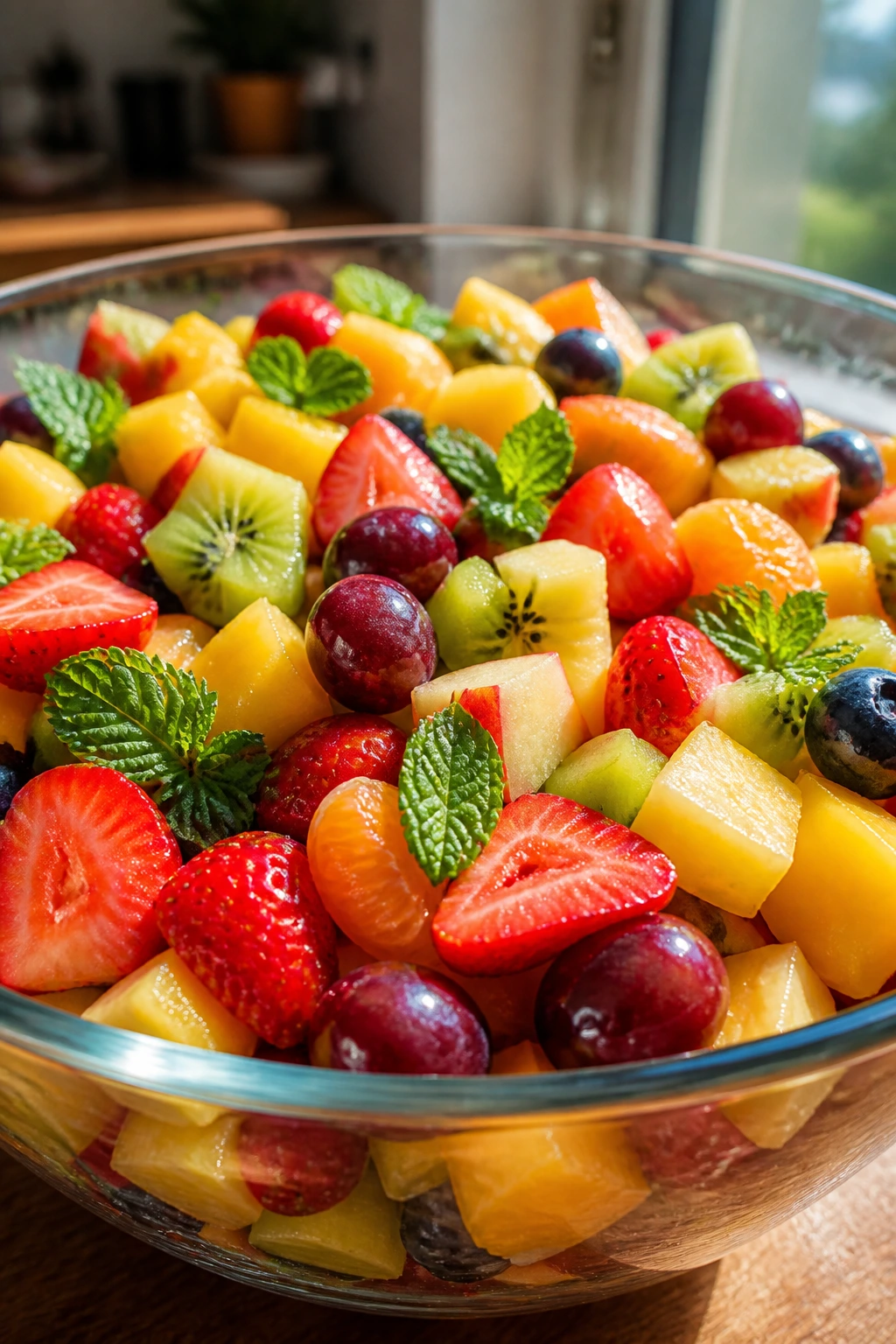
Fruit salad gets ignored because too many versions taste like an afterthought. This one doesn’t. The fruit stays distinct, the citrus stays bright, and the dressing does the useful work of tying everything together without smothering it.
The real trick is restraint. Keep the pieces big enough to stay juicy, keep the fruit dry before it meets the dressing, and don’t rush the last toss. Do that, and the bowl tastes clean enough to sit beside breakfast, lunch, or dessert without feeling like it belongs nowhere.
Zesty Fruit Salad Easy with Homemade Dressing — Recipe Card
Recipe Name: Zesty Fruit Salad Easy with Homemade Dressing
Description: A bright fruit salad with strawberries, grapes, pineapple, kiwi, citrus, mango, and apple, tossed in a light honey-lime dressing with fresh zest. It tastes crisp, fresh, and sharply sweet instead of syrupy.
Prep Time: 20 minutes
Cook Time: 0 minutes
Total Time: 20 minutes, plus optional 15-minute chill time
Course: Side Dish / Brunch
Cuisine: American
Servings: 6 to 8 servings
Calories: About 130 kcal per serving
Ingredients
For the Fruit Salad:
- 2 cups strawberries, hulled and halved
- 1 1/2 cups seedless red or green grapes, halved if large
- 1 1/2 cups fresh pineapple, cut into 1/2-inch chunks
- 1 cup blueberries, rinsed and dried
- 3 kiwis, peeled and sliced into half-moons
- 2 mandarins or clementines, segmented and pith removed
- 1 mango, peeled and diced
- 1 medium Honeycrisp or Pink Lady apple, diced
- 2 tablespoons chopped fresh mint
- 1/2 cup pomegranate seeds, optional
For the Homemade Zesty Dressing:
- 3 tablespoons fresh orange juice
- 2 tablespoons fresh lime juice
- 1 tablespoon fresh lemon juice
- 1 tablespoon honey
- 1 teaspoon finely grated lime zest
- 1 teaspoon finely grated orange zest
- 1/2 teaspoon pure vanilla extract
- 1/4 teaspoon fine sea salt
- Pinch of ground ginger, optional
Instructions
-
Rinse the berries and grapes, then dry them thoroughly on towels.
-
Hull and halve the strawberries. Peel and dice the mango, peel and slice the kiwis, segment the mandarins, and dice the apple last.
-
Whisk the orange juice, lime juice, lemon juice, honey, zest, vanilla, salt, and optional ginger in a small bowl until smooth.
-
Combine the grapes, pineapple, mango, and apple in a large bowl. Toss with about half of the dressing.
-
Fold in the strawberries, blueberries, kiwi, mandarins, mint, and pomegranate seeds if using.
-
Drizzle on the remaining dressing, taste, and adjust with a tiny squeeze of lime or pinch of salt if needed.
-
Chill for 15 minutes if desired, then give the salad one last gentle toss and serve cold.
Notes: Keep the dressing separate if you’re making the fruit ahead. Apples and softer berries are best added close to serving time.