



A good light snap pea salad with homemade dressing has a very specific kind of confidence. It doesn’t need lettuce to carry it. It doesn’t need roasted vegetables to warm it up. The peas bring their own sweetness, the cucumber stays cold and crisp, and the dressing should taste like lemon first, olive oil second, with Dijon smoothing the edges so it clings instead of sliding off.
What ruins the bowl is overdoing it. Too much salt, too much cheese, or a dressing that tastes like flat bottled lemon juice will flatten the whole thing in minutes, and snap peas are too good for that. They want sharp knife work, a quick toss, and a little restraint. That’s the whole deal.
I like this salad because it behaves more like a carefully chopped herb salad than a pile of dressed greens. Nothing wilts dramatically. Nothing turns soggy if you blink. If you cut the vegetables thin enough and keep the dressing bright, you get a bowl that tastes cold, clean, and a little peppery at the finish.
Why This Light Snap Pea Salad Earns a Repeat
-
The crunch survives the toss: Sugar snap peas, cucumber, and almonds stay structurally distinct even after dressing, so every forkful still has a snap instead of collapsing into mush.
-
The dressing tastes clean, not heavy: Lemon juice, Dijon, honey, and olive oil make a vinaigrette that coats the vegetables without leaving a slick puddle at the bottom of the bowl.
-
Every bite has contrast: Radish brings bite, feta brings salt, mint cools the finish, and the almonds keep the texture from flattening out.
-
It fits more than one meal: Serve it as a side with grilled fish, pile it next to roast chicken, or add chickpeas and make the whole bowl dinner.
-
It tolerates small changes: Swap the cheese, switch the herbs, or pull the onion out completely; the salad still works because the peas do most of the heavy lifting.
Yield: Serves 4 as a side, or 2 as a light main with added protein
Prep Time: 18 minutes
Cook Time: 4 minutes
Total Time: 22 minutes
Difficulty: Beginner — the only cooking here is a quick toast for the almonds, and the rest is slicing, whisking, and tossing.
Best Served: Within 15 minutes of tossing, while the peas are still cold and the almonds are crisp
What Goes Into the Bowl and Why Each Part Matters
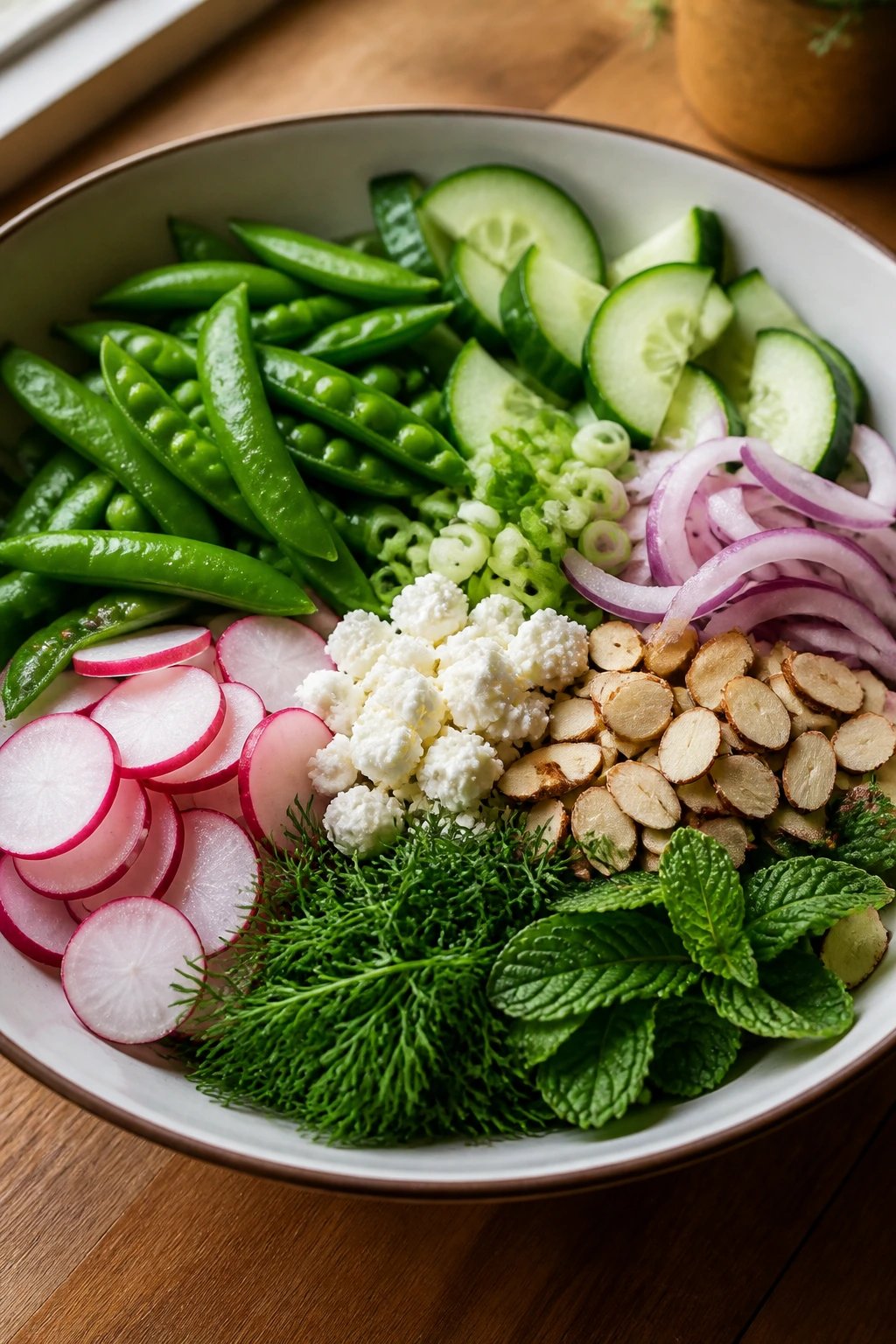
Snap peas are the backbone here, but they only work if the rest of the bowl respects them. The goal is not to bury them under dressing or drown them in extras. The goal is to make the pea flavor read clearly, with enough sharp, salty, and herb-heavy support around it to keep each bite awake.
The cleanest version of this salad is also the most satisfying one. You do not need a long list of ingredients to get there, but you do need each ingredient to be doing its own job. That’s why the cut size matters. That’s why drying matters. And that’s why I’d rather have a smaller bowl built carefully than a giant one tossed together carelessly.
For the Salad:
- 12 ounces sugar snap peas, strings removed
- 1 English cucumber, halved lengthwise and thinly sliced
- 6 radishes, trimmed and thinly sliced
- 3 scallions, thinly sliced on a diagonal
- 1/2 small red onion, very thinly sliced and soaked in ice water for 10 minutes, optional
- 1/3 cup crumbled feta cheese
- 1/4 cup sliced almonds, toasted and cooled
- 2 tablespoons chopped fresh dill
- 2 tablespoons chopped fresh mint
Snap Peas and the Cold Crunch
What to use: 12 ounces sugar snap peas. Look for pods that feel firm and full, with a glossy skin and no wrinkled edges or dry spots.
Preparation: Trim off the stem end, pull the string if it comes away easily, and leave the pods whole unless a few are unusually wide. A diagonal slice gives more surface area for dressing, but whole pods keep the bite more dramatic.
Substitutions: Snow peas can step in if you want a flatter, thinner bite. Thin green beans also work in a pinch, though they taste a little more bean-like and less sweet.
Tips: Keep the peas cold until you slice them. Warm peas lose some of that clean sweetness, and once they sit on the counter for too long, the texture gets bendier than it should.
Cucumber, Radish, and Onion
What to use: 1 English cucumber, 6 radishes, and 1/2 small red onion if you want a little sharp edge.
Preparation: Slice the cucumber into half-moons about 1/4-inch thick. Slice the radishes thin enough that they bend slightly on the knife, and soak the red onion in ice water for 10 minutes after slicing so its bite softens.
Substitutions: Persian cucumbers work well and often have fewer seeds. If radishes are too peppery for your taste, shaved fennel gives you a cleaner crunch, and shallot can replace the onion for a gentler finish.
Tips: If the cucumber seems watery, scrape out the seed core with a spoon before slicing. That one small move keeps the bowl from collecting liquid halfway through the meal.
Herbs, Feta, and Almonds
What to use: 2 tablespoons chopped dill, 2 tablespoons chopped mint, 1/3 cup feta, and 1/4 cup sliced almonds.
Preparation: Chop the herbs right before tossing so they stay vivid and fragrant. Crumble the feta with your fingers instead of dumping in hard chunks, and toast the almonds in a dry skillet until they smell nutty and the edges turn pale gold.
Substitutions: Goat cheese softens the whole salad and gives a creamier bite. Pistachios or pepitas can replace the almonds if you want a different kind of crunch.
Tips: Cool the almonds on a plate, not in the hot pan. Steam trapped in a skillet can soften them fast, and softened almonds are the one thing in this salad that feel sad almost immediately.
The Lemon-Dijon Dressing That Keeps Things Bright
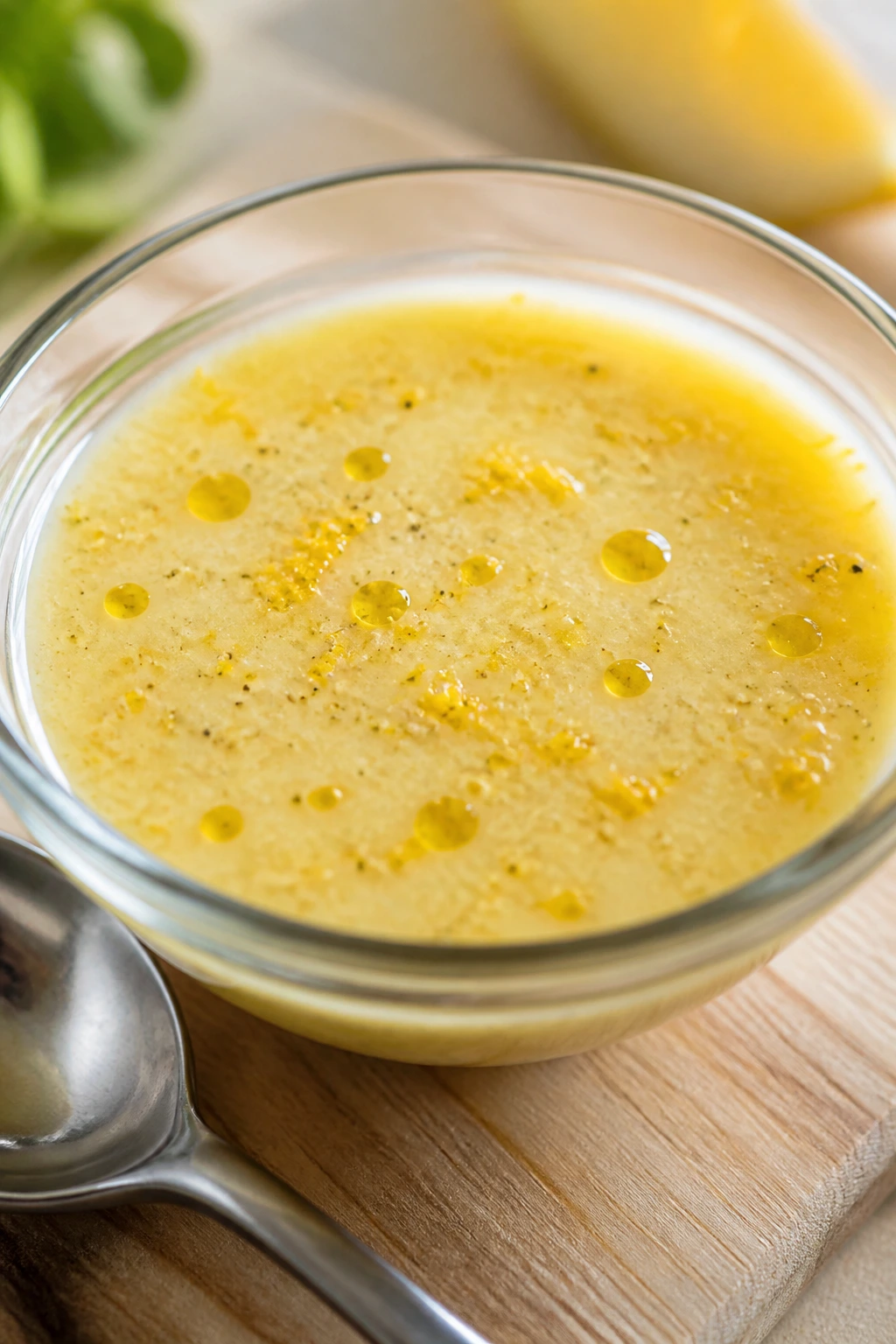
What makes a homemade dressing worth the tiny bit of extra work? It comes down to control. Store-bought vinaigrettes often taste like they were designed to survive a shelf, not to wake up snap peas, so the oil and acid ratio ends up flattening the vegetables instead of coating them.
A good dressing for this salad should be sharp on the first taste, then mellow after the olive oil hits the lemon. Dijon is doing more than adding flavor here. It helps the dressing hold together long enough to coat the vegetables evenly, which matters because snap peas taste best when every ridge is lightly glossed instead of drenched.
For the Dressing:
- 3 tablespoons fresh lemon juice
- 1 teaspoon finely grated lemon zest
- 1 teaspoon Dijon mustard
- 1 small garlic clove, finely grated or mashed to a paste
- 1 teaspoon honey
- 1/2 teaspoon fine sea salt, plus more to taste
- 1/4 teaspoon black pepper
- 1/4 cup extra-virgin olive oil
Lemon Juice and Zest
What to use: 3 tablespoons fresh lemon juice and 1 teaspoon lemon zest from one medium lemon.
Preparation: Zest only the yellow part of the peel, then juice the lemon after you zest it. That order is easier, and a microplane gives you fine shavings that vanish into the dressing instead of floating in little strips.
Substitutions: White wine vinegar can replace up to 1 tablespoon of the lemon juice if you want more edge. Lime works too, though it changes the salad’s personality and pushes it toward something sharper and less sunny.
Tips: Room-temperature lemons give up more juice than cold ones. If your lemon feels stiff, roll it hard on the counter for 10 seconds before cutting it open.
Dijon, Garlic, and Honey
What to use: 1 teaspoon Dijon mustard, 1 small garlic clove, and 1 teaspoon honey.
Preparation: Grate the garlic into a paste so it disappears into the dressing instead of landing as aggressive little flecks. Whisk the Dijon, lemon, and honey together first so the honey dissolves before the oil goes in.
Substitutions: Whole-grain mustard works if that’s what you have, though it brings more texture. Maple syrup can replace the honey, but use a half teaspoon first because it tastes a little heavier on the tongue.
Tips: Keep the garlic small. One clove is enough, and two cloves can overpower the peas in a way that feels loud instead of fresh.
Olive Oil and Emulsion
What to use: 1/4 cup extra-virgin olive oil.
Preparation: Stream the oil in slowly while whisking so the dressing thickens and turns glossy. You want a loose emulsion, not a broken puddle of lemon sitting under a layer of oil.
Substitutions: A milder olive oil works if yours tastes too peppery. Avocado oil is fine too, though I miss the grassy note of olive oil in this particular salad.
Tips: Taste the dressing before it hits the vegetables. If it seems too sharp, add another teaspoon of olive oil or a pinch more honey; if it seems flat, add a pinch of salt before reaching for more lemon.
The Tools That Make the Prep Faster
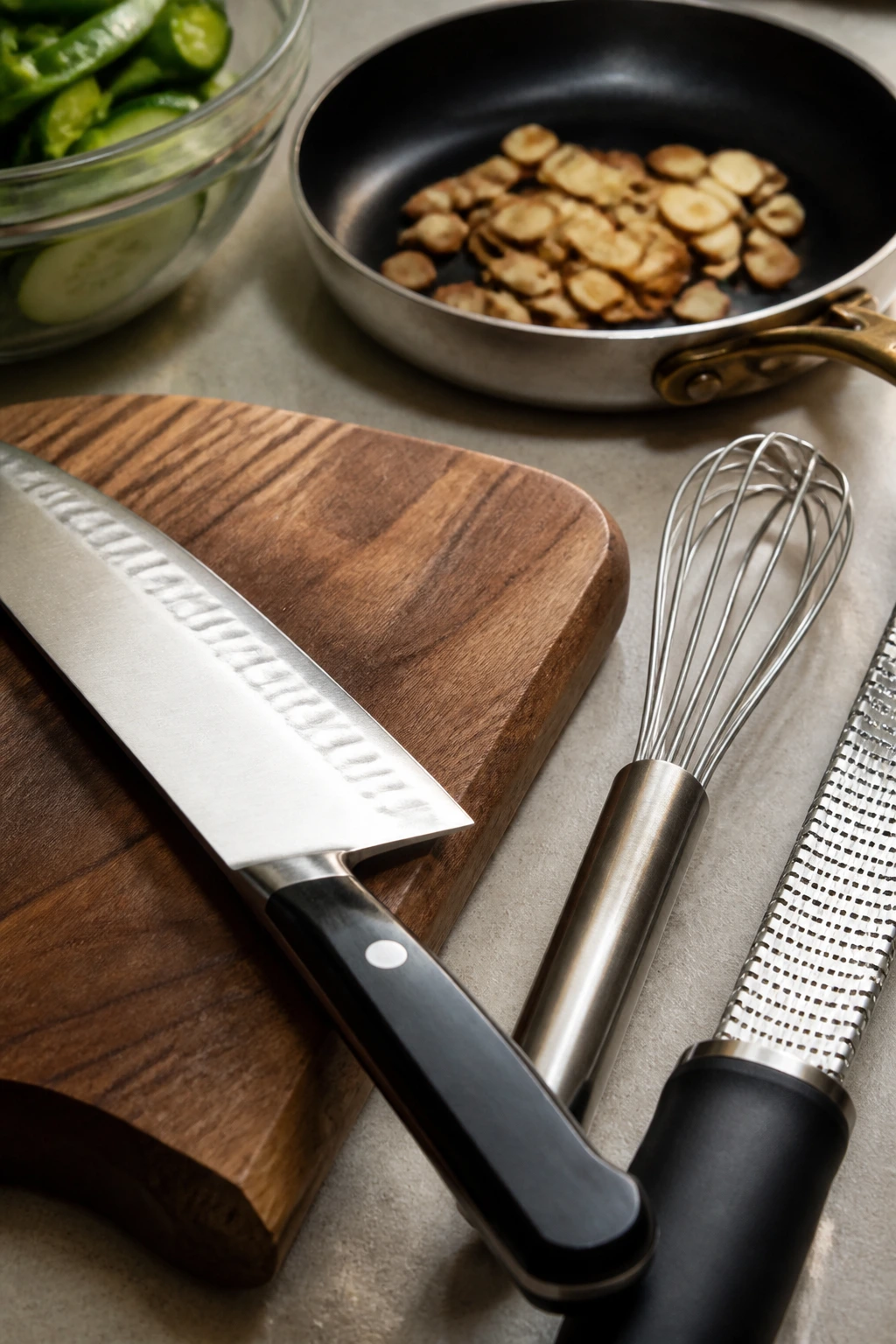
A bowl, a knife, and one good whisk are the real necessities. Everything else is there to make the chopping cleaner and the dressing smoother, not to impress anyone.
If you already own a salad spinner, use it. If you do not, a clean kitchen towel works for drying herbs and peas after rinsing, and honestly, that’s enough. The one tool I’d push hardest on is a sharp knife. Snap peas and radishes slice better when the blade cuts cleanly instead of smashing the edges.
-
Large mixing bowl: Gives you enough room to toss the salad without bruising the peas.
-
Small bowl or glass jar with a lid: Either one works for the dressing; a jar is handy if you want to shake it instead of whisk it.
-
Chef’s knife: The most useful tool in the kitchen for this salad, especially for thin cucumber and radish slices.
-
Cutting board: A board with enough space keeps the slices from piling up and turning sticky.
-
Microplane or fine grater: Best for the lemon zest and garlic, which should disappear into the dressing.
-
Whisk or fork: A whisk gives the smoothest emulsion, but a fork will do the job if that’s all you have nearby.
-
Small dry skillet: Needed for the almonds unless you buy them already toasted.
-
Salad spinner or clean kitchen towel: Useful for drying herbs and peas after washing so the dressing can cling.
How to Make the Salad Without Losing the Crunch
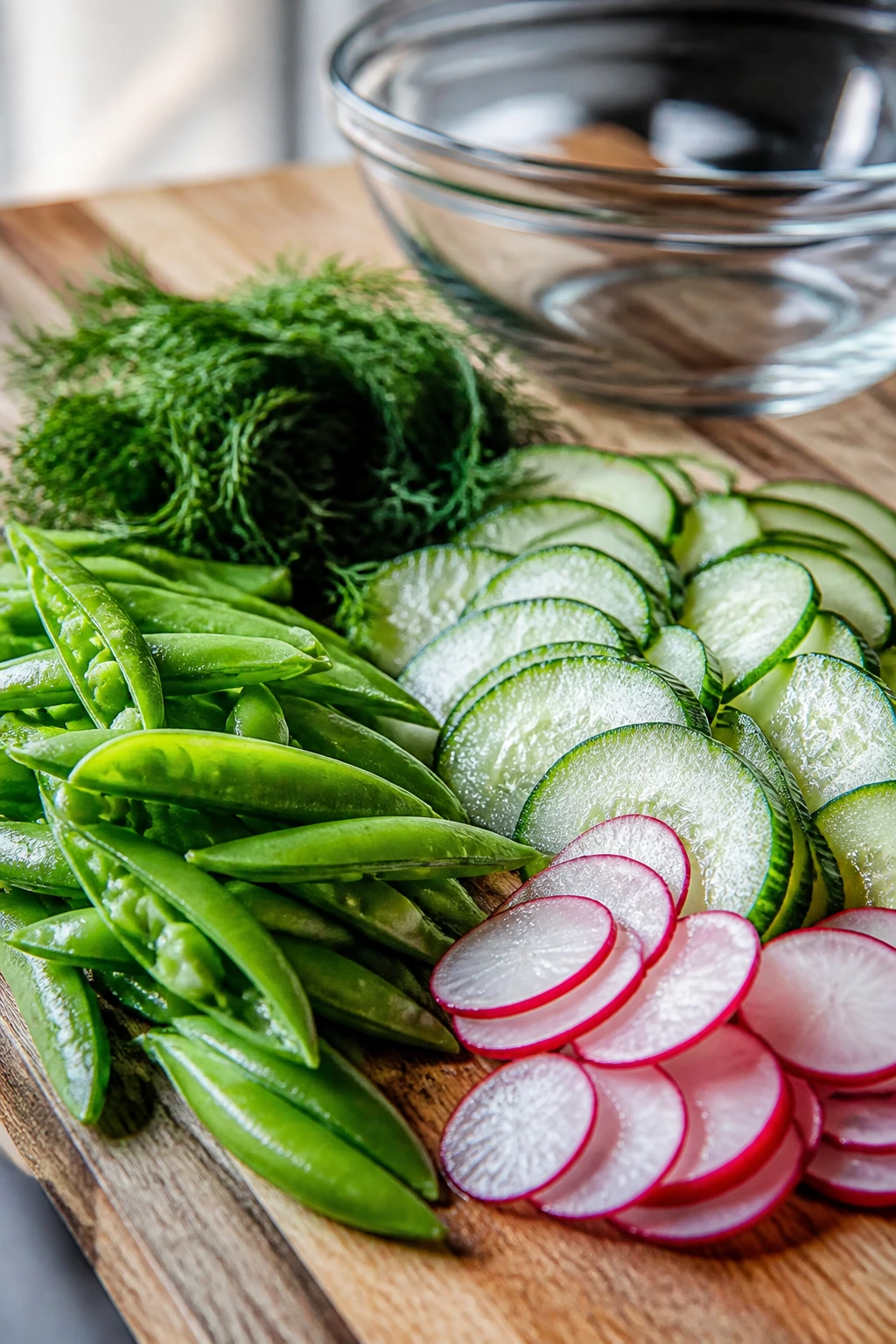
Do the chopping first and the tossing last. That sounds obvious, but this salad punishes people who get halfway through mixing and then stop to wash a knife or answer a message. The vegetables want to stay cold and dry until the very end.
Prep the Vegetables
-
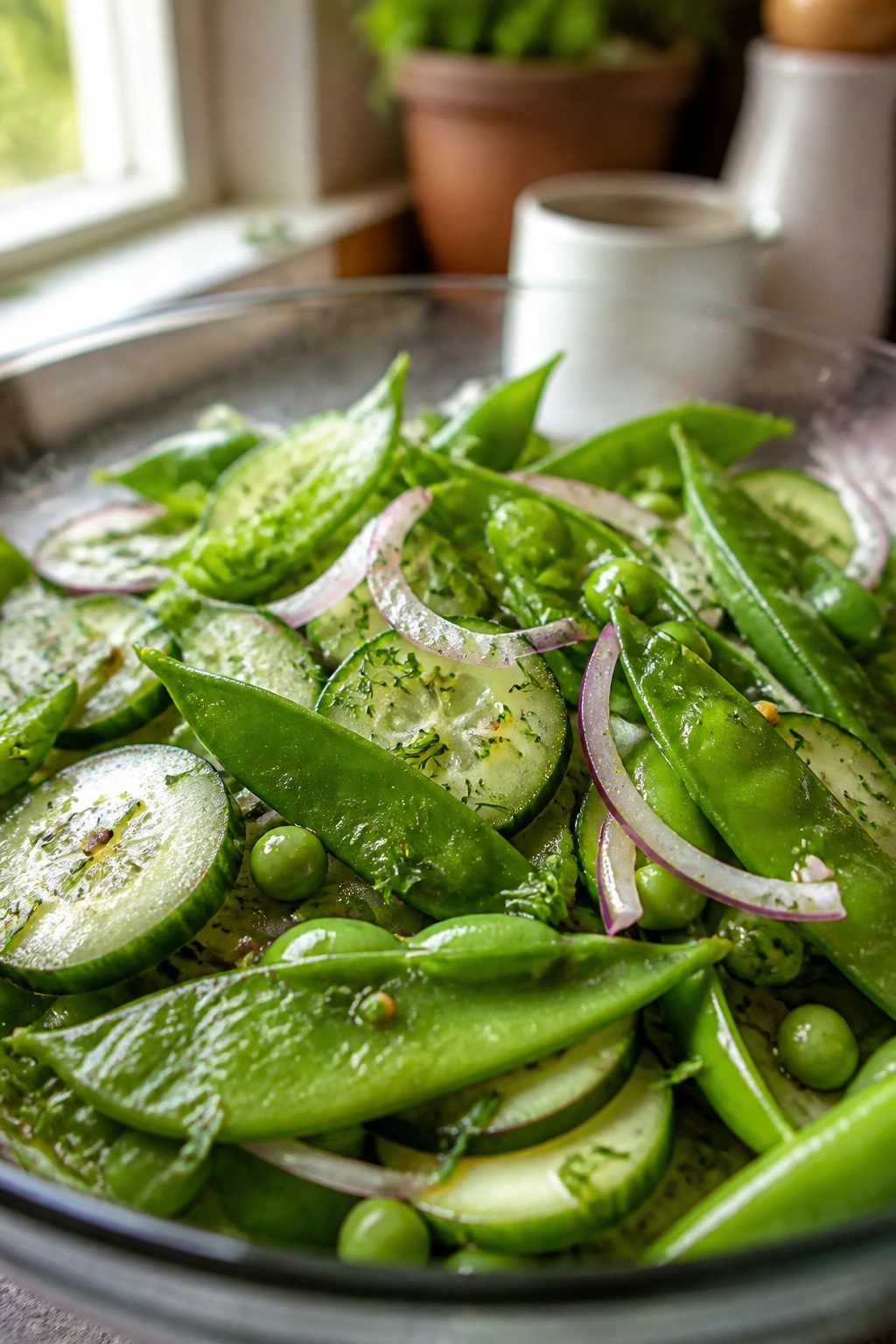
Rinse the snap peas, cucumber, radishes, scallions, dill, and mint under cold water, then dry everything well with a clean towel or salad spinner. Wet vegetables make the dressing slide off instead of cling.
-
Trim the stem ends from the snap peas, pull away any strings, and slice the larger pods on a diagonal if they look extra wide. Slice the cucumber into 1/4-inch half-moons, the radishes into thin coins, and the scallions into narrow diagonal slices.
-
If you are using red onion, slice it as thinly as you can, then soak it in a bowl of ice water for 10 minutes. Drain it well and pat it dry. Do not skip the drying step or the bowl will turn watery fast.
Toast and Whisk
-
Set a small dry skillet over medium heat and add the sliced almonds. Toast them for 3 to 4 minutes, stirring often, until they smell nutty and the first few slices turn pale gold at the edges. Transfer them to a plate right away so they do not keep cooking.
-
In a small bowl or jar, whisk together the lemon juice, lemon zest, Dijon, garlic, honey, salt, and black pepper. Slowly drizzle in the olive oil while whisking until the dressing looks glossy and lightly thickened.
Toss and Finish
-
Add the snap peas, cucumber, radishes, scallions, herbs, and drained onion to a large bowl. Pour in about half the dressing and toss gently with clean hands or two spoons until everything has a thin sheen. Add the feta and almonds, then toss once more. Toss lightly here — hard mixing bruises the herbs and breaks the pea pods.
-
Taste a piece of cucumber and a snap pea together. Add a spoonful or two more dressing if the bowl needs it, then adjust with a pinch of salt or another squeeze of lemon. Serve immediately, or let it sit for 5 minutes if you want the onion to soften a little.
How to Plate It So the Texture Shows Up
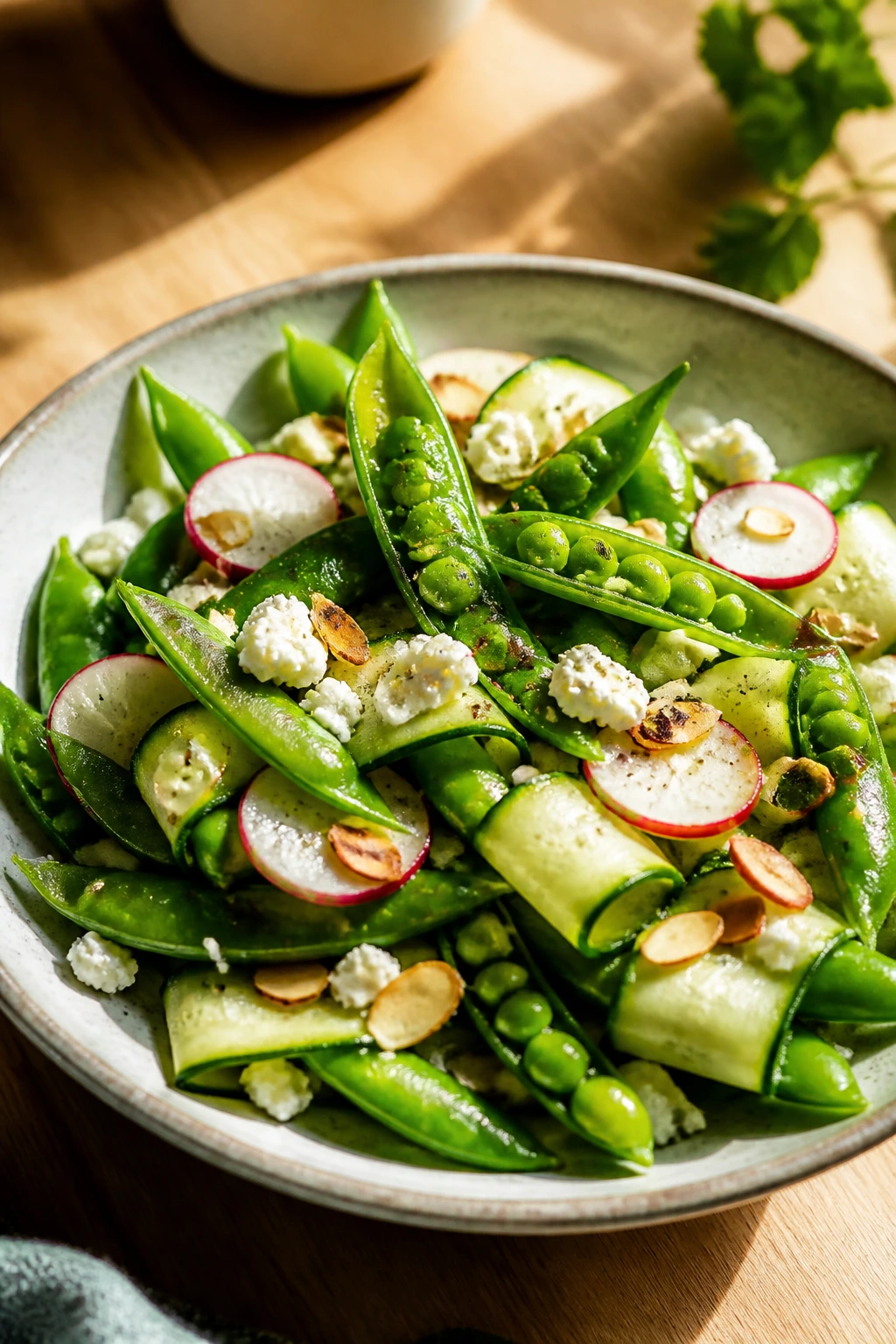
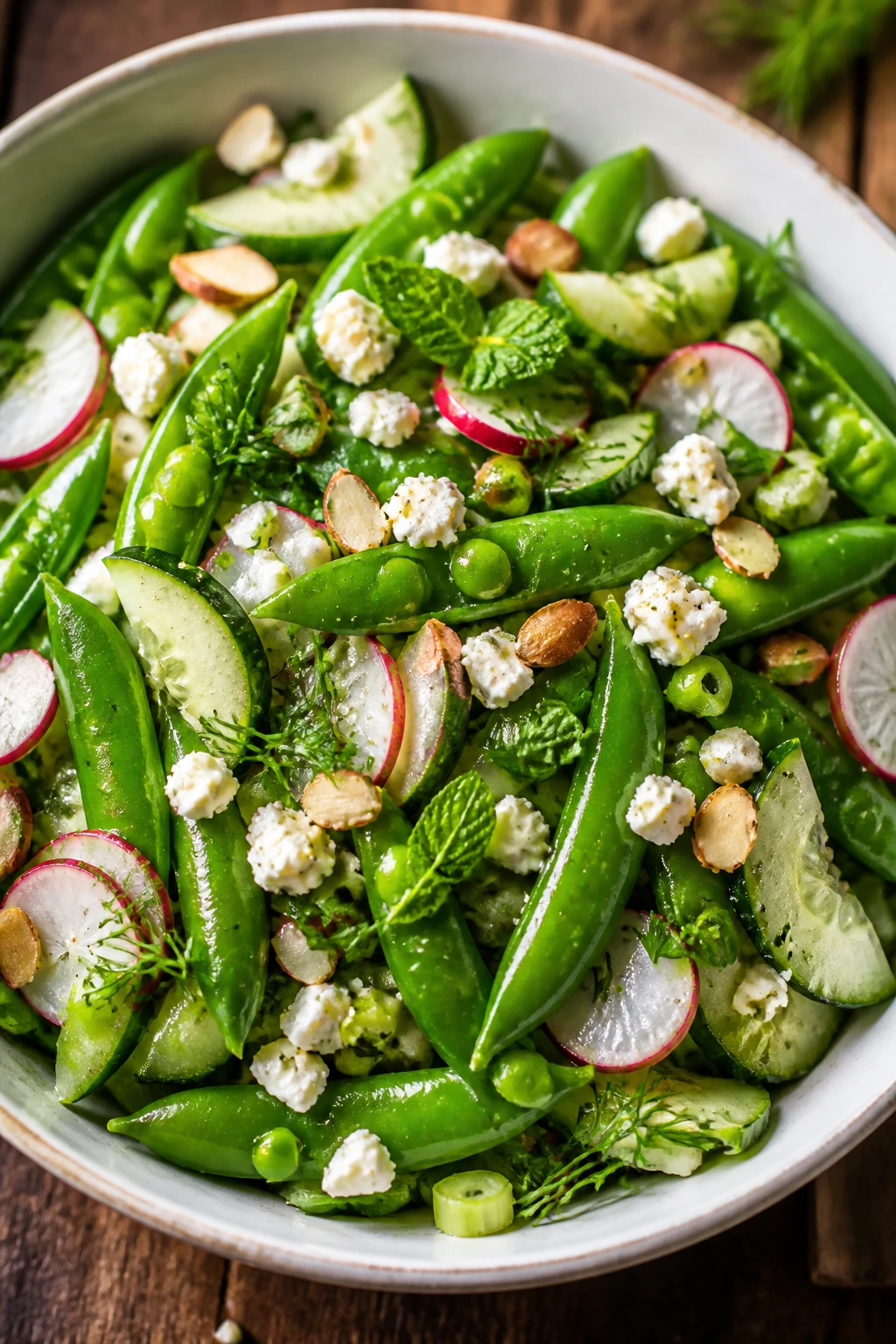
Shallow bowls beat deep ones here. A high mound looks fine, but it hides the best part of the salad, which is the mix of lengths and textures: curved pea pods, paper-thin radishes, little flecks of herb, and the pale crumbles of feta scattered through the green.
Presentation: Spoon the salad into a wide shallow bowl or onto a platter so the peas sit in a loose layer instead of a packed pile. Save a pinch of almonds, dill, and mint for the top, because that last scatter keeps the bowl looking crisp even after the dressing hits it.
Accompaniments: Serve it next to grilled salmon, roast chicken, garlicky shrimp, or thick slices of sourdough brushed with olive oil. If the salad is acting as lunch, a handful of chickpeas or a soft-boiled egg makes the bowl more filling without making it heavy.
Portions: Four people can take this as a side with no trouble, and two people can eat it as a light main if you add protein. If you are feeding a larger table, double the vegetables rather than only doubling the dressing; too much dressing makes the bowl feel swampy.
Beverage Pairing: A dry Sauvignon Blanc fits the lemon and herbs without fighting them. For a nonalcoholic option, cold sparkling water with a lemon peel or cucumber slice keeps the same clean edge.
Small Tweaks That Make the Bowl Better
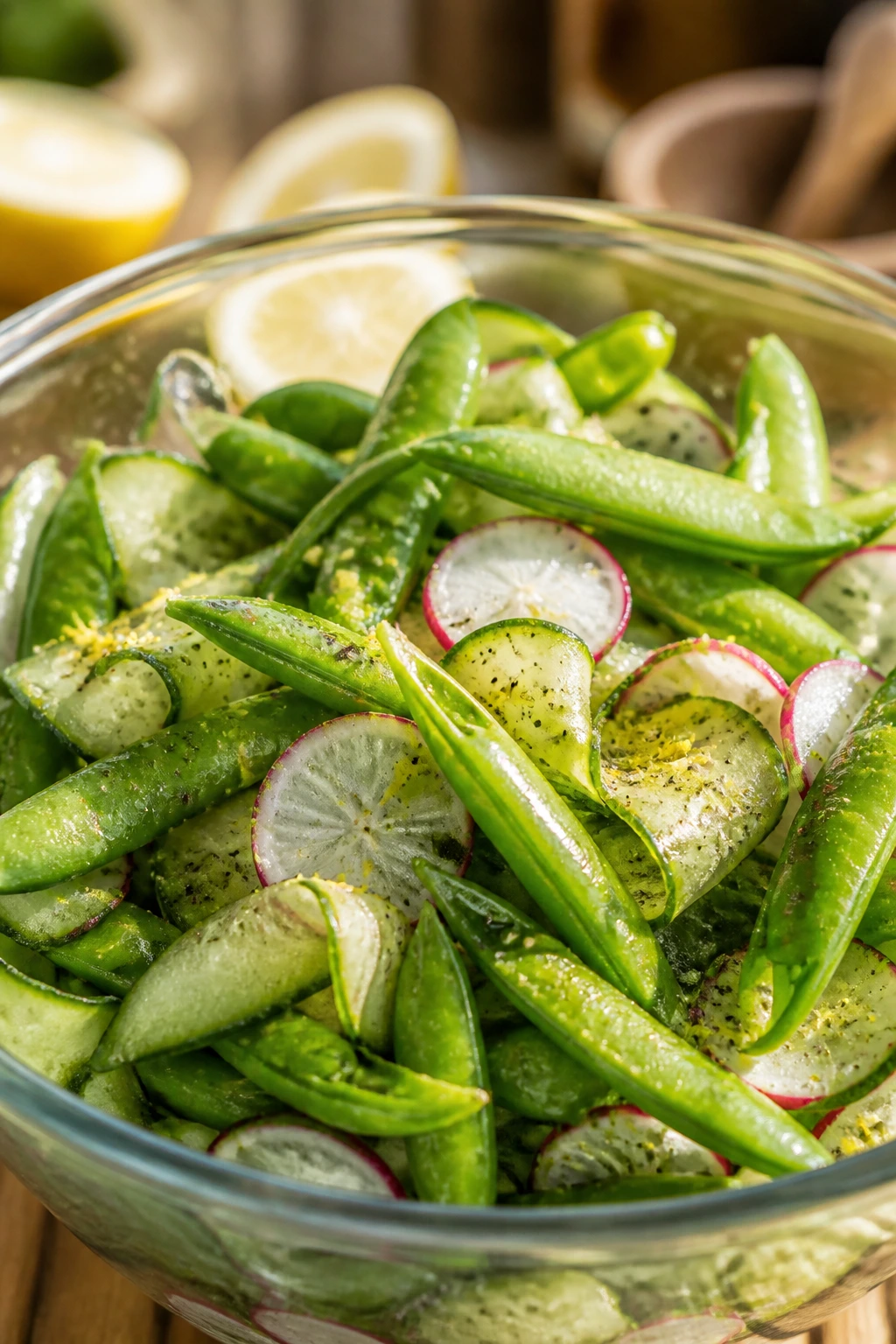
A few small moves make this salad taste colder, brighter, and less fussy. None of them are dramatic. That’s the nice part.
Flavor Enhancement: Add the lemon zest to the dressing, not just the juice. Zest carries a brighter smell than juice alone, and that little hit of oil from the peel gives the whole bowl a fresher finish. A final grind of black pepper right before serving does more than most people expect.
Time-Saver: Buy snap peas that are already trimmed if your market carries them. They cost a little more, but they cut the prep time almost in half, and on a night when the rest of dinner needs attention, that can be worth it. A mandoline also speeds up the radishes and cucumber, though a knife gives you more control.
Cost-Saver: If feta feels too pricey for the amount you get, use half the cheese and lean harder on herbs and almonds. The salad still tastes complete because the dressing and peas carry the flavor. You do not need a heavy handful of cheese for this to work.
Make-It-Yours: A handful of thinly sliced jalapeño gives the bowl a little heat without hijacking it. For a dairy-free version, skip the feta and add avocado slices right before serving, or use toasted pepitas instead of almonds for a different kind of richness.
One trick I reach for when the bowl needs more depth: mash a teaspoon of feta into the dressing before tossing. It gives the vinaigrette a faint creamy edge without turning it into a creamy dressing, which is a nice place to land.
Mistakes That Flatten a Crisp Salad
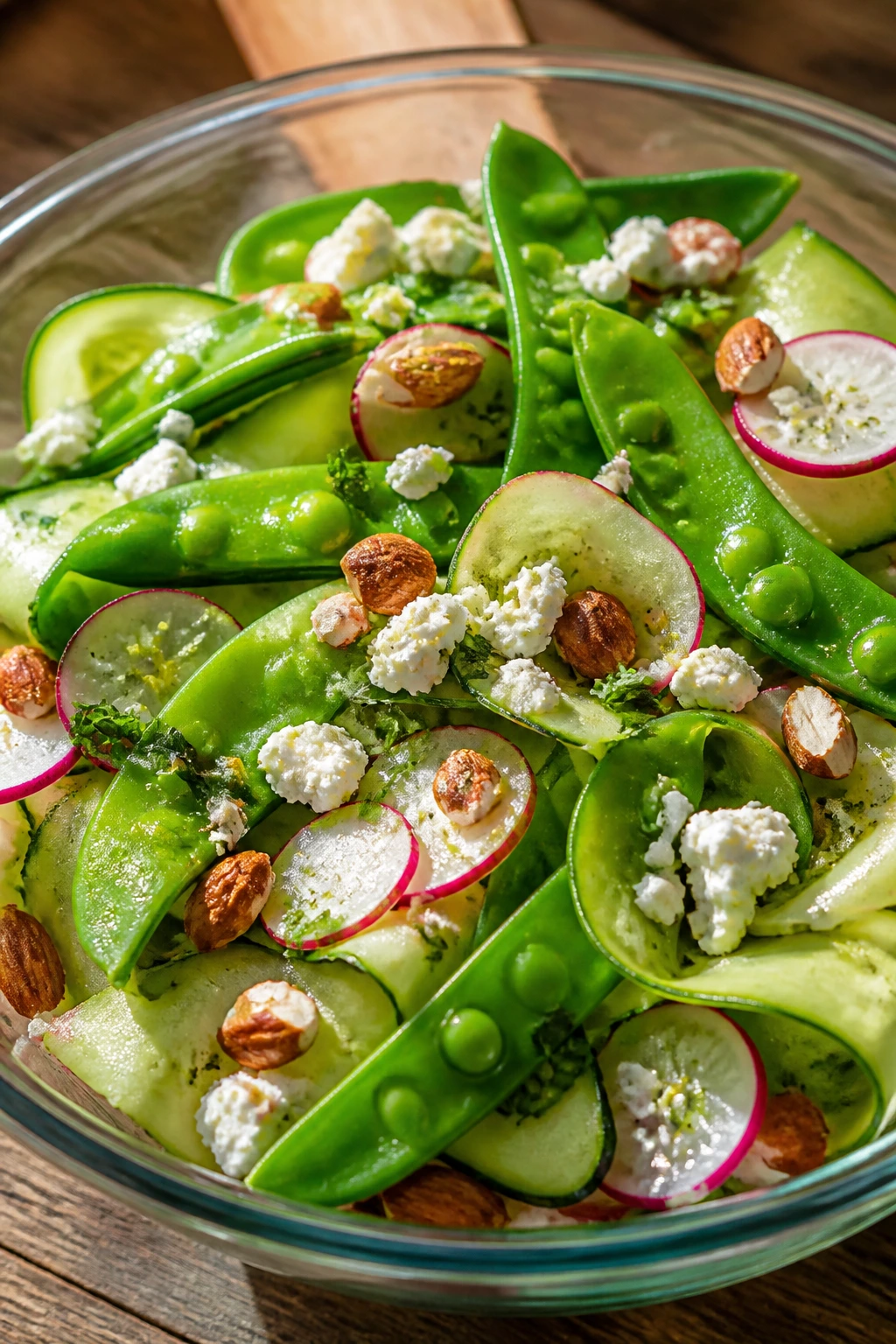
The biggest mistake is not the dressing. It’s the cutting.
People often leave the vegetables wet after rinsing, then wonder why the dressing slips off and collects at the bottom of the bowl. Drying matters here more than it does in many other salads. The fix is simple: spin or towel-dry the peas, cucumber, and herbs before you slice anything, and keep a paper towel nearby for the cut vegetables if they start sweating.
-
Cutting everything too thick: Thick cucumber rounds and blunt radish slices make the salad feel clumsy and hard to chew. Thin slices give you cleaner bites and let the lemon dressing spread across more surface area.
-
Overdressing before serving: Snap peas hold their shape better than lettuce, but they still lose some sparkle if they sit drenched for too long. Start with half the dressing, toss gently, and add more only when you know the bowl needs it.
-
Skipping the almond toast: Raw almonds are fine, but they taste flat beside the peas. A short toast in a dry skillet gives them a roasted aroma and a sharper crunch, and that tiny bit of heat does more than people expect.
-
Using too much raw onion: Red onion can bulldoze the salad if it goes in thick and unapologetic. Slice it thin, soak it in ice water if you want the edge softened, and use less than you think you need.
-
Adding too much feta at once: Feta should punctuate the salad, not bury it. Too much turns every bite salty and creamy in a way that makes the peas disappear.
Variations on the Same Fresh Idea
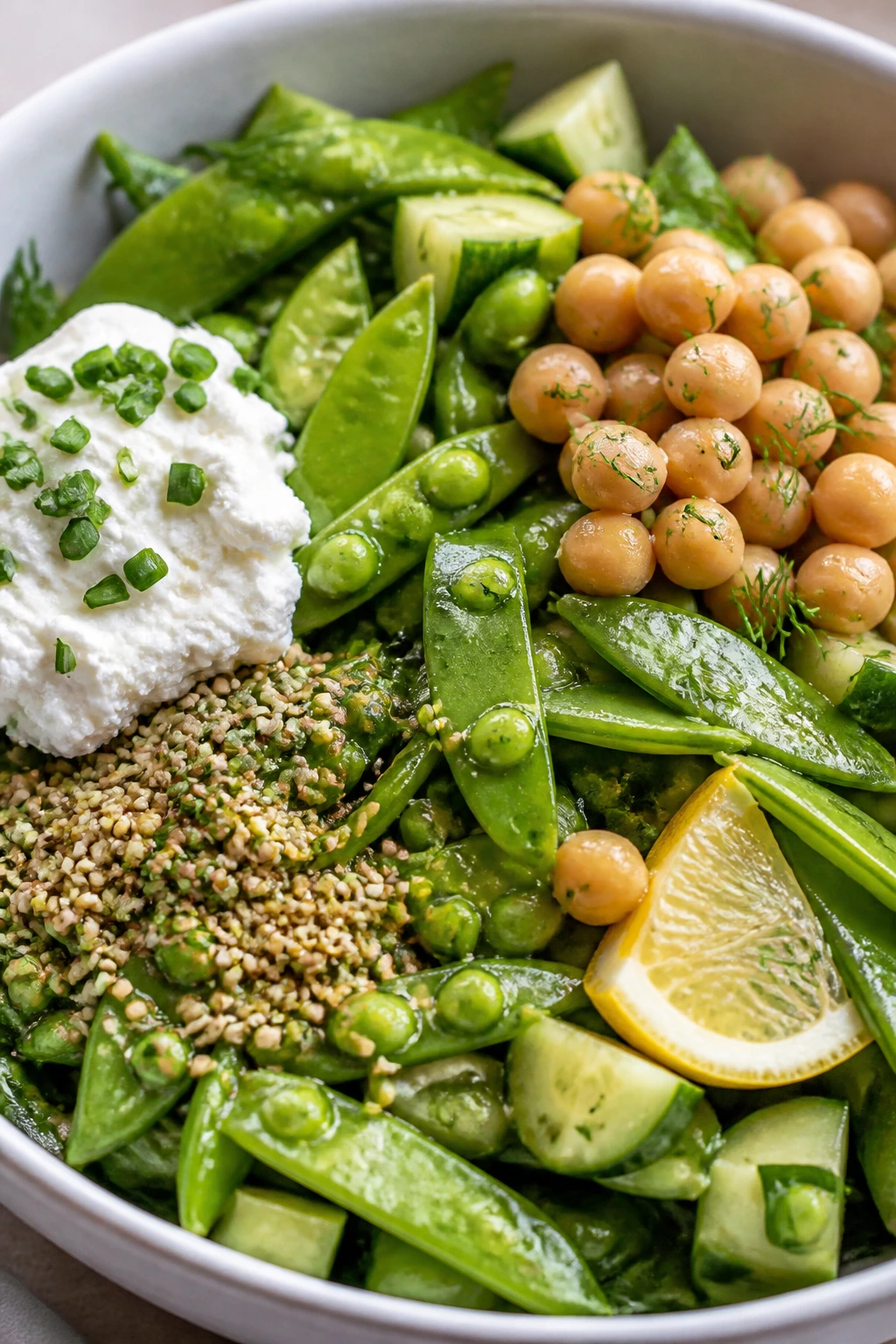
Goat Cheese and Chive Bowl
Swap the feta for 2 ounces of soft goat cheese and use chives in place of the mint. The flavor gets softer and creamier, which works well if you want the salad to feel a little more lunch-like and less briny.
Chickpea Crunch Lunch
Add one 15-ounce can of chickpeas, rinsed and dried well, and increase the dressing by 1 tablespoon. The chickpeas catch the lemon and oil nicely, and they give the salad enough substance to stand in for a light meal.
Sesame-Lime Snap Pea Salad
Trade the lemon juice for lime juice, replace the almonds with toasted sesame seeds, and add 1 teaspoon toasted sesame oil to the dressing. The bowl shifts toward something cleaner and nutty, with a sharper edge that works well beside grilled fish or tofu.
Grilled Shrimp Plate
Top each serving with chilled grilled shrimp and a little extra lemon zest. That version keeps the same crisp vegetables but turns the salad into dinner with almost no extra effort.
Herb Garden Mix
Double the dill, add a little parsley, and keep the mint. This one tastes greener and more fragrant, which is useful when the herbs in your fridge are threatening to go limp and need a job.
Keeping the Salad Crisp for Later
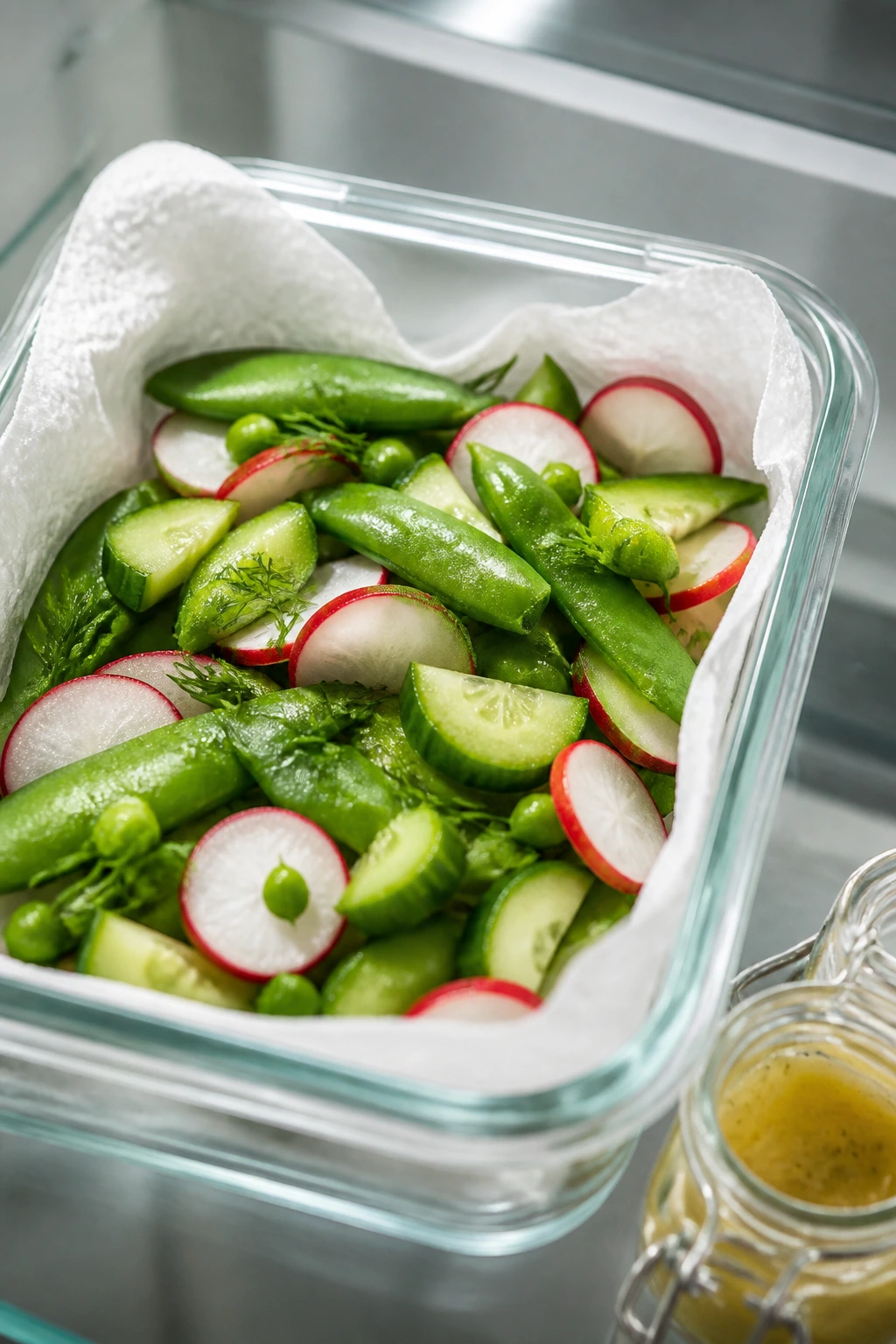
Snap pea salad does not get better by accident. Leftovers can stay good, but only if you separate the parts that want to stay dry from the parts that do not.
Undressed vegetables: Store the sliced snap peas, cucumber, radishes, scallions, and herbs in an airtight container lined with a paper towel for up to 2 days in the refrigerator. The paper towel catches some of the moisture and keeps the vegetables from becoming slick.
Dressing: Keep the lemon-Dijon dressing in a jar or small container for up to 5 days in the refrigerator. Olive oil may thicken when chilled, so let the jar sit at room temperature for about 10 minutes and shake it hard before using.
Almonds and cheese: Toasted almonds keep well for about 2 weeks in an airtight container at room temperature. Feta is best stored separately in its brine or a sealed container, then crumbled right before serving.
Assembled salad: Once dressed, the salad is best within 30 minutes and still acceptable for a few hours in the fridge if you do not mind softer cucumber. The texture changes fast after that, so if you know there will be leftovers, keep the dressing and almonds off the main bowl until the last minute.
No reheating needed: This salad is built to be served cold or cool. If the fridge has made it too cold and the oil feels stiff, let the bowl sit on the counter for 5 to 10 minutes and toss it once more with a squeeze of lemon.
Questions People Ask Before They Make It
Can I use snow peas instead of sugar snap peas?
Yes, and the swap is easy. Snow peas are flatter and a little more delicate, so keep the slices longer or leave them whole; they give you the same green sweetness, just with a thinner bite.
Do I have to remove the strings from snap peas?
If the pods are young and tender, the string may not bother you much. Still, stringing them makes the salad cleaner to eat, especially if you are slicing the peas on the bias and want a neat bite every time.
Can I make the dressing without Dijon?
You can, but the dressing will be looser and a little less rounded. Whole-grain mustard works well, and mustard powder can help in a pinch; if you skip mustard entirely, whisk the dressing longer and use it right away.
How do I keep the salad from turning watery?
Dry the vegetables well, seed the cucumber if it looks juicy, and do not salt the bowl too early. Salt draws moisture out of cucumber and onion fast, which is useful in some dishes and annoying in this one.
Can I turn this into lunch instead of a side dish?
Yes. Add chickpeas, grilled chicken, or shrimp, then increase the dressing slightly so the extra ingredients do not feel dry. I like chickpeas when I want the bowl to stay vegetarian and still feel complete.
Is bottled lemon juice okay here?
It works in a pinch, but the flavor is flatter and less fragrant than fresh lemon juice. If you have to use bottled juice, add the zest from one fresh lemon if possible, because the peel brings back some of the aroma that bottled juice misses.
What should I do if the dressing tastes too sharp?
Whisk in another teaspoon of olive oil or a little more honey, then taste again. The salad should feel bright, not aggressive; fat and a touch of sweetness help the lemon settle down.
Can I make this ahead for a picnic or lunch box?
Yes, but keep the vegetables, dressing, and almonds separate until you are close to serving time. Pack the feta in its own small container if you want the cucumber and peas to stay crisp all the way through the meal.
A Bowl Worth Keeping Cold
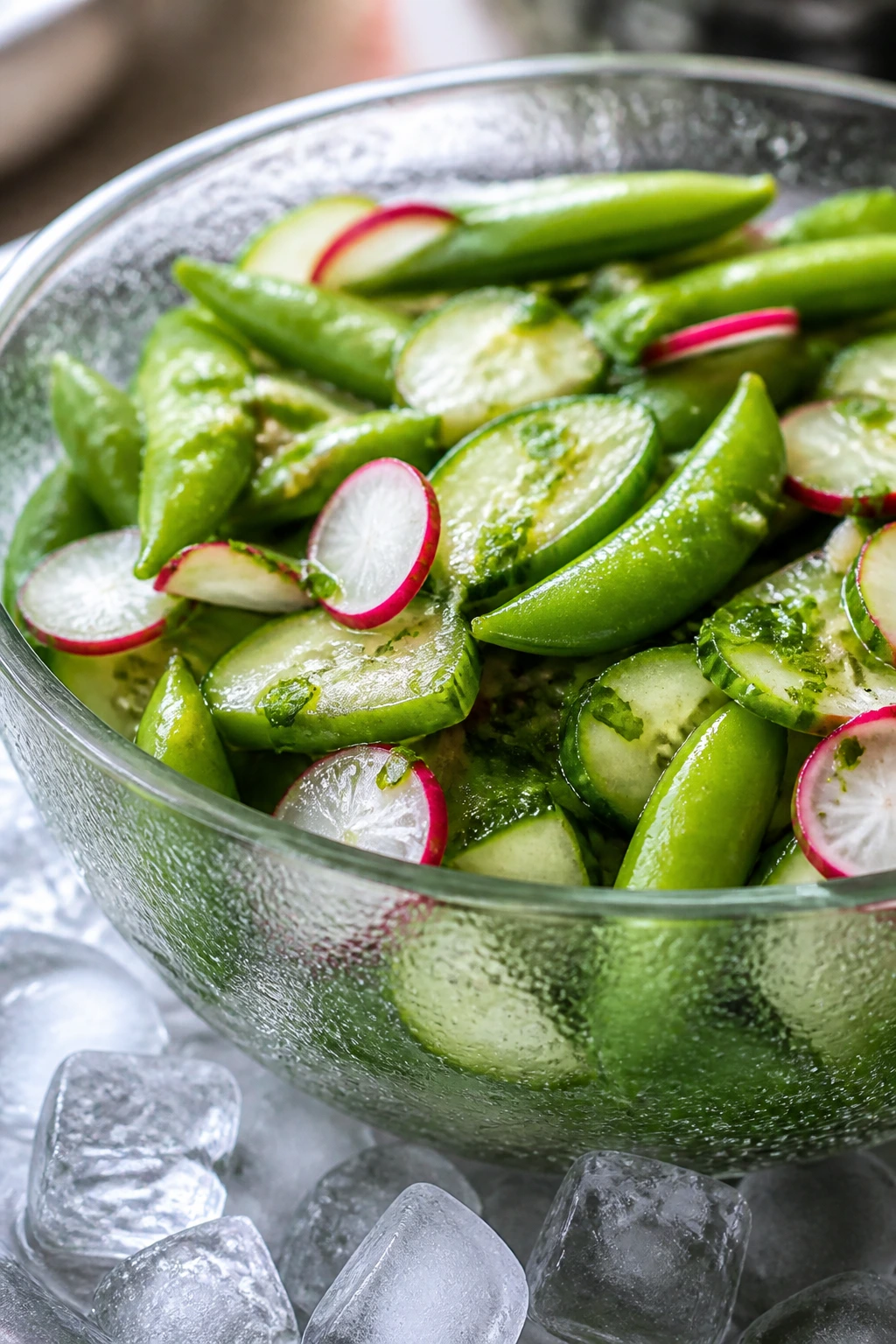
Some salads feel like filler. This one does not. The snap peas stay visibly crisp, the radishes keep their pepper, and the dressing knows when to stop — it coats the vegetables instead of turning them into something slippery and vague.
Make it once with sharp knife cuts, cold ingredients, and the almonds toasted properly. After that, it becomes one of those recipes you can reach for without thinking too hard: peas, lemon, oil, herbs, done. Keep it in the rotation for grilled fish, roast chicken, or any meal that needs a cold side with a little backbone.
Light Snap Pea Salad with Homemade Dressing — Recipe Card
Recipe Name: Light Snap Pea Salad with Homemade Dressing
Description: A crisp salad of sugar snap peas, cucumber, radishes, scallions, herbs, feta, and toasted almonds tossed in a lemon-Dijon dressing. It tastes clean, bright, and cold, with enough texture to hold its shape on the plate.
Prep Time: 18 minutes
Cook Time: 4 minutes
Total Time: 22 minutes
Course: Salad, Side Dish
Cuisine: American
Servings: 4
Calories: About 220 kcal per serving
Ingredients
For the Salad:
- 12 ounces sugar snap peas, strings removed
- 1 English cucumber, halved lengthwise and thinly sliced
- 6 radishes, trimmed and thinly sliced
- 3 scallions, thinly sliced on a diagonal
- 1/2 small red onion, very thinly sliced and soaked in ice water for 10 minutes, optional
- 1/3 cup crumbled feta cheese
- 1/4 cup sliced almonds, toasted and cooled
- 2 tablespoons chopped fresh dill
- 2 tablespoons chopped fresh mint
For the Dressing:
- 3 tablespoons fresh lemon juice
- 1 teaspoon finely grated lemon zest
- 1 teaspoon Dijon mustard
- 1 small garlic clove, finely grated or mashed to a paste
- 1 teaspoon honey
- 1/2 teaspoon fine sea salt
- 1/4 teaspoon black pepper
- 1/4 cup extra-virgin olive oil
Instructions
-
Rinse and dry the snap peas, cucumber, radishes, scallions, dill, and mint. Trim the snap peas, remove any strings, and slice the cucumber, radishes, and scallions.
-
If using red onion, slice it very thinly and soak it in ice water for 10 minutes. Drain it well and pat it dry.
-
Toast the sliced almonds in a dry skillet over medium heat for 3 to 4 minutes, stirring often, until fragrant and lightly golden. Transfer to a plate to cool.
-
Whisk together the lemon juice, lemon zest, Dijon, garlic, honey, salt, and black pepper. Slowly whisk in the olive oil until the dressing looks glossy and lightly thickened.
-
Add the snap peas, cucumber, radishes, scallions, herbs, and onion to a large bowl. Toss with about half the dressing, then add the feta and almonds.
-
Taste and add more dressing, salt, or lemon if needed. Serve right away while the vegetables are still crisp.
Notes: Keep the dressing and almonds separate if you want to make the salad ahead. This salad is best within 30 minutes of tossing, and a final squeeze of lemon wakes it up again if it sits a little too long.