



Fresh fruit salad with homemade dressing is one of those dishes that can taste either limp or startlingly vivid, and the gap between the two is smaller than people think. A bowl full of fruit does not need more sugar. It needs better fruit, cleaner cuts, and a dressing with enough acid to wake everything up without turning the whole thing into candy soup.
I like a fruit salad where the grapes still snap, the pineapple keeps its shape, and the strawberries aren’t diced so small they dissolve into pink juice. No syrup bath. The goal is a bowl that tastes like the produce aisle on a very good day — sweet, cold, bright, and a little sharp at the edges.
The dressing matters more than people give it credit for. A quick whisk of orange juice, lime juice, honey, vanilla, zest, and a pinch of salt makes the fruit smell louder and taste cleaner. The dressing should not smother the bowl. It should slide over the fruit in a thin sheen, then settle in for a short rest while the flavors get acquainted.
Why You’ll Want to Make This Again
-
The dressing stays light: The orange-lime mixture coats the fruit instead of pooling at the bottom like a sugary puddle.
-
The texture stays interesting: Pineapple, grapes, mango, blueberries, strawberries, kiwi, and mandarins each give a different bite, which keeps every spoonful from feeling samey.
-
It comes together fast: Once the fruit is washed, dried, and cut, the whole bowl is on the table in about 20 minutes.
-
It works with what’s ripe: If the mango looks great and the strawberries are only so-so, you can tilt the bowl in one direction or another without rewriting the recipe.
-
It shows up well at the table: This salad sits happily beside yogurt, waffles, roast chicken, or a plate of salty eggs, and it never looks like an afterthought.
Why Fresh Fruit Salad with Homemade Dressing Tastes Better Than Bottled Syrup
A fruit salad can be a shrug or a small event. The difference usually comes down to two things: how the fruit is handled and whether the dressing has any backbone. Bottled fruit glazes and overly sweet syrups tend to flatten everything. They make strawberries taste like sugar, pineapple taste like pineapple-flavored candy, and blueberries taste vaguely wet.
A homemade dressing does the opposite. Fresh citrus gives the bowl lift, honey rounds the edges, and a pinch of salt keeps the sweetness from going slack. That tiny amount of salt matters more than people expect. It does not make the salad salty. It makes the fruit taste like itself, only clearer.
There’s also the matter of smell. A good fruit salad should smell like orange peel and lime oil the second you finish the dressing. When the bowl goes cold in the fridge for 10 or 15 minutes, the fruit doesn’t just get chilled; the citrus settles into it, and the whole thing tastes cleaner.
Fruit salad is old-fashioned in the best sense. It rewards restraint. Too much sugar and you lose the fruit. Too much dressing and you lose the texture. The sweet spot is a bowl that still tastes like fruit first, with the dressing humming underneath.
How the Fruit Choices Keep the Bowl Crisp
Why do some fruit salads taste fresh for an hour, while others look tired before the forks even hit the bowl? Usually, it’s the fruit mix. A good bowl needs some pieces that can take a little handling and a few that bring softness without collapsing.
Pineapple, grapes, mango, and blueberries are the backbone here. They hold shape, stay cold, and keep their color. Grapes are especially useful because halving them gives the dressing a place to cling. Whole grapes look neat, but they stay sealed off. Cut them once down the middle and the flavor opens up.
Strawberries, kiwi, and mandarins are the gentler pieces. They’re the ones that make the bowl feel juicy and bright, but they also need a softer hand. Slice strawberries thick enough to stay recognizable. Peel kiwi just before tossing so the edges stay clean. Segment the mandarins well and remove the pith; otherwise, the salad gets a little bitter in the wrong places.
Fruit That Behaves Well in a Bowl
Pineapple and mango bring body. Blueberries stay intact even after dressing. Grapes give you a clean snap. If you want the salad to hold for a brunch spread or a picnic table, these are the pieces that earn their place.
Fruit That Needs a Shorter Clock
Strawberries and kiwi taste best when they’re fresh-cut and lightly dressed. Raspberries can join the party too, but only if you’re serving soon after tossing. They crush easily and turn the whole bowl pink if they sit around too long.
Fruit to Treat Carefully
Bananas, ripe peaches, and very soft nectarines can work in a quick bowl, but they do not belong in a salad that needs to sit. They brown, soften, and blur into the dressing. If you love them, add them right before serving, or leave them out and let the sturdier fruit do the work.
The Homemade Dressing That Gives the Bowl Its Lift
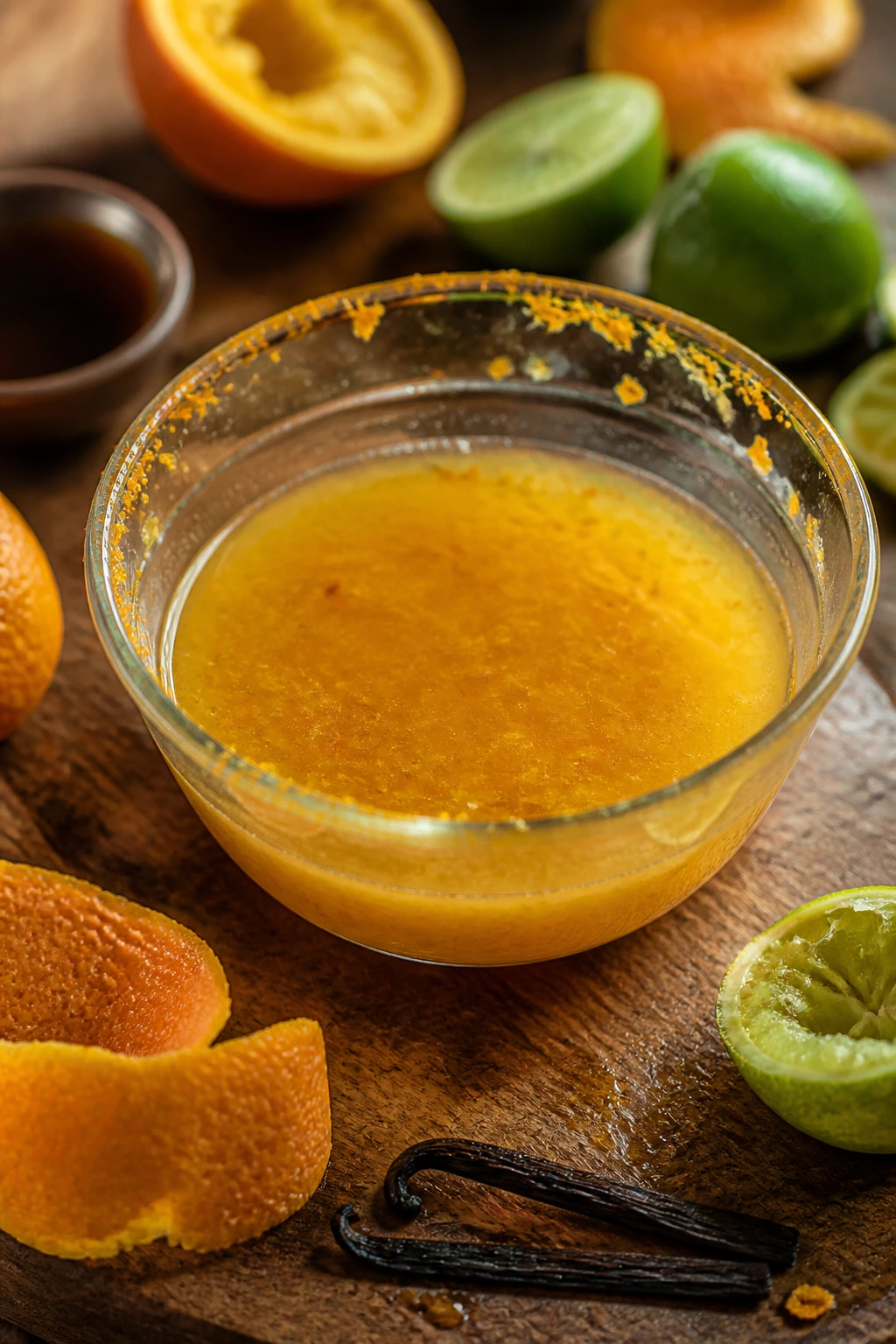
The dressing only needs a few things, and each one earns its keep. Orange juice gives it body. Lime juice keeps the flavor sharp enough to wake up every bite. Honey rounds the corners. Orange zest perfumes the bowl. Vanilla nudges the mixture toward dessert without pushing it over the edge. Salt ties the whole thing together.
That’s the trick. The dressing should taste a little too tart by itself. Once it hits the fruit, the edges soften. If it tastes perfectly sweet in the bowl, it will read flat after a few minutes on the fruit. I’d rather err on the side of bright.
Fresh zest is worth the tiny extra minute it takes. Use the fine side of a microplane and shave only the colored part of the peel. The white pith underneath is bitter, and a bitter streak in an otherwise sweet bowl feels distracting fast.
Citrus First
Orange juice gives the dressing a rounder, softer note than lemon alone. Lime brings the clean snap. If you’ve only got lemons, they can work, but the salad takes on a sharper profile. I prefer orange and lime together because the fruit tastes more natural with that pair.
Sweetness Second
Honey blends better than granulated sugar in a cold dressing. It dissolves into the juice instead of leaving little grains at the bottom of the bowl. If your honey is thick, warm it between your fingers or whisk it a little longer; the dressing should look smooth before it ever touches the fruit.
Salt and Vanilla Are Not Throwaway Add-Ins
A pinch of fine sea salt keeps the fruit from tasting sugary and shallow. Vanilla adds a soft background note that plays nicely with mango and berries, especially after the bowl has rested for a few minutes. Neither ingredient should be loud. Both should be present enough that you miss them if they’re gone.
The Bowl at a Glance
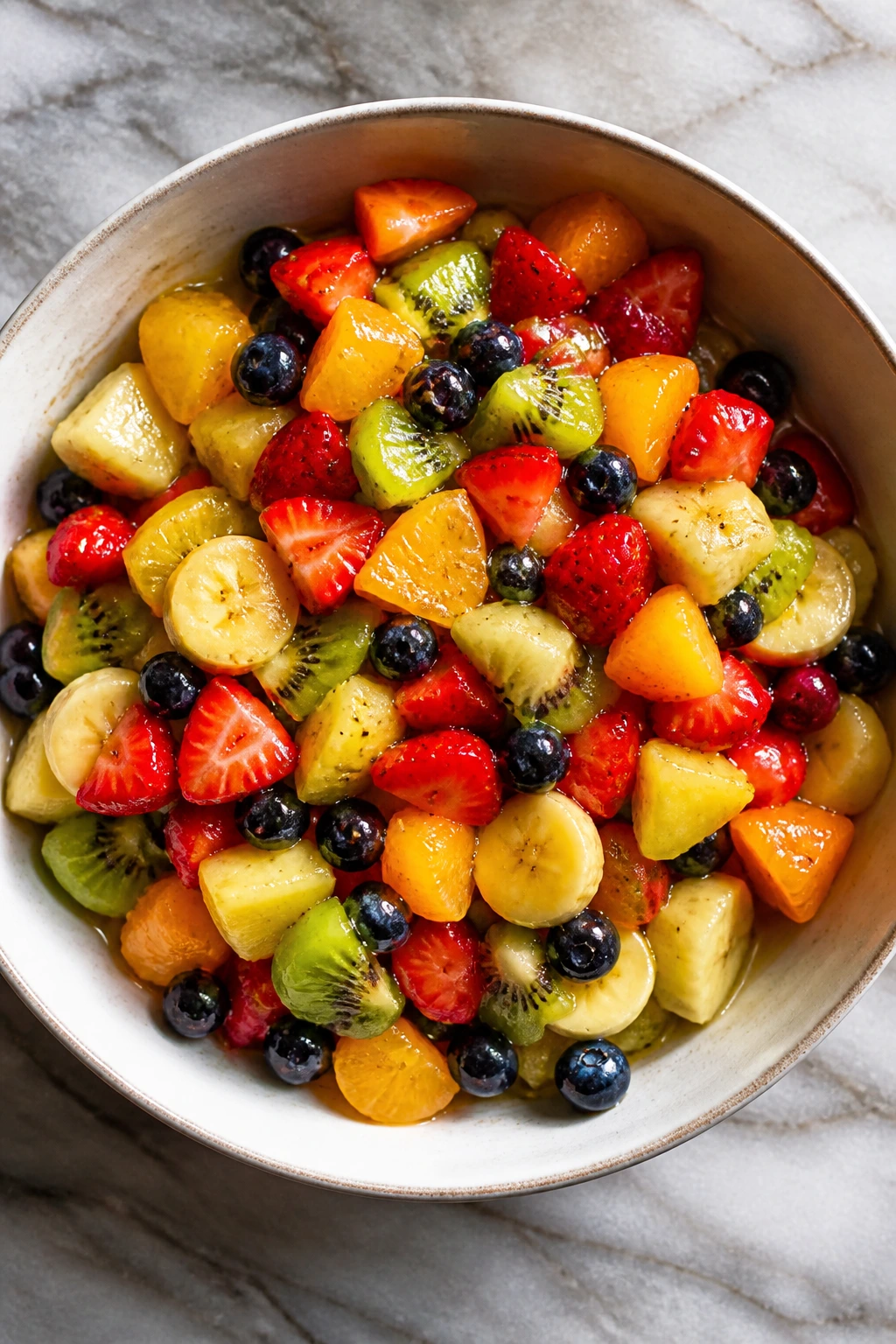
A fruit salad like this is best after a short rest, not an overnight nap. Fifteen minutes in the fridge is enough for the dressing to settle onto the fruit and for the citrus to stop tasting raw. Any longer than that, and the softer pieces start giving up juice in ways you may or may not want.
Yield: Serves 8 as a side or 6 as a light dessert
Prep Time: 20 minutes
Cook Time: 0 minutes
Total Time: 35 minutes total, including 15 minutes of chilling
Difficulty: Beginner — there’s no heat involved, and the only real skill is cutting fruit cleanly without smashing it.
Chill/Rest Time: 15 minutes
Best Served: Chilled, within 2 hours of tossing
Fresh Fruit Salad with Homemade Dressing Ingredients
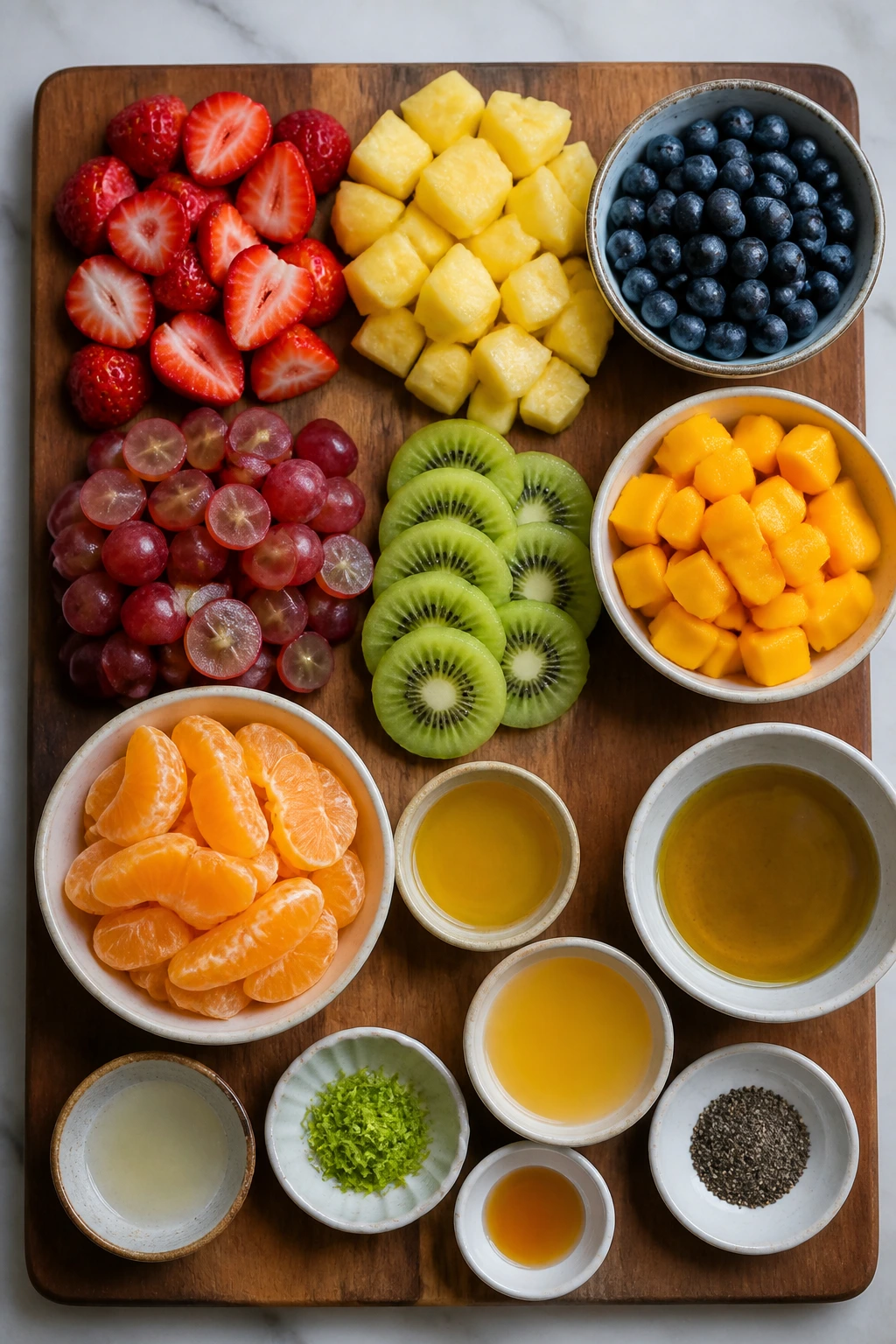
For the Fruit Salad:
- 2 cups strawberries, hulled and halved
- 2 cups fresh pineapple chunks, cut into 3/4-inch pieces
- 1 1/2 cups blueberries, rinsed and dried
- 1 1/2 cups red grapes, halved lengthwise
- 2 kiwis, peeled and sliced into thin half-moons
- 1 large mango, peeled and diced into 3/4-inch cubes
- 2 mandarin oranges, segmented and pith removed, or 1 cup canned mandarin segments, well drained
For the Homemade Dressing:
- 1/4 cup fresh orange juice
- 2 tablespoons fresh lime juice
- 1 1/2 tablespoons honey, or maple syrup for a vegan version
- 1 teaspoon finely grated orange zest
- 1/2 teaspoon vanilla extract
- 1 pinch fine sea salt
For Garnish:
- 2 tablespoons fresh mint leaves, thinly sliced, optional
Why Each Ingredient Matters
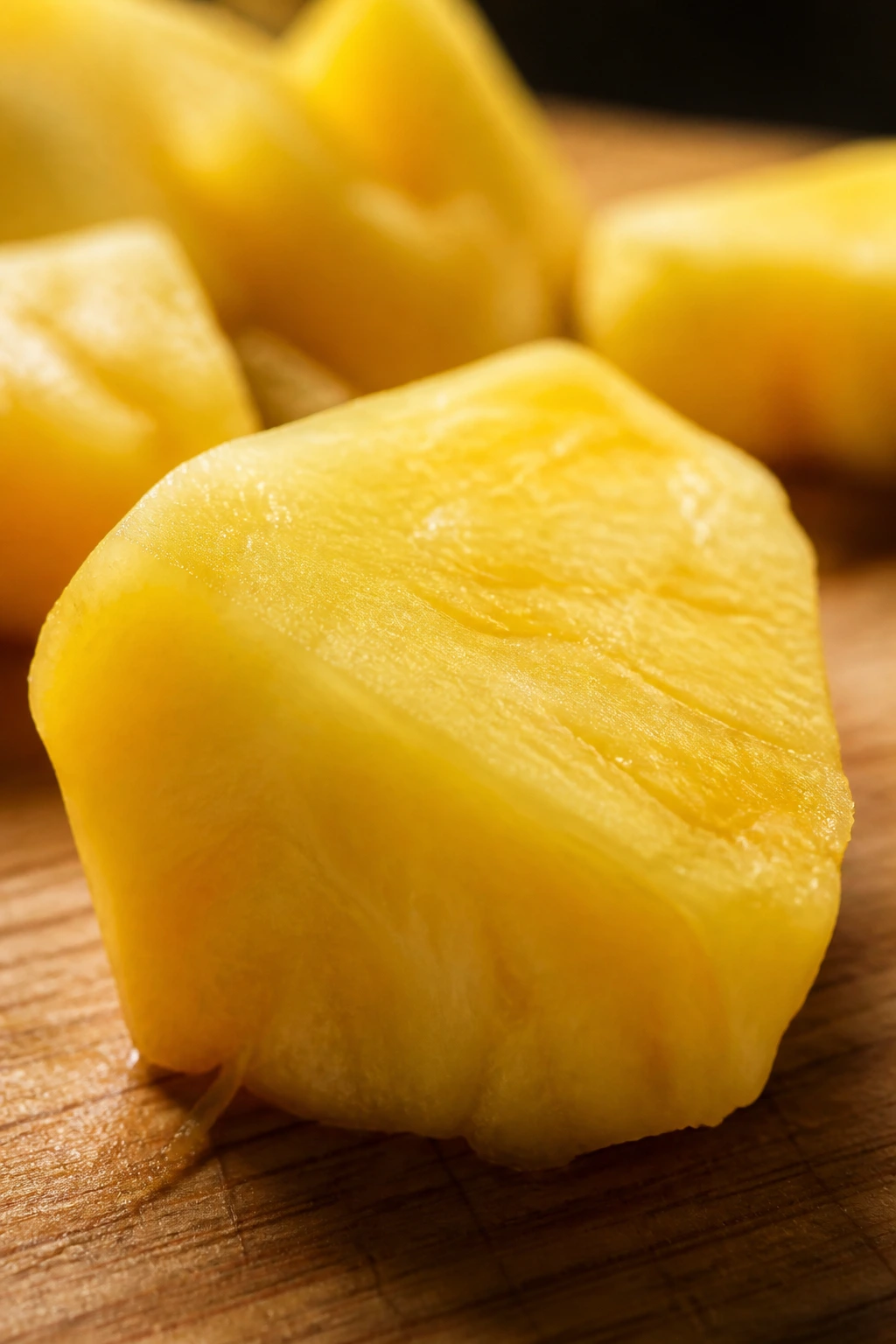
A fruit salad holds together or falls apart based on what happens before the bowl gets dressed. The ingredients are not interchangeable in quite the lazy way people think they are. Some pieces bring structure, some bring perfume, and some are there to keep the whole thing from getting dull.
The Firm Fruit Backbone
What to use: 2 cups pineapple chunks, 1 1/2 cups blueberries, 1 1/2 cups red grapes, and 1 large mango, diced.
Preparation: Cut the pineapple and mango into 3/4-inch pieces so they’re small enough for a spoon but large enough to keep their shape. Halve the grapes lengthwise so the dressing can sneak in.
Substitutions: Papaya works in place of mango if you like a softer tropical note, and blackberries can replace part of the blueberries if you want a deeper berry flavor.
Tips: Pick pineapple that smells sweet at the base and feels heavy for its size. A fermented smell is a bad sign, and once it’s in the bowl, you can’t hide it.
The Softer Fruit Layer
What to use: 2 cups strawberries, 2 kiwis, and 2 mandarin oranges.
Preparation: Hull the strawberries and cut them in halves or quarters depending on size. Peel the kiwi right before using it, and segment the mandarins fully so the pith doesn’t leave little bitter threads.
Substitutions: Clementines can stand in for mandarins, and raspberries can work if you are serving right away. If you want to use peaches, keep them firm and slice them at the last second.
Tips: The softer fruit should enter the bowl near the end, not at the start. That keeps the edges cleaner and saves the fruit from getting bruised under the heavier pieces.
The Citrus-Honey Dressing
What to use: 1/4 cup fresh orange juice, 2 tablespoons fresh lime juice, 1 1/2 tablespoons honey, 1 teaspoon orange zest, 1/2 teaspoon vanilla extract, and 1 pinch fine sea salt.
Preparation: Whisk until the honey disappears into the juice and the dressing looks smooth rather than streaky. Zest the orange before you juice it; that small order saves annoyance.
Substitutions: Maple syrup or agave can replace honey. Lemon juice can work in place of lime, though it pushes the dressing toward a sharper, more tart profile.
Tips: Taste the dressing before it goes over the fruit. It should feel a touch too bright on its own, because the fruit will calm it down.
The Mint Finish
What to use: 2 tablespoons fresh mint leaves, thinly sliced, optional.
Preparation: Stack the leaves, roll them, and slice into fine ribbons with a sharp knife. Add mint at the end so it stays green and fragrant.
Substitutions: Basil works well if you want a more herbal bowl, especially with strawberries and mango. You can also skip the mint entirely if you want the citrus to stay front and center.
Tips: Don’t chop the mint too aggressively. Torn mint gets bruised fast and turns muddy in both color and flavor.
The Tools That Make Prep Easier
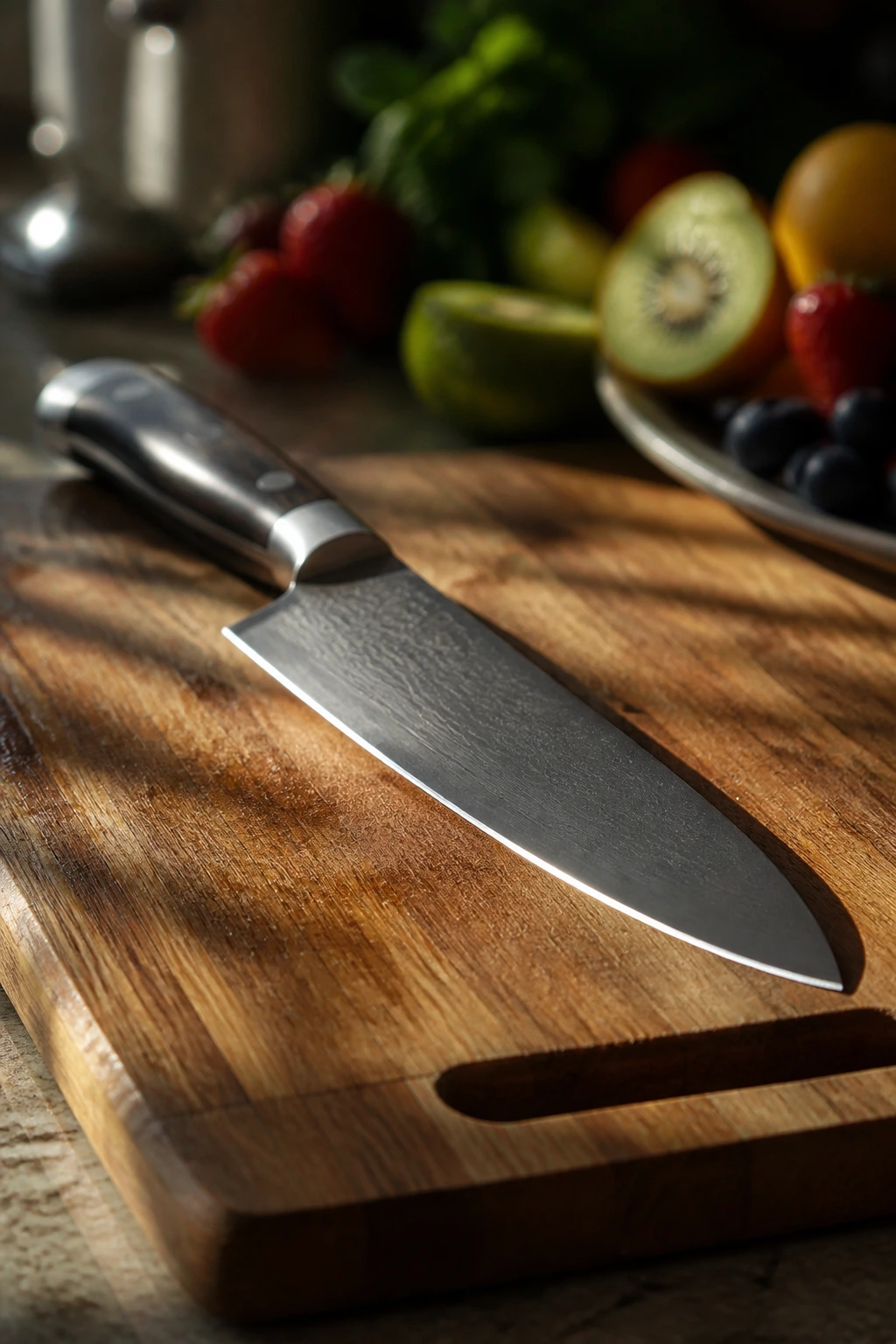
A fruit salad doesn’t need fancy gear, but a few specific tools make the work cleaner and faster.
-
Large mixing bowl, 4 to 6 quarts: Gives you enough room to toss the fruit without smashing the berries against the sides.
-
Sharp chef’s knife: A dull blade crushes strawberries and mangos instead of slicing them cleanly.
-
Cutting board with a damp towel underneath: Stops the board from sliding when you’re halving grapes or dicing slippery mango.
-
Small bowl or jar with a lid: A jar is especially handy for the dressing because you can shake it hard for a few seconds and be done.
-
Microplane or fine zester: Grates orange peel into tiny flecks that disappear into the dressing instead of leaving chewy strips.
-
Citrus juicer, optional: Useful if you want every last bit of juice from the orange and lime.
-
Silicone spatula or large spoon: A gentler choice than a whisk when it’s time to fold the fruit together.
-
Clean kitchen towels or paper towels: Dry fruit matters. Water on the surface becomes diluted dressing in the bowl.
Building the Salad, Step by Step
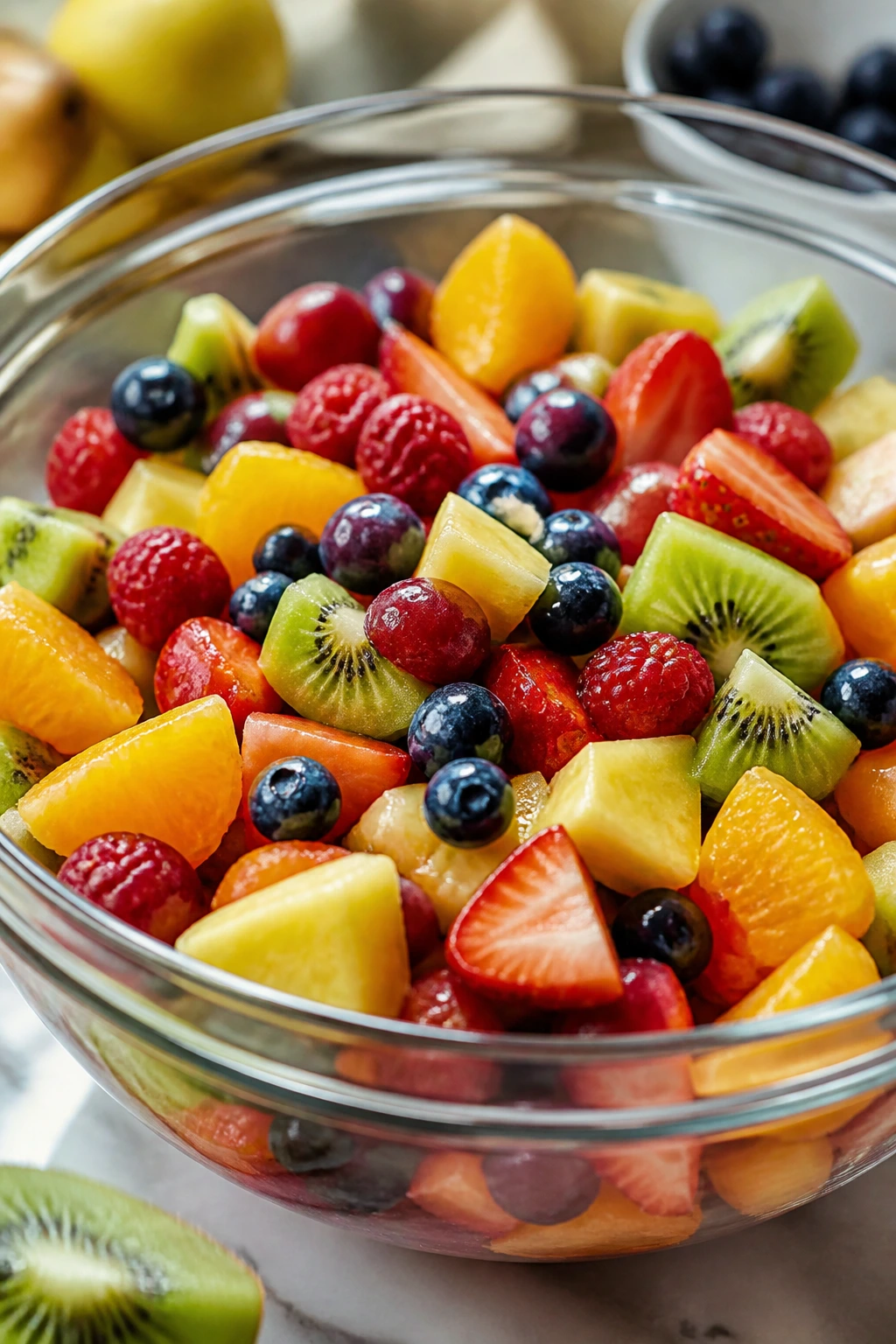
Prep the Fruit
-
Rinse the strawberries, blueberries, grapes, kiwis, and mandarins under cool water, then dry them well on clean kitchen towels. Do not leave them damp; water is the fastest way to thin the dressing and make the bowl soupy.
-
Hull the strawberries, halve the grapes lengthwise, peel the kiwi, peel and dice the mango, and segment the mandarins. If the mango is very slippery, slice off the cheeks first, score the flesh in a crosshatch pattern, and scoop it out with a spoon.
-
Add the sturdier fruit to the large bowl first: pineapple, grapes, mango, and blueberries. Save the strawberries, kiwi, and mandarins for the final toss so they don’t get battered before the dressing even shows up.
Mix the Dressing
- In a small bowl or jar, whisk together the orange juice, lime juice, honey, orange zest, vanilla, and salt for 20 to 30 seconds, until the honey disappears and the mixture looks smooth. If the honey hangs at the bottom, whisk another 10 seconds or shake the jar firmly.
Toss and Rest
-
Add the strawberries, kiwi, and mandarins to the bowl, then drizzle the dressing over the fruit in a slow stream. Fold everything together gently with a silicone spatula, using 6 to 8 turns only. Do not stir like you’re mixing potato salad; bruised berries turn the whole bowl cloudy.
-
Taste a spoonful after the fruit has sat for 5 minutes. If it reads too sweet, add another teaspoon of lime juice. If it tastes sharp, add 1/2 teaspoon more honey. Refrigerate the salad for 10 to 15 minutes so the dressing can settle and the fruit can get properly cold.
-
Transfer the salad to a chilled serving bowl, scatter the sliced mint over the top if you’re using it, and give the bowl one light stir right before serving. Keep it cold and serve within 2 hours for the best texture.
How to Serve It
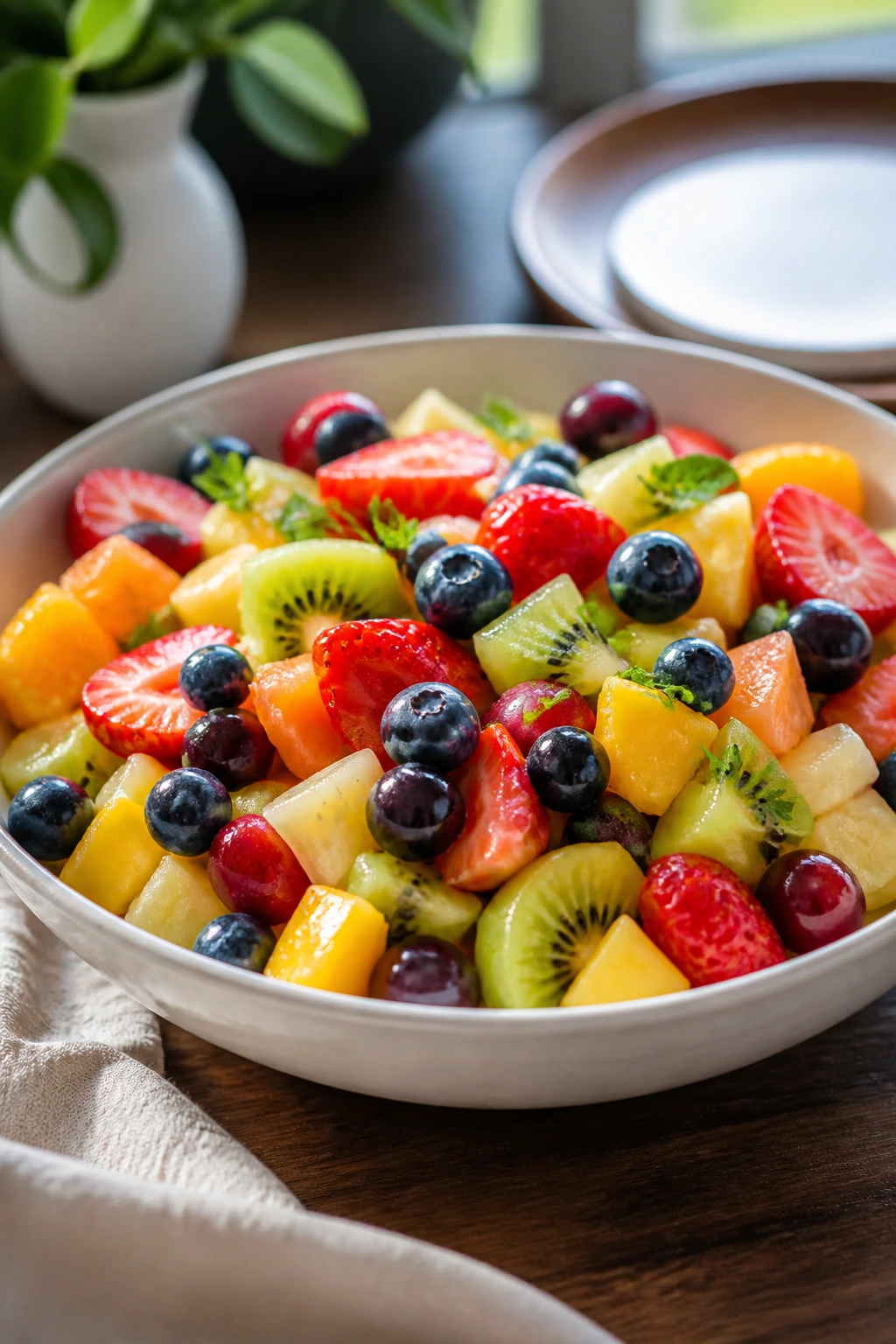
Presentation: Spoon the salad into a shallow chilled bowl or a wide glass dish, not a deep soup bowl. A low, broad bowl lets the colors show and keeps the juice from hiding under the fruit.
Accompaniments: Set it next to thick yogurt, granola, pancakes, waffles, French toast, or a savory brunch plate with eggs and bacon. It also works beside grilled chicken or ham when you want something cold and sharp on the plate.
Portions: Plan on about 3/4 cup per person as a side, or 1 1/2 cups if the fruit salad is acting like dessert. If you’re feeding a bigger group, double the recipe and keep the dressing separate until the last minute.
Beverage Pairing: Cold mint tea, sparkling water with lime, or unsweetened iced tea keeps the citrus notes clean. For a brunch spread, a dry sparkling wine or a simple orange spritz works well too.
Extra Tips for Better Texture and Flavor
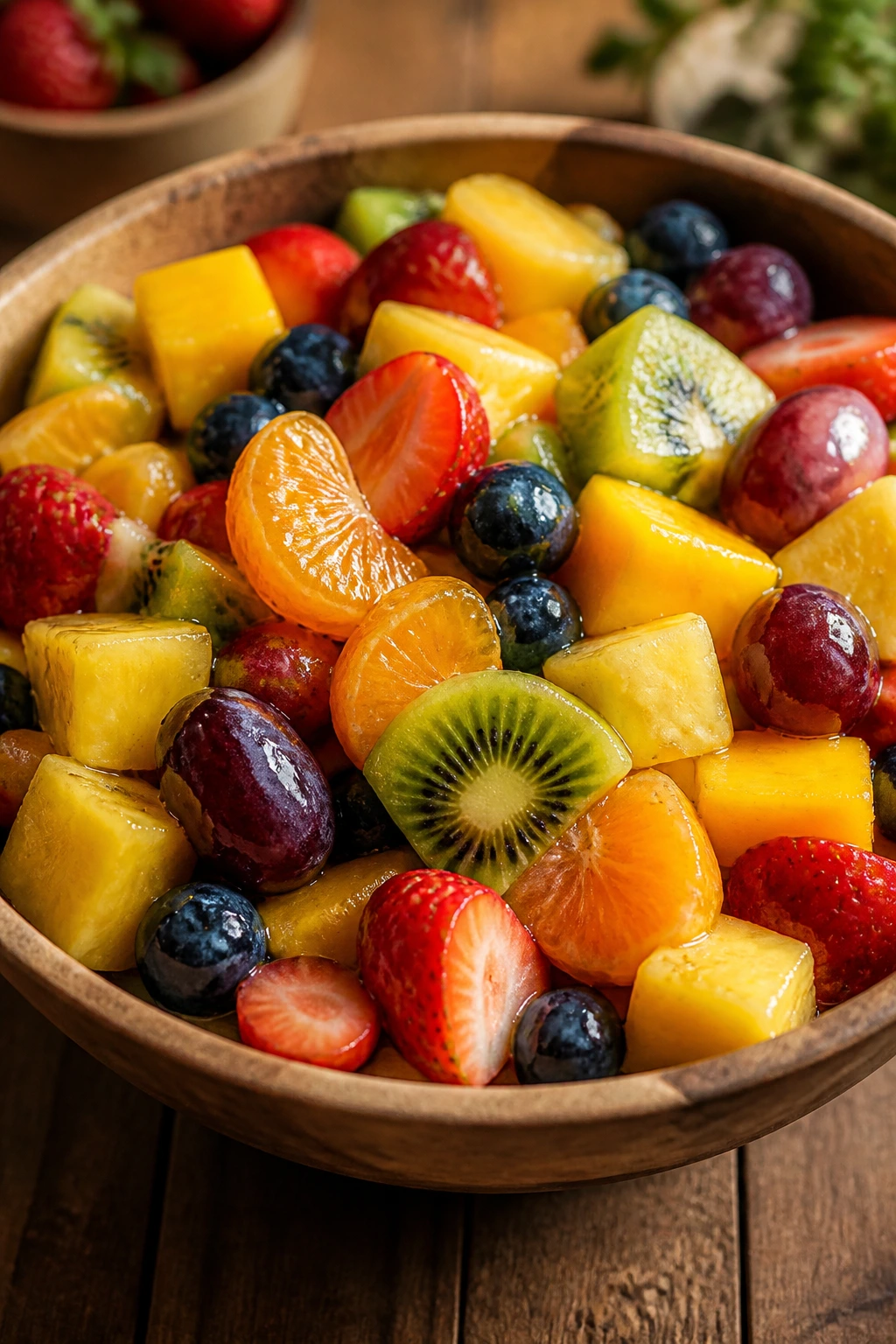
Flavor Enhancement: A pinch of fine sea salt and a little extra orange zest right before serving make the whole bowl smell brighter. That last-minute dusting of zest matters more than another spoonful of honey.
Time-Saver: Cut the pineapple, mango, and grapes earlier in the day, then stash them in separate containers in the fridge. Wait to cut strawberries and kiwi until closer to serving so they stay neat and glossy.
Pro Move: Chill the serving bowl for 10 minutes before assembling the salad. A cold bowl buys you a little more time before the fruit starts to soften at the edges.
Cost-Saver: Build the bowl around the best-priced fruit that still looks and smells good — usually grapes, oranges, and pineapple — then use berries and mango as the accents rather than the bulk.
Make-It-Yours: Swap honey for maple syrup if you want the bowl to stay vegan, or fold in 2 tablespoons toasted coconut flakes for a more tropical finish. If you like basil more than mint, use it here; strawberries and basil get along just fine.
Mistakes That Turn Good Fruit Mushy
-
Cutting everything too small: Tiny fruit pieces collapse fast and lose their shape. Keep the chunks around 3/4-inch wherever you can, and let the berries stay whole.
-
Tossing with too much force: A hard stir bruises strawberries and smears mango onto the rest of the bowl. Use a spatula and fold gently, as if you’re turning pages, not stirring stew.
-
Leaving the fruit wet after washing: A damp bowl of fruit makes the dressing slide off and pool at the bottom. Pat the fruit dry; that small step changes the texture more than people expect.
-
Using overripe bananas or peaches for a salad that sits: Those fruits brown and soften quickly, which makes the whole bowl look tired. If you want them, add them only at the last second.
-
Making the dressing too sweet: The salad starts to taste like syrup instead of fruit. Fix it with more lime juice and a pinch of salt, not another pour of honey.
-
Letting the salad sit too long after tossing: Strawberries start leaking juice, and the cleaner flavors get buried. If you need to hold it, keep the dressing separate and toss just before serving.
Variations and Adaptations
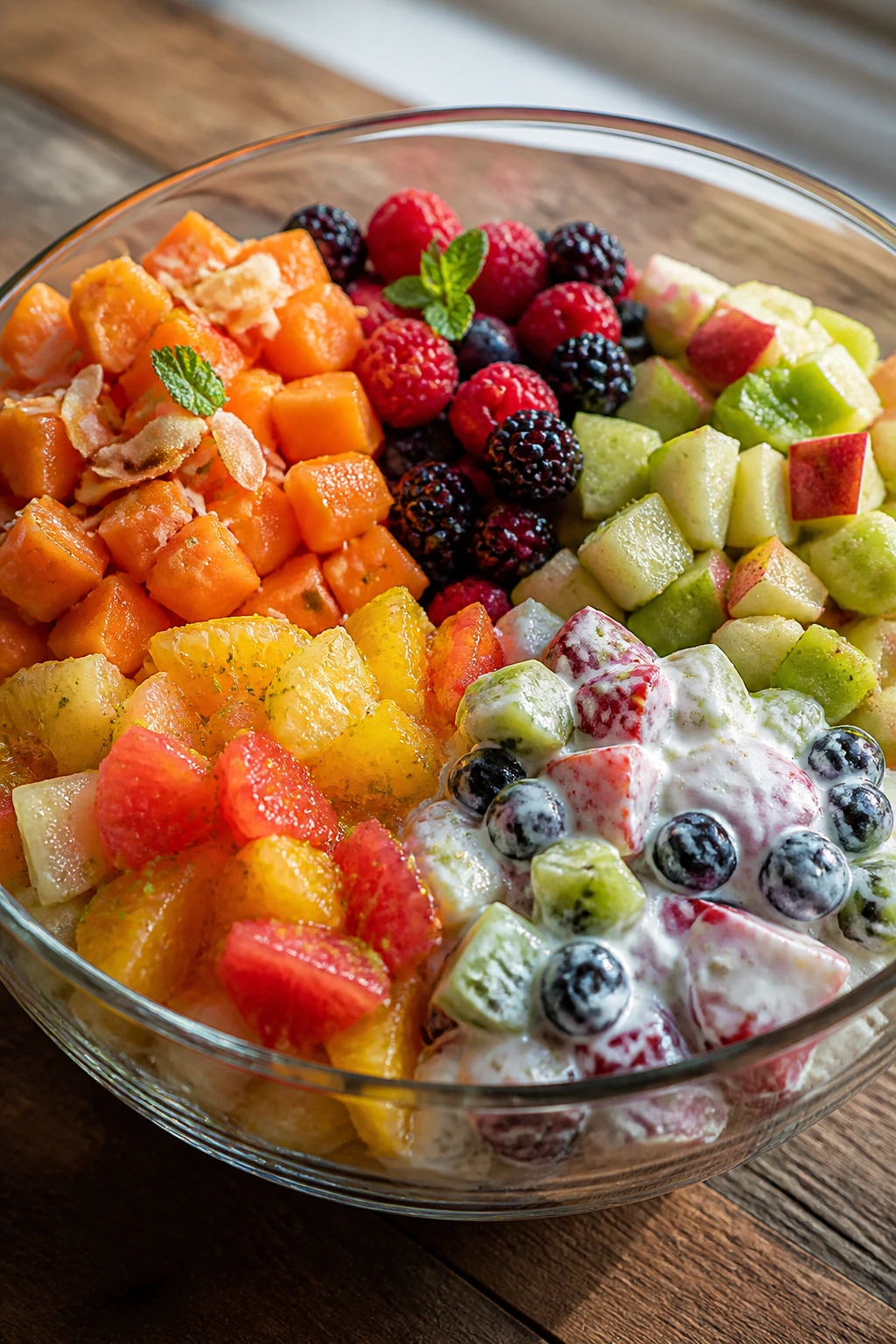
Tropical Market Bowl: Swap the strawberries for papaya and add 1/2 cup toasted coconut flakes at serving. Use an extra teaspoon of lime juice in the dressing so the tropical fruit doesn’t taste flat.
Berry-Heavy Brunch Bowl: Use strawberries, blueberries, blackberries, and raspberries, then drop the mango and mandarin oranges. Finish with basil instead of mint for a darker, almost peppery edge.
Crisp Orchard Mix: Add 2 firm apples and 1 pear, both diced, and toss them with the lime juice first so they don’t brown. This version is best when you want the bowl to hold a little longer and taste more like early lunch than dessert.
Honey-Free Citrus Bowl: Replace the honey with maple syrup or agave in equal measure. Maple brings a rounder note, while agave stays quieter and lets the orange and lime stay in charge.
Creamy Brunch Bowl: Serve the fruit salad with a spoonful of plain Greek yogurt or coconut yogurt on the side, or drizzle a little over each serving right before eating. Keep the yogurt separate in the bowl; once it mixes through, the fruit softens faster.
Make-Ahead, Storage, and Leftovers
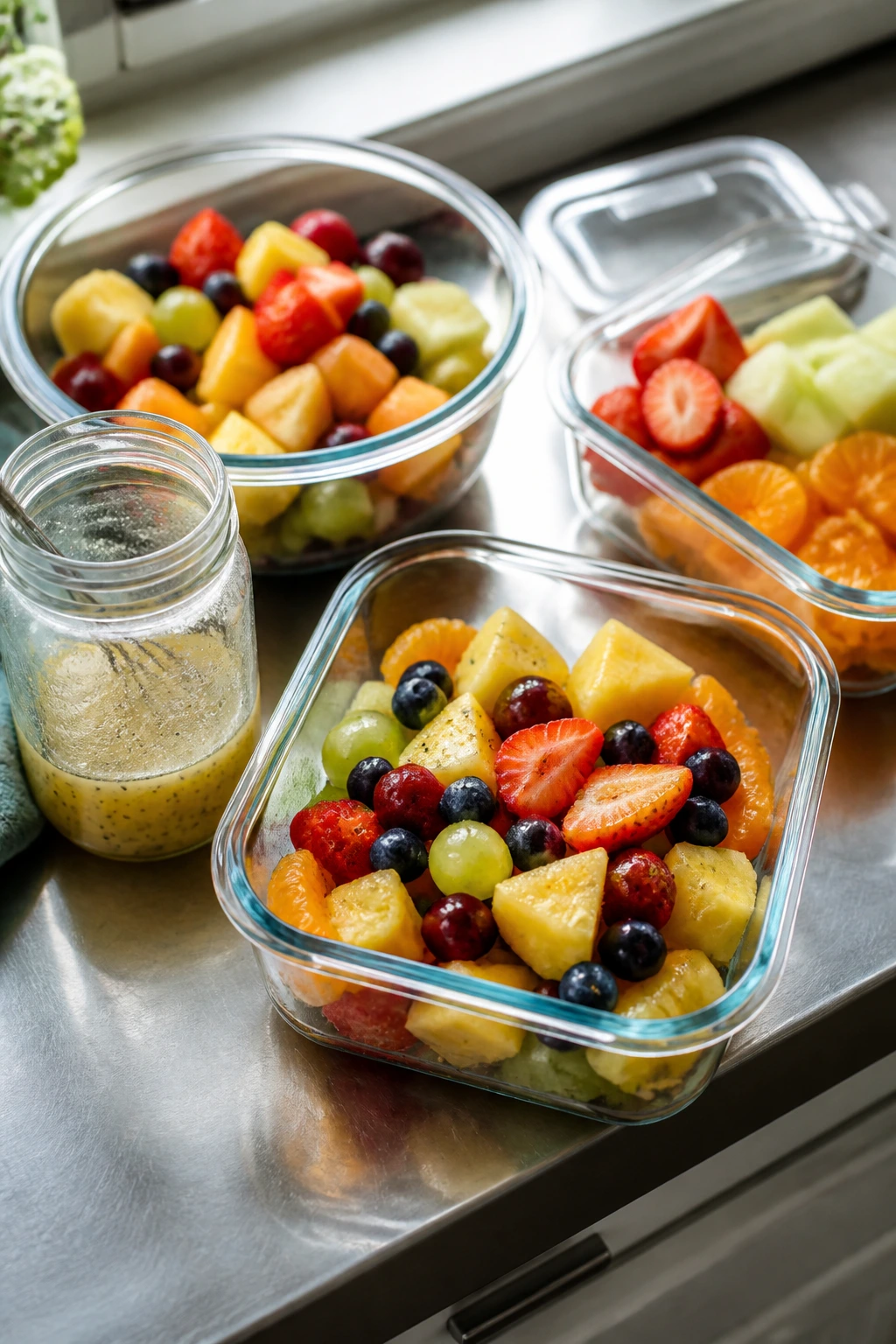
Refrigerator: Once assembled, this fruit salad keeps best for about 24 hours, though the texture is strongest in the first few hours. After that, the strawberries and kiwi start giving up juice, and the dressing thins out a little. If you want the crispest bowl, toss it 10 to 15 minutes before serving and no earlier.
Dressing: The homemade dressing can be mixed ahead and stored in a jar in the fridge for up to 4 days. Shake or whisk it before using, because the honey settles and the zest likes to float on top.
Make-Ahead: Pineapple, grapes, mango, and mandarins can be cut a day in advance and kept cold in separate containers. Strawberries and kiwi are better cut closer to serving, since they bruise faster and bleed more juice.
Room Temperature: Cut fruit should not sit out for more than 2 hours, and food-safety guidance used by the USDA is even stricter if the bowl is outdoors in warm conditions. If the salad is going to sit on a buffet, keep it nested in a larger bowl of ice or return it to the fridge between servings.
Freezer: Don’t freeze fruit salad. Thawed fruit loses its snap, turns watery, and goes mealy in a way no dressing can rescue.
Leftovers: If the bowl looks a little wet the next day, spoon off some of the juice and add a squeeze of lime plus a few fresh mint leaves. The flavor comes back faster than the texture does, but it helps.
Fresh Fruit Salad with Homemade Dressing Questions People Ask
Can I make this fruit salad the night before?
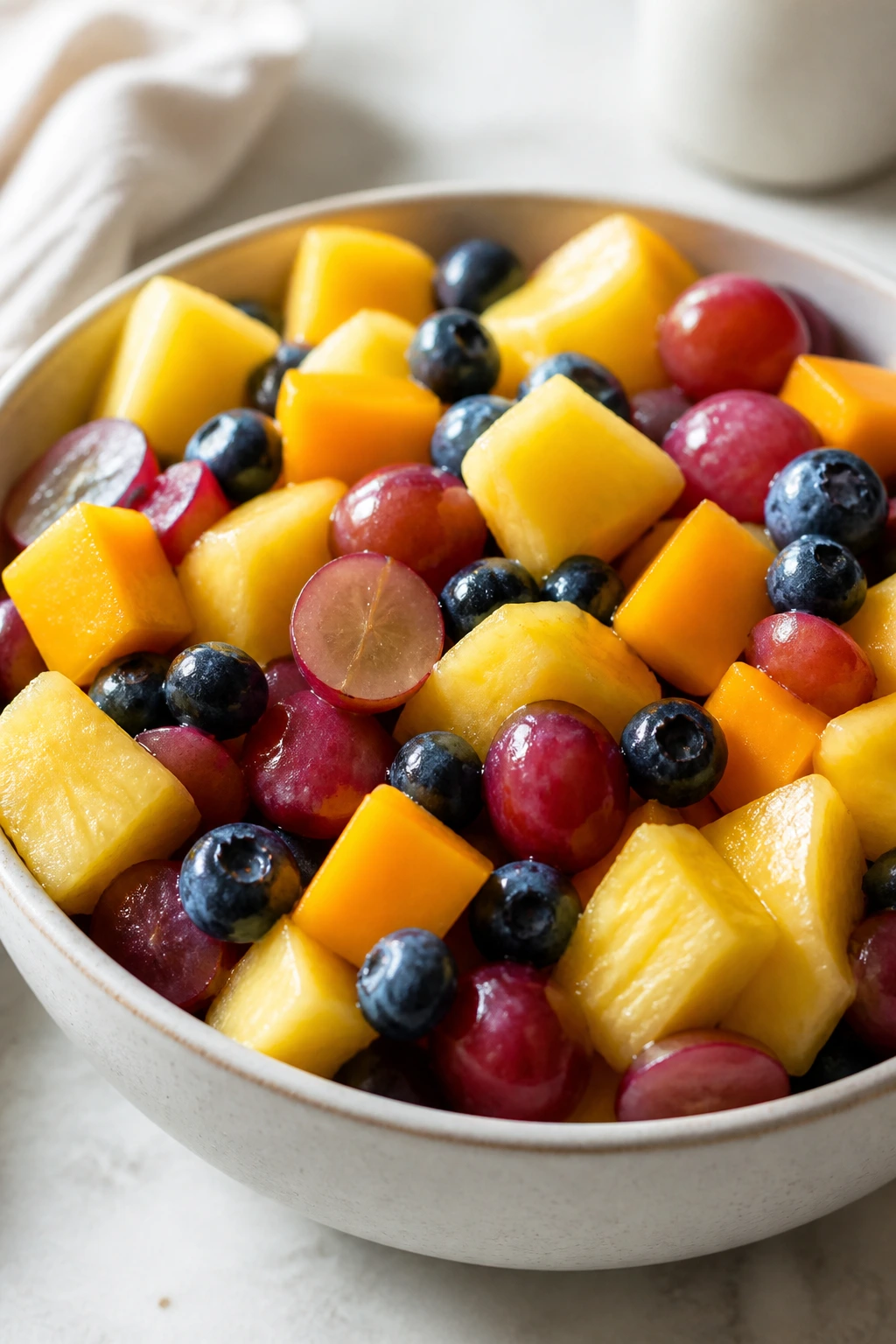
You can prep the fruit and dressing separately, but I would not toss everything together that far ahead unless you’re fine with softer berries the next day. The safest move is to assemble the bowl 10 to 15 minutes before serving and keep the dressing cold in a jar until then.
What fruit should I avoid if I need the salad to sit out for a while?
Bananas, very ripe peaches, nectarines, and raspberries are the first to give up. They brown or collapse fast, so save them for a last-minute bowl or skip them entirely.
Can I use frozen fruit instead of fresh?
You can, but it changes the whole texture. Thawed frozen fruit gives up a lot of juice, so it works better in a softer, dessert-style bowl than in a crisp salad.
What can I use instead of honey?
Maple syrup and agave both work 1:1 and keep the dressing pourable. Maple adds a warmer note, while agave stays more neutral and lets the citrus stay front and center.
How do I keep apples from browning if I add them?
Toss cut apples with lime juice the second they’re sliced, then add them to the bowl right away. Pears need the same treatment, though they still soften faster than grapes or pineapple.
Why does my fruit salad taste flat even with the dressing?
It probably needs acid or salt, not more sweetness. Add a small squeeze of lime and a pinch of salt, then taste again after the fruit has sat for a minute.
Can I make this feel more like dessert?
Yes. Serve it with vanilla yogurt, a spoonful of lightly sweetened whipped cream, or a scattering of toasted coconut flakes. I would keep the fruit salad itself light, then build the sweeter note on the plate rather than in the bowl.
A Bowl Worth Repeating
The best fruit salad does not shout. It just tastes clean, cold, and balanced enough that you keep taking one more spoonful without thinking about it. That happens when the fruit is cut to the right size, the dressing stays bright instead of heavy, and the bowl gets a short rest so the citrus can settle in.
I keep coming back to the same rule: let fruit taste like fruit, then sharpen it with acid, salt, and a little sweetness. Do that, and the bowl feels fresh even when the ingredients are simple. The next time the produce drawer is full of berries, citrus, and one mango that needs using, this is the move.
Fresh Fruit Salad with Homemade Dressing — Recipe Card
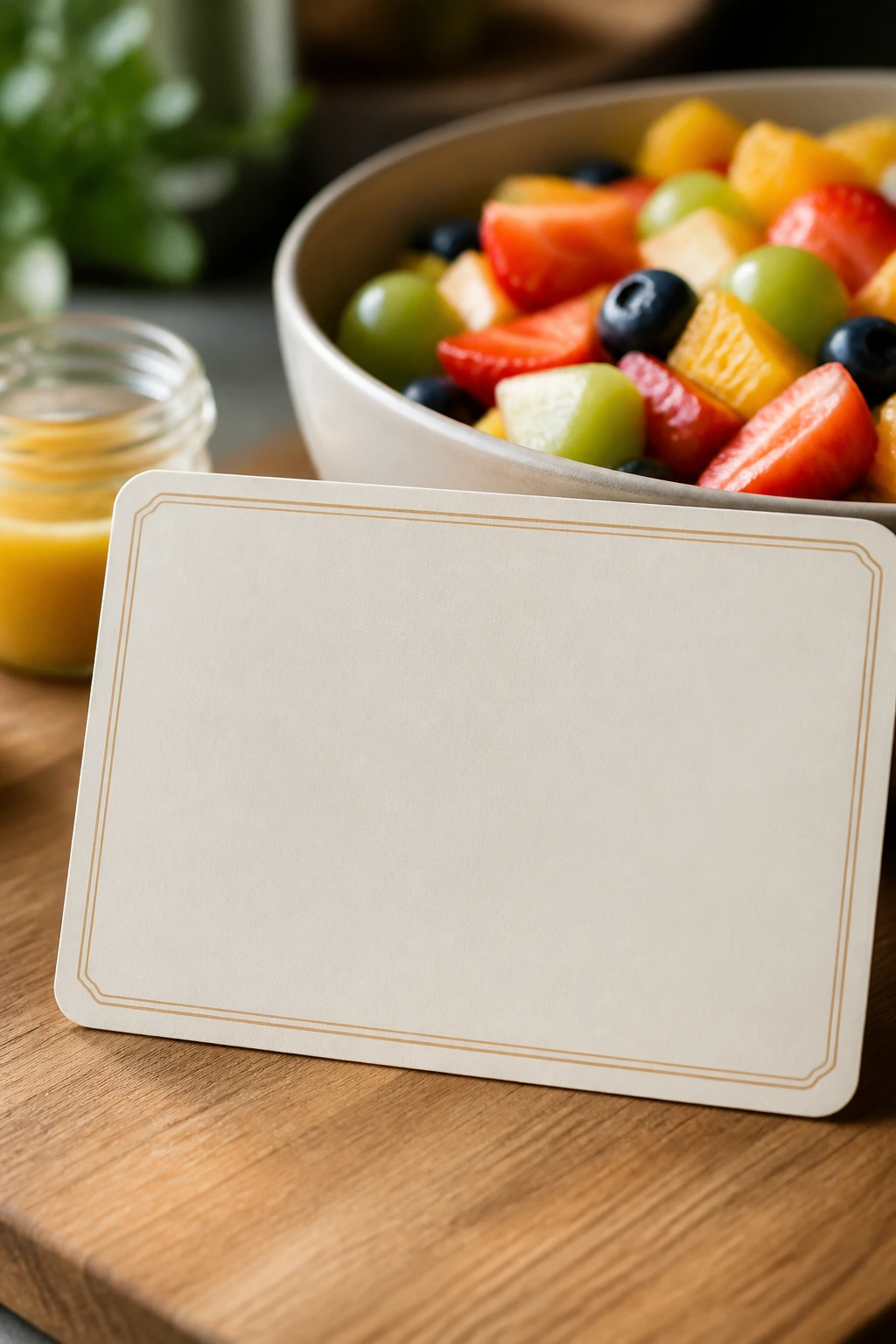
- Recipe Name: Fresh Fruit Salad with Homemade Dressing
- Description: A chilled fruit salad with strawberries, pineapple, blueberries, grapes, kiwi, mango, and mandarin oranges tossed in a bright orange-lime dressing with honey, vanilla, and mint. The dressing stays light, so the fruit tastes crisp instead of syrupy.
- Prep Time: 20 minutes
- Cook Time: 0 minutes
- Total Time: 35 minutes
- Course: Salad, Side Dish, Breakfast, Brunch
- Cuisine: American
- Servings: 8 servings
- Calories: 125 kcal per serving
Ingredients
For the Fruit Salad:
- 2 cups strawberries, hulled and halved
- 2 cups fresh pineapple chunks, cut into 3/4-inch pieces
- 1 1/2 cups blueberries, rinsed and dried
- 1 1/2 cups red grapes, halved lengthwise
- 2 kiwis, peeled and sliced into thin half-moons
- 1 large mango, peeled and diced into 3/4-inch cubes
- 2 mandarin oranges, segmented and pith removed, or 1 cup canned mandarin segments, well drained
For the Homemade Dressing:
- 1/4 cup fresh orange juice
- 2 tablespoons fresh lime juice
- 1 1/2 tablespoons honey, or maple syrup for a vegan version
- 1 teaspoon finely grated orange zest
- 1/2 teaspoon vanilla extract
- 1 pinch fine sea salt
For Garnish:
- 2 tablespoons fresh mint leaves, thinly sliced, optional
Instructions
-
Rinse the fruit and dry it thoroughly on clean towels. Hull the strawberries, halve the grapes, peel and dice the mango, peel and slice the kiwi, and segment the mandarins.
-
Add the pineapple, grapes, mango, and blueberries to a large mixing bowl.
-
Whisk together the orange juice, lime juice, honey, orange zest, vanilla, and salt in a small bowl or jar until smooth.
-
Add the strawberries, kiwi, and mandarins to the bowl. Drizzle the dressing over the fruit and fold gently until coated.
-
Chill for 10 to 15 minutes, then taste and adjust with a little more lime juice or honey if needed.
-
Top with mint, if using, and serve chilled.
Notes: Keep the dressing separate if you need more than a couple of hours of hold time. Do not freeze this salad. Add bananas only at the last second, if at all.