



Raw zucchini can go two ways: pale and watery, or sharp, cool, and almost cucumber-like. The difference is never luck. It comes from cutting it thin, salting it long enough to pull out the extra water, and using a dressing that tastes bright before it even touches the bowl.
I reach for a light zucchini salad with homemade dressing when I want something that feels clean on the plate but still has enough texture to matter. The zucchini should stay a little springy, the herbs should smell green when you tear them, and the dressing should leave a thin sheen on the ribbons instead of pooling at the bottom like an afterthought.
Huge zucchini are the enemy here. So are timid dressings and thick, lazy slices. Use small to medium squash, a sharp peeler or mandoline, and a jar that lets you shake the vinaigrette until it turns glossy. Then the whole thing comes together in the kind of way that makes you wonder why people keep cooking zucchini into mush.
Why This Salad Works So Well on a Warm Plate
A raw zucchini salad lives or dies by texture, and that’s exactly why this one works. The squash brings a cool, gentle crunch that feels closer to shaved cucumber than to cooked zucchini, but with a little more body. Once you salt the ribbons and pat them dry, you remove enough moisture to keep the bowl from turning into a puddle.
Small zucchini are the sweet spot: Their seeds are tiny, their skin is tender, and they shave into neat ribbons without fighting you. Large zucchini look impressive in the garden and in the produce bin, then betray you with spongey centers and watery bowls.
The homemade dressing has enough bite to stand up to raw squash: Lemon juice, Dijon, garlic, and olive oil make a vinaigrette that clings instead of sliding off. If you make it too mild, the zucchini flattens it. If you make it sharp, the zucchini softens the edge after a few minutes.
Salt does quiet work here: A 10- to 15-minute rest pulls out the extra water that would otherwise dilute the dressing. That step sounds fussy until you skip it once and end up with a salad that tastes washed out by its own moisture.
Herbs are not garnish in this bowl: Basil, parsley, and a little mint keep the flavor from drifting into one-note territory. The salad should smell fresh when you lift the bowl, not just taste “green” in a vague way.
The crunch matters as much as the acid: Toasted almonds, or pine nuts if that’s what’s in the cupboard, keep each bite from going flat. I like the way nuts interrupt the softness of the ribbons; it gives the salad a little backbone.
What You’ll Need for the Bowl
Yield: Serves 4 as a side or 2 as a light lunch
Prep Time: 20 minutes
Cook Time: 5 minutes
Chill/Rest Time: 10 to 15 minutes
Total Time: 35 to 40 minutes
Difficulty: Beginner — the only real skill here is slicing thinly and not rushing the drying step.
Best Served: Within 15 minutes of dressing
For the Salad:
- 2 pounds small zucchini, about 4 medium, trimmed
- 1½ teaspoons kosher salt, for drawing out moisture
- 1 small English cucumber, thinly sliced, optional but useful for extra cool crunch
- 1/2 small red onion, sliced paper-thin
- 1/3 cup fresh basil leaves, torn
- 1/4 cup fresh parsley leaves, chopped
- 2 tablespoons fresh mint leaves, chopped
- 1/3 cup toasted sliced almonds
- 1/4 cup shaved Parmesan or pecorino, optional
For the Homemade Dressing:
- 3 tablespoons fresh lemon juice
- 1 teaspoon finely grated lemon zest
- 1 small garlic clove, grated on a microplane
- 1 teaspoon Dijon mustard
- 1 teaspoon honey
- 1/4 cup extra-virgin olive oil
- 1/2 teaspoon kosher salt
- 1/4 teaspoon black pepper
- Pinch of red pepper flakes, optional
Why Each Ingredient Has a Job Here
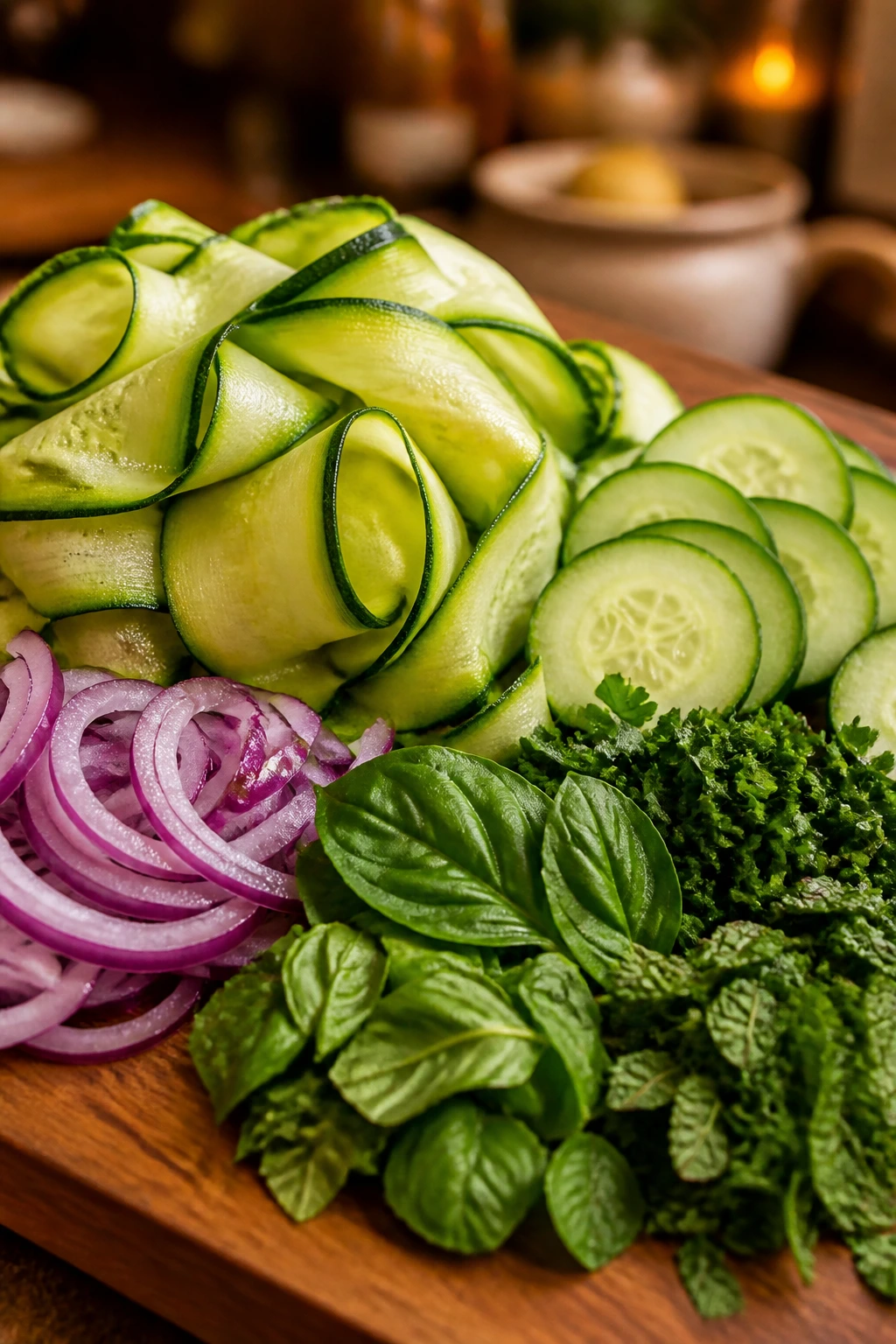
The zucchini
What to use: 2 pounds of small zucchini, which usually means 4 medium squash. Look for firm skin, no soft spots, and a stem end that still looks freshly cut.
Preparation: Trim the ends, then shave the zucchini into ribbons with a Y-peeler or mandoline. If one is bigger than the rest, slice it lengthwise first and skip the seedy core once you hit it.
Substitutions: Yellow summer squash works almost the same way, and a mix of zucchini and squash makes the bowl look especially lively. If you want a sturdier salad, thinly sliced cucumber can stand in for part of the zucchini.
Tips: Tiny to medium squash are worth the extra trip to the store. They have less water, better texture, and no giant seed pockets waiting to leak all over the bowl.
The sharp, fresh supporting cast
What to use: 1 small English cucumber, 1/2 small red onion, 1/3 cup basil, 1/4 cup parsley, and 2 tablespoons mint.
Preparation: Slice the cucumber paper-thin, and slice the red onion as thinly as your knife will manage. Tear the basil by hand so it doesn’t bruise as badly, then chop the parsley and mint just enough to distribute them evenly.
Substitutions: Dill can replace mint if you want a more classic salad feel. Scallions can stand in for the red onion when you want less bite, and thinly sliced fennel is a good detour if you like a faint licorice note.
Tips: If the onion tastes too sharp, soak the slices in ice water for 5 minutes, then drain and dry them well. That takes the edge off without making them limp.
The crunch and the salty finish
What to use: 1/3 cup toasted sliced almonds and 1/4 cup shaved Parmesan or pecorino if you want a little savory depth.
Preparation: Toast the almonds in a dry skillet until pale gold and fragrant, then cool them before adding them to the salad. Shave the cheese at the very end so it stays in long, delicate curls.
Substitutions: Pine nuts, sunflower seeds, or pumpkin seeds all work. If you need the salad to stay dairy-free, skip the cheese and add a few chopped Castelvetrano olives for a salty pop.
Tips: Don’t toss the nuts into the bowl until the last minute. Once they sit in the dressing, they lose the crackle that makes them worth adding.
The homemade dressing
What to use: 3 tablespoons lemon juice, 1 teaspoon lemon zest, 1 grated garlic clove, 1 teaspoon Dijon, 1 teaspoon honey, 1/4 cup olive oil, 1/2 teaspoon salt, 1/4 teaspoon black pepper, and a pinch of red pepper flakes if you like a little heat.
Preparation: Grate the garlic until it almost disappears, then whisk or shake everything hard until the dressing looks glossy and slightly thickened. The lemon zest goes in for aroma, not decoration.
Substitutions: White wine vinegar can replace part of the lemon juice if your lemons are bland. Maple syrup can stand in for honey, and a mild grainy mustard works if Dijon isn’t in the fridge.
Tips: Taste the dressing before you dress the salad. It should seem a touch too sharp on its own, because the zucchini and herbs will soften the edge after they sit together for a few minutes.
A Homemade Dressing That Stays Bright Instead of Flat
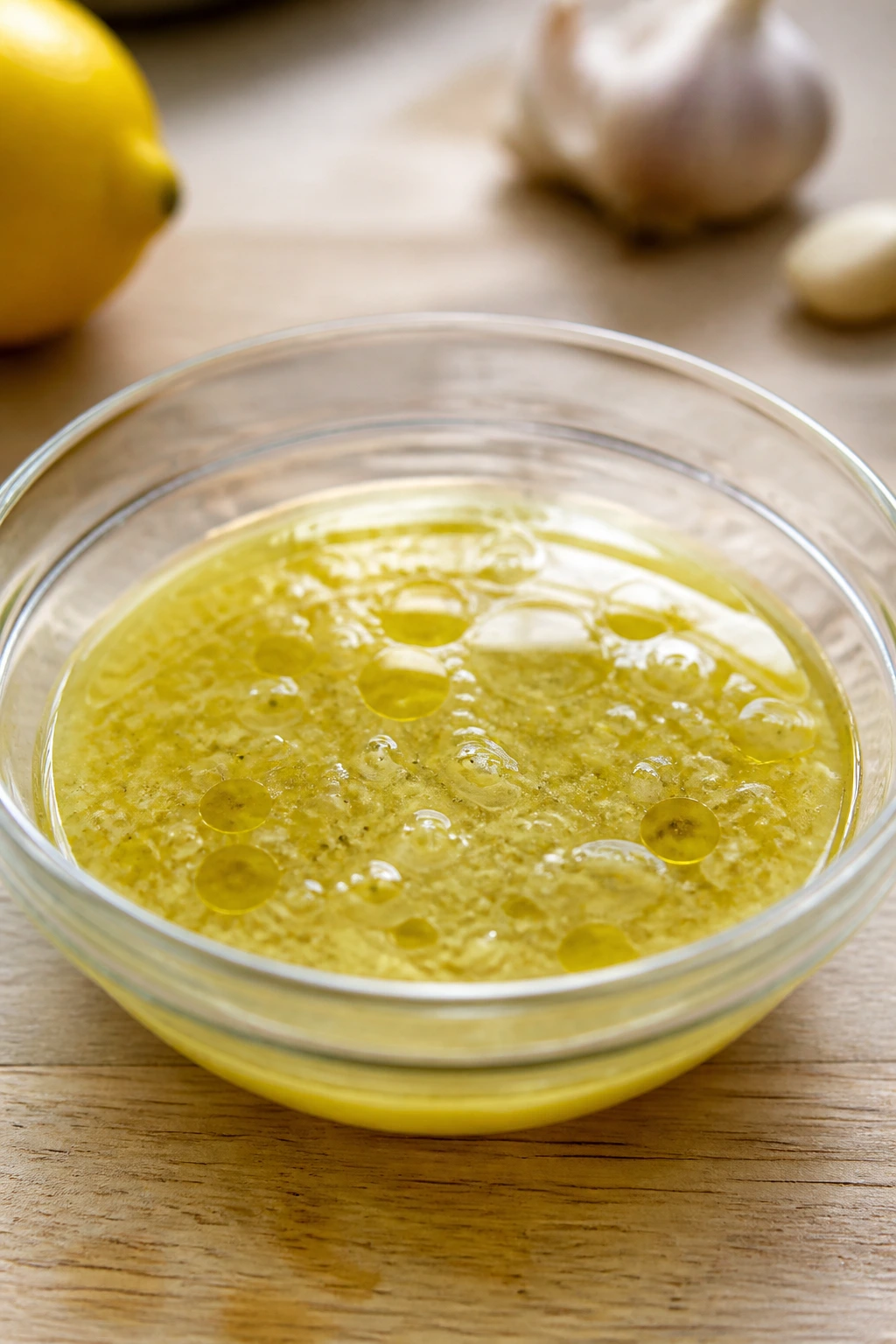
The dressing is the part people rush, which is funny because it’s the one thing that can make the whole bowl feel intentional. Lemon juice brings the lift, Dijon helps the oil and acid stay together, and the garlic gives the vinaigrette a little backbone without turning it into a garlic bomb. If you’ve ever had a salad where the dressing tasted like oil with a sad lemon echo in the background, you already know what happens when this step gets underdone.
The ratio here leans lively. Three tablespoons of lemon juice to a quarter cup of olive oil gives you a dressing that reads fresh rather than heavy, and the teaspoon of honey rounds off the sharp edge just enough to keep the raw zucchini from tasting stern. That balance matters. Raw squash doesn’t need sweetness, but it does benefit from a little softness around the corners.
A grated garlic clove works better than minced garlic for this salad. Minced pieces can land like little spikes on one bite and disappear on the next; grated garlic disperses more evenly, so every ribbon gets the same background hum. If you want a gentler dressing, rub the cut side of a garlic clove around the inside of the mixing bowl instead of grating it directly into the vinaigrette.
Shake the dressing hard in a jar or whisk it in a small bowl until it looks slightly thick and unified. If it separates in the fridge, that’s fine. Olive oil does that. Just bring it back together with ten brisk shakes, and it will dress the zucchini evenly again.
Slicing Zucchini So It Stays Crisp
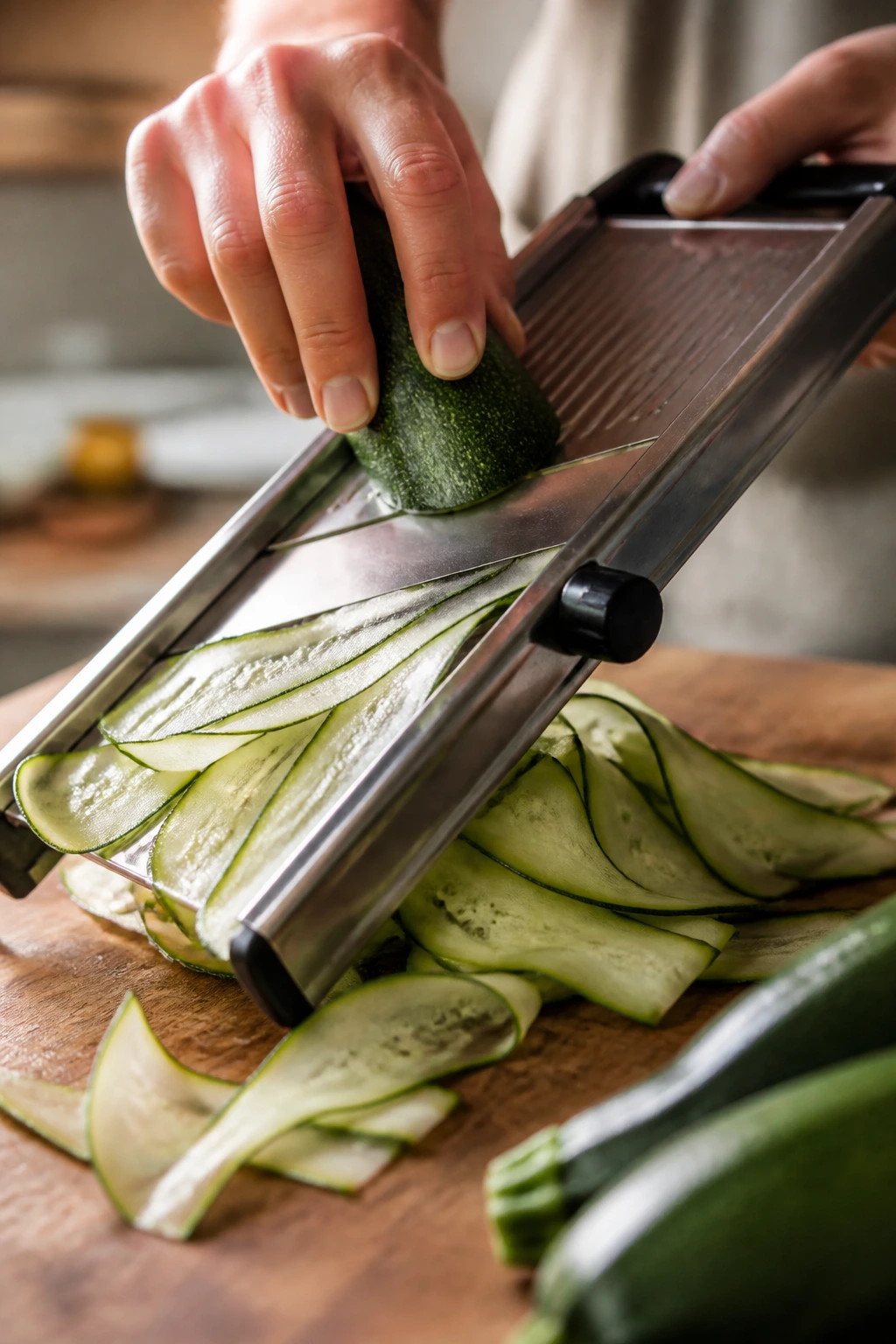
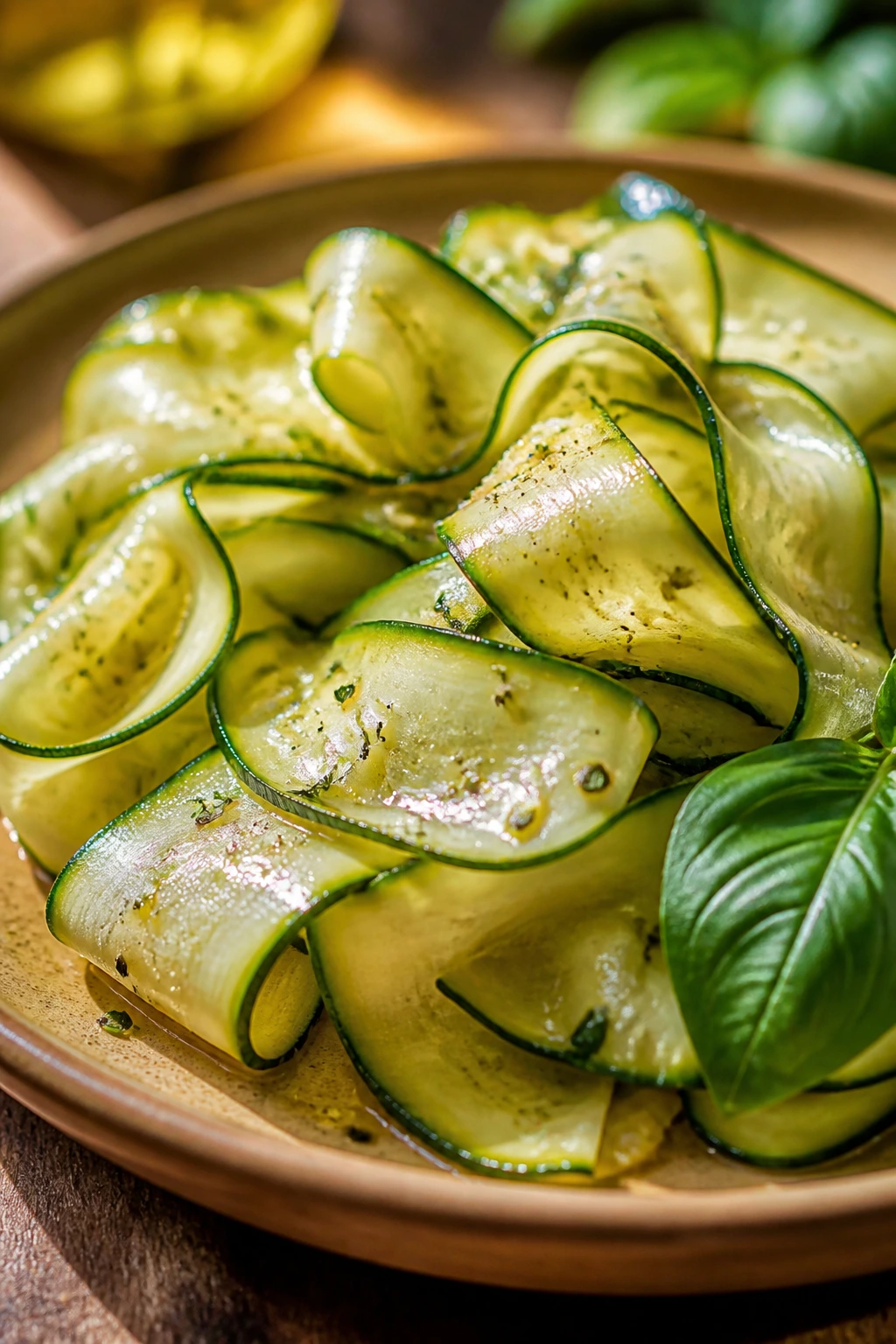
The cut determines the whole mood of the salad. Thin ribbons feel delicate and elegant in the mouth, while half-moons give you a little more chew and are easier if you don’t own a peeler wide enough for large squash. Neither is wrong, but both need to be thin. Thick zucchini slices turn the salad into a faintly crunchy vegetable platter, which is not the goal.
A mandoline gives the cleanest result if you’re comfortable using one. Set it to about 1/16 to 1/8 inch, and keep a cut-resistant glove on your hand if you value your fingertips. A Y-peeler is slower but safer and gives you those long, flexible ribbons that fold into the bowl nicely.
No mandoline? No problem. A sharp chef’s knife and a steady board do the job. Slice the zucchini lengthwise into slabs, then cut the slabs into very thin strips or half-moons. The key is consistency. You want every piece to hit the salt at roughly the same thickness so they soften at the same pace.
Here’s the bit most people skip: if the zucchini is larger than average, stop shaving when you reach the seedy center. That middle section is where the moisture lives. Save it for soup or a stir-fry later; don’t force it into a salad and then act surprised when the bowl gets soupy.
Letting the Salt Pull Out the Water
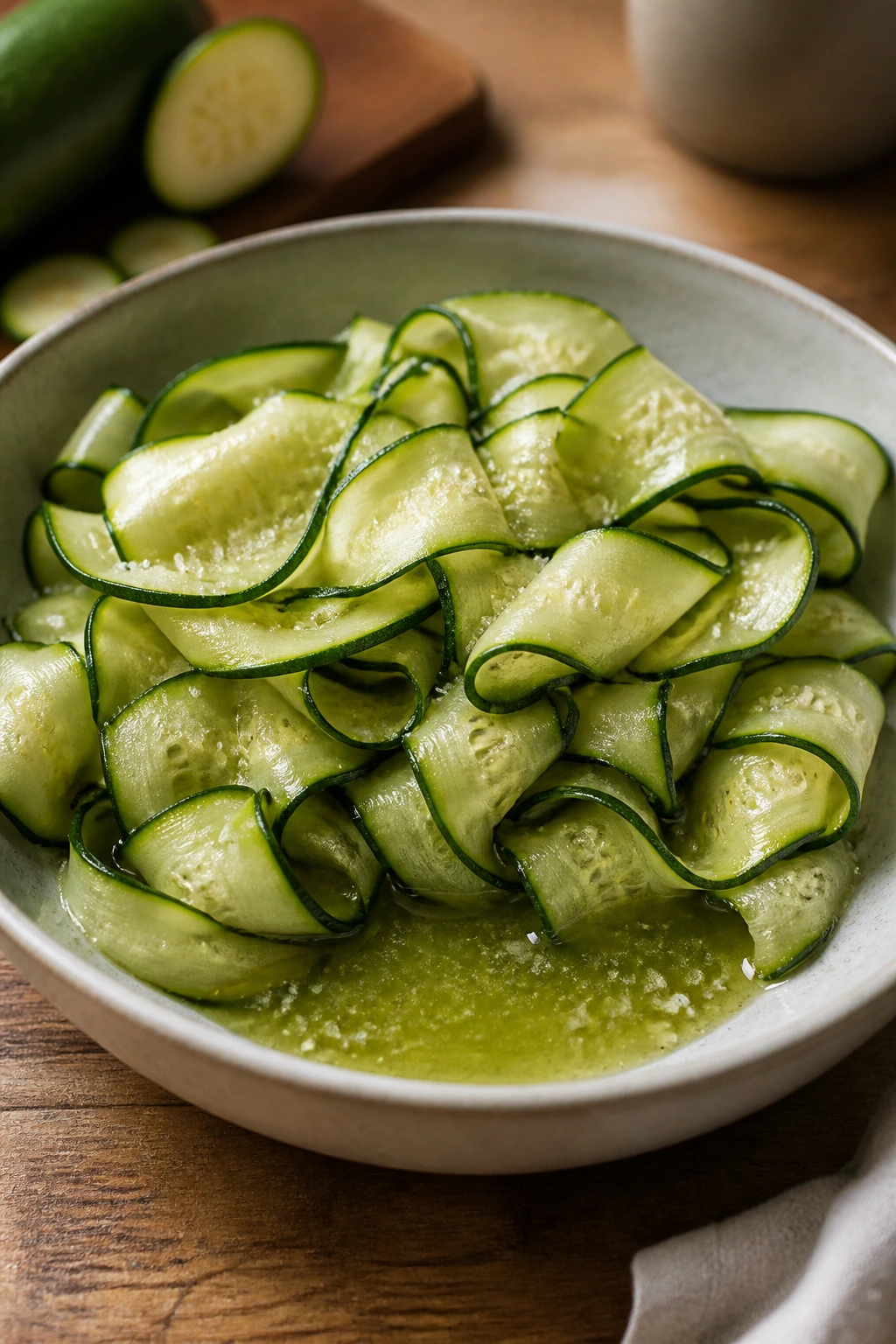
Salt sounds boring until you see what it does to raw zucchini. Within minutes, the ribbons start to glisten as the surface moisture is drawn out. That liquid is the thing that would otherwise dilute the lemon, weaken the olive oil, and leave you with a salad that tastes pleasant for three bites and then collapses into itself.
Use 1½ teaspoons of kosher salt for the full amount of zucchini, and toss it well enough that the grains disappear into the ribbons. You do not need to bury the squash in salt. You need even coverage. After 10 to 15 minutes, the zucchini should feel a little more supple and should have released a noticeable puddle in the bottom of the bowl.
Pat the ribbons dry after they’ve rested. That part matters more than people think. If you dump the zucchini straight into the dressing with all that salty liquid clinging to it, the vinaigrette gets thin and the onion sharpens instead of mellowing. A clean kitchen towel or a few layers of paper towel do the work fast.
This is also the moment when you can tame the onion if you want. Slice it early, soak it in ice water for a few minutes, then dry it well. The salad stays crisp and clean, and you don’t get that raw onion burn that can bulldoze the herbs.
The Salad Method, Step by Step
Prep and Toast:
-
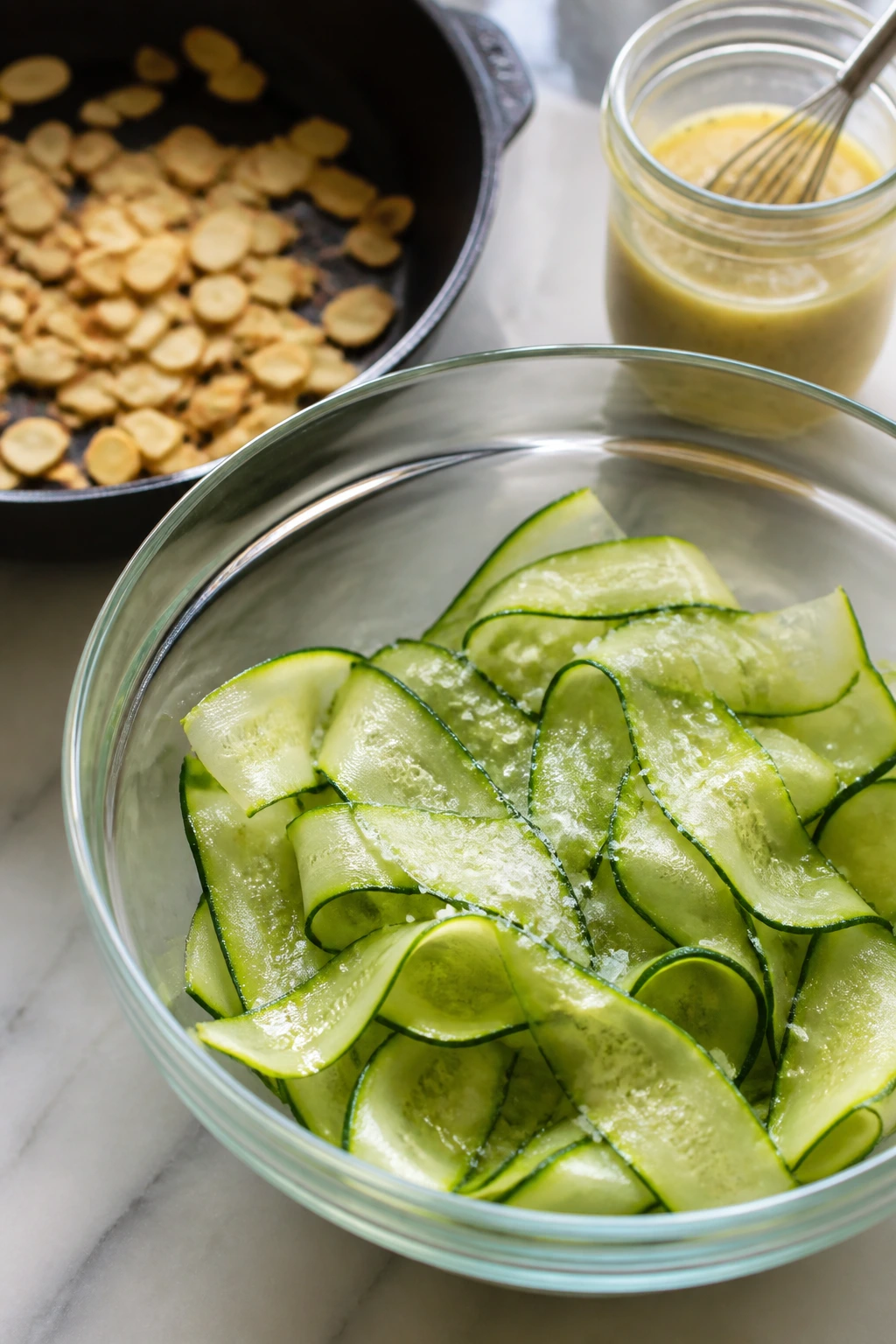
Toast the almonds. Set a dry skillet over medium heat and add the sliced almonds. Stir them often for 3 to 4 minutes, until they smell nutty and turn pale gold at the edges. Move them to a plate right away so they do not keep browning in the hot pan.
-
Slice the zucchini. Trim the ends from the zucchini, then shave them into ribbons with a Y-peeler or mandoline. If you’re using a knife, cut them into very thin half-moons. Stop at the seedy core if a zucchini runs large and watery.
-
Salt the ribbons. Toss the zucchini with 1½ teaspoons kosher salt in a large bowl. Let it sit for 10 to 15 minutes, until the ribbons look glossy and a little water collects at the bottom of the bowl.
Mix and Finish:
-
Whisk the dressing. In a small bowl or jar, combine the lemon juice, lemon zest, garlic, Dijon, honey, olive oil, 1/2 teaspoon salt, black pepper, and red pepper flakes if using. Whisk or shake until the dressing looks emulsified and lightly thickened.
-
Dry the zucchini. Tip the salted zucchini into a colander or onto a clean kitchen towel. Pat it dry well. Do not rinse it unless you accidentally oversalted it; rinsing usually makes the texture too loose.
-
Build the bowl. Add the cucumber, red onion, basil, parsley, and mint to the dried zucchini. Pour in about three-quarters of the dressing first, then toss gently with tongs or your hands until everything is lightly coated.
-
Taste and adjust. Add the toasted almonds and Parmesan or pecorino if you’re using it. Toss once more, then taste a ribbon. If the salad feels flat, add the last bit of dressing. If it tastes a little sharp, let it sit for 5 minutes before serving; the zucchini softens the edge fast.
-
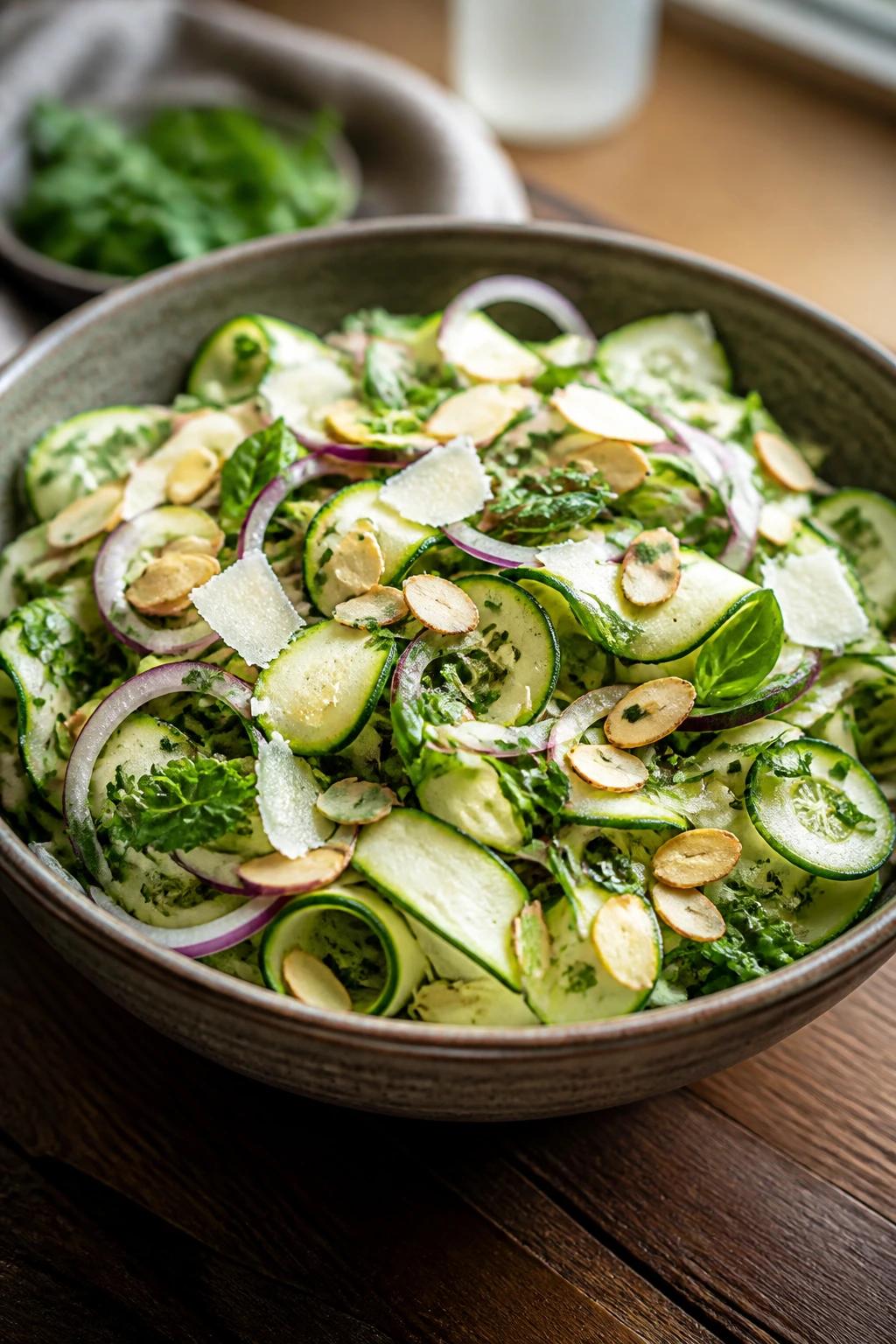
Serve right away. Spoon the salad onto a platter or into shallow bowls, then finish with the remaining herbs and a few more almond slices. A tiny pinch of flaky salt on top is optional, but it does wake up the herbs if the dressing is on the mild side.
The Tools That Make This Easier
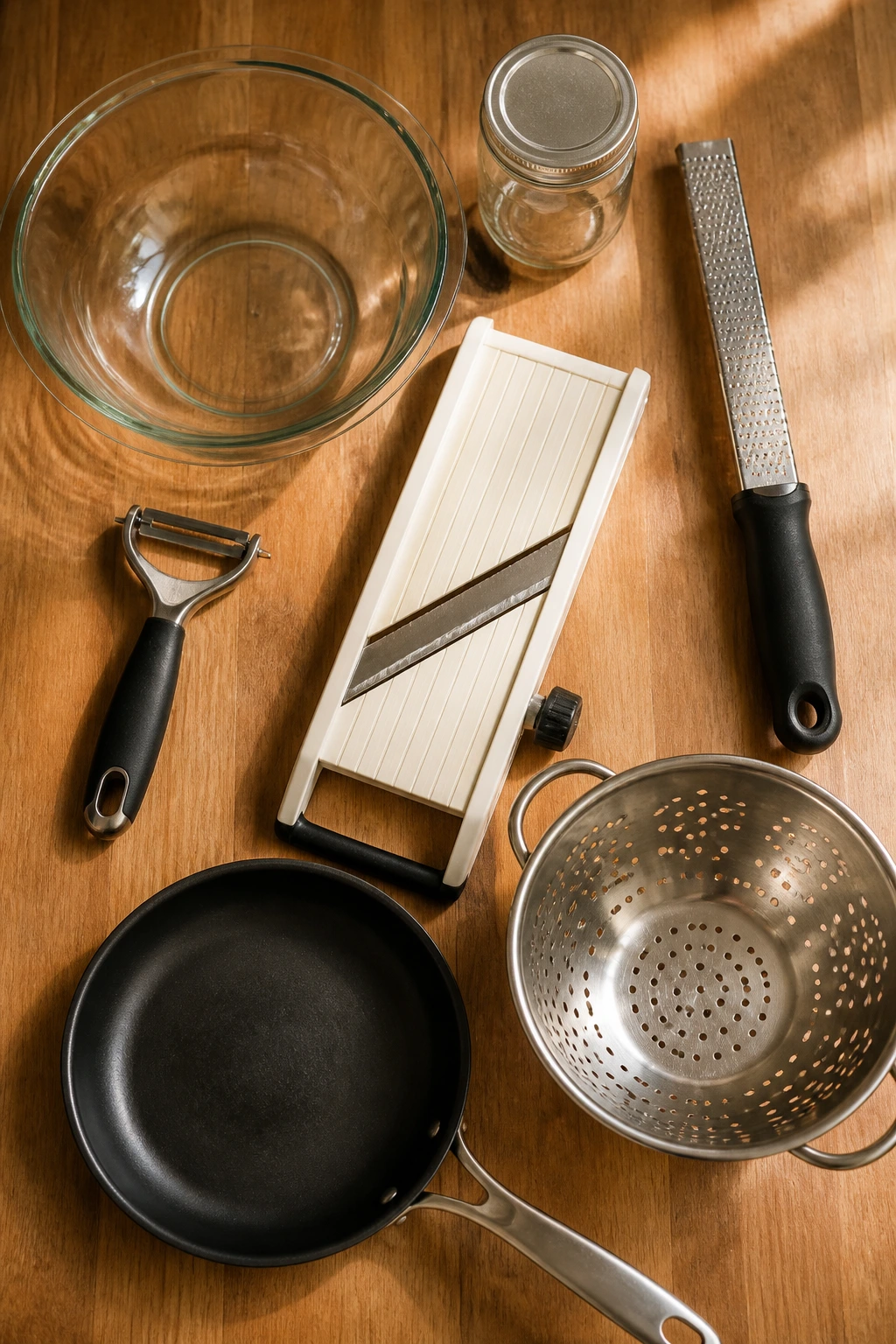
- Y-peeler or mandoline: Either one gives you the thin zucchini ribbons this salad depends on. A mandoline is faster; a peeler is calmer.
- Large mixing bowl: Use something roomy. If the bowl is crowded, the zucchini tears instead of tossing cleanly.
- Small bowl or jar with lid: The dressing comes together better when you can whisk it hard or shake it until it turns glossy.
- Microplane or fine grater: Grate the garlic and zest the lemon finely so they blend into the dressing instead of sitting in clumps.
- Dry skillet: You only need this for the almonds, but it’s worth pulling out. Toasted nuts taste warmer and cleaner than raw ones.
- Colander or clean kitchen towel: Either one works for drying the salted zucchini. A salad spinner can help with the herbs if they’re damp.
How to Serve It at the Table
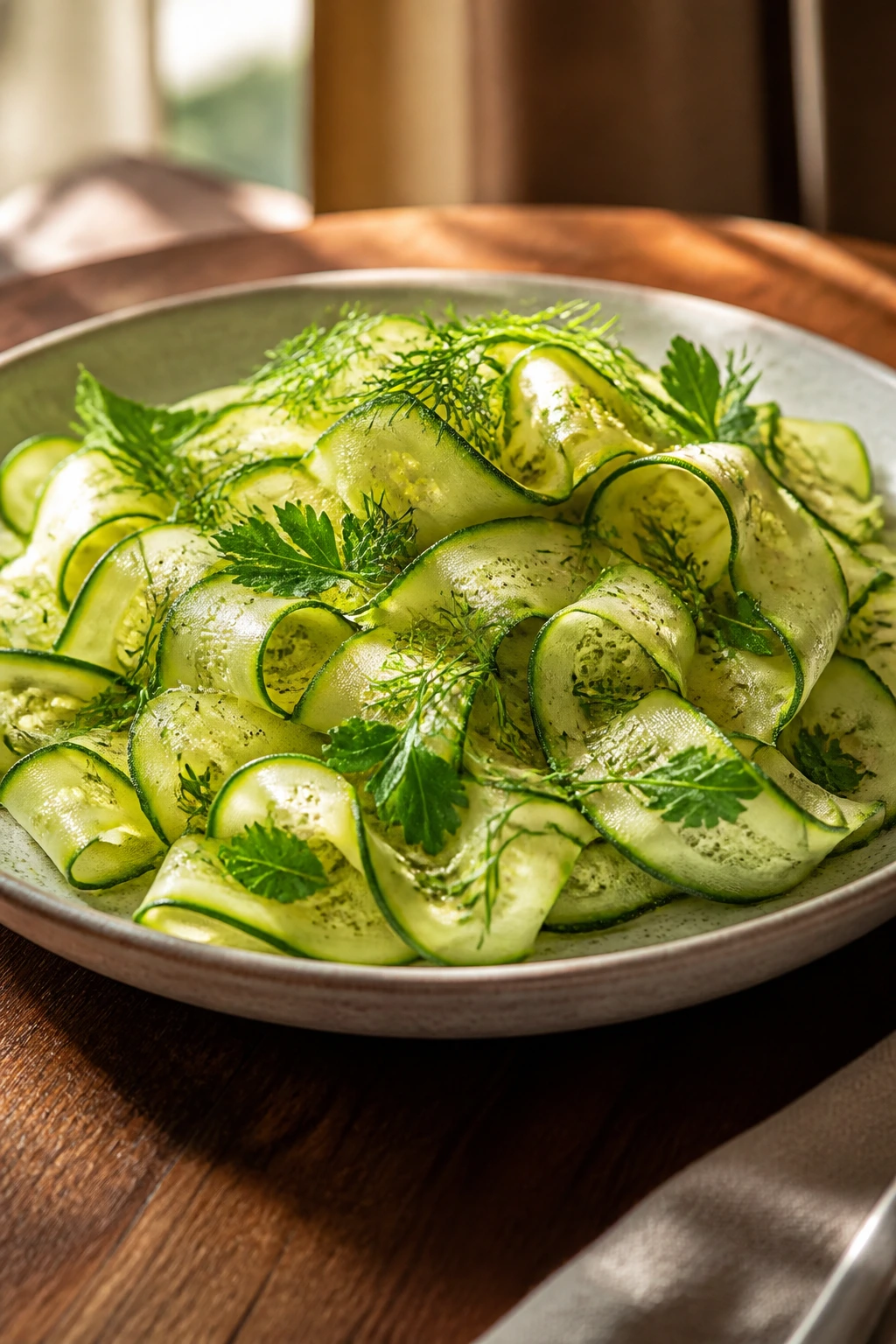
Presentation: Pile the zucchini into a shallow bowl or spread it across a wide platter so the ribbons don’t look cramped. The curled edges and herbs are prettier when they have room to settle instead of being packed into a tight dome.
Accompaniments: This salad sits nicely beside grilled salmon, roast chicken, or a plain piece of bread with good olive oil. If you want it to carry more weight as lunch, add a handful of chickpeas, white beans, or torn mozzarella. For a lighter plate, serve it with sliced tomatoes and olives and call it done.
Portions: As a side, figure on about 1 generous cup per person. As a lunch, it feels more complete with protein alongside it, and two portions from this recipe are enough if you add beans or fish. If you’re feeding more people, double the zucchini before you double the cheese; extra ribbons absorb the dressing better than extra dairy does.
Beverage Pairing: A cold Sauvignon Blanc, sparkling water with lemon, or unsweetened iced tea all work. The salad has enough acid to make sweet drinks taste out of place, so keep the glass crisp and clean.
Small Tweaks That Change the Whole Bowl
Flavor Enhancement: A teaspoon of caper brine in the dressing gives the bowl a briny, almost salty snap that works especially well if you skip the cheese. It’s small, but it changes the finish enough that you notice it after the third bite.
Customization: If basil feels too sweet for you, lean harder on parsley and mint. If you want something more aromatic, add a few fennel fronds or a pinch of dill instead. The salad can take it.
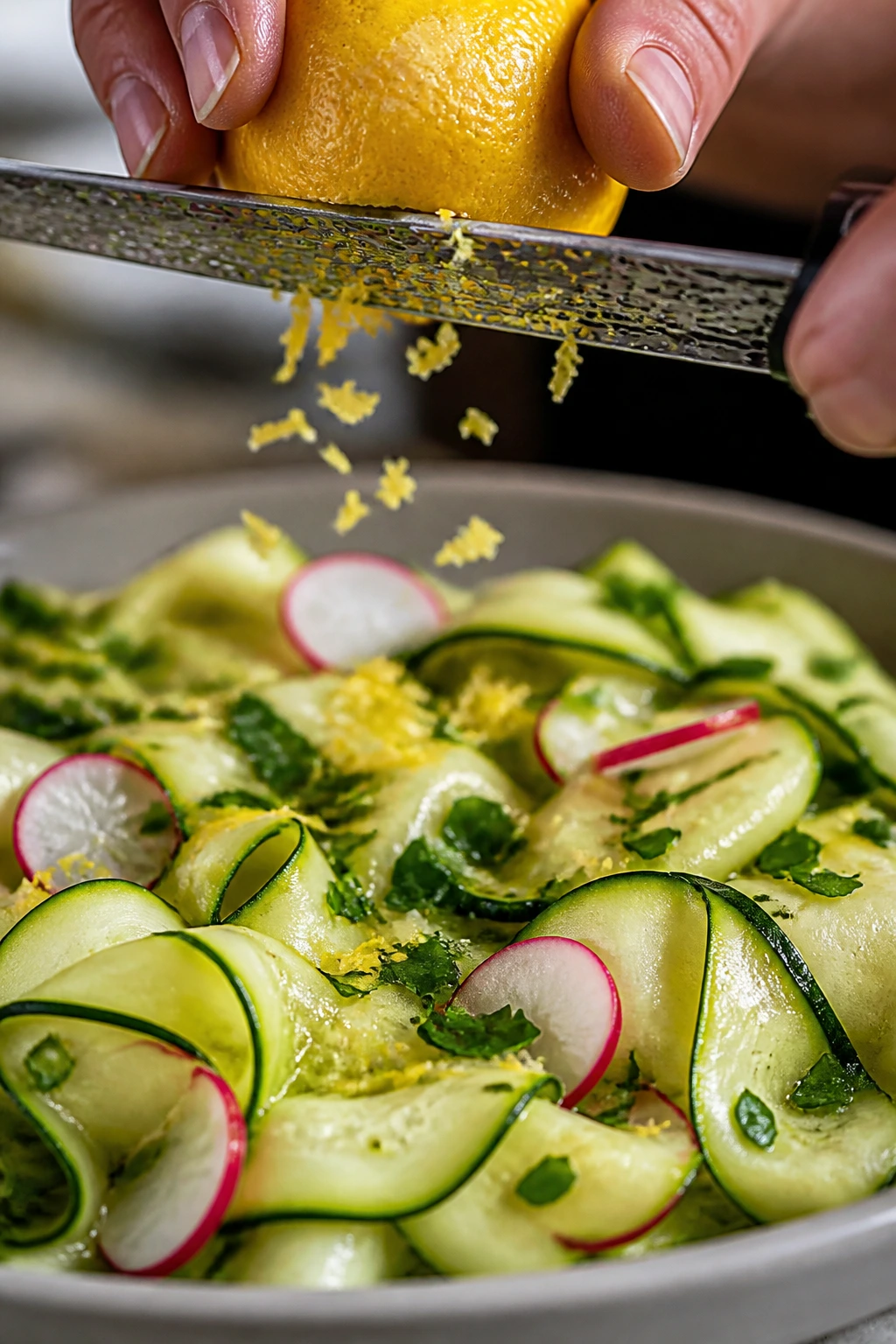
Serving Suggestions: A little extra lemon zest over the top is one of those moves that sounds minor and tastes louder than you expect. A few shaved radish coins also add sharpness and a nice red-white-green contrast if you want the bowl to look lively on a platter.
Make-It-Yours: For dairy-free, leave out the cheese and use olives or sunflower seeds for savory contrast. For vegan, swap the honey for maple syrup. For nut-free, use toasted pumpkin seeds and keep the rest exactly the same. For more protein, fold in chickpeas or sliced hard-boiled eggs right before serving.
Common Slip-Ups and How to Avoid Them
-
Using giant zucchini: Big squash have a seedy center and a softer texture, which means the salad turns watery faster. Choose small to medium zucchini, or trim out the middle if that’s all you can find.
-
Cutting the ribbons too thick: Thick slices look sturdy, but they eat like raw squash wedges. Aim for paper-thin ribbons or 1/8-inch half-moons so the salt and dressing can do their job.
-
Skipping the drying step: Salt pulls the water out, but it doesn’t remove it on its own. If you skip the towel or colander step, the dressing loosens and slides to the bottom of the bowl.
-
Dressing too early: Once the zucchini is coated, the clock starts. Fifteen to twenty minutes is fine; an hour is not. The salad loses its bounce and starts to slump.
-
Overdoing the garlic: One grated clove is enough. Two cloves can dominate the herbs and make the whole salad taste hot instead of fresh.
-
Forgetting to toast the almonds: Raw almonds are fine in a pinch, but they taste dull beside lemon and herbs. A few minutes in a skillet gives them the nutty edge that makes the salad feel finished.
Three Variations Worth Trying
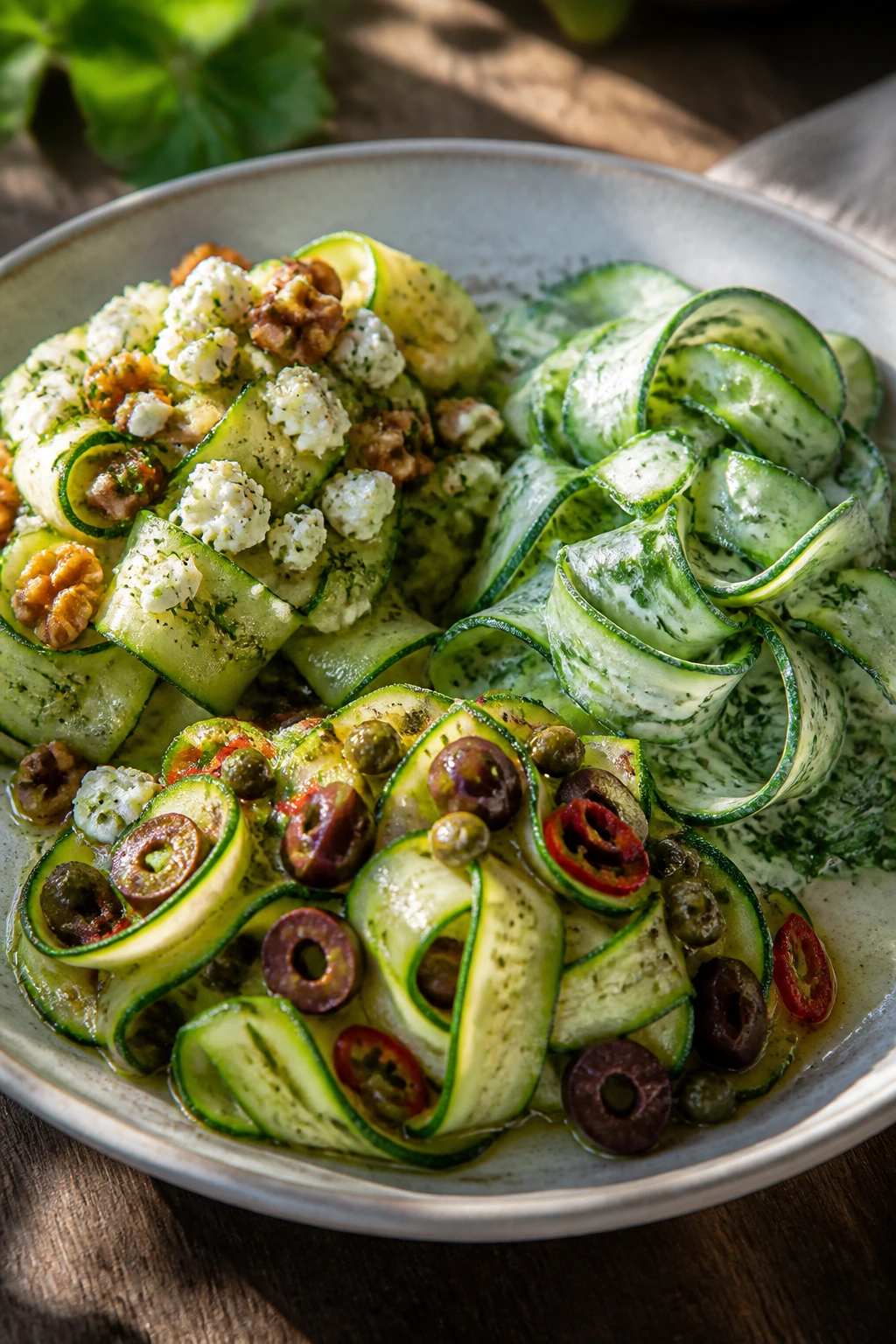
Greek Garden Cut: Add 1/2 cup crumbled feta, swap the almonds for chopped walnuts, and stir 1/2 teaspoon dried oregano into the dressing. The result leans saltier and a little more bracing, which is nice if you’re serving it next to grilled lamb or chicken.
Creamy Herb Ribbon Salad: Replace 2 tablespoons of the olive oil with plain Greek yogurt and thin the dressing with 1 to 2 teaspoons water. The texture turns a little creamier without losing the lemon bite, and it clings especially well to the ribbons. I like this version when the salad is heading toward lunch instead of side dish territory.
Caper and Chili Version: Add 1 tablespoon drained capers, bump the red pepper flakes to 1/4 teaspoon, and use pine nuts instead of almonds. That gives you sharper edges and a saltier finish. It’s the version I make when I want the bowl to cut through something richer on the plate.
No-Cheese Crunch Bowl: Leave out the Parmesan, double the herbs, and add 1/3 cup toasted pumpkin seeds. This keeps the salad lighter and gives you a different kind of crunch, a little earthier than almonds. Good choice if you want the lemon and zucchini to stay front and center.
Make-Ahead, Storage, and Leftovers
Raw zucchini salad is happiest the day it’s made. Once the ribbons are dressed, the texture starts to soften, and after about 20 to 30 minutes the bowl loses that crisp snap that makes it so appealing. If you need to hold it for a little while, keep it chilled and toss again right before serving.
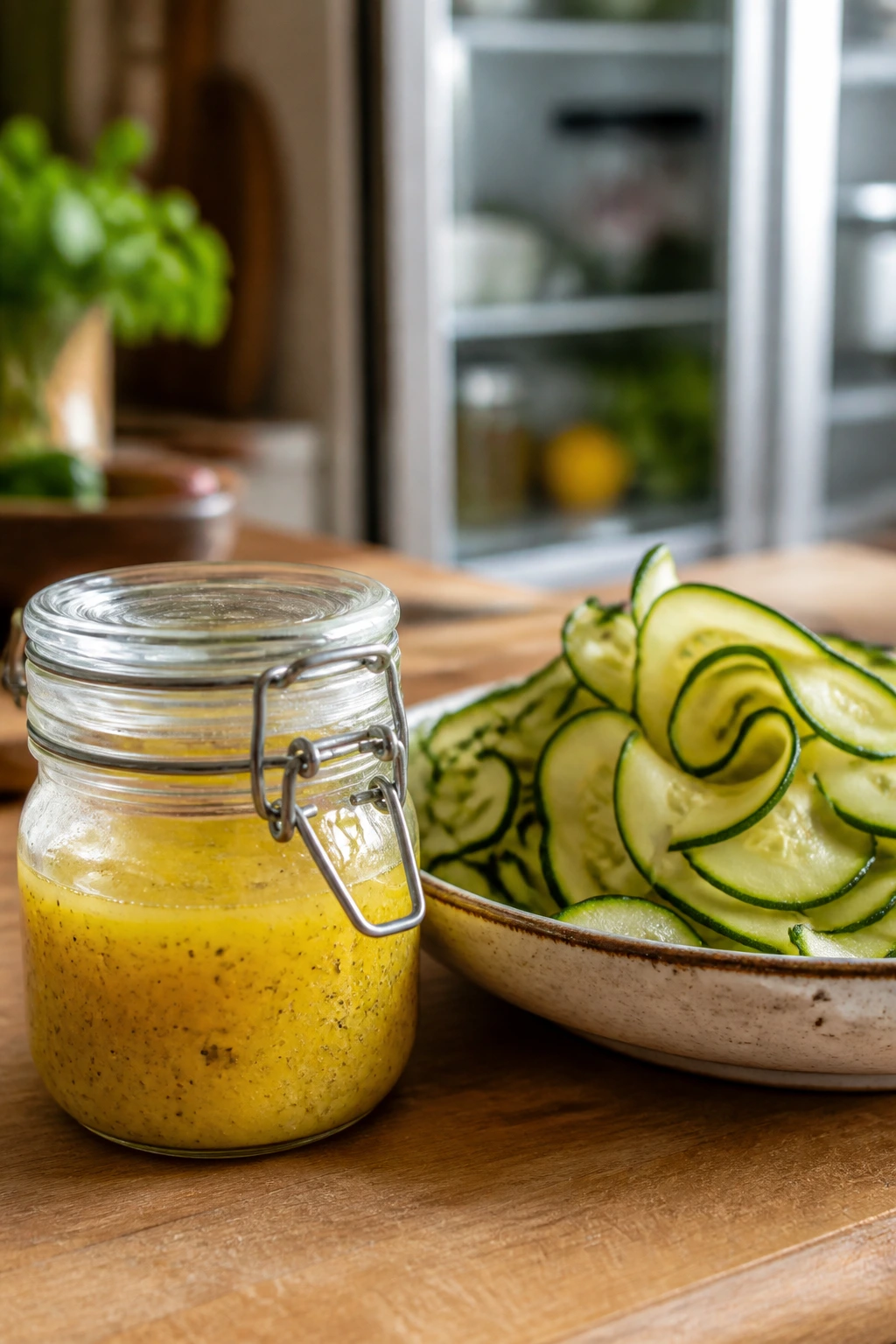
The dressing keeps well in a sealed jar in the refrigerator for up to 5 days. Olive oil may firm up a bit when cold, so leave the jar on the counter for 10 minutes and shake it hard before using. If the lemon taste seems muted after chilling, add a small squeeze of fresh lemon rather than more oil.
The toasted almonds can be made 1 week ahead and kept in an airtight container at room temperature. If they sit around longer than that, they’ll still be safe, but the flavor fades and the crunch goes soft. Herbs are the opposite: chop them the day you cook, or wrap them loosely in a barely damp paper towel and refrigerate them for no more than 24 hours.
If you want to get ahead without ruining the texture, prep the components separately. Slice and salt the zucchini, dry it, and store it in a paper towel-lined container in the fridge for up to 1 day. Make the dressing ahead, toast the nuts, and keep the herbs whole until the last minute. Public-health guidance on cut vegetables is boring but sensible: if you’re not serving right away, keep everything cold and covered.
Leftover dressed salad is best eaten within 1 day. The herbs darken, the zucchini softens, and the dressing becomes more uniform, which is not the same thing as bad. It just becomes a different salad—softer, less crisp, and better spooned over grilled bread than served as a side.
Questions People Ask Before Making It
Can I make this salad without a mandoline?
Yes. A sharp Y-peeler or chef’s knife works fine. The real goal is thin, even pieces, not a perfect ribbon shape.
Do I need to peel the zucchini first?
No. The skin gives the salad structure and a little color contrast. Peel only if the zucchini skin is very thick, which is rare with small squash.
What if my zucchini gives off a puddle of water after salting?
That’s a good sign. It means the salt did its job. Just drain and pat the ribbons dry before dressing them, or the vinaigrette will thin out.
Can I use bottled lemon juice?
You can, but the flavor will be flatter and a little harsher. Fresh lemon juice is worth it here because the dressing is so simple that every ingredient shows.
How far ahead can I dress the salad?
About 20 to 30 minutes ahead is the limit if you want the texture to stay crisp. After that, it turns softer and more slippery, which some people don’t mind, but it’s no longer the same salad.
What’s the best substitute for almonds?
Toasted pumpkin seeds are the easiest swap, followed by sunflower seeds or pine nuts. Pick something with real crunch, because the salad needs that break in texture.
Can I turn this into a main dish?
Yes. Add chickpeas, white beans, grilled shrimp, or flaked salmon. The zucchini stays light, but the protein turns it into a proper lunch.
What if the dressing tastes too sharp when I mix it?
Add a little more olive oil or another teaspoon of honey, then taste again after it sits on the zucchini for 5 minutes. Raw dressing often tastes louder in the bowl than it will on the finished salad.
Why This Salad Belongs in Your Back Pocket
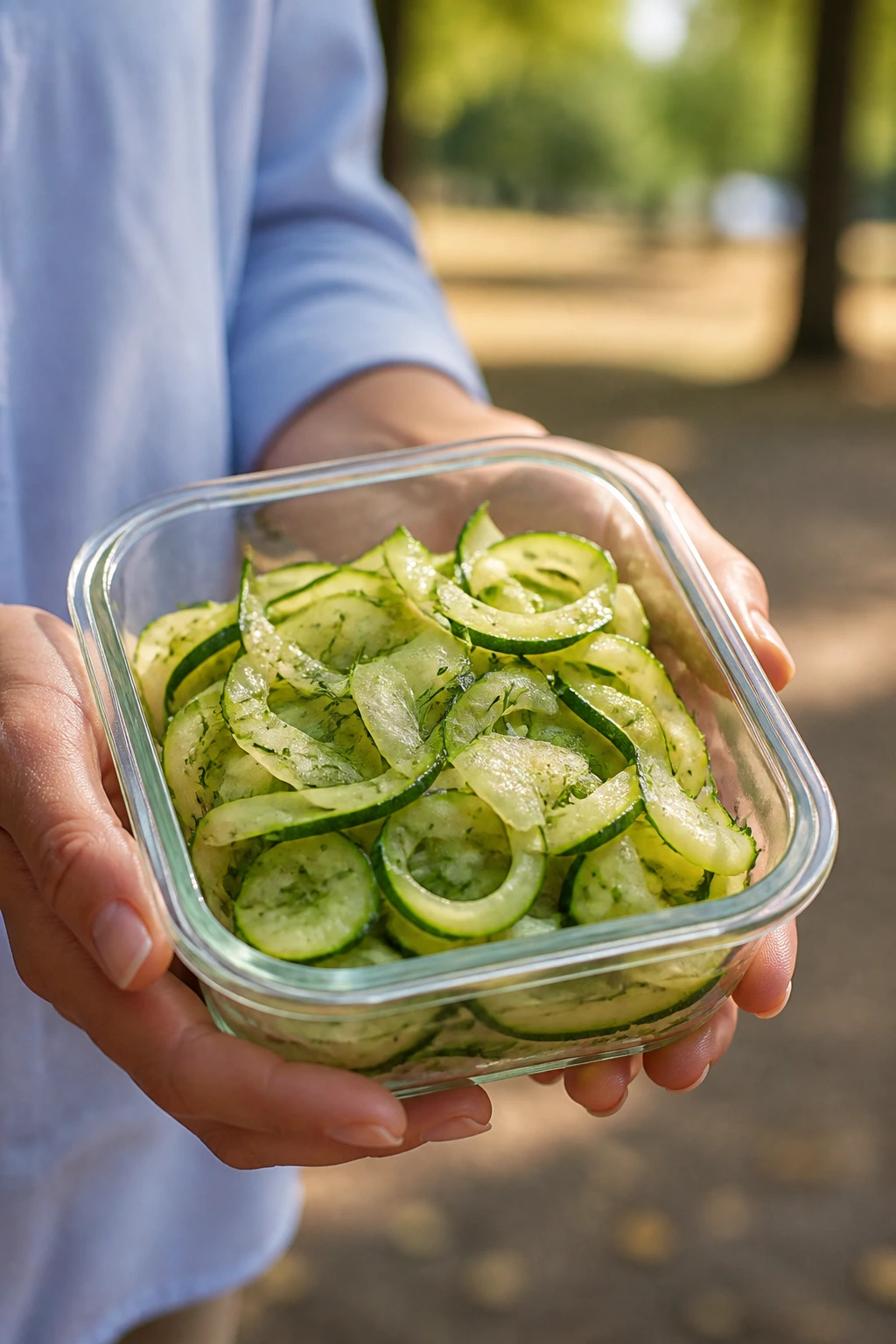
A good zucchini salad does not try to be loud. It just has to be clean, crisp, and awake at the right moments. That’s why the salt step matters, why the lemon needs real teeth, and why the herbs should smell like herbs instead of garnish.
The nicest part is that this dish rewards attention without making a fuss about it. Slice thin, dry well, toss late, and the whole bowl behaves. Miss those details, and you get a limp pile that tastes faintly dressed; get them right, and you’ve got something that looks casual but eats with more care than most cooked sides bother to offer.
Light Zucchini Salad with Homemade Dressing — Recipe Card
Recipe Name: Light Zucchini Salad with Homemade Dressing
Description: Thin ribbons of zucchini are salted, dried, and tossed with a bright lemon-Dijon dressing, fresh herbs, toasted almonds, and optional Parmesan. The result stays crisp, cool, and clean-tasting when served right away.
Prep Time: 20 minutes
Cook Time: 5 minutes
Total Time: 35 to 40 minutes
Course: Salad, Side Dish
Cuisine: Mediterranean-inspired
Servings: 4 servings as a side or 2 servings as a light lunch
Calories: About 220 kcal per serving
Ingredients
For the Salad:
- 2 pounds small zucchini, about 4 medium, trimmed
- 1½ teaspoons kosher salt, for drawing out moisture
- 1 small English cucumber, thinly sliced, optional
- 1/2 small red onion, sliced paper-thin
- 1/3 cup fresh basil leaves, torn
- 1/4 cup fresh parsley leaves, chopped
- 2 tablespoons fresh mint leaves, chopped
- 1/3 cup toasted sliced almonds
- 1/4 cup shaved Parmesan or pecorino, optional
For the Dressing:
- 3 tablespoons fresh lemon juice
- 1 teaspoon finely grated lemon zest
- 1 small garlic clove, grated
- 1 teaspoon Dijon mustard
- 1 teaspoon honey
- 1/4 cup extra-virgin olive oil
- 1/2 teaspoon kosher salt
- 1/4 teaspoon black pepper
- Pinch of red pepper flakes, optional
Instructions
-
Toast the almonds in a dry skillet over medium heat for 3 to 4 minutes, stirring often, until fragrant and pale gold. Transfer to a plate to cool.
-
Slice the zucchini into thin ribbons with a Y-peeler or mandoline, or into very thin half-moons with a knife. Trim out the seedy center if the zucchini is large.
-
Salt the zucchini with 1½ teaspoons kosher salt and let it rest for 10 to 15 minutes until it releases water.
-
Whisk the dressing together with the lemon juice, lemon zest, garlic, Dijon, honey, olive oil, 1/2 teaspoon salt, black pepper, and red pepper flakes if using.
-
Drain and dry the zucchini well in a colander or on a clean towel. Do not rinse unless it was oversalted.
-
Toss the salad with the cucumber, red onion, basil, parsley, mint, and about three-quarters of the dressing.
-
Add the almonds and cheese, if using, then taste and adjust with the remaining dressing, extra lemon, or a pinch more salt.
-
Serve immediately on a platter or in shallow bowls, finishing with more herbs if you want the top to look especially fresh.
Notes: Best eaten soon after dressing; if you need to make it ahead, keep the components separate and toss at the last minute. If the salad tastes flat, a little extra lemon zest wakes it up fast.