



A beef chuck roast looks a little rude on the counter. Thick, heavy, and packed with seams of collagen, it is not the cut that flatters you on instinct. It is the cut that pays you back after three slow hours in a covered pot, when the house smells like onions, thyme, wine, and browned beef.
That payoff is the whole point. Chuck wants heat low enough to soften the connective tissue, but not so gentle that the flavors stay flat; it needs a real sear first, then a braise that crawls along until the gravy turns glossy and the meat slips apart in thick slices. Skip the sear and the roast tastes one-note. Rush the braise and it stays tight and stubborn.
I like this style of dinner because it feels honest. Nothing about it is fussy, but nothing about it is accidental either — the salt, the browning, the wine, the potatoes, the rest at the end all matter, and once you’ve made it a couple of times, you start to see exactly which small move changes the whole pot. The rest is mostly patience, and the pot itself does a lot of the work.
Why This Chuck Roast Earns the Oven Time
There’s a reason chuck roast keeps showing up in kitchens that know what they’re doing. It comes from the shoulder, which means it carries more connective tissue than a lean roasting cut, and that connective tissue is the whole story. Cook it hot and fast, and it fights you. Cook it low and enclosed, and it turns silky.
Deep brown crust: The first sear builds a dark fond on the bottom of the pot, and that’s where the gravy gets its depth instead of tasting thin and boiled.
Tender slices, not dry shreds: A 325°F oven gives the roast enough time to soften without turning the outer layers into stringy beef jerky. Chuck is one of those cuts that likes a patient hand.
One pot, full dinner: Onions, carrots, mushrooms, and potatoes all share the same braising liquid, which means every bite tastes like it came from the same place. That matters more than people admit.
Gravy with actual flavor: Tomato paste, Worcestershire, red wine, and beef stock make a sauce that tastes built, not poured from a carton and hoped for the best.
Leftovers that improve: The next-day slices soak up the juices even more. The gravy thickens in the fridge, then loosens back up when you warm it gently.
A Practical Timeline Before You Start
Yield: Serves 6 to 8
Prep Time: 25 minutes
Cook Time: 3 hours 15 minutes to 3 hours 45 minutes
Total Time: About 3 hours 40 minutes to 4 hours 10 minutes
Difficulty: Intermediate — the method is straightforward, but browning, timing, and gravy-making all need your attention.
Chill/Rest Time: 15 minutes before slicing
Best Served: Warm, after a short rest, with plenty of gravy
The Ingredient List for the Roast and Gravy
For the Beef Chuck Roast
- 1 boneless beef chuck roast, 3 1/2 to 4 pounds
- 2 teaspoons kosher salt
- 1 1/2 teaspoons freshly ground black pepper
- 2 tablespoons all-purpose flour
- 2 tablespoons olive oil
For the Braise
- 2 medium yellow onions, cut into thick wedges
- 4 medium carrots, peeled and cut into 2-inch pieces
- 3 celery stalks, cut into 2-inch pieces
- 8 ounces cremini mushrooms, halved if large
- 5 garlic cloves, smashed and chopped
- 2 tablespoons tomato paste
- 1 tablespoon all-purpose flour
- 1 cup dry red wine
- 3 cups low-sodium beef stock
- 1 tablespoon Worcestershire sauce
- 2 fresh thyme sprigs
- 1 fresh rosemary sprig
- 2 bay leaves
- 1 1/2 pounds baby Yukon Gold potatoes, halved
- 1 tablespoon unsalted butter, cold
- 1 tablespoon chopped fresh parsley
Why Each Ingredient Pulls Its Weight
Main Protein: Chuck Roast
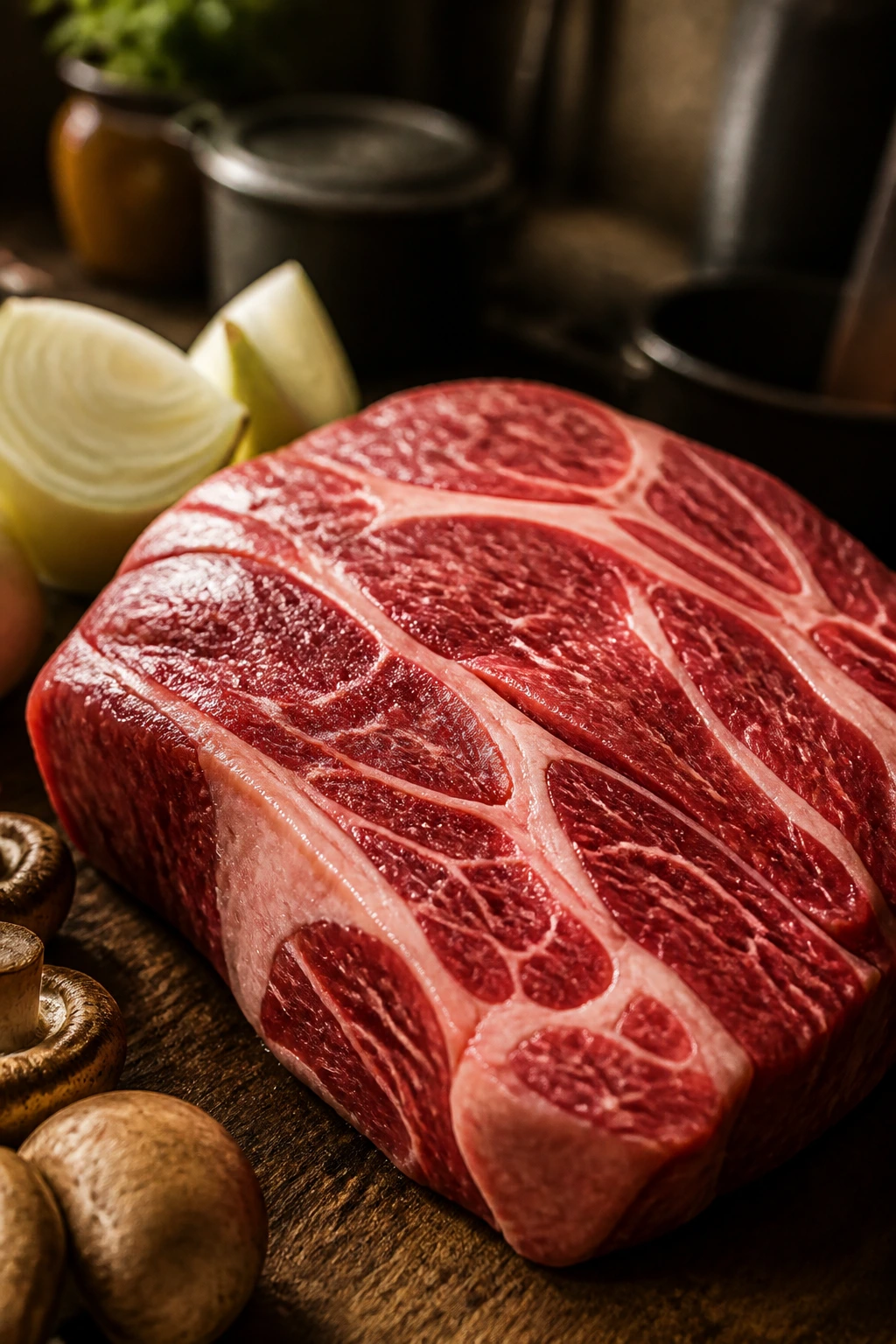
- What to use: A 3 1/2- to 4-pound boneless chuck roast with visible marbling and a few seams of connective tissue.
- Preparation: Pat it dry, then season it all over and let it sit while the pot heats.
- Substitutions: Shoulder roast or English roast can stand in; avoid very lean round roasts if you want the same braised texture.
- Tips: Look for white fat running through the meat, not just a hard cap on the outside. That marbling melts during the braise and keeps the slices juicy.
Aromatics & Vegetables: Onion, Carrot, Celery, Mushroom
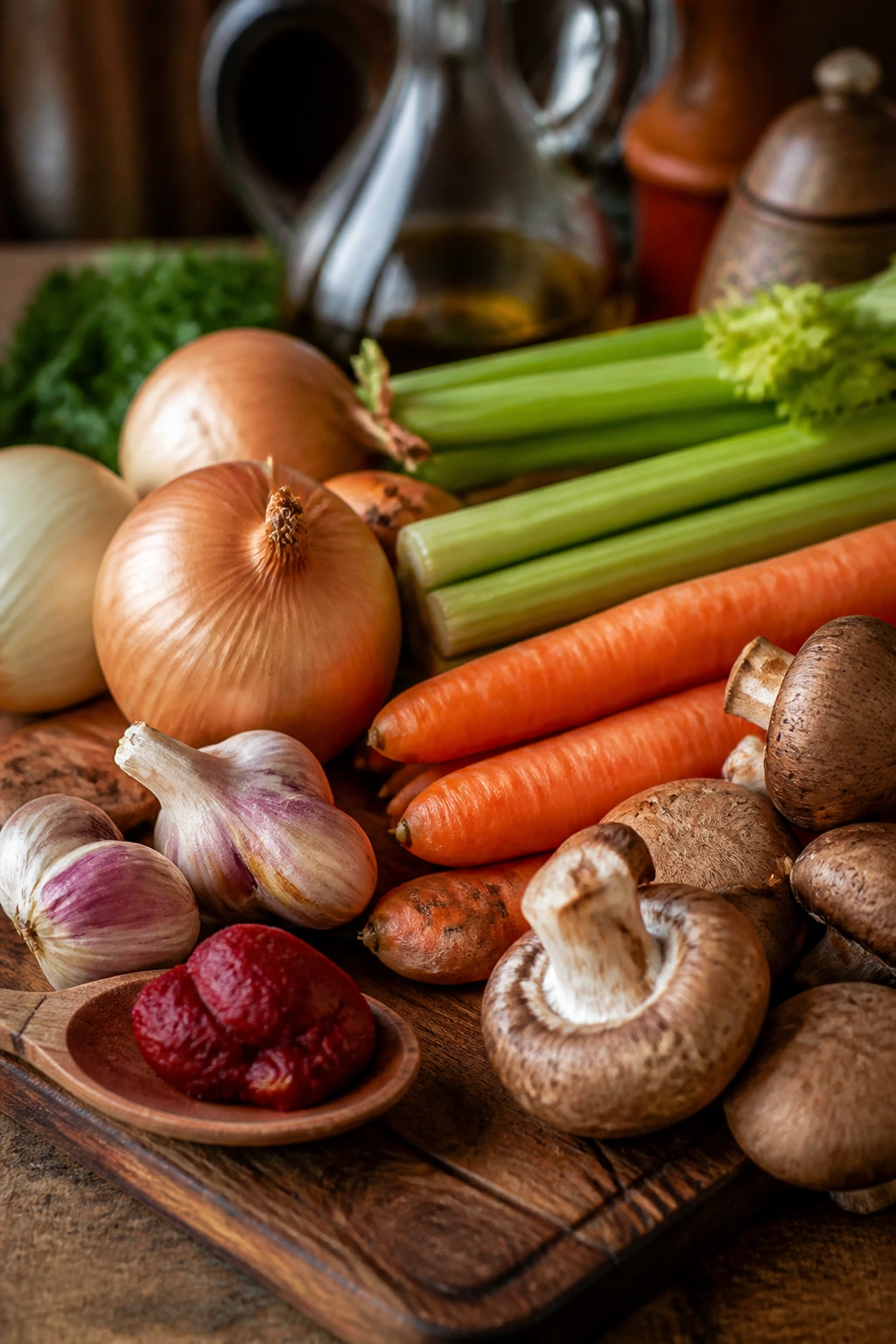
- What to use: 2 onions, 4 carrots, 3 celery stalks, and 8 ounces of cremini mushrooms.
- Preparation: Cut the vegetables in large pieces so they survive a long cook without falling apart. The mushrooms can be halved, not sliced thin.
- Substitutions: Parsnips, turnips, or pearl onions can replace part of the carrot-and-onion mix; baby bella mushrooms work exactly like cremini.
- Tips: Big pieces matter here. Tiny dice will collapse into the gravy and vanish, which sounds fine until you realize you’ve lost all texture.
Braising Liquid: Wine, Stock, and Worcestershire
- What to use: 1 cup dry red wine, 3 cups beef stock, and 1 tablespoon Worcestershire sauce.
- Preparation: Keep the stock ready before you start searing; once the fond hits the pot, you want to move fast.
- Substitutions: If you want no wine, use another cup of stock plus 1 tablespoon balsamic vinegar and 1 teaspoon soy sauce.
- Tips: Choose a wine you’d actually drink. A dry cabernet, merlot, or syrah gives the gravy body without sweetness.
Seasonings and Thickener: Flour, Tomato Paste, Herbs, Bay
- What to use: 2 tablespoons flour on the roast, 1 tablespoon flour in the pot, 2 tablespoons tomato paste, 2 thyme sprigs, 1 rosemary sprig, and 2 bay leaves.
- Preparation: Measure the flour before you start; once the roast is browned, you’ll want to move in a hurry. Strip the thyme if you prefer leaves, or leave the sprigs whole for easier removal.
- Substitutions: Dried thyme and rosemary can work in a pinch — use 1 teaspoon dried thyme and 1/2 teaspoon dried rosemary.
- Tips: Tomato paste needs a minute in the hot pot until it darkens and smells sweet. That little step keeps the gravy from tasting flat and tinny.
Finishing Touches: Butter and Parsley
- What to use: 1 tablespoon cold butter and 1 tablespoon chopped parsley.
- Preparation: Keep the butter cold until the very end so it melts into the sauce, not before.
- Substitutions: A teaspoon of olive oil can replace the butter if you want a dairy-free finish.
- Tips: Parsley is not decoration here. It cuts through the richness and wakes the whole dish up.
The Equipment That Makes This Easier
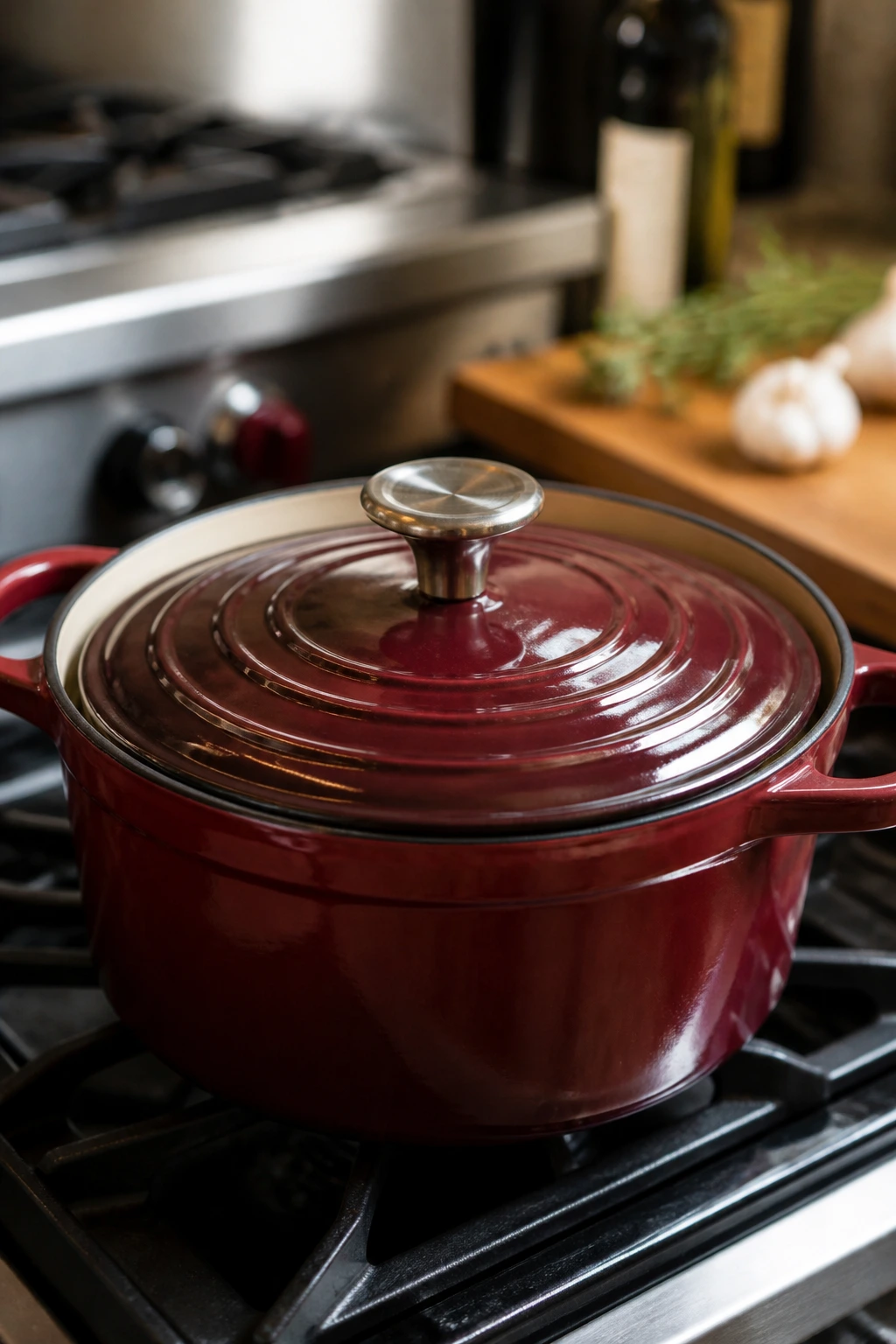
- 5 1/2- to 7-quart Dutch oven with a tight lid — This is the right vessel for a roast that needs both browning and long braising.
- Tongs — You’ll use them to turn the roast without tearing the crust.
- Wooden spoon or flat spatula — Good for scraping the browned bits off the bottom of the pot.
- Sharp chef’s knife — Thick vegetables need clean, confident cuts.
- Cutting board — A large one gives you room for the roast, the onions, and the potatoes without chaos.
- Measuring cups and spoons — The braising liquid depends on balance, not guesswork.
- Ladle — Helpful for spooning gravy over the finished roast without flooding the plate.
- Sheet pan or platter — Use it to rest the roast before slicing.
- Instant-read thermometer, optional — Useful if you like numbers, though chuck roast still tells you its doneness mostly by feel.
Browning, Braising, and Finishing the Pot
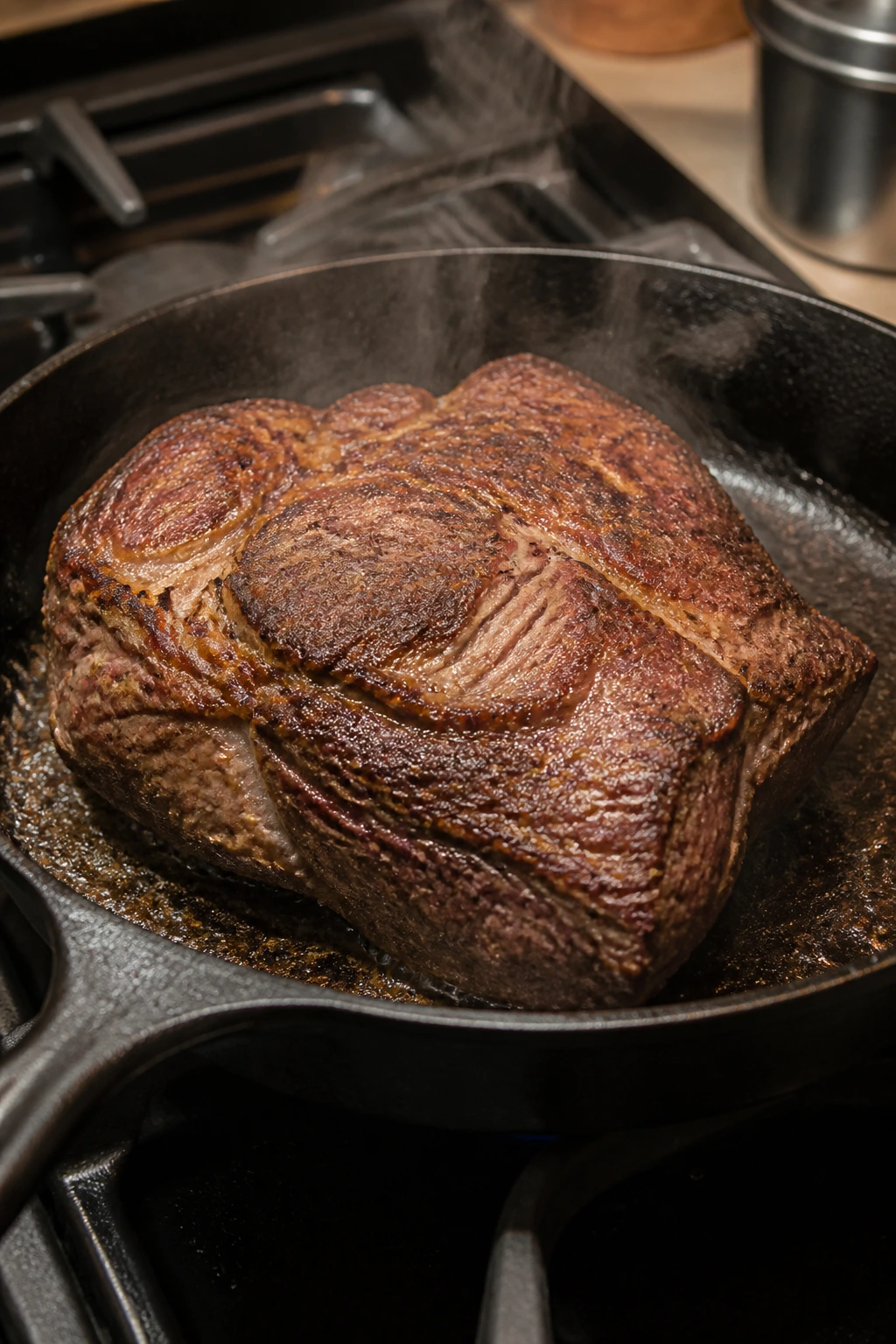
Brown the roast first. Always.
-
Preheat the oven to 325°F (165°C) and position a rack in the lower-middle part of the oven.
-
Pat the chuck roast dry with paper towels. Season it all over with the 2 teaspoons kosher salt and 1 1/2 teaspoons black pepper, then dust it with the 2 tablespoons flour. Let it sit for 10 minutes while the pot heats.
-
Set a large Dutch oven over medium-high heat and add the 2 tablespoons olive oil. When the oil shimmers, lay in the roast and sear it for 4 to 5 minutes per side, including the ends, until each surface is deep brown. Do not move it too soon; if it sticks for the first minute, it’s usually still forming crust.
-
Transfer the roast to a plate. Lower the heat to medium and add the onions, carrots, celery, and mushrooms. Season lightly with a pinch of salt and cook for 6 to 8 minutes, stirring now and then, until the onions soften and the mushrooms give up their liquid.
-
Add the garlic and tomato paste. Cook for 1 minute, stirring constantly, until the paste darkens from bright red to brick red and the garlic smells sweet rather than sharp.
-
Sprinkle the 1 tablespoon flour over the vegetables and stir for 30 seconds. Pour in the red wine and scrape the bottom of the pot hard with a wooden spoon, loosening every brown bit. Let the wine bubble for 2 minutes until the raw edge is gone.
Let the oven do the slow part.
-
Add the beef stock, Worcestershire sauce, thyme, rosemary, and bay leaves. Return the roast to the pot along with any juices on the plate. The liquid should come about halfway up the sides of the meat. If it looks too shallow, add a little more stock or water.
-
Cover the pot and transfer it to the oven. Braise for 1 hour and 30 minutes.
-
Add the potatoes around the roast, tucking them into the liquid. Cover again and continue braising for 1 hour 30 minutes to 2 hours, until the beef is fork-tender and the potatoes are soft all the way through. If you use a thermometer, the center of the roast will usually read around 195°F to 205°F when it’s ready to yield.
Finish the gravy, then slice with the grain in mind.
-
Remove the pot from the oven and transfer the roast, potatoes, and vegetables to a platter. Cover loosely with foil and let the meat rest for 15 minutes.
-
Skim off excess fat from the surface of the braising liquid, then set the pot over medium heat. Simmer the liquid for 5 to 10 minutes until it looks slightly thicker and glossy. Stir in the cold butter and remove the bay leaves and herb stems.
-
Slice the roast against the grain into 1/2-inch slices, or pull it into large pieces with two forks if it has reached shreddable tenderness. Spoon the gravy over the meat, scatter the parsley on top, and serve it while the edges are still hot.
How to Serve a Roast Like This Without Making It Fussy
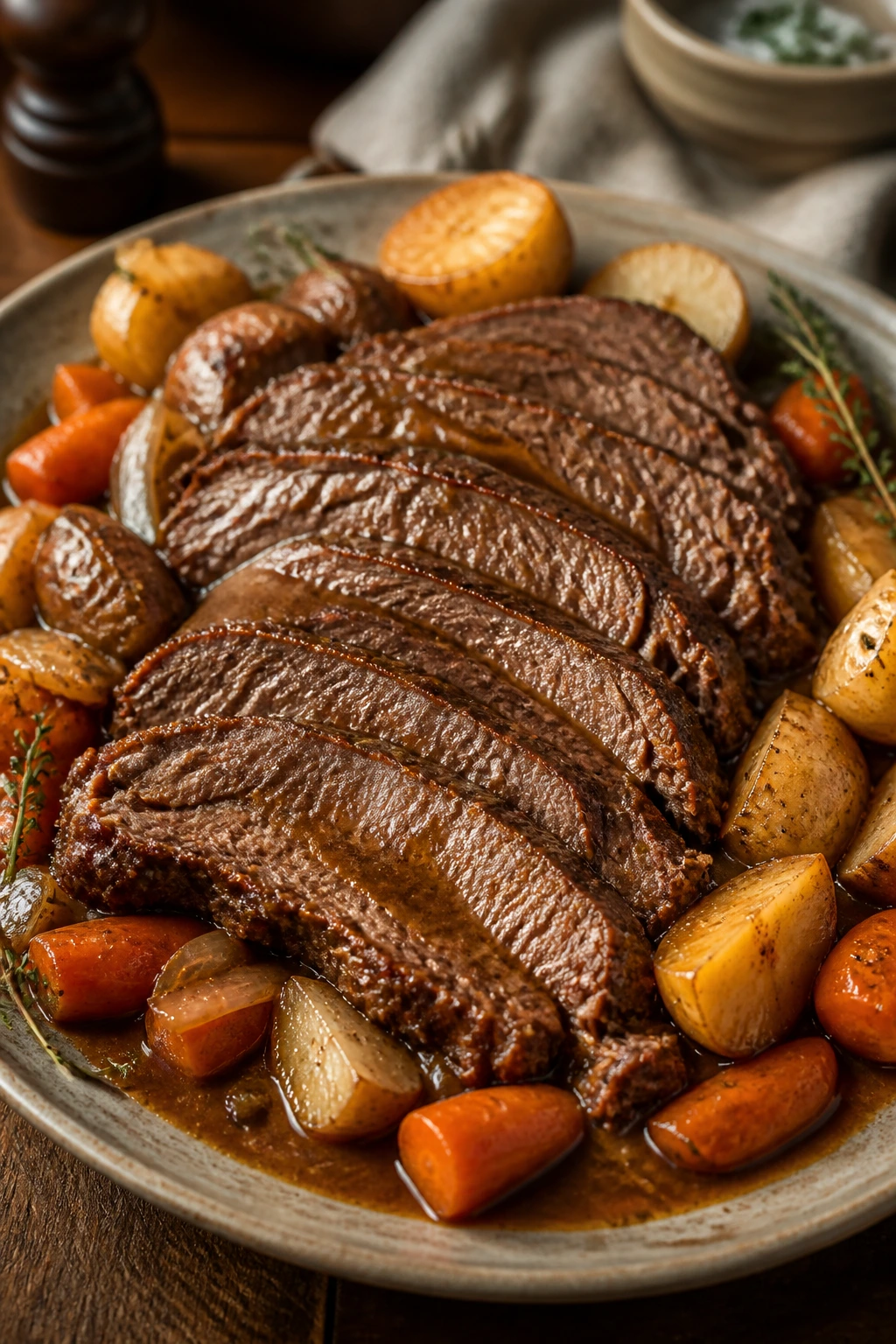
Presentation: Spoon the gravy into the center of a warm platter, then lay the sliced beef slightly overlapped across it so the edges catch some sauce but the top stays visible. Arrange the potatoes and vegetables around the meat instead of burying them under it.
Accompaniments: Creamy mashed potatoes are the obvious answer, and I say that as a compliment. Buttered egg noodles, crusty sourdough, or even a pile of soft polenta all work when you want something to catch the gravy. A simple green salad with sharp vinaigrette keeps the plate from feeling too heavy.
Portions: Plan on about 6 to 8 ounces of cooked beef per person if the roast is the main event. If you’re serving a crowd with plenty of sides, the roast stretches further than people think, especially once the potatoes and carrots are on the table.
Beverage Pairing: A dry red wine echoes the braise nicely — cabernet, merlot, or syrah all do the job. If you want something darker and less formal, a malty brown ale or stout stands up to the beef without fighting the gravy.
Little Tweaks That Make the Roast Taste Bigger
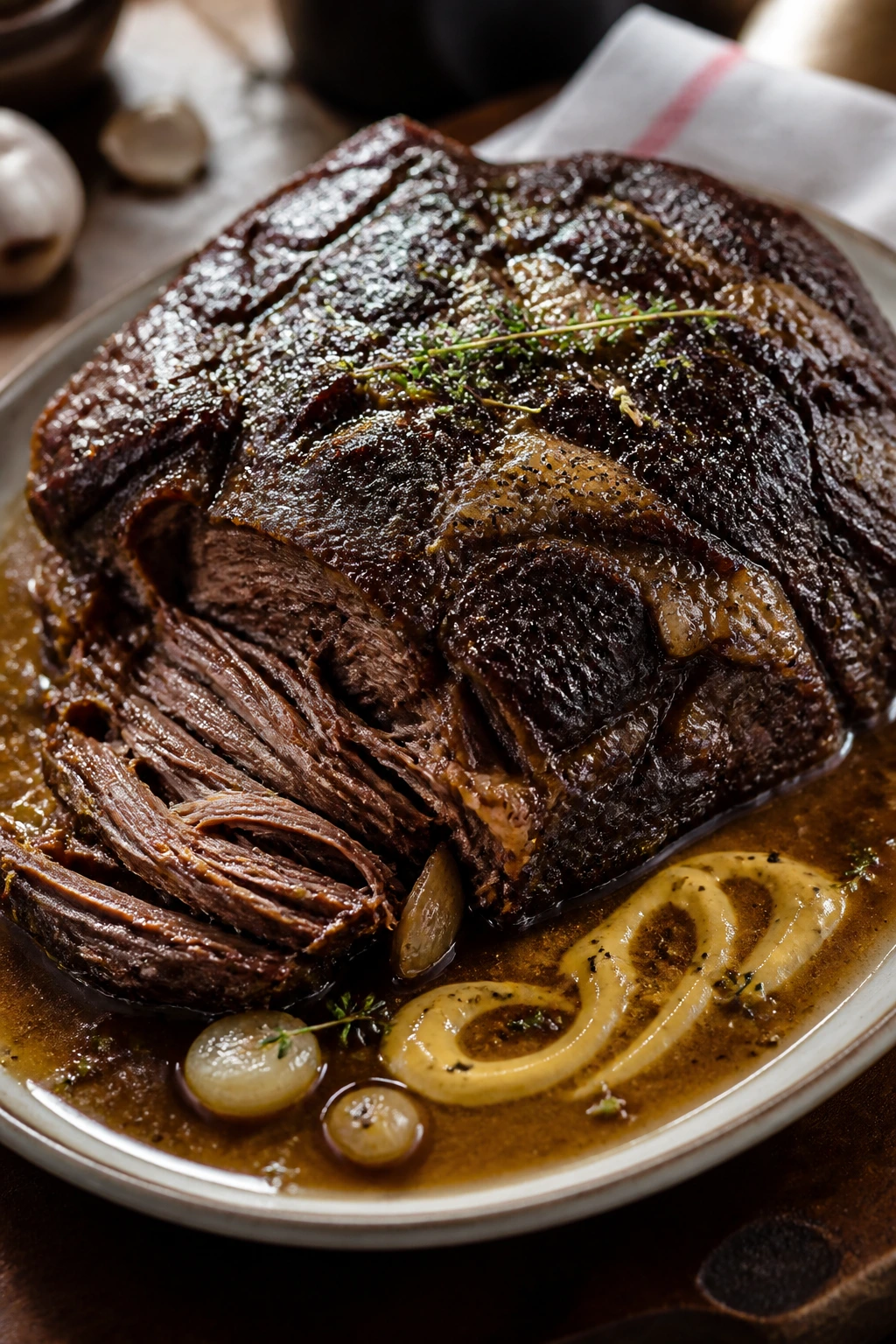
Flavor Enhancement: A teaspoon of Dijon mustard stirred into the gravy at the end gives the sauce a sharper edge without making it taste like mustard. It disappears into the background, which is exactly what you want.
Time-Saver: Cut the onions, carrots, celery, and potatoes the night before and keep them in separate containers in the fridge. That way the roast can go from counter to pot without a pile of prep work staring you down.
Richness Control: If the finished gravy tastes too heavy, add 1 to 2 teaspoons of red wine vinegar or a squeeze of lemon. That tiny bit of acid wakes the beef back up.
Make It Yours: I like a heavier hand with mushrooms, so I sometimes double them and keep the carrots a little thicker. If you want a more classic pot-roast feel, lean harder into carrots and onions and leave the mushrooms out entirely.
The Mistakes That Turn Chuck Roast Tough
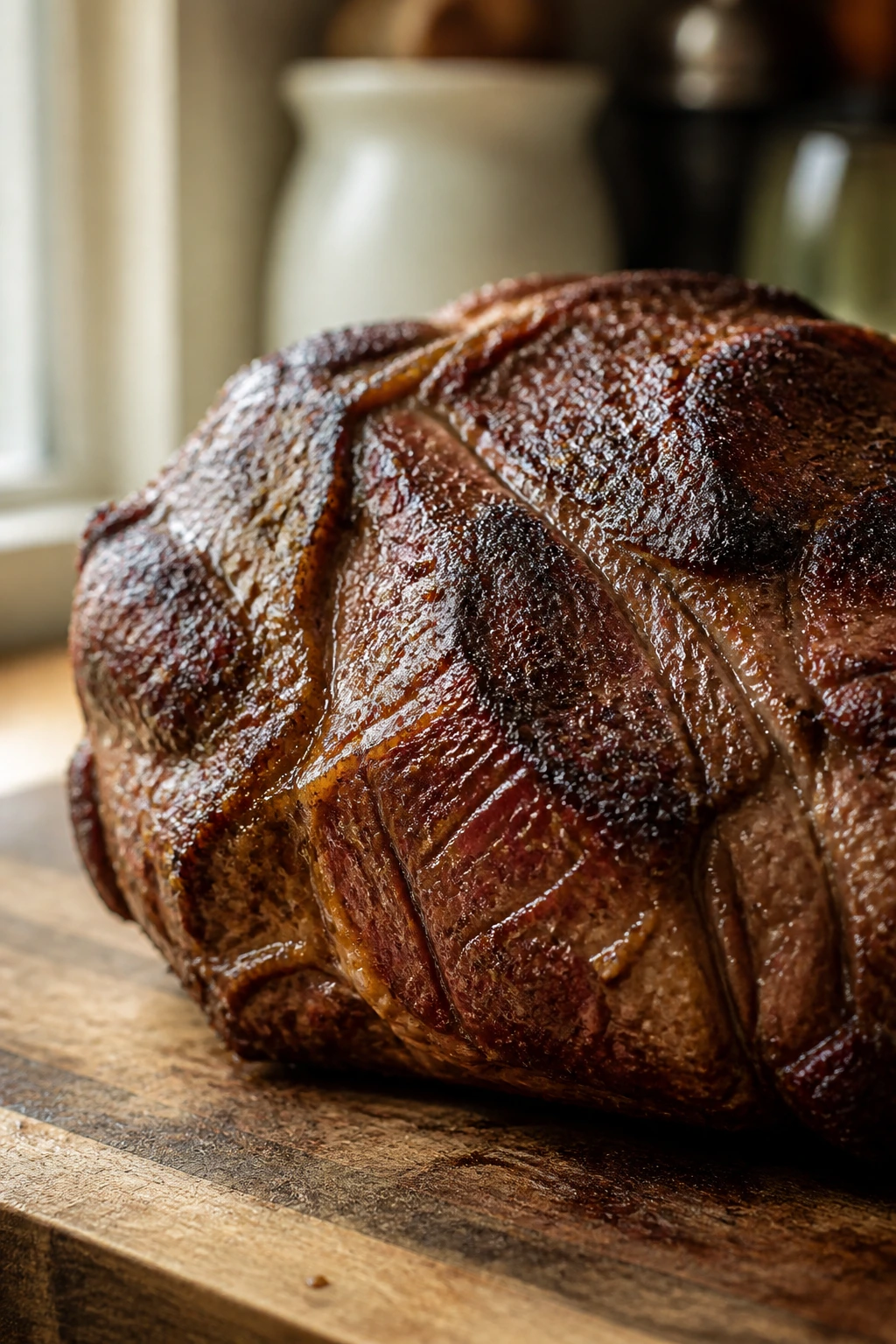
Skipping the dry surface: Wet beef steams in the pot, and steaming gives you gray meat instead of a crust. Pat the roast dry with paper towels until it feels tacky, then season it.
Pulling it too early: Chuck roast is not done when it reaches a polite steak temperature. If you stop at 170°F, it can still feel tight and stringy. You want the collagen to soften, which means going farther until the roast yields with almost no resistance.
Adding potatoes too soon: Potatoes tossed in from the start can split, dissolve, or turn chalky around the edges. Add them after the beef has already had time to braise, so they keep their shape.
Boiling the gravy hard at the end: Once the meat is out, the liquid only needs a steady simmer. A furious boil can make the sauce greasy and thin out the texture you worked for.
Using a sweet wine: Sweet wine sounds harmless until it meets beef stock and tomato paste, then the gravy starts drifting in the wrong direction. Dry wine keeps the sauce balanced.
Variations That Fit Different Kitchens
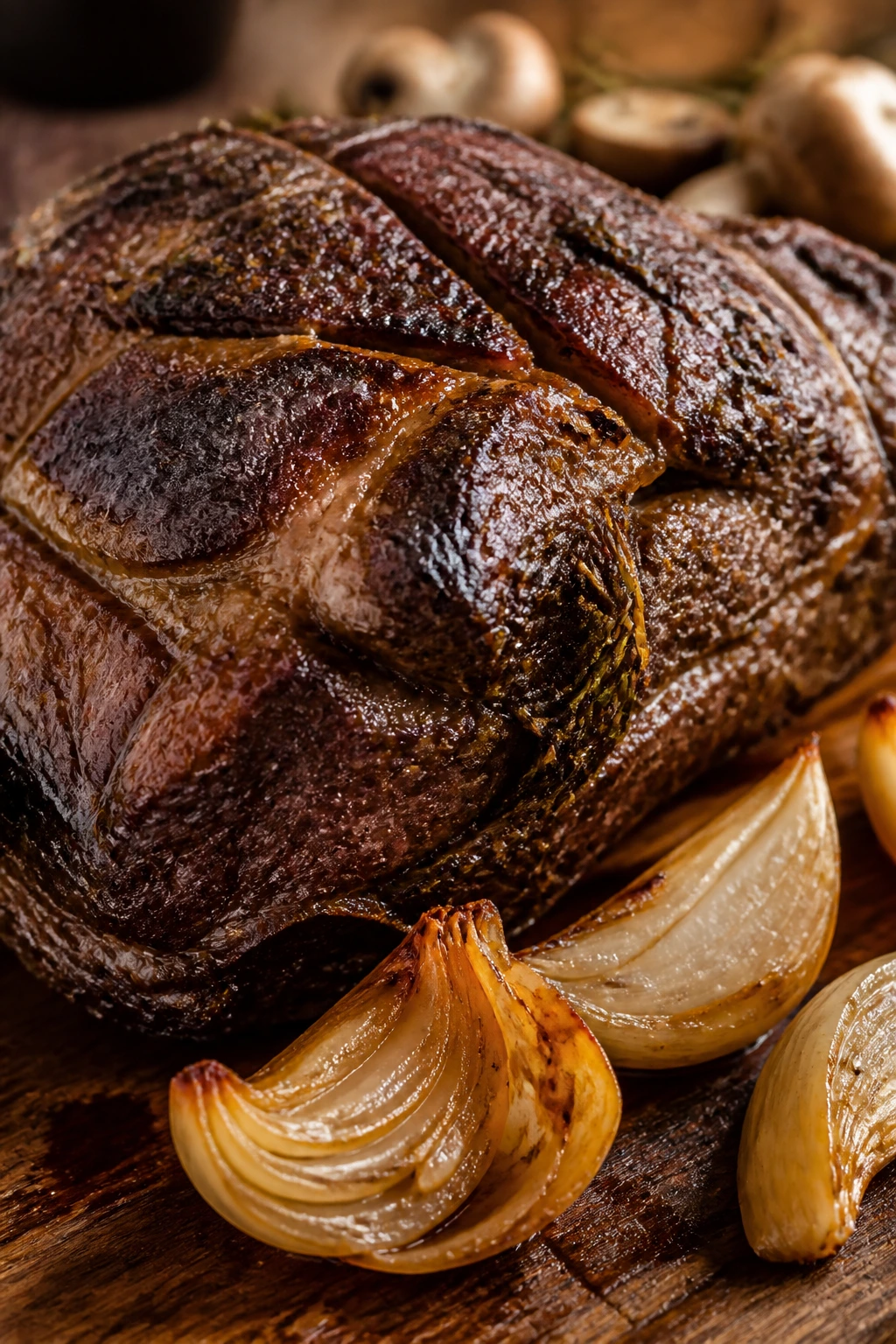
Cabernet Onion Roast: Use cabernet for the wine and add one extra onion, sliced into thick wedges. The finished gravy comes out darker and a little more structured, which I like with mashed potatoes.
No-Wine Pantry Roast: Replace the wine with 1 extra cup of beef stock plus 1 tablespoon balsamic vinegar and 1 teaspoon soy sauce. You lose a little of the wine’s fruitiness, but the braise still tastes deep and savory.
Mushroom-Heavy Braise: Double the mushrooms and brown them well before adding the liquid. Their liquid blends into the gravy and gives the whole pot a darker, earthier edge.
Herb-Forward Roast: Add a few extra thyme sprigs and swap the rosemary for a small bundle of sage. This version leans more rustic and woodsy, especially good with noodles or polenta.
Dairy-Free Finish: Leave out the butter at the end and finish the gravy with a teaspoon of olive oil. The sauce will be a touch less glossy, but it still tastes full and clean.
Keeping Leftovers Tender
Fridge: Cool the roast, vegetables, and gravy together, then store them in airtight containers for up to 4 days in the refrigerator. Keep the meat submerged in some gravy so it doesn’t dry out on the edges.
Freezer: The roast freezes well for up to 3 months. Slice it first, pack it with gravy in a freezer-safe container, and press a piece of parchment directly on the surface before sealing the lid. That helps cut down on freezer burn.
Reheat: Warm leftovers gently in a covered pot over low heat with a splash of stock or water. If you use the oven, cover the dish and reheat at 300°F (150°C) until the meat is hot through. Microwave reheating works in a pinch, but do it in short bursts so the edges don’t turn leathery.
Make-Ahead: You can braise the roast the day before serving, chill it overnight, and reheat it the next day. That approach actually improves the gravy, because the fat rises and firms up on top and the flavors settle into one another. Trim the fat before reheating, then warm everything slowly.
Chuck Roast Questions People Ask
Can I make this without wine?
Yes. Replace the wine with another cup of beef stock plus 1 tablespoon balsamic vinegar and 1 teaspoon soy sauce. You’ll lose some of the wine’s roundness, but the gravy still tastes deep and savory.
Why is my chuck roast still tough after hours in the oven?
Usually it needs more time, not more heat. Chuck roast gets tender when the collagen has broken down, and that happens later than most people expect. Keep it covered and give it another 20 to 30 minutes, then test again with a fork.
Do I have to sear the roast?
You don’t have to, but you’ll miss the best flavor if you skip it. Browning creates the fond that becomes the backbone of the gravy, and a braise without that step tastes flatter and more one-dimensional.
Can I make this in a slow cooker instead of a Dutch oven?
You can, but brown the roast and vegetables first in a skillet if you want the same depth. Cook on low for about 8 hours, then add the potatoes in the last 2 to 3 hours so they don’t collapse.
How do I know which way to slice the roast?
Look for the long lines in the meat and cut across them, not along them. Slicing against the grain shortens the muscle fibers, which makes each bite easier to chew.
What if my gravy is too thin?
Simmer it uncovered for a few extra minutes, or mash a few potato pieces into the liquid. That works better than dumping in a big pile of flour at the end, which can turn the sauce cloudy and pasty.
Can I use bone-in chuck roast?
Yes, though it may need a little extra time and a larger pot. Bone-in roasts often carry a bit more flavor, but the bones also take up space, so make sure the liquid still comes halfway up the meat.
Is this a good roast for meal prep?
It’s one of the better ones. The beef stays moist for several days, and the gravy protects the slices from drying out. Pack it with mashed potatoes, noodles, or rice and it reheats cleanly.
A Quietly Satisfying Dinner
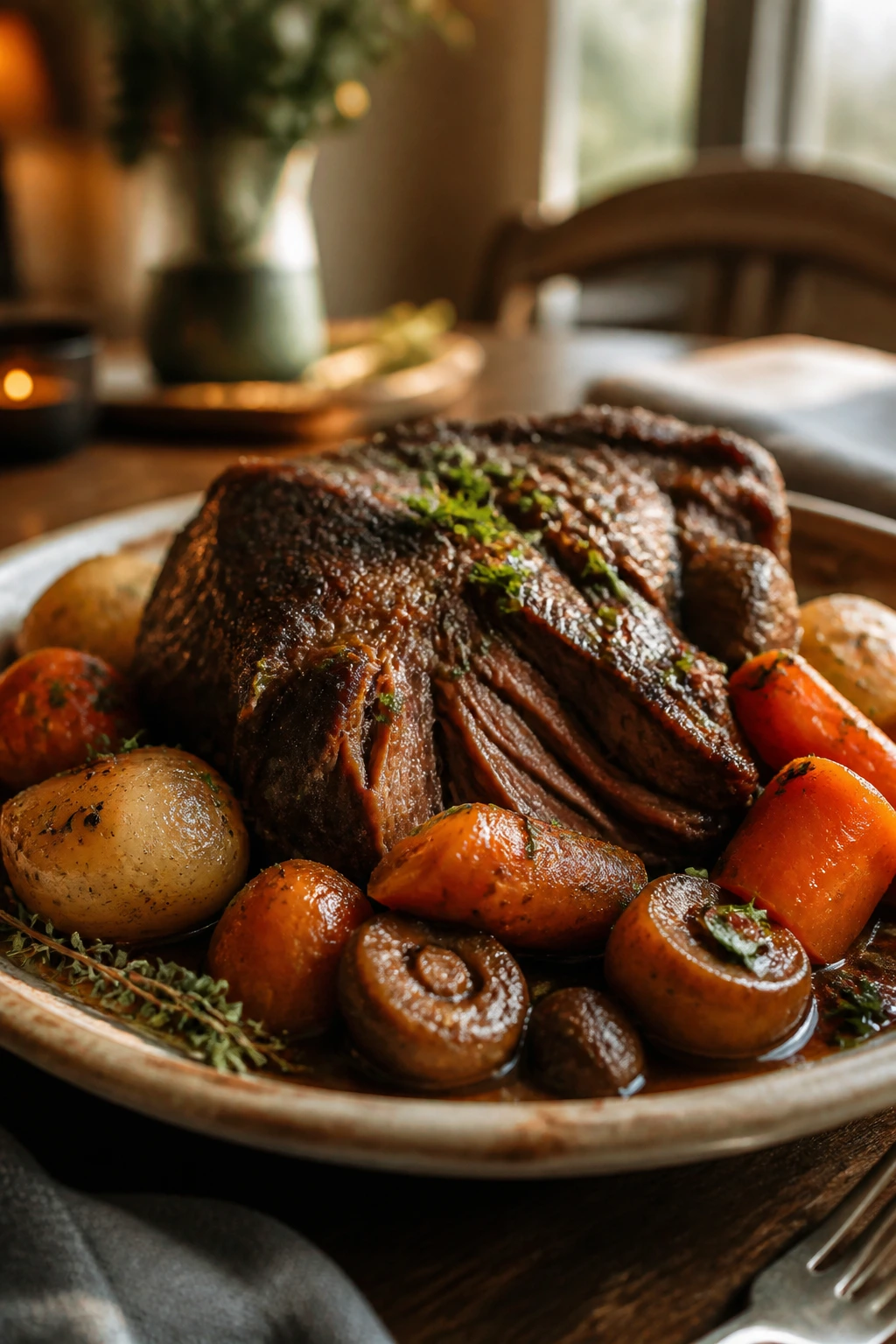
There’s something satisfying about a dinner that asks for patience instead of tricks. Chuck roast rewards steady heat, a decent sear, and a little attention to detail, then hands you back a pot full of rich gravy and meat that slices cleanly instead of fighting the knife.
I like this kind of meal on a table because it doesn’t need a speech. Put out the platter, the potatoes, maybe a salad if you feel like balancing all that richness, and let the pot do what it does best. The smell alone usually brings everyone into the kitchen before you’ve finished carving.
## Hearty Beef Chuck Roast with Root Vegetables — Recipe Card
Recipe Name: Hearty Beef Chuck Roast with Root Vegetables
Description: A slow-braised beef chuck roast with onions, carrots, mushrooms, potatoes, and a red wine gravy. The meat turns fork-tender, and the braising liquid finishes glossy and savory.
Prep Time: 25 minutes
Cook Time: 3 hours 15 minutes to 3 hours 45 minutes
Total Time: About 3 hours 40 minutes to 4 hours 10 minutes
Course: Dinner, Main Course
Cuisine: American
Servings: 6 to 8 servings
Calories: About 525 kcal per serving
Ingredients
For the Beef Chuck Roast
- 1 boneless beef chuck roast, 3 1/2 to 4 pounds
- 2 teaspoons kosher salt
- 1 1/2 teaspoons freshly ground black pepper
- 2 tablespoons all-purpose flour
- 2 tablespoons olive oil
For the Braise
- 2 medium yellow onions, cut into thick wedges
- 4 medium carrots, peeled and cut into 2-inch pieces
- 3 celery stalks, cut into 2-inch pieces
- 8 ounces cremini mushrooms, halved if large
- 5 garlic cloves, smashed and chopped
- 2 tablespoons tomato paste
- 1 tablespoon all-purpose flour
- 1 cup dry red wine
- 3 cups low-sodium beef stock
- 1 tablespoon Worcestershire sauce
- 2 fresh thyme sprigs
- 1 fresh rosemary sprig
- 2 bay leaves
- 1 1/2 pounds baby Yukon Gold potatoes, halved
- 1 tablespoon unsalted butter, cold
- 1 tablespoon chopped fresh parsley
Instructions
-
Preheat the oven to 325°F (165°C). Pat the chuck roast dry, season it with the salt and pepper, and dust it with the 2 tablespoons flour.
-
Heat the olive oil in a Dutch oven over medium-high heat. Sear the roast for 4 to 5 minutes per side until deeply browned, then transfer it to a plate.
-
Add the onions, carrots, celery, and mushrooms to the pot. Cook over medium heat for 6 to 8 minutes until softened.
-
Stir in the garlic and tomato paste and cook for 1 minute. Add the 1 tablespoon flour and stir for 30 seconds.
-
Pour in the red wine and scrape the browned bits from the bottom of the pot. Simmer for 2 minutes.
-
Add the beef stock, Worcestershire sauce, thyme, rosemary, and bay leaves. Return the roast and any juices to the pot.
-
Cover and braise in the oven for 1 hour and 30 minutes.
-
Add the potatoes, cover again, and continue braising for 1 hour 30 minutes to 2 hours, until the beef is fork-tender.
-
Transfer the roast and vegetables to a platter. Rest the meat for 15 minutes.
-
Simmer the braising liquid over medium heat for 5 to 10 minutes until slightly thickened. Stir in the butter, remove the herbs, slice or shred the beef, and serve with parsley on top.
Notes: For a no-wine version, swap in 1 extra cup beef stock plus 1 tablespoon balsamic vinegar and 1 teaspoon soy sauce. The roast reheats well in gravy, and the flavor often deepens after a night in the fridge.