



Packing a picnic for backyard cookouts sounds easy until the buns go soft, the potato salad warms up beside the grill, and somebody sets a dripping salsa tub right next to the napkins. Backyard cookouts are informal, sure, but the food still has to survive heat, handling, and a crowd that keeps opening lids “just to check.” The table gets busy fast. Drinks slide around, tongs wander off, and the one dish you meant to keep crisp ends up swimming in its own dressing.
That’s where a smarter packing plan earns its keep. A backyard cookout is not a park picnic, and it’s not a plated dinner either. It’s a moving target: some food needs to stay cold, some needs to stay hot, and some food is happiest if it never goes near a cooler in the first place. The trick is not hauling more containers. It’s sorting the spread by texture, temperature, and timing so the juicy parts stay juicy and the crunchy parts stay crunchy.
The good news is that this gets easier once you stop treating every dish like it belongs in one bag. A little order goes a long way here — and once you’ve packed one cookout this way, you’ll never go back to tossing everything into a single tote and hoping for the best.
Why This Picnic System Pays Off
-
Temperature control: Food-safety guidance uses a simple split: cold foods should stay at 40°F or below, and hot foods need to stay above 140°F if they’re going to sit for a while.
-
Texture protection: Separating bread, lettuce, tomatoes, dressing, and juicy fruit keeps the first plate from turning limp before the first guest is seated.
-
Less grill-side chaos: When the food is grouped by job, nobody has to hunt for the serving spoon while holding a plate and a cold drink.
-
Faster refills: Smaller containers chill faster, stack better, and let you replace one empty dish without pulling the whole spread apart.
-
Cleaner leftovers: A neat packing order makes it easier to cool and store what’s left, instead of leaving half-eaten bowls sweating on the table.
-
Better pacing: You can bring out the crisp stuff later, the hot stuff at the last minute, and keep the rest tucked away instead of exposing everything at once.
Why Backyard Cookouts Need a Different Packing Plan
A backyard cookout looks casual from ten feet away. Up close, it’s a little more complicated. Guests drift between the grill, the patio table, the fridge, and the lawn. Kids wander off with rolls. Adults leave lids half-open while they chat. That means food gets touched, moved, and exposed more often than it would at a tidy indoor meal.
The smartest way to handle that is to pack for movement, not just for transport. If a dish will be carried from the kitchen to a deck, then opened again near the grill, and then served over the next hour, it needs more protection than a dish that goes straight from fridge to table. A cold pasta salad can handle that. A dressed romaine bowl usually cannot. A tray of sliced watermelon can survive a bit of time. A stack of buttered sandwiches under a hot sun will lose the argument fast.
There’s another difference people miss. Backyard cookouts often mix hot, cold, and room-temperature foods in the same social zone. That’s where trouble starts. A warm serving spoon resting in potato salad sounds harmless until it sits out long enough to become a lukewarm sponge. A foil pan of baked beans can hold heat for a while, but not forever. A bowl of chips doesn’t care about the temperature, which is exactly why it belongs nowhere near the mayo salads.
The actual rule I trust
I pack by function.
If a food needs to stay crisp, it gets its own dry container. If it needs to stay cold, it gets insulation. If it needs to stay hot, it gets covered and delivered close to serving time. That sounds almost too obvious to mention, but it solves most of the mess people blame on “picnic food.” The food usually isn’t the problem. The packing order is.
Packing a Picnic for Backyard Cookouts Without Losing Texture
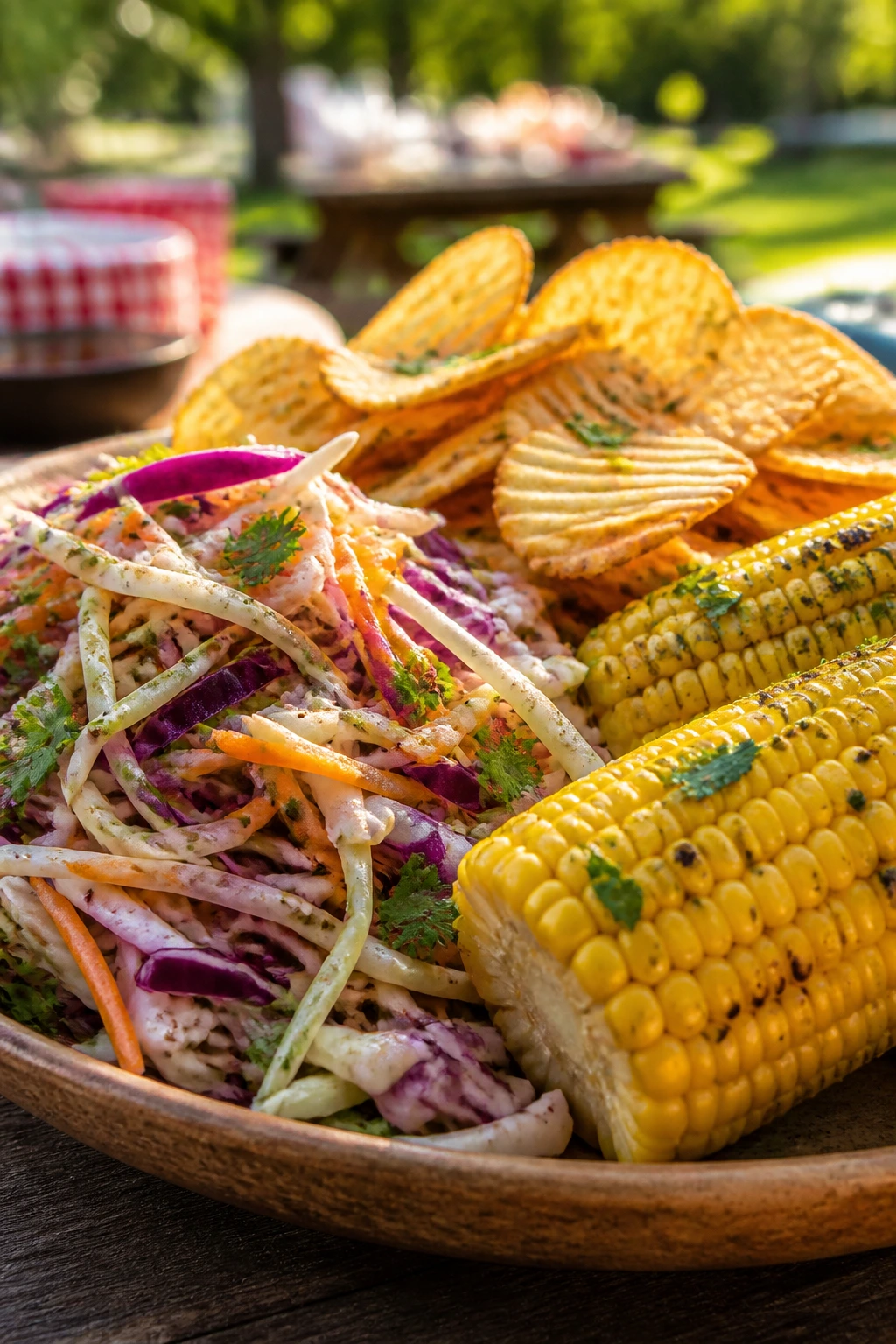
Texture is the thing that makes a backyard spread feel lively instead of tired. You can have good flavors and still end up with a sad plate if the chips soften, the buns sweat, or the slaw goes limp. I trust sturdy foods here. Cabbage slaw. Bean salad. Pasta salad with short shapes. Corn off the cob. Grilled vegetables. Cookies. Brownies. Whole fruit. All of them can sit around a table without turning to paste.
Lettuce is another story. So are sliced tomatoes on bread, dressed greens, soft herbs tossed too early, and anything that was meant to stay crisp but got buried under moisture. Those foods need a barrier, a separate container, or a last-minute assembly. No shame in that. In fact, that’s what keeps the picnic from feeling careless.
Foods that hold up well
- Cabbage-based slaws stay snappy longer than lettuce salads.
- Short pasta, like rotini or shells, grips dressing without collapsing.
- Beans, chickpeas, and lentils hold their shape and travel well in vinaigrette.
- Corn, roasted peppers, cucumbers, and grilled zucchini can be packed cold and still taste fresh.
- Cornbread, brownies, bars, and cookies survive the table without needing special handling.
- Whole grapes, melon wedges, peaches, and berries can sit out in small portions if they were well chilled first.
Foods that need protection
- Bread gets soggy when it sits near tomatoes, pickles, or dressing.
- Mixed greens wilt fast if they’re dressed early.
- Sliced tomatoes leak into everything around them.
- Watermelon and berries release enough juice to turn a tray slippery if they’re cut too far ahead.
- Chips go soft when they share space with warm containers or open bowls of salsa.
I’m picky about sandwich building for this reason. A good picnic sandwich is not a pile of wet ingredients trapped between two slices of bread. Put the moist ingredients in the middle, tuck lettuce or cheese against the bread as a barrier, and keep tomatoes separate until the last second if you can. That one habit saves more lunch boxes, picnic baskets, and patio platters than any fancy container ever will.
Cold Dishes, Hot Dishes, and the Room-Temperature Middle
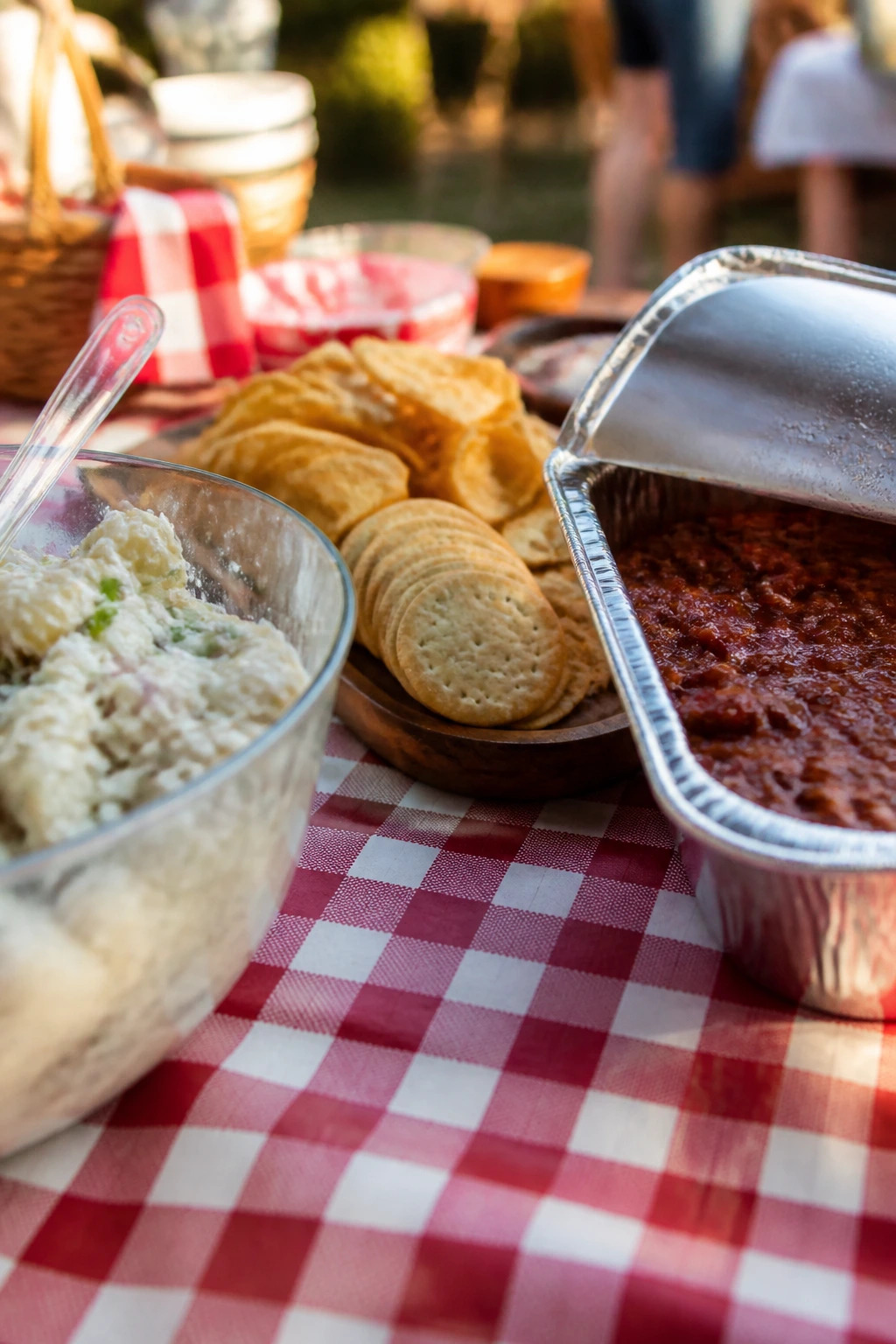
A backyard cookout works better when each dish knows its job. Cold dishes do not need to compete with the grill. Hot dishes do not need to sit around waiting for people to finish one more conversation. Room-temperature foods — the chips, bread, crackers, fruit, pickles, and condiments — should be treated like the flexible middle class of the table. They can wait. They don’t need a cooler. They don’t need a chafing dish either. They just need a sane place to land.
Cold foods that should stay cold
Potato salad, pasta salad, coleslaw, hummus, yogurt dips, cut fruit, deviled eggs, and anything mayo-based belong in the cold lane. They taste better when they’re actually cold, and they’re the foods most likely to become sketchy if they sit out too long. The 40°F line matters here. If you’re serving on a warm afternoon, bring them out in smaller bowls and refill from the fridge as needed.
Hot foods that need heat held on
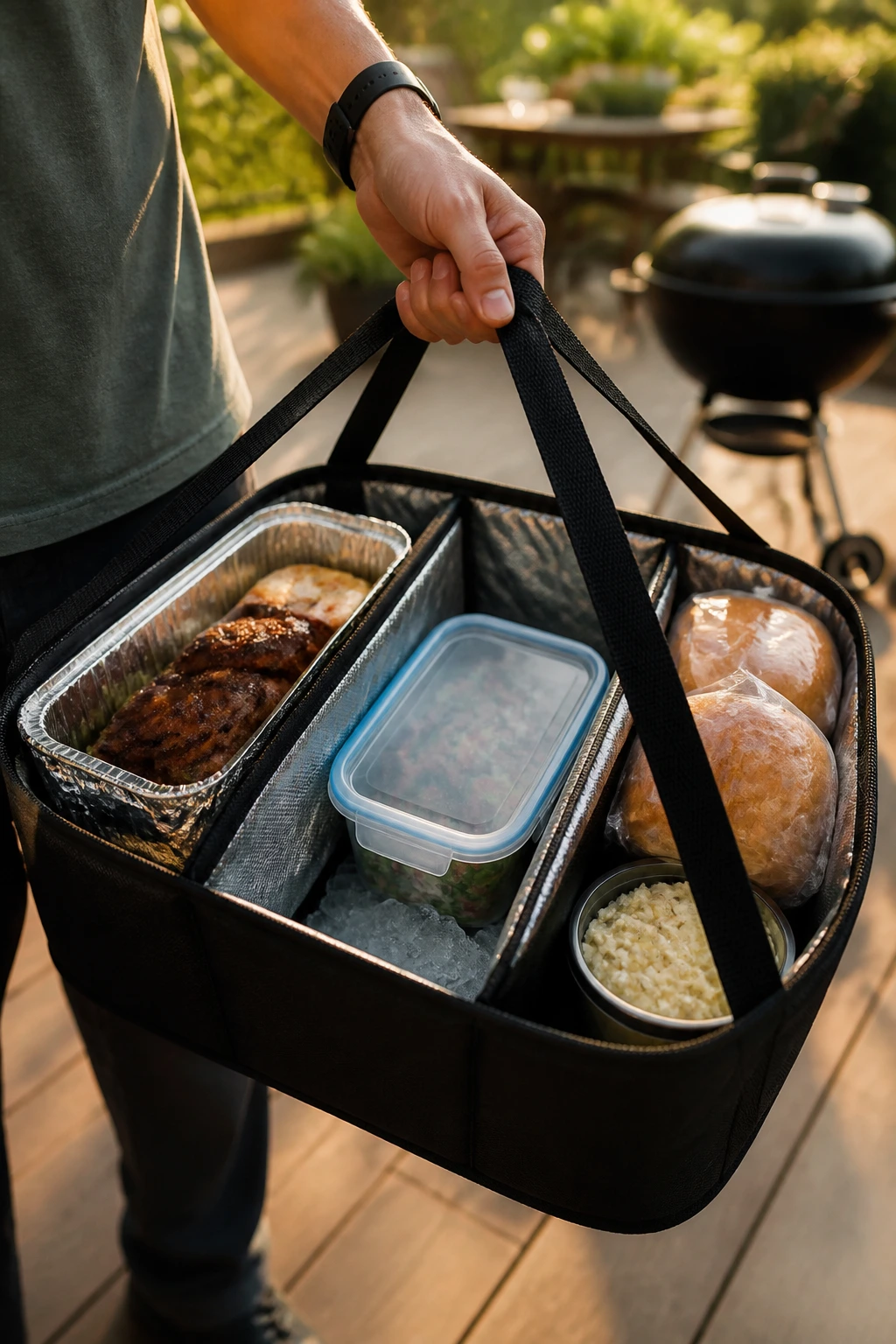
Baked beans, grilled chicken, ribs, burgers, hot corn, and foil-wrapped vegetables should go from heat source to table with minimal wandering. If you want them to stay appealing, cover them loosely with foil or hold them in an insulated carrier. Steaming food can soften a lid in a hurry, so give it a minute to stop huffing before you close the container tight. Otherwise you trap condensation and drip it right back on the food.
Room-temperature foods that make the table feel easy
- Chips and crackers.
- Whole fruit.
- Bread rolls.
- Pickles and olives.
- Dry cookies and bars.
- Nuts and snack mix.
- Unopened condiments and bottle drinks.
These are the quiet helpers. They fill gaps. They keep guests from circling the table looking confused. They also buy you time if the grill runs behind, which is a detail that matters more than people admit.
Packing a Picnic for Backyard Cookouts With the Right Containers
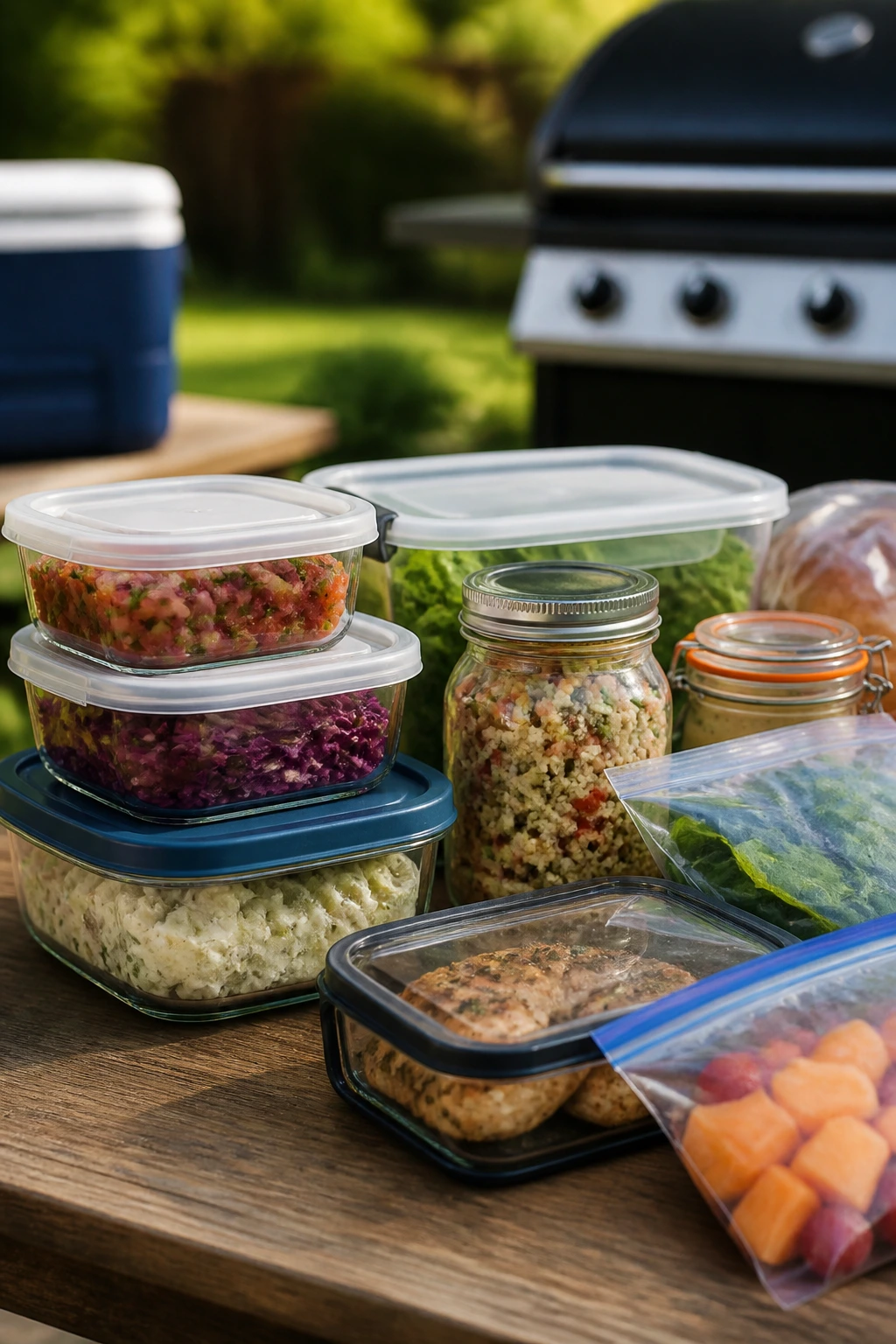
The container matters almost as much as the food. A flat, shallow tub chills faster than a deep bowl. A jar with a tight lid keeps vinaigrette where it belongs. A rigid box stops a tray of berries from getting squashed under a cooler pack. And a flimsy plastic clamshell? That’s a compromise I avoid unless I have no choice.
Warm food sealed too soon is another small disaster that people keep repeating. Steam has to go somewhere. If it can’t leave the container, it condenses on the lid and falls back onto the food. That turns roasted vegetables soggy and makes fried food limp in minutes. Give hot dishes a short vent before lidding them. A few minutes of patience keeps the surface dry.
What I like to pack in
- Shallow lidded containers: Good for salads, sliced fruit, and leftovers that need to chill quickly.
- Quart and pint jars: Great for dressings, pickles, slaws, and layered sides.
- Zip-top bags: Useful for chips, herbs, marinated onions, and cold packs in a pinch.
- Rimmed sheet pans with foil: Handy for transporting sliders, skewers, or baked items that should stay in one flat layer.
- Reusable compartment containers: Best for kids’ plates or mixed snack boards with dry and wet items kept apart.
A lot of people reach for pretty baskets because they look picnic-like. I get it. They’re charming. They’re also not the thing I trust for juicy fruit, chilled salads, or anything with a lid that needs to close tightly. Use the basket for bread or napkins if you want the look. Use the rigid container for the food.
Keep dry things dry
Paper towels or parchment make good separators between moisture and crunch. A layer of parchment under cucumber slices keeps them from slicking up the whole tray. A sheet of wax paper between burger buns stops them from sticking together if the air is humid. Little details, yes. Little details are the whole game here.
Make-Ahead Dishes That Improve After a Night in the Fridge
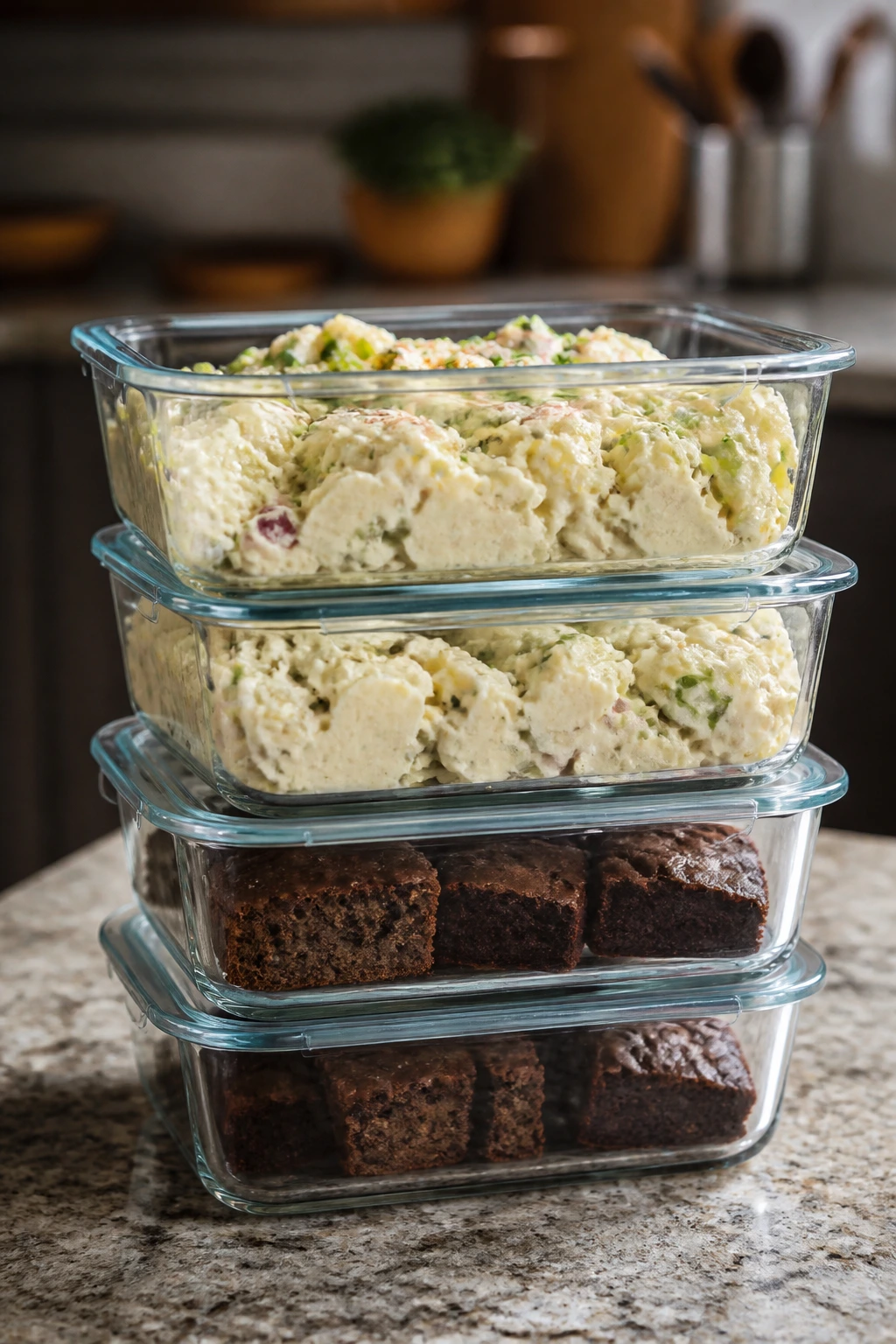
Some picnic dishes are better after they rest. Not everything needs to be made at the last minute, and honestly, the make-ahead foods are often the ones that save your sanity.
Potato salad gets more flavor after a night in the fridge because the potatoes drink in the dressing. Bean salad does the same thing, only with a firmer texture. Pasta salad can absorb vinaigrette and still feel lively if you use a short pasta shape and keep a little extra dressing aside for the next day. Vinegar-based slaws stay snappy and pick up a little bite from the acid. These are the dishes that reward planning.
Good candidates for early prep
- Potato salad, if you keep the dressing balanced and chill it properly.
- Bean salad with vinaigrette, herbs, and chopped vegetables.
- Short-pasta salad with vegetables that don’t bleed much color.
- Roasted vegetables served cold or room temp.
- Brownies, bars, cookies, and most baked sweets.
- Pulled meat or sliced grilled meat that will be reheated or served chilled.
What waits until the last minute
Fresh lettuce, cut avocado, herbs used as garnish, sliced tomatoes, and anything with a very crisp shell or crust should be handled later. If you dress it early, it usually shows. The edges darken. The herbs slump. The avocado browns around the rim and starts looking tired before anyone has taken a bite.
I also like to make the “boring” pieces ahead of time. Chop onions. Wash herbs. Mix dressings. Line up serving spoons. Set the lids on the counter in the order they’ll be used. That kind of prep never gets applause, but it’s what makes the table feel calm when people start arriving.
Sauces, Toppings, and Final Touches That Travel Cleanly
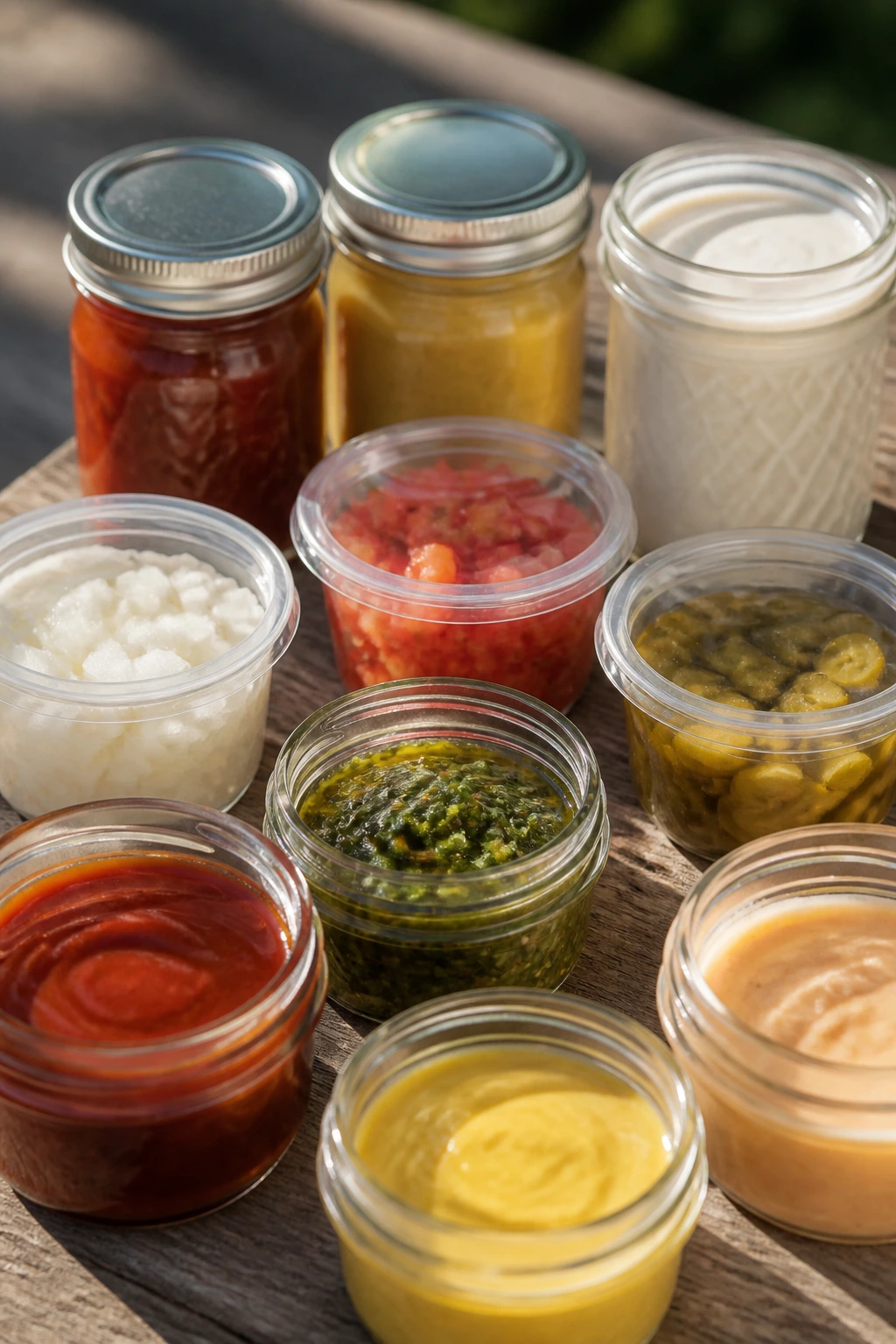
Sauces should almost always travel on their own. That includes barbecue sauce, ranch, vinaigrette, hot sauce, aioli, relish, salsa, herb oil, and anything with enough liquid to run if you tilt the container too far. Put them in small jars, squeeze bottles, or tiny covered cups. The food will taste cleaner, and the table will stay cleaner too.
There’s a reason I’m fussy about condiments at a cookout. A sauced dish tastes different after twenty minutes on the table than it does when the sauce is added right before eating. Fries go limp. Sliders get soaked. Grilled vegetables lose their edges. The same sauce, given at the last moment, tastes sharper and brighter. That timing matters.
Finishing ingredients I like to keep separate
- Chopped herbs, especially parsley, dill, chives, and cilantro.
- Crumbled cheese.
- Pickled onions or pickled jalapeños.
- Lemon or lime wedges.
- Flaky salt.
- Freshly ground pepper.
- Toasted seeds or nuts.
- Crispy onions or fried shallots.
Keep these in tiny containers and let people add them themselves. It gives the table a little life. Also, it keeps the “crunch” where it belongs. No one enjoys discovering that their crunchy topping turned soft because it sat in a warm bowl under a wet spoon.
Packing a Picnic for Backyard Cookouts With Cooler Logic
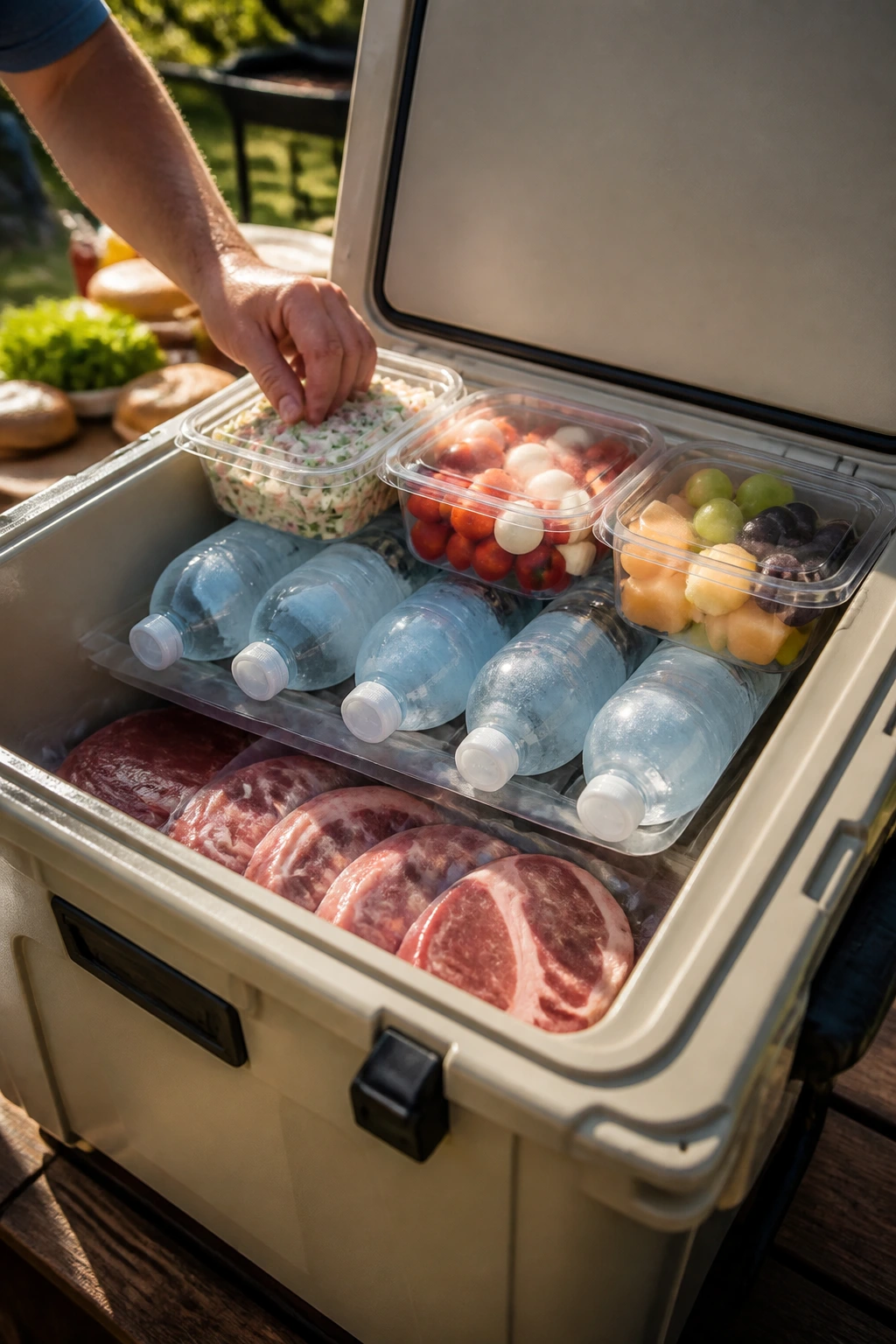
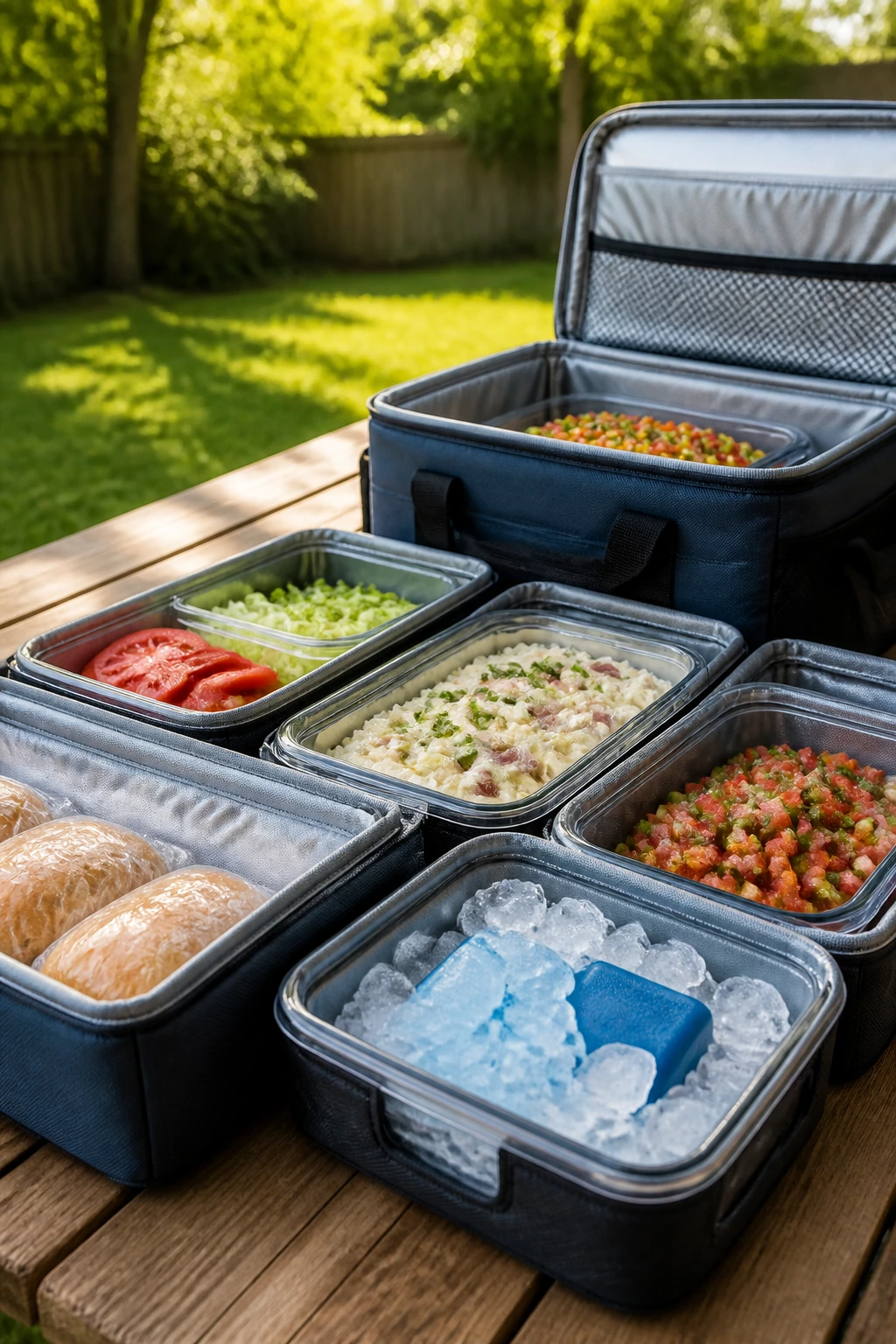
A cooler is not just a cold box. It’s a map. Pack it wrong and the whole thing warms faster than it should. Pack it in layers and by purpose, and it keeps food usable for hours. The simplest improvement I know is this: use one cooler for ready-to-eat food and another cooler for raw meat, if raw meat is traveling at all. That one decision prevents half the mess people cause without thinking.
Water bottles that have been frozen solid make excellent ice blocks. They hold cold well, they don’t leave a puddle, and they become drinkable later. Ice packs work too. Put the coldest, most perishable foods in the middle of the cooler, where they’re surrounded on all sides. Keep the lid shut as much as possible. Every time somebody fishes around for a drink or a sauce packet, the cooler warms up.
A better packing order
- Freeze water bottles or use firm ice packs.
- Chill food thoroughly before it goes into the cooler.
- Put dense items first — containers of salad, yogurt dip, cut fruit.
- Fill gaps with more cold packs or the frozen bottles.
- Keep raw meat sealed in a separate container at the bottom of its own cooler.
- Put drinks in a different cooler if people will open it often.
A half-empty cooler is a warm cooler. That part surprises people. Cold air does not behave like a brick wall; it shifts, escapes, and gets replaced by warm air each time the lid opens. Filling the extra space with cold bottles helps more than leaving the gaps open.
Shade matters too. Set the cooler out of direct sun, not next to a hot grill, and not on blacktop if you can help it. The patio step in full afternoon sun is not your friend.
How to Set the Backyard Table for Easy Serving
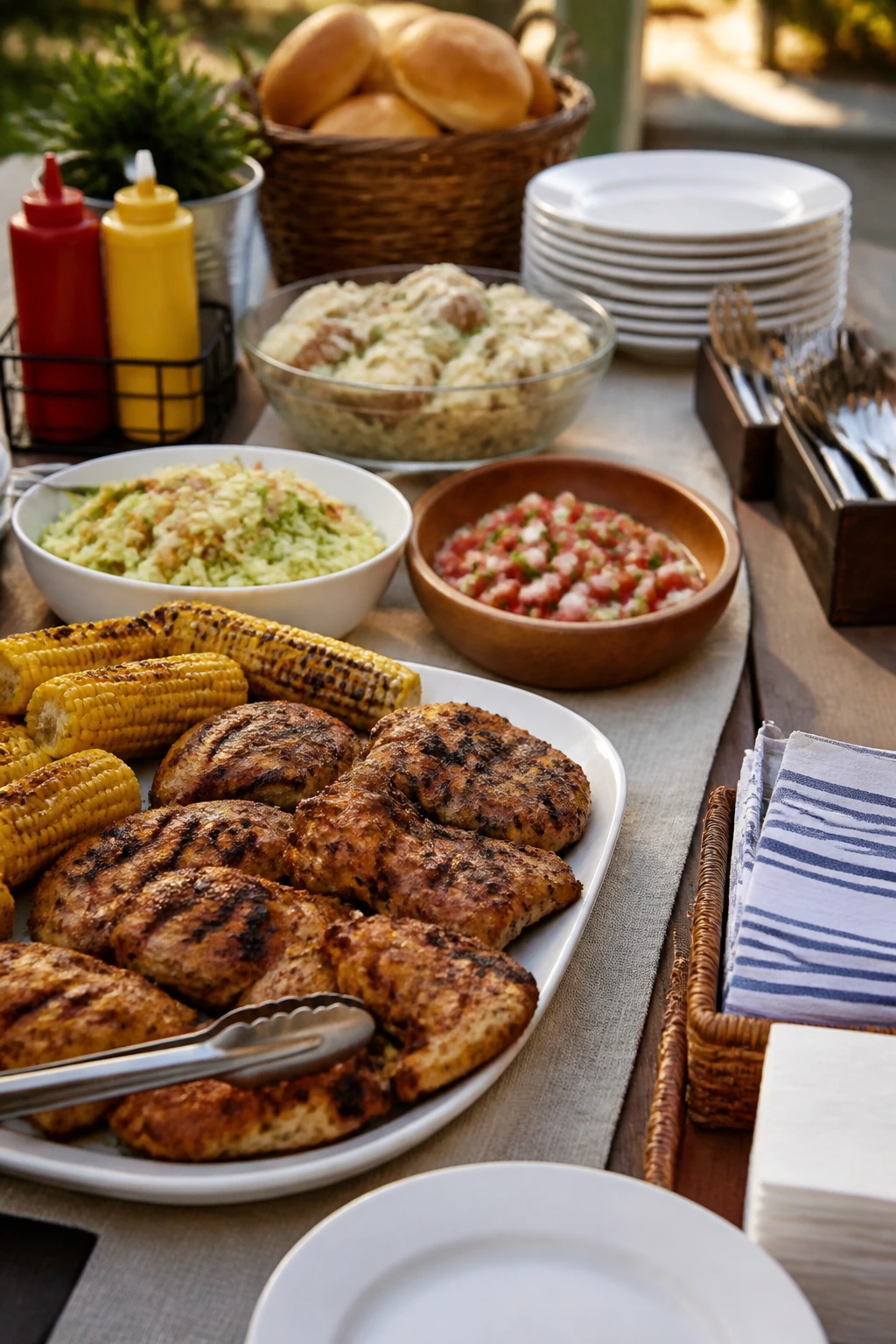
A cookout table works best when it behaves like a line, not a pile. Put plates first, then napkins, then utensils, then food in the order people will build their plates. Keep tongs or serving spoons beside every dish, not in a shared pile. That prevents the awkward hand wave where someone realizes the spoon from the bean salad is now sitting in the fruit tray.
Presentation: Use the biggest platter for the food that’s easiest to recognize — grilled chicken, corn, slider buns, or a tray of cut fruit. Put the more delicate things in smaller bowls and keep the garnish separate until the last minute. A few sprigs of herbs, wedges of lemon, or a line of pickled onions make the table look cared for without making it fussy.
Accompaniments: Bread, chips, corn on the cob, coleslaw, watermelon, bean salad, grilled vegetables, and a simple green salad all play well with cookout food. If you’re serving a smoky main, something tart — pickle spears, vinegar slaw, lemony potato salad — cuts through the richness. That’s not decoration. That’s balance.
Portions: Plan on about 6 to 8 ounces of cooked protein per adult if it’s the main event, less if there are several sides. Sides usually land around 1/2 cup per person for each dish, though a beloved pasta salad disappears faster than you’d think. Bread? I always make more than I think I need. People eat a lot more buns than they admit.
Beverage Pairing: Iced tea, lemonade, sparkling water with lime, light lager, or dry cider all fit the mood without fighting the food. If you’re serving heavily sauced barbecue, a cold beer with enough bitterness to cut through the richness works nicely. For nonalcoholic drinks, something tart is better than something cloying.
Small Packing Moves That Save the Whole Spread
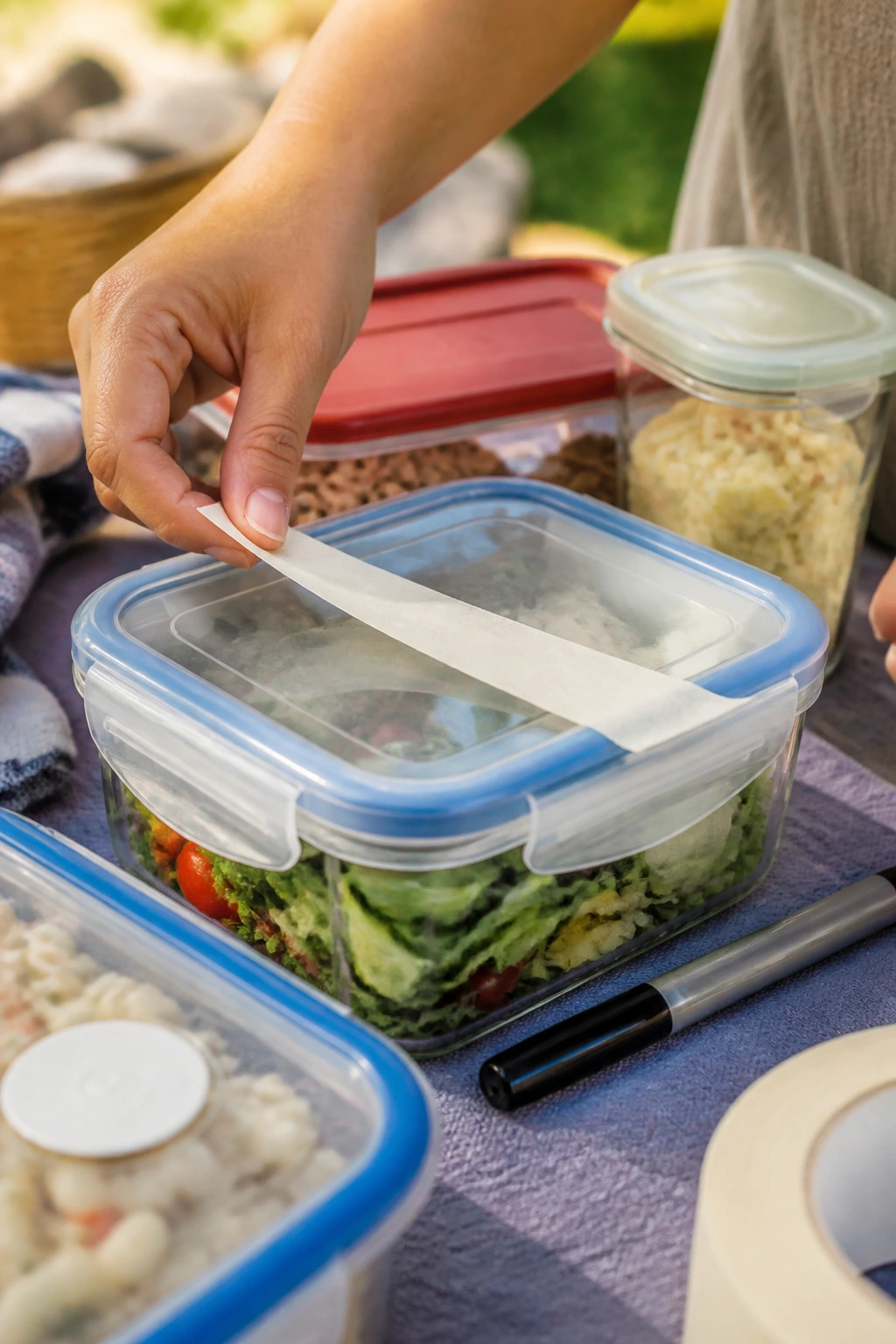
A few small habits change the whole cookout. Nothing dramatic. Just little moves that keep the food tidy and the pace calm.
Label Everything: A strip of masking tape and a marker solve the “what’s in this container?” problem before it starts. Write the dish name and, if it matters, whether the sauce is inside or separate.
Pack One Leftover Box: Bring an empty lidded container or two. When the meal winds down, you can move uneaten food off the table fast instead of hunting for random storage tubs while people are still standing around.
Carry Two Towels: One damp towel wipes sticky lids and cutting boards. One dry towel handles hands, handles, and glasses. It feels almost silly until someone spills dressing on the table and you’re the only one who can fix it in thirty seconds.
Use Barriers for Bread: Wrap buns in paper or cloth for short trips. Plastic traps moisture and makes the crust feel soft before anyone assembles a sandwich. If you want the bread to stay sturdy, keep it dry and whole until serving.
Keep Garnishes in the Fridge: Herbs, lemon wedges, shredded lettuce, sliced scallions, and crunchy toppings should stay chilled until the last minute. They look brighter when they’re cold, and they hold their shape better.
Leave the Grill a Little Space: If you’re bringing food from the kitchen while someone is still cooking, do not crowd the grill zone with bottles, bags, and serving boards. Heat and clutter do not cooperate.
Common Packing Mistakes That Make the Meal Falter
The fail points are usually simple. People don’t pack badly because they don’t care. They pack badly because they’re in a hurry and every container looks roughly the same once the lids close.
-
Dressing the salad too early: The symptom is obvious — wilted greens, soft tomatoes, and a bowl that looks older than it is. Keep dressing separate until the table is set.
-
Putting raw and ready-to-eat food in one cooler: That’s a food-safety problem, not just a texture problem. Raw juices can leak if the container shifts. Use separate coolers, or at least sealed bins with raw food below everything else and nothing unwrapped nearby.
-
Sealing hot food too fast: If steam gets trapped, the lid sweats and the food turns limp. Let hot dishes breathe for a few minutes before closing the container.
-
Overloading one serving bowl: A mountain of pasta salad or fruit makes the bottom layer warm and wet while the top layer looks fine. Use shallow containers and refill them from the fridge.
-
Forgetting serving tools: People will use fingers if they can’t find tongs. That means less tidy food and a table that starts feeling messy halfway through.
-
Mixing drinks with the food cooler: Every sip of a cold drink opens the lid again. Drinks deserve their own cooler if you want the food to stay truly cold.
The fix for most of this is boring in the best way: separate things, label them, and keep the table from becoming one giant shared container.
Flexible Ways to Pack the Same Cookout
No two backyard cookouts need the same setup. Some are laid-back and paper-plate simple. Some want a little polish. Some need to work around kids, allergies, or a vegetarian guest who deserves more than a bowl of lettuce and a shrug.
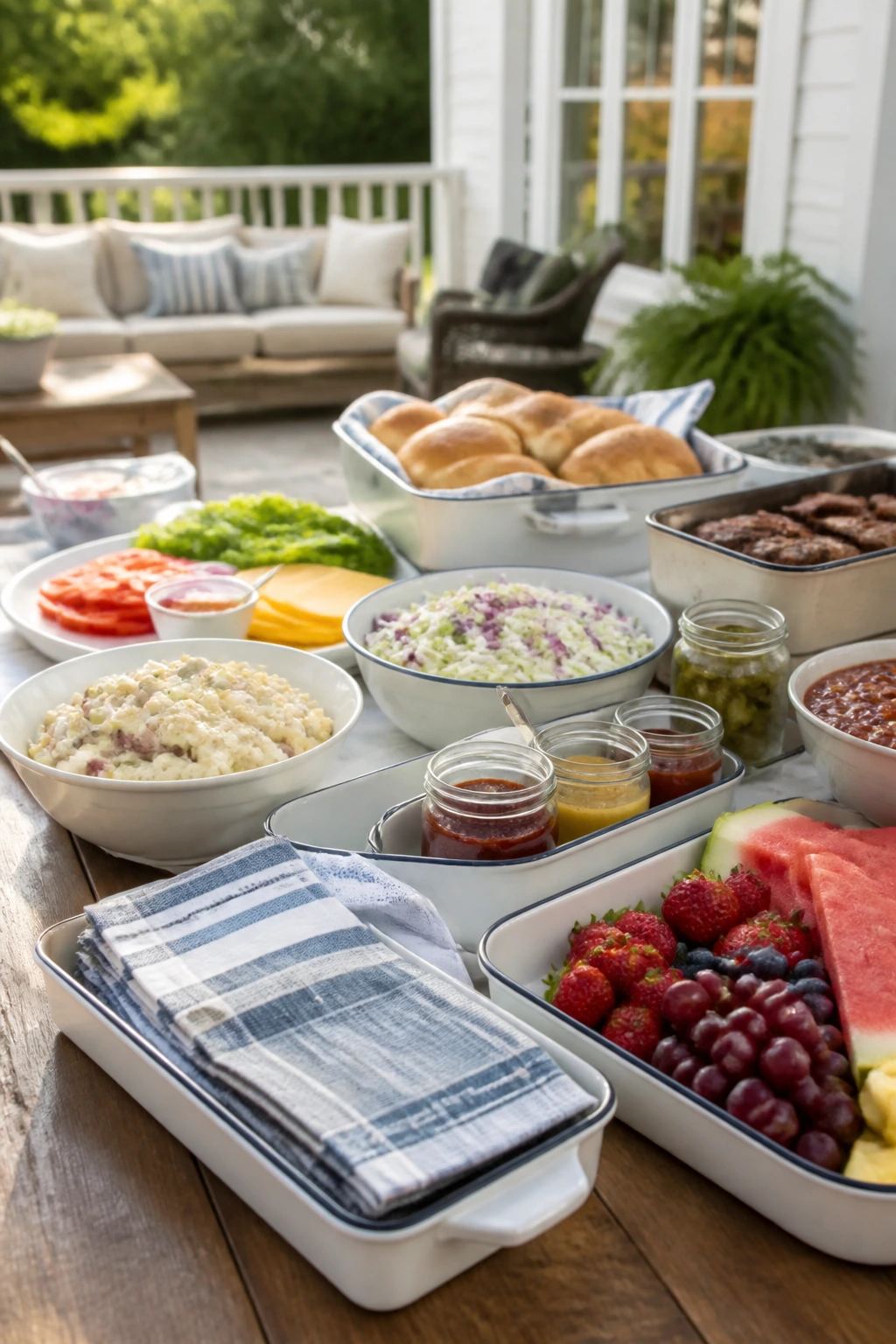
The Porch-Host Spread: This version leans neat and composed. Use matching trays, cloth napkins, and a couple of real serving bowls. Keep the sauces in small glass jars and put the fruit on a flat platter instead of a deep bowl. It feels more finished, and it still works outdoors.
The One-Cooler Shortcut: When you want minimal gear, build the menu around sturdy foods that are fine cold or room temp — slaw, pasta salad, grilled bread, fruit, brownies, chips, and pre-cooked meats. Keep drinks separate if possible. The trick is not trying to make a full buffet out of one box.
The Kid-Sized Setup: Think cheese cubes, small sandwiches, cut fruit, plain chips, and sauces on the side. Kids do better when food is easy to grab and not too mixed together. A build-your-own tray with separate pieces reduces the usual “I don’t like that touching this” drama.
The Vegetarian Table: Lean into grilled vegetables, bean salads, corn, flatbreads, hummus, fresh herbs, and a sharp dressing. You don’t need to apologize for the lack of meat if the food has texture and acidity. A good vegetarian cookout spread has its own momentum.
The Smoky Saucy Feast: When the cookout is all about ribs, brisket, pulled chicken, or sauced mushrooms, pack the sauce separately, add crunchy slaw for contrast, and use sturdy bread or buns that can hold up under moisture. This style needs more napkins. Nobody will complain.
Tools and Equipment for the Job
-
Cooler with a tight lid: Use one for food and, if possible, another for drinks so the food cooler stays closed.
-
Ice packs or frozen water bottles: Frozen bottles pull double duty as cold storage and later drinks.
-
Shallow lidded containers: Better than deep tubs for salads and sliced foods because they chill faster and stack cleanly.
-
Quart and pint jars: Ideal for dressing, pickles, small sauces, and layered sides.
-
Rimmed sheet pans: Useful for carrying a flat layer of sliders, grilled vegetables, or cut fruit without crushing them.
-
Serving spoons and tongs: Pack one set per dish if you can. Shared utensils disappear when people start helping themselves.
-
Sharp knife and cutting board: Needed for fruit, herbs, bread, and any last-minute trimming.
-
Instant-read thermometer: Handy for grilled meats and hot dishes. It’s the fastest way to know whether food is actually hot enough or still just warm.
-
Masking tape and marker: Cheap, reliable labels for dishes, allergens, and sauce separation.
-
Paper towels and a damp cloth: One cleans, one dries, and both earn their place the second a spill happens.
-
Trash bag: Leave one within reach so wrappers, paper plates, and used napkins do not pile up on the table.
Make-Ahead, Storage, and Holding Time
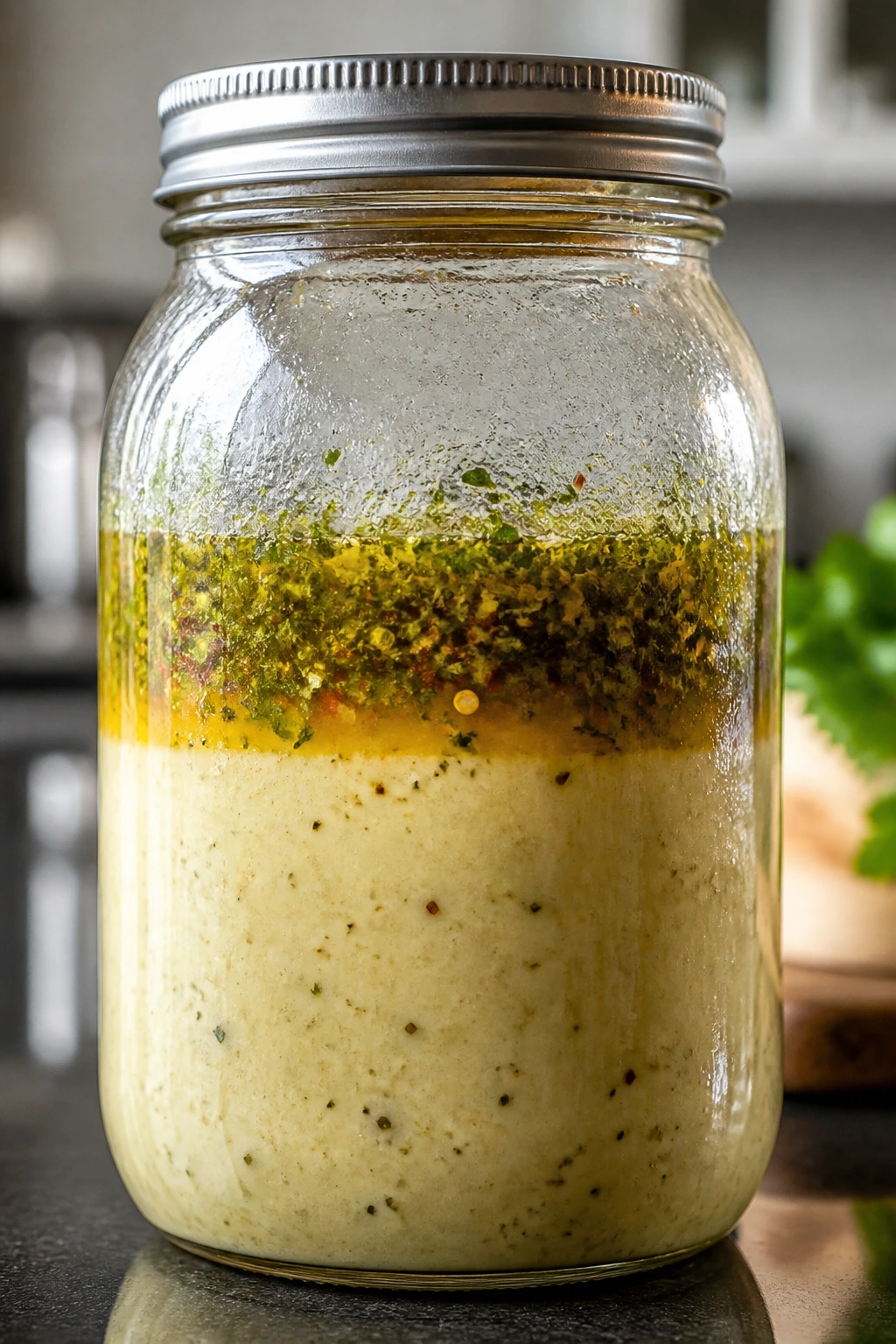
Most picnic food is at its best when the prep is split across a day or two instead of crammed into one frantic hour. Dressings can be mixed ahead and kept refrigerated for 5 to 7 days in a sealed jar. Bean salads and vinaigrette slaws usually hold well for 3 to 4 days in the fridge. Potato salad and pasta salad are also in that 3- to 4-day window if they stayed cold the whole time and were handled with clean utensils.
Cooked meats need a little more care. Sliced grilled chicken, pork, or beef keeps for 3 to 4 days refrigerated in shallow containers. If you want to freeze cooked meat, wrap it tightly and use it within about 2 to 3 months for the best texture. Reheat gently in a 300°F oven, covered with foil and a spoonful of broth or pan juices, until the meat reaches 165°F in the center. A dry oven on high heat is how good leftovers become rubber.
Cut fruit is best the day it’s made, but sturdy fruit like melon, pineapple, and grapes can usually hold for 2 to 3 days if stored cold and dry. Berries are fussier and soften faster. Bread and rolls are happiest at room temperature for short storage, usually 1 to 2 days in a bread bag or wrapped cloth; they freeze well if sealed tightly, then thaw on the counter while still wrapped.
Food that’s meant to stay out during the cookout has its own clock. Cold dishes should not sit at room temperature for more than 2 hours, and that drops to 1 hour if the weather is hot enough that the food starts warming fast on the table. Leftovers should be cooled in shallow containers and put into the fridge as soon as the meal is over. That quick cool-down matters more than fancy storage. A half-empty bowl left on the patio all evening is where good leftovers go bad.
Frequently Asked Questions About Backyard Cookout Picnics
How far ahead can I pack most of the food?
A lot of the spread can be done the day before: dressings, slaws, bean salads, baked sides, desserts, and chopped garnishes. Keep bread, cut tomatoes, herbs, and anything crisp for later so they don’t soften before the first plate is served.
Do I really need a cooler if the kitchen is only a few steps away?
For cold dishes, yes, if they aren’t going straight to the table. A short walk is fine; an hour on the patio is not. A cooler buys you time and keeps you from making ten fridge trips while guests are already hungry.
What foods should stay out of the cooler?
Chips, crackers, whole fruit, bread, unopened condiments, and room-temperature snacks do fine outside. Bread is a little tricky — it should stay dry and out of the sun, but it does not need fridge temps.
How do I keep sandwiches from getting soggy?
Build a barrier between wet ingredients and bread. Cheese, lettuce, or a thin layer of butter can protect the bread, and tomatoes should go in their own container if they’re especially juicy. Assemble right before serving if the sandwich is delicate.
Can I serve mayo-based salads outdoors?
Yes, if you keep them cold and do not let them sit out too long. Use a small serving bowl nested in a larger bowl of ice if the table will be warm. Refill from the fridge instead of leaving one giant bowl out all afternoon.
What if the cookout runs later than expected?
Keep a backup container in the fridge and rotate smaller bowls onto the table. That way the food sitting out stays in smaller batches, and the rest stays cold until needed. It’s a simple move, but it saves texture and safety.
Are disposable containers a bad idea?
Not at all. They can work well if they’re rigid enough to hold shape and tight enough not to leak. Thin clamshells and saggy bowls are the problem, not the idea of disposable packaging itself.
How do I pack for guests with different diets?
Separate the buildable parts: breads, proteins, sauces, vegetables, and toppings. That lets people make a meat-free plate, skip dairy, or avoid gluten without forcing you to prepare a different menu for every person at the table.
A Backyard Spread Worth Repeating
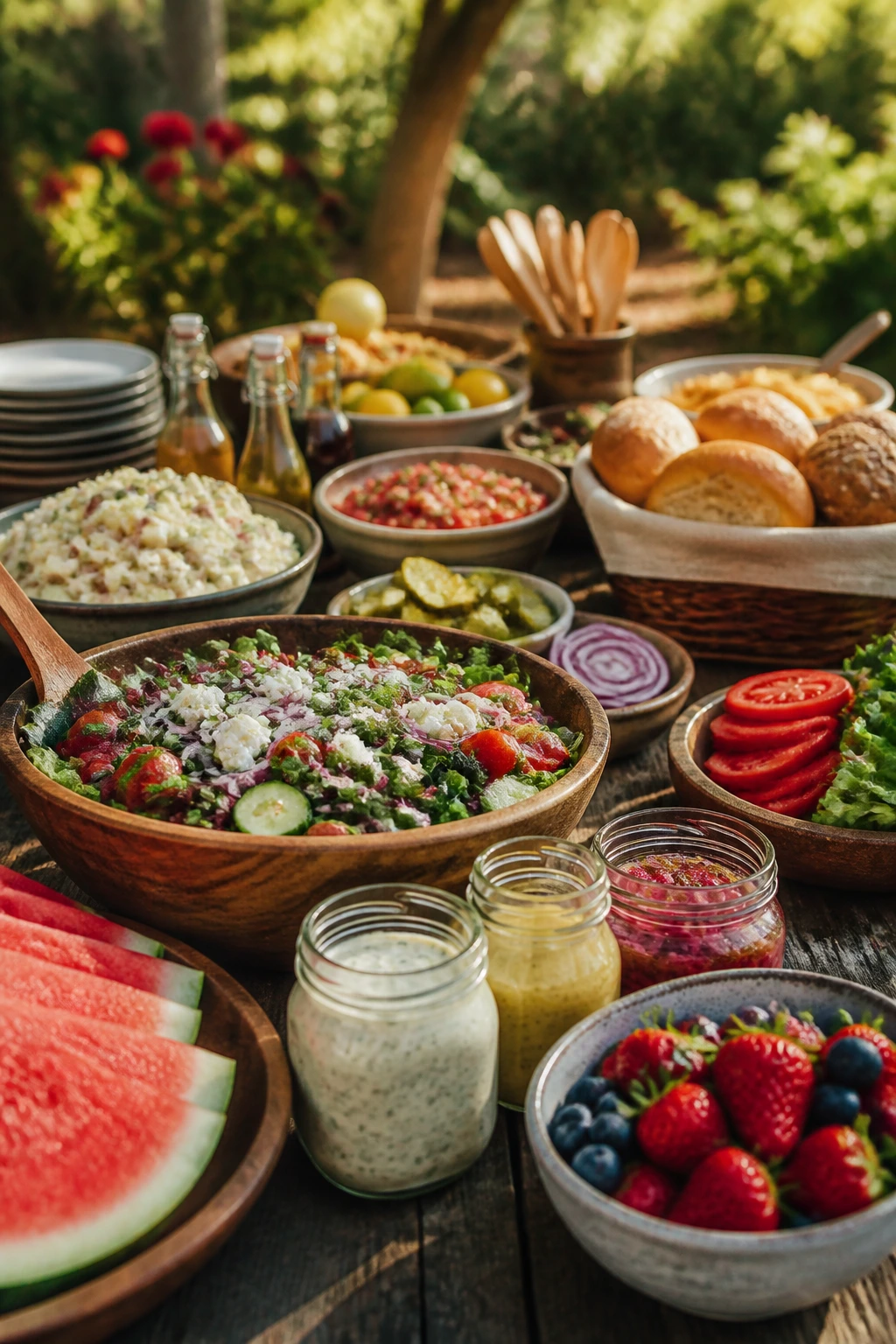
A good backyard cookout picnic feels relaxed because the prep is organized, not because nothing was planned. Cold food stays cold. Hot food shows up hot. Bread stays dry until it’s time to fill, and sauces arrive in their own little containers instead of soaking everything around them. That’s the whole trick, and it’s a good one.
Once you build the habit, the spread gets easier every time. The table looks cleaner. The flavors stay sharper. The leftovers are worth saving. And you get to spend more time near the grill and less time rescuing a dish that should have stayed in a separate bowl from the start.