



A juicy recipe for summer backyard cookouts has to do three things at once: smell like smoke, stay tender after a few distracted minutes on the grill, and survive the walk from grates to picnic table without turning leathery. That’s a tall order, and it’s why I keep coming back to chicken thighs. They forgive hot spots, they take on a proper char, and they still slice with a little sheen instead of that dry, chalky look that sends people reaching for extra sauce.
The trick is not piling on a dozen ingredients. It’s building a marinade that browns instead of burns, seasoning hard enough to matter, and stopping the cook at the right internal temperature so the meat stays plush. Lean chicken breast can work, sure, but thighs are the cut that doesn’t make you babysit every second. That matters when the cooler is open, the corn is in a pile, and somebody is asking where the serving tongs went.
A little brown sugar helps here, but only a little. Too much, and you get sticky scorch before the chicken is done. Too little, and the surface can look pale and flat even if the inside is fine. The sweet spot is a glossy marinade, medium-high heat, and a short rest on the board before you slice. Nothing fancy. Just the details that keep cookout chicken from being forgettable.
Why This Chicken Belongs on the Cookout Table
-
Forgiving heat tolerance: Chicken thighs stay tender even if the grill runs a little hotter than planned, which is useful when the lid gets opened every two minutes.
-
Fast enough for a crowd: Boneless thighs cook in about 12 to 16 minutes, so you can turn out a full platter without losing the whole afternoon to one batch.
-
Built for char: A touch of brown sugar and smoked paprika gives the surface a dark, savory crust that tastes like the grill had a plan.
-
Easy to pair: Lemon, garlic, oregano, and black pepper sit comfortably next to potato salad, grilled corn, coleslaw, sliced tomatoes, or warm buns.
-
Better leftovers: Chilled slices stay useful the next day in wraps, rice bowls, chopped salads, or pressed into a sandwich with pickles.
-
No dry chicken drama: Thighs have enough fat to stay juicy, which means you can focus on the conversation instead of micromanaging the thermometer.
The Timing, Yield, and Difficulty You Need Up Front
A cookout recipe works better when you know exactly how long it takes before the grill gets hot. This one is fast on the fire and flexible in the fridge, which is a nice combination when the rest of the menu is moving around.
Yield: Serves 6
Prep Time: 20 minutes
Cook Time: 12 to 16 minutes
Total Time: 32 to 36 minutes active, plus 2 to 8 hours marinating
Difficulty: Beginner — the ingredients are straightforward, and an instant-read thermometer takes the guesswork out of the grill.
Chill/Rest Time: 2 to 8 hours marinating; 5 to 8 minutes resting after grilling
Best Served: Warm, within 10 minutes of coming off the grill, while the edges are still a little crisp.
If you want to scale this up, the marinade doubles cleanly. Keep the same ratio and use a bigger bowl or a second zip-top bag so the thighs stay in one layer instead of piling into a slippery heap.
The Chicken and Marinade Ingredients
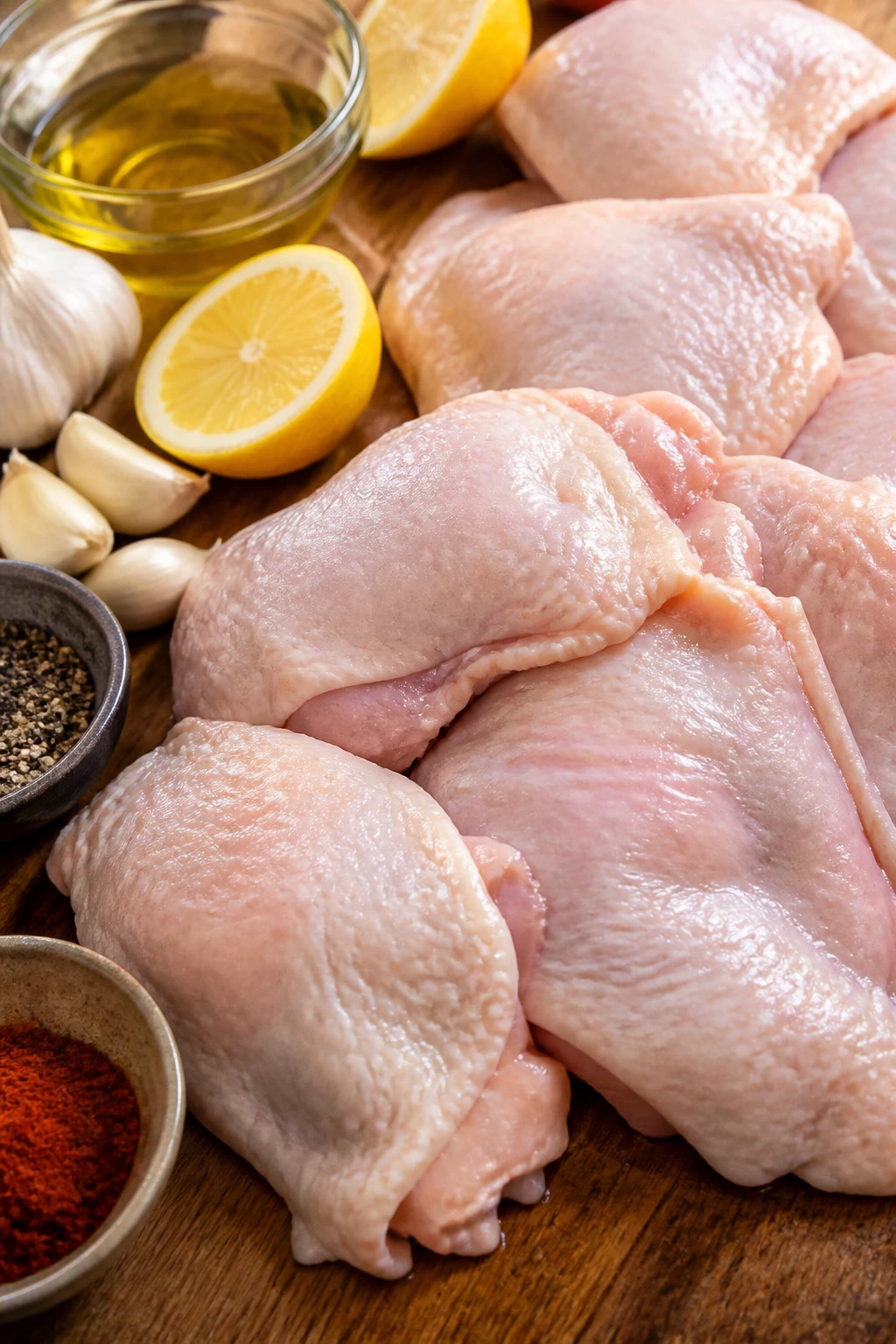
For the Chicken and Marinade:
- 2½ pounds boneless, skinless chicken thighs, trimmed of excess fat
- 1/4 cup extra-virgin olive oil
- 3 tablespoons fresh lemon juice
- 1 tablespoon lemon zest
- 1 tablespoon Dijon mustard
- 1 tablespoon brown sugar or honey
- 4 garlic cloves, finely grated or minced
- 2 teaspoons kosher salt
- 1 teaspoon smoked paprika
- 1 teaspoon dried oregano
- 1/2 teaspoon onion powder
- 1/2 teaspoon black pepper
- 1/4 teaspoon crushed red pepper flakes, optional
For Serving:
- 1 lemon, cut into wedges
- 2 tablespoons chopped fresh parsley
- Flaky salt, for finishing, optional
Why Chicken Thighs Win on a Hot Grill
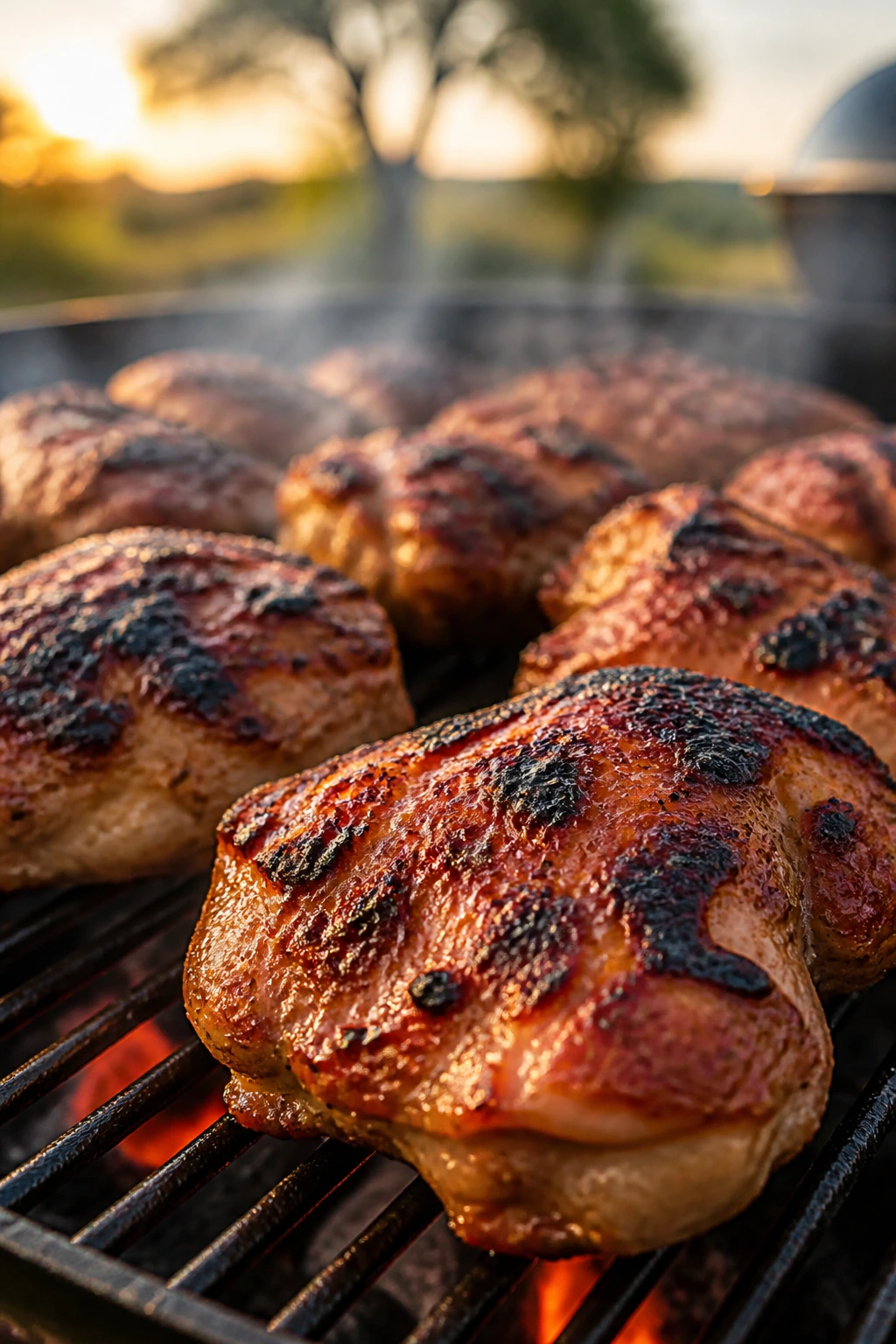
Lean chicken breast asks for perfect timing. Thighs don’t. That’s the whole story in one line.
Backyard grilling is rarely tidy. The lid gets opened. One burner runs hotter than the others. A breeze moves the flame just enough to change the color on one side of the platter. Chicken thighs are the cut that absorbs those little problems without collapsing into dry strands. Their darker meat and slightly higher fat content give you a cushion, and on the grill that cushion is worth more than any clever sauce.
That’s especially true for boneless, skinless thighs. They cook fast enough for a casual cookout, but they still hold moisture after resting. Bone-in thighs are lovely too, though they ask for more time and a little more patience. For this recipe, I want the version that lands on the table at the same pace as the corn and potato salad.
The flavor here leans bright and smoky rather than heavy. Lemon lifts the chicken. Garlic gives it bite. Smoked paprika fills in the gap when the grill isn’t producing huge smoky clouds, which is the case with most gas grills and plenty of charcoal setups too. You end up with chicken that has dark edges, a savory center, and enough juiciness that the first cut sends a little steam up from the platter.
That matters.
Why Each Ingredient Keeps the Chicken Juicy
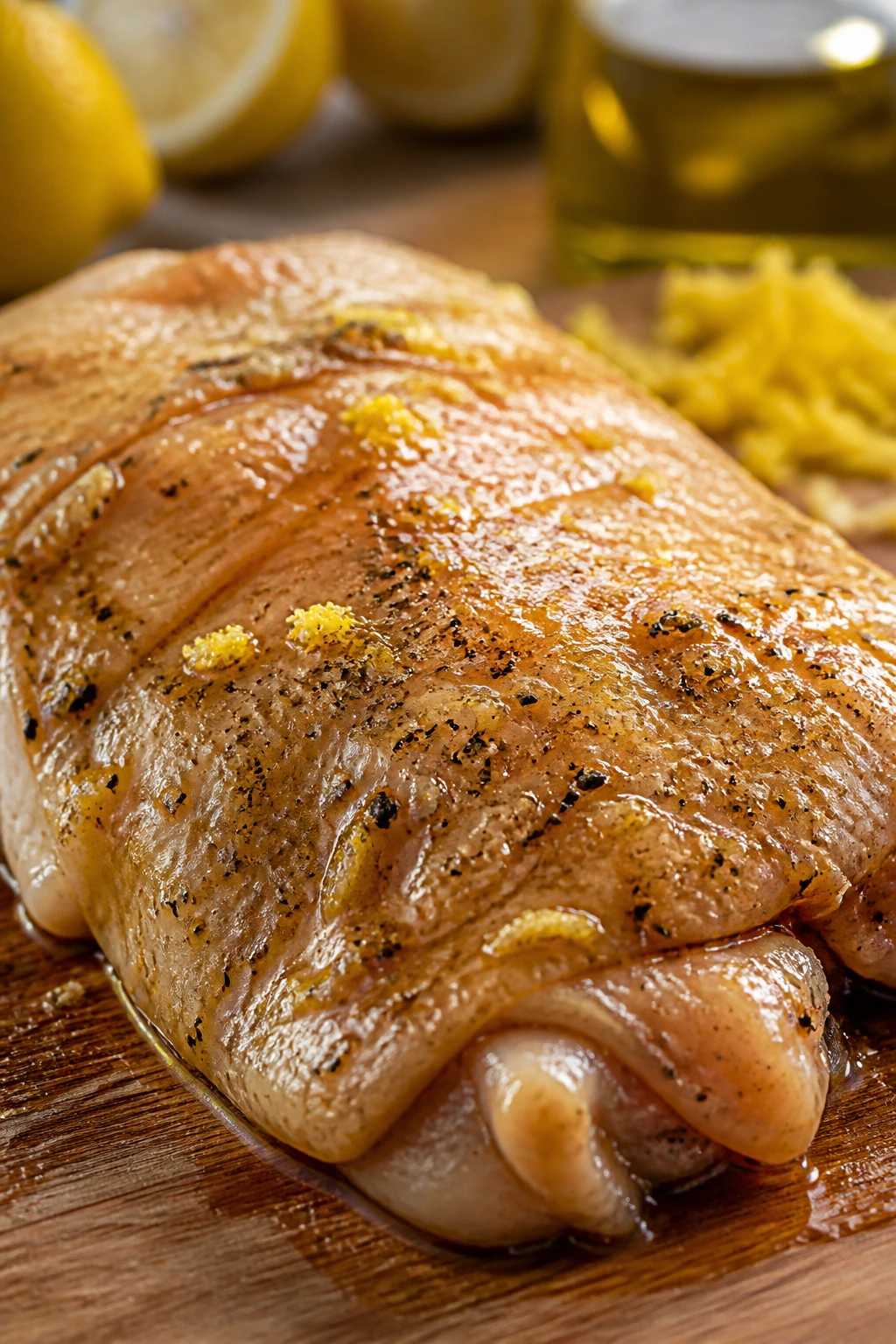
The Chicken
What to use: 2½ pounds boneless, skinless chicken thighs, trimmed of loose fat and excess skin scraps.
Preparation: Trim only the ragged bits. If one thigh is much thicker than the others, press it lightly with your palm or give it a gentle pound so the batch cooks at the same pace.
Substitutions: Bone-in thighs work if you add a few minutes per side; boneless chicken breasts can replace them, but pound the breasts to an even ¾-inch thickness and shorten the marinade time.
Tips: Buy thighs of similar size if you can. Even pieces cook more evenly, and you won’t be shuffling half-done chicken around the grill.
Oil, Acid, and Sweetener
What to use: 1/4 cup olive oil, 3 tablespoons lemon juice, 1 tablespoon lemon zest, 1 tablespoon Dijon mustard, and 1 tablespoon brown sugar or honey.
Preparation: Whisk until the mixture turns glossy and the sugar is mostly dissolved. The marinade should cling lightly to the chicken, not puddle around it like soup.
Substitutions: Lime juice works well if you want a sharper finish. Apple cider vinegar can step in for half the lemon juice, though it brings less brightness.
Tips: Keep the acid moderate. Too much lemon for too long starts softening the surface in a way that feels mushy after the grill.
Seasonings and Aromatics
What to use: 4 garlic cloves, 2 teaspoons kosher salt, 1 teaspoon smoked paprika, 1 teaspoon dried oregano, 1/2 teaspoon onion powder, 1/2 teaspoon black pepper, and 1/4 teaspoon crushed red pepper flakes if you want a little heat.
Preparation: Grate the garlic finely so it disappears into the marinade instead of burning in thick little clumps.
Substitutions: Sweet paprika can replace smoked paprika, but the chicken will taste cleaner and less smoky. Thyme can replace oregano if that’s what’s in the drawer.
Tips: If your chicken is already enhanced with a salt solution, cut the kosher salt back to 1½ teaspoons. Pre-seasoned supermarket chicken can get salty fast.
Finishing Touches
What to use: 1 lemon cut into wedges, 2 tablespoons chopped parsley, and a pinch of flaky salt if you like a sharper finish.
Preparation: Chop the parsley right before serving so it stays bright and doesn’t go limp on the cutting board.
Substitutions: Cilantro or dill work if you want a different herb profile.
Tips: Finish after resting. If you add herbs too early, the heat dulls them and the plate loses that fresh, just-grilled look.
The Tools That Make Backyard Grilling Easier
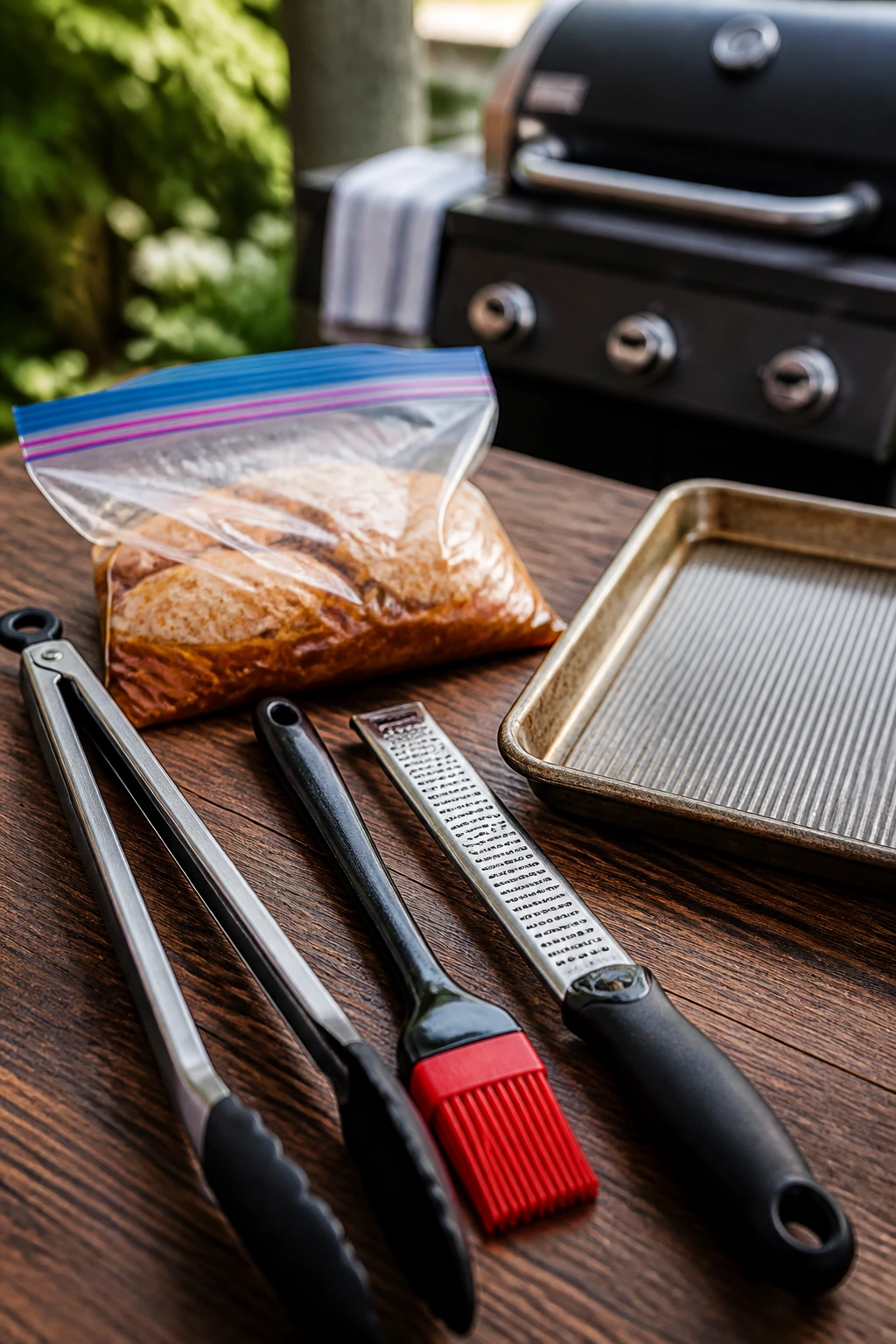
-
Gas grill or charcoal grill: Either one works. Gas gives steadier heat; charcoal adds a little more smoke and a little more personality.
-
Instant-read thermometer: Non-negotiable for juicy chicken. Pull the thighs at 165°F in the thickest part.
-
Long grilling tongs: Useful for flipping without tearing the skinless thighs or losing a piece between the grates.
-
Large mixing bowl or zip-top bag: A bag coats the chicken faster and keeps cleanup easy. A bowl works fine if you turn the pieces a few times.
-
Microplane or fine grater: Best for garlic and lemon zest, which should melt into the marinade instead of sitting in chunks.
-
Rimmed sheet pan or large platter: Handy for carrying raw chicken out to the grill and for resting the cooked thighs without losing juices.
-
Silicone brush or folded paper towel and tongs: Good for oiling the grates. A damp rag in your hand is not the move.
-
Wire rack, optional but useful: Resting the chicken on a rack keeps the underside from steaming while you finish the rest of the meal.
How to Marinate Chicken So It Stays Juicy
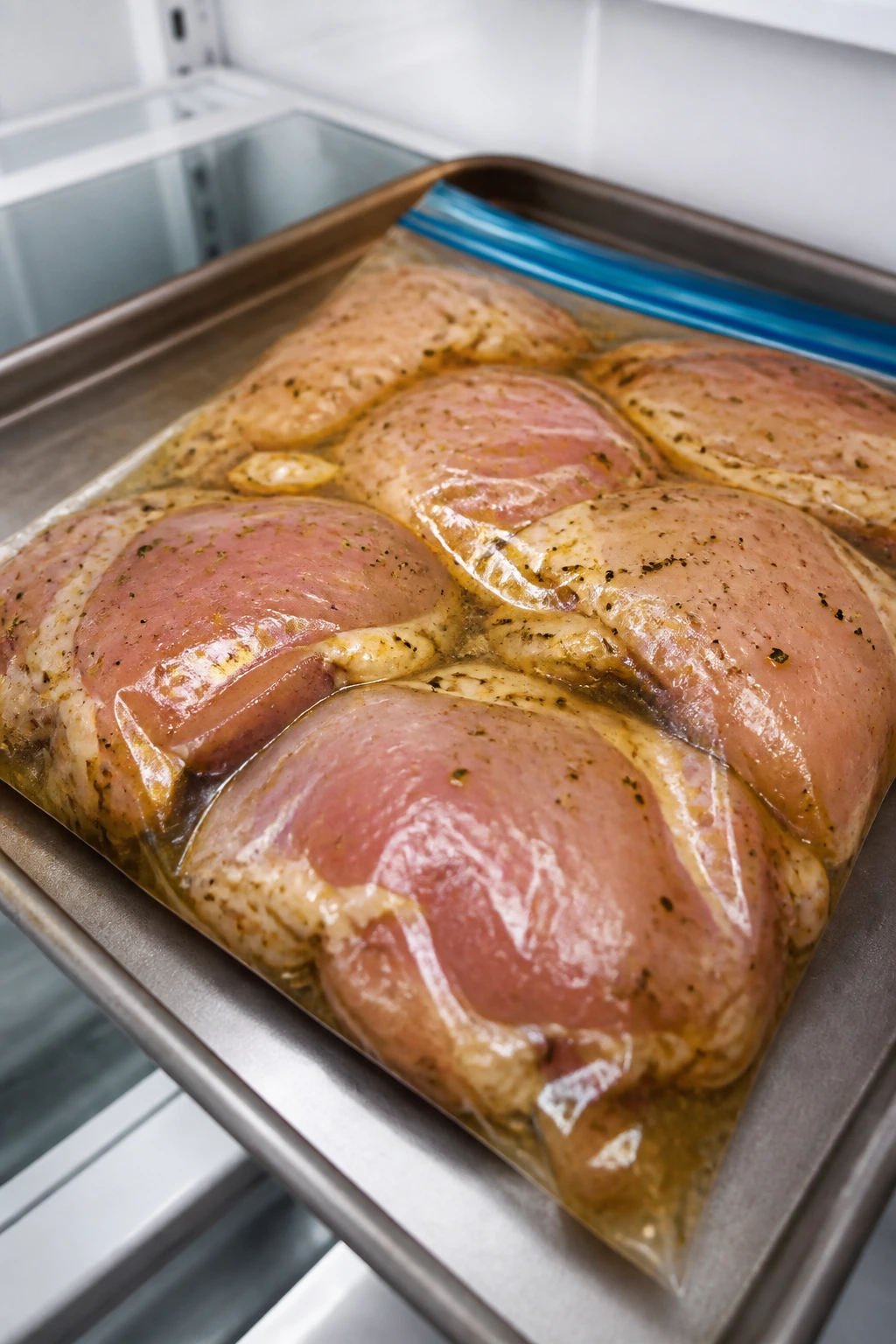
Salt does most of the real work here. People tend to think of marinade as flavor paint, but the salt is what actually helps the chicken hold onto moisture while it cooks. The oil carries the garlic and paprika across the meat. The lemon wakes everything up. The sugar nudges the surface toward better browning.
Two to eight hours is the sweet spot for this recipe. Thirty minutes is better than nothing, but it mostly seasons the outside. Four to six hours gives you the best balance: the chicken picks up the seasoning, the lemon stays bright, and the surface still browns cleanly on the grill. Past eight hours, the acidic part of the marinade starts to work against you, especially if you use extra lemon juice.
I like to use a zip-top bag for this part. Lay the bag flat in a rimmed pan so the chicken sits in a thin layer instead of a heap. Every piece gets better contact with the marinade, and the fridge stays cleaner if the bag leaks. If you use a bowl, turn the chicken a few times while it chills, and don’t leave it standing in a puddle of liquid longer than you need to.
One more thing people skip: pull the chicken from the fridge about 15 minutes before grilling. Not an hour. Just 15 minutes. That little head start takes the chill off the surface so the thighs cook more evenly once they hit the hot grates.
Grill It, Rest It, and Serve It Without Drying It Out
Make the Marinade:
-
In a large bowl, whisk together the olive oil, lemon juice, lemon zest, Dijon mustard, brown sugar or honey, garlic, kosher salt, smoked paprika, oregano, onion powder, black pepper, and crushed red pepper flakes until the marinade looks glossy and evenly mixed.
-
Add the chicken thighs and turn them until every piece is coated. Transfer everything to a zip-top bag or cover the bowl tightly and refrigerate for 2 to 8 hours. Turn the bag or stir the chicken once halfway through if you remember. Do not leave this lemon-based marinade on the chicken all day; the surface can start to soften too much.
Preheat the Grill:
-
Heat a gas grill to medium-high, around 425°F to 450°F, or build a two-zone charcoal fire with one hot side and one cooler side. Scrub the grates clean, then oil them lightly once they’re hot.
-
Remove the chicken from the marinade and let the excess drip off. Scrape away any big clumps of garlic that are sticking on the surface so they don’t burn into bitter little spots. Let the chicken sit 15 minutes while the grill finishes heating.
Grill and Finish:
-
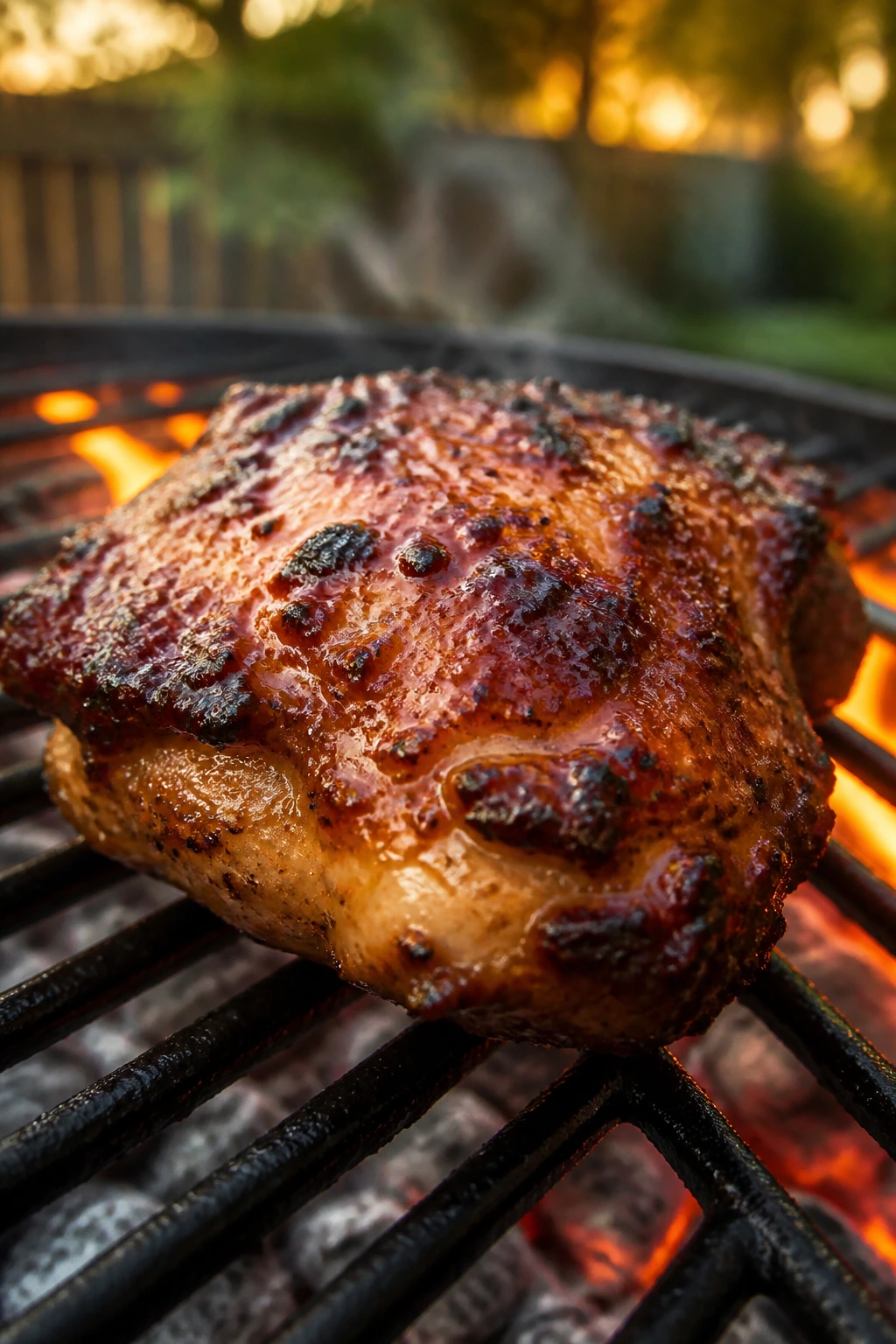
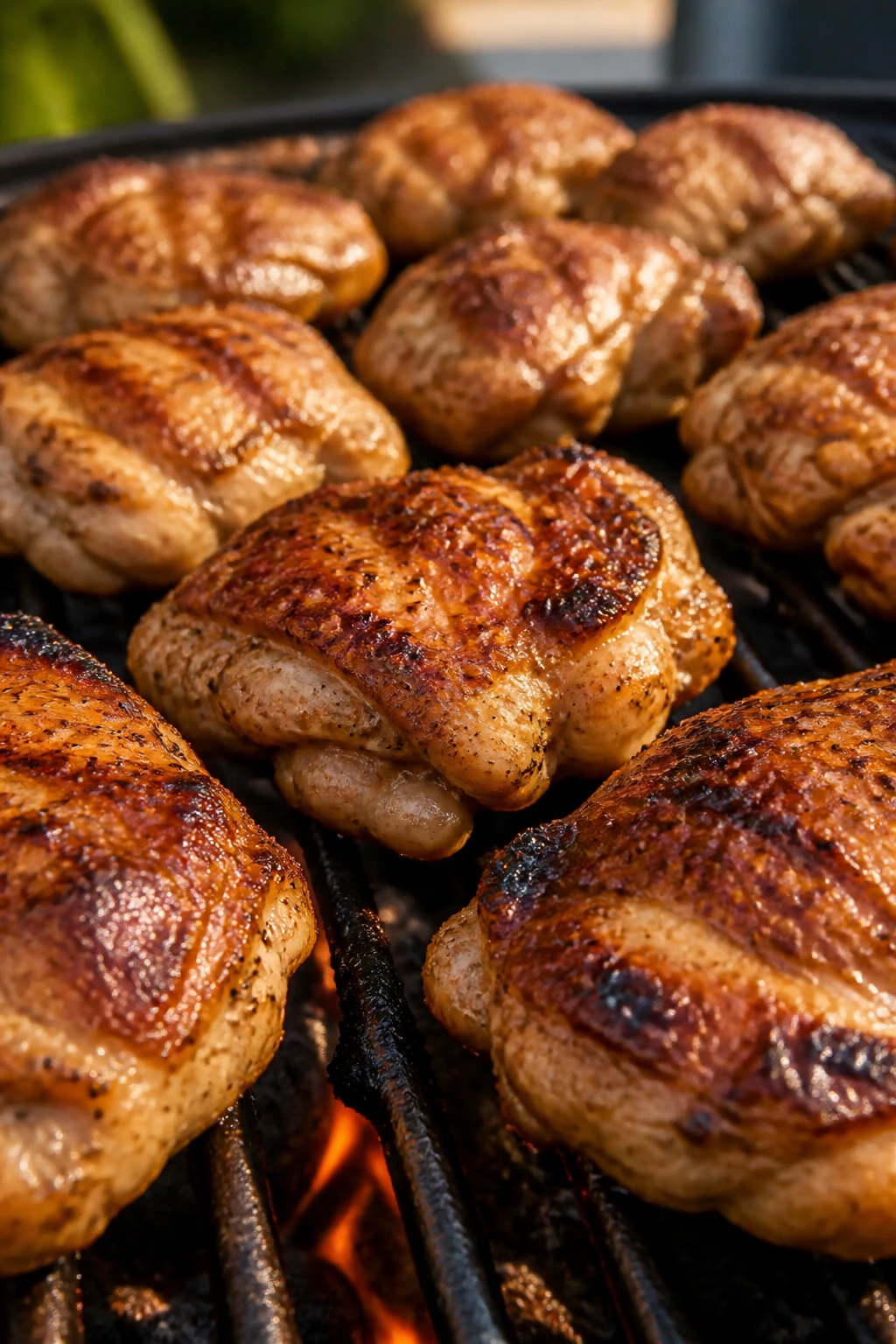
Lay the chicken thighs on the hot grates and close the lid. Grill the first side for 5 to 7 minutes, until deep grill marks form and the chicken releases easily when you lift an edge with tongs.
-
Flip the thighs and grill the second side for 4 to 6 minutes more, until the thickest piece reaches 165°F on an instant-read thermometer. If flare-ups jump under the chicken, shift the pieces to the cooler side for a minute or two instead of chasing the flames.
-
Move the cooked chicken to a platter or a wire rack and rest for 5 to 8 minutes. Skip this rest and the juices will run onto the board instead of staying inside the meat.
-
Finish with lemon wedges, chopped parsley, and a pinch of flaky salt if you want a sharper edge. Slice only if you’re serving the chicken on a platter, in sandwiches, or over salad. If you’re serving whole thighs, leave them alone and let the juices do their thing.
How to Serve It at the Table
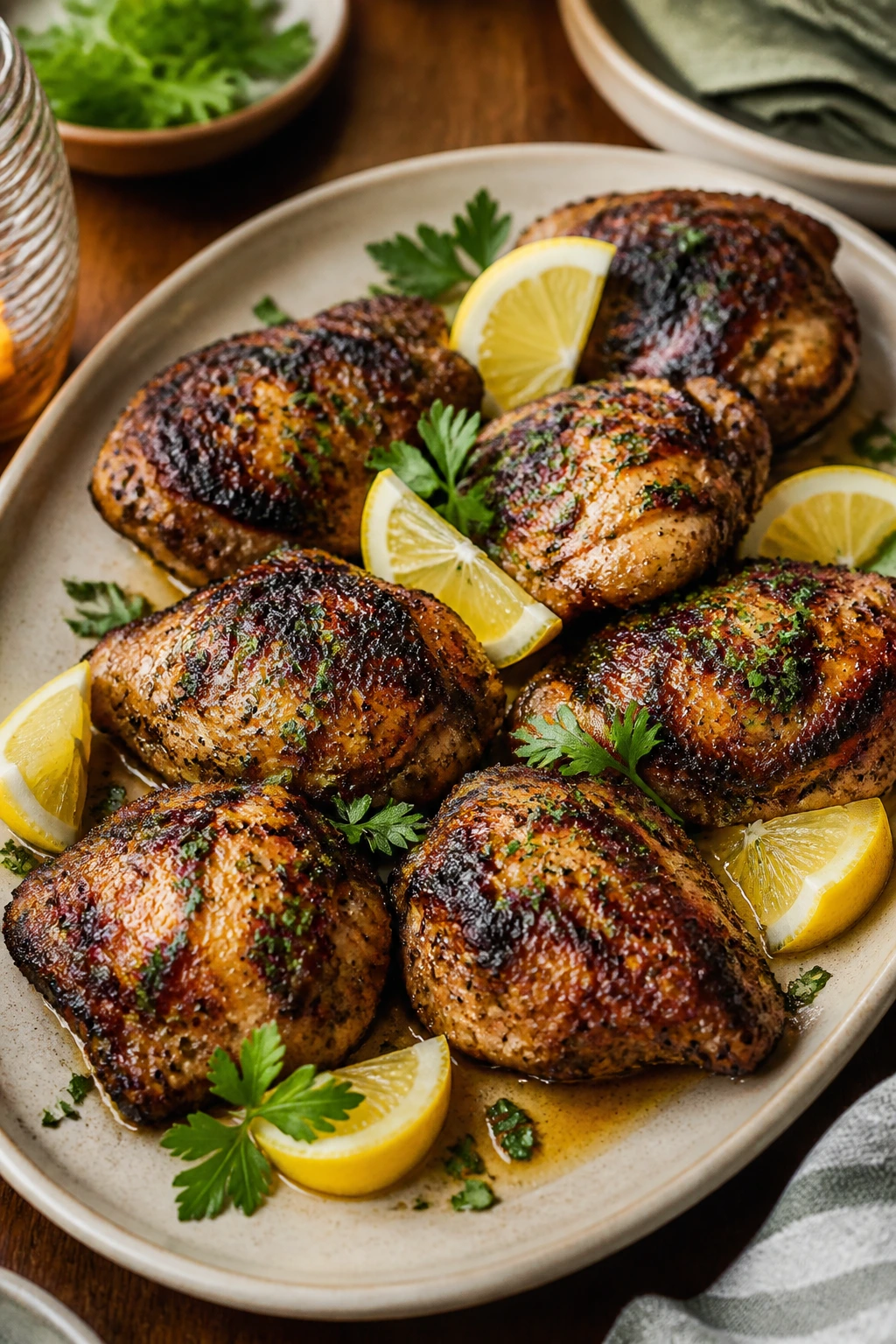
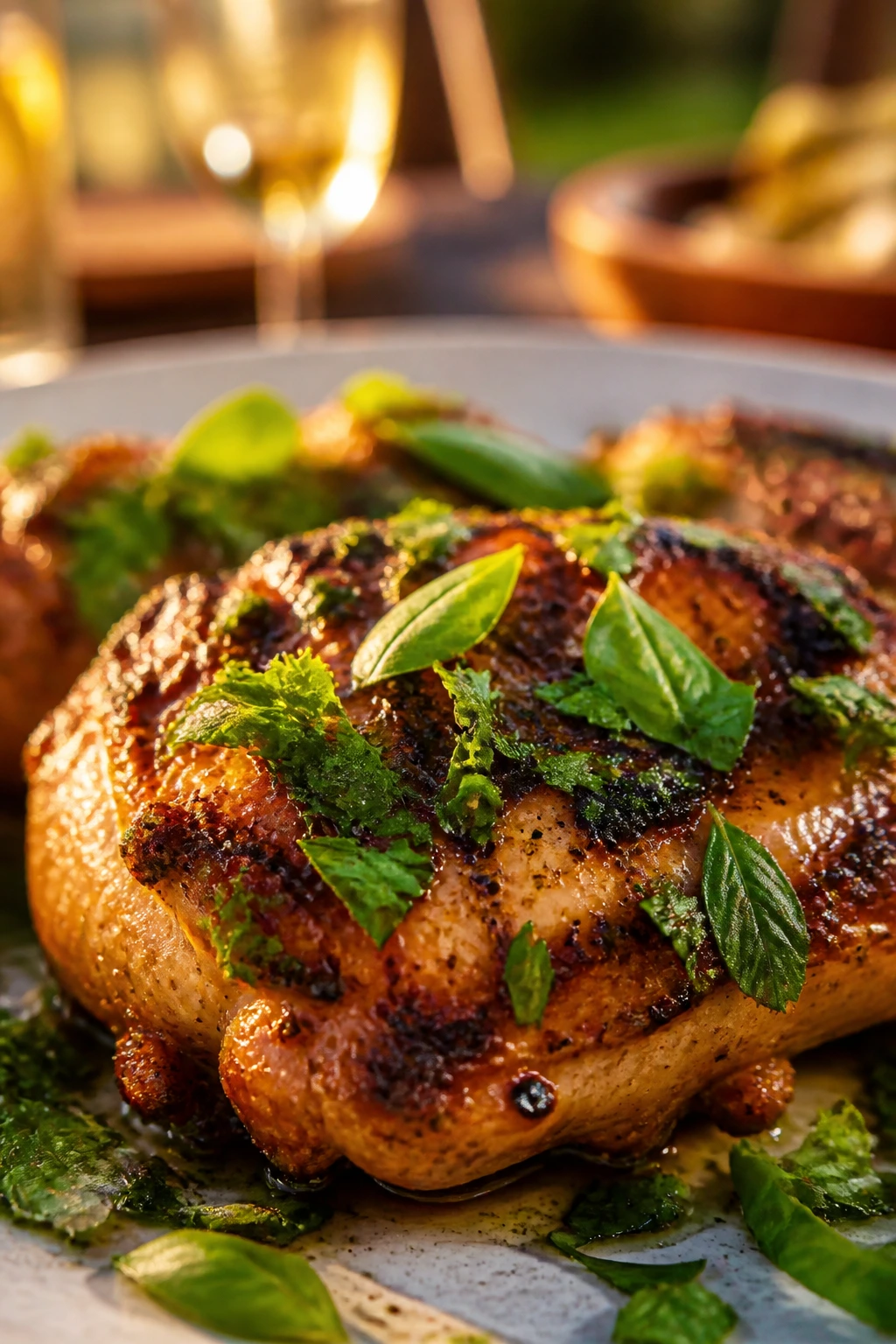
Presentation: Pile the thighs on a warm platter, then spoon any juices from the resting board back over the top. A few lemon wedges and a scatter of parsley are enough to make the whole dish look bright and cared for.
Accompaniments: I like this with vinegar slaw, grilled corn, potato salad, and slices of grilled bread. If you want a fuller cookout spread, add tomato salad or charred zucchini. Warm pita or brioche buns also work if you want to turn the chicken into handheld sandwiches.
Portions: Plan on 2 smaller thighs or 1 large thigh per adult if the menu has several sides. If the chicken is the main event and the rest of the table is light, count on 2 thighs per person and maybe a few extra for seconds.
Beverage Pairing: A cold lager cuts through the garlic and smoked paprika without fighting them. If you want a nonalcoholic pairing, sparkling lemonade or unsweetened iced tea with lemon keeps the plate sharp and clean.
If you’re slicing the chicken for a platter, cut across the grain. The texture goes from firm to tender in one clean move. I also like to keep a damp kitchen towel under the cutting board so it doesn’t skate around while I work. Outdoors, little things like that matter more than they should.
Extra Tips for Better Color, Juicier Meat, and Easier Cleanup
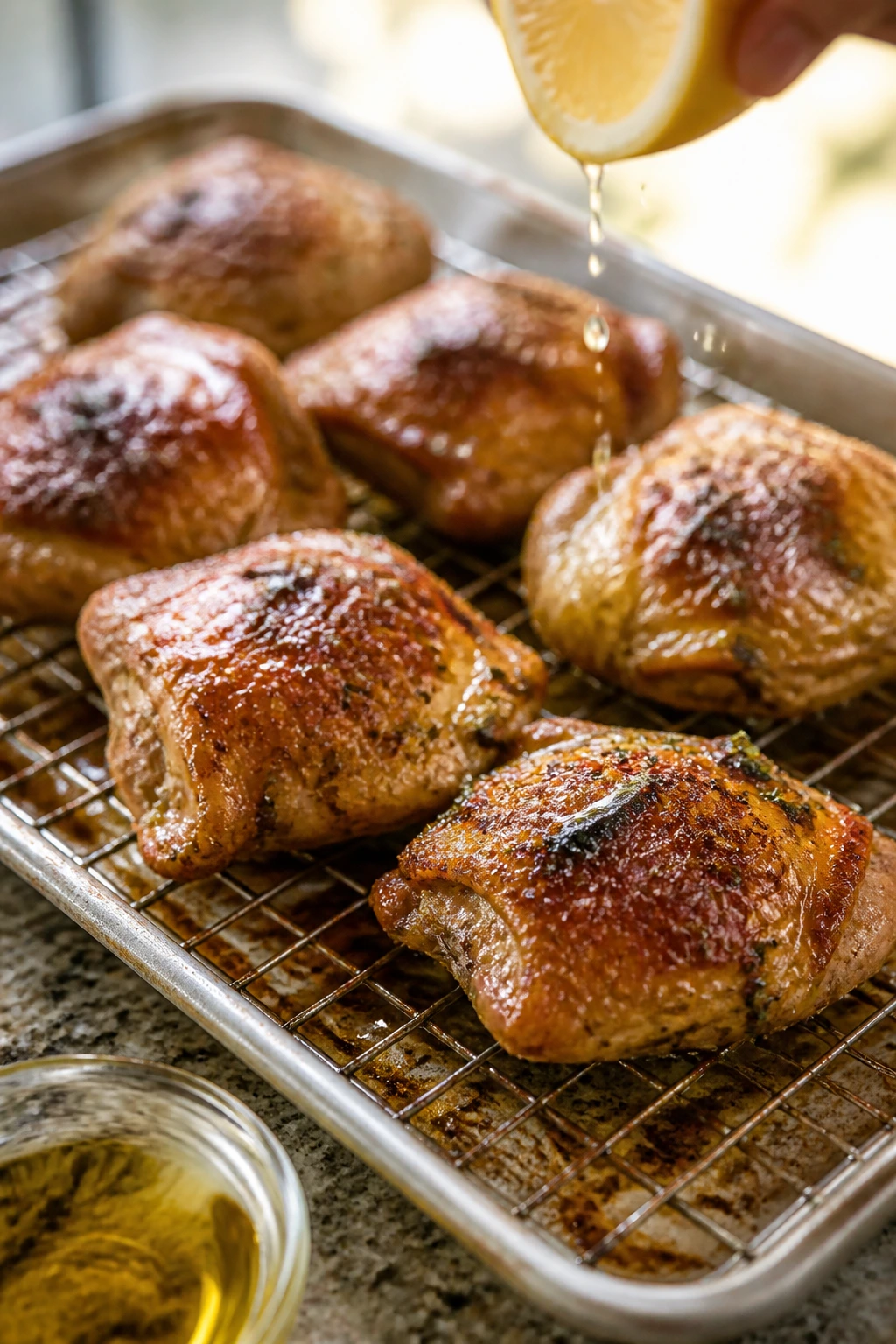
Flavor Enhancement: Right after the chicken rests, hit it with a teaspoon of fresh lemon juice and a few drops of olive oil. The surface wakes up instantly, and the flavor tastes cleaner than adding a heavy sauce. A tiny pinch of flaky salt on top gives you that bright, crisp finish that people notice even if they can’t name it.
Time-Saver: Mix the marinade the night before and keep it in the fridge. When you’re ready, add the chicken and let it sit while you light the grill or set out the sides. The chicken can coat faster in a bag than in a bowl, and there’s less cleanup at the end.
Pro Move: Rest the chicken on a wire rack set over a sheet pan instead of directly on a plate. The bottom stays dry, so the underside doesn’t steam while you finish the rest of the food. If you’re cooking in batches, hold finished pieces on the cooler side of the grill for a minute or two rather than stacking them on top of each other.
Cost-Saver: Buy thighs in family packs, trim them once, and freeze extra portions in a bag with the marinade. Thawed in the fridge, they cook with the same flavor and usually cost less than last-minute smaller packs. It’s the rare cookout move that saves money and doesn’t taste like a compromise.
A small but useful note: if your grill has a hot left side and a dull right side, use that. Start the thighs over the hot zone for color, then slide the stubborn pieces to the cooler side if they’re browning faster than they’re cooking. Backyard grills have moods. Work with them.
Common Mistakes That Dry Out Grill Chicken
-
Marinating too long with too much lemon: The outside can turn soft or slightly mushy instead of pleasantly seasoned. Fix it by keeping the marinating window at 2 to 8 hours and not turning the acid into the loudest ingredient in the bowl.
-
Running the grill too hot: The surface chars before the center reaches temperature, leaving you with black edges and pale meat inside. Fix it by aiming for 425°F to 450°F and moving the chicken to a cooler zone if the flames start licking up.
-
Flipping too soon: If the chicken sticks, it usually means the surface hasn’t browned enough yet. Fix it by waiting until the thigh releases easily, then flip once. One clean turn is better than fussing with it three times.
-
Skipping the thermometer: Color is not a reliable guide, especially with paprika and a little sugar in the marinade. Fix it by checking the thickest part with an instant-read thermometer and pulling the chicken at 165°F.
-
Cutting the chicken the second it comes off the grill: Juices spill onto the board, and the meat tastes drier than it should. Fix it by letting the thighs rest 5 to 8 minutes before slicing or serving.
-
Crowding the grate: Too many thighs at once trap steam and block good browning. Fix it by leaving a little space between pieces, even if that means cooking in two rounds.
Flavor Variations That Keep the Juicy Core
Honey-Lime Backyard Chicken
Swap the lemon juice and zest for lime juice and lime zest, then finish the chicken with chopped cilantro instead of parsley. Keep the brown sugar or honey in place. The result leans sharper and a little sweeter, which sits nicely next to grilled corn, black beans, or a tomato salad with jalapeño.
Smoky Chipotle Version
Add 1 teaspoon chipotle powder and 1 tablespoon adobo sauce from a can of chipotles in adobo. The flavor gets deeper and darker, with a slow-building heat that works well when you want the chicken to hold its own against baked beans or spicy slaw. Keep the grill at medium-high, not screaming hot, because the adobo can darken fast.
Herb Garden Thighs
Stir in 1 tablespoon chopped parsley and 1 tablespoon chopped basil after the chicken comes off the grill, then add a little extra lemon zest. This is the version I’d make if the table already has creamy sides and you want the chicken to taste lighter and greener. It’s especially good with potato salad that leans mustardy instead of mayonnaise-heavy.
Skewer Party Cut
Cut the thighs into 1½-inch pieces, thread them onto skewers with onion chunks or bell pepper squares, and grill them for about 8 to 10 minutes total, turning more often than you would whole thighs. This version looks a little more festive on a platter and makes it easier to hand out portions fast. The tradeoff is that small pieces dry faster, so watch them closely.
Breast Swap for a Leaner Plate
If chicken breasts are what you have, pound them to an even ¾-inch thickness and shorten the marinade time to 2 to 4 hours. Grill over medium-high heat until they reach 165°F, then pull them immediately. They’ll be leaner and less forgiving than thighs, so treat them like a different recipe, not a perfect substitute.
Make-Ahead, Storage, and Reheating Guidance
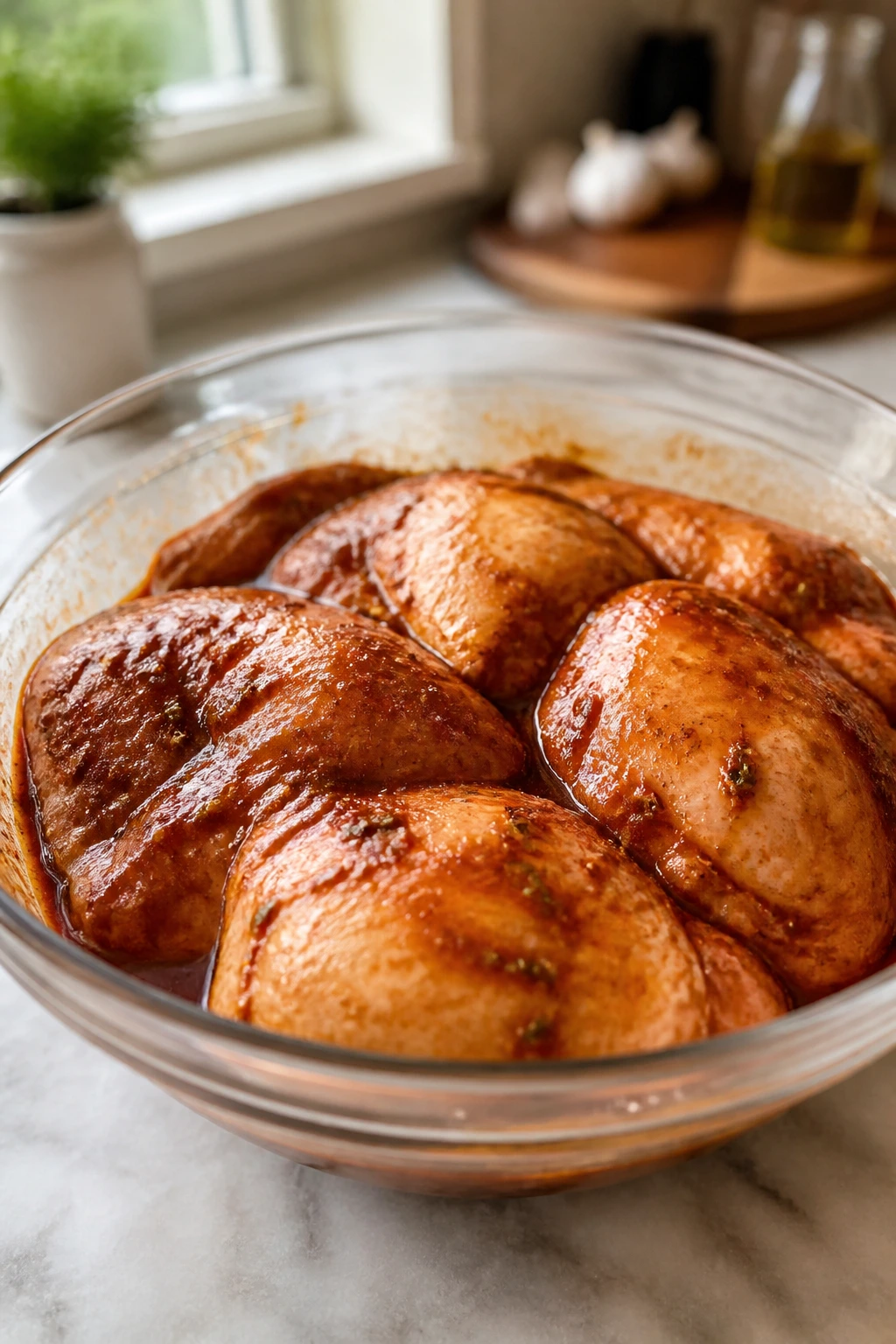
The raw chicken can be marinated 2 to 8 hours ahead, which is the easiest part of this whole recipe. If you want to get farther ahead, whisk the marinade up to 3 days in advance and keep it covered in the fridge. Once the chicken goes into the marinade, keep it on the lower shelf so it doesn’t leak onto anything else.
Cooked chicken should not sit at room temperature for more than 2 hours. After that, pack it into an airtight container and refrigerate it for 3 to 4 days. The thighs stay useful cold too, which is one reason I like them for cookouts; sliced leftovers make excellent sandwich filling or salad topping the next day.
Freezing works fine for cooked chicken, and it’s best within 2 months. Wrap pieces tightly or press sliced chicken flat into a freezer bag, pushing out as much air as possible before sealing. Thaw overnight in the fridge instead of on the counter. If you want to freeze raw marinated chicken, that works too; freeze the bag flat, then thaw it in the fridge and grill as usual.
For reheating, the oven gives the best texture. Set it to 325°F, place the chicken in a baking dish with 1 tablespoon water or broth per piece, cover loosely with foil, and warm for 10 to 15 minutes until the center is hot. A skillet works too: use low heat, add a spoonful of water, cover, and heat for 5 to 7 minutes. The microwave is the last resort. If you use it, go low power and cover the chicken with a damp paper towel so the edges don’t dry out before the center warms.
This recipe also does a nice job on a make-ahead party tray. Grill the chicken earlier in the day, cool it, and refrigerate it. Right before serving, let it sit at room temperature for 20 minutes or warm it gently in a 300°F oven for about 10 minutes. It will not taste as lively as the second it leaves the grill, but it holds up better than most chicken dishes do.
Questions People Ask Before the Grill Gets Hot
Can I use chicken breasts instead of thighs?
Yes, but pound the breasts to an even thickness and shorten the marinade time to 2 to 4 hours. Breasts dry out faster than thighs, so grill them over medium-high heat and pull them as soon as they hit 165°F.
How long should I marinate the chicken for the best texture?
Two to eight hours is the useful range. Less than that still seasons the surface, but around 4 to 6 hours gives you the best balance of flavor, browning, and tenderness.
What if I don’t have a grill?
A grill pan or cast-iron skillet can stand in. Heat it over medium-high, oil the surface lightly, and cook the thighs in batches so they brown instead of steaming. You won’t get quite the same smoke, but the smoked paprika helps fill the gap.
How do I keep the chicken from sticking to the grates?
Clean grates and hot grates are the main fix. Oil the grates lightly, let the chicken brown before you try to move it, and flip only when it releases on its own.
Can I make this recipe the day before a cookout?
You can marinate the chicken the day before, then grill it a few hours before serving and rewarm it gently if needed. Cooked thighs also hold up well cold, so if the schedule gets messy, slicing them for sandwiches or salad is a solid fallback.
What internal temperature should I look for?
Use 165°F in the thickest part of the thigh. That’s the safe finish for chicken and the spot where the meat is cooked through without crossing into dry territory.
What if the outside browns too fast before the inside is done?
Move the pieces to a cooler zone of the grill and close the lid for a minute or two. If you’re using honey or brown sugar in the marinade, this can happen fast, so keep the heat at medium-high instead of pushing it hotter.
Can I freeze the raw marinated chicken?
Yes. Freeze it flat in a zip-top bag, then thaw it overnight in the fridge before grilling. That’s a handy way to keep a cookout main dish ready without doing extra work on the day of the party.
The Chicken I’d Put Out First at a Backyard Cookout
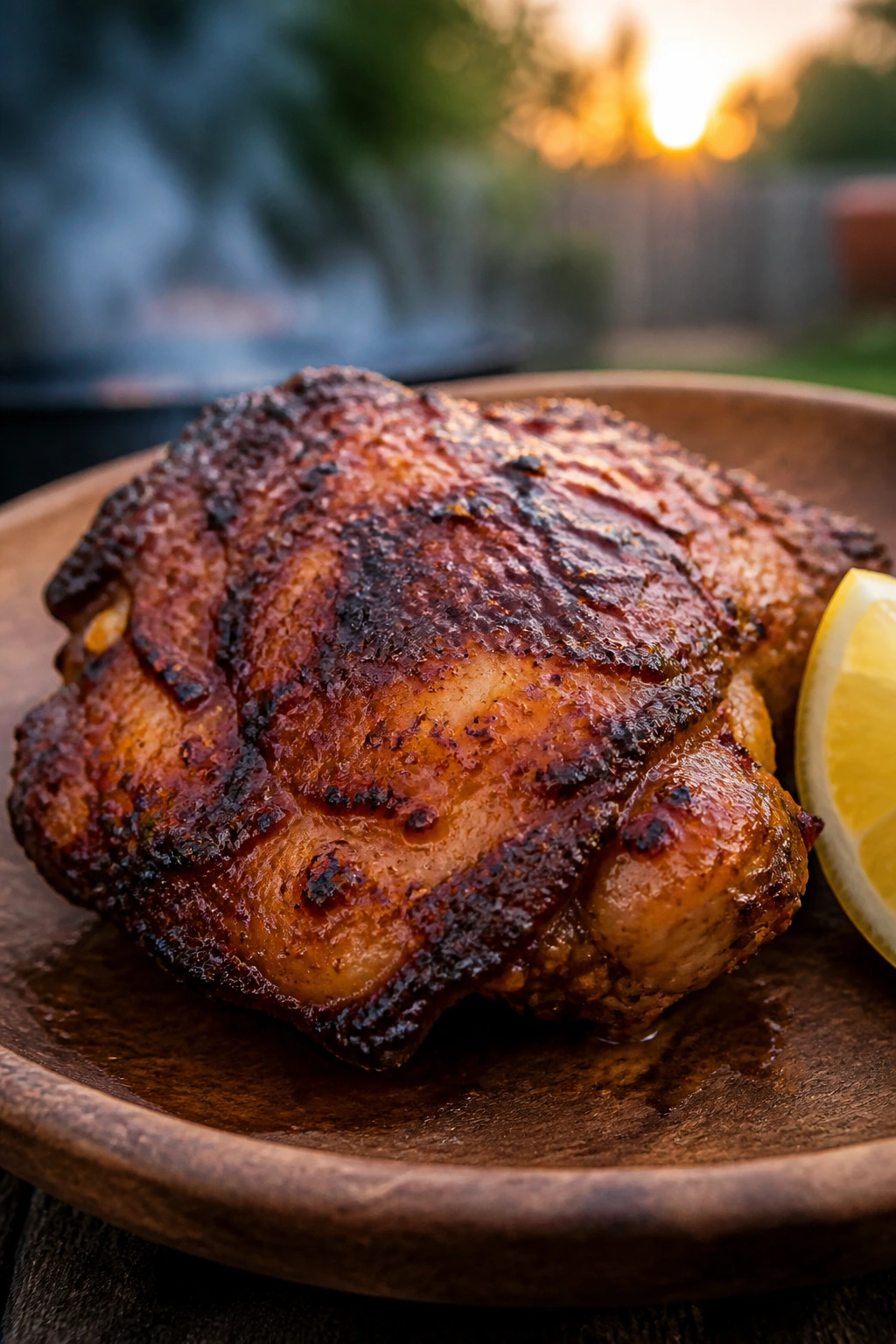
Some cookout dishes ask for perfect conditions. This one doesn’t. That’s why it earns its place. The thighs take smoke well, the lemon keeps the flavor bright, and the little bit of sugar gives you enough color to make the platter look like someone paid attention.
The real win is that it holds together under ordinary backyard chaos. A gust of wind. A chatty neighbor. A side dish that takes longer than expected. This chicken still comes out tender if you watch the thermometer and give it a short rest, which is more than enough reason to keep the recipe close.
The next time the grill warms up and people drift toward the patio, this is the platter I’d set down first.
Juicy Grilled Chicken Thighs for Backyard Cookouts — Recipe Card
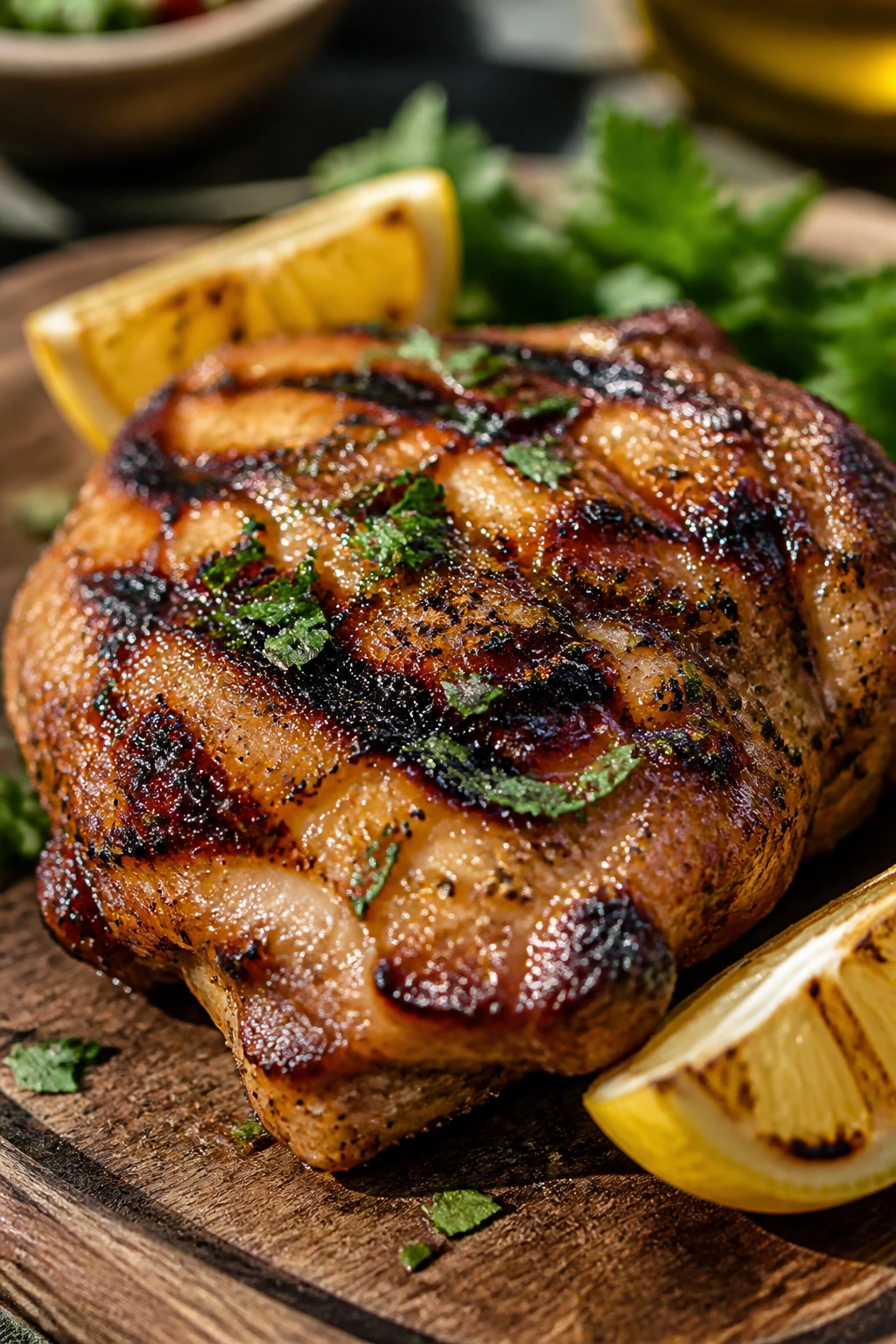
Recipe Name: Juicy Grilled Chicken Thighs for Backyard Cookouts
Description: Smoky lemon-garlic grilled chicken thighs with a glossy marinade, dark grill marks, and a tender center that stays juicy on a hot summer grill.
Prep Time: 20 minutes
Cook Time: 12 to 16 minutes
Total Time: 32 to 36 minutes active, plus 2 to 8 hours marinating
Course: Main Course
Cuisine: American
Servings: 6 servings
Calories: About 390 kcal per serving
Ingredients
For the Chicken and Marinade:
- 2½ pounds boneless, skinless chicken thighs, trimmed of excess fat
- 1/4 cup extra-virgin olive oil
- 3 tablespoons fresh lemon juice
- 1 tablespoon lemon zest
- 1 tablespoon Dijon mustard
- 1 tablespoon brown sugar or honey
- 4 garlic cloves, finely grated or minced
- 2 teaspoons kosher salt
- 1 teaspoon smoked paprika
- 1 teaspoon dried oregano
- 1/2 teaspoon onion powder
- 1/2 teaspoon black pepper
- 1/4 teaspoon crushed red pepper flakes, optional
For Serving:
- 1 lemon, cut into wedges
- 2 tablespoons chopped fresh parsley
- Flaky salt, for finishing, optional
Instructions
-
Whisk the olive oil, lemon juice, lemon zest, Dijon mustard, brown sugar or honey, garlic, kosher salt, smoked paprika, oregano, onion powder, black pepper, and crushed red pepper flakes in a large bowl until glossy.
-
Add the chicken thighs and coat them well. Cover and refrigerate for 2 to 8 hours, turning once halfway through if possible.
-
Preheat a gas grill to medium-high, about 425°F to 450°F, or build a two-zone charcoal fire. Clean and oil the grates.
-
Remove the chicken from the marinade, let the excess drip off, and let the thighs sit 15 minutes while the grill heats. Discard the leftover marinade.
-
Grill the thighs for 5 to 7 minutes on the first side, until deep grill marks form and the meat releases easily.
-
Flip and grill for 4 to 6 minutes more, until the thickest part reaches 165°F on an instant-read thermometer.
-
Transfer the chicken to a platter and rest for 5 to 8 minutes.
-
Finish with lemon wedges, chopped parsley, and flaky salt if you like. Serve warm.
Notes: Use thighs for the juiciest result; don’t over-marinate past 8 hours; reheat gently so the meat stays tender.