



A whole ham with brown sugar glaze should smell like warm caramel and smoky pork before the first slice ever hits a plate. If it smells like burnt candy, something went wrong. If it looks pale and tired, the glaze never got its chance.
The version I love has a glossy top that crackles a little at the edges, meat that stays juicy all the way to the bone, and a sweetness that never quite turns into dessert. That balance matters. Brown sugar brings the sticky sheen, but the mustard and cider vinegar keep it honest, and the ham itself does the heavy lifting with its salty, cured depth.
People sometimes talk about ham like it’s a background food. Nonsense. A good ham is a centerpiece with a job to do, and the trick is not making it complicated — it’s giving it enough patience to stay supple while the glaze turns dark and shiny at the end. Low heat. A thermometer. Late glazing. Those three things do more for this dish than any flashy trick ever could.
Why This Ham Earns a Spot in the Center of the Table
-
Big-Crowd Friendly: A 10- to 12-pound whole ham feeds a lot of people without turning the oven into a day-long project, and the bone gives you slices that feel generous instead of skimpy.
-
Low Effort, High Payoff: The oven does most of the work here. Once the ham is covered and heating gently, your real task is watching the thermometer and brushing on glaze at the right time.
-
Juicy by Design: Bone-in ham keeps its moisture better than a lean boneless roast, especially when you heat it slowly and let it rest before carving.
-
Brown Sugar, Not Burnt Sugar: The glaze is sweet, but the cider vinegar and Dijon keep it from tasting flat or sticky in the wrong way. That little bit of sharpness is what makes people go back for a second slice.
-
Leftovers That Matter: Cold ham sandwiches, diced ham for omelets, and the bone for soup all make this roast stretch past the first meal. I like recipes that keep paying rent.
Ham Size, Yield, and Timing at a Glance
Yield: 12 to 16 servings
Prep Time: 20 minutes
Cook Time: 2 hours 55 minutes
Total Time: 3 hours 15 minutes
Chill/Rest Time: 20 to 30 minutes
Difficulty: Intermediate — the ingredient list is straightforward, but the thermometer, glaze timing, and rest period matter more than people expect.
Best Served: Warm, after a 20- to 30-minute rest, with a little pan juice spooned over the slices
A 10- to 12-pound ham is the sweet spot for a home oven. Bigger hams can work, but they need more vigilance, more foil, and usually more space than most roasting pans offer comfortably. If you’re using a spiral-cut ham, the same glaze still works; you’ll just need to shorten the covered bake a little and get the glaze between the slices so the meat doesn’t dry out at the edges.
What Goes Into the Ham and the Brown Sugar Glaze
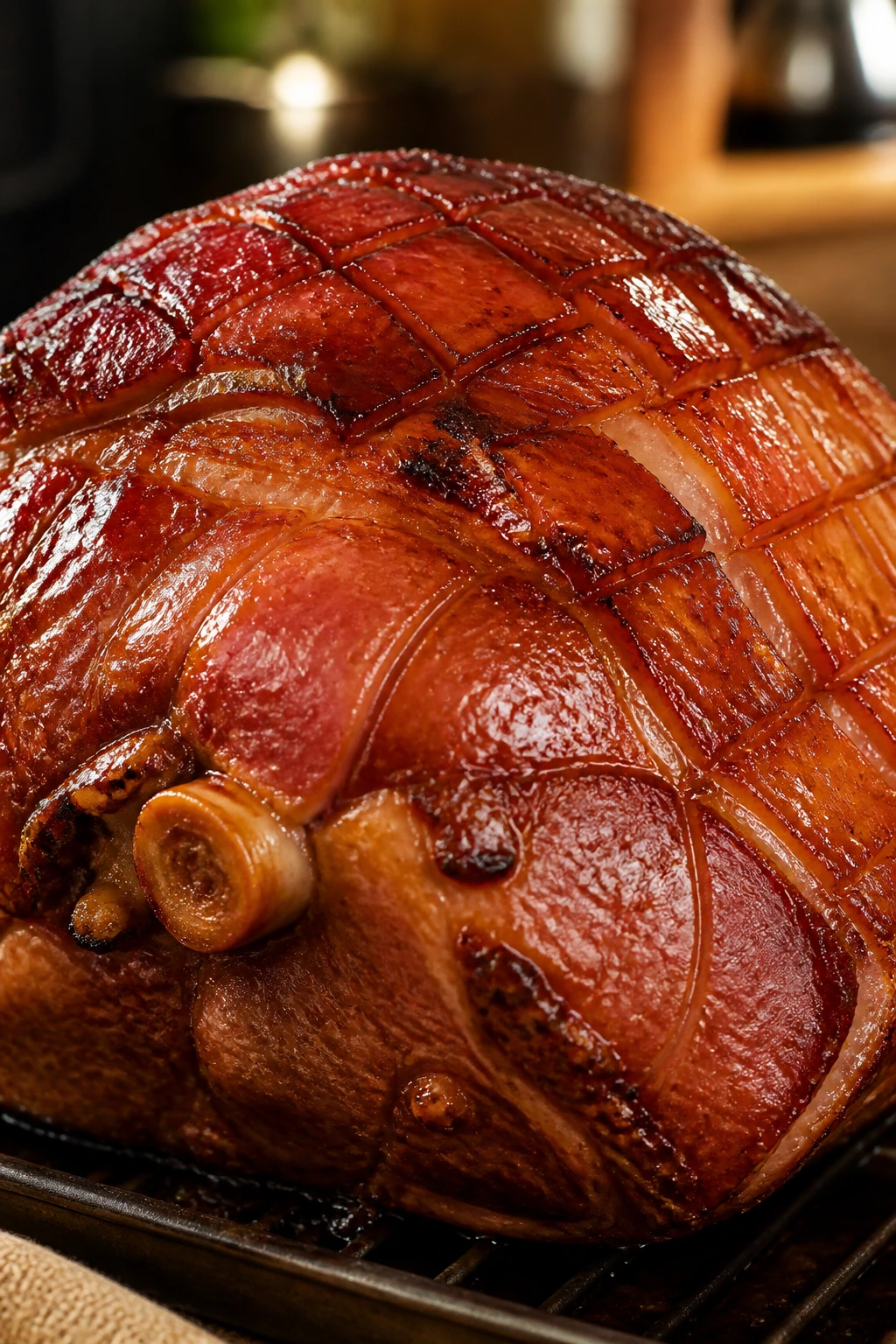
For the Ham:
- 1 whole bone-in fully cooked ham, 10 to 12 pounds, skin removed if present and fat scored in a diamond pattern
- 1 cup apple cider
For the Brown Sugar Glaze:
- 1 1/2 cups packed dark brown sugar
- 1/2 cup apple cider
- 1/4 cup Dijon mustard
- 2 tablespoons apple cider vinegar
- 2 tablespoons unsalted butter
- 1 teaspoon ground cinnamon
- 1/2 teaspoon ground cloves
- 1/4 teaspoon freshly ground black pepper
- 12 whole cloves, optional, for studding the fat cap
That’s the whole lineup. No long grocery list, no pantry scavenger hunt. The ham itself is already cured and cooked, so the job here is to warm it carefully, then build a glaze that clings.
Why Each Ingredient Pulls Its Weight
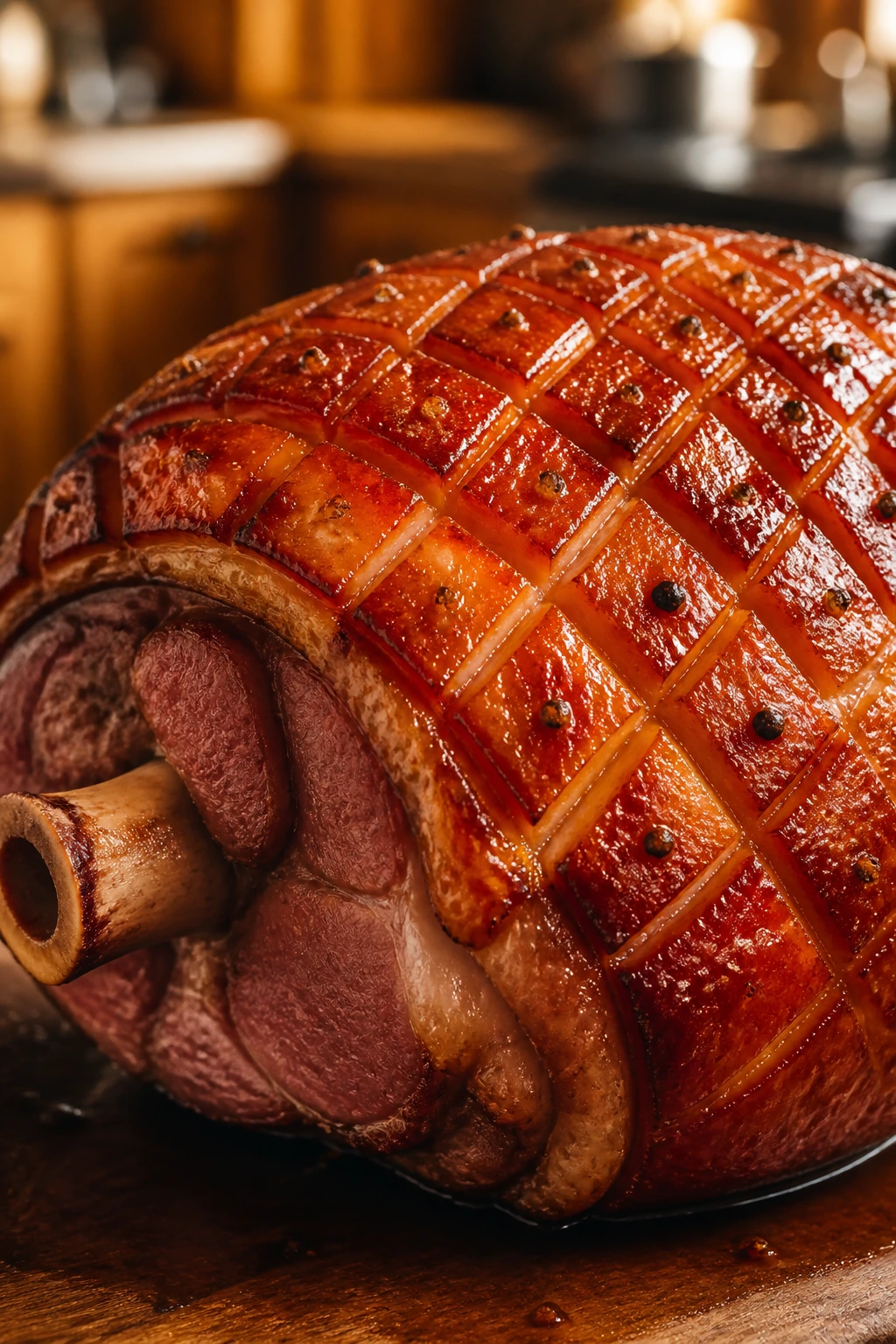
The Ham
- What to use: 1 whole bone-in fully cooked ham, 10 to 12 pounds. A shank end gives cleaner slices, while a butt end tends to be a little richer and more marbled.
- Preparation: Pat it dry, remove any plastic or netting, and score the fat cap if the package hasn’t already done that for you. Cut shallow diamonds, about 1 inch apart, so the glaze has ridges to settle into.
- Substitutions: A spiral-cut ham works fine, and a bone-in half ham can be used if you want a smaller roast. Boneless ham will cook faster, but it dries out more quickly and doesn’t give you the same slice texture.
- Tips: Keep the cut side down during the covered bake. That position protects the leanest part of the meat and helps the juices stay where they belong.
Brown Sugar and Cider
- What to use: 1 1/2 cups packed dark brown sugar and 1/2 cup apple cider for the glaze, plus 1 cup apple cider in the roasting pan.
- Preparation: Pack the sugar into the measuring cup so you get an actual sticky, molasses-heavy amount, not a loose scoop. Warm the cider gently in the saucepan with the sugar so it dissolves without turning grainy.
- Substitutions: Light brown sugar works in a pinch, but the glaze tastes a little flatter. If you don’t have cider, unsweetened apple juice or even water will do; cider just brings a deeper apple note that fits the ham.
- Tips: Dark brown sugar gives this glaze its color and depth. Boil it too long and it stops being a glaze and starts being candy on a spoon.
Dijon and Vinegar
- What to use: 1/4 cup Dijon mustard and 2 tablespoons apple cider vinegar.
- Preparation: Whisk them into the sugar and cider once the butter melts, and keep stirring until the sauce looks smooth. Dijon should disappear into the glaze, not float in little yellow streaks.
- Substitutions: Whole-grain mustard gives a slightly rougher texture, which some people like. White wine vinegar or sherry vinegar can stand in for cider vinegar if that’s what you’ve got.
- Tips: The mustard doesn’t just add flavor. It keeps the glaze from tasting like pure sugar and helps it cling to the scored fat instead of sliding right off the ham.
Butter and Spice
- What to use: 2 tablespoons unsalted butter, 1 teaspoon ground cinnamon, 1/2 teaspoon ground cloves, and 1/4 teaspoon black pepper.
- Preparation: Add the butter at the start so the glaze gets a glossy finish, then stir in the spices and let them bloom in the warm liquid for a minute or two.
- Substitutions: If you want a softer spice profile, use 1/2 teaspoon cinnamon and add a pinch of nutmeg. Allspice can replace the cloves if that’s easier to find.
- Tips: Cloves are powerful. Keep the quantity restrained unless you want the glaze to taste like old-school holiday candy. A half teaspoon is enough.
Pan Liquid and Optional Finish
- What to use: 1 cup apple cider in the roasting pan, plus 12 whole cloves if you want to stud the fat cap.
- Preparation: Pour the cider into the bottom of the pan before the ham goes in, and tuck a few cloves into the scoring if you’re using them.
- Substitutions: Water works if you’re out of cider; it just won’t add the same depth to the pan drippings. A splash of orange juice can replace a little of the cider for a brighter finish.
- Tips: The pan liquid prevents the drippings from scorching and gives you a little savory steam under the foil. That steam helps the ham heat evenly and keeps the outer slices from drying out while the center catches up.
The Tools That Make Roasting Simpler
-
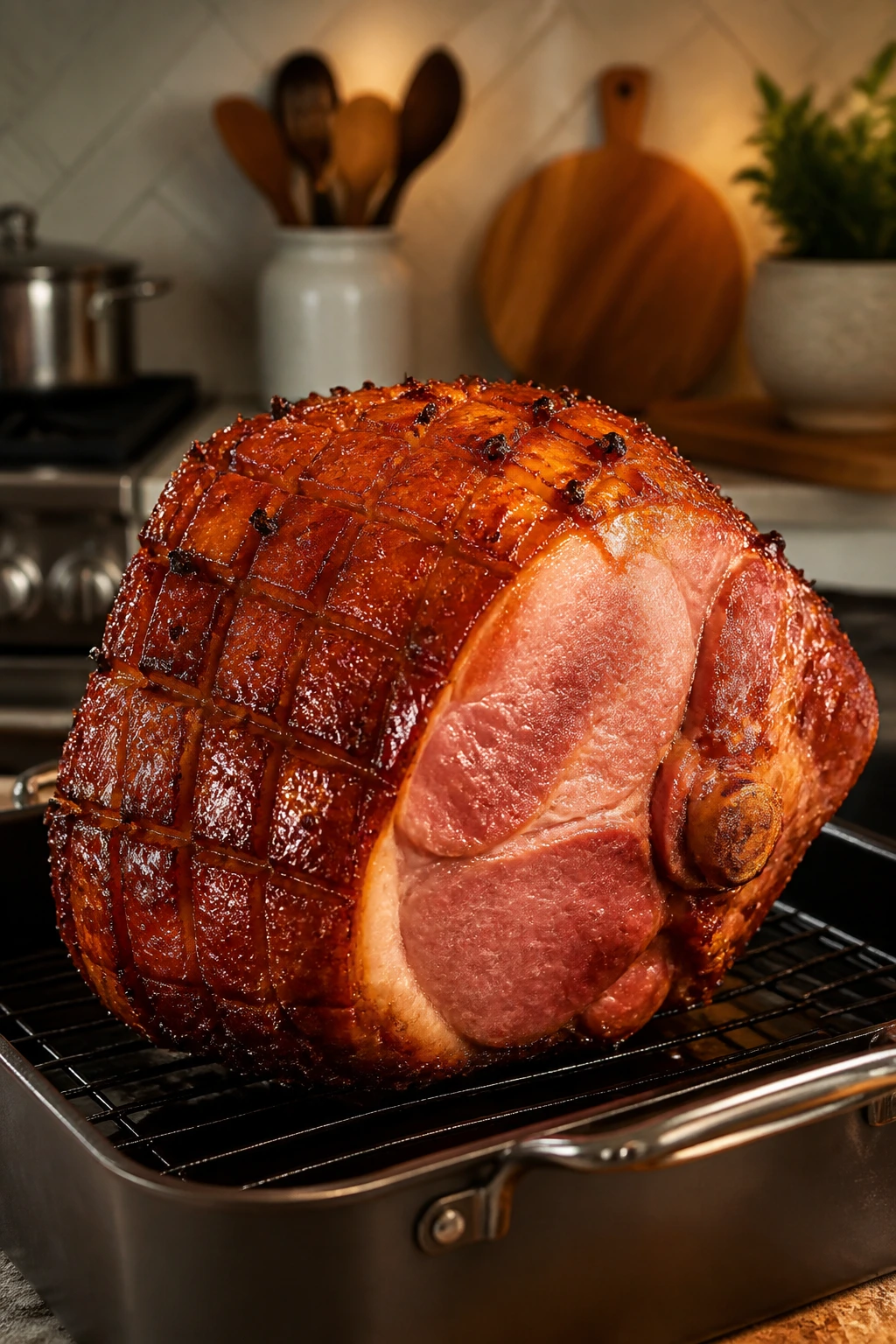
Large roasting pan with a rack — A rack keeps the ham above the pan liquid and lets heat circulate. If you don’t have one, thick onion slices or halved carrots can stand in and lift the meat.
-
Heavy-duty aluminum foil — You want a tight cover while the ham heats. Thin foil tears too easily, and steam escaping from the pan is exactly what you don’t want.
-
Instant-read thermometer — This is the one tool that matters most. Guessing is how ham ends up dry, and dry ham is a shame.
-
Small saucepan — The glaze needs a place to simmer before it goes on the meat. A 1- or 2-quart saucepan is enough.
-
Silicone pastry brush — It spreads the glaze cleanly and handles thick syrup better than a flimsy basting brush that sheds bristles.
-
Sharp carving knife — A long, thin blade makes cleaner slices, especially if the ham is bone-in and a little awkward to maneuver.
-
Cutting board with a groove — Ham gives off juices when it rests. A grooved board keeps those juices from running all over the counter.
-
Ladle or spoon — Handy for spooning pan juices over the slices at the end. That little extra gloss is worth the three seconds it takes.
The Roasting Steps That Keep the Ham Juicy
Set Up and Preheat:
-
Preheat the oven to 325°F (165°C). Set a rack inside a large roasting pan, or line the pan with thick onion slices if you don’t have a rack. Remove all packaging, netting, and plastic from the ham before it goes anywhere near the heat.
-
Place the ham cut side down on the rack. If the fat cap hasn’t already been scored, cut shallow diamond lines about 1 inch apart, slicing only through the fat and not into the meat. Pour 1 cup apple cider into the bottom of the pan, then cover the whole pan tightly with foil.
Make the Glaze:
-
While the ham starts heating, combine 1 1/2 cups packed dark brown sugar, 1/2 cup apple cider, 1/4 cup Dijon mustard, 2 tablespoons apple cider vinegar, 2 tablespoons unsalted butter, 1 teaspoon cinnamon, 1/2 teaspoon cloves, and 1/4 teaspoon black pepper in a small saucepan over medium heat. Stir until the butter melts and the sugar dissolves, then simmer 3 to 5 minutes until the glaze looks glossy and slightly thickened.
-
Lift the spoon once or twice while the glaze cooks. It should fall in a slow ribbon and coat the back of the spoon without becoming stiff. If it turns too thick, add 1 tablespoon cider to loosen it.
Bake Gently:
-
Bake the covered ham for 12 to 15 minutes per pound, until the center of the thickest part reaches 120°F to 125°F. For a 10-pound ham, that usually lands around 2 hours; for a 12-pound ham, expect closer to 2 hours and 30 minutes. The surface will still look pale under the foil, and that’s fine.
-
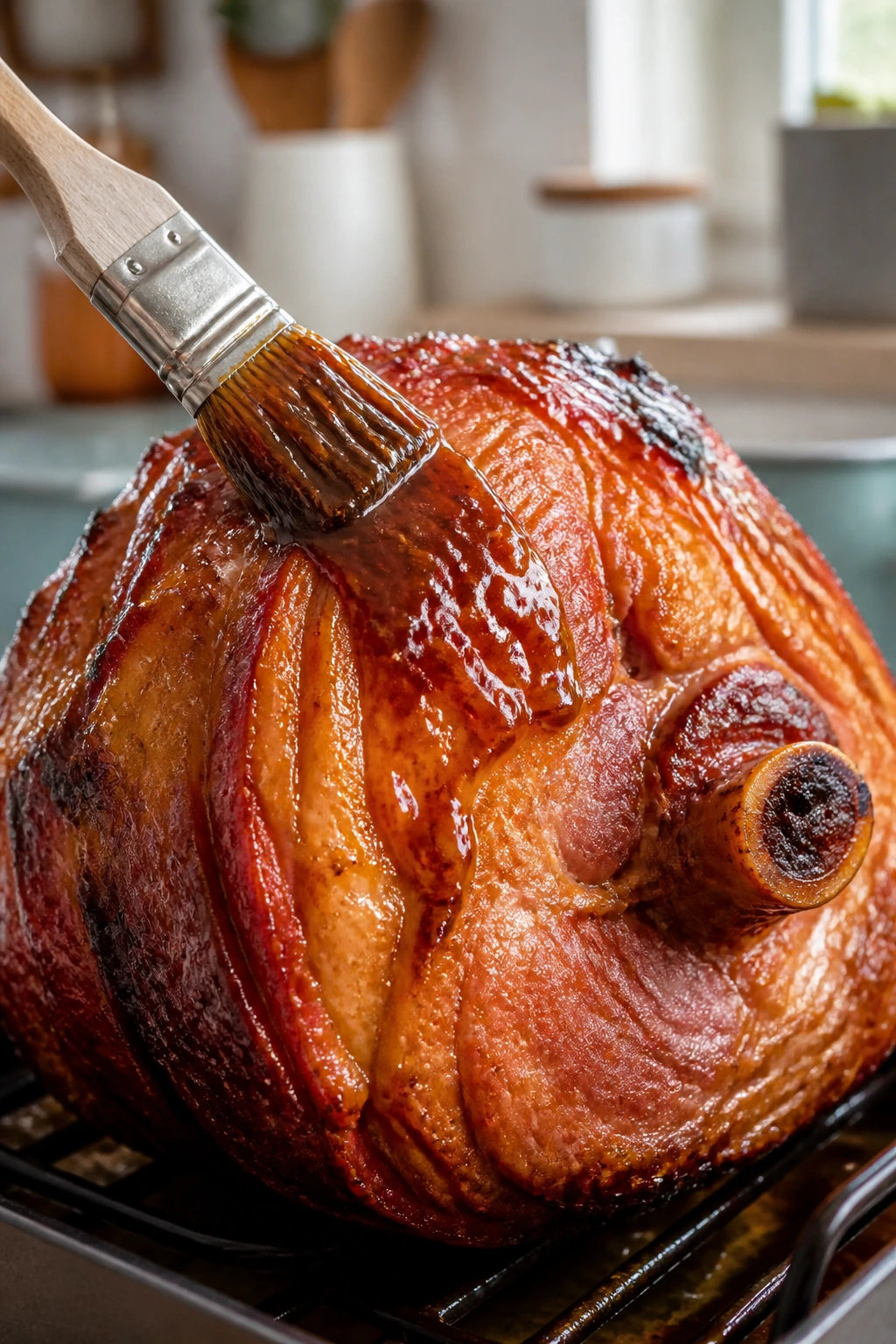
Take the foil off and increase the oven temperature to 425°F (220°C). Brush the ham with a generous layer of glaze, making sure the syrup sinks into the diamond cuts. Return it to the oven uncovered for 10 minutes.
Caramelize and Rest:
-
Brush on more glaze and bake another 8 to 10 minutes. Repeat once more if the surface needs deeper color, until the exterior is dark mahogany, bubbling at the edges, and the thickest part of the ham reads 140°F. If the top starts darkening too quickly, tent it loosely with foil.
-
Move the ham to a carving board and let it rest 20 to 30 minutes before slicing. Spoon a little of the pan liquid over the top while it rests if you want extra shine, then carve against the grain and serve warm.
How the Brown Sugar Glaze Gets Sticky Instead of Burnt
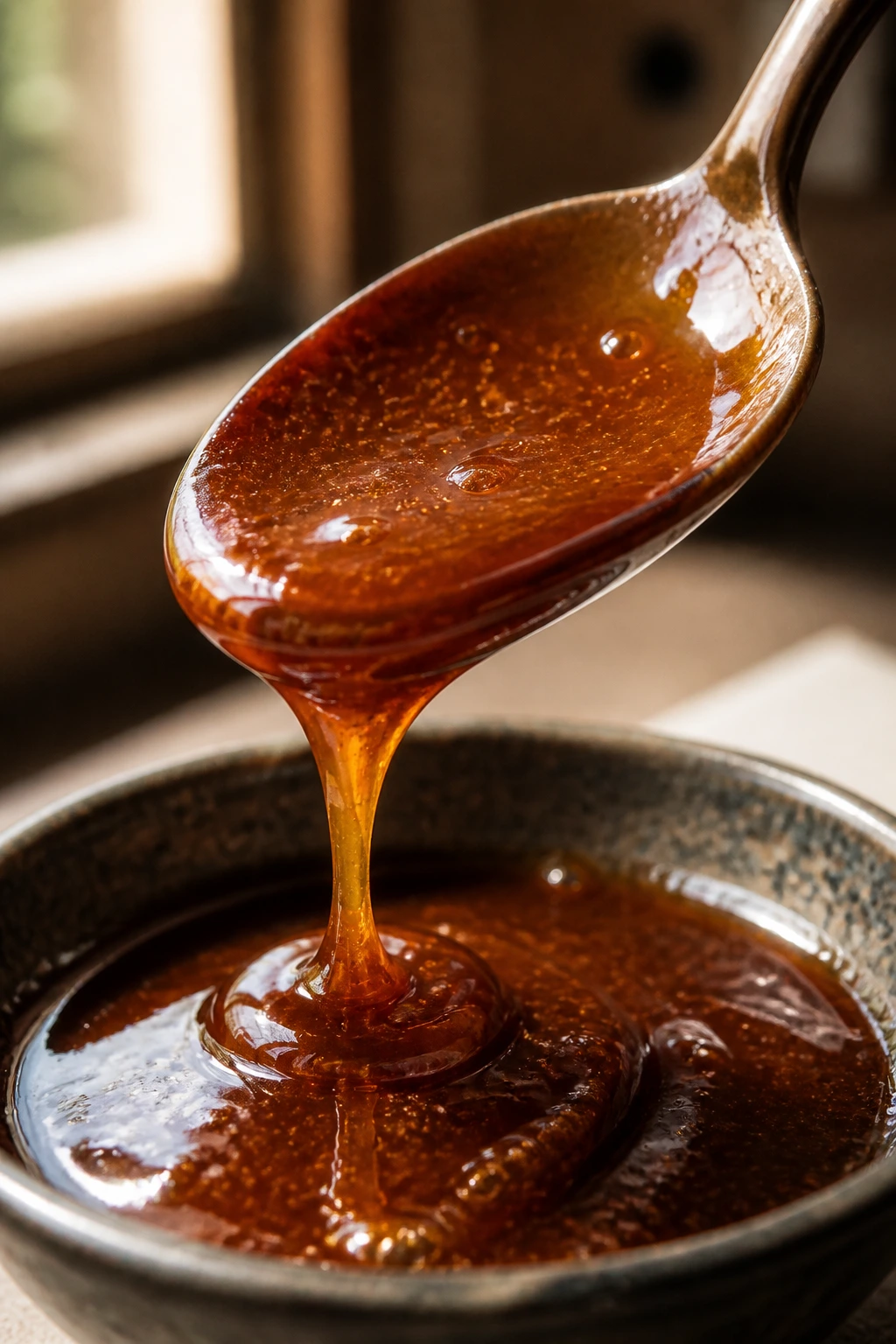
The glaze works because it’s not just sugar. Sugar gives you color and shine, but Dijon mustard, vinegar, and cider keep it from turning into a one-note candy shell. That balance matters most in the last 20 minutes, when the heat gets turned up and the glaze starts to reduce fast.
I like to make the glaze before the ham finishes heating, not after. That way it’s ready the second the foil comes off, and it has a few minutes to cook in layers instead of sliding around in a thin puddle. Thick enough to coat the back of a spoon. Thin enough to brush. That’s the sweet spot.
The oven temperature change is doing more work than people realize. At 325°F, the ham heats gently and stays moist. At 425°F, the glaze bubbles, reduces, and starts to set on the surface. That two-stage heat pattern is the difference between a shiny lacquer and a burnt top with sticky drips in the pan.
One more thing: do not walk away during the final glaze pass. Sugar moves fast. It goes from amber to dark mahogany to bitter faster than most home cooks expect, especially if the ham sits high in the oven and gets hit with a hot spot.
How to Serve It So the Plate Feels Generous
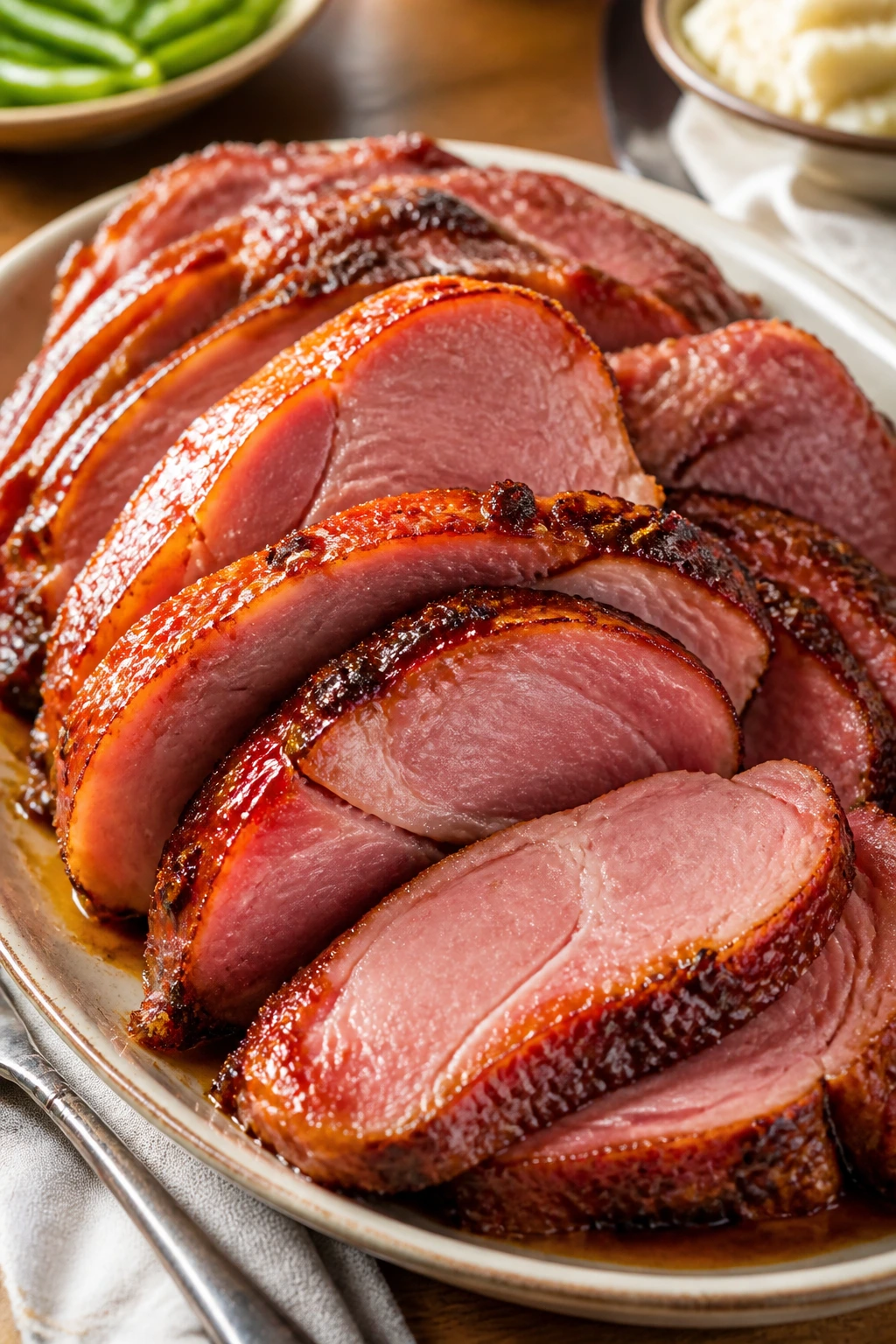
Presentation: Slice the ham across the grain into thick, even slices and fan them slightly on a warm platter. Spoon a few tablespoons of the pan juices over the top, then brush the cut surface with a little extra glaze so it looks glossy, not dry. A few fresh herb sprigs or orange wedges on the side keep the platter from looking heavy.
Accompaniments: I like this ham with scalloped potatoes, green beans with butter and black pepper, and something sharp on the side — a mustardy slaw or vinegar cabbage salad cuts through the sweetness. Soft rolls, biscuits, or cornbread are the right call if you want something to catch the pan juices.
Portions: Plan on 6 to 8 ounces of bone-in ham per person if the table is full of sides. If the ham is the main event and you want leftovers, push that closer to 8 ounces. A 10- to 12-pound ham usually feeds 12 to 16 people comfortably, depending on the amount of trimming and how generous the slices are.
Beverage Pairing: Sparkling apple cider is an easy win because it echoes the glaze without making the meal sweeter. If you want an adult drink, a dry Riesling or a light amber beer handles the salt and caramel without fighting the pork.
Small Adjustments That Make a Big Difference
Flavor Enhancement: Stir 1 teaspoon of dry mustard or 1 tablespoon of orange zest into the glaze if you want a sharper finish. Dry mustard gives the sugar a cleaner edge, while orange zest keeps the sweetness from feeling heavy.
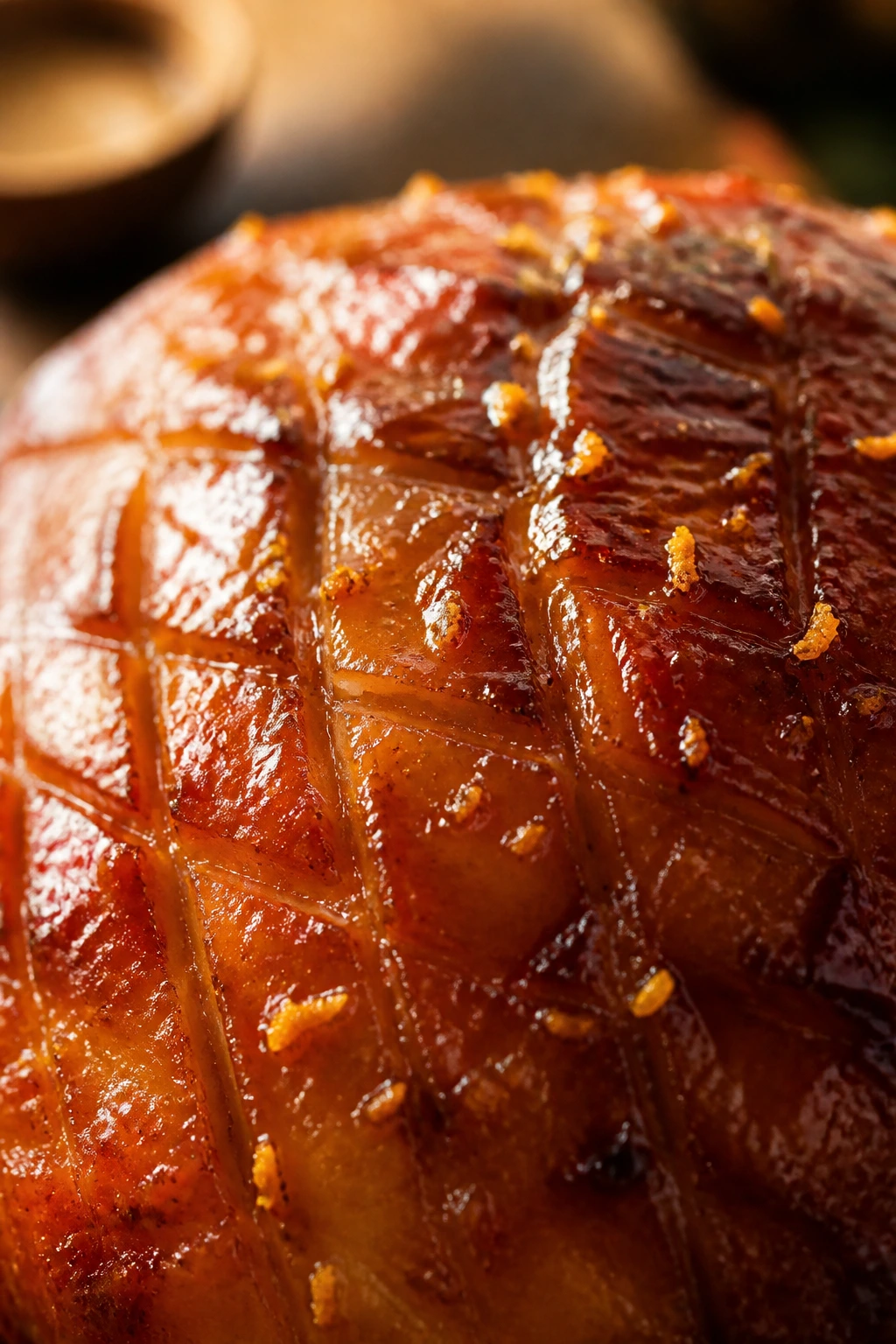
Texture Trick: Score the fat cap before baking, even if the ham already has a light factory score. Deeper, shallow diamonds give the glaze little pockets to sit in, and those pockets bubble first.
Time-Saver: Make the glaze up to 5 days ahead and keep it in a sealed jar in the fridge. Warm it gently before brushing so it spreads instead of clumping.
Serving Suggestion: Keep the pan juices. Really. Even if you don’t strain them, spooning a little over the slices adds salt, shine, and the faint cider note that ties the whole plate together.
Make-It-Yours: If you prefer a less sweet ham, cut the brown sugar to 1 cup and bump the Dijon to 1/3 cup. If you want a deeper, darker finish, swap 1/4 cup of the cider for bourbon and let the glaze simmer for an extra minute.
Mistakes That Leave Ham Dry, Burnt, or Clumsy
-
Glazing too early: If the sugar goes on at the start, it burns long before the ham finishes heating. The symptom is a dark, bitter crust with scorched edges and a sticky pan bottom. Fix it by waiting until the final 20 to 30 minutes.
-
Skipping the thermometer: A ham can look done long before it’s hot through, especially near the bone. The symptom is dry outer slices and a center that’s either lukewarm or way overcooked by the time you guess your way there. Use the thermometer and aim for 140°F in the thickest part.
-
Leaving it uncovered the whole time: A naked ham loses moisture fast, especially at the edges. If the surface starts looking wrinkled and dry halfway through baking, you’ve already gone too far. Keep it tightly covered until the glaze stage.
-
Simmering the glaze until it turns jammy: A glaze that’s too thick in the saucepan will go on unevenly and can set into hard patches on the ham. The fix is simple: stop when it coats a spoon and still pours in a ribbon.
-
Carving too soon: Ham gives off a surprising amount of juice the minute the knife touches it if you don’t let it rest. The symptom is a platter full of liquid and slices that look tired. Give it 20 to 30 minutes, then carve.
Four Flavor Directions Worth Trying
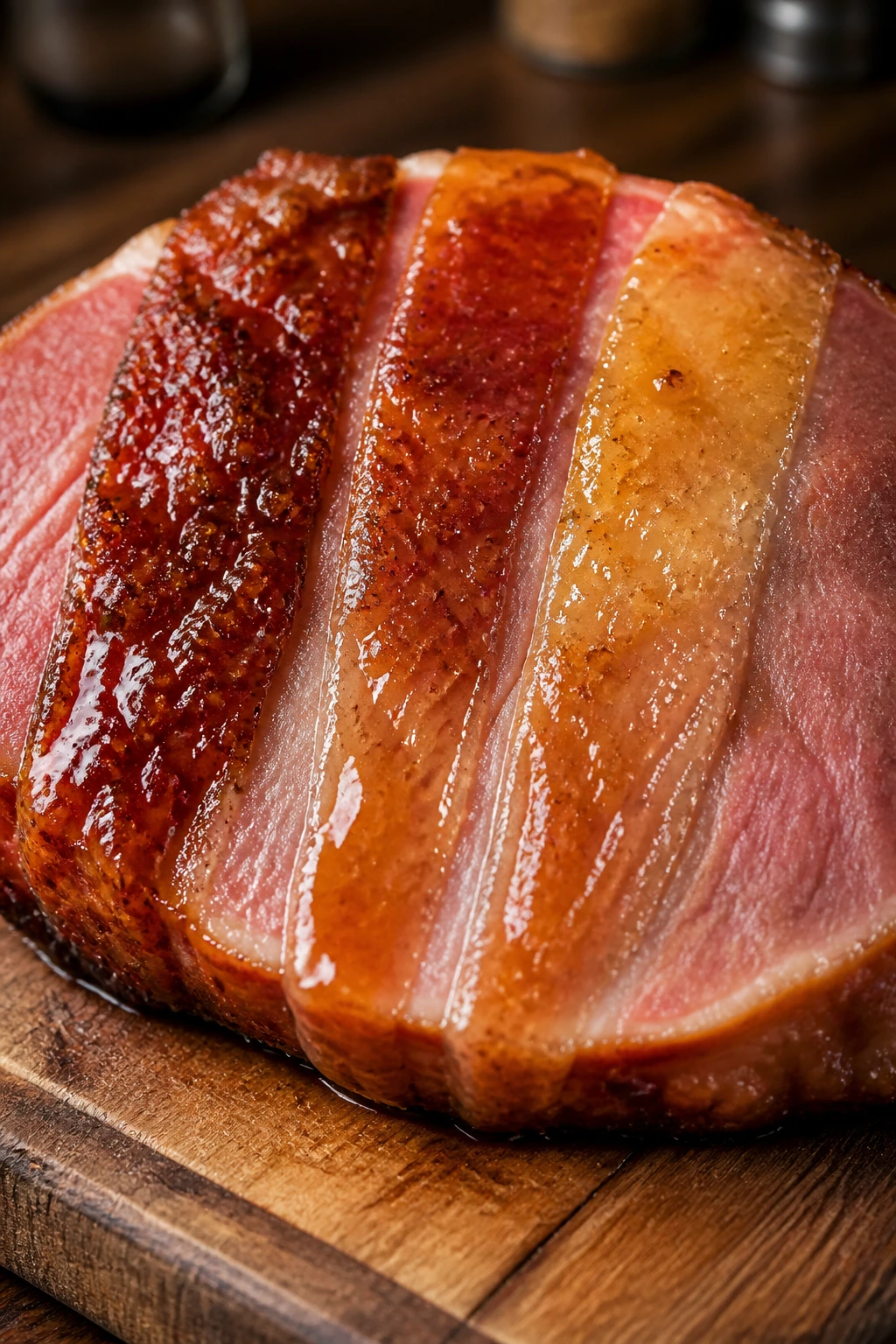
Bourbon Brown Sugar Ham
Swap 1/4 cup of the apple cider in the glaze for bourbon, and add a pinch more black pepper. The bourbon doesn’t need to shout; it just deepens the caramel note and makes the glaze taste a little rounder. This version is the one I reach for when I want the glaze to feel darker and less sugary.
Pineapple Clove Ham
Replace half the glaze cider with pineapple juice and keep the whole cloves on the fat cap. Pineapple sharpens the sweet side of the glaze and gives the outside a brighter gloss, while the cloves bring a warm, old-school aroma. It’s a little more classic, a little more bright, and it holds up well on a big buffet table.
Maple-Dijon Ham
Use 1 cup dark brown sugar and 1/2 cup maple syrup, then reduce the cider by 2 tablespoons so the glaze still thickens properly. Maple adds a softer, woodsy sweetness that feels less candy-like than all sugar. It’s a good choice when you want the ham to taste richer without tasting more ornate.
Lower-Sugar Ham
Cut the brown sugar to 1 cup, keep the Dijon the same, and add an extra tablespoon of apple cider vinegar. The glaze won’t be as thick or dark, but it will stay lively and balanced. This is the version I’d make if the ham itself is very salty and I want the finish to lean savory.
Make-Ahead Notes, Leftovers, and Reheating
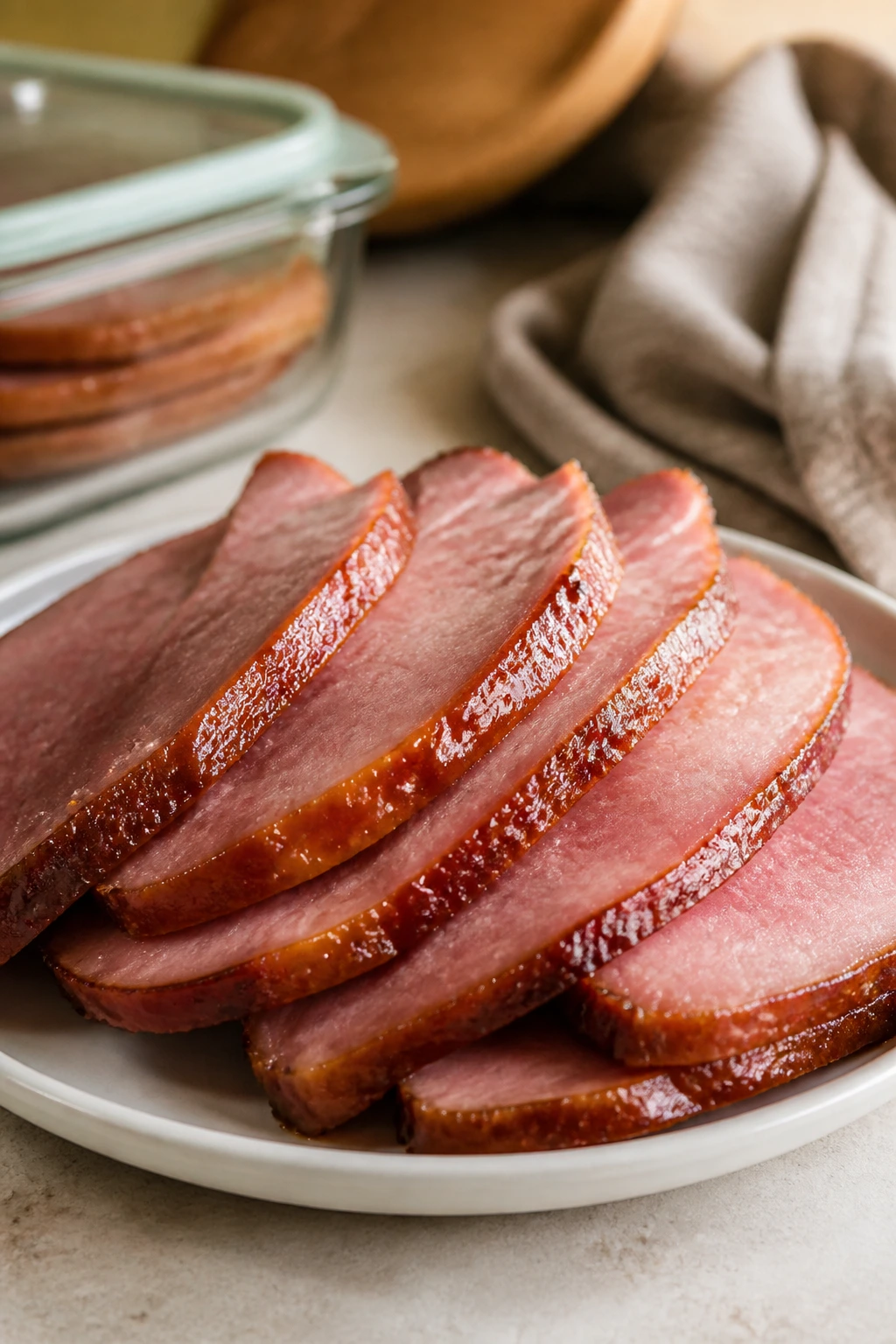
Ham is one of those rare big roasts that forgives advance work. You can score the fat cap the night before, tuck the cloves in if you’re using them, and whisk the glaze ahead of time. Keep the glaze in the fridge, then warm it gently over low heat before brushing it on. Cold glaze clings badly and can drag on the meat instead of spreading smoothly.
Once the ham is baked, don’t leave it sitting around for hours. The usual food-safety rule applies: get it into the fridge within 2 hours, sooner if your kitchen runs warm. Slice what you plan to eat first, then store the rest in shallow containers so it cools evenly. A whole bone-in ham will keep for 3 to 4 days refrigerated, and it freezes well for up to 2 months if you wrap the slices tightly and tuck them into freezer bags with the air pressed out.
Reheating works best in two different ways. For slices, put them in a covered skillet with 2 to 3 tablespoons of water, cider, or pan juices over low heat until warmed through. The steam keeps them from drying out. For a larger piece, cover it with foil and warm it in a 300°F oven until it reaches 140°F in the center. Microwave reheating works in a pinch, but keep it at half power and cover the slices with a damp paper towel.
The leftovers are often better than the first serving, which sounds like a bold claim until you’ve had a ham sandwich on good bread the next morning. The sweet glaze settles into the meat overnight, and the salt levels mellow a little. That’s the good kind of second act.
Questions People Ask Before the Ham Goes in the Oven
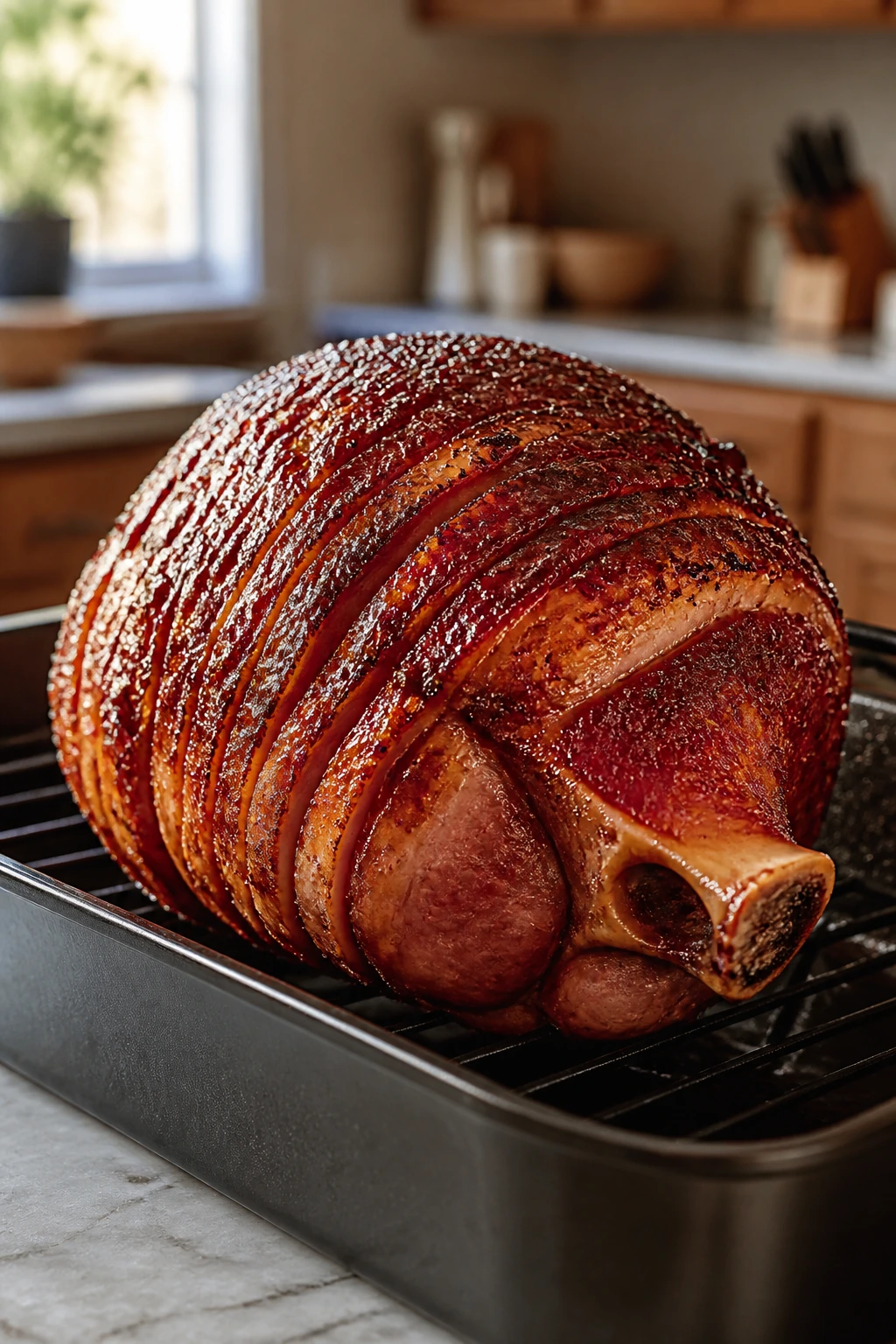
Can I use a spiral-cut ham instead of a whole unsliced one?
Yes, and it’s probably the easiest version if you want tidy slices. Cut the covered bake time a little because spiral-cut ham heats faster, and be generous with the glaze between the slices so the exposed edges don’t dry out.
Do I need to cook a fully cooked ham all the way to 165°F?
No. A fully cooked ham only needs reheating, not full cooking from raw. For this recipe, 140°F in the thickest part is the target, and that keeps the meat juicy instead of stringy.
What if my glaze seems too thin?
Let it simmer another minute or two until it starts to coat the spoon in a visible layer. If it’s still loose, that’s fine; a glaze that’s a little thin in the saucepan often thickens on the hot ham and again as it cools on the platter.
Can I make this in a slow cooker?
You can heat the ham in a slow cooker, but you won’t get the same caramelized top. The slow cooker can keep the meat moist, yet the glaze needs the dry heat of the oven to turn sticky and dark. If you go that route, finish the ham under the broiler for a minute or two at the end.
Should I cover the ham the whole time?
Cover it until the final glazing stage. That foil tent traps steam and keeps the surface from drying out. Once the glaze is on, take the foil off so the sugar can reduce and brown properly.
What if the ham is already very salty?
Lean on acid and mustard, not more sugar. You can cut the brown sugar slightly, keep the vinegar in place, and spoon more pan juices over the slices to soften the salt edge without turning the glaze syrupy.
Can I serve it at room temperature?
You can, especially if you’re setting out a buffet and the ham was cooked properly and rested first. I still think it tastes best warm, but room-temperature slices hold their texture well and are excellent for sandwiches or a serving board.
How do I keep the slices from falling apart when I carve?
Use a long carving knife and let the ham rest first. If it’s bone-in, carve along the bone in broad strokes, then turn the roast and trim thicker slices off the flat side. Short, rough strokes shred the meat and drag the glaze off the top.
A Ham Worth the Oven Time
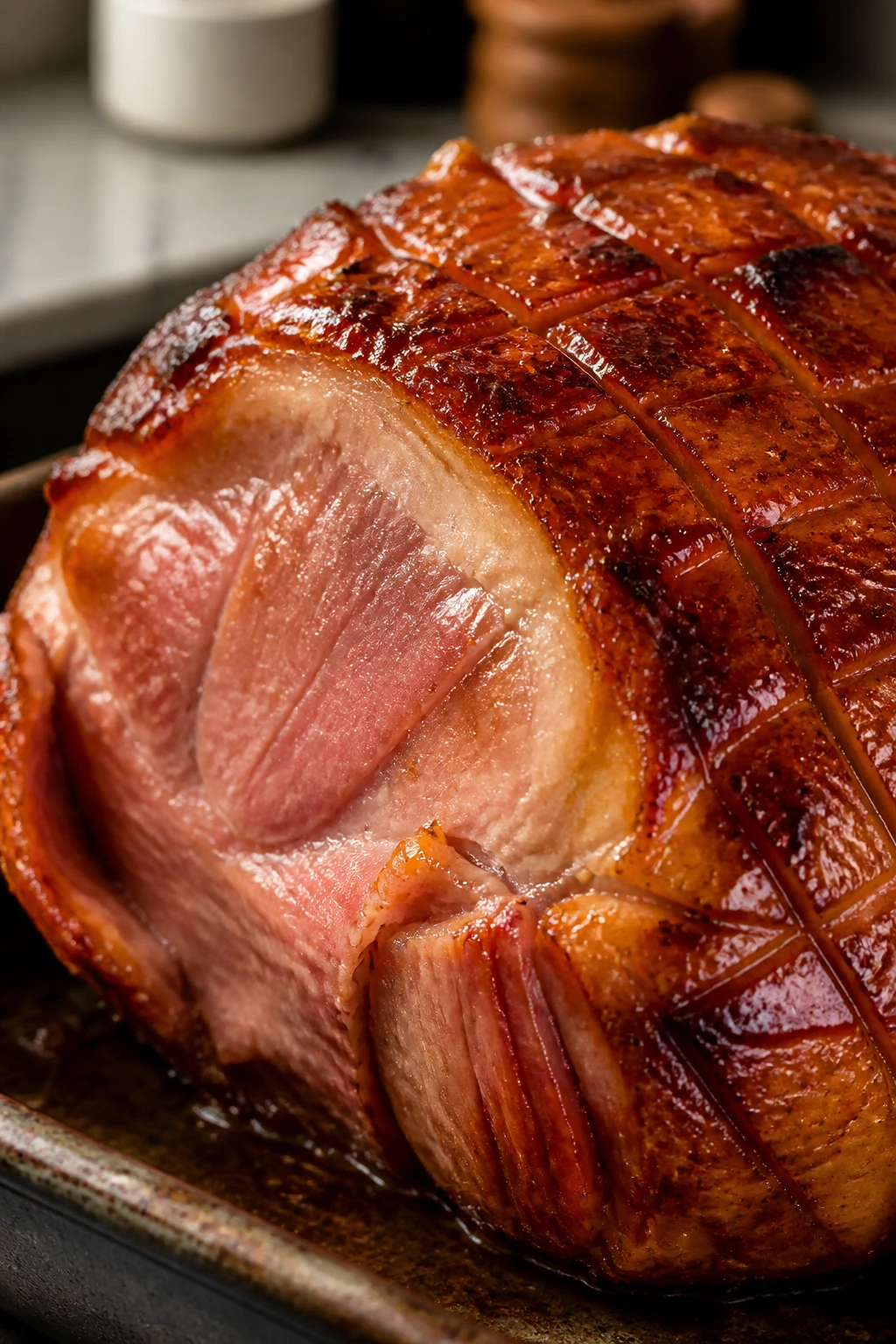
The best thing about this ham is that it looks like a lot of work and behaves like a lot less. Once you know the rhythm — cover, heat gently, glaze late, rest fully — the roast takes care of itself. The result is a glossy, fragrant centerpiece with meat that stays tender instead of turning into a dry cautionary tale.
I also like that it holds up. Hot from the oven, the slices are rich and glossy. Cold from the fridge, the leftovers still make sense. Save the bone, keep the pan juices, and you’ve got the start of soup, sandwiches, and a second meal that feels like a gift instead of leftovers.
Juicy Whole Ham with Brown Sugar Glaze — Recipe Card
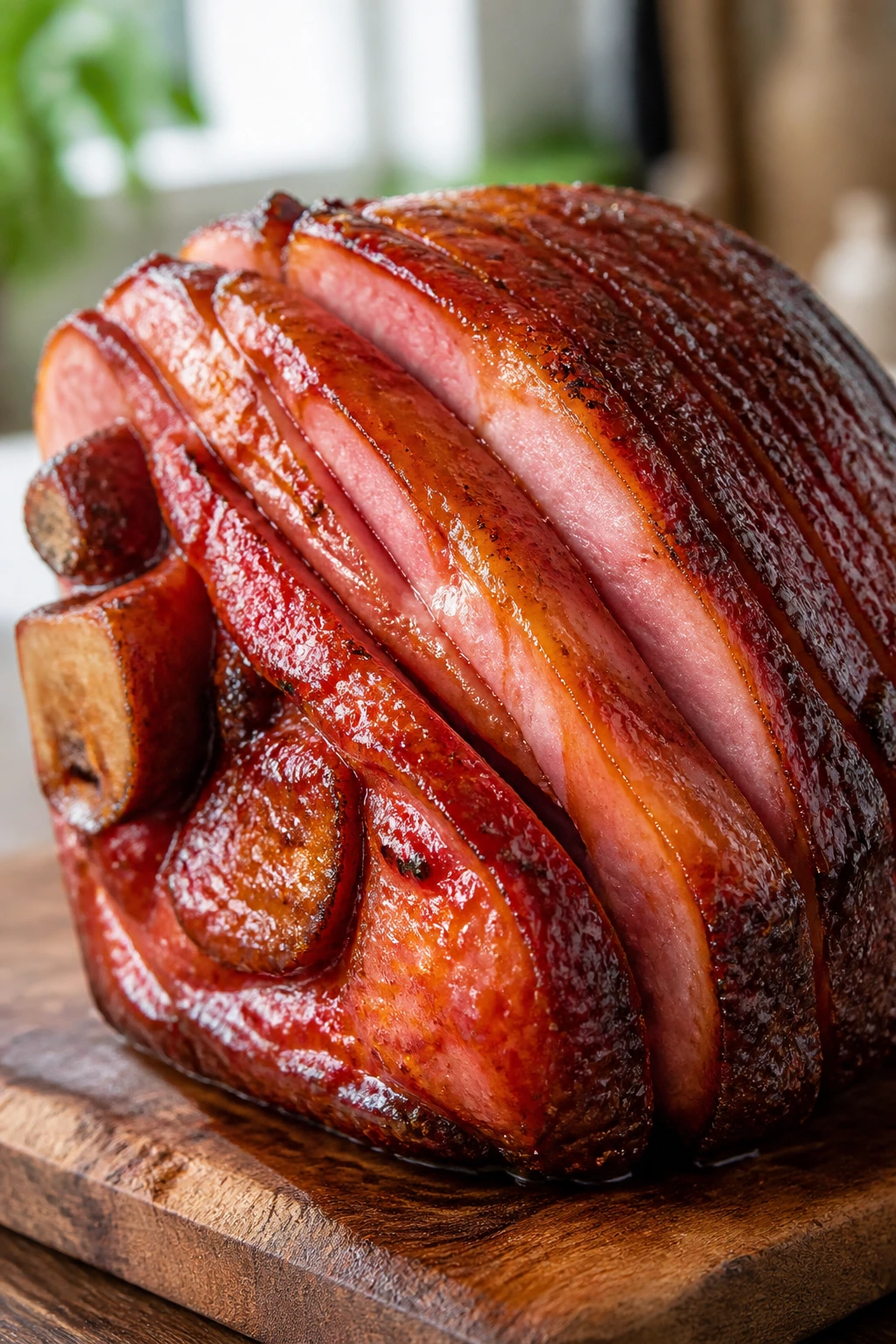
Recipe Name: Juicy Whole Ham with Brown Sugar Glaze
Description: A fully cooked bone-in ham baked gently, then brushed with a brown sugar, Dijon, cider, and spice glaze until the surface turns glossy, sticky, and deep brown.
Prep Time: 20 minutes
Cook Time: 2 hours 55 minutes
Total Time: 3 hours 15 minutes
Course: Main Course
Cuisine: American
Servings: 12 to 16
Calories: 410 kcal
Ingredients
For the Ham:
- 1 whole bone-in fully cooked ham, 10 to 12 pounds, skin removed if present and fat scored in a diamond pattern
- 1 cup apple cider
For the Brown Sugar Glaze:
- 1 1/2 cups packed dark brown sugar
- 1/2 cup apple cider
- 1/4 cup Dijon mustard
- 2 tablespoons apple cider vinegar
- 2 tablespoons unsalted butter
- 1 teaspoon ground cinnamon
- 1/2 teaspoon ground cloves
- 1/4 teaspoon freshly ground black pepper
- 12 whole cloves, optional, for studding the fat cap
Instructions
-
Preheat the oven to 325°F (165°C). Set a rack inside a large roasting pan or line the pan with thick onion slices if needed.
-
Remove all packaging from the ham, place it cut side down in the pan, score the fat in shallow diamonds if needed, and pour 1 cup apple cider into the pan. Cover tightly with foil.
-
In a small saucepan over medium heat, combine the brown sugar, 1/2 cup apple cider, Dijon mustard, apple cider vinegar, butter, cinnamon, cloves, and black pepper. Simmer 3 to 5 minutes until glossy and slightly thickened.
-
Bake the covered ham for 12 to 15 minutes per pound, until the thickest part reaches 120°F to 125°F.
-
Remove the foil and raise the oven temperature to 425°F (220°C). Brush the ham with glaze and bake uncovered for 10 minutes.
-
Brush on more glaze and bake 8 to 10 minutes more, repeating once if needed, until the surface is deep brown and the thickest part reaches 140°F.
-
Transfer the ham to a carving board and rest for 20 to 30 minutes before slicing.
Notes:
Keep the glaze warm so it brushes on smoothly. If the top darkens too fast, tent it loosely with foil. Spoon a little pan juice over the slices before serving for extra shine.