



A deli-style ham can look a little sleepy before it gets dressed for dinner. Too much sugar and it tastes like candy. Too little, and you may as well have warmed up a cold slice and called it a day. Savory Deli Ham with Brown Sugar Glaze sits in the narrow, useful middle where the smoke, salt, and fat still taste like ham, but the surface comes off glossy, bronzed, and just sharp enough to keep you coming back for another bite.
I’m talking about a whole deli-style ham from the counter or butcher case, the kind sold as a single piece for slicing, not the thin sandwich meat you stack on bread. That distinction matters. A solid ham can take a glaze, hold moisture, and carve into neat slices that don’t collapse the second the knife touches them. Thin deli slices, by contrast, dry out fast and never really become the thing this recipe is trying to make.
The brown sugar glaze does more than sweeten. It melts into a thin lacquer when it meets Dijon mustard, apple cider vinegar, Worcestershire sauce, and a little butter, so the finish tastes rounded instead of sugary. The kitchen smells like toasted molasses, clove, and the savory edge of browned pork long before the ham is done. That smell alone is worth putting the oven on. The trick is to warm the ham gently, glaze it late, and let the oven do the boring part while the surface turns sticky and deep brown.
Why This Ham Earns Its Place on the Table
- Sweet, but not sticky-sweet: The brown sugar brings shine and color, while Dijon and vinegar keep the glaze from tasting flat or candy-like.
- Low-drama cooking: Because the ham is already fully cooked, you are warming and finishing it, not trying to rescue raw meat from the oven.
- Slices that hold together: A 4- to 5-pound deli-style ham carves cleanly, which means the leftovers are just as good cold or reheated.
- A glaze that actually stays on: Two thin coats set better than one heavy pour, so the glaze clings to the ham instead of running into the pan.
- Flexible enough for a small table: This size works for dinner with leftovers, and it also fits a buffet without turning the whole meal into a project.
- Good leftover behavior: Ham this size turns into sandwich filling, fried rice, beans, omelets, and hash without going stringy or dry.
Timing and Yield at a Glance
Yield: Serves 8 to 10 as a main dish
Prep Time: 20 minutes
Cook Time: 1 hour 15 minutes
Total Time: 1 hour 35 minutes
Difficulty: Beginner — the oven does most of the work, and the only real skill is watching the glaze so it browns instead of burns.
Chill/Rest Time: 15 to 20 minutes resting after baking
Best Served: Warm, sliced thick, with a spoonful of pan juices or extra glaze over the top
Ingredients for Savory Deli Ham with Brown Sugar Glaze
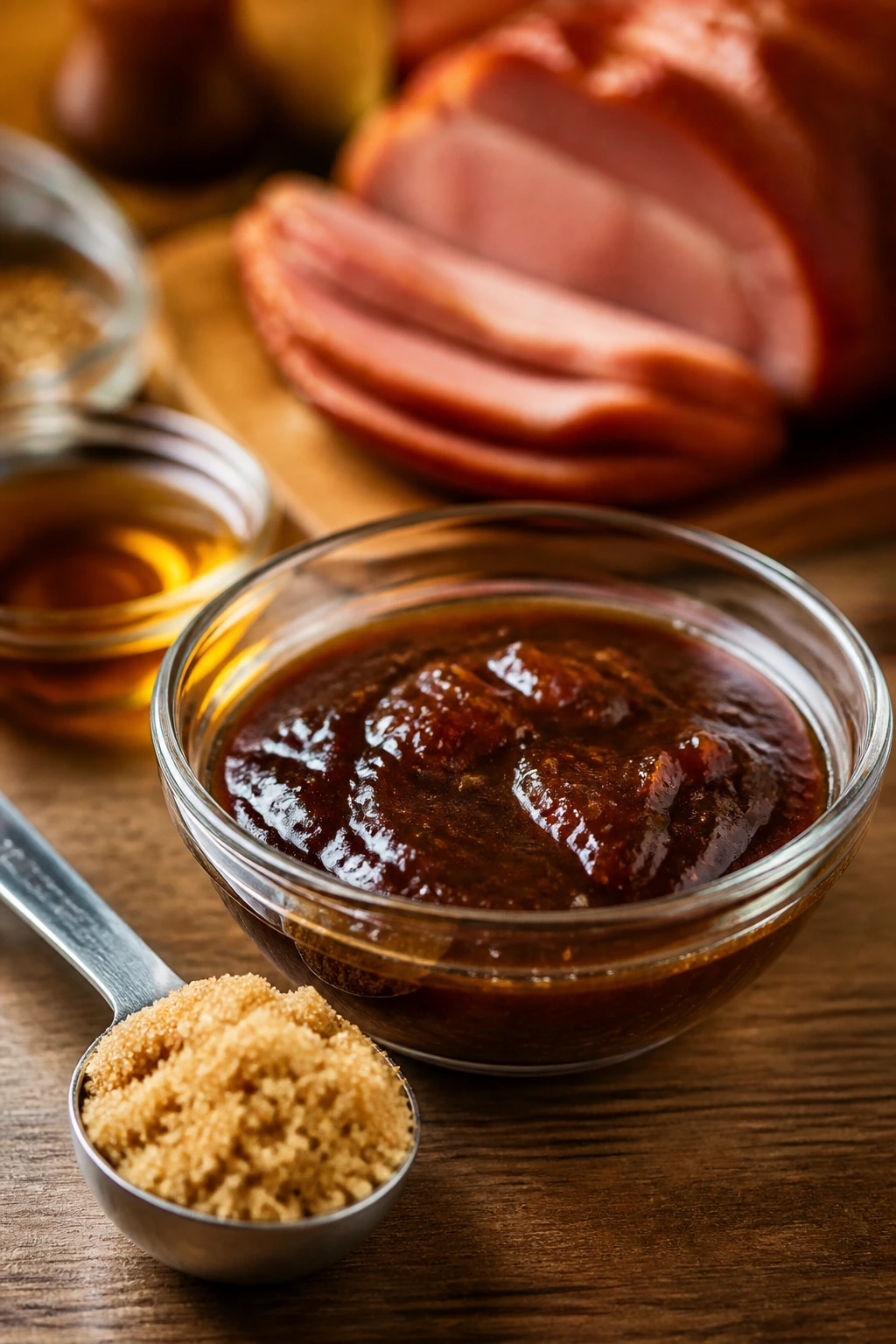
For the Ham
- 1 fully cooked deli-style ham, 4 to 5 pounds, boneless or semi-boneless, with a light fat cap if possible
- 1 cup apple cider or water, for the roasting pan
For the Brown Sugar Glaze
- 1 cup packed light brown sugar
- 1/3 cup Dijon mustard
- 1/4 cup apple cider vinegar
- 2 tablespoons pure maple syrup
- 2 tablespoons unsalted butter
- 1 tablespoon Worcestershire sauce
- 1 teaspoon smoked paprika
- 1/2 teaspoon freshly ground black pepper
- 1/4 teaspoon ground cloves
- 1/2 teaspoon garlic powder
What Each Ingredient Does in the Glaze
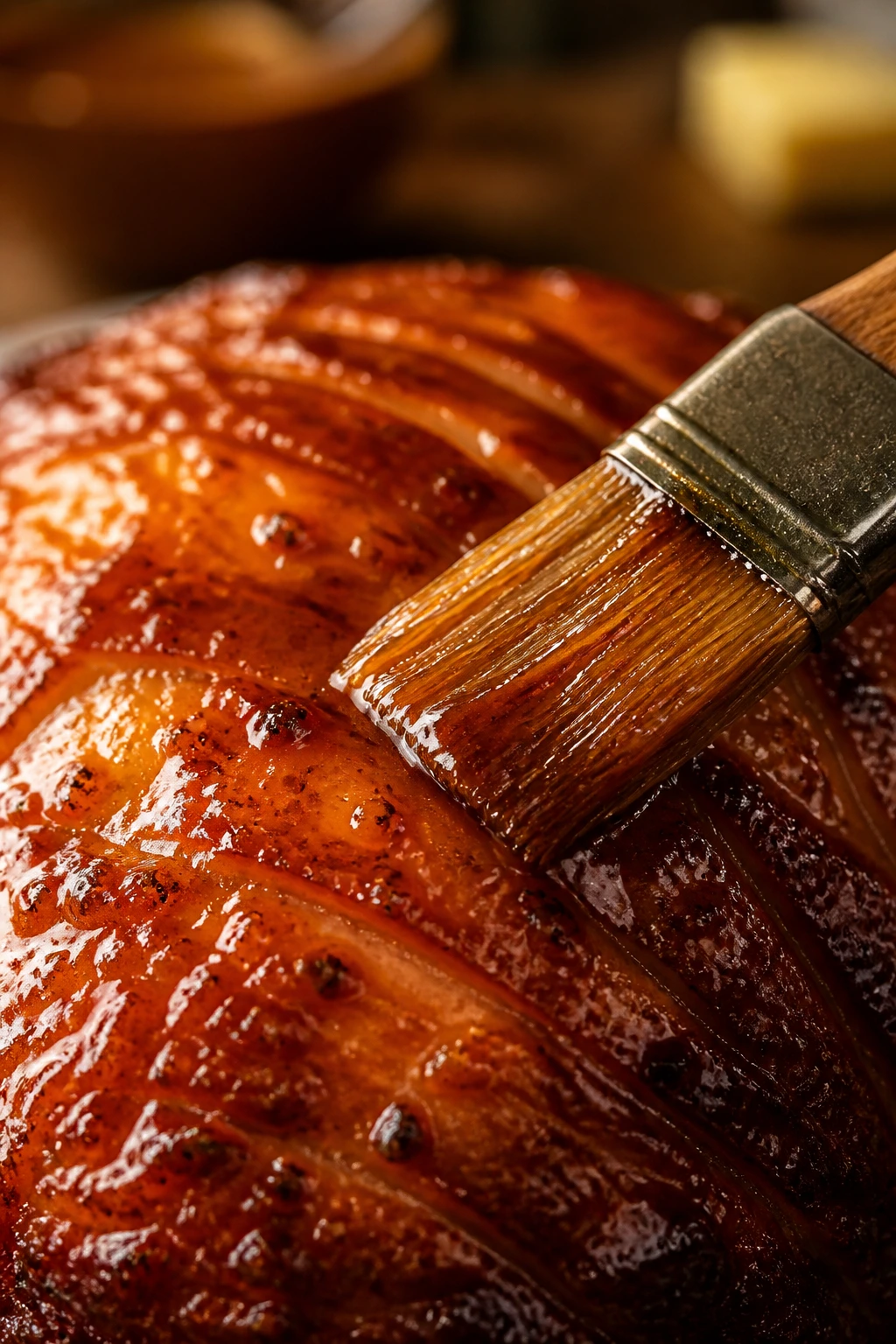
The Ham
What to use: 1 fully cooked deli-style ham, 4 to 5 pounds, ideally boneless or semi-boneless so it slices cleanly and fits in a standard roasting pan.
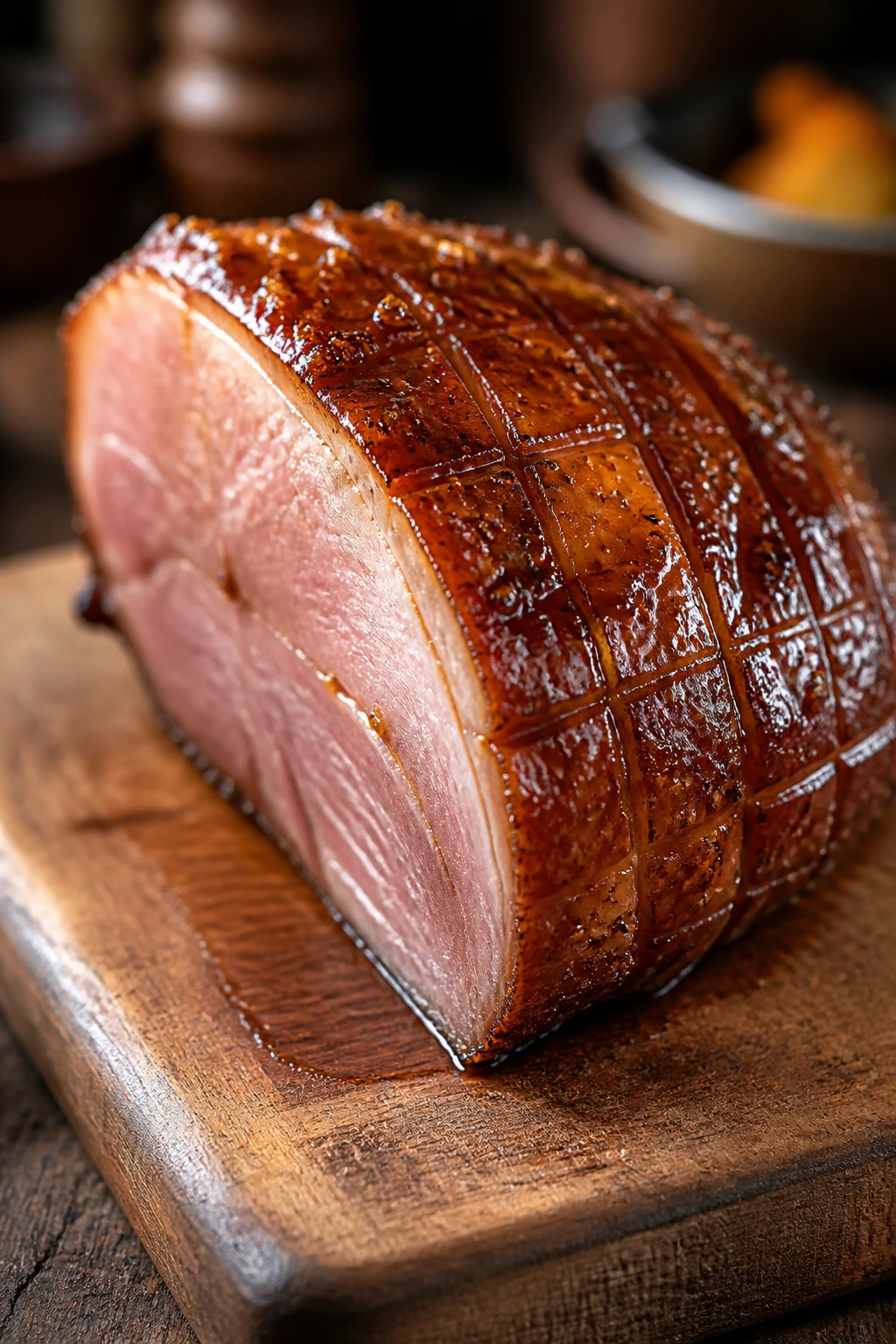
Preparation: Let the ham sit out for 30 to 45 minutes before baking so it loses some of the fridge chill, and score the top in shallow diamonds if it does not already come marked.
Substitutions: A spiral-cut ham works, and a bone-in ham works too; both need the same glaze, but a spiral-cut piece will brown faster on the edges.
Tips: Ask the deli or butcher for a single roasting piece, not loose lunch slices. The recipe needs a solid ham that can hold its shape.
The Sweet Base
What to use: 1 cup packed light brown sugar, 2 tablespoons pure maple syrup, and 2 tablespoons unsalted butter.
Preparation: Pack the brown sugar firmly into the measuring cup so the glaze has enough body to cling to the ham.
Substitutions: Dark brown sugar gives a deeper molasses note, and honey can stand in for maple syrup if that’s what’s in the pantry.
Tips: Warm glaze sticks better than cold glaze. If the mixture sits too long and thickens, loosen it with a teaspoon or two of warm water.
The Sharp and Savory Backbone
What to use: 1/3 cup Dijon mustard, 1/4 cup apple cider vinegar, and 1 tablespoon Worcestershire sauce.
Preparation: Whisk these together before heating so the mustard breaks up evenly and does not form little streaks in the pan.
Substitutions: Whole-grain mustard works if you want more texture, and white wine vinegar can replace the cider vinegar in a pinch.
Tips: This is where the glaze stops tasting like dessert. If you leave out the acid, the sugar will take over and the ham will taste one-note.
The Spices
What to use: 1 teaspoon smoked paprika, 1/2 teaspoon black pepper, 1/4 teaspoon ground cloves, and 1/2 teaspoon garlic powder.
Preparation: Measure the spices before the sauce hits the heat, because once the sugar starts bubbling you do not want to be hunting for cloves.
Substitutions: Allspice can replace the cloves if that’s what you have, and a pinch of cayenne gives the glaze a small amount of heat.
Tips: Cloves are strong. A little gives the glaze a warm, old-fashioned edge; too much makes the whole dish taste like potpourri.
The Pan Liquid
What to use: 1 cup apple cider or water for the bottom of the roasting pan.
Preparation: Pour it into the pan before the ham goes in, but keep it away from the glaze itself.
Substitutions: Unsalted chicken stock works too, though apple cider gives the drippings a softer, fruitier smell.
Tips: The liquid keeps the drippings from scorching and gives you something spoonable to drizzle over the slices at the end.
Tools That Make the Job Easier
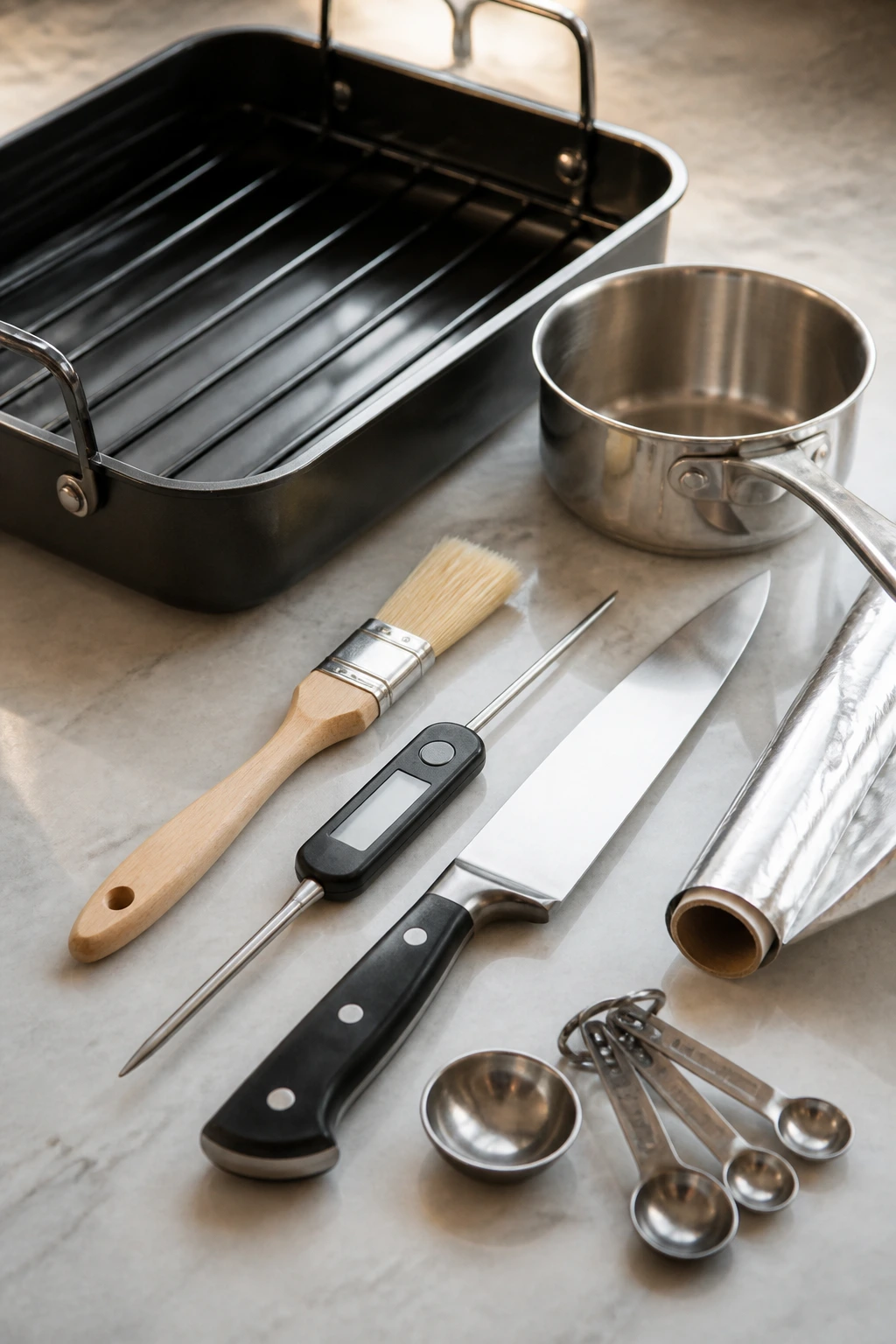
- Roasting pan with a rack: Keeps the ham out of the liquid so the bottom does not stew.
- Small saucepan: Needed for the glaze so the sugar melts evenly before it hits the ham.
- Pastry brush or silicone basting brush: Lets you apply thin coats of glaze without tearing the surface.
- Instant-read thermometer: The fastest way to know when the ham is warmed through; aim for 140°F in the thickest part.
- Sharp carving knife: A long knife gives cleaner slices and less tearing.
- Foil: Important for the first covered stretch of baking and for loose tenting if the glaze darkens too fast.
- Measuring cups and spoons: The glaze is forgiving, but not sloppy; the ratios matter.
- Cutting board with a groove, if you have one: Catching the juices makes the slicing cleaner and keeps the counter from turning sticky.
Scoring, Glazing, and Baking the Ham
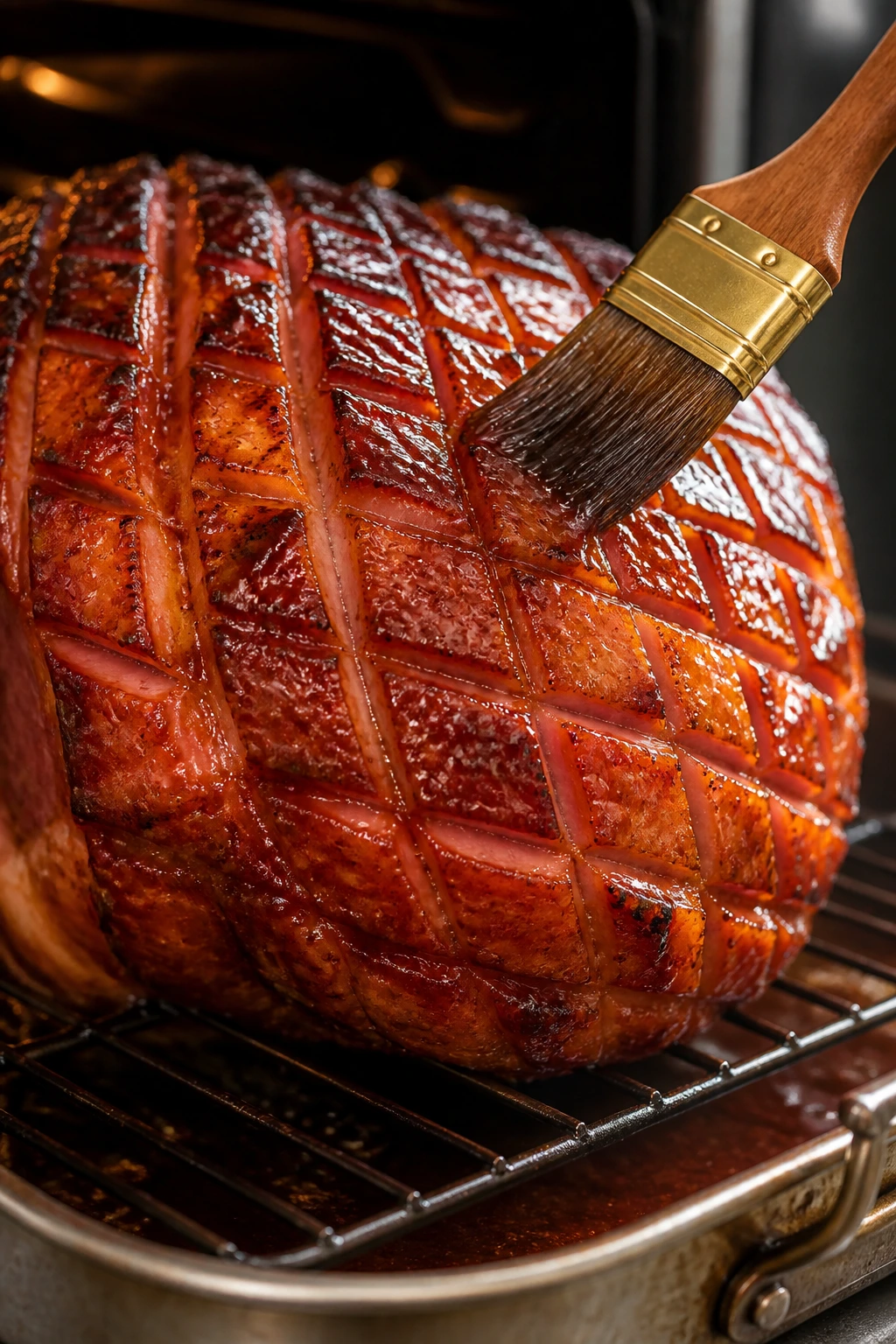
Prep the Oven and Ham
-
Remove the ham from the refrigerator and let it sit at room temperature for 30 to 45 minutes. Preheat the oven to 325°F (165°C) and position a rack in the lower-middle part of the oven.
-
If the ham has a fat cap and is not already scored, cut shallow diagonal lines across the top about 1 to 1 1/2 inches apart, making diamonds about 1/4 inch deep. Do not cut so deep that the slices separate or fall apart.
-
Set the ham cut-side down on a rack in a roasting pan. Pour 1 cup apple cider or water into the bottom of the pan. Cover the pan tightly with foil.
Make the Glaze
-
In a small saucepan, combine the brown sugar, Dijon mustard, apple cider vinegar, maple syrup, butter, Worcestershire sauce, smoked paprika, black pepper, ground cloves, and garlic powder.
-
Set the pan over medium heat and whisk until the butter melts and the glaze looks smooth and glossy, 3 to 4 minutes. Let it come to a gentle bubble, then pull it off the heat. Do not boil it hard; hard boiling can make the sugar taste grainy and overcooked.
Bake and Build the Finish
-
Bake the covered ham for 45 minutes. If the ham is on the smaller side, check it a little early. If it is closer to 5 pounds, it may need the full 45 minutes before the first glaze goes on.
-
Remove the foil and brush about half of the glaze over the ham, working it into the scored lines and the outer edges. Return the ham to the oven, uncovered, for 15 minutes.
-
Brush on the remaining glaze and bake for another 15 to 20 minutes, until the surface is deep amber, the edges look sticky, and the thickest part of the ham reaches 140°F. If the top starts darkening too quickly, tent it loosely with foil for the last stretch.
Rest and Slice
-
Transfer the ham to a cutting board and let it rest for 15 to 20 minutes. Spoon a little of the pan liquid over the ham before slicing, or strain and reduce the liquid on the stove for 3 to 5 minutes if you want a thicker drizzle.
-
Slice against the grain if possible, or cut between the natural seams in a spiral-cut piece. The first cuts should feel easy and neat, not torn or ragged. That’s the sign you gave it enough rest.
How to Serve It So the Glaze Stays Front and Center
Presentation:
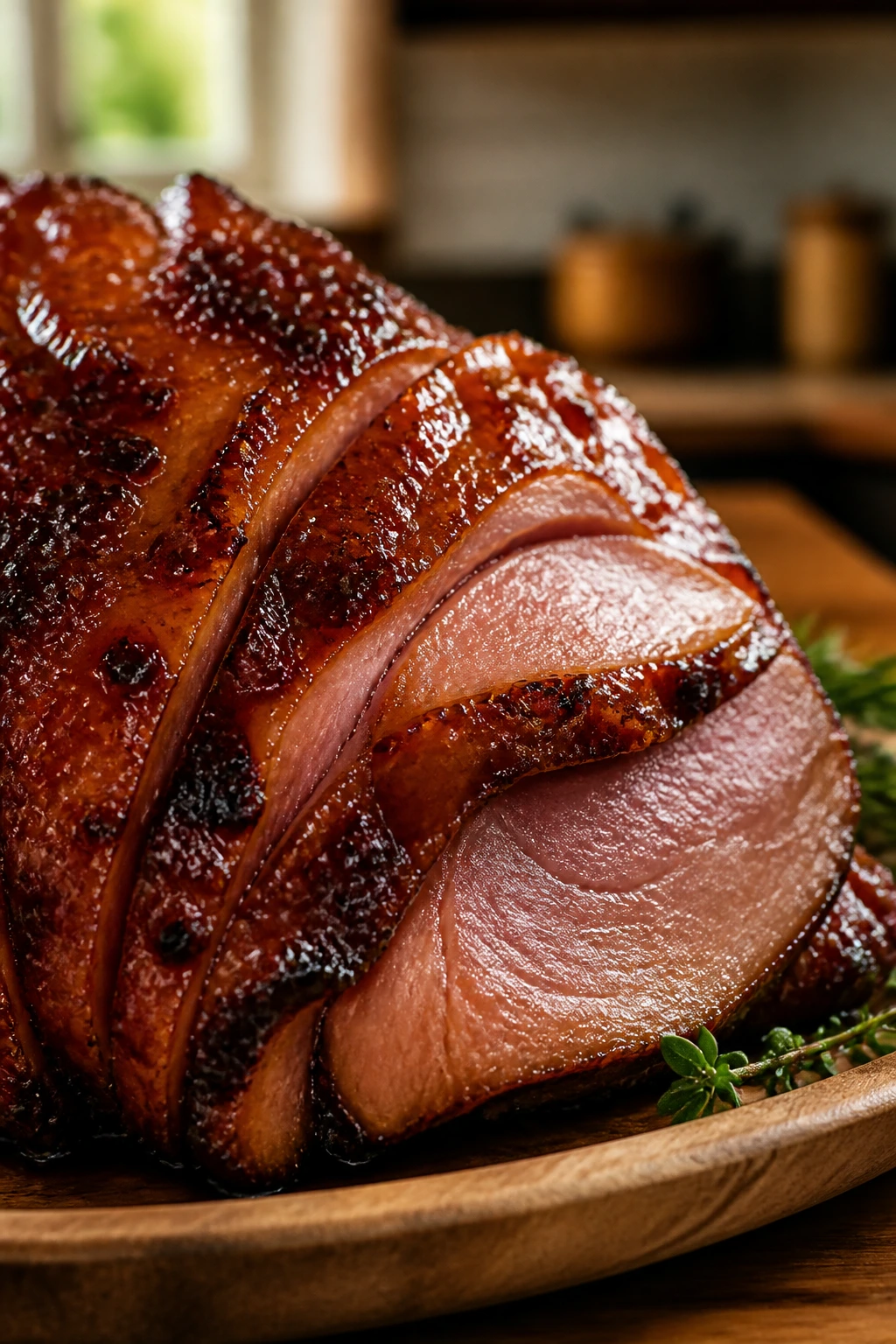
Slice the ham into medium-thick pieces and fan them on a warm platter instead of piling them into a tight stack. Spoon a little of the glaze and pan juices over the top, then leave a few glossy patches visible so the surface still looks bronzed. A few sprigs of parsley or a scatter of chopped chives is enough if you want color, but the ham should stay the main event.
Accompaniments:
I like this with mashed potatoes, roasted carrots, green beans, buttered peas, or a pan of scalloped potatoes if you want a more old-school dinner plate. Dinner rolls are useful because they catch the extra glaze at the edge of the plate. If you’re serving it buffet-style, add a sharp salad with mustardy dressing so the plate does not lean too sweet.
Portions:
A 4- to 5-pound ham serves 8 to 10 people as a main course, or more if it’s one part of a larger spread. If you want smaller portions for sandwiches later, slice the ham a little thinner and set aside the end pieces for soups or fried rice. For a lighter meal, pair one thick slice with vegetables and bread; the glaze is rich enough that you do not need a huge serving.
Beverage Pairing:
A dry hard cider is my first choice because it echoes the apple cider in the glaze without pushing the sugar higher. I also like unsweetened iced tea with lemon, a light-bodied lager, or a crisp white wine with a clean finish. If you want to stay nonalcoholic and sharp, sparkling water with a strip of orange peel works better here than anything sweet.
Small Tweaks That Improve the Whole Dish
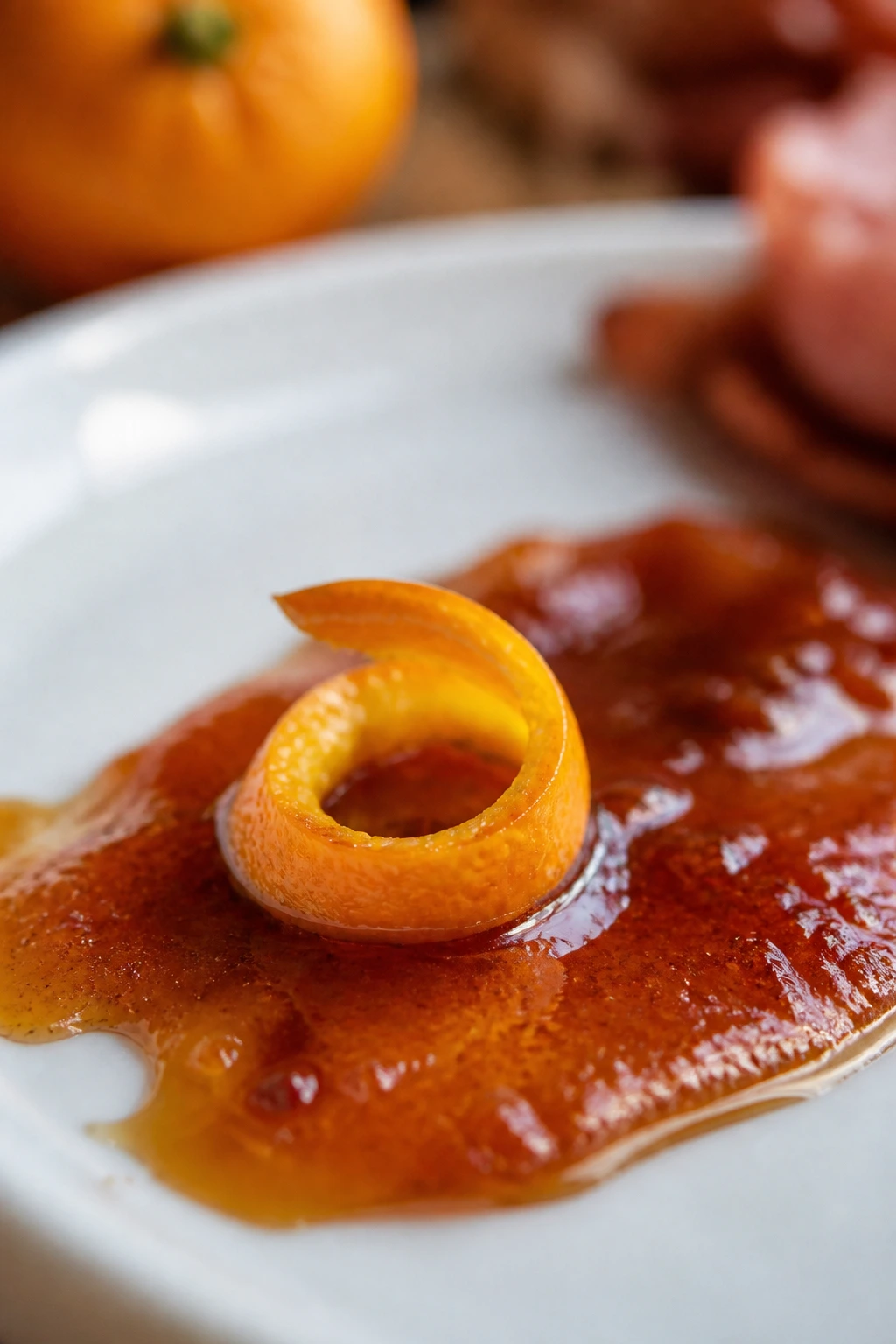
Flavor Enhancement: Stir 1 teaspoon of orange zest into the glaze after it comes off the heat. The citrus oil cuts through the brown sugar and gives the ham a brighter finish without turning it into a citrus dish.
Time-Saver: Make the glaze up to 3 days ahead and keep it in the fridge. Warm it over low heat with 1 tablespoon of water before brushing it on, and it will behave like it was made five minutes ago.
Texture Fix: If the ham is spiral-cut or already sliced partway through, cover it loosely with foil for the first half of baking so the exposed edges do not dry out before the glaze goes on. Those edges brown fast, which sounds good until they turn leathery.
Serving Trick: Save 2 tablespoons of glaze before it touches the raw ham. Warm that reserve and brush it over the sliced ham on the platter for a fresh, shiny finish that looks better than another round of oven heat.
Cost-Saver: A boneless deli-style ham is usually easier to carve and often less expensive than a bone-in holiday-style ham. The glaze covers the difference in shape, so you are paying for the meat, not a dramatic bone.
Common Mistakes That Dry Out a Good Ham
-
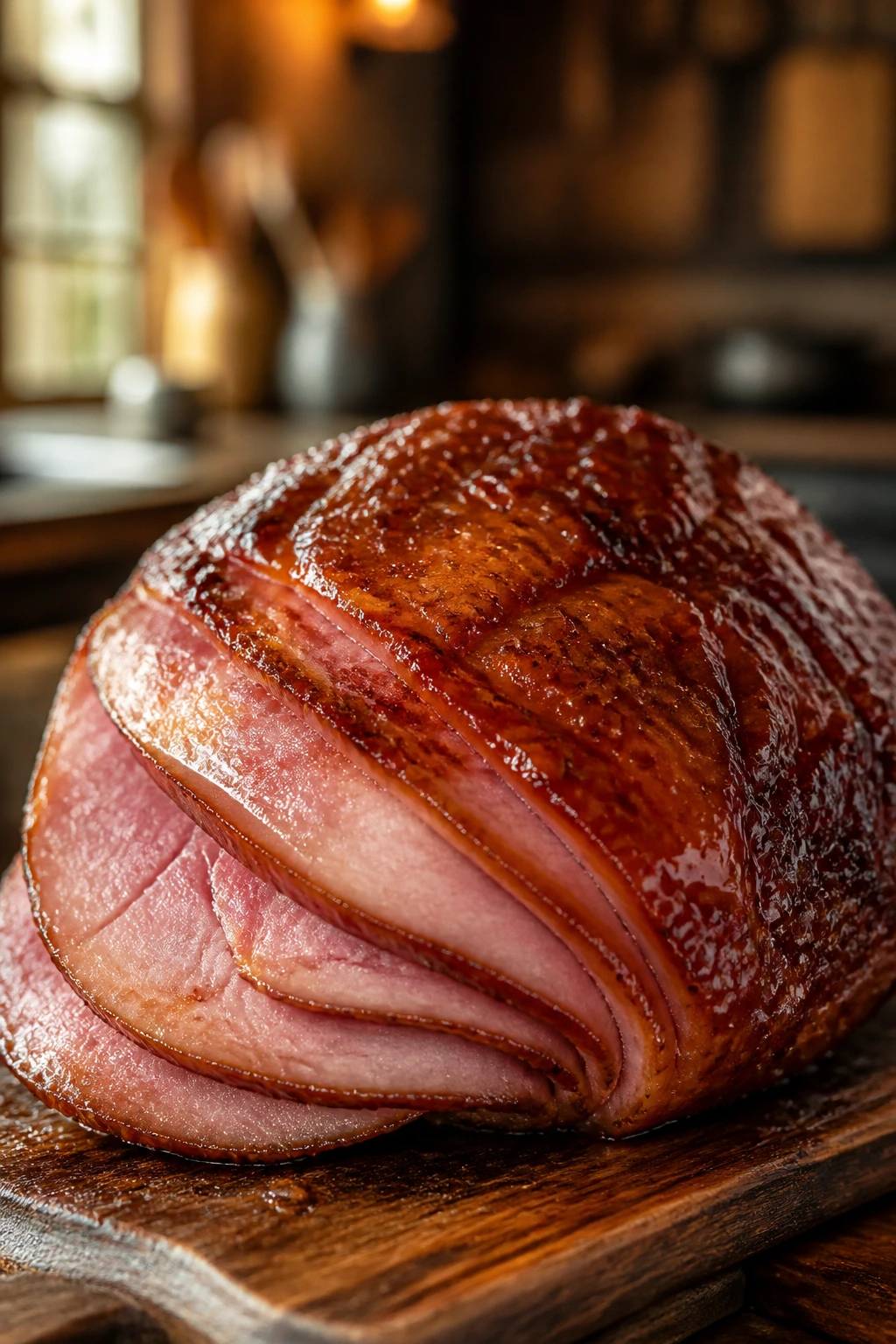
Glazing too early: If the sugar goes on at the start, it tends to darken before the ham has warmed through. The fix is simple: let the ham heat covered first, then glaze during the final 30 minutes.
-
Running the oven too hot: At 375°F or above, the edges can dry before the center reaches 140°F. Stick with 325°F and give the ham time to warm gently.
-
Skipping the pan liquid: Without cider or water in the pan, the drippings can scorch and give the glaze a bitter edge. A cup of liquid buys you a cleaner smell, better drippings, and a little insurance.
-
Slicing the ham too soon: Cut it the moment it leaves the oven and the juices spill out onto the board instead of staying in the meat. Resting for 15 to 20 minutes keeps the slices moist and easier to carve.
-
Making the glaze all sugar and no backbone: A sugar-only coating looks shiny for a minute, then tastes thin and too sweet. Dijon, vinegar, Worcestershire, and pepper are the parts that make the glaze taste like dinner.
-
Using thin deli slices instead of a roasting piece: Thin slices dry out in the oven and never develop that lacquered surface. This recipe needs a solid piece of ham that can take heat and hold a glaze.
Variations Worth Trying
Orange Peel and Clove Ham
Add 1 tablespoon of orange zest and replace 2 tablespoons of the apple cider vinegar with orange juice. The glaze lands brighter and a little softer, which works well if you’re serving mashed sweet potatoes or buttered carrots alongside it.
Maple-Dijon Balance
Swap half of the brown sugar for an extra 3 tablespoons of maple syrup and increase the Dijon to 1/2 cup. The result is less sticky and a little sharper, with a clean mustard finish that keeps the ham from feeling too sweet.
Smoky Chipotle Ham
Add 1/2 teaspoon chipotle powder or 1 teaspoon minced chipotle in adobo to the glaze, and use smoked paprika as written. This version tastes especially good with beans, cornbread, or roasted corn because the smoke lands harder and the sugar has somewhere to go.
Garlic and Herb Finish
Stir 1 teaspoon chopped fresh thyme or rosemary into the glaze after cooking, or sprinkle it over the ham before the final 15-minute bake. The herbs give the surface a more savory edge, which I like when the rest of the meal is already rich.
Smaller-Table Ham Steaks
If you do not want a full roasting piece, use 2 thick ham steaks instead of one large ham. Sear them in a skillet for a minute or two per side, brush on the glaze, and finish in a 375°F oven for 8 to 10 minutes until the glaze bubbles at the edges.
Make-Ahead, Storage, and Reheating
Room Temperature:
Cooked ham should not sit out for more than 2 hours. If your kitchen runs warm, cut that down to 1 hour and get the leftovers packed up sooner rather than later. Glazed ham gets sticky fast, and that stickiness is not a preservation method.
Refrigerator:
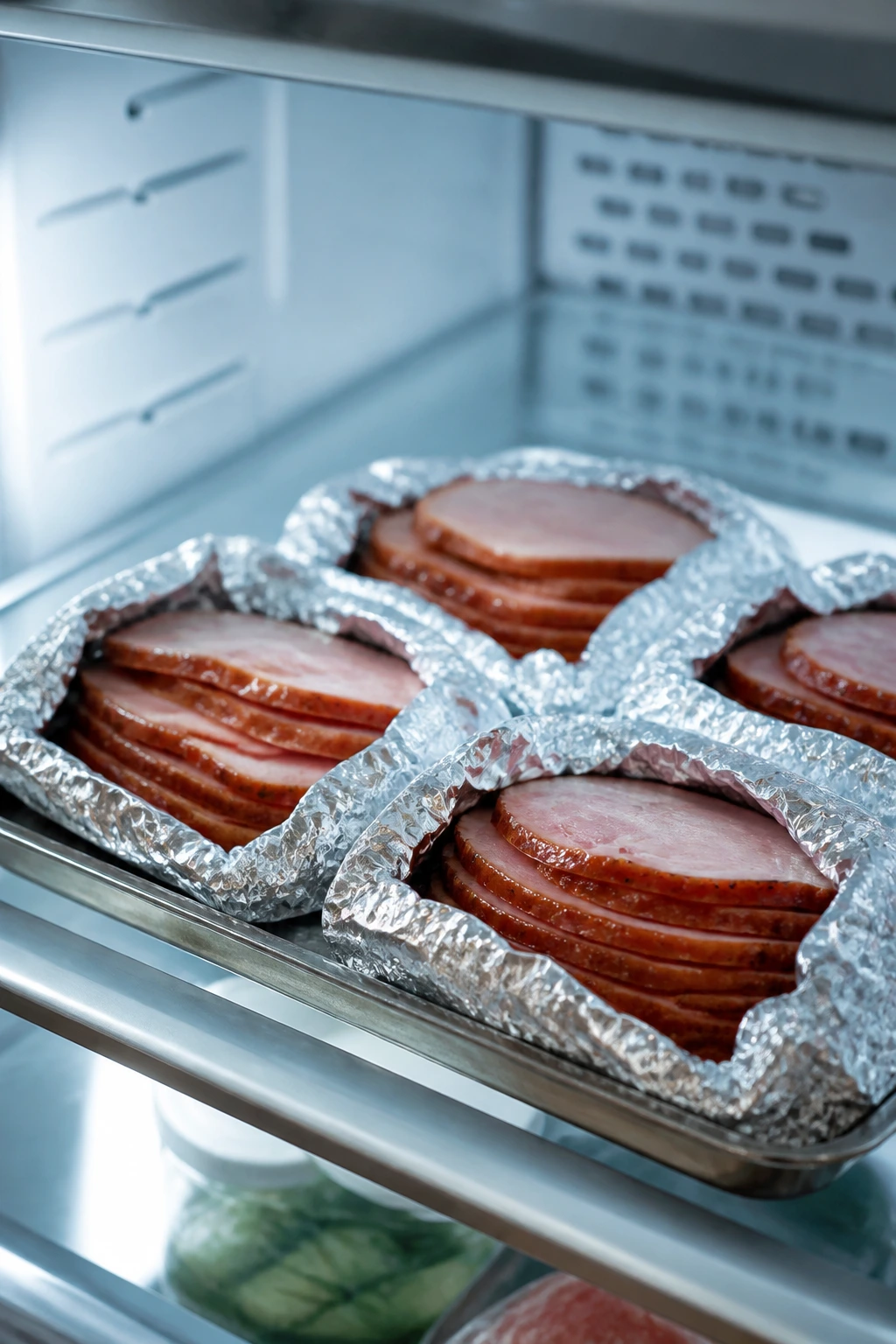
Wrap slices tightly in foil or place them in an airtight container with a spoonful of pan juices or leftover glaze. They keep well for 3 to 4 days in the refrigerator. I like to separate thicker slices with parchment if I know I’ll be grabbing them one at a time for sandwiches.
Freezer:
Ham freezes well for up to 2 months. Slice it first, wrap portions in freezer paper or parchment, then slide them into a freezer bag so you can thaw only what you need. A whole unsliced piece can be frozen too, but smaller portions thaw more evenly and reheat with less drying.
Reheating:
The oven is the safest choice if you want to keep the texture close to the original. Put slices in a baking dish with 2 to 3 tablespoons of water, cider, or pan juices, cover tightly with foil, and heat at 275°F until warm, usually 10 to 15 minutes for slices and 20 to 25 minutes for thicker portions. A skillet works too: warm slices over low heat with a splash of liquid and turn them once. Microwaves can be used in a pinch, but cover the ham with a damp paper towel and heat at 50 percent power so the edges don’t go rubbery.
Make-Ahead:
The glaze can be made up to 3 days in advance and kept in the refrigerator. The ham itself should be baked the day you plan to serve it, but you can score it ahead and keep it covered in the fridge overnight. If you do that, let it sit out for 30 minutes before it goes into the oven so the heat reaches the center more evenly.
Savory Deli Ham with Brown Sugar Glaze FAQ
Can I use a pre-sliced deli ham instead of a whole piece?
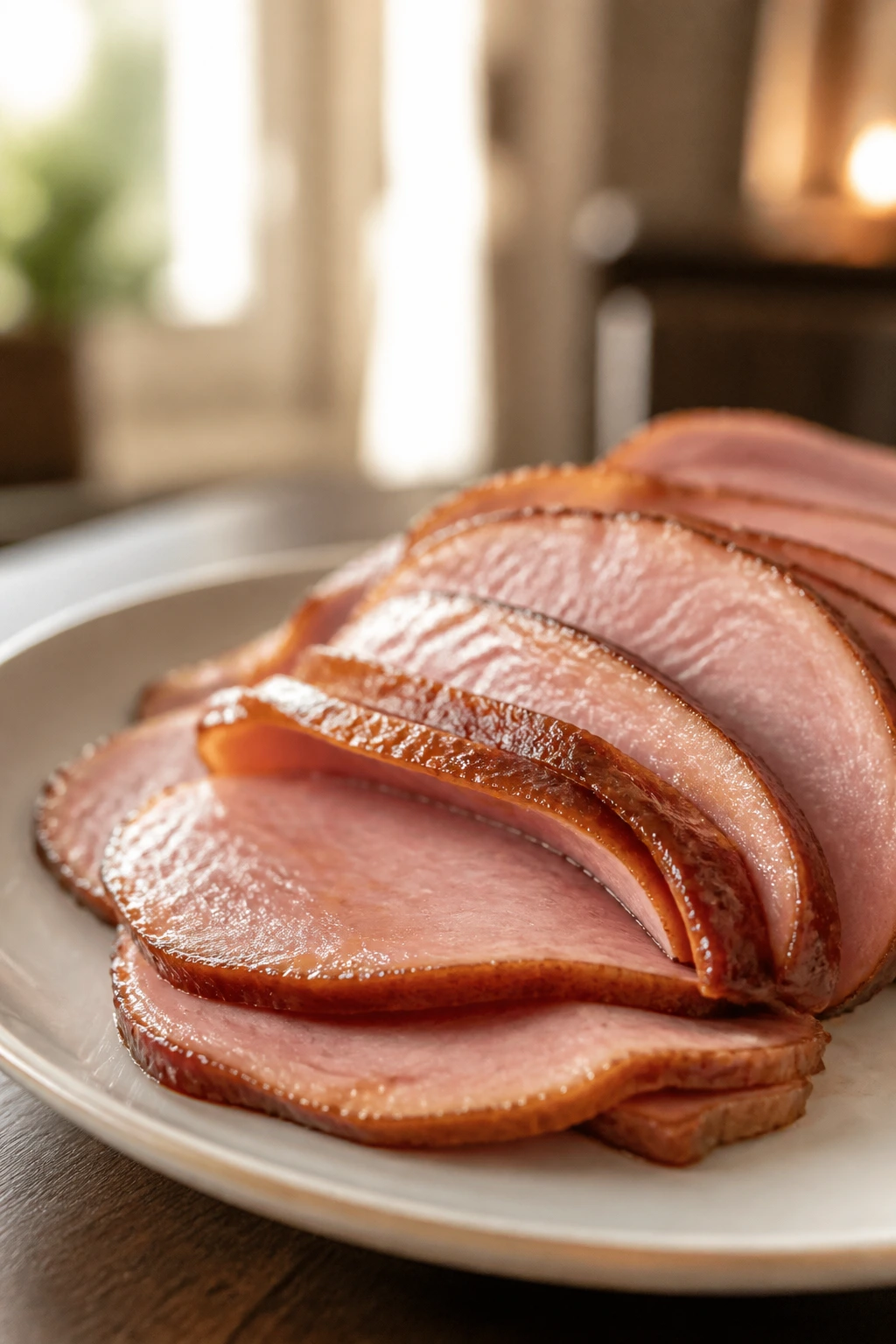
Not for this recipe. Thin deli slices dry out before the glaze has time to set, and they never get that lacquered finish. A solid roasting piece is the right move.
Do I need to cover the ham while it bakes?
Yes, for the first part of the bake. The foil protects the meat from drying out while it warms, and then you uncover it so the glaze can brown and cling.
How do I know when the ham is ready?
Since the ham is already fully cooked, you’re warming it, not cooking it raw. The center should reach 140°F, and the surface should be glossy with a deep amber color and little caramelized spots at the edges.
Can I make the glaze without Dijon mustard?
You can, but the flavor changes a lot. Yellow mustard is sharper and simpler; whole-grain mustard gives more texture. If you skip mustard altogether, add a little extra vinegar and a pinch of salt so the glaze still has structure.
What if my glaze gets too thick in the pan?
Whisk in 1 teaspoon of warm water or cider at a time until it loosens. A good glaze should brush on in a thin layer and leave a shine, not sit on the ham like frosting.
Can I do this in a slow cooker?
You can warm a ham in a slow cooker, but you won’t get the same browned surface. If you go that route, heat the ham on low with a little liquid, then move it to a hot oven for the glaze at the end. The oven finish is what makes the top look like dinner instead of leftovers.
What if the glaze starts to darken too fast?
Tent the ham loosely with foil and keep baking at 325°F. The surface can go from deep brown to burnt in a short stretch because of the sugar, so watch the edges more than the center.
Can I freeze the leftovers after glazing?
Yes. Slice the ham first, freeze it in small portions, and keep a little of the glaze or pan juices with each package. That keeps the texture better when you reheat it later.
A Ham Worth Bringing Back
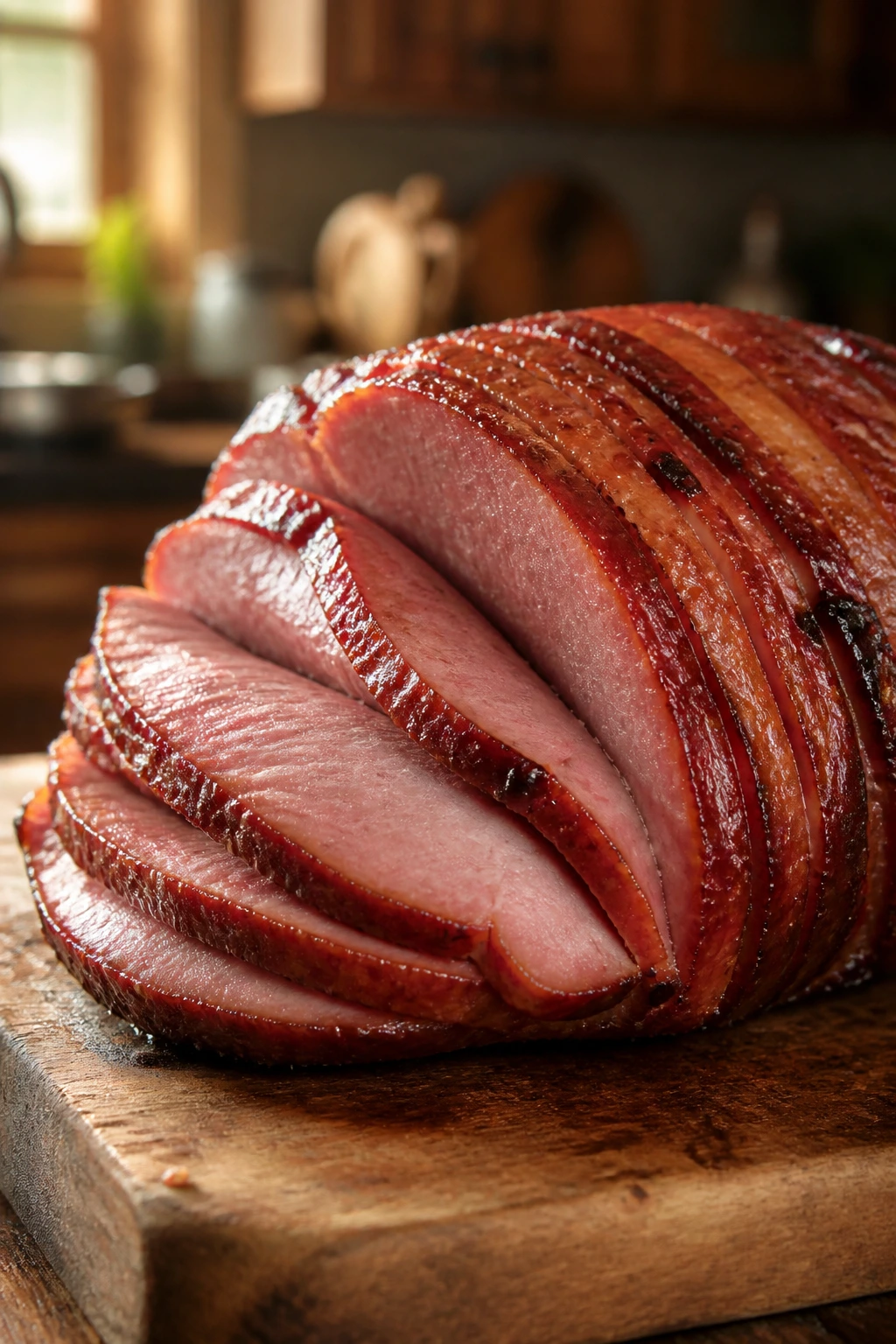
A good deli-style ham does not need a lot of help. It needs the right kind of help. Gentle heat, a glaze with sweetness and bite, and a rest long enough to keep the slices juicy. That’s the whole trick, and it’s why this version works so well: the ham still tastes like ham, only shinier, deeper, and a little more interesting at the edges.
I like recipes that do not ask for much drama. This is one of them. Once the glaze is brushed on and the oven takes over, you get that slow shift from plain to bronzed, from salty to sweet-savory, from “nice ham” to “who made the ham?” Keep the glaze in your back pocket, because once you’ve used it here, it has a way of finding its way onto pork chops and roasted carrots too.
Savory Deli Ham with Brown Sugar Glaze — Recipe Card
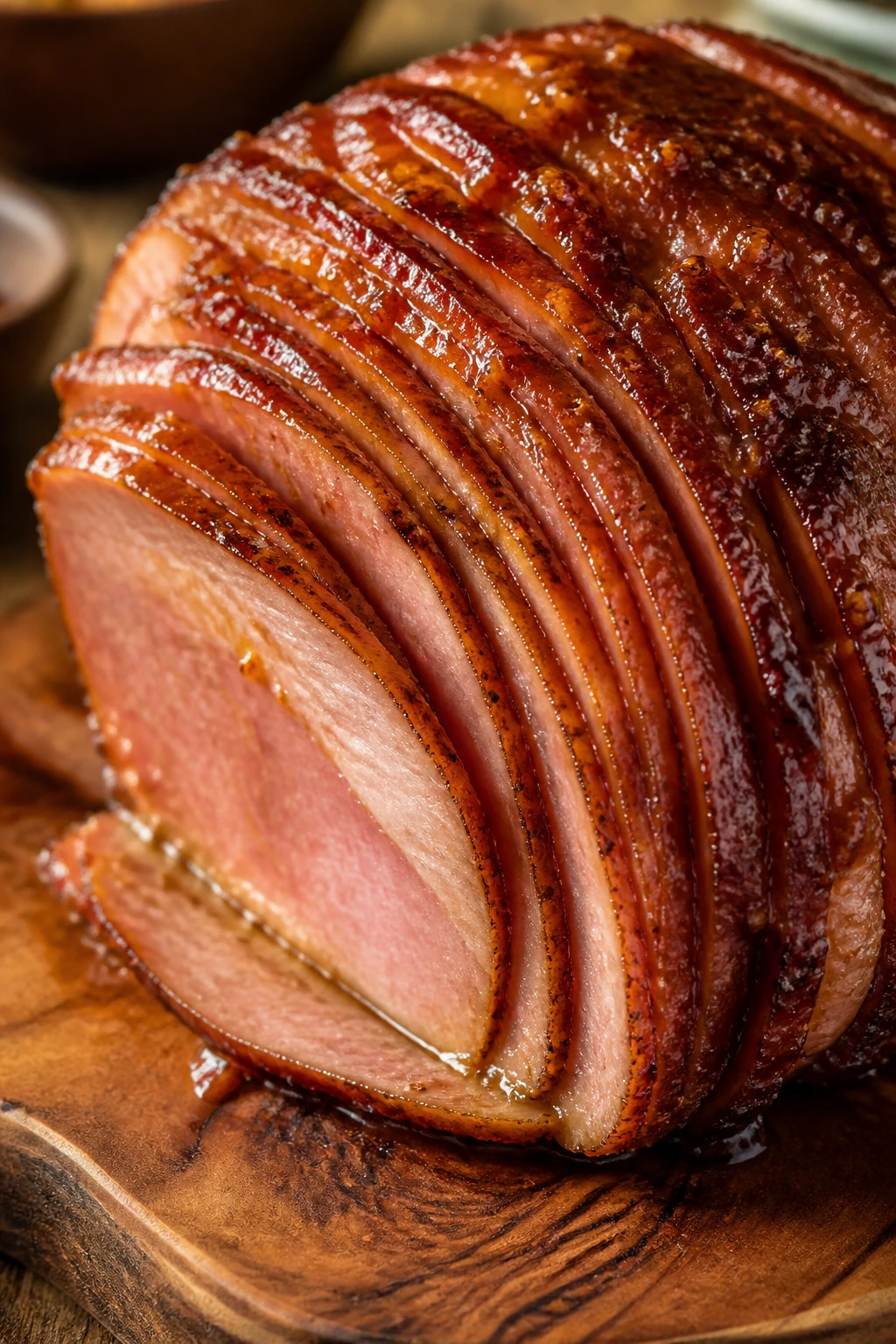
Recipe Name: Savory Deli Ham with Brown Sugar Glaze
Description: A fully cooked deli-style ham warmed in the oven and brushed with a glossy brown sugar-Dijon glaze. The finish is sweet, sharp, and lightly smoky, with juicy slices that carve cleanly.
Prep Time: 20 minutes
Cook Time: 1 hour 15 minutes
Total Time: 1 hour 35 minutes
Course: Dinner, Main Course
Cuisine: American
Servings: 8 to 10 servings
Calories: About 410 kcal per serving
Ingredients
For the Ham
- 1 fully cooked deli-style ham, 4 to 5 pounds, boneless or semi-boneless, with a light fat cap if possible
- 1 cup apple cider or water, for the roasting pan
For the Brown Sugar Glaze
- 1 cup packed light brown sugar
- 1/3 cup Dijon mustard
- 1/4 cup apple cider vinegar
- 2 tablespoons pure maple syrup
- 2 tablespoons unsalted butter
- 1 tablespoon Worcestershire sauce
- 1 teaspoon smoked paprika
- 1/2 teaspoon freshly ground black pepper
- 1/4 teaspoon ground cloves
- 1/2 teaspoon garlic powder
Instructions
-
Remove the ham from the refrigerator and let it sit at room temperature for 30 to 45 minutes. Preheat the oven to 325°F (165°C) and position a rack in the lower-middle part of the oven.
-
Score the top of the ham in shallow diamonds if needed, then set it cut-side down on a rack in a roasting pan. Pour 1 cup apple cider or water into the bottom of the pan and cover tightly with foil.
-
In a small saucepan, combine the brown sugar, Dijon mustard, apple cider vinegar, maple syrup, butter, Worcestershire sauce, smoked paprika, black pepper, ground cloves, and garlic powder.
-
Set the saucepan over medium heat and whisk until the butter melts and the glaze looks smooth and glossy, 3 to 4 minutes. Remove from the heat.
-
Bake the covered ham for 45 minutes. Remove the foil, brush on half of the glaze, and bake uncovered for 15 minutes.
-
Brush on the remaining glaze and bake for another 15 to 20 minutes, until the thickest part of the ham reaches 140°F and the glaze is deep amber and sticky at the edges.
-
Transfer the ham to a cutting board and rest for 15 to 20 minutes before slicing. Spoon a little pan liquid over the slices, or reduce the pan liquid briefly if you want a thicker drizzle.
Notes:
Save 2 tablespoons of glaze for the platter if you want a fresh shine after slicing. If the top browns too fast, tent it loosely with foil. Leftover ham keeps for 3 to 4 days in the fridge and freezes well for up to 2 months.