



A tuna sandwich goes wrong fast. One extra spoon of mayo, a watery can of fish, or a tomato slice that wasn’t patted dry, and lunch slides straight into mush.
A light tuna salad sandwich with homemade dressing fixes that by doing less, not more. Greek yogurt gives the dressing body, Dijon keeps it sharp, lemon wakes up the tuna, and a small amount of mayonnaise rounds off the edges so the filling still tastes like lunch instead of a fridge clean-out.
What I like most here is the texture. The tuna stays in flakes, the celery adds a crisp snap, and the dressing clings in a thin coat instead of pooling at the bottom of the bowl. That’s the part so many tuna sandwiches miss; they go creamy when they should go balanced.
Get the ratio right, and the sandwich holds together on toasted bread, in a wrap, or tucked into lettuce for the kind of cold lunch that doesn’t need rescuing halfway through the meal. The trick is getting the dressing bright enough to taste clean, but tight enough to stay on the bread.
Why This Tuna Sandwich Works So Well
- Bright instead of heavy: Greek yogurt and lemon keep the filling cool and clean, while two tablespoons of mayo give it enough richness to feel finished.
- Built for real bread: The filling is thick, not runny, so it stays inside toasted slices instead of slipping out the sides on the second bite.
- Fast without tasting rushed: If the tuna is already drained, the whole thing comes together in about 15 minutes with no stove time at all.
- Crunch matters here: Celery, red onion, and a little pickle or caper give the sandwich sharp little bursts that keep each bite awake.
- Easy to tune: One extra spoon of yogurt, a squeeze more lemon, or a pinch of dill changes the mood without wrecking the texture.
- Good cold, good lightly toasted: Some tuna salads are fussy. This one behaves.
Timing and Yield at a Glance
Yield: 4 sandwiches
Prep Time: 15 minutes
Cook Time: 0 minutes
Total Time: 15 minutes
Difficulty: Beginner — the work is mostly chopping, draining, and stirring, but the texture needs a careful hand.
Chill/Rest Time: 10 minutes optional, if you want the flavors to settle and the dressing to tighten slightly.
Best Served: Chilled, or on lightly toasted bread right after mixing.
A tuna sandwich is one of those meals that looks simple until you’ve made a few bad ones. The difference between “fine” and “I’d make that again” lives in the details: how dry the tuna is, how small you chop the vegetables, and whether the dressing tastes bright before it ever touches the bread.
If you’re packing lunch, that short rest time helps. The flavor smooths out a little, the onion calms down, and the yogurt-mayo mixture thickens just enough to hold its shape. If you want to eat it immediately, that works too — just toast the bread so the first bite has some structure.
What Goes Into the Bowl and the Bread
For the Tuna Salad
- 2 cans (5 ounces each) tuna in water, drained well
- 1/3 cup plain Greek yogurt, full-fat or 2%
- 2 tablespoons mayonnaise
- 1 tablespoon Dijon mustard
- 1 tablespoon fresh lemon juice
- 1 teaspoon extra-virgin olive oil
- 1 celery rib, finely diced
- 2 tablespoons finely minced red onion
- 1 tablespoon chopped dill pickles or capers, drained
- 1 tablespoon chopped fresh dill or parsley
- 1/4 teaspoon fine sea salt, plus more to taste
- 1/4 teaspoon black pepper
- Pinch garlic powder, optional
For Assembly
- 8 slices sturdy bread, toasted if you like more structure
- 4 leaves butter lettuce or romaine
- 1 medium tomato, sliced and patted dry
- Soft butter, optional, for the bread if you want a richer first bite
The ingredient list is short on purpose. Tuna salad gets muddy when you try to dress it up with too many add-ins at once, and this version already has enough going on: creaminess, acid, crunch, and a little herb finish.
A lot of recipes bury the tuna under mayo. I don’t love that. Here, the tuna still tastes like tuna, which sounds obvious until you’ve eaten one too many sandwiches that could have been anything. This one has a clear identity. You taste fish, lemon, mustard, celery, and bread — not a single beige paste.
Why These Ingredients Matter
Tuna
What to use: 2 cans (5 ounces each) tuna in water, drained well. Solid white albacore gives you larger, firmer flakes, while chunk light tuna tastes a little softer and more savory.
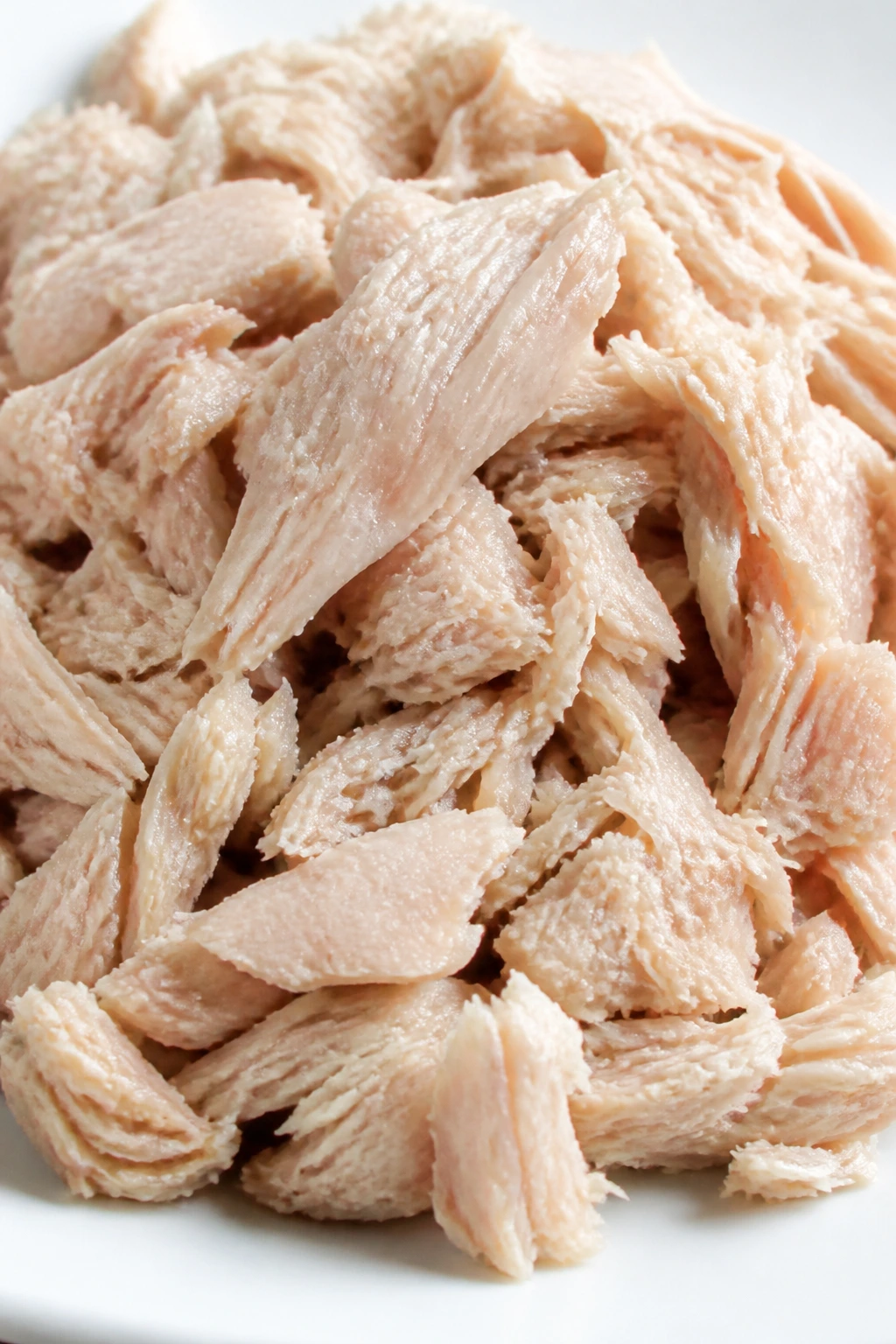
Preparation: Drain the cans thoroughly, then press the tuna gently with the back of a fork so the extra liquid leaves before the dressing goes in. Flake it into bite-size pieces, not shreds.
Substitutions: Tuna packed in olive oil works if you drain it well, but reduce the olive oil in the dressing. Canned salmon is the closest swap if you want a similar cold-salad texture.
Tips: If the tuna smells tinny or looks wet on the plate, it’ll taste flat in the sandwich. Dry tuna takes seasoning better and keeps the dressing from thinning out.
The Homemade Dressing
What to use: 1/3 cup plain Greek yogurt, 2 tablespoons mayonnaise, 1 tablespoon Dijon mustard, 1 tablespoon fresh lemon juice, 1 teaspoon olive oil, salt, pepper, and a pinch of garlic powder.
Preparation: Whisk the dressing until it turns smooth and glossy before you add the tuna. That first mix matters; it prevents pockets of lemon or mustard from showing up in one bite and disappearing in the next.
Substitutions: You can go all yogurt for a sharper, leaner dressing, or all mayonnaise if you want a more classic deli feel. A dairy-free plain yogurt or vegan mayo also works if you’re avoiding dairy.
Tips: Taste the dressing before it meets the tuna. If it tastes flat in the bowl, it will taste flatter on bread. You want it slightly sharper than you think, because the tuna softens everything.
Crunch and Freshness
What to use: 1 celery rib, 2 tablespoons minced red onion, 1 tablespoon dill pickles or capers, and 1 tablespoon fresh dill or parsley.
Preparation: Dice the celery and onion very fine, about the size of corn kernels. Pickles should be chopped small enough that they disappear into the bite instead of falling out the sides.
Substitutions: Shallot can replace red onion for a softer bite. Scallions work too, especially if you want less raw onion punch.
Tips: Don’t get lazy with the chopping here. Big chunks make the sandwich unstable, and tuna salad should spread cleanly across bread, not fight you.
Bread and Finish
What to use: 8 slices sturdy bread, 4 lettuce leaves, and 1 tomato, sliced and patted dry.
Preparation: Toast the bread lightly if you want a little protection against moisture. Dry the tomato on paper towels so the juices don’t soak the crumb.
Substitutions: Rye, sourdough, whole wheat, or a good sandwich loaf all work. For a lower-carb version, use lettuce cups or sturdy romaine leaves.
Tips: The bread is not the place to go soft. Thin, flimsy slices collapse under a cold filling, and this sandwich needs a little backbone.
Tools That Make It Cleaner
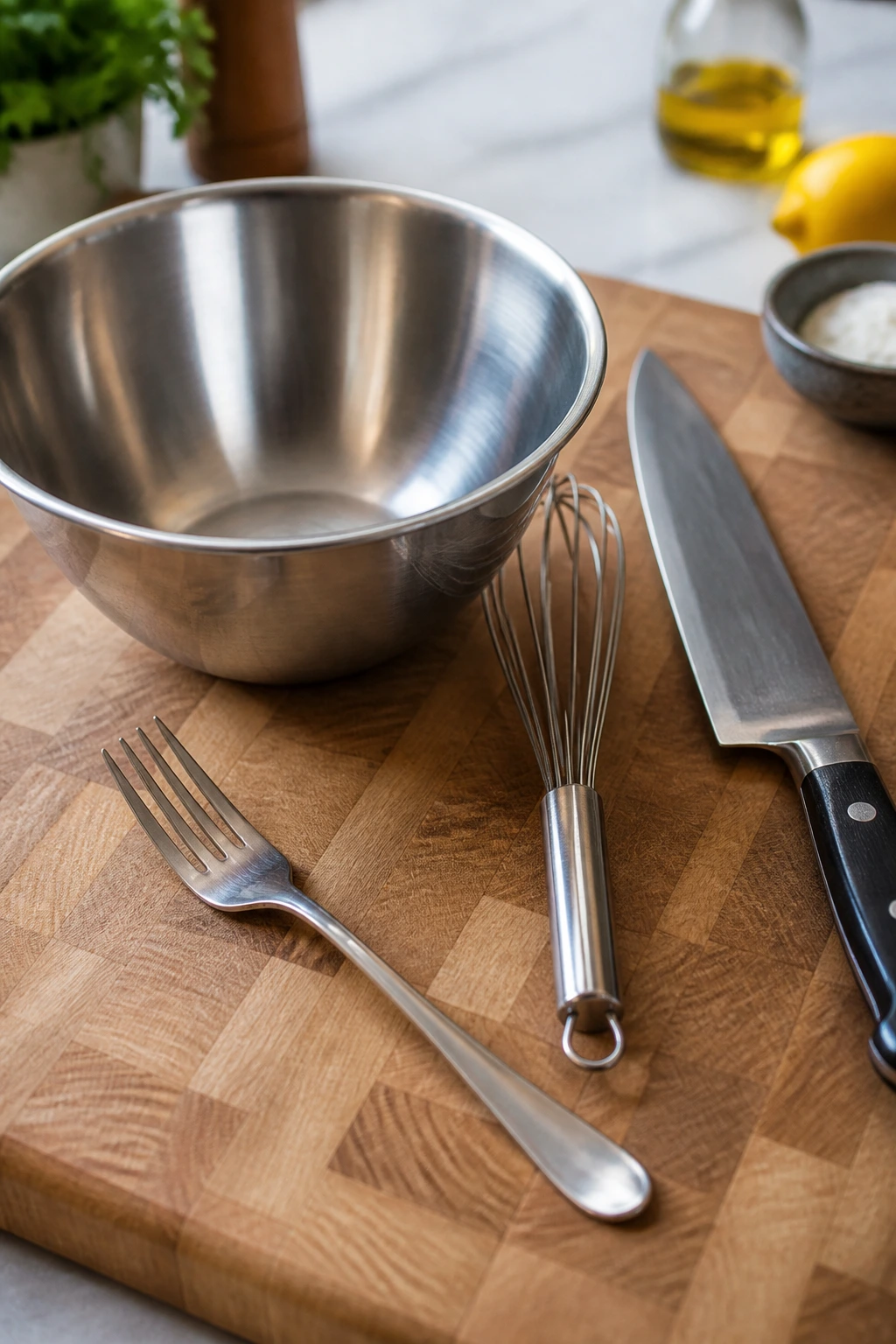
- Medium mixing bowl: Big enough to fold the tuna without splashing dressing over the rim.
- Fork: Useful for flaking the tuna and judging texture as you mix.
- Small whisk: Helps the dressing turn smooth instead of streaky.
- Sharp knife: Needed for fine celery, onion, and clean diagonal sandwich cuts.
- Cutting board: A larger board gives you room to chop the vegetables and build the sandwiches without crowding.
- Fine-mesh strainer: Handy for draining tuna thoroughly, especially if the can holds more liquid than expected.
- Toaster or dry skillet: Either one works for lightly toasting the bread.
- Airtight container: Best for storing the tuna salad if you’re making it ahead.
A lot of kitchen frustration comes from trying to mix this in too small a bowl. Tuna salad needs a little room so you can see whether the dressing is evenly coating the flakes. If the bowl feels cramped, the tuna gets mashed instead of folded.
Step-by-Step: From Drained Tuna to Finished Sandwich
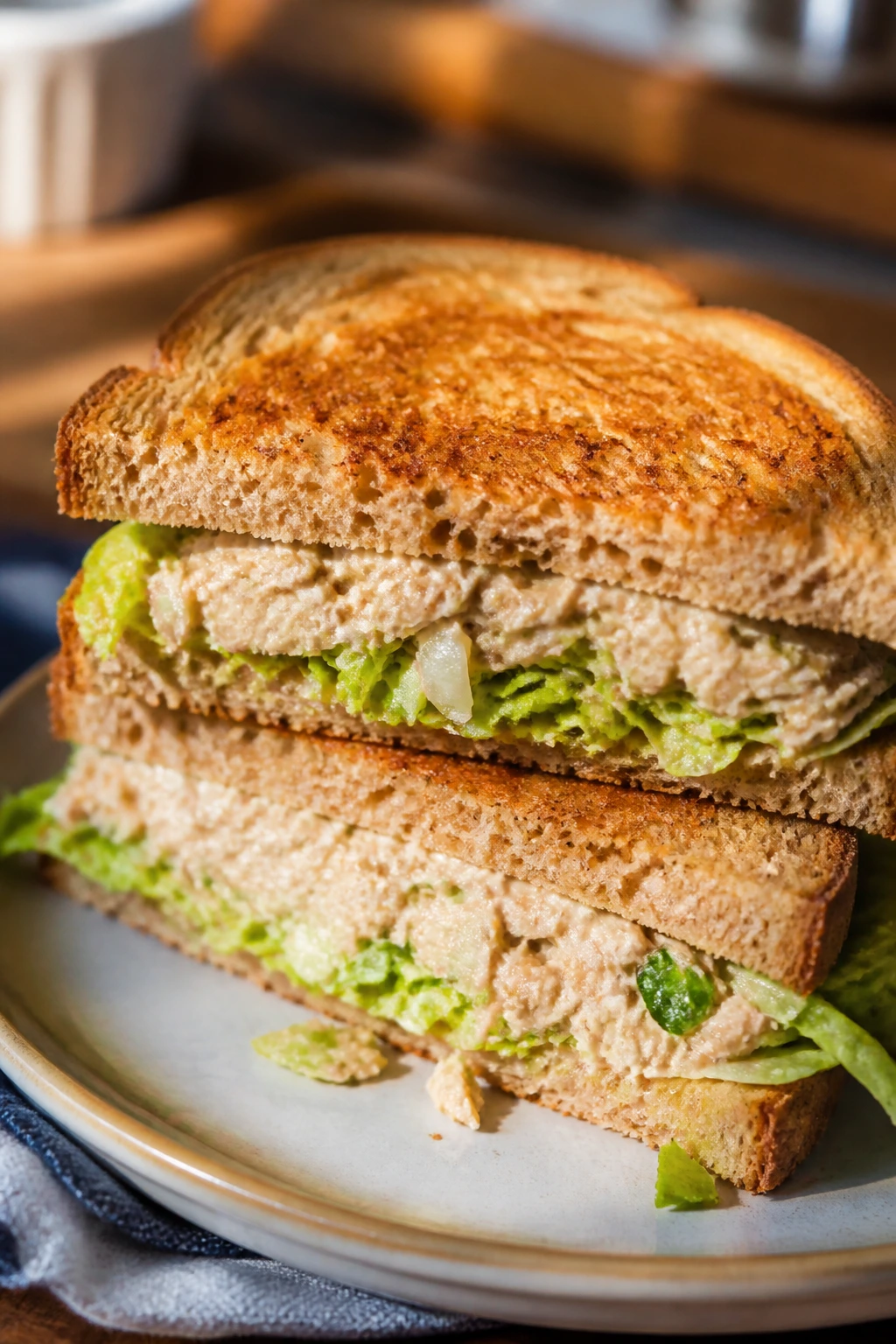
Make the Dressing
-
In a medium bowl, whisk together the Greek yogurt, mayonnaise, Dijon mustard, lemon juice, olive oil, salt, black pepper, and garlic powder until smooth and pale. The dressing should look glossy and hold soft ridges from the whisk.
-
Taste the dressing before you add the tuna. It should taste bright, salty, and slightly tangy, because the tuna will mute it a little once it goes in.
Build the Tuna Salad
-
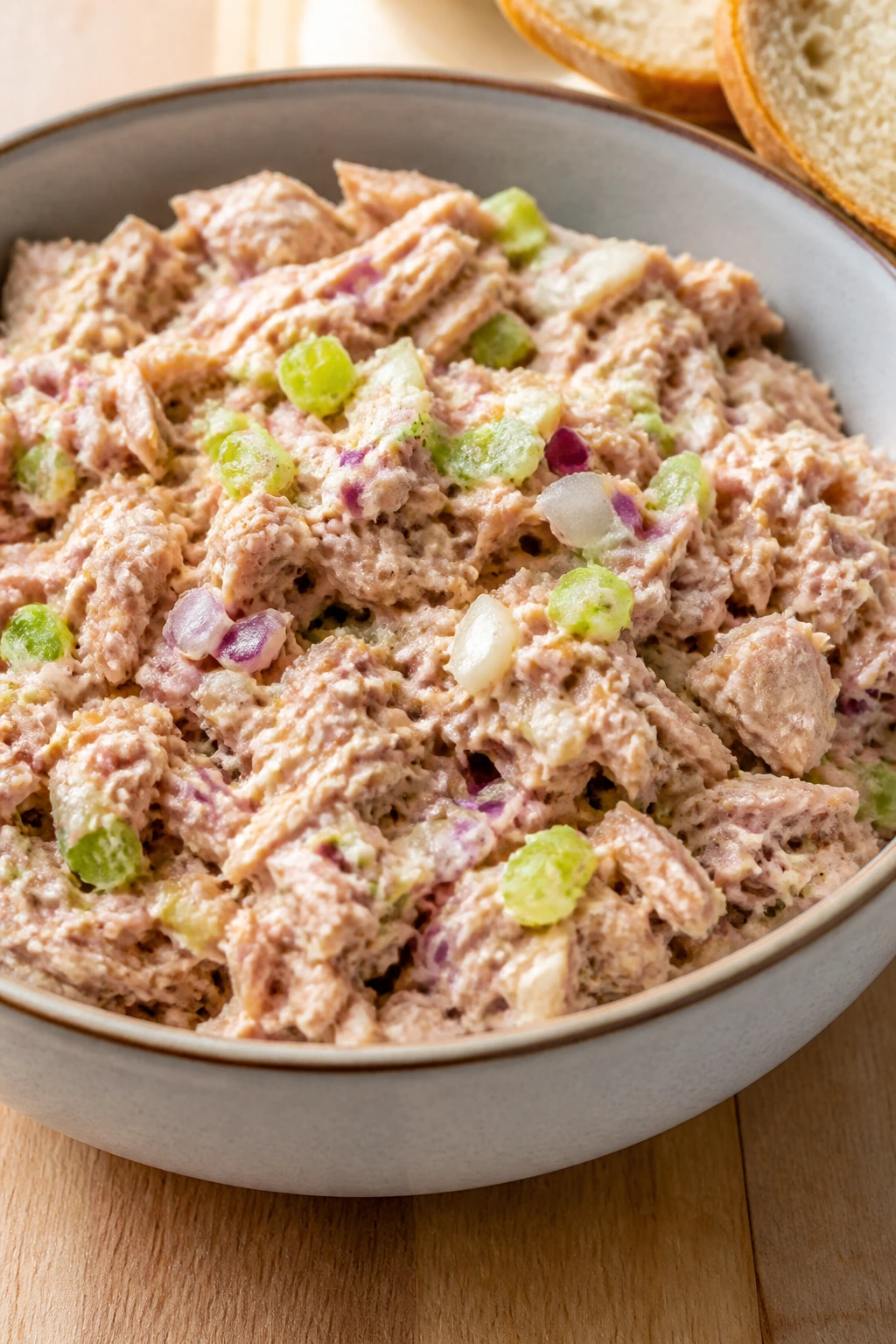
Add the drained tuna to the bowl and break it up with a fork into flakes that are roughly pea-size to dime-size. Don’t mash it into a paste. You want texture, not tuna pudding.
-
Fold in the celery, red onion, dill pickles or capers, and chopped dill or parsley. Stir only until everything is coated and evenly distributed. Stop as soon as the mixture looks combined — overmixing turns the salad dense and gluey.
-
Taste again and adjust with a pinch more salt, black pepper, or a small squeeze of lemon juice. If the mixture seems dry, add 1 teaspoon more yogurt at a time. If it looks loose, let it sit for 5 minutes and check again; tuna absorbs some dressing as it rests.
Assemble the Sandwiches
-
Toast the bread in a dry skillet over medium heat for 1 to 2 minutes per side, or use a toaster until the slices are lightly golden and the surface feels dry to the touch. Let the bread cool for about 1 minute so steam doesn’t soften the lettuce.
-
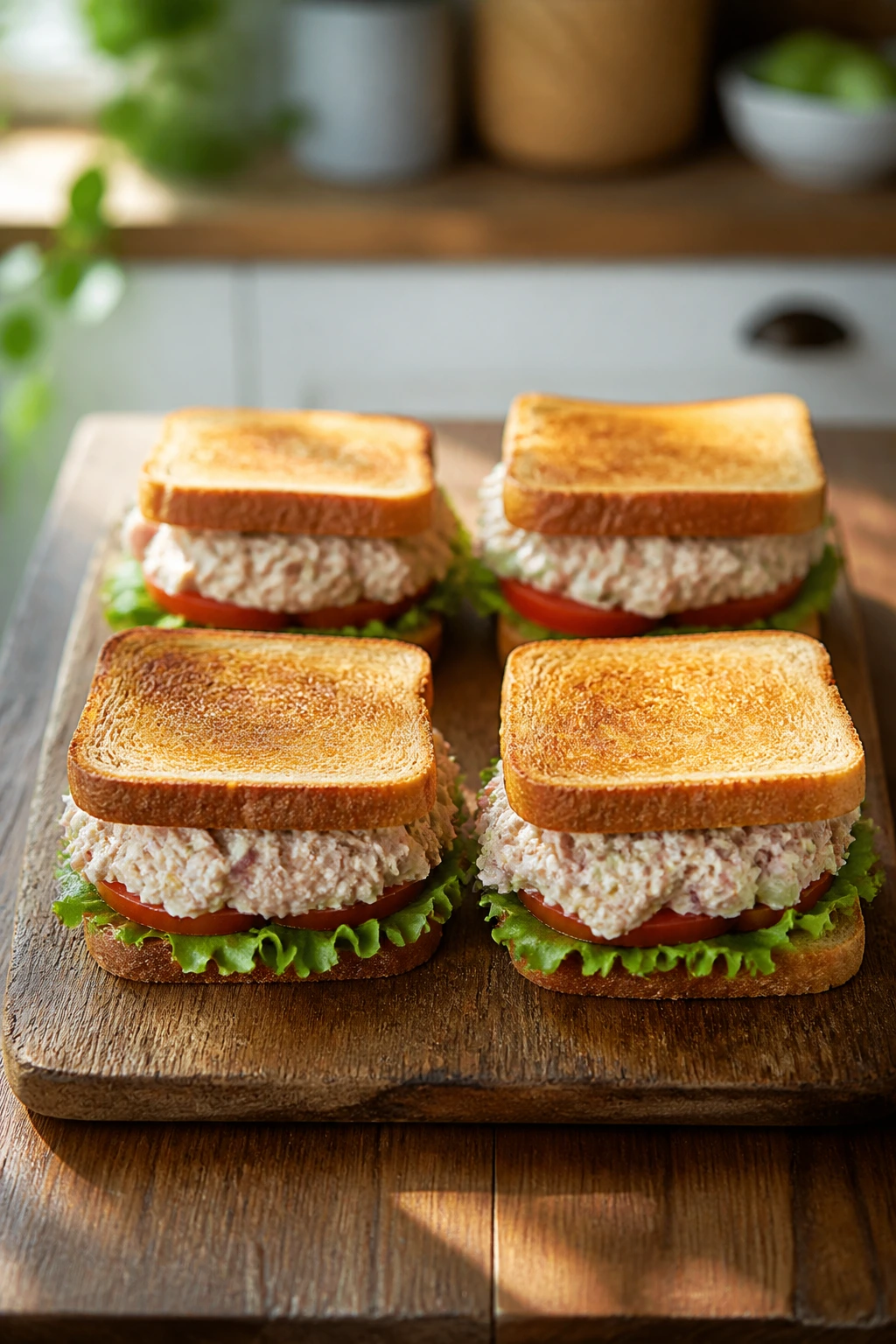
Lay out 4 slices of bread and top each with a lettuce leaf, a few dry tomato slices, and about 1/2 to 3/4 cup tuna salad. Finish with the remaining bread slices, press lightly with your palm, and slice each sandwich diagonally with a sharp knife.
-
Serve immediately, or wrap tightly and chill for up to 1 hour if you want the filling colder and a little more compact.
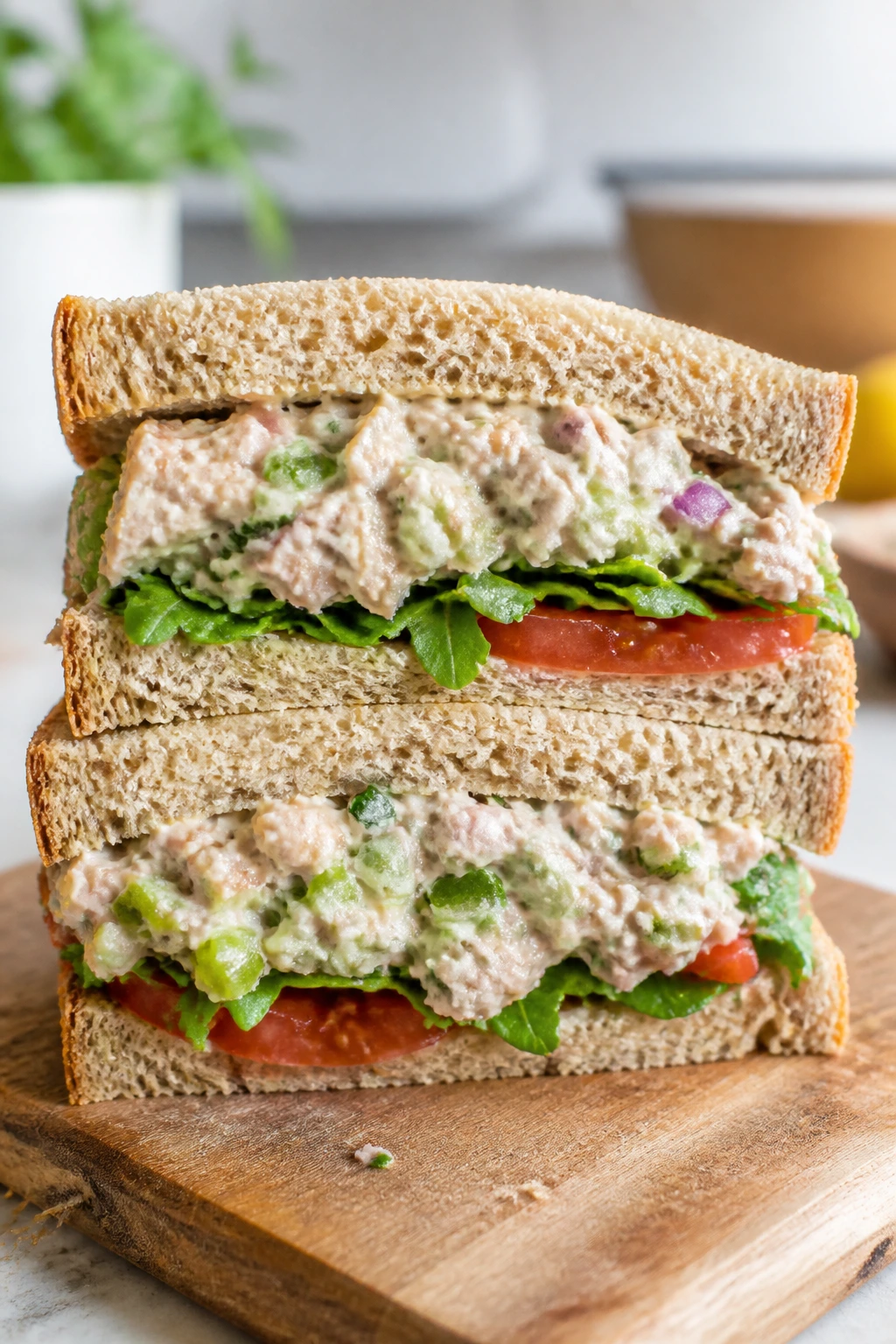
A diagonal cut sounds decorative, but it also helps here. You can see the layers, and the filling feels easier to manage in your hand. That matters with tuna salad because one sloppy cut can make a good sandwich feel messy before it even reaches the plate.
How to Serve It Without Soggy Bread
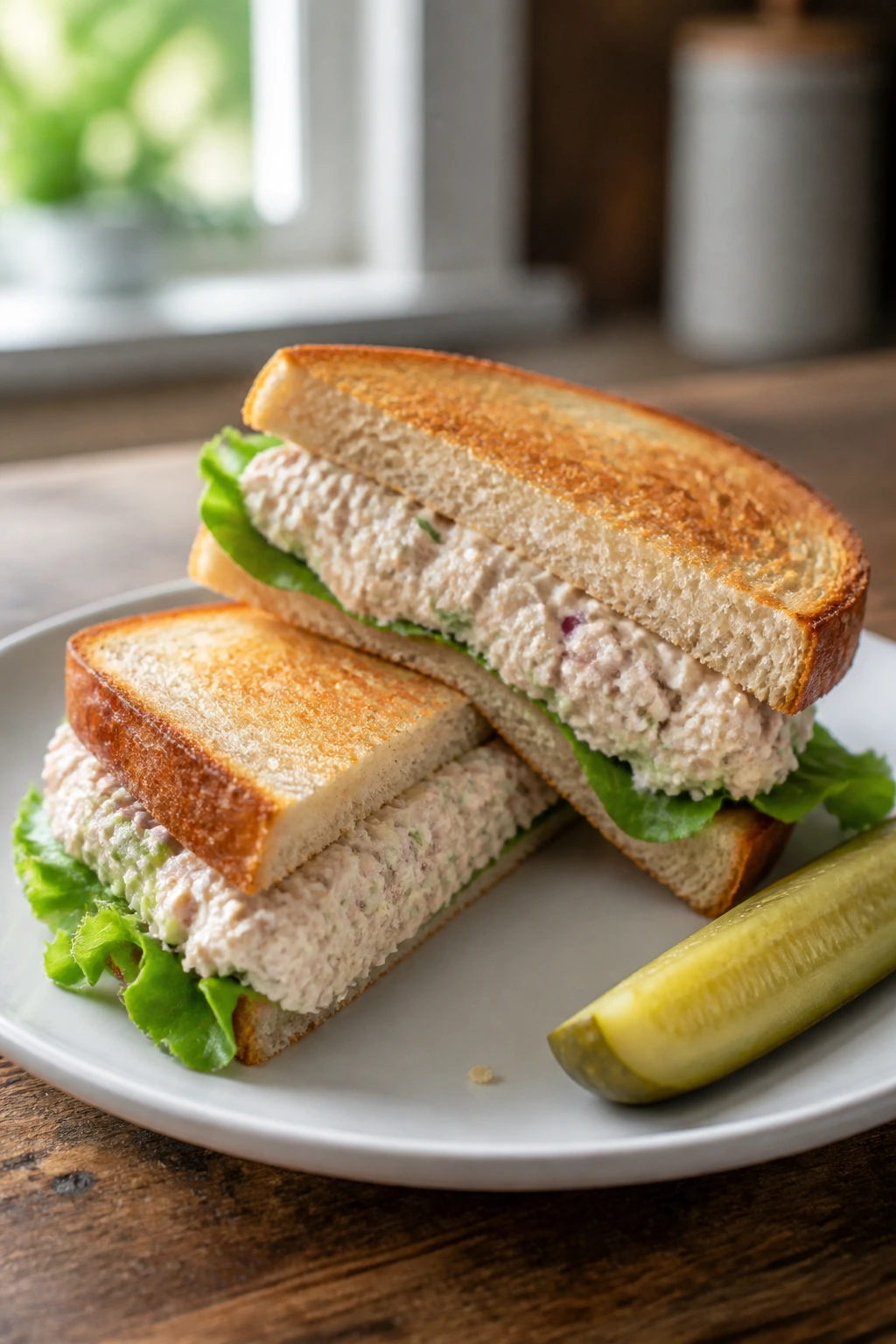
Presentation:
Stack the tuna slightly off-center so the filling shows when you cut the sandwich, then tuck the lettuce leaf so it peeks out from the top edge. I like a clean diagonal cut for this one, because the pale tuna, green lettuce, and red tomato look deliberate instead of piled on. If you want the plate to feel finished, add a dill pickle spear beside the sandwich; it echoes the briny note in the dressing.
Accompaniments:
Keep the sides sharp and simple. Kettle chips, sliced cucumbers with salt and pepper, a tomato-cucumber salad, or a handful of grapes all work because they don’t compete with the tuna. If you want something warmer, a cup of tomato soup or a small bowl of potato salad gives the meal more heft without forcing the tuna to do all the work.
Portions:
This recipe makes 4 standard sandwiches, and each one uses about 1/2 to 3/4 cup filling. If you’re serving it as lunch with chips or fruit, one sandwich is enough for most people. If you’re building a bigger meal, use thicker bread and add a second lettuce leaf so the filling doesn’t push the slices apart.
Beverage Pairing:
Unsweetened iced tea with lemon is the easiest match because it cuts through the creamy dressing without making the meal feel heavy. Sparkling water with lime also works well, especially if you like a colder, cleaner finish between bites.
Small Tweaks That Make It Yours
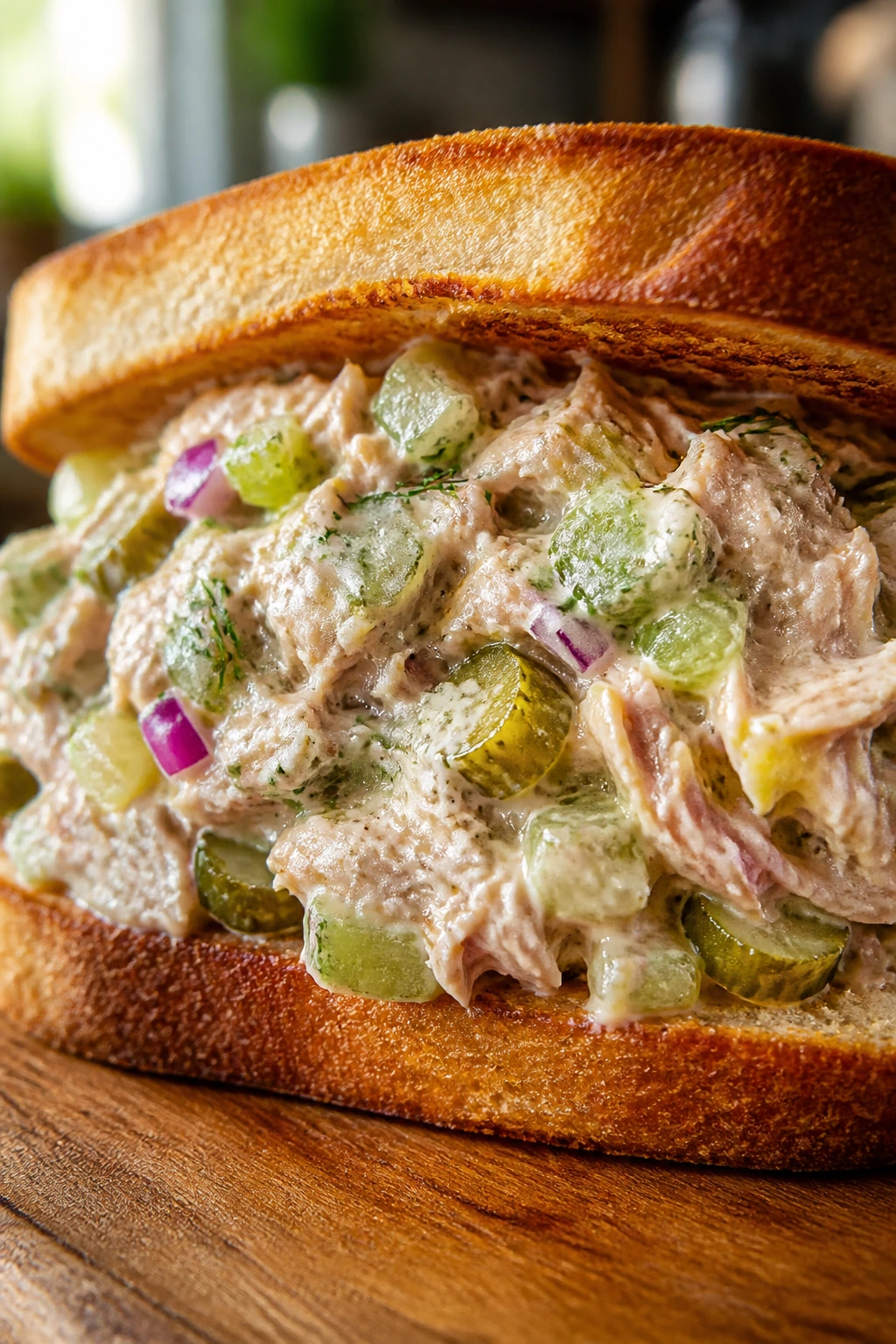
Flavor Enhancement:
A teaspoon of pickle brine, a pinch of celery seed, or a few chopped chives can sharpen the dressing without making it taste dressed up. I reach for pickle brine when the tuna tastes a little flat; it wakes the whole bowl up fast.
Customization:
If you want more crunch, fold in finely diced cucumber or a spoonful of minced fennel. For more body, a chopped hard-boiled egg fits neatly here and makes the sandwich feel a little more old-school deli. If you like a touch of sweetness, a few tiny diced apple pieces can work, but keep them small or they take over the bite.
Serving Suggestions:
A few dill fronds, black pepper, or a dusting of smoked paprika on top gives the sandwich a cleaner finish on the plate. If you’re serving this for lunch guests, cut the sandwiches into small triangles and line them up in a row instead of piling them high; it looks sharper and is easier to eat.
Make-It-Yours:
For a gluten-free version, use a sturdy gluten-free sandwich bread and toast it well so it doesn’t crumble under the filling. For dairy-free, use plain dairy-free yogurt or all mayonnaise, then add extra lemon to keep the dressing lively. For a lower-carb plate, spoon the tuna salad into romaine boats and skip the bread altogether.
The best part of this recipe is that it doesn’t demand a strict identity. It gives you a good base and then leaves space for your habits — extra dill if you like deli-style tuna, more lemon if you want it sharper, a little avocado if you want it richer.
Mistakes That Make Tuna Salad Sad
-
Leaving too much liquid in the tuna:
Wet tuna waters down the dressing and makes the sandwich leak before you take the second bite. Drain it well, then press it once more with a fork if the can looks especially soggy. -
Using only mayonnaise:
The filling turns heavy and one-note fast. Keep some mayo if you want that familiar deli taste, but let Greek yogurt handle most of the volume so the sandwich stays bright. -
Chopping the celery and onion too large:
Big pieces shove the tuna apart and make the sandwich fall out the sides. Fine dice is the fix; think small enough that the pieces disappear into the bite instead of announcing themselves. -
Skipping the acid:
Without lemon juice or something salty and sharp, tuna salad tastes dull, even if the seasoning looks fine on paper. Add lemon, Dijon, or a little pickle brine and taste again before you stop. -
Adding tomato too early:
Tomato juice is one of the fastest ways to ruin bread. Pat the slices dry, and if you’re packing lunch, keep tomato separate until the last minute. -
Overmixing the filling:
The tuna breaks down into a soft paste and loses the flake texture that makes the sandwich pleasant to eat. Fold just until combined, then walk away.
There’s a clear pattern in every bad tuna salad I’ve eaten: too wet, too soft, or too bland. Fix those three things and the rest is easy.
Variations and Swaps That Still Taste Right
Dill Pickle Deli Stack
Add an extra tablespoon of chopped dill pickles and a teaspoon of pickle brine, then finish with more black pepper. This version tastes closest to a classic deli tuna sandwich, just lighter and a little brighter.
Spicy Pantry Version
Stir in 1 teaspoon hot sauce or 1 tablespoon minced pickled jalapeño. It gives the tuna a little edge without changing the texture, which is the nice thing about using a cold filling instead of a cooked one.
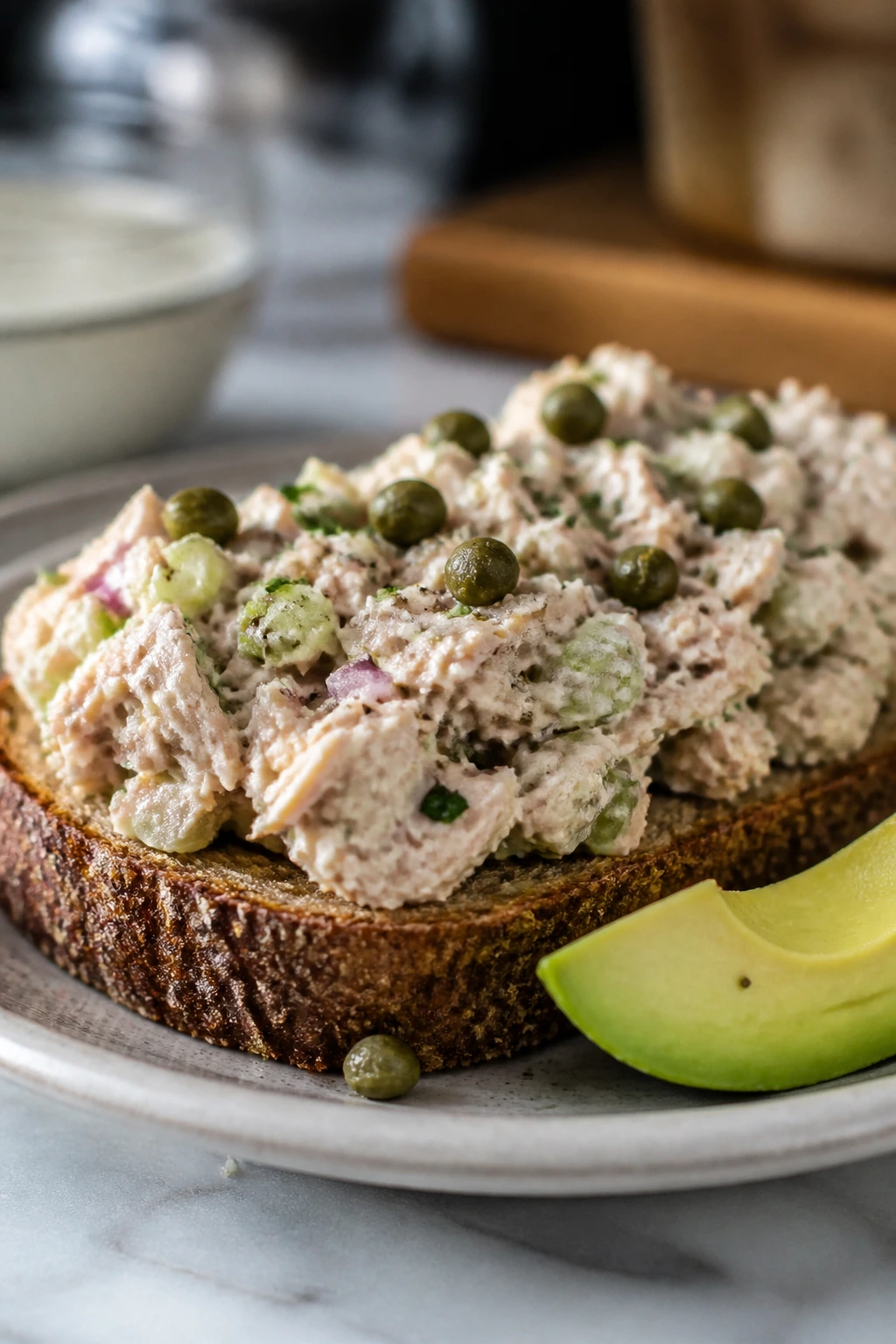
Rye and Caper Classic
Swap the bread for rye and use capers instead of pickles. Rye’s deeper flavor handles the briny tuna well, and this version feels a little more grown-up without asking for extra effort.
Avocado Cream Swap
Replace half the mayonnaise with 1/2 ripe avocado, mashed smooth, and add an extra squeeze of lemon. The filling gets softer and greener, so it’s best eaten the same day and spread on toasted bread or used in lettuce cups.
Lettuce Cup Lunch
Skip the bread and spoon the tuna salad into butter lettuce leaves. This is the version I’d pack when I want something cold, crisp, and fast, because the lettuce gives you the crunch that bread usually provides.
These variations work because they keep the same balance: tuna, acid, crunch, and a creamy binder. Change one part too much and you lose the point. Change one part with care, though, and the sandwich still feels like the same recipe wearing different clothes.
Make-Ahead, Storage, and Lunchbox Notes
Fridge Life
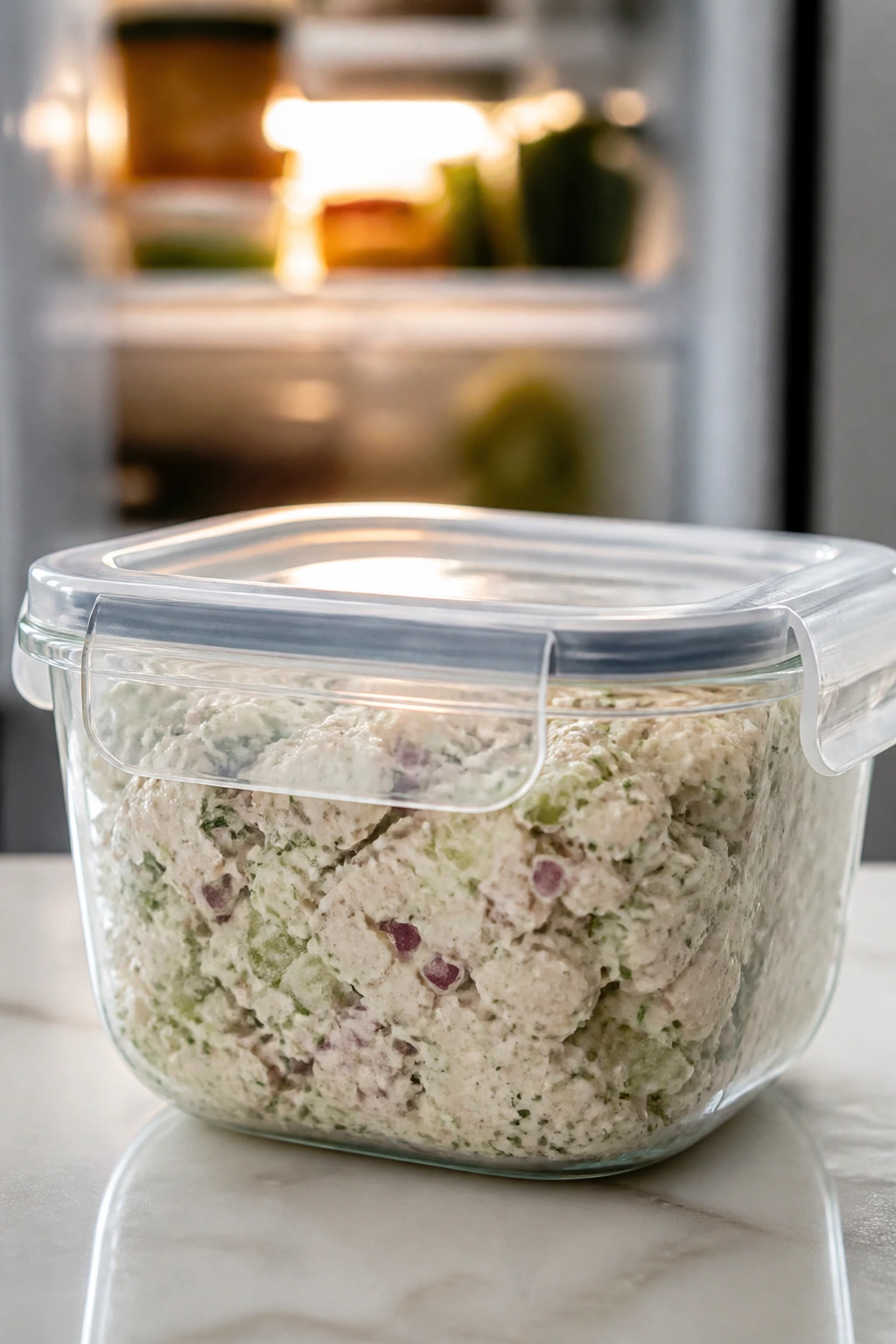
Tuna salad keeps well in an airtight container in the refrigerator for 3 to 4 days. The flavor often improves after 30 minutes to a few hours of chilling, because the lemon, mustard, and herbs settle into the tuna instead of sitting on top of it. If the mixture thickens too much after sitting, stir in 1 teaspoon lemon juice or 1 teaspoon water to loosen it.
Freezer Life
I don’t recommend freezing the finished tuna salad. The Greek yogurt, celery, and onion all change texture once thawed, and the filling can turn watery in a way that’s hard to fix. If you want to prep ahead, freeze only the bread if needed and make the tuna salad fresh within a few days.
Lunchbox Timing
For packed lunches, keep the tuna salad and bread separate until you’re ready to eat. A sandwich assembled in the morning usually holds up if the bread is toasted and the tomato is kept off until the end, but it’s better with an ice pack and a tight wrap. If you’re using lettuce, dry it well; wet leaves make the bread slip even when the tuna itself is behaving.
Best Way to Rebuild Leftovers
Leftover tuna salad can look a little stiff on day two, and that’s normal. Stir it once, check the seasoning, and add a tiny splash of lemon or a spoon of yogurt if it seems dry. If you’ve stored it with diced onion, the onion will taste a little stronger the next day, so don’t be surprised if you need less extra seasoning than the first time around.
Cold sandwiches are fussy in one place only: moisture control. Keep the filling cold, the bread separate when you can, and the tomato dry, and the whole thing stays in the lane where tuna salad is supposed to live.
Questions People Ask Before Making It
Can I use tuna in oil instead of tuna in water?
Yes, and it can taste richer, but drain it well and cut back a little on the olive oil in the dressing. Tuna in oil usually brings more flavor, while tuna in water keeps the salad lighter and cleaner.
What if I don’t want any mayonnaise at all?
Use all Greek yogurt, or swap in a plain dairy-free yogurt if you need it dairy-free. The sandwich will taste sharper and a little leaner, so add an extra teaspoon of olive oil or a pinch more salt to round it out.
How do I keep the sandwich from getting soggy?
Toast the bread, dry the tomato, and put lettuce between the bread and the tuna salad. That lettuce layer buys you time, and it works even better if the bread is sturdy instead of soft and thin.
Can I make the tuna salad the night before?
Yes, and honestly, it usually tastes better after it sits overnight. Just store it in an airtight container and give it a stir before you build the sandwich the next day.
What bread works best here?
Rye, sourdough, whole wheat, and good sandwich bread all work, but flimsy bread is a bad fit. If the loaf squishes under your fingers before you toast it, it’s going to struggle under the tuna.
Can I turn this into a wrap or lettuce cup?
Absolutely. A wrap needs a slightly thicker filling, so keep the dressing tight and don’t overload it. Lettuce cups are even easier — they’re crisp, quick, and better suited to lunch if you don’t want to deal with bread at all.
Why does my tuna salad taste flat even when I salted it?
It usually needs acid, not more salt. Add lemon juice, Dijon, or a spoonful of pickle brine, then taste again; tuna wakes up when it gets something sharp to push against the creaminess.
Why I’d Pack This Sandwich Again
The best tuna sandwich doesn’t try to hide what it is. It tastes like tuna, lemon, dill, celery, and bread — clean flavors, no weird heaviness, no mystery smear hiding the fish. That’s why this version works so well: it’s careful with the dressing and honest about the filling.
I like recipes that earn their place in the fridge. This one does. Make a bowl once, keep the bread separate if you can, and lunch takes care of itself for a few days without turning into a sad desk meal.
Light Tuna Salad Sandwich with Homemade Dressing — Recipe Card
Recipe Name: Light Tuna Salad Sandwich with Homemade Dressing
Description: A chilled tuna salad made with Greek yogurt, a little mayonnaise, Dijon, lemon, celery, onion, and herbs, piled onto sturdy bread with lettuce and tomato. It tastes bright, not heavy, and holds together well for lunch.
Prep Time: 15 minutes
Cook Time: 0 minutes
Total Time: 15 minutes
Course: Lunch, Main Course
Cuisine: American
Servings: 4 sandwiches
Calories: about 320 kcal per serving
Ingredients
For the Tuna Salad:
- 2 cans (5 ounces each) tuna in water, drained well
- 1/3 cup plain Greek yogurt
- 2 tablespoons mayonnaise
- 1 tablespoon Dijon mustard
- 1 tablespoon fresh lemon juice
- 1 teaspoon extra-virgin olive oil
- 1 celery rib, finely diced
- 2 tablespoons finely minced red onion
- 1 tablespoon chopped dill pickles or capers, drained
- 1 tablespoon chopped fresh dill or parsley
- 1/4 teaspoon fine sea salt
- 1/4 teaspoon black pepper
- Pinch garlic powder, optional
For Assembly:
- 8 slices sturdy bread, toasted if desired
- 4 leaves butter lettuce or romaine
- 1 medium tomato, sliced and patted dry
- Soft butter, optional
Instructions
-
In a medium bowl, whisk together the Greek yogurt, mayonnaise, Dijon mustard, lemon juice, olive oil, salt, black pepper, and garlic powder until smooth.
-
Add the drained tuna and break it into flakes with a fork. Fold in the celery, red onion, dill pickles or capers, and fresh dill or parsley until combined.
-
Taste the tuna salad and adjust with more salt, pepper, or lemon juice if needed. Let it sit for 5 minutes if you want the flavors to settle.
-
Toast the bread in a dry skillet over medium heat for 1 to 2 minutes per side, or until lightly golden and dry to the touch.
-
Layer lettuce and patted-dry tomato slices on 4 bread slices, then spoon the tuna salad on top.
-
Cap with the remaining bread slices, press gently, and slice each sandwich diagonally.
Notes:
Keep the tomato dry and the tuna well drained for the best texture. The filling keeps for 3 to 4 days in the fridge, but the assembled sandwich is best eaten the day it’s made. Add a teaspoon of lemon juice or yogurt if the mixture thickens after chilling.