



A good mason jar salad should survive the fridge with its dignity intact. No wilted lettuce, no puddle of vinaigrette at the bottom, no sad tomato juice seeping into everything like a tiny kitchen disaster. The version I keep coming back to is this hearty mason jar salad with homemade dressing: crisp greens, a sturdy grain, chickpeas for substance, bright vegetables, and a lemon-Dijon dressing that wakes everything up without drowning it.
What makes this style of salad worth making is not the jar itself. The jar is just the container. The real trick is the order of operations — and a little respect for moisture. Put the dressing where it belongs, stack the heavy, less delicate ingredients above it, and leave the greens up top where they can stay dry and springy. Do that well, and lunch stops feeling like a compromise.
I like salads that eat like a meal, not a garnish pretending to be lunch. This one has enough chew from quinoa, enough creaminess from feta, enough crunch from cucumber and sunflower seeds, and enough acid in the dressing to keep every bite sharp instead of sleepy. If you’ve ever opened a salad container and found a flat, sad mess, this one is the antidote.
Why This Mason Jar Salad Works Better Than a Loose Container
A jar changes the way the salad behaves. That sounds obvious until you actually pack one correctly and realize how much easier lunch gets when the dressing never touches the greens until the last possible second. The bottom layer is the wettest layer, the top layer is the most delicate, and everything in between acts like a buffer.
That buffer matters more than people think. Quinoa soaks up a little dressing and turns flavorful instead of soggy. Chickpeas sit there like little sponges with manners. Cucumber and tomatoes bring freshness, but they are tucked away from the lettuce until the bowl gets tipped and shaken.
I also like that a mason jar forces you to think in layers. Not every salad needs that kind of planning, but a make-ahead salad absolutely does. Once you stop treating greens and dressing like they belong in the same neighborhood for hours at a time, the whole lunch prep process gets calmer.
This is one of those recipes that rewards a small bit of discipline. Not fussy discipline. Just enough to keep the lettuce crisp and the dressing lively.
Why You’ll Love This Salad Jar
Crisp texture holds up: The dressing sits at the bottom, so the romaine or kale stays dry until you shake the jar into a bowl.
It actually fills you up: Quinoa and chickpeas give this salad enough heft to stand in for lunch without needing a side of apology toast.
The dressing tastes bright, not heavy: Lemon juice, Dijon, and a little honey make a vinaigrette that clings to the grains and vegetables instead of coating them like glue.
It packs cleanly: Wide-mouth mason jars stack nicely in the fridge, don’t leak if the lids are tight, and make a neat grab-and-go lunch.
The ingredients are easy to swap: You can lean Mediterranean, add chicken, skip the cheese, or switch the grain without wrecking the structure.
It’s built for real life: You can prep the components in one batch, then assemble four lunches in a few minutes while the quinoa cools.
Jar Size, Yield, and Best Served
A mason jar salad only works if the jar size matches the filling. A pint jar is too small for a hearty lunch unless you’re packing a very tight, lightly filled side salad. A wide-mouth 32-ounce jar gives you room for dressing, grains, vegetables, and greens without smashing everything down like a science experiment.
Yield: 4 hearty salad jars
Prep Time: 25 minutes
Cook Time: 15 minutes
Total Time: 40 minutes
Difficulty: Beginner — the cooking is minimal, and the main skill is layering the ingredients in the right order.
Chill/Rest Time: 10 to 15 minutes for the quinoa to cool before assembly
Best Served: Chilled or cool, shaken into a bowl just before eating
What Goes Into the Jars
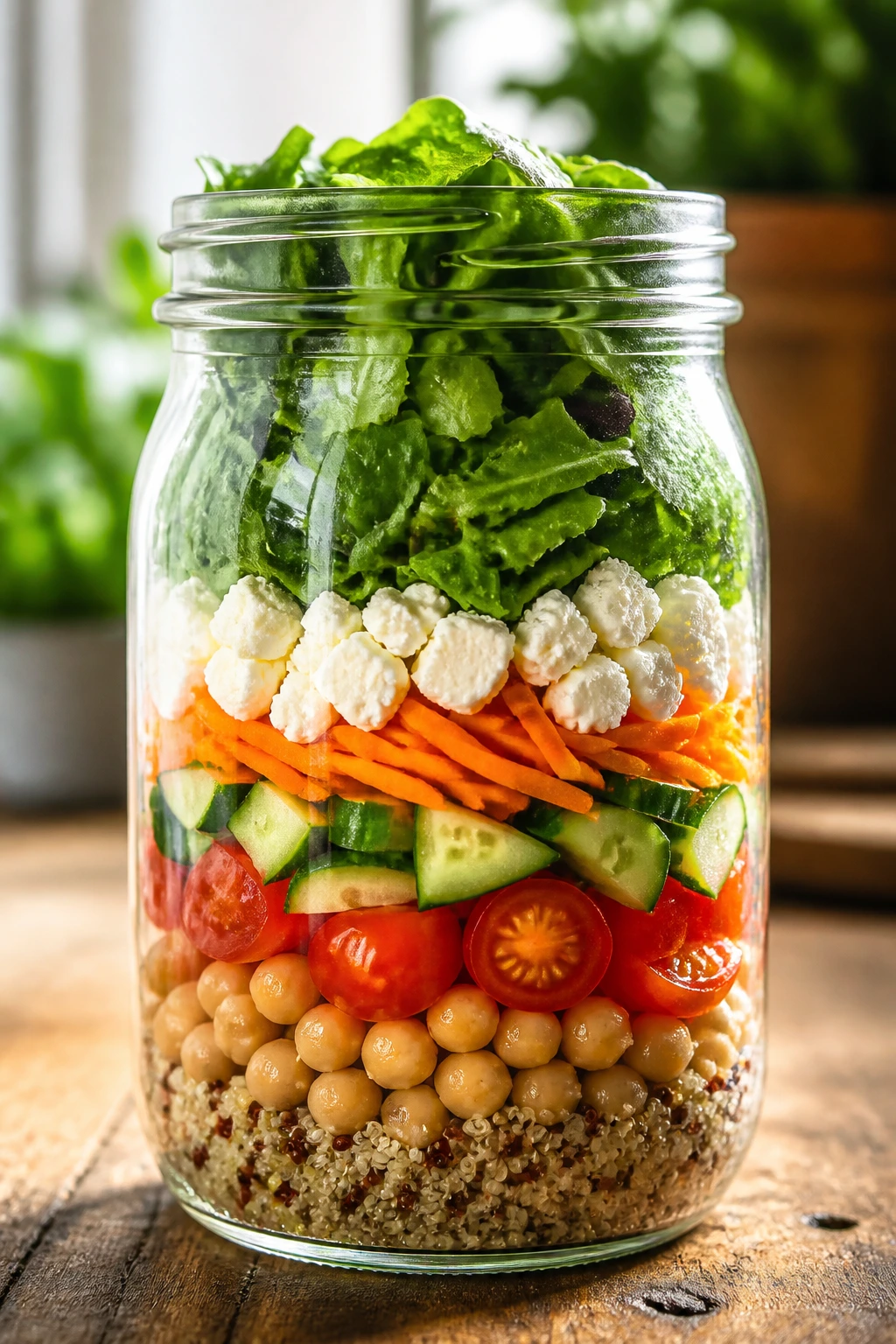
For the Lemon-Dijon Dressing:
- 1/4 cup extra-virgin olive oil
- 3 tablespoons fresh lemon juice
- 2 tablespoons apple cider vinegar
- 1 tablespoon Dijon mustard
- 1 teaspoon honey
- 1 small garlic clove, finely grated
- 3/4 teaspoon kosher salt
- 1/4 teaspoon freshly ground black pepper
For the Salad Jars:
- 3/4 cup dry quinoa, rinsed well
- 1 1/2 cups water
- 1 (15-ounce) can chickpeas, drained, rinsed, and patted dry
- 1 1/2 cups cherry tomatoes, halved
- 1 cup cucumber, diced into 1/2-inch pieces
- 1 cup shredded carrots
- 1/2 small red onion, very thinly sliced
- 1 cup diced bell pepper, any color
- 4 ounces feta cheese, crumbled
- 4 cups chopped romaine or baby kale, very dry
- 1/4 cup chopped parsley or dill
- 1/4 cup sunflower seeds or pepitas
The ingredient list looks simple because the structure does the heavy lifting. A jar salad doesn’t need a long cast of characters; it needs the right ones in the right order.
Why These Ingredients Stay Crisp and Satisfying
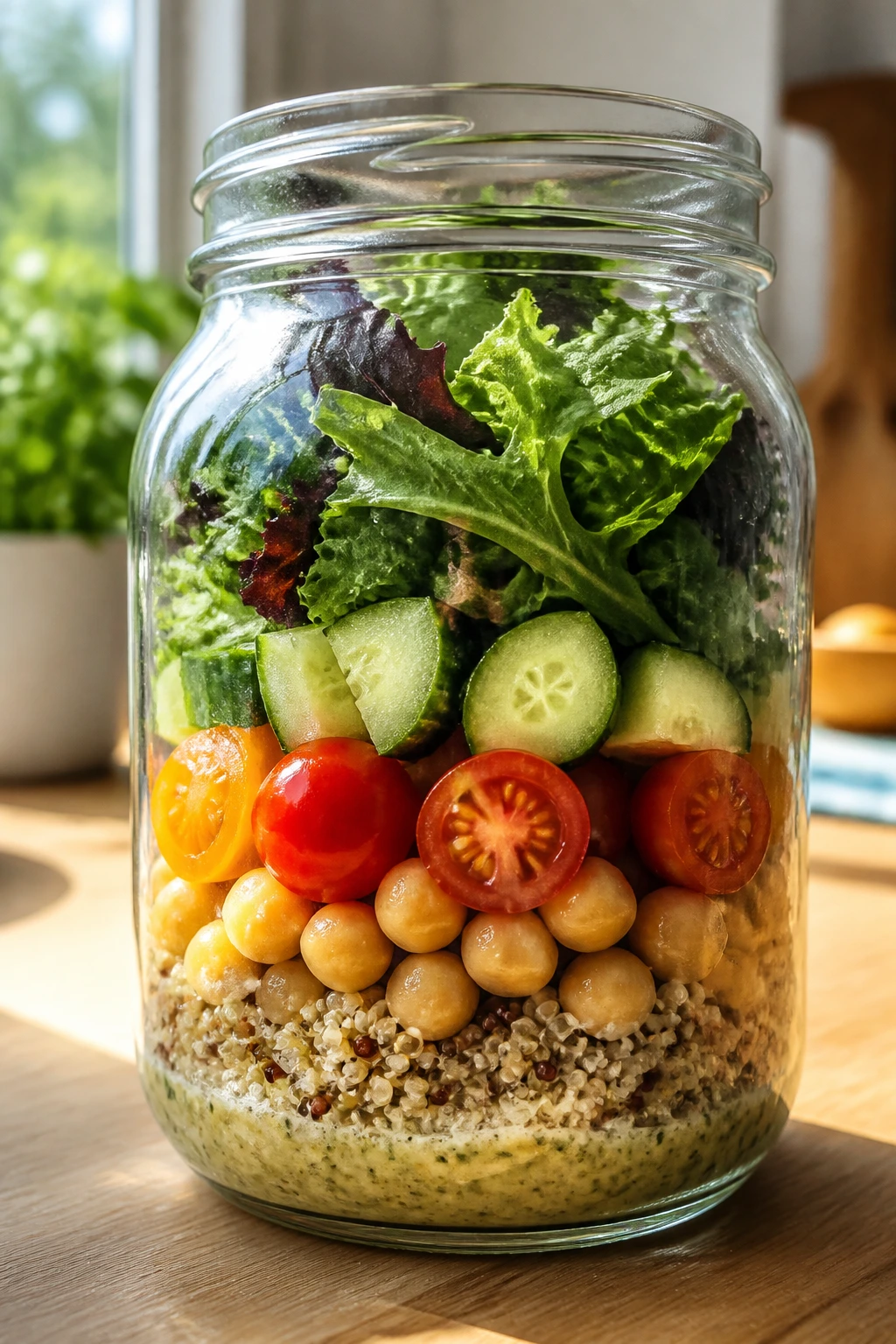
Dressing Base
What to use: 1/4 cup olive oil, 3 tablespoons lemon juice, 2 tablespoons apple cider vinegar, 1 tablespoon Dijon, 1 teaspoon honey, 1 grated garlic clove, salt, and pepper.
Preparation: Whisk the dressing until it looks slightly thick and glossy, not oily and separate. If you’re using a jar, shake it hard for 20 to 30 seconds.
Substitutions: White wine vinegar can stand in for apple cider vinegar, and maple syrup works in place of honey. If you want more bite, add 1/2 teaspoon red pepper flakes.
Tips: The dressing should taste a touch sharper than you want on a spoon because the quinoa and chickpeas will soften it once packed. A bland dressing becomes flatter in the fridge; a bright one stays awake.
Grain and Protein Base
What to use: 3/4 cup dry quinoa and 1 can chickpeas.
Preparation: Rinse the quinoa until the water runs mostly clear, then simmer it with 1 1/2 cups water until the grains look open and the little tails have popped. Pat the chickpeas dry so they do not water down the layer above them.
Substitutions: Farro, brown rice, or couscous can replace quinoa if you want a different chew. White beans work where chickpeas do, though they’re a little softer.
Tips: The grain layer should be fully cool before you pack it. Warm quinoa steams the jar and turns the greens limp faster than almost anything else in this recipe.
Crunchy Vegetables
What to use: Cherry tomatoes, cucumber, shredded carrots, red onion, and bell pepper.
Preparation: Cut everything into pieces that are small enough to fit on a fork but not so tiny that they turn soggy in the dressing zone. Thinly sliced onion is better than chunky onion here.
Substitutions: Radishes bring a sharper bite, celery adds more crunch, and sliced snap peas work if you like a greener flavor. If tomatoes are very juicy, scoop out some seeds before halving them.
Tips: Dry the cucumber and tomatoes after washing. Water clinging to the surface is small in the moment and annoying three hours later.
Greens and Finishers
What to use: Romaine or baby kale, parsley or dill, feta, and sunflower seeds or pepitas.
Preparation: Chop the greens into bite-size pieces and dry them well. Crumble the feta so it disperses evenly instead of clumping in one salty corner.
Substitutions: Spinach works, but it’s softer and needs to sit on top of sturdier layers. Goat cheese, shaved Parmesan, or a dairy-free feta all slide into the same spot nicely.
Tips: Keep the greens as dry as you can get them. If they’re damp when they go into the jar, the whole upper half of the salad turns limp sooner than it should.
The Lemon-Dijon Dressing at the Bottom
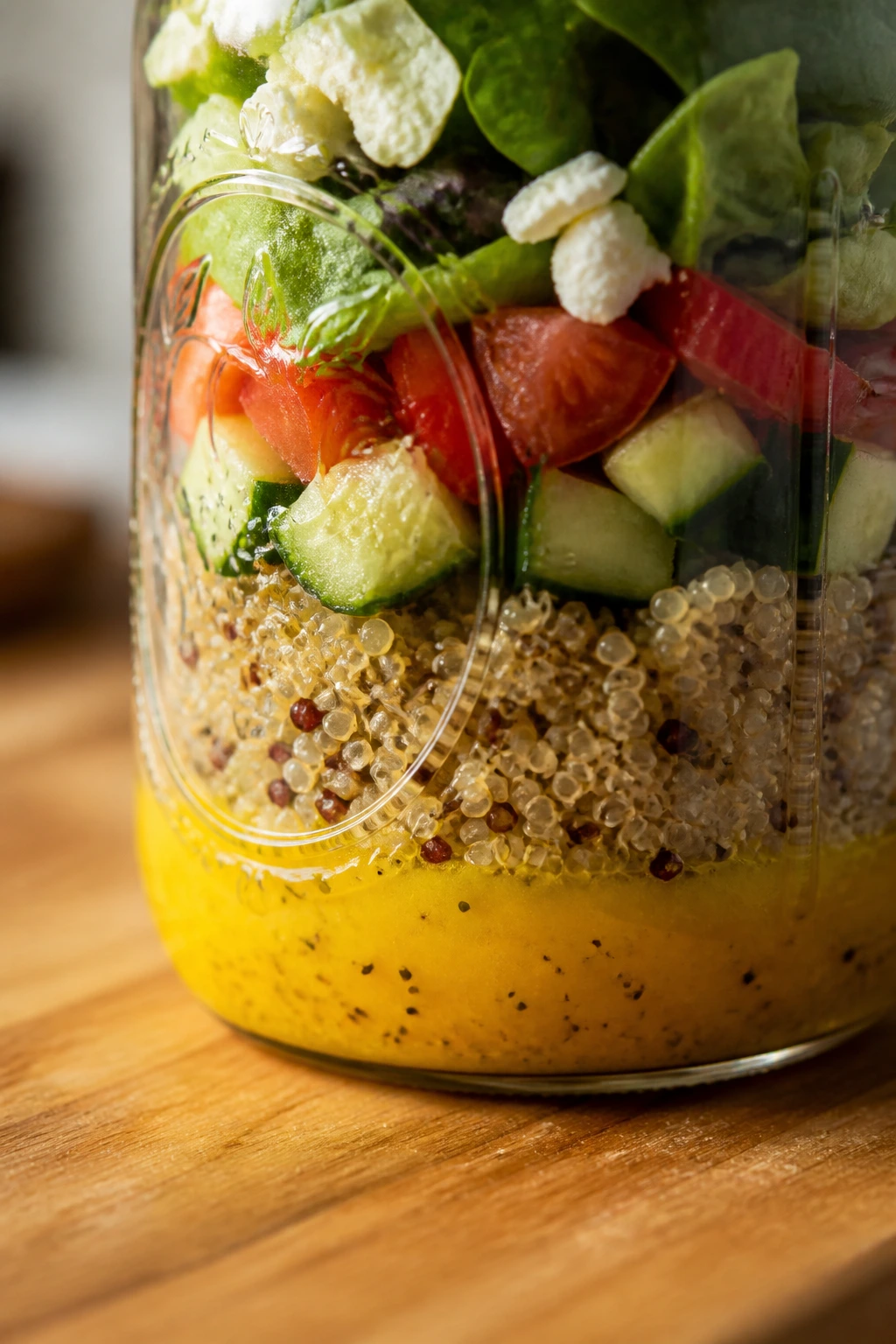
This is not a creamy dressing, and that’s a good thing. Creamy dressings tend to sit heavy in jar salads, especially when they have to keep company with grains, chickpeas, and vegetables for a few days. A lemon-Dijon vinaigrette behaves better. It stays lively, it coats the quinoa, and it gives the whole jar a sharper, cleaner finish.
The ratio matters here. Two parts oil to one part acid is a useful starting point, but the Dijon and honey change the texture enough that it feels rounder than the simple math suggests. Dijon does more than add flavor; it helps the oil and acid hold together instead of separating into a slick at the bottom.
I like to grate the garlic finely rather than mincing it into pieces. Grated garlic disappears into the dressing and gives a gentle background heat. Big garlic chunks are a mistake in a chilled salad — they can hit like a wall.
Taste the dressing before you pack it. You want lemon, salt, and a little sweetness to show up immediately. If it tastes flat on the spoon, it will taste even flatter after sitting under the other layers.
The Layering Order That Keeps Everything Dry
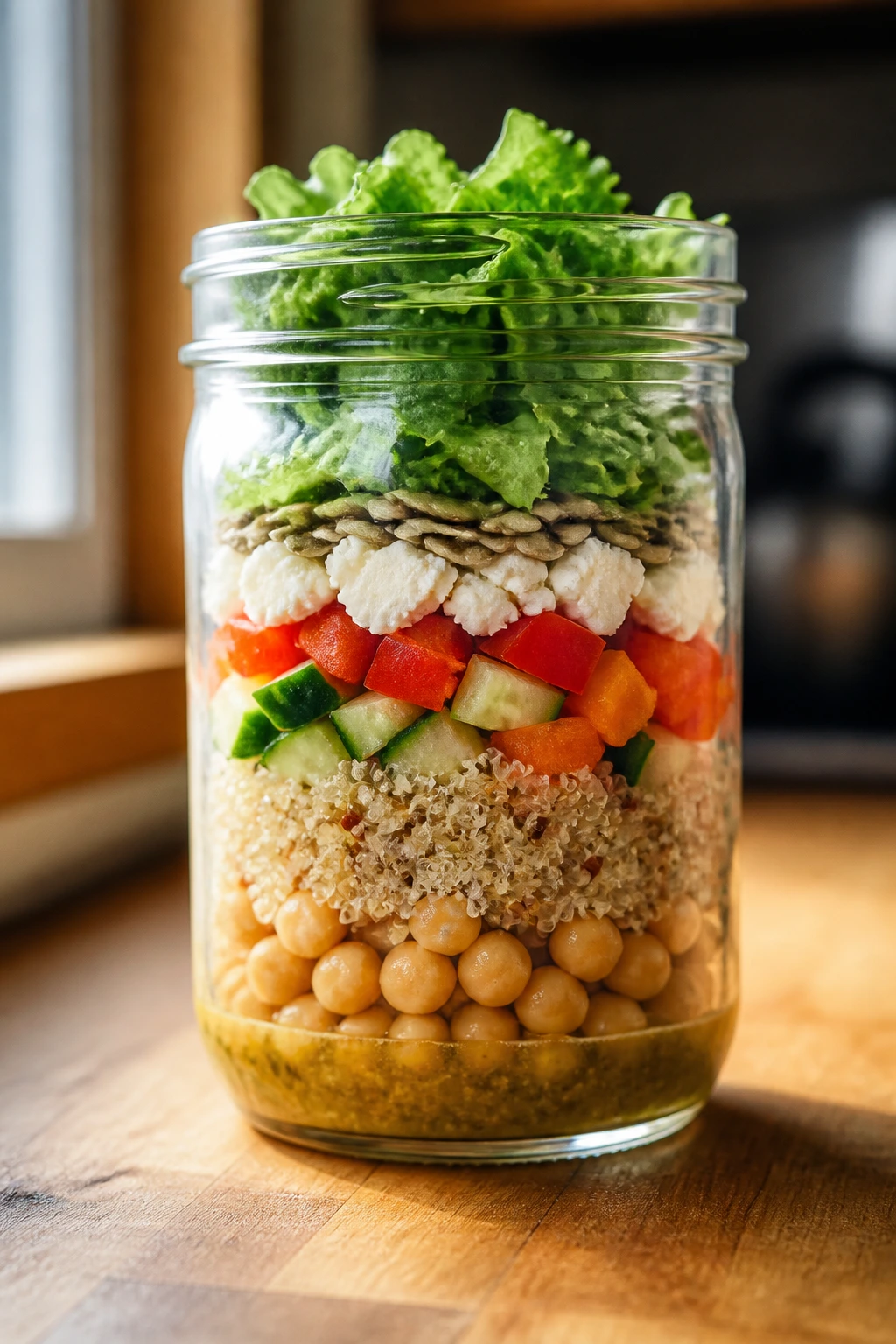
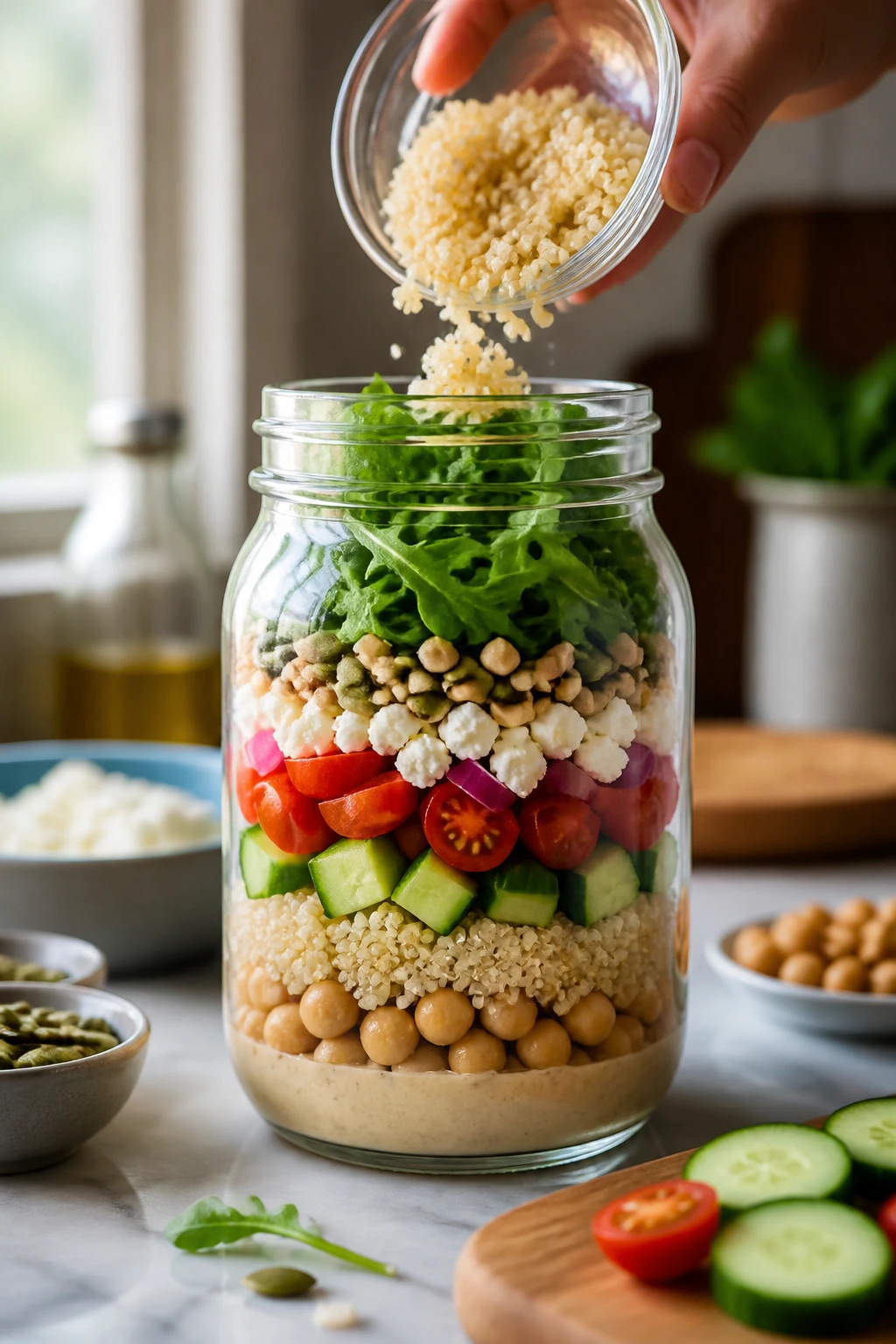
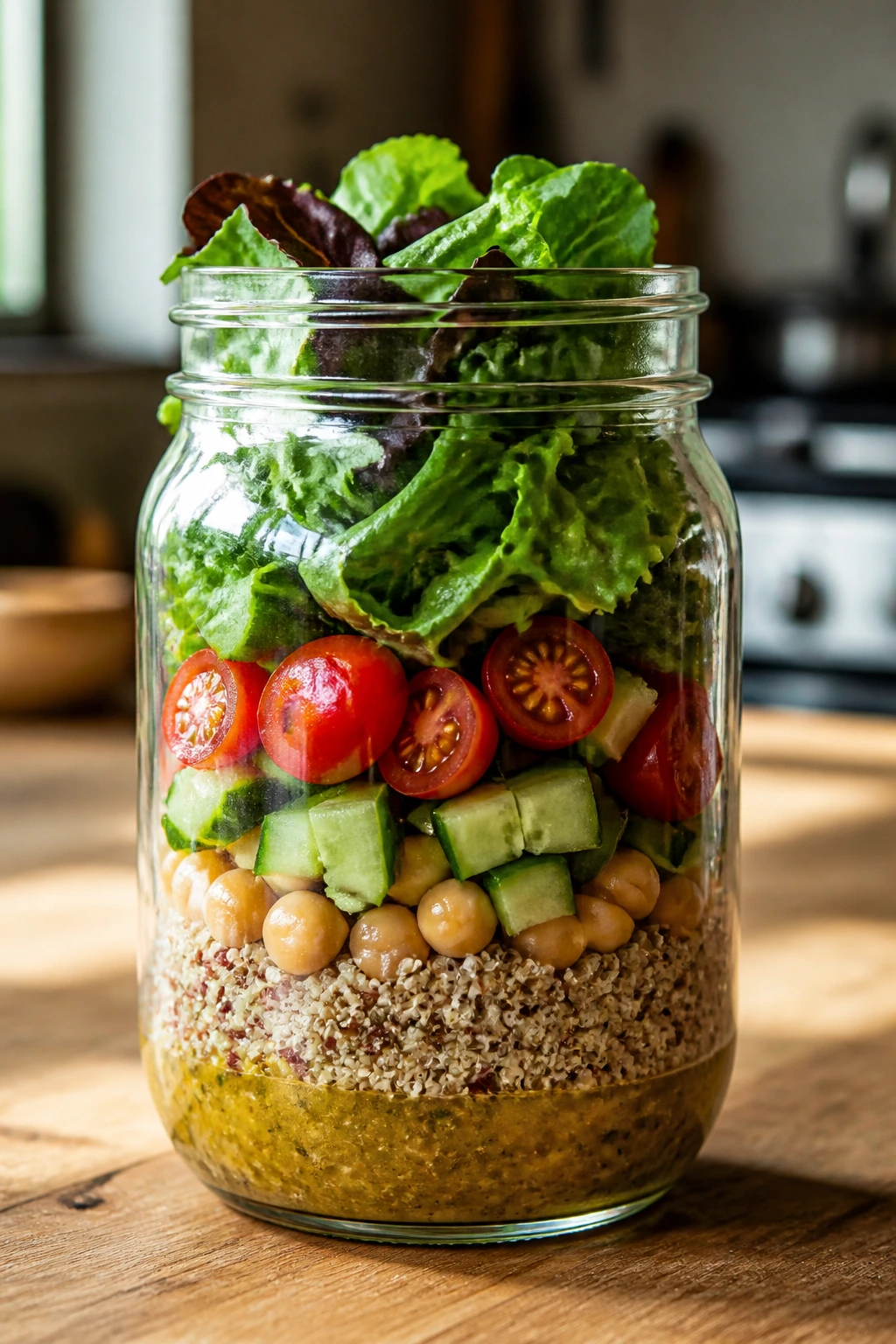
The order of the jar is the whole point of the recipe. Dressings go first because they’re the wettest layer and the least likely to damage anything beneath them. Then come the sturdy ingredients that can sit in contact with the dressing without turning to mush.
I use this order almost every time: dressing, chickpeas, quinoa, crunchy vegetables, cheese and seeds, then greens on top. The exact middle layers can move around a little, but the wet-to-dry progression should stay the same. That keeps moisture from creeping upward.
Here’s the simple logic. Chickpeas are dense and can take a little dressing. Quinoa can absorb some of it. Tomatoes, cucumber, and bell pepper should be above the grains so they don’t waterlog them too fast. Greens stay highest because they are the first thing to suffer when they touch liquid too soon.
A wide-mouth jar helps here more than a narrow one. The opening makes it easier to add the layers cleanly and to dump the salad into a bowl later without wedging half the vegetables on the rim. Small detail. Big difference.
Step-by-Step Assembly
Phase 1: Cook and Cool the Grain
-
Rinse the quinoa thoroughly. Place 3/4 cup dry quinoa in a fine-mesh strainer and rinse under cold running water for 30 seconds to 1 minute, rubbing it lightly with your fingers. This knocks off the bitter coating that can make quinoa taste soapy.
-
Cook the quinoa until fluffy. Combine the rinsed quinoa with 1 1/2 cups water in a medium saucepan and add a pinch of salt. Bring it to a boil over medium-high heat, reduce to low, cover, and simmer for 15 minutes, until the water is absorbed and the grains look open.
-
Rest and cool the quinoa. Remove the pan from the heat and let it sit, covered, for 5 minutes. Fluff with a fork, then spread the quinoa on a plate or baking sheet and let it cool for 10 to 15 minutes. Do not pack warm quinoa into the jars. Steam is the enemy here.
Phase 2: Make the Dressing
-
Whisk the dressing until glossy. In a small bowl or jar, combine 1/4 cup olive oil, 3 tablespoons lemon juice, 2 tablespoons apple cider vinegar, 1 tablespoon Dijon mustard, 1 teaspoon honey, 1 grated garlic clove, 3/4 teaspoon kosher salt, and 1/4 teaspoon black pepper. Whisk or shake until the dressing looks emulsified and slightly thick.
-
Taste and adjust. Dip a cucumber slice or a clean spoon into the dressing and taste it. If it needs more snap, add 1 teaspoon lemon juice. If it tastes too sharp, add another 1/2 teaspoon honey.
Phase 3: Prep the Vegetables and Fillers
- Prep every component before assembly. Drain and rinse the chickpeas, then pat them dry. Halve the cherry tomatoes, dice the cucumber and bell pepper into 1/2-inch pieces, thinly slice the onion, crumble the feta, and chop the herbs. Dry the greens well with towels or a salad spinner.
Phase 4: Build the Jars
-
Add the dressing first. Divide the dressing evenly among 4 wide-mouth 32-ounce mason jars, about 2 tablespoons per jar.
-
Layer the sturdy ingredients next. Add the chickpeas to each jar, then the cooled quinoa, then the tomatoes, cucumber, carrots, onion, and bell pepper. Press down gently after each layer so the jar fills evenly without smashing the vegetables.
-
Finish with cheese, seeds, herbs, and greens. Top each jar with feta, sunflower seeds, parsley or dill, and finally the chopped romaine or baby kale. Leave a little breathing room at the top so the lid seals cleanly. Refrigerate upright until serving.
-
Serve by dumping or shaking. When it’s time to eat, shake the jar into a bowl or onto a plate, or eat straight from the jar if you do not mind mixing as you go. Add an extra squeeze of lemon and a grind of black pepper if it needs a sharper finish.
Special Equipment for Clean Jar Prep
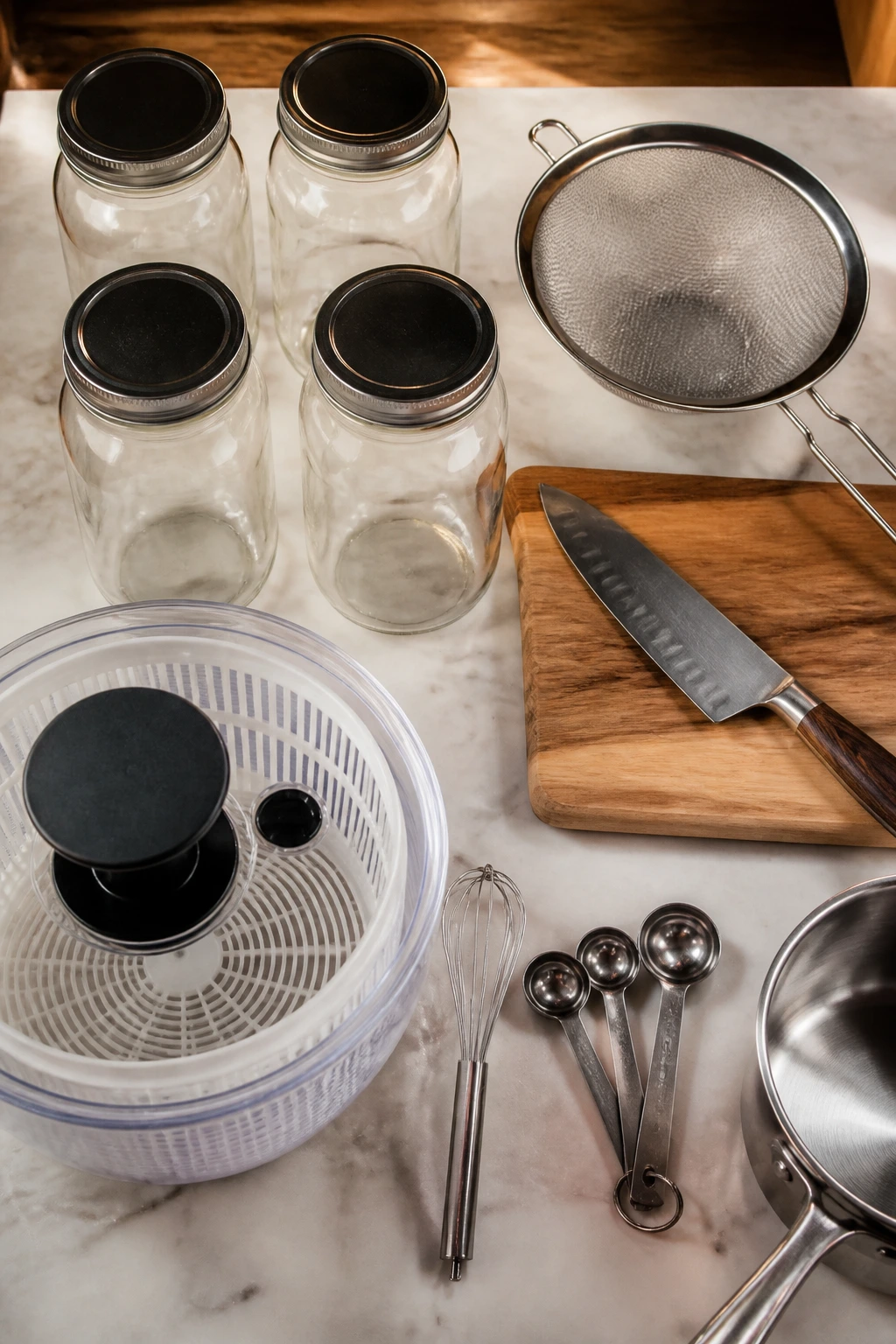
- 4 wide-mouth 32-ounce mason jars with lids: Wide-mouth jars are easier to fill and easier to empty without losing half the salad on the rim.
- Medium saucepan with a lid: Needed for cooking the quinoa evenly.
- Fine-mesh strainer: Useful for rinsing quinoa and chickpeas without losing half of them down the sink.
- Cutting board and chef’s knife: A sharp knife makes the cucumber, onion, and peppers cleaner and faster to prep.
- Salad spinner or clean kitchen towels: Dry greens are non-negotiable here; a salad spinner helps more than most people expect.
- Small whisk or jar with a tight lid: Either one works for the dressing. A jar is handy if you prefer shaking over whisking.
- Measuring cups and spoons: The dressing is balanced enough that sloppy measuring shows up in the final flavor.
How to Serve It Without Turning It Into a Mess
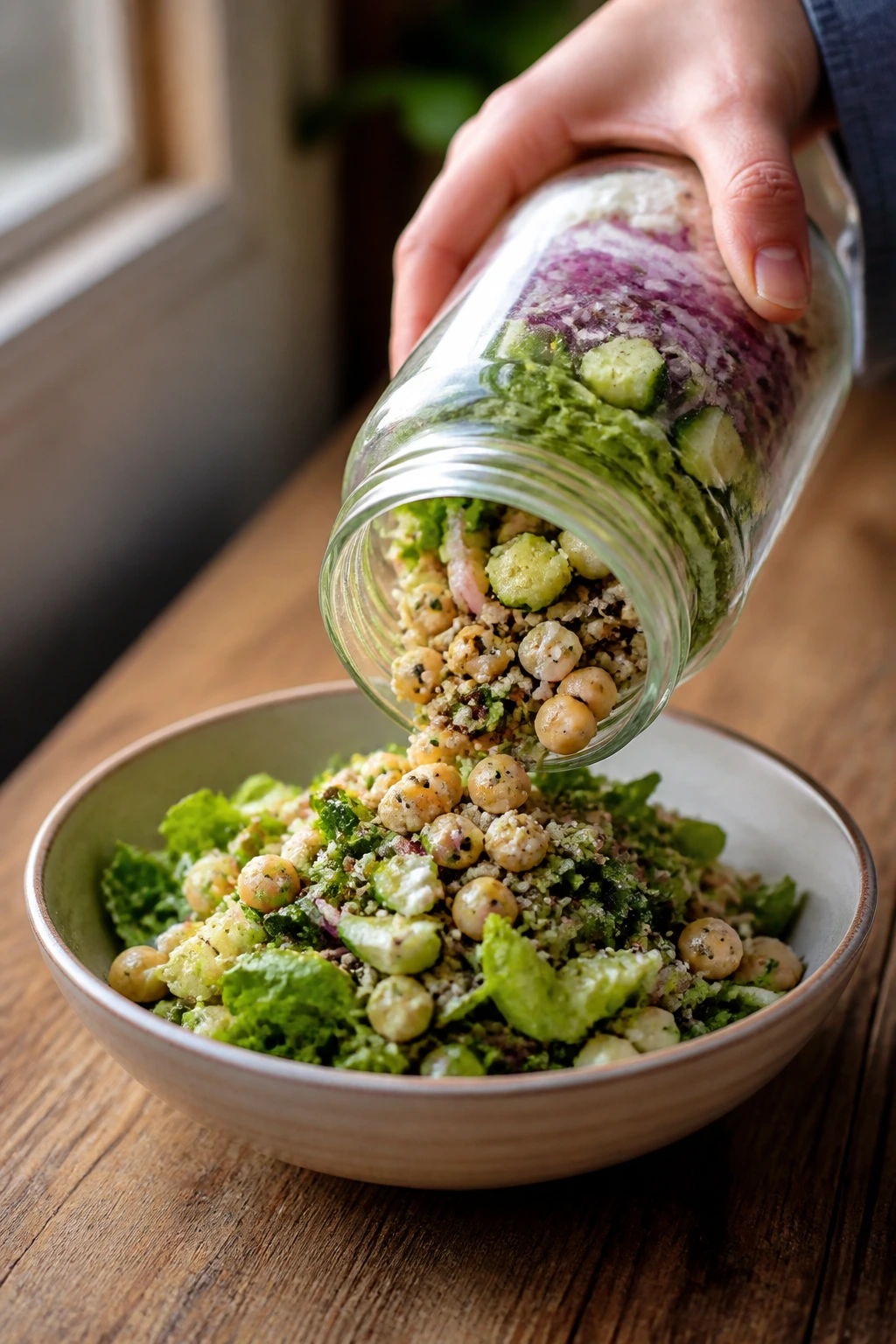
Presentation: Tip the jar into a wide shallow bowl and let the layers tumble out in one loose pile, then give everything two or three fork tosses. The grain, chickpeas, and feta look best when they’re mixed through the greens rather than sitting in a neat stack.
Accompaniments: A slice of toasted sourdough, a small pita, or a bowl of vegetable soup fits well beside this salad when you want a larger meal. If you’re packing lunch, a piece of fruit — apple, pear, or orange — keeps the whole thing feeling balanced without much effort.
Portions: One 32-ounce jar makes a full lunch for one person. If you’re serving it at dinner, half a jar can sit beside roasted salmon, grilled chicken, or a bowl of soup. For a crowd, assemble the components in a large bowl instead of a jar and dress just before serving.
Beverage Pairing: Sparkling water with lemon or cucumber fits the clean lemon-Dijon dressing. Unsweet iced tea works too. If this salad is part of a light dinner, a crisp dry white wine is the closest match I’d reach for.
Practical Tips for Better Lunch Jars
Flavor Enhancement: Add a pinch of za’atar or sumac to the dressing if you want a sharper, more herb-heavy edge. It gives the lemon a little extra lift without making the salad taste dressed up for a party.
Time-Saver: Cook a full batch of quinoa and use the extra in another lunch or breakfast bowl. Quinoa keeps well, and once it’s cooked, the second meal takes almost no additional work.
Texture Fix: If your cucumbers are watery, scoop out the seedy center before dicing. That tiny adjustment keeps the bottom layer from getting thinner than you want.
Cost-Saver: Buy feta in a block and crumble it yourself. The pre-crumbled kind is convenient, but the block usually tastes better and goes farther.
Make-It-Yours: If you want more protein, tuck in chopped grilled chicken, hard-boiled egg, or canned salmon above the quinoa layer. Keep the dressing the same, and the structure still holds.
Mistakes That Leave You With a Soggy Salad
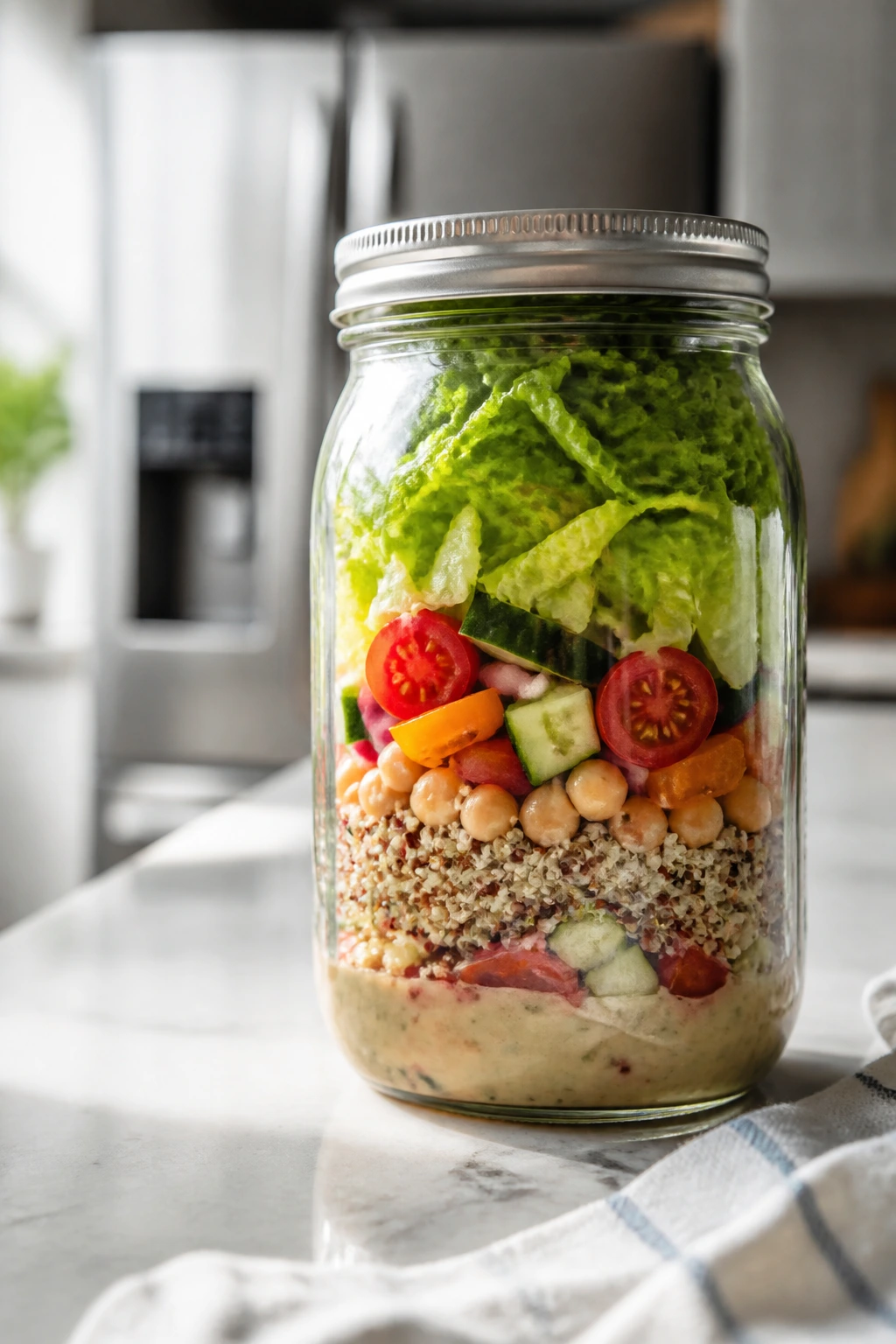
Packing wet greens: This is the mistake that ruins the top layer fastest. If the romaine or kale goes into the jar damp, it softens and clumps before lunch. Dry it well with a spinner or towels, even if it feels fussy.
Putting the dressing too high: Dressing needs to stay on the bottom. If it touches the greens in a jar that sits overnight, the lettuce wilts and the salad loses its bite. The fix is simple: dressing first, then dense layers, then greens last.
Using warm quinoa: Warm grains make steam, and steam makes condensation. Condensation is what gives you a damp lid and soft upper layers. Spread the quinoa out and let it cool fully before packing.
Overdoing juicy ingredients: Cherry tomatoes are fine. Three huge, watery tomatoes chopped into big chunks are not. Keep tomato pieces small and evenly distributed, and don’t let them become the dominant wet element.
Overfilling the jar: A jar stuffed to the rim crushes the greens when you tighten the lid. Leave a little headspace so the lid seals without compressing the top layer. You want packed, not jammed.
Skipping seasoning in the grain: Plain quinoa tastes like a blank page. Even a small pinch of salt in the cooking water helps, and the dressing will do the rest. If you leave the grain flat, the whole salad feels underdressed even when the vinaigrette is fine.
Variations and Swaps That Work
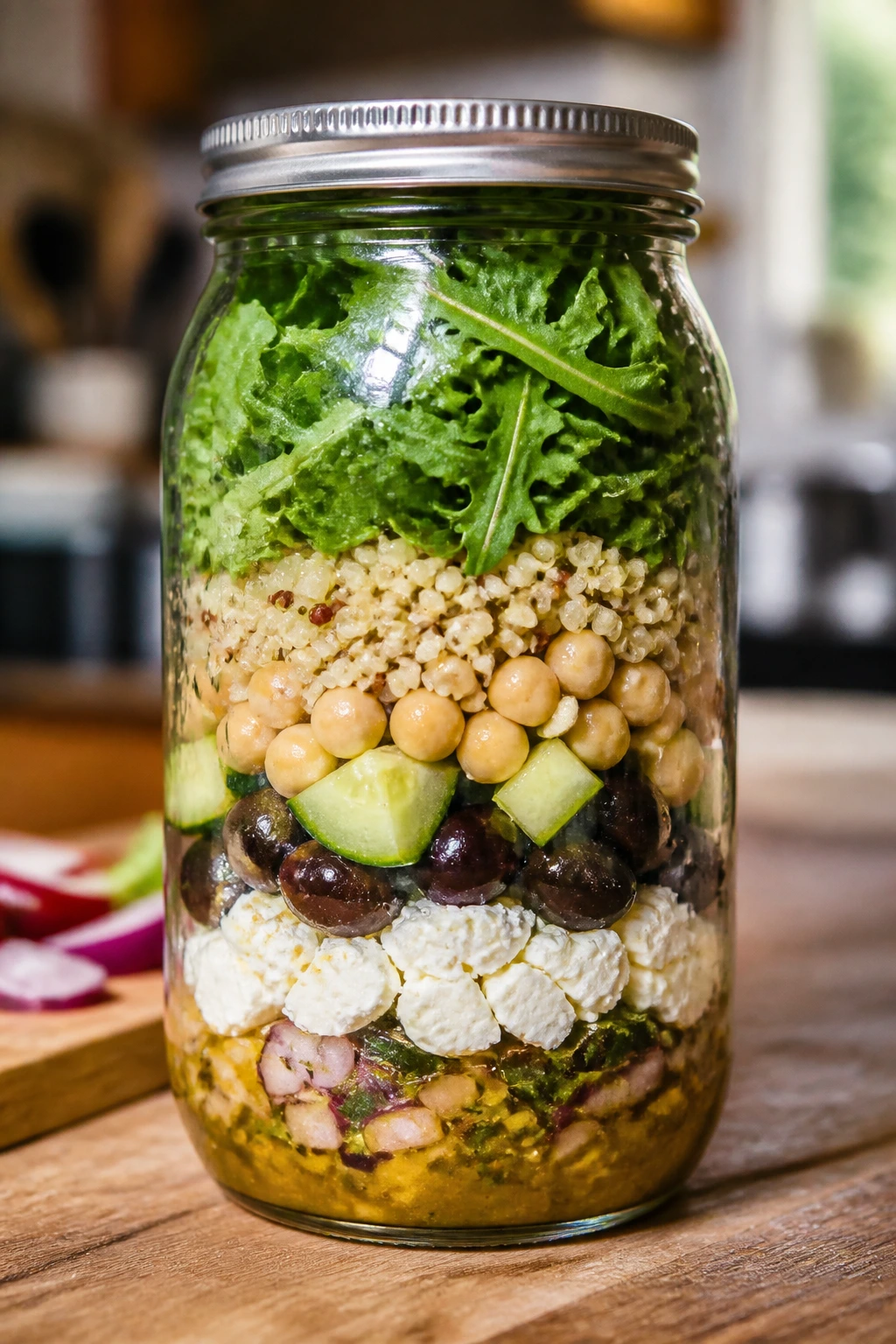
Mediterranean Chickpea Jar: Swap the bell pepper for chopped cucumber and roasted red pepper, use farro instead of quinoa, and add kalamata olives. The jar gets saltier and a little meatier, which is a nice change if you want a bolder lunch.
Chicken and Herb Power Jar: Add 4 to 6 ounces of cooked, cooled chopped chicken breast to each jar and increase the parsley or dill. The chicken belongs just above the quinoa so it can pick up the dressing without crowding the greens.
Southwest Black Bean Jar: Replace the chickpeas with black beans, the feta with shredded cheddar, and the lemon dressing with a lime-Dijon version. Add corn and cilantro. It reads as a different salad but keeps the same jar logic.
Dairy-Free Seed Crunch Jar: Skip the feta and increase the sunflower seeds to 1/3 cup total. Add a spoonful of nutritional yeast to the dressing if you want a savory edge without cheese.
Lower-Carb Lettuce Jar: Drop the quinoa and double the greens, cucumber, and bell pepper. Add extra chickpeas or turkey if you still want a filling lunch, and keep the dressing amount the same so the vegetables don’t taste dry.
Storage, Make-Ahead, and Fridge Life
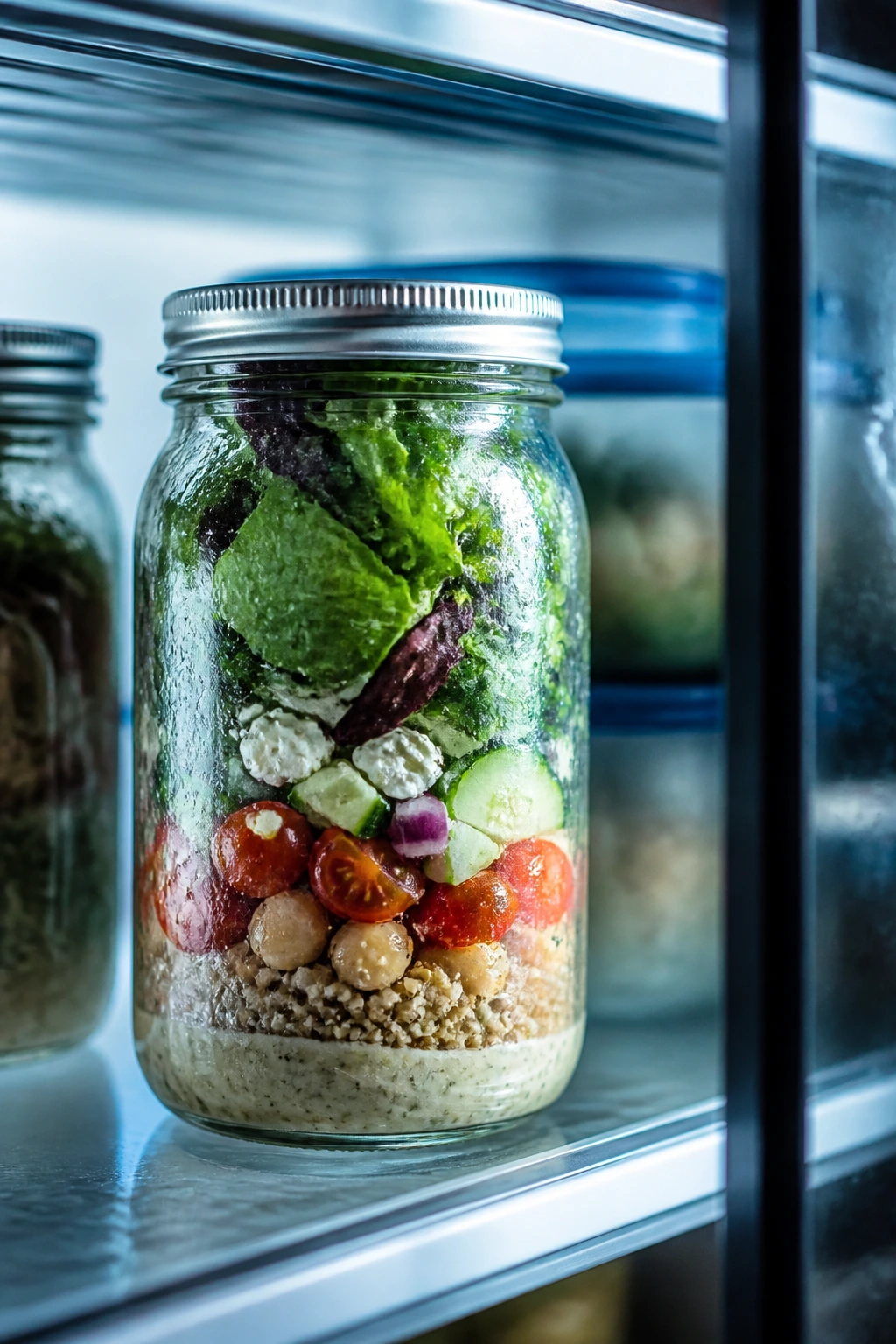
Assembled mason jar salads keep well for 3 to 4 days in the refrigerator if the greens are dry and the vegetables are layered properly. Day one gives you the crispest bite, but day three is still very workable if you used sturdy greens and didn’t overpack juicy tomatoes.
The dressing keeps for 1 week in the fridge in a sealed jar. It will likely separate as it sits, so give it a hard shake before you pour it into the mason jars or over a finished salad. If the olive oil firms up a bit in a cold fridge, let the dressing sit at room temperature for 10 minutes before using it.
Cooked quinoa keeps for 4 to 5 days refrigerated in an airtight container. Chickpeas, once rinsed and dried, are best used within 3 to 4 days after opening the can and refrigerating the leftovers. If you want to make the entire lunch prep in batches, cook the grain and wash the vegetables one day, then assemble the jars the next.
Freezing the assembled salad is a bad idea. The greens collapse, the cucumber gets watery, and the tomatoes turn mushy. If you want to freeze something, freeze cooked quinoa in flat portions for up to 2 months and thaw it in the fridge before assembling. That part freezes well. The finished jar does not.
There’s no real reheating needed here, but if you prefer the grain warm, reheat the quinoa separately in a microwave-safe bowl for 30 to 45 seconds or warm it in a skillet over low heat until barely heated through. Let it cool again before layering. Do not warm the whole jar.
Mason Jar Salad Questions People Ask
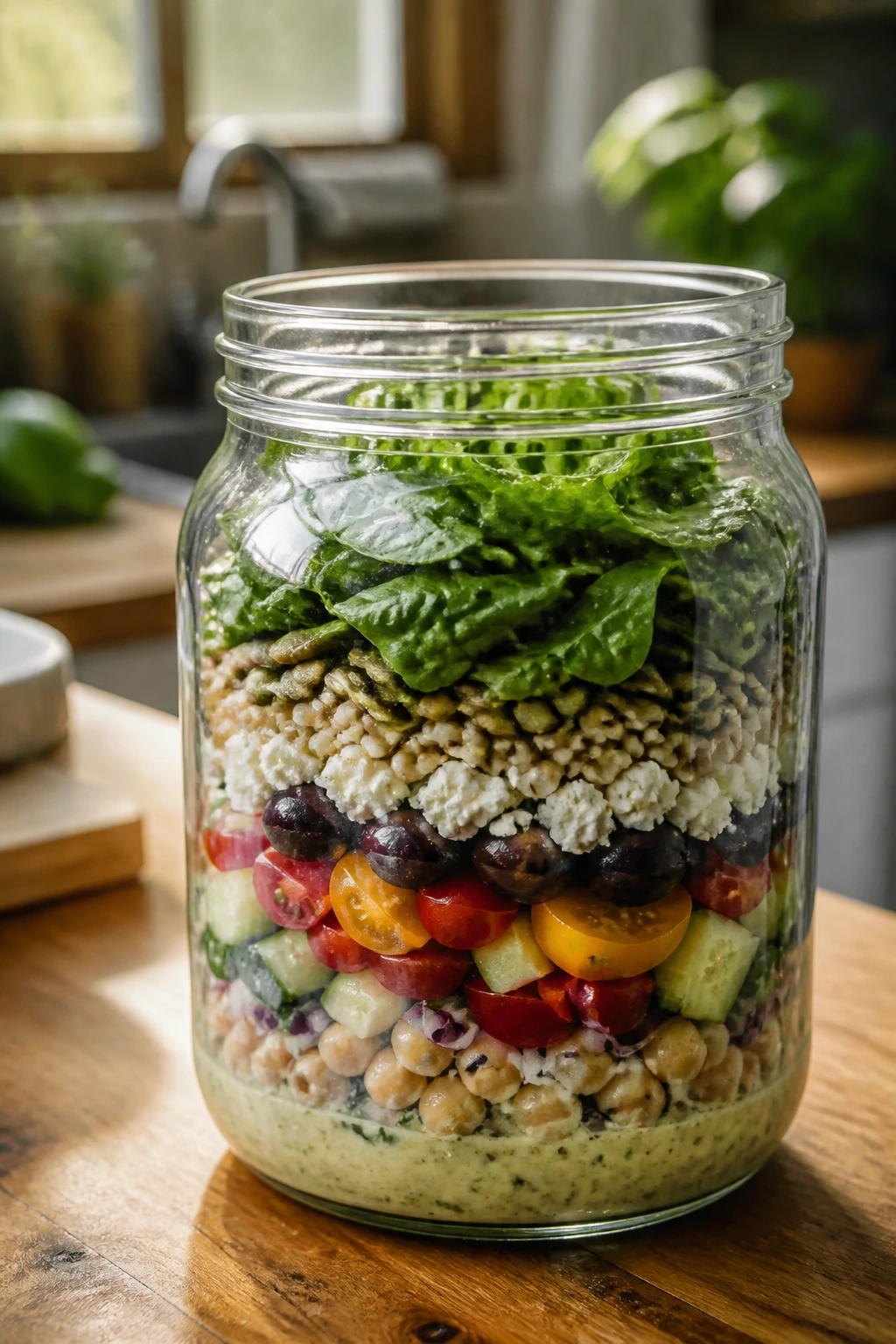
Can I use a regular-mouth mason jar instead of a wide-mouth jar?
You can, but it’s clumsier. The narrow opening makes layering harder and turning the salad out into a bowl messier. If all you have is a regular-mouth jar, pack the ingredients more loosely and expect a little more fuss at serving time.
Do I have to cook the quinoa?
For this version, yes. Raw quinoa has the wrong texture for a jar salad and doesn’t absorb dressing the right way. If you want to skip the cooking step, swap in pre-cooked grains like leftover farro or rice.
How do I keep the salad from getting soggy by day three?
Dry the greens, cool the quinoa completely, and keep the tomatoes and cucumber out of direct contact with the lettuce. The salad also holds better if you use romaine or kale instead of soft spring mix.
Can I make this with bottled dressing?
You can, but I would not use a creamy bottled dressing here. A thin vinaigrette with enough acid works better in the jar and keeps the grain layer brighter. If you use bottled dressing, pick one that’s tangy and not too thick.
What if I want to add avocado?
Add it right before eating, not in the jar. Avocado browns and softens too fast for a multi-day make-ahead lunch. A squeeze of lemon slows the browning, but it won’t make avocado jar-friendly for long.
Can I eat it straight from the jar?
You can, though I still prefer tipping it into a bowl so the dressing coats everything evenly. Straight from the jar, you get more of a layered bite at first and less of a mixed salad by the end. That’s fine if you like the format.
What if the dressing tastes too sharp after chilling?
Add a little more olive oil or a pinch more honey when you shake the dressing again. Cold temperatures can make the acid seem louder than it did when you first mixed it, so a tiny adjustment usually fixes the balance.
A Jar Worth Packing
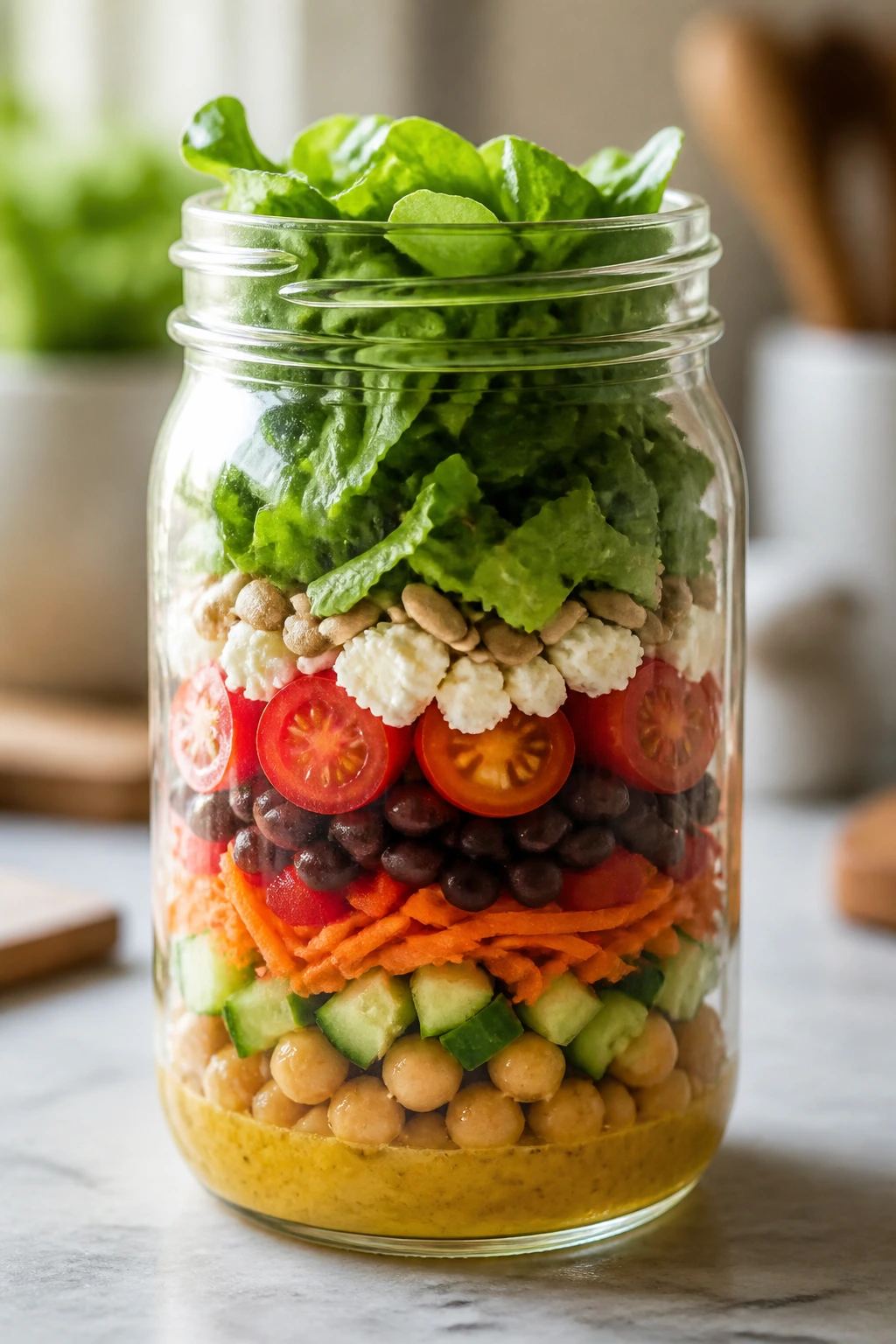
A mason jar salad can be a gimmick, or it can be a very practical way to eat lunch without losing the day to sogginess. The difference comes down to detail: dry greens, a dressing that tastes bright enough to survive the fridge, and layers that respect how moisture moves. Once those pieces are in place, the jar stops feeling clever and starts feeling useful.
This hearty version has the kind of structure I want in a make-ahead lunch. It opens crisp, eats clean, and still feels like food you can trust to keep until you’re ready for it. That’s the whole appeal, really. A salad that holds its shape is a small victory, and on a busy day, small victories are worth packing.
Hearty Mason Jar Salad with Homemade Dressing — Recipe Card
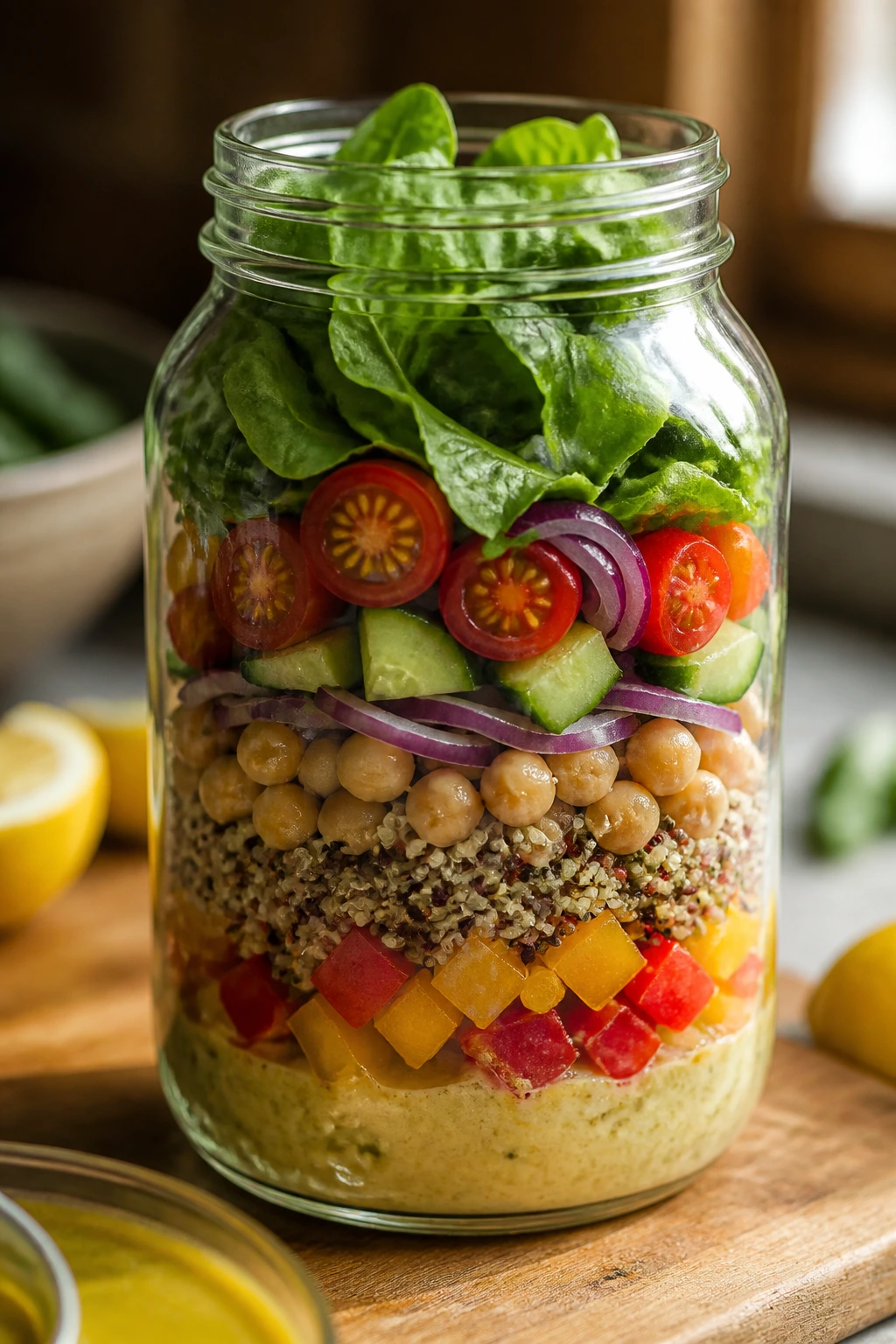
Recipe Name: Hearty Mason Jar Salad with Homemade Dressing
Description: A layered mason jar salad with lemon-Dijon vinaigrette, quinoa, chickpeas, crisp vegetables, feta, and dry greens that stay fresh in the fridge for make-ahead lunches.
Prep Time: 25 minutes
Cook Time: 15 minutes
Total Time: 40 minutes
Course: Lunch, Main Course
Cuisine: American
Servings: 4 servings
Calories: About 430 kcal per serving
Ingredients
For the Lemon-Dijon Dressing:
- 1/4 cup extra-virgin olive oil
- 3 tablespoons fresh lemon juice
- 2 tablespoons apple cider vinegar
- 1 tablespoon Dijon mustard
- 1 teaspoon honey
- 1 small garlic clove, finely grated
- 3/4 teaspoon kosher salt
- 1/4 teaspoon freshly ground black pepper
For the Salad Jars:
- 3/4 cup dry quinoa, rinsed well
- 1 1/2 cups water
- 1 (15-ounce) can chickpeas, drained, rinsed, and patted dry
- 1 1/2 cups cherry tomatoes, halved
- 1 cup cucumber, diced
- 1 cup shredded carrots
- 1/2 small red onion, thinly sliced
- 1 cup diced bell pepper
- 4 ounces feta cheese, crumbled
- 4 cups chopped romaine or baby kale, very dry
- 1/4 cup chopped parsley or dill
- 1/4 cup sunflower seeds or pepitas
Instructions
-
Rinse the quinoa, then simmer it with 1 1/2 cups water and a pinch of salt for 15 minutes. Rest 5 minutes, fluff, and cool completely.
-
Whisk together the olive oil, lemon juice, apple cider vinegar, Dijon, honey, garlic, salt, and pepper until emulsified.
-
Prep the chickpeas, vegetables, herbs, feta, and greens. Dry the greens well.
-
Divide the dressing between 4 wide-mouth 32-ounce mason jars.
-
Layer chickpeas, cooled quinoa, tomatoes, cucumber, carrots, onion, and bell pepper into each jar.
-
Top with feta, seeds, herbs, and greens. Seal and refrigerate upright.
-
To serve, shake the jar into a bowl or plate and toss lightly before eating.
Notes: Keep the quinoa fully cool before assembling. Use wide-mouth jars for easier packing and serving. Add avocado only at the table, not in the jar.