



A hearty chickpea salad with homemade dressing has a particular kind of honesty to it. You can see every ingredient, taste every one of them, and tell within one bite whether somebody cared enough to season the bowl properly.
The chickpeas should be firm but not chalky. The cucumber needs to stay cool and snappy. The dressing has to be sharp first, then rounded, then a little glossy from the olive oil and Dijon. When those three things line up, the salad eats like lunch with backbone, not a pile of random chopped vegetables.
I reach for this kind of salad when I want something that can sit in the fridge for a day and still taste awake. Canned chickpeas make that possible without any drama, and the homemade dressing does the work bottled dressing usually skips: it brings salt, acid, fat, and a little garlic bite in the right ratio, so the bowl tastes finished instead of assembled. That’s the trick. Everything else is just good chopping.
Why You’ll Love This Salad
- Protein That Actually Satisfies: Two cans of chickpeas bring enough heft that this bowl feels like a meal, not a garnish, and the fiber helps it hold you for hours.
- Crunch That Stays Crunchy: Cucumber, celery, bell pepper, and red onion keep their shape after dressing, which means the salad doesn’t slump into mush by lunchtime.
- Homemade Dressing with Real Personality: Lemon, Dijon, garlic, cumin, and olive oil make a dressing that clings to the chickpeas instead of pooling at the bottom of the bowl.
- Pantry Meets Produce Drawer: Most of the ingredients are easy to keep around, so this works on the weeks when the crisper looks half empty and the freezer has nothing useful.
- Easy to Adjust Without Rewriting the Recipe: You can steer it toward briny, spicy, creamy, or dairy-free with one or two swaps instead of starting from scratch.
- Better the Next Hour: After a short rest, the chickpeas drink in the salt and lemon, and the whole bowl tastes more deliberate.
What You Need for the Bowl
Yield: Serves 4 as a main dish or 6 as a side
Prep Time: 20 minutes
Cook Time: 0 minutes
Total Time: 20 minutes
Difficulty: Beginner — the only real skill here is chopping evenly and whisking the dressing until it turns glossy.
Chill/Rest Time: 10 to 15 minutes optional, for the best flavor
Best Served: Slightly chilled or at cool room temperature
For the Salad:
- 2 (15-ounce) cans chickpeas, drained, rinsed, and patted very dry
- 1 English cucumber, diced into 1/2-inch pieces
- 1 1/2 cups cherry tomatoes, halved
- 1 red bell pepper, diced
- 2 ribs celery, thinly sliced
- 1/2 small red onion, very thinly sliced
- 1/2 cup crumbled feta
- 1/4 cup chopped flat-leaf parsley
- 2 tablespoons chopped dill
- 2 tablespoons sunflower seeds or chopped toasted almonds
For the Homemade Dressing:
- 1/4 cup extra-virgin olive oil
- 3 tablespoons fresh lemon juice
- 1 tablespoon red wine vinegar
- 1 teaspoon Dijon mustard
- 1 small garlic clove, finely grated or pressed
- 1 teaspoon maple syrup or honey
- 1/2 teaspoon kosher salt
- 1/4 teaspoon black pepper
- 1/2 teaspoon ground cumin
- 1 to 2 tablespoons water, as needed to loosen
Optional Finish:
- Pinch of smoked paprika or sumac
- Lemon wedges, for serving
Why Each Ingredient Earns Its Place
Chickpeas: What to use: 2 cans chickpeas, drained and rinsed, give you the sturdy base this salad needs. Preparation: Pat them dry with a clean towel so the dressing can stick instead of sliding off the surface. Substitutions: Cooked dried chickpeas work well, and cannellini beans can step in if you want a softer, creamier bite. Tips: Chickpeas straight from the can are a little slick; drying them for even 30 seconds on a towel changes the whole salad.
Crunchy Vegetables: What to use: 1 English cucumber, 1 1/2 cups cherry tomatoes, 1 red bell pepper, 2 ribs celery, and 1/2 small red onion. Preparation: Cut everything to a similar bite size so you get chickpeas and vegetables together on the fork, not a pile of odds and ends. Substitutions: Radishes, fennel, or diced carrots can replace one of the crunchier vegetables if that’s what you have. Tips: English cucumber gives you less watery runoff than a standard cucumber, and cherry tomatoes hold their shape better than big slicing tomatoes.
Fresh Herbs and Salty Finishers: What to use: 1/4 cup parsley, 2 tablespoons dill, 1/2 cup feta, and 2 tablespoons sunflower seeds or toasted almonds. Preparation: Chop the herbs just before tossing them in so they stay bright, and crumble the feta into small pieces so it spreads through the bowl. Substitutions: Mint can replace dill, chopped olives can replace some of the feta, and dairy-free feta works if you want the same salty finish without the milk. Tips: Don’t skip the crunchy topping. Chickpeas can feel dense on their own, and that last bit of crunch is what keeps the salad lively after it rests.
Homemade Dressing: What to use: 1/4 cup olive oil, 3 tablespoons lemon juice, 1 tablespoon red wine vinegar, 1 teaspoon Dijon, garlic, maple syrup, salt, pepper, cumin, and a splash of water. Preparation: Whisk the acid, mustard, garlic, sweetener, and seasoning first, then stream in the oil so the dressing turns smooth and slightly thick. Substitutions: Lime juice can stand in for lemon, white wine vinegar can replace red wine vinegar, and tahini can be whisked in for a creamier result. Tips: Chickpeas dull salt faster than leafy greens do, so taste the dressing before you toss the salad and be a little braver than you think you need to be.
Optional Finishes: What to use: smoked paprika or sumac, plus lemon wedges. Preparation: Add the spice right at the end so its color stays vivid and the aroma stays sharp. Substitutions: A pinch of crushed red pepper flakes adds heat if you want the dressing to lean warmer than bright. Tips: Sumac is one of those quiet ingredients that makes people ask why the salad tastes more complete than expected. It’s worth keeping around.
The Homemade Dressing That Keeps the Chickpeas Glossy
Dressing a chickpea salad is not the same thing as dressing lettuce. Lettuce wilts if you look at it too hard. Chickpeas, by contrast, can take a little time, a little salt, and a little acid, which is why the dressing here is built to cling instead of just coat.
The Dijon matters more than most people think. It doesn’t just add flavor; it helps the oil and lemon stay mixed long enough to hug the chickpeas evenly. If you’ve ever poured a thin vinaigrette over beans and watched half of it disappear to the bottom of the bowl, you’ve seen what happens when the emulsion is too weak.
Lemon, mustard, and the small garlic bite
The dressing should taste brighter than you want on its own. That sounds backward, but it’s the right move because chickpeas absorb and soften acid after they sit for a few minutes. The lemon gives lift, the vinegar gives a sharper edge, and the garlic gives the dressing a little backbone so it doesn’t taste like salad water.
A touch of maple syrup or honey keeps the lemon from punching too hard. You do not want sweet dressing here. You want balance. One teaspoon is enough to round off the edges and make the cumin read as warm rather than dusty.
Why the texture needs a little body
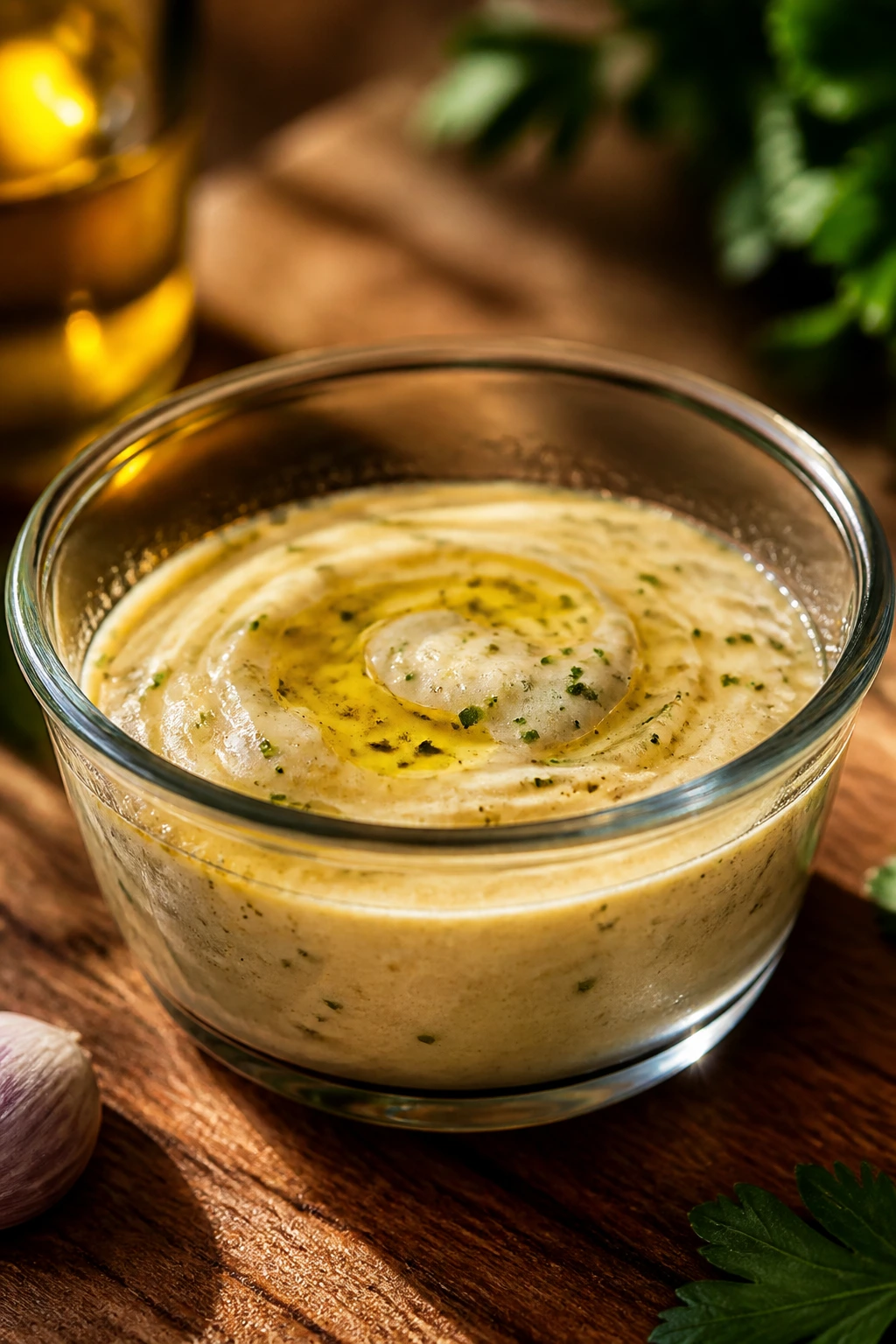
Olive oil, lemon juice, and vinegar can separate if you whisk lazily. A small bowl and a proper whisk are enough, though a jar with a tight lid works too. Shake it hard. Then check the look: the dressing should turn pale gold, slightly thick, and just opaque enough that it coats a spoon in a thin film.
If the dressing feels too tight or too sour after whisking, add a tablespoon of water. That small addition softens the bite and helps it distribute through the chickpeas without making the salad greasy. It’s a tiny adjustment, but tiny adjustments are where a salad like this stops tasting homemade in the casual sense and starts tasting intentional in the good sense.
What You Need on the Counter Before You Start
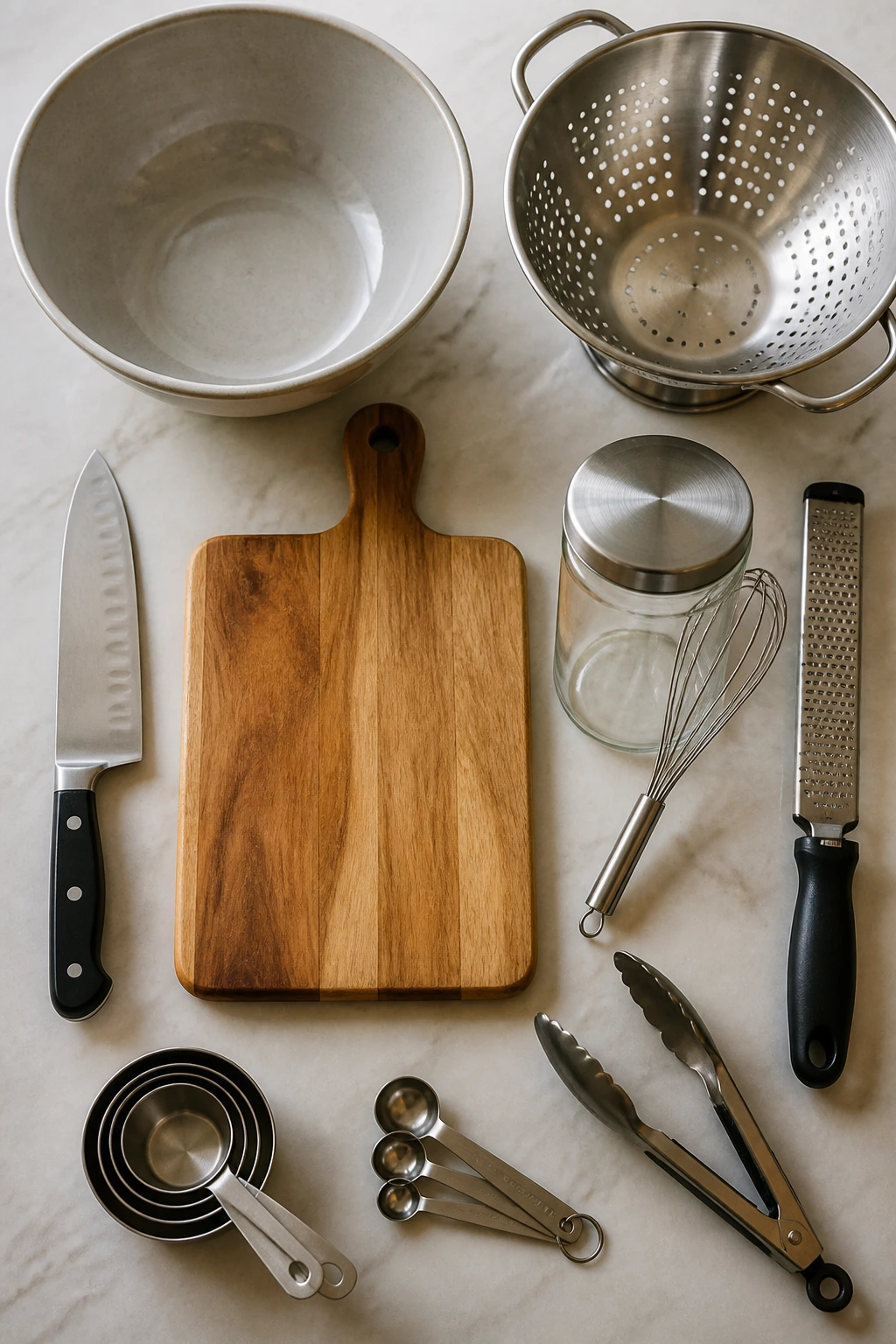
Large mixing bowl: Big enough to toss everything without losing chickpeas to the counter.
Colander or sieve: Useful for rinsing and draining the chickpeas until they no longer look shiny.
Chef’s knife: A sharp blade makes the vegetables cleaner and faster to cut, especially the celery and red onion.
Cutting board: Use one with a damp towel underneath if it likes to skate around.
Whisk or small jar with lid: Either one works for the dressing; the jar is faster, the whisk gives you more control over texture.
Measuring cups and spoons: The dressing tastes balanced when the acid and oil stay in their lane, so don’t free-pour everything.
Microplane or fine grater: Best for the garlic if you want it to disappear into the dressing instead of floating in little sharp pieces.
Salad tongs or a large spoon: Helpful for folding the bowl together without crushing the chickpeas.
Step-by-Step: Building the Salad Without Soggy Spots
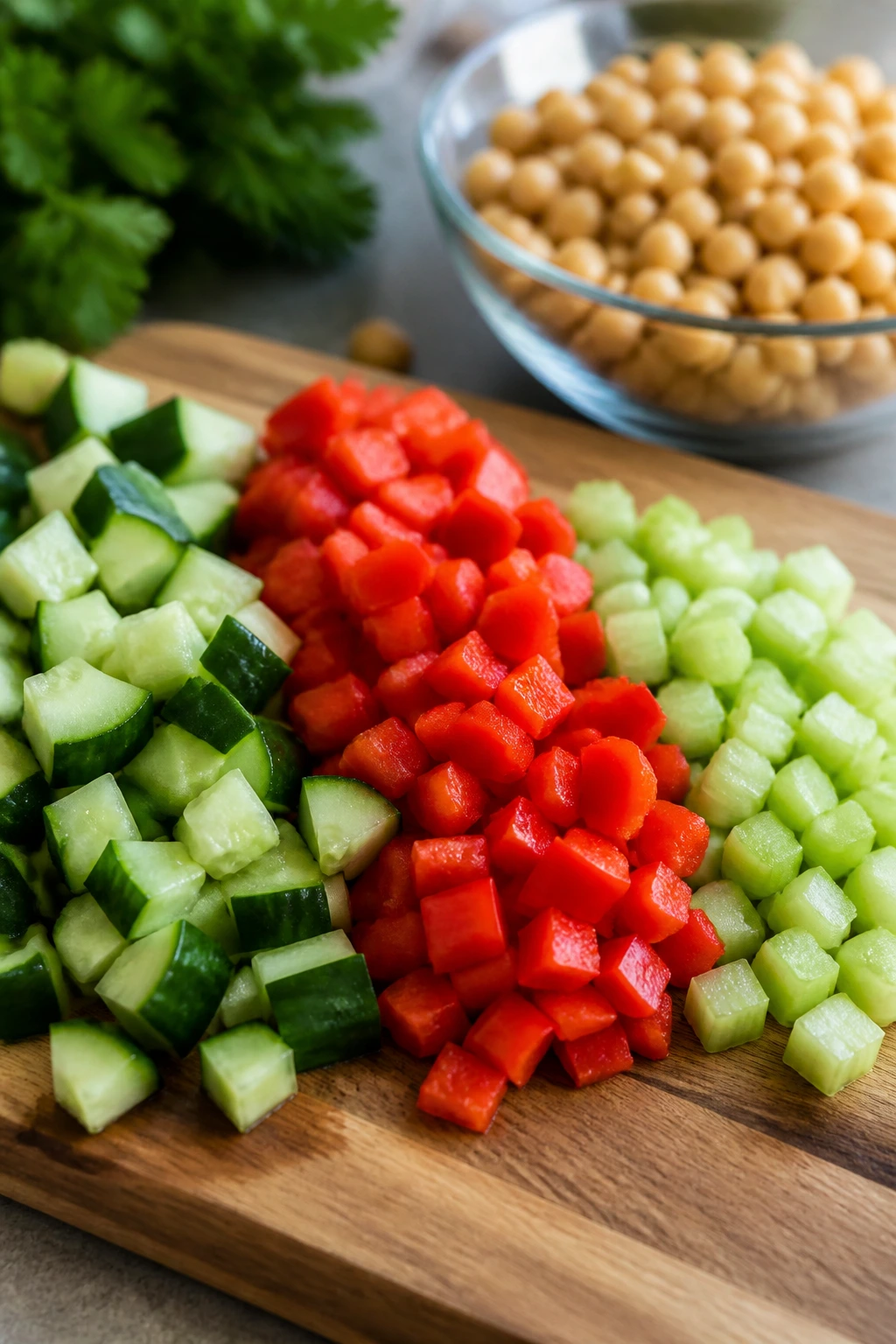
Prep the Vegetables:
- Drain and rinse the chickpeas in a colander, then shake them well and spread them on a clean kitchen towel or paper towels. Pat them until they look matte, not slick. If the chickpeas still feel damp, give them another minute; dry chickpeas grab the dressing better.
- Dice the cucumber, red bell pepper, and celery into pieces that are close to chickpea size, about 1/2 inch. Halve the tomatoes, and slice the red onion as thinly as you can without turning it into a tangle. If the onion smells too fierce, soak the slices in a small bowl of cold water for 5 minutes, then drain.
Mix the Dressing: 3. In a large bowl, whisk together the lemon juice, red wine vinegar, Dijon mustard, grated garlic, maple syrup, salt, pepper, cumin, and water. The mixture should look loose and very bright at this stage. 4. Slowly whisk in the olive oil in a thin stream until the dressing turns glossy and slightly thick. Do not dump the oil in all at once and walk away — the mustard needs time to pull the emulsion together. Taste the dressing. It should be punchy, a little salty, and sharper than you’d expect on its own.
Assemble the Salad: 5. Add the chickpeas, cucumber, tomatoes, bell pepper, celery, and onion to the bowl with the dressing. Fold gently until every chickpea has a sheen and the vegetables look lightly glazed rather than wet. 6. Add the parsley, dill, and feta, then fold one more time so the herbs don’t disappear into the bottom of the bowl. Leave a few feta pieces larger than the rest; those little white pockets of salt make the salad more interesting to eat. 7. Sprinkle the sunflower seeds or almonds over the top. Let the salad sit for 10 to 15 minutes before serving, then taste again and add more salt, lemon juice, or a pinch of smoked paprika if it needs it. This resting time matters — chickpeas are slow to season, and they calm down after a few minutes.
Finish and Serve: 8. Serve at cool room temperature or slightly chilled. If the salad has been sitting longer, give it one more stir right before it hits the table so the dressing redistributes and the bottom doesn’t get all the action.
How to Serve It for Lunch, Dinner, or a Side Dish
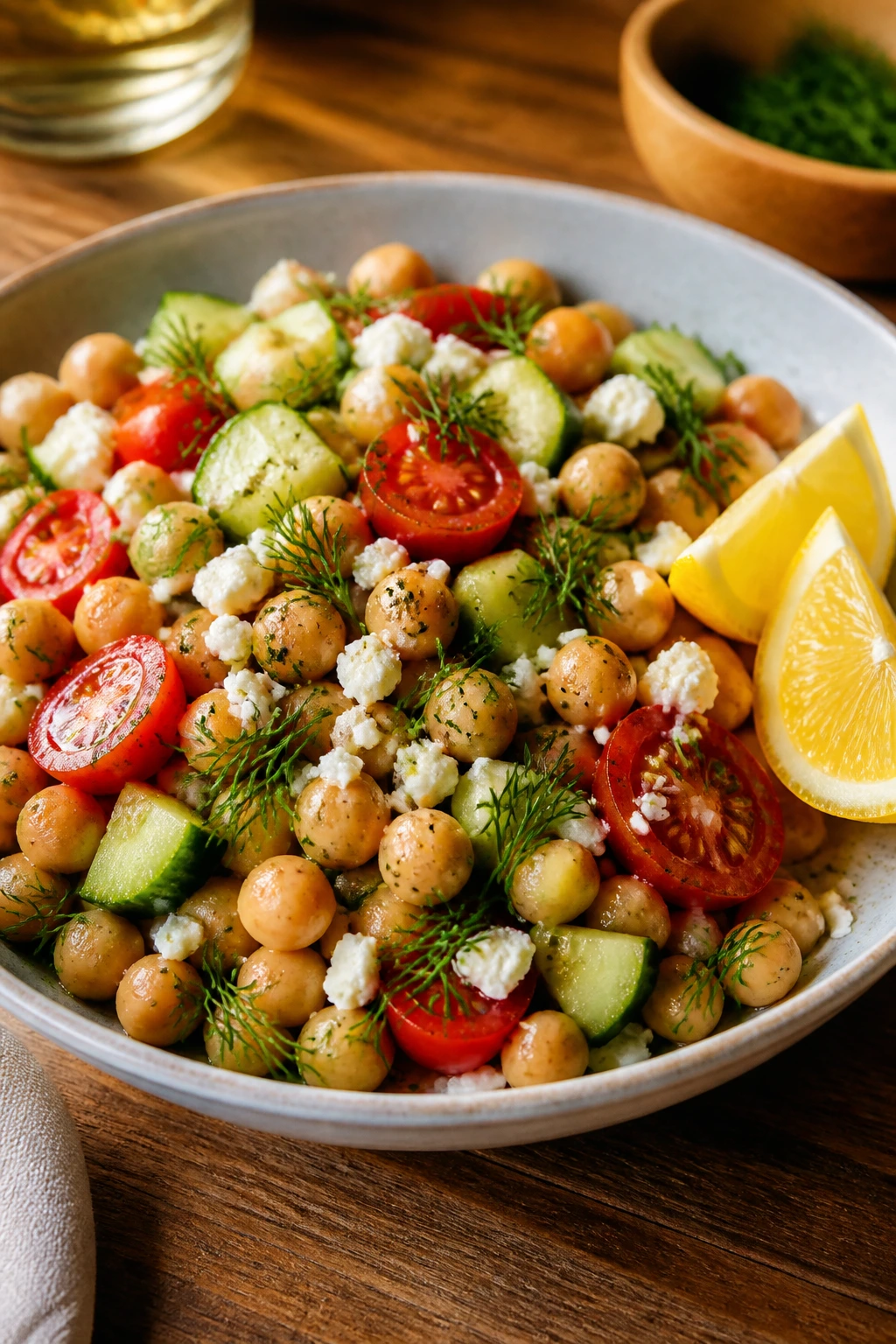
Presentation: Spoon the salad into a shallow bowl rather than a deep one. The colors show better, and it’s easier to see the chickpeas, herbs, and feta instead of digging blindly through a mound. A final pinch of paprika or sumac gives the top a clean finish, and a few lemon wedges on the side make the bowl look deliberate instead of dumped out.
Accompaniments: For lunch, I like this with warm pita, seeded crackers, or a thick slice of toasted sourdough. If you’re turning it into dinner, put it next to grilled chicken, salmon, or seared halloumi. It also works with a simple soup — tomato, lentil, or even a plain vegetable soup — because the salad brings texture where the soup is soft.
Portions: Plan on about 1 1/2 cups per person if this is the main event. As a side, 3/4 cup is usually enough, especially next to something rich or grilled. If you’re feeding a crowd, double the recipe and keep the dressing slightly on the generous side; chickpeas absorb a lot as they sit.
Beverage Pairing: A crisp white wine like Sauvignon Blanc fits the lemon and dill without fighting the feta. For a nonalcoholic pairing, cold sparkling water with a squeeze of lemon or a lightly sweet mint tea keeps the palate clean between bites.
Small Fixes That Make a Big Difference
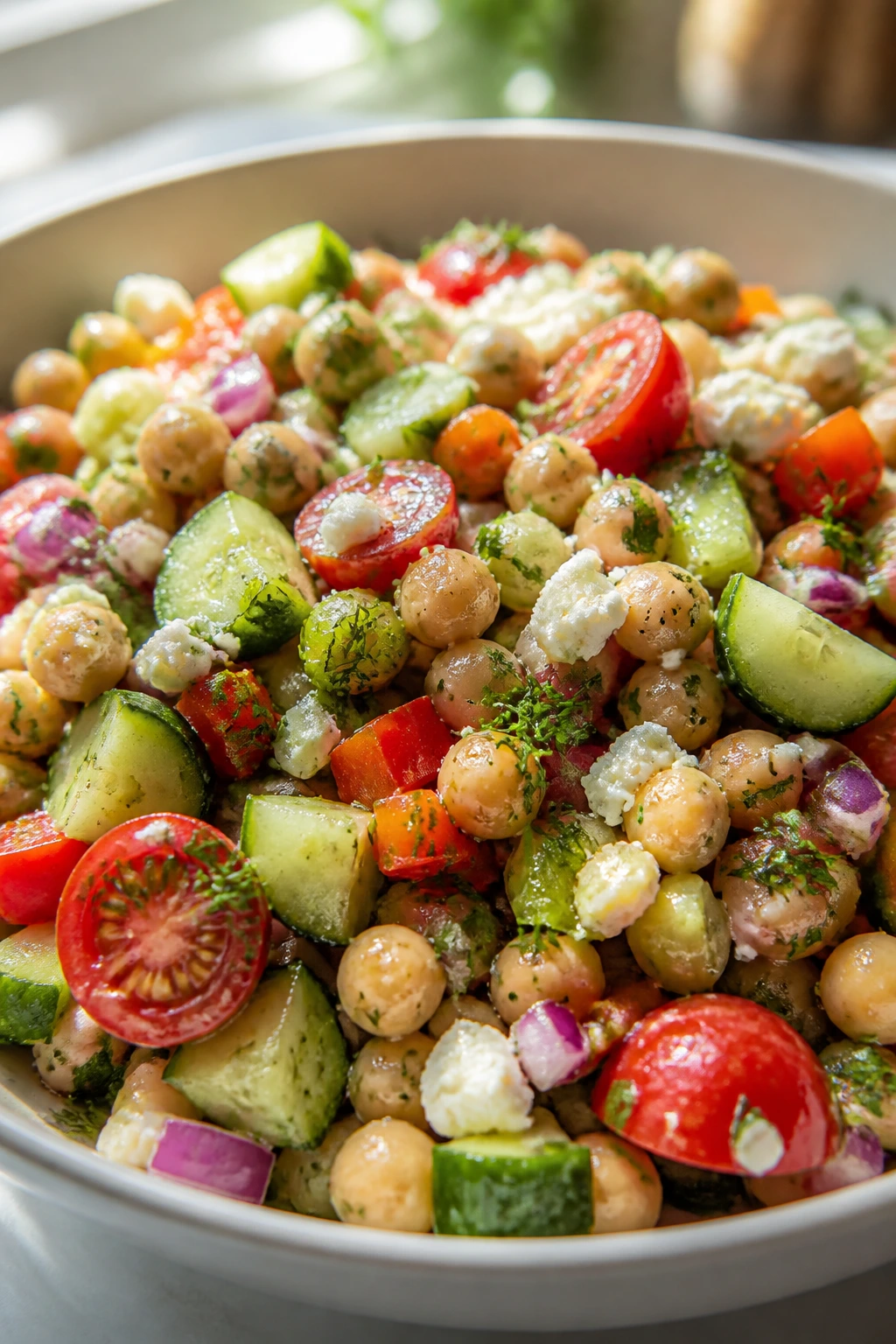
Flavor Enhancement: Grate a little lemon zest into the dressing. It gives the bowl a sharper citrus top note without adding more acid, and that matters when the chickpeas have had time to mellow the lemon juice. A small pinch of sumac works the same way if you want a gentler, more floral tang.
Time-Saver: Use pre-rinsed chickpeas, pre-crumbled feta, and the little plastic clamshell of parsley that’s already washed. I don’t usually cheer for shortcuts that weaken texture, but these three do not hurt the salad. They save time without turning the bowl dull.
Texture Fix: If your cucumber is a standard grocery-store cucumber, peel it if the skin is thick and scoop out the seed pocket before dicing. That keeps excess water from pooling in the bowl an hour later. English cucumbers are easier because they skip most of that fuss.
Make-It-Yours: Add chopped avocado right before serving if you want a creamier salad, or toss in a handful of chopped pepperoncini if you like a brighter briny edge. If you want the bowl richer, a spoonful of tahini whisked into the dressing does the job without making it heavy.
Common Chickpea Salad Mistakes and How to Avoid Them
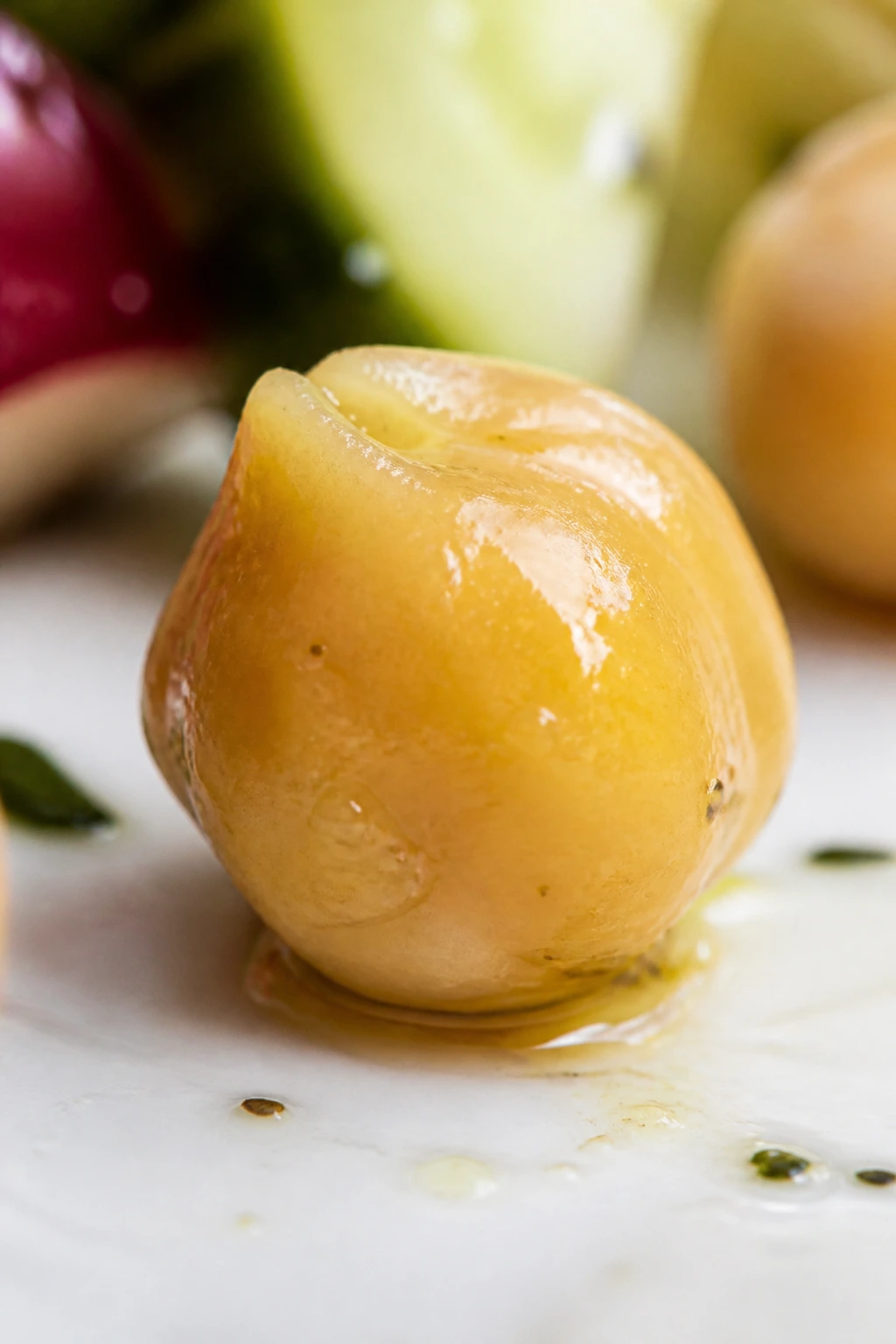
- Wet chickpeas: If the chickpeas go into the bowl damp, the dressing slides off and collects at the bottom. Pat them dry until they look dull and almost dusty on the surface; that one step changes how the whole salad eats.
- Too much raw onion: Red onion can swing from pleasant sharpness to full-on bite fast. Slice it thin, then soak it in cold water for 5 minutes if it seems aggressive, or use only half and save the rest for another dish.
- Chopping everything too large: Big cucumber chunks and oversized bell pepper pieces make the salad hard to eat neatly. Keep the vegetables close to chickpea size so every forkful feels balanced instead of chaotic.
- Underseasoning the dressing: Chickpeas need more salt and acid than tender greens do. If the dressing tastes a little too bold before it goes into the bowl, that is usually right; after the vegetables and beans absorb it, it will settle into place.
- Letting the salad sit too long with watery vegetables: Tomatoes and cucumber will release some juice after a few hours. If you’re making the salad far ahead, hold back the tomatoes or add them just before serving so the bowl stays bright instead of soupy.
- Skipping the rest time entirely: You can eat it right away, but the salad tastes flatter than it should. Ten minutes on the counter gives the chickpeas time to catch up with the dressing, and that matters more than people expect.
Variations That Still Taste Like the Same Salad
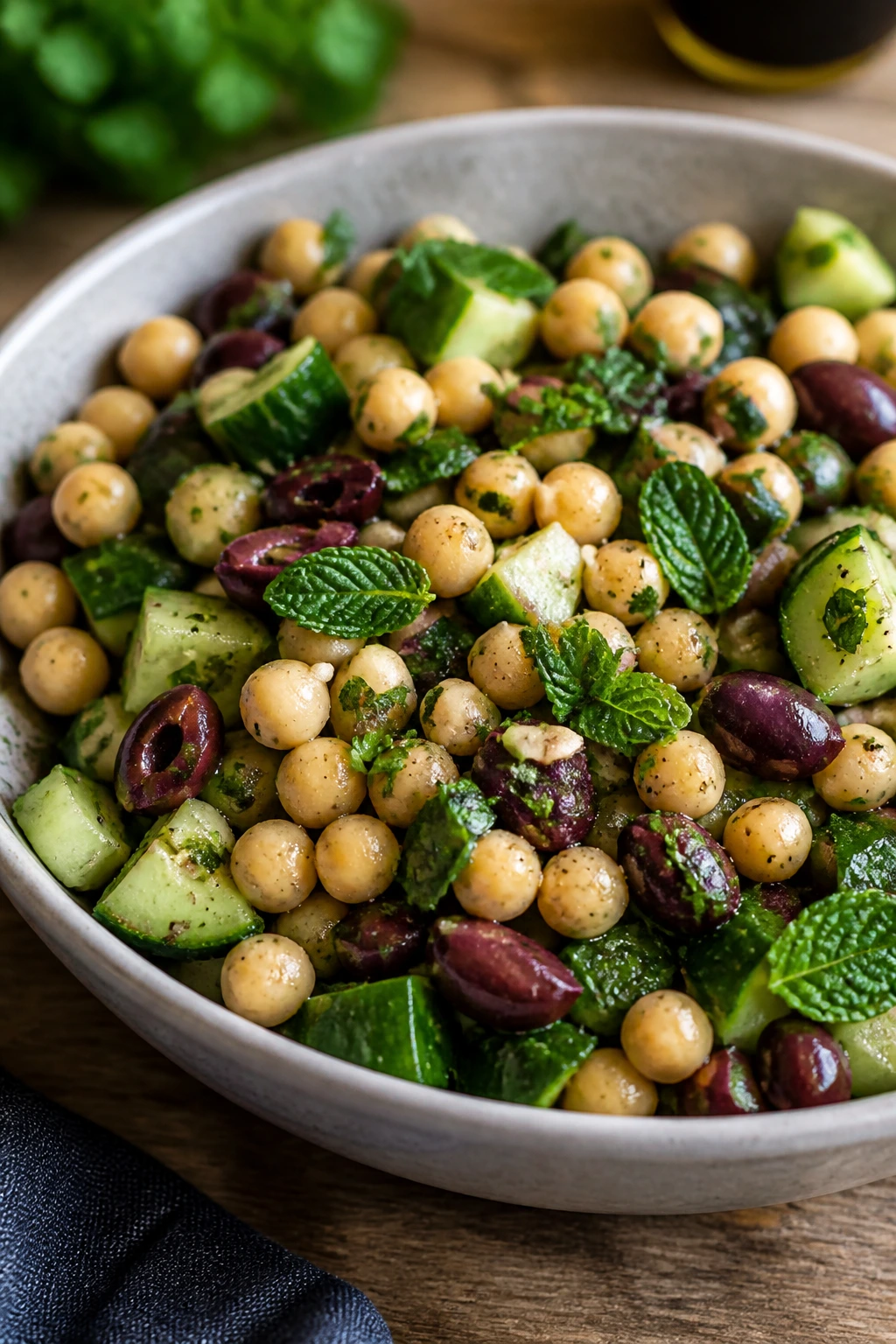
Mediterranean Market Bowl: Add 1/2 cup chopped kalamata olives, swap the dill for mint, and sprinkle in a pinch of dried oregano. The result is saltier and brinier, with a flavor profile that leans more toward mezze than picnic lunch.
Creamy Tahini Version: Replace 2 tablespoons of the olive oil with tahini and whisk in an extra tablespoon or two of water until the dressing loosens. The dressing turns creamier and a little nuttier, and it clings to the chickpeas in a thicker, more spoon-coating way.
Smoky Pepperoncini Salad: Stir 2 tablespoons chopped pepperoncini and 1/2 teaspoon smoked paprika into the bowl. This version has more edge, more tang, and a faint heat that wakes up the chickpeas without making the salad taste spicy in the loud sense.
Green Herb Lunch Bowl: Increase the parsley to 1/2 cup, add 2 tablespoons chopped mint, and finish with extra lemon zest. This version feels fresher and lighter, but it still has the same sturdy base, which is the point.
Protein-Heavy Dinner Salad: Fold in 2 chopped hard-boiled eggs or 1 cup diced grilled chicken. That pushes the bowl into full dinner territory without changing the dressing, and it’s the version I’d make when I want a meal that doesn’t need bread beside it.
Make-Ahead, Storage, and the Fridge Test
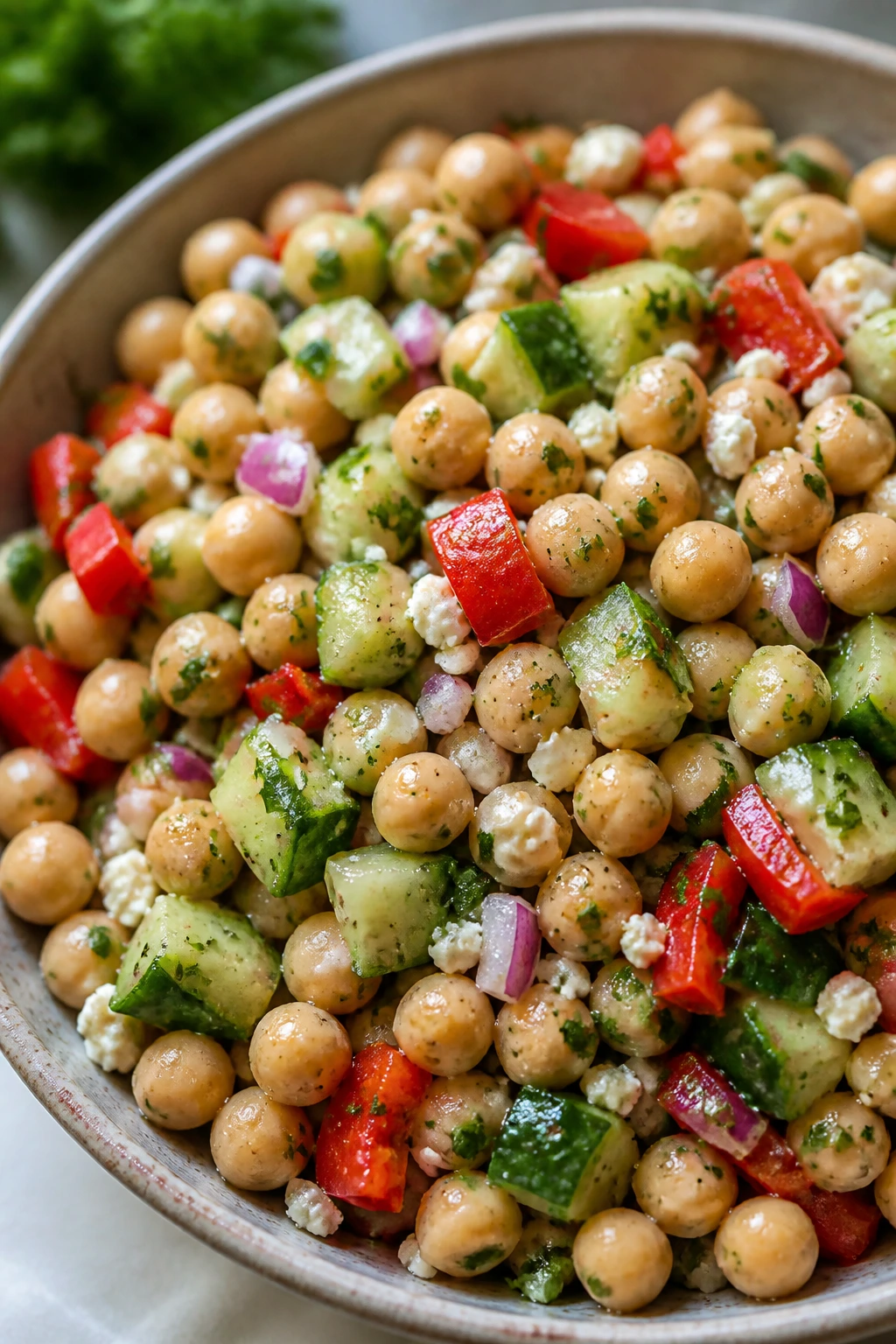
This salad keeps well because chickpeas don’t collapse the way leafy greens do. Stored in an airtight container, it holds for 3 to 4 days in the refrigerator, though the vegetables soften a little after day two. The flavor usually improves on day one, then starts to flatten once the tomatoes and cucumber have given up too much juice.
If you want the cleanest texture, make the dressing up to 1 week ahead and keep it in a jar in the fridge. Chop the cucumber, celery, bell pepper, and onion 1 day ahead if needed, but keep the tomatoes and herbs separate until closer to serving. Herbs lose their lift first, and once they’ve gone limp, the salad loses some of its spark.
I would not freeze this salad. Chickpeas freeze fine on their own, but the cucumbers and tomatoes do not come back with dignity after thawing. They turn watery and odd, and there is no clever fix for that.
For meal prep, the easiest move is to pack the dressing separately and toss the bowl the night before or the morning of lunch. If you dress it in advance, it’ll still be good, but the cucumbers will soften a bit and the feta will blend more into the background. Some people like that. I usually don’t. I prefer the first day’s crunch.
Questions People Ask Before They Make It
Can I use dried chickpeas instead of canned?
Yes, and they can taste even better if you cook them until tender but not mushy. You’ll need about 3 cups cooked chickpeas to replace the two cans here, and they should be cooled completely before you dress the salad. If you salt the cooking water lightly, the finished salad needs less correction later.
Do I have to chill the salad before serving?
No, but a short rest helps. Ten to fifteen minutes on the counter gives the chickpeas time to absorb the lemon, garlic, and salt, which makes the flavor feel more complete. If you refrigerate it longer, let it sit at room temperature for 10 minutes before eating so the olive oil loosens again.
How do I keep chickpea salad from getting watery?
Dry the chickpeas well, use English cucumber if you can, and hold the tomatoes back if you’re making the salad more than a few hours ahead. A watery salad usually means one of three things: wet beans, seedy cucumbers, or tomatoes that sat in the dressing too long. Fix those, and the bowl behaves.
What can I use instead of feta?
Goat cheese gives you a softer, tangier finish, while chopped olives give you salt without any dairy at all. If you want a completely dairy-free version that still feels rich, add a spoonful of tahini to the dressing and finish with extra herbs. That keeps the salad full without making it heavy.
Can I make this the night before?
Yes, but I’d keep the herbs and seeds separate until serving if you care about texture. The salad will taste a little more blended the next day, which isn’t a bad thing, but the vegetables will lose some snap. If you want the brightest version, prep everything ahead and toss it together just before eating.
Is bottled dressing okay in a pinch?
It is, but the salad loses the little details that make it work. A good bottled vinaigrette can cover the basics, yet it usually lacks the garlic bite, Dijon body, and cumin warmth that tie chickpeas to the vegetables. If you’re short on time, whisking the homemade dressing takes less than 3 minutes and pays off immediately.
Can I add greens to make it bigger?
Yes, but add them right before serving or they’ll wilt under the dressing. Chopped romaine, baby spinach, or arugula all work; arugula gives the salad a peppery edge, while romaine just adds volume and crunch. I’d keep the chickpea mixture as the base and fold the greens in at the end.
What if the dressing tastes too tart after I mix everything?
Add another teaspoon or two of olive oil and a pinch more salt, then let the salad sit for 5 minutes and taste again. Chickpeas can make acid feel louder at first, and a little oil smooths that out. If it still tastes too sharp, a tiny drizzle of maple syrup can round it off without turning it sweet.
A Bowl That Holds Its Own
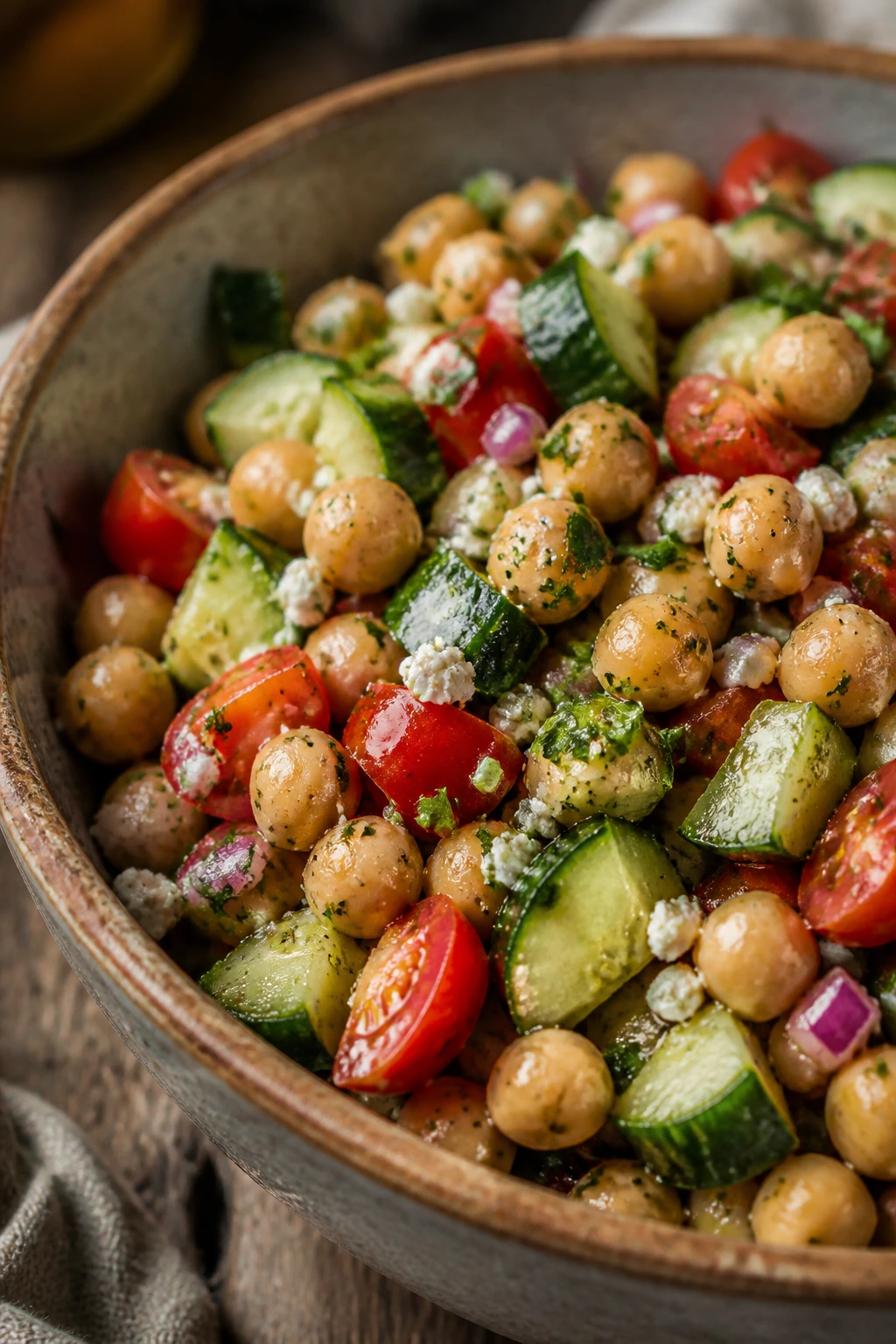
There’s a reason this hearty chickpea salad with homemade dressing keeps getting made in kitchens that are tired of fussy lunches. It doesn’t need special equipment, it doesn’t depend on perfect tomatoes, and it doesn’t collapse the minute it’s dressed. That alone makes it worth keeping in reach.
What makes it repeatable, though, is the balance. The beans bring weight, the vegetables bring snap, and the dressing does the quiet work of turning a pile of chopped ingredients into one coherent bowl. Once you get that rhythm right, the salad starts feeling less like a recipe and more like a dependable habit.
Hearty Chickpea Salad with Homemade Dressing — Recipe Card
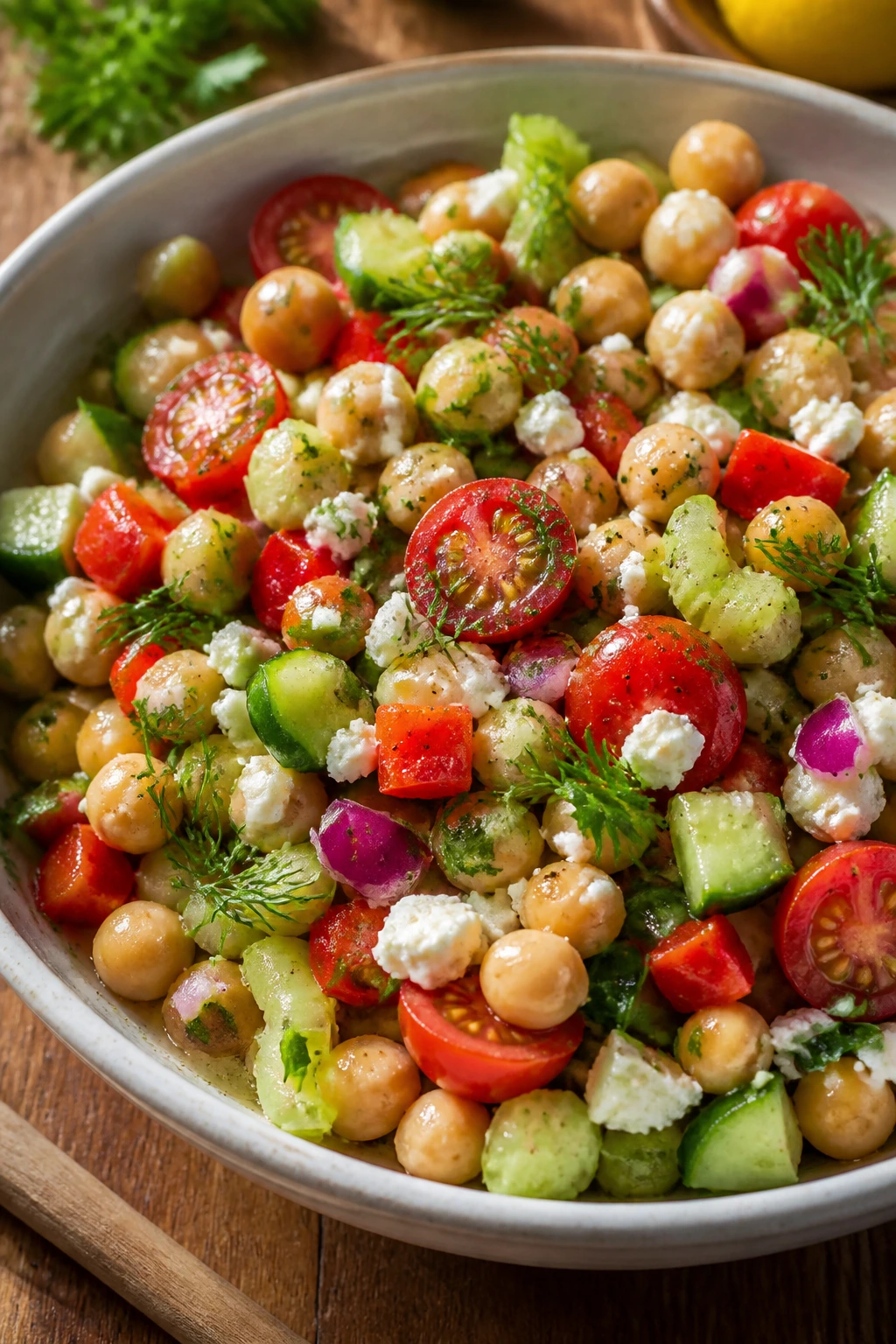
Recipe Name: Hearty Chickpea Salad with Homemade Dressing
Description: A crisp, satisfying chickpea salad with cucumber, tomatoes, bell pepper, celery, herbs, feta, and a bright lemon-Dijon dressing. It eats like lunch, holds up in the fridge, and keeps its texture better than most dressed salads.
Prep Time: 20 minutes
Cook Time: 0 minutes
Total Time: 20 minutes
Course: Lunch, Main Course, Side Dish
Cuisine: Mediterranean-inspired
Servings: 4 servings
Calories: About 425 kcal per serving
Ingredients
For the Salad:
- 2 (15-ounce) cans chickpeas, drained, rinsed, and patted very dry
- 1 English cucumber, diced into 1/2-inch pieces
- 1 1/2 cups cherry tomatoes, halved
- 1 red bell pepper, diced
- 2 ribs celery, thinly sliced
- 1/2 small red onion, very thinly sliced
- 1/2 cup crumbled feta
- 1/4 cup chopped flat-leaf parsley
- 2 tablespoons chopped dill
- 2 tablespoons sunflower seeds or chopped toasted almonds
For the Homemade Dressing:
- 1/4 cup extra-virgin olive oil
- 3 tablespoons fresh lemon juice
- 1 tablespoon red wine vinegar
- 1 teaspoon Dijon mustard
- 1 small garlic clove, finely grated or pressed
- 1 teaspoon maple syrup or honey
- 1/2 teaspoon kosher salt
- 1/4 teaspoon black pepper
- 1/2 teaspoon ground cumin
- 1 to 2 tablespoons water, as needed to loosen
Optional Finish:
- Pinch of smoked paprika or sumac
- Lemon wedges, for serving
Instructions
-
Drain and rinse the chickpeas, then pat them very dry. Set aside.
-
Dice the cucumber, bell pepper, and celery; halve the tomatoes; thinly slice the onion; and chop the herbs.
-
Whisk the lemon juice, vinegar, Dijon, garlic, maple syrup, salt, pepper, cumin, and water in a large bowl.
-
Slowly whisk in the olive oil until the dressing looks glossy and slightly thick.
-
Add the chickpeas and vegetables to the bowl, then fold gently to coat.
-
Fold in the parsley, dill, and feta.
-
Top with sunflower seeds or almonds, then let the salad rest for 10 to 15 minutes before serving.
-
Taste and adjust with extra salt, lemon, or a pinch of smoked paprika or sumac if needed.
Notes: Dry the chickpeas well for the best texture. Keep the tomatoes and herbs separate if you’re making it far ahead. Add avocado only at the last minute if you want to include it.