



Slow cooker pork carnitas should smell like orange peel, garlic, cumin, and pork fat that has spent all day turning silky. If what comes out of your pot tastes flat, pale, and a little wet, that isn’t carnitas — that’s shredded pork wearing the wrong name tag.
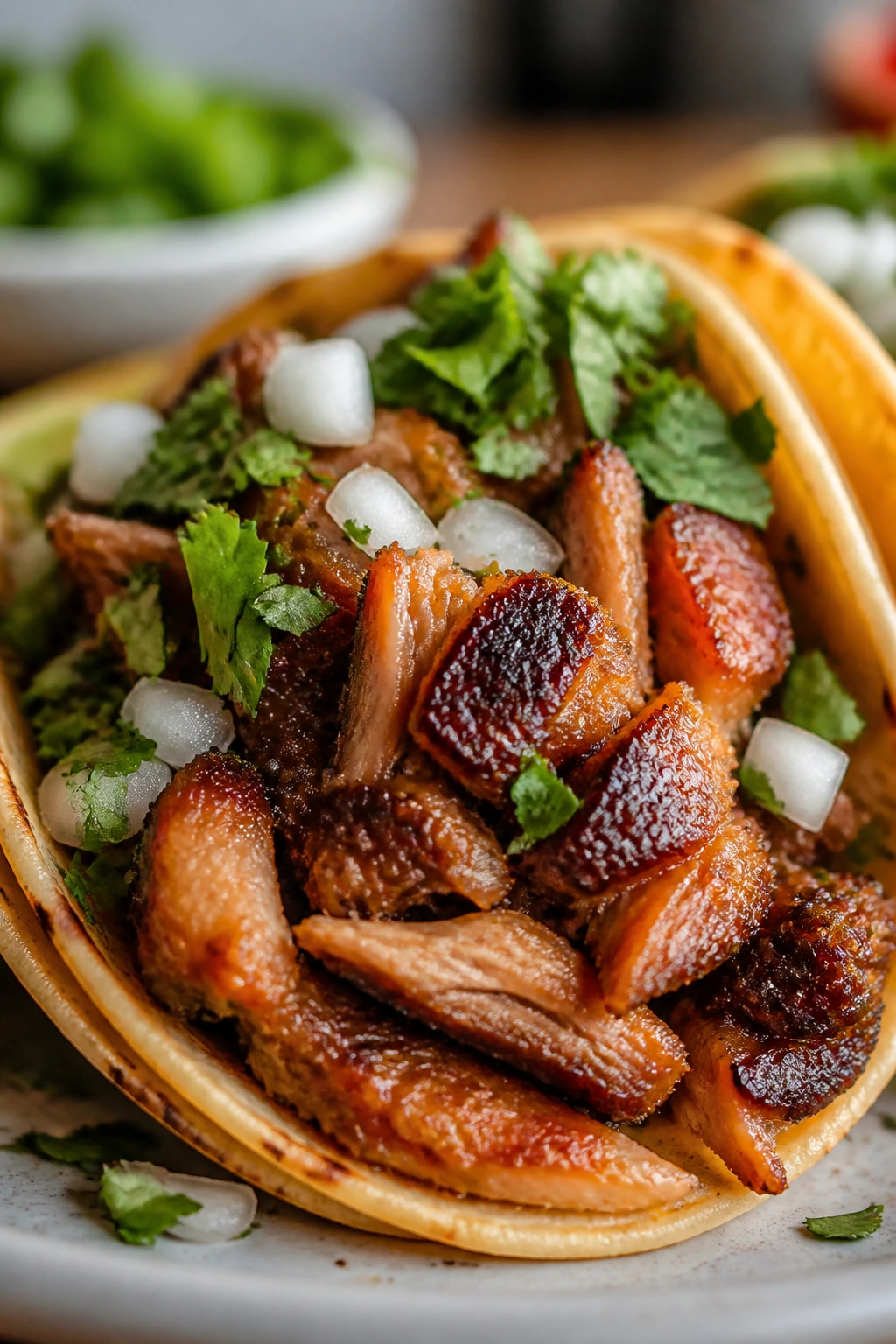
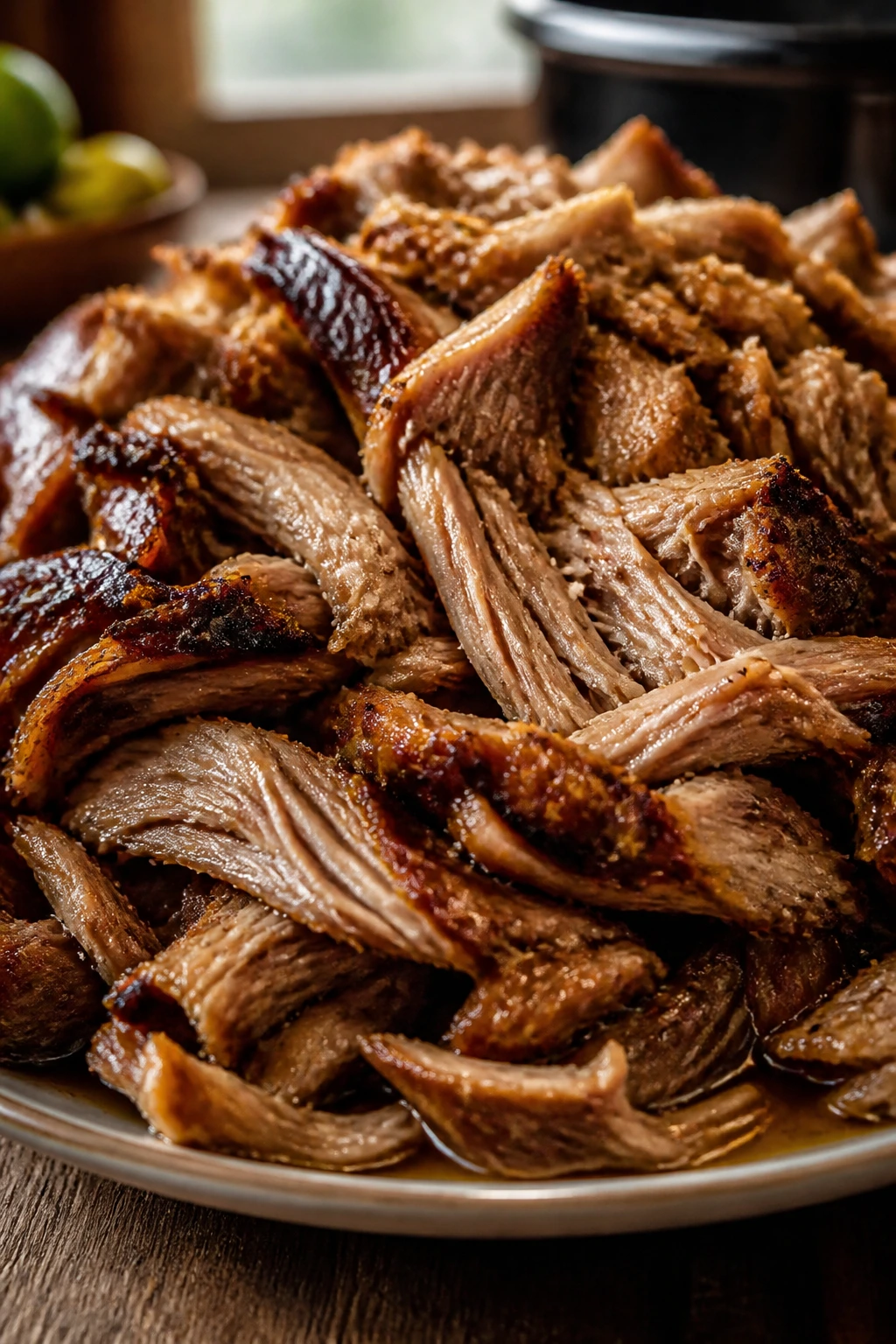
The good version has a split personality. Inside, the meat is soft enough to fall apart with a spoon. Outside, the edges go browned and a little jagged under the broiler, which is the part people fight over when the plate lands on the table. I am fussy about that contrast. Without it, carnitas can turn into generic taco filling fast.
A slow cooker is the right tool for the long, lazy part of the job, but it cannot finish the job by itself. That final blast of heat — a broiler, a hot skillet, or a ripping-hot oven rack — is where the pork gets its attitude back. Once you’ve made carnitas this way, the pale, soggy versions lose their charm.
Why Slow Cooker Pork Carnitas Work So Well
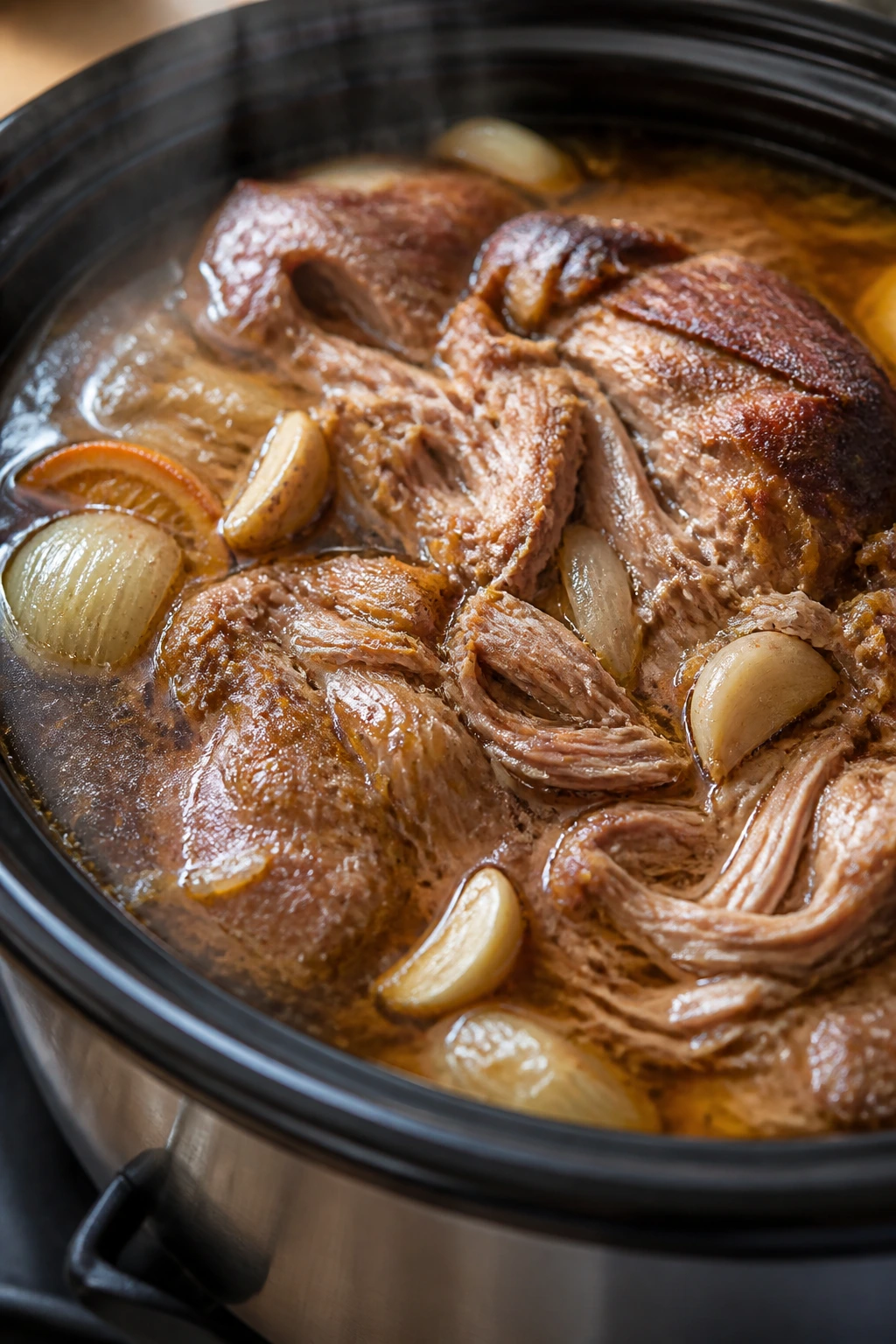
Pork shoulder is built for this kind of recipe. It has enough fat and connective tissue to survive a long cook without drying out, and that connective tissue slowly melts into gelatin as the temperature climbs. That’s why a pork shoulder that feels stubborn and heavy when raw turns soft, shreddable, and almost sticky after hours in the slow cooker.
The low, steady heat also gives the seasoning time to move through the meat instead of sitting on top of it. Garlic, cumin, oregano, orange, lime, and onion do not need to shout here. They need to linger. By the time the pork is done, those flavors should be threaded through the whole batch, not just parked on the outside.
There’s a practical reason this method works, too. A slow cooker keeps the pork in a moist environment, which protects it from drying while the collagen breaks down. That’s exactly what you want for a cut like pork shoulder. A lean cut would be a sad choice here. Pork loin looks tempting because it’s tidy and cheap, but it cooks into something dry and stringy long before it gets tender enough to shred properly.
Carnitas also need contrast. Tender meat alone is not enough. The broiler gives you the crisp, bronzed edges that make each bite feel complete, and that part is not decorative. It changes the texture, the aroma, and the salt balance in one pass. One mouthful of soft pork, a little crackle, a little char — that’s the whole point.
Why You’ll Love This Recipe
- Hands-Off Cooking: Once the pork is in the slow cooker, you can walk away for 8 hours and come back to a pot that smells like citrus, garlic, and roasted meat.
- Crisp Edges Without a Messy Fry-Up: A short broiler finish gives you those browned, crunchy bits without heating a skillet full of oil.
- Short Ingredient List: Pork shoulder, orange, lime, onion, garlic, cumin, and oregano do most of the work here, and none of them are hard to find.
- Built for Real Dinners: The finished carnitas can become tacos, burrito bowls, nachos, quesadillas, tostadas, or a pile of meat over rice with salsa on top.
- Makes Better Leftovers: The pork stays juicy after reheating if you keep a little of the cooking liquid with it.
- Forgiving and Practical: Pork shoulder doesn’t need precision down to the minute. If your slow cooker runs a little cool or hot, the recipe still gives you room to recover.
Yield: Serves 8
Prep Time: 20 minutes
Cook Time: 8 hours on LOW or 4 to 6 hours on HIGH, plus 5 to 8 minutes under the broiler
Total Time: About 8 hours 30 minutes on LOW or about 4 hours 30 minutes on HIGH
Difficulty: Beginner — the ingredient list is straightforward, and the slow cooker does the long, patient part of the work.
Best Served: Warm, right after broiling, while the edges are still crisp.
The Ingredient List That Gives Carnitas Their Orange-Garlic Bite
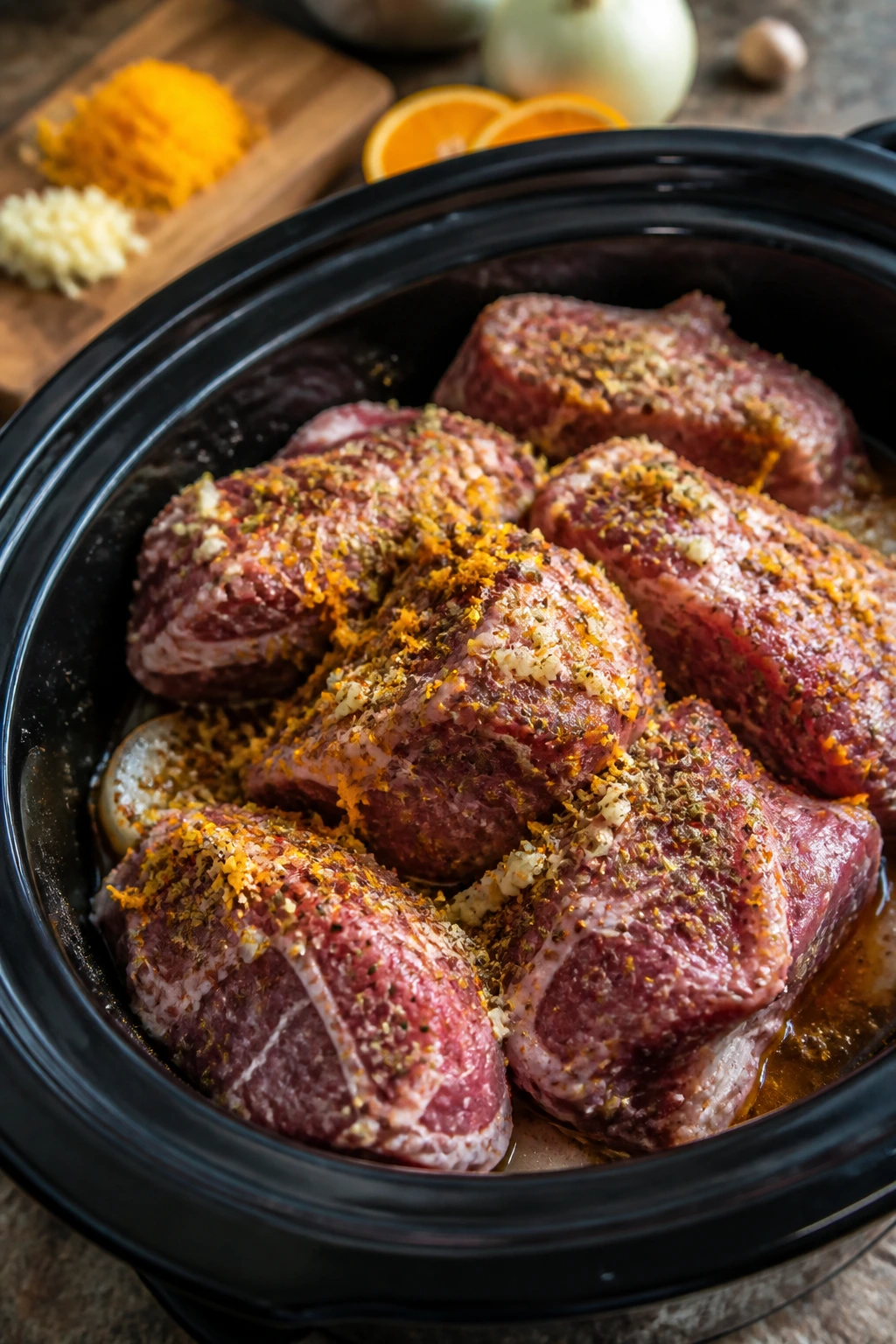
- 4 to 5 pounds boneless pork shoulder (pork butt), trimmed of thick outer fat and cut into 3 or 4 large chunks
- 2 tablespoons kosher salt, or 1 tablespoon Morton kosher salt if that’s what you keep on hand
- 2 teaspoons ground cumin
- 2 teaspoons dried oregano, preferably Mexican oregano
- 1 teaspoon smoked paprika
- 1 teaspoon freshly ground black pepper
- 1 tablespoon orange zest, finely grated from 1 large orange
- 1 large white onion, cut into 1/2-inch wedges
- 6 garlic cloves, smashed
- 1/2 cup fresh orange juice
- 1/4 cup fresh lime juice
- 1/2 cup low-sodium chicken broth
- 2 bay leaves
- 1 to 2 chipotle peppers in adobo, minced, plus 1 teaspoon adobo sauce (optional, for heat)
You do not need a giant list of toppings to make this work. The pork itself has to be right first. If the meat is seasoned well and cooked until it shreds cleanly, the rest of the plate can stay simple — warm tortillas, onion, cilantro, and salsa are enough to make it sing.
What Each Ingredient Does in the Pot
Pork Shoulder
What to use: 4 to 5 pounds of boneless pork shoulder, also called pork butt. It should have some fat marbling and a firm, meaty look; don’t chase the leanest piece in the case.
Preparation: Cut it into 3 or 4 large chunks so the seasoning can coat more surface area and the meat fits snugly in the slow cooker.
Substitutions: Bone-in pork shoulder works too, and pork picnic roast is the closest swap if shoulder is unavailable. Pork loin is not a real substitute here unless you want dry carnitas-shaped regret.
Tips: Trim only the thickest, hardest fat on the outside. Leave some fat behind — that’s the part that keeps the meat lush during a long cook.
Citrus and Braising Liquid
What to use: 1/2 cup fresh orange juice, 1/4 cup fresh lime juice, and 1/2 cup low-sodium chicken broth. The citrus brightens the pork, while the broth gives the slow cooker enough liquid to build steam and carry flavor.
Preparation: Zest the orange before juicing it. If you use bottled juice, choose one without a heavy sweetener or pulp-heavy texture.
Substitutions: If you run out of orange juice, use more broth plus an extra tablespoon of lime juice and a little more zest. In a pinch, bottled orange juice works, though the flavor is flatter.
Tips: Fresh lime juice tastes sharper than bottled and keeps the final pork from leaning sweet. If your broth is salty, cut the kosher salt by a teaspoon.
Aromatics
What to use: 1 large white onion and 6 smashed garlic cloves. White onion gives a clean, sharp base that softens over the long cook without turning sugary.
Preparation: Slice the onion into wedges so it stays visible in the pot and can be fished out easily if you want a smoother shred. Smash the garlic with the side of a knife so the cloves release more flavor.
Substitutions: Yellow onion works fine, and shallots will give a softer, slightly sweeter flavor. Garlic paste or jarred minced garlic can step in if that’s what you have, but fresh cloves smell better and taste rounder.
Tips: Don’t mince the garlic too finely. Tiny bits can disappear into the liquid and turn a little bitter during a long cook.
Spices and Finish
What to use: 2 teaspoons ground cumin, 2 teaspoons dried oregano, 1 teaspoon smoked paprika, 1 teaspoon black pepper, 1 tablespoon orange zest, 2 bay leaves, and optional chipotle in adobo for heat.
Preparation: Mix the dry spices together before they hit the pork so they coat more evenly. If your oregano comes from a jar that’s been open forever, rub it between your fingers first; you’ll know in a second if it still smells like anything.
Substitutions: Regular oregano can replace Mexican oregano, though it tastes a little more grassy and less floral. Smoked paprika can be regular paprika if needed, but you’ll lose a little depth.
Tips: The bay leaves matter more than people think. They don’t scream; they sit in the background and make the broth taste like it simmered for longer than it did.
The Tools That Make the Long Cook Easier
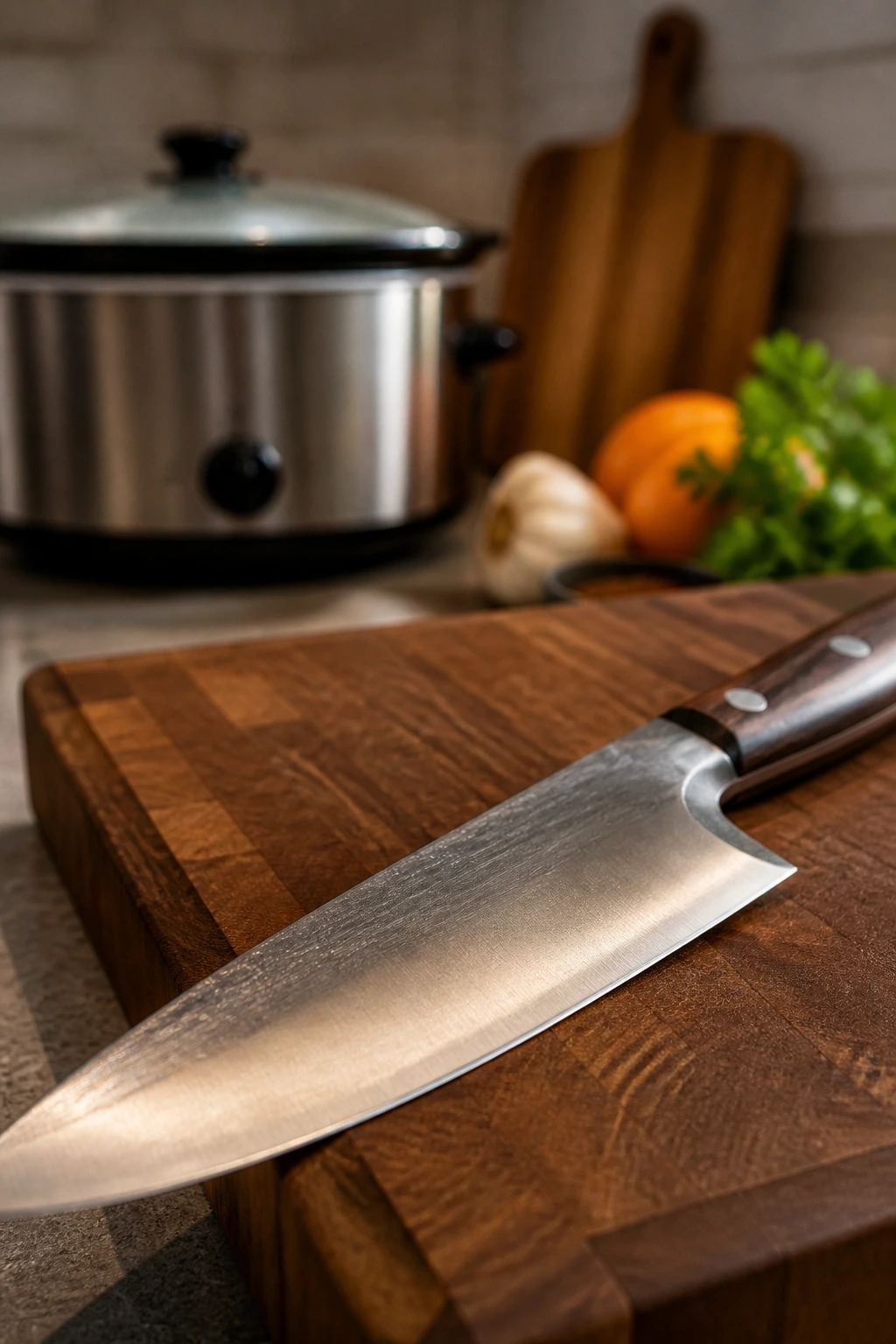
- 6-quart or larger slow cooker: A 4- to 5-pound pork shoulder needs room to sit in a loose, even layer; crowding it too tightly can make the top cook unevenly.
- Sharp chef’s knife: You’ll use it to trim fat, slice the onion, and cut the pork into manageable chunks.
- Cutting board with a towel underneath: Pork shoulder is slippery when raw, and a stable board saves you from chasing it across the counter.
- Measuring spoons and cups: The liquid and spice balance matters more than people assume, especially with citrus.
- Rimmed sheet pan: This is what lets the shredded pork crisp under the broiler without losing juices all over the oven.
- Tongs and two forks: Tongs help lift the hot pork out of the slow cooker; forks make shredding fast and controlled.
- Heavy-duty foil or parchment paper: Optional, but useful if you want easier cleanup under the broiler.
- Cast-iron skillet: Optional if you prefer skillet crisping over broiling. It works well in batches and gives the pork a darker crust.
From Raw Pork to Crisp Edges: Step-by-Step
Prep the Pork and Season the Base:
-
Trim off any thick, hard slabs of fat from the pork shoulder, then cut the meat into 3 or 4 large chunks. You want pieces that fit comfortably in the slow cooker but are still big enough to stay juicy during the long cook.
-
In a small bowl, stir together the kosher salt, cumin, oregano, smoked paprika, black pepper, and orange zest. Rub this mixture over every side of the pork chunks, pressing it in with your hands so it sticks.
-
Scatter the onion wedges and smashed garlic in the bottom of a 6-quart or larger slow cooker. The onion keeps the pork from sitting directly on the base, and it softens into the juices as the meat cooks.
Build the Braise:
-
Nestle the seasoned pork chunks on top of the onions and garlic. Pour in the orange juice, lime juice, and chicken broth, then tuck in the bay leaves and the minced chipotle, if you’re using it. The liquid should come partway up the meat, not drown it. Do not cover the pork completely with liquid — you want a braise, not a soup.
-
Cover and cook on LOW for 8 to 10 hours, or on HIGH for 4 to 6 hours, until the pork reaches 195°F to 203°F in the thickest piece and shreds easily with a fork. If your slow cooker runs cool, lean toward the longer end. The meat is ready when it pulls apart with almost no resistance.
Shred and Crisp:
-
Turn off the slow cooker and lift the pork chunks onto a large cutting board or rimmed baking sheet. Remove the bay leaves. Let the meat rest for 5 minutes, then shred it with two forks, discarding any large pockets of fat.
-
Skim off some of the fat from the surface of the cooking liquid if needed, then spoon 1/2 to 3/4 cup of the liquid over the shredded pork and toss it lightly. The meat should look glossy, not wet enough to pool.
-
Spread the shredded pork in a thin layer on a foil-lined rimmed sheet pan. Place it under the broiler on the top rack, about 6 inches from the heat, and broil for 4 to 5 minutes until the top starts to brown.
-
Stir the pork, then broil for 2 to 3 minutes more until the edges are deeply browned and a few bits look almost brittle. Watch it closely in the last minute — broilers vary a lot, and carnitas can go from bronzed to burned with almost no warning.
-
Finish with a squeeze of fresh lime juice and, if needed, a pinch of salt. Serve immediately while the crisp edges are still crunchy and the softer bits are still steaming.
How to Serve Carnitas Without Losing the Crunch
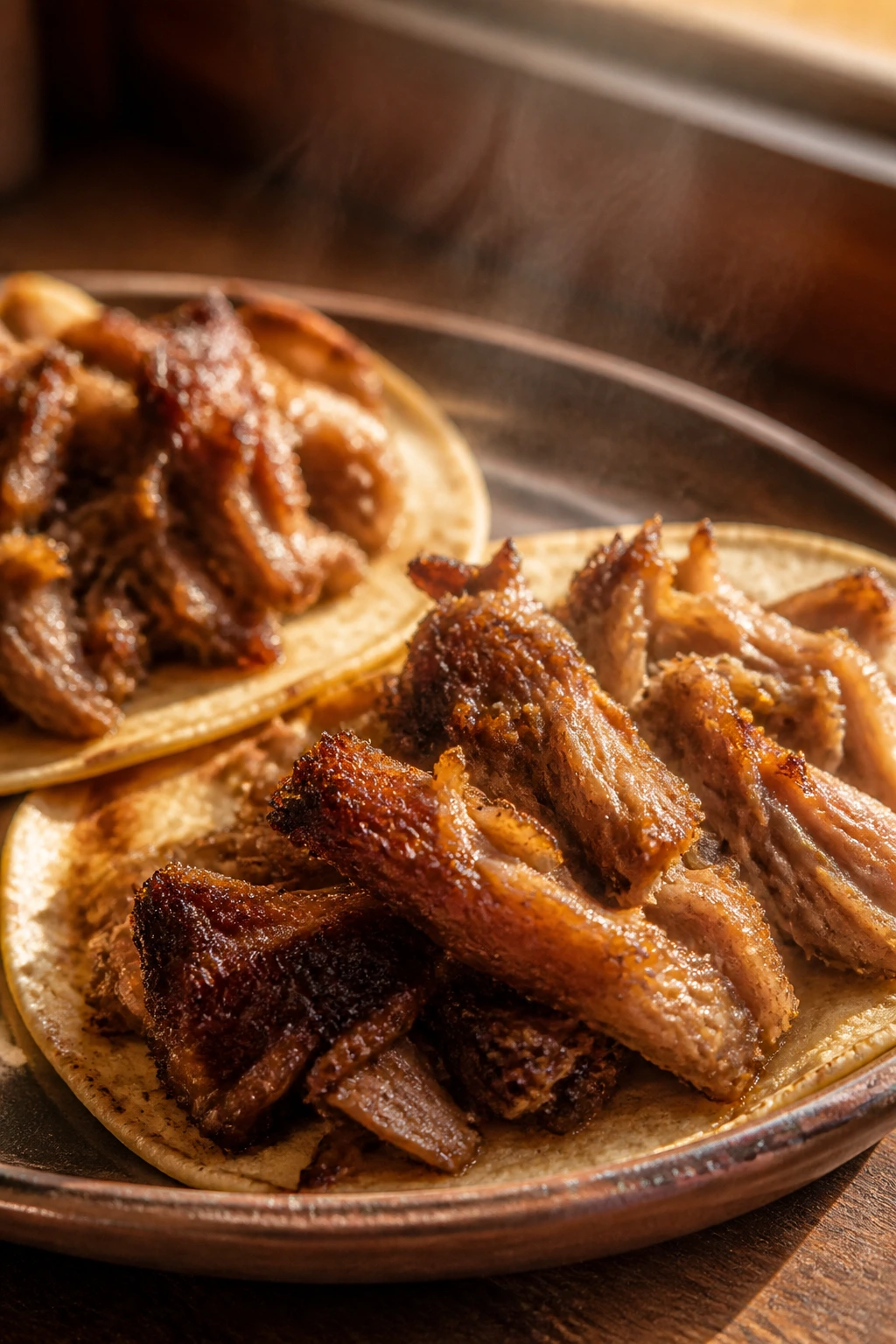
Presentation: Pile the carnitas onto warmed corn tortillas in small mounds, not giant heaps. A little height is nice, but an overloaded taco turns soggy fast, and the browned edges disappear under the weight of salsa and toppings.
Accompaniments: Warm corn tortillas, finely diced white onion, chopped cilantro, salsa verde, pickled red onions, sliced avocado, and lime wedges are the core lineup. If you want to stretch the meal, add refried beans, Spanish rice, or roasted potatoes on the side; those starchy edges soak up the juices without stealing the show.
Portions: Plan on about 3 to 4 ounces of cooked carnitas per person for tacos, or 5 to 6 ounces per person if the pork is the main plate. Eight servings is a realistic number for dinner, though taco-night appetites can push that down fast.
Beverage Pairing: A cold Mexican lager, sparkling lime water, or a tart agua fresca keeps the citrus and spice from feeling heavy. If you want something nonalcoholic with more punch, iced hibiscus tea plays nicely with the orange and lime.
A small detail matters here: add the wet stuff around the pork, not on top of the crisped meat right before serving. Spoon a little cooking liquid over the softer portions if you like them juicy, but leave most of the browned bits exposed so they keep their texture.
Tips for Juicier Pork and Better Browning
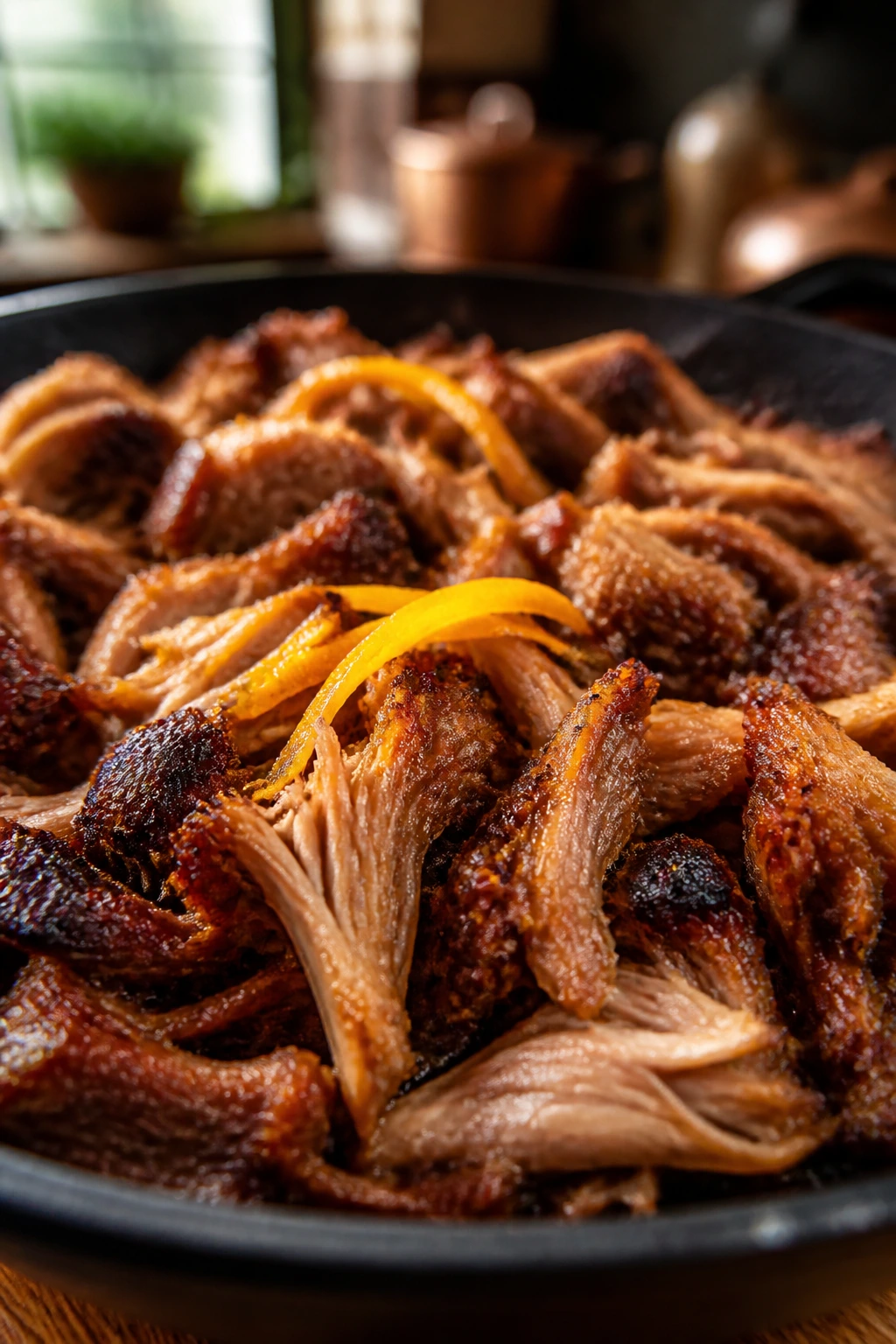
Flavor Enhancement: A strip of orange peel tossed into the slow cooker makes the whole pot smell brighter, and I mean smell brighter, not just taste sweeter. Pull the peel out before shredding so you don’t get any bitter pith in the meat.
Time-Saver: Cut the pork into 3 or 4 large chunks rather than leaving it whole. The seasoning reaches the center faster, the meat cooks more evenly, and shredding takes less effort at the end.
Cost-Saver: Buy a whole pork shoulder when it’s on sale and freeze the extra after cooking. This cut usually gives you the best price per pound for a recipe like this, and you are paying for fat and collagen on purpose, not by accident.
Pro Move: After broiling, toss the pork with 1 to 2 tablespoons of the reduced cooking liquid instead of flooding it with half a cup. You get gloss and flavor without losing the crisp edges you just worked for.
Make-It-Yours: If you want more heat, stir a chopped chipotle pepper into the spice mix before cooking. If you want milder carnitas, skip the chipotle and lean on lime, onion, and oregano for the lift instead.
Pork shoulder wants patience. That sounds obvious, but it’s where a lot of people get impatient and start poking the lid, checking the clock, or shredding too early. Leave it alone until the meat genuinely yields under a fork.
Common Mistakes That Flatten Carnitas
-
Using pork loin instead of pork shoulder: Pork loin cooks lean and tight, so it can turn dry before it gets shreddable. The fix is simple: stick with shoulder, butt, or picnic roast, all of which have the fat and connective tissue carnitas need.
-
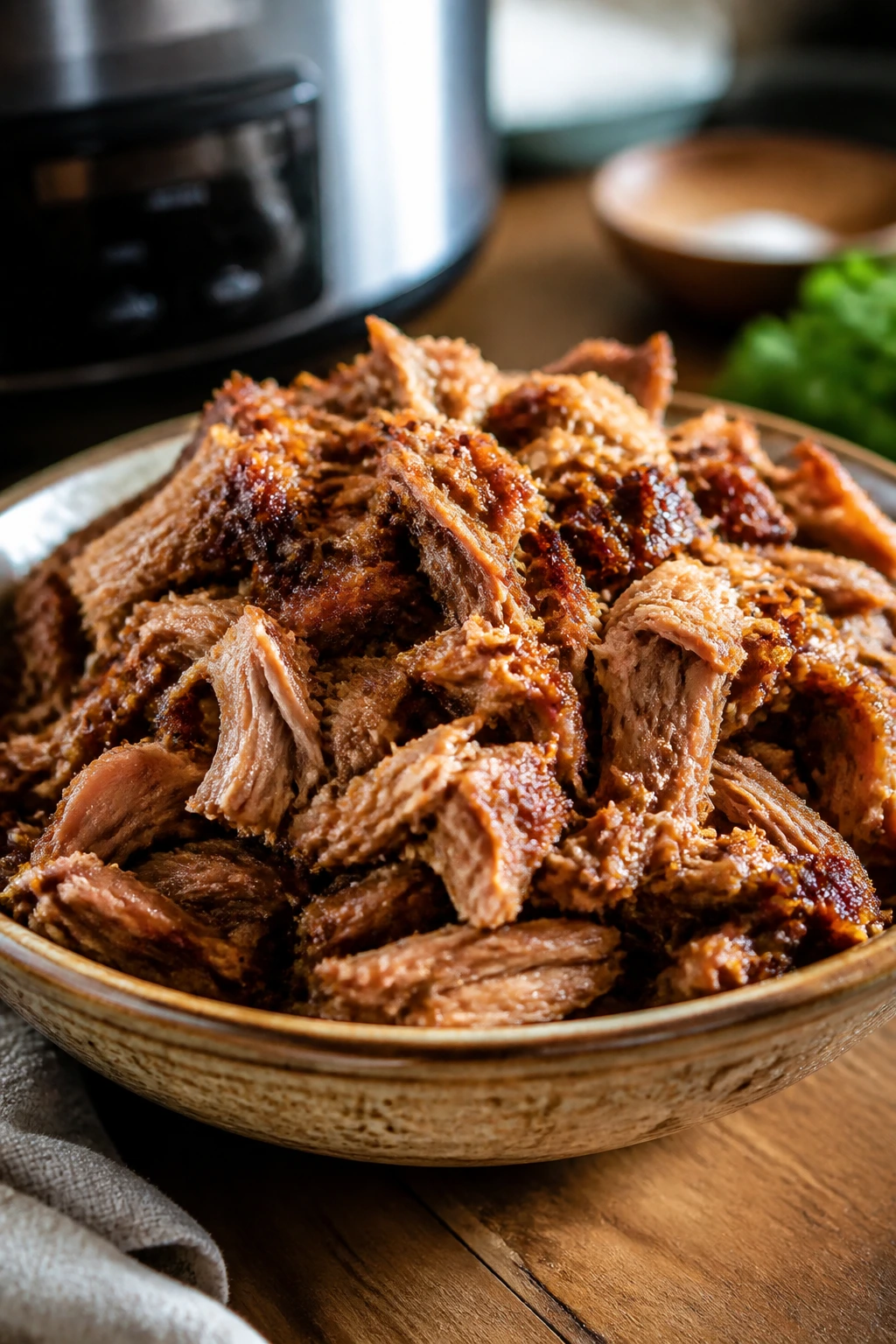
Skipping the crisping step: If the meat goes straight from slow cooker to tortilla, the texture is soft all the way through and the flavor tastes one-note. Broil or skillet-crisp it in a single layer until you get dark edges and a little crackle.
-
Adding too much liquid: The slow cooker needs moisture, but the pork should not swim. Too much broth or juice dilutes the seasoning and leaves you with meat that tastes boiled instead of braised; keep the liquid partway up the meat, not over it.
-
Shredding too early: If the pork still resists when you pull it with forks, it needs more time. Tough shreds are the giveaway. Wait until the thickest piece is around 195°F to 203°F and collapses with almost no pressure.
-
Throwing away all the cooking juices: That liquid carries salt, citrus, onion, garlic, and pork flavor. Use a little to moisten the shredded meat before crisping, or save it for drizzling over leftovers.
-
Crowding the sheet pan: A pile of pork steams itself under the broiler, and the top burns before the middle browns. Spread it out in a thin layer, even if that means using two pans.
One sentence worth repeating: broiling is not a garnish step. It changes the whole dish.
Variations and Swaps That Still Taste Like Carnitas
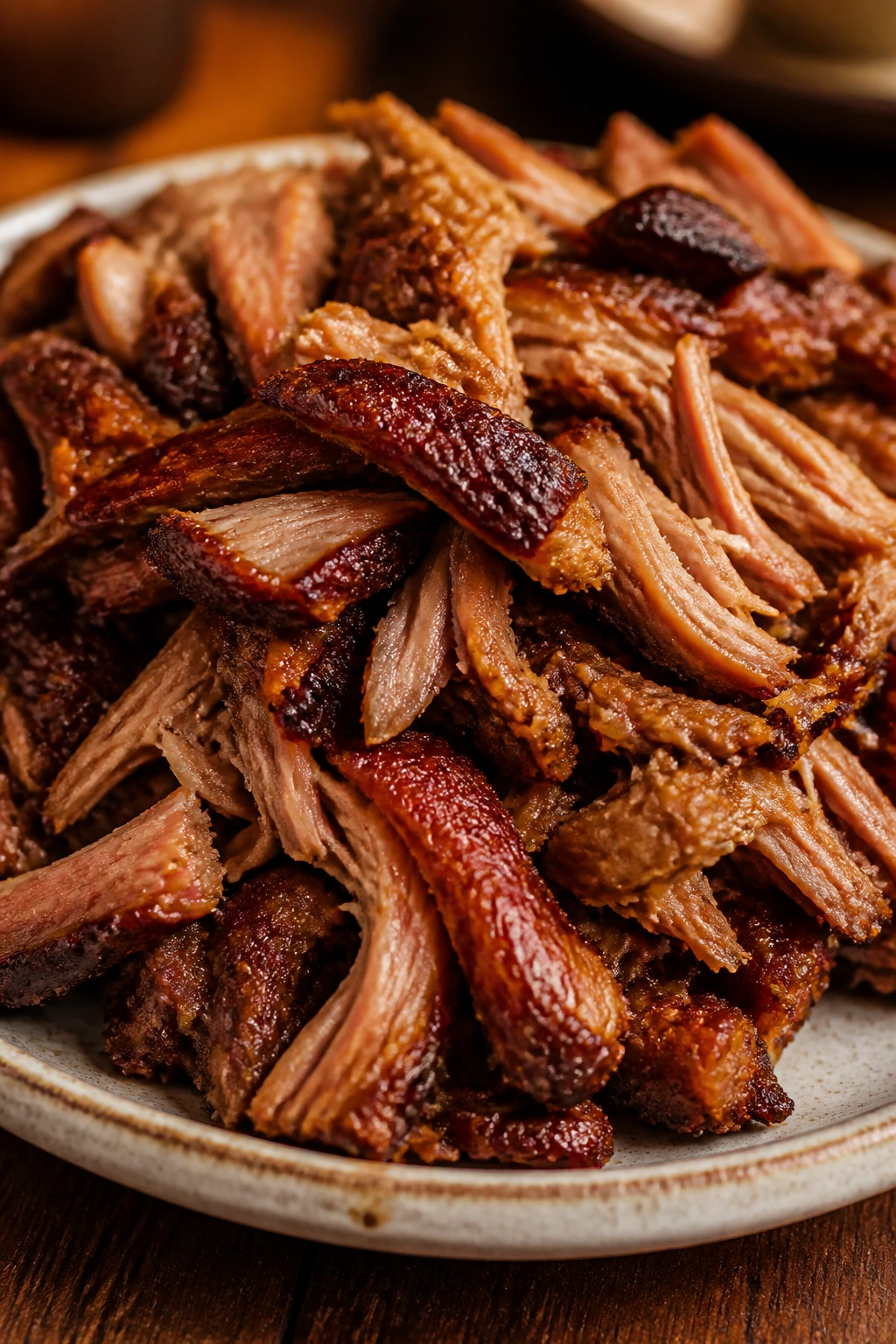
Smoky Chipotle Carnitas: Add 2 minced chipotle peppers in adobo plus 1 teaspoon of the sauce to the slow cooker. This version brings a darker, smokier heat that works especially well in burritos and nachos, where the richer flavor can stand up to cheese and beans.
Orange-Peel Bright Carnitas: Replace half the orange juice with 1 cup of water plus a wide strip of orange peel and an extra tablespoon of lime juice. The result is less sweet and a little cleaner on the finish, which I like for tacos topped with a lot of salsa and pickled onions.
Cast-Iron Crisped Carnitas: If your broiler is weak or your oven runs unevenly, crisp the shredded pork in a cast-iron skillet with a teaspoon of the reserved fat. Work in batches over medium-high heat until the edges darken. You lose the hands-off nature for 10 minutes, but you gain more control.
Mild Family Version: Skip the chipotle and use regular paprika instead of smoked paprika if you want the gentlest version. The pork still tastes like carnitas — citrus, garlic, oregano, and onion do enough work on their own — but the heat stays in the background.
Extra-Garlic Finish: Stir 1 grated garlic clove into the hot shredded pork right after broiling, then toss with lime juice. That last-minute hit smells sharp and fresh, and it’s a nice move if you like your tacos loud.
Make-Ahead, Storage, and Reheating
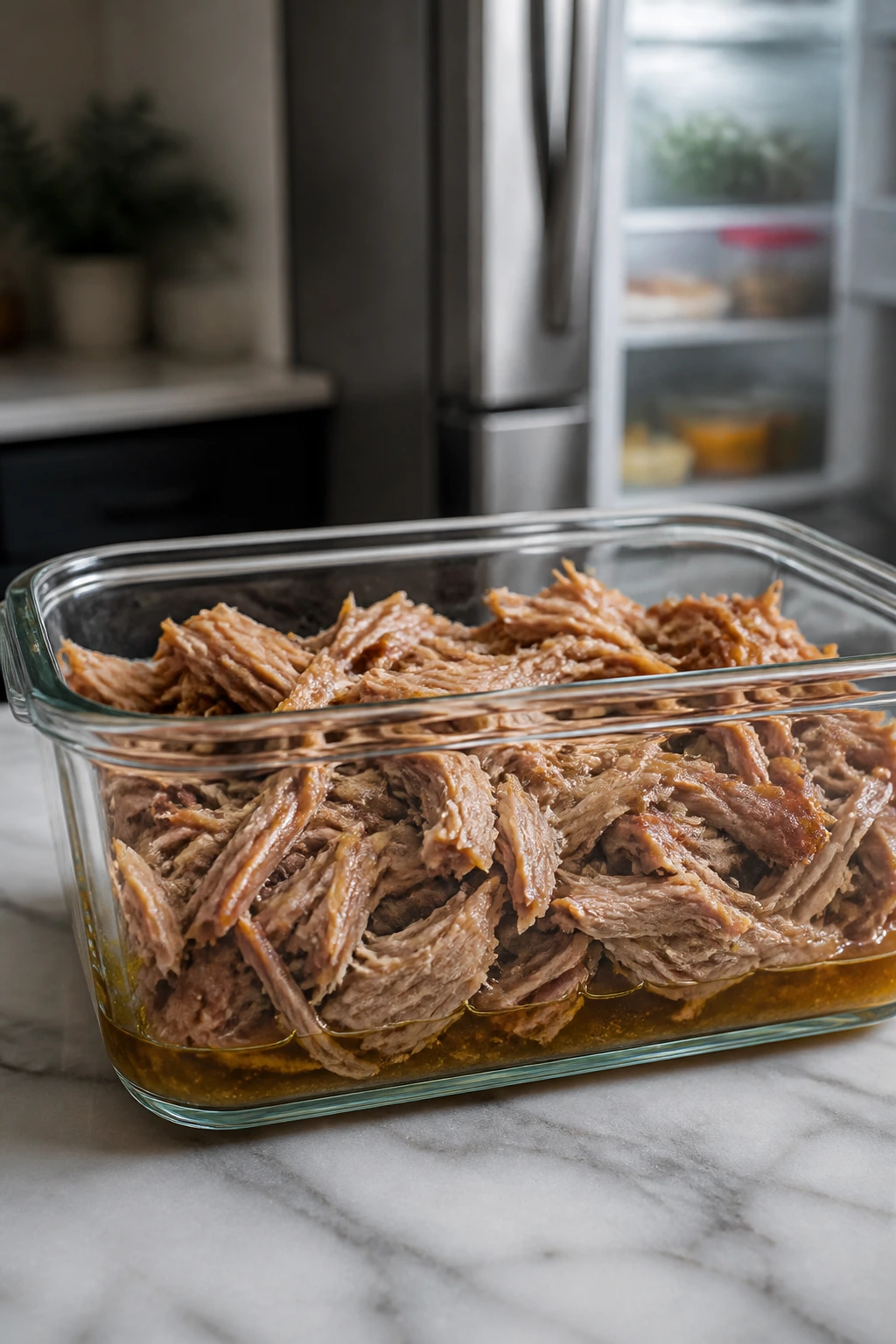
The cooked pork keeps well, which is part of why I keep coming back to it. Store the shredded carnitas in an airtight container with a few spoonfuls of the cooking liquid so the meat stays moist. In the refrigerator, it holds for 3 to 4 days. In the freezer, it stays good for up to 2 months, though the texture is best if you use it sooner rather than later.
If you’re making it ahead for a party, cook and shred the pork a day early, then chill it in its juices overnight. That little rest does two useful things: the flavor settles in, and the fat rises and firms up on top, which makes it easier to skim before reheating. You can broil or skillet-crisp it right before serving.
For reheating, the stovetop is my first pick. Warm the pork in a skillet over medium heat with 1 to 2 tablespoons of reserved liquid until it’s hot through, then let it sit undisturbed for a minute so some edges re-crisp. The oven works too: spread the pork in a thin layer on a sheet pan, cover loosely with foil, and heat at 375°F for about 10 to 15 minutes. Pull the foil off for the last few minutes if you want more browning.
The microwave is the least graceful option, but it has its place on a Tuesday night. Use short bursts, add a spoonful of liquid, and cover the meat loosely so it doesn’t dry into little rubbery strands. Once it’s hot, you can still hit it with a quick pass under the broiler if you want the surface to wake back up.
Freezing is easiest if you portion the pork in 2-cup bags or containers. That way you can thaw exactly what you need for tacos, bowls, or quesadillas without dragging the whole batch out of the freezer.
Questions About Slow Cooker Carnitas

Can I use pork loin instead of pork shoulder?
You can, but I wouldn’t. Pork loin is too lean for a long slow cook, so it tends to dry out before it gets the soft, shreddable texture carnitas need. Pork shoulder, pork butt, or picnic roast are the cuts that actually make sense here.
Do I have to broil the carnitas at the end?
If you want true carnitas texture, yes. The broiler is what gives you the browned, crisp edges that separate carnitas from ordinary shredded pork. If you skip it, the meat will still taste good, but it will read as soft braised pork instead of carnitas.
Can I cook this on HIGH instead of LOW?
Yes, and sometimes that’s the practical move. Plan on 4 to 6 hours on HIGH, checking for fork tenderness near the end. LOW gives a little more margin and usually better texture, but HIGH works if your schedule is tighter.
What if the pork is tender but still won’t shred cleanly?
It probably needs more time. Give it another 30 to 45 minutes and check again; pork shoulder can feel done at the edges before the center fully breaks down. If your slow cooker runs cool, it may take longer than the range suggests.
Can I make the carnitas spicier without changing the whole recipe?
Absolutely. Add more chipotle in adobo, leave the seeds in, or finish the shredded pork with a spoonful of adobo sauce after broiling. You can also serve it with a hot salsa instead of a mild one so the heat stays at the table, not in the pot.
Can I freeze the cooked carnitas?
Yes, and it freezes better than a lot of shredded meats because the fat helps protect the texture. Cool it first, pack it with a few spoonfuls of cooking liquid, and freeze for up to 2 months for the best result.
Can I crisp the pork in a skillet instead of under the broiler?
You can, and it’s a good option if your broiler is weak or your oven is fussy. Use a large cast-iron skillet over medium-high heat, spread the pork out in a thin layer, and let it sit long enough to brown before stirring. Work in batches so the pan doesn’t steam the meat.
The Batch That Disappears Fastest
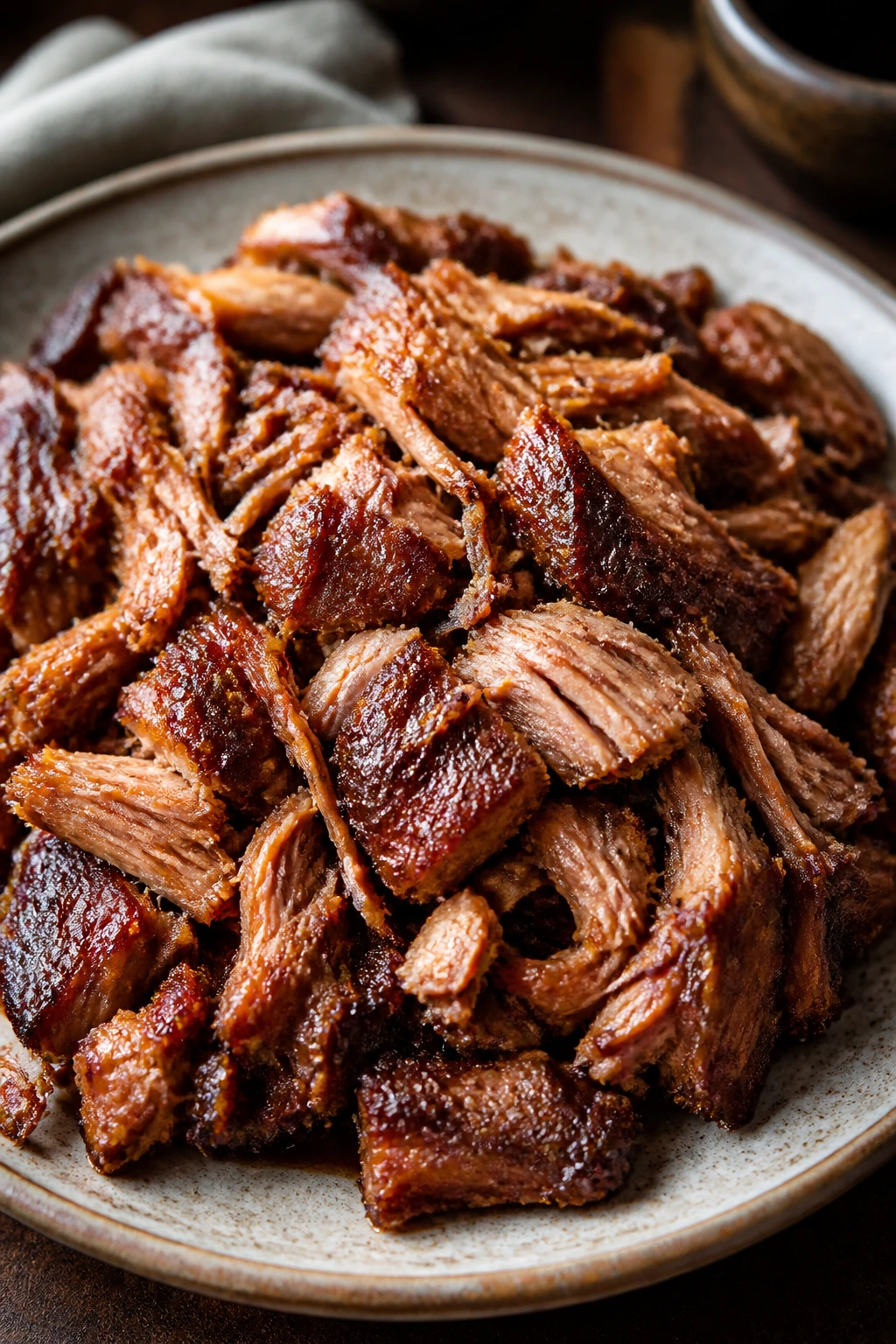
There’s a reason slow cooker pork carnitas keeps showing up in my dinner rotation: it gives you two textures that usually fight each other. The meat stays soft and juicy inside, but the edges pick up enough color and crunch to keep every bite interesting. That little bit of contrast is what makes the dish feel complete.
I also like that it behaves well in the real world. The pork can wait in its juices, the leftovers reheat without drama, and the same batch can turn into tacos one night, rice bowls the next, and quesadillas after that. You are not cooking a single-use dinner here. You’re making a useful one.
If you want the whole thing to taste better than the sum of its parts, don’t rush the finish. Let the slow cooker do what it does best, then give the pork the hot, dry blast it needs at the end. That’s the difference between decent shredded pork and carnitas people keep reaching for with the serving spoon.
Slow Cooker Pork Carnitas — Recipe Card
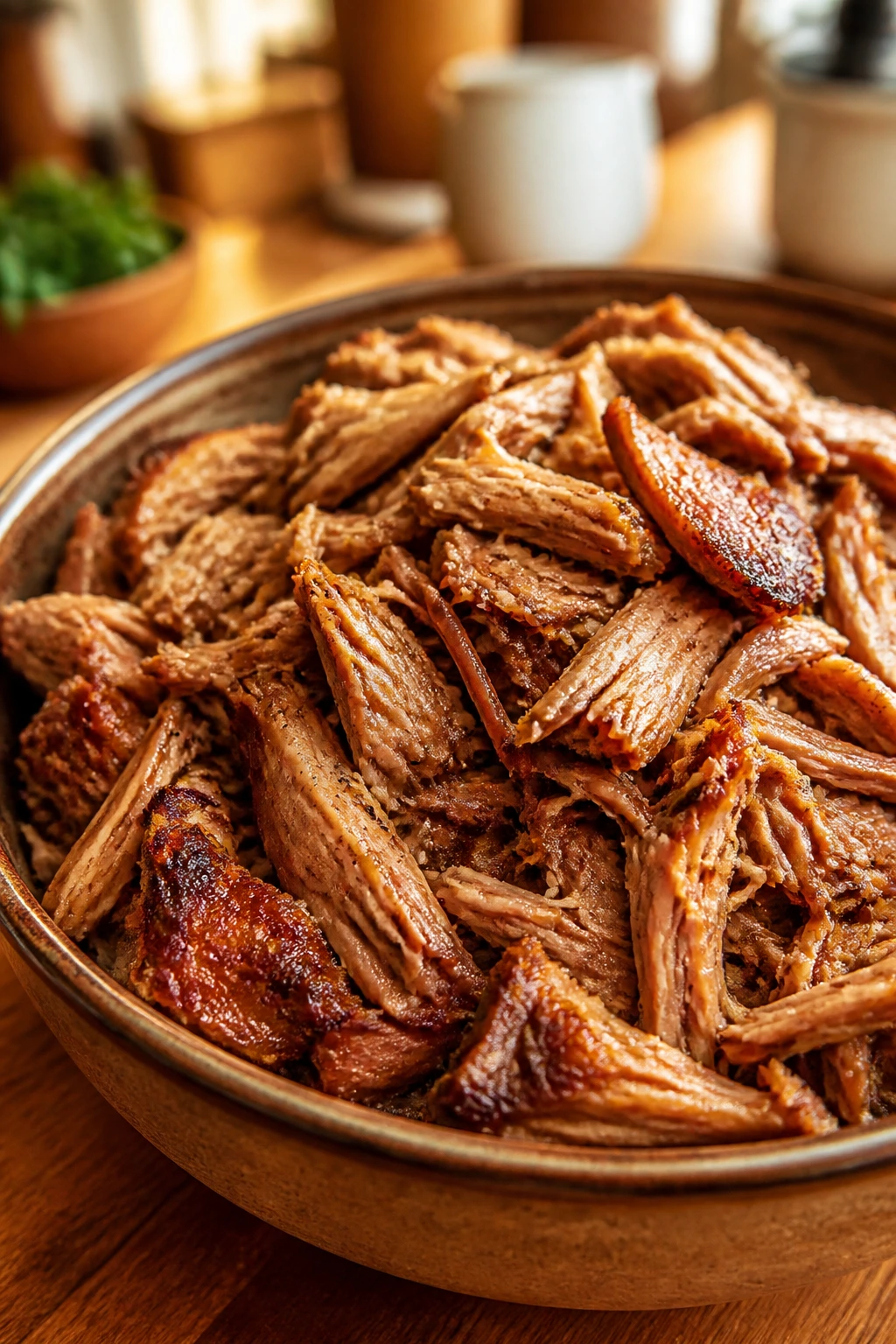
Recipe Name: Slow Cooker Pork Carnitas
Description: Tender pork shoulder slow-cooked with orange, lime, garlic, onion, cumin, and oregano, then broiled until the edges turn crisp and browned. Perfect for tacos, bowls, nachos, or rice plates.
Prep Time: 20 minutes
Cook Time: 8 hours on LOW or 4 to 6 hours on HIGH, plus 5 to 8 minutes broiling
Total Time: About 8 hours 30 minutes on LOW or about 4 hours 30 minutes on HIGH
Course: Main Course
Cuisine: Mexican
Servings: 8
Calories: About 430 kcal per serving
Ingredients
- 4 to 5 pounds boneless pork shoulder (pork butt), trimmed of thick outer fat and cut into 3 or 4 large chunks
- 2 tablespoons kosher salt, or 1 tablespoon Morton kosher salt
- 2 teaspoons ground cumin
- 2 teaspoons dried oregano, preferably Mexican oregano
- 1 teaspoon smoked paprika
- 1 teaspoon freshly ground black pepper
- 1 tablespoon orange zest, finely grated from 1 large orange
- 1 large white onion, cut into 1/2-inch wedges
- 6 garlic cloves, smashed
- 1/2 cup fresh orange juice
- 1/4 cup fresh lime juice
- 1/2 cup low-sodium chicken broth
- 2 bay leaves
- 1 to 2 chipotle peppers in adobo, minced, plus 1 teaspoon adobo sauce (optional)
Instructions
- Trim the pork shoulder, then cut it into 3 or 4 large chunks.
- Mix the salt, cumin, oregano, smoked paprika, black pepper, and orange zest, then rub over the pork.
- Place the onion and garlic in the bottom of a 6-quart slow cooker. Add the pork, orange juice, lime juice, broth, bay leaves, and chipotle, if using.
- Cover and cook on LOW for 8 to 10 hours or HIGH for 4 to 6 hours, until the pork reaches 195°F to 203°F and shreds easily.
- Transfer the pork to a cutting board, remove the bay leaves, shred the meat, and skim any excess fat from the cooking liquid.
- Toss the shredded pork with 1/2 to 3/4 cup of the cooking liquid, then spread it on a rimmed sheet pan.
- Broil for 4 to 5 minutes, stir, then broil for 2 to 3 minutes more until the edges are browned and crisp.
- Finish with a squeeze of fresh lime juice and serve hot.
Notes: Keep a little of the cooking liquid with the leftovers so they stay juicy. For the best crunch, do not pile the pork too thickly under the broiler.