



A good slow cooker beef stew doesn’t need a parade of ingredients. It needs time, a sensible cut of beef, and vegetables that can sit in the pot for hours without turning to paste. That’s the whole trick. You load the slow cooker, walk away, and come back to something that smells like onions, thyme, browned beef, and broth that has gone deep and dark around the edges.
This is the kind of slow cooker beef stew I make when I want dinner to take care of itself. No standing over a pot. No babysitting. No panic when the day gets messy and the kitchen gets shoved to the back of the list. The beef turns spoon-tender, the carrots soften without collapsing, and the potatoes soak up the broth until they taste seasoned all the way through.
I also like that this version doesn’t depend on drama. You do not need wine, bacon, or a dozen fancy herbs to make it taste like stew. A chuck roast, good broth, tomato paste, Worcestershire, and a patient cook time do most of the heavy lifting. If you’ve ever had beef stew that tasted thin, flat, or weirdly one-note, the fix is usually not more ingredients. It’s better timing, better cuts, and a little restraint.
And yes, it really does belong in the “set it and forget it” category. Chop, load, cover, and let the slow cooker do the part that usually ties your hands to the stove.
Why This Beef Stew Works So Well in a Slow Cooker
Hands-off doesn’t mean flavor-light. The long, low heat gives chuck roast time to relax into tenderness while the onions, tomato paste, and Worcestershire settle into the broth instead of shouting over it.
You get better texture with bigger cuts. Carrots cut into 1-inch pieces and potatoes cut into 1½-inch chunks stay intact far better than tiny dice, which matters when the cooker runs for eight hours.
The broth thickens in the right place, at the right time. I’m not a fan of thickening stew at the beginning. It’s clumsy, and it muddies the flavor. A cornstarch slurry near the end gives you a glossy gravy without turning the pot into glue.
Chuck roast earns its keep. This cut has enough connective tissue and marbling to handle long cooking. Lean beef can work, but it often comes out dry, stringy, and oddly apologetic.
It tastes like dinner, not a side project. Potatoes, carrots, celery, and peas all land in the same bowl, which means you don’t need to build a second meal around the stew just to make it feel complete.
The Bowl at a Glance
Yield: Serves 6
Prep Time: 20 minutes
Cook Time: 8 to 9 hours on low, or 4 to 5 hours on high
Total Time: 8 hours 20 minutes to 9 hours 20 minutes on low, or 4 hours 20 minutes to 5 hours 20 minutes on high
Difficulty: Beginner — the steps are simple, and the slow cooker does the long work for you. The only real skill here is cutting the beef and vegetables into even pieces.
Best Served: Hot, after a 10-minute rest so the gravy settles a little
What Goes Into the Crock and Why It Matters
For the Stew:
- 2 1/2 pounds beef chuck roast, trimmed and cut into 1 1/2-inch cubes
- 1 1/2 teaspoons kosher salt
- 1 teaspoon black pepper
- 2 tablespoons vegetable oil, optional for browning
- 1 large yellow onion, chopped
- 4 garlic cloves, minced
- 2 tablespoons tomato paste
- 4 cups low-sodium beef broth
- 2 tablespoons Worcestershire sauce
- 2 teaspoons dried thyme
- 2 bay leaves
- 1 pound Yukon Gold potatoes, cut into 1 1/2-inch chunks
- 4 medium carrots, peeled and cut into 1-inch pieces
- 2 celery ribs, cut into 1/2-inch pieces
- 1 cup frozen peas
- 3 tablespoons cornstarch
- 3 tablespoons cold water
- 1 tablespoon red wine vinegar
- 2 tablespoons chopped fresh parsley, for serving
A few of these ingredients deserve a closer look, because the difference between a weak stew and a bowl you want again tomorrow usually hides in the details.
Beef
What to use: 2 1/2 pounds chuck roast, trimmed and cut into 1 1/2-inch cubes.
Preparation: Trim off any hard exterior fat, then pat the beef dry before seasoning it. Dry beef takes on seasoning better and browns more evenly if you choose to sear it.
Substitutions: Beef shoulder roast, boneless chuck eye roast, or store-bought stew meat can work.
Tips: Look for some marbling. Lean beef asks for perfect timing; chuck roast forgives a slightly long cook.
Vegetables
What to use: 1 large onion, 4 carrots, 2 celery ribs, 1 pound Yukon Gold potatoes, and 1 cup frozen peas.
Preparation: Cut everything into larger, even pieces so the carrots and potatoes don’t dissolve during the long cook.
Substitutions: Parsnips, turnips, or even small sweet potatoes can stand in for part of the potatoes. Green beans can replace peas if you prefer a firmer finish.
Tips: Yukon Golds hold their shape better than russets, and they give the broth a little body without going chalky.
Broth and Seasoning
What to use: 4 cups low-sodium beef broth, 2 tablespoons Worcestershire sauce, 2 tablespoons tomato paste, 2 teaspoons dried thyme, 2 bay leaves, 1 tablespoon red wine vinegar, plus salt and pepper.
Preparation: Stir the tomato paste into the broth until smooth so you don’t end up with streaks of paste in the finished pot.
Substitutions: If you don’t have Worcestershire, a splash of soy sauce and a little extra vinegar will cover some of the same ground.
Tips: Low-sodium broth gives you room to season at the end. Regular broth plus Worcestershire can push the salt level higher than you want.
Thickener and Finish
What to use: 3 tablespoons cornstarch mixed with 3 tablespoons cold water, plus parsley for the end.
Preparation: Make the slurry right before you need it; cornstarch works best when it goes into hot liquid and gets a few minutes to bloom.
Substitutions: A flour slurry can work, but cornstarch gives a cleaner finish in a slow cooker.
Tips: Add the peas after thickening so they stay bright and don’t sink into the gravy for an hour.
Optional Browning
What to use: 2 tablespoons vegetable oil.
Preparation: Use it only if you want to brown the beef in a skillet first.
Substitutions: Avocado oil or canola oil both handle the heat.
Tips: Browning adds a darker crust and a little extra depth, but the stew still works if you skip it and go full set-and-forget.
Why Chuck Roast Beats Leaner Cuts
Chuck roast is the right kind of stubborn. It starts out tough, which sounds like a drawback until you remember what slow cooking does to connective tissue. Over several hours, the collagen in the roast breaks down and turns into that silky, spoon-coating texture people chase in stew.
Lean cuts don’t play this game as well. Sirloin and round can go dry before they get tender, especially in a cooker that runs hot. You can make them edible. You can even make them decent. But they usually need more babysitting, more timing discipline, and a better feel for your specific machine.
That’s why I reach for chuck roast first. It doesn’t punish you for leaving it in the cooker an extra 20 minutes, which matters more than people admit. Slow cooker brands vary a lot. Some run gentle. Some run like they’re trying to prove a point. Chuck roast smooths out those differences.
If you buy pre-cut stew meat, look closely at the label. It’s often chuck, but not always, and the pieces can be cut from a mix of tougher and leaner trimmings. Fine in a pinch. Not my first choice. I’d rather buy a whole chuck roast and cut it myself than trust a mystery bag of beef cubes with my dinner.
How to Keep the Vegetables Whole
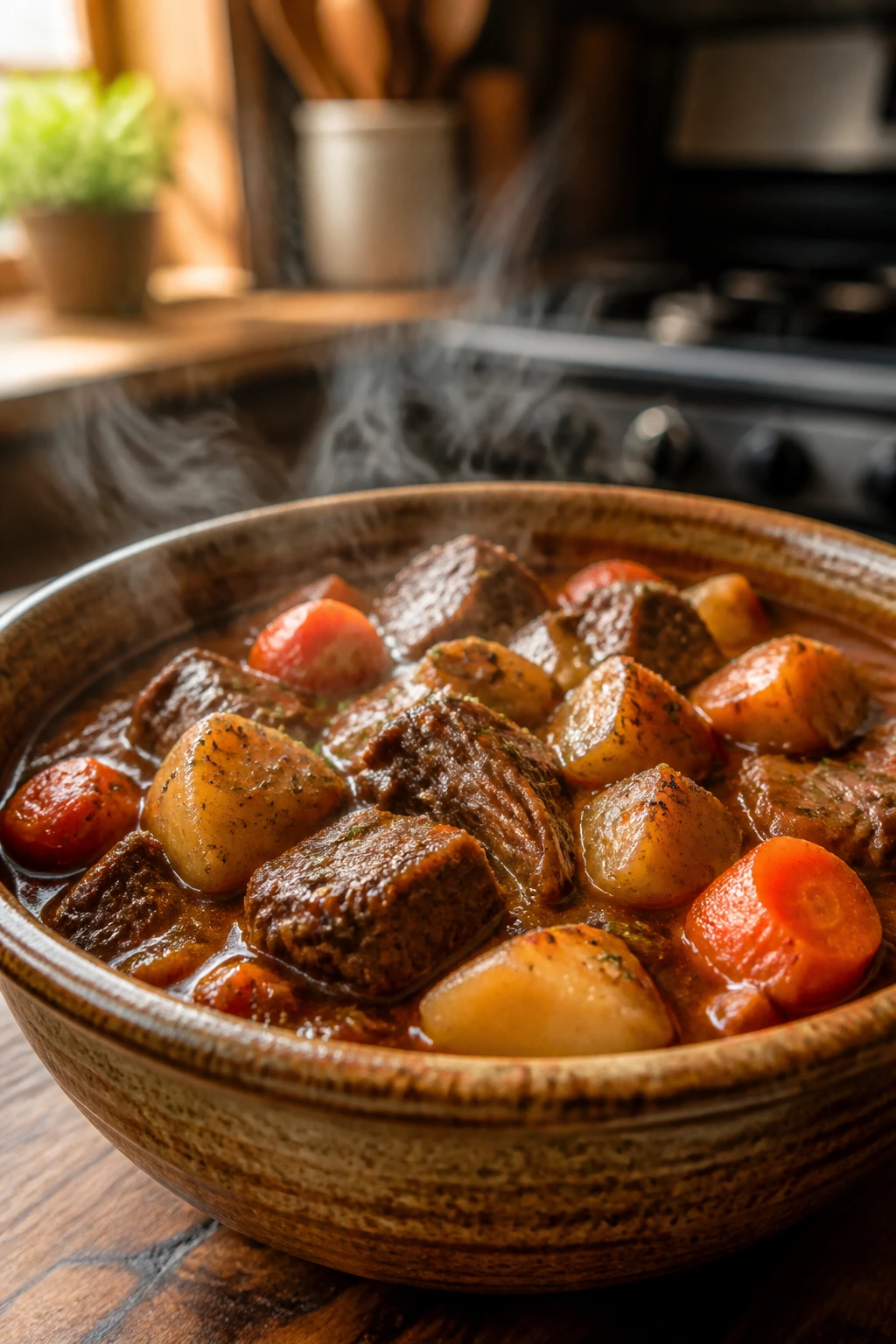
Size is the first line of defense. Carrots cut into tiny coins will soften fast and vanish into the broth. Potatoes cut into one-inch chunks will go past tender and start crumbling if your cooker runs hot. Bigger pieces give you better control.
I like Yukon Gold potatoes because they hold shape better than russets and still release enough starch to make the broth feel richer. They’re the middle ground I want in a stew. Not waxy. Not fluffy. Just steady.
Put the vegetables where they’ll cook evenly, not where they look prettiest in the pot. A lot of people overthink layering, but the practical version is simple: heavier root vegetables should sit low enough to get heat, and the beef should be nestled so its juices can flavor everything around it. If your slow cooker tends to scorch on the bottom, give the onions and broth a quick stir at the start and then leave it alone.
Celery is a supporting actor here. It brings a little savory base note, but it can turn limp if it’s chopped too small. Keep it in half-inch pieces. That’s enough to show up in the final bowl without tasting like celery soup.
The Set-and-Forget Method, Step by Step
Prep the beef and vegetables first.
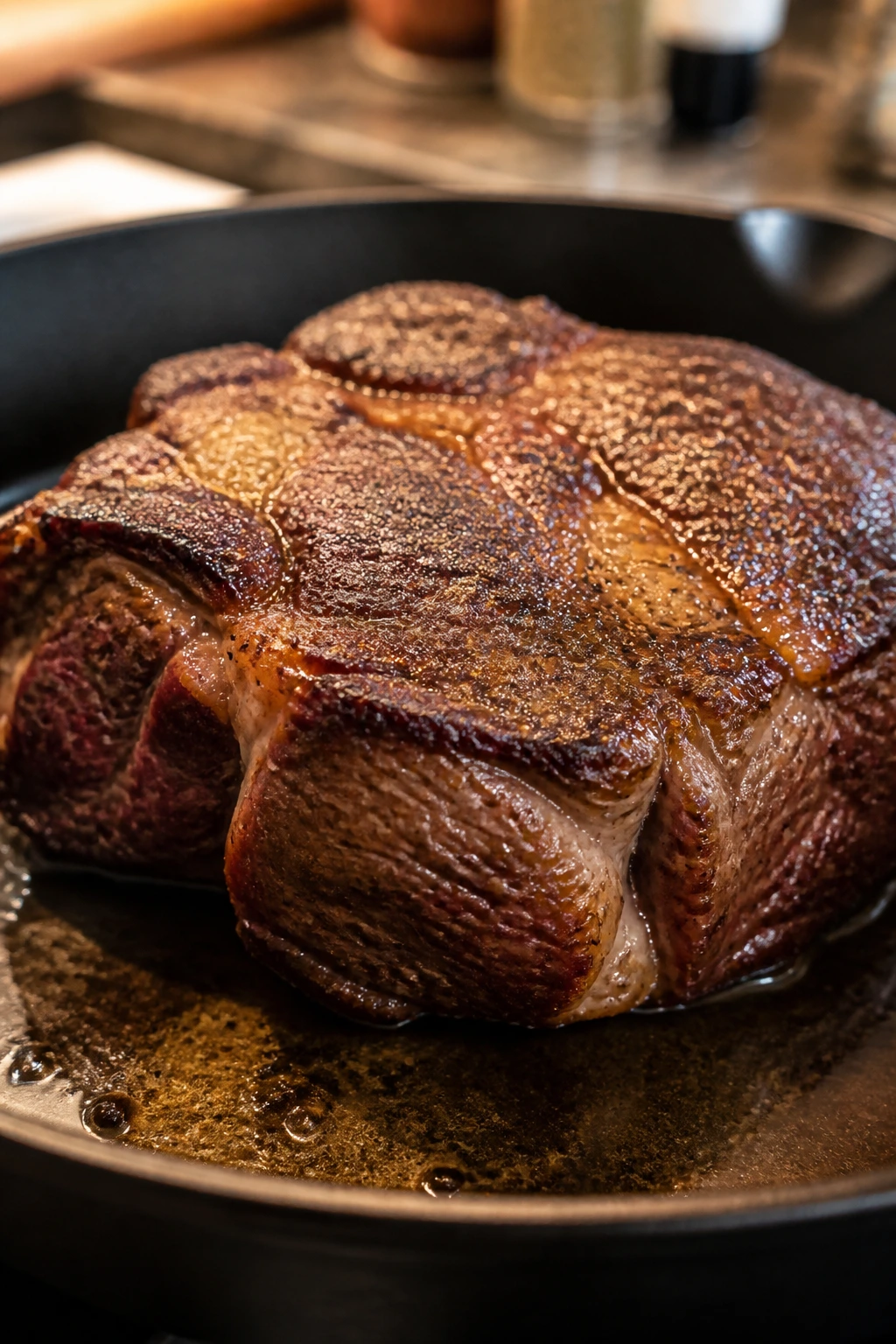
- Pat the beef dry with paper towels and trim off any thick, hard pieces of fat. Season it with the kosher salt and black pepper. If you want to brown the meat, heat the vegetable oil in a large skillet over medium-high heat and sear the beef in 2 batches for 2 to 3 minutes per side, until you see a dark brown crust. Do not crowd the pan or the beef will steam instead of browning.
Build the base in the crock.
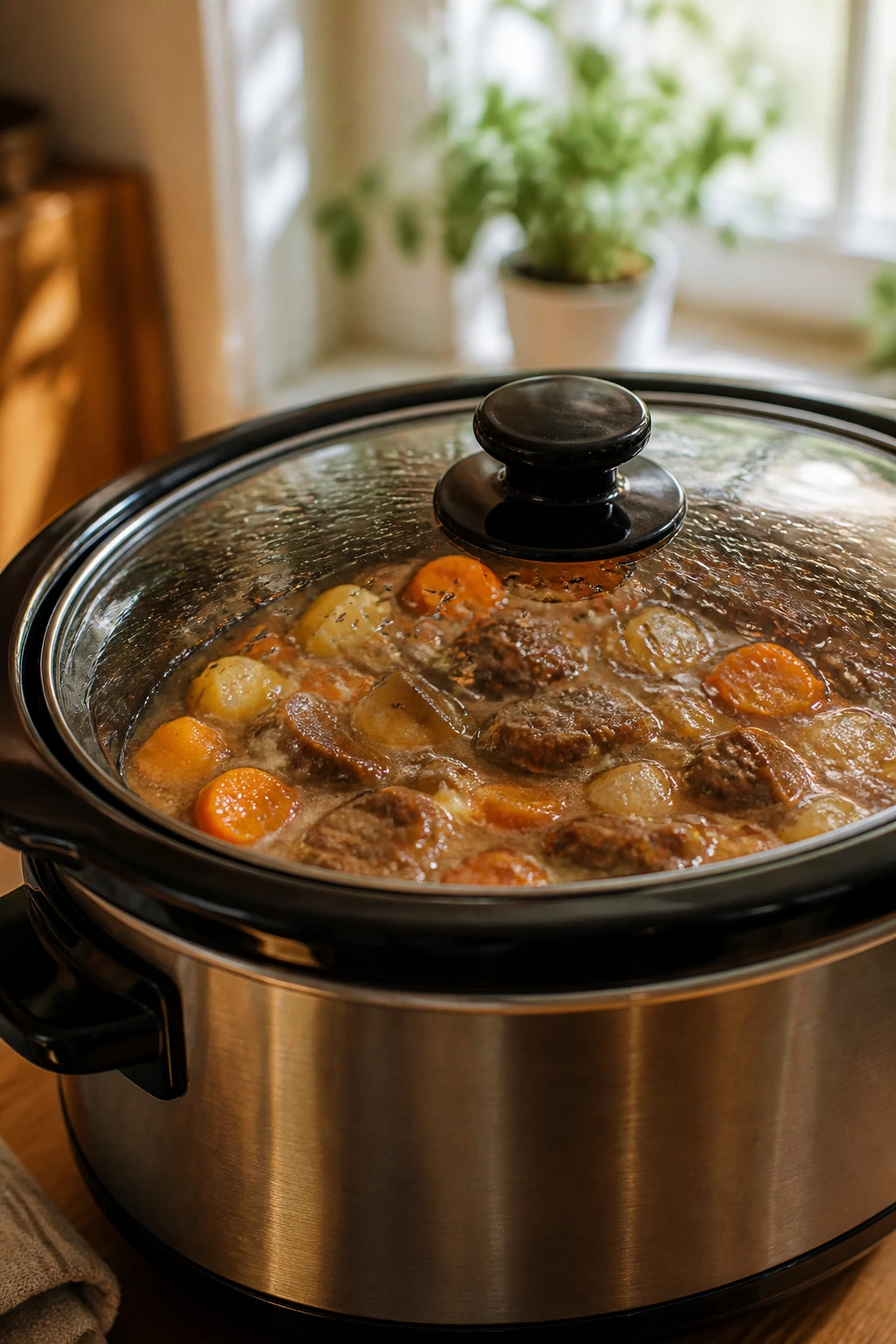
2. Add the onion, garlic, potatoes, carrots, and celery to the bottom of a 6-quart slow cooker. The vegetables make a sturdy bed for the beef and keep the meat from sitting directly on the hot ceramic insert.
3. In a medium bowl, whisk together the beef broth, tomato paste, Worcestershire sauce, thyme, and bay leaves until the tomato paste is mostly dissolved. Pour this over the vegetables. The liquid should come partway up the ingredients, not drown them.
Cook without fussing.
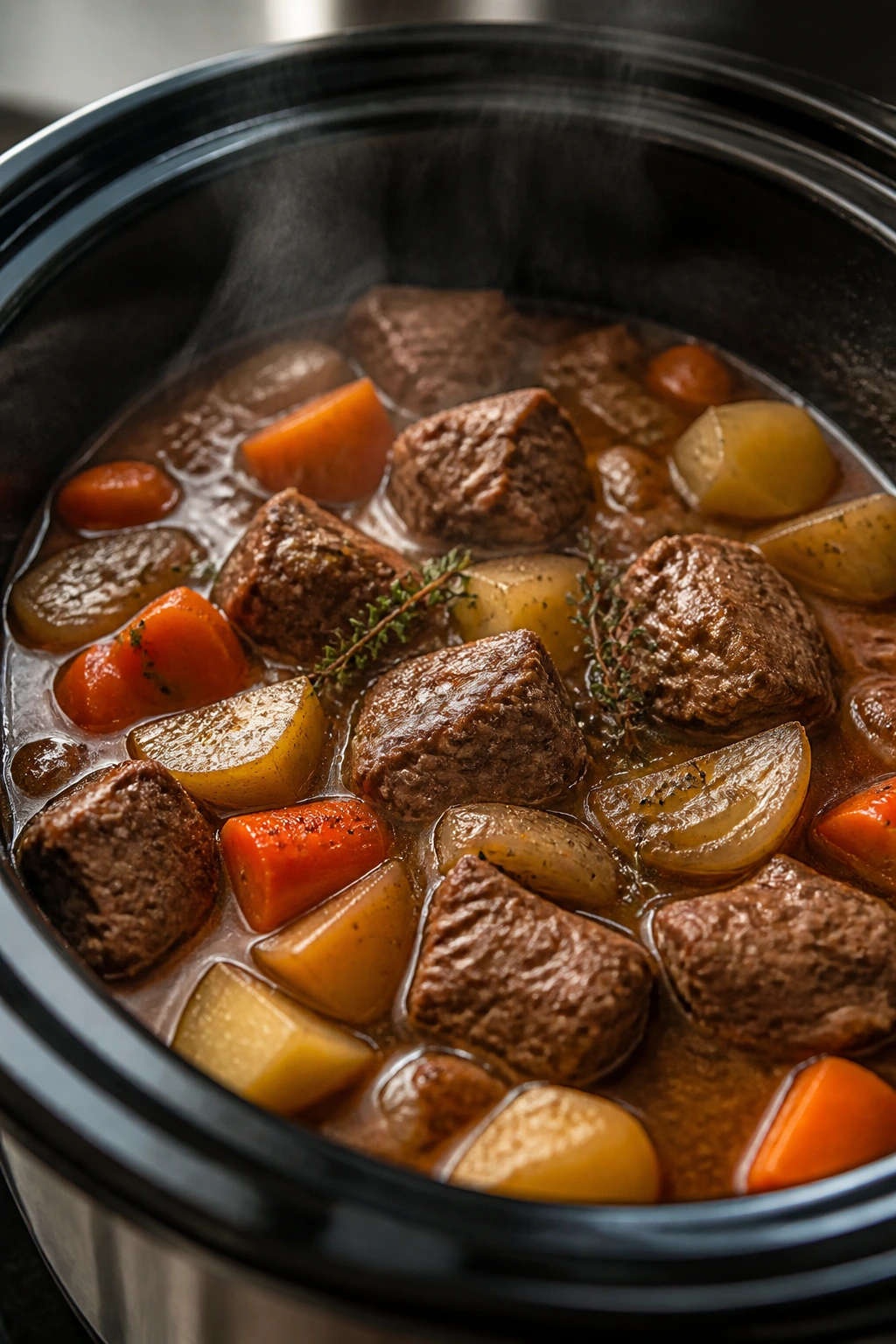
4. Nestle the beef into the slow cooker, pressing it down gently so some pieces are tucked under the broth. Cover and cook on LOW for 8 to 9 hours, or on HIGH for 4 to 5 hours, until the beef shreds easily with a fork and the potatoes are tender at the center but not falling apart. Leave the lid closed. Every peek lets heat and steam escape.
Finish the gravy and the peas.
5. Remove and discard the bay leaves. In a small bowl, stir the cornstarch and cold water together until smooth, then pour the slurry into the stew. Stir gently. Cover and cook on HIGH for 15 to 20 minutes, until the broth turns glossy and thick enough to coat a spoon.
6. Stir in the frozen peas and the red wine vinegar. Let them warm through for 3 to 5 minutes, then taste and adjust the salt and pepper. The peas should stay bright green, not dull and wrinkled.
7. Spoon into bowls, scatter the parsley over the top, and let the stew sit for 5 to 10 minutes before serving so the gravy settles into a good, spoonable texture.
That’s the whole road map. Short first act. Long second act. One final finish.
How to Thicken the Broth Without Making It Gluey
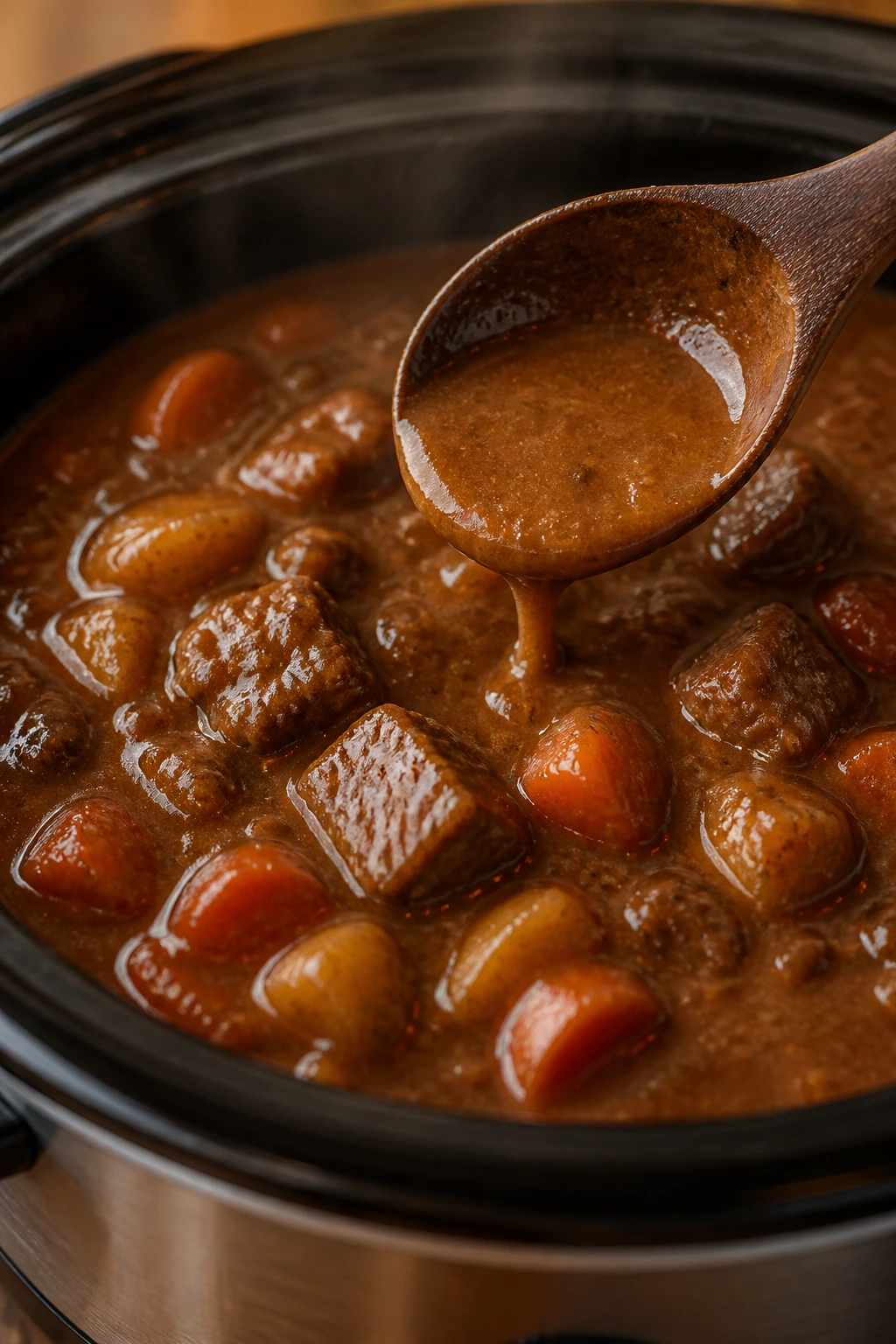
Cornstarch belongs at the end, not the beginning. If you thicken the stew before it has finished cooking, the sauce can tighten too much and cling in a heavy, chalky way. Slow cookers don’t reduce liquid the way a stovetop pot does, so the gravy needs a deliberate nudge.
The cleanest move is a cornstarch slurry. Mix cornstarch with cold water first, then stir it into the hot stew near the end. Cold liquid keeps the starch from clumping. A few minutes of heat finish the job. You’ll know it’s right when the broth turns from thin and brothy to glossy and lightly thick, the kind that coats the back of a spoon instead of sliding off it like dishwater.
If you like a thicker, rustic stew, mash a few potato chunks against the side of the cooker after the beef is tender. That gives the broth body without adding extra starch. I use this trick when I want the stew to feel a little old-fashioned and less polished.
Do not overdo both methods at once. That’s where things get sticky in the bad sense. Pick one path, give it a few minutes, and stop when the spoon test looks right. The stew will thicken a little more as it cools anyway.
How to Serve a Stew So It Eats Like Dinner
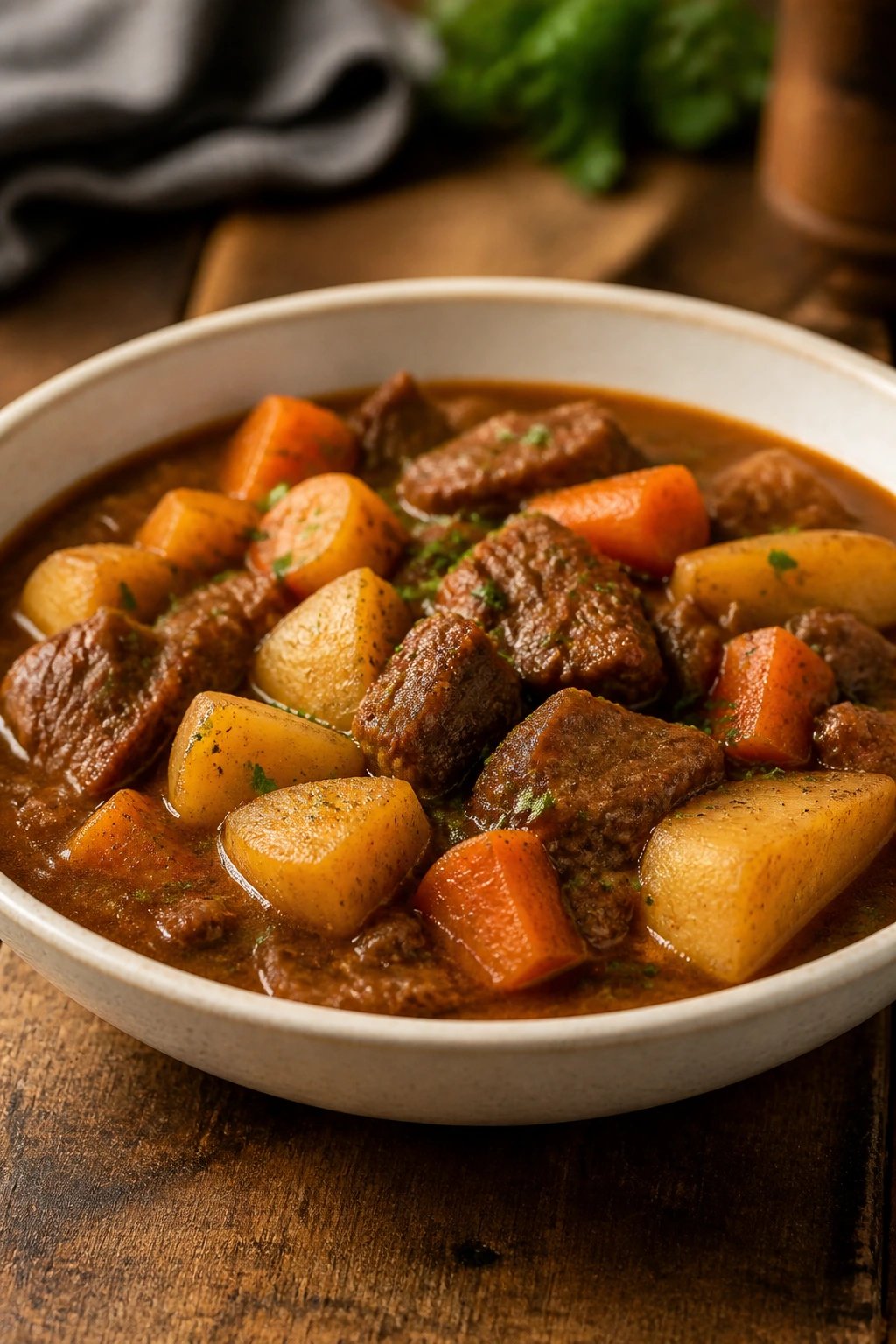
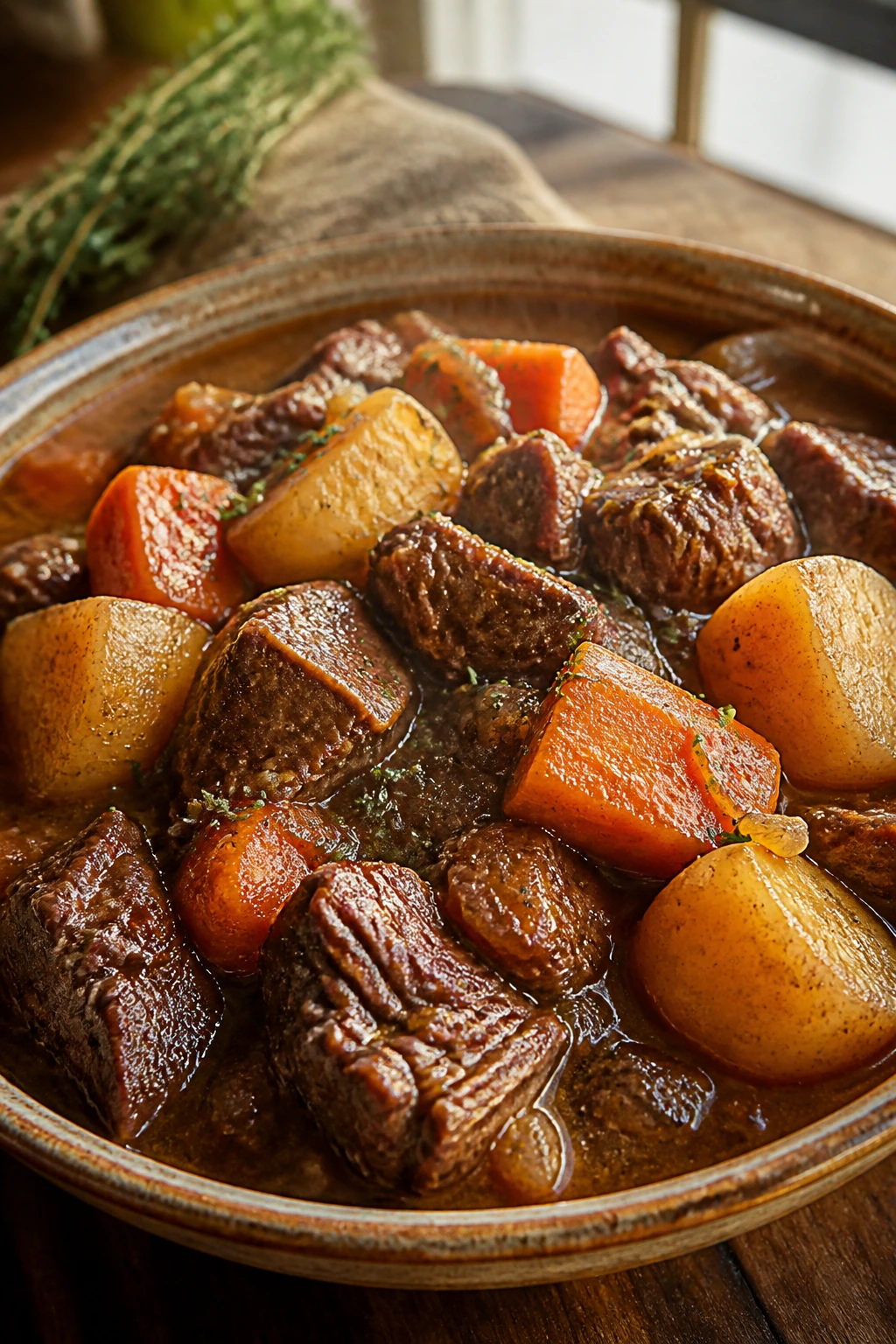
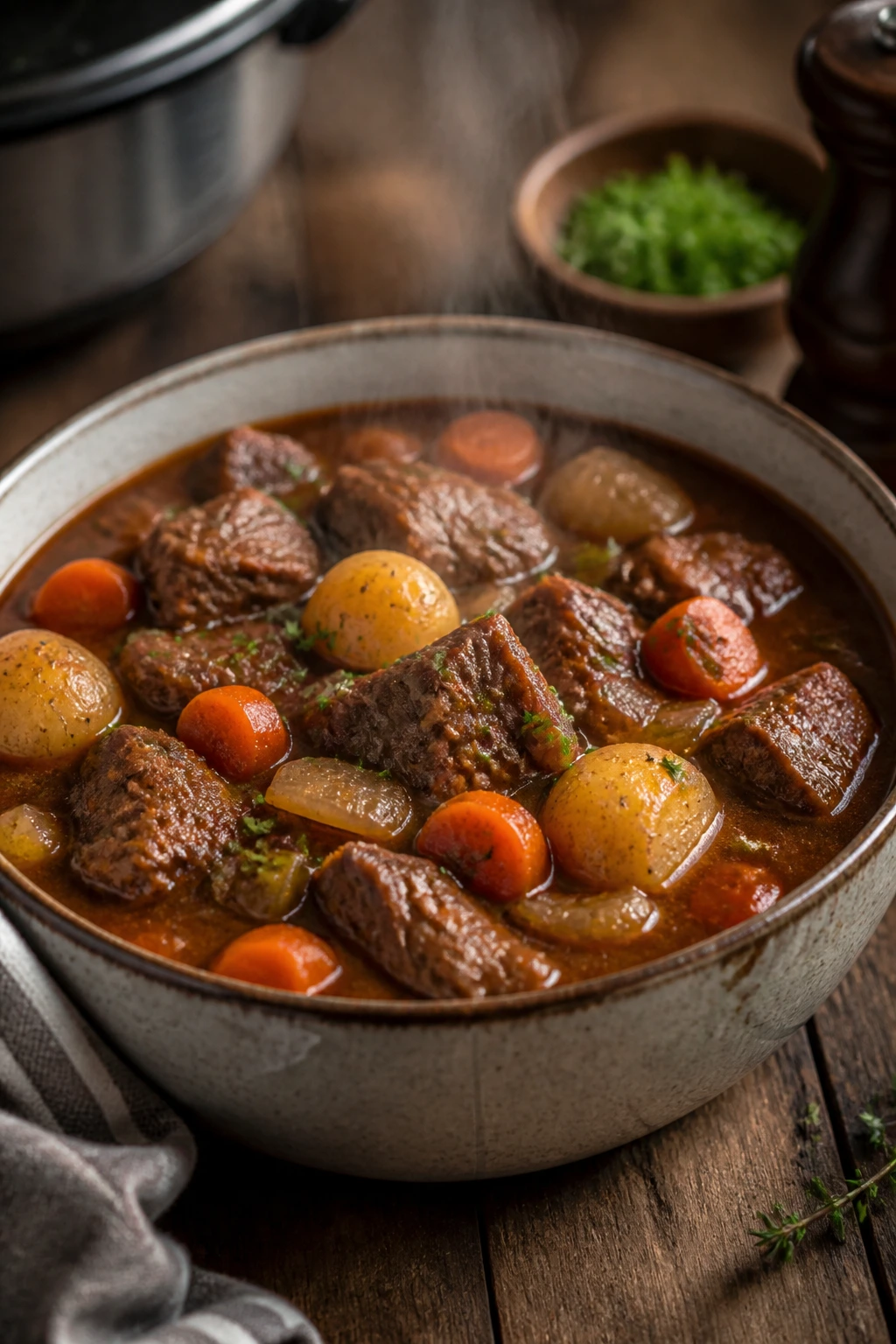
Presentation: Ladle the stew into wide, shallow bowls so you can see the beef, potatoes, and carrots without digging. A few parsley leaves on top keep the bowl from looking muddy, and a quick grind of black pepper makes the surface look fresh.
Accompaniments: I like crusty bread, buttered sourdough, or a pile of mashed potatoes if you want the meal to lean extra hearty. A green salad with sharp vinaigrette works well too, especially if you want something crisp next to all that soft, rich stew. Steamed green beans are a good quiet side if you want the simplest possible plate.
Portions: Plan on about 1 1/2 to 2 cups per adult, depending on what else is on the table. If you’re serving bread and salad, 1 1/2 cups is plenty. If the stew is the whole show, go closer to 2 cups. It scales cleanly; just keep the same liquid-to-beef ratio.
Beverage Pairing: A dry red wine with enough acidity to cut the broth works well, and a malty brown ale is a fine non-wine option. If you prefer something nonalcoholic, sparkling water with lemon keeps the palate from getting tired halfway through the bowl.
Small Moves That Make the Pot Taste Deeper
Flavor Enhancement: Stir 1/2 teaspoon smoked paprika into the broth if you want the stew to taste darker and a little more toasted. It doesn’t make the stew taste like barbecue. It just gives the beef a stronger base note.
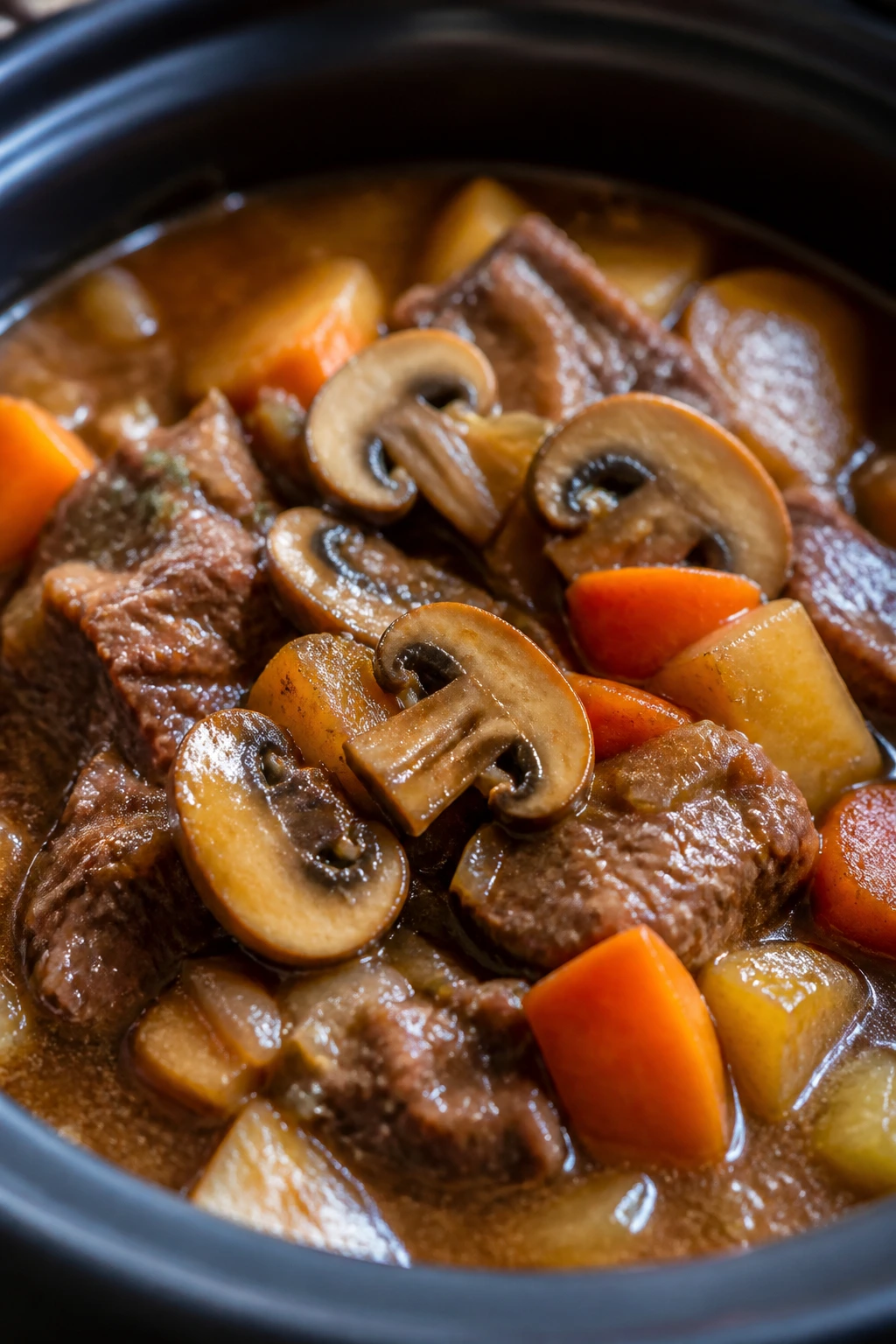
Customization: Add 8 ounces of sliced cremini mushrooms with the vegetables if you like an earthier broth. They disappear into the background in the best way and give the pot a more savory smell when you lift the lid.
Serving Suggestions: A spoonful of chopped parsley is the easiest finish, but a tiny splash of vinegar right before serving wakes everything up faster than you’d think. If the stew tastes a little heavy after the long cook, acid is the fix, not more salt.
Make-It-Yours: For a gluten-free version, keep the recipe exactly as written and use cornstarch for thickening. For a lower-sodium version, choose low-sodium broth and go easy on the salt at the start, then season at the very end after the gravy has reduced a bit.
A small warning: don’t chase depth by piling in every seasoning in the cabinet. Stew gets muddy fast when you overdo it. Two or three smart flavor builders usually beat a long, confused spice list.
Common Mistakes That Flatten Beef Stew
Using lean beef and expecting it to behave like chuck. The symptom is beef that looks cooked but chews like dry roast. The fix is simple: buy chuck roast, or at least a shoulder cut with some marbling. Slow cooking likes connective tissue. It does not rescue lean meat very well.
Cutting the vegetables too small. Tiny carrot coins and skinny potato cubes practically dissolve by the end of an 8-hour cook. That leaves you with a broth full of soft bits instead of actual vegetables. Cut everything into larger, even chunks and they’ll hold their shape better.
Opening the lid over and over. Every peek drops the temperature and stretches the cooking time. You end up with a stew that seems to take forever, and the broth can taste thinner because it never settles into a steady simmer. Trust the cooker. Walk away.
Thickening too early. If you add cornstarch at the start, the sauce can seize into a weird slick texture, and the vegetables won’t cook in the same way. Wait until the meat is already tender, then thicken for the final 15 to 20 minutes.
Adding peas too soon. Frozen peas don’t need long. If they sit in the stew for an hour, they lose their color and their sweet bite. Stir them in at the end and they’ll stay bright and fresh.
Underseasoning at the finish. Broth, potatoes, and time all mute salt a little. Taste the stew after thickening and again after the peas go in. A final pinch of salt or a small splash of vinegar can make the whole pot wake up.
Variations Worth Trying
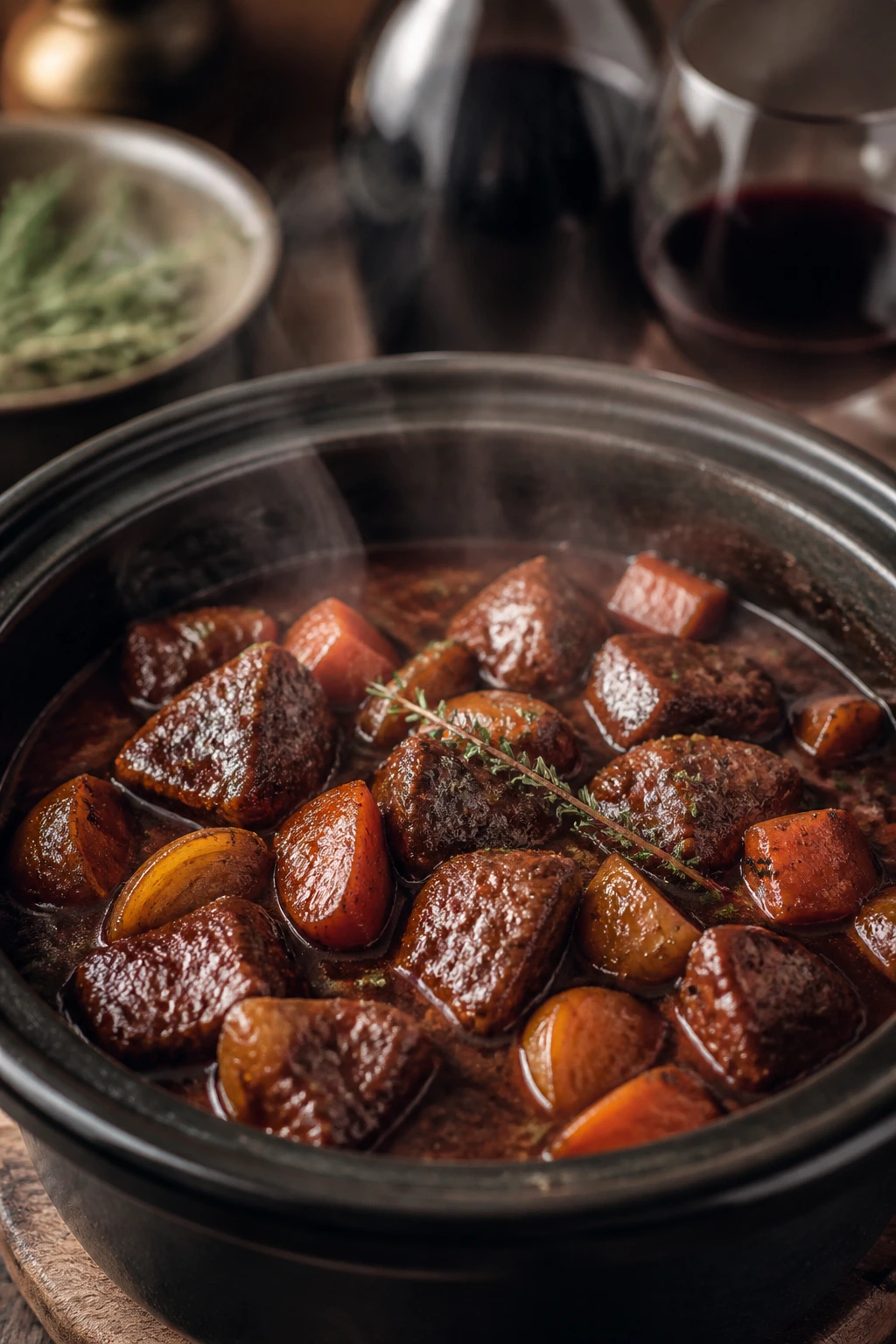
Red-Wine Pot Stew: Replace 1 cup of the beef broth with dry red wine and add it with the liquid at the start. The finished gravy gets darker and a little more tannic, which is nice if you like stew that tastes fuller and less brothy. Keep the vinegar at the end, but use a lighter hand.
Mushroom and Barley Stew: Add 8 ounces of sliced cremini mushrooms with the vegetables and 1/2 cup pearl barley with an extra 1 cup broth. Barley drinks up liquid and makes the bowl more filling, though it also means the stew will be thicker and more spoon-heavy. This is the version I’d make if I wanted one pot to last through a long evening.
Root-Vegetable Swap: Replace half the potatoes with parsnips or turnips. Parsnips bring a mild sweetness that works well with the beef, while turnips add a sharper edge. Cut them into the same size as the potatoes so they cook at the same pace.
Herb-Forward Finish: Add 1 sprig of rosemary with the thyme, then finish with chopped parsley and 1 teaspoon lemon zest. The rosemary gives the broth a piney depth, and the lemon zest keeps the stew from tasting too heavy. This version is good when you want a brighter bowl without changing the whole recipe.
Tools That Make the Work Easier
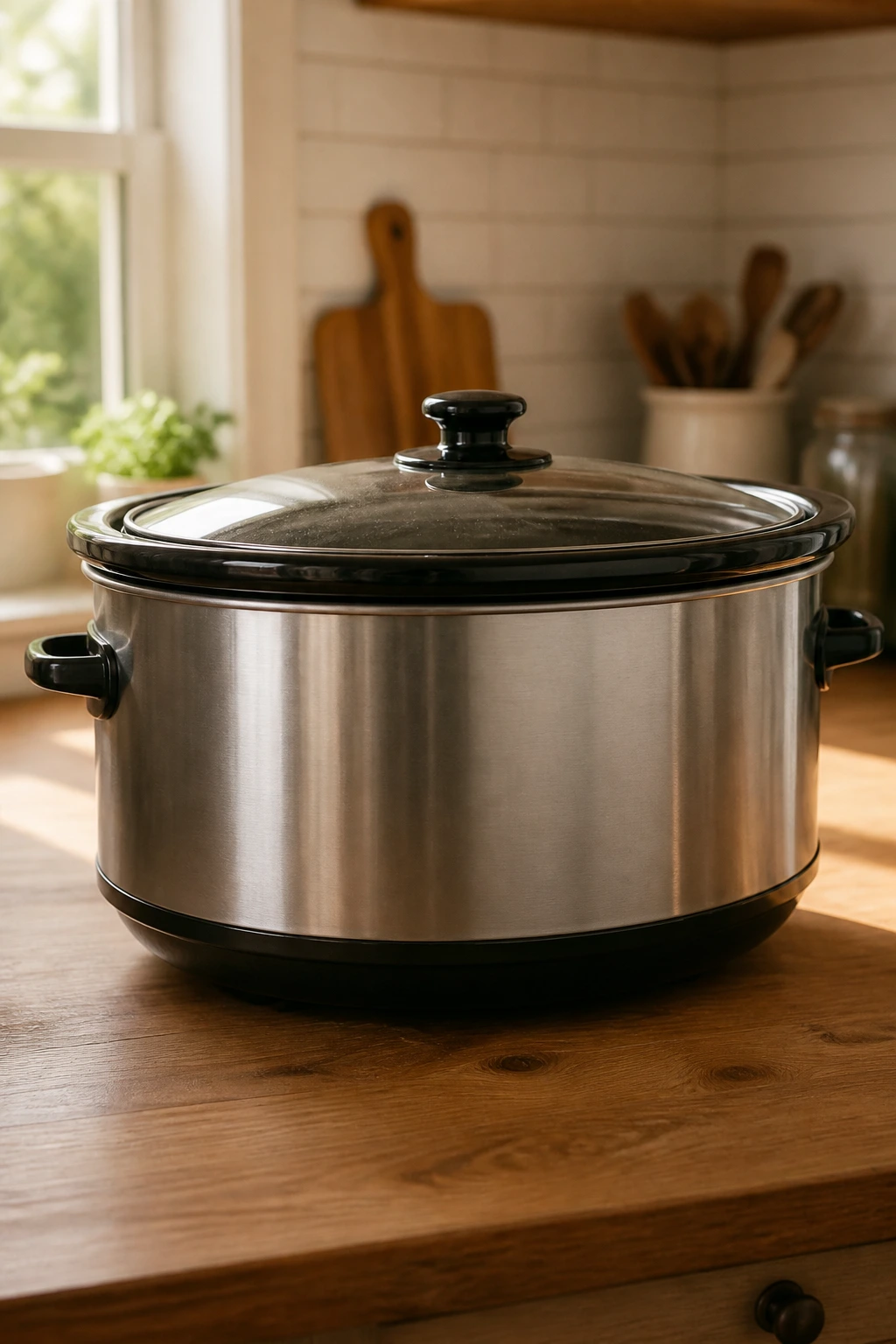
- 6-quart slow cooker: Big enough for the full recipe without crowding the pot.
- Chef’s knife: You’ll use it for the beef, onions, carrots, celery, and potatoes.
- Large cutting board: A roomy board keeps the prep from turning into a pile of slippery vegetables.
- Medium mixing bowl: Handy for whisking the broth, tomato paste, and seasonings together.
- Large skillet, optional: Useful only if you want to brown the beef first.
- Wooden spoon or silicone spatula: Good for stirring the broth and scraping the sides clean.
- Small bowl or liquid measuring cup: Best for mixing the cornstarch slurry before you add it.
- Ladle: Makes serving easier and keeps the beef chunks intact.
- Airtight storage containers: Important if you want leftovers to keep their texture in the fridge or freezer.
A 6-quart cooker is the sweet spot here. A smaller one can feel cramped once the beef and vegetables go in, and a bigger one may spread the ingredients too thin for a steady cook.
Storage, Freezing, and Reheating
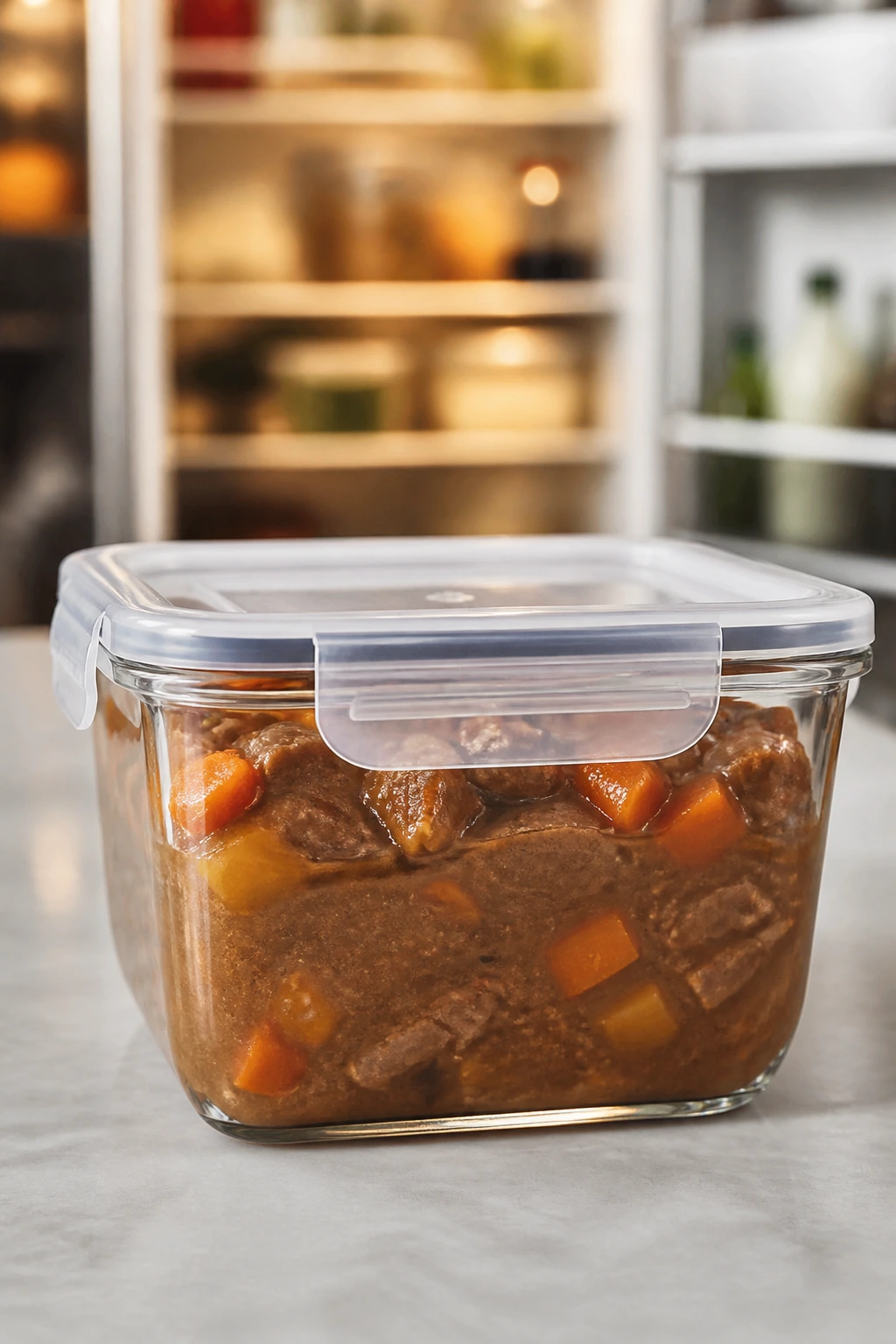
Leftover beef stew keeps up to 2 hours at room temperature, then it should go into the fridge. That rule matters more than people think; a big pot sitting on the counter all evening is asking for trouble.
In the refrigerator, the stew holds well for 3 to 4 days in airtight containers. I actually like it best on the second day, after the broth has had time to settle and the beef has soaked up a little more seasoning. The potatoes soften slightly, but the flavor gets rounder.
For the freezer, portion the stew into freezer-safe containers and leave a little headspace at the top. It keeps well for up to 3 months. If you know you’ll freeze some of it, you can hold back the peas and add them fresh after reheating so they stay brighter. Potatoes freeze fine in stew, though they may get a bit softer once thawed.
Reheat on the stovetop over medium-low heat, stirring now and then, until the stew reaches a full simmer and is hot all the way through. If the stew is thick from the fridge, splash in a few tablespoons of broth or water. In the microwave, reheat in 1-minute bursts and stir between rounds so the beef warms evenly. For a larger batch, a slow cooker on LOW works too, but it’s slower than the stove and doesn’t do anything the stove can’t do better.
Frequently Asked Questions
Can I make this slow cooker beef stew without browning the beef first?
Yes. Browning adds a little extra depth, but it is not required for a good pot of stew. If you want true set-and-forget convenience, skip the skillet and go straight to the slow cooker.
What if my beef is still tough after the cook time?
It usually needs more time, not more heat. Chuck roast turns tender when the connective tissue has had enough time to break down, so give it another 30 to 45 minutes on LOW and check again. If the pieces are still chewy, the cooker may run cool or the beef may have been cut too large.
Can I use store-bought stew meat instead of chuck roast?
You can, but the result depends on what went into the package. Some stew meat is excellent. Some is a mix of lean and tough scraps that cook unevenly. If you want the most reliable texture, buy chuck roast and cut it yourself.
Why did my stew turn out watery?
Usually the broth never got thickened at the end, or the slow cooker lid was opened too often and the flavors never concentrated. A cornstarch slurry solves the first problem, and keeping the lid shut solves the second. If the stew is already done, simmer it uncovered on HIGH for 15 to 20 minutes after thickening.
Can I make this in advance for the next day?
Yes, and I think it tastes better after resting overnight. Chill it quickly, then reheat gently on the stove. The broth usually looks richer the next day because the beef and vegetables have had time to soak up more of the seasoning.
Can I leave out the potatoes?
Absolutely. The stew still works with just carrots, celery, and beef, and you can serve it over mashed potatoes, egg noodles, or rice instead. If you skip the potatoes, you may want a little extra broth at the end because there will be less starch in the pot.
Do I have to add the peas at the end?
Yes, if you care about their color and texture. Peas added early go drab and soft. Stir them in during the final few minutes so they stay bright and a little sweet.
Can I cook this on HIGH the whole time?
You can, but LOW usually gives a better texture. HIGH is fine when you’re short on time, though the potatoes and carrots need to be cut evenly so they don’t overcook before the beef turns tender. Check earlier than you think, because some slow cookers run hotter than others.
A Stew Worth Putting Back on the Menu
There’s a reason beef stew keeps showing up in kitchens that like practical food. It doesn’t need attention every twenty minutes to become good. It needs a cut of beef that can relax into tenderness, a broth with enough backbone to taste like something, and vegetables cut with a little common sense.
That’s why this slow cooker beef stew earns a permanent spot in the rotation. It doesn’t ask for much at the start, and it gives back a bowl that tastes like more work than it was. Which is the nicest kind of dinner to make, honestly.
If you want a meal that can sit quietly in the background while the rest of the day happens, this is the one I’d start with.
Slow Cooker Beef Stew — Recipe Card
Recipe Name: Slow Cooker Beef Stew
Description: A classic beef stew made in the slow cooker with chuck roast, potatoes, carrots, celery, and a rich broth thickened at the end with cornstarch. The beef turns fork-tender, and the vegetables hold their shape instead of fading into mush.
Prep Time: 20 minutes
Cook Time: 8 to 9 hours on low, or 4 to 5 hours on high
Total Time: 8 hours 20 minutes to 9 hours 20 minutes on low, or 4 hours 20 minutes to 5 hours 20 minutes on high
Course: Dinner, Main Course
Cuisine: American
Servings: 6 servings
Calories: About 420 kcal per serving
Ingredients
For the Stew:
- 2 1/2 pounds beef chuck roast, trimmed and cut into 1 1/2-inch cubes
- 1 1/2 teaspoons kosher salt
- 1 teaspoon black pepper
- 2 tablespoons vegetable oil, optional for browning
- 1 large yellow onion, chopped
- 4 garlic cloves, minced
- 2 tablespoons tomato paste
- 4 cups low-sodium beef broth
- 2 tablespoons Worcestershire sauce
- 2 teaspoons dried thyme
- 2 bay leaves
- 1 pound Yukon Gold potatoes, cut into 1 1/2-inch chunks
- 4 medium carrots, peeled and cut into 1-inch pieces
- 2 celery ribs, cut into 1/2-inch pieces
- 1 cup frozen peas
- 3 tablespoons cornstarch
- 3 tablespoons cold water
- 1 tablespoon red wine vinegar
- 2 tablespoons chopped fresh parsley, for serving
Instructions
-
Pat the beef dry, trim off hard fat, and season with salt and pepper. If using the optional oil, brown the beef in batches in a skillet over medium-high heat for 2 to 3 minutes per side.
-
Add the onion, garlic, potatoes, carrots, and celery to a 6-quart slow cooker.
-
Whisk together the beef broth, tomato paste, Worcestershire sauce, thyme, and bay leaves, then pour over the vegetables.
-
Nestle the beef into the slow cooker. Cover and cook on LOW for 8 to 9 hours or HIGH for 4 to 5 hours, until the beef shreds easily and the vegetables are tender.
-
Remove the bay leaves. Stir together the cornstarch and cold water, then stir the slurry into the stew.
-
Cover and cook on HIGH for 15 to 20 minutes, until the broth is glossy and thickened.
-
Stir in the peas and red wine vinegar, then cook for 3 to 5 minutes more. Taste and adjust salt and pepper.
-
Ladle into bowls and finish with chopped parsley.
Notes: For the best texture, add peas at the end and use low-sodium broth so you can season the stew after it thickens. The stew tastes even better the next day.