



The smell hits first. Garlic, ginger, soy sauce, a little sugar caramelizing at the edges, and that dark, savory steam that drifts out of a crockpot and makes the whole kitchen feel like dinner is already winning. That’s the appeal of easy crockpot Chinese: you get the sticky, glossy, takeout-style flavors without standing over a hot pan, and you don’t need a wok burner roaring like a jet engine to make it happen.
I like slow cooker Chinese-American food for one simple reason: it knows what the crockpot is good at. It is not trying to fake stir-fry. It is doing the slower job of braising meat until it goes soft at the edges, holding sauce together while the garlic and ginger sink in, then letting you finish with a little crunch or brightness at the end. That’s a trade I’ll take any night I’d rather not babysit dinner.
The catch is texture. If you treat broccoli, bell peppers, or battered chicken the same way you’d treat pork shoulder, the pot will punish you. The vegetables go limp. The sauce goes flat. The meat can go stringy if you use the wrong cut. Get the timing and layering right, though, and the crockpot starts turning out food that tastes more deliberate than rushed.
Why This Slow-Cooker Approach Works So Well for Busy Nights
Tender cuts get a second life. Chicken thighs, pork shoulder, and chuck roast soften beautifully in a long, gentle cook, which means cheaper cuts can carry a sticky soy-ginger glaze without drying out or going tough.
The sauce has time to settle. Soy, hoisin, garlic, ginger, vinegar, and a little sweetener need time to mingle. After a few hours, the sharp edges calm down and the sauce tastes deeper, not louder.
The pot does the boring part for you. Slicing, searing, and simmering all happen in one place. You still finish the dish, but you’re not tied to the stove while it bubbles.
It’s friendly to pantry cooking. Low-sodium soy sauce, rice vinegar, brown sugar or honey, garlic, ginger, and sesame oil are enough to get close to takeout-style flavor without a special shopping trip.
It scales cleanly. A 5- or 6-quart slow cooker can handle dinner for a family, and the leftovers hold up well if you keep the rice separate and add fresh scallions when reheating.
The best part is the control. You can make it sweet, spicy, gingery, or heavy on the vegetables, and the method still behaves. That flexibility is why this style keeps showing up in real kitchens.
The Sauce Formula That Makes It Taste Like Takeout
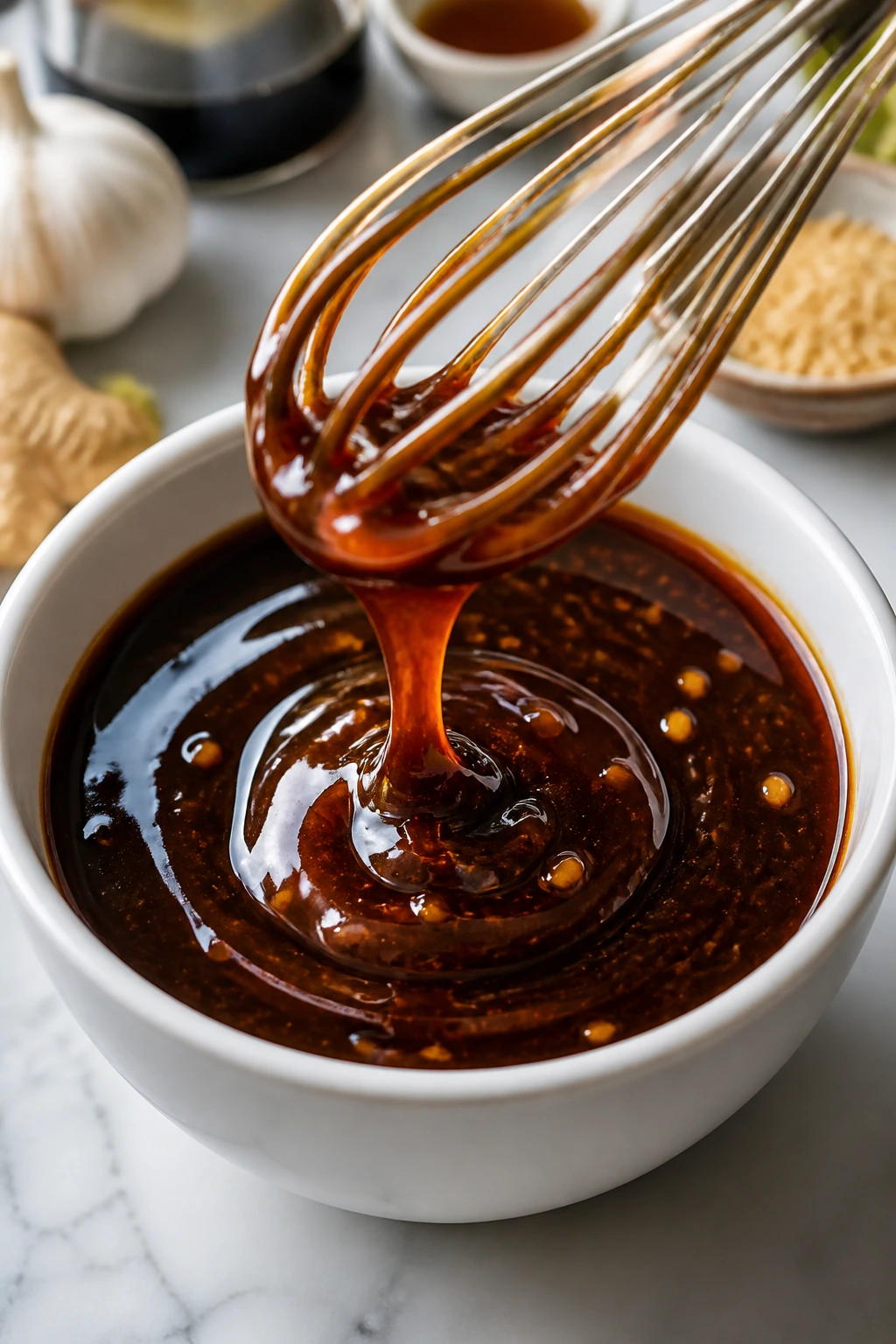
A lot of crockpot Chinese recipes miss the mark because they stop at soy sauce and sugar. That gets you brown liquid, not dinner. The flavor you want is a balance of salt, sweetness, acid, aromatics, and finish, and each one has a job.
Start with a base like 1/2 cup low-sodium soy sauce, 1/4 to 1/3 cup honey or brown sugar, 2 tablespoons rice vinegar, 1 tablespoon grated fresh ginger, 3 minced garlic cloves, 1 to 2 tablespoons hoisin, and 1/2 cup chicken broth for a family-sized pot. That gives you salt, depth, and enough liquid to move around the meat without drowning it. If you want heat, add 1 teaspoon crushed red pepper, 1 tablespoon chili garlic sauce, or a spoonful of chili crisp.
Sesame oil belongs near the end, not at the beginning. It is a finishing oil, and it smells best when it stays bright. If you can smell sesame before the garlic, you used too much.
The Five Pieces of the Flavor Puzzle
- Salt: Low-sodium soy sauce gives you room to adjust later. Regular soy can work, but it can also box you in fast.
- Sweetness: Brown sugar brings a molasses note; honey gives a cleaner shine. Pineapple juice works in sweet-and-sour dishes, but it can make the sauce thinner.
- Acid: Rice vinegar keeps the glaze from tasting sticky and one-note. A splash at the end often wakes the whole pot up.
- Aromatics: Fresh garlic and ginger matter more here than in many braises. Jarred versions work in a pinch, but fresh gives a sharper, cleaner edge.
- Finish: Toasted sesame oil, scallions, sesame seeds, or a little black vinegar at the end make the dish taste finished rather than merely cooked.
A ratio that behaves well
If you are building your own crockpot Chinese sauce, think in parts instead of chasing a fixed recipe every time. One part soy, one part acid in smaller measure, one part sweetener in slightly larger measure, then aromatics and a little broth to loosen things up. That pattern works because the slow cooker softens flavors. You want the sauce to arrive slightly stronger than you think you need.
The sauce should taste a touch too bold before it goes into the pot. It will calm down after hours of heat.
Choosing the Right Protein for the Slow Cooker
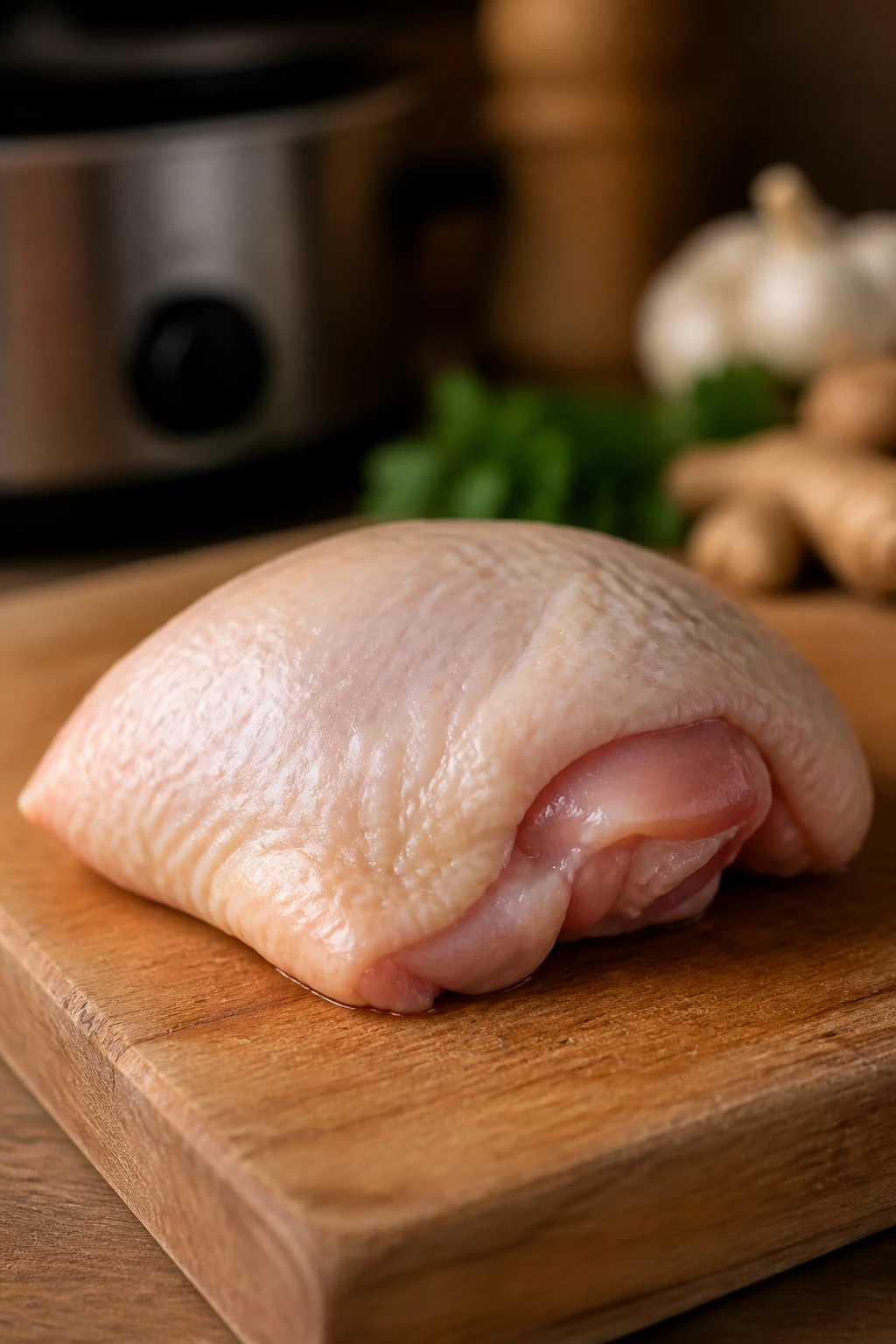
Chicken thighs are the easiest win. Boneless, skinless thighs stay juicy after 4 to 6 hours on low, and they soak up a soy-garlic glaze without shredding into stringy bits. If I had to pick one protein for easy crockpot Chinese every time, this would be it.
Chicken breast can work, but it asks for more caution. Cut it into larger pieces, keep the cook time shorter, and pull it as soon as it reaches 165°F in the center. Overdo it by even 20 minutes and the texture gets dry in a way sauce can’t fully hide. Thighs are more forgiving. They’re the better deal.
Beef is trickier because cut matters so much. Chuck roast gives you soft, spoon-tender meat after a long cook, which suits saucy dishes better than most people expect. Flank steak or sirloin can work for a beef-and-broccoli style dish, but they should be sliced thinly across the grain and added later, or they’ll turn chalky. If you want a slow, saucy beef dish, chuck is the safer choice.
Pork shoulder might be the most underrated slow cooker protein in this whole lane. It loves sweet-savory sauces, it holds up to long cooking, and it can be shredded or chunked depending on the dish. It’s excellent for char siu-style bowls, sticky garlic pork, or a sweet-and-sour version with pineapple and peppers.
Shrimp and tofu are different animals. Shrimp need the final 15 to 20 minutes, not a day in the pot. Firm tofu can work if you press it, sear it, and add it late, but it will never act like meat. That’s fine. It just means tofu dishes need a lighter hand and a more deliberate finish.
Chicken, beef, pork, and the rest
- Chicken thighs: Best for saucy orange, sesame, and garlic-ginger dishes. They stay tender even if dinner runs a little long.
- Chicken breast: Use only if you can monitor the cook time closely. Cut pieces larger than bite-size so they do not dry out early.
- Chuck roast: Ideal when you want a richer beef bowl with deep sauce and no need for perfect slices.
- Flank steak: Better for shorter slow-cooker cooking or for adding near the end. Slice thin and across the grain.
- Pork shoulder: The best all-purpose braising cut for sticky, sweet-savory sauces.
- Shrimp: Add at the end. Always.
- Firm tofu: Press well, sear if possible, and treat it like a finishing ingredient rather than the main thing to braise for hours.
The cut is not a minor detail. It decides whether the dish feels silky or sad.
Vegetables That Can Take the Heat—and the Ones That Can’t
A slow cooker has no mercy for delicate vegetables. Broccoli florets left in for six hours will come out soft, pale, and a little weary. Bell peppers will collapse. Snap peas turn dull. That doesn’t mean vegetables are off the table; it just means timing matters.
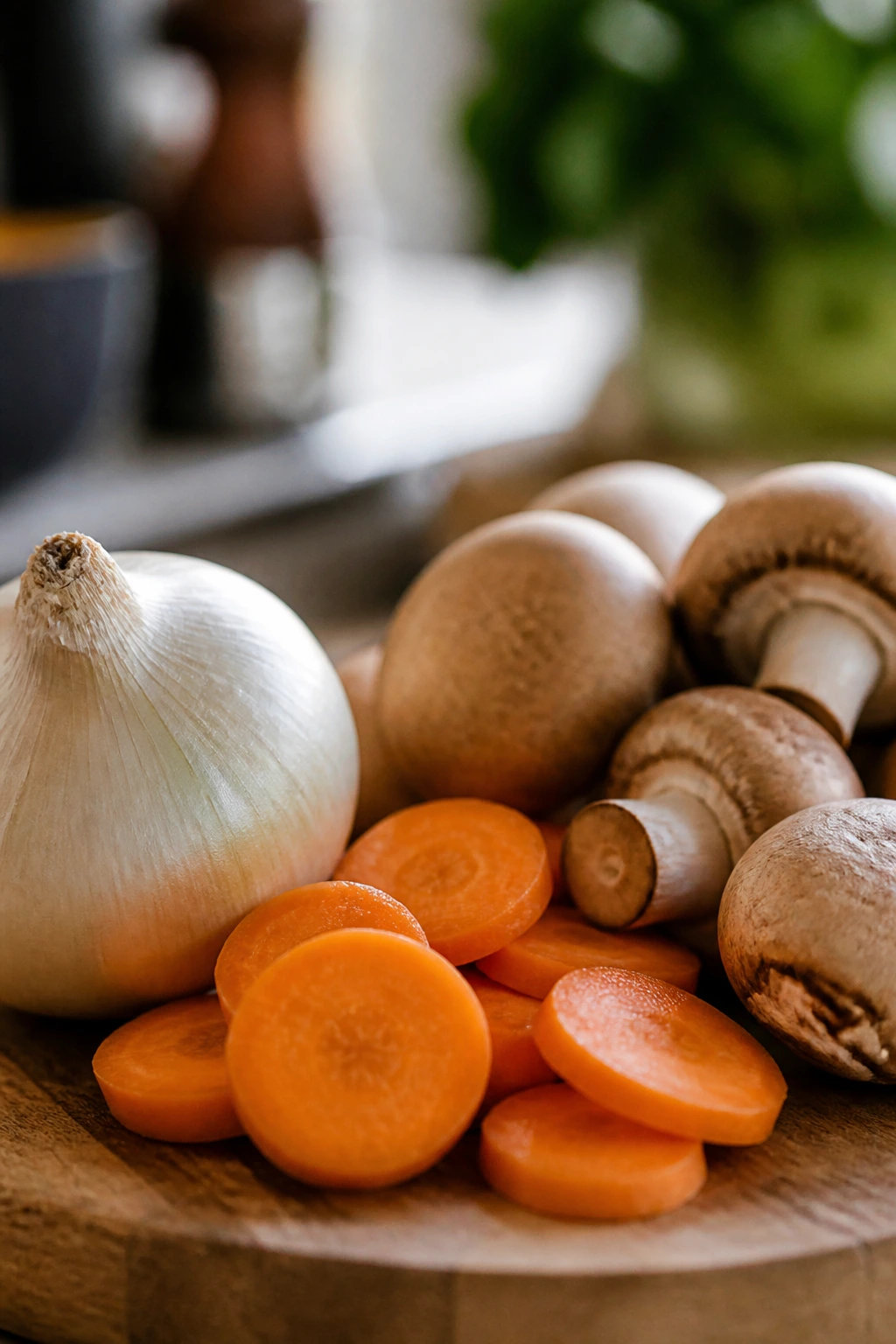
Sturdy vegetables do fine at the start. Onions, carrots, mushrooms, and the white parts of scallions can go in with the protein. Carrots should be sliced thinner than you’d use in a roasting pan—about 1/4 inch, maybe a touch less—so they don’t stay stubbornly firm after hours in the sauce. Mushrooms release liquid, which helps the pot, not hurts it.
Broccoli, snow peas, baby corn, water chestnuts, bell peppers, bok choy greens, and napa cabbage want to arrive late. Usually the last 15 to 30 minutes is enough, depending on the size of the pieces and how soft you want them. If you like broccoli with a little snap, steam it separately and fold it in after the sauce thickens. That’s my preferred move. It keeps the color bright and the stems from feeling waterlogged.
Best add-early vegetables
- Onions: They dissolve into the sauce and give body.
- Carrots: Good for sweetness and structure if sliced thin.
- Mushrooms: They handle long cooking and deepen the sauce.
- Garlic and ginger: Not vegetables in the usual sense, but they belong at the start if you want the base to taste alive.
Better added late
- Broccoli florets: Add during the last 15 to 25 minutes.
- Bell peppers: Add near the end so they keep a little bite.
- Snap peas and snow peas: Add in the final 10 to 15 minutes.
- Bok choy: Stems can go in earlier; leaves want only a few minutes.
- Water chestnuts and baby corn: These can go late or stay canned and crisp without much effort.
Cabbage deserves a mention too. Napa cabbage handles slow cooking better than most leafy vegetables, and it turns soft in a pleasant way if you add it during the last hour. Regular cabbage can work as well. It just needs to be cut into thicker strips.
How to Layer the Pot Without Losing Flavor
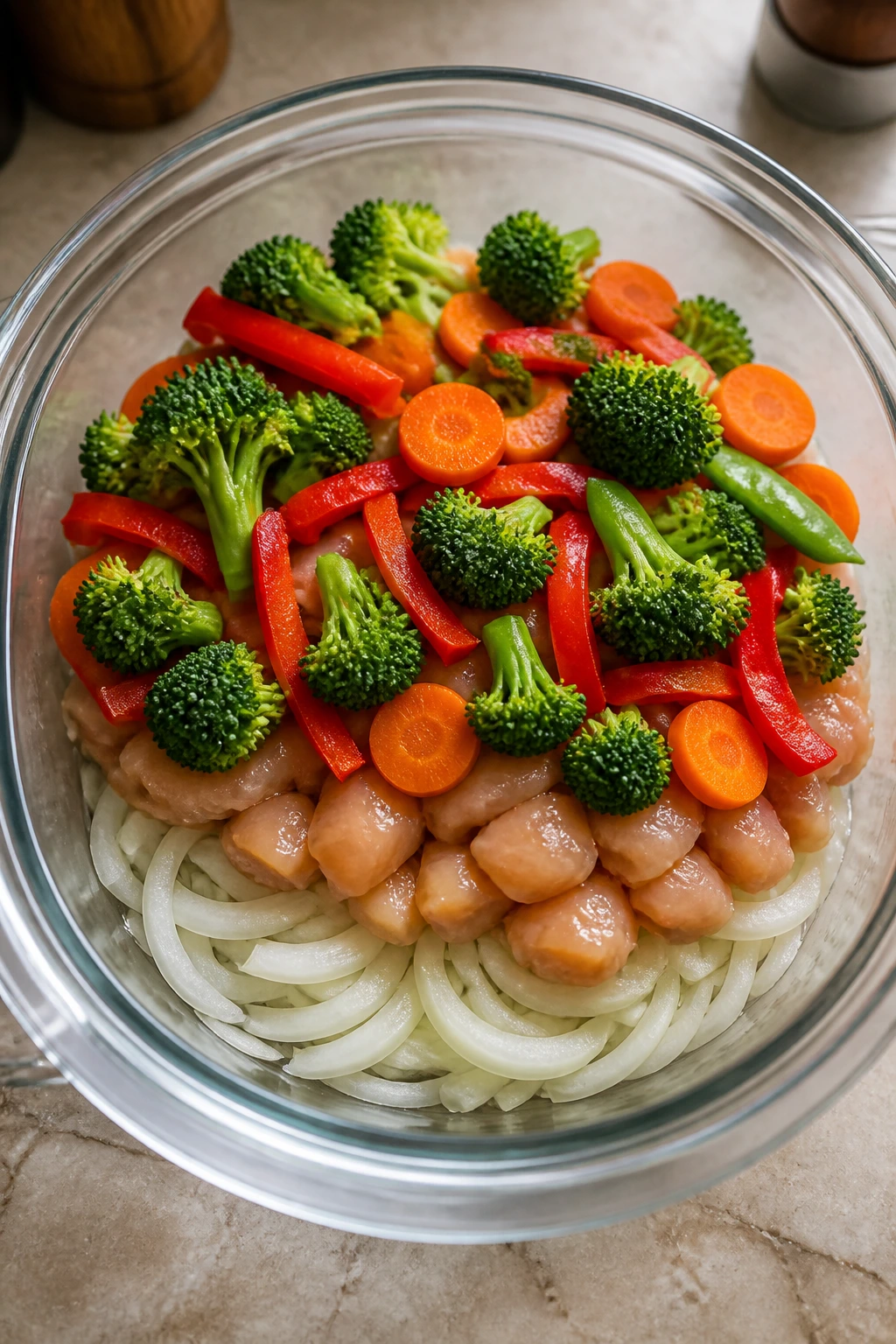
A slow cooker is not a layer cake. Still, the order you load it changes the result.
Start with a few sliced onions or scallion whites at the bottom. That keeps the meat from sticking directly to the ceramic insert and gives the sauce a bed to sink into. Put the protein on top or in a loose middle layer, then pour the sauce over everything. If you are using carrots or mushrooms, tuck them in early. If you’re planning to add broccoli or peppers later, leave them out for now.
Don’t bury delicate vegetables under a five-hour bath. They’ll take one for the team and lose.
Here’s the part people skip: taste the sauce before it goes in. If it tastes weak in a bowl, it will taste weak in the pot. If it tastes too sweet, the final dish will cling but won’t sing. Fixing the balance at the beginning saves you from trying to rescue it with a late splash of vinegar and a prayer.
A simple layering order that works
- Place onions or scallion whites on the bottom.
- Add the protein in one even layer.
- Scatter in carrots, mushrooms, or other sturdy vegetables.
- Pour the sauce over the top and around the edges.
- Hold back broccoli, peppers, snap peas, and bok choy leaves for later.
- Stir only if the recipe truly needs it.
Stirring is not forbidden. It is just overused. If the pot is full and balanced, the heat will do the work without constant interference.
Low, High, and the Real Timing Game
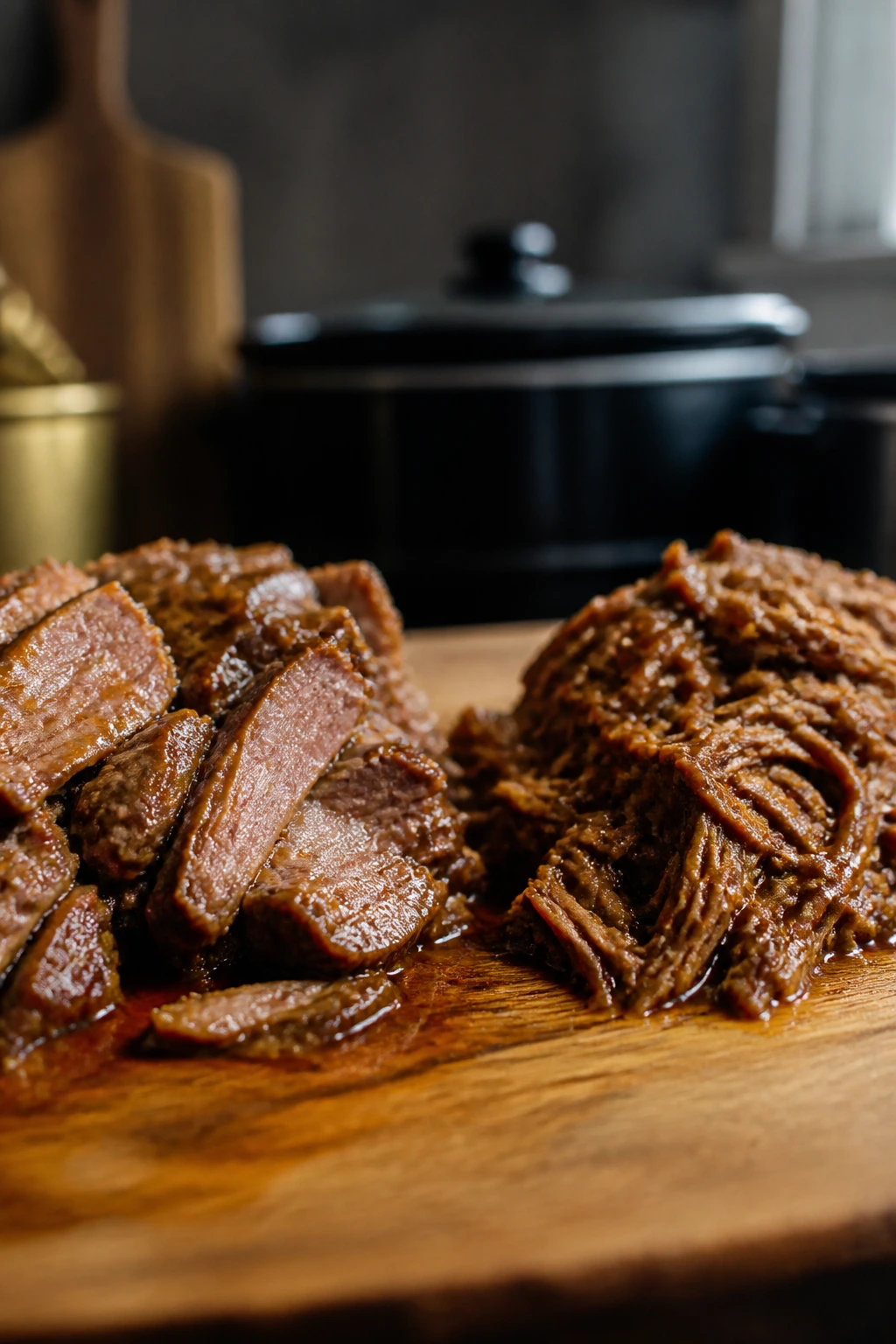
People get nervous about slow cooker timing because the numbers on the dial look too neat for food that behaves so differently from machine to machine. Fair. Two slow cookers on “low” can run at different speeds, and a dish that’s perfect at hour five in one pot can be overdone in another.
Low heat is the safer setting for braises, big pieces of meat, and anything that benefits from a long, gentle stretch. Pork shoulder, chuck roast, and thigh meat usually do best here. High heat is useful when your ingredients are smaller, your schedule is tighter, or you’re dealing with a dish that needs less time to break down. It’s not a cheat. It’s a different lane.
Practical timing ranges
- Chicken thighs, bite-size pieces: about 3 to 4 hours on low, 2 to 3 hours on high.
- Chicken breast, larger chunks: about 2 to 3 hours on high, watched closely.
- Pork shoulder: about 6 to 8 hours on low, 4 to 5 hours on high.
- Chuck roast: about 7 to 8 hours on low, 4 to 5 hours on high.
- Flank steak: better for shorter cook times or a later addition.
The lid matters more than people think. Every time you lift it, heat escapes, and the pot needs time to catch up. Ten seconds of curiosity can cost you 10 to 15 minutes of recovery. If dinner is close, resist the urge to peek.
Use tenderness as the real finish line. Chicken should pull apart easily but not dry out. Beef should yield to a fork without turning to shreds unless that’s the texture you want. Pork shoulder should break when pressed, not just look done from the outside.
Thicken the Sauce at the End, Not at the Start
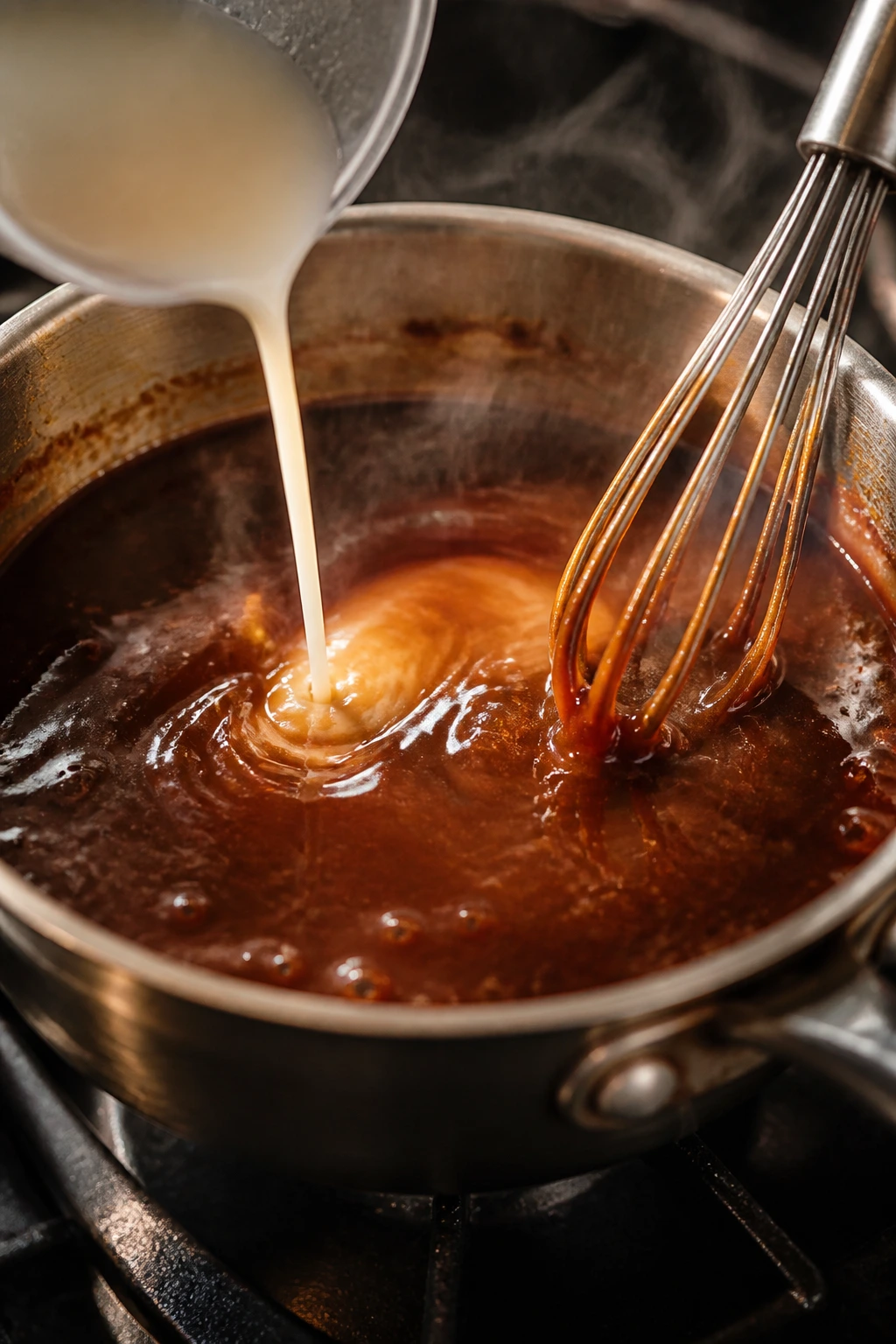
The easiest way to ruin crockpot Chinese sauce is to assume the pot will magically reduce it into something glossy. Sometimes it does. Usually it doesn’t. Slow cookers trap moisture, which is helpful for braises and terrible for watery glaze.
The fix is simple. Pull the meat and vegetables out when they’re cooked, then deal with the liquid on its own. You can pour the sauce into a saucepan and simmer it for a few minutes, or stir in a cornstarch slurry and let the pot finish the job. I prefer the saucepan method when I want a tighter, shinier sauce. The slow cooker method is fine when I want fewer dishes.
Use 1 tablespoon cornstarch mixed with 1 tablespoon cold water for each cup of sauce as a starting point. If the sauce still looks thin after one minute of bubbling, add another small slurry. Do not dump dry cornstarch into hot liquid and hope for the best. It clumps. Fast.
What to use for thickening
- Cornstarch: The default choice. Smooth, glossy, and reliable.
- Arrowroot: Good for gluten-free cooking and a little more delicate, but it dislikes hard boiling.
- Tapioca starch: Useful when you want a softer sheen.
- Reduction: Leave the lid off and simmer the sauce for 10 to 20 minutes in a saucepan if you want tighter control.
If your sauce has pineapple juice or orange juice in it, reduce the sweetener a little before thickening. Fruit sugars can turn sticky fast. That’s good when you want a lacquered glaze. It’s bad when you want a sauce that stays balanced instead of turning into candy.
The Final Gloss: Crisp Edges, Fresh Heat, and a Better Finish
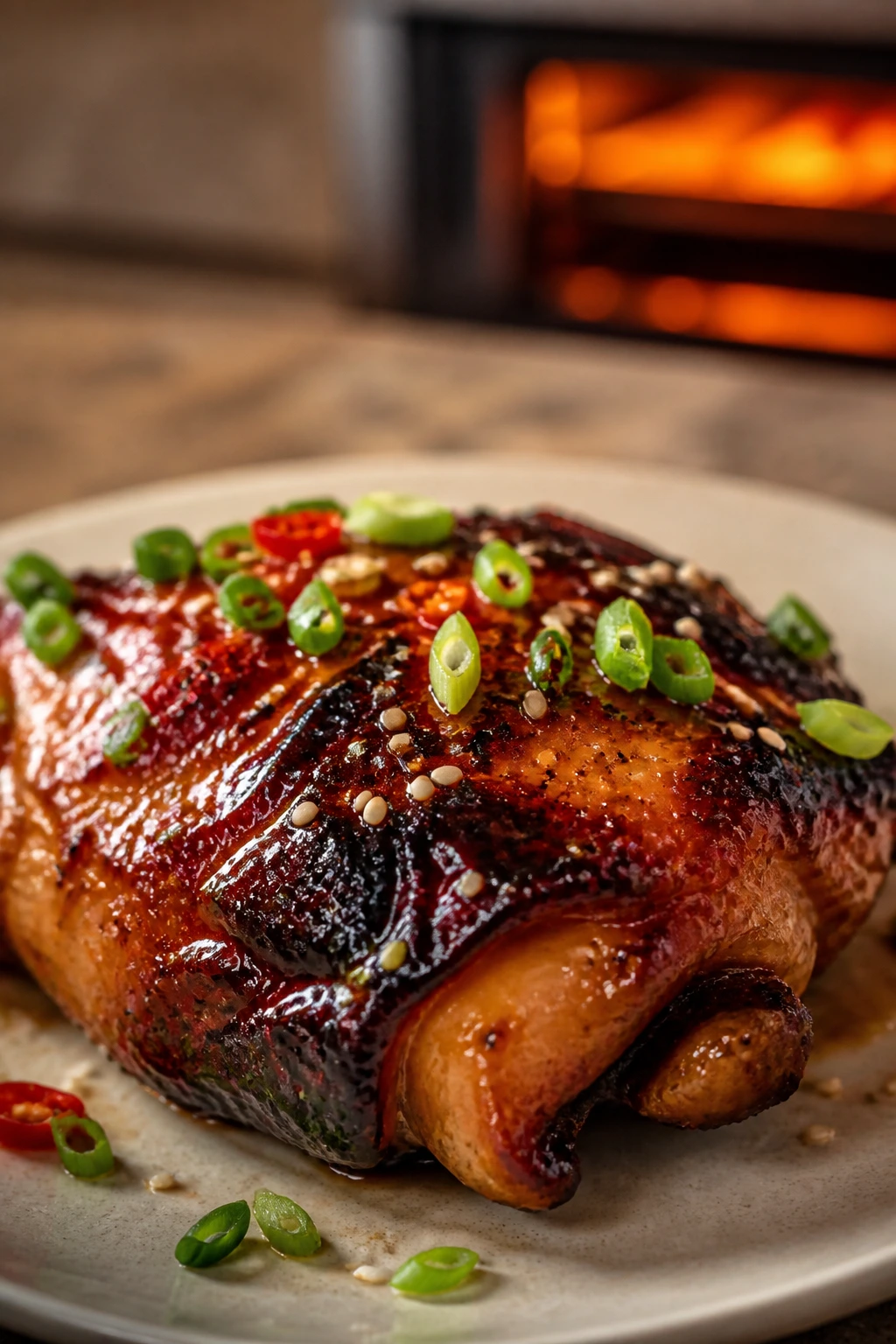
What does a slow cooker lose on the way to dinner? Usually texture. That’s the honest answer. You do not get wok hei, and you don’t get the browned, slightly smoky edges a hot pan gives you. You can, however, make the finished dish taste much closer to the takeout version with a few smart moves.
The easiest fix is brightness. A splash of rice vinegar, a squeeze of citrus if the dish already leans sweet, or a spoonful of black vinegar can wake up a sauce that’s been cooking all day. Then add something fresh at the end: scallions, sesame seeds, cilantro if you like it, sliced chilies, or a few drops of toasted sesame oil.
Broiling is the secret move when you want sticky edges. If the chicken or pork has been cooked through and the sauce is thick, spread the meat on a foil-lined sheet pan and slide it under a hot broiler for 2 to 4 minutes. Watch it like a hawk. Sugar burns fast. You want lacquer, not charcoal.
Three finishes worth using
- Fresh scallions and sesame seeds: The simplest and most reliable finish.
- A quick broiler pass: Best when you want darker edges on chicken or pork.
- A spoon of chili crisp or chili oil: Good when the dish needs heat and crunch at the same time.
If you’re making beef and broccoli or chicken and peppers, a quick skillet toss at the end can help too. Heat a dry skillet, add the cooked meat for 30 to 60 seconds, then return it to the sauce. That tiny burst of heat tightens the glaze and makes the dish taste a little less sleepy.
Which Takeout Dishes Translate Best to the Crockpot
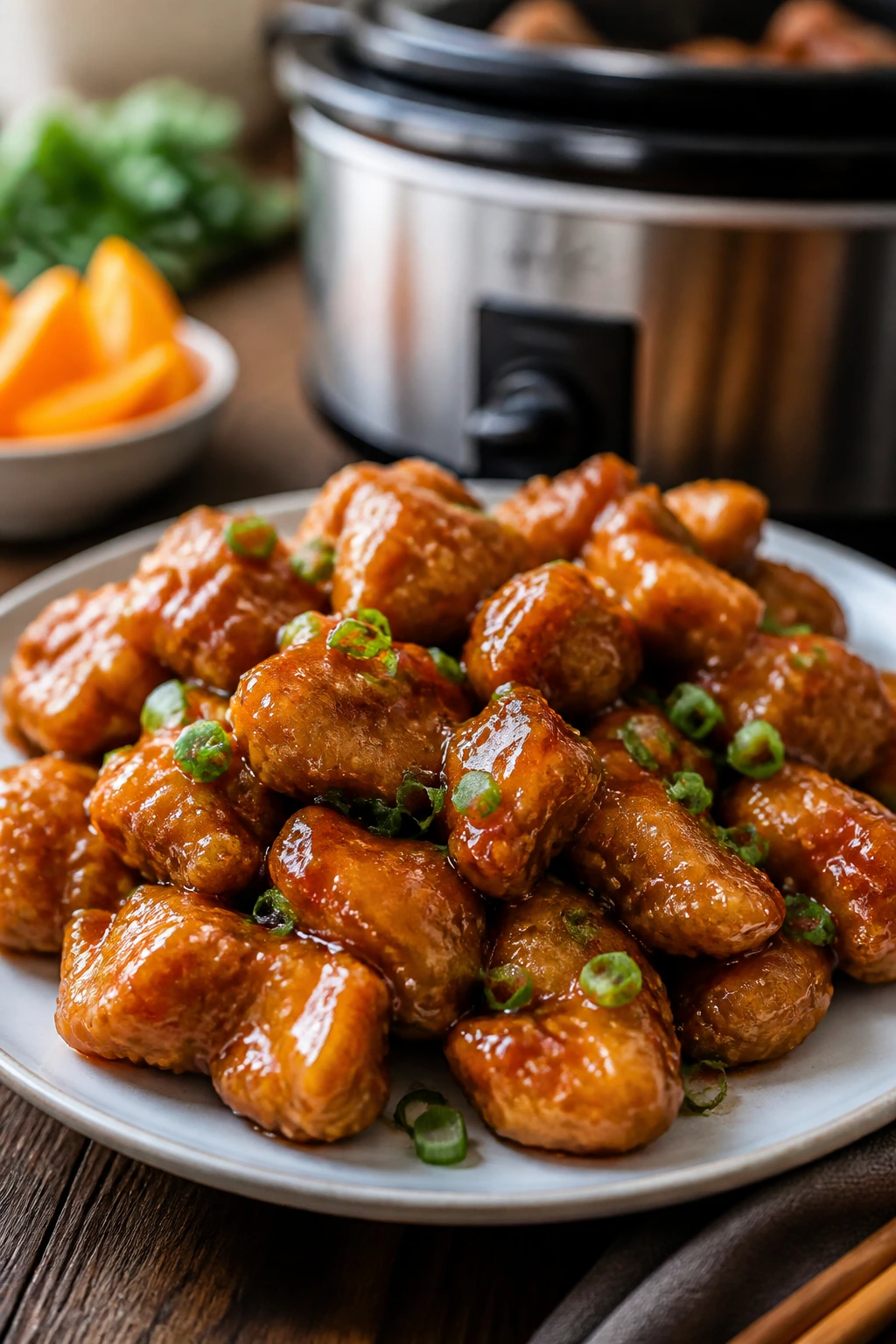
Not every Chinese-American takeout favorite wants to live in a slow cooker. Some dishes depend on high heat, fast movement, and crisp batter. Those do not belong here. The ones that do work have one thing in common: they like sauce and they like time.
Orange chicken is a strong candidate. Use chicken thighs, build a sauce with orange zest, soy, ginger, garlic, and a modest amount of sugar, then finish with a little acidity so it doesn’t drift into dessert territory. If you want a crisp edge, broil the chicken after it’s cooked.
Sesame chicken is easy to adapt because the sauce is already about shine and sweetness. Add sesame oil at the end, not at the start, and finish with toasted sesame seeds and scallions. The texture is better if the chicken is in chunks rather than shredded.
Beef and broccoli works best when you treat the broccoli as a late addition and the beef as the real long-cook element. Chuck roast gives you a soft, saucy bowl. Flank steak is better when you want slices instead of shreds, but it needs closer watching.
Char siu-style pork may be the most natural fit of all. Pork shoulder takes well to soy, five-spice, garlic, hoisin, and brown sugar. The slow cooker gives you a sticky, shreddable result that’s good over rice or stuffed into buns if you want to wander off the classic path.
Sweet and sour pork works if you keep the pineapple and bell pepper for the final stretch. Too much long cooking and the fruit gets dull. Add the fruit late, keep the vinegar bright, and don’t be shy about a little cornstarch at the end.
General Tso’s-style chicken is trickier because the original appeal often comes from a fried crust. You can still get the flavor, though. Make the sauce bold, cook the chicken gently, then broil or pan-finish the pieces before tossing them back in.
Best slow-cooker matches
- Sticky orange chicken: Great for thighs and bright sauce.
- Beef and broccoli: Best when broccoli goes in late.
- Char siu pork shoulder: Probably the most forgiving of the bunch.
- Sesame chicken: Easy to finish with sesame seeds and scallions.
- Sweet and sour pork: Works when pineapple and peppers are added at the end.
- Lo mein-style chicken and vegetables: Make the noodles separately and toss at the last minute.
Anything that depends on a crunchy coating, a batter, or a quick stir-fry flash belongs somewhere else. The crockpot can do many things. It cannot do everything.
Smart Shopping and Ingredient Tips
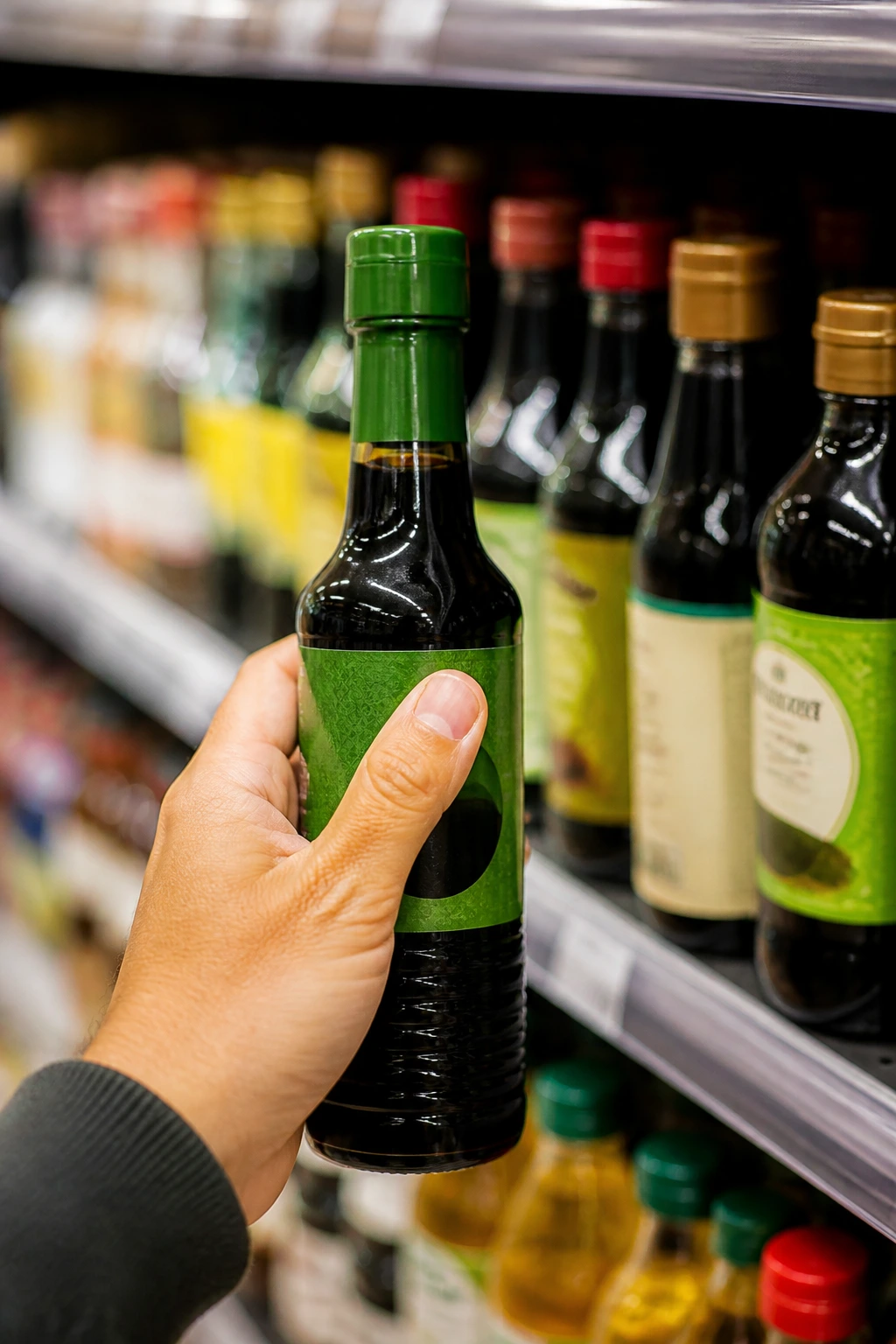
The grocery aisle matters more than people think in this style of cooking. One bottle of soy sauce can make the difference between a sauce that tastes layered and one that tastes like salt water with a brown tint. Low-sodium soy sauce gives you room to build. I almost always choose it unless I’m making a tiny batch and already know the rest of the sauce is light.
Buy real rice vinegar, not seasoned rice vinegar if you want full control. Seasoned versions already contain sugar and salt, which can throw off a sauce that also uses hoisin or honey. Toasted sesame oil should come in a small bottle. It goes stale before you get through a giant one unless you cook this style all the time.
Fresh ginger is worth peeling and grating. A thumb-sized piece is usually more than enough for a family pot. If you only have jarred ginger, use a little more than you think and accept that the flavor will be softer. Garlic should be minced finely or smashed and chopped; whole cloves tend to mellow too much.
On the vegetable side, frozen broccoli is fine if you know how to use it. Add it near the end, straight from frozen, and don’t expect crisp stems. Fresh broccoli gives you better texture, especially if you steam it separately for the final toss. Bell peppers, carrots, mushrooms, and onions are the easiest vegetables to source and manage.
Hoisin sauce is worth keeping around, but read the label. Some versions are sweeter than others, and a very sugary hoisin can make your glaze feel heavy. Bamboo shoots, baby corn, and water chestnuts are the pantry extras I reach for when I want more texture without much extra work. They’re not necessary. They’re just useful.
If you’re buying meat, pay attention to the cut instead of the package language. “Stew meat” can mean mixed scraps of beef with unpredictable texture. Chuck roast or chuck steak gives you more control. For chicken, thighs beat breasts for nearly every saucy slow-cooker recipe in this family.
Essential Equipment for These Recipes
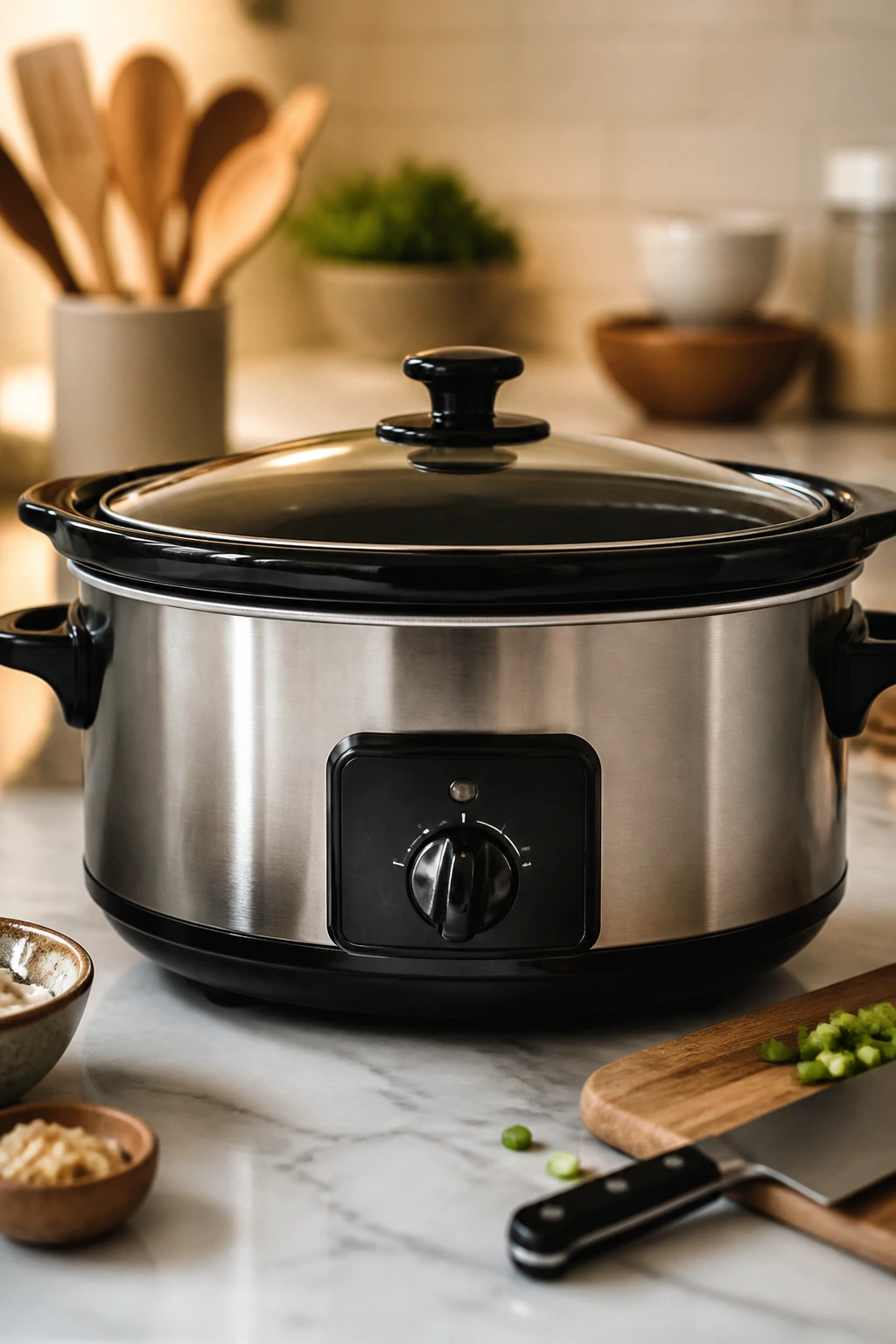
- 5- to 7-quart slow cooker: Big enough for family-style braises without crowding the meat.
- Sharp chef’s knife: Clean slicing matters when you’re cutting beef thin or trimming vegetables.
- Cutting board: A stable one with a damp towel underneath keeps it from sliding.
- Mixing bowl: Useful for whisking sauce before it goes into the pot.
- Whisk or fork: Either one will combine soy, vinegar, sweetener, and cornstarch smoothly.
- Tongs: Helpful for moving meat in and out of the pot without breaking it up.
- Microplane or fine grater: Best for fresh ginger and garlic if you want them to disappear into the sauce.
- Rimmed sheet pan: Handy for broiling chicken or pork at the end to tighten the glaze.
- Slotted spoon: Good for serving meat and vegetables without flooding the rice.
- Airtight storage containers: Keep leftovers from smelling up the fridge and help rice stay separate.
A liner is optional. It makes cleanup easier, but it isn’t required. Neither is a rice cooker, though I admit I like one when I’m serving this style of food more than once a week.
How to Serve These Dishes
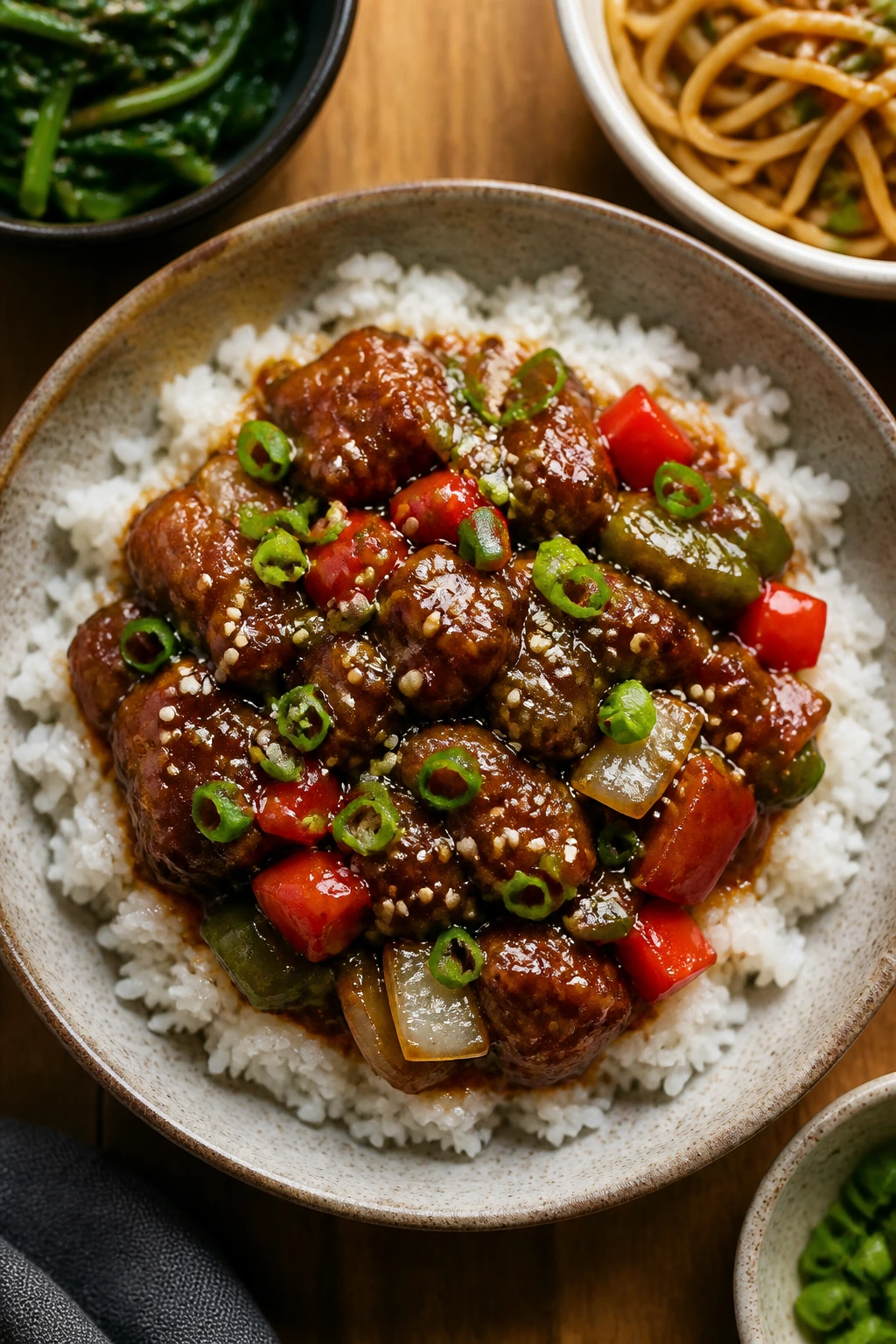
Presentation: Spoon the meat and vegetables over a mound of jasmine rice so the sauce runs down the sides instead of disappearing into the bowl. A scatter of sliced scallions and toasted sesame seeds goes a long way. If the dish is broiled or pan-finished, let a few darker edges show on top; they make the plate look finished.
Accompaniments: Steamed jasmine rice is the standard for a reason, but plain lo mein noodles, rice noodles, or even fried rice work well if you keep the sauce in check. A simple cucumber salad, quick-pickled carrots, steamed bok choy, or sautéed napa cabbage gives the meal a fresher edge. Egg rolls are optional. A little too optional for my taste, but people do love them.
Portions: Plan on about 1 to 1 1/2 cups of saucy protein and vegetables per person, then add 3/4 to 1 cup cooked rice if you want a full dinner. If the dish is especially rich, smaller portions go further than you think. For a buffet or family-style spread, double the vegetables before you double the sauce.
Beverage Pairing: Jasmine tea fits naturally. A cold lager works with sweet-salty glazes better than people expect. If you want wine, an off-dry riesling or a crisp gewürztraminer can handle ginger, garlic, and a little heat. Sparkling water with lime is the no-drama option and does the job just fine.
I also like serving a small bowl of extra chili crisp on the side. Some people want heat. Some don’t. Let the table decide.
Additional Tips and Flavor Boosters
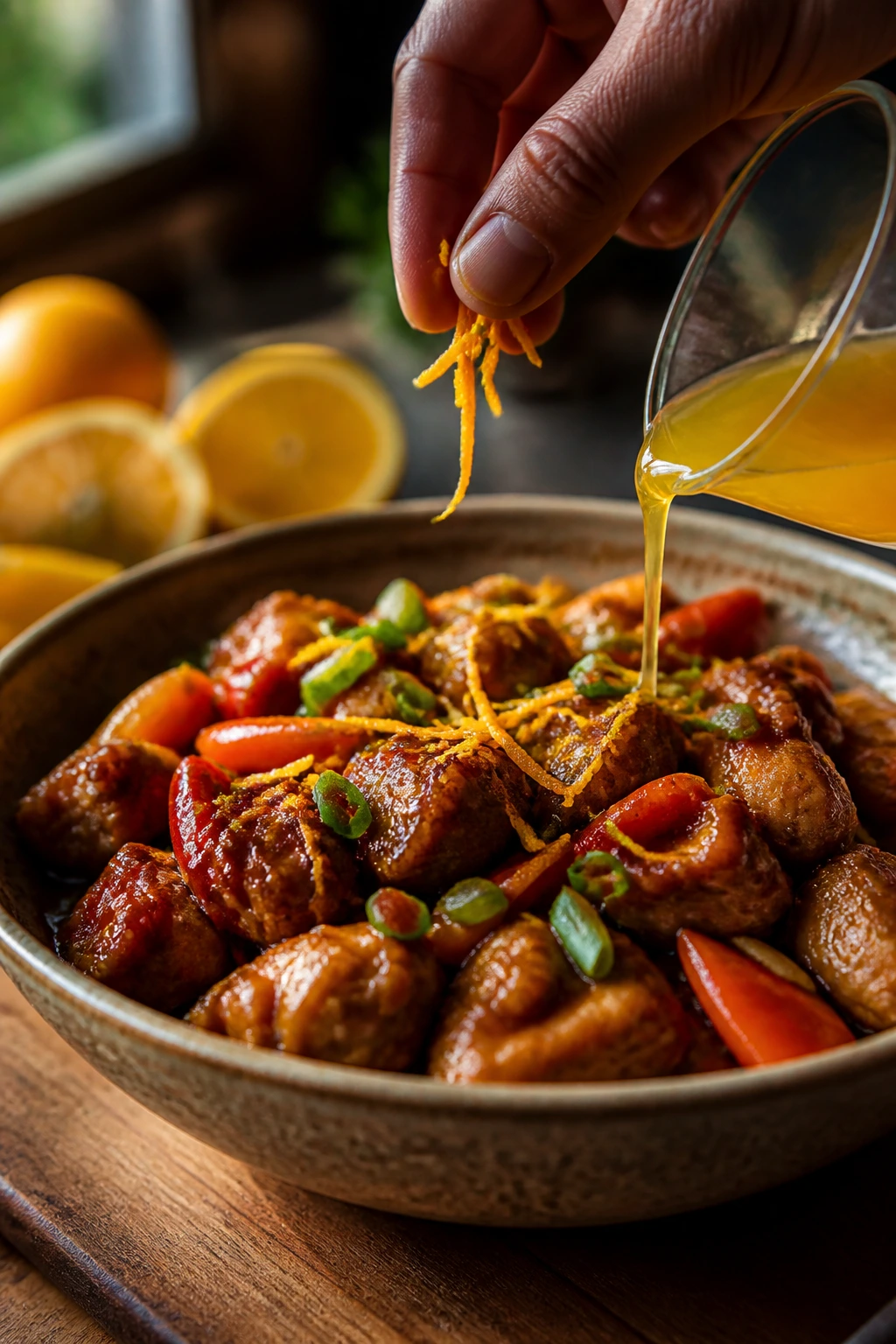
Flavor Enhancement: A teaspoon of black vinegar or a splash of fresh orange juice at the end can lift a sauce that tastes too heavy. Black vinegar gives more depth; citrus gives more sparkle. Use one or the other, not both, unless the dish is already built to handle it.
Customization: Cashews, peanuts, water chestnuts, mushrooms, bamboo shoots, and sliced bell peppers all add texture without changing the cooking method much. If you like heat, add sliced fresh chilies or chili oil near the end rather than burying the dish in red pepper from the start.
Serving Suggestions: Finish with scallions, sesame seeds, and a small shower of toasted peanuts if the dish can take it. For richer sauces, a handful of sliced cilantro can brighten the top. A little green on the bowl matters. So does crunch.
Make-It-Yours: For gluten-free cooking, swap in tamari and look for gluten-free hoisin or build the sauce from soy-free pantry items if needed. For a lower-sugar version, cut the sweetener by a quarter and add a little more rice vinegar plus orange zest or ginger to keep the sauce lively. For a lighter bowl, double the vegetables and reduce the rice. For a more filling meal, toss in mushrooms and serve over noodles instead of rice.
I’d also keep a jar of chili crisp around if you cook this way often. One spoonful can pull an entire bowl together.
Common Mistakes to Avoid
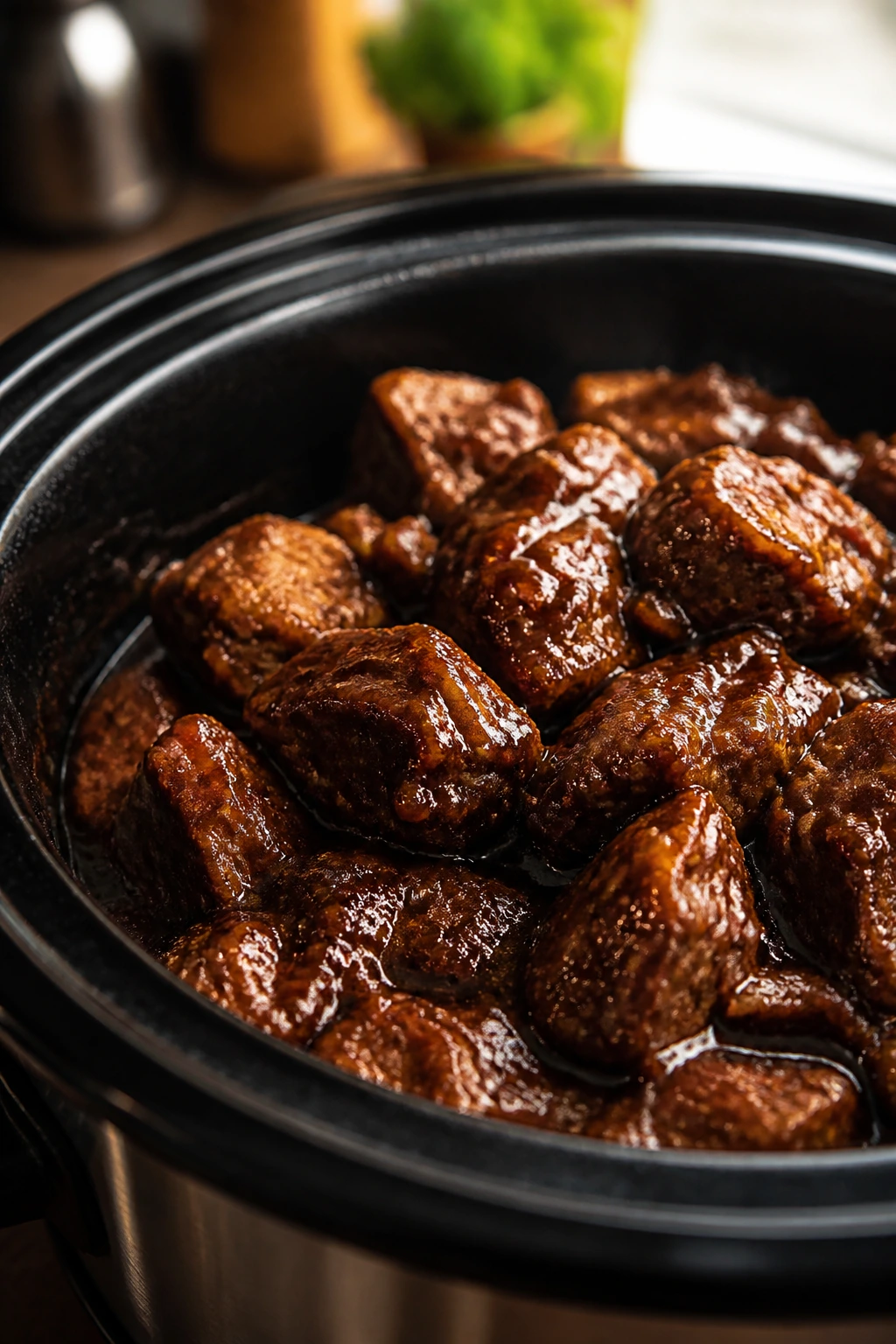
Putting broccoli in at the start. The symptom is easy to spot: olive-colored florets and soft stems that collapse when you scoop them. Add broccoli during the final 15 to 25 minutes, or steam it separately and fold it in at the end.
Using chicken breast like it’s pork shoulder. The meat goes dry and tight before the sauce has a chance to do much for it. Use thighs, or shorten the cook time and watch the internal temperature closely. Once breast meat passes 165°F, pull it.
Expecting the crockpot to thicken sauce on its own. It usually won’t. The sauce stays thin and muddy-looking, which makes the whole dish feel unfinished. Remove the lid near the end, or use a cornstarch slurry and give it a few minutes to turn glossy.
Overloading the pot with sweetener. Sticky sauce is not the same thing as sugary sauce. If the pot tastes like candy, the garlic and vinegar disappear. Start with less sugar than you think, then adjust after thickening.
Adding sesame oil too early. It fades during a long cook. Put it in near the end so the aroma stays fresh and nutty.
Crowding the crockpot past the fill line. When the pot is packed too tightly, vegetables steam into mush and meat cooks unevenly. Stay under about three-quarters full if you can. If you need more food, make two batches or use two pots.
Variations and Adaptations to Try
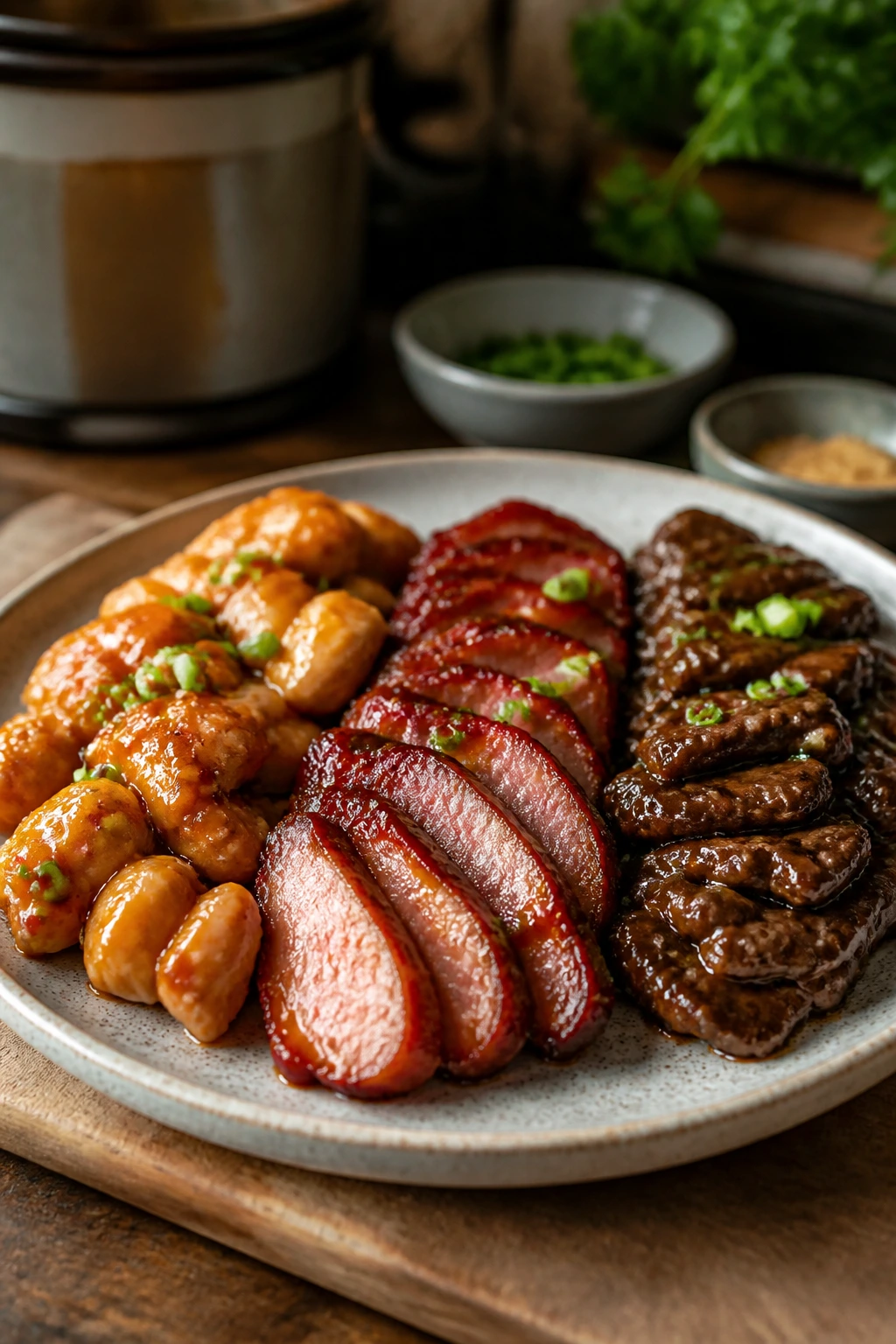
Sticky Orange-Ginger Chicken
Swap part of the liquid for orange juice and add orange zest near the end. A little ginger and rice vinegar keep the sauce from turning flat, and broiling the cooked chicken for a few minutes gives the edges a darker finish. This is the version I’d make first if you want something bright and familiar.
Char Siu Pork Shoulder
Use pork shoulder, soy sauce, hoisin, brown sugar, garlic, ginger, and five-spice powder. The long cook time works in the pork’s favor, and the result is rich enough for rice bowls, bao, or noodle plates. It is one of the most natural fits for the slow cooker in this whole category.
Gluten-Free Tamari Bowl
Swap soy sauce for tamari and thicken with arrowroot or cornstarch. Check the hoisin label or skip it and build the sweet-salty balance from tamari, honey, garlic, ginger, and rice vinegar. This keeps the same flavor lane without changing the method.
Spicy Chili-Garlic Beef
Use chuck roast or flank steak, then finish with chili crisp, dried chilies, or a spoon of chili garlic sauce. The heat should come at the end so it stays sharp rather than dulling out during the long cook. Good over rice, even better with sliced cucumber on the side.
Vegetable-Heavy Takeout Bowl
Build the pot around mushrooms, onions, carrots, napa cabbage, broccoli, and snow peas, then use tofu or a smaller amount of chicken. Add the fragile vegetables late so they stay in good shape. This version tastes lighter, but it still feels like dinner, not a side dish pretending to be a meal.
Make-Ahead, Storage, and Reheating Guidance
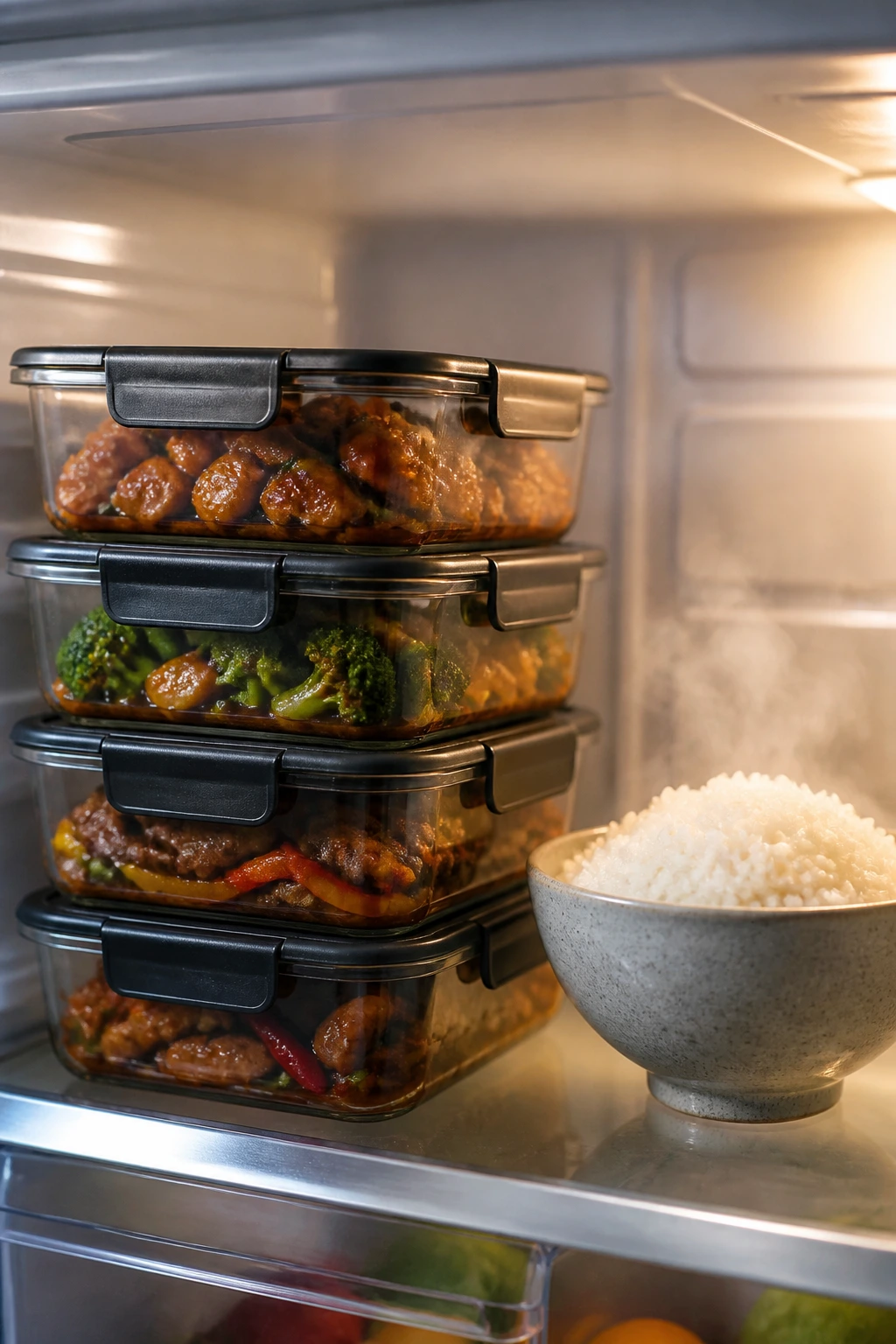
The sauce can be mixed ahead and kept in the fridge for up to 3 days. That’s useful when the week is already moving too fast and you want to dump, cook, and serve without a lot of chopping at the end of the day. Chop garlic and ginger ahead too, though fresh ginger holds its punch better if you grate it close to cooking time.
Cooked crockpot Chinese keeps well in the refrigerator for 3 to 4 days in airtight containers. Store the rice separately if you can. Rice soaks up sauce and turns heavy, while the main dish stays better when it has room to breathe. If broccoli or peppers are in the dish, expect them to soften a little more by day two.
Freezing works best with chicken, pork, and beef dishes that are sauce-heavy and not vegetable-heavy. Freeze for up to 2 months in airtight containers or freezer bags with the air pressed out. Broccoli, peppers, and snap peas lose texture after freezing, so if you know you want leftovers for the freezer, hold those vegetables back and add them fresh when reheating.
For reheating, the stovetop wins when you want the best texture. Put the leftovers in a skillet with a splash of water or broth, cover for a minute, then uncover and stir until hot. The microwave is fine for single servings; cover the bowl and heat in 60-second bursts so the sauce doesn’t splatter and the meat doesn’t overcook. If you’re reheating a larger batch, a covered oven dish at 325°F works too, though it takes longer.
One small habit makes a big difference: add fresh scallions or a few drops of sesame oil after reheating, not before storing. It keeps the leftovers from tasting like they were cooked yesterday, because, well, they were.
The Questions Worth Asking Before You Plug It In
Can you put frozen meat into a slow cooker Chinese recipe?
I wouldn’t. Frozen meat can spend too long in the unsafe temperature zone before it heats through, and the texture usually suffers anyway. Thaw it in the fridge first.
Do you have to brown the meat before slow cooking?
No, but it helps with flavor, especially for beef and pork. A quick sear gives you deeper color and a little crust, which the crockpot cannot create on its own. If you are short on time, skip it and build more flavor into the sauce.
What’s the best chicken cut for these dishes?
Boneless, skinless thighs. They stay juicy, they forgive a slightly long cook, and they absorb sauce without going stringy. Breast can work in a pinch, but it needs more attention.
Why does my sauce taste flat even after cooking for hours?
Usually because it was missing acid or aromatics from the start. A little rice vinegar, fresh ginger, and garlic do more work than another spoon of sugar. Finish with scallions or a tiny splash of black vinegar if it still needs life.
Can I use frozen broccoli?
Yes, but add it near the end and don’t expect crisp stems. Frozen broccoli works better when you want convenience rather than sharp texture. If you want better bite, steam fresh broccoli separately and add it at the end.
How do I make the sauce thicker without it turning gloppy?
Use a cornstarch slurry in small amounts and stop as soon as the sauce coats a spoon. If it goes too far, stir in a little broth or water to loosen it. Thickened sauce should look glossy, not paste-like.
Can these recipes be made gluten-free?
Yes. Tamari replaces soy sauce, and arrowroot or cornstarch can thicken the sauce. Check hoisin and chili sauces carefully, since some versions contain wheat.
Can I double the recipe in the same slow cooker?
Only if your pot has room. Staying under about three-quarters full helps the food cook evenly and keeps the vegetables from turning soggy. If the pot is packed, use two batches instead of forcing it.
What if I want noodles instead of rice?
Cook the noodles separately and toss them with a little sauce right before serving. If you put noodles into the slow cooker early, they’ll soak up too much liquid and turn soft in the wrong way.
A Takeout Habit Worth Keeping
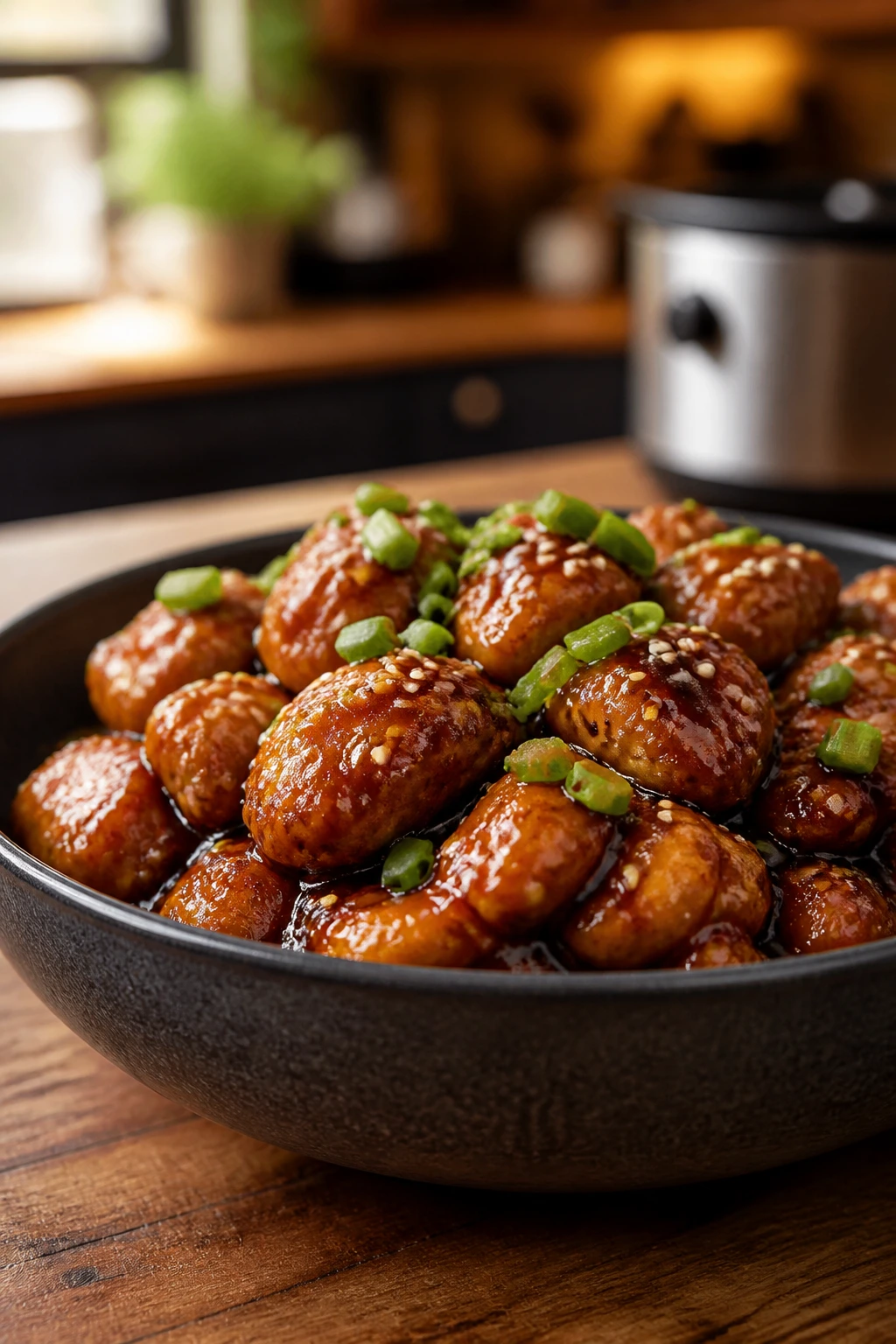
Easy crockpot Chinese works because it respects what the slow cooker can do and ignores what it can’t. It braises meat, softens onions, and gives soy, ginger, garlic, vinegar, and sugar time to become something round and savory. Then you step in at the end with a little heat, a little crunch, and a fresh finish.
That’s the part people miss when they try to make takeout flavors feel easier than they are. The machine handles the long, steady stretch. You handle the last 10 minutes, which is where the dish wakes up.
Start with one sticky chicken or pork bowl, learn where your vegetables belong, and keep a bottle of rice vinegar and a jar of sesame oil within reach. After that, the slow cooker stops being a backup plan and becomes a very good habit.