



A good slow-cooked Kung Pao chicken should still have a little snap. Not a wok-seared, smoke-kissed snap, obviously—the crockpot is a different animal—but enough bite that the peppers don’t melt into sauce and the peanuts still sound faintly crunchy when you chew them. That balance is the whole trick, and it’s the reason some versions taste lively while others come out like sweet brown chicken soup.
Slow-cooked Kung Pao chicken in a crockpot can work beautifully when you build the sauce for long heat instead of asking the slow cooker to act like a stir-fry pan. Thigh meat loves the gentle braise. Peppers do not. Peanuts definitely do not. So the dish has to be staged: bold sauce first, vegetables later, crunch at the end.
I’m a fan of this kind of recipe because it gives you the deep, sticky, sweet-sour heat that makes Kung Pao worth making in the first place, but it does it without a skillet full of splatter or a 10-minute race against overcooked chicken. The sauce should come out glossy, salty, and a little sharp at the edges. If it tastes sleepy, something got added too early. The fix is simple, and once you know it, the whole dish turns into a repeat player.
Why Slow-Cooked Kung Pao Chicken Works in a Crockpot
The slow cooker does one job here better than a wok: it turns chicken thighs tender without any babysitting. That matters more than people think. Kung Pao is built on contrast—soft chicken, crisp peppers, crunchy peanuts, a sauce that lands salty, sweet, hot, and sour all at once—and long, gentle heat gives you the soft part without ruining the rest.
Chicken thighs stay juicy under low heat: They have enough fat and connective tissue to handle hours in the sauce without going stringy, which is why I reach for thighs here every time.
The sauce gets time to taste like itself: Soy sauce, rice vinegar, hoisin, ginger, and garlic mellow together in a way that feels rounded, not raw. The crockpot helps them blend, but you still need the finishing vinegar to keep things awake.
Peppers and peanuts keep their job when they show up late: Add them too early and you get limp peppers and peanut mush. Add them near the end and the dish keeps the texture that makes each bite interesting.
The heat is easier to control than in a skillet: Dried chiles or red pepper flakes soften into the sauce instead of scorching on the bottom of a pan. That means less risk of bitterness, though you still need to watch the amount.
Leftovers behave well: The sauce tightens overnight, and the spices settle in. The peanuts lose a little snap, yes, but the flavor deepens enough that lunch the next day can be even better than dinner.
A Fast Snapshot Before You Start
A dish like this is at its best when the prep is tidy and the timing is boring. That’s a compliment.
Yield: Serves 4 to 6
Prep Time: 20 minutes
Cook Time: 3 hours on High or 5 to 6 hours on Low
Total Time: 3 hours 20 minutes on High or 5 hours 20 minutes on Low
Difficulty: Beginner — the method is straightforward, but the final thickening and finishing step need a little attention.
Best Served: Hot over jasmine rice, finished with scallion greens and extra peanuts.
The Ingredient List for Real Kung Pao Flavor
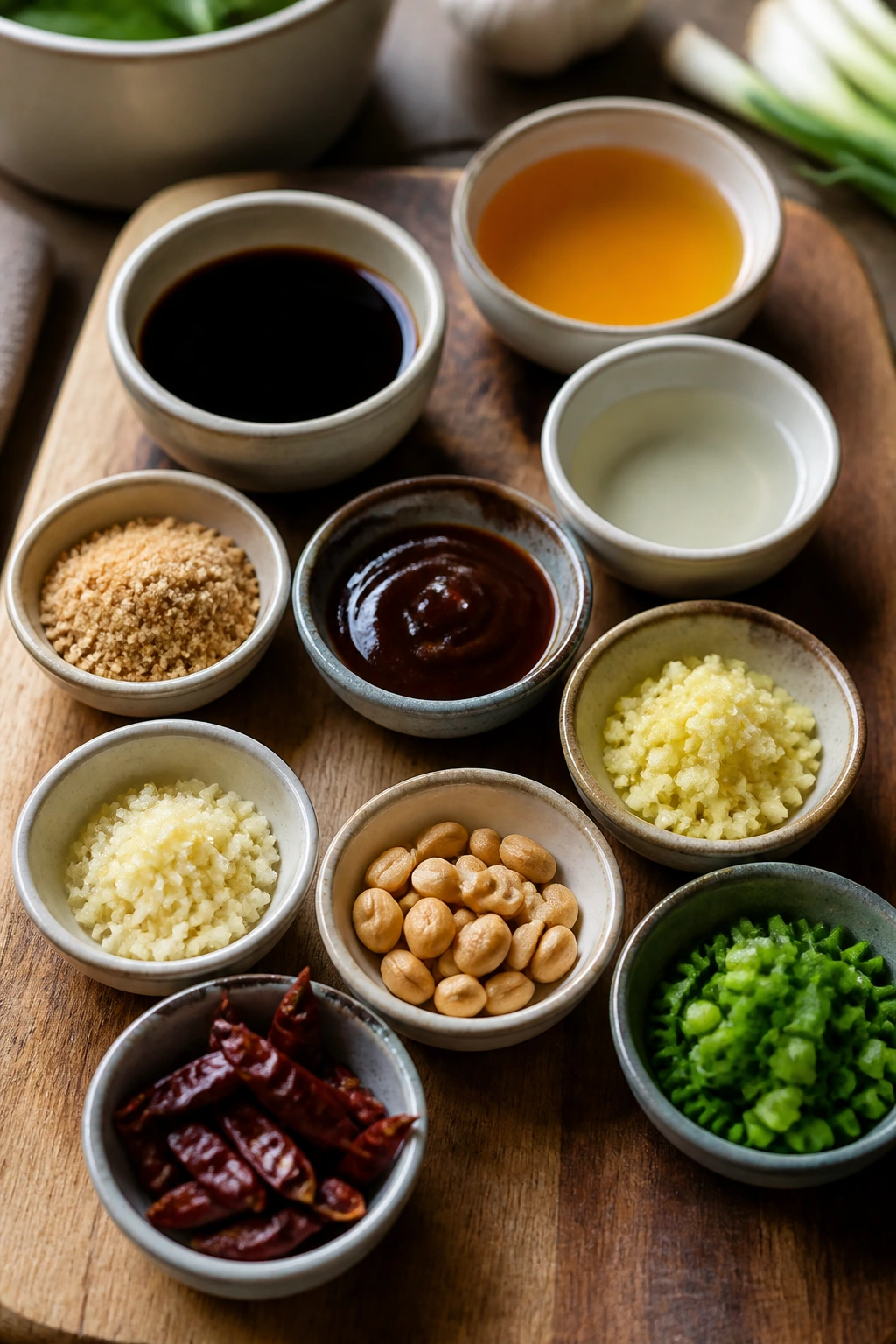
For the Sauce
- 1/2 cup low-sodium soy sauce
- 1/2 cup low-sodium chicken broth
- 1/4 cup rice vinegar
- 1/4 cup hoisin sauce
- 2 tablespoons packed light brown sugar
- 2 tablespoons dry sherry or water
- 1 tablespoon toasted sesame oil
- 1 tablespoon finely grated fresh ginger
- 4 garlic cloves, minced
- 1 to 2 teaspoons crushed red pepper flakes or 6 dried red chiles, stemmed
- 1 teaspoon Sichuan peppercorns, lightly crushed (optional)
For the Chicken and Vegetables
- 2 pounds boneless, skinless chicken thighs, trimmed and cut into 1 1/2-inch pieces
- 1 small yellow onion, cut into wedges
- 2 red bell peppers, cut into 1-inch pieces
For the Finish and Serving
- 2 tablespoons cornstarch
- 3 tablespoons cold water
- 1/2 cup roasted unsalted peanuts
- 4 scallions, sliced, whites and greens separated
- 4 cups hot cooked jasmine rice
Why Each Ingredient Matters in the Slow Cooker
Chicken Thighs
What to use: 2 pounds boneless, skinless chicken thighs, trimmed of excess fat and cut into roughly 1 1/2-inch pieces.
Preparation: Keep the pieces fairly even so they cook at the same rate. Large chunks take longer to absorb the sauce; tiny chunks can break down and turn stringy.
Substitutions: Boneless chicken breasts work if that’s what you have, but they need a shorter cook and a more careful eye. Firm tofu, pressed and cubed, can stand in for a meatless version, though it should be added much later so it doesn’t fall apart.
Tips: Thighs are forgiving because they stay juicy even after a long simmer. Breasts do not share that trait. They’ll go dry and chalky if you wander off too long.
The Sauce Backbone
What to use: Soy sauce, chicken broth, rice vinegar, hoisin, brown sugar, sherry or water, sesame oil, ginger, and garlic.
Preparation: Whisk the sauce until the sugar dissolves and the ginger and garlic are spread through the liquid, not sitting in one clump.
Substitutions: Tamari works well for gluten-free cooking. If you can’t find hoisin, use a little extra brown sugar and a tablespoon of oyster sauce or a gluten-free substitute, though the flavor will shift a bit.
Tips: The raw sauce should taste a little stronger than you want the final bowl to taste. Slow cooking softens the edges, so if it tastes barely seasoned before it goes in, it will taste flat later.
Heat and the Sichuan Tingle
What to use: Crushed red pepper flakes, dried red chiles, and optional Sichuan peppercorns.
Preparation: Lightly crush the peppercorns so they release aroma without turning to dust. Leave whole dried chiles intact if you want to fish them out later.
Substitutions: Chili crisp can replace some of the red pepper if you like a more savory heat. If Sichuan peppercorns are hard to find, skip them rather than forcing in a random spice that doesn’t belong.
Tips: The peppercorns give that faint tongue-tingle people associate with Kung Pao. It’s subtle, and it disappears if you bury the dish under too much sugar.
Vegetables and Crunch
What to use: A small yellow onion and two red bell peppers, plus peanuts and scallions at the end.
Preparation: Cut the onion into wedges so it softens without vanishing. Slice the peppers into bite-size pieces, not paper-thin strips, or they’ll disappear in the braise.
Substitutions: Green bell pepper can replace one red pepper if you want a sharper, less sweet flavor. Cashews can replace peanuts, though they read a little softer and sweeter.
Tips: The peppers should still have shape when they hit the bowl. That texture is not a bonus. It is part of what makes this dish taste like Kung Pao rather than generic chicken in brown sauce.
Cornstarch and Rice
What to use: Cornstarch mixed with cold water for the slurry, and hot jasmine rice for serving.
Preparation: Mix the cornstarch in cold water until the slurry looks smooth and milky. Cook the rice separately so it stays fluffy and doesn’t drink up the sauce in the crockpot.
Substitutions: Arrowroot can thicken the sauce if you prefer it, but add it near the end and avoid overcooking. Brown rice or cauliflower rice both work under the chicken if that’s the direction you want to go.
Tips: Cornstarch thickens fast once it hits heat. If the sauce goes from glossy to gluey, you added too much or let it cook too long after thickening.
The Tools That Make the Job Easy
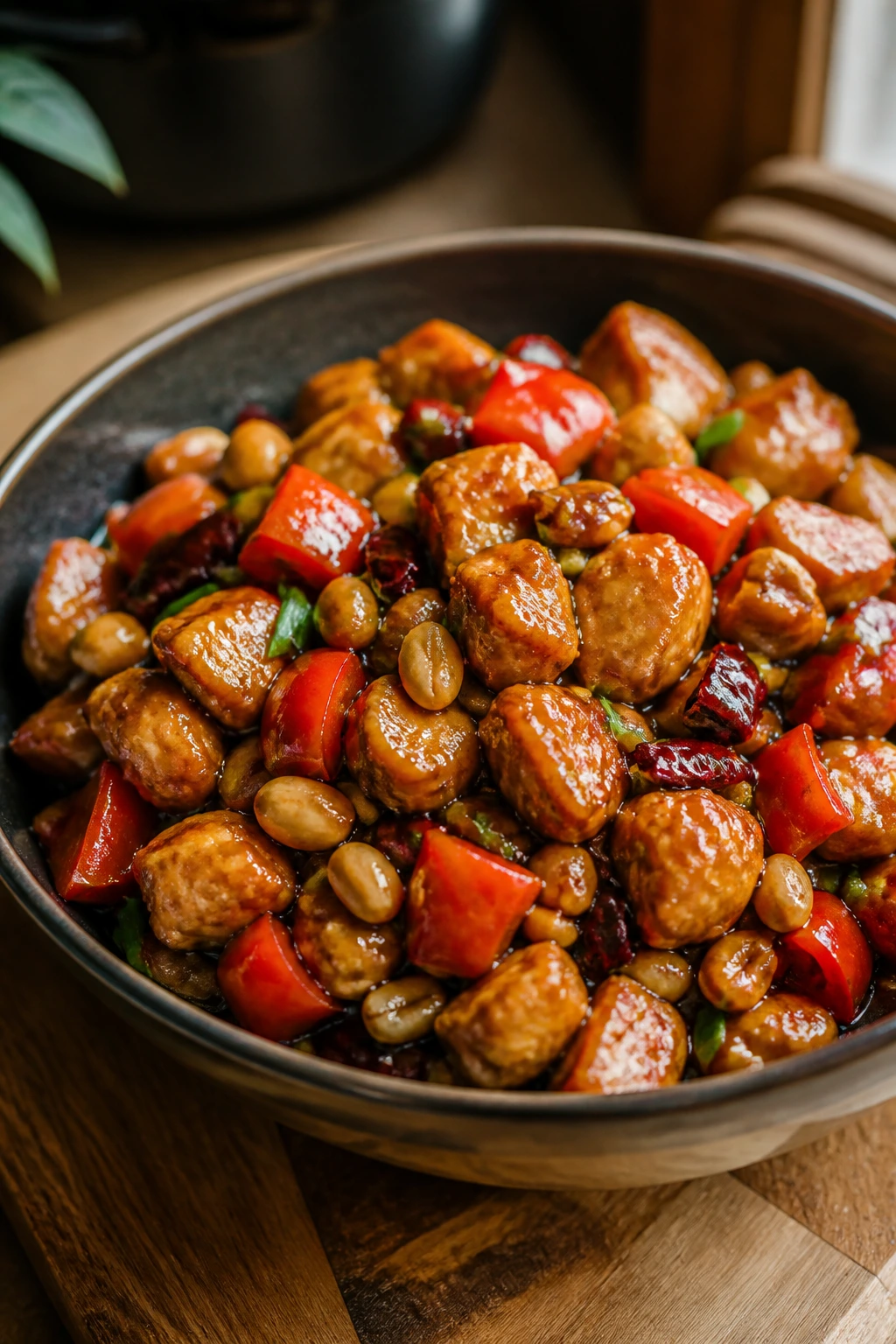
You do not need much here, which is part of the appeal. The trick is having the right few things within reach.
- 6-quart slow cooker: Big enough for the chicken and vegetables without crowding the sauce.
- Medium mixing bowl: For whisking the sauce before it goes in.
- Whisk: Helps the hoisin and brown sugar dissolve instead of clinging to the bottom.
- Measuring cups and spoons: This sauce balances on small numbers; eyeballing it gets risky fast.
- Chef’s knife: For clean chicken pieces, onion wedges, and pepper chunks.
- Cutting board: Preferably one with a damp towel underneath so it doesn’t slide while you cut.
- Small bowl: For the cornstarch slurry.
- Wooden spoon or silicone spatula: For stirring without gouging the slow cooker insert.
- Rice cooker or saucepan with lid: Helpful if you’re making jasmine rice at the same time.
Building the Sauce and Loading the Crockpot
There’s a reason I build the sauce first. The slow cooker is good at blending flavors, but it is not good at rescuing a poorly mixed sauce with clumps of sugar and garlic sitting in one corner. Start clean. The bowl should do the work before the pot does.
Make the sauce base:
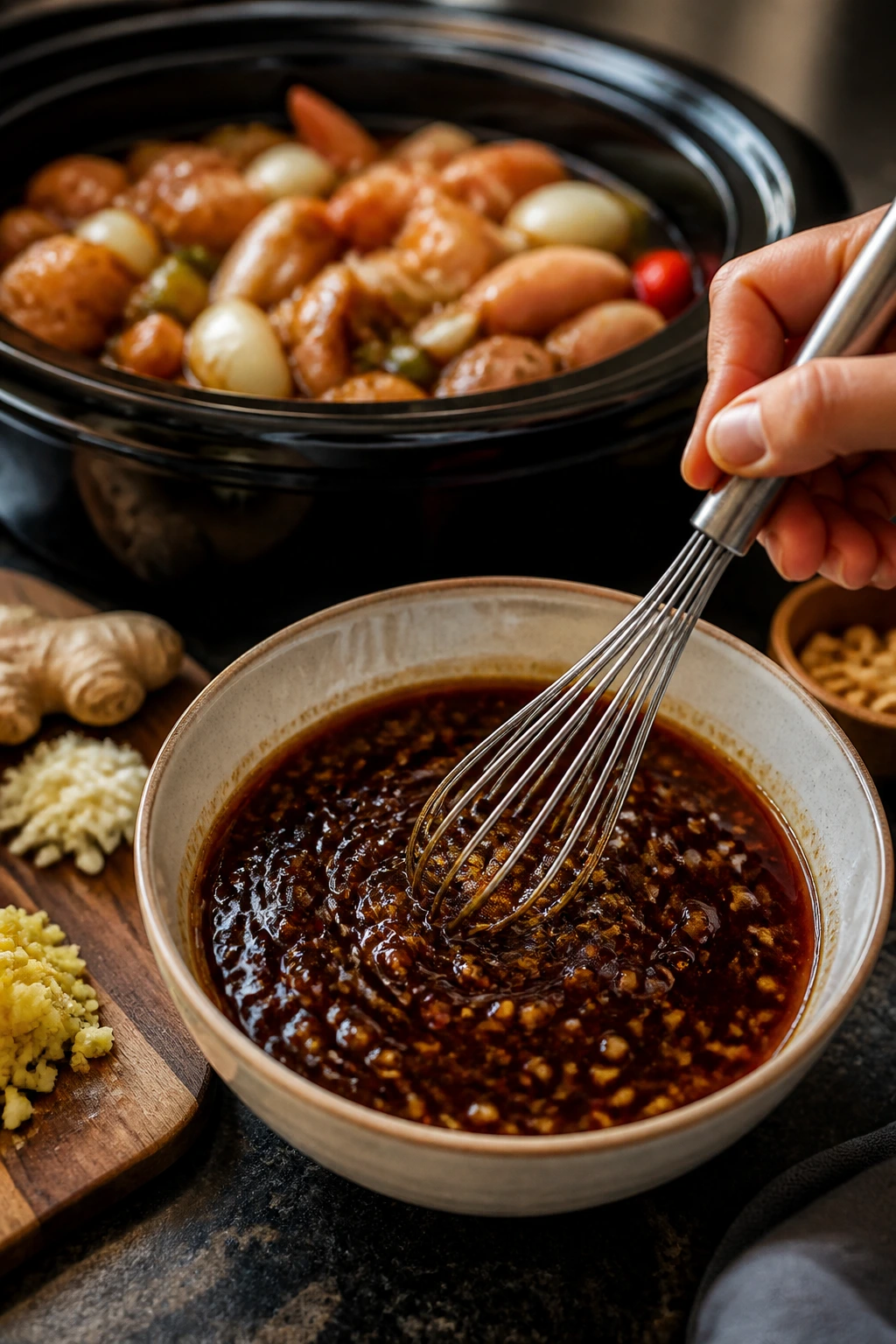
- In a medium bowl, whisk together the soy sauce, chicken broth, rice vinegar, hoisin sauce, brown sugar, dry sherry or water, sesame oil, ginger, garlic, crushed red pepper flakes, and Sichuan peppercorns, if using, until the sugar dissolves and the liquid looks even and glossy.
- Taste a spoonful. It should be salty, sweet, sharp, and a little hot. Do not make it mild at this stage; the slow cooker softens flavors as they cook.
Load the slow cooker: 3. Place the chicken thighs and onion wedges in a 6-quart slow cooker, then pour the sauce over the top. Stir once or twice to coat the chicken, but do not obsess over perfect coverage. The sauce will move around on its own. 4. Cover and cook on Low for 5 to 6 hours or on High for 3 hours, until the chicken reaches 165°F and breaks apart easily with a fork. The chicken should look opaque all the way through, and the sauce will smell like soy, ginger, and garlic with a faint peppery edge. Stop there. If you keep cooking much longer, even thighs start to lose their nice texture.
Thickening, Peppers, and the Final Finish
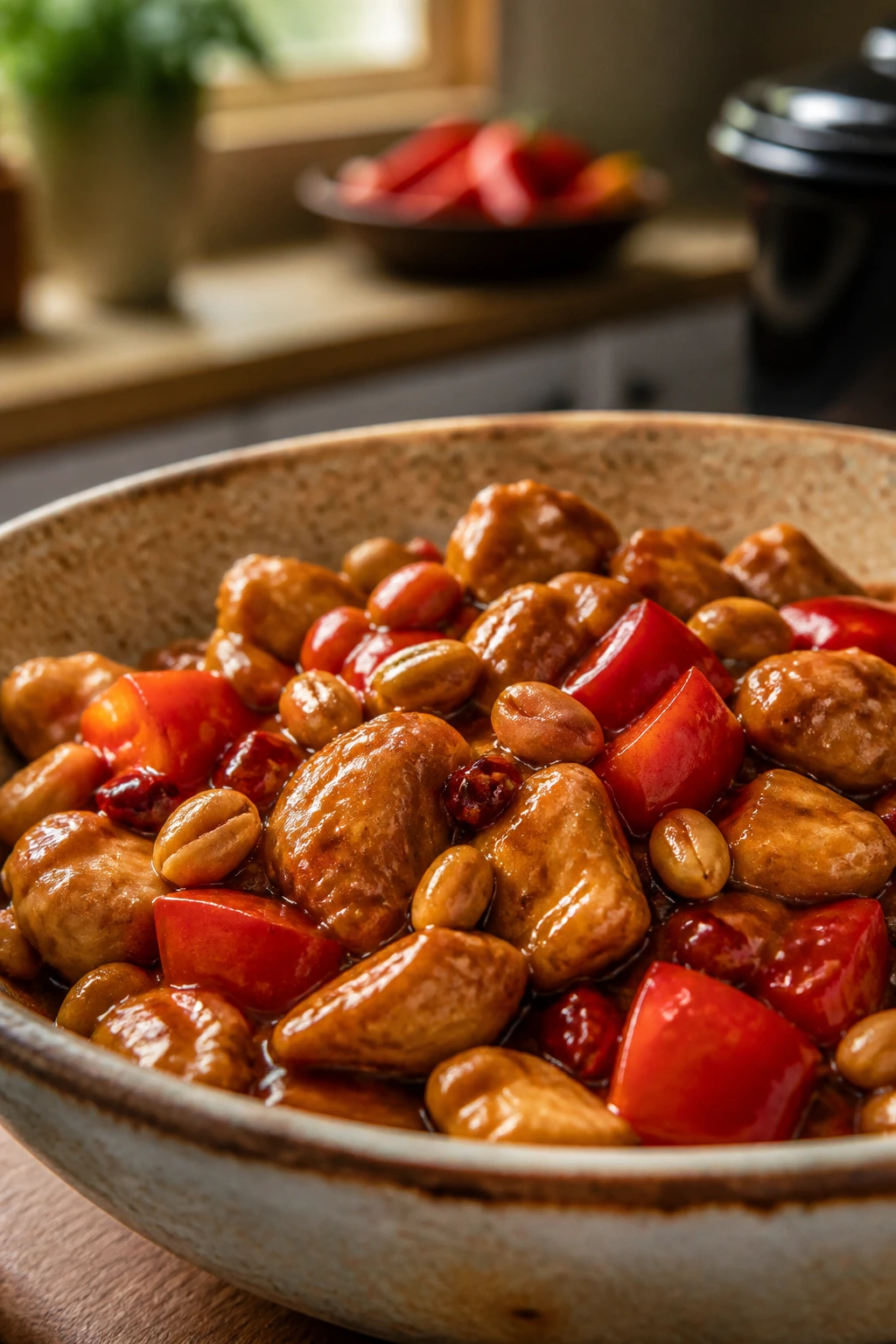
This is the part that keeps the bowl from turning soft. The last stretch matters because Kung Pao needs contrast, and the crockpot will try to sand off the edges if you let it.
Add the peppers near the end: 5. Stir in the red bell peppers during the last 30 minutes of cooking on Low or the last 20 minutes on High. The peppers should soften at the edges but still hold a little shape. If they slump completely, you added them too early.
Thicken the sauce: 6. In a small bowl, whisk the cornstarch and cold water until smooth. Stir the slurry into the slow cooker, then cook uncovered on High for 10 to 15 minutes, stirring once or twice, until the sauce turns glossy and thick enough to coat the back of a spoon. Do not add dry cornstarch directly to the pot; it clumps and stays clumpy.
Finish with crunch and freshness: 7. Stir in the peanuts and the scallion whites, then let the dish sit for 5 minutes so the peanuts absorb a little sauce without going soft. Turn off the heat, stir in a final small splash of sesame oil if you want a stronger nutty note, and scatter the scallion greens over the top. Spoon the chicken over hot jasmine rice and serve immediately while the peppers still have a bit of bite.
How to Serve It So the Sauce Stays Front and Center
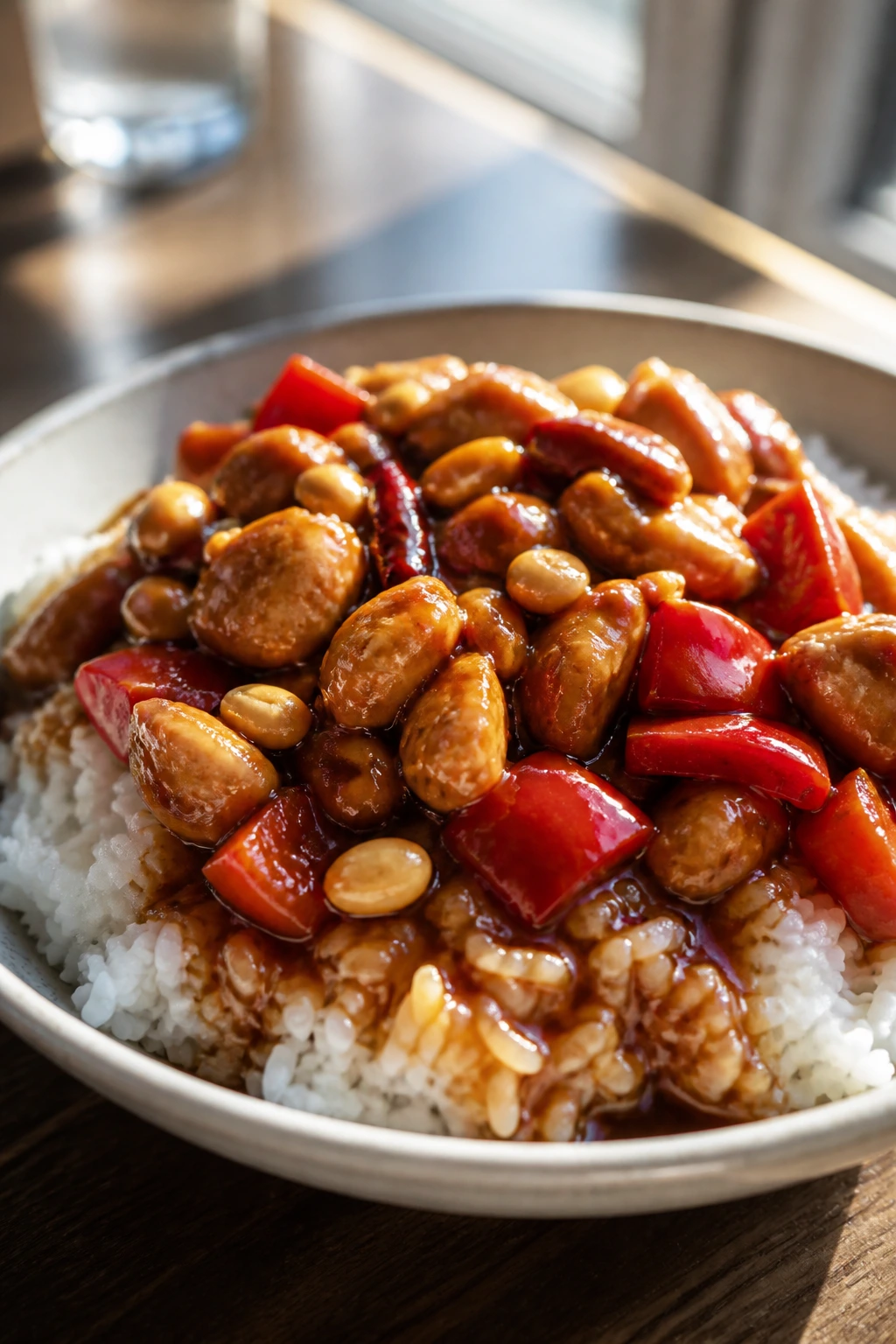
Presentation: Spoon the chicken and peppers over a shallow mound of jasmine rice so the sauce runs into the grains instead of disappearing in the bottom of a deep bowl. I like to finish with a small handful of extra peanuts and the scallion greens right in the center; it gives the dish a clean top and makes the bowl look finished, not crowded.
Accompaniments: Keep the sides crisp and plain. Steamed broccoli, sautéed bok choy, blistered green beans, or a quick cucumber salad with rice vinegar and a pinch of sugar all play nicely here. I would not pile on another rich side; the sauce already carries enough weight.
Portions: A generous serving is about 1 to 1 1/2 cups of chicken and sauce over 3/4 cup rice per person. If you want to stretch it, add more rice and a green vegetable rather than watering down the sauce.
Beverage Pairing: An off-dry Riesling is a smart match because the slight sweetness cools the heat without flattening the garlic and vinegar. Cold jasmine tea or a clean lager also works well, especially if you’re serving the dish with a little extra chili.
Extra Tips, Flavor Boosters, and Small Tweaks
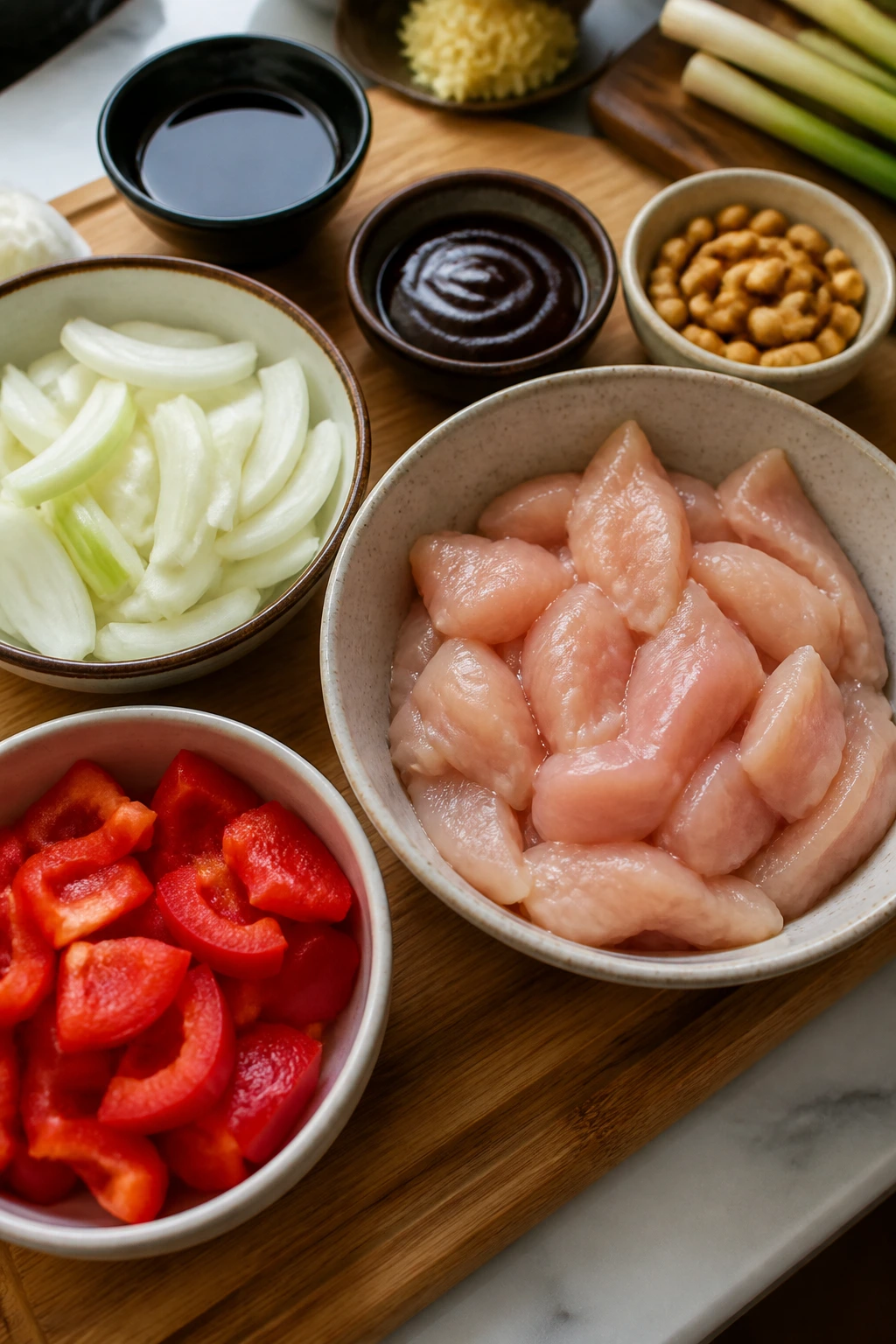
Flavor Enhancement
A teaspoon of rice vinegar at the end can wake the whole bowl up if it tastes a little heavy after the long cook. I usually taste after thickening and then decide whether it needs that final sharp nudge. Sometimes it does. Sometimes it doesn’t. The sauce will tell you.
Time-Saver
Mix the sauce the night before and keep it in the fridge in a sealed jar. Chop the chicken and vegetables the day you cook, and the actual hands-on work drops fast. If I know a busy evening is coming, I’ll even pre-measure the cornstarch into a tiny container so I’m not hunting for it when the pot is ready.
Texture Move
Toast the peanuts in a dry skillet for 3 to 4 minutes before adding them, if you have the extra minute. They smell richer and keep their crunch a little longer. It’s a small step, not a glamorous one, but it gives the final bowl more contrast.
Make-It-Yours
If you like a little more vegetable heft, add sliced celery or a handful of snap peas during the final 20 minutes. If you want a lower-sugar bowl, cut the brown sugar back to 1 tablespoon and add a splash more rice vinegar at the end. And if peanuts are off the table, roasted cashews or sunflower seeds carry the same late-added crunch without fighting the sauce.
Common Mistakes That Flatten the Flavor
-
Adding the peppers too early: They collapse into soft, tired strips and disappear into the sauce. Fix it by holding them for the last 20 to 30 minutes so they keep a little bite.
-
Using chicken breasts and forgetting them: Breasts can dry out before the sauce finishes thickening. If you swap them in, check the texture early and pull the cooker off the heat the moment the chicken hits 165°F.
-
Dumping in dry cornstarch: It turns into little white lumps that refuse to dissolve. Always whisk cornstarch with cold water first, then stir the slurry into hot sauce.
-
Putting the peanuts in at the start: They lose their crunch and start tasting soft and dusty. Add them near the end or sprinkle extra on top after serving.
-
Letting the sauce go flat after cooking: Slow heat softens the vinegar edge, so the bowl can taste heavy if you never re-balance it. A small splash of rice vinegar or a pinch of salt right at the end fixes that faster than extra sugar ever will.
Variations Worth Making Again
Fire-Laced Sichuan Version
Increase the crushed red pepper to 2 teaspoons and keep the Sichuan peppercorns in the sauce. If you want more of the tongue-tingle, add another pinch of lightly crushed peppercorns at the end instead of more chile.
Milder Takeout Bowl
Drop the crushed red pepper to 1/2 teaspoon and skip the peppercorns entirely. Add an extra bell pepper or a handful of snap peas so the bowl still feels full without the heat leaning hard.
Gluten-Free Version
Use tamari instead of soy sauce and a gluten-free hoisin sauce. Check the broth label too; some are cleaner than others. The rest of the method stays the same.
Cashew Crunch Swap
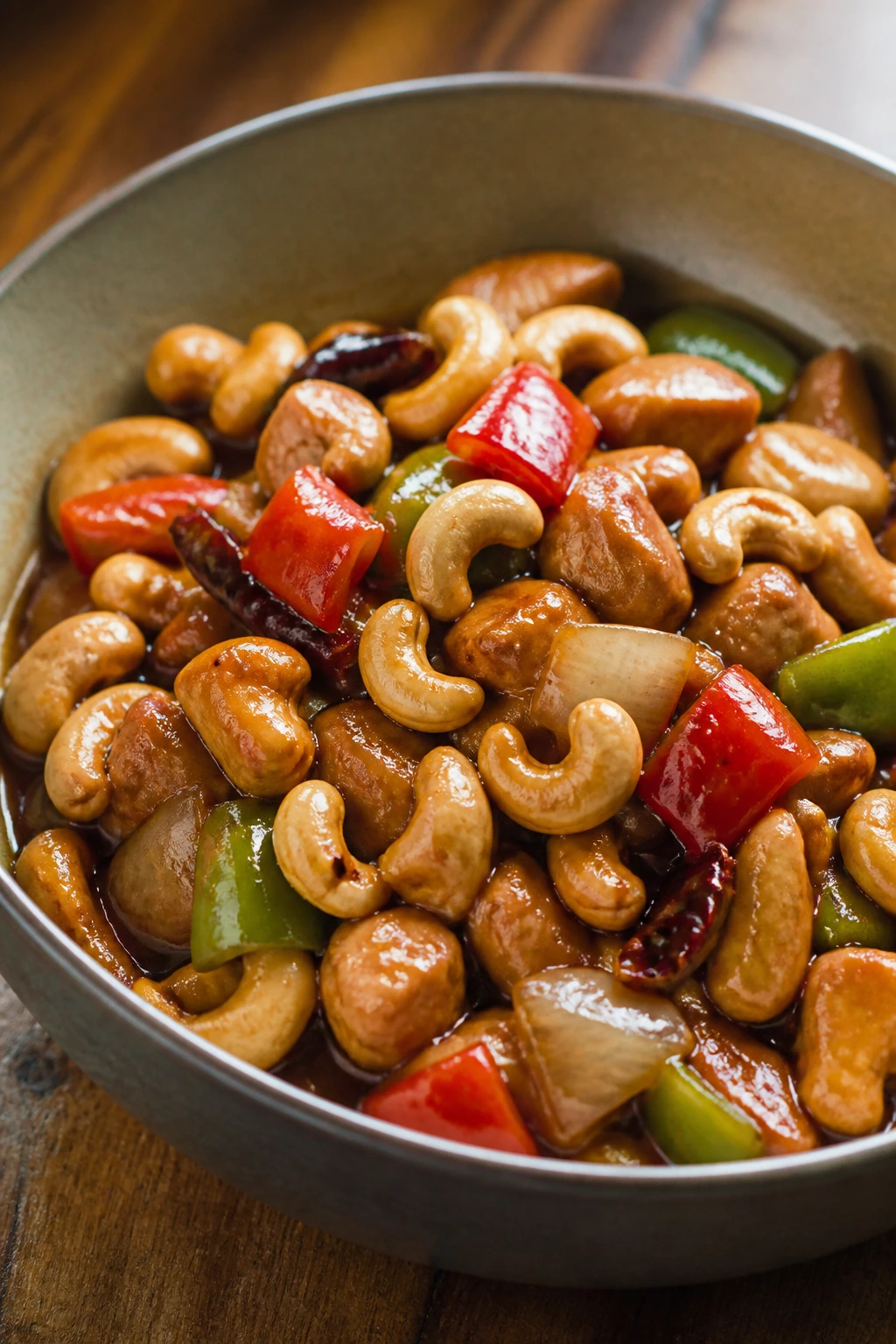
Replace the peanuts with roasted cashews for a rounder, slightly sweeter finish. I like this when I want the bowl to feel softer and less sharp, especially if I’ve added extra vinegar or chiles.
Vegetable-Heavy Pot
Add sliced celery, extra onion, and snap peas during the last 20 minutes. The dish starts reading a little more like a loaded stir-fry, but the sauce still carries the whole thing if you keep the additions late.
Storing, Reheating, and Making It Ahead
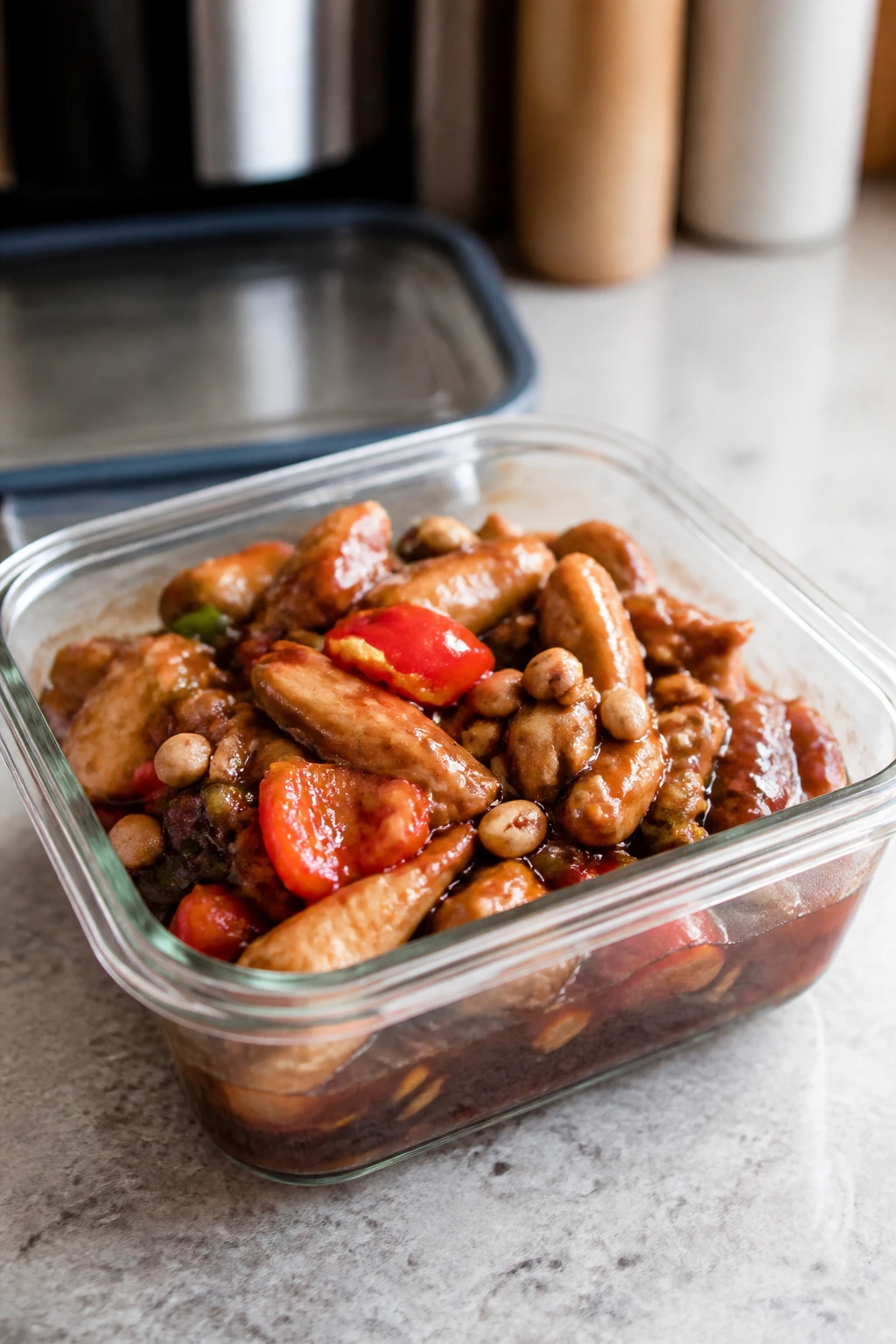
Leftovers keep well, but the texture changes a little, and that’s normal. Store the chicken, sauce, peppers, and peanuts in an airtight container in the refrigerator for 3 to 4 days. The sauce will thicken as it chills, so don’t panic if it looks tighter the next day. That’s what cold soy-based sauces do.
For freezing, cool the chicken completely, then pack it into freezer-safe containers for up to 2 months. The best version freezes without the peanuts mixed in, because peanuts soften and get a little odd after thawing. If you know you’ll freeze part of the batch, keep a small bag of fresh peanuts in the pantry and add them after reheating.
Reheat on the stovetop over medium-low heat with a splash of chicken broth or water, stirring until the sauce loosens and the chicken is hot. The microwave works too—cover the bowl and heat in 60- to 90-second bursts, stirring between rounds. If the sauce has gone too thick, a spoonful of broth fixes it fast.
For make-ahead planning, you can mix the sauce up to 24 hours in advance and chop the vegetables the same day you cook. I would not assemble the raw dish and let it sit for days; the chicken is fine, but the peppers lose their shape and the garlic starts to blur. The components hold better when they stay separate until cooking day.
Questions People Ask Before They Start
Can I use chicken breasts instead of thighs?
Yes, but I would watch the time closely. Breasts cook faster and dry out sooner, so start checking them near the lower end of the cook range and stop the moment they reach 165°F.
Do I really need Sichuan peppercorns?
No, but they give the dish that faint, numbing buzz that makes Kung Pao taste specific instead of generic. If you can’t find them, leave them out rather than replacing them with a random spice that changes the flavor in the wrong direction.
Why is my sauce thin?
Usually the cornstarch slurry wasn’t cooked long enough, or the slow cooker was left covered after thickening. Stir in the slurry, switch to High, and cook uncovered for 10 to 15 minutes until the sauce looks glossy and coats a spoon.
Can I add broccoli or snap peas?
Yes, but they belong near the end. Broccoli florets can go in for the last 20 minutes, while snap peas need even less—about 10 to 15 minutes if you want them bright and crisp.
How spicy is this recipe?
It lands in the middle if you use 1 teaspoon of red pepper flakes. For a milder bowl, cut that amount in half; for more heat, add extra flakes at the table rather than overloading the whole pot.
Can I make it without peanuts?
You can. Roasted cashews, sunflower seeds, or even toasted sesame seeds can step in for crunch, though the peanut flavor is part of what makes this dish read as Kung Pao.
Can I make this on the stove instead of in the crockpot?
Yes. Simmer the sauce with the chicken over medium-low heat until the chicken cooks through, then add the peppers, thicken with the cornstarch slurry, and finish with peanuts and scallions. The texture will be a little brighter and a little faster, but the flavor family stays the same.
A Bowl Worth Repeating
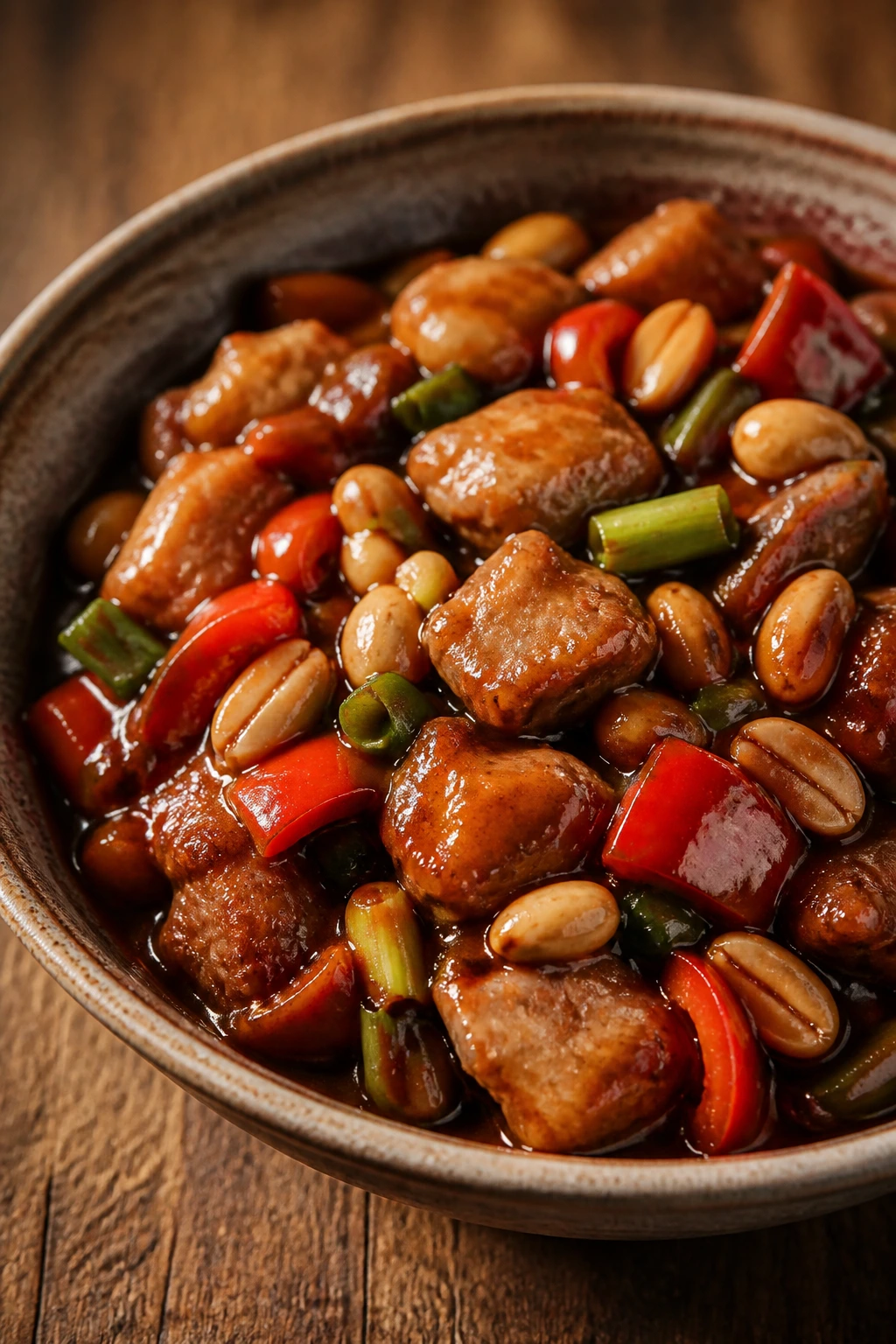
A slow cooker will never give you wok smoke, and I’m not going to pretend it will. What it can give you is a bowl with real contrast: tender chicken, a sauce that clings, peppers that still have shape, and peanuts that stay loud enough to matter. That’s the version worth making.
The key is restraint. Hold back the peppers. Hold back the peanuts. Let the sauce do its long, quiet work, then finish it with acid and crunch when the pot is done. That little bit of discipline is what keeps this dish from sliding into mush, and once you taste the difference, it’s hard to go back.
Slow-Cooked Kung Pao Chicken — Recipe Card
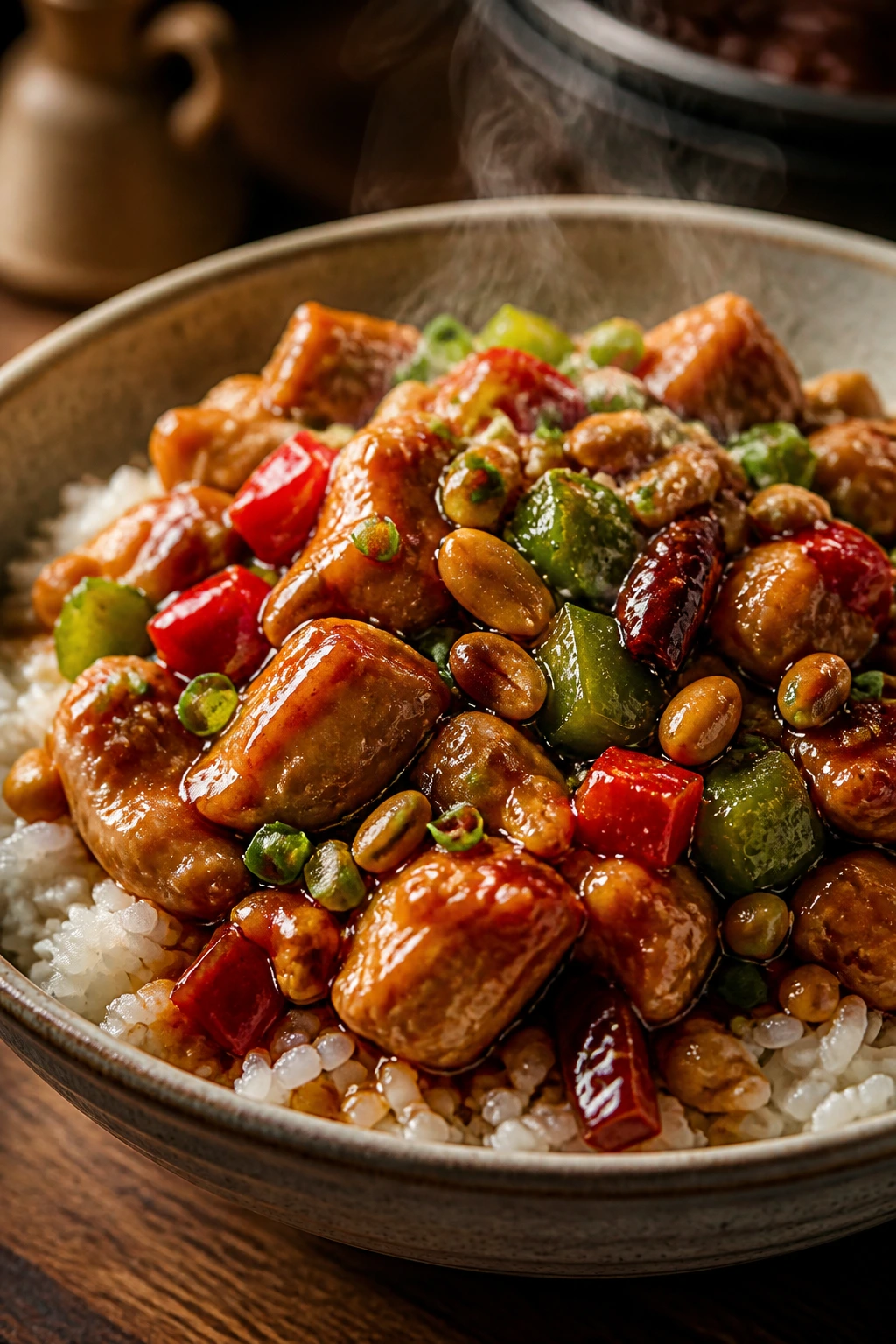
Recipe Name: Slow-Cooked Kung Pao Chicken
Description: Chicken thighs simmer in a soy-vinegar-hoisin sauce with ginger, garlic, chile heat, peppers, peanuts, and scallions. Served over jasmine rice, it keeps the sweet-sour edge and crunchy finish that define Kung Pao.
Prep Time: 20 minutes
Cook Time: 3 hours on High or 5 to 6 hours on Low
Total Time: 3 hours 20 minutes on High or 5 hours 20 minutes on Low
Course: Main Course
Cuisine: Chinese-Inspired
Servings: 4 to 6 servings
Calories: about 390 kcal per serving
Ingredients
For the Sauce
- 1/2 cup low-sodium soy sauce
- 1/2 cup low-sodium chicken broth
- 1/4 cup rice vinegar
- 1/4 cup hoisin sauce
- 2 tablespoons packed light brown sugar
- 2 tablespoons dry sherry or water
- 1 tablespoon toasted sesame oil
- 1 tablespoon finely grated fresh ginger
- 4 garlic cloves, minced
- 1 to 2 teaspoons crushed red pepper flakes or 6 dried red chiles, stemmed
- 1 teaspoon Sichuan peppercorns, lightly crushed (optional)
For the Chicken and Vegetables
- 2 pounds boneless, skinless chicken thighs, trimmed and cut into 1 1/2-inch pieces
- 1 small yellow onion, cut into wedges
- 2 red bell peppers, cut into 1-inch pieces
For the Finish and Serving
- 2 tablespoons cornstarch
- 3 tablespoons cold water
- 1/2 cup roasted unsalted peanuts
- 4 scallions, sliced, whites and greens separated
- 4 cups hot cooked jasmine rice
Instructions
- Whisk the soy sauce, chicken broth, rice vinegar, hoisin sauce, brown sugar, sherry or water, sesame oil, ginger, garlic, crushed red pepper flakes, and Sichuan peppercorns in a medium bowl until the sugar dissolves.
- Add the chicken thighs and onion wedges to a 6-quart slow cooker, pour the sauce over the top, and stir to coat.
- Cover and cook on Low for 5 to 6 hours or on High for 3 hours, until the chicken reaches 165°F and is tender.
- Add the red bell peppers during the last 30 minutes on Low or the last 20 minutes on High.
- Whisk the cornstarch and cold water in a small bowl, stir the slurry into the slow cooker, and cook uncovered on High for 10 to 15 minutes until the sauce thickens and turns glossy.
- Stir in the peanuts and scallion whites, turn off the heat, and finish with the scallion greens.
- Serve hot over jasmine rice.
Notes: Add the peanuts at the end for the best crunch. If the sauce tastes a little flat after thickening, stir in 1 teaspoon rice vinegar. Keep extra peanuts separate if you plan to reheat leftovers.