



The first time I put smoky bacon, avocado, and a brown sugar glaze on the same bite, it stopped feeling like a side dish and started acting like a small act of mischief. The avocado stayed cool and creamy in the middle, the bacon gave you that salty snap at the edges, and the glaze—thin, shiny, slightly sticky—turned the whole thing into something that tasted more composed than it had any right to be.
It’s the kind of dish that lives or dies on restraint. Too-ripe avocados slump. Thin bacon turns brittle and disappears. A heavy-handed glaze tastes like candy. Get the balance right, though, and you end up with a plate that does three things at once: smoke, salt, and caramel.
I like recipes that don’t waste your time with busywork, but still ask for a little judgment. This is one of them. You’re not juggling ten pans or chasing a complicated sauce; you’re choosing avocados with enough structure to hold heat, giving the bacon enough time to brown, and brushing on the glaze at the exact moment when it can bubble instead of burn. That’s the whole trick. And once you know that, the rest falls into place fast.
Why Bacon, Avocado, and Brown Sugar Belong on the Same Plate
Sweet-Salty Contrast: The brown sugar glaze doesn’t just sweeten the bacon; it sharpens the salt and smoke so the whole bite tastes louder, not softer.
Creamy Meets Crisp: Avocado gives you that buttery, almost chilled texture, while bacon brings crunch at the edges and chew in the middle if you catch it before it overcooks.
Short, Useful Ingredient List: You do not need a shopping cart full of extras here. A good avocado, thick-cut bacon, brown sugar, vinegar, and a few pantry seasonings are enough.
Fast Enough for Dinner, Fancy Enough for Guests: The recipe lands in the sweet spot where it feels a little special but still fits into a normal weeknight rhythm.
Best When Served Hot: The glaze stays glossy for a short window, the bacon edges stay crisp, and the avocado is warm at the rim but not soft all the way through.
Yield, Timing, and the Best Moment to Serve It
Yield: Serves 4 as an appetizer or 2 to 3 as a rich side
Prep Time: 15 minutes
Cook Time: 15 minutes
Total Time: 30 minutes
Difficulty: Intermediate — the steps are short, but the glaze needs watching and the avocados should stay firm enough to hold their shape.
Chill/Rest Time: None
Best Served: Right after broiling, while the glaze is still shiny and the bacon is crisp at the edges
Why Bacon, Avocado, and Brown Sugar Work So Well Together
Bacon brings the smoke, yes, but it also brings fat that coats the tongue and stretches flavor. Brown sugar answers that fat with caramel notes, and the vinegar in the glaze keeps the whole thing from going flat or sticky in the wrong way. That tiny splash of acid is the difference between “sweet” and “balanced.”
Why the glaze goes on last
Brown sugar is forgiving in a skillet and unforgiving under a broiler. Put it on too soon, and it can darken before the bacon is where you want it. Put it on late, and it melts into a glossy coat that clings to the bacon bits and the cut surface of the avocado. That timing is not a small detail. It’s the reason the finished plate looks lacquered instead of scorched.
Why avocado needs structure, not mush
A ripe avocado for toast is not the same thing as a ripe avocado for this recipe. Here, you want one that yields slightly when you press near the stem but still feels heavy and intact in your hand. The flesh should hold a clean scoop and keep its shell from collapsing once it hits heat. If it’s already soft enough to mash with a spoon, use it for guacamole and buy another avocado for this dish.
The smoke note comes from two places: the bacon itself and the smoked paprika in the glaze. I prefer that over trying to fake smoke with too much sugar or too much cooking time. Smoke should feel like a background note. If it takes over, the glaze starts tasting like barbecue sauce’s louder cousin, and that is not what we want here.
One more thing. The acid matters more than people think. Lime juice at the end wakes up the avocado and keeps the bacon from tasting one-note. Skip that last hit of brightness and the dish loses half its shape.
The Ingredient List for Smoky Bacon Avocado with Brown Sugar Glaze
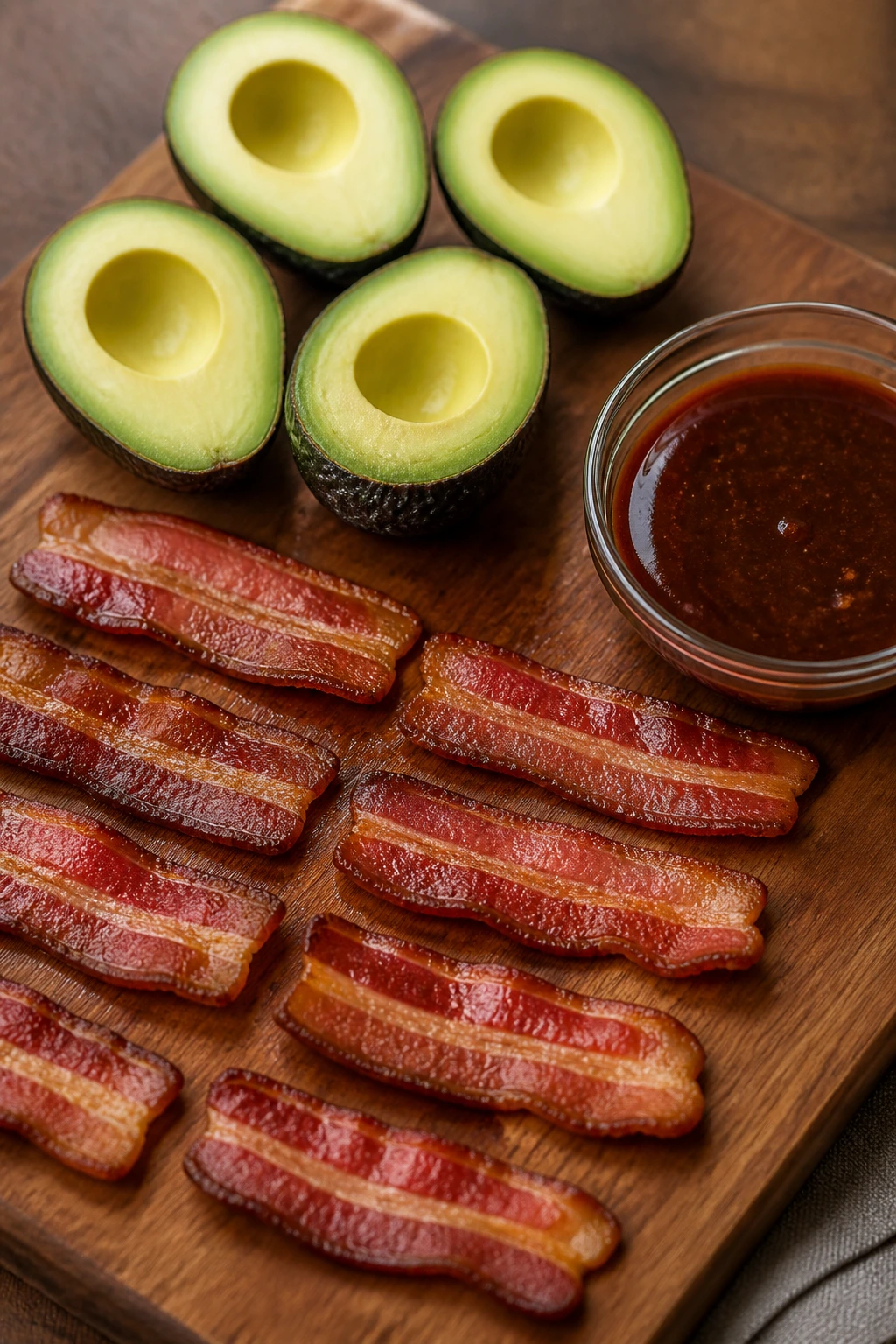
For the Avocados
- 4 ripe but firm avocados, halved and pitted
- 1 tablespoon olive oil
- 1 teaspoon kosher salt
- 1/2 teaspoon freshly ground black pepper
For the Bacon Topping
- 8 slices thick-cut bacon, cut crosswise into 1-inch pieces
For the Brown Sugar Glaze
- 3 tablespoons packed light brown sugar
- 1 tablespoon water
- 1 tablespoon apple cider vinegar
- 1 teaspoon Dijon mustard
- 1 teaspoon soy sauce or tamari
- 1/2 teaspoon smoked paprika
- 1 pinch cayenne pepper, optional
For Finishing
- 1 tablespoon fresh lime juice
- 1 tablespoon chopped chives
- Flaky salt, for serving
How Each Ingredient Pulls Its Weight
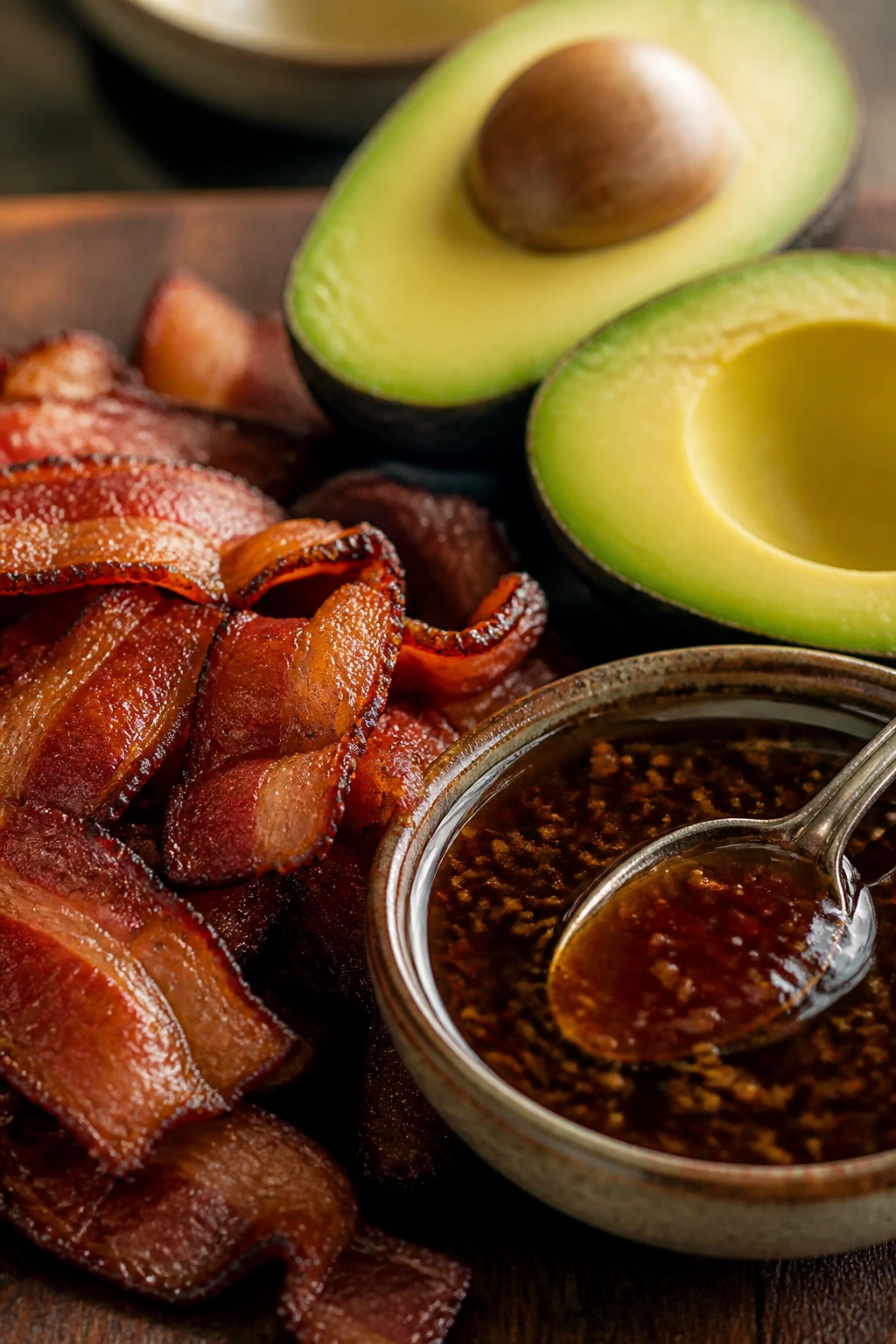
Bacon
- What to use: 8 slices thick-cut bacon, cut crosswise into 1-inch pieces.
- Preparation: Cut it before cooking so the pieces fit neatly into the avocado wells and brown on more than one side.
- Substitutions: Pancetta works if you want a firmer, saltier edge; smoked turkey bacon works too, though it will need a light brush of oil because it renders less fat.
- Tips: Thick-cut bacon is worth the price here. Thin strips crisp too fast, lose volume, and go limp once the glaze hits them.
Avocados
- What to use: 4 ripe but firm avocados that give slightly at the stem end but do not feel soft all over.
- Preparation: Halve, pit, and, if needed, scoop out a teaspoon of flesh from the center so the bacon has a small cradle to sit in.
- Substitutions: If your avocados run large, you can stretch the filling across 3 avocados; if they’re small, use 5 and scale the bacon accordingly.
- Tips: Brush the cut surface quickly with oil so it doesn’t turn dull while you cook the bacon.
Brown Sugar Glaze
- What to use: 3 tablespoons packed light brown sugar, 1 tablespoon water, 1 tablespoon apple cider vinegar, 1 teaspoon Dijon mustard, 1 teaspoon soy sauce or tamari, 1/2 teaspoon smoked paprika, and a pinch of cayenne if you want heat.
- Preparation: Warm everything together just until the sugar dissolves and the mixture turns glossy and slightly syrupy.
- Substitutions: Maple syrup can replace the sugar in a pinch, but the flavor shifts toward breakfast-glaze territory; honey works too, though it browns a little faster.
- Tips: Taste the glaze before it goes on the avocados. It should taste sweet first, then smoky, then sharp at the end, not like dessert syrup.
Finishing Touches
- What to use: 1 tablespoon fresh lime juice, 1 tablespoon chopped chives, and flaky salt.
- Preparation: Chop the chives fine so they fall into the creases of the bacon and avocado instead of sitting in clumps.
- Substitutions: Scallions, cilantro, or thinly sliced chervil all work if chives aren’t in the drawer.
- Tips: Add the lime juice after baking, not before. It keeps the avocado bright and gives the glaze a cleaner finish.
The Tools That Make Assembly Easier
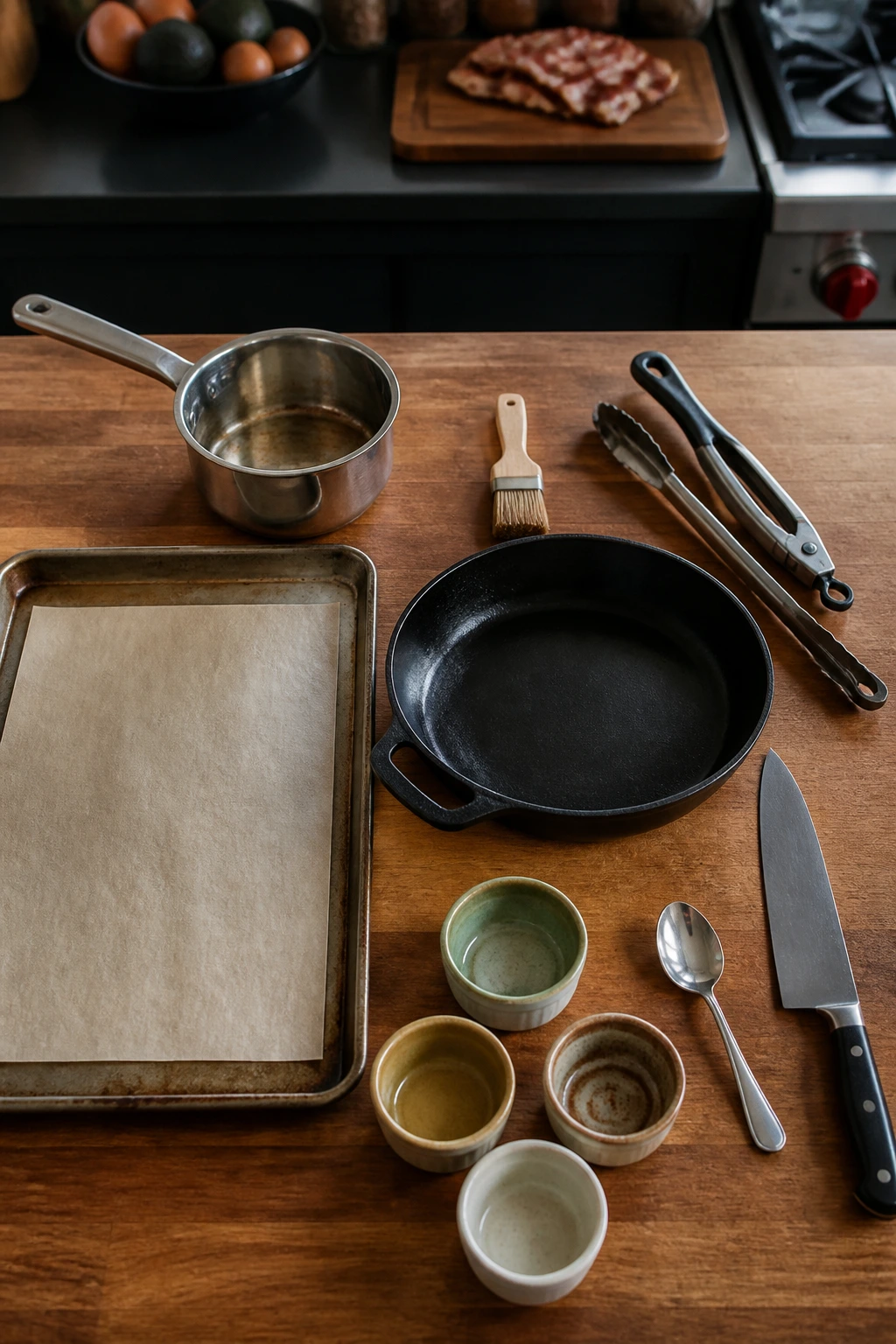
- Rimmed baking sheet: Keeps the glaze and bacon pieces from sliding off the pan if the avocados tip.
- Parchment paper: Saves you from scraping off caramelized sugar later, which is the kind of cleanup nobody misses.
- 10- or 12-inch skillet: Big enough to cook the bacon in one layer without crowding.
- Small saucepan: Needed for the glaze so the sugar dissolves evenly.
- Pastry brush: Helps you coat the avocado surfaces without drowning them in glaze.
- Tongs: Useful for turning bacon and transferring hot pieces without breaking them.
- Sharp chef’s knife: A clean cut matters when you’re splitting avocados and trimming any wobble from the back.
- Spoon or melon baller: Handy for widening the avocado well if the pit cavity is too small.
- Optional muffin tin or small ramekins: A good backup if your avocado halves won’t sit flat on the sheet pan.
How to Cook the Bacon Avocado Halves
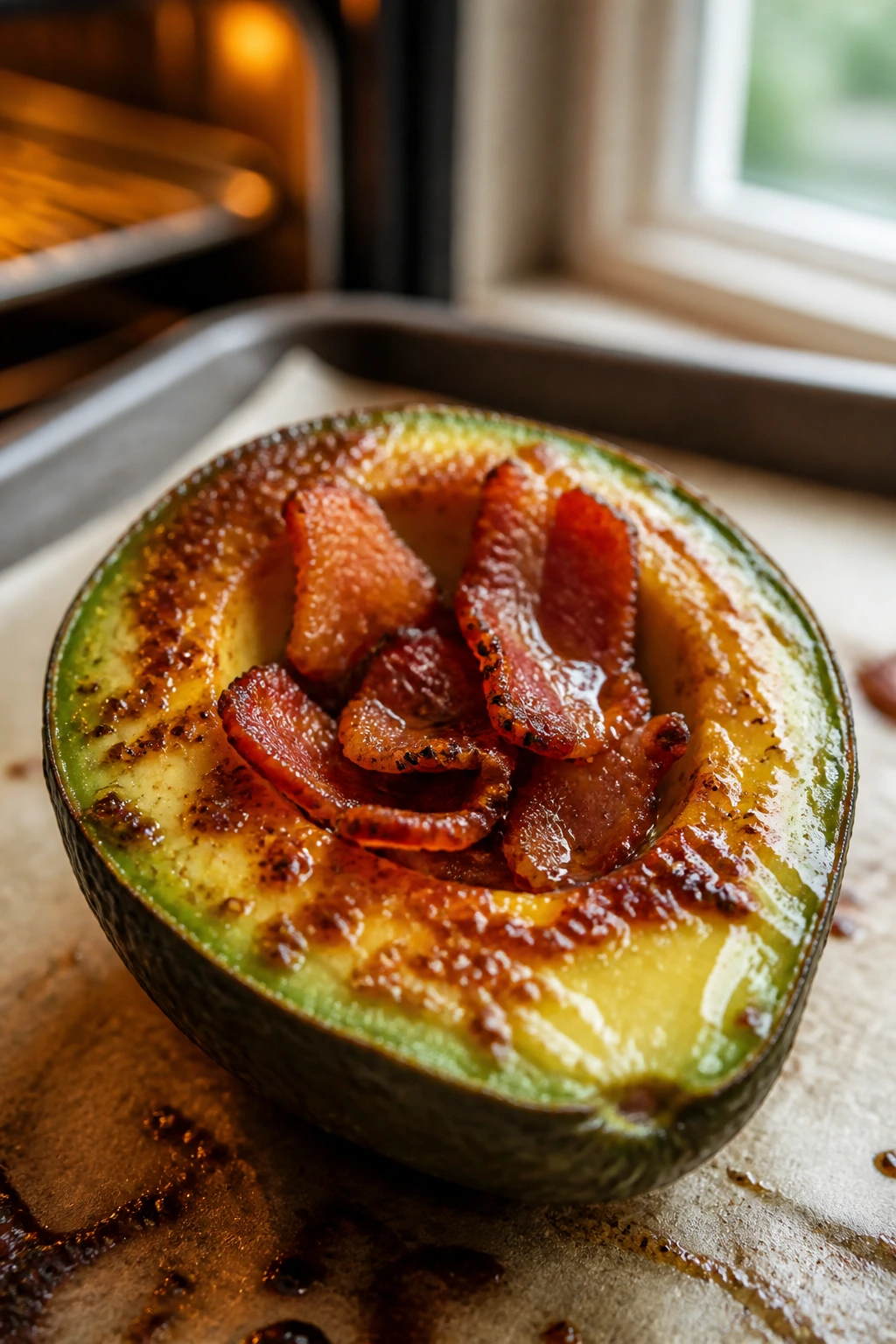
Prep the Oven and Bacon
-
Preheat the oven to 425°F (220°C) and line a rimmed baking sheet with parchment paper. Set the rack in the upper third of the oven so the glaze can bubble without sitting too close to the heat.
-
Heat a 10- or 12-inch skillet over medium heat and add the bacon pieces in a single layer. Cook for 6 to 8 minutes, stirring every minute or so, until the fat has rendered and the pieces are browned at the edges but not brittle. Drain on a paper towel-lined plate. Do not overcook the bacon here; it will take another turn under the broiler.
Make the Glaze and Prep the Avocados
-
In a small saucepan, combine the brown sugar, water, apple cider vinegar, Dijon mustard, soy sauce, smoked paprika, and cayenne, if using. Set over low heat and stir for 1 to 2 minutes until the sugar dissolves and the mixture turns glossy and lightly syrupy. Remove from the heat. If the glaze looks grainy, keep stirring gently until the last sugar crystals disappear.
-
Halve the avocados and remove the pits. If the cavities look shallow, scoop out about 1 teaspoon of flesh from the center of each half so the bacon has a place to sit. Brush the cut surfaces with olive oil and season with the kosher salt and black pepper.
Assemble and Finish in the Oven
-
Divide the cooked bacon pieces among the avocado halves, pressing them lightly into the center wells. Brush a thin layer of glaze over the bacon and exposed avocado flesh. Use a light hand here — too much glaze can burn before the avocado warms through.
-
Place the filled avocado halves on the prepared baking sheet, or nestle them in a muffin tin if they keep rolling. Bake for 6 to 8 minutes, until the avocado edges are warm and the glaze starts to bubble.
-
Switch the oven to broil and broil for 30 to 60 seconds, watching constantly, until the bacon edges darken slightly and the glaze turns shiny and sticky. Pull the pan immediately if you see blackening. Broilers move fast. Walk away for ten seconds and you can lose the whole top.
-
Finish with lime juice, chopped chives, and a pinch of flaky salt. Serve right away, while the avocado is still warm at the rim and the glaze looks freshly brushed on.
How I’d Plate This for a Dinner Table
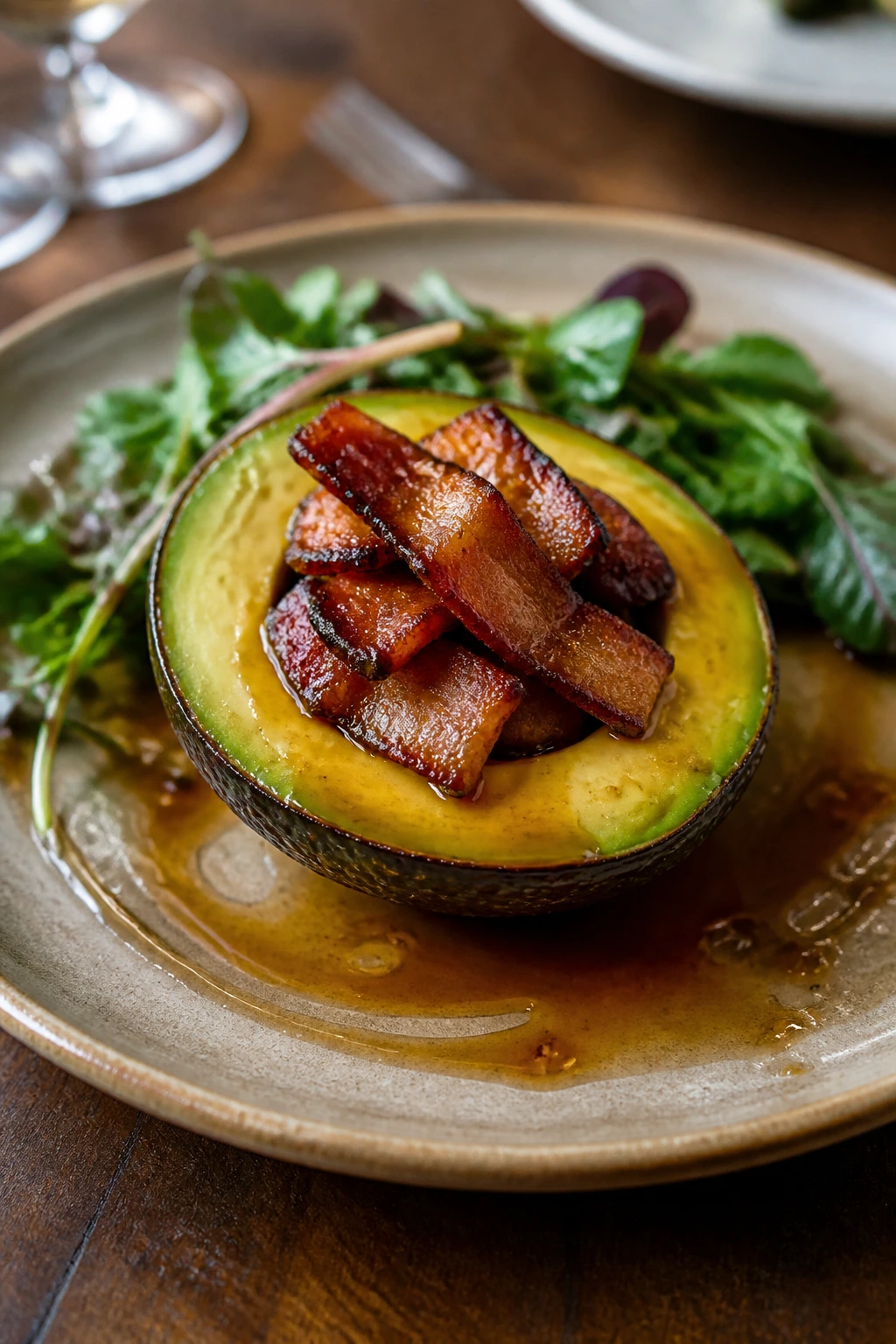
Presentation: Set each avocado half on a warm platter or individual small plates, cut side up, with the bacon centered in the cavity and the glaze pooled in a thin layer around the filling. A few chive pieces and a tiny pinch of flaky salt make the top look deliberate instead of random.
Accompaniments: This plays well with peppery arugula, sliced tomatoes, toast points, or a simple cucumber salad with lemon. If you want to turn it into brunch, add soft scrambled eggs or a fried egg with a loose yolk. The avocado already brings richness, so I would skip creamy side dishes and choose something with crunch or acid.
Portions: One half makes a starter; two halves make a light lunch or a side dish beside grilled chicken, steak, or a roasted pork chop. For a party, plan on one half per person if there are other snacks on the table, or two halves if this is the main event.
Beverage Pairing: A crisp pilsner, dry hard cider, or sparkling water with lime all fit the sweet-salty finish. If you want a nonalcoholic drink with a little more edge, unsweetened iced tea with lemon cuts through the glaze nicely.
Practical Tips for Better Smoke, Better Glaze, Better Texture
-
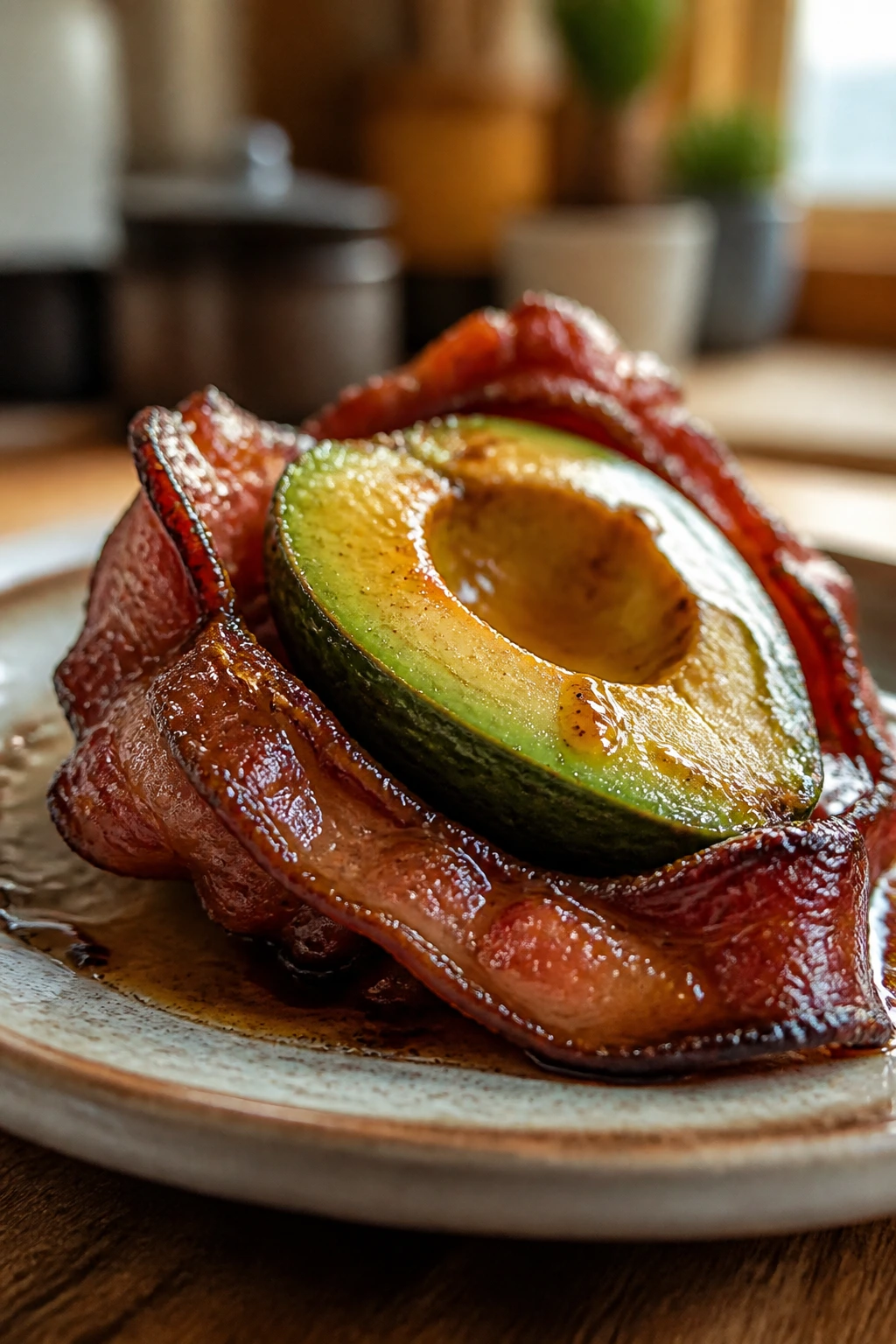
Flavor Enhancement: Add the lime juice only after the avocados come out of the oven, then finish with a few extra grains of flaky salt. That final hit of acid and salt makes the brown sugar taste deeper instead of sweeter, and the avocado tastes more like avocado again.
-
Time-Saver: Cook the bacon and make the glaze up to 2 days ahead. Store them separately in airtight containers, then rewarm the bacon and glaze briefly before assembling. The avocados still need to be cut at the last minute, but the hard work is out of the way.
-
Pro Move: If your avocados wobble on the pan, shave a paper-thin slice from the rounded back of each half so they sit flat. It’s a tiny fix, and it saves you from chasing sliding avocado halves across a hot sheet pan.
-
Cost-Saver: Buy avocados that are slightly less ripe than you would choose for toast. They’re often cheaper and they hold up better under heat. If they feel hard as a rock, leave them on the counter for a couple of days and check again.
-
Heat Control: If your broiler runs hot or uneven, finish the dish on the middle rack at 425°F instead of using broil. You’ll lose a bit of blistered color, but you’ll gain control, and that matters more than a flashy top.
Mistakes That Turn the Dish Soft or Burnt
-
Using avocados that are already mushy: The symptom is obvious: the halves slump, the pits leave messy craters, and the flesh collapses around the bacon. Pick avocados that still have a little resistance. If you can dent them easily with a thumb, they’re too far along for roasting.
-
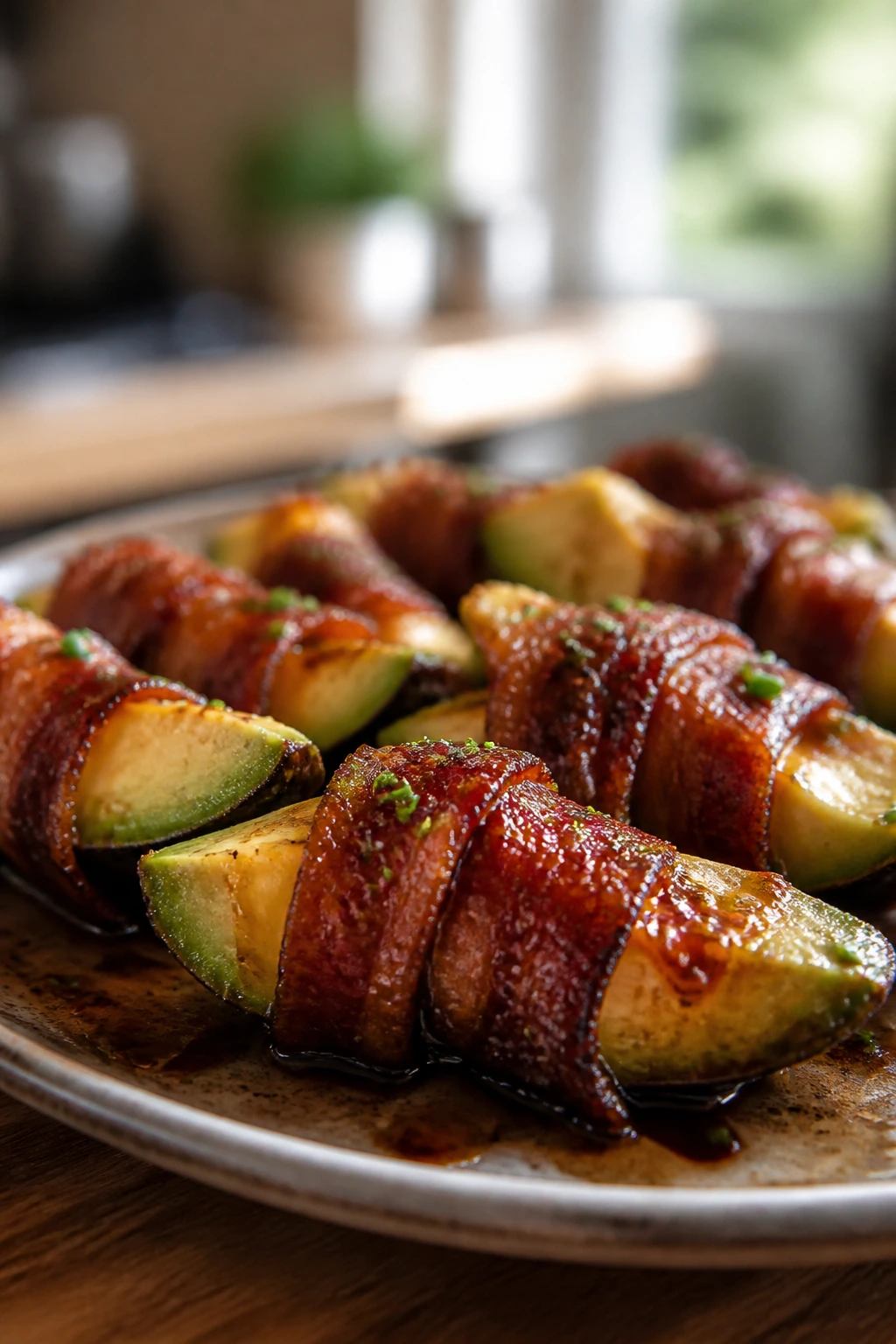
Putting the glaze on too early: Brown sugar burns fast, especially under broiler heat. If the sugar goes on before the bacon has had its short bake, the top can darken before the inside is warm. Keep the glaze for the final stretch, and use a light coat rather than a heavy pour.
-
Cooking the bacon to a hard crunch before it bakes: Bacon that’s already brittle in the skillet turns dry and sharp after the oven finishes with it. Stop cooking when it’s deep golden and just firming at the edges. It should still have some bend left when you pull it out of the pan.
-
Skipping the acid at the end: The plate will still look fine, but the flavor will flatten out. Lime juice or a tiny extra splash of vinegar keeps the brown sugar from reading like candy and wakes up the avocado’s mild flavor.
-
Crowding the baking sheet: If the avocado halves touch or sit too close together, they steam instead of warming cleanly. Leave space between each one, and use a muffin tin if the halves keep tipping over. A little separation gives you better texture and a cleaner finish.
Named Variations Worth Trying
Chipotle Ember Version
Stir 1/4 teaspoon chipotle powder into the glaze and swap the optional cayenne for a tiny spoon of adobo sauce if you like a softer heat. The chipotle adds a deeper, almost earthy smoke that fits the bacon well, especially if you’re serving the dish with grilled meat or corn.
Brunch Egg Crown
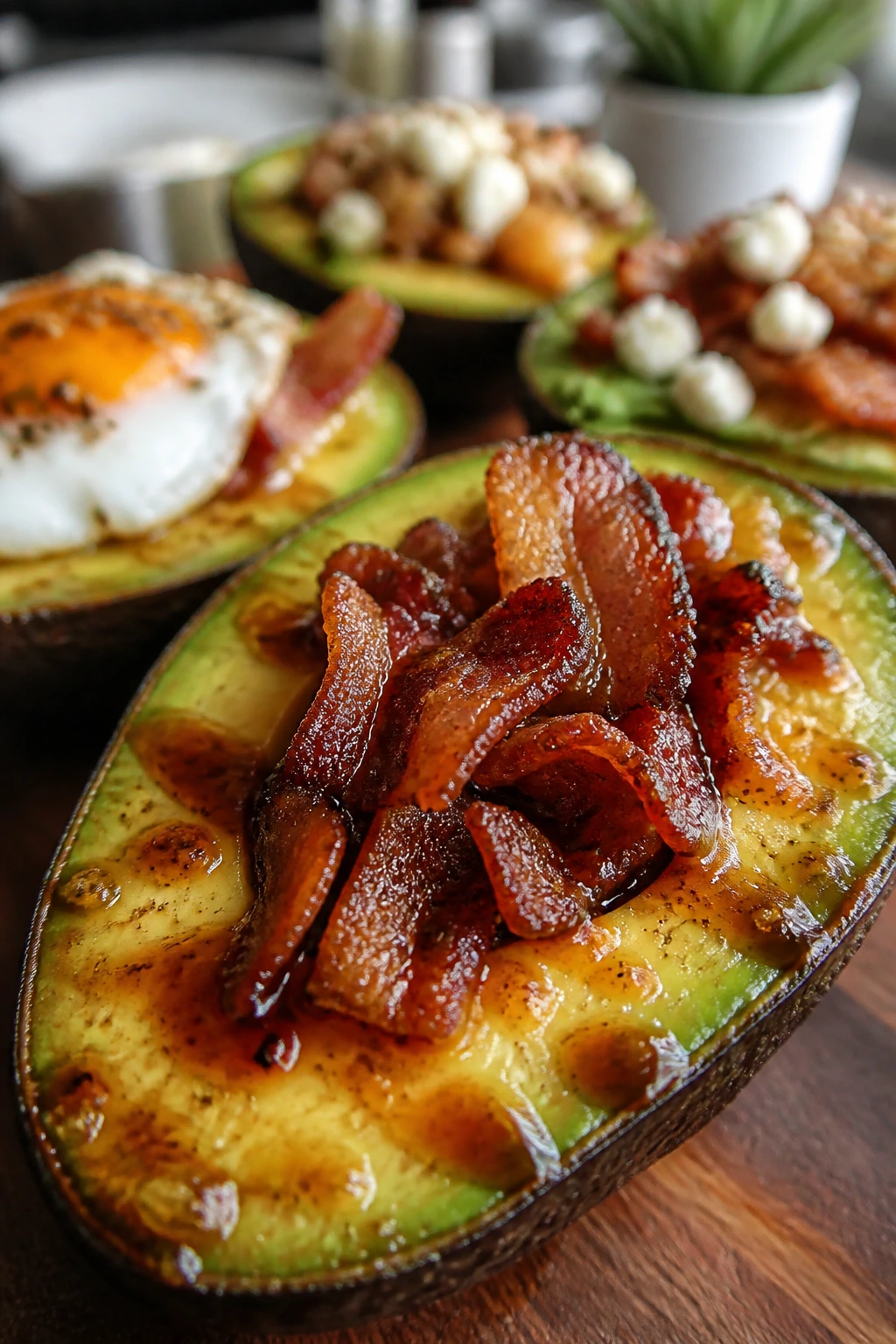
Top each finished avocado half with a small fried egg or a poached egg that still has a loose yolk. The yolk runs into the glaze and bacon, turning the whole thing into a fork-and-knife brunch plate with a built-in sauce.
Toasted Pecan Crunch
Scatter 2 tablespoons toasted chopped pecans over the bacon before the final broil. The nuts add a dry crunch that breaks up the creaminess of the avocado and gives the sweet glaze another texture to cling to.
Feta-and-Scallion Finish
Swap the chives for thin-sliced scallions and add 2 tablespoons crumbled feta after baking. The feta brings sharp salt, which makes the brown sugar taste a little darker and the avocado taste cleaner.
Smoked Turkey Bacon Swap
Use smoked turkey bacon in place of pork bacon if you want a lighter version. Brush the avocado halves with a little extra olive oil, because turkey bacon renders less fat and can dry out faster under the broiler.
Make-Ahead, Storage, and Reheating
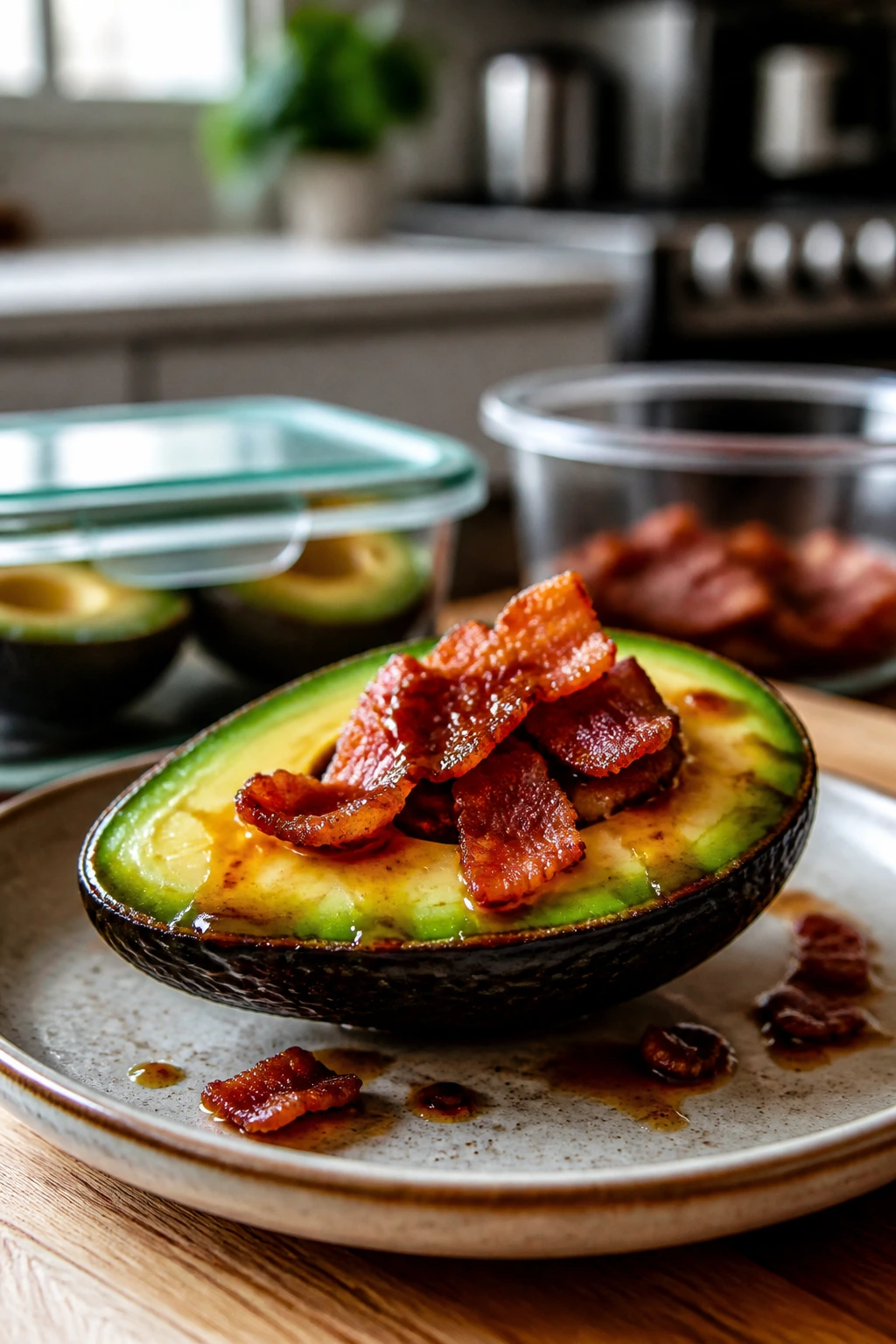
This recipe is happiest when it is assembled and served in the same short window. The avocado starts to soften as soon as it’s cut, and the bacon loses crispness if it sits under glaze for too long. That said, you can still get ahead of the schedule without sacrificing texture.
Cook the bacon and make the glaze up to 2 days ahead. Store the bacon in an airtight container in the refrigerator, and keep the glaze in a small jar or covered bowl. The glaze will thicken as it chills, so warm it gently over low heat with 1 to 2 teaspoons of water until it loosens again.
Assembled avocado halves do not keep well for long. If you absolutely need leftovers, press plastic wrap directly against the cut surface and refrigerate for up to 1 day, but expect the edges to brown and the bacon to soften. A squeeze of lime juice helps, though it won’t make the avocado look fresh again.
Reheat the bacon and glaze separately for the best texture. Bacon can go in a 300°F (150°C) oven for 4 to 5 minutes or in a skillet over low heat for a minute or two. The avocado itself should only be warmed lightly, if at all; if you really want to rewarm a leftover assembled half, use the oven at 275°F (135°C) for about 4 minutes, just until the chill is gone. Do not blast it with high heat. That turns the avocado dull and the glaze sticky in the wrong way.
Freezing is not a good fit for the assembled dish. Bacon freezes well for up to 2 months, and the glaze can be frozen for about a month, but the avocado itself will turn soft and watery after thawing. Freeze the parts separately if you like, then make fresh avocados when you’re ready to cook.
Questions People Ask Before They Make It
Can I use regular bacon instead of thick-cut bacon?
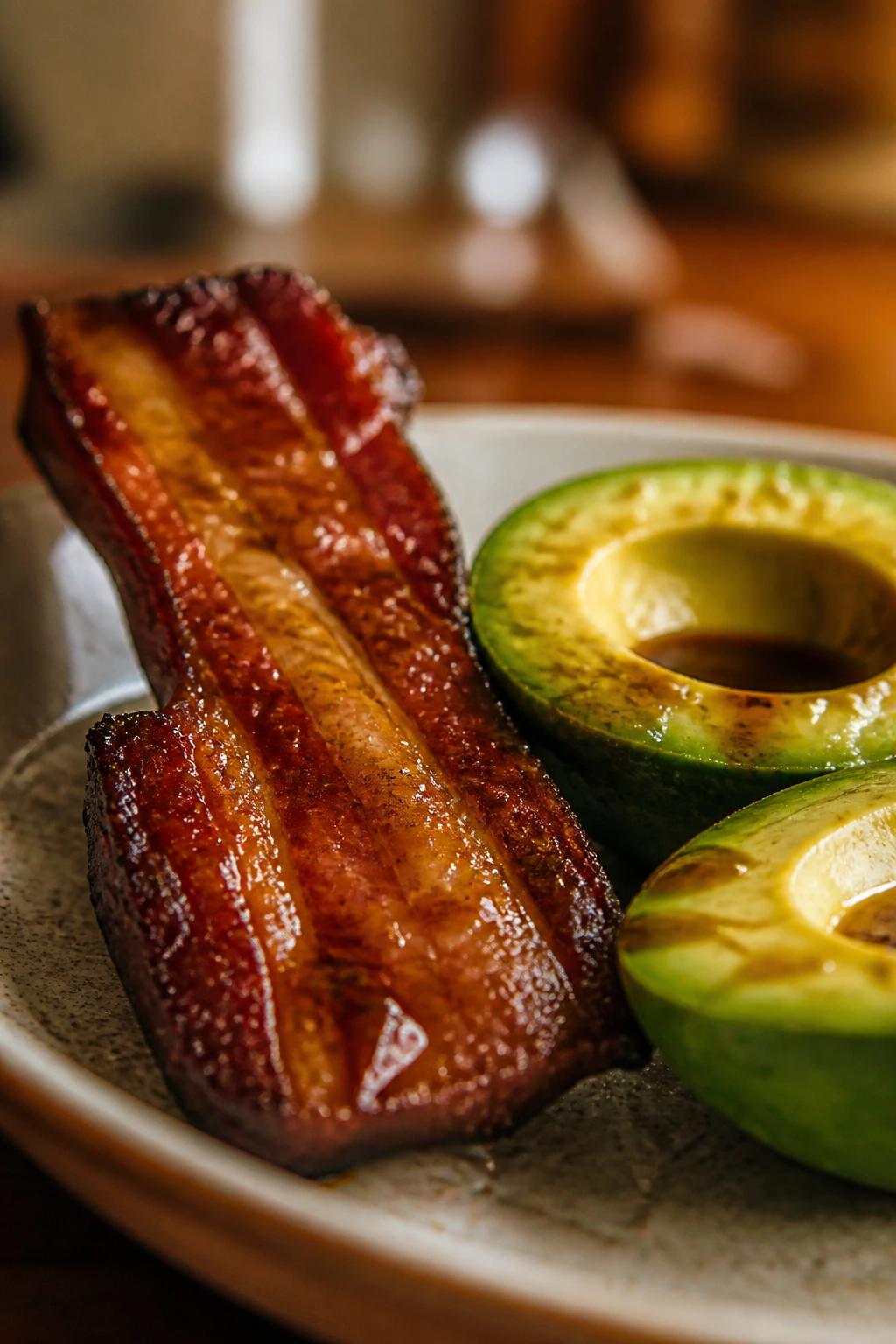
Yes, but keep a close eye on it. Regular bacon cooks faster and shrinks more, so you’ll need to pull it from the skillet a minute or two earlier and shorten the final broil. Thick-cut bacon gives you better shape and a meatier bite, which matters here.
How ripe should the avocados be?
Ripe enough to slice cleanly, but still firm enough that the flesh holds its shape when pressed. If the avocado gives easily under light pressure, it’s fine; if it feels soft all over, it will slump once it hits heat. This recipe rewards avocados that are one step shy of guacamole-soft.
Can I make the glaze ahead of time?
Yes. Make it up to 3 days ahead and keep it in the refrigerator. Warm it over low heat before brushing it on, and stir in a teaspoon of water if it looks too thick to spread.
What if I don’t have a broiler?
Use the oven at 425°F (220°C) and bake the avocados on the upper third rack for an extra 2 to 3 minutes after the glaze goes on. You won’t get the same blistered top, but the sugar will still melt into a sticky finish.
Can I air-fry this dish?
You can, though the avocados need a little care. Set the air fryer to 375°F (190°C) and cook the bacon first, then assemble the avocados in a small oven-safe dish or lined basket and air-fry for just a few minutes with the glaze added at the end. Keep the sugar layer thin or it may darken too fast.
What if my glaze turns grainy?
That usually means the sugar didn’t fully dissolve. Return it to low heat with 1 teaspoon water and stir until smooth. If it still feels sandy, give it another minute off the heat; brown sugar sometimes needs a little patience before it turns glossy.
Is this better as an appetizer or a side dish?
Either one works, but the portion changes the job. One half is a tidy starter; two halves with a green salad make a proper light meal. I like it most beside something simple and savory, because the glaze brings enough personality on its own.
A Dish That Works Best Hot
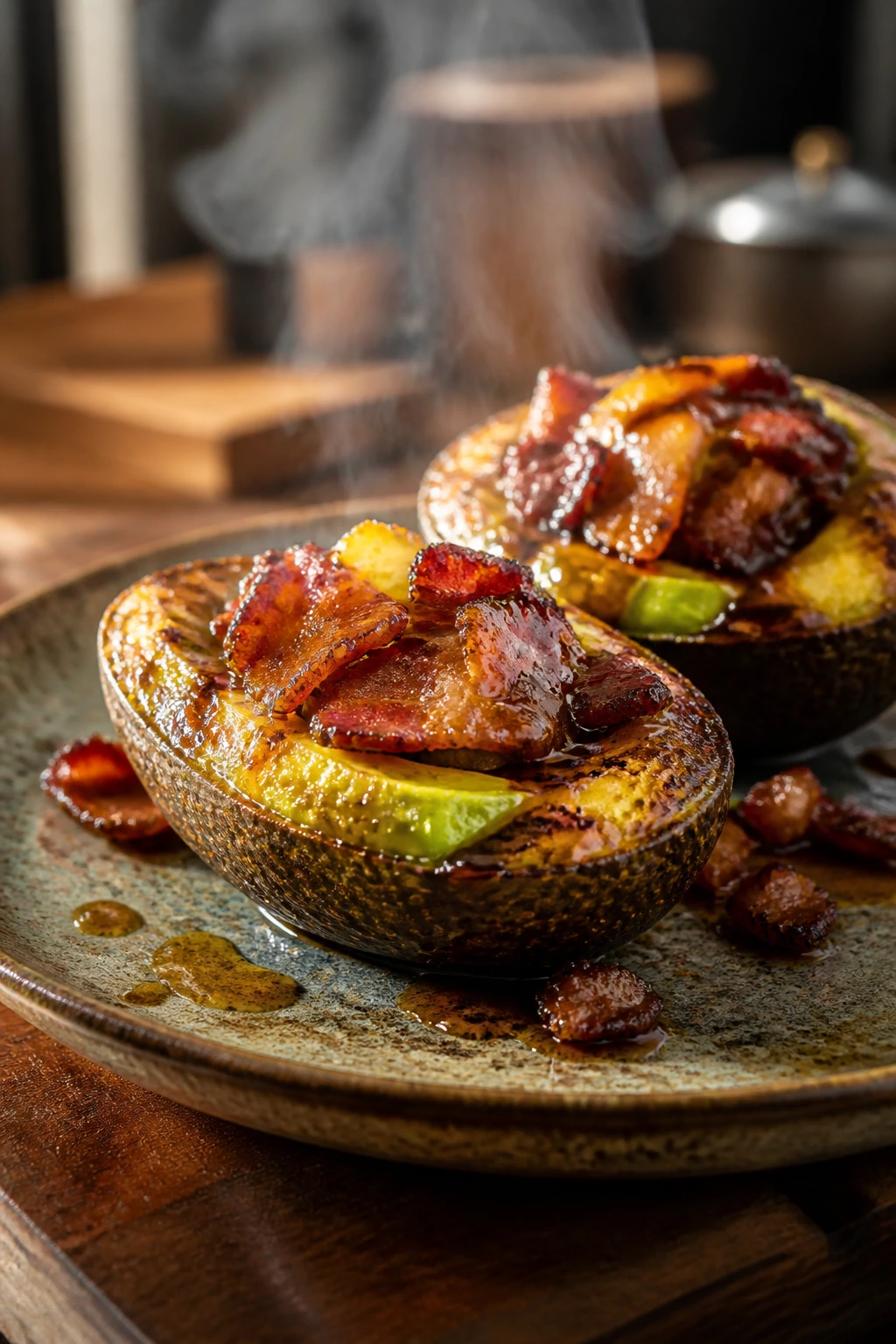
Hot, sticky, and gone before the plate cools. That’s where this recipe lives. The avocado should still feel plush at the center, the bacon should have a crisp edge, and the glaze should look like it was brushed on two minutes ago.
The real lesson here is that sweet and smoky do not need to fight for the same space. If you give each one a clean role—bacon for depth, brown sugar for shine, vinegar for lift, avocado for creaminess—the dish tastes composed instead of crowded. And that’s why it works so well on a dinner table or beside a skillet of eggs.
Make it once with firm avocados and a light hand on the glaze, and you’ll stop treating avocado as something that only belongs in toast or salad. It can carry heat. It can carry smoke. It can carry a little brown sugar, too.
Smoky Bacon Avocado with Brown Sugar Glaze — Recipe Card
Recipe Name: Smoky Bacon Avocado with Brown Sugar Glaze
Description: Warm avocado halves topped with crisp bacon and finished with a glossy brown sugar glaze, a little vinegar, and a bright lime finish. The contrast is the whole point: creamy, salty, smoky, and sticky in one bite.
Prep Time: 15 minutes
Cook Time: 15 minutes
Total Time: 30 minutes
Course: Appetizer, Side Dish
Cuisine: American
Servings: 4 servings
Calories: About 420 kcal per serving
Ingredients
For the Avocados:
- 4 ripe but firm avocados, halved and pitted
- 1 tablespoon olive oil
- 1 teaspoon kosher salt
- 1/2 teaspoon freshly ground black pepper
For the Bacon Topping:
- 8 slices thick-cut bacon, cut crosswise into 1-inch pieces
For the Brown Sugar Glaze:
- 3 tablespoons packed light brown sugar
- 1 tablespoon water
- 1 tablespoon apple cider vinegar
- 1 teaspoon Dijon mustard
- 1 teaspoon soy sauce or tamari
- 1/2 teaspoon smoked paprika
- 1 pinch cayenne pepper, optional
For Finishing:
- 1 tablespoon fresh lime juice
- 1 tablespoon chopped chives
- Flaky salt, for serving
Instructions
-
Preheat the oven to 425°F (220°C) and line a rimmed baking sheet with parchment paper.
-
Cook the bacon pieces in a skillet over medium heat for 6 to 8 minutes, until browned at the edges but not brittle. Drain on paper towels.
-
Combine the brown sugar, water, apple cider vinegar, Dijon mustard, soy sauce, smoked paprika, and cayenne in a small saucepan. Warm over low heat for 1 to 2 minutes until glossy and lightly syrupy.
-
Halve and pit the avocados. If needed, scoop out about 1 teaspoon of flesh from the center of each half. Brush with olive oil and season with salt and pepper.
-
Divide the bacon among the avocado halves and brush a thin layer of glaze over the top.
-
Bake for 6 to 8 minutes, until the avocado edges are warm and the glaze is bubbling.
-
Broil for 30 to 60 seconds, watching closely, until the bacon edges darken slightly and the glaze turns sticky and shiny.
-
Finish with lime juice, chives, and a pinch of flaky salt. Serve immediately.
Notes: Use avocados that are ripe but still firm enough to hold their shape. Keep the glaze thin and apply it late so it doesn’t burn. If your broiler runs hot, finish in the oven on the upper rack instead.