



A good pulled pork should give way in long strands, not collapse into wet confetti. It should taste like pork first, barbecue second, with enough salt, fat, and patience to keep each bite juicy all the way through. This version leans into that balance: a pork shoulder rubbed with smoke, garlic, mustard, and brown sugar; a slow roast that softens the connective tissue instead of chasing it; and a brown sugar glaze that lands sticky and glossy at the end, where it belongs.
What usually goes wrong is not subtle. The meat gets sauced too early, the oven runs too hot, the roast is pulled apart before it has loosened, and the whole thing turns stringy or dry in the time it takes to toast a bun. The fix is boring on paper and excellent on the plate: sear the shoulder until the surface turns deep brown, braise it low, rest it long enough to stop the juices from escaping, then glaze it near the finish so the sugar stays shiny instead of bitter.
I like this style because it gives you control in three places that matter. Salt the meat before it goes in the pot, keep enough liquid around it to protect the edges, and save the sugar for the end so it can catch on the shredded meat like lacquer. When it’s right, the pork smells faintly caramelized, the glaze clings in thin threads, and the first forkful lands on the tongue with that mix of smoke, vinegar, and soft sweetness that makes pulled pork worth the trouble.
Why This Pulled Pork Earns Its Juiciness
Fat and connective tissue do the heavy lifting here: Pork shoulder is built for long, slow heat, with enough collagen to melt into the meat and enough marbling to keep the shredded strands moist.
The sear is not decorative: Browning the roast before it braises adds a darker, meatier edge that you never get from a straight dump-and-bake method.
The glaze arrives late on purpose: Brown sugar burns fast, so it should be simmered into the sauce and brushed or tossed in once the pork is already tender.
Vinegar keeps the flavor awake: A little apple cider vinegar cuts through the sweetness and keeps the finish from tasting heavy, which matters more than people think once the pork is piled onto bread.
Leftovers hold up better than most barbecue: Shredded pork soaked in a little braising liquid and glaze reheats without losing its texture, so tomorrow’s sandwich is not an afterthought.
Pork Shoulder, the Long Roast, and Why Brown Sugar Fits
Pork shoulder is the cut that makes pulled pork possible without a smoker, a backyard, or a weekend built around a firebox. It’s tough in the way that helps: all that connective tissue and fat wants time, and once time is on its side, the meat stops resisting and starts falling into soft ribbons. That’s why shoulder works and pork loin usually doesn’t. Loin is lean and polite; shoulder is messy in the right way.
This recipe takes the old low-and-slow idea and gives it a brown sugar glaze that feels more polished than drenched. The sweetness is not here to make the pork taste like candy. It’s there to round off the vinegar, help the edges brown under the broiler, and make the shredded meat cling together on the bun instead of sliding around like it’s trying to escape.
Pulled pork has always lived on patience. The roast looks stubborn for a long stretch, then suddenly gives up and becomes tender enough to shred with gloved hands or two forks. That turning point matters more than the clock, which is why a thermometer earns its keep here. You want the meat in the 200°F neighborhood, where the collagen has loosened and the fibers can separate cleanly without a fight.
Yield: Serves 8
Prep Time: 25 minutes
Cook Time: 4 hours 20 minutes
Total Time: 4 hours 45 minutes, plus 20 minutes resting
Difficulty: Intermediate — the method is straightforward, but the long cook, sear, and glaze all need a little attention.
Chill/Rest Time: 20 minutes rest before shredding; optional overnight seasoning
Best Served: Warm, right after the glaze turns sticky on the meat
What Goes Into the Pan
For the Pork and Rub:
- 4 to 5 lb boneless pork shoulder (Boston butt), trimmed of loose surface fat but not stripped lean
- 2 tablespoons light brown sugar
- 1 tablespoon kosher salt
- 2 teaspoons smoked paprika
- 2 teaspoons garlic powder
- 2 teaspoons onion powder
- 1 teaspoon black pepper
- 1 teaspoon dry mustard powder
- 1/2 teaspoon cayenne pepper, optional
- 1 tablespoon neutral oil, for searing
For the Braising Liquid:
- 1 large yellow onion, sliced into 1/2-inch wedges
- 4 garlic cloves, smashed
- 1 cup low-sodium chicken broth
- 1/2 cup apple cider vinegar
- 1/4 cup barbecue sauce
- 1 tablespoon Worcestershire sauce
For the Brown Sugar Glaze:
- 1/2 cup barbecue sauce
- 1/4 cup dark brown sugar, packed
- 2 tablespoons apple cider vinegar
- 1 tablespoon Dijon mustard
- 1 tablespoon unsalted butter
Why Each Ingredient Matters in This Pulled Pork
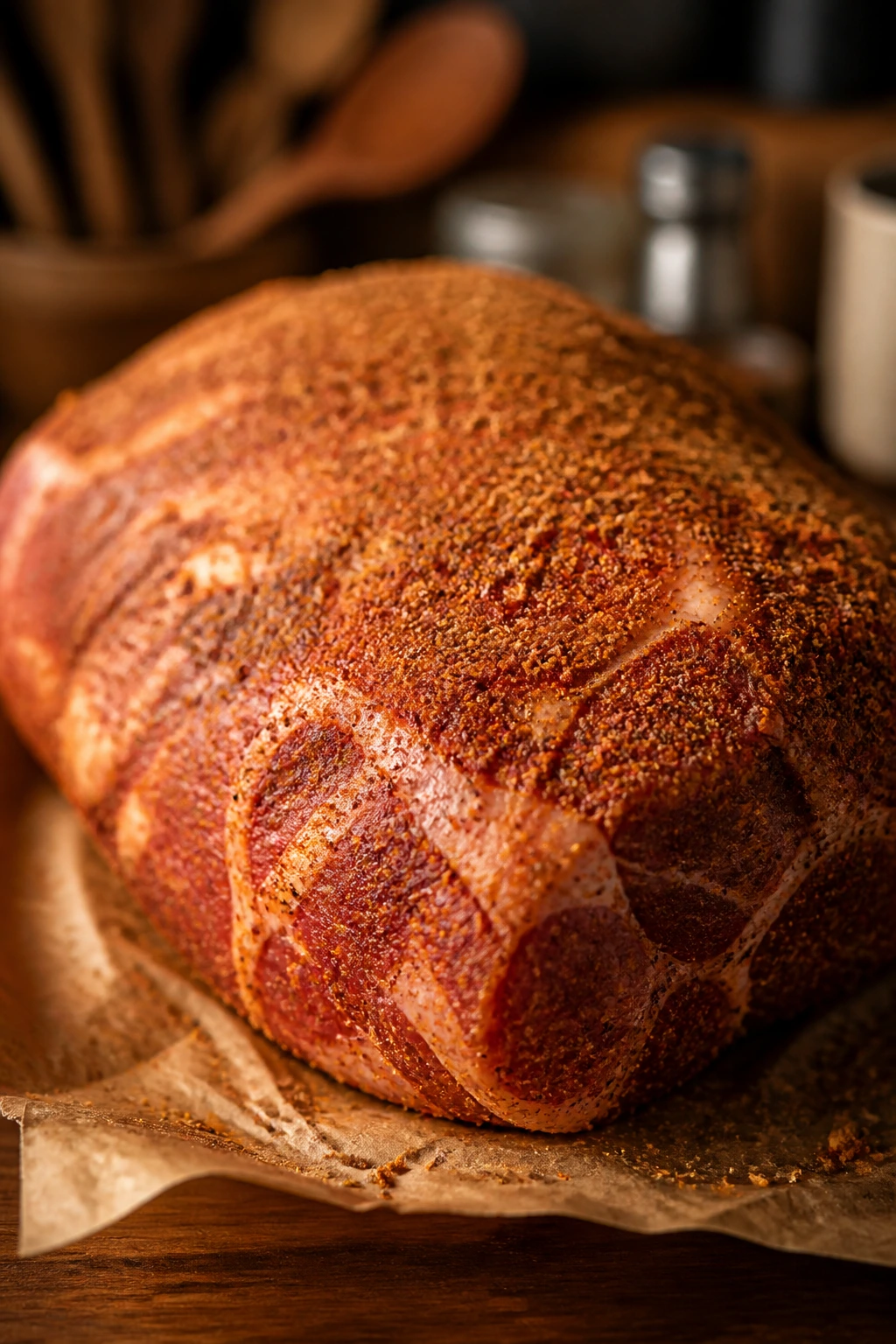
Pork Shoulder, the Part That Can Take It
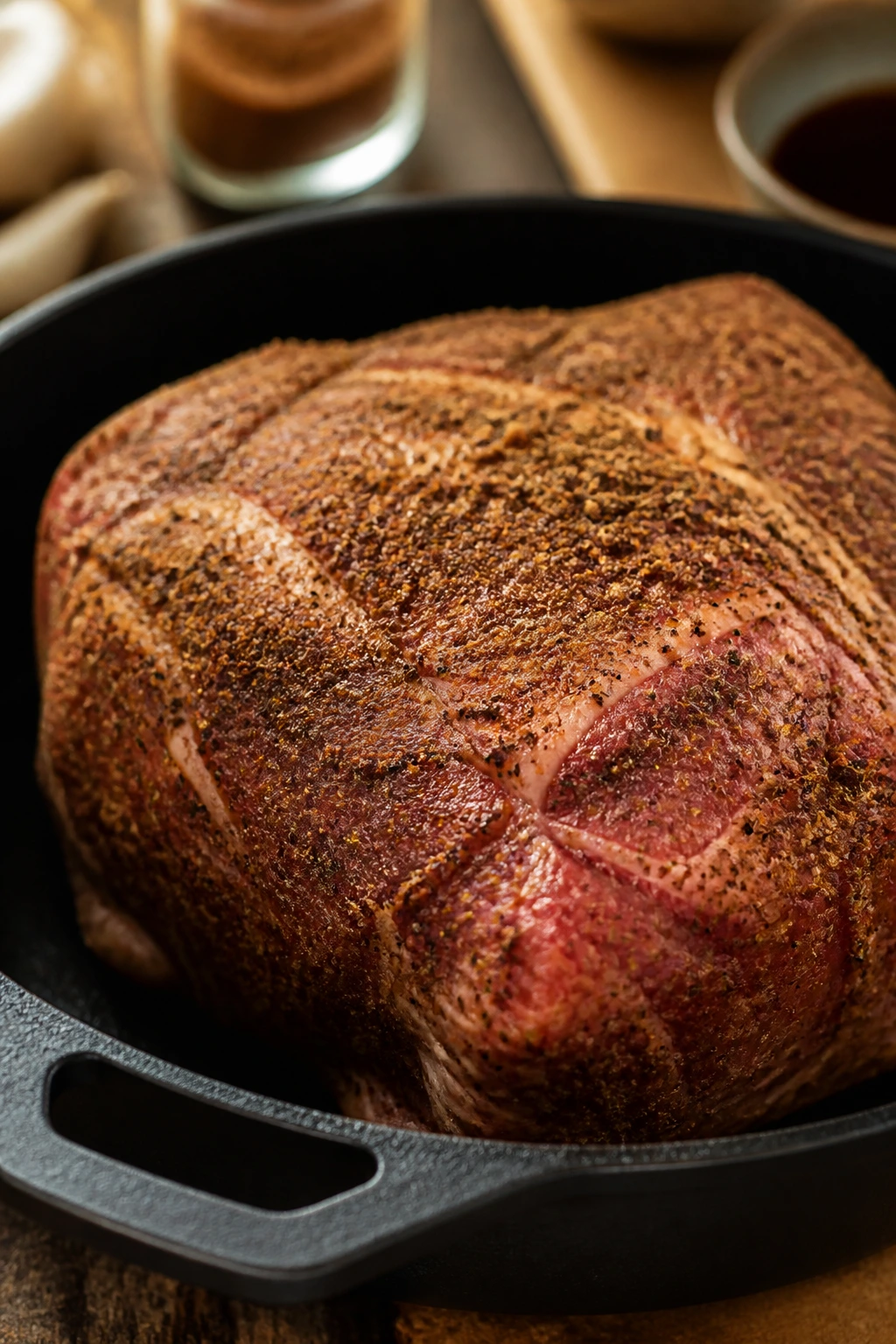
What to use: A 4 to 5 lb boneless pork shoulder, also sold as Boston butt, with a little fat left on the outside.
Preparation: Pat it dry and trim off any ragged, loose fat, but leave the main seams and cap alone. That fat will render slowly and keep the roast from turning chalky.
Substitutions: A bone-in shoulder works too; just add 30 to 45 minutes to the braise and judge by tenderness, not by the clock. Pork loin is not a true substitute here because it runs lean and dries out fast.
Tips: Buy the shoulder as a solid roast, not pre-cut cubes or “stew” pieces. A whole piece braises more evenly and shreds into longer, better-looking strands.
The Dry Rub, Which Does More Than Season the Surface
What to use: 2 tablespoons light brown sugar, 1 tablespoon kosher salt, 2 teaspoons smoked paprika, 2 teaspoons garlic powder, 2 teaspoons onion powder, 1 teaspoon black pepper, 1 teaspoon dry mustard powder, and 1/2 teaspoon cayenne if you like a little heat.
Preparation: Mix the rub until the brown sugar breaks up and the salt disappears into the spices, then press it onto every side of the pork. If you have the time, let the seasoned roast sit for 30 minutes to an hour.
Substitutions: Sweet paprika can stand in for smoked paprika, but the flavor will be flatter. If you want a more peppery profile, swap in 1 teaspoon crushed black pepper and 1 teaspoon chili powder.
Tips: Brown sugar in the rub helps the outside color faster in the pan, but don’t go heavy-handed. Too much sugar before the braise can make the exterior clingy in the wrong way.
The Braising Liquid, Which Keeps the Meat Seasoned All the Way Through
What to use: 1 sliced yellow onion, 4 smashed garlic cloves, 1 cup low-sodium chicken broth, 1/2 cup apple cider vinegar, 1/4 cup barbecue sauce, and 1 tablespoon Worcestershire sauce.
Preparation: Slice the onion into wedges so it softens without disappearing, and smash the garlic rather than mincing it. You want it to perfume the liquid, not vanish into bitterness.
Substitutions: Vegetable broth works if that’s what’s in the cabinet. White wine vinegar or a mild cider vinegar can replace apple cider vinegar in a pinch, though apple cider vinegar gives the cleaner barbecue note.
Tips: Use low-sodium broth because the barbecue sauce and Worcestershire already bring salt. If the braising liquid tastes aggressively salty before it goes into the oven, the finished pork will taste flat and briny instead of balanced.
The Brown Sugar Glaze, Where the Shine Comes From
What to use: 1/2 cup barbecue sauce, 1/4 cup dark brown sugar, 2 tablespoons apple cider vinegar, 1 tablespoon Dijon mustard, and 1 tablespoon unsalted butter.
Preparation: Combine the glaze ingredients in a small saucepan once the pork is shredded and ready to finish. The butter should melt into the sauce, not brown in the pan.
Substitutions: If you only have light brown sugar, use it. Dark brown sugar gives a deeper molasses note, but the recipe still works without it. Honey can replace part of the sugar, though the glaze will be looser and a touch sweeter.
Tips: Keep the glaze thin enough to coat the pork, not bury it. If it looks like syrup in the pan, add a tablespoon of water or a spoonful of braising liquid to loosen it before it goes near the meat.
The Tools That Make This Easier
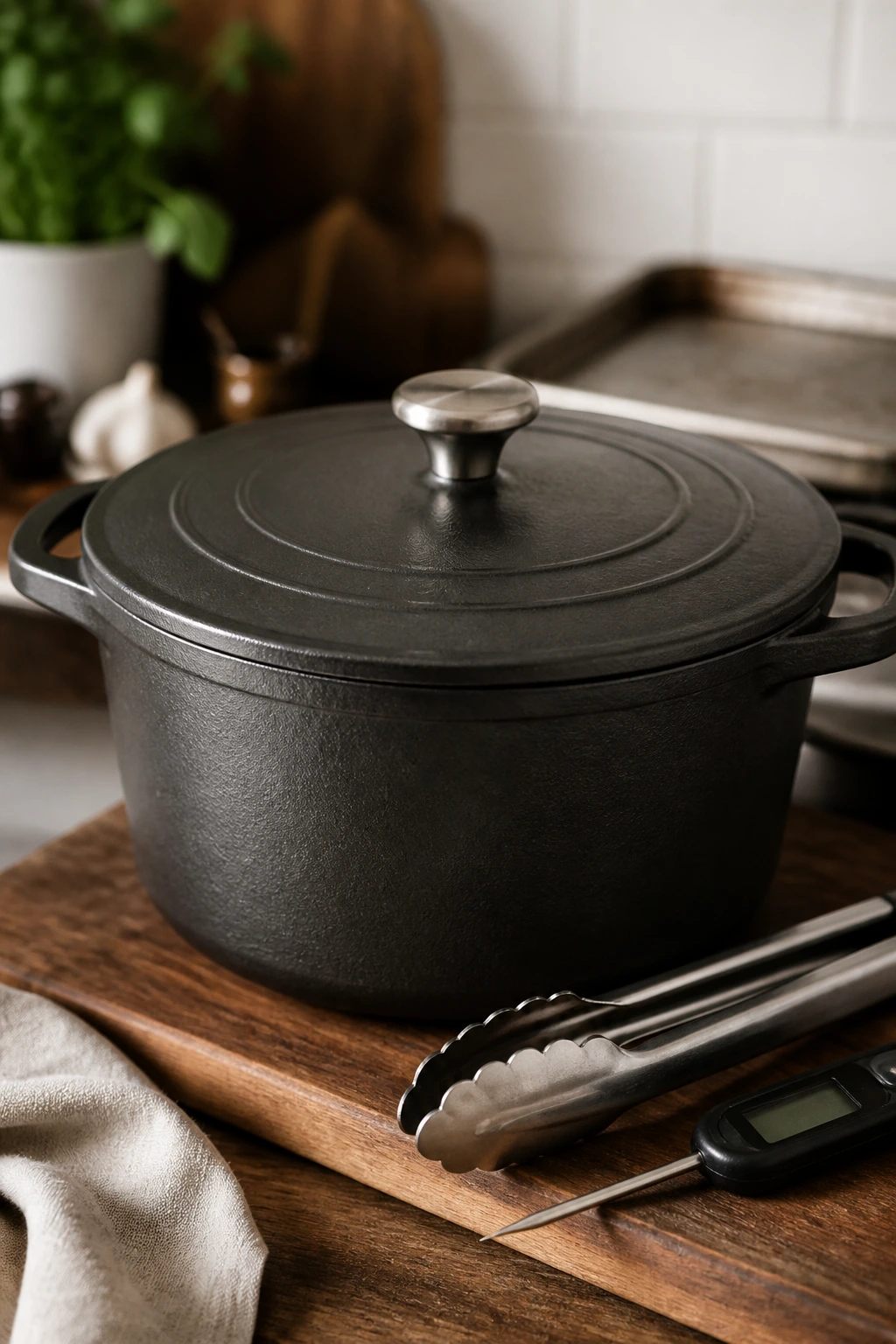
- 5- to 7-quart Dutch oven with a lid — Best for holding steady heat and keeping the roast tucked in close to its braising liquid.
- Tongs — Useful for turning the pork during searing without tearing the surface.
- Instant-read thermometer — The surest way to tell when the shoulder has gone from firm to shreddable.
- Rimmed baking sheet — Needed if you broil the glazed pork at the end for sticky edges.
- Small saucepan — For simmering the glaze without crowding the pan.
- Two forks or meat claws — Either one works for shredding once the pork has rested.
- Fine-mesh strainer, optional — Handy if you want a smoother braising liquid before reducing it.
- Foil — Useful for tenting the pork while it rests and for lining the sheet pan if you want easier cleanup.
Sear, Braise, Glaze, Shred
Prep and Season:
-
Preheat the oven to 300°F (150°C) and position a rack in the center. A lower temperature gives the shoulder time to soften before the outside dries out.
-
Pat the pork shoulder dry with paper towels, then mix the brown sugar, salt, smoked paprika, garlic powder, onion powder, black pepper, mustard powder, and cayenne in a small bowl. Rub the seasoning all over the pork, pressing it into the surface so it sticks.
-
Heat the neutral oil in a large Dutch oven over medium-high heat until it shimmers. Add the pork shoulder and sear it for 3 to 4 minutes per side, turning with tongs until the outside is deep brown. Do not rush this step with a hotter flame; the goal is color, not scorching.
Build the Braise:
-
Reduce the heat to medium, then add the sliced onion to the pot. Cook for 4 to 5 minutes, stirring once or twice, until the onion softens and picks up a little color at the edges. Add the smashed garlic and cook for 30 seconds, just until fragrant.
-
Pour in the chicken broth, apple cider vinegar, barbecue sauce, and Worcestershire sauce, scraping up the browned bits from the bottom of the pot with a wooden spoon. Nestle the pork back into the liquid, cover the pot, and slide it into the oven. The liquid should come about one-third of the way up the sides of the roast, not cover it.
-
Braise for 4 to 4 1/2 hours, checking once near the end, until the pork reaches 200 to 205°F in the thickest part and a fork twists through it with little resistance. If the center still feels tight, give it another 20 to 30 minutes and check again.
Rest, Shred, and Finish:
-
Transfer the pork to a cutting board and let it rest for 20 minutes. Skim excess fat from the braising liquid, then strain it if you want a smoother sauce. Shred the pork with forks or clean hands, discarding any large pockets of fat or gristle. If the meat seems dry, spoon in a little braising liquid before you move on.
-
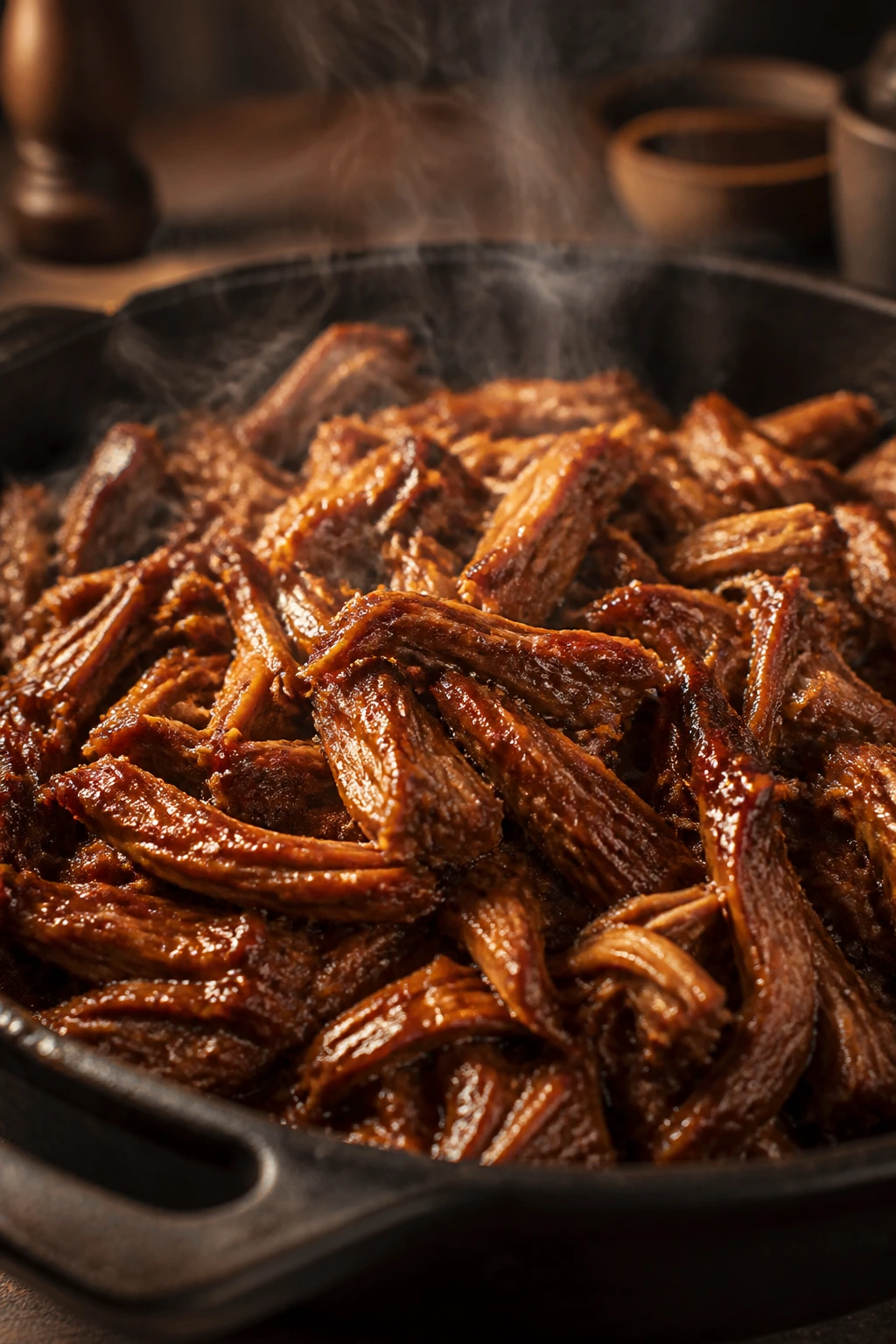
Combine the barbecue sauce, dark brown sugar, apple cider vinegar, Dijon mustard, and butter in a small saucepan over medium heat. Simmer for 3 to 4 minutes, stirring often, until the glaze looks glossy and slightly thickened. Toss the shredded pork with enough glaze to coat it, then spread it on a rimmed baking sheet.
-
Broil the pork 6 inches from the heat source for 2 to 4 minutes, just until the edges darken and the glaze bubbles. Watch it the entire time — brown sugar goes from glossy to burnt in a blink. Serve hot.
How to Serve It Without Soggy Bread
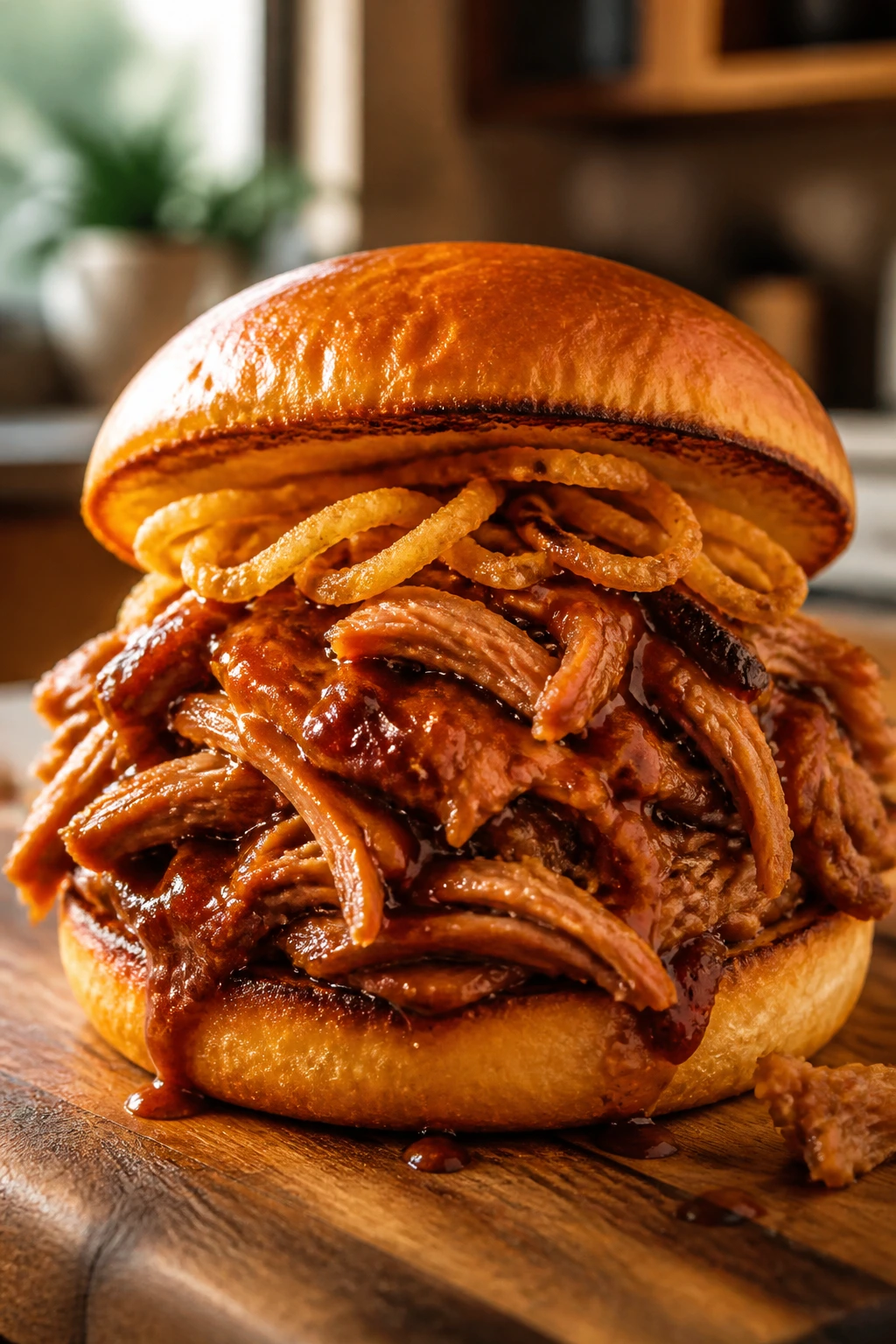
Presentation: Pile the glazed pork high on toasted brioche buns or soft potato rolls, then spoon a little extra glaze over the top so it settles into the folds of the meat instead of flooding the bun. A few crispy onion strands or pickle chips on top keep the plate from looking heavy.
Accompaniments: Tangy coleslaw is the obvious partner because the crunch and acidity cut through the glaze. I also like this with buttered corn, vinegar-dressed potato salad, or a simple dill pickle spear and nothing else if the pork is already carrying the meal.
Portions: Plan on 6 to 8 servings from a 4 to 5 lb shoulder when it’s served as sandwiches. If you’re building sliders, the same roast can stretch further, especially if you serve it with two sides.
Beverage Pairing: Cold iced tea with a lemon wedge works without fighting the barbecue notes. A clean lager, a dry hard cider, or ginger beer also plays well with the vinegar and brown sugar.
Small Adjustments That Improve the Whole Batch
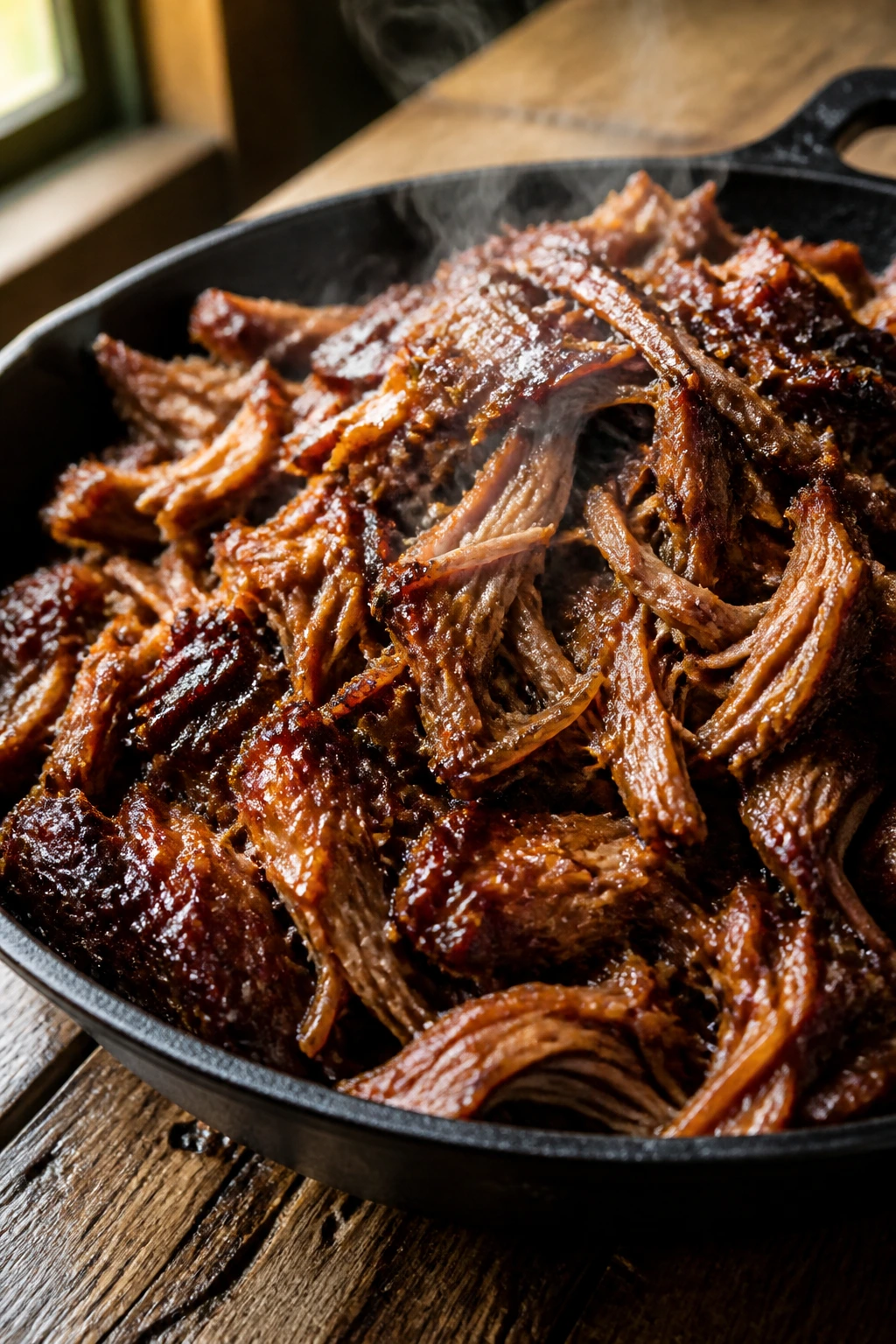
Flavor Enhancement: Stir a spoonful of the reduced braising liquid into the glaze right before tossing the pork. It pulls the flavor back toward the meat and keeps the finish from tasting like straight sauce.
Time-Saver: Season the pork the night before and leave it covered in the fridge. The salt starts doing useful work early, and the roast goes into the pot already seasoned deeper than the surface.
Cost-Saver: Pork shoulder is one of the few cuts that can take a sale price and turn it into a full meal with leftovers. If you find a larger roast, cook the whole thing and freeze half of the shredded meat with a little extra sauce in 2-cup containers.
Make-It-Yours: A spoonful of chopped pickled jalapeños on the sandwich gives the glaze a sharper edge. If you want a softer profile, skip the heat and finish with extra pickles and coleslaw instead.
Common Mistakes That Dry Out Pulled Pork
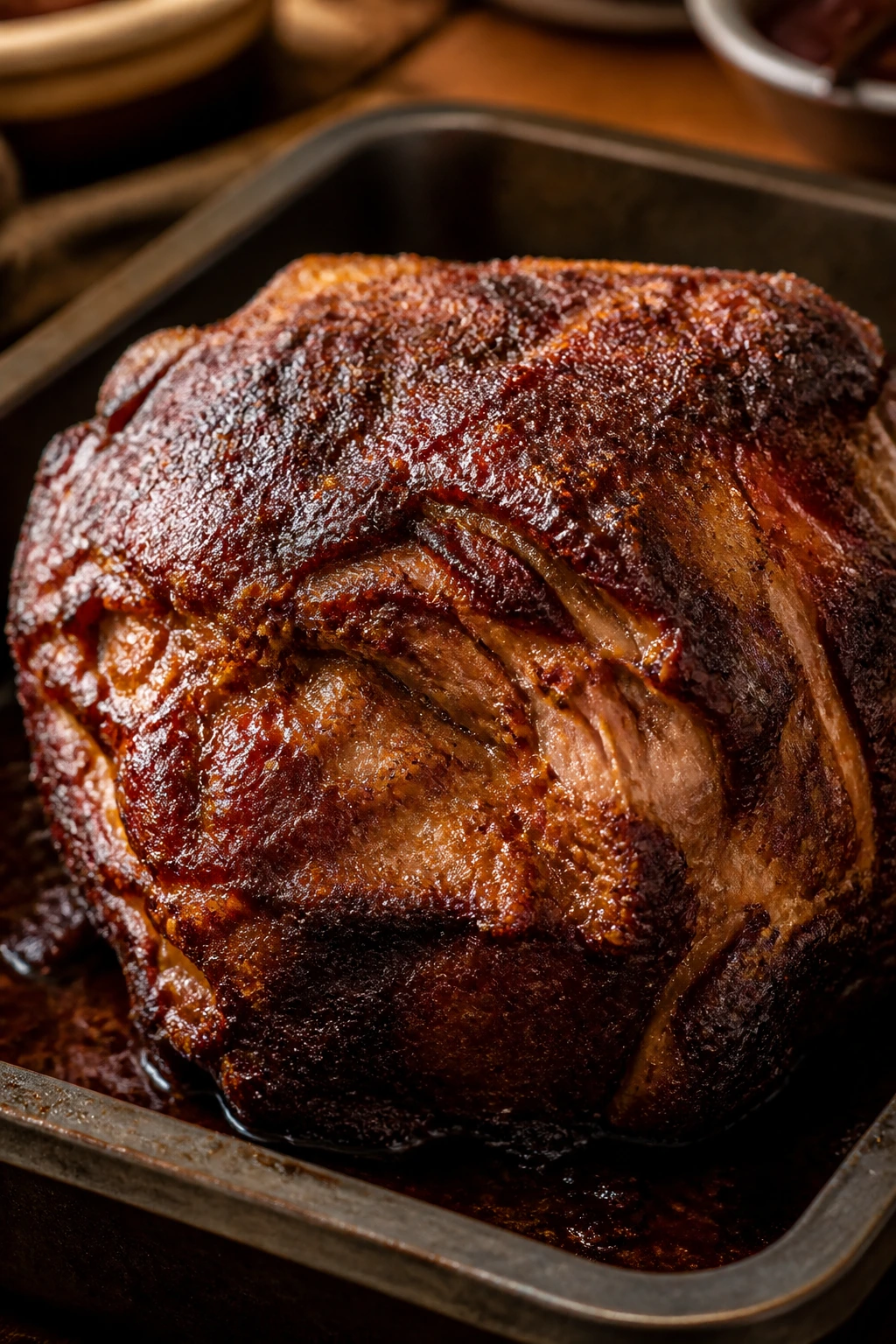
-
Trimming the shoulder down to lean meat only: The roast needs some fat to stay tender through a long braise. If you shave it too aggressively, the shredded meat turns dusty instead of juicy.
-
Cranking the oven to speed things up: Higher heat tightens the muscle fibers before the connective tissue softens. The surface may look done early, but the center will still feel resistant and the meat won’t pull cleanly.
-
Adding the glaze at the start: Sugar and long oven time are not friends. The glaze belongs at the end, when it can turn sticky under the broiler instead of dark and bitter in the pot.
-
Shredding the pork the second it leaves the oven: The juices run out if you skip the rest. Give it 20 minutes, and the meat holds together better while staying moist.
-
Using too little acid at the end: Brown sugar and barbecue sauce can flatten into sweetness if you don’t keep vinegar in the mix. Taste the glaze before serving and brighten it if needed with another teaspoon of cider vinegar.
-
Serving it dry on an untoasted bun: Soft bread soaks up sauce fast and goes limp even faster. Toasting the bun gives it just enough structure to survive the glaze and braising juices.
Variations That Keep the Same Backbone
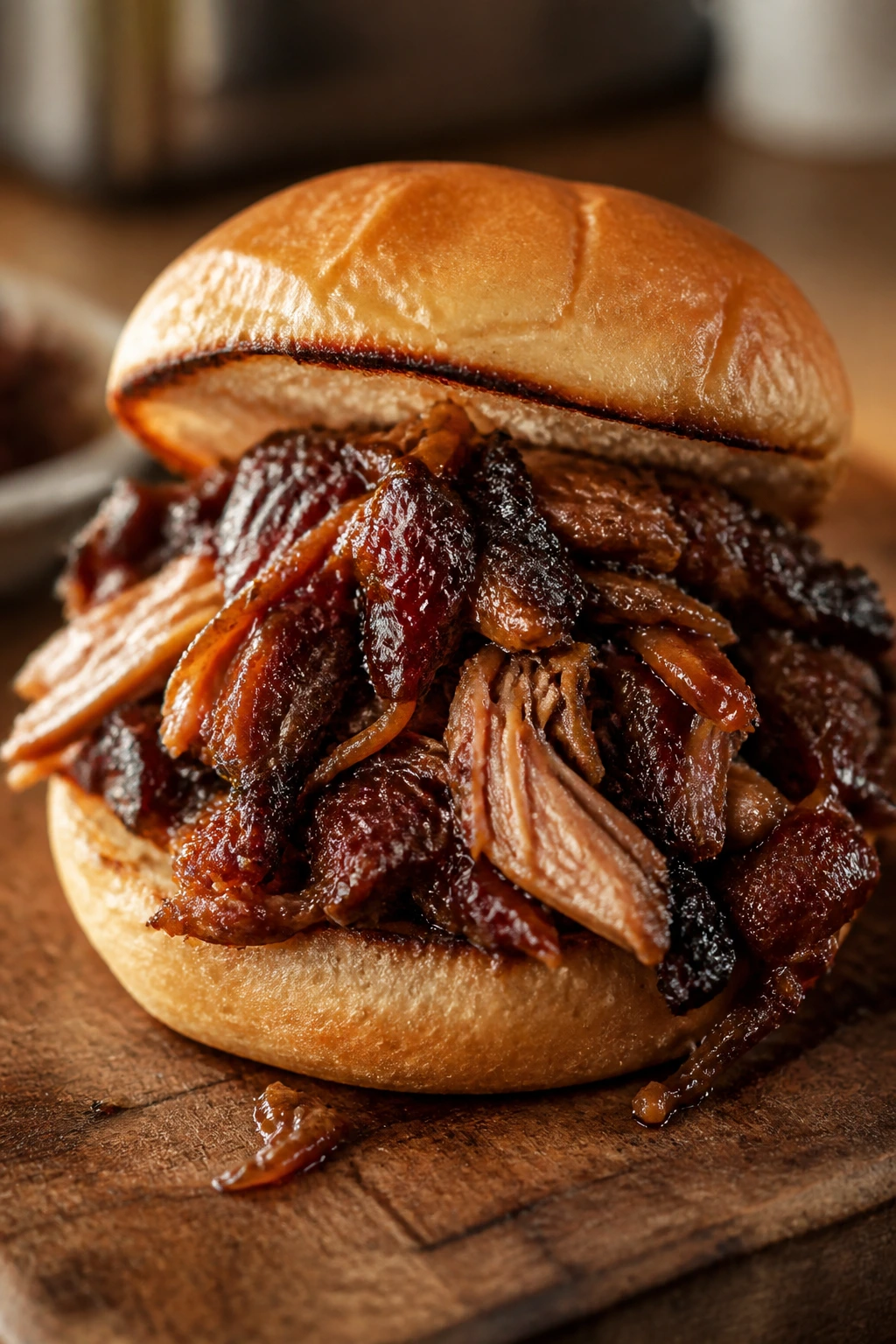
Carolina-leaning Tang: Cut the barbecue sauce in the glaze by half and add another tablespoon of apple cider vinegar plus a teaspoon of Dijon. The result is sharper, lighter, and especially good with plain slaw and pickles.
Smoky Chipotle Finish: Add 1 minced chipotle in adobo to the glaze and swap half of the smoked paprika in the rub for chipotle powder. The heat stays gentle, but the sauce gets a deeper, peppery edge that hangs around after the bite.
Sandwich-Shop Style: Shred the pork a little finer and broil it a minute longer so more edges get crisp. Pile it onto a toasted bun with extra glaze and pickle chips, the way a good takeout counter does when it knows texture matters.
Oven-to-Slow-Cooker Swap: Sear the pork as written, then move it to a slow cooker with the braising liquid and cook on low for 8 to 9 hours. Finish by shredding, glazing, and broiling on a sheet pan so you still get those sticky edges.
Bun-Free Dinner Plate: Serve the pork over mashed potatoes, baked sweet potatoes, or creamy polenta. The glaze spills into the starch and the whole plate eats more like dinner than a sandwich, which is useful when you want the same roast to feel less casual.
Storage, Reheating, and Making It Ahead
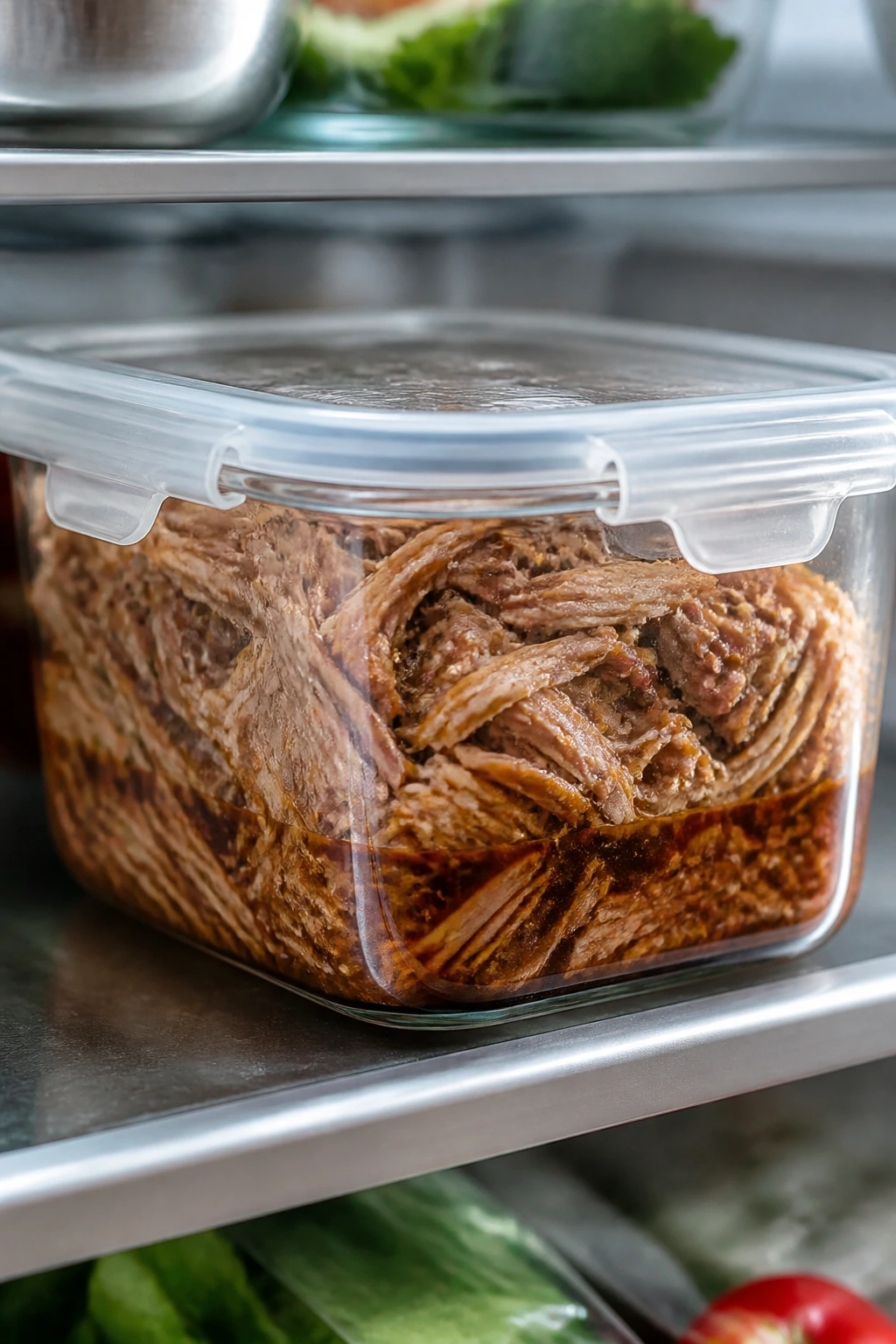
Pulled pork keeps its best texture when it’s stored with some of the braising liquid, not left to dry out in a plain container. Let it cool for no more than 2 hours at room temperature, then pack it into shallow airtight containers so it chills quickly.
In the refrigerator, it keeps well for 3 to 4 days. In the freezer, it holds for up to 3 months if you freeze it in flat portions with a little sauce or braising liquid mixed in. That small amount of liquid matters. It prevents freezer dryness and gives the meat something to reabsorb when it’s reheated.
Reheat it low and slow. On the stovetop, warm the pork in a covered skillet over low heat with a splash of broth or extra braising liquid, stirring now and then until it’s hot through. In the oven, cover it tightly with foil and heat at 300°F until the center steams and loosens again, usually 15 to 20 minutes for a smaller batch. The microwave works in a pinch if you use 50% power and stop to stir every minute so the edges don’t seize.
The pork can be seasoned a day ahead, and the glaze can be mixed up to 3 days in advance and kept in the fridge. If you want to cook ahead for a party, braise the roast the day before, chill the shredded meat in its liquid, then reheat and glaze it right before serving. That version often tastes even better because the seasoning has time to settle into the meat.
Pulled Pork Questions People Actually Ask
Can I make this in a slow cooker instead of the oven?
Yes. Sear the pork first if you can, then cook it on low for 8 to 9 hours with the braising liquid. The finish still improves if you shred it, toss it with the glaze, and broil it on a sheet pan for a few minutes.
Do I have to sear the pork before braising it?
You don’t have to, but I’d do it every time. Searing gives the roast a darker, more savory outer layer, and that flavor shows up in the final sandwich more than most people expect.
Can I use pork loin for this recipe?
Not if you want the same texture. Pork loin is lean and much less forgiving, so it dries out before it reaches that soft, shreddable stage. If loin is all you have, cook it more gently and treat it like sliced pork, not pulled pork.
How do I know when the pork is actually done?
Tenderness matters more than a hard clock. The roast should reach about 200 to 205°F, and a fork should twist through the center with almost no resistance. If it feels springy or fights back, it needs more time.
What if the glaze tastes too sweet?
Add vinegar a teaspoon at a time until the sweetness relaxes. A little Dijon also helps, because the mustard cuts the sugar and gives the glaze a sharper edge without making it sour.
Can I freeze the pork after it’s been glazed?
Yes, though I prefer freezing it with a little extra braising liquid so it reheats more gently. If the pork is already glazed, freeze it in portions and reheat it covered with a splash of broth to keep the sugar from turning sticky in the wrong way.
Should I use bone-in or boneless pork shoulder?
Either works. Boneless is easier to fit in most Dutch ovens and shreds neatly, while bone-in can bring a little more flavor and often costs less per pound. If you use bone-in, just give it extra time and check tenderness near the end.
Sticky Edges, Quiet Confidence
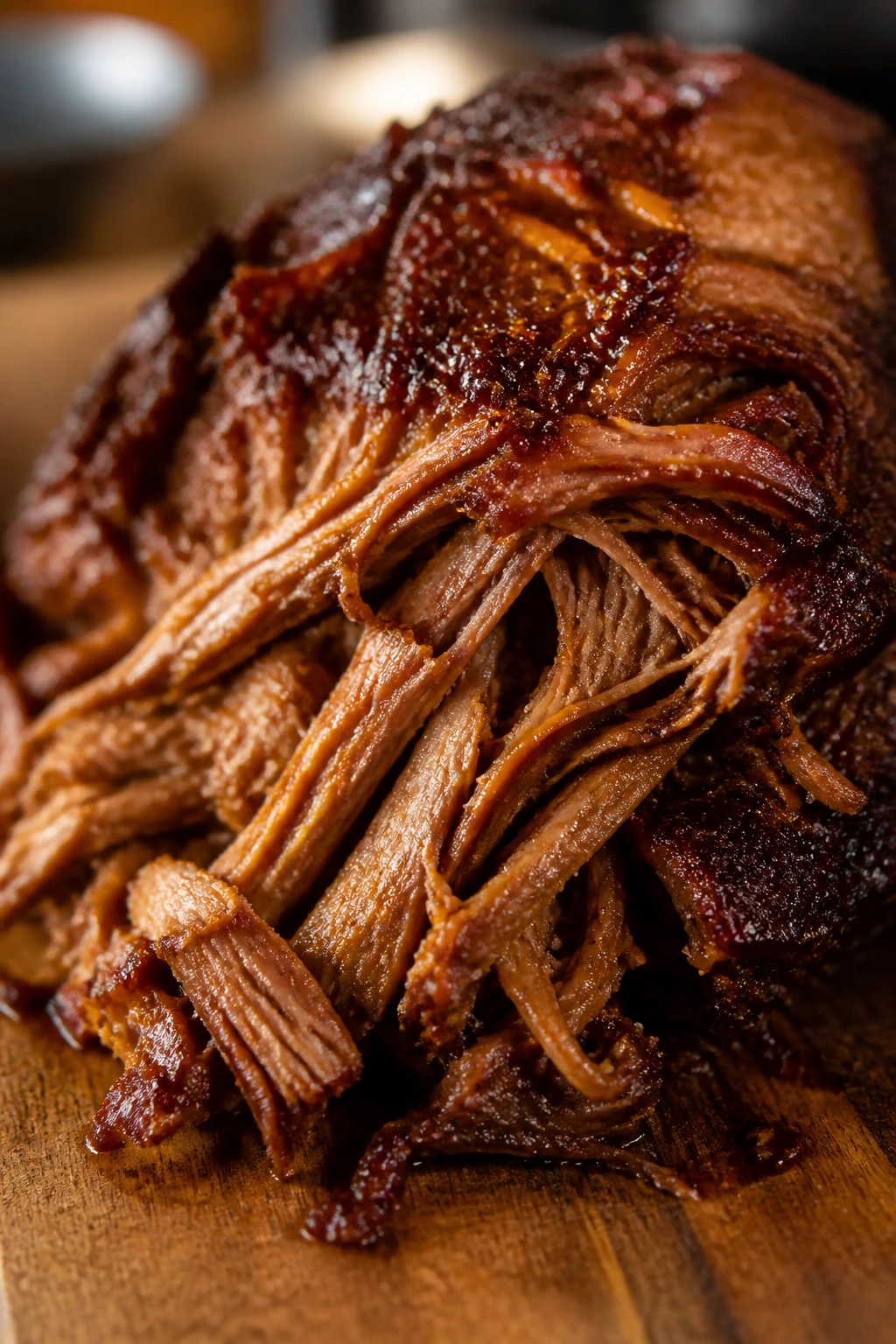
Pulled pork like this doesn’t need smoke, drama, or a dozen finishing tricks. It needs a shoulder with enough fat to forgive you, a low oven that doesn’t rush the fibers, and a glaze that waits until the meat is already tender. That’s the whole architecture, and it’s sturdy.
The part I keep coming back to is the finish. A lot of barbecue recipes lean on sauce to do the heavy lifting, but here the roast earns the gloss on its own. The broiler just gives it a last, sharp flicker of color.
Keep the leftover braising liquid. That spoonful of salty, oniony juice is the difference between reheated pork that feels tired and reheated pork that still tastes cared for. And if you build a sandwich with extra pickles, toasted bread, and a little of the glaze dripping at the edge, it stops being leftovers and turns into the meal people ask about later.
Juicy BBQ Pulled Pork with Brown Sugar Glaze — Recipe Card
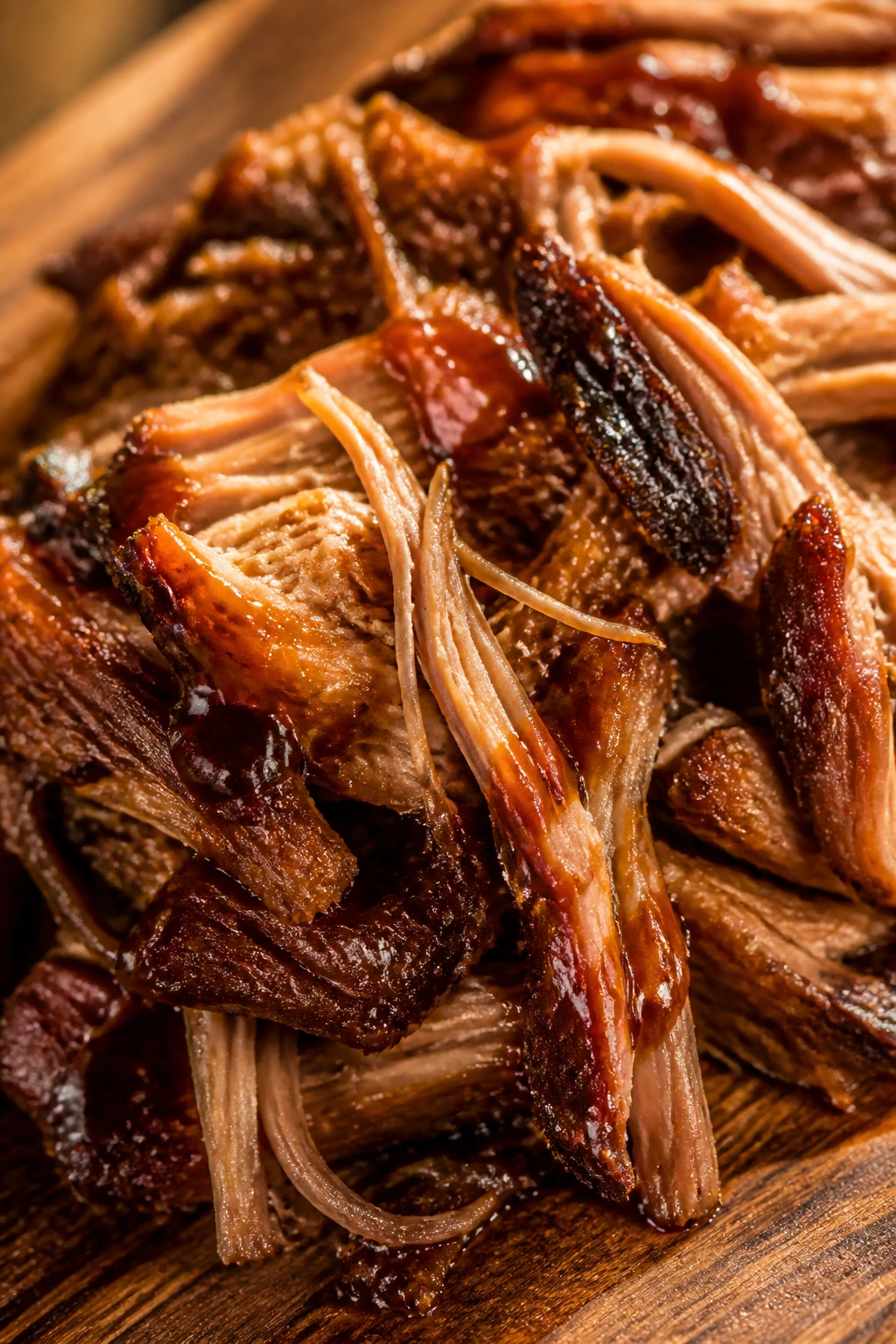
Recipe Name: Juicy BBQ Pulled Pork with Brown Sugar Glaze
Description: Tender pork shoulder is slow-braised, shredded, and finished with a sticky brown sugar barbecue glaze. The meat stays juicy, the edges turn glossy, and the flavor lands right between sweet, tangy, and savory.
Prep Time: 25 minutes
Cook Time: 4 hours 20 minutes
Total Time: 4 hours 45 minutes, plus 20 minutes resting
Course: Main Course, Dinner
Cuisine: American
Servings: 8 servings
Calories: 520 kcal
Ingredients
For the Pork and Rub:
- 4 to 5 lb boneless pork shoulder (Boston butt), trimmed of loose surface fat but not stripped lean
- 2 tablespoons light brown sugar
- 1 tablespoon kosher salt
- 2 teaspoons smoked paprika
- 2 teaspoons garlic powder
- 2 teaspoons onion powder
- 1 teaspoon black pepper
- 1 teaspoon dry mustard powder
- 1/2 teaspoon cayenne pepper, optional
- 1 tablespoon neutral oil, for searing
For the Braising Liquid:
- 1 large yellow onion, sliced into 1/2-inch wedges
- 4 garlic cloves, smashed
- 1 cup low-sodium chicken broth
- 1/2 cup apple cider vinegar
- 1/4 cup barbecue sauce
- 1 tablespoon Worcestershire sauce
For the Brown Sugar Glaze:
- 1/2 cup barbecue sauce
- 1/4 cup dark brown sugar, packed
- 2 tablespoons apple cider vinegar
- 1 tablespoon Dijon mustard
- 1 tablespoon unsalted butter
Instructions
-
Preheat the oven to 300°F (150°C) and position a rack in the center.
-
Pat the pork shoulder dry, mix the rub ingredients, and season the pork all over.
-
Heat the oil in a Dutch oven over medium-high heat and sear the pork for 3 to 4 minutes per side until deeply browned.
-
Add the onion and cook for 4 to 5 minutes, then add the garlic and cook for 30 seconds.
-
Pour in the broth, vinegar, barbecue sauce, and Worcestershire sauce, scraping up the browned bits. Nestle the pork into the liquid, cover, and braise for 4 to 4 1/2 hours until the pork reaches 200 to 205°F and shreds easily.
-
Transfer the pork to a cutting board and rest for 20 minutes. Skim fat from the braising liquid and shred the meat, adding a little liquid back if needed.
-
Simmer the barbecue sauce, brown sugar, vinegar, Dijon, and butter in a small saucepan for 3 to 4 minutes until glossy and slightly thickened.
-
Toss the shredded pork with the glaze, spread it on a rimmed baking sheet, and broil for 2 to 4 minutes until the edges bubble and darken slightly. Serve hot.
Notes: Save some braising liquid for reheating. Broil closely — brown sugar burns fast. This pork also works well as sandwiches, sliders, or over mashed potatoes.