



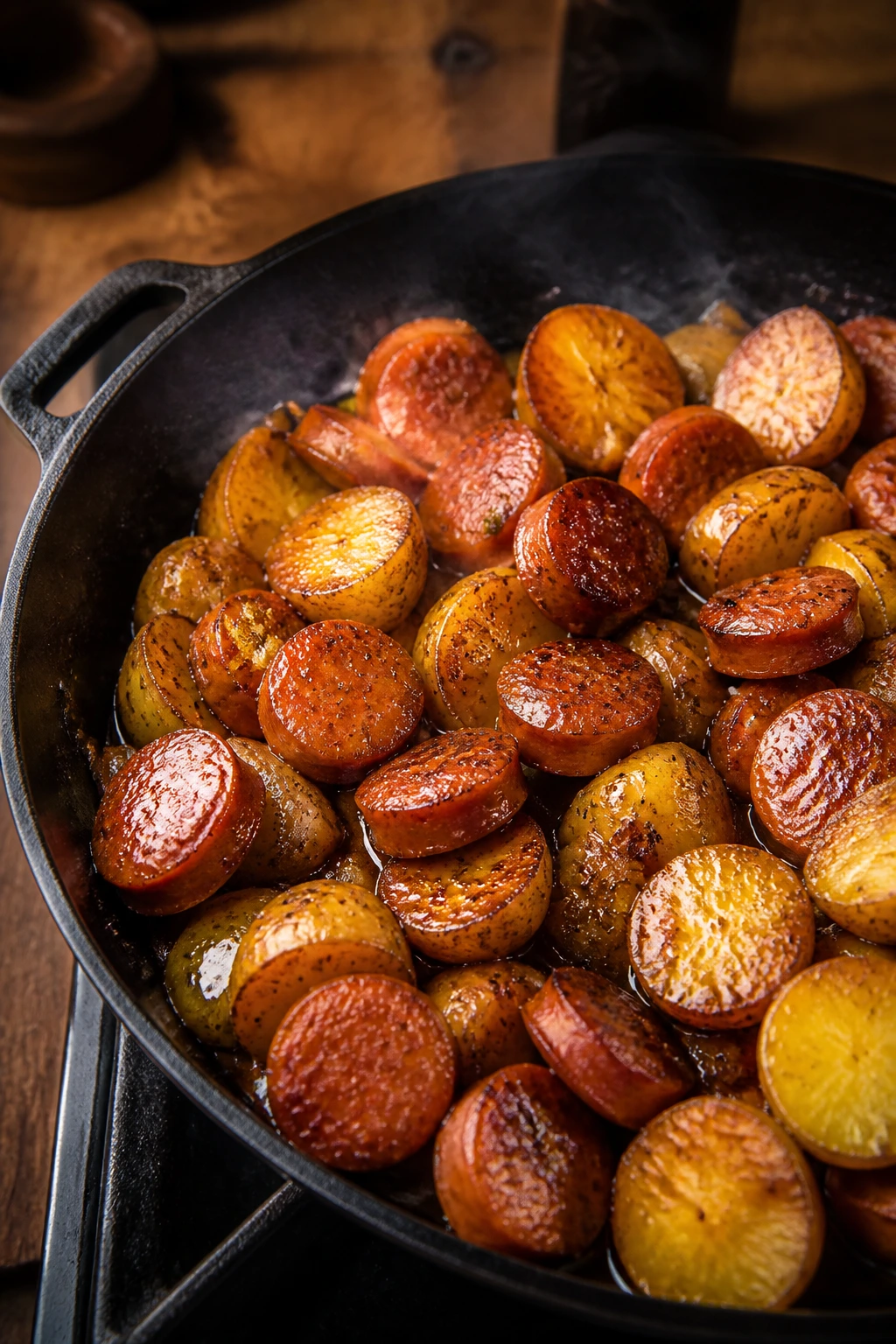
The first thing that happens when smoky sausage hits a hot skillet is the smell — fat, paprika, onion, and that faint sweetness from brown sugar waiting in the wings. It’s the kind of smell that makes people drift into the kitchen and ask the same thing in a dozen different ways: how long until dinner? That’s the appeal of a smoky sausage and potatoes skillet with brown sugar glaze. It’s rough-edged in the best way, with crisp sausage coins, tender potatoes, and a sticky finish that clings to the food instead of pooling in the bottom of the pan.
I like this dish because it knows what it is. It isn’t pretending to be light. It isn’t trying to be delicate. The brown sugar glaze brings just enough sweetness to pull the smoked meat forward, but the vinegar and mustard keep it from sliding into candy territory. That balance matters. Without the acid, the glaze tastes flat. Without the salt and browning, it tastes like something poured from a squeeze bottle and forgotten.
The other thing I love here is the texture. Baby Yukon Golds get creamy inside and crisp at the edges if you give them a little patience. Smoked sausage gives you browned, almost snappy edges. Onion softens, bell pepper keeps a little bite, and the glaze tightens into a lacquer that makes every forkful feel finished. That’s the trick: not just sweet, not just smoky, but glossy and savory enough that you keep going back for one more bite.
Why This Skillet Earns a Spot in the Rotation
- One pan, real flavor: The sausage leaves browned bits behind, and those little stuck-on spots do more for the glaze than any bottled sauce ever could.
- Sweetness with a backbone: Brown sugar by itself can be cloying, but Dijon, Worcestershire, and apple cider vinegar keep the glaze sharp and savory.
- Potatoes that don’t turn to mush: Baby Yukon Golds hold their shape better than big russets, so you get creamy centers without a pile of broken pieces.
- Fast enough for a busy stove, sturdy enough for leftovers: Once the potatoes are cut small, the whole pan moves quickly, and the leftovers reheat without falling apart.
- A dinner that looks more complicated than it is: The glaze makes everything shine, which means you get that “you cooked” look without juggling three pots.
The Timing, Yield, and What You’re Signing Up For
Yield: Serves 6
Prep Time: 15 minutes
Cook Time: 30 minutes
Total Time: 45 minutes
Difficulty: Intermediate — the method is straightforward, but you do need to watch the heat so the potatoes soften without burning the glaze.
Best Served: Right away, while the glaze is still tacky and the potatoes are crisp at the edges.
The Shopping List That Actually Makes the Dish Work
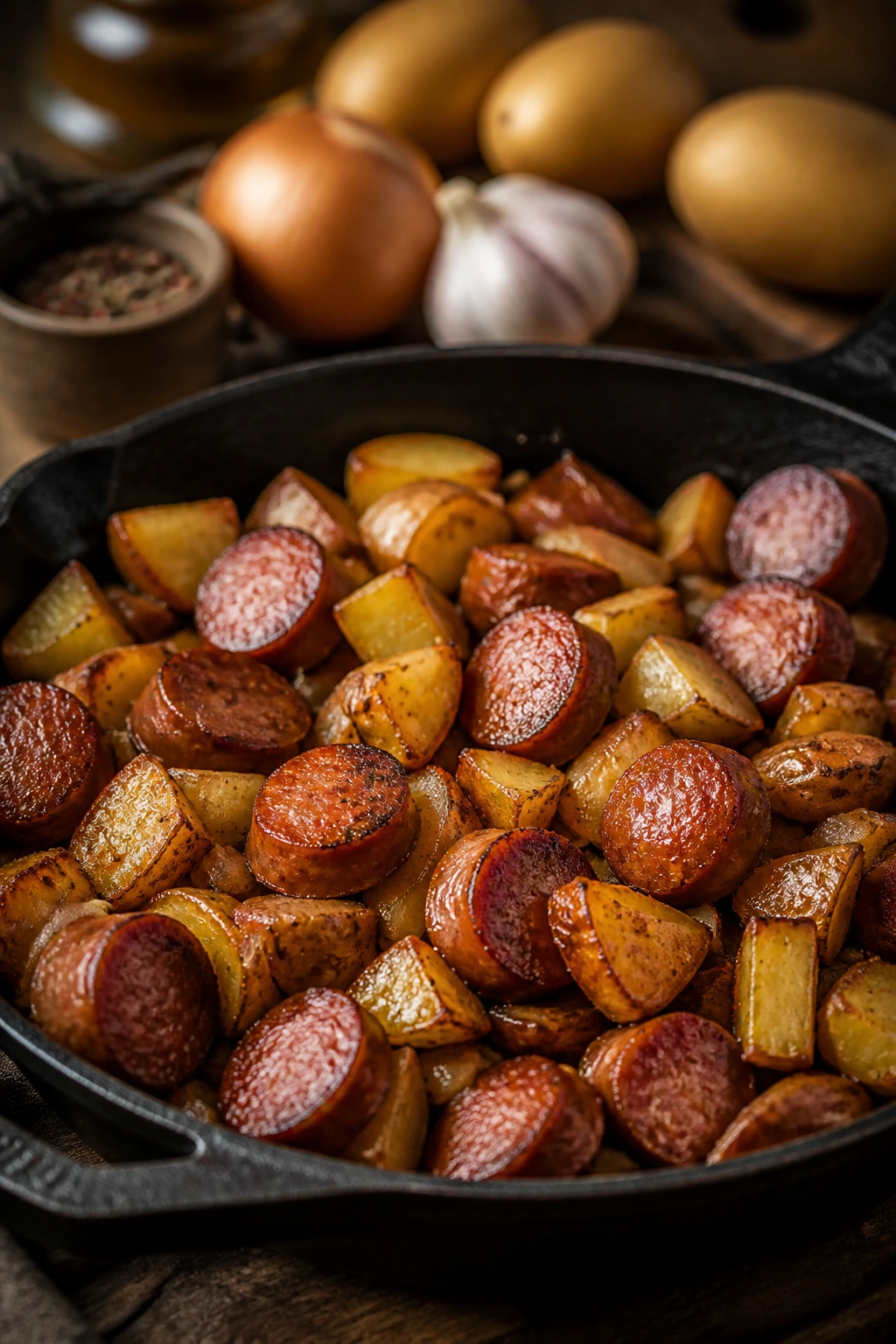
For the Skillet
- 1½ pounds fully cooked smoked sausage, sliced into ½-inch coins
- 2 pounds baby Yukon Gold potatoes, halved; quarter them if they’re larger than 1½ inches
- 1 large yellow onion, cut into ½-inch wedges
- 1 red bell pepper, sliced into 1-inch strips
- 2 tablespoons olive oil
- 1 tablespoon unsalted butter
- 3 cloves garlic, minced
- ½ cup low-sodium chicken broth
- 2 tablespoons chopped fresh parsley, for finishing
For the Brown Sugar Glaze
- 3 tablespoons packed light brown sugar
- 1 tablespoon Dijon mustard
- 1 tablespoon Worcestershire sauce
- 2 teaspoons apple cider vinegar
- 1 teaspoon smoked paprika
- ½ teaspoon kosher salt, plus more to taste
- ¼ teaspoon black pepper
- ¼ teaspoon crushed red pepper flakes, optional
Why Each Ingredient Belongs in the Pan
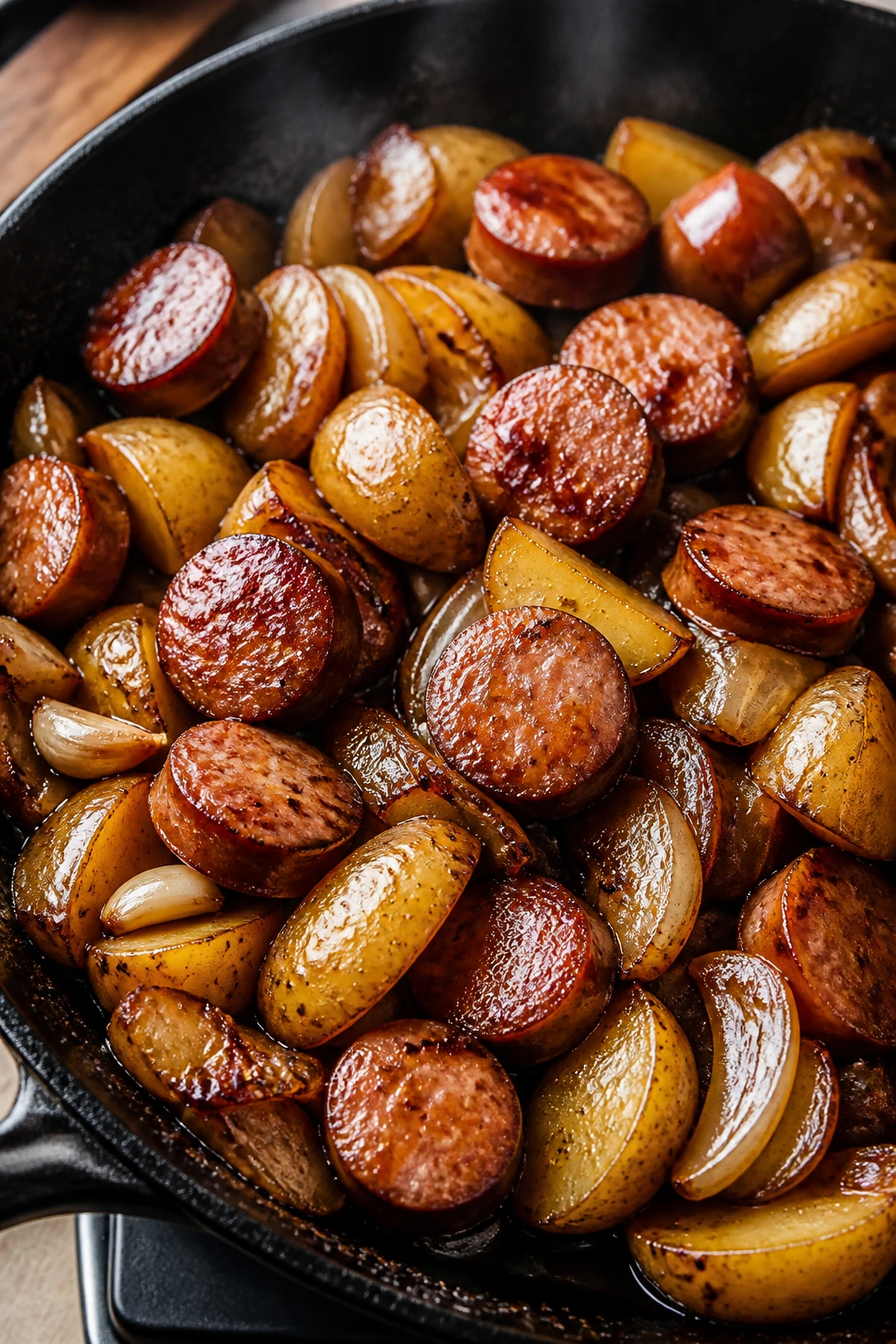
Smoked Sausage
What to use: 1½ pounds fully cooked smoked sausage, kielbasa, or another smoked pork sausage cut into ½-inch coins.
Preparation: Slice it on a slight diagonal if you want more browned surface area; those extra edges matter once the pan gets hot.
Substitutions: Turkey smoked sausage works if that’s what you buy, though it browns a little faster and has less fat to carry the glaze.
Tips: Pick a sausage with visible fat marbling. Lean sausage can work, but it tends to dry out before the glaze thickens.
Potatoes
What to use: 2 pounds baby Yukon Gold potatoes, halved, or quartered if they’re on the larger side.
Preparation: Keep the pieces as even as you can so the pan doesn’t give you one pile of done potatoes and one pile of stubborn centers.
Substitutions: Red potatoes hold shape well too, and fingerlings are excellent if you find them at a good price. Russets are the least useful here; they break down too easily.
Tips: Yukon Golds are my first choice because they stay creamy without turning grainy, and the skins crisp nicely in the skillet.
Aromatics and Vegetables
What to use: 1 large yellow onion, 1 red bell pepper, and 3 cloves garlic.
Preparation: Cut the onion into wedges so it softens without disappearing; slice the pepper into strips that stay intact after simmering.
Substitutions: A sweet onion or red onion works, and you can swap the bell pepper for poblano if you want a little more edge.
Tips: Garlic should go in after the onion starts to soften. If you add it too early, it can scorch before the potatoes are ready.
The Brown Sugar Glaze
What to use: 3 tablespoons light brown sugar, 1 tablespoon Dijon mustard, 1 tablespoon Worcestershire sauce, 2 teaspoons apple cider vinegar, 1 teaspoon smoked paprika, ½ teaspoon kosher salt, black pepper, and optional red pepper flakes.
Preparation: Whisk the glaze together before it hits the pan so the sugar doesn’t clump against a hot surface.
Substitutions: Maple syrup can stand in for the brown sugar in a pinch, though the flavor becomes rounder and less caramel-like. Grainy mustard can replace Dijon if that’s what’s in the door of your fridge.
Tips: The vinegar is not decorative. It keeps the glaze from tasting heavy and helps it grab onto the sausage instead of sliding off in a shiny puddle.
Liquid and Finish
What to use: ½ cup low-sodium chicken broth and 2 tablespoons chopped fresh parsley.
Preparation: Measure the broth before you start cooking; once the pan is hot, you won’t want to be fumbling at the cabinet.
Substitutions: Water can work in a pinch, though broth gives you a deeper, rounder base. Chives or thin-sliced scallions can replace parsley.
Tips: Broth loosens the potatoes just enough to finish them without sticking, and the parsley wakes up the whole pan at the end. Skip the garnish if you must, but the dish does look better with that green hit on top.
The Cast Iron, Spoon, and Knife That Make It Easier
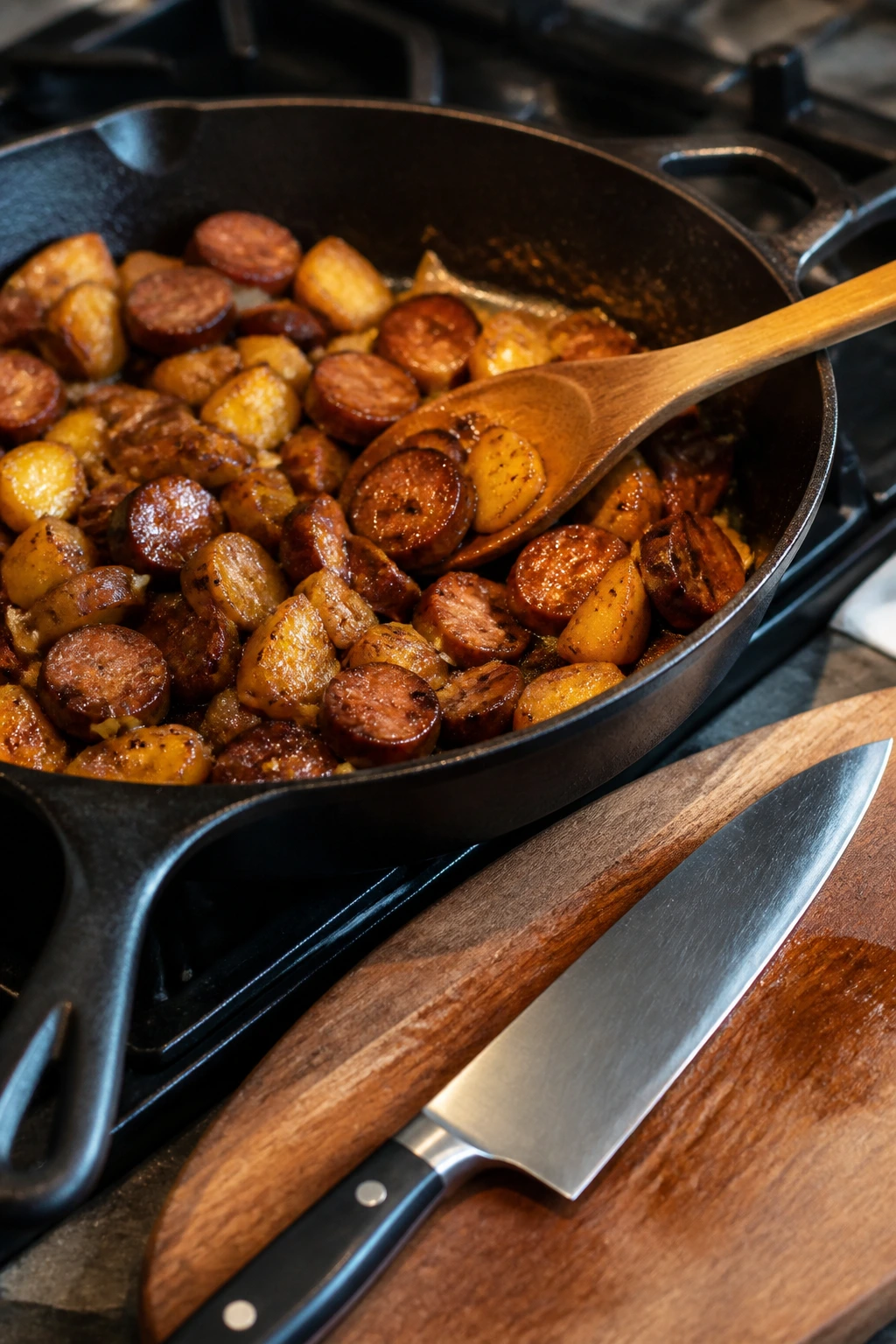
- 12-inch cast-iron or heavy stainless skillet: You need room for the potatoes to sit in a single layer at first; a crowded pan steams instead of browns.
- Lid that fits the skillet: The covered phase is what softens the potatoes without making them watery.
- Wooden spoon or sturdy spatula: Use something that can scrape up browned bits without shredding the potatoes.
- Chef’s knife: A sharp blade makes the sausage coins and potato cuts more even, which keeps the whole pan cooking at the same pace.
- Cutting board with a damp towel underneath: Small thing. Makes a big difference when you’re slicing sausage and potatoes quickly.
- Small bowl and whisk: The glaze comes together better when it’s mixed before it touches the heat.
- Measuring spoons and cups: Brown sugar and vinegar are not ingredients you want to eyeball here. The balance matters.
A Sticky-Sweet Skillet Dinner with a Salted Edge
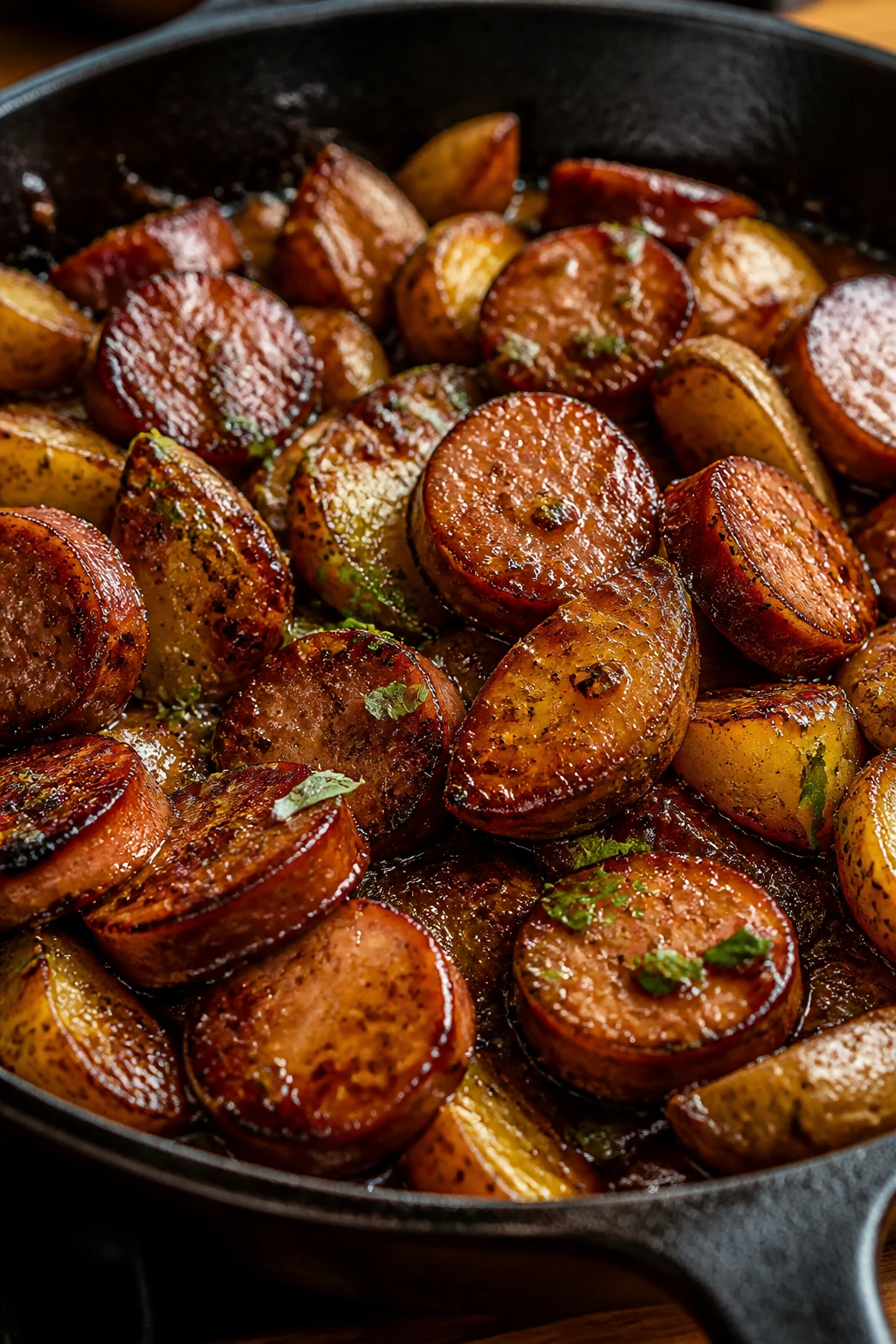
This dish comes from the same practical place as a lot of good skillet dinners: a need to feed people with what’s already on hand. Smoked sausage, potatoes, onion — those are pantry and fridge staples in a lot of kitchens for good reason. They cook at a pace you can manage on a weeknight, and they don’t ask for fancy technique to taste like dinner.
The brown sugar glaze gives the pan its personality. I like to think of it as a cousin to the glaze on ham, but rougher around the edges and a little more useful on a cold pan of potatoes. Brown sugar gives you that dark caramel note, while Dijon and apple cider vinegar keep the whole thing from tasting like dessert. Worcestershire adds the savory depth people sometimes try to fake with too much salt. Don’t do that. Salt helps, sure, but the real trick is tension — sweet against sharp, smoky against buttery, tender against crisp.
There’s also something honest about the way the dish changes in the pan. At first it looks rustic. Then the glaze goes in, and everything gets shiny. A minute later, the edges catch a little more color, the sausage picks up a sticky sheen, and you realize the dinner has crossed into that nice middle ground where it feels both easy and deliberate.
How to Build the Skillet, Step by Step
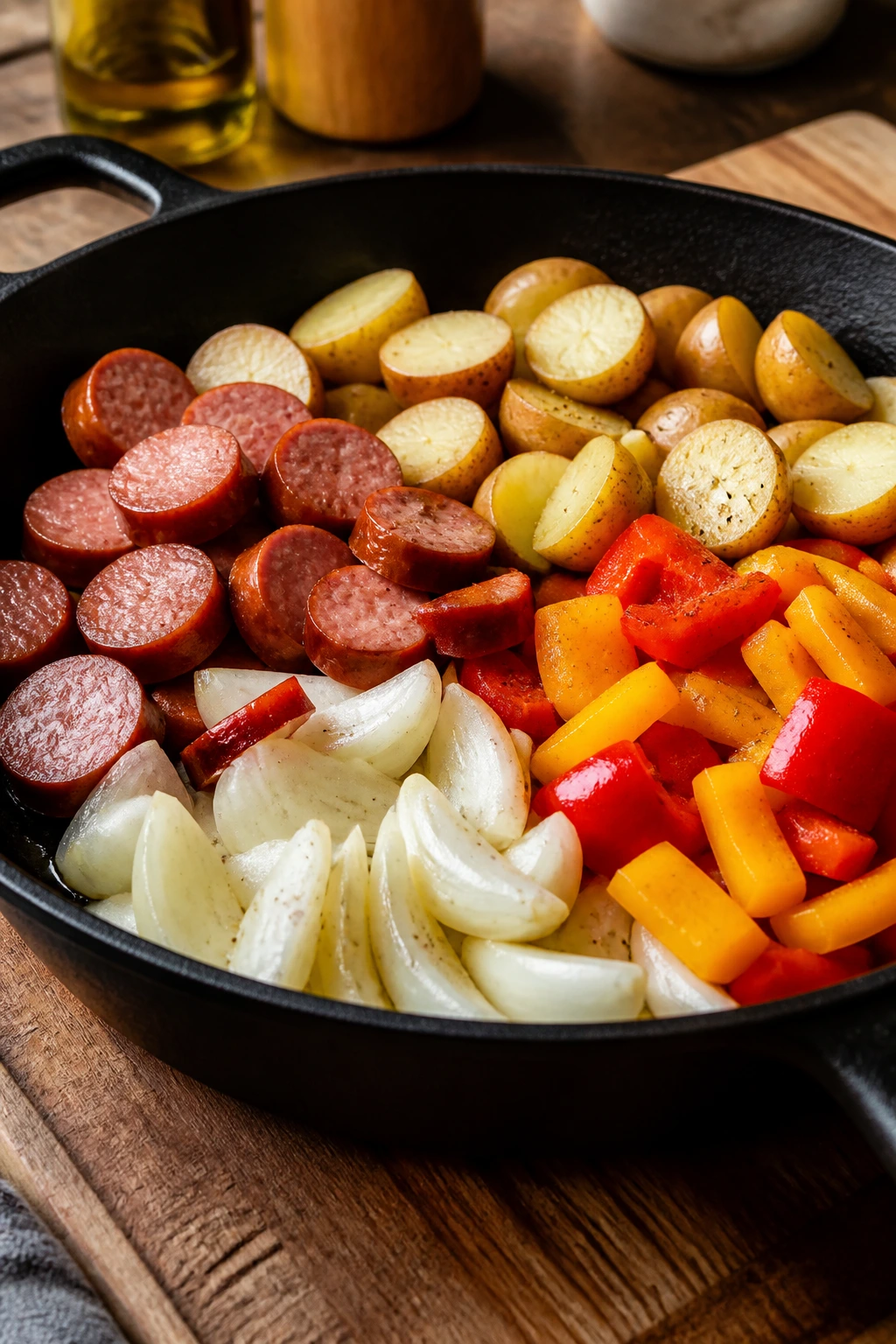
Prep the Ingredients
-
Slice the sausage into ½-inch coins, halve the potatoes, wedge the onion, and slice the bell pepper. Keep the potato pieces as even as you can. If one is much bigger than the rest, quarter it.
-
In a small bowl, whisk together the brown sugar, Dijon, Worcestershire, apple cider vinegar, smoked paprika, kosher salt, black pepper, and crushed red pepper flakes if you’re using them. Set the glaze near the stove.
Brown and Soften
-
Heat 1 tablespoon of the olive oil in a 12-inch skillet over medium-high heat. Add the sausage in a single layer and cook for 4 to 5 minutes, turning once or twice, until the edges are browned and the coins have picked up some color. Transfer the sausage to a plate.
-
Reduce the heat to medium. Add the remaining olive oil and the butter to the skillet. When the butter melts, add the onion, bell pepper, and potatoes. Season with a small pinch of salt and stir to coat everything in the fat.
-
Cook for 4 minutes, stirring only once or twice, until the onion starts to soften and the potatoes pick up a few browned spots on the cut sides. You do not want them cooked through yet. You want color.
-
Add the minced garlic and stir for 30 seconds, just until it smells sweet and sharp. Do not let the garlic sit on the hot pan by itself; it can burn fast and turn bitter.
-
Pour in the chicken broth and scrape up the browned bits from the bottom of the skillet. Cover the pan, lower the heat to medium-low, and cook for 10 to 12 minutes, stirring once halfway through, until the potatoes are mostly tender when pierced with a knife.
Glaze and Finish
-
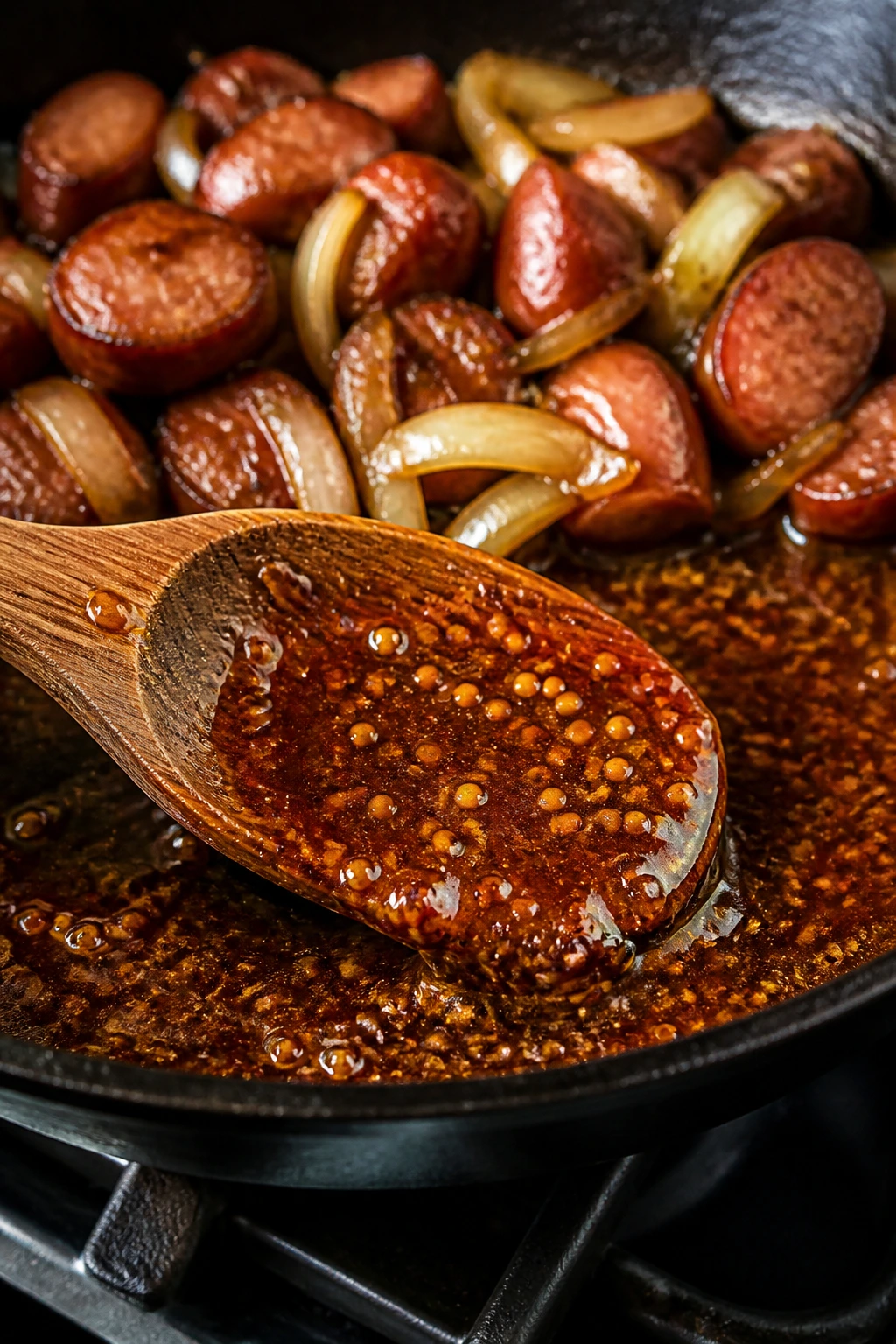
Return the sausage to the skillet and pour in the brown sugar glaze. Stir well so the sauce reaches the potatoes and the sausage, then raise the heat to medium. Let everything bubble for 2 to 3 minutes, stirring often, until the glaze thickens and coats the food instead of running off it. If the pan looks dry, add 1 to 2 tablespoons of broth. If the sauce seems loose, let it bubble for another minute.
-
Taste a potato piece and a slice of sausage. Add a pinch more salt if needed, then scatter the parsley over the top and serve immediately. The glaze should look glossy and clingy, not watery.
Why the Brown Sugar Glaze Sticks Instead of Sliding Off
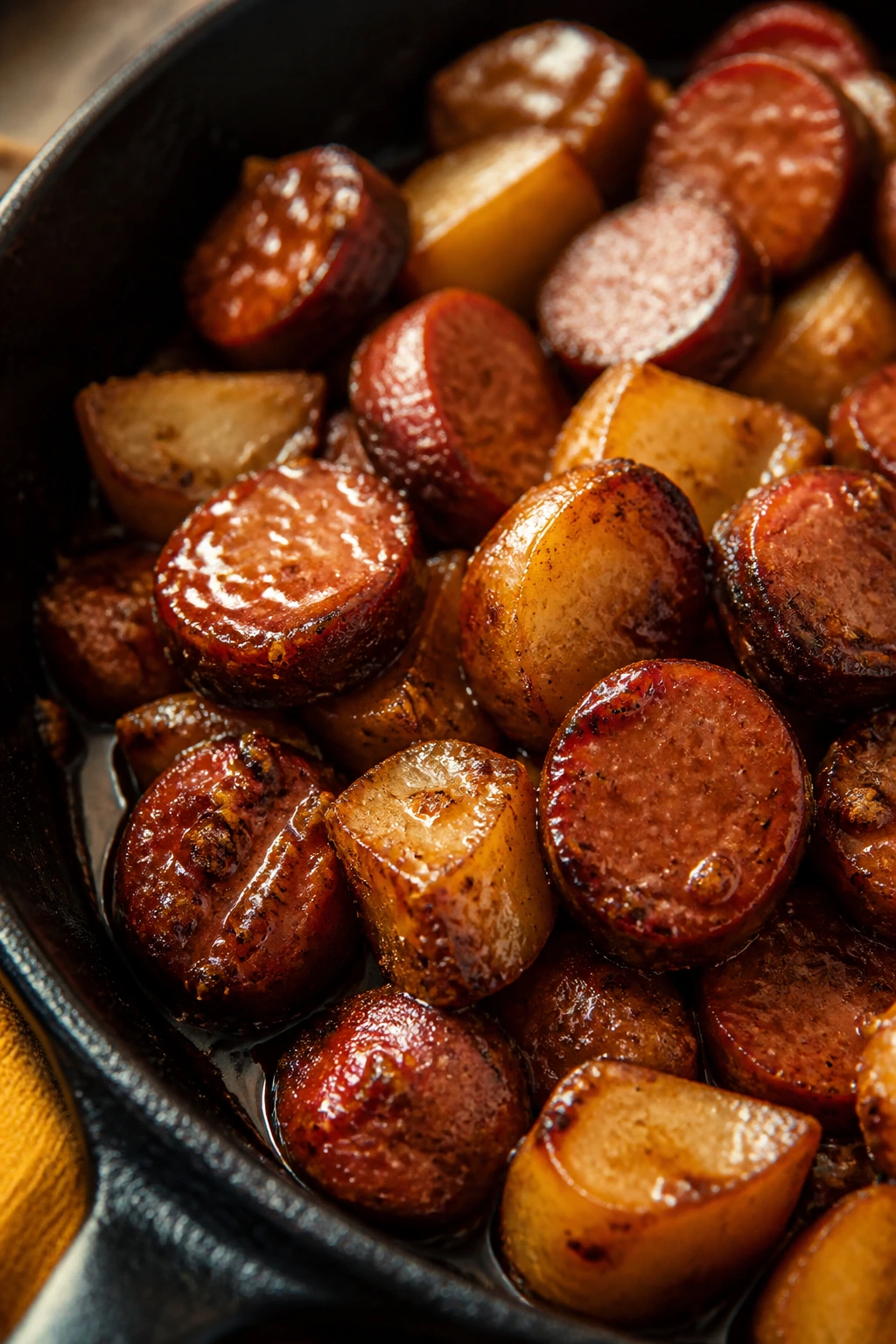
A glaze has one job: it needs to cling. That means heat, sugar, and a little fat have to work together in the pan, not fight each other. If you dump brown sugar over food at the end and walk away, you get syrup. If you let it meet browned sausage and a hot skillet, you get something better — a thin, sticky coating that tightens around the edges of the potatoes and settles into the ridges on the sausage.
The Dijon and vinegar are doing more work than they get credit for. Dijon helps the glaze emulsify a bit, which means the fat and liquid stay together long enough to coat the ingredients instead of separating into slicks. The vinegar cuts the sweetness and keeps the finish bright. Without it, the brown sugar can make the whole dish taste flat and heavy, which is the quickest way to ruin a skillet meal that should feel lively.
There’s also a texture reason this method works. Potatoes release a little starch as they cook. That starch helps the glaze grab. The browned bits on the bottom of the pan help too, because they dissolve into the broth and give the sauce a deeper, almost toasted flavor. I’m always suspicious of recipes that skip that step and go straight from raw ingredients to a sweet sauce. The pan has more to say than that.
What to Put on the Plate Next to It
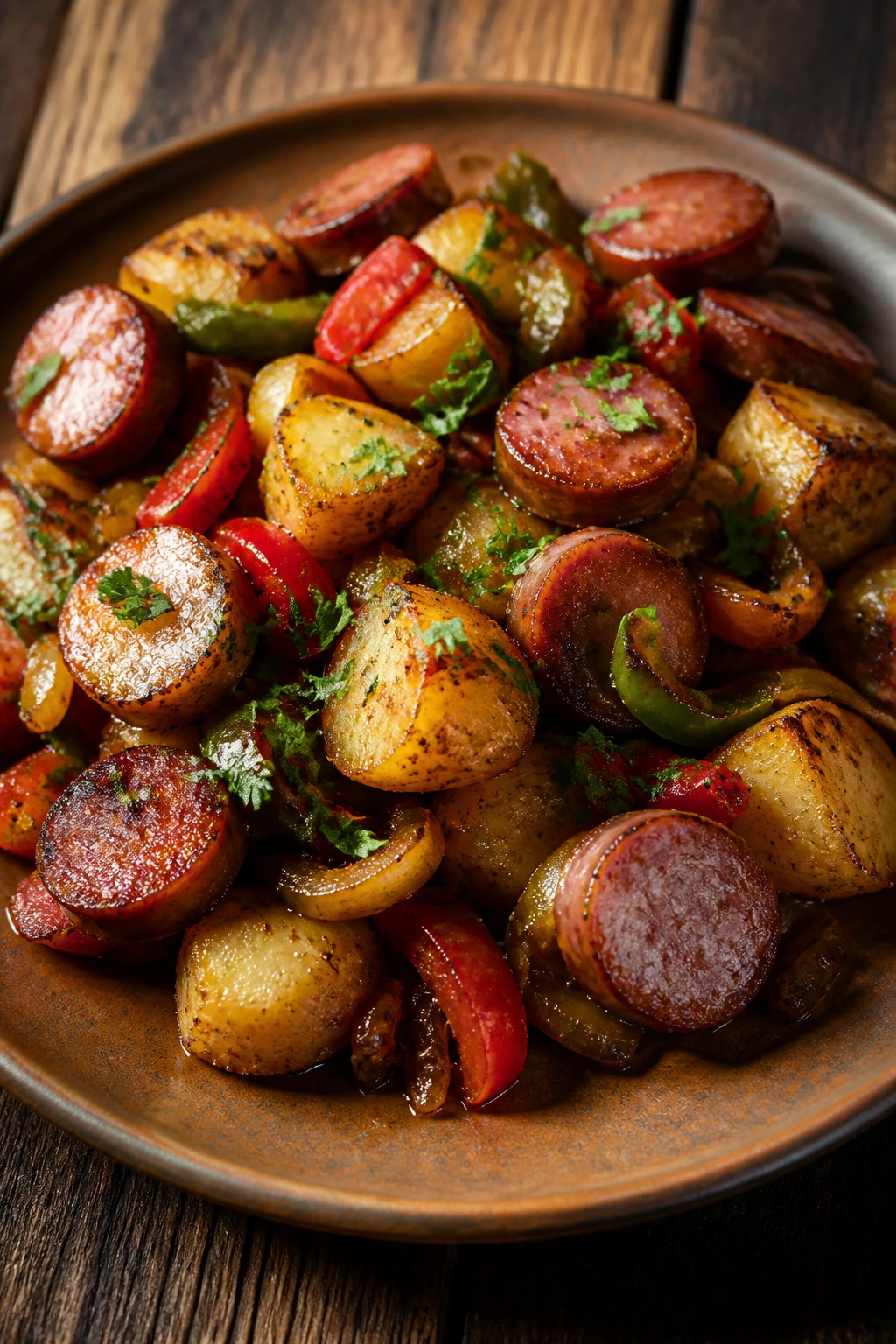
Presentation: Spoon the skillet onto a warm platter or serve it straight from the pan if the skillet looks good enough to live on the table. I like to pile the potatoes in the middle first, then tuck the sausage coins and pepper strips around the edges so the glaze catches the light instead of disappearing into a heap. A final scatter of parsley matters more than people think; the green cuts through the brown sugar finish and keeps the plate from looking muddy.
Accompaniments: If you want bread, go with something that can handle sticky pan sauce — a crusty baguette, buttered cornbread, or even a split biscuit. A sharp green salad works well on the side because it brings crunch and acid. If you want to keep the meal all comfort and no restraint, a scoop of coleslaw with a vinegar dressing is a smart move. For a bigger table, add roasted green beans or simple steamed broccoli with lemon.
Portions: Six servings is right if this is the main event and you’re adding a side. If you’ve got very hungry people or no side dishes at all, count on four generous plates. The skillet scales up, but once you go past 2½ pounds of potatoes, use a wider pan or cook in two batches so the vegetables still brown.
Beverage Pairing: Cold lager or amber beer fits the smoked sausage and brown sugar glaze nicely. If you’re not doing alcohol, iced tea with lemon or sparkling water with a squeeze of lime is the cleanest match.
Small Tweaks That Pay Off Big
Flavor Enhancement: A teaspoon of whole-grain mustard in the glaze gives the sauce a little texture and makes the sweet-sour balance more interesting. I like it when you can see the seeds in the pan. It feels deliberate.
Time-Saver: If your potatoes are stubborn or large, microwave the halved pieces with a tablespoon of water in a covered bowl for 4 minutes before they hit the skillet. They’ll finish faster and brown more evenly once they meet the pan.
Cost-Saver: Store-brand smoked sausage is fine here. The glaze is doing enough heavy lifting that you do not need a fancy link. Spend the extra money on good potatoes and fresh parsley instead.
Texture Boost: Leave the sausage in the skillet just long enough to reheat through after the glaze goes in. Too much time in the sugar mixture and the coins lose their snap. A little edge is a good thing.
Make-It-Yours: If you like more heat, add a pinch of cayenne or a diced jalapeño with the onion. If you want less sweetness, drop the brown sugar to 2 tablespoons and add another teaspoon of vinegar.
The Mistakes That Make This Dish Heavy or Burnt
-
Crowding the pan too early: If the sausage and potatoes are piled on top of each other, they steam. The fix is simple — brown the sausage first, then give the potatoes room before the lid goes on.
-
Letting the glaze hit high heat for too long: Brown sugar burns fast. If the flame is too strong, the sauce darkens and tastes bitter before it ever gets sticky. Keep the final stage at medium heat and stir often.
-
Using potatoes cut too large: Big chunks stay hard in the middle while the outside gets scorched. Halve baby potatoes, quarter the large ones, and keep the pieces close in size.
-
Adding garlic too soon: Garlic loves to go from fragrant to bitter in a blink. Put it in after the onion has had a chance to soften, and give it only about 30 seconds before the broth goes in.
-
Skipping the broth-and-cover step: Without a little steam, the potatoes brown on the outside and stay chalky in the middle. The covered simmer is not optional if you want creamy centers.
-
Over-salting before the glaze: Smoked sausage and Worcestershire already carry salt. Taste after the glaze thickens, then adjust. That last check saves the pan.
Five Ways to Change the Flavor Without Losing the Plot

Cajun Heat Kick
Swap the smoked paprika for Cajun seasoning and add ½ teaspoon cayenne to the glaze. A few sliced green onions on top help keep the heat from feeling heavy, especially if your sausage is already spicy.
Apple-Onion Sweet Savory
Add one peeled, thinly sliced apple with the onion and bell pepper. The apple softens into the glaze and makes the whole skillet taste rounder, which works well if you’re serving it with cornbread.
Cheesy Finish
Scatter 1 cup shredded sharp cheddar over the finished skillet, cover the pan for 1 minute, and let it melt into the potatoes. This turns the dish into something closer to a baked casserole without making it lose its skillet character.
Vegetable-Heavy Version
Add 1 cup sliced mushrooms or 2 cups chopped cabbage with the onion. Cabbage goes especially well here because it soaks up the glaze and gives you more volume without making the meal feel watery.
Less Sweet, More Savory
Drop the brown sugar to 2 tablespoons, add 1 extra teaspoon Dijon, and finish with a splash more vinegar. This is the version I make when I want the sausage to stay front and center and the glaze to behave like seasoning instead of sauce.
Leftovers, Reheating, and Make-Ahead Moves
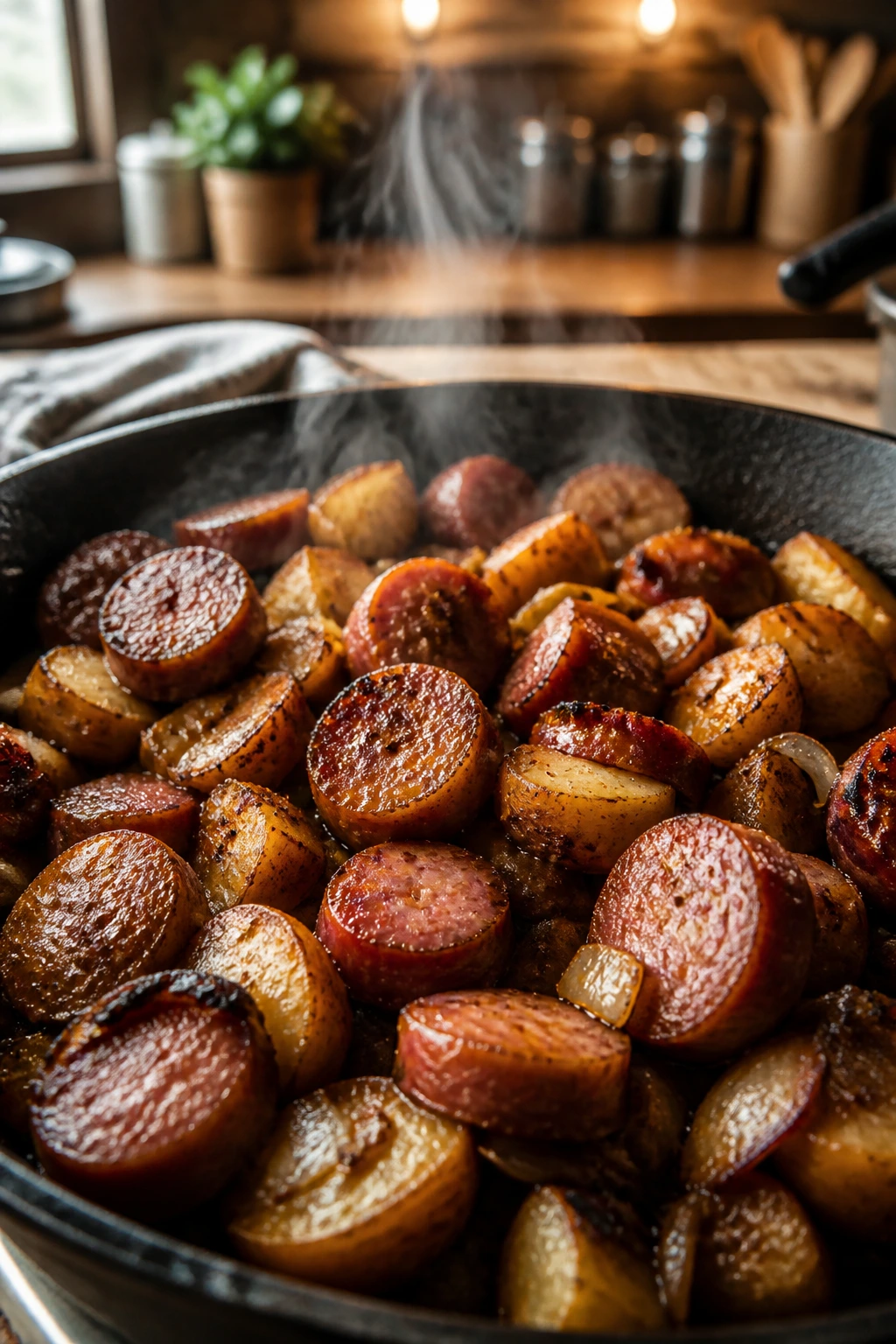
Leftovers keep well in an airtight container in the refrigerator for 3 to 4 days. The potatoes soften a little as they sit, but they do not fall apart if you reheat them gently. I’d avoid leaving the skillet out at room temperature for more than 2 hours, which is the same common-sense rule that applies to most cooked meat dishes.
For the freezer, this recipe is decent but not perfect. The sausage holds up better than the potatoes, which can go a bit mealy after thawing. If you do freeze it, pack it in a freezer-safe container for up to 2 months and expect the texture to be softer after reheating. I prefer the fridge route unless I’m truly trying to save a stray portion.
The best way to reheat is in a skillet over medium-low heat with 1 to 2 tablespoons of water or broth. Cover for a minute or two to wake up the potatoes, then uncover and let the moisture cook off so the glaze can shine again. A microwave works in a pinch, but use short bursts and stir once halfway through so the sugar doesn’t get weird and sticky in one corner.
If you want to get ahead, slice the sausage and vegetables a day before cooking. You can also whisk the glaze together up to 3 days in advance and keep it in the fridge. The potatoes are best cut close to cooking time unless you soak them in water and dry them well before they hit the pan. I wouldn’t fully cook the dish ahead unless you enjoy reheating potatoes that have lost their edge. They’ll still taste good, but the pan won’t have the same snap.
Questions People Actually Ask About This Skillet
Can I use raw sausage instead of smoked sausage?
You can, but the method changes. Raw sausage needs to be cooked through to a safe internal temperature before the glaze goes in, and that usually means a longer, gentler cook. This recipe is written for fully cooked smoked sausage, which browns fast and keeps the whole dish moving.
Do I have to peel the potatoes?
No. In fact, I wouldn’t peel baby Yukon Golds here. The skins help them hold shape, crisp at the edges, and soak up the glaze better than peeled potatoes do. Just scrub them well before cutting.
What if my potatoes are still hard when the glaze is ready?
Add another splash of broth, cover the skillet again, and cook over medium-low heat for 3 to 5 more minutes. Hard potatoes usually mean the heat was a touch too high or the pieces were too big. Don’t try to fix them with more sugar; they need steam, not sweetness.
Can I make this in cast iron?
Yes, and I prefer it in cast iron because the browning is better and the glaze has something to cling to. Just keep an eye on the heat, because cast iron holds onto it. If the sugar starts darkening too quickly, lower the burner right away.
Is there a way to make it less sweet?
Absolutely. Reduce the brown sugar to 2 tablespoons and add another teaspoon of vinegar or a little more Dijon. You’ll still get the glaze, but it will read more savory than sticky-sweet.
Can I swap in sweet potatoes?
You can, but the dish changes. Sweet potatoes need a little more care because they soften faster and push the whole skillet toward dessert-like territory. If you use them, cut them larger and keep the brown sugar on the lighter side.
What sausage works best besides kielbasa?
Any fully cooked smoked pork sausage with a firm casing works well. Andouille gives you more spice, while a garlic sausage leans savory and a little sharper. I’d avoid very soft breakfast sausage links here; they don’t brown with the same clean edges.
How do I keep the glaze from burning on the bottom of the pan?
Keep the final heat at medium, not high, and stir often once the glaze goes in. If the sauce tightens too fast, add a tablespoon of broth. The goal is a glossy coat, not a crust you have to chip off with a spatula.
When You Want Dinner to Feel Pulled Together
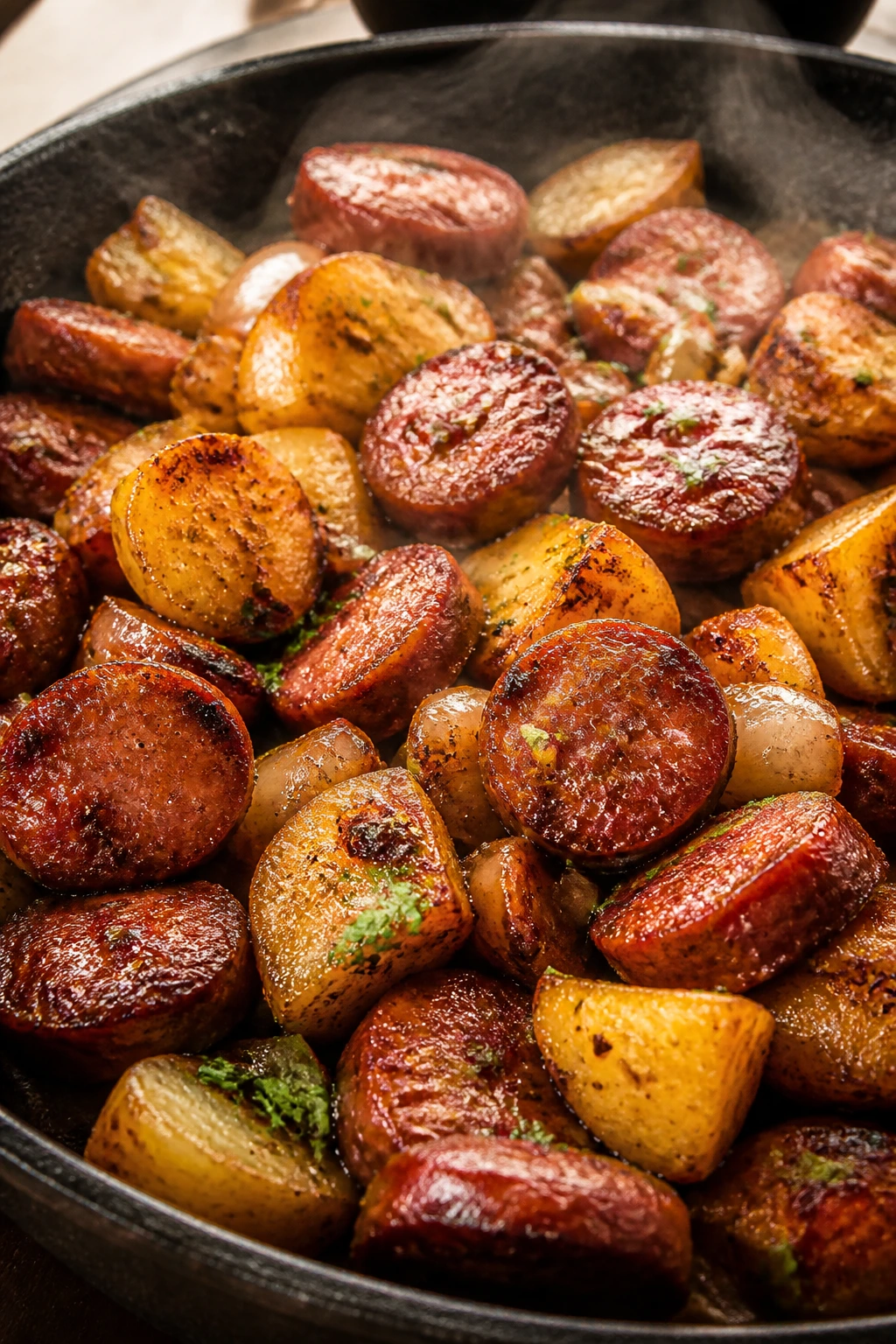
There’s a reason this kind of skillet dinner sticks around. It gives you smoke, salt, sweetness, and a little char without making you babysit three burners. The brown sugar glaze isn’t there to hide anything; it’s there to pull the sausage and potatoes into one pan with enough shine to make the whole thing feel finished.
If you keep a pack of smoked sausage and a bag of potatoes around, this dinner is never far away. That’s the kind of recipe worth remembering — not because it’s fussy, but because it knows how to turn ordinary ingredients into something people actually want to sit down for.
Smoky Sausage and Potatoes Skillet with Brown Sugar Glaze — Recipe Card
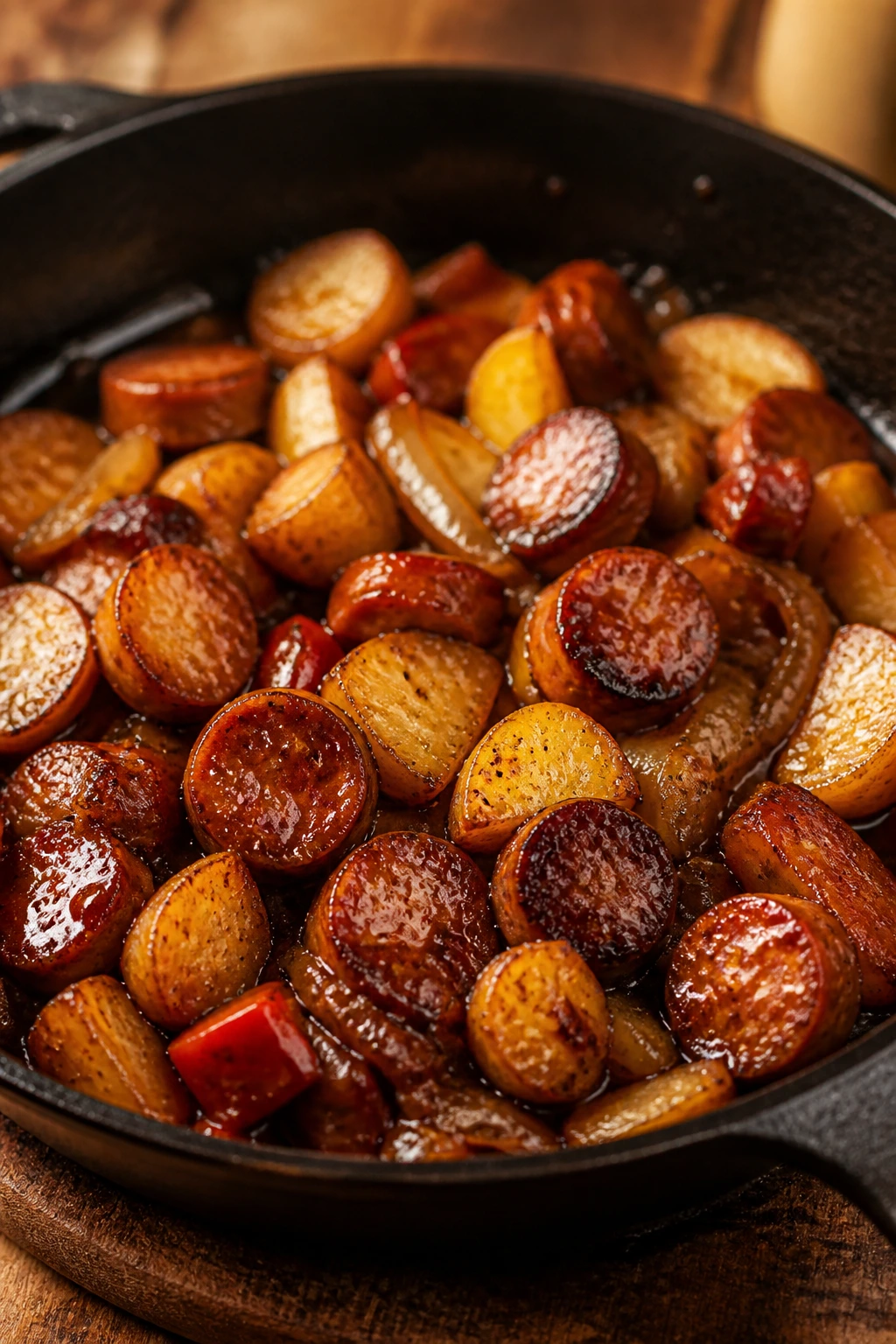
Recipe Name: Smoky Sausage and Potatoes Skillet with Brown Sugar Glaze
Description: Smoked sausage, baby Yukon Gold potatoes, onion, and bell pepper cook together in one skillet, then get tossed in a sticky brown sugar glaze with Dijon, Worcestershire, and apple cider vinegar. The finish is smoky, savory, and just sweet enough to cling to every bite.
Prep Time: 15 minutes
Cook Time: 30 minutes
Total Time: 45 minutes
Course: Dinner, Main Course
Cuisine: American
Servings: 6 servings
Calories: About 520 kcal per serving
Ingredients
For the Skillet:
- 1½ pounds fully cooked smoked sausage, sliced into ½-inch coins
- 2 pounds baby Yukon Gold potatoes, halved or quartered if large
- 1 large yellow onion, cut into ½-inch wedges
- 1 red bell pepper, sliced into 1-inch strips
- 2 tablespoons olive oil
- 1 tablespoon unsalted butter
- 3 cloves garlic, minced
- ½ cup low-sodium chicken broth
- 2 tablespoons chopped fresh parsley, for finishing
For the Brown Sugar Glaze:
- 3 tablespoons packed light brown sugar
- 1 tablespoon Dijon mustard
- 1 tablespoon Worcestershire sauce
- 2 teaspoons apple cider vinegar
- 1 teaspoon smoked paprika
- ½ teaspoon kosher salt, plus more to taste
- ¼ teaspoon black pepper
- ¼ teaspoon crushed red pepper flakes, optional
Instructions
-
Slice the sausage, halve the potatoes, wedge the onion, and slice the bell pepper. Whisk the brown sugar, Dijon, Worcestershire, vinegar, smoked paprika, salt, pepper, and red pepper flakes in a small bowl.
-
Heat 1 tablespoon olive oil in a 12-inch skillet over medium-high heat. Brown the sausage for 4 to 5 minutes, then transfer it to a plate.
-
Reduce the heat to medium. Add the remaining oil and butter, then add the onion, bell pepper, and potatoes. Season lightly with salt and cook for 4 minutes, stirring once or twice.
-
Add the garlic and cook for 30 seconds. Pour in the broth, scrape up the browned bits, cover the skillet, reduce the heat to medium-low, and cook for 10 to 12 minutes until the potatoes are mostly tender.
-
Return the sausage to the skillet and stir in the glaze. Cook for 2 to 3 minutes over medium heat, stirring often, until the sauce thickens and coats everything.
-
Taste and add more salt if needed. Finish with parsley and serve hot.
Notes: Keep the final heat moderate so the brown sugar glaze thickens instead of burning. Yukon Gold potatoes hold up best, and the dish is nicest right after cooking, when the edges are still crisp.