



A good bourbon pineapple ham glaze should do three things at once: it should stick to the meat, cut through the salt, and leave behind a glossy finish that makes the slices look lacquered rather than wet. That sounds simple until you’ve watched a thin glaze slide straight off a spiral ham and puddle in the roasting pan. Sugar alone is a trap. It burns fast, tastes flat, and never quite gets where it’s supposed to go.
This bourbon pineapple ham glaze with brown sugar works because it has structure. Pineapple juice brings bright acid and soft sweetness. Bourbon adds oak, vanilla, and a warm edge that keeps the glaze from tasting like candy. Brown sugar gives the whole thing body, and once it’s reduced on the stove, the glaze turns syrupy enough to cling to the ridges and slices instead of vanishing into the pan juices.
That’s the part people miss. The ham is already cooked. What you’re really doing is warming it gently, then building a sticky shell that seeps between the slices and caramelizes at the edges. If you rush the heat, the outside dries out before the middle is hot. If you glaze too early, the sugars scorch and leave you with a bitter crust. The sweet spot is a little patience, a low oven, and a glaze that’s been cooked down until it coats a spoon.
Why This Ham Works So Well
Sticky, not slippery: Reducing the glaze on the stove first means it starts out thick enough to cling, so you’re not relying on the oven to do all the work for you. That one move changes everything.
The pineapple keeps the sweetness honest: Pineapple juice has enough acid to keep the brown sugar from tasting heavy. It also gives the glaze a cleaner finish, which matters when the ham itself is already salty and rich.
Bourbon is more than a flavor note: A half cup simmered with the sugar and juice leaves behind warmth, not a boozy burn. The alcohol cooks off; the toasted vanilla-caramel edge stays.
Spiral slices do the heavy lifting: A spiral-cut ham gives the glaze places to settle. Every cut edge catches a little more sauce, so the flavor isn’t stuck on the outside skin deep.
It holds up on a real table: This is not a fussy glaze that turns bitter if you look at it wrong. Once it’s reduced properly, it can handle a second brush of heat and still come out shiny.
Leftovers are worth saving: Cold slices make excellent sandwiches because the glaze firms up in the fridge and the pineapple-bourbon note comes through even more clearly the next day.
Yield: Serves 12 to 14
Prep Time: 20 minutes
Cook Time: 1 hour 45 minutes to 2 hours 15 minutes
Total Time: About 2 hours 5 minutes to 2 hours 35 minutes
Difficulty: Beginner — the method is straightforward, but the glaze timing matters and the thermometer does the real work.
Chill/Rest Time: 15 to 20 minutes before slicing
Best Served: Warm, right after the final rest
A Ham That Tastes Like It Belongs on the Table
Pineapple on ham has been around long enough to feel familiar, but the reason it keeps showing up is practical, not nostalgic. Sweet fruit plays nicely with cured pork because the salt needs contrast. Brown sugar adds caramel depth. Bourbon gives the glaze a darker, rounder flavor than plain juice ever could. Put those together and you get something that tastes cooked, not assembled.
The version I like best leans into the brown sugar without letting it take over. A lot of ham glazes go too far in one direction and end up tasting like dessert. That’s not the goal here. You want the first bite to be sweet, sure, but the second bite should bring out the pork, the smoke, and the slight tang from the pineapple. The glaze should behave like a lacquer, not a frosting.
A spiral-cut ham is the easiest fit because the slices catch the glaze so well, but the real trick is still the same even if you use a whole ham: keep the heat low, glaze late, and let the surface tighten enough to hold on to what you brush over it. That’s how you get a tender center and a shiny outside without drying the whole thing into a sad pink roast.
What Goes Into the Pan
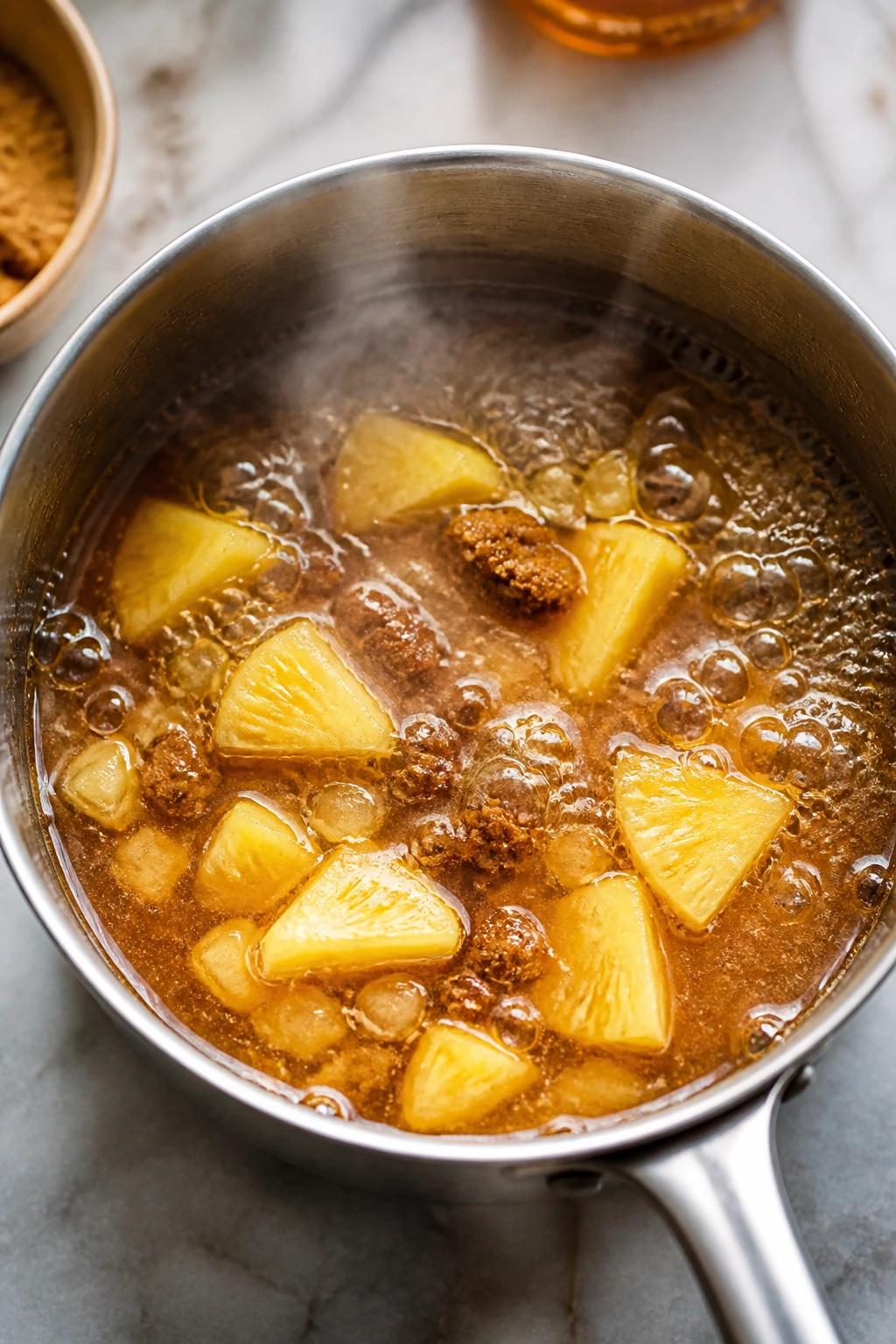
For the Ham
- 1 bone-in spiral-cut ham, 8 to 10 pounds, fully cooked
- 1/2 cup water, for the roasting pan
- 1 cup pineapple rings, drained, optional for garnish
For the Bourbon Pineapple Brown Sugar Glaze
- 1 cup pineapple juice
- 1/2 cup bourbon
- 3/4 cup packed dark brown sugar
- 1/4 cup honey
- 2 tablespoons Dijon mustard
- 2 tablespoons apple cider vinegar
- 2 tablespoons unsalted butter
- 1 teaspoon ground cinnamon
- 1/2 teaspoon ground cloves
- 1/4 teaspoon ground allspice
- 1/4 teaspoon freshly ground black pepper
For Serving
- 2 tablespoons chopped parsley, optional for a fresh finish
- Warm pan juices, spooned over slices if desired
Why Each Ingredient Earns Its Spot
The Ham
What to use: 1 bone-in spiral-cut ham, 8 to 10 pounds, fully cooked. That size feeds a crowd without turning the oven into a wrestling match, and the spiral cut gives you exposed edges that take on glaze beautifully.
Preparation: Set it cut side down in the pan so the slices stay protected while the ham warms. If you’re using a ham that isn’t spiral-sliced, score the fat cap in shallow diamonds, about 1/4 inch deep, so the glaze has a place to gather.
Substitutions: A boneless ham works, but it won’t look as dramatic and it tends to warm a little faster. Reduce the baking time by 15 to 20 minutes and watch the thermometer, not the clock.
Tips: Buy a fully cooked ham, not a raw fresh ham, for this method. The goal here is reheating and glazing; the ham should be brought to 140°F, not cooked from scratch.
The Glaze Base
What to use: 1 cup pineapple juice, 1/2 cup bourbon, 3/4 cup packed dark brown sugar, 1/4 cup honey, 2 tablespoons Dijon mustard, 2 tablespoons apple cider vinegar, 2 tablespoons butter, and the spices listed above. That combination gives you sweetness, acidity, fat, and depth in one pot.
Preparation: Measure everything before the stove gets hot. Once the sugar starts to dissolve, the glaze moves fast, and you do not want to be fumbling with a sticky measuring cup while the bourbon is simmering.
Substitutions: Apple juice can replace pineapple juice if that’s what you have, though the glaze will taste rounder and less sharp. Maple syrup can stand in for honey, and rye whiskey can sub for bourbon if that’s your bottle of choice.
Tips: Use dark brown sugar rather than light if you want a deeper molasses note. Light brown sugar works, but it makes the glaze taste sweeter and a little less sturdy.
The Finish
What to use: 1 cup drained pineapple rings and a little chopped parsley, if you want a fresher-looking platter. The garnish is optional, but it gives the ham a cleaner presentation and reinforces the pineapple note without adding more sugar.
Preparation: Drain the rings well so they don’t water down the glaze. If you’re arranging them on the ham, pat them dry with a paper towel first.
Substitutions: Fresh pineapple rings can work, but canned rings are easier to handle and more predictable in shape. If you skip the rings entirely, the glaze still carries the pineapple flavor just fine.
Tips: The garnish should look intentional, not crowded. A few rings around the platter or tucked near the base of the ham is enough.
The Tools That Make the Job Easy
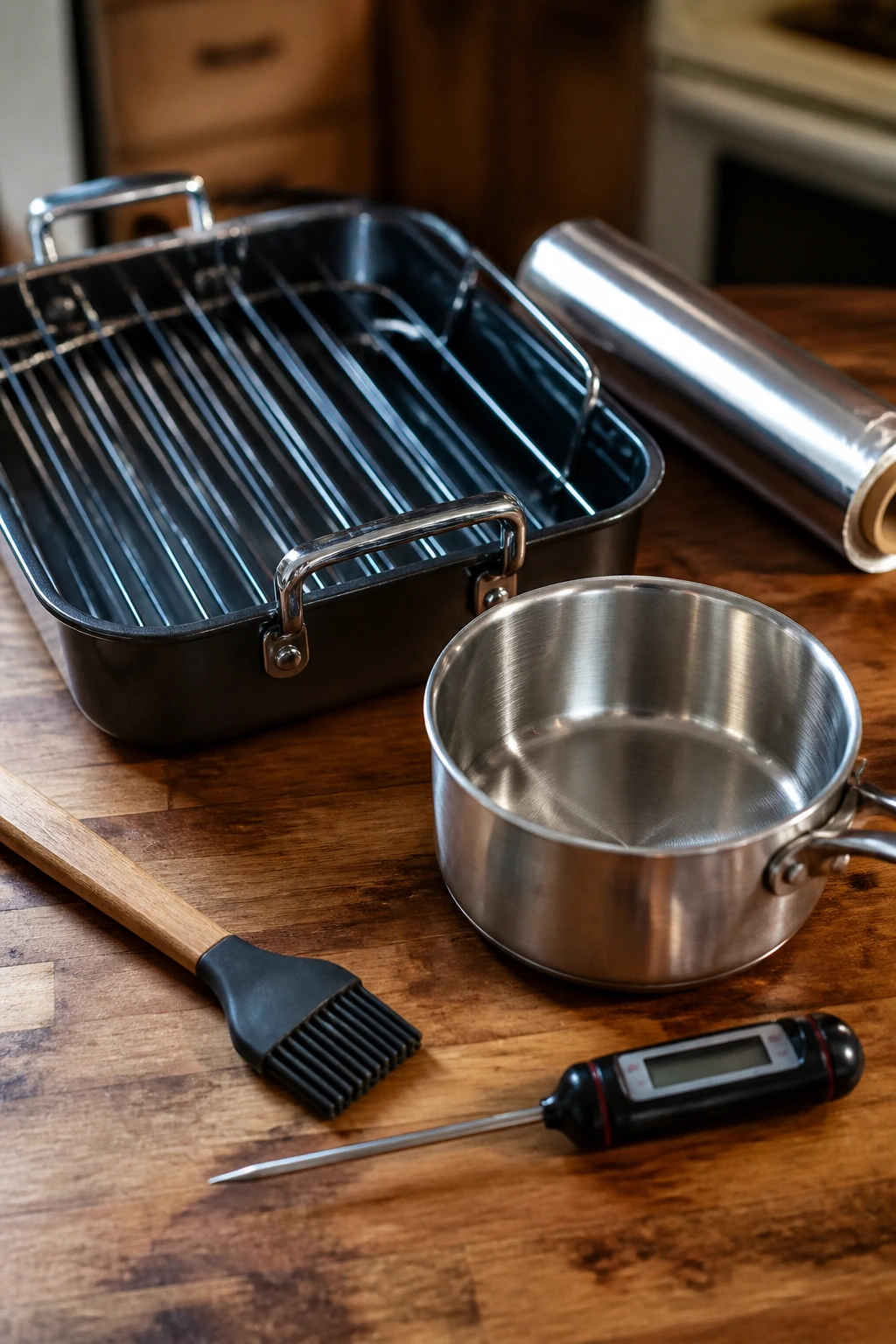
- Large roasting pan with a rack — Keeps the ham from sitting in its own juices; a rack is better, but crumpled foil under the ham works in a pinch.
- Heavy-duty foil — You need a tight cover for the first part of baking so the ham stays moist.
- Medium saucepan — This is where the glaze reduces and thickens before it ever touches the ham.
- Silicone pastry brush — A brush gives you control when you’re coating the slices and the cut surfaces.
- Instant-read thermometer — The most useful tool here. The ham is done by temperature, not guesswork.
- Measuring cups and spoons — Glaze proportions matter; a sloppy pour can make it too thin or too sweet.
- Sharp carving knife — Needed for neat slices, especially if your ham is bone-in.
- Cutting board with a groove — Keeps the board from flooding when you carve.
- Small ladle or spoon — Handy for basting with pan juices once the glaze starts to set.
Warming the Ham Without Drying It Out
Set Up the Pan
-
Preheat the oven to 325°F (165°C) and position a rack in the lower third of the oven.
-
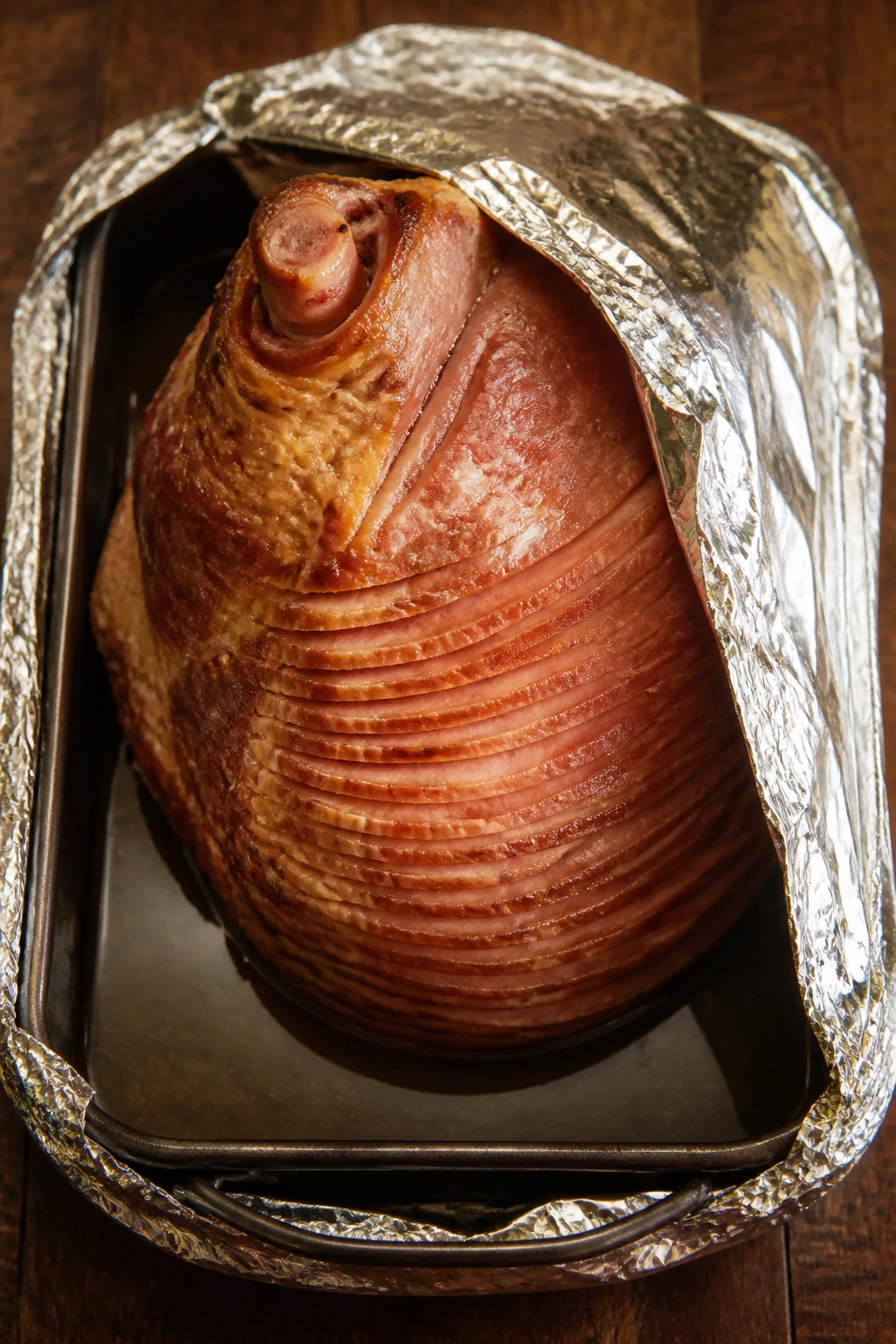
Place the ham cut side down on a roasting rack inside a large roasting pan. If the ham is so large that the rack feels flimsy, make a stable nest with rolled foil under the ham so air can still circulate underneath.
-
Pour 1/2 cup water into the bottom of the pan, away from the ham itself. Cover the pan tightly with heavy-duty foil, crimping the edges so steam stays trapped inside.
The water does not make the ham wet. It keeps the oven air from turning dry and mean, which is exactly what spiral-cut ham hates. If you’ve ever had a ham that tasted great on the outside but a little stringy in the middle, odds are it spent too much time exposed to hot, dry air.
Building the Glaze and Setting the Shine
-
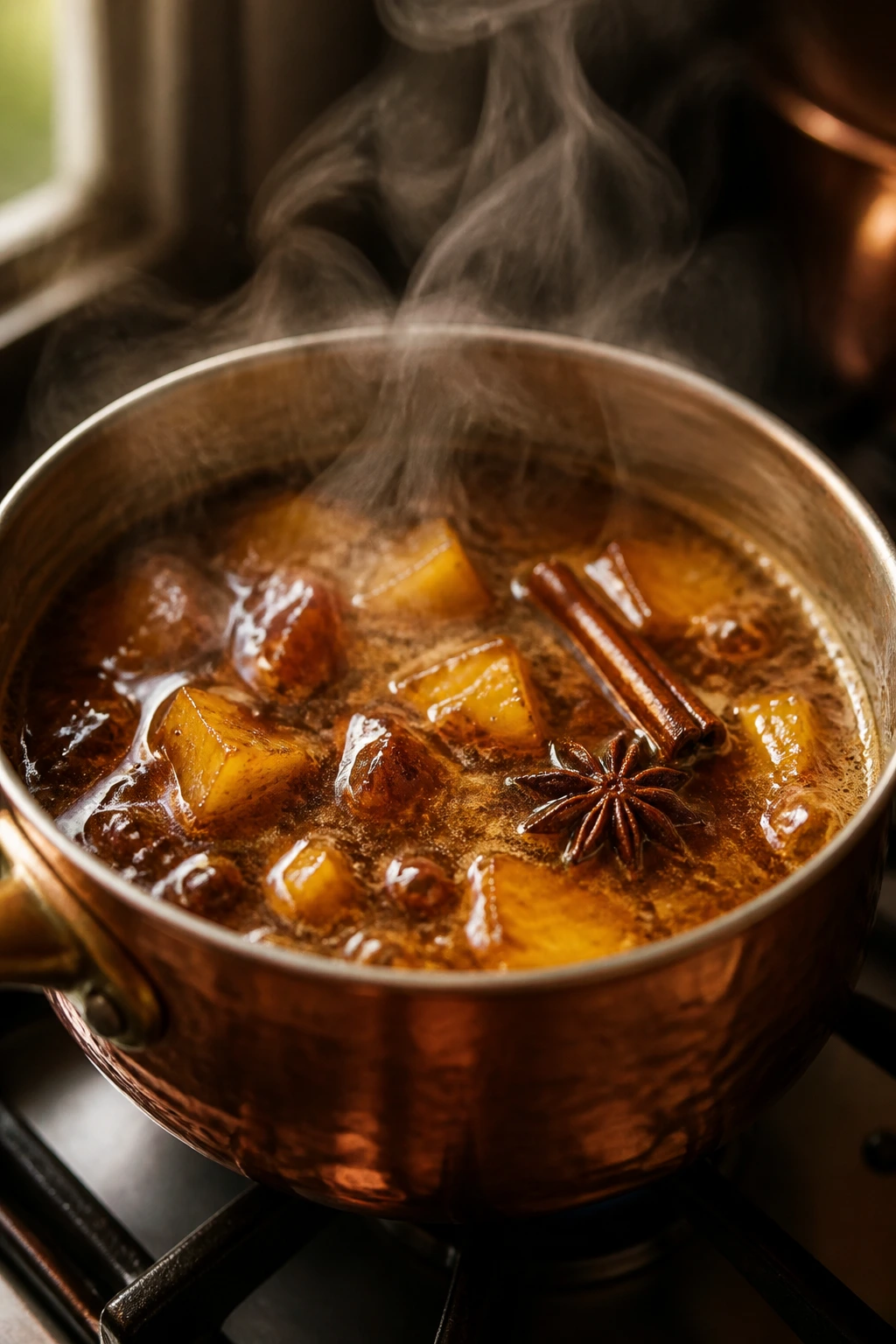
While the ham starts to warm, combine the pineapple juice, bourbon, brown sugar, honey, Dijon mustard, apple cider vinegar, butter, cinnamon, cloves, allspice, and black pepper in a medium saucepan over medium heat.
-
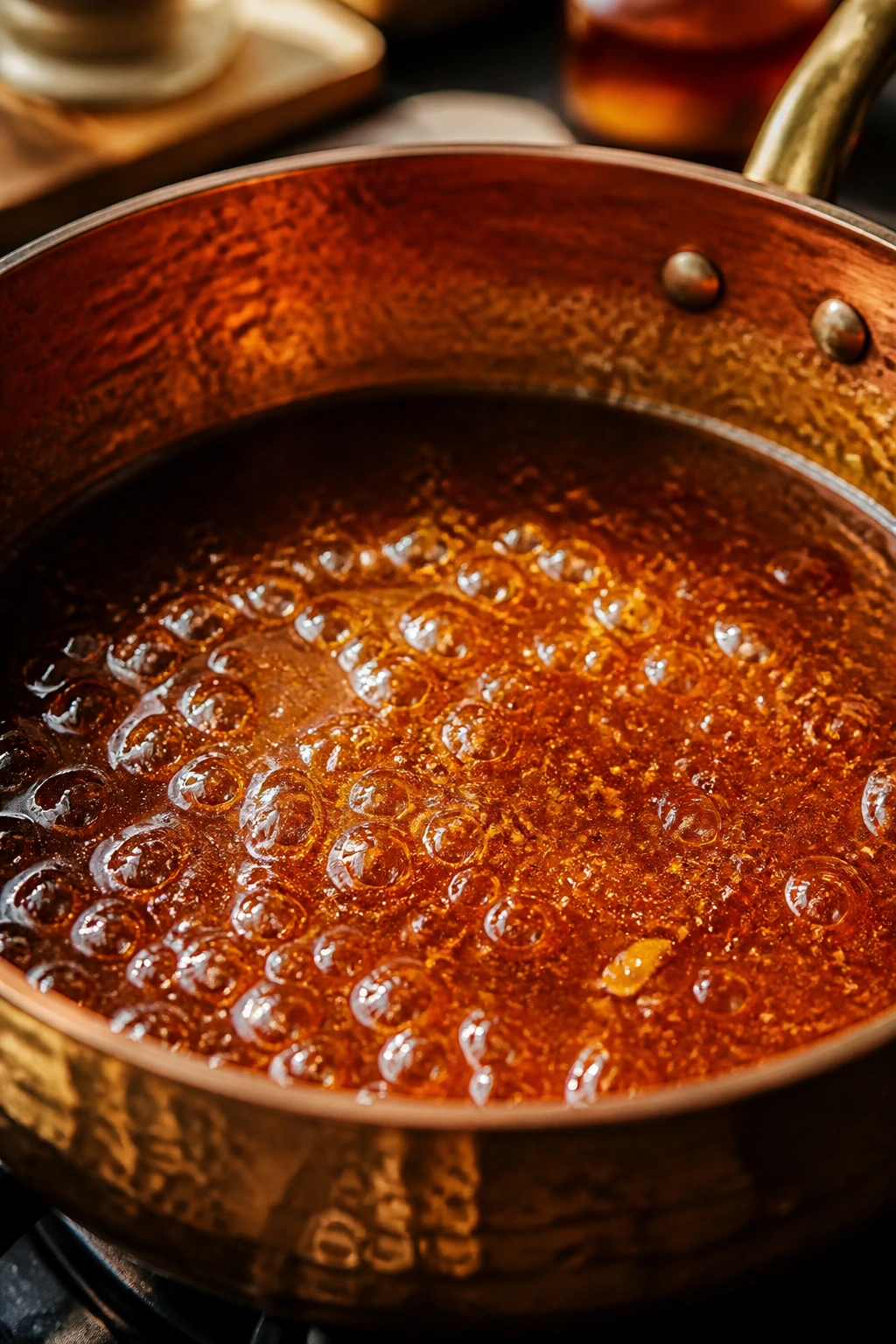
Bring the mixture to a gentle simmer, stirring often as the sugar dissolves. Once it’s bubbling evenly, lower the heat a touch and simmer for 10 to 12 minutes, until the glaze has reduced by about one third and looks glossy enough to coat the back of a spoon. Do not let it boil hard or the bourbon edge can turn sharp and the sugar can scorch.
-
Remove the ham from the oven when an instant-read thermometer inserted into the thickest part, away from the bone, reads about 115°F to 120°F. Uncover it carefully; the steam will be hot and the pan may be a little noisy.
-
Brush about half of the glaze over the ham, making sure it gets into the spiral cuts. If you’re using pineapple rings, tuck them around the ham or onto the upper surface where they’ll pick up heat and color.
-
Raise the oven temperature to 375°F (190°C) and return the ham, uncovered, to the oven for 20 to 30 minutes. Brush with more glaze every 8 to 10 minutes, until the outside is sticky and the internal temperature reaches 140°F. If the edges start darkening too fast, tent loosely with foil.
-
For a deeper finish, broil for 1 to 2 minutes at the very end, watching the ham the entire time. The glaze should bubble in small, fast bursts and turn darker at the ridges, not black at the tips.
-
Transfer the ham to a cutting board and rest for 15 to 20 minutes before slicing. Spoon a little of the warmed glaze or pan juices over the sliced meat if you like a glossier serving style.
How to Plate It So the Ham Still Owns the Room
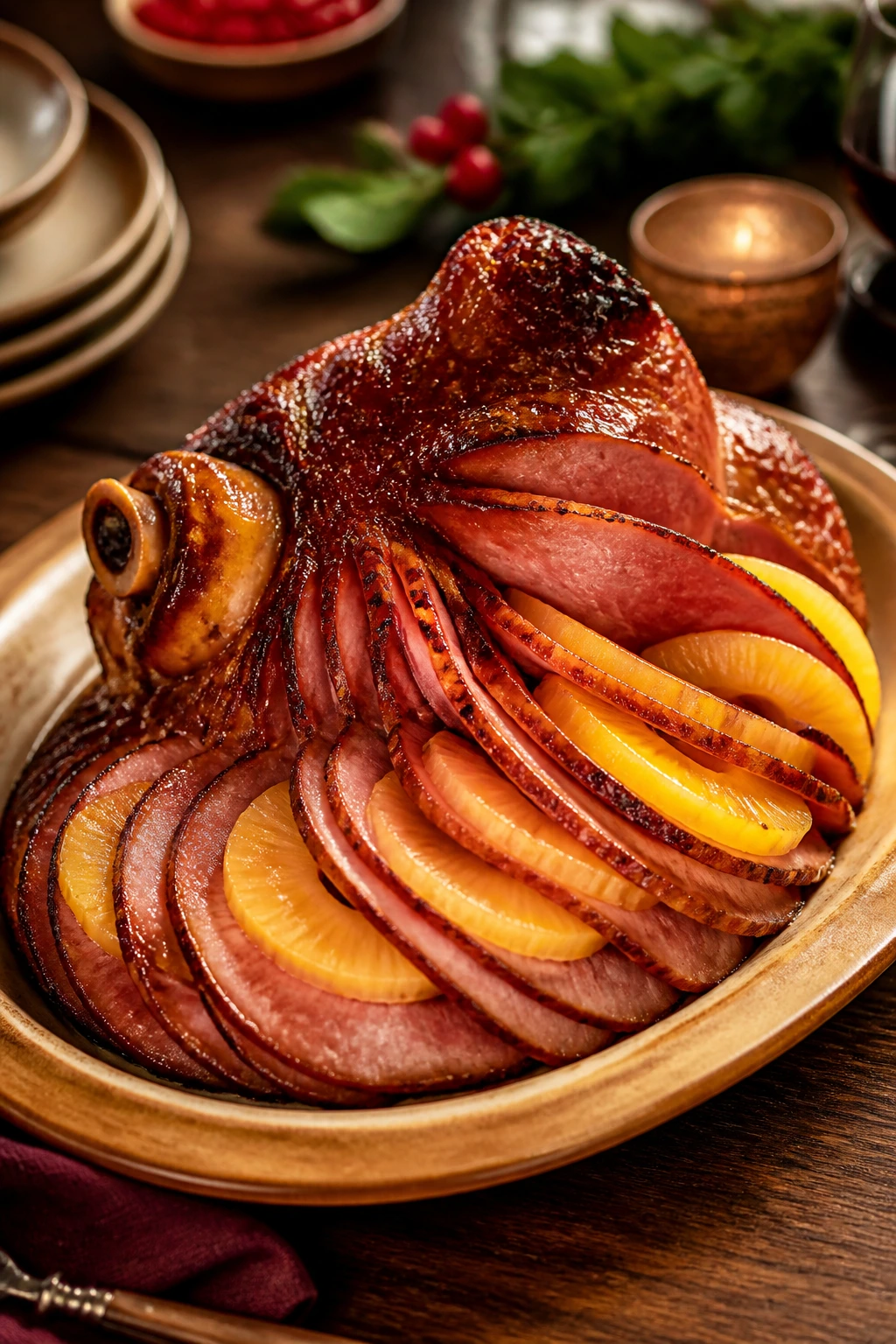
Presentation: Slice the ham on a slight bias so the spiral pattern stays visible, then fan the slices across a large warm platter. A few pineapple rings tucked between the slices looks old-school in the best way, and a light spooning of glaze over the top gives the meat that wet-shine finish people notice before they sit down.
Accompaniments: This ham wants sides with a little salt or acid to keep up with the sweetness. I’d reach for scalloped potatoes, roasted green beans with almonds, buttered peas, a sharp cabbage slaw, or soft dinner rolls that can catch the glaze. If you want one starch and one vegetable, pick something creamy and something green; that balance keeps the plate from turning candy-sweet.
Portions: An 8- to 10-pound bone-in ham usually feeds 12 to 14 people, especially if the sides are generous. For smaller groups, plan about 6 to 8 ounces of cooked ham per person and slice thinner than you think you should; thin slices feel more elegant and stretch the glaze further.
Beverage Pairing: A dry sparkling cider works beautifully because the bubbles cut through the fat and the apple note likes the pineapple. If you want alcohol, a bourbon highball or a dry riesling both make sense; one echoes the glaze, the other keeps it crisp.
Small Changes That Pay Off at the Table
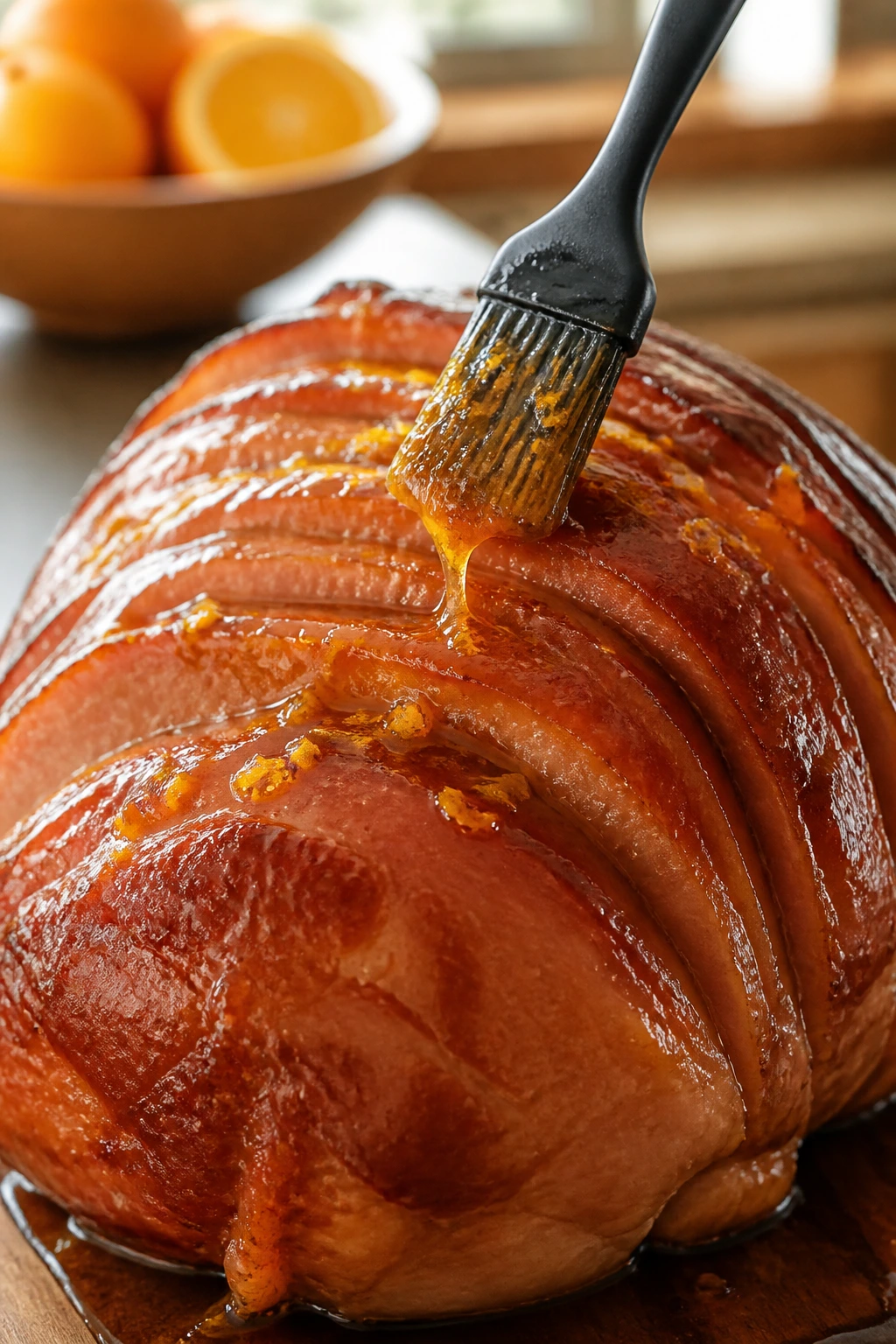
Flavor Enhancement: Stir a teaspoon of orange zest into the glaze after it comes off the heat. It doesn’t turn the ham into citrus candy; it just wakes up the pineapple and makes the whole glaze smell brighter when you brush it on.
Time-Saver: Make the glaze up to 3 days ahead and store it in a jar in the fridge. It will thicken when cold, so warm it gently on the stove before brushing it onto the ham.
Cost-Saver: If you find a smaller ham, use the same glaze and reduce the final uncovered bake time a little. The flavor carries farther than the meat does, so a modest ham with good sides can still anchor the meal without eating the entire budget.
Make-It-Yours: For a touch more savory depth, whisk in 1 teaspoon smoked paprika or a small grated garlic clove. I like this on less sweet palates because it pulls the glaze away from dessert territory without making it taste smoky in a heavy-handed way.
Serving Suggestions: Keep a small bowl of warm glaze on the table for people who want extra gloss on their slices. A sprinkle of chopped parsley or chives gives the plate a fresher look, especially if the rest of the meal leans beige, which ham dinners often do.
Common Mistakes That Turn Good Ham Tough
-
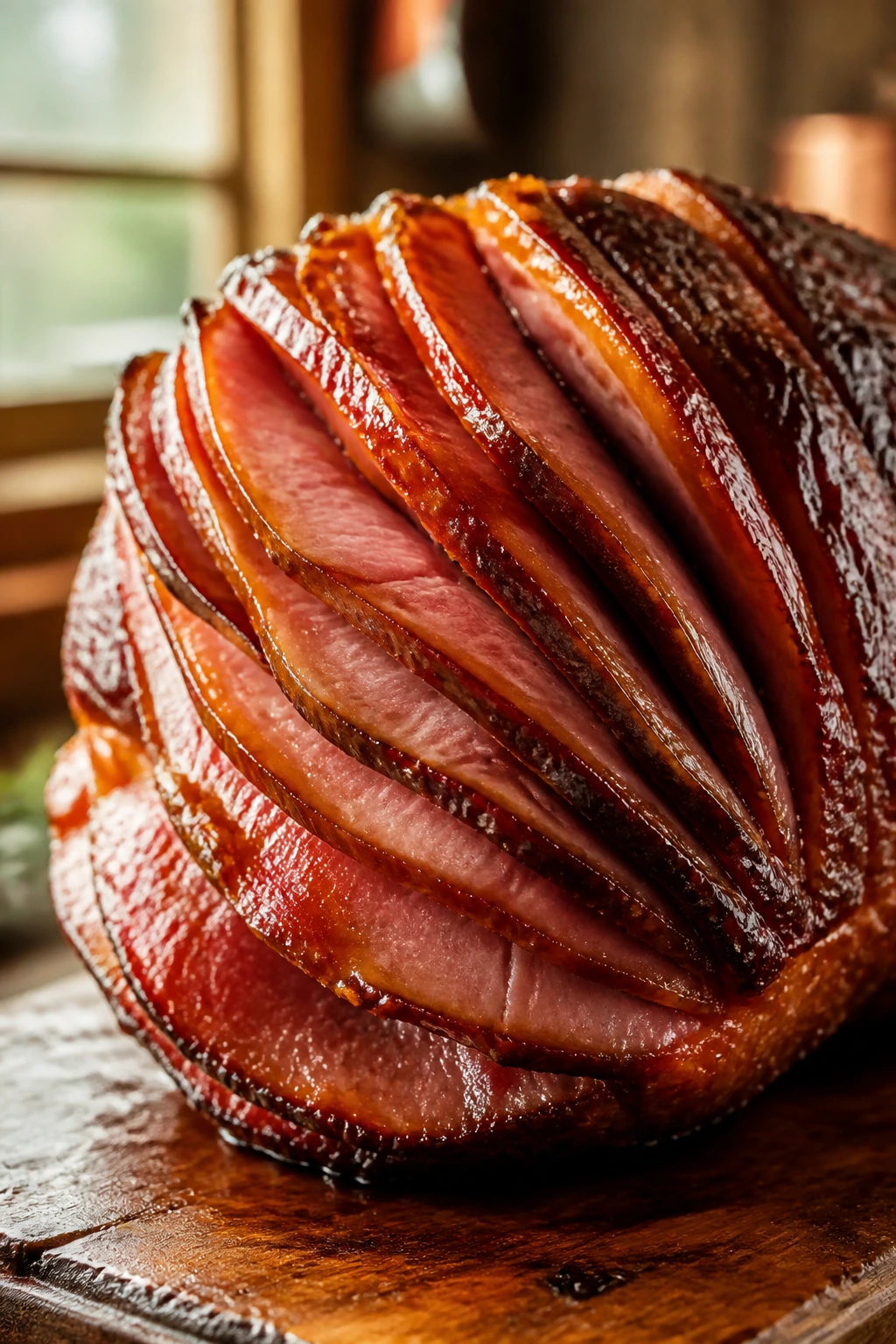
Glazing too early: If you brush the glaze on from the start, the sugars spend too long in the oven and can scorch before the ham is hot. The fix is simple: glaze during the last 20 to 30 minutes, when the ham is already warmed through.
-
Cooking by time alone: Ham sizes vary, oven temperatures drift, and spiral slicing changes how fast the meat heats. The symptom is a dry edge and a center that still feels cold; the fix is to use a thermometer and pull the ham at 140°F, not when a recipe says “about an hour.”
-
Letting the glaze stay thin: A watery glaze slides off the ham and pools in the pan. If yours still looks loose after 10 minutes on the stove, keep simmering until it’s syrupy and able to cling to the spoon in a slow sheet.
-
Broiling without watching it: Sugar goes from bronzed to burned in a blink under the broiler. If you choose that final browning step, stay there and check every 20 to 30 seconds.
-
Slicing immediately: Cut too soon and the juices run out onto the board instead of staying in the meat. Let the ham rest for 15 to 20 minutes so the slices stay moist and the glaze sets a little.
-
Using a ham that’s too lean: Very lean boneless hams can dry out faster because they have less fat and less structure. If that’s what you have, tent it well, shorten the uncovered bake, and keep a little extra glaze warm for serving.
Variations That Still Make Sense
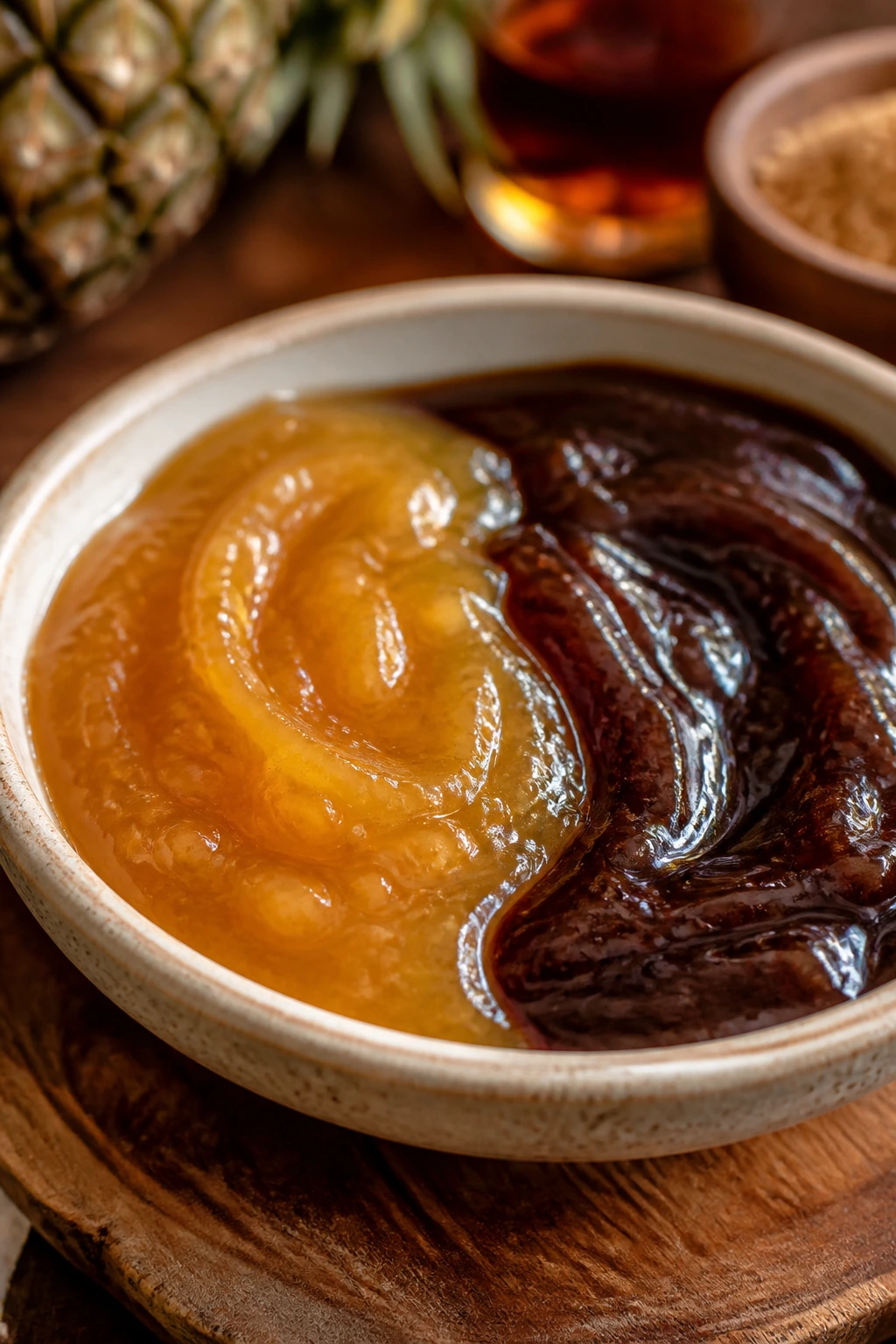
Orange-Bourbon Glaze: Swap the pineapple juice for orange juice and add 1 teaspoon orange zest. The flavor turns brighter and less tropical, which is nice if you want the glaze to feel closer to a classic citrus ham.
Maple Brown Sugar Ham: Replace the honey with pure maple syrup and add 1 teaspoon smoked paprika. The result is deeper, woodier, and a little less sharp; it pairs well with roasted carrots and potato gratin.
Spicy Pineapple Finish: Add 1/4 to 1/2 teaspoon crushed red pepper flakes or a small pinch of cayenne to the glaze. You won’t get heat for heat’s sake; you’ll get a slow warmth that lingers after the sweet edge fades.
Alcohol-Free Version: Replace the bourbon with 1/2 cup apple cider plus 1 teaspoon vanilla extract. You still get body and warmth, just without the whiskey note, and the glaze stays family-friendly without tasting watered down.
Garlic-Mustard Ham: Add an extra tablespoon of Dijon and one grated garlic clove to the glaze, then reduce it a minute longer. This version leans more savory and works well if you’re serving the ham with very rich sides.
Keeping Leftovers Moist and Worth Eating
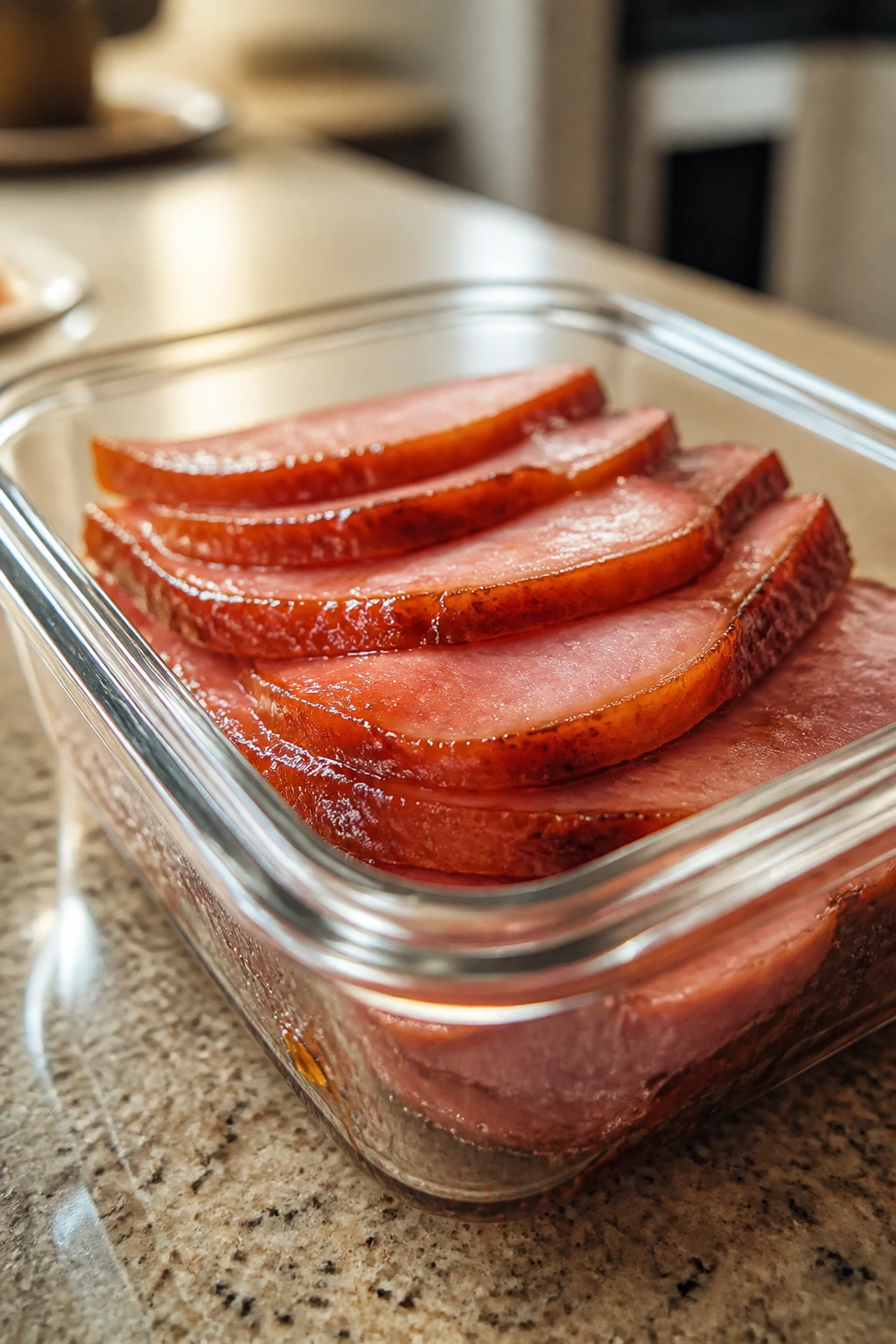
A glazed ham keeps better than people expect, but only if you store it in pieces that make sense. Slice the leftovers off the bone and tuck them into airtight containers within 2 hours of serving. Thin slices dry out faster than thicker ones, so I usually pack a mix: a few thicker pieces for reheating and a small stack of thin slices for sandwiches.
Refrigerated ham keeps well for 3 to 4 days. For longer storage, wrap portions tightly in foil or freezer paper, then slide them into freezer bags and press out as much air as possible. Frozen ham holds for about 2 months without losing too much texture, though the glaze is best on the first round and a little less glossy after thawing.
For reheating, go low. Put slices in a baking dish with 2 to 3 tablespoons of pineapple juice, water, or even a spoonful of the leftover glaze, then cover and warm at 275°F until heated through. If you microwave a single portion, use a damp paper towel over the top and keep the heat short so the edges do not turn leathery.
The glaze itself can be made 3 to 5 days ahead and stored separately in the fridge. Warm it before using; cold glaze behaves like molasses and clumps instead of brushing smoothly. If it thickens too much, a tablespoon of warm pineapple juice loosens it right back up.
Questions People Ask Before They Start
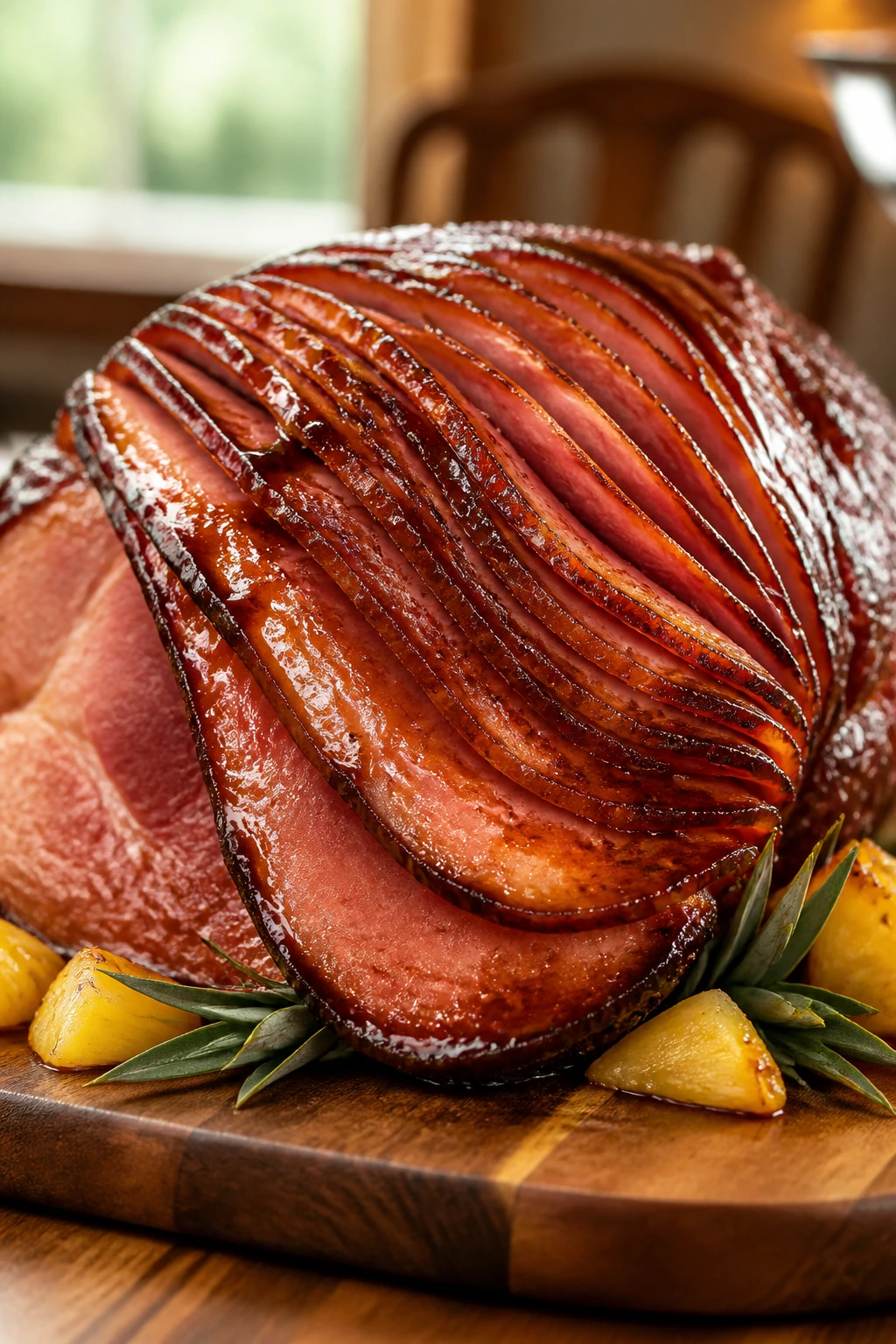
Can I make this bourbon pineapple ham glaze without bourbon?
Yes. Replace the bourbon with apple cider, apple juice, or even a splash of strong brewed tea if you want a deeper note without alcohol. Add a teaspoon of vanilla to replace some of the roundness bourbon brings, and simmer the glaze long enough that it still looks syrupy.
Do I have to use a spiral-cut ham?
No, but spiral-cut is the easiest and most forgiving. A whole ham works if you score the surface in shallow diamonds so the glaze can settle into the cuts, though you’ll need to carve it a little more carefully later.
How do I keep the ham from drying out in the oven?
Use a covered first bake, keep the oven at 325°F, and stop cooking by thermometer instead of by guess. The ham should come up to 140°F for serving, and the uncovered glazing phase should happen near the end so the outside doesn’t spend too long exposed.
Can I use canned pineapple juice?
Yes, and I actually prefer it for the glaze because it’s consistent and easy to reduce. Fresh pineapple juice can be sharper and less predictable, which is not a problem if you know your fruit, but canned juice behaves more steadily on the stove.
What if my glaze is too thin?
Keep simmering it. A proper ham glaze should reduce enough to coat the back of a spoon in a slow, glossy sheet. If it’s still runny, it will slide off the ham and make the pan look better than the meat.
Can I make the ham in a slow cooker?
You can warm a precooked ham in a slow cooker, but the glaze will not set the same way. The finish is softer and less caramelized. If you go that route, use the slow cooker for heating and move the ham to a hot oven or broiler at the end for the last coat.
How far ahead can I glaze the ham?
The glaze can be made several days ahead, but I would not brush it onto the ham too early. Once the sugar is on the meat, it needs oven heat to set; if it sits too long before baking, the surface can get sticky in a messy way rather than lacquered.
What if the outside darkens before the middle is hot enough?
Tent the ham loosely with foil and keep baking at the lower temperature until the thermometer catches up. That’s common with sweet glazes, especially if your oven runs hot or the ham is on the smaller side.
One More Slice Worth Remembering
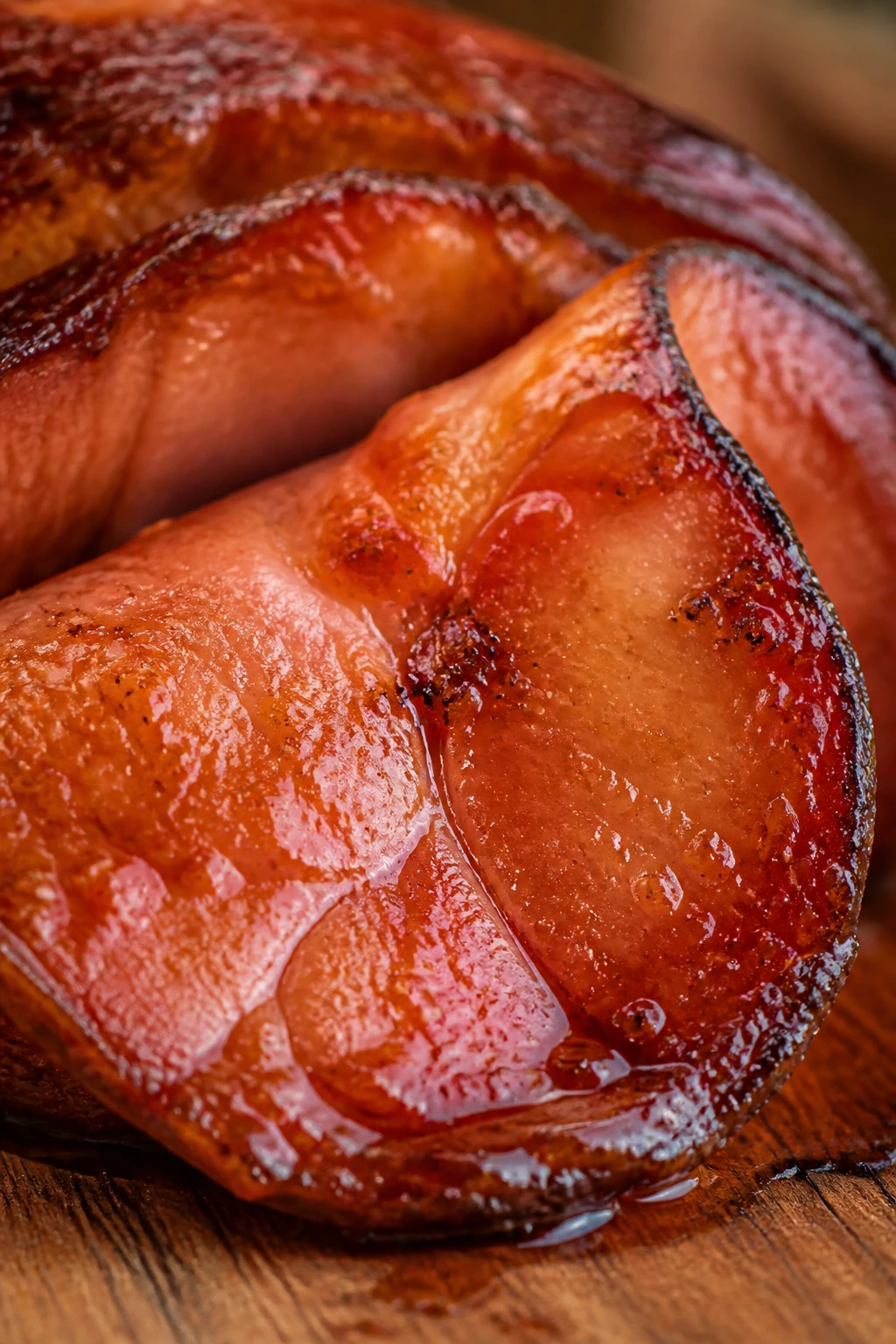
The best thing about this bourbon pineapple ham glaze is not that it tastes fancy. It’s that it behaves well. It stays on the meat. It browns where it should. It gives you sweet, salty, and a little oak in each bite without turning the ham into dessert.
And once you’ve made it this way, plain spiral ham starts to feel a little unfinished. The glaze does more than decorate the outside; it gives the whole roast a line of flavor from edge to center. That’s what makes people reach for a second slice before they’ve finished the first.
Tender Bourbon Pineapple Ham Glaze with Brown Sugar Glaze — Recipe Card
Recipe Name: Tender Bourbon Pineapple Ham with Brown Sugar Glaze
Description: A fully cooked bone-in spiral ham warmed slowly and brushed with a sticky bourbon, pineapple, and brown sugar glaze that turns glossy in the oven. The finish is sweet, salty, and just sharp enough to keep every slice interesting.
Prep Time: 20 minutes
Cook Time: 1 hour 45 minutes to 2 hours 15 minutes
Total Time: About 2 hours 5 minutes to 2 hours 35 minutes
Course: Main Course
Cuisine: American
Servings: 12 to 14
Calories: About 420 kcal per serving
Ingredients
For the Ham:
- 1 bone-in spiral-cut ham, 8 to 10 pounds, fully cooked
- 1/2 cup water, for the roasting pan
- 1 cup pineapple rings, drained, optional for garnish
For the Bourbon Pineapple Brown Sugar Glaze:
- 1 cup pineapple juice
- 1/2 cup bourbon
- 3/4 cup packed dark brown sugar
- 1/4 cup honey
- 2 tablespoons Dijon mustard
- 2 tablespoons apple cider vinegar
- 2 tablespoons unsalted butter
- 1 teaspoon ground cinnamon
- 1/2 teaspoon ground cloves
- 1/4 teaspoon ground allspice
- 1/4 teaspoon freshly ground black pepper
For Serving:
- 2 tablespoons chopped parsley, optional
- Warm pan juices, optional for spooning over slices
Instructions
-
Preheat the oven to 325°F (165°C) and set a rack in the lower third of the oven.
-
Place the ham cut side down on a rack in a roasting pan. Pour the water into the pan, cover tightly with foil, and bake until the ham is warmed through.
-
Combine the pineapple juice, bourbon, brown sugar, honey, Dijon, vinegar, butter, cinnamon, cloves, allspice, and black pepper in a saucepan. Simmer 10 to 12 minutes, until glossy and slightly thick.
-
Remove the ham from the oven when the thickest part reaches 115°F to 120°F. Uncover carefully.
-
Brush half of the glaze over the ham, working it into the spiral cuts. Add pineapple rings if using.
-
Increase the oven temperature to 375°F (190°C) and return the ham, uncovered, to the oven for 20 to 30 minutes, brushing with more glaze every 8 to 10 minutes.
-
When the ham reaches 140°F and the glaze looks sticky and dark amber at the edges, remove it from the oven. Broil for 1 to 2 minutes at the end only if you want deeper browning.
-
Rest the ham for 15 to 20 minutes before slicing. Spoon warmed glaze or pan juices over the top if desired.
Notes:
- Reduce the glaze until it coats a spoon; thin glaze will slide right off.
- Keep the broiler step brief and watch it the whole time.
- Leftover slices keep well for 3 to 4 days in the fridge and reheat best at low heat with a splash of juice or water.