



A pot of creamy ham and bean soup can rescue a cold evening faster than almost anything else on the stove. The broth turns silky when a few beans break apart, the ham gives off that salty-smoky edge, and the whole kitchen starts smelling like onion, celery, and thyme before the soup has even settled into its simmer. That smell alone can make the house feel warmer.
What I like about this style of soup is that it does not try to be fancy. It does a very practical job, and it does it with real confidence. A good bowl should have body without feeling heavy, smoke without tasting harsh, and beans that hold enough shape to give you something to chew. The texture matters here. A watery bean soup feels thin and forgettable. A properly made one clings to the spoon and leaves a soft, creamy trail in the bowl.
Leftover ham is a gift in this pot, but a ham hock or ham bone does most of the work. The bones add depth, the meat brings salt and chew, and the beans fill in the rest. If you have only ever had bean soup that tasted flat or muddy, the problem usually wasn’t the beans. It was the seasoning timing, the simmer length, or the missing finish at the end. Get those parts right and the whole pot changes.
Why Creamy Ham and Bean Soup Keeps Showing Up on My Stove
- It stretches a small amount of ham a long way: A single ham hock and 2 cups of diced ham can season an entire Dutch oven, which is exactly the sort of old-school thrift that still makes sense.
- The creaminess comes from the beans themselves: A little blending or mashing gives the broth body without turning the soup into glue.
- It gets better after a short rest: The beans soak up the smoky broth while the pot sits, so the leftovers taste fuller the next day.
- It’s easy to build flavor in layers: Onion, celery, carrot, garlic, thyme, bay leaf, and ham each bring a different note, and none of them need much fuss.
- It works with pantry food and freezer scraps: Dried beans, broth, a ham bone, and a splash of half-and-half are enough to make dinner feel finished.
- It feeds people without drama: One pot, a ladle, and a loaf of bread can handle a whole table.
A Quick Snapshot Before You Start
Yield: Serves 6 to 8
Prep Time: 20 minutes active, plus 8 to 12 hours soaking
Cook Time: 1 hour 40 minutes
Total Time: 2 hours active, plus soaking
Difficulty: Intermediate — the method is straightforward, but the bean texture and seasoning timing need a little attention.
Chill/Rest Time: 8 to 12 hours soaking
Best Served: Hot from the stove with cornbread, toast, or a thick slice of rye
The Ingredient List I Trust for a Thick, Smoky Pot
For the Soup:
- 1 pound dried navy beans, sorted, rinsed, soaked overnight in plenty of cold water, and drained
- 1 tablespoon unsalted butter
- 1 large yellow onion, diced small
- 2 medium carrots, diced small
- 2 celery ribs, diced small
- 4 garlic cloves, minced
- 1 smoked ham hock, about 1 to 1½ pounds
- 2 cups diced cooked ham, cut into 1/2-inch pieces
- 1 medium Yukon Gold potato, peeled and diced into 1/2-inch cubes
- 8 cups low-sodium chicken broth
- 2 cups water
- 2 bay leaves
- 1 teaspoon dried thyme
- 1/2 teaspoon black pepper
- 1 teaspoon kosher salt, plus more to taste
- 1 cup half-and-half, warmed
- 1 tablespoon apple cider vinegar
- 2 tablespoons chopped parsley, for finishing
Why Each Ingredient Deserves a Spot

Beans
What to use: 1 pound dried navy beans gives the soup its pale, creamy body and that soft, spoonable texture people expect from a good bean pot.
Preparation: Sort through the beans for pebbles or shriveled bits, rinse them well, and soak them overnight in plenty of cold water so they cook more evenly.
Substitutions: Great northern beans or cannellini beans work if navy beans are out of reach; canned beans can be used in a pinch, but the simmer time and final texture will change.
Tips: Older beans take longer to soften, so buy from a place with steady turnover and do not assume a bag from the back of the pantry will behave like a fresh one.
Ham and Smoke
What to use: 1 smoked ham hock plus 2 cups diced cooked ham gives you both the deep, bone-driven flavor and the chewy bits people keep fishing out of the bowl.
Preparation: If your diced ham has thick rind or hard edges, trim those away first; the hock can go straight into the pot once the vegetables have softened.
Substitutions: A meaty ham bone works just as well, and a smoked turkey leg can stand in if you want a less pork-heavy version.
Tips: Ham brings salt with it, sometimes a lot of it, so hold back on extra seasoning until the end and taste after the ham hock comes out.
Vegetables and Body
What to use: 1 onion, 2 carrots, 2 celery ribs, 4 garlic cloves, and 1 Yukon Gold potato give the soup a familiar base and enough starch to help thicken the broth.
Preparation: Dice the onion, carrot, and celery small so they melt into the soup instead of floating around in big, awkward chunks; cut the potato no larger than 1/2 inch.
Substitutions: Leeks can replace the onion for a softer flavor, and parsnips can stand in for one of the carrots if you want something a little sweeter.
Tips: If your vegetable dice is uneven, the carrot will stay firm long after the onion has gone soft, and that uneven texture is one of the easiest ways to spot a rushed pot.
Liquids and Finish
What to use: 8 cups low-sodium chicken broth, 2 cups water, 1 cup half-and-half, and 1 tablespoon apple cider vinegar carry the soup from brothy to creamy to bright.
Preparation: Warm the half-and-half slightly before adding it so it blends into the hot soup without shocking the temperature; keep the vinegar for the end.
Substitutions: Whole milk will make a lighter broth, evaporated milk gives a slightly richer finish, and a splash of cream works if that’s what you have.
Tips: Do not boil the soup hard after the dairy goes in. That’s the moment curdling shows up, and it’s a mess you do not need.
Seasonings and Herbs
What to use: 2 bay leaves, 1 teaspoon dried thyme, 1/2 teaspoon black pepper, and 2 tablespoons chopped parsley are enough to make the ham taste round instead of one-note.
Preparation: Add the bay leaves and thyme early so they have time to release their flavor, then finish with parsley after the soup comes off the heat.
Substitutions: A small pinch of smoked paprika can stand in for part of the thyme if your ham is mild, and fresh thyme can replace dried if you have it.
Tips: The vinegar at the end is not a gimmick. It wakes up the beans, cuts through the dairy, and keeps the soup from tasting sleepy.
The Tools That Make the Pot Easier

- Large Dutch oven or heavy soup pot, 6 to 8 quarts — This gives the beans room to move and keeps the simmer steady.
- Fine-mesh colander — Helpful for draining soaked beans without losing half of them down the sink.
- Sharp chef’s knife — You want clean, even cuts on the vegetables so they soften at the same pace.
- Cutting board — A roomy board keeps the prep from feeling cramped, especially with the ham and potato.
- Wooden spoon or heat-safe spatula — Good for scraping the bottom of the pot and moving the vegetables around without breaking them down too soon.
- Ladle — Makes serving easier, and it matters more than people think when the soup is thick.
- Immersion blender or potato masher — Optional, but useful if you want to puree part of the soup right in the pot.
- Airtight storage containers — Shallow containers cool the leftovers faster and keep the fridge from smelling like a soup shop.
What Happens in the Pot, Step by Step
Soak and Prep
-
Put the dried navy beans in a large bowl and cover them with at least 2 inches of cold water. Soak them for 8 to 12 hours, or overnight, then drain and rinse well. If you forgot to soak them, use a quick-soak method: cover with water, bring to a boil for 2 minutes, turn off the heat, cover for 1 hour, then drain and rinse.
-
Dice the onion, carrots, and celery into small, even pieces. Mince the garlic, peel and dice the potato into 1/2-inch cubes, and cut the ham into bite-size pieces if it is not already prepped.
Build the Base
-
Melt the butter in a large Dutch oven over medium heat. Add the onion, carrots, and celery, and cook for 6 to 8 minutes, stirring now and then, until the onion turns translucent and the edges of the carrots look slightly softened. Add the garlic and cook for 30 seconds more, just until it smells sweet.
-
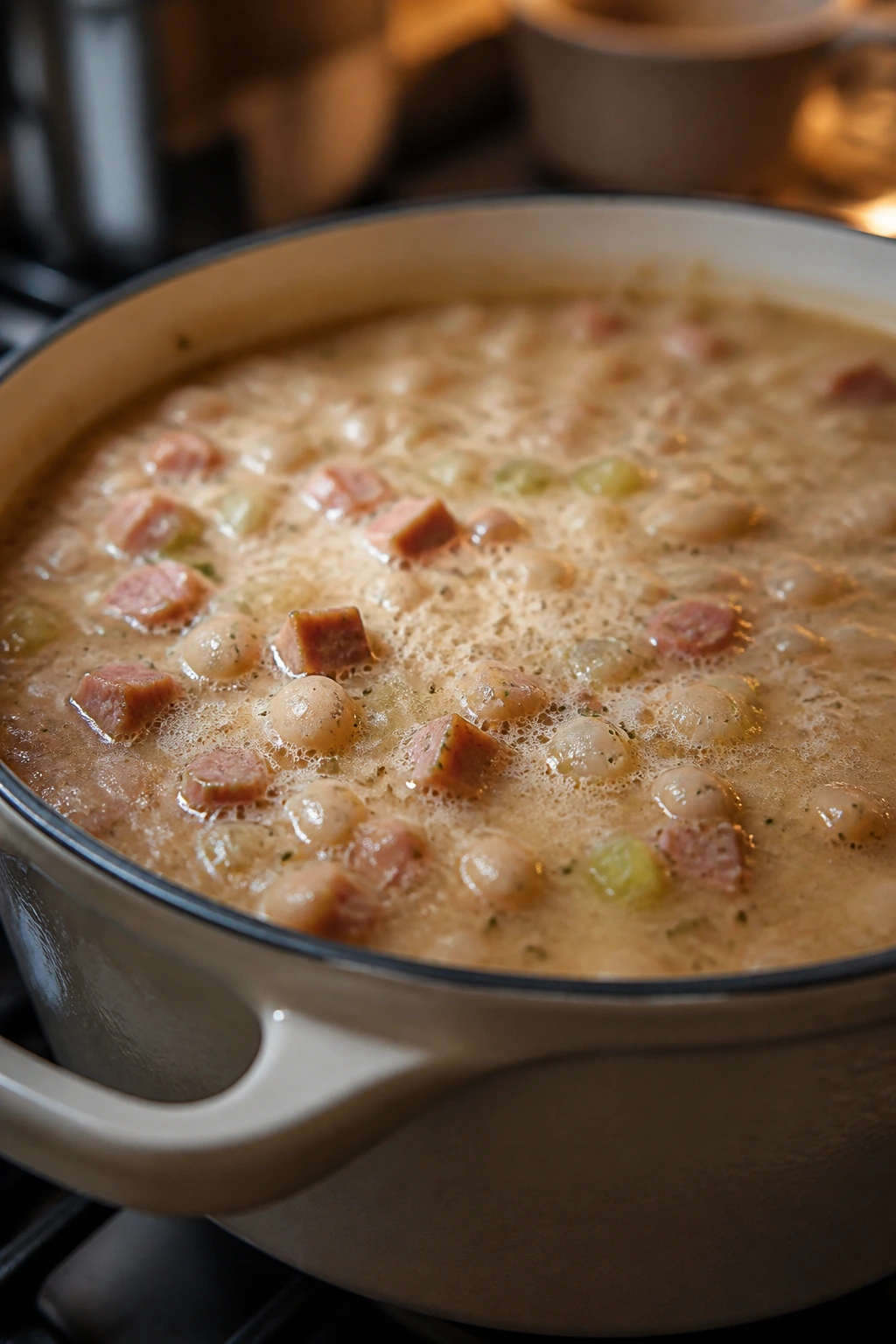
Stir in the soaked beans, ham hock, diced ham, potato, broth, water, bay leaves, thyme, pepper, and 1 teaspoon kosher salt. Raise the heat to medium-high and bring the pot to a boil. Skim off any foam that rises on top. Do not leave the pot at a hard boil for long; once it starts bubbling, the next move is to turn the heat down.
Simmer and Thicken
-
Reduce the heat to low, cover the pot partially, and simmer for 1 hour 15 minutes to 1 hour 45 minutes, stirring every 15 to 20 minutes so nothing sticks. The beans should be tender enough to smash easily between your fingers, and the potato should almost melt at the edges. If the soup looks too thick before the beans are done, add a splash of water or broth.
-
Remove the ham hock and let it cool for a few minutes. Pull off the meat, chop or shred it into small pieces, and return the meat to the pot. Discard the skin, bone, and any tough cartilage. If the hock was very meaty, save a few larger shreds for the top of the bowl.
-
Scoop out about 2 cups of the soup — beans, potato, and broth together — and blend it until smooth with an immersion blender or a regular blender. Stir the pureed portion back into the pot. This is what gives the soup that creamy body without needing a flour roux.
Finish and Serve
-
Stir in the warmed half-and-half and let the soup heat gently for 3 to 5 minutes over low heat. Do not let it boil. Stir in the apple cider vinegar, then taste and add more salt or pepper only if it needs it. The broth should taste smoky, slightly sweet from the vegetables, and rounded off by a small hit of acid.
-
Turn off the heat and let the soup sit for 10 minutes before serving. Remove the bay leaves, stir in the parsley, and ladle into warm bowls. The resting time is not wasted. It helps the broth settle and thickens the texture a touch more.
How to Serve a Bowl of Ham and Bean Soup

Presentation: Ladle the soup into warmed bowls so the beans and ham sit in a deep, glossy layer instead of cooling too fast. A small scatter of parsley and a few grinds of black pepper on top keep the surface from looking heavy.
Accompaniments: I like this with skillet cornbread, buttered rye toast, or a crusty loaf that can handle a thick broth. A sharp green salad with mustardy dressing works well if you want something fresh alongside all that smoke and cream.
Portions: Plan on about 1½ cups for a starter and 2 cups for a full dinner bowl. If the table includes bread, salad, or roasted vegetables, the soup can stretch farther than you think because the beans carry so much of the meal.
Beverage Pairing: A dry hard cider cuts through the richness cleanly, and a crisp pilsner does the same job without fighting the ham. For a nonalcoholic drink, plain black tea or sparkling water with lemon keeps the palate awake.
Small Moves That Make the Broth Taste Fuller

Flavor Enhancement: A small spoonful of Dijon stirred in at the end gives the broth a sharper finish without making it taste like mustard. If you want deeper smoke, add 1/2 teaspoon smoked paprika with the thyme, not after the dairy goes in.
Time-Saver: If the overnight soak is a dealbreaker, use the quick-soak method in the instructions or switch to canned beans and shorten the simmer. Canned beans will not give you the same texture, but they do save the day when the clock is rude.
Texture Move: Blend only a small portion of the soup, not the whole pot. You want a thick broth with whole beans and bits of ham still visible, not a beige puree that eats like paste.
Salt Control: Use low-sodium broth and wait to judge the salt until the ham hock comes out. The broth can taste under-seasoned early and turn salty late, especially after it reduces a little.
Serving Shortcut: Warm the bowls for 5 minutes in a low oven or fill them with hot water and empty them right before serving. A thick soup loses heat fast in a cold bowl.
Where Ham and Bean Soup Usually Goes Wrong

-
Salting too early: Ham hocks and cooked ham can dump a lot of salt into the broth as the soup simmers. The fix is simple: season lightly at the start, then taste again after the ham hock comes out and the soup has thickened a bit.
-
Stopping the simmer before the beans are tender: A bean that still feels chalky in the middle makes the whole bowl feel unfinished. Keep simmering in 10-minute bursts until the beans squash easily between your fingers; older beans can need longer than you expect.
-
Boiling after the half-and-half goes in: The soup can turn grainy or split if the heat is too high at the end. Keep it at a gentle steam, not a rolling bubble, and you will keep that creamy finish smooth.
-
Blending the entire pot: It turns the soup heavy and dull, and you lose the texture that makes each spoonful interesting. Blend just enough of the beans to thicken the broth and leave the rest alone.
-
Cutting the vegetables too big: Large carrot and celery pieces stay stubborn while everything around them softens. Dice them small enough that they almost disappear into the broth after simmering.
-
Skipping the vinegar: The soup can taste sleepy without that small acidic lift at the end. One tablespoon is enough to wake up the ham, the beans, and the dairy without making the bowl taste sharp.
Ways to Change Creamy Ham and Bean Soup Without Losing Its Shape

Smoked Turkey Pantry Pot: Swap the ham hock for a smoked turkey leg and use the same 2 cups of diced turkey or leftover roast turkey meat. The flavor becomes a little leaner and less salty, but the broth still gets that deep smoke people expect.
Bacon-First Country Bowl: Cook 4 thick slices of bacon in the pot first, then use the drippings to sweat the vegetables. Crumble the bacon over the finished bowls if you want a more toasted, sharper pork flavor.
Cream-Light Version: Use whole milk instead of half-and-half and puree an extra cup of soup to make up for the missing richness. The result is a bit lighter, but the beans still carry the body.
Spicy Smoked Pepper Pot: Add 1/2 teaspoon crushed red pepper and 1 teaspoon smoked paprika with the thyme. That tiny amount of heat works well against the beans and ham without turning the soup into chili.
White Bean and Kale Swap: Use cannellini beans instead of navy beans and stir in 2 cups chopped kale during the last 10 minutes of simmering. The kale softens into the broth and gives the pot a greener, sturdier feel.
How to Store Creamy Ham and Bean Soup Without Losing the Texture

The USDA’s leftover advice is plain and useful: cool cooked soup quickly, get it into shallow containers, and move it into the fridge within 2 hours. If the kitchen is very warm, aim for faster. A deep pot left on the counter for ages is a bad idea, especially with meat and dairy in the mix.
This soup keeps well in the refrigerator for 3 to 4 days. The beans will keep absorbing liquid, so expect the soup to thicken overnight. That is normal. When you reheat it, add a splash of broth or water and warm it gently on the stove over low heat, stirring now and then, until it reaches 165°F. That temperature is the safe target for leftovers, and it keeps the soup hot enough without scorching the bottom.
Freezing works too, but there is one catch: dairy can change texture after thawing. If you know you will freeze part of the batch, the smoothest move is to freeze the soup before adding the half-and-half, then stir the cream in after reheating. If you are freezing leftovers from the finished pot, portion them into airtight containers, leave a little headspace, and freeze for up to 3 months. Thaw overnight in the fridge, then reheat slowly on the stove.
Make-ahead is easy here. You can soak the beans the night before, chop the vegetables a day ahead, and even cook the ham hock base a day early if you want. The flavor deepens after a night in the fridge, so this is one of those soups that almost seems to straighten itself out with a little time.
Questions People Ask Before Making It

Can I use canned beans instead of dried beans?
Yes, though the texture will be softer and the soup will cook faster. Use 4 cans of navy or great northern beans, drained and rinsed, and add them after the ham hock has simmered long enough to give the broth its flavor. You will still want to puree a little of the soup for body.
What if I don’t have a ham hock?
A ham bone from a holiday meal works well, and smoked turkey leg is a good backup if you want less pork. If all you have is diced ham, the soup will still work, but it needs a little extra help from broth, thyme, and time to build the same depth.
Why are my beans still firm after a long simmer?
Old beans, hard water, or a pot that never quite stayed hot enough can all slow things down. Keep simmering until they are truly tender; if they refuse to soften after a long time, the beans were probably old enough to be stubborn from the start.
Can I make this without dairy?
You can skip the half-and-half and puree a little more of the soup for thickness. A splash of olive oil at the end can replace some of the richness, though the bowl will taste a little leaner and less round.
Do I have to blend part of the soup?
No, but if you skip that step, the broth stays thinner. The partial blend is the easiest way to get the creamy texture without adding flour or extra cream, and it gives the beans a more polished finish.
Can I make it in a slow cooker?
Yes. Soak the beans first, then combine everything except the half-and-half, vinegar, and parsley in the slow cooker and cook on low until the beans are tender. Stir in the cream and vinegar at the end so the texture stays smooth.
How do I fix soup that got too thick overnight?
Add broth or water a little at a time while reheating and stir until it loosens. The beans keep soaking up liquid as they sit, so a thicker texture the next day is normal, not a mistake.
A Bowl Worth Repeating

A good pot of creamy ham and bean soup has a plainspoken kind of charm. It does not shout. It settles in. The smoky ham, the soft beans, and that quiet little splash of vinegar at the end make a bowl that feels complete in a way most soups never quite manage.
I like recipes like this because they reward a little patience without asking for much fuss. Soak the beans, keep the simmer gentle, and taste before you salt hard. That’s really the whole game. Once you’ve made it this way, it’s hard to go back to the thin, forgettable version.
Creamy Ham and Bean Soup for Cold Winter Nights — Recipe Card

Recipe Name: Creamy Ham and Bean Soup for Cold Winter Nights
Description: A thick, smoky bean soup made with navy beans, ham hock, diced ham, and a creamy finish from blended beans and half-and-half. It’s hearty enough for dinner and even better the next day.
Prep Time: 20 minutes active, plus 8 to 12 hours soaking
Cook Time: 1 hour 40 minutes
Total Time: 2 hours active, plus soaking
Course: Dinner, Main Course
Cuisine: American
Servings: 6 to 8 servings
Calories: About 360 kcal per serving
Ingredients
For the Soup:
- 1 pound dried navy beans, sorted, rinsed, soaked overnight in plenty of cold water, and drained
- 1 tablespoon unsalted butter
- 1 large yellow onion, diced small
- 2 medium carrots, diced small
- 2 celery ribs, diced small
- 4 garlic cloves, minced
- 1 smoked ham hock, about 1 to 1½ pounds
- 2 cups diced cooked ham, cut into 1/2-inch pieces
- 1 medium Yukon Gold potato, peeled and diced into 1/2-inch cubes
- 8 cups low-sodium chicken broth
- 2 cups water
- 2 bay leaves
- 1 teaspoon dried thyme
- 1/2 teaspoon black pepper
- 1 teaspoon kosher salt, plus more to taste
- 1 cup half-and-half, warmed
- 1 tablespoon apple cider vinegar
- 2 tablespoons chopped parsley, for finishing
Instructions
-
Soak the beans overnight in cold water, then drain and rinse them well. If needed, use the quick-soak method: boil 2 minutes, rest 1 hour, then drain.
-
Melt the butter in a large Dutch oven over medium heat. Add the onion, carrots, and celery and cook for 6 to 8 minutes, until softened. Add the garlic and cook for 30 seconds.
-
Add the beans, ham hock, diced ham, potato, broth, water, bay leaves, thyme, pepper, and 1 teaspoon salt. Bring to a boil, skim any foam, then reduce to a simmer.
-
Simmer partially covered for 1 hour 15 minutes to 1 hour 45 minutes, stirring occasionally, until the beans are tender and the potato is soft.
-
Remove the ham hock, shred the meat, and return the meat to the pot. Discard the bone and skin.
-
Blend or mash about 2 cups of the soup until smooth, then stir it back into the pot to thicken the broth.
-
Stir in the warmed half-and-half and heat gently for 3 to 5 minutes over low heat. Do not boil. Stir in the apple cider vinegar, then taste and adjust salt and pepper.
-
Rest for 10 minutes, remove the bay leaves, stir in the parsley, and serve hot.
Notes: If you plan to freeze part of the soup, freeze it before adding the half-and-half for the smoothest texture. Add a splash of broth when reheating if it thickens too much.