



A sausage skillet can turn cloying fast. The minute brown sugar hits a hot pan, it wants to go sticky, then bitter, then welded to the spoon if you give it a chance.
Tender Smothered Sausage with Brown Sugar Glaze works because it refuses to be sugar-forward. The sausage browns first, the onions soften into something soft and glossy, and the vinegar steps in before the sweetness gets bossy. That little balance is the whole dish. Miss it, and you get syrup. Hit it, and the pan tastes deeper than the ingredient list has any right to.
I keep coming back to this style of cooking because it behaves like diner food without sloppiness. You get smoky sausage coins, onion strands that collapse into the glaze, and a finish that clings to bread or potatoes instead of sliding off the plate. The skillet does most of the talking. You just have to let it.
One small warning up front: heat matters more here than with most sausage dinners. Too hot, and the sugar scorches before the onions give up their bite. Too cool, and the whole thing tastes steamed, which is the opposite of what you want from a brown sugar glaze. The method is simple. The timing is not casual.
The Sweet-Savory Balance in the Pan
Smothered sausage has roots in the kind of cooking that knows how to stretch flavor from a few sturdy ingredients. You take something rich and already seasoned, like smoked pork sausage or kielbasa, and you layer it with onions, a little fat, and enough liquid to turn the browned bits into sauce. The best versions never feel heavy-handed. They taste slow, even when they come together in under an hour.
The brown sugar glaze changes the mood in a good way. It does not turn the dish into dessert. Instead, it gives the pan a lacquered finish and a faint caramel note that settles in behind the smoke. Vinegar and Dijon keep the sugar from flattening the flavor, and that tension is what makes the sauce interesting all the way to the last bite.
I prefer this kind of skillet dinner over a sauce that starts with flour and ends up beige. That’s partly personal taste, sure, but it’s also practical. Brown sugar melts into the sausage fat and onion juices faster than a roux can thicken, so you get shine without a long stovetop detour. The glaze stays loose enough to spoon, thick enough to cling, and sharp enough that you keep going back for another forkful.
Not sugar-only. Never sugar-only.
Why You’ll Love This Recipe
- Smoky and sweet in the same bite: The sausage brings salt and smoke; the brown sugar glaze adds a caramel edge, and the vinegar keeps the whole thing from tipping into sticky sweetness.
- One skillet does the heavy lifting: Browning, smothering, and glazing happen in the same pan, so the browned bits stay in the sauce instead of getting washed down the sink.
- The onions turn into the best part: Thin-sliced yellow onions soften until they look almost jammy, which gives the glaze body without needing cream or flour.
- It plays well with pantry staples: Brown sugar, broth, Dijon, vinegar, and Worcestershire are the kind of ingredients that sit around waiting for a job like this.
- Leftovers stay useful: The glaze loosens with a splash of broth when reheated, so tomorrow’s lunch still tastes intentional.
- It stretches across meals: Spoon it over rice, grits, mashed potatoes, or split biscuits, and the same pan suddenly looks like a different dinner.
Yield: Serves 6
Prep Time: 15 minutes
Cook Time: 25 minutes
Total Time: 40 minutes
Difficulty: Beginner — one skillet, straightforward timing, and a very forgiving simmer once the glaze comes together.
Best Served: Warm from the pan, while the glaze is still glossy and the onions are soft enough to fall apart under a spoon.
The Ingredients That Build the Glaze
A good sausage skillet is built, not dumped. You want each ingredient to carry a specific job: browning, sweetening, cutting, thickening, or keeping the whole thing from tasting flat. The clean list is short, which is part of the charm. The trick is using every piece for a reason.
For the Sausage and Vegetables:
- 2 pounds smoked pork sausage or kielbasa, sliced into 1/2-inch coins
- 1 tablespoon neutral oil or bacon drippings
- 2 tablespoons unsalted butter
- 2 large yellow onions, thinly sliced
- 1 red bell pepper, thinly sliced
- 3 cloves garlic, minced
For the Brown Sugar Glaze:
- 1/2 cup packed light brown sugar
- 1 cup low-sodium chicken broth
- 1/3 cup apple cider vinegar
- 2 tablespoons Dijon mustard
- 1 tablespoon Worcestershire sauce
- 1 teaspoon smoked paprika
- 1/2 teaspoon freshly ground black pepper
- 1/2 teaspoon kosher salt, plus more to taste
- 1/4 teaspoon cayenne pepper, optional
- 1 teaspoon cornstarch mixed with 1 tablespoon cold water, optional for extra thickness
To Finish:
- 1 tablespoon chopped parsley or sliced scallions
Smoked Sausage and Bacon-Style Fat
What to use: 2 pounds smoked pork sausage or kielbasa, sliced into 1/2-inch coins, plus 1 tablespoon neutral oil or bacon drippings.
Preparation: Pat the sausage dry before slicing so it browns instead of steaming. If you’re using bacon drippings, keep the pan heat a little lower at the start because drippings can go from fragrant to smoky fast.
Substitutions: Turkey sausage works if you want something leaner, and beef kielbasa works if that’s what you can find. If you use a lean sausage, add the full tablespoon of oil so the onions have enough fat to soften in.
Tips: Choose a sausage that smells smoky and savory, not overly garlicky or sour. A sausage with decent fat content gives the glaze something to cling to, and the sliced coins should hold their shape after a 10-minute simmer.
Onions, Pepper, and Garlic
What to use: 2 large yellow onions, 1 red bell pepper, and 3 cloves garlic.
Preparation: Slice the onions thin and as evenly as you can; half-moons around 1/8 inch thick cook down into soft ribbons. Cut the bell pepper into similar-width strips so it softens at the same pace as the onions.
Substitutions: White onions work, though they taste sharper, and sweet onions give a softer finish. If you skip the bell pepper, add an extra half onion so the pan doesn’t feel bare.
Tips: Yellow onions are my first choice here because they mellow cleanly. White onions can stay a little punchy, and that sharpness can fight the glaze unless you cook them longer.
The Brown Sugar Glaze
What to use: 1/2 cup packed light brown sugar, 1 cup low-sodium chicken broth, 1/3 cup apple cider vinegar, 2 tablespoons Dijon mustard, 1 tablespoon Worcestershire sauce, 1 teaspoon smoked paprika, 1/2 teaspoon black pepper, 1/2 teaspoon kosher salt, and 1/4 teaspoon cayenne if you want a little heat.
Preparation: Whisk the glaze ingredients together in a bowl before they hit the skillet. Brown sugar clumps if you toss it in carelessly, and Dijon wants to dissolve into the liquid rather than sit in mustardy blobs.
Substitutions: Dark brown sugar gives a deeper molasses note, but it tastes heavier, so I’d only use it if you want the dish to lean darker and richer. Apple cider vinegar can be swapped with white wine vinegar or rice vinegar in a pinch, though cider vinegar feels the most at home here.
Tips: The vinegar is not there to make the dish sour. It is there to keep the sugar honest. If you leave it out, the glaze will read sticky instead of balanced, and the sausage flavor gets buried instead of sharpened.
Finishing Ingredients and Thickness
What to use: 1 teaspoon cornstarch mixed with 1 tablespoon cold water, if needed, plus 1 tablespoon chopped parsley or sliced scallions for the end.
Preparation: Mix the slurry before you need it so you’re not fumbling with a dry spoon while the pan bubbles. Have the herbs chopped and ready, because the glaze tightens fast once it reduces.
Substitutions: Arrowroot works in place of cornstarch if that’s what’s in the pantry. You can skip the herbs entirely, but a little green on top keeps the plate from looking muddy.
Tips: I usually make the slurry optional, not automatic. The sauce should reduce on its own first. Only thicken it if the glaze is still loose after the sausage goes back in and the onions have softened.
The Only Tools You Actually Need
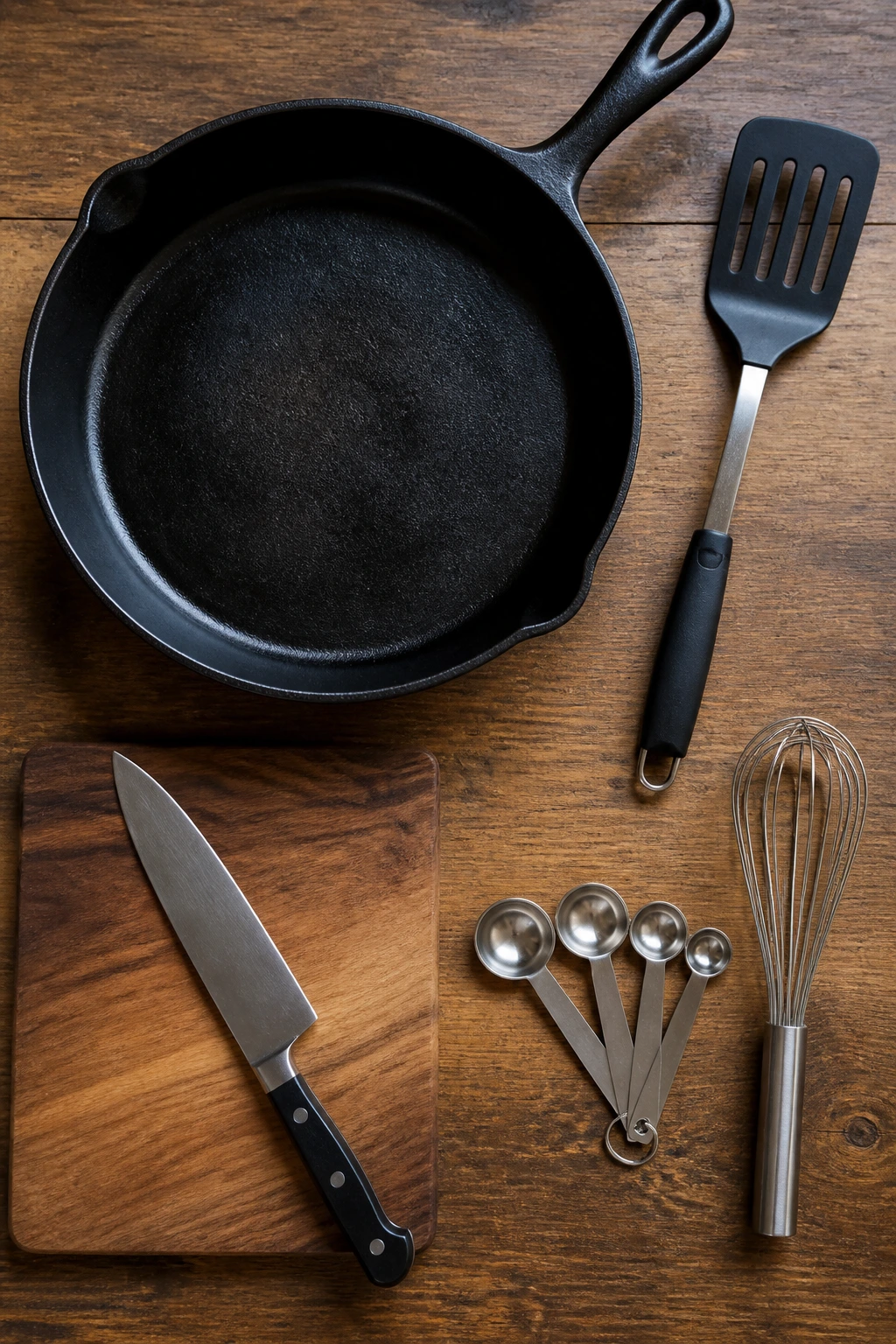
Why does the skillet matter so much? Because this dish wants surface area. A wide pan gives the sausage room to brown and gives the onions room to shed moisture without collapsing into soup before the glaze has a chance to form.
- 12-inch cast-iron skillet or heavy stainless skillet: A wide, heavy pan keeps the heat steady and gives the sausage coins enough space to color properly.
- Long-handled spatula or wooden spoon: You’ll need something sturdy for scraping the browned bits off the bottom once the broth and vinegar go in.
- Sharp chef’s knife: Thin onion slices cook evenly; ragged slices don’t.
- Cutting board with a damp towel underneath: Keeps the board from sliding when you’re slicing sausage or onions.
- Measuring cups and spoons: Brown sugar, vinegar, and broth need to stay in balance here.
- Small bowl and whisk: Useful for the glaze and the cornstarch slurry.
- Lid or loose sheet of foil: Optional, but handy if you want to trap a little steam for the onions for a minute or two.
- Tongs: Helpful for turning the sausage coins without tearing them.
How to Brown, Smother, and Glaze the Sausage
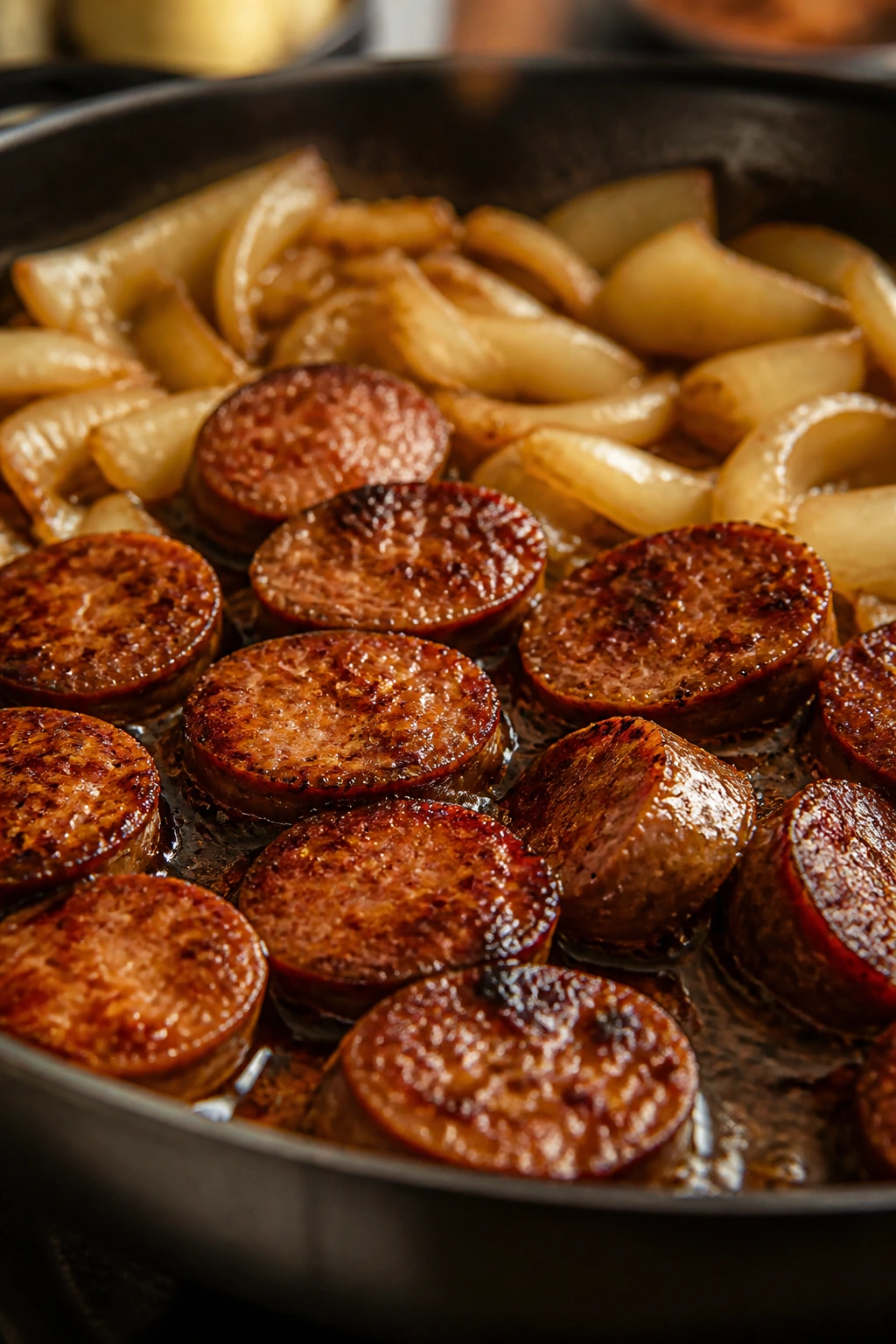
Don’t be tempted to pour everything in at once. That’s how you end up with steamed sausage and a sauce that tastes like it missed its appointment. The sequence matters: color first, soften next, glaze last.
Prep and Sear
-
Slice and season the base: Cut the sausage into 1/2-inch coins, slice the onions and bell pepper, and mince the garlic. Whisk together the brown sugar, broth, vinegar, Dijon, Worcestershire, paprika, black pepper, salt, and cayenne in a bowl.
-
Heat the skillet properly: Set a 12-inch skillet over medium-high heat for about 2 minutes, then add the oil or bacon drippings. The fat should shimmer, not smoke. If the pan is smoking hard, it’s too hot for the sugar that comes later.
-
Brown the sausage coins: Add the sausage in a single layer and let it sit for 2 to 3 minutes before moving it. Flip and cook the other side for another 2 to 3 minutes, until the edges are deeply browned and the centers are hot. Transfer to a plate. Do not crowd the pan; if needed, brown in two batches.
Build the Smothered Base
-
Soften the onions and pepper: Reduce the heat to medium and add the butter. When it melts, stir in the onions, bell pepper, and a pinch of salt. Cook for 6 to 8 minutes, stirring every minute or so, until the onions turn translucent, then pale gold around the edges. If the pan looks dry, add 1 tablespoon water and scrape.
-
Wake up the garlic: Add the minced garlic and cook for 30 seconds, just until fragrant. You want sweet garlic, not brown garlic. Garlic can go bitter in a hurry once the sugar and vinegar show up.
Glaze and Finish
-
Pour in the glaze: Stir the brown sugar mixture again, then pour it into the skillet. Scrape the bottom well so the browned sausage bits dissolve into the liquid. Bring it to a gentle simmer over medium heat and cook for 3 to 4 minutes, until the sauce loses its watery look and starts to turn glossy.
-
Return the sausage: Add the browned sausage back to the pan along with any juices on the plate. Lower the heat to medium-low and simmer uncovered for 5 to 7 minutes, stirring occasionally, until the onions are soft and the glaze coats the spoon in a thin, shiny layer. Do not let it boil hard once the sugar is in the pan.
-
Thicken and finish: If the sauce still looks loose, stir in the cornstarch slurry and cook for 30 to 45 seconds, just until it tightens. Remove the pan from the heat and swirl in the last spoonful of butter if you want a glossier finish. Taste and adjust with a small pinch of salt or a teaspoon of vinegar if the sauce leans too sweet. Sprinkle with parsley or scallions and let the skillet sit for 2 minutes before serving.
How to Serve It So the Sauce Gets Eaten
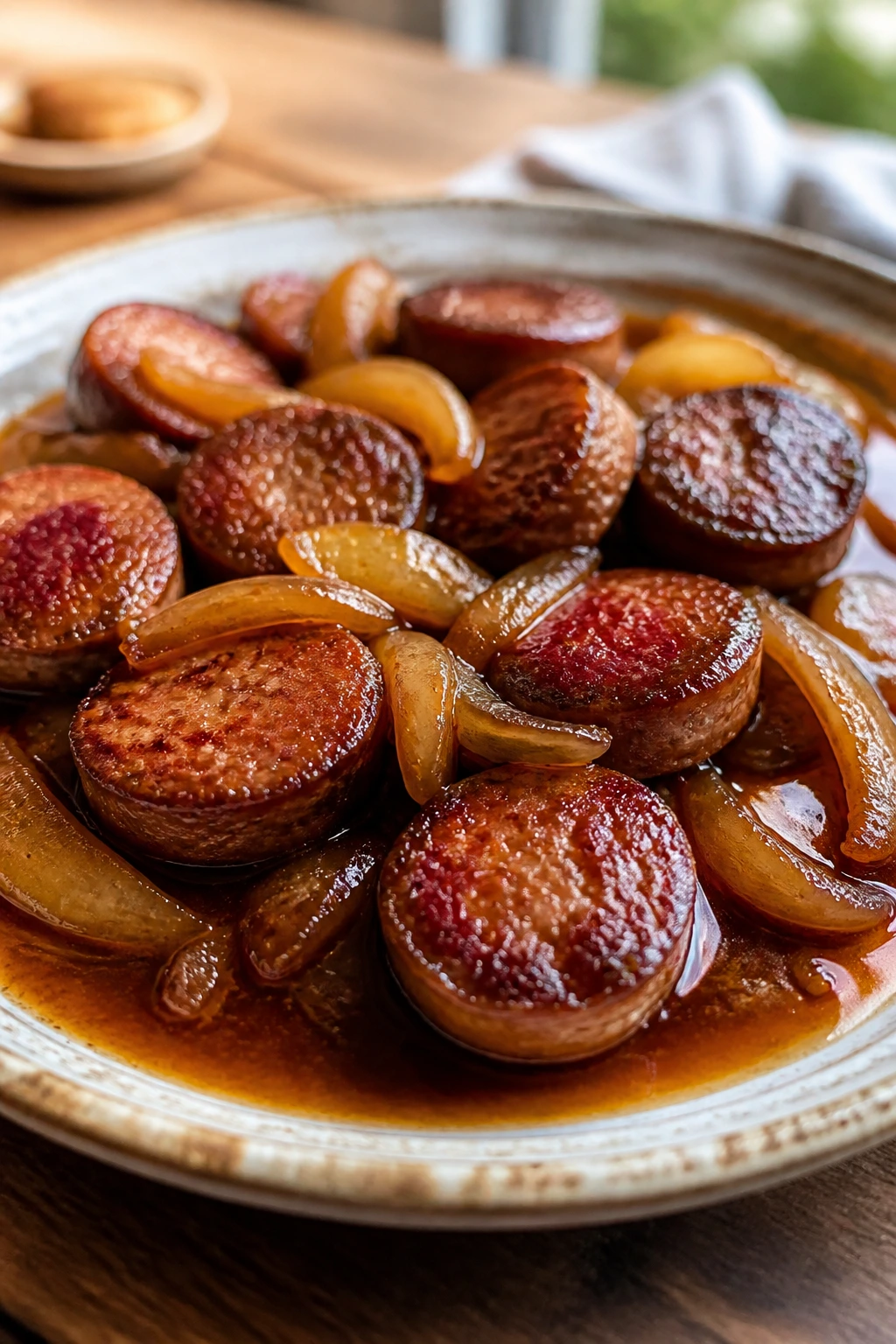
Put the skillet down in the middle of the table and let people chase the sauce. That’s the right energy for this dish.
Presentation: Spoon the sausage and onions into a shallow bowl or onto a platter with a lip, not a flat plate. You want the glaze to pool around the coins and catch on the onions, because that glossy sauce is half the appeal. A final scatter of parsley or scallions gives the whole pan a cleaner look and a fresher smell when it hits the table.
Accompaniments: Mashed potatoes are the obvious partner, and for once the obvious answer is right. Buttered rice, creamy grits, split biscuits, and even thick toast all work because they catch the glaze instead of letting it run away. If you want a vegetable on the side, go with something sharp and green, like sautéed cabbage, green beans with vinegar, or a simple salad with a mustardy dressing.
Portions: Plan on about 1/3 to 1/2 pound of sausage per person if this is the main event. If you’re serving it over potatoes or rice, 2 to 3 sausage coins plus a generous spoonful of onions and sauce is a solid plate; if the skillet stands alone, aim closer to 4 coins per person. For a bigger crowd, double the glaze before you double the sausage. The sauce disappears faster than the meat.
Beverage Pairing: Iced tea with lemon keeps the sweetness in check. A dry cider works if you like a little fruit note with smoked sausage, and sparkling water with lime is fine when you just want something clean. If you’re pouring beer, choose something light and crisp rather than bitter.
Practical Tips for a Better Glaze
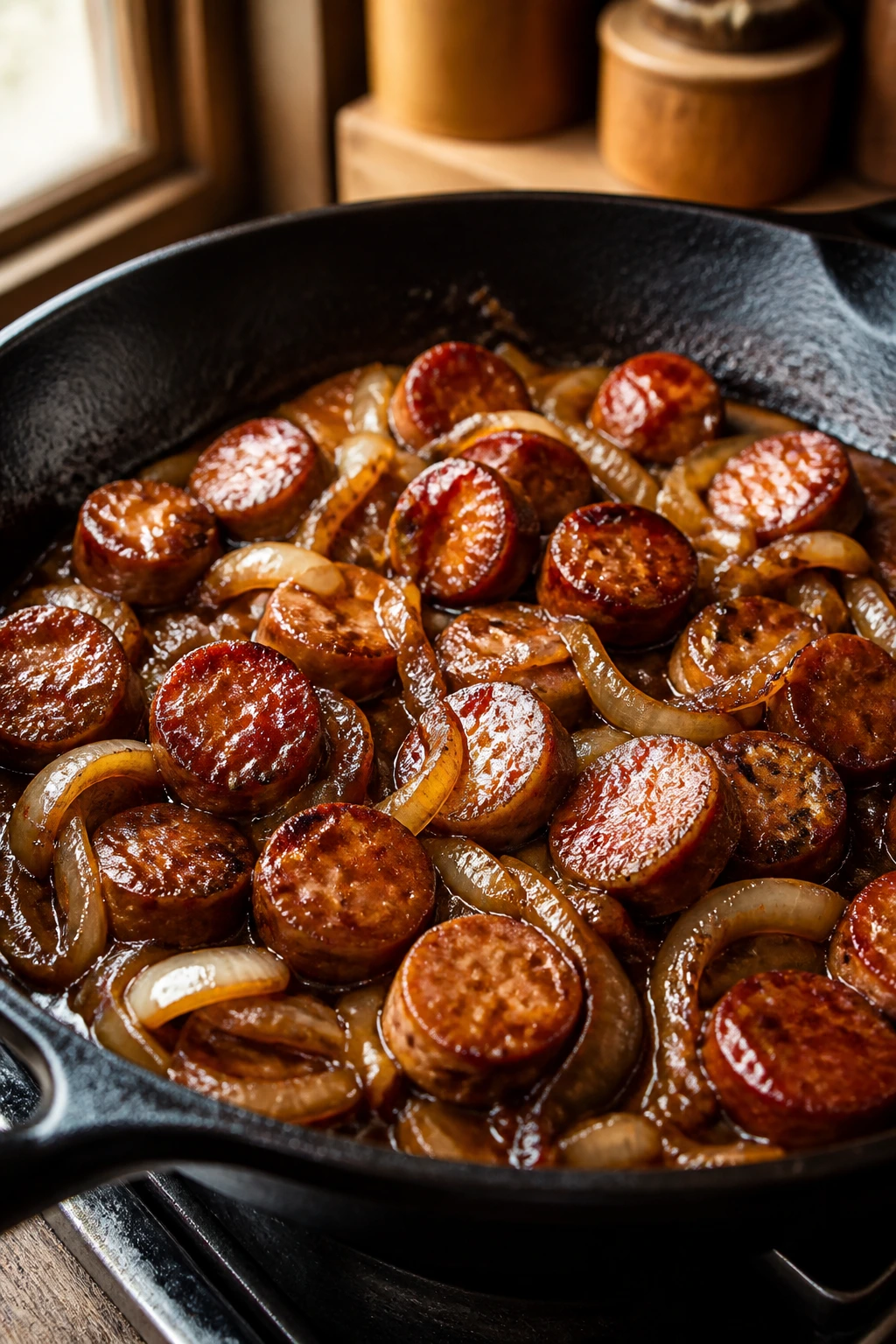
A glossy glaze is mostly a timing problem. The ingredients are doing what they should; the difference between “good” and “why is this sticky” usually comes down to when you turn the heat down and when you stop reducing.
Flavor Enhancement: Stir in 1 teaspoon of grainy mustard or 1 tablespoon of apple butter at the very end if you want the glaze to taste rounder. Grainy mustard gives texture and a little bite, while apple butter nudges the sauce toward fall-in-a-skillet sweetness without making it sugary.
Time-Saver: Slice the onions and sausage ahead and keep them in separate containers in the fridge for up to a day. When dinner time hits, the skillet becomes a 25-minute job instead of a chopping project.
Texture Fix: If the glaze looks too thin after the sausage has simmered, raise the heat to medium and let it bubble for another 2 to 3 minutes before reaching for cornstarch. Reduction keeps the sauce glossy. Cornstarch can work too, but I only use it once I’ve given the pan a fair chance to thicken on its own.
Pro Move: Let the sausage sit undisturbed for the first 2 minutes on the first side. That brief pause gives you a better brown crust and more flavor in the pan. Stirring too early robs you of the browned bits that make the glaze taste like something cooked on purpose.
Cost-Saver: Store-brand kielbasa is fine here if it tastes smoky and isn’t swimming in liquid. The glaze does enough work that you do not need a fancy sausage for the dish to land well.
Common Mistakes That Make the Sausage Tough
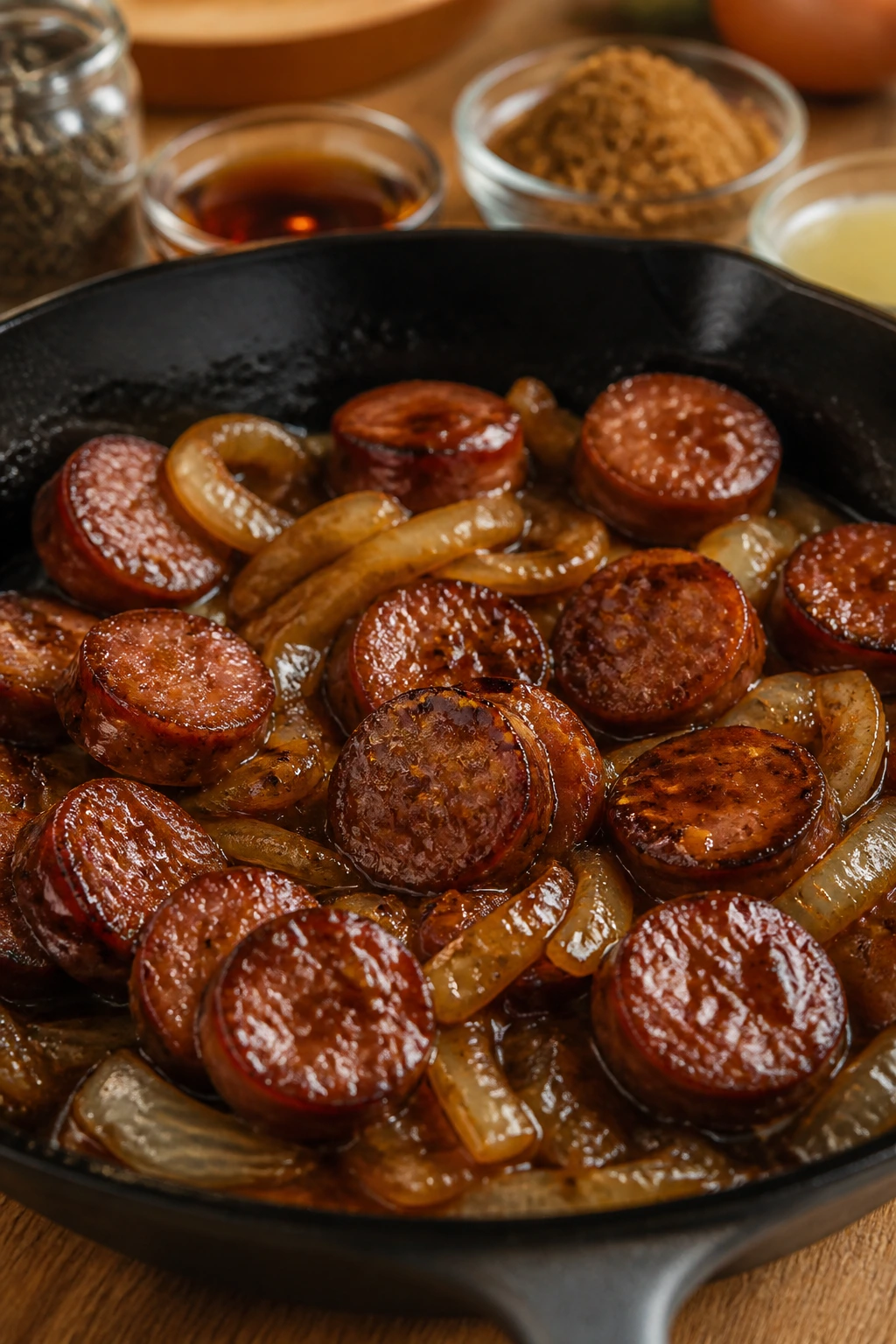
The common failures are loud. You can smell most of them before you see them, and they all come back to heat control or impatience.
Crowding the skillet: If the sausage coins are stacked on top of one another, they steam instead of browning, and the whole dish tastes soft in the wrong way. Use a wide skillet and work in two batches if you need to. Color matters here.
Adding sugar to a screaming-hot pan: Brown sugar can turn bitter fast if the pan is smoking when it goes in. That’s why the glaze gets whisked together with broth and vinegar first. Liquid protects the sugar and gives the onions time to soften.
Over-salting early: Sausage already brings salt, and Worcestershire plus broth add more. If you season too aggressively before the glaze reduces, the finished sauce can taste harsh. Taste at the end, not at the beginning.
Letting the onions stay crisp: Thin slices should turn soft and bendy, not stay crunchy in the center. If they’re still stiff when the sauce is ready, add a tablespoon or two of water, cover the skillet for 2 minutes, and cook over medium until they slacken.
Reducing the glaze into candy: The sauce should coat the spoon, not glue itself to it. Pull it off the heat while it still moves slowly; it will thicken a little more as it sits. If you wait until it looks thick in the pan, it will land too stiff on the plate.
Flavor Variations That Still Fit the Dish
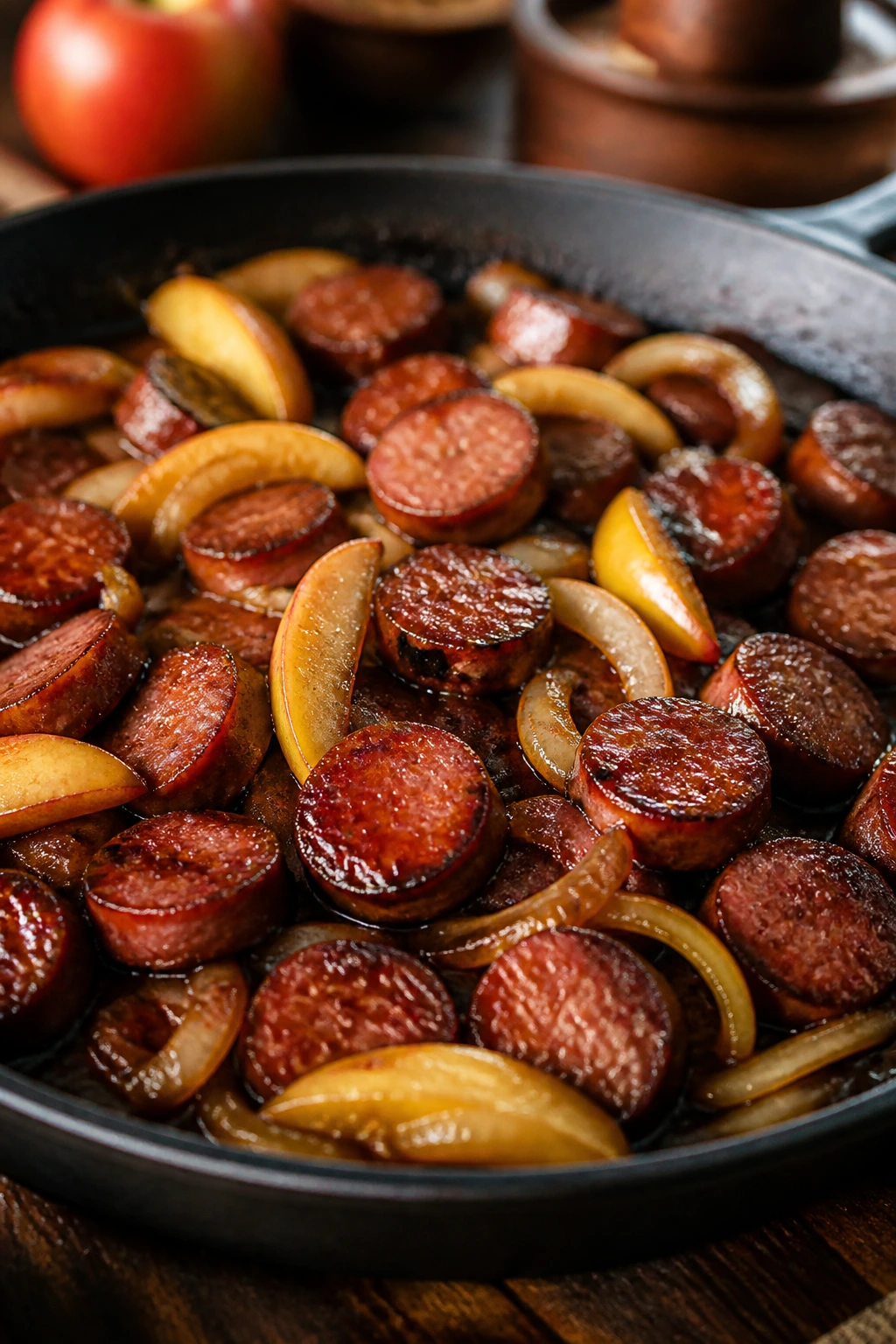
One recipe, four directions. The base method stays the same, but the mood shifts depending on what you add or swap.
Apple-Cider Orchard Skillet: Replace half the broth with unsweetened apple cider and add one thinly sliced apple with the onions. The apple softens into the glaze and makes the whole pan taste rounder, which suits kielbasa nicely. I’d use a tart apple so the sweetness doesn’t run away from you.
Smokehouse Heat: Swap in andouille sausage and add an extra 1/2 teaspoon smoked paprika plus a few dashes of hot sauce. This version tastes sharper and a little more muscular, with heat that shows up at the back of the throat instead of in your face. Good with rice or grits.
Bacon-Kissed Version: Render 4 slices of bacon first, then use the drippings instead of neutral oil and crumble the bacon over the finished dish. Bacon adds a salty edge and a little crunch, but keep the brown sugar at 1/3 cup instead of 1/2 cup so the pan doesn’t lean too sweet.
Lower-Sugar Pantry Pan: Cut the brown sugar to 1/4 cup and add another tablespoon of Dijon plus 1/2 teaspoon extra smoked paprika. You lose some lacquer, but you get a sharper, more savory skillet that still reads as glazed. This is the version I’d make when the rest of the meal already includes bread or potatoes.
Make-Ahead, Storage, and Reheating
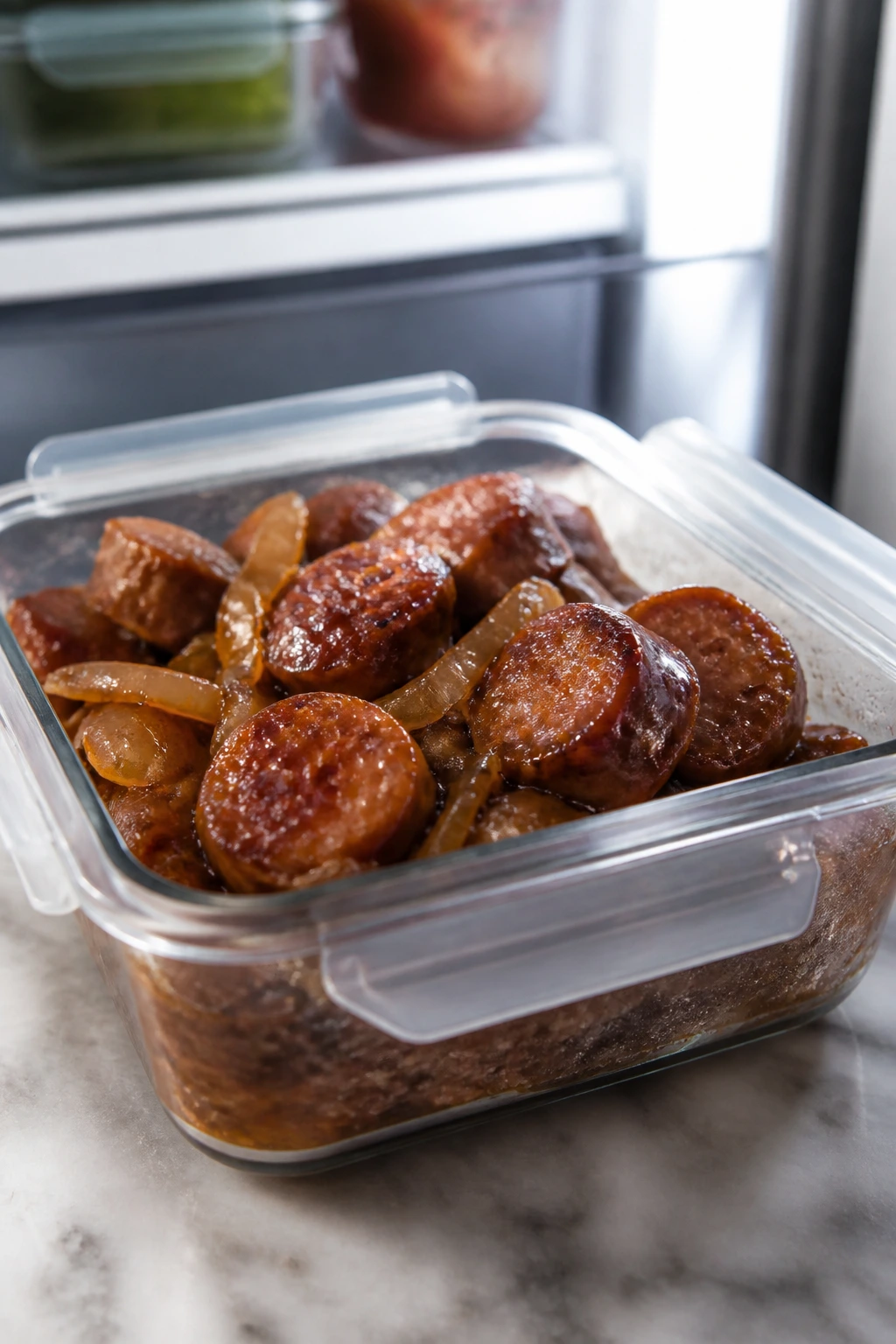
Leftovers behave differently from the hot skillet. Warm, the glaze moves. Cold, it tightens and turns a little sticky. That’s normal, and it’s easy enough to manage if you know what to expect.
Room Temperature: Don’t leave the sausage out longer than 2 hours. If the skillet sat on the table and people wandered back for seconds, move the leftovers into a container once the pan stops steaming.
Refrigerator: Store in an airtight container for 3 to 4 days. The onions soften a bit more in the fridge, which is not a flaw so much as a change in texture. I actually like it best on day two, when the glaze has settled and the vinegar has quieted down.
Freezer: Freeze for up to 2 months in a sealed container or a freezer bag laid flat. Portion it in meal-sized amounts so you can reheat just what you need. If you’re picky about onion texture, the freezer version is still good, but the onions will turn softer after thawing.
Reheating: For the best texture, rewarm the sausage in a skillet over medium-low heat with 1 to 2 tablespoons of broth or water. Stir every minute until the glaze loosens and starts to shine again, usually 5 to 8 minutes. Microwave reheating works in a pinch; cover the dish and heat in 60- to 90-second bursts, stirring between rounds so the sugar doesn’t overheat in one corner. For a bigger batch, cover and warm in a 325°F oven until hot through.
Make-Ahead: You can slice the sausage and vegetables a day ahead, and you can whisk the glaze a few hours ahead too. If you want to cook the whole dish in advance, stop once the glaze is slightly looser than you want, because it will tighten as it cools. Reheat gently and add a splash of broth if needed.
Questions People Ask Before They Cook It
Can I use raw sausage instead of smoked sausage?
Yes, but the method changes. Raw sausage needs to cook all the way through before the sugar goes in, which means lower heat and a longer pan time; smoked sausage only needs browning and a hot-through finish. If you switch to raw, cook it to 160°F / 71°C before you move on to the glaze.
Is the glaze supposed to taste sweet?
Sweet, yes. Sticky-sweet, no. The vinegar and Dijon should keep the glaze sharp enough that you notice the smoke and the onion first, then the sugar. If it tastes flat, add another teaspoon of vinegar before adding more sugar.
What if my sauce turns thin and watery?
Let it simmer uncovered for 2 to 3 more minutes over medium heat so some of the liquid can cook off. If it still looks loose, stir in the cornstarch slurry and cook for 30 to 45 seconds. Do not dump in a big scoop of cornstarch at once; that leaves you with a cloudy sauce.
Can I make this in a slow cooker?
You can, but it won’t taste the same. A slow cooker softens the onions and keeps the sausage tender, yet it does not give you the same browned bottom or glossy glaze. If you go that route, brown the sausage and onions first, then transfer everything to the slow cooker and finish by reducing the sauce on the stovetop if you want it to cling.
What sides actually work best with it?
Mashed potatoes and grits are the most natural partners because they soak up the glaze without fighting the sausage. Rice, buttered noodles, or biscuits work too. If you want something lighter, serve it with a sharp green salad or sautéed cabbage to cut the richness.
Can I use turkey or chicken sausage?
Yes, and the glaze still works, but leaner sausage gives you less fat in the pan. Add the full tablespoon of oil, and keep an eye on the salt because lean sausage can taste a little flatter than smoked pork sausage. You may also want the optional bacon drippings if you have them.
Will this double cleanly for a crowd?
It will, as long as the pan is large enough. Use a wide Dutch oven or two skillets so the sausage can brown instead of steam, and double the glaze along with the meat. If you double only the sausage, you end up with a crowded pan and not enough sauce to coat anything properly.
A Sweet-Savory Skillet Worth Repeating
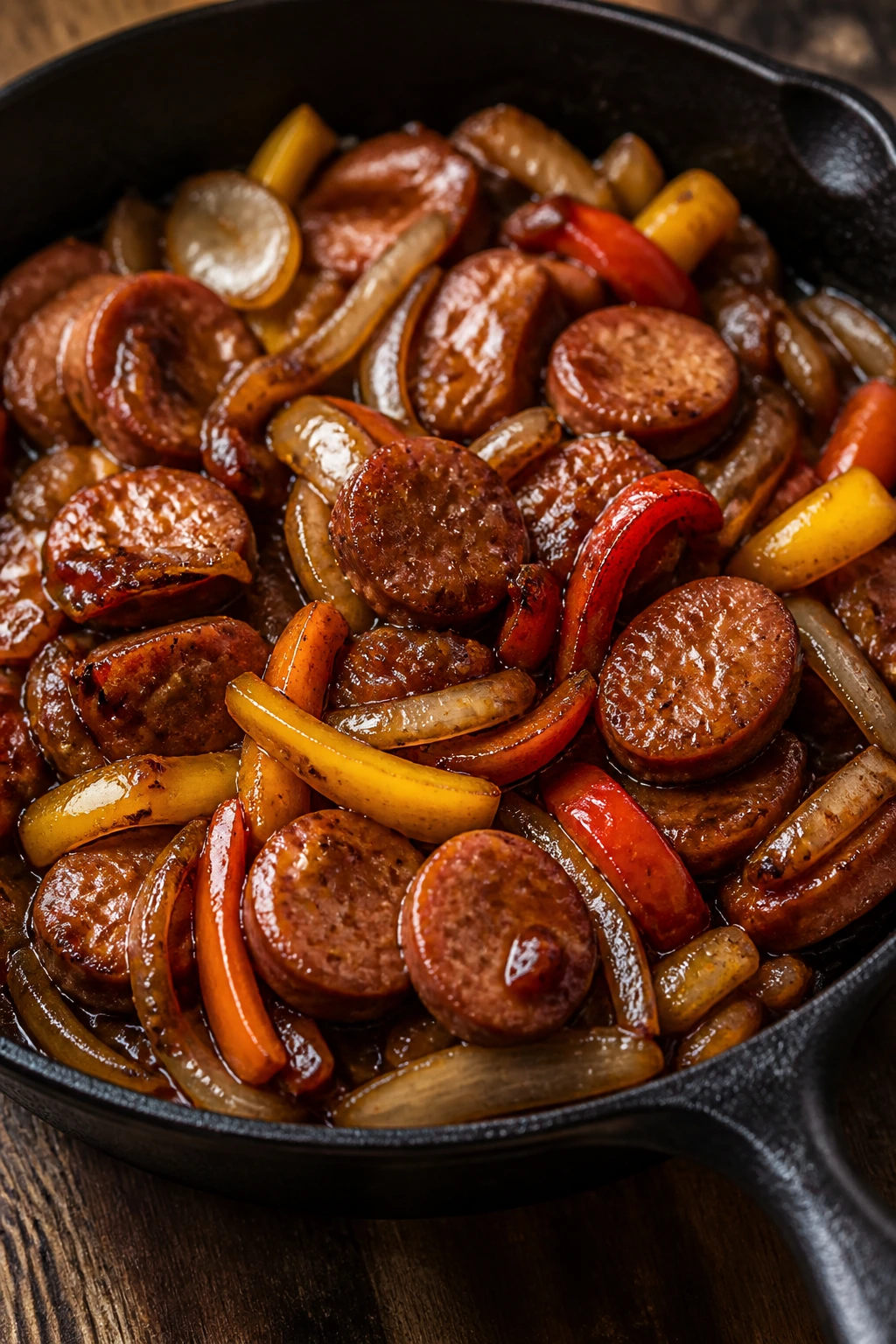
Brown sugar and smoked sausage can sound heavy on paper, which is why the balance matters so much when the pan hits the heat. Vinegar, mustard, onion, and a little patience keep the dish from sinking into sticky sweetness. The sausage stays the anchor. The glaze is the shine.
If you remember only one thing, make it this: brown the sausage first, cook the onions until they go soft, and pull the sauce while it still moves. That’s the difference between a pan that tastes cooked and a pan that tastes considered. Serve it with something that catches the sauce, and you get a dinner that feels sturdy without being fussy. I never get tired of that combination.
Tender Smothered Sausage with Brown Sugar Glaze — Recipe Card
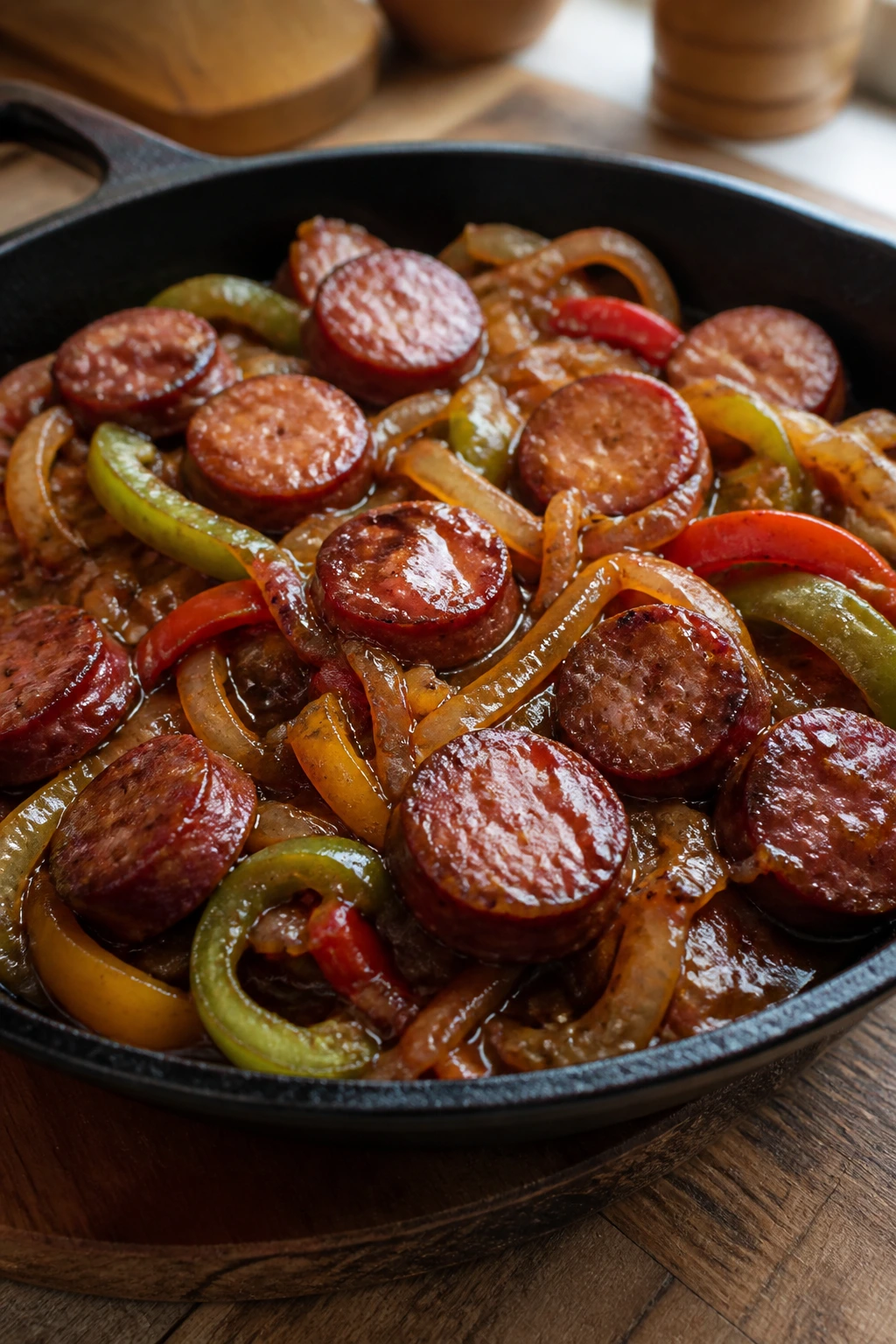
Recipe Name: Tender Smothered Sausage with Brown Sugar Glaze
Description: Smoky sausage coins, soft onions, and bell pepper simmer in a glossy brown sugar glaze made sharp with apple cider vinegar and Dijon. It’s a one-skillet dinner that lands best over mashed potatoes, rice, or biscuits.
Prep Time: 15 minutes
Cook Time: 25 minutes
Total Time: 40 minutes
Course: Dinner, Main Course
Cuisine: American
Servings: 6 servings
Calories: about 470 kcal per serving
Ingredients
For the Sausage and Vegetables:
- 2 pounds smoked pork sausage or kielbasa, sliced into 1/2-inch coins
- 1 tablespoon neutral oil or bacon drippings
- 2 tablespoons unsalted butter
- 2 large yellow onions, thinly sliced
- 1 red bell pepper, thinly sliced
- 3 cloves garlic, minced
For the Brown Sugar Glaze:
- 1/2 cup packed light brown sugar
- 1 cup low-sodium chicken broth
- 1/3 cup apple cider vinegar
- 2 tablespoons Dijon mustard
- 1 tablespoon Worcestershire sauce
- 1 teaspoon smoked paprika
- 1/2 teaspoon freshly ground black pepper
- 1/2 teaspoon kosher salt, plus more to taste
- 1/4 teaspoon cayenne pepper, optional
- 1 teaspoon cornstarch mixed with 1 tablespoon cold water, optional for extra thickness
To Finish:
- 1 tablespoon chopped parsley or sliced scallions
Instructions
-
Slice the sausage, onions, bell pepper, and garlic. Whisk together the brown sugar, broth, vinegar, Dijon, Worcestershire, paprika, pepper, salt, and cayenne in a bowl.
-
Heat a 12-inch skillet over medium-high heat for about 2 minutes. Add the oil or bacon drippings. Brown the sausage coins in a single layer for 2 to 3 minutes per side, then transfer them to a plate.
-
Reduce the heat to medium and add the butter. Stir in the onions, bell pepper, and a pinch of salt. Cook for 6 to 8 minutes, stirring often, until the onions are soft and lightly golden.
-
Add the garlic and cook for 30 seconds, just until fragrant.
-
Pour in the glaze mixture and scrape up the browned bits from the pan. Bring to a gentle simmer and cook for 3 to 4 minutes until glossy.
-
Return the sausage and any juices to the skillet. Simmer uncovered over medium-low heat for 5 to 7 minutes, stirring occasionally, until the sauce coats the spoon.
-
If the glaze is still too thin, stir in the cornstarch slurry and cook for 30 to 45 seconds more.
-
Remove from the heat, swirl in the remaining butter if using, taste for seasoning, and finish with parsley or scallions.
Notes: Keep the heat moderate once the sugar goes into the pan. If the sauce tightens after chilling, loosen it with a splash of broth or water when reheating.