



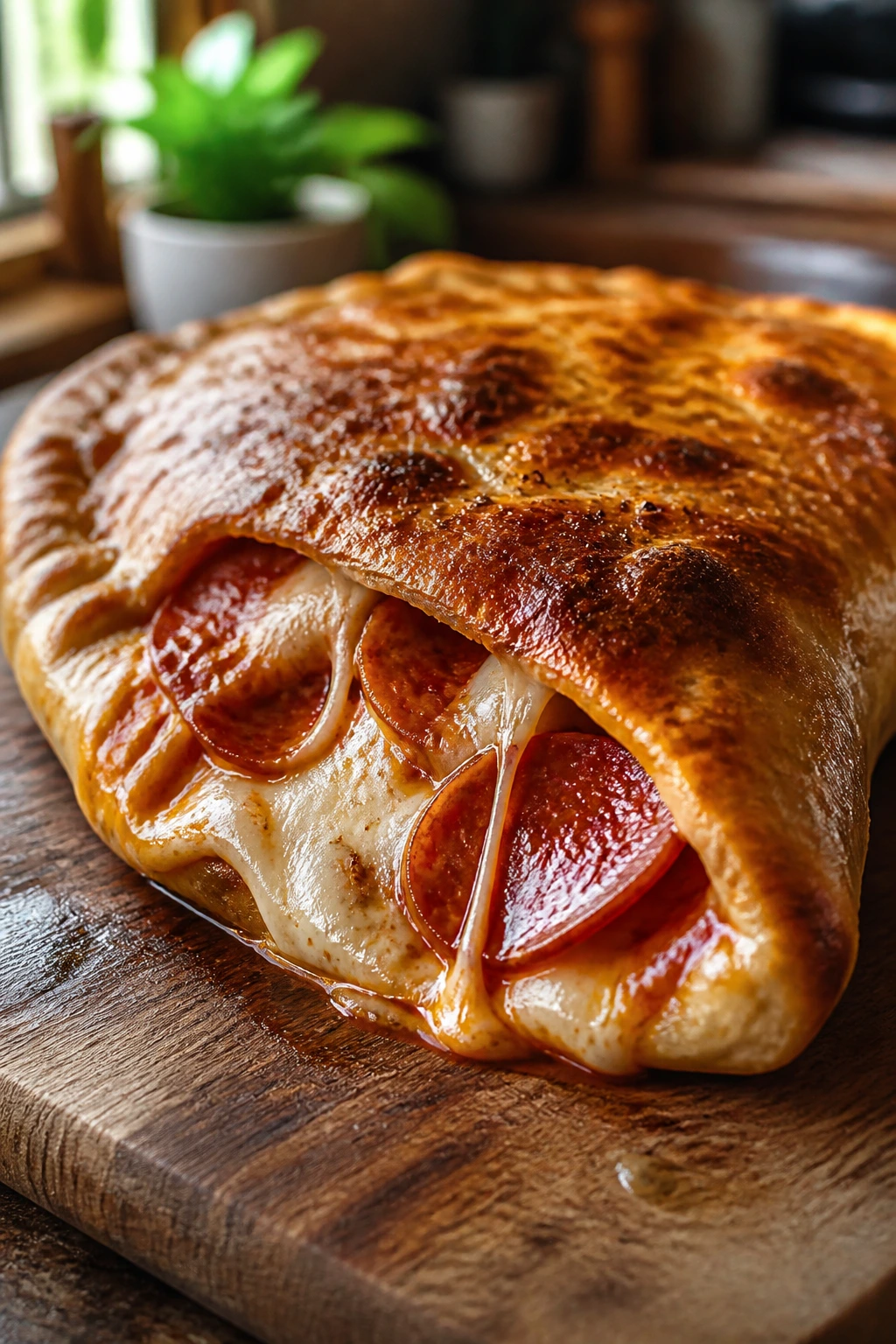
A good calzone should cut cleanly, not slump into a puddle the second you move it to the plate. The filling ought to stay tucked inside a bronzed crust that feels tender at the bite, with pepperoni oil, mozzarella stretch, and a little browned edge where the cheese met the hot pan. The sweet part here comes at the end — a thin brown sugar glaze brushed over the hot crust — and that’s the piece that makes this tender pepperoni calzone with brown sugar glaze memorable instead of merely heavy.
That glaze sounds odd until you taste it. Pepperoni brings salt and spice, mozzarella brings milky richness, ricotta gives the middle a softer, almost plush texture, and the brown sugar glaze lands on the crust like a tiny bit of gloss and contrast. Not dessert-sweet. Not sticky in a cloying way. Just enough caramel note to make the savory filling taste sharper and the crust taste more finished.
The real trick is restraint. Keep the filling thick, keep the dough soft but not slack, and keep the glaze thin enough to shine rather than soak. Do those three things, and the whole thing comes out with the kind of edge that makes people stop talking for a second before they ask who made it.
Why This Calzone Deserves a Spot in the Rotation
-
Tender crust: A little yogurt in the dough keeps the crumb softer than a plain lean pizza dough, so the calzone eats like bread rather than a cracker shell.
-
Sweet-salty finish: The brown sugar glaze goes on after baking, which means it stays glossy and bright instead of burning into a bitter patch on top.
-
Pepperoni stays bold: Low-moisture mozzarella and a thick filling let the pepperoni flavor stay front and center instead of getting washed out by sauce.
-
Slices cleanly: A short rest after baking gives the cheese a minute to settle, so the first wedge doesn’t ooze all over the cutting board.
-
Flexible without fuss: You can add bacon, swap in sausage, or leave the filling plain and still get a calzone that holds together and tastes complete.
Yield: 1 large calzone, serves 4
Prep Time: 25 minutes
Cook Time: 20 to 22 minutes
Total Time: About 2 hours, including rising and resting
Difficulty: Intermediate — the steps are straightforward, but sealing a filled dough and baking it without leaks takes a little attention.
Chill/Rest Time: 60 to 90 minutes for the first rise, plus 10 minutes after baking
Best Served: Warm, after a short rest so the filling sets
What Goes Into the Dough, Filling, and Brown Sugar Glaze
For the Soft Calzone Dough:
- 3 cups all-purpose flour, plus more for dusting
- 2 1/4 teaspoons instant or active dry yeast
- 1 tablespoon granulated sugar
- 1 teaspoon fine sea salt
- 1 cup warm water, about 110°F / 43°C
- 2 tablespoons extra-virgin olive oil
- 1/4 cup plain whole-milk yogurt or sour cream, at room temperature
For the Pepperoni Filling:
- 1 1/2 cups shredded low-moisture mozzarella
- 1 cup whole-milk ricotta, drained if loose
- 5 ounces pepperoni slices, roughly 1 1/2 cups, chopped if large
- 1/4 cup finely grated Parmesan
- 1/3 cup thick pizza sauce or reduced marinara
- 1 teaspoon dried oregano
- 1/2 teaspoon garlic powder
- 1/4 teaspoon crushed red pepper flakes
- 1 large egg, beaten with 1 tablespoon water, for sealing and egg wash
- 1 tablespoon cornmeal or semolina, for the pan
For the Brown Sugar Glaze:
- 2 tablespoons unsalted butter
- 2 tablespoons packed light brown sugar
- 1 tablespoon water
- 1 teaspoon honey
- Pinch of kosher salt
- Pinch of garlic powder
- Pinch of crushed red pepper flakes, optional
Soft Calzone Dough
What to use: The dough needs 3 cups of all-purpose flour, yeast, sugar, salt, warm water, olive oil, and 1/4 cup yogurt or sour cream. All-purpose flour gives a softer bite than bread flour here, which matters because the filling is dense enough on its own.
Preparation: Bring the yogurt to room temperature so it mixes in without leaving little cold lumps. Measure the water carefully; around 110°F is warm enough to wake the yeast without turning it sluggish or killing it.
Substitutions: If you want a more classic pizza-dough feel, swap the yogurt for 2 tablespoons more water and 1 extra tablespoon of olive oil. Bread flour can stand in for half the all-purpose flour if you want a little more chew.
Tips: The yogurt is there for texture, not tang. You won’t taste “yogurt” in the finished dough; you’ll taste a crust that stays softer at the edge and less dry the next day.
Pepperoni Filling
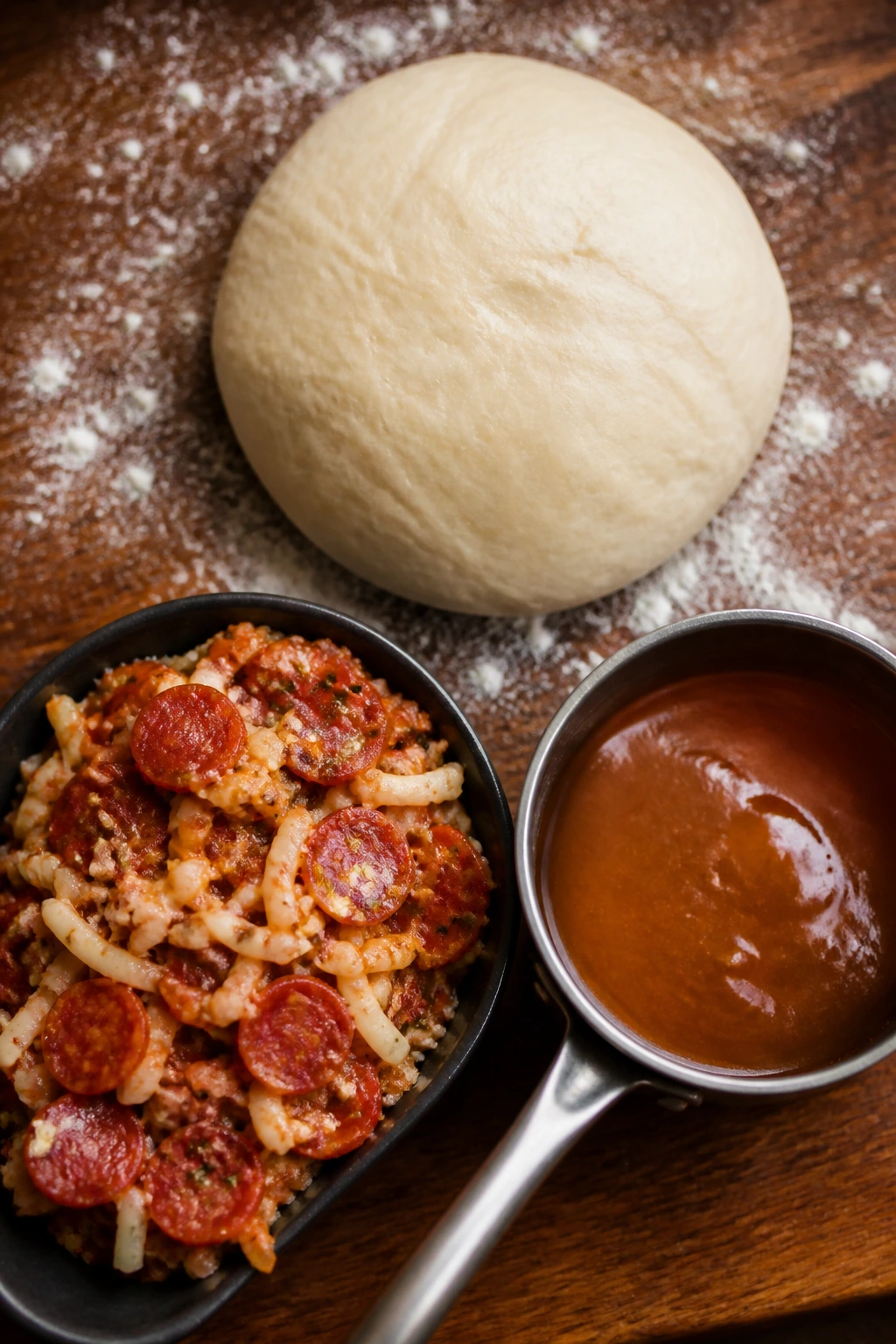
What to use: Low-moisture mozzarella, ricotta, pepperoni, Parmesan, thick sauce, oregano, garlic powder, and a small hit of red pepper flakes. The filling should be thick enough to mound on a spoon and hold its shape for a few seconds.
Preparation: Drain the ricotta if it looks wet, and chop the pepperoni if the slices are large or floppy. If you’re using sauce that seems loose, simmer it for a few minutes first until it clings to the spoon instead of running off it.
Substitutions: Turkey pepperoni works fine, though it gives a leaner bite. You can swap the ricotta for well-drained cottage cheese if that’s what you have, but the texture will be a little less smooth.
Tips: Use block mozzarella if you can. It melts with a cleaner pull and fewer greasy pockets than many pre-shredded bags, which are coated to keep the strands from clumping.
Pan Prep, Egg Wash, and Finish
What to use: One egg beaten with a tablespoon of water, plus a tablespoon of cornmeal or semolina for the pan. The egg wash helps the seam stick and gives the crust color before the glaze goes on.
Preparation: Beat the egg well so it brushes on in a thin, even layer. Dust the pan lightly with cornmeal or semolina if you want the bottom to feel a little drier and crisper.
Substitutions: If you don’t want to use egg wash, a little milk can help the seam stick, though it won’t brown as deeply. Parchment paper can replace the cornmeal on a plain sheet pan.
Tips: The pan prep sounds small, but it changes the whole texture of the bottom crust. A bit of grit under the dough keeps it from sticking and gives the underside enough traction to brown instead of steaming.
Brown Sugar Glaze
What to use: Butter, brown sugar, water, honey, salt, garlic powder, and a tiny pinch of red pepper flakes if you like a faint kick. This should be a brushable glaze, not a thick sauce.
Preparation: Melt the butter gently, then stir in the sugar and water just until the grains dissolve. The glaze should look smooth and slightly glossy, with no sandy texture left behind.
Substitutions: Maple syrup can replace the honey if that’s what’s in the cupboard. Dark brown sugar works too, though it pushes the finish farther toward molasses.
Tips: Brush the glaze on after baking, not before. Sugar burns faster than cheese browns, and there’s no elegant way to fix a blackened top.
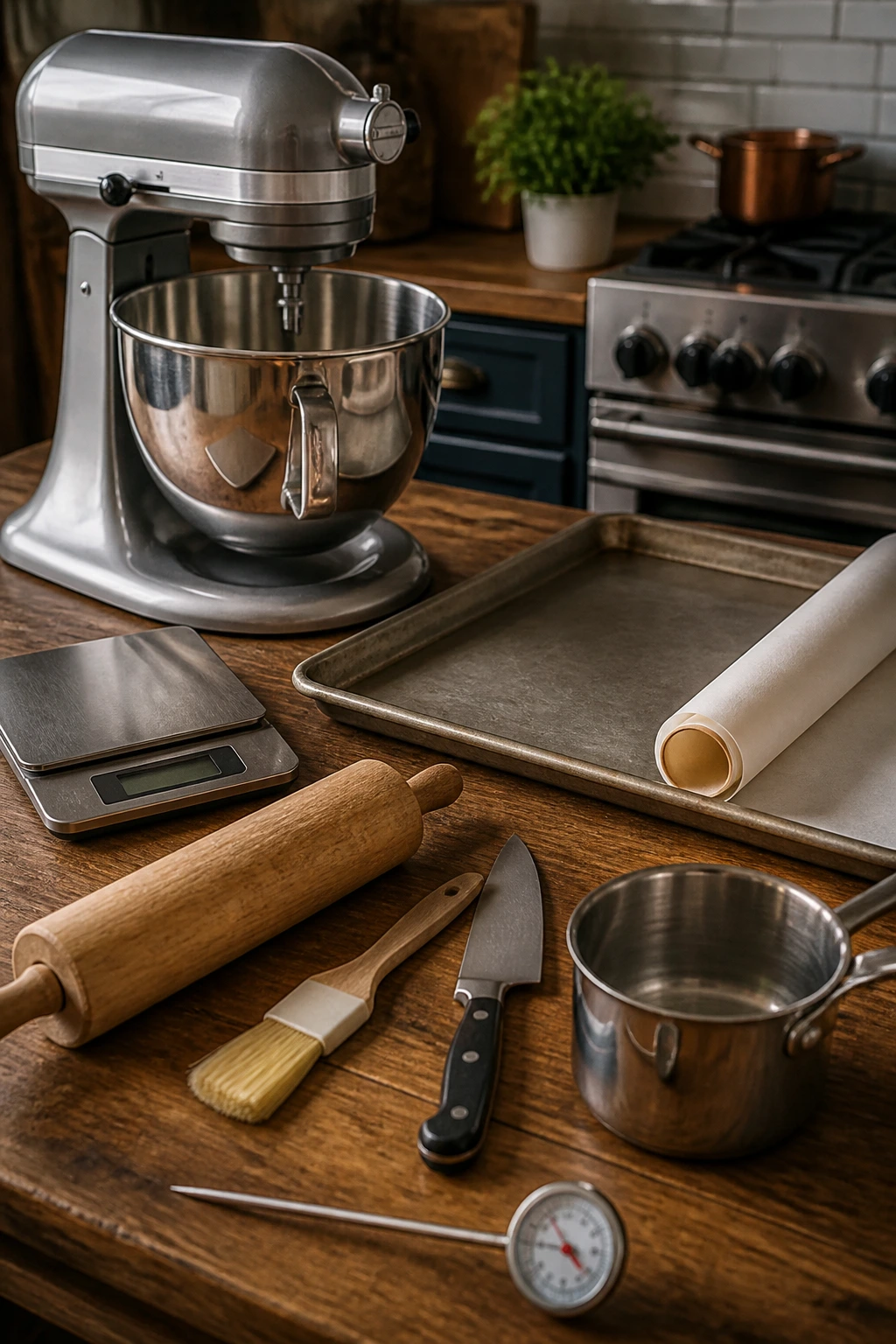
Essential Equipment for the Bake
-
Large mixing bowl or stand mixer with dough hook — Either works; the stand mixer saves a little kneading time, but hands work fine.
-
Kitchen scale, optional but useful — Flour measures more accurately by weight, which helps keep the dough from getting dry.
-
Rimmed baking sheet or pizza stone — A stone gives the best bottom browning; an inverted sheet pan is a perfectly respectable backup.
-
Parchment paper — Handy if you want easier transfer and less cleanup, especially with a soft dough.
-
Rolling pin — You want a 12-inch round that’s even in the center and not paper-thin at the edges.
-
Pastry brush — Needed for the egg wash and for that final brown sugar glaze.
-
Sharp knife or pizza cutter — A serrated knife slices the rested calzone cleanly without dragging the crust.
-
Small saucepan — The glaze only needs a minute or two over low heat, but it needs a pan.
-
Instant-read thermometer, optional — Helpful if you like certainty; the center should hit about 200°F to 205°F.
Mixing the Soft Dough
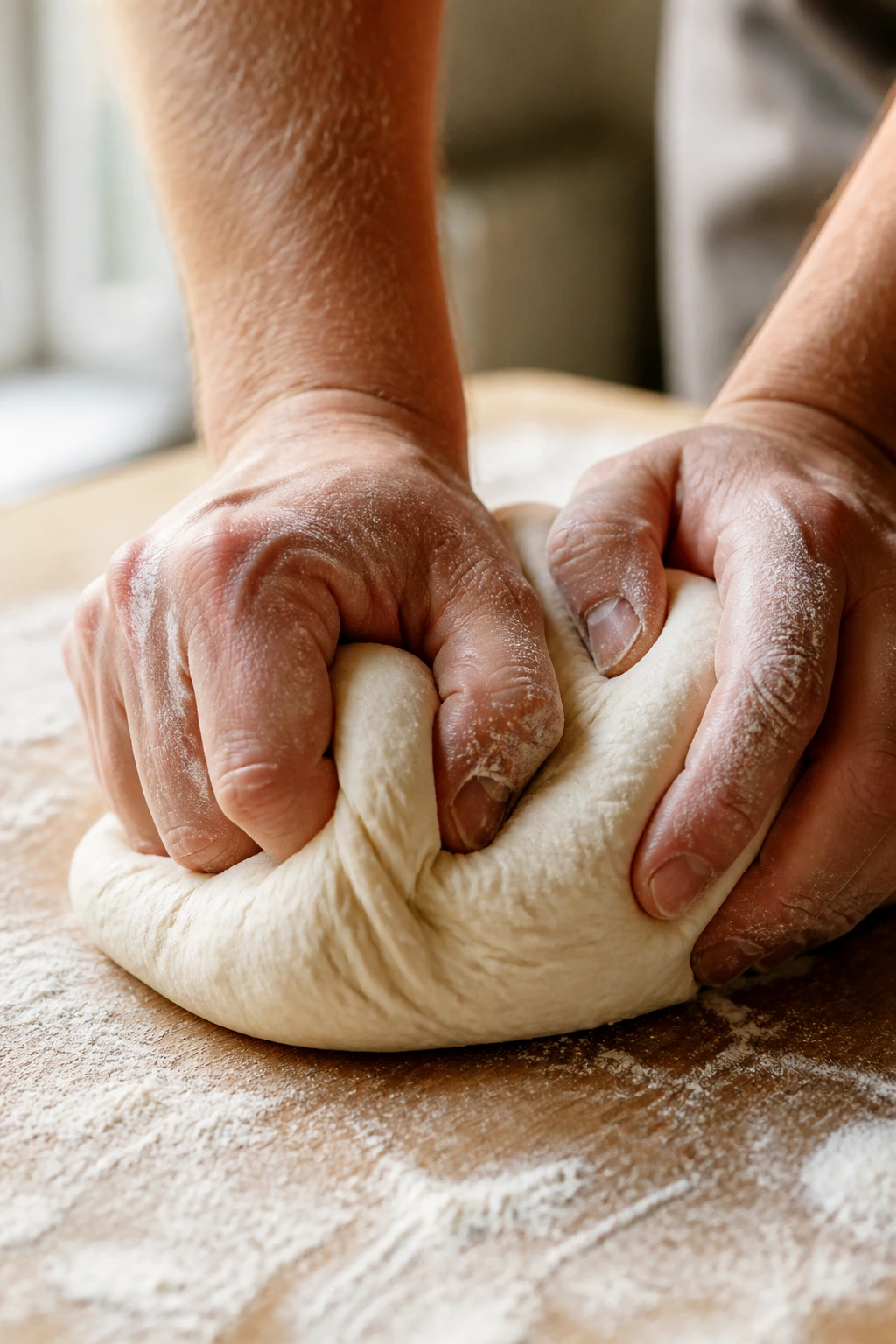
The dough is where this calzone earns its name. Get it soft, elastic, and slightly tacky, and the rest of the recipe becomes a lot less fussy. Rush this part, and the dough fights you the whole way.
Mix the Dry Ingredients:
-
In a large bowl, whisk together the flour, yeast, sugar, and salt for about 20 seconds until the mixture looks even.
-
If you’re using active dry yeast, stir it into the warm water with the sugar and let it sit for 5 minutes until foamy; if you’re using instant yeast, you can move straight to the next step.
Bring the Dough Together: 3. Add the warm water, olive oil, and yogurt to the dry ingredients. Stir with a wooden spoon or dough hook until a shaggy mass forms and no dry flour remains at the bottom of the bowl.
- Turn the dough out onto a lightly floured counter and knead for 7 to 8 minutes by hand, or 5 to 6 minutes in a mixer on medium-low, until it feels smooth, stretchy, and only slightly tacky. Do not dump in extra flour unless the dough is truly sticky enough to cling to your hands in a wet way.
Let It Rise: 5. Shape the dough into a ball, rub a clean bowl with a teaspoon of olive oil, and place the dough inside. Turn it once so the surface gets a thin coat of oil.
- Cover the bowl and let the dough rise in a warm spot for 60 to 90 minutes, until it has doubled in size and looks puffy around the edges. A fingertip pressed gently into the dough should leave a dent that springs back slowly.
The dough does not need to be dramatic. It needs to be relaxed. When it’s ready, it should stretch without tearing the second you roll it, and that softness is the whole point of using a little yogurt in the first place.
Filling, Folding, and Sealing Without a Mess
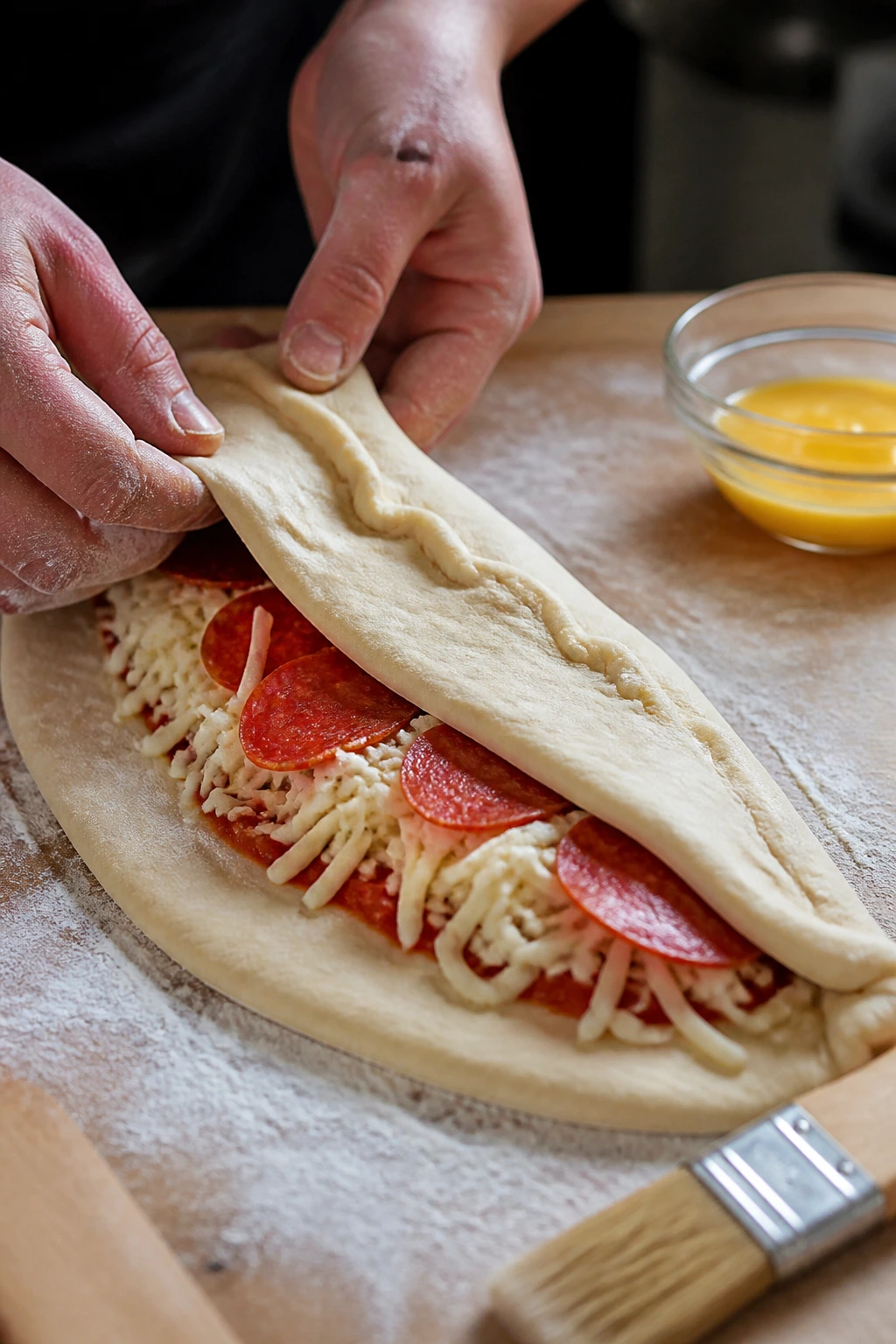
This is the part where restraint matters more than enthusiasm. A calzone is not a dumping ground for every pizza ingredient in the fridge. It’s a sealed pocket, and sealed pockets punish overfilling.
Build the Filling: 7. In a medium bowl, mix the mozzarella, ricotta, pepperoni, Parmesan, pizza sauce, oregano, garlic powder, and crushed red pepper flakes until evenly combined. The mixture should be thick, almost scoopable, and not runny. If it looks wet, add another tablespoon of Parmesan or let it sit for 5 minutes so the cheese absorbs some of the sauce.
- Preheat the oven to 450°F (232°C) and set a rack in the lower-middle position. If you’re using a pizza stone or steel, put it in the oven now so it heats for at least 30 minutes. Line a baking sheet with parchment or dust it lightly with cornmeal.
Shape the Dough: 9. Punch down the risen dough and turn it onto a lightly floured surface. Press it into a round, then roll it into a 12-inch circle about 1/4 inch thick. If the dough keeps shrinking back, let it rest for 5 minutes and roll again.
-
Spoon the filling onto one half of the dough, leaving a 1-inch border around the edge. Keep the mound compact and avoid spreading it all the way to the rim. If the filling reaches the edge, the seam will fight you and the calzone will leak.
-
Brush the exposed edge with the beaten egg, then fold the empty half over the filling to make a half-moon. Press out as much trapped air as you can before sealing; big air pockets turn into surprise tears in the oven.
-
Crimp the edge firmly with your fingers, then press it again with the tines of a fork or fold it into a rope-like seam if you prefer a thicker edge. Transfer the calzone to the prepared baking sheet or hot stone. Cut 3 small slits on top with a sharp knife, each about 1 inch long, so steam has a place to escape.
-
Let the shaped calzone rest for 10 minutes while the oven finishes heating if needed. That short pause gives the seam time to settle and keeps the dough from shrinking as soon as it hits the heat. It also buys you a moment to make the glaze.
The goal here is a tight seal, not a fancy one. A calzone that looks neat and slightly overworked on the outside is better than one that looks perfect until the first minute of baking.
Baking Until the Crust Turns Deep Gold
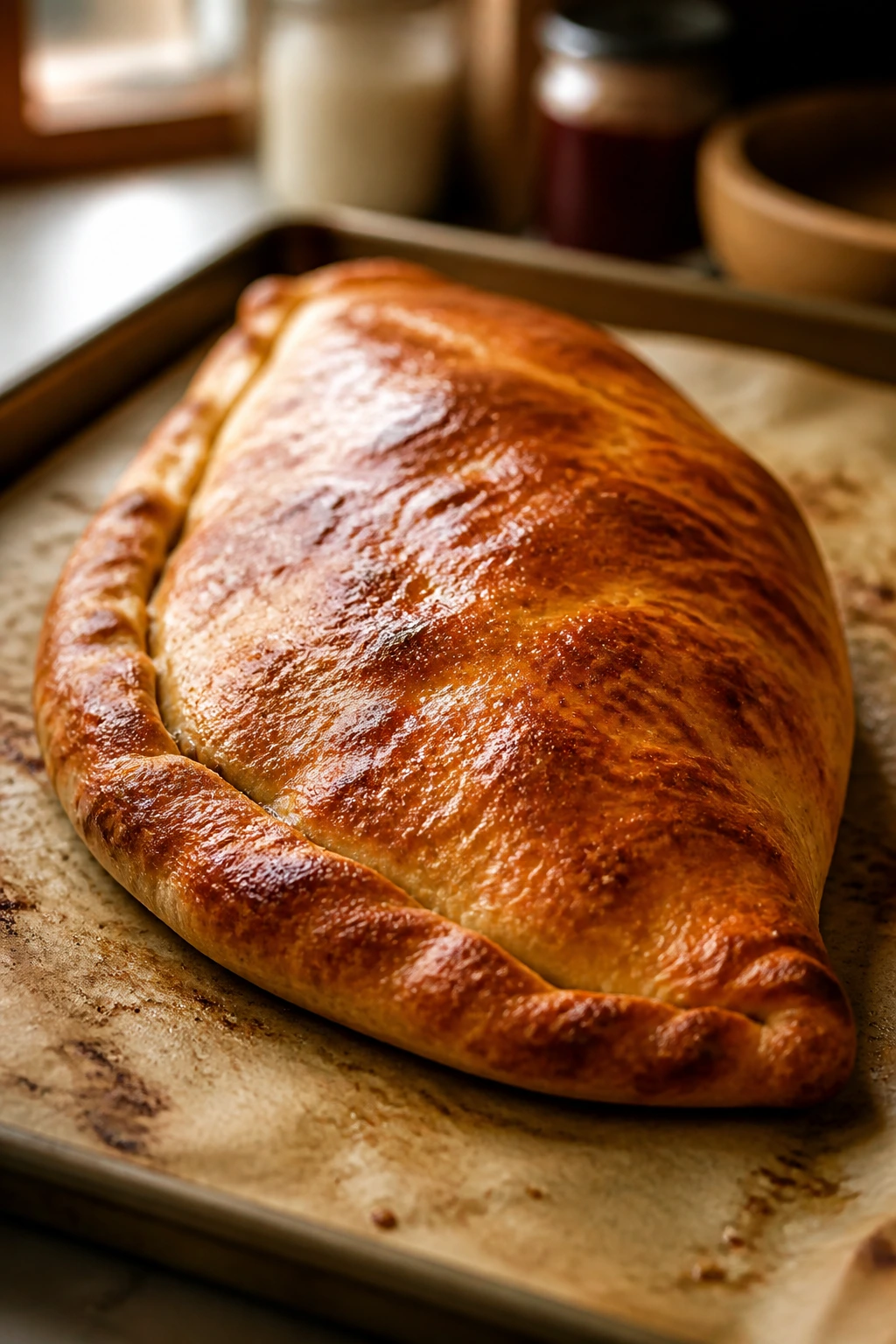
A calzone needs strong heat. Weak heat gives you pale dough and a soft bottom, which is not the texture anybody is looking for when pepperoni and cheese are involved.
Start the Bake: 14. Brush the top of the calzone lightly with the beaten egg wash, making sure the surface is coated in a thin, even layer. Don’t flood the slits. The egg wash is there for color, not glossing over every crease like paint.
- Bake for 18 to 22 minutes, rotating once halfway through if your oven has hot spots, until the top is deep golden brown and the underside sounds firm when tapped with a spatula. If you have a thermometer, the center should be about 200°F to 205°F. If the top browns too fast, tent it loosely with foil for the last few minutes.
Make the Glaze: 16. While the calzone bakes, melt the butter in a small saucepan over medium-low heat. Stir in the brown sugar, water, honey, salt, garlic powder, and red pepper flakes, and keep stirring for 1 to 2 minutes until the sugar dissolves and the glaze looks smooth.
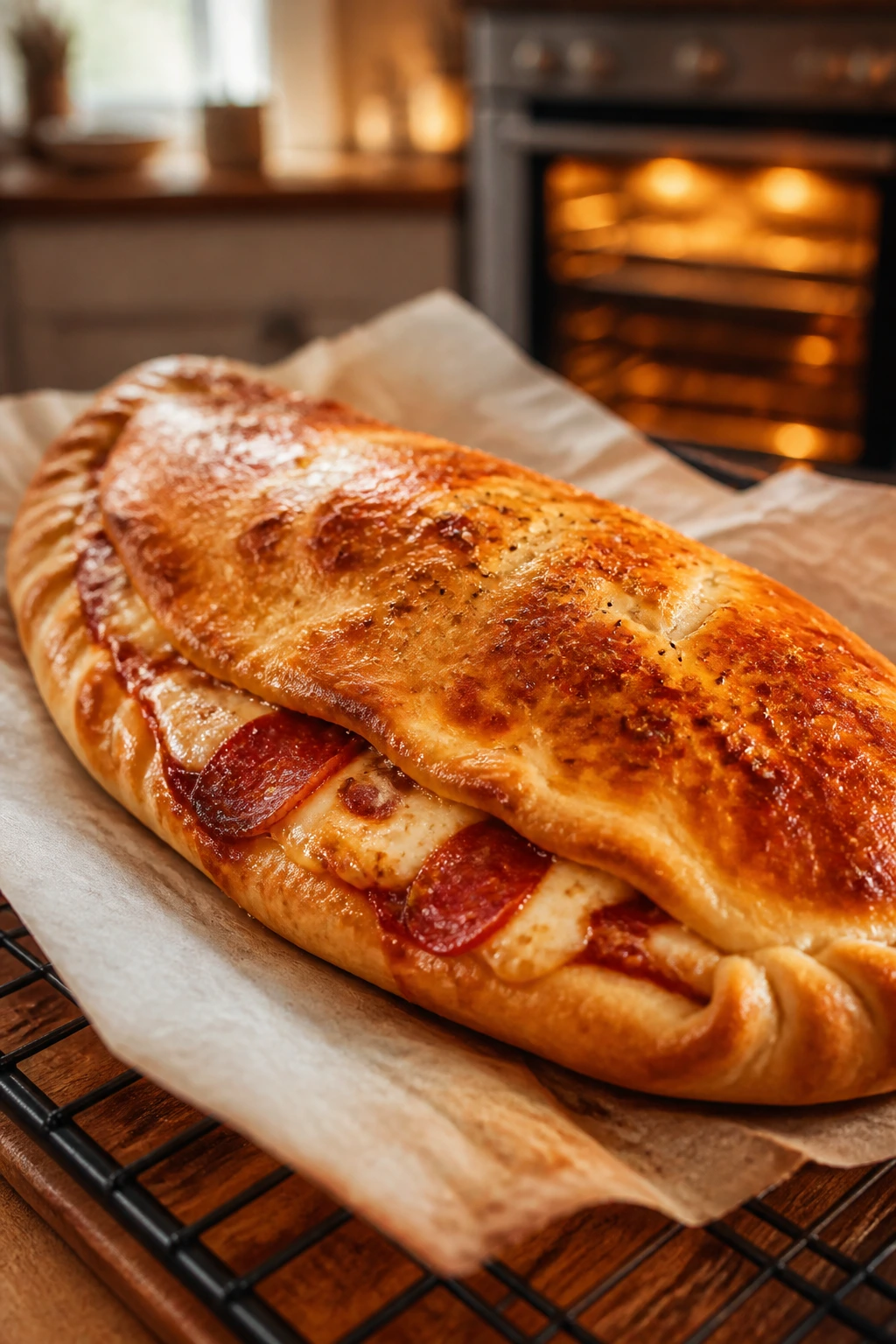
Finish and Rest: 17. Remove the calzone from the oven and brush the warm brown sugar glaze over the hot crust in a thin, even coat. You want a sheen, not a soak. Let the calzone rest for 10 minutes before slicing so the cheese firms up just enough to stay inside the crust instead of running across the board.
That last rest matters more than people think. Cut too early and you get molten cheese everywhere. Wait the full 10 minutes and the slice holds, the glaze sets, and the whole thing feels intentional rather than accidental.
How to Serve It Without Sogginess
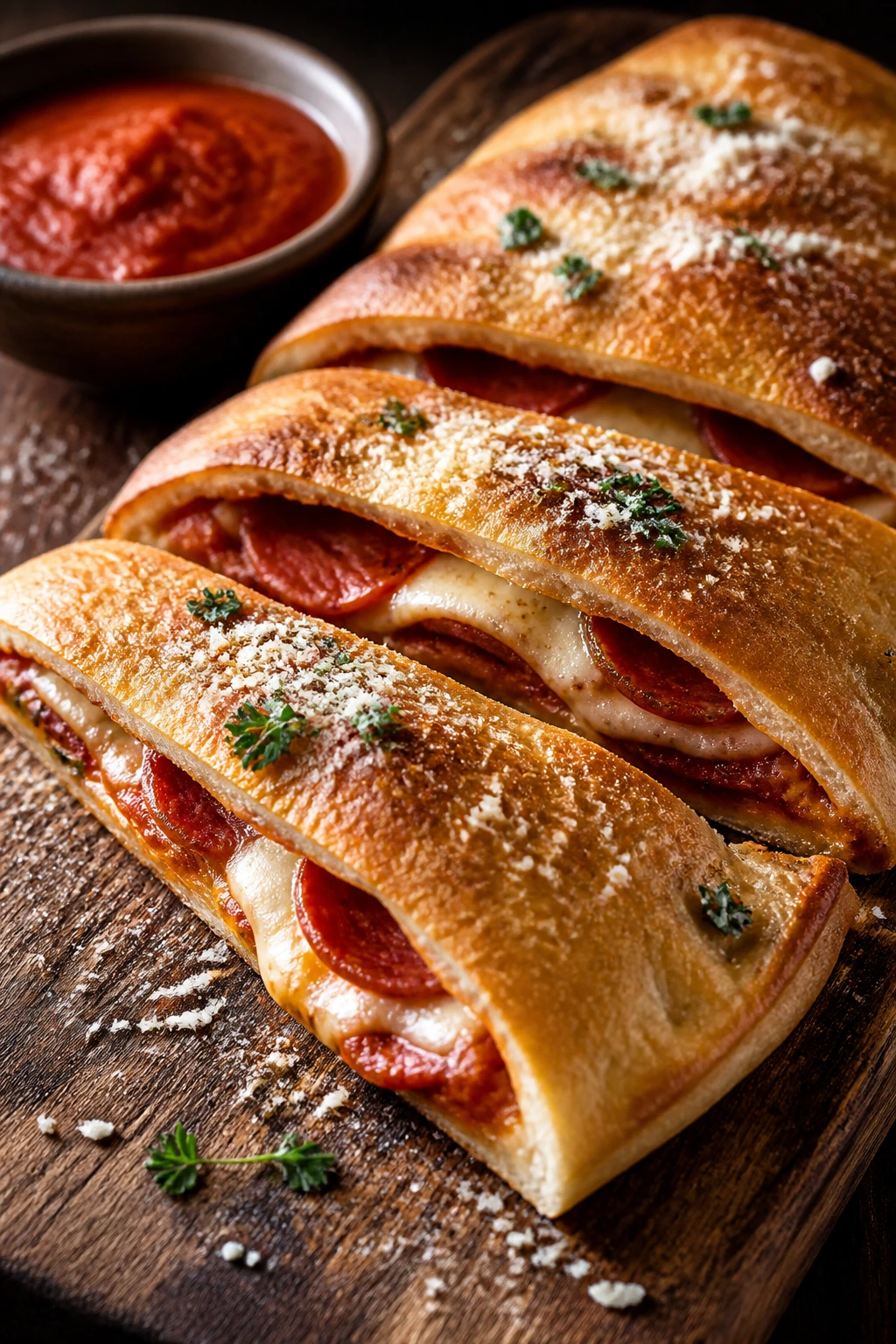
Presentation: Slice the calzone on a board or platter after the 10-minute rest, not on the baking sheet where the steam has nowhere to go. I like a serrated knife for this because it gets through the crust without pressing the filling out of the cut edge. A few flakes of Parmesan or a pinch of chopped parsley on top make the brown glaze look a little sharper, though the glaze itself is already doing the visual work.
Accompaniments: A small bowl of warm marinara on the side makes sense here, but keep it thick. A crisp arugula salad with lemon and olive oil cuts through the cheese better than a heavy Caesar, and roasted broccoli or garlicky green beans keep the plate from feeling all bread and cheese. If you want extra heat, add pepperoncini on the side instead of stuffing more spice into the filling.
Portions: One large calzone serves 4 as a main dish or 6 if you cut smaller wedges and set out a salad. If you’re feeding people with big appetites, pair it with a simple vegetable side and call it dinner. If you’re serving it as part of a larger spread, cut it into six pieces and the slices stay neater.
Beverage Pairing: A dry lager, a crisp pilsner, or a lightly chilled Lambrusco plays nicely with the salty pepperoni and the sweet glaze. If you’re skipping alcohol, sparkling water with lemon or unsweetened iced tea keeps the palate clear between bites. Sweet soda is the one thing I’d avoid; the glaze already brings enough sweetness to the table.
Additional Tips and Flavor Boosters That Matter
Flavor Enhancement: A tiny pinch of fennel seed in the filling gives the pepperoni a more sausage-like edge, especially if you like old-school pizza-shop flavor. Crush it lightly before adding it so you don’t get hard seeds in the bite.
Time-Saver: Mix the filling while the dough rises and line the pan before you roll anything out. The whole process feels calmer when you aren’t hunting for a pastry brush with dough on your hands.
Pro Move: Preheat the baking sheet or stone for a full 30 minutes. A hot surface gives the bottom crust enough heat to brown before the filling turns the inside soft, and that difference is obvious the moment you lift the first wedge.
Cost-Saver: Block mozzarella usually costs less per ounce than pre-shredded bags, and it melts better too. If you’re cooking for a crowd, use pepperoni sliced from a deli package and chop it yourself rather than buying tiny specialty packs.
Make-It-Yours: Add thinly sliced black olives, sautéed onions, or well-drained banana peppers if you want a more loaded filling. If you like a sweeter edge, stir an extra teaspoon of brown sugar into the glaze. If you want it more savory, cut the honey to 1/2 teaspoon and add a pinch more salt.
Mistakes That Make Calzones Leak or Bake Up Heavy
-
Overfilling the pocket: The symptoms are easy to spot — the seam stretches thin, filling spills out, or the calzone puffs unevenly in the oven. Keep the filling compact and stop short of the rim by a full inch; a calzone always looks a little underfilled right before it goes in, and that’s normal.
-
Using wet cheese or loose sauce: If the bottom bakes up pale and the inside turns soupy, moisture was the culprit. Drain the ricotta, use low-moisture mozzarella, and make sure the sauce is thick enough to hold on a spoon instead of sliding right off.
-
Skipping the vent slits: A sealed pocket without escape routes builds steam, and steam will find a weak spot. Three small cuts on top are enough to keep the crust from ballooning or splitting in the wrong place.
-
Baking on a cold pan: Pale bottoms and soft undersides usually mean the pan didn’t have enough heat to start the crust. Preheat a stone or hot sheet pan, or at least use parchment on a well-heated oven rack situation so the bottom isn’t left to steam in place.
-
Glazing before baking: This is the easiest way to get a dark, sticky top that tastes a little burnt. Brush the glaze on after the calzone comes out of the oven; the heat from the crust is enough to melt it into a shiny finish without scorching the sugar.
-
Cutting too soon: If the first slice floods the board with cheese, patience was the missing ingredient. Give it the full 10-minute rest, then slice with a serrated knife and use a quick sawing motion rather than pressing down hard.
Variations on the Calzone Theme
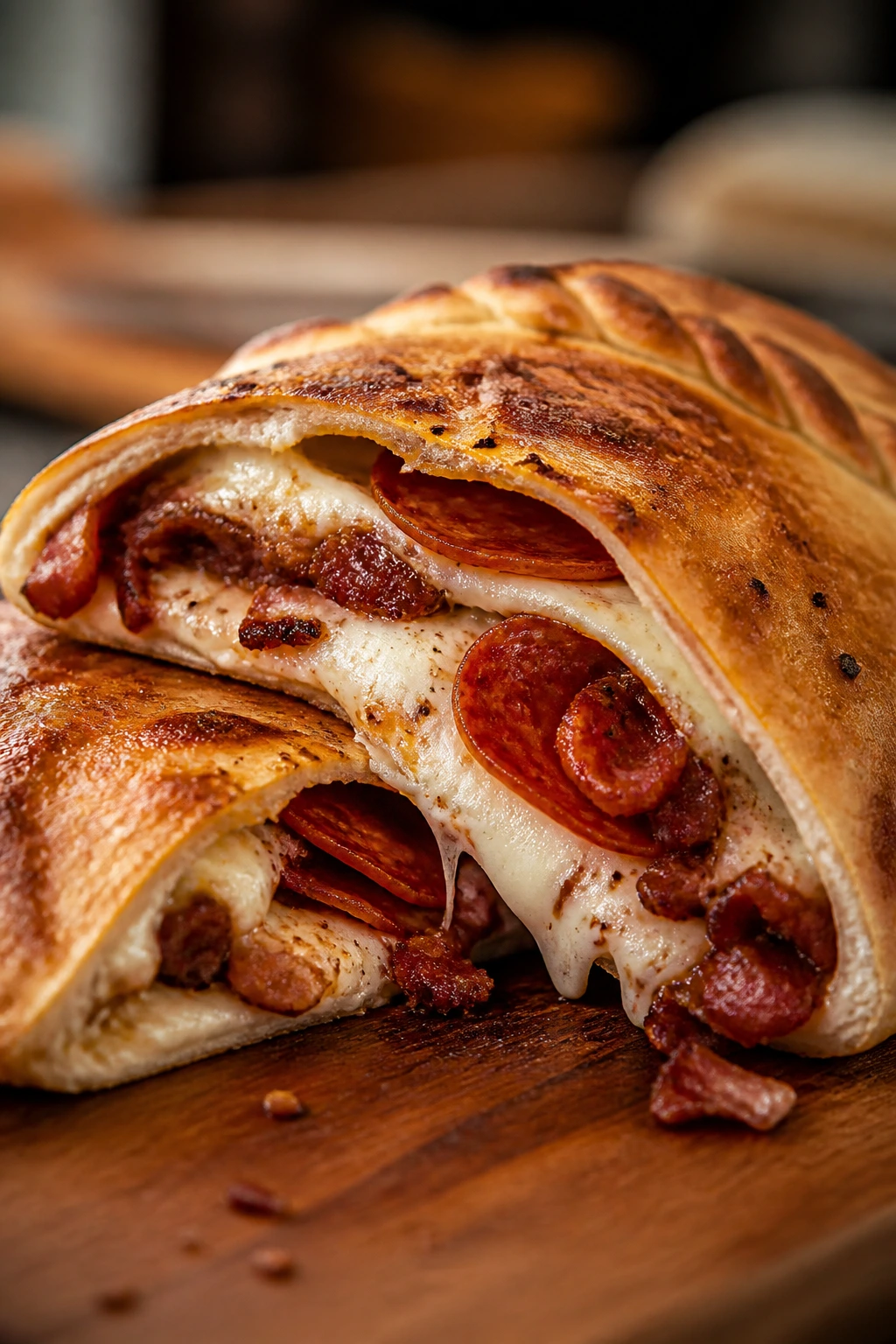
Pepperoni-Bacon Crunch: Cook 4 to 6 strips of bacon until crisp, blot them dry, and chop them into small pieces before mixing them into the filling with the pepperoni. The extra smoke makes the sweet glaze taste a little deeper, and the bacon gives you those little salty edges that crackle when you bite them.
White Pie Pepperoni: Skip the pizza sauce and increase the ricotta to 1 1/4 cups, then add 1 cup of finely chopped spinach that’s been squeezed dry. The filling turns creamier and less tomato-forward, and the brown sugar glaze lands as a sharper contrast against the milky cheese.
Hot Honey Burn: Keep the brown sugar glaze, but add an extra pinch of red pepper flakes and finish each slice with a few drops of hot honey. This is the version I’d make for anyone who likes the sweet-heat thing and doesn’t want the pepperoni to be the only thing bringing spice.
Sausage Stack Swap: Replace half the pepperoni with 6 ounces of cooked Italian sausage, crumbled and cooled. It leans richer and less salty, which makes the glaze feel even more balanced; it also pushes the calzone a little farther into proper dinner territory.
Mini Hand Pockets: Divide the dough into 4 equal pieces, roll each into a smaller round, and fill them lightly. Bake for 14 to 16 minutes instead of the full time, then brush the glaze on as soon as they come out. These are easier to pack, easier to freeze, and a lot less messy for anyone who prefers a few clean bites over one giant wedge.
Make-Ahead, Storage, and Reheating
Room Temperature: Because this calzone contains cheese and cured meat, don’t leave it out for more than 2 hours. After that, it should go into the fridge.
Refrigerator: Wrap leftovers tightly or store them in an airtight container for 3 to 4 days. If the glaze has softened the crust, separate slices with a sheet of parchment so they don’t glue themselves together.
Freezer: Baked slices freeze well for up to 2 months. For the cleanest texture, wrap each slice in parchment and then foil, or freeze the whole calzone first, slice it after it firms up, and store the pieces in a freezer bag.
Reheating: The oven gives the best crust. Reheat slices at 375°F for 8 to 12 minutes, or until the center is hot and the edges feel crisp again. A skillet over medium-low heat with a lid works too — about 4 to 6 minutes per side — and it brings the bottom back to life fast.
Make-Ahead: The dough can rise in the refrigerator for up to 24 hours after the first mix. If you want to get ahead, mix the filling a day in advance and keep it chilled separately; assemble the calzone the same day you bake it so the crust stays dry. You can also assemble the calzone, freeze it unbaked on a tray until firm, wrap it tightly, and bake it from frozen at 425°F, adding 10 to 15 minutes to the bake time. Brush the glaze on after it comes out, not before.
Frequently Asked Questions About This Calzone
Can I use store-bought pizza dough instead of making it from scratch?
Yes, and it’s a practical shortcut if you want the filling and glaze to be the star. Use about 1 pound of dough, let it rest at room temperature for 30 minutes so it stretches without snapping back, and keep the filling modest because many store-bought doughs are rolled thinner than homemade.
Do I have to use ricotta?
No, but ricotta gives the filling a soft, spoonable middle that keeps the calzone from feeling dry. If you dislike it, use well-drained cottage cheese or replace it with an extra 1/2 cup of mozzarella and 2 tablespoons of Parmesan; the texture will be tighter, but it still works.
Why did my calzone burst open in the oven?
Usually it was filled too full, sealed too loosely, or rolled too thin at the seam. Keep the filling centered, leave a full 1-inch border, press the air out before sealing, and make the steam vents on top so the pressure has somewhere to go.
Can I make this ahead and bake it later?
Yes. The best make-ahead move is to let the dough rise in the fridge overnight and mix the filling separately a day in advance. If you want the whole thing assembled ahead of time, chill it for a few hours or freeze it unbaked; that’s safer than letting a filled calzone sit warm and wet on the counter.
Can I bake it in an air fryer?
You can, but make a smaller calzone or mini pockets so the hot air can move around the sides. Brush with egg wash and air-fry at 350°F until browned and cooked through, usually around 10 to 12 minutes for smaller pieces; add the brown sugar glaze after cooking so it doesn’t stick to the basket.
What should I do if the bottom stays pale?
Give the pan or stone more preheat time, move the calzone to a lower rack, or bake it 3 to 4 minutes longer while watching the top. If your oven runs cool, a hot preheated stone makes the biggest difference because the bottom gets direct heat the second it lands.
Can I add bacon without making the filling greasy?
Yes, but cook the bacon crisp first and blot it well before adding it to the filling. Soft bacon dumps fat into the cheese, which can make the seam slick and the center heavy; crisp bacon gives you the flavor without the puddle.
One Last Slice
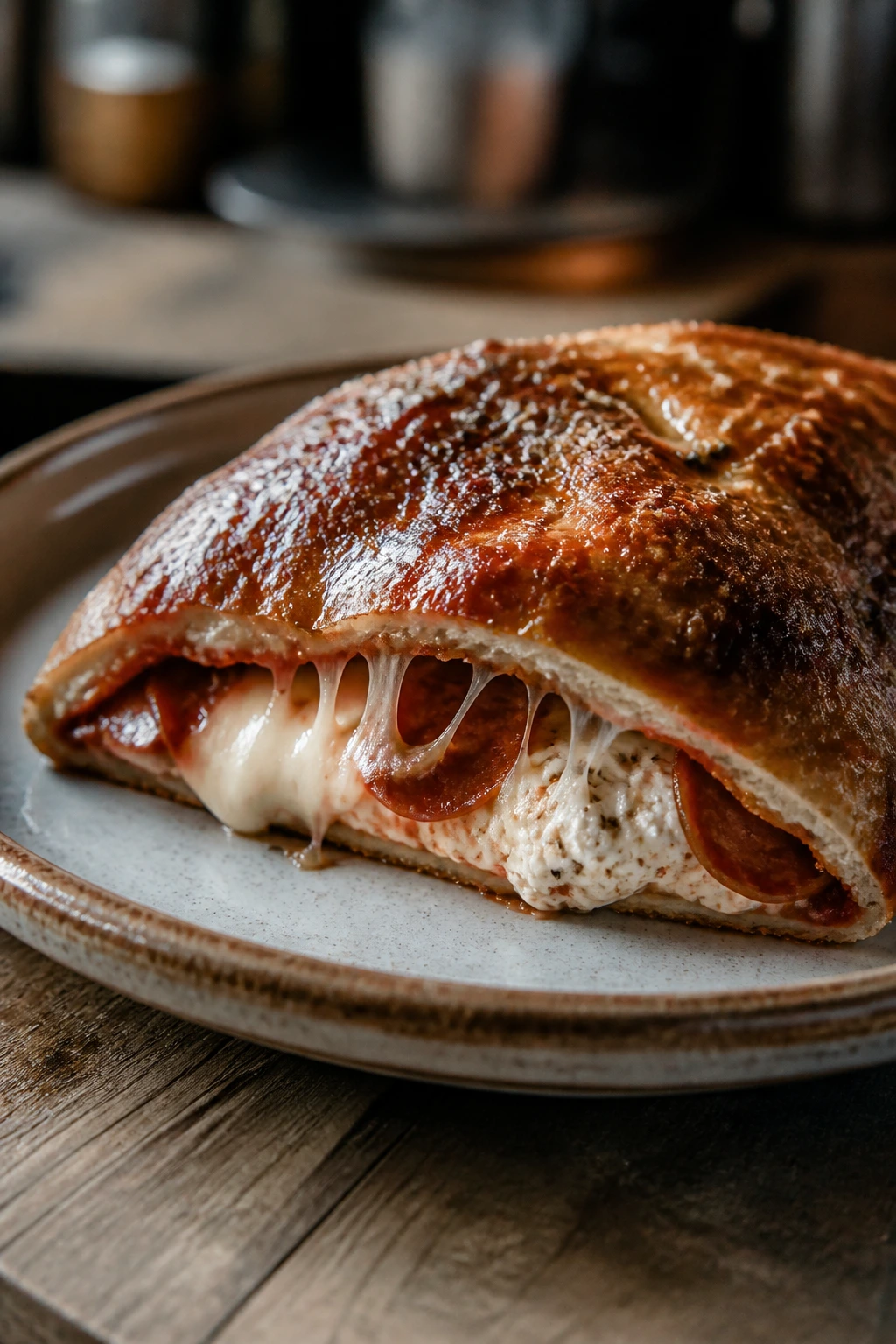
Calzones can feel a little fussy because the good stuff is hidden inside a sealed shell. That’s exactly why this one works: the dough stays soft, the filling stays thick, and the brown sugar glaze gives the crust a shiny finish that makes each bite taste deliberate. Pepperoni brings the salt, ricotta smooths the middle, mozzarella does the stringy work, and the glaze keeps the whole thing from tasting flat.
Make it once and the method starts to feel obvious. You’ll know how much filling the dough can carry, how long the crust needs before it slices cleanly, and how little glaze you actually need for that sweet-savory finish to land. After that, it’s just a matter of keeping pepperoni, mozzarella, and dough in the house at the same time.
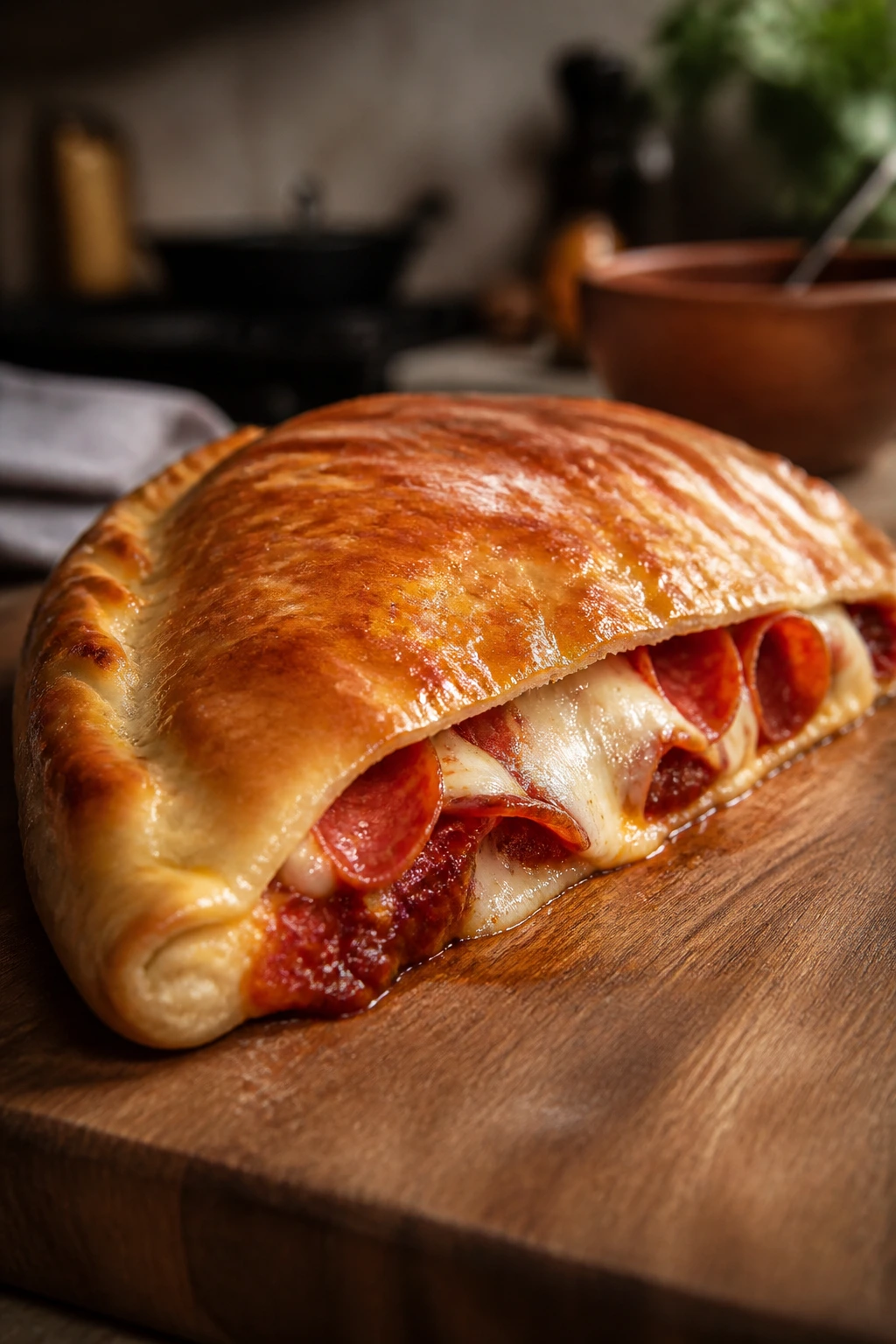
Tender Pepperoni Calzone with Brown Sugar Glaze — Recipe Card
-
Recipe Name: Tender Pepperoni Calzone with Brown Sugar Glaze
-
Description: A soft, well-sealed pepperoni calzone filled with mozzarella, ricotta, and thick pizza sauce, then brushed with a thin brown sugar glaze for a sweet-salty finish. The crust stays tender, the filling stays neat, and the top gets a glossy sheen right before serving.
-
Prep Time: 25 minutes
-
Cook Time: 20 to 22 minutes
-
Total Time: About 2 hours, including rising and resting
-
Course: Dinner, Main Course
-
Cuisine: Italian-American
-
Servings: 4 servings
-
Calories: About 650 kcal per serving
Ingredients
For the Soft Calzone Dough:
- 3 cups all-purpose flour, plus more for dusting
- 2 1/4 teaspoons instant or active dry yeast
- 1 tablespoon granulated sugar
- 1 teaspoon fine sea salt
- 1 cup warm water, about 110°F / 43°C
- 2 tablespoons extra-virgin olive oil
- 1/4 cup plain whole-milk yogurt or sour cream, at room temperature
For the Pepperoni Filling:
- 1 1/2 cups shredded low-moisture mozzarella
- 1 cup whole-milk ricotta, drained if loose
- 5 ounces pepperoni slices, roughly 1 1/2 cups, chopped if large
- 1/4 cup finely grated Parmesan
- 1/3 cup thick pizza sauce or reduced marinara
- 1 teaspoon dried oregano
- 1/2 teaspoon garlic powder
- 1/4 teaspoon crushed red pepper flakes
- 1 large egg, beaten with 1 tablespoon water, for sealing and egg wash
- 1 tablespoon cornmeal or semolina, for the pan
For the Brown Sugar Glaze:
- 2 tablespoons unsalted butter
- 2 tablespoons packed light brown sugar
- 1 tablespoon water
- 1 teaspoon honey
- Pinch of kosher salt
- Pinch of garlic powder
- Pinch of crushed red pepper flakes, optional
Instructions
-
Whisk the flour, yeast, sugar, and salt together in a large bowl. If using active dry yeast, dissolve it in the warm water with the sugar first and let it sit 5 minutes until foamy.
-
Add the warm water, olive oil, and yogurt or sour cream. Stir until a shaggy dough forms, then knead for 7 to 8 minutes by hand or 5 to 6 minutes in a mixer until smooth and slightly tacky.
-
Place the dough in an oiled bowl, cover it, and let it rise for 60 to 90 minutes until doubled in size.
-
Mix the mozzarella, ricotta, pepperoni, Parmesan, pizza sauce, oregano, garlic powder, and red pepper flakes in a bowl. The filling should be thick and scoopable.
-
Preheat the oven to 450°F (232°C). Set a rack in the lower-middle position and line a baking sheet with parchment or dust it lightly with cornmeal. If using a stone, preheat it for at least 30 minutes.
-
Punch down the dough and roll it into a 12-inch circle on a lightly floured surface. Let it rest for 5 minutes if it keeps shrinking.
-
Spoon the filling onto one half of the dough, leaving a 1-inch border. Brush the border with the beaten egg, fold the dough over, press out the air, and seal the edge firmly.
-
Transfer the calzone to the prepared pan, cut 3 small vents on top, and brush lightly with the beaten egg.
-
Bake for 18 to 22 minutes until deep golden brown and the center reaches about 200°F to 205°F. Rotate once halfway through if needed.
-
While the calzone bakes, melt the butter in a small saucepan over medium-low heat. Stir in the brown sugar, water, honey, salt, garlic powder, and optional red pepper flakes until smooth and glossy.
-
Brush the warm glaze over the hot calzone as soon as it comes out of the oven. Let it rest for 10 minutes before slicing.
Notes: Drain the ricotta if it looks loose, or the center can turn wet. Brush the glaze on after baking, not before. Extra glaze can be served warm on the side for dipping.