



The first thing you smell is the sausage hitting the hot pan. Not the sauce. Not the peppers. Just that blunt, savory snap of browned edges in a skillet, and then the brown sugar glaze goes in and turns everything glossy, sticky, and a little dangerous in the best way.
That’s why a tender sausage skillet with brown sugar glaze keeps sneaking back onto dinner tables. It does a lot with very little: a ring of smoked kielbasa, a couple of peppers, one onion, and a glaze that’s sweet enough to feel like a treat but sharp enough to keep you from getting bored halfway through the plate. If you’ve ever tasted a sweet-sausage dish that leaned too far toward candy, you know how frustrating that can be. The vinegar and mustard matter here. A lot.
I like this kind of skillet because it rewards a few small choices. Use a heavy pan, and the sausage browns instead of sulking. Cut the onions thin, and they melt into the glaze instead of hanging around in stiff strips. Add the butter at the end, and the sauce turns from sticky to silky in a single stir. Nothing fussy. Nothing ornamental. Just dinner that behaves itself and still tastes like somebody paid attention.
Why This Tender Sausage Skillet Keeps Getting Requested
-
Fast without feeling rushed: Most of the time goes into browning and softening, not standing over a complicated sauce, so the skillet moves from chopping board to table in a very short stretch.
-
Sweet and savory in the same bite: Brown sugar, Dijon, soy sauce, and apple cider vinegar keep the glaze from tasting flat or one-note; you get a sticky coat with a little bite underneath.
-
One pan, better flavor: The browned bits from the sausage and vegetables stay in the skillet and become part of the glaze instead of getting lost somewhere else.
-
Flexible with sides: Spoon it over rice, mashed potatoes, noodles, or even toasted bread, and it still makes sense.
-
Leftovers hold up well: The glaze settles into the sausage and onions overnight, so the next day tastes less sharp and more rounded.
-
Easy to adjust for the table: You can push it sweeter, tangier, or hotter with one small tweak, which is handy when you’ve got more than one opinion at dinner.
Timing, Yield, and the Feel of the Finished Pan
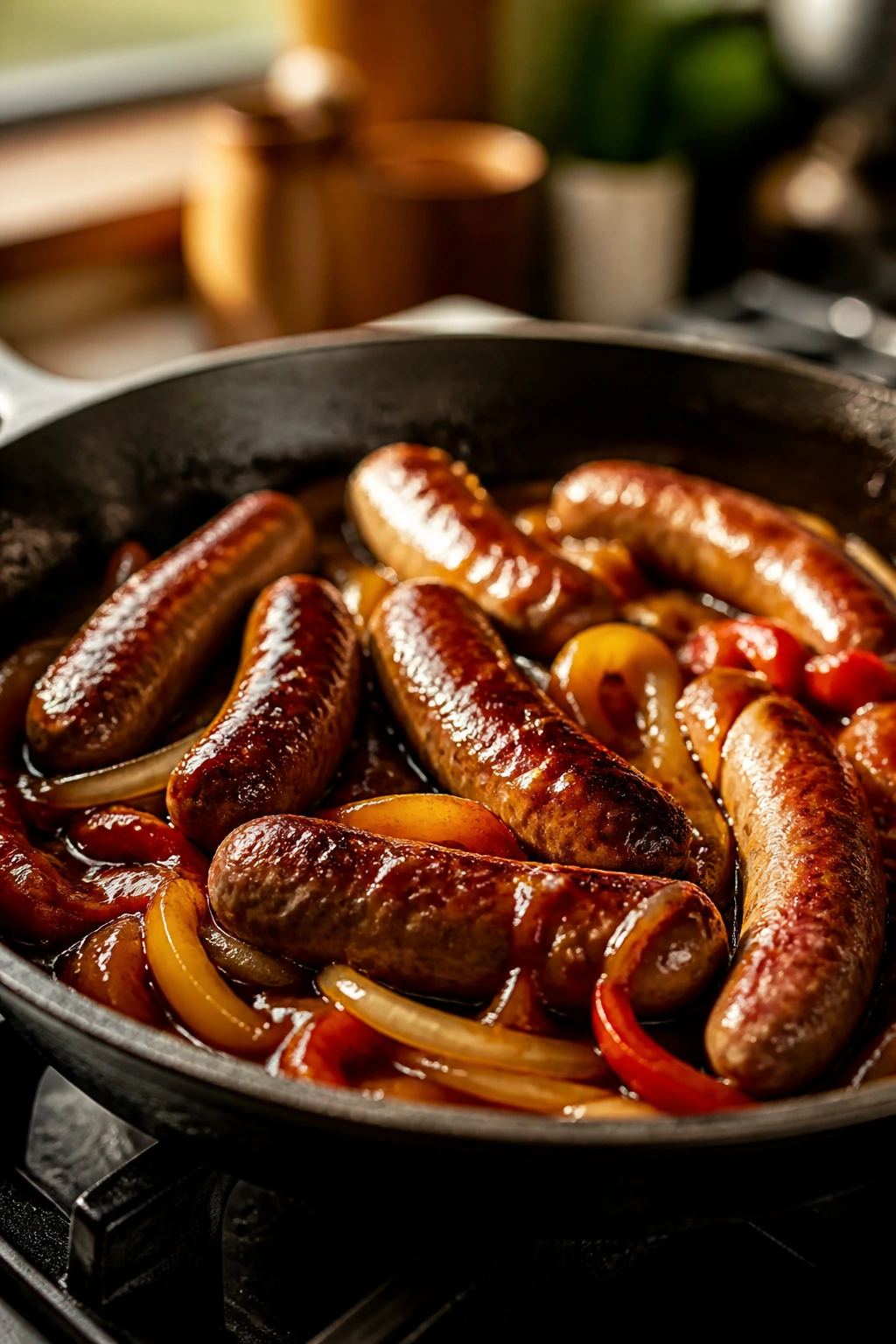
Yield: Serves 4 as a main dish
Prep Time: 15 minutes
Cook Time: 18 minutes
Total Time: 33 minutes
Difficulty: Beginner — the steps are simple, and the sausage is fully cooked, so you’re browning and glazing rather than managing raw meat.
Best Served: Hot from the skillet, over something that can catch the sauce
This is the kind of dish that looks more elaborate than it is. A glossy pan gives people the impression that you worked much harder than you did. I won’t argue with that.
What Goes Into the Pan
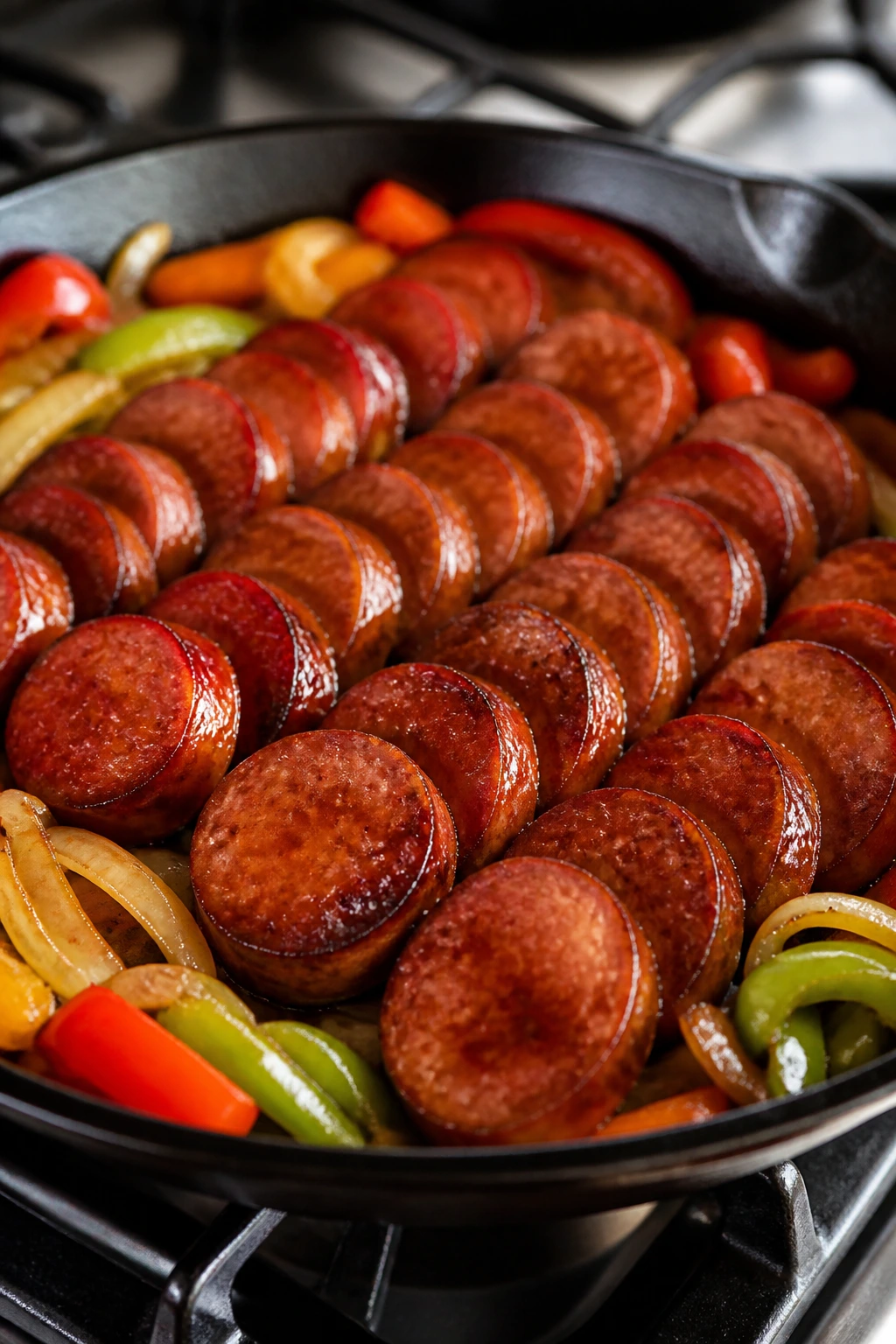
For the Skillet:
- 1 1/2 pounds fully cooked smoked pork kielbasa, sliced into 1/4-inch rounds
- 1 tablespoon neutral oil, such as avocado or canola
- 1 large yellow onion, cut into thin half-moons
- 2 bell peppers, any colors, seeded and sliced into 1/2-inch strips
- 1 small apple, cored and thinly sliced, optional but worth trying
- 2 cloves garlic, minced
- 2 tablespoons chopped fresh parsley, for serving
For the Brown Sugar Glaze:
- 1/3 cup packed light brown sugar
- 2 tablespoons apple cider vinegar
- 2 tablespoons low-sodium soy sauce
- 1 tablespoon Dijon mustard
- 1 teaspoon Worcestershire sauce
- 2 tablespoons water
- 1 tablespoon unsalted butter
- 1/2 teaspoon smoked paprika
- 1/4 teaspoon crushed red pepper flakes, optional
- 1/4 teaspoon freshly ground black pepper
Why Each Ingredient Matters in the Skillet
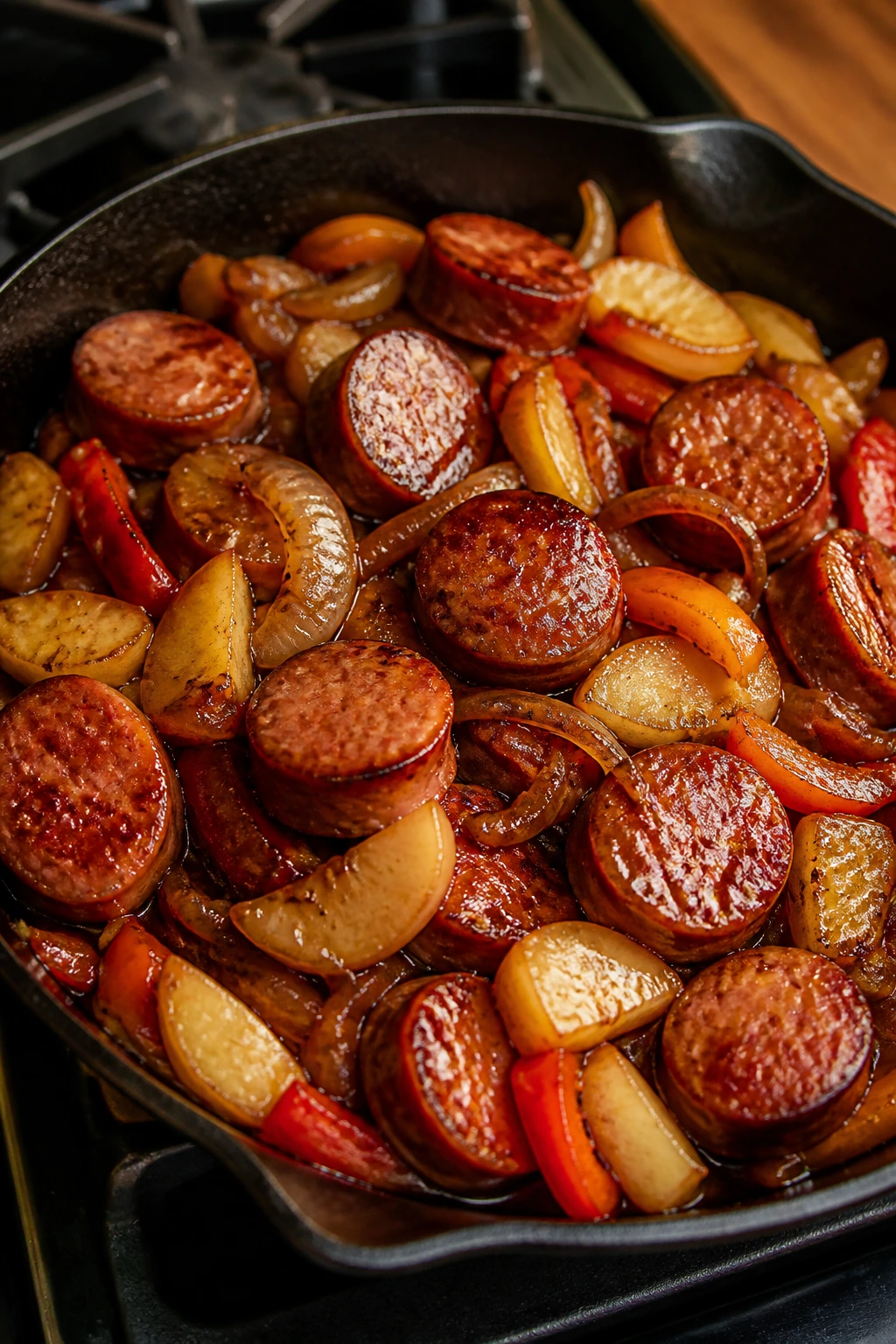
Smoked Pork Kielbasa
What to use: 1 1/2 pounds fully cooked smoked pork kielbasa, sliced into 1/4-inch rounds.
Preparation: Dry the sausage with paper towels before slicing if it feels wet on the surface; that helps it brown instead of steaming.
Substitutions: Turkey kielbasa works well, and so does smoked chicken sausage if you want a lighter flavor. Fresh pork sausage is a different project and needs longer cooking.
Tips: Choose a sausage with a firm casing and a good amount of smoke flavor. If the link is bland to begin with, the glaze has to work too hard.
Onions, Peppers, and Apple
What to use: 1 large yellow onion, 2 bell peppers, and 1 small tart apple if you want a little fruit in the pan.
Preparation: Slice the onion thin so it softens evenly, and cut the peppers into strips that are wide enough to keep some bite. The apple should be thin enough to soften in the skillet, not so thin that it vanishes.
Substitutions: Red onion brings more edge, and a poblano can stand in for one pepper if you want less sweetness. If you skip the apple, add a splash more vinegar at the end so the glaze still has lift.
Tips: The vegetables should sizzle when they hit the pan. If they sit in a puddle and go quiet, the skillet is too crowded or too cool.
Brown Sugar Glaze
What to use: Brown sugar, apple cider vinegar, soy sauce, Dijon mustard, Worcestershire sauce, water, butter, smoked paprika, black pepper, and red pepper flakes if you want heat.
Preparation: Whisk the glaze before it goes anywhere near the heat. Brown sugar that sits in one spot can scorch fast, and nobody wants that burnt-sugar edge here.
Substitutions: Maple syrup can replace some or all of the brown sugar, and balsamic vinegar can step in for part of the cider vinegar if you want a darker, deeper note. Whole-grain mustard can replace Dijon if you like visible seeds and a little crunch.
Tips: The acid is not decoration. It keeps the sauce from tasting like sticky dessert glaze, and it cuts through the fat from the sausage.
Finishing Touches
What to use: Fresh parsley and black pepper.
Preparation: Chop the parsley at the very end so it stays bright and doesn’t wilt into the board while you cook.
Substitutions: Thinly sliced scallions or a little chive work if parsley is missing from the crisper.
Tips: Add the finish off the heat. It keeps the glaze glossy and the herbs lively instead of tired.
The Pan, Knife, and Tools That Make It Easier
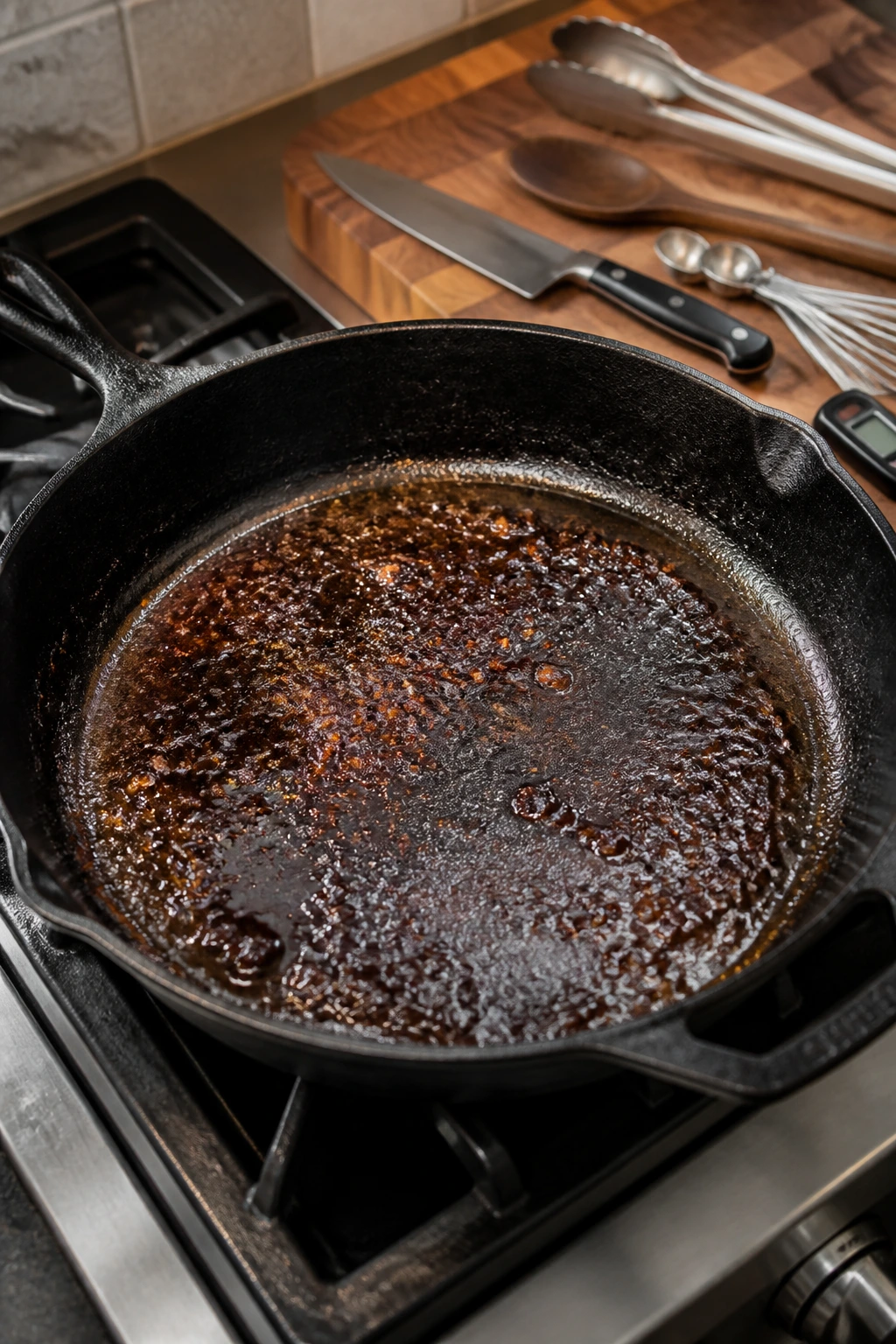
-
12-inch heavy skillet, cast iron or stainless steel: A heavier pan holds heat better, which gives you brown edges instead of pale sausage and limp vegetables.
-
Sharp chef’s knife: Thin onion slices and even sausage rounds make the cooking go faster and look better in the pan.
-
Cutting board: Use one with enough room to keep the sausage slices separate from the vegetables; if they pile up together, prep gets messy fast.
-
Small whisk or fork: The glaze is easier to keep smooth when the sugar and mustard are fully blended before it hits the pan.
-
Wooden spoon or heatproof spatula: Useful for scraping up browned bits and nudging vegetables around without shredding them.
-
Tongs: Handy for flipping sausage rounds cleanly, especially if your skillet is crowded.
-
Measuring spoons and cups: Brown sugar, vinegar, soy sauce, and mustard work best when the balance is deliberate, not guessed.
-
Instant-read thermometer, optional: If you decide to use raw sausage instead of fully cooked sausage, this takes the guesswork out of doneness.
Browning the Sausage and Building the Glaze
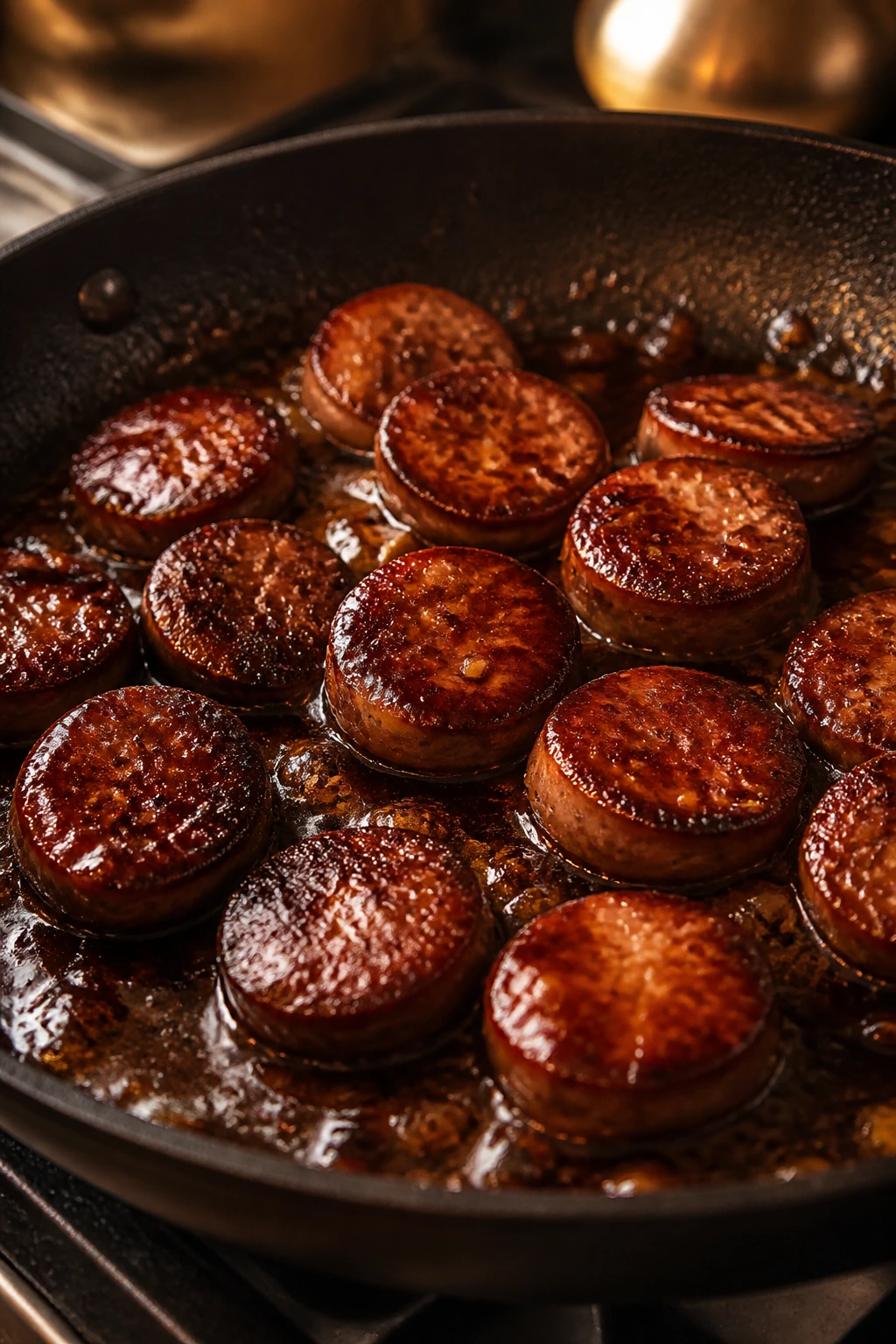
Prep the Glaze and Slice Everything First:
- Whisk together the brown sugar, apple cider vinegar, soy sauce, Dijon mustard, Worcestershire sauce, water, smoked paprika, black pepper, and red pepper flakes in a small bowl until the sugar begins to dissolve. Set the bowl near the stove so you can reach it with one hand later.
- Slice the sausage into even 1/4-inch rounds, cut the onion into thin half-moons, seed and slice the peppers, and cut the apple if you’re using it. Keep the pieces separate on the board. The cooking happens quickly once the pan is hot.
Brown the Sausage: 3. Heat a 12-inch skillet over medium-high heat for about 2 minutes, then add the oil. The oil should shimmer, not smoke. Add the sausage in a single layer and cook for 2 to 3 minutes per side until the edges are brown and the cut faces pick up some color. Work in batches if the pan is crowded; crowding turns browning into steaming. 4. Transfer the sausage to a plate and leave the browned bits in the pan. Those dark spots are the base of the flavor, and they matter more than they look.
Soften the Vegetables: 5. Reduce the heat to medium and add the onion and bell peppers. Cook for 5 to 6 minutes, stirring every minute or so, until the onion turns glossy and the peppers soften around the edges. If the pan looks dry, add 1 tablespoon water and scrape the bottom with a spoon to pull up the fond. 6. Add the apple slices, if using, and cook for 1 to 2 minutes until they lose their raw crunch but still hold their shape. The apple should soften, not collapse.
Add the Garlic and Glaze: 7. Stir in the garlic and cook for 30 seconds, just until fragrant. Don’t let it brown. Then pour in the glaze mixture and stir right away. Let it bubble for 1 to 2 minutes, until it thickens slightly and leaves a clean trail for a second when you drag a spoon through the pan. 8. Return the sausage to the skillet and toss for 1 to 2 minutes until everything is coated and heated through. Stir in the butter at the end so the glaze turns shiny and smooth. If it seems too thick, add a tablespoon of water. If it feels too thin, give it another 30 seconds of simmering.
Finish and Serve: 9. Take the skillet off the heat, scatter the parsley over the top, and grind on a little more black pepper if you want a sharper finish. Serve immediately while the glaze is still glossy and the sausage still has a little bite at the edges.
If you decide to use raw sausage instead of smoked kielbasa, the method changes. Brown it more gently, cook until the center reaches the proper safe temperature for the meat you bought, and expect the whole dish to take longer. That swap is possible. It’s just not the same quick skillet.
How I Like to Serve It
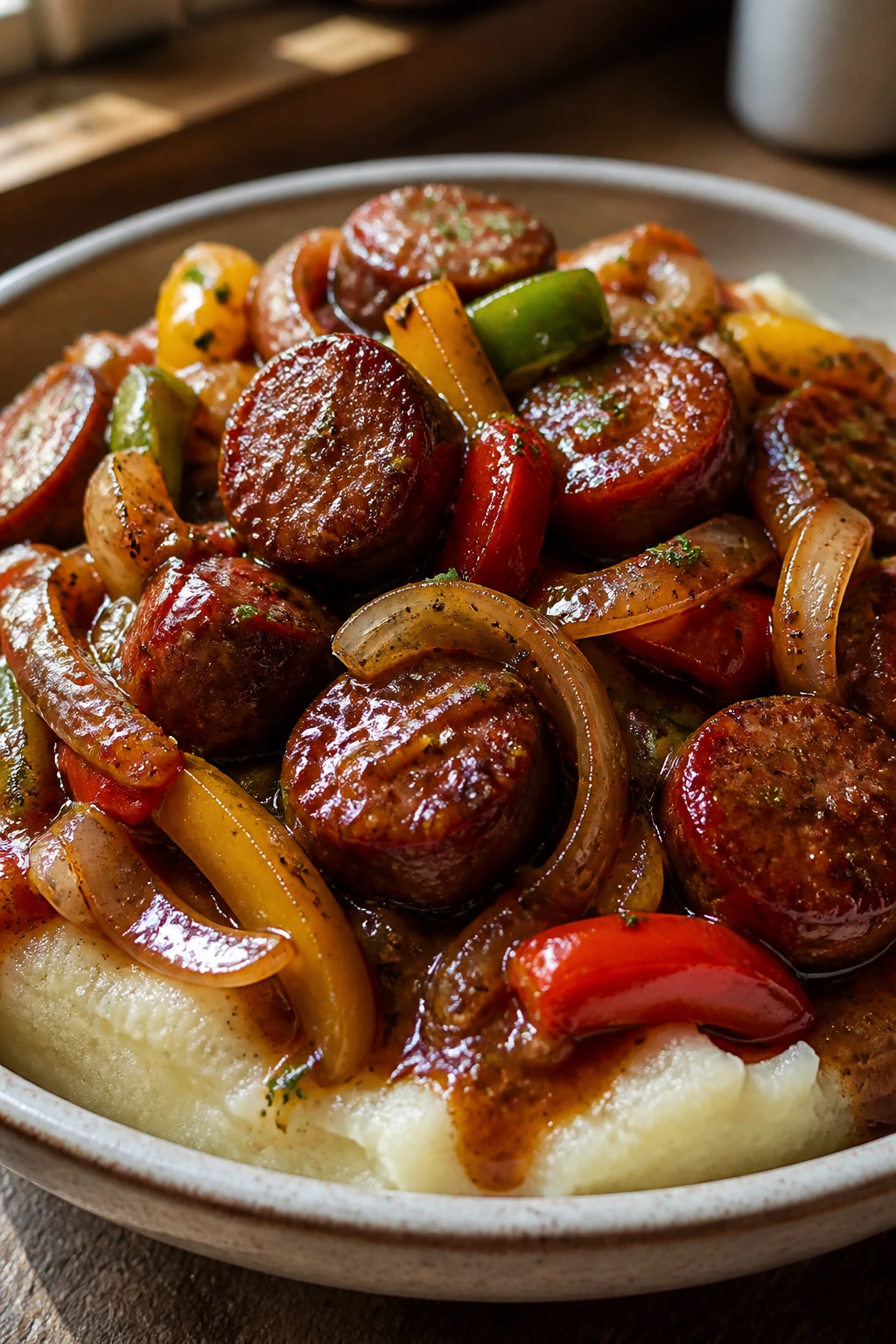
Presentation: Spoon the sausage, peppers, onions, and glaze into a shallow bowl or over a mound of starch so the sauce has somewhere to pool. I like to tuck a few sausage rounds on top and leave some of the onions visible; it looks better than dumping everything in a flat heap.
Accompaniments: Mashed potatoes soak up the brown sugar glaze without fighting it. White rice, buttered egg noodles, or crusty bread also work. If you want something sharper alongside the sweetness, serve it with sauerkraut, a vinegar-dressed slaw, or plain green beans tossed with salt and butter.
Portions: Four people can make a meal of this as written, especially over rice or potatoes. If you’re serving it as part of a bigger spread, it stretches to six smaller portions without feeling skimpy. To scale it up, use a larger skillet or cook in two batches so the sausage still browns instead of steaming.
Beverage Pairing: A dry hard cider is the cleanest match because it echoes the apple note without making the meal sweeter. If you want beer, choose a crisp lager or pilsner. For a nonalcoholic glass, iced black tea with lemon or sparkling apple cider keeps the plate lively.
Small Adjustments That Make a Big Difference
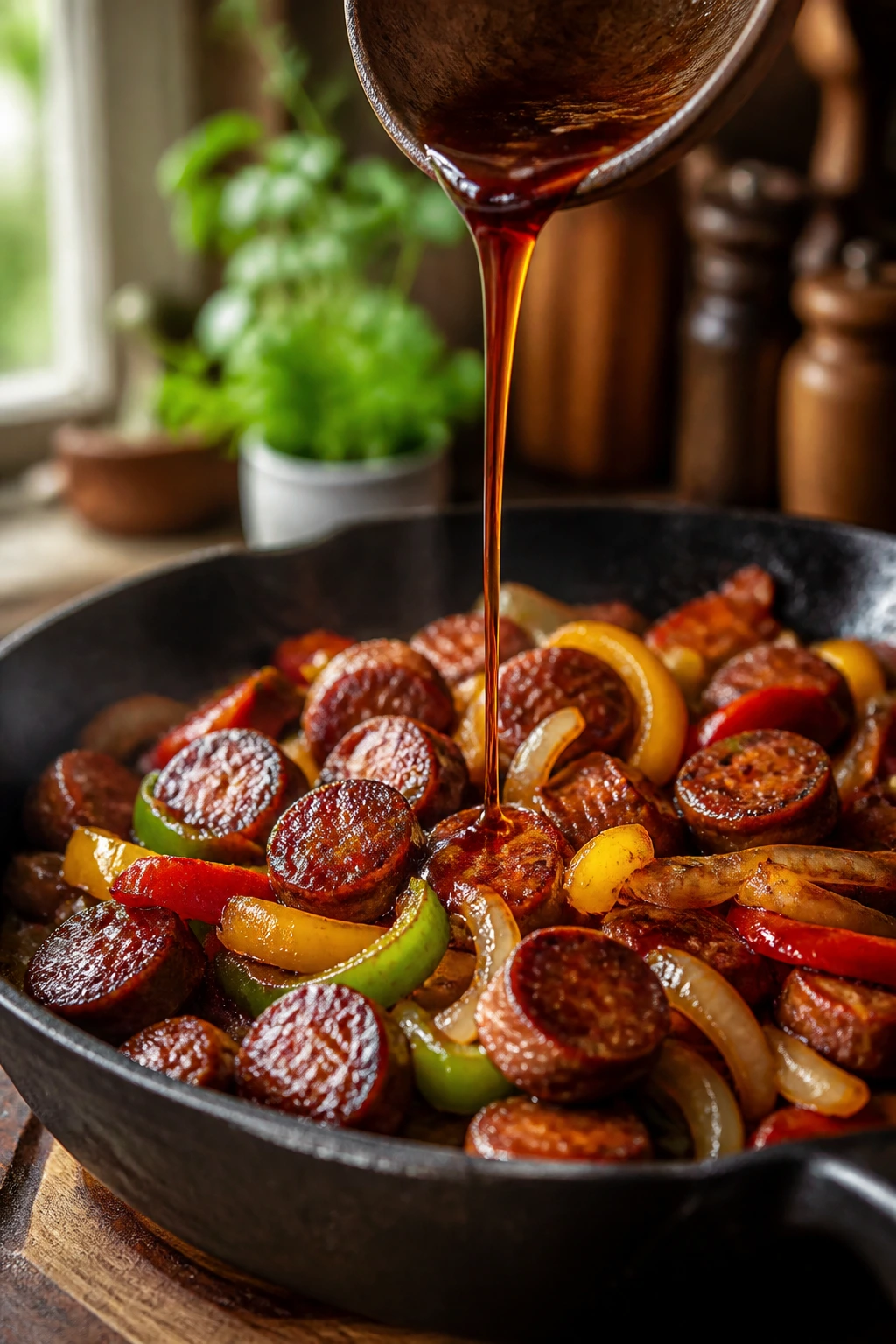
Flavor Enhancement: A teaspoon of whole-grain mustard added with the glaze gives the sauce a little grit and a deeper mustard note. If you like heat, a pinch of cayenne or another shake of red pepper flakes wakes up the sweetness without turning the dish into a spicy stunt.
Time-Saver: Slice the sausage, onion, peppers, and apple in the morning and keep them covered in the fridge. Whisk the glaze into a jar and shake it before dinner. That leaves you with a short, clean cooking window instead of a half-hour of prep chaos.
Cost-Saver: Don’t chase a fancy sausage ring if a solid smoked kielbasa is sitting at a better price. Pepper colors don’t matter much here, so buy what looks good or use a mix from the store’s cheaper bagged selection. The glaze does the heavy lifting.
Serving Suggestions: A final shower of parsley makes the pan look fresher, but a few thin scallion slices can give it a little more bite. If the finished dish tastes slightly heavy, add a teaspoon of vinegar to the skillet off the heat and stir once. That one move brightens the whole pan.
Common Mistakes That Turn the Sauce Flat or Burned
-
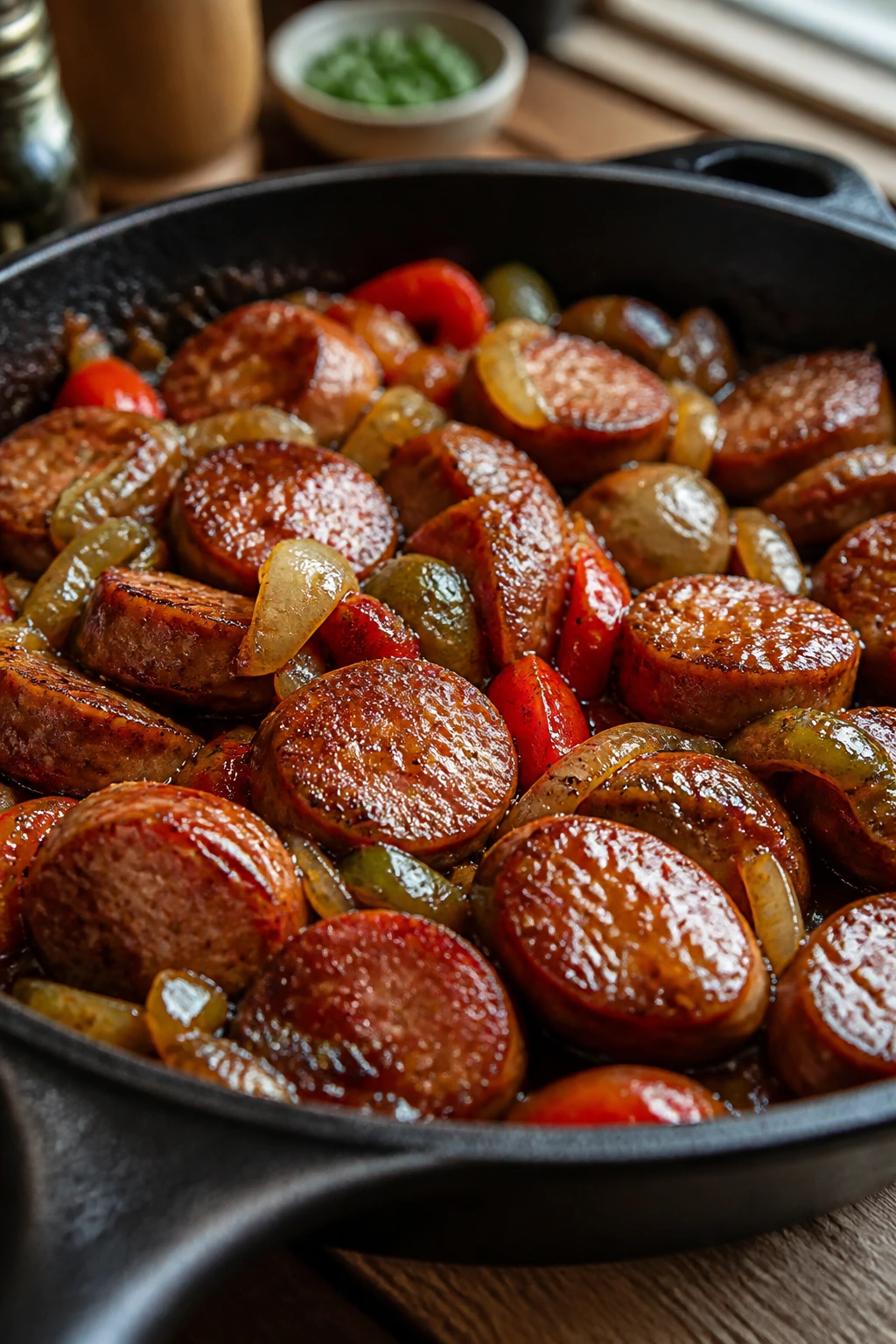
Crowding the sausage in the skillet: The rounds go gray and soft instead of bronzed. The fix is simple: give the slices space, or brown them in two batches. A 12-inch skillet helps more than most people realize.
-
Turning the heat up too high once the sugar goes in: Brown sugar burns quickly, and burned sugar tastes bitter, not deep. Keep the burner at medium during the glaze stage, and add the liquid ingredients before the sugar has a chance to sit dry in the pan.
-
Cooking the sausage as if it were raw: Fully cooked sausage only needs color and heat. If you keep it on the stove until it behaves like a pork chop, the casing can split and the texture gets dry around the edges.
-
Letting the garlic brown: Garlic needs a short, fast stay in the pan. If it goes from fragrant to dark, the whole skillet picks up a sharp, bitter aftertaste. Thirty seconds is enough.
-
Skipping the vinegar or mustard: A sweet glaze without acid tastes flat and sticky in the wrong way. The vinegar and mustard are what keep the sauce from feeling heavy after the third bite.
-
Not reducing the sauce long enough: If the glaze is still watery when the sausage goes back in, it slides off instead of clinging. You want a light syrup that coats the back of a spoon, not broth.
Flavor Variations That Fit Different Moods
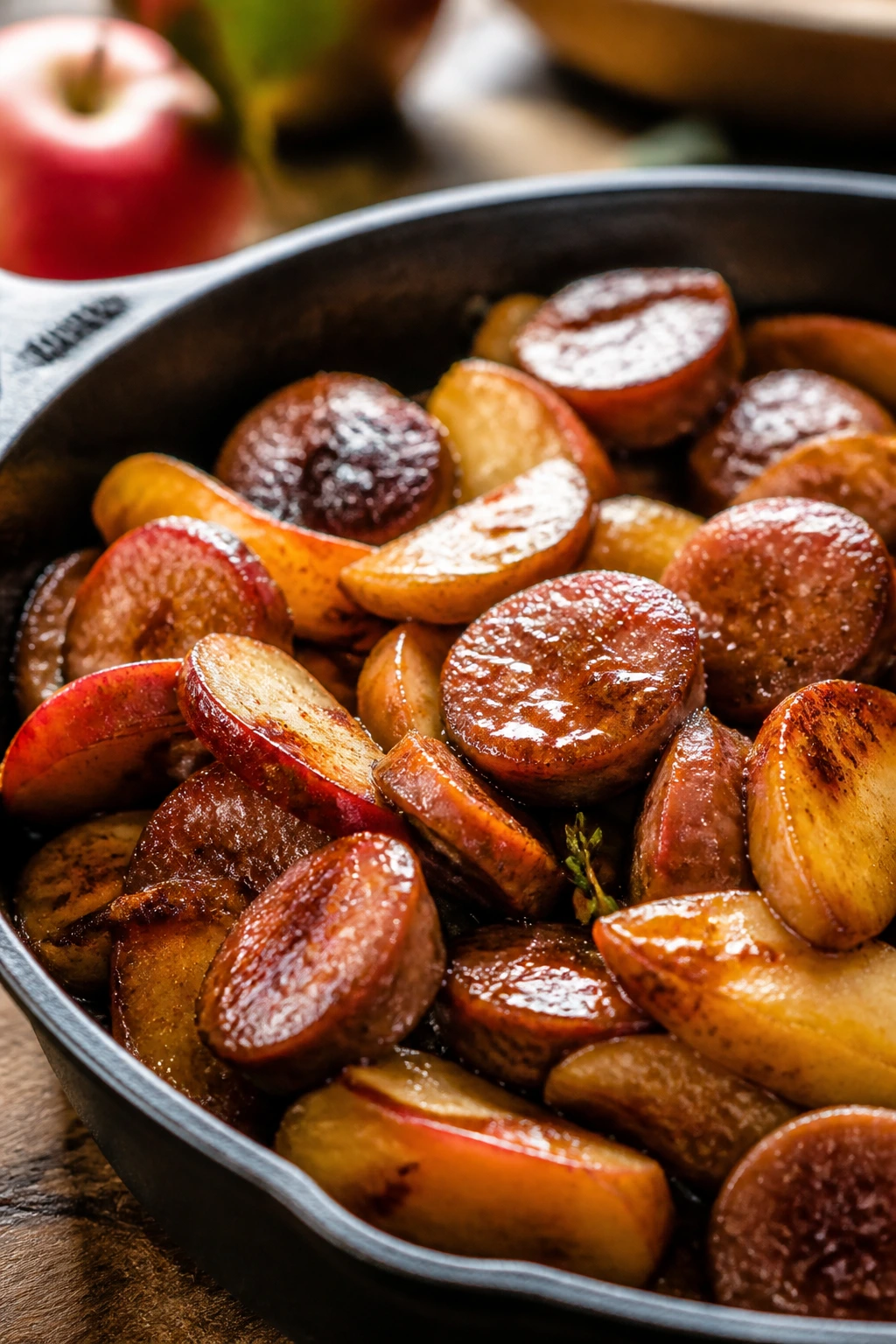
Smoky Apple Orchard Skillet
Add the apple as written, use an extra 1/2 teaspoon smoked paprika, and finish with a small pinch of thyme. This leans into the sweet-smoky side and works especially well with mashed potatoes or buttered noodles. If your apple is very sweet, pull the brown sugar back to 1/4 cup.
Spicy Cajun Edge
Swap the kielbasa for andouille and add 1/4 teaspoon cayenne plus a little extra black pepper. The brown sugar still matters, but the heat and smoke take the lead, and the dish feels louder on the plate. Serve it with rice, because the sauce wants something plain underneath it.
Mustard-Forward Pan
Increase the Dijon to 2 tablespoons and add 1 tablespoon whole-grain mustard. Cut the brown sugar to 1/4 cup so the mustard can speak without being buried. This version tastes sharper and less sticky, which I prefer when I’m serving it with sauerkraut or a vinegary slaw.
Lower-Sugar Tangy Skillet
Reduce the brown sugar to 2 tablespoons and add 1 extra tablespoon of apple cider vinegar. The sauce won’t be as syrupy, but it will still coat the sausage and vegetables. This is the move when you want the skillet to feel more savory than sweet.
Mushroom and Onion Swap
Use 8 ounces of sliced mushrooms along with the onion, and reduce the peppers to one. Mushrooms soak up the glaze and make the whole pan taste deeper and earthier. They also give the dish a softer, more dinner-like feel if peppers are not your thing.
Make-Ahead, Storage, and Reheating
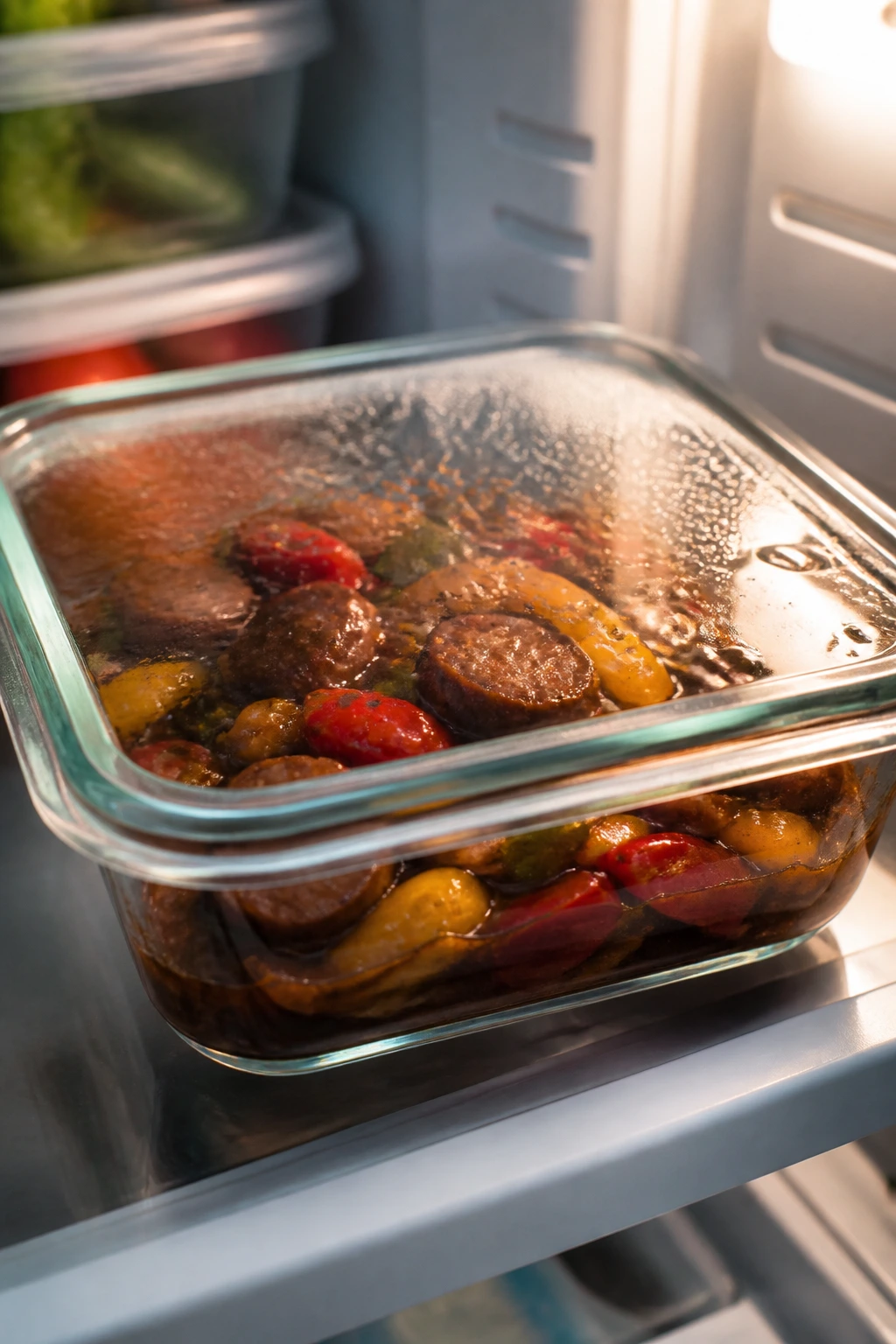
Make-Ahead: You can slice the sausage and vegetables up to 1 day ahead and keep them covered in the fridge. The glaze can be whisked together 3 days ahead and stored in a sealed jar; just shake or stir it before using because the mustard and sugar may settle. If you want dinner to move fast, this is where the time disappears.
Refrigerator: Leftovers keep well for 3 to 4 days in an airtight container. The glaze will thicken as it chills, and the onions get a little softer, which I like. The peppers lose some crunch, but the flavor gets rounder, not worse.
Freezer: You can freeze the finished skillet for up to 2 months, though the peppers and onions will soften more after thawing. Pack it into a freezer-safe container with as little air as possible. Thaw it overnight in the fridge before reheating so the glaze doesn’t split.
Reheating: The skillet reheats best in a nonstick or stainless pan over medium-low heat with 1 to 2 tablespoons of water. Stir often and stop as soon as it’s hot through; the sausage only needs warming, not another full cook. If you use a microwave, do it in 30-second bursts and stir between each one so the glaze doesn’t harden at the edges while the middle stays cold.
Make-ahead note: This dish is good the next day, but it is not one of those leftovers that improves for a week in the fridge. The sweet glaze starts to flatten after day four. If you know you won’t finish it, freeze the extra right away.
Questions People Ask Before Making It

Can I use raw sausage instead of smoked kielbasa?
Yes, but it becomes a different recipe. Raw sausage needs longer cooking and a more careful heat level so the outside does not burn before the center is done; use an instant-read thermometer if you go that route. The glaze stage should still happen near the end, once the sausage is cooked through.
Do I have to use bell peppers?
No. Bell peppers bring color and a little sweetness, but the skillet still works with onions alone, or with mushrooms, zucchini, or thin fennel slices. If you remove the peppers, keep some vegetable volume in the pan so the glaze has something to cling to.
What if my glaze turns too thick?
Stir in 1 tablespoon of water at a time over low heat until it loosens. Brown sugar can move from glossy to sticky in a hurry, especially if the pan runs hot. A small splash of vinegar also helps if the sauce tastes thick and sleepy.
What if the glaze is too thin and keeps running off the sausage?
Let it simmer a little longer before you return the sausage to the skillet. You want bubbles that break slowly and a sauce that leaves a trail when stirred. If you add the sausage too early, the extra moisture from the meat and vegetables can thin the glaze again.
Can I make this ahead for a potluck or family dinner?
Yes, and it holds better than a lot of skillet dishes. Cook it, cool it, and store it in the fridge, then reheat gently in a skillet with a splash of water. If you need to keep it warm for serving, a low slow cooker setting will work for a short stretch, though the glaze will loosen a bit.
What sides keep the sweet glaze from feeling too heavy?
Anything with acid or plain starch works. Vinegar slaw, sauerkraut, green beans, or a crisp salad cut the sweetness nicely, and rice or mashed potatoes soak up the sauce without competing with it. I like one sharp side and one soft side on the same plate.
Can I cut the sugar and still get a glaze?
You can, but don’t cut it so much that the sauce turns watery and forgettable. Bring the brown sugar down to 2 tablespoons, keep the mustard and vinegar, and let the sauce simmer a touch longer so it reduces. The texture will be lighter, not syrupy, which is fine if that’s what you want.
Why is my sausage not browning?
Usually the skillet is crowded or too cool. Sausage browns fast only when the pan has real heat and enough open surface around each slice. Dry the sausage first, give it room, and leave it alone for the first minute instead of nudging it every ten seconds.
A Skillet I’d Reach For Again
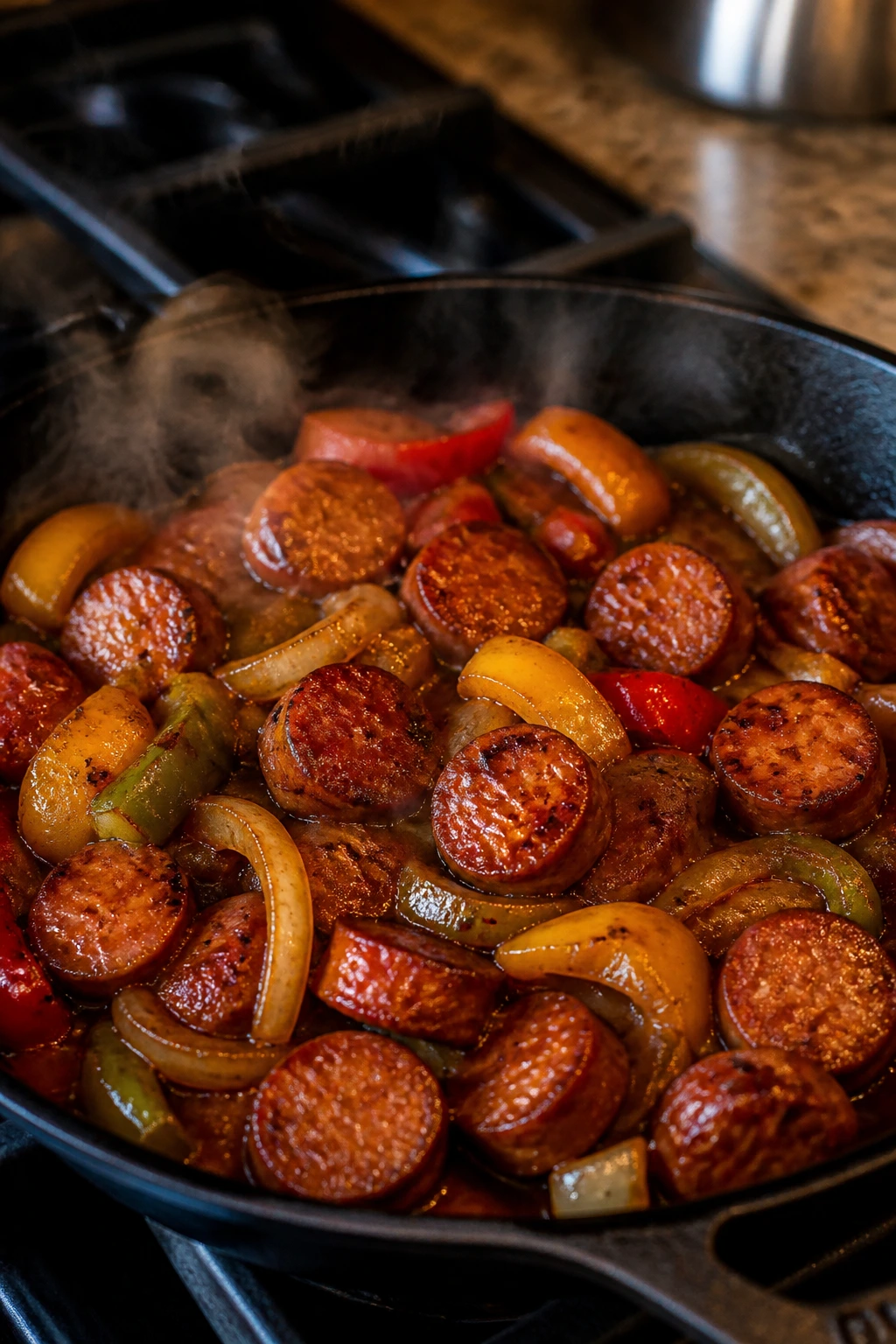
There’s a reason this kind of dinner gets remembered. It has a little shine, a little smoke, and a sweet edge that doesn’t collapse into dessert territory. The sausage keeps it grounded. The vinegar keeps it awake. And the onions and peppers soak up enough glaze that the last spoonful tastes almost better than the first.
What I like most is how little drama it asks for. A sharp knife, one good skillet, and a few minutes of attention are enough. That’s not a compromise. That’s the point.
Tender Sausage Skillet with Brown Sugar Glaze — Recipe Card
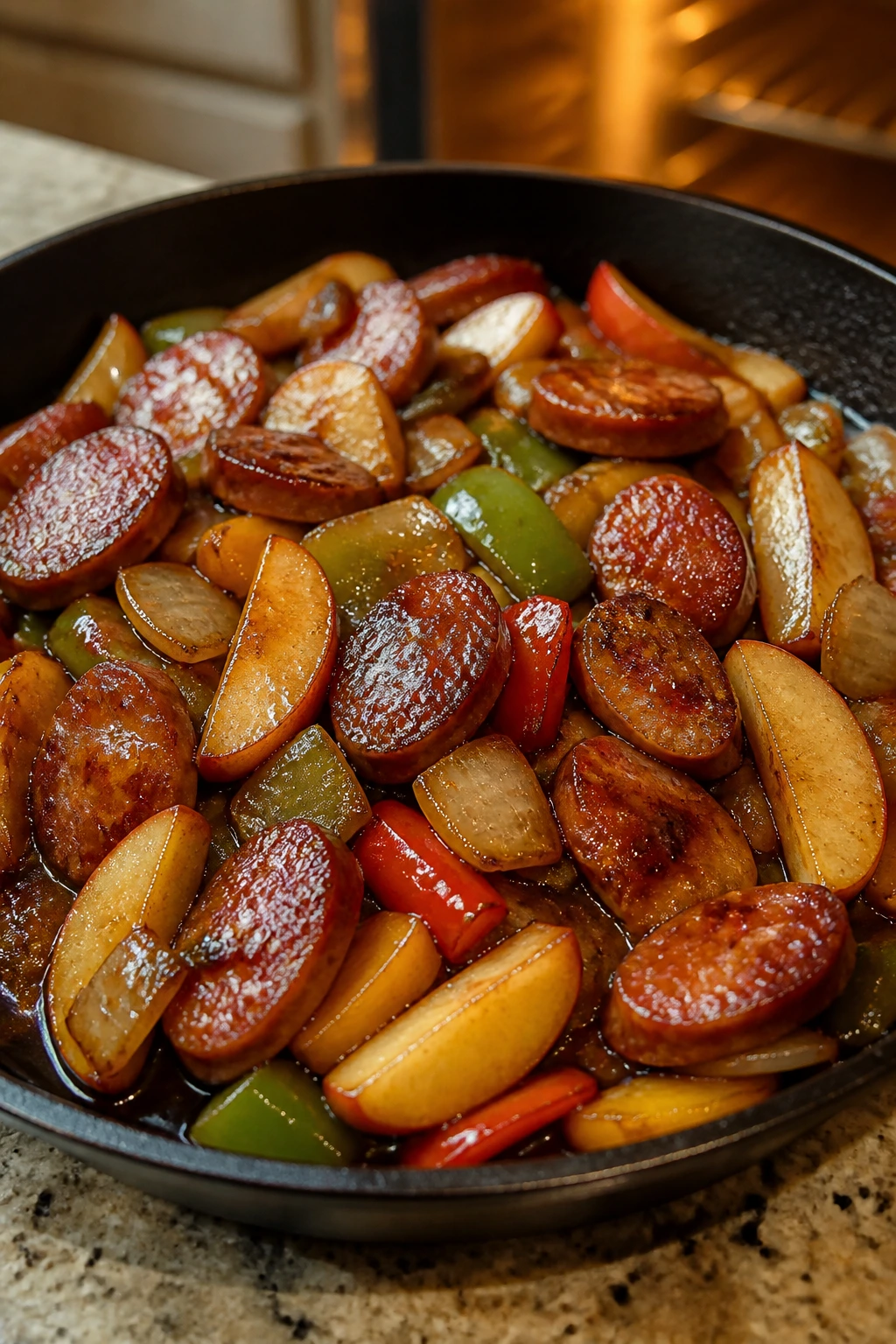
Recipe Name: Tender Sausage Skillet with Brown Sugar Glaze
Description: Browned smoked kielbasa, onions, bell peppers, and an apple cider brown sugar glaze come together in one skillet for a glossy sweet-savory dinner. The vinegar and Dijon keep the sauce balanced so it stays sticky instead of cloying.
Prep Time: 15 minutes
Cook Time: 18 minutes
Total Time: 33 minutes
Course: Dinner, Main Course
Cuisine: American
Servings: 4 servings
Calories: About 470 kcal per serving
Ingredients
For the Skillet:
- 1 1/2 pounds fully cooked smoked pork kielbasa, sliced into 1/4-inch rounds
- 1 tablespoon neutral oil, such as avocado or canola
- 1 large yellow onion, thinly sliced
- 2 bell peppers, seeded and sliced into 1/2-inch strips
- 1 small apple, cored and thinly sliced, optional
- 2 cloves garlic, minced
- 2 tablespoons chopped fresh parsley, for serving
For the Brown Sugar Glaze:
- 1/3 cup packed light brown sugar
- 2 tablespoons apple cider vinegar
- 2 tablespoons low-sodium soy sauce
- 1 tablespoon Dijon mustard
- 1 teaspoon Worcestershire sauce
- 2 tablespoons water
- 1 tablespoon unsalted butter
- 1/2 teaspoon smoked paprika
- 1/4 teaspoon crushed red pepper flakes, optional
- 1/4 teaspoon black pepper
Instructions
- Whisk the brown sugar, vinegar, soy sauce, Dijon, Worcestershire, water, smoked paprika, black pepper, and red pepper flakes in a small bowl; set aside.
- Heat the oil in a 12-inch skillet over medium-high heat. Brown the sausage slices for 2 to 3 minutes per side, then transfer them to a plate.
- Reduce the heat to medium. Cook the onion and bell peppers for 5 to 6 minutes, stirring occasionally, until softened and lightly browned. Add the apple, if using, and cook for 1 to 2 minutes.
- Stir in the garlic and cook for 30 seconds, just until fragrant.
- Pour in the glaze and simmer for 1 to 2 minutes until slightly thickened.
- Return the sausage to the skillet and toss for 1 to 2 minutes until coated and heated through.
- Stir in the butter, finish with parsley, and serve hot.
Notes: Keep the heat at medium once the sugar goes in so the glaze thickens instead of scorching. If you want a sharper finish, add a small splash of vinegar at the end.