



A savory pork glaze with brown sugar glaze should taste like caramel that learned restraint. The first hit ought to be sweet, then salty, then a little sharp from vinegar and mustard, with garlic hanging around in the background. If the pan smells like burnt candy, it has gone too far. If it smells like soy, browned sugar, and a warm edge of spice, you’re in the right place.
Pork likes contrast. A chop, tenderloin, or roast can take plenty of sweetness, but it needs something blunt to push back—salt, acid, and a little mustard bite do that job better than another spoonful of sugar ever will. That balance is the difference between a sticky sheen you forget and a glaze that makes the meat taste finished.
This version keeps the ingredient list short and the method even shorter. That matters, because brown sugar goes from glossy to pasty faster than most people expect, and you want to catch it while it still pours in a ribbon. The goal is not syrup. It’s a lacquer.
Brush it on late, let it set for a few minutes, and the surface of the pork turns shiny without losing the flavor of the meat underneath. That’s the sweet spot. And it’s a very good one.
Why You’ll Love This Savory Pork Glaze
-
Balanced sweetness: The brown sugar brings color and body, but soy sauce, vinegar, and Dijon keep the glaze from tasting flat or candy-like.
-
Fast on the stove: The whole thing comes together in one small saucepan in about 15 minutes, which means you can make it while the pork rests.
-
Built for pork: Garlic, Worcestershire, and smoked paprika give the glaze enough backbone to stand up to chops, tenderloin, ribs, or a roast.
-
Easy to control: You decide how thick it gets. Stop early for a brushable glaze, or simmer a minute longer for a clingier finish.
-
Friendly to make-ahead cooking: It keeps well in the fridge, reheats cleanly, and gives you a head start on dinner without tasting like leftovers.
-
One-pan cleanup: A whisk, a saucepan, and a spoon are all you really need. That’s it. No drama.
Why Brown Sugar, Soy, and Mustard Work So Well on Pork
Why does this glaze taste balanced instead of sugary? Because each ingredient pulls in a different direction, and pork is one of the few meats that happily takes the tug.
Brown sugar is the obvious part, but it’s not doing the heavy lifting alone. It gives the glaze its color, its stickiness, and that warm, rounded sweetness that turns glossy when it hits heat. But if you stop there, the sauce gets clingy in the wrong way. It tastes like a glaze that forgot it was supposed to be savory.
Soy sauce changes that fast. It brings salt, depth, and that dark, meaty flavor that makes the sugar taste intentional. Dijon mustard does something a little different: it sharpens the edges. The vinegar matters too, because pork has enough richness to welcome sweetness, but it still needs acid to cut through the fat and keep every bite alive.
This is the same old sweet-salty logic that makes ham glaze work so well, only tightened up for fresh pork instead of cured meat. The trick is stopping the simmer at the point where the glaze still moves. Once it crosses into sticky paste territory, it looks heavier on the meat and tastes less clean. That’s the line worth learning.
Pork chops and tenderloin are especially good with this style of glaze because they take on color quickly. The sugars on the surface caramelize fast, so you get a brown, shiny finish in a few minutes instead of a long roast. Short version: the flavor comes from balance, and the texture comes from restraint.
The Ingredient List That Keeps the Glaze Honest
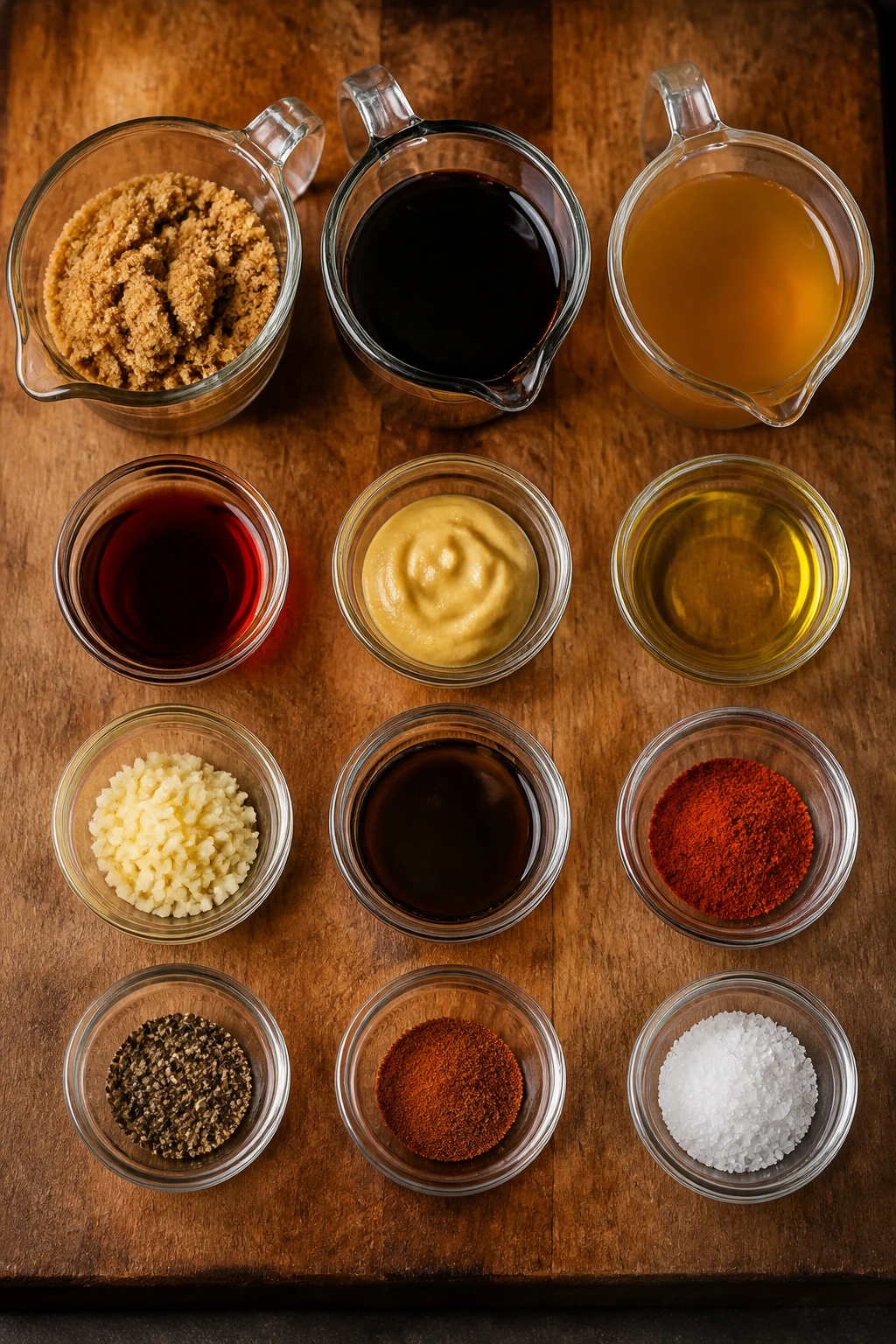
For the Glaze:
- 1/2 cup packed light brown sugar
- 1/4 cup low-sodium soy sauce or tamari for gluten-free cooking
- 1/4 cup low-sodium chicken stock or unsweetened apple juice for a fruitier edge
- 2 tablespoons apple cider vinegar
- 2 tablespoons Dijon mustard
- 2 tablespoons unsalted butter or olive oil for a dairy-free finish
- 2 garlic cloves, finely minced
- 1 teaspoon Worcestershire sauce
- 1/2 teaspoon smoked paprika
- 1/2 teaspoon freshly ground black pepper
- 1/8 teaspoon cayenne pepper, optional
- 1/4 teaspoon kosher salt, only if needed after tasting
Yield: About 1 cup glaze, enough for roughly 2 pounds of pork
Prep Time: 5 minutes
Cook Time: 10 to 12 minutes
Total Time: 15 to 17 minutes
Difficulty: Beginner — the ingredient list is short, but you do need to watch the simmer so the sugar reduces instead of scorching.
Best Served: Warm, brushed onto pork during the last few minutes of cooking or spooned over sliced pork right before serving.
What Each Ingredient Does in the Pan
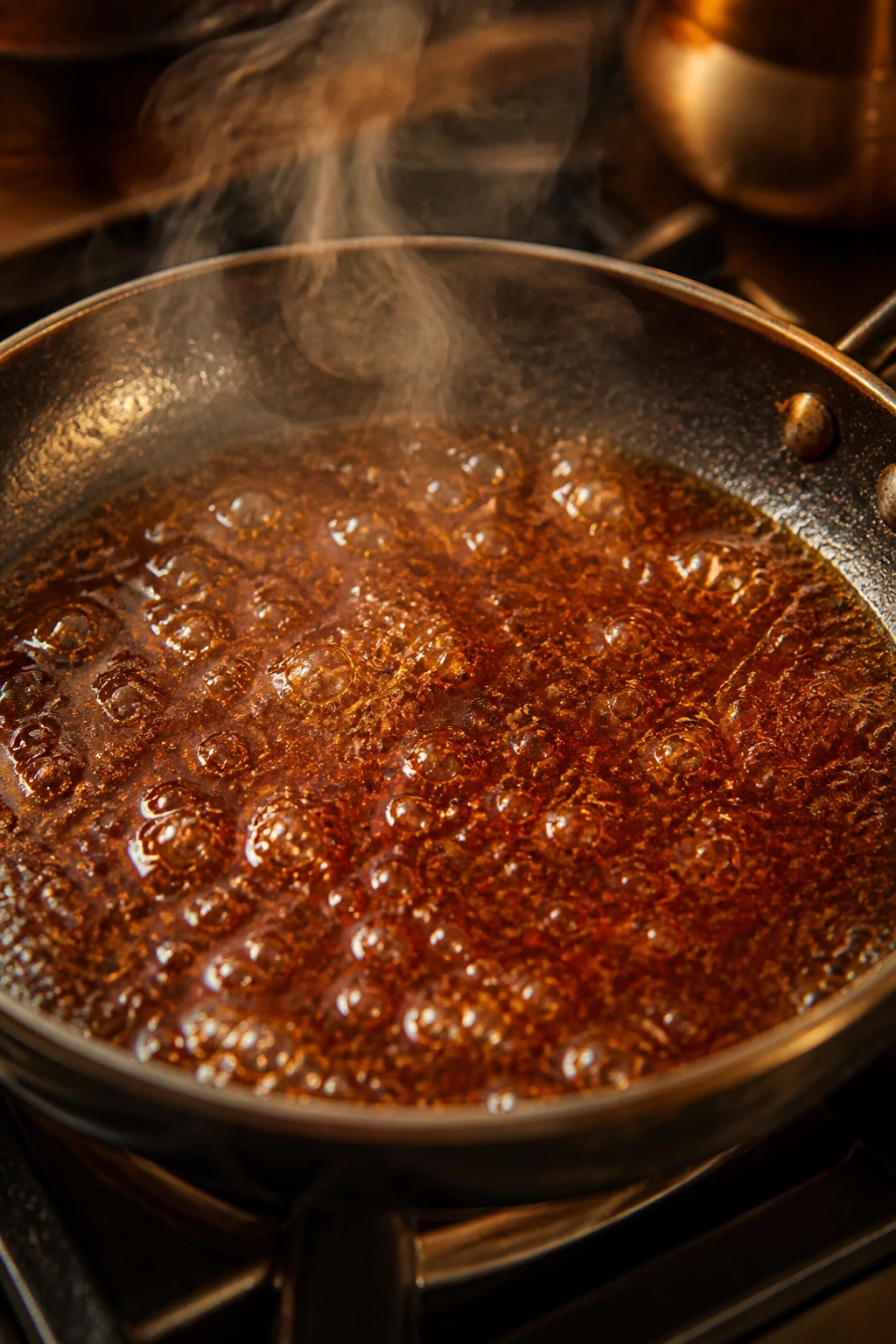
Brown Sugar and Stock
What to use: 1/2 cup packed light brown sugar and 1/4 cup low-sodium chicken stock.
Preparation: Pack the sugar firmly so you measure a real half cup, not a loose mound that disappears in the pan. Whisk the stock in cold so the sugar can dissolve evenly.
Substitutions: Dark brown sugar gives a deeper molasses note; unsweetened apple juice makes the glaze feel softer and a little more orchard-like. Vegetable stock works too if that’s what you have.
Tips: If your brown sugar has gone hard, warm it for 10 to 15 seconds in the microwave with a damp paper towel over the bowl. Crumbs are fine. Rocks are not.
Soy Sauce, Worcestershire, and Dijon
What to use: 1/4 cup low-sodium soy sauce, 1 teaspoon Worcestershire sauce, and 2 tablespoons Dijon mustard.
Preparation: Measure these before you start the heat. Once the sugar starts dissolving, you don’t want to be digging through the cupboard.
Substitutions: Tamari handles the same job if you need a gluten-free swap, and coconut aminos can work if you want a sweeter, softer profile. Whole-grain mustard is a fine replacement for Dijon if you like a little texture.
Tips: Low-sodium soy sauce keeps the glaze from turning salty after reduction. Full-sodium soy can work, but taste carefully before adding any extra salt.
Acid and Aromatics
What to use: 2 tablespoons apple cider vinegar, 2 garlic cloves, 1/2 teaspoon smoked paprika, 1/2 teaspoon black pepper, and 1/8 teaspoon cayenne if you want heat.
Preparation: Mince the garlic very fine so it melts into the glaze rather than sitting in little sharp bits. Whisk the paprika and pepper into the liquid before the simmer starts.
Substitutions: Rice vinegar gives a gentler tang, white wine vinegar keeps the flavor cleaner, and garlic powder can stand in for fresh garlic at 1/2 teaspoon. Chipotle powder can replace the smoked paprika if you want a hotter, smokier edge.
Tips: Garlic burns faster than sugar thinks it should. Medium-low heat is your friend here.
Butter and Finish
What to use: 2 tablespoons unsalted butter.
Preparation: Add it after the glaze has reduced and after you’ve taken the pan off the heat. Whisk until it disappears and the surface turns shiny.
Substitutions: Olive oil or vegan butter works if you want a dairy-free version. The gloss changes a little, but the texture still reads as finished.
Tips: Butter is there for shine and roundness, not just richness. It smooths out the salt and makes the glaze cling instead of puddling.
The Pan, Whisk, and Brush You Actually Need
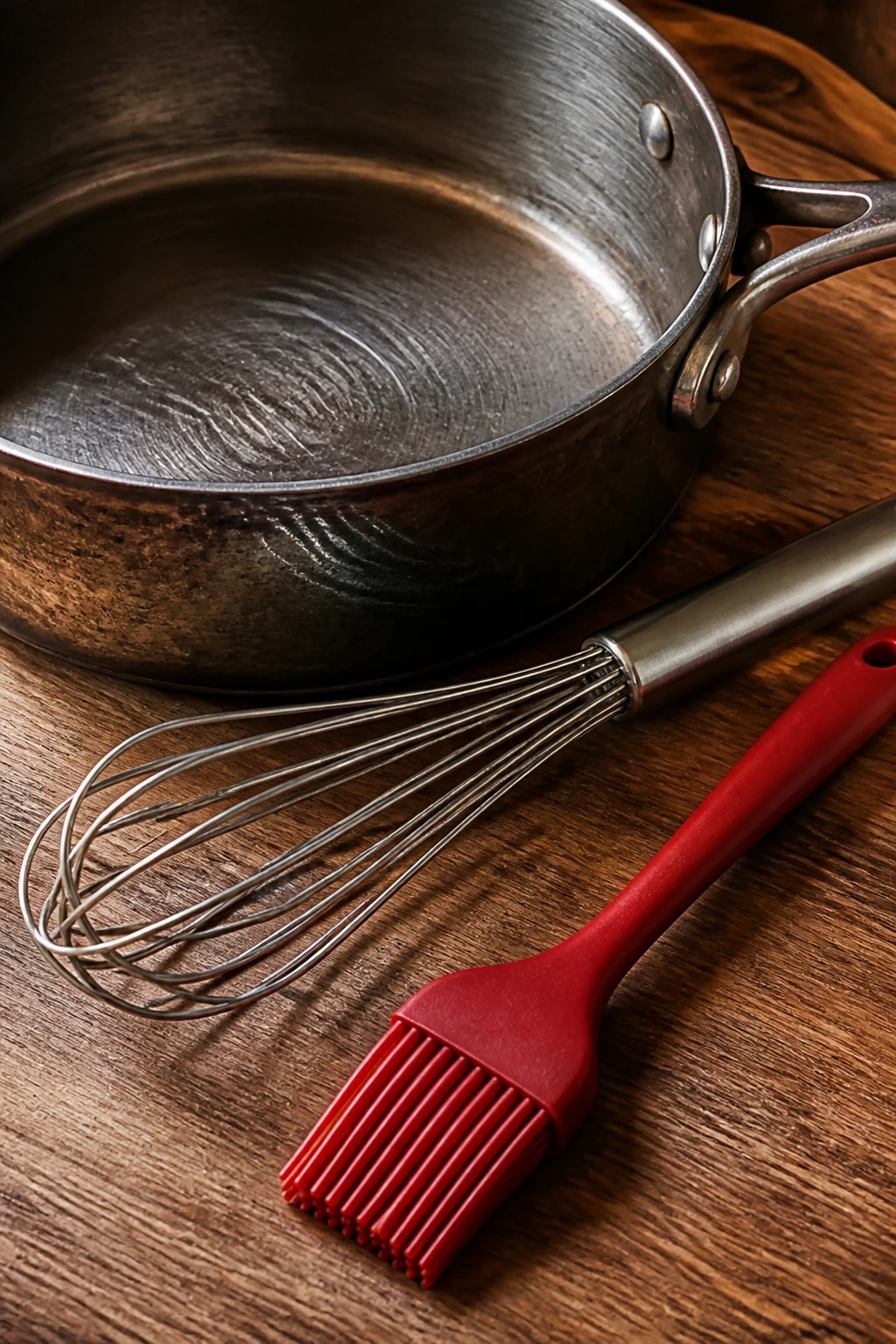
The glaze doesn’t ask for much, but the right tools make the difference between a smooth, brushable finish and a pan of scorched sugar on the bottom.
-
Small heavy-bottomed saucepan, 1.5 to 2 quarts: A heavier pan spreads heat more evenly, which keeps the sugar from scorching in one hot spot.
-
Whisk: You need enough surface contact to dissolve the sugar and keep the mustard from clumping.
-
Silicone pastry brush or small spoon: A brush gives you a thinner, more even coat on pork; a spoon works if you want to drizzle and let the glaze run into slices.
-
Measuring cups and spoons: This is one of those recipes where sloppy measuring changes the balance fast.
-
Microplane or garlic press, optional: Not required, but handy if you want the garlic to disappear into the glaze completely.
-
Fine-mesh strainer, optional: Useful if you want a glass-smooth glaze without visible garlic bits or pepper flakes.
-
Instant-read thermometer, if you’re glazing pork too: The glaze works best when you know exactly when the meat is done and can brush it on late instead of guessing.
How to Simmer the Glaze Until It Turns Glossy
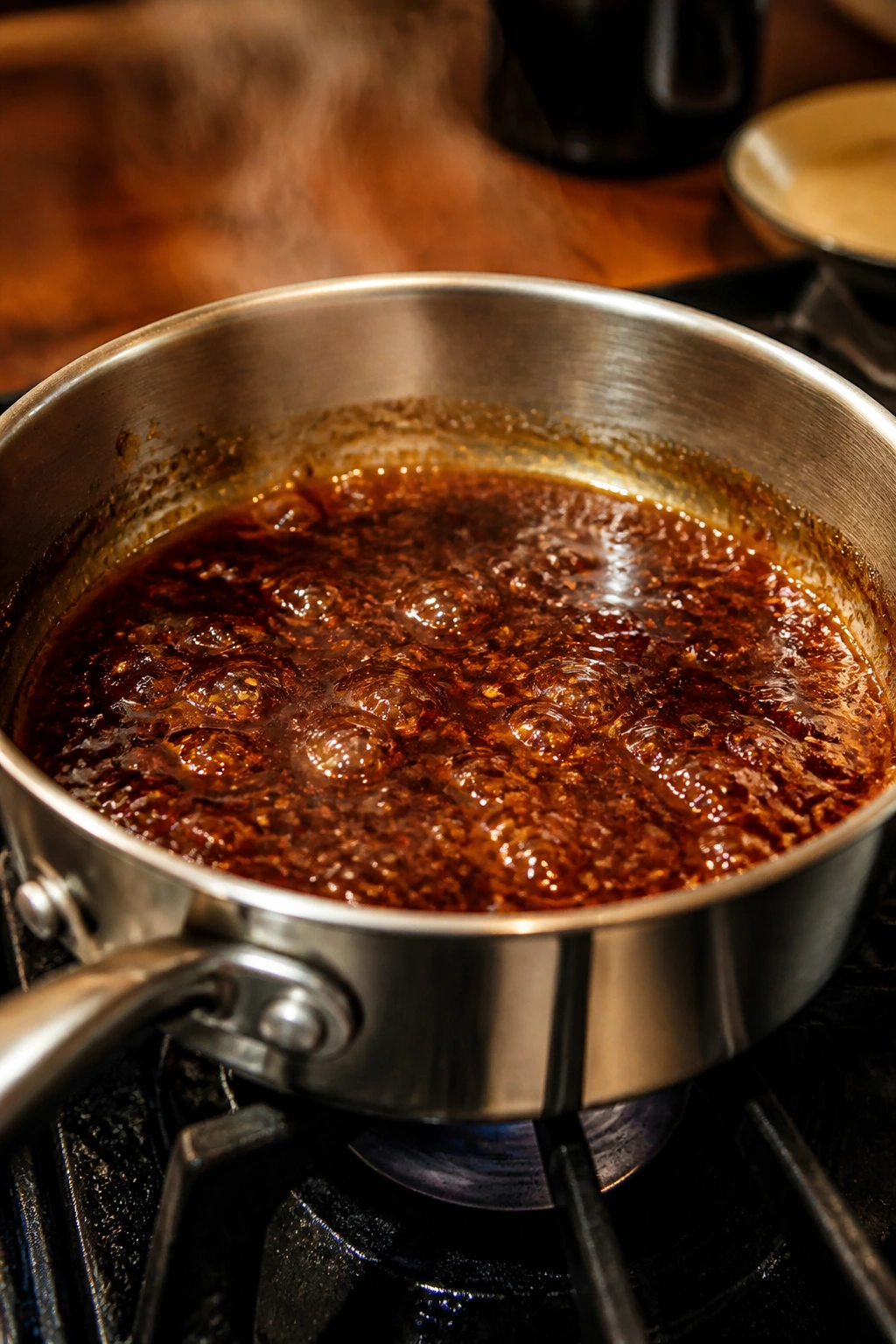
Make the Base
-
In a small heavy-bottomed saucepan, whisk together the brown sugar, soy sauce, chicken stock, apple cider vinegar, Dijon mustard, Worcestershire sauce, garlic, smoked paprika, black pepper, and cayenne if you’re using it. The sugar will look grainy at first. That’s fine.
-
Set the pan over medium heat and stir for 2 to 3 minutes, just until the sugar starts dissolving and the mixture looks smooth around the edges. Do not crank the heat high here — fast heat can burn the garlic before the sugar even gets moving.
Reduce and Build the Body
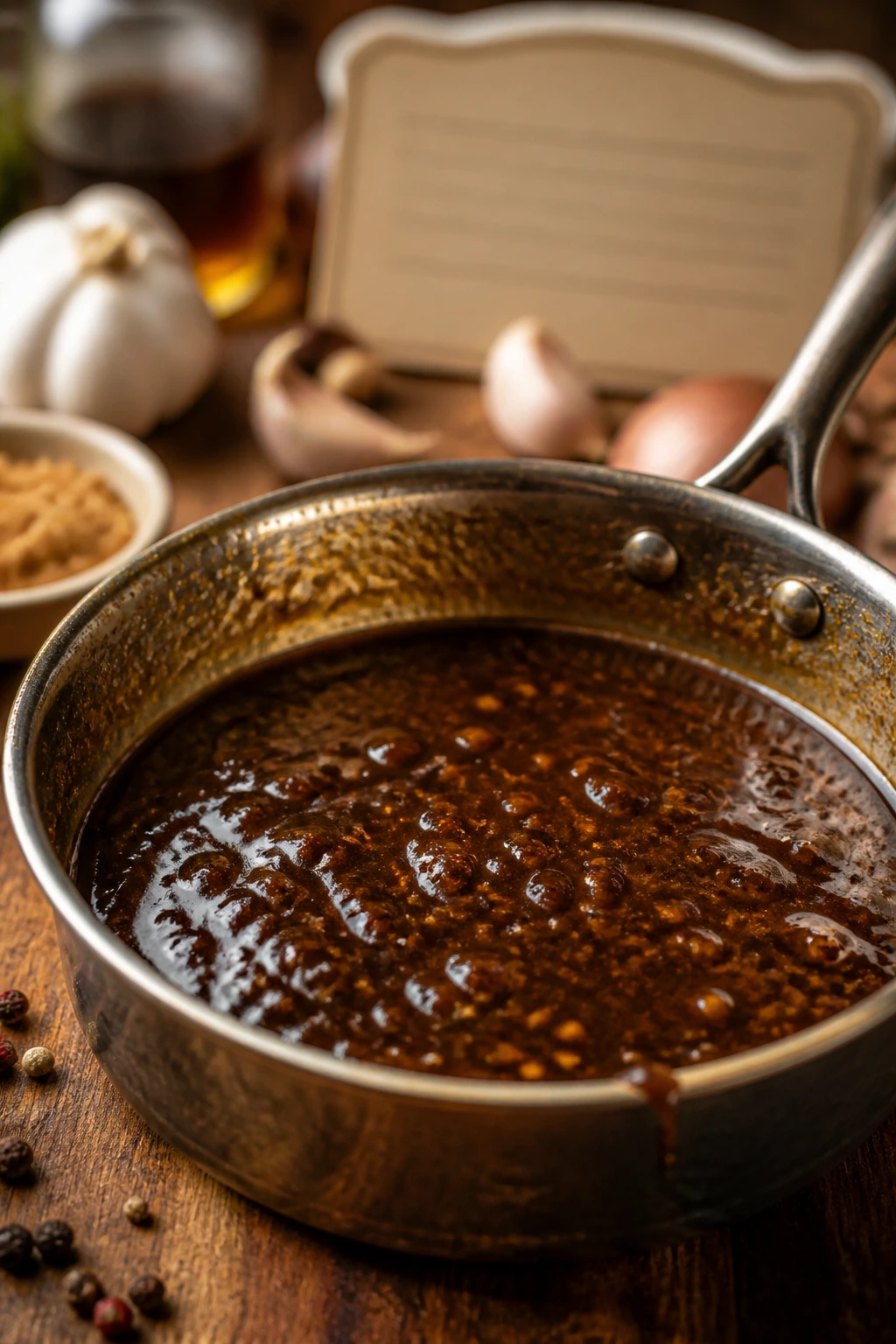
3. Lower the heat to medium-low and simmer for 6 to 8 minutes, stirring every 30 seconds or so. You’re looking for slow, lazy bubbles and a glaze that starts to coat the back of a spoon. If you drag a finger through the coating, it should leave a clean line for a second or two.
- Watch the smell. It should move from sharp and saucy to warm and caramel-like, with the garlic losing its raw edge. If it starts to smell bitter or smoky in a bad way, pull the pan down a notch. That’s the warning sign.
Finish the Shine
5. Remove the saucepan from the heat and whisk in the butter until melted and glossy, about 30 seconds. The glaze should look smoother and a little thicker immediately.
- Taste the glaze. If it feels too thick, whisk in 1 teaspoon of warm stock or water at a time until it loosens. If it feels too thin, return it to low heat for 1 to 2 minutes more.
Strain or Use
7. For a perfectly smooth glaze, pour it through a fine-mesh strainer. For a more rustic finish, use it as is. Brush it onto pork while warm, not boiling hot.
How to Brush It on Pork Chops, Tenderloin, and Roasts
Pork Chops
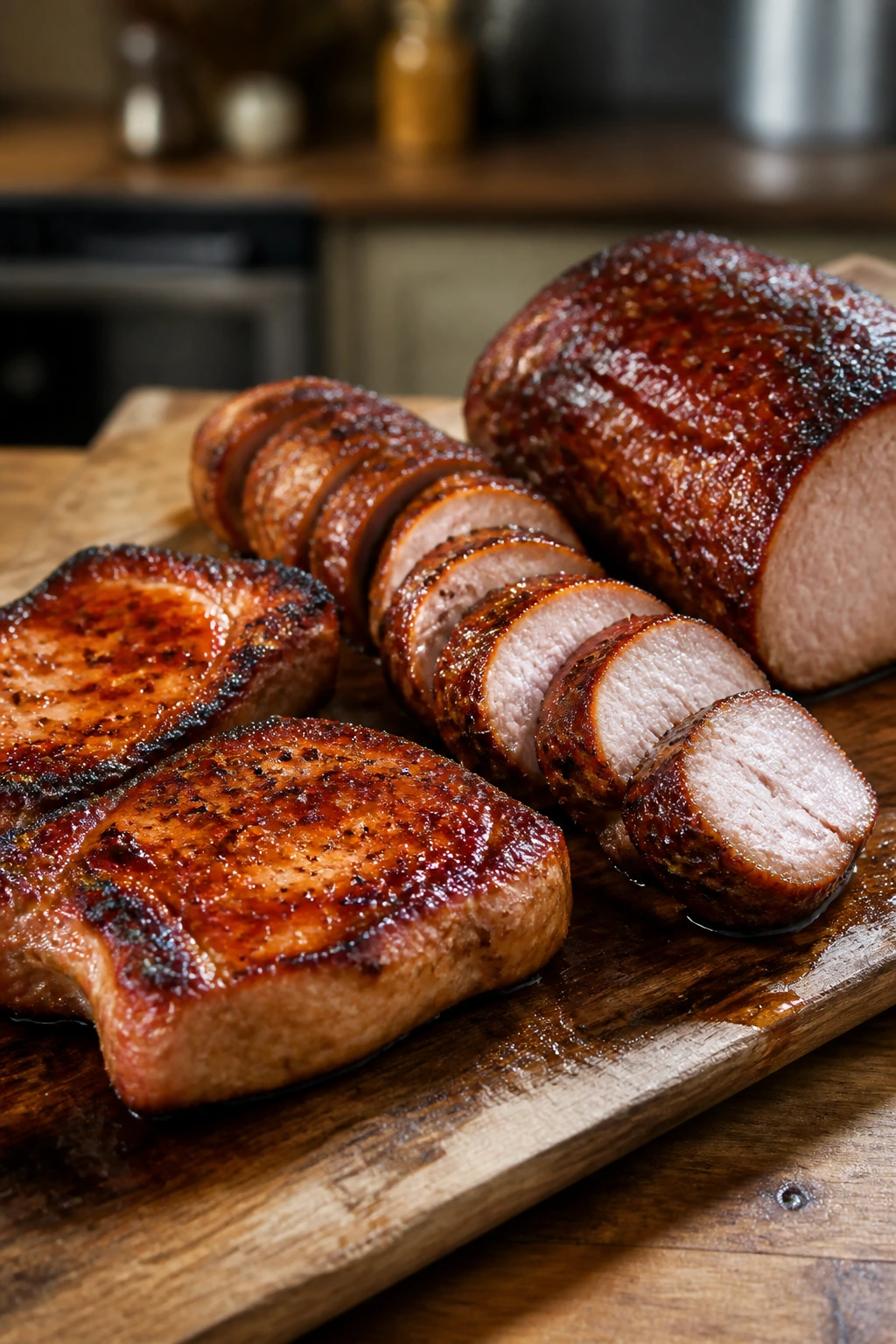
For 1-inch chops, sear or grill them until they’re nearly done, then brush the glaze on during the last 2 to 3 minutes. Give it enough time to set into a thin lacquer, but not so long that the sugar blackens on the grate or skillet. If you’re working over direct flame, move the chops to a cooler spot before glazing. Sugar and flare-ups are not friends.
Pork Tenderloin
Tenderloin behaves differently because it cooks fast and dries out if you overdo it. Roast it or sear-roast it until the center is around 130 to 135°F, then brush the glaze on for the final 5 to 8 minutes of cooking. Once it reaches 145°F, pull it from the heat and rest it for 5 to 10 minutes. The carryover heat will finish the job, and the glaze will stay glossy instead of sticky and overcooked.
Pork Roasts, Ribs, and Bigger Cuts
For a roast or a rack of ribs, wait until the last 10 to 15 minutes before glazing. Earlier than that, and the sugar can darken too much before the meat has finished cooking. If you’re baking at 375°F to 400°F, use one light coat first, let it set for a few minutes, then brush on a second thin layer. That two-pass method gives you color without a thick, burned shell.
The useful habit here is simple: glaze late. Very late, sometimes. That is how you get shine without bitterness.
How to Serve This Glaze on a Finished Plate
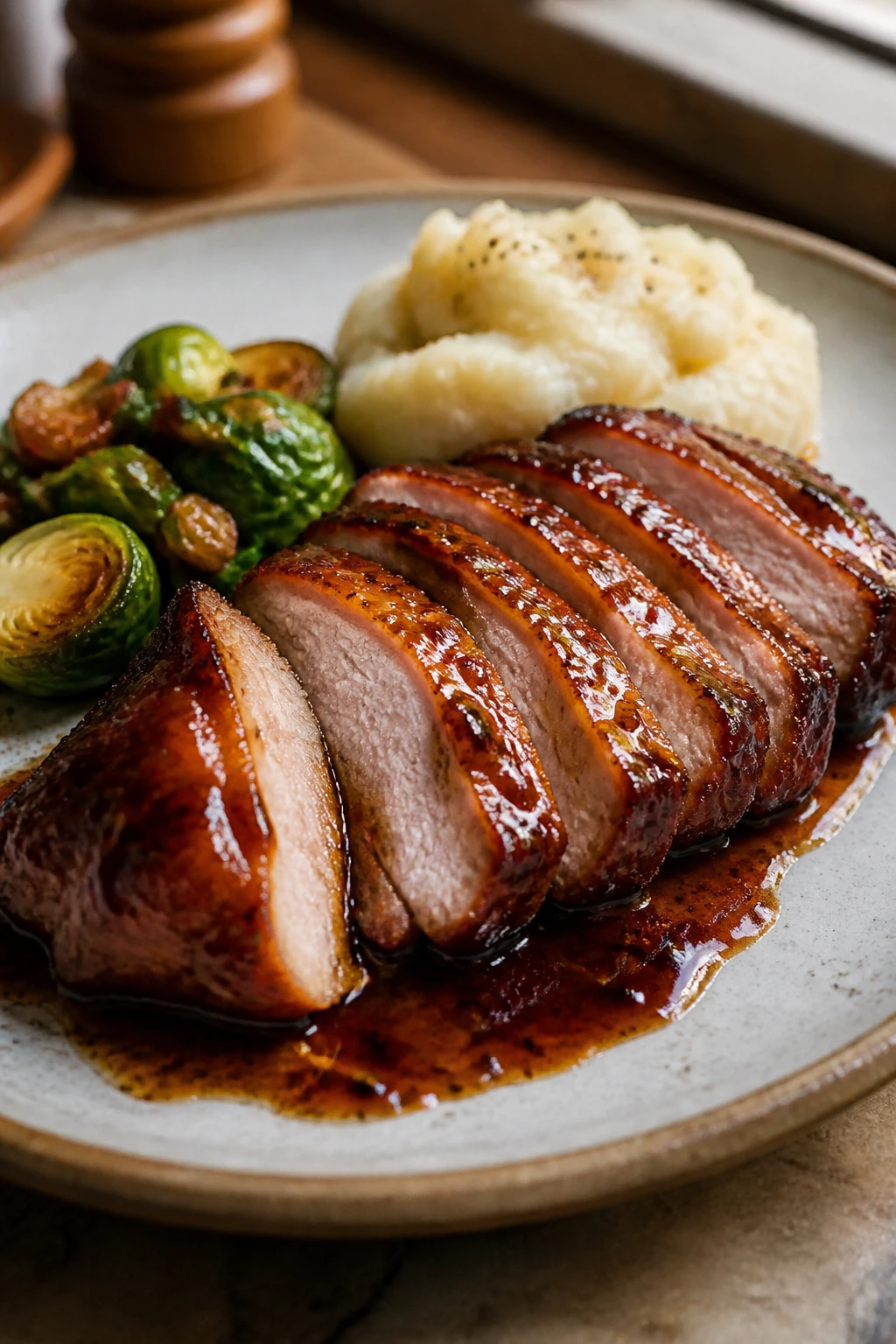
Presentation: Slice pork against the grain so the glaze clings to the cut faces instead of sliding off the top. Spoon a small extra puddle of warm glaze around the meat, not over every inch of it; you want the pork to look lacquered, not flooded. A few flecks of black pepper and a sheen of pan juices make the plate look finished in a way that feels deliberate, not fussy.
Accompaniments: Mashed potatoes, roasted sweet potatoes, buttery rice, or a pile of skillet potatoes all make sense here because they catch the sweet-salty drips. Green beans, roasted Brussels sprouts, sautéed cabbage, or a sharp cabbage slaw help reset the palate between bites. If you like fruit on the table with pork, sliced apples or quick-cooked apples with a little butter and vinegar fit the same flavor lane without turning the plate into a dessert course.
Portions: Plan on about 2 tablespoons of glaze per pound of pork for brushing, with a little extra if you want to serve some at the table. For a 2-pound tenderloin or four chops, this recipe gives you enough to coat and then pass a small bowl alongside. If you’re cooking a larger roast, make a second batch. Don’t try to stretch it too thin.
Beverage Pairing: A dry hard cider is my first pick because it echoes the apple note without adding sugar. A crisp pilsner or a simple lager works well too, especially with grilled chops or ribs. If you want a nonalcoholic option, cold black tea with lemon cuts through the glaze nicely.
Small Adjustments That Make the Glaze Better, Not Just Sweeter
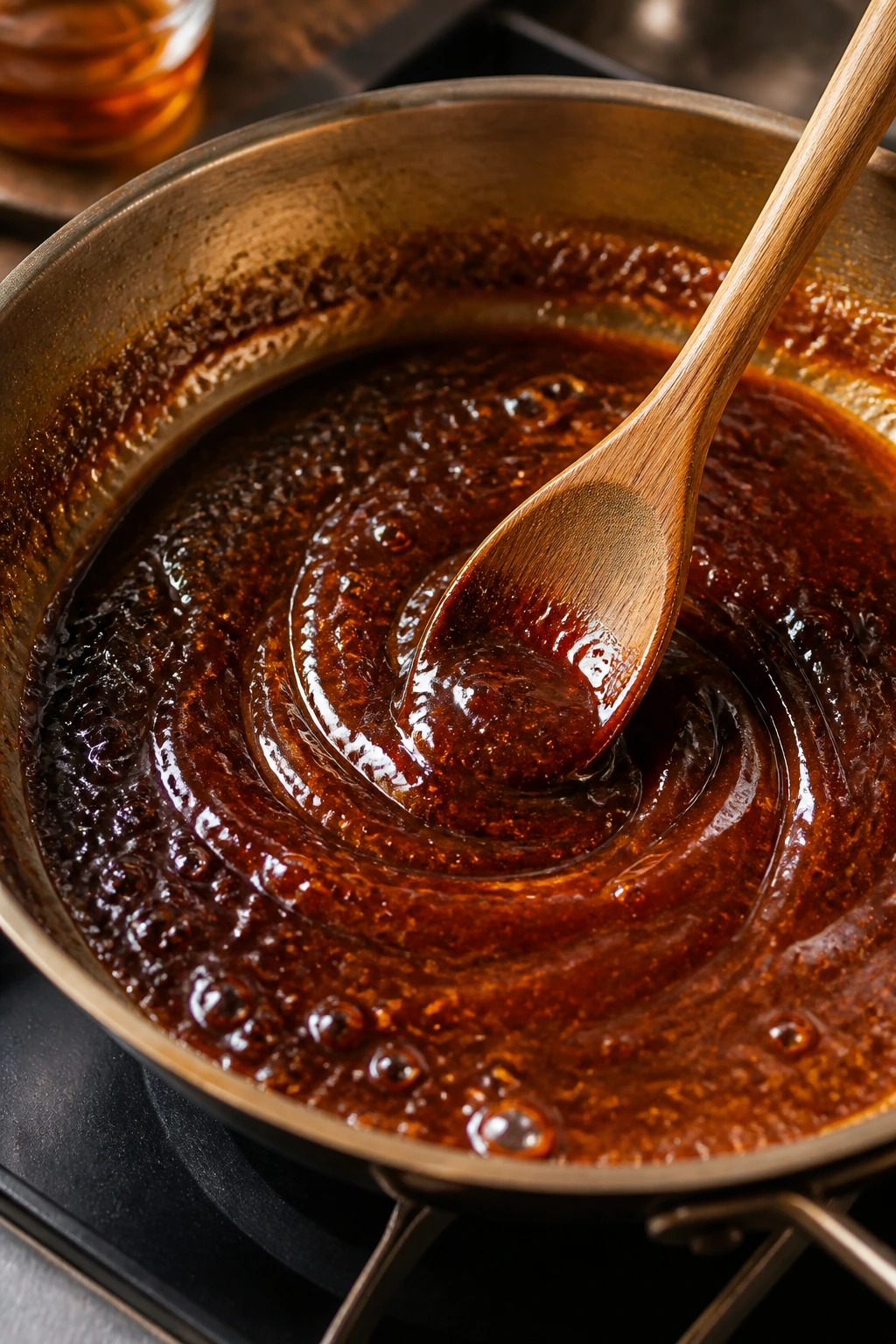
Flavor Enhancement: A tablespoon of bourbon stirred in off the heat gives the glaze a deeper, woodsy note that works especially well on pork tenderloin or a roasted loin. If you don’t want bourbon, a teaspoon of grated fresh ginger adds lift without making the glaze spicy. Both moves are small. Both matter.
Customization: Swap Dijon for whole-grain mustard if you want little mustard seeds floating in the glaze. Use tamari instead of soy sauce when you need a gluten-free version, or replace half the stock with unsweetened apple juice if you want a softer, fruitier finish. That apple juice swap changes the whole mood of the glaze faster than most people expect.
Serving Suggestions: Finish the pork with a light shower of chopped parsley or thin-sliced scallions if you want the plate to look less brown and a little fresher. A few apple slices or roasted onion wedges on the side pull the glaze back toward the meat instead of making it feel like a standalone sauce. I also like cracked black pepper right at the end. It keeps the sweetness honest.
Make-It-Yours: For a dairy-free glaze, use olive oil or vegan butter instead of butter. For a lower-sodium version, keep the soy sauce low-sodium and skip the added kosher salt until you’ve tasted the finished glaze. For extra heat, add a pinch of chipotle powder or cayenne, but go easy—pork doesn’t need a fire alarm, it needs a little warmth.
The Glaze Mistakes That Turn Sticky Into Burnt
-
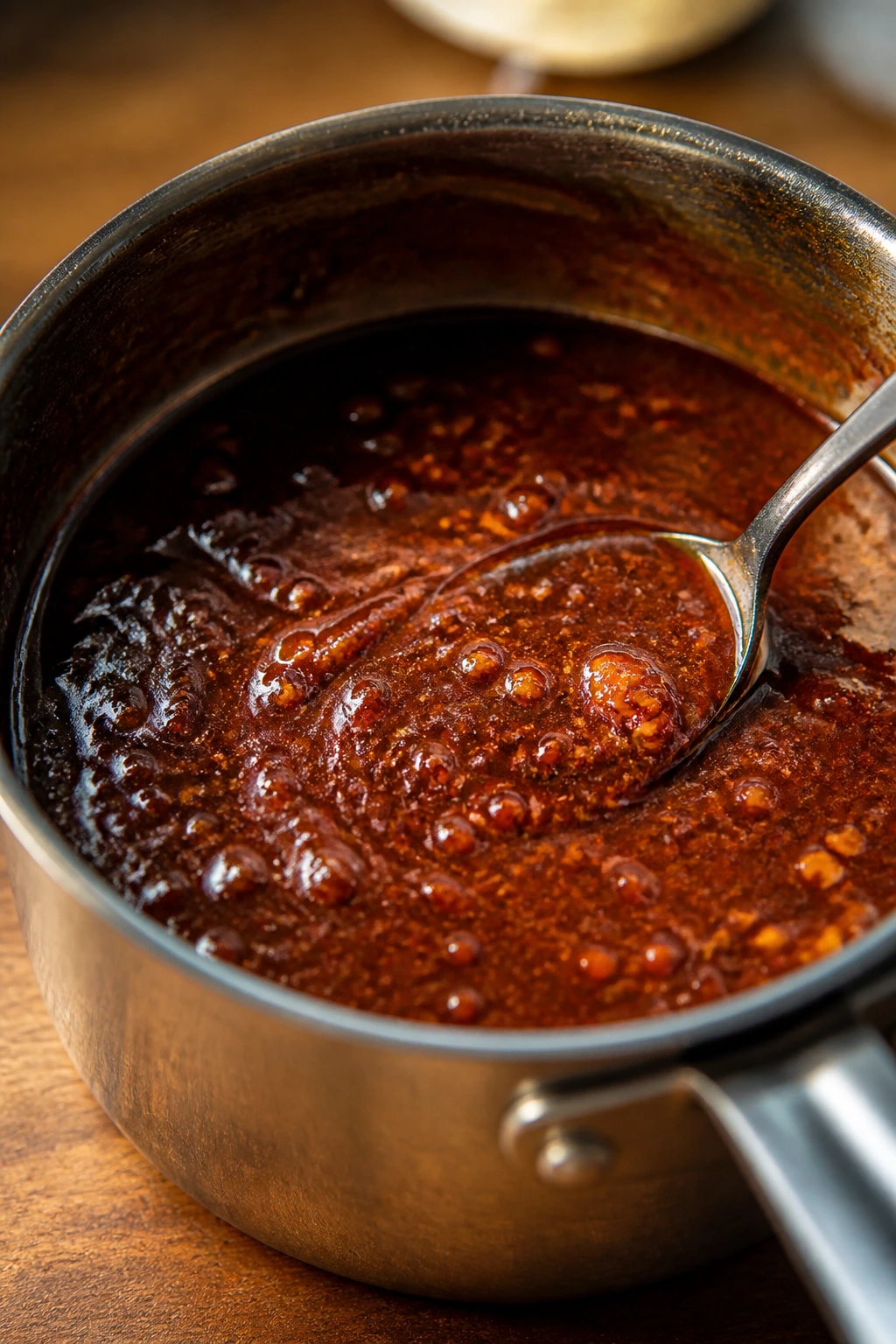
Boiling it hard: If the pan is roaring instead of gently simmering, the sugar can darken too quickly and leave a bitter edge. The fix is simple: lower the heat the second the mixture starts thickening and keep stirring.
-
Adding salt before tasting: Soy sauce brands vary a lot in salt level, and if you salt before the glaze reduces, you can overshoot fast. Taste after the butter goes in, then add only a pinch if the glaze still feels dull.
-
Brushing it on too early: Brown sugar burns on direct heat faster than most people think. Apply it in the last few minutes of cooking, then move the meat away from flare-ups or high direct heat.
-
Reducing it until it looks like jam: The glaze thickens as it cools, so if you cook it until it’s already pasty in the pan, it will set too hard on the pork. Stop when it coats a spoon in a thin, even layer and still pours.
-
Forgetting to whisk in the butter off heat: Butter helps the glaze go satiny instead of greasy. If you add it while the pan is still too hot, the sauce can split and look oily around the edges. Pull the pan off first. Then whisk.
-
Using the same brush on raw pork and cooked glaze: That’s a food-safety mistake, not a style issue. Keep a clean brush for the finished glaze, or reserve a portion in a separate bowl before it touches raw meat.
Four Smart Twists on the Same Glaze
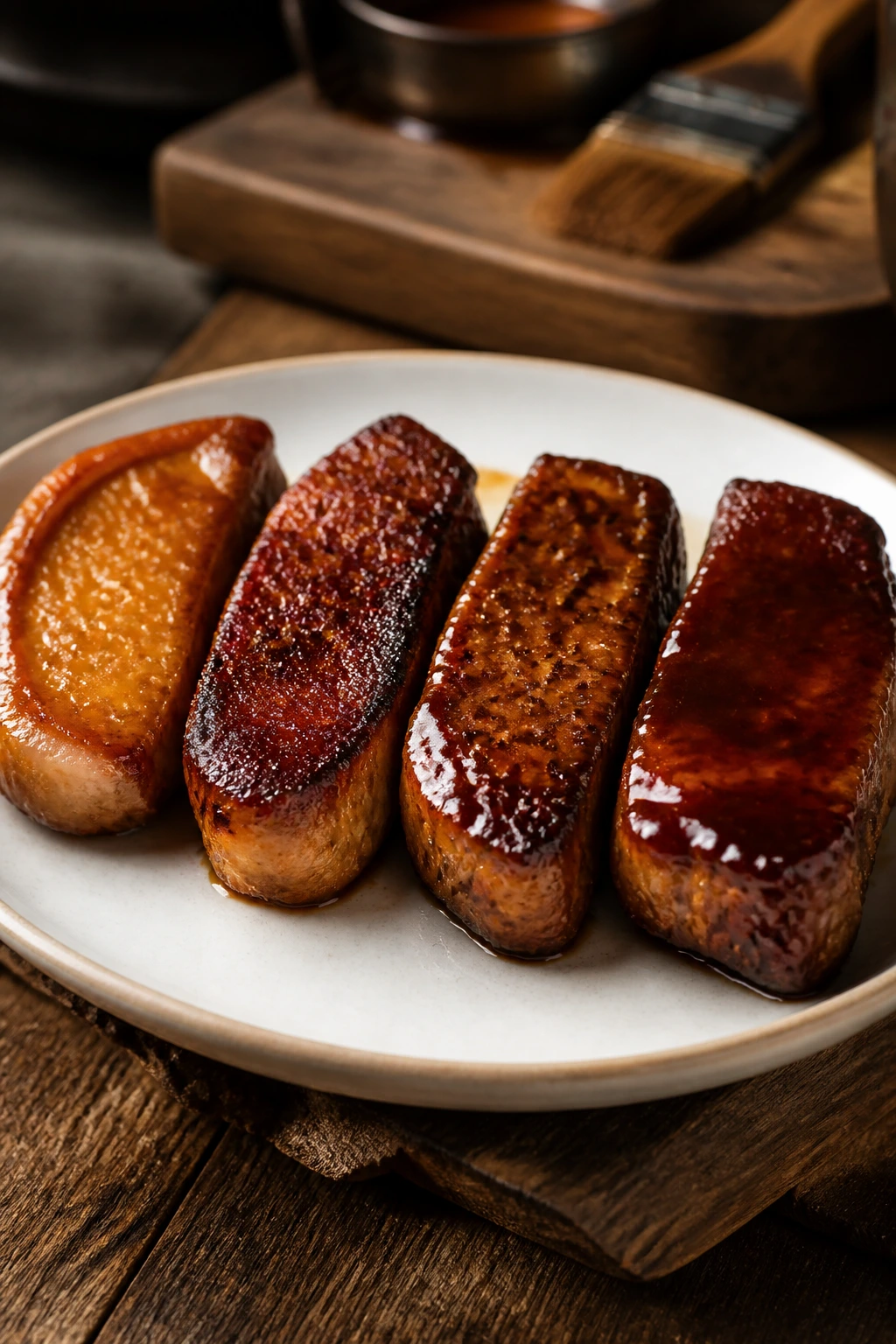
Apple Orchard Brush
Swap the chicken stock for unsweetened apple cider and add 1 tablespoon of apple butter to the simmer. The glaze gets rounder, fruitier, and a little softer on the tongue, which is excellent on pork loin or thick chops. This version tastes like fall without trying too hard.
Smoky Chipotle Finish
Replace the smoked paprika with 1 teaspoon chipotle powder and add an extra teaspoon of apple cider vinegar. That gives you a deeper smoke flavor and a slow-building heat that suits grilled pork chops or ribs. It’s not aggressive. It just hangs around a little longer.
Bourbon Pepper Lacquer
Stir 1 tablespoon bourbon into the glaze after you remove it from the heat, then add an extra 1/4 teaspoon black pepper. The result is darker, warmer, and more adult without tasting boozy. Use it on tenderloin or a roast when you want the glaze to feel richer.
No-Butter Shine
Swap the butter for olive oil or vegan butter and finish with a tiny splash of warm stock if the glaze feels tight. You lose a little roundness, but the shine stays and the flavor remains solid. This one is useful when you want the glaze to stay clean and lighter on the palate.
Making It Ahead Without Losing the Shine
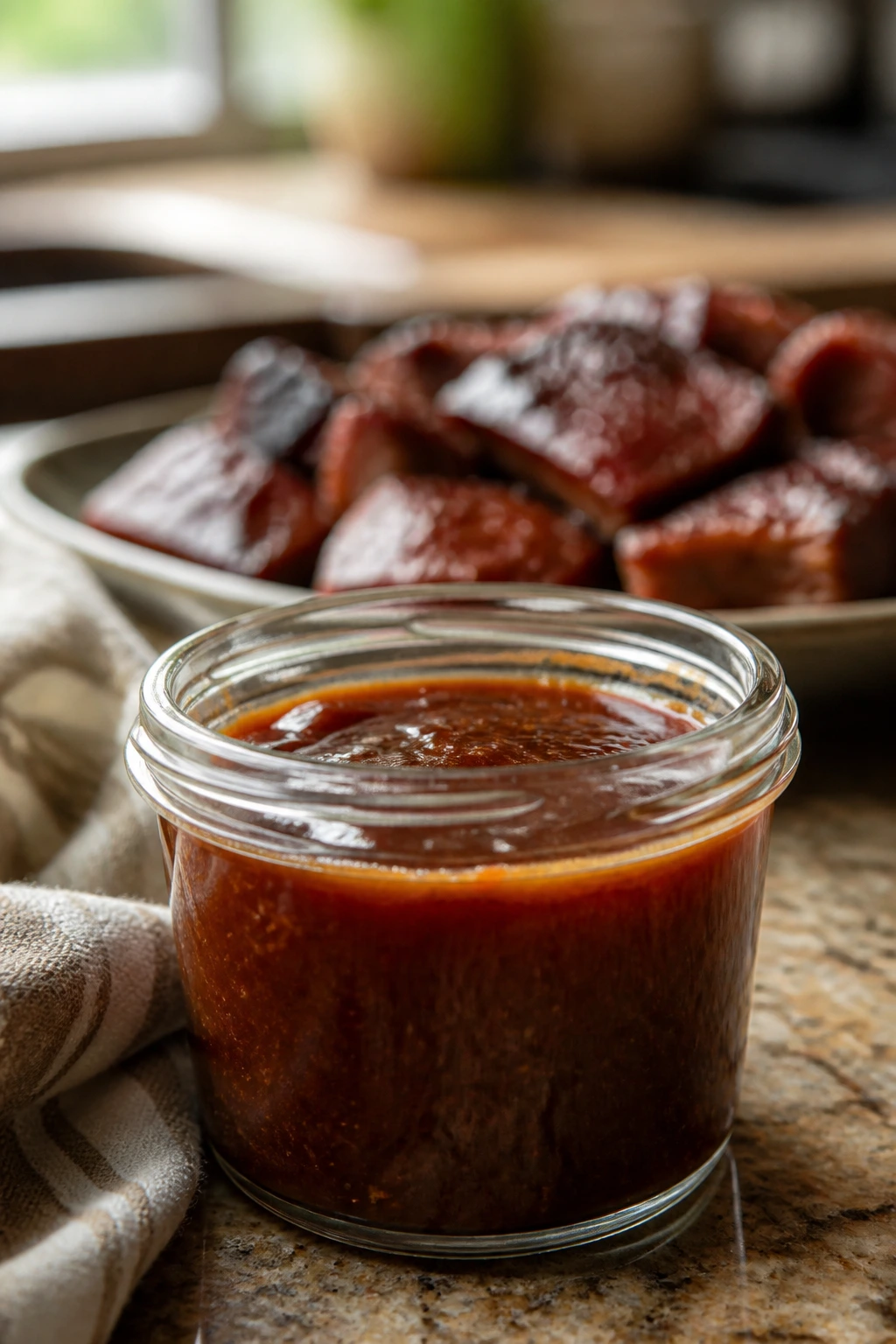
The glaze itself keeps well, and that’s one of the nicest things about it. Let it cool for about 15 minutes, then transfer it to a glass jar or airtight container. In the refrigerator, it keeps for up to 4 days. In the freezer, it holds for about 2 months if you leave a little room at the top of the container for expansion.
The texture will thicken in the fridge. That is normal. Don’t panic when it comes out looking set and a little dark. Warm it gently in a small saucepan over low heat, or microwave it in 15-second bursts, stirring between each one. If it seems too tight after reheating, add 1 teaspoon of water or stock at a time until it loosens enough to brush.
If you’re making pork ahead of time, keep the glaze separate from the meat until the end. That matters more than people think. Pork that sits in a sugar-heavy glaze for hours can lose its clean flavor and take on a muddled sweetness. A separate container means the meat stays savory and the glaze stays bright.
For leftovers, store glazed pork in the fridge for 3 to 4 days. Reheat slices in a covered skillet over low heat with a spoonful of water or stock to keep the glaze from drying into a tacky crust. If you’re reheating a roast, a low oven around 300°F works better than a blast of high heat, which can make the sugars turn too dark again.
Brown Sugar Pork Glaze FAQs
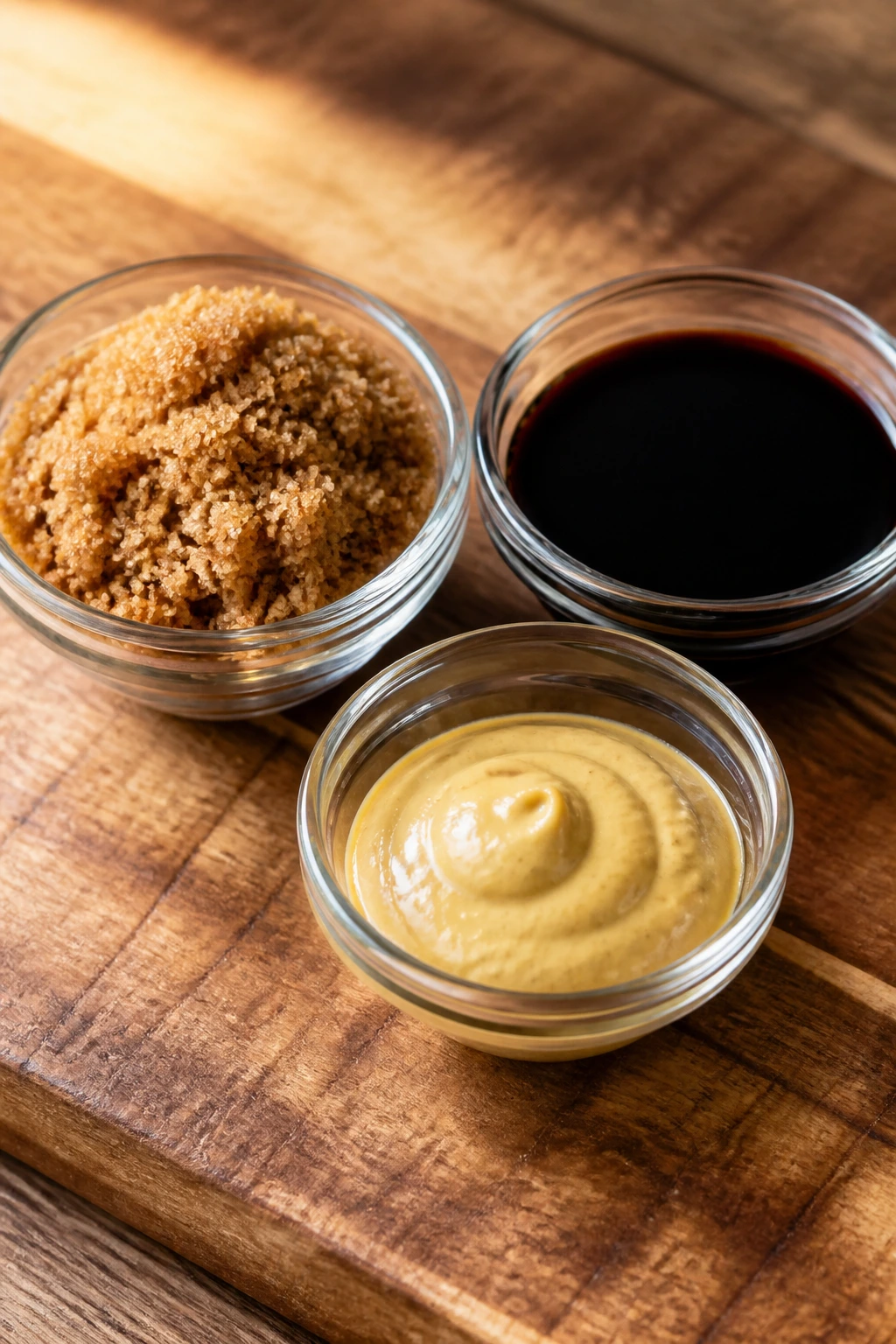
Can I use dark brown sugar instead of light brown sugar?
Yes, and it will give the glaze a deeper molasses flavor. Use the same amount, but taste carefully before adding any extra Worcestershire or salt because dark brown sugar pushes the glaze in a richer direction.
Can I make this glaze without butter?
You can. Olive oil or vegan butter works, and the glaze still stays glossy enough to brush cleanly onto pork. The finished flavor is a little less round, so a tiny splash of stock at the end helps smooth it out.
How do I keep the glaze from burning on grilled pork?
Apply it only near the end and move the pork to indirect heat as soon as you brush it on. If the grill is blasting flames at the meat, the sugar will blacken before the pork finishes cooking. That is the main thing to avoid.
Can I use this on smoked pork or ribs?
Yes, but save it for the final 10 to 15 minutes. On a smoker, the glaze can set into a shiny coat very nicely if the meat already has enough color. Apply it too early and it can turn dark and sticky in a way that tastes flat.
What if my glaze turns out too thin?
Put it back over low heat for 1 to 2 more minutes and stir often. The glaze will continue to thicken as it cools, so stop before it looks perfect in the pan. If it gets too tight later, add a teaspoon of warm stock and whisk.
Can I use this as a marinade?
Not as written. The brown sugar can scorch, and the soy-vinegar balance is better for finishing than long soaking. If you want marinade flavor, reserve a portion before it touches raw meat and thin that separate portion with a little oil.
How much glaze should I use on a pound of pork?
About 1 to 2 tablespoons per pound is a good range for brushing during cooking, with a little more for serving if you like sauce on the plate. Thin, even coats work better than dumping on a heavy layer at once. Heavy glaze can slide off before it sets.
What if the glaze tastes too sweet?
Add 1 teaspoon more vinegar or a small splash of soy sauce and whisk it in off the heat. That usually brings the balance back without changing the texture. If it still feels too sweet, a pinch of black pepper helps too.
The Finish Worth Reaching For
The best brown sugar pork glaze is never just sweet. It has to carry salt, acid, and a little bite or it turns one-note fast. That’s why this one works: it lands glossy and warm, then quietly pulls back before the sugar can take over.
Keep the heat moderate, brush it on late, and stop the simmer while the glaze still moves like a sauce instead of a candy shell. That little bit of restraint changes everything. Once you’ve made it once, you’ll probably keep the ingredients on repeat—because pork deserves a finish that tastes deliberate, not decorative.
Savory Pork Glaze with Brown Sugar Glaze — Recipe Card
- Recipe Name: Savory Pork Glaze with Brown Sugar Glaze
- Description: A glossy, sweet-salty glaze for pork chops, tenderloin, roasts, or ribs. Brown sugar, soy sauce, vinegar, mustard, and garlic reduce into a spoonable finish that clings without turning cloying.
- Prep Time: 5 minutes
- Cook Time: 10 to 12 minutes
- Total Time: 15 to 17 minutes
- Course: Sauce / Condiment
- Cuisine: American
- Servings: About 8 servings, roughly 2 tablespoons each
- Calories: About 85 kcal per serving
Ingredients
- 1/2 cup packed light brown sugar
- 1/4 cup low-sodium soy sauce or tamari
- 1/4 cup low-sodium chicken stock or unsweetened apple juice
- 2 tablespoons apple cider vinegar
- 2 tablespoons Dijon mustard
- 2 tablespoons unsalted butter or olive oil
- 2 garlic cloves, finely minced
- 1 teaspoon Worcestershire sauce
- 1/2 teaspoon smoked paprika
- 1/2 teaspoon freshly ground black pepper
- 1/8 teaspoon cayenne pepper, optional
- 1/4 teaspoon kosher salt, only if needed after tasting
Instructions
- Whisk the brown sugar, soy sauce, stock, apple cider vinegar, Dijon mustard, Worcestershire sauce, garlic, smoked paprika, black pepper, and cayenne in a small saucepan until combined.
- Set over medium heat and stir for 2 to 3 minutes, until the sugar dissolves and the mixture looks smooth.
- Reduce to medium-low and simmer for 6 to 8 minutes, stirring often, until the glaze coats the back of a spoon.
- Remove from the heat and whisk in the butter until glossy. Taste and adjust with a pinch of salt if needed.
- Use warm to brush pork during the last few minutes of cooking or spoon over sliced pork at the table.
Notes:
- Keep the heat gentle so the sugar doesn’t scorch.
- If the glaze thickens too much after cooling, loosen it with 1 teaspoon of warm stock or water at a time.
- For gluten-free cooking, use tamari.