



A good crispy smoked sausage dinner with brown sugar glaze should do two things at once: hit the pan with a hard sizzle and leave a sticky trail of caramelized sauce behind it. If it comes out pale, soft, and puddled with watery glaze, the whole dinner feels tired before it reaches the table. If it comes out right, you get browned sausage edges, sweet-salty shine, and potatoes that actually taste like they were roasted on purpose.
That balance is the whole trick here. Smoked sausage already brings smoke, salt, and fat; brown sugar brings the gloss and the burnished edges; Dijon and vinegar keep the glaze from turning into candy. The best version has contrast in every bite. Crisp casing. Tender potatoes. Beans with a little snap. A sauce that clings instead of sliding off into the pan.
I like this dinner because it behaves like a sheet-pan recipe should behave: low drama, high payoff, and no need to babysit six separate burners. But there is a catch. Sugar cooks fast, and sausage throws off enough fat to change how the glaze behaves, so the order matters more than people expect. Get that order right, and you end up with a pan that smells like browned onions, smoked meat, and warm caramel all at once.
Why This Crispy Smoked Sausage Dinner Earns Its Keep
-
The edges actually crisp. Roasting the potatoes first gives them a head start, so the sausage can brown without leaving the vegetables underdone and the pan crowded with steam.
-
The glaze has backbone. Brown sugar alone would taste flat and sticky. Dijon, vinegar, and soy sauce give it a sharp, salty edge that keeps each bite from tipping into sweet.
-
It uses ordinary ingredients well. Baby potatoes, smoked sausage, green beans, and onion are the kind of groceries you can buy without a special trip, but the finished pan doesn’t taste ordinary.
-
The timing is forgiving once you know the rhythm. Potatoes go in first, sausage joins them later, green beans come in near the end, and the glaze gets brushed on when everything is hot enough to catch it.
-
Leftovers don’t fall apart. Reheated sausage holds onto its texture better than a lot of roasted meats, and the glaze turns glossy again with a quick skillet warm-up.
-
You can stretch the pan without wrecking it. A salad, some crusty bread, or a pile of coleslaw turns this into dinner for four, while a second sheet pan makes it easy to feed six without crowding.
Yield, Timing, and the Kind of Night This Fits
Yield: Serves 4 to 6
Prep Time: 15 minutes
Cook Time: 35 minutes
Total Time: 50 minutes
Difficulty: Beginner — the steps are plain and the ingredients are familiar, but the pan order matters if you want browned sausage and potatoes that finish at the same time.
Best Served: Hot from the oven, while the glaze is still shiny and the sausage edges are crisp.
Why This Dinner Tastes Better Than It Sounds
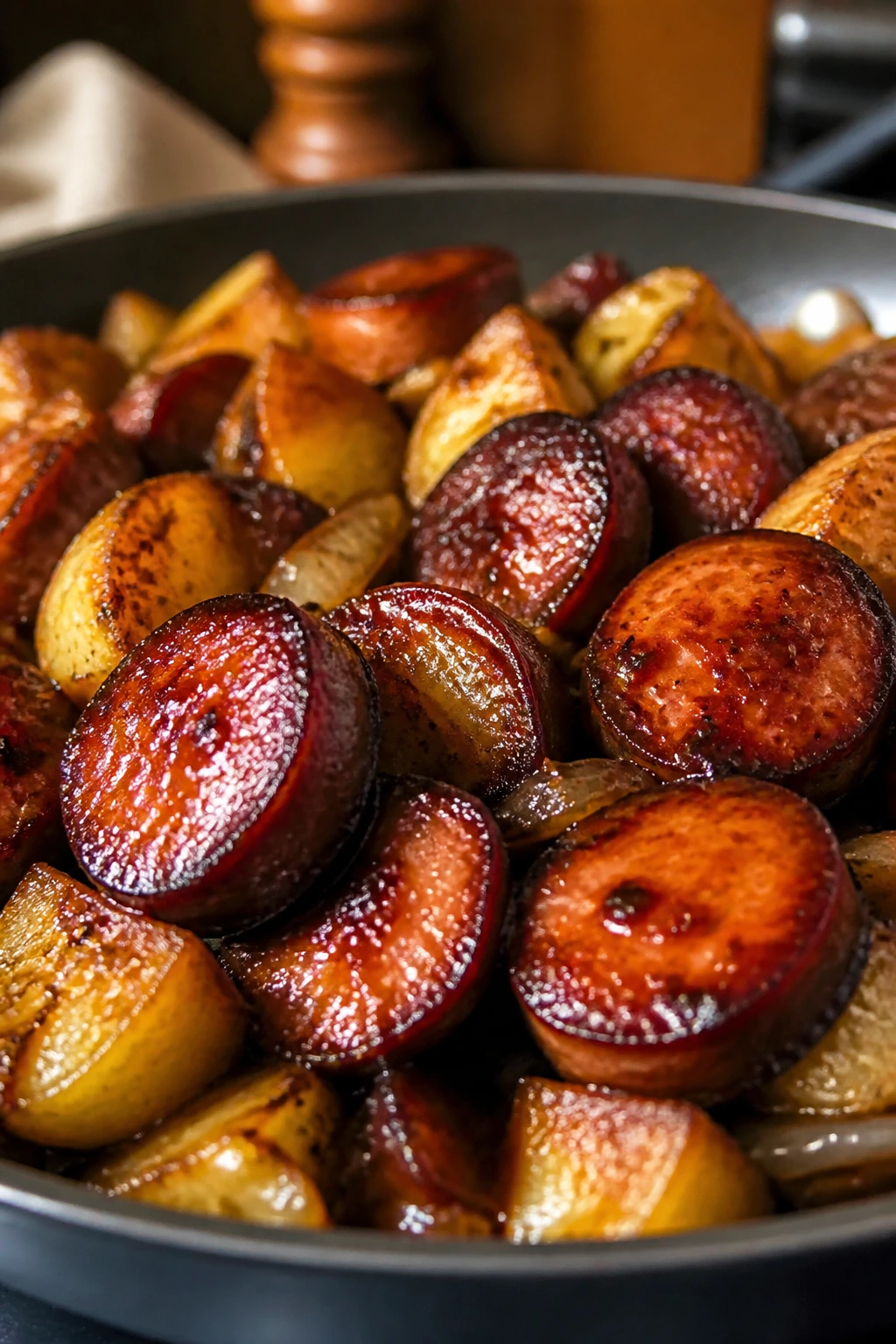
Smoked sausage has a built-in advantage that a lot of weeknight proteins don’t. It’s already seasoned, already cooked in most cases, and already fat enough to brown well if you give it room on a hot pan. That means you’re not starting from zero. You’re building texture around something that already has a strong flavor base.
Brown sugar sounds like it wants to be dessert, but in this dinner it behaves more like a lacquer. Once it meets Dijon, vinegar, butter, and the heat of the oven, it turns into a sauce that coats the sausage instead of soaking into the potatoes. That distinction matters. A loose sauce slides off. A good glaze leaves a sticky film on the coin-shaped sausage slices and a thin sheen on the onions.
The potatoes do the job of keeping the whole pan grounded. They catch the drips, they roast in the sausage fat, and they give you something starchy enough to soak up the glaze without turning heavy. Baby Yukon Golds are my first choice because they go creamy in the middle and crisp at the cut side. Red potatoes work too, but they’re a little waxier and less buttery.
Green beans add a different kind of texture entirely. They keep the dinner from feeling soft and one-note. If you trim them well and add them late, they stay bright and a little snappy instead of collapsing into olive-green threads. That little bit of snap is the difference between a pan that feels finished and one that just feels hot.
The Ingredient Lineup for a Smoked Sausage Dinner with Brown Sugar Glaze
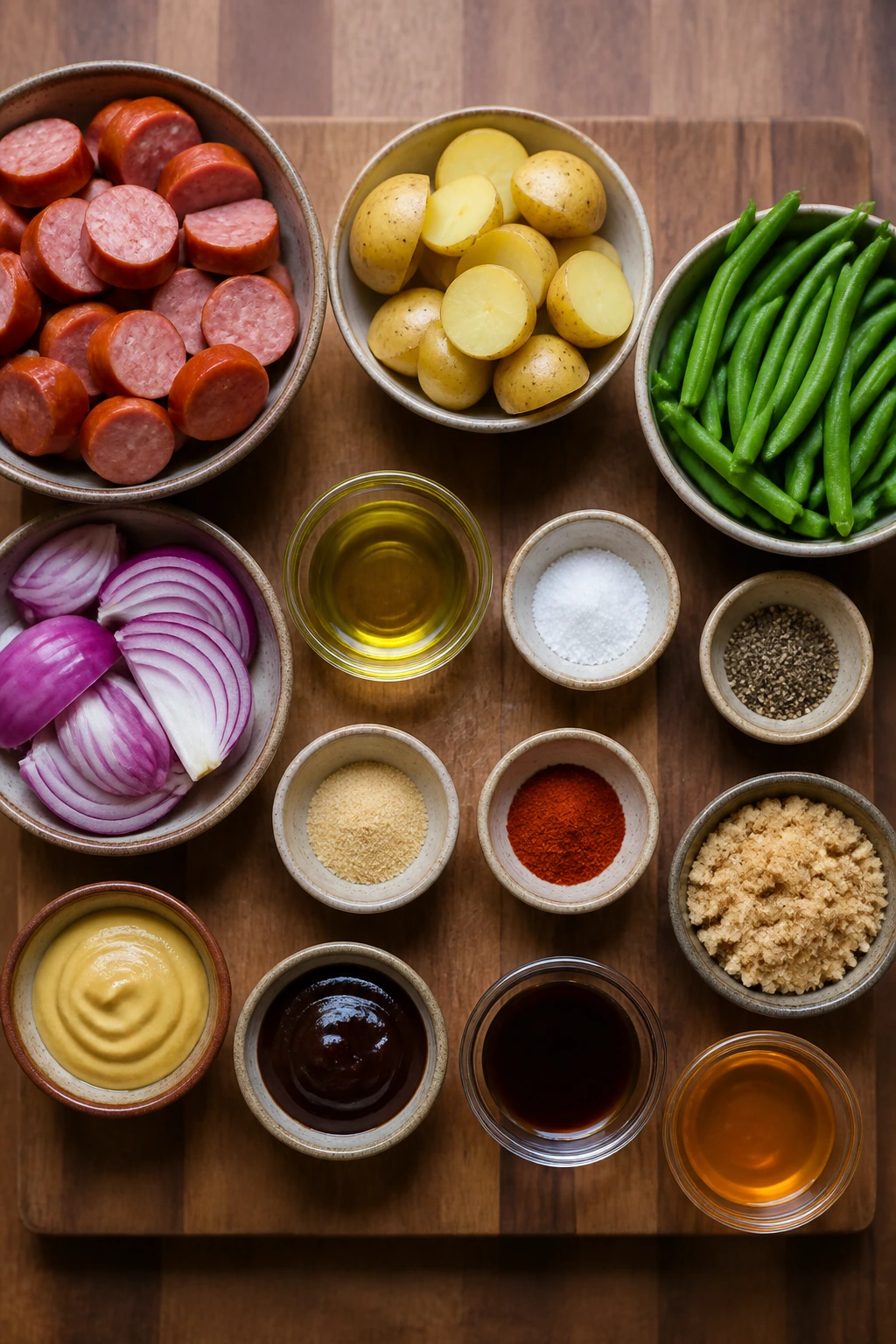
For the Sheet Pan:
-
1 1/2 lbs fully cooked smoked sausage, sliced into 1/2-inch coins
Use a firm sausage with a tight casing so the slices brown instead of tearing. -
1 1/2 lbs baby Yukon Gold potatoes, halved
Keep the skins on for texture and cut any larger potatoes into quarters so everything finishes together. -
12 oz fresh green beans, trimmed
Fresh beans roast better than frozen here because they keep their snap. -
1 large red onion, cut into 1-inch wedges
Thick wedges soften and sweeten without dissolving into the pan. -
2 tablespoons olive oil
This helps the potatoes brown and keeps the sausage from sticking. -
1 teaspoon kosher salt
Enough to season the potatoes before the glaze goes on. -
1/2 teaspoon black pepper
Gives the vegetables a little bite. -
1 teaspoon garlic powder
Adds a dry, roasted garlic note that holds up in the oven. -
1 teaspoon smoked paprika
Echoes the sausage’s smoke and gives the potatoes a deeper color.
For the Brown Sugar Glaze:
-
1/3 cup packed light brown sugar
This is the sweet base and the ingredient that gives the glaze its shine. -
2 tablespoons Dijon mustard
Sharpens the glaze and keeps the sweetness from flattening out. -
1 tablespoon apple cider vinegar
Brings the acid that makes the sauce taste alive instead of sugary. -
1 tablespoon soy sauce or tamari
Adds salt and a little deeper color to the glaze. -
2 tablespoons unsalted butter
Helps the glaze cling to the sausage and vegetables. -
2 cloves garlic, minced
Stir them into the glaze right at the end so they don’t scorch. -
2 tablespoons water
Loosens the glaze just enough to brush or spoon it easily. -
1/4 teaspoon red pepper flakes, optional
Adds a small heat that plays nicely against the sugar.
To Finish:
-
2 tablespoons chopped fresh parsley
Brightens the pan right before serving. -
Flaky salt, optional
A few grains on top make the sausage pop.
How Each Ingredient Pulls Its Weight
Smoked Sausage
What to use: 1 1/2 lbs fully cooked smoked sausage, sliced into 1/2-inch coins. Kielbasa-style sausage is my default here, but any firm smoked pork sausage will work.
Preparation: Slice the sausage on a slight diagonal if you want more surface area for browning. Pat the cut pieces dry with a paper towel before they go on the pan.
Substitutions: Turkey smoked sausage works if you want something a little leaner. Andouille brings more heat, while plant-based sausage can work if it holds its shape in the oven.
Tips: Choose sausage with a casing that feels firm, not split or damp in the package. Too-soft sausage sheds fat too quickly and goes greasy before it browns.
Baby Potatoes
What to use: 1 1/2 lbs baby Yukon Gold potatoes, halved. If yours are on the small side, halving is enough; if they’re closer to golf-ball size, quarter them.
Preparation: Wash and dry them well, then cut them into even pieces so the cut sides brown at the same pace. Wet potatoes steam instead of roast.
Substitutions: Red potatoes work and hold their shape a little more firmly. Small sweet potatoes can be used, but they need closer watching because the sugars brown faster.
Tips: Leave the skins on. That thin layer gives you a little chew on the outside and keeps the potato from turning fluffy in a way that fights the glaze.
Green Beans and Onion
What to use: 12 oz fresh green beans and 1 large red onion cut into wedges. The onion should be thick enough to soften without dissolving.
Preparation: Trim the green beans and snap off any fibrous ends. Cut the onion into wedges at least 1 inch wide so the layers stay together in the oven.
Substitutions: Brussels sprouts, broccoli florets, or bell peppers can stand in for the beans. Yellow onion works too, but red onion brings a sweeter finish once it roasts.
Tips: Add the green beans late. If they go in too early, they end up wrinkled and dull instead of bright and crisp-tender.
The Brown Sugar Glaze
What to use: 1/3 cup packed light brown sugar, 2 tablespoons Dijon mustard, 1 tablespoon apple cider vinegar, 1 tablespoon soy sauce, 2 tablespoons butter, 2 cloves minced garlic, 2 tablespoons water, and red pepper flakes if you like heat.
Preparation: Whisk everything in a small saucepan and warm it just until the sugar dissolves and the glaze looks smooth and glossy. Don’t boil it hard.
Substitutions: Maple syrup can replace part of the brown sugar for a rounder sweetness. Whole-grain mustard gives a rougher, seedier finish if you like more texture.
Tips: Keep the glaze pourable. If it thickens too much before it hits the pan, it won’t spread evenly and the sugar can scorch in little dark patches.
Fresh Parsley and Flaky Salt
What to use: 2 tablespoons chopped parsley and a pinch of flaky salt for the finish.
Preparation: Chop the parsley just before serving so it stays bright and doesn’t bruise.
Substitutions: Chives can work, or leave the herbs out if you want the pan to stay all about brown, gold, and glossy red.
Tips: The parsley is not decoration. It cuts the heavy sweetness and makes the whole pan taste sharper at the end.
The Pan and Tools That Make Crisp Edges Happen
-
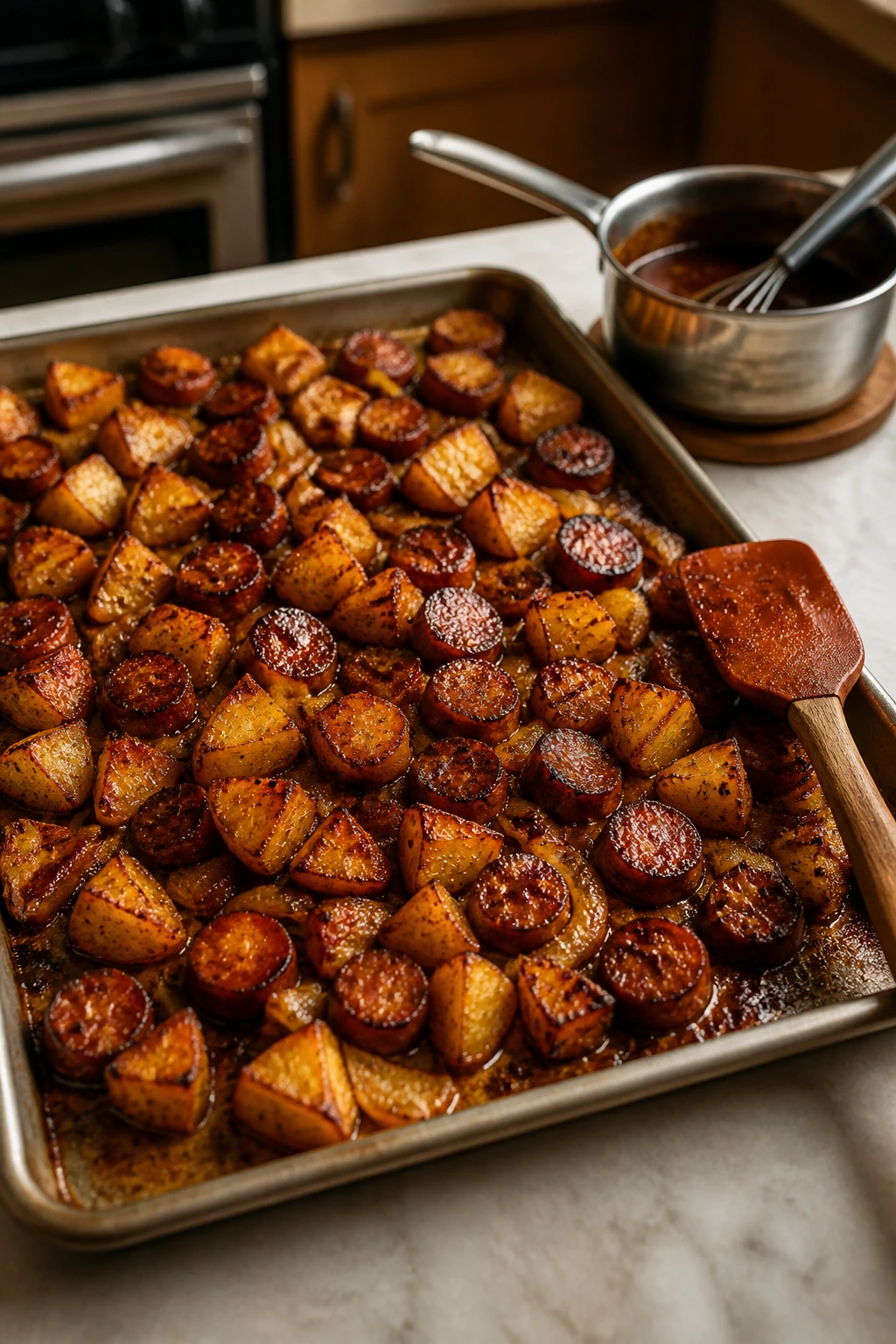
Large rimmed sheet pan, 18 x 13 inches
A half-sheet pan gives the sausage and potatoes room to brown instead of steaming together. -
Large mixing bowl
Useful for tossing the potatoes with oil and seasonings before they hit the pan. -
Small saucepan
The glaze comes together faster and more evenly on the stove than in the oven. -
Silicone spatula or wooden spoon
Handy for stirring the glaze and tossing the pan midway through roasting. -
Chef’s knife
A sharp knife matters here because clean cuts on the sausage and potatoes roast better. -
Cutting board
Use a stable one. A damp kitchen towel under the board keeps it from sliding when you’re slicing sausage coins. -
Pastry brush, optional
Nice for painting glaze across the sausage if you want a more even coating. -
Instant-read thermometer, optional but useful
Not required for fully cooked sausage, but helpful if you’ve got a raw smoked sausage and want to check doneness.
Roasting the Sausage and Vegetables Step by Step
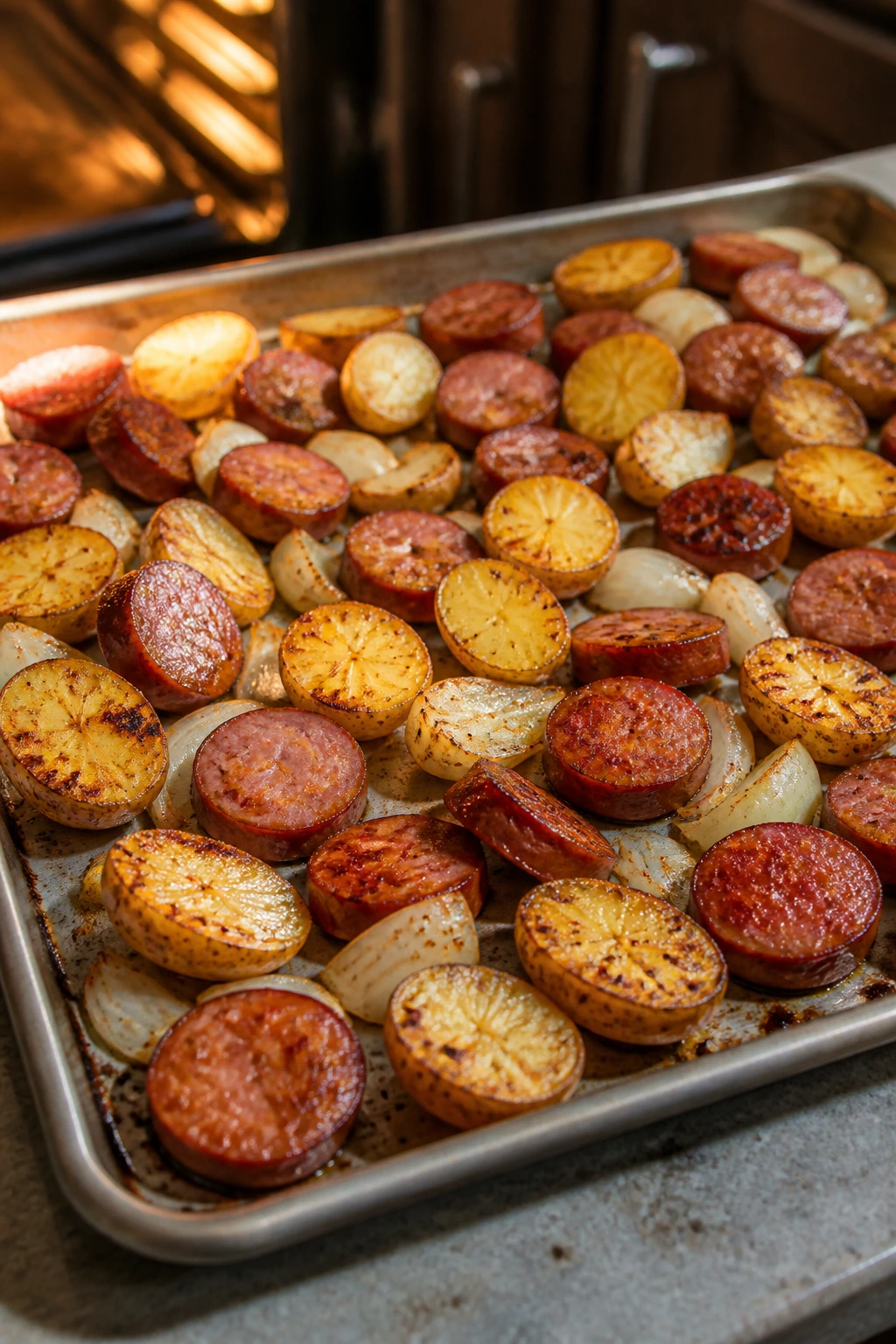
Phase 1: Heat the Pan and Give the Potatoes a Head Start
-
Preheat the oven to 425°F (220°C) and set a rack in the center position. Brush a large rimmed sheet pan with 1 tablespoon of the olive oil. If you want the easiest cleanup, you can line the pan with foil first, but the browning is better on bare metal.
-
Season the potatoes. In a large bowl, toss the halved potatoes with the remaining 1 tablespoon olive oil, kosher salt, black pepper, garlic powder, and smoked paprika until every cut side is lightly coated. The potatoes should look slick, not drenched.
-
Roast the potatoes for 15 minutes. Spread them cut-side down on the sheet pan in a single layer. They should start to pick up color on the bottom edges, with the tops still pale. If they’re browning too fast, your oven runs hot; move the pan to a lower rack.
Phase 2: Add the Sausage and Build the Glaze
-
Add the sausage and onion. Pull the pan out and give the potatoes a turn. Scatter the sausage coins and onion wedges over the pan, keeping everything in a single layer as much as you can. Roast for 8 minutes, until the sausage starts to color and the onions soften at the edges.
-
Make the glaze while the pan roasts. In a small saucepan over medium-low heat, combine the brown sugar, Dijon mustard, apple cider vinegar, soy sauce, butter, minced garlic, water, and red pepper flakes if you’re using them. Stir for 1 to 2 minutes, just until the butter melts and the glaze looks smooth and glossy. Do not boil it hard or the sugar can taste sharp instead of rounded.
-
Add the green beans and glaze. Take the pan out, scatter the trimmed green beans over everything, then drizzle or brush about half the glaze across the sausage, potatoes, onions, and beans. Toss gently with a spatula just enough to coat the top layer. Don’t bury the green beans under the potatoes — they need direct heat to stay crisp.
Phase 3: Finish the Brown Sugar Glaze in the Oven
-
Roast for 8 to 10 minutes more. The sausage should be browned around the edges, the potatoes should be tender when pierced with a fork, and the green beans should look bright with a few blistered spots. If the pan looks dry before the vegetables are done, drizzle on the remaining glaze.
-
Broil for 1 to 2 minutes only if you want extra color. Keep the oven door cracked and watch closely. The glaze should bubble and darken at the edges, not turn black. Pull the pan as soon as the sausage looks lacquered and the potatoes have crisp corners.
-
Finish with parsley and a pinch of flaky salt. Let the pan sit for 5 minutes so the glaze settles and sticks. The resting time matters. Right out of the oven, the sauce is loose; after a short rest, it clings.
How to Plate It So the Glaze Stays Shiny
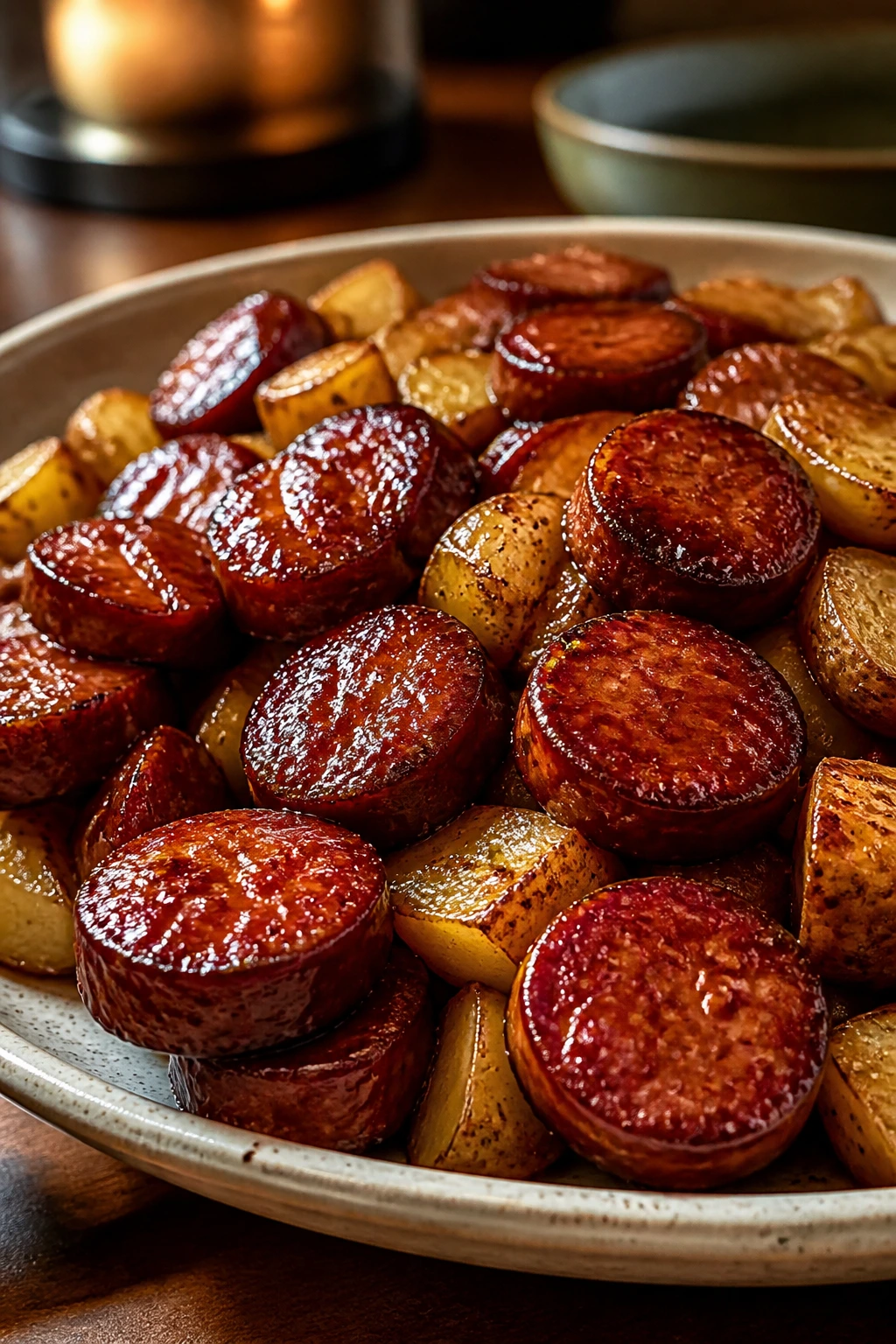
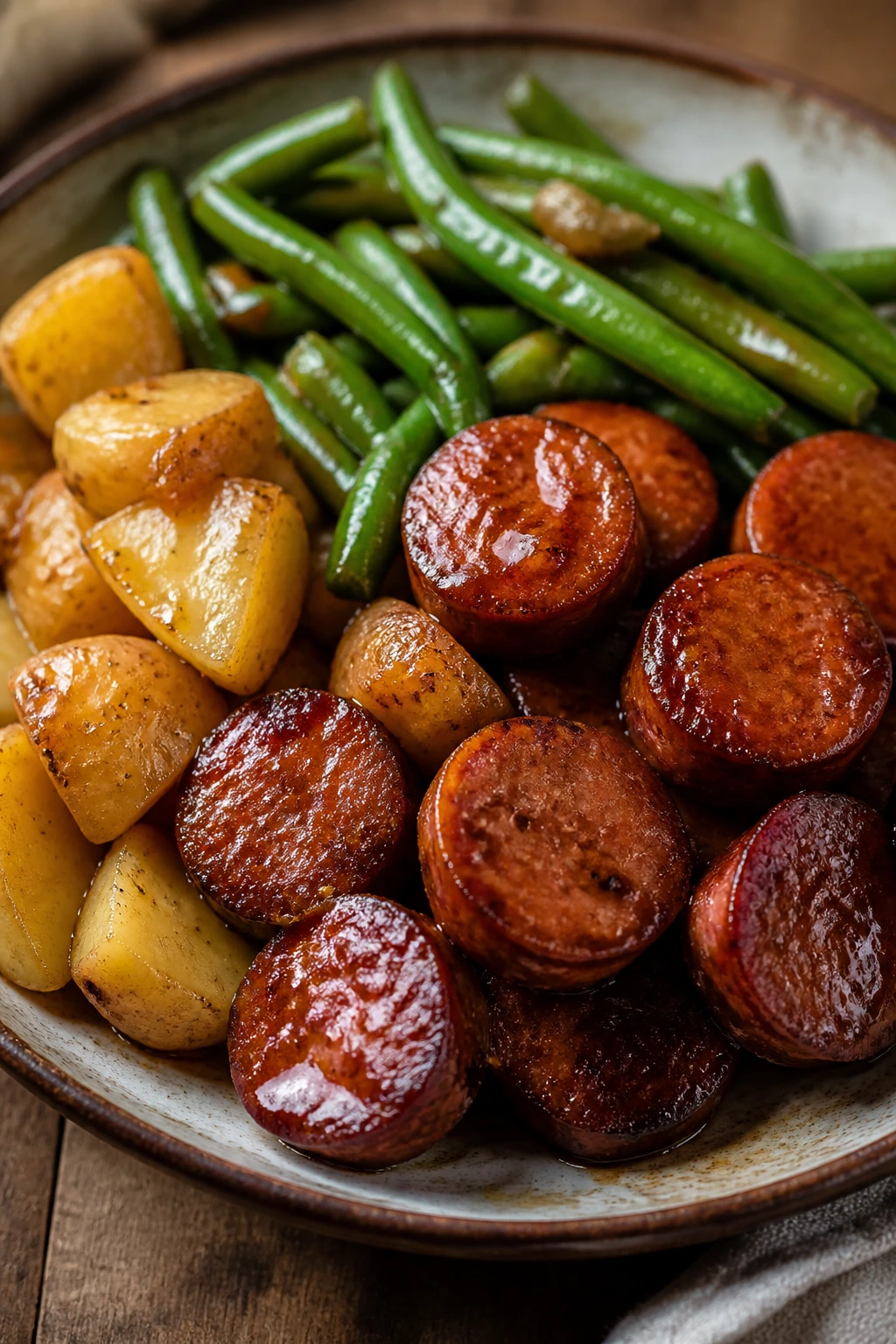
Presentation: Spoon the potatoes and green beans onto the platter first, then pile the sausage coins on top and drizzle any glaze left in the pan over everything. A shallow bowl or rimmed serving dish holds the sticky sauce better than a flat plate, and it keeps the pan from looking like a pile of separate ingredients.
Accompaniments: A crisp green salad with a sharp vinaigrette is my favorite side because it cuts the sweetness. Buttermilk coleslaw works too, and if you want bread, choose something plain and sturdy like a crusty roll or a slice of country loaf. You do not need another rich side; the potatoes already cover that ground.
Portions: Count on about 1 generous cup of the finished mix per person if you’re serving four, or a slightly smaller scoop if you’re pairing it with salad and bread. For bigger appetites, keep it at four servings. For lighter plates or older kids, it stretches to six without feeling skimpy.
Beverage Pairing: A dry hard cider fits the sweet-salty glaze better than a sweet drink. A cold lager, unsweet iced tea, or sparkling water with lemon also keeps the plate from feeling heavy.
Small Moves That Make the Pan Taste Better
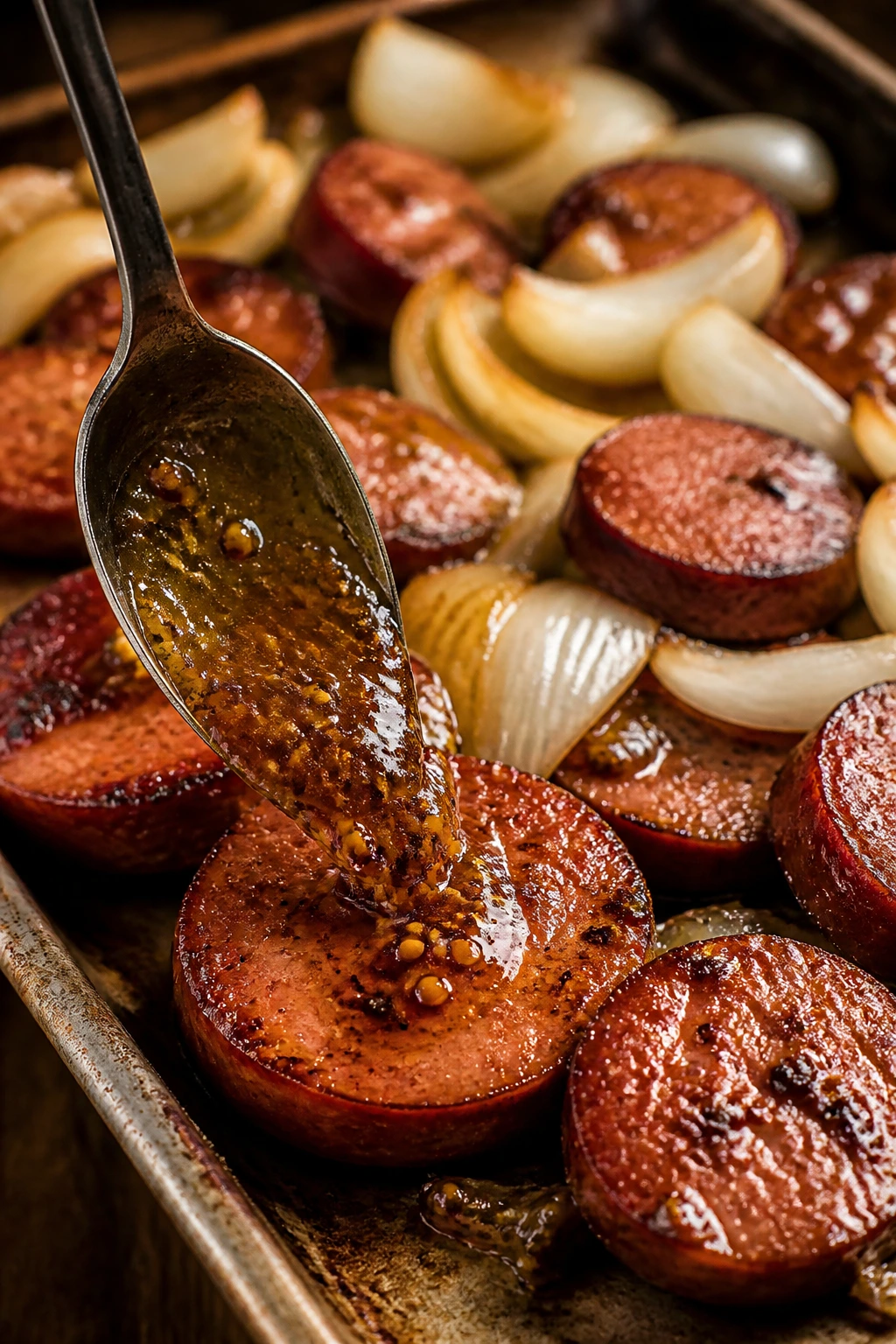
Flavor Enhancement: A teaspoon of whole-grain mustard stirred into the glaze gives you little mustard seeds and a rougher texture that clings to the sausage a little better. I also like a tiny splash of cider vinegar at the end, right before serving, if the glaze tastes too round.
Time-Saver: If your potatoes are unusually large, microwave them for 3 to 4 minutes after halving them, then dry them well before they go on the pan. That short head start knocks 8 to 10 minutes off the roasting time without turning them mushy.
Cost-Saver: Store-brand smoked sausage is fine as long as the casing is firm and the package doesn’t look watery. You’re paying for smoke and seasoning here, not luxury ingredients, and a good basic sausage can brown just as well as a pricier one.
Make-It-Yours: Want more heat? Add a pinch of cayenne to the potatoes and a little extra red pepper flake to the glaze. Want less sweetness? Cut the brown sugar down to 1/4 cup and increase the Dijon to 3 tablespoons. Both changes keep the pan balanced; they just push it in a different direction.
Mistakes That Turn Crisp Sausage Soft
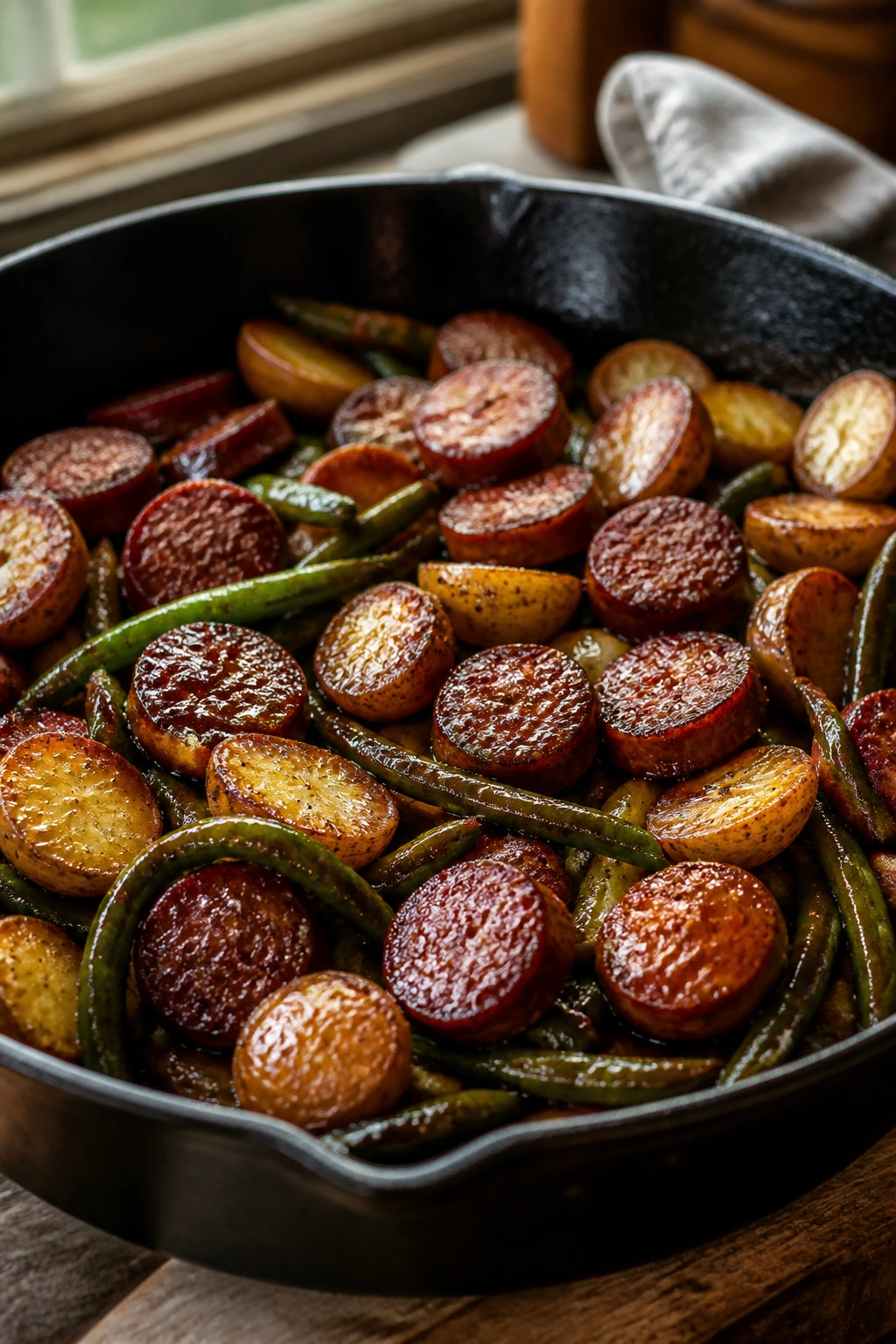
-
Crowding the pan.
If the sausage and vegetables are piled on top of one another, they steam instead of roast. The fix is simple: use a bigger sheet pan or split the dinner across two pans. You want open space between pieces so hot air can move. -
Adding the glaze too early.
Brown sugar burns faster than most people expect. If the glaze goes on at the start, it darkens before the potatoes are tender and leaves bitter little spots on the pan. Brush or drizzle it during the final stretch, not from the beginning. -
Cutting the potatoes unevenly.
Big halves and tiny halves will not finish together. The small pieces will go soft and the large ones will stay chalky in the middle. Keep the cuts close in size, and quarter any baby potatoes that are much larger than a golf ball. -
Using wet vegetables.
Water on the potatoes or green beans kills browning fast. Dry everything after washing, and do not toss the vegetables into the pan dripping wet. If you can hear them hiss instead of sizzle, there’s still too much surface water. -
Broiling without watching the pan.
One minute under the broiler can give you the exact color you want. The next minute can turn the glaze from amber to black. Stay close, use the oven light, and pull the pan the second the edges darken. -
Expecting fully cooked and raw sausage to behave the same.
Most smoked sausage is already cooked, which means you’re reheating and browning it. If you buy raw smoked sausage, the timing changes and you need to cook it to the correct internal temperature. Check the package before you start slicing.
Variations That Still Feel Like Dinner
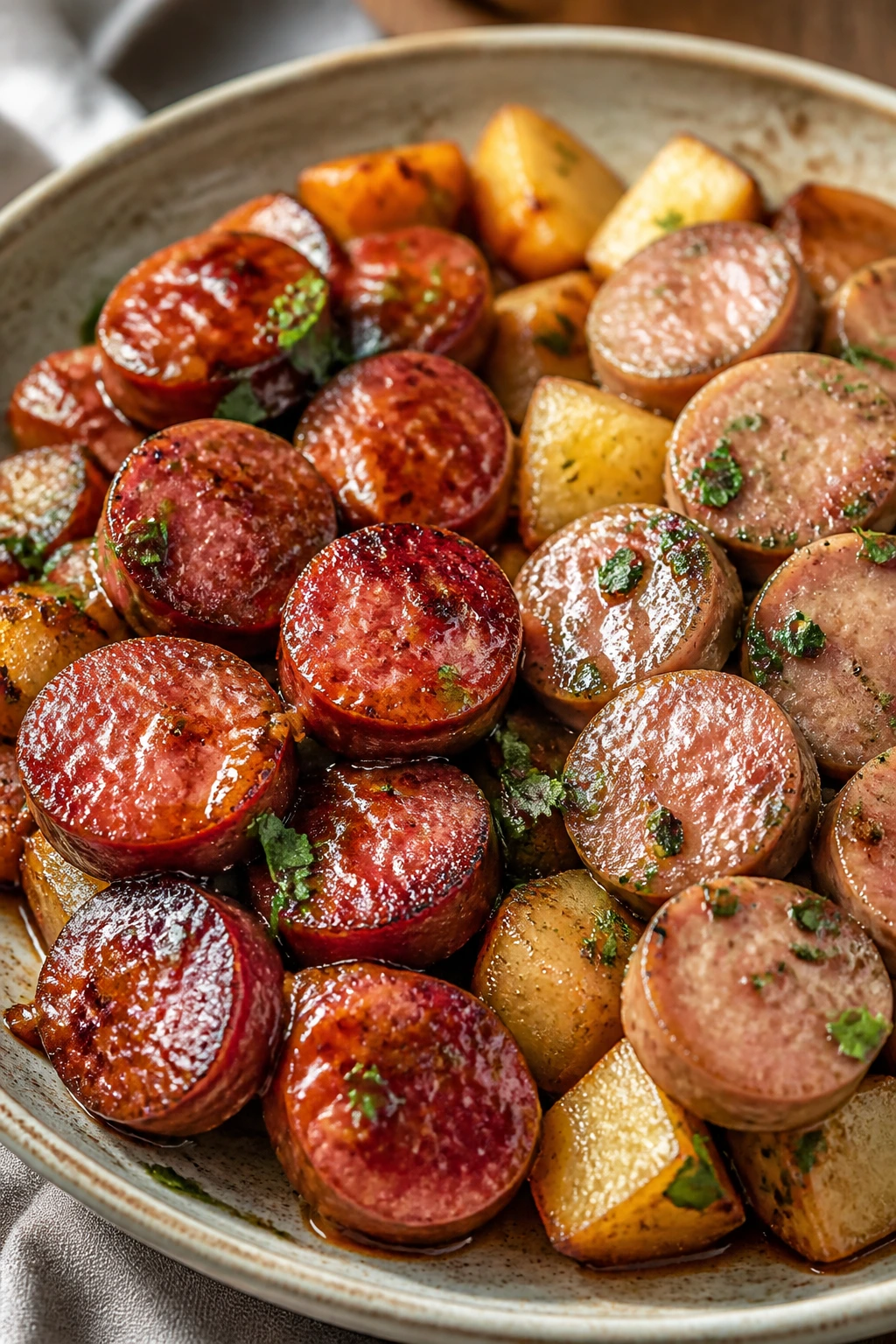
Spicy Cajun Smoke: Swap the smoked sausage for andouille and add 1 teaspoon Cajun seasoning to the potatoes. The glaze can stay the same, but a pinch more vinegar helps cut the extra heat.
Apple-Dijon Glow: Add 1 large apple, cored and cut into thick wedges, during the last 10 minutes of roasting. The apple softens just enough to catch the glaze, and the sweet-tart bite works well with pork sausage.
Mustard-Forward Pantry Pan: Reduce the brown sugar to 1/4 cup and increase the Dijon to 3 tablespoons. This version is less sticky-sweet and more savory, which I like when the sausage is already on the richer side.
Vegetable-Heavy Version: Replace half the potatoes with Brussels sprouts or cauliflower florets. Brussels sprouts bring crisp edges and a little bitterness; cauliflower softens faster, so cut the florets large enough to keep some shape.
Sweet Heat Swap: Add 1 chopped jalapeño to the pan with the onions and stir 1 teaspoon maple syrup into the glaze. That gives you a sharper, brighter sweetness and a little heat without pushing the dish into full barbecue territory.
Keeping Leftovers Tasty the Next Day
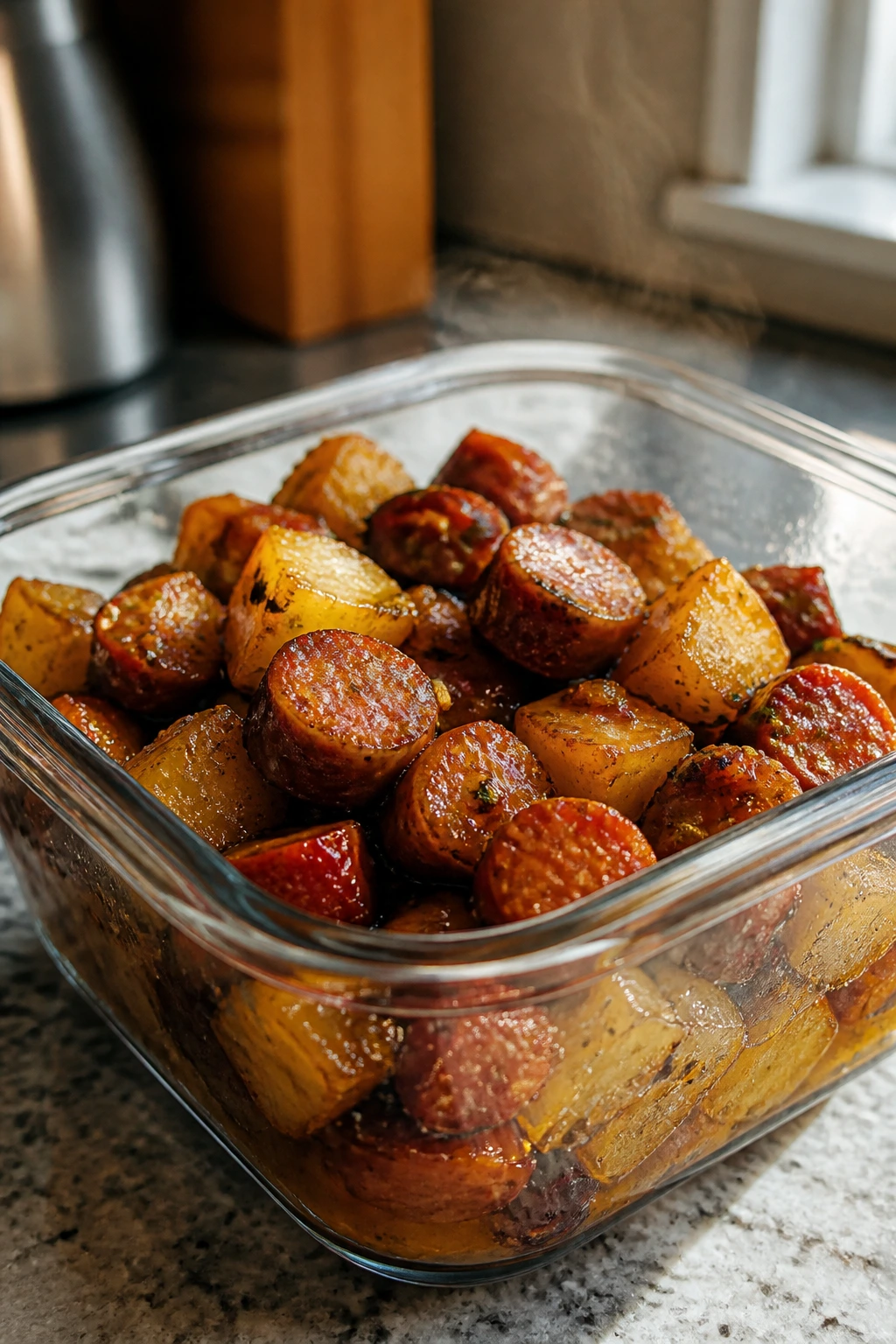
Let the pan cool for no more than 2 hours before packing it away. Slide leftovers into an airtight container and refrigerate them for up to 4 days. The sausage stays in decent shape, the potatoes soften a little, and the glaze thickens in the cold. That’s normal.
For the freezer, you can store the cooked sausage and vegetables for up to 2 months, though the potatoes will come back softer than they started. I freeze them in a flat, sealed bag so they thaw faster. If you know you’re freezing part of the batch, it helps to keep a little glaze separate and add it after reheating.
The best reheating method is the oven. Spread the leftovers on a sheet pan and warm them at 375°F for 12 to 15 minutes, uncovered, until the sausage is hot and the glaze loosens again. A skillet over medium heat works too; add 1 tablespoon of water, cover for a minute, then uncover and let the edges crisp back up.
Microwaving works in a pinch, but it softens the potatoes more than I like. If you use it, heat in 45-second bursts and stop as soon as the center is hot. A little chopped parsley or a splash of vinegar right after reheating wakes the whole thing back up.
This dinner also makes a decent next-day breakfast hash. Chop the leftovers smaller, warm them in a skillet until the potatoes brown again, and top with a fried egg. The glaze and yolk do some very good work together.
Questions People Ask Before They Cook It

Can I use kielbasa instead of smoked sausage?
Yes. Kielbasa-style sausage is one of the easiest swaps here because it already has the right smoke and fat for browning. Just slice it into 1/2-inch coins and treat it the same way.
What if my smoked sausage is raw?
Cook it, but check the package for the right temperature instead of guessing. Raw sausage needs to reach the safe internal temperature listed on the package, and it may need a few extra minutes before the glaze goes on.
Can I use sweet potatoes instead of baby Yukon Golds?
You can, but cut them smaller and watch the browning more closely because they caramelize faster. I’d use chunks about 1 inch wide and keep the glaze a touch lighter so the pan doesn’t turn cloying.
Do frozen green beans work?
They can, but they won’t stay as crisp. If frozen is all you have, thaw them first, dry them very well, and add them late so they don’t dump extra water into the pan.
How do I keep the glaze from burning?
Use it near the end of roasting, not at the start, and keep the oven at 425°F rather than higher. If your oven runs hot, brush on part of the glaze, finish the pan, then add the rest right before serving.
Can I make this ahead of time?
Yes, in pieces. Cut the vegetables the day before, mix the glaze up to 5 days ahead, and slice the sausage in advance if you want. I would not roast the whole pan fully ahead unless you’re fine losing the crisp edges.
Is this better on a sheet pan or in a skillet?
A sheet pan gives you more browning because everything sits in a single layer. A skillet works if you want the glaze to stay in tighter contact with the sausage, but you’ll need to cook in batches or the pan will crowd.
What should I do if the potatoes are still firm when the sausage is done?
Pull the sausage and let it rest under loose foil, then put the potatoes back in the oven for 5 to 7 minutes. The mistake is trying to force everything to finish at once when the potato size was off from the start.
A Dinner Worth Making Again
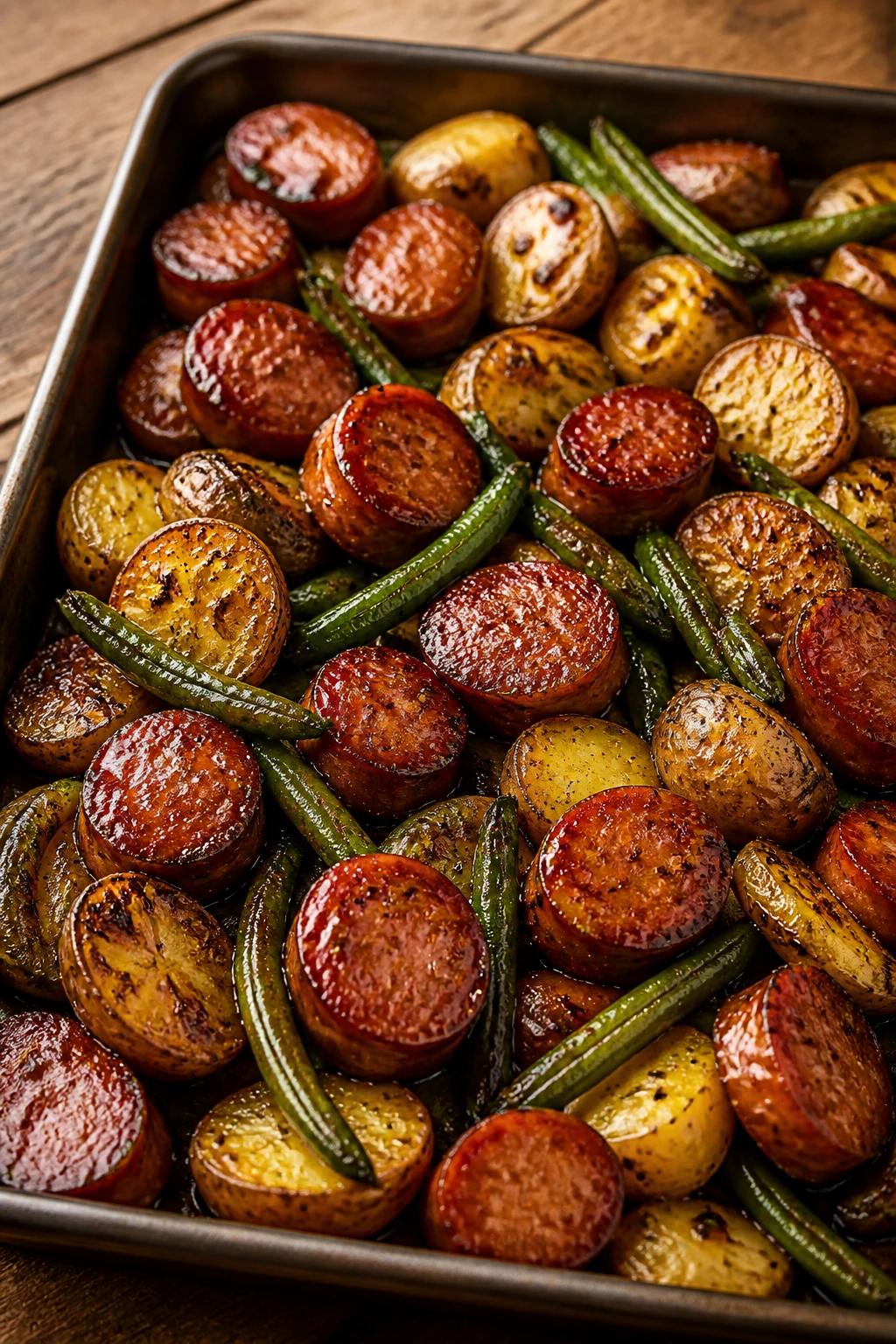
Some dinners are all convenience and no texture. This one has enough browning, salt, and sticky glaze to feel finished, which is why it keeps working even when the ingredients stay simple. The sausage crisps, the potatoes catch the drips, and the beans keep the whole pan from sinking into sweet heaviness.
I’d keep this one in the rotation for the nights when you want the oven to do the heavy lifting but you still want dinner to taste like somebody paid attention. A hot pan, a sharp knife, and a glaze that lands at the right moment are really all it asks for.
Crispy Smoked Sausage Dinner with Brown Sugar Glaze — Recipe Card
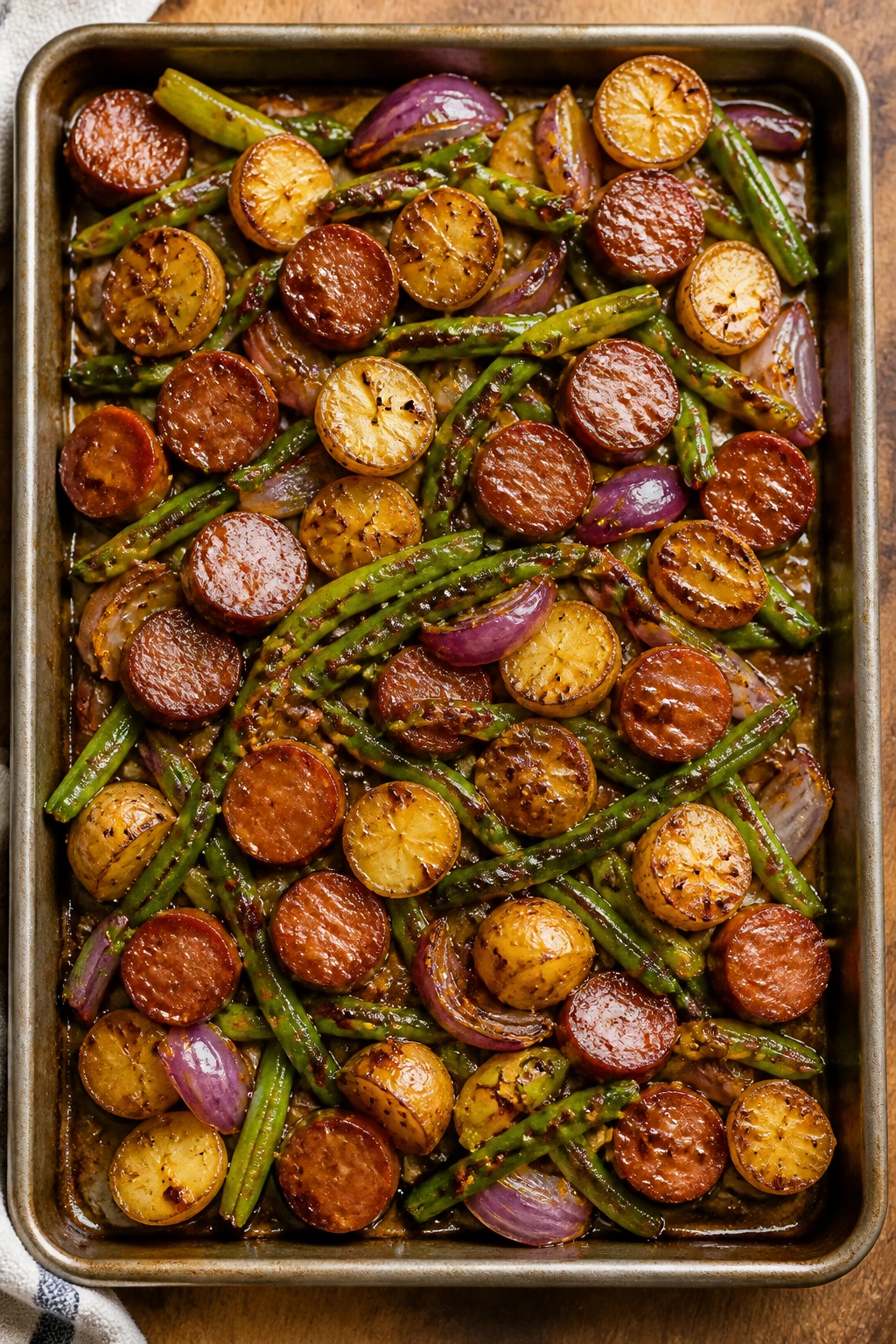
Recipe Name: Crispy Smoked Sausage Dinner with Brown Sugar Glaze
Description: A one-pan dinner of browned smoked sausage, tender potatoes, crisp-tender green beans, and red onion, all coated in a brown sugar-Dijon glaze that turns shiny and sticky in the oven. The trick is roasting in stages so the sausage crisps and the vegetables keep their shape.
Prep Time: 15 minutes
Cook Time: 35 minutes
Total Time: 50 minutes
Course: Dinner, Main Course
Cuisine: American
Servings: 4 to 6 servings
Calories: About 520 kcal per serving
Ingredients
For the Sheet Pan:
- 1 1/2 lbs fully cooked smoked sausage, sliced into 1/2-inch coins
- 1 1/2 lbs baby Yukon Gold potatoes, halved
- 12 oz fresh green beans, trimmed
- 1 large red onion, cut into 1-inch wedges
- 2 tablespoons olive oil
- 1 teaspoon kosher salt
- 1/2 teaspoon black pepper
- 1 teaspoon garlic powder
- 1 teaspoon smoked paprika
For the Brown Sugar Glaze:
- 1/3 cup packed light brown sugar
- 2 tablespoons Dijon mustard
- 1 tablespoon apple cider vinegar
- 1 tablespoon soy sauce or tamari
- 2 tablespoons unsalted butter
- 2 cloves garlic, minced
- 2 tablespoons water
- 1/4 teaspoon red pepper flakes, optional
To Finish:
- 2 tablespoons chopped fresh parsley
- Flaky salt, optional
Instructions
-
Preheat the oven to 425°F (220°C) and brush a large rimmed sheet pan with 1 tablespoon of the olive oil.
-
Toss the halved potatoes with the remaining olive oil, kosher salt, black pepper, garlic powder, and smoked paprika.
-
Spread the potatoes cut-side down on the sheet pan and roast for 15 minutes.
-
Add the smoked sausage and onion wedges to the pan, stir gently, and roast for 8 minutes.
-
Make the glaze by warming the brown sugar, Dijon mustard, apple cider vinegar, soy sauce, butter, minced garlic, water, and red pepper flakes in a small saucepan over medium-low heat until smooth and glossy.
-
Add the green beans to the pan, drizzle or brush about half the glaze over everything, and toss gently.
-
Roast for 8 to 10 minutes more, until the sausage is browned, the potatoes are tender, and the green beans are crisp-tender.
-
Broil for 1 to 2 minutes if you want deeper color, watching closely so the glaze does not burn.
-
Finish with parsley and flaky salt, then rest for 5 minutes before serving.
Notes:
Use fully cooked smoked sausage for this timing. If your sausage is raw, follow the package instructions for doneness. For the crispiest potatoes, use a large metal sheet pan and don’t crowd the pan.