



A Thanksgiving turkey breast in the slow cooker is not trying to be the glamorous centerpiece with crackly skin and a dramatic carve at the table. It’s trying to solve the real holiday problem: you need tender meat, you need gravy, and you need your oven to stop acting like the only appliance in the house that matters.
That’s why I keep coming back to slow cooker Thanksgiving turkey when the menu starts getting crowded. The breast cooks low and gently over onions, carrots, celery, and broth, so the slices stay juicy instead of going stringy at the edges. You do give up one thing. The slow cooker will not brown the skin for you, and pretending otherwise just leads to disappointment.
What you get instead is a bird that smells like sage and butter when you lift the lid, gives up drippings worth saving, and leaves the oven free for stuffing, rolls, and pie. If you finish it under the broiler for a few minutes, you get enough color to make it look like it belongs on a holiday table, not just in a dinner plan.
Why You’ll Love This Recipe
-
Oven Space Saver: The turkey cooks in the slow cooker, which leaves the oven open for stuffing, rolls, casseroles, and pie without the usual holiday traffic jam.
-
Tender Slices: A bone-in turkey breast stays much moister when cooked low and slow, especially if you pull it at 165°F instead of waiting for “done” to look obvious.
-
Classic Thanksgiving Flavor: Onion, celery, carrots, sage, thyme, and rosemary give the drippings enough backbone to turn into gravy that tastes like the holiday, not like plain broth.
-
Low-Stress Timing: You can start it early, walk away, and still have a main dish ready while the side dishes fight for burner space.
-
Good Leftovers: The slices reheat cleanly in gravy, which matters more than people admit. Dry turkey leftovers are a letdown; juicy ones become sandwiches, soup, and next-day plates you actually want.
Why Slow Cooker Thanksgiving Turkey Belongs on the Menu
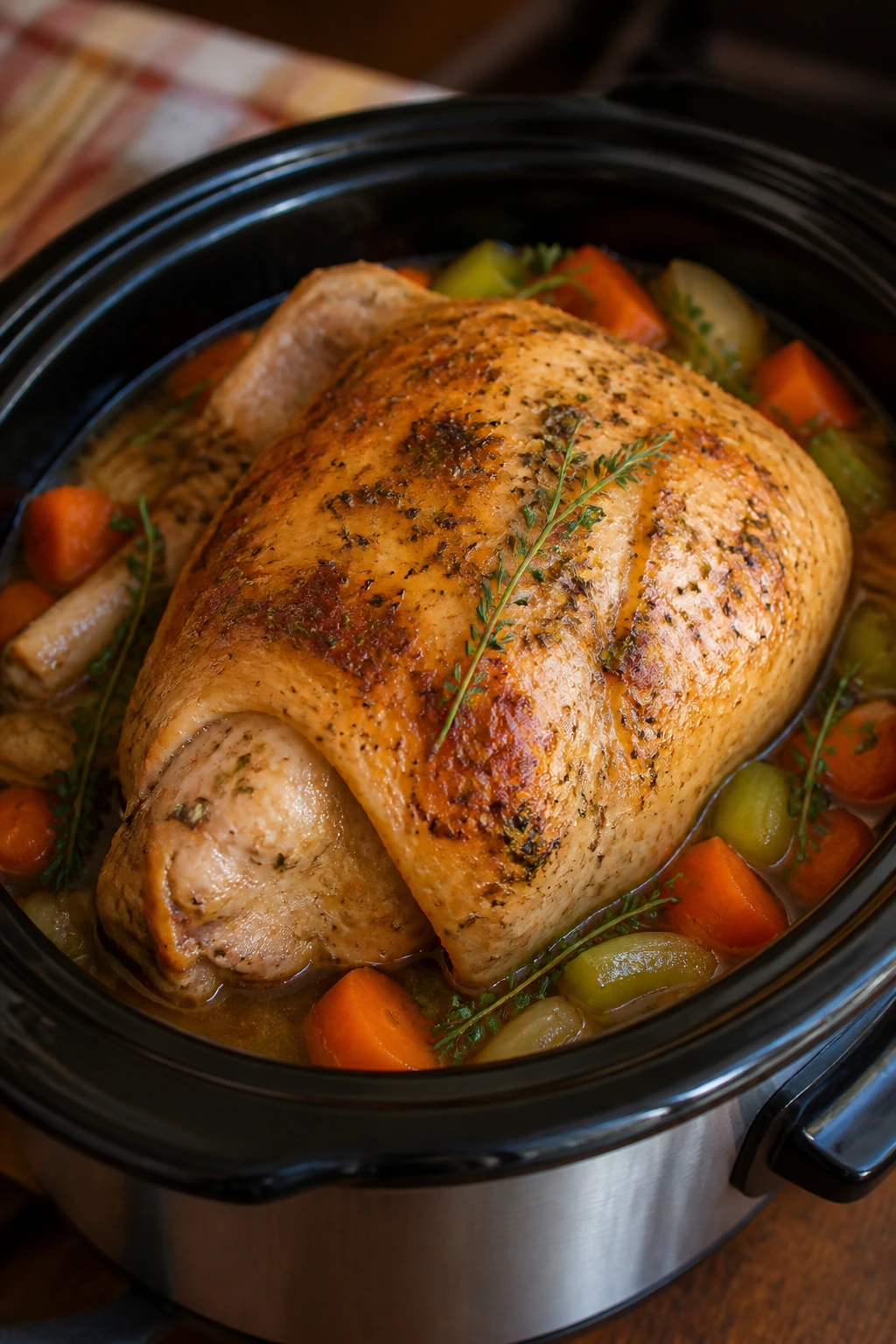
The slow cooker earns its place on Thanksgiving because it changes the math.
That sounds dull, but it’s the whole point.
A whole turkey hogs the oven and asks for a lot of attention. A turkey breast in a slow cooker asks for a quick rub, a bed of vegetables, and a thermometer. That’s a much smaller list, and on a day when burners, counters, and serving spoons are all in use at once, smaller is beautiful.
The Oven Is Already Busy
Stuffing wants the oven. Rolls want the oven. Pies want the oven. The roasting pan, somehow, always seems to take up more space than it should. A slow cooker turkey breast solves that mess by taking the main dish off the oven schedule entirely, which means you can use the big hot box for the things that need browning, bubbling, or setting.
I like that this method doesn’t pretend to be a full turkey replacement. It isn’t. If you want the dark-meat-and-white-meat drama of a whole roast bird, roast one. If what you want is tender slices and less shuffling around the kitchen, this makes a lot more sense.
Gentle Heat Matters More With Breast Meat
Turkey breast is lean. Lean meat punishes overcooking fast. Once it slips past the sweet spot, it goes from juicy to chalky in a way that feels personal, especially when you’ve spent all morning smelling onions and sage.
Slow cooking gives the breast a chance to cook evenly without the harsh blast of oven heat. The trick is not to drown it. A little broth, a vegetable bed, and a covered cooker create enough moisture to protect the meat without turning the breast into poached turkey. That distinction matters.
And then there’s the gravy. The drippings from the cooker are not a bonus; they’re part of the point. They give you a savory base that tastes like turkey because, well, it is turkey.
The One Tradeoff Worth Accepting
No, the skin won’t brown in the slow cooker. That’s the catch. The lid traps moisture, and moisture keeps the surface pale. If that bothers you, finish the breast under the broiler for a few minutes. That’s the move.
Short version: use the slow cooker for tenderness, then use the broiler for color. Simple. Effective. No drama.
A Quick Look at Yield and Timing
Slow cookers vary, and turkey breasts vary even more. Think of the clock as a guide, not a promise.
Yield: Serves 6 to 8
Prep Time: 20 minutes
Cook Time: 5 to 6 hours on Low, plus 15 to 20 minutes to broil, rest, and make gravy
Total Time: 5 hours 55 minutes to 6 hours 40 minutes
Difficulty: Intermediate — the steps are straightforward, but the cook time depends on the size of the breast and the temperament of your slow cooker.
Chill/Rest Time: 15 to 20 minutes before carving
Best Served: Warm, right after the broiler finish and gravy
If your turkey breast sits closer to 5 pounds, start checking near the 4 1/2-hour mark. If it’s a bigger 7-pound bird, the full 6 hours is more likely. The USDA target for turkey is 165°F in the thickest part of the breast, and that thermometer reading beats any timer.
A smaller note that saves a lot of guessing: don’t keep lifting the lid. Every peek drops the temperature and extends the cook. Slow cookers are stubborn that way. Leave it alone and it behaves much better.
Ingredients for the Turkey Breast and Herb Gravy
For the Turkey and Herb Rub:
- 1 bone-in, skin-on turkey breast, 5 to 7 pounds, thawed
- 4 tablespoons unsalted butter, softened
- 1 tablespoon olive oil
- 1 1/2 teaspoons kosher salt
- 1 teaspoon freshly ground black pepper
- 1 tablespoon garlic powder
- 2 teaspoons dried thyme
- 1 teaspoon dried sage
- 1 teaspoon dried rosemary, crushed fine
- 1/2 teaspoon sweet paprika
For the Aromatic Bed:
- 1 large yellow onion, sliced into 1/2-inch rounds
- 3 medium carrots, cut into 2-inch pieces
- 3 celery stalks, cut into 2-inch pieces
- 4 garlic cloves, smashed
- 1 cup low-sodium turkey broth or chicken broth
- 1/2 cup dry white wine or more broth
For the Gravy:
- 2 tablespoons unsalted butter
- 2 tablespoons all-purpose flour
- 2 cups strained cooking liquid from the slow cooker
- 1/4 to 1/2 cup additional broth, as needed
- Salt and black pepper, to taste
What Each Ingredient Is Doing in the Pot
The ingredient list looks plain on the page. In the cooker, it does a lot more work than that.
The Turkey Breast
- What to use: 1 bone-in, skin-on turkey breast, 5 to 7 pounds. This cut gives you the sliceable, holiday-table look people expect, and the bone helps the meat keep a little more flavor and structure.
- Preparation: Thaw it completely in the fridge, then pat it dry with paper towels. If there’s a layer of skin that lifts easily, loosen it gently with your fingers so the butter can sit between skin and meat.
- Substitutions: A boneless turkey breast works, but it usually needs less time — start checking 45 minutes earlier. Turkey thighs can also work if you want darker meat and a richer result.
- Tips: If your breast comes wrapped in butcher’s netting, leave it on while it cooks; the shape stays cleaner, and the slices look less ragged at the end.
The Herb Butter
- What to use: 4 tablespoons softened butter, 1 tablespoon olive oil, kosher salt, black pepper, garlic powder, thyme, sage, rosemary, and paprika. That mix gives the turkey a classic holiday smell before it even hits the cooker.
- Preparation: Mash the butter, oil, and seasonings into a loose paste so it spreads easily under and over the skin. If the rosemary feels sharp, crush it more finely between your fingers first.
- Substitutions: Poultry seasoning can stand in for the herbs if that’s what’s in the cabinet. Olive oil can replace the butter for a dairy-free version, though you lose some richness.
- Tips: Put some of the butter under the skin and some on top. That two-layer approach is what keeps the breast from tasting flat.
The Aromatic Bed
- What to use: Onion, carrots, celery, smashed garlic, broth, and white wine. These are the things that make the liquid worth turning into gravy later.
- Preparation: Cut the vegetables into thick pieces, not tiny dice. They need to create a platform under the turkey, not disappear into mush.
- Substitutions: Parsnips can replace some of the carrots if you want a little sweetness. If you skip the wine, use broth instead and move on.
- Tips: Keep the liquid at the bottom of the cooker. The turkey should sit above it, not swim in it. Too much liquid makes the meat taste steamed and the gravy taste thin.
The Gravy Finish
- What to use: 2 tablespoons butter, 2 tablespoons flour, and 2 cups of strained cooking liquid. That’s enough for a modest gravy that coats slices without turning gloppy.
- Preparation: Strain the drippings to catch the vegetable bits, then skim the fat from the top if there’s a lot of it. A fat separator makes this part faster, but a spoon works fine.
- Substitutions: If you need a gluten-free gravy, use cornstarch instead of flour. A slurry with cold broth works better than dumping starch straight into hot liquid.
- Tips: Taste the drippings before salting the gravy. Slow-cooked liquids concentrate, and salty gravy is one of those mistakes that haunts the whole plate.
The Gear That Makes the Job Easier
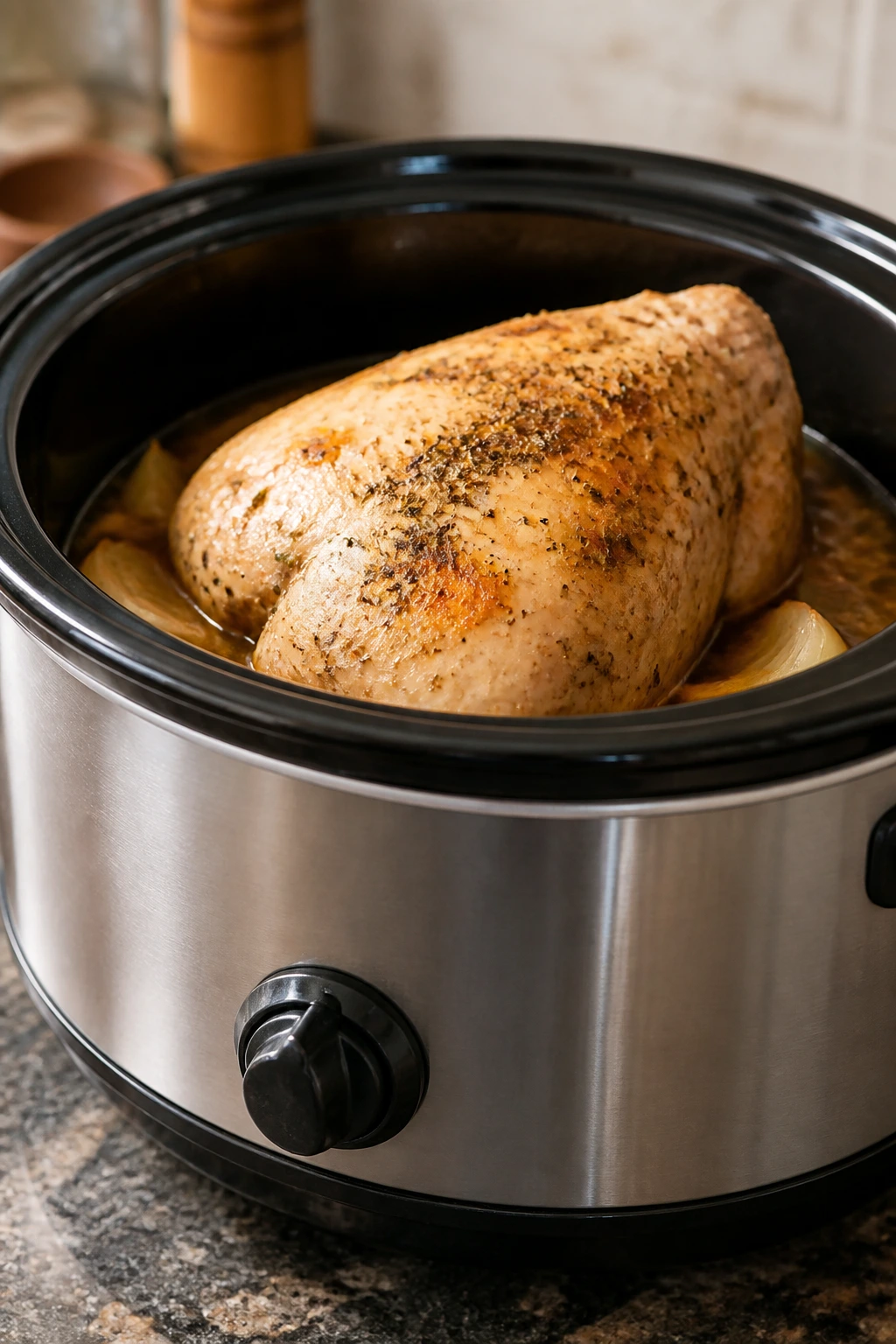
A good thermometer beats a good guess every time.
That’s the first tool I’d insist on.
- 6-quart or 8-quart oval slow cooker: An oval shape handles a turkey breast better than a round one, especially if the breast is on the larger side.
- Instant-read thermometer: This is the only reliable way to know when the thickest part has reached 165°F.
- Rimmed baking sheet: You’ll need it if you finish the skin under the broiler.
- Aluminum foil: Line the baking sheet so the broiler finish doesn’t leave you scrubbing baked-on fat later.
- Medium saucepan: This is for the gravy, and a heavy-bottomed one helps keep the roux from scorching.
- Whisk: A whisk keeps the flour and drippings smooth instead of lumpy.
- Tongs or a wide spatula: These help lift the turkey breast out of the cooker without tearing the skin.
- Fat separator, optional: Handy if you like a leaner gravy, but a spoon can do the same job in a pinch.
- Chef’s knife and cutting board: A sharp knife makes cleaner slices, which matters more than people think when serving breast meat.
From Raw Turkey to Carved Platter
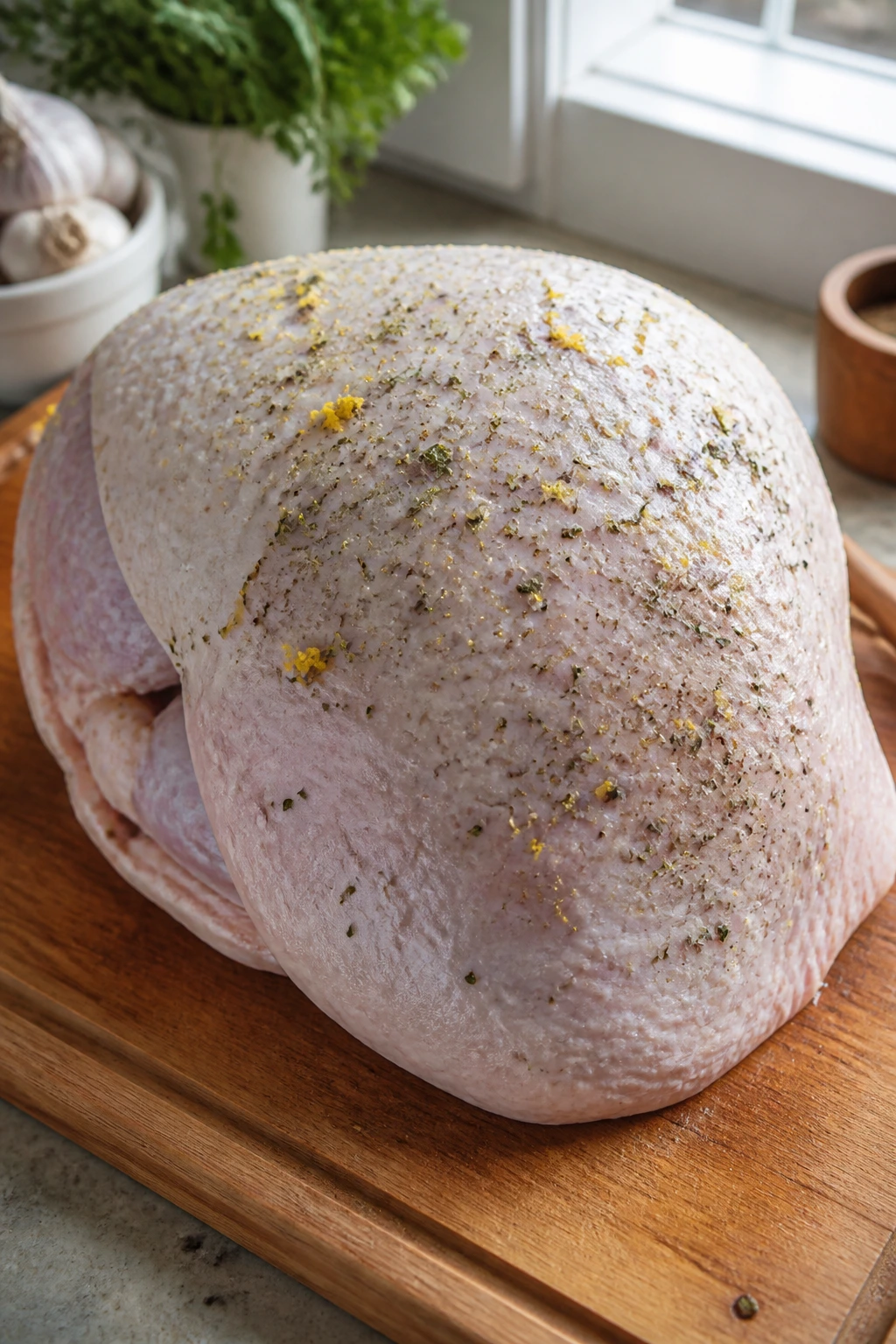
You do not need to hover over the cooker all morning.
You do need to respect the sequence.
Prep the Turkey
- Pat the turkey breast dry. Use paper towels on all sides, including under any loose skin you can reach. Dry skin browns better under the broiler, and dry meat takes the seasoning more evenly.
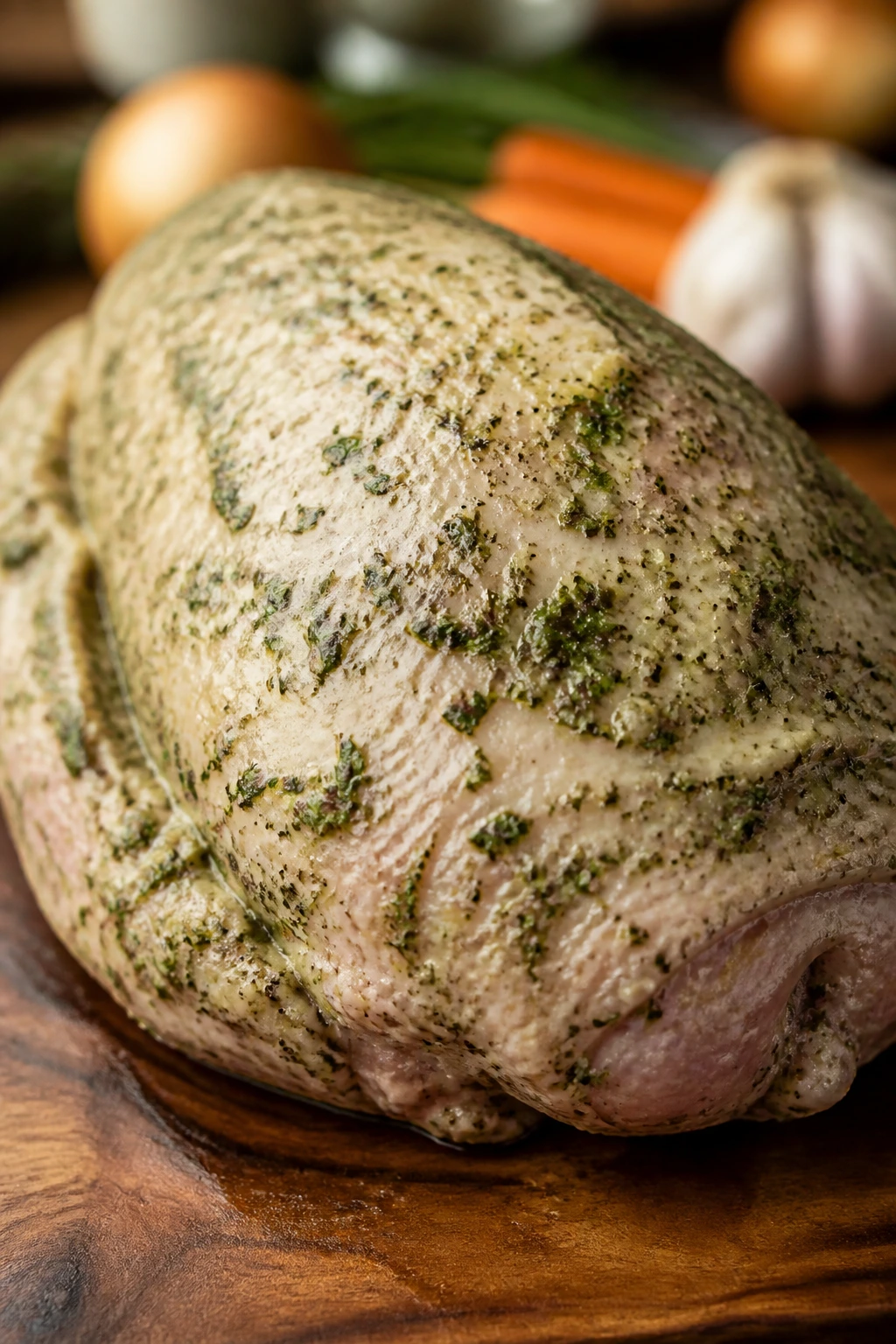
- Mix the herb butter. In a small bowl, stir together the softened butter, olive oil, salt, pepper, garlic powder, thyme, sage, rosemary, and paprika until you have a thick paste. It should smell sharp and grassy, not greasy.
- Loosen the skin and season underneath. Slide your fingers gently between the skin and the meat, then spread about two-thirds of the butter under the skin and the rest over the top. Don’t tear the skin if you can help it — you want it intact for the broiler finish.
Load the Slow Cooker
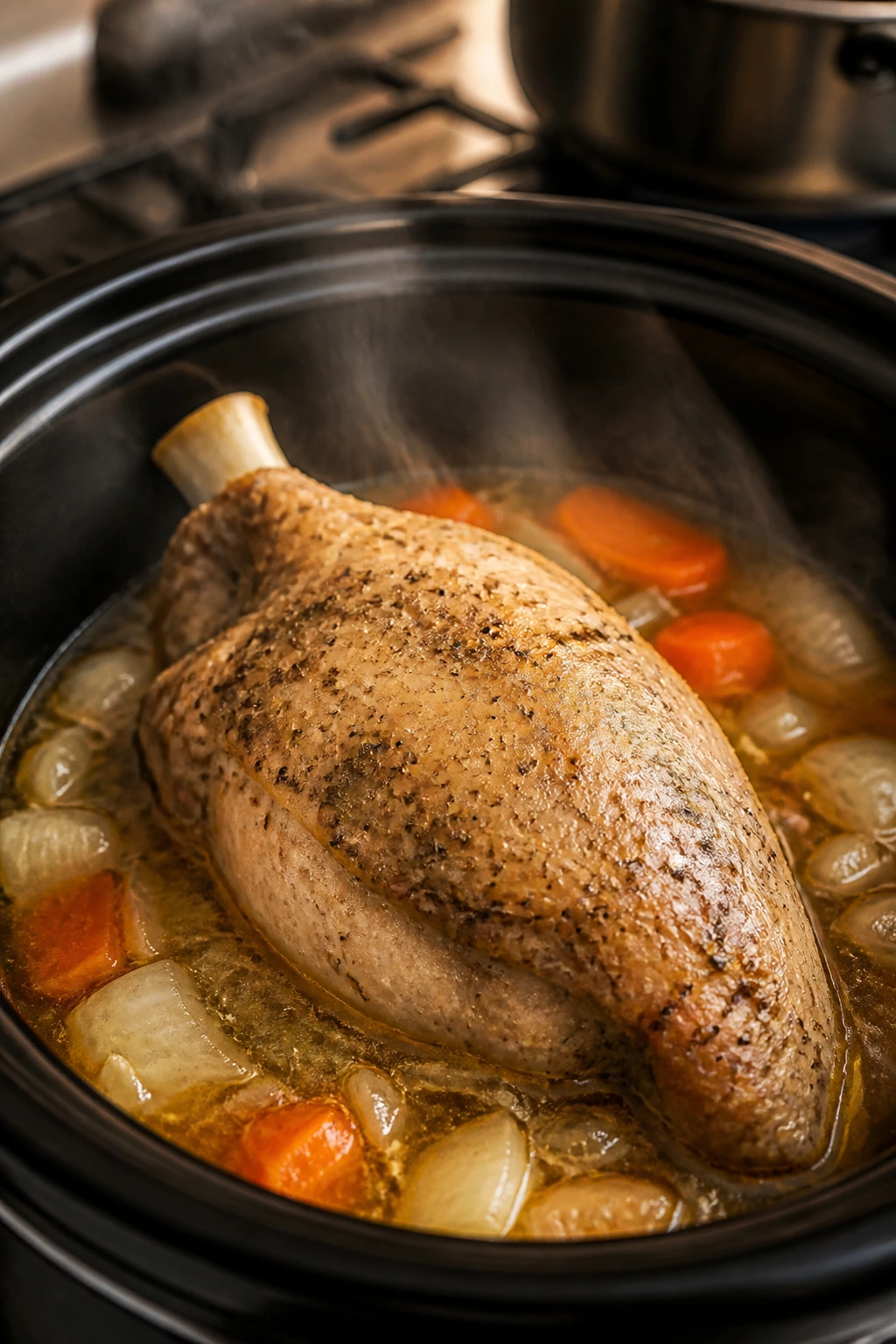
- Build the vegetable bed. Scatter the onion, carrots, celery, and smashed garlic in the bottom of the slow cooker. Pour in the broth and white wine around the edges, not over the top of the vegetables.
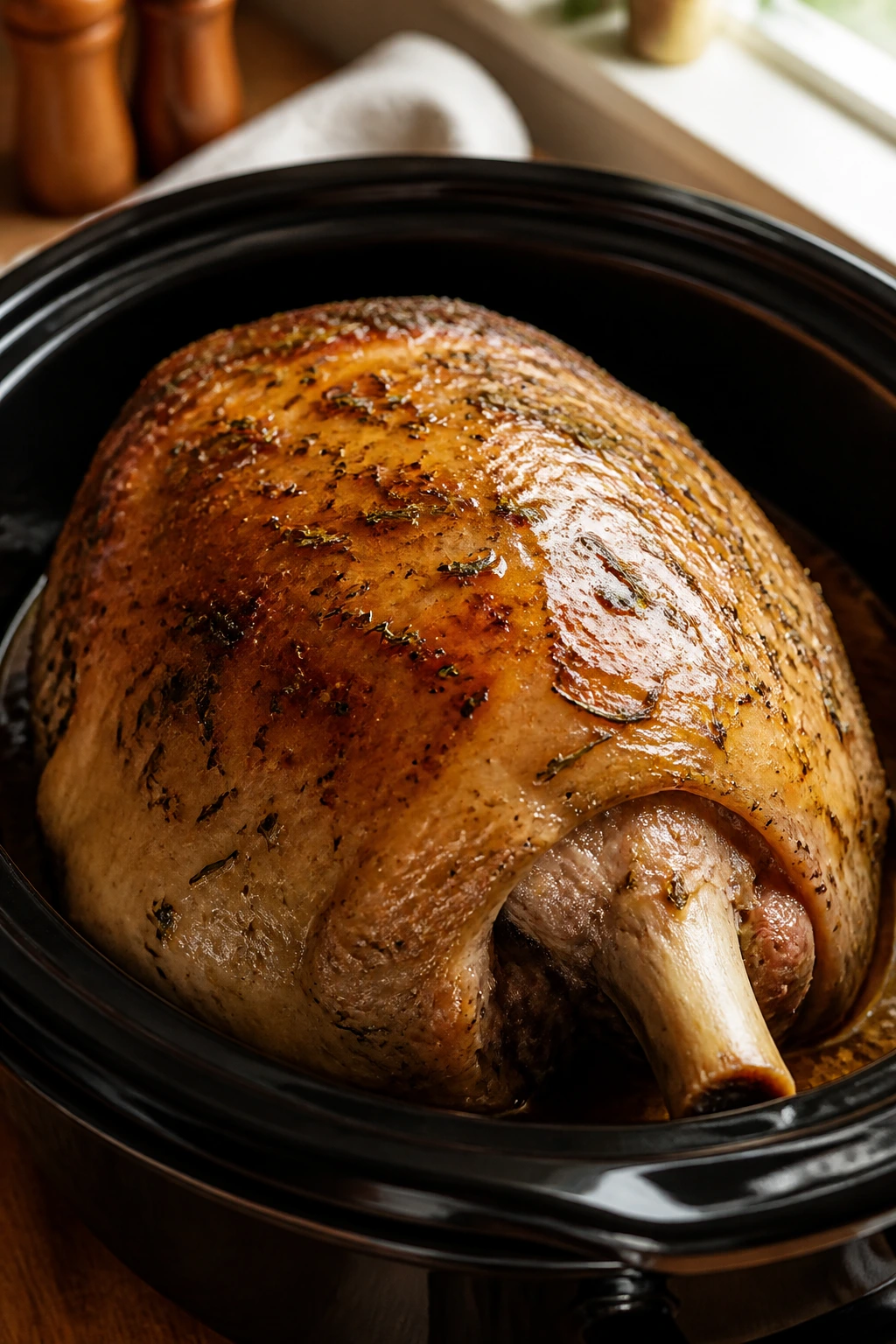
- Set the turkey breast on top, skin side up. The meat should sit above the liquid, not submerged. If the cooker is tight, tuck the vegetables a little more snugly under the bird, but do not pack them so tightly that steam can’t move.
- Cook on Low for 5 to 6 hours. Put the lid on and leave it alone for at least the first 4 hours. Start checking at 4 1/2 hours if your breast is on the smaller end or if your cooker runs hot. The turkey is done when the thickest part reads 165°F and the juices run clear.
Finish the Bird and Make the Gravy
- Move the turkey to a foil-lined baking sheet and let it rest 10 to 15 minutes. Tent it loosely with foil. This keeps the juices from flooding the board when you carve, and it gives you time to make the gravy from the drippings.
- Strain the cooking liquid and start the gravy. Pour the liquid through a fine-mesh strainer into a bowl or measuring cup. Skim off extra fat if there’s a thick layer, then measure out 2 cups of the strained liquid. Melt the butter in a saucepan over medium heat, whisk in the flour, and cook for 1 minute until it smells a little nutty.
- Whisk in the drippings and simmer until glossy. Add the strained liquid in a slow stream, whisking all the while so the gravy stays smooth. Simmer for 3 to 5 minutes until it coats the back of a spoon. If it thickens too much, splash in a little broth. If it tastes flat, season with salt and pepper.
- Broil the turkey for 3 to 5 minutes. Move the baking sheet to the oven and set the rack about 6 inches from the broiler element. Watch it closely. The skin should pick up golden spots and a bit of color, not black edges. A broiler can turn a pale bird into a burnt one in under a minute if you walk away.
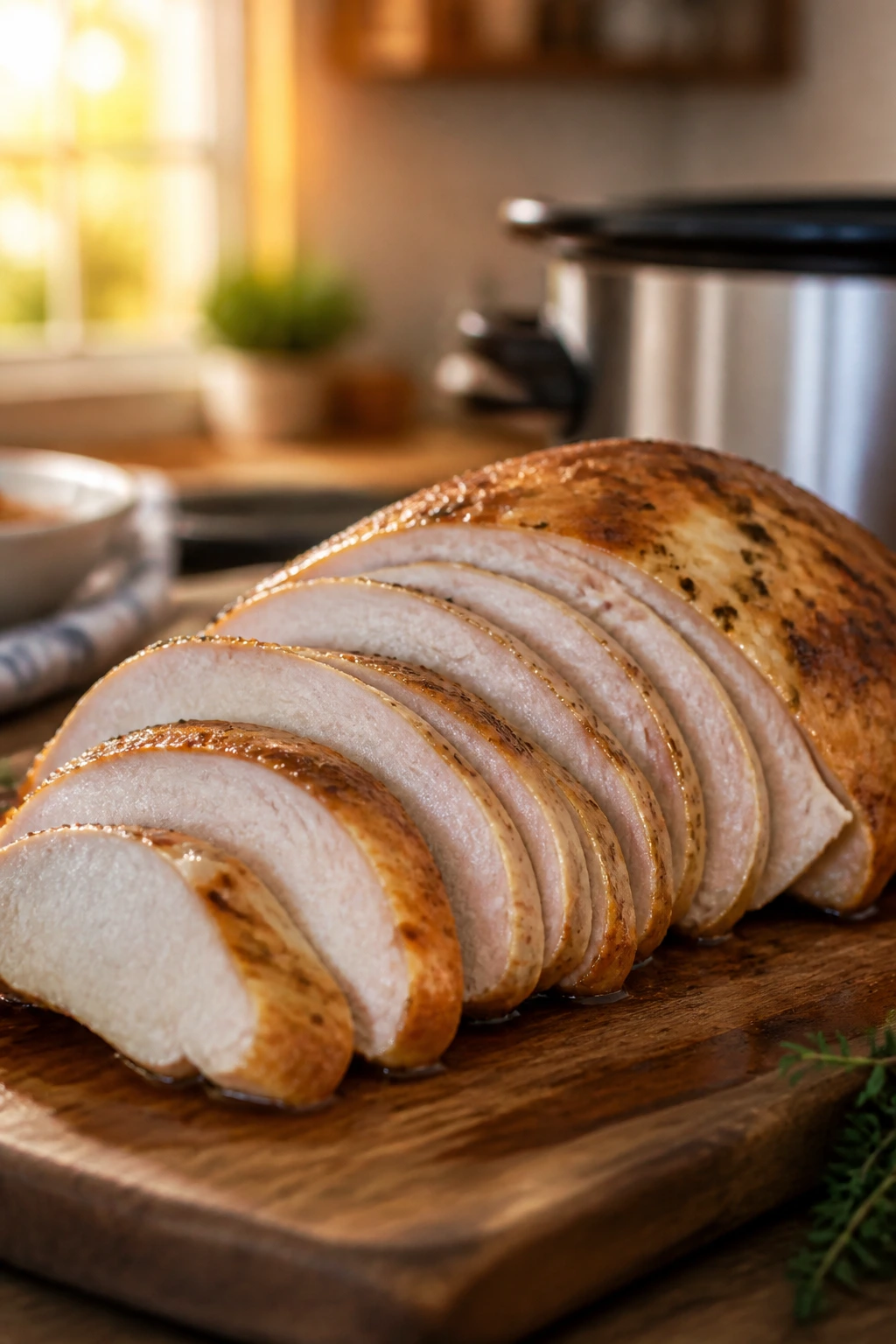
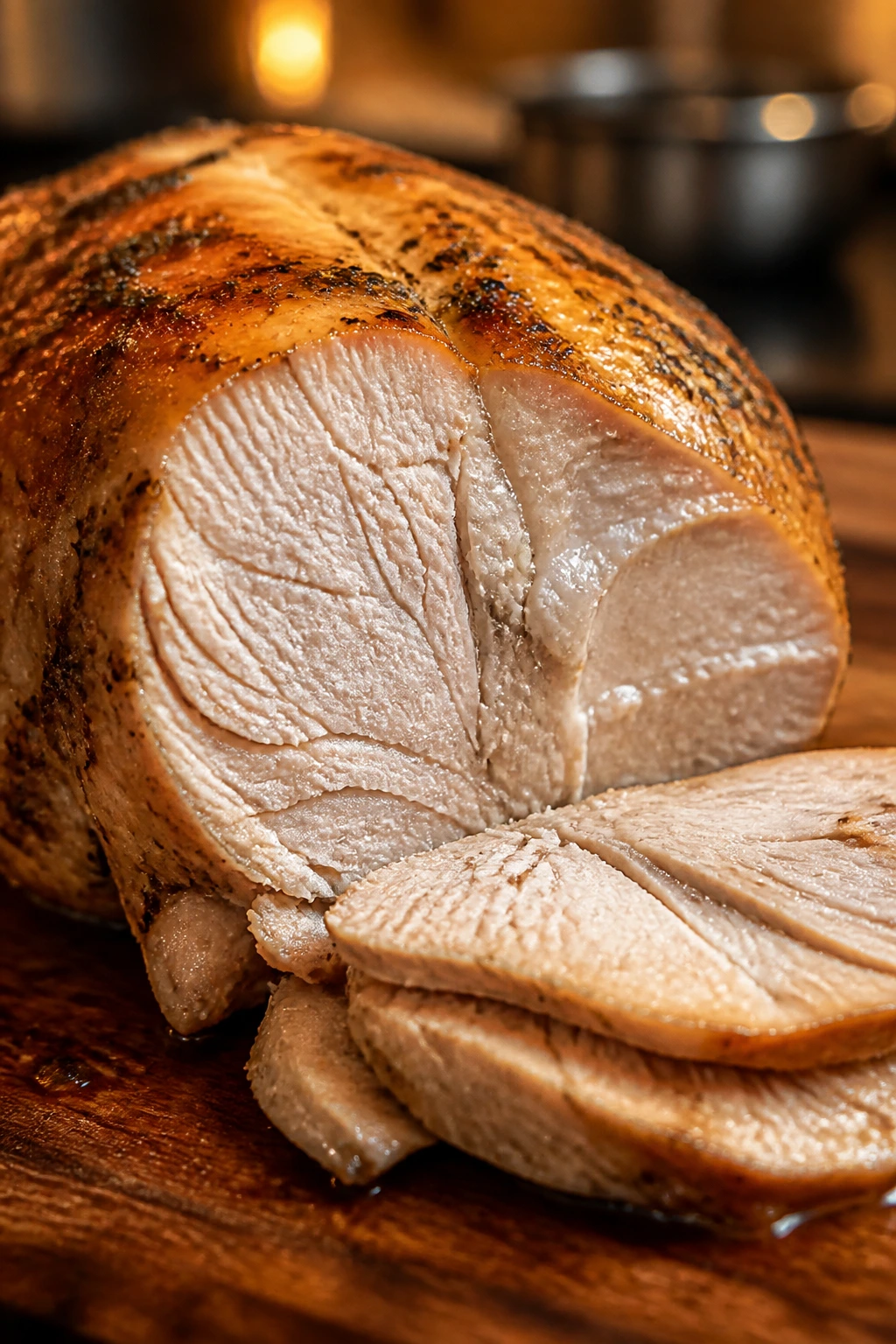
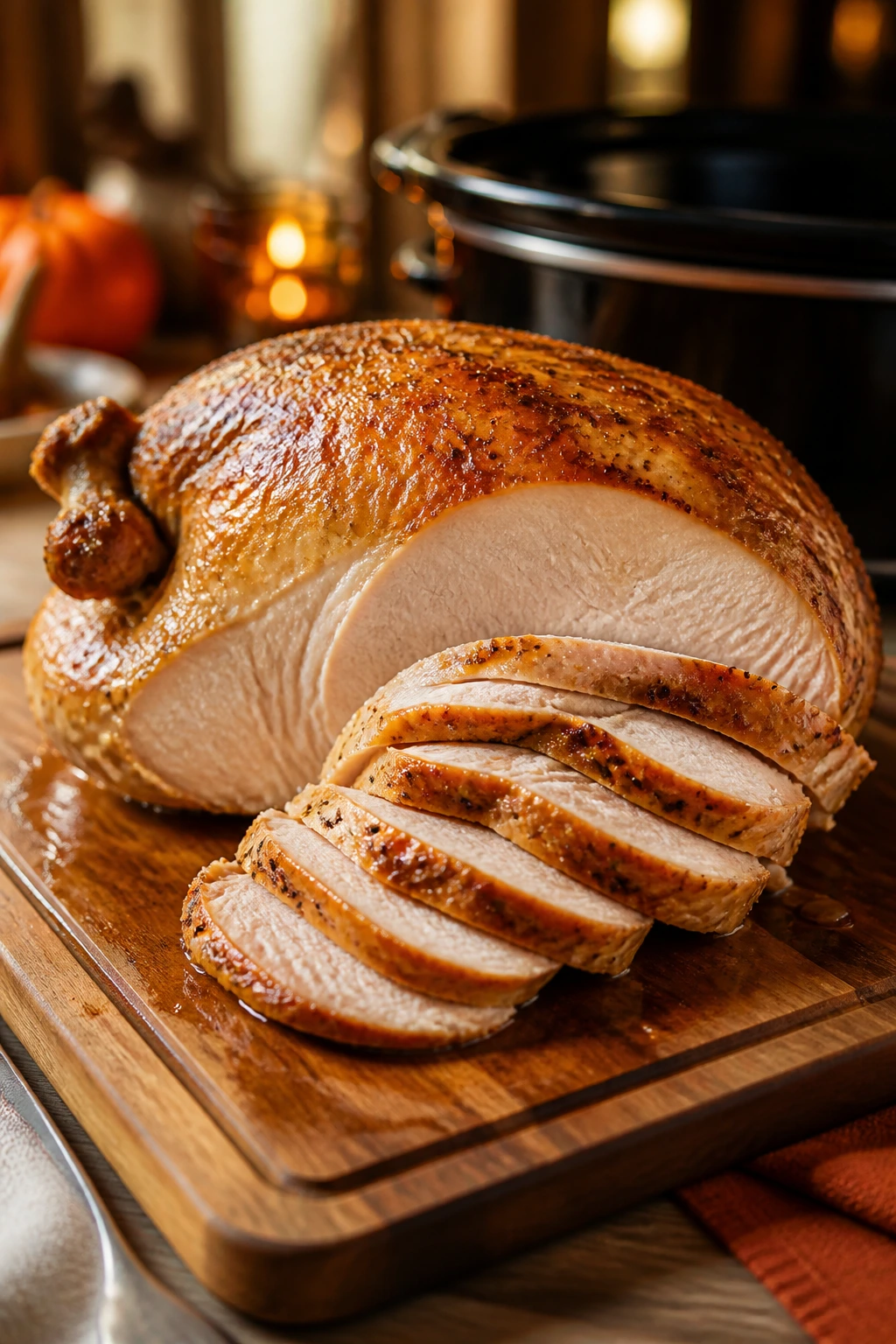
- Rest briefly, then carve. Give the turkey another 5 minutes after broiling, then slice it against the grain into 1/4- to 1/2-inch pieces. Spoon gravy over the slices or pass it at the table.
How to Serve Slow Cooker Thanksgiving Turkey Breast
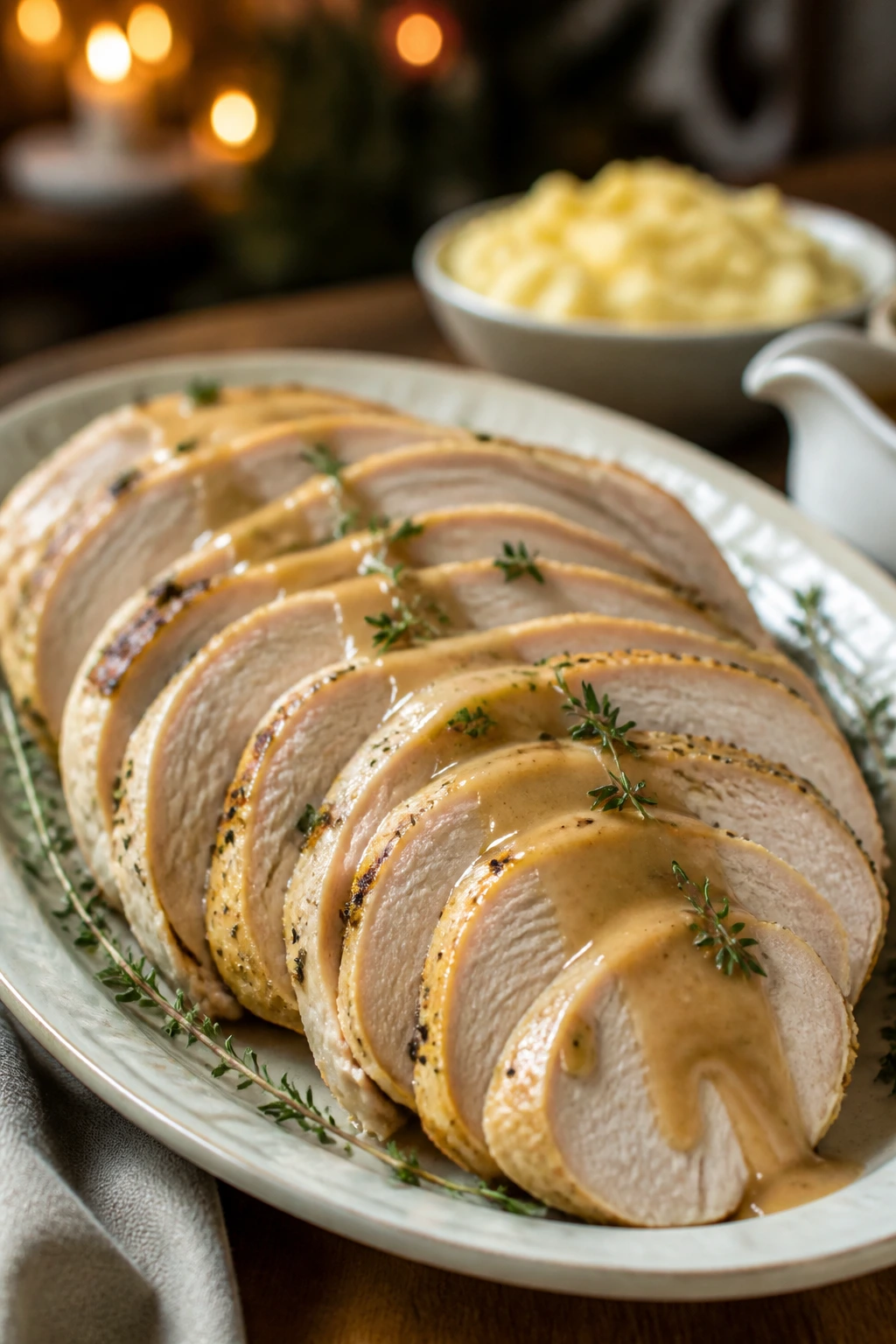
Carving matters more than people think.
A clean slice makes the whole plate look intentional.
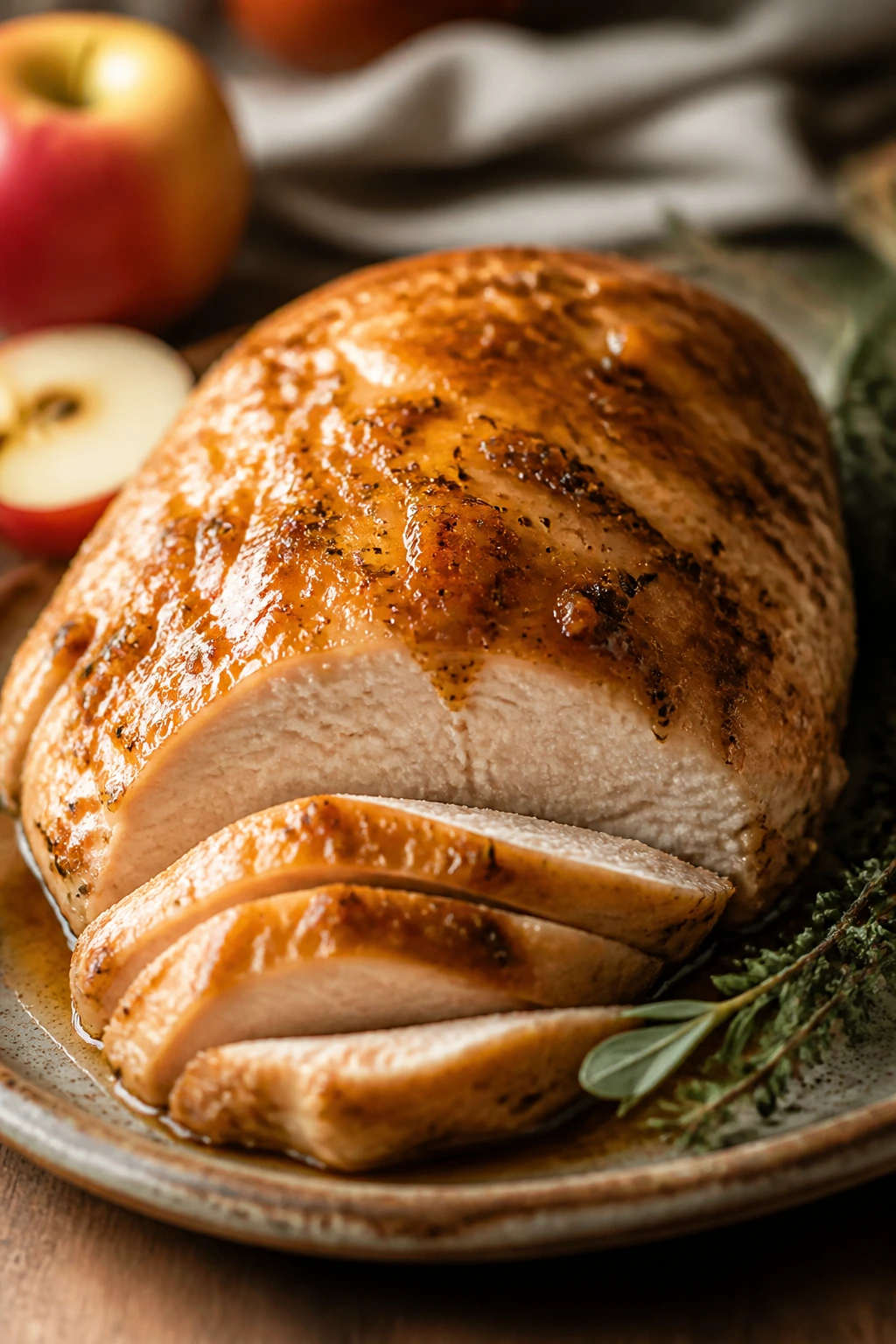
Presentation: Fan the slices down the center of a warmed platter and spoon a little gravy over the middle, not all over the edges. A few thyme sprigs or chopped parsley help the platter look finished, but you do not need a garden’s worth of garnish. If you saved the onion slices from the slow cooker, tuck a few underneath the meat for a rustic look.
Accompaniments: This turkey wants mashed potatoes, stuffing, cranberry sauce, and something green with a little bite. I like it with roasted Brussels sprouts or green beans because they cut through the gravy. Dinner rolls earn their keep here too. They mop up the drippings better than almost anything else.
Portions: A 5- to 7-pound turkey breast serves 6 to 8 people when the rest of the table is full of sides. If you have bigger appetites, plan on about 6 ounces of cooked turkey per adult. For a lighter meal or a buffet with lots of dishes, 4 ounces is enough. If you want leftovers, buy the larger breast. Holiday sandwiches need a future.
Beverage Pairing: A dry white wine such as Chardonnay or Pinot Gris fits the herb butter and gravy without fighting them. If you want something nonalcoholic, sparkling apple cider is a smart match because it echoes the holiday flavors and keeps the plate from feeling heavy.
Small Tweaks That Make a Big Difference
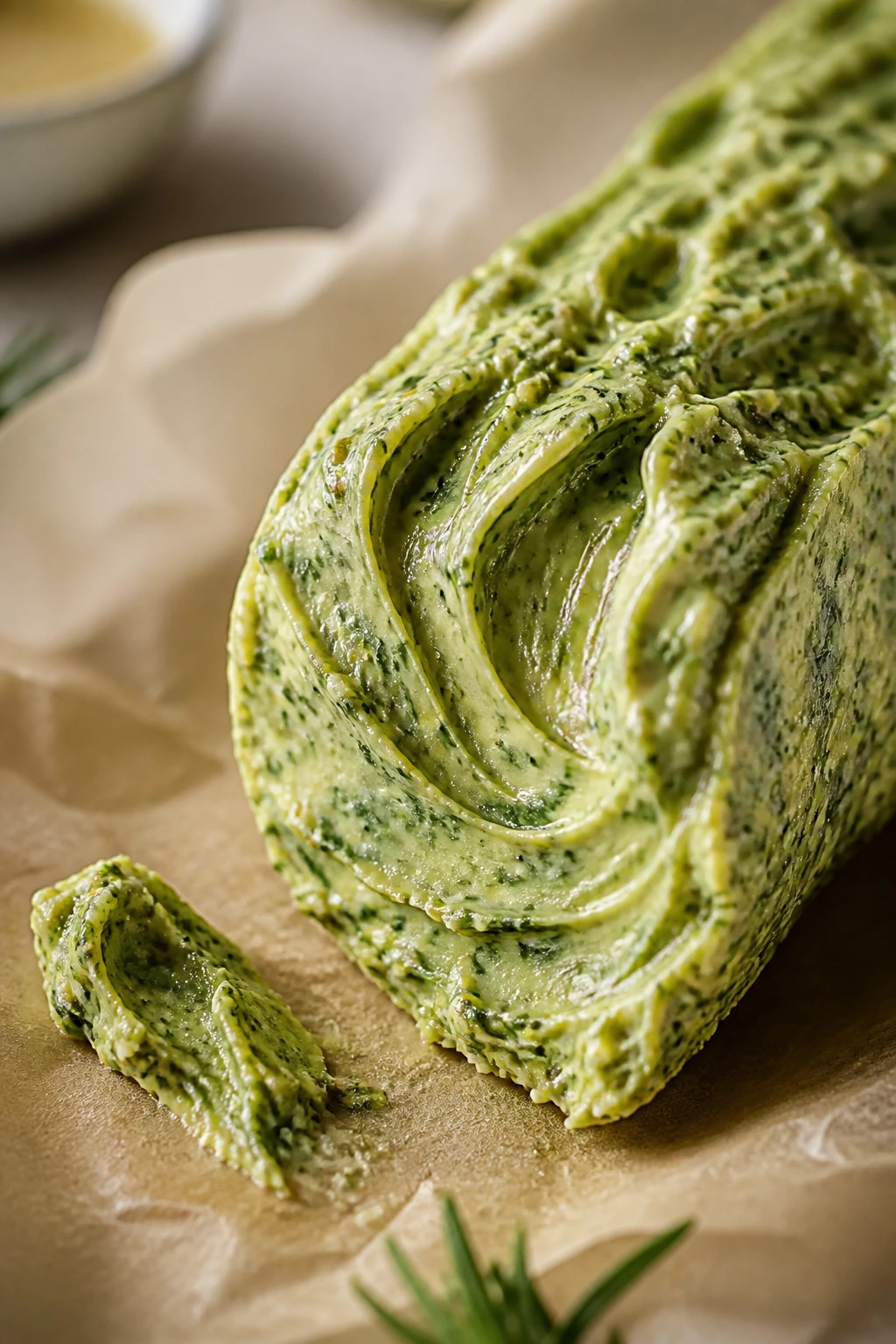
The small moves are the ones that rescue this dish.
- Flavor Enhancement: Add 1 teaspoon of Dijon mustard to the herb butter. It won’t taste like mustard at the table; it just gives the gravy a little more backbone and keeps the seasoning from tasting one-note.
- Time-Saver: Chop the onion, carrots, and celery the night before and keep them in a sealed container in the fridge. The next morning, assembling the cooker takes minutes.
- Texture Fix: Keep the turkey breast skin side up and out of the liquid. That one placement choice does more for the final texture than any amount of fancy seasoning.
- Gravy Booster: If the gravy tastes a little thin after simmering, let it cook for another minute or two before adding salt. Concentrating the liquid first gives you a fuller turkey flavor.
- Holiday Shortcut: If your oven is packed, skip the broiler and serve the turkey with hot gravy and fresh parsley. You won’t get the bronzed skin, but the meat will still taste right.
Mistakes That Turn a Tender Bird Watery or Dry
Most slow cooker turkey problems come from a short list of bad habits.
They’re easy to avoid once you know what they look like.
- Starting with a frozen breast: The outside cooks too slowly while the center struggles to reach 165°F. The fix is plain: thaw it fully in the fridge first.
- Adding too much liquid: If the turkey sits half-submerged, the meat steams and the drippings taste weak. Use just enough broth to cover the bottom of the cooker and keep the breast elevated on the vegetables.
- Cooking only by the clock: Slow cookers run differently. A small breast may be done before the full 5 hours, while a larger one may need the full 6. Pull the meat when the thermometer says 165°F, not when the timer sounds confident.
- Peeking too often: Lifting the lid drops the temperature and adds time. One peek at the start to check placement is enough. After that, leave it alone.
- Skipping the rest: Slice turkey too soon and the juices rush out onto the board. A 10- to 15-minute rest keeps the slices neater and the platter less messy.
- Expecting crisp skin from the cooker: The slow cooker is not a browning machine. If you want color, use the broiler. If you skip that last step, accept the pale skin and move on.
Variations Worth Trying
If you want to bend the recipe, do it in ways the cooker can handle.
Maple-Sage Finish
Add 1 tablespoon maple syrup and an extra teaspoon of sage to the herb butter. The syrup gives the skin a faint glaze after broiling and plays nicely with sweet potatoes on the rest of the table. Keep the amount small; too much maple starts reading like breakfast.
Garlic and Herb Boneless Breast
Use a 4- to 5-pound boneless turkey breast and start checking at 3 1/2 to 4 hours on Low. Boneless meat cooks faster and dries out faster too, so the thermometer matters even more. The flavor is still solid, but the slices can be a little less dramatic on the platter.
Apple-Cider Holiday Bird
Replace the white wine with unsweetened apple cider and keep the broth low-sodium. The cider softens the drippings into a rounder gravy that leans sweet in a way people usually like with cranberry sauce and stuffing. Don’t go heavy on cider unless you want the gravy to taste more like a pot roast than a turkey dinner.
Turkey Thigh Version
Swap in 4 to 5 pounds of bone-in turkey thighs and cook on Low for 4 1/2 to 5 1/2 hours. Thighs give you darker meat and more forgiving texture, which some people prefer. The meat won’t slice as neatly as breast meat, but the flavor is richer and the juices are excellent.
Gluten-Free Gravy
Keep the turkey recipe the same and change the gravy to a cornstarch version. Whisk 1 tablespoon cornstarch with 2 tablespoons cold broth, then stir it into the simmering drippings until it thickens. Cornstarch gives a glossy finish and a slightly lighter texture than flour-based gravy.
Storage, Reheating, and Make-Ahead Timing for Slow Cooker Thanksgiving Turkey
Leftover turkey dries out when you treat it like roast chicken.
Protect it with moisture and a tight lid.
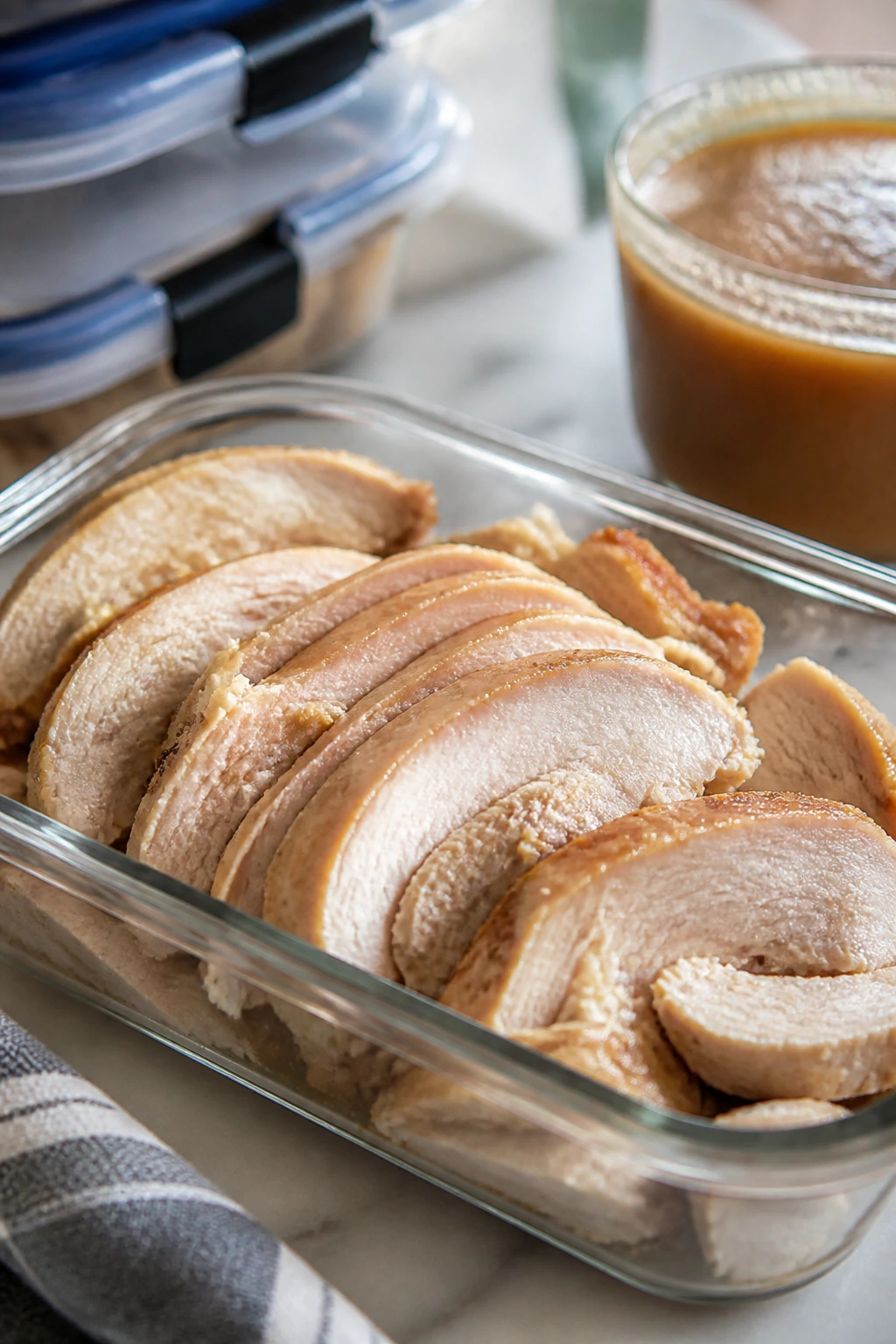
Let the turkey cool for no more than 2 hours after serving, then slice or portion it into shallow containers. It keeps in the refrigerator for 3 to 4 days. Store the gravy separately if you can, because turkey slices held in gravy stay juicier than naked slices in a dry container.
For the freezer, wrap portions tightly or use airtight freezer containers. The turkey and gravy both freeze well for up to 2 months. I like freezing the slices in a little gravy so they reheat with a head start. Label the containers with the date. Future-you will appreciate the tiny act of organization.
Reheat turkey gently. A covered baking dish in a 300°F oven with a splash of broth or gravy works well; give it 15 to 20 minutes, depending on the amount. On the stovetop, you can warm slices in a skillet with a spoonful of gravy over low heat until they’re hot through. The microwave works too, but use short bursts and cover the container so the meat doesn’t dry into little edges.
Make-ahead work is where this recipe shines. You can mix the herb butter up to 3 days ahead, chop the vegetables the day before, and measure the broth in advance. What you should not do is park raw turkey in the slow cooker insert overnight. That’s not prep. That’s trouble.
If you want to get even further ahead, make the gravy a day later from the leftover drippings, then freeze extra gravy in 1-cup portions. It thaws quickly and rescues weeknight sandwiches with almost no effort.
Questions People Ask Before They Try It
Can I start with a frozen turkey breast?
I wouldn’t. A frozen breast spends too long warming up while the outer layers cook unevenly, and that’s not a good trade on a lean cut. Thaw it fully in the refrigerator first so the meat cooks at a steady pace.
Do I really need to broil the turkey at the end?
You don’t need to, but you’ll probably want to. The broiler gives the skin color and a little texture, which makes the turkey look finished instead of pale and steamed. Three to five minutes is usually enough; don’t wander off.
Can I cook stuffing under the turkey in the slow cooker?
I don’t recommend it. Stuffing in the cooker often turns gummy, and the center may not cook evenly unless you treat it like a separate recipe with its own temperature check. Make dressing in the oven if you want the classic holiday version.
What if my slow cooker only has High and Low settings?
Use Low if you can. High can work in a pinch, but breast meat gets less forgiving when the heat is aggressive, and the edges can dry before the center finishes. If you must use High, start checking much earlier and trust the thermometer more than the clock.
How do I know the turkey is done without cutting into it?
An instant-read thermometer is the answer. Slide it into the thickest part of the breast, avoiding bone if you can, and look for 165°F. If you see 160°F, give it a few more minutes and check again.
Can I make this with a boneless turkey breast instead?
Yes, and that version is useful when you need something smaller or easier to carve. It will cook faster, usually around 3 1/2 to 4 1/2 hours on Low, so start checking early. Boneless breast has less margin for error, though, so I still prefer bone-in when there’s room in the cooker.
What if the gravy turns out too thin?
Let it simmer longer before you call it done. If it still won’t thicken, mix 1 teaspoon cornstarch with 1 tablespoon cold broth and whisk that into the bubbling gravy a little at a time. A loose gravy is fixable; dumping more flour in too late often creates lumps.
Can I make this for a bigger crowd?
Yes, but don’t stack turkey breasts on top of each other. Use a larger oval cooker or two separate cookers so each breast has room to cook evenly. If the lid barely closes, the setup is too crowded.
Is this still worth making if I care a lot about crispy skin?
If crispy skin is the main event for you, a roast turkey will always win. This recipe is for tender meat, easier timing, and better use of oven space, with enough broiler time at the end to make the skin look appealing. Different job, different tool.
The Calmest Turkey on the Table
There’s a certain relief in serving a holiday bird that never asked you to babysit the oven.
That’s the real appeal here.
This slow cooker turkey breast isn’t the showy version, and I like it for exactly that reason. It shows up tender, slices cleanly, gives you drippings that actually deserve to be called gravy, and leaves the rest of the meal room to breathe. On a table full of heavy side dishes and hot pans, that calm matters.
If you keep the thermometer close, respect the broiler finish, and don’t drown the breast in liquid, you end up with a Thanksgiving main that feels steady instead of frantic. Once that slices hit the platter, the whole day gets easier.
Slow Cooker Thanksgiving Turkey Breast — Recipe Card
Recipe Name: Slow Cooker Thanksgiving Turkey Breast with Herb Gravy
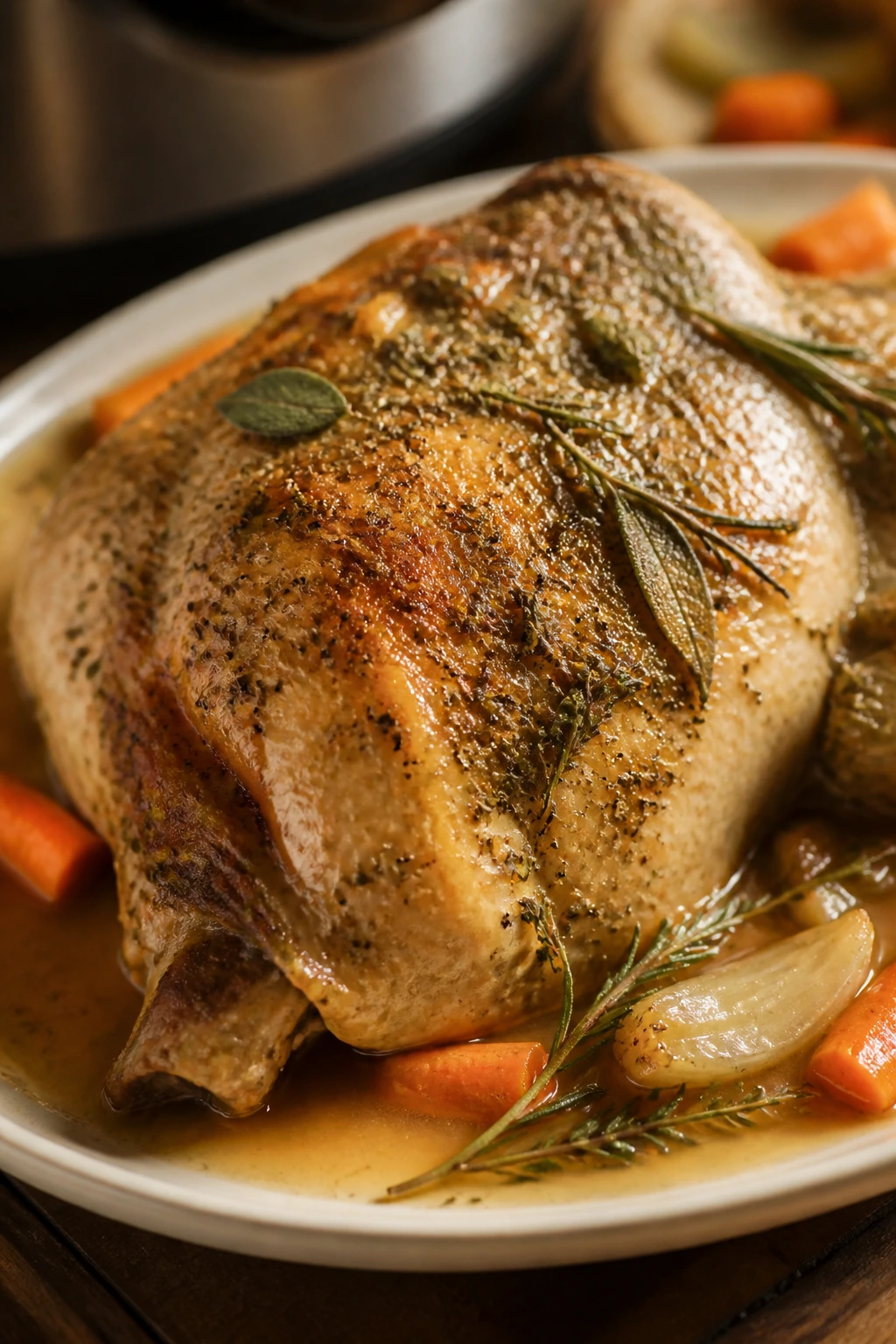
Description: A bone-in turkey breast cooked low and slow with sage, thyme, rosemary, onion, carrots, celery, and broth, then finished under the broiler for color and served with a simple pan gravy. The meat stays tender, and the gravy tastes like the holiday table should.
Prep Time: 20 minutes
Cook Time: 5 to 6 hours on Low, plus 15 to 20 minutes for broiling, resting, and gravy
Total Time: 5 hours 55 minutes to 6 hours 40 minutes
Course: Main Course
Cuisine: American
Servings: 6 to 8
Calories: About 350 kcal per serving
Ingredients
For the Turkey and Herb Rub:
- 1 bone-in, skin-on turkey breast, 5 to 7 pounds, thawed
- 4 tablespoons unsalted butter, softened
- 1 tablespoon olive oil
- 1 1/2 teaspoons kosher salt
- 1 teaspoon freshly ground black pepper
- 1 tablespoon garlic powder
- 2 teaspoons dried thyme
- 1 teaspoon dried sage
- 1 teaspoon dried rosemary, crushed fine
- 1/2 teaspoon sweet paprika
For the Aromatic Bed:
- 1 large yellow onion, sliced into 1/2-inch rounds
- 3 medium carrots, cut into 2-inch pieces
- 3 celery stalks, cut into 2-inch pieces
- 4 garlic cloves, smashed
- 1 cup low-sodium turkey broth or chicken broth
- 1/2 cup dry white wine or more broth
For the Gravy:
- 2 tablespoons unsalted butter
- 2 tablespoons all-purpose flour
- 2 cups strained cooking liquid from the slow cooker
- 1/4 to 1/2 cup additional broth, as needed
- Salt and black pepper, to taste
Instructions
-
Pat the turkey breast dry. Mix the butter, olive oil, salt, pepper, garlic powder, thyme, sage, rosemary, and paprika into a paste.
-
Loosen the skin gently and spread most of the herb butter under the skin, then rub the rest over the top.
-
Scatter the onion, carrots, celery, and garlic in the slow cooker. Pour in the broth and wine around the edges.
-
Set the turkey breast skin side up on top of the vegetables. Cook on Low for 5 to 6 hours, until the thickest part reaches 165°F.
-
Transfer the turkey to a foil-lined baking sheet and rest for 10 to 15 minutes. Strain the cooking liquid and measure out 2 cups for the gravy.
-
Melt the butter in a saucepan over medium heat. Whisk in the flour and cook for 1 minute.
-
Whisk in the strained cooking liquid slowly. Simmer for 3 to 5 minutes until thickened. Season with salt and pepper.
-
Broil the turkey 6 inches from the heat for 3 to 5 minutes until the skin browns lightly. Rest 5 minutes, slice, and serve with gravy.
Notes: Use an instant-read thermometer and pull the turkey at 165°F. Broil only long enough to add color; the line between golden and burnt is short. Keep extra broth nearby in case you want a looser gravy.