



A crockpot can turn noodles into a soft, sticky disappointment fast if you treat them like soup pasta. That’s the trap. The fix is much more specific: build the sauce low and slow, let the protein get tender, then drop in the noodles only when the pot is hot, fragrant, and ready for a last-minute finish. That’s when crockpot Chinese noodles stop tasting like an accident and start tasting like a real dinner.
The slow cooker is excellent at one job. It braises. It does not need to stir-fry, and it definitely does not need to babysit delicate wheat noodles for four hours. Once you accept that split—sauce first, noodles last—you can make bowls with deep soy-garlic flavor, silky broth, glossy sesame finishes, and vegetables that still have some bite. Rice noodles, lo mein, chow mein, egg noodles, and even thicker regional styles all behave a little differently, and that difference matters more than most recipes admit.
What follows is the kind of collection I wish more people made: recipes that respect the noodle, use the crockpot for what it does well, and keep the finishing move short and sharp. Some are saucy. Some are brothy. A few lean sweet, a few lean fiery, and a few stick to the savory, brown-sauce lane that Chinese-American noodle nights do so well. By the time you reach the end, the slow cooker should feel less like a shortcut and more like a very calm sous-chef.
Why You’ll Want These in the Rotation
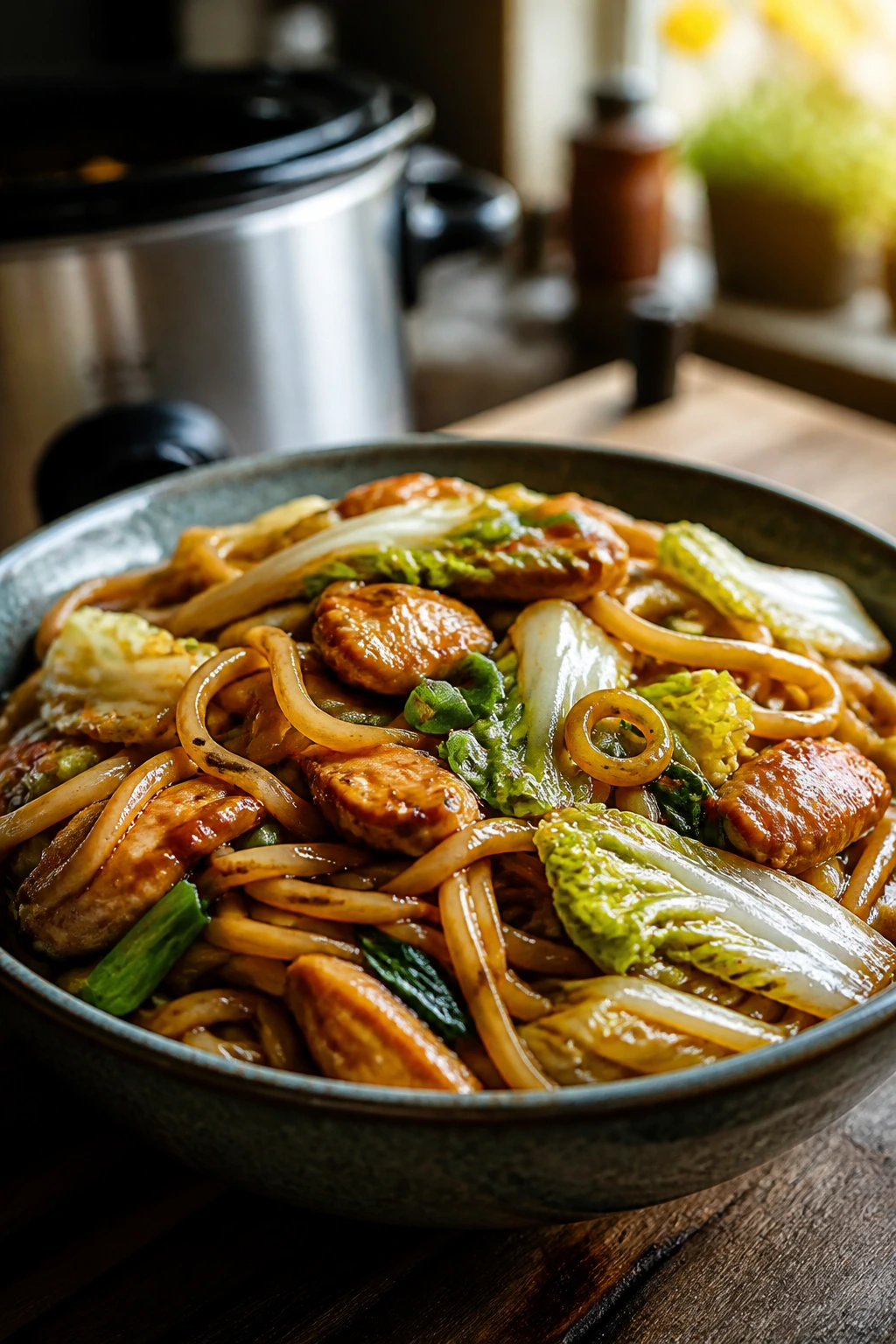
-
Noodles go in at the end: Every recipe here saves the noodles for the final stretch, which keeps them springy instead of swollen and limp.
-
Sauces do the heavy lifting: Soy sauce, hoisin, oyster sauce, black vinegar, sesame oil, and ginger carry most of the flavor without a long list of fussy extras.
-
Protein choices stay flexible: Chicken thighs, flank steak, ground pork, shrimp, tofu, and short rib all have a place here, as long as the timing fits the cut.
-
Leftovers hold up better than stir-fry: Because the sauce is built in the slow cooker, the next bowl can be revived with a splash of broth instead of turning into a dry tangle.
-
Vegetables can be mixed and matched: Napa cabbage, bok choy, carrots, snow peas, mushrooms, and bean sprouts can slide in depending on what’s in the crisper drawer.
-
The flavors lean familiar but not bland: These bowls keep the soy-sesame-ginger backbone that makes Chinese noodle dishes so easy to crave without asking you to source a dozen obscure ingredients.
1. Ginger Garlic Chicken Lo Mein
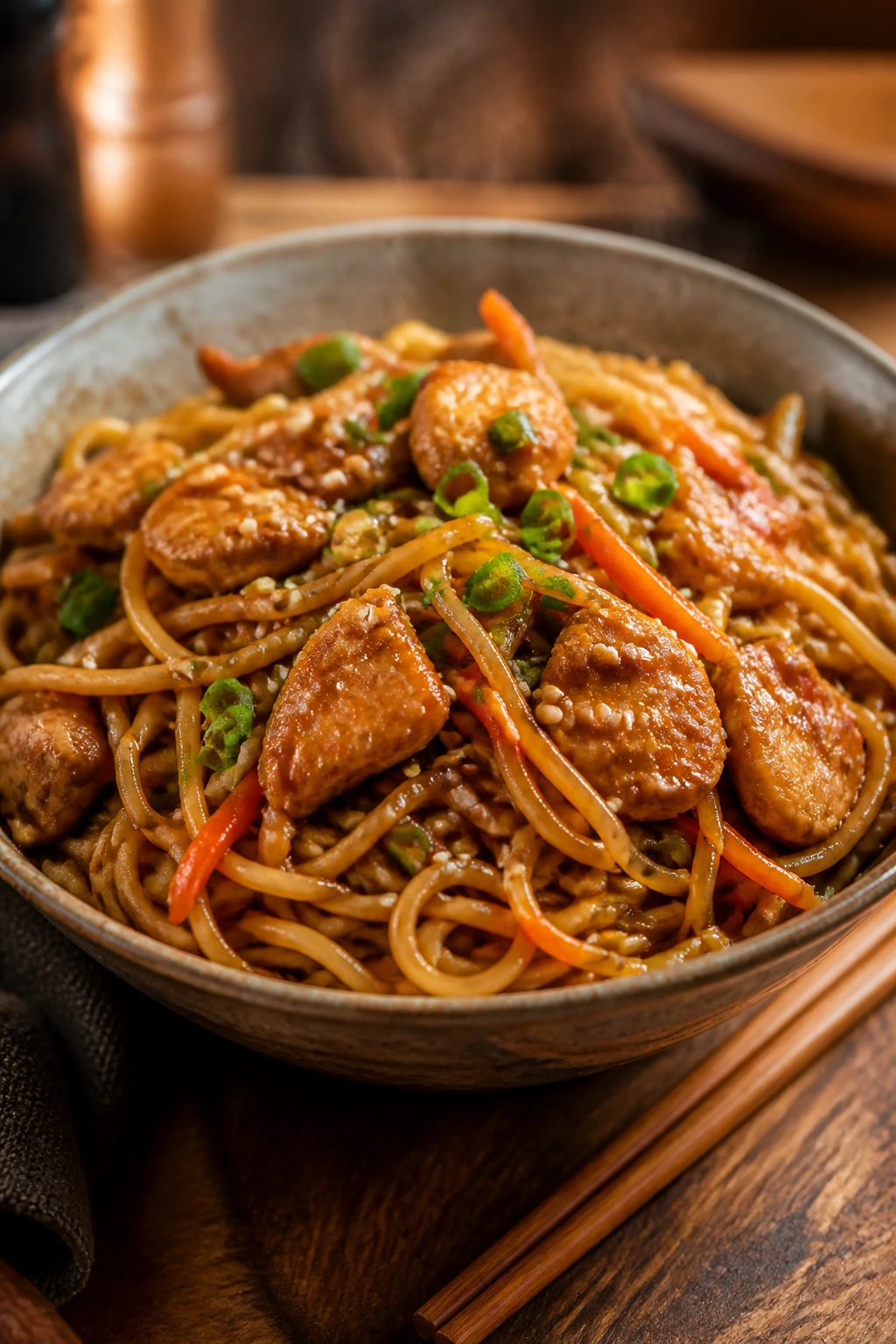
The smell that comes off this one is almost unfair: ginger, garlic, soy, and a little sesame oil heating together until the whole kitchen feels like it belongs to a takeout shop. Chicken thighs hold up better than breasts here, and the noodles take on the sauce without breaking apart.
Why It Works:
Chicken thighs stay tender after a long cook, which matters in a slow cooker where lean meat can dry out. Lo mein noodles are sturdy enough to get tossed into hot sauce for a few minutes at the end. A little brown sugar rounds out the soy and garlic, and the cabbage softens just enough to nestle into the strands. The sauce thickens as it sits, so the finished bowl clings instead of pooling.
Key Ingredients:
- 1½ lbs boneless, skinless chicken thighs, cut into bite-size pieces
- 12 oz dried lo mein noodles
- 1½ cups low-sodium chicken broth
- ⅓ cup soy sauce
- 2 tbsp hoisin sauce
- 1 tbsp fresh ginger, grated
- 4 garlic cloves, minced
- 2 cups shredded napa cabbage
- 2 tbsp toasted sesame oil
- 3 scallions, sliced
Quick Steps:
- Add the broth, soy sauce, hoisin, ginger, garlic, and brown sugar to the slow cooker and whisk until the sugar dissolves.
- Nestle in the chicken and cabbage, then cover and cook on LOW for 3½ to 4 hours until the chicken is tender.
- Stir the mixture and skim any excess fat from the surface if needed.
- Add the lo mein noodles and cook, covered, for 12 to 15 minutes until they’re supple but still have a little chew.
- Finish with sesame oil and scallions, then toss until the noodles look glossy and coated.
Equipment for This Recipe:
- 6-quart slow cooker
- Whisk
- Tongs or a long spoon
- Sharp knife and cutting board
How to Serve This Dish:
Pile it into shallow bowls and top with extra scallions or a pinch of sesame seeds. A side of quick cucumber salad cuts the richness well, and a few steamed dumplings don’t hurt if you’re feeding people who arrive hungry.
Pro Tips for This Recipe:
- Cut the chicken thighs into even pieces so they cook at the same pace.
- If your lo mein noodles are thin, check them at 10 minutes. They go from done to tired fast.
- A small splash of rice vinegar at the end brightens the whole bowl.
- If the sauce looks thin, leave the lid off for 5 minutes after adding the noodles.
Variations on This Dish:
- Spicy Chili Crisp Lo Mein: Stir in 1 to 2 tbsp chili crisp right before serving for heat and crunch.
- Mushroom Swap: Replace half the chicken with sliced shiitakes for a deeper, earthier bowl.
- Cabbage-Free Version: Use snow peas and shredded carrots if napa cabbage isn’t on hand.
Common Mistakes to Avoid with This Dish:
- Don’t add the noodles at the start. They will split and turn soft in the wrong way.
- Don’t use regular-sodium soy sauce without tasting first. The slow cooker concentrates salt.
- Don’t skip the sesame oil at the end; it’s the finishing note that makes the bowl smell right.
2. Beef and Broccoli Lo Mein
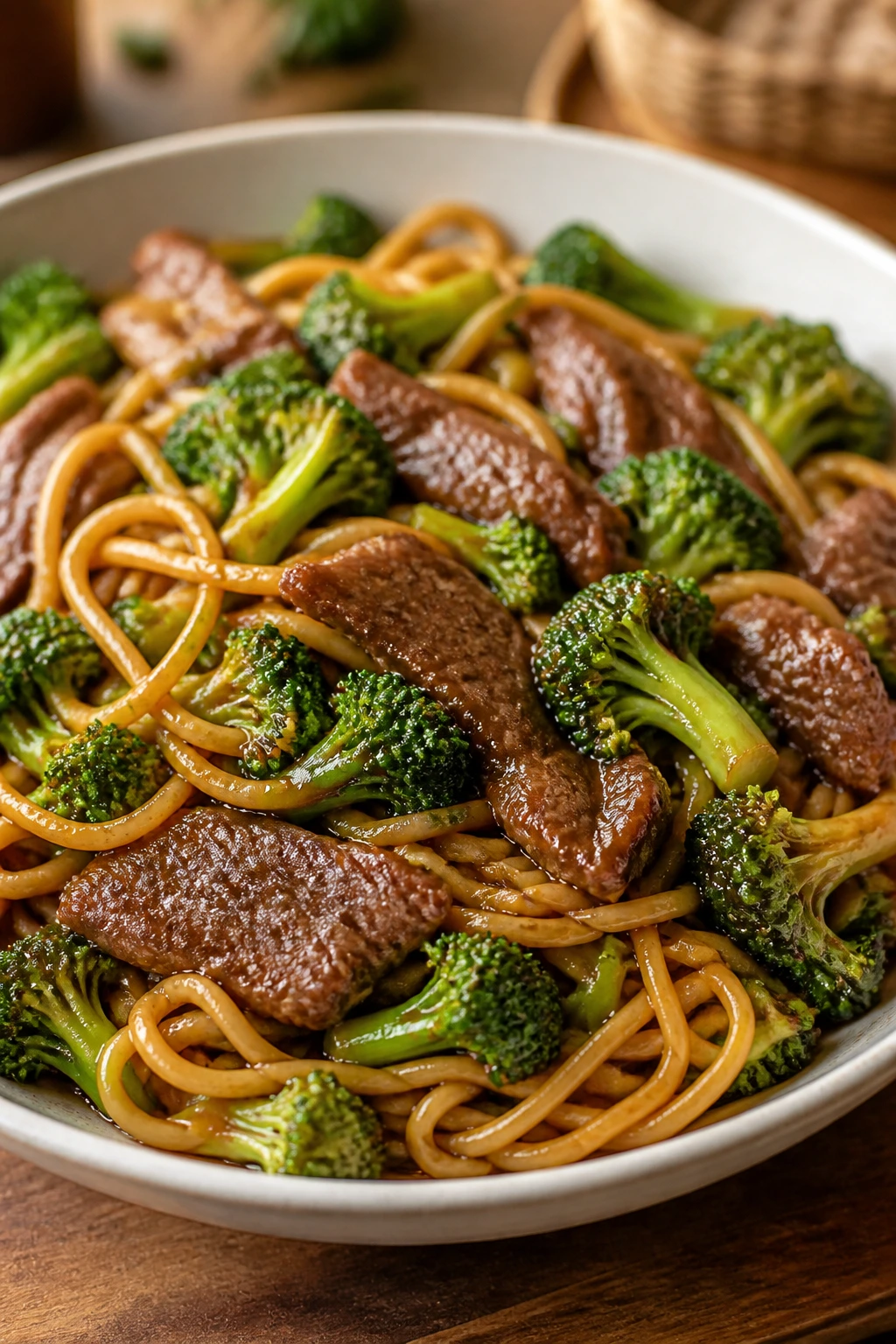
This one leans into that dark, glossy brown-sauce flavor people always seem to chase with takeout. Flank steak gives you a good chew without getting stringy, and broccoli holds its shape long enough to stay green at the edges.
Why It Works:
Beef and broccoli need heat, but not constant heat from the start. The slow cooker tenderizes the beef in broth, soy, garlic, and a little oyster sauce, then the broccoli goes in late enough to keep its bite. Lo mein noodles soak up the sauce without collapsing, which is half the appeal. A tiny amount of cornstarch helps the whole thing coat instead of slide.
Key Ingredients:
- 1½ lbs flank steak, sliced thin across the grain
- 12 oz dried lo mein noodles
- 2 cups broccoli florets
- 1¼ cups beef broth
- ¼ cup soy sauce
- 2 tbsp oyster sauce
- 1 tbsp brown sugar
- 3 garlic cloves, minced
- 1 tbsp cornstarch mixed with 2 tbsp water
- 1 tbsp sesame oil
Quick Steps:
- Whisk the broth, soy sauce, oyster sauce, brown sugar, garlic, and cornstarch slurry in the slow cooker.
- Add the flank steak and cook on LOW for 4 hours until the beef is tender and the sauce looks slightly darker.
- Stir in the broccoli and cover for 15 minutes until the florets turn bright green.
- Add the lo mein noodles and cook for 12 minutes more, stirring once halfway through.
- Drizzle in sesame oil and toss until the sauce clings to every strand.
Equipment for This Recipe:
- Slow cooker
- Sharp chef’s knife
- Measuring cups and spoons
- Slotted spoon
How to Serve This Dish:
Serve it hot with extra broccoli on top and a handful of sliced scallions. If you want a fuller plate, steamed jasmine rice on the side works, though the noodles already make it a full meal.
Pro Tips for This Recipe:
- Slice the steak thin while it’s still cold; it’s cleaner and easier.
- Don’t add broccoli too soon or it will go gray and soft.
- A few drops of black vinegar at the end sharpen the sauce.
- Use low-sodium broth so the oyster sauce can do its job.
Variations on This Dish:
- Garlic-Bold Version: Add 2 extra cloves of garlic and a teaspoon of minced ginger.
- Snow Pea Switch: Replace broccoli with snow peas for a lighter crunch.
- Spicy Pepper Version: Add sliced Fresno chiles or a spoon of chili paste.
Common Mistakes to Avoid with This Dish:
- Don’t cut the beef with the grain. It will stay chewy.
- Don’t overcook the broccoli after it goes in; 15 minutes is enough.
- Don’t forget the cornstarch slurry if you like a glossy sauce instead of broth.
3. Sesame Pork Chow Mein
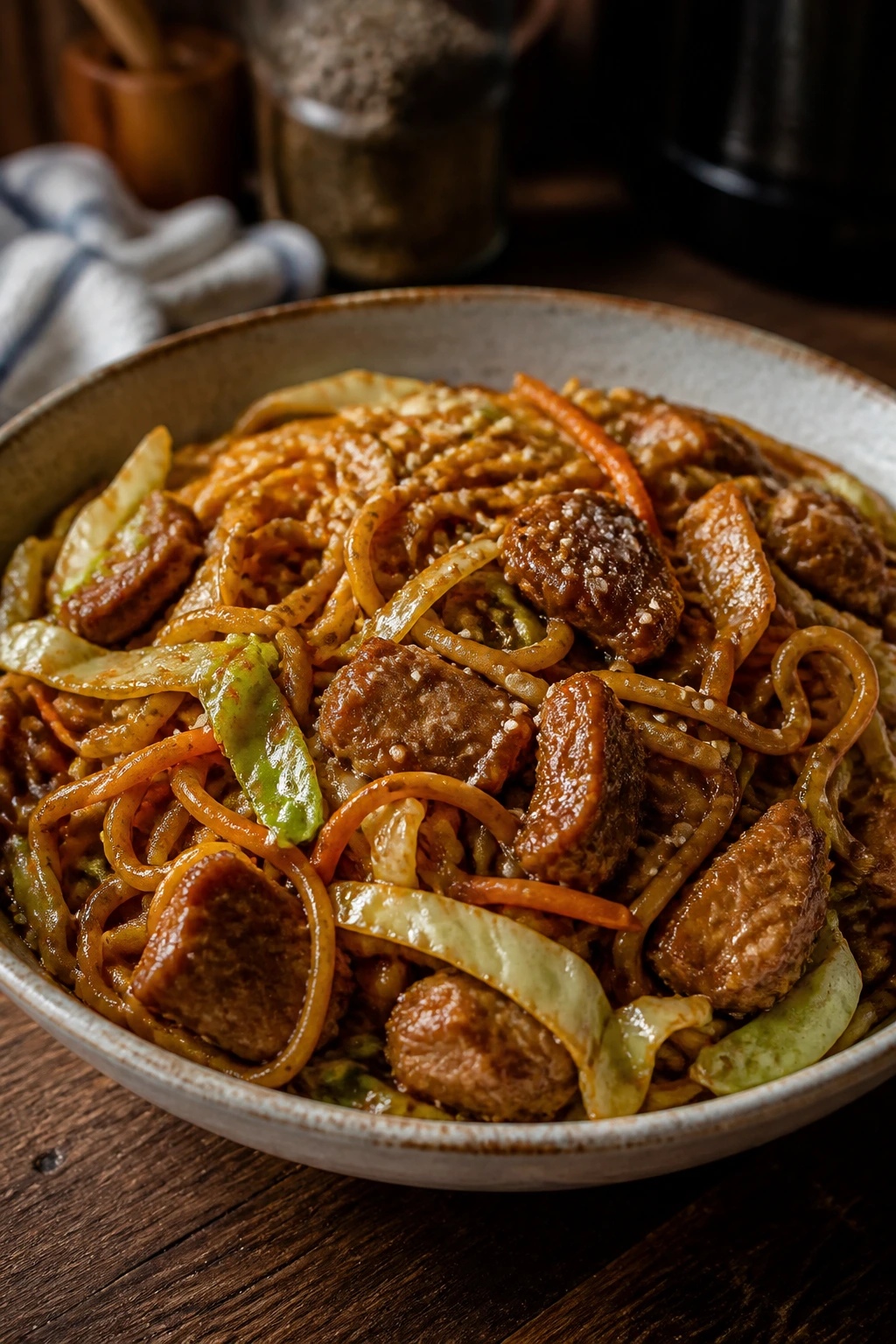
Pork shoulder gives this bowl a richer, fattier feel than chicken, and chow mein noodles pick up the sesame-soy sauce without getting soggy. There’s a faint sweetness here from hoisin and a toasty note from sesame oil that shows up in the first bite.
Why It Works:
Pork shoulder tolerates long cooking and comes out tender enough to shred lightly with a spoon. Chow mein noodles hold their shape when they’re tossed into a hot saucy pot at the end. Cabbage and carrots bring crunch without stealing the spotlight. The sauce is thick enough to coat, but not so thick that it clumps.
Key Ingredients:
- 1½ lbs pork shoulder, cut into 1-inch chunks
- 12 oz chow mein noodles
- 1½ cups chicken broth
- ⅓ cup soy sauce
- 2 tbsp hoisin sauce
- 1 tbsp sesame oil
- 2 cups shredded green cabbage
- 1 cup matchstick carrots
- 1 tbsp grated ginger
- 2 scallions, sliced
Quick Steps:
- Stir broth, soy sauce, hoisin, ginger, and garlic in the slow cooker.
- Add pork shoulder, cover, and cook on LOW for 5 to 6 hours until the pork pulls apart easily.
- Stir in cabbage and carrots, then cook for 10 minutes until they soften slightly.
- Add the chow mein noodles and cover for 10 to 12 minutes until tender.
- Finish with sesame oil and scallions, tossing until the noodles shine.
Equipment for This Recipe:
- Slow cooker
- Tongs
- Microplane or grater
- Large spoon
How to Serve This Dish:
This is the bowl I’d put in front of anyone who wants something hearty without a pile of side dishes. A few pickled cucumbers or quick-pickled radishes keep the richness from sticking around too long.
Pro Tips for This Recipe:
- Trim large fat caps off the pork shoulder, but leave some marbling.
- Chow mein noodles vary a lot; check the package and err on the shorter side.
- If the sauce tastes flat, add 1 tsp rice vinegar.
- Shred the pork lightly in the cooker before adding the noodles.
Variations on This Dish:
- Five-Spice Pork: Add ½ tsp Chinese five-spice to the broth for a warmer aroma.
- Cabbage-Lover’s Bowl: Double the cabbage and skip the carrots.
- Mild Ginger Version: Reduce garlic and ginger by half for a softer flavor profile.
Common Mistakes to Avoid with This Dish:
- Don’t use lean pork loin. It dries out before the noodles are ready.
- Don’t dump in the noodles early; they’ll soak up too much liquid.
- Don’t skip the final stir. The sesame oil needs to hit everything evenly.
4. General Tso’s Chicken Noodles
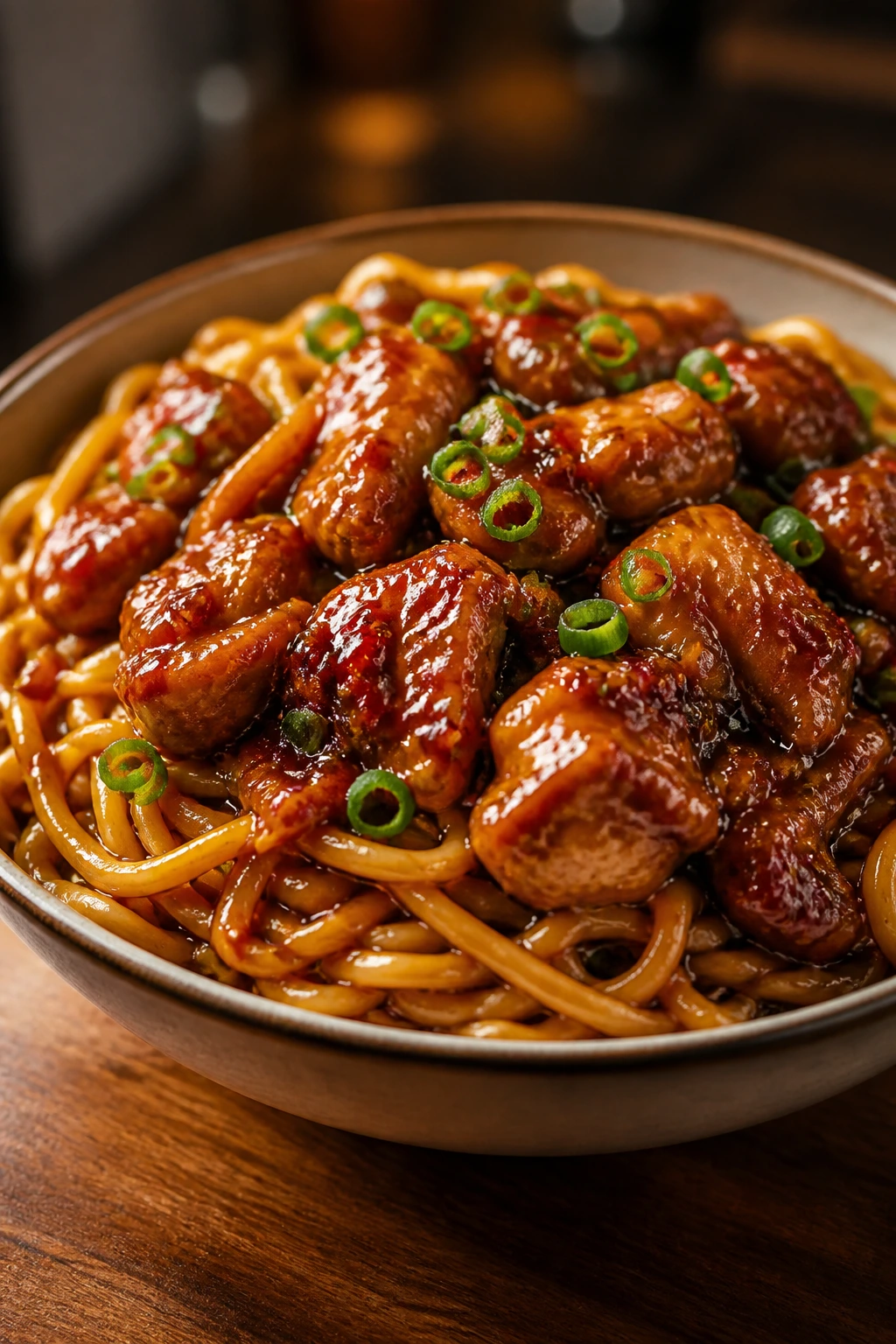
Sticky, sweet, and a little sharp from rice vinegar, this is the bowl for people who like General Tso’s sauce more than the chicken itself. The slow cooker gives the chicken time to soak up the sauce, then the noodles carry it into every bite.
Why It Works:
General Tso’s flavors rely on contrast: sweet, salty, tangy, and a little heat. The slow cooker softens the chicken and lets the sauce get deep without constant stirring. Lo mein noodles are a better fit than rice noodles here because they catch the sticky glaze. A cornstarch slurry at the end makes the sauce cling instead of running off.
Key Ingredients:
- 1½ lbs boneless, skinless chicken thighs
- 12 oz lo mein noodles
- ½ cup soy sauce
- ⅓ cup rice vinegar
- ¼ cup brown sugar
- 2 tbsp ketchup
- 1 tbsp chili garlic sauce
- 3 garlic cloves, minced
- 1 tbsp cornstarch mixed with 2 tbsp water
- 2 scallions, sliced
Quick Steps:
- Whisk soy sauce, rice vinegar, brown sugar, ketchup, chili garlic sauce, garlic, and ½ cup water in the slow cooker.
- Add chicken thighs and cook on LOW for 4 hours until tender.
- Stir in the cornstarch slurry and cook for 10 minutes until the sauce looks glossy.
- Add the noodles and cook for 12 minutes, stirring once.
- Top with scallions and extra chili sauce if you want more heat.
Equipment for This Recipe:
- Slow cooker
- Whisk
- Measuring spoons
- Tongs
How to Serve This Dish:
Serve in deep bowls with a few sesame seeds and a pile of steamed broccoli on the side. It’s rich enough to stand alone, but plain green vegetables make the sauce feel even better.
Pro Tips for This Recipe:
- Use thighs, not breasts, if you want the chicken to stay juicy.
- Taste the sauce before adding noodles; the sweet-sour balance should be sharp, not flat.
- If it tastes too sweet, add a teaspoon of vinegar.
- A spoonful of chili crisp on top gives it better texture than more syrupy sauce.
Variations on This Dish:
- Extra-Crisp Finish: Brown the chicken in a skillet first if you want a darker edge.
- Orange TSO: Add 2 tbsp orange juice and a little zest for a citrus lift.
- Vegetable-Heavy Bowl: Stir in bell peppers and snow peas during the last 20 minutes.
Common Mistakes to Avoid with This Dish:
- Don’t make the sauce too sweet. The rice vinegar should still wake up the bowl.
- Don’t leave the noodles in too long after they soften.
- Don’t forget the cornstarch; without it, the sauce slides off the noodles.
5. Mongolian Beef Noodles
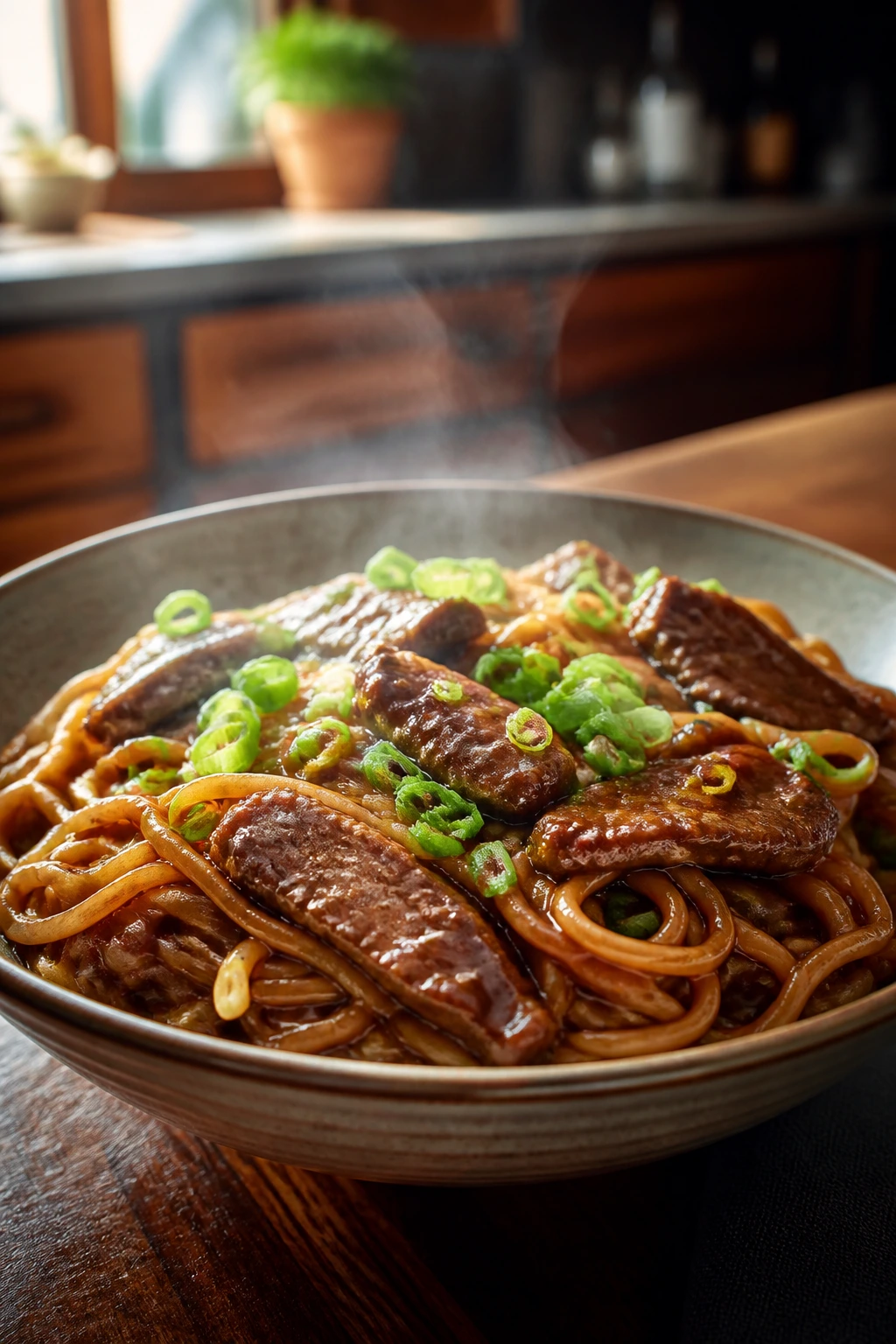
This version keeps the brown sugar, soy, and garlic backbone of Mongolian beef, then stretches it into a noodle bowl that eats like dinner and not an appetizer. Flank steak is the right cut here because it stays tender if you slice it thin and don’t overcook it.
Why It Works:
Mongolian beef depends on a sauce that is both salty and sweet, with enough body to stick to noodles. The slow cooker handles the low, steady braise better than a hot pan would. Chow mein noodles or thin egg noodles are sturdy enough to sit in that sauce for a short finish. Green onions bring the sharp edge the sauce needs.
Key Ingredients:
- 1½ lbs flank steak, sliced thin
- 12 oz chow mein noodles
- 1½ cups beef broth
- ⅓ cup soy sauce
- ⅓ cup brown sugar
- 4 garlic cloves, minced
- 1 tbsp grated ginger
- 1 tbsp cornstarch mixed with 2 tbsp water
- 4 scallions, sliced
- 1 tbsp sesame oil
Quick Steps:
- Add broth, soy sauce, brown sugar, garlic, and ginger to the slow cooker and stir.
- Add steak and cook on LOW for 3½ to 4 hours until tender.
- Stir in the cornstarch slurry and cook 10 minutes until the sauce thickens lightly.
- Add the noodles and cook for 10 to 12 minutes until springy.
- Finish with sesame oil and scallions.
Equipment for This Recipe:
- Slow cooker
- Sharp knife
- Measuring cups
- Wooden spoon
How to Serve This Dish:
A bowl of this with steamed bok choy beside it feels complete without any extra fuss. If you want heat, serve chili oil on the table instead of hiding it in the pot.
Pro Tips for This Recipe:
- Slice the beef across the grain and keep the pieces thin.
- Brown sugar should be measured carefully; too much and the sauce turns sticky-sweet.
- Add scallions at the end so they stay bright.
- If the sauce is too thin, leave the lid off for 5 minutes before serving.
Variations on This Dish:
- Ginger-Forward Version: Add another tablespoon of ginger for a sharper bite.
- Mushroom Mongolian: Toss in sliced shiitakes with the beef.
- Mild Bowl: Reduce brown sugar slightly and add a splash of broth for balance.
Common Mistakes to Avoid with This Dish:
- Don’t use stew meat unless you plan on cooking it much longer; flank steak is cleaner here.
- Don’t skip the cornstarch slurry if you want the sauce to coat.
- Don’t add noodles that are already soft-cooked; they’ll go mushy in minutes.
6. Dan Dan Ground Pork Noodles
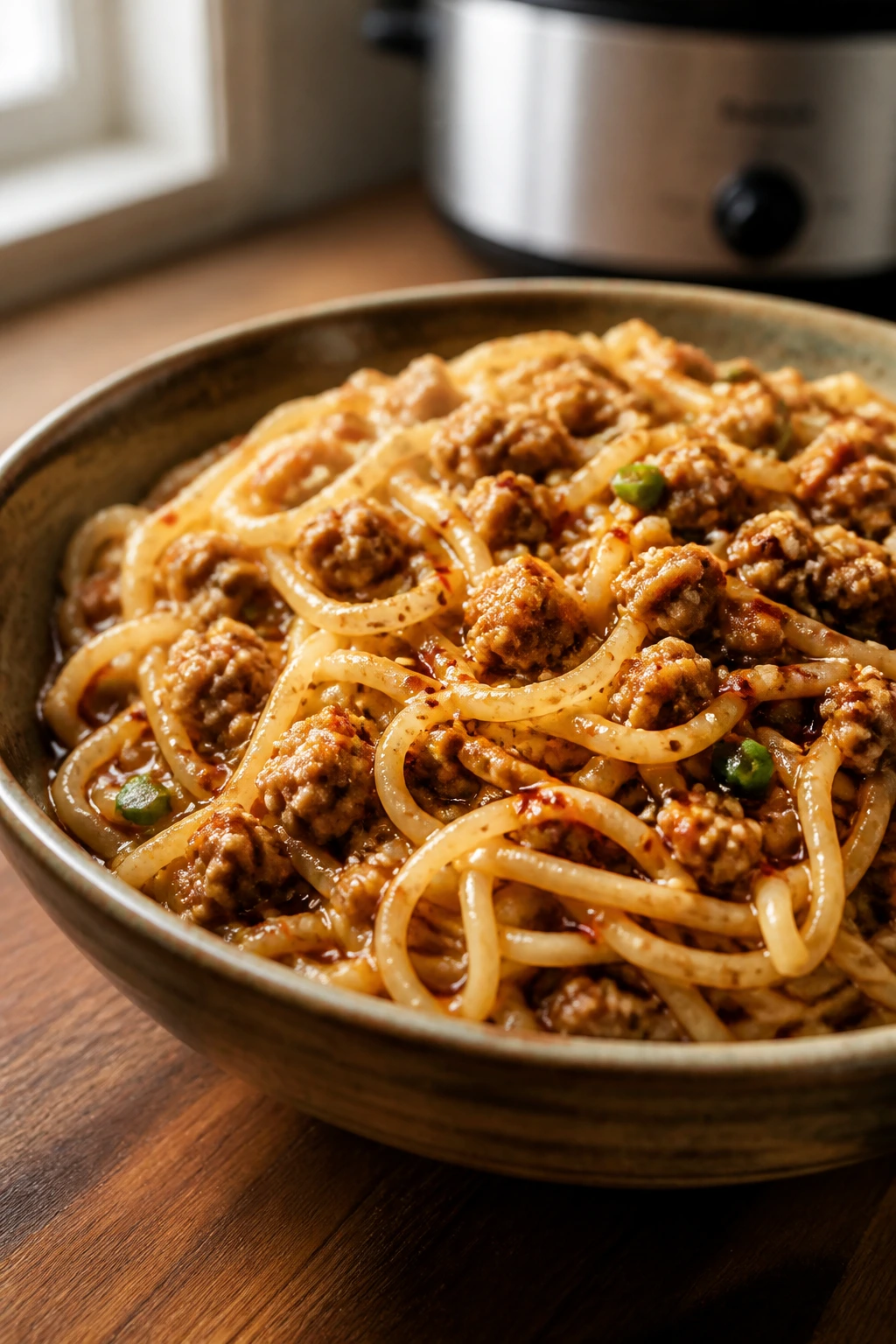
Dan dan noodles usually lean fiery, nutty, and a little numbing if you use Sichuan peppercorns. In the slow cooker, ground pork gives you the same savory depth without standing over a skillet, and the peanut-sesame sauce clings to every strand.
Why It Works:
Ground pork breaks down into the sauce, which is exactly what you want for dan dan-style noodles. Peanut butter or sesame paste adds body, while chili oil and black vinegar keep the bowl from tasting heavy. Because the noodles finish in the sauce at the end, they pick up all that nuttiness. Pickled mustard greens or preserved veggies add the sharp, salty note this dish needs.
Key Ingredients:
- 1½ lbs ground pork
- 12 oz thin wheat noodles
- 1½ cups chicken broth
- 3 tbsp peanut butter or Chinese sesame paste
- 2 tbsp soy sauce
- 1 tbsp chili oil
- 1 tbsp black vinegar
- 2 garlic cloves, minced
- 1 tsp Sichuan peppercorns, ground
- 2 scallions, sliced
Quick Steps:
- Stir broth, peanut butter, soy sauce, chili oil, black vinegar, garlic, and Sichuan peppercorns in the slow cooker.
- Add ground pork and cook on LOW for 3 hours, breaking it up once or twice with a spoon.
- Stir well so the pork disappears into the sauce and the mixture looks thick.
- Add noodles and cook for 8 to 10 minutes until tender.
- Top with scallions and a little extra chili oil.
Equipment for This Recipe:
- Slow cooker
- Wooden spoon
- Small bowl for mixing sauce
- Measuring spoons
How to Serve This Dish:
Serve in small deep bowls; dan dan is rich enough that a little goes a long way. Cucumber sticks or a vinegar-dressed cabbage salad are good beside it.
Pro Tips for This Recipe:
- Stir the peanut butter into the broth before adding the meat or it can clump.
- Ground pork should be fully broken up before the noodles go in.
- If you like more numb heat, add a pinch of ground Sichuan pepper at the end too.
- Black vinegar matters here. It keeps the bowl lively.
Variations on This Dish:
- Sesame Paste Version: Use tahini if Chinese sesame paste is hard to find.
- Extra-Spicy Dan Dan: Add chili flakes and more chili oil at serving.
- Vegetarian Dan Dan: Swap the pork for crumbled tofu and chopped mushrooms.
Common Mistakes to Avoid with This Dish:
- Don’t let the peanut butter sit unmixed in the pot; it needs to dissolve.
- Don’t skip the black vinegar or the bowl turns flat and heavy.
- Don’t overcook the noodles in the thick sauce; they should still have bite.
7. Hot and Sour Chicken Rice Noodles
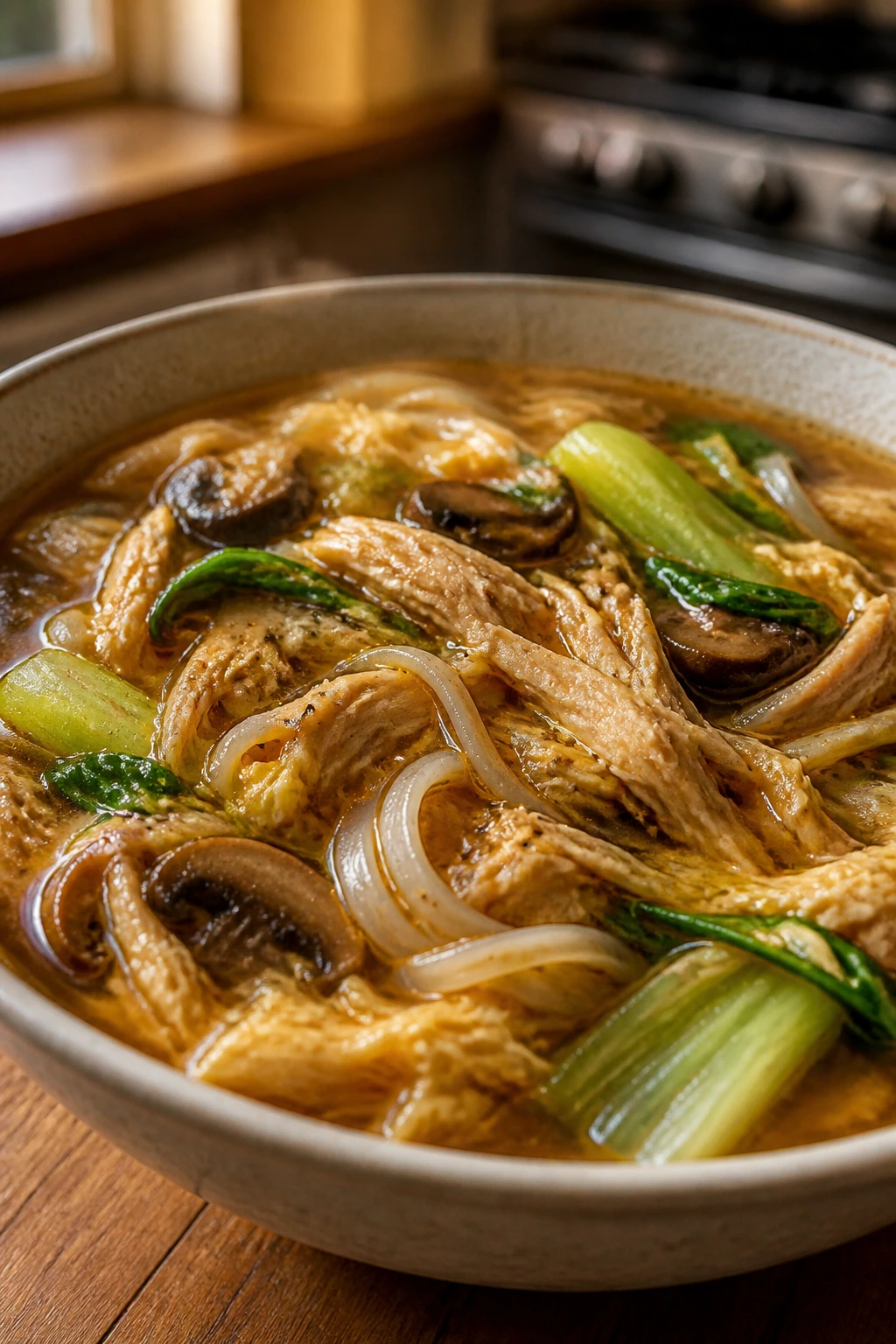
This one tastes bright, sharp, and a little smoky from white pepper and vinegar. Rice noodles need a gentle hand, so the slow cooker does the broth and chicken first, then the noodles go in for a short soak right before serving.
Why It Works:
Hot and sour soup flavor works because of contrast, not heat alone. Vinegar, white pepper, soy, and mushrooms build a broth that tastes deeper than the ingredient list suggests. Chicken thighs stay juicy through the slow cook, and rice noodles only need a few minutes to soften. The egg ribbon at the end gives the broth a silky finish.
Key Ingredients:
- 1½ lbs boneless chicken thighs
- 8 oz wide rice noodles
- 6 cups chicken broth
- 3 tbsp rice vinegar
- 2 tbsp soy sauce
- 1 tbsp cornstarch mixed with 2 tbsp water
- 1 cup sliced shiitake mushrooms
- 1 cup shredded bok choy
- 1 tsp white pepper
- 2 eggs, lightly beaten
Quick Steps:
- Add broth, vinegar, soy sauce, mushrooms, and white pepper to the slow cooker.
- Add chicken thighs and cook on LOW for 4 hours until tender.
- Stir in cornstarch slurry and bok choy, then cook for 10 minutes.
- Add rice noodles and cook just until soft, usually 4 to 6 minutes.
- Slowly drizzle in beaten eggs while stirring, then let them set for 1 minute.
Equipment for This Recipe:
- Slow cooker
- Whisk
- Slotted spoon
- Fork or chopsticks for noodles
How to Serve This Dish:
This wants a bowl, not a plate. A few extra drops of rice vinegar on top brighten the broth even more, and chopped cilantro works if you like the herb.
Pro Tips for This Recipe:
- Soak the rice noodles briefly if the package says they’re thick.
- Keep the vinegar in check until the end if you want more control.
- White pepper gives a different heat than black pepper; don’t swap it unless you want a different profile.
- Add the eggs slowly so they form ribbons instead of scrambled bits.
Variations on This Dish:
- Pork Version: Use sliced pork shoulder instead of chicken.
- Extra-Mushroom Bowl: Double the shiitakes and add oyster mushrooms.
- Lighter Broth: Use more bok choy and fewer noodles for a soupier bowl.
Common Mistakes to Avoid with This Dish:
- Don’t leave rice noodles in the broth too long or they’ll break.
- Don’t add the eggs all at once; they’ll clump.
- Don’t skip the white pepper if you want that classic hot-and-sour edge.
8. Char Siu Pork Lo Mein
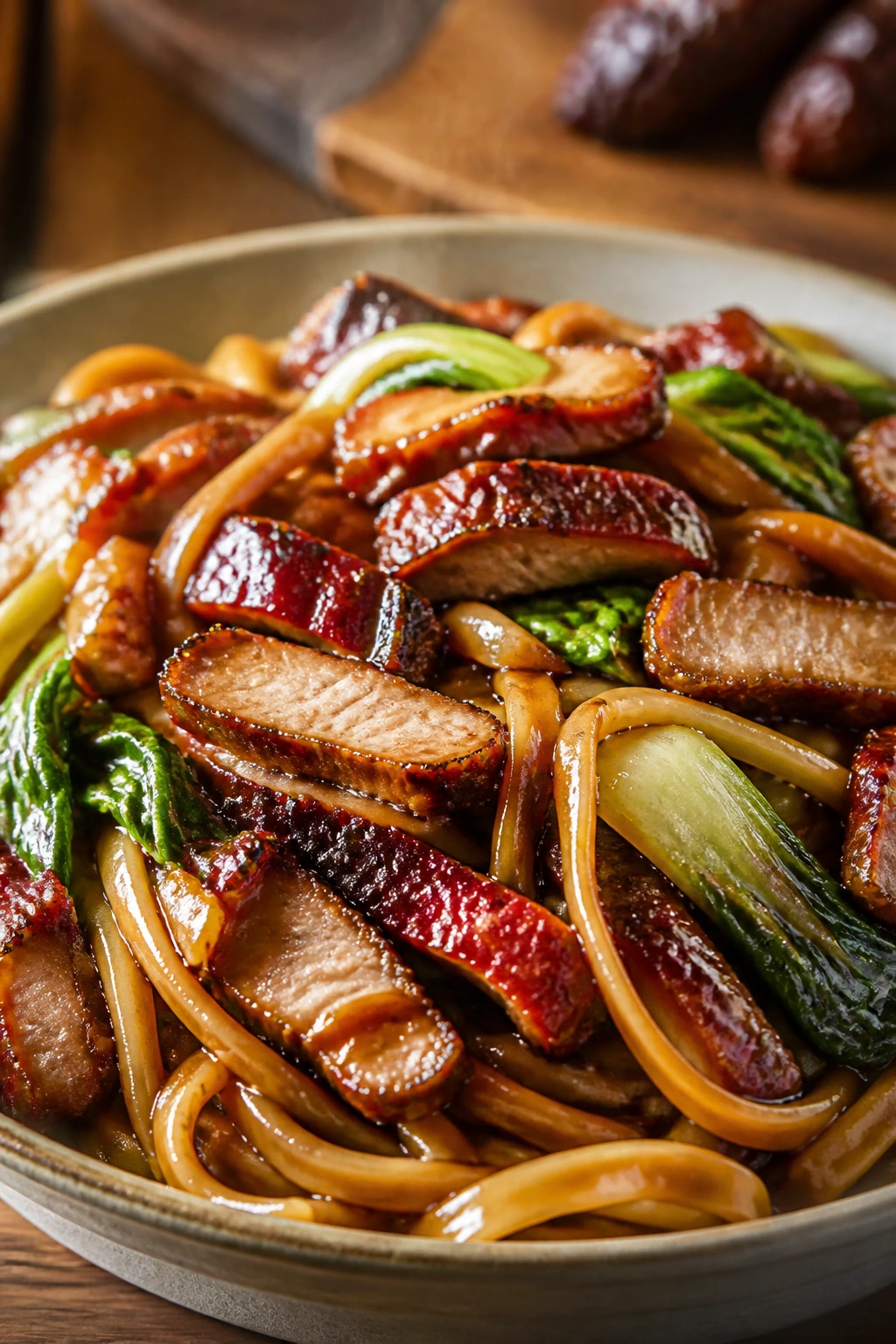
Char siu flavor is sweet, deep red, and faintly sticky, which makes it a natural fit for lo mein. In the slow cooker, the pork gets a long soak in hoisin, soy, five-spice, and honey, then the noodles pick up all that lacquered sauce.
Why It Works:
Pork shoulder loves long cooking and takes on char siu-style seasoning without drying out. Hoisin, honey, and five-spice build that familiar barbecue-like sweetness. Lo mein noodles are wide enough to carry the sauce, and bok choy gives the bowl a greener, fresher finish. A quick broil after slow cooking is optional, but it does help the surface look more like char siu.
Key Ingredients:
- 1½ lbs pork shoulder, cut into strips
- 12 oz lo mein noodles
- ¼ cup hoisin sauce
- 3 tbsp soy sauce
- 2 tbsp honey
- 1 tbsp Chinese five-spice
- 1 tbsp rice vinegar
- 2 cups chopped bok choy
- 2 garlic cloves, minced
- 2 scallions, sliced
Quick Steps:
- Stir hoisin, soy sauce, honey, five-spice, vinegar, garlic, and ½ cup water in the slow cooker.
- Add pork shoulder and cook on LOW for 5 hours until tender.
- Stir in bok choy and cook for 10 minutes until the stems are just soft.
- Add lo mein noodles and cook for 12 minutes, stirring once.
- Top with scallions and, if you want, briefly broil the pork on a sheet pan before serving.
Equipment for This Recipe:
- Slow cooker
- Sheet pan, optional for broiling
- Tongs
- Measuring spoons
How to Serve This Dish:
Serve with steamed rice only if you want to stretch it farther; otherwise the noodles already do the job. A few cucumber slices on the side keep the sweetness from taking over.
Pro Tips for This Recipe:
- Keep the honey modest; char siu should be sweet, not candy-like.
- A tiny touch of red food coloring is optional if you want a more classic look, but it’s not needed for flavor.
- Bok choy stems go in first if yours are thick.
- Broil only long enough to pick up color, not to dry the meat.
Variations on This Dish:
- Spice-Laced Char Siu: Add chili flakes to the marinade.
- Pineapple Version: Stir in a few pineapple chunks near the end for a sweet-tangy edge.
- Tofu Swap: Use pressed tofu cubes and shorten the cook time sharply.
Common Mistakes to Avoid with This Dish:
- Don’t use too much honey or the sauce turns cloying.
- Don’t overcook bok choy; the stems should still have some crunch.
- Don’t slice the pork too thin before cooking or it can shred too much.
9. Black Bean Chicken Noodles
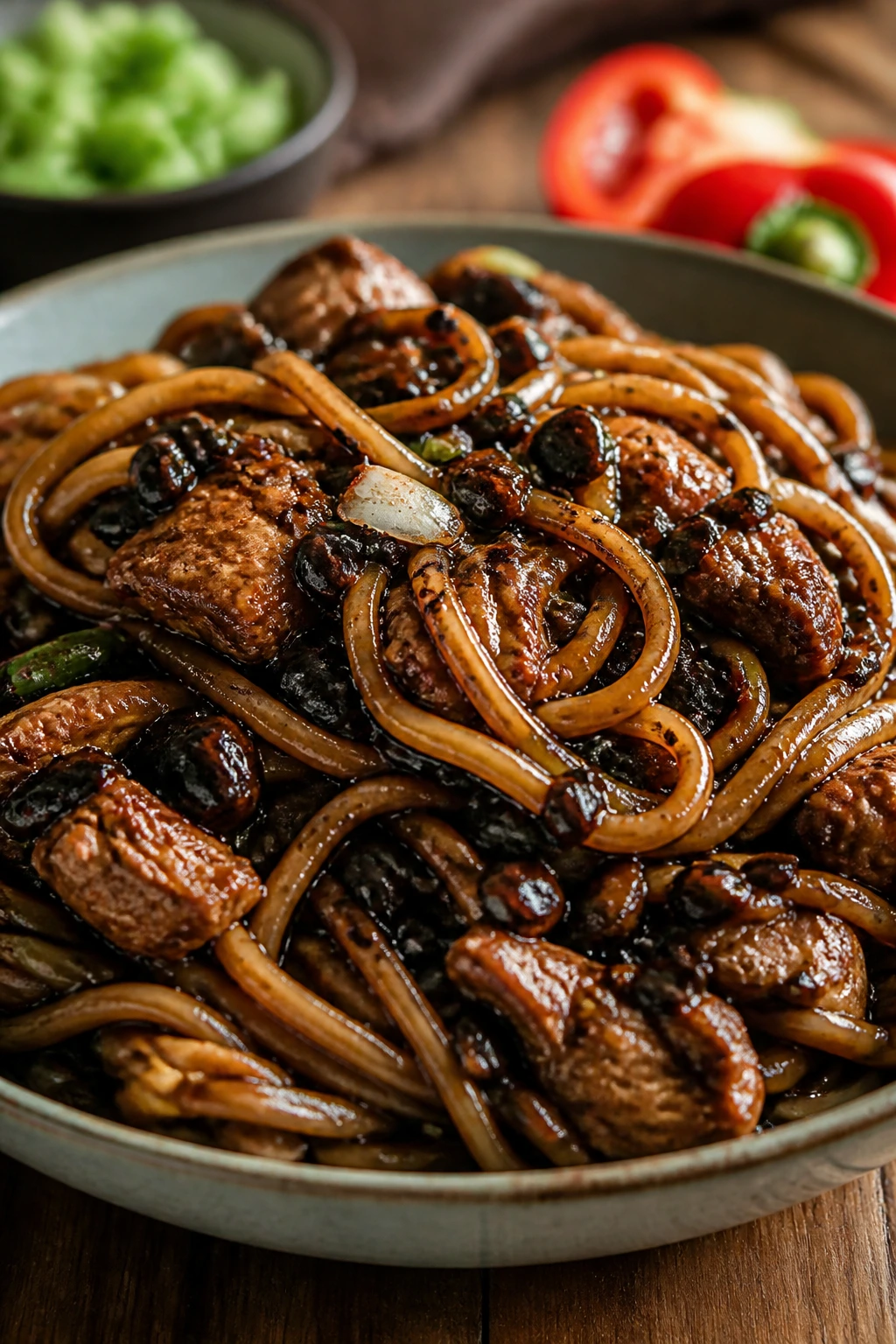
Fermented black bean paste gives this bowl a salty, savory punch that tastes deeper than soy sauce alone. Chicken thighs stay forgiving, and the noodles soak up the sauce along with the garlic and ginger.
Why It Works:
Black bean sauce brings built-in depth, so you don’t need a long ingredient list. The slow cooker softens the chicken while the paste dissolves into the broth. Lo mein or thin egg noodles both work because the sauce isn’t overly heavy. Bell peppers and onions add color and a little crunch.
Key Ingredients:
- 1½ lbs chicken thighs
- 12 oz lo mein noodles
- 1¼ cups chicken broth
- 2 tbsp fermented black bean paste
- 2 tbsp soy sauce
- 1 tbsp oyster sauce
- 1 red bell pepper, sliced
- 1 small onion, sliced
- 3 garlic cloves, minced
- 1 tbsp grated ginger
Quick Steps:
- Whisk broth, black bean paste, soy sauce, oyster sauce, garlic, and ginger in the slow cooker.
- Add chicken thighs, onion, and bell pepper, then cook on LOW for 4 hours.
- Stir so the black bean paste disappears into the sauce.
- Add noodles and cook for 10 to 12 minutes until tender.
- Finish with a few drops of sesame oil if you want a rounder flavor.
Equipment for This Recipe:
- Slow cooker
- Wooden spoon
- Knife and cutting board
- Measuring spoons
How to Serve This Dish:
Serve hot with plain steamed greens or a quick side of sautéed spinach. The black bean sauce has enough personality that the rest of the plate can stay quiet.
Pro Tips for This Recipe:
- Black bean paste is salty; taste before adding extra soy.
- Slice the onion thick enough so it doesn’t disappear.
- Add peppers late if you want them firmer.
- A squeeze of lime is not traditional, but it wakes up the bowl.
Variations on This Dish:
- Pork Version: Swap chicken for thin pork shoulder strips.
- Extra-Vegetable Bowl: Add mushrooms and baby corn.
- Heat Boost: Stir in chili bean paste for more fire.
Common Mistakes to Avoid with This Dish:
- Don’t use plain black beans without mashing or dissolving them.
- Don’t overdo oyster sauce; it can bury the black bean flavor.
- Don’t add the noodles before the chicken is tender.
10. Orange Beef Chow Mein
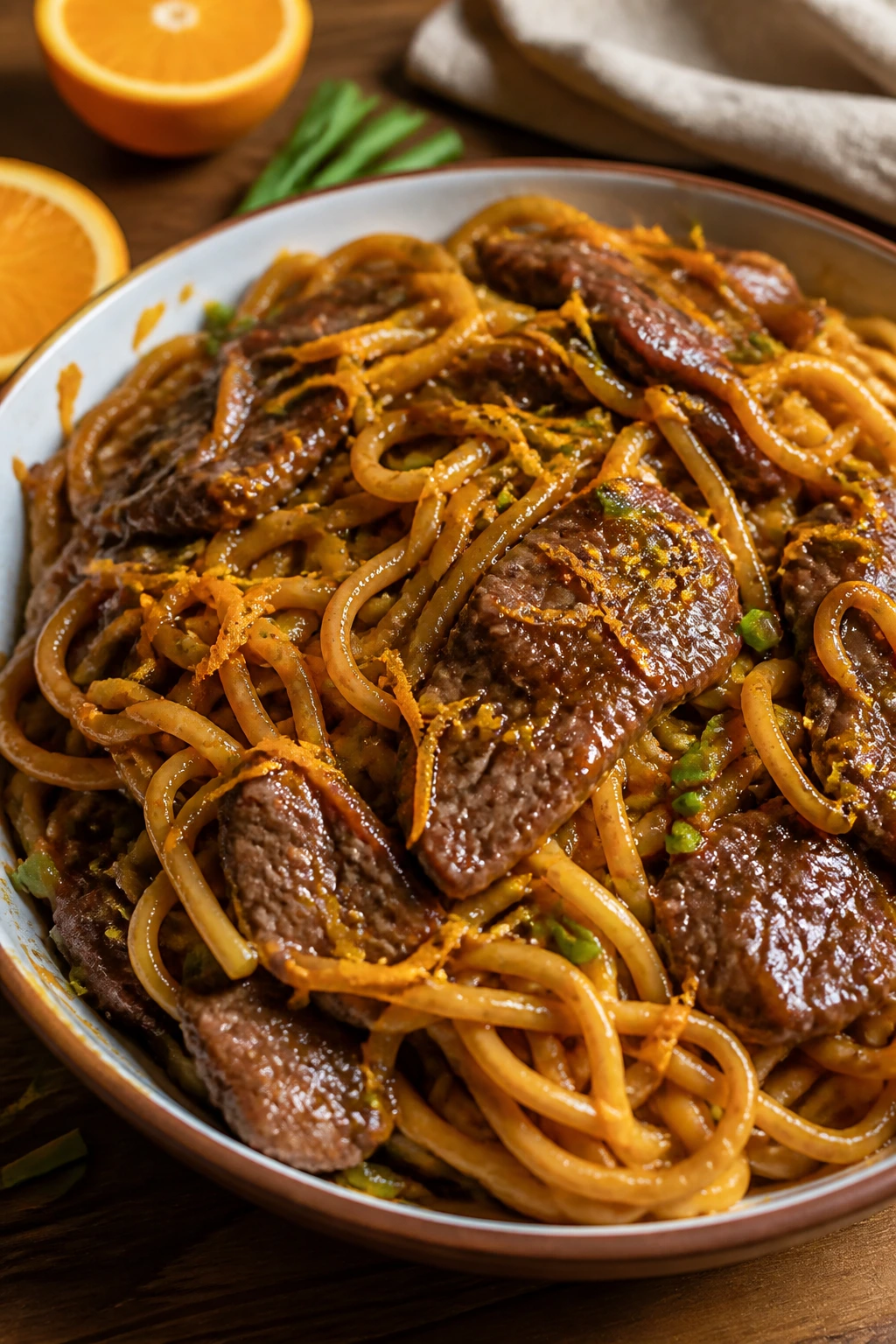
Orange sauce can go syrupy fast, so the trick here is keeping the sweetness in check with vinegar and zest. The beef gets tender in the cooker, then the noodles finish in that sticky citrus sauce.
Why It Works:
Orange beef needs brightness, not just sugar. Orange zest and juice keep the sauce fragrant while soy and garlic ground it. Chow mein noodles stand up well to the glaze, and thin beef slices cook into a soft texture without needing a skillet. A little ginger sharpens the edges.
Key Ingredients:
- 1½ lbs flank steak, thinly sliced
- 12 oz chow mein noodles
- 1 cup beef broth
- ½ cup orange juice
- 1 tbsp orange zest
- ¼ cup soy sauce
- 2 tbsp brown sugar
- 3 garlic cloves, minced
- 1 tbsp grated ginger
- 1 tbsp cornstarch mixed with 2 tbsp water
Quick Steps:
- Whisk broth, orange juice, zest, soy sauce, brown sugar, garlic, and ginger in the slow cooker.
- Add beef and cook on LOW for 3½ to 4 hours until tender.
- Stir in the cornstarch slurry and cook 10 minutes until the sauce thickens slightly.
- Add noodles and cook for 10 to 12 minutes.
- Toss well and finish with a little extra zest if you like a brighter top note.
Equipment for This Recipe:
- Slow cooker
- Microplane
- Tongs
- Measuring cups
How to Serve This Dish:
A plate of steamed broccoli or snap peas gives the bowl a fresh edge. If you want to dress it up, a few curls of orange zest on top look and smell right.
Pro Tips for This Recipe:
- Use fresh orange zest; bottled juice alone tastes dull.
- Keep the sugar moderate so the citrus still reads.
- If the sauce seems too thin, let it sit uncovered for a few minutes.
- Slice the steak thin enough that it doesn’t need a knife at the table.
Variations on This Dish:
- Spicy Orange Beef: Add chili flakes or a dab of chili paste.
- Mandarin Chicken: Swap in chicken thighs and shorten the cook slightly.
- Vegetable-Forward Bowl: Double the snap peas and add carrots.
Common Mistakes to Avoid with This Dish:
- Don’t use too much juice without zest; the sauce loses its orange snap.
- Don’t overcook the noodles in the sticky sauce.
- Don’t skip the cornstarch if you want that takeout-style cling.
11. Five-Spice Short Rib Noodle Soup
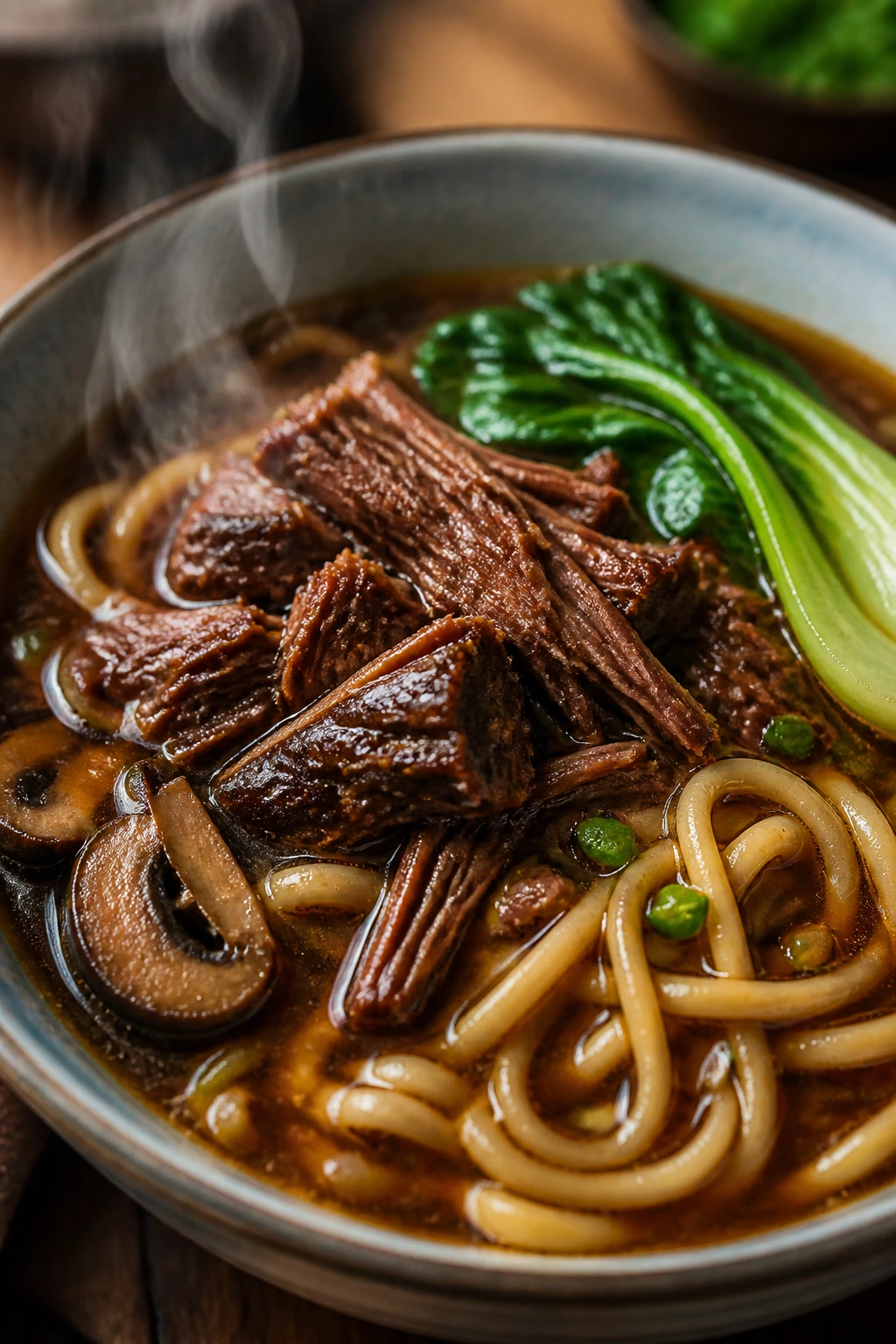
Short ribs bring a deep, beefy broth and a texture that feels luxurious without asking for any fuss. The five-spice note is warm and a little sweet, and the noodles turn it into a bowl that’s part soup, part braise.
Why It Works:
Short ribs need time, and the slow cooker gives them exactly that. Five-spice, soy, garlic, and ginger flavor the broth from the inside out. Wheat noodles or thick egg noodles hold up better in soup than very thin pasta. Mushrooms and bok choy absorb the broth and make the bowl feel complete.
Key Ingredients:
- 2 lbs beef short ribs
- 8 oz thick wheat or egg noodles
- 6 cups beef broth
- ¼ cup soy sauce
- 1 tbsp Chinese five-spice
- 1 tbsp grated ginger
- 4 garlic cloves, smashed
- 2 cups bok choy, chopped
- 1 cup sliced mushrooms
- 3 scallions, sliced
Quick Steps:
- Add broth, soy sauce, five-spice, ginger, garlic, and short ribs to the slow cooker.
- Cook on LOW for 7 to 8 hours until the meat is falling from the bone.
- Remove the ribs, skim excess fat if needed, and shred the meat.
- Add mushrooms, bok choy, and noodles to the broth and cook for 10 to 12 minutes.
- Return the shredded beef to the pot, then top with scallions.
Equipment for This Recipe:
- Large slow cooker
- Fine-mesh skimmer
- Tongs
- Ladle
How to Serve This Dish:
Serve it in deep soup bowls with chili oil on the side. A wedge of lime is optional, but I’d keep it on the table rather than in the pot.
Pro Tips for This Recipe:
- Short ribs make a richer broth if they have some bone.
- Skim fat before the noodles go in so the broth tastes cleaner.
- Don’t overdo five-spice; it can take over fast.
- Thick noodles hold the texture better than thin soup noodles here.
Variations on This Dish:
- Spicy Broth: Add dried chilies with the broth.
- Mushroom-Heavy Version: Double the mushrooms and reduce the beef slightly.
- Herb Finish: Add cilantro and scallions just before serving.
Common Mistakes to Avoid with This Dish:
- Don’t cook the noodles in the broth for too long or they’ll split.
- Don’t forget to skim fat if the ribs were very rich.
- Don’t use five-spice with a heavy hand; the broth should taste warm, not dusty.
12. Garlic Chili Tofu Lo Mein
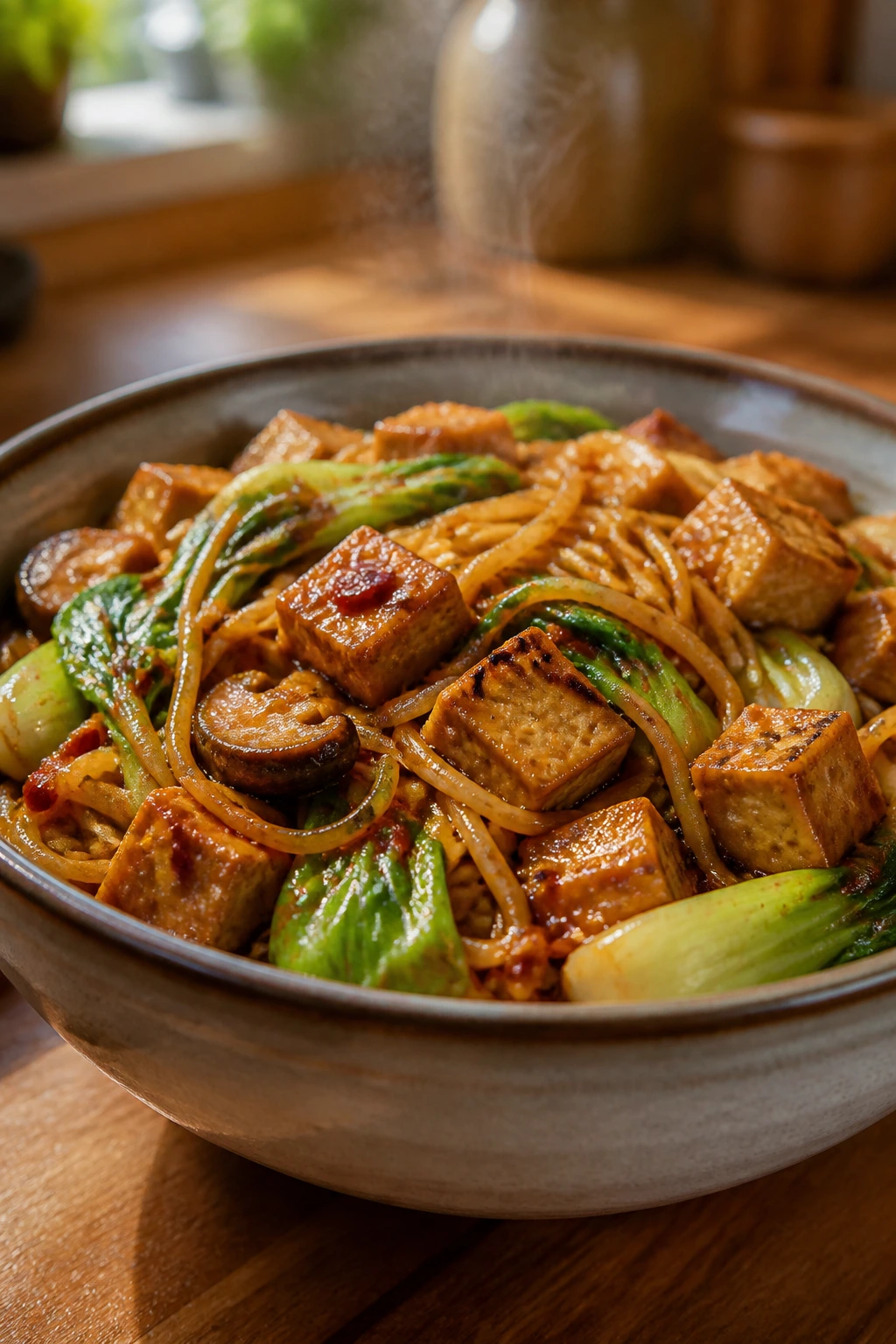
This is the bowl I reach for when I want heat, garlic, and a sauce that sticks to noodles without meat. Pressed tofu takes on the broth well, and the chili garlic sauce gives the whole dish a lively, sharp edge.
Why It Works:
Tofu absorbs flavor better than almost any other protein here, but only if it’s pressed first. The slow cooker gives garlic, ginger, soy, and chili time to merge. Lo mein noodles hold onto the sauce, and mushrooms add a meaty texture without any meat at all. A little sugar balances the heat.
Key Ingredients:
- 2 blocks firm tofu, pressed and cubed
- 12 oz lo mein noodles
- 1½ cups vegetable broth
- ¼ cup soy sauce
- 2 tbsp chili garlic sauce
- 1 tbsp brown sugar
- 1 tbsp grated ginger
- 3 garlic cloves, minced
- 1 cup sliced mushrooms
- 2 cups baby bok choy
Quick Steps:
- Whisk broth, soy sauce, chili garlic sauce, brown sugar, ginger, and garlic in the slow cooker.
- Add tofu and mushrooms, then cook on LOW for 2½ to 3 hours.
- Stir in bok choy and cook for 10 minutes until wilted.
- Add noodles and cook for 10 to 12 minutes.
- Finish with sesame oil or scallions if you want a cleaner top note.
Equipment for This Recipe:
- Slow cooker
- Tofu press or clean towel and a plate
- Tongs
- Cutting board
How to Serve This Dish:
Serve it hot with extra bok choy on top and maybe a spoon of chili crisp for crunch. It works well as a meatless main because the tofu and mushrooms carry enough weight.
Pro Tips for This Recipe:
- Press the tofu for at least 20 minutes if you can.
- Don’t stir too hard after adding tofu or the cubes will break apart.
- Use baby bok choy for a quicker, softer green.
- A teaspoon of black vinegar at the end makes the sauce more interesting.
Variations on This Dish:
- Peanut Chili Version: Add 2 tbsp peanut butter to the broth for extra body.
- Extra-Garlic Bowl: Add two more garlic cloves and use less sugar.
- Mixed Vegetable Version: Use carrots, snow peas, and mushrooms together.
Common Mistakes to Avoid with This Dish:
- Don’t use soft tofu; it will fall apart in the cooker.
- Don’t add the noodles before the bok choy. They soak up the sauce too fast.
- Don’t skip pressing the tofu if you want firmer cubes.
13. Cashew Chicken Chow Mein
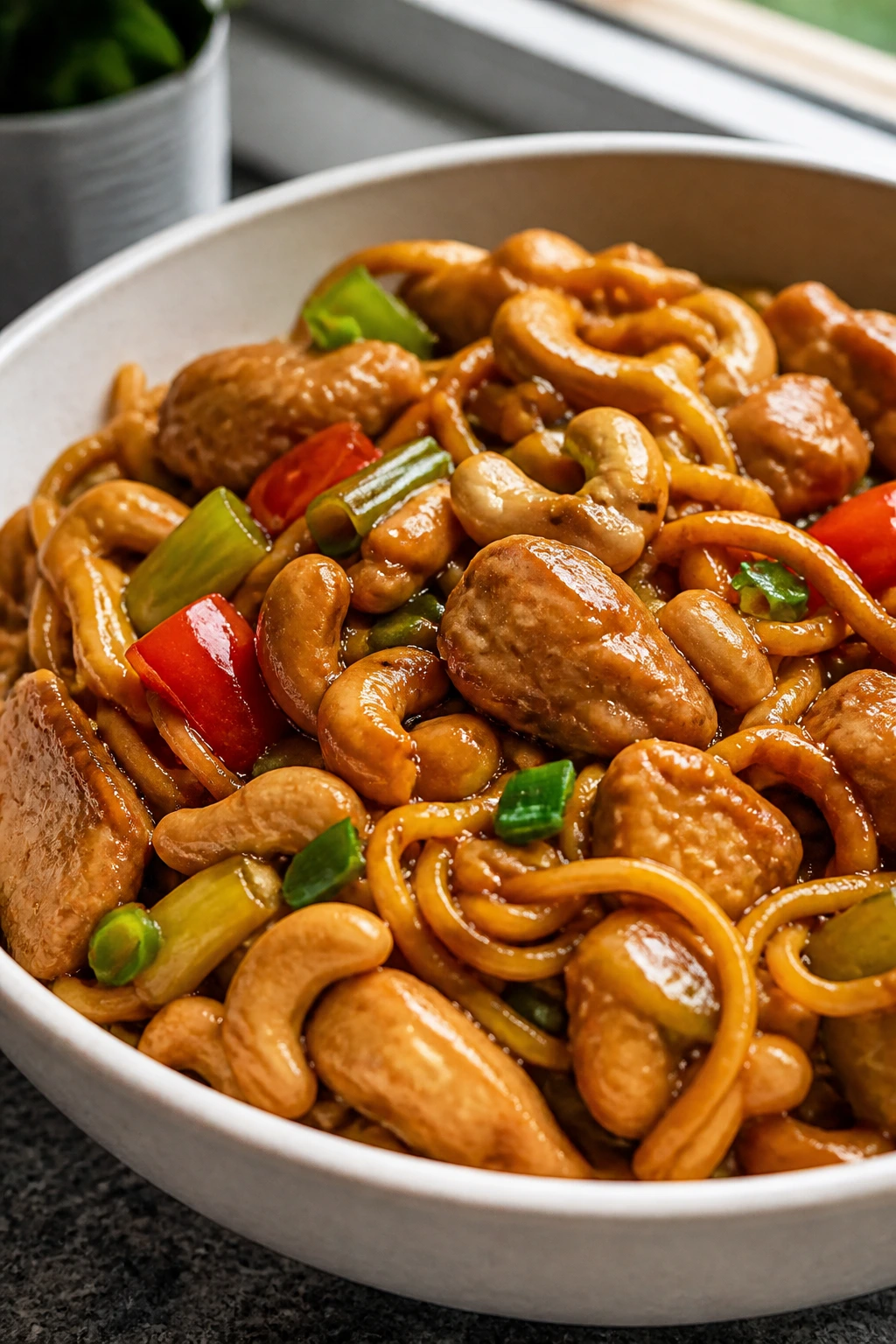
Cashew chicken has a soft spot in Chinese-American cooking, and this version keeps the roasted nut crunch by adding the cashews at the end. The sauce is savory, a little sweet, and built to coat chow mein noodles without getting gluey.
Why It Works:
Chicken thighs stay juicy and shred easily if you want them more broken up. Hoisin and soy make a brown sauce that tastes fuller than plain broth. Chow mein noodles take the hit well, and the cashews stay crunchy if you keep them out of the cooker until serving. Bell peppers and celery add a fresh snap.
Key Ingredients:
- 1½ lbs chicken thighs
- 12 oz chow mein noodles
- 1¼ cups chicken broth
- ¼ cup soy sauce
- 2 tbsp hoisin sauce
- 1 red bell pepper, sliced
- 2 celery stalks, sliced
- ½ cup roasted cashews
- 2 garlic cloves, minced
- 1 tbsp cornstarch mixed with 2 tbsp water
Quick Steps:
- Stir broth, soy sauce, hoisin, garlic, and cornstarch slurry in the slow cooker.
- Add chicken thighs, bell pepper, and celery, then cook on LOW for 4 hours.
- Add noodles and cook for 10 to 12 minutes.
- Stir in cashews at the very end so they keep their crunch.
- Serve right away with a few scallions on top.
Equipment for This Recipe:
- Slow cooker
- Wooden spoon
- Cutting board
- Measuring cups
How to Serve This Dish:
Cashew chicken does well with a small side of steamed broccoli or a crisp cucumber salad. The nuts already add texture, so the rest of the plate can stay simple.
Pro Tips for This Recipe:
- Toast the cashews lightly if you want a deeper flavor.
- Add celery late if you want a firmer bite.
- A splash of rice vinegar keeps the sauce from tasting too sweet.
- Don’t simmer the nuts in the pot or they lose their crunch.
Variations on This Dish:
- Spicy Cashew Version: Add chili sauce or sliced dried chilies.
- Vegetable Cashew Bowl: Replace half the chicken with mushrooms.
- No-Nut Swap: Use toasted sunflower seeds for crunch if needed.
Common Mistakes to Avoid with This Dish:
- Don’t add cashews at the start.
- Don’t overcook the celery into mush.
- Don’t skip the cornstarch if you want the sauce to coat the noodles.
14. Szechuan Shrimp Rice Noodles
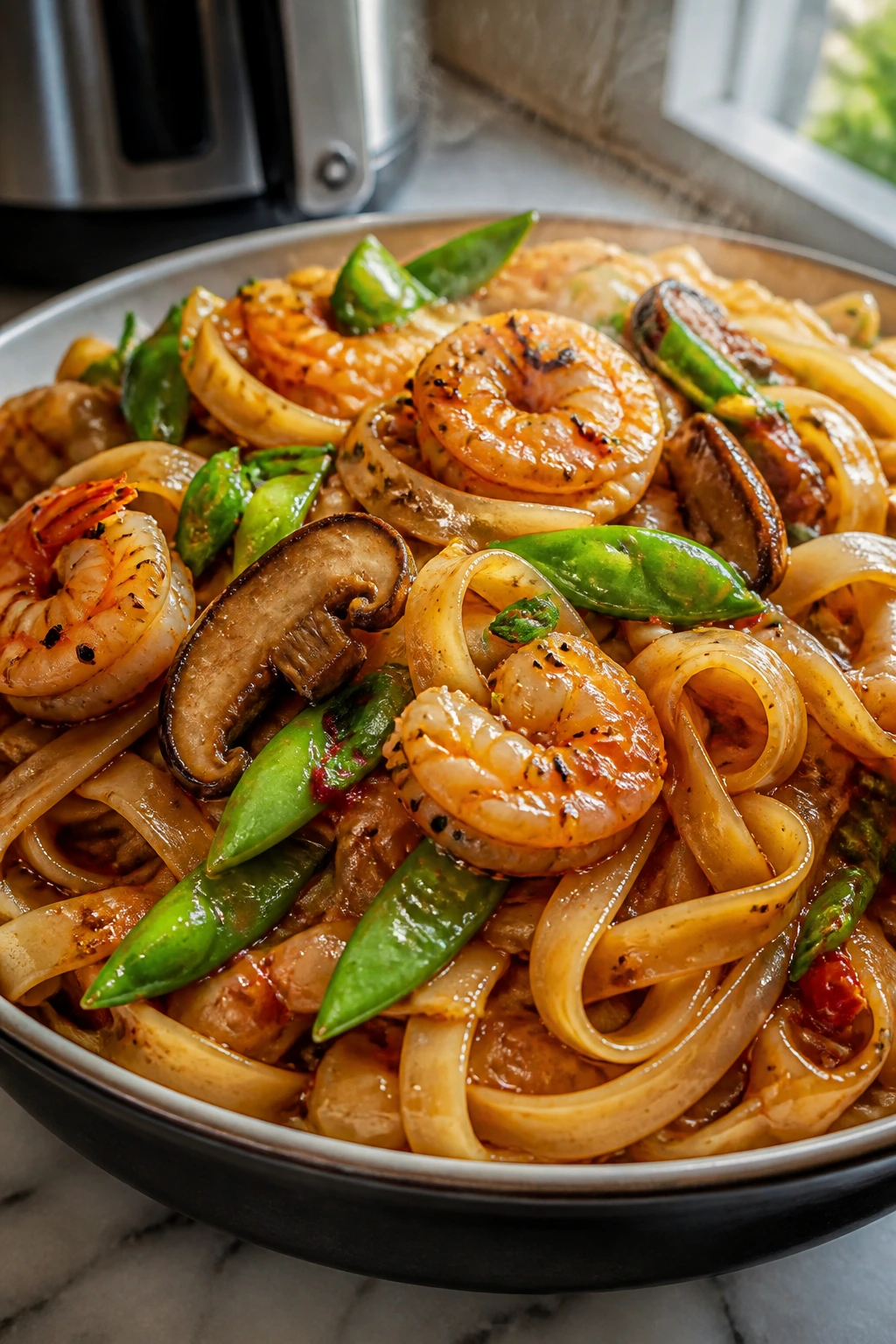
Shrimp cooks fast, so this is one of the few bowls where you need a shorter slow-cooker window and a very late finish. The rice noodles soak up the chili-garlic sauce, and the shrimp stay tender if you add them near the end.
Why It Works:
Szechuan-style flavor leans on heat, vinegar, garlic, and a little numbing spice. Rice noodles absorb sauce quickly, which is good here because the dish is meant to eat lightly. Shrimp only need a brief cook, so they go in late. Snow peas and mushrooms keep the bowl from feeling one-note.
Key Ingredients:
- 1½ lbs large shrimp, peeled and deveined
- 8 oz wide rice noodles
- 1½ cups vegetable or chicken broth
- 2 tbsp chili garlic sauce
- 2 tbsp soy sauce
- 1 tbsp black vinegar
- 1 tbsp grated ginger
- 3 garlic cloves, minced
- 1 cup snow peas
- 1 cup sliced mushrooms
Quick Steps:
- Whisk broth, chili garlic sauce, soy sauce, vinegar, ginger, and garlic in the slow cooker.
- Add mushrooms and cook on LOW for 2 hours.
- Stir in rice noodles and snow peas, then cook for 5 minutes.
- Add shrimp and cook just 6 to 8 minutes until pink and curled.
- Toss and serve at once with scallions or cilantro.
Equipment for This Recipe:
- Slow cooker
- Slotted spoon
- Tongs
- Measuring spoons
How to Serve This Dish:
This works best in shallow bowls with a squeeze of lime or a spoon of chili oil. Because the noodles are lighter, a cucumber salad on the side feels right.
Pro Tips for This Recipe:
- Use large shrimp so they don’t overcook in seconds.
- Keep rice noodles soaked only as long as the package suggests.
- Add shrimp at the very end; they should be just opaque.
- A pinch of Sichuan peppercorn powder makes the heat feel more layered.
Variations on This Dish:
- Chicken Version: Swap in bite-size chicken thighs and cook them first.
- More Vegetables: Add bok choy and bell pepper with the mushrooms.
- Milder Bowl: Cut the chili garlic sauce in half and lean on black vinegar.
Common Mistakes to Avoid with This Dish:
- Don’t cook shrimp from the start or they’ll go rubbery.
- Don’t let rice noodles sit too long in the pot.
- Don’t use tiny shrimp unless you’re happy with a shorter, fussier finish.
15. Hoisin Turkey Lo Mein
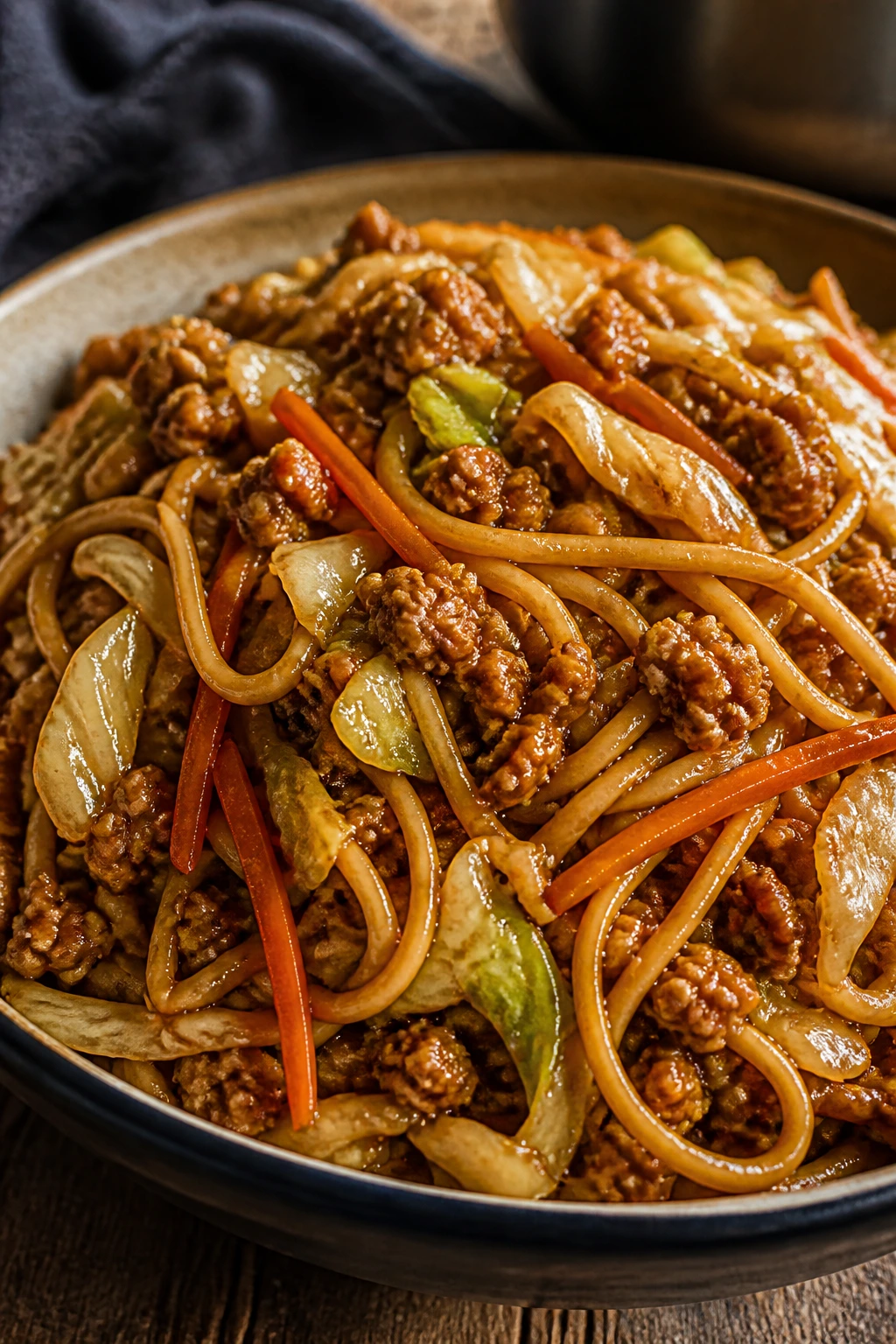
Turkey is lean, so it needs moisture and a sauce with enough body to keep it from tasting dry. Hoisin, soy, ginger, and garlic do that job well, and lo mein noodles carry the sauce without asking much back.
Why It Works:
Ground turkey cooks into the sauce faster than whole pieces, which keeps the texture light and even. Hoisin adds sweetness and thickness, while broth gives the pot enough liquid to finish the noodles properly. Carrots and cabbage bring the bowl back toward takeout territory. It’s a clean, straightforward noodle dinner.
Key Ingredients:
- 1½ lbs ground turkey
- 12 oz lo mein noodles
- 1½ cups chicken broth
- ¼ cup hoisin sauce
- 2 tbsp soy sauce
- 1 tbsp grated ginger
- 3 garlic cloves, minced
- 2 cups shredded cabbage
- 1 cup shredded carrots
- 2 scallions, sliced
Quick Steps:
- Stir broth, hoisin, soy sauce, ginger, and garlic in the slow cooker.
- Add ground turkey, cabbage, and carrots, then cook on LOW for 3½ hours.
- Break up the turkey with a spoon so the meat is fine and saucy.
- Add noodles and cook for 10 to 12 minutes.
- Top with scallions and a little sesame oil if desired.
Equipment for This Recipe:
- Slow cooker
- Wooden spoon
- Grater
- Measuring cups
How to Serve This Dish:
This is a good one for a family table because it’s not overly spicy or rich. Serve with extra cabbage slaw if you want more crunch.
Pro Tips for This Recipe:
- Ground turkey needs salt, so taste the sauce before serving.
- Break up the meat during cooking or you’ll get big clumps.
- Use shredded cabbage instead of large pieces; it melts into the noodles better.
- A dash of rice vinegar helps the hoisin from leaning too sweet.
Variations on This Dish:
- Spicy Turkey Lo Mein: Add chili paste to the broth.
- Mushroom Turkey Bowl: Replace half the turkey with minced mushrooms.
- Lower-Sodium Version: Use more ginger and less soy, then finish with black vinegar.
Common Mistakes to Avoid with This Dish:
- Don’t expect lean turkey to stay moist without enough sauce.
- Don’t add noodles before the vegetables soften.
- Don’t skip the final taste test; turkey needs seasoning help.
16. Mushroom Bok Choy Egg Noodles
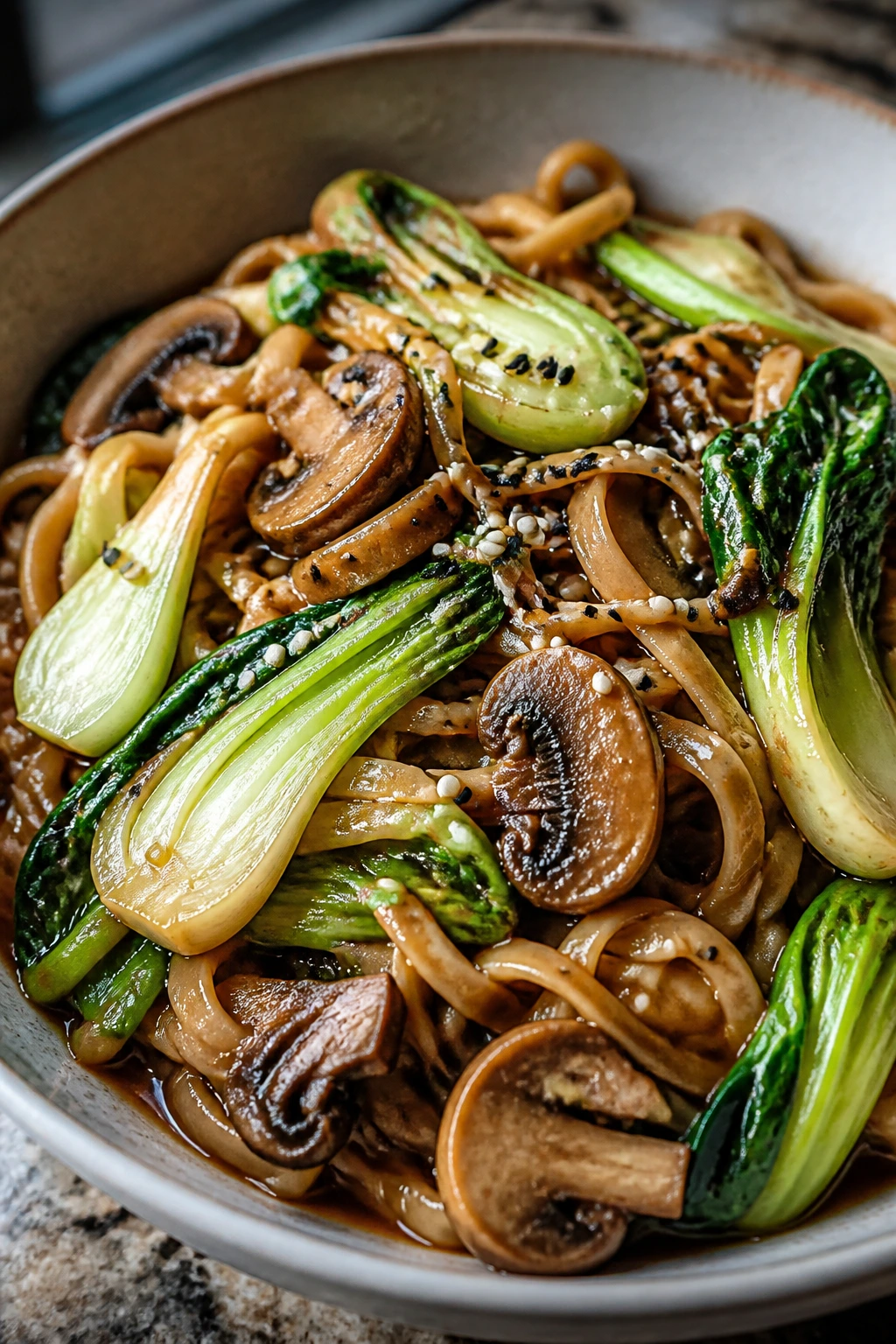
This is the bowl for a night when meat feels unnecessary and mushrooms need to do the heavy lifting. Egg noodles bring a little chew, bok choy softens at the edges, and the sauce stays savory rather than heavy.
Why It Works:
Mushrooms give a deep, almost meaty flavor if they cook long enough with garlic and soy. Bok choy goes in late so the stems stay crisp-tender. Egg noodles are a natural fit because they absorb the broth without losing shape. A splash of sesame oil at the end adds the nutty note people miss when there’s no meat in the bowl.
Key Ingredients:
- 1 lb mixed mushrooms, sliced
- 12 oz dried egg noodles
- 1½ cups vegetable broth
- 3 tbsp soy sauce
- 1 tbsp oyster sauce or vegetarian mushroom sauce
- 2 garlic cloves, minced
- 1 tbsp grated ginger
- 3 cups baby bok choy, halved
- 2 scallions, sliced
- 1 tbsp sesame oil
Quick Steps:
- Stir broth, soy sauce, oyster sauce, garlic, and ginger in the slow cooker.
- Add mushrooms and cook on LOW for 3 hours until they shrink and darken.
- Stir in bok choy and cook for 10 minutes.
- Add egg noodles and cook for 8 to 10 minutes.
- Finish with sesame oil and scallions.
Equipment for This Recipe:
- Slow cooker
- Sharp knife
- Tongs
- Measuring spoons
How to Serve This Dish:
Serve in wide bowls so the mushrooms don’t get buried. A few drops of chili oil on top are enough if you want heat without changing the whole profile.
Pro Tips for This Recipe:
- Use a mix of shiitake, cremini, and oyster mushrooms if you can.
- Don’t cut bok choy too small or it disappears.
- Egg noodles only need a short finish; watch them closely.
- Mushroom sauce gives more depth than plain vegetarian broth.
Variations on This Dish:
- Tofu Add-In: Add cubed tofu in the last hour.
- Greens Swap: Use napa cabbage instead of bok choy.
- Garlic-Lover’s Bowl: Add an extra clove or two if you like a stronger aroma.
Common Mistakes to Avoid with This Dish:
- Don’t salt the mushrooms too aggressively at the start.
- Don’t overcook bok choy stems.
- Don’t use overly thin noodles unless you want a softer texture.
17. Ginger Scallion Beef Noodles
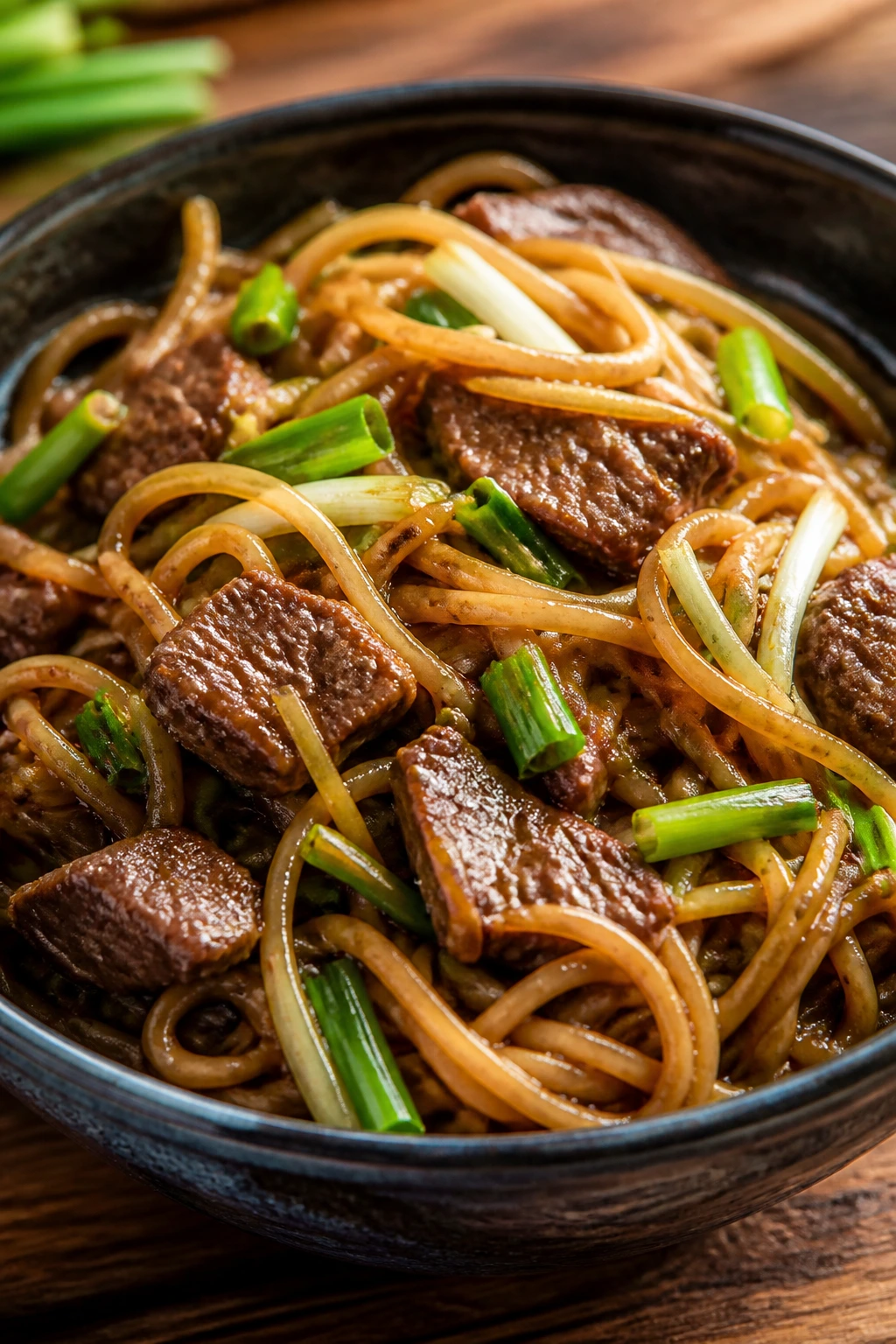
This bowl tastes clean, sharp, and a little peppery, with ginger and scallion doing more work than any sweet sauce would. Beef chuck turns tender slowly, and the noodles catch the broth without drowning in it.
Why It Works:
Ginger and scallion make sense together because one brings heat and the other brings lift. Beef chuck needs time, and the slow cooker gives it that without constant checking. Thin wheat noodles or lo mein noodles are sturdy enough for a saucy finish. A little soy and rice wine create a broth that tastes rounded instead of one-dimensional.
Key Ingredients:
- 1½ lbs beef chuck, cut into chunks
- 12 oz lo mein noodles
- 1½ cups beef broth
- 3 tbsp soy sauce
- 2 tbsp Shaoxing wine or dry sherry
- 2 tbsp grated ginger
- 6 scallions, sliced, whites and greens separated
- 2 garlic cloves, minced
- 1 cup sliced onions
- 1 tbsp cornstarch mixed with 2 tbsp water
Quick Steps:
- Add broth, soy sauce, Shaoxing wine, ginger, garlic, scallion whites, and onions to the slow cooker.
- Nestle in the beef chuck and cook on LOW for 6 to 7 hours until tender.
- Stir in the cornstarch slurry and let the sauce thicken for 10 minutes.
- Add noodles and cook for 10 to 12 minutes.
- Scatter the scallion greens on top and serve hot.
Equipment for This Recipe:
- Slow cooker
- Slotted spoon
- Cutting board
- Measuring cups
How to Serve This Dish:
Serve this with a few cucumber slices or a crunchy cabbage side. It’s calm and savory, so a sharp side dish helps the bowl feel more complete.
Pro Tips for This Recipe:
- Use lots of scallion white in the broth and save the green for the finish.
- Cut beef into even pieces so it breaks down at the same pace.
- Shaoxing wine adds a deep note; dry sherry works well if that’s what you have.
- If the sauce tastes dull, add a splash of black vinegar.
Variations on This Dish:
- Chili-Ginger Version: Add dried chilies with the broth.
- Mushroom Beef Noodles: Add shiitakes for a woodsy note.
- Milder Family Bowl: Cut the ginger slightly and lean on scallion instead.
Common Mistakes to Avoid with This Dish:
- Don’t use quick-cooking beef cuts here; chuck needs the time.
- Don’t add scallion greens too early or they lose their sharpness.
- Don’t skip the cornstarch if you want the broth to feel like a sauce.
18. Sweet Chili Pork Lo Mein
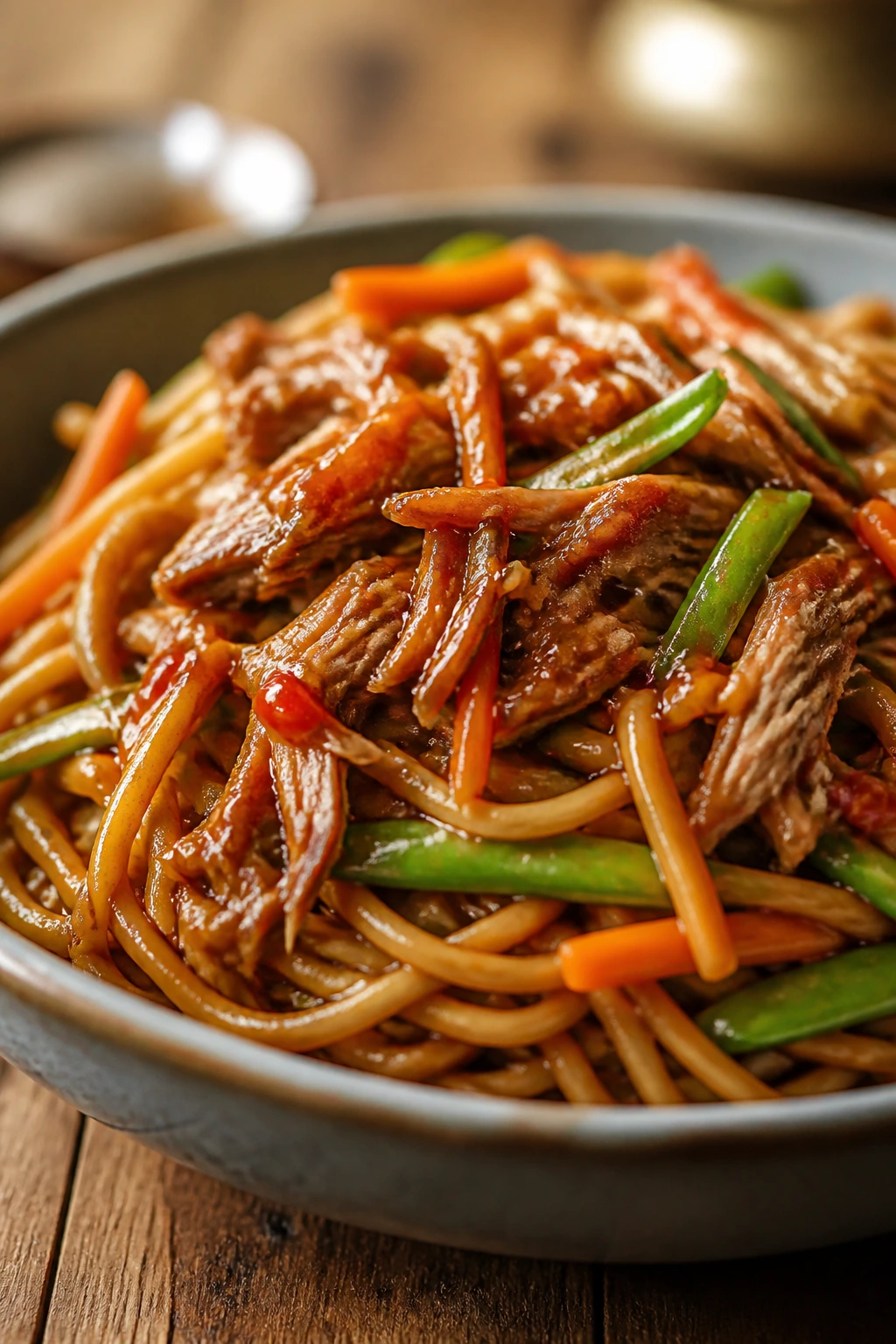
Sweet chili sauce can be sticky in the wrong hands, but here it gives the pork a glossy finish and a gentle heat. Lo mein noodles keep the bowl substantial, and the pork stays tender enough to shred.
Why It Works:
Pork shoulder or pork butt has enough fat to handle long cooking. Sweet chili sauce, soy sauce, and garlic make a sauce that’s sweet, tangy, and a little hot without being aggressive. Carrots and snap peas keep the bowl from feeling too soft. The noodles finish quickly, which keeps the texture balanced.
Key Ingredients:
- 1½ lbs pork shoulder
- 12 oz lo mein noodles
- 1¼ cups chicken broth
- ⅓ cup sweet chili sauce
- 3 tbsp soy sauce
- 1 tbsp grated ginger
- 3 garlic cloves, minced
- 1 cup snap peas
- 1 cup shredded carrots
- 2 scallions, sliced
Quick Steps:
- Stir broth, sweet chili sauce, soy sauce, ginger, and garlic in the slow cooker.
- Add pork shoulder and cook on LOW for 5 to 6 hours until tender.
- Stir in carrots and snap peas for the last 20 minutes.
- Add noodles and cook for 10 to 12 minutes.
- Top with scallions and a small drizzle of sesame oil.
Equipment for This Recipe:
- Slow cooker
- Tongs
- Measuring cups
- Knife and cutting board
How to Serve This Dish:
This bowl likes a simple finish: scallions, sesame seeds, maybe a few chili flakes if you want more bite. A plain side of steamed broccoli makes the sweet sauce feel less heavy.
Pro Tips for This Recipe:
- Sweet chili sauce varies a lot in sweetness, so taste the broth before the noodles go in.
- Pork shoulder shreds best after a brief rest.
- Snap peas should stay late so they don’t lose their snap.
- A squeeze of lime can help if the sauce feels too glossy.
Variations on This Dish:
- Spicy Sweet Chili: Add sambal or chili flakes.
- Garlic-Heavy Bowl: Increase garlic to 5 cloves.
- Vegetable-Looking-After-You Version: Add bell peppers and broccoli at the end.
Common Mistakes to Avoid with This Dish:
- Don’t let the sauce get syrup-thick before the noodles go in.
- Don’t overcook snap peas.
- Don’t choose pork loin unless you plan to shorten the cook a lot.
19. Peanut Sesame Chicken Noodles
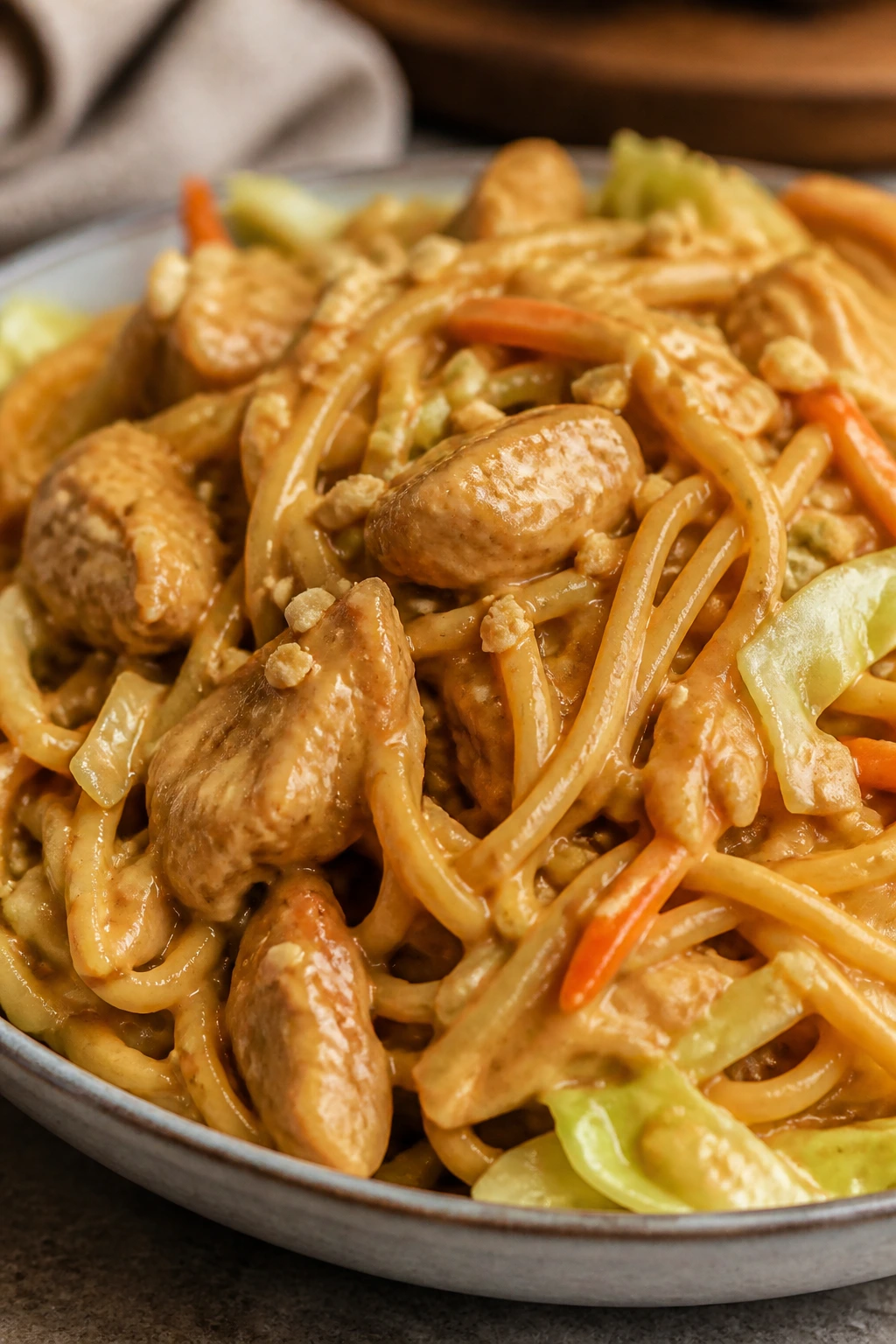
This is the bowl for people who like peanut sauce on everything and aren’t shy about it. The sauce is nutty, savory, and a little sweet, and it clings to the noodles in a way that makes each bite feel complete.
Why It Works:
Peanut butter gives the sauce body, while soy and vinegar keep it from turning heavy. Chicken thighs stay moist in the slow cooker, and cabbage or carrots add texture without fighting the sauce. Lo mein noodles or thin egg noodles work best because they take on the peanut sauce without breaking. A little chili sauce gives the bowl some lift.
Key Ingredients:
- 1½ lbs chicken thighs
- 12 oz lo mein noodles
- 1½ cups chicken broth
- ⅓ cup peanut butter
- 2 tbsp soy sauce
- 1 tbsp rice vinegar
- 1 tbsp chili garlic sauce
- 2 cups shredded cabbage
- 1 cup shredded carrots
- 2 scallions, sliced
Quick Steps:
- Whisk broth, peanut butter, soy sauce, rice vinegar, chili garlic sauce, garlic, and ginger in the slow cooker.
- Add chicken, cabbage, and carrots, then cook on LOW for 4 hours.
- Stir until the peanut sauce is smooth and the chicken breaks apart easily.
- Add noodles and cook for 10 to 12 minutes.
- Finish with scallions and a sprinkle of sesame seeds.
Equipment for This Recipe:
- Slow cooker
- Whisk
- Wooden spoon
- Measuring cups
How to Serve This Dish:
Serve it warm with extra cucumber slices or a quick salad of shredded cabbage. If you like more sauce on top, thin a little peanut butter with hot broth and spoon it over the bowl.
Pro Tips for This Recipe:
- Stir peanut butter into the liquid before adding chicken so it dissolves cleanly.
- Use natural peanut butter only if you don’t mind a looser sauce.
- A touch of vinegar keeps the bowl from tasting one-note.
- Add noodles only after the sauce is smooth.
Variations on This Dish:
- Tahini Version: Swap peanut butter for tahini if you want a less sweet nut flavor.
- Spicy Version: Add more chili garlic sauce or chili crisp.
- Crunchy Finish: Top with chopped peanuts right before serving.
Common Mistakes to Avoid with This Dish:
- Don’t let peanut butter clump in the broth.
- Don’t skip the vinegar; the sauce needs that sharp edge.
- Don’t overcook the noodles in a dense peanut sauce.
20. Tomato Egg Noodles with Ground Pork
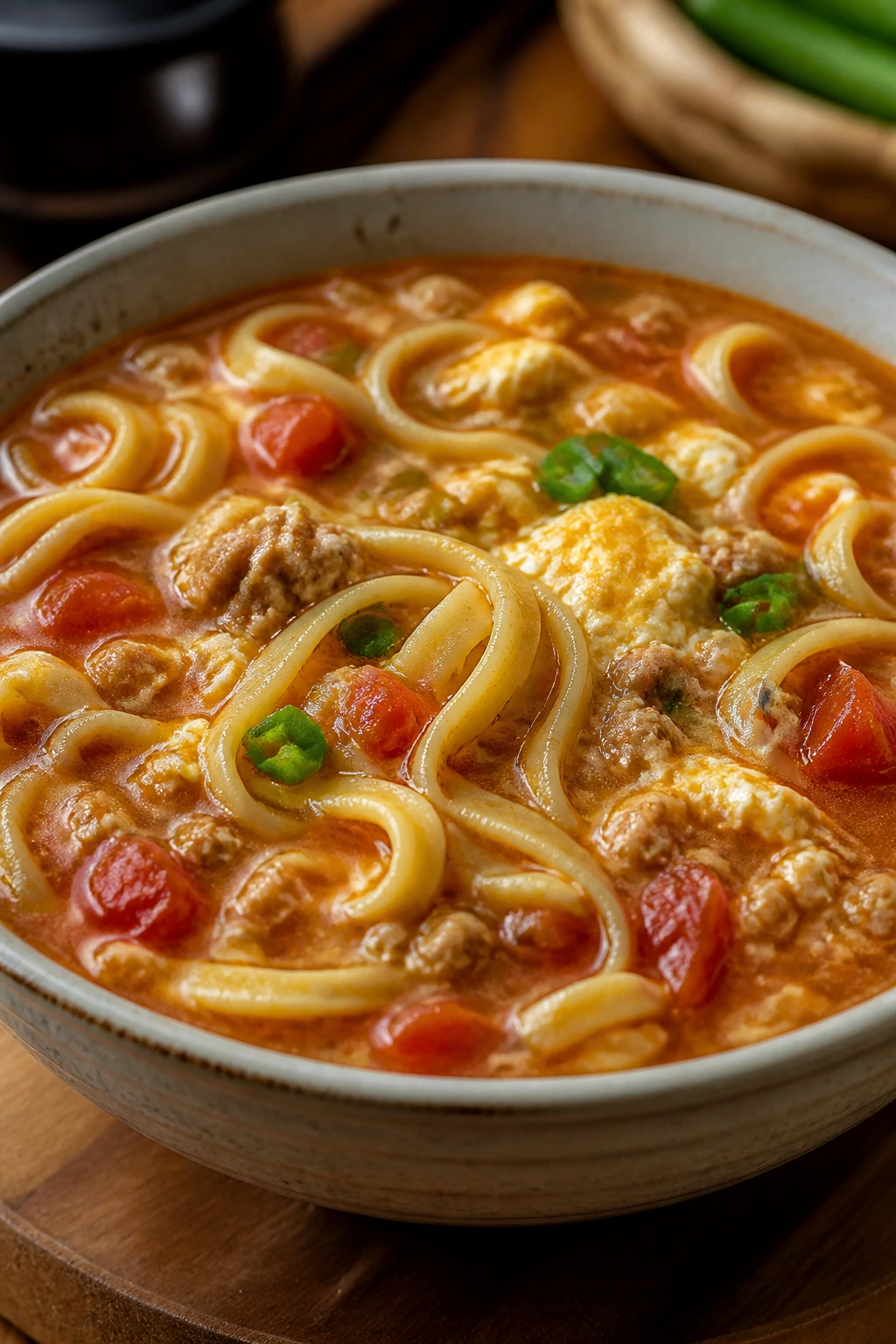
Tomato and egg is a classic home-style combination in Chinese cooking, and ground pork turns it into a fuller dinner. The tomatoes break down into a soft, tangy sauce, while the egg gives the broth a silky finish.
Why It Works:
Ground pork adds savoriness without needing a long braise. Tomatoes cook down quickly in the slow cooker, which means the sauce gets sweet and jammy around the edges. Egg noodles fit the texture well because they carry the tomato broth without becoming heavy. A beaten egg stirred in at the end makes the whole bowl feel more rounded.
Key Ingredients:
- 1 lb ground pork
- 12 oz egg noodles
- 4 cups chopped tomatoes, fresh or canned
- 1½ cups chicken broth
- 2 tbsp soy sauce
- 1 tbsp sugar
- 3 garlic cloves, minced
- 2 eggs, lightly beaten
- 2 scallions, sliced
- 1 tbsp sesame oil
Quick Steps:
- Combine tomatoes, broth, soy sauce, sugar, garlic, and ground pork in the slow cooker.
- Cook on LOW for 3½ hours, breaking up the pork as it cooks.
- Add egg noodles and cook for 8 to 10 minutes.
- Slowly drizzle in the beaten eggs while stirring the broth.
- Finish with sesame oil and scallions.
Equipment for This Recipe:
- Slow cooker
- Wooden spoon
- Whisk or fork
- Measuring cups
How to Serve This Dish:
This is one of the few noodle bowls that feels good enough for breakfast leftovers, too. A little black vinegar or a few drops of soy on top can sharpen the tomato sweetness.
Pro Tips for This Recipe:
- Use ripe tomatoes if you have them; canned tomatoes work when they’re not in season.
- Stir the pork well so the texture stays fine.
- Add eggs slowly so they form ribbons.
- If the tomatoes taste flat, add a touch more sugar and vinegar together.
Variations on This Dish:
- Beef Version: Use ground beef instead of pork.
- Extra-Silky Bowl: Add another egg at the finish.
- Greens Addition: Stir in spinach or bok choy at the end.
Common Mistakes to Avoid with This Dish:
- Don’t let the tomatoes cook without enough salt.
- Don’t add egg noodles too early; they’ll lose shape.
- Don’t dump in the eggs all at once or they’ll scramble into lumps.
21. Fish-Fragrant Eggplant Noodles
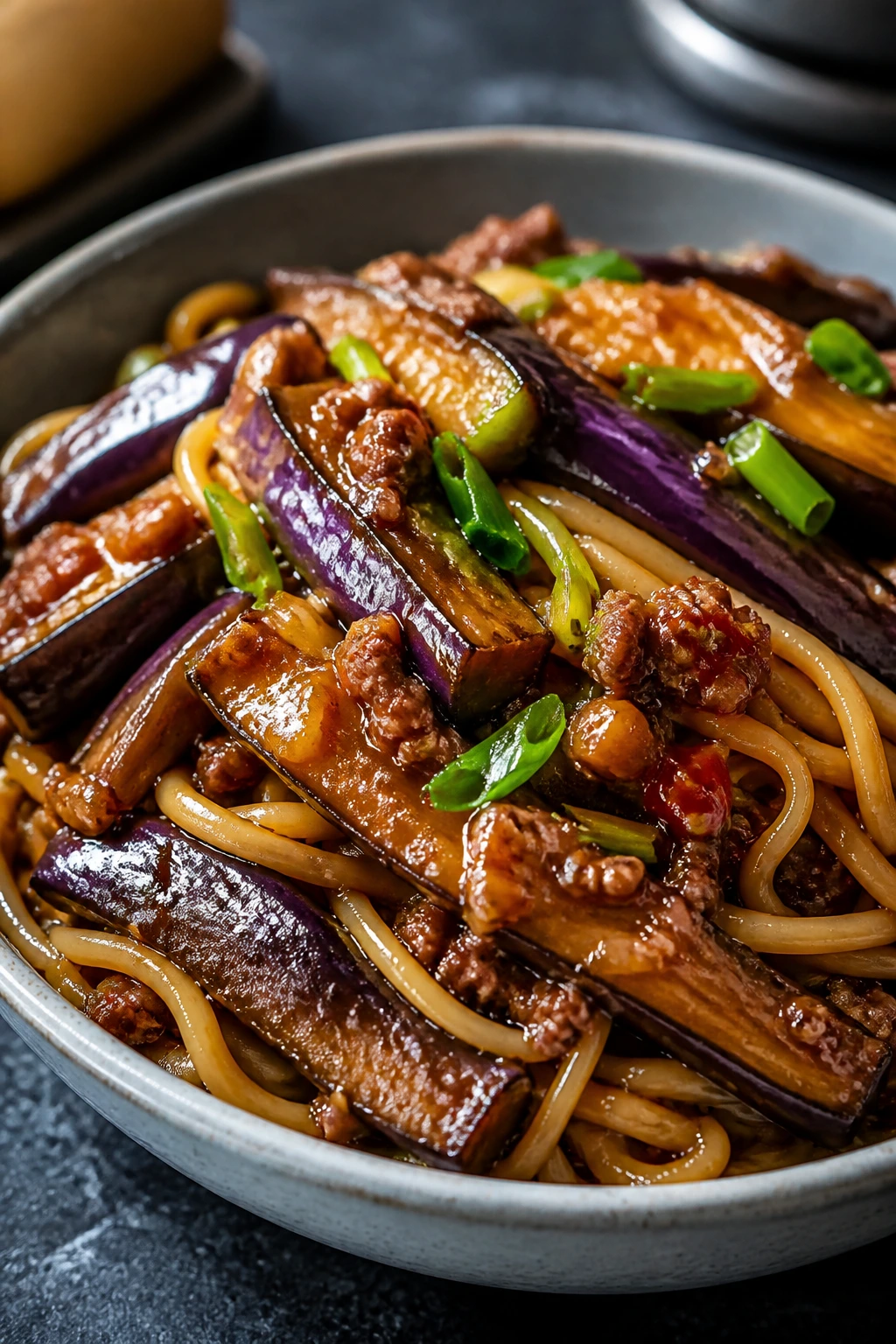
Fish-fragrant eggplant, or yu xiang, doesn’t actually taste like fish. It tastes salty, garlicky, tangy, and a little sweet, with a depth that comes from chili bean paste and vinegar. In noodle form, it becomes a saucy vegetable bowl with real personality.
Why It Works:
Eggplant softens beautifully in the slow cooker, where it has time to absorb garlic, ginger, soy, and chili bean paste. Ground pork adds richness, though you can skip it if you want a lighter version. Lo mein noodles or thick wheat noodles hold up to the sauce. Vinegar at the end keeps the bowl bright.
Key Ingredients:
- 2 medium eggplants, cut into thick batons
- 1 lb ground pork
- 12 oz lo mein noodles
- 1½ cups vegetable or chicken broth
- 2 tbsp chili bean paste
- 2 tbsp soy sauce
- 1 tbsp sugar
- 4 garlic cloves, minced
- 1 tbsp grated ginger
- 1 tbsp black vinegar
Quick Steps:
- Stir broth, chili bean paste, soy sauce, sugar, garlic, ginger, and black vinegar in the slow cooker.
- Add ground pork and eggplant, then cook on LOW for 3½ to 4 hours.
- Stir gently so the eggplant stays chunky but tender.
- Add noodles and cook for 10 minutes.
- Serve with scallions or cilantro.
Equipment for This Recipe:
- Slow cooker
- Sharp knife
- Wooden spoon
- Measuring spoons
How to Serve This Dish:
Serve in broad bowls because this is a saucy, clingy dish. A side of crisp cucumber or chilled bean sprouts works well against the soft eggplant.
Pro Tips for This Recipe:
- Cut eggplant into thicker pieces so it doesn’t vanish.
- Chili bean paste is salty; taste before adding extra soy.
- Black vinegar at the end keeps the sauce lively.
- If you want less meat, halve the pork and add mushrooms.
Variations on This Dish:
- Vegetarian Yu Xiang: Skip the pork and use mushrooms instead.
- Spicier Bowl: Add dried chilies or chili oil.
- Thicker Sauce: Stir in a small cornstarch slurry near the end.
Common Mistakes to Avoid with This Dish:
- Don’t cut the eggplant too thin or it breaks apart.
- Don’t overuse chili bean paste; the sauce can get harsh.
- Don’t skip the vinegar finish.
22. Cumin Lamb Noodles
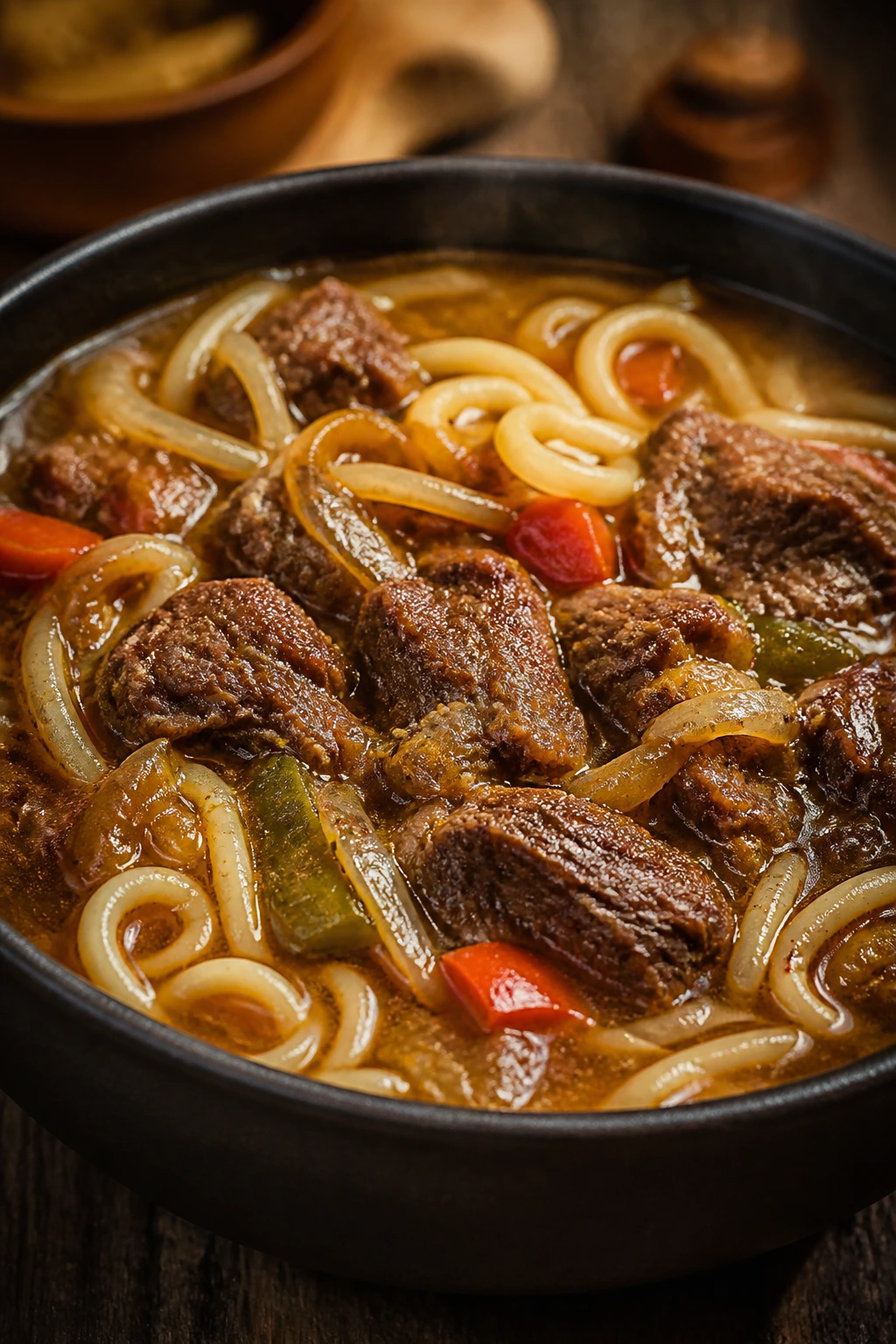
Cumin lamb has a dry, fragrant heat that tastes different from the sticky sauces in the rest of this collection. The lamb cooks with onions and peppers until it’s tender and seasoned through, then the noodles pick up the warm spice.
Why It Works:
Cumin and lamb belong together because the spice cuts through the richness. The slow cooker softens the meat while letting the cumin bloom in the broth. Wheat noodles or hand-cut style noodles work well because they can take a firm sauce. Bell peppers and onions give the bowl the right street-food feel.
Key Ingredients:
- 1½ lbs lamb shoulder, cut into chunks
- 12 oz thick wheat noodles
- 1¼ cups beef or lamb broth
- 2 tsp ground cumin
- 1 tsp chili flakes
- 2 tbsp soy sauce
- 1 onion, sliced
- 1 red bell pepper, sliced
- 3 garlic cloves, minced
- 2 scallions, sliced
Quick Steps:
- Mix broth, cumin, chili flakes, soy sauce, garlic, and onion in the slow cooker.
- Add lamb shoulder and cook on LOW for 6 to 7 hours until tender.
- Stir in bell pepper for the last 20 minutes.
- Add noodles and cook for 10 to 12 minutes.
- Top with scallions and more cumin if you like a stronger finish.
Equipment for This Recipe:
- Slow cooker
- Knife
- Measuring spoons
- Tongs
How to Serve This Dish:
Serve it with a few cucumber strips or a simple herb salad if you want freshness. The cumin and lamb already bring plenty of character, so there’s no need to crowd the bowl.
Pro Tips for This Recipe:
- Lamb shoulder works better than lean cuts.
- Toasting ground cumin for a minute before it goes in can deepen the aroma.
- Add peppers late to keep them from going mushy.
- A tiny splash of black vinegar sharpens the meat.
Variations on This Dish:
- More Heat: Add sliced fresh chilies.
- Garlic-Loud Version: Increase garlic to 5 cloves.
- Beef Swap: Use chuck roast if lamb isn’t available.
Common Mistakes to Avoid with This Dish:
- Don’t use lamb that’s too lean.
- Don’t drown the dish in broth; this should eat like noodles, not soup.
- Don’t forget cumin at the finish if you want a stronger aroma.
23. Scallion Oil Chicken Noodles
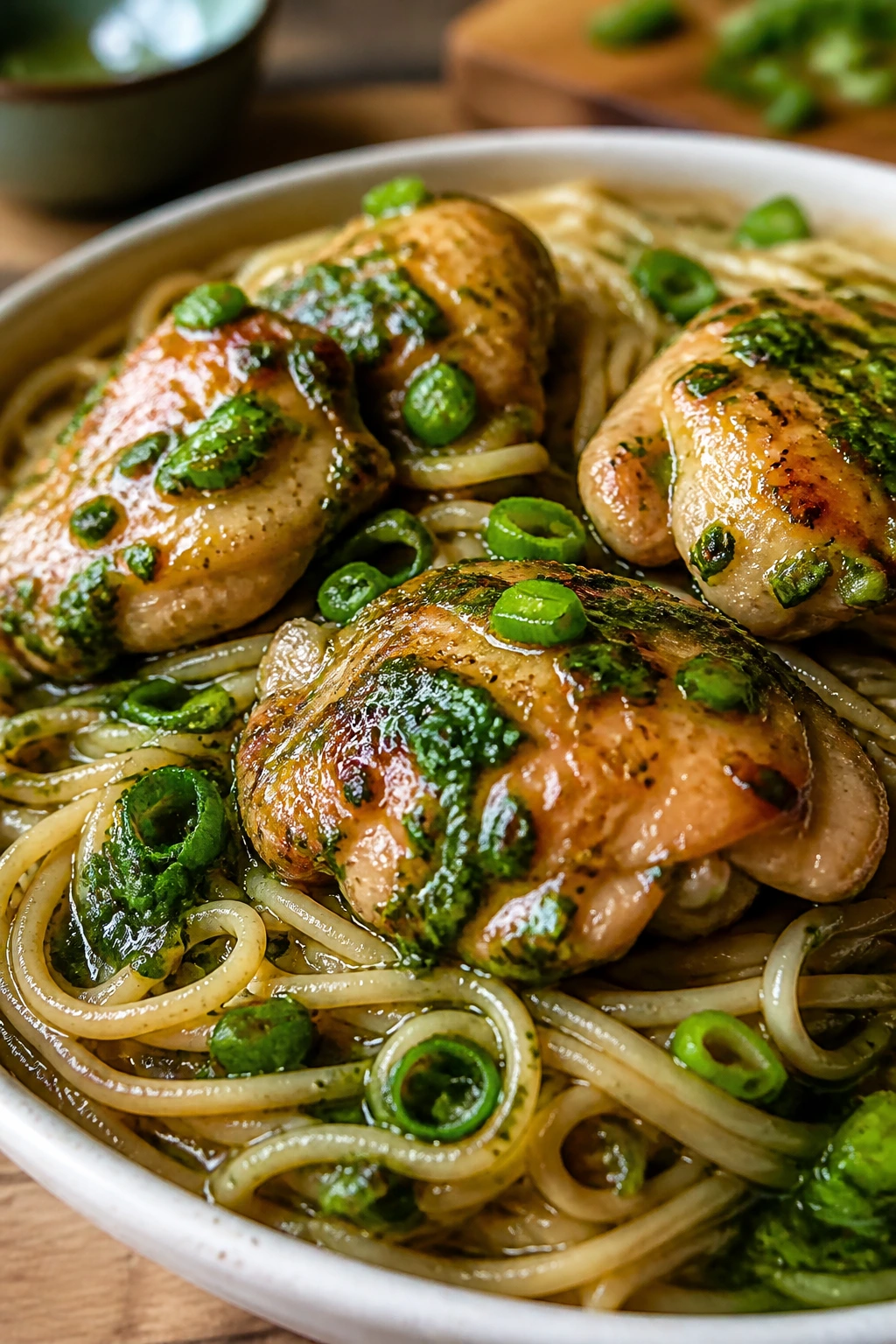
Scallion oil noodles are all about restraint and aroma. Here, the crockpot handles tender chicken and a light broth, while scallions get cooked down into that green, savory oil-sauce that coats the noodles.
Why It Works:
Scallions need time to soften and sweeten, and the slow cooker gives them that. Chicken thighs hold the broth without drying. The noodle sauce is light but intensely fragrant, which is exactly what scallion oil noodles should be. Egg noodles or lo mein noodles both fit the texture.
Key Ingredients:
- 1½ lbs chicken thighs
- 12 oz egg noodles
- 1½ cups chicken broth
- 8 scallions, cut into 2-inch lengths
- 3 tbsp soy sauce
- 1 tbsp sugar
- 2 garlic cloves, smashed
- 1 tbsp sesame oil
- 1 tsp white pepper
Quick Steps:
- Add broth, scallions, soy sauce, sugar, garlic, and white pepper to the slow cooker.
- Add chicken thighs and cook on LOW for 4 hours.
- Remove a few scallions, mash them lightly, and stir them back in for more flavor.
- Add noodles and cook for 8 to 10 minutes.
- Finish with sesame oil and extra fresh scallion greens if you saved some.
Equipment for This Recipe:
- Slow cooker
- Tongs
- Spoon
- Measuring spoons
How to Serve This Dish:
This is a good dish for a restrained, clean plate. Put it in a shallow bowl, add a few fresh scallion greens, and serve with a sharp cucumber side if you want contrast.
Pro Tips for This Recipe:
- Use a lot of scallion. That’s the point here.
- White pepper gives the sauce a classic edge; black pepper changes the mood.
- Don’t overcook the noodles in the light broth.
- A splash of soy at the end can wake up the bowl if it tastes too mild.
Variations on This Dish:
- Ginger Scallion Version: Add 1 tbsp grated ginger.
- Pork Swap: Use pork shoulder instead of chicken.
- Chili Oil Finish: Add chili oil just before serving.
Common Mistakes to Avoid with This Dish:
- Don’t skimp on scallions.
- Don’t let the noodles sit too long in the broth.
- Don’t overdo sesame oil; this dish should smell fragrant, not greasy.
24. Braised Shiitake and Napa Cabbage Noodles
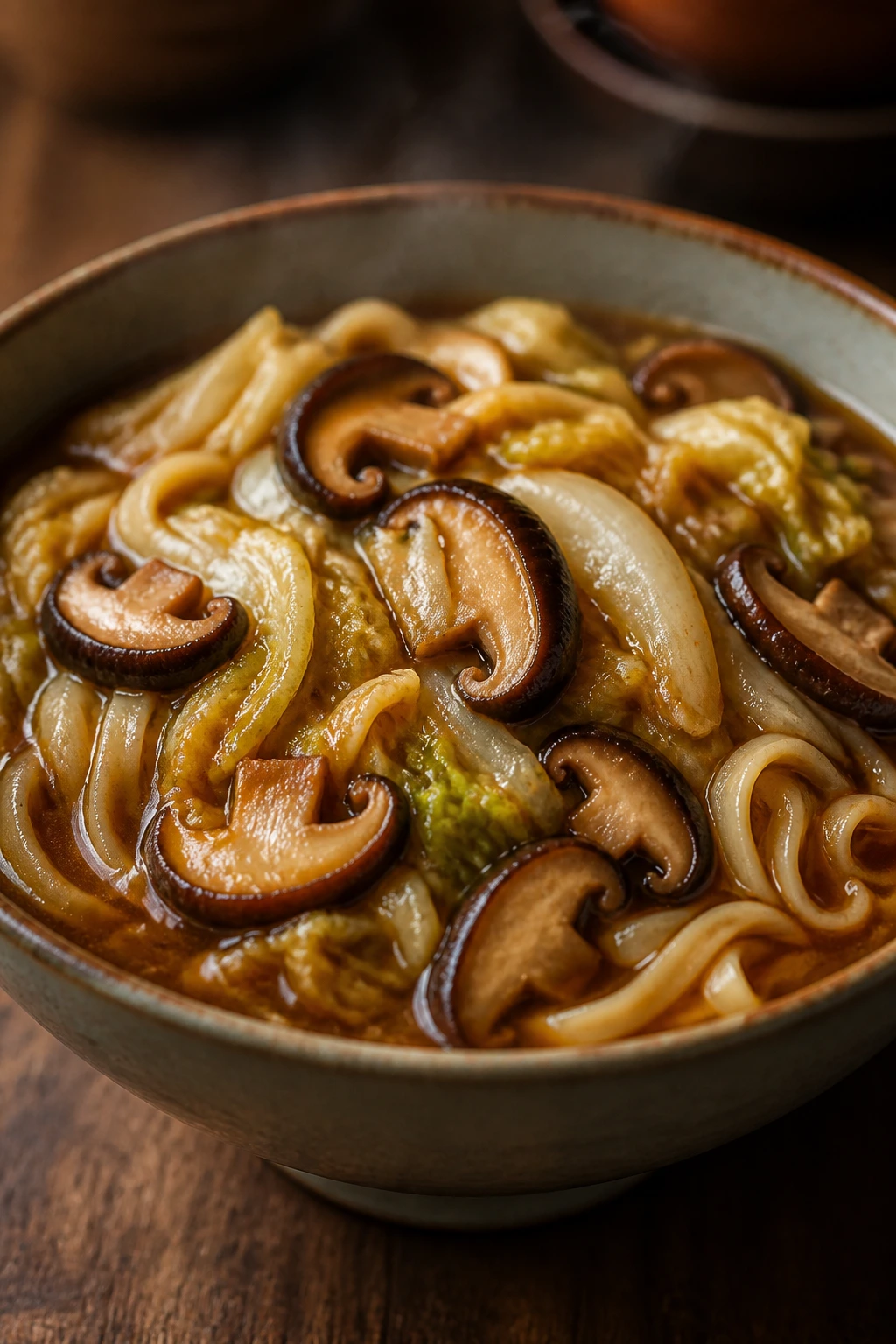
Shiitakes and napa cabbage make a quietly rich bowl that feels deeper than its short ingredient list suggests. The mushrooms bring the umami, the cabbage turns silky, and the noodles tie it all together without stealing the spotlight.
Why It Works:
Shiitakes deliver a dark, savory base even without meat. Napa cabbage softens into the broth while still keeping some structure. The slow cooker gives the mushrooms time to perfume the liquid, and egg noodles soak it up without collapsing. A little soy and sesame oil are enough if the ingredients are good.
Key Ingredients:
- 1 lb shiitake mushrooms, stems trimmed and caps sliced
- 1 small napa cabbage, chopped
- 12 oz egg noodles
- 1½ cups vegetable broth
- 3 tbsp soy sauce
- 1 tbsp rice vinegar
- 2 garlic cloves, minced
- 1 tbsp grated ginger
- 2 scallions, sliced
- 1 tbsp sesame oil
Quick Steps:
- Stir broth, soy sauce, vinegar, garlic, and ginger in the slow cooker.
- Add mushrooms and napa cabbage, then cook on LOW for 3 hours.
- Add egg noodles and cook for 8 to 10 minutes.
- Finish with sesame oil and scallions.
- Taste and add a small splash more vinegar if the broth needs lift.
Equipment for This Recipe:
- Slow cooker
- Knife
- Spoon
- Measuring cups
How to Serve This Dish:
Serve it as a meatless main or as the side dish nobody expects to get requested twice. A few toasted sesame seeds or a spoonful of chili crisp are enough garnish.
Pro Tips for This Recipe:
- Shiitakes should be sliced, not chopped fine, so they keep their shape.
- Napa cabbage cooks down a lot, so use a full small head.
- If you want more body, add tofu cubes in the last hour.
- The vinegar finish keeps the cabbage from tasting flat.
Variations on This Dish:
- Tofu and Shiitake Bowl: Add pressed tofu for more protein.
- Spicy Cabbage Version: Stir in chili paste with the broth.
- Brothier Soup Style: Add an extra cup of broth and serve with more liquid.
Common Mistakes to Avoid with This Dish:
- Don’t shred the cabbage too finely or it disappears.
- Don’t use too much sesame oil; it can overwhelm the mushrooms.
- Don’t skip the vinegar finish, even if it seems small.
Why the Slow Cooker Works for Chinese Noodles at All
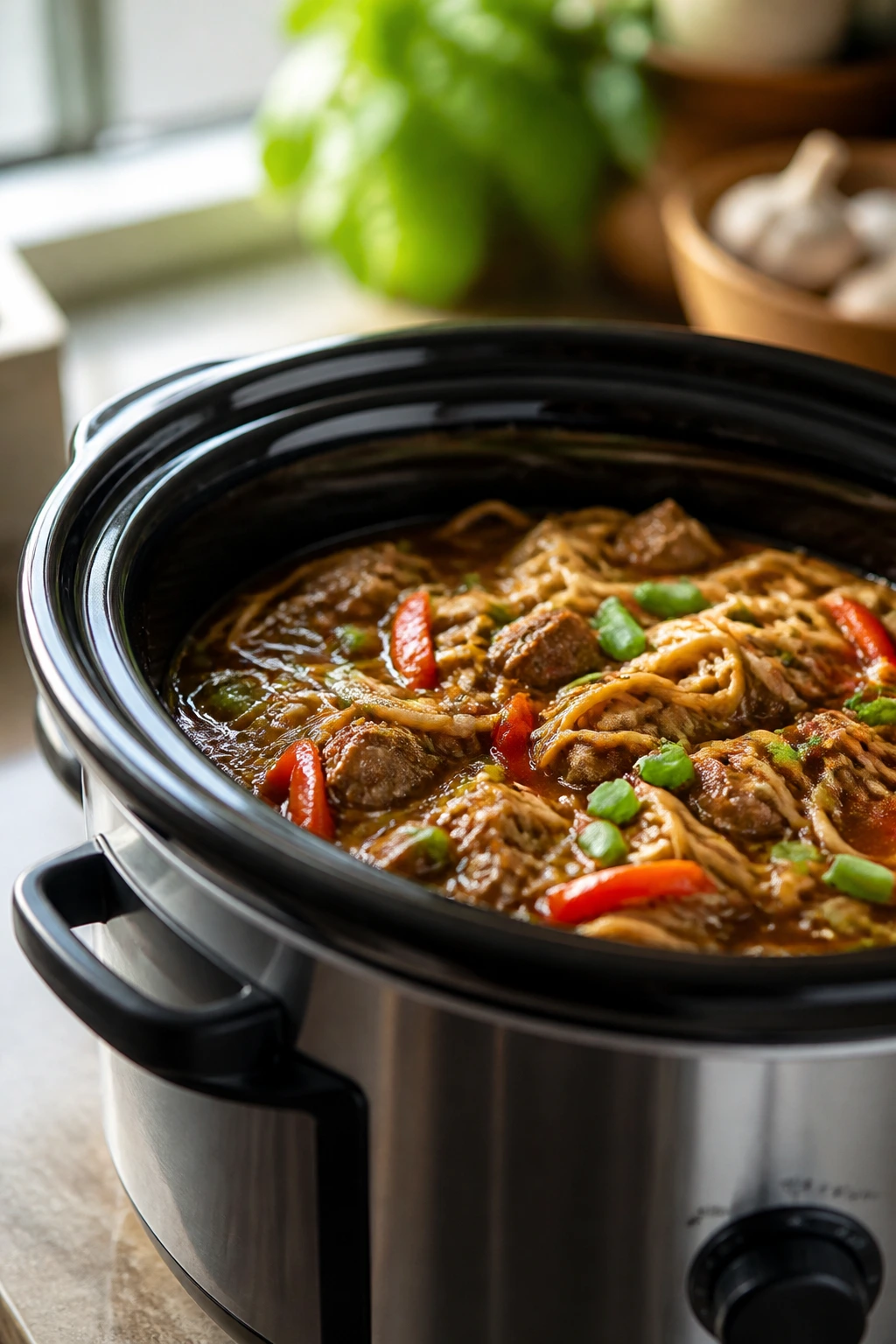
A slow cooker is a strange place to make noodles, and that’s exactly why timing matters so much. The pot is excellent at turning a tough cut of meat soft, mellowing raw garlic, and letting soy-based sauces deepen without burning. It is not excellent at holding delicate noodles for long stretches. That mismatch is the whole trick: let the cooker do the braise, then treat the noodles as the final assembly step.
The best bowls in this collection follow the same rhythm. Build a seasoned broth or sauce first. Add proteins that can take the heat. Add vegetables based on how long they need, not how convenient they seem. Then, when everything smells round and cooked through, add the noodles and stop thinking like a stew maker.
That last part matters more than people admit. Lo mein, chow mein, egg noodles, and wide rice noodles all drink liquid at different speeds. Thin rice noodles can go from perfect to overdone in minutes. Thick egg noodles can sit a little longer. If you know which noodle you’re using, the slow cooker starts feeling less like a gamble and more like a tool with limits you can work with.
Essential Equipment for These Recipes
-
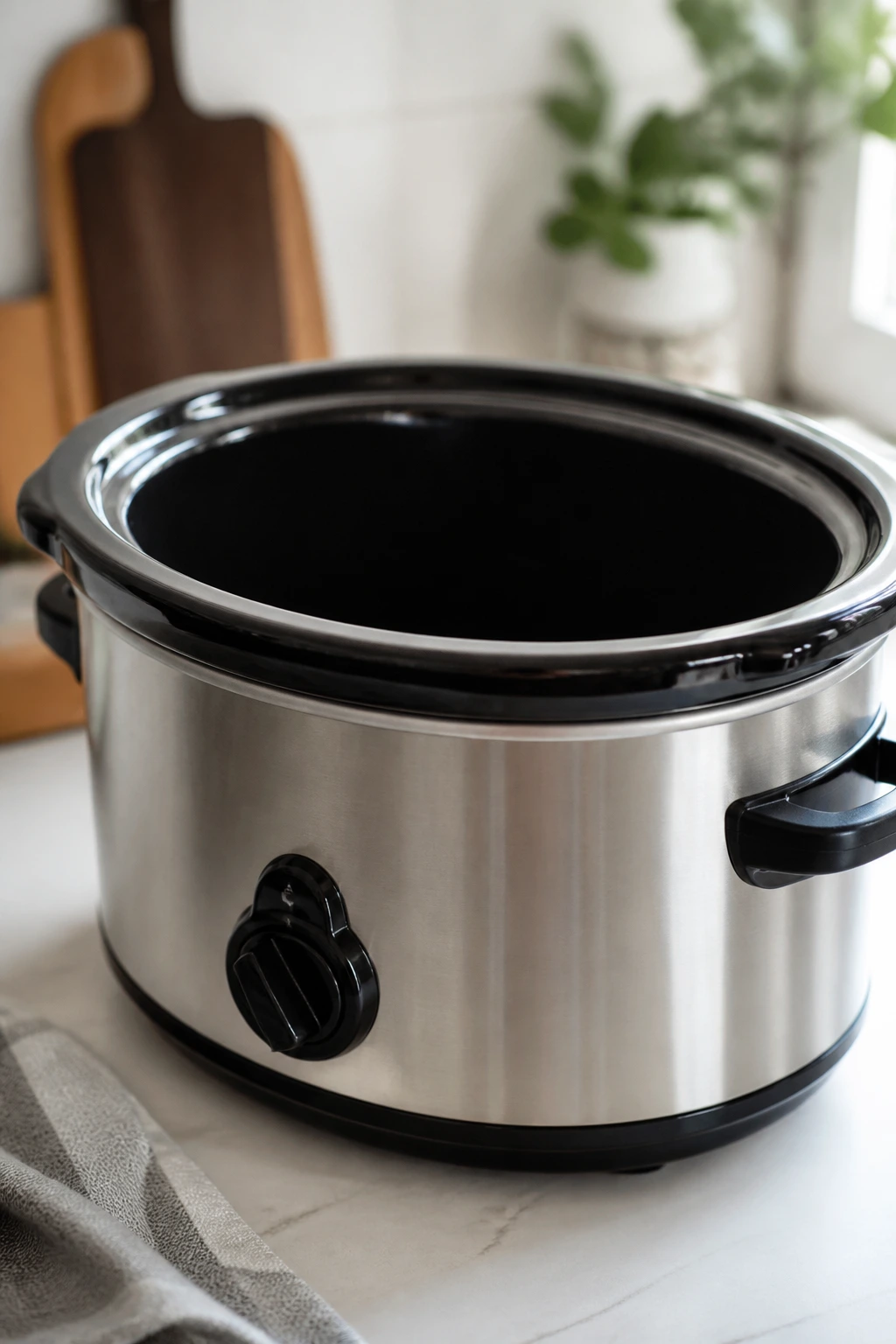
6-quart slow cooker with a removable insert: This size handles most of these noodle bowls without crowding.
-
Sharp chef’s knife: Thin slices of beef, pork, and chicken cook more evenly and eat better.
-
Cutting board with a stable grip: A damp towel underneath keeps it from sliding while you prep.
-
Whisk: Helpful for dissolving peanut butter, cornstarch, hoisin, or black bean paste into the broth.
-
Tongs: Useful for tossing noodles into sauce without tearing them apart.
-
Measuring cups and spoons: The sauces here depend on balance, and eyeballing soy or vinegar is a good way to oversalt a pot.
-
Fine-mesh strainer or slotted spoon: Handy for skimming fat from beefy broths or lifting noodles if they finish early.
-
A wide spoon or spatula: Better than a narrow spoon for stirring noodles without breaking them.
-
A small bowl for slurry: Cornstarch mixed with water needs to be ready before the noodles go in.
-
Airtight storage containers: These bowls store better when sauce and noodles are packed tightly, not flopping around in a half-empty tub.
Smart Shopping and Ingredient Tips
Noodles are the first thing to get right. Dried lo mein and chow mein noodles usually hold up best in a slow cooker because they have enough chew to survive a short finish in hot sauce. Egg noodles work well for brothier bowls. Rice noodles need the shortest possible cook, and if the package says to soak them first, do it. Fresh noodles are fine too, but they usually need less time than dried ones, so they’re not the easiest choice if you’re distracted.
Protein choice matters more than brand names. Chicken thighs stay juicy and forgiving. Flank steak and chuck give beef bowls the texture most people want. Pork shoulder is the friendliest slow-cooker cut in the group because it tolerates time. Shrimp and tofu can work, but both need a shorter finish and a little attention at the end.
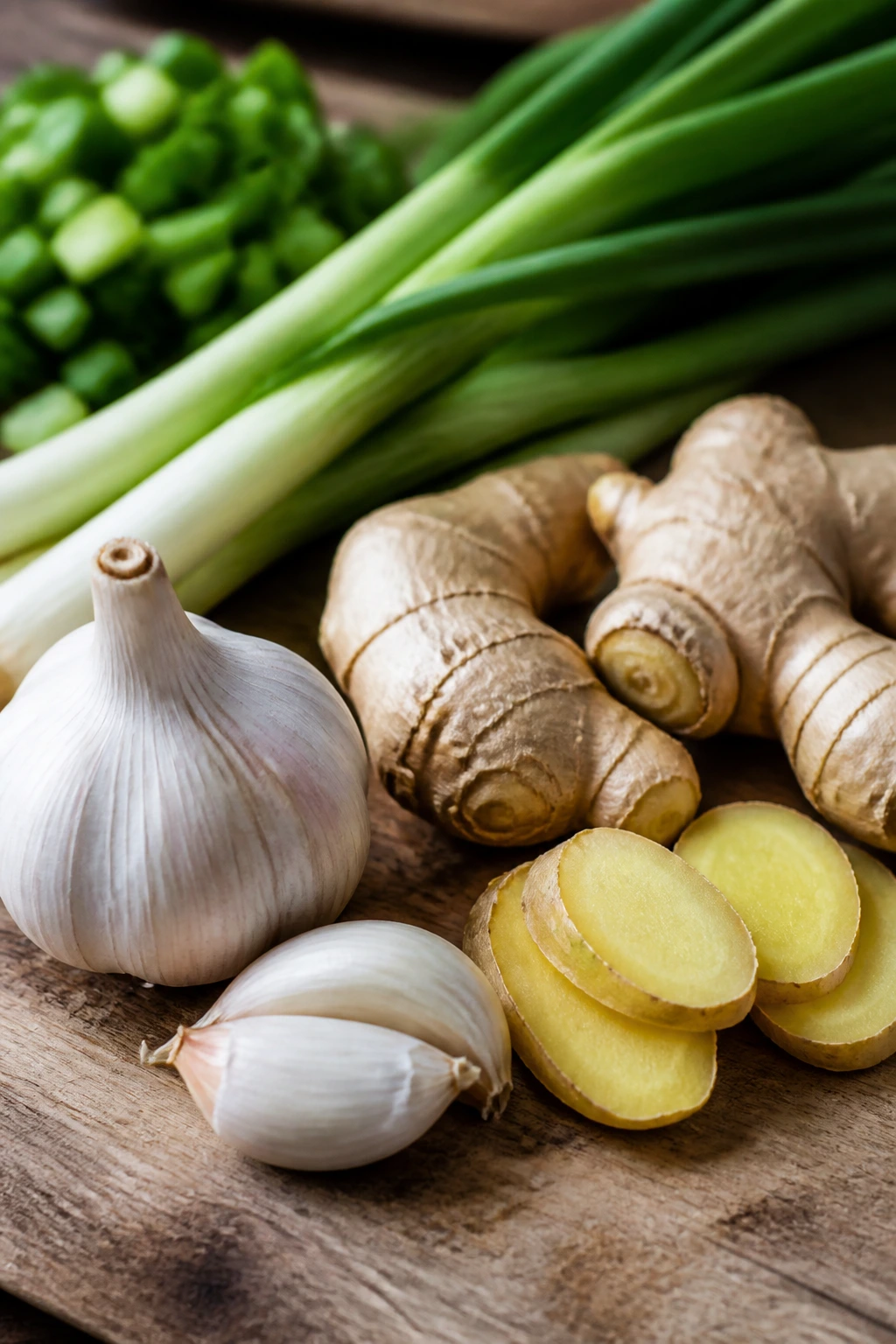
Sauces do the heavy lifting here, so buy the ones that taste like something. Low-sodium soy sauce keeps the pot from getting salty as it reduces. Hoisin should taste dark and a little sweet, not flat. Oyster sauce adds depth in tiny amounts. Rice vinegar and black vinegar are not interchangeable, but both are useful. Sesame oil should be toasted and fragrant; a little bottle lasts a long time, so don’t buy the bland stuff.
Vegetables should be chosen with timing in mind. Cabbage, mushrooms, and onions can ride in early. Bok choy, snow peas, and bean sprouts are better late so they stay vivid. Carrots are somewhere in the middle. And if you want crunchy toppings, keep them out of the slow cooker completely. Toasted peanuts, scallions, chili crisp, and sesame seeds work better on top than in the pot.
How to Serve These Recipes
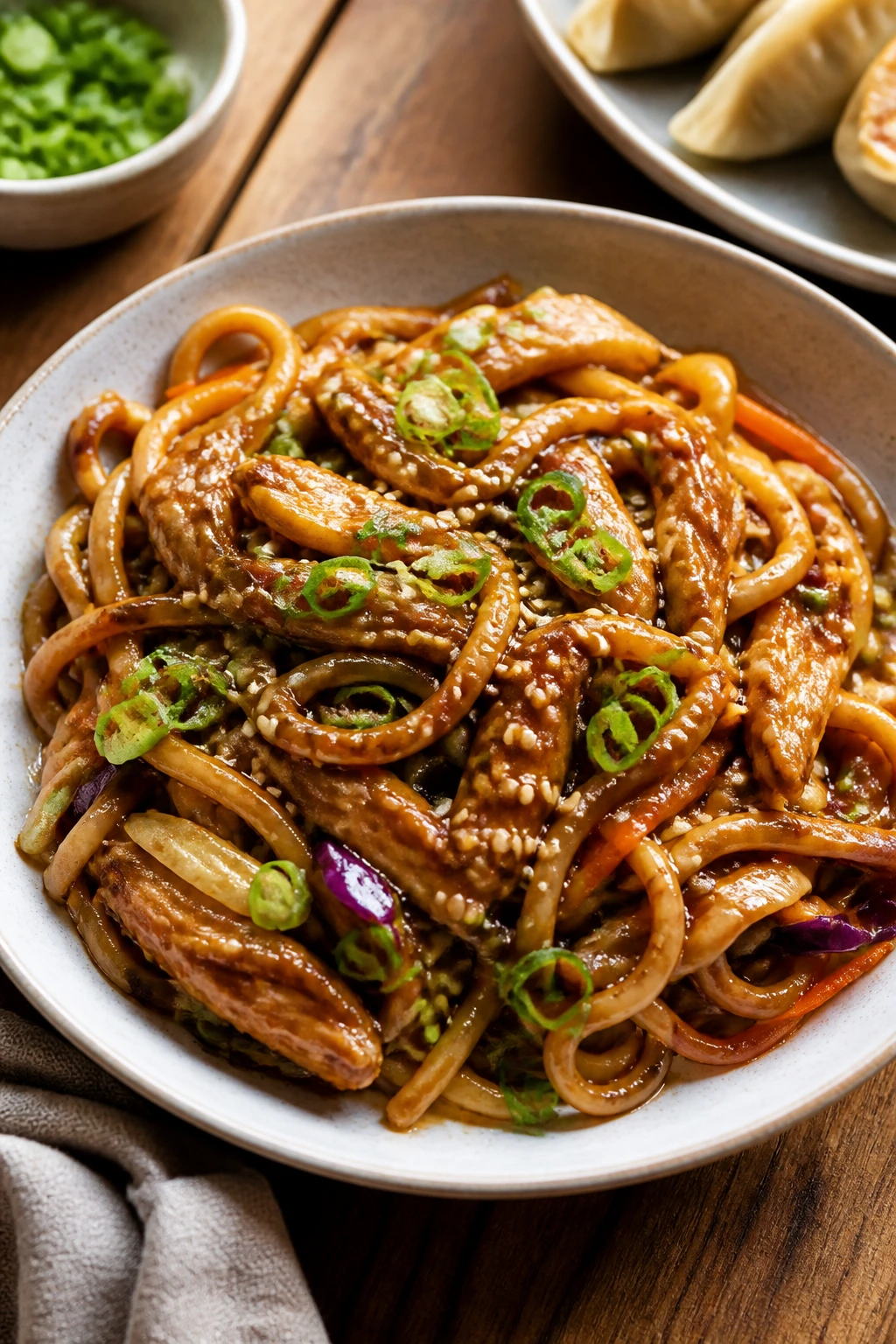
Presentation: Serve these noodles in wide, shallow bowls so the sauce spreads across the noodles instead of sinking to the bottom. A scatter of sliced scallions, sesame seeds, or chili oil on top gives the bowl a finished look without much effort.
Accompaniments: Cucumber salad, steamed bok choy, broccoli, or quick pickled radishes all work across the collection. Potstickers, steamed dumplings, or plain white rice can stretch a meal, though the noodle bowls are usually enough on their own.
Portions: Most of these dishes feed 4 to 6 as a main course, with about 2 cups per adult serving for noodle-heavy bowls and a little less for the soupier ones. If you’re feeding bigger appetites, add extra vegetables before adding extra noodles; that keeps the texture from getting crowded.
Beverage Pairing: Jasmine tea, iced oolong, or a light lager fits most of these bowls well. For the sweeter recipes, something dry and crisp works better than another sweet drink, because the sauce already has enough weight.
Additional Tips and Flavor Boosters
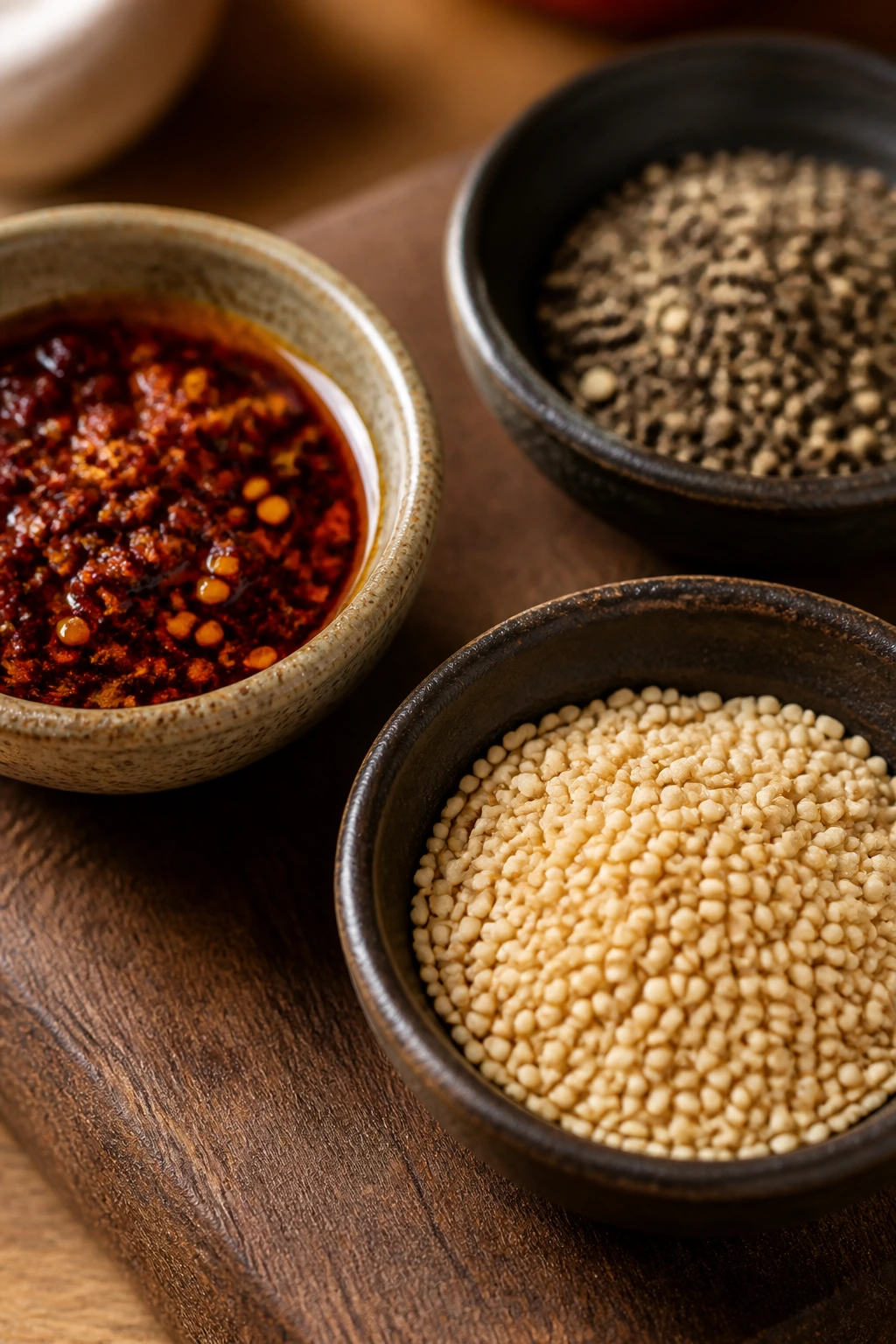
Flavor Enhancement: A teaspoon of black vinegar at the end can wake up almost any bowl in this collection. It doesn’t make the dish taste vinegary; it just sharpens the edges so the soy, garlic, and sesame don’t feel sleepy.
Customization: If you want more vegetables, add mushrooms, cabbage, or bok choy before you add more noodles. That keeps the ratio honest and stops the pot from turning into a starch pile with a little sauce underneath.
Serving Suggestions: Keep chili crisp, sesame seeds, sliced scallions, and roasted peanuts on the table. Those toppings let people adjust heat and crunch without changing the base recipe.
Make-It-Yours: For gluten-free bowls, use tamari and rice noodles. For dairy-free cooking, nothing needs to change, which is one of the nice things about this style. For lower-sodium versions, cut the soy sauce by a third and lean more on ginger, garlic, vinegar, and scallions for flavor.
Make-Ahead, Storage, and Reheating Guidance
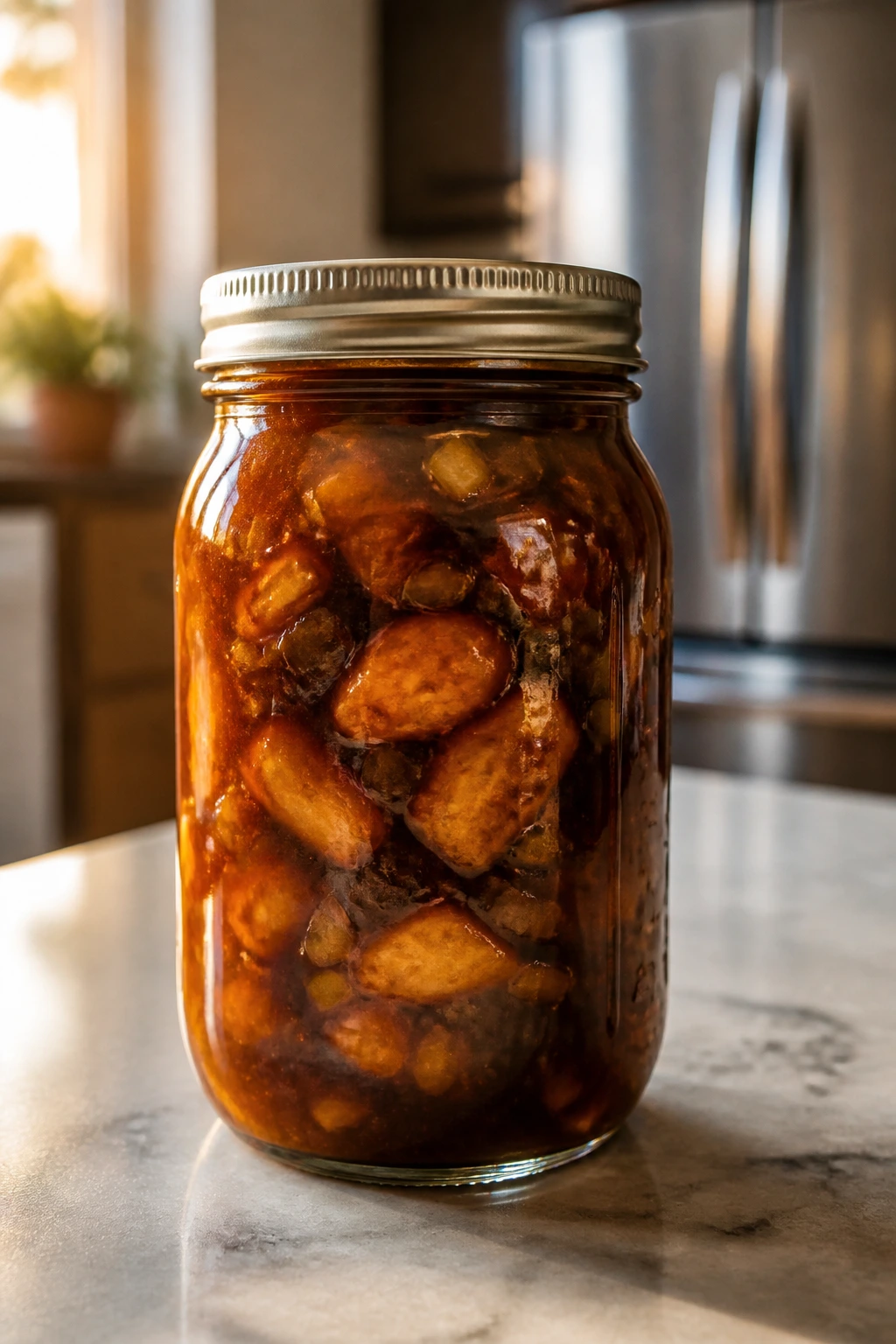
These noodle bowls are best eaten soon after the noodles go in. That part matters. If you want to get ahead, make the sauce and protein base a day or two early, cool it fast, and keep it refrigerated in a sealed container. Most sauce-and-protein bases hold well for 3 to 4 days in the fridge, and they freeze for up to 2 months if you leave the noodles out.
Noodles do not love the freezer. They get soft, then a little odd, then worse. If you know you’ll have leftovers, undercook the noodles by a minute at the finish and store them separately from the saucier base whenever you can. Reheat the sauce and protein on the stovetop over medium-low heat with a splash of broth or water, then stir in the noodles just long enough for them to warm through.
Microwaving works too, but do it in shorter bursts and cover the container so the noodles don’t dry out at the edges. Stir every minute or so. If the bowl seems tight or clumpy after chilling, add a spoonful or two of broth before reheating. And if a recipe uses shrimp or rice noodles, treat leftovers gently; those versions are better the next day than the third day.
Variations and Adaptations to Try
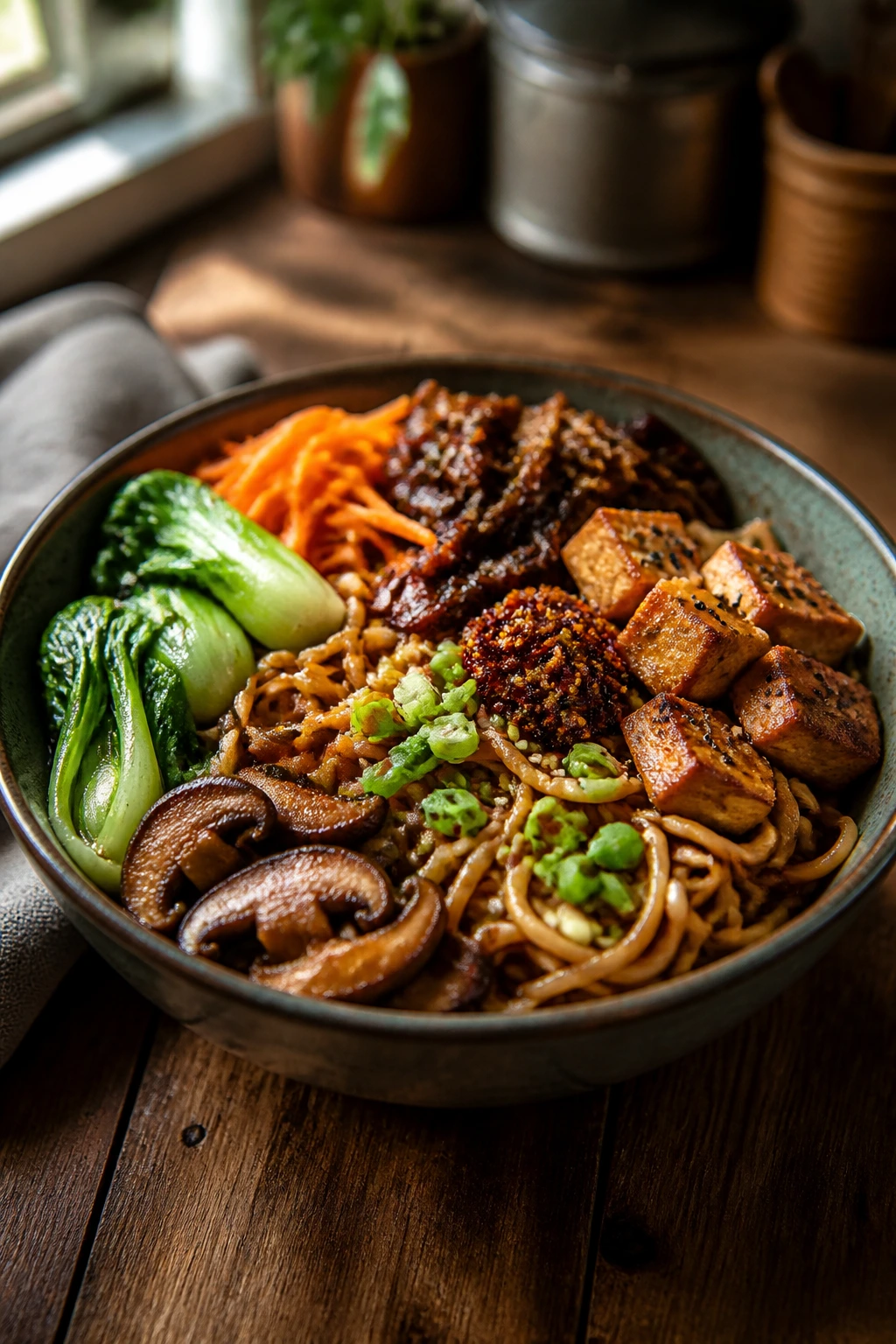
Gluten-Free Bowl Swap: Use tamari instead of soy sauce and choose rice noodles or certified gluten-free noodles. The sauce will still taste right because the real backbone here is ginger, garlic, vinegar, and sesame.
Low-Sodium Pantry Version: Cut soy sauce by a third and increase the aromatics a bit. Extra ginger, scallions, and a splash of rice vinegar keep the bowl from tasting flat when the salt is reduced.
Vegetable-First Version: Build the base with mushrooms, cabbage, bok choy, and carrots, then use tofu or skip protein entirely. The trick is to keep the vegetables in different timing groups so the whole pot doesn’t turn soft at once.
Extra-Spicy Chili Crisp Version: Stir chili crisp or chili oil into the finished bowl instead of the slow cooker. That keeps the heat bright and crunchy rather than dull and buried.
Soupier Noodle Bowl Version: Add an extra cup or two of broth and choose egg noodles or thick wheat noodles. This works especially well for the beef, chicken, and mushroom bowls that already lean brothy.
Cold-Weather Braise Version: Use short rib, chuck, or pork shoulder and serve the noodles in a deeper broth. These versions feel richer and more substantial without changing the flavor base much.
Common Mistakes to Avoid
The biggest mistake is adding noodles too early. They don’t need that much time, and the slow cooker will turn them soft in a way that has nothing to do with tenderness. Add them at the end, keep the lid on only long enough to finish, and serve soon after.
Too much liquid is another easy way to flatten a bowl. Slow cookers don’t evaporate much, so a sauce that looks a little thin at the start can still end up right once noodles and vegetables are added. If you pour in broth like you’re making soup, you’ll get a brothy tangle instead of a noodle dish. Start with less and add only if the recipe needs it.
Lean protein can also cause trouble. Chicken breast, pork loin, and very lean beef cuts dry out before the noodles are ready. Thighs, shoulder, chuck, and flank are safer choices because they tolerate long cooking and hold onto flavor.
Skip the last-minute acid and the bowl can taste heavy. A little rice vinegar or black vinegar doesn’t make the dish sour. It makes the soy, sesame, and garlic taste more alive. That final hit matters most in sweet sauces and peanut-based noodles, where the richness can close in fast.
Finally, don’t expect every noodle shape to behave the same way. Rice noodles finish fast. Lo mein noodles need a short simmer. Egg noodles land somewhere in between. If you treat them all the same, the texture will tell on you.
Frequently Asked Questions
Can I use fresh noodles instead of dried ones?
Yes, but watch them closely. Fresh noodles usually need less time in the slow cooker, and some are best cooked separately before being tossed with the sauce at the end.
What’s the best noodle for crockpot Chinese noodles?
Lo mein and chow mein noodles are the easiest overall because they hold up well in a short finish. Egg noodles are a close second for brothy bowls, while rice noodles are best when you want a lighter texture and a very short cook.
Can I cook the noodles all the way in the slow cooker?
You can, but it’s not the best move. They usually turn soft too fast and soak up too much liquid, especially if the pot runs hot. Finishing them late gives you much better texture.
Can I make these ahead for a party?
Make the sauce and protein ahead, then cook the noodles right before serving. That keeps the texture in better shape and saves you from serving a bowl of softened starch.
What if my sauce is too thin at the end?
Leave the lid off for 5 to 10 minutes after the noodles are added, or stir in a small cornstarch slurry and let it cook briefly. Don’t keep adding noodles to fix a watery pot; that usually makes things worse.
Can I use frozen vegetables?
Yes, though they work best in bowls where texture matters less. Add them late so they don’t turn mushy, and expect them to release a little extra liquid.
How do I keep the noodles from clumping?
Stir them once or twice during the last few minutes and use enough sauce to coat them. A tiny drizzle of sesame oil at the end also helps separate the strands.
Are these recipes good for leftovers?
The sauce and protein bases are good for leftovers, but the noodles soften over time. If you know you’ll have extra, keep some noodles separate and combine them only when reheating.
Can I make these vegetarian or vegan?
Yes. Tofu, mushrooms, napa cabbage, bok choy, and egg noodles or rice noodles work well, and tamari can replace soy sauce if needed. Just watch the finish time so the tofu and vegetables keep some texture.
What if I only have instant ramen?
Use it, but add the noodles right at the end and shorten the finish time a lot. Instant ramen cooks fast and turns mushy fast, so treat it like a garnish rather than the base of the pot.
A Better Way to Do Noodles
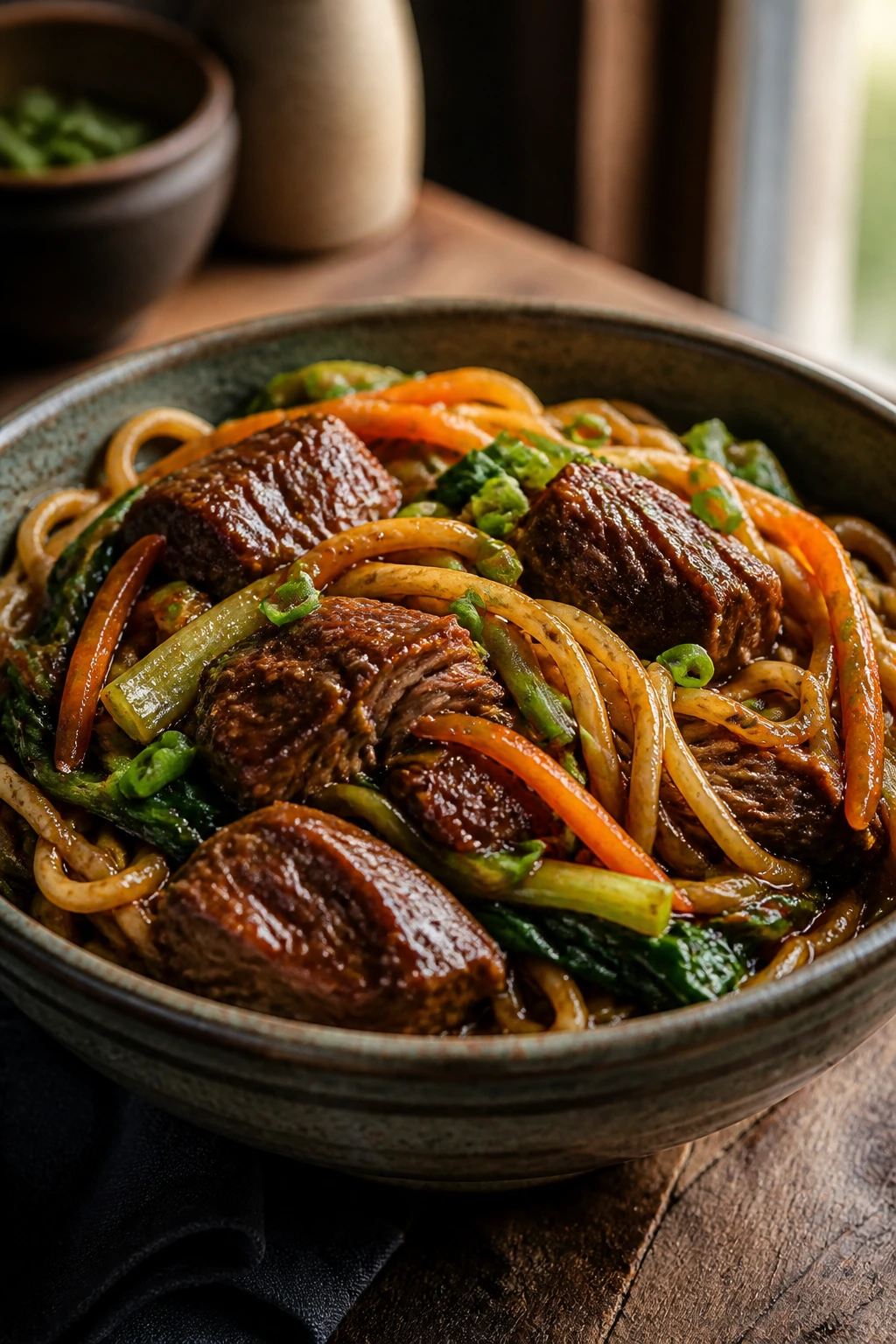
The slow cooker is not a noodle machine, and that’s fine. It’s a sauce machine, a braise machine, and a very patient flavor-builder. Once you use it that way, Chinese noodle bowls start making more sense: the meat gets tender, the vegetables soften at the right pace, and the noodles go in only when they still have something left to give.
That’s the real payoff here. Not convenience for its own sake. Texture that holds. Sauces that taste like they had time to think. Bowls that come out glossy and savory instead of tired and overcooked.
Once you get one of these right, the rest follow quickly. The timing becomes second nature, and the crockpot stops being the thing that ruins noodles and starts being the thing that makes them worth making.