



The oven is always the bottleneck on Thanksgiving. One pan of vegetables wants 425°F, the rolls want their turn, the turkey is hogging half the rack, and somebody has already parked a casserole dish in the warm corner like it pays rent.
That’s where slow cooker vegetables for Thanksgiving earn their keep. Not as a compromise. As a real side dish with its own logic. Carrots, parsnips, sweet potatoes, onion, garlic, butter, apple cider, sage, and thyme don’t need a blast of dry heat to taste like themselves. They need time, a little salt, and a finish that wakes them up before they hit the table.
I’ve always thought the biggest mistake people make with holiday vegetables is treating them like an obligation. Steam them too fast and they taste like office lunch. Roast them too hard and the sugar scorches before the centers turn soft. A slow cooker gives these vegetables a middle path: tender at the edges, plush inside, glossy rather than greasy, and warm enough to sit quietly beside turkey and gravy without turning sulky.
Why These Slow Cooker Vegetables Earn Space on the Thanksgiving Table
-
They free the oven when you need it most. The turkey, stuffing, rolls, and pie all seem to need heat at the same time; putting the vegetables in the slow cooker gives you one less fight with the clock.
-
They turn soft in a controlled way. Carrots and parsnips break down slowly, sweet potatoes get creamy without collapsing into orange paste, and onion melts into the broth instead of disappearing into bitterness.
-
The flavor reads as holiday, not cafeteria. Butter, apple cider, sage, thyme, and a splash of vinegar at the end make the vegetables taste built for the day, not just cooked for it.
-
They stay warm without getting wrecked. A covered slow cooker holds temperature in a way a casserole dish can’t, so you can serve seconds without rushing the first round.
-
They’re easy to scale for a crowd. If your table grows from six to twelve, the recipe mostly asks for a bigger cooker or a second batch, not a new strategy.
-
They work for mixed diets. Use vegetable broth and the dish stays vegetarian; use chicken broth if you want a deeper savory note. Either way, you still get the same soft, spoonable texture.
Yield: Serves 8
Prep Time: 25 minutes
Cook Time: 4 to 5 hours on Low or 2 1/2 to 3 hours on High
Total Time: 4 1/2 to 5 1/2 hours
Difficulty: Beginner — the chopping takes the time, but the method is forgiving and doesn’t require special technique.
Chill/Rest Time: None
Best Served: Warm, within 20 minutes of finishing, with a final herb garnish.
What Goes Into the Slow Cooker
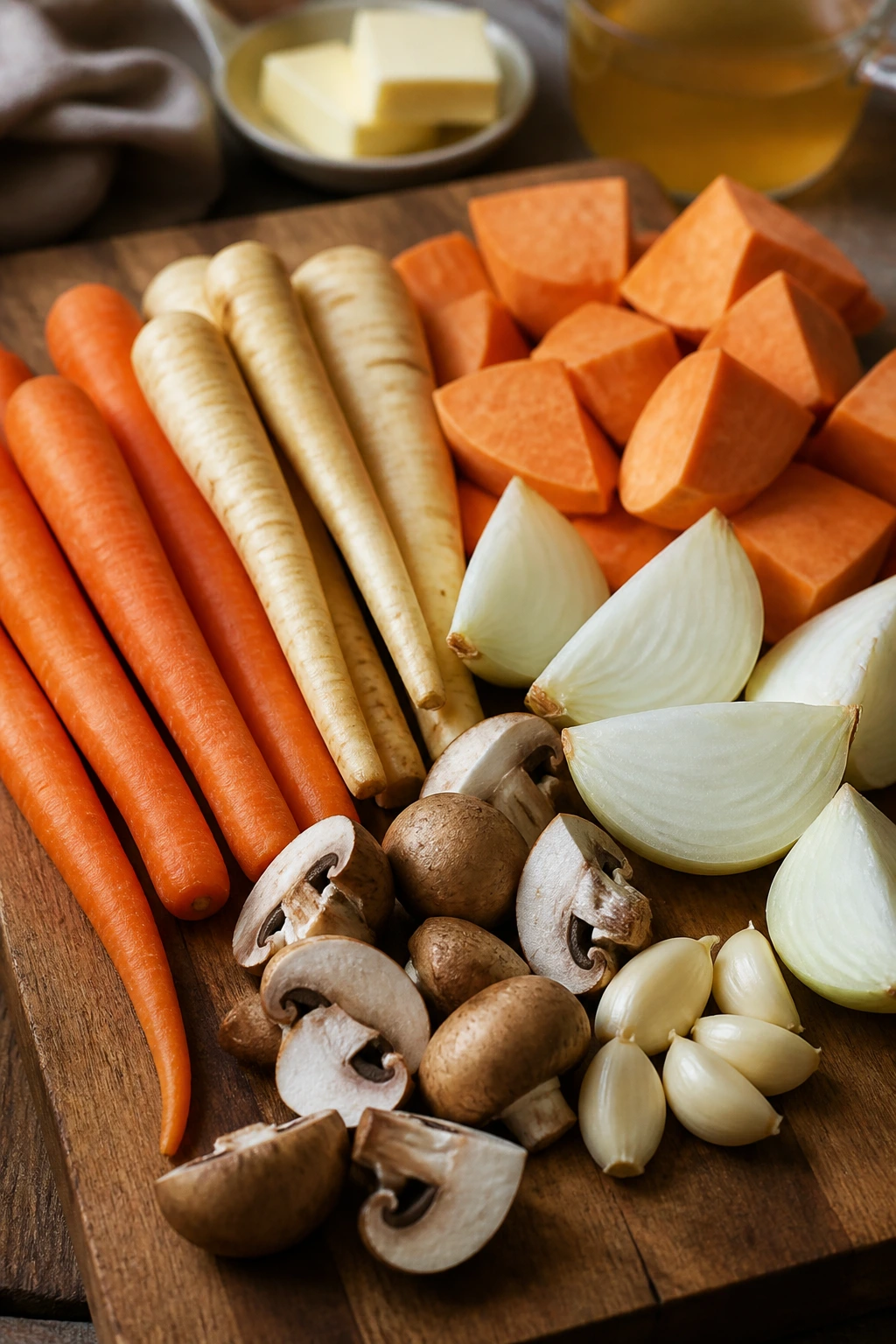
For the Vegetables:
- 2 lbs carrots, peeled and cut into 2-inch chunks
- 1 1/2 lbs parsnips, peeled and cut into 2-inch chunks
- 2 lbs sweet potatoes, peeled and cut into 1 1/2-inch chunks
- 1 large yellow onion, cut into 8 wedges
- 8 oz cremini mushrooms, halved, optional but useful if you like a deeper savory note
- 4 garlic cloves, smashed
For the Cooking Liquid and Seasoning:
- 4 tbsp unsalted butter, cut into pieces
- 2 tbsp olive oil
- 1 cup low-sodium vegetable broth or chicken broth
- 1/2 cup apple cider
- 2 tsp kosher salt
- 1 tsp black pepper
- 1 tbsp chopped fresh sage
- 1 tbsp chopped fresh thyme
- 1 bay leaf
- 1 tsp maple syrup, optional
- 1 tbsp apple cider vinegar or lemon juice, for finishing
- 2 tbsp chopped parsley, for serving
Why the Slow Cooker Works Better Than a Roasting Pan Here
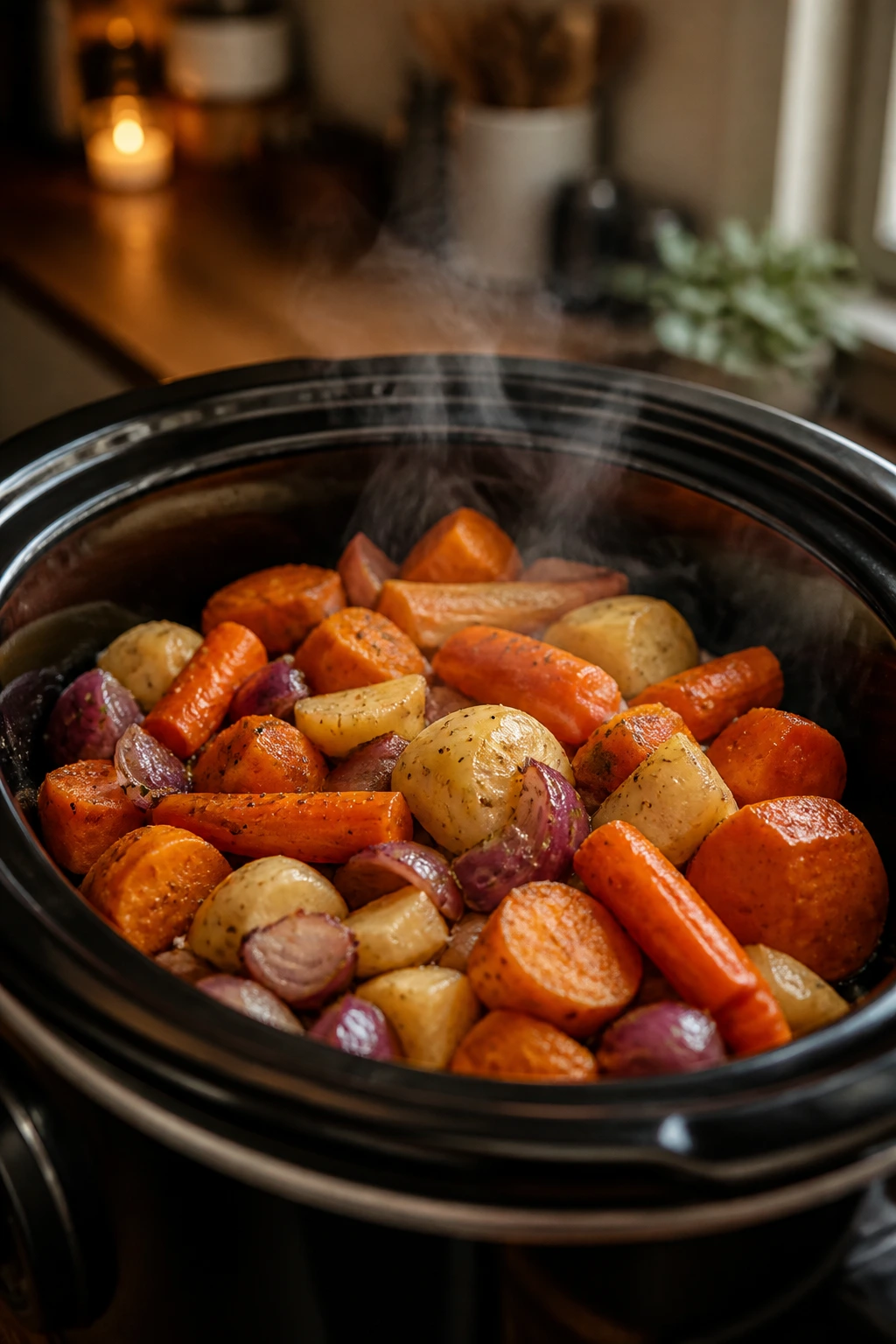
A roasting pan gives you browned edges. A slow cooker gives you a different thing: vegetables that taste like they have had time to think about what they want to be. That matters here more than people admit.
Root vegetables are built for gentle heat. Carrots soften as their pectin relaxes, parsnips turn sweet and almost nutty, and sweet potatoes go from firm to spoonable without needing high heat to get there. In a dry oven, those vegetables can brown before their centers finish. In a slow cooker, the humid environment keeps the exterior from toughening while the inside slowly breaks down. Different tool, different job.
There’s also the Thanksgiving problem nobody talks about enough: the vegetable side is often expected to sit for a while. A slow cooker handles that better than a baking dish, and it does it without asking for babysitting. You can focus on the turkey, carve space for the stuffing, and still have vegetables that are hot and ready instead of tired and waiting.
I do not use this method for everything. Green beans want something else. Brussels sprouts want a later addition or a roast finish. But for carrots, parsnips, onions, and sweet potatoes? The slow cooker is a good piece of equipment. In this recipe, it turns the vegetables into a soft, glossy side with enough structure to scoop but not enough resistance to make anyone work for it.
Root Vegetables: the backbone of the dish
What to use: 2 lbs carrots, 1 1/2 lbs parsnips, and 2 lbs sweet potatoes give you the mix of sweetness, earthiness, and starch that makes the texture read as rich instead of watery.
Preparation: Peel the carrots and parsnips, then cut them into thick chunks so they finish at roughly the same time as the sweet potatoes. Peel the sweet potatoes and cut them a touch smaller, about 1 1/2 inches, because they soften faster.
Substitutions: Butternut squash can stand in for some of the sweet potatoes, and turnips can replace part of the parsnips if you want less sweetness.
Tips: Keep the pieces chunky. If you cut them too small, they’ll disappear before the rest of the vegetables are done and you’ll end up with a pot that looks more like mash than a side dish.
Liquid, Fat, and the Sweet-But-Savory Base
What to use: 4 tbsp butter, 2 tbsp olive oil, 1 cup broth, and 1/2 cup apple cider create the sauce that collects at the bottom of the cooker.
Preparation: Cut the butter into pieces so it melts evenly, and measure the cider and broth before you start loading the cooker.
Substitutions: Olive oil can replace the butter for a dairy-free version, and vegetable broth works as well as chicken broth if you want to keep the dish vegetarian. If you do not have apple cider, unsweetened apple juice is the next best thing; it just tastes a little less sharp.
Tips: Use low-sodium broth. The liquid reduces as the vegetables cook, so a salty broth can cross the line fast.
Herbs, Salt, and the Finishing Edge
What to use: 1 tbsp sage, 1 tbsp thyme, 1 bay leaf, 2 tsp kosher salt, 1 tsp black pepper, and 1 tbsp cider vinegar at the end.
Preparation: Chop the herbs finely enough that they spread through the pot instead of sitting in clumps, and keep the vinegar back until the end so its bright edge doesn’t disappear.
Substitutions: Dried sage and thyme work in a pinch; use 1 tsp dried sage and 1 tsp dried thyme instead of the fresh herbs. Lemon juice can replace cider vinegar if that’s what’s in the kitchen.
Tips: Sage is the herb that makes the whole dish smell like a holiday table. Don’t skip it unless you have to, and don’t drown it under rosemary, which can take over fast.
Optional Finishers and Small Swaps
What to use: Chopped parsley for freshness, maple syrup for a faint glaze, and mushrooms if you want a deeper, earthier pot.
Preparation: Hold the parsley back until the vegetables are in the serving bowl, and halve the mushrooms so they cook through without turning stringy.
Substitutions: Chives work if you want a lighter garnish. A pinch of smoked paprika can stand in for a little extra warmth if you like the savory side of the dish better than the sweet side.
Tips: The final parsley isn’t decoration. It adds a clean, green note that keeps the vegetables from tasting one-dimensional.
Essential Equipment for This Recipe
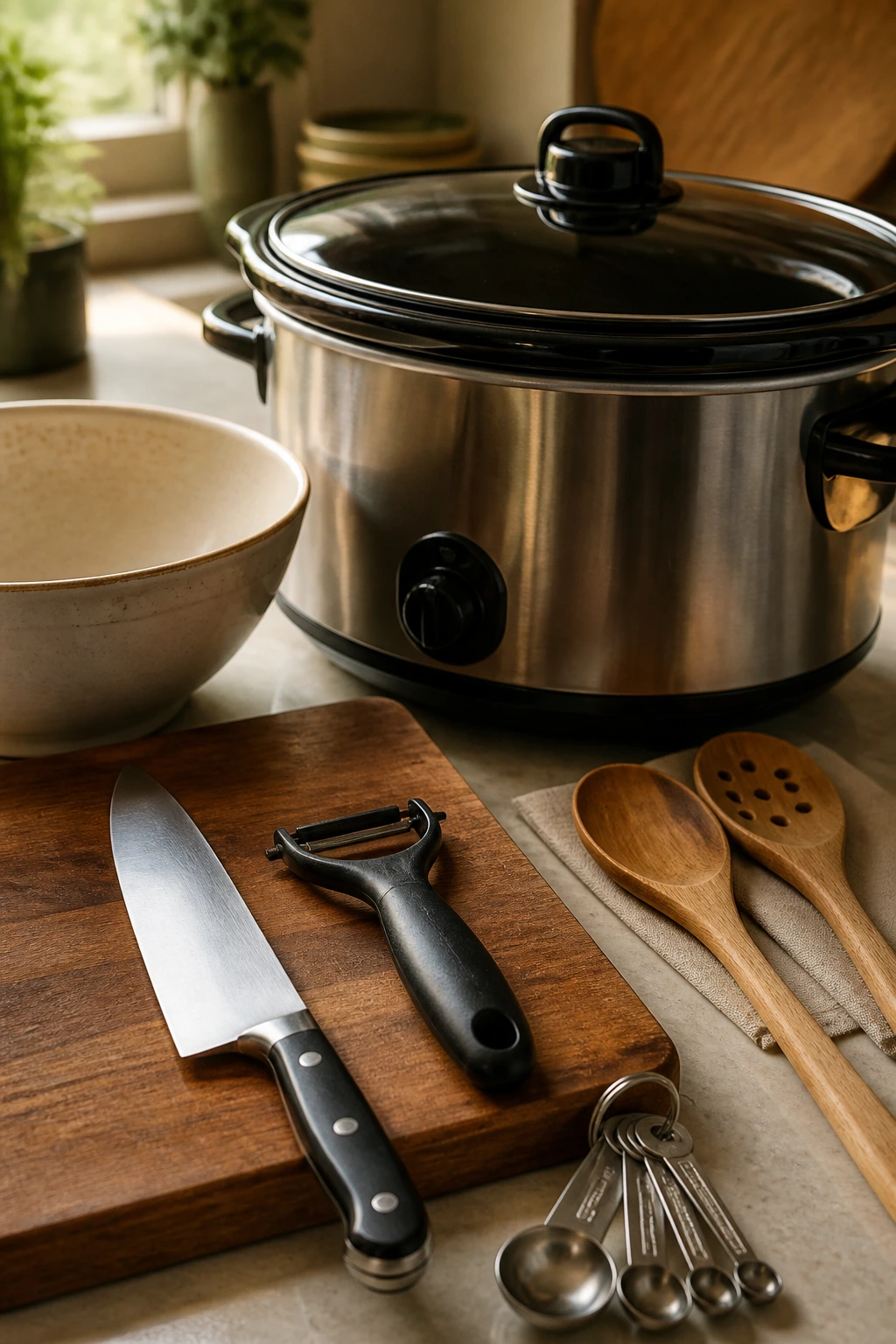
- 6-quart slow cooker — This size gives the vegetables room to soften without packing the insert too tightly.
- Large cutting board — Root vegetables roll; a wide board keeps the prep from turning into a chase.
- Chef’s knife — A sharp knife matters here because sweet potatoes and parsnips get slippery once peeled.
- Vegetable peeler — Parsnips and sweet potatoes are easier to manage if you peel them cleanly before cutting.
- Large mixing bowl — Useful for tossing the vegetables with butter, oil, salt, and herbs before they go in.
- Wooden spoon or silicone spatula — For stirring gently at the end without smashing everything into puree.
- Slotted spoon — Handy if you want to lift the vegetables out of extra liquid before serving.
- Measuring cups and spoons — You want the broth and cider measured, not guessed.
- Small skillet, optional — If you like to warm the butter with garlic and sage before loading the cooker, a skillet gives you a deeper flavor.
Layer the Vegetables So They Cook Evenly
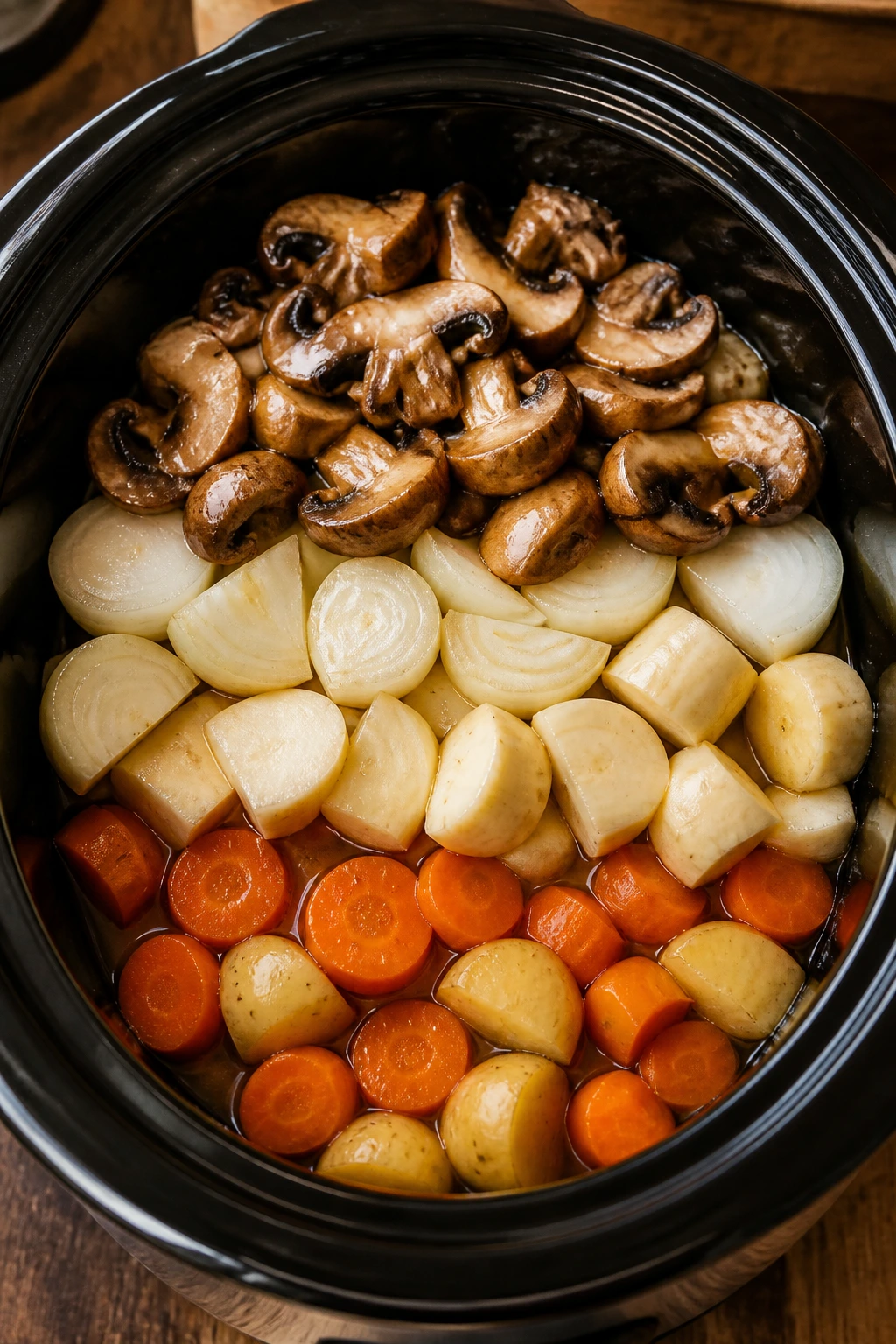
The order you put things into the cooker matters more than people expect. Slow cookers heat from the bottom and around the sides, so the vegetables sitting in the liquid path soften first. If you just dump everything in and walk away, you can get a few mushy pieces under a layer of stubborn ones.
That’s not a crisis. It’s just the difference between a polished side dish and a pot of assorted softness.
The fix is simple: coat the vegetables evenly, then layer the denser pieces low and the quicker-cooking pieces higher, with enough liquid to create steam but not enough to turn the whole thing into soup. It sounds fussy. It isn’t. It takes five minutes and keeps you from having to explain why half the carrots are still firm while the sweet potatoes have collapsed into orange gravy.
Prep the Vegetables:
- Peel the carrots, parsnips, and sweet potatoes. Cut the carrots and parsnips into 2-inch chunks and the sweet potatoes into 1 1/2-inch chunks so the softer vegetable doesn’t outrun the rest.
- Cut the onion into 8 wedges, keeping the root end attached to each wedge if you can so the pieces stay together longer.
- If you are using mushrooms, halve them and wipe away any dirt with a damp paper towel instead of washing them under running water. Too much surface water can make the dish taste thin.
Season and Load the Cooker:
4. Put the vegetables in a large mixing bowl with the garlic, sage, thyme, salt, pepper, butter, olive oil, and maple syrup if you’re using it. Toss with your hands or a wide spoon until everything has a light coating.
5. Spread the onion wedges and carrots across the bottom of the slow cooker, then add the parsnips and sweet potatoes on top. Scatter the mushrooms over the upper layer if you’re using them.
6. Pour the broth and apple cider around the edges of the cooker, not directly over one spot. Add the bay leaf. Do not stir aggressively at this stage; you want the vegetables nested, not mashed.
Cook Them Until the Centers Yield
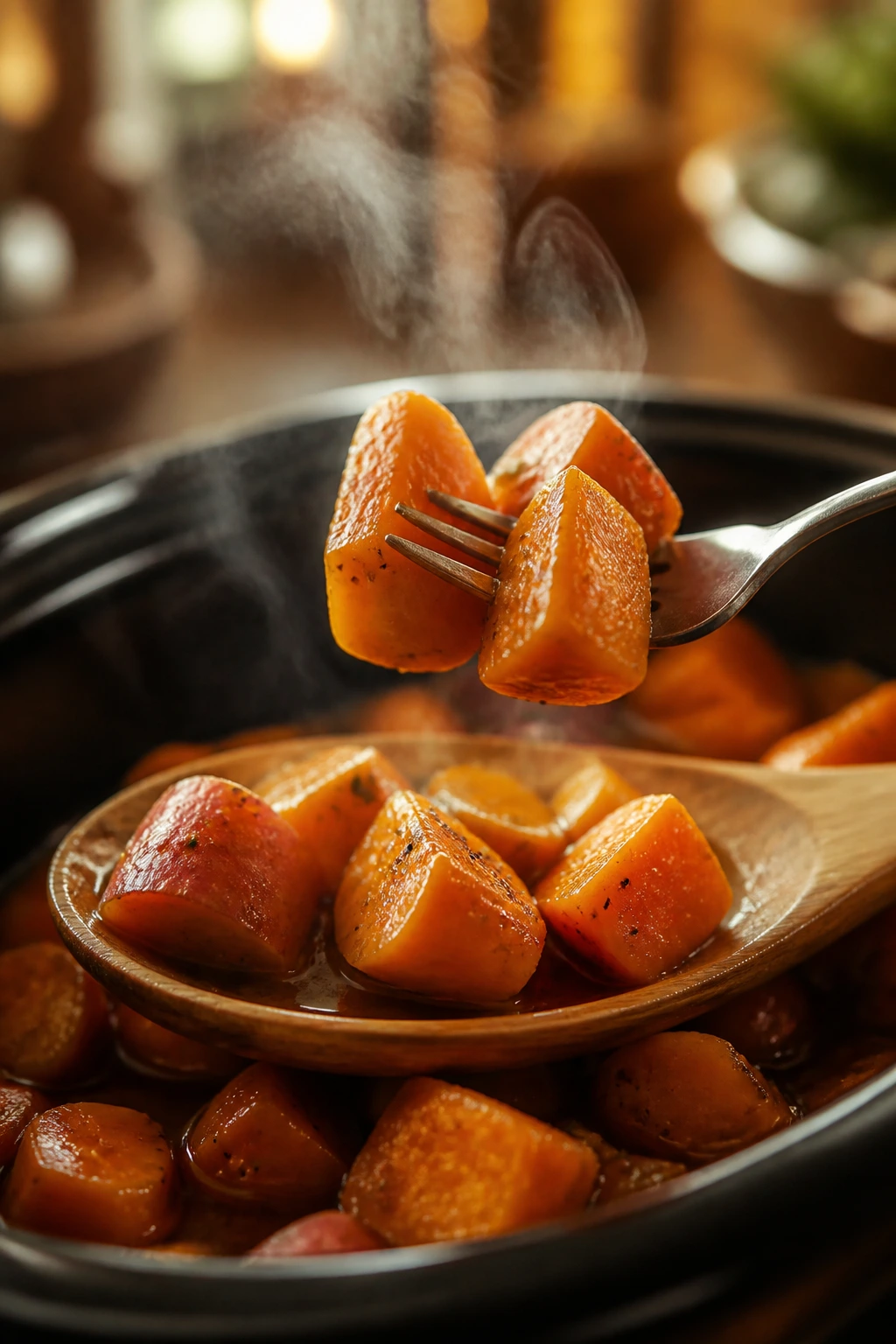
The right texture here is soft enough to fall apart with a fork, but not so far gone that the vegetables lose their shape before they get to the table. That line is a little thinner than it sounds, especially with sweet potatoes. One extra hour can change them from plush to slumped.
On Low, you’re usually looking at 4 to 5 hours. On High, check at 2 1/2 hours and expect closer to 3 if your cooker runs cool or the vegetables were cut on the large side. The clues are visual and tactile, not dramatic: the carrots should look deeply colored, the onion should be translucent and almost jammy, and the sweet potatoes should give without resistance when pierced.
Cook Low and Slow:
7. Cover the slow cooker and cook on Low for 4 to 5 hours, or on High for 2 1/2 to 3 hours. If your cooker is known to run hot, start checking 30 minutes early.
8. Test the thickest carrot piece and the largest sweet potato chunk with a fork. The fork should slide in without a push, and the vegetables should hold together long enough to be plated without turning mushy. If the carrots still feel firm but the sweet potatoes are done, stop anyway and finish the carrots by cutting them smaller next time.
9. Leave the lid on until the vegetables are ready. Every time you lift it, you drop heat and extend the cooking time. That matters more when the dish is near the end of its cook.
Finish the Vegetables with Butter, Vinegar, and Fresh Herbs
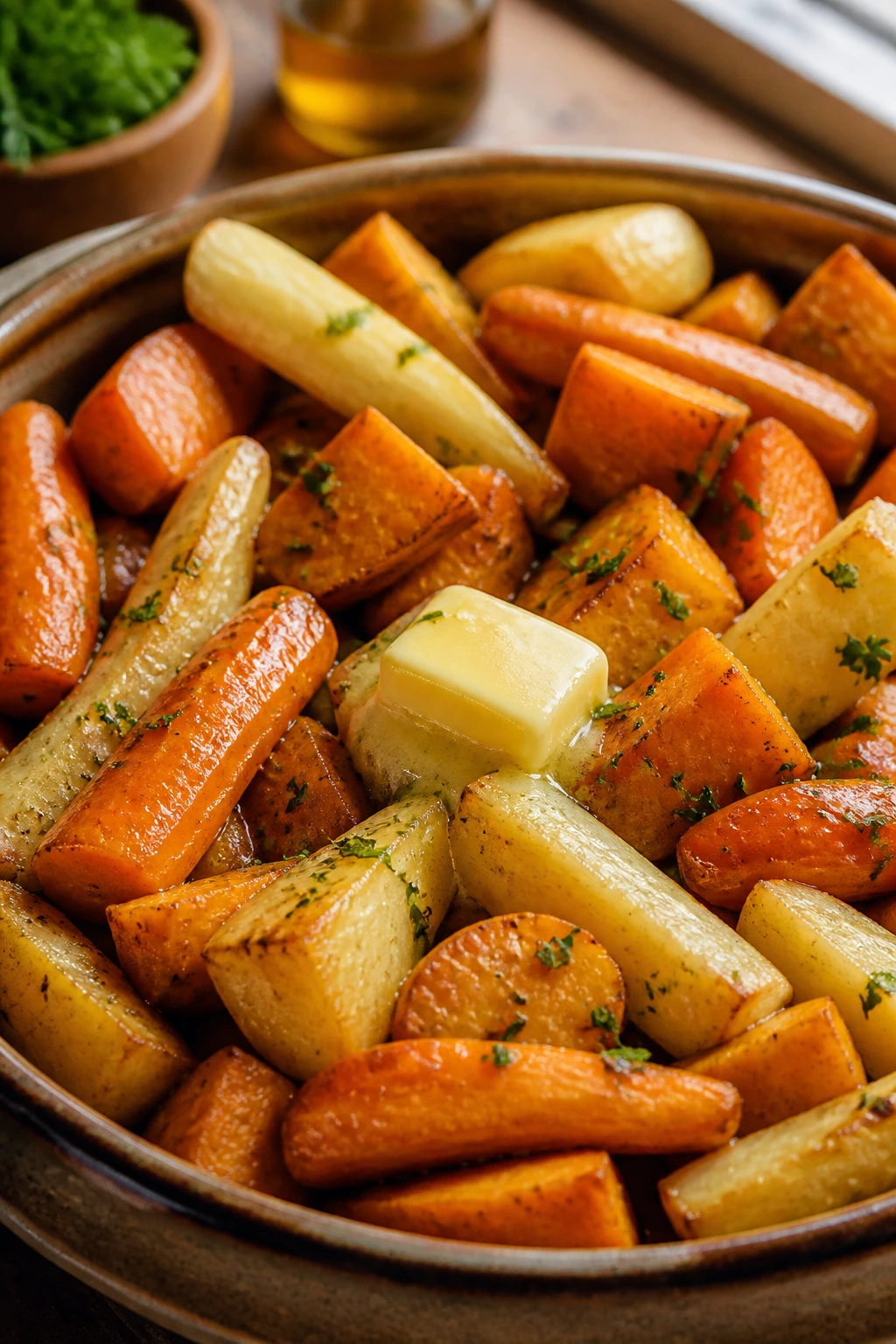
The finish is where this dish stops tasting like something that merely sat in a cooker and starts tasting intentional. The vinegar matters. The parsley matters. A small extra pat of butter matters. Without that last layer, the vegetables can taste flat in the way gently cooked food sometimes does when it needs a little spark.
I like to think of this part as wiping the fog off the window.
If the cooker has given you a shallow pool of liquid, use that to your advantage. Spoon the vegetables into a serving bowl, leave the excess broth behind, then add only enough of the cooking liquid to gloss the surface. A little of that broth is gold; too much and the dish starts reading like stew. You want shine, not flood.
Finish and Season:
10. Remove the bay leaf. Use a slotted spoon to transfer the vegetables to a warm serving bowl if there is more liquid than you want, or leave them in the cooker if the liquid is already reduced enough.
11. Add the cider vinegar and the remaining tablespoon or two of butter, then stir gently until the butter melts and the vegetables look glossy.
12. Taste and adjust with a little more salt or black pepper if needed. Do this after the vinegar goes in, because acid changes how salt tastes on the tongue.
13. For a slightly thicker finish, mash 3 or 4 sweet potato pieces against the side of the bowl with a spoon and fold them back through the vegetables. That small bit of mash helps the sauce cling to the carrot and parsnip pieces.
14. Scatter the parsley over the top just before serving. If you want a little extra shine, add one more small pat of butter in the center and let it melt on the table.
How to Serve Them Beside Turkey, Stuffing, and Gravy
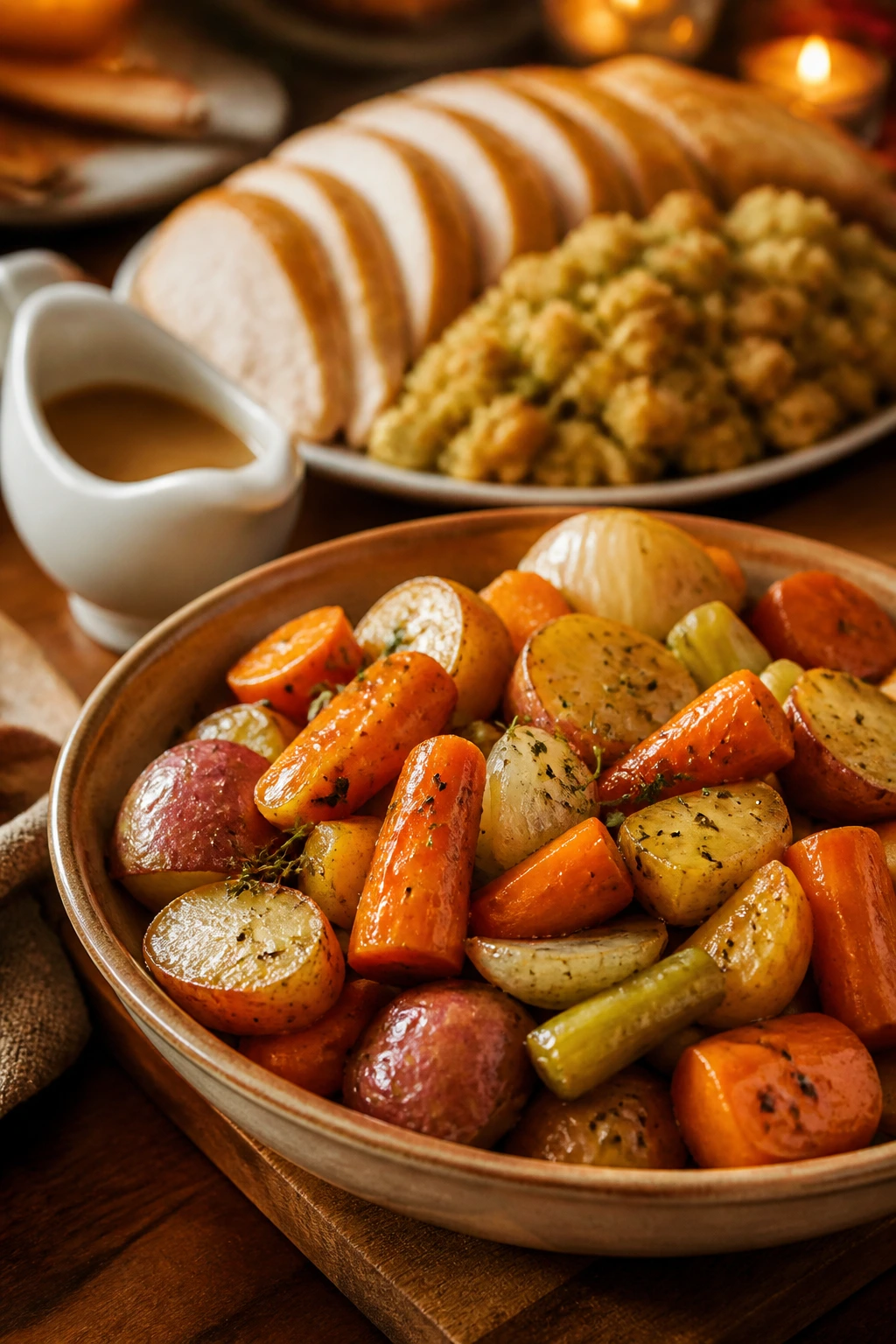
These vegetables should not look like a random side that wandered in from another meal. They belong on the plate with the rest of the Thanksgiving spread, and the best way to serve them is to lean into their soft, glossy texture instead of trying to fake a roast-pan crust that they were never meant to have.
Presentation: Spoon the vegetables into a shallow warm bowl or a wide serving platter, not a deep casserole dish. That lets the carrots and parsnips show their color and keeps the sweet potatoes from hiding under their own steam. Finish with parsley, a few black pepper flecks, and one extra dab of butter if you want the top to glisten.
Accompaniments: These belong next to sliced turkey, stuffing, and gravy, but they also play well with something crisp and tart on the plate. Cranberry sauce is the obvious call. A sharp green salad with shaved fennel or bitter greens helps cut the butter, and a basket of rolls handles the liquid at the bottom of the bowl better than a fork ever will.
Portions: Figure on about 3/4 cup per person if the dish is one of several sides, or closer to 1 cup if it’s doing more of the work on the plate. For a smaller table, the recipe shrinks cleanly to half the batch. For a crowd, make two batches rather than overstuffing a single slow cooker; the texture is better when the vegetables have room.
Beverage Pairing: A dry riesling or a light pinot noir works nicely because both can handle the sweetness of the vegetables without fighting the herbs. If you want something nonalcoholic, sparkling apple cider is the easy answer, and it doesn’t taste childish when the dish itself already has apple cider in it.
Practical Ways to Push the Flavor Further
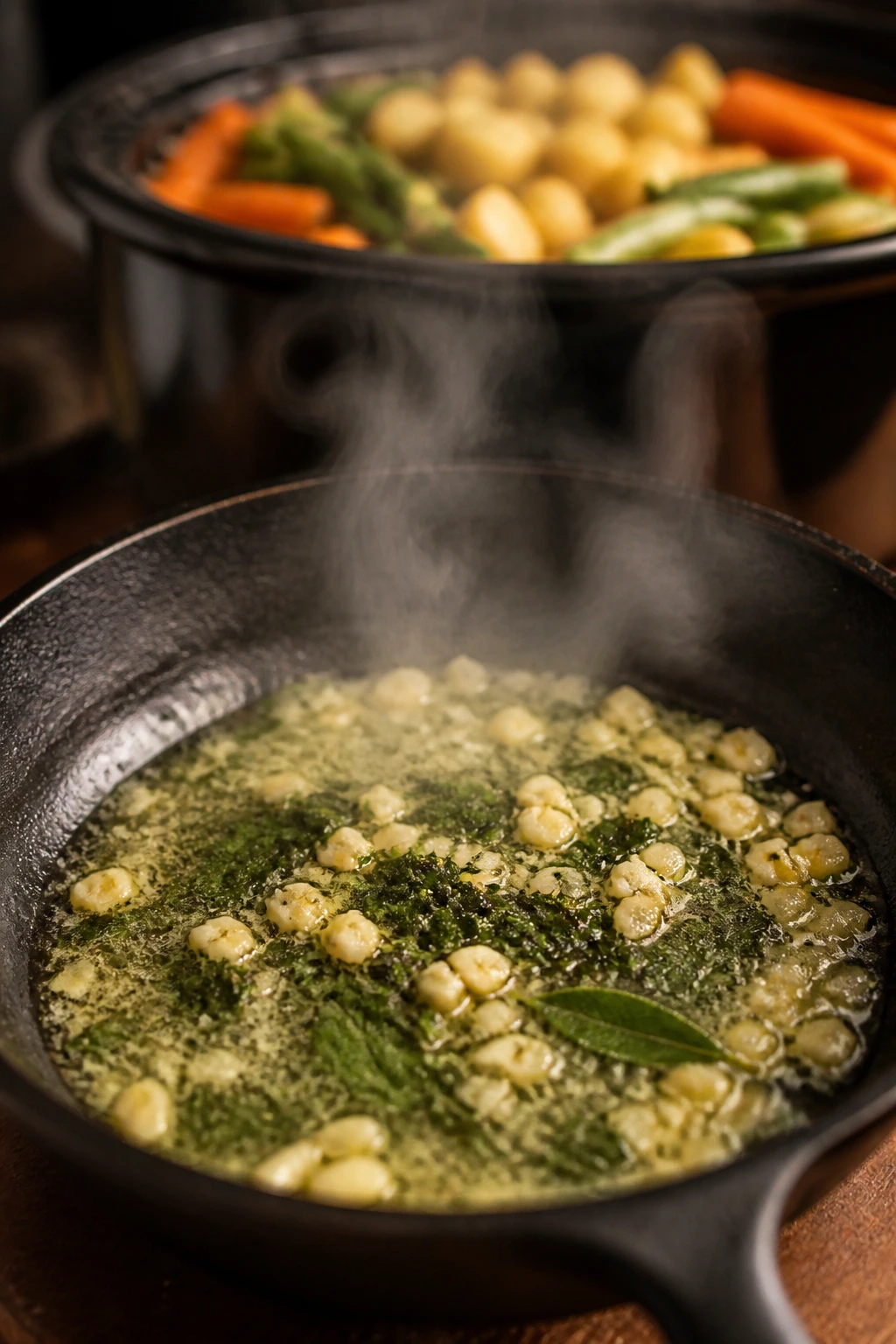
The recipe works as written. That said, there are a few small moves that make a real difference, and none of them involve expensive ingredients or extra cleanup.
Flavor Enhancement: Warm the butter, garlic, and chopped sage in a small skillet for 2 minutes before adding them to the vegetables. The garlic goes sweet instead of sharp, and the sage perfumes the whole pot before the lid goes on. It’s a small step with a big smell.
Time-Saver: Peel and cut the carrots, parsnips, and sweet potatoes the day before, then store them in separate airtight containers in the fridge. Keep the sweet potatoes dry; don’t soak them in water or they’ll pick up a slick surface that makes seasoning slide off.
Texture Fix: If the vegetables are tender but there’s more liquid than you want, spoon them into a serving bowl and let them sit uncovered for 5 to 10 minutes. The steam will leave, the sauce will thicken slightly, and the edges will look less soggy. If you’re in a hurry, mash a few pieces against the side of the bowl and stir once.
Make-It-Yours: If your table likes a more savory finish, skip the maple syrup and add 1 teaspoon Dijon mustard to the cooking liquid. If you prefer a sweeter edge, keep the maple syrup and finish with orange zest instead of parsley. Both versions still feel like Thanksgiving; they just lean different directions.
The Mistakes That Turn Tender Vegetables Mushy or Bland
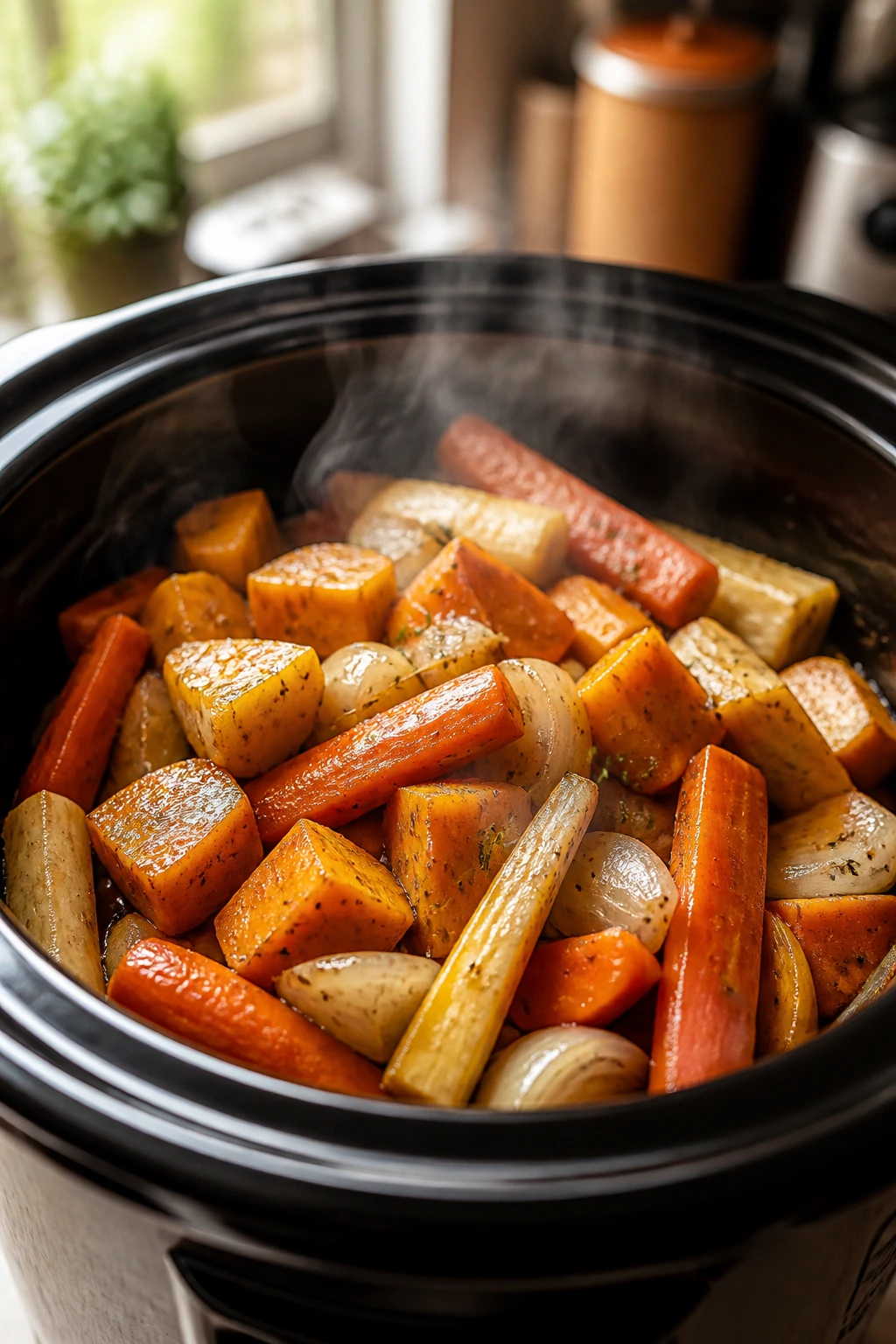
Slow cooker vegetables do not fail because the appliance is bad. They fail because the cook asks the cooker to do the wrong job or ignores a few tiny details that matter a lot once the vegetables soften.
The first trap is cutting everything the same size. Sweet potatoes and parsnips do not behave like twins, and carrots are denser than both. If you cut them all into equal cubes, the softer ones collapse before the denser ones finish. The fix is blunt: keep the carrot pieces larger and the sweet potato pieces slightly smaller.
Another common problem is too much liquid. A slow cooker traps moisture, so you do not need to drown the vegetables to get them tender. If the pot looks soupy halfway through, it probably will not fix itself. Use just enough broth and cider to create steam and flavor, then let the vegetables release their own moisture.
Skipping the finish is a quiet mistake, and it shows up on the plate immediately. The vegetables taste technically cooked, but they do not taste complete. Salt, vinegar, parsley, and a little extra butter are what stop the dish from reading as boiled root vegetables. Do not save those for the garnish tray in the other room; they belong in the bowl.
A lot of people also overcook on High because they assume “done” and “soft” mean the same thing. They do not. One more half-hour on High can turn a beautiful batch into a slump. Start checking early, especially if your slow cooker runs hot or you cut the sweet potatoes on the smaller side.
Last, there’s the ingredient problem nobody wants to hear about: delicate vegetables are the wrong fit for this method unless they’re added late. Brussels sprouts, green beans, and zucchini all need different timing. Put them in from the start and they can go limp, gray, or both. Save those for another dish, or add them near the end if you really want them in the mix.
Variations That Fit Different Holiday Tables
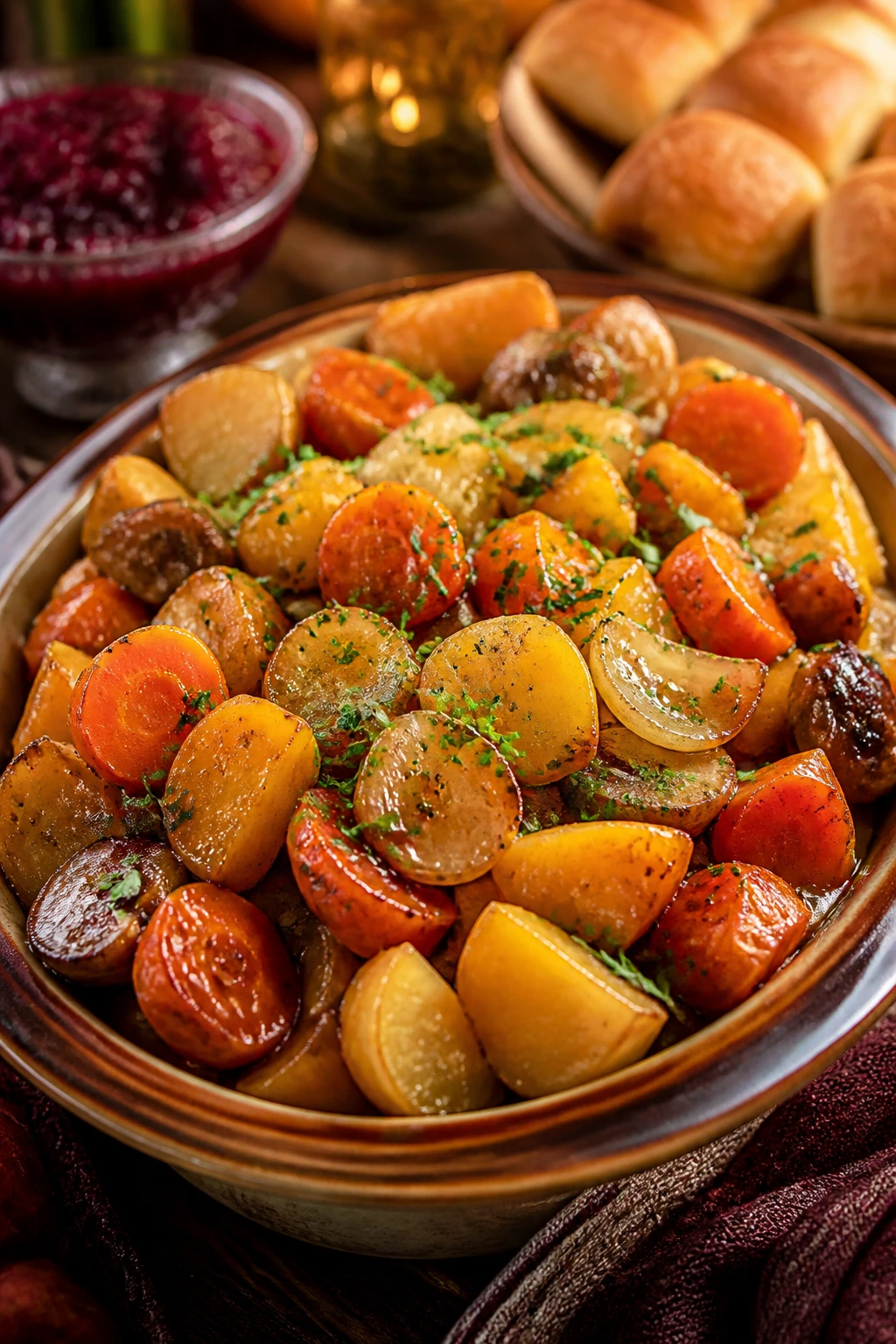
A single slow cooker vegetable recipe can go in a few different directions without losing the point of the dish. The trick is changing one or two elements, not throwing the whole pot into a new personality.
Maple-Sage Glaze: Increase the maple syrup to 2 teaspoons in the cooker, then finish with another teaspoon after cooking along with the vinegar. The result is a little more glossy and round, with a gentle sweetness that sits close to the surface instead of taking over.
Savory-First Herb Pot: Skip the maple syrup entirely and add an extra teaspoon of thyme plus 1 teaspoon Dijon mustard. This version tastes less sweet and a little more serious, which works well if your table already has plenty of cranberry sauce and candied sides.
Dairy-Free Holiday Batch: Replace the butter with 4 more tablespoons olive oil or with a plant-based butter that melts cleanly. You’ll lose a little richness, so keep the cider vinegar in place at the end; that brightness helps the vegetables still taste full.
Earthier Mushroom Medley: Use the optional cremini mushrooms and add another 1/2 cup broth plus 1 teaspoon tamari. The tamari gives the pot a deeper savory note without making it taste like soy sauce. This is the version I’d make for people who want the side dish to lean more rustic than sweet.
Citrus Lift Version: Finish with 1 teaspoon orange zest instead of parsley, or use both if you want the brightness and the green note together. It sounds small, and it is, but citrus zest has a way of waking up soft vegetables that have been cooking all afternoon.
Make-Ahead, Storage, and Reheating Without Losing the Texture
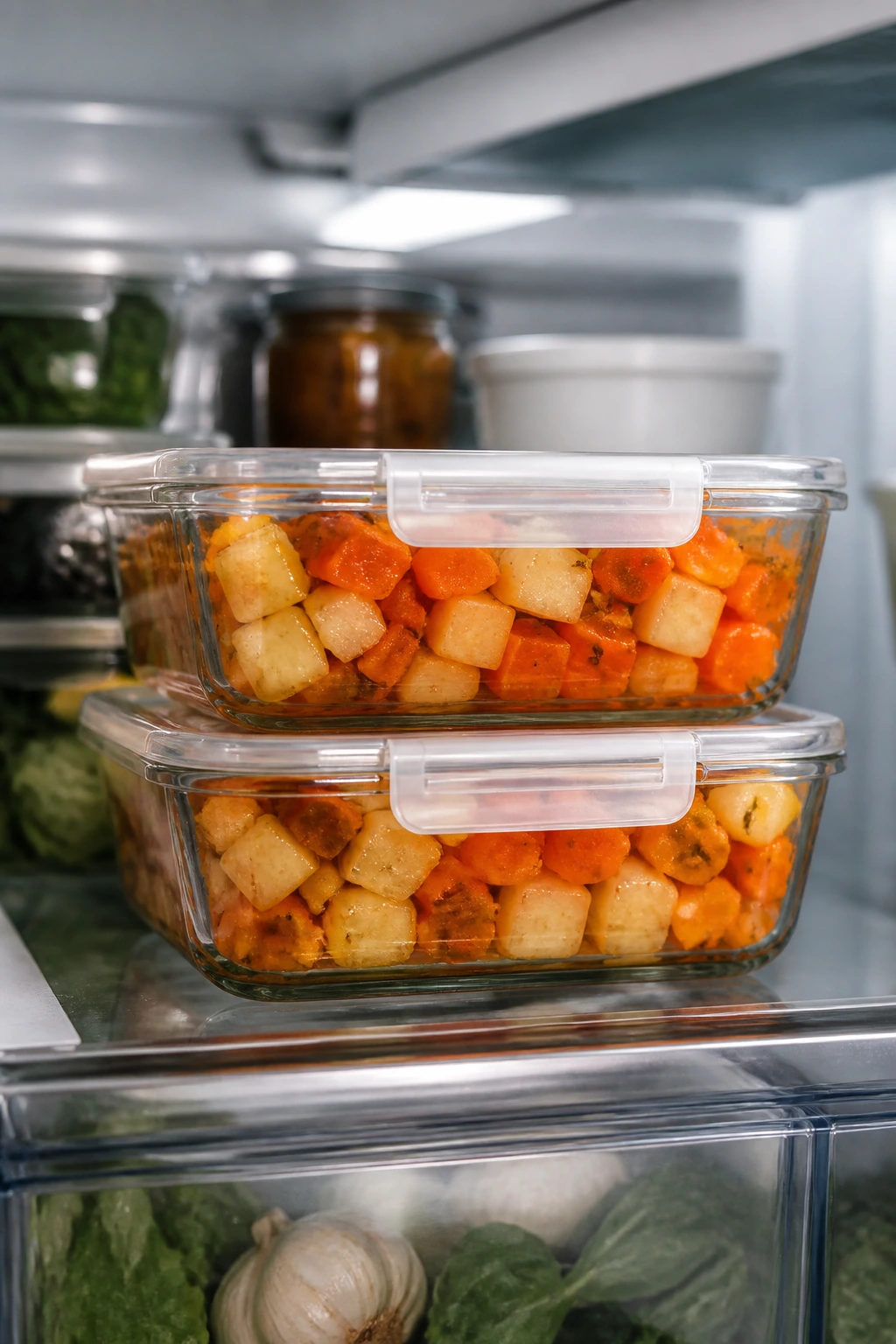
This is one of those Thanksgiving sides that forgives a little planning ahead, but it does not forgive sloppy reheating. Once the vegetables are soft, you want to protect that texture instead of shocking it with dry heat or overcooking it a second time.
You can peel and cut the vegetables up to 24 hours in advance. Store the carrots, parsnips, and sweet potatoes in separate airtight containers in the fridge so the sweet potatoes do not stain everything orange and the carrots stay crisp at the edges. The garlic can be smashed ahead too. Keep the butter, broth, cider, and herbs measured and ready in a small container or jar.
Once cooked, the vegetables can sit at room temperature for no more than 2 hours. After that, move them into shallow containers and refrigerate them. They’ll keep for 3 to 4 days, and the flavor actually settles in overnight a little more than it does fresh. The texture softens more too, so if you plan to reheat leftovers, handle them gently.
For the fridge, the best reheating method is a covered skillet or saucepan over low heat with a splash of broth or water. Stir occasionally and stop as soon as the vegetables are hot. In the oven, cover them with foil and warm at 325°F for about 15 to 20 minutes in a shallow dish. The microwave works for a small portion, but use medium power and stir halfway through so the sweet potatoes do not go rubbery on the surface.
Freezing is possible for up to 2 months, though the sweet potatoes will soften more after thawing and the carrots can lose a little snap. If you freeze them, let them cool completely, then pack them into airtight containers with as little air as possible. Thaw in the fridge overnight and reheat low and slow. Frozen leftovers are best when you’re treating them as a vegetable mash side, not expecting the exact same texture as day one.
Questions People Ask Before Making Slow Cooker Thanksgiving Vegetables
Can I use frozen vegetables in this recipe?
You can, but I would only do it if you’re in a pinch. Frozen carrots or sweet potato chunks tend to release extra water, which makes the finished dish looser and less glossy. Fresh vegetables give you the better texture here.
Do I need to brown anything first?
No, and I wouldn’t bother unless you just enjoy extra dishes. Browning the onion in a skillet can deepen the flavor a little, but the recipe is built to work without that step, and the slow cooker does the softening job well on its own.
Can I make this without sweet potatoes?
Yes. Replace the sweet potatoes with more carrots, parsnips, or peeled butternut squash. If you remove the sweet potatoes, add a little extra maple syrup or a touch more cider so the dish still has that Thanksgiving-style balance of sweet and savory.
What if my slow cooker runs hot or cooks unevenly?
Cut the vegetables a touch larger and start checking 30 minutes early. If the back of your cooker gets hotter than the front, give the pot a gentle stir halfway through cooking, but only if you can do it quickly and reseal the lid right away.
Can I add Brussels sprouts or green beans?
Brussels sprouts can work if you add them during the last 45 to 60 minutes on Low. Green beans need even less time, so I would add them near the end or leave them out altogether. Put them in from the beginning and they lose their shape.
Is this better on Low or High?
Low gives you the most even texture, especially if the vegetables are cut on the bigger side. High is fine when you’re short on time, but it demands more checking because sweet potatoes can go from firm to slack fast.
Can I make it vegetarian or vegan?
Easily. Use vegetable broth and replace the butter with olive oil or a good plant-based butter. You’ll still want the vinegar at the end; it keeps the vegetables from tasting flat once the dairy richness is gone.
What should I do if the vegetables finish before the rest of the meal?
Keep them on Warm in the slow cooker, but crack the lid slightly if there’s a lot of liquid. If the vegetables sit for more than an hour, stir once and taste again for salt before serving. They hold heat well, but a small adjustment at the end keeps them from tasting sleepy.
A Side Dish That Holds Its Own
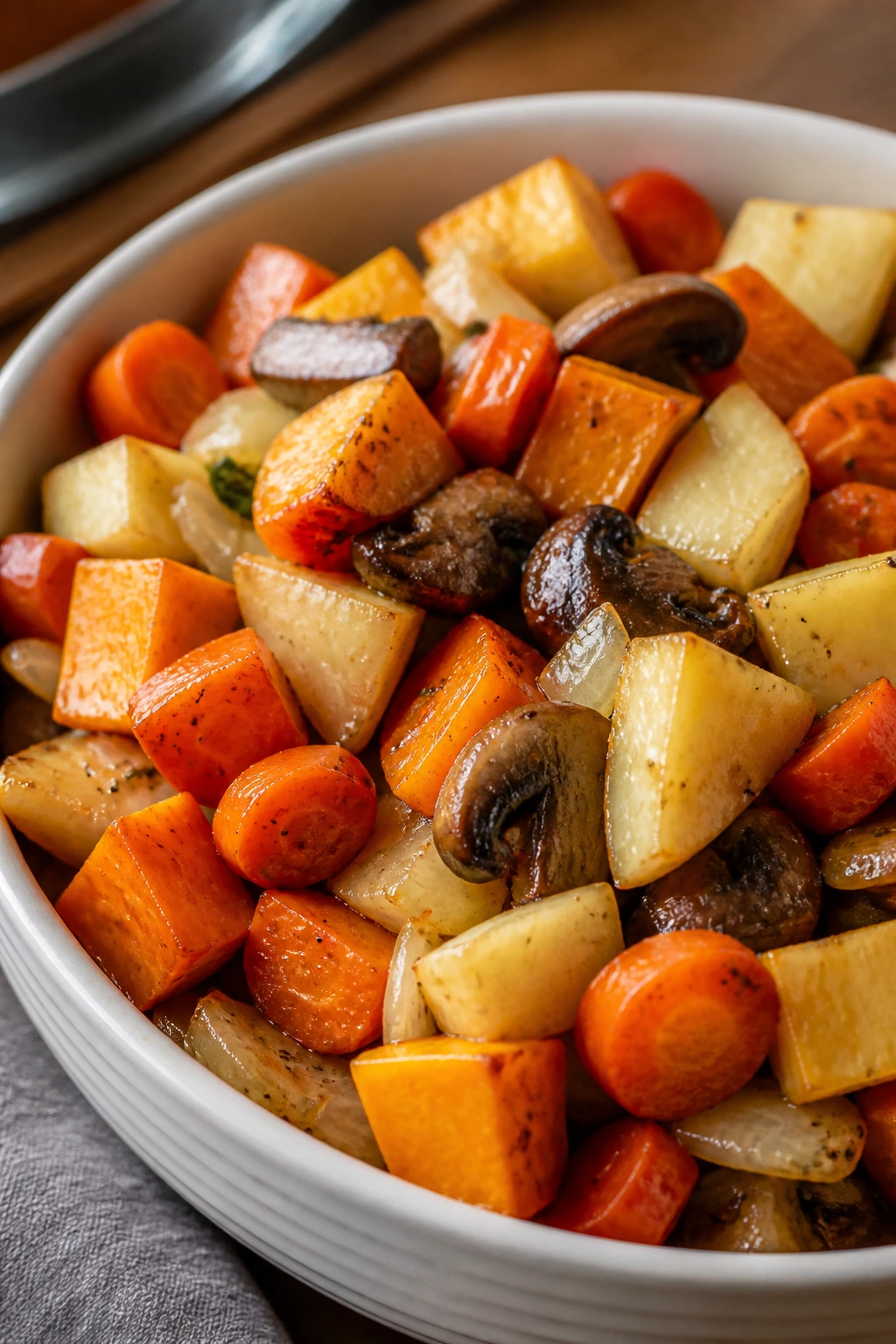
There’s something useful about a Thanksgiving side that doesn’t need to fight for attention. These vegetables are soft, glossy, and calm. They don’t come to the table with crispy bravado, and they don’t need to. They do the practical work of filling a plate with something warm and seasoned and good.
The best part is the balance. The slow cooker gives the vegetables their fall-apart texture, but the vinegar, herbs, and final butter keep them from turning into a beige blur. That’s the whole game here: tenderness with shape, sweetness with salt, comfort without dullness.
Make them once, and you’ll probably start thinking about the cooker differently. Not as a backup plan. As the place where the vegetables get to be the part of the meal people remember.
Slow Cooker Thanksgiving Vegetables — Recipe Card
Recipe Name: Fall-Apart Slow Cooker Thanksgiving Vegetables
Description: Tender carrots, parsnips, sweet potatoes, onion, and optional mushrooms cook slowly with butter, apple cider, sage, and thyme until they turn glossy and spoonable. A splash of cider vinegar at the end keeps the flavor bright and balanced.
Prep Time: 25 minutes
Cook Time: 4 to 5 hours on Low or 2 1/2 to 3 hours on High
Total Time: 4 1/2 to 5 1/2 hours
Course: Side Dish
Cuisine: American
Servings: 8 servings
Calories: About 160 kcal per serving
Ingredients
For the Vegetables:
- 2 lbs carrots, peeled and cut into 2-inch chunks
- 1 1/2 lbs parsnips, peeled and cut into 2-inch chunks
- 2 lbs sweet potatoes, peeled and cut into 1 1/2-inch chunks
- 1 large yellow onion, cut into 8 wedges
- 8 oz cremini mushrooms, halved, optional
- 4 garlic cloves, smashed
For the Cooking Liquid and Seasoning:
- 4 tbsp unsalted butter, cut into pieces
- 2 tbsp olive oil
- 1 cup low-sodium vegetable broth or chicken broth
- 1/2 cup apple cider
- 2 tsp kosher salt
- 1 tsp black pepper
- 1 tbsp chopped fresh sage
- 1 tbsp chopped fresh thyme
- 1 bay leaf
- 1 tsp maple syrup, optional
- 1 tbsp apple cider vinegar or lemon juice, for finishing
- 2 tbsp chopped parsley, for serving
Instructions
- Peel and cut the carrots, parsnips, and sweet potatoes into large, even pieces. Cut the onion into wedges and halve the mushrooms if using.
- Toss the vegetables with garlic, sage, thyme, salt, pepper, butter, olive oil, and maple syrup in a large bowl.
- Spread the onion and carrots in the bottom of a 6-quart slow cooker, then add the parsnips and sweet potatoes on top. Add the mushrooms, pour in the broth and apple cider, and tuck in the bay leaf.
- Cover and cook on Low for 4 to 5 hours or High for 2 1/2 to 3 hours, until the vegetables are fork-tender and the sweet potatoes are soft at the edges.
- Remove the bay leaf, then transfer the vegetables to a serving bowl if there is extra liquid in the cooker.
- Stir in the cider vinegar and a little more butter if desired, then gently mash a few pieces to thicken the sauce slightly.
- Taste and adjust with more salt or pepper, then finish with parsley and serve warm.
Notes: For a firmer texture, cut the sweet potatoes a little larger and check for doneness early. Leftovers keep 3 to 4 days refrigerated and reheat best with a splash of broth over low heat. If you want extra brightness, add a little more cider vinegar right before serving.