



A tropical smoothie bowl should be thick enough to leave a spoon trail, cold enough to fog the bowl a little, and bright enough that you smell pineapple before the first bite even lands. That’s the version worth making. Not a loose, sugary smoothie with fruit dumped on top. A real bowl has structure.
I’m picky about these because texture carries the whole thing. If the base sloshes, the toppings sink and the whole breakfast turns into a melted mess with a pretty surface for thirty seconds. The version I trust starts with frozen mango and pineapple, then gets rounded out with banana, coconut milk, lime, and a pinch of salt so the fruit tastes sharper and less flat.
There’s also a small trick that people skip and then wonder why their bowl tastes thin: use less liquid than you think you need. A tropical smoothie bowl is not trying to be drinkable in the blender. It should look almost stubborn when it’s finished, like soft-serve that happens to be made of fruit. If you want it looser for actual sipping, that’s easy enough to do later.
Why This Tropical Smoothie Bowl Earns Its Keep
Creamy without ice: Frozen mango, frozen pineapple, and frozen banana give the bowl body without watering down the flavor the way ice always does.
Bright instead of bland: Lime juice and a pinch of salt keep the fruit tasting awake. Without them, mango can slide into baby-food territory fast.
Flexible for breakfast or snack time: With Greek yogurt, it eats like a proper breakfast. With coconut yogurt, it goes fully dairy-free and still stays rich.
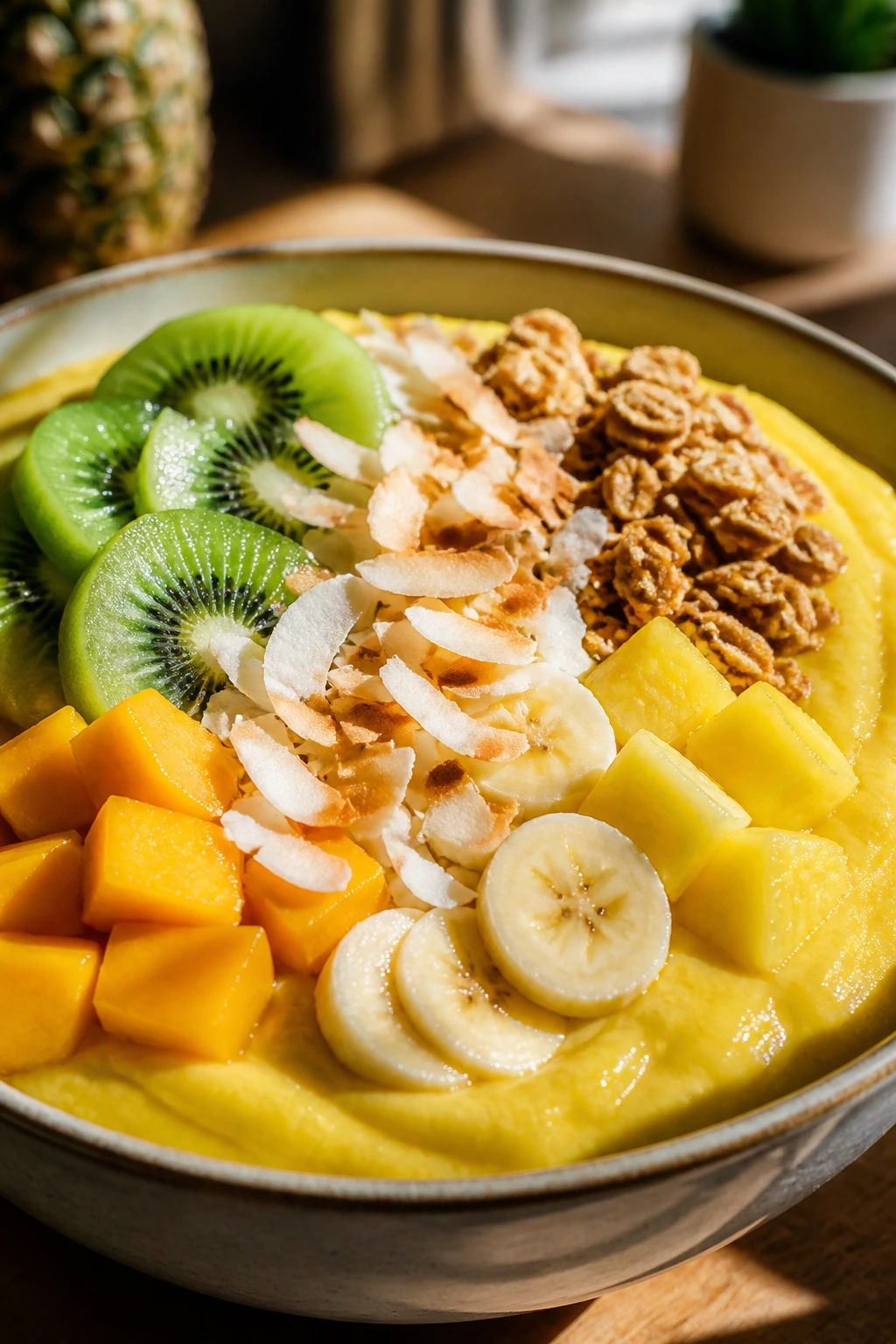
Built for toppings that stay put: The base is thick enough for kiwi, coconut flakes, granola, and seeds without collapsing into a puddle before you sit down.
Easy to turn into a drink: Add a splash of coconut water or extra coconut milk and you’ve got a tropical smoothie instead of a bowl, which is handy when the weather gets brutally hot.
Fast, but not flimsy: Once the fruit is frozen, the whole thing comes together in minutes. The work is in the ratio, not the labor.
The Cold Start That Keeps It Spoonable
A smoothie bowl looks casual, but the texture is doing the heavy lifting. Start cold and the spoon leaves ridges. Start warm and you’re one minute away from tropical soup. That’s the whole game.
Yield: 2 large bowls
Prep Time: 10 minutes
Cook Time: 0 minutes
Total Time: 10 minutes, plus 10 minutes to chill the serving bowls
Difficulty: Beginner — the process is simple, but the fruit-to-liquid ratio matters more than people expect.
Chill/Rest Time: 10 minutes for the bowls, optional but worth it
Best Served: Immediately after blending, while the base still holds its shape
The Ingredient List That Keeps It Thick
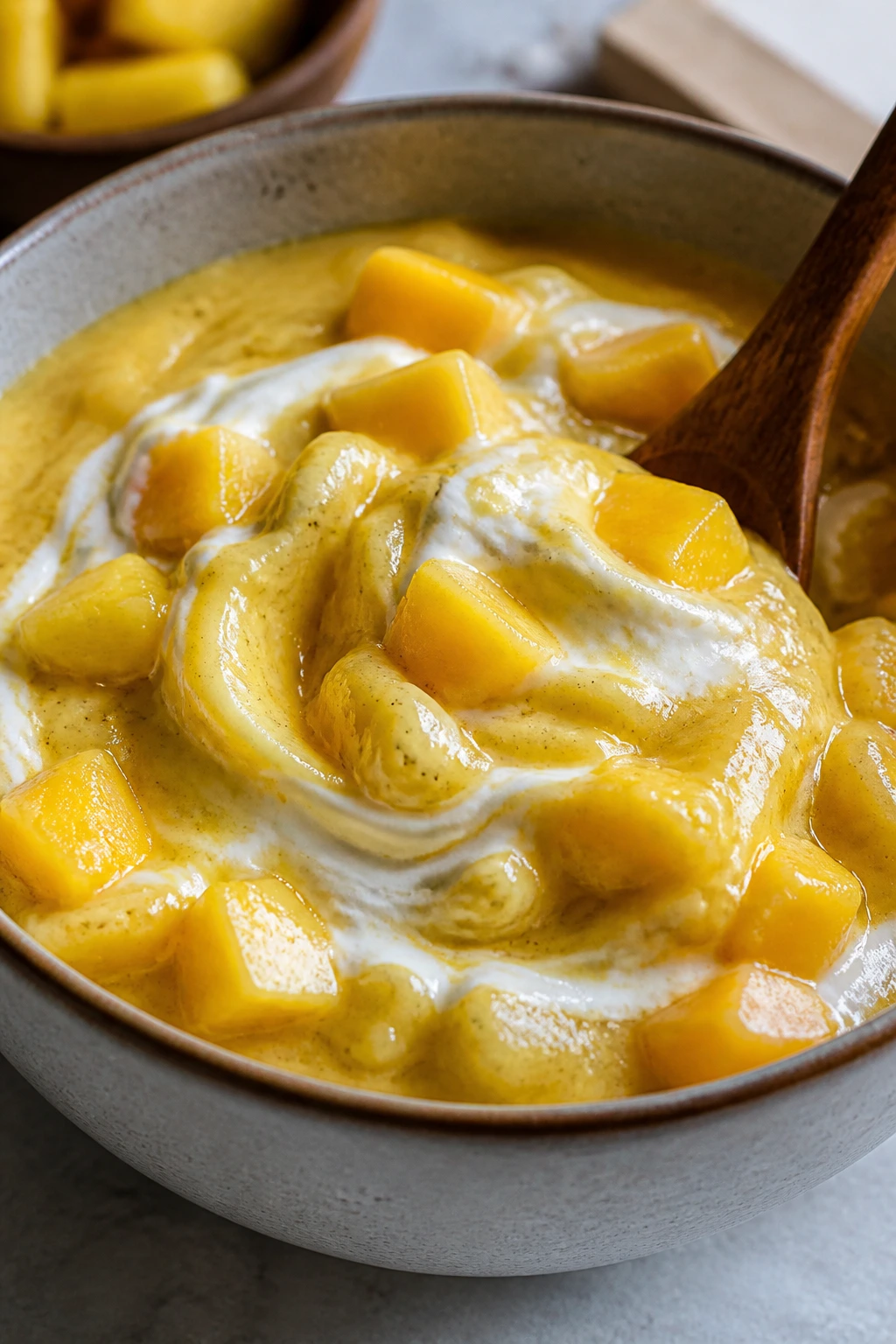
For the Smoothie Bowl Base:
- 1½ cups frozen mango chunks
- 1 cup frozen pineapple chunks
- 1 medium banana, peeled, sliced, and frozen
- 1/3 cup full-fat canned coconut milk, well shaken
- 1/4 cup plain Greek yogurt or coconut yogurt
- 1 tablespoon fresh lime juice
- 1 teaspoon honey or maple syrup, optional
- 1/8 teaspoon fine sea salt
- 1 teaspoon freshly grated ginger, optional
For the Toppings:
- 1 kiwi, peeled and sliced
- 1/2 cup fresh strawberries, sliced
- 1/4 cup toasted coconut flakes
- 2 tablespoons granola
- 1 tablespoon chia seeds
- 1 tablespoon hemp seeds or pumpkin seeds
- 2 tablespoons passion fruit pulp or extra diced mango
- Small mint leaves, optional
Why Each Ingredient Matters More Than You’d Think
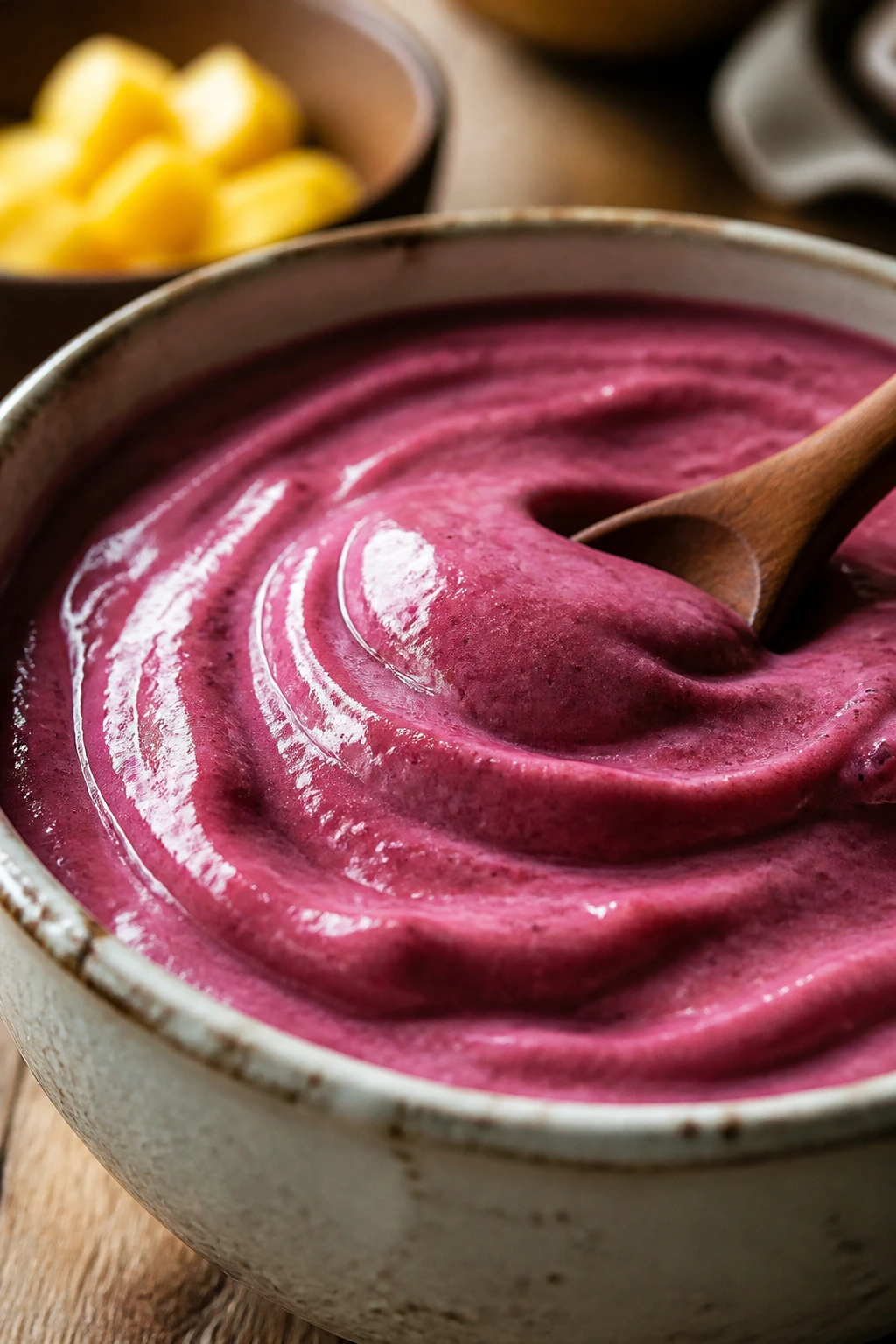
Frozen Fruit Base
What to use: 1½ cups frozen mango chunks, 1 cup frozen pineapple chunks, and 1 medium frozen banana, sliced before freezing.
Preparation: Freeze the fruit in a single layer first if you can. Once it’s hard, bag it up so the pieces don’t weld into one giant block that forces you to add too much liquid.
Substitutions: Frozen peach or papaya can stand in for part of the mango, and frozen strawberries can replace some pineapple if you want more tartness. If bananas bother you, use 1/4 avocado plus an extra 1/2 cup mango for body.
Tips: Mango should taste perfumed and sweet, not fibrous and dull. If the frozen fruit tastes like nothing on its own, the bowl will taste like cold sugar with decoration.
The fruit is the engine here. Mango gives that thick, almost custardy body that makes the spoon drag a little. Pineapple keeps the whole thing from going heavy. Banana fills the gaps so the bowl feels creamy instead of icy, but I wouldn’t push banana too hard; too much and the tropical notes flatten out.
Creamy Binder
What to use: 1/3 cup full-fat canned coconut milk and 1/4 cup plain Greek yogurt or coconut yogurt.
Preparation: Shake the coconut milk can before opening it. If the can has separated, scoop the thick cream and the liquid together so the bowl gets both richness and moisture.
Substitutions: Coconut cream makes the bowl richer; coconut water makes it lighter and more drinkable. Kefir or skyr can work if you want a tangier, higher-protein base.
Tips: Carton coconut milk is too thin for this job. It tastes fine in coffee. In a smoothie bowl, it can make the whole mixture slump.
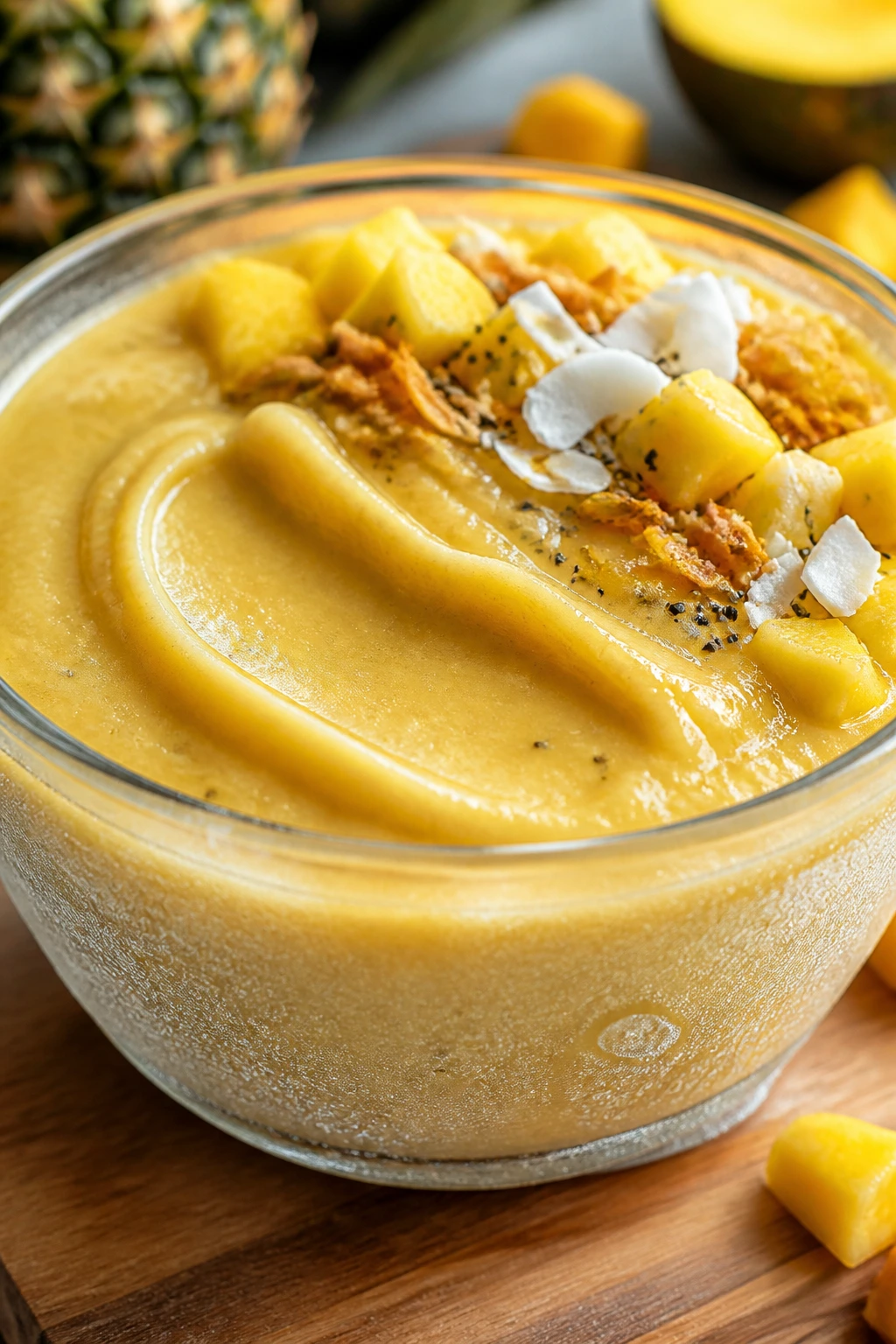
The yogurt does two things at once: it adds body and gives the fruit a little tang. Greek yogurt makes the spoonful firmer and more breakfast-like. Coconut yogurt keeps it vegan and adds a soft coconut note that plays nicely with mango, especially if you’re leaning into the tropical side instead of the tart side.
Flavor Balancers
What to use: 1 tablespoon fresh lime juice, 1 teaspoon honey or maple syrup, 1/8 teaspoon fine sea salt, and 1 teaspoon freshly grated ginger, optional.
Preparation: Juice the lime right before blending so it tastes sharp, not tired. Grate the ginger finely; stringy ginger bits in a cold bowl are unpleasant in the same way tiny ice shards are unpleasant.
Substitutions: Lemon works if that’s what’s in the fruit bowl. If your mango is already very sweet, skip the added sweetener entirely.
Tips: That pinch of salt is doing more than seasoning. It makes the pineapple pop and keeps the coconut from tasting flat.
A lot of smoothie bowls fail right here. People think the fruit will carry everything. It won’t. Lime juice gives the bowl lift, and salt makes the fruit taste more like itself. Ginger is optional, but I like it when I want the finish to feel a little brighter and less one-note.
Toppings and Crunch
What to use: 1 kiwi, 1/2 cup sliced strawberries, 1/4 cup toasted coconut flakes, 2 tablespoons granola, 1 tablespoon chia seeds, 1 tablespoon hemp seeds or pumpkin seeds, 2 tablespoons passion fruit pulp or extra diced mango, and a few mint leaves if you want them.
Preparation: Slice the fruit thinly so it drapes instead of slumps. Toast the coconut in a dry skillet for 2 to 3 minutes over medium-low heat until it smells nutty and turns pale gold at the edges.
Substitutions: Almonds, macadamias, cacao nibs, or pepitas can replace the granola. Blueberries or dragon fruit can stand in for kiwi if you want a different color pattern.
Tips: Keep crunchy things dry until the last second. Once granola sits on a wet bowl for five minutes, it stops being crunchy and starts acting like damp cereal.
Toppings are not a decoration contest. They’re contrast. You want one cold, creamy base, one sharp fruit bite, one crunchy thing, and one nutty finish. That mix is what makes a smoothie bowl worth eating with a spoon instead of drinking through a straw.
The Tools That Keep It Frozen, Not Soupy
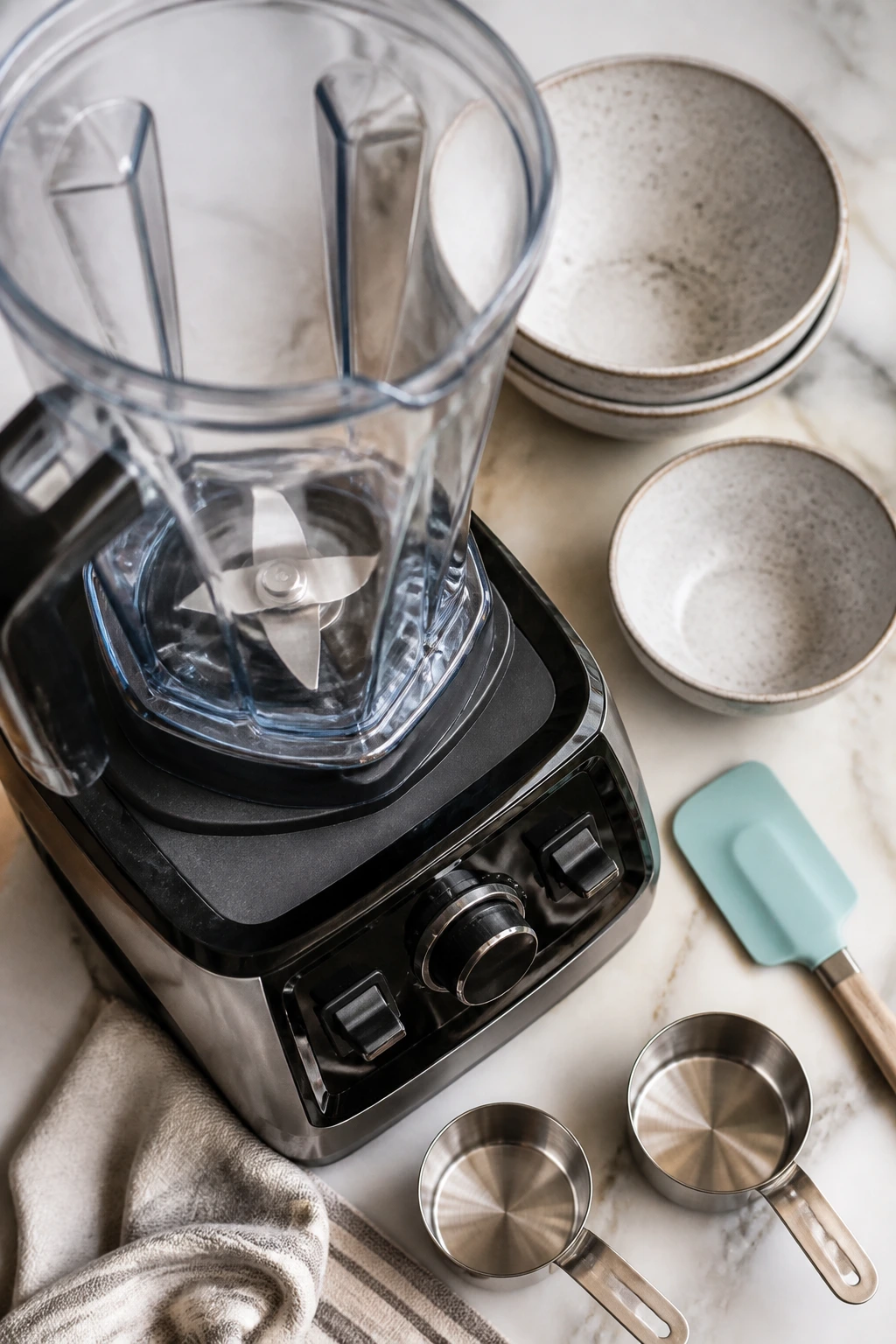
- High-speed blender — This is the easiest path to a thick base. A strong blender moves frozen fruit without forcing you to drown it in liquid.
- Silicone spatula — Thick bowls cling to the sides of the jar. A flexible spatula gets them unstuck without adding more liquid.
- Freezer-safe serving bowls — Chilled ceramic or metal bowls hold the mixture longer than room-temperature bowls.
- Measuring cups and spoons — The difference between 1/3 cup and 1/2 cup liquid is huge here.
- Sharp knife and cutting board — For slicing kiwi, strawberries, and banana before freezing or serving.
- Microplane or fine grater — Useful for ginger and, if you like, a little lime zest.
- Tamper, optional — Handy if your blender has one. It helps push frozen fruit down without stopping to stir every five seconds.
I’m a fan of chilling the bowls in the freezer before you even touch the blender. It’s a tiny step that buys you a better first bite. If your kitchen is warm or the bowls are thin glass, skip that and the base starts melting at the edges faster than you’d expect.
The Exact Blending Order That Makes It Spoonable
Phase 1: Chill and Prep
-
Place two serving bowls in the freezer for at least 10 minutes. The bowls should feel distinctly cold when you lift them out, not just cool to the touch.
-
Slice the kiwi and strawberries, then set the toppings aside. If you’re toasting coconut, do it now in a dry skillet over medium-low heat for 2 to 3 minutes, stirring often until it smells nutty and the edges turn pale gold.
Phase 2: Blend the Base
-
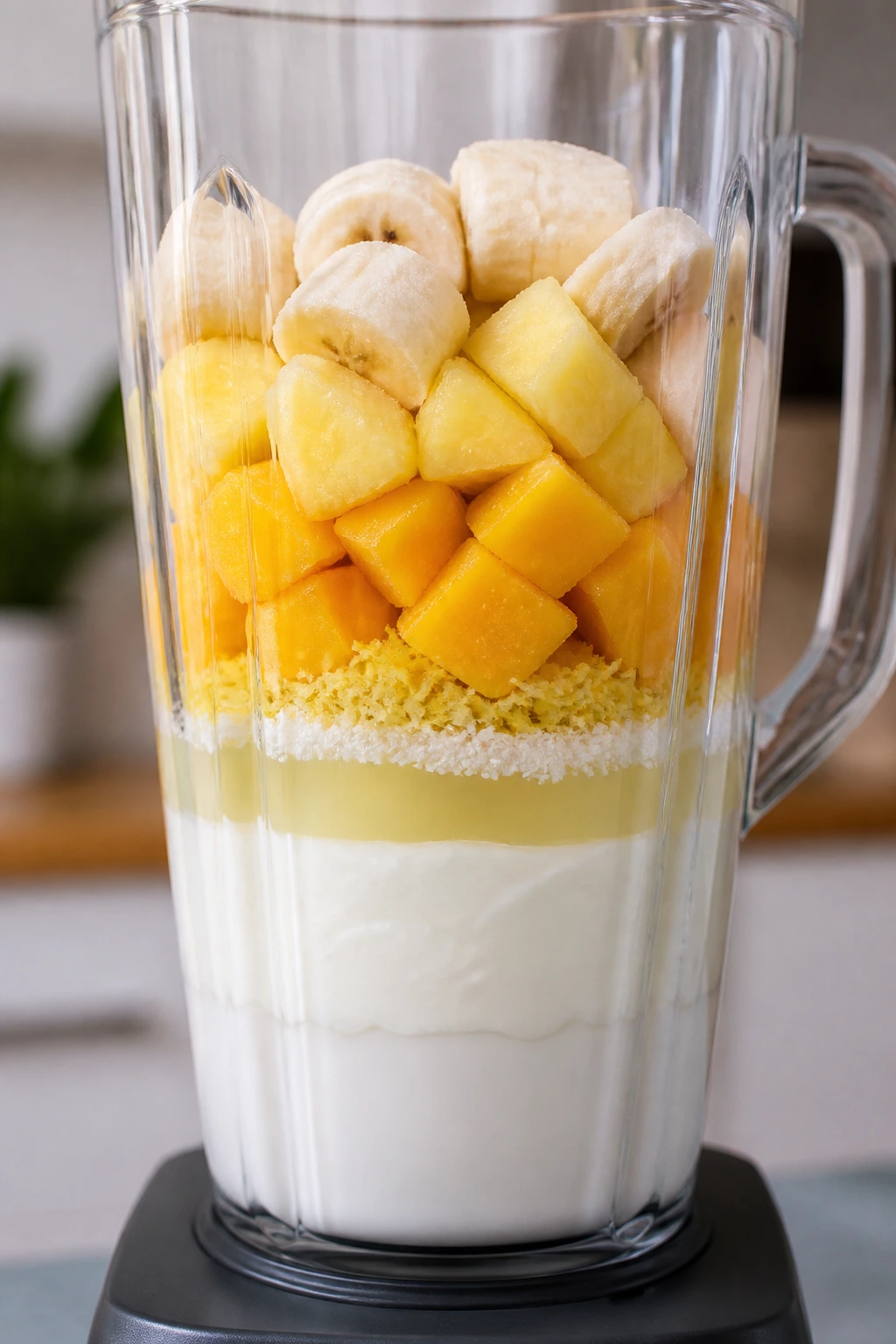
Add the coconut milk, yogurt, lime juice, salt, and ginger to the blender first. The liquid goes in first so the blades have something to catch.
-
Pile in the frozen mango, frozen pineapple, and frozen banana on top. Press everything down lightly, then pulse 5 or 6 times before blending on low for about 10 seconds. Move to high only when the fruit starts breaking up. Do not add more liquid unless the blades stop moving and stay stuck.
-
Stop the blender as soon as the mixture looks like thick soft-serve. It should mound on a spoon and move slowly when you tilt the jar. If it’s glossy and sloshing, it’s already too thin.
Phase 3: Assemble and Serve
-
Divide the mixture between the chilled bowls and use the back of a spoon to make a shallow swirl on top. That swirl gives the toppings a place to sit instead of sliding all over the surface.
-
Add the kiwi, strawberries, coconut flakes, granola, seeds, passion fruit, and mint in small clusters. Eat immediately. If you want a firmer bowl, freeze it for 3 to 5 minutes after topping; if you want it softer, let it sit for 60 to 90 seconds and then dig in.
A weak blender can still do this, but don’t bully it. Let the frozen fruit sit on the counter for 2 minutes if the blades keep stalling. That’s enough to take the edge off without making the bowl watery.
How to Build a Bowl That Looks As Good As It Tastes
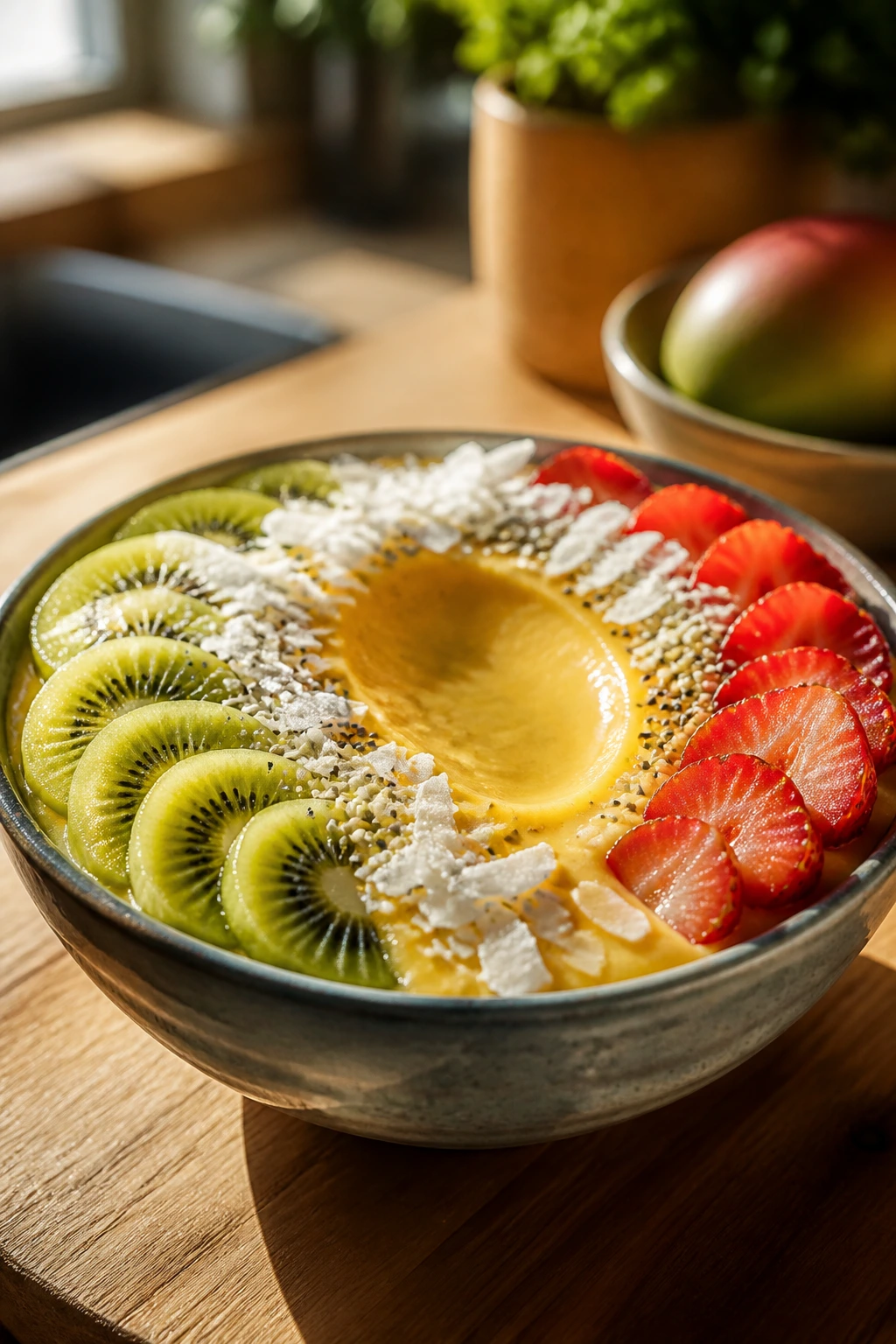
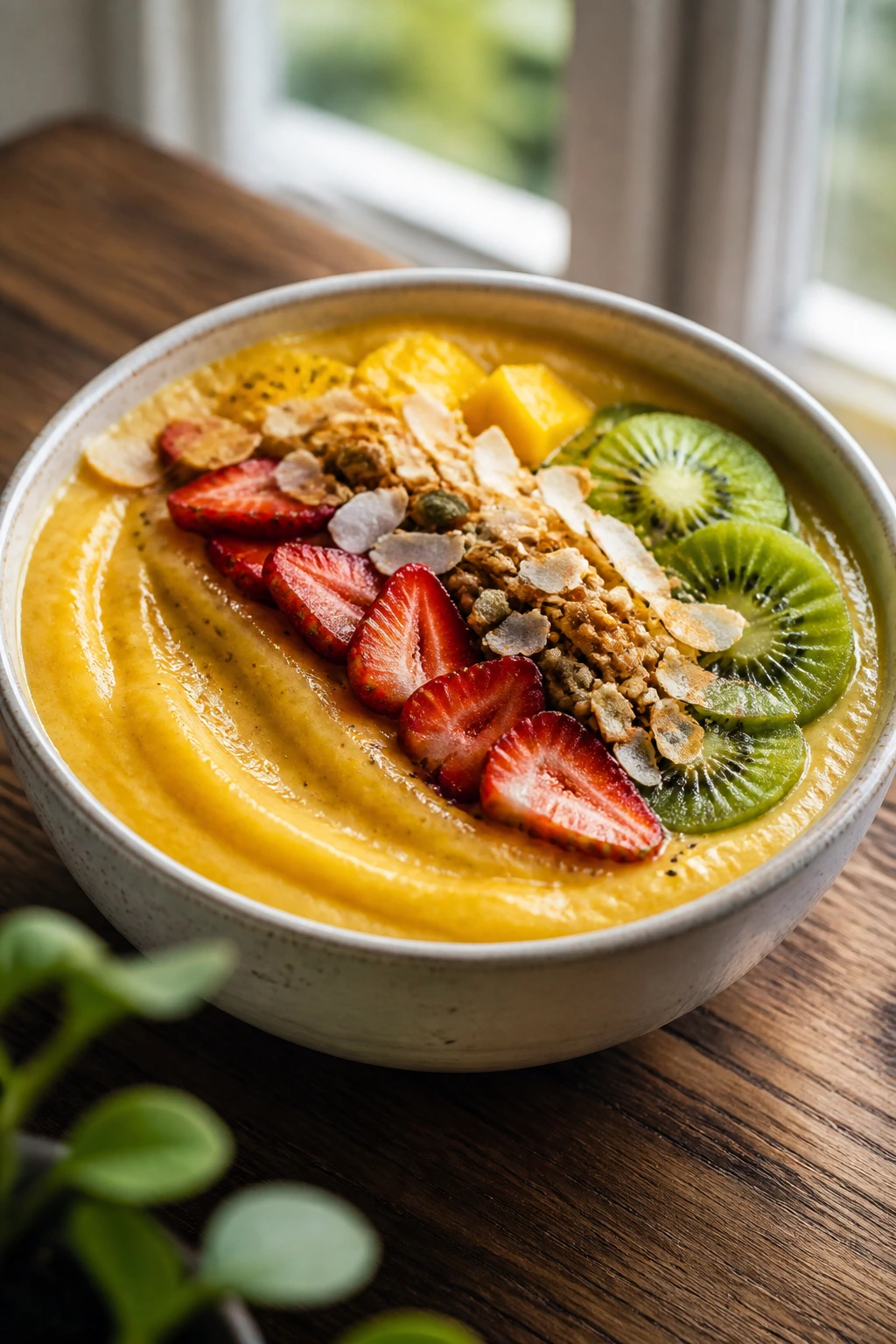
Presentation: Spoon the base into a chilled bowl and keep the center slightly lower than the edges. That shallow dip is useful; it gives the toppings a place to land and keeps the bowl from looking like a fruit landslide. I like to make a clean line of kiwi on one side, strawberries on the other, then scatter coconut and seeds in a loose crescent across the top.
Accompaniments: If this is breakfast, a piece of buttered toast or a soft-boiled egg keeps the meal from turning into straight fruit sugar. For a snack, a small bowl of salted nuts or a few rice cakes with almond butter fits better than another sweet side. If you want to keep the whole spread light, just set out sparkling water with lime or a plain iced tea.
Portions: This recipe makes 2 generous bowls, the kind that hold a full layer of toppings without looking crowded. For 4 people, double the base and lay out the toppings in separate bowls so everyone can build their own. If you want smaller snack portions, split the mixture into 3 bowls and hold back some granola so the texture stays balanced.
Beverage Pairing: Coconut water over ice works best if you want to stay in the tropical lane. Unsweetened iced green tea with mint is my favorite if the bowl is sweet. Cold brew can work too, but keep it light; a heavy coffee drink can make the fruit taste flatter than it should.
Practical Tweaks That Make the Flavor Pop
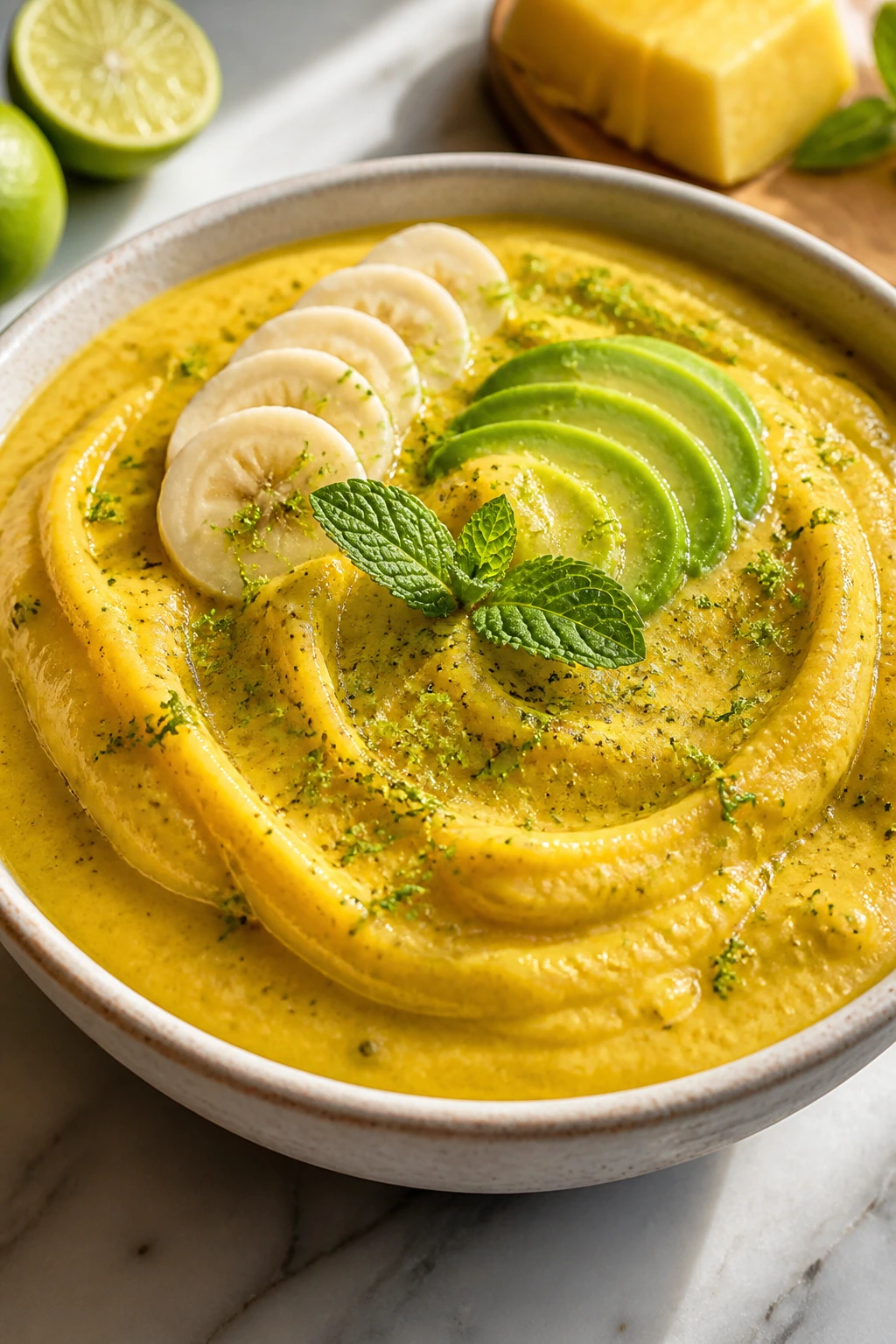
Flavor Enhancement: A tiny grating of lime zest over the finished bowl changes the smell immediately. You get that sharp citrus hit before the spoon even reaches the fruit, and it makes the mango seem sweeter without adding sugar.
Customization: Stir 1 scoop vanilla protein powder into the yogurt before blending if you want a breakfast that sticks with you longer. For extra silkiness, add 1/4 avocado; it won’t make the bowl taste like avocado, but it will make the texture almost custard-like. If you like a sharper finish, add an extra teaspoon of lime juice instead of more sweetener.
Serving Suggestions: I like a finishing line of toasted coconut and a few passion fruit seeds right on top. The seeds give you a tart pop, and the coconut keeps the whole thing from tasting one-note. A mint leaf or two is enough; too much mint and the bowl starts smelling like toothpaste.
Make-It-Yours: For dairy-free, use coconut yogurt. For higher protein, use Greek yogurt and hemp seeds. For lower sugar, skip the honey and lean on fully ripe mango. If you want it closer to a drink, loosen the base with 2 to 4 tablespoons coconut water after blending and pour it into a tall glass.
The trick is not piling on more and more things. It’s choosing one or two moves that change the texture or the balance. A little lime zest. A spoonful of protein powder. A handful of good coconut flakes. That’s enough.
Common Mistakes That Turn a Bowl Thin or Flat
-
Too much liquid in the blender: The bowl turns into a fast-moving smoothie that won’t hold toppings. Fix it by starting with the 1/3 cup coconut milk and only adding more if the blades won’t move at all.
-
Using fresh fruit as the base: Fresh mango and pineapple make the mixture loose and warm. The base gets dull before you even add the toppings. Freeze the fruit first, and if you need to buy it already frozen, that’s fine too.
-
Overblending the fruit: The mixture can warm up from the blade friction and lose that thick, soft-serve texture. Stop as soon as the fruit turns smooth enough to scoop. You do not need to chase silkiness forever.
-
Skipping the lime and salt: Without acid and salt, the bowl tastes sweet but flat, like fruit that forgot to introduce itself. The fix is small and easy: the full tablespoon of lime juice and the pinch of salt should go in every time.
-
Loading the toppings too soon: If you make the bowl and then stand around arranging fruit for five minutes, the surface softens and the crunch disappears. Have everything prepped before you blend. The whole point is to serve fast.
-
Choosing watery toppings as if they were fillers: Watermelon, overripe peaches, and giant handfuls of loose juice-heavy fruit can wash the bowl down. Keep those for the side if you want them, and use firmer fruit like kiwi, strawberries, mango, or passion fruit on top.
Variations for Different Cravings
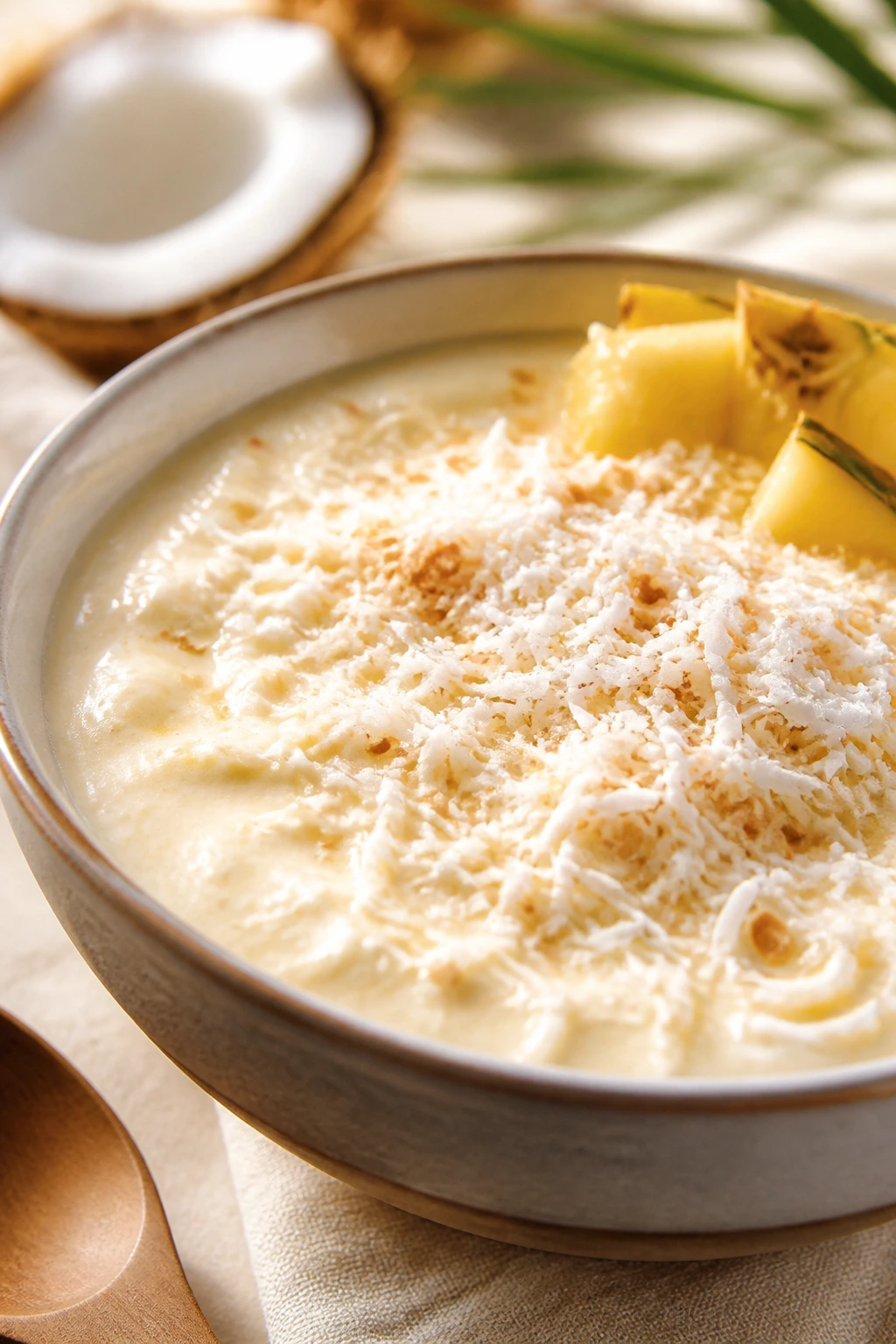
Piña Colada Bowl: Swap the Greek yogurt for coconut yogurt and add 2 tablespoons shredded coconut to the base. The result is richer and more coconut-forward, with a softer finish that feels almost dessert-like.
Green Tropic Bowl: Blend in 1 packed cup baby spinach and 1/4 avocado. The color goes deep green, but mango and pineapple still hold the flavor in place. This is the version I make when I want a little more substance without losing the tropical edge.
Passion Fruit Sunrise: Add 2 tablespoons passion fruit pulp to the blender and another spoonful on top. The extra acidity cuts through the sweetness and makes the bowl sharper, which is useful if your mango is very ripe and leaning sugary.
Protein Reef Bowl: Add 1 scoop vanilla protein powder and reduce the coconut milk to 1/4 cup. Protein powder thickens the blend fast, so stop and scrape once more than you would with the base recipe. It’s the one I use after a workout, mostly because it doesn’t taste chalky when the fruit is cold enough.
Berry Island Bowl: Replace 1 cup of the mango with frozen strawberries or raspberries. The color goes darker and the flavor gets a little tarter, which is useful if you prefer something that tastes less like a vacation postcard and more like a sharp fruit bowl with attitude.
Make-Ahead, Storage, and Freezer Notes
A tropical smoothie bowl is at its best the moment it leaves the blender. After 10 to 15 minutes at room temperature, the edges soften and the toppings start slipping. After half an hour, you’re basically eating dessert soup with a spoon. So if you want the bowl texture, serve it fast.
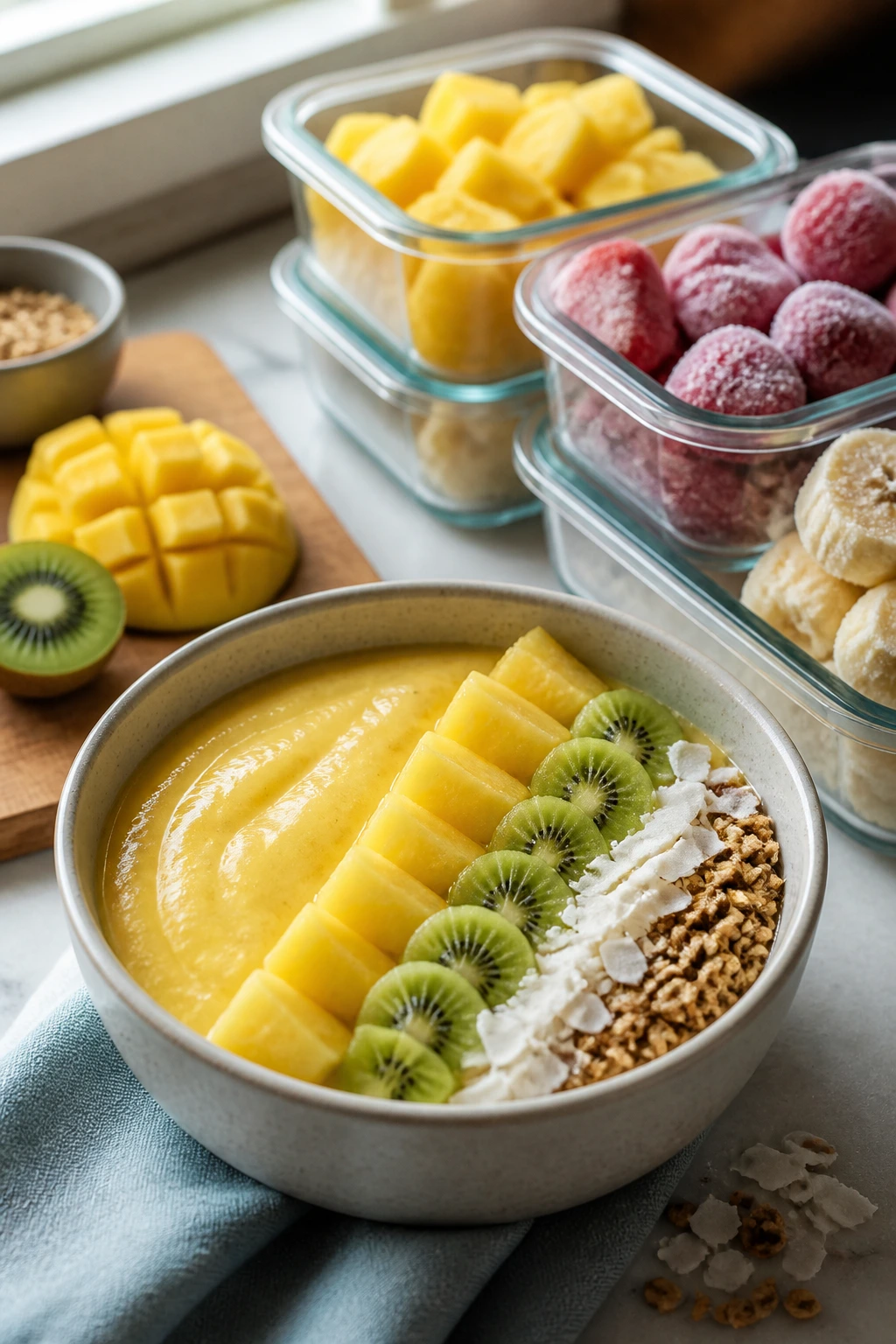
The good news is that most of the work can be done ahead. Freeze the mango, pineapple, and banana in single-serving bags for up to 2 months. You can also portion the coconut milk and yogurt into small containers so you’re not hunting for measuring cups before breakfast. The toppings hold differently: toasted coconut and granola stay crisp for about 1 week in airtight containers, while sliced strawberries and kiwi are best within 24 hours if you dry them well and keep them chilled.
If you have leftovers, spoon the base into an airtight container and press parchment or plastic wrap directly against the surface before sealing the lid. Freeze it for up to 1 week. To serve again, let it sit on the counter for 10 to 15 minutes, break it up with a spoon, then re-blend with 1 to 2 tablespoons coconut milk. Don’t microwave it. That turns a clean, cold bowl into sweet sludge.
For make-ahead brunch, the best move is to prep the toppings and freeze the fruit, then blend right before serving. If you absolutely need a full bowl ready ahead of time, keep it in the freezer for no more than 20 minutes after topping and accept that the texture will be firmer, not airy. That’s fine. It’s still better than letting it melt on the counter.
Frequently Asked Questions About Tropical Smoothie Bowls
Can I make this tropical smoothie bowl without banana?
Yes, and you should if banana isn’t your thing. Use an extra 1/2 cup frozen mango plus 1/4 avocado or an extra spoonful of yogurt to keep the texture thick. The bowl will be a little less sweet and a little more coconut-forward.
How do I make the bowl thicker if it keeps turning runny?
Cut the liquid back first. The coconut milk should stay close to 1/3 cup, and if your blender can handle it, even a touch less helps. Frozen fruit needs to stay frozen right up until blending, and using a chilled bowl matters more than people think.
Can I use fresh fruit instead of frozen fruit?
Fresh fruit works on top, not in the base. If you use fresh mango and pineapple for the blender, the mixture won’t have the cold body that makes a smoothie bowl hold its shape. Freeze the fruit first, or buy it frozen and save yourself the trouble.
What if my blender is weak and struggles with frozen fruit?
Start with the liquid and yogurt, then pulse the frozen fruit in smaller batches. Let the fruit sit out for 2 minutes if it’s rock-hard and the blades keep stalling. A tamper helps, but scraping the sides with a spatula between short blends works too.
Can I turn this into a drink instead of a bowl?
Absolutely. Add 2 to 4 tablespoons coconut water or a little extra coconut milk after blending, then pour it into a glass. The flavor stays the same, but the texture moves from spoonable to sippable. That’s the same base, just a different finish.
Is this recipe dairy-free or vegan?
It can be. Use coconut yogurt instead of Greek yogurt and maple syrup instead of honey, or skip the sweetener if your fruit is ripe enough. The rest of the recipe already leans dairy-free.
How far ahead can I prep the toppings?
Dry toppings like granola, chia seeds, hemp seeds, and toasted coconut can be prepped a week ahead. Sliced fruit is best within a day, and kiwi stays prettiest if you slice it close to serving time. If you want the cleanest look, prep the fruit after the base is already blended.
Why does my bowl taste flat even when the fruit is sweet?
Usually it’s missing acid, salt, or both. Lime juice wakes up the mango and pineapple, while the salt keeps the sweetness from collapsing into one soft note. If the fruit still tastes dull after that, the mango probably wasn’t ripe enough.
Can I make a big batch for a crowd?
You can, but I wouldn’t blend a giant batch all at once unless your blender is built for it. Freeze the fruit in individual portions and blend each batch right before serving so the bowls keep their shape. Once you serve a crowd, toppings should be set out separately anyway; people like building their own.
What’s the quickest way to rescue a bowl that got too thin?
Add a few more frozen mango chunks and a handful of ice-cold fruit, then pulse only until it thickens. If the bowl is already fully melted, stop trying to save the spoonable texture and turn it into a drink with coconut water instead. That’s a better fix than forcing a bad bowl to pretend it isn’t a smoothie.
A Bright Bowl Worth Making Again
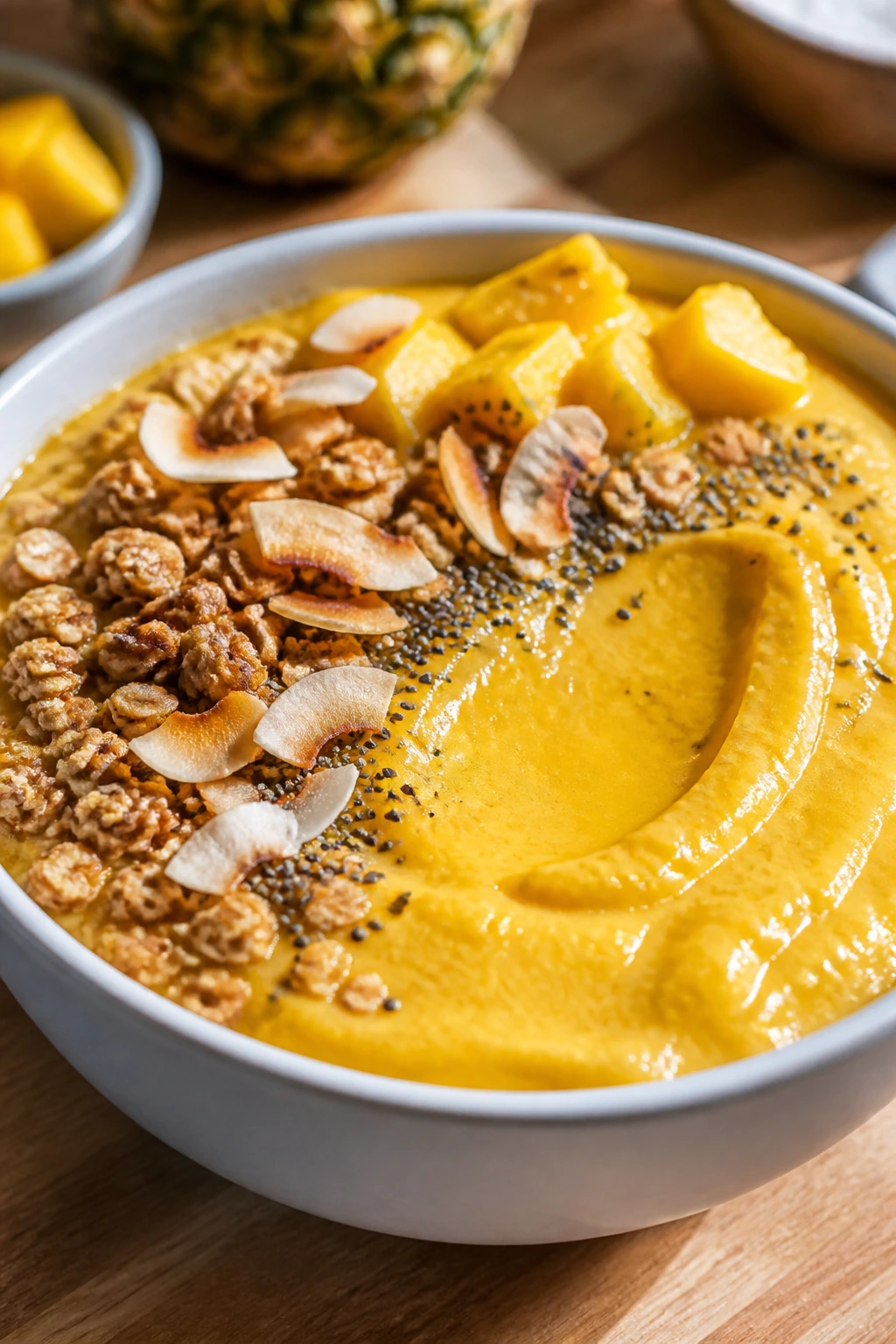
A good tropical smoothie bowl doesn’t need a lot of drama. It just needs frozen fruit that actually tastes like fruit, a careful hand with the liquid, and toppings that bring crunch instead of mud. Get those pieces right and the bowl feels clean, cold, and alive in a way that a lot of breakfast recipes don’t.
I like this one because it has range. You can keep it simple with mango, pineapple, and coconut, or push it sharper with lime, passion fruit, and extra seeds. And if the day calls for sipping instead of spooning, the same base loosens into a drink without losing its tropical edge.
Tropical Smoothie Bowl — Recipe Card
Recipe Name: Tropical Smoothie Bowl
Description: A thick, spoonable tropical smoothie bowl made with frozen mango, pineapple, banana, coconut milk, and lime, then topped with fresh fruit, coconut, granola, and seeds. It can also be loosened into a drink with a splash of coconut water.
Prep Time: 10 minutes
Cook Time: 0 minutes
Total Time: 10 minutes
Course: Breakfast, Snack
Cuisine: American
Servings: 2 servings
Calories: About 395 kcal per serving
Ingredients
For the Smoothie Bowl Base:
- 1½ cups frozen mango chunks
- 1 cup frozen pineapple chunks
- 1 medium banana, peeled, sliced, and frozen
- 1/3 cup full-fat canned coconut milk, well shaken
- 1/4 cup plain Greek yogurt or coconut yogurt
- 1 tablespoon fresh lime juice
- 1 teaspoon honey or maple syrup, optional
- 1/8 teaspoon fine sea salt
- 1 teaspoon freshly grated ginger, optional
For the Toppings:
- 1 kiwi, peeled and sliced
- 1/2 cup fresh strawberries, sliced
- 1/4 cup toasted coconut flakes
- 2 tablespoons granola
- 1 tablespoon chia seeds
- 1 tablespoon hemp seeds or pumpkin seeds
- 2 tablespoons passion fruit pulp or extra diced mango
- Small mint leaves, optional
Instructions
-
Chill 2 serving bowls in the freezer for 10 minutes. Prep the toppings and toast the coconut if needed.
-
Add the coconut milk, yogurt, lime juice, salt, and ginger to the blender first.
-
Add the frozen mango, pineapple, and banana on top. Pulse several times, then blend until thick and smooth, stopping to scrape if needed. Add no extra liquid unless the blender stalls.
-
Blend only until the mixture looks like soft-serve and holds a mound on a spoon.
-
Divide between the chilled bowls and top with kiwi, strawberries, coconut flakes, granola, chia seeds, hemp seeds, passion fruit, and mint.
-
Serve right away. For a firmer bowl, freeze for 3 to 5 minutes before serving.
Notes: For a drinkable version, add 2 to 4 tablespoons coconut water after blending. Keep the fruit frozen until the last second, and don’t swap in carton coconut milk if you want the bowl to stay thick.