



Plant-based dinners for beginners should feel like a relief, not a homework assignment.
If the pantry holds a can of chickpeas, a bag of rice, a block of tofu, a box of pasta, or a few lentils tucked in the back of a cupboard, dinner is already closer than it looks. The real shift is not in buying fancier ingredients. It’s in building meals that taste finished on their own — garlic sizzling in oil, beans simmering until they pick up the sauce, vegetables that turn sweet at the edges, and a sharp little hit of lemon or lime at the end.
That’s the sweet spot here. No fake-cheese acrobatics. No long ingredient lists that send you to three stores. Just sturdy, forgiving dinners that use ordinary food in smart ways, so a beginner can make something warm, filling, and worth repeating without feeling wiped out halfway through.
Why These Beginner Plant-Based Dinners Work So Well
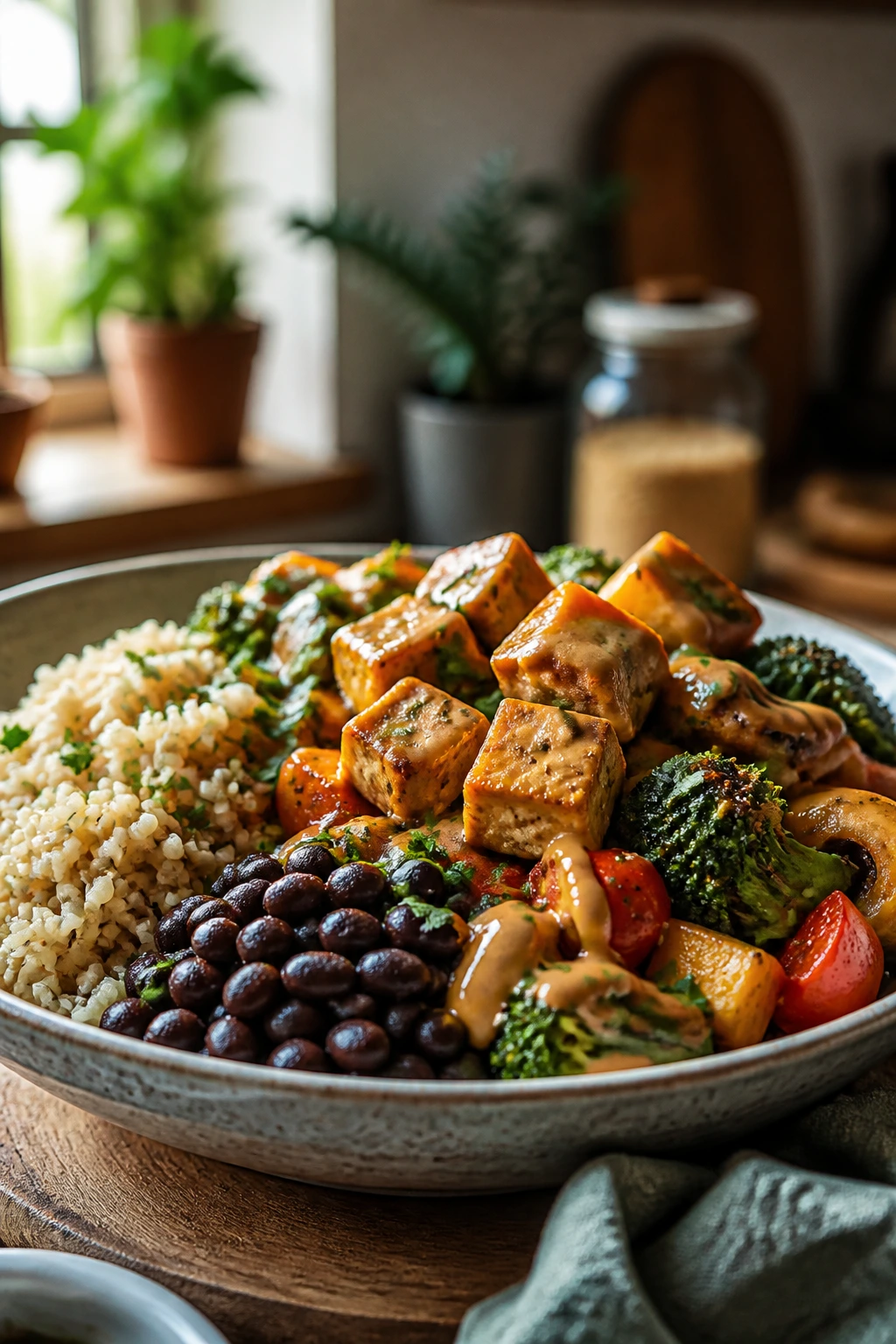
-
Pantry Staples Do the Heavy Lifting: Canned beans, dry pasta, rice, lentils, and shelf-stable coconut milk keep the shopping list short and the cooking calm.
-
One Sauce Changes Everything: A peanut sauce, curry broth, tomato base, or lime dressing can make a simple bowl taste like a real meal instead of a pile of ingredients.
-
The Timing Is Forgiving: Lentils soften quickly, chickpeas come canned, tofu browns in a predictable way, and roasted vegetables tell you when they’re done by smell and color.
-
Leftovers Are Usually Welcome: Most of these dinners hold up well the next day, which matters when you’re still building confidence in the kitchen.
-
You Can Mix and Match: Rice can become a bowl, tacos can become a salad, and roasted vegetables can land over pasta or inside tortillas with almost no extra effort.
-
They Taste Like Dinner, Not Compromise: Good plant-based cooking doesn’t feel missing. It tastes layered, salty, bright, and filling in its own right.
1. Creamy Coconut Chickpea Curry
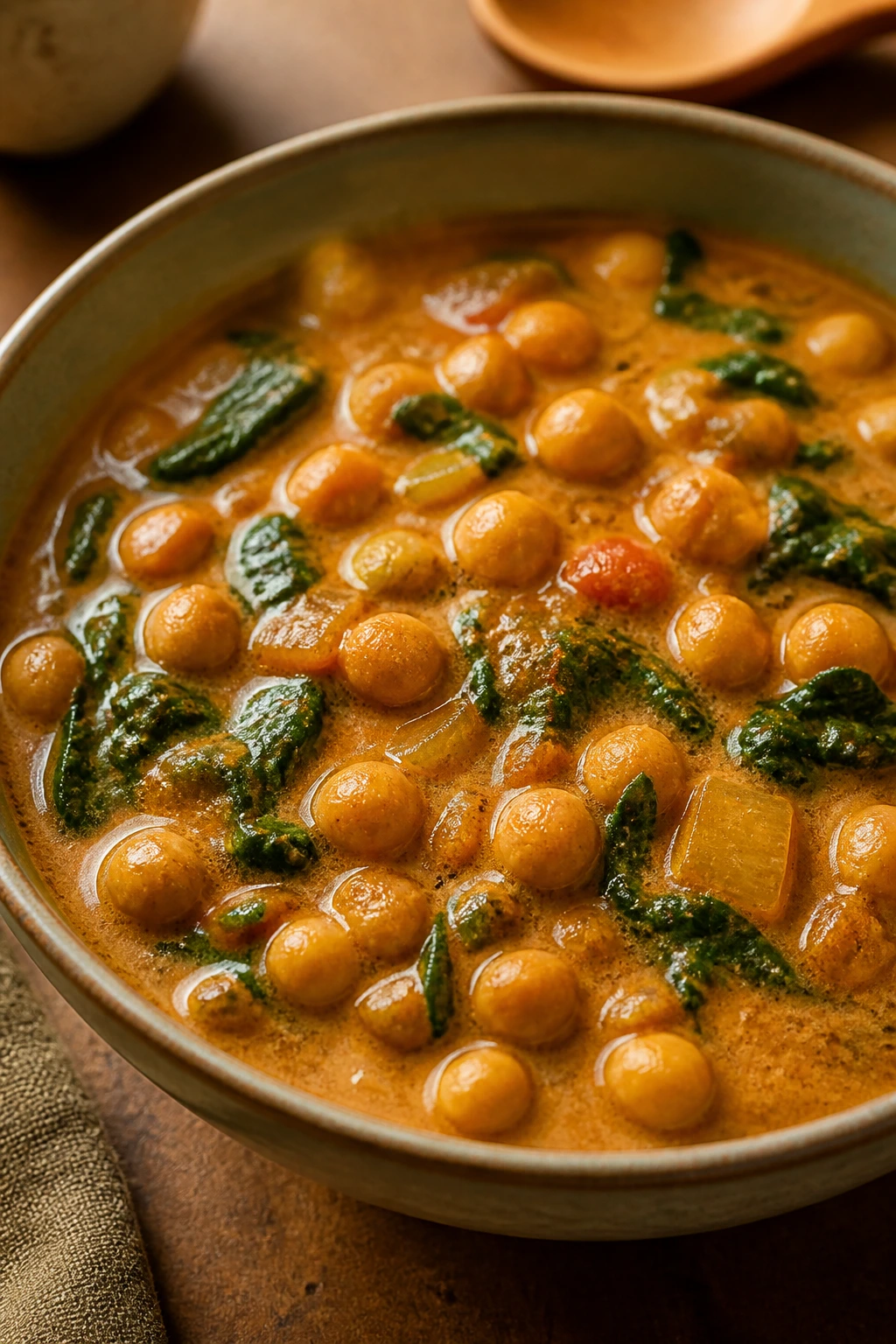
A pot of coconut chickpea curry can rescue a tired evening fast. It smells like onion, garlic, ginger, and warm spice before the chickpeas even go in, which is half the appeal. The sauce turns silky without needing cream, and the spinach disappears into the curry like it was always meant to be there.
This is the kind of plant-based dinner for beginners that teaches a useful lesson: you do not need a long list of tricks to make dinner taste complete. A few strong flavors, a gentle simmer, and a good squeeze of lime do most of the work.
Why It Works
Coconut milk gives the sauce body, while chickpeas stay firm enough to feel substantial. Curry powder and tomato paste build flavor early, and the spinach at the end gives the dish a fresh finish without extra cooking time. Do not boil the curry hard once the coconut milk is in; a low simmer keeps the sauce smooth and prevents it from looking split or grainy.
Key Ingredients
- 1 tablespoon olive oil — enough to soften the onions without making the curry greasy
- 1 medium yellow onion, diced — the base flavor that makes the whole pot taste deeper
- 3 cloves garlic, minced — sharp at the start, sweet after a minute in the pan
- 1 tablespoon fresh ginger, grated — brings warmth and a clean edge
- 2 tablespoons mild curry powder — the main spice note, so choose one you like the smell of
- 1 tablespoon tomato paste — a small amount that adds color and depth
- 2 cans chickpeas, drained and rinsed — canned beans keep this fast and dependable
- 1 can full-fat coconut milk — gives the curry its creamy texture
- 1 cup vegetable broth — thins the sauce just enough to simmer properly
- 3 cups baby spinach — wilts down quickly and adds color
- 1 tablespoon lime juice — wakes up the whole pot at the end
- 1/2 teaspoon kosher salt and 1/4 teaspoon black pepper — enough to season without hiding the spices
Quick Steps
-
Soften the aromatics: Heat the olive oil in a large skillet or saucepan over medium heat. Add the onion and cook for 5 to 6 minutes, stirring now and then, until it turns translucent and lightly golden at the edges.
-
Build the spice base: Stir in the garlic, ginger, curry powder, and tomato paste. Cook for 1 minute, just until everything smells toasty and the tomato paste darkens a shade.
-
Add the chickpeas and liquid: Pour in the chickpeas, coconut milk, and vegetable broth. Add the salt and pepper, then stir well and bring the pot to a gentle simmer.
-
Let it thicken: Cook for 12 to 15 minutes, uncovered, stirring every couple of minutes. The sauce should look glossy and coat the spoon instead of running off it like broth.
-
Finish with greens and acid: Add the spinach in handfuls and stir until wilted, about 1 minute. Turn off the heat and stir in the lime juice.
-
Taste before serving: Adjust with a pinch more salt if needed. Serve hot over rice, with chopped cilantro on top if you like a fresh finish.
Tips and Variations
- Make it heartier: Add 1 small sweet potato, peeled and diced, with the chickpeas. It softens in the sauce and gives the curry a sweeter edge.
- Change the heat: Stir in 1 to 2 teaspoons of red curry paste or a pinch of cayenne if you want more bite.
- Leftover note: The curry thickens overnight, which is usually a good thing. Add a splash of water or broth when reheating.
2. Black Bean Burrito Bowls with Lime Rice
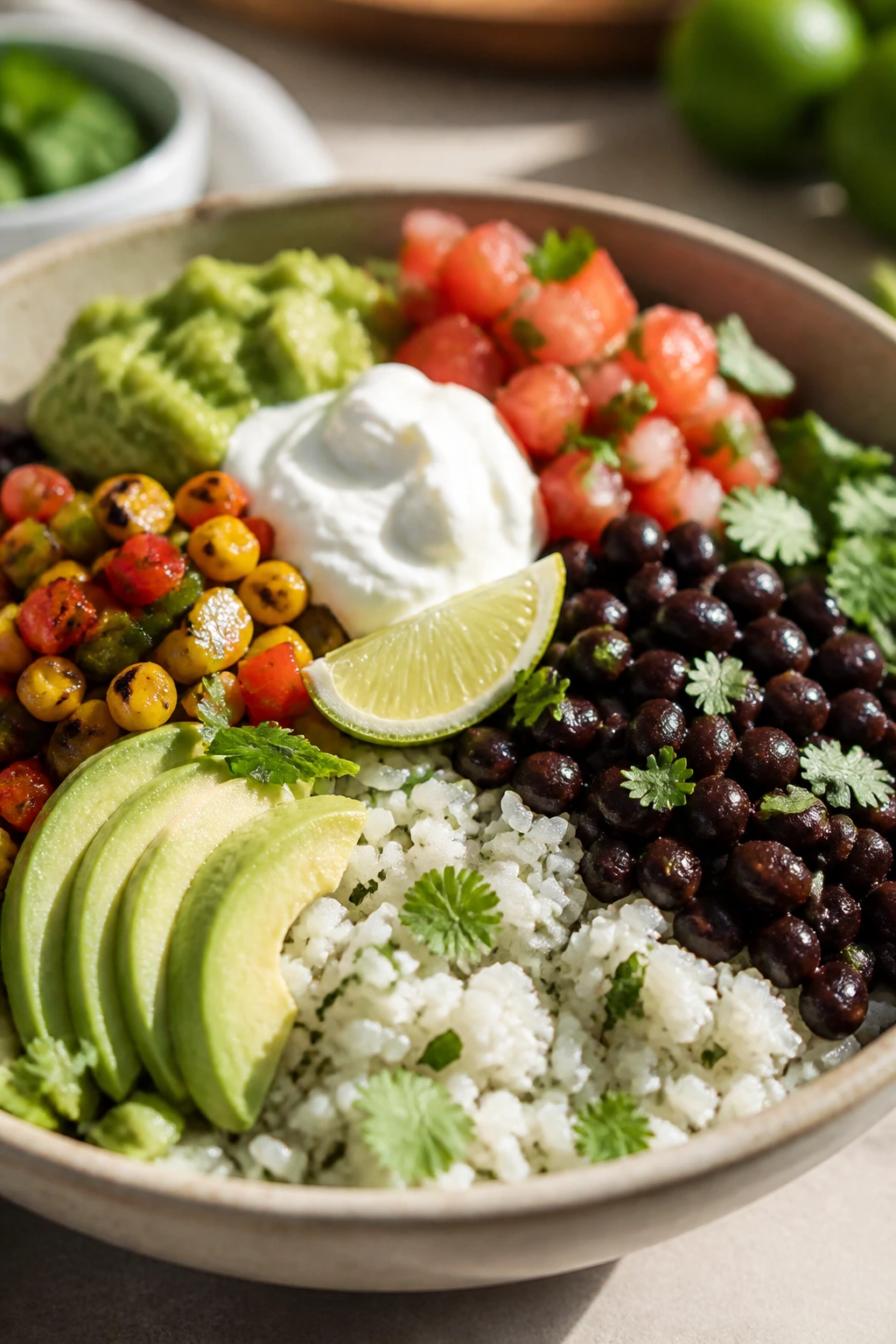
What if dinner were a bowl you built in layers? That’s the charm of burrito bowls: soft rice, warm beans, bright salsa, cool avocado, and a little crunch on top if you want it. It feels casual, but the flavor lands in all the right places.
This is also one of the easiest plant-based dinners for beginners because nothing has to be perfect. Rice can sit covered for a few minutes, beans can warm gently, and the toppings do the talking.
Why It Works
Black beans bring protein and a meaty texture without any fuss, while lime rice keeps the bowl from tasting heavy. Salsa works like a built-in sauce, which means there’s no separate dressing to make. The balance matters here: warm, soft, salty, creamy, and bright all in one bowl.
Key Ingredients
- 1 cup long-grain white rice — fluffy rice gives the bowl a clean base
- 2 cups water — the standard ratio for simple stovetop rice
- 1/2 teaspoon kosher salt — seasons the rice from the start
- 1 tablespoon olive oil — keeps the rice from clumping too tightly
- 1 lime, zested and juiced — gives the rice and bowl a fresh edge
- 2 cans black beans, drained and rinsed — the main protein and the part that makes the bowl filling
- 1 teaspoon ground cumin — adds a smoky note without making the bowl spicy
- 1 teaspoon chili powder — gives the beans a little warmth
- 1 cup salsa — acts as sauce and seasoning
- 1 1/2 cups frozen corn — sweet, easy, and always ready
- 1 avocado, sliced — brings creaminess and contrast
- 2 scallions, thinly sliced — a sharp green finish
- 1/4 cup chopped cilantro — optional, but worth it if you like fresh herbs
Quick Steps
-
Cook the rice: Rinse the rice under cool water, then combine it with the water, salt, and olive oil in a saucepan. Bring it to a boil, cover, reduce to low, and cook for 15 minutes.
-
Finish the rice: Turn off the heat and let the rice sit covered for 5 minutes. Fluff with a fork, then stir in the lime zest and juice.
-
Warm the beans: Put the black beans in a skillet with cumin, chili powder, and salsa. Heat over medium heat for 5 to 7 minutes, stirring until the beans are hot and lightly saucy.
-
Heat the corn: Warm the frozen corn in a dry skillet for 3 to 4 minutes, or use it straight from the freezer if you do not care about a little extra chill.
-
Build the bowls: Spoon rice into bowls, then top with beans, corn, avocado, scallions, and cilantro.
-
Taste and adjust: Add a pinch of salt or another squeeze of lime if the bowl tastes flat. A good burrito bowl should taste layered, not just mixed.
Tips and Variations
- Add crunch: Crushed tortilla chips on top give the bowl a better bite than plain rice alone.
- Swap the grain: Brown rice or quinoa works fine, though brown rice needs a little more cook time.
- Make it meal-prep friendly: Keep the avocado separate until serving so it does not brown in the fridge.
3. Sheet Pan Gnocchi with Broccoli and Chickpeas
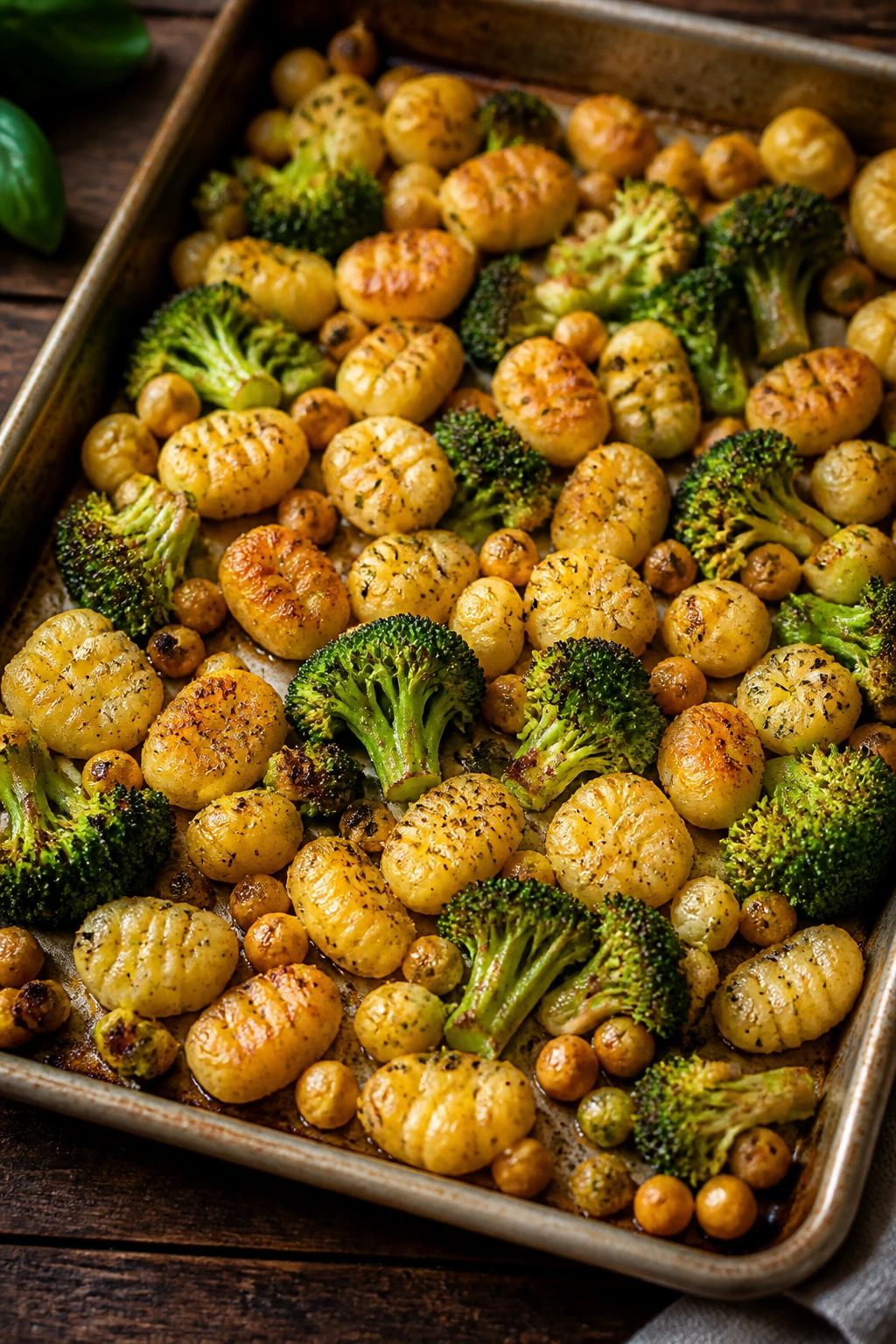
The smell of roasted broccoli and browned gnocchi is enough to make a kitchen feel busy in a good way. This is the kind of dinner that looks more involved than it is, which is a useful trick when you’re still learning your way around plant-based cooking.
The edges get crisp, the onion softens, the chickpeas dry out just enough to taste nutty, and the whole pan comes out looking like you worked harder than you did. Good sheet-pan dinners have that effect.
Why It Works
Shelf-stable gnocchi roasts beautifully without boiling first, which saves time and one dirty pot. Broccoli and chickpeas hold up to the same oven temperature, so the whole dinner can cook together. The oil and spices coat everything evenly, which matters because this dish depends on a strong first layer of seasoning.
Key Ingredients
- 1 pound shelf-stable potato gnocchi — check the package if you want an egg-free version
- 1 can chickpeas, drained, rinsed, and patted dry — drier chickpeas roast better
- 4 cups broccoli florets — cut into bite-size pieces so they roast at the same speed
- 1 red onion, cut into thin wedges — softens and sweetens in the oven
- 2 tablespoons olive oil — enough to coat the pan without making it soggy
- 1 teaspoon garlic powder — easy garlic flavor that does not burn like fresh garlic can
- 1 teaspoon smoked paprika — adds a roasted, savory note
- 1/2 teaspoon kosher salt — keeps the vegetables from tasting dull
- 1/4 teaspoon black pepper — a small amount that still shows up in the final flavor
- 1 lemon, cut into wedges — brightens the finished pan
- 1 cup cherry tomatoes, optional — add near the end for extra juiciness
Quick Steps
-
Heat the oven: Set the oven to 425°F and line a rimmed sheet pan with parchment for easier cleanup.
-
Toss everything well: In a large bowl, combine the gnocchi, chickpeas, broccoli, red onion, olive oil, garlic powder, smoked paprika, salt, and pepper. Mix until every piece has a light sheen.
-
Spread the pan: Turn the mixture onto the sheet pan in a single layer. If the pan looks crowded, use two pans; crowding leads to steaming instead of browning.
-
Roast until crisp: Bake for 20 minutes, then stir the contents of the pan. Roast 5 to 7 minutes more until the gnocchi looks golden and the broccoli edges are browned.
-
Add tomatoes if using: Scatter cherry tomatoes over the pan for the final 8 minutes so they burst without turning mushy.
-
Finish and serve: Squeeze lemon over the whole pan and serve right away. A handful of parsley or a sprinkle of vegan parmesan works well, but the lemon already does a lot.
Tips and Variations
- Use two pans if needed: This recipe works best when the ingredients have room to roast instead of steam.
- Try a different green: Cauliflower or Brussels sprouts can stand in for broccoli, though both may need a few extra minutes.
- Add a sauce: A spoonful of pesto or a drizzle of tahini at the end makes the dish feel richer.
4. Simple Red Lentil Soup with Spinach
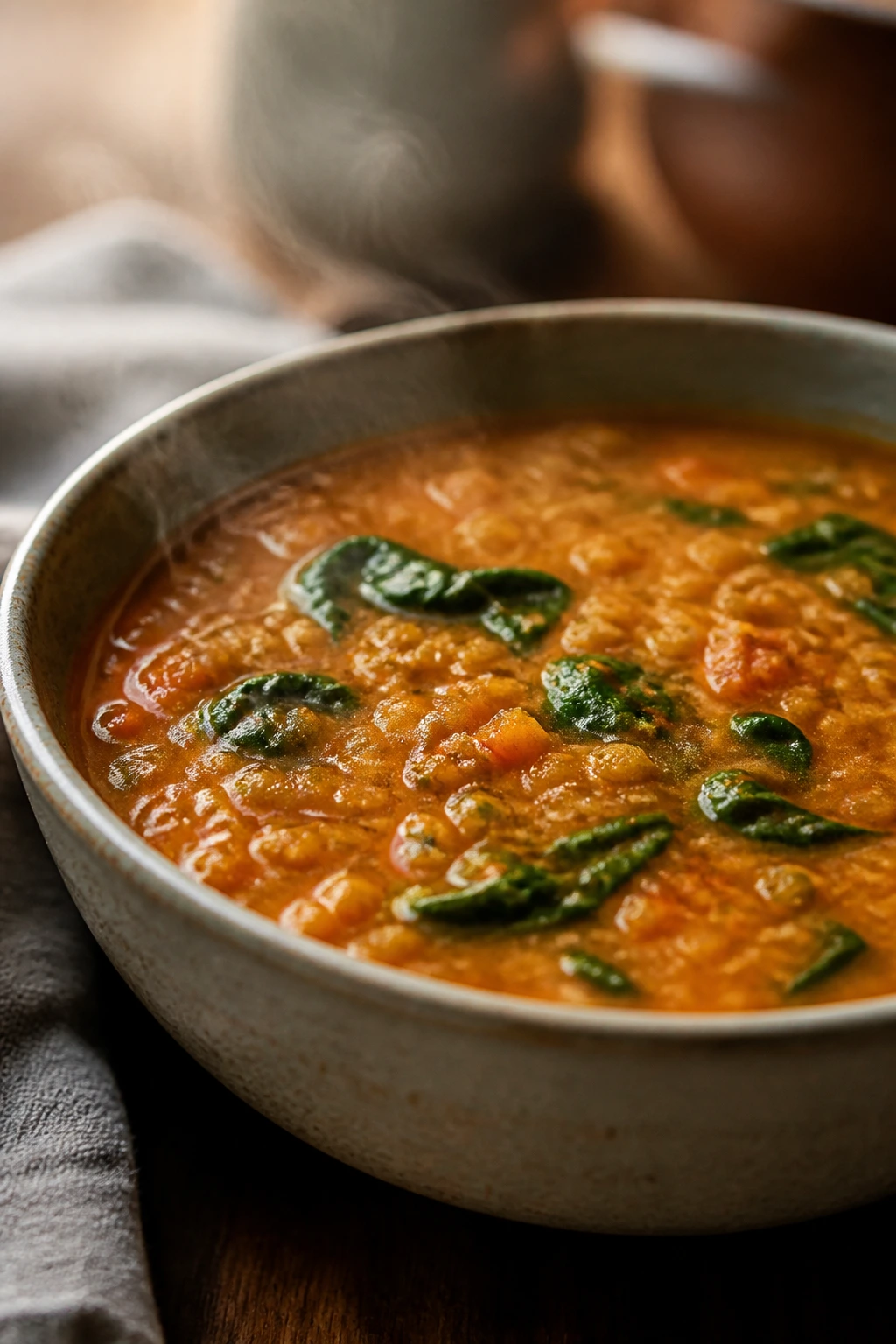
Red lentil soup is plain only if you treat it that way. With onion, carrot, celery, garlic, and a little tomato paste, it turns thick and earthy in a way that feels far more comforting than the ingredient list suggests. The lentils break down as they cook, so the soup gets creamy without any cream at all.
That’s the nice part for beginners. Red lentils forgive a lot, cook quickly, and do not demand soaking or fiddly timing.
Why It Works
Red lentils soften fast and almost melt into the broth, which gives the soup body without a blender. Tomato paste deepens the flavor, while lemon at the end keeps the whole pot from tasting heavy. This soup also has a useful texture trick: it gets thicker as it sits, so you can make it ahead and it will still eat well later.
Key Ingredients
- 1 tablespoon olive oil — just enough to start the vegetables softly
- 1 medium onion, diced — the savory base
- 2 carrots, diced — bring sweetness and body
- 2 celery stalks, diced — add a clean, mild backbone
- 3 cloves garlic, minced — sharpness and aroma
- 2 tablespoons tomato paste — builds color and a deeper flavor
- 1 1/2 cups red lentils, rinsed — the ingredient that gives the soup its body
- 1 teaspoon ground cumin — adds warmth
- 1 teaspoon smoked paprika — gives the soup a gentle smoky edge
- 6 cups vegetable broth — the main liquid
- 3 cups baby spinach — wilts in at the end
- 1 lemon, juiced — brightens the finished bowl
- 1 teaspoon kosher salt and 1/4 teaspoon black pepper — start here, then adjust
Quick Steps
-
Cook the vegetables: Heat the olive oil in a soup pot over medium heat. Add the onion, carrots, and celery, then cook for 7 to 8 minutes until the onion turns soft and the carrots look a little glossy.
-
Toast the flavor base: Stir in the garlic, tomato paste, cumin, and smoked paprika. Cook for 1 minute, pressing the tomato paste into the vegetables until it darkens slightly.
-
Add lentils and broth: Pour in the rinsed lentils and vegetable broth. Stir in the salt and pepper, then bring the pot to a boil.
-
Simmer gently: Reduce the heat to low and cook for 18 to 20 minutes, stirring once or twice, until the lentils are tender and the soup has thickened.
-
Finish with greens: Stir in the spinach and cook for 1 minute until wilted. Add the lemon juice and taste again.
-
Adjust the texture: If the soup feels too thick, add a splash of broth or water. If it tastes flat, it probably needs more salt or another squeeze of lemon.
Tips and Variations
- Blend part of it: An immersion blender gives you a creamier texture without turning the whole pot into purée.
- Add more body: Diced potato or a handful of rice can turn the soup into a fuller meal.
- Serve with bread: Toasted sourdough or warm pita works especially well with the lemony broth.
5. Peanut Noodles with Crispy Tofu
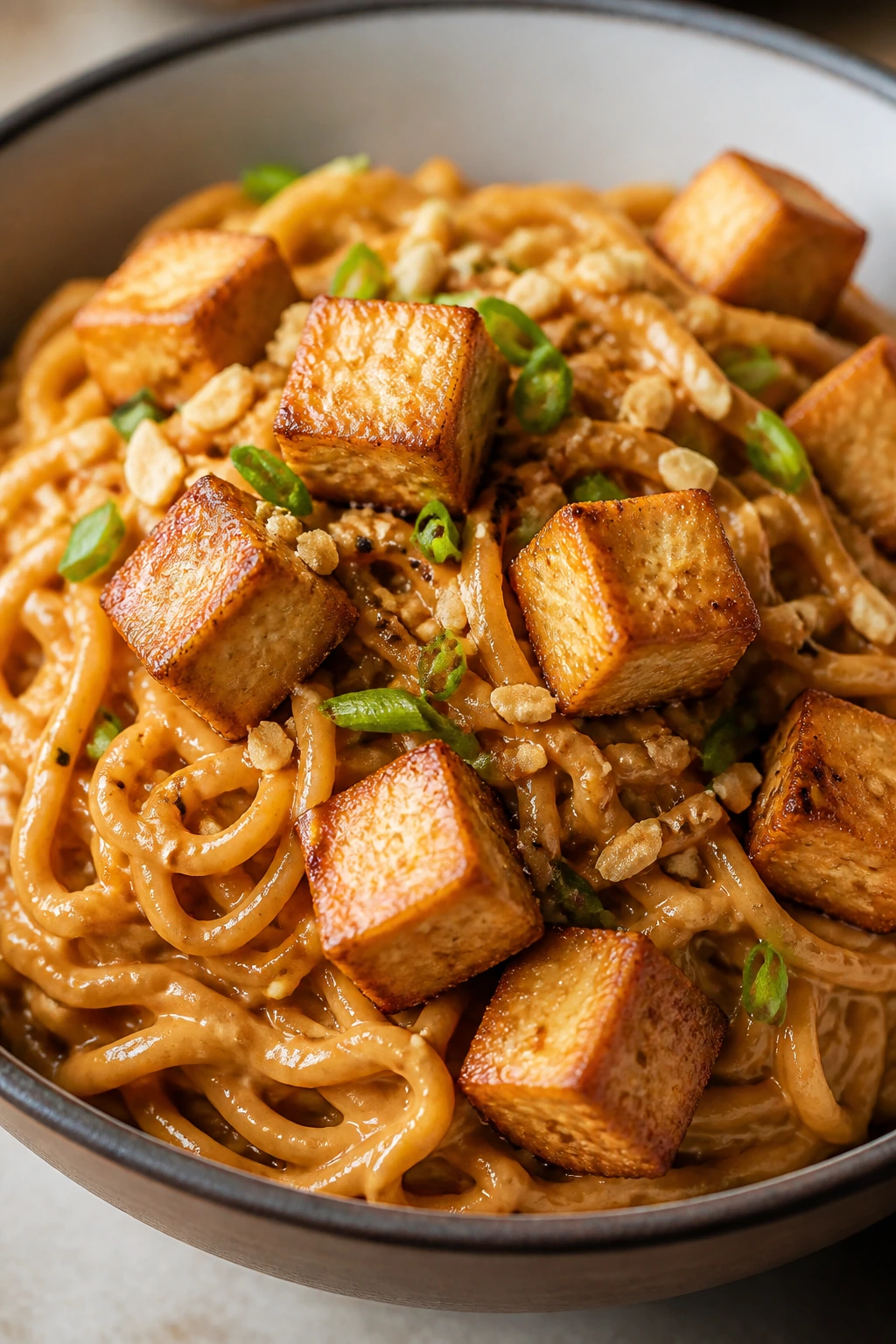
A bowl of peanut noodles solves the “I want takeout but not the bill” problem in a very practical way. The sauce is salty, sweet, and a little tangy, the tofu gets crisp at the edges, and the noodles carry all of it without needing much fuss. It tastes like a meal with momentum.
This is one of those plant-based dinners for beginners that rewards a little organization. Press the tofu, whisk the sauce, cook the noodles, and everything falls into place.
Why It Works
Pressing tofu removes moisture, which helps it brown instead of turning soft and pale. Cornstarch gives the tofu a light crust, while peanut butter, soy sauce, lime, and maple syrup make a sauce that clings to noodles instead of pooling at the bottom of the bowl. The vegetables stay raw or lightly dressed, so the dish keeps a fresh crunch.
Key Ingredients
- 14 ounces extra-firm tofu, pressed and cubed — extra-firm holds shape during baking or pan-frying
- 2 tablespoons cornstarch — helps the tofu crisp
- 2 tablespoons neutral oil — gives the tofu a browned exterior
- 12 ounces rice noodles or spaghetti — either one works if cooked properly
- 1/2 cup creamy peanut butter — the main flavor and texture in the sauce
- 1/4 cup soy sauce or tamari — brings salt and depth
- 2 tablespoons lime juice — cuts through the richness
- 1 tablespoon maple syrup — balances the sauce
- 2 cloves garlic, grated — sharp and fragrant
- 1 teaspoon grated fresh ginger — adds heat and lift
- 1/3 cup warm water, plus a little more if needed — loosens the sauce
- 1 cup shredded carrots — quick crunch
- 1 cucumber, thinly sliced — cools the bowl
- 2 scallions, sliced — a fresh onion note
- 1 tablespoon sesame seeds — optional but nice for texture
Quick Steps
-
Prep the tofu: Press the tofu for 10 minutes, then cut it into bite-size cubes. Toss it with the cornstarch and oil until lightly coated.
-
Cook the tofu: Bake at 425°F for 20 to 25 minutes, turning once, until the edges look golden, or pan-fry over medium-high heat for 8 to 10 minutes until crisp.
-
Whisk the sauce: Stir together the peanut butter, soy sauce, lime juice, maple syrup, garlic, ginger, and warm water. Add a touch more water if the sauce seems too thick to coat a spoon.
-
Cook the noodles: Prepare the noodles according to the package directions. Drain and rinse briefly if they are rice noodles so they do not stick together.
-
Toss and adjust: Combine the noodles with most of the sauce. Add a handful of carrots and scallions, then toss until every strand looks glossy.
-
Top and serve: Finish with the crispy tofu, cucumber, sesame seeds, and any remaining sauce. A squeeze of lime at the table wakes the whole bowl up.
Tips and Variations
- Peanut-free option: Use tahini or sunflower seed butter instead of peanut butter.
- Add heat carefully: Chili flakes or chili crisp work well, but start with a small amount; the sauce already has a strong voice.
- Do not skip the garnish: Raw cucumber and scallions keep the bowl from feeling heavy.
6. Sesame Veggie Stir-Fry with Edamame
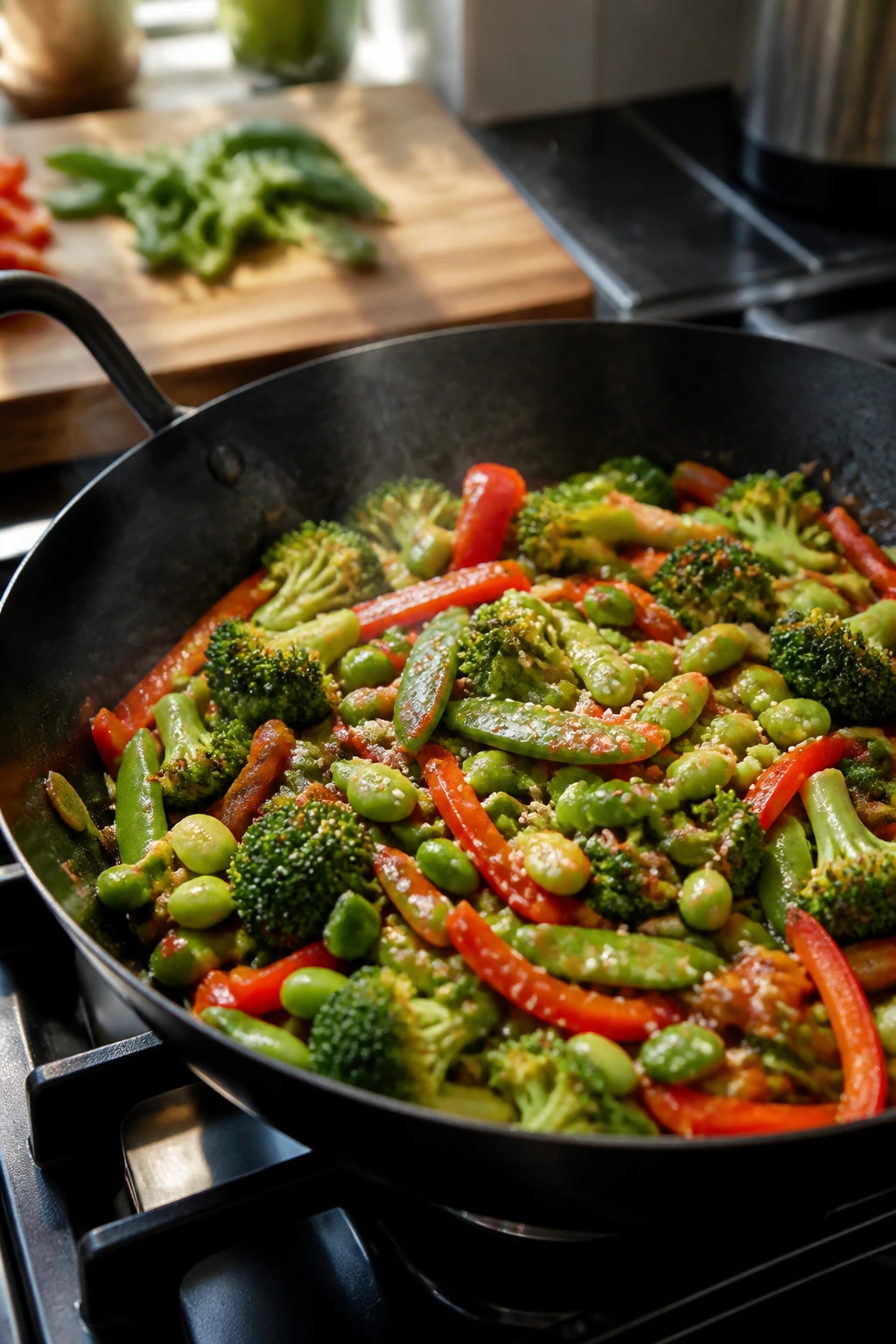
A hot skillet and a pile of vegetables can do more than most people think. When the sauce is right and the heat is high enough, even a very simple stir-fry can taste lively, crisp, and finished. Edamame gives the dish enough protein to stand on its own.
Beginner cooks often underestimate how much the pan temperature matters here. Stir-fry is not about constant movement. It is about giving the vegetables enough heat to stay bright.
Why It Works
Fast-cooking vegetables like broccoli, snap peas, peppers, and carrots take on the sauce without falling apart. Edamame adds a clean, nutty bite and comes frozen, which makes it one of the easiest plant proteins to keep around. The cornstarch in the sauce thickens it just enough to coat the vegetables instead of sliding off them.
Key Ingredients
- 1 cup jasmine rice — a soft, aromatic base for the stir-fry
- 2 cups water — for the rice
- 1/2 teaspoon kosher salt — seasons the rice
- 1 tablespoon neutral oil — for the stir-fry pan
- 2 cups broccoli florets — a sturdy vegetable that stays crisp-tender
- 1 red bell pepper, sliced — brings sweetness and color
- 1 cup snap peas — add crunch and a fresh green taste
- 1 cup shredded carrots — cook fast and soak up sauce
- 1 cup shelled edamame — the protein that makes the dish filling
- 1/4 cup soy sauce — the salty base of the sauce
- 2 tablespoons water — loosens the sauce
- 1 tablespoon maple syrup — softens the salt
- 1 teaspoon toasted sesame oil — finish flavor, not cooking oil
- 2 cloves garlic, minced — savory backbone
- 1 teaspoon grated ginger — adds sharp warmth
- 1 teaspoon cornstarch — helps the sauce thicken
- 1 tablespoon sesame seeds — optional, for crunch
Quick Steps
-
Cook the rice: Rinse the rice, combine it with water and salt, then cook covered over low heat for 15 minutes. Let it rest for 5 minutes before fluffing.
-
Mix the sauce: Stir together the soy sauce, water, maple syrup, sesame oil, garlic, ginger, and cornstarch until smooth.
-
Stir-fry the vegetables: Heat the neutral oil in a large skillet over medium-high heat. Add the broccoli, bell pepper, snap peas, and carrots, then cook for 5 to 6 minutes until they look bright and slightly softened.
-
Add the edamame and sauce: Stir in the edamame and pour in the sauce. Cook for 1 to 2 minutes until the sauce turns glossy and lightly thickens.
-
Serve over rice: Spoon the stir-fry over the rice and finish with sesame seeds.
-
Taste before serving: If it needs brightness, add a teaspoon of rice vinegar or a squeeze of lime. A stir-fry without acid can taste oddly flat.
Tips and Variations
- Frozen vegetables are fine: They are not a compromise here; they are a shortcut that works.
- Keep the heat up: If the vegetables start steaming, the pan is too crowded or too cool.
- Add tofu if you want more protein: Crisp cubes can join the skillet or be served on top.
7. Smoky Lentil Tacos with Avocado Slaw
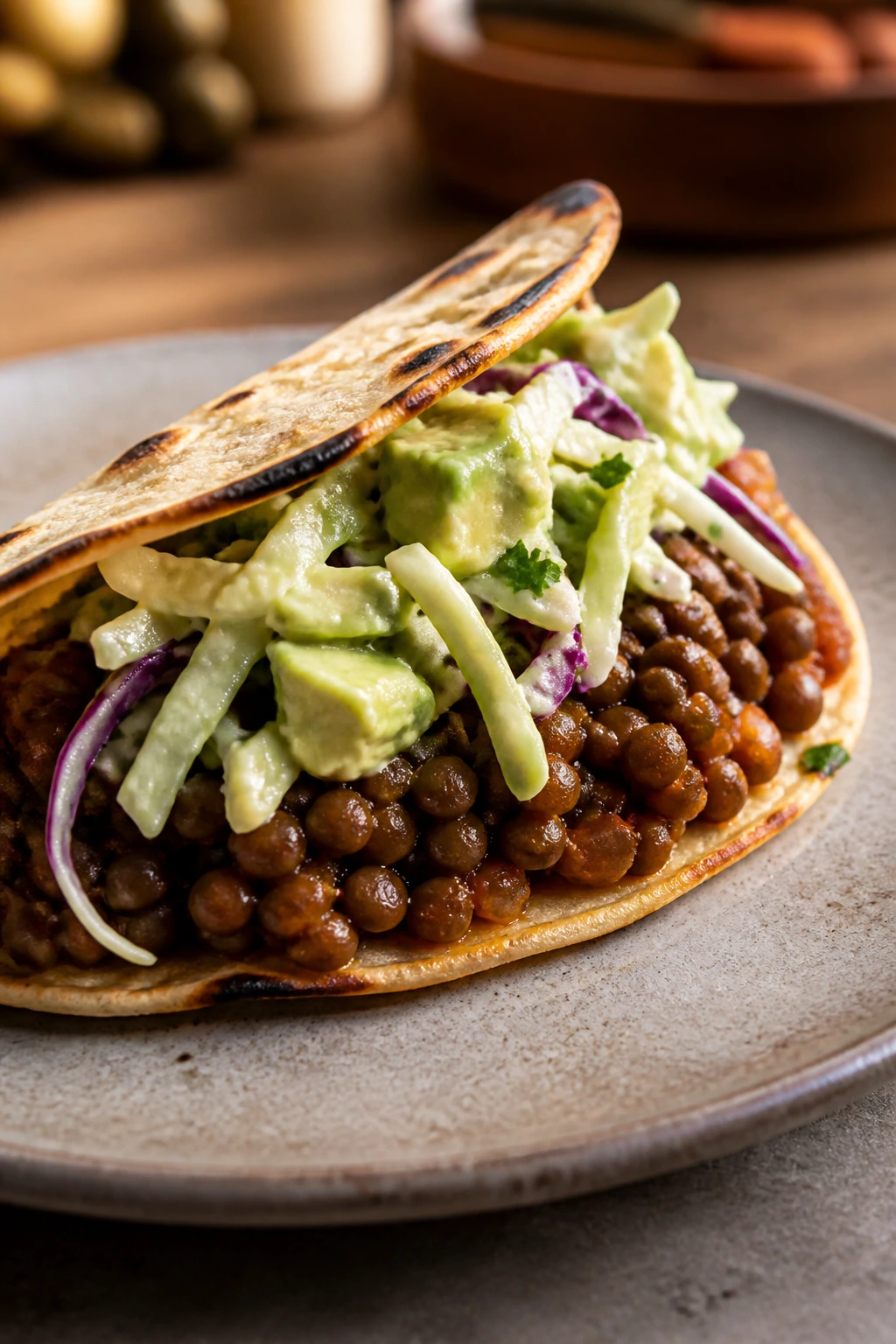
Why do tacos work so well with lentils? Because the shell, the slaw, and the spice do a lot of the work for you. Lentils bring a soft, earthy filling that takes on taco seasoning without fighting it, and the avocado slaw keeps every bite from feeling dry.
This is a useful recipe to have on repeat. It is cheap, filling, and forgiving, which is a rare combination when you are still building confidence at the stove.
Why It Works
Brown or green lentils hold their shape better than red lentils, so the filling feels more like taco meat without pretending to be meat. Salsa adds moisture and a little acidity, while the avocado slaw brings contrast in texture and temperature. The tacos taste best when the filling is warm and the slaw is cold, so the temperature difference matters.
Key Ingredients
- 1 cup brown or green lentils, rinsed — these stay intact better than red lentils
- 3 cups water or vegetable broth — the cooking liquid
- 1 tablespoon olive oil — for the onion and spice base
- 1 small onion, diced — builds the savory flavor
- 2 cloves garlic, minced — adds depth
- 2 tablespoons taco seasoning — the main spice blend
- 1 cup salsa — moistens the lentils and adds tomato flavor
- 8 small corn tortillas — a good plant-based wrap with a slight corn taste
- 3 cups shredded cabbage — the base for the slaw
- 1 avocado — turns the slaw creamy
- 1 lime, juiced — brightens the slaw and the tacos
- 2 tablespoons chopped cilantro — optional but lively
- Pinch of salt — for the slaw
Quick Steps
-
Cook the lentils: Bring the lentils and water or broth to a boil, then reduce to a simmer. Cook for 20 to 25 minutes until tender but not mushy, then drain any extra liquid.
-
Build the taco filling: Heat the olive oil in a skillet over medium heat. Cook the onion for 4 to 5 minutes until soft, then add the garlic and taco seasoning for 30 seconds.
-
Season the lentils: Stir the lentils and salsa into the skillet. Simmer for 3 to 4 minutes until the mixture looks thick and spoonable.
-
Make the slaw: Toss the cabbage with the avocado, lime juice, cilantro, and a pinch of salt. Mash some of the avocado into the cabbage so it coats everything lightly.
-
Warm the tortillas: Heat the tortillas in a dry skillet for about 30 seconds per side, or warm them directly over a gas flame if that is what you have.
-
Assemble the tacos: Spoon lentil filling into each tortilla and top with avocado slaw. Hot sauce, pickled jalapeños, or chopped onion all fit here.
Tips and Variations
- Make it into a taco bowl: Serve the lentils and slaw over rice if tortillas feel fiddly.
- Use what you have: If taco seasoning is not in the pantry, use cumin, smoked paprika, garlic powder, and a pinch of oregano.
- Do not overfill the shells: Lentils are generous. So is avocado. The taco will hold together better if you stop one spoonful earlier than feels natural.
8. Stuffed Sweet Potatoes with White Beans and Corn
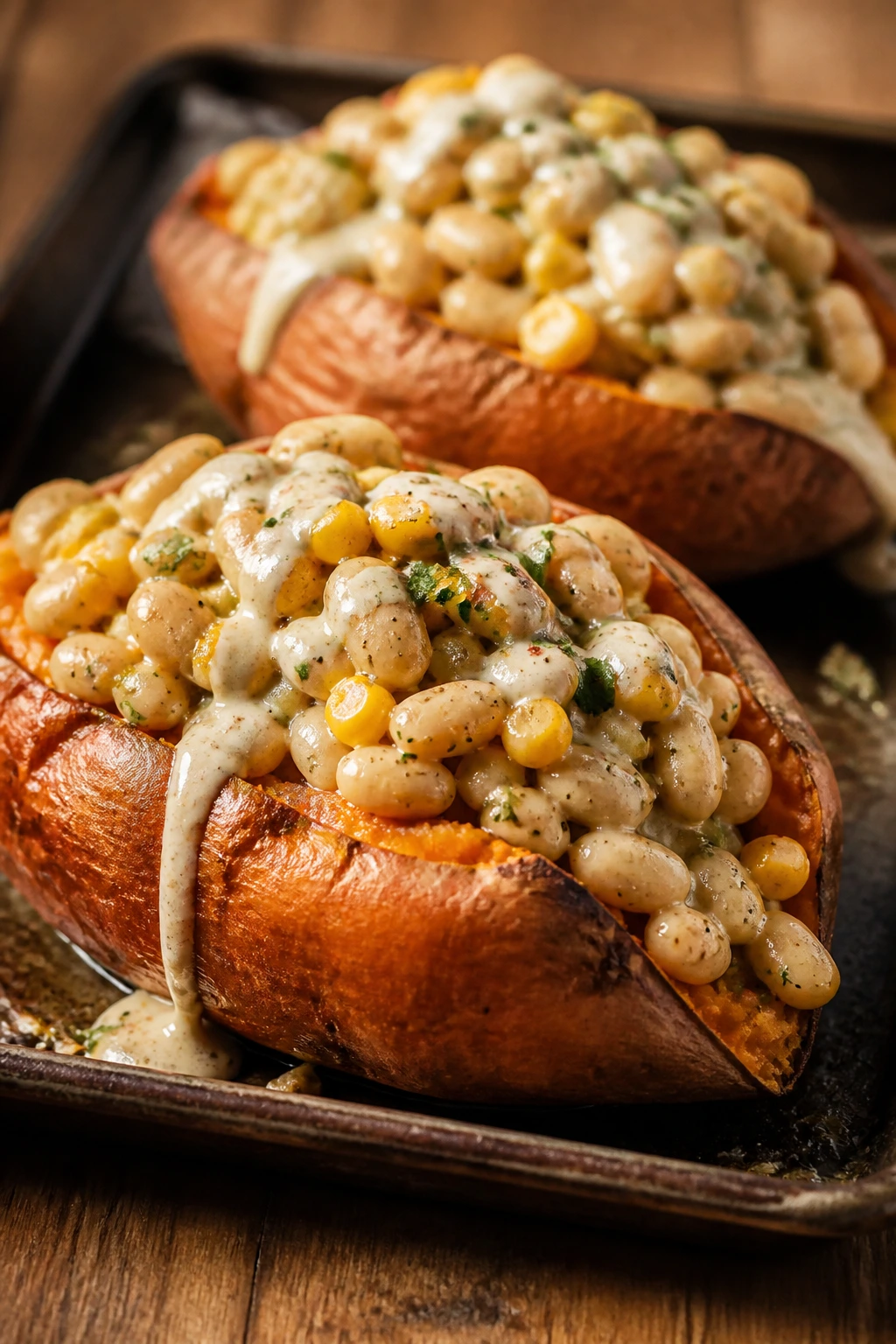
Sweet potatoes need very little help. Once they’re soft and caramelized at the edges, the rest of dinner can be simple: a quick bean filling, a little corn, and a bright sauce to pull the whole thing together. This is one of the most forgiving dinners in the bunch.
It also has that useful “hands-off most of the time” quality. The oven handles the potatoes while you deal with the filling, which is a very civilized arrangement on a busy night.
Why It Works
White beans give the filling a creamy, mild base, while corn brings sweetness and a pop of texture. Sweet potatoes are sturdy enough to split and fill without falling apart, and the tahini-lime sauce adds a savory finish that keeps the dish from tasting too sweet. You get contrast without much effort.
Key Ingredients
- 4 medium sweet potatoes — choose ones that are similar in size so they finish together
- 1 tablespoon olive oil — for the filling
- 1 small red onion, diced — adds sharpness and color
- 1 can white beans, drained and rinsed — creamy and filling
- 1 1/2 cups corn, frozen or fresh — sweet and easy
- 1 teaspoon chili powder — warms up the filling
- 1 teaspoon ground cumin — adds earthiness
- 1/2 teaspoon kosher salt — seasons the filling
- 1/4 teaspoon black pepper — a small but helpful amount
- 2 tablespoons tahini — the base for the sauce
- 1 lime, juiced — cuts through the sweetness
- 2 tablespoons water — loosens the sauce
- 1/4 cup chopped cilantro — a fresh finish
Quick Steps
-
Bake the sweet potatoes: Heat the oven to 425°F. Pierce each potato a few times with a fork and place them on a baking sheet. Roast for 45 to 55 minutes, until the skins are wrinkled and a knife slides in easily.
-
Cook the filling: While the potatoes bake, heat the olive oil in a skillet over medium heat. Add the onion and cook for 4 minutes, then stir in the corn, white beans, chili powder, cumin, salt, and pepper.
-
Warm through: Cook the filling for 4 to 5 minutes, stirring gently, until the beans are hot and the corn has some color.
-
Make the sauce: Whisk the tahini, lime juice, and water together until smooth and pourable. Add a touch more water if needed.
-
Split and fill: Cut each sweet potato open lengthwise and fluff the insides with a fork. Spoon the bean mixture over the top.
-
Finish cleanly: Drizzle with the tahini-lime sauce and scatter cilantro on top. A few pumpkin seeds add crunch if you want more texture.
Tips and Variations
- Short on time: Microwave the potatoes for 8 to 10 minutes first, then finish them in the oven so the skins still soften a bit.
- Use black beans instead: They bring a stronger flavor and work especially well with salsa.
- Add greens to the filling: A handful of spinach stirred in at the end wilts fast and makes the filling feel fuller.
9. One-Pot Tomato Basil Pasta with Cannellini Beans
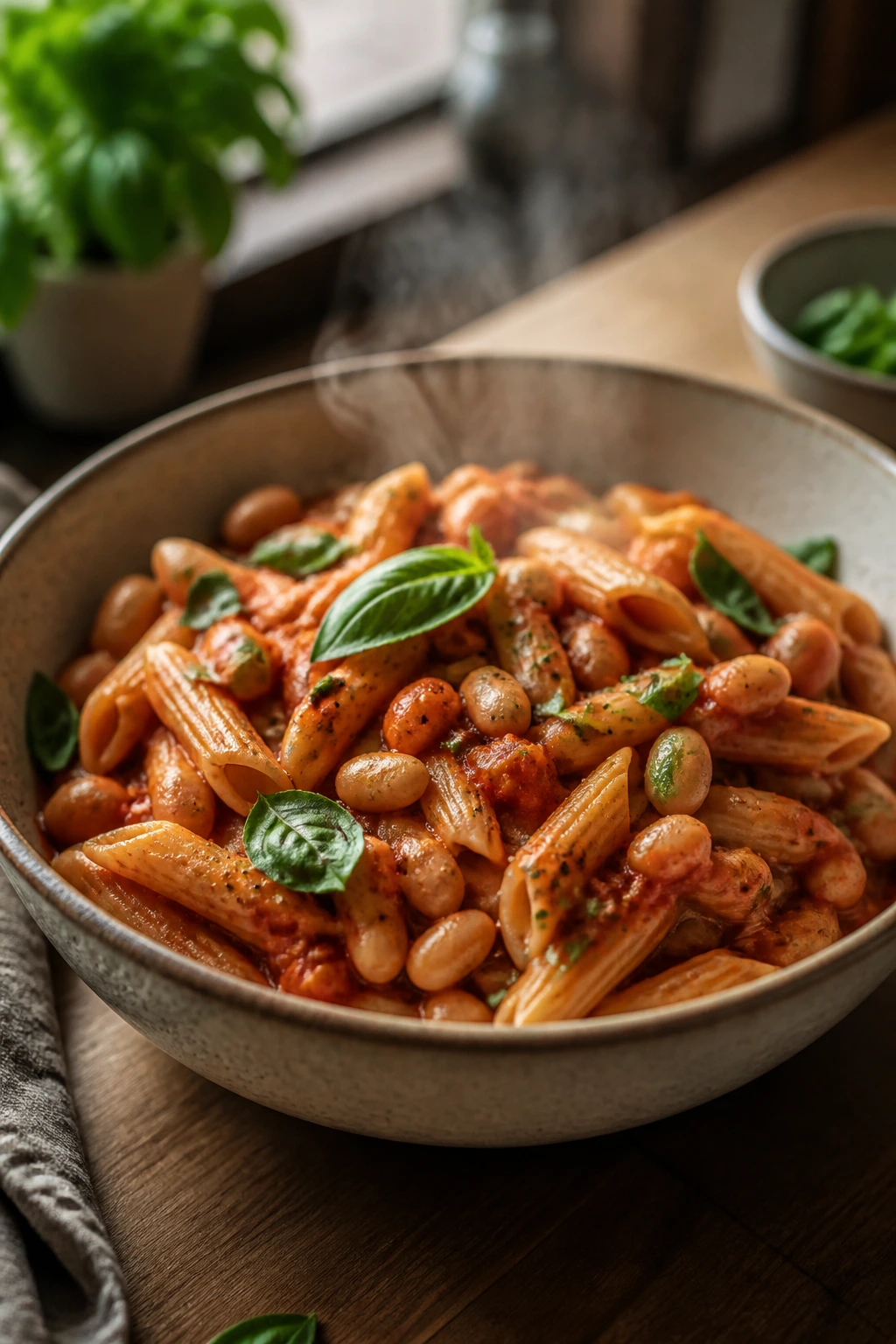
One pot, one pasta, one sauce that builds itself. That is the appeal here. The pasta cooks right in the tomato broth, so the starch thickens the sauce while it simmers, and the beans slide in near the end to give the dish body.
This recipe is useful because it teaches a simple kitchen truth: pasta water does not have to come from a separate pot to do its job. The starch can live right in the pan and make dinner taste richer.
Why It Works
Crushed tomatoes and broth create a sauce that coats the pasta as it cooks, which means you get a built-in finish without draining anything. Cannellini beans are mild and creamy, so they disappear into the sauce a little while still making the dish more filling. Fresh basil goes in at the end because heat flattens it fast, and basil deserves better than that.
Key Ingredients
- 1 tablespoon olive oil — starts the flavor base
- 1 onion, thinly sliced — melts down into the sauce
- 3 cloves garlic, minced — gives the pasta its backbone
- 12 ounces short pasta, such as rotini or penne — shapes that hold sauce well
- 1 can crushed tomatoes, 28 ounces — the main sauce
- 3 1/2 cups vegetable broth — the cooking liquid
- 1 can cannellini beans, drained and rinsed — soft, creamy protein
- 1 teaspoon dried oregano — classic tomato-pasta seasoning
- 1 teaspoon kosher salt — a starting point for the sauce
- 1/2 teaspoon black pepper — just enough to show up
- 2 cups baby spinach — folds in at the end
- 1/2 cup torn basil leaves — fresh finish
- 2 tablespoons nutritional yeast, optional — adds a savory note without dairy
- Pinch of red pepper flakes, optional — for a little heat
Quick Steps
-
Start the onion: Heat the olive oil in a wide pot over medium heat. Cook the onion for 4 to 5 minutes until softened, then add the garlic and cook for 30 seconds.
-
Add the pasta and liquid: Stir in the pasta, crushed tomatoes, vegetable broth, oregano, salt, black pepper, and red pepper flakes if using. Bring the pot to a boil.
-
Simmer and stir: Reduce the heat to medium-low and cook for 12 to 14 minutes, stirring every couple of minutes so the pasta does not stick. The sauce should thicken as the pasta absorbs the liquid.
-
Check the pasta early: Taste a piece around the 11-minute mark. It should be tender with a little firmness at the center, not chalky.
-
Add beans and spinach: Stir in the cannellini beans and spinach. Cook for 1 to 2 minutes until the spinach wilts and the beans are hot.
-
Finish with basil: Turn off the heat and stir in the basil and nutritional yeast if using. A splash of hot water can loosen the sauce if it looks too thick.
Tips and Variations
- Use a wide pot: A cramped pot makes pasta clump faster than people expect.
- Swap the beans: Chickpeas work too, though the texture changes from creamy to firmer.
- Fresh basil matters here: If you have it, use it. Dried basil is fine in the sauce, but the fresh leaves make the bowl taste alive.
10. Veggie Fried Rice with Tofu and Scallions
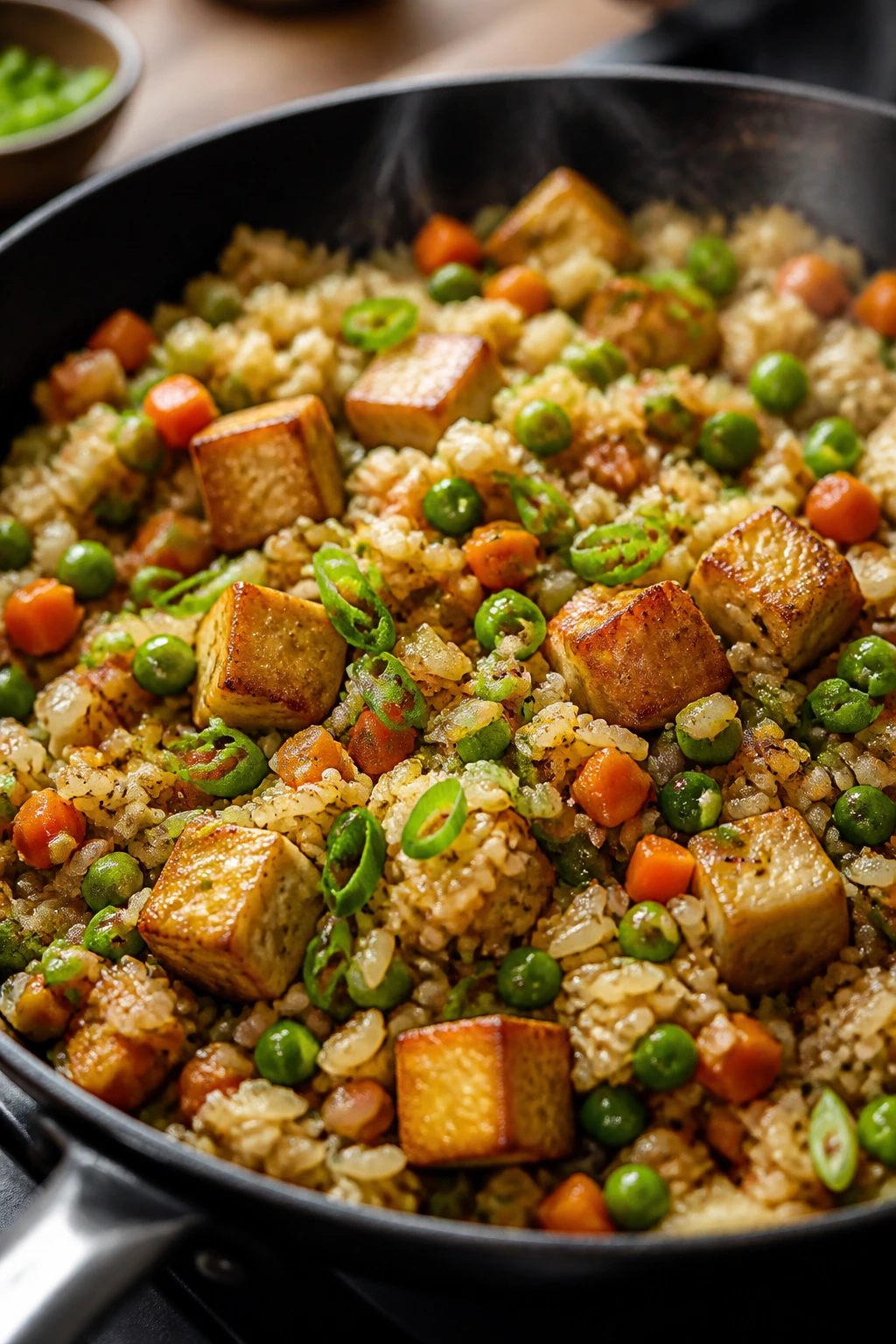
Day-old rice is not a nuisance here; it is the point. Fried rice works when the grains are a little dry, the skillet is hot, and the ingredients are cut small enough to cook quickly. Once you get that part right, the rest is almost automatic.
This is one of the most practical plant-based dinners for beginners because it turns leftovers into something that tastes intentional. The tofu crisps, the vegetables stay bright, and the sauce is simple enough to memorize.
Why It Works
Cold or chilled rice keeps its shape in the pan instead of turning sticky and soft. Tofu adds protein and a little chew, and frozen peas and carrots are a perfectly fine shortcut when you want dinner to happen without extra chopping. Sesame oil goes in at the end because its flavor is strongest when it stays on top of the dish instead of cooking off.
Key Ingredients
- 4 cups cooked rice, chilled — day-old rice works best because it is drier
- 14 ounces extra-firm tofu, pressed and cubed — the protein that crisps well in a skillet
- 1 tablespoon cornstarch — helps the tofu brown
- 2 tablespoons neutral oil, divided — for the tofu and the vegetables
- 2 cups frozen peas and carrots — quick, reliable, and no chopping needed
- 2 cloves garlic, minced — savory flavor
- 1 teaspoon grated ginger — a fresh, warm note
- 3 tablespoons soy sauce or tamari — the main seasoning
- 1 tablespoon rice vinegar — brightens the rice
- 1 teaspoon toasted sesame oil — added at the end for flavor
- 4 scallions, sliced — bring freshness and color
- 1/2 cup shelled edamame, optional — useful if you want more protein
Quick Steps
-
Prep the tofu: Pat the tofu dry and toss the cubes with cornstarch until coated. Heat 1 tablespoon of the oil in a large skillet over medium-high heat, then cook the tofu for 8 to 10 minutes until golden on several sides.
-
Set the tofu aside: Move the tofu to a plate. Give the pan a quick wipe if any stuck bits look dark and bitter.
-
Cook the vegetables: Add the remaining oil to the skillet. Stir in the peas, carrots, garlic, and ginger, and cook for 2 to 3 minutes until fragrant and heated through.
-
Add the rice: Break up the chilled rice with your hands or a spoon before it goes into the skillet. Stir it into the vegetables and cook for 3 to 4 minutes, pressing and turning until the grains are hot.
-
Season the rice: Pour in the soy sauce and rice vinegar. Stir well so the rice changes color evenly and looks lightly glossy.
-
Finish the pan: Return the tofu to the skillet, add the scallions and sesame oil, and toss one more time. Taste before serving; a pinch more soy sauce is fine if the rice needs it.
Tips and Variations
- Fresh rice can work too: Spread it on a tray for 15 minutes to cool and dry a little before cooking.
- Use a big pan: Fried rice goes wrong fast in a pan that is too small.
- Finish with heat at the table: A little sriracha or chili crisp lets each person decide how spicy the bowl should be.
The Pantry Formula That Makes Plant-Based Dinner Easier
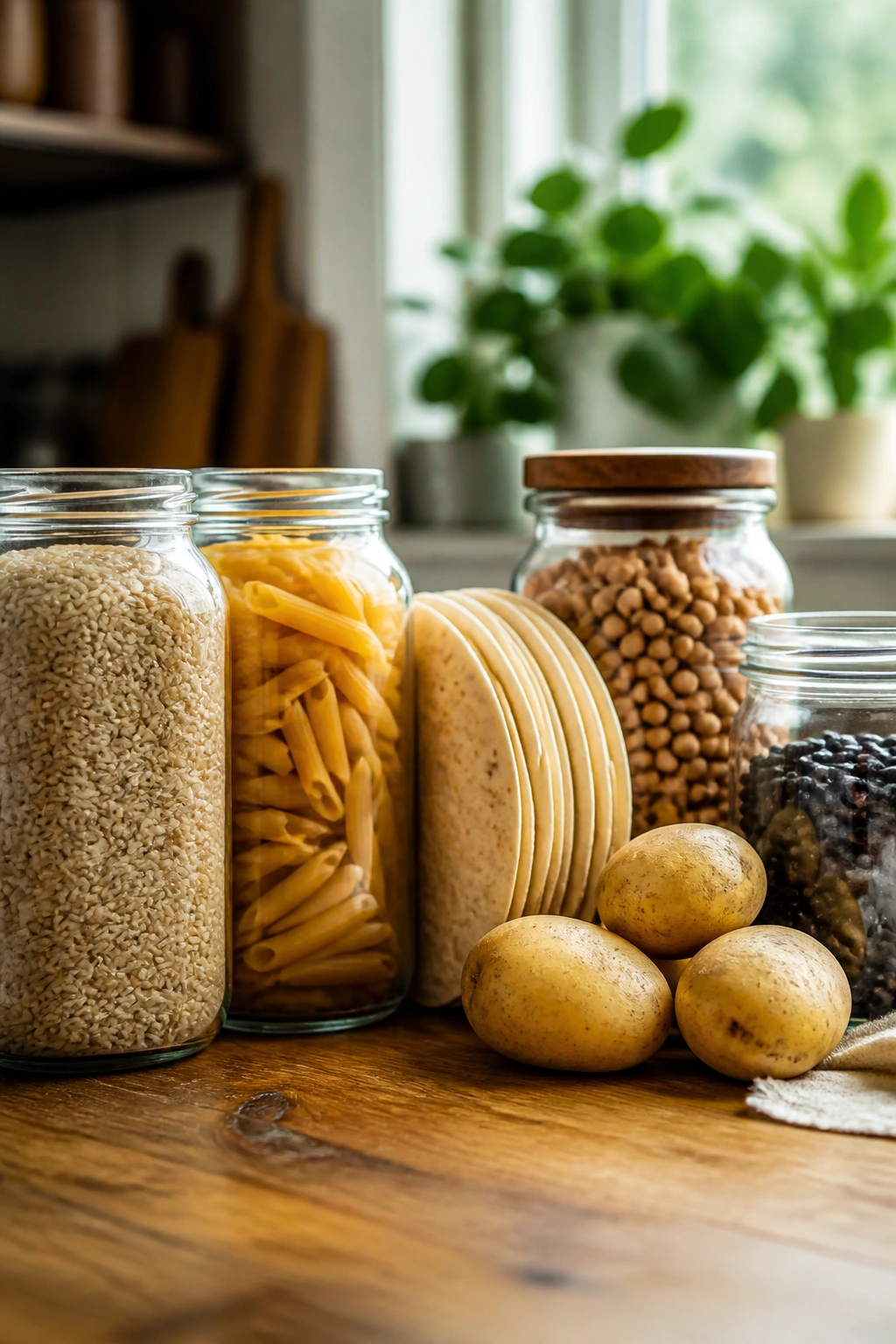
The common thread running through all ten recipes is not a special ingredient. It is a pattern.
Start With One Sturdy Base
Rice, pasta, tortillas, potatoes, gnocchi, noodles — these are the anchors. They give the meal shape and keep a dinner from feeling like a pile of toppings. Once that base is in place, the rest becomes easier to judge. You can see whether you need more sauce, more salt, or something bright to cut through the starch.
Add One Protein That Plays Nice
Beans, lentils, tofu, chickpeas, and edamame all have different textures, but they share one useful quality: they absorb flavor well. That matters. A beginner does not need to master ten techniques to make dinner filling; one good protein, seasoned early and cooked with enough salt, gets most of the way there.
Finish With Acid, Herbs, or Crunch
This is the part many people skip, then wonder why dinner tastes flat. Lime, lemon, vinegar, cilantro, scallions, sesame seeds, chopped nuts, pickled onions, slaw — these little last steps keep plant-based meals from tasting muddy or one-note. They are not decoration. They are the difference between “fine” and “I want this again.”
Essential Equipment for These Recipes
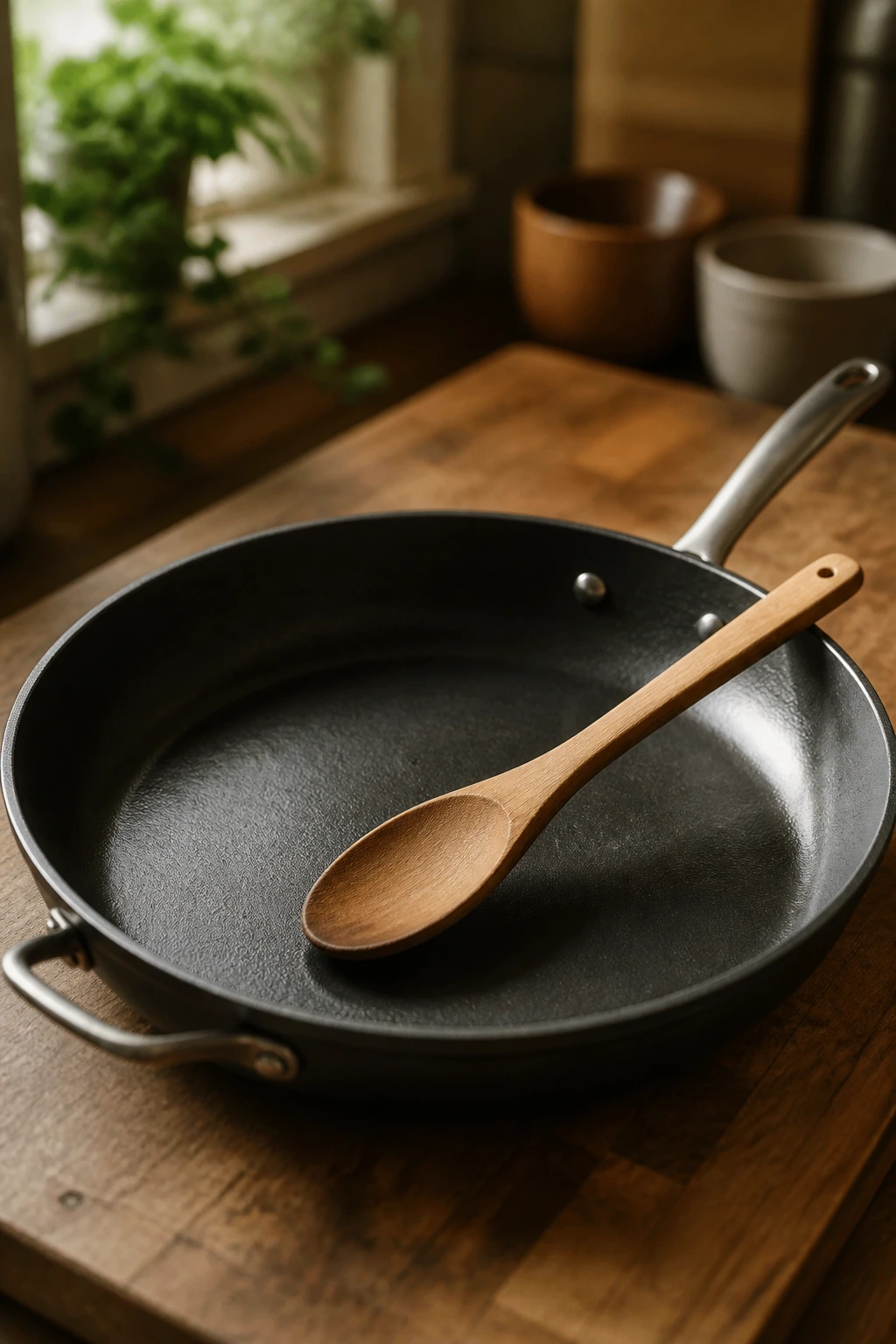
- Large skillet or sauté pan — useful for curry, stir-fry, tacos, and fried rice; a 12-inch pan gives the ingredients room.
- Medium saucepan — ideal for rice, lentils, and simple simmered sauces.
- Wide soup pot or Dutch oven — best for red lentil soup and one-pot pasta because the extra width helps prevent sticking.
- Rimmed sheet pan — needed for the roasted gnocchi and handy for warming tofu or cooling rice.
- Cutting board and sharp chef’s knife — a good knife makes onions, cabbage, and vegetables less annoying to prep.
- Wooden spoon or silicone spatula — gentle on pans and useful for stirring sticky rice or thick sauces.
- Fine-mesh strainer or colander — makes rinsing beans, lentils, and rice easier.
- Mixing bowls — one medium and one large are enough for sauces, slaws, and tossing ingredients.
- Measuring cups and spoons — these recipes rely on sauce ratios, and eyeballing them usually leads to bland food.
- Tongs — useful for turning tofu, tossing roasted vegetables, and handling hot sweet potatoes.
- Parchment paper, optional — makes sheet-pan meals and tofu cleanup easier.
- Immersion blender, optional — helpful if you like a smoother lentil soup, but not required.
Smart Shopping and Ingredient Tips
A beginner plant-based kitchen gets much easier when the shopping is practical. Buy low-sodium canned beans whenever possible, then rinse them under cool water to wash off the tinny liquid. That one move improves black beans, chickpeas, and cannellini beans all at once. Dried beans are fine if you already cook them, but canned beans keep these dinners fast and predictable.
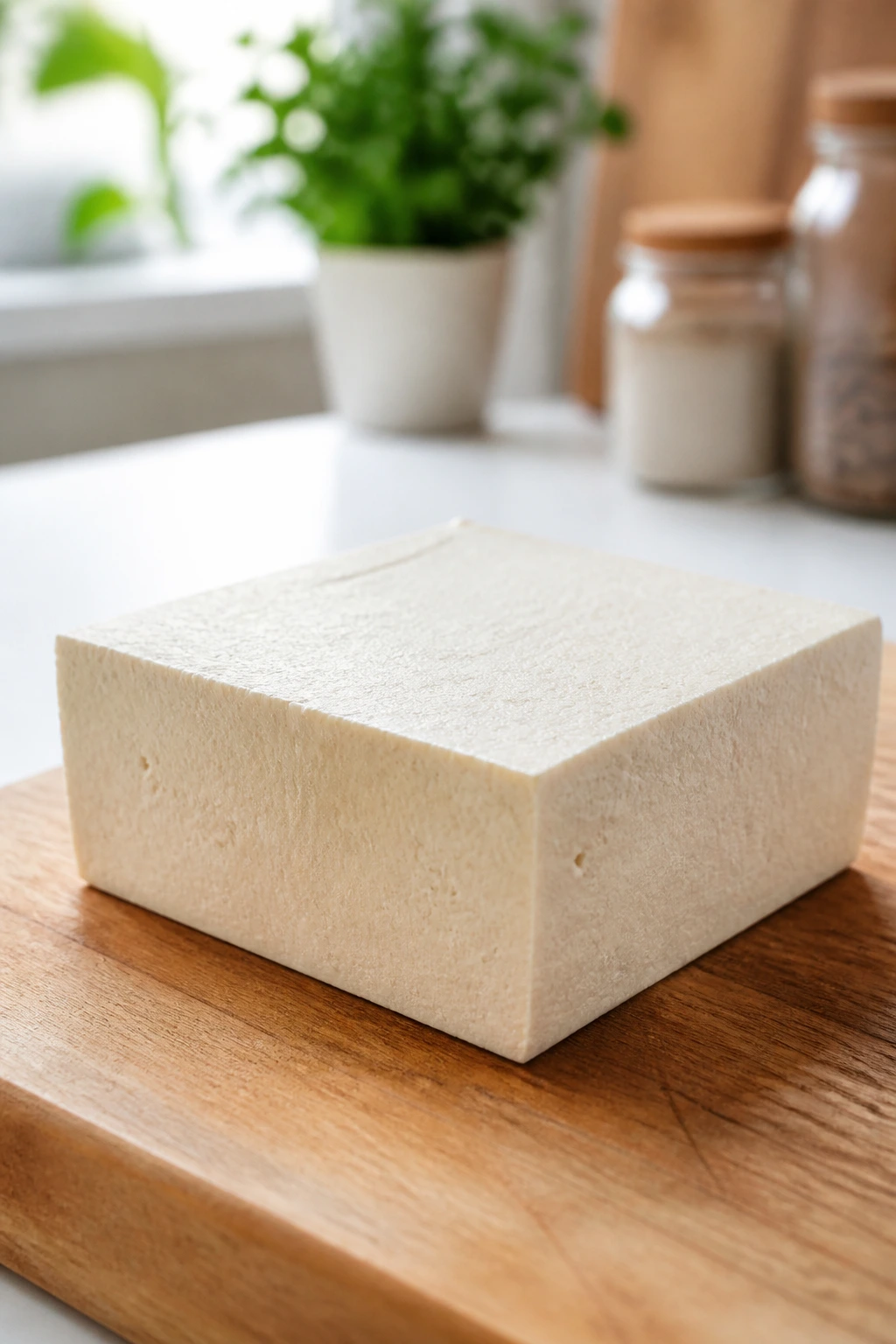
For tofu, buy extra-firm tofu packed in water, not silken tofu. Extra-firm holds up to baking, pan-frying, and stir-frying, which is why it shows up in the noodle and fried rice recipes. If the tofu feels wet, press it for at least 10 minutes. A folded towel and a heavy skillet are enough; no special press needed.
Dry lentils are another smart purchase. Red lentils cook fast and turn creamy, while brown or green lentils hold shape better for tacos. Keep both if you like variety. One bag can cover soup, curry, and taco fillings without much cost or waste.
Frozen vegetables are not a second-rate choice here. Frozen corn, peas, carrots, broccoli florets, and edamame can save a dinner when fresh produce looks tired or expensive. They are picked at the right stage and are often better than limp vegetables that have been sitting around for days.
A few label checks matter. Use egg-free gnocchi if you want the sheet-pan dinner fully plant-based. Choose tamari if you need a gluten-free soy sauce substitute. Look for pasta made without eggs if that matters to you. Those small label habits save awkward surprises later.
Finally, keep a few flavor builders around: limes, lemons, cilantro, scallions, sesame oil, salsa, tomato paste, peanut butter, and a decent curry powder. They do not take up much space, and they make the difference between plain and finished.
How to Serve These Recipes
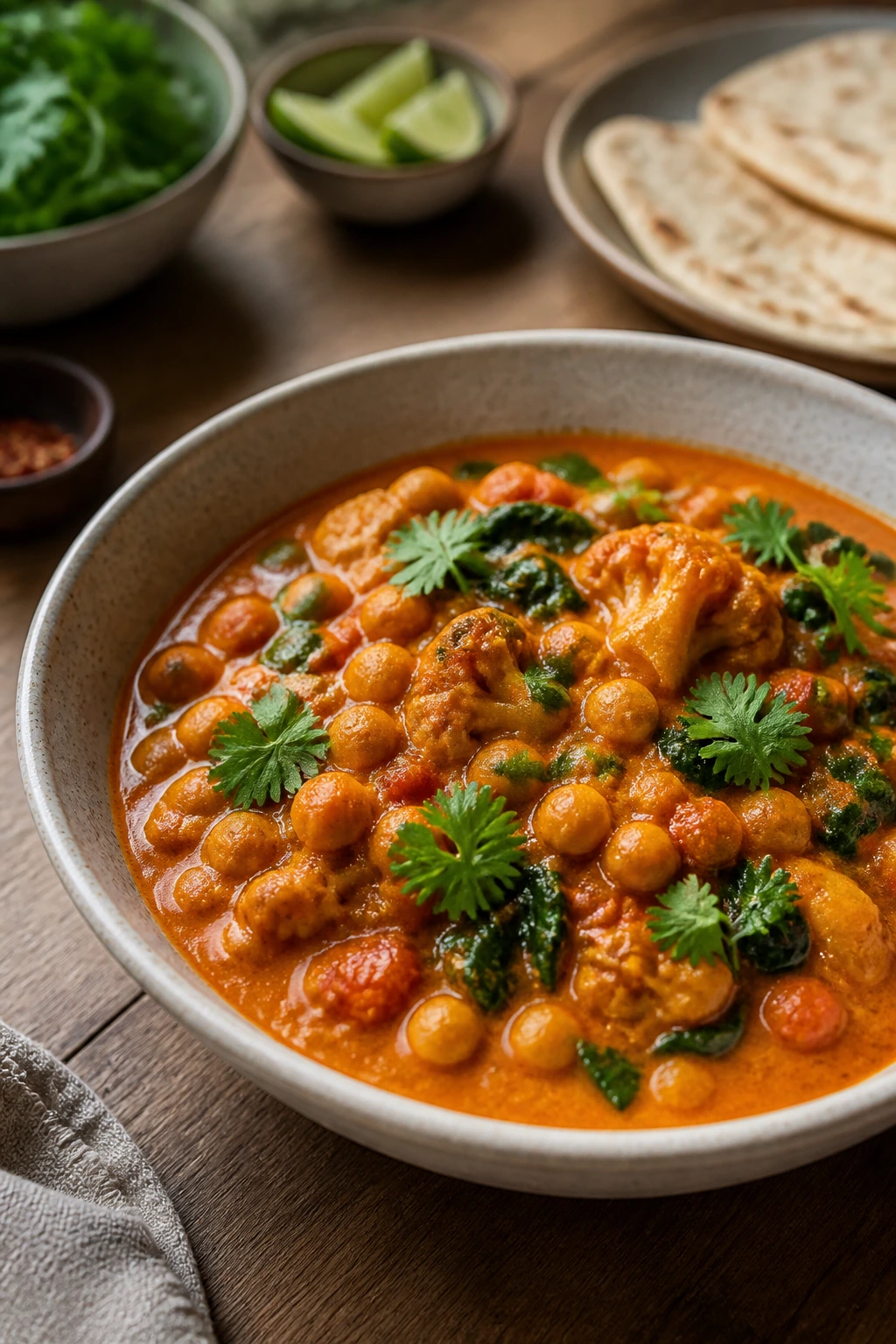
Presentation: Wide shallow bowls work best for curry, soup, noodles, and stir-fry because they show off the sauce and keep the food from disappearing into a deep bowl. Tacos look better lined up on a platter with the slaw piled high at the edge, and sheet-pan gnocchi feels more generous when it is spread on a big serving board or wide tray.
Accompaniments: Rice, warm tortillas, toasted bread, or a simple green salad can stretch these dinners without crowding the main dish. A bowl of salsa, a plate of lime wedges, or a jar of pickled onions on the table gives people a way to adjust the flavor without extra cooking. For soup and curry, warm flatbread or sourdough is the easiest add-on. For fried rice and noodle bowls, crisp cucumber or a quick cabbage salad brings welcome crunch.
Portions: Most of these recipes serve 4 in a normal home setting, though the pasta, bowls, and fried rice can stretch to 5 if you add bread or extra vegetables. If you are feeding bigger appetites, serve the curry and soup over rice or with naan-style bread and make the bowls a little heavier on the base. If you want a lighter meal, do the opposite: increase the vegetables and trim back the starch.
Beverage Pairing: Sparkling water with lime works across the whole collection because it clears the palate without fighting the food. Unsweetened iced tea is another good option, especially with tacos, curry, or fried rice. If you want something with more character, ginger beer or a cucumber-mint spritz fits the brighter dishes nicely.
Additional Tips and Flavor Boosters
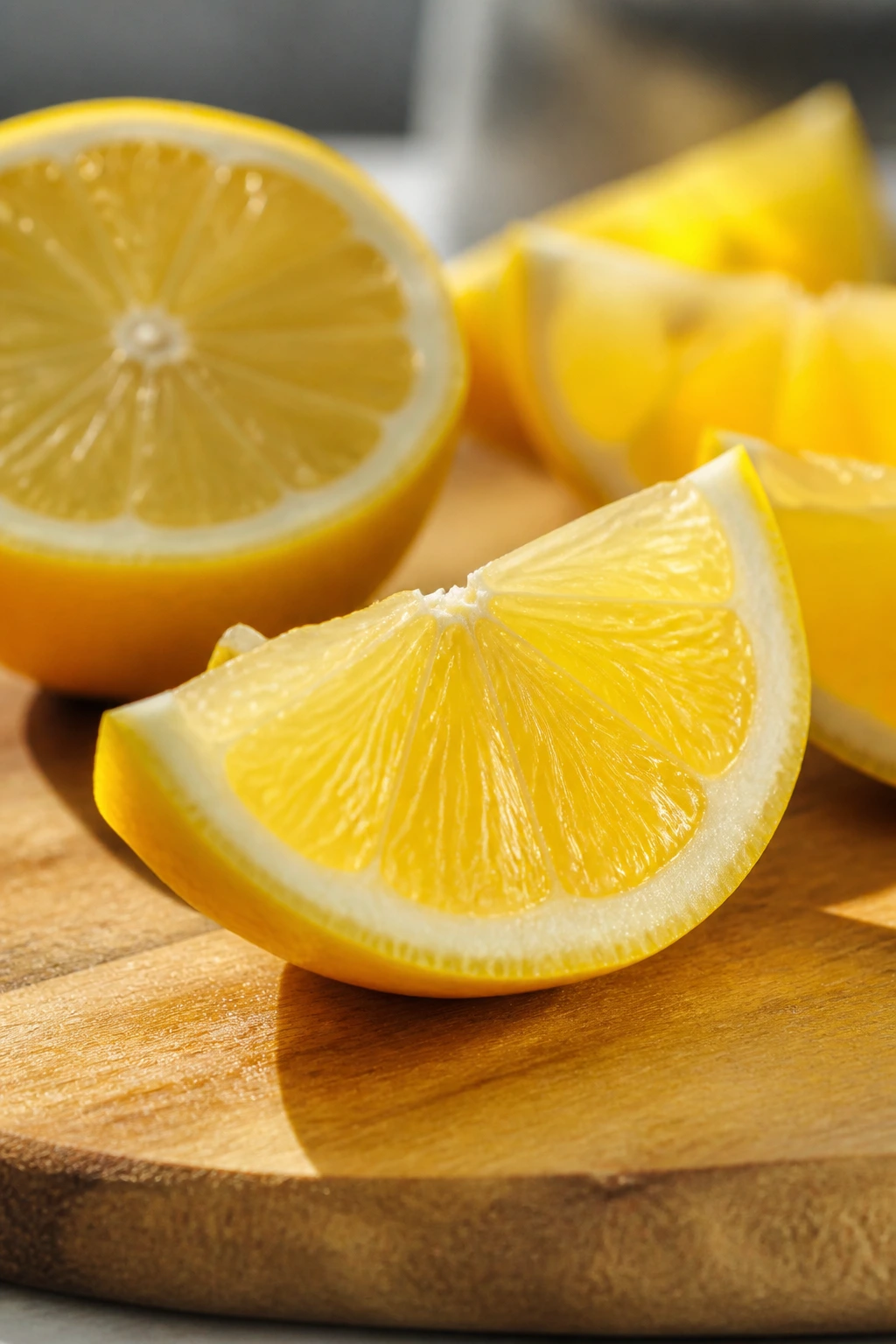
Flavor Enhancement: Keep one finishing move in your back pocket: a squeeze of citrus, a drizzle of toasted sesame oil, a spoonful of pesto, or a sprinkle of chopped herbs. Those tiny additions matter more than people expect. A dish that tastes almost right usually needs brightness, not more cooking.
Customization: Add mushrooms to the stir-fry, spinach to the pasta, shredded kale to the soup, or diced sweet potato to the curry. Plant-based dinners get easier when you stop treating recipes as fragile. These are sturdy templates.
Serving Suggestions: Toasted sesame seeds, chopped peanuts, sliced scallions, cilantro, pickled onions, and crispy fried onions all bring texture. Use one, not all of them. A small amount goes further than a crowded pile of toppings.
Make-It-Yours: For gluten-free eating, use tamari, certified gluten-free pasta, corn tortillas, and rice noodles. For nut-free cooking, swap peanut sauce for tahini or sunflower seed butter. For higher protein, add edamame, more tofu, or extra beans rather than trying to stretch one ingredient into something it is not. For lower spice, cut the chili powder in half and keep hot sauce on the table instead of in the pan.
Make-Ahead, Storage, and Reheating Guidance
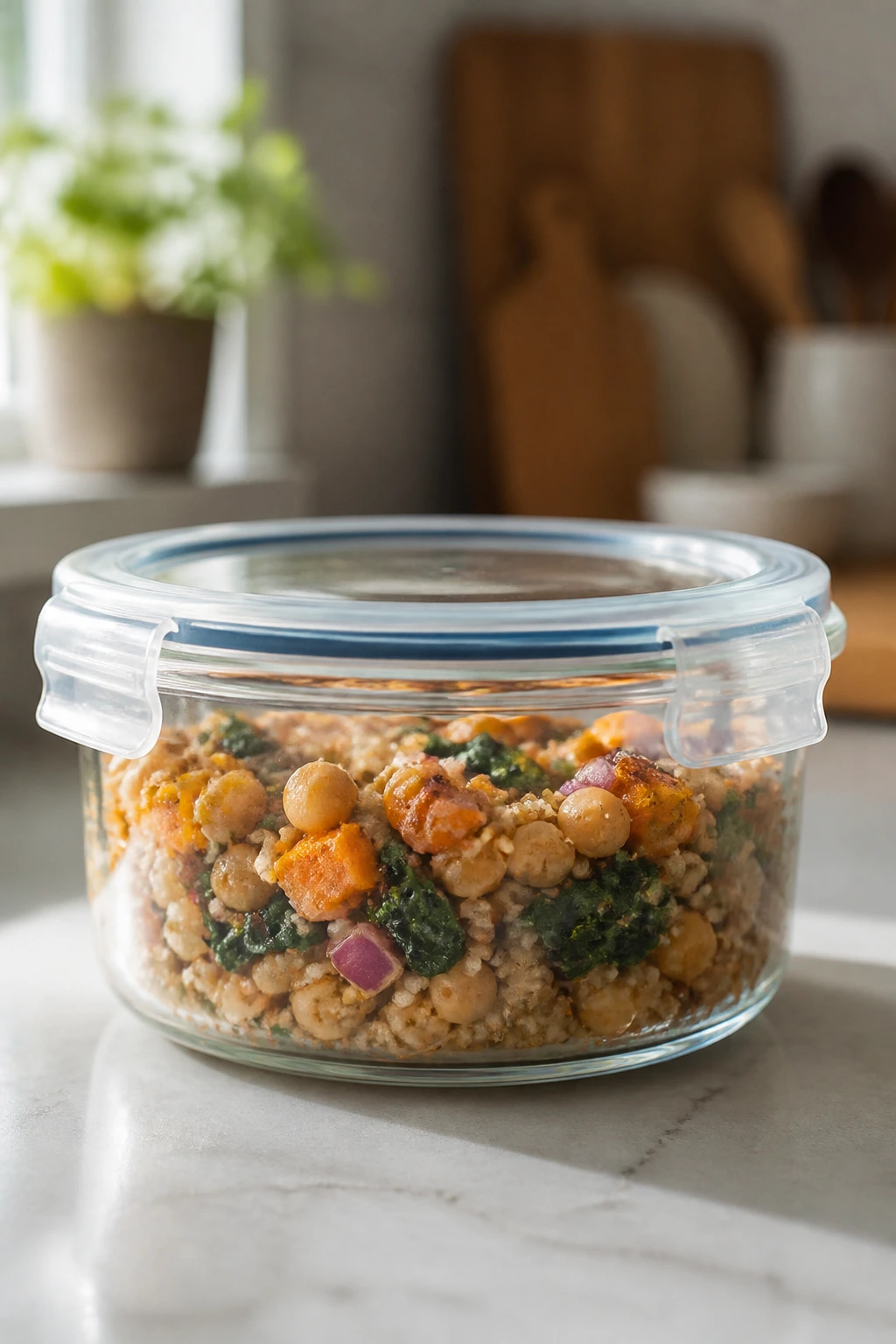
The curry, lentil soup, and tomato basil pasta are the best make-ahead choices in this collection. They keep 3 to 4 days in the refrigerator in airtight containers, and they often taste even better the next day after the seasonings settle in. They also freeze well for up to 2 to 3 months. Reheat them on the stovetop over medium-low heat with a splash of water or broth, stirring now and then so the bottom does not catch.
The burrito bowl components, tacos filling, stir-fry, and fried rice keep 3 to 4 days refrigerated too, but keep the toppings separate. Avocado, slaw, and fresh herbs should be added right before serving or they lose their charm fast. Reheat bean filling, rice, noodles, or fried rice in a skillet over medium heat with 1 to 2 tablespoons of water to wake the grains back up. A microwave works in a pinch, but a pan gives better texture.
The sheet-pan gnocchi and tofu dishes are best within 3 days. Roasted gnocchi can be reheated in a 375°F oven or air fryer for 5 to 8 minutes, which brings some of the crispness back. Tofu also behaves well in the oven or air fryer, while a skillet over medium heat keeps the crust intact better than a quick blast in the microwave.
Sweet potatoes are a little different. Store the potatoes and filling separately for up to 4 days. Reheat the potatoes in the oven or microwave, warm the bean filling on the stove, and finish with fresh sauce or herbs. If you freeze the bean filling, it will hold for up to 2 months, but the potatoes themselves are better fresh.
One small habit helps across the board: cool cooked food before sealing it up. It keeps condensation down, which matters a lot for rice, noodles, and tofu.
Variations and Adaptations to Try
Gluten-Free Pantry Night: Use tamari instead of soy sauce, rice noodles instead of wheat noodles, corn tortillas instead of flour tortillas, and certified gluten-free pasta or gnocchi where needed. The flavor stays the same; only the starch changes.
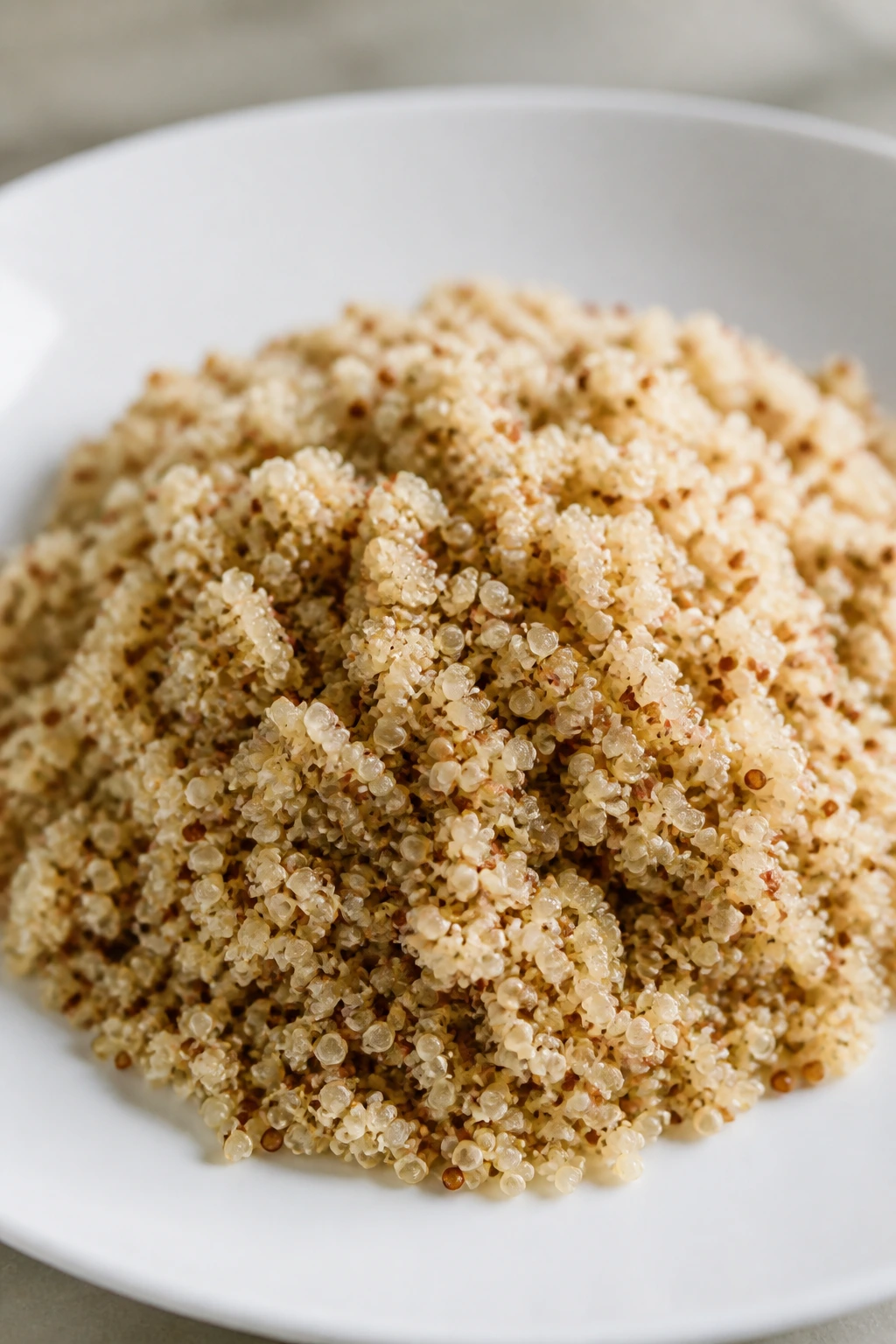
Higher-Protein Plates: Add an extra block of tofu to the noodle bowl or fried rice, more edamame to the stir-fry, or another can of beans to the curry and taco filling. Quinoa can replace rice in the burrito bowls if you want a slightly firmer, more protein-heavy base.
Low-Sodium Route: Choose no-salt-added beans and broth, then lean harder on lime, lemon, herbs, garlic, and spices. This works especially well in the curry, soup, and pasta because those recipes already have enough flavor structure to handle less salt.
Mild and Kid-Friendly: Reduce chili powder, skip red pepper flakes, and keep the hot sauce and pickled jalapeños on the table instead of in the pan. The curry, bowls, and tacos all become easier for cautious eaters when the heat stays separate.
Nut-Free Swap: Replace peanut butter with tahini or sunflower seed butter in the noodle bowl. The sauce changes character a bit, but it still clings to the noodles and keeps the same basic balance of salty, sweet, and bright.
Extra-Spicy Finish: Add chili crisp, sliced jalapeños, or a pinch of cayenne at the end rather than loading the whole pan. That keeps the base recipe friendly for everyone while giving heat lovers something to reach for.
Common Mistakes to Avoid
Underseasoning the base: Beans, lentils, rice, and pasta all need salt early enough to matter. If a dish tastes flat at the end, the fix is usually a little more salt and a squeeze of acid, not another half hour of cooking.
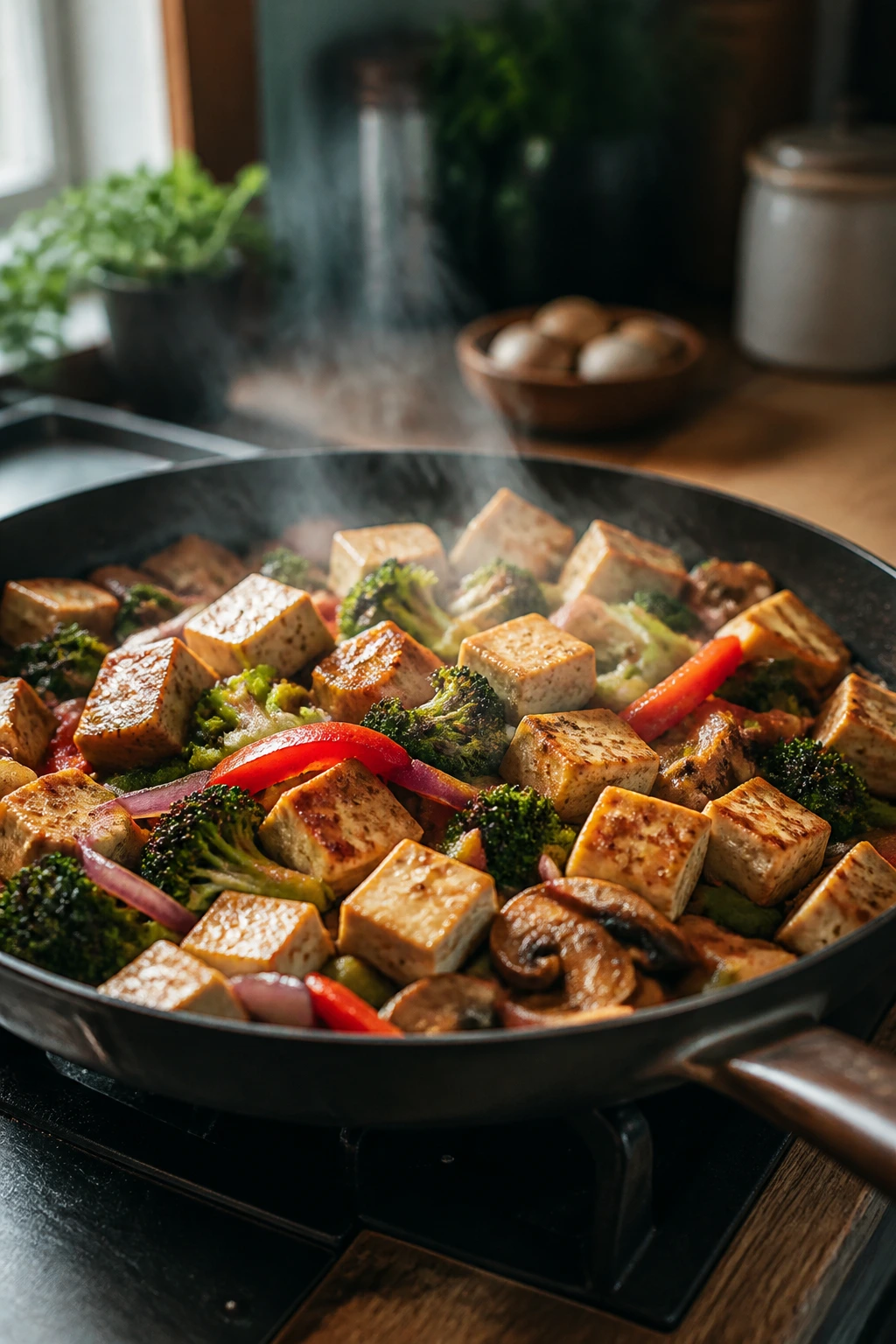
Crowding the pan: Sheet-pan dinners and stir-fries go soft when they are piled too high. The symptom is steamed vegetables and pale tofu. The fix is boring but reliable: use a bigger pan or cook in batches.
Skipping acid: Curry, soup, noodles, and fried rice can all taste heavy if they never get a lemon, lime, or vinegar finish. Acid does not make the food sour; it makes the flavors separate so you can taste them.
Cooking tofu straight from wet packaging: Wet tofu steams instead of browns. Press it, even if only for 10 minutes, and pat it dry before seasoning. That extra step changes the result more than most beginners expect.
Overcooking lentils or pasta: Red lentils and one-pot pasta move fast. Taste early. The texture should be tender, not collapsed into mush. A few seconds of attention saves a lot of regret later.
Mixing in all the toppings too soon: Avocado browns, herbs wilt, and slaw loses crunch if they sit in hot food for too long. Add them at the table or right before serving. That keeps the texture alive.
Frequently Asked Questions

Which recipe on this list is the easiest for a total beginner?
The burrito bowls and the curry are probably the simplest starting points. Both rely on canned beans, basic seasoning, and straightforward stovetop cooking, so there is less chance of getting lost in the process.
Do I need tofu to make plant-based dinners filling?
No. Beans, lentils, chickpeas, and edamame all carry plenty of weight on their own when paired with rice, pasta, potatoes, or tortillas. Tofu is useful, but it is only one tool.
Can I use canned beans instead of dried beans in every recipe?
Yes, and that is usually the better choice for beginners. Canned beans save time and do not need soaking, which keeps these dinners practical on a busy night.
What if my sauce tastes bland even after I cook it?
Taste it first for salt, then for acid. A pinch of salt, a squeeze of lime or lemon, or a spoonful of salsa can change the whole dish faster than more simmering.
How do I keep vegetables from turning soggy?
Use high enough heat, keep the pan from getting overcrowded, and cut the vegetables into similar sizes. Frozen vegetables are fine, but they should go into a hot pan quickly so they do not sit around and steam.
Can these dinners be meal-prepped for lunch the next day?
Yes, especially the curry, soup, pasta, burrito bowl filling, and lentil tacos. Keep the fresh toppings separate and reheat the main components gently so the texture stays pleasant.
What should I buy first if my pantry is nearly empty?
Rice, pasta, canned beans, red lentils, tortillas, tofu, vegetable broth, peanut butter, salsa, coconut milk, and a few lemons or limes give you a lot of range. From there, frozen corn, peas, broccoli, and spinach fill gaps without wasting food.
Can I make these without much spice?
Absolutely. Skip the chili flakes, cut the curry powder a little, and lean on garlic, onion, lemon, lime, and herbs for flavor. Plant-based food does not need heat to taste complete.
A Simpler Way to Cook
The nicest part about these dinners is that they do not ask you to become a different kind of cook. They ask you to notice a few useful patterns: a good base, a filling protein, a bright finish, and enough seasoning to make the whole thing taste like it belongs together. That is a much smaller leap than most people think.
Pick one recipe that matches your energy level, not your fantasy self. Make the curry on a quiet night. Make the bowls when you want everything in separate piles. Make the fried rice when yesterday’s rice is sitting there looking useful. The confidence comes from repetition, not from waiting until you feel ready.
| Recipe | Prep Time | Cook Time | Total Time | Servings | Standout Detail |
|---|---|---|---|---|---|
| Creamy Coconut Chickpea Curry | 10 minutes | 25 minutes | 35 minutes | 4 servings | Silky sauce with almost no effort |
| Black Bean Burrito Bowls with Lime Rice | 15 minutes | 20 minutes | 35 minutes | 4 servings | Bright, build-your-own bowl format |
| Sheet Pan Gnocchi with Broccoli and Chickpeas | 10 minutes | 30 minutes | 40 minutes | 4 servings | Crispy edges straight from the oven |
| Simple Red Lentil Soup with Spinach | 15 minutes | 30 minutes | 45 minutes | 4 to 6 servings | Creamy without any dairy |
| Peanut Noodles with Crispy Tofu | 20 minutes | 25 minutes | 45 minutes | 4 servings | Sauce clings to every noodle |
| Sesame Veggie Stir-Fry with Edamame | 15 minutes | 15 minutes | 30 minutes | 4 servings | Fastest dinner in the group |
| Smoky Lentil Tacos with Avocado Slaw | 20 minutes | 25 minutes | 45 minutes | 4 servings | Best texture contrast of the bunch |
| Stuffed Sweet Potatoes with White Beans and Corn | 15 minutes | 55 minutes | 1 hour 10 minutes | 4 servings | Hands-off bake with a creamy finish |
| One-Pot Tomato Basil Pasta with Cannellini Beans | 10 minutes | 20 minutes | 30 minutes | 4 servings | Sauce builds itself in the pot |
| Veggie Fried Rice with Tofu and Scallions | 15 minutes | 15 minutes | 30 minutes | 4 servings | Best use for chilled leftover rice |