



Some nights, dinner has about fifteen minutes to prove its worth. The sink is already full, somebody is hungry, and the thought of a long recipe feels rude.
That is where dinners you can throw together fast earn their keep. Not bland “I guess this will do” food. Real meals with a skillet, a sheet pan, a box of pasta, a can of beans, or a rotisserie chicken doing half the work for you.
The best fast dinners share a small pattern. One strong protein. One smart shortcut. One bright finish. Shrimp with lemon. Tortellini with jarred tomato sauce and spinach. Sausage with peppers on a tray that cleans up faster than a frying pan. Those combinations taste intentional because the ingredients do most of the heavy lifting.
A long prep list kills momentum. So does a recipe that asks for three sauces and a preheated mood. These 13 dinners stay honest about speed, and they still land like dinner, not a compromise. That seems like a fair trade on a weeknight.
1. Lemon Garlic Shrimp and Couscous
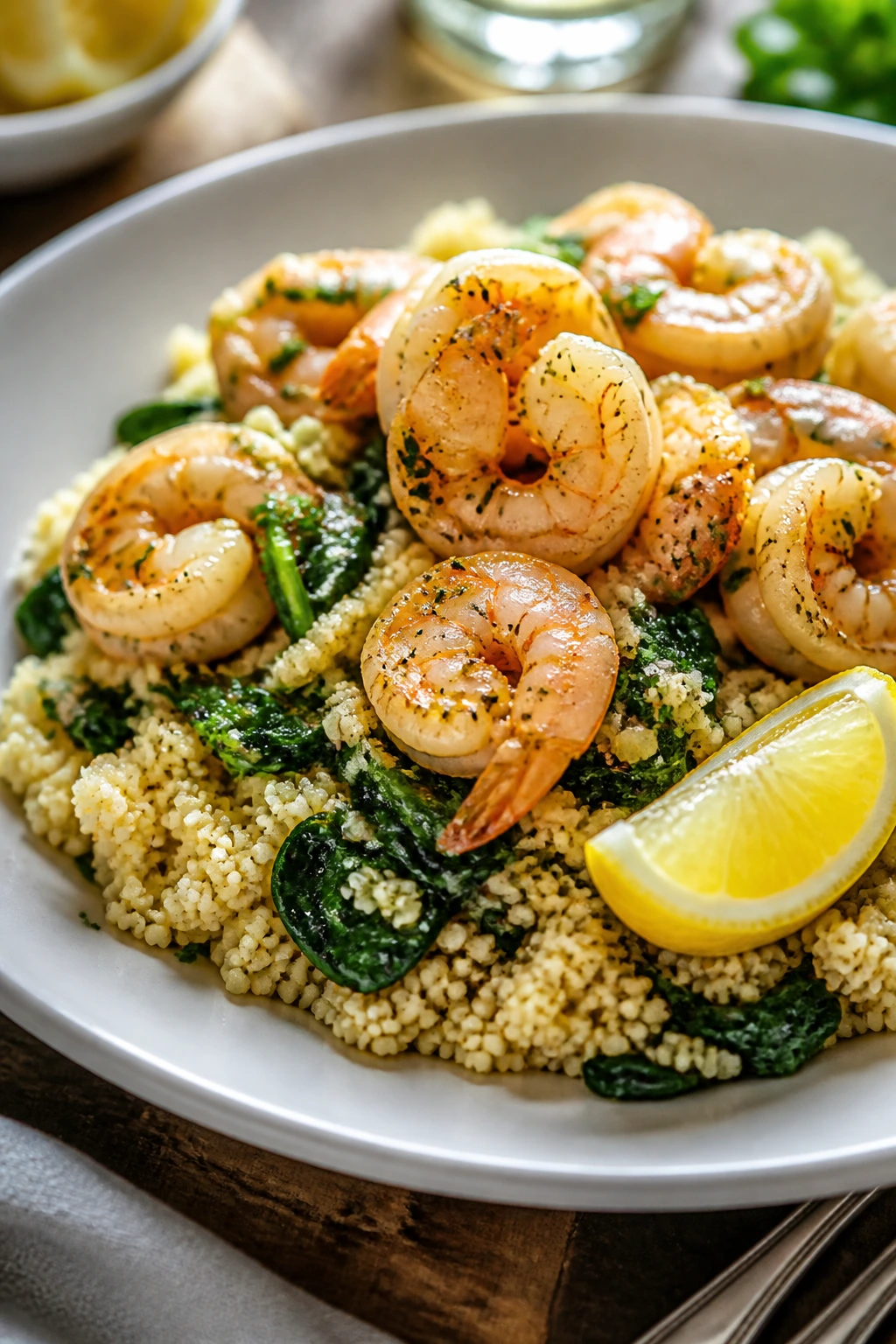
Shrimp is the cheat code here. It cooks so fast that the couscous feels like the slowest part of the meal, and even that takes only a few minutes. Lemon, garlic, and spinach keep the whole pan bright and fresh, which matters when you want dinner to taste lively instead of heavy.
This is the kind of meal I reach for when the evening is getting away from me. It has enough structure to feel like a real plate of food, but it never behaves like a project.
Why it works: Couscous is one of the few starches that acts like a shortcut without tasting like one. Hot broth swells the grains in five minutes, and shrimp needs only a couple of minutes per side. The spinach melts into the hot pan at the end, and lemon juice keeps the whole dish sharp. If you buy frozen shrimp, thaw them under cold running water and dry them well before cooking; damp shrimp steam, and that is where the texture goes sideways.
Key ingredients:
- 1 lb large shrimp, peeled and deveined — medium or jumbo shrimp both work, but they should be fairly even in size.
- 1 cup couscous — regular couscous cooks fast and gives the dish a light, fluffy base.
- 1 1/4 cups chicken broth or vegetable broth — this adds flavor to the grains without extra work.
- 2 tablespoons olive oil — use part for the couscous and part for the skillet.
- 3 garlic cloves, minced — garlic is the backbone of the pan.
- 1 lemon, zested and juiced — the zest gives perfume; the juice gives lift.
- 5 oz baby spinach — it wilts fast and adds color.
- 1/4 cup chopped parsley — a fresh finish keeps the dish from feeling flat.
- 1/4 teaspoon red pepper flakes — optional, but a little heat is nice.
- Salt and black pepper — season the shrimp and the couscous well.
- 2 tablespoons crumbled feta, optional — a salty finish if you want a little extra richness.
Quick steps:
- Cook the couscous: Bring the broth to a boil in a small saucepan, stir in the couscous and 1 tablespoon olive oil, cover, then remove from the heat and let it sit for 5 minutes. Fluff with a fork until the grains look light and separate.
- Season the shrimp: Pat the shrimp dry, then season them with salt, black pepper, and red pepper flakes if you want a little heat.
- Sauté the garlic: Warm the remaining olive oil in a large skillet over medium heat. Add the garlic and stir for 20 to 30 seconds, until fragrant but not browned.
- Cook the shrimp: Add the shrimp in a single layer and cook for 1 to 2 minutes per side, until pink and opaque. Do not overcook them — shrimp turn rubbery fast.
- Finish the pan: Add the spinach and toss for 30 to 45 seconds, until just wilted. Stir in the lemon zest, lemon juice, and parsley.
- Serve: Spoon the couscous into bowls, pile the shrimp and spinach on top, and finish with feta if you want a salty bite.
Tips and variations:
- Make it heartier: Stir in 1 can of rinsed chickpeas with the spinach.
- Keep the shrimp tender: Pull the pan off the heat as soon as the shrimp turn opaque.
- Change the base: Use quick-cooking rice or orzo if couscous is not in the pantry.
2. Rotisserie Chicken Quesadillas with Black Beans
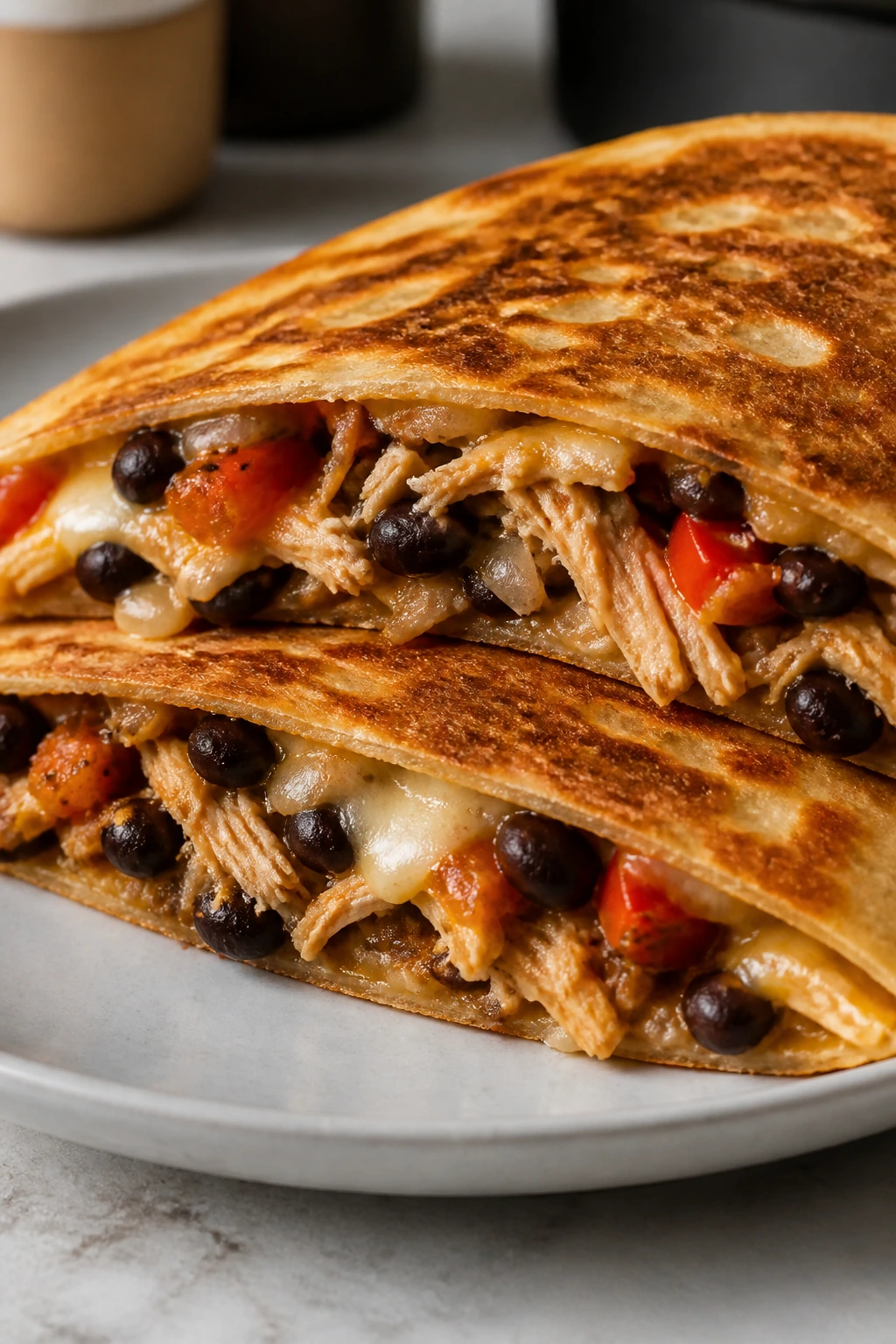
What else turns rotisserie chicken into dinner without much effort? A hot skillet, a little salsa, and tortillas that crisp at the edges while the cheese melts into the filling. That sounds basic, but basic is sometimes the whole point.
These quesadillas feel like the dinner version of a shortcut that actually tastes good. The chicken is already cooked, the beans make the filling sturdier, and the peppers bring enough sweetness to keep every bite from tasting same-y.
Why it works: Rotisserie chicken already brings seasoning and moisture, so you are not starting from zero. Black beans give the filling body, and peppers and onions add enough flavor that you do not need a long spice list. The cheese acts like glue, which is part of the reason quesadillas are such reliable weeknight food. Keep the filling dry enough to stay inside the tortilla; wet filling makes the whole thing messy and slow.
Key ingredients:
- 2 cups shredded rotisserie chicken — shred it while it is still warm if you can.
- 8 flour tortillas, 8-inch size — smaller tortillas crisp more evenly.
- 2 cups shredded Monterey Jack or cheddar — a good melt matters here.
- 1 cup sliced bell peppers — red, yellow, or green all work.
- 1/2 small yellow onion, thinly sliced — the onion softens quickly and adds sweetness.
- 1/2 cup canned black beans, rinsed and drained — beans stretch the filling and add heft.
- 1 tablespoon taco seasoning — use store-bought or homemade.
- 1 tablespoon oil or butter — this helps the tortilla brown.
- 1/2 cup salsa — serve it on the side or spoon a little inside.
- Avocado, sour cream, or hot sauce, optional — use any finishing touch you like.
Quick steps:
- Cook the vegetables: Heat 1 tablespoon oil in a skillet over medium heat. Add the peppers and onion and cook for 4 to 5 minutes, until softened and lightly browned at the edges.
- Build the filling: Stir in the chicken, black beans, taco seasoning, and 2 tablespoons water. Cook for 1 to 2 minutes, until the mixture is hot and the seasoning clings to everything.
- Assemble the quesadillas: Lay tortillas on a clean surface. Sprinkle cheese over half of each tortilla, add the chicken mixture, then top with a little more cheese before folding the tortilla closed.
- Crisp the tortillas: Melt a thin film of butter or oil in a large skillet over medium heat. Cook each quesadilla for 2 to 3 minutes per side, until golden and the cheese has melted.
- Rest and slice: Let the quesadillas sit for 1 minute, then cut them into wedges. That tiny pause keeps the cheese from running everywhere.
Tips and variations:
- Don’t overfill them: A modest layer of filling crisps better and flips easier.
- Use leftover chicken: Leftover roast chicken works the same way.
- Add crunch at the end: Serve with lettuce, sliced radishes, or pickled jalapeños.
3. Creamy Tomato Tortellini with Spinach
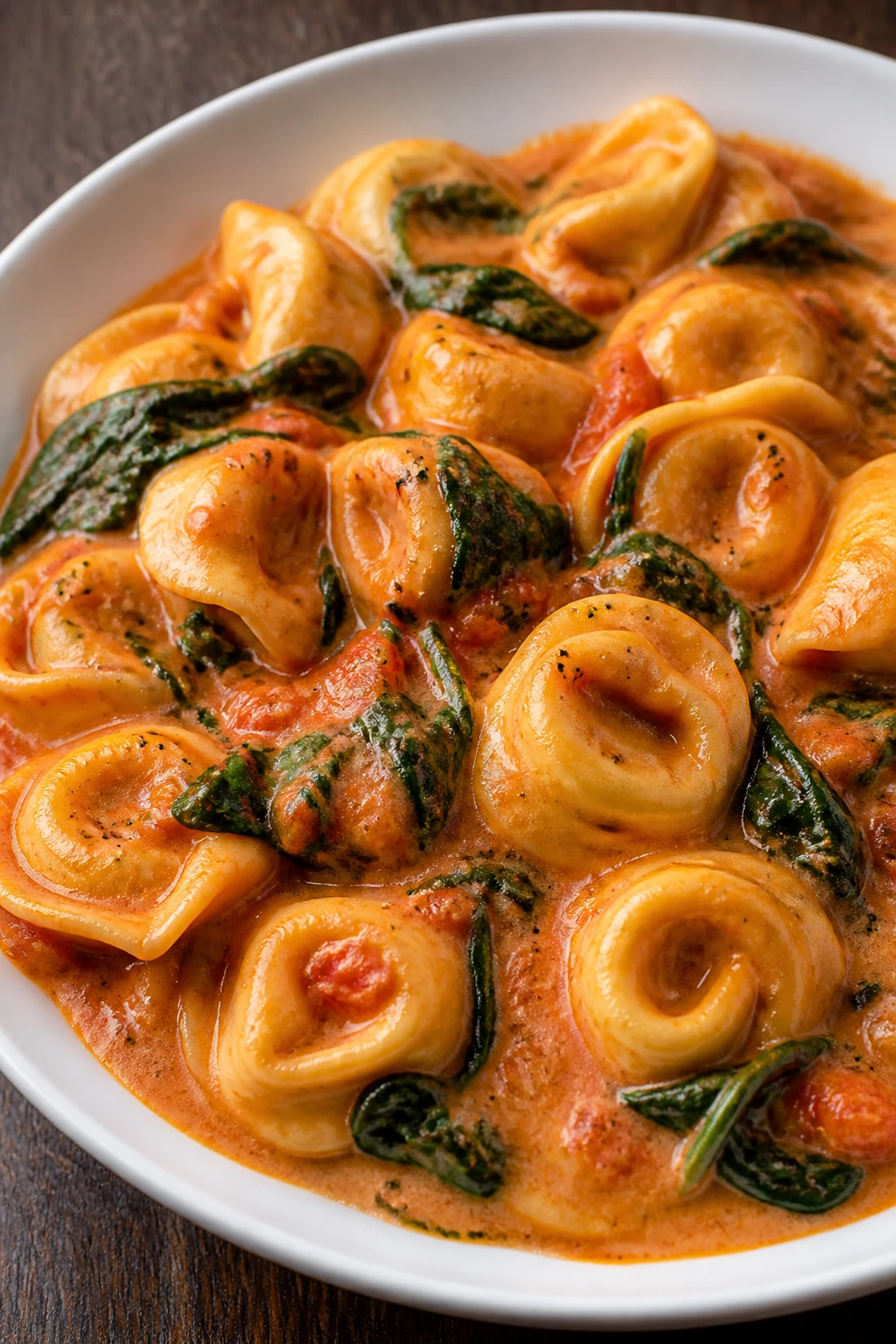
The sauce turns silky, tomato-red, and rich enough to cling to every twist of tortellini. That is the whole trick here. Refrigerated tortellini cooks in a few minutes, and a splash of cream turns jarred marinara into something that feels more deliberate.
I like this dinner because it tastes like the sort of thing people would assume took more time than it did. It also tolerates a tired cook, which is a quality I value more than most kitchen bragging rights.
Why it works: Refrigerated tortellini is already built for speed, so you are not waiting on dough or a long boil. Jarred marinara gives you a reliable tomato base, while cream softens the edge and makes the sauce cling better. Spinach disappears into the sauce without asking for attention. The result feels full and warm, but the clock stays on your side.
Key ingredients:
- 20 oz refrigerated cheese tortellini — fresh tortellini cooks faster than dried pasta.
- 24 oz marinara sauce — choose a jar you would actually eat on its own.
- 1/2 cup heavy cream — this makes the sauce smoother and richer.
- 3 cups baby spinach — it wilts in seconds.
- 2 garlic cloves, minced — a small amount is enough here.
- 2 tablespoons olive oil — use it to soften the garlic and warm the sauce.
- 1/4 cup grated Parmesan — adds salty depth.
- 1/4 teaspoon red pepper flakes — optional, but useful if the sauce tastes too soft.
- Fresh basil, optional — a few torn leaves at the end lift the whole bowl.
Quick steps:
- Boil the tortellini: Bring a large pot of salted water to a boil and cook the tortellini according to the package, usually 3 to 5 minutes, until it floats and feels tender.
- Warm the sauce: While the pasta cooks, heat the olive oil in a large skillet over medium heat. Add the garlic and cook for 20 to 30 seconds, until fragrant.
- Build the cream sauce: Pour in the marinara and cream, then stir in the red pepper flakes. Let the sauce simmer gently for 2 to 3 minutes. Do not let it boil hard once the cream is in.
- Add the spinach: Stir in the spinach and cook until it wilts, which takes less than a minute.
- Toss and serve: Drain the tortellini and add it to the skillet along with the Parmesan. Toss until coated, then serve with basil on top.
Tips and variations:
- Save pasta water: A splash helps loosen the sauce if it gets too thick.
- Make it meatier: Brown 8 oz Italian sausage before the garlic and build the sauce in the same pan.
- Change the greens: Baby kale works too, though it needs a minute longer than spinach.
4. Beef and Broccoli Stir-Fry
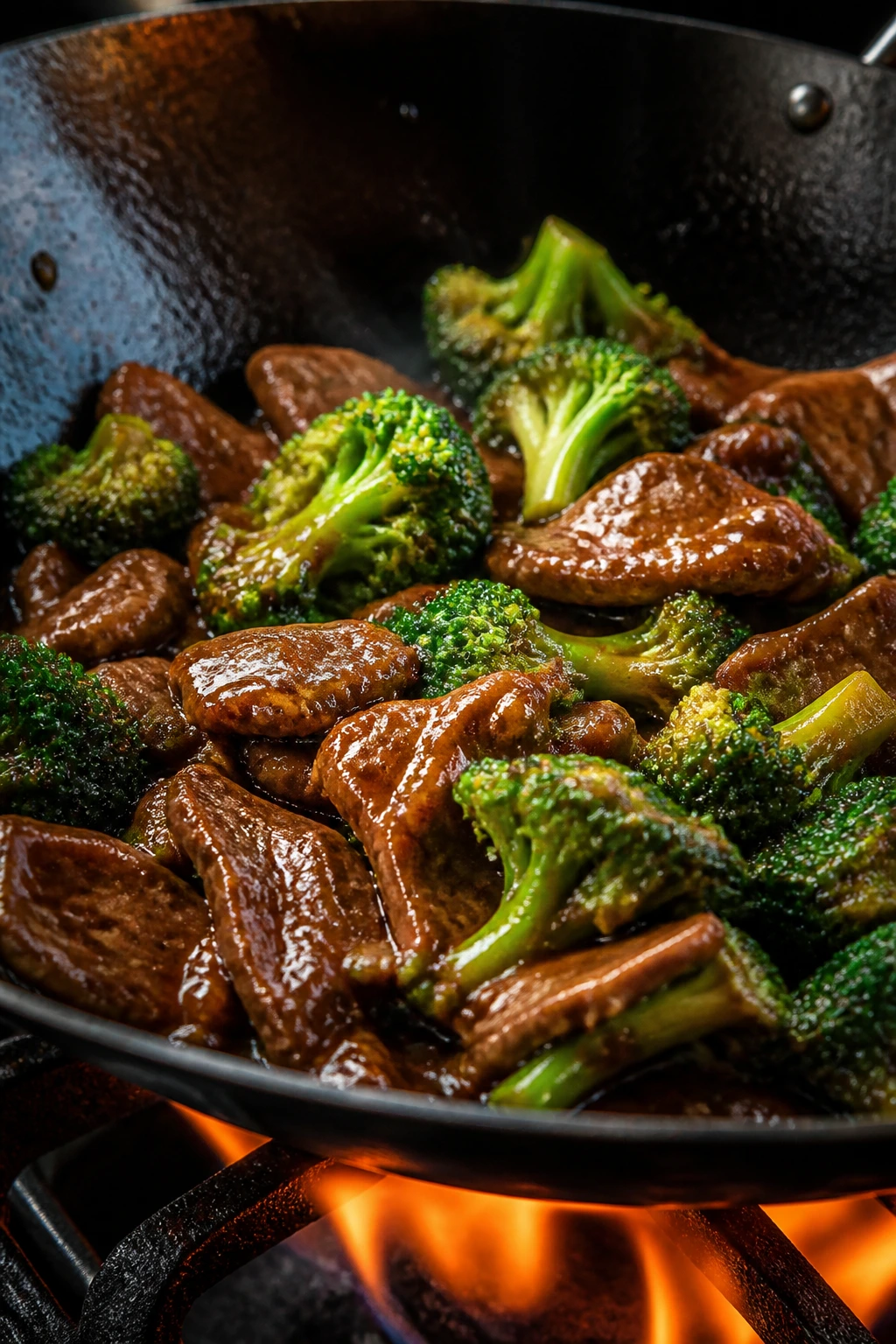
A stir-fry does not need a long marinade to taste bold. Thin-sliced beef, broccoli with a little bite, and a sauce that lands salty-sweet in one pass are enough. High heat is the real trick, and this dish understands that better than most.
I always think of beef and broccoli as one of the smartest fast dinners because it gives you the feeling of takeout without waiting for a delivery bag. It also forgives small mistakes, as long as you keep the pan hot and the beef thin.
Why it works: Thin strips of beef cook in a few minutes, so they stay tender if you move quickly. Broccoli softens fast when you give it a splash of water and a lid for a minute or two. A soy sauce, garlic, ginger, and cornstarch mixture turns glossy without much fuss. The cornstarch matters; it lightly coats the sauce so it clings to the beef instead of pooling in the pan.
Key ingredients:
- 1 lb flank steak or sirloin, thinly sliced against the grain — slicing against the grain keeps the beef tender.
- 4 cups broccoli florets — cut them small enough to cook fast.
- 3 garlic cloves, minced — fresh garlic gives the sauce a sharper edge.
- 1 tablespoon fresh ginger, grated — this gives the stir-fry its warm, clean bite.
- 1/4 cup low-sodium soy sauce — lets you control the salt.
- 2 tablespoons oyster sauce — optional, but it adds depth.
- 1 tablespoon brown sugar or honey — enough to balance the soy.
- 2 teaspoons cornstarch — this thickens the sauce.
- 2 tablespoons neutral oil — avocado, canola, or peanut oil all work.
- 1/3 cup water — helps steam the broccoli.
- Cooked rice, for serving — white rice, brown rice, or jasmine rice all fit.
Quick steps:
- Mix the sauce: In a small bowl, whisk together the soy sauce, oyster sauce, brown sugar, cornstarch, and water until smooth.
- Sear the beef: Heat 1 tablespoon oil in a large skillet or wok over high heat. Add the beef in a single layer and cook for 1 to 2 minutes per side, until browned. Remove it to a plate.
- Cook the broccoli: Add the remaining oil to the pan, then the broccoli. Stir for 1 minute, add a splash of water, and cover for 1 to 2 minutes, until the florets turn bright green and just tender.
- Add the aromatics: Stir in the garlic and ginger and cook for 20 seconds, until fragrant.
- Finish the stir-fry: Return the beef to the pan, pour in the sauce, and toss for 1 to 2 minutes, until the sauce turns glossy and coats the meat and broccoli.
- Serve hot: Spoon over rice while the sauce is still shiny and the broccoli still has some crunch.
Tips and variations:
- Slice the beef ahead of time: Fifteen minutes in the freezer firms it up and makes thin slicing easier.
- Use frozen broccoli: Thaw it first and pat it dry so the pan does not fill with water.
- Add heat: A teaspoon of chili garlic sauce gives the dish more bite.
5. Sheet Pan Sausage, Peppers, and Onions
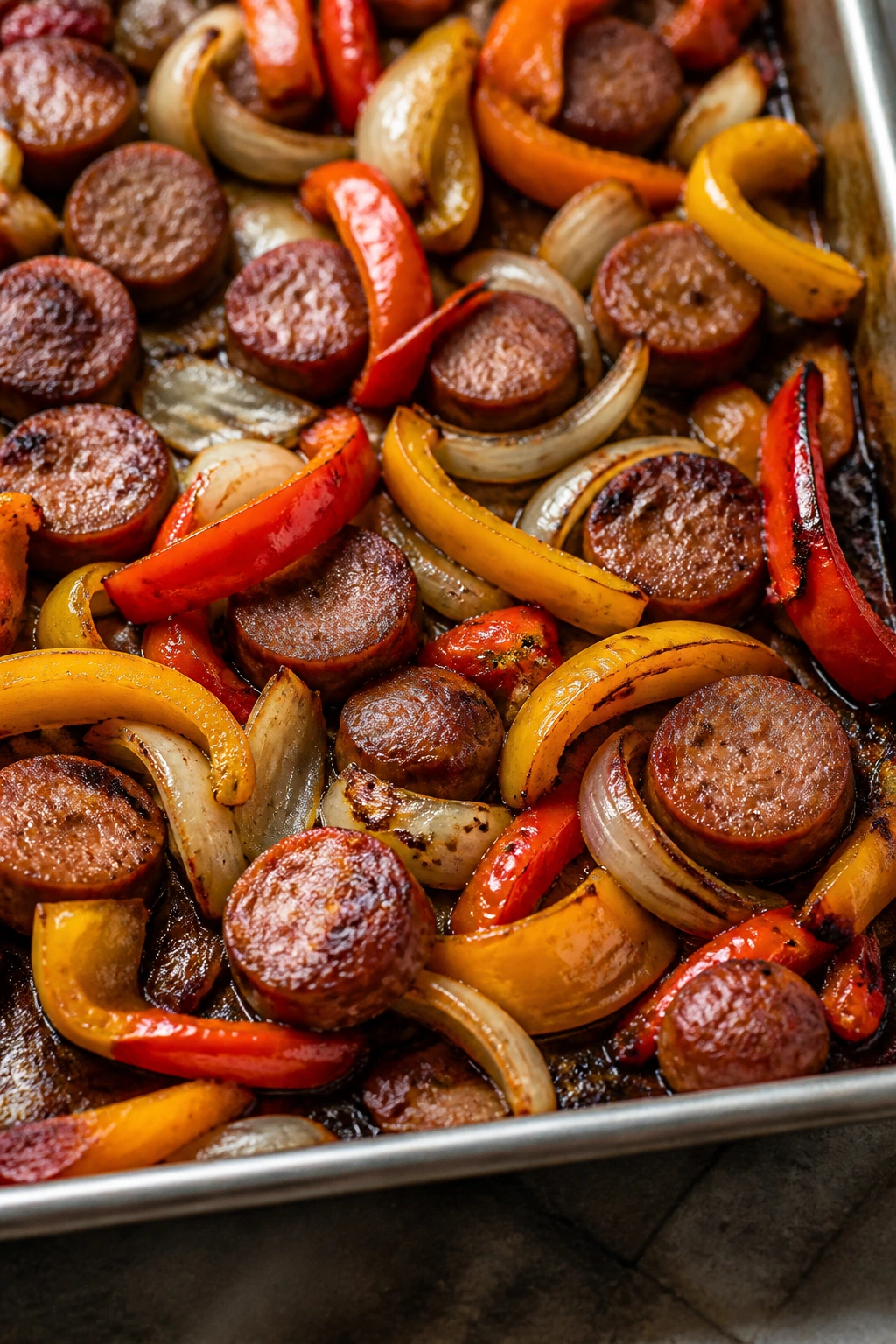
If you own a sheet pan, you already own dinner. Sausage, peppers, and onions roast together until the edges brown and the vegetables turn sweet. Dinner feels bigger than the effort, and that is the whole appeal.
This is one of those dinners that looks a little old-school in the best way. It is hearty, it is unfussy, and it still tastes like someone paid attention.
Why it works: Fully cooked sausage cuts the timing down because you are only heating and browning it. Peppers and onions take well to high oven heat, and they soften without turning to mush if you slice them thick enough. A little balsamic at the end makes the pan taste fuller, and the browned bits on the tray do half the flavor work for you.
Key ingredients:
- 1 lb fully cooked smoked sausage, sliced into 1-inch pieces — kielbasa, andouille, or chicken sausage all work.
- 3 bell peppers, sliced — use mixed colors for sweeter flavor and more color.
- 1 large yellow onion, sliced — thick slices hold up better in the oven.
- 2 tablespoons olive oil — helps everything brown.
- 1 teaspoon Italian seasoning — simple and reliable.
- 1/2 teaspoon kosher salt — less if your sausage is salty.
- Black pepper, to taste — enough to wake up the vegetables.
- 1 tablespoon balsamic vinegar — toss it in after roasting.
- Hoagie rolls or cooked rice, for serving — both are good landing spots.
Quick steps:
- Heat the oven: Set the oven to 425°F and line a sheet pan with parchment for easier cleanup.
- Toss the vegetables and sausage: Combine the sausage, peppers, and onions on the pan with olive oil, Italian seasoning, salt, and black pepper. Spread everything into a single layer.
- Roast: Cook for 15 to 20 minutes, stirring once halfway through, until the peppers soften and the sausage edges brown.
- Finish the pan: Drizzle the balsamic vinegar over the hot tray and toss once more.
- Serve: Pile the mixture into rolls or serve over rice. Add mustard if you want a sharper edge.
Tips and variations:
- Use pre-sliced sausage: It saves a few minutes and browns evenly.
- Give the pan space: Crowding turns roasting into steaming.
- Add potatoes only if they are tiny: Larger potatoes slow everything down.
6. Egg Fried Rice with Frozen Vegetables
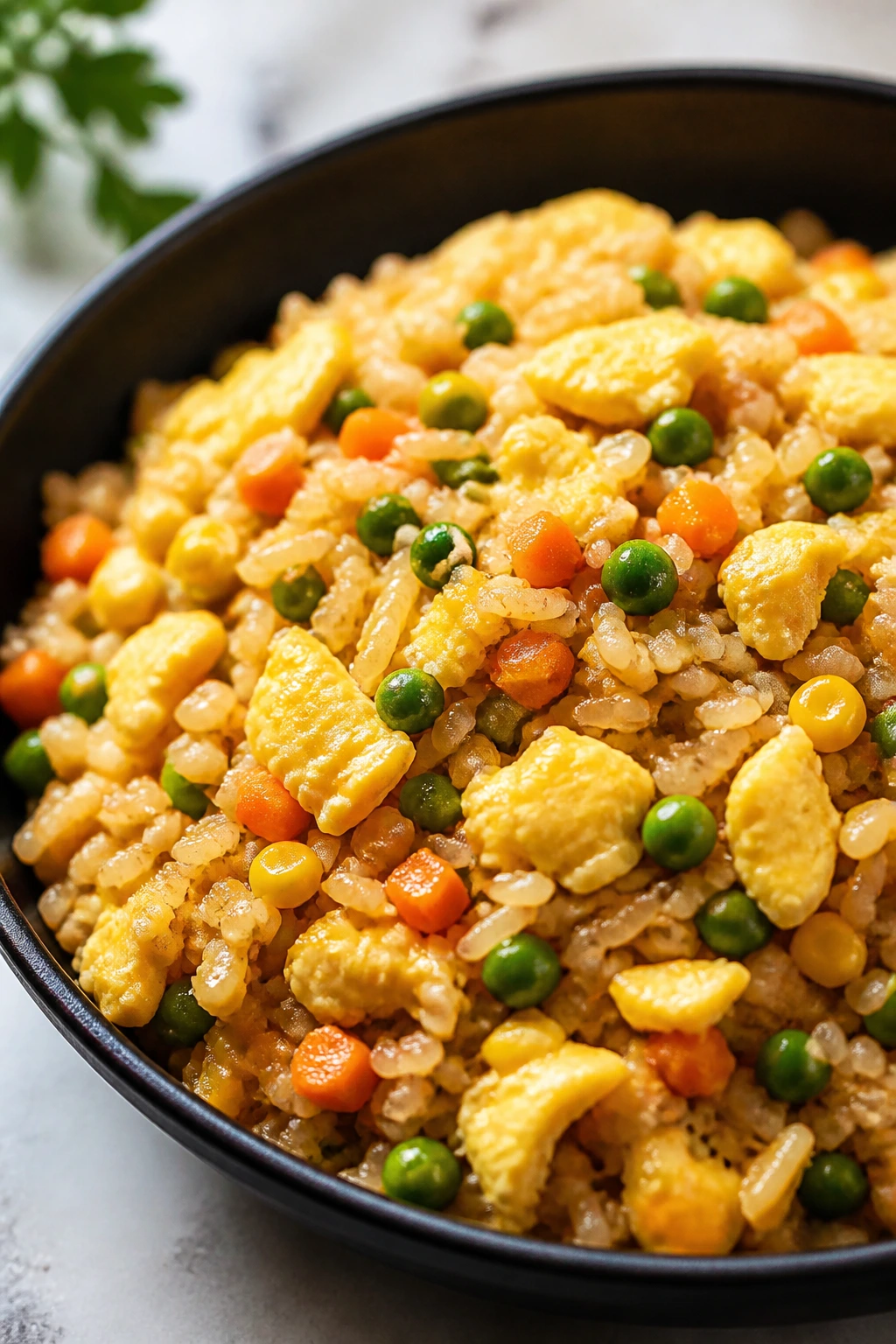
Three cups of cold rice change the whole equation. Warm rice clumps; cold rice fries. That matters when the clock is down to the last few minutes and you still want a dinner that tastes like you tried.
This is the meal I make when there are eggs in the fridge, a bag of frozen vegetables in the freezer, and not much else worth bragging about. It is cheap, fast, and surprisingly satisfying if you keep the pan hot.
Why it works: Cold rice dries out a little, so the grains fry instead of steaming. Eggs give the dish protein and a soft texture, while frozen vegetables slide into the pan without any chopping. Sesame oil at the end gives the rice that familiar takeout smell. The whole thing is less about finesse and more about rhythm.
Key ingredients:
- 3 cups cold cooked rice — day-old rice is best.
- 3 large eggs, beaten — they add richness and body.
- 2 cups frozen peas and carrots — no thawing needed.
- 3 scallions, sliced — both the white and green parts.
- 2 garlic cloves, minced — enough to flavor the oil.
- 3 tablespoons soy sauce — low-sodium if you want more control.
- 1 teaspoon sesame oil — use it at the end.
- 1 tablespoon neutral oil — for frying.
- 1 tablespoon butter — optional, but it makes the rice taste rounder.
- 1 cup diced cooked ham or cubed tofu, optional — a good protein add-on.
Quick steps:
- Scramble the eggs: Heat 1/2 tablespoon oil in a large skillet or wok over medium-high heat. Pour in the eggs and cook until softly set, then move them to a plate.
- Cook the vegetables: Add the remaining oil and butter. Stir in the garlic, scallion whites, and frozen vegetables. Cook for 2 to 3 minutes, until the vegetables are hot and any ice has melted away.
- Fry the rice: Add the cold rice and break up any clumps with a spatula. Let it sit for a minute before stirring so it picks up a little color.
- Season: Pour in the soy sauce and sesame oil, then toss until the grains look evenly coated.
- Bring back the eggs: Add the scrambled eggs and any ham or tofu, then toss everything together.
- Finish and serve: Taste for salt, add the scallion greens, and serve while the rice is still hot and slightly crisp.
Tips and variations:
- Use a wide pan: A crowded pan steams the rice and makes it soft.
- Keep the heat up: You want a little sizzle, not a lazy simmer.
- Add chili crisp: A spoonful on top wakes up the whole bowl.
7. Turkey Taco Skillet
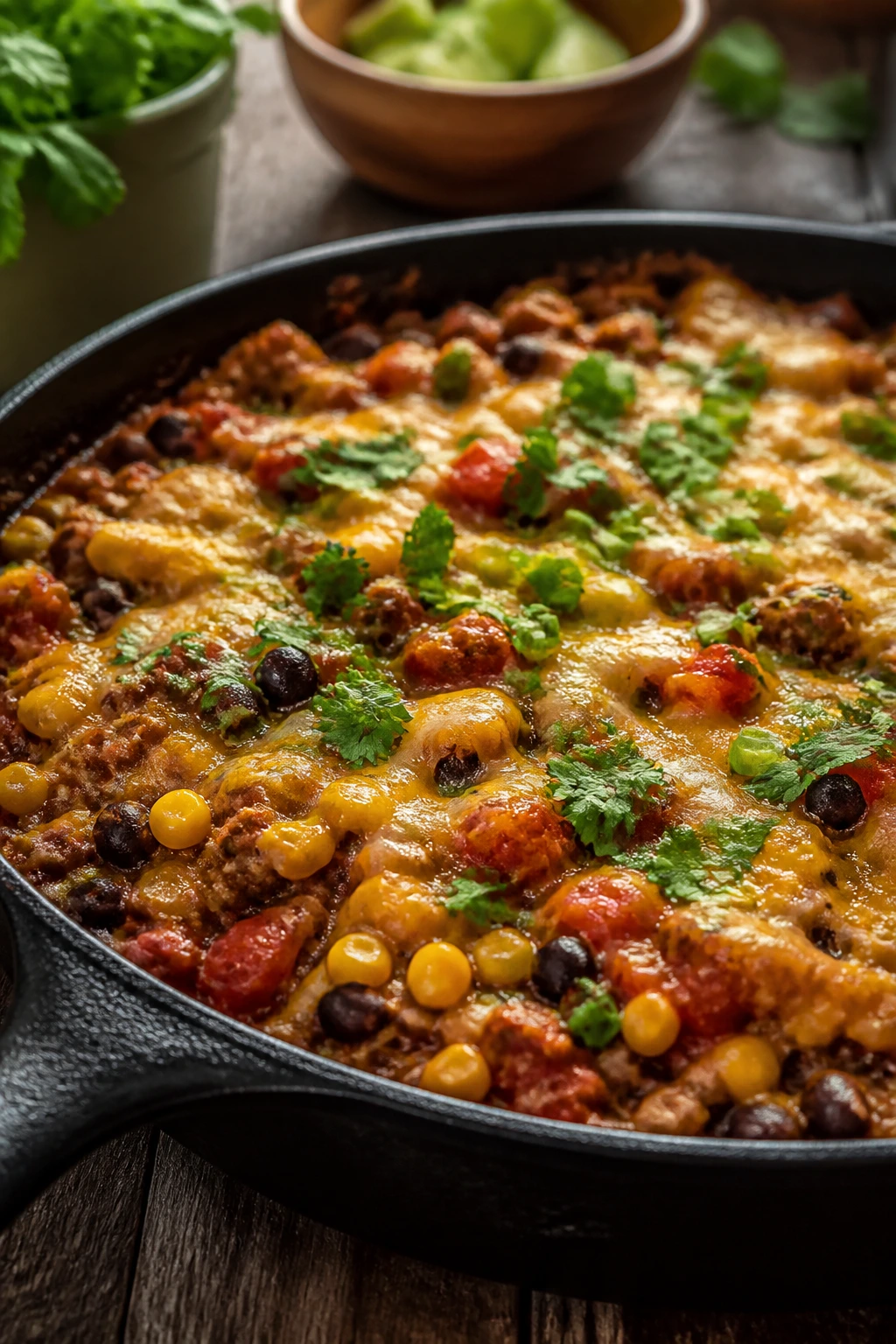
Ground turkey gets blamed for being bland, but taco seasoning fixes that faster than almost anything else. Toss in salsa, black beans, and corn, and the skillet turns into a filling base for bowls, tacos, or chips. It is the sort of dinner that behaves well when you are tired.
This meal has a practical kind of charm. It stretches one pound of meat into something that feels complete, and it gives you choices at the table without making the cook juggle side dishes.
Why it works: Ground turkey browns quickly, and a taco spice blend gives it the seasoning backbone it needs. Salsa adds moisture and a little acidity, while black beans and corn bring texture and sweetness. Cheese on top melts into the skillet and ties everything together. You can serve it in tortillas, over rice, or with tortilla chips, and all three versions make sense.
Key ingredients:
- 1 lb ground turkey — lean turkey works, but not so lean that the pan goes dry.
- 1 tablespoon olive oil, if needed — use it if the turkey is very lean.
- 1 small yellow onion, diced — it softens into the meat.
- 2 tablespoons taco seasoning — homemade or store-bought.
- 1 cup salsa — chunky salsa gives more texture.
- 1 can black beans, rinsed and drained — they make the skillet more filling.
- 1 cup frozen corn — no need to thaw.
- 1 cup shredded cheddar or pepper jack — use what melts well.
- Tortillas, rice, or chips — choose the base that sounds good to you.
- Cilantro and lime wedges, optional — a fresh finish helps a lot.
Quick steps:
- Brown the turkey: Heat the oil in a large skillet over medium-high heat. Add the onion and turkey, breaking the meat apart as it cooks, for about 6 minutes, until no pink remains.
- Season the skillet: Stir in the taco seasoning and cook for 30 seconds, until the spices smell toasted.
- Add the salsa and beans: Pour in the salsa, black beans, and corn. Stir and simmer for 3 to 4 minutes, until the mixture thickens a little.
- Melt the cheese: Sprinkle the cheese over the top and cover the skillet for 1 minute, until melted.
- Serve: Spoon into tortillas, over rice, or onto chips. Add cilantro and lime if you want a bright finish.
Tips and variations:
- Use fire-roasted salsa: It gives the skillet more depth with no extra work.
- Turn it into nachos: Spoon the mixture over chips and broil for a minute.
- If you like heat, add jalapeños: Pickled or fresh both work.
8. Dijon Salmon and Green Beans
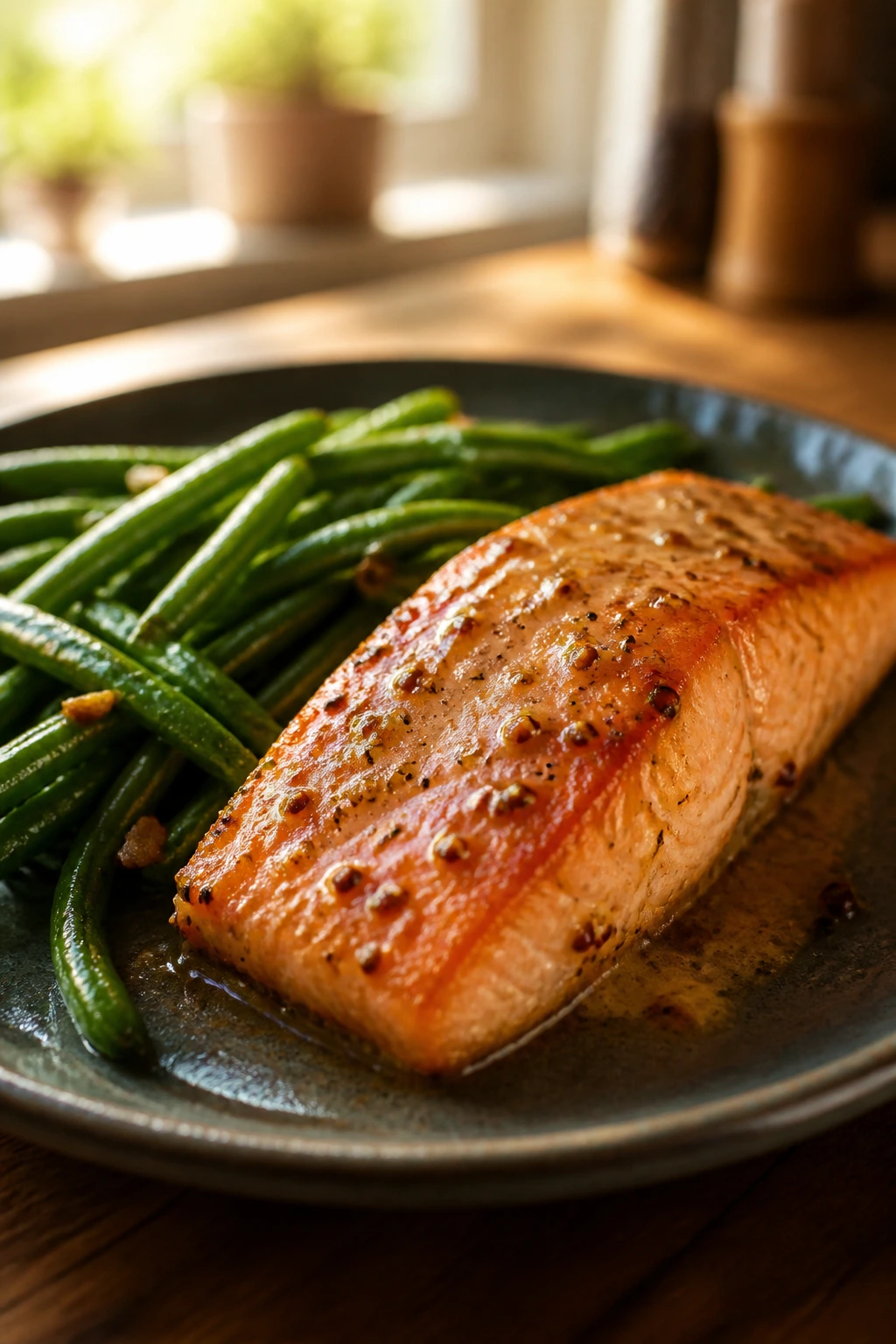
Salmon earns its place in a fast dinner lineup for one reason: it cooks before you get bored of waiting. A Dijon-honey glaze, a pan of green beans, and a hot oven do most of the work. Pull the fish at the right moment and it stays tender, which matters more than people think.
I like sheet-pan salmon because it feels clean and composed without asking for much. You put the vegetables in first, add the fish later, and dinner arrives with almost no fuss.
Why it works: Salmon cooks quickly and likes high heat. Green beans roast in the same time frame, so you do not need a second pan. Dijon gives the glaze sharpness, honey gives it a little shine, and lemon at the end keeps the fish from tasting heavy. An instant-read thermometer helps here; salmon is done when the thickest part reaches 145°F and flakes easily.
Key ingredients:
- 4 salmon fillets, 5 to 6 oz each — choose pieces that are close in thickness.
- 1 lb green beans, trimmed — thin beans roast fast.
- 2 tablespoons Dijon mustard — sharp, not sweet.
- 1 tablespoon honey — enough to balance the mustard.
- 2 tablespoons olive oil — for the vegetables and the fish.
- 2 garlic cloves, minced — optional, but useful.
- 1 lemon — cut into wedges or use the zest.
- Salt and black pepper — season both components well.
- 1 tablespoon butter, optional — a small knob on the fish adds richness.
Quick steps:
- Preheat the oven: Heat the oven to 425°F and line a sheet pan with parchment.
- Start the vegetables: Toss the green beans with 1 tablespoon olive oil, salt, pepper, and half the garlic. Spread them on the pan and roast for 8 minutes.
- Make the glaze: Stir together the Dijon mustard, honey, remaining olive oil, and remaining garlic.
- Add the salmon: Move the green beans aside and place the salmon on the tray. Spoon the glaze over the fillets and roast for 10 to 12 minutes, until the fish flakes and reaches 145°F in the thickest part.
- Finish and serve: Squeeze lemon over the salmon and green beans. Add a small pat of butter on top if you want a softer finish.
Tips and variations:
- Use even fillets: Thin ends cook faster, so try to buy pieces of similar size.
- Do not overbake it: Salmon dries out fast once it goes past the safe point.
- Serve with couscous or bread: Both catch the glaze nicely.
9. Chickpea Coconut Curry
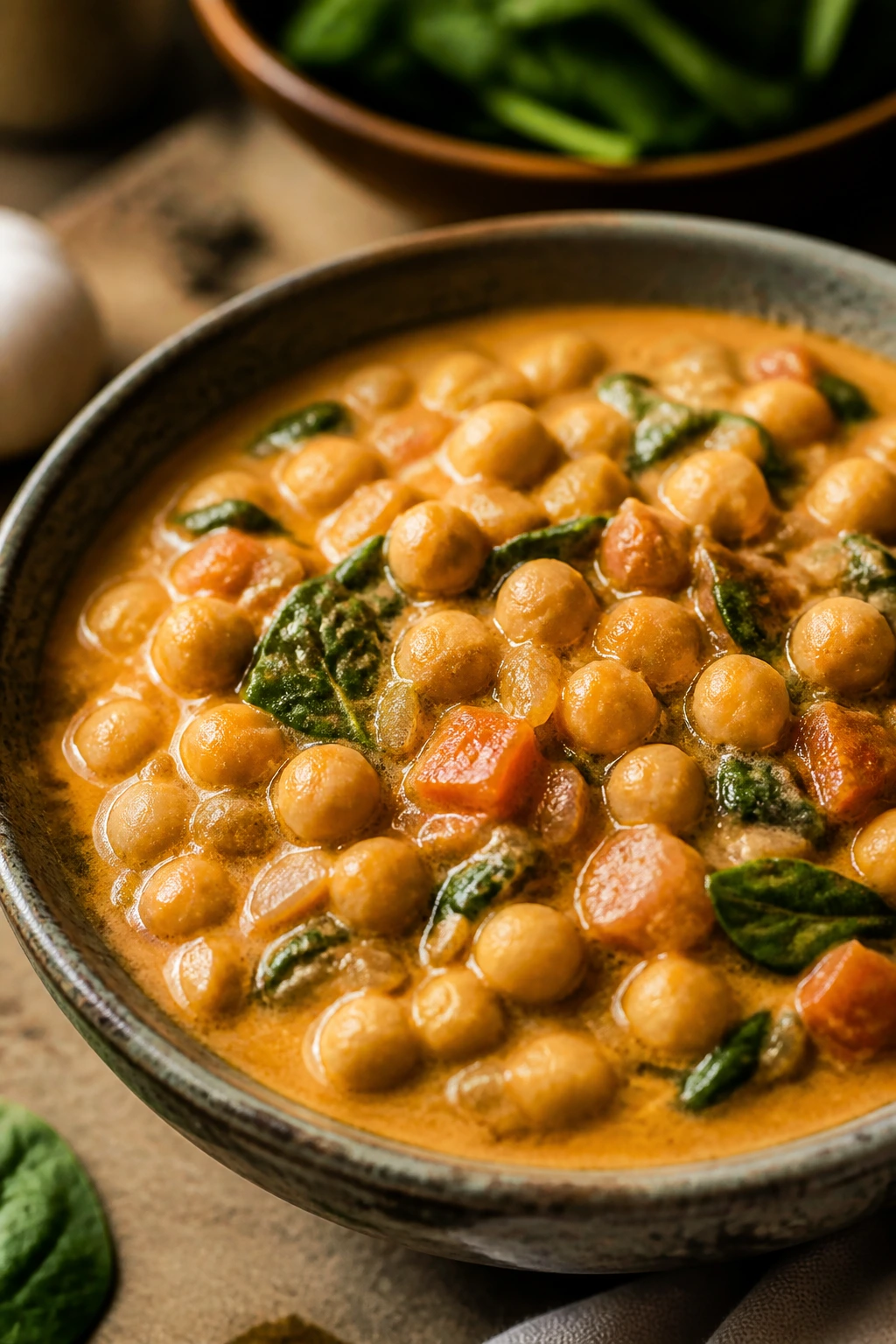
Can a pantry curry taste layered in 20 minutes? Yes, if you bloom the curry paste in hot oil and let coconut milk do the smoothing. Chickpeas bring body, spinach disappears at the end, and the whole pot smells like you spent longer on it than you did.
This is one of the best vegetarian fast dinners because it feels rich without needing cream or a long simmer. The ingredients are mostly shelf-stable, and that makes it useful on nights when the fridge looks sparse.
Why it works: Canned chickpeas are already cooked, so they only need heating through. Curry paste or curry powder wakes up in hot oil, and coconut milk turns the spices into a sauce. Diced tomatoes give the curry a little acidity, while spinach softens at the end without getting mushy. Lime juice at the end keeps the flavors from sitting too flat.
Key ingredients:
- 2 tablespoons oil — neutral oil works well here.
- 1 small yellow onion, diced — the base of the curry.
- 3 garlic cloves, minced — fresh garlic gives more punch.
- 1 tablespoon grated ginger — bright and warm.
- 2 tablespoons red curry paste or 2 teaspoons curry powder plus 1 teaspoon garam masala — use what you have.
- 2 cans chickpeas, drained and rinsed — the main protein and texture.
- 1 can full-fat coconut milk — the sauce needs the fat.
- 1 can diced tomatoes — adds acidity and body.
- 3 cups baby spinach — goes in at the end.
- 1 tablespoon lime juice — the final lift.
- Cooked rice or naan, for serving — both make sense.
Quick steps:
- Soften the aromatics: Heat the oil in a large skillet or pot over medium heat. Add the onion and cook for 3 to 4 minutes, until soft.
- Bloom the spices: Stir in the garlic, ginger, and curry paste or powder. Cook for 30 seconds, until the mixture smells fragrant.
- Build the curry: Add the chickpeas, coconut milk, and diced tomatoes. Stir and bring to a gentle simmer.
- Simmer and finish: Let the curry cook for 10 to 12 minutes, stirring now and then, until the sauce thickens slightly. Stir in the spinach and cook until wilted.
- Brighten the pot: Add lime juice, taste for salt, and serve over rice or with naan.
Tips and variations:
- Use frozen spinach if needed: Thaw it and squeeze it dry before adding it.
- Make it spicier: Add a sliced chili or a pinch of cayenne.
- Store it well: This curry tastes even better the next day.
10. Pesto Pasta with Cherry Tomatoes and Mozzarella
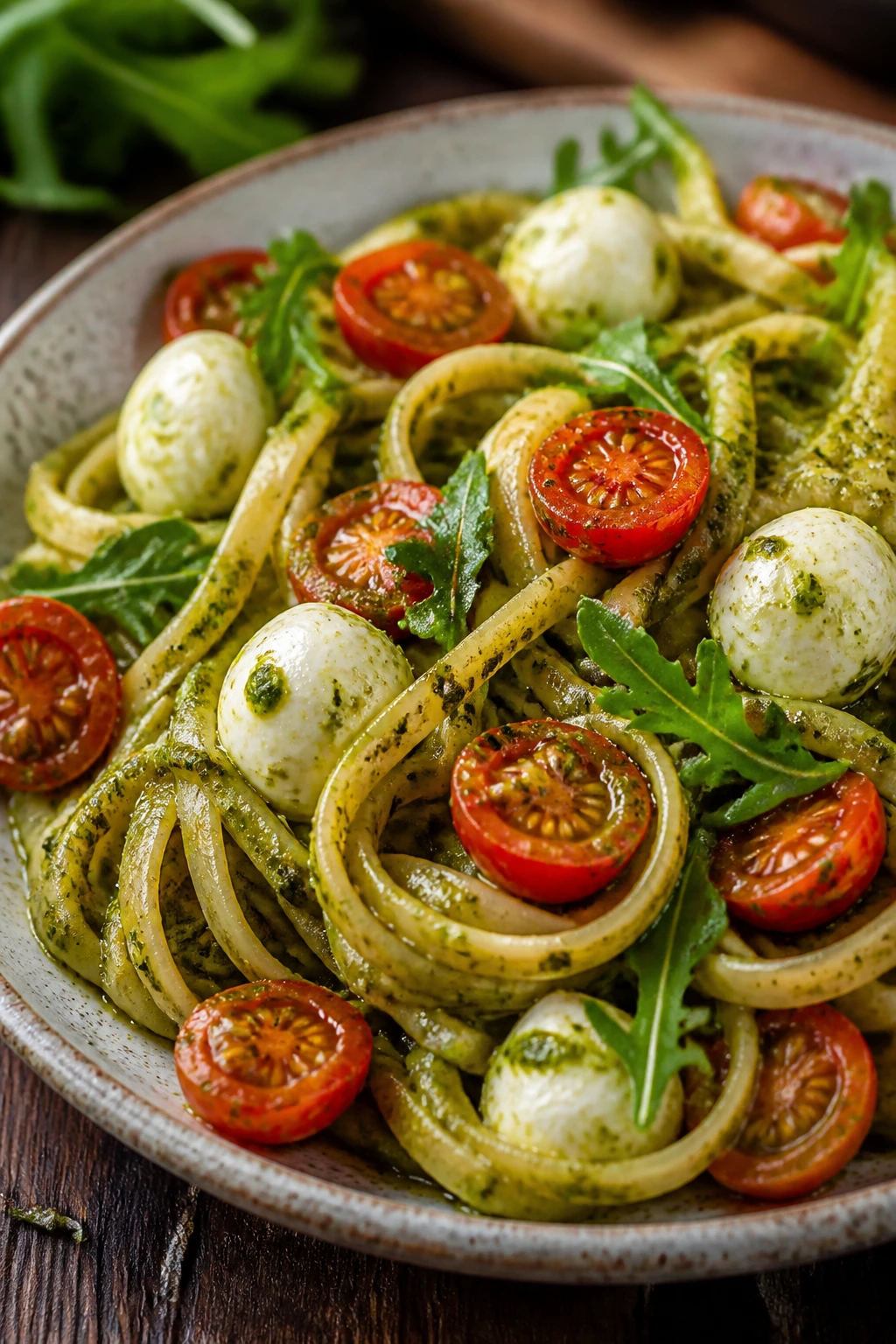
Fresh pesto makes this pasta taste like more than the time you spent on it. Cherry tomatoes burst in the heat, mozzarella softens at the edges, and a little arugula makes the bowl feel lighter. If you want dinner that looks casual but lands with a lot of flavor, this is it.
I keep coming back to this kind of pasta because it understands the value of a shortcut without tasting cheap. A good pesto does a lot of work, and that means you can keep the rest of the ingredients simple.
Why it works: Pesto coats pasta fast and brings garlic, basil, oil, and cheese in one spoonful. Cherry tomatoes soften just enough to release juice, which helps the pesto cling. Mozzarella adds creaminess without needing sauce on the stove. A splash of pasta water ties everything together and keeps the dish from feeling dry.
Key ingredients:
- 12 oz pasta, such as penne, fusilli, or spaghetti — choose a shape that holds the pesto.
- 1/2 cup basil pesto — store-bought or homemade.
- 2 cups cherry tomatoes, halved — the burst of juice matters.
- 8 oz mozzarella pearls or torn fresh mozzarella — use fresh if you can.
- 2 cups baby arugula or spinach — optional, but useful for bulk.
- 1/4 cup grated Parmesan — for a salty finish.
- 1 tablespoon olive oil — to warm the tomatoes.
- Salt, black pepper, and red pepper flakes — season the bowl to taste.
Quick steps:
- Cook the pasta: Boil the pasta in salted water until al dente, then reserve 1/2 cup pasta water before draining.
- Warm the tomatoes: Heat the olive oil in a large skillet over medium heat. Add the tomatoes and cook for 2 to 3 minutes, until the skins start to wrinkle.
- Add the pesto: Stir the pesto into the tomatoes, then add a splash of pasta water to loosen it.
- Toss everything together: Add the pasta, mozzarella, and greens. Toss until the cheese starts to soften and the greens wilt.
- Finish: Add Parmesan, black pepper, and red pepper flakes. Taste and adjust the salt before serving.
Tips and variations:
- Use a good pesto: If the jar tastes dull on its own, the pasta will taste dull too.
- Add chicken or shrimp: A cup of cooked chicken or quick sautéed shrimp turns it into a bigger meal.
- Do not rinse the pasta: The starch helps the sauce stick.
11. Lemon Tuna Pasta with Capers
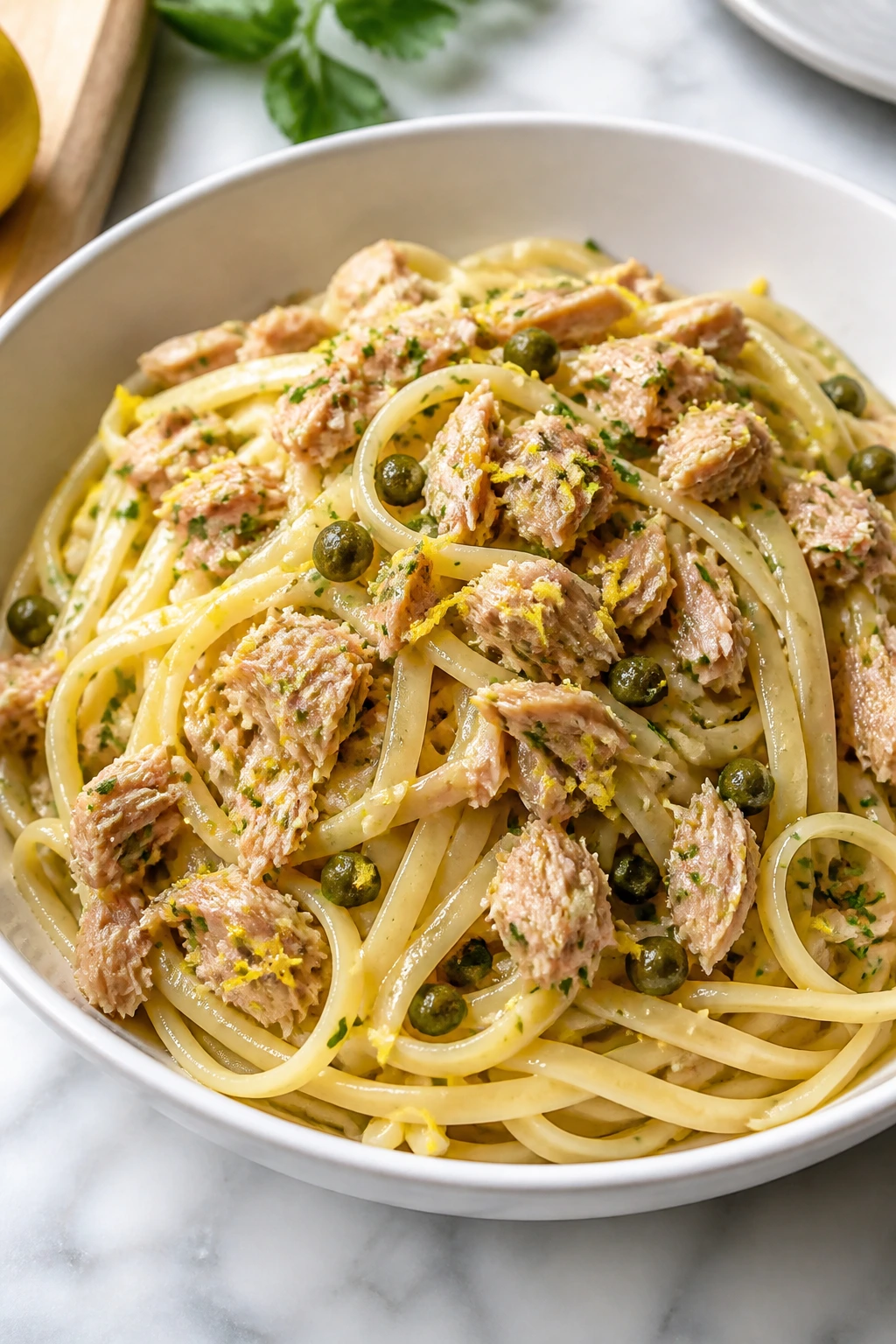
The best tuna pasta is bright, not heavy. Lemon, capers, garlic, and olive oil keep the whole thing sharp, while tuna in olive oil gives it enough richness to feel like a real meal. This is pantry cooking with a little backbone.
I like this one because it feels honest. There is no pretending it is something else. It is tuna, pasta, and a few smart things that make the bowl taste far better than the ingredient count suggests.
Why it works: Tuna packed in olive oil brings more flavor than tuna in water, and capers add salty pops that keep each bite interesting. Lemon zest and juice cut through the oil, while pasta water turns the oil, lemon, and tuna into a light sauce. Spinach or peas can join the pot without slowing anything down. The dish stays quick because nothing here needs more than a few minutes of heat.
Key ingredients:
- 12 oz linguine or spaghetti — long pasta works well with the light sauce.
- 2 cans tuna in olive oil, lightly drained — olive oil tuna tastes fuller.
- 2 tablespoons olive oil — for the garlic and sauce.
- 3 garlic cloves, thinly sliced or minced — thin slices mellow fast.
- 2 tablespoons capers, drained — a salty punch in every bite.
- 1 lemon, zested and juiced — the main bright note.
- 2 cups baby spinach — optional, but useful.
- 1/4 cup chopped parsley — fresh herbs help the final bowl.
- Red pepper flakes, salt, and black pepper — season to taste.
- 1/4 cup reserved pasta water — for loosening the sauce.
Quick steps:
- Cook the pasta: Boil the linguine in salted water until al dente. Reserve 1/4 cup pasta water before draining.
- Build the sauce: Heat the olive oil in a large skillet over medium heat. Add the garlic and capers and cook for 30 seconds, until fragrant.
- Add the tuna: Stir in the tuna and break it into large flakes. Keep the heat gentle so the fish stays tender.
- Finish with citrus: Add the lemon zest, lemon juice, spinach, and reserved pasta water. Toss until the spinach wilts and the sauce turns glossy.
- Combine and serve: Add the pasta, parsley, salt, black pepper, and red pepper flakes. Toss again and serve warm.
Tips and variations:
- Keep the tuna flaky: Stir gently so the texture stays pleasant.
- Add peas instead of spinach: Frozen peas fit this dish well and need only a minute to heat through.
- Good cold, too: Leftovers make a strong next-day lunch.
12. Crispy Gnocchi with Mushrooms and Spinach
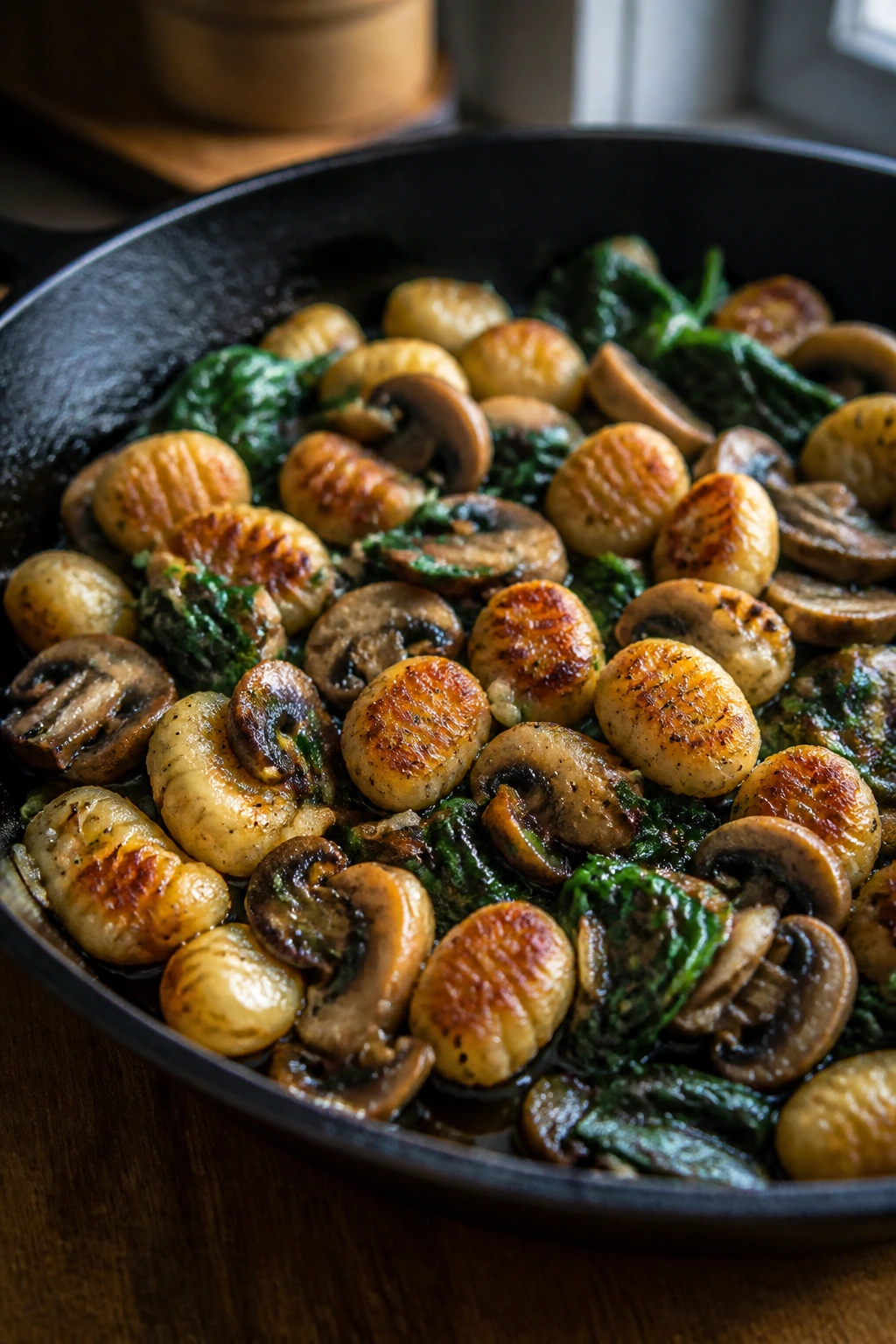
Gnocchi is the fast dinner that behaves like a bigger project. Pan-fry the pillows until the bottoms turn crisp, then let mushrooms take over the pan with garlic and butter. Spinach disappears in the steam, and the whole skillet tastes like comfort without the wait.
This is one of my favorite tricks for nights when I want something cozy but do not want to babysit a pot of boiling water. Shelf-stable gnocchi goes straight into the skillet, which saves time and gives you better texture.
Why it works: Shelf-stable or refrigerated gnocchi browns beautifully in a pan if you leave it alone long enough. Mushrooms release their moisture, then brown once that water cooks off, which gives the skillet a deeper flavor than you would expect from such a short recipe. Spinach softens at the end, and lemon at the finish cuts through the butter. The whole thing turns from simple to satisfying in a few minutes.
Key ingredients:
- 1 lb potato gnocchi — shelf-stable or refrigerated both work.
- 8 oz cremini mushrooms, sliced — their earthiness fits the dish.
- 3 cups baby spinach — a quick green that wilts fast.
- 2 garlic cloves, minced — enough to perfume the pan.
- 2 tablespoons olive oil — for crisping the gnocchi.
- 2 tablespoons butter — for flavor and browning.
- 1/4 cup grated Parmesan — the salty finish.
- 1 lemon — use zest or a small squeeze of juice.
- Salt and black pepper — season as you go.
Quick steps:
- Brown the gnocchi: Heat the olive oil in a large skillet over medium-high heat. Add the gnocchi in a single layer and cook for 5 to 6 minutes, stirring only occasionally, until the bottoms are golden.
- Set the gnocchi aside: Move it to a plate so it does not overcook while the mushrooms go in.
- Cook the mushrooms: Add the butter to the skillet, then the mushrooms. Cook for 4 to 5 minutes, until they release their liquid and start to brown.
- Add the garlic and spinach: Stir in the garlic for 20 seconds, then add the spinach and cook until wilted.
- Finish the skillet: Return the gnocchi to the pan, toss in the Parmesan and lemon, and season with salt and pepper. Serve while the edges still feel crisp.
Tips and variations:
- Do not boil the gnocchi first: The skillet gives it better texture.
- Add sausage if you want more protein: Sliced chicken sausage works well.
- Use parsley at the end: A little chopped parsley keeps the dish from feeling too heavy.
13. Sausage, White Bean, and Kale Soup
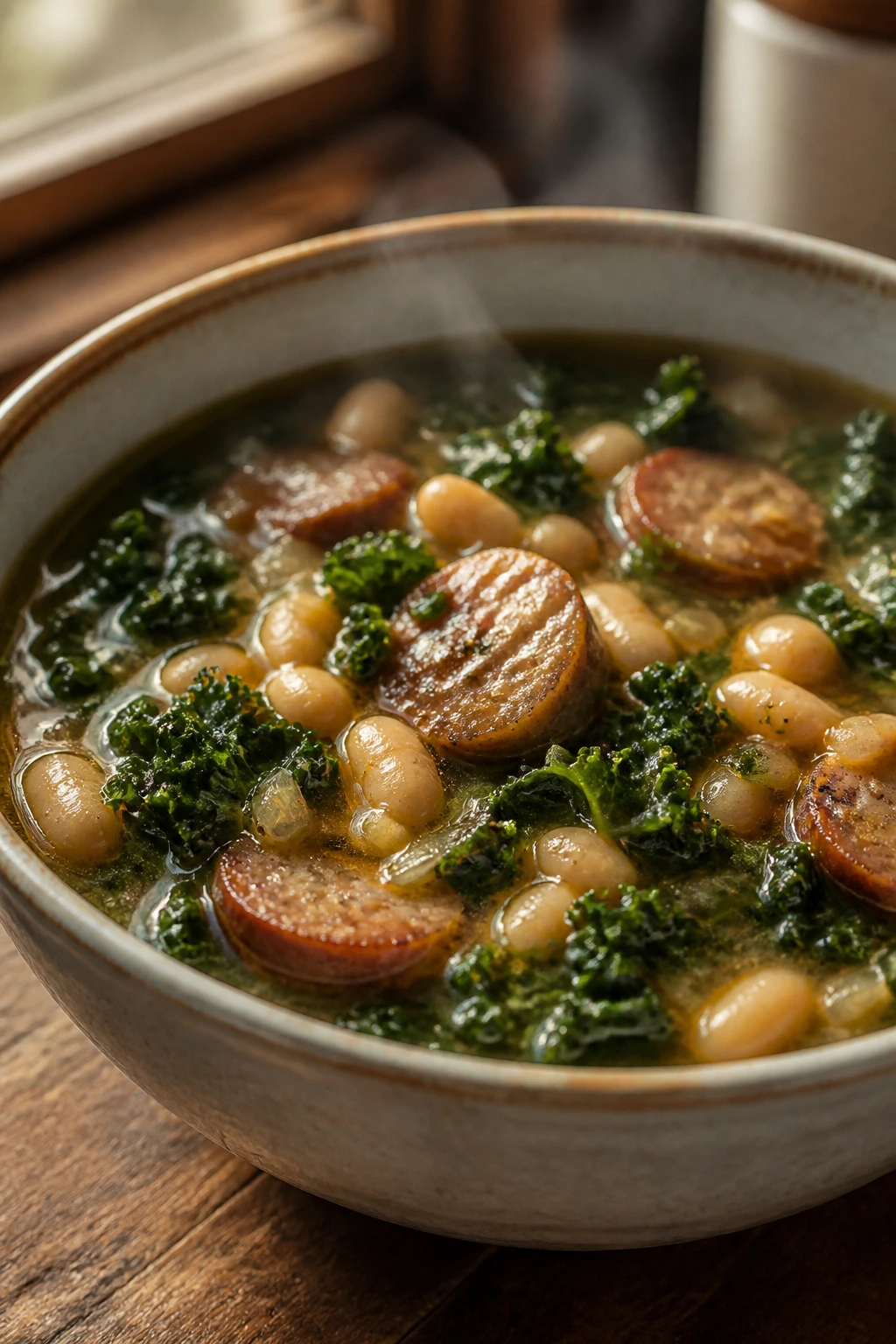
Soup does not have to mean simmering all afternoon. Smoked sausage brings seasoning to the pot fast, white beans thicken the broth, and kale softens in the last few minutes. It is the kind of dinner that tastes like it had a longer day than you did.
This is a sturdy, practical soup, which is my favorite kind on nights when I want something warm and filling without standing over the stove forever. It is also forgiving, which means it behaves well if your knife work is a little rough.
Why it works: Smoked sausage gives the pot built-in flavor, so you are not asking broth and vegetables to do all the work alone. White beans add creaminess without cream, and kale holds up better than delicate greens when the soup simmers for a bit. A parmesan rind, if you have one, can sit in the pot and make the broth taste deeper. The soup thickens as it sits, which is part of its charm.
Key ingredients:
- 1 lb Italian sausage, mild or hot — remove the casings if needed.
- 1 tablespoon olive oil, if the sausage is lean — use it only if the pot seems dry.
- 1 medium yellow onion, diced — the soup base.
- 3 garlic cloves, minced — the flavor foundation.
- 2 cans white beans, rinsed and drained — cannellini or great northern beans both work.
- 4 cups chicken broth — low-sodium broth keeps the seasoning in your hands.
- 1 can diced tomatoes — optional, but useful for body.
- 1 bunch kale, ribs removed and chopped — sturdy greens hold their shape.
- 1 teaspoon Italian seasoning — enough to round things out.
- Parmesan cheese and lemon wedges, optional — both brighten the bowl.
Quick steps:
- Brown the sausage: Heat the olive oil in a large pot over medium heat. Add the sausage and cook for 6 to 8 minutes, breaking it up if needed, until browned.
- Add the onion and garlic: Stir in the onion and cook for 3 to 4 minutes, until soft. Add the garlic and cook for 30 seconds.
- Build the broth: Add the beans, broth, diced tomatoes, and Italian seasoning. Bring the pot to a simmer and cook for 10 minutes.
- Wilt the kale: Stir in the kale and simmer for 3 to 5 minutes, until tender but still green.
- Serve: Taste for salt, then ladle into bowls and finish with Parmesan and a squeeze of lemon.
Tips and variations:
- Use Swiss chard if you have it: It softens a little faster than kale.
- Add a parmesan rind: Drop it into the broth while it simmers, then remove before serving.
- Leftovers get better: The beans and sausage season the broth even more overnight.
Why a Fast Dinner Still Needs a Small Plan
Speed works better when the dinner has a shape. I like to think of it as one anchor, one shortcut, and one finish. The anchor is your protein or main starch. The shortcut is the jar, can, frozen bag, or pre-cooked item that saves time. The finish is lemon, herbs, cheese, vinegar, or a sauce that wakes everything up at the end.
That small pattern keeps fast dinners from tasting random. A skillet meal needs heat and a little sauce. A pasta dinner needs something that clings. A sheet-pan dinner needs ingredients that can roast in the same time window, which is why sausage, peppers, and green beans show up so often in quick cooking. If you keep those rules in your head, dinner stops feeling like a scramble.
One more thing: fast food at home should still taste finished. That means seasoning as you go, not dumping salt at the table and hoping for the best. It also means choosing ingredients with a little built-in flavor — smoked sausage, olive oil tuna, Dijon, pesto, rotisserie chicken, curry paste. Those are not cheats. They are the reason the meal gets on the table before everyone starts wandering toward snacks.
Essential Equipment for Fast Weeknight Cooking
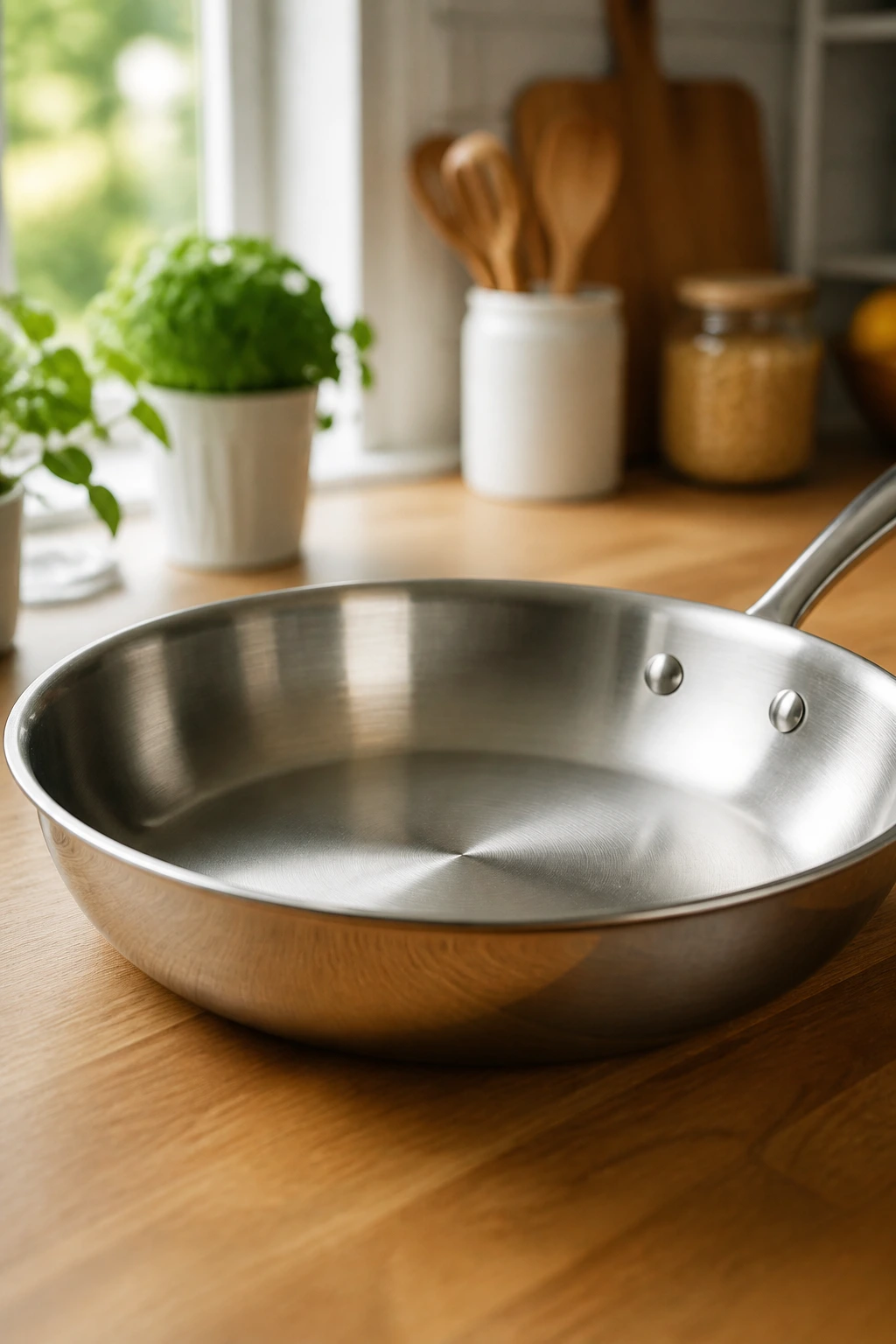
- Large skillet or sauté pan, 10 to 12 inches — useful for stir-fries, quesadillas, fried rice, and skillet pastas.
- Sheet pan — the base for sausage, peppers, onions, and salmon dinners.
- Medium saucepan — handy for couscous, reheating sauces, or boiling small amounts of pasta water.
- Large pot — needed for pasta, soup, and fried rice components that need a quick boil.
- Cutting board and sharp chef’s knife — a sharp knife cuts prep time more than almost any gadget.
- Wooden spoon or heatproof spatula — good for scraping browned bits and stirring rice or pasta without breaking things apart.
- Tongs — useful for flipping shrimp, turning sausage, and moving salmon.
- Colander — for draining pasta, tortellini, or rinsed beans.
- Measuring cups and spoons — fast cooking still needs some precision, especially for sauces.
- Microplane or zester — lemon zest, garlic, and ginger all benefit from a fine grater.
- Instant-read thermometer — optional, but excellent for salmon, chicken, or sausage when you want to avoid guessing.
- Can opener — nothing glamorous here, but canned beans and tomatoes show up often in fast dinners.
Smart Shopping and Ingredient Tips
The grocery store can make a fast dinner feel easier or much more annoying, depending on what lands in your cart. Buy ingredients that already help you. Rotisserie chicken, refrigerated tortellini, frozen shrimp, shelf-stable gnocchi, canned chickpeas, low-sodium broth, and prewashed greens all save time without lowering the quality of the meal.
A few quality cues matter. Fresh shrimp should smell clean, not fishy; if you are buying frozen shrimp, choose pieces that look firm and not frostbitten. Salmon should feel moist and look glossy, not dry at the edges. Bell peppers should feel heavy for their size, and broccoli florets should be tight and deep green. For canned beans, low-sodium versions keep the final dish from getting too salty once the sauce reduces.
Pantry sauces deserve a little attention too. Jarred marinara, pesto, curry paste, soy sauce, and salsa all vary more than people think. Read the ingredient list if you can. Shorter lists are not magic, but they often taste cleaner. Low-sodium soy sauce, plain canned tomatoes, and unsalted broth also give you more room to season the dish yourself.
Frozen vegetables are not a consolation prize. They are a smart buy. Peas, corn, spinach, broccoli, and mixed vegetables all work well in these dinners, and they often beat fresh produce when time is tight or the fridge is already crowded.
Make-Ahead, Storage, and Reheating Guidance
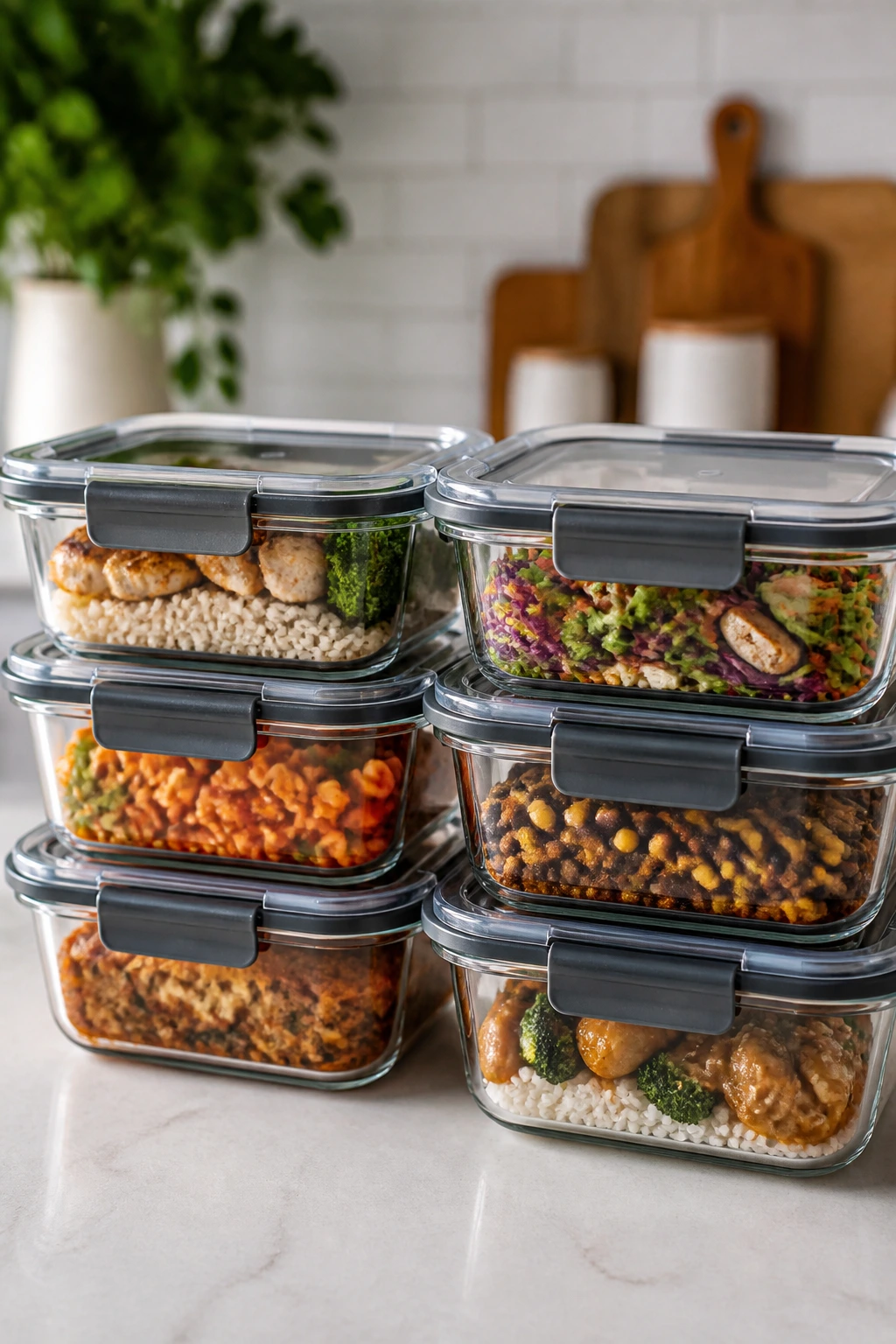
Fast dinners stay useful when you can stretch them across more than one meal. Most cooked dishes in this lineup keep well in the refrigerator for 3 to 4 days in shallow containers. Seafood is the exception: shrimp and salmon are best within 1 to 2 days, because they lose texture faster than beans, pasta, or sausage. Cool everything quickly, then get it into the fridge within 2 hours.
Freezing works best for the sturdier meals. Chickpea curry, turkey taco skillet filling, sausage soup, and beef and broccoli sauce can usually freeze for 2 to 3 months. Pasta dishes with cream or pesto can be frozen, but the texture softens and the sauce may separate a little, so I prefer to keep those for the fridge. Fried rice also freezes well for about 1 month, especially if you reheat it in a skillet rather than the microwave.
Reheating needs a little care. Pasta and rice do best with a splash of water in a skillet over medium-low heat. Quesadillas crisp back up in a dry skillet or toaster oven. Soup belongs on the stovetop over low to medium heat, stirred often. Salmon and shrimp are the fussiest; warm them gently in a covered skillet or a low oven so they do not turn dry and tough. If you can, make the fresh finish after reheating — a squeeze of lemon, a pinch of herbs, a little Parmesan — because that is what brings leftovers back to life.
Variations and Adaptations to Try
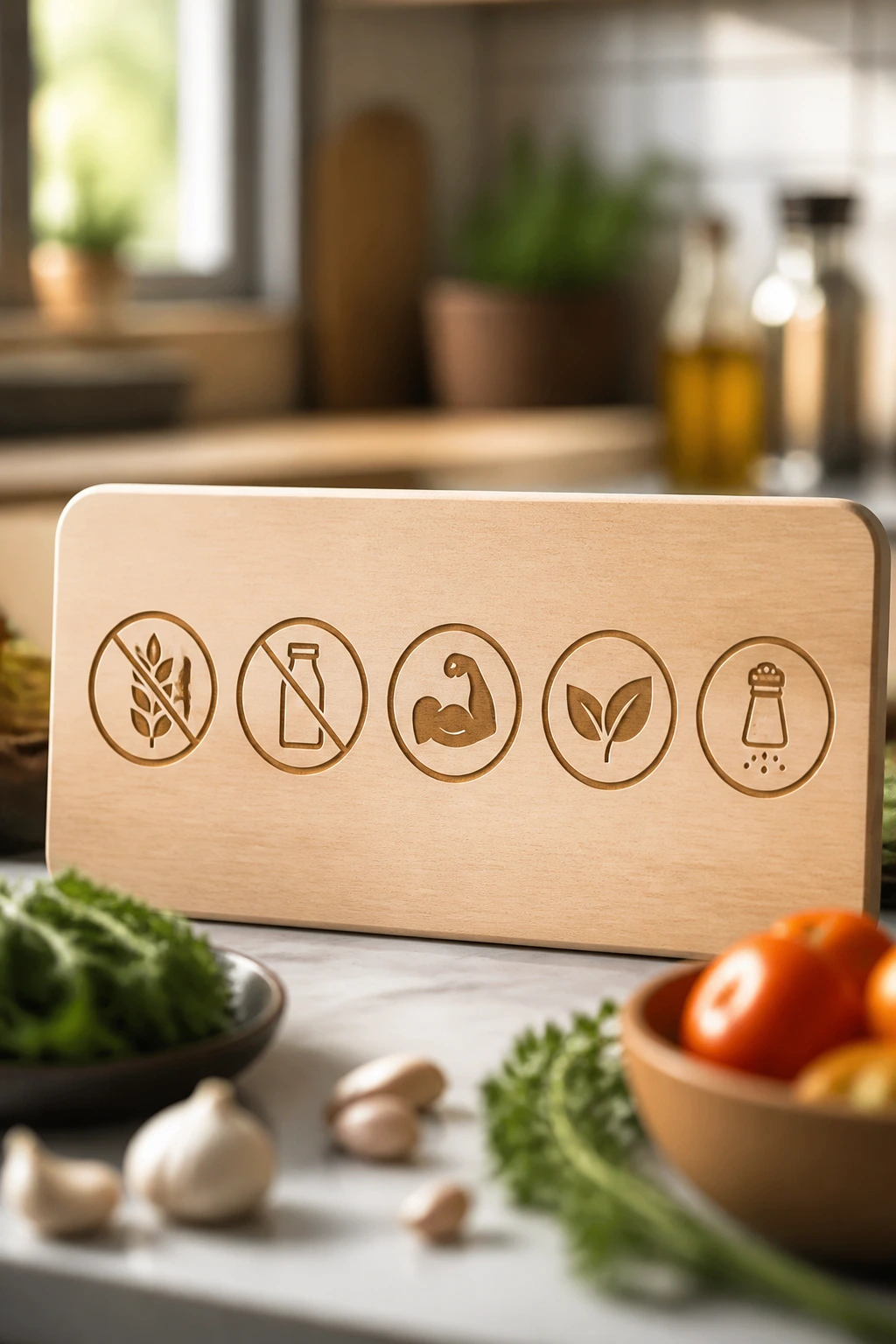
Gluten-Free Shortcut Night
Swap couscous for rice, use corn tortillas instead of flour tortillas, choose gluten-free pasta, and keep a box of certified gluten-free gnocchi on hand. Low-sodium tamari works in place of soy sauce for the fried rice and beef stir-fry.
Dairy-Free Comfort Mode
Skip the cream in the tortellini sauce and use a little more olive oil and pasta water instead. Coconut milk works well in the curry, and the quesadillas can use a dairy-free shredded cheese if you find one that melts well.
Higher-Protein Bowls
Add extra shrimp, salmon, chicken, turkey, or beans to almost any dinner here. Fried rice can take diced ham or tofu, and the curry or soup can handle an extra can of beans without becoming awkward.
Vegetarian Pantry Night
Build around chickpeas, black beans, white beans, eggs, tortellini, gnocchi, and frozen vegetables. Skip the meat and use mushrooms, spinach, and curry paste to keep the meals full enough to count as dinner.
Lower-Sodium Reset
Use low-sodium broth, rinse canned beans, choose no-salt-added tomatoes if you can find them, and lean on lemon, vinegar, and herbs for brightness. That approach keeps the food lively even when you trim the salt.
Common Mistakes to Avoid When Dinner Needs to Move Fast
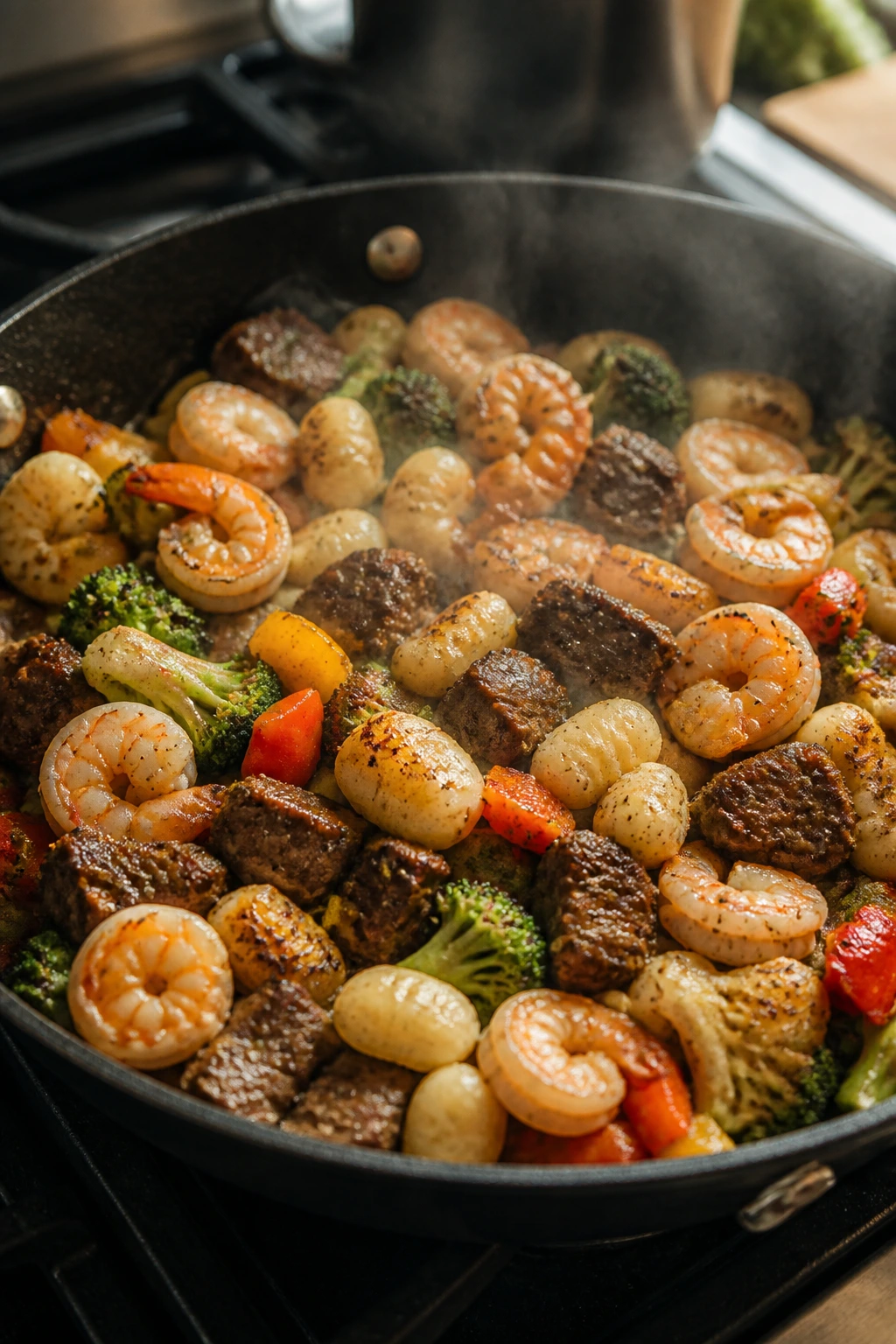
The first mistake is overcrowding the pan. It sounds harmless, but it turns browning into steaming, and once that happens the food loses a lot of flavor. Give shrimp, beef, gnocchi, and vegetables enough space to hit the heat.
Another problem is skipping the finish. A fast dinner still needs a sharp ending, whether that is lemon, lime, parsley, Parmesan, Dijon, or a spoon of salsa. Without that final hit, the food can taste flat, even if the cooking itself went well.
People also underseason the base. Salting the onions, the rice, the sauce, or the beans as they cook matters more than a last-minute shake at the table. Salt should work through the dish, not sit on top of it.
One more thing: fast proteins overcook fast. Shrimp turns tough in a blink. Salmon dries out if you walk away. Chicken should hit 165°F at the thickest part, and fish should be pulled when it flakes and still looks moist. A little attention at the end saves the whole dinner.
Frequently Asked Questions

Can I use frozen vegetables in these dinners?
Yes, and in some of them I prefer them. Frozen peas, corn, spinach, broccoli, and mixed vegetables are fast, dependable, and usually cheaper than fresh produce when you are cooking in a hurry.
Which protein cooks the fastest?
Shrimp and thin-sliced fish are at the top of the list. Rotisserie chicken is even faster because it is already cooked, which is why it shows up so often in weeknight recipes.
How do I keep quick dinners from tasting flat?
Use one acid and one herb if you can. Lemon, lime, vinegar, parsley, basil, cilantro, or even a spoonful of pesto can wake up a skillet or bowl that tastes a little dull.
What if I only have pantry ingredients?
Make the curry, tuna pasta, fried rice, or soup. Canned beans, pasta, rice, curry paste, broth, tuna, tomatoes, and capers can build a strong meal with very little fresh produce.
Can I prep parts of these dinners ahead of time?
Yes. Slice vegetables, shred cheese, mix sauces, and cook rice earlier in the day or the night before. Keep proteins raw and separate until you are ready to cook them.
Which of these dishes reheats the best?
The soup, curry, taco skillet filling, fried rice, and beef and broccoli all reheat well. Creamy pasta and seafood are more delicate, so I would eat those sooner rather than later.
How do I make these dinners cheaper?
Lean on beans, eggs, rice, pasta, cabbage, frozen vegetables, and rotisserie chicken when it is on sale. Smoked sausage and shelf-stable gnocchi also give you a lot of dinner for the money.
A Fast Dinner Rhythm That Actually Sticks
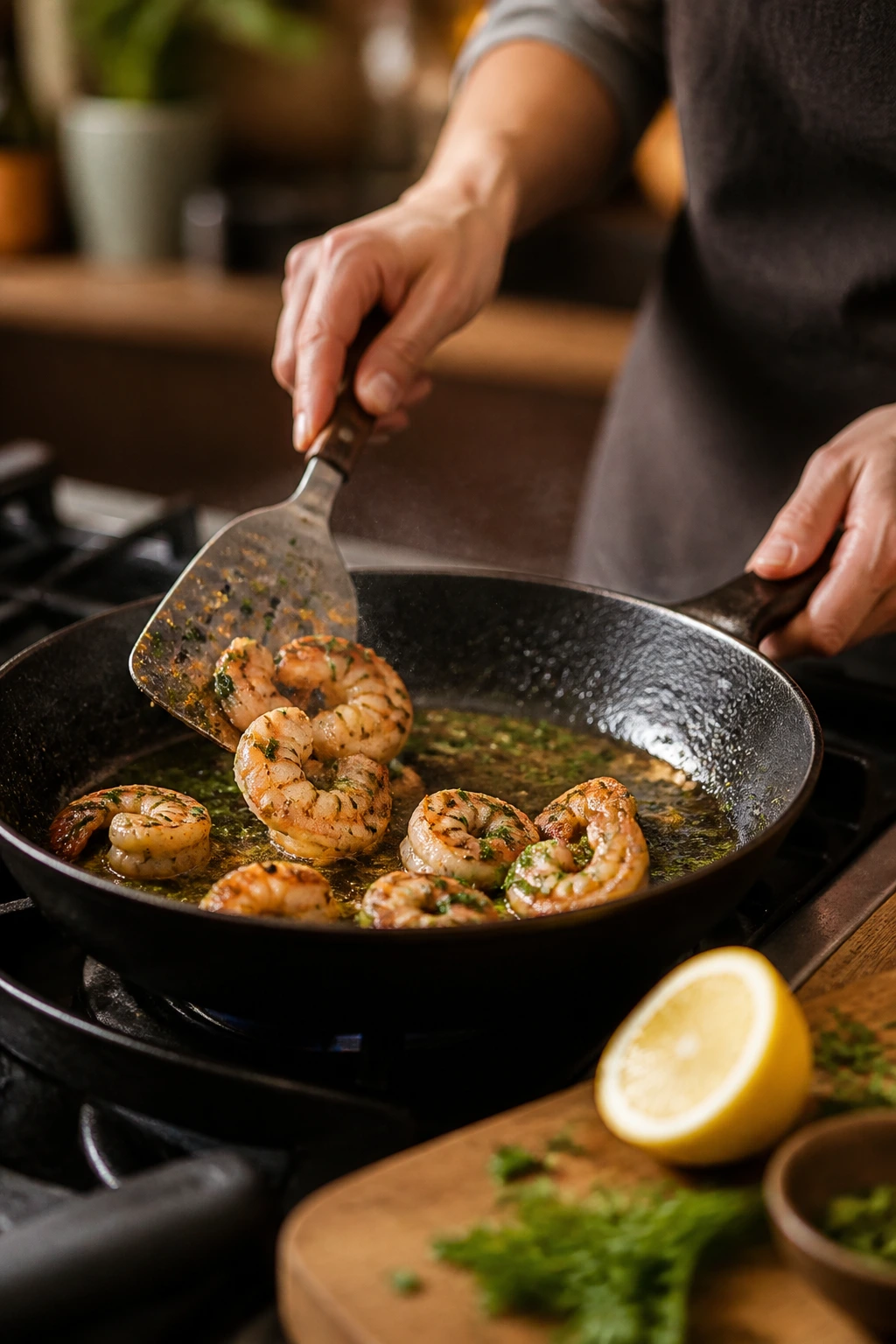
Fast dinners get easier when you stop treating every night like a blank page. A few reliable ingredients in the fridge and pantry can turn a tired evening into something that still feels like dinner. That is the quiet strength of a skillet meal, a sheet pan, or a pasta bowl with one good sauce.
I like meals that let the cook breathe a little. Shrimp with lemon. Tortellini with spinach. Sausage on a tray. Soup that comes together before the bread is even sliced. Those are the dinners that keep showing up because they are practical, not because they are flashy.
The next time the clock starts winning, one of these will get dinner on the table without turning your kitchen into a second shift.