



A Saint Patrick’s Day dinner can go two ways: a plate of limp cabbage and a kitchen that smells like surrender, or a table that feels generous, warm, and worth sitting down for. The best Saint Patrick’s Day dinner ideas do not need a parade of gimmicks. They need onions, potatoes, a little patience, and enough seasoning to make the whole thing taste like someone cared.
That is the version I love. A good stout stew. A pan of potatoes with crisp edges. Braised cabbage that turns sweet instead of soggy. Even the lighter dishes in this lineup lean on the same comforting backbone: browned meat, soft vegetables, butter, herbs, and a sauce that clings instead of sliding off.
A holiday meal gets easier once you stop treating it like a theme and start treating it like dinner. That means choosing dishes that can feed a crowd, hold on the stove, and taste even better after a little rest. It also means leaving room for the people who want beef, the people who want sausage, and the one guest who always says they do not eat lamb but somehow takes half the shepherd’s pie.
Some of these recipes are old-school in the best way. Some are weeknight-friendly shortcuts that still taste like they belong beside a pint of stout. All of them earn their place because they solve the same problem: how to make the holiday table feel special without making yourself miserable in the kitchen.
Why These Saint Patrick’s Day Dinner Ideas Earn Their Keep
-
Hearty without turning into a food coma: Each recipe leans on potatoes, vegetables, or a rich sauce, so dinner feels substantial without needing five side dishes.
-
Easy to make from ordinary groceries: You do not need specialty stores or a long scavenger hunt; onions, carrots, cabbage, potatoes, broth, and sturdy cuts of meat do most of the work.
-
Built for a crowd or leftovers: Stews, braises, and casseroles all reheat well, which matters when dinner is bigger than the table can handle in one sitting.
-
Festive without leaning on food coloring or tricks: These dishes look right for the holiday because of texture and color from real ingredients—gold potatoes, dark gravy, green herbs, browned crusts.
-
Flexible for mixed eaters: There are beef, lamb, pork, chicken, fish, and vegetarian options here, so you can cook one menu that does not leave half the room compromised.
-
Comfort food that still feels grown-up: The flavors are familiar, but they are not flat. A little stout, mustard, dill, or browned butter keeps the whole spread from feeling sleepy.
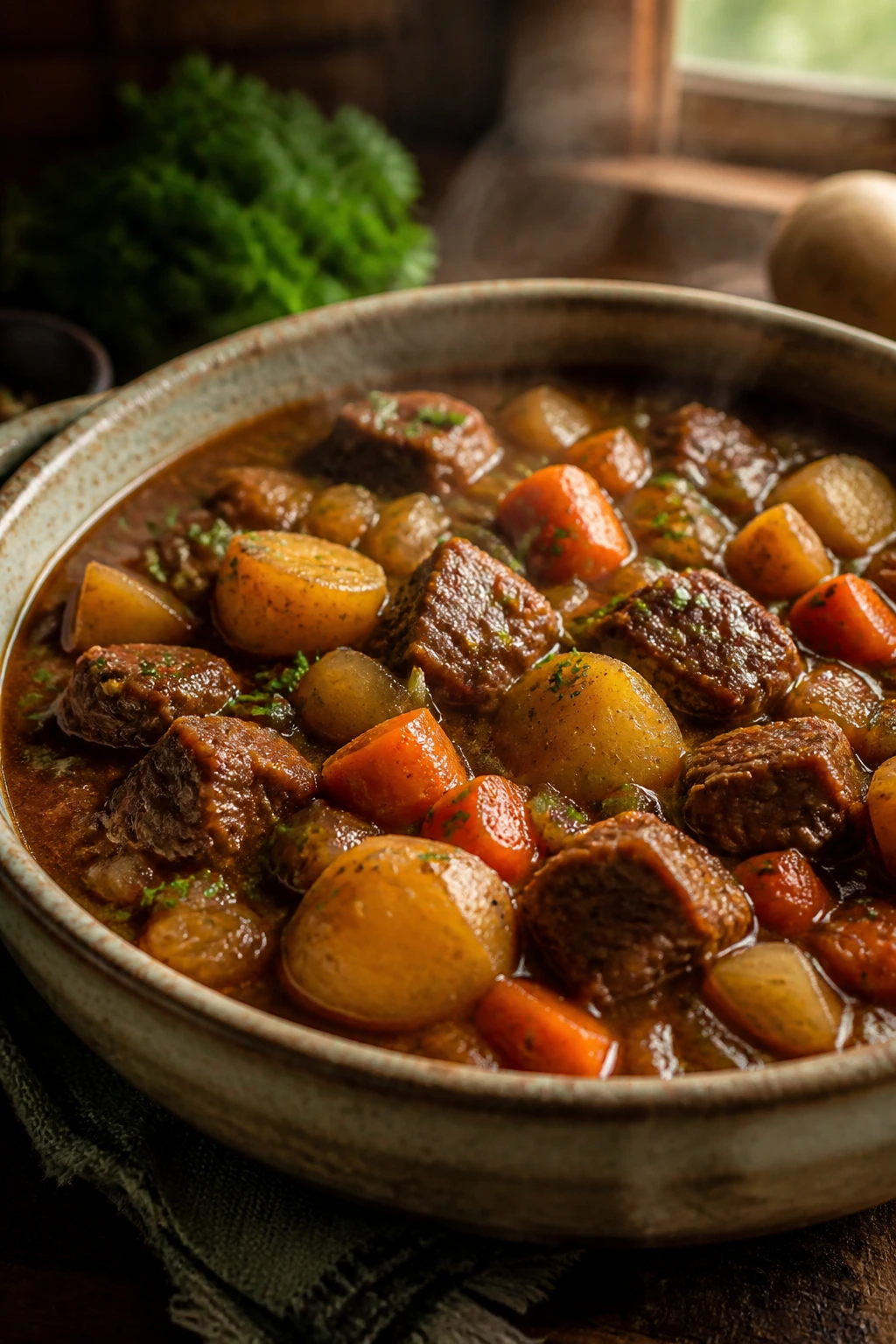
1. Guinness Beef Stew with Carrots and Potatoes
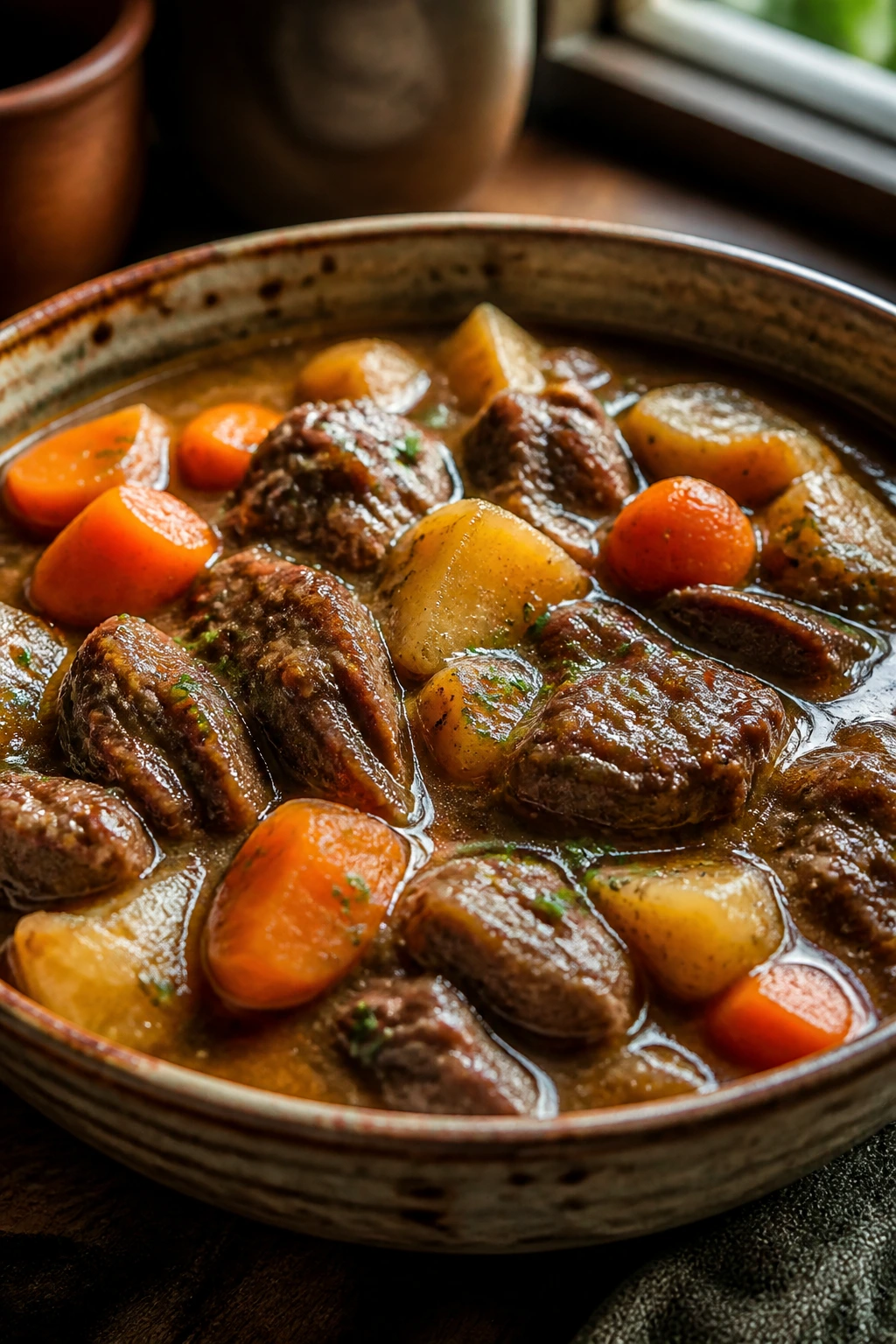
The smell of this stew is half the appeal. Beef browns in the pot, onions melt into the fat, and the stout goes in with that dark, roasty smell that makes the whole kitchen feel warmer. By the time the carrots and potatoes join the pot, you already know this is a dinner that will eat like a meal and not a side project.
I like this version because it tastes as if somebody respected the ingredients. The beef stays in big, spoonable pieces. The broth turns glossy. The potatoes hold their shape just enough to thicken the pot without dissolving into mush.
This is also the kind of stew that rewards patience. No rushing, no frantic boiling, no trying to bully the meat into tenderness. Let the pot work, and it will do the heavy lifting for you.
Why It Works
Beef chuck is the right cut here because it has enough collagen to soften during a long, gentle simmer. Stout adds bitterness and roastiness, which makes the sauce taste deeper than plain broth ever could, and the carrots and potatoes soak up all that flavor while keeping their own sweetness. A low simmer around a bare bubble keeps the meat tender; a hard boil would tighten it up and leave you chewing.
Key Ingredients
- 2 pounds beef chuck, cut into 1½-inch cubes — This cut turns tender without drying out, and the bigger chunks hold up in the broth.
- 2 tablespoons all-purpose flour — A light coating helps the beef brown and gives the stew a little body.
- 2 tablespoons neutral oil — Use canola, avocado, or vegetable oil for browning.
- 1 large yellow onion, diced — The onion sweetens as it softens and gives the stew its base flavor.
- 3 cloves garlic, minced — Garlic should go in after the onion so it does not burn.
- 1 tablespoon tomato paste — This sharpens the broth and deepens the color.
- 12 ounces dry stout and 3 cups beef broth — The stout brings the roasted note; the broth stretches it into a proper stew.
- 3 medium carrots and 1 pound Yukon Gold potatoes, cut into 1-inch pieces — These add sweetness and body while holding their shape.
- 2 teaspoons fresh thyme leaves, 2 bay leaves, and 1 tablespoon Worcestershire sauce — Together they make the pot taste layered instead of flat.
- Kosher salt, black pepper, and chopped parsley for finishing — The final seasoning matters after the long simmer.
Quick Steps
-
Season and coat the beef: Pat the beef dry, season it well with salt and pepper, then toss it with the flour until the surface looks lightly dusted, not pasty.
-
Brown in batches: Heat the oil in a Dutch oven over medium-high heat and sear the beef in two or three batches for 3 to 4 minutes per side, until the edges are dark brown. Do not crowd the pan or the meat will steam.
-
Build the base: Lower the heat to medium, add the onion, and cook for 5 minutes until softened. Stir in the garlic and tomato paste for 1 minute, until the paste darkens slightly and smells sweet.
-
Deglaze with stout: Pour in the stout and scrape the browned bits from the bottom of the pot. Let it bubble for 2 minutes so the beer loses its raw edge.
-
Simmer until tender: Add the broth, thyme, bay leaves, Worcestershire, and beef. Bring to a gentle simmer, cover, and cook over low heat for 1 hour and 30 minutes.
-
Add the vegetables: Stir in the carrots and potatoes and simmer uncovered for 30 to 40 minutes, until the beef yields easily to a spoon and the potatoes are tender at the center. Taste, adjust salt, and finish with parsley.
Tips and Variations
- For a sweeter, deeper broth: Add 1 diced parsnip with the carrots. It softens into the stew and rounds out the stout.
- For extra color: Stir in 1 teaspoon of browning sauce or a pinch of smoked paprika, but do not make it taste smoky enough to dominate.
- For make-ahead cooking: Make the stew a day ahead if you can. The flavors settle overnight and the broth gets even better after chilling.
2. Shepherd’s Pie with Colcannon Mash
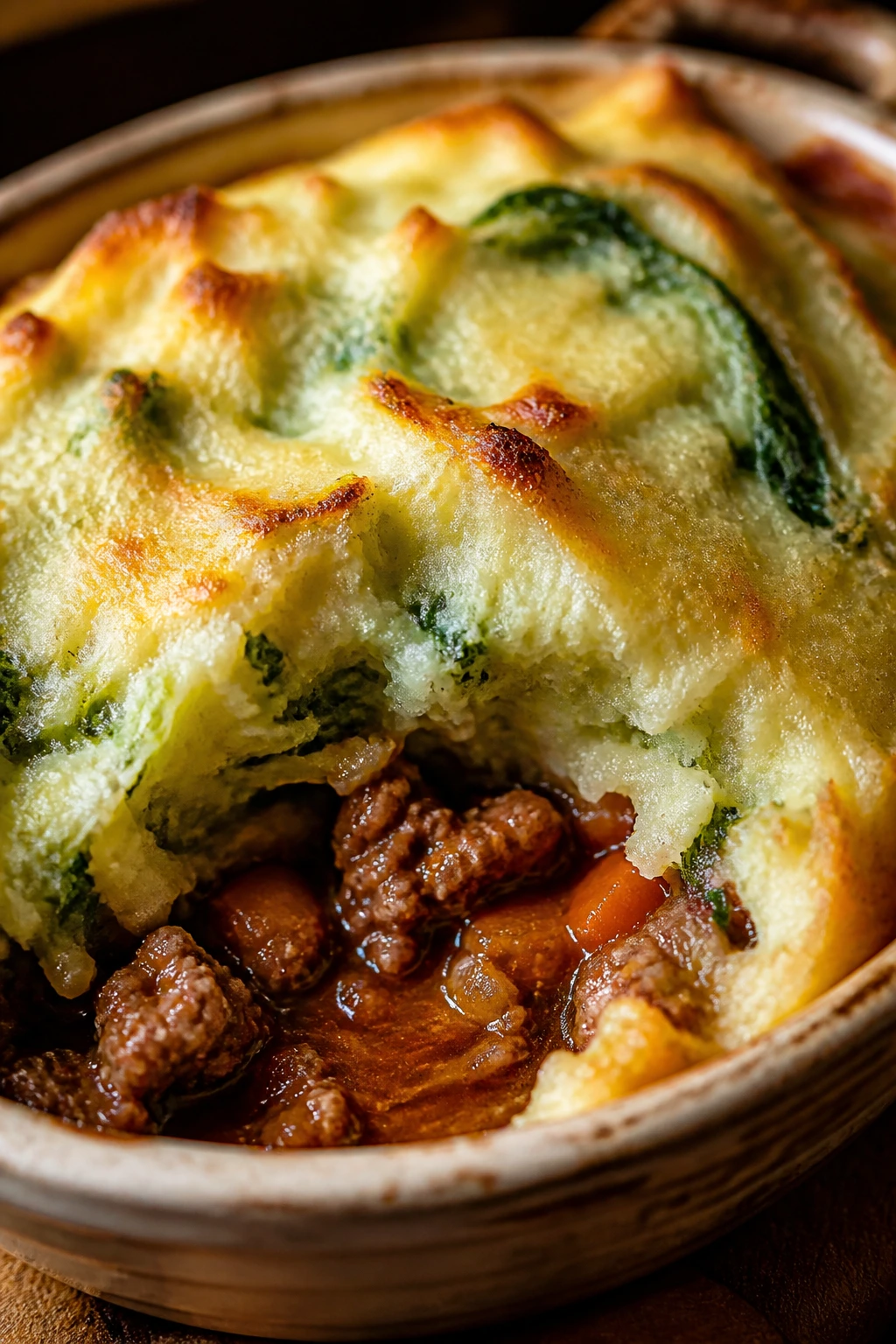
Need a dinner that makes people go quiet for a minute? This is the one. The filling is savory and saucy, the mashed potato top is buttery and rough at the edges, and the colcannon turn—cabbage or kale folded into the mash—gives the whole dish a little holiday character without feeling forced.
Traditional shepherd’s pie uses lamb, which is still my first choice when I want a richer, more classic flavor. Beef works too, and if you use beef, you are closer to cottage pie than shepherd’s pie. Either way, the trick is the same: keep the filling moist, keep the mash fluffy, and bake it hot enough to get browned peaks on top.
It is also one of the rare dishes that looks better in a humble dish than on a fancy platter. Scoop it high. Let the edges bubble. That is the point.
Why It Works
The filling stays juicy because the tomato paste, broth, and Worcestershire create a sauce that coats the meat instead of drying it out in the oven. Colcannon mash gives you more flavor than plain potatoes: the cabbage turns sweet, the butter carries the seasoning, and the top browns into crisp little ridges under the broiler. You get soft, rich, crisp, and savory in one pan.
Key Ingredients
- 1½ pounds ground lamb or ground beef — Lamb gives the most traditional flavor; beef is cheaper and still hearty.
- 1 large onion and 1 carrot, finely diced — Small dice helps them melt into the filling instead of staying chunky.
- 2 cloves garlic and 2 tablespoons tomato paste — These deepen the sauce and keep the meat from tasting one-note.
- 1 tablespoon Worcestershire sauce and 1 cup beef or lamb broth — The broth keeps the filling spoonable, not dry.
- 1 cup frozen peas — Stir them in near the end so they stay bright.
- 2 pounds Yukon Gold potatoes — These mash creamy without turning gluey.
- 2 cups finely shredded cabbage or kale, cooked down — This is the colcannon part; it should be soft, not raw and crunchy.
- 4 tablespoons butter and ½ cup milk or cream — Enough to make the mash rich and easy to spread.
- 1 egg yolk and 2 tablespoons grated cheddar, optional — Nice for color and a little extra richness on top.
- Salt, black pepper, and chopped scallions — The top needs seasoning, not just the filling.
Quick Steps
-
Cook the potatoes first: Peel and boil the potatoes in salted water for 15 to 18 minutes, until they are tender all the way through and a knife slides in cleanly.
-
Build the filling: Brown the lamb or beef in a skillet over medium-high heat, breaking it up as it cooks. Add the onion and carrot and cook for 5 to 6 minutes, then stir in the garlic and tomato paste for 1 minute.
-
Add the sauce: Pour in the broth and Worcestershire sauce, season with salt and pepper, and simmer for 8 to 10 minutes until the mixture looks thick and glossy rather than wet.
-
Fold the colcannon mash: Drain the potatoes, mash them with butter and milk, then stir in the cooked cabbage or kale and scallions. The texture should be creamy with a little texture, not whipped to death.
-
Assemble the pie: Spread the meat filling into a baking dish and spoon the mash over the top. Use a fork to make ridges, because those ridges brown beautifully.
-
Bake and brown: Bake at 400°F (200°C) for 20 to 25 minutes, then broil for 2 to 3 minutes until the peaks are golden. Let it sit for 10 minutes before serving so the filling settles.
Tips and Variations
- For a richer top: Swap half the milk for cream, or stir a little grated cheddar into the mash.
- For a sharper finish: A small spoon of Dijon in the filling wakes up the meat without making it taste mustardy.
- For the best texture: Spread the filling in a shallow layer. A deep dish traps steam and softens the top.
3. Corned Beef and Cabbage Braise
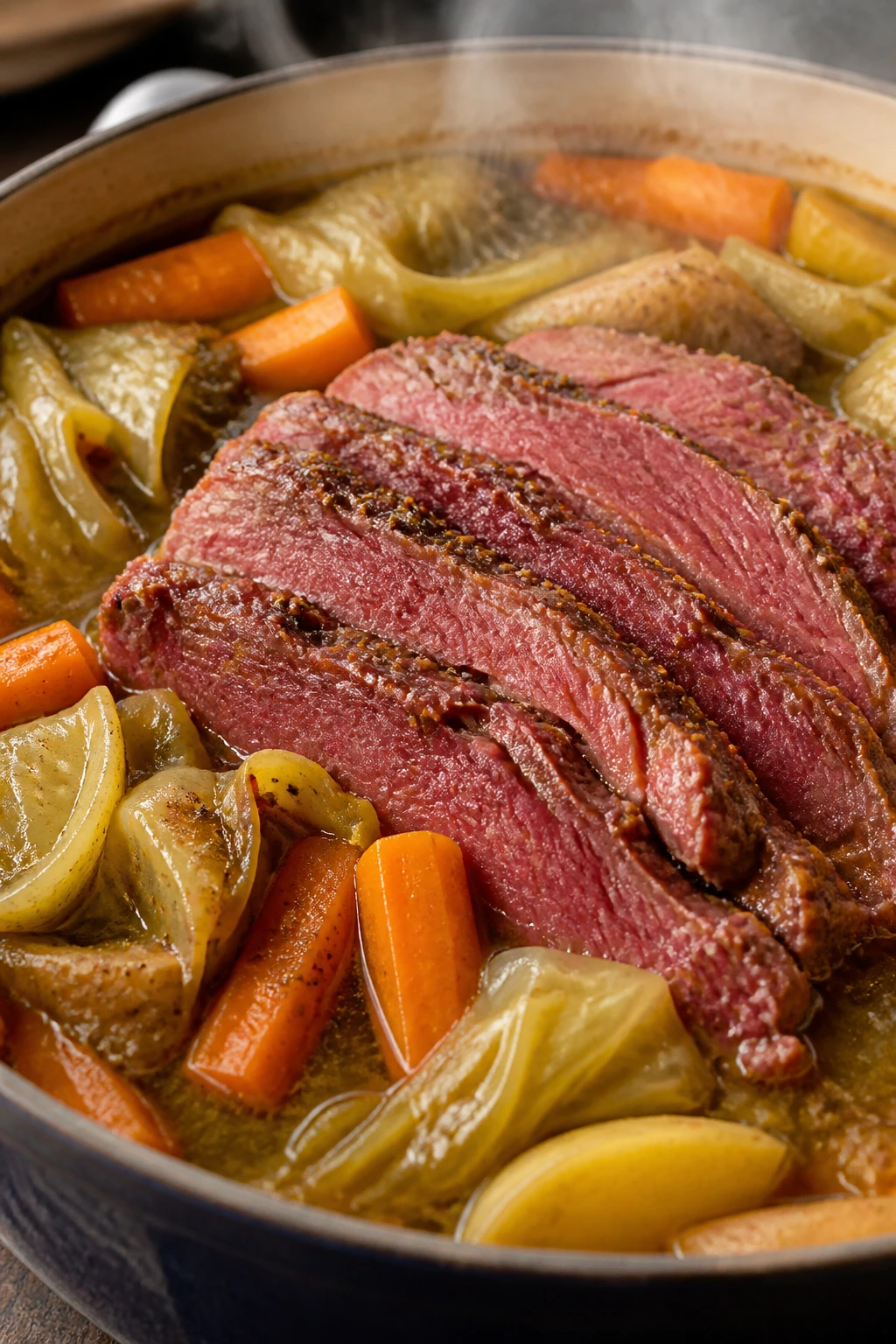
Corned beef smells like the holiday even before it comes out of the pot. The brine, the spices, the onion and bay leaf drifting through the kitchen—it has a particular kind of savory pull. Done well, the meat slices cleanly and stays juicy; done badly, it goes stringy and bland, which is a shame because this dish does not need much to be good.
I prefer the braise version because it respects the brisket. The cut needs time and moisture, and the cabbage belongs near the end, where it softens into sweetness without going gray and sulky. A little mustard on the side never hurts.
This is one of those meals that looks complicated and is actually mostly waiting. That is my kind of holiday cooking.
Why It Works
Corned beef brisket is full of connective tissue, so the low, slow braise turns it tender instead of dry. Rinsing the brisket briefly tamps down the salt from the cure, which keeps the final broth balanced. Cabbage, potatoes, and carrots go in later because they only need a short cook; if they simmer for hours, they collapse and lose the clean, sweet flavor that makes the plate work.
Key Ingredients
- 1 3- to 4-pound corned beef brisket with spice packet — The point cut has more fat; the flat cut slices more neatly.
- 1 large onion, quartered — This adds sweetness to the braising liquid.
- 4 carrots, cut into 2-inch pieces — Keep them big enough to survive the pot.
- 1½ pounds baby potatoes or small Yukon Gold potatoes — Waxy potatoes hold together better than russets.
- 1 small head green cabbage, cut into 6 wedges — The wedges stay intact and soak up the broth.
- 4 cups water or low-sodium beef broth — Broth gives the liquid more depth, but water is fine if the brisket is heavily seasoned.
- 1 tablespoon whole-grain mustard and 1 tablespoon apple cider vinegar — These sharpen the final flavor.
- 1 bay leaf and the spice packet from the brisket — Use both; that little packet is doing more than people think.
- Fresh parsley and black pepper — Finish with something fresh so the plate does not taste all brown.
Quick Steps
-
Rinse the brisket briefly: Rinse the corned beef under cold water for 10 to 15 seconds, then pat it dry. Do not soak it for hours or you will wash away the seasoning that makes it taste like corned beef.
-
Start the braise: Put the onion, bay leaf, spice packet, and brisket into a Dutch oven and add the water or broth. The liquid should come about halfway up the meat, not drown it.
-
Cook gently: Bring the pot just to a simmer, cover, and cook on low heat or in a 300°F (150°C) oven for 2½ hours. The liquid should barely move.
-
Add the vegetables: Nestle in the potatoes and carrots and cook for 30 minutes, then tuck in the cabbage wedges and cook for another 20 to 25 minutes until the cabbage is tender at the core but still intact.
-
Rest the meat: Lift the brisket to a board and rest it for 10 to 15 minutes before slicing. This keeps the juices from running out the moment you cut it.
-
Finish and serve: Stir mustard and vinegar into a little broth from the pot if you want a quick sauce, then slice the beef against the grain and serve with the vegetables and broth spooned over the top.
Tips and Variations
- For cleaner slices: Chill the cooked brisket in its cooking liquid, then slice it cold and rewarm gently in the broth.
- For a brighter plate: Add a spoonful of horseradish or mustard at the table. It cuts through the salt and fat in the best way.
- For a one-pot shortcut: If you buy pre-cooked corned beef, add it only during the last 20 minutes so it does not dry out.
4. Dublin Coddle with Sausages, Bacon, and Potatoes
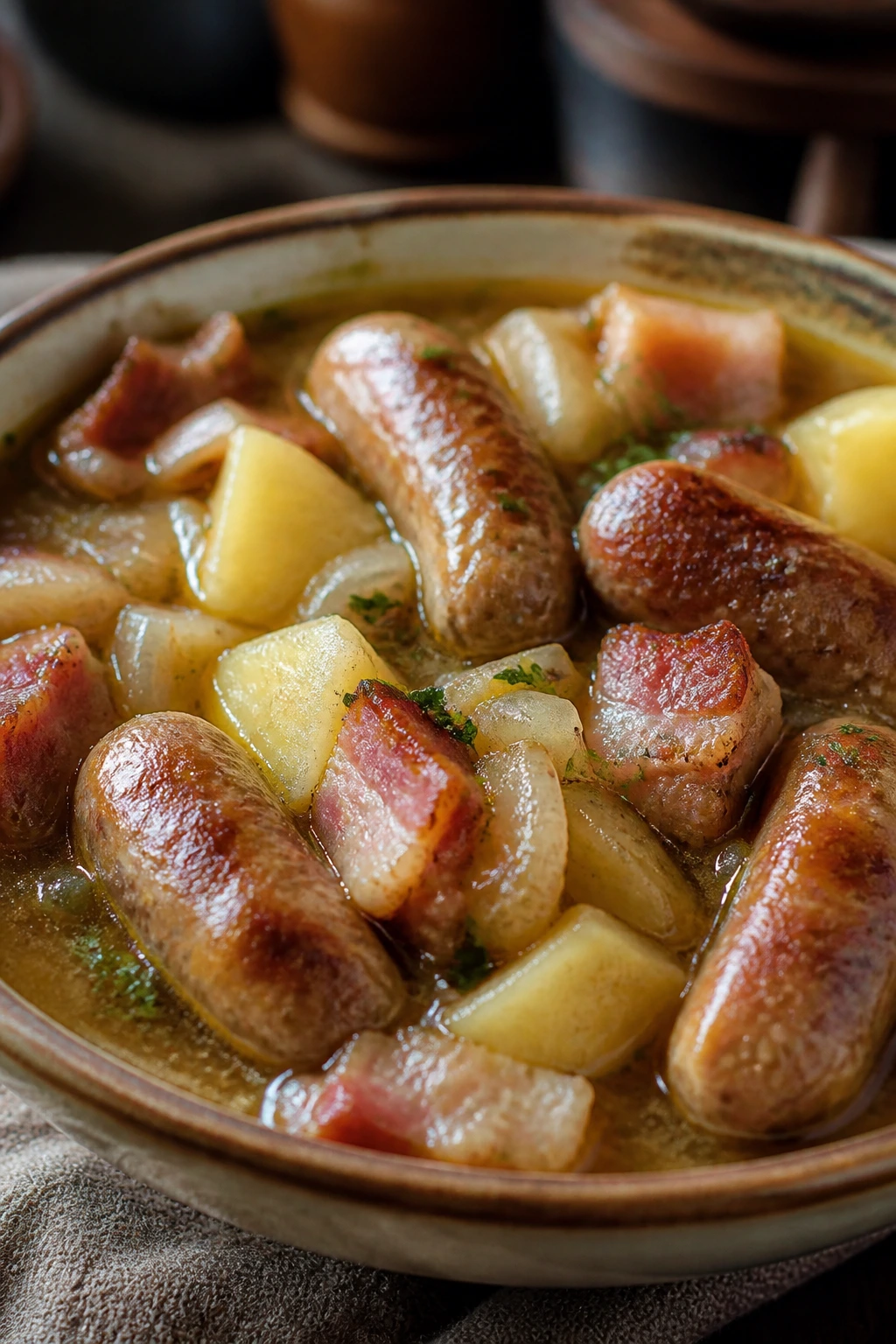
Dublin coddle is not flashy. It does not come out with a crispy top or a dramatic garnish. What it does have is comfort in its purest form: sausage, bacon, onion, potatoes, and stock quietly turning into dinner. It looks humble in the pot and even better in the bowl, which is probably why I trust it so much.
The texture is the point here. The potatoes soak up the broth, the sausages stay juicy, and the bacon seasons everything without turning the dish into a salt bomb. If you are expecting crunch, cook something else. If you want a soft, brothy, deeply savory bowl, this is a keeper.
It also happens to be the kind of meal that forgives a busy day. Assemble, cover, and let the pot do the work.
Why It Works
Coddle builds flavor in layers rather than in one aggressive sear. Bacon fat coats the onions, sausages season the broth, and the potatoes absorb all of it while they cook. The dish stays gentle because it simmers below a hard boil; that means the potatoes stay intact and the sausages do not split open and lose their juiciness.
Key Ingredients
- 8 thick pork sausages — Choose sausages with visible fat and seasoning; bland ones stay bland.
- 6 slices thick-cut bacon, chopped — Bacon seasons the broth from the start.
- 2 large onions, sliced — They melt down and sweeten the pot.
- 2 pounds waxy potatoes, peeled and cut into chunks — Waxy potatoes keep their shape.
- 2 cups low-sodium chicken or vegetable stock — Enough liquid to steam and braise without drowning the ingredients.
- 1 tablespoon fresh thyme or 1 teaspoon dried thyme — A little herb keeps the dish from feeling heavy.
- 2 bay leaves and black pepper — Bay leaf is doing quiet work here.
- 2 tablespoons chopped parsley — Adds freshness at the end.
- 1 tablespoon whole-grain mustard, optional — Good for serving if you want a sharper bite.
Quick Steps
-
Brown the bacon: Cook the chopped bacon in a Dutch oven over medium heat until the fat renders and the edges go crisp, about 5 minutes.
-
Sear the sausages: Add the sausages and brown them on all sides for 4 to 5 minutes total. They do not need to be cooked through yet; you only want color.
-
Layer the pot: Remove the sausages and layer half the onions and potatoes in the pot, then add the thyme, bay leaves, and plenty of black pepper. Add the remaining onions and potatoes on top.
-
Add liquid and return the sausages: Pour in the stock and tuck the sausages back in. The liquid should come partway up the potatoes, not cover them.
-
Coddle gently: Cover and cook over low heat or in a 325°F (165°C) oven for 55 to 65 minutes, until the potatoes are tender and the broth has gone slightly cloudy and savory.
-
Finish with parsley: Spoon the coddle into warm bowls and scatter parsley on top. Add mustard at the table if you want a sharper edge.
Tips and Variations
- For a little more depth: Swap ½ cup of the stock for hard cider. It gives the broth a clean, sharp sweetness.
- For better texture: Use waxy potatoes, not floury ones. Floury potatoes turn mushy and thicken the broth too much.
- For serving: A thick slice of soda bread is more useful here than a fork.
5. Bangers and Mash with Onion Gravy
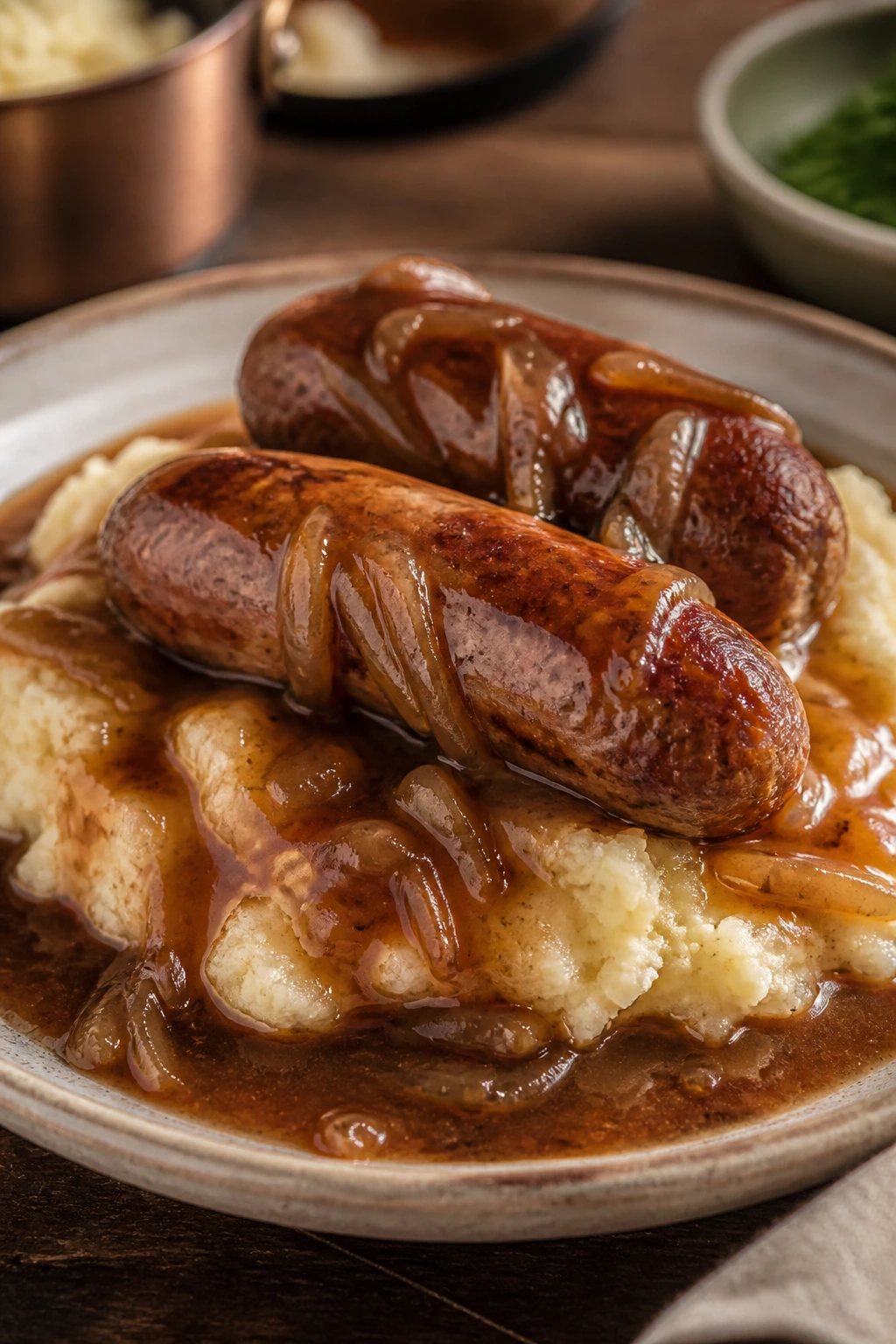
Bangers and mash is pure pub comfort, and I mean that as a compliment. The sausages should be browned and snappy, the potatoes should be soft enough to mash without lumps, and the onion gravy should be silky enough to coat everything without feeling heavy. It is straightforward food, which is exactly why it works.
There is a small art to getting this right. Warm milk matters. Good sausages matter more. And the onions need enough time to lose their raw bite and go sweet before the gravy goes in.
This is the dish I make when I want the table to feel easy. No fancy cutting, no delicate timing, no juggling six pans at once.
Why It Works
The contrast is what makes it satisfying: crisp sausage skin, creamy mashed potatoes, and onion gravy that pulls the whole thing together. Browning the onions first gives the gravy a deeper color and a sweeter, rounder flavor than a quick sauce ever could. A spoonful of Worcestershire or mustard sharpens the gravy just enough to keep it from tasting flat.
Key Ingredients
- 8 good-quality pork sausages — Fresh sausages with a decent amount of fat stay juicy.
- 2 pounds Yukon Gold or russet potatoes — Yukon Golds make a creamier mash; russets make a fluffier one.
- 4 tablespoons butter — Use enough to make the mash taste like it belongs on the plate.
- ½ cup warm milk or cream — Warm liquid keeps the potatoes fluffy instead of gummy.
- 2 large onions, thinly sliced — These become the gravy.
- 2 tablespoons all-purpose flour — This thickens the pan gravy.
- 2 cups beef or chicken stock — Low-sodium stock gives you room to season.
- 1 teaspoon Worcestershire sauce and 1 teaspoon Dijon mustard — These wake up the gravy.
- 1 cup peas, optional — A green side helps the plate feel less beige.
- Salt and black pepper — The potatoes and gravy both need proper seasoning.
Quick Steps
-
Boil the potatoes: Start the potatoes in cold salted water, bring to a boil, and cook for 15 to 18 minutes until a knife slides through easily.
-
Cook the sausages: While the potatoes cook, sear the sausages in a skillet over medium heat for 10 to 12 minutes, turning often until browned and cooked through. Transfer them to a plate.
-
Make the onion base: In the same pan, add the onions and a pinch of salt and cook for 8 to 10 minutes until soft and golden at the edges.
-
Build the gravy: Stir in the flour and cook for 1 minute, then pour in the stock slowly while whisking. Add the Worcestershire sauce and Dijon, and simmer until the gravy coats the back of a spoon.
-
Mash the potatoes: Drain the potatoes, mash them with butter and warm milk, and season well with salt and pepper. The mash should be smooth but not gluey.
-
Plate and finish: Spoon the mash onto warm plates, top with sausages and gravy, and add peas on the side if you like. Do not drown the potatoes; let the gravy pool a little.
Tips and Variations
- For richer gravy: Add a small splash of red wine or dark beer before the stock goes in.
- For smoother mash: Push the potatoes through a ricer if you have one; it makes the texture lighter.
- For a sharper plate: Serve with quick-pickled onions or a spoon of whole-grain mustard.
6. Guinness Mushroom and Barley Stew
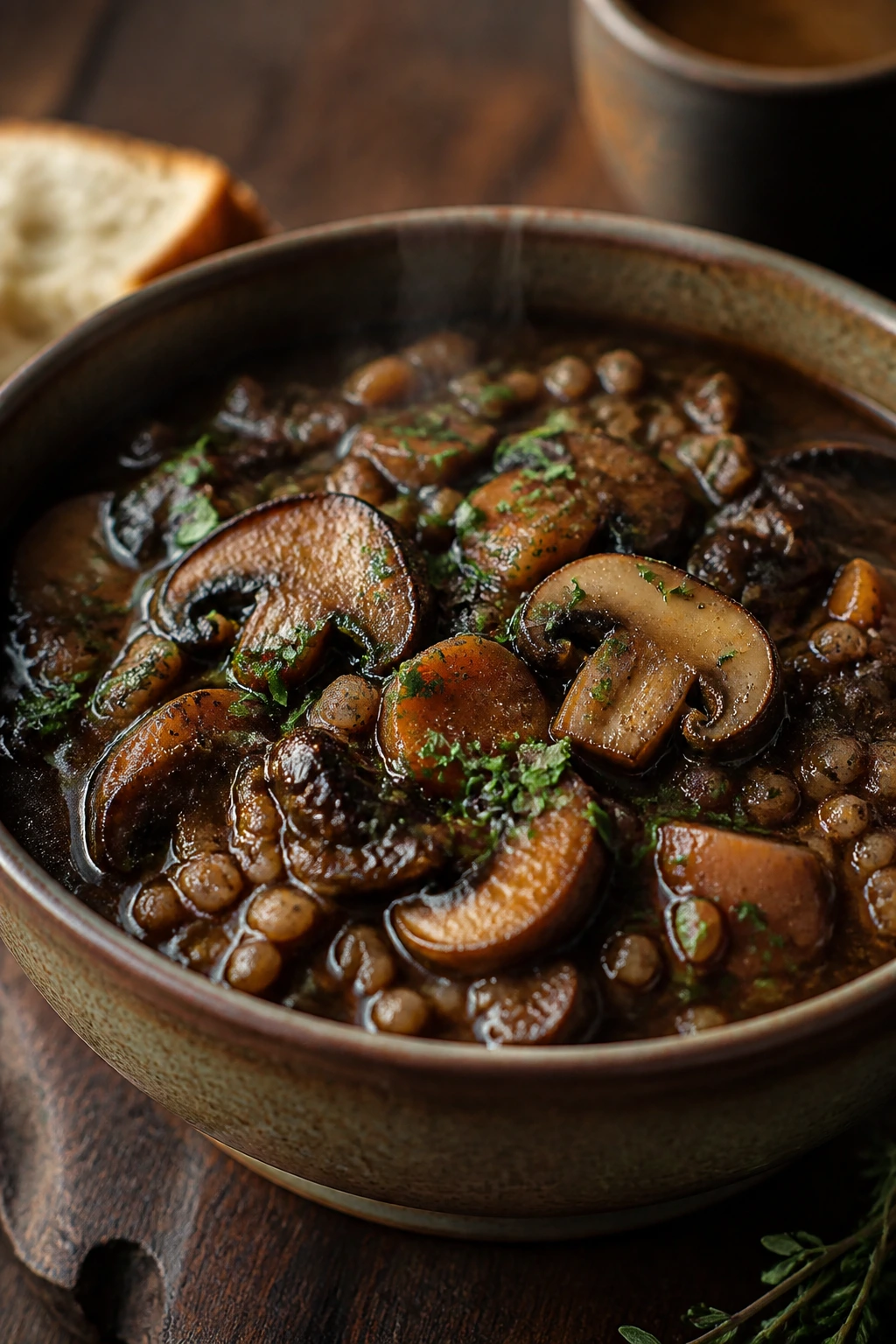
If you want a vegetarian dinner that does not behave like a compromise, this is the one. Mushrooms give you the deep, savory flavor people usually expect from beef. Barley adds chew. Stout adds the roasty finish. The result is earthy, dark, and filling in the best possible way.
This stew is also a reminder that meat is not the only way to build a big, satisfying bowl. A mix of cremini and shiitake mushrooms gives you real depth. Pearled barley thickens the broth on its own, which means the pot ends up silky without a lot of fuss.
I like a small splash of vinegar at the end. It wakes everything up. Without that final bright note, the stew can lean a little too cozy.
Why It Works
Mushrooms contain natural glutamates, which give the stew that savory hit people usually associate with meat. Barley simmers into the broth and releases enough starch to make the soup feel substantial, but it keeps a pleasant chew instead of going soft. The stout contributes roasted bitterness and a little sweetness, which gives the broth depth without needing cream.
Key Ingredients
- 1 pound cremini mushrooms, sliced — These are the backbone of the stew.
- 8 ounces shiitake mushrooms, stems removed and sliced — Shiitake brings more woodsy flavor.
- 1 large onion, diced — Starts the savory base.
- 2 carrots and 2 celery stalks, diced — Classic stew vegetables that keep the pot balanced.
- ¾ cup pearl barley — Pearl barley cooks in the pot and gives the stew body.
- 12 ounces dry stout and 5 cups vegetable broth — The stout makes it feel special; the broth keeps it from getting too intense.
- 2 tablespoons tomato paste — This adds color and a little acidity.
- 2 teaspoons fresh thyme, 2 bay leaves, and 1 tablespoon soy sauce or tamari — These deepen the flavor without making it taste like soy sauce.
- 2 tablespoons olive oil — For browning the mushrooms properly.
- Salt, black pepper, and a small splash of cider vinegar — The finish matters.
Quick Steps
-
Brown the mushrooms first: Heat the olive oil in a Dutch oven over medium-high heat and cook the mushrooms in batches until they release their water and start to brown, about 8 to 10 minutes total.
-
Cook the vegetables: Add the onion, carrots, and celery and cook for 5 minutes, stirring until the onion softens and the pan smells sweet.
-
Stir in the barley and tomato paste: Cook for 1 minute so the paste darkens slightly and coats the vegetables.
-
Add the liquids: Pour in the stout and scrape the pot clean, then add the broth, thyme, bay leaves, and soy sauce. Bring to a gentle simmer.
-
Simmer until the barley is tender: Cover partially and cook for 35 to 45 minutes, stirring now and then, until the barley is chewy-tender and the broth has thickened.
-
Finish with vinegar: Remove the bay leaves, season with salt and pepper, and add a splash of cider vinegar right at the end. That tiny hit of acid keeps the stew from feeling heavy.
Tips and Variations
- For a deeper color: Add a teaspoon of miso paste with the broth if you want a darker, richer broth.
- For more texture: Stir in a handful of chopped kale during the last 5 minutes.
- For a heartier bowl: Serve with buttered rye toast or a thick slice of soda bread.
7. Salmon with Dill Butter, Potatoes, and Peas
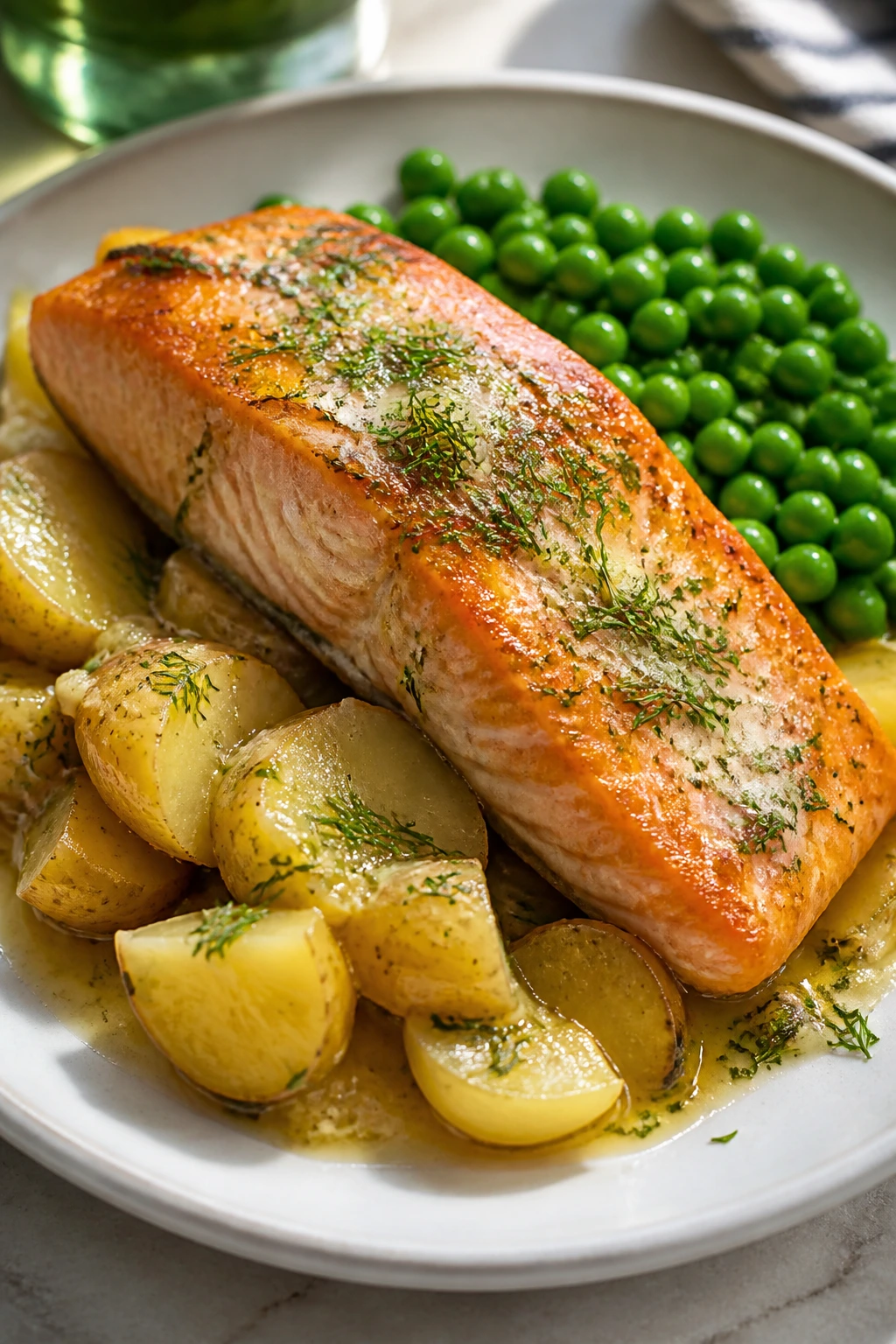
Not every holiday dinner needs to be dark and braised. Sometimes the smartest move is a plate that feels lighter but still looks like a proper meal. Salmon, potatoes, and peas give you that balance. The fish is flaky and rich, the potatoes are comforting, and the peas keep the plate bright.
This one has more of a coastal feel, which I like for a menu that is otherwise leaning heavy. Dill and lemon are enough to keep the butter from feeling cloying. You get freshness, but not the kind that makes the dish feel unfinished.
There is one real rule here: do not overcook the salmon. Pull it before it looks fully done in the middle. It keeps cooking for a minute after it leaves the oven or skillet.
Why It Works
Salmon has enough natural fat to stay tender under high heat, and that richness plays well with buttery potatoes. Dill and lemon cut through the fat so the dish tastes clean rather than heavy. Peas add a sweet pop and a little color, which is all the plate needs. The key is timing: salmon goes from silky to dry fast, so you want to catch it while the center is still slightly translucent.
Key Ingredients
- 4 salmon fillets, about 6 ounces each — Choose fillets of similar thickness so they cook evenly.
- 1½ pounds baby potatoes — These roast well and look good on the plate.
- 1½ cups frozen peas — No need to thaw them first.
- 4 tablespoons butter — Half for the fish, half for the vegetables or potatoes.
- 1 lemon, zested and juiced — The zest goes farther than the juice alone.
- 2 tablespoons chopped fresh dill — Fresh dill works best here; dried dill is weaker.
- 2 cloves garlic, minced — Use lightly so the garlic does not overpower the fish.
- 2 tablespoons olive oil — Helps the potatoes and salmon brown.
- Salt and black pepper — Salmon needs less than beef, but it still needs seasoning.
- 1 tablespoon sour cream or Greek yogurt, optional — Nice in the potatoes if you want a little tang.
Quick Steps
-
Roast the potatoes: Toss the potatoes with olive oil, salt, and pepper. Roast at 425°F (220°C) for 25 to 30 minutes, turning once, until the edges are browned and the centers are tender.
-
Season the salmon: Pat the fillets dry, season both sides with salt and pepper, and rub them lightly with olive oil. Dry fish browns better and flakes more cleanly.
-
Cook the salmon: Bake the salmon on a lined sheet pan for 10 to 12 minutes, or pan-sear it for 3 to 4 minutes per side, until the flesh just starts to flake at the edges. Do not overcook it; a little translucence in the center is a good sign.
-
Make the dill butter: Melt the butter in a small pan with the garlic, dill, lemon zest, and a squeeze of lemon juice. Cook for 30 seconds, just until fragrant.
-
Warm the peas: Heat the peas in a small pot with a splash of water and a pinch of salt for 2 to 3 minutes. Stir in a little butter if you want them richer.
-
Plate and finish: Spoon the potatoes onto plates, add the salmon, tuck the peas alongside, and drizzle the dill butter over the fish. A little extra lemon juice at the table makes the whole thing pop.
Tips and Variations
- For a crust on the salmon: Brush the tops with Dijon before baking, then sprinkle with fine breadcrumbs.
- For creamier potatoes: Mash in a spoonful of sour cream or yogurt while they are still hot.
- For a greener plate: Add chopped parsley or chives with the dill.
8. Cabbage Roll Skillet with Tomato and Dill
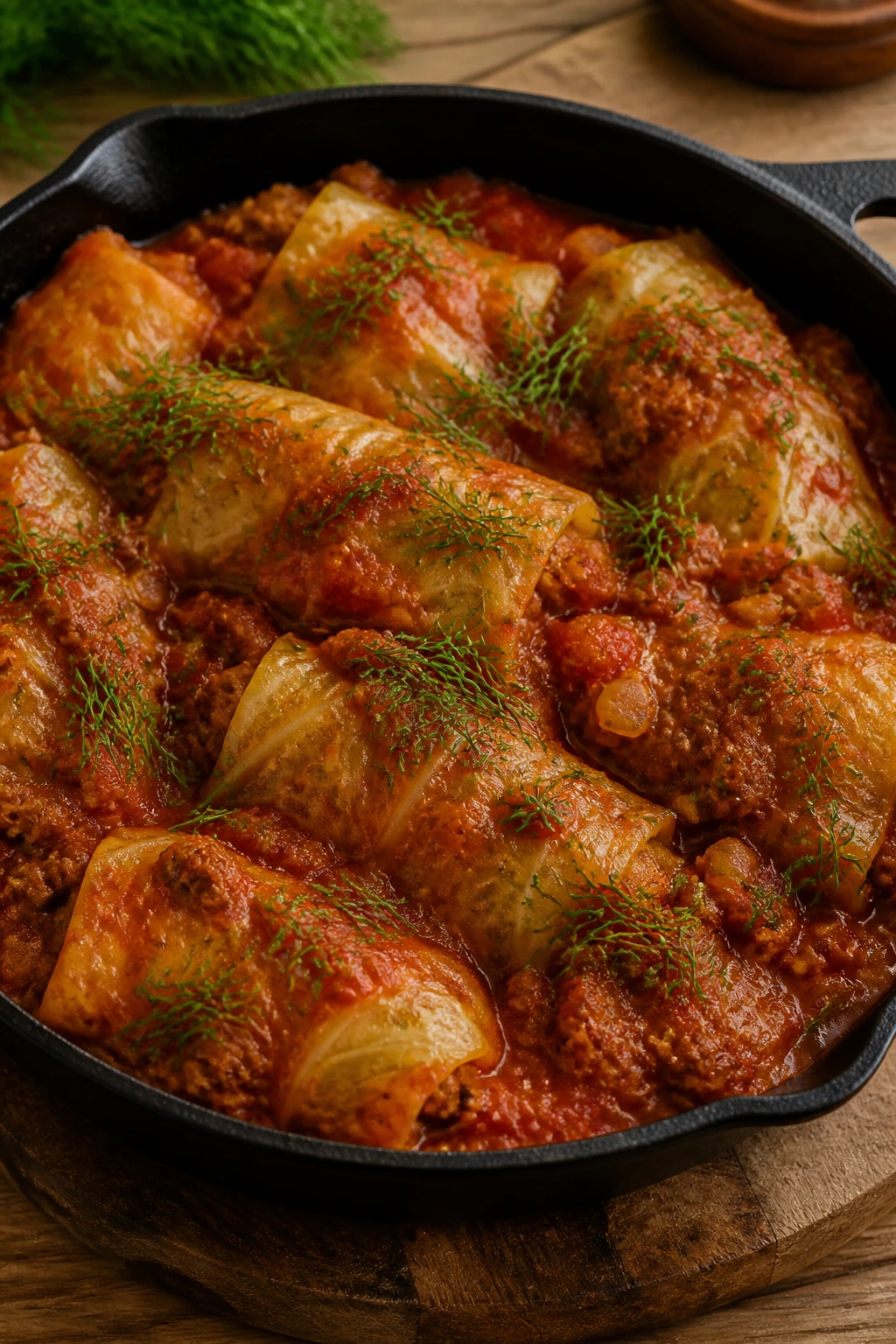
Stuffed cabbage is lovely. Rolling individual leaves on a busy evening is another story. This skillet version gives you the same tomato-rich, cabbage-heavy comfort without turning dinner into a craft project. It is blunt, practical, and far easier to live with.
The trick is to let the cabbage soften enough to taste sweet while keeping some structure in the pan. The rice cooks in the sauce, the beef seasons the whole skillet, and the dill cuts through the tomato so the dish does not become one-dimensional. It is a strong candidate for a weeknight that just happens to land near the holiday.
I also love that it reheats well. The leftovers are not an afterthought.
Why It Works
Traditional cabbage rolls rely on the same flavor base: meat, rice, tomato, and a little acidity. Skillet cooking compresses the process so the flavors mingle faster, while the cabbage gets to wilt and brown in spots before the rice finishes. Using uncooked rice keeps the whole dish simple because it absorbs the sauce as it cooks, giving you a fuller result in one pan.
Key Ingredients
- 1 pound ground beef or ground turkey — Beef gives more richness; turkey makes a lighter skillet.
- 1 large head green cabbage, about 2 pounds, shredded — Shredding helps it cook down evenly.
- 1 large onion, diced — The onion starts the sweet, savory base.
- 3 cloves garlic, minced — Add after the onion so it stays sweet.
- ¾ cup uncooked long-grain white rice — Long-grain rice stays separate enough to keep the skillet from turning mushy.
- 1 can (15 ounces) tomato sauce — This is the saucy backbone of the dish.
- 2 cups beef or chicken broth — Enough liquid to cook the rice through.
- 1 teaspoon paprika, 1 teaspoon dried dill, and 1 tablespoon apple cider vinegar — These give it the bright, cabbage-roll flavor.
- Salt and black pepper — Season the meat well or the whole dish falls flat.
- Sour cream and chopped parsley, optional — Good for serving.
Quick Steps
-
Brown the meat: Cook the ground beef in a large skillet over medium-high heat until it loses its pink color and starts to take on some brown bits, about 5 to 6 minutes.
-
Soften the onion and cabbage: Add the onion and cabbage and cook for 6 to 8 minutes, stirring often, until the cabbage starts to wilt and the pan smells sweet.
-
Add garlic and seasonings: Stir in the garlic, paprika, dill, salt, and pepper, and cook for 30 seconds so the spices bloom.
-
Stir in rice and liquids: Add the uncooked rice, tomato sauce, broth, and vinegar. Stir well, bring the skillet to a simmer, then reduce the heat.
-
Cover and cook: Cover the skillet and cook for 18 to 20 minutes, until the rice is tender and the liquid has mostly absorbed. If the pan looks dry before the rice is done, add a splash of broth.
-
Rest and serve: Let the skillet rest off the heat for 5 minutes, then fluff gently and top with sour cream and parsley if you want a cooler, creamier finish.
Tips and Variations
- For a richer flavor: Add a small spoon of tomato paste with the cabbage.
- For a softer cabbage texture: Slice it a little thinner than you think you need.
- For serving: A spoonful of sour cream on top is not fancy, but it works.
9. Chicken and Leek Pot Pie
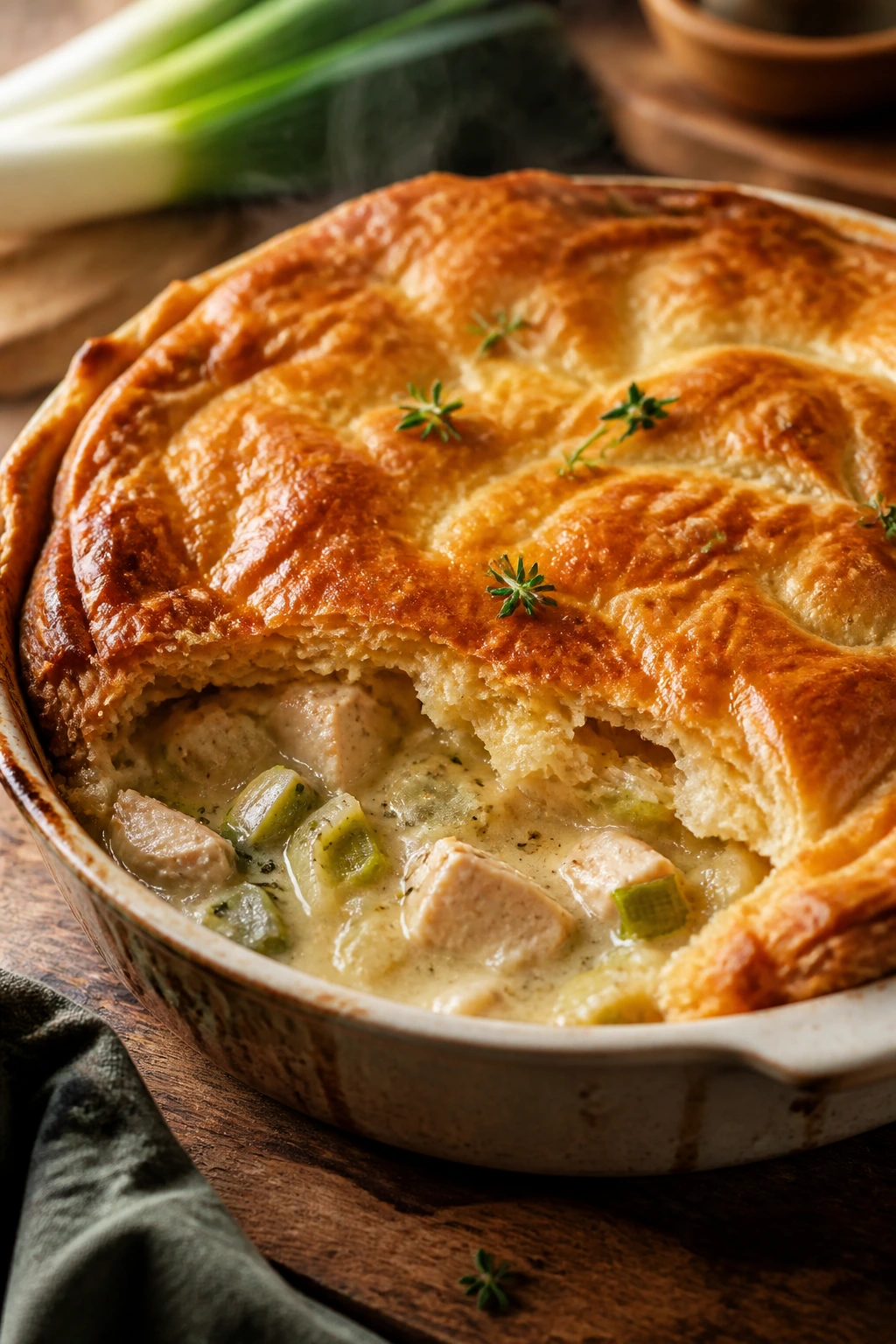
Butter and leeks are a hard pair to beat. The leeks go sweet instead of sharp, the chicken stays juicy, and the filling thickens into that glossy middle that makes pot pie worth the effort. A puff pastry lid keeps the whole thing easy enough for a holiday dinner, while still looking like you did something more ambitious than you actually did.
What I like most here is the contrast. The filling is soft and spoonable. The pastry is crisp and flaky. That difference matters, especially on a table full of soft foods.
This is also the recipe I reach for when I need something that feels complete. Protein, vegetables, sauce, crust. Done.
Why It Works
Leeks soften into a mild, onion-like sweetness that fits chicken better than a hard, sharp onion bite. A roux made with butter and flour gives the sauce enough structure to hold the filling together under pastry, and the puff pastry bakes quickly into a crisp top without needing to be handled much. If the filling is thick before it goes into the dish, the bottom stays creamy instead of soupy.
Key Ingredients
- 4 cups cooked shredded chicken — Rotisserie chicken works well and keeps the recipe practical.
- 2 large leeks, white and light green parts only, cleaned and sliced — Leeks hide grit, so wash them well.
- 2 carrots, diced — A small dice helps them cook through.
- 2 celery stalks, diced — Adds a little backbone to the filling.
- 3 tablespoons butter and 3 tablespoons all-purpose flour — These build the sauce.
- 2 cups chicken broth and ½ cup heavy cream — The broth loosens the filling; the cream makes it silky.
- 1 teaspoon fresh thyme and ½ teaspoon black pepper — Enough to season without crowding the leeks.
- 1 sheet puff pastry, thawed — Keep it cold until the last minute.
- 1 egg, beaten — This gives the top a deep, golden finish.
- Salt and chopped parsley — For the final balance.
Quick Steps
-
Cook the vegetables: Melt the butter in a skillet over medium heat and cook the leeks, carrots, and celery for 6 to 8 minutes until soft and fragrant.
-
Make the sauce: Stir in the flour and cook for 1 minute, then whisk in the broth slowly until smooth. Add the cream, thyme, pepper, and salt, and simmer for 2 to 3 minutes until the sauce thickens.
-
Add the chicken: Stir in the cooked chicken and let the mixture bubble gently for 1 minute. The filling should be thick enough to mound on a spoon.
-
Fill the baking dish: Transfer the filling to a 9-inch pie dish or 2-quart baking dish. Let it sit for a minute so the surface settles.
-
Top with pastry: Lay the puff pastry over the top, trim the edges, and cut 2 or 3 small vents in the center. Brush with beaten egg.
-
Bake until crisp: Bake at 400°F (200°C) for 25 to 30 minutes, until the pastry is puffed and deep golden and the filling is bubbling at the edges. Let it rest for 10 minutes before serving.
Tips and Variations
- For more color: Stir in a handful of frozen peas with the chicken.
- For a richer filling: Add a tablespoon of Dijon with the cream.
- For make-ahead ease: Assemble the pie without the pastry, chill it, then add the pastry right before baking.
10. Baked Cod with Colcannon and Brown Butter Breadcrumbs
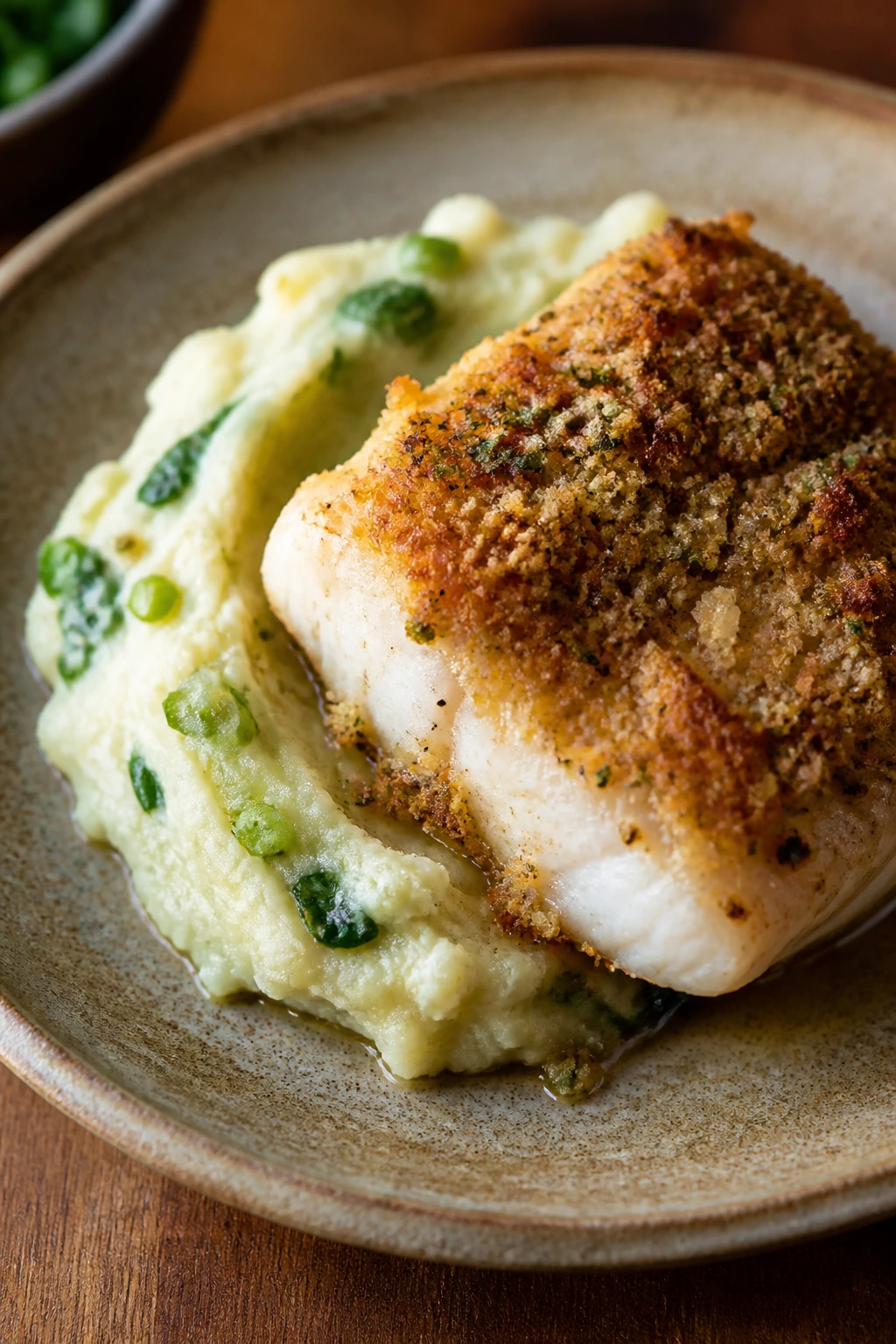
Cod may be the most underrated dinner on this list. It is gentle, clean-tasting, and fast, which means it gives you a holiday plate without dragging the evening into a heavy, nap-inducing place. Paired with colcannon and a crunchy browned breadcrumb finish, it feels polished without being fussy.
The breadcrumb topping is the detail I would not skip. Browned butter, garlic, and breadcrumbs give the cod a little toastiness and texture right at the top of the plate. Without that crunch, the dish risks feeling too soft.
This is the kind of meal that makes a holiday menu feel complete. You get fish, potatoes, cabbage, butter, lemon, and a little green from the herbs. That is enough.
Why It Works
Cod has a mild flavor and flaky texture, which means it absorbs butter, lemon, and herbs without fighting them. Colcannon gives you the familiar Irish potato-and-cabbage combination, but the butter and milk keep it smooth enough to sit under the fish. Brown butter breadcrumbs add contrast, and contrast is what keeps a soft dish from tasting flat.
Key Ingredients
- 4 cod fillets, about 6 ounces each — Choose fillets of similar thickness so they finish together.
- 2 pounds Yukon Gold potatoes — These mash smoothly for colcannon.
- 2 cups finely shredded cabbage or kale — Cooked until soft and sweet.
- 4 tablespoons butter — Half for the colcannon, half for the crumbs.
- ½ cup milk or cream — Enough to loosen the mash.
- 1 cup fresh breadcrumbs — Panko works if that is what you have.
- 2 cloves garlic, minced — Use a light hand.
- 1 lemon, zested and cut into wedges — The lemon brightens the fish.
- 2 tablespoons chopped parsley and 2 scallions, sliced — These keep the plate fresh.
- Salt, black pepper, and olive oil — The basics matter here.
Quick Steps
-
Make the colcannon base: Boil the potatoes in salted water for 15 to 18 minutes until tender. Drain, then mash with butter and milk until smooth.
-
Cook the cabbage: While the potatoes cook, sauté the cabbage or kale in a little butter or olive oil over medium heat for 4 to 5 minutes, until wilted and sweet. Stir it into the mash with the scallions and half the parsley.
-
Prepare the breadcrumbs: Melt 2 tablespoons of butter in a small pan over medium heat. Add the breadcrumbs and garlic and cook for 2 to 3 minutes until golden and fragrant.
-
Bake the cod: Pat the fillets dry, season with salt and pepper, and drizzle with olive oil and a little lemon zest. Bake at 425°F (220°C) for 10 to 12 minutes, until the fish flakes at the edges and still looks moist in the center.
-
Assemble the plates: Spoon colcannon onto warm plates, top with cod, and scatter the browned crumbs over the fish.
-
Finish with lemon: Add parsley and a squeeze of lemon at the table. That final acid keeps the dish bright.
Tips and Variations
- For a stronger crust: Mix a teaspoon of Dijon into the fish before the crumbs go on.
- For extra richness: Stir a tablespoon of sour cream into the colcannon.
- For a lighter plate: Use half milk and half broth in the mash and go a little easier on the butter.
What Gives These Dinners Their Irish-Style Comfort
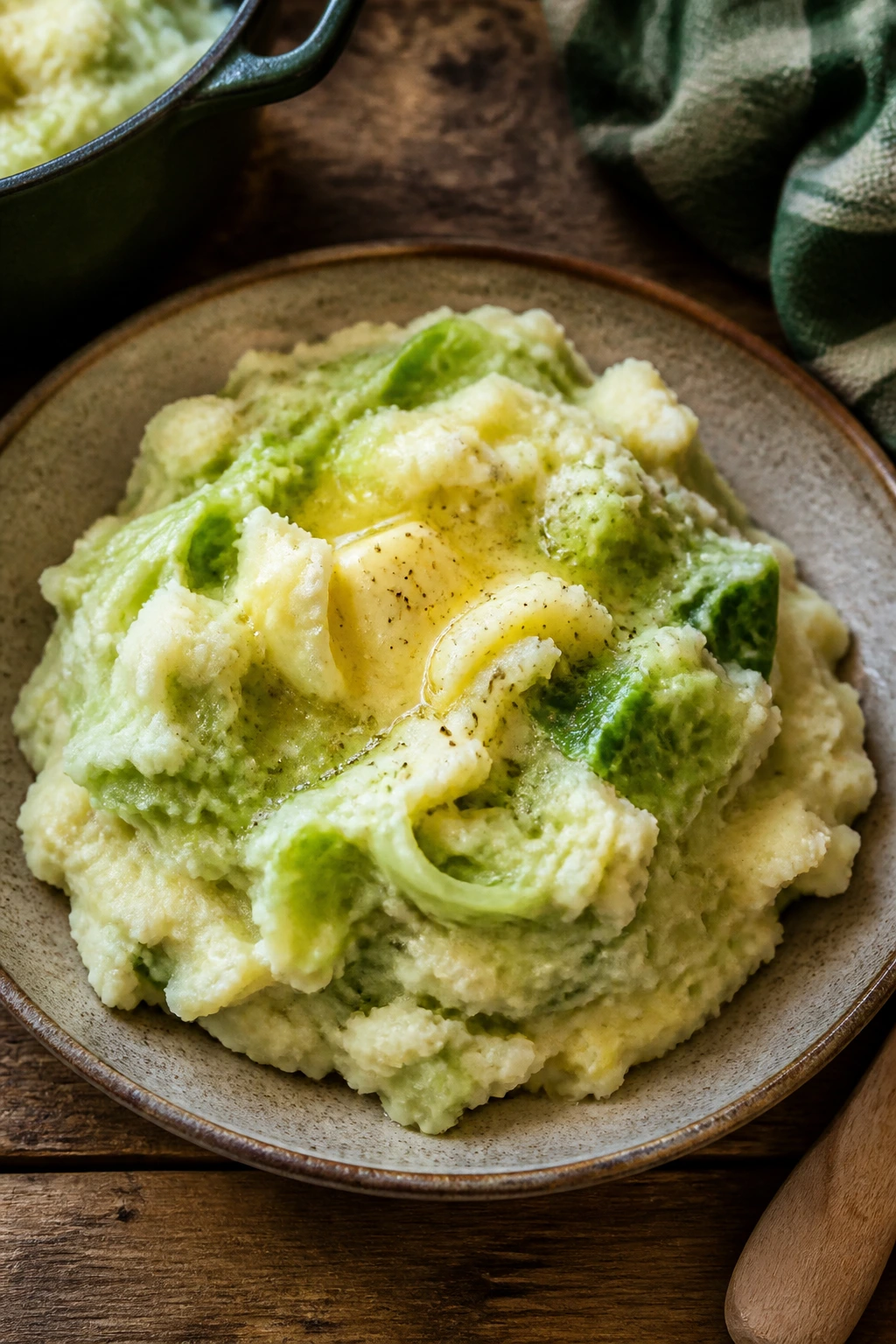
A lot of Saint Patrick’s Day food lives in the same neighborhood: potatoes, cabbage, onions, butter, herbs, beef, lamb, sausage, and the occasional dark beer. That is not an accident. These ingredients are sturdy, affordable, and forgiving, which is exactly why they show up in old home cooking and pub fare alike. They also happen to play well together, and that matters more than any holiday label.
Some of the dishes above are traditional. Some are Irish-American. A few are simply inspired by the same pantry habits. I like that mix because it keeps the table from feeling pinned to one script. You get braises that simmer low and slow, skillet dinners that move faster, and lighter plates that still look like they belong beside the heavier ones.
The common thread is texture. Soft potatoes need a crisp top or a sharp sauce. Rich meat wants cabbage, mustard, or herbs. Starchy sides need salt and butter or they turn dull fast. When a menu works, it is usually because the dishes keep answering each other in the bowl.
Essential Equipment for These Recipes
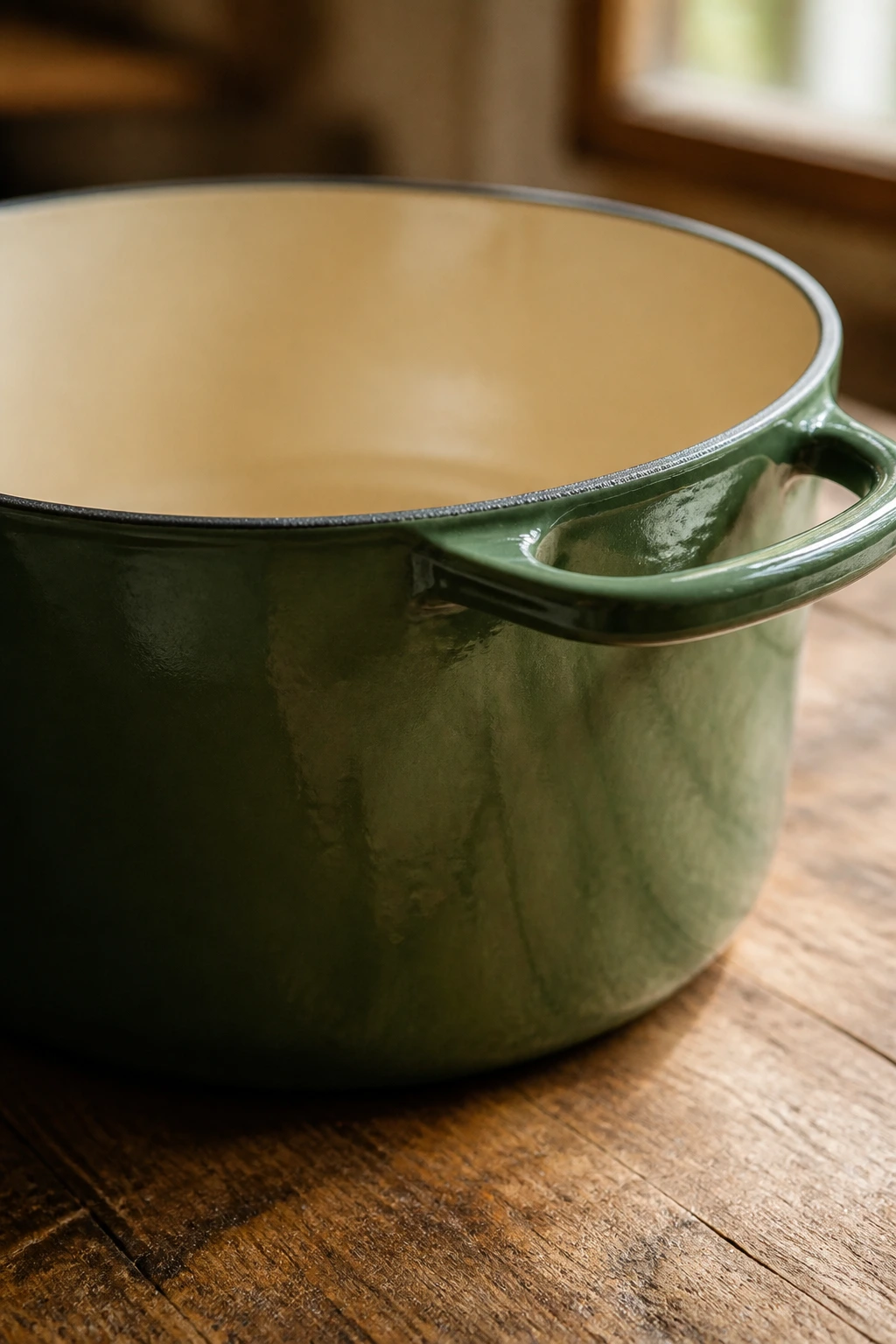
- Large Dutch oven or heavy soup pot — Best for stews, braises, coddle, and any recipe that needs steady heat.
- Large skillet or sauté pan — Useful for shepherd’s pie filling, bangers and mash gravy, cabbage skillet, and quick browning.
- 9×13-inch baking dish or deep casserole dish — Perfect for shepherd’s pie, pot pie, and any baked comfort dish.
- Rimmed sheet pan — Needed for salmon, cod, potatoes, and browning vegetables without crowding.
- Potato masher or potato ricer — A ricer gives the smoothest mash; a masher is fine for a rustic finish.
- Chef’s knife and sturdy cutting board — You will chop a lot of onions, carrots, cabbage, and potatoes.
- Wooden spoon or heatproof spatula — Better than metal for scraping browned bits from the pot.
- Measuring cups and spoons — Especially useful for gravies, roux, and broth-based sauces.
- Instant-read thermometer — Handy for fish and chicken so you do not guess at doneness.
- Colander and fine-mesh sieve — Helps with draining potatoes and straining any broth you want extra smooth.
Smart Shopping and Ingredient Tips
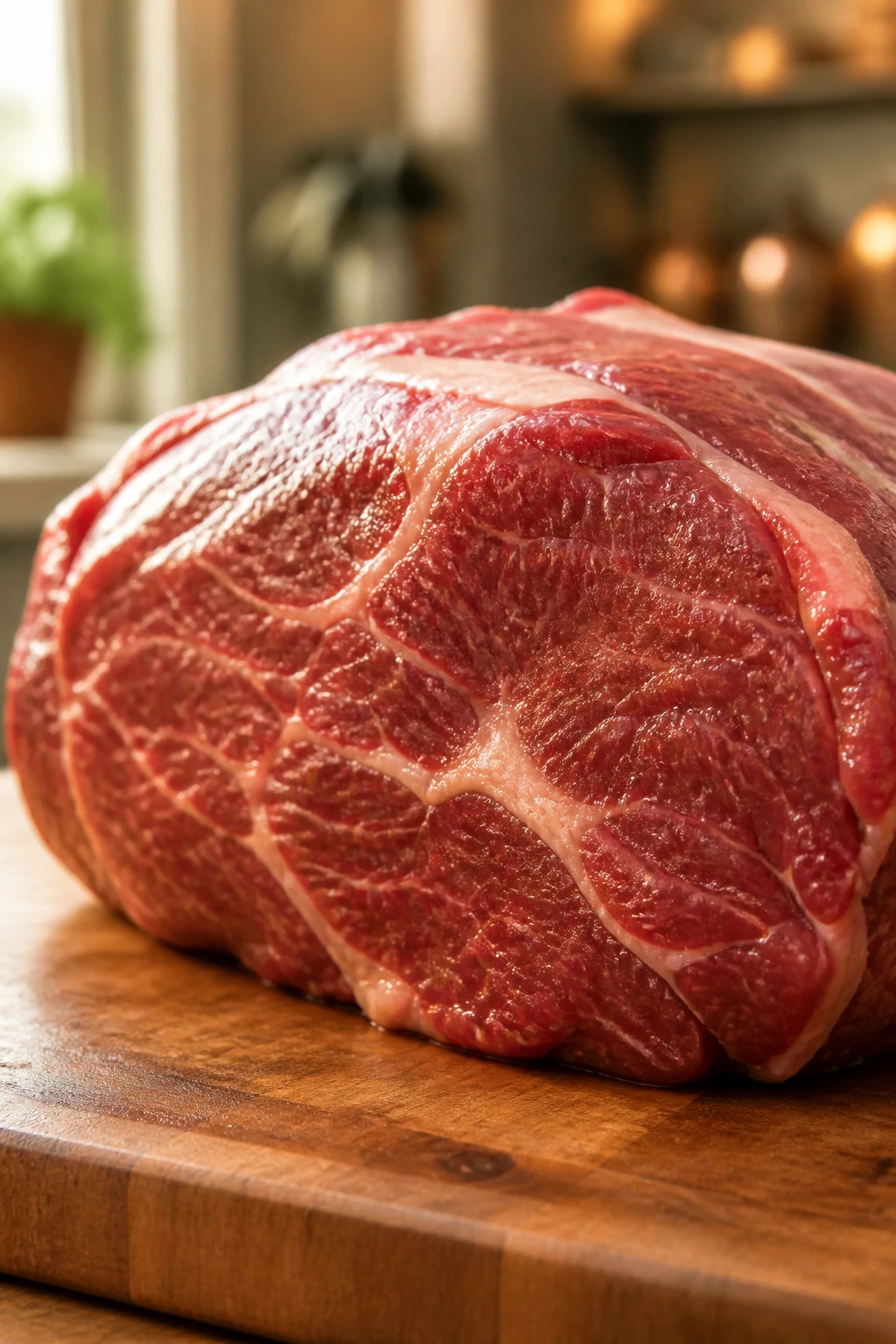
Beef and lamb: Look for chuck roast with visible marbling if you are making stew, and choose ground lamb with enough fat to stay juicy in shepherd’s pie. Lean beef can work in a pinch, but it needs more help from broth and butter or it turns dry and sandy. For corned beef, a brisket with a thicker fat cap usually slices better after braising.
Cabbage and potatoes: Choose cabbage heads that feel heavy for their size and have tight leaves. Loose leaves mean the cabbage is older and drier. For potatoes, Yukon Golds are the safest all-purpose choice because they hold their shape in stew and mash smoothly for colcannon or mash-based dishes. Russets are fine for mash, but they break down faster in broth.
Sausages, bacon, and fish: Buy sausages that look plump and fresh, not pale and rubbery. Bacon should have enough fat to flavor the pot, but not so much smoke that it takes over the dish. For cod or salmon, pick fillets that are the same thickness across the tray so they finish cooking at the same time; thin tails cook faster and dry out first.
Broth, stout, and dairy: Low-sodium broth gives you control. That matters with corned beef, bacon, sausages, and gravy dishes, where the salt can stack fast. If you use stout, choose a dry, roasty one rather than a sweet, syrupy beer. Butter and cream should be fresh, because stale dairy can make a sauce taste flat in a way that is hard to hide.
How to Serve These Recipes
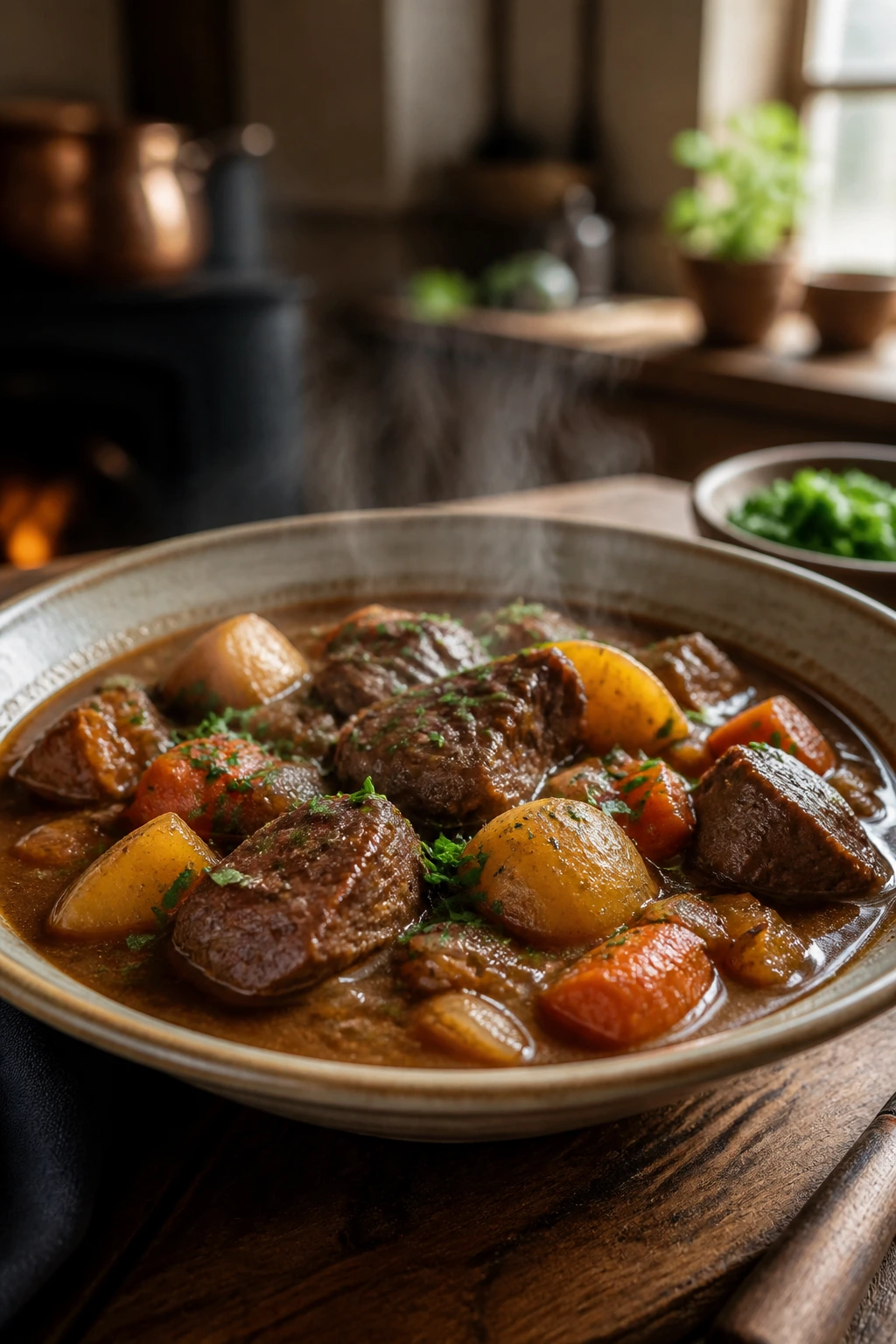
Presentation: Stews and braises look best in wide, shallow bowls so the broth can pool around the meat and vegetables. Shepherd’s pie and pot pie should be scooped in thick portions with a spoon that shows off the filling and the browned top. Fish dishes do better on warm plates with the potatoes or colcannon off to one side, not buried under the main protein.
Accompaniments: Buttered soda bread is the obvious move, and for once the obvious move is right. A simple green salad with mustardy dressing keeps rich dishes from feeling too dense. Pickled onions, horseradish cream, or a sharp mustard work especially well with corned beef, coddle, and sausages. If you want a second vegetable, go with peas, roasted carrots, or sautéed greens rather than another heavy starch.
Portions: Most of these dishes serve generously at 1½ cups for stews and skillet meals, 1 fillet for fish, and 1 large slice or scoop for pies and casseroles. If you are feeding a larger crowd, increase the vegetable sides before you double the meat; that gives people something to fill their plates without making the main dish disappear too fast. For a smaller dinner, make the full recipe and freeze half of the stew or casserole.
Beverage Pairing: A dry stout works with the beef, sausage, and mushroom dishes without fighting them. For fish and lighter chicken recipes, a crisp hard cider or a dry white wine keeps things bright. If you want a nonalcoholic pairing, ginger beer or sparkling water with lemon handles the richness without making the meal feel stripped down.
Additional Tips and Flavor Boosters
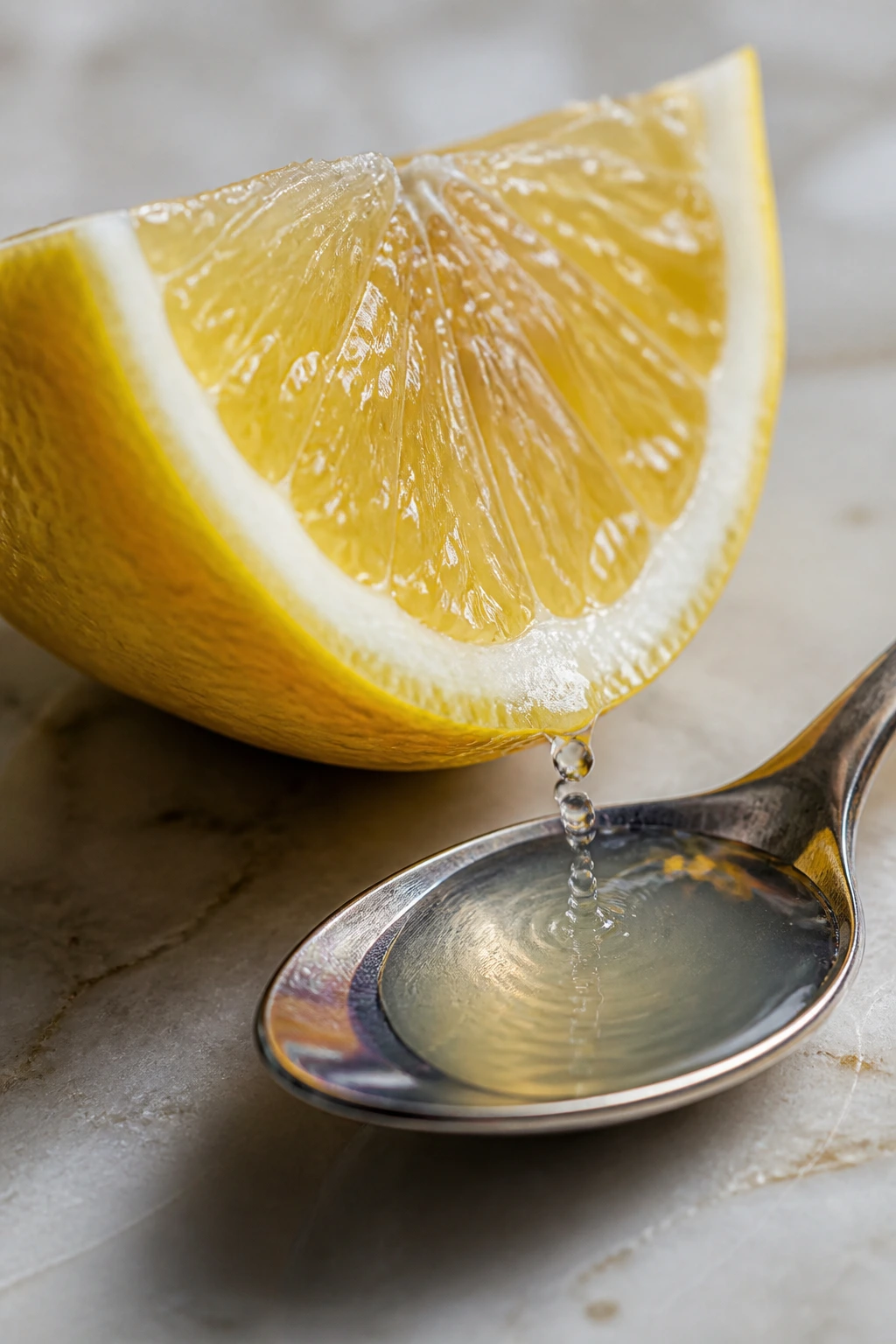
Flavor Enhancement: A small splash of cider vinegar, lemon juice, or Dijon mustard at the end of a rich dish can do more than another pinch of salt. I like to think of it as turning the lights on in a room that was already furnished. It is a tiny move, but it keeps stews, sausage dishes, and gravy from settling into one heavy note.
Customization: Parsnips, turnips, and celery root fit naturally into the beef and corned beef dishes. Kale can step in for cabbage in colcannon or mushroom stew. If you want more texture, add frozen peas near the end of shepherd’s pie, pot pie, or cabbage skillet. If you want a fuller plate, serve any of the braises over mashed potatoes instead of next to them.
Serving Suggestions: Fresh parsley is not decorative fluff here; it gives the plate a sharp green finish that the richer dishes need. Scallions, chives, and a little black pepper help too. For corned beef and sausages, a spoon of grainy mustard on the side is more useful than a fancy sauce. For the fish, lemon wedges should be on the plate before the cod goes in the oven.
Make-It-Yours: For a dairy-light version, use olive oil in place of some of the butter and mash potatoes with broth and a splash of oat milk. For gluten-free cooking, thicken gravies with cornstarch or arrowroot instead of flour and use gluten-free breadcrumbs on the fish or pot pie. For a lower-sodium table, rely more on herbs, onion, garlic, and acid, and keep cured meats in smaller portions rather than trying to hide the salt.
Make-Ahead, Storage, and Reheating Guidance
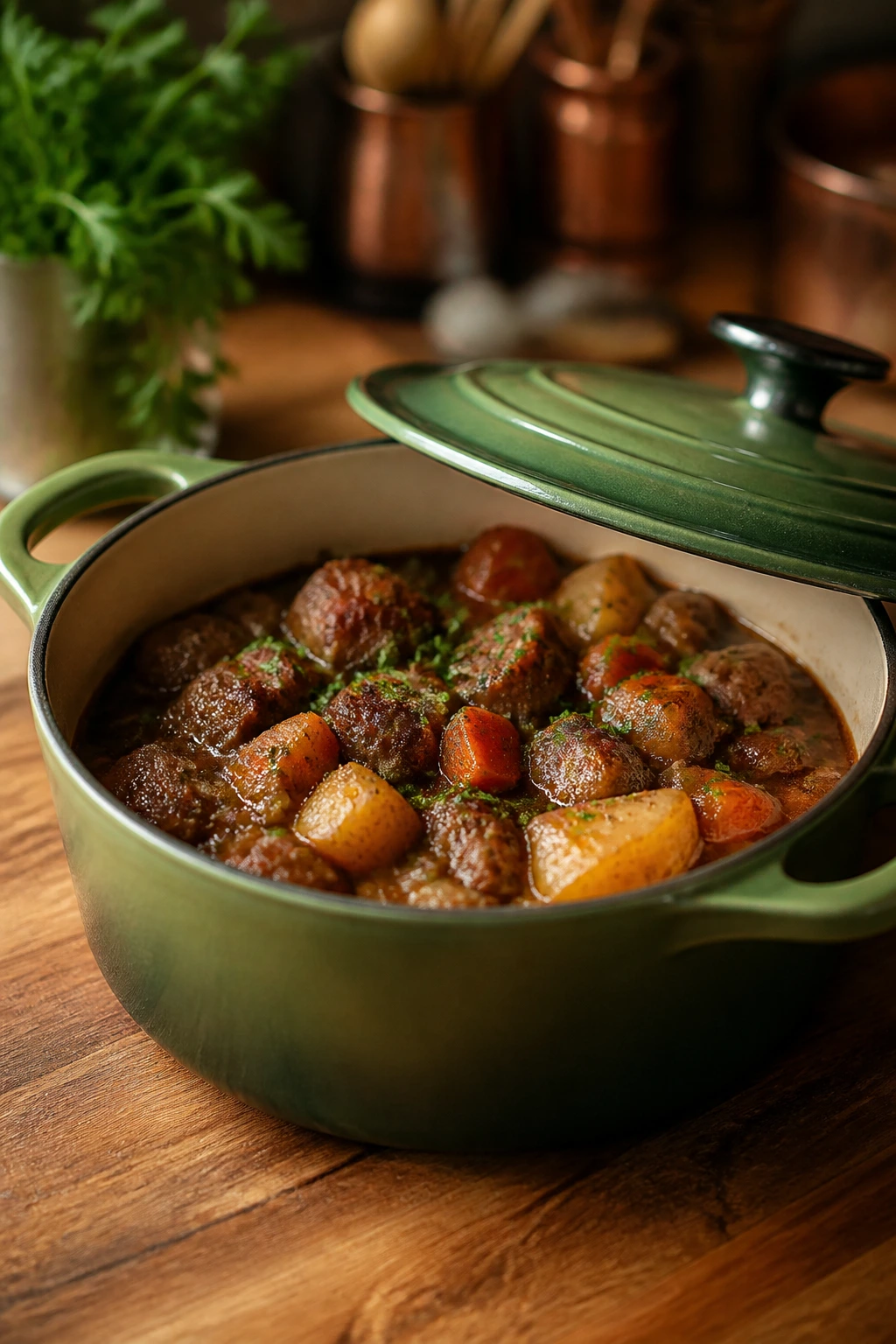
Stews and braises: Guinness beef stew, mushroom barley stew, corned beef, and coddle all keep well in the refrigerator for 3 to 4 days in covered containers. They also freeze nicely for up to 2 to 3 months, though potatoes can soften a bit after thawing. Reheat them slowly on the stovetop over low heat with a splash of broth or water, stirring now and then so the bottom does not catch.
Pies and casseroles: Shepherd’s pie, pot pie, and cabbage roll skillet keep for 3 to 4 days refrigerated. Shepherd’s pie and pot pie freeze well for up to 2 months if wrapped tightly, preferably before baking. Reheat covered in a 325°F (165°C) oven until hot in the center; if the top starts to dry, lay foil loosely over it for the first half of reheating, then uncover at the end so it crisps back up.
Fish dishes: Salmon and cod are best eaten the same day. Leftovers will keep for 1 to 2 days in the refrigerator, but the texture softens fast and freezing is usually not worth it. Reheat fish gently in a low oven around 275°F (135°C) for a few minutes, just until warmed through, or serve it cold over a salad if the texture has become too soft.
Make-ahead prep: Chop onions, carrots, celery, and cabbage a day ahead and store them in separate containers. Boil and mash potatoes a few hours ahead if you need to, then rewarm them with a splash of milk and a knob of butter. Braises can often be cooked the day before, chilled, and reheated the next day, which is one of the few holiday kitchen shortcuts I actively recommend.
Variations and Adaptations to Try
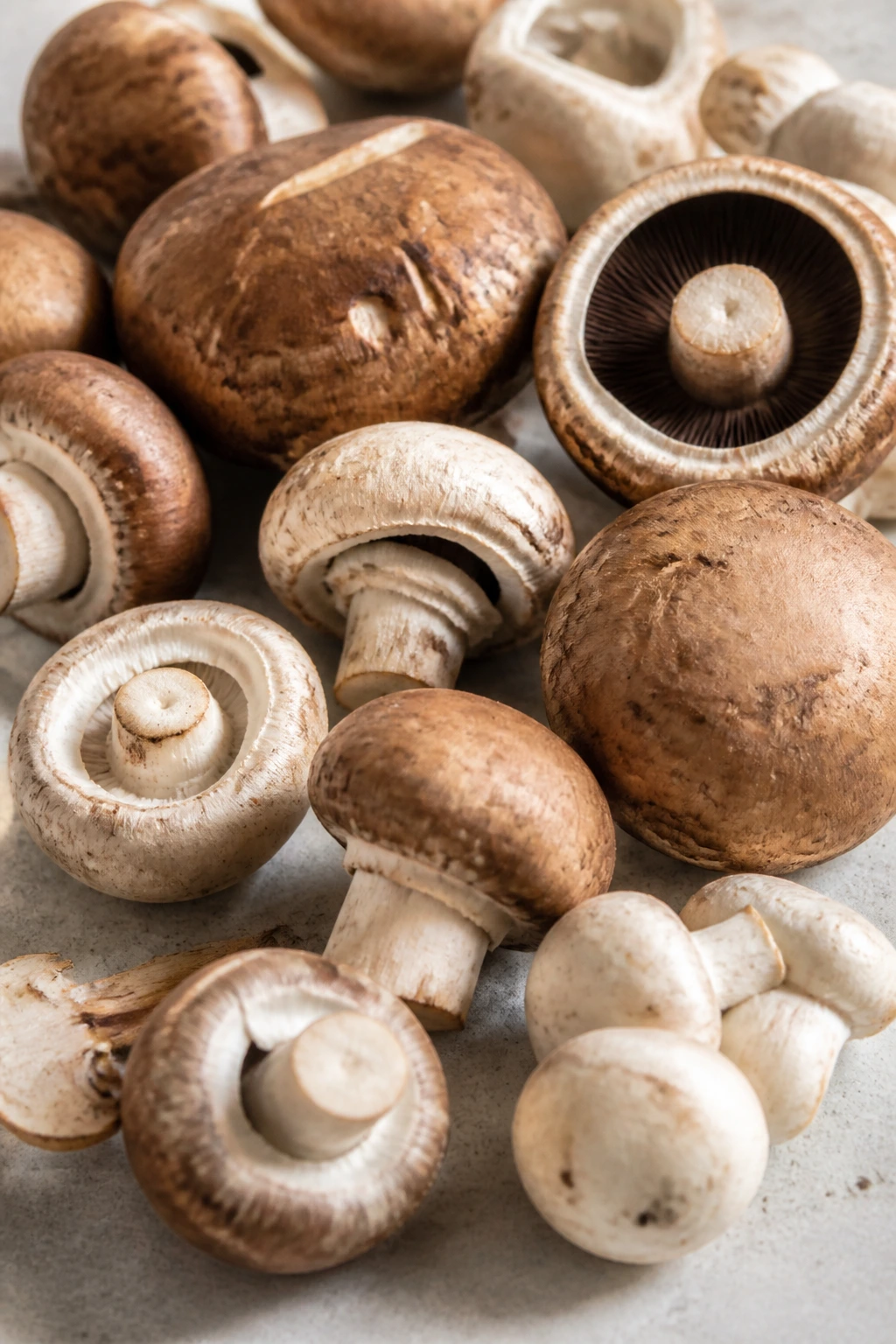
Meatless March Table
Swap the beef or lamb in the stew, shepherd’s pie, or cabbage skillet for a mix of mushrooms, lentils, and barley. Use vegetable broth, add a little soy sauce for depth, and finish with vinegar or mustard so the flavors stay lively. The point is not to imitate meat perfectly. It is to build enough savor that nobody misses it.
Slow Cooker Comfort
The beef stew, corned beef, and Dublin coddle adapt well to the slow cooker. Brown the meat first if you can; that step makes a real difference in flavor. Add potatoes and cabbage during the last hour so they do not collapse into paste.
Dairy-Lite Dinner
Use olive oil in the mash and keep the cream out of the gravy-heavy dishes. A splash of broth, oat milk, or unsweetened plant milk can replace part of the dairy without wrecking the texture. Keep the butter where it matters most: on the top of the potatoes, the pan for the crumbs, or the final finish.
Gluten-Free Holiday Plate
Thicken sauces with cornstarch or arrowroot instead of flour. Choose gluten-free breadcrumbs for the cod and use potatoes as the binder in shepherd’s pie rather than any flour-heavy filler. Watch the stout and stock labels too; a few brands contain gluten, and it is worth checking if you are cooking for someone sensitive.
Mild and Kid-Friendly
Go lighter on mustard, pepper, and beer-based flavor. Choose the shepherd’s pie, pot pie, or salmon first, since those are easiest to keep gentle without losing character. If cabbage is a hard sell, shred it very fine and fold it into the mash or skillet so it melts into the background.
Common Mistakes to Avoid
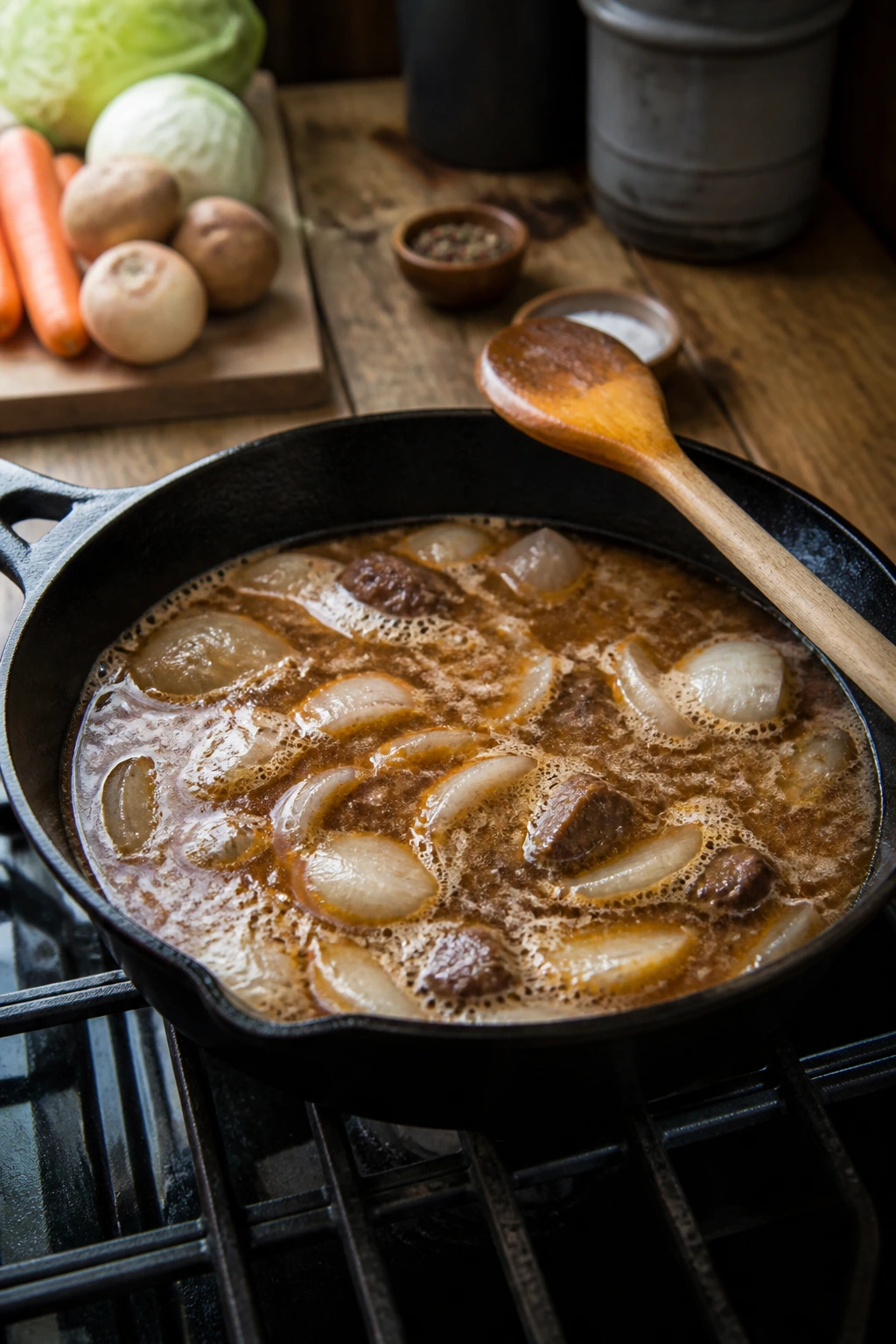
-
Using lean meat where fat is needed: Lean ground beef, trimmed stew meat, or thin sausages can dry out fast. Choose cuts with enough fat and collagen to stand up to longer cooking.
-
Boiling instead of simmering: A hard boil toughens beef, breaks potatoes apart, and makes cabbage go limp in a way that feels tired rather than tender. Keep the pot at a gentle bubble.
-
Adding cabbage too early: Cabbage needs enough time to soften, but not so much that it turns gray and watery. In braises and stews, add it near the end or it will lose its best texture.
-
Mashing potatoes into glue: Overworked potatoes turn sticky, which is a sad thing to do to a holiday plate. Mash only until smooth, and stop as soon as the last lump disappears.
-
Skipping the browning step: Those browned bits in the pan are not decoration. They are flavor. If you rush past them, the dish tastes flatter than it should.
-
Overcooking fish: Cod and salmon finish fast. Pull them while the center still looks slightly underdone, because carryover heat will finish the job.
Frequently Asked Questions

Which of these dinner ideas feels most traditional for Saint Patrick’s Day?
Corned beef and cabbage is the most recognizable holiday plate in Irish-American homes, while shepherd’s pie, coddle, and colcannon lean closer to older comfort-food traditions. If you want the most classic-feeling dinner, corned beef with cabbage and potatoes is the safe choice.
Can I make these recipes without corned beef?
Absolutely. The stew, shepherd’s pie, bangers and mash, coddle, and mushroom barley stew all carry the same holiday mood without using corned beef at all. In fact, a menu built around potatoes, cabbage, onion, butter, and herbs often feels more balanced than a menu centered on one cured meat.
What if I only have one pot?
Start with the dishes that reward one-pot cooking: beef stew, mushroom barley stew, corned beef braise, cabbage roll skillet, and Dublin coddle. For shepherd’s pie and pot pie, cook the filling in the pot, then transfer it to a baking dish for the finish.
Can I use ground beef instead of lamb in shepherd’s pie?
Yes, and many people do. Just know that ground beef makes a cottage pie rather than a true shepherd’s pie, which uses lamb. If you use beef, add a little extra thyme or rosemary so the filling has enough flavor to stand up to the potato topping.
Which recipes taste even better the next day?
Beef stew, mushroom barley stew, corned beef braise, coddle, and cabbage roll skillet are all stronger after a night in the fridge. The flavors settle and the broth tightens up a little, which is exactly what you want in a braised dish.
How do I keep cabbage from turning mushy?
Cut it into larger wedges for braises and add it near the end of cooking. For skillet dishes, let it cook until just tender and then stop. Cabbage should taste soft and sweet, not collapsed and watery.
Can I make any of these in advance for a party?
Yes. Braises and stews can be cooked a day ahead, chilled, and reheated slowly. Shepherd’s pie and pot pie can be assembled ahead, then baked when you need them. Save fish dishes for the day you plan to serve them.
What should I make if I want the lightest meal on the list?
The salmon with dill butter is the lightest by a wide margin, followed by baked cod with colcannon. Both still feel like proper dinner, but neither sits as heavily as the braises, sausage dishes, or pies.
A Table Worth Setting
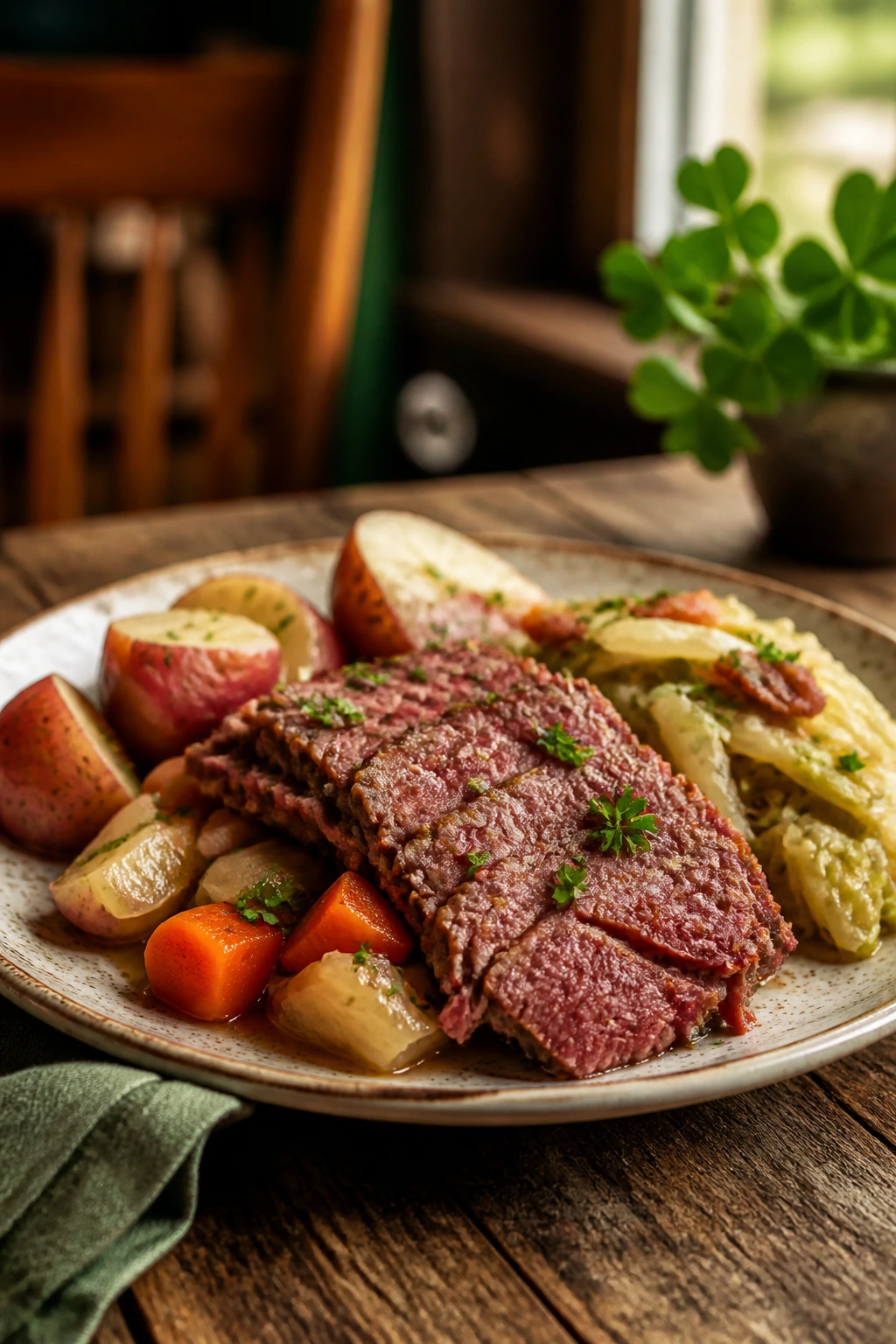
A good Saint Patrick’s Day dinner does not need to be theatrical. It needs to be warm, steady, and worth the wait. That is why these recipes work: they know when to simmer, when to brown, and when to stop fussing and let the ingredients speak.
If you are cooking for a crowd, choose one braise, one potato dish, and one lighter option, then let the rest of the menu stay simple. That balance keeps the meal feeling full without making the kitchen feel crowded. And if the leftovers are even better the next day, well, that is hardly a problem.