



Smothered chicken dinners for families have a very specific trick up their sleeve: they make ordinary chicken feel like a full meal before the side dishes even show up. The sauce matters. The browned onions matter. Even the little sticky bits left in the pan matter, because that is where the real flavor sits.
The method is simple enough to trust on a busy evening, but it still gives you layers — browned chicken, onions or mushrooms cooked until sweet, a gravy that picks up the pan drippings instead of hiding them. That tiny bit of extra effort changes the whole dinner. It is why a skillet of smothered chicken can taste like you worked harder than you did.
The 10 recipes below stay in that lane, but they do not all wear the same coat. Some are creamy, some lean on tomato, some go slow-cooker, and one or two borrow from biscuits, enchiladas, and skillet casseroles. Pick the version that fits your pantry and your people, then let the sauce do the heavy lifting.
Why These Dinners Keep Saving the Evening
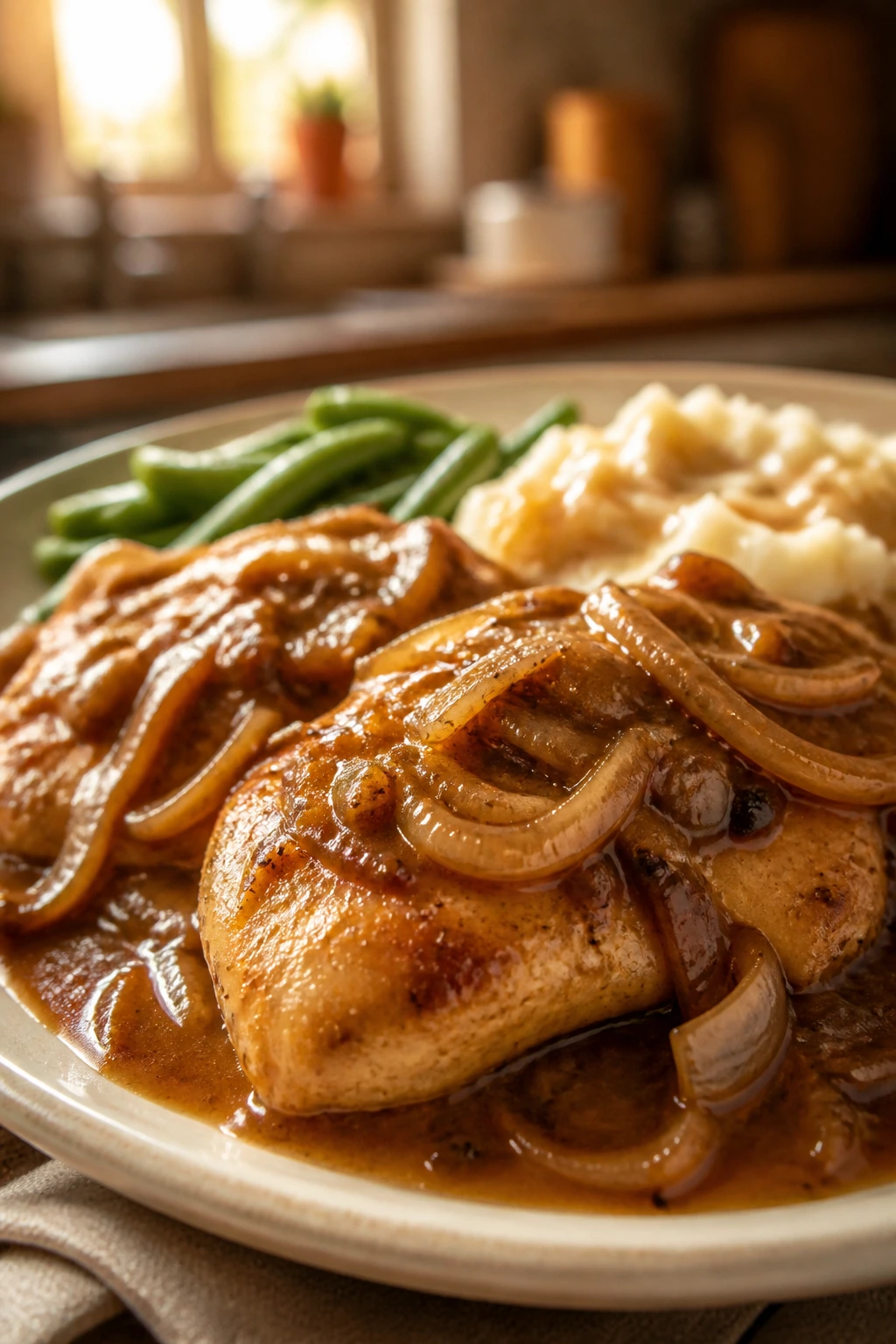
- Built-In Comfort: Each recipe turns chicken into something saucy enough to spoon over rice, potatoes, biscuits, or noodles, which means the plate feels complete fast.
- Kid-Friendly Paths: Onion gravy, mushroom cream, mozzarella, and mild enchilada sauce show up more often than hot spice, so these dinners tend to meet picky eaters halfway.
- Cleanup Stays Reasonable: Most of the recipes live in one skillet, one Dutch oven, one slow cooker, or one casserole dish, which matters when the rest of the evening is already loud.
- Flexible Cuts: Thighs give you the juiciest results, but several versions work with breasts if that is what you bought.
- Leftovers Hold Up: Smothered chicken reheats better than plain seared chicken because the sauce protects the meat from drying out.
- Easy to Pair: Mashed potatoes, rice, biscuits, egg noodles, roasted green beans, or even a plain salad can all sit next to these dinners without a fight.
1. Classic Southern Smothered Chicken with Onion Gravy
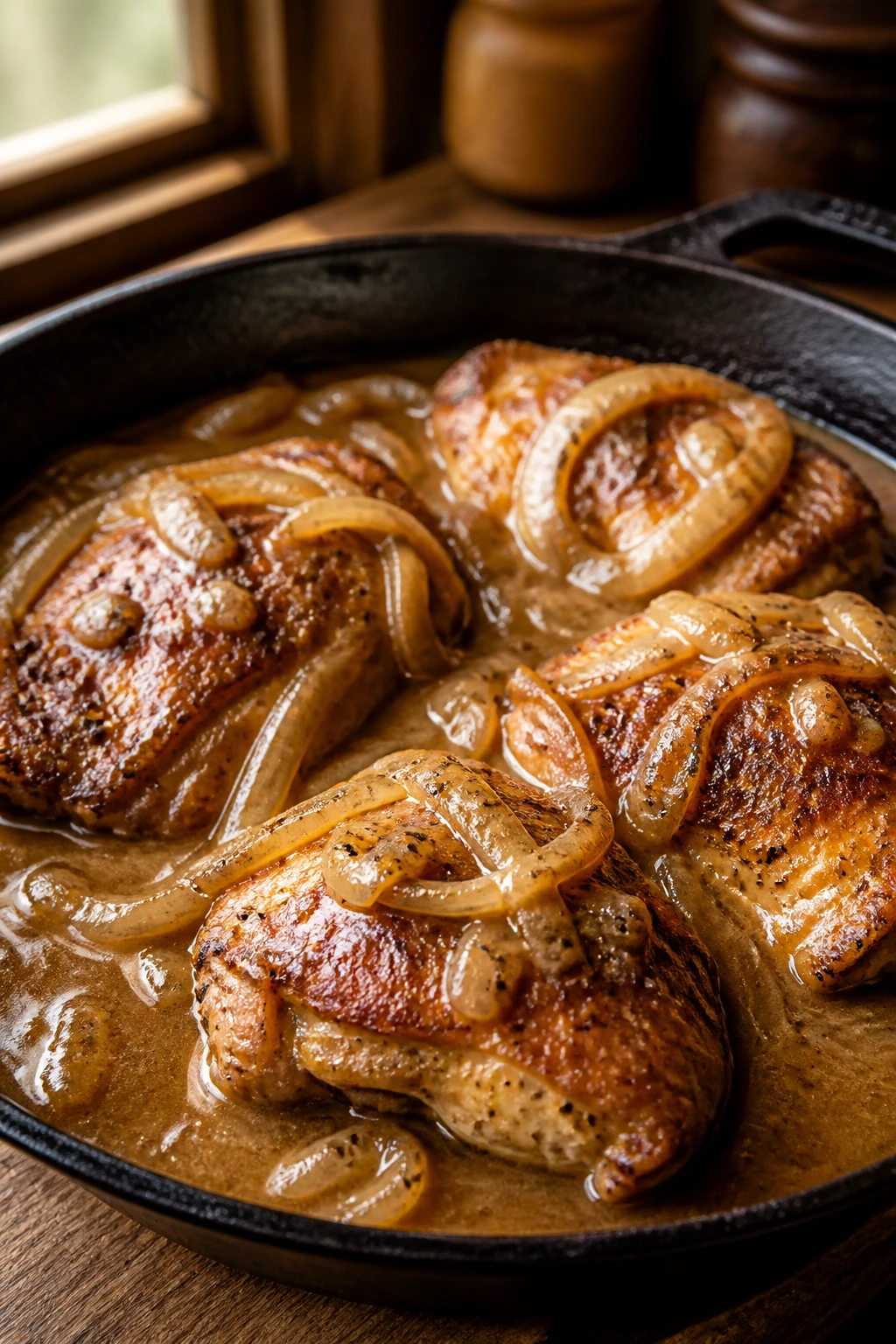
You can smell this one before it reaches the table: sweet onions, browned chicken, and a gravy that tastes like the pan has a story to tell. Classic Southern smothered chicken with onion gravy is the version most people picture when they hear the phrase, and for good reason. It lands rich, savory, and a little old-fashioned in the best sense.
What I love here is the way the onions soften into long, silky ribbons while the chicken simmers just long enough to soak up the gravy without going dry. It is the kind of dinner that makes mashed potatoes disappear fast.
Why It Works:
The flour-dredged chicken gives the gravy something to cling to, while the onions cook down until they taste sweet instead of sharp. Thighs hold up especially well here because they stay juicy through the simmer, and a little Worcestershire plus thyme keeps the gravy from tasting flat. The pan drippings do the rest. They always do.
Key Ingredients:
- 2 1/2 lbs bone-in, skinless chicken thighs
- 2 teaspoons kosher salt
- 1 teaspoon black pepper
- 1 teaspoon paprika
- 1/2 teaspoon garlic powder
- 1/2 cup all-purpose flour, plus 2 tablespoons extra for the gravy
- 3 tablespoons vegetable oil
- 2 tablespoons unsalted butter
- 2 large yellow onions, thinly sliced
- 3 cloves garlic, minced
- 2 cups low-sodium chicken broth
- 1/2 cup whole milk
- 1 teaspoon Worcestershire sauce
- 1 bay leaf
- 1 teaspoon fresh thyme leaves or 1/2 teaspoon dried thyme
- 2 tablespoons chopped parsley
Quick Steps:
- Season the chicken with salt, pepper, paprika, and garlic powder, then dredge it lightly in the flour.
- Heat the oil and butter in a large Dutch oven over medium-high heat. Brown the chicken in batches for 4 to 5 minutes per side, then move it to a plate.
- Lower the heat to medium and cook the onions for 8 to 10 minutes, stirring often, until they turn soft and golden at the edges. Add the garlic for the last 30 seconds.
- Stir in the extra 2 tablespoons flour and cook for 1 minute so the gravy will not taste raw.
- Whisk in the broth, milk, Worcestershire, bay leaf, and thyme, scraping up every browned bit from the bottom of the pan.
- Return the chicken, cover, and simmer on low for 25 to 30 minutes, until the chicken reaches 165°F and the gravy coats a spoon.
- Remove the bay leaf, shower with parsley, and serve hot.
Tips and Variations:
- Thicker Gravy: Let the sauce simmer uncovered for 3 to 5 minutes at the end if you want it a touch more clingy.
- Breast Swap: Use boneless chicken breasts, but cut the simmer time by 8 to 10 minutes so they stay tender.
- Best Side: Mashed potatoes are the obvious answer, but buttered rice works better than people think.
2. Creamy Mushroom Smothered Chicken with Thyme
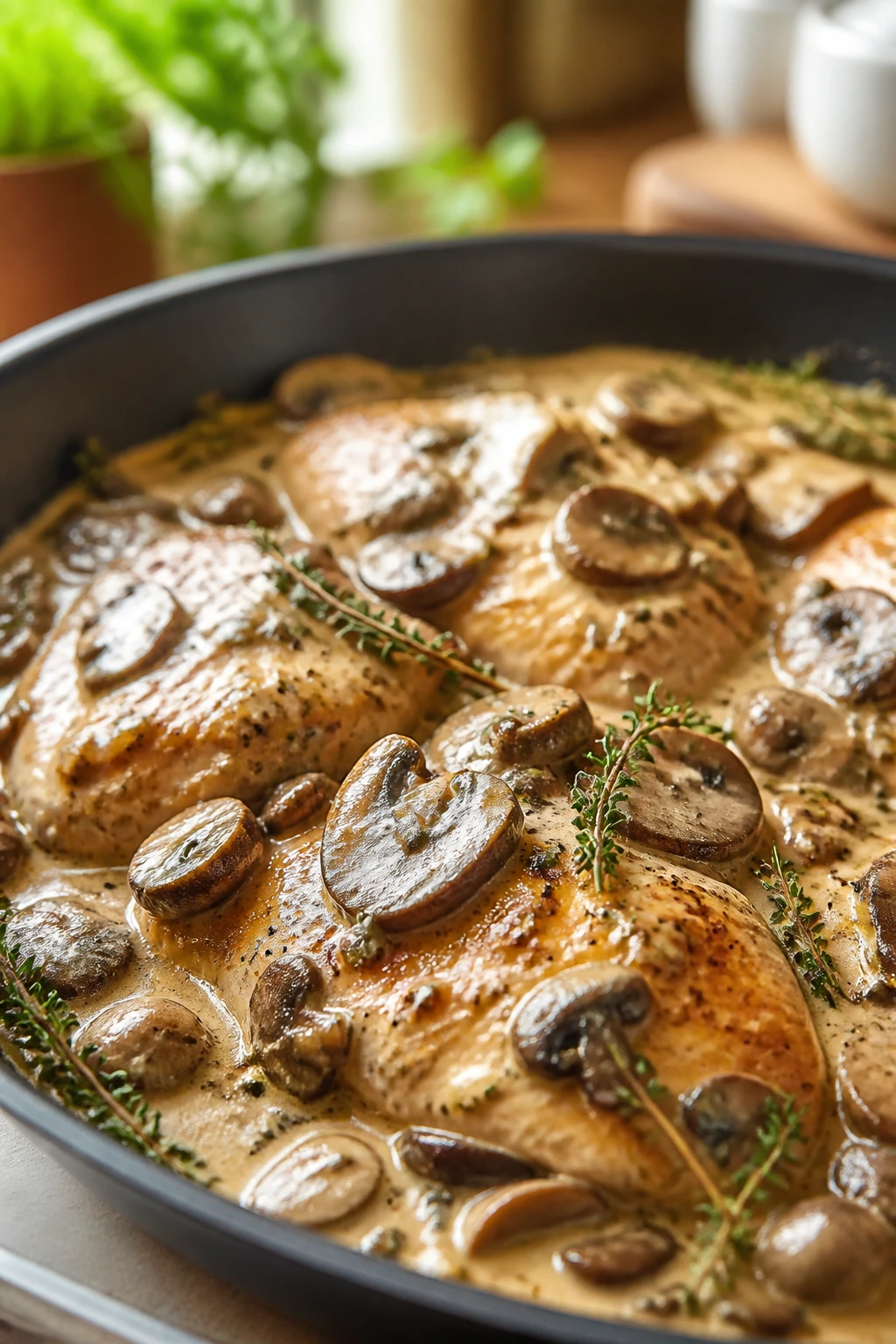
If your family leans toward creamy sauces, this is the skillet that gets scraped clean first. The mushrooms bring a dark, woodsy flavor, and the Dijon keeps the sauce from wandering into bland cream territory. It looks understated, then it surprises you.
I reach for cremini mushrooms here because they hold their shape and give the sauce a deeper taste than plain white mushrooms. That little choice matters more than people admit.
Why It Works:
Mushrooms are basically flavor sponges, and once they give up their moisture, they absorb the butter, garlic, broth, and cream like they were built for it. Dijon mustard adds a small sharp edge that keeps the sauce lively, while thyme pulls the whole pan toward something cozy instead of heavy. Chicken thighs stay especially juicy here, but breasts work if you watch the clock.
Key Ingredients:
- 2 lbs boneless, skinless chicken thighs or breasts
- 1 teaspoon kosher salt
- 1/2 teaspoon black pepper
- 1 teaspoon onion powder
- 2 tablespoons olive oil
- 1 tablespoon unsalted butter
- 8 oz cremini mushrooms, sliced
- 1 small yellow onion, diced
- 2 cloves garlic, minced
- 1 tablespoon all-purpose flour
- 1 cup low-sodium chicken broth
- 3/4 cup heavy cream
- 1 tablespoon Dijon mustard
- 1 teaspoon fresh thyme leaves or 1/2 teaspoon dried thyme
- 1 tablespoon lemon juice, optional
- 2 tablespoons chopped parsley
Quick Steps:
- Pat the chicken dry, then season it with salt, pepper, and onion powder.
- Heat the oil in a large skillet over medium-high heat and sear the chicken for 4 minutes per side. Remove it once browned.
- Add the butter, mushrooms, and onion to the same pan. Cook for 7 to 8 minutes, until the mushrooms brown and their liquid disappears. Stir in the garlic for 30 seconds.
- Sprinkle in the flour and cook for 1 minute, then whisk in the broth, cream, Dijon, and thyme.
- Let the sauce bubble gently for 2 to 3 minutes, then return the chicken, cover, and cook for 8 to 10 minutes more, until the chicken reaches 165°F.
- Finish with lemon juice if you want a brighter edge, then scatter parsley on top.
Tips and Variations:
- Mushroom Choice: Cremini give the best flavor, but sliced baby bellas or a mix of mushrooms work well too.
- Breast Guardrail: If using chicken breasts, pound them to even thickness so they finish at the same time.
- Serving Idea: Spoon this over egg noodles, which catch the mushroom sauce in all the right places.
3. Garlic Parmesan Smothered Chicken and Potatoes
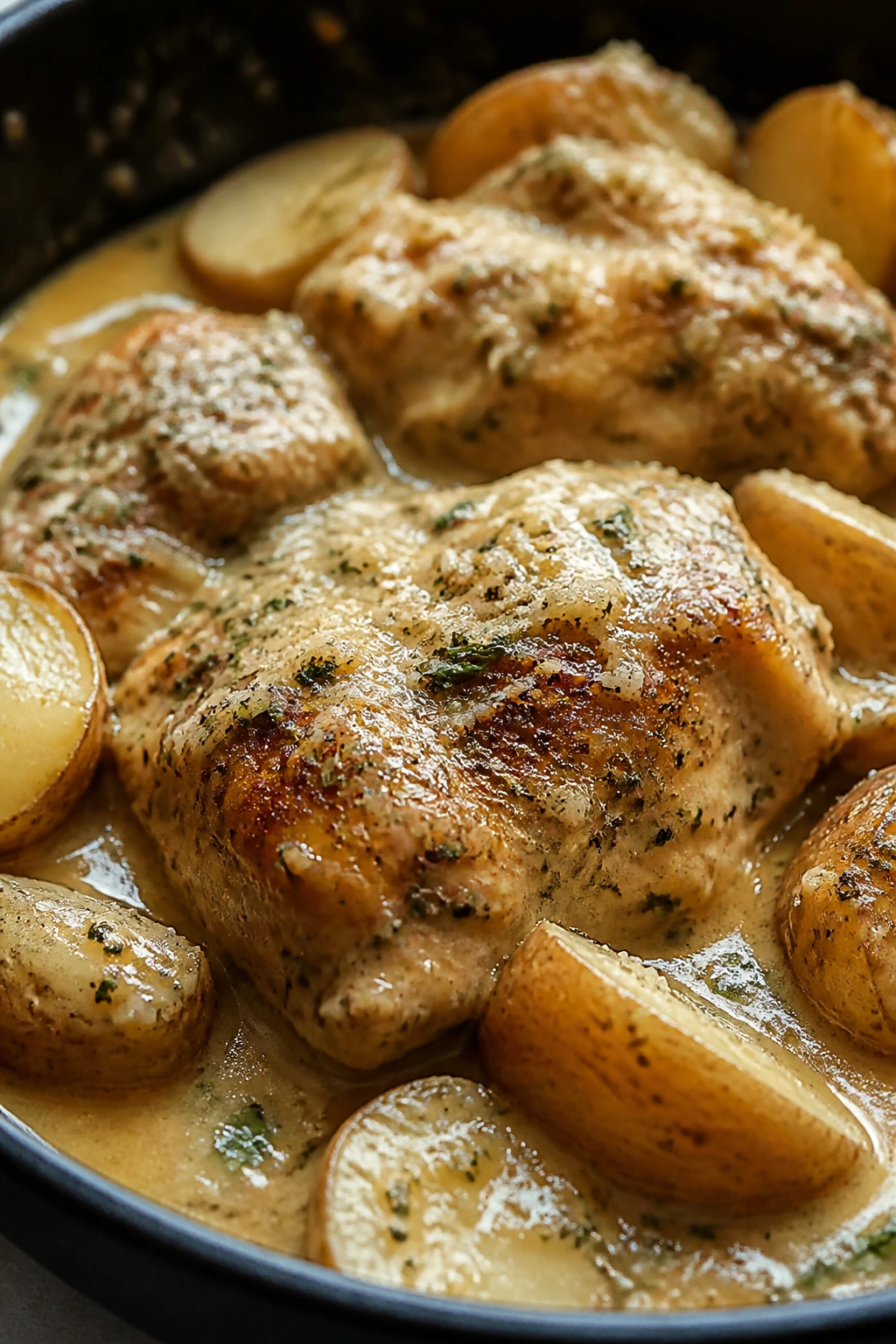
Potatoes change the whole rhythm of smothered chicken. Instead of serving the sauce beside a starch, you let the potatoes catch it in the pan, which makes every bite feel more complete. Garlic, butter, and Parmesan do the rest.
This is the one I make when I want dinner to look generous without asking for much extra work. The potatoes soak up the sauce, the spinach softens at the end, and the whole skillet turns into something that tastes bigger than the ingredient list.
Why It Works:
Baby potatoes need just enough liquid and heat to go from hard to tender without collapsing. Parmesan brings salt and body to the sauce, while half-and-half makes it creamy without going fully heavy. The spinach is not decorative; it gives the pan a cleaner finish and keeps the sauce from feeling one-note.
Key Ingredients:
- 1 1/2 lbs boneless, skinless chicken thighs
- 1 1/2 lbs baby potatoes, halved
- 1 1/2 teaspoons kosher salt
- 1 teaspoon black pepper
- 1 teaspoon Italian seasoning
- 2 tablespoons olive oil
- 2 tablespoons unsalted butter
- 4 cloves garlic, minced
- 1 1/2 cups low-sodium chicken broth
- 1/2 cup half-and-half
- 1/2 cup finely grated Parmesan cheese
- 2 cups baby spinach
- 1 teaspoon lemon zest
- 2 tablespoons chopped parsley
Quick Steps:
- Season the chicken and potatoes with salt, pepper, and Italian seasoning.
- Heat the oil in a large oven-safe skillet over medium-high heat. Brown the chicken for 4 minutes per side, then set it aside.
- Add the butter and potatoes to the pan. Cook for 6 to 8 minutes, turning now and then, until the cut sides pick up some color. Add the garlic during the last 30 seconds.
- Pour in the broth and half-and-half, then stir in the Parmesan until the sauce looks smooth.
- Nestle the chicken back into the pan, cover, and cook on low for 15 to 18 minutes, until the potatoes are tender and the chicken reaches 165°F.
- Stir in the spinach and lemon zest just until the leaves wilt. Finish with parsley.
Tips and Variations:
- Even Potato Cuts: Halve the potatoes so they cook at the same pace as the chicken.
- Cheese Note: Use finely grated Parmesan, not the gritty stuff from a green can, if you want the sauce to stay smooth.
- Extra Veg: Frozen peas can stand in for spinach if that is what you have.
4. Smothered Chicken and Rice Skillet Casserole
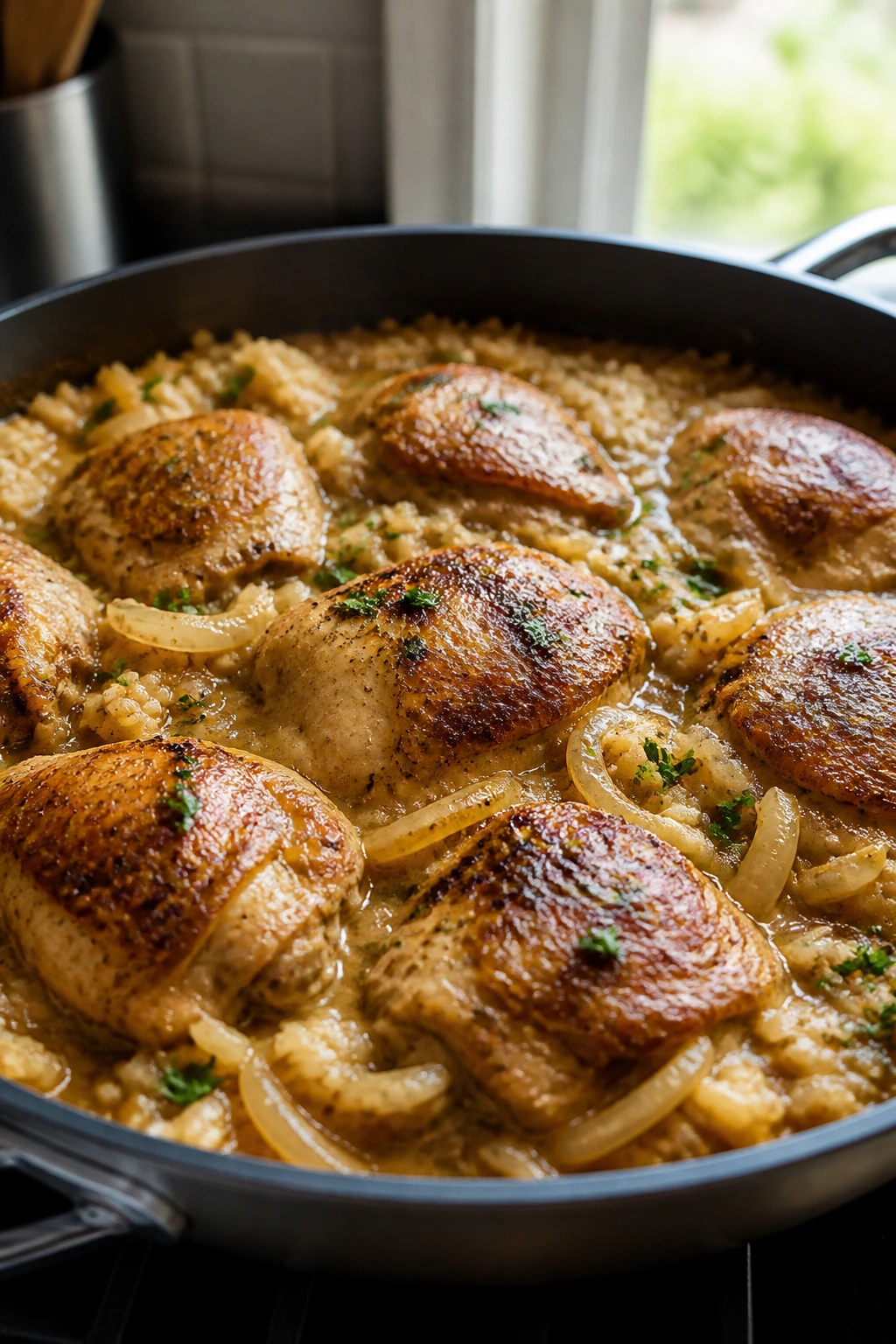
A rice casserole is a different kind of comfort. The chicken sits on top, the rice cooks underneath, and every grain steals a bit of flavor from the broth, onion, celery, and pan juices. It is plain in the nicest way.
This recipe feels like the sort of dinner a tired parent invents by instinct and then keeps forever. It is hearty, it feeds a crowd, and it does not ask for a separate starch.
Why It Works:
Long-grain white rice absorbs flavor without turning gluey, which is why it works so well here. A quick stovetop start builds the bottom layer of flavor, and then the covered bake finishes the rice without demanding constant attention. Chicken thighs stay moist while the rice drinks up the broth around them.
Key Ingredients:
- 2 lbs boneless, skinless chicken thighs
- 1 1/2 cups long-grain white rice, rinsed
- 1 medium yellow onion, diced
- 2 celery ribs, diced
- 3 cloves garlic, minced
- 3 cups low-sodium chicken broth
- 1 cup whole milk
- 2 tablespoons unsalted butter
- 2 tablespoons all-purpose flour
- 1 teaspoon kosher salt
- 1 teaspoon paprika
- 1/2 teaspoon dried sage
- 1/2 teaspoon black pepper
- 1 cup frozen peas
- 2 tablespoons chopped parsley
Quick Steps:
- Season the chicken with salt, pepper, paprika, and sage.
- Brown the chicken in a large oven-safe skillet over medium-high heat for 3 to 4 minutes per side. Remove it and set it aside.
- Melt the butter in the same pan. Cook the onion and celery for 5 minutes, then stir in the garlic and flour for 1 minute.
- Whisk in the broth and milk, then stir in the rice. Let the mixture come to a gentle simmer.
- Nestle the chicken on top, cover tightly, and bake at 375°F for 30 minutes, or until the rice is tender and the chicken reaches 165°F.
- Stir in the peas, cover for 5 minutes more, then rest for 10 minutes before serving with parsley.
Tips and Variations:
- Rinse the Rice: Rinsing keeps the grains separate and stops the casserole from turning pasty.
- Lid Check: Do not keep lifting the lid. The steam is doing real work.
- If You Like Herbs: A pinch of rosemary can step in for part of the sage, but go light.
5. Buttermilk Pan-Fried Smothered Chicken with Black Pepper Gravy
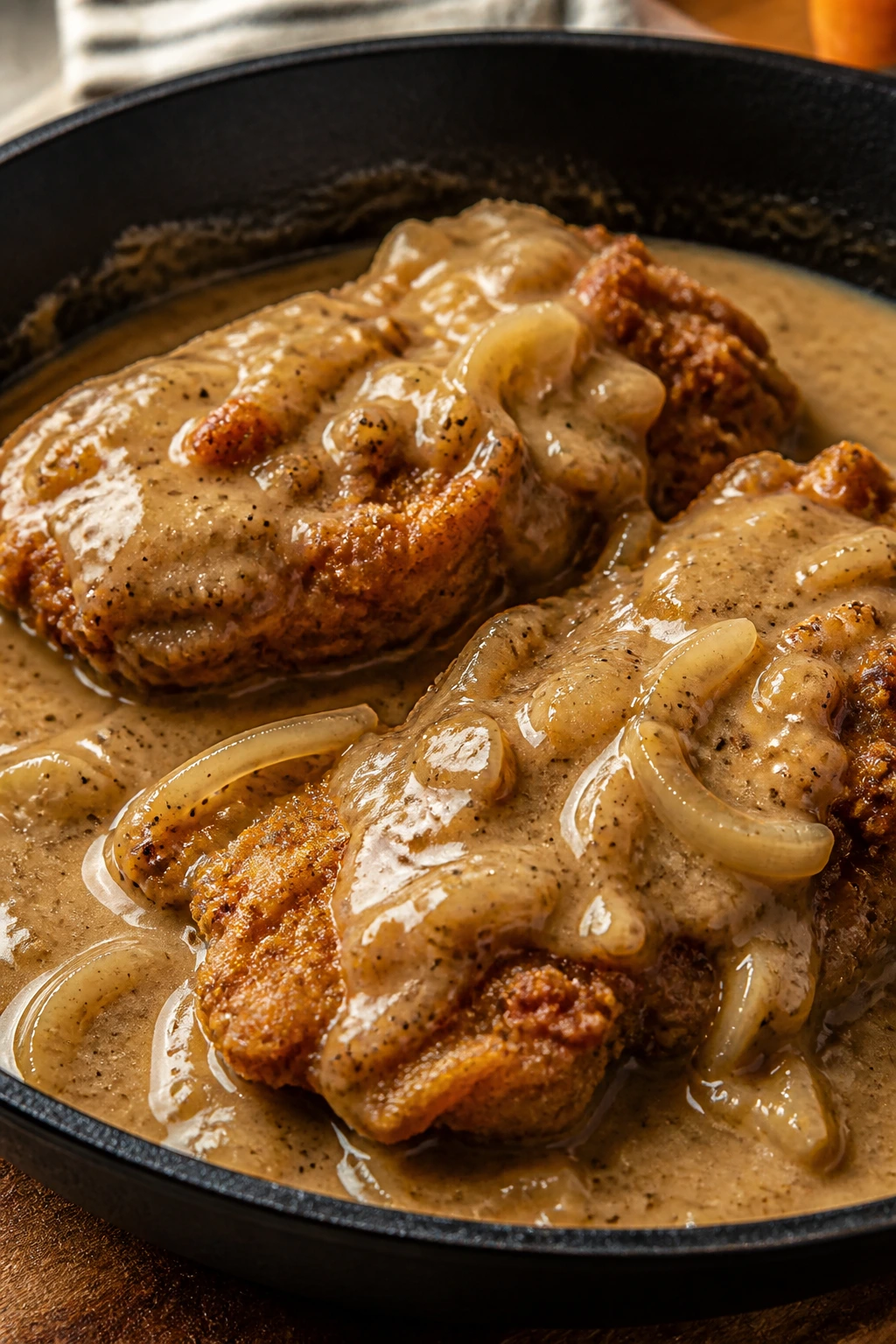
This is the one that tastes like a diner skillet and a Sunday supper collided. The chicken comes out crisp at the edges, then the black pepper gravy slides over it and turns the whole plate soft and savory. It is not shy.
Buttermilk is the quiet hero here. It seasons, tenderizes, and helps the coating cling in a way plain milk never quite manages.
Why It Works:
The buttermilk soak loosens the chicken just enough to keep it juicy, and the flour coating fries into a crust that holds up when the gravy lands. Black pepper gives the sauce its bite, while a little cayenne keeps the flavor awake without making the dish hot. It is the kind of food that tastes familiar on the first bite and even better on the second.
Key Ingredients:
- 2 lbs chicken cutlets or boneless thighs, pounded to 1/2-inch thickness
- 2 cups buttermilk
- 1 1/2 teaspoons kosher salt, divided
- 1 teaspoon black pepper, divided
- 1 teaspoon paprika
- 1/2 teaspoon garlic powder
- 1 1/2 cups all-purpose flour
- 1 cup vegetable oil
- 3 tablespoons unsalted butter
- 3 tablespoons all-purpose flour
- 2 1/2 cups whole milk
- 1 teaspoon cracked black pepper
- Pinch of cayenne
- 1 tablespoon chopped parsley
Quick Steps:
- Combine the buttermilk, 1 teaspoon salt, 1/2 teaspoon black pepper, paprika, and garlic powder. Add the chicken and let it sit for 30 minutes.
- Mix the remaining flour with the remaining salt and pepper in a wide dish.
- Lift the chicken from the buttermilk, let the excess drip off, then dredge it in the flour. Set it on a rack for 5 minutes so the coating sticks.
- Heat the oil in a heavy skillet over medium-high heat. Fry the chicken for 4 to 5 minutes per side, until golden and the center reaches 165°F. Move it to a rack or plate.
- Pour off all but 3 tablespoons of the fat. Add the butter and 3 tablespoons flour, then whisk for 1 minute.
- Slowly whisk in the milk, cracked black pepper, and cayenne. Simmer until the gravy thickens, then spoon it over the chicken.
Tips and Variations:
- Thermometer Check: Keep the oil near 350°F so the crust browns before the coating burns.
- Make It Milder: Skip the cayenne if your table prefers a gentler pepper gravy.
- Best Side: Cornbread and green beans make this feel like a full supper, not a plate of leftovers.
6. Cajun Smothered Chicken with Peppers and Tomatoes
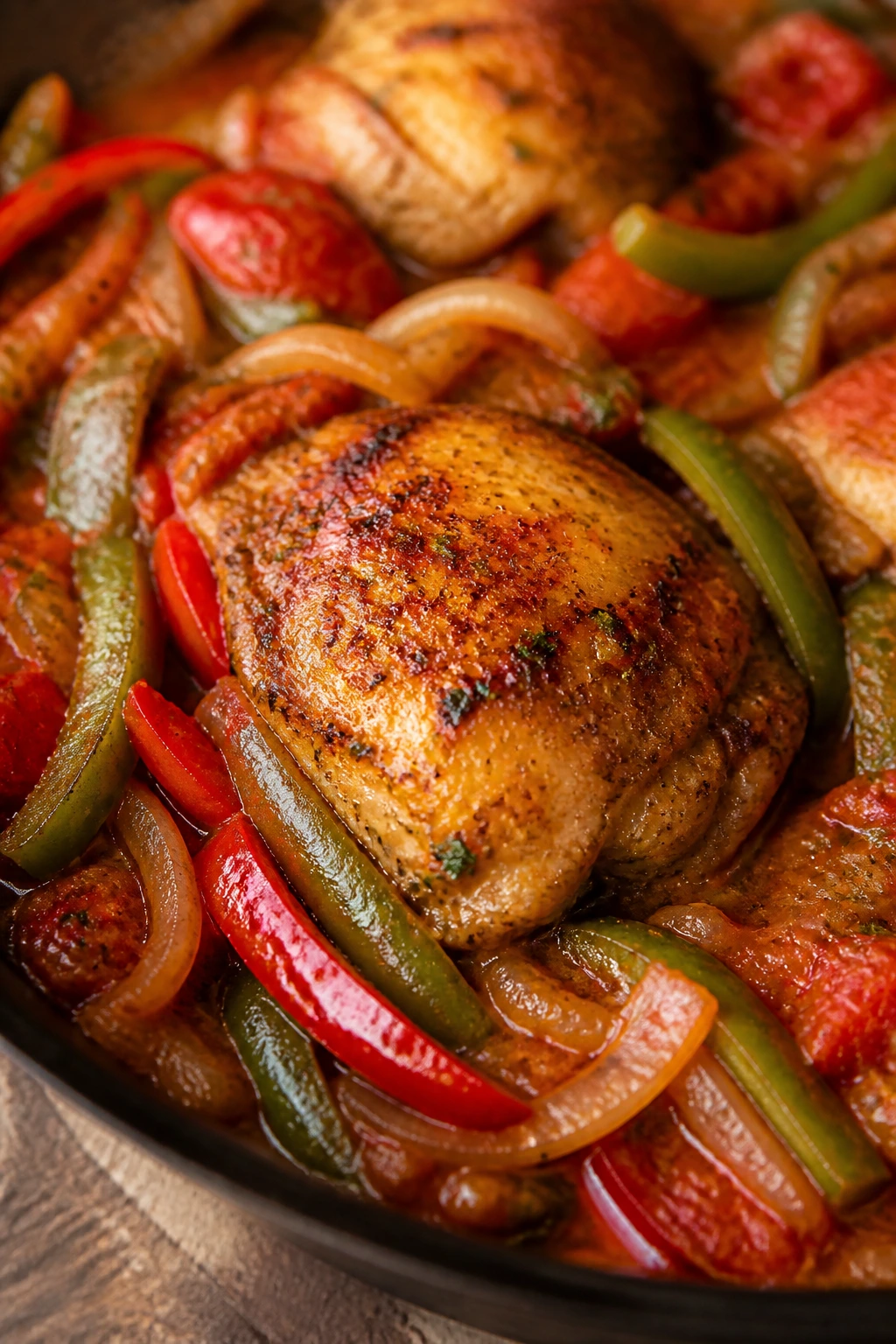
Bell peppers, celery, and tomato make this Cajun smothered chicken taste brighter than the cream-based versions. The seasoning stays family-friendly if you keep the heat mild, but the pan still carries enough spice to keep adults interested. It has a little sparkle to it.
This is the version I reach for when I want the dinner to feel lively but not complicated. The sauce is bold, colorful, and easy to spoon over rice.
Why It Works:
The Cajun seasoning hits the chicken first, then the onion, bell pepper, and celery build a soft, savory base that tastes round once the tomato paste and tomatoes go in. A small amount of flour helps the sauce tighten without becoming heavy, and butter at the end smooths out the edges. It is a good example of how a sauce can carry heat without losing balance.
Key Ingredients:
- 2 lbs bone-in, skinless chicken thighs or boneless thighs
- 2 teaspoons kosher salt
- 1 tablespoon Cajun seasoning
- 1 tablespoon vegetable oil
- 1 yellow onion, chopped
- 1 green bell pepper, chopped
- 1 red bell pepper, chopped
- 2 celery ribs, chopped
- 3 cloves garlic, minced
- 2 tablespoons tomato paste
- 1 tablespoon all-purpose flour
- 1 1/2 cups low-sodium chicken broth
- 1 can (14.5 oz) diced tomatoes, drained slightly
- 1 tablespoon butter
- 1 teaspoon hot sauce, optional
- 3 tablespoons chopped green onions
- 2 cups cooked white rice, for serving
Quick Steps:
- Season the chicken with salt and Cajun seasoning.
- Heat the oil in a deep skillet or Dutch oven over medium-high heat. Brown the chicken for 4 minutes per side, then remove it.
- Add the onion, bell peppers, and celery. Cook for 6 to 8 minutes, until the vegetables soften and pick up color. Stir in the garlic.
- Push the vegetables aside, add the tomato paste and flour, and cook for 1 minute.
- Stir in the broth and diced tomatoes, then return the chicken. Cover and simmer on low for 20 to 25 minutes, until the chicken reaches 165°F and the sauce thickens.
- Finish with butter and hot sauce if you want it, then scatter green onions over rice.
Tips and Variations:
- Heat Control: Use a mild Cajun blend if you are cooking for kids.
- Rice First: This sauce belongs on rice, where it can soak in instead of running off the plate.
- Extra Veg: Sliced okra fits here without making the dish feel crowded.
7. Slow Cooker Smothered Chicken and Gravy
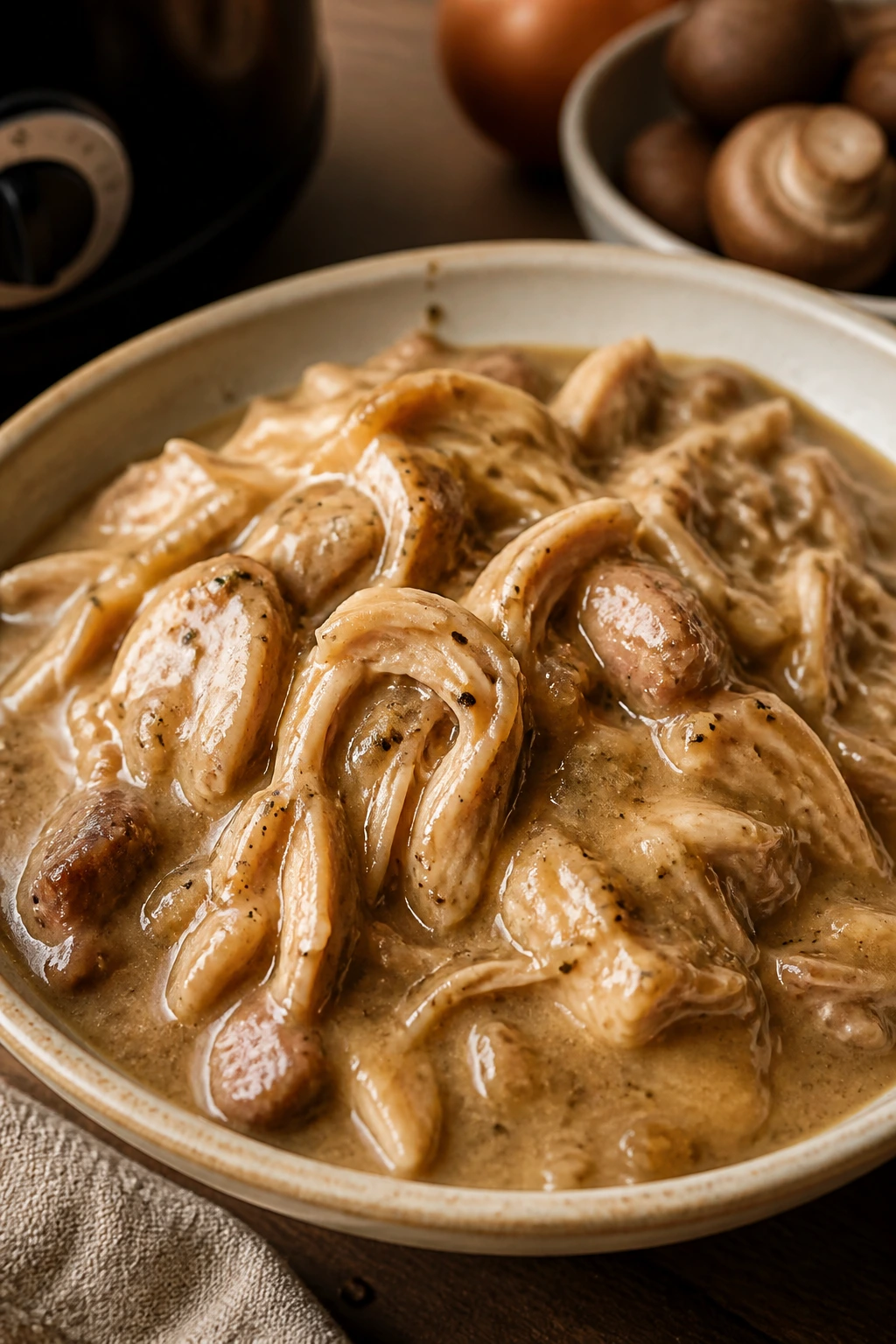
Sometimes dinner needs to make itself while you answer the door, help with homework, or stare at a sink full of dishes. That is where the slow cooker version earns its keep. The chicken comes out tender enough to shred with a spoon, and the gravy gets its body at the end, not from guesswork.
This recipe is built for low effort and decent patience. The flavor is still deep, but the work happens in the background.
Why It Works:
Chicken thighs stay moist through a long, gentle cook, which is the real reason this recipe behaves so well. Onion, mushrooms, garlic, broth, and Worcestershire slowly collapse into a savory base, and the cornstarch slurry at the end gives the sauce the thickness the slow cooker never provides on its own. Stir in the cream only after the heat drops a little; that keeps the gravy smooth.
Key Ingredients:
- 2 1/2 lbs boneless, skinless chicken thighs
- 1 large yellow onion, thinly sliced
- 8 oz cremini mushrooms, sliced
- 3 cloves garlic, minced
- 2 cups low-sodium chicken broth
- 1 tablespoon Worcestershire sauce
- 1 teaspoon dried thyme
- 1 teaspoon paprika
- 1 teaspoon kosher salt
- 1/2 teaspoon black pepper
- 1 tablespoon neutral oil, optional for searing
- 3 tablespoons cornstarch
- 3 tablespoons cold water
- 1/2 cup sour cream or heavy cream
- 2 tablespoons chopped parsley
Quick Steps:
- If you have 10 extra minutes, sear the chicken in a skillet with the oil to add color. If not, skip it and move on.
- Place the onion and mushrooms in the slow cooker. Set the chicken on top, then add the garlic, broth, Worcestershire, thyme, paprika, salt, and pepper.
- Cover and cook on low for 5 to 6 hours or on high for 3 to 4 hours, until the chicken is tender and the onions are soft.
- Remove the chicken to a plate. Whisk the cornstarch and cold water together, then stir the slurry into the slow cooker liquid.
- Cook on high for 10 to 15 minutes, until the gravy looks glossy and thick. Stir in the sour cream or cream, return the chicken, and finish with parsley.
Tips and Variations:
- Cream Timing: Add dairy at the end, not the beginning, or the sauce can turn grainy.
- Best Use: Serve this over mashed potatoes or buttered noodles; both catch the gravy well.
- Storage Tip: The gravy thickens in the fridge, so loosen leftovers with a splash of broth.
8. Skillet Smothered Chicken and Biscuits
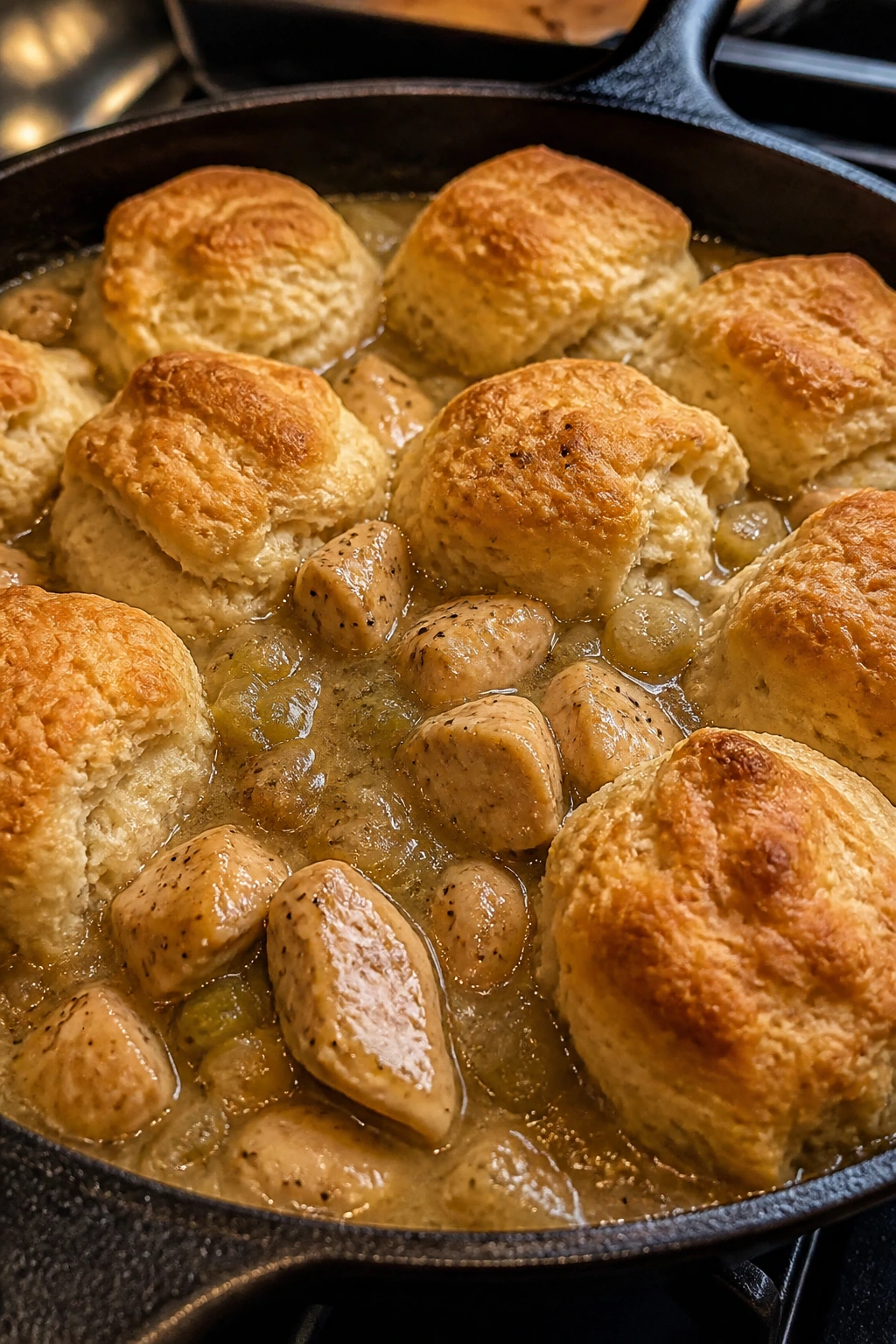
Skillet chicken and biscuits is pure comfort with a roof on top. The filling bubbles underneath, the biscuits brown above it, and the whole thing smells like butter, chicken stock, and pepper the minute it comes out of the oven. It is not subtle.
The appeal here is obvious, but I still think it deserves respect. It turns a chicken dinner into something you can scoop, not just slice.
Why It Works:
The filling behaves like a quick chicken pot pie base without the pastry drama. Carrots, onion, garlic, and thyme build a savory sauce, while the biscuits bake on top and pick up steam from below, which keeps the bottoms soft and the tops browned. Using bite-size chicken pieces speeds up the cooking and makes the whole dish easier for kids to eat.
Key Ingredients:
- 1 1/2 lbs boneless, skinless chicken thighs, cut into 1-inch pieces
- 1 1/2 teaspoons kosher salt
- 1/2 teaspoon black pepper
- 1 tablespoon olive oil
- 1 onion, diced
- 2 carrots, diced
- 2 cloves garlic, minced
- 3 tablespoons unsalted butter
- 3 tablespoons all-purpose flour
- 2 cups low-sodium chicken broth
- 1 cup whole milk
- 1 cup frozen peas
- 1 teaspoon dried thyme
- 1 can refrigerated biscuits, 8-count
- 1 cup shredded cheddar, optional
- 2 tablespoons chopped parsley
Quick Steps:
- Season the chicken with salt and pepper.
- Heat the oil in a large oven-safe skillet over medium-high heat. Cook the chicken for 4 to 5 minutes, stirring once or twice, until the outside is no longer pink. Remove it.
- Add the onion and carrots to the skillet and cook for 5 minutes. Stir in the garlic, then the butter and flour, and cook for 1 minute.
- Whisk in the broth, milk, and thyme. Let the sauce simmer until it thickens enough to coat a spoon, then stir in the chicken and peas.
- Arrange the biscuits on top of the filling. Sprinkle cheddar over them if you want a richer finish.
- Bake at 400°F for 15 to 20 minutes, until the biscuits are golden and the filling bubbles at the edges. Rest for 5 minutes, then finish with parsley.
Tips and Variations:
- Biscuits: Cut large biscuits in half if they are crowding the pan.
- Short Cut: Leftover rotisserie chicken works here if you stir it into the sauce just before baking.
- Flavor Boost: A small pinch of sage gives the filling more pot-pie depth.
9. Tomato Basil Smothered Chicken with Mozzarella
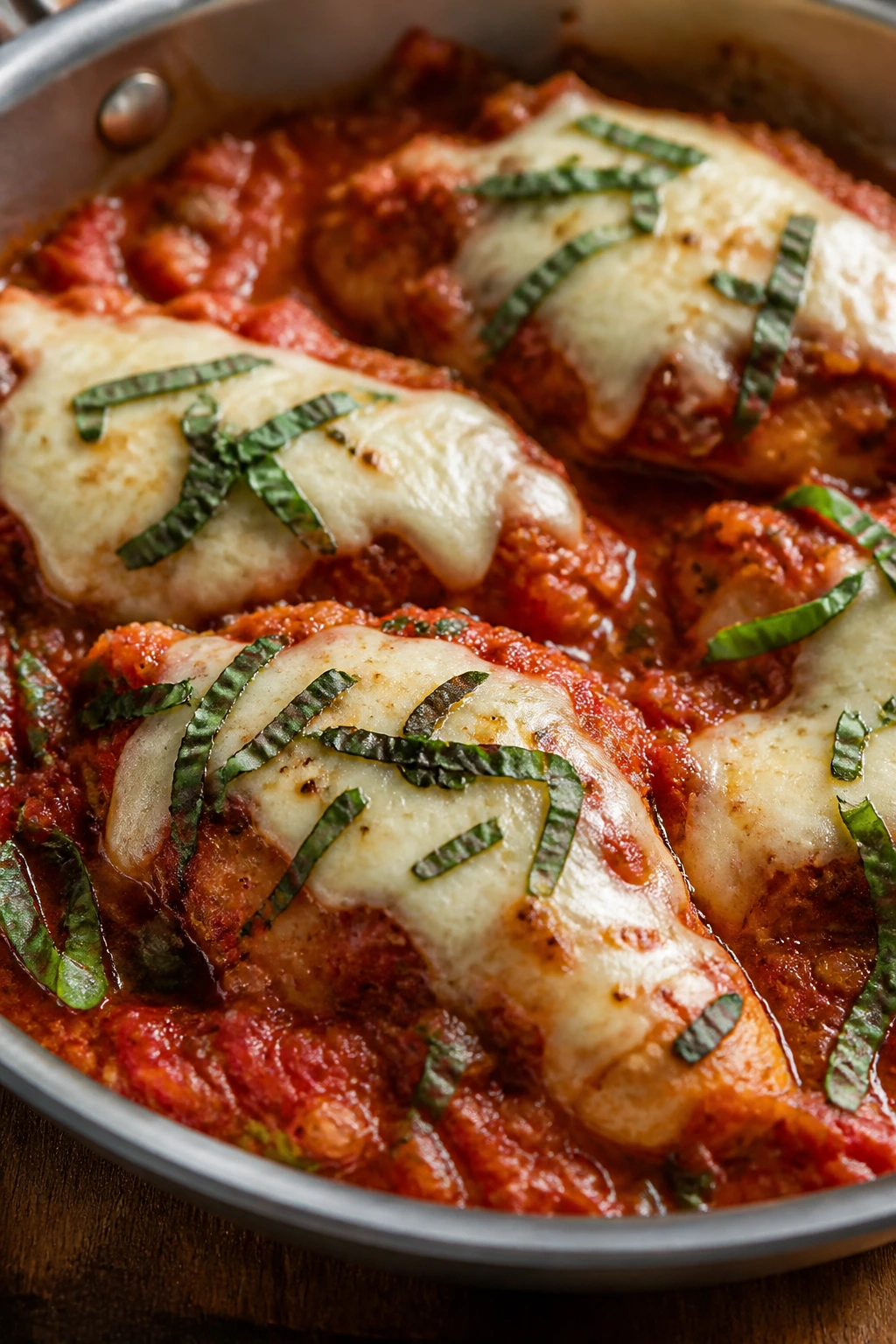
This one leans Italian-American, not heavy restaurant red sauce. Crushed tomatoes cook down with garlic and basil until the sauce clings to the chicken, and the mozzarella melts into pale, stretchy patches that make the whole skillet feel a little more festive. It is bright and comforting at the same time.
I like this recipe on nights when everyone wants something saucy, but nobody wants a casserole that sits like a brick. Tomato-based smothered chicken gets dinner on the table with a lighter feel than cream or gravy.
Why It Works:
Tomato paste deepens the sauce fast, while crushed tomatoes give you enough body without needing a long simmer. Basil adds freshness at the end, which keeps the dish from tasting cooked-flat. Mozzarella melts into a soft lid that locks in moisture, and a quick broil gives you those browned spots that make the top more interesting.
Key Ingredients:
- 1 1/2 lbs boneless, skinless chicken breasts or thighs
- 1 teaspoon kosher salt
- 1/2 teaspoon black pepper
- 1 teaspoon Italian seasoning
- 2 tablespoons olive oil
- 1 medium yellow onion, chopped
- 4 cloves garlic, minced
- 2 tablespoons tomato paste
- 1 can (28 oz) crushed tomatoes
- 1/2 cup low-sodium chicken broth
- 1 teaspoon sugar
- 1 teaspoon dried oregano
- 1/4 cup chopped fresh basil, plus more for serving
- 1 cup shredded low-moisture mozzarella
- 2 tablespoons grated Parmesan
Quick Steps:
- Season the chicken with salt, pepper, and Italian seasoning.
- Heat the olive oil in a skillet over medium-high heat. Sear the chicken for 3 to 4 minutes per side, then move it to a plate.
- Add the onion to the pan and cook for 4 to 5 minutes. Stir in the garlic and tomato paste, then cook for 1 minute.
- Add the crushed tomatoes, broth, sugar, and oregano. Simmer for 8 to 10 minutes until the sauce thickens slightly.
- Return the chicken to the skillet and spoon sauce over the top. Simmer for 8 to 10 minutes more, until the chicken reaches 165°F.
- Sprinkle with mozzarella and Parmesan, then broil for 2 to 3 minutes until the cheese melts and picks up golden spots. Finish with basil.
Tips and Variations:
- Sauce Balance: A pinch of sugar keeps the tomatoes from tasting sharp.
- Cheese Pick: Low-moisture mozzarella melts cleaner than fresh mozzarella here.
- Serving Idea: Garlic bread is not optional in my house with this one.
10. Tex-Mex Smothered Chicken Enchilada Skillet
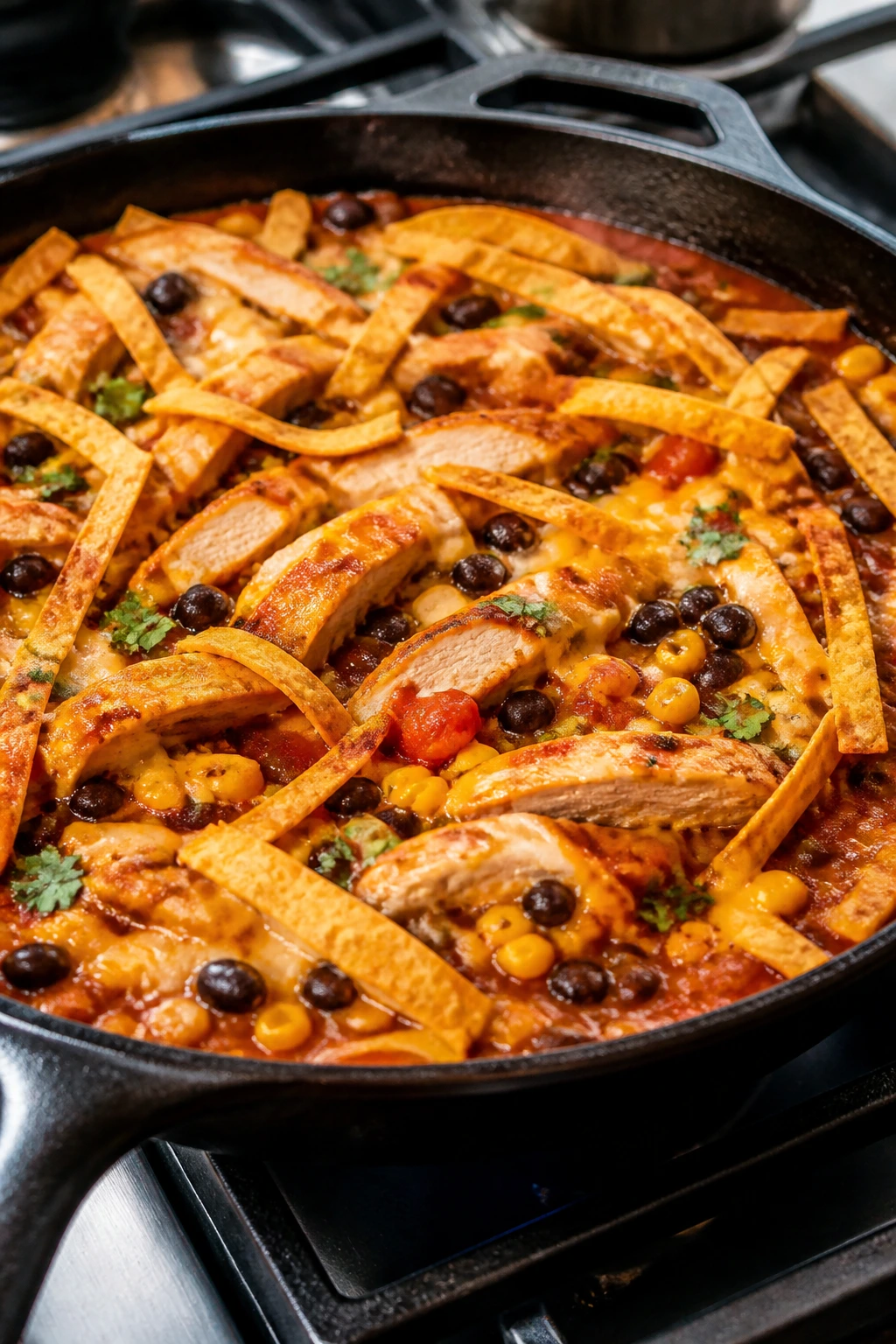
If enchiladas sound good but rolling tortillas sounds like a task you would rather avoid, this skillet is the answer. You get the same chile-kissed chicken, beans, corn, tortilla strips, and cheese, only stacked in one pan instead of tucked into neat little bundles. It is the shortcut that still feels like dinner.
This recipe is probably the loudest on the table, and I mean that as praise. It is the kind of skillet that brings people to the kitchen before you call them.
Why It Works:
Red enchilada sauce and salsa give the chicken a fast, layered flavor without needing a long simmer. Black beans and corn stretch the filling so the meal feeds more people, and the tortilla strips soak up the sauce while still holding enough shape to make the casserole feel substantial. Cheese on top seals everything together and gives you those browned, bubbly edges people always go after first.
Key Ingredients:
- 1 1/2 lbs boneless, skinless chicken breasts or thighs, cut into strips
- 1 tablespoon vegetable oil
- 1 small yellow onion, sliced
- 2 teaspoons chili powder
- 1 teaspoon ground cumin
- 1 teaspoon smoked paprika
- 1/2 teaspoon garlic powder
- 1/2 teaspoon kosher salt
- 1/4 teaspoon black pepper
- 2 cups red enchilada sauce
- 1 cup chunky salsa
- 1 can (15 oz) black beans, drained and rinsed
- 1 cup frozen corn
- 8 small corn tortillas, cut into strips
- 2 cups shredded Monterey Jack or cheddar
- 2 tablespoons chopped cilantro
- Sour cream and lime wedges, for serving
Quick Steps:
- Heat the oil in a large oven-safe skillet over medium-high heat. Add the onion and chicken, then season with chili powder, cumin, smoked paprika, garlic powder, salt, and pepper. Cook for 5 to 6 minutes until the chicken is mostly cooked through.
- Stir in the enchilada sauce, salsa, black beans, and corn. Simmer for 3 minutes.
- Fold in most of the tortilla strips, saving a handful for the top.
- Sprinkle the cheese over the skillet, then scatter the remaining tortilla strips on top.
- Bake at 425°F for 10 to 12 minutes, until the cheese melts and the edges bubble. Rest for 5 minutes, then finish with cilantro and serve with sour cream and lime.
Tips and Variations:
- Kid-Mild: Use mild enchilada sauce and skip extra hot toppings at the table.
- Crunch Factor: Keep a few tortilla strips on top so the finish is not too soft.
- Bright Finish: A squeeze of lime right before serving wakes the whole skillet up.
Why the Smothered Method Turns Chicken Into Dinner
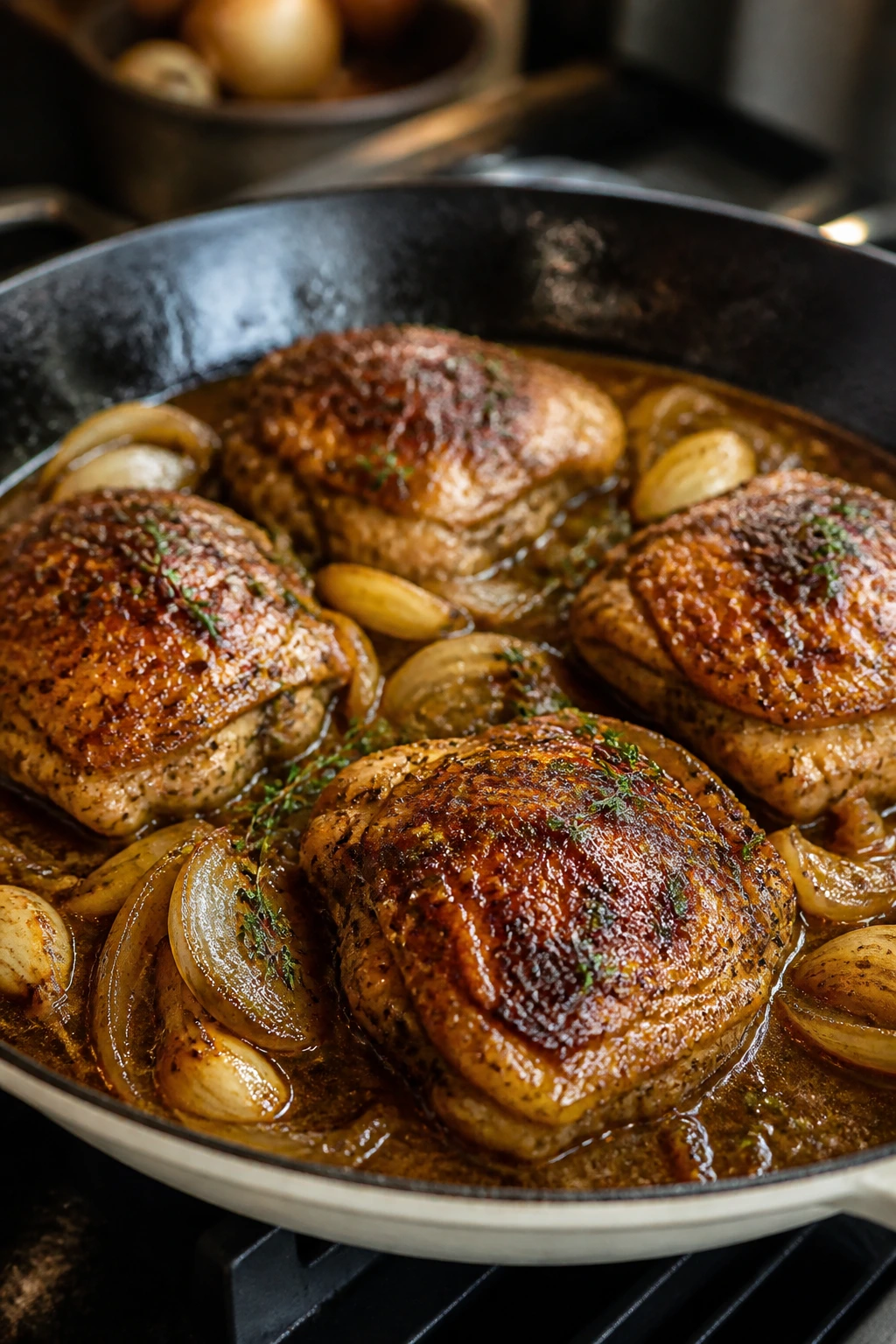
Smothered chicken works because it solves the part of dinner that plain chicken leaves hanging. Sauce brings moisture, of course, but it also carries seasoning into every bite, which means you do not need a complicated side dish to make the plate feel complete. That is a big deal on nights when the table needs to happen fast.
The best versions start with a browned base. Onion, mushroom, tomato paste, or Cajun vegetables all create that dark, flavorful layer in the pan, and the chicken gets a better finish because of it. Skip the browning step and you lose the depth that makes smothered chicken worth making in the first place.
Thighs show up so often because they forgive a longer simmer. Breasts can still work, but they need more care and a shorter finish so they do not dry out. That is not a flaw in breasts; it is just the difference between a cut that likes to be babied and one that does not need much babysitting.
What to Have on the Counter Before You Start
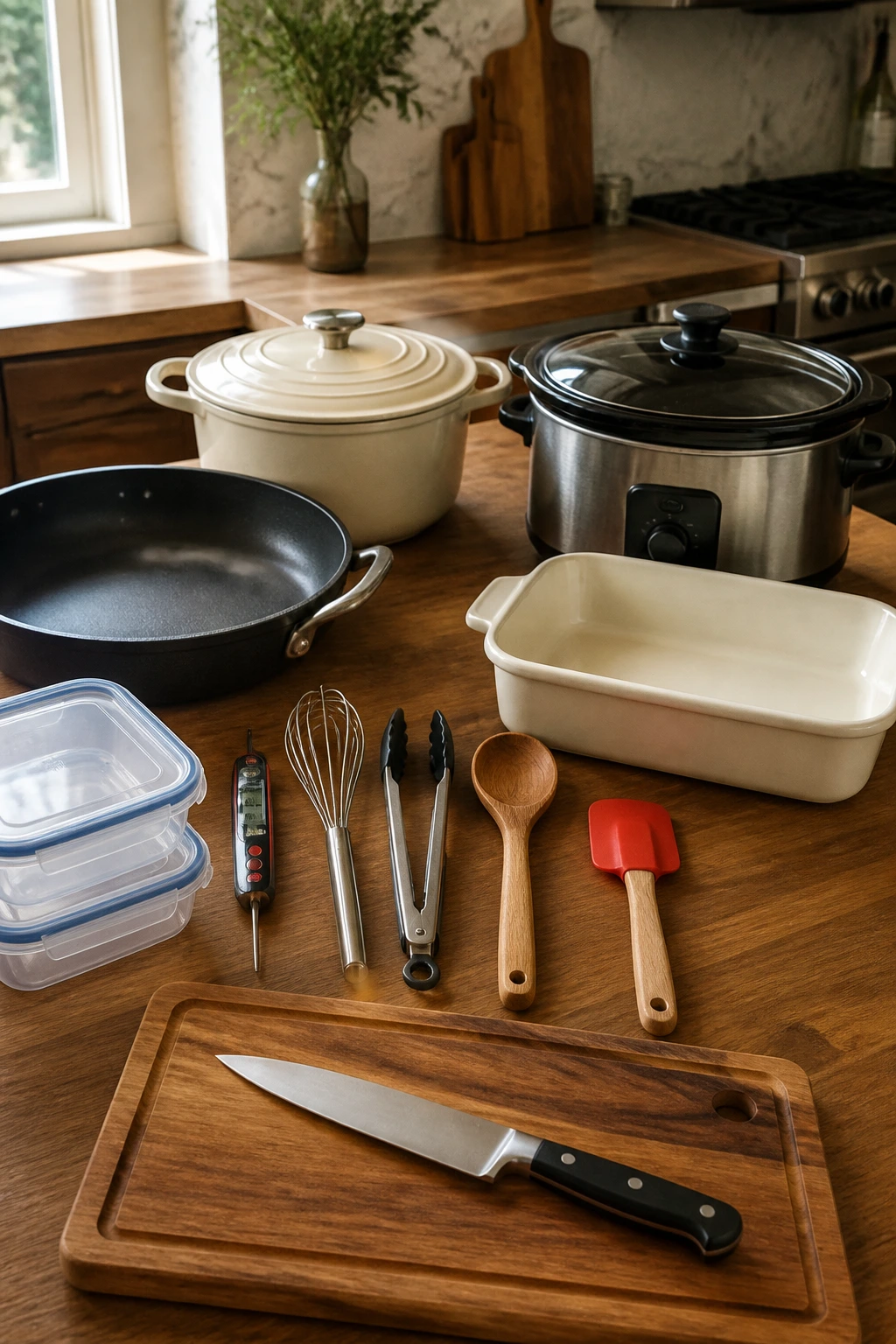
- Large skillet, 12-inch, preferably oven-safe: This is the workhorse for most of the recipes, especially the ones that go from stovetop to oven.
- Dutch oven: Best for onion gravy, Cajun chicken, and any dish that needs room for a long simmer.
- Slow cooker, 6-quart: Essential for the set-it-and-forget-it version, and big enough for a full family batch.
- Instant-read thermometer: The fastest way to stop at 165°F instead of guessing.
- Whisk: Non-negotiable for gravy and cream sauces; it keeps flour from clumping.
- Tongs: Easier than a fork for moving chicken without tearing the coating or skin.
- Wooden spoon or silicone spatula: Good for scraping up browned bits and stirring without scratching the pan.
- 9×13-inch baking dish or casserole pan: Useful for the rice casserole, biscuit bake, and any skillet that is not oven-safe.
- Sharp knife and cutting board: Onions, peppers, mushrooms, and chicken all cook better when cut evenly.
- Airtight containers: Leftovers stay better in shallow containers than in one deep bowl.
How to Buy Chicken, Broth, and the Rest Without Guessing
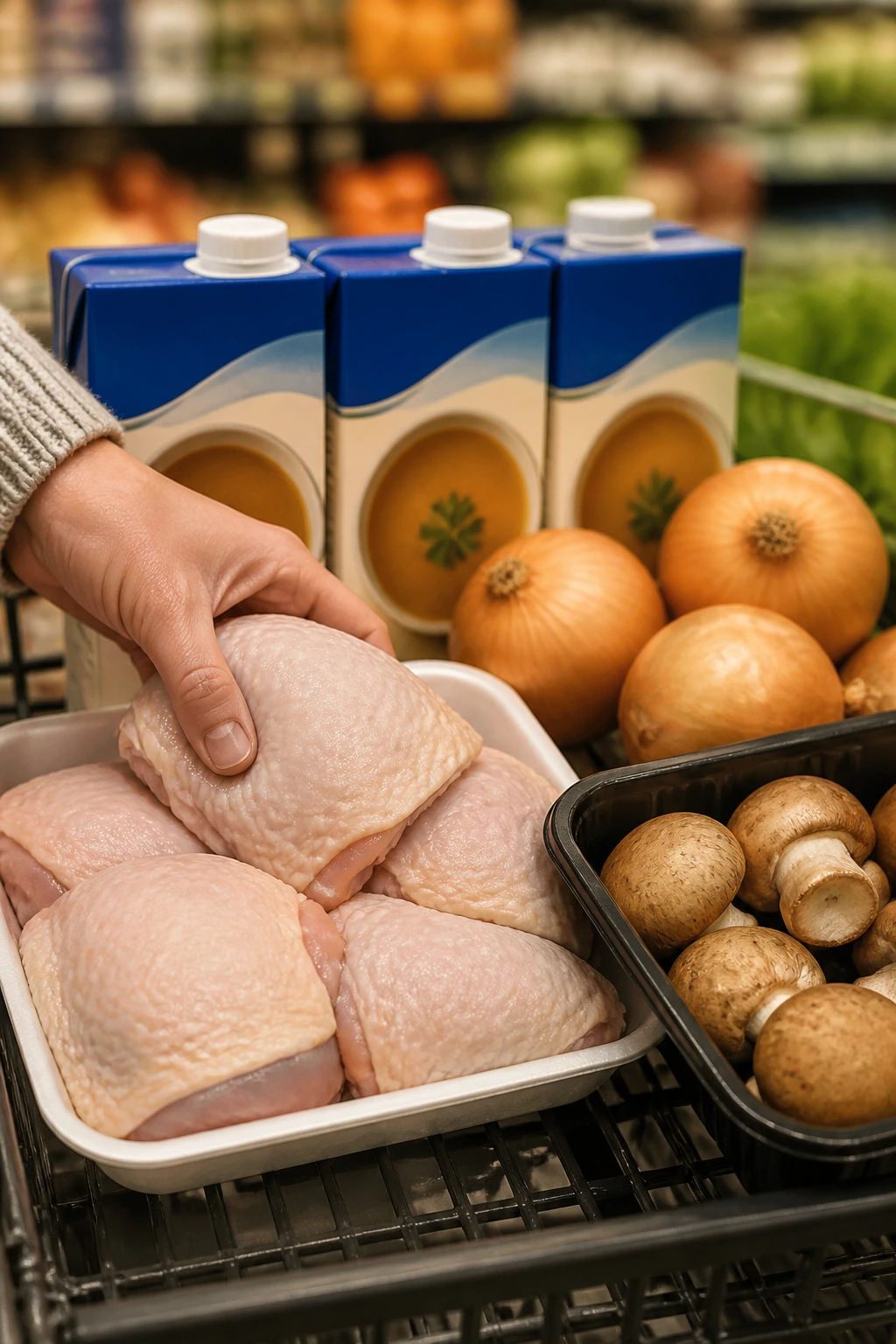
Chicken thighs are the safest bet if you want a forgiving dinner. They stay juicy through simmering, they reheat well, and they do not punish you for letting the sauce bubble a few minutes too long. If you buy breasts, look for thicker pieces and pound them to even thickness so the ends do not dry out before the center is done.
Broth matters more than people admit. Low-sodium broth gives you room to season the gravy without ending up in salty territory, and it reduces more cleanly than the fully salted versions. If you are using store-bought stock, taste it before it goes into the pan. Bland stock makes bland sauce, and no amount of parsley can fix that.
For vegetables, choose onions that feel heavy for their size and have firm, dry skins. Yellow onions are the best all-purpose choice here because they turn sweet when cooked and work in gravy, tomato sauce, and cream sauce alike. Mushrooms should be dry, not slick, and cremini usually give a deeper flavor than plain white mushrooms. If a recipe uses potatoes, baby potatoes are easier than big ones because they keep their shape and cook at the same pace as the chicken.
Cream and cheese deserve the same practical approach. Half-and-half gives you a middle ground when you want richness without a very heavy sauce, while heavy cream is the better pick for mushroom or Parmesan sauces that need to stay silky. For mozzarella, low-moisture shredded cheese melts cleaner than fresh slices, which can release water and soften the sauce too much. Corn tortillas hold up better than flour tortillas in saucy skillet bakes, especially when the dish sits for a few minutes before serving.
The Best Way to Put These on the Table
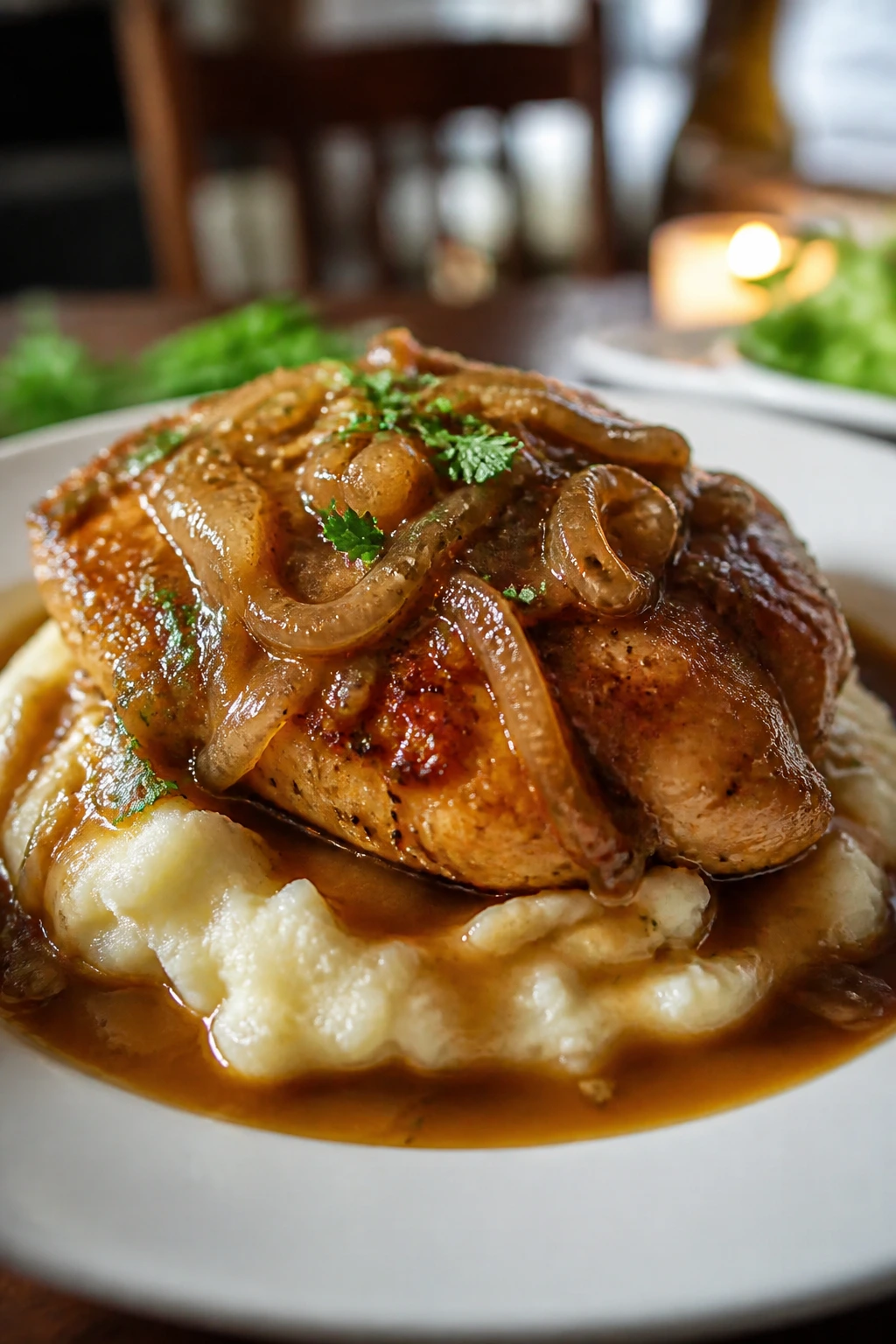
Presentation: Spoon the chicken over the starch instead of beside it. Let onion gravy run into mashed potatoes, spoon mushroom sauce over egg noodles, and pile tomato or enchilada versions into the center of the plate so the edges catch the sauce.
Accompaniments: Mashed potatoes, buttered rice, egg noodles, roasted green beans, steamed broccoli, cornbread, biscuits, or a simple salad all work across this group. If the main dish is already rich, lean on something crisp or green to balance it.
Portions: Most of these recipes serve 4 to 6 people in a normal family-dinner setting. Plan on 1 thigh per adult or about 6 ounces of chicken if you are serving breasts, then add a generous spoonful of sauce and a solid starch underneath. If you are feeding hungrier eaters, scale the starch and vegetables up first before you start doubling chicken.
Beverage Pairing: Unsweetened iced tea, lemonade, sparkling water with lemon, or a light-bodied red like Pinot Noir all play nicely with these saucy dinners. For a nonalcoholic table, cold apple cider works especially well with the onion, mushroom, and biscuit versions.
Small Tweaks That Change the Whole Pan
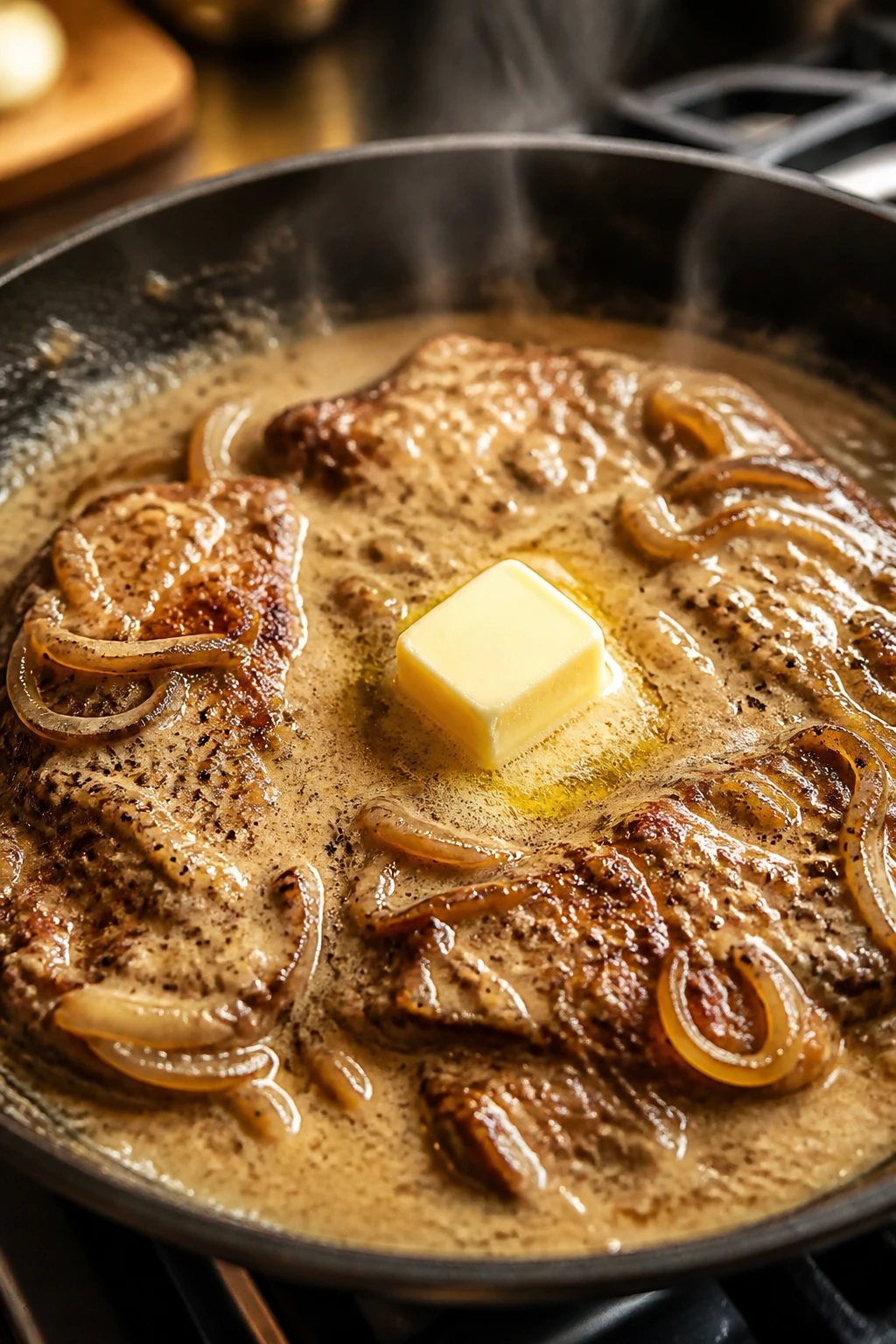
Flavor Enhancement: A small finish can change the whole skillet. A knob of cold butter stirred into gravy at the very end makes it glossier, while a splash of lemon juice or vinegar can wake up cream sauces that taste a little too soft.
Customization: Add spinach to the Parmesan skillet, peas to the biscuit bake, jalapeños to the enchilada version, or extra mushrooms to the creamy and slow-cooker recipes. If your household likes more texture, toss in toasted breadcrumbs over the tomato and mozzarella chicken right before serving.
Serving Suggestions: Fresh parsley works almost everywhere, but basil belongs with the tomato skillet and green onions fit the Cajun pan best. A spoonful of sour cream, a shake of hot sauce, or a handful of chopped cilantro can make the Tex-Mex version feel brighter without adding much work.
Make-It-Yours: For gluten-free cooking, use cornstarch or a 1:1 gluten-free flour blend to thicken sauces. For dairy-free meals, use unsweetened oat milk or a plain dairy-free cream alternative in the gravy-style dishes, though the texture will be a little different. Lower-sodium versions are easy too — start with unsalted broth and season in layers instead of dumping salt in at the beginning.
Keeping Leftovers Tender and Saucy
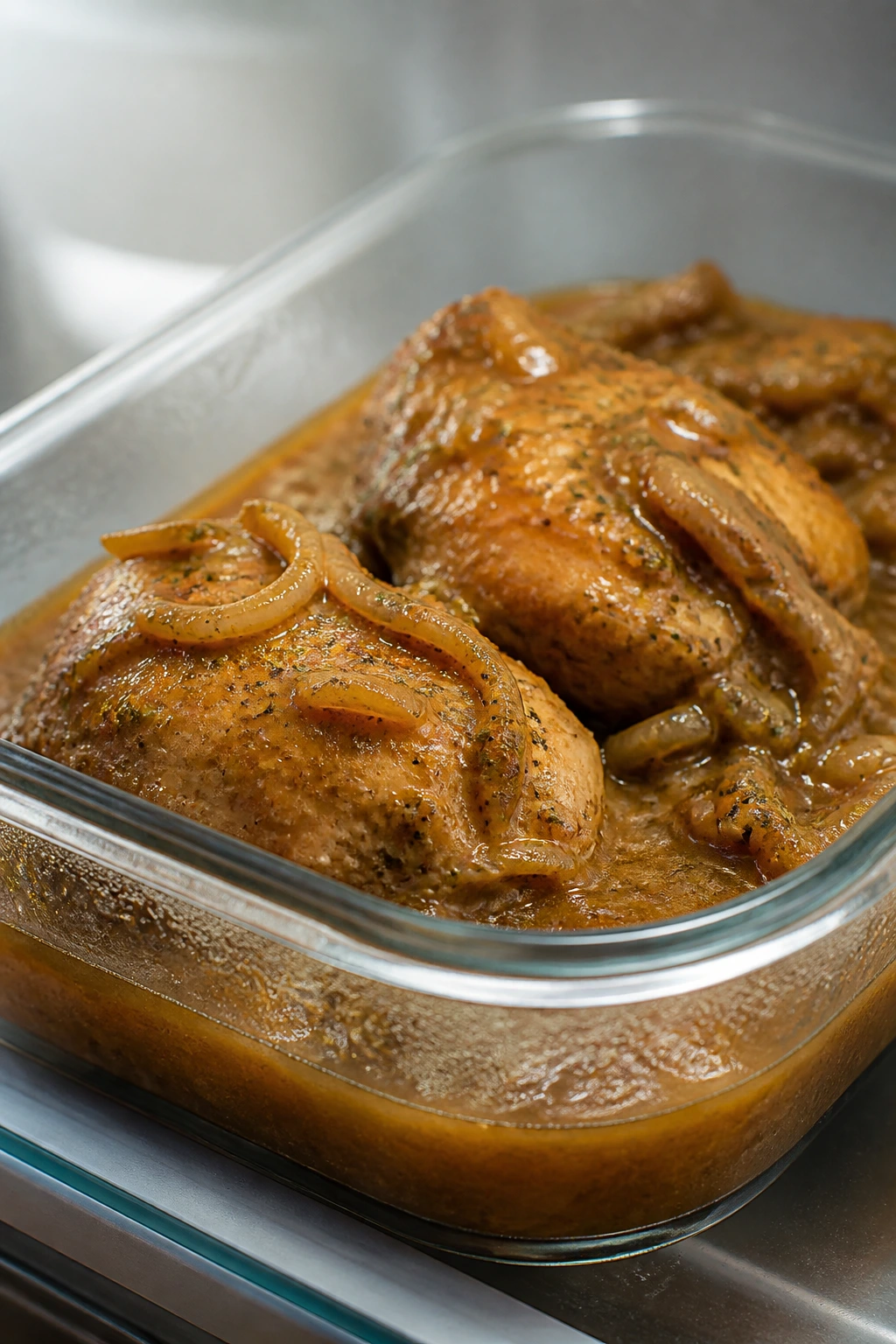
Smothered chicken keeps well, but the sauce asks for a little respect. Cool leftovers within about 2 hours, then pack them in shallow containers so the chicken and gravy chill quickly. In the fridge, most of these dishes hold for 3 to 4 days; rice casseroles and cream-based versions are best used closer to the 3-day mark.
Freezing works well for the gravy, tomato, Cajun, and enchilada versions. The creamier dishes can still freeze, but the sauce may separate a little after thawing. If that bothers you, freeze the chicken and sauce before adding the cream or cheese, then stir those in after reheating. Most of these recipes keep for up to 2 to 3 months in the freezer when tightly sealed.
Reheating depends on the style. Skillet sauces do best in a covered pan over low heat with a splash of broth, milk, or water to loosen them. Oven casseroles reheat at 325°F, covered with foil, for about 20 to 25 minutes, until hot in the center. Slow-cooker leftovers can be warmed on low, but a saucepan is faster and gives you better control. Microwaving works too; use 50% power and stop once or twice to stir the sauce so the chicken does not dry out on the edges. If the gravy thickens too much in the fridge, a spoonful of broth fixes it fast.
Ways to Bend These Recipes to Your Crowd
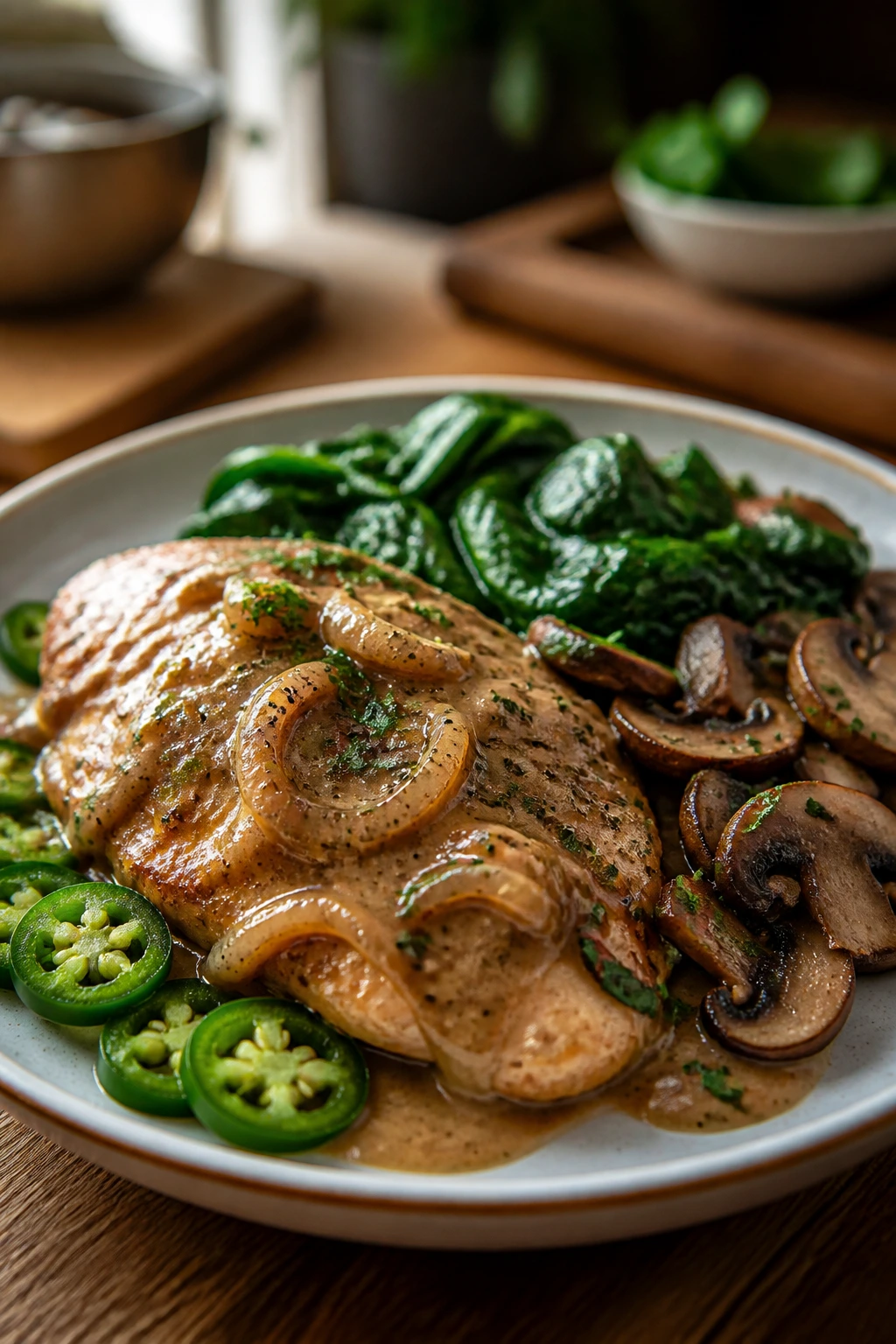
Gluten-Free Gravy Grab: Swap the flour in the gravy recipes for cornstarch mixed with cold water or a good 1:1 gluten-free flour blend. Cornstarch gives a shinier sauce, while the flour blend keeps a more classic gravy feel.
Dairy-Light Skillet: Use evaporated milk, oat milk, or a plain unsweetened dairy-free cream alternative in the cream-based recipes. The sauce will be a little thinner, so let it reduce a minute or two longer at the end.
Low-Sodium Family Pot: Start with low-sodium broth, cut back the salt by a third, and build flavor with onions, garlic, herbs, and a little Worcestershire or Dijon. Salt can always go in later, but a sauce that starts too salty is hard to rescue.
Vegetable-Heavy Comfort: Add mushrooms, spinach, peas, carrots, or bell peppers where they make sense. The mushroom, biscuit, rice, and Parmesan recipes can all take a little more vegetable weight without losing their identity.
Mild-To-Zippy Switch: Keep the base seasoning gentle, then set hot sauce, chili flakes, or pickled jalapeños on the table for the people who want heat. That approach works better than making the whole pan spicy and hoping the kids do not notice.
Where Smothered Chicken Usually Goes Wrong
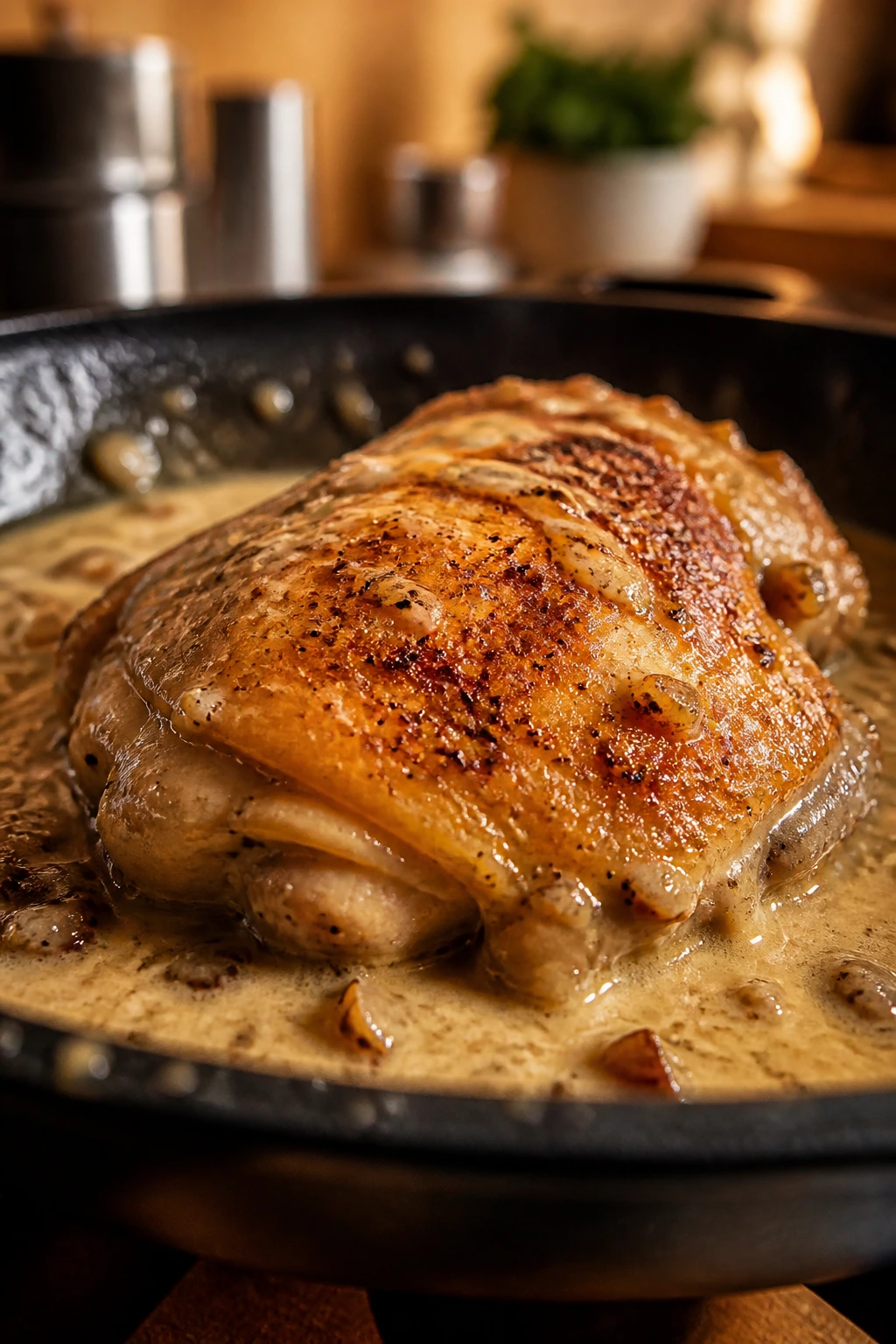
- Crowding the Pan: When the chicken is packed too tightly, it steams instead of browns. The fix is simple: cook in batches and give each piece a bit of space.
- Skipping the Browning: Pale chicken can still taste fine, but it will not have the depth that makes smothered chicken worth the effort. Brown the meat first, even if only for a few minutes per side.
- Boiling Cream Sauces Hard: Cream sauces can turn grainy or split if they boil like crazy. Keep the heat at a gentle simmer and add dairy at the end when possible.
- Cooking Breasts Like Thighs: Breasts dry out if you treat them like a long-simmer cut. Pull them earlier, or slice them thinner to shorten the cook time.
- Leaving the Gravy Too Thin: A watery sauce makes the whole dinner feel unfinished. Simmer uncovered for a few minutes, or use a small slurry of flour or cornstarch to tighten it.
- Forgetting the Rest Time: Chicken and rice dishes need a few minutes off the heat so the sauce settles and the starch finishes absorbing liquid. If you cut too soon, the plate gets soupy.
Questions Home Cooks Ask Before the First Bite

Can I use chicken breasts instead of thighs?
Yes, and several of these recipes are built for that swap. Just cut the cook time shorter, watch the internal temperature closely, and do not let the chicken sit in a simmering sauce longer than it needs.
What if my gravy is too thin?
Let it simmer uncovered for a few minutes first. If that does not do it, whisk together a teaspoon or two of cornstarch with cold water and add it slowly, then give the sauce a minute to thicken.
Can I make any of these ahead of time?
Absolutely. The onion gravy, mushroom cream, Cajun, and tomato versions all hold well when made a day ahead, and they often taste a touch deeper after the flavors settle. Reheat gently and loosen with broth if the sauce tightens up.
Which versions freeze the best?
The onion gravy, Cajun, tomato basil, and enchilada skillet all freeze well. Creamy versions still freeze, but the sauce may need a whisk and a splash of liquid after thawing.
Do I have to brown the chicken first?
No, but the flavor is better when you do. Browning gives the sauce the pan drippings that make smothered chicken taste rich instead of merely saucy.
Can I use rotisserie chicken?
Yes, especially in the biscuit bake, enchilada skillet, or a quick cream sauce. Add the cooked chicken near the end, just long enough to warm it through, so it does not dry out.
What should I serve if I only want one side?
Rice is the most flexible, potatoes are the most filling, and biscuits are the most fun. If you want the meal to feel balanced with one side only, add a simple green salad or steamed green beans too.
How do I keep leftovers from drying out?
Store the chicken in the sauce, not separately. When reheating, add a spoonful of broth or milk and warm it slowly so the meat stays tender.
A Pan Worth Repeating
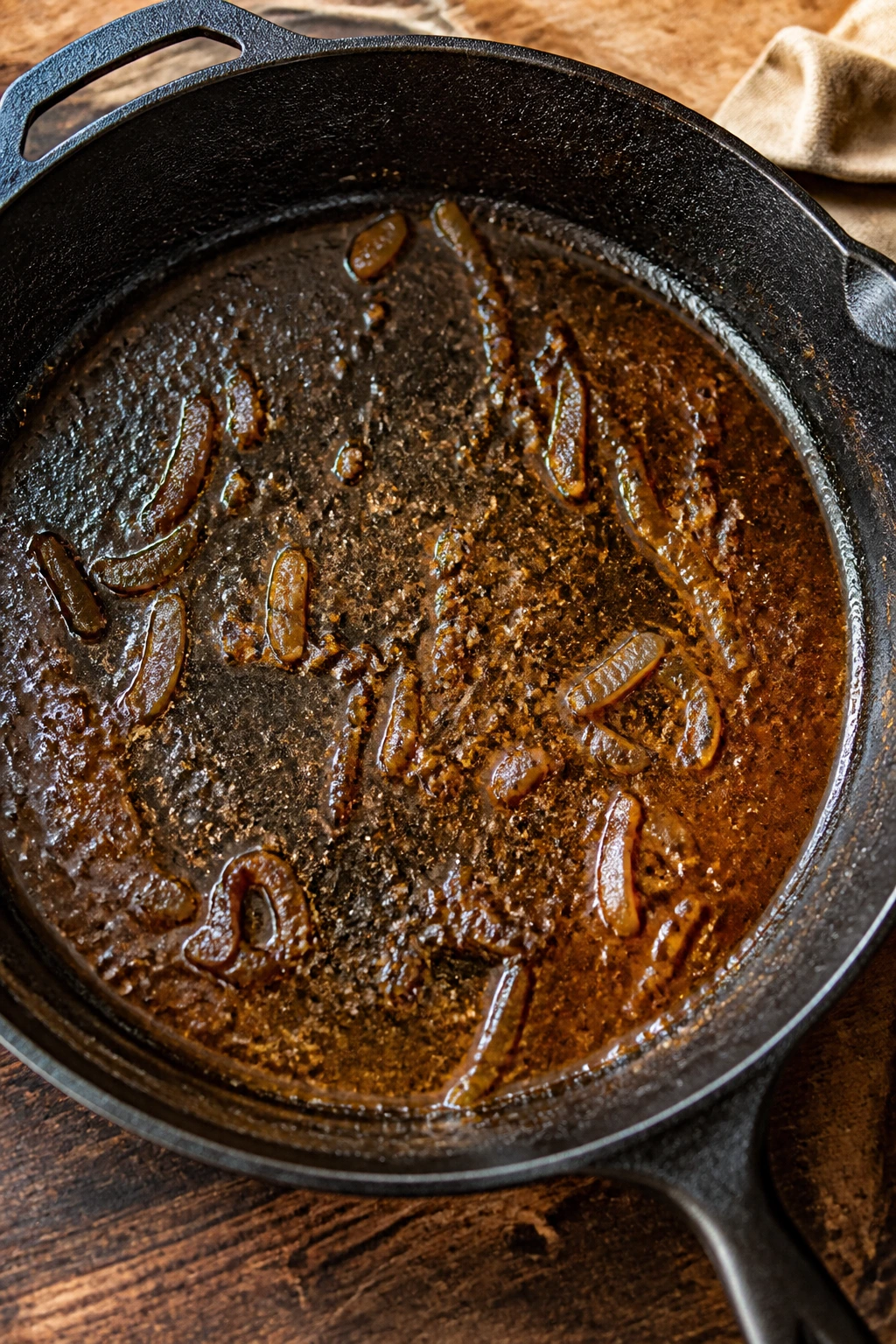
Smothered chicken is not fancy, and that is part of the charm. It turns modest ingredients into a dinner that feels generous, and it does it with sauce instead of fuss. That is a pretty smart bargain for a family meal.
If you want the best place to start, pick the onion gravy version or the slow cooker chicken and gravy. If you want something brighter, go tomato or Cajun. If you want the easiest route to a clean pan, choose the biscuit skillet and let the oven finish the job.