



Backyard BBQ dinners work best when they feel relaxed but still taste like somebody cared. That’s the sweet spot: a hot grill, a few solid ingredients, and food that comes off the grates with smoke, char, and enough juice to make the paper napkins disappear fast.
The trick is that summer cookouts can turn messy in a hurry. Too many dishes need babysitting. Too many rely on a sauce dump at the end. And too many recipes forget that people want dinner, not a science project. The best backyard BBQ dinners keep the heat where it belongs, use ingredients that hold up outdoors, and give you enough room to cook for four or fourteen without losing your mind.
There’s also a rhythm to cookout food that I never get tired of. Meat with a little crust. Vegetables with a little blister. Bread warmed just enough to smell toasty. Maybe a cool sauce on the side. Maybe not. The point is to build a meal people can eat standing up, sitting down, or halfway between the two while they’re still talking about the first bite.
Why This Cookout Menu Keeps People Happily Hovering Near the Grill
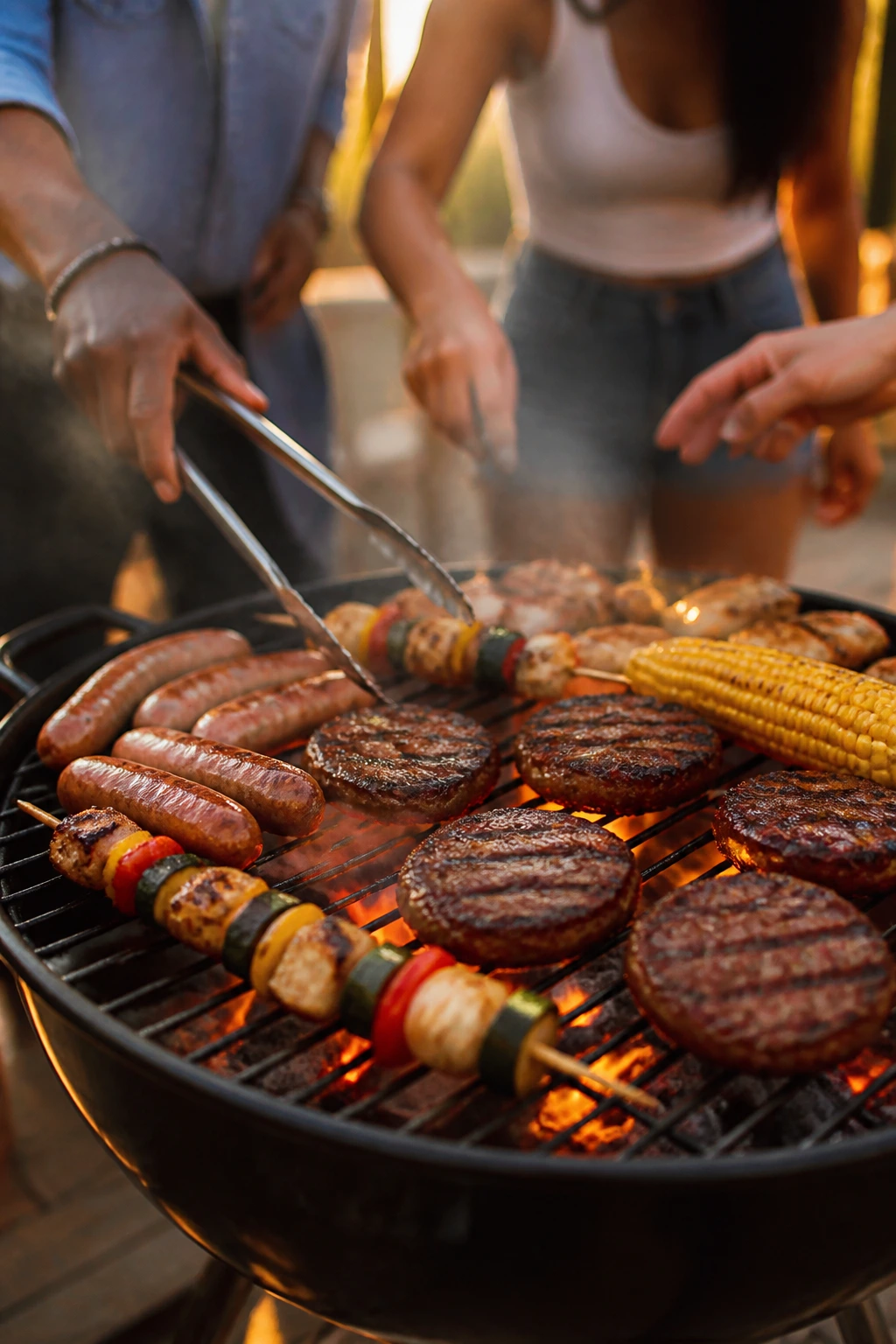
- Built for crowd flow: These backyard BBQ dinners are easy to serve in batches, so people can eat when the food is ready instead of waiting on a full plated dinner.
- Strong on grill time, light on fuss: Most of the recipes use simple marinades, rubs, or fast sauces that do their job without turning prep into a second job.
- Mixes up the protein game: Beef, chicken, pork, seafood, vegetarian options, and a few handhelds keep the menu from feeling repetitive.
- Flexible for different grills: Gas, charcoal, pellet, or a basic grill pan can handle most of these recipes with only small adjustments.
- Good leftovers, too: Several of these dinners reheat well, which is handy when the cookout runs long and nobody eats at the same pace.
- Easy to scale up: Nearly every recipe can be doubled without changing the method, which is half the battle when you’re feeding more than one table.
1. Smoky BBQ Cheeseburgers
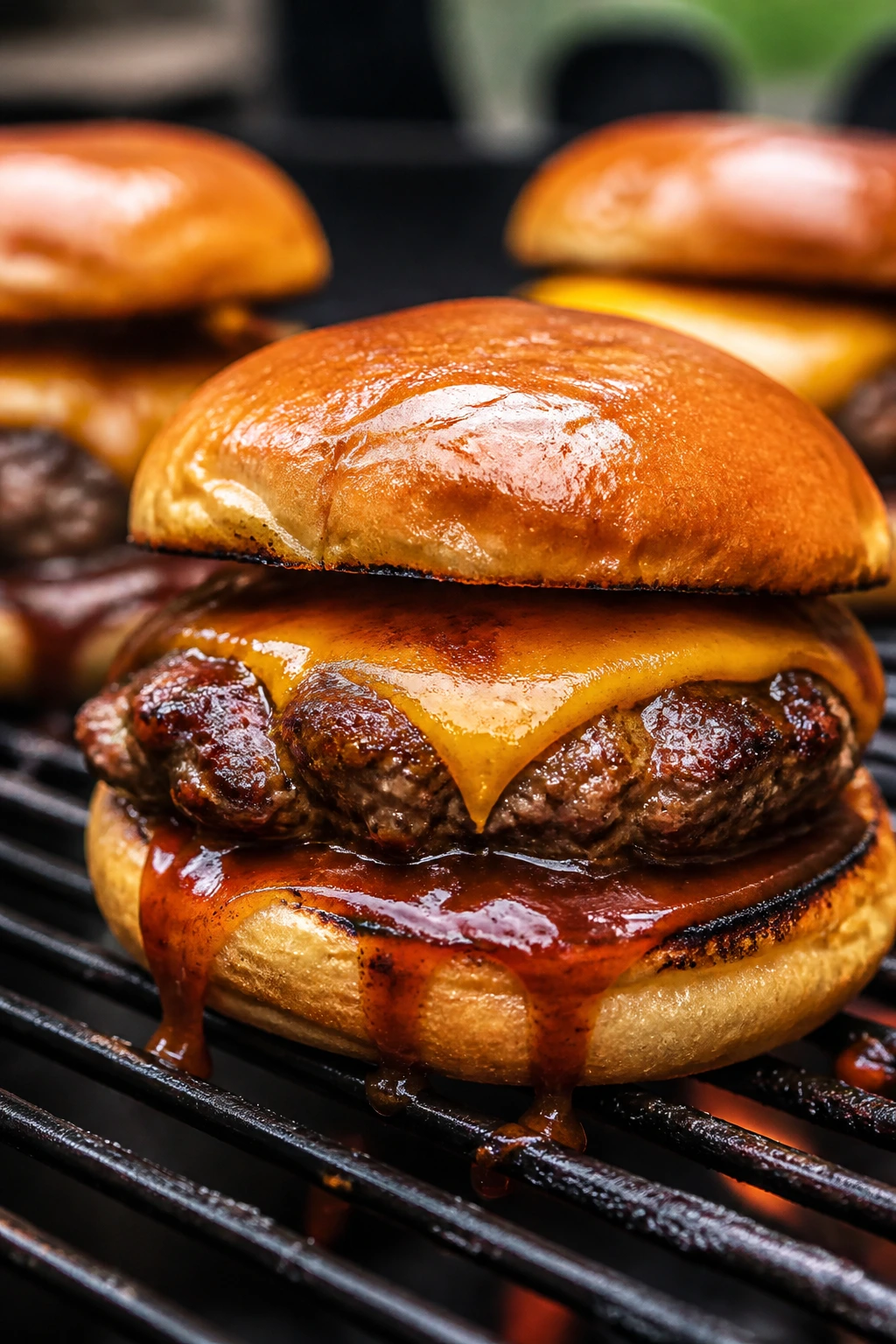
A burger only looks simple until you bite into one that’s dry, bland, and too thick for the bun. These smoky BBQ cheeseburgers fix that problem with a loose, juicy patty, melted cheddar, and a little barbecue sauce tucked into the build instead of baked into the meat. The result is messy in the right way.
Why It Works:
An 80/20 ground beef blend gives you enough fat to stay juicy over direct heat, and the smoked paprika adds a deeper grill-house flavor without making the patties taste spiced or heavy. Keeping the patties about 3/4 inch thick helps them cook fast while still picking up those good dark grill marks. A quick toast on the buns matters more than people think; it keeps the bottom from going soft the minute the sauce hits it.
Key Ingredients:
- 1 1/2 pounds ground beef, preferably 80/20
- 1 teaspoon kosher salt
- 1 teaspoon smoked paprika
- 1/2 teaspoon black pepper
- 4 slices cheddar cheese
- 4 burger buns, split
- 1/4 cup barbecue sauce
- 1 small red onion, thinly sliced
- Lettuce, tomato slices, and dill pickle chips for serving
Quick Steps:
- Preheat a grill to medium-high heat, about 400°F to 450°F, and oil the grates lightly.
- Mix the ground beef with salt, smoked paprika, and black pepper just until combined. Do not overwork it or the burgers get dense.
- Form 4 patties, make a shallow thumbprint in the center of each one, and chill them for 10 minutes if the kitchen is warm.
- Grill the patties for 3 to 4 minutes per side for medium, then add the cheese during the last minute and close the lid until it melts.
- Toast the buns cut-side down for 30 to 45 seconds, then build with barbecue sauce, lettuce, tomato, onion, pickles, and the burgers.
Tips and Variations:
- Flavor boost: Stir 1 teaspoon Worcestershire sauce into the meat if you want a deeper savory edge.
- Make-ahead move: Shape the patties up to 8 hours ahead and keep them covered in the fridge.
- Serving idea: Add quick-pickled onions if you want a sharper bite against the sweet sauce.
2. Honey-Lime Grilled Chicken Thighs
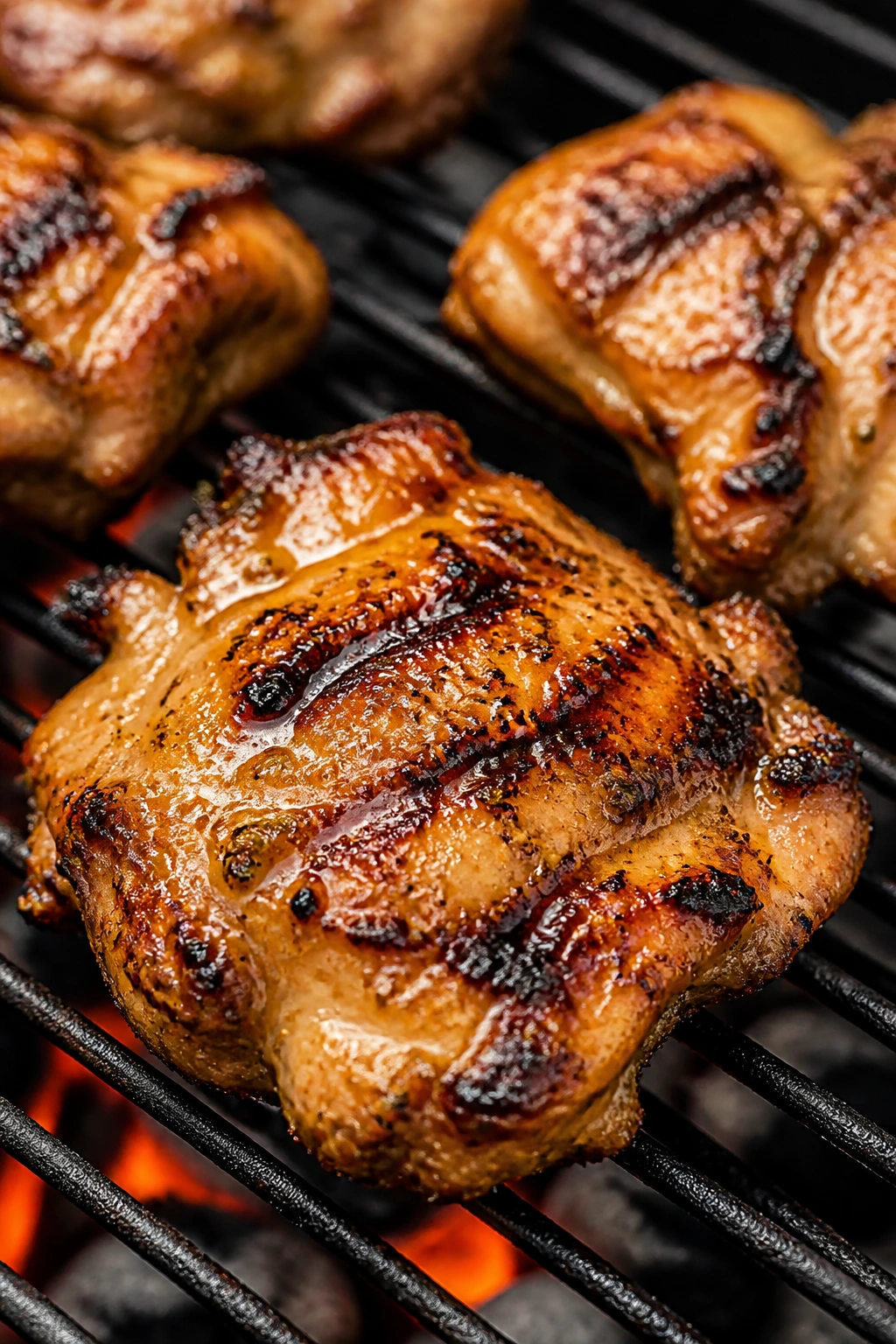
These chicken thighs are the kind of dinner that tastes like you worked harder than you did. Honey brings a sticky gloss, lime keeps everything bright, and the thighs stay tender even if the grill runs a little hotter than you planned. That margin for error is one reason I keep coming back to them.
Why It Works:
Chicken thighs have enough fat to stay juicy over direct heat, which is half the reason they’re better than breasts for cookout cooking. The honey-lime marinade gives you a sweet-sour surface that caramelizes fast, so you get char without drying the meat out. Because the thighs are boneless and skinless, they cook in a short window—usually around 5 to 6 minutes per side—so they fit into a busy grill schedule without drama.
Key Ingredients:
- 2 pounds boneless, skinless chicken thighs
- 1/4 cup honey
- 1/4 cup fresh lime juice
- 2 tablespoons olive oil
- 3 garlic cloves, minced
- 1 teaspoon chili powder
- 1 teaspoon ground cumin
- 1 1/2 teaspoons kosher salt
- 1/2 teaspoon black pepper
- 2 tablespoons chopped cilantro for finishing
Quick Steps:
- Whisk the honey, lime juice, olive oil, garlic, chili powder, cumin, salt, and pepper in a bowl.
- Add the chicken thighs and turn to coat. Marinate for at least 30 minutes and up to 8 hours in the fridge.
- Preheat the grill to medium-high and oil the grates.
- Grill the thighs for 5 to 6 minutes per side, until the outside is caramelized and the thickest part reaches 165°F.
- Let the chicken rest for 5 minutes, then finish with cilantro and a squeeze of extra lime.
Tips and Variations:
- Flavor boost: Add 1 teaspoon grated lime zest to the marinade for a sharper citrus note.
- Substitution: Boneless chicken breasts work, but pound them to even thickness so they don’t dry out.
- Serving idea: Slice the chicken over rice, in tacos, or with grilled corn and black beans.
3. Dry-Rub Baby Back Ribs
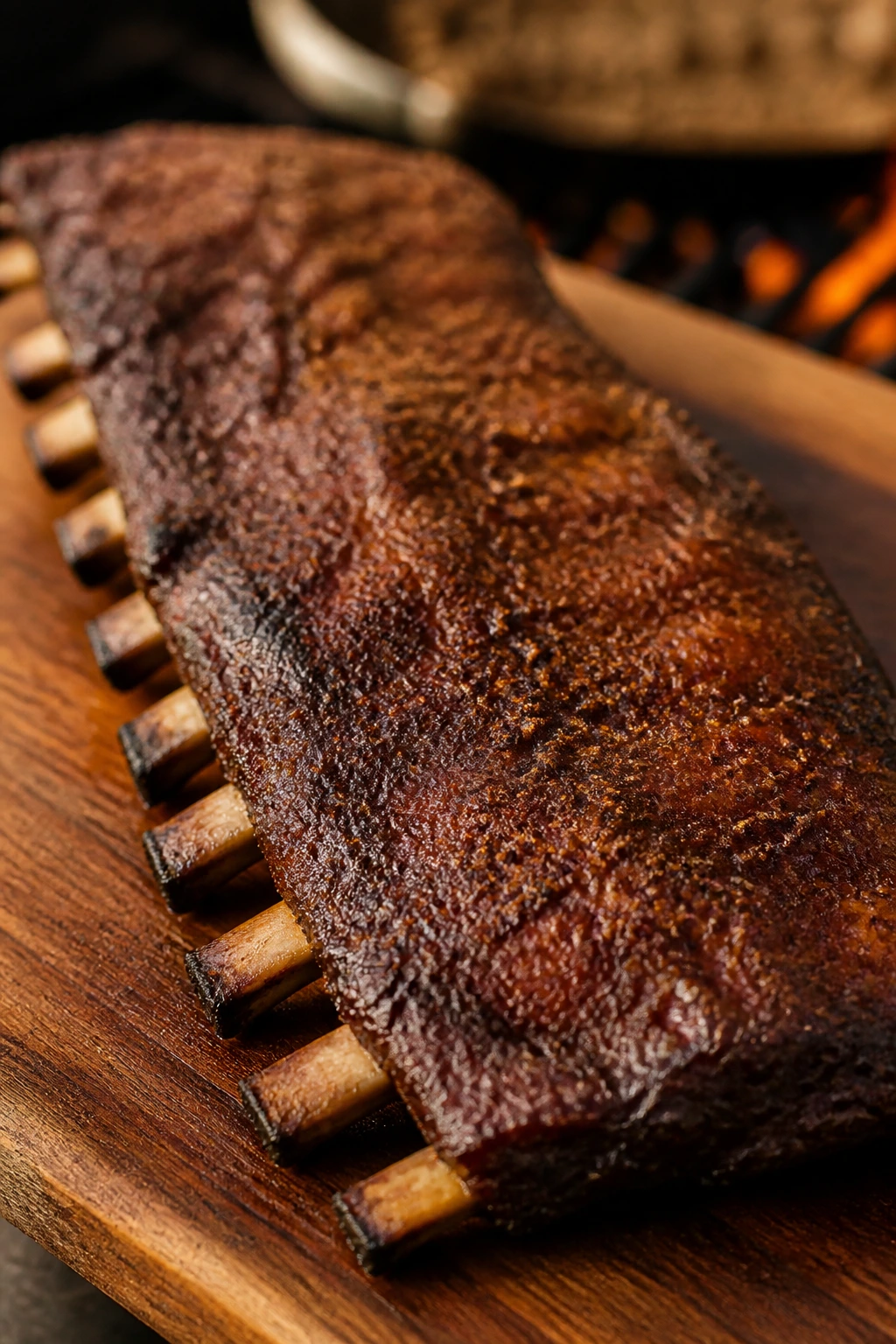
Ribs are one of those cookout dinners that make people lean in the second the lid lifts. These baby backs get a dry rub first, then a slow, patient grill session that gives you meat that pulls back from the bone without falling into mush. You want a rib with bite, not a rib that collapses when you look at it.
Why It Works:
A sugar-and-spice rub builds a dark crust before the sauce ever comes out, and that crust carries most of the flavor. Slow indirect heat is what makes ribs usable on a backyard grill; the temp stays around 275°F, the fat renders slowly, and the meat softens without scorching. A little apple juice in the foil wrap keeps the surface from drying out while the ribs steam gently from the inside.
Key Ingredients:
- 2 racks baby back ribs, about 4 to 5 pounds total
- 1/4 cup brown sugar
- 2 tablespoons paprika
- 1 tablespoon kosher salt
- 2 teaspoons garlic powder
- 2 teaspoons onion powder
- 1 teaspoon black pepper
- 1/2 teaspoon cayenne
- 1 cup apple juice
- 1 cup barbecue sauce
Quick Steps:
- Remove the thin membrane from the back of the ribs and pat them dry.
- Mix the brown sugar, paprika, salt, garlic powder, onion powder, black pepper, and cayenne. Rub it all over the ribs.
- Preheat the grill for indirect heat at 275°F, with one side off or very low.
- Grill the ribs bone-side down for 2 1/2 to 3 hours, wrapping them in foil with the apple juice for the last 45 minutes if they start to look dry.
- Unwrap, brush with barbecue sauce, and grill 10 to 15 minutes more until sticky and lacquered.
Tips and Variations:
- Smokier finish: Toss a small handful of soaked wood chips over charcoal for extra smoke.
- Make-ahead move: Rub the ribs the night before; the seasoning sinks in better.
- Serving idea: Cut between the bones and pile them on a tray with pickles and slaw.
4. Cedar-Plank Salmon with Dill Yogurt
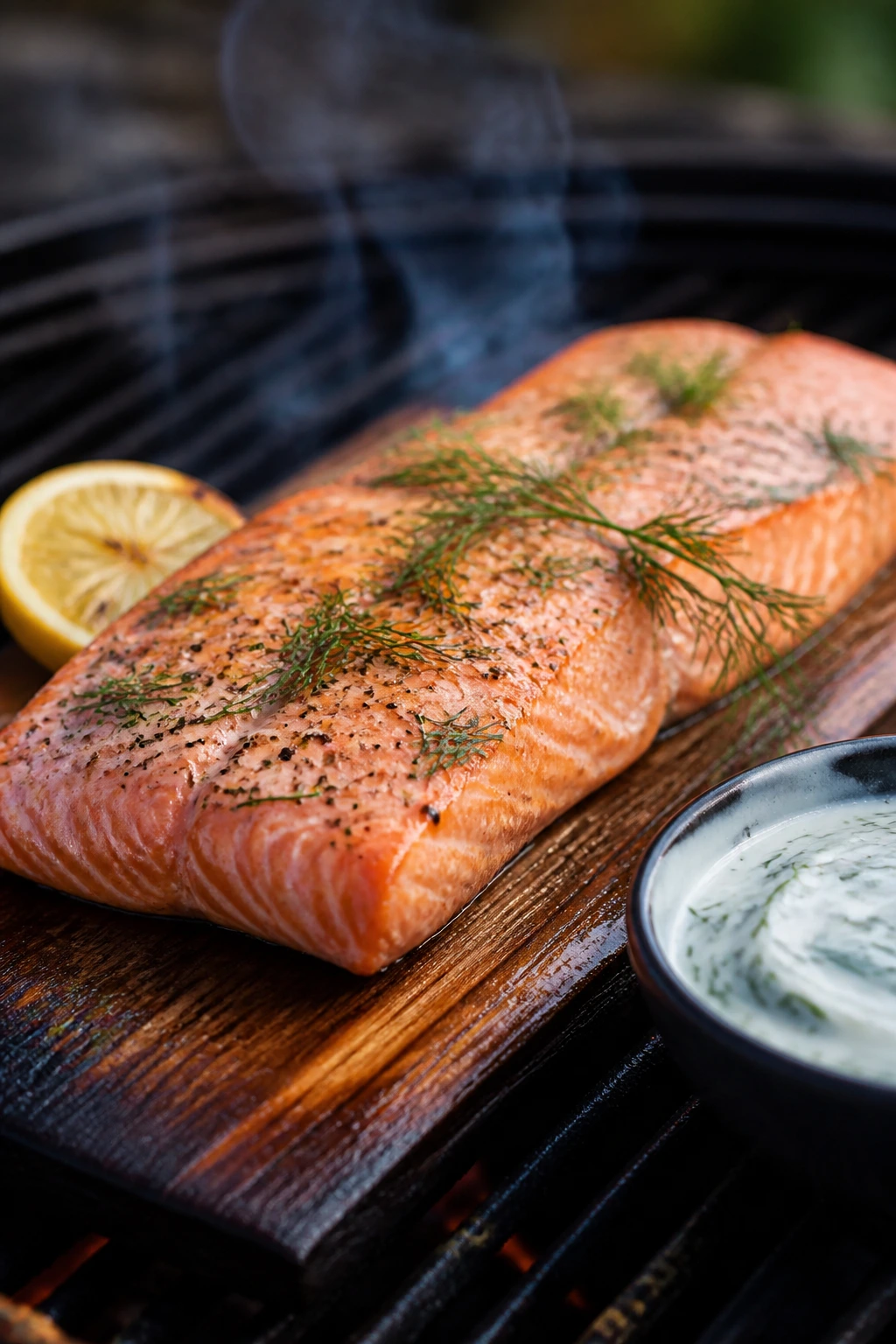
Salmon on a cedar plank smells like you’ve been planning dinner all afternoon, even if you haven’t. The fish comes off the grill tender and lightly smoky, with a clean lemon finish that keeps it from feeling heavy. I like this one because it feels a little special without acting precious.
Why It Works:
The cedar plank does more than look handsome. It helps soften the direct heat, perfumes the fish, and makes salmon easier to cook without tearing the skin or overcooking the edges. A dill yogurt sauce cools the richness and gives you a creamy, tangy bite that plays well with the char. The salmon is done when it flakes in large glossy pieces and reaches about 125°F to 130°F in the center if you want it moist.
Key Ingredients:
- 2 pounds salmon fillet, skin on
- 1 cedar plank, soaked in water for at least 1 hour
- 2 tablespoons olive oil
- 1 lemon, thinly sliced
- 1 teaspoon kosher salt
- 1/2 teaspoon black pepper
- 1 cup plain Greek yogurt
- 2 tablespoons chopped fresh dill
- 1 small garlic clove, grated
- 1 tablespoon lemon juice
Quick Steps:
- Soak the cedar plank in water for 1 hour, then drain it well.
- Stir together the yogurt, dill, garlic, and lemon juice for the sauce.
- Preheat the grill to medium heat, about 375°F to 400°F.
- Brush the salmon with olive oil, season with salt and pepper, and lay lemon slices over the top.
- Place the salmon on the plank, set the plank on the grill, and cook with the lid closed for 15 to 20 minutes, until the fish flakes easily.
- Serve with dill yogurt spooned on top or on the side.
Tips and Variations:
- Flavor boost: Add chopped cucumber to the yogurt for a cool, raita-style sauce.
- Substitution: Trout works well here if you can’t find a full salmon fillet.
- Serving idea: Pair with grilled asparagus or a simple potato salad.
5. Beer-Brined Pork Chops
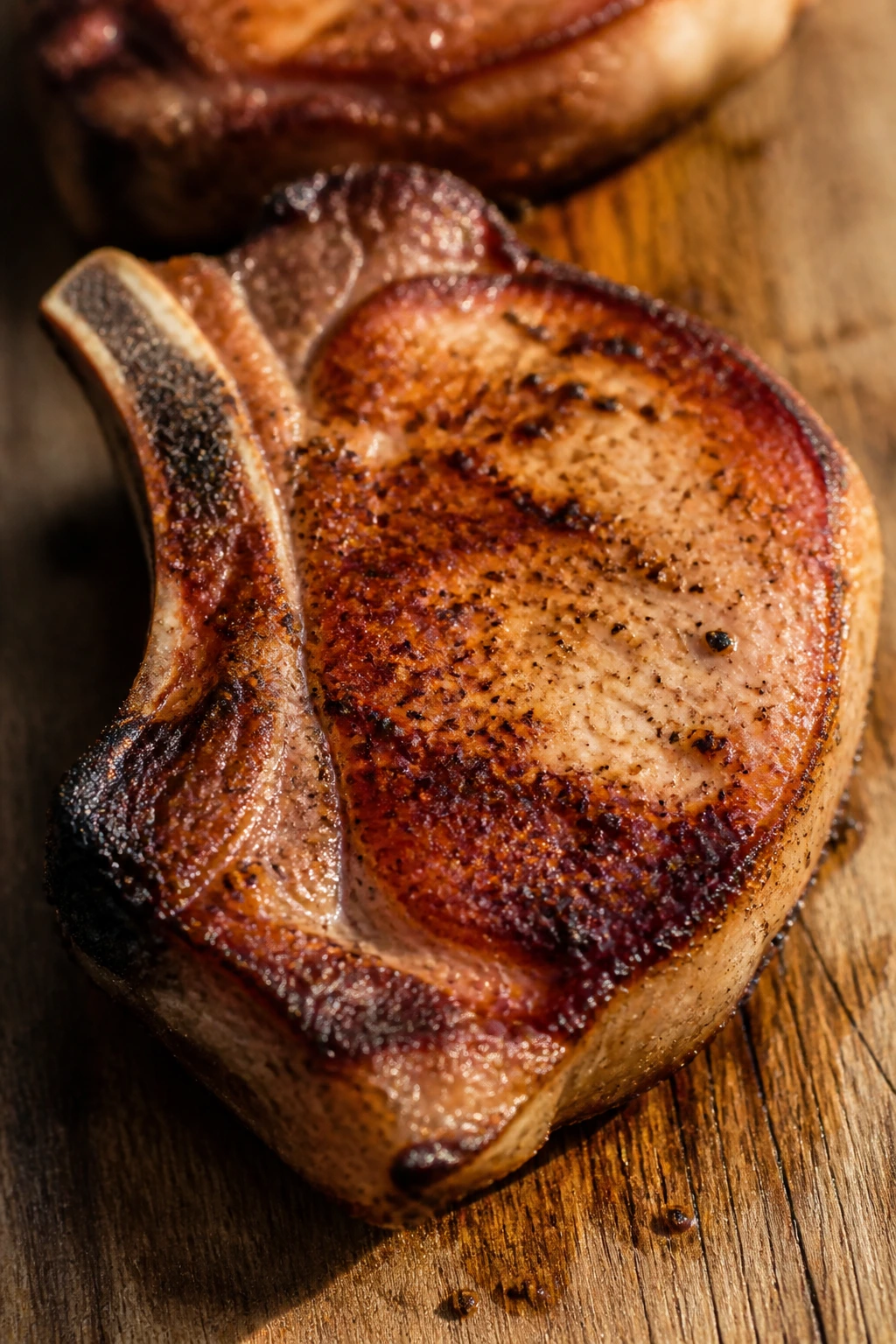
Pork chops on the grill can be glorious or dry as cardboard. Beer brining is the difference. It seasons the meat all the way through, keeps the juices where they belong, and gives you a chop that stays tender even after a hard sear.
Why It Works:
A simple brine of beer, water, salt, and sugar helps the pork hold moisture under high heat, which matters more than fancy seasoning ever will. Bone-in chops are the smart choice here because the bone slows down the cook a little and helps protect the center from drying out. A hot grill gives the outside a clean crust, while a short rest after grilling lets the juices settle instead of spilling onto the cutting board.
Key Ingredients:
- 4 bone-in pork chops, about 1 inch thick
- 2 cups beer
- 2 cups water
- 1/4 cup kosher salt
- 2 tablespoons brown sugar
- 3 garlic cloves, smashed
- 2 bay leaves
- 2 tablespoons olive oil
- 1 tablespoon Dijon mustard
- 1 tablespoon honey
Quick Steps:
- Stir the beer, water, salt, brown sugar, garlic, and bay leaves until the salt dissolves.
- Add the pork chops and brine for 1 to 4 hours in the fridge, then remove and pat them dry.
- Preheat the grill to medium-high, about 400°F.
- Grill the chops for 4 to 5 minutes per side, until the internal temperature hits 145°F and the outside has strong grill marks.
- Whisk the olive oil, Dijon, and honey into a quick glaze and brush it on during the last minute.
Tips and Variations:
- Flavor boost: Add 1 teaspoon cracked black pepper to the brine for a little bite.
- Make-ahead move: Brine earlier in the day, but do not leave the pork overnight unless the chops are very thick.
- Serving idea: These are excellent with grilled peaches or a mustardy slaw.
6. Steak Fajita Skewers
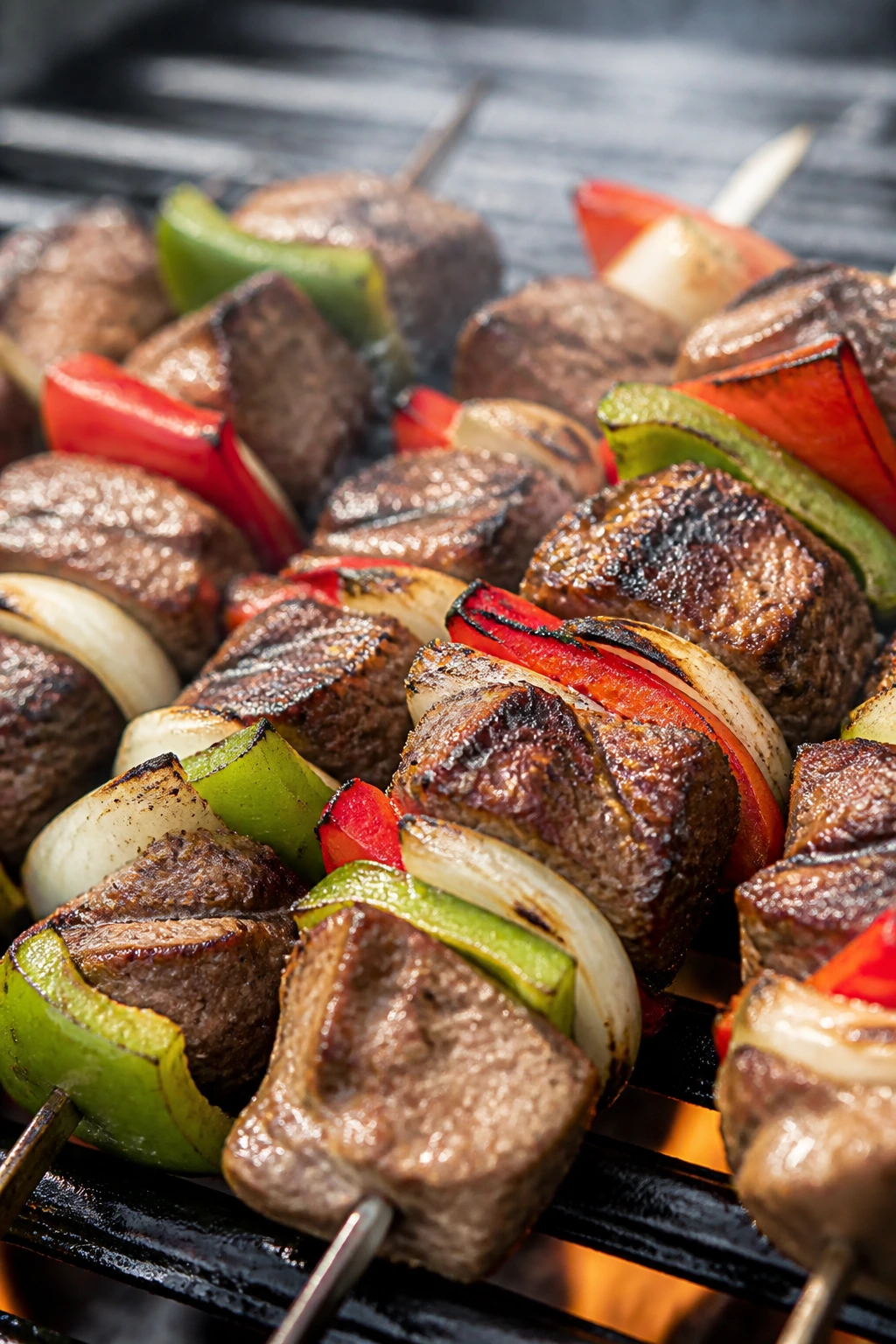
If you want dinner that feels lively, these steak fajita skewers are hard to beat. You get charred beef, sweet peppers, and onion that turns silky at the edges, all of it draped over warm tortillas. It’s the kind of cookout plate that disappears before you even sit down.
Why It Works:
Cutting the steak into even chunks means it cooks fast and stays tender, especially if you use flank or sirloin and don’t over-marinate it. The vegetables get a head start on sweetness once they hit the heat, and the lime-chili marinade gives the whole skewer a bright, savory crust. Skewers also make portioning easy—one pass on the grill, one turn, done.
Key Ingredients:
- 1 1/2 pounds flank steak or sirloin, cut into 1 1/2-inch pieces
- 2 bell peppers, cut into squares
- 1 large red onion, cut into wedges
- 2 tablespoons olive oil
- 2 tablespoons lime juice
- 2 teaspoons chili powder
- 1 teaspoon ground cumin
- 1 teaspoon kosher salt
- 1/2 teaspoon black pepper
- 8 small flour tortillas
Quick Steps:
- Toss the steak with olive oil, lime juice, chili powder, cumin, salt, and pepper.
- Thread steak, peppers, and onion onto skewers, alternating the pieces so everything cooks evenly.
- Preheat the grill to medium-high and oil the grates.
- Grill the skewers for 8 to 10 minutes total, turning every 2 to 3 minutes, until the steak is browned and the vegetables have charred edges.
- Rest the skewers for 5 minutes, then slide everything into warm tortillas.
Tips and Variations:
- Equipment note: Soak wooden skewers for 30 minutes, or use metal skewers if you have them.
- Flavor boost: Serve with crema and a handful of chopped cilantro.
- Serving idea: Add avocado slices and grilled lime wedges.
7. BBQ Pulled Pork Sandwiches
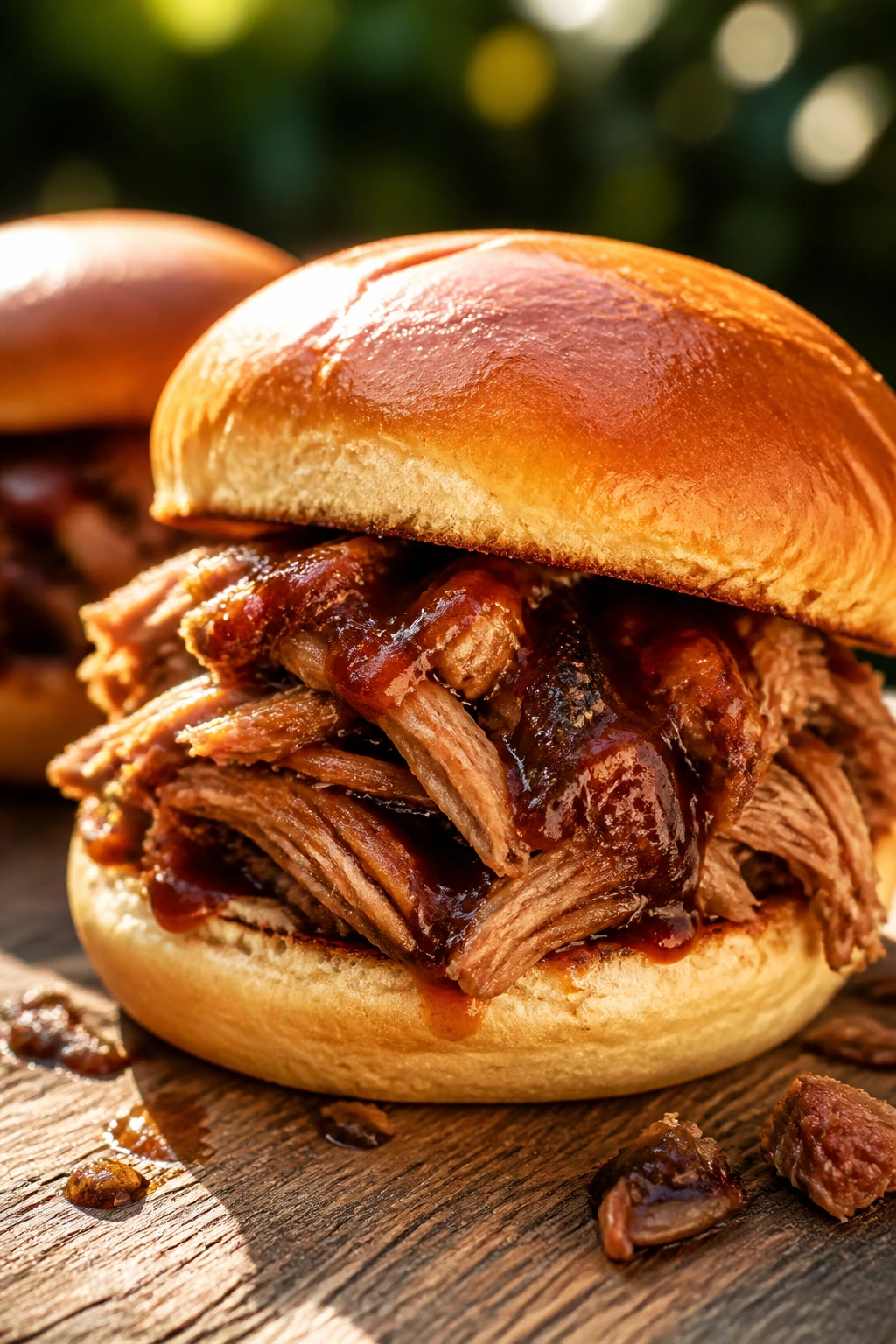
Pulled pork is one of those cookout staples that earns its place by smell alone. Hours later, the meat turns soft enough to shred with a fork, then takes on barbecue sauce without losing its texture. Piled into buns with slaw, it’s almost unfair.
Why It Works:
Pork shoulder has enough fat and connective tissue to survive a long cook on the grill, which is why this cut shows up again and again in barbecue. Indirect heat lets the roast creep toward tenderness instead of seizing up, and wrapping it in foil with apple juice at the end keeps the bark from going leathery. You’re looking for an internal temperature around 195°F to 200°F, where the meat gives up cleanly when shredded.
Key Ingredients:
- 4 pounds pork shoulder, trimmed only lightly
- 2 tablespoons yellow mustard
- 2 tablespoons brown sugar
- 1 tablespoon paprika
- 1 tablespoon kosher salt
- 2 teaspoons black pepper
- 2 teaspoons garlic powder
- 1 teaspoon onion powder
- 1/2 teaspoon cayenne
- 1 cup apple juice
- 1 1/2 cups barbecue sauce
- 8 sandwich buns
- Coleslaw for serving
Quick Steps:
- Rub the pork shoulder with mustard.
- Mix the brown sugar, paprika, salt, pepper, garlic powder, onion powder, and cayenne, then coat the pork all over.
- Set up the grill for indirect heat around 300°F and cook the pork for 4 to 5 hours, until it reaches about 195°F to 200°F.
- Wrap it in foil with the apple juice during the final stretch if the surface looks too dry or dark.
- Rest the pork for 20 minutes, shred it, and toss with barbecue sauce before serving on buns with coleslaw.
Tips and Variations:
- Flavor boost: Add pickle slices to the sandwich for sharpness.
- Make-ahead move: Shred the pork a day ahead; it reheats well with a splash of sauce.
- Serving idea: Serve it on toasted buns so the bottom stays sturdy.
8. Jerk Chicken with Pineapple Salsa
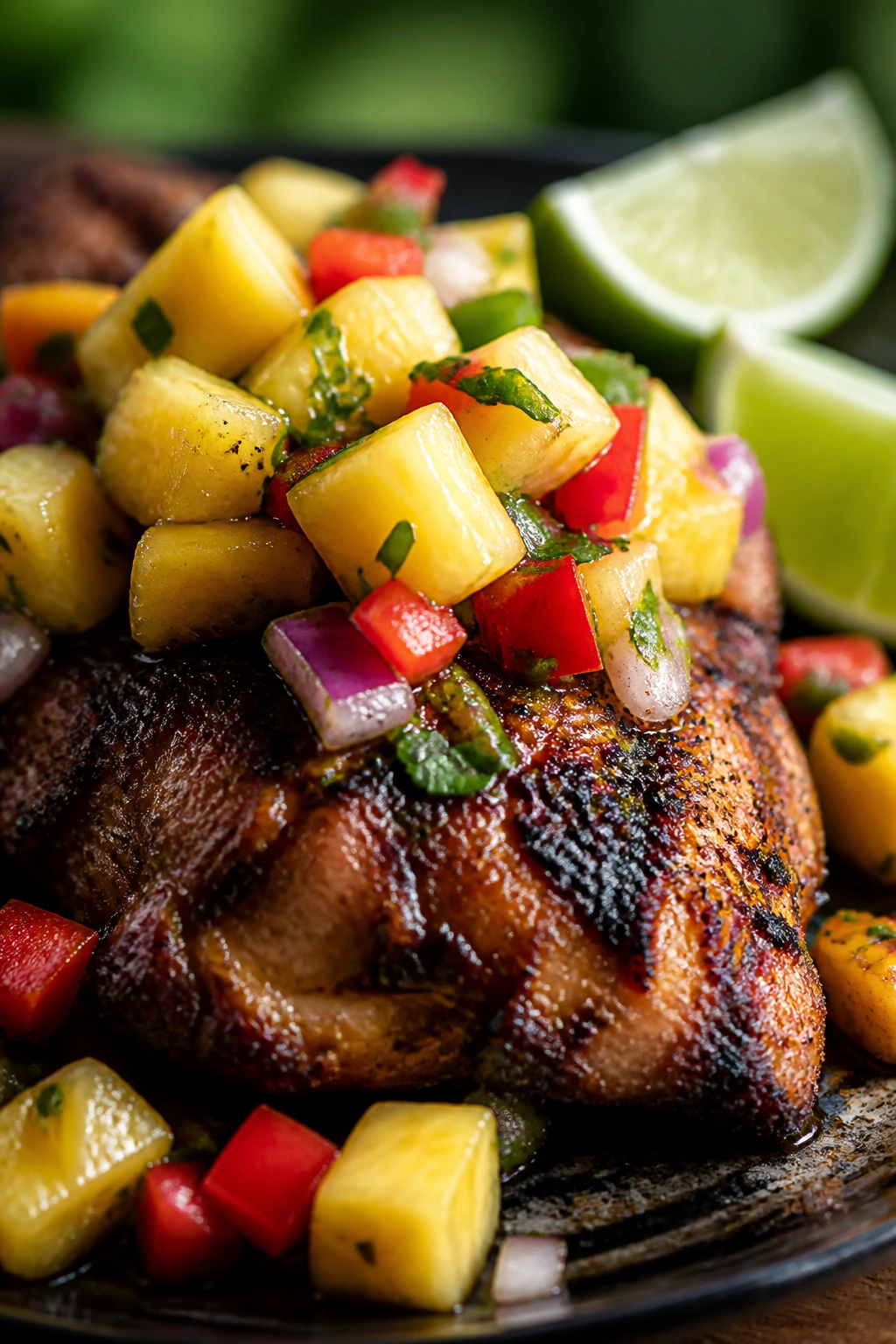
This is the plate that brings the heat and then cools itself back down. The jerk seasoning is bold, fragrant, and a little wild; the pineapple salsa cuts through it with sweet juice and a bright snap of lime. It tastes like a cookout that remembered to bring vacation energy.
Why It Works:
Jerk seasoning is all about layering warmth—thyme, allspice, garlic, cinnamon, and chili—so the chicken tastes deep, not merely hot. Chicken thighs are the right cut because they handle intense flavor and grill heat without drying out. Pineapple salsa belongs here because the fruit’s acidity and sweetness reset your palate after each smoky bite, which keeps the whole dinner from feeling heavy.
Key Ingredients:
- 2 pounds boneless chicken thighs
- 2 tablespoons brown sugar
- 1 tablespoon soy sauce
- 2 tablespoons lime juice
- 1 tablespoon olive oil
- 3 garlic cloves, minced
- 2 teaspoons dried thyme
- 2 teaspoons ground allspice
- 1 teaspoon ground cinnamon
- 1 teaspoon kosher salt
- 1 to 2 teaspoons cayenne, to taste
- 1 cup diced pineapple
- 1/4 cup diced red onion
- 1 jalapeño, minced
- 2 tablespoons chopped cilantro
Quick Steps:
- Stir together the brown sugar, soy sauce, lime juice, olive oil, garlic, thyme, allspice, cinnamon, salt, and cayenne.
- Coat the chicken and marinate it for at least 2 hours, or overnight for deeper flavor.
- Mix the pineapple, red onion, jalapeño, cilantro, and a little lime juice for the salsa.
- Preheat the grill to medium-high and cook the chicken for 6 to 8 minutes per side, until the exterior is charred in spots and the center reaches 165°F.
- Rest for 5 minutes, then spoon pineapple salsa over the top.
Tips and Variations:
- Heat control: Start with 1 teaspoon cayenne if you’re cooking for a mixed crowd.
- Substitution: Drumsticks work too, though they need a little longer on the grill.
- Serving idea: Rice and black beans make this a full, easy dinner.
9. Shrimp and Sausage Skewers
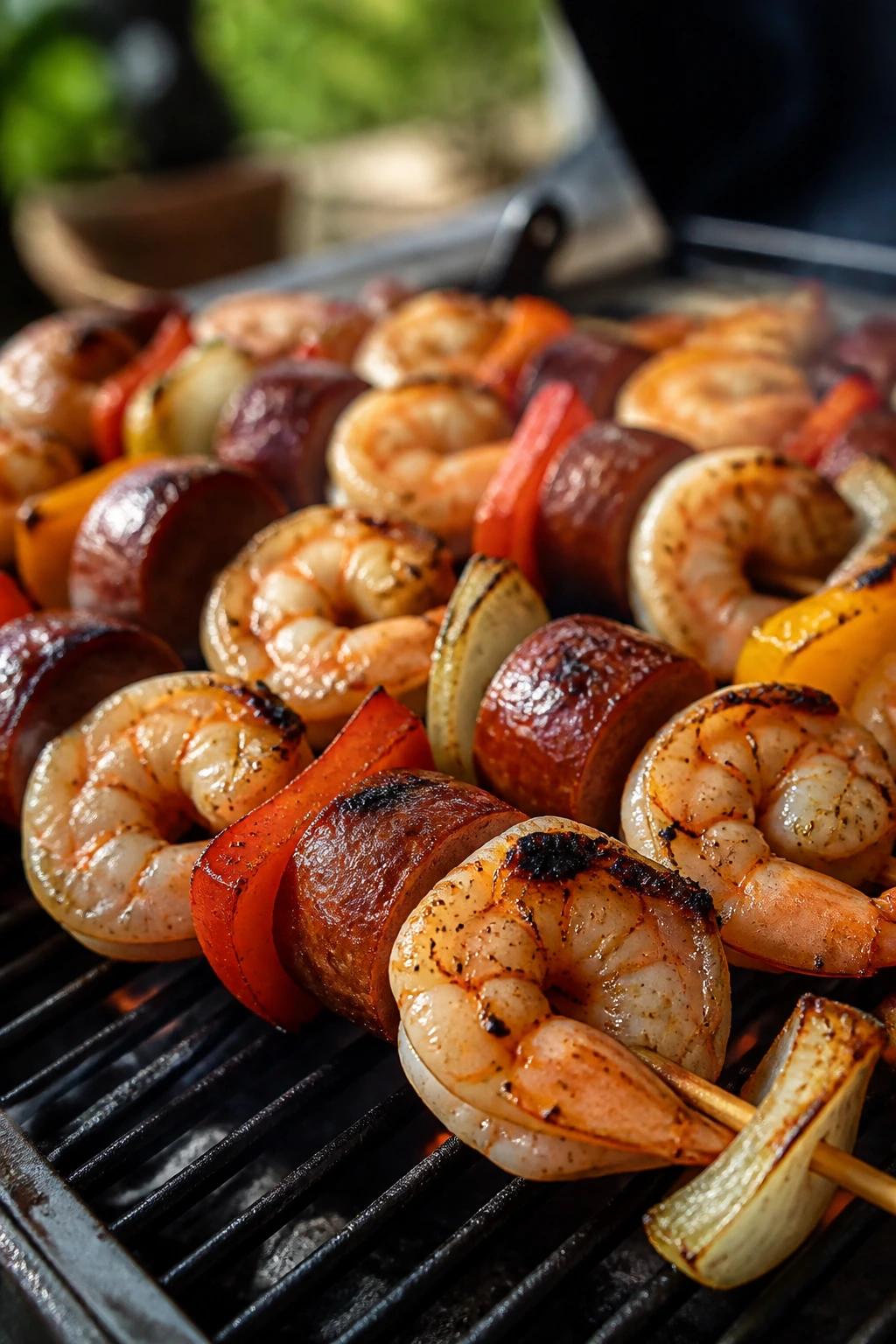
Shrimp and sausage belong together on a skewer. One brings sweetness and a quick cook, the other brings smoke and enough heft to make the meal feel complete. Add a few vegetables and a squeeze of lemon, and dinner lands in the sweet spot between casual and smart.
Why It Works:
Shrimp cook in minutes, sausage is already cooked, and that makes this one of the easiest high-payoff grill dinners on the list. The trick is to size the pieces so nothing overcooks while you’re waiting on something else. A Cajun-style seasoning mix gives the whole skewer a little edge, and the sausage fat drips onto the vegetables as they roast, which is one of those small grill gifts that tastes better than it sounds.
Key Ingredients:
- 1 pound large shrimp, peeled and deveined
- 12 ounces smoked sausage, sliced into 1-inch rounds
- 1 zucchini, sliced into thick half-moons
- 1 red bell pepper, cut into chunks
- 1 yellow bell pepper, cut into chunks
- 1 small red onion, cut into wedges
- 2 tablespoons olive oil
- 2 teaspoons Cajun seasoning
- 1 teaspoon paprika
- 1 lemon, cut into wedges
Quick Steps:
- Toss the shrimp, sausage, and vegetables with olive oil, Cajun seasoning, and paprika.
- Thread everything onto skewers, keeping the shrimp and sausage pieces spaced out rather than crowded together.
- Preheat the grill to medium-high.
- Grill the skewers for 2 to 3 minutes per side, just until the shrimp turn pink and opaque and the vegetables soften at the edges.
- Finish with lemon juice and serve right away.
Tips and Variations:
- Timing tip: Pull the skewers the second the shrimp curl into a loose C-shape; tight O-shapes mean overcooked.
- Substitution: Use andouille if you want a spicier version.
- Serving idea: Spoon over rice or tuck into warm pita with yogurt sauce.
10. Halloumi and Vegetable Skewers
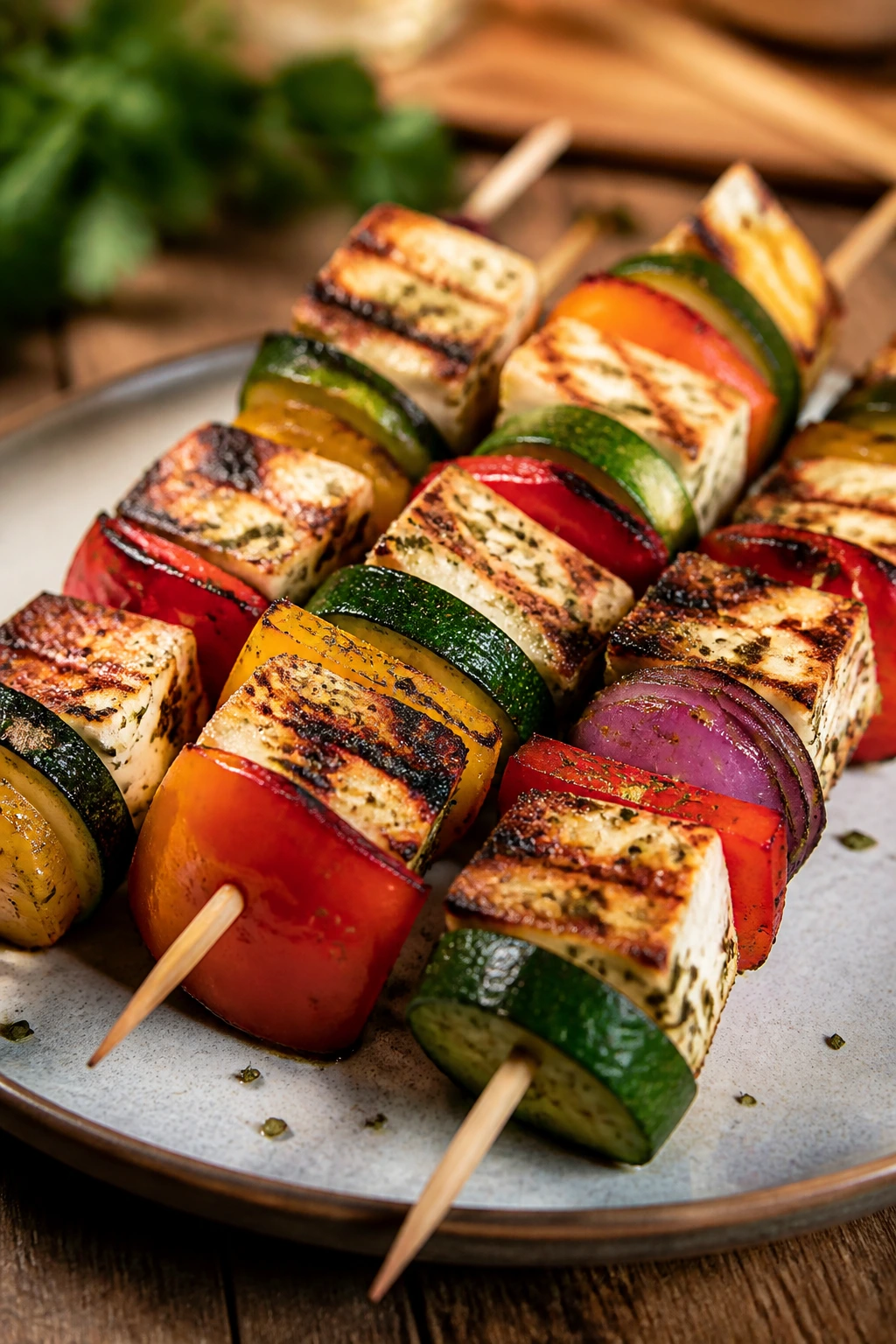
If you need a vegetarian dinner that still feels like grill night, halloumi is a solid answer. It browns instead of melting, so you get salty, chewy edges and a center that stays pleasantly firm. With peppers, zucchini, and tomatoes, the skewer tastes fresh but not flimsy.
Why It Works:
Halloumi has a high melting point, which makes it one of the few cheeses that can sit on a grill and come back with character instead of puddling through the grates. The vegetables are chosen for balance: zucchini softens quickly, tomatoes burst a little, and onion rounds out the sweetness. A lemon-oregano finish keeps the skewer from tasting too rich, which matters because halloumi is salty on its own.
Key Ingredients:
- 8 ounces halloumi, cut into 1-inch cubes
- 1 zucchini, cut into thick rounds
- 1 red bell pepper, cut into squares
- 1 yellow bell pepper, cut into squares
- 1 small red onion, cut into chunks
- 1 cup cherry tomatoes
- 2 tablespoons olive oil
- 1 teaspoon dried oregano
- 1/2 teaspoon black pepper
- 1 lemon, zested and cut into wedges
Quick Steps:
- Toss the vegetables and halloumi gently with olive oil, oregano, black pepper, and lemon zest.
- Thread them onto skewers, keeping the halloumi pieces snug but not packed tight.
- Preheat the grill to medium heat and oil the grates.
- Grill the skewers for 8 to 10 minutes total, turning once or twice, until the vegetables are blistered and the cheese is golden on the edges.
- Serve with lemon wedges for squeezing over the top.
Tips and Variations:
- Flavor boost: Add a drizzle of hot honey at the table.
- Substitution: Firm tofu works if you press it well and cut it into larger cubes.
- Serving idea: Put these over couscous or alongside hummus and flatbread.
11. BBQ Chicken Flatbreads
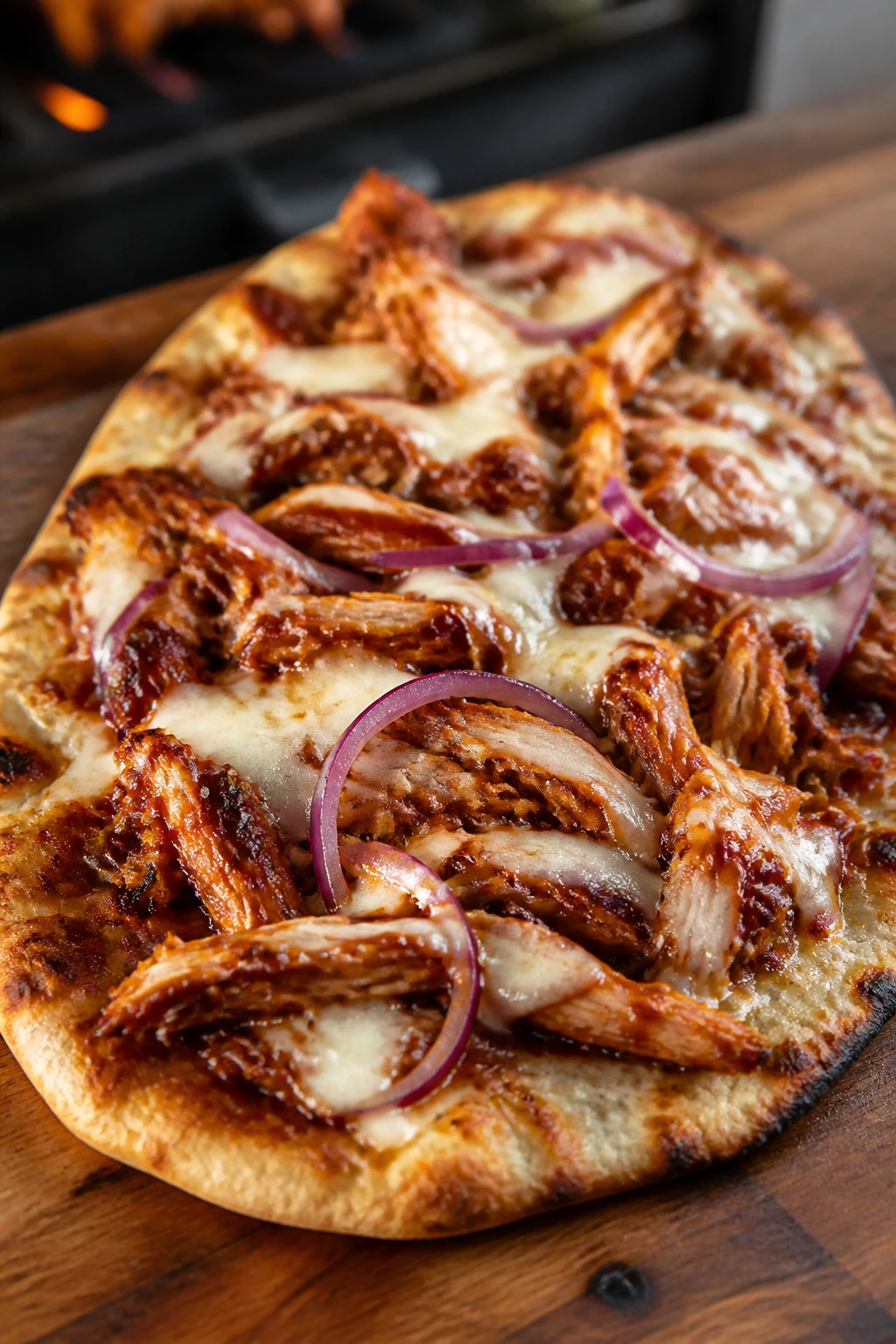
This is what I make when I want cookout flavor without a long sit-down dinner. Flatbreads crisp up fast, the chicken soaks up barbecue sauce, and the cheese melts into little browned patches that smell like a pizza oven had a summer fling with the grill. It’s easy food, but not boring food.
Why It Works:
Using already-cooked chicken keeps this dinner fast and lets the grill handle the finishing instead of the entire cooking job. Flatbreads, naan, or similar breads are sturdy enough to hold toppings without going soggy, especially if you grill them briefly before topping. A mix of mozzarella and a sharp onion slice gives the pizza-like pull and the barbecue contrast that keeps every bite interesting.
Key Ingredients:
- 2 cups cooked shredded chicken
- 1/2 cup barbecue sauce
- 4 naan or flatbreads
- 1 1/2 cups shredded mozzarella
- 1/2 red onion, thinly sliced
- 1 jalapeño, thinly sliced, optional
- 2 tablespoons chopped cilantro
- 1 tablespoon olive oil
Quick Steps:
- Toss the chicken with barbecue sauce.
- Preheat the grill to medium heat.
- Brush the flatbreads lightly with olive oil and grill for 1 to 2 minutes per side, just until they start to pick up color.
- Top each one with sauced chicken, mozzarella, onion, and jalapeño.
- Return to the grill for 2 to 3 minutes with the lid closed, until the cheese melts and the edges crisp.
- Finish with cilantro and slice.
Tips and Variations:
- Flavor boost: Add crumbled bacon if you want a stronger smoky note.
- Substitution: Use cooked pulled pork instead of chicken.
- Serving idea: Cut into wedges and serve with a green salad so it eats like dinner, not snack food.
12. Lemon-Garlic Spatchcock Chicken
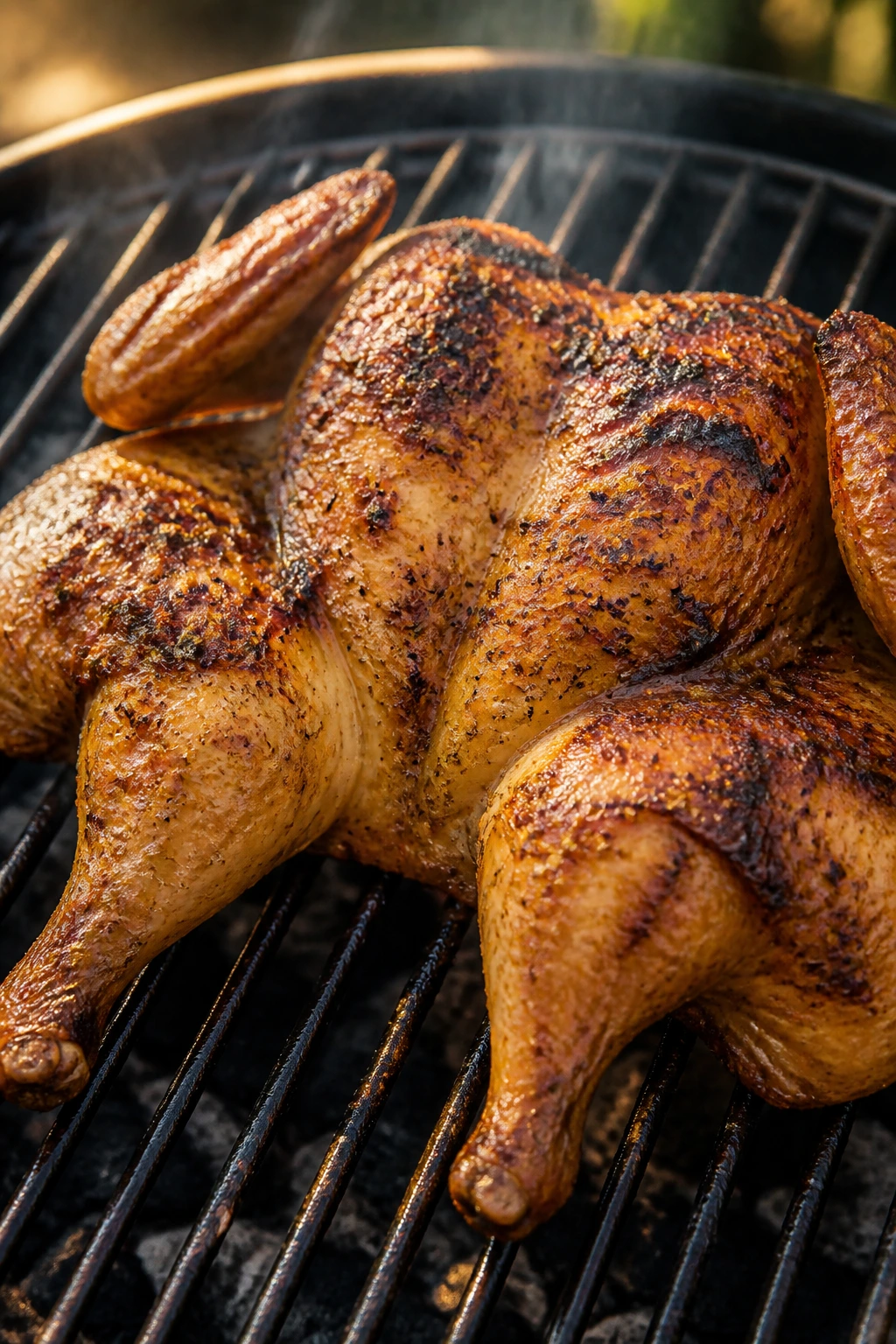
Spatchcock chicken is a little dramatic and a little practical, which is why I like it. Flattening the bird gives you more even cooking, more skin contact with heat, and a shorter road to dinner. The lemon and garlic scent that comes off the grill is reason enough to make it.
Why It Works:
A whole chicken cooks more evenly when it’s flattened, because the breast and thighs are on nearly the same plane instead of fighting each other for doneness. The skin has more surface area too, which means more browning and better texture. Lemon and garlic keep the flavor clean, while the grill’s indirect heat helps the bird stay juicy without burning the skin before the meat is cooked through.
Key Ingredients:
- 1 whole chicken, 4 to 5 pounds
- 3 tablespoons olive oil
- 2 lemons, one juiced and one sliced
- 6 garlic cloves, minced
- 2 teaspoons kosher salt
- 1 teaspoon black pepper
- 2 teaspoons dried oregano or rosemary
- 1 tablespoon chopped parsley, optional
Quick Steps:
- Remove the backbone from the chicken and press it flat, breast side up.
- Mix the olive oil, lemon juice, garlic, salt, pepper, and oregano, then rub it over the chicken, including under the skin if you can.
- Preheat the grill for two-zone cooking at about 375°F to 400°F.
- Grill the chicken skin side up over indirect heat for 35 to 45 minutes, then move it over direct heat for 2 to 4 minutes if you want extra color on the skin.
- Rest the chicken for 10 minutes before cutting.
Tips and Variations:
- Timing tip: Use an instant-read thermometer; the thigh should reach 175°F to 180°F for the best texture.
- Substitution: Swap rosemary for oregano if you want a piney, more classic roast flavor.
- Serving idea: Cut into quarters and serve with grilled lemon halves.
13. Flank Steak with Chimichurri
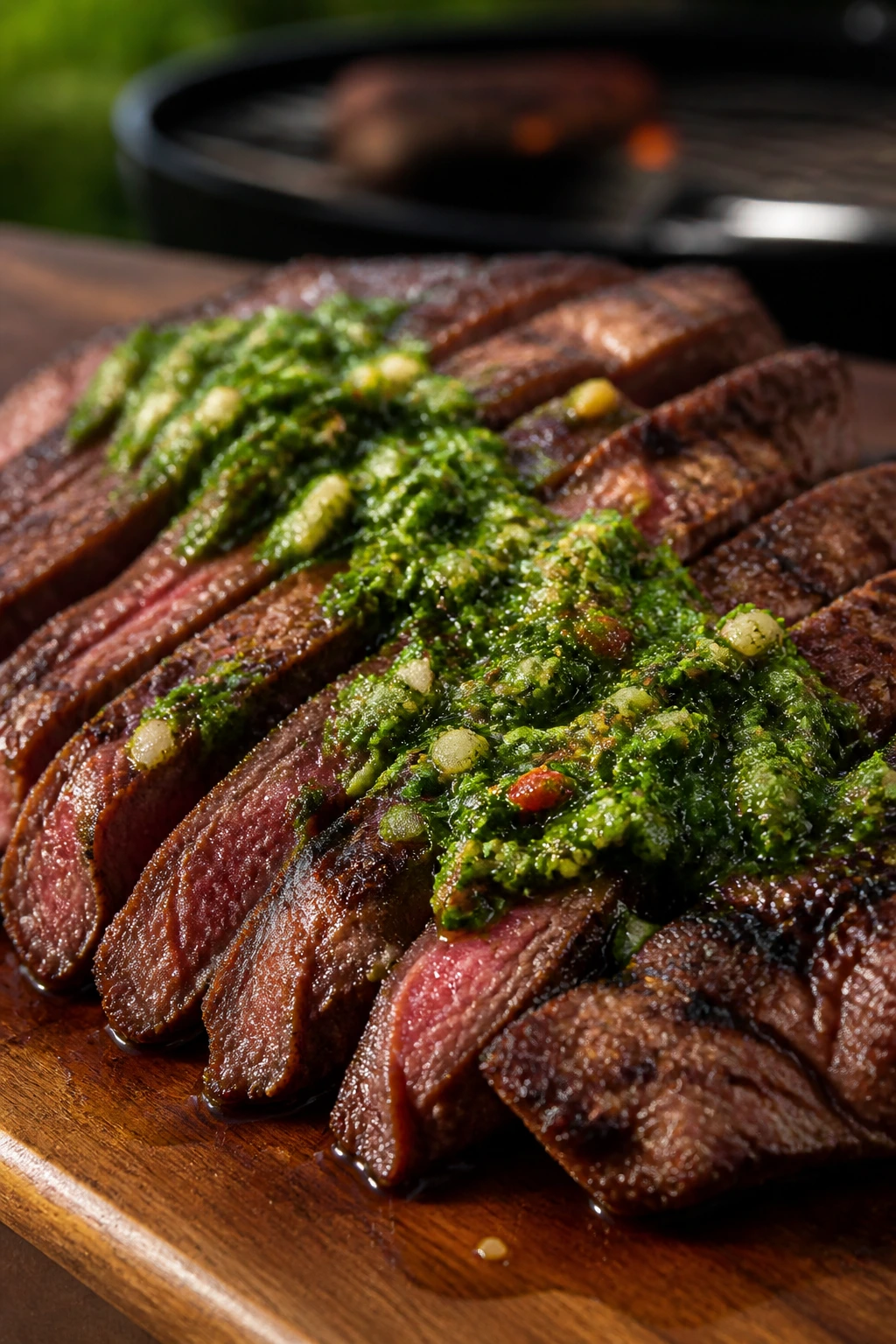
This is the kind of dinner that proves you don’t need a long ingredient list to make people happy. Flank steak grills fast, slices beautifully, and carries chimichurri like it was made for the job. The sauce brings acid, herbs, and garlic, which is exactly what grilled beef wants after a few minutes over fire.
Why It Works:
Flank steak has a strong grain and a lean texture, so the trick is fast heat and a clean slice across the grain. Chimichurri balances that lean meat with olive oil and vinegar, and the herbs keep the whole plate from feeling dark or heavy. If you let the steak rest for 10 minutes before slicing, the juices settle and the slices stay glossy instead of puddling on the board.
Key Ingredients:
- 1 3/4 pounds flank steak
- 1 cup packed parsley leaves
- 1/2 cup packed cilantro leaves
- 3 garlic cloves
- 2 tablespoons red wine vinegar
- 1/2 cup olive oil
- 1 teaspoon red pepper flakes
- 1 teaspoon kosher salt
- 1/2 teaspoon black pepper
Quick Steps:
- Pulse the parsley, cilantro, garlic, vinegar, red pepper flakes, salt, and pepper in a food processor, then stream in the olive oil.
- Let the chimichurri sit while you cook the steak.
- Preheat the grill to high heat and oil the grates.
- Grill the flank steak for 4 to 6 minutes per side for medium-rare, depending on thickness.
- Rest 10 minutes, then slice thinly against the grain and spoon chimichurri over the top.
Tips and Variations:
- Flavor boost: Add a squeeze of lemon if you want the sauce brighter.
- Substitution: Skirt steak works too, but it cooks even faster, so watch it closely.
- Serving idea: Serve with grilled potatoes or charred onions.
14. Grilled Fish Tacos
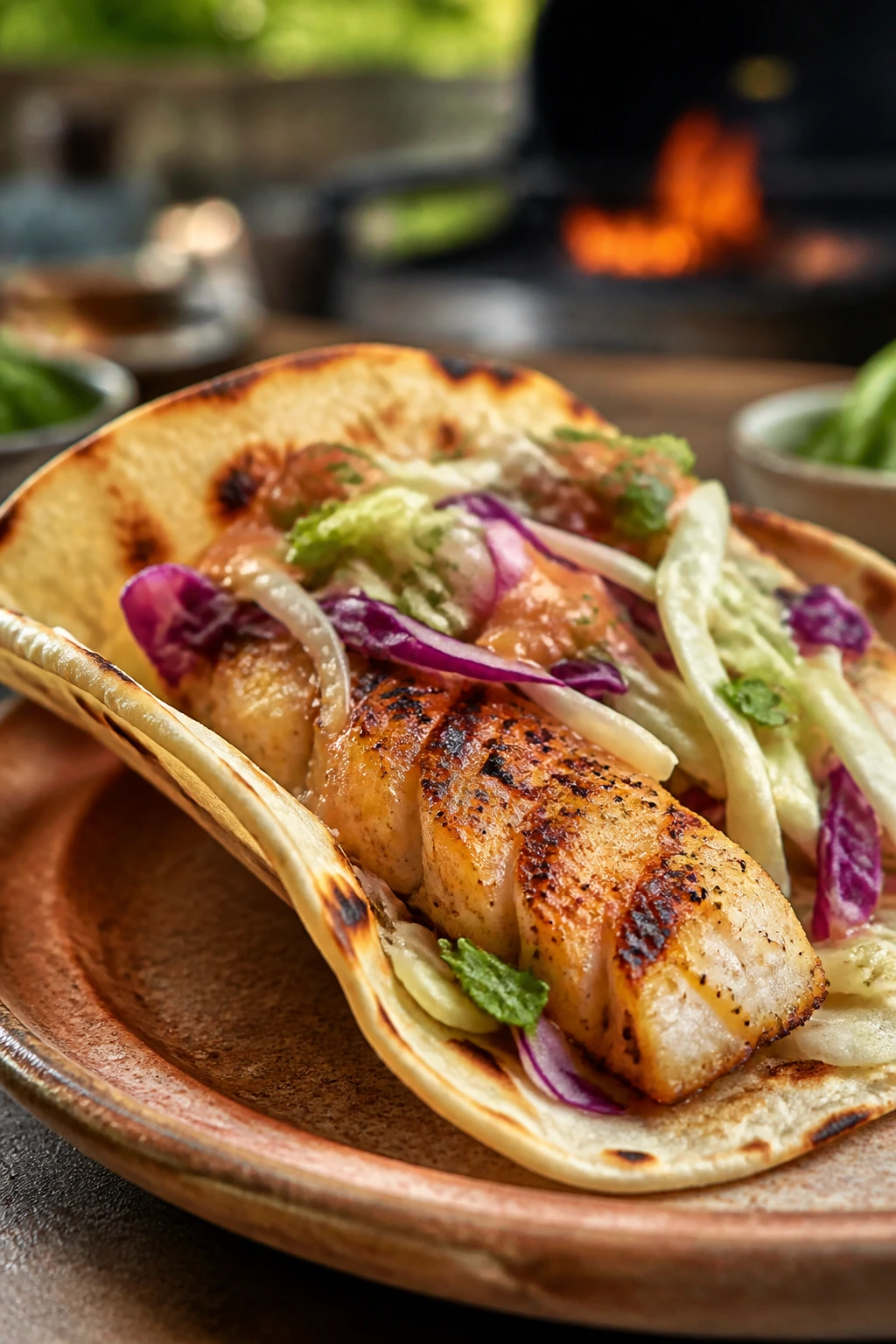
Fish tacos can be either a joy or a soggy mess. The grilled version solves that by giving the fish a little smoke and keeping the toppings crisp. With a tangy cabbage slaw and warm tortillas, this dinner stays light without feeling skimpy.
Why It Works:
Firm white fish such as cod, mahi-mahi, or halibut holds together well on the grill if you oil the grates and don’t fuss with it too much. The spice rub gives the surface some color, and the cabbage slaw brings crunch and acidity that keep the tacos from turning mushy. Warm tortillas matter here; cold tortillas tear, and torn tortillas mean a pile of good intentions on your plate.
Key Ingredients:
- 1 1/2 pounds firm white fish fillets
- 2 tablespoons olive oil
- 1 teaspoon chili powder
- 1 teaspoon ground cumin
- 1/2 teaspoon kosher salt
- 1/4 teaspoon black pepper
- 12 corn tortillas
- 3 cups shredded cabbage
- 1/4 cup mayonnaise or Greek yogurt
- 1 tablespoon lime juice
- 1 avocado, sliced
Quick Steps:
- Rub the fish with olive oil, chili powder, cumin, salt, and pepper.
- Toss the cabbage with mayonnaise or yogurt and lime juice for a fast slaw.
- Preheat the grill to medium-high and oil the grates well.
- Grill the fish for 2 to 3 minutes per side, until it flakes easily and lifts cleanly.
- Warm the tortillas on the grill for 20 to 30 seconds per side, then fill with fish, slaw, and avocado.
Tips and Variations:
- Timing tip: If the fillets are thin, use a grill basket so they don’t fall apart.
- Substitution: Shrimp works well if fish isn’t your thing.
- Serving idea: Add pickled onions or a drizzle of crema.
15. Italian Sausage and Peppers Hoagies
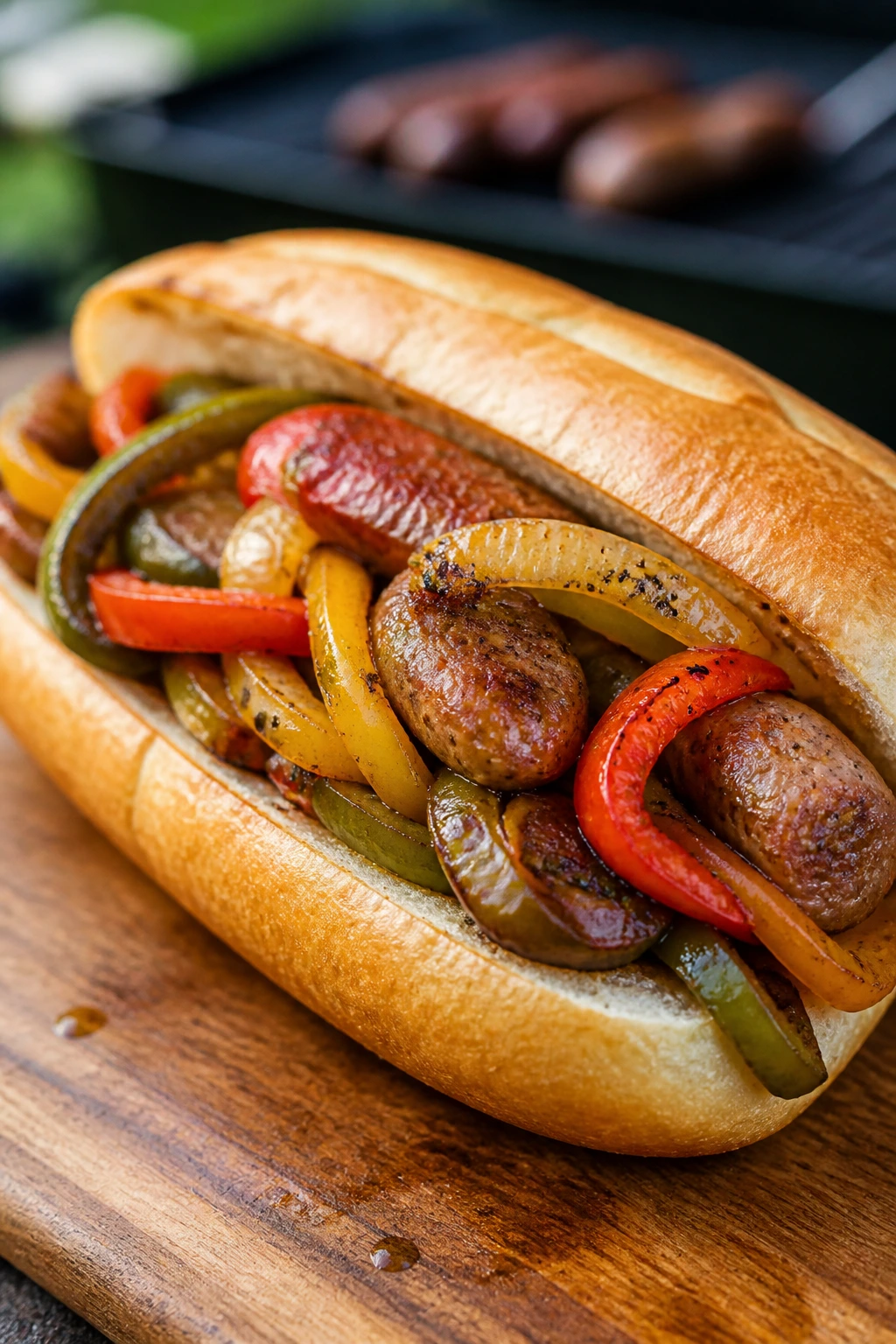
There’s a reason sausage and peppers shows up at cookouts so often: it tastes like the whole backyard smells good. The sausages get snappy on the outside, the peppers soften into sweet ribbons, and the hoagie roll catches the juices without surrendering to them. That’s dinner with backbone.
Why It Works:
Italian sausage already comes seasoned, which means the grill only has to do two jobs: brown the casing and warm the inside evenly. Peppers and onions caramelize in their own sweet way over medium heat, and a touch of marinara ties everything together without making the sandwich soupy. Good rolls are not optional here. Soft rolls collapse. Sturdy hoagies hold.
Key Ingredients:
- 1 1/2 pounds Italian sausage links
- 3 bell peppers, sliced
- 1 large onion, sliced
- 2 tablespoons olive oil
- 2 garlic cloves, minced
- 1 cup marinara sauce
- 4 to 6 hoagie rolls
- 4 slices provolone cheese
- Salt and pepper, to taste
Quick Steps:
- Toss the peppers and onion with olive oil, garlic, salt, and pepper.
- Preheat the grill to medium heat.
- Grill the sausage links for 12 to 15 minutes, turning often, until browned and cooked through.
- Grill the vegetables in a grill basket or foil pan until soft and caramelized, about 10 minutes.
- Warm the rolls, fill them with sausage and peppers, spoon on marinara, and top with provolone.
Tips and Variations:
- Flavor boost: A spoonful of yellow mustard on the roll adds a sharp edge.
- Substitution: Chicken sausage works if you want something lighter.
- Serving idea: Serve with potato chips and a chopped salad for a no-fuss plate.
16. Teriyaki Chicken Kebabs
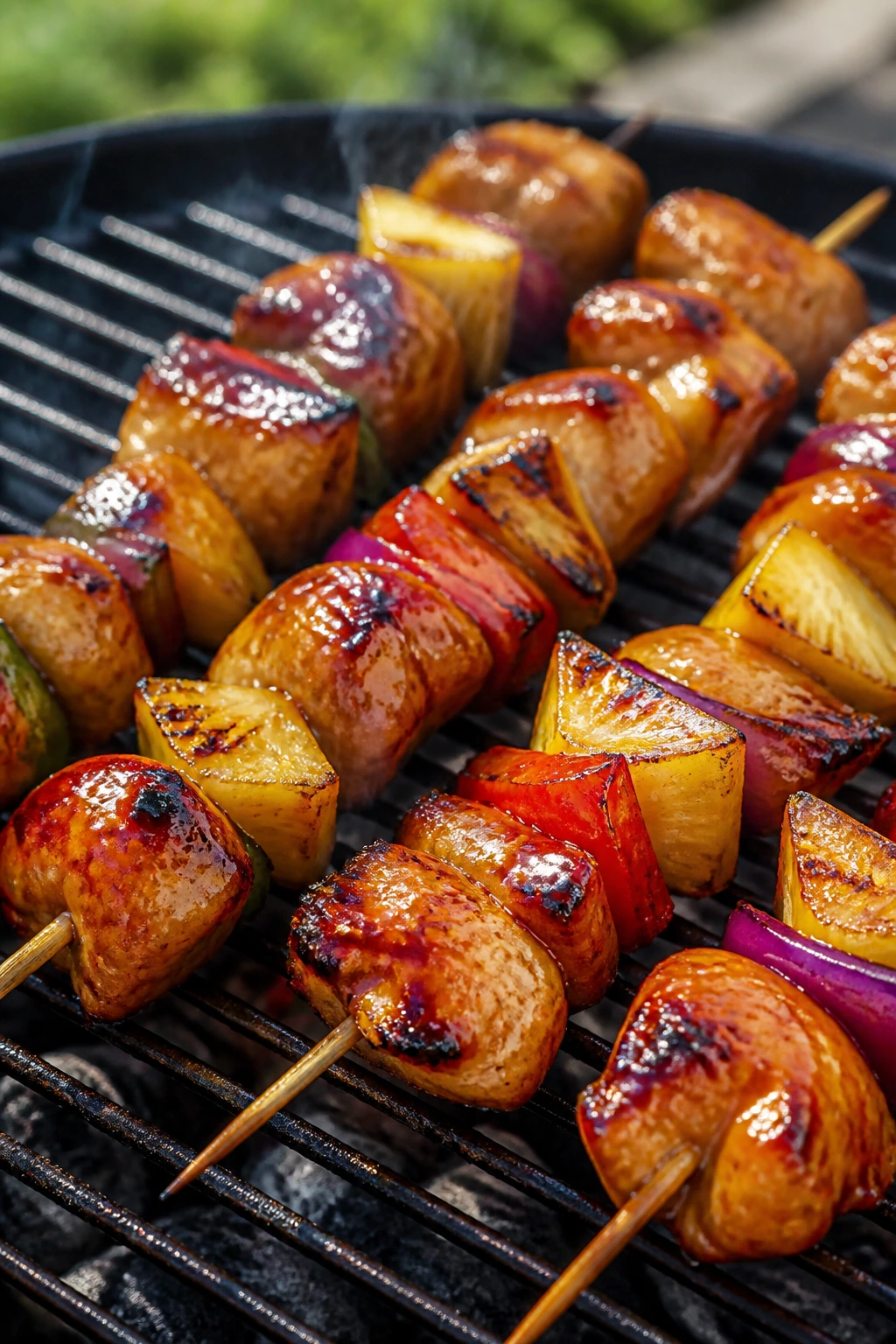
Sweet, sticky, and a little glossy, these kebabs are always a hit with kids and adults who pretend they aren’t eating off sticks. The chicken gets a quick marinade, the pineapple chars into caramelized pockets, and the peppers keep the whole thing bright. It’s a cheerful plate, and I mean that in the best way.
Why It Works:
Teriyaki gives you sugar, salt, and umami in one move, which is why it’s so good on skewers. Boneless chicken thighs stay juicy through the grill, and pineapple not only tastes good here but also gives you little bursts of acid and sweetness against the savory chicken. Because the pieces are cut small and similar in size, you get consistent cooking instead of the usual skewer roulette.
Key Ingredients:
- 2 pounds boneless chicken thighs, cut into 1 1/2-inch pieces
- 1/2 cup teriyaki sauce
- 2 tablespoons pineapple juice
- 1 tablespoon brown sugar
- 2 bell peppers, cut into chunks
- 1 red onion, cut into chunks
- 2 cups pineapple chunks
- 1 tablespoon sesame seeds
- 2 sliced green onions
Quick Steps:
- Mix the teriyaki sauce, pineapple juice, and brown sugar, then toss with the chicken.
- Marinate for 30 minutes to 4 hours.
- Thread the chicken, peppers, onion, and pineapple onto skewers.
- Preheat the grill to medium-high and cook the kebabs for 10 to 12 minutes, turning every few minutes until the chicken reaches 165°F.
- Sprinkle with sesame seeds and green onions before serving.
Tips and Variations:
- Timing tip: If using wooden skewers, soak them for 30 minutes first.
- Substitution: Shrimp can replace chicken, but cut the grilling time almost in half.
- Serving idea: Serve over steamed rice or with a simple cucumber salad.
17. Portobello Mushroom Burgers
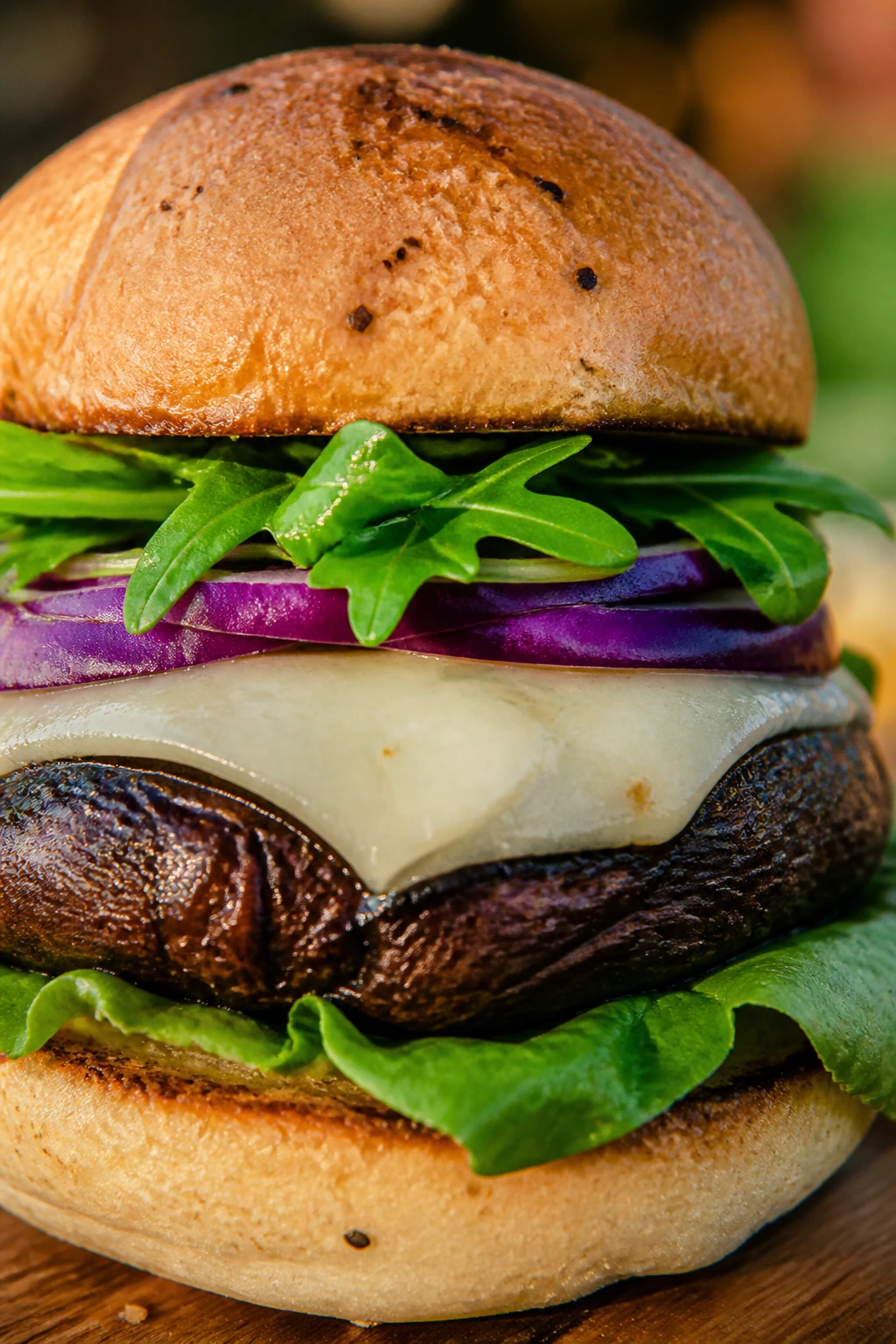
A good mushroom burger shouldn’t apologize for not being meat. It should be juicy, savory, and satisfying enough that nobody at the table feels shorted. Portobellos do that job well, especially when they get a balsamic marinade and a hot grill.
Why It Works:
Portobello caps have a dense, meaty texture that stands up to grilling, and their open shape soaks up marinade in all the right places. Balsamic vinegar brings sweetness and acid, while the grill pulls out the mushrooms’ earthy flavor and gives the edges a little chew. If you cook them until they’re deeply browned and tender, they land somewhere between steakhouse side and proper centerpiece.
Key Ingredients:
- 4 large portobello mushroom caps, stems removed
- 1/4 cup balsamic vinegar
- 2 tablespoons olive oil
- 2 garlic cloves, minced
- 1 teaspoon soy sauce
- 1/2 teaspoon black pepper
- 4 burger buns
- 4 slices provolone or Swiss cheese, optional
- Arugula, tomato slices, and mayonnaise for serving
Quick Steps:
- Whisk the balsamic vinegar, olive oil, garlic, soy sauce, and black pepper.
- Brush the mushrooms with the marinade and let them sit for 15 to 30 minutes.
- Preheat the grill to medium-high.
- Grill the mushrooms gill-side down first for 4 to 5 minutes, then flip and cook 3 to 4 minutes more until tender.
- Toast the buns, add cheese if using, and build with arugula, tomato, and mayo.
Tips and Variations:
- Flavor boost: Add a slice of grilled onion if you want extra sweetness.
- Substitution: Use thick slices of eggplant if you’re out of portobellos.
- Serving idea: These are good with sweet potato fries or corn on the cob.
18. Smoky Foil-Pack Sausage and Potatoes
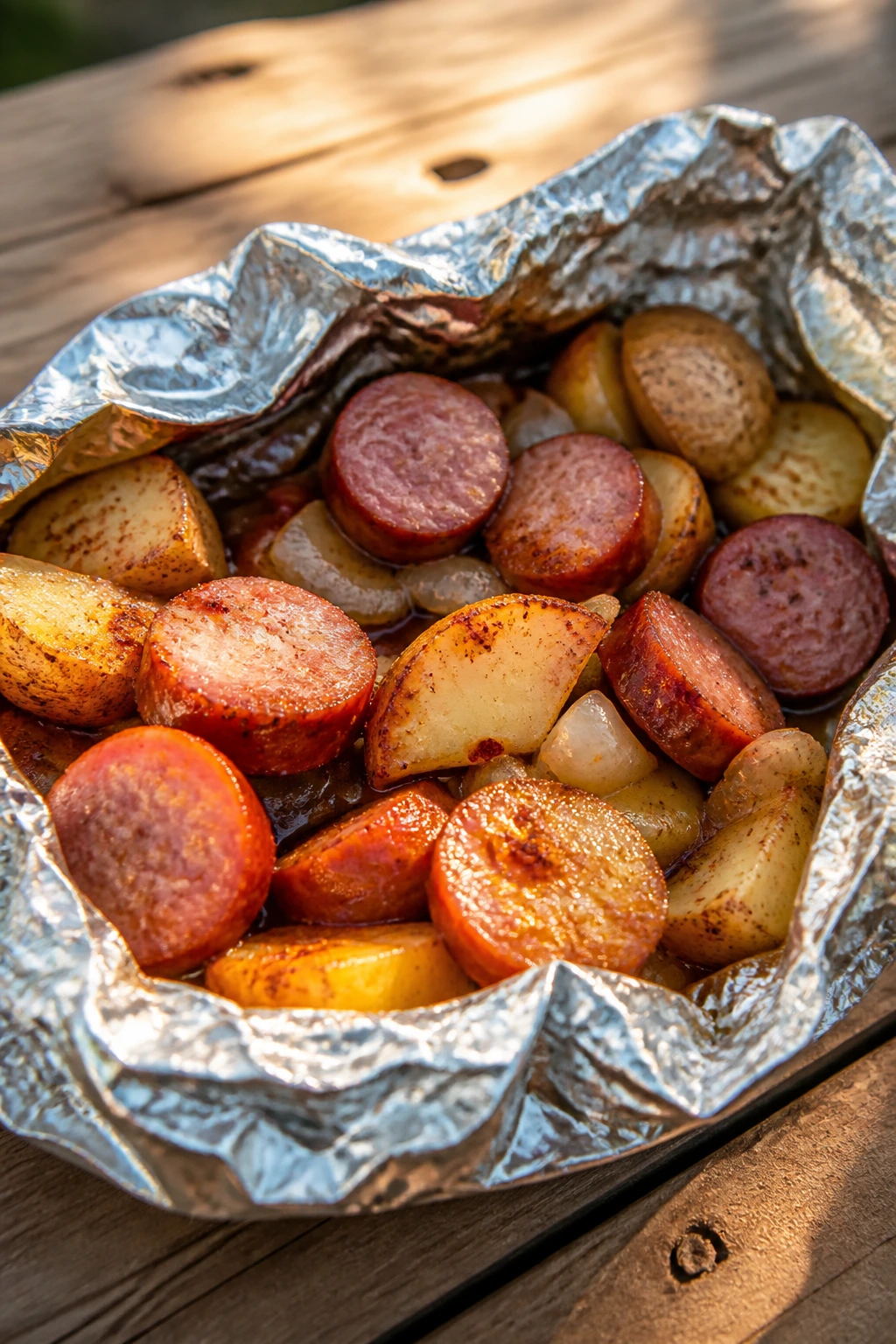
Foil-pack dinners feel a little old-school, and that is exactly why they still work. Everything steams, roasts, and picks up the flavor of the sausage and butter at the same time, which means less mess and more payoff. This one is the rescue dinner for nights when the cookout table needs something hearty and easy.
Why It Works:
The foil packet creates its own tiny oven, so potatoes soften while the sausage browns a little and the corn turns sweet. Because the ingredients are cut into small, even pieces, they finish together instead of waiting around for one stubborn potato. Smoked paprika and butter do a lot of the heavy lifting here, which is fine by me. Sometimes dinner should be direct.
Key Ingredients:
- 1 1/2 pounds baby potatoes, halved
- 12 ounces smoked sausage, sliced
- 2 ears corn, cut into 2-inch rounds
- 1 bell pepper, chopped
- 1 small onion, chopped
- 3 tablespoons butter, cut into pieces
- 1 teaspoon smoked paprika
- 1 teaspoon garlic powder
- 1 teaspoon kosher salt
- 1/2 teaspoon black pepper
Quick Steps:
- Toss the potatoes, sausage, corn, pepper, and onion with butter, smoked paprika, garlic powder, salt, and pepper.
- Divide the mixture among 4 large foil sheets and seal into packets.
- Preheat the grill to medium heat.
- Grill the packets for 20 to 25 minutes, turning once halfway through, until the potatoes are fork-tender.
- Open carefully—steam will escape fast—and serve right from the foil or tipped into bowls.
Tips and Variations:
- Safety note: Open the packets away from your face; the steam is hot.
- Substitution: Add sliced mushrooms if you want more vegetables.
- Serving idea: A spoonful of sour cream or mustard on top makes this even better.
19. Carne Asada Tacos
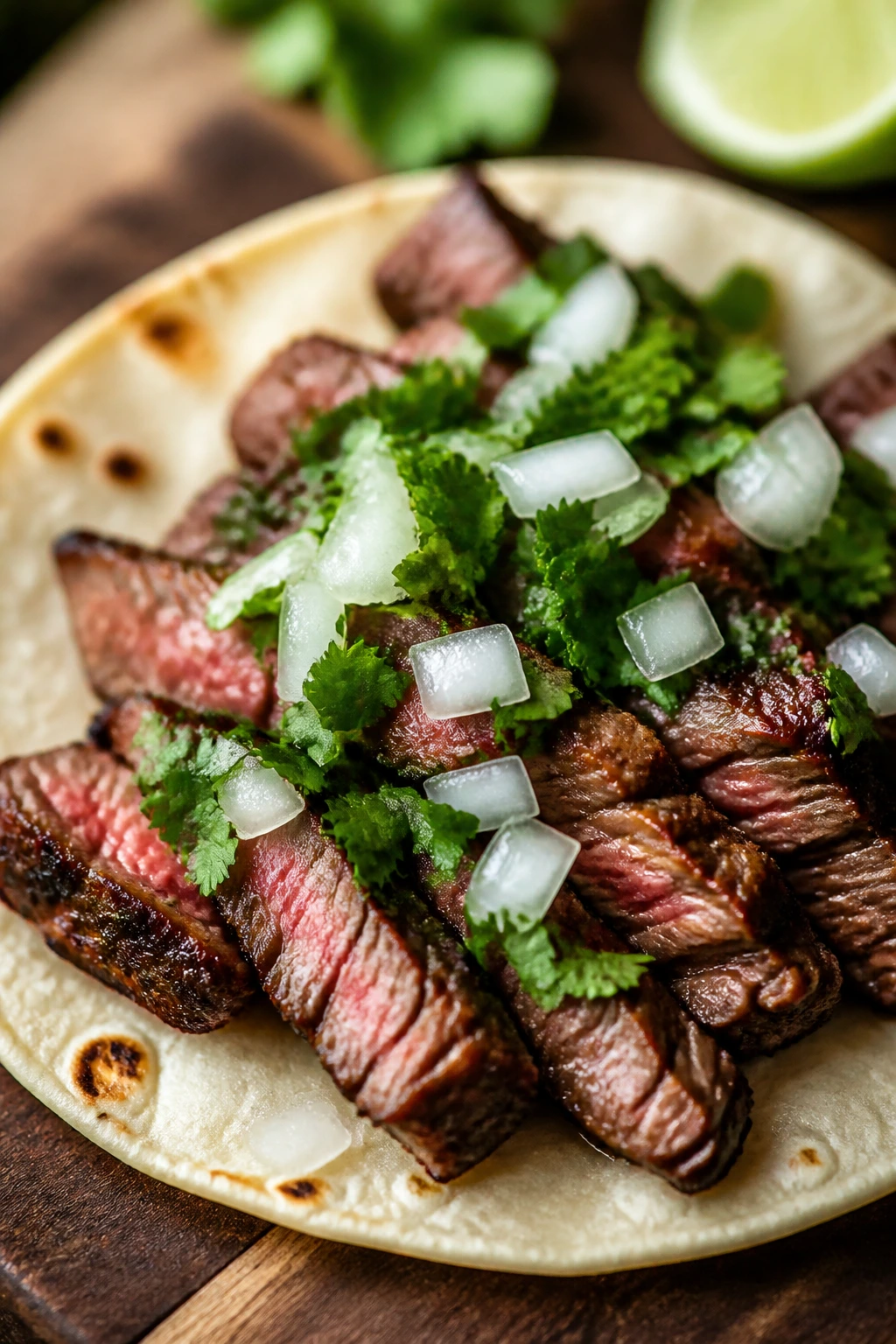
Carne asada has a way of turning a cookout into a little street-party situation, which is a compliment. The steak cooks fast, the marinade brings citrus and garlic, and the tortillas catch the juices before they hit the plate. It’s lively food. No dead corners.
Why It Works:
Skirt steak is thin, flavorful, and built for high heat, which makes it a natural fit for backyard grilling. The orange-lime marinade softens the meat just enough while keeping the flavor bright, and the short cook time means you can get a crisp sear without overdoing the center. Slicing across the grain matters here more than anywhere else in the lineup; it’s the difference between tender bites and chewy ones.
Key Ingredients:
- 1 1/2 pounds skirt steak
- 1/4 cup orange juice
- 1/4 cup lime juice
- 3 tablespoons olive oil
- 4 garlic cloves, minced
- 2 teaspoons ground cumin
- 1 teaspoon chili powder
- 1 teaspoon kosher salt
- 1/4 cup chopped cilantro
- 12 corn or flour tortillas
- Diced onion, extra cilantro, and salsa for serving
Quick Steps:
- Whisk the orange juice, lime juice, olive oil, garlic, cumin, chili powder, salt, and cilantro.
- Marinate the steak for 1 to 4 hours in the fridge.
- Preheat the grill to high heat.
- Grill the steak for 3 to 4 minutes per side for medium-rare, then rest for 10 minutes.
- Slice thinly against the grain and serve in warm tortillas with onion, cilantro, and salsa.
Tips and Variations:
- Heat tip: Don’t marinate longer than 6 hours or the citrus can make the texture odd.
- Substitution: Flank steak works if skirt steak isn’t available.
- Serving idea: Add grilled scallions and avocado slices for a fuller taco plate.
20. Grilled Steak Salad with Charred Corn and Avocado
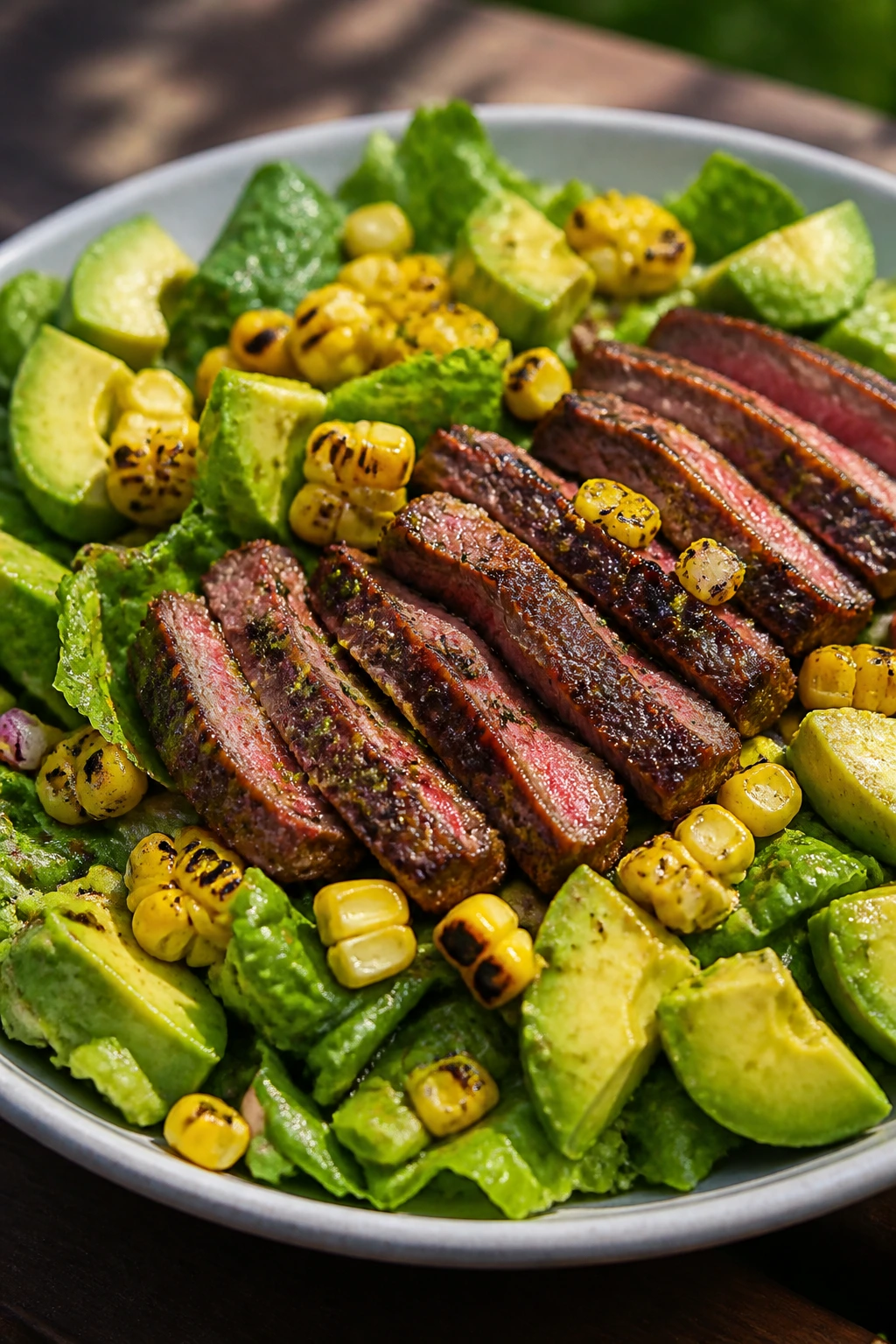
This is the dinner for people who like a little smoke with their greens. The steak is the anchor, the corn brings sweetness, and the avocado softens everything into a plate that feels fresh but still eats like a meal. A grilled salad sounds fussy until you make one. Then it just sounds smart.
Why It Works:
The grill gives the steak and corn a deeper, sweeter edge than a stovetop ever could, and those flavors carry straight into the salad without needing heavy dressing. Romaine holds up better than softer lettuces, especially once warm steak slices hit the bowl. The avocado and cheese finish make the plate feel balanced, which matters when you want a dinner that’s both light and satisfying.
Key Ingredients:
- 1 1/2 pounds sirloin or flank steak
- 2 ears corn, husked
- 6 cups chopped romaine
- 1 pint cherry tomatoes, halved
- 2 avocados, sliced
- 1/2 red onion, thinly sliced
- 1/2 cup feta or blue cheese
- 1/4 cup olive oil
- 2 tablespoons red wine vinegar
- 1 teaspoon Dijon mustard
- 1 teaspoon honey
- 1 teaspoon kosher salt, divided
- 1/2 teaspoon black pepper
Quick Steps:
- Whisk the olive oil, red wine vinegar, Dijon, honey, 1/2 teaspoon salt, and pepper for the dressing.
- Season the steak with the remaining salt and grill the corn and steak over medium-high heat.
- Grill the corn for 8 to 10 minutes, turning until lightly charred, and grill the steak for 4 to 5 minutes per side for medium-rare.
- Rest the steak for 10 minutes, then slice thinly.
- Toss the romaine, tomatoes, onion, avocado, cheese, and corn with the dressing, then top with steak slices.
Tips and Variations:
- Flavor boost: A spoonful of chopped herbs—parsley or cilantro—wakes the whole bowl up.
- Substitution: Goat cheese can replace feta if you want something softer.
- Serving idea: Add grilled bread on the side if you want it to feel more like a full feast.
Why the Grill Wins on Busy Cookout Nights
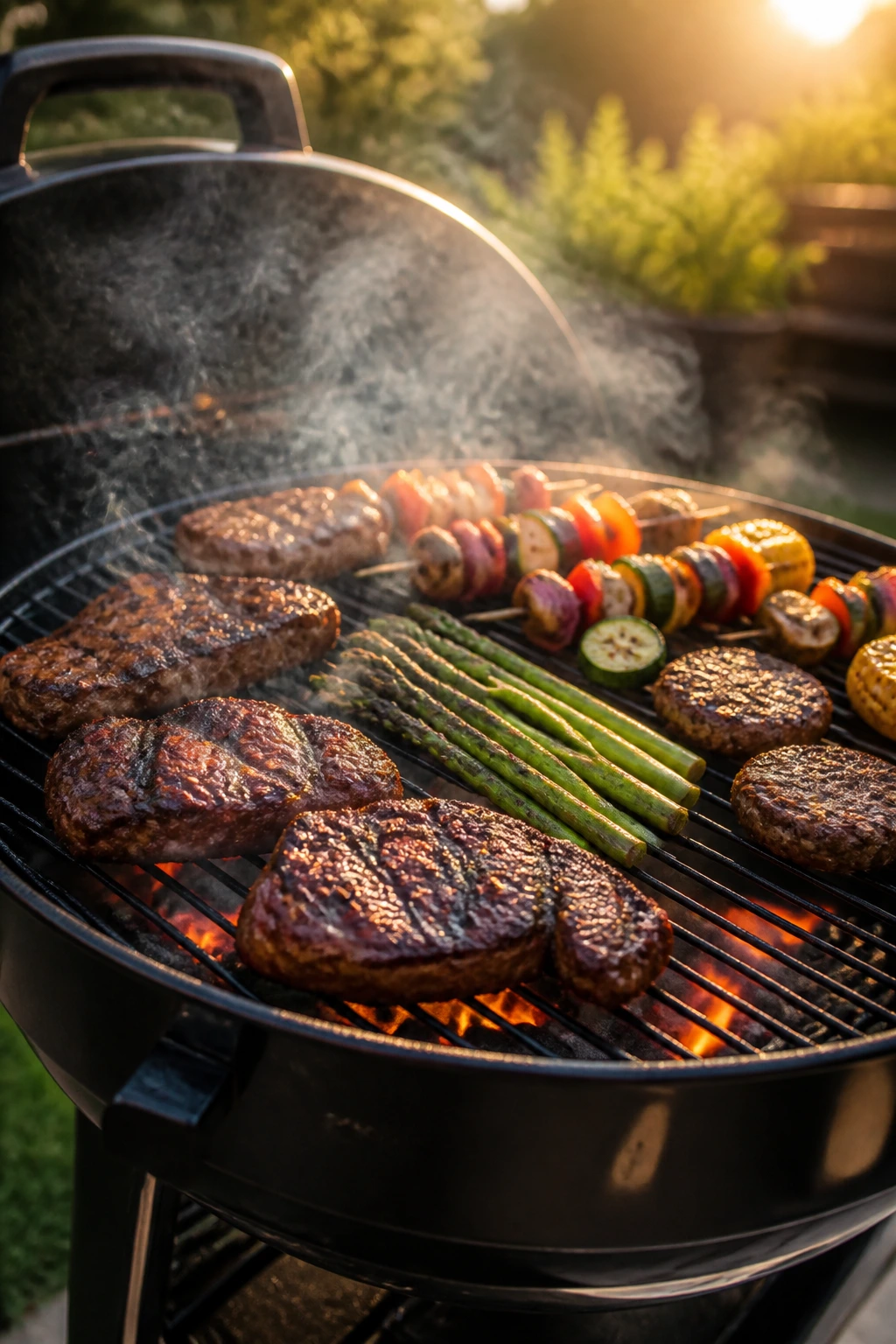
The grill does something that ovens and stovetops usually don’t: it forces you to cook with a little focus and then get out of the way. That’s a good thing. The heat is direct, the timing is visible, and the food tells you what it needs by the color of the crust, the smell in the air, and the way it releases from the grates.
Backyard BBQ dinners also benefit from the grill’s built-in pacing. Some recipes need a hot blast and a short rest. Others need low, steady heat and a few flips of foil. That range is why this collection works as a menu instead of a pile of disconnected recipes. You can run one grill session and still serve ribs, chicken, vegetables, and a few handhelds without making dinner feel like a kitchen shift.
And here’s the part I like most: grilling makes ordinary ingredients more interesting without asking them to become something else. A pepper gets sweeter. A chicken thigh gets a sticky edge. A potato gets a little smoky in its own packet. That’s not magic. It’s just heat behaving the way it should.
Essential Equipment for These Recipes
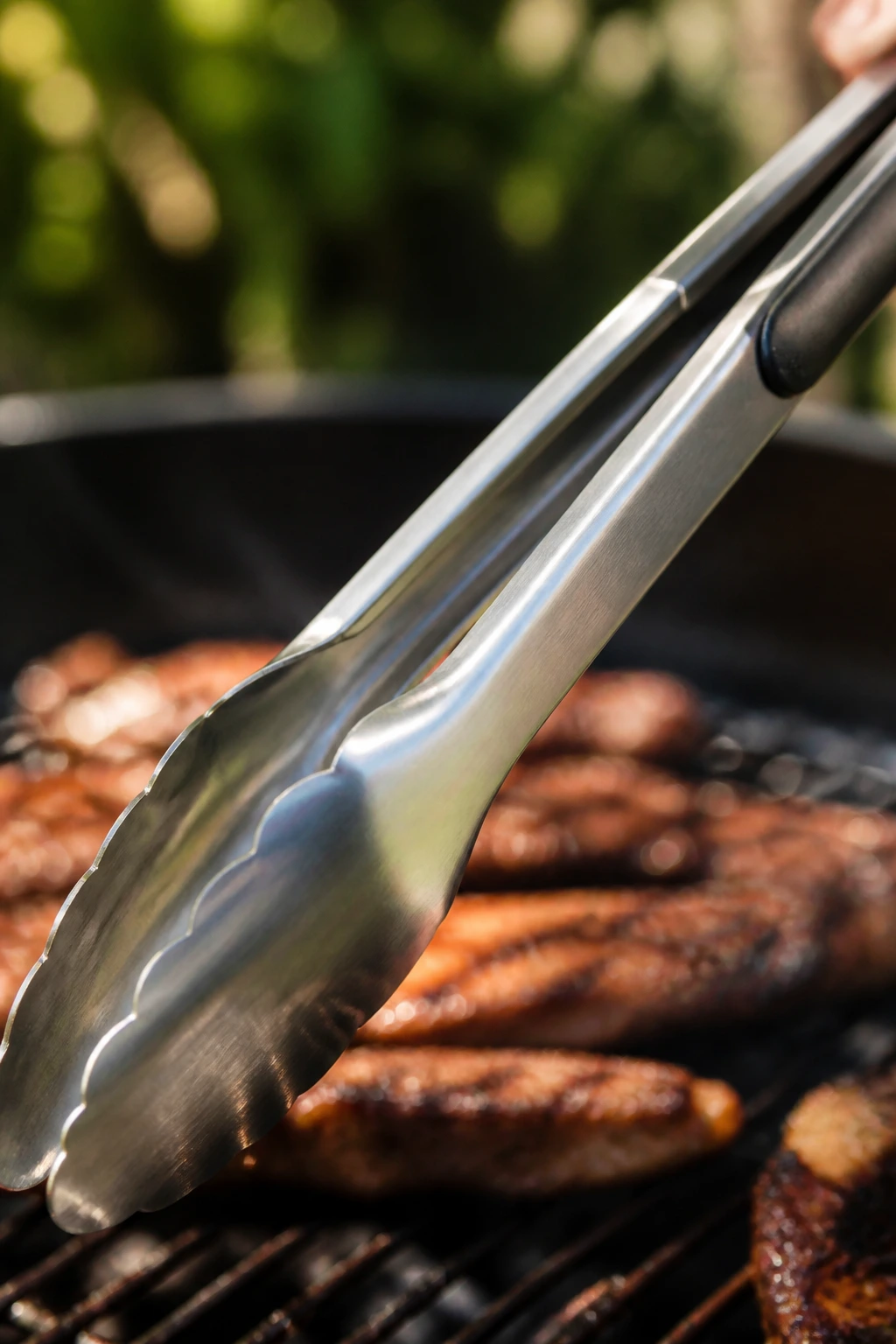
- Gas or charcoal grill: Either one works; charcoal gives more smoke, while gas gives easier temperature control.
- Instant-read thermometer: The fastest way to stop guessing, especially for chicken, pork, and steak.
- Long-handled tongs: Safer than forks and far better for turning food without tearing it.
- Grill brush or scraper: Clean grates help prevent sticking and ugly off-flavors from old residue.
- Mixing bowls: You’ll want at least two—one for marinades or rubs and one for slaws or sauces.
- Sheet pans: Useful for carrying ingredients outside and for resting cooked food before serving.
- Foil: Needed for foil-pack dinners, rib wrapping, and keeping warm items from drying out.
- Skewers: Metal skewers are reusable; wooden skewers need a 30-minute soak before grilling.
- Basting brush: Handy for sauces, glazes, and a quick oil coat on vegetables or bread.
- Cedar plank: Optional, but useful for salmon if you like a light smoky aroma.
- Grill basket: A nice backup for delicate fish, small vegetables, or anything you don’t want slipping through the grates.
- Cutting board with juice groove: Keeps steak and chicken rest juices from flooding the counter.
Smart Shopping and Ingredient Tips
Great cookout food starts in the store, not at the grill. Buy meat with enough fat for the cooking method you’re using. That means 80/20 ground beef for burgers, thighs for chicken if you want forgiving heat, bone-in pork chops for juicier results, and flank or skirt steak when you plan to slice thinly. Lean cuts have their place, but they punish sloppy timing. Fattier cuts are kinder.
For seafood, choose fish that feels firm and smells clean, not fishy. Salmon should look moist and bright, not dull or dry at the edges. If you’re buying shrimp, pick large or extra-large so they don’t disappear over high heat. Frozen shrimp is fine—often better than the “fresh” stuff that has already spent time thawing on ice.
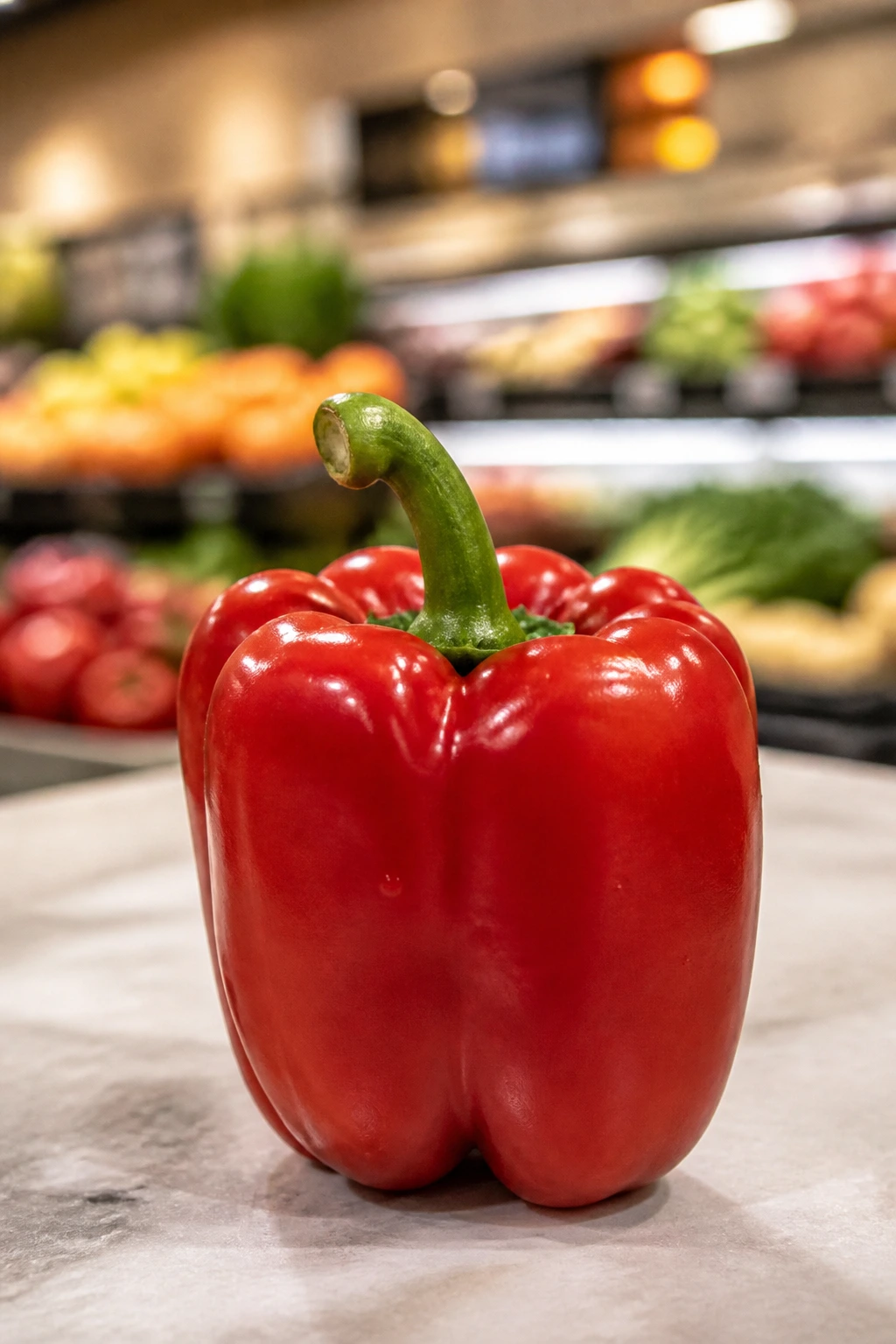
Produce matters more than people admit. Look for peppers with tight skins, corn with moist husks if you’re buying it unshucked, and herbs that still smell alive when you rub the leaves between your fingers. Tomatoes should be ripe enough to taste like something, but not so soft that they collapse on the board. For summer cookouts, the vegetables are not filler. They’re the part that makes the plate feel finished.
Sauces and buns deserve a little respect too. Buy buns that can handle moisture, or toast them. Choose barbecue sauce with a flavor you’d eat on its own, because it will touch almost everything on the plate. And if you’re doing skewers, try to keep the chunks similar in size. That sounds basic. It matters more than most fancy tricks.
How to Serve These Recipes
Presentation:
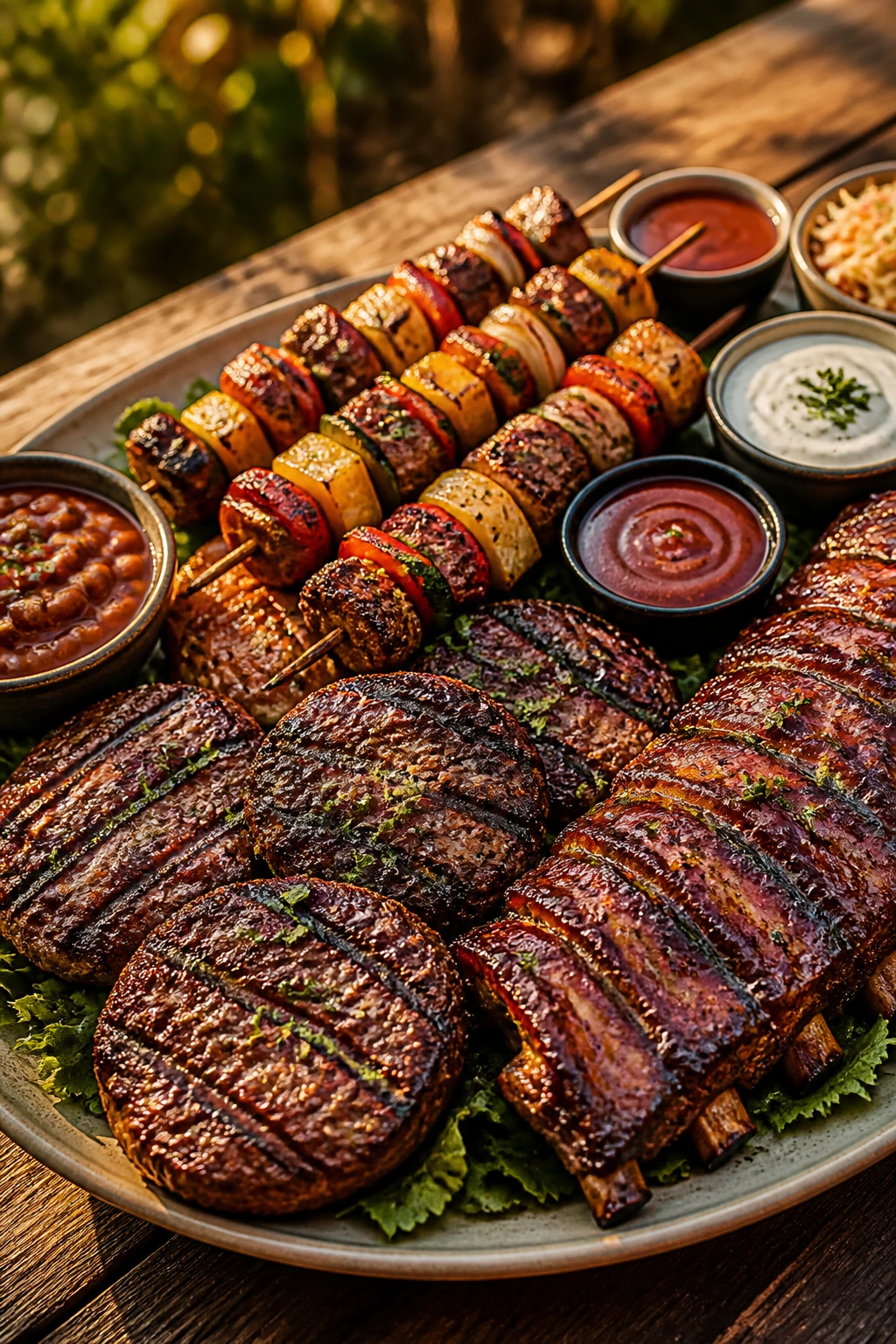
Serve grilled dinners on wide platters, not crowded bowls. A little open space makes the charred edges, glossy sauces, and fresh herbs stand out. For burgers and sandwiches, slice one piece in half on the platter so people can see the interior; for skewers, fan them out and tuck lemon wedges or lime halves around the edges.
Accompaniments:
Corn on the cob, potato salad, grilled bread, slaw, watermelon, and simple green salads are the side dishes that play nicely with almost everything here. If you’re serving something rich like ribs or pulled pork, add something sharp—pickles, vinegar slaw, or a mustardy salad. If the main is lighter, like fish or salad, round it out with bread or roasted potatoes.
Portions:
Plan on 6 to 8 ounces of cooked meat per adult for steak, pork, or chicken, a little less if the plate includes sides. Burgers and flatbreads usually cover one person per serving, while kebabs often need two skewers per hungry adult. When you’re scaling up, keep sauces and slaws in separate bowls so the food doesn’t go soft before the second round is served.
Beverage Pairing:
I like cold lager with burgers and ribs, crisp white wine with salmon and fish tacos, and citrusy sparkling water for everything else. Sweet tea is not a bad call either, especially with spicy chicken or sausage. If you’re keeping it simple, icy lemonade does more work than people give it credit for.
Additional Tips and Flavor Boosters
Flavor Enhancement:
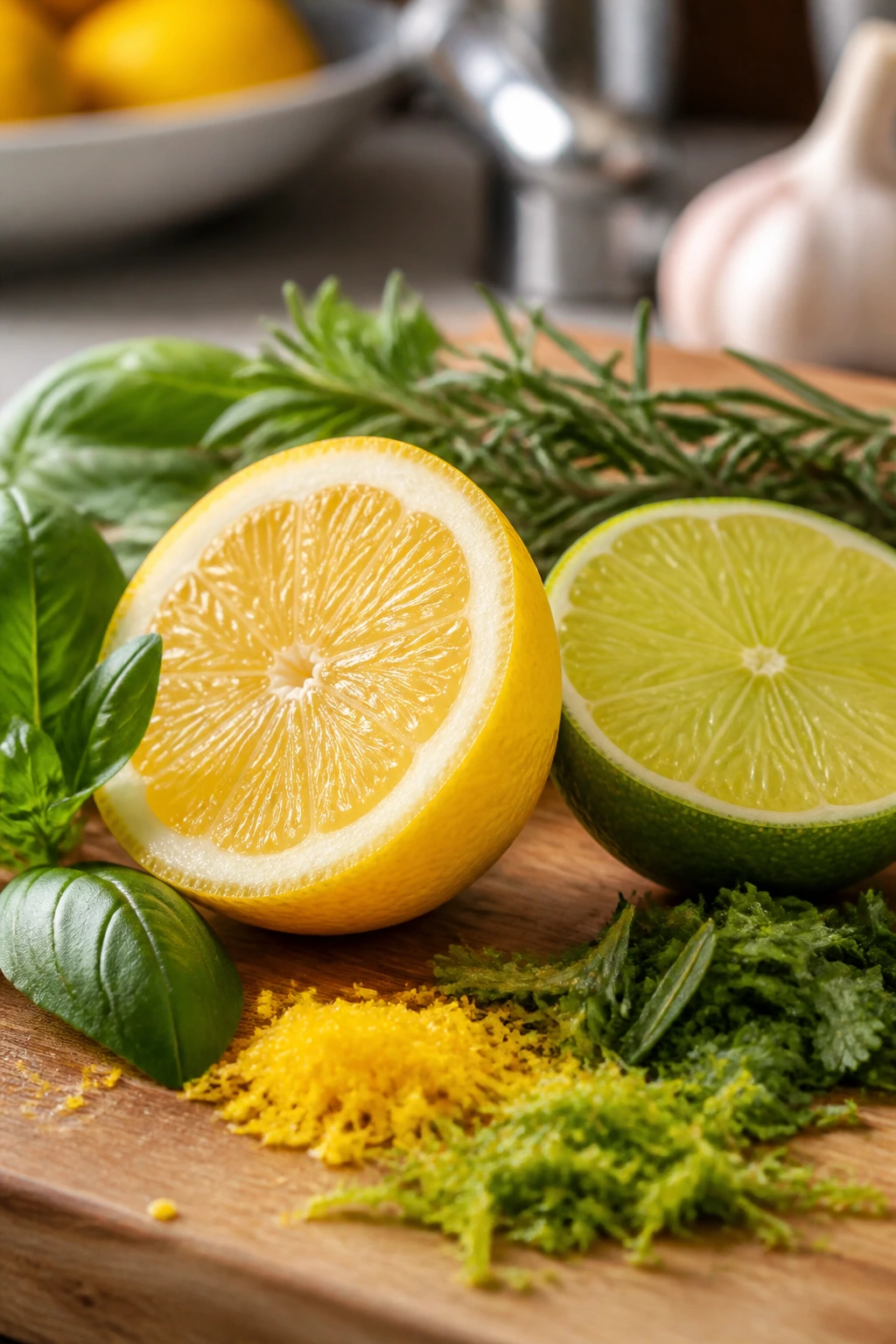
A finishing squeeze of lemon or lime wakes up almost every dish in this collection. It sounds tiny. It isn’t. Acid after grilling keeps the food tasting fresh instead of flat, especially on chicken, steak, seafood, and sausage.
Customization:
Swap in different cheeses, sauces, or herbs without changing the basic method. Cheddar can become provolone. Cilantro can become parsley. BBQ sauce can lean smoky, sweet, or spicy depending on who’s eating. That kind of change is easy and usually enough.
Serving Suggestions:
Keep a bowl of chopped herbs, sliced scallions, and pickled onions on the table. People can finish their own plates, and the food looks more alive. Hot sauce, aioli, and extra barbecue sauce should all sit nearby, not hidden in the kitchen.
Make-It-Yours:
For a lighter plate, serve grilled proteins over salad or with vegetables instead of buns and tortillas. For a richer one, add cheese, butter, or a creamy sauce at the end. For a gluten-free table, use corn tortillas, salad bowls, or grilled potatoes and skip bread entirely.
Make-Ahead, Storage, and Reheating Guidance
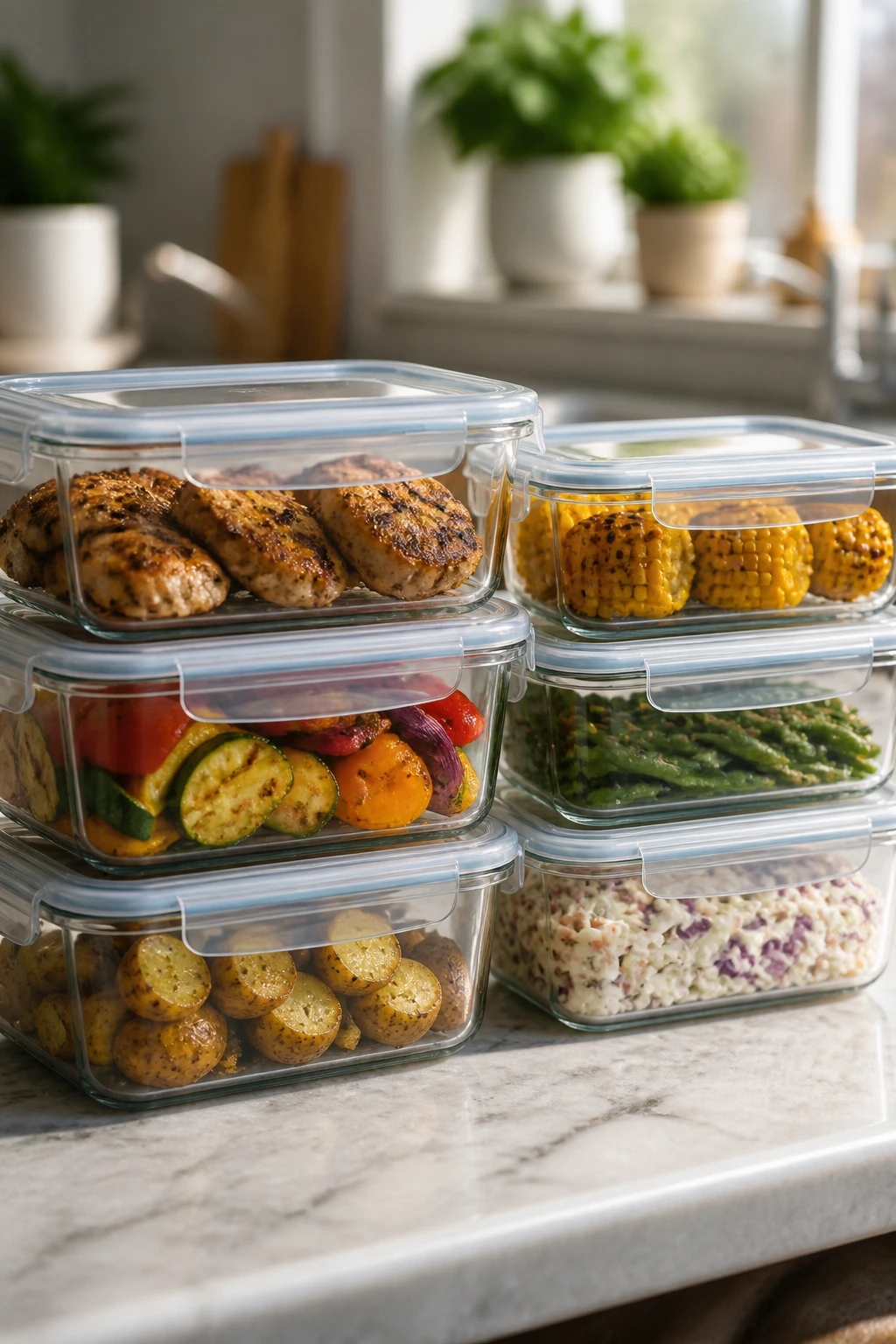
A lot of these recipes can be broken into parts ahead of time, and that’s where cookout sanity usually lives. Marinades, rubs, slaws, sauces, and chopped vegetables can often be made the day before. Chicken, pork, and steak can be seasoned several hours ahead and held in the fridge, which saves you from trying to measure paprika while people are already asking whether dinner is ready.
Cooked beef, pork, chicken, sausage, and most grilled vegetable dishes keep well for 3 to 4 days in the refrigerator in airtight containers. Fish is the short runner; aim for 2 to 3 days. Freezer life is usually up to 2 months for cooked meats and pulled pork, though burgers and delicate seafood are better eaten sooner. Foil-pack leftovers and sausage dishes freeze more gracefully than crispy items or sandwiches already assembled with bread.
Reheat meat in a 300°F oven covered loosely with foil until warmed through, or use a skillet with a splash of water or broth if you want to keep things juicy. Pulled pork reheats well on low heat with a spoonful of sauce. Burgers and steak are best rewarmed gently—overheating them dries out the texture fast. For fish, use low heat and stop early; if it’s warmed, not blasted, it stays better. Flatbreads and buns should be reheated separately from their fillings if you want to keep them from turning soggy.
Make-ahead note: ribs and pulled pork often taste even better the next day because the seasoning settles in. Burgers, fish tacos, and grilled bread are the opposite—they’re best fresh off the heat.
Variations and Adaptations to Try
Gluten-Free Grill Night:
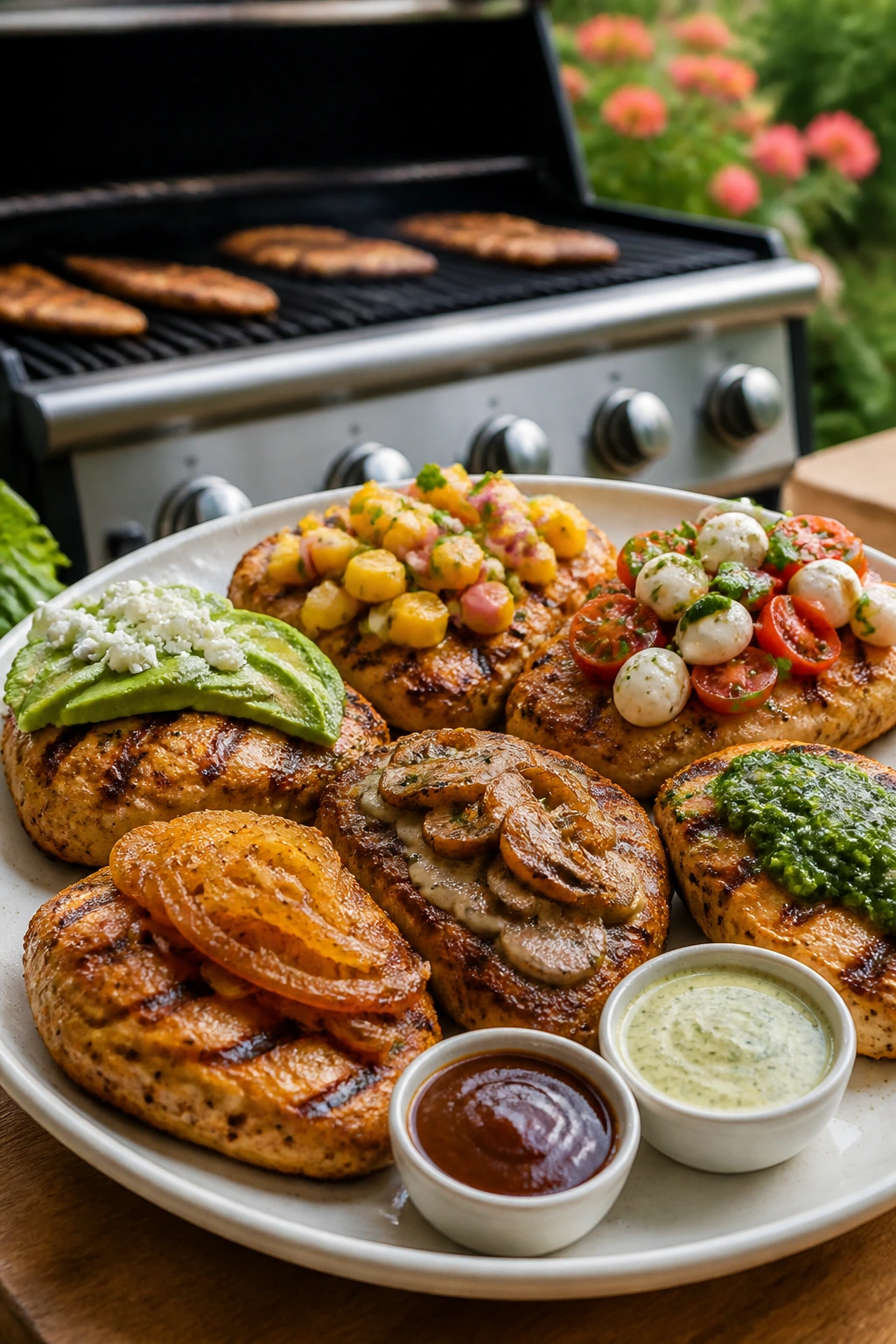
Use corn tortillas, lettuce wraps, or grilled potatoes instead of buns and hoagies. Check barbecue sauce and teriyaki sauce labels, since those often hide wheat in plain sight. Most of the grilled proteins here adapt cleanly once the bread is swapped out.
Dairy-Free Smoke and Char:
Skip cheese and yogurt sauces, then lean on herb sauces, salsa, mustard, or a simple vinaigrette. The salmon, steak, chicken, and tacos all work fine without dairy, especially if you add a bright finishing sauce at the table.
Lower-Sodium Swap:
Use less salt in rubs and brines, then make flavor come from citrus, garlic, herbs, and smoke. You can also pick lower-sodium sausage or sauce, though I’d rather reduce the sauce and keep the meat tasting like itself.
Kid-Friendly Version:
Dial back chili powder, cayenne, and jalapeño, then serve sauces on the side. Teriyaki kebabs, cheeseburgers, flatbreads, and pulled pork usually land well with younger eaters because the flavors are familiar and easy to handle.
Vegetarian Grill Spread:
Portobello burgers, halloumi skewers, grilled corn salads, and foil-pack vegetables can carry a whole dinner table if you want a meat-free night. Add beans, grains, or a big salad to make the plate feel complete.
Spice-Forward Cookout:
If your crowd likes heat, use more cayenne in the ribs, jerk chicken, and fajita skewers, then balance the plate with cool slaw, yogurt sauce, or avocado. Heat is easier to enjoy when something creamy stands nearby.
Common Mistakes to Avoid
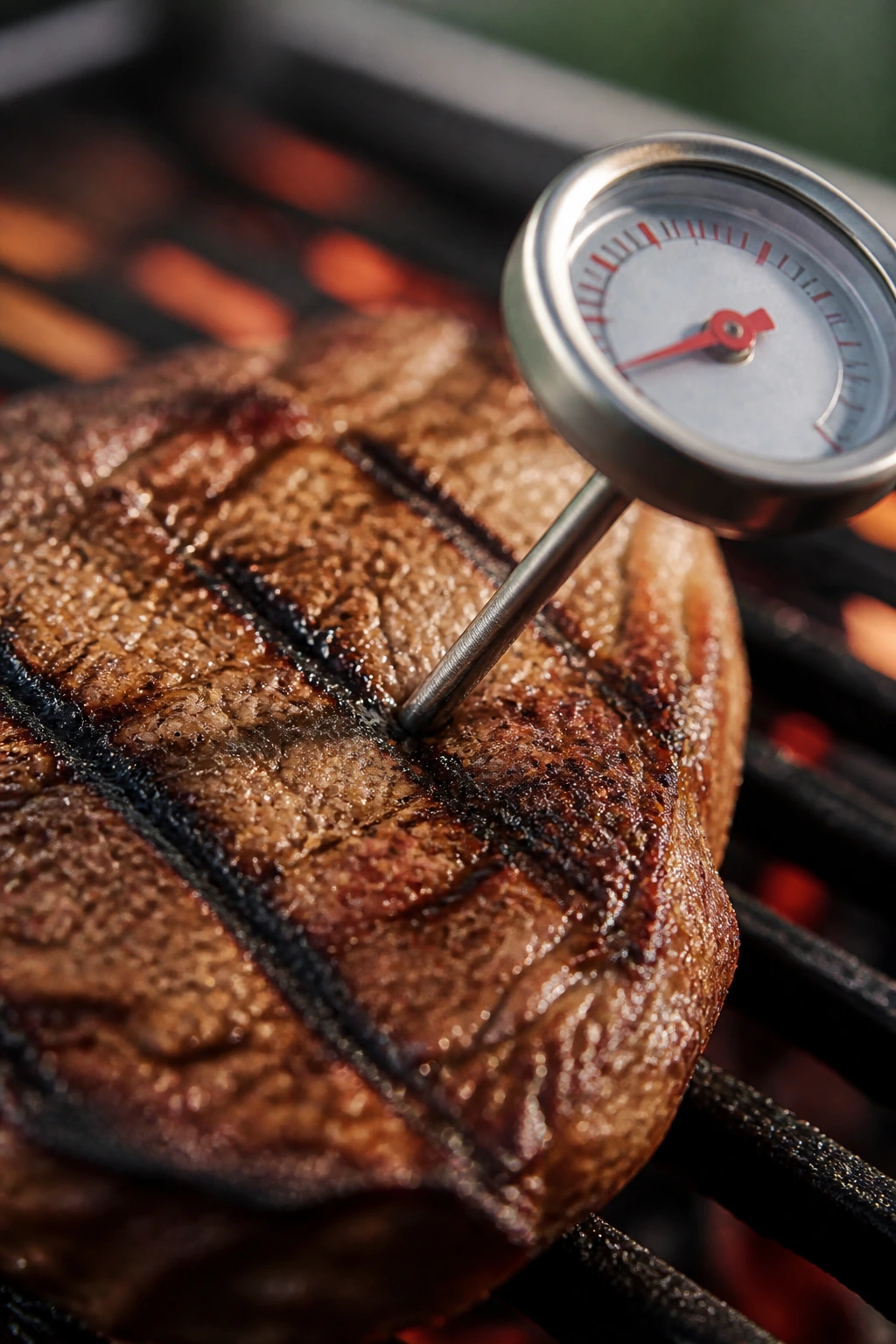
The first mistake is skipping the thermometer. Grill marks are not doneness. Chicken can look ready and still be undercooked in the middle, while pork and steak can move from perfect to dry if you’re guessing. Use an instant-read thermometer, and the whole cook becomes calmer.
The second mistake is cooking everything over the hottest part of the grill. Burgers, steak, and quick kebabs like direct heat, but ribs, whole chicken, and thick pork chops need indirect space or they’ll burn before they finish. Set up zones. It’s not complicated, and it saves dinner.
The third mistake is moving food too soon. If chicken or fish sticks to the grate, it often just needs another minute to release naturally. Poking it every 10 seconds tears the surface and ruins the crust. Let the grill do its part.
Another one: marinating too long in acid. Citrus is great for steak and fish, but leave it in too long and the texture goes odd, almost chalky on the outside. Keep citrus marinades tight on the clock, especially for seafood and thinner cuts of beef.
And then there’s serving too soon. Steak, chicken, and pork all need a rest after grilling. Even 5 to 10 minutes helps the juices stay in the meat instead of pooling on the board. Ribs and pulled pork need a slightly longer pause. Patience here pays real dividends.
Frequently Asked Questions

Can I make these backyard BBQ dinners on a gas grill only?
Yes. A gas grill handles all 20 recipes just fine if you use the temperature zones properly. For ribs and whole chicken, turn one side down or off to create indirect heat; for quick items like burgers, shrimp, and steak, preheat well and go straight over the flame.
Which recipes are best if I’m feeding a crowd?
Pulled pork, ribs, foil-pack sausage and potatoes, BBQ chicken flatbreads, and chicken thighs are the easiest crowd movers because they scale well and stay good for a little while. Skewers are also smart when you want everyone to grab a plate at their own pace.
How do I keep chicken from drying out on the grill?
Use thighs when possible, or pound breasts to even thickness so they finish at the same time. Pull the chicken as soon as it reaches 165°F, then rest it for 5 to 10 minutes. A marinade with a little oil also helps protect the surface from harsh heat.
What if I don’t have skewers?
A grill basket or a foil tray works for vegetables, shrimp, and sausage. You can also cook fajita-style ingredients directly on the grates in larger pieces, then chop or slice them after grilling. It won’t look as neat, but it still tastes right.
Can I prep these recipes earlier in the day?
Yes, and some of them practically expect it. Make rubs, sauces, slaws, and marinades ahead, and season meats several hours before grilling. Just keep anything raw and marinated in the fridge until you’re ready to cook.
How do I know when ribs are done without drying them out?
Look for meat that has pulled back from the bone and feels flexible when lifted with tongs. A thermometer in the thickest section should read somewhere near 190°F to 200°F for tender ribs, but the bend test is useful too. If they crack instead of flex, they’ve gone too far.
Which recipes work best if I have to move the party indoors?
Burgers, chicken thighs, steak skewers, sausage and peppers, and fish tacos all transfer well to a grill pan or cast-iron skillet. Ribs and pulled pork take more time, but you can finish them in the oven if the weather turns annoying. The flavor still lands.
How do I keep grilled food warm without wrecking it?
Use a low oven, around 200°F, and keep food loosely covered so steam doesn’t make the crust soggy. Burgers and flatbreads are the trickiest because they lose texture fast, so try to time those last. Sauces should stay separate until the plate is served.
A Good Night at the Grill
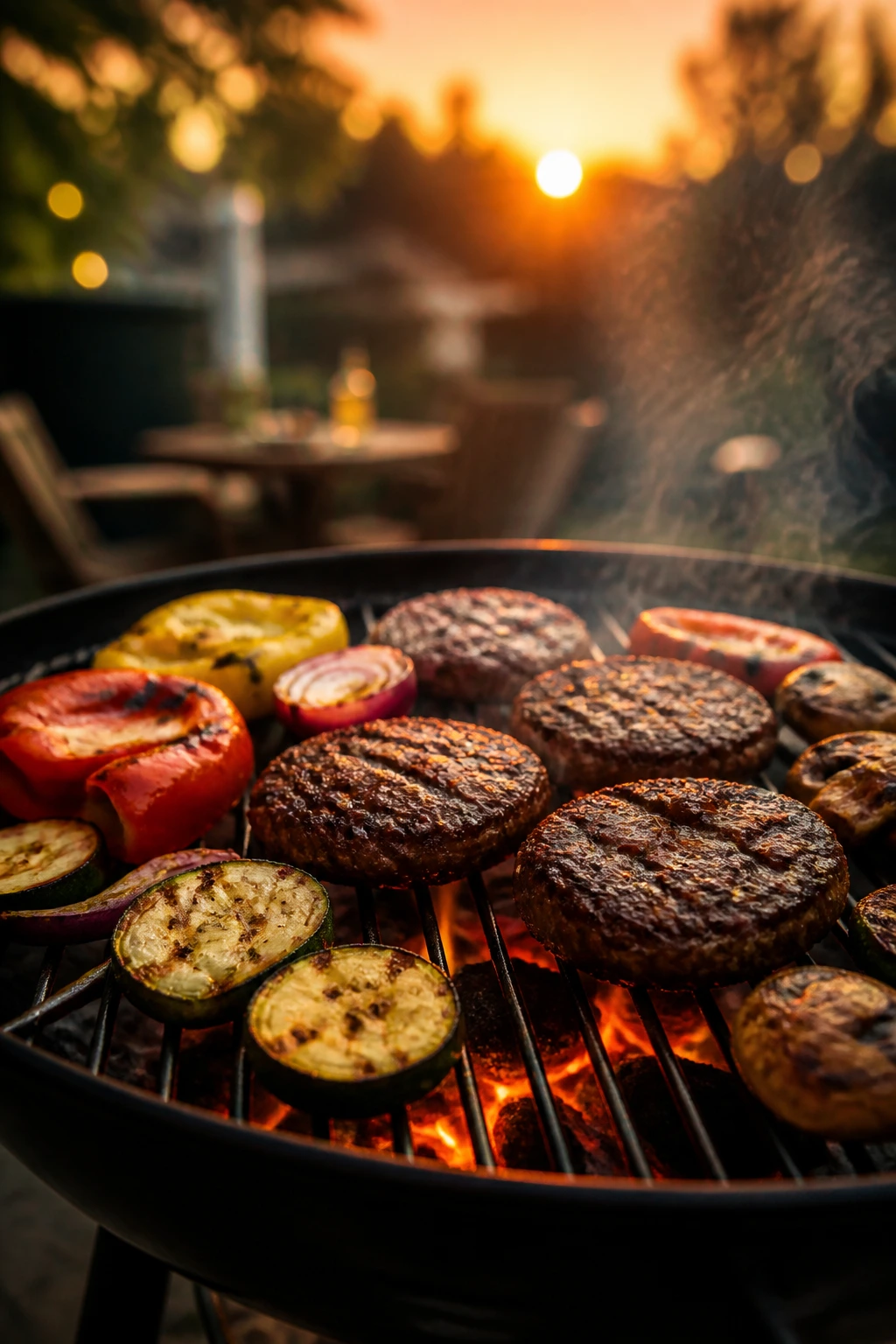
The nicest thing about backyard BBQ dinners is that they don’t have to be complicated to feel generous. A good burger, a clean piece of fish, a skewer of charred vegetables, or a pork shoulder that falls apart after a long cook can all earn the same kind of happy silence at the table.
What matters is matching the recipe to the night. Fast food for the nights when people are hungry early. Slow food for the nights when conversation matters as much as the meal. A little planning, a hot grill, and the right cut of meat go farther than a pile of extra ingredients ever will.