



The best Thanksgiving dinner ideas for small families are the ones that do not leave you staring at a mountain of leftovers and a kitchen that looks like a parade route. A full holiday spread can be charming on paper, but for two, three, or four people it often turns into too much turkey, too much oven time, and too many dishes cooling on the counter while everybody waits for the gravy.
Small-batch Thanksgiving cooking has a nicer rhythm. You can roast a turkey breast instead of wrestling a whole bird. You can let a pork tenderloin, a pair of Cornish hens, or a casserole do the heavy lifting. You can keep the meal feeling warm and traditional—sage, apples, cranberries, butter, roasted vegetables—without making the day feel like unpaid catering work.
That’s the sweet spot here. These are Thanksgiving dinner ideas for small families that still taste like the holiday, but they fit in a real kitchen with real people who want dinner on the table while it’s hot.
Why This Collection Feels Manageable and Still Festive
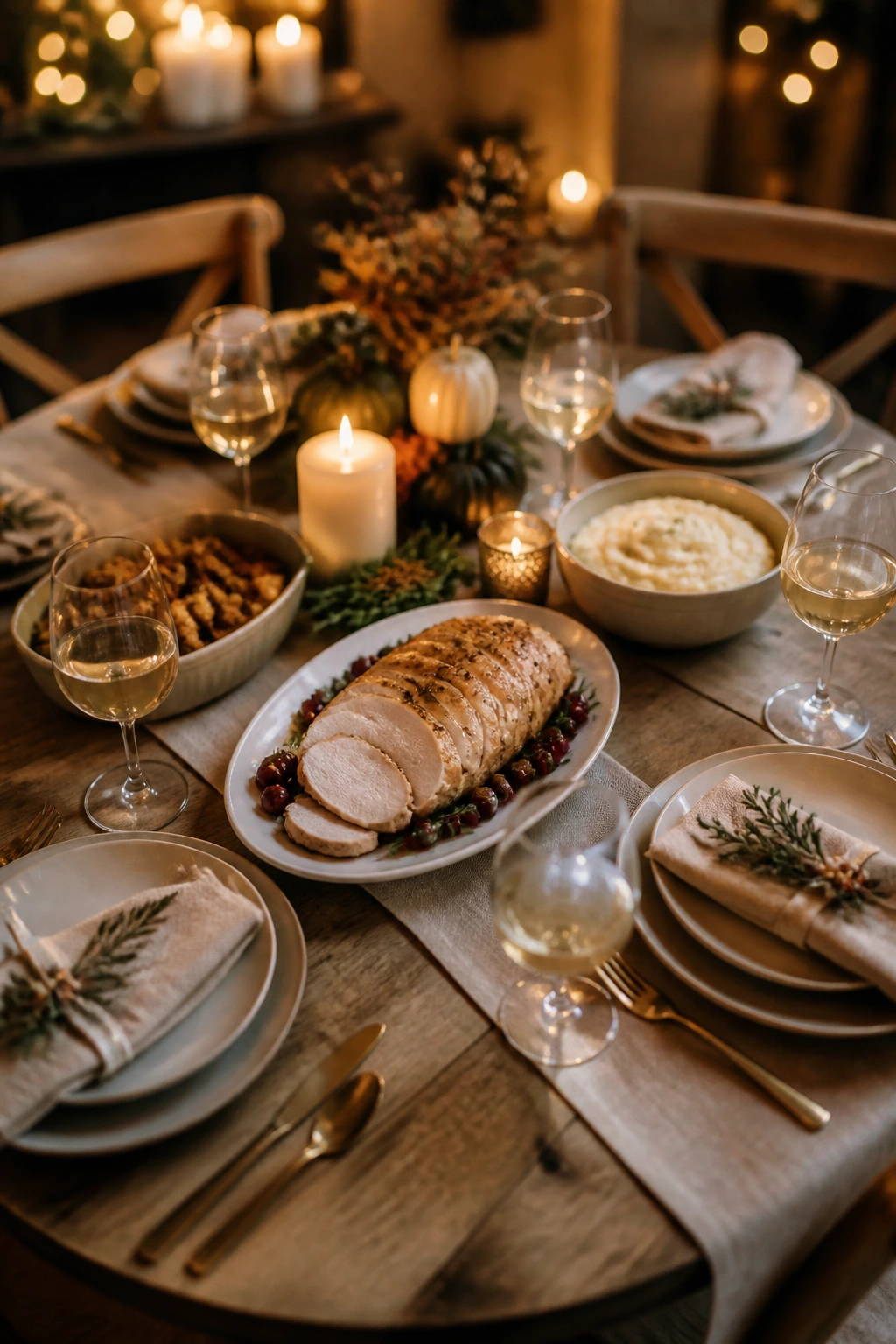
-
Sized for Actual Households: Every recipe here is built for a smaller table, so you can cook for two, three, four, or maybe a few more without needing a second refrigerator.
-
Holiday Flavor Without the Marathon: Sage, thyme, cranberry, apple, brown butter, and roasted vegetables show up in ways that feel familiar but do not demand an all-day production.
-
Flexible Main-Dish Options: Turkey breast, pork, chicken, salmon, squash, lentils, and ham give you choices when one person wants tradition and another wants something lighter.
-
Less Waste, Better Leftovers: Several of these dishes reheat cleanly, and the ones that do not are still small enough that you will not spend a week chasing the same roast.
-
One Oven, Fewer Complications: Sheet pans, skillets, and casseroles keep the temperature plan sane when you also want rolls, pie, or a side dish that needs the same rack.
-
Still Looks Like a Holiday Meal: These recipes are restrained, not plain. They plate well, taste seasonal, and make a small table feel intentional.
1. Herb-Roasted Turkey Breast with Pan Gravy
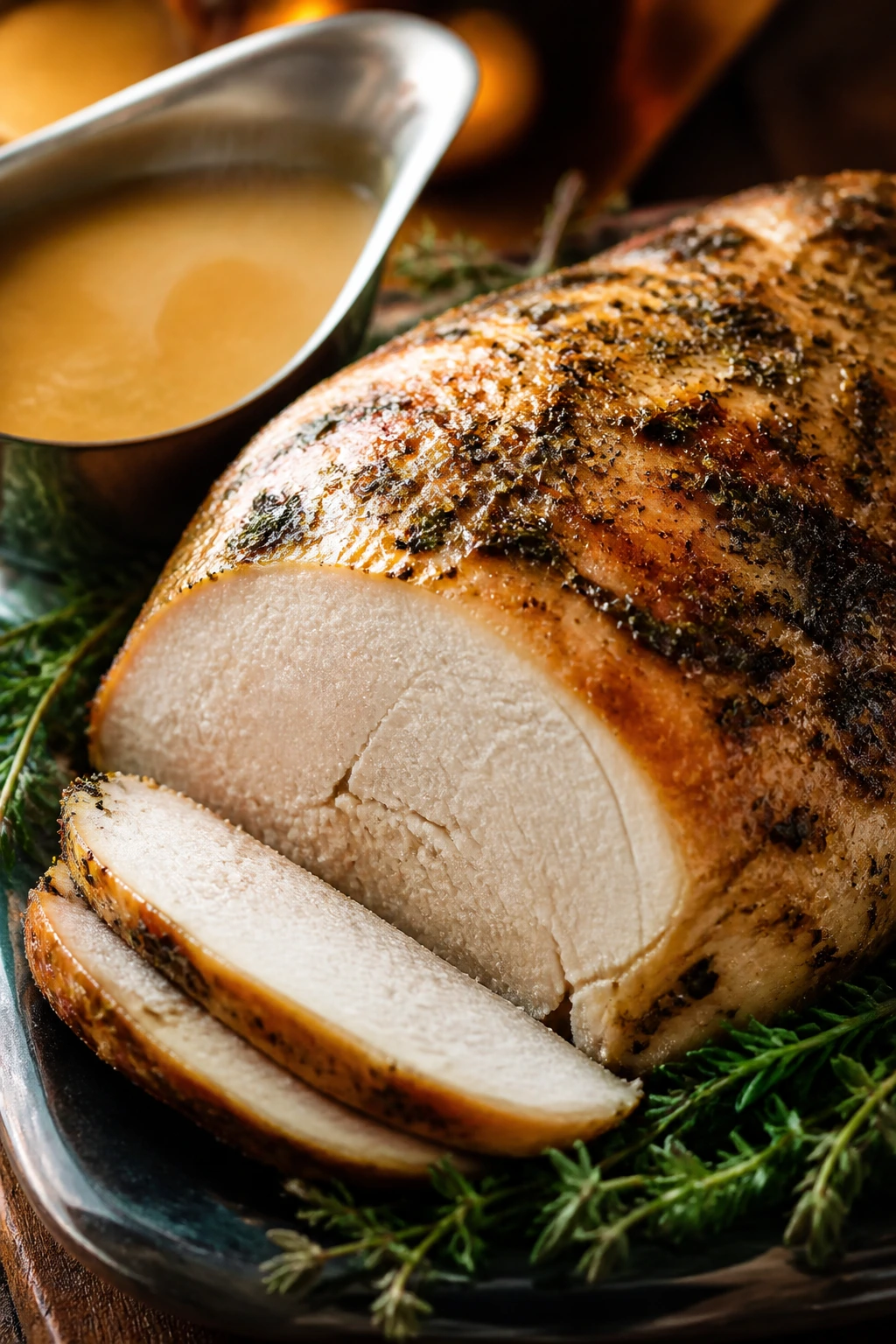
A whole turkey is a lot of bird when there are only a few chairs around the table. A turkey breast gives you the ritual part—the carved slices, the drippings, the gravy boat, the little moment when everybody goes quiet because the kitchen smells like sage and butter—without the leftovers swallowing your refrigerator.
This version stays juicy because it starts with butter under the skin, a bed of onion in the pan, and a thermometer instead of wishful thinking. It serves 4 comfortably and lands on the table in a little over an hour.
Why It Works:
A boneless, skin-on turkey breast is the right size for a small family because it cooks evenly and slices neatly, which a whole bird does not always do in a home oven. The butter, garlic, sage, and rosemary melt into the skin and baste the meat as it roasts. Roasting on top of onion keeps the bottom from drying out and gives the drippings a little sweetness for the gravy. The real win is temperature control: pull it at 160 to 165°F in the thickest part, then let the carryover heat finish the job while it rests.
Key Ingredients:
- 1 boneless, skin-on turkey breast roast, 3 to 3½ pounds
- 2 tablespoons olive oil
- 2 tablespoons unsalted butter, softened
- 2 teaspoons kosher salt
- 1 teaspoon black pepper
- 1 tablespoon chopped fresh sage
- 1 tablespoon chopped fresh rosemary
- 4 garlic cloves, minced
- 1 yellow onion, quartered
- 2 cups low-sodium chicken broth, divided
- 2 tablespoons all-purpose flour
Quick Steps:
- Preheat the oven to 375°F (190°C) and set a rack in the lower-middle position. Put the roasting pan in place while the oven heats if you want a slightly hotter base for the onions.
- Pat the turkey breast dry with paper towels. Mix the butter, olive oil, salt, pepper, sage, rosemary, and garlic into a thick paste, then rub it all over the turkey, getting some under the skin if the breast has one.
- Scatter the onion in the bottom of the roasting pan and pour in 1 cup of the broth. Set the turkey on top, skin side up, and roast for 50 to 65 minutes, until the skin is deep golden and the center reaches 160 to 165°F.
- Move the turkey to a carving board and let it rest for 15 minutes. Do not skip this. The juices need time to settle.
- Pour the pan drippings into a saucepan. Whisk the flour into 2 tablespoons of the fat or butter, cook for 1 minute, then whisk in the remaining broth and drippings. Simmer for 3 to 4 minutes until the gravy lightly coats a spoon.
Equipment for This Recipe:
- Roasting pan or oven-safe baking dish
- Instant-read thermometer
- Small saucepan for gravy
- Carving board and sharp knife
- Whisk
How to Serve This Dish:
Slice the turkey breast against the grain and spoon gravy over the top so the meat stays moist at the table. It wants mashed potatoes, green beans, and a spoonful of cranberry sauce on the side. For a smaller table, two thick slices per adult is about right; the rest of the plate should look full, not overloaded.
Pro Tips for This Recipe:
- Let the seasoned turkey sit at room temperature for 20 to 30 minutes before roasting if you have the time; it cooks more evenly.
- If the skin browns too fast, lay a loose sheet of foil over the top for the last 15 minutes.
- Save every drop of the pan drippings. The gravy tastes flat if you try to fake it with broth alone.
- Slice only after resting. A hot turkey breast cuts beautifully, then collapses if you rush it.
Variations on This Dish:
- Maple-Sage Turkey Breast: Add 1 tablespoon maple syrup to the butter mixture for a faint sweet edge that works well with cranberry sauce.
- Citrus Herb Version: Swap rosemary for orange zest and thyme, then tuck a few orange slices under the onion.
- Gluten-Free Gravy: Use cornstarch instead of flour; whisk 1 tablespoon cornstarch with 2 tablespoons cold broth before adding it to the pan juices.
Common Mistakes to Avoid with This Dish:
- Roasting by color alone: Golden skin can hide dry meat. Use a thermometer and aim for 160 to 165°F.
- Slicing too soon: If you cut immediately, the juices spill out and the meat looks drier than it is.
- Starting with a cold, wet surface: A damp turkey skin steams instead of browning. Pat it dry before seasoning.
2. Sage-Butter Cornish Hens with Cranberries
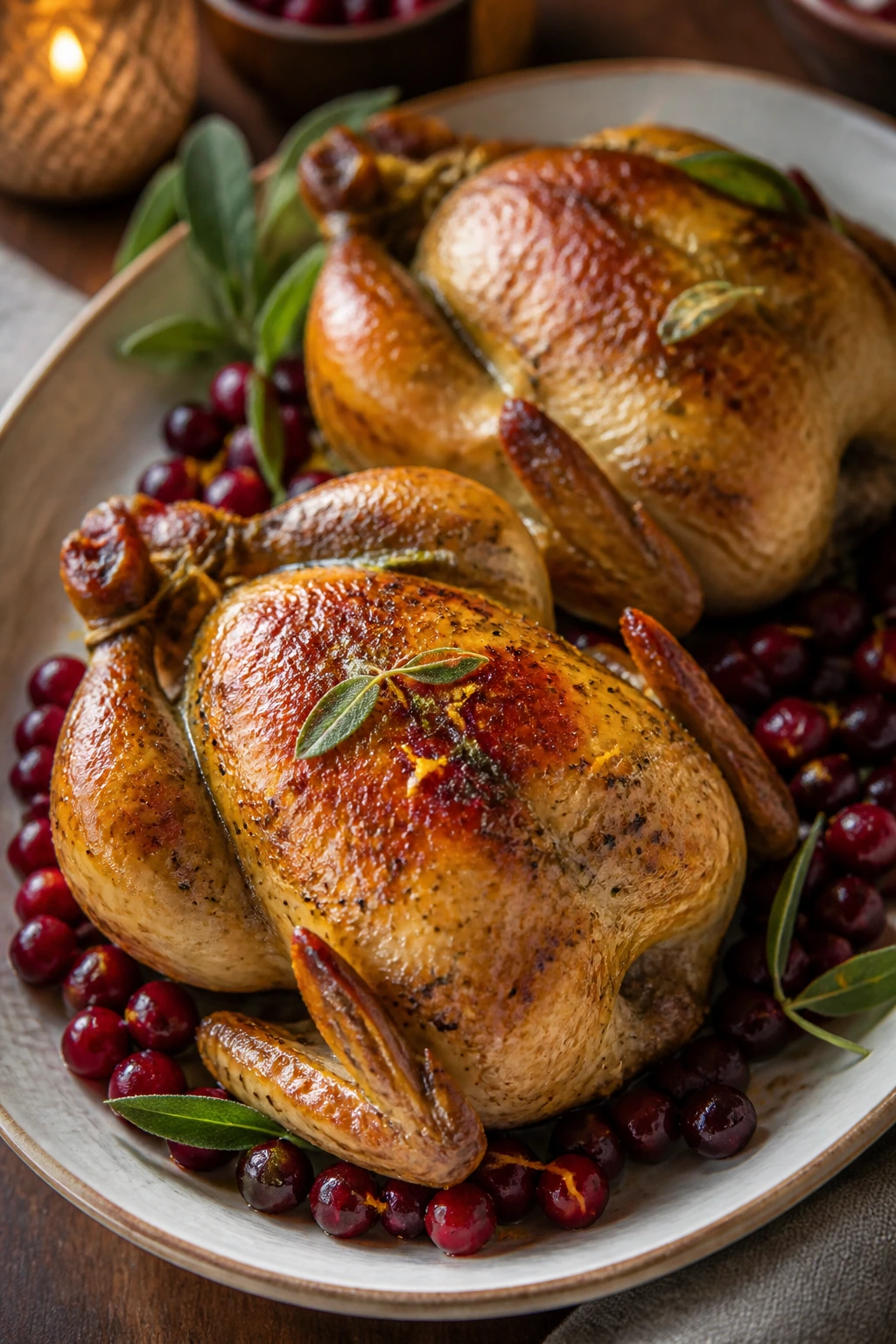
Cornish hens feel festive the minute they hit the oven. Two little birds on one pan look right at home on a small holiday table, and the crisp skin gives you that roast-chicken satisfaction without the scale of a full turkey.
The flavor here is classic Thanksgiving dressed in a slightly sharper suit: sage butter, orange zest, shallots, cranberries, and a pan sauce that lands somewhere between tart and glossy. It is a nice choice when you want a plated dinner that feels a touch special.
Why It Works:
Cornish hens cook quickly because they are small, which is a gift when your oven is already playing traffic cop for sides and dessert. Butter under and over the skin keeps the breast meat from drying out, and the cranberries break down just enough in the pan to give you a sauce with bright little pops of tartness. The orange zest keeps the whole thing from tasting heavy. You get holiday flavor, but the plate still feels light enough for people who do not want a giant roast.
Key Ingredients:
- 2 Cornish hens, about 1¼ to 1½ pounds each
- 3 tablespoons unsalted butter, softened
- 1 tablespoon chopped fresh sage
- 1 teaspoon kosher salt
- ½ teaspoon black pepper
- 1 orange, zested and cut into wedges
- 1 shallot, thinly sliced
- 1 cup fresh cranberries
- ½ cup apple cider
- 1 tablespoon honey
- 1 tablespoon olive oil
Quick Steps:
- Preheat the oven to 425°F (220°C). Line a small roasting pan or rimmed baking sheet with the shallot slices and orange wedges.
- Pat the hens dry. Mix the butter, sage, salt, pepper, orange zest, and olive oil, then rub it over the hens, including under the skin if you can loosen it gently.
- Place the hens on the pan, tuck the wings under, and roast for 20 minutes. Add the cranberries, cider, and honey to the pan, then roast for 20 to 25 minutes more, basting once or twice, until the skin is crisp and the thighs reach 165°F.
- Let the hens rest for 10 minutes before serving. The juices will settle, and the skin will stay crisper.
- Spoon the cranberries and pan juices over the hens or serve them alongside as a sauce.
Equipment for This Recipe:
- Rimmed baking sheet or small roasting pan
- Instant-read thermometer
- Small bowl for the herb butter
- Tongs or a spatula
- Spoon for basting
How to Serve This Dish:
Serve one hen halved for each person, then spoon the cranberries and pan juices across the plate. It looks especially good with wild rice, roasted carrots, or a small scoop of stuffing. The plate should read as dinner, not a tasting menu.
Pro Tips for This Recipe:
- Dry skin is the whole game here. If the hens go into the oven damp, they steam and lose that crisp finish.
- Baste only once or twice. Opening the oven too often slows browning.
- If you like a stronger cranberry bite, use less honey and more cider.
- A small rack under the hens helps, but the shallots and oranges work fine if that is what you have.
Variations on This Dish:
- Garlic-Rosemary Hens: Swap sage for rosemary and add 2 minced garlic cloves to the butter.
- Maple-Orange Glaze: Use maple syrup instead of honey and finish with an extra spoonful in the last 10 minutes.
- Dairy-Free Version: Use olive oil in place of butter and add a little more orange zest for richness.
Common Mistakes to Avoid with This Dish:
- Overcrowding the pan: If the hens touch each other too much, the skin softens. Leave space between them.
- Skipping the thermometer: The legs can look done while the breast is still undercooked. Check the thigh joint.
- Using too much liquid too early: Add the cider after the first stage of roasting so the hens still brown properly.
3. Maple-Dijon Pork Tenderloin with Apples
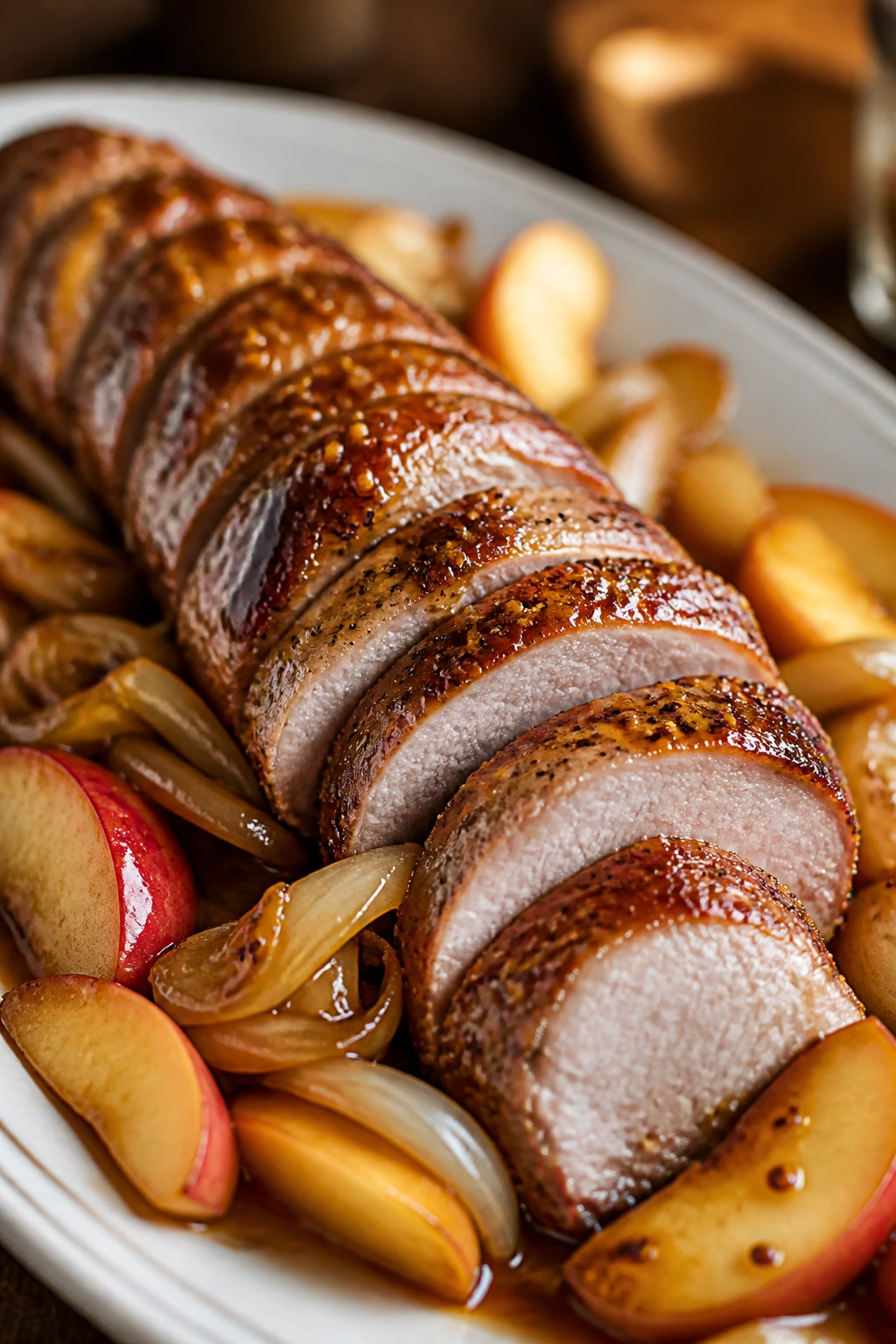
Pork tenderloin is the underappreciated cousin at the Thanksgiving table. It cooks fast, slices neatly, and works with all the sweet-salty flavors people already expect from the holiday: apples, onions, mustard, and a pan sauce that smells like the best part of a late-afternoon roast.
I reach for this one when I want a holiday dinner that feels polished but does not demand half the day. It serves 4 and gets to the table in about 40 minutes.
Why It Works:
Pork tenderloin is lean, so the trick is to roast it hot and fast, then stop the cooking at 145°F with a short rest. The maple-Dijon glaze gives you a glossy surface and a little caramelized edge in the pan. Apples and onions cook down into something soft and sweet beside the meat, and the apple cider loosens the browned bits into a sauce that tastes much bigger than the ingredient list suggests. It is the rare holiday dinner that feels elegant without being fussy.
Key Ingredients:
- 2 pork tenderloins, about 1½ pounds total
- 1 tablespoon Dijon mustard
- 1 tablespoon maple syrup
- 2 teaspoons kosher salt
- 1 teaspoon black pepper
- 1 teaspoon chopped fresh thyme
- 2 tablespoons olive oil
- 2 apples, sliced into wedges
- 1 yellow onion, sliced
- 1 cup apple cider
- 1 tablespoon apple cider vinegar
- 1 tablespoon unsalted butter
Quick Steps:
- Preheat the oven to 425°F (220°C). Set a large oven-safe skillet over medium-high heat.
- Stir together the Dijon, maple syrup, salt, pepper, and thyme. Rub the mixture over the pork tenderloins and let them sit while the skillet heats.
- Sear the pork in the hot skillet with the olive oil for 2 to 3 minutes per side, until the surface turns golden brown. Transfer the skillet to the oven and roast for 12 to 15 minutes, until the thickest part reaches 145°F.
- Move the pork to a board and rest for 10 minutes.
- Return the skillet to medium heat. Add the apples and onion, cook for 5 to 6 minutes until softened, then pour in the cider and vinegar. Simmer for 3 to 4 minutes, finish with butter, and spoon the sauce over the sliced pork.
Equipment for This Recipe:
- Large oven-safe skillet
- Instant-read thermometer
- Cutting board and sharp knife
- Wooden spoon
- Small measuring cup or bowl for the glaze
How to Serve This Dish:
Slice the pork into thick medallions and fan them over the apples and onions. It is excellent with mashed potatoes, Brussels sprouts, or a simple buttered noodle if you are keeping the rest of the meal modest. The sauce should be spooned on at the table, not drowned on the stove.
Pro Tips for This Recipe:
- Do not cook pork tenderloin to “well done.” It dries out quickly. Pull it at 145°F.
- If the glaze seems thin, let it simmer another minute or two; apple cider reduces faster than people expect.
- Sear the pork before roasting. That browned crust is where much of the flavor lives.
- A tart apple like Granny Smith gives you more contrast than a very soft dessert apple.
Variations on This Dish:
- Apple-Cranberry Version: Add ½ cup dried cranberries with the apples for a brighter holiday look.
- Mustard-Herb Swap: Use whole-grain mustard and add chopped rosemary for a deeper savory flavor.
- Sheet-Pan Shortcut: Roast the tenderloins and apples on a lined sheet pan if you want fewer pans to wash.
Common Mistakes to Avoid with This Dish:
- Leaving the pork in the oven too long: Tenderloin is small and lean; even a few extra minutes matters.
- Skipping the rest: If you slice too soon, the juices run out and the meat eats dry.
- Using a cold skillet for the sear: You want a real crust, not pale steamed pork.
4. Sheet-Pan Turkey Cutlets with Brussels Sprouts and Sweet Potatoes
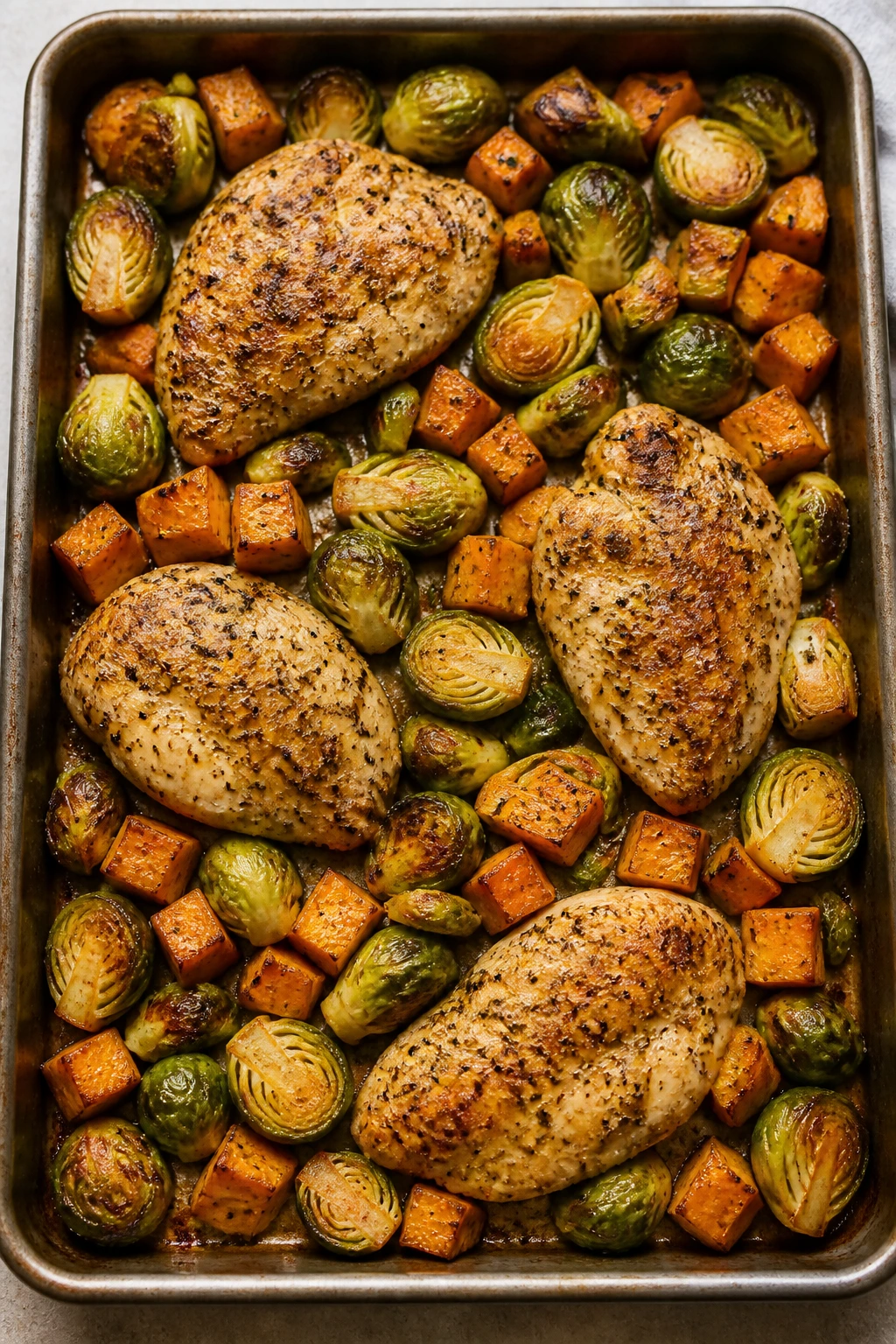
This is the recipe for the day you want Thanksgiving flavor and one sheet pan to clean. The turkey cutlets cook quickly, the Brussels sprouts turn brown at the edges, and the sweet potatoes get those caramelized corners that make people keep picking at the pan before dinner.
It is not the grand, ceremonial bird. That is the point. It is practical, handsome, and just right for a small household that still wants a holiday plate with color and crunch.
Why It Works:
Turkey cutlets are thin, which means they cook in the same time as the vegetables if you give the sweet potatoes a head start. Maple and thyme make the whole pan smell like roasted fall vegetables should smell. A little balsamic at the end wakes everything up and keeps the flavors from tasting flat. Because everything roasts on one tray, the food stays hot and the timing stays sane.
Key Ingredients:
- 1½ pounds turkey cutlets
- 1 pound Brussels sprouts, trimmed and halved
- 1¼ pounds sweet potatoes, peeled and cut into 1-inch cubes
- 2 tablespoons olive oil
- 1 tablespoon maple syrup
- 1 teaspoon dried thyme
- 1 teaspoon smoked paprika
- 1 teaspoon kosher salt
- ½ teaspoon black pepper
- 1 tablespoon balsamic vinegar
Quick Steps:
- Preheat the oven to 425°F (220°C) and line a rimmed sheet pan with parchment.
- Toss the sweet potatoes with 1 tablespoon of the olive oil, half the salt, half the pepper, and the smoked paprika. Spread them on the pan and roast for 15 minutes.
- Toss the Brussels sprouts with the remaining oil, salt, pepper, thyme, and maple syrup. Add them to the pan with the turkey cutlets.
- Nestle the turkey among the vegetables and roast for 10 to 12 minutes, until the turkey reaches 165°F and the Brussels sprouts are browned at the cut sides.
- Drizzle with balsamic vinegar and rest the pan for 3 minutes before serving.
Equipment for This Recipe:
- Rimmed sheet pan
- Parchment paper
- Instant-read thermometer
- Large mixing bowl
- Tongs or a spatula
How to Serve This Dish:
Pile the vegetables onto warmed plates, then lay the turkey cutlets over the top so the juices run into the sweet potatoes. It needs little else beyond cranberry sauce or a spoonful of gravy if you have some. For a family of four, one cutlet per person is usually enough when the vegetables are generous.
Pro Tips for This Recipe:
- Cut the sweet potatoes evenly. If some cubes are tiny and others are large, they cook at different speeds and the pan gets messy.
- Do not crowd the sheet pan. Overcrowding traps steam and gives you soft vegetables.
- If your cutlets are especially thin, check them at the 8-minute mark so they do not overcook.
- A small drizzle of balsamic at the end does more work than another big pinch of salt.
Variations on This Dish:
- Chicken Cutlet Swap: Use boneless chicken cutlets and keep the same roasting time checks.
- Pecan Finish: Scatter chopped toasted pecans over the pan after roasting for crunch.
- Dairy-Free Gravy Drizzle: Serve with a quick pan gravy made from broth and cornstarch instead of butter.
Common Mistakes to Avoid with This Dish:
- Putting everything on the pan at once: The sweet potatoes need a head start or they stay firm while the turkey overcooks.
- Using a crowded tray: Browned edges need air space.
- Ignoring the thermometer: Turkey cutlets go from juicy to dry fast.
5. Brown Butter Chicken Thighs with Wild Rice Pilaf
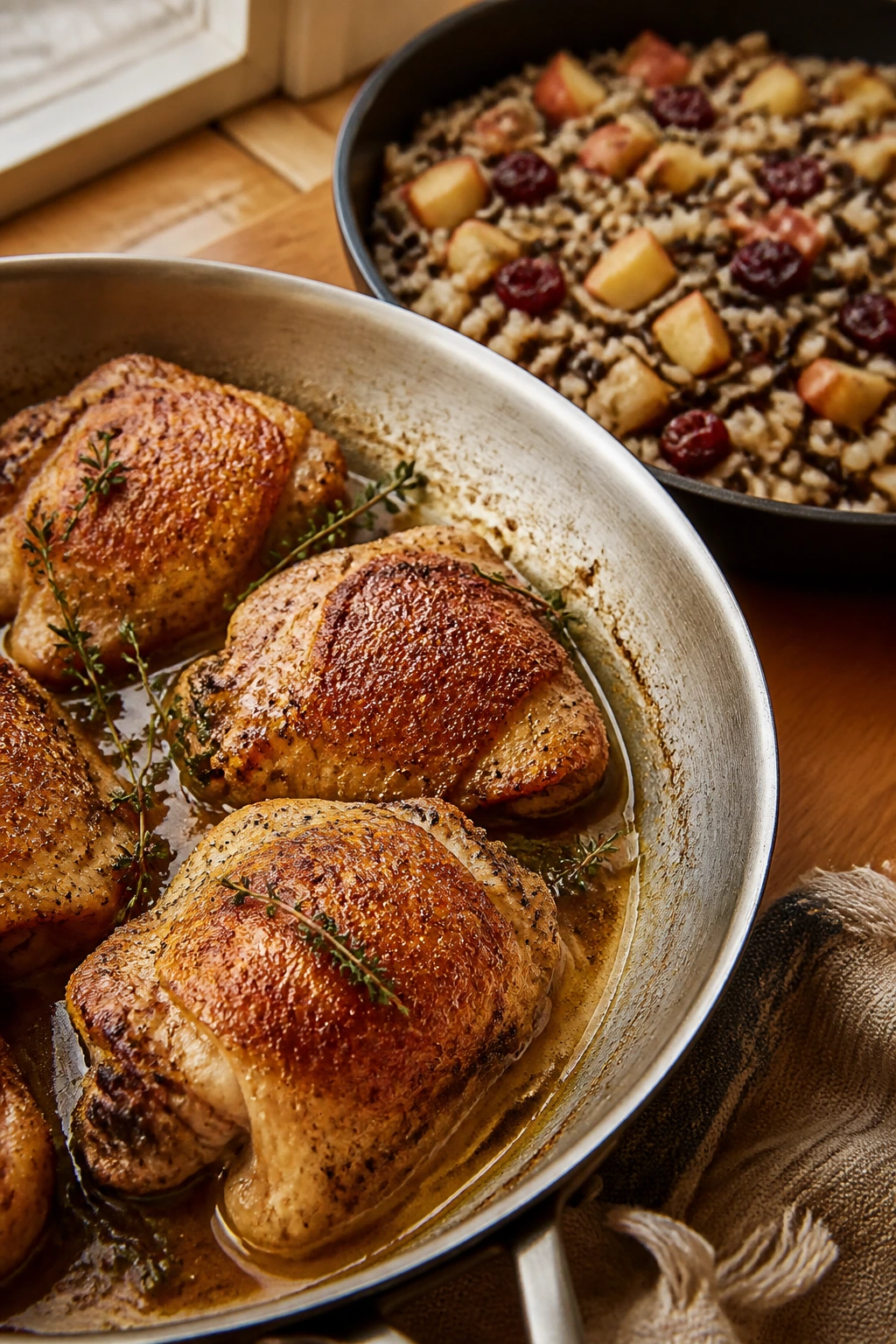
Chicken thighs do something turkey sometimes cannot: they stay juicy even if the oven runs a little hot or the cook gets distracted. That is useful on a holiday, when one person is looking for a corkscrew, another is asking where the rolls went, and the side dishes are all trying to finish at once.
The brown butter in this dish gives the whole meal a nutty, toasty smell. Add wild rice, apples, celery, and cranberries, and you get a skillet dinner that feels like Thanksgiving without pretending to be a roast bird.
Why It Works:
Bone-in, skin-on chicken thighs bring built-in flavor and forgiveness. Brown butter adds depth, but only if you keep the heat under control and let the milk solids go golden, not black. Wild rice blend holds up nicely against the chicken juices, and the apple and cranberry bits keep the pilaf from feeling too heavy. Because the chicken finishes in the same pan as the rice, the flavor goes somewhere useful instead of evaporating into the kitchen.
Key Ingredients:
- 6 bone-in, skin-on chicken thighs
- 2 teaspoons kosher salt
- 1 teaspoon black pepper
- 1 teaspoon dried thyme
- 2 tablespoons unsalted butter
- 1 cup wild rice blend, rinsed
- 1 small yellow onion, diced
- 2 celery stalks, diced
- 1 apple, diced
- 2½ cups low-sodium chicken broth
- ⅓ cup dried cranberries
- 2 tablespoons chopped parsley
Quick Steps:
- Preheat the oven to 375°F (190°C). Season the chicken thighs with salt, pepper, and thyme.
- Melt the butter in a large oven-safe skillet over medium heat. Cook until it smells nutty and the foam turns speckled brown, then move the butter to a bowl if it looks like it might burn.
- Place the chicken thighs skin side down in the skillet and sear for 5 to 6 minutes until the skin is deep golden. Flip and remove to a plate.
- Add the onion, celery, and apple to the skillet. Cook for 3 minutes, then stir in the rice, broth, cranberries, and browned butter. Nestle the chicken back on top.
- Cover tightly and bake for 35 to 40 minutes, until the chicken reaches 165°F and the rice is tender. Rest for 10 minutes, then finish with parsley.
Equipment for This Recipe:
- Large oven-safe skillet or Dutch oven
- Tight-fitting lid or foil
- Instant-read thermometer
- Wooden spoon
- Small bowl for the browned butter, if needed
How to Serve This Dish:
Spoon the pilaf into shallow bowls and place a chicken thigh on top so the rice catches every drip. A crisp green salad or simple green beans keep the plate from feeling too rich. This is one of those dinners that looks more composed than it really is.
Pro Tips for This Recipe:
- Keep your eye on the butter. Brown butter goes from nutty to burnt in a blink.
- Rinsing the rice helps it cook more evenly and keeps the texture cleaner.
- If the rice seems dry at the end, add a splash of hot broth and cover it for 5 minutes.
- Let the chicken rest before stirring everything together; the grains stay fluffier.
Variations on This Dish:
- Mushroom Rice Version: Add 8 ounces sliced mushrooms with the onion for a deeper savory base.
- Cranberry-Orange Finish: Stir in 1 teaspoon orange zest with the parsley.
- Dairy-Free Swap: Use olive oil instead of butter and toast the rice a little longer for extra flavor.
Common Mistakes to Avoid with This Dish:
- Burning the butter: Brown is good. Black is bitter.
- Cooking the rice uncovered: Wild rice blend needs trapped steam to soften properly.
- Serving before resting: The rice gets mushy if you rush the final settle.
6. Stuffed Acorn Squash with Sausage, Pecans, and Cranberries
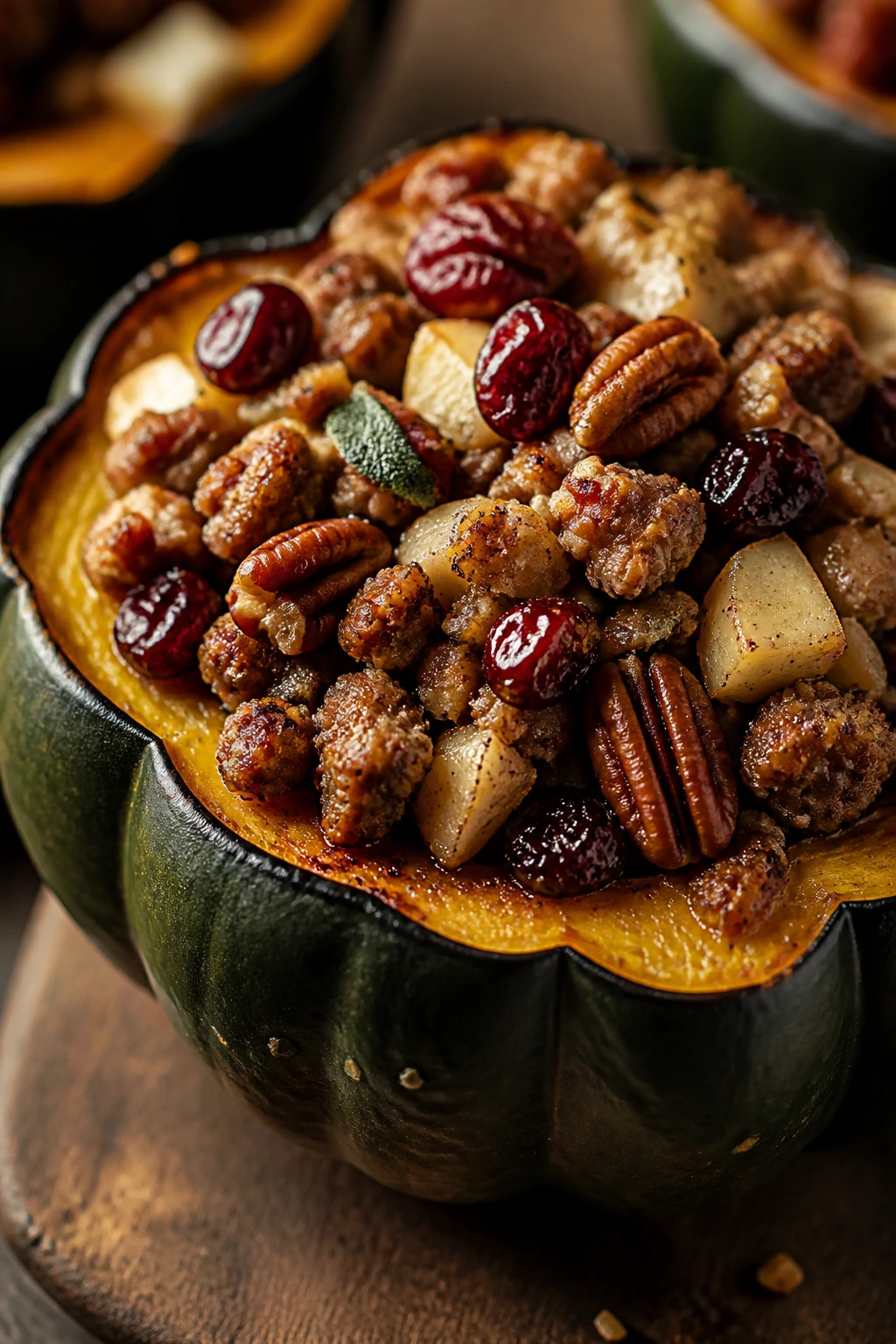
If you want a holiday dinner that looks like it spent more time on the table than it did in the kitchen, acorn squash does a lot of that work for you. The halves roast into little edible bowls, and the filling—sausage, apple, sage, pecans, cranberries—has the full Thanksgiving profile without leaning on a turkey at all.
This is one of my favorite small-family dinners because it feels generous. One squash half per person, a little salad on the side, and dinner is done.
Why It Works:
Acorn squash holds its shape better than softer winter squash, so you get a sturdy shell and sweet, tender flesh in the same package. The sausage gives the filling enough salt and fat to taste like dinner instead of a side dish. Pecans add crunch, cranberries give you bursts of tartness, and the apple keeps the filling from becoming heavy. It is a good example of a dish where the presentation is built in; you do not need fancy plating to make it look special.
Key Ingredients:
- 2 medium acorn squash, halved and seeded
- 1 tablespoon olive oil
- 1 teaspoon kosher salt
- ½ teaspoon black pepper
- 1 pound bulk Italian sausage
- 1 small onion, diced
- 2 celery stalks, diced
- 1 apple, diced
- 1 cup cooked rice or quinoa
- ½ cup dried cranberries
- ⅓ cup chopped pecans
- 1 tablespoon chopped fresh sage
- ½ cup low-sodium chicken broth
Quick Steps:
- Preheat the oven to 400°F (205°C). Brush the squash cut sides with olive oil, sprinkle with salt and pepper, and place them cut side down on a baking sheet.
- Roast for 25 to 30 minutes, until the flesh is tender when pierced with a fork.
- While the squash roasts, cook the sausage in a skillet over medium heat until browned, then add the onion, celery, and apple. Cook for 5 minutes until softened.
- Stir in the rice, cranberries, pecans, sage, and broth. Cook for 2 to 3 minutes until the filling looks moist but not soupy.
- Flip the squash halves, fill them generously, and bake for 10 to 15 minutes more until everything is hot and the tops are lightly browned.
Equipment for This Recipe:
- Rimmed baking sheet
- Large skillet
- Sharp spoon for scooping seeds
- Cutting board and knife
- Serving spoon
How to Serve This Dish:
Serve each squash half whole on a dinner plate with a small green salad or roasted Brussels sprouts beside it. It is filling enough to stand as a main course, especially if you add crusty bread. The shell should be soft enough to scoop with a fork, not collapsed.
Pro Tips for This Recipe:
- Roast the squash cut side down first. It helps the edges caramelize instead of drying out.
- Use bulk sausage, not links. It cooks into a better texture for stuffing.
- Keep the filling moist, not wet. If it sloshes in the pan, it will make the squash watery.
- Toast the pecans in a dry skillet for a minute or two if you want more flavor.
Variations on This Dish:
- Vegetarian Harvest Filling: Skip the sausage and add sautéed mushrooms plus an extra ½ cup cooked quinoa.
- Cornbread Stuffing Style: Replace the rice with 2 cups crumbled cornbread for a softer, more classic holiday feel.
- Spicy Sausage Version: Use hot Italian sausage and a pinch of red pepper flakes.
Common Mistakes to Avoid with This Dish:
- Undercooking the squash: If the shell stays hard, the whole dish eats awkwardly. Roast until the flesh yields easily.
- Wet stuffing: Too much broth turns the filling soggy. Moist is enough.
- Forgetting to season the squash itself: The shell is not the point, but the flesh still needs salt.
7. Turkey Shepherd’s Pie with Mashed Potatoes
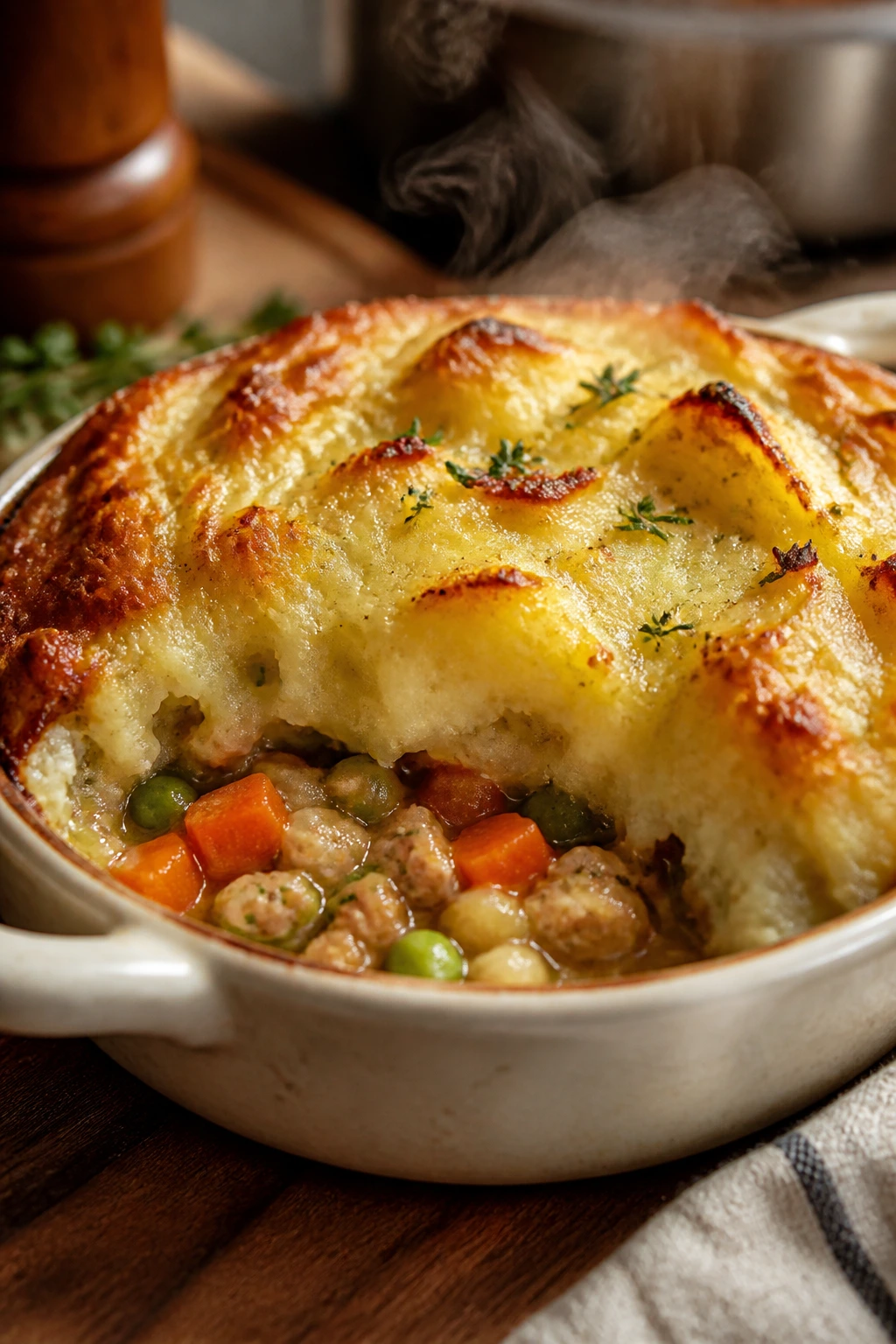
Shepherd’s pie is one of those dishes that quietly solves a dinner problem. It is cozy, forgiving, and built for using turkey in a way that feels intentional rather than leftover-ish. On a small Thanksgiving table, that matters.
This version leans into classic holiday flavors with thyme, carrots, peas, and a mashed potato top that turns golden in the oven. It serves 4 to 6 and is a strong choice when you want something the whole table can scoop from the same dish.
Why It Works:
Ground turkey can taste bland if you treat it like beef and hope for the best. The fix is layering flavor from the start: onions, carrots, celery, tomato paste, a touch of Worcestershire, and enough broth to keep the filling juicy. The mashed potato topping seals in the filling and gives you that browned, slightly crisp top that people always fight over. This is not fussy food. It is sturdy food, and that is why it works.
Key Ingredients:
- 1 pound ground turkey
- 1 tablespoon olive oil
- 1 yellow onion, diced
- 2 carrots, diced
- 2 celery stalks, diced
- 2 tablespoons tomato paste
- 2 tablespoons all-purpose flour
- 1 cup low-sodium chicken broth
- 1 tablespoon Worcestershire sauce
- 2 cups frozen peas
- 4 cups mashed potatoes, warm
- 2 tablespoons butter
- ¼ cup grated Parmesan, optional
Quick Steps:
- Preheat the oven to 400°F (205°C).
- Heat the olive oil in a skillet over medium heat. Cook the onion, carrots, and celery for 6 to 7 minutes until the onion turns translucent and the carrots start to soften.
- Add the turkey and cook, breaking it up, until no pink remains. Stir in the tomato paste and flour and cook for 1 minute.
- Pour in the broth and Worcestershire sauce. Simmer for 3 to 4 minutes until the filling thickens, then stir in the peas. Spread the mixture in a baking dish.
- Top with warm mashed potatoes, dot with butter, sprinkle with Parmesan if using, and bake for 20 to 25 minutes until the edges bubble and the top is lightly golden. Broil for 2 minutes if you want more color.
Equipment for This Recipe:
- Large skillet
- 8×8-inch or similar baking dish
- Potato masher
- Mixing spoon
- Oven mitts
How to Serve This Dish:
Let it sit for 10 minutes so the filling settles and the scoops stay neat. Serve with a tart salad or a spoonful of cranberry sauce if you want a brighter bite next to the mashed potatoes. It is filling enough to be the whole dinner without apology.
Pro Tips for This Recipe:
- Warm the mashed potatoes before spreading them. Cold mash is hard to smooth and does not brown as well.
- Do not make the filling too loose; it should mound, not flood.
- If you have leftover gravy, drizzle a little over the filling before adding the potatoes.
- Broiling for a minute or two gives the top a better finish than baking alone.
Variations on This Dish:
- Sweet Potato Top: Swap the mashed potatoes for mashed sweet potatoes and add a pinch of cinnamon.
- Stuffing-Crust Version: Replace the potato topping with a layer of prepared stuffing for a deeper holiday feel.
- Beef-Turkey Blend: Use half ground turkey and half ground beef if you want a richer filling.
Common Mistakes to Avoid with This Dish:
- Watery filling: If the mixture is soupy before baking, the pie will not hold clean scoops. Simmer until thick.
- Cold topping: Straight-from-the-fridge potatoes bake into a dense layer. Warm them first.
- Skipping the rest time: The filling needs a few minutes to firm up after the oven.
8. Apple Cider Roast Chicken with Crispy Potatoes
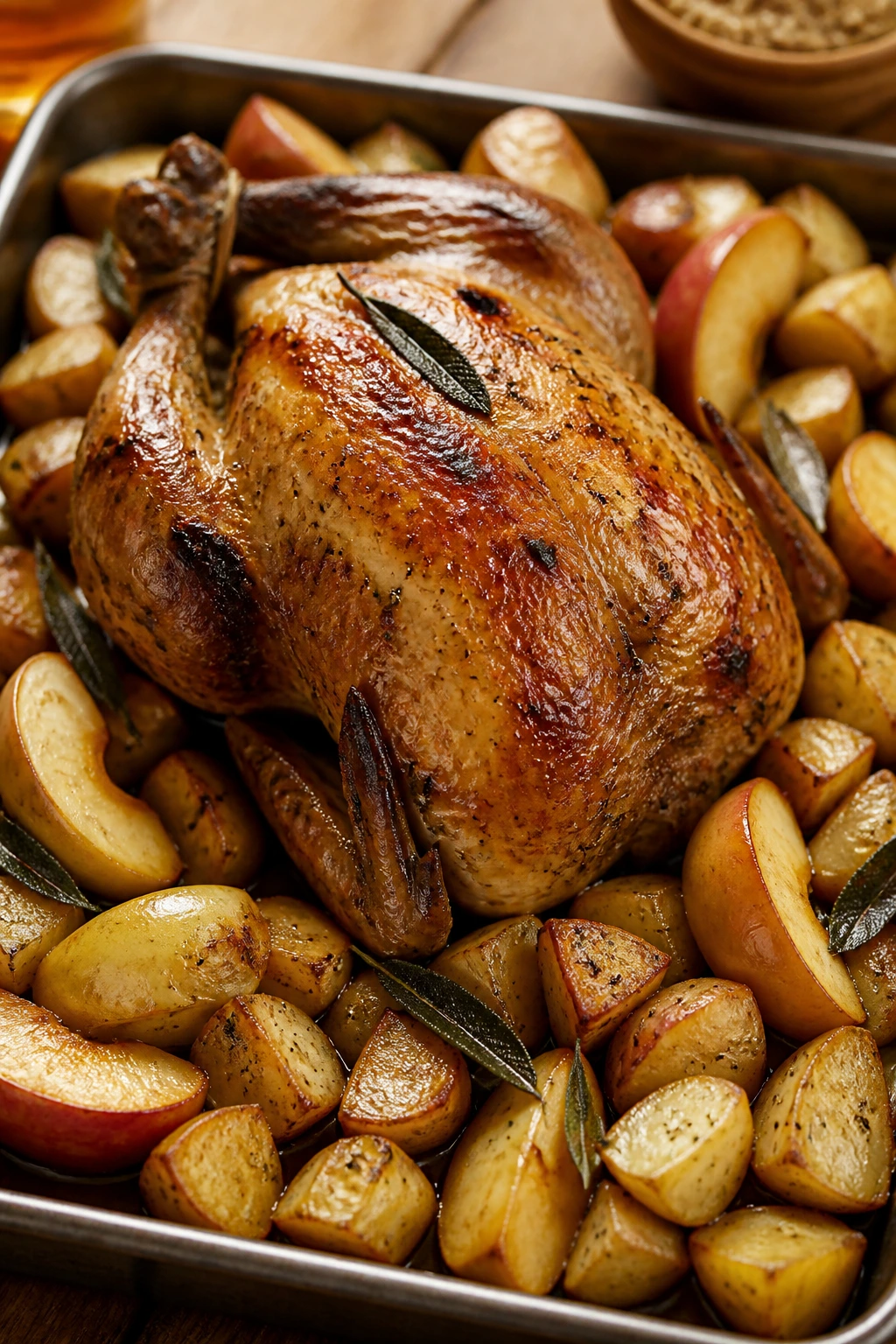
A roast chicken has a way of making a small dinner feel complete. Add apples, cider, potatoes, and a little sage, and suddenly the whole kitchen smells like a holiday table that knows what it is doing.
This is the kind of recipe I like when I want one pan to carry the meal. The chicken stays juicy, the potatoes catch the drippings, and the apples soften into sweet slices that taste good alongside almost anything else on the plate.
Why It Works:
A whole chicken is easier to manage than a turkey and still gives you the same carved-table feeling. The cider does two jobs: it seasons the pan and helps deglaze the browned bits into a light sauce. Roasting potatoes under the bird lets them soak up the fat and juices, which is exactly where the flavor lives. The apple wedges soften enough to become part of the sauce, not just a garnish nobody eats.
Key Ingredients:
- 1 whole chicken, 4 to 4½ pounds
- 2 tablespoons unsalted butter, softened
- 1 teaspoon kosher salt
- 1 teaspoon black pepper
- 1 tablespoon chopped fresh sage
- 1 teaspoon chopped fresh thyme
- 1 yellow onion, sliced
- 2 apples, cored and cut into wedges
- 2 pounds baby potatoes, halved
- 1 cup apple cider
- 1 cup low-sodium chicken broth
Quick Steps:
- Preheat the oven to 425°F (220°C). Pat the chicken very dry.
- Mix the butter, salt, pepper, sage, and thyme, then rub it over the chicken and under the skin if possible.
- Scatter the onion, apples, and potatoes in a roasting pan. Set the chicken on top and pour the cider and broth around the base, not over the skin.
- Roast for 50 to 60 minutes, basting once halfway through, until the chicken reaches 165°F at the thickest part of the thigh and the potatoes are tender.
- Rest the chicken for 15 minutes before carving. Stir the pan juices and spoon them over the carved meat.
Equipment for This Recipe:
- Roasting pan or oven-safe baking dish
- Instant-read thermometer
- Carving knife
- Mixing bowl
- Spoon for basting
How to Serve This Dish:
Carve the chicken into pieces and arrange them over the potatoes with a few apples tucked around the edges. A spoonful of pan juices is enough; the plate should not drown. Add cranberry sauce and a green vegetable if you want the meal to feel fully holiday-ready.
Pro Tips for This Recipe:
- Dry the skin well before seasoning. Moist skin takes longer to crisp.
- If the potatoes brown too fast, stir them once during roasting and move them away from the hottest corner of the pan.
- Use a thermometer in the thigh, not the breast alone.
- Let the chicken rest before carving so the meat does not shed all its juices.
Variations on This Dish:
- Lemon-Thyme Chicken: Swap cider for lemon slices and add extra thyme for a brighter profile.
- Root Vegetable Mix: Replace some potatoes with carrots and parsnips.
- Spatchcock Shortcut: Flatten the chicken if you want faster, more even roasting.
Common Mistakes to Avoid with This Dish:
- Roasting by the clock alone: Whole chicken size varies. Check the temperature.
- Pouring liquid over the skin: That keeps it pale. Put the cider around the bird.
- Carving too soon: Resting matters more than people think.
9. Butternut Squash and Ricotta Lasagna
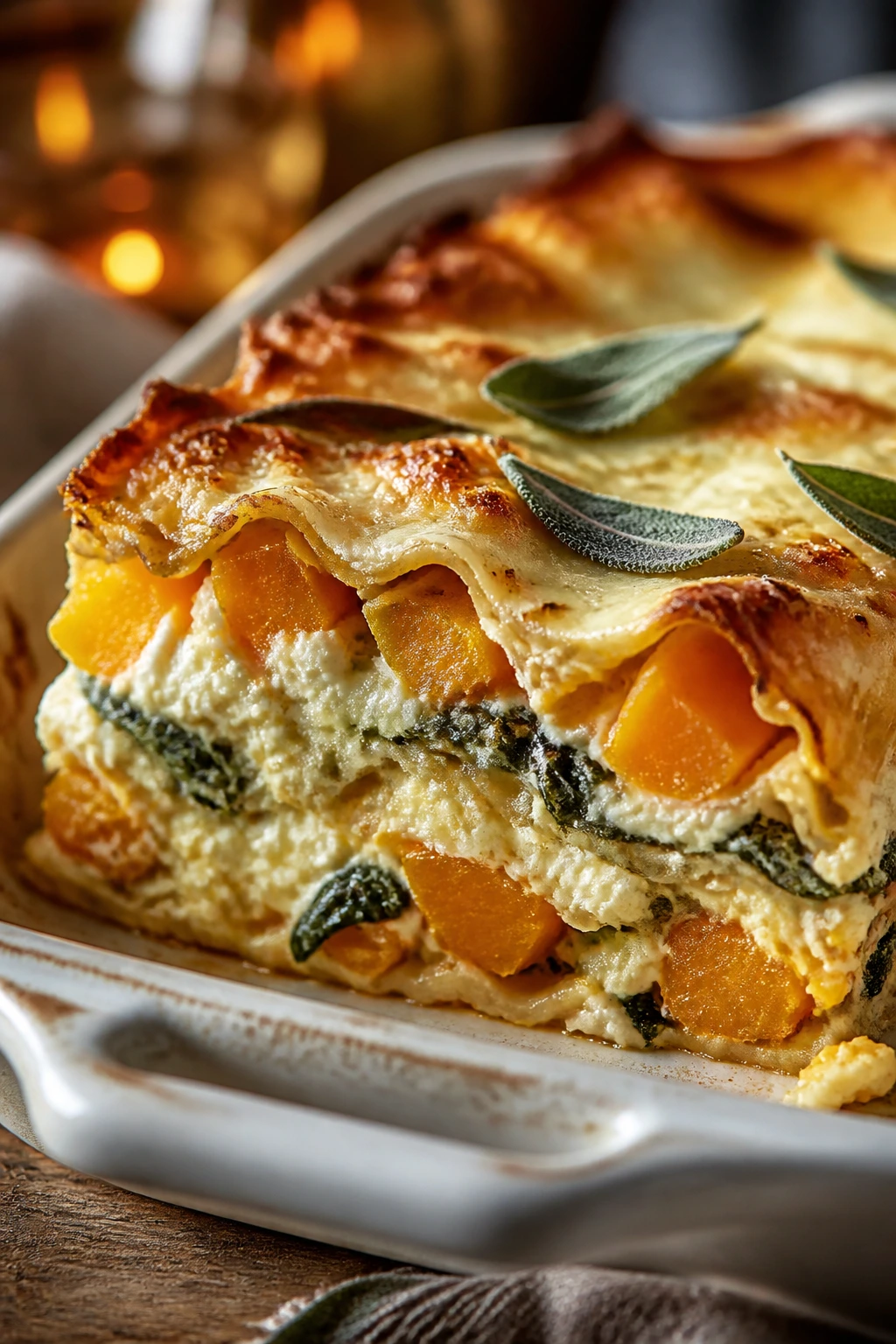
Not every Thanksgiving dinner needs poultry to feel proper. A lasagna packed with roasted butternut squash, ricotta, spinach, and sage tastes like autumn in layers, and it does a particularly good job of feeding a small family without feeling like an emergency vegetarian backup.
This one is rich enough to stand as the centerpiece, but it is still familiar. Creamy ricotta, soft noodles, sweet squash, and melted mozzarella are hard to argue with, especially when the weather leans cool and people want something warm and layered.
Why It Works:
Butternut squash has enough sweetness to play against ricotta and sage without turning dessert-like. Roasting the squash first concentrates the flavor so the lasagna does not taste watery or flat. Spinach cuts through the richness, and a little nutmeg keeps the whole pan on the savory side. The best part is the texture: soft, creamy layers with just enough structure to cut into squares that hold together on the plate.
Key Ingredients:
- 9 lasagna noodles
- 4 cups butternut squash purée or roasted squash, mashed smooth
- 15 ounces ricotta
- 1 large egg
- 2 cups shredded mozzarella
- ½ cup grated Parmesan
- 2 cups fresh spinach, chopped
- 1 teaspoon chopped sage
- ¼ teaspoon ground nutmeg
- 1 teaspoon kosher salt
- ½ teaspoon black pepper
Quick Steps:
- Preheat the oven to 400°F (205°C). If using raw squash, roast the cubes until tender, then mash them smooth.
- Boil the noodles according to the package until just shy of tender. Drain and lay them flat so they do not clump.
- Mix the ricotta, egg, sage, nutmeg, salt, and pepper in a bowl. Stir in the spinach.
- Spread a thin layer of squash in a 9×13-inch baking dish, then layer noodles, ricotta mixture, squash, mozzarella, and Parmesan. Repeat until you finish with cheese on top.
- Cover and bake for 25 minutes, then uncover and bake for 20 to 25 minutes more until the top is browned and the edges bubble. Let it rest for 15 minutes before cutting.
Equipment for This Recipe:
- 9×13-inch baking dish
- Large pot for noodles
- Mixing bowls
- Foil
- Spatula or spoon
How to Serve This Dish:
Cut neat squares and serve with a sharp green salad and crusty bread. If you want the table to feel more Thanksgiving-like, add a spoonful of cranberry sauce on the side. The lasagna should hold its shape, not slide into a puddle.
Pro Tips for This Recipe:
- Let the lasagna rest. Cutting it too early causes the layers to slide.
- If your squash purée looks wet, cook it down in a saucepan for a few minutes first.
- Use no-boil noodles only if you are comfortable adjusting the moisture; regular noodles are more forgiving.
- A light dusting of Parmesan on the top browns better than a thick blanket of mozzarella alone.
Variations on This Dish:
- Sausage-Squash Lasagna: Add browned Italian sausage between layers for a meatier version.
- Gluten-Free Build: Use gluten-free noodles and keep the layers slightly thicker for structure.
- Brown Butter Sage Finish: Drizzle a little brown butter and fried sage over the top before serving.
Common Mistakes to Avoid with This Dish:
- Wet filling: Too much moisture makes the squares collapse.
- Skipping the rest: Hot lasagna is slippery lasagna.
- Overloading the layers: Too much filling makes it hard to cut and serve cleanly.
10. Herb-Crusted Salmon with Cranberry Relish
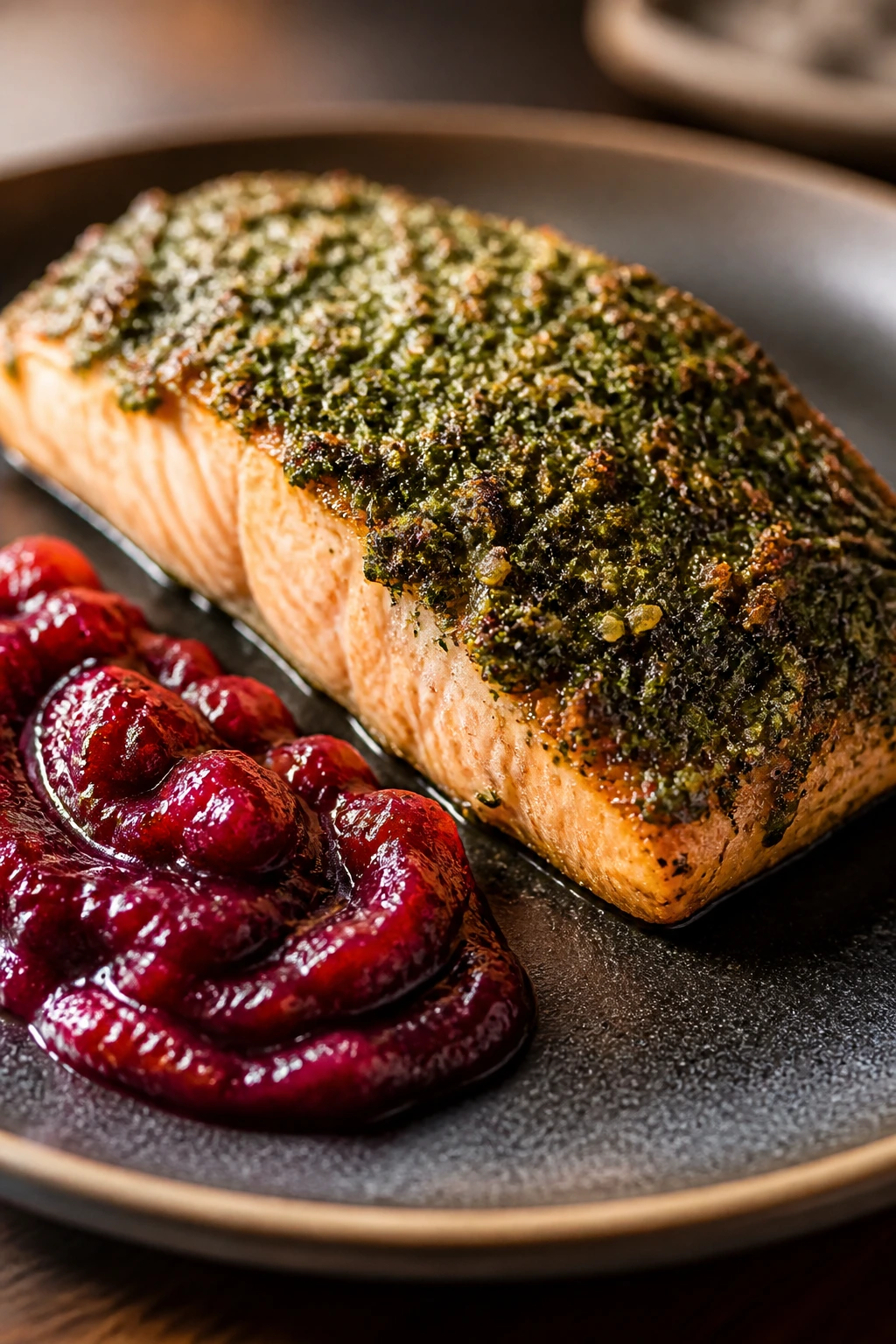
Salmon is the curveball on a Thanksgiving table, and I mean that kindly. It is lighter than turkey, cooks fast, and lets you serve a holiday dinner that feels fresh instead of heavy. For a small family, that flexibility matters.
The cranberry relish is what makes the dish read as holiday food rather than a random fish dinner. Orange, honey, and a little ginger keep the relish bright, while the herb crust gives the salmon a crisp top and a savory edge.
Why It Works:
Salmon has enough fat to stay moist in the oven, which makes it a good fit for a dinner where the rest of the meal may already be rich. A quick Dijon brush helps the panko and herbs stick, and the breadcrumb top turns crisp in the oven without needing a pan-fry. Cranberry relish adds acid and sweetness, which salmon loves. You end up with a plate that feels celebratory but does not weigh you down.
Key Ingredients:
- 1½ pounds salmon fillet, skin on or off
- 1 tablespoon Dijon mustard
- 1 cup panko breadcrumbs
- 2 tablespoons chopped parsley
- 1 tablespoon chopped thyme
- 1 teaspoon lemon zest
- 1 teaspoon kosher salt
- ½ teaspoon black pepper
- 1 tablespoon olive oil
- 1 cup fresh cranberries
- 1 orange, juiced and zested
- 2 tablespoons honey
Quick Steps:
- Preheat the oven to 400°F (205°C). Line a baking sheet with parchment.
- Make the relish by simmering the cranberries, orange juice, orange zest, and honey in a small saucepan for 6 to 8 minutes, until the cranberries soften and burst. Let it cool slightly.
- Mix the panko, parsley, thyme, lemon zest, salt, pepper, and olive oil. Brush the salmon with Dijon, then press the herb mixture onto the top.
- Bake for 12 to 15 minutes, until the salmon flakes easily and reaches 145°F in the thickest part.
- Serve with the cranberry relish spooned beside or over the top.
Equipment for This Recipe:
- Rimmed baking sheet
- Small saucepan
- Parchment paper
- Small mixing bowl
- Fish spatula or wide turner
How to Serve This Dish:
Plate the salmon with a spoonful of relish, roasted potatoes, and green beans or asparagus. A small family meal like this looks best when the sides are simple and the fish stays the star. Use warm plates if you can; salmon cools fast.
Pro Tips for This Recipe:
- Keep the panko layer thin and even. A thick crust can fall off in clumps.
- If your salmon fillet has uneven thickness, tuck the thinner end under so it cooks at the same pace.
- The relish tastes better after 10 minutes of cooling because the orange and cranberry settle.
- Watch the salmon near the end. Fish goes from perfect to dry fast.
Variations on This Dish:
- Maple-Mustard Salmon: Swap honey in the relish for maple syrup and add a little extra Dijon.
- Nutty Crunch Version: Replace half the panko with chopped walnuts or pecans.
- Sheet-Pan Veg Add-On: Roast broccoli or green beans on the same pan for a faster dinner.
Common Mistakes to Avoid with This Dish:
- Overbaking the fish: Salmon should flake, not crumble into dryness.
- Making the relish too sweet: Cranberries need enough acid to stay lively.
- Using soggy panko: Mix with olive oil so it crisps in the oven.
11. Mushroom and Lentil Pot Pies
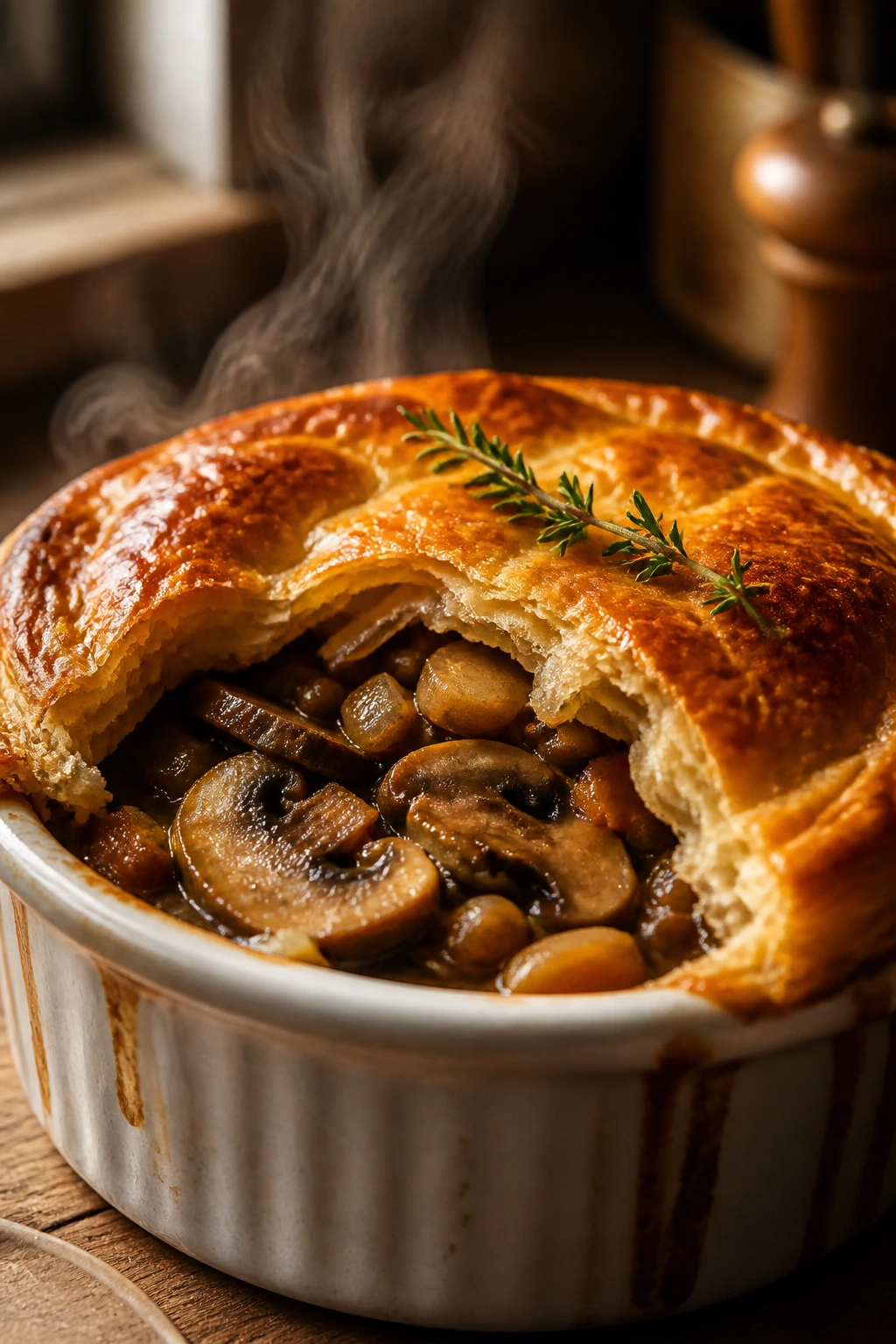
Pot pies are comfort food in a coat and scarf. When the filling is built from mushrooms, lentils, carrots, and thyme, you get something sturdy and savory enough to anchor a smaller Thanksgiving meal without asking for meat at all.
This recipe is one of the most useful in the whole collection because it feels substantial, the pastry gives it a little ceremony, and the filling can be made ahead without losing charm. It serves 4 and behaves nicely on the table.
Why It Works:
Mushrooms bring the meaty flavor people expect from a holiday main, while lentils give the dish body and a little protein. A flour-thickened broth keeps the filling spoonable, not soupy, and puff pastry gives you the kind of crisp lid that makes people lean in when you set the dish down. This is not vegetarian food trying to apologize for itself. It is dinner with its own point of view.
Key Ingredients:
- 1½ cups cooked brown or green lentils
- 12 ounces cremini mushrooms, sliced
- 1 yellow onion, diced
- 2 carrots, diced
- 2 celery stalks, diced
- 2 tablespoons unsalted butter
- 2 tablespoons all-purpose flour
- 1½ cups low-sodium vegetable or chicken broth
- 1 teaspoon chopped thyme
- 1 teaspoon soy sauce
- 1 cup frozen peas
- 1 sheet puff pastry, thawed
- 1 egg, beaten for egg wash
Quick Steps:
- Preheat the oven to 400°F (205°C).
- Melt the butter in a skillet over medium heat and cook the mushrooms until they release their liquid and start to brown, about 6 to 8 minutes. Add the onion, carrots, and celery and cook for 5 minutes more.
- Stir in the flour and cook for 1 minute. Add the broth, thyme, soy sauce, lentils, and peas. Simmer for 3 to 4 minutes until the filling thickens.
- Divide the filling among ramekins or place it in one small baking dish. Cover with puff pastry, trim the edges, and cut a small steam slit in the top. Brush with egg wash.
- Bake for 20 to 25 minutes, until the pastry is puffed and deeply golden and the filling bubbles at the edges.
Equipment for This Recipe:
- Skillet
- Ramekins or small baking dish
- Baking sheet for catching drips
- Rolling pin, if needed
- Pastry brush
How to Serve This Dish:
Serve each pot pie with a simple salad dressed in a sharp vinaigrette. The rich filling likes something crisp and acidic next to it. If you make one larger pie, cut it with a spoon rather than a knife so you keep the filling in place.
Pro Tips for This Recipe:
- Brown the mushrooms well. That step gives the filling its backbone.
- If the filling looks runny, simmer another minute before topping it.
- Chill the puff pastry again if it becomes sticky while you work.
- Cut a steam slit in the top or the pastry can lift unevenly.
Variations on This Dish:
- Turkey Pot Pie Swap: Add diced cooked turkey in place of some lentils.
- Individual Ramekin Version: Make smaller pies for a more plated feel.
- Dairy-Free Filling: Use olive oil instead of butter and a dairy-free puff pastry.
Common Mistakes to Avoid with This Dish:
- Soggy pastry: A watery filling ruins the crust. Thicken it before baking.
- Skipping the egg wash: The top turns pale instead of bronzed.
- Using filling that is too hot under pastry: Let it cool for a few minutes so the pastry does not melt before baking.
12. Turkey Meatloaf with Potato Topping
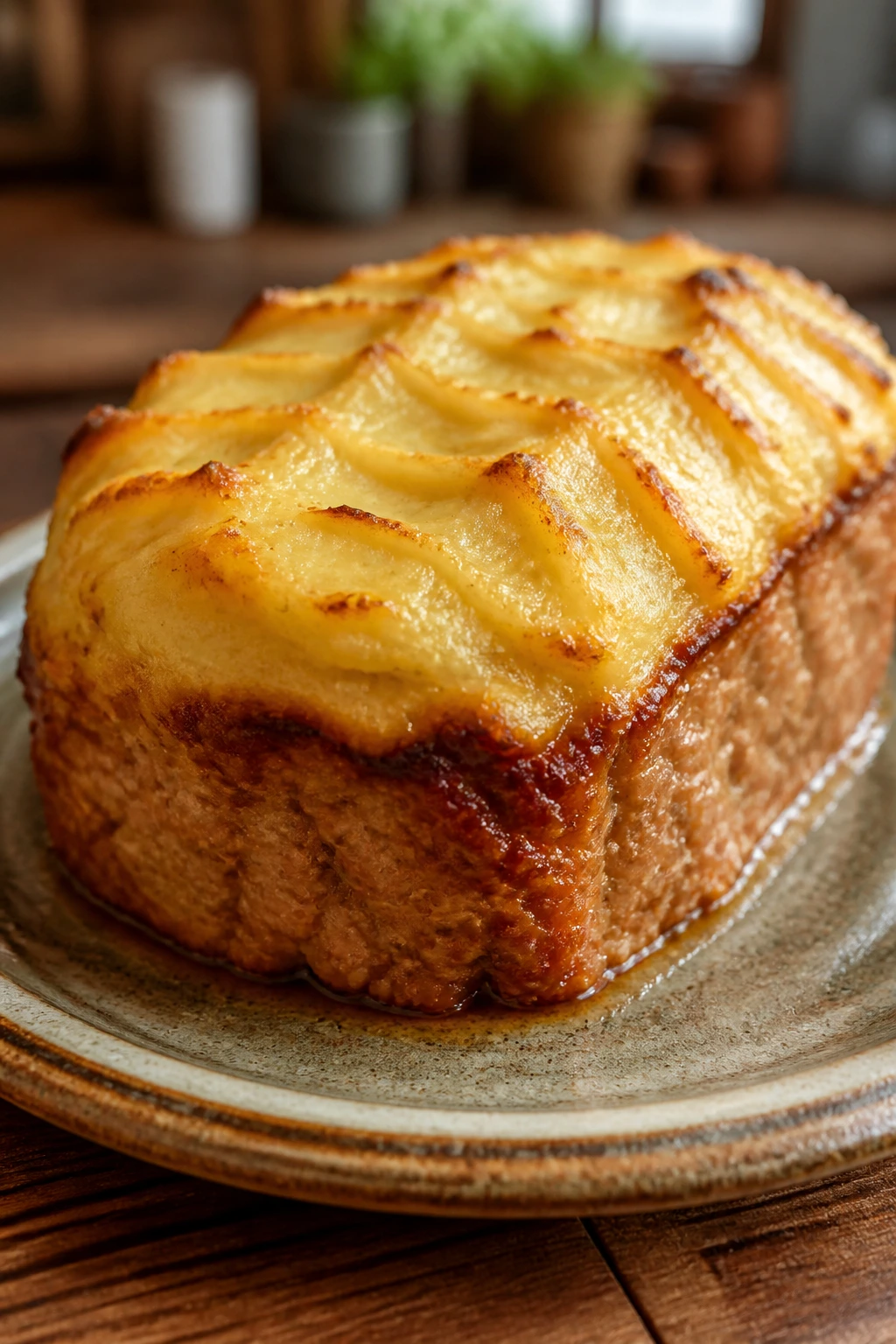
Meatloaf sounds humble until you dress it for the holiday. Add sage, onion, a cranberry glaze, and a layer of mashed potatoes on top, and suddenly the dish has the same cozy logic as shepherd’s pie with a little more carve-and-serve personality.
This is a useful dinner idea for small families because it makes enough without feeling oversized, and the leftovers reheat neatly. The potato topping keeps the turkey moist, which is the main thing turkey meatloaf needs.
Why It Works:
Ground turkey can be a little shy on flavor, so this recipe leans on aromatics and a glaze with enough sweetness and acidity to wake it up. The potato topping keeps the top from drying out in the oven and gives you that soft, browned finish people expect from a comfort dish. Cranberry sauce in the glaze ties it back to Thanksgiving without making it taste like dessert. It is the sort of dinner that feels casual on purpose.
Key Ingredients:
- 1½ pounds ground turkey
- 1 cup breadcrumbs
- 1 large egg
- 1 small onion, finely diced
- 1 celery stalk, finely diced
- 1 tablespoon chopped parsley
- 1 teaspoon chopped sage
- 1 teaspoon kosher salt
- ½ teaspoon black pepper
- ½ cup cranberry sauce
- 2 tablespoons ketchup
- 1 tablespoon apple cider vinegar
- 3 cups warm mashed potatoes
- 1 tablespoon butter
Quick Steps:
- Preheat the oven to 375°F (190°C).
- Mix the turkey, breadcrumbs, egg, onion, celery, parsley, sage, salt, and pepper until just combined. Form into a loaf in a baking dish or loaf pan.
- Bake for 25 minutes. Stir the cranberry sauce, ketchup, and vinegar together, then spread half over the loaf.
- Pipe or spoon the warm mashed potatoes over the top, dot with butter, and return to the oven for 20 to 25 minutes more until the loaf reaches 165°F.
- Broil for 2 to 3 minutes if you want a little color on the potatoes.
Equipment for This Recipe:
- Loaf pan or small baking dish
- Mixing bowl
- Spatula or spoon
- Instant-read thermometer
- Pastry bag or spoon for the potato topping
How to Serve This Dish:
Slice thick slabs and let the potato topping stay part of the serving. A spoonful of cranberry sauce on the side and some roasted carrots or green beans make the plate feel complete. This one eats nicely at the table, but it also holds together for leftovers.
Pro Tips for This Recipe:
- Mix the meatloaf only until it comes together. Overmixing makes it dense.
- Warm mashed potatoes spread more smoothly and brown better.
- Let the loaf rest a few minutes before slicing or the slices can break apart.
- If the top looks dry, brush on a little more glaze before broiling.
Variations on This Dish:
- Stuffing-Topped Loaf: Use stuffing crumbs instead of breadcrumbs and add a little more broth.
- Beef and Turkey Blend: Use half ground beef for a richer flavor.
- Dairy-Free Mash: Top with olive-oil mashed potatoes instead of buttered mash.
Common Mistakes to Avoid with This Dish:
- Packing the loaf too tight: That makes it heavy. Shape it loosely.
- Underbaking the center: Meatloaf must reach 165°F all the way through.
- Adding the potatoes too early: If they go on before the loaf sets, the top slides around.
13. Sausage, Apple, and Cornbread Stuffing Casserole
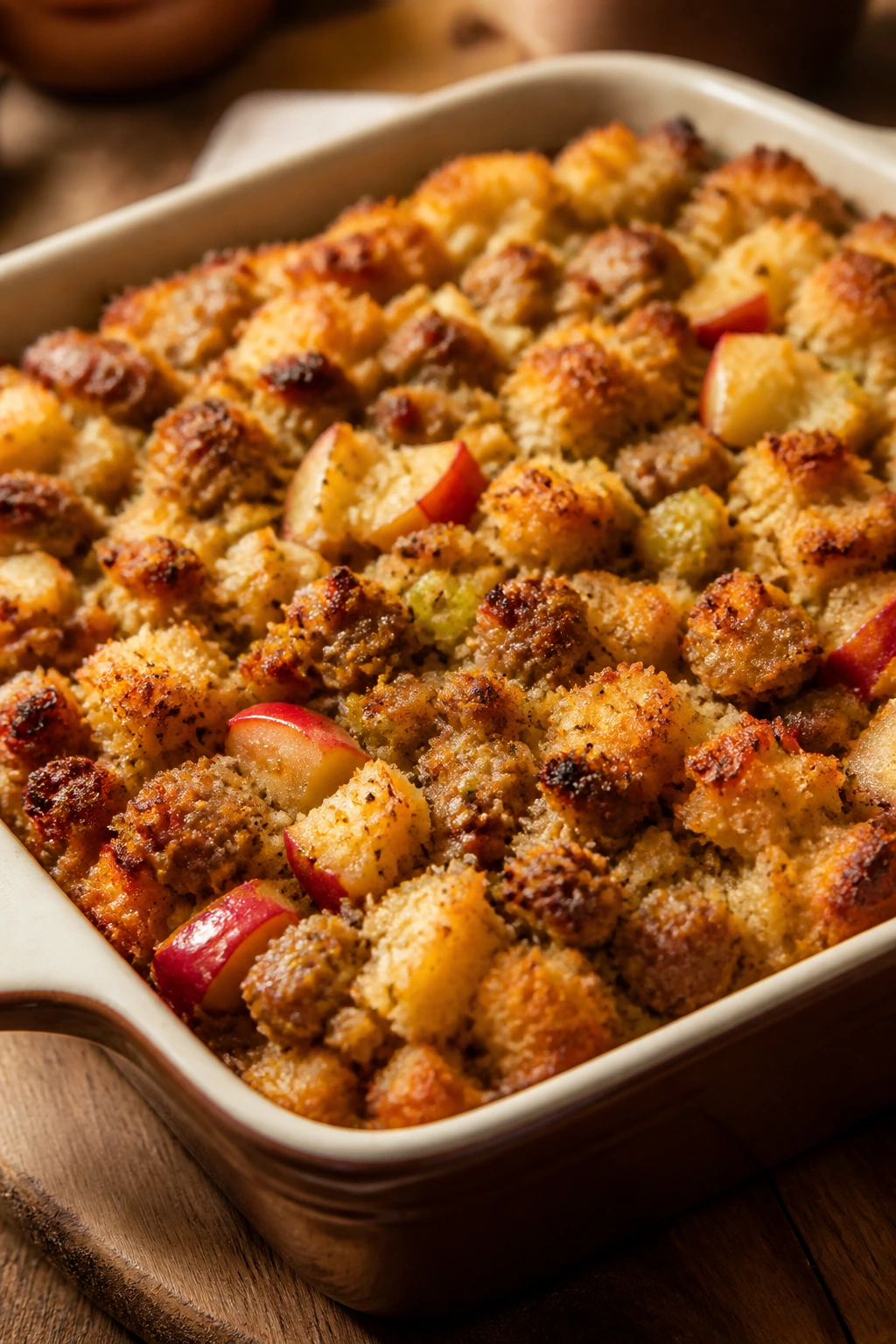
Stuffing is usually a side dish, but a sausage-and-apple version can hold its own as a dinner when the table is small. Cornbread brings sweetness, sausage gives it heft, and apples keep the whole thing from becoming a brown, heavy block.
This is a smart recipe for the Thanksgiving cook who wants something familiar, easy to scale, and generous enough to serve with a salad and call it dinner. It also makes the kitchen smell suspiciously good.
Why It Works:
Cornbread soaks up the broth without dissolving into mush if it is a day or two old. The sausage adds fat and seasoning, which means you do not have to build every bit of flavor from scratch. Apples and celery keep the texture lively, and the eggs bind the casserole so it slices instead of collapsing. This is one of those dishes that tastes better than the effort it asks for.
Key Ingredients:
- 6 cups cubed day-old cornbread
- 1 pound bulk breakfast or mild Italian sausage
- 1 small onion, diced
- 2 celery stalks, diced
- 2 apples, peeled and diced
- 2 large eggs
- 2 to 2½ cups low-sodium broth
- 1 tablespoon chopped sage
- 2 tablespoons chopped parsley
- 2 tablespoons butter
- ¼ cup chopped pecans, optional
Quick Steps:
- Preheat the oven to 375°F (190°C) and grease a medium casserole dish.
- Brown the sausage in a skillet over medium heat, then add the onion, celery, and apples. Cook for 5 to 6 minutes until the onions turn soft and the apples just start to give.
- Put the cornbread in a large bowl. Add the sausage mixture, sage, parsley, pecans if using, eggs, and 2 cups of broth. Stir gently. Add the last ½ cup broth only if the mixture looks dry; it should be moist but not soupy.
- Spread the mixture in the casserole dish, dot with butter, and bake for 30 to 35 minutes until the top is browned and the center feels set.
- Let it rest for 10 minutes before serving so it cuts cleanly.
Equipment for This Recipe:
- Large skillet
- Medium casserole dish
- Mixing bowl
- Wooden spoon
- Measuring cups
How to Serve This Dish:
Serve it in square scoops with a green salad or roasted Brussels sprouts beside it. It can stand alone as a vegetarian-no, sorry, non-vegetarian main because the sausage carries enough weight. A little cranberry sauce on the side works better than people expect.
Pro Tips for This Recipe:
- Use stale cornbread, not fresh. Fresh crumbs can turn gummy.
- Taste the broth before adding it. If it is very salty, start with less.
- The casserole should jiggle a little in the center, not slosh.
- Pecans add crunch, but they are optional if the rest of the meal already has nuts.
Variations on This Dish:
- Herb-Heavy Dressing Style: Add extra sage and a little rosemary for a more classic stuffing flavor.
- Turkey Sausage Version: Use turkey sausage for a lighter casserole.
- Apple-Cranberry Accent: Stir in ½ cup dried cranberries for more holiday sweetness.
Common Mistakes to Avoid with This Dish:
- Too much broth: The casserole turns heavy and wet. Add liquid gradually.
- Using fresh cornbread: It can break down and go mushy.
- Serving immediately: A short rest helps the texture settle.
14. Ham Steaks with Green Beans and Sweet Potatoes
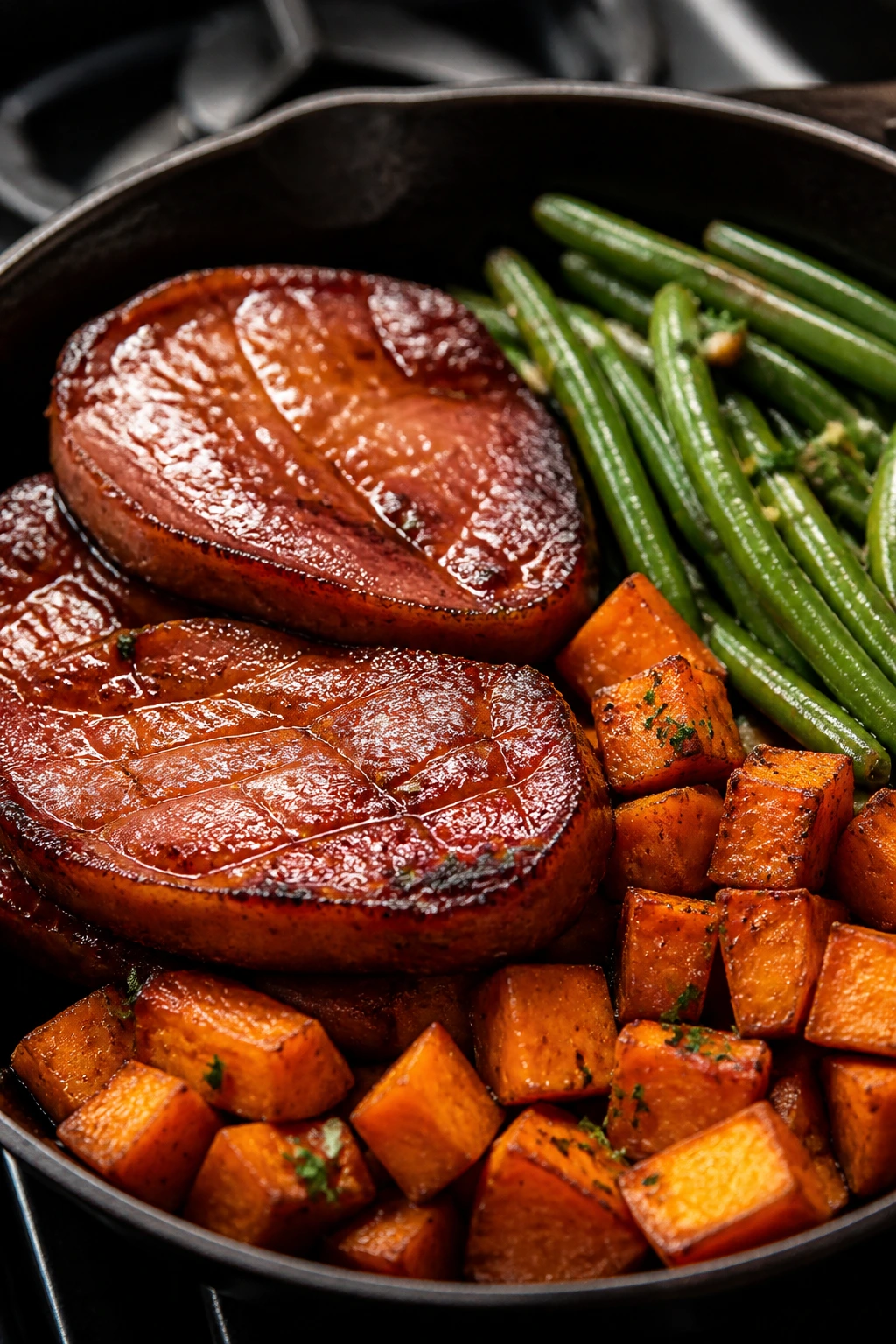
Ham is the easiest holiday shortcut people forget about. A few steaks in a skillet, a pan of sweet potatoes, green beans on the side, and you have a Thanksgiving dinner that tastes festive without borrowing half the afternoon.
It is also one of the fastest recipes here. If your small family wants a holiday meal that leaves enough energy to actually enjoy the evening, this is the one.
Why It Works:
Ham steaks already come seasoned, so the job is mostly about balancing the salt with sweet, tangy, and buttery elements. The brown sugar-Dijon glaze gives the edges a caramelized shine, while sweet potatoes roast into creamy cubes and green beans add a needed snap. You are not trying to reinvent the holiday wheel. You are making dinner that arrives on time.
Key Ingredients:
- 4 ham steaks, about 1½ to 2 pounds total
- 1½ pounds sweet potatoes, peeled and cubed
- 1 pound green beans, trimmed
- 2 tablespoons olive oil
- 2 tablespoons butter
- 2 tablespoons brown sugar
- 1 tablespoon Dijon mustard
- 1 tablespoon apple cider vinegar
- ½ teaspoon black pepper
Quick Steps:
- Preheat the oven to 425°F (220°C). Toss the sweet potatoes with olive oil and black pepper, then roast them on a baking sheet for 20 minutes.
- Whisk together the butter, brown sugar, Dijon, and vinegar in a small bowl.
- Heat a skillet over medium heat and sear the ham steaks for 2 to 3 minutes per side, brushing them with the glaze as they cook.
- Add the green beans to the sweet potato pan for the last 10 to 12 minutes of roasting, or steam them until just tender and bright.
- Serve the ham with the glazed sweet potatoes and green beans while everything is hot.
Equipment for This Recipe:
- Sheet pan
- Skillet
- Small bowl and whisk
- Tongs
- Steamer basket, optional
How to Serve This Dish:
Plate the ham steaks beside the sweet potatoes and tuck the green beans to the side so the colors stay separate and bright. This meal likes a little cranberry sauce or apple chutney on the table. For four people, one steak plus a generous pile of vegetables is enough.
Pro Tips for This Recipe:
- Ham steaks can dry out if you cook them too long. They need only a quick sear.
- Add the glaze in layers instead of all at once so it forms a sticky finish.
- If the sweet potatoes are cut too large, they will lag behind the rest of the plate.
- A splash of vinegar keeps the glaze from tasting one-note sweet.
Variations on This Dish:
- Maple Ham Steaks: Swap the brown sugar for maple syrup.
- Cranberry Glaze Version: Add 2 tablespoons cranberry sauce to the glaze for more holiday character.
- Roasted Green Bean Option: Roast the beans instead of steaming if you want more browned edges.
Common Mistakes to Avoid with This Dish:
- Overcooking the ham: It is already cured and fully cooked. You are reheating and glazing, not roasting from raw.
- Glazing too early: Sugar burns if the skillet is too hot for too long.
- Crowding the sweet potatoes: They brown better with some space between cubes.
15. Potato, Leek, and Swiss Chard Gratin
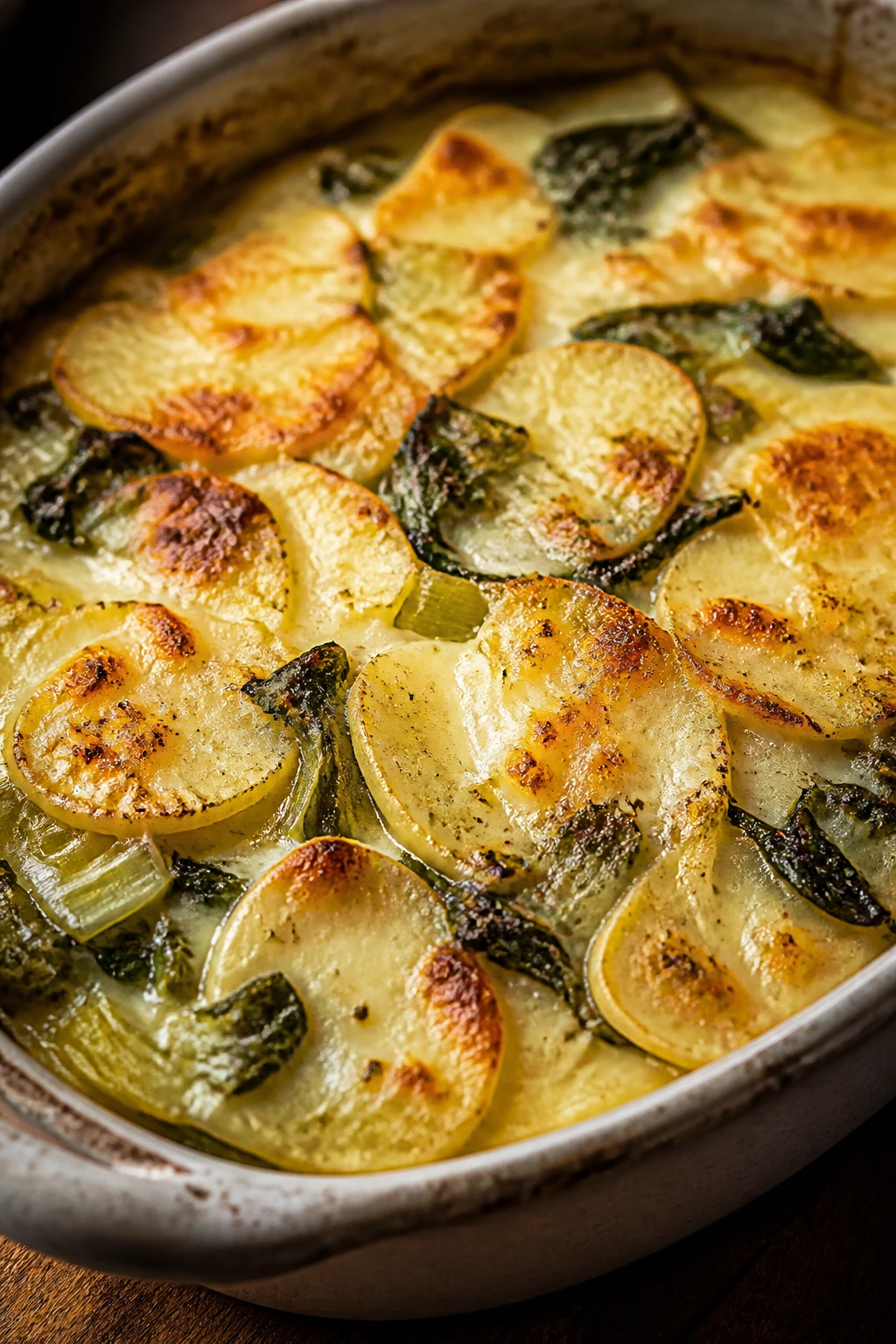
A gratin is not the loudest dinner on the table, and that is part of the charm. Thin potatoes, soft leeks, Swiss chard, and cream baked into one bubbling dish give you a vegetarian main that feels as comforting as it is practical for a small family.
This recipe fits Thanksgiving especially well when you want something rich but not meat-heavy. Serve it with a crisp salad, and the whole meal suddenly has balance.
Why It Works:
Potatoes and leeks are a dependable pair because the leek flavor turns sweet in the oven while the potatoes soak up the cream. Swiss chard adds a little green color and a faint mineral note that keeps the gratin from feeling flat. Gruyère brings a nutty edge, and breadcrumbs on top keep the surface from going soft. It is a dish with restraint, which sounds polite until you taste it.
Key Ingredients:
- 2 pounds Yukon Gold potatoes, peeled and thinly sliced
- 2 leeks, white and light green parts only, thinly sliced
- 1 bunch Swiss chard, stems removed and leaves chopped
- 2 tablespoons unsalted butter
- 2 garlic cloves, minced
- 2 cups half-and-half or a mix of milk and cream
- 1 cup shredded Gruyère or sharp white cheddar
- 1 teaspoon thyme
- 1 teaspoon kosher salt
- ½ teaspoon black pepper
- ½ cup breadcrumbs
Quick Steps:
- Preheat the oven to 375°F (190°C) and butter a baking dish.
- Cook the leeks in butter over medium heat for 4 to 5 minutes until soft, then stir in the garlic and chard until the leaves wilt down.
- Layer half the potatoes in the dish, season lightly, add half the chard mixture and half the cheese, then repeat with the remaining potatoes and chard.
- Pour the half-and-half over the top, sprinkle with thyme, salt, pepper, breadcrumbs, and the remaining cheese.
- Cover with foil and bake for 30 minutes, then uncover and bake 20 to 25 minutes more until the top is browned and the potatoes are tender when pierced with a knife.
Equipment for This Recipe:
- 9×13-inch or similar baking dish
- Sharp knife or mandoline
- Skillet
- Foil
- Vegetable peeler
How to Serve This Dish:
Serve the gratin in squares with a green salad or roasted Brussels sprouts. It works as a vegetarian main, but it also fits next to turkey breast or ham if you are building a mixed table. The top should be browned and crisp, the middle creamy, not watery.
Pro Tips for This Recipe:
- Slice the potatoes thin and even so they cook at the same pace.
- Rinse the leeks well. Sand hides between the layers.
- Let the gratin rest for 10 minutes before serving so the cream settles.
- If the top browns before the potatoes are tender, cover it loosely with foil for the last part of baking.
Variations on This Dish:
- Mushroom Gratin: Add sautéed mushrooms for a deeper savory note.
- Parmesan Finish: Swap half the Gruyère for Parmesan for a sharper top.
- Dairy-Light Version: Use more milk and less cream, though the gratin will be a little looser.
Common Mistakes to Avoid with This Dish:
- Leaving the leek grit behind: Wash them well or the whole dish feels sandy.
- Slicing potatoes too thick: Thick rounds stay firm in the center.
- Serving straight from the oven: The gratin needs a short rest to hold together.
Why Small-Batch Thanksgiving Cooking Works So Well
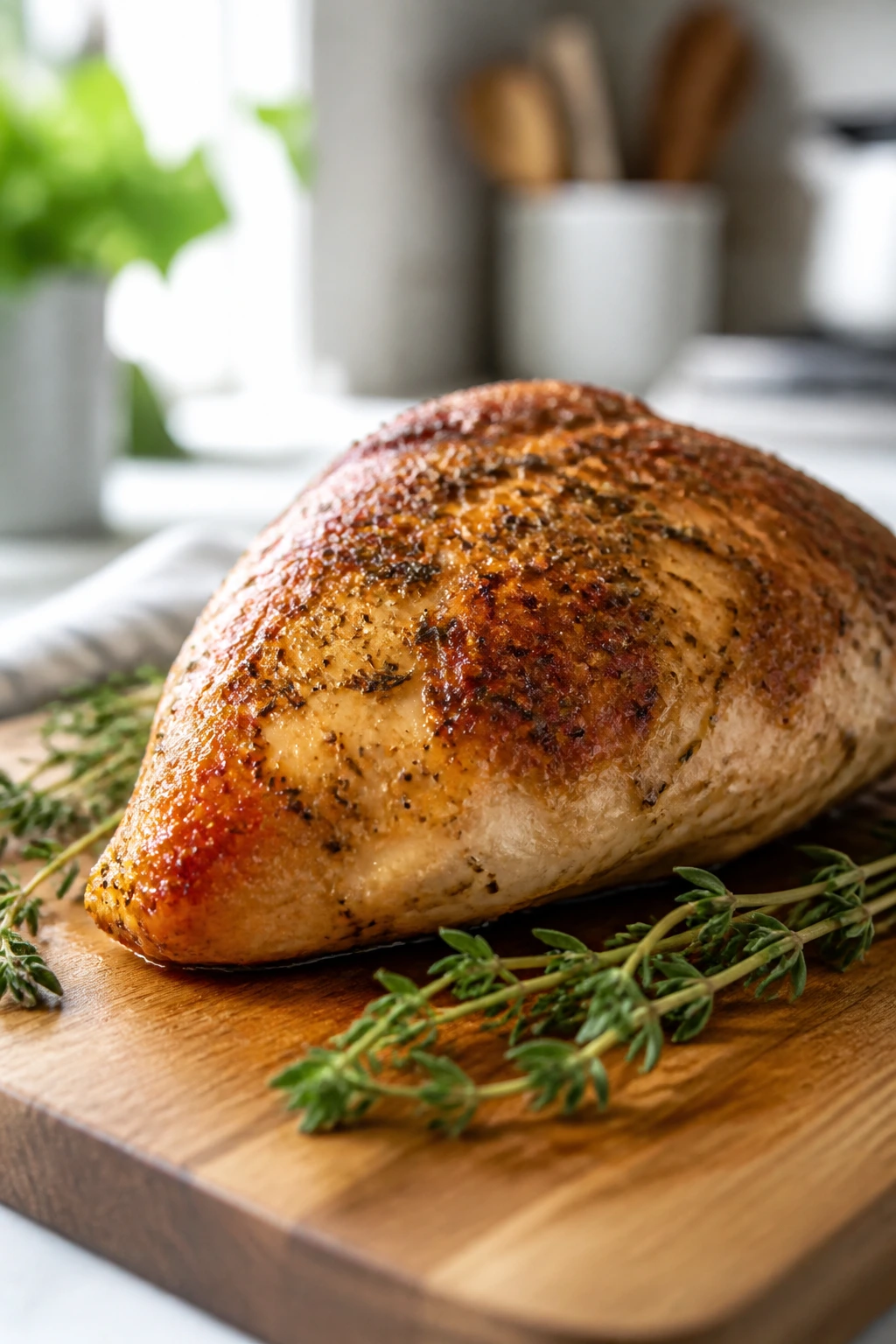
Cooking Thanksgiving dinner for a small family is not a compromise. It is a chance to make the meal fit the people instead of the other way around. A turkey breast, a roast chicken, a skillet of stuffing, or a gratin can feel every bit as holiday-worthy as a giant bird if the seasoning is right and the timing stays under control.
The best small-family menu usually has one showpiece, one vegetable-heavy side, one starch that can carry gravy, and maybe a tart element—cranberry sauce, apples, cider, something with acidity to cut the richness. That balance matters more than volume. A table with four excellent dishes beats a table with eight tired ones, and your kitchen will thank you for the mercy.
Essential Equipment for These Recipes
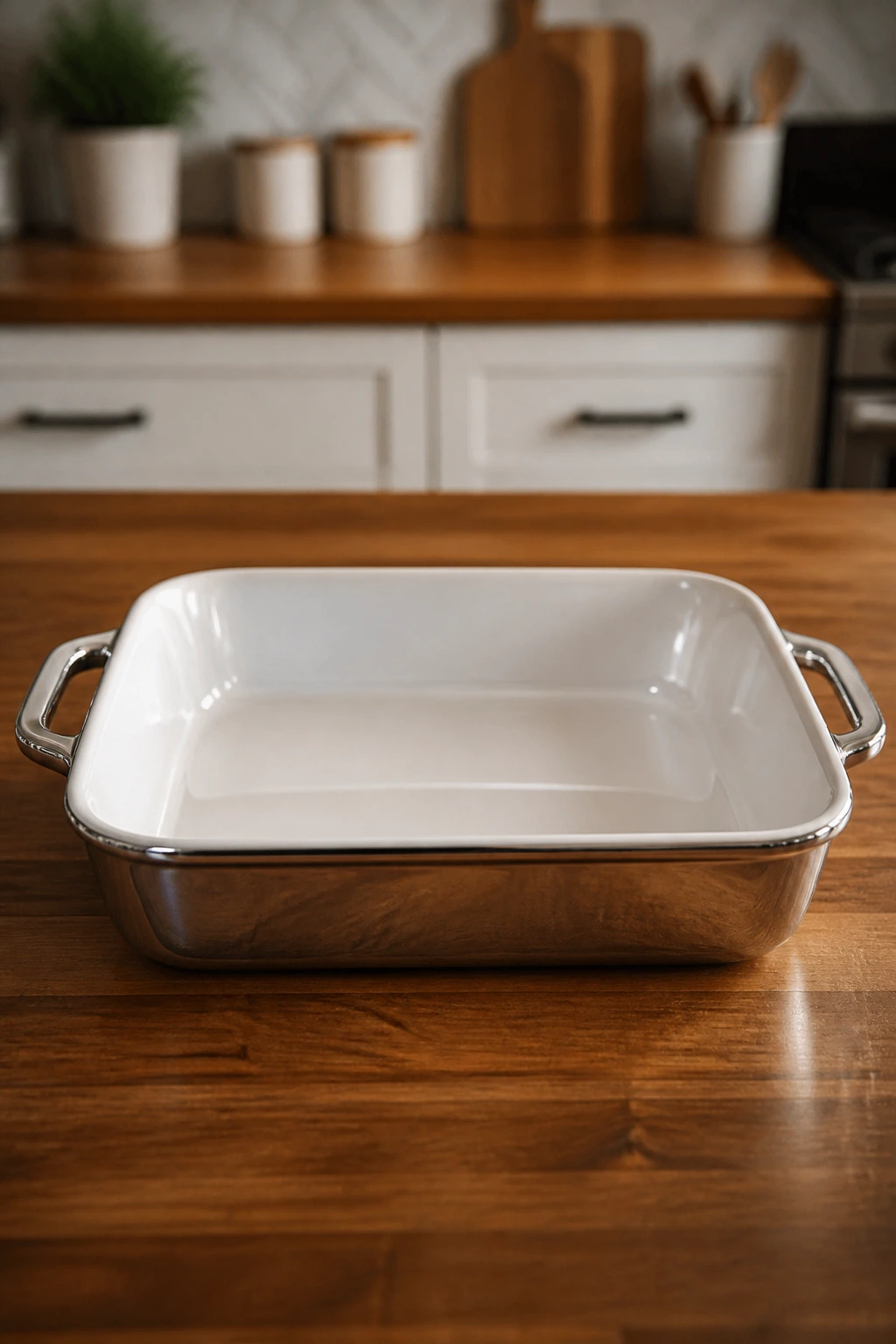
- Instant-read thermometer: The fastest way to keep turkey, chicken, pork, and salmon from crossing into dry territory.
- Rimmed sheet pans: Useful for turkey cutlets, vegetables, salmon, and anything that needs hot air around it.
- Large oven-safe skillet or Dutch oven: Ideal for chicken thighs, pork tenderloin, rice dishes, and one-pan dinners.
- Roasting pan: Best for turkey breast, whole chicken, and hens.
- 9×13-inch baking dish: A workhorse for lasagna, gratins, shepherd’s pie, and casseroles.
- Small saucepan: Handy for gravies, cranberry relish, and quick pan sauces.
- Sharp carving knife and cutting board: Makes roast meat slice cleanly instead of shredding.
- Mixing bowls: You will need at least two sizes for glazes, stuffings, and potato toppings.
- Whisk: Important for gravy and smooth sauces.
- Foil and parchment paper: Both save cleanup and help with browning control.
Smart Shopping and Ingredient Tips
Small-family Thanksgiving cooking starts at the store, and a little judgment goes a long way. Choose a turkey breast roast or Cornish hens instead of a full bird unless you want leftovers by design. Look for poultry with skin that feels intact and not torn, because torn skin browns unevenly and dries out more easily. If you are buying chicken or turkey cutlets, pick pieces that are similar in thickness so they finish together.
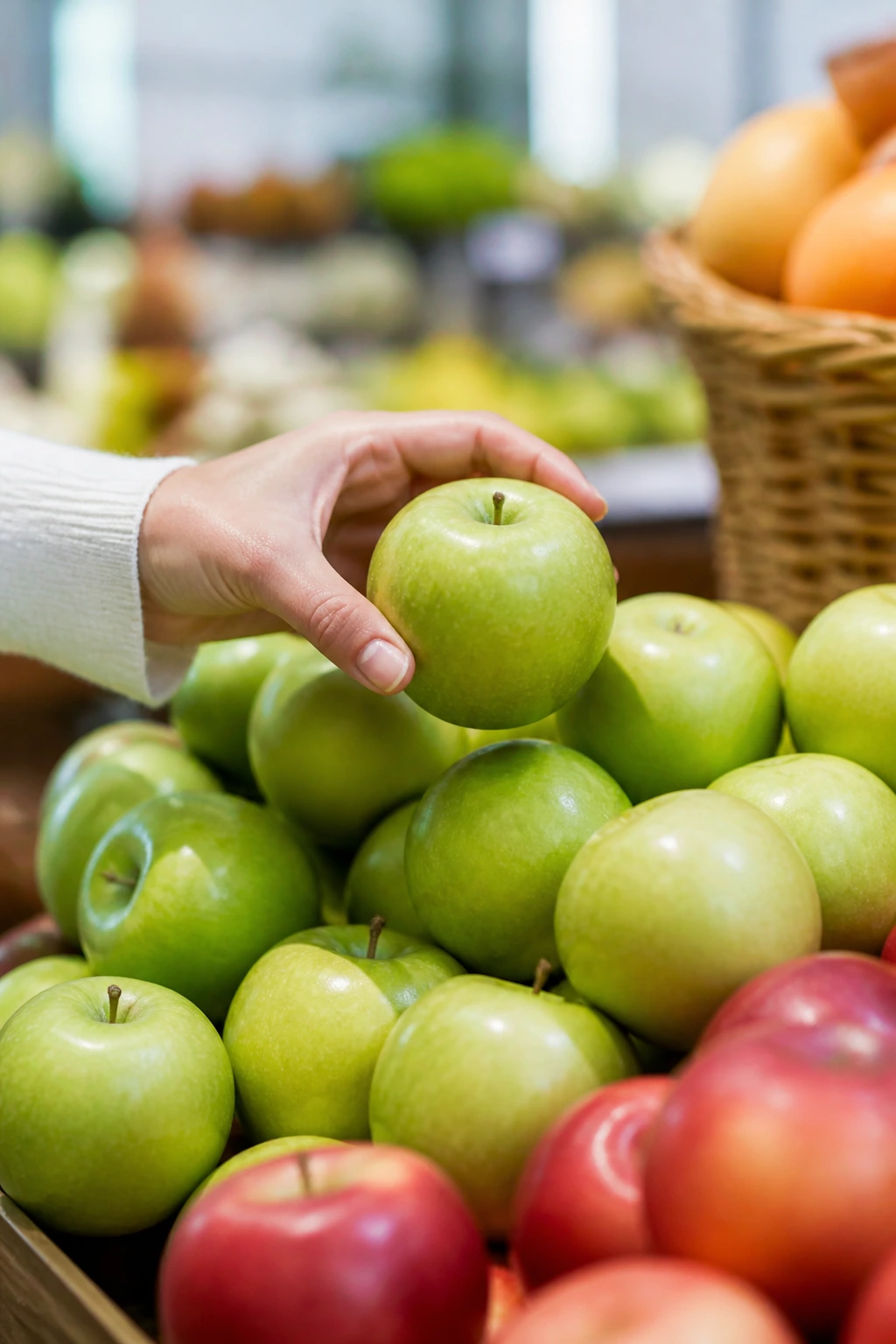
For produce, lean toward apples that hold their shape in heat. Granny Smith, Honeycrisp, Braeburn, and Pink Lady all behave better than soft apples that collapse into mush. Brussels sprouts should feel firm, with tight leaves and pale stems. Acorn squash and butternut squash should feel heavy for their size and have skins without soft spots. Leeks need a good wash; sand loves to hide between layers, and nobody wants grit in their gratin.
Broth matters more than it gets credit for. Use low-sodium broth if you want control over the seasoning, especially in gravies and pan sauces where the liquid reduces and the salt concentrates. Dried herbs are fine in casseroles and braises, but fresh sage, thyme, and rosemary make a bigger difference in roast meats because they perfume the fat as it cooks. If a recipe uses puff pastry, keep it cold until the last minute. Warm pastry gets sticky, and sticky pastry bakes poorly.
How to Serve These Recipes
Presentation:
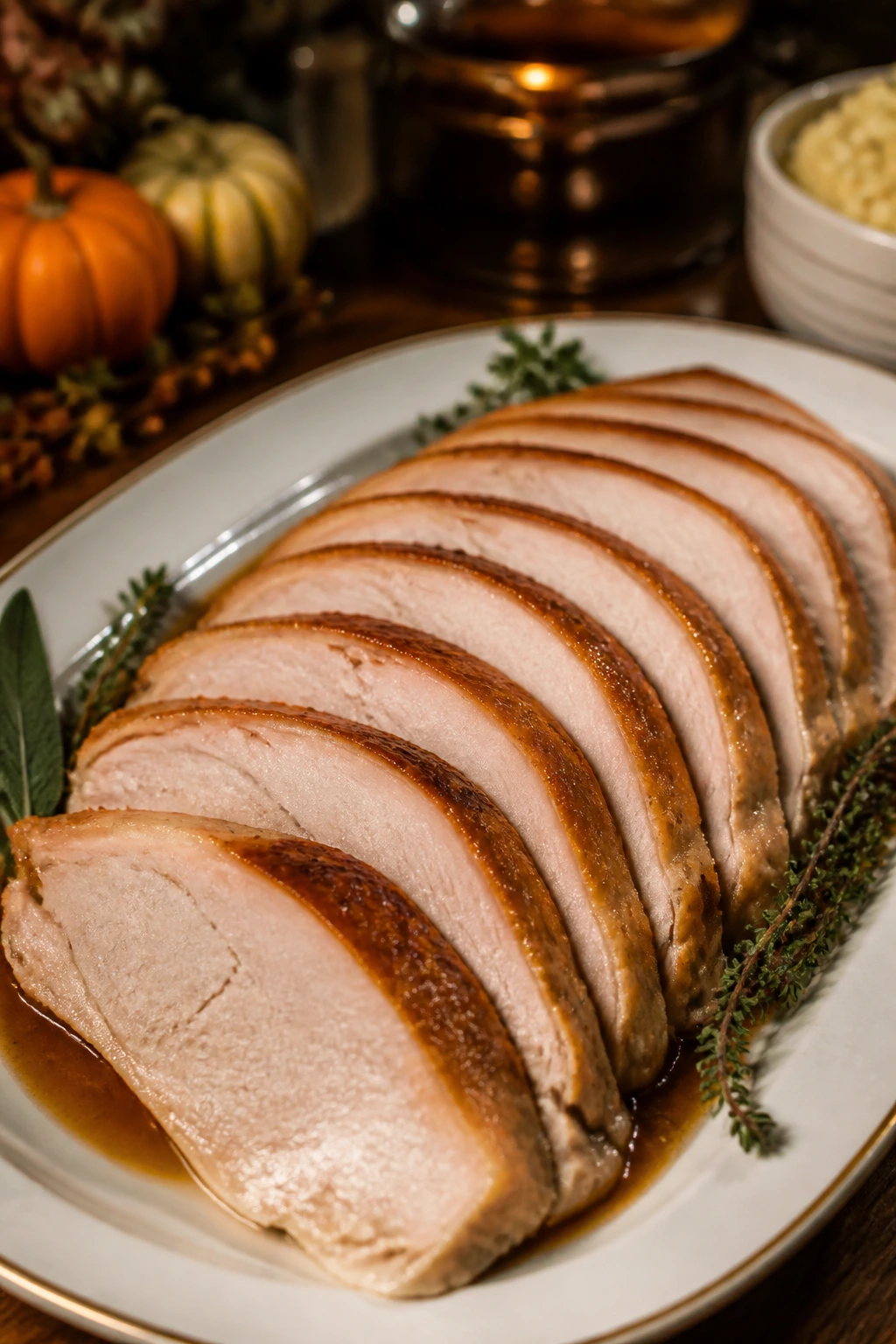
Serve roast meats on warmed platters with the carved slices slightly overlapped, then spoon sauce or pan gravy around—not over—them so the edges stay visible. For casseroles and gratins, let the first cut look neat by resting the dish before serving. A few herbs, some cranberries, or a scatter of chopped parsley goes a long way on a small table.
Accompaniments:
These dinners play nicely with mashed potatoes, green beans, roasted carrots, cranberry sauce, salad with a sharp vinaigrette, dinner rolls, and simple stuffing. If you are serving one of the richer mains, keep the sides bright and uncluttered. If you are serving a lighter main like salmon or chicken cutlets, a creamier side such as gratin or mashed potatoes helps the plate feel finished.
Portions:
For small families, count on 4 to 6 ounces of protein per adult for rich dishes and a little less if the plate includes a dense side like stuffing casserole or lasagna. Double the vegetables if you want leftovers, because vegetables are the easiest part to repurpose. Most of these recipes scale well by 1.5x, but keep an eye on pan size so you do not crowd the food.
Beverage Pairing:
A dry hard cider works across a lot of these dishes because it echoes the apple and cranberry notes without fighting the herbs. For wine, pinot noir is a safe match for turkey, chicken, pork, and mushroom dishes, while a crisp chardonnay fits salmon and gratins well. For a nonalcoholic option, sparkling water with orange or rosemary and a tart cranberry spritz both feel holiday-appropriate.
Additional Tips and Flavor Boosters
Flavor Enhancement:
A small hit of acid at the end can save a rich holiday dish. A teaspoon of apple cider vinegar in gravy, a squeeze of lemon over salmon, or a spoonful of cranberry relish beside roast chicken keeps the flavors from blurring together.
Customization:
Use nuts, herbs, or fruit to fit your table. Pecans work in stuffing and squash. Cranberries work in meatloaf and glaze. Sage belongs almost anywhere in this collection, but rosemary needs a lighter hand because it can take over if you get enthusiastic.
Serving Suggestions:
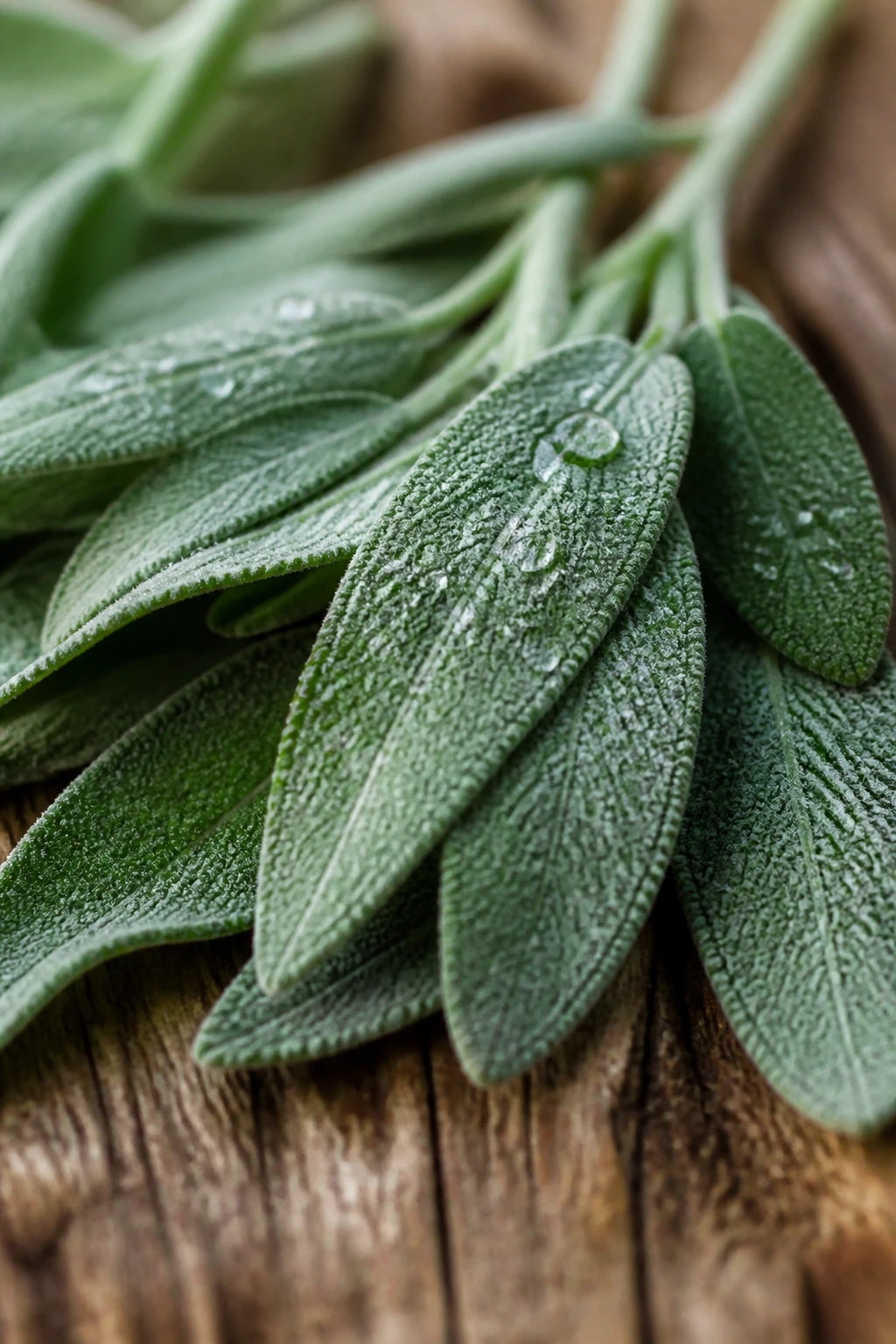
Fresh herbs are more than decoration here. A few leaves of parsley, sage, or thyme make roast plates look alive, and they also give the first bite a cleaner smell. Toasted nuts, crisp breadcrumbs, and a little browned butter are the finishing touches that turn a good plate into one people remember.
Make-It-Yours:
For gluten-free diners, use cornstarch for gravies, gluten-free breadcrumbs in meatloaf or stuffing, and gluten-free noodles or pastry where needed. For dairy-free versions, olive oil can stand in for butter in most roast dishes, though the flavor will be a little less rounded. For lower-sodium meals, choose unsalted broth and lean harder on acid, herbs, and pepper.
Make-Ahead, Storage, and Reheating Guidance
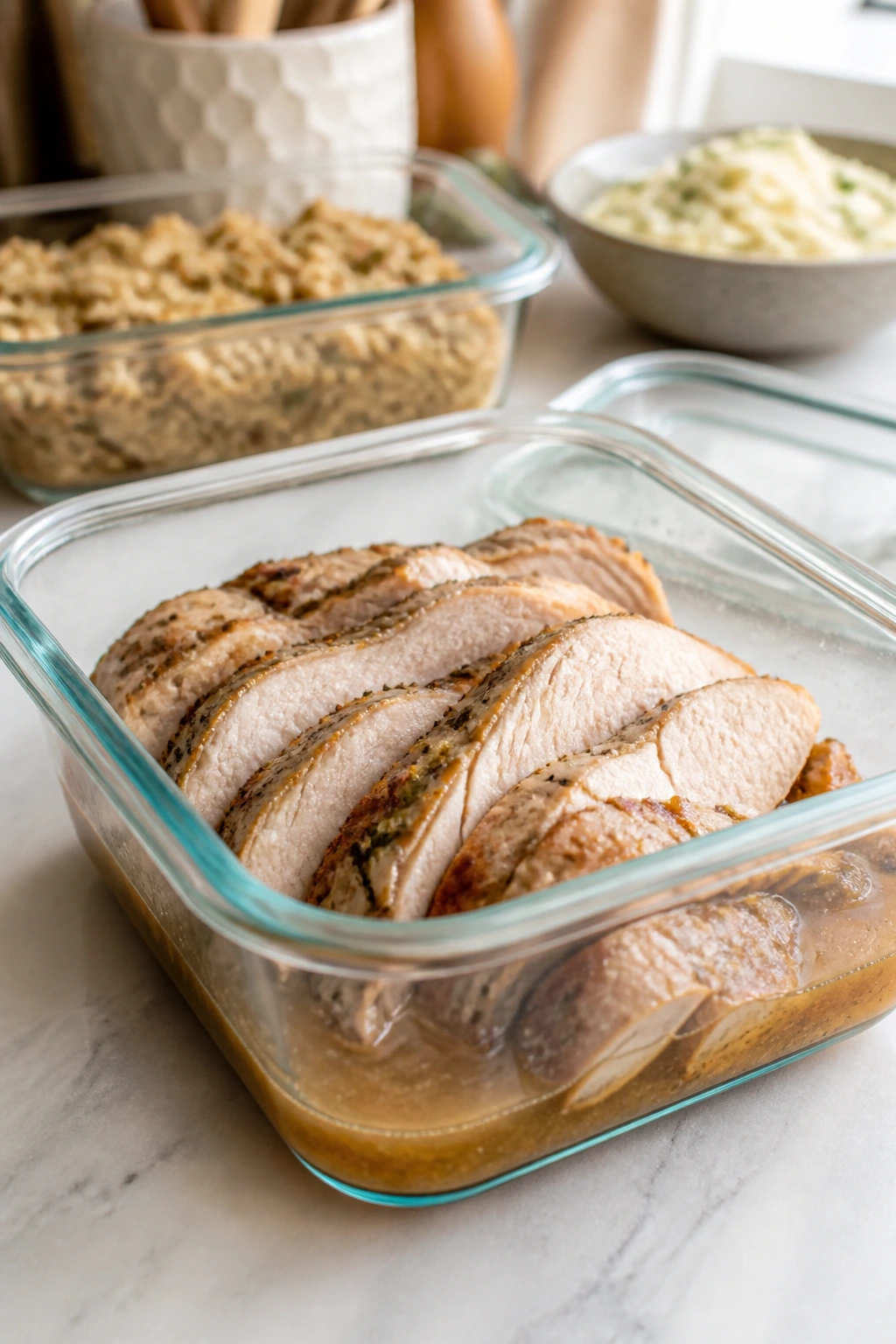
Most of these dishes keep well enough for a small family to enjoy the next day without feeling trapped by leftovers. Roast turkey breast, chicken, pork tenderloin, ham steaks, and meatloaf hold for 3 to 4 days in the refrigerator in airtight containers. Casseroles like shepherd’s pie, lasagna, pot pie filling, stuffing casserole, and gratin also keep for 3 to 4 days, and many of them freeze well for up to 2 months if wrapped tightly.
Reheat roast meats gently. A covered dish in a 300°F oven with a splash of broth or pan juices keeps turkey and chicken from drying out. Pork tenderloin does better sliced and warmed briefly in a skillet or low oven with sauce. Salmon is the exception: it is best eaten fresh or chilled rather than aggressively reheated, because the texture can turn chalky fast.
For casseroles, reheat covered at 350°F until the center is hot, then uncover for the last few minutes if you want the top to crisp again. Shepherd’s pie and lasagna both improve after a night in the fridge because the layers settle and slice more neatly. Gravy should be reheated slowly over low heat with a splash of broth or water, whisking often so it does not turn gluey. Stuffing casserole and pot pies reheat well in the oven; the microwave works in a pinch, but the top loses its edge.
If you want to get ahead, make cranberry relish, gravy, and many vegetable fillings a day early. Assemble lasagna, shepherd’s pie, and gratins earlier in the day, then bake them when the oven opens up. Turkey breast and roast chicken are best roasted the same day you serve them, but the seasoning mixture can be made ahead so all you have to do is rub and roast.
Variations and Adaptations to Try
Gluten-Free Holiday Table:
Swap flour-based gravy thickeners for cornstarch and use gluten-free breadcrumbs, noodles, or pastry where needed. The flavor does not suffer much if you season carefully, and the texture stays close to the original.
Dairy-Free Comfort Menu:
Use olive oil instead of butter for roast meats, coconut milk or unsweetened oat milk in gratins and mashed potatoes, and dairy-free butter for topping potatoes or casseroles. The food will taste a little less rich, so lean harder on herbs, garlic, and acid.
Low-Sodium Approach:
Choose low-sodium broth, reduce cured meats slightly, and season with herbs in layers rather than dumping salt at the end. Cranberry, apple cider vinegar, citrus, and black pepper do a lot of the work here.
Vegetarian Centerpiece Night:
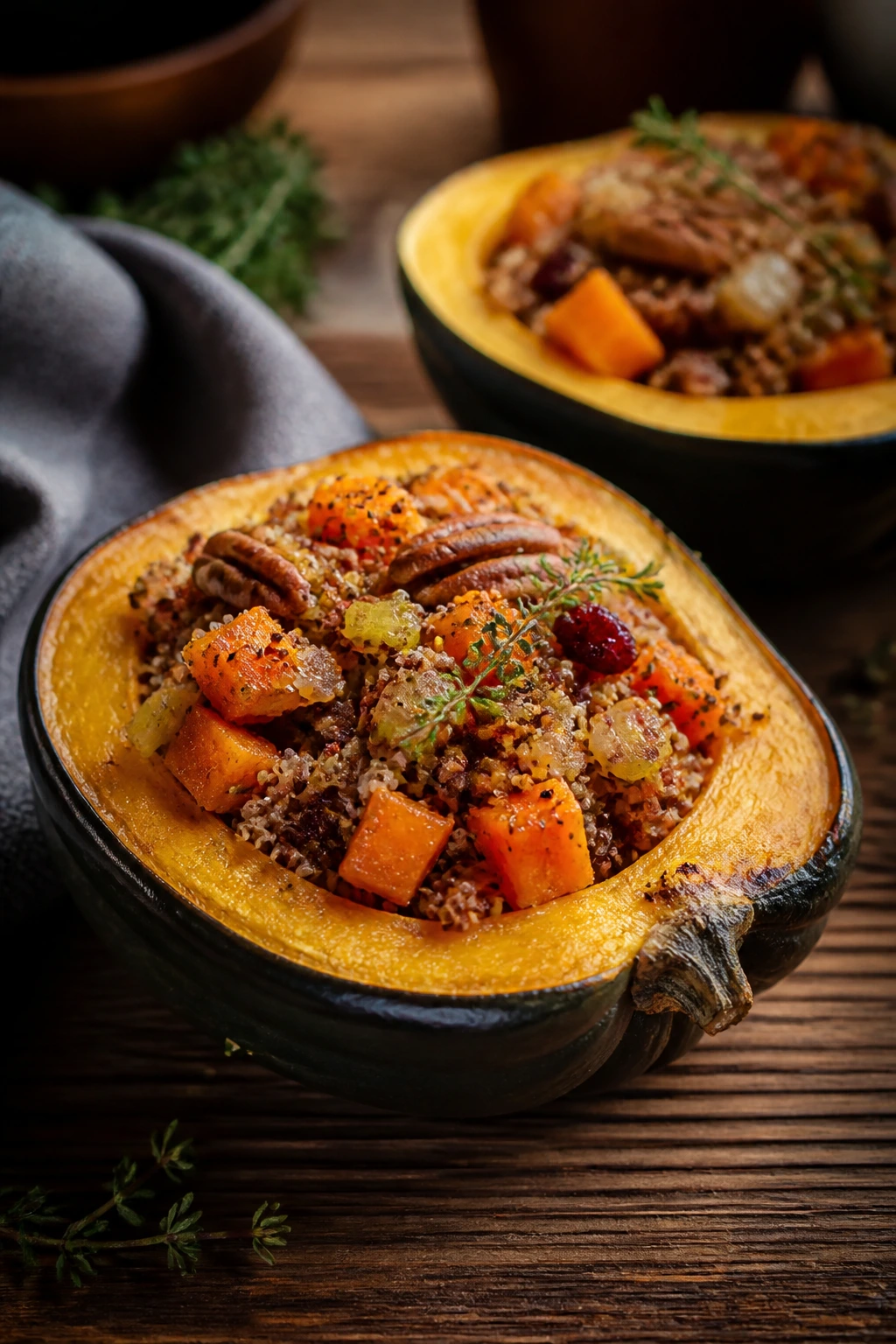
Build the meal around the stuffed squash, mushroom pot pie, lasagna, or gratin, then add one bright salad and one crisp vegetable. You will not miss the turkey if the texture mix is good.
Small-Oven Strategy:
Pick recipes that share temperatures when possible, and use sheet pans plus one casserole instead of three separate baked dishes. A 400°F oven can handle salmon, squash, and vegetables; a 375°F oven plays nicely with chicken, gratins, and casseroles.
Leftover-Friendly Planning:
Choose at least one recipe that reheats beautifully—shepherd’s pie, turkey breast, meatloaf, lasagna, or pot pie. That way the next day’s meal feels planned, not accidental.
Common Mistakes to Avoid
Small-family holiday cooking fails for ordinary reasons, and most of them are fixable. The first mistake is making too much food because the holiday is supposed to feel abundant. Abundance is nice until you are eating the same thing three days later and the refrigerator door will not close. Pick one main that fits the household and let the sides do the rest.
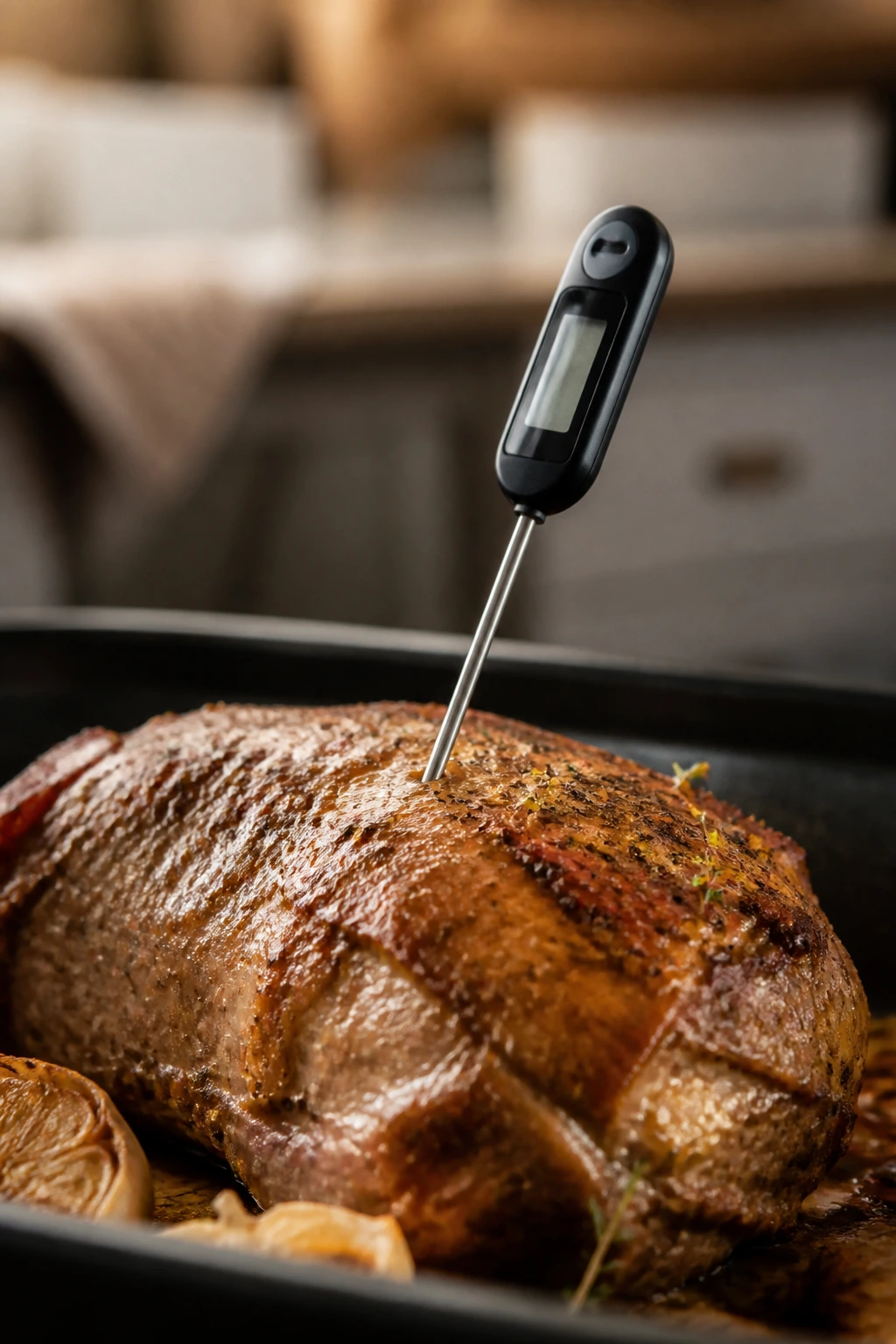
Another common problem is treating small portions like they need less attention. A turkey breast, pork tenderloin, salmon fillet, or chicken cutlet can go dry in a blink if you leave it alone too long. Use an instant-read thermometer and pull the food when it hits the target, not when the kitchen smells “done.”
Crowding the pan is a quieter mistake, but it ruins browning. Vegetables need space to roast, not steam. When the tray is too full, Brussels sprouts soften, sweet potatoes go pale, and cutlets stop browning. If you need more room, use two pans.
A fourth issue is underseasoning small-batch food. Big holiday recipes often rely on volume and drippings to spread flavor around. Smaller dishes do not have that cushion. Season the protein, season the vegetables, and taste the sauces before they hit the table.
The last big one is serving dishes too fast. Turkey, chicken, meatloaf, gratins, lasagna, and casseroles all settle as they rest. If you cut too early, the juices run out or the layers collapse. A few minutes on the counter makes the difference between tidy slices and a sloppy pan.
Questions People Ask Before Cooking These Dinners

Which of these recipes is best for two people?
The Cornish hens, salmon, pork tenderloin, and turkey cutlets are the easiest fits for two. The stuffed squash and gratin also scale down neatly. If you want leftovers, choose turkey breast or shepherd’s pie instead.
What is the easiest Thanksgiving dinner idea for a small family?
Ham steaks with vegetables and maple-Dijon pork tenderloin are probably the fastest. Sheet-pan turkey cutlets are also simple because the oven handles most of the work. None of them need long resting times or complicated carving.
Can I make a small Thanksgiving dinner with just one oven?
Yes, and that is usually the cleanest way to do it. Pick one main recipe and pair it with one baked side, then use the stovetop for sauce, vegetables, or reheating. Sheet-pan and casserole dishes make the timing much easier.
Which recipe makes the best leftovers?
Turkey breast, shepherd’s pie, meatloaf, lasagna, and stuffing casserole all reheat well. They keep their texture better than fish or very lean roast cuts. If leftovers matter, build the menu around one of those.
Can I swap turkey for chicken in these recipes?
You can in a few places. Chicken thighs work well in the brown-butter pilaf, and chicken cutlets can replace turkey cutlets on the sheet pan. Chicken breast can work too, but it needs a closer eye because it dries out faster.
How do I keep turkey breast from drying out?
Use a thermometer, roast at moderate heat, and rest the meat before slicing. Butter under the skin helps, as does roasting the breast on onions or a little broth so the pan does not run dry. Pull it around 160 to 165°F.
What if I want a vegetarian main but still want it to feel like Thanksgiving?
Go with the stuffed acorn squash, mushroom pot pie, butternut squash lasagna, or potato gratin. Those dishes bring the same herbs, cream, and roasted sweetness people expect from the holiday. They do not feel like a second-choice dinner.
Can I freeze any of these ahead of time?
Yes. Shepherd’s pie, lasagna, pot pie filling, and some casseroles freeze well for up to 2 months. Roast meats can be frozen too, but their texture is usually better when made fresh and eaten within a few days.
What should I do if my gravy turns lumpy?
Whisk it hard over low heat and strain it if needed. If the lumps are stubborn, blend the gravy briefly with an immersion blender or push it through a fine-mesh strainer. Start with less flour next time and add the thickener gradually.
A Holiday Table That Fits
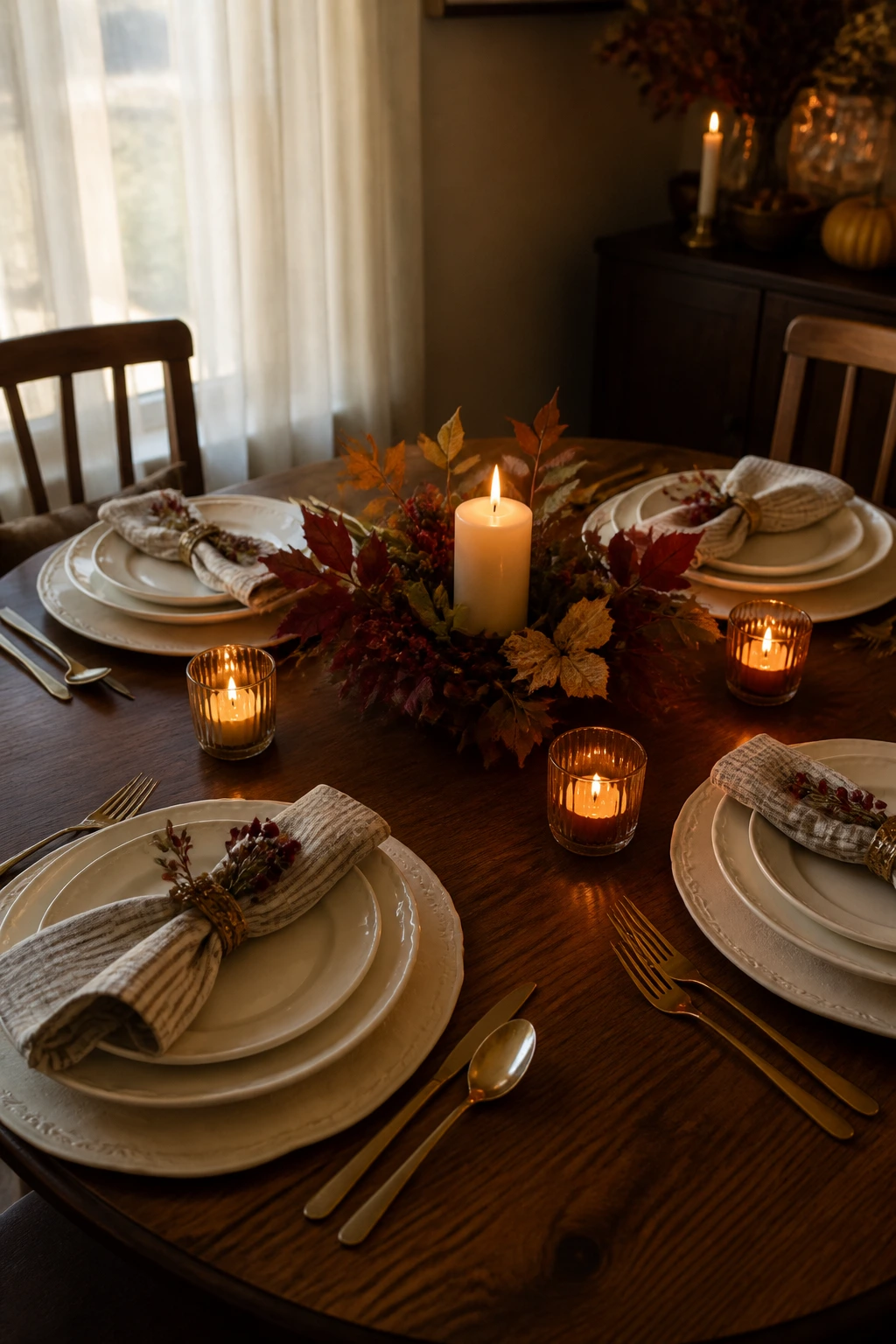
A small Thanksgiving table has a different kind of charm. The food gets to be deliberate instead of sprawling, and the cook gets to sit down before the plates go cold. That matters more than people admit.
If you choose one strong main, one or two dependable sides, and a sauce or relish that wakes everything up, the meal feels complete. Not smaller. Complete. And that is the real trick with Thanksgiving dinner ideas for small families: they should fit the room, the oven, and the people eating them.
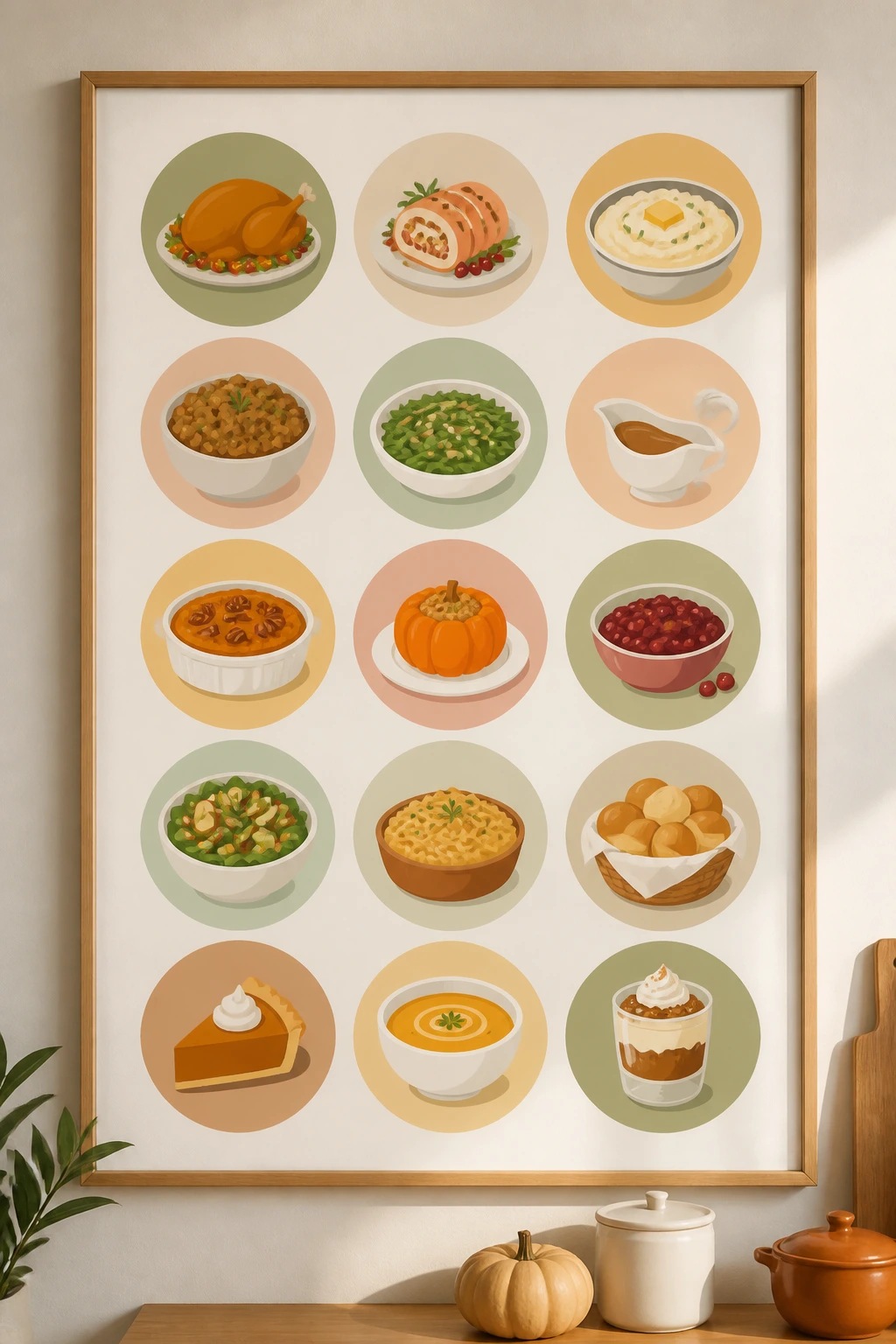
Quick Reference for All 15 Thanksgiving Dinner Ideas
-
1. Herb-Roasted Turkey Breast with Pan Gravy — Prep 15 min, Cook 60 min, Total 75 min. Serves 4. Standout: classic turkey and gravy without the giant bird.
-
2. Sage-Butter Cornish Hens with Cranberries — Prep 20 min, Cook 50 min, Total 70 min. Serves 2 to 4. Standout: crisp little roast birds with a bright cranberry pan sauce.
-
3. Maple-Dijon Pork Tenderloin with Apples — Prep 15 min, Cook 25 min, Total 40 min. Serves 4. Standout: the fastest holiday main with glossy apple-cider flavor.
-
4. Sheet-Pan Turkey Cutlets with Brussels Sprouts and Sweet Potatoes — Prep 20 min, Cook 25 min, Total 45 min. Serves 4. Standout: one-pan Thanksgiving dinner with almost no cleanup.
-
5. Brown Butter Chicken Thighs with Wild Rice Pilaf — Prep 20 min, Cook 45 min, Total 65 min. Serves 4. Standout: nutty brown butter and a built-in rice side.
-
6. Stuffed Acorn Squash with Sausage, Pecans, and Cranberries — Prep 20 min, Cook 50 min, Total 70 min. Serves 4. Standout: a whole holiday meal tucked inside edible squash shells.
-
7. Turkey Shepherd’s Pie with Mashed Potatoes — Prep 25 min, Cook 35 min, Total 60 min. Serves 4 to 6. Standout: cozy, scoopable comfort food with classic holiday flavors.
-
8. Apple Cider Roast Chicken with Crispy Potatoes — Prep 15 min, Cook 60 min, Total 75 min. Serves 4. Standout: one-pan roast chicken with apples and potatoes in the drippings.
-
9. Butternut Squash and Ricotta Lasagna — Prep 30 min, Cook 50 min, Total 80 min. Serves 6. Standout: creamy, layered, and vegetarian without feeling like a backup plan.
-
10. Herb-Crusted Salmon with Cranberry Relish — Prep 20 min, Cook 15 min, Total 35 min. Serves 4. Standout: holiday flavors in a lighter, faster main.
-
11. Mushroom and Lentil Pot Pies — Prep 30 min, Cook 45 min, Total 75 min. Serves 4. Standout: crisp pastry over a deep, savory vegetarian filling.
-
12. Turkey Meatloaf with Potato Topping — Prep 25 min, Cook 55 min, Total 80 min. Serves 4 to 6. Standout: comfort food with a cranberry glaze and mashed potato crown.
-
13. Sausage, Apple, and Cornbread Stuffing Casserole — Prep 20 min, Cook 40 min, Total 60 min. Serves 4 to 6. Standout: stuffing that can stand on its own as dinner.
-
14. Ham Steaks with Green Beans and Sweet Potatoes — Prep 15 min, Cook 30 min, Total 45 min. Serves 4. Standout: the easiest holiday dinner with a sweet-tangy glaze.
-
15. Potato, Leek, and Swiss Chard Gratin — Prep 25 min, Cook 50 min, Total 75 min. Serves 4. Standout: creamy, browned, and rich enough to anchor a vegetarian holiday table.