



No bake dinners for hot summer nights are not a compromise. They’re the reason supper can still feel calm when the kitchen is holding its breath and the air has that heavy, sticky edge that makes even opening the oven feel rude.
A good no-bake dinner doesn’t try to fake a roast chicken or a bubbling casserole. It leans into what the season actually gives you: ripe tomatoes, crisp cucumbers, herbs that smell sharp when you chop them, salty cheeses, cold noodles, briny jars from the pantry, and proteins that don’t need an hour of heat to become dinner.
The best versions also understand something a lot of cold supper recipes miss: cold food needs more personality. Salt matters more. Acid matters more. Crunch matters more. If a meal is going to skip the oven, it has to earn its place with texture, contrast, and enough substance to feel like a real plate of food, not a stalled lunch.
Why These No-Bake Suppers Earn a Spot on the Menu
- Cooler Kitchen: No oven means you keep the heat where it belongs—outside the house, not trapped over the stovetop or oven door.
- Real Dinner Energy: These recipes aren’t dainty side salads; they lean on beans, chicken, seafood, grains, and bread so you finish the meal satisfied.
- Fast Assembly: Most of them come together in 20 minutes or less once the chopping is done, which matters when you’re already sweating before dinner starts.
- Pantry-Friendly: Canned tuna, chickpeas, beans, and jarred peppers show up often because they save the evening without tasting like a backup plan.
- Make-Ahead Friendly: Several fillings taste better after a short chill, which is rare and lovely when the evening is already crowded.
- Easy to Mix and Match: Swap wraps for lettuce cups, rice for bread, salmon for tuna, or beans for chicken without rebuilding the whole meal from scratch.
1. Tuna, Chickpea, and Cucumber Pita Pockets
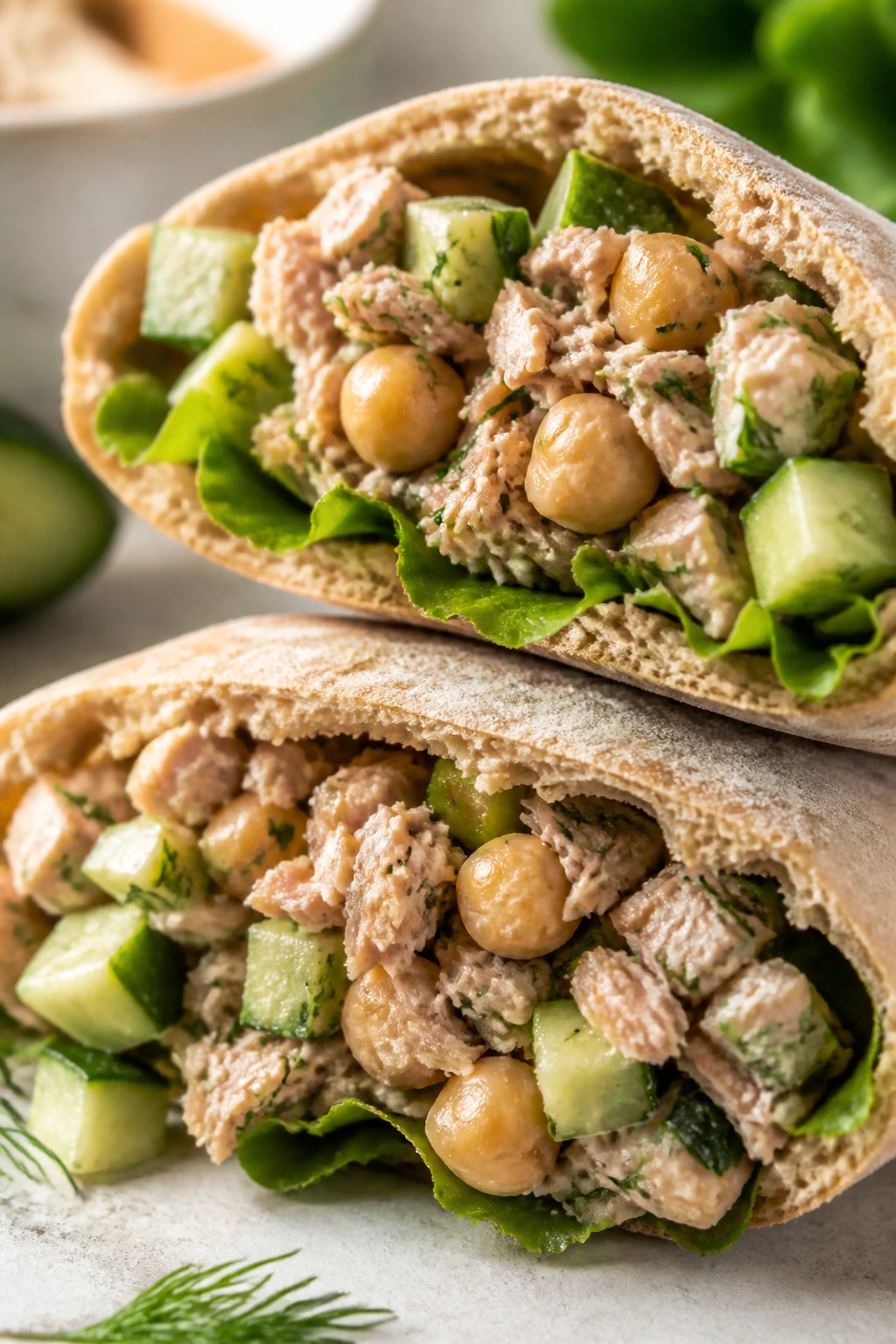
Tuna salad gets a bad reputation when it stops at tuna, mayo, and regret. Add chickpeas, lemon, cucumber, and dill, and it turns into a cool, sturdy dinner that feels fresh without being flimsy. The pita does some quiet heavy lifting here. It keeps everything together, so you can actually eat the thing without a fork chasing chickpeas across the plate.
Why It Works
This version works because it treats tuna like a protein, not a paste. Chickpeas add body and make the filling feel more like a meal, while Greek yogurt and a little mayo keep the texture creamy without getting slick. Lemon and dill wake everything up, and the cucumber brings back the crunch that cold dinners need so badly. Use tuna packed in olive oil if you want a richer, rounder flavor; it holds up better than the super-lean stuff when the filling has to sit for a bit.
Key Ingredients
- 2 (5-ounce) cans tuna, drained well
- 1 (15-ounce) can chickpeas, rinsed and drained
- 1 medium English cucumber, diced small
- 2 celery stalks, finely chopped
- 1/4 small red onion, minced
- 1/3 cup plain Greek yogurt
- 2 tablespoons mayonnaise
- 1 tablespoon fresh lemon juice
- 1 tablespoon chopped fresh dill
- 4 pita pockets
- 2 cups baby lettuce or arugula
- Salt and black pepper, to taste
Quick Steps
- Make the dressing: In a large bowl, whisk the Greek yogurt, mayonnaise, lemon juice, dill, 1/2 teaspoon salt, and several grinds of black pepper until smooth.
- Build the filling: Add the tuna, chickpeas, cucumber, celery, and red onion. Stir gently so the chickpeas stay partly whole and the mixture keeps some texture.
- Taste and rest: Check the seasoning, then let the mixture sit for 10 minutes. The lemon will soak into the tuna and make the whole bowl taste cleaner.
- Prepare the pita: Split the pita pockets and line each one with a handful of baby lettuce or arugula. That little layer matters; it keeps the bread from getting soggy too fast.
- Fill generously: Spoon the tuna mixture into each pita, packing it in but not smashing it. Serve right away.
- Finish if you like: Add extra dill, a drizzle of olive oil, or a few sliced pickles if you want more bite.
Tips and Variations
- Make-Ahead: The filling keeps well for 2 days in the fridge if you store it separately from the pita.
- Crunch Boost: A spoonful of chopped dill pickles or capers gives the filling more snap and a stronger savory edge.
- Swap Note: If you don’t have pita, use sturdy sandwich rolls or lettuce cups and call it a good night.
2. Shrimp Ceviche Tostadas with Avocado
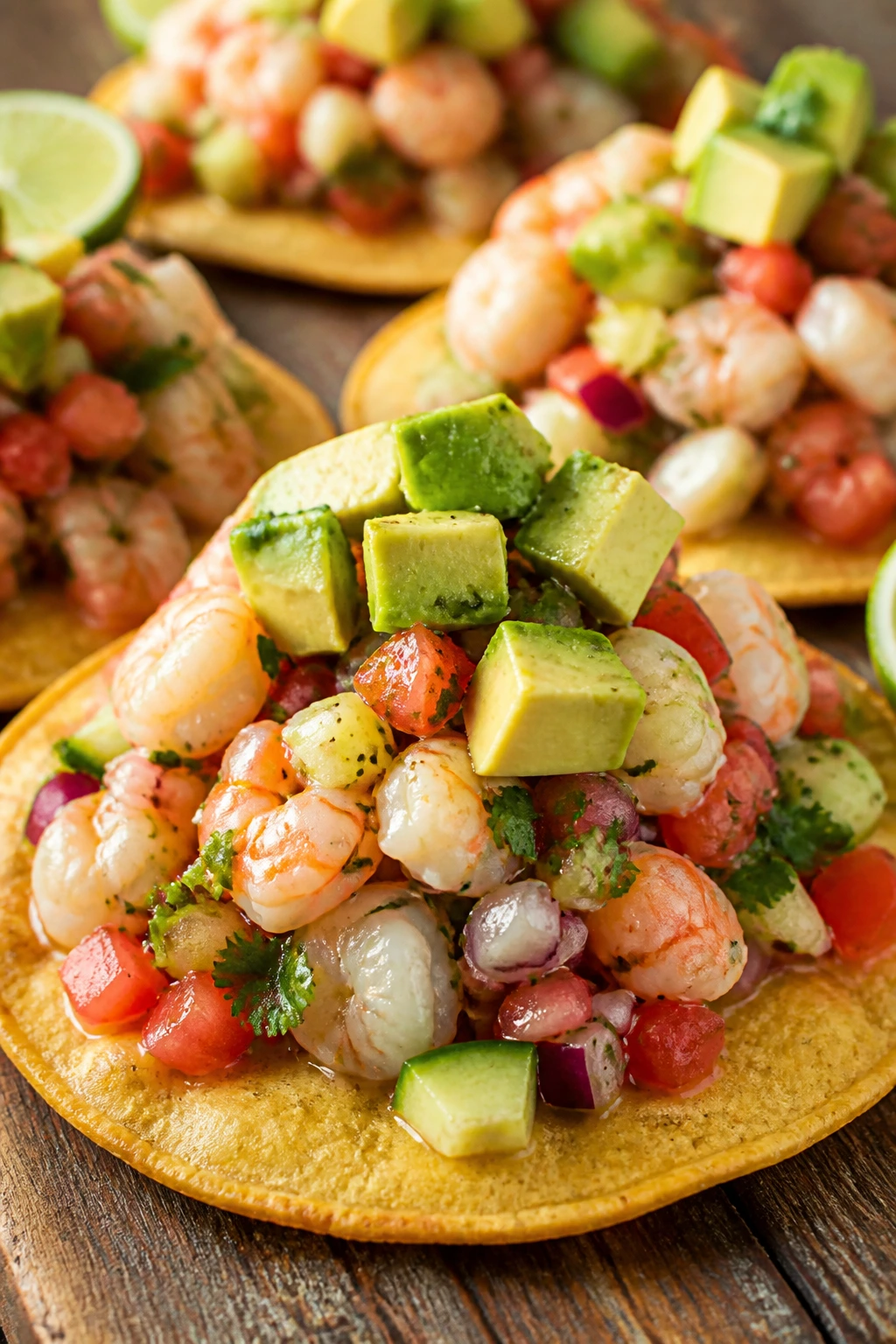
Bright, cold, and crunchy. That’s the whole pitch. These tostadas taste like the first good bite after a sticky afternoon, with lime, tomato, cucumber, cilantro, and avocado piled on crisp shells. I use cooked shrimp here on purpose, because this is a dinner for actual people who want a safe, fast meal, not a science project.
Why It Works
Citrus does what heat usually does here: it sharpens the flavor and pulls all the pieces together. The lime juice, salt, and jalapeño give the shrimp a clean, briny edge, while cucumber and tomato keep the filling juicy without turning watery. The tostada shell adds the hard crunch that makes every bite feel complete. If you let the mixture sit for 10 to 15 minutes before assembling, the vegetables soften just enough to taste more blended, but they still keep their shape.
Key Ingredients
- 1 pound cooked shrimp, peeled, deveined, and chopped
- 1/2 cup fresh lime juice
- 1 cup ripe tomatoes, diced
- 1 cup cucumber, diced small
- 1/3 cup red onion, finely diced
- 1 jalapeño, seeded and minced
- 1/2 cup chopped cilantro
- 1 avocado, diced
- 8 tostada shells
- 1 tablespoon olive oil
- 1/2 teaspoon kosher salt, plus more to taste
- Hot sauce, for serving
Quick Steps
- Combine the vegetables: In a medium bowl, mix the tomatoes, cucumber, red onion, jalapeño, cilantro, lime juice, olive oil, and salt.
- Let it settle: Leave the mixture alone for 10 minutes so the salt can pull a little juice from the tomatoes and onions.
- Fold in the shrimp: Add the chopped shrimp and toss gently. You want everything coated, not bruised.
- Add the avocado last: Fold in the diced avocado just before serving so it stays chunky instead of turning mushy.
- Assemble the tostadas: Spoon the shrimp mixture onto the tostada shells, dividing it evenly.
- Finish and serve: Add hot sauce, extra cilantro, or a pinch of flaky salt. Serve immediately while the shells are crisp.
Tips and Variations
- Texture Fix: Pat the shrimp dry before chopping so the filling doesn’t get slippery.
- Heat Level: A few slices of serrano pepper make this sharper and brighter than jalapeño alone.
- Swap Note: If you’re out of tostadas, use sturdy tortilla chips for a more casual, scoopable dinner.
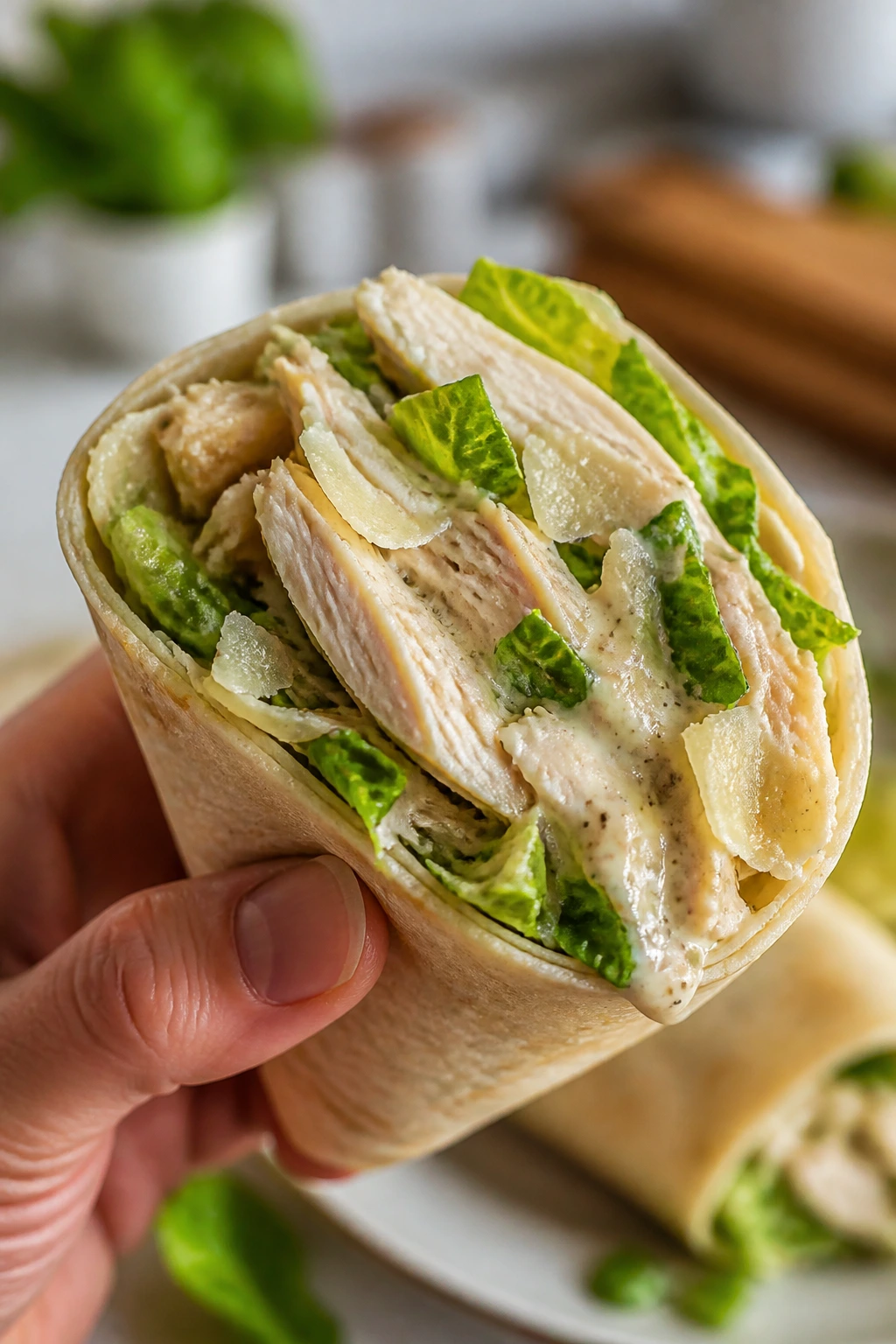
3. Rotisserie Chicken Caesar Wraps
A rotisserie chicken is one of the few store-bought shortcuts I never feel guilty about. It saves the evening, already seasoned and ready, and in a Caesar wrap it becomes proper dinner with almost no effort. Romaine, parmesan, lemon, and a peppery dressing give the whole thing that cool, salty bite people love at lunch counters.
Why It Works
Caesar flavor is built for a no-bake dinner because it already leans on salt, acid, and fat. The chicken gives the wrap enough weight to feel filling, while the romaine stays crisp and gives you that sharp crunch against the creamy dressing. A large tortilla keeps everything tidy and turns a salad into a handheld meal. If you want the wrap to feel less lunchbox and more dinner, add sliced cucumber or a few crushed croutons right before rolling.
Key Ingredients
- 3 cups shredded rotisserie chicken
- 4 large flour tortillas or wraps
- 3 cups chopped romaine lettuce
- 1/2 cup Caesar dressing
- 1/3 cup grated Parmesan cheese
- 1 tablespoon lemon juice
- 1/2 teaspoon black pepper
- 1/2 cup sliced cucumber, optional
- 1/4 cup croutons, lightly crushed, optional
- Salt, to taste
Quick Steps
- Toss the filling: In a large bowl, combine the chicken, romaine, Caesar dressing, Parmesan, lemon juice, black pepper, and a small pinch of salt.
- Check the coating: Stir until the lettuce is lightly dressed, not drenched. Caesar should cling, not pool.
- Lay out the tortillas: Set the tortillas on a clean work surface and divide the filling into the center of each one.
- Add extras if you want them: Sprinkle on cucumber or crushed croutons for more crunch.
- Roll tightly: Fold the sides in, then roll from the bottom into a snug wrap. If it feels loose, it’s going to fall apart later.
- Slice and serve: Cut each wrap on a diagonal for a cleaner look and serve immediately.
Tips and Variations
- Make-Ahead: Keep the filling separate from the tortillas for up to 1 day; assemble just before eating.
- Greens Tip: Dry the romaine well after washing. Wet lettuce makes the wrap slide apart.
- Flavor Boost: A little chopped anchovy or a teaspoon of capers makes the Caesar taste deeper and more savory.
4. Caprese White Bean Salad with Toasted Bread
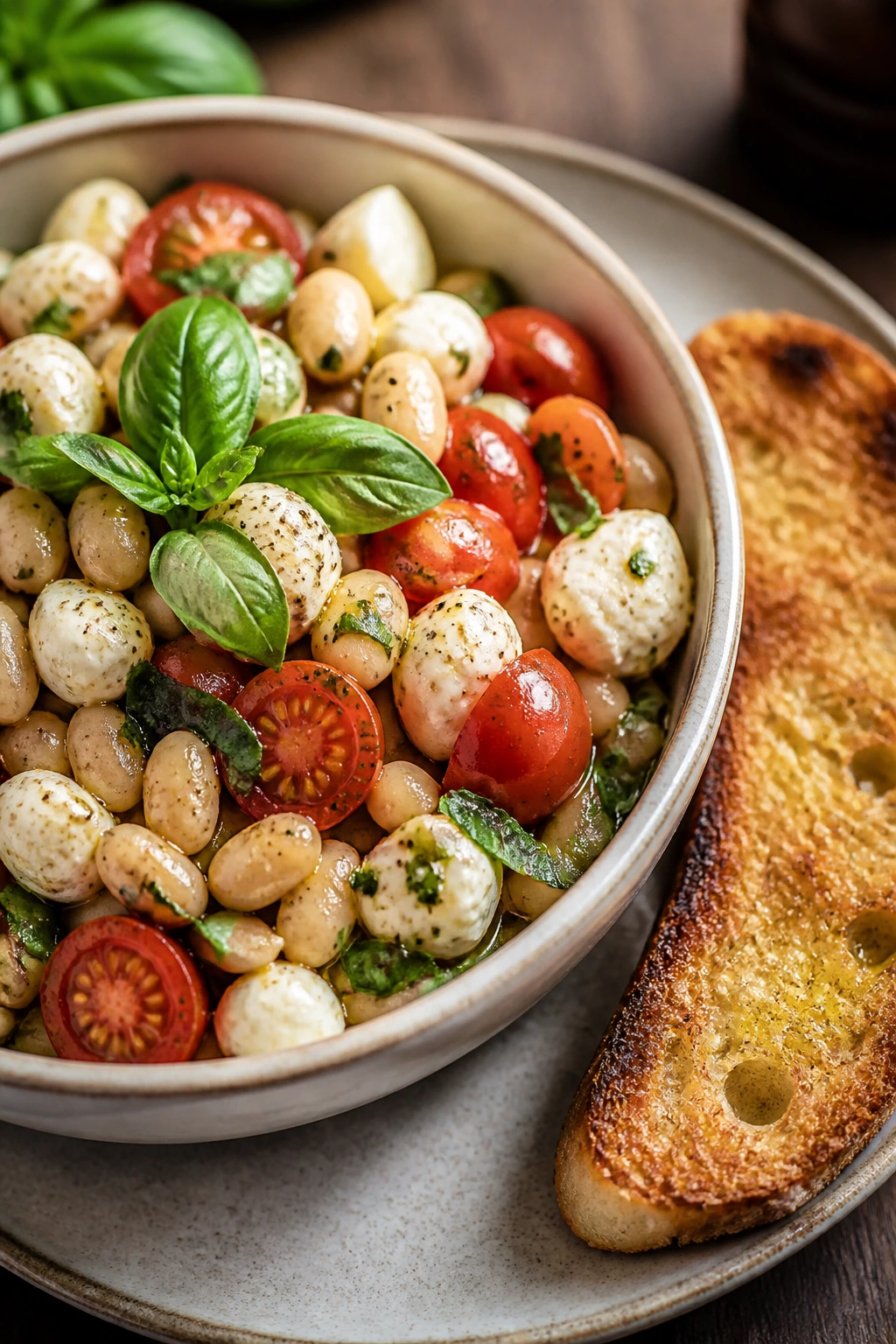
A bowl of tomatoes, basil, mozzarella, and white beans smells like a summer market stall in the best way. The beans make this a dinner instead of a side dish, and the creamy cheese softens the sharper edges of the tomatoes and vinegar. Toasted bread on the side gives you something to drag through the bowl when the juices collect at the bottom.
Why It Works
Caprese usually leans light, which is lovely until dinner is supposed to hold you over for the rest of the evening. White beans solve that problem without changing the personality of the dish. They bring protein and a soft, mealy texture that fits naturally with tomatoes and mozzarella. The lemon and vinegar keep the salad from tasting heavy, and a little garlic rubbed on the toast gives the meal a stronger backbone.
Key Ingredients
- 2 (15-ounce) cans cannellini beans, rinsed and drained
- 2 cups cherry tomatoes, halved
- 1 cup mozzarella pearls, drained
- 1 packed cup fresh basil leaves
- 2 cups baby arugula
- 3 tablespoons extra-virgin olive oil
- 1 tablespoon red wine vinegar
- 1 small garlic clove, finely grated
- 1/2 teaspoon kosher salt
- 1/4 teaspoon black pepper
- 4 slices sturdy bread, toasted
- Balsamic glaze, for drizzling
Quick Steps
- Dress the tomatoes first: In a large bowl, combine the tomatoes, olive oil, red wine vinegar, grated garlic, salt, and pepper.
- Let them release juice: Give the tomatoes 5 to 10 minutes to sit. They’ll soften and create their own dressing.
- Add the beans and greens: Fold in the cannellini beans and arugula until everything is coated.
- Finish the salad: Add the mozzarella pearls and basil leaves, then toss gently so the cheese doesn’t break apart.
- Toast the bread: Toast the slices until the edges are crisp and the center still has a little chew. If you like, rub the warm toast with a cut garlic clove.
- Serve with glaze: Spoon the salad into bowls, pile the toast alongside, and drizzle a little balsamic glaze over the top.
Tips and Variations
- Bread Choice: Use sourdough or ciabatta. Flimsy bread gets damp too quickly.
- Swap Note: Burrata works if you want a creamier, more luxurious finish, but add it at the table.
- Extra Bite: A few sliced Kalamata olives make the bowl taste brinier and less sweet.
5. Peanut Soba Noodle Salad with Edamame
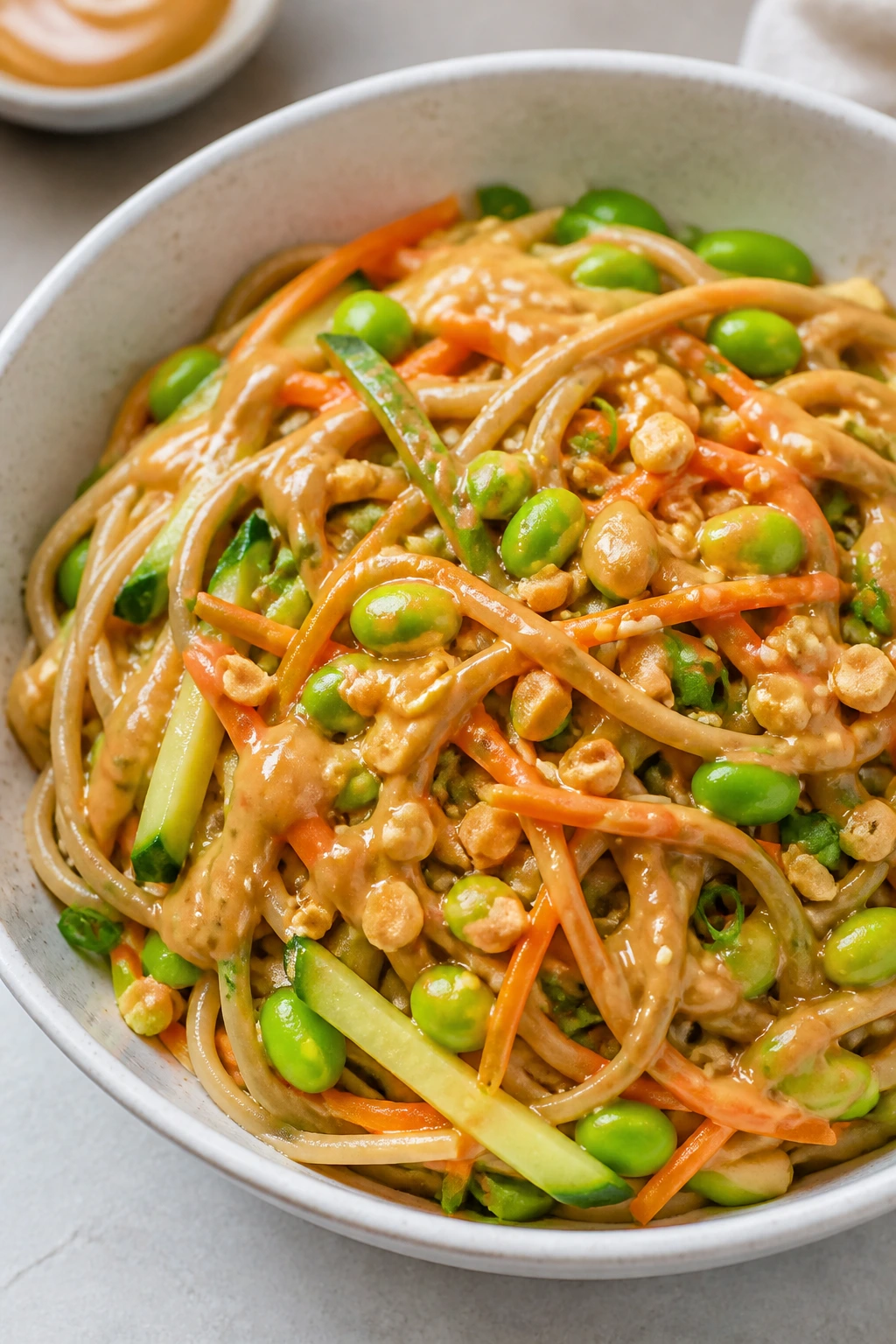
Cold noodles are the move when you want something satisfying but not heavy. Soba gives you that nutty, slightly earthy flavor, and the peanut dressing clings to every strand instead of sliding off. This is the kind of dinner that tastes even better after it sits for 10 minutes, which is a rare and deeply useful quality.
Why It Works
Soba noodles stay pleasantly firm when you rinse them cold, so they hold up under a thick dressing instead of turning limp. Peanut butter adds richness, soy sauce brings salt, and rice vinegar keeps the whole bowl from feeling dense. Edamame, cucumber, and carrots give you protein and crunch, and the chili flakes or sesame oil at the end keep the flavor awake. This is one of those meals where the sauce does the heavy lifting, and the vegetables get to be crisp, clean support.
Key Ingredients
- 8 ounces soba noodles
- 1 cup shelled edamame, thawed if frozen
- 1 large carrot, julienned or shredded
- 1 cucumber, cut into thin matchsticks
- 3 scallions, thinly sliced
- 1/4 cup creamy peanut butter
- 2 tablespoons soy sauce
- 2 tablespoons rice vinegar
- 1 tablespoon sesame oil
- 1 tablespoon honey
- 1 tablespoon lime juice
- 2 tablespoons water, plus more as needed
- 2 tablespoons chopped cilantro
- 2 tablespoons chopped peanuts
Quick Steps
- Cook the noodles: Boil the soba noodles according to the package directions, usually 4 to 6 minutes, until just tender.
- Rinse them cold: Drain and rinse under cold water until the noodles feel cool and the starch is washed away.
- Whisk the dressing: In a bowl, mix the peanut butter, soy sauce, rice vinegar, sesame oil, honey, lime juice, and water until smooth. Add more water if it seems too thick.
- Toss the bowl: Combine the soba noodles, edamame, carrot, cucumber, and scallions in a large bowl.
- Coat everything: Pour in the dressing and toss until the noodles are glossy and evenly coated.
- Finish with crunch: Top with cilantro and chopped peanuts, then serve cold or at cool room temperature.
Tips and Variations
- Make-Ahead: The dressing keeps for 5 days in the fridge and can be thinned with a spoonful of warm water.
- Peanut-Free Swap: Use tahini instead of peanut butter and a touch more honey.
- Heat Lover’s Move: Add chili crisp or sambal for a more aggressive, sharper finish.
6. Greek Chicken Tzatziki Bowls
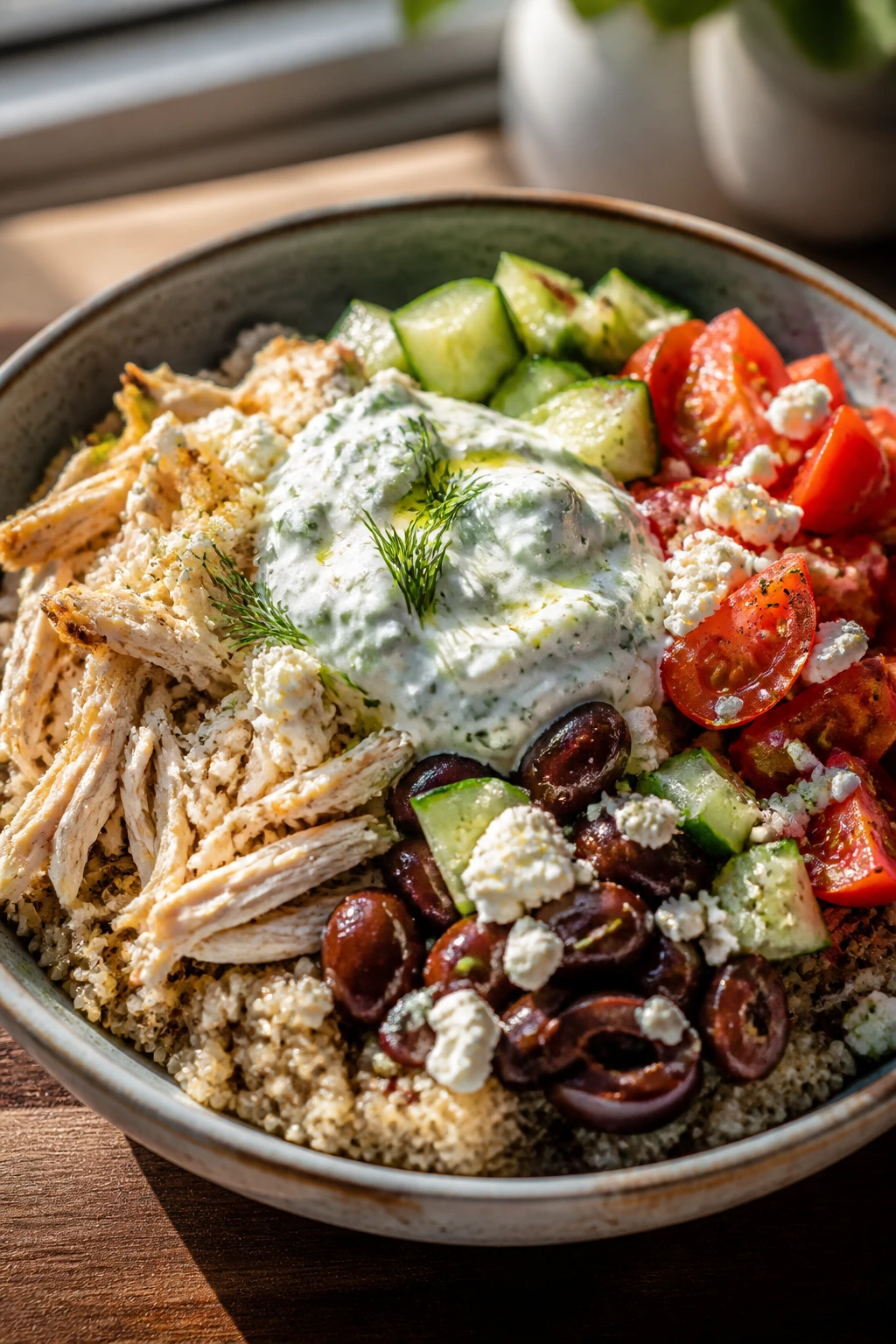
Unlike a wrap, a bowl lets every ingredient stay in its own lane until the fork makes the decision. That matters here, because cucumber, tomato, feta, olives, and chicken all taste different enough to deserve their own space. Tzatziki ties them together with cool yogurt, garlic, and dill, and the whole thing feels sturdy without asking you to heat a thing.
Why It Works
Greek flavors are naturally good at no-bake dinners because they lean on brine, herbs, and fresh produce instead of deep cooking. The chicken gives the bowl enough bulk to feel like dinner, while quinoa or rice adds a base that absorbs the dressing without getting soggy too fast. Tzatziki is especially useful because it brings both creaminess and acid, which keeps cold bowls from tasting flat. If you serve it with pita chips, you get texture, salt, and something to scoop with, which always helps.
Key Ingredients
- 2 cups cooked quinoa, cooled
- 3 cups shredded cooked chicken or rotisserie chicken
- 1 large cucumber, diced
- 2 cups cherry tomatoes, halved
- 1/2 small red onion, thinly sliced
- 1/2 cup Kalamata olives, pitted
- 1 cup crumbled feta cheese
- 1 cup tzatziki sauce
- 1 tablespoon olive oil
- 1 teaspoon dried oregano
- 2 tablespoons chopped dill
- 1 lemon, cut into wedges
- Pita chips or pita bread, for serving
Quick Steps
- Start with the base: Divide the cooled quinoa among four bowls.
- Layer the vegetables: Add cucumber, tomatoes, red onion, and olives in separate piles or loose clusters.
- Add the chicken: Place the shredded chicken in the center of each bowl and season it lightly with oregano and black pepper.
- Add the cheese and herbs: Scatter feta over the top, then finish with dill and a drizzle of olive oil.
- Spoon on the tzatziki: Add a generous dollop to each bowl, or serve it on the side if you want cleaner layers.
- Serve with pita: Add lemon wedges and pita chips for crunch.
Tips and Variations
- Grain Swap: Cold rice or farro works if that’s what you have left in the fridge.
- Sharper Flavor: A spoonful of chopped pepperoncini adds a little heat and brine.
- Meal Prep Note: Keep the tzatziki separate until serving so the bowl stays lively, not wet.
7. Turkey BLT Lettuce Cups with Avocado Ranch
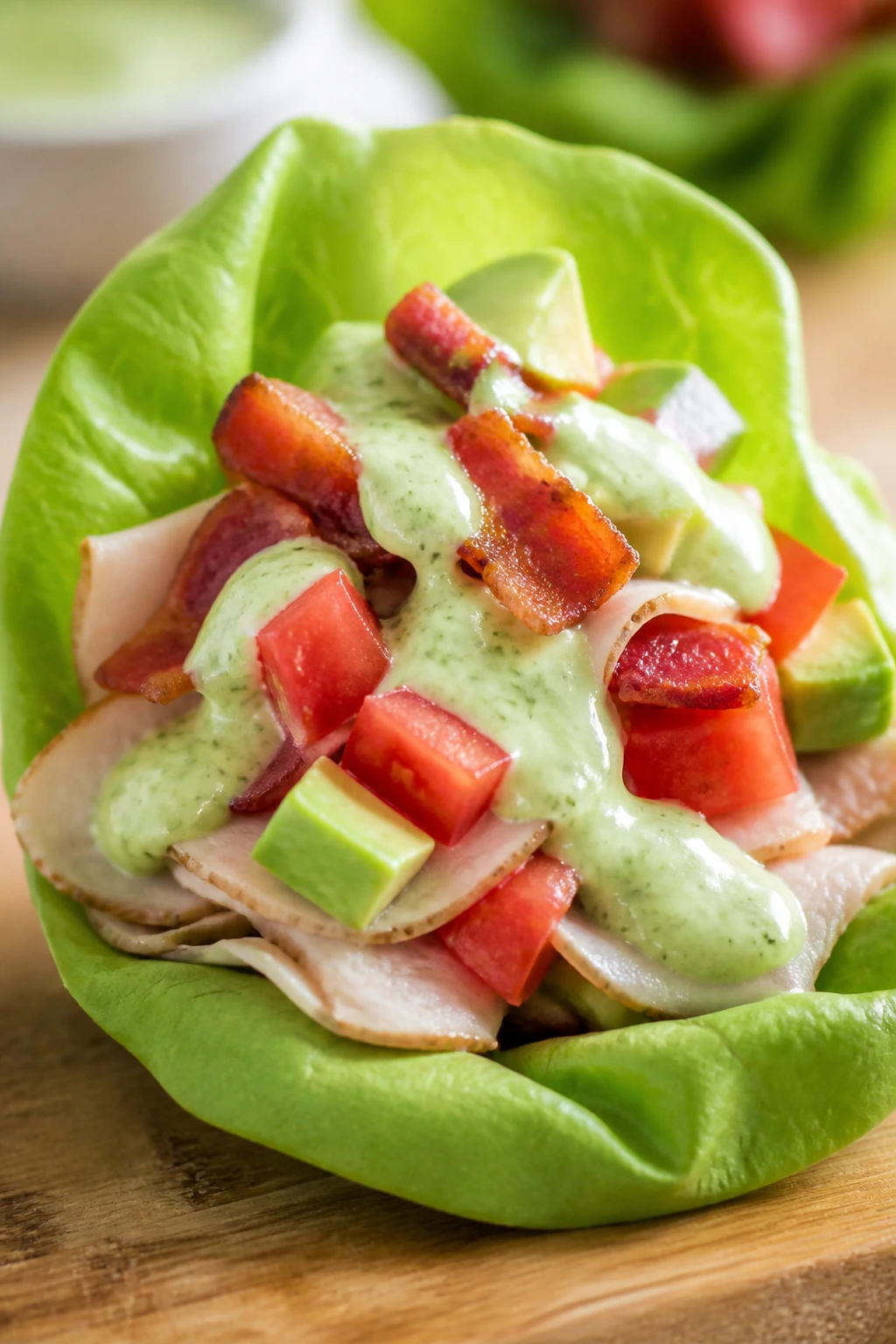
A BLT gets lighter when you stop trying to force it into bread. Butter lettuce turns the sandwich into crisp little cups, and deli turkey pushes it from snacky to actual dinner without turning the stove on. Avocado ranch gives the whole thing a cool, creamy edge that plays well with tomatoes and salty bacon.
Why It Works
The charm here is contrast. You’ve got cold, crisp lettuce; juicy tomato; smoky bacon; creamy avocado; and savory turkey, all of which give you a strong bite without needing a toaster or oven. Lettuce cups also keep the meal feeling fresh when the night is hot, and they let the filling shine instead of hiding it behind bread. If you use pre-cooked bacon, this becomes a true no-bake dinner with almost absurdly little effort.
Key Ingredients
- 2 heads butter lettuce or 1 large iceberg lettuce, leaves separated
- 10 ounces sliced deli turkey
- 8 slices pre-cooked bacon, chopped
- 2 medium tomatoes, diced
- 1 avocado, diced
- 1/2 cup plain Greek yogurt
- 2 tablespoons mayonnaise
- 1 tablespoon lime juice
- 2 tablespoons chopped chives
- 1 teaspoon dried dill or 1 tablespoon fresh dill
- Salt and black pepper, to taste
- 1/4 cup sunflower seeds, optional
Quick Steps
- Make the avocado ranch: In a bowl, mash half the avocado with the Greek yogurt, mayonnaise, lime juice, chives, dill, salt, and pepper until creamy.
- Prep the cups: Wash and dry the lettuce leaves carefully so they stay crisp.
- Build the filling: Layer turkey, bacon, diced tomato, and the remaining avocado pieces into each lettuce leaf.
- Drizzle or dollop: Spoon the avocado ranch over the top, or serve it on the side for dipping.
- Add crunch: Sprinkle sunflower seeds over each cup if you want a little extra bite.
- Serve right away: These are best eaten immediately while the lettuce is still cold and tight.
Tips and Variations
- Softer Version: Use romaine leaves if butter lettuce is hard to find.
- Flavor Boost: Thin slices of dill pickle make the cups taste more like a proper deli sandwich.
- Make It Bigger: Add a side of potato salad or kettle chips if you want a fuller plate.
8. Salmon Salad Stuffed Avocados
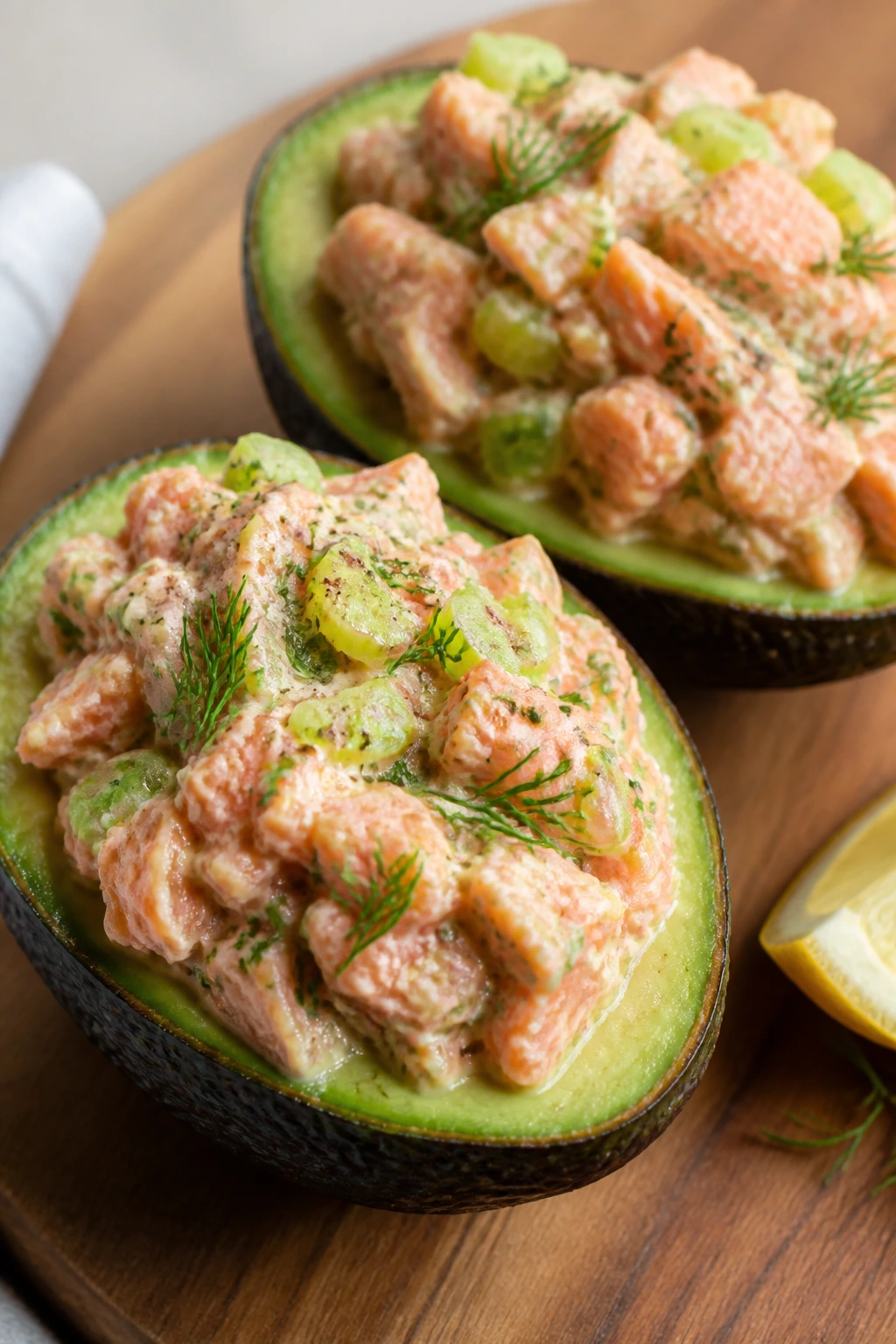
What if dinner could be cold, creamy, and still feel substantial? Stuffing avocado halves with salmon salad gives you exactly that. The salmon brings salt and protein, the avocado brings richness, and the celery, dill, and lemon keep everything from tasting too soft or too heavy.
Why It Works
Canned salmon is one of those quietly useful pantry items that earns its shelf space. It gives you enough richness and texture to feel like a composed meal, especially when mixed with yogurt or mayo, celery, lemon, and capers. Avocados act like built-in bowls, so you don’t need bread unless you want it. The result is cool, filling, and fast, with enough acidity to keep the fat in check.
Key Ingredients
- 2 (5-ounce) cans salmon, drained and flaked
- 1 ripe avocado, halved and pitted
- 1/4 cup plain Greek yogurt
- 2 tablespoons mayonnaise
- 1 celery stalk, finely chopped
- 1 tablespoon lemon juice
- 1 tablespoon capers, drained and chopped
- 1 tablespoon chopped dill
- 1/4 small red onion, minced
- Salt and black pepper, to taste
- Cucumber spears or crackers, for serving
- Baby greens, optional
Quick Steps
- Mix the salad: In a bowl, combine the salmon, Greek yogurt, mayonnaise, celery, lemon juice, capers, dill, and red onion.
- Season carefully: Add salt and pepper, then taste. Salmon is already salty, so go slowly.
- Prepare the avocados: If the avocado halves are small, scoop out a little extra flesh to make more room for the filling.
- Fill generously: Spoon the salmon salad into each avocado half, mounding it slightly.
- Garnish simply: Add more dill, cracked pepper, or a tiny drizzle of olive oil.
- Serve with a side: Offer cucumber spears or crackers so the meal feels more complete.
Tips and Variations
- Bright Finish: A few drops of hot sauce or a pinch of lemon zest sharpens the flavor fast.
- Swap Note: Smoked salmon works if you want a softer, silkier texture.
- Low-Carb Move: Serve the salad on endive leaves if you want something crisper than avocado.
9. Italian Antipasto Subs
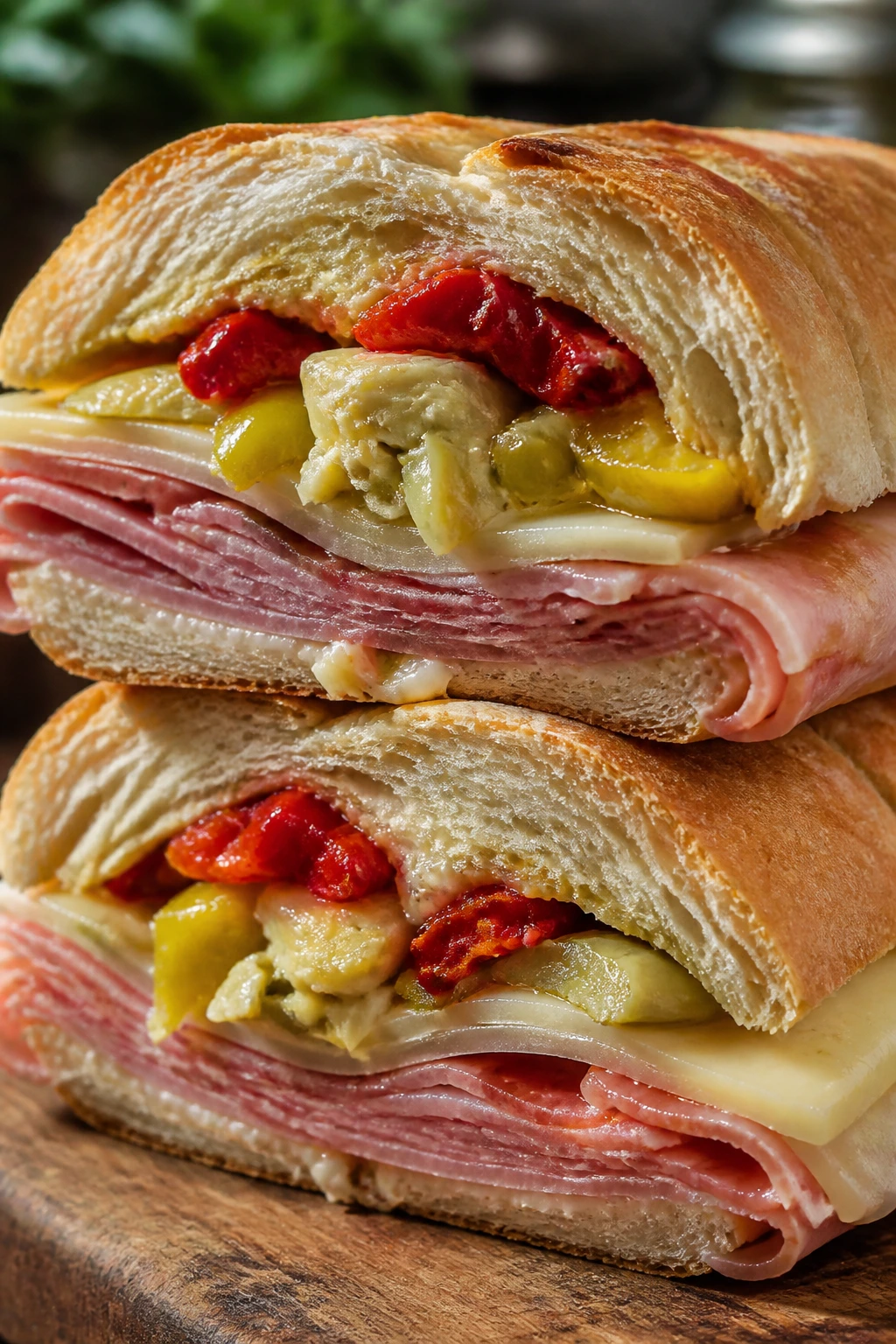
You can build this dinner from deli counter leftovers and a few jarred things, and that is part of the charm. Salami, ham, pepperoni, provolone, roasted peppers, and pepperoncini do most of the work, while the roll soaks up a little olive oil and vinegar without collapsing. It tastes like a picnic sandwich that grew up and got a job.
Why It Works
Antipasto is already built around contrast: salty meat, creamy cheese, vinegar, and briny vegetables. That makes it perfect for a no-bake dinner because there’s no missing piece that the oven would normally supply. The bread holds everything together, the peppers add sweetness, and the vinegar keeps the sandwich from tasting muddy. If you press it lightly before slicing, the whole thing eats more cleanly and feels more composed.
Key Ingredients
- 4 sturdy sub rolls, split
- 6 ounces sliced salami
- 6 ounces sliced ham
- 4 ounces sliced pepperoni
- 4 slices provolone cheese
- 1/2 cup roasted red peppers, drained
- 1/4 cup pepperoncini, sliced
- 1/4 cup marinated artichoke hearts, chopped
- 1 cup shredded lettuce
- 1 medium tomato, sliced
- 1/4 small red onion, thinly sliced
- 2 tablespoons olive oil
- 1 tablespoon red wine vinegar
- 1 teaspoon dried oregano
- Salt and black pepper, to taste
Quick Steps
- Whisk the dressing: Stir together the olive oil, red wine vinegar, oregano, a pinch of salt, and black pepper in a small bowl.
- Prep the rolls: Open the sub rolls and, if they’re very soft, scoop out a little of the bread from the center so they can hold the fillings better.
- Layer the meats and cheese: Add salami, ham, pepperoni, and provolone to each roll.
- Pile on the vegetables: Top with lettuce, tomato, red onion, roasted peppers, pepperoncini, and artichoke hearts.
- Dress the sandwich: Drizzle the vinegar mixture inside each roll.
- Press and slice: Close the sandwiches, press gently, and cut them in half if you want a cleaner serving shape.
Tips and Variations
- Moisture Control: Pat the roasted peppers and artichokes dry first. Wet fillings are the enemy here.
- Heat Option: A spoonful of chopped hot cherry peppers gives the subs more bite.
- Make-Ahead: Assemble without the tomatoes and dressing, then add both just before serving.
10. Black Bean, Mango, and Corn Tacos
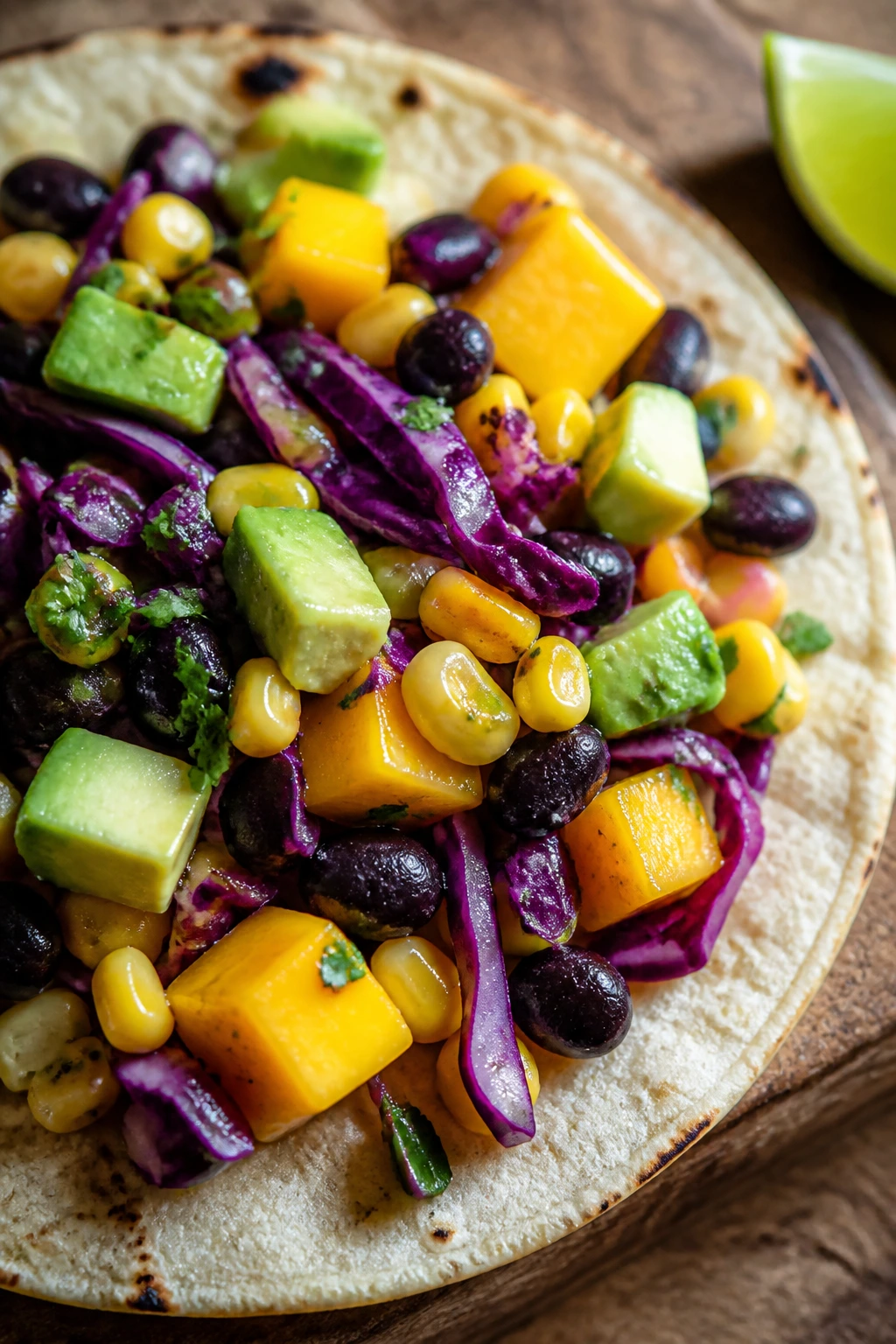
Sweet mango, cold corn, creamy avocado, and black beans give you a taco that tastes like a picnic with better manners. This is one of those dinners that looks playful but still lands like a real meal because the beans and avocado carry the weight. Lime and cilantro keep the whole thing bright enough for a hot evening.
Why It Works
Tacos do not need heat to work. They need balance. Black beans give you protein and a soft, earthy base, mango gives you sweetness, and corn brings little pops of crunch that make each bite feel alive. The cabbage keeps the tacos from going soggy too fast, and a sharp lime dressing keeps the fruit from tasting like dessert. If you want more body, a spoonful of crumbled cotija or feta helps the filling taste fuller and a little saltier.
Key Ingredients
- 8 small corn or flour tortillas
- 2 (15-ounce) cans black beans, rinsed and drained
- 1 large mango, peeled and diced
- 1 1/2 cups corn kernels, thawed if frozen
- 1 avocado, diced
- 2 cups shredded cabbage
- 1/4 small red onion, finely diced
- 2 tablespoons lime juice
- 2 tablespoons chopped cilantro
- 1 teaspoon chili powder
- 1/2 teaspoon kosher salt
- 1/3 cup crumbled cotija or feta, optional
- Hot sauce, for serving
Quick Steps
- Make the filling: In a large bowl, combine the black beans, mango, corn, avocado, cabbage, red onion, lime juice, cilantro, chili powder, and salt.
- Taste and adjust: Add more lime if the mango is very sweet, or more salt if the whole bowl tastes flat.
- Warm the tortillas if you want: Give them a quick turn in a dry skillet over medium heat or a few seconds in the microwave so they bend instead of crack.
- Fill each taco: Spoon the mixture into the tortillas, dividing it evenly.
- Add cheese and heat: Finish with cotija or feta and a little hot sauce.
- Serve immediately: These tacos are best eaten right after filling so the tortillas stay flexible.
Tips and Variations
- Protein Boost: Add shredded rotisserie chicken if you want the tacos to feel bigger.
- Sharper Bite: Thinly sliced pickled jalapeños make this less sweet and more punchy.
- Swap Note: If mango isn’t sweet enough, use diced peach instead.
11. Smoked Salmon Cottage Cheese Bowls
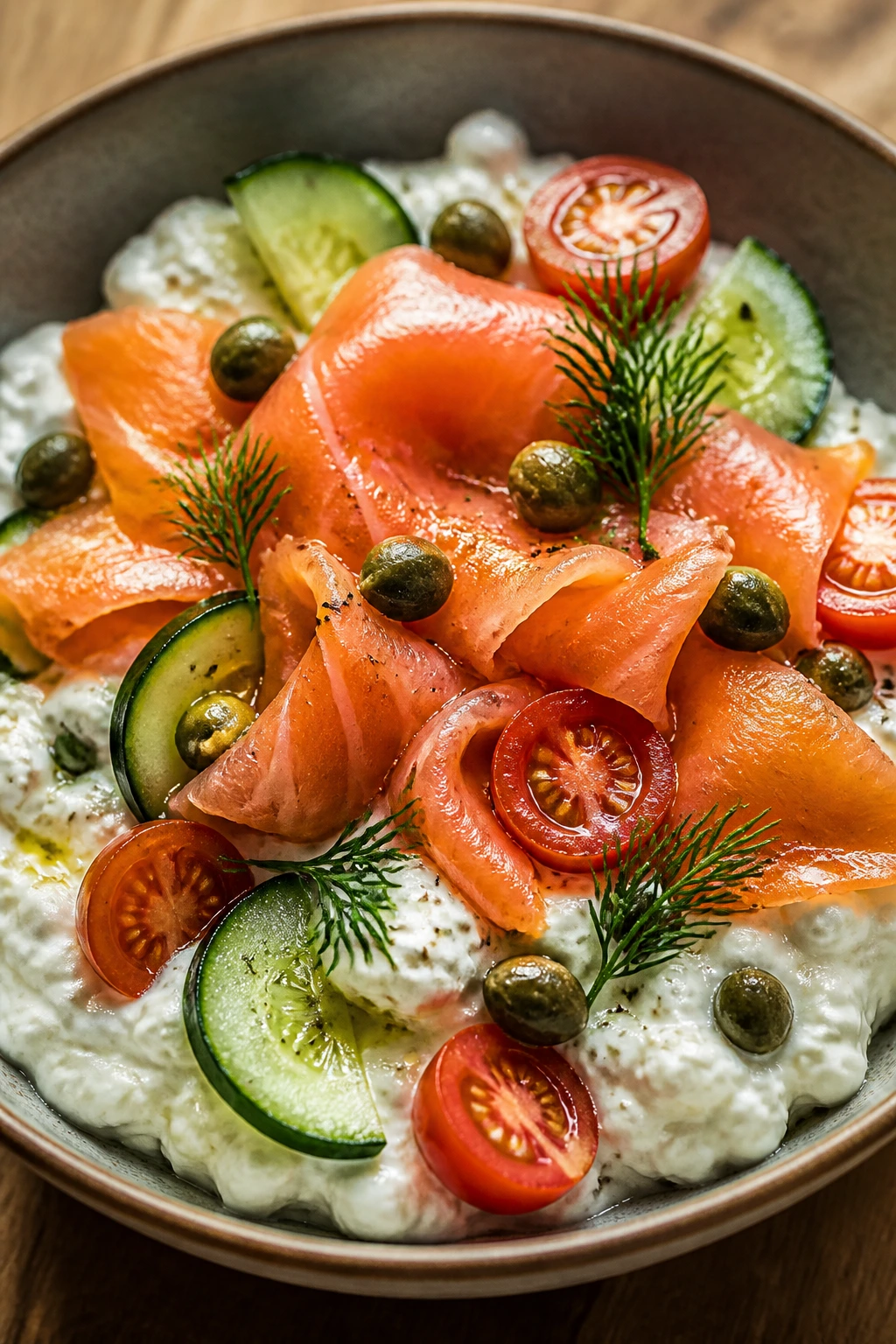
This is the fastest dinner on the page, and it eats like brunch’s more disciplined cousin. Cottage cheese gives you protein and a cool, tangy base, while smoked salmon adds salt and a silky texture. Cucumber, dill, and capers keep it bright, and bagel chips turn a bowl into a proper meal.
Why It Works
Cottage cheese can be a little plain on its own, which is exactly why it works here. It acts like a neutral, creamy base that lets the smoked salmon and herbs do the talking. The capers and lemon bring sharpness, the cucumber adds crunch, and the bagel chips supply the carb side without requiring any cooking. If you build it in a shallow bowl instead of a deep one, you get better coverage and a nicer bite every time.
Key Ingredients
- 2 cups cottage cheese
- 6 ounces smoked salmon, torn into bite-size pieces
- 1 cucumber, sliced
- 1 cup cherry tomatoes, halved
- 2 tablespoons capers, drained
- 2 tablespoons chopped fresh dill
- 1 tablespoon lemon juice
- 1/4 small red onion, very thinly sliced
- 1 teaspoon everything bagel seasoning
- Black pepper, to taste
- Bagel chips or whole-grain crackers, for serving
Quick Steps
- Spoon in the base: Divide the cottage cheese between two large bowls.
- Arrange the toppings: Add the cucumber, tomatoes, smoked salmon, capers, and red onion on top.
- Season the bowl: Sprinkle on dill, everything bagel seasoning, black pepper, and lemon juice.
- Add a little sheen: If you like, drizzle a tiny bit of olive oil over the salmon.
- Serve with crunch: Put bagel chips or crackers on the side so the meal feels complete.
- Eat soon after assembling: The vegetables stay crisper if the bowl isn’t left sitting around.
Tips and Variations
- Flavor Boost: A small spoonful of horseradish mixed into the cottage cheese makes the bowl sharper.
- Swap Note: Greek yogurt works if you want something looser and tangier.
- Bigger Dinner: Add sliced avocado if you want more fat and a creamier finish.
12. Thai Rice Paper Rolls with Peanut Sauce
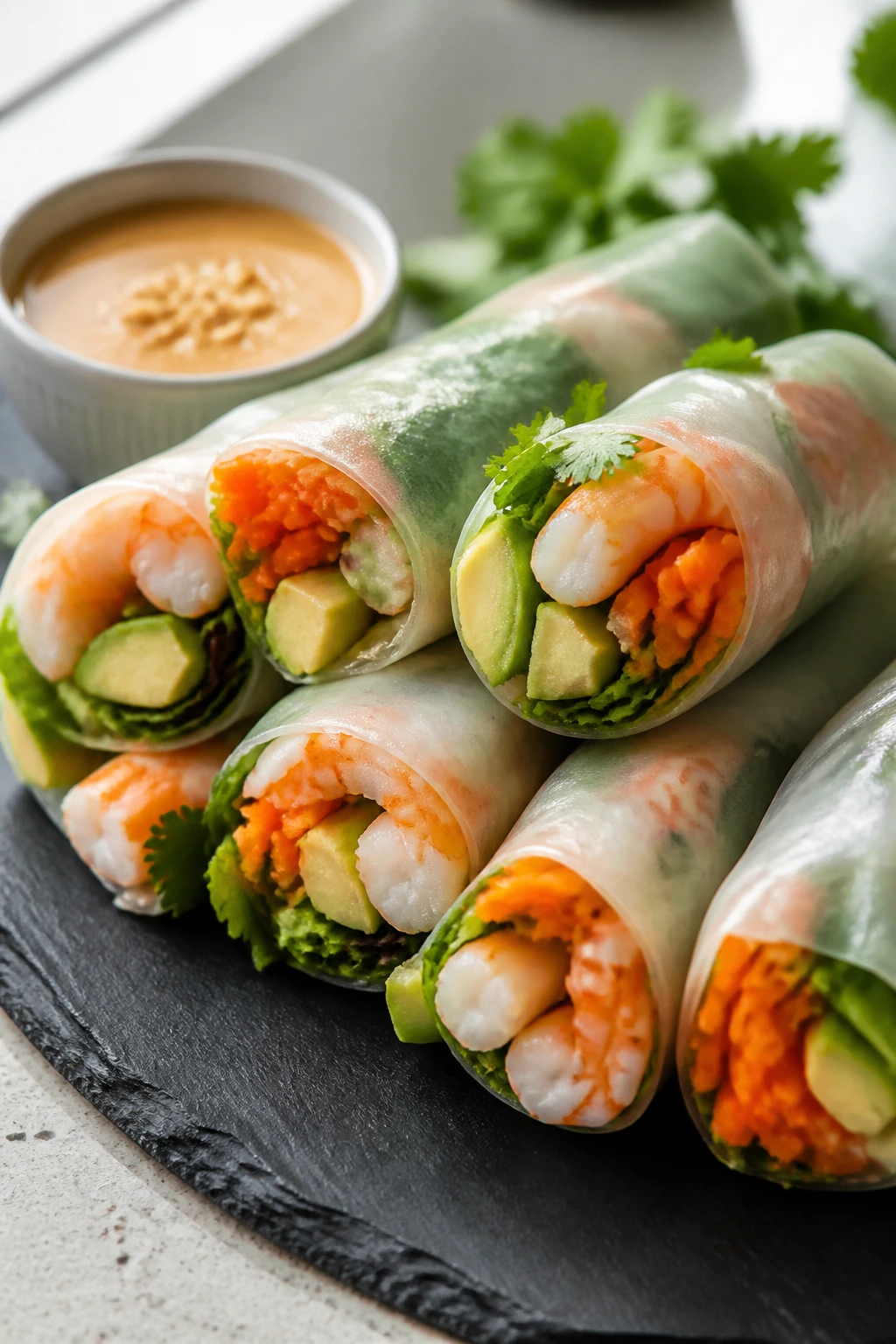
Why do rice paper rolls feel fancy when they’re mostly vegetables, herbs, and cold water? Probably because they look neat in a line and demand a little patience. They’re also one of the best no-bake dinners around, especially when you stuff them with shrimp, avocado, cucumber, carrots, and enough herbs to make the kitchen smell alive.
Why It Works
Rice paper rolls thrive on contrast. The wrapper is slippery and tender, the vegetables stay crisp, and the peanut sauce adds the richness that keeps the whole plate from feeling too lean. Because everything inside is already cooked or raw-ready, you’re not chasing heat or timing. The trick is not overfilling them. A tighter roll eats better, looks cleaner, and holds together when you drag it through the sauce.
Key Ingredients
- 12 rice paper wrappers
- 1 cup cooked shrimp, chopped, or firm tofu strips
- 1 large cucumber, julienned
- 2 carrots, julienned
- 1 avocado, sliced
- 1 cup butter lettuce or romaine leaves, torn
- 1/2 cup fresh mint leaves
- 1/2 cup fresh basil leaves
- 1/4 cup chopped peanuts
- 1/3 cup creamy peanut butter
- 2 tablespoons soy sauce
- 2 tablespoons lime juice
- 1 tablespoon honey
- 1 small garlic clove, grated
- 3 to 5 tablespoons warm water, as needed
Quick Steps
- Make the sauce: Whisk the peanut butter, soy sauce, lime juice, honey, garlic, and warm water in a bowl until smooth and dippable.
- Prep the fillings: Lay out the cucumber, carrots, avocado, lettuce, herbs, and shrimp or tofu so everything is easy to grab.
- Soften a wrapper: Dip one rice paper wrapper in warm water for a few seconds until it turns pliable but not floppy.
- Fill carefully: Lay the wrapper on a board and place a small pile of lettuce, vegetables, herbs, shrimp or tofu, and a few peanuts near the bottom third.
- Roll tightly: Fold in the sides, then roll up firmly like a spring roll. Repeat with the remaining wrappers.
- Serve right away: Put the rolls on a platter with the peanut sauce in the middle for dipping.
Tips and Variations
- Wrapper Trick: Use a damp towel under the rice paper while you roll; it keeps things from sticking.
- Flavor Move: Add thin strips of mango for sweetness or sliced jalapeño for heat.
- Storage Note: These are best the day they’re made, when the wrappers still feel soft and delicate.
13. Leftover Steak Chopped Salad with Blue Cheese
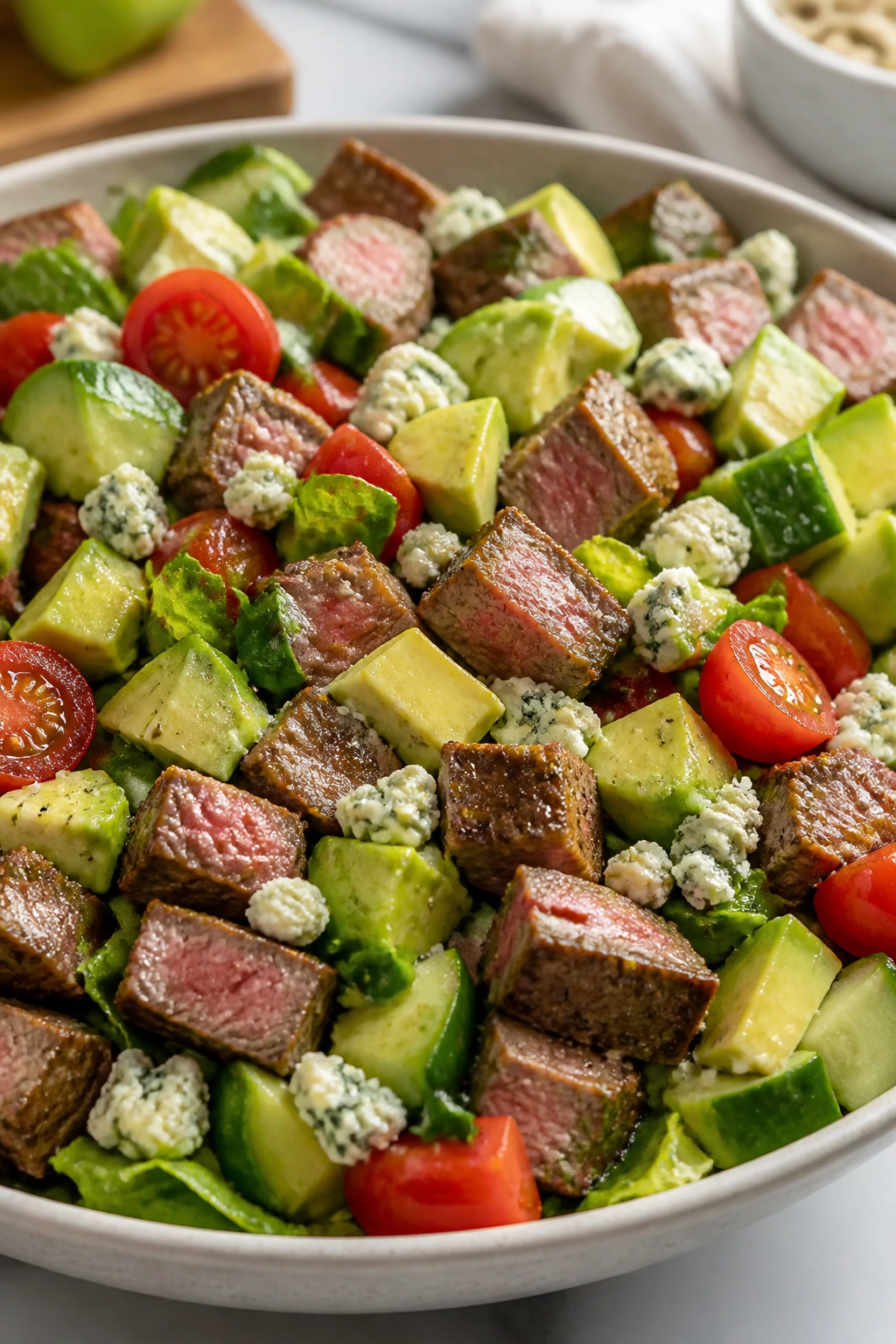
Unlike a plain steak salad, a chopped version gives you one tidy forkful every time. That sounds small, but it changes the meal a lot. Everything lands in the same bite—steak, lettuce, cucumber, tomato, cheese, and dressing—so you get the full effect instead of a random pile of ingredients.
Why It Works
This is the best use for leftover steak I know. Cold steak can feel flat if you just slice it and scatter it over greens, but chopping it into bite-size pieces makes it easier to season and easier to eat. Blue cheese adds sharpness, tomatoes add juice, and a bold vinaigrette keeps the whole salad from tasting like a side dish. If you have leftover grilled steak, this is where it gets its second life.
Key Ingredients
- 2 cups cooked steak, sliced or chopped into bite-size pieces
- 6 cups chopped romaine or mixed salad greens
- 1 cup cherry tomatoes, halved
- 1 cucumber, diced
- 1/2 small red onion, thinly sliced
- 1 avocado, diced
- 1/2 cup crumbled blue cheese
- 1/4 cup toasted walnuts or pepitas
- 3 tablespoons olive oil
- 1 tablespoon red wine vinegar
- 1 teaspoon Dijon mustard
- Salt and black pepper, to taste
Quick Steps
- Make the vinaigrette: Whisk the olive oil, red wine vinegar, Dijon mustard, salt, and pepper in a small bowl until glossy.
- Chop the greens: Put the lettuce in a large bowl and chop it a bit more if the leaves are too large to eat cleanly.
- Add the vegetables: Toss in tomatoes, cucumber, red onion, and avocado.
- Add the steak: Fold in the steak pieces so they’re evenly distributed through the bowl.
- Dress and toss: Pour over the vinaigrette and toss until everything is lightly coated.
- Finish with cheese and nuts: Scatter blue cheese and walnuts or pepitas over the top just before serving.
Tips and Variations
- If the steak is cold: Let it sit at room temperature for 10 minutes before chopping so it doesn’t eat stiff.
- Cheese Swap: Feta works if blue cheese feels too aggressive for your crowd.
- Extra Punch: A few sliced pickles or pickled onions make the salad sharper and more lively.
14. Tomato Gazpacho with Crab and Croutons
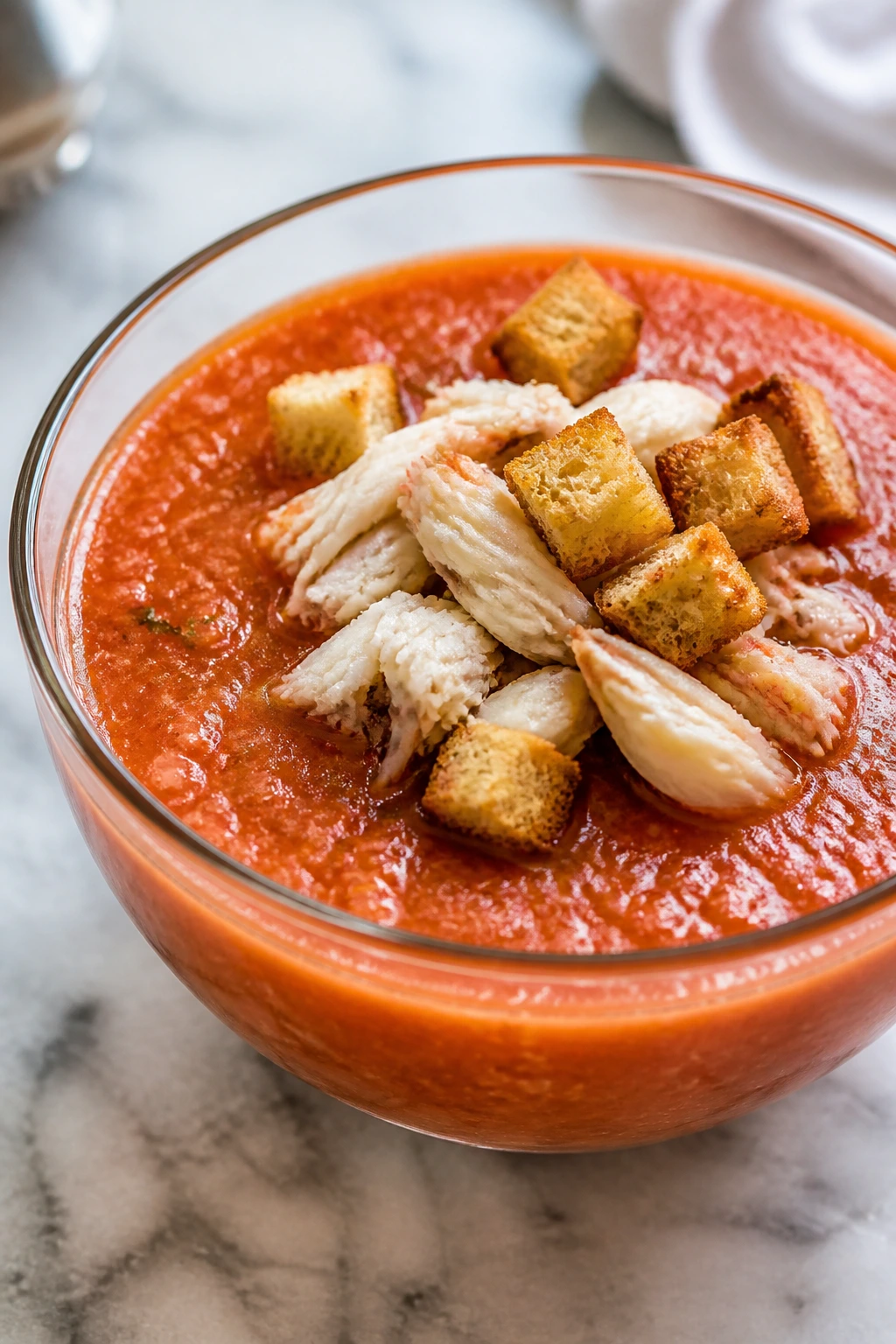
The first spoonful is cold tomato, a little garlic, a little pepper, and the snap of cucumber. Gazpacho is one of the few dinners that makes hot weather feel like a feature instead of a problem, and lump crab gives it enough substance to stand in for something more elaborate. Croutons or good bread on the side make the bowl feel complete.
Why It Works
Gazpacho works because it turns ripe produce into dinner without asking for heat, broth, or a long simmer. Tomatoes give sweetness and acid, cucumber lightens the texture, pepper and onion bring edge, and olive oil rounds the whole thing out. Crab adds protein and a soft, sweet finish that makes the soup feel special without making it fussy. If you chill the blended soup for at least 30 minutes, the flavors settle and taste more unified.
Key Ingredients
- 2 pounds ripe tomatoes, cored and roughly chopped
- 1 cucumber, peeled if the skin is thick, chopped
- 1 red bell pepper, seeded and chopped
- 1/2 small red onion, chopped
- 1 small garlic clove
- 3 tablespoons extra-virgin olive oil
- 2 tablespoons sherry vinegar
- 1 teaspoon kosher salt, plus more to taste
- 1/4 teaspoon black pepper
- 1 cup lump crab meat, picked over for shells
- 1 cup croutons or toasted bread cubes
- Fresh basil or parsley, for garnish
- Hot sauce, optional
Quick Steps
- Blend the soup: Put the tomatoes, cucumber, bell pepper, red onion, garlic, olive oil, sherry vinegar, salt, and pepper in a blender or food processor.
- Process until smooth or slightly chunky: Blend to your preferred texture. I like it not perfectly smooth; a little texture feels more alive.
- Chill it: Transfer the gazpacho to a bowl or pitcher and refrigerate for at least 30 minutes.
- Taste again: Before serving, check the salt and vinegar. Cold soup often needs a little more seasoning than you expect.
- Serve the bowls: Ladle the gazpacho into chilled bowls or cups.
- Add the toppings: Top with crab, croutons, basil or parsley, and a few drops of olive oil or hot sauce.
Tips and Variations
- Smooth Soup: Strain it through a fine sieve if you want a silkier, more polished bowl.
- Seafood Swap: Chopped cooked shrimp works if crab isn’t on hand.
- Vegetarian Option: Use diced avocado and white beans on top instead of crab.
Why No-Bake Dinners Work So Well When the Kitchen Runs Hot
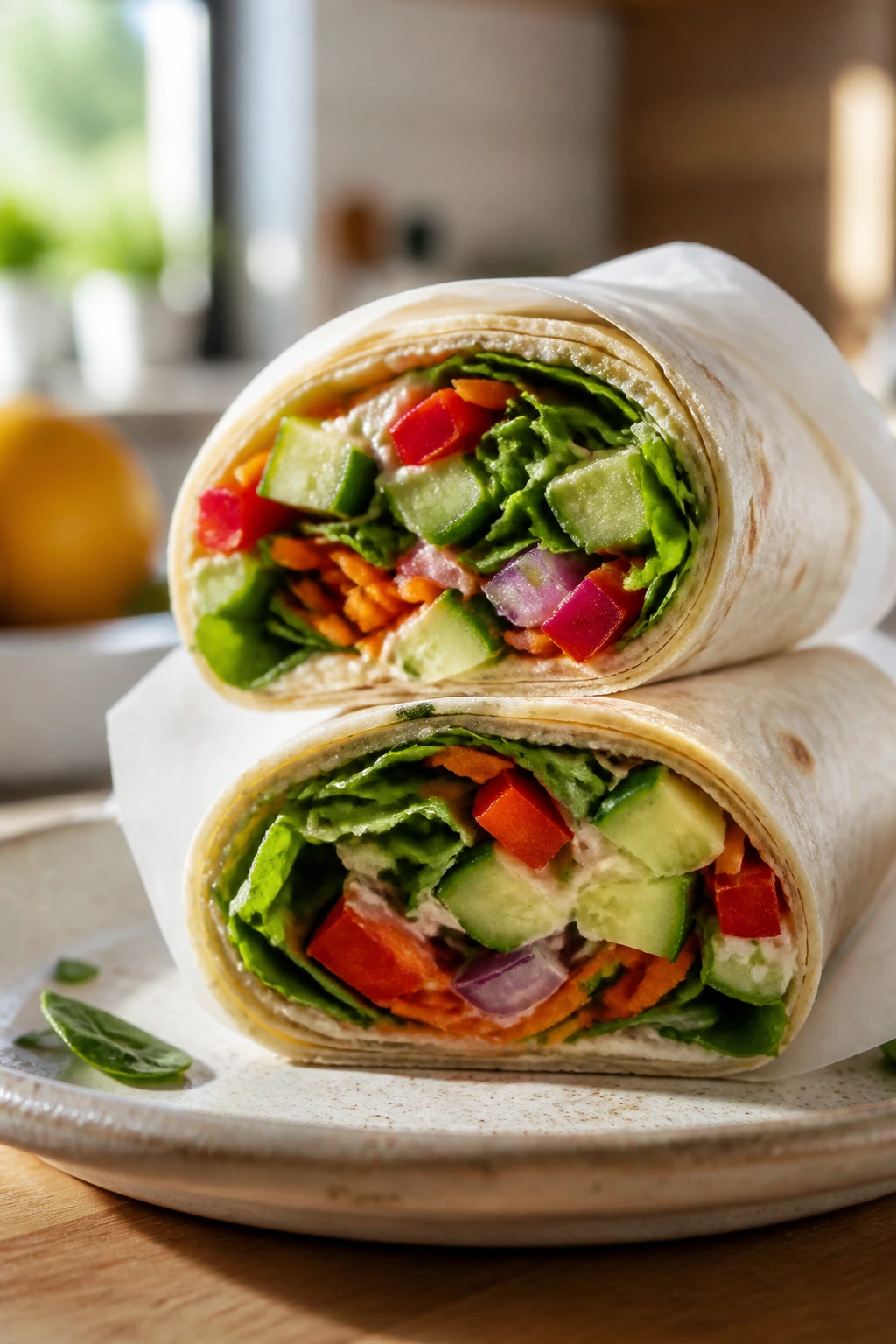
The smartest no-bake dinners do not try to hide the fact that they’re cold or room-temperature. They use that to their advantage. A cool wrap, a chopped salad, or a noodle bowl can taste more vivid than a hot meal because your tongue notices salt, acid, herbs, and crunch more clearly when the heat isn’t muting everything.
There’s also a practical side that gets overlooked. When you skip the oven, the whole dinner feels less demanding. You’re not timing a roast, checking for carryover heat, or scrubbing a pan that baked tomato sauce onto the sides. You’re chopping, mixing, layering, and eating. Clean enough. Fast enough. Good enough to make again tomorrow if the weather refuses to cool off.
And frankly, these meals reward good ingredients. A ripe tomato, a proper cucumber, decent olive oil, briny olives, fresh dill, a soft pita, or a cold piece of fruit can do more work here than in a heavily cooked dish. That’s why no-bake dinners can feel almost luxurious without getting fancy. They’re simple, but they’re not lazy.
Essential Equipment for These Recipes
- Sharp chef’s knife: You’ll use it constantly for tomatoes, cucumbers, herbs, onions, and avocados.
- Cutting board: A large board gives you room to chop without chasing ingredients across the counter.
- Mixing bowls: At least 2 medium bowls and 1 large bowl help keep wet and dry ingredients separate until the last minute.
- Whisk: Handy for dressings, peanut sauce, vinaigrettes, and quick emulsions.
- Colander or fine sieve: Essential for rinsing beans, draining noodles, and keeping watery ingredients from ruining texture.
- Tongs or salad servers: Useful for tossing greens, noodles, and chopped salads without crushing them.
- Measuring cups and spoons: Worth using for dressings and sauces, where a little too much vinegar or peanut butter changes the whole bowl.
- Blender or food processor: Not required for every dish, but worth having for gazpacho and smoother sauces.
- Airtight containers: Best for storing fillings, dressings, and leftovers separately so nothing turns mushy.
- Shallow serving bowls and platters: Cold dinners look and eat better when they’re spread out instead of piled high.
Smart Shopping and Ingredient Tips
The grocery list matters more here than it does with a hot braise or casserole. You can’t hide behind heat. If the tomatoes are pale and hard, the salad will taste it. If the herbs are limp, the whole bowl gets dull. Buy the best produce you can afford, then use it quickly.
For proteins, convenience is part of the point. Rotisserie chicken, canned tuna, canned salmon, cooked shrimp, deli turkey, and leftover steak all make sense in this kind of cooking because they shorten the path to dinner without tasting cheap. Look for tuna packed in olive oil if you want richer flavor, and choose shrimp that smells clean, not fishy. For deli meats, ask for thicker slices if the counter offers them; paper-thin slices get lost inside wraps and subs.
Bread and tortillas should be sturdy enough to hold filling, not soft in a way that turns to paste under dressing. Pita, sub rolls, corn tortillas, and large flour wraps all work, but choose the version with a little chew. For vegetables, pick the crispest cucumbers, the reddest tomatoes, and herbs that still look alive at the stems. A bunch of basil with blackened edges is telling you the whole story.
Pantry goods deserve respect too. Cannellini beans, black beans, capers, pepperoncini, artichokes, olives, and vinegars add the sort of sharpness that keeps cold food from tasting flat. When a dish feels boring, it’s often because it needs one more salty or acidic piece, not another spoonful of mayo.
How to Serve These Recipes
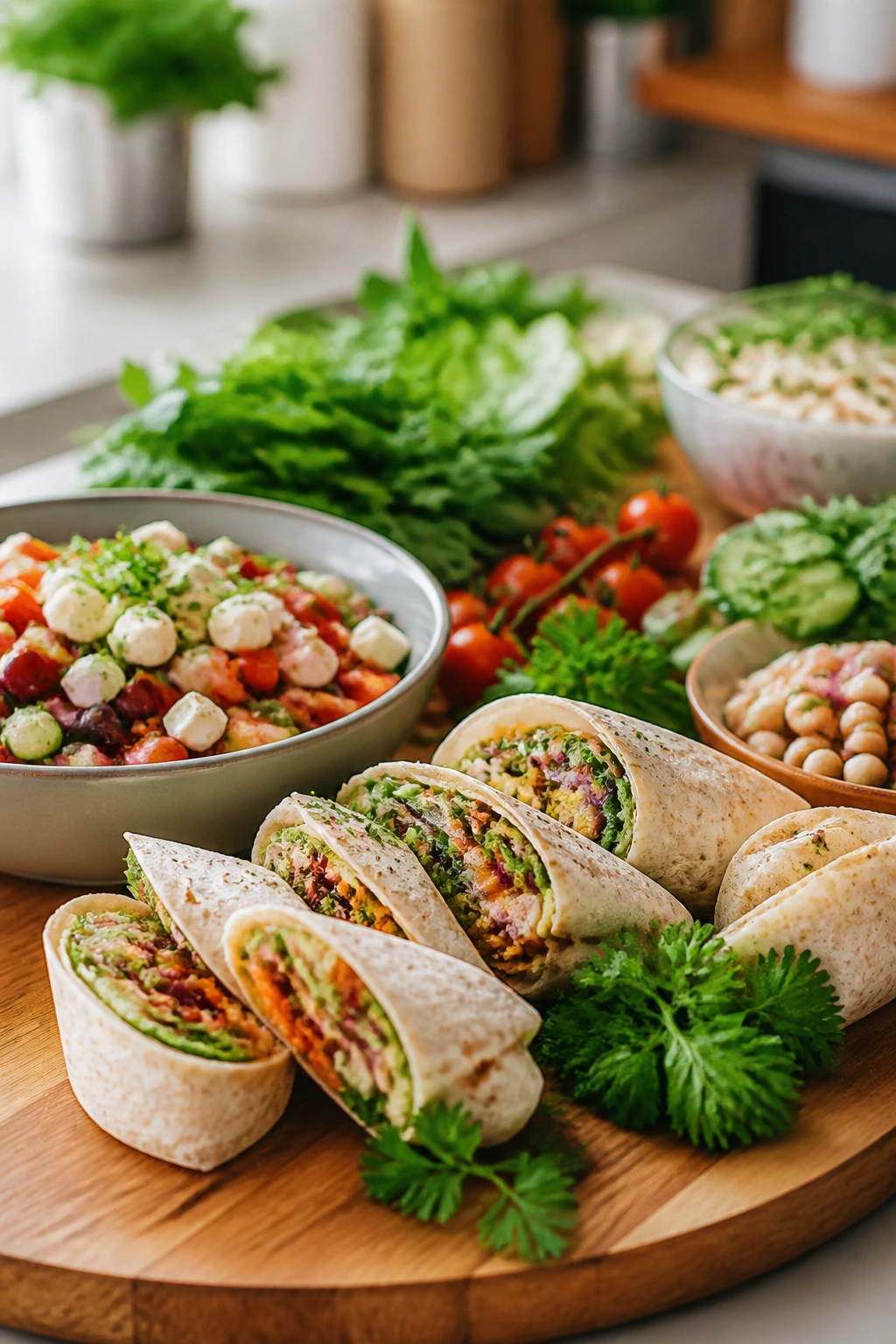
Presentation: Spread the food out. Wide bowls, platters, and shallow serving dishes make cold dinners look intentional instead of piled into a heap. Cut wraps and subs on the diagonal, tuck herbs on top, and finish with something green or glossy so the plate doesn’t look washed out.
Accompaniments: Keep the sides simple and crisp: kettle chips, cucumber salad, watermelon wedges, olives, good bread, pita chips, or a small green salad. If the main dish is already carb-heavy, lean toward fruit or extra vegetables on the side. If it’s lighter, add bread or crackers so nobody leaves hungry.
Portions: For salads and bowls, plan on about 2 to 2 1/2 cups per adult when the dish includes protein and a starch or bread side. Wraps and subs usually work as one large sandwich per person, with fruit or chips alongside. If you’re serving a lighter dish like gazpacho or salmon stuffed avocados, make sure the side dish does some real work.
Beverage Pairing: Iced tea with lemon, sparkling water with lime, a dry white wine, or a cold cucumber-lime spritz all fit this kind of dinner well. Keep the drink crisp and unsweetened enough to refresh the palate. Heavy, sugary drinks make the whole meal feel thicker than it is.
Additional Tips and Flavor Boosters
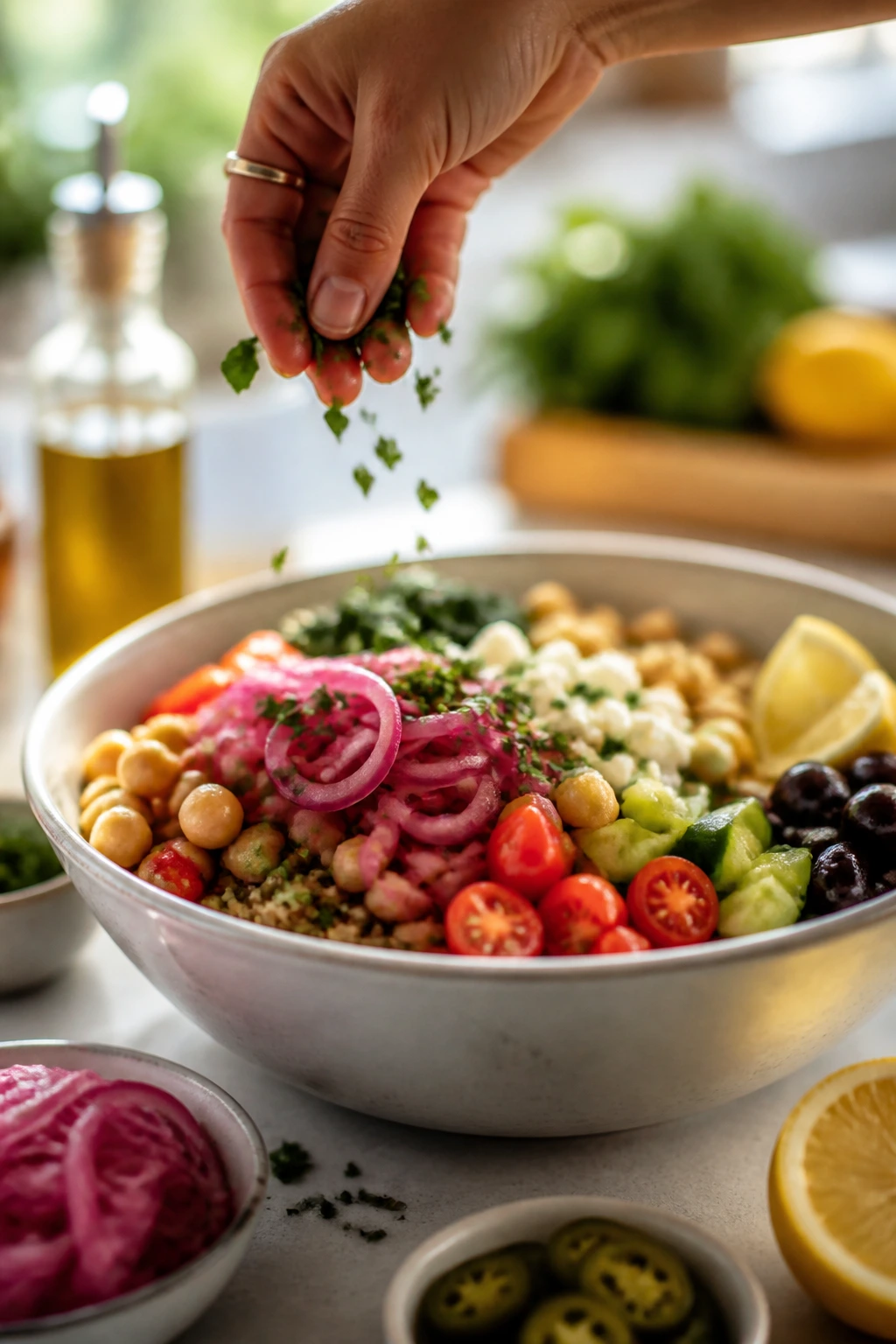
Flavor Enhancement: Keep a jar of quick pickled onions or pickled jalapeños in the fridge. One spoonful can fix a bland bowl faster than a whole extra sauce. A squeeze of lemon or lime right before serving also matters more than most people think.
Customization: If you need more heft, add beans, extra chicken, quinoa, or a handful of nuts. If you want the meal lighter, lean on greens, herbs, cucumbers, and seafood. Cold dinners are forgiving that way, as long as you keep the texture varied.
Serving Suggestions: Finish bowls with chopped herbs, flaky salt, sesame seeds, fresh black pepper, or a thin stream of olive oil. It sounds small. It isn’t. Cold food needs a final layer of seasoning to taste awake.
Make-It-Yours: For dairy-free versions, use tahini dressings, avocado-based sauces, or olive-oil vinaigrettes instead of yogurt or cheese. For gluten-free diners, choose corn tortillas, lettuce cups, rice paper, or quinoa bowls. For vegetarian plates, don’t just remove the meat—add chickpeas, beans, edamame, avocado, or nuts so the meal still feels like dinner.
Make-Ahead, Storage, and Reheating Guidance
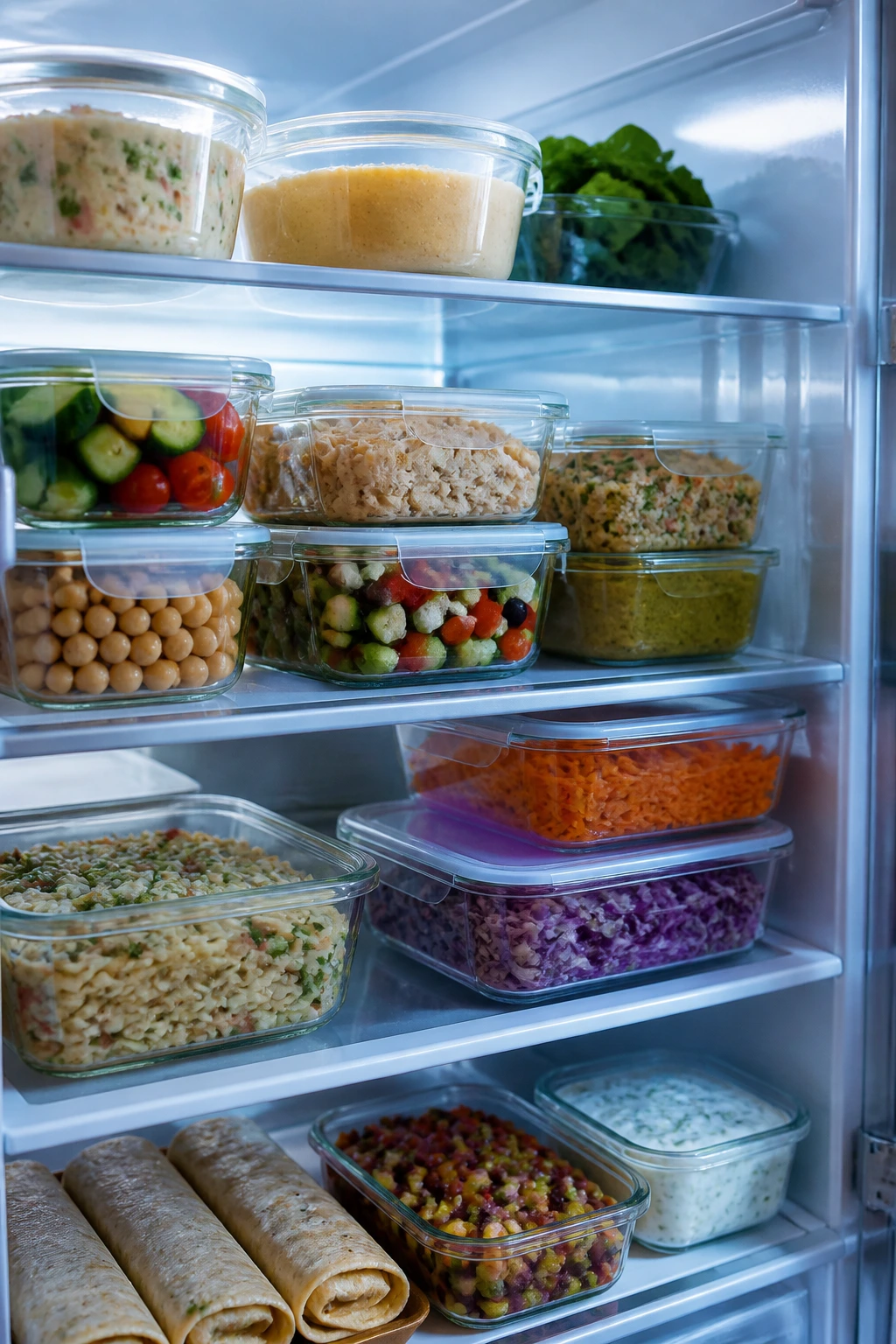
Most of these dishes are best when the parts are kept separate until serving. Tuna salad fillings, chicken mixtures, bean salads, noodle sauces, and chopped vegetables generally keep for 2 to 3 days in the refrigerator if stored in airtight containers. Gazpacho keeps well for about 4 days, and peanut sauce or vinaigrettes usually hold for up to 5 days.
Assembled wraps, lettuce cups, and rice paper rolls are more delicate. Eat those the day they’re made if you can, or within 1 day at most. Once dressing and tomatoes hit bread or lettuce, the texture starts to go downhill fast. That’s not a flaw; it’s just how cold food behaves.
Freezing works only for certain components. Cooked chicken, steak, and some sauces freeze for up to 2 months, but avocado, cucumbers, tomatoes, and leafy greens do not freeze well. They come back watery and tired. If you want to get ahead, freeze the protein or sauce, then build the rest fresh.
Reheating is optional for this whole collection, and often unnecessary. If you want a slightly warm element, reheat cooked chicken, steak, or noodles gently in a skillet over medium-low heat for 2 to 3 minutes, or in short microwave bursts at 50 percent power. Stop before the protein dries out. The point is to take the chill off, not recreate a stove dinner. And never leave seafood, dairy, or dressed salads sitting at room temperature for more than 2 hours.
Variations and Adaptations to Try
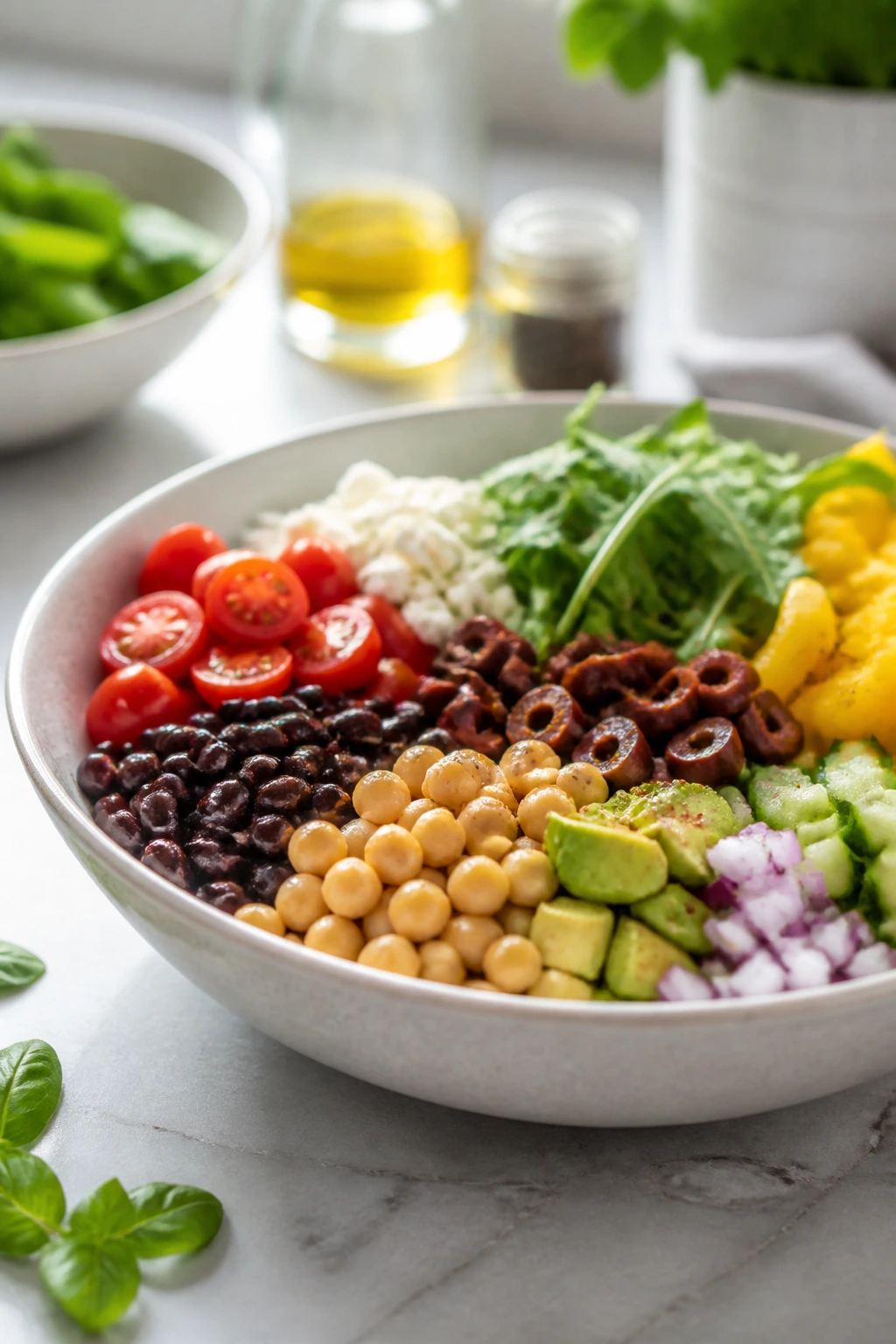
Pantry-First Night: Build dinners around canned tuna, beans, jarred peppers, olives, and shelf-stable grains. This is the version for the night when the fridge is sparse but the shelves are not. The meals still taste deliberate if you season them properly and finish with a good vinegar or lemon juice.
Dairy-Free Cooler: Swap yogurt sauces for tahini dressings, avocado crema, or olive-oil vinaigrettes. Leave out the cheese and lean harder on herbs, capers, pickles, and citrus. These flavors carry weight without needing dairy to prop them up.
Gluten-Free by Default: Choose lettuce cups, corn tortillas, rice paper, quinoa bowls, or gluten-free crackers instead of pita, subs, or standard wraps. The rest of the recipe usually needs only small changes. A sturdy filling is what matters most.
Heat-Lover’s Version: Add jalapeños, chili crisp, hot sauce, pepperoncini, or a pinch of crushed red pepper to the cooler dishes. Cold dinners don’t have to be mild. In fact, a little heat helps them feel more alive.
Kid-Friendly Plate: Keep onions on the side, use milder cheese, and let kids build their own tacos, wraps, or bowls. Separation helps picky eaters more than lectures do. A build-your-own plate also cuts down on complaints about “stuff touching,” which is its own summer sport.
Extra-Protein Upgrade: Add more beans, extra chicken, shrimp, salmon, or edamame when you want the meal to stick harder. This is the easiest adjustment if you’re feeding very hungry people or you just prefer your dinner to behave like dinner.
Common Mistakes to Avoid
Too Much Moisture
Watery tomatoes, wet cucumbers, and undrained beans are the fastest way to sink a cold dinner. The symptom is obvious: soggy bread, slippery salad, and a pool at the bottom of the bowl. Fix it by draining canned goods well, patting produce dry, and salting juicy vegetables briefly before assembling.
Under-Seasoning Cold Food
Cold food tastes flatter than hot food. That’s not your imagination. The fix is to season in layers: salt the filling, taste the dressing, and finish with lemon, vinegar, pepper, herbs, or hot sauce right before serving.
Choosing Weak Bread or Tortillas
A soft roll that can’t handle filling is a trap. It tastes fine for the first bite, then gives up. Use pita, sub rolls, sturdy wraps, or lettuce cups with enough structure to hold moisture without tearing apart.
Assembling Too Far Ahead
A sandwich built three hours early is usually a sad sandwich. The lettuce wilts, the bread softens, and the whole thing loses its snap. Assemble only the parts that tolerate chilling, and hold back tomatoes, dressing, or avocado until the last minute.
Skipping a Real Protein
A bowl of cucumbers, tomatoes, and dressing is a side dish wearing dinner clothes. It may look nice, but it won’t hold anyone over. Add beans, chicken, tuna, salmon, shrimp, steak, tofu, or edamame so the meal actually lands.
Forgetting Texture
This is the quiet mistake. A no-bake dinner can taste technically fine and still feel boring if everything is soft. Always include at least one crisp element—croutons, cucumber, cabbage, lettuce, nuts, chips, rice paper, or toasted bread.
Frequently Asked Questions
What counts as a no-bake dinner?
Anything that skips the oven fits the spirit of the category, even if it uses a stovetop once or twice. Cold salads, wraps, bowls, sandwiches, gazpacho, and quick noodle dishes all belong here as long as they keep the kitchen from heating up.
Can I make these without turning on the stove at all?
Yes, several of them are fully no-cook if you use rotisserie chicken, canned fish, cooked shrimp, pre-cooked bacon, or leftover steak. The soba noodles and any bread-toasting are optional if you prefer to stay entirely off the heat.
How do I make cold dinners feel more filling?
Use protein, a carb, and something creamy or fatty in the same meal. Beans, chicken, tuna, avocado, bread, pita, tortillas, quinoa, or noodles give a cold dinner more staying power than vegetables alone.
What should I do if the salad tastes flat?
Add salt first, then acid. A squeeze of lemon or lime, a splash of vinegar, or a spoonful of pickled onions usually wakes the whole bowl up faster than adding more dressing.
How do I keep wraps and sandwiches from getting soggy?
Dry the vegetables well, keep the dressing light, and line the bread or wrap with lettuce before adding wetter fillings. If you’re making them ahead, store the filling separately and assemble right before eating.
Can these recipes work for meal prep?
Several of them do, but keep components separate. Dressings, cooked grains, bean mixtures, and chopped vegetables hold up better than fully assembled sandwiches or rice paper rolls. Build the final plate when you’re ready to eat.
What if I don’t eat seafood?
Swap in chicken, beans, chickpeas, tofu, or extra vegetables. The structure of these dinners matters more than the exact protein. A good cold bowl still works if the protein is swapped thoughtfully.
Are there food safety limits for chilled seafood and dairy dishes?
Yes. Don’t leave shrimp, salmon, chicken salad, or dairy-based fillings out for more than 2 hours, and less if the room is very warm. Chill leftovers promptly in shallow containers so they cool fast instead of sitting warm in the middle.
When the Oven Stays Off
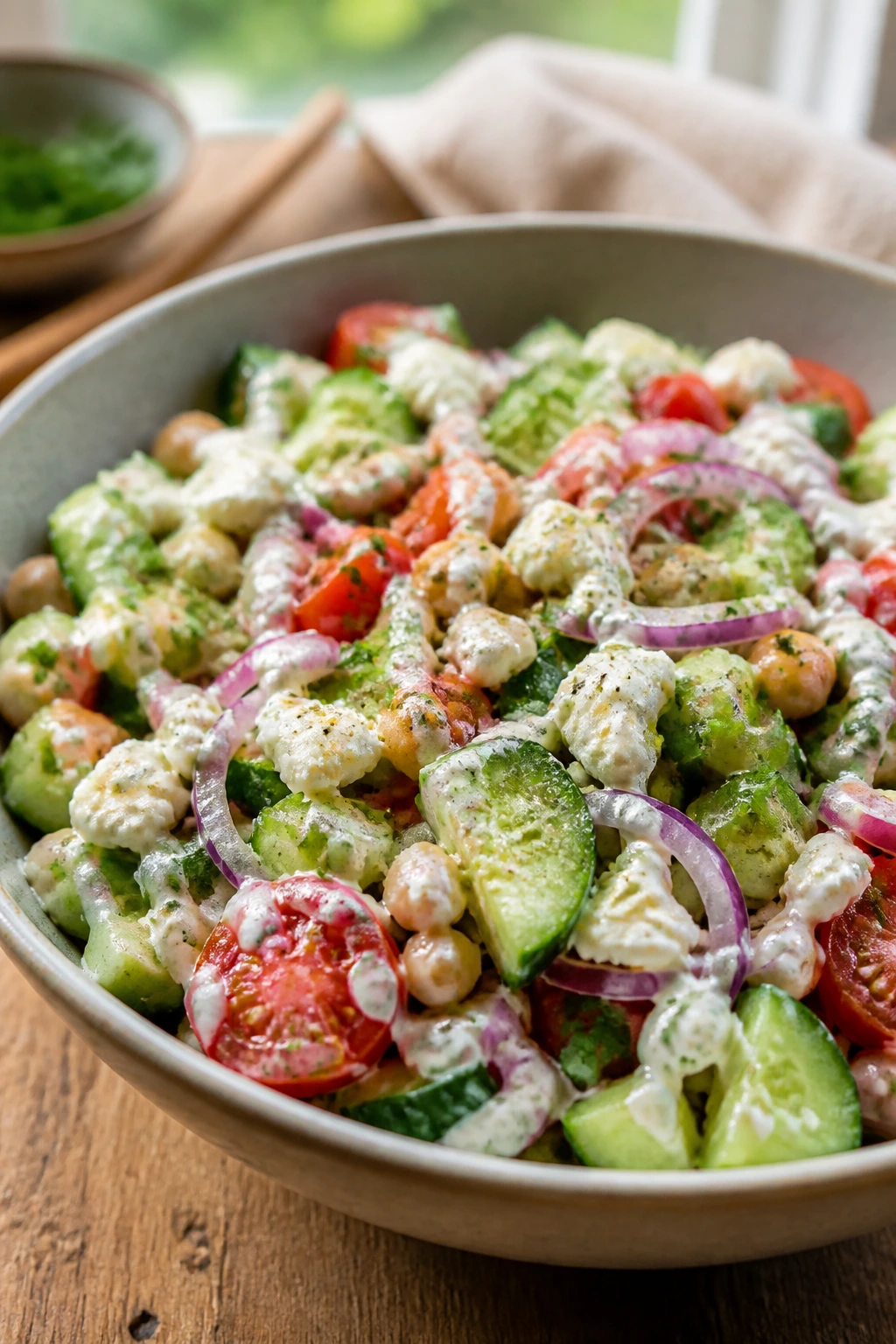
Hot evenings have a way of making dinner feel like a chore before you’ve even started. These recipes push back against that. They rely on ingredients that stay lively cold, on proteins that don’t need much help, and on textures that keep each bite interesting instead of sleepy.
I like this style of cooking because it respects the weather. No heroic effort. No hot kitchen. Just a smart mix of chilled, crisp, salty, juicy, and creamy things that get you from hungry to fed without turning the house into a furnace. Once you start thinking this way, the no-bake dinner category opens up fast, and it’s surprisingly easy to keep it interesting all week long.
Recipe Collection Quick Reference Table
| Recipe | Prep Time | Cook Time | Total Time | Servings | Standout Detail |
|---|---|---|---|---|---|
| Tuna, Chickpea, and Cucumber Pita Pockets | 15 min | 0 min | 15 min | 4 | Pantry-friendly, creamy-crisp filling |
| Shrimp Ceviche Tostadas with Avocado | 20 min | 0 min | 20 min | 4 | Bright lime flavor with serious crunch |
| Rotisserie Chicken Caesar Wraps | 15 min | 0 min | 15 min | 4 | Lunch-counter flavor in dinner form |
| Caprese White Bean Salad with Toasted Bread | 20 min | 5 min | 25 min | 4 | Ripe tomatoes and beans make it filling |
| Peanut Soba Noodle Salad with Edamame | 15 min | 8 min | 23 min | 4 | Chilled noodles with a thick, clingy sauce |
| Greek Chicken Tzatziki Bowls | 15 min | 0 min | 15 min | 4 | The most substantial bowl in the group |
| Turkey BLT Lettuce Cups with Avocado Ranch | 15 min | 0 min | 15 min | 4 | Crisp, smoky, and built for hot nights |
| Salmon Salad Stuffed Avocados | 15 min | 0 min | 15 min | 4 | Rich without feeling heavy |
| Italian Antipasto Subs | 15 min | 0 min | 15 min | 4 | Deli counter energy with briny bite |
| Black Bean, Mango, and Corn Tacos | 20 min | 0 min | 20 min | 4 | Sweet-savory balance that eats like a meal |
| Smoked Salmon Cottage Cheese Bowls | 10 min | 0 min | 10 min | 2-3 | High-protein, no-heat dinner |
| Thai Rice Paper Rolls with Peanut Sauce | 25 min | 0 min | 25 min | 4 | Freshest, lightest bite of the bunch |
| Leftover Steak Chopped Salad with Blue Cheese | 15 min | 0 min | 15 min | 4 | The best use for leftover steak |
| Tomato Gazpacho with Crab and Croutons | 20 min | 0 min | 20 min | 4 | Coolest option when the heat won’t quit |