



Skip the tortilla and the dinner still tastes like a proper burrito night. That’s the whole charm here: a hot, layered bowl with rice that catches the juices, beans that turn creamy at the edges, meat or vegetables with enough seasoning to stand on their own, and a cold, sharp topping that wakes everything up when the spoon goes back in for another bite.
I keep coming back to burrito bowl dinners because they solve the part of dinner that usually gets messy in the wrong way. Tortillas tear. Fillings slide. The good salsa ends up on the plate instead of in the bite. A bowl fixes that. Each ingredient stays in its lane long enough for you to taste it, then gets mixed together the way a burrito does in your mouth anyway.
There’s also a practical side people underestimate. Burrito bowls are one of the few dinners that let you use leftover rice, canned beans, half a bell pepper, and a stray avocado that’s finally ripe enough to eat. The structure is forgiving, but not bland. That matters. Bland bowls are usually just under-seasoned rice with toppings thrown on top, and that is not the same thing at all.
Why These Burrito Bowls Stick Around
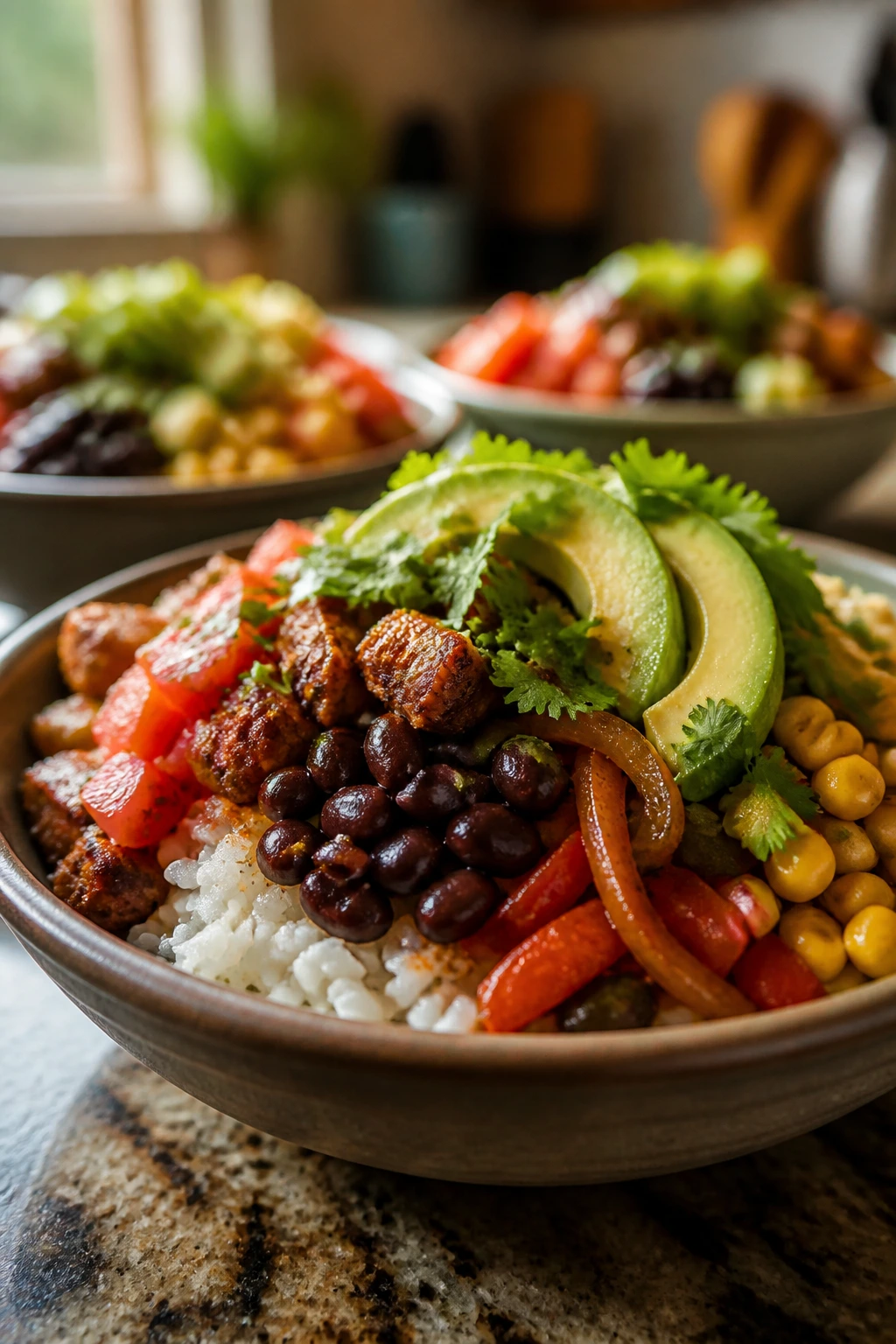
Fast to assemble: Once the rice is cooked and the protein is seasoned, the rest is mostly chopping, warming, and stacking.
Easy to scale: You can feed two people from a skillet or make a bigger batch that holds up for lunches the next day.
Built for leftovers: Rice, beans, salsa, grilled vegetables, and most cooked proteins keep their texture better than a wrapped burrito.
Flexible by design: If you have chicken, black beans, corn, and pico de gallo, you already have the bones of a bowl.
No tortilla stress: No cracking, no tearing, no wrestling with a wrap that was never going to cooperate.
1. Chicken Fajita Burrito Bowls
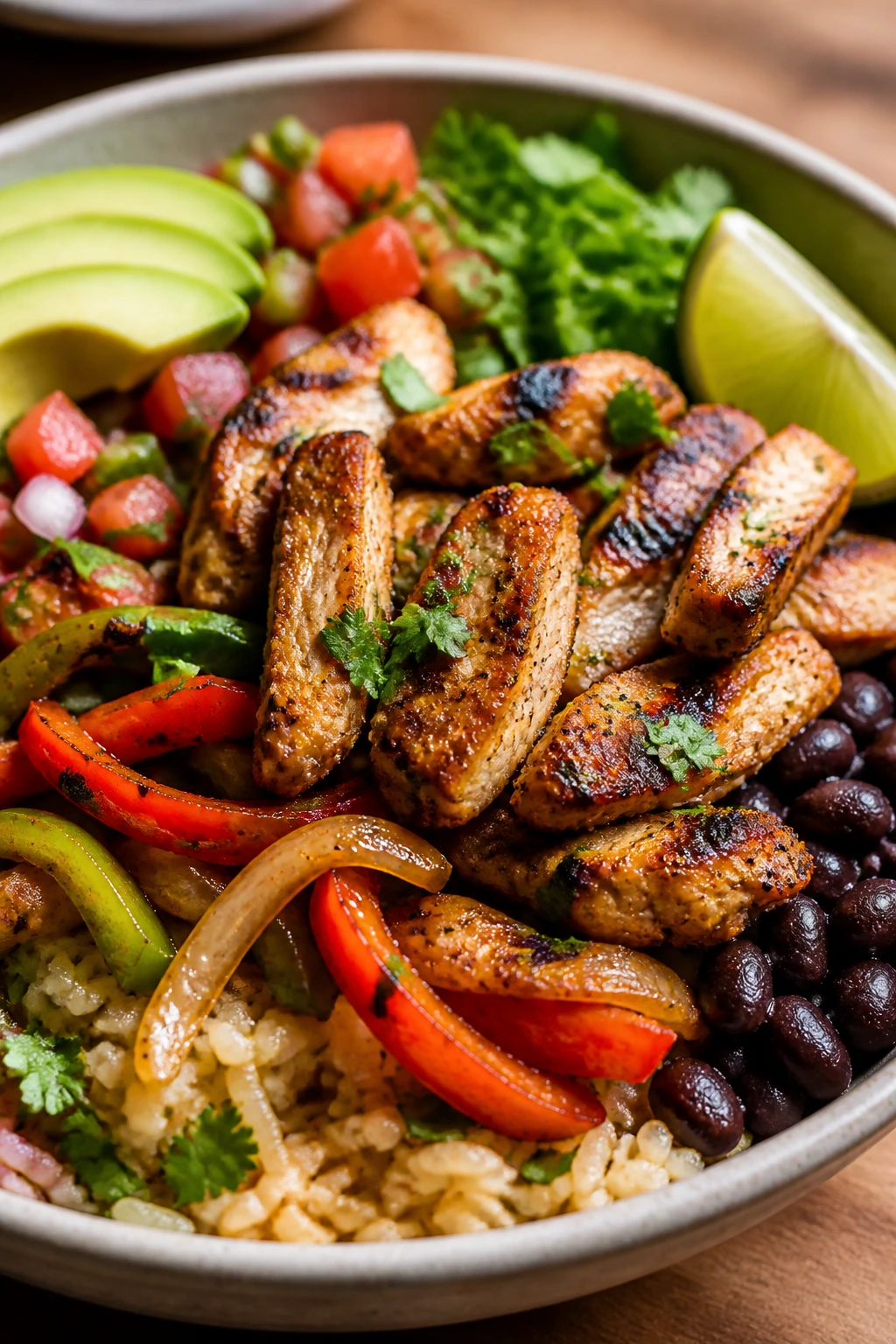
The smell of these bowls hits first: onions softening in oil, strips of chicken getting brown at the edges, and bell peppers turning sweet as they blister in the skillet. The finished bowl has a little heat, a little smoke, and enough lime to keep it from feeling heavy. It’s the version I make when I want the flavor of fajitas without handing everyone a pile of tortillas and hoping for the best.
Why It Works:
Chicken thighs stay juicier than breasts here, especially when the skillet runs hot and the peppers need a few minutes of direct contact to pick up real color. The spice mix coats the chicken before it hits the pan, which means the seasoning doesn’t disappear into the vegetables. A hot pan and a short rest for the meat give you browned edges and clean slices, not steamed gray strips.
Key Ingredients:
- 1 1/2 lb boneless, skinless chicken thighs, trimmed
- 2 tablespoons olive oil
- 2 bell peppers, sliced into 1/2-inch strips
- 1 large yellow onion, sliced
- 1 tablespoon chili powder
- 2 teaspoons ground cumin
- 1 teaspoon smoked paprika
- 1 teaspoon kosher salt
- 1/2 teaspoon black pepper
- 2 cups cooked white rice
- 1 can (15 oz) black beans, drained and rinsed
- 1 lime, cut into wedges
- 1/2 cup salsa or pico de gallo
- 1 ripe avocado, sliced
- 2 tablespoons chopped cilantro
Quick Steps:
- Season the chicken: Pat the thighs dry, then toss them with chili powder, cumin, smoked paprika, salt, and pepper.
- Sear the chicken: Heat 1 tablespoon oil in a large skillet over medium-high heat. Cook the chicken 5 to 6 minutes per side, until browned and the center reaches 165°F. Transfer to a cutting board and rest for 5 minutes.
- Cook the vegetables: Add the remaining oil to the skillet. Cook the onion and peppers for 6 to 8 minutes, stirring only often enough to pick up color. The peppers should stay a little crisp.
- Warm the beans and rice: Heat the beans with a splash of water in a small saucepan or microwave. Fluff the rice with a fork and season with a squeeze of lime and a pinch of salt.
- Slice and assemble: Slice the chicken against the grain. Build bowls with rice, beans, peppers, onion, chicken, salsa, avocado, and cilantro.
- Finish bright: Add another squeeze of lime right before serving. It matters.
Equipment for This Recipe:
- Large cast-iron or heavy stainless skillet
- Cutting board and sharp knife
- Small saucepan or microwave-safe bowl
- Measuring spoons
- Tongs
How to Serve This Dish:
Serve the rice first, then fan the chicken over one side so the juices run into the grains. A spoonful of salsa and a few avocado slices on top make the bowl look fuller without piling it too high. This feeds 4 comfortably, or 5 if you stretch it with extra rice and beans.
Pro Tips for This Recipe:
- Let the chicken sit in the seasoning for 15 minutes if you have the time; the salt pulls the spice into the surface.
- Don’t crowd the skillet. If the vegetables steam, they lose the char that makes the whole bowl taste finished.
- Warm the rice with a tablespoon of water and a lid if it feels dry. Dry rice makes the bowl feel flat.
- Slice the avocado last. If you cut it early, it goes from creamy to tired faster than you’d like.
Variations on This Dish:
- Chipotle Chicken Bowl: Add 1 teaspoon adobo sauce from canned chipotles to the spice mix for a smokier, deeper heat.
- Street-Corn Version: Fold 1 cup charred corn with 2 tablespoons mayo, lime, and cotija, then spoon it over the chicken.
- Brown Rice Swap: Use 2 cups cooked brown rice and add a little extra lime; the nuttier grain stands up well to the fajita seasoning.
Common Mistakes to Avoid with This Dish:
- Soggy peppers: If you pile the skillet too full, they’ll steam. Cook them in one layer if you can.
- Dry chicken: Pull it at 165°F, not later. Thighs forgive a little overcooking, but they do not forgive a long one.
- Bland rice: Season the rice itself with salt and lime. Plain rice undercuts everything above it.
2. Steak and Charred Corn Burrito Bowls
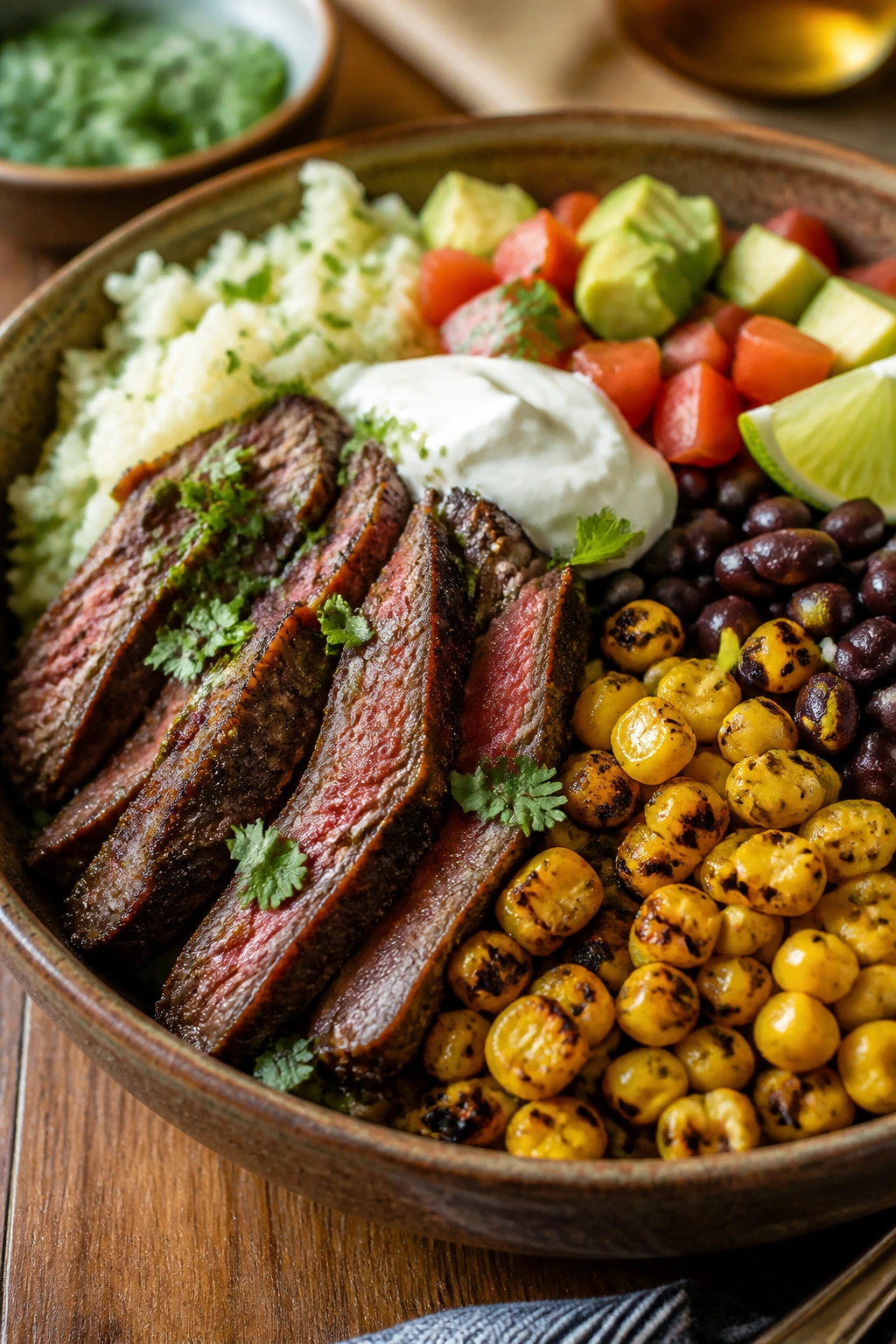
Steak bowls live or die on the sear. Get that right, and you’ve got deep beefy flavor, sweet corn with browned spots, and rice that picks up the drippings like it was born for the job. I like this one when I want dinner to feel a little more substantial without turning into a project.
Why It Works:
Flank steak and skirt steak both take well to a hard sear and a short rest, which keeps the meat tender instead of chewy. Charred corn adds sweetness and crunch so the bowl doesn’t become all soft textures. A spoonful of crema or sour cream pulls the whole thing together, especially if the salsa is spicy.
Key Ingredients:
- 1 1/2 lb flank steak or skirt steak
- 2 tablespoons olive oil
- 1 1/2 teaspoons kosher salt
- 1 teaspoon black pepper
- 1 teaspoon ground cumin
- 1 teaspoon chili powder
- 2 cups cooked cilantro-lime rice
- 2 cups corn kernels, fresh or frozen
- 1 red bell pepper, diced
- 1 can (15 oz) black beans, drained and rinsed
- 1/2 cup crumbled cotija or feta
- 1/3 cup sour cream or Mexican crema
- 1 lime, cut into wedges
- 1/4 cup chopped red onion
- 1/4 cup chopped cilantro
Quick Steps:
- Season the steak: Rub the steak with oil, salt, pepper, cumin, and chili powder.
- Char the corn: Heat a skillet over high heat and cook the corn 4 to 5 minutes, until browned in spots. Remove and set aside.
- Sear the steak: Cook the steak 3 to 5 minutes per side for medium-rare, depending on thickness. The surface should be deeply browned.
- Rest and slice: Rest the steak for 8 minutes, then slice thinly against the grain.
- Warm the beans and peppers: Toss the beans and diced pepper in the warm corn skillet for 2 minutes, just until heated through.
- Build the bowls: Layer rice, corn, beans, steak, cotija, onion, cilantro, and sour cream. Finish with lime.
Equipment for This Recipe:
- Cast-iron skillet or grill pan
- Sharp slicing knife
- Cutting board
- Small bowl for seasoning
- Tongs
How to Serve This Dish:
A shallow bowl works better than a deep one here; you want to see the steak slices and the charred corn. Serve with tortilla chips on the side if you want crunch without making the bowl heavier. This is best for 4 generous servings.
Pro Tips for This Recipe:
- Pat the steak dry before seasoning. Moisture kills the sear.
- Slice the corn off the cob after charring if you use fresh ears; the kernels keep that smoky edge.
- Cut steak against the grain at a slight angle. That’s the difference between tender and stringy.
- If your skillet is small, sear the steak in two batches. Crowding is the enemy here.
Variations on This Dish:
- Chipotle Crema Bowl: Stir 1 teaspoon chipotle adobo into the sour cream for a smoky finish.
- Roasted Veggie Version: Replace the bell pepper with zucchini and poblano, roasted at 425°F for 18 minutes.
- Rice-Free Bowl: Use shredded lettuce and extra beans if you want a lighter plate that still eats like dinner.
Common Mistakes to Avoid with This Dish:
- Cutting the steak too soon: The juices run out, and the slices dry fast. Rest it.
- Using cold corn straight from the bag: It needs heat to taste sweet, not flat.
- Skipping acid: Lime or a sharp salsa keeps the bowl from tasting heavy.
3. Ground Beef Taco Burrito Bowls
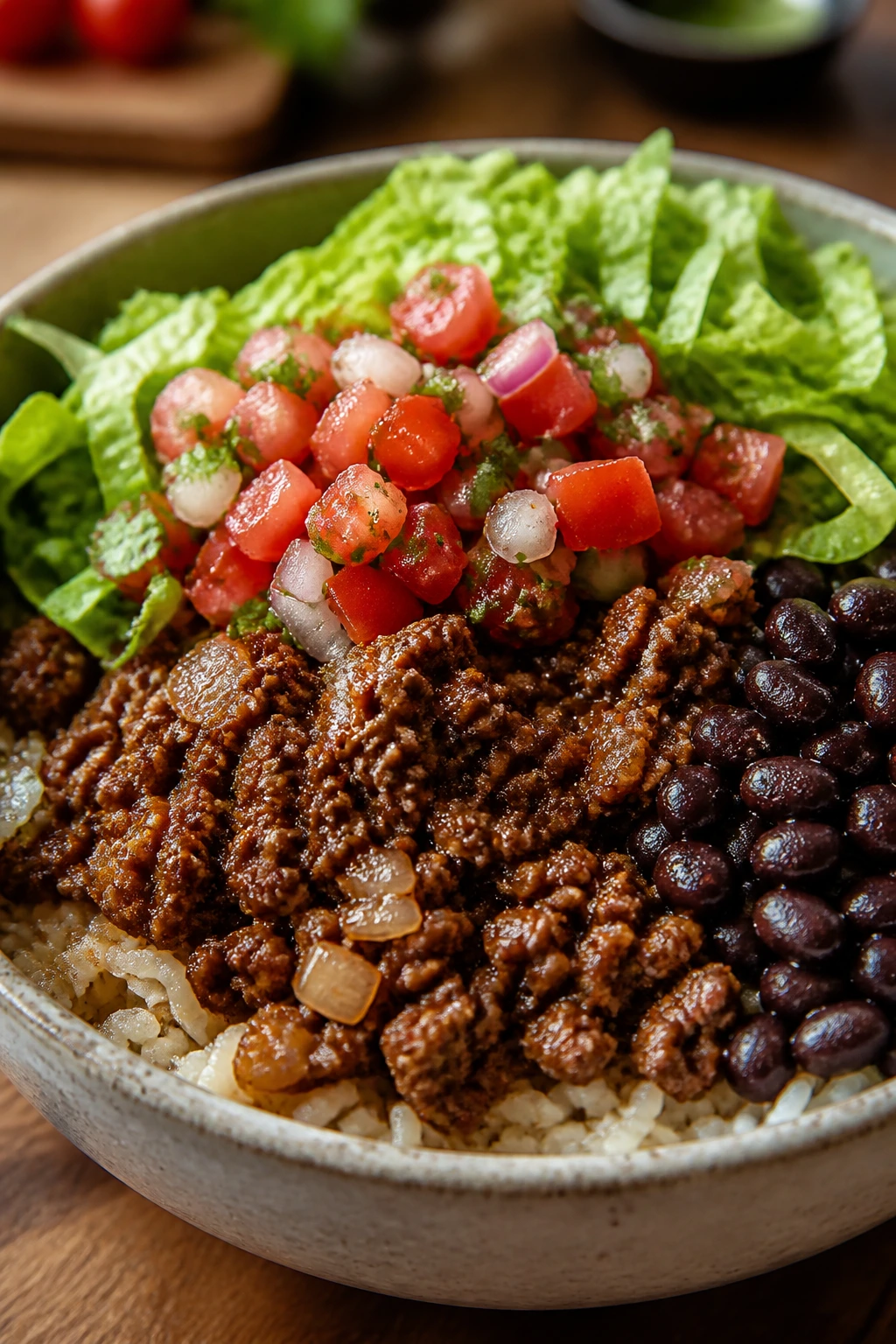
This is the bowl that tastes like a taco truck got rearranged into a fork-friendly dinner. The beef is saucy without being wet, the rice catches the spiced drippings, and a little shredded lettuce on top gives you that cold-crunch thing the bowl needs. It’s plain in the best way: direct, salty, filling, and hard to argue with.
Why It Works:
Ground beef takes on seasoning fast, which makes it ideal for a bowl where the rice and beans need the meat to carry the flavor. Tomato paste adds body without turning the beef soupy. A quick simmer thickens everything so the bowl stays tidy instead of sliding into a puddle.
Key Ingredients:
- 1 1/2 lb ground beef, 85/15 preferred
- 1 tablespoon olive oil
- 1 small yellow onion, finely diced
- 2 cloves garlic, minced
- 2 tablespoons tomato paste
- 2 teaspoons chili powder
- 1 1/2 teaspoons ground cumin
- 1 teaspoon kosher salt
- 1/2 teaspoon black pepper
- 1/2 cup water or beef broth
- 2 cups cooked rice
- 1 can (15 oz) pinto or black beans, drained and rinsed
- 1 cup shredded romaine or iceberg lettuce
- 1 cup shredded cheddar or Monterey Jack
- 1/2 cup pico de gallo
- 1 avocado, diced
Quick Steps:
- Brown the beef: Heat oil in a skillet over medium-high heat. Add the beef and cook 6 to 8 minutes, breaking it up until no pink remains.
- Add onion and garlic: Stir in the onion and cook 3 minutes. Add garlic for 30 seconds, just until fragrant.
- Build the sauce: Stir in tomato paste, chili powder, cumin, salt, pepper, and water or broth. Simmer 3 to 4 minutes until the mixture looks glossy and clings to the meat.
- Warm the beans and rice: Heat both separately so the bowl has distinct layers, not one mixed mass.
- Assemble the bowls: Add rice, beans, beef, lettuce, cheese, pico, and avocado.
- Finish with heat or acid: A few dashes of hot sauce or a squeeze of lime sharpens the whole bowl.
Equipment for This Recipe:
- Large skillet
- Wooden spoon or spatula
- Measuring spoons
- Small saucepan or microwave bowl
- Knife and cutting board
How to Serve This Dish:
Pile the lettuce and avocado on top at the very end so they stay cold against the hot beef. I like a little extra cheese on the rice, where it melts just enough to catch the beef. This serves 4 to 6, depending on how much rice you use.
Pro Tips for This Recipe:
- Use 85/15 beef if possible. Leaner beef can taste dry once the spices go in.
- Let the tomato paste cook for a minute before adding water; that step takes off the raw edge.
- Don’t overbreak the meat into dust. Small crumbles are good. Beef paste is not.
- If the bowl tastes flat, salt the rice before blaming the beef.
Variations on This Dish:
- Smoky Beef Bowl: Add 1 teaspoon smoked paprika and a minced chipotle pepper in adobo.
- Bean-Heavy Version: Use 2 cans of beans and reduce the beef to 1 lb for a cheaper, lighter dinner.
- Cheese-Lover’s Bowl: Melt the cheese over the beef in the skillet during the last minute, then spoon it over the rice.
Common Mistakes to Avoid with This Dish:
- Watery beef: If you add too much liquid, the meat turns loose and the bowl gets sloppy. Reduce until glossy.
- Skipping onion: It adds sweetness and a little body. Plain beef reads flat.
- Adding lettuce too early: It wilts and turns limp before you sit down.
4. Pork Carnitas Burrito Bowls
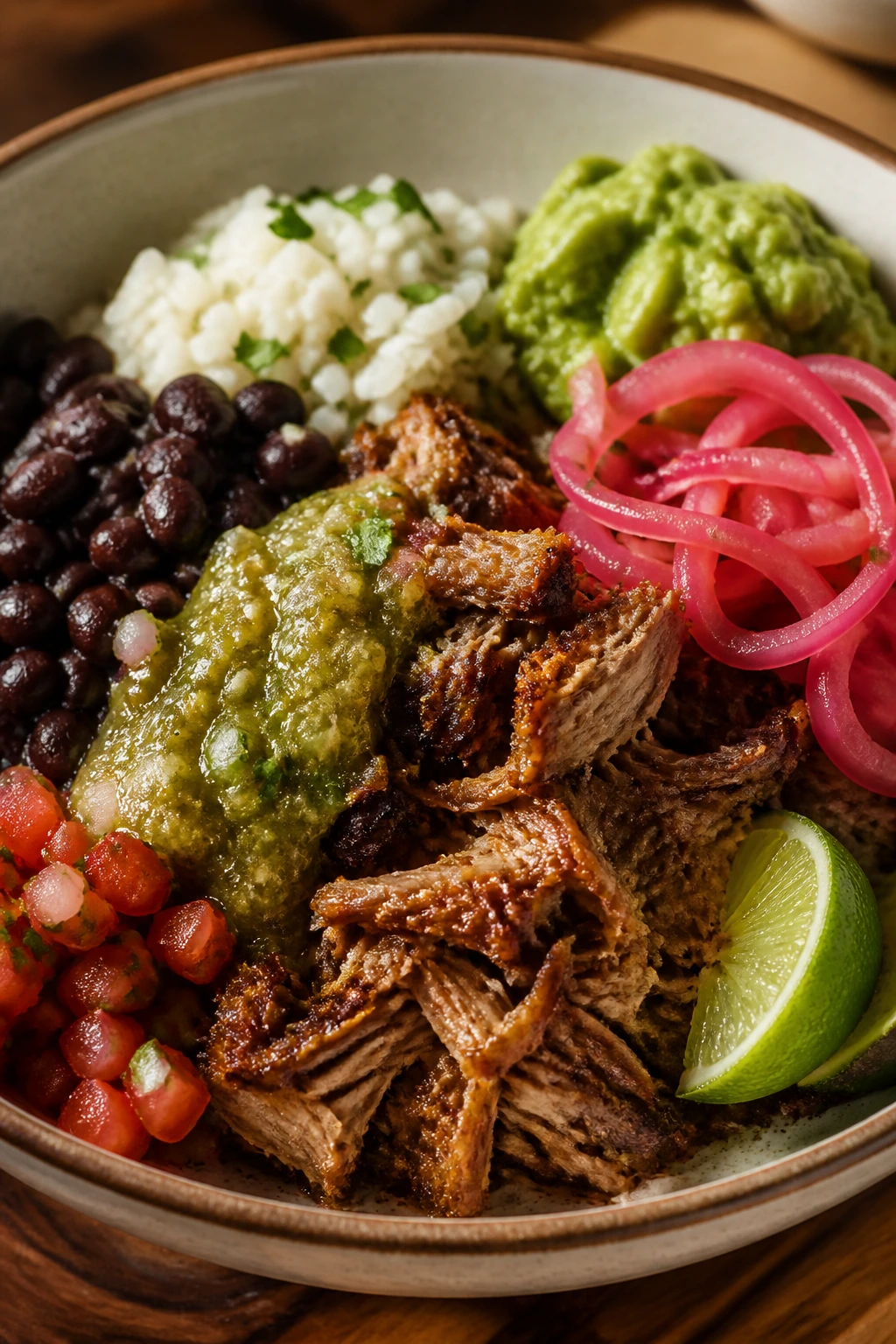
Carnitas should smell like cumin, orange, and pork fat turning crisp at the edges. That is the whole point. In a bowl, you get the crunchy bits, the tender shreds underneath, and a little pickled onion or salsa verde to keep the pork from feeling heavy.
Why It Works:
Slow-cooked pork shoulder breaks down into strands that can be crisped later in a hot oven or skillet. The orange juice and cumin give it that classic carnitas profile without making it sweet. Crisping after shredding is the part people skip, and it is the part that makes carnitas taste like carnitas.
Key Ingredients:
- 3 lb boneless pork shoulder, cut into 2-inch chunks
- 1 tablespoon kosher salt
- 2 teaspoons ground cumin
- 1 teaspoon dried oregano
- 1 teaspoon black pepper
- 1 orange, juiced
- 1 onion, quartered
- 4 cloves garlic, smashed
- 2 bay leaves
- 1 cup chicken broth
- 2 cups cooked Mexican rice or white rice
- 1 can (15 oz) pinto beans, drained and rinsed
- 1/2 cup salsa verde
- 1/2 cup pickled red onions
- 1 avocado, sliced
- 2 tablespoons chopped cilantro
Quick Steps:
- Season the pork: Toss pork with salt, cumin, oregano, and pepper.
- Slow cook: Place pork, orange juice, onion, garlic, bay leaves, and broth in a Dutch oven. Cover and cook at 300°F for 3 to 3 1/2 hours until the pork shreds with a fork.
- Shred the meat: Remove the pork, discard bay leaves, and shred with two forks.
- Crisp the edges: Spread the pork on a sheet pan and broil 4 to 6 minutes, watching closely, until the tips turn browned and crunchy.
- Warm the bowls: Heat rice and beans.
- Assemble: Add rice, beans, carnitas, salsa verde, pickled onions, avocado, and cilantro.
Equipment for This Recipe:
- Dutch oven with lid
- Rimmed sheet pan
- Two forks for shredding
- Fine-mesh strainer if you want to save the braising liquid
- Measuring cups and spoons
How to Serve This Dish:
The best carnitas bowl has contrast: soft rice, crisp pork, cool avocado, and something pickled or tangy on top. Serve with extra salsa verde on the side so each bite can be adjusted. This recipe feeds 6.
Pro Tips for This Recipe:
- Cut the pork into large chunks before cooking; smaller pieces dry out faster.
- Save a little braising liquid and spoon a tablespoon over the shredded pork before crisping if it looks dry.
- Broil in a single layer. Overlapping shreds stay soft.
- Pickled onions are not optional in my book. They cut the pork fat and keep the bowl alive.
Variations on This Dish:
- Orange-Lime Carnitas: Add lime juice with the orange for a sharper, less sweet finish.
- Poblano Carnitas Bowl: Roast 2 poblano peppers, slice them, and tuck them into the rice.
- Lettuce-Heavy Version: Replace half the rice with shredded romaine for a lighter bowl that still keeps the carnitas front and center.
Common Mistakes to Avoid with This Dish:
- Skipping the crisping step: Shredded pork alone tastes soft and one-note. The browned edges matter.
- Overcooking to paste: Pork shoulder should shred, not dissolve.
- Using too much salsa verde: A bowl can get watery fast if the sauce floods the rice.
5. Shrimp and Avocado Burrito Bowls
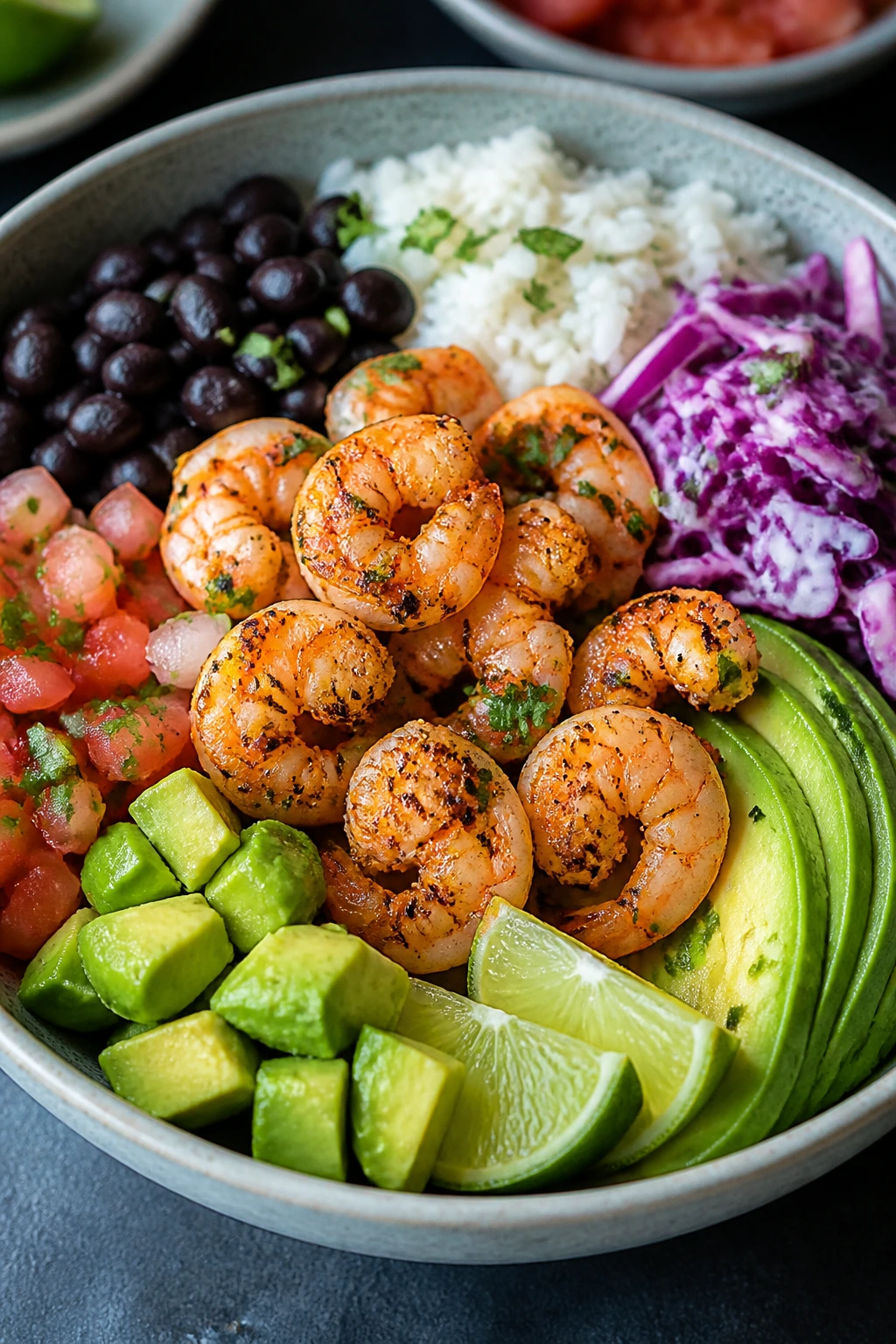
Shrimp behaves differently from beef or pork. It wants heat, a short cooking time, and a bowl that stays bright. Here you get seared shrimp with a little paprika smoke, cool avocado, lime, and rice that soaks up the garlicky pan juices before they disappear.
Why It Works:
Shrimp cooks in minutes, which makes this one of the fastest burrito bowl dinners on the list. A quick marinade of lime, garlic, and paprika adds flavor without turning the shrimp mushy. Because shrimp is delicate, the rest of the bowl needs clean, crisp elements—rice, beans, cabbage, avocado—not more soft food.
Key Ingredients:
- 1 1/2 lb large shrimp, peeled and deveined
- 1 1/2 tablespoons olive oil
- 2 cloves garlic, minced
- 1 teaspoon chili powder
- 1 teaspoon smoked paprika
- 1/2 teaspoon kosher salt
- 1/4 teaspoon black pepper
- 2 tablespoons lime juice
- 2 cups cooked rice
- 1 can (15 oz) black beans, drained and rinsed
- 2 cups shredded cabbage
- 1 avocado, sliced
- 1/4 cup chopped cilantro
- 1/3 cup salsa or salsa verde
- Lime wedges for serving
Quick Steps:
- Season the shrimp: Toss shrimp with oil, garlic, chili powder, paprika, salt, pepper, and lime juice.
- Heat the skillet: Get a skillet hot over medium-high heat.
- Cook the shrimp: Sear 2 to 3 minutes per side until pink, opaque, and lightly browned at the edges. Do not overcook them.
- Warm the beans and rice: Heat both and season the rice with a pinch of salt and more lime if needed.
- Assemble the bowls: Rice first, then beans, shrimp, cabbage, avocado, salsa, and cilantro.
- Finish cold and bright: Add more lime at the table.
Equipment for This Recipe:
- Large skillet
- Medium bowl for marinating
- Tongs or a spatula
- Sharp knife and cutting board
- Small bowl for serving salsa
How to Serve This Dish:
Use a wide bowl so the shrimp can sit on top instead of hiding under the rice. A handful of cabbage gives each bite some crunch, and the avocado should be sliced last so it stays clean. This serves 4.
Pro Tips for This Recipe:
- Dry the shrimp well before seasoning; wet shrimp steam instead of sear.
- Use large shrimp if you can. Tiny shrimp overcook faster and disappear in the bowl.
- Add the lime after cooking if your stove runs hot and tends to make citrus taste bitter.
- If you want more heat, mix a pinch of cayenne into the shrimp seasoning.
Variations on This Dish:
- Garlic-Lime Shrimp Bowl: Double the garlic and finish with chopped parsley for a sharper, brighter profile.
- Mango Salsa Version: Swap the red salsa for diced mango, jalapeño, and red onion.
- Cauliflower Rice Bowl: Use 3 cups cauliflower rice if you want a lower-carb base that still works with the shrimp.
Common Mistakes to Avoid with This Dish:
- Overcooked shrimp: They curl tightly and turn rubbery. Pull them as soon as they’re opaque.
- Too much marinade time: Lime can start curing the shrimp if left too long.
- Soft toppings only: Without cabbage or another crisp element, the bowl loses shape fast.
6. Black Bean and Sweet Potato Burrito Bowls
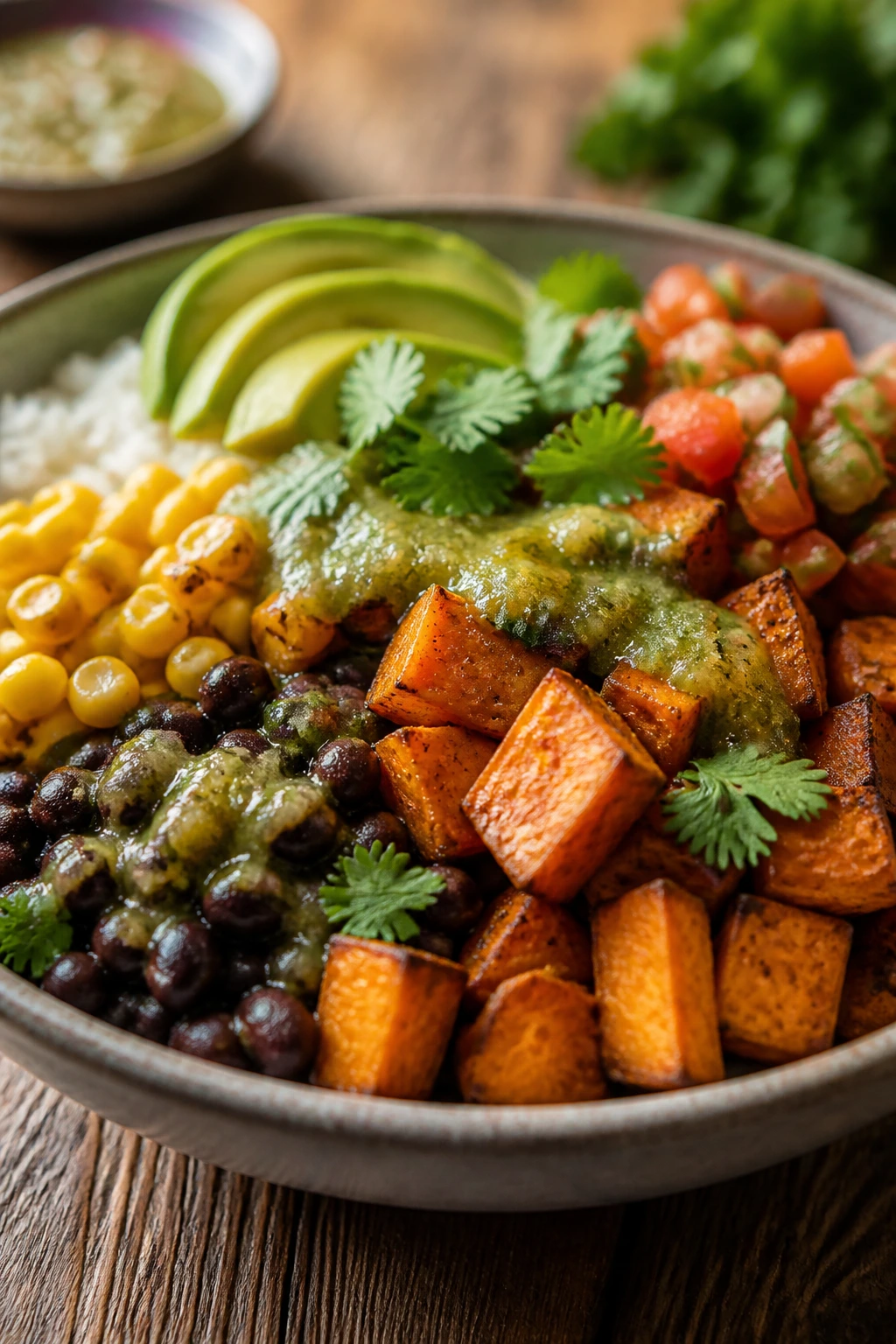
This one has a deeper, earthier flavor than the meat bowls, and I mean that as praise. The sweet potatoes roast into caramelized cubes, the black beans turn creamy with garlic and cumin, and the avocado or crema on top keeps the bowl from tasting dry. It’s the vegetarian bowl I make when I want dinner to feel complete, not apologetic.
Why It Works:
Sweet potatoes give you starch, sweetness, and edge browning in one ingredient. Black beans bring protein and a soft, almost stew-like texture once warmed with onion and spices. When you add lime and something creamy, the bowl tastes layered instead of like a pile of separate things.
Key Ingredients:
- 2 medium sweet potatoes, peeled and cut into 3/4-inch cubes
- 2 tablespoons olive oil
- 1 teaspoon kosher salt
- 1 teaspoon chili powder
- 1/2 teaspoon cumin
- 2 cups cooked rice or quinoa
- 2 cans (15 oz each) black beans, drained and rinsed
- 1 small onion, diced
- 2 cloves garlic, minced
- 1 cup corn kernels
- 1 avocado, sliced
- 1/2 cup salsa roja or salsa verde
- 1/4 cup chopped cilantro
- 1 lime, cut into wedges
- 1/3 cup sour cream or plain yogurt, optional
Quick Steps:
- Roast the sweet potatoes: Toss cubes with oil, salt, chili powder, and cumin. Roast at 425°F for 25 to 30 minutes until browned and tender.
- Warm the bean mixture: In a skillet, cook onion in a little oil for 3 minutes. Add garlic for 30 seconds, then stir in beans and corn with 1/4 cup water. Simmer 4 minutes.
- Season the base: Fluff the rice or quinoa with a fork and add a squeeze of lime.
- Assemble the bowls: Layer rice, beans, sweet potatoes, avocado, salsa, cilantro, and sour cream if using.
- Finish with acid: Lime makes the sweet potatoes taste less heavy.
Equipment for This Recipe:
- Rimmed sheet pan
- Large skillet
- Mixing bowl
- Measuring spoons
- Fork for fluffing rice
How to Serve This Dish:
Serve this one in a bowl with a little height—rice on the bottom, then beans, then the sweet potatoes so the browned edges stay visible. It works well with extra salsa on the side and a handful of crushed tortilla chips if you want crunch. Serves 4.
Pro Tips for This Recipe:
- Cut the sweet potatoes evenly. Uneven cubes give you half mush and half underdone centers.
- Roast them in one layer with space around each piece.
- Season the beans after they warm. They take salt better once they’re hot.
- Quinoa makes this bowl feel lighter, but rice gives it more of that burrito-shop texture.
Variations on This Dish:
- Chipotle Sweet Potato Bowl: Add 1 teaspoon minced chipotle in adobo to the beans.
- Tahini-Lime Finish: Drizzle with tahini mixed with lime juice and water for a nutty, dairy-free sauce.
- Green Bowl: Add shredded romaine and cucumber if you want a colder, crisper mix.
Common Mistakes to Avoid with This Dish:
- Crowding the sweet potatoes: They steam and turn soft instead of roasting.
- Leaving the beans plain: A little onion, garlic, and cumin makes them taste finished.
- Forgetting a creamy element: Without avocado or yogurt, the bowl can feel dry and a little stern.
7. Turkey Picadillo Burrito Bowls
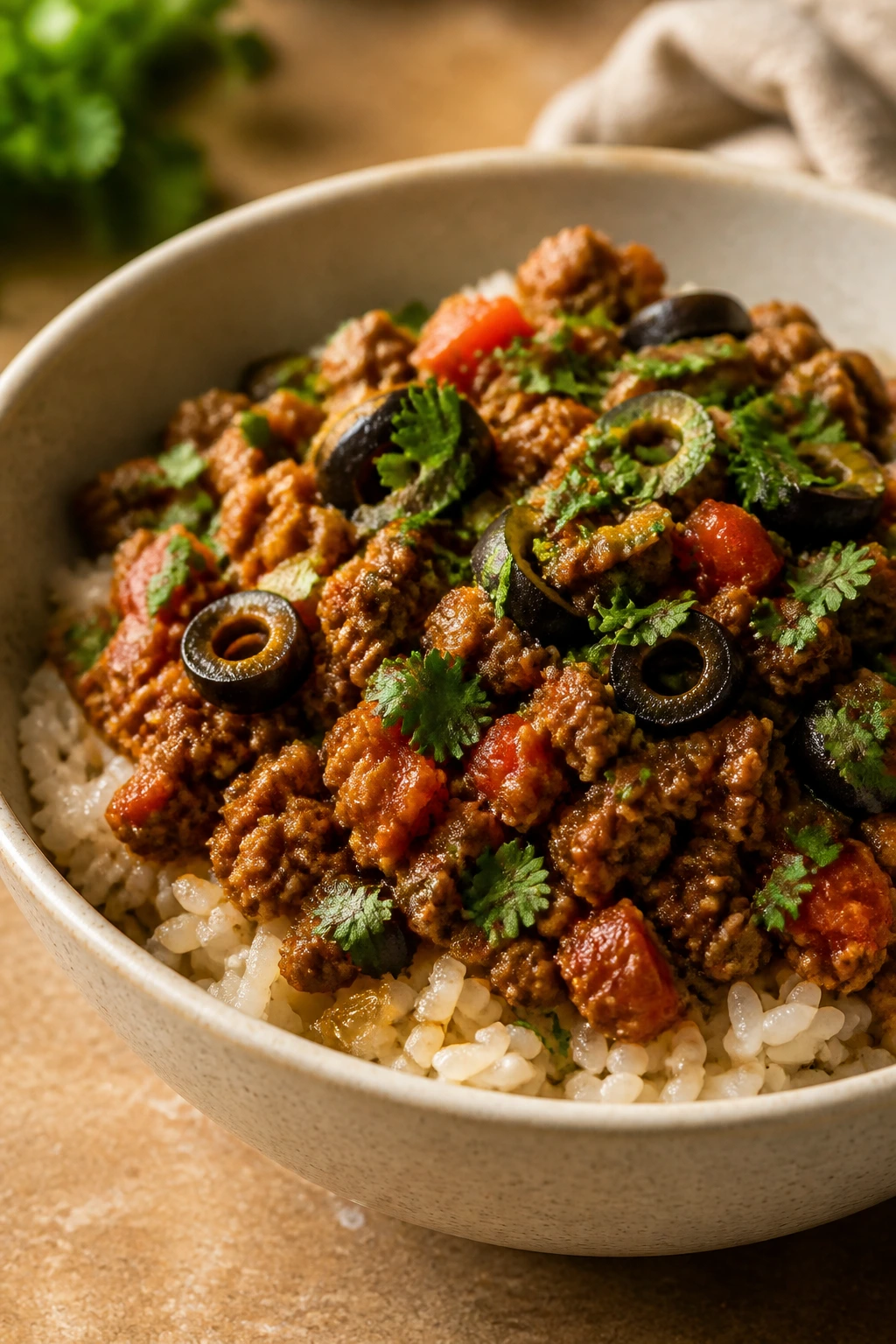
Picadillo has a nice way of being familiar and a little surprising at the same time. Ground turkey, tomato, olives, and warm spices make the bowl taste savory and lightly briny, and the raisins—if you use them—add a small sweet note that keeps the whole thing from reading as plain turkey dinner.
Why It Works:
Ground turkey can go flat fast if it’s only salted and browned. Picadillo fixes that by layering tomato, cumin, garlic, and a few sharper ingredients like olives and capers. The result tastes fuller than the ingredient list suggests, which is always a good sign in weeknight cooking.
Key Ingredients:
- 1 1/2 lb ground turkey
- 1 tablespoon olive oil
- 1 small onion, diced
- 2 cloves garlic, minced
- 1 cup crushed tomatoes or tomato sauce
- 1 teaspoon ground cumin
- 1 teaspoon dried oregano
- 1/2 teaspoon cinnamon
- 1 teaspoon kosher salt
- 1/2 teaspoon black pepper
- 1/3 cup sliced green olives
- 2 tablespoons raisins, optional
- 2 cups cooked rice
- 1 can (15 oz) pinto beans, drained and rinsed
- 1/2 cup chopped tomato
- 1/4 cup chopped cilantro
- Lime wedges
Quick Steps:
- Brown the turkey: Heat oil in a skillet and cook the turkey 5 to 6 minutes, breaking it up until no pink remains.
- Add onion and garlic: Cook onion 3 minutes, then garlic 30 seconds.
- Build the picadillo: Stir in crushed tomatoes, cumin, oregano, cinnamon, salt, pepper, olives, and raisins if using. Simmer 8 to 10 minutes until thick.
- Warm rice and beans: Heat separately and season the rice with lime.
- Assemble the bowls: Rice, beans, turkey picadillo, chopped tomato, cilantro, and lime.
- Taste before serving: If the tomato sauce tastes sharp, add a pinch of salt rather than more sugar.
Equipment for This Recipe:
- Large skillet
- Wooden spoon
- Small saucepan or microwave bowl
- Measuring spoons
- Sharp knife
How to Serve This Dish:
I like picadillo bowls with the tomatoes and cilantro kept cold on top so they cut through the warm filling. A little sour cream works too, though it’s optional. This makes 4 to 5 servings.
Pro Tips for This Recipe:
- Don’t skip the cinnamon. Use a small amount; it should round the tomato, not announce itself.
- Let the tomato mixture simmer until thick enough to mound on a spoon.
- Taste the olives before you add salt, because some are much saltier than others.
- If raisins sound odd to you, use just 1 tablespoon. They’re background sweetness, not dessert.
Variations on This Dish:
- No-Raisin Picadillo: Leave out the raisins and add chopped roasted red pepper for a savory version.
- Spicy Turkey Bowl: Stir in minced jalapeño with the onion.
- Low-Carb Version: Spoon the picadillo over shredded lettuce or cauliflower rice.
Common Mistakes to Avoid with This Dish:
- Watery sauce: Simmer long enough for the tomatoes to thicken.
- Under-seasoned turkey: Turkey needs a firmer hand with salt than beef does.
- Too much cinnamon: A heavy pour makes the bowl taste like you drifted into the wrong recipe.
8. Chipotle Salmon Burrito Bowls
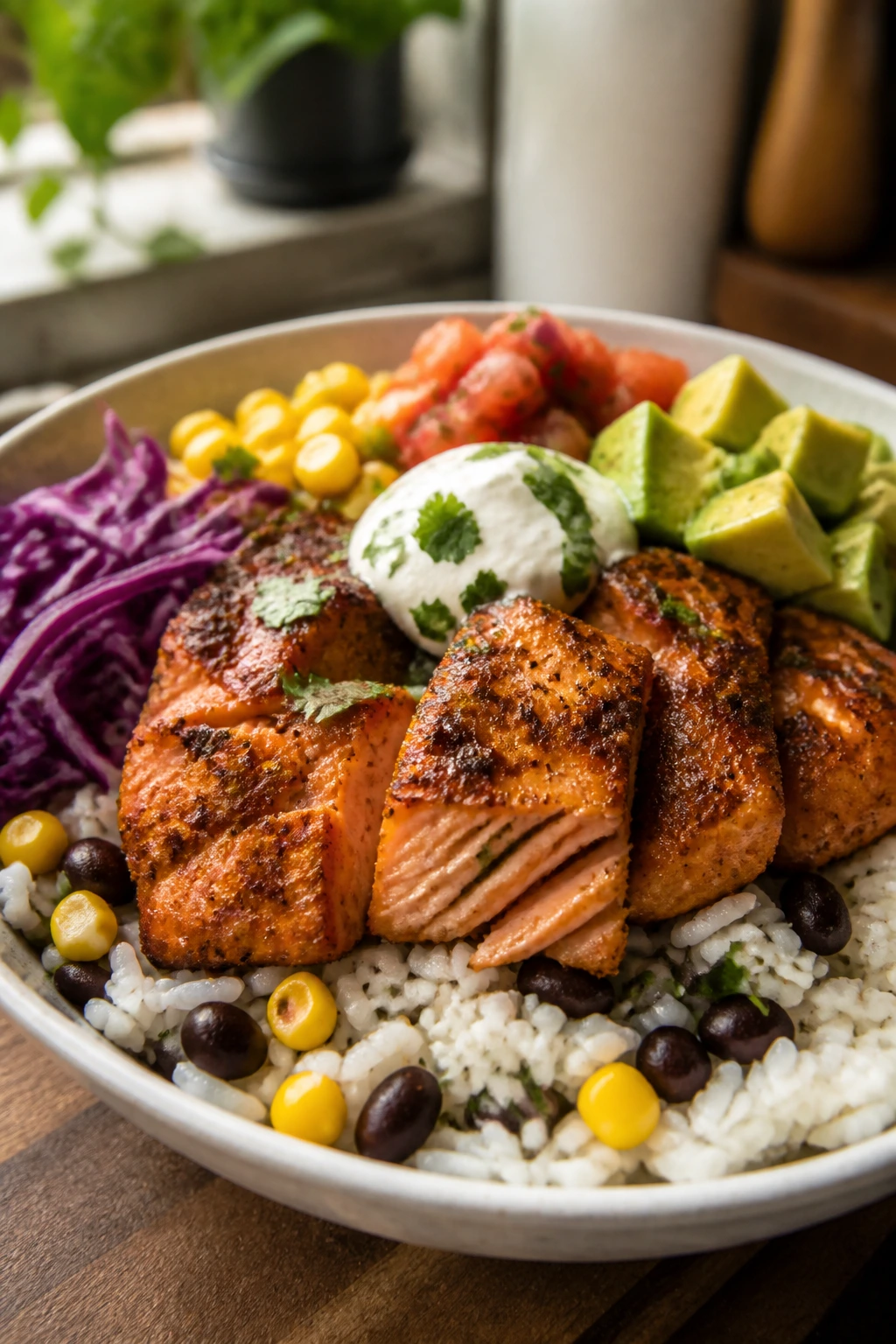
Salmon brings a different kind of richness to a burrito bowl. The fish flakes into thick, moist pieces, the chipotle seasoning gives it a smoky edge, and the rice underneath catches the orange-red juices in the best possible way. It feels a little cleaner than beef, but it is not delicate or fussy.
Why It Works:
Salmon likes high heat and a short cook, which makes it easy to get on the table without losing texture. Chipotle, lime, and cumin echo the seasoning used in more traditional burrito bowls, so the fish still fits the theme. A crisp vegetable topping—cabbage, radish, or cucumber—keeps the bowl from feeling soft all the way through.
Key Ingredients:
- 1 1/2 lb salmon fillet, skin on or off
- 1 tablespoon olive oil
- 1 teaspoon chipotle powder
- 1 teaspoon ground cumin
- 1 teaspoon kosher salt
- 1/2 teaspoon black pepper
- 2 cups cooked rice
- 1 can (15 oz) black beans, drained and rinsed
- 1 cup corn kernels, warmed
- 1 cup shredded cabbage
- 1 avocado, sliced
- 1/4 cup chopped cilantro
- 2 tablespoons lime juice
- 1/3 cup crema or plain yogurt
- Lime wedges
Quick Steps:
- Season the salmon: Rub with oil, chipotle powder, cumin, salt, and pepper.
- Roast or sear: Bake at 425°F for 10 to 12 minutes, or sear skin-side down in a hot skillet until the fish flakes easily and the center is just opaque.
- Warm the base: Heat rice, beans, and corn.
- Mix the crema: Stir lime juice into crema or yogurt.
- Assemble the bowls: Rice, beans, corn, cabbage, salmon, avocado, cilantro, and lime crema.
- Serve right away: Salmon waits for no one.
Equipment for This Recipe:
- Sheet pan or skillet
- Fish spatula if you have one
- Mixing bowl
- Small whisk or spoon
- Cutting board
How to Serve This Dish:
Salmon bowls look best when the fish stays in large pieces instead of being shredded into oblivion. Keep the cabbage and avocado on the cool side of the bowl, and drizzle the crema lightly so you don’t bury the fish. Serves 4.
Pro Tips for This Recipe:
- Pull salmon when it flakes but still looks moist in the center.
- Pat the fillet dry before seasoning; wet skin won’t crisp.
- Use thick yogurt or crema so the sauce doesn’t run straight into the rice.
- If using skin-on salmon, place it skin-side down first and don’t fuss with it.
Variations on This Dish:
- Honey-Chipotle Salmon: Brush with 1 teaspoon honey before cooking for a slight glaze.
- Cucumber Salsa Bowl: Add chopped cucumber and tomato with lime and salt for a colder finish.
- Grain Swap: Try farro or brown rice if you want a nuttier base under the salmon.
Common Mistakes to Avoid with This Dish:
- Overcooking the fish: Dry salmon turns chalky fast.
- Too much chipotle: It can bulldoze the bowl. Start measured.
- Skipping something crisp: The bowl needs a crunch somewhere, or it feels heavy.
9. Rotisserie Chicken Salsa Verde Burrito Bowls
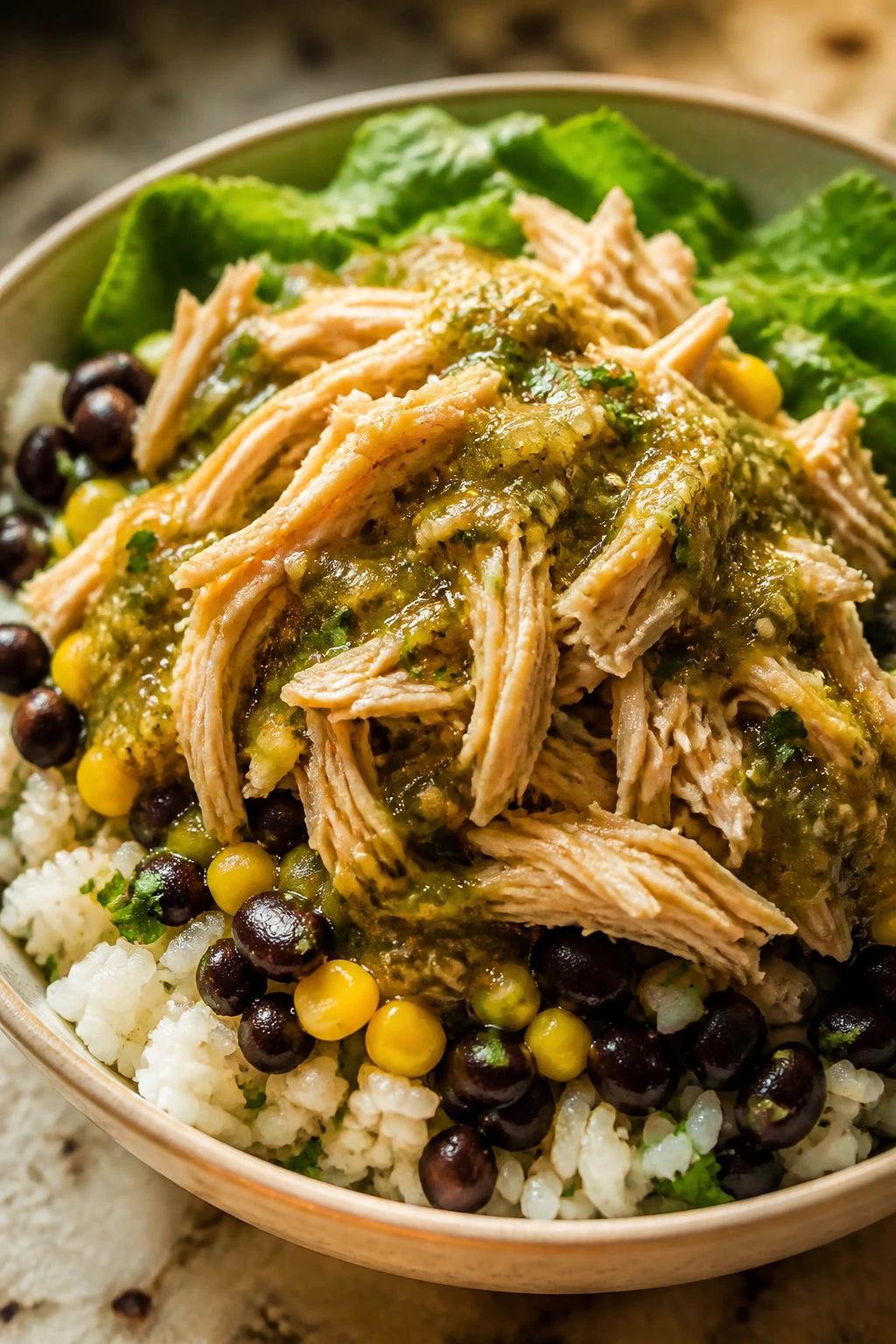
This is the weeknight cheat code, and I mean that kindly. Pull the meat from a rotisserie chicken, warm it with salsa verde, and suddenly the bowl tastes like you planned dinner instead of rescuing it. The trick is to treat the chicken like an ingredient that still deserves seasoning.
Why It Works:
Rotisserie chicken already has salt and browning built in, so you don’t need to cook from scratch to get flavor. Salsa verde adds acidity and a green chile brightness that keeps the shredded meat from tasting reheated. It’s one of the fastest ways to get a real dinner on the table without crossing into sad desk-lunch territory.
Key Ingredients:
- 1 rotisserie chicken, skin removed and meat shredded
- 1 tablespoon olive oil
- 1/2 cup salsa verde
- 1 teaspoon ground cumin
- 2 cups cooked rice
- 1 can (15 oz) black beans, drained and rinsed
- 1 cup corn
- 1 cup shredded lettuce
- 1 avocado, sliced
- 1/2 cup shredded Monterey Jack
- 1/4 cup chopped cilantro
- Lime wedges
Quick Steps:
- Warm the chicken: Heat oil in a skillet, then add shredded chicken, salsa verde, and cumin. Cook 3 to 4 minutes until hot and glossy.
- Warm the sides: Heat rice, beans, and corn separately.
- Season the rice: Add salt and a squeeze of lime.
- Assemble: Rice, beans, chicken, corn, lettuce, avocado, cheese, cilantro.
- Finish with lime: The green sauce likes acid.
Equipment for This Recipe:
- Large skillet
- Forks or your hands for shredding
- Microwave-safe bowls or saucepan
- Sharp knife
- Cutting board
How to Serve This Dish:
This bowl is forgiving, but don’t pile everything into one massive mound. A neat layout makes the salsa verde stay visible and the avocado stay intact. Serves 4 to 6, depending on how much chicken is on the bird.
Pro Tips for This Recipe:
- Toss the chicken with salsa verde in the skillet, not after it’s plated. Warm sauce coats better.
- Remove the skin unless you want it soft and floppy in the bowl.
- Use the dark meat for more flavor if you’re splitting the bird.
- Fresh lime at the end makes the store-bought chicken taste more like a real cooking decision.
Variations on This Dish:
- Creamy Salsa Verde Bowl: Stir 2 tablespoons sour cream into the salsa verde before warming.
- Jalapeño Rice Version: Mix chopped pickled jalapeños into the rice.
- Bean-Lite Bowl: Skip the beans and add extra corn and lettuce if that’s the texture you want.
Common Mistakes to Avoid with This Dish:
- Serving cold chicken: Warm it fully or the bowl tastes half-finished.
- Using too much salsa at once: You want a coating, not a soup.
- Forgetting to season the rice: The shortcut needs one good salt note to hold together.
10. Chorizo and Cauliflower Rice Burrito Bowls
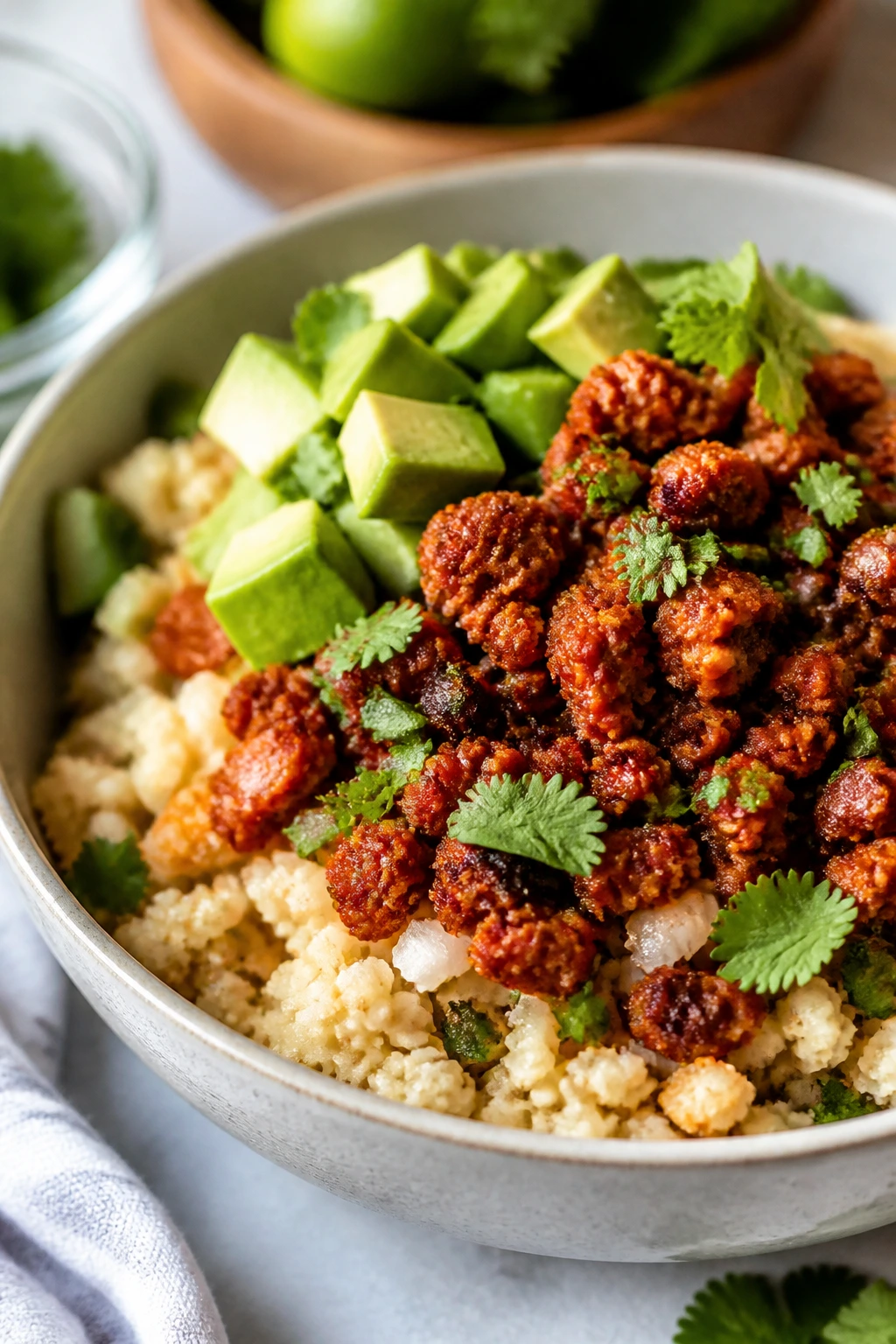
Chorizo is loud in the best way. It brings fat, paprika, garlic, and heat all at once, which means the rest of the bowl can stay simpler. I like cauliflower rice here because it catches the chorizo oil without turning mushy, and the bowl ends up tasting rich without feeling overly heavy.
Why It Works:
Chorizo cooks into a deeply seasoned crumble fast, and that seasoning bleeds into any base beneath it. Cauliflower rice absorbs flavor but still keeps a little bite if you don’t overcook it. A cool topping like avocado or yogurt is not optional here; it keeps the bowl from running hot all the way through.
Key Ingredients:
- 1 lb fresh Mexican chorizo, casing removed if needed
- 1 tablespoon olive oil, if the chorizo is lean
- 1 small onion, diced
- 1 red bell pepper, diced
- 3 cups cauliflower rice
- 1 can (15 oz) pinto beans, drained and rinsed
- 1/2 teaspoon kosher salt, or less depending on the chorizo
- 1/2 cup salsa roja
- 1 avocado, diced
- 1/4 cup chopped cilantro
- 1 lime, cut into wedges
- 1/3 cup crumbled queso fresco
Quick Steps:
- Brown the chorizo: Cook it in a skillet over medium-high heat for 6 to 8 minutes, breaking it up until browned and cooked through.
- Add onion and pepper: Cook 4 minutes until softened and the onions lose their raw bite.
- Stir in cauliflower rice: Cook 4 to 5 minutes until just tender. Do not let it go soft.
- Warm the beans: Heat separately so the bowl keeps some structure.
- Assemble: Cauliflower rice, beans, chorizo mixture, salsa roja, avocado, cilantro, queso fresco, lime.
- Taste before salting: Chorizo can be saltier than you expect.
Equipment for This Recipe:
- Large skillet
- Spatula or wooden spoon
- Box grater or food processor if making cauliflower rice from fresh florets
- Cutting board and knife
- Measuring spoons
How to Serve This Dish:
Serve in a shallow bowl so the orange-red chorizo oil can glaze the cauliflower rice without drowning it. A spoonful of salsa roja on the side gives you control over the heat. This feeds 4.
Pro Tips for This Recipe:
- If using store-bought chorizo, check the salt before adding more.
- Don’t overcook cauliflower rice; it goes from tender to watery fast.
- Rinse and drain the beans well so they don’t add extra grease.
- Lime at the end keeps chorizo from feeling too dense.
Variations on This Dish:
- Egg Topped Bowl: Add a fried egg if you want a breakfast-for-dinner angle.
- Sweet Pepper Version: Use yellow or orange peppers for a softer, sweeter bowl.
- Rice Blend: Mix half cauliflower rice and half regular rice if you want a less strict low-carb bowl.
Common Mistakes to Avoid with This Dish:
- Too much salt: Chorizo already brings plenty.
- Mushy cauliflower rice: Keep the heat moderate and the cook time short.
- Skipping acid: Without lime, the bowl tastes heavier than it should.
11. Barbacoa Burrito Bowls
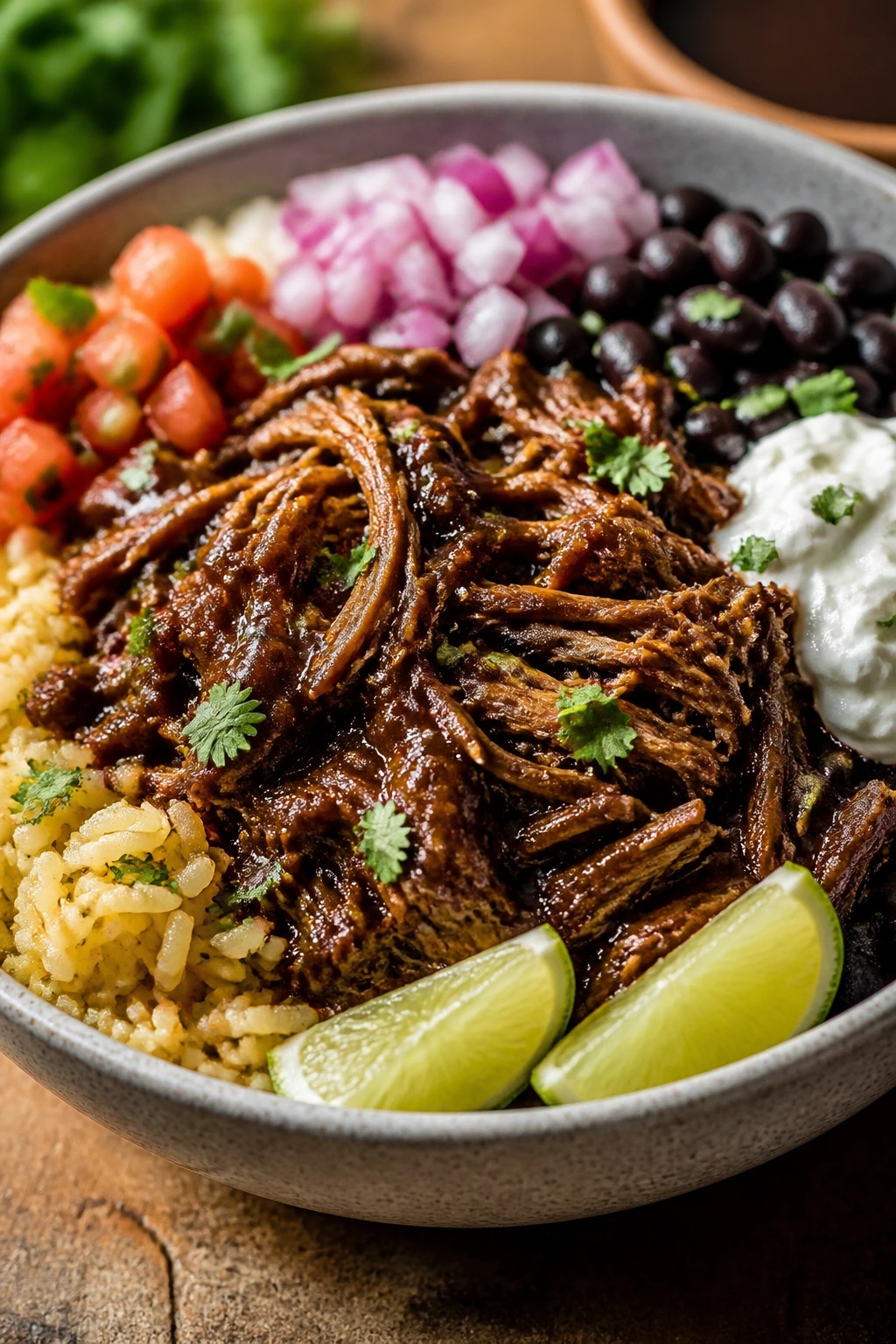
Barbacoa has a slow, dark flavor that makes the whole bowl feel deeper than the usual Tuesday-night dinner. The beef gets spoon-tender, the sauce turns rich and a little spicy, and every forkful seems to need one more bite. If you like a bowl with a little drama, this is the one.
Why It Works:
Chuck roast braises into shreds that soak up the sauce instead of drying out. Chipotle, garlic, cumin, and vinegar give the barbacoa its smoky-tangy profile, and the rice underneath is mostly there to catch the juices. This is the bowl that benefits most from a fresh topping—onions, cilantro, and lime all cut through the richness.
Key Ingredients:
- 3 lb beef chuck roast, cut into large chunks
- 1 tablespoon kosher salt
- 2 teaspoons ground cumin
- 1 teaspoon dried oregano
- 1 teaspoon black pepper
- 2 chipotle peppers in adobo, minced
- 3 cloves garlic, minced
- 1/4 cup apple cider vinegar
- 1 cup beef broth
- 2 cups cooked rice
- 1 can (15 oz) black beans, drained and rinsed
- 1/2 cup diced white onion
- 1/4 cup chopped cilantro
- 1 avocado, sliced
- Lime wedges
Quick Steps:
- Season the beef: Rub the chuck with salt, cumin, oregano, and pepper.
- Brown the meat: Sear in a Dutch oven over medium-high heat until deeply browned on all sides.
- Build the braise: Add chipotle, garlic, vinegar, and broth. Cover and cook at 300°F for 3 1/2 to 4 hours until fork-tender.
- Shred and reduce: Pull the beef apart, then simmer the sauce uncovered for 10 minutes if it needs thickening.
- Warm rice and beans: Keep them separate and hot.
- Assemble: Rice, beans, barbacoa, onion, cilantro, avocado, and lime.
Equipment for This Recipe:
- Dutch oven
- Tongs
- Two forks
- Cutting board and knife
- Measuring cups and spoons
How to Serve This Dish:
Barbacoa likes a firm base, so press the rice into the bowl slightly before adding the beef. A little onion and cilantro on top does more than look nice; it gives each bite a fresh snap. Serves 6.
Pro Tips for This Recipe:
- Brown the beef in batches if needed. Color at the start means flavor later.
- Taste the sauce after braising and adjust with salt or a splash more vinegar.
- If you’re short on time, cube the roast smaller before braising.
- Keep the avocado simple here. The barbacoa already brings enough personality.
Variations on This Dish:
- Instant Pot Barbacoa: Pressure cook for about 60 minutes with natural release if you need speed.
- Tomatillo Barbacoa: Add 1 cup tomatillo salsa to the braise for a greener, brighter sauce.
- Beanless Bowl: Skip beans and add extra rice plus grilled peppers if you want the beef to stay central.
Common Mistakes to Avoid with This Dish:
- Undercooking the roast: It needs time to become tender; don’t stop at “sliceable.”
- Thin sauce: If the braising liquid looks watery, reduce it before serving.
- Too much chipotle: Start with less if your peppers are hot; you can always add heat at the table.
12. Tofu Fajita Burrito Bowls
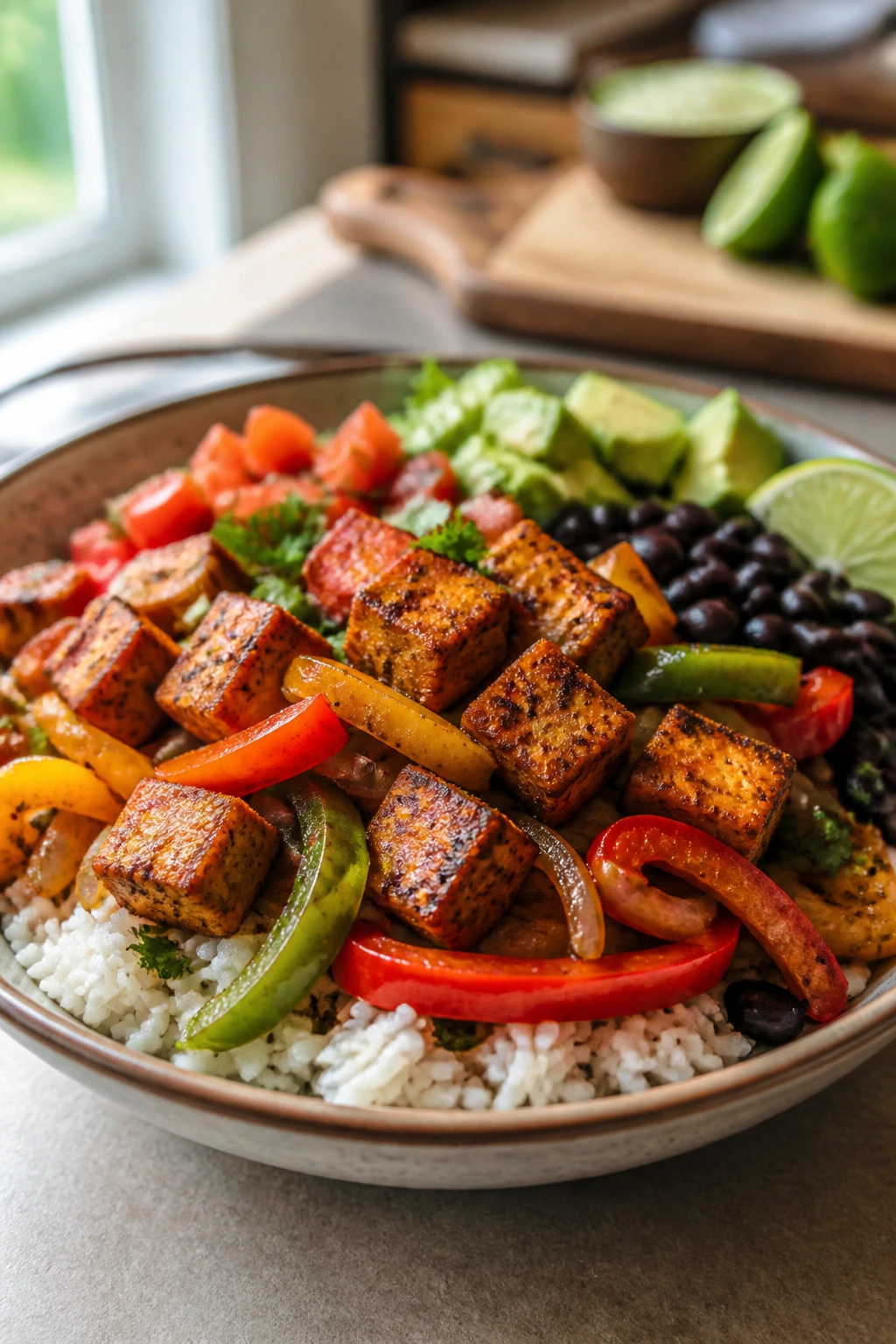
Tofu can absolutely hold its own in a burrito bowl, but it needs some help to do it. Press it, season it hard, and brown it properly, and it gets this crisp-edged, savory thing going that plays nicely with peppers, onions, and rice. Ignore those steps and it tastes like the tofu still remembers being a block.
Why It Works:
Extra-firm tofu takes on marinade along the surface, then firms up when pressed and seared. Fajita seasoning gives it the same spice pattern you’d use on chicken, which keeps the bowl familiar even without meat. The peppers and onions matter more here because they carry some of the savoriness tofu doesn’t naturally have.
Key Ingredients:
- 2 blocks (14 oz each) extra-firm tofu, pressed and cubed
- 2 tablespoons olive oil
- 1 1/2 teaspoons chili powder
- 1 teaspoon ground cumin
- 1 teaspoon smoked paprika
- 1 teaspoon kosher salt
- 2 bell peppers, sliced
- 1 large onion, sliced
- 2 cups cooked rice
- 1 can (15 oz) black beans, drained and rinsed
- 1/2 cup salsa
- 1 avocado, sliced
- 1/4 cup cilantro
- Lime wedges
- 2 tablespoons nutritional yeast, optional
Quick Steps:
- Press the tofu: Wrap in a towel and set a heavy pan on top for 20 minutes, then cube it.
- Season the tofu: Toss with oil, chili powder, cumin, paprika, salt, and nutritional yeast if using.
- Brown the tofu: Cook in a hot skillet 8 to 10 minutes, turning until the cubes are crisp on several sides.
- Cook the peppers and onions: Sauté in the same skillet for 6 to 8 minutes until softened and lightly browned.
- Warm rice and beans: Season the rice with lime and salt.
- Assemble: Rice, beans, tofu, vegetables, salsa, avocado, cilantro.
Equipment for This Recipe:
- Heavy skillet
- Clean kitchen towel or tofu press
- Cutting board and knife
- Measuring spoons
- Spatula
How to Serve This Dish:
Tofu bowls look best when the tofu stays crisp on top of the vegetables instead of being buried. A little extra salsa and lime on the side helps the bowl taste bright rather than earnest, which tofu recipes often need. Serves 4.
Pro Tips for This Recipe:
- Pressing matters. Wet tofu won’t brown well.
- Cube the tofu into generous pieces so it doesn’t break apart in the skillet.
- If you want stronger flavor, marinate the pressed tofu for 20 minutes before cooking.
- Use a nonstick or well-seasoned skillet if you’re new to tofu; it makes the browning less annoying.
Variations on This Dish:
- Crispy Cornstarch Tofu: Toss cubes with 1 tablespoon cornstarch before frying for a firmer crust.
- Green Chile Version: Add chopped green chiles to the peppers and onions.
- Tahini Drizzle Bowl: Finish with tahini, lime, and water whisked into a thin sauce.
Common Mistakes to Avoid with This Dish:
- Skipping the press: The tofu stays wet and pale.
- Crowding the pan: Steam beats browning every time.
- Under-seasoning the base: Tofu needs the rice, beans, and vegetables to carry some of the flavor load.
13. Mushroom and Poblano Burrito Bowls
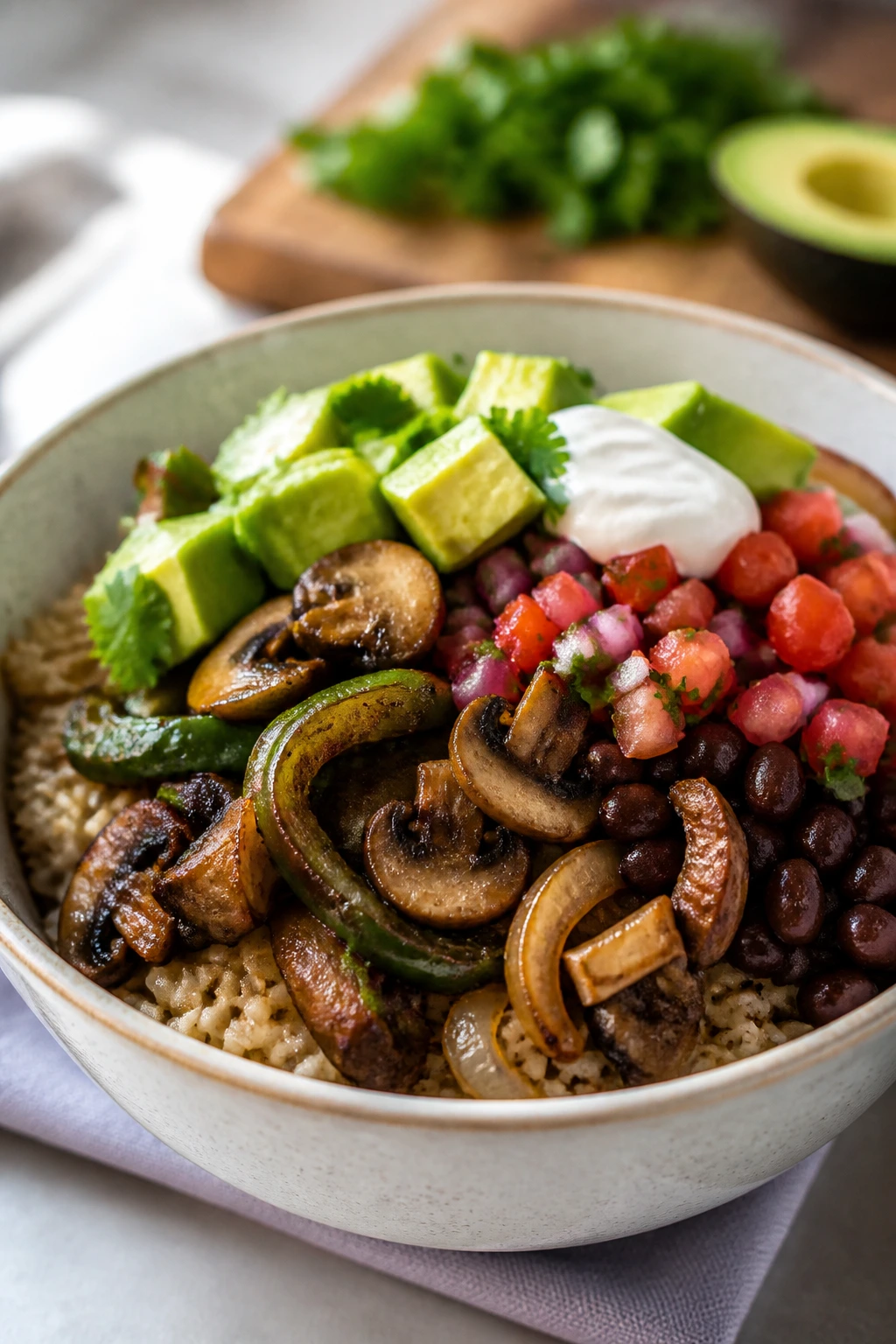
Mushrooms are the quiet overachievers of this bowl. They brown, shrink, and turn savory in a way that makes you forget they started as humble slices. Add poblanos, onions, and a little cumin, and the bowl gets deep, earthy flavor without leaning on meat at all.
Why It Works:
Mushrooms need space and heat so they can release moisture and then brown instead of steaming. Poblano peppers bring a milder heat than jalapeños, which lets the mushrooms stay in front without the bowl going flat. A little cream or cheese at the end smooths the edges without taking over.
Key Ingredients:
- 1 1/2 lb cremini or baby bella mushrooms, sliced
- 2 tablespoons olive oil
- 2 poblano peppers, sliced
- 1 medium onion, sliced
- 2 cloves garlic, minced
- 1 teaspoon ground cumin
- 1 teaspoon kosher salt
- 1/2 teaspoon black pepper
- 2 cups cooked rice
- 1 can (15 oz) black beans, drained and rinsed
- 1/2 cup salsa verde
- 1 avocado, sliced
- 1/4 cup cilantro
- 1/3 cup queso fresco or feta
- Lime wedges
Quick Steps:
- Brown the mushrooms: Cook them in a hot skillet with oil until they release liquid and then start to brown, about 8 to 10 minutes.
- Add the peppers and onion: Cook 6 minutes until the onion softens and the poblanos lose their raw edge.
- Season: Stir in garlic, cumin, salt, and pepper for 30 seconds.
- Warm the beans and rice: Heat separately and season the rice lightly with salt.
- Assemble: Rice, beans, mushroom-poblano mix, salsa verde, avocado, cilantro, cheese, lime.
Equipment for This Recipe:
- Large skillet
- Sharp knife
- Cutting board
- Wooden spoon or spatula
- Small saucepan or microwave bowl
How to Serve This Dish:
This bowl works nicely with a little extra cheese scattered over the mushrooms while they’re still hot, so it softens at the edges. Keep the avocado chunky, not mashed, so the texture stays clear. Serves 4.
Pro Tips for This Recipe:
- Do not stir the mushrooms constantly at first; let them sit and brown.
- Salt the mushrooms after they’ve released some moisture, not before.
- If the pan gets crowded, cook in two batches.
- Salsa verde suits this bowl better than red salsa in my opinion; it keeps the flavor sharper.
Variations on This Dish:
- Creamy Mushroom Bowl: Add 2 tablespoons sour cream or crema to the hot mushrooms off the heat.
- Grilled Corn Version: Fold in 1 cup grilled corn for sweetness.
- Vegan Finish: Swap the cheese for sliced radish and extra cilantro.
Common Mistakes to Avoid with This Dish:
- Wet mushrooms: They need room to brown.
- Underseasoned vegetables: Mushrooms swallow salt; taste before serving.
- Overly soft poblanos: They should be tender, not collapsed.
14. Cilantro-Lime Pork Tenderloin Burrito Bowls
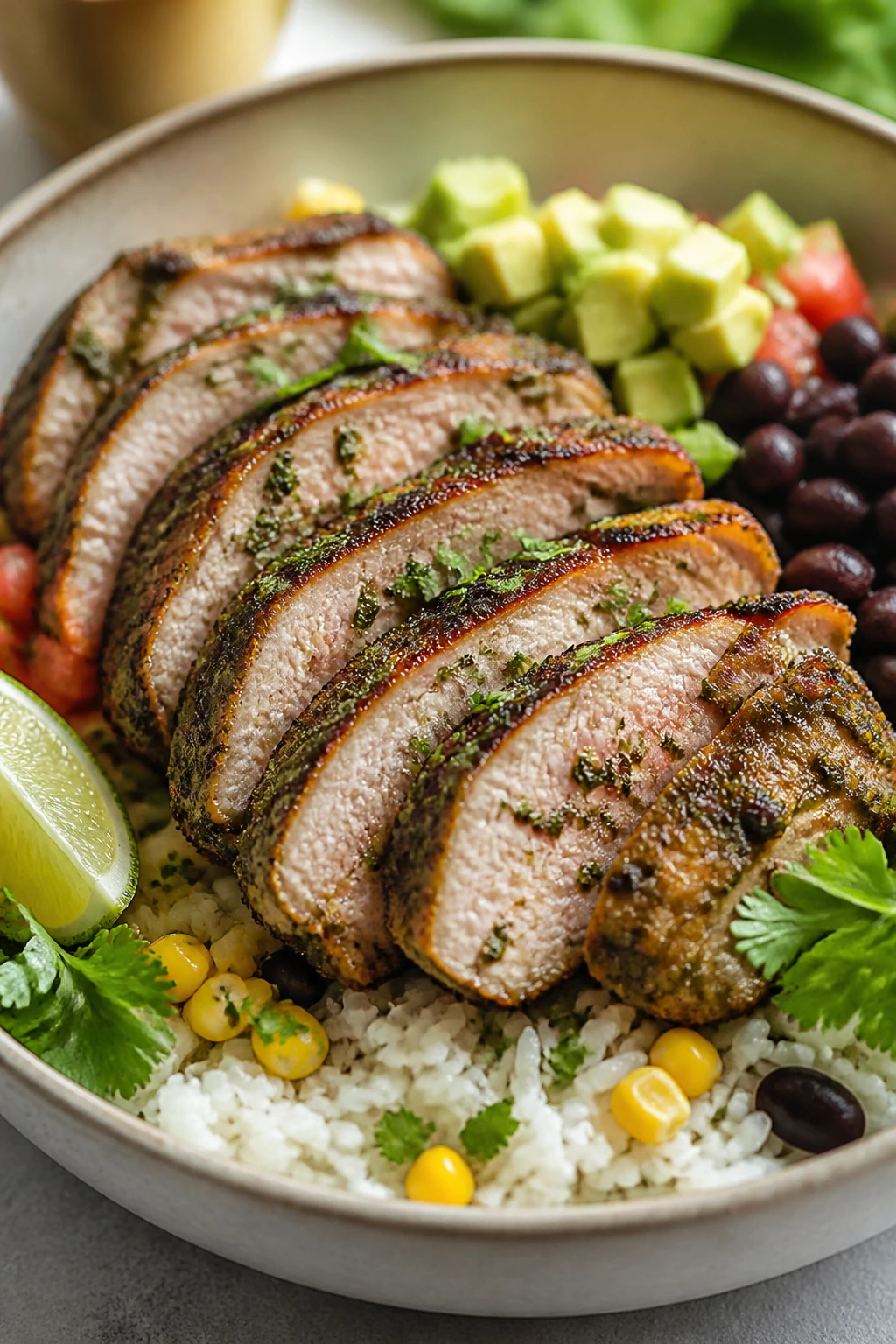
Pork tenderloin gives you clean slices, quick cooking, and a lighter feel than carnitas, which is useful when you want the bowl to be bright and not just rich. The cilantro-lime marinade brings the flavor, and the sear gives the meat those browned edges that make every slice look like it meant to be there.
Why It Works:
Pork tenderloin cooks fast and stays tender if you don’t push it past the line. A short marinade with lime, garlic, and cilantro seasons the outside, while a hard sear locks in color before the roast finishes in the oven. The bowl benefits from a mix of soft and crisp toppings, especially cabbage or lettuce for contrast.
Key Ingredients:
- 1 1/2 to 2 lb pork tenderloin
- 2 tablespoons olive oil
- 2 tablespoons lime juice
- 2 cloves garlic, minced
- 2 tablespoons chopped cilantro, plus more for serving
- 1 teaspoon ground cumin
- 1 teaspoon kosher salt
- 1/2 teaspoon black pepper
- 2 cups cooked rice
- 1 can (15 oz) black beans, drained and rinsed
- 1 cup corn
- 1 cup shredded cabbage
- 1 avocado, sliced
- 1/3 cup salsa
- Lime wedges
Quick Steps:
- Marinate the pork: Rub with oil, lime juice, garlic, cilantro, cumin, salt, and pepper. Let sit 20 to 30 minutes.
- Sear the tenderloin: Brown in a hot skillet 2 to 3 minutes per side until golden.
- Roast: Transfer to a 400°F oven and cook 12 to 16 minutes, until the center reaches 145°F.
- Rest and slice: Rest 5 to 8 minutes before slicing into thin rounds.
- Warm the rice, beans, and corn: Keep each component separate.
- Assemble: Rice, beans, corn, cabbage, pork, avocado, salsa, and extra cilantro.
Equipment for This Recipe:
- Oven-safe skillet
- Instant-read thermometer
- Sharp knife
- Cutting board
- Small bowl for marinade
How to Serve This Dish:
Slice the pork thin and fan it across the bowl so every bite picks up a little cilantro-lime marinade. Cabbage gives the bowl a fresh crunch that pork tenderloin likes more than soft lettuce. This serves 4.
Pro Tips for This Recipe:
- Use an instant-read thermometer. Pork tenderloin is excellent at 145°F and not so excellent after much more than that.
- Let the meat rest before slicing or the juices will run out onto the board.
- If you want extra char, finish the sliced pork in the skillet for 30 seconds after roasting.
- A spoon of salsa on top is good; a spoon of salsa in the rice is better.
Variations on This Dish:
- Adobo Pork Bowl: Swap the cilantro-lime marinade for adobo sauce and cumin.
- Pineapple Salsa Version: Add chopped pineapple and jalapeño for a sweet-hot finish.
- Lettuce Bowl: Use shredded romaine instead of rice if you want something lighter.
Common Mistakes to Avoid with This Dish:
- Overcooking the tenderloin: It dries out faster than pork shoulder.
- Skipping the rest: The slices will leak.
- Too much lime in the marinade: Acid is good, but too much can make the exterior taste sharp instead of bright.
Why Burrito Bowl Dinners Work So Well Without the Tortilla
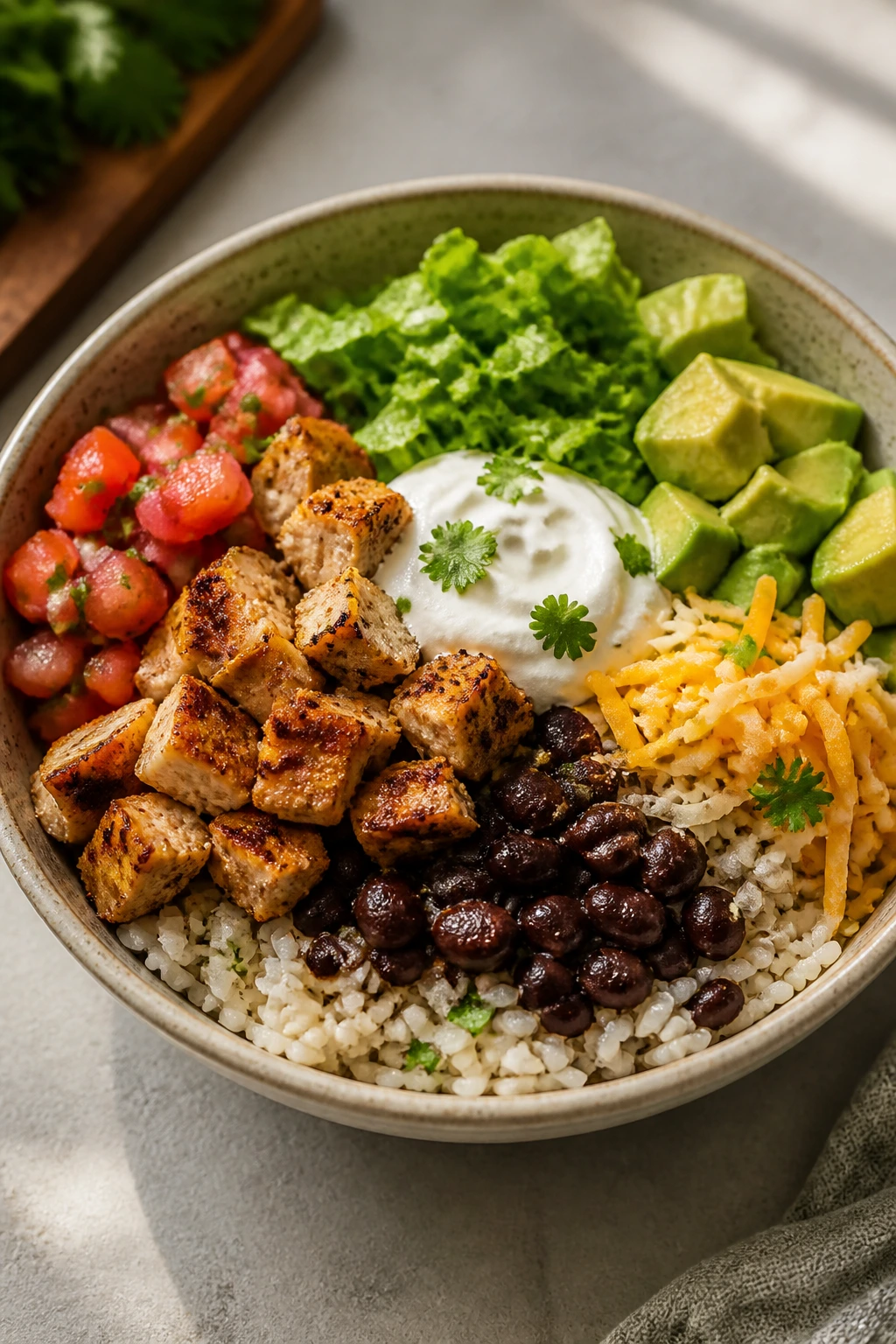
A good burrito bowl has a structure that keeps dinner from turning mushy in five minutes. You need one starch that can soak up seasoning, one protein that can carry the bold flavors, and at least one fresh topping with crunch or acid to wake everything back up. Once you understand that balance, the whole category opens up.
Rice matters more than people think. Plain white rice gives you a soft base that disappears into salsa and pan juices, while brown rice adds chew and a nuttier note. If you’re using cauliflower rice, it needs to be cooked just enough to stay dry and separate, or it starts acting like wet shredded cabbage and nobody wants that.
The other reason these bowls work is that they respect leftovers without pretending to be leftovers. A cup of chicken from last night, half an onion, and a can of beans can become dinner if you season each part properly. That’s the trick. Not every component has to be impressive, but each one has to taste like it was meant to be there.
Texture Is the Whole Game
Soft, crisp, creamy, hot, cold. A bowl that only gives you two textures usually tastes flat after the second bite.
Acid Is Not Optional
Lime, salsa verde, pico de gallo, pickled onion, or a little vinegar-based slaw keeps the rice and beans from feeling heavy.
Essential Equipment for These Recipes
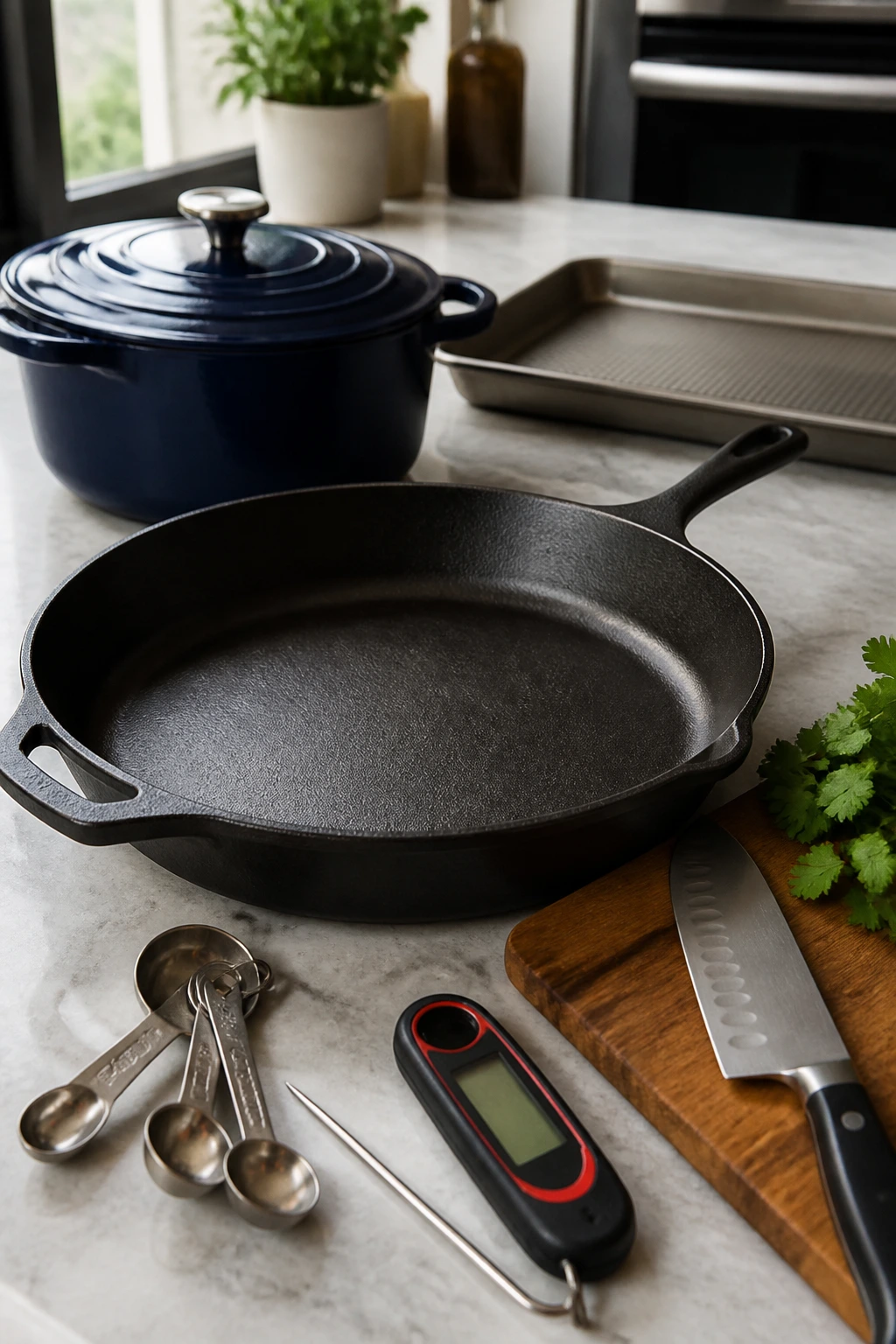
- Large skillet: A 12-inch skillet handles most of the proteins and vegetables without crowding.
- Dutch oven or heavy pot: Best for carnitas and barbacoa, where long braising pays off.
- Rimmed sheet pan: Useful for roasting sweet potatoes, crisping pork, or finishing salmon.
- Instant-read thermometer: Especially useful for chicken, pork tenderloin, and salmon.
- Sharp chef’s knife: Clean slices make the bowls look better and cook more evenly.
- Cutting board with a towel underneath: Keeps it from sliding when you’re chopping peppers, onions, or cabbage.
- Measuring spoons and cups: You can eyeball salsa, but seasoning works better when you measure the first time.
- Small saucepan: Handy for warming beans, rice, or sauces without drying them out.
- Mixing bowls: Useful for tossing proteins in seasoning and holding toppings in order.
- Tongs and a spatula: A simple pair covers most of the cooking here.
Smart Shopping and Ingredient Tips
Buy rice that fits your patience level. Long-grain white rice cooks faster and stays fluffy. Brown rice takes longer and tastes a little nuttier. If you want the bowl to taste like a restaurant plate, season the rice itself with salt, lime juice, or chopped cilantro. Plain rice is where many otherwise good bowls quietly fall apart.
For beans, canned is fine. Really. Drain and rinse them, then warm them with a pinch of salt, garlic, cumin, or a splash of broth. That step matters more than the brand on the can. If you start with dry beans, cook them until tender and season them at the end so they don’t taste flat.
Choose salsa with a purpose. Red salsa brings deeper tomato flavor, salsa verde gives brightness, and pico de gallo adds crunch. If the salsa is watery, spoon off some of the liquid before it goes in the bowl, or it will run straight into the rice and blur the whole thing.
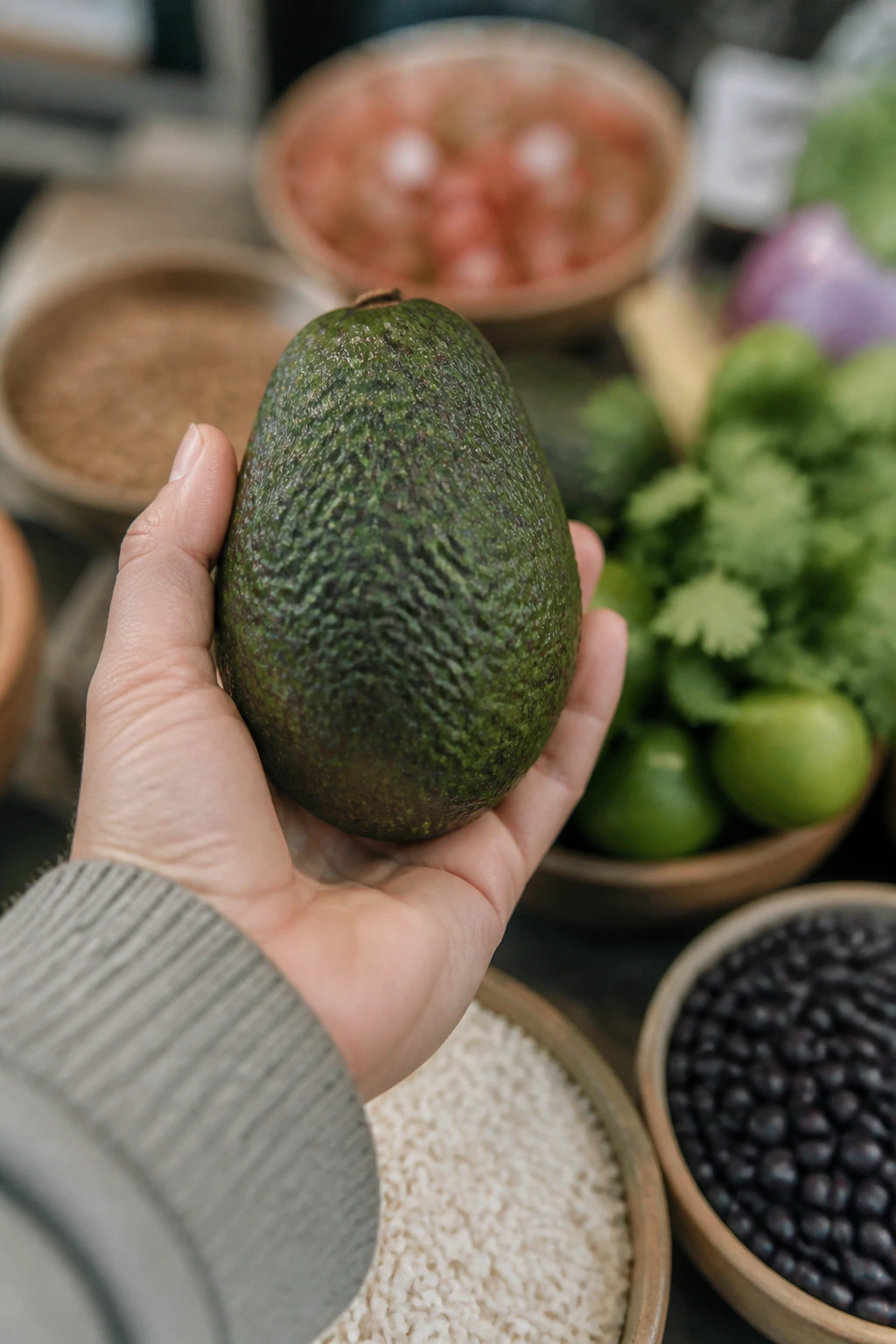
With avocados, buy them a few days ahead if you can. You want them to yield lightly to pressure, not collapse. For chicken, thighs are more forgiving than breasts. For steak, flank and skirt are better than thick roasts because they slice cleanly across the grain. For salmon, look for fillets that are even in thickness so the thinner tail end doesn’t overcook while the thicker center catches up.
How to Serve These Recipes
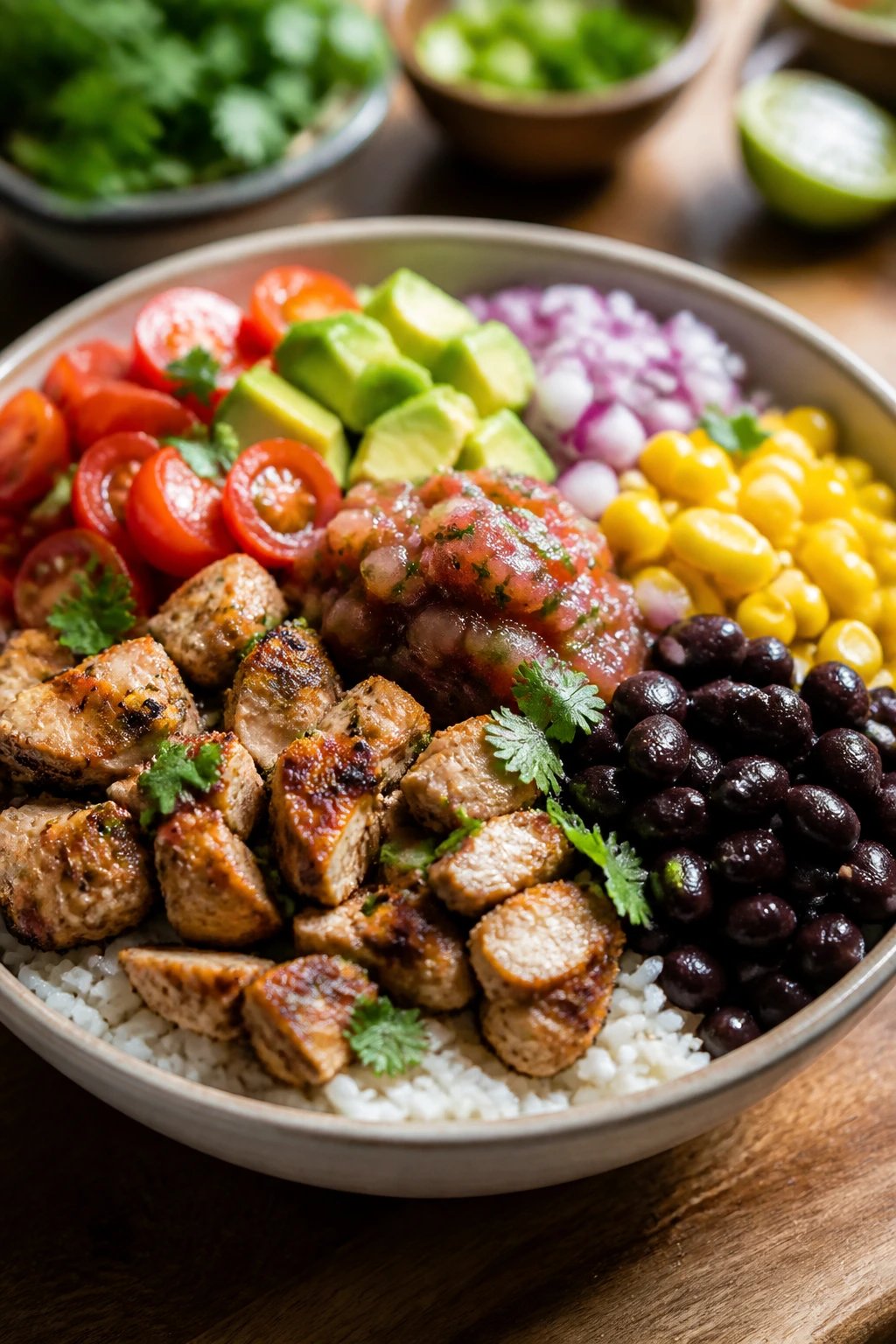
Presentation: Build the bowl in distinct sections instead of dumping everything into the center. Rice on the bottom, protein on one side, beans and vegetables in their own patches, then finish with salsa, herbs, and something creamy in small spoonfuls.
Accompaniments: Tortilla chips, a simple cabbage slaw, roasted corn, or a chopped tomato salad all work across the whole collection. If the bowl is especially rich—carnitas, barbacoa, chorizo—add a bright side with lime or vinegar.
Portions: Most of these bowls feed 4 with standard portions: about 3/4 cup rice, 1/2 to 3/4 cup protein, and 1/2 cup beans per person, then toppings. If you’re feeding bigger appetites, stretch the base with more rice and cabbage rather than doubling the meat.
Beverage Pairing: A cold lager, sparkling water with lime, or an unsweetened iced tea plays well with the spice and acidity. For richer bowls, a tart agua fresca or even a dry Mexican-style soda keeps the palate awake.
Additional Tips and Flavor Boosters
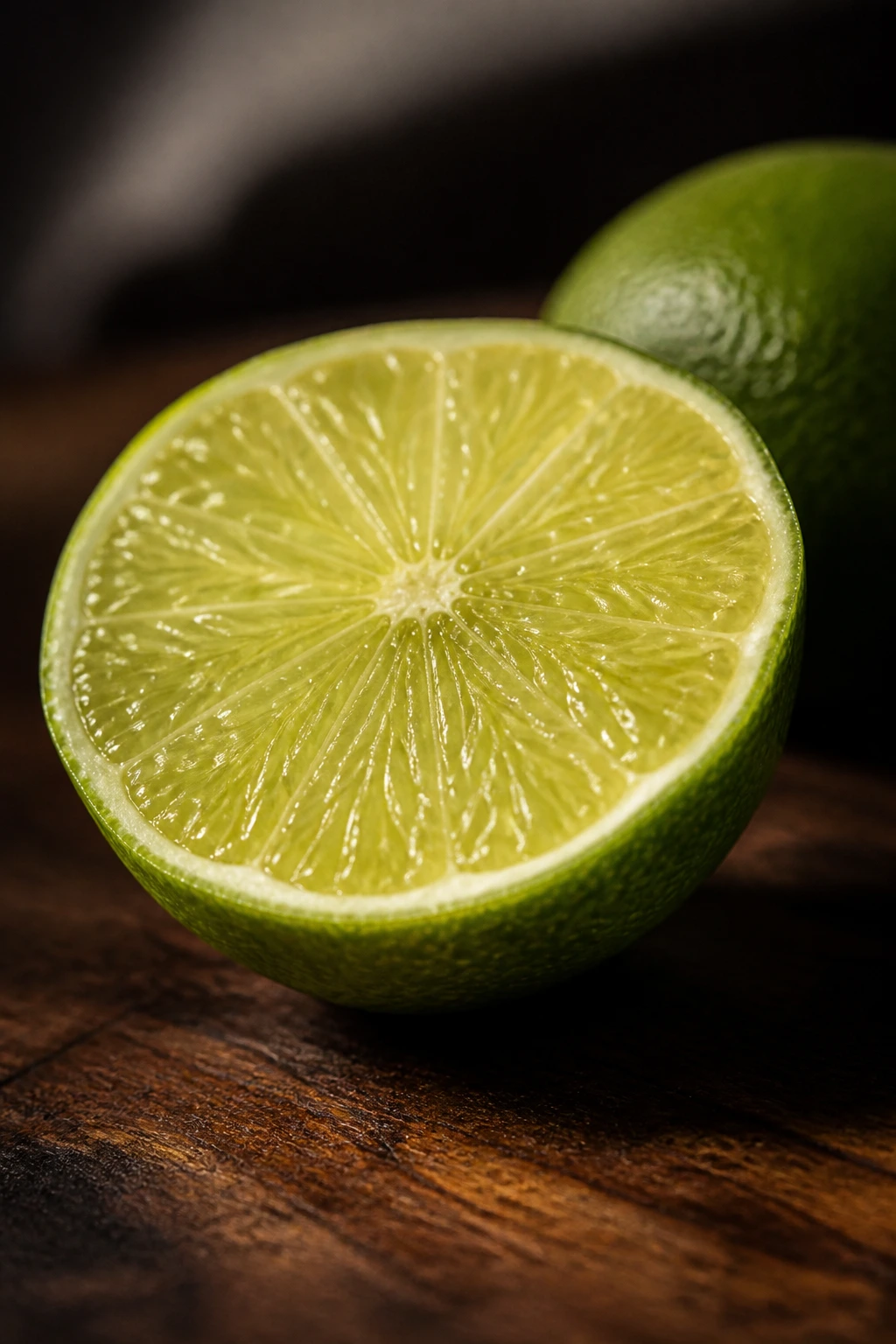
Flavor Enhancement: Finish almost every bowl with something sharp—lime juice, pickled onion, salsa verde, or a spoon of vinegar-heavy slaw. It keeps the rice and beans from feeling like a beige pile by the end of the bowl.
Customization: If someone at the table wants more heat, bring it in at the end with hot sauce or sliced jalapeños rather than boiling the whole batch into submission. It’s cleaner and easier to control.
Serving Suggestions: Crumbled cotija, chopped cilantro, thin-sliced radish, and a drizzle of crema all earn their keep. Use them lightly. If you bury the bowl under toppings, you lose the layers.
Make-It-Yours: For dairy-free bowls, skip cheese and crema and use avocado, salsa, and pickled vegetables instead. For gluten-free eating, most of these recipes already fit if you check the chorizo, broth, and salsa labels. For a lower-carb bowl, swap half the rice for cabbage or cauliflower rice and keep the protein seasoning the same.
Make-Ahead, Storage, and Reheating Guidance
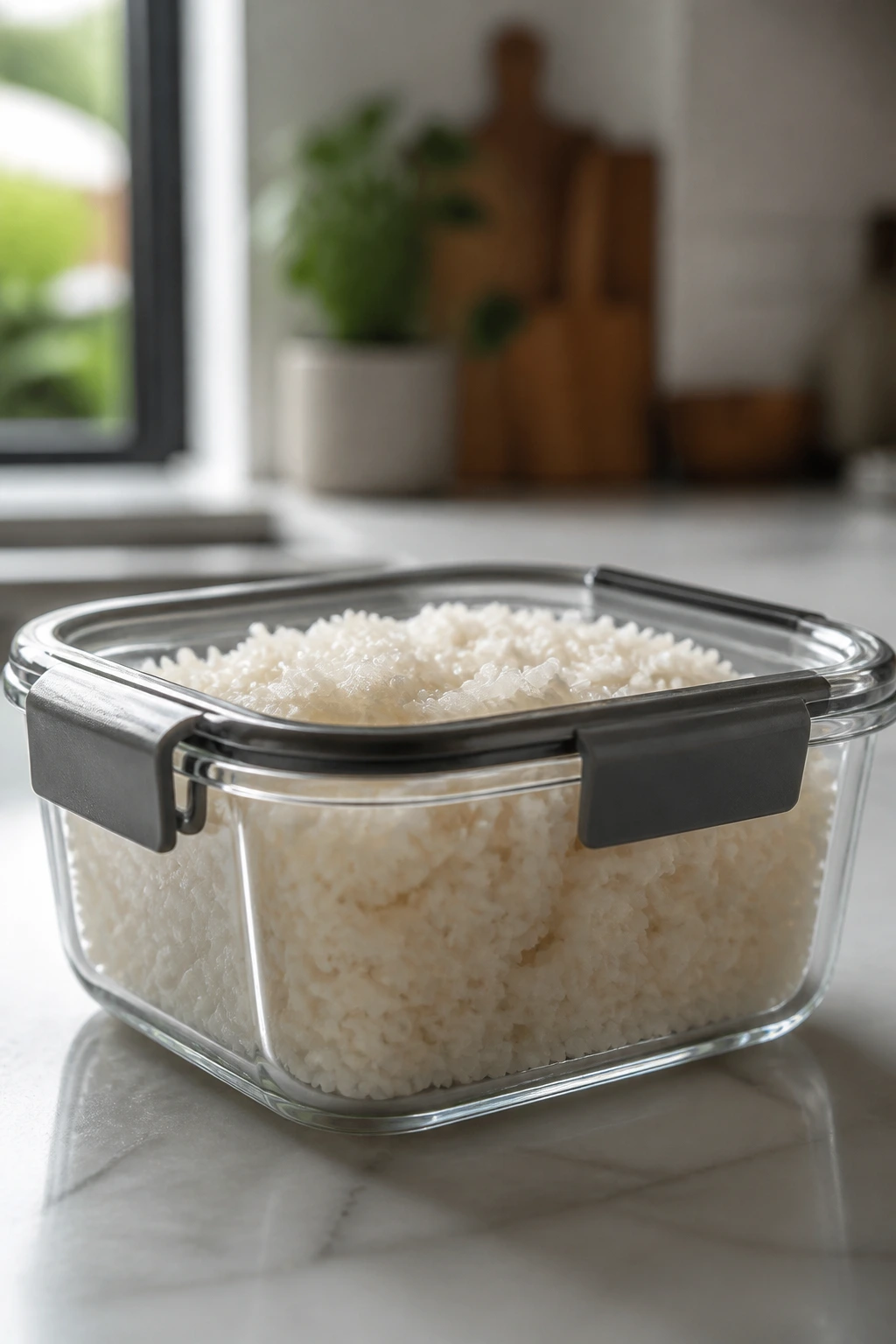
The best move is to store components separately. Cooked rice keeps 4 days in the fridge, sealed in an airtight container. Most cooked chicken, beef, pork, beans, and roasted vegetables hold well for 3 to 4 days refrigerated. Fish is shorter—plan on 2 days for salmon or shrimp, and eat it sooner if you can.
Freezing works for the meatier bowls. Carnitas, barbacoa, ground beef, turkey picadillo, and shredded chicken freeze well for up to 2 months. Let them cool first, then pack them flat in freezer bags so they thaw faster. Rice can be frozen too, though the texture softens a little; add a tablespoon of water when reheating and cover it so the steam brings it back.
For reheating, the stovetop gives the best texture for proteins and beans. Use a skillet over medium heat with a splash of water or broth, and stir until hot. Microwaves are fine for rice if you cover the bowl with a damp paper towel and break up the grains halfway through. Avoid reheating avocado, lettuce, cabbage, and fresh salsa; add those only after the hot components are ready.
Bowls with shrimp, salmon, or pork tenderloin are best fresh. Bowls with braised meats, ground beef, beans, or roasted vegetables can be made ahead and still taste good the next day. If you’re meal-prepping, keep the salsa and creamy toppings in their own containers or the rice turns soggy fast.
Variations and Adaptations to Try
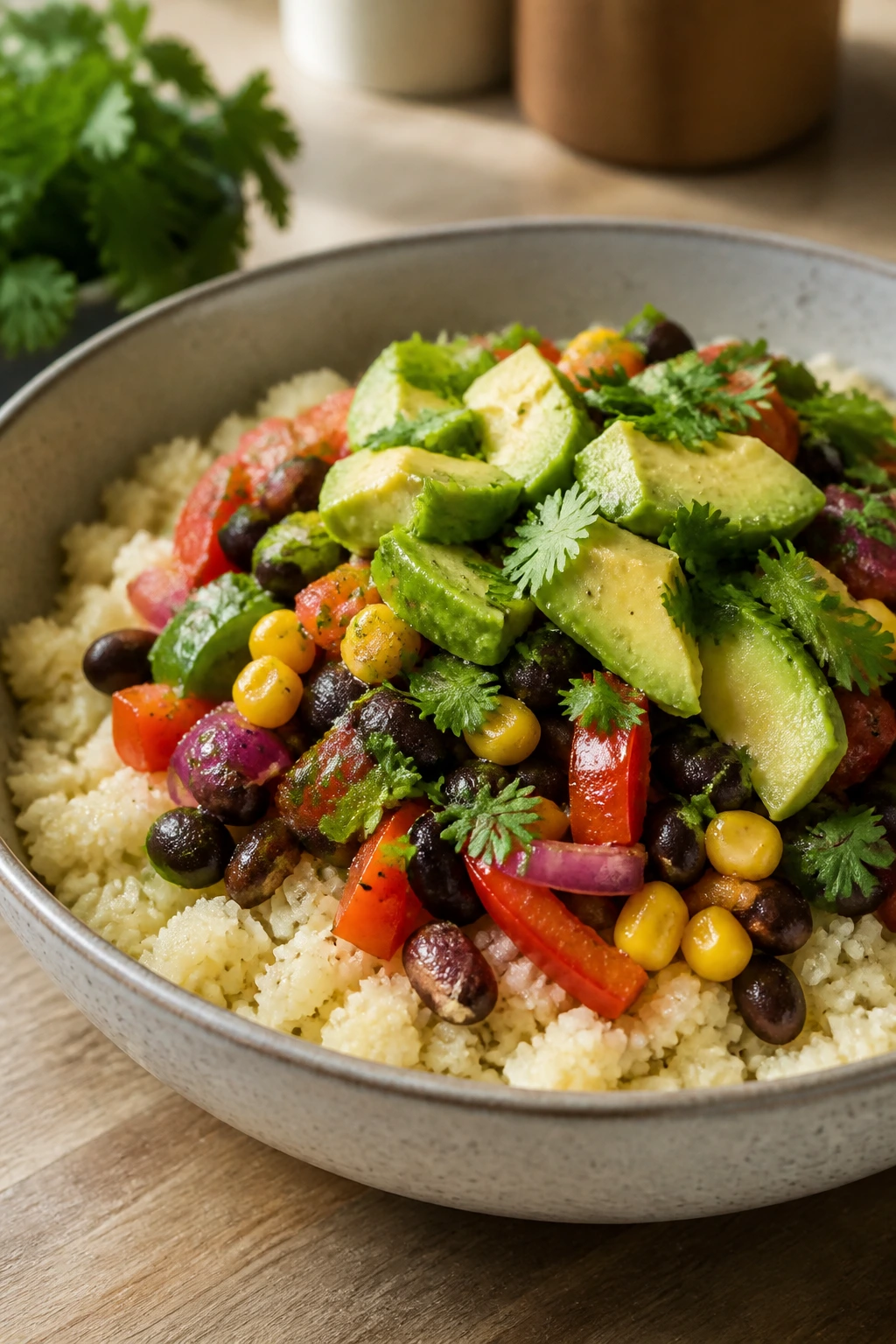
Low-Carb Cauliflower Base: Swap in cauliflower rice for any of the meat bowls and keep the seasoning a little bolder, because cauliflower needs help to taste like more than steamed vegetables.
Vegetarian Pantry Bowl: Use black beans, corn, roasted peppers, and sweet potato as the core, then finish with salsa, avocado, and cotija or a dairy-free drizzle.
Mild Family Bowl: Cut the chili powder in half, skip chipotle, and lean on lime, cumin, and garlic. The bowl still tastes like dinner without asking anyone to sweat through it.
Extra-Spicy Version: Add minced jalapeño to the sautéed vegetables and use chipotle salsa on top. This works best on bowls with beef, pork, or chicken, where the heat has something sturdy to cling to.
Budget Bowl Night: Ground beef, chicken thighs, black beans, rice, and roasted onions make the cheapest bowls here. The trick is to season every part separately so the bowl tastes planned, not improvised.
Regional Twist: Swap salsa roja for salsa verde, pico, or a roasted tomatillo sauce depending on the protein. Green sauces tend to sharpen chicken, pork, and salmon; red sauces usually flatter beef and turkey.
Common Mistakes to Avoid
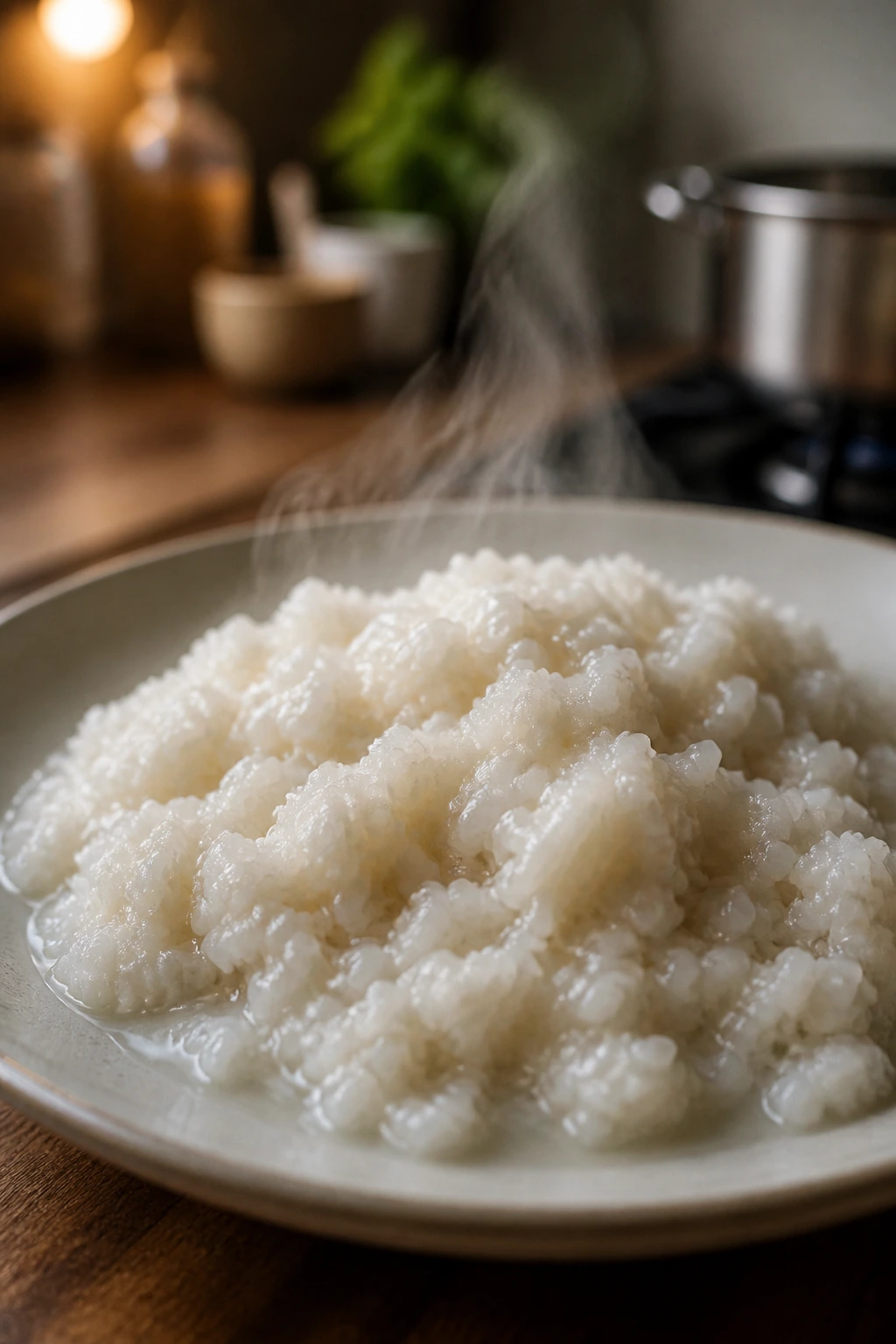
Wet rice: If the rice is clumpy or soggy, the bowl loses shape fast. Fluff it, season it, and let excess steam escape before you build.
Under-seasoning each layer: A seasoned protein can’t rescue plain rice, and plain rice can’t rescue bland beans. Salt each component lightly as you go.
Too many soft ingredients: A bowl made of rice, beans, avocado, cheese, and salsa can turn mushy by the third bite. Add cabbage, lettuce, peppers, or radish for bite.
Overloading the salsa: Sauce is good. Flooding is not. Spoon it in the right amount so the bowl stays layered.
Cooking all the components together: Rice, beans, protein, and vegetables each need their own heat and timing. One crowded pan usually gives you steam instead of color.
Skipping acid at the end: Lime, pickled onion, or salsa verde is what makes the bowl taste finished. Without it, the flavors sit in the same middle register.
Frequently Asked Questions
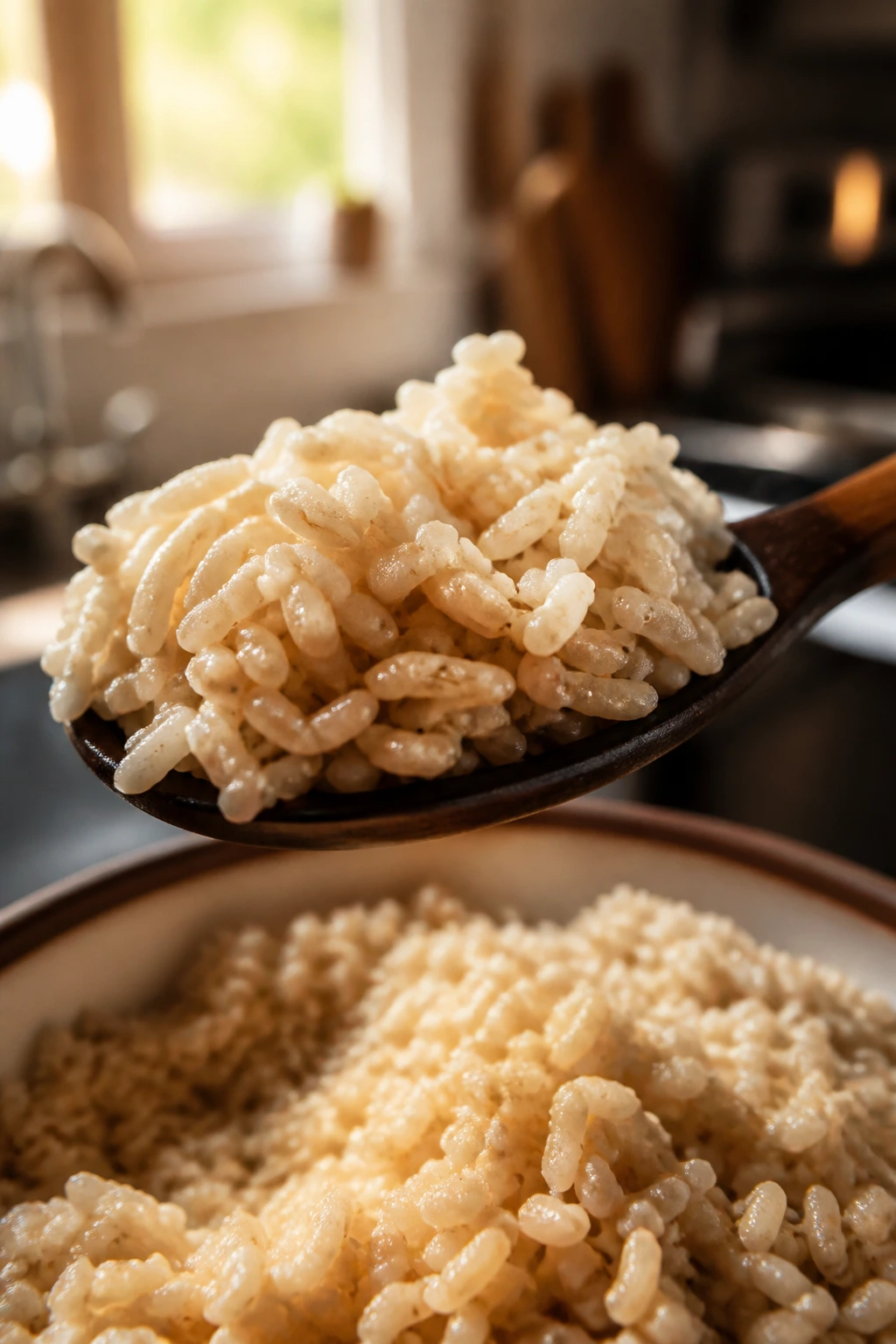
Can I use brown rice instead of white rice?
Yes, and it works especially well with steak, chicken, and beans. Brown rice has a nuttier flavor and a firmer bite, so I like to season it more aggressively with lime and salt.
What protein holds up best for meal prep?
Carnitas, barbacoa, ground beef, and shredded chicken hold up the longest. Salmon and shrimp are better cooked close to serving because they lose texture faster in the fridge.
Can I make these bowls without beans?
You can, but add another filling element so the bowl doesn’t feel empty. Roasted vegetables, extra rice, cabbage, or corn all help replace the body beans usually give.
How do I keep avocado from browning?
Cut it right before serving, or toss slices lightly with lime juice. If you’re packing lunch bowls, leave the avocado whole and slice it at the table.
What if my bowl tastes bland even after seasoning the meat?
Salt the rice, warm the beans with garlic or cumin, and add acid at the end. Bland bowls are usually missing one of those three things, not all three.
Can I use frozen vegetables?
Yes. Corn and peppers work well from frozen if you cook off the water in a hot skillet. Just don’t dump them straight into the bowl cold; they’ll drag everything down.
Is salsa verde better than red salsa here?
Neither is universally better. Salsa verde tends to brighten pork, chicken, tofu, and salmon, while red salsa usually works better with beef, turkey, and chorizo.
How do I reheat a bowl without ruining it?
Reheat the rice, beans, and protein separately with a splash of water or broth. Add lettuce, avocado, cilantro, and salsa only after the hot parts are ready.
A Bowl Night Worth Repeating
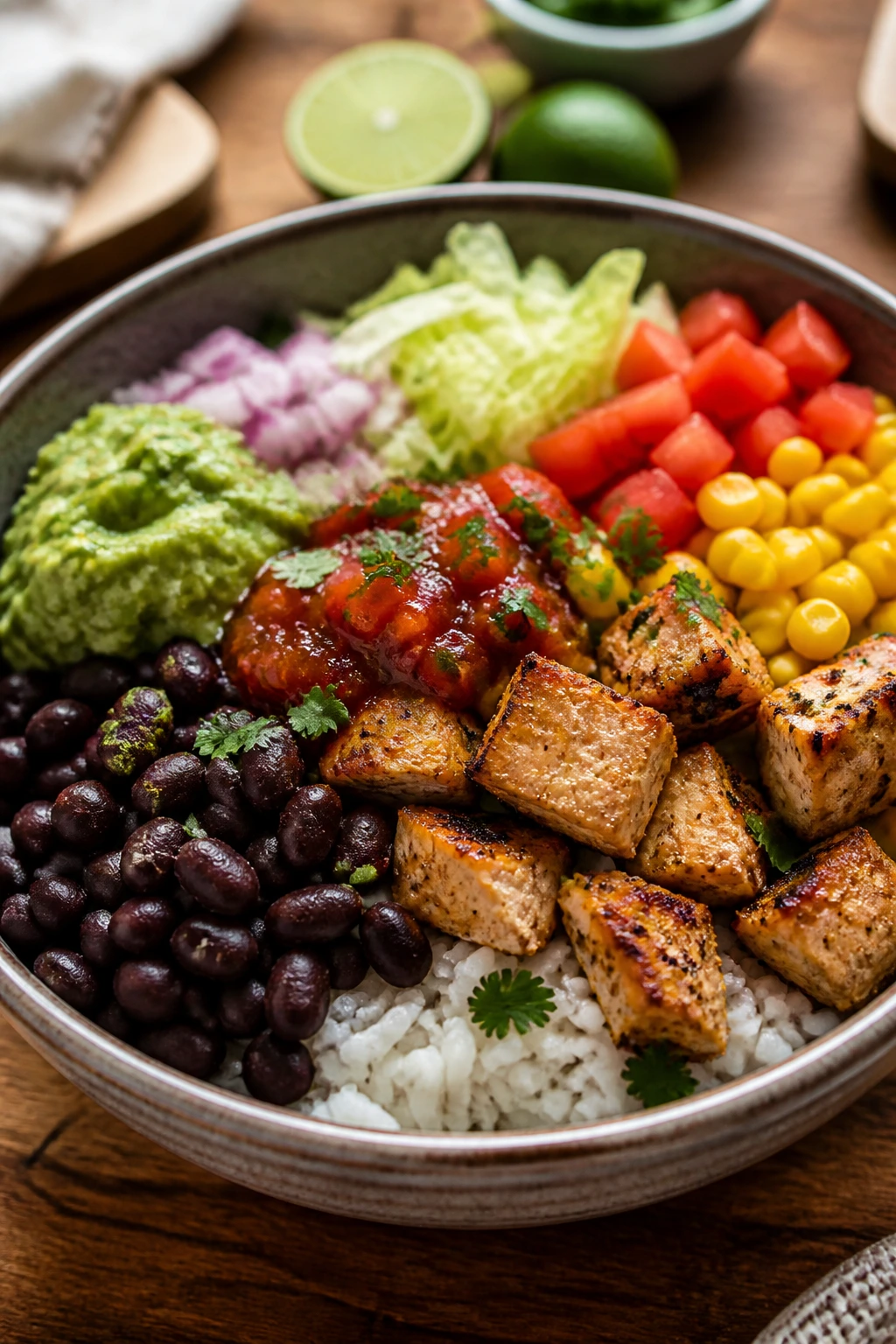
A burrito bowl dinner works because it respects the parts. The rice has a job. The protein has a job. The beans, vegetables, salsa, and finish all do their own work instead of blending into one tired heap. That’s why these bowls stay useful long after the first time you make them.
And the best part? Once you’ve made two or three of them, you stop following recipes so closely. You start building dinners from what’s in the fridge, what needs to be used up, and what flavor profile you’re in the mood for. That’s the kind of dinner habit worth keeping around.