



Sausage dinners for hearty weeknights have a small magic trick built into them: they smell like you worked harder than you did. That first sizzle in the pan — the snap of casing, the hiss of fat, the onion hitting the rendered drippings — buys you a lot of goodwill at the table.
What I love most is how little sausage asks of you. It brings its own seasoning, browns fast, and gets along with nearly every cheap, sturdy thing in the kitchen: potatoes, cabbage, rice, pasta, beans, greens, tomatoes, peppers. If your fridge looks half-empty and your energy is even emptier, sausage can still carry dinner across the finish line.
The trick, of course, is choosing the right format. Some nights need a skillet with crisp edges. Other nights need a soup that can simmer while you clear the counter. And sometimes the best answer is a baked pasta that comes out bubbling and bronzed, the sort of thing that makes leftovers feel like a gift rather than a chore.
Why These Sausage Dinners Earn a Spot on Busy Nights
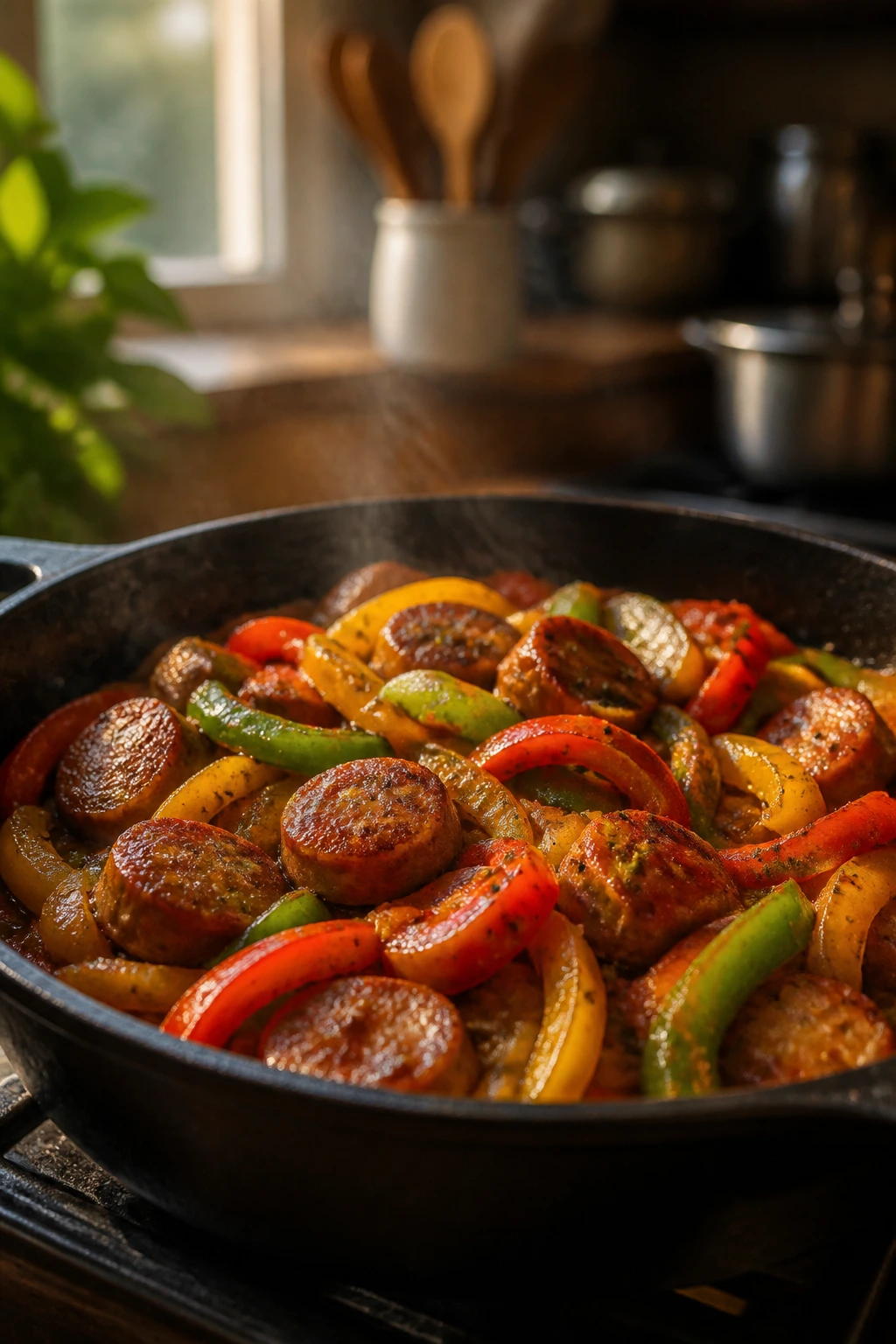
- Fast Browning: Sausage cooks quickly and develops deep flavor in the same pan you’ll use for the rest of the meal.
- Built-In Seasoning: Good sausage already carries garlic, fennel, paprika, herbs, or smoke, so the rest of dinner doesn’t need much fuss.
- Pantry-Friendly Pairings: Rice, pasta, beans, cabbage, potatoes, and frozen vegetables all fit naturally with sausage.
- Comfort Without Drama: These dinners feel filling and cozy, but none of them ask for a special trip to the store or a long marinade.
- Leftovers That Hold Up: Many sausage dishes taste even better the next day because the sauce, broth, or seasoning settles in.
- Flexible Heat Levels: You can use sweet, mild, hot, smoked, turkey, or chicken sausage and keep the same basic structure.
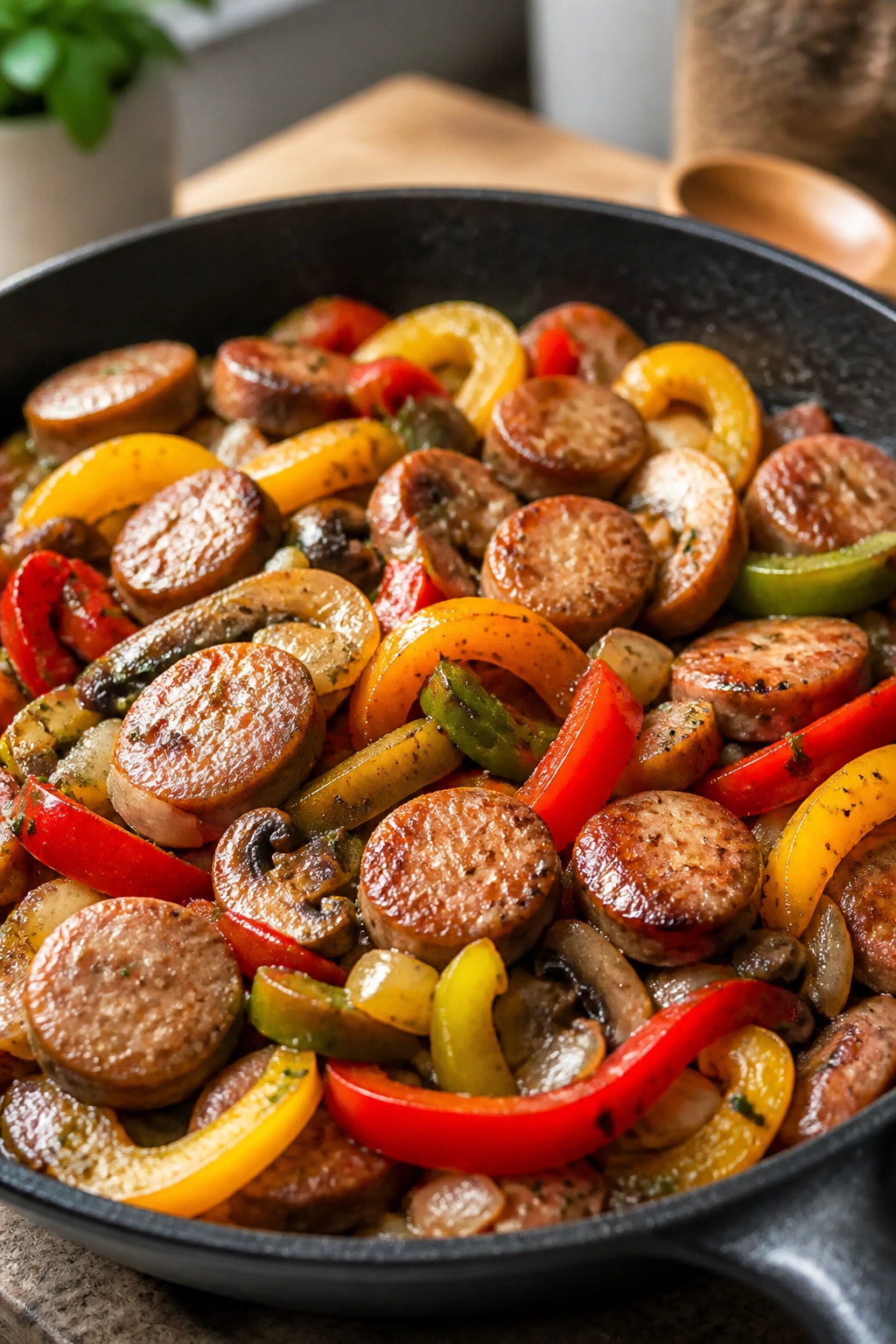
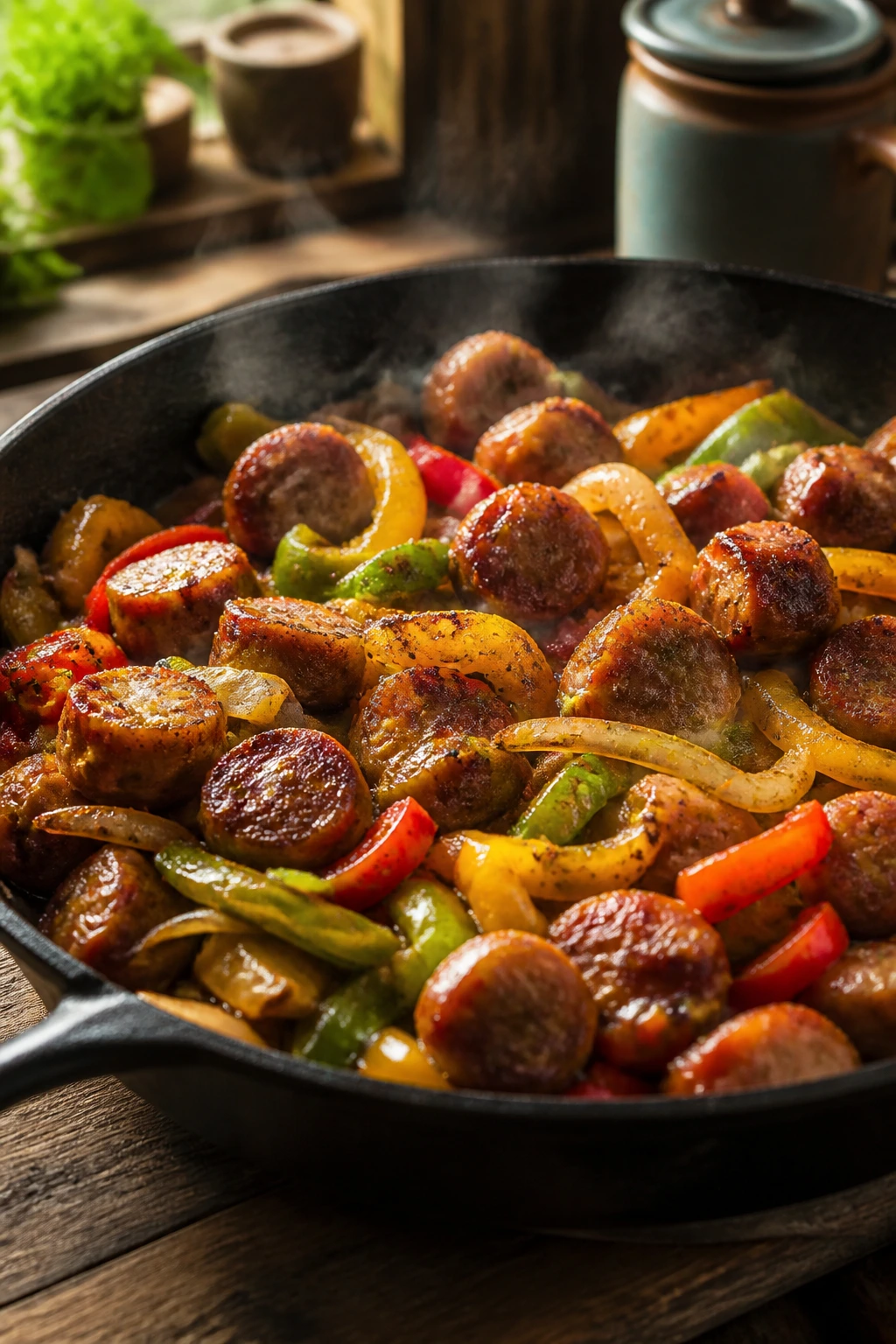
1. Sausage and Peppers Skillet
The smell alone sells this one. Sweet peppers soften into silky ribbons, onions turn sticky around the edges, and the sausage leaves behind little browned bits that taste like you spent much longer at the stove than you really did. It’s bold, a little messy, and exactly the kind of dinner that disappears fast with crusty bread.
Why It Works:
This skillet works because sausage and peppers are doing different jobs at the same time. The sausage brings fat and seasoning; the vegetables bring sweetness and a little bite; the tomatoes bind everything into a saucy, spoonable filling. If you let the peppers cook until they slump and the onions pick up color, the whole pan tastes rounded instead of sharp. Serve it straight from the skillet, or tuck it into rolls if you want the more sandwich-like route.
Key Ingredients
- 1½ pounds Italian sausage links or bulk sausage, sliced or crumbled
- 2 large bell peppers, sliced into strips
- 1 large yellow onion, thinly sliced
- 3 cloves garlic, minced
- 1 can (14.5 ounces) crushed tomatoes
- 1 teaspoon dried oregano
- ½ teaspoon red pepper flakes, optional
- 2 tablespoons olive oil
- 1 handful fresh basil or parsley, chopped
Quick Steps
- Heat 1 tablespoon of olive oil in a large skillet over medium-high heat. Brown the sausage for 5 to 7 minutes, turning or breaking it up, until it has dark edges and releases some fat.
- Transfer the sausage to a plate. Add the remaining oil, then the onions and peppers, and cook for 8 to 10 minutes until softened and lightly charred in spots.
- Stir in the garlic, oregano, and red pepper flakes. Cook for 30 seconds, just until fragrant.
- Add the crushed tomatoes and ¼ cup water, scraping the bottom of the pan to lift up the browned bits. Simmer for 5 minutes.
- Return the sausage to the skillet and cook for another 3 to 5 minutes, until the sausage is cooked through and the sauce clings to the vegetables.
- Finish with basil or parsley and serve hot.
Tips and Variations
- Use one sweet and one hot sausage if you want more range in the pan.
- A splash of red wine before the tomatoes gives the sauce more depth, but don’t use more than ¼ cup.
- Pile it over polenta, rice, or toasted hoagie rolls if you want to stretch it further.
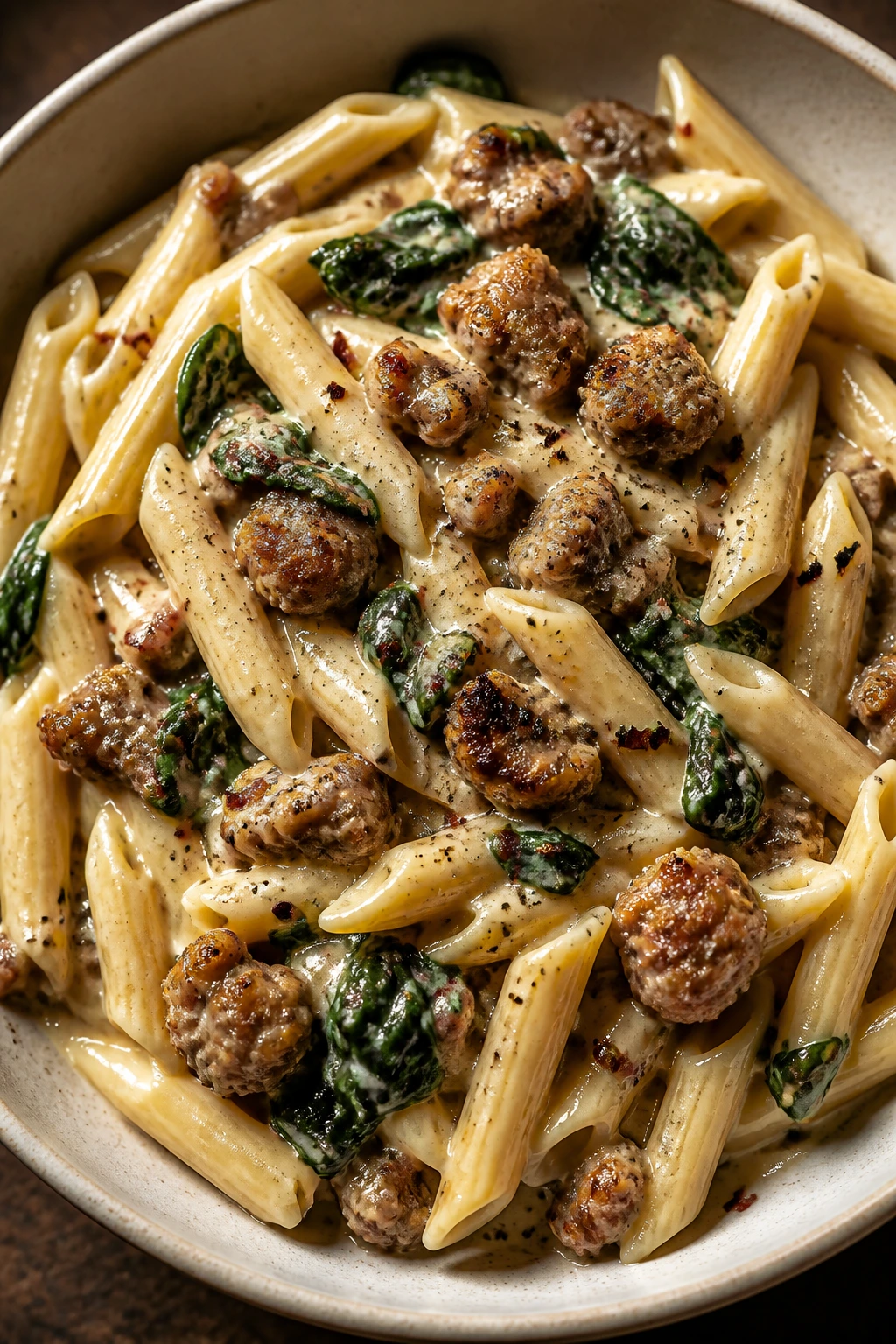
2. Creamy Sausage and Spinach Pasta
Some pasta dinners taste like they were designed for a tired Tuesday: one skillet, one boil, one bowl, done. This is one of them. The sauce turns glossy and coats the noodles without getting gluey, and the spinach wilt gives it the feeling of a real meal instead of a beige rescue mission.
Why It Works:
Pasta water is the quiet hero here. A little starchy liquid helps the cream and cheese turn into a sauce that clings instead of sliding off the noodles, which is the difference between a satisfying bowl and a heavy one. Sausage browns first, so the fat perfumes the whole dish before the cream even goes in. Toss the spinach in at the end so it stays green and tender instead of sulky and overcooked. That tiny timing choice matters more than people think.
Key Ingredients
- 12 ounces penne, rigatoni, or fusilli
- 1 pound Italian sausage, casings removed
- 1 small onion, diced
- 3 cloves garlic, minced
- 1 cup heavy cream
- ¾ cup grated Parmesan
- 3 cups baby spinach
- ½ cup reserved pasta water
- 1 teaspoon crushed red pepper, optional
- 1 teaspoon lemon zest, optional
Quick Steps
- Bring a large pot of salted water to a boil and cook the pasta until al dente, usually 1 to 2 minutes less than the package says. Reserve ½ cup of the pasta water before draining.
- While the pasta cooks, brown the sausage in a large skillet over medium-high heat for 6 to 8 minutes, breaking it up as it cooks.
- Add the onion and cook for 3 to 4 minutes until translucent. Stir in the garlic and red pepper for 30 seconds.
- Pour in the cream and ¼ cup pasta water, then simmer for 2 to 3 minutes until the sauce starts to thicken.
- Add the Parmesan and stir until melted, then fold in the spinach until just wilted.
- Add the drained pasta and toss everything together. Splash in more pasta water if the sauce feels tight, then finish with lemon zest.
Tips and Variations
- If your sausage is especially salty, use a lighter hand with the pasta water salt.
- Chopped sun-dried tomatoes give the sauce a sweet-tart edge.
- This is a good place for short pasta with ridges; they catch the sauce better than slick shapes.
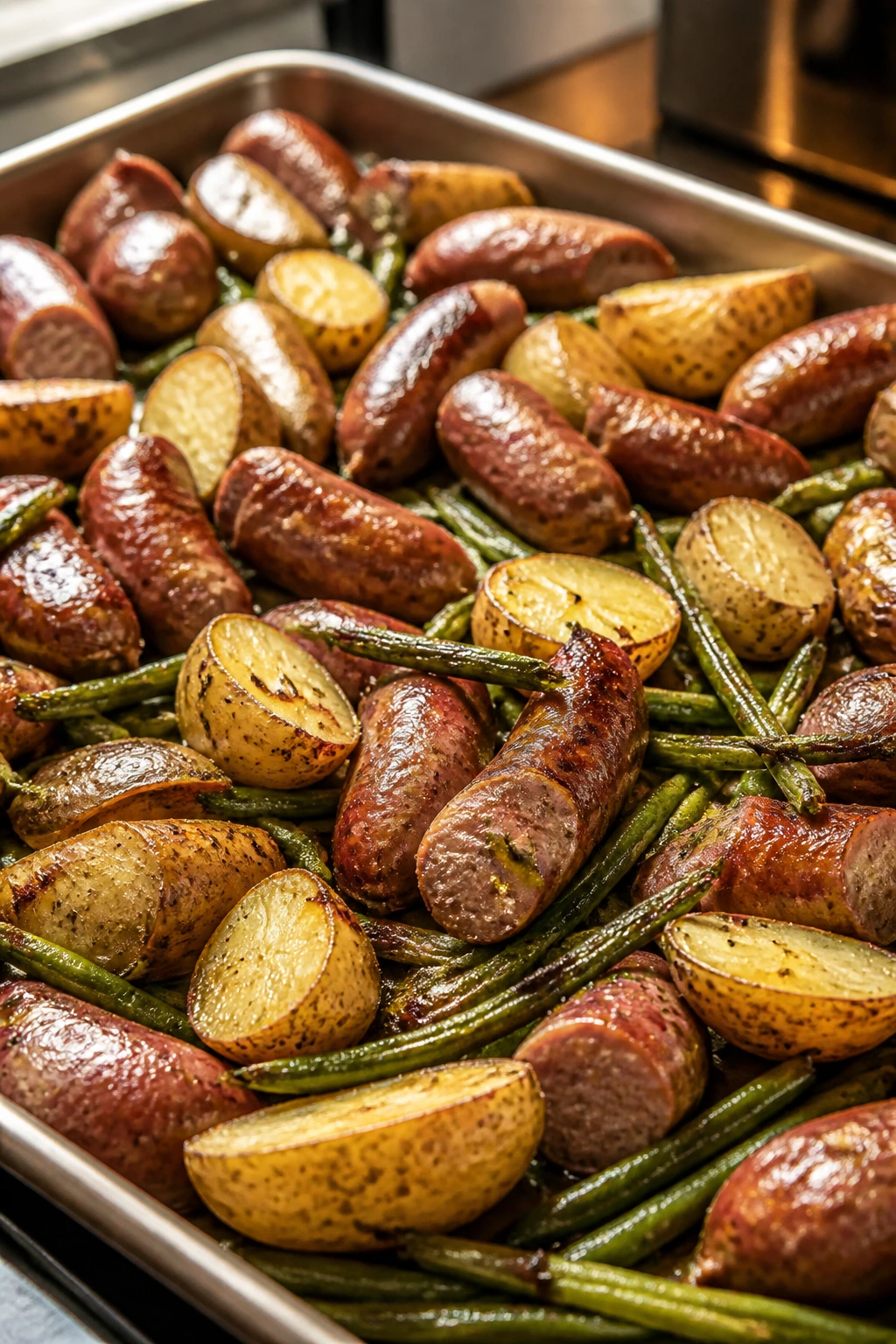
3. Sheet Pan Sausage, Potatoes, and Green Beans
This is the dinner I make when I want the oven to do the boring parts. The potatoes come out with browned undersides, the sausage edges crisp, and the green beans stay bright enough to keep the tray from feeling heavy. Everything tastes roasted, which is a nice way of saying everything tastes more expensive than it is.
Why It Works:
The sheet pan version depends on timing more than technique. Potatoes need a head start because they take longer to soften, while sausage and green beans need less time and a hotter blast at the end. Once the sausage juices drip onto the pan, they coat the vegetables in a thin layer of flavor, and the paprika or mustard in the seasoning turns that into something more structured. It’s simple, but not flat.
Key Ingredients
- 1½ pounds baby potatoes, halved
- 1 pound smoked sausage or uncooked Italian sausage, sliced
- 12 ounces green beans, trimmed
- 2 tablespoons olive oil
- 1 teaspoon smoked paprika
- ½ teaspoon garlic powder
- 1 teaspoon Dijon mustard
- Salt and black pepper, to taste
Quick Steps
- Heat the oven to 425°F (220°C). Line a rimmed baking sheet with parchment or foil for easier cleanup.
- Toss the potatoes with 1 tablespoon olive oil, paprika, garlic powder, salt, and pepper. Roast for 15 minutes.
- Toss the sausage with the remaining oil and Dijon mustard. Add it to the pan, stir the potatoes around, and roast for 10 minutes.
- Add the green beans, season lightly, and roast for 8 to 10 minutes more until the potatoes are tender and the beans are bright with browned spots.
- Taste and adjust salt and pepper before serving.
Tips and Variations
- If you use raw sausage, cut it into chunks and make sure it reaches 160°F / 71°C.
- A squeeze of lemon at the end wakes up the whole tray.
- Add sliced red onion if you want a little sweetness and extra color.
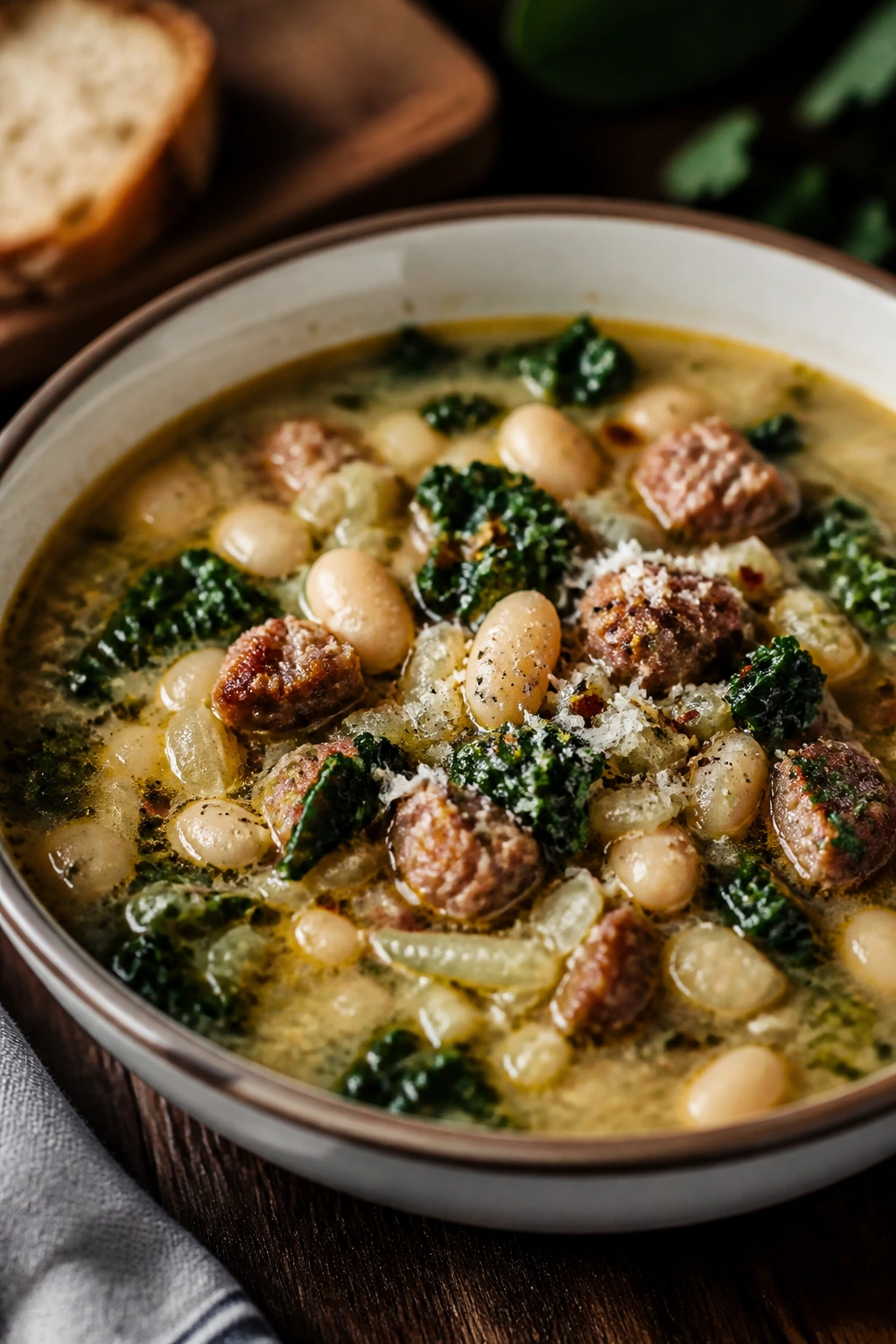
4. Sausage, White Bean, and Kale Soup
A good sausage soup should feel like a coat you can eat. This one does. The broth gets thicker from the beans, the kale holds its shape without turning mushy, and the sausage gives the whole pot a smoky backbone that keeps it from tasting like diet food pretending to be dinner.
Why It Works:
White beans do more than add protein. When they simmer, some of them break down and thicken the broth naturally, which gives you a richer texture without needing flour or cream. Kale is a smart late addition because it can handle heat and still keep a bit of chew; spinach would disappear too fast here. If you finish the bowl with Parmesan and a splash of olive oil, the soup tastes layered instead of one-note.
Key Ingredients
- 1 pound Italian sausage, casings removed
- 1 onion, chopped
- 2 carrots, diced
- 2 celery stalks, diced
- 3 cloves garlic, minced
- 2 cans (15 ounces each) cannellini beans, drained and rinsed
- 6 cups chicken broth
- 4 cups chopped kale, stems removed
- 1 tablespoon tomato paste
- ½ cup grated Parmesan, for serving
Quick Steps
- Brown the sausage in a large Dutch oven over medium heat for 6 to 8 minutes. If needed, spoon off excess grease, leaving about 1 tablespoon in the pot.
- Add the onion, carrots, and celery. Cook for 5 to 6 minutes until the vegetables start to soften.
- Stir in the garlic and tomato paste and cook for 1 minute.
- Add the beans and broth. Bring to a simmer and cook uncovered for 15 minutes.
- Stir in the kale and simmer for 5 more minutes until it’s tender but still green.
- Taste for salt and pepper, then serve with Parmesan on top.
Tips and Variations
- Mash a cup of the beans before adding them back if you want a thicker soup.
- A rind of Parmesan simmered in the broth adds a deep savory note.
- This soup freezes well because it doesn’t rely on cream.
5. One-Pan Sausage and Rice
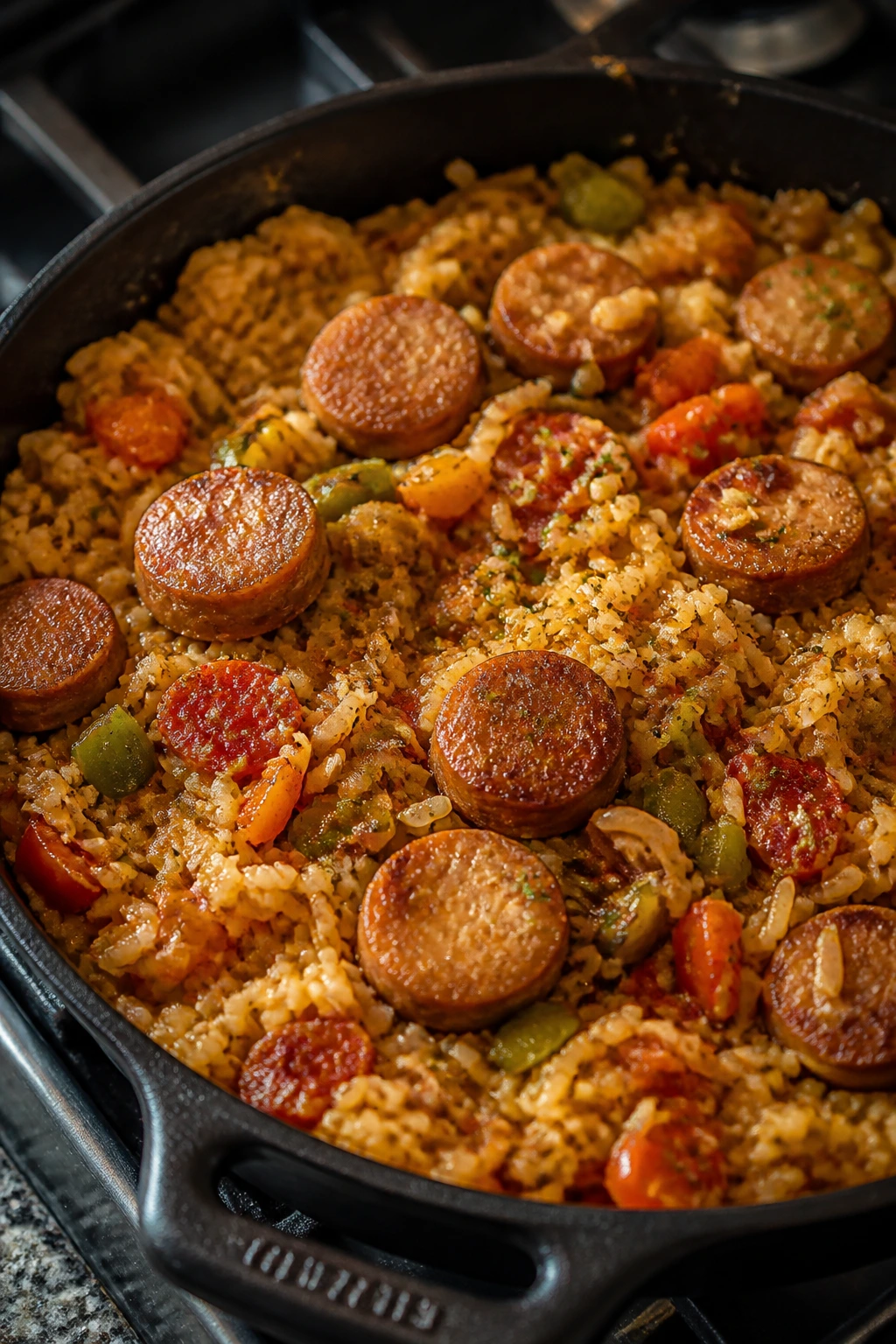
Rice is one of those ingredients that behaves like a sponge, which is exactly why it works so well with sausage. The drippings season the grains from the bottom up, the tomatoes add body, and the peppers keep the pot from feeling too dense. It’s the kind of dinner that looks humble in the pot and far more interesting on the plate.
Why It Works:
The trick here is making the rice cook in the same liquid that carries the sausage flavor. That means every grain picks up seasoning instead of tasting like plain starch under a topping. Long-grain rice works best because it stays separate; short-grain rice can get too soft in this style. A covered simmer does most of the work, and if you rest the pan for 5 minutes before serving, the texture settles into place.
Key Ingredients
- 1 pound sausage, sliced into coins or crumbled
- 1 cup long-grain rice, rinsed
- 1 onion, diced
- 1 bell pepper, diced
- 2 cloves garlic, minced
- 2 cups chicken broth
- 1 can (14.5 ounces) diced tomatoes
- 1 teaspoon smoked paprika
- ½ cup frozen peas, optional
Quick Steps
- Brown the sausage in a deep skillet or sauté pan over medium-high heat for 5 to 7 minutes. Transfer it to a plate.
- Add the onion and pepper to the same pan and cook for 4 to 5 minutes until softened.
- Stir in the garlic and paprika, then add the rice and toast for 1 minute, stirring so the grains pick up the fat.
- Pour in the broth and tomatoes, scrape the bottom of the pan, and bring it to a boil.
- Return the sausage, reduce the heat to low, cover, and simmer for 18 minutes without stirring.
- Turn off the heat, add peas if using, and let the pan rest covered for 5 minutes before fluffing.
Tips and Variations
- Rinsing the rice keeps the finished dish lighter and less sticky.
- Use browned kielbasa if you want a smokier flavor.
- A spoonful of yogurt or sour cream on top sounds odd; it works.
6. Sausage Stuffed Bell Peppers
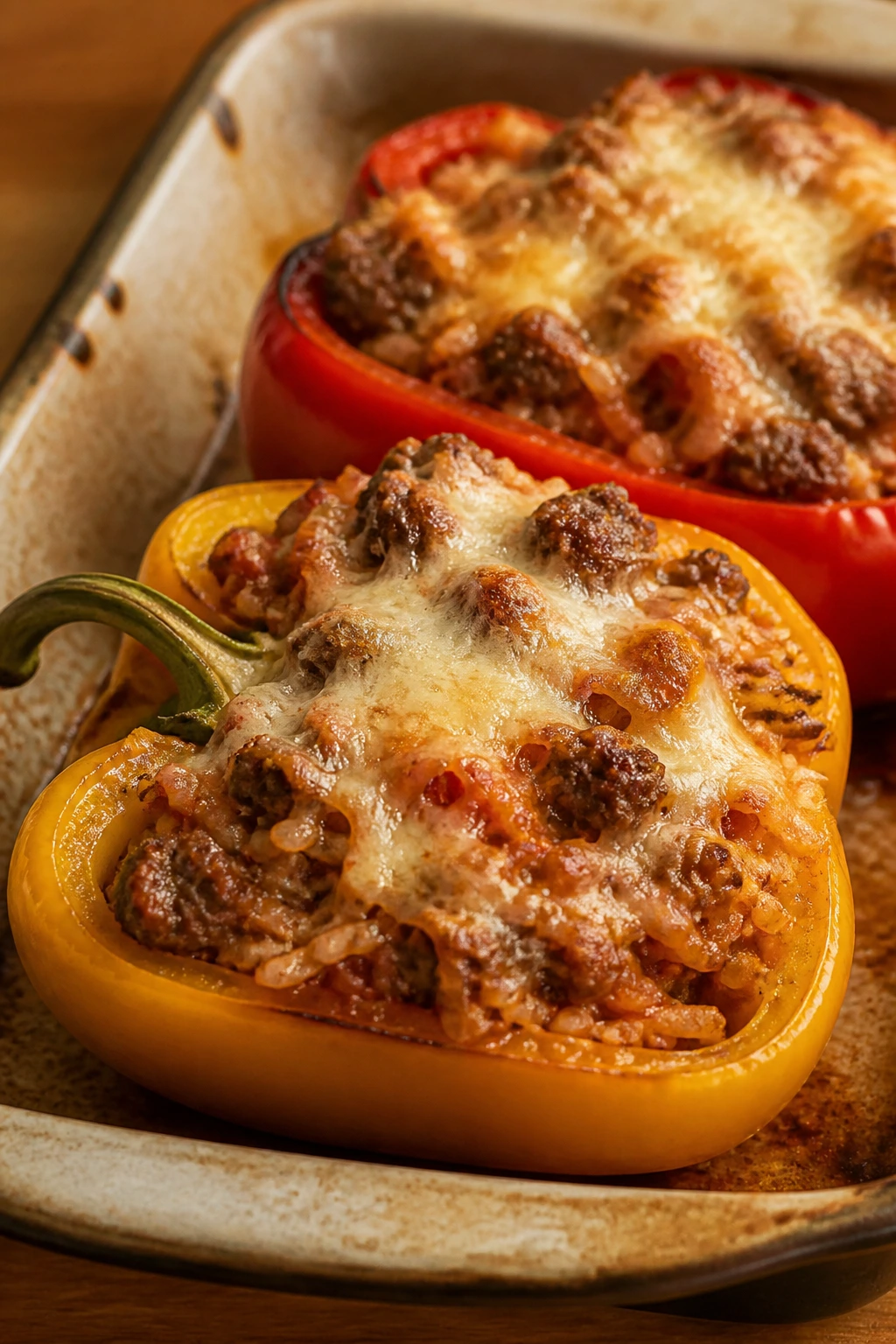
Stuffed peppers hit a nice sweet spot between tidy and filling. You get the comfort of sausage and rice inside a little edible bowl, and the oven softens the peppers just enough so they still hold their shape. They’re a strong choice when you want dinner to look organized without pretending you had time for fussy work.
Why It Works:
Bell peppers are more than a container here. Their sweetness deepens in the oven, and that sweetness cuts through the richness of sausage and cheese. The filling is sturdy enough to pack in advance, which makes this one of the easier recipes to stage ahead of time. You can even bake the peppers under foil first, then uncover them to brown the cheese at the end.
Key Ingredients
- 4 large bell peppers, halved and seeded
- 1 pound Italian sausage, casings removed
- 1 cup cooked rice
- 1 cup marinara sauce
- 1 small onion, diced
- 2 cloves garlic, minced
- 1 cup shredded mozzarella
- ¼ cup grated Parmesan
- Salt and black pepper, to taste
Quick Steps
- Heat the oven to 375°F (190°C). Arrange the pepper halves in a baking dish and drizzle them lightly with oil.
- Brown the sausage in a skillet for 6 to 8 minutes, then add the onion and cook until softened. Stir in the garlic for 30 seconds.
- Mix the sausage with the cooked rice, marinara, salt, pepper, and half the Parmesan.
- Spoon the filling into the pepper halves, pressing it in gently so it sits level.
- Cover with foil and bake for 25 minutes. Uncover, add mozzarella, and bake for another 10 minutes until the cheese melts and browns at the edges.
- Rest for 5 minutes before serving.
Tips and Variations
- If your peppers wobble, trim a thin slice off the bottom so they sit flat.
- Quinoa works in place of rice if you want a little extra protein.
- Leftover filling makes a solid lunch tucked into a tortilla or pita.
7. Sausage Gnocchi in Tomato Cream
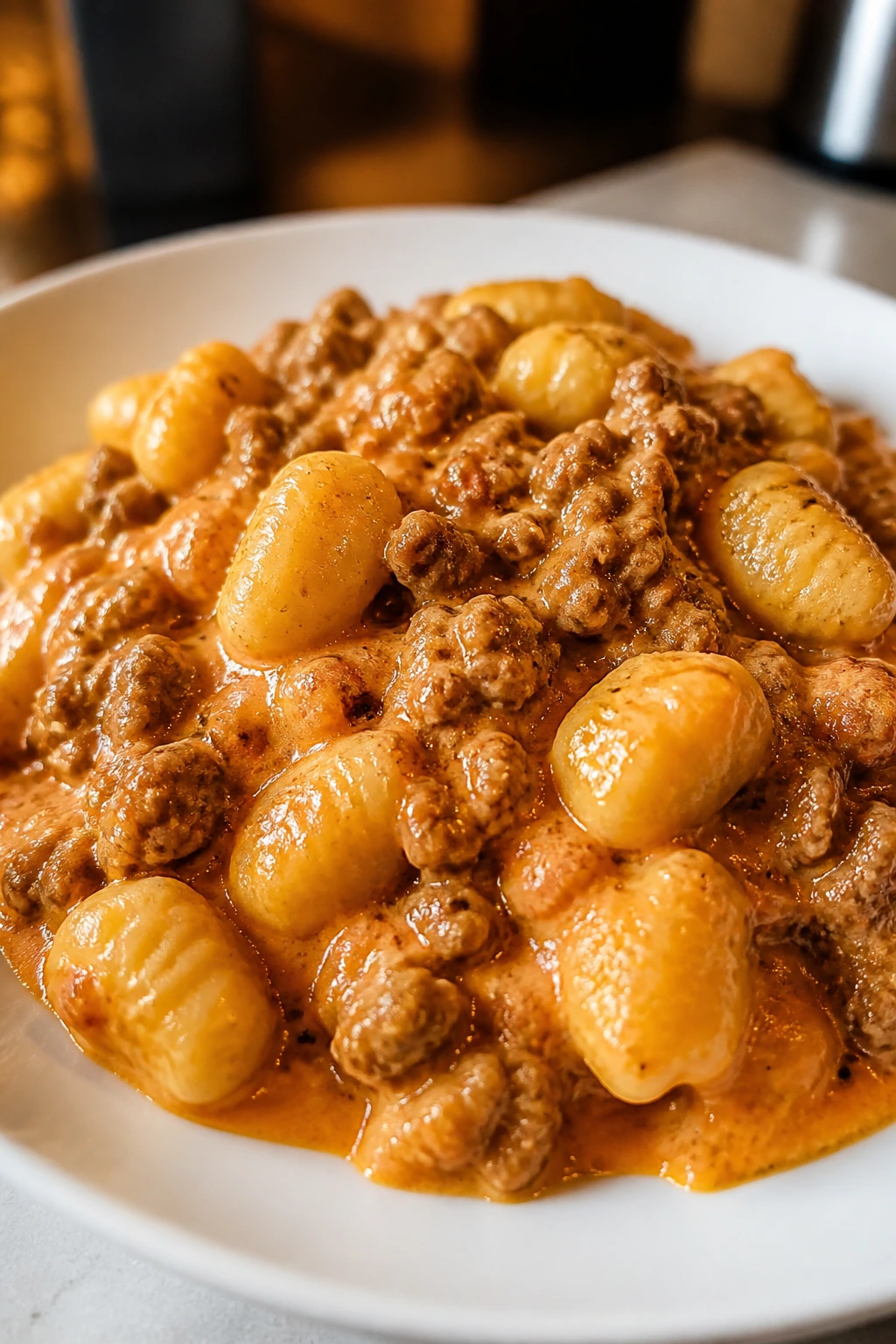
Gnocchi is one of those shortcuts that feels like cheating only until you taste it. The little dumplings soak up tomato cream sauce without falling apart, and the sausage gives the dish enough heft that you don’t need a separate side unless you want one. It’s plush, rich, and slightly dangerous in the “I’ll just have a small bowl” sense.
Why It Works:
Gnocchi cooks fast, which means the whole dinner can come together in the time it takes your oven to preheat for something else you never needed. Tomato paste adds depth, cream smooths the edges, and the starch from the gnocchi helps the sauce cling. That combination gives you a silky pan sauce without making the dish feel heavy in the mouth. A handful of spinach at the end cuts through the richness and keeps the color lively.
Key Ingredients
- 1 pound potato gnocchi
- 1 pound Italian sausage, crumbled
- 2 tablespoons tomato paste
- 2 cloves garlic, minced
- 1 cup heavy cream
- ½ cup chicken broth
- 2 cups baby spinach
- ½ cup grated Parmesan
- 1 tablespoon olive oil
Quick Steps
- Brown the sausage in olive oil over medium-high heat for 6 to 8 minutes, breaking it up as it cooks.
- Stir in the garlic and tomato paste and cook for 1 minute until the paste darkens slightly.
- Add the broth and cream, then simmer for 2 to 3 minutes.
- Add the gnocchi directly to the sauce and cook according to package directions, usually 3 to 5 minutes, until they float and the sauce thickens.
- Fold in the spinach and Parmesan, then serve right away.
Tips and Variations
- Shelf-stable gnocchi works fine here; fresh gnocchi just needs a shorter cook.
- A pinch of nutmeg in the cream makes the sauce taste rounder.
- Add crushed red pepper if you want the sauce to carry some heat.
8. Sausage and Broccoli Alfredo
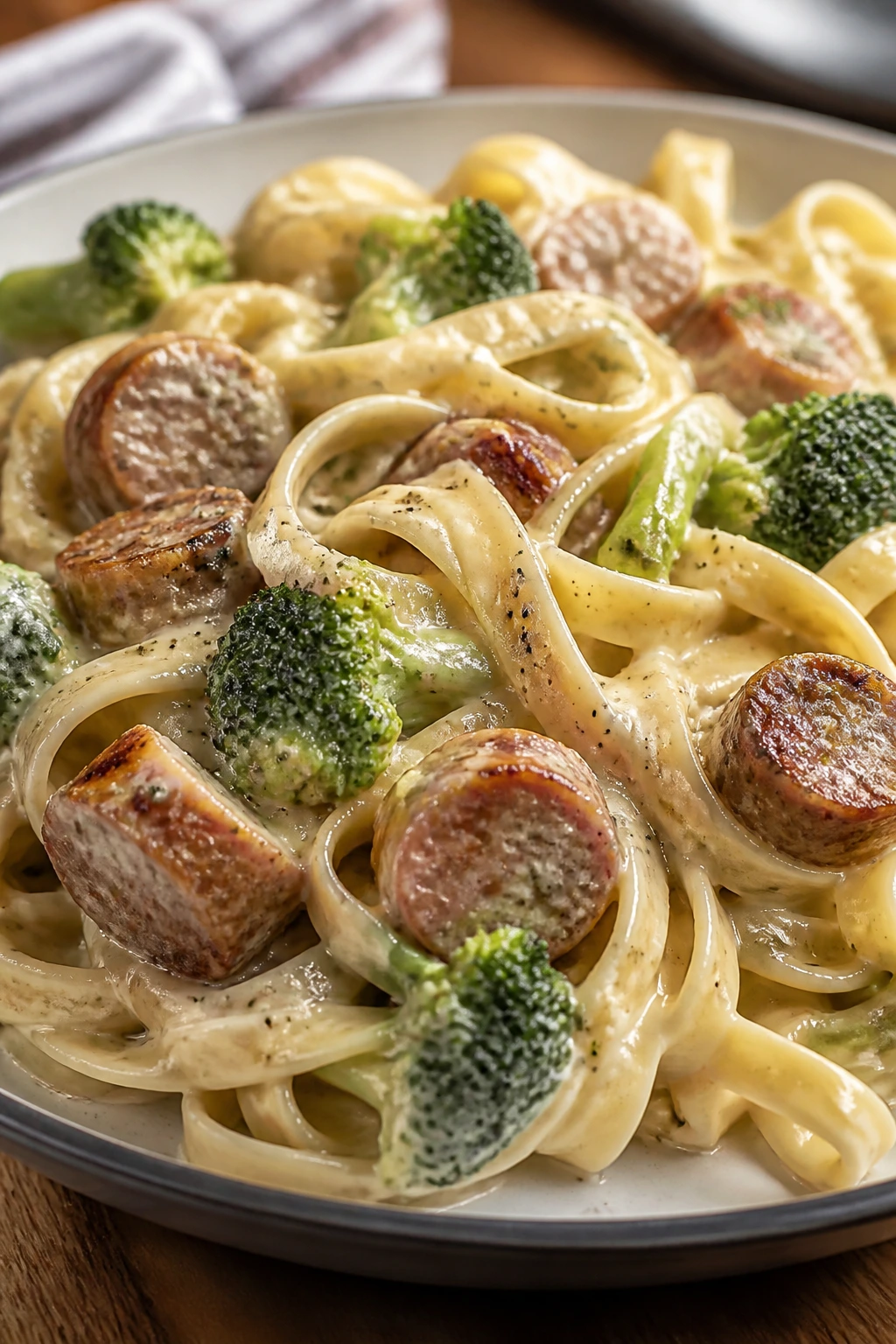
Broccoli and sausage are one of those combinations that make instant sense once you taste them. The broccoli gives you a little crunch and bite, the sausage brings the salty richness, and the Alfredo sauce ties everything together in a way that feels indulgent without needing a dozen ingredients. Keep the sauce loose enough to coat the pasta instead of burying it.
Why It Works:
This dinner succeeds because the broccoli doesn’t play backup; it keeps the sauce from turning too dense. Blanching or steaming it briefly first lets it stay green and crisp-tender, while the pasta water keeps the Alfredo from breaking into a greasy mess. If you’ve ever had Alfredo that sat like paste in the bowl, this is the fix. Thin sauce, hot pasta, fast toss. That’s the whole game.
Key Ingredients
- 12 ounces fettuccine or linguine
- 1 pound sausage, sliced or crumbled
- 1 large head broccoli, cut into small florets
- 2 tablespoons butter
- 3 cloves garlic, minced
- 1 cup heavy cream
- 1 cup grated Parmesan
- ½ cup reserved pasta water
- Black pepper, to taste
Quick Steps
- Cook the pasta in salted water until al dente. In the last 2 minutes, add the broccoli florets to the same pot, then reserve ½ cup pasta water and drain.
- Brown the sausage in a large skillet for 6 to 8 minutes. Add the butter and garlic and cook for 30 seconds.
- Pour in the cream and ¼ cup pasta water, then simmer for 2 minutes.
- Stir in the Parmesan until melted. Add more pasta water if the sauce feels too thick.
- Toss in the pasta and broccoli, season with black pepper, and serve immediately.
Tips and Variations
- A squeeze of lemon at the table brightens the sauce more than people expect.
- Swap in broccolini if you want longer stems and a slightly sweeter bite.
- Don’t let the sauce boil hard once the cheese goes in, or it can get grainy.
9. Cajun Sausage Jambalaya
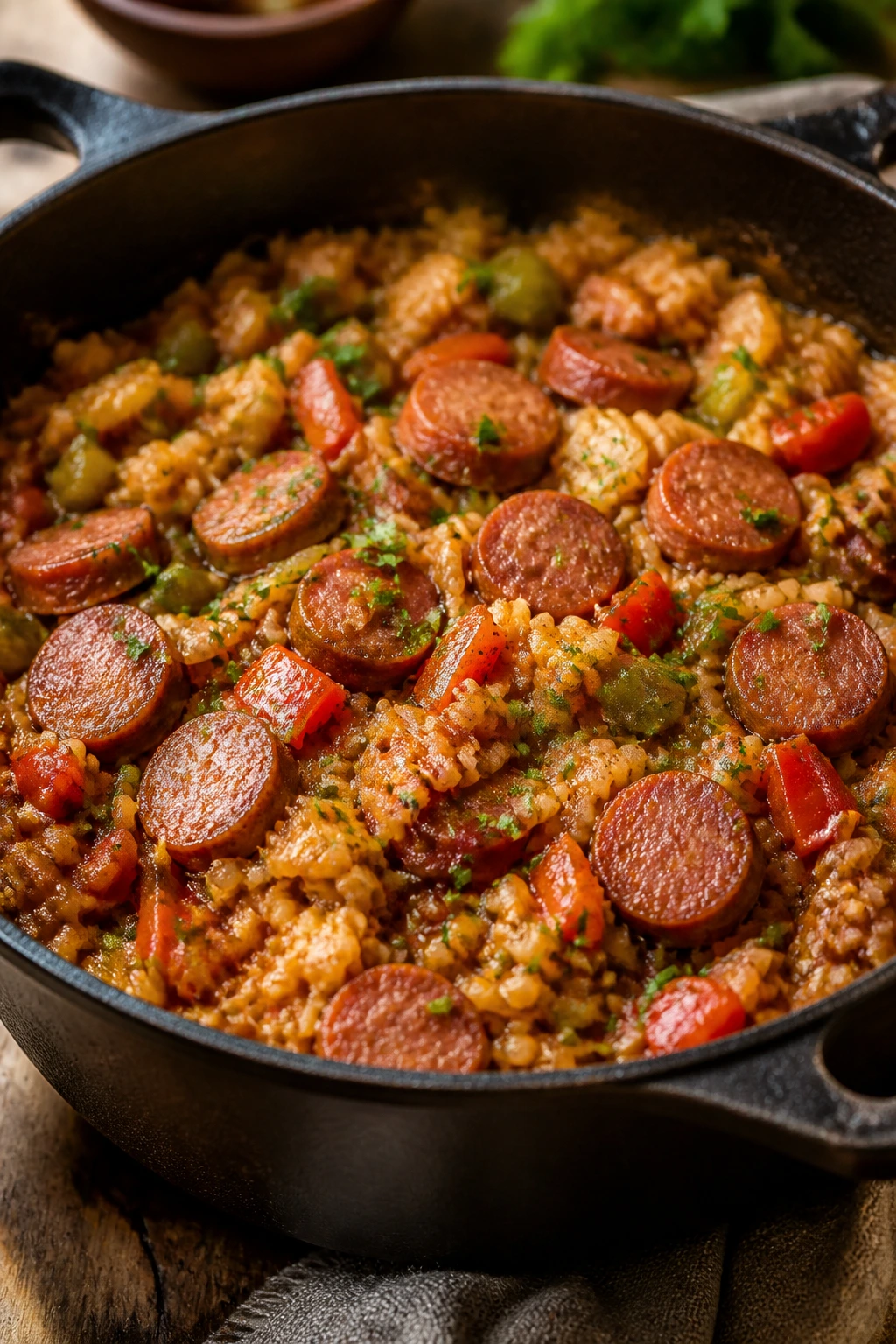
Jambalaya is dinner with a beat to it. The rice, sausage, onions, peppers, and spices build on one another until the pot smells smoky, savory, and a little peppery in the best way. It’s hearty enough to stand on its own, which is useful because nobody wants to cook three side dishes on a Tuesday.
Why It Works:
Jambalaya works because it layers flavor instead of relying on one big ingredient to carry the whole pot. The sausage browns first, the vegetables soften in the drippings, and the rice absorbs both the broth and the spice. Tomato paste gives it a darker base, while Cajun seasoning brings heat without making every bite burn. If your seasoning blend is salty, hold back on extra salt until the end. That’s the difference between lively and overdone.
Key Ingredients
- 1 pound smoked sausage, sliced
- 1 cup long-grain rice
- 1 onion, chopped
- 1 green bell pepper, chopped
- 2 celery stalks, chopped
- 2 cloves garlic, minced
- 2 tablespoons tomato paste
- 2½ cups chicken broth
- 1 to 2 tablespoons Cajun seasoning
- 1 bay leaf
Quick Steps
- Brown the sausage in a large Dutch oven over medium-high heat for 4 to 5 minutes.
- Add the onion, bell pepper, and celery. Cook for 5 to 6 minutes until softened.
- Stir in the garlic, tomato paste, and Cajun seasoning, cooking for 1 minute.
- Add the rice, broth, and bay leaf. Bring to a boil, then reduce the heat to low, cover, and simmer for 18 to 20 minutes.
- Turn off the heat and let it rest covered for 5 minutes. Fluff with a fork and serve.
Tips and Variations
- Use a smoked sausage with good browning power; it matters here.
- A chopped scallion finish gives the pot a little lift.
- If you want more vegetables, stir in thawed peas at the end.
10. Baked Ziti with Italian Sausage
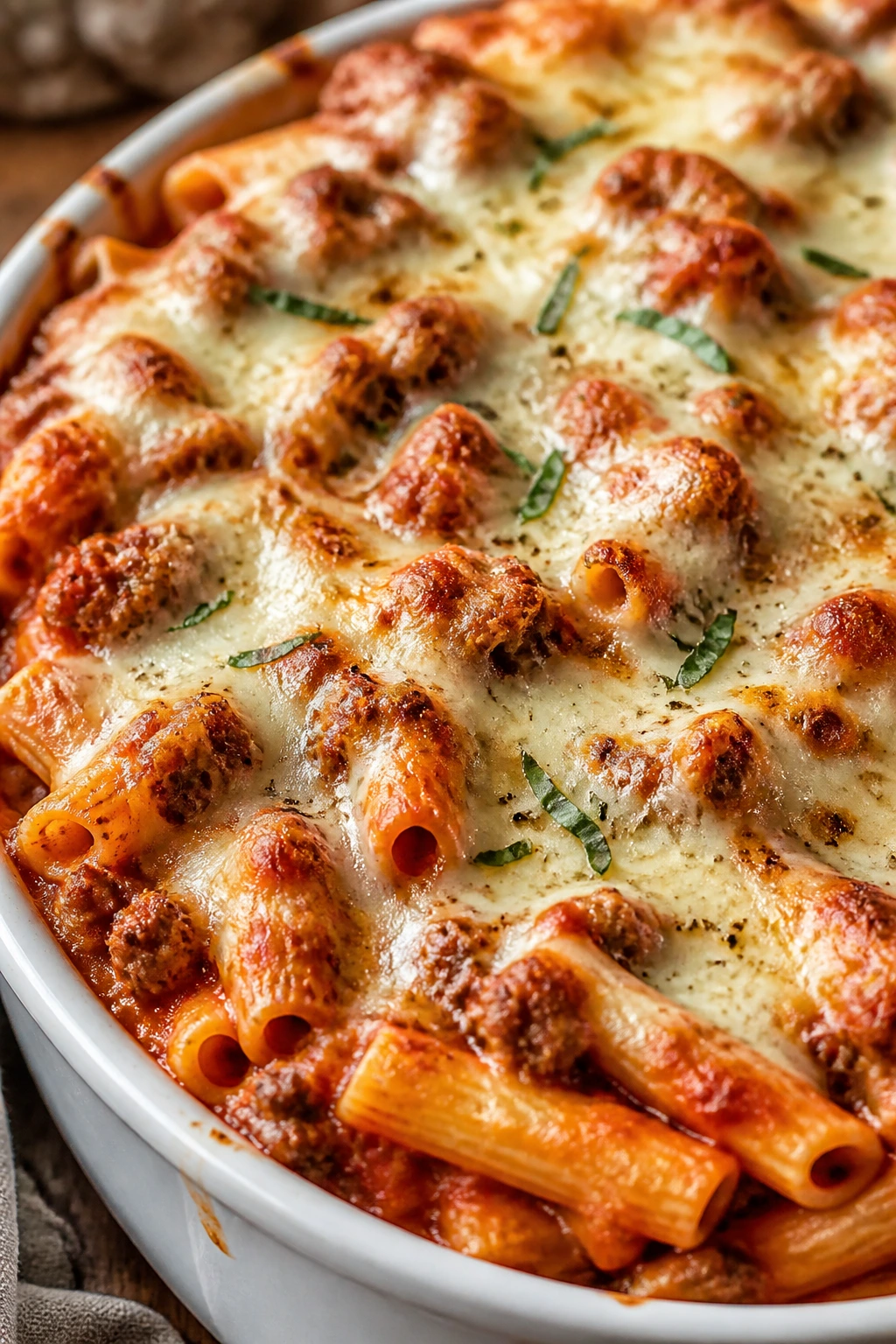
There’s a reason baked pasta keeps showing up at potlucks and family tables. It’s not subtle. It’s bubbling cheese, sauce that stains the noodles red, and sausage tucked into every forkful. When you want dinner to feel like a proper event without a lot of theatrical effort, ziti gets the job done.
Why It Works:
The bake gives you three textures that people always want from pasta: tender noodles, a saucy middle, and browned cheese on top. Sausage adds pockets of richness that keep the ricotta and mozzarella from tasting too one-dimensional. If you undercook the pasta slightly before baking, it finishes in the oven without turning soft. That detail matters more than another sprinkle of cheese.
Key Ingredients
- 1 pound ziti or penne
- 1 pound Italian sausage, crumbled
- 3 cups marinara sauce
- 1 cup ricotta
- 2 cups shredded mozzarella
- ½ cup grated Parmesan
- 1 egg
- 2 cloves garlic, minced
- 1 tablespoon chopped basil or parsley
Quick Steps
- Heat the oven to 375°F (190°C). Cook the pasta until just shy of al dente, then drain.
- Brown the sausage in a skillet for 6 to 8 minutes. Stir in the garlic for 30 seconds.
- In a bowl, mix ricotta, egg, Parmesan, and basil.
- Combine the pasta, sausage, and marinara in a large bowl or baking dish. Dot with spoonfuls of the ricotta mixture and fold lightly.
- Top with mozzarella and bake uncovered for 25 to 30 minutes until bubbling and browned in spots.
- Rest for 10 minutes before serving so the layers settle.
Tips and Variations
- Add sautéed mushrooms or spinach if you want more vegetables in the bake.
- If you like a firmer slice, let it cool a little longer before scooping.
- This is one of the few sausage dinners that tastes fine reheated the next day in the oven.
11. Sausage and Cabbage Skillet with Mustard
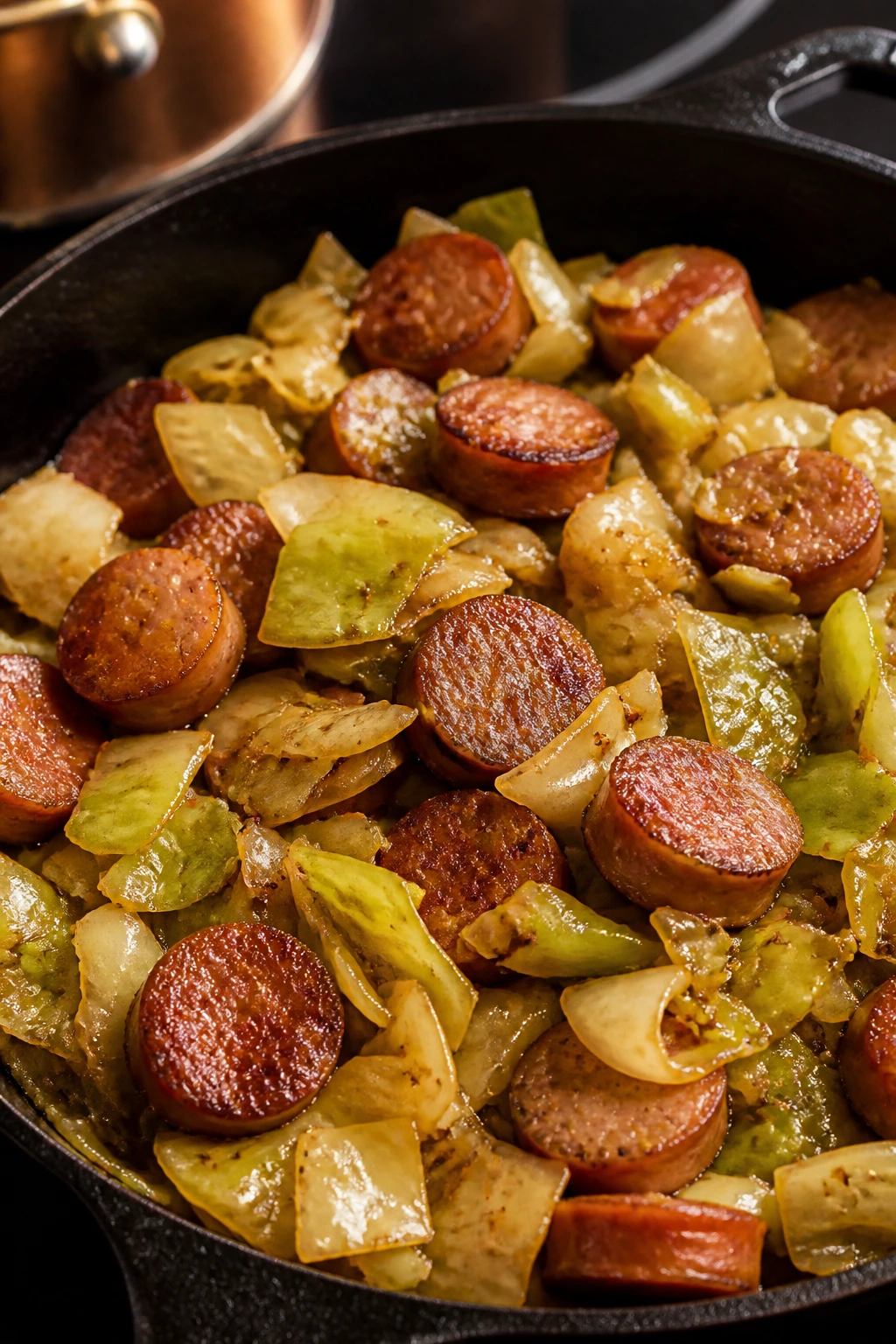
Cabbage gets ignored far too often, which is a shame because it cooks into something sweet, silky, and sturdy enough to hold up next to sausage. Add mustard and you get a dish that feels sharp and rich at the same time. It’s the kind of skillet dinner that looks plain at first glance, then quietly wins people over.
Why It Works:
Cabbage loves heat and fat. When it softens in the sausage drippings, the edges pick up a little browning, and that changes the whole personality of the pan. Dijon mustard cuts through the richness so the dish doesn’t feel heavy, while apple or onion adds a faint sweetness that keeps everything balanced. If you’ve only had cabbage boiled into submission, this version is a useful correction.
Key Ingredients
- 1 pound kielbasa or Italian sausage, sliced
- 1 small head green cabbage, sliced
- 1 onion, sliced
- 1 apple, thinly sliced
- 2 tablespoons Dijon mustard
- ½ cup chicken broth
- 1 tablespoon butter or oil
- Salt, pepper, and caraway seeds, optional
Quick Steps
- Brown the sausage in a large skillet over medium heat for 4 to 5 minutes. Remove it if needed.
- Add the onion and apple and cook for 3 minutes. Stir in the cabbage, butter, salt, and pepper.
- Cook, stirring occasionally, for 10 to 12 minutes until the cabbage softens and the edges get a little color.
- Stir in the Dijon and broth, scraping up any browned bits.
- Return the sausage and cook for 3 to 4 minutes more, until everything is hot and the cabbage is tender.
- Finish with caraway seeds if using.
Tips and Variations
- Thin cabbage shreds cook faster and catch the seasoning better.
- A spoonful of whole-grain mustard gives more texture than Dijon alone.
- This skillet is even better with boiled potatoes on the side if you want extra heft.
12. Sausage Tortellini Soup
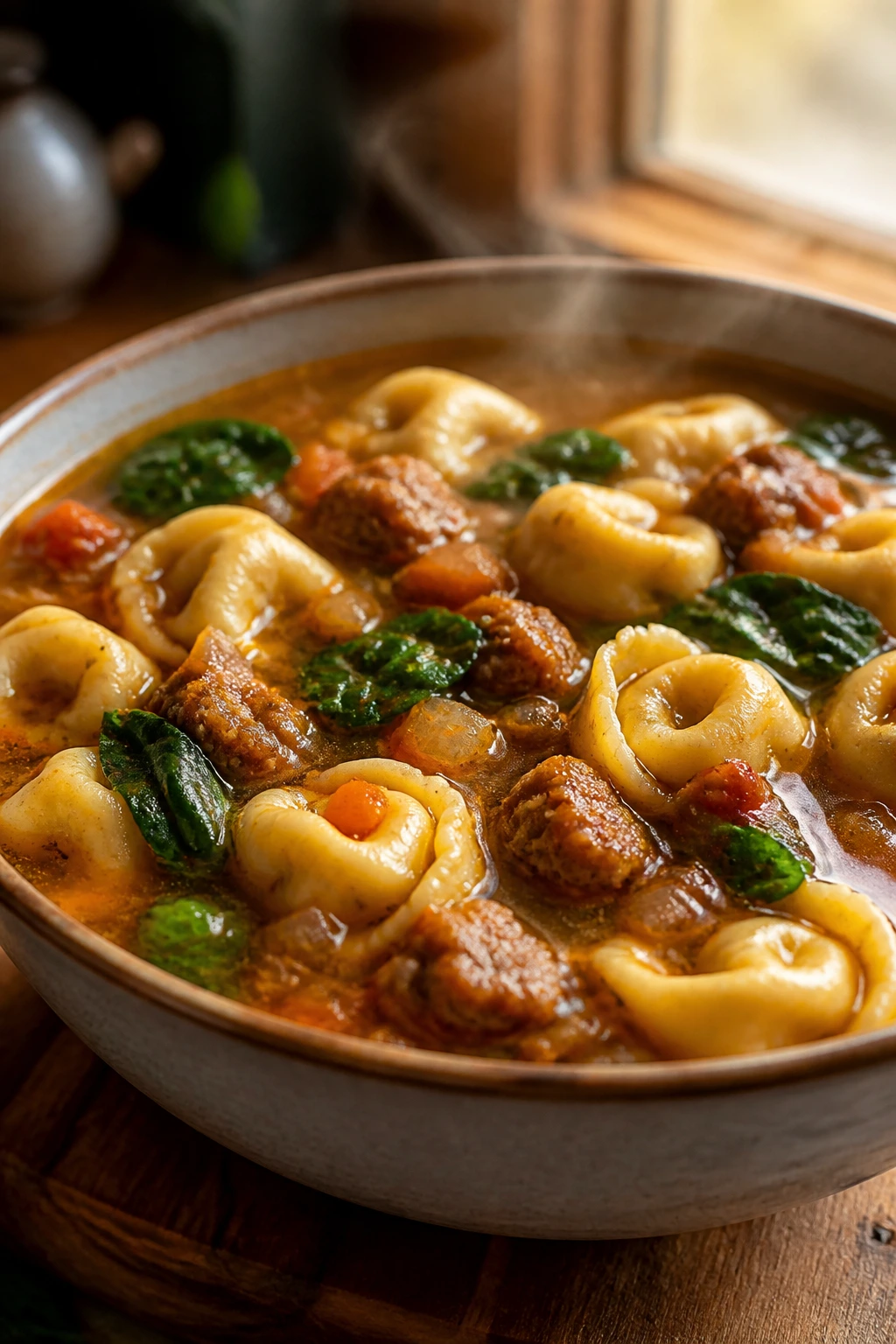
Tortellini makes soup feel like dinner without needing a side quest. The filled pasta swells in the broth, the sausage gives the pot body, and the spinach or kale keeps the bowl from feeling too soft. If you like meals that land somewhere between soup and stew, this one sits right in that sweet spot.
Why It Works:
Cheese tortellini brings its own richness, which means you don’t need to build a complicated base. The sausage browns first, tomato gives the broth some backbone, and the tortellini cooks directly in the soup so it soaks up flavor instead of tasting separate from it. The one rule here is timing: add the pasta late so it stays intact. Overcooked tortellini turns the broth cloudy and the whole thing gets fussy for no good reason.
Key Ingredients
- 1 pound Italian sausage, crumbled
- 1 onion, diced
- 2 carrots, diced
- 3 cloves garlic, minced
- 1 can (28 ounces) crushed tomatoes
- 6 cups chicken broth
- 1 package (9 to 12 ounces) cheese tortellini
- 2 cups spinach or chopped kale
- ½ cup heavy cream, optional
- Grated Parmesan, for serving
Quick Steps
- Brown the sausage in a soup pot over medium heat for 6 to 8 minutes.
- Add the onion and carrots and cook for 5 minutes. Stir in the garlic for 30 seconds.
- Pour in the tomatoes and broth, then simmer for 10 minutes.
- Add the tortellini and cook according to package directions, usually 3 to 5 minutes.
- Stir in the spinach and cream, if using, and cook for 1 minute more.
- Serve with Parmesan.
Tips and Variations
- Keep tortellini separate if you expect leftovers; it holds its shape better that way.
- A little crushed red pepper is enough to sharpen the broth.
- Use kale if you want the greens to stay firmer in the bowl.
13. Kielbasa, Apples, and Potatoes Skillet
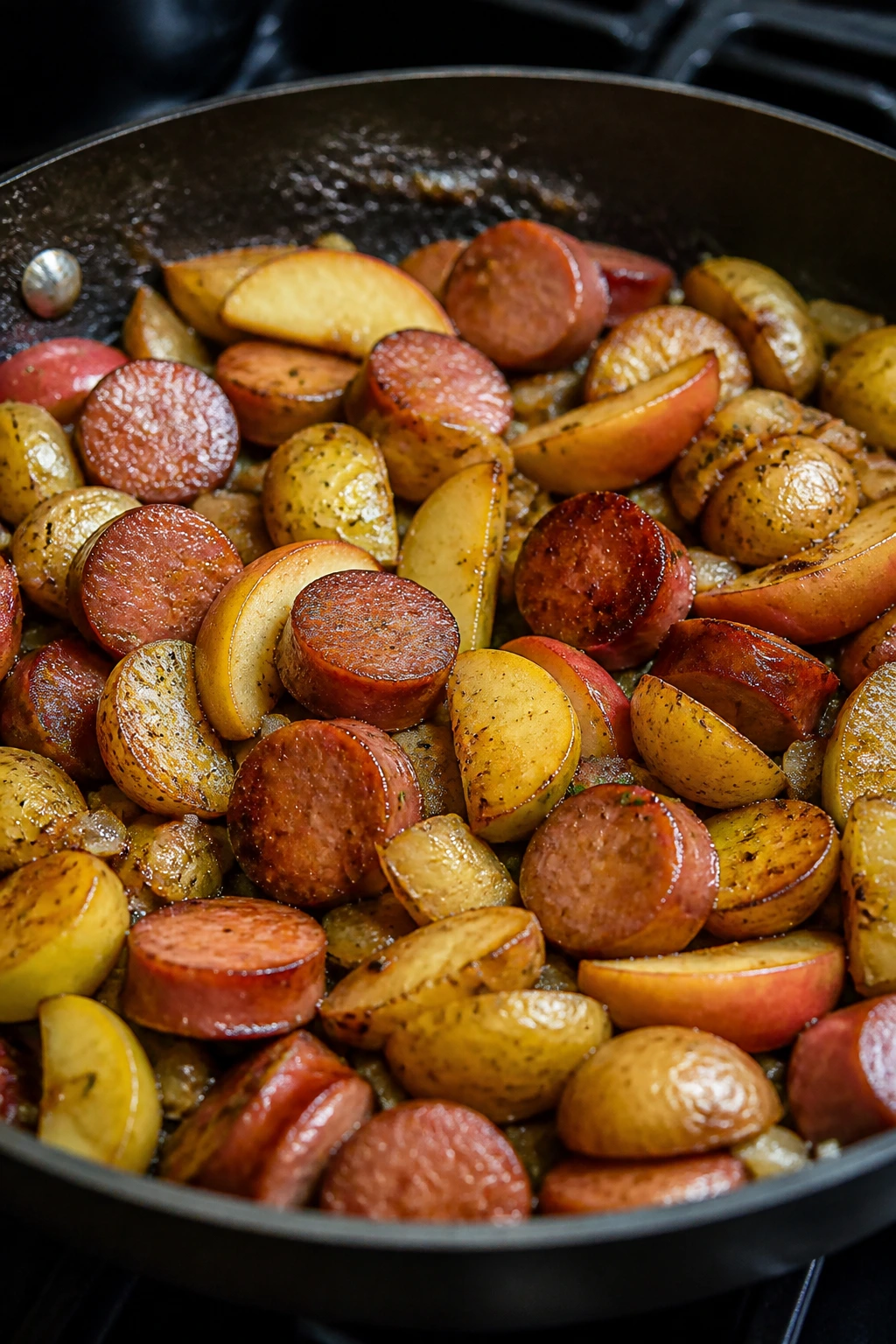
This is the autumn-leaning dinner that still works any time the kitchen needs something sturdy and a little sweet. Kielbasa brings smoke, apples bring a soft snap and caramel edge, and potatoes anchor the whole thing. It’s the sort of skillet that tastes far more deliberate than the ingredient list suggests.
Why It Works:
Kielbasa is fully cooked, so you’re really building flavor around it instead of waiting on it to finish. That makes it ideal for a fast weeknight skillet. Potatoes need to be cut small enough to brown and soften in reasonable time, and the apples should be firm so they don’t collapse into jam. Dijon or cider vinegar at the end keeps the sweetness from taking over. Without that acidic nudge, the pan can drift toward dessert territory. Not a disaster, but not what you want for dinner.
Key Ingredients
- 1 pound kielbasa, sliced
- 1½ pounds baby potatoes, halved
- 2 apples, cored and sliced
- 1 onion, sliced
- 1 tablespoon butter
- 1 tablespoon Dijon mustard
- ¼ cup chicken broth or apple cider
- 1 teaspoon fresh thyme or ½ teaspoon dried thyme
- Salt and black pepper
Quick Steps
- Parboil the potatoes for 8 minutes, then drain.
- Brown the kielbasa in a large skillet for 3 to 4 minutes. Remove it if necessary.
- Add the butter, onion, and potatoes and cook for 8 minutes until the potatoes pick up color.
- Stir in the apples and thyme and cook for 4 minutes.
- Add the Dijon and broth or cider, then return the kielbasa and cook for 2 to 3 minutes until hot.
- Taste and adjust seasoning before serving.
Tips and Variations
- If you like a sharper finish, add a splash of apple cider vinegar at the end.
- Baby Yukon Gold potatoes keep their shape well and taste buttery.
- This skillet makes a strong leftover lunch, especially with mustard on the side.
14. Sausage and Lentil Stew
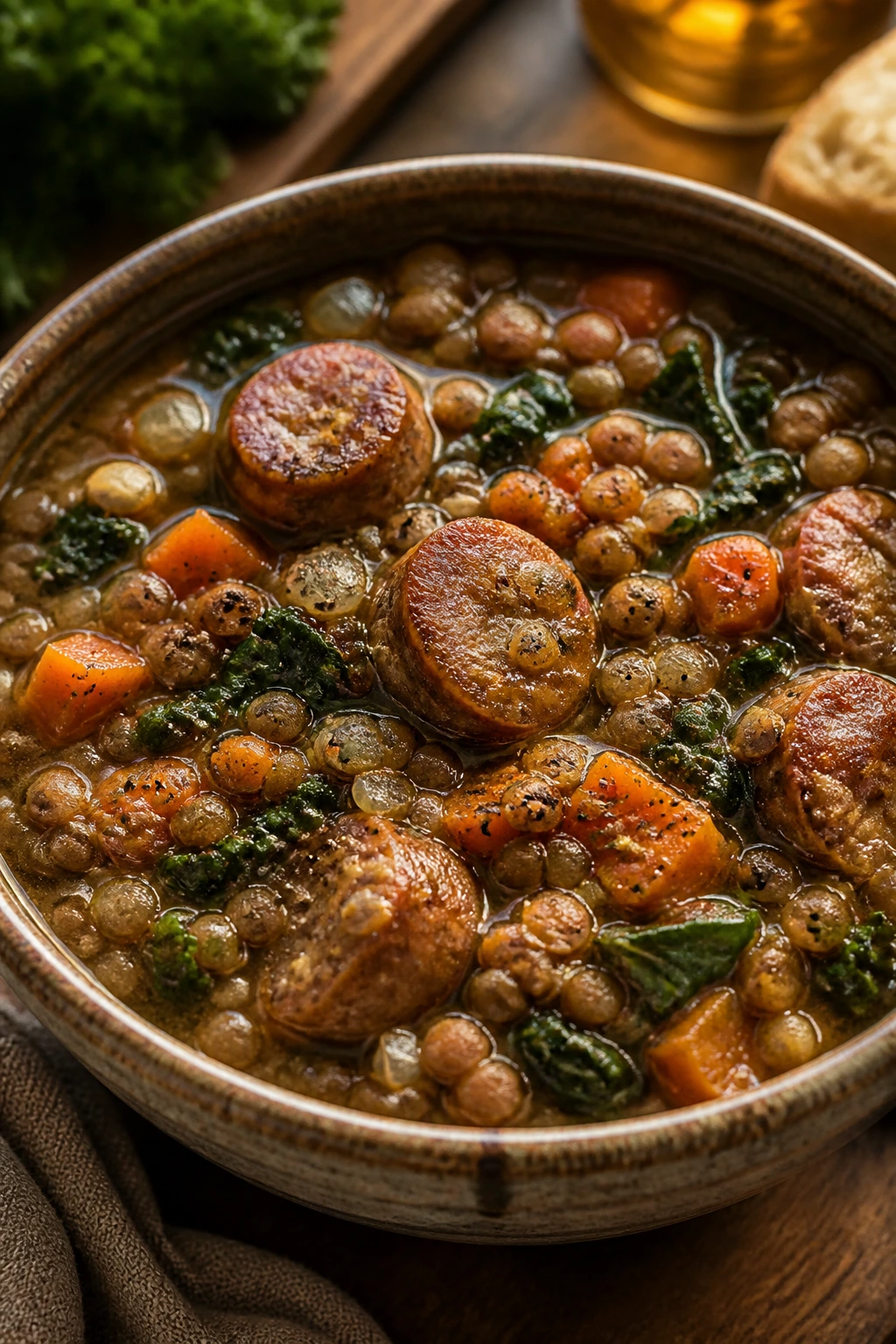
Lentils and sausage have a plainspoken, old-school kind of charm. Nothing here is trying to impress you with gloss. Instead, you get a deep, earthy stew that feels built for cold nights, tired nights, and the nights when you want one pot to do something useful for once.
Why It Works:
Lentils are sturdy enough to simmer without losing all structure, which makes them perfect for a stew that needs body. They absorb broth, tomato paste, and sausage drippings in a way that gives every spoonful a dense, satisfying feel. Carrots and celery keep the pot from getting heavy, while a handful of greens at the end brings the color back up. This is also one of the easiest sausage dinners to freeze because lentils hold up better than pasta or cream.
Key Ingredients
- 1 pound sausage, sliced or crumbled
- 1 cup brown or green lentils, rinsed
- 1 onion, chopped
- 2 carrots, chopped
- 2 celery stalks, chopped
- 3 cloves garlic, minced
- 1 tablespoon tomato paste
- 6 cups chicken broth
- 1 bay leaf
- 2 cups chopped kale or spinach
Quick Steps
- Brown the sausage in a soup pot for 6 to 8 minutes. Transfer excess grease if needed.
- Add the onion, carrots, and celery and cook for 5 minutes.
- Stir in the garlic and tomato paste for 1 minute.
- Add the lentils, broth, and bay leaf. Bring to a simmer and cook uncovered for 25 to 30 minutes, until the lentils are tender.
- Stir in the kale or spinach and cook for 3 to 4 minutes more.
- Remove the bay leaf, taste for salt and pepper, and serve.
Tips and Variations
- Red lentils cook too quickly and turn mushy; stick with brown or green.
- A spoonful of sherry vinegar at the end gives the stew a cleaner finish.
- If you want more richness, top each bowl with a drizzle of olive oil.
Why Sausage Works So Well on a Busy Night
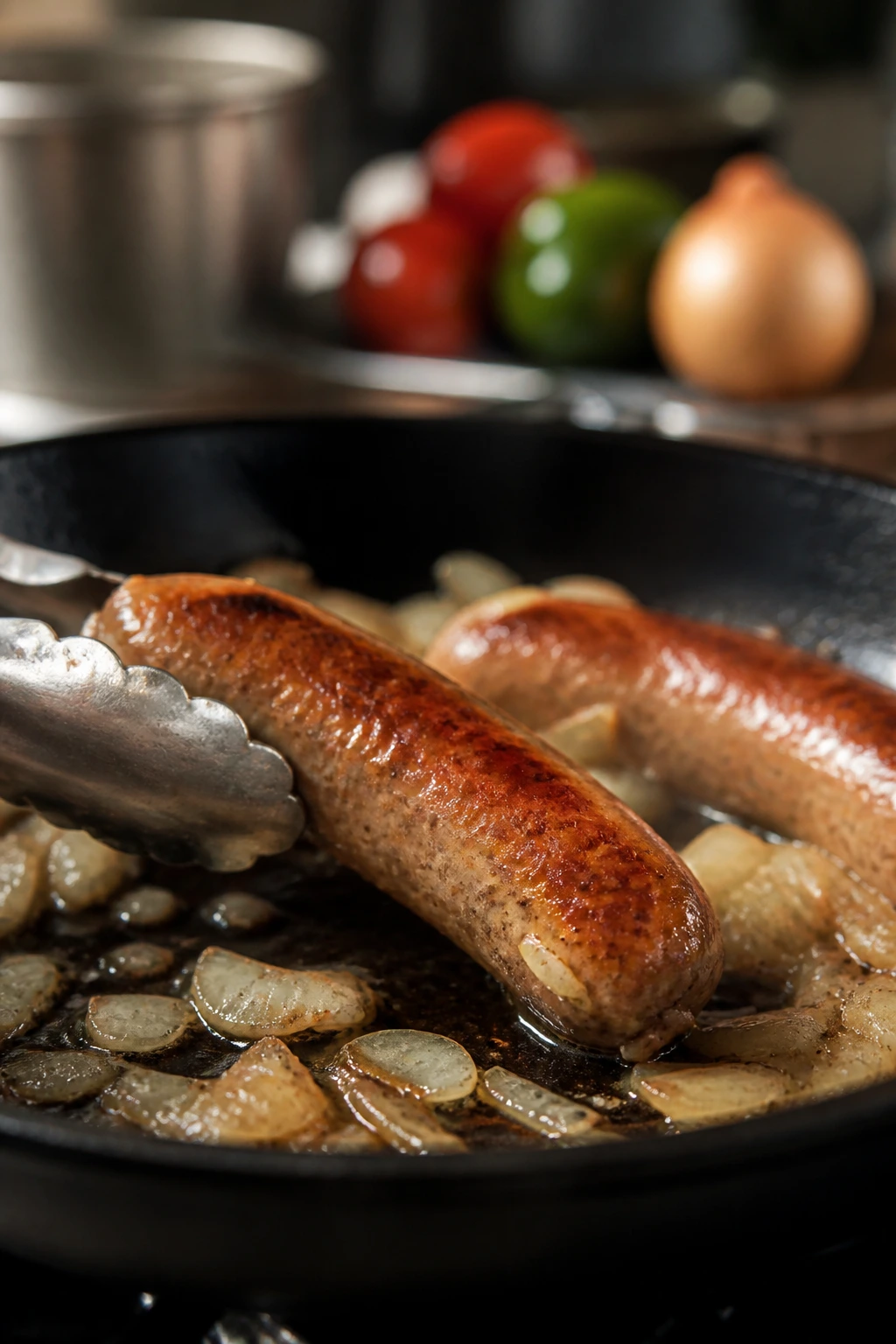
Sausage earns its place in weeknight cooking because it carries flavor in a way plain meat usually doesn’t. You’re not building from zero. You’re starting with seasoning, fat, and a texture that browns well, and that means less time fiddling with marinades or long simmering sauces.
The other reason is practical. Sausage likes the same supporting cast over and over: onions, garlic, potatoes, pasta, rice, greens, beans, tomatoes, cabbage. That makes it easy to shop once and cook several different dinners from the same short list of ingredients. A package of sausage can become a skillet, a soup, a casserole, or a sheet-pan meal with almost no extra thought.
And there’s a hidden bonus. Good sausage dinners usually reheat with dignity. They don’t collapse into sadness the way some fast meals do. If you like cooking once and eating twice, that matters.
The Shared Cooking Pattern Behind These Dinners
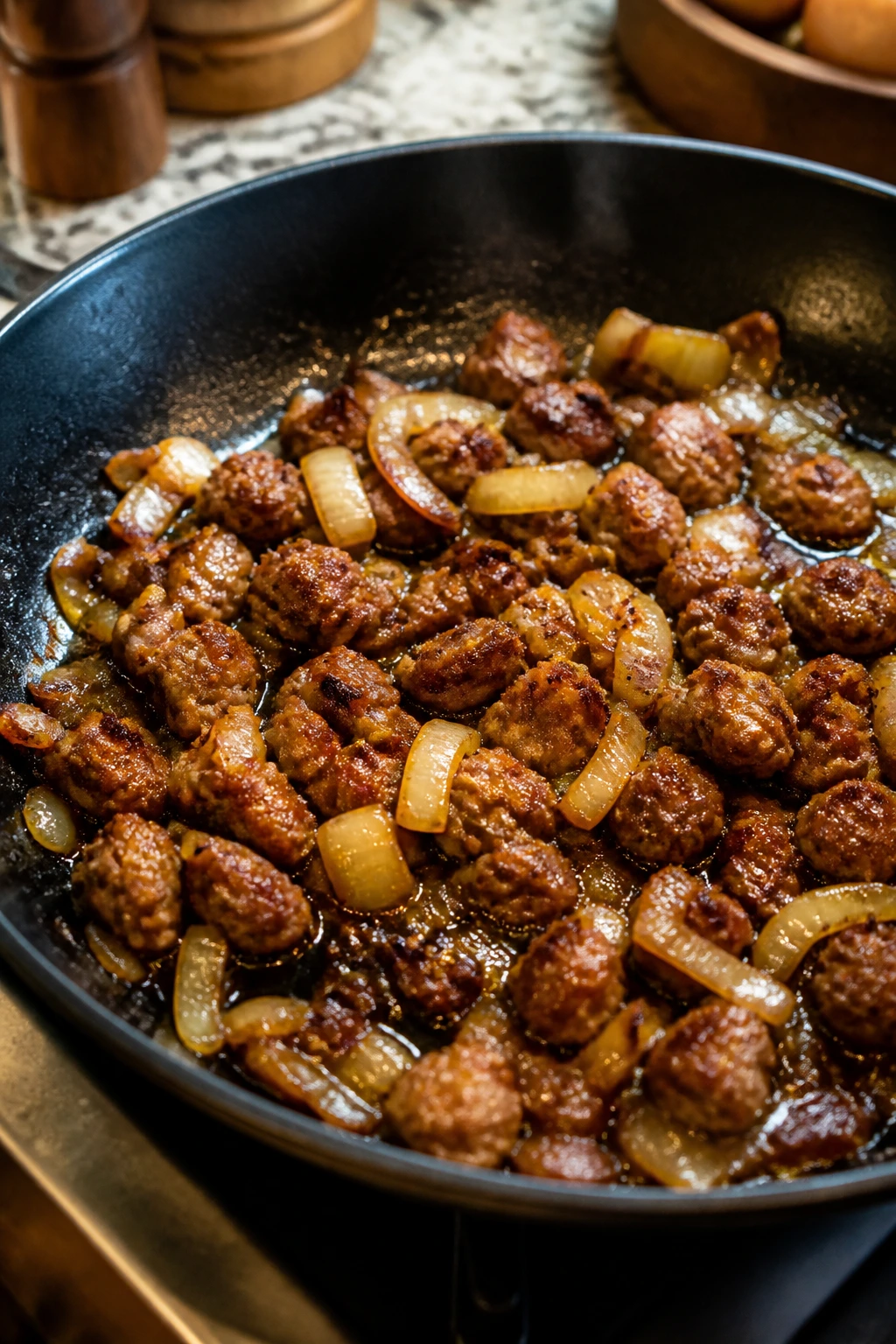
Most of these recipes follow the same smart rhythm: brown first, build second, finish last. That order matters because browning creates flavor on the surface of the sausage, and the bits left in the pan become the base for the sauce, broth, or glaze that comes after.
If you skip the browning and dump everything in at once, dinner still happens. But it tastes flatter. The onions won’t have that sweet edge, the pan sauce won’t have much depth, and you’ll end up compensating with more salt than you probably wanted. The old-fashioned stove-to-pan habit exists for a reason.
The second pattern is timing vegetables by toughness. Potatoes, carrots, cabbage, and rice need time. Spinach, green beans, and herbs do not. The best sausage dinners respect that difference instead of pretending every ingredient belongs in the pot at the same moment.
Essential Equipment for This Collection
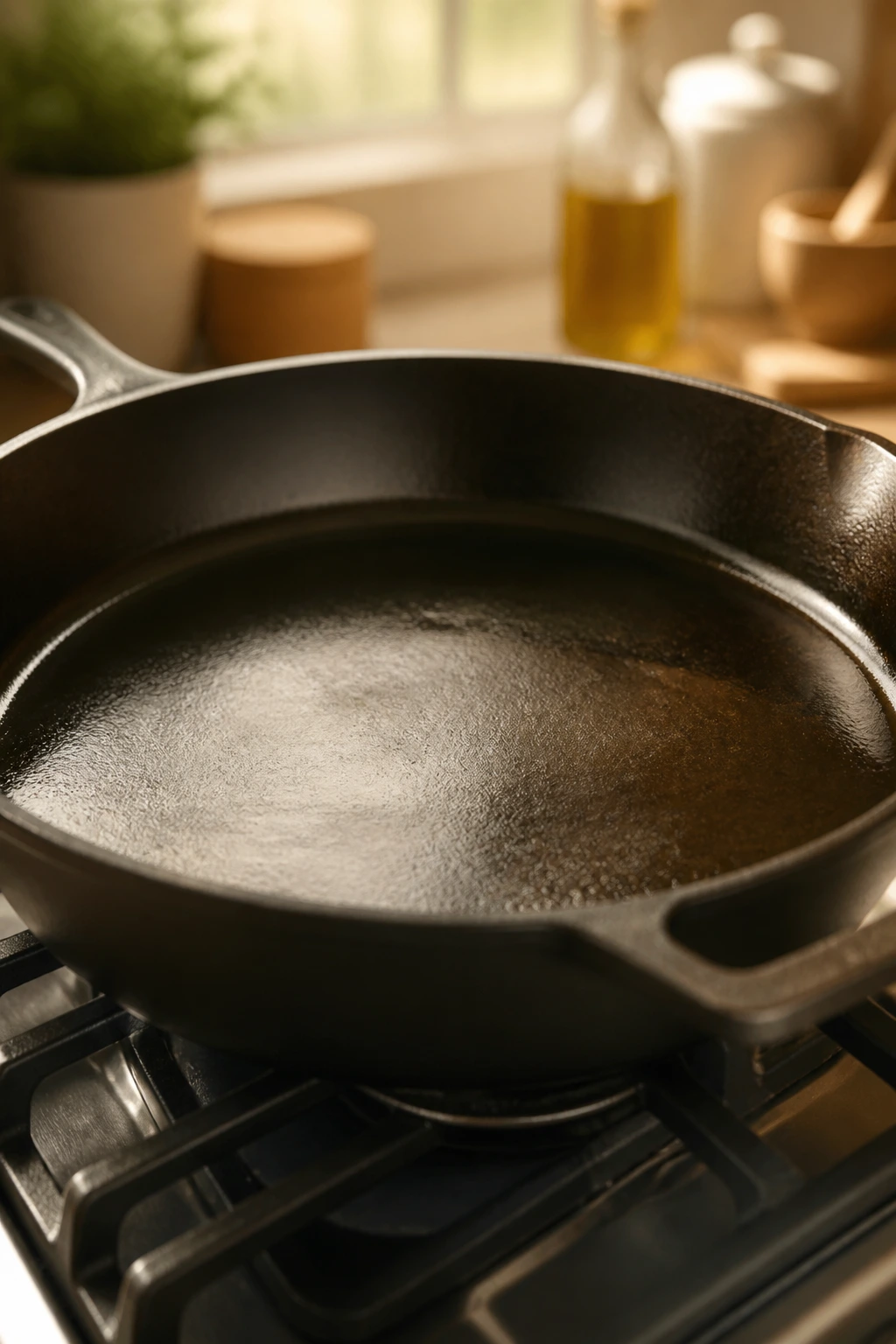
- Large Skillet or Sauté Pan: Needed for most stovetop sausage dinners; a wide surface helps the sausage brown instead of steam.
- Dutch Oven or Heavy Soup Pot: Best for soups, stews, and jambalaya because it holds heat evenly and gives you room to stir.
- Rimmed Sheet Pan: Useful for the roasted sausage and potato dinner; the rim keeps juices from spilling over.
- Large Pot for Pasta: Choose one with enough space so the noodles move freely and don’t clump.
- Colander: For draining pasta, beans, or parboiled potatoes without losing half the meal to the sink.
- Sharp Chef’s Knife: Sausage dinners lean hard on onions, peppers, cabbage, carrots, and potatoes, so a decent knife saves real time.
- Cutting Board: A big one. Smaller boards slow everything down.
- Wooden Spoon or Silicone Spatula: Better than a metal spoon for scraping browned bits without gouging pans.
- Tongs: Handy for turning sausage links or lifting roasted pieces without shredding them.
- Measuring Cups and Spoons: Especially useful for rice, broth, cream, seasoning, and pasta water.
- Airtight Storage Containers: Soup and pasta leftovers keep their texture longer when cooled and stored properly.
Smart Shopping and Ingredient Tips
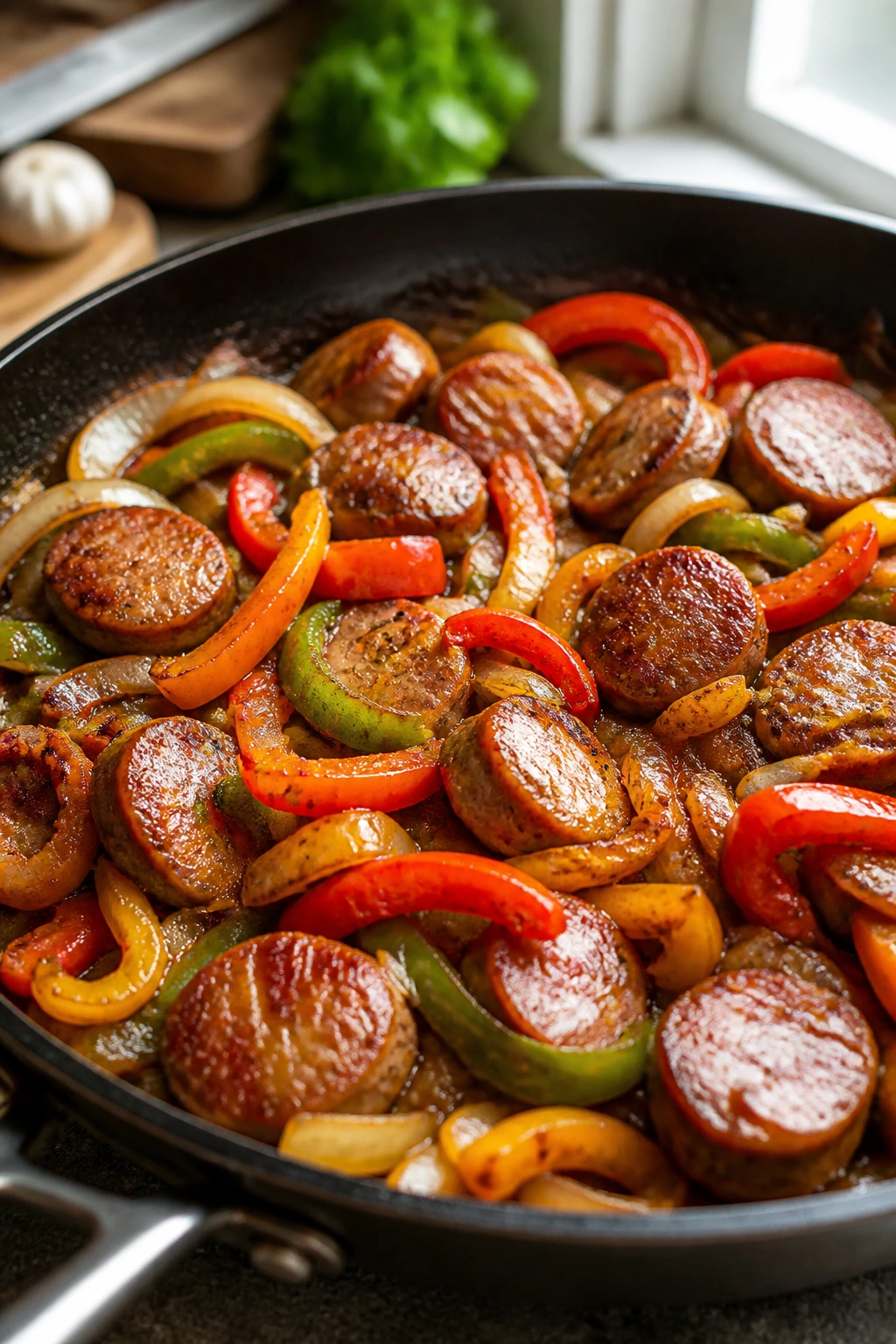
The sausage aisle can be oddly confusing, so it helps to know what you’re actually buying. Fresh Italian sausage, whether sweet or hot, is usually raw and needs to hit 160°F / 71°C. Poultry sausage needs 165°F / 74°C. Smoked kielbasa is typically already cooked, so you’re just reheating and browning it for flavor. That one detail changes how you plan the whole meal.
Fat content matters too. Very lean sausage can taste dry in skillet dishes, while richer sausage gives you more drippings to work with. I usually prefer a sausage that has enough fat to leave a sheen in the pan, because that’s where the vegetables pick up their character. If the pan floods with grease, spoon off a little, but don’t strip it bare. That fat is carrying dinner.
For vegetables, choose sturdier produce than you might for a salad. Bell peppers should feel firm, cabbage should be dense and heavy for its size, potatoes should be smooth and free of green patches, and green beans should snap. Wilted herbs are a fine garnish if you’re desperate, but they do not improve the meal. Fresh parsley, basil, thyme, or scallions make these dishes taste brighter right at the end.
Canned tomatoes, broth, beans, and pasta are the backbone of several recipes here, so quality helps more than brand loyalty. Look for tomatoes with a short ingredient list, broth that doesn’t taste aggressively salty on its own, and beans that are intact rather than mushy in the can. If you buy frozen spinach or green beans, that’s perfectly fine. Frozen vegetables are often a smart move in sausage dinners because they’re picked at peak ripeness and don’t require any drama.
How to Serve These Dinners
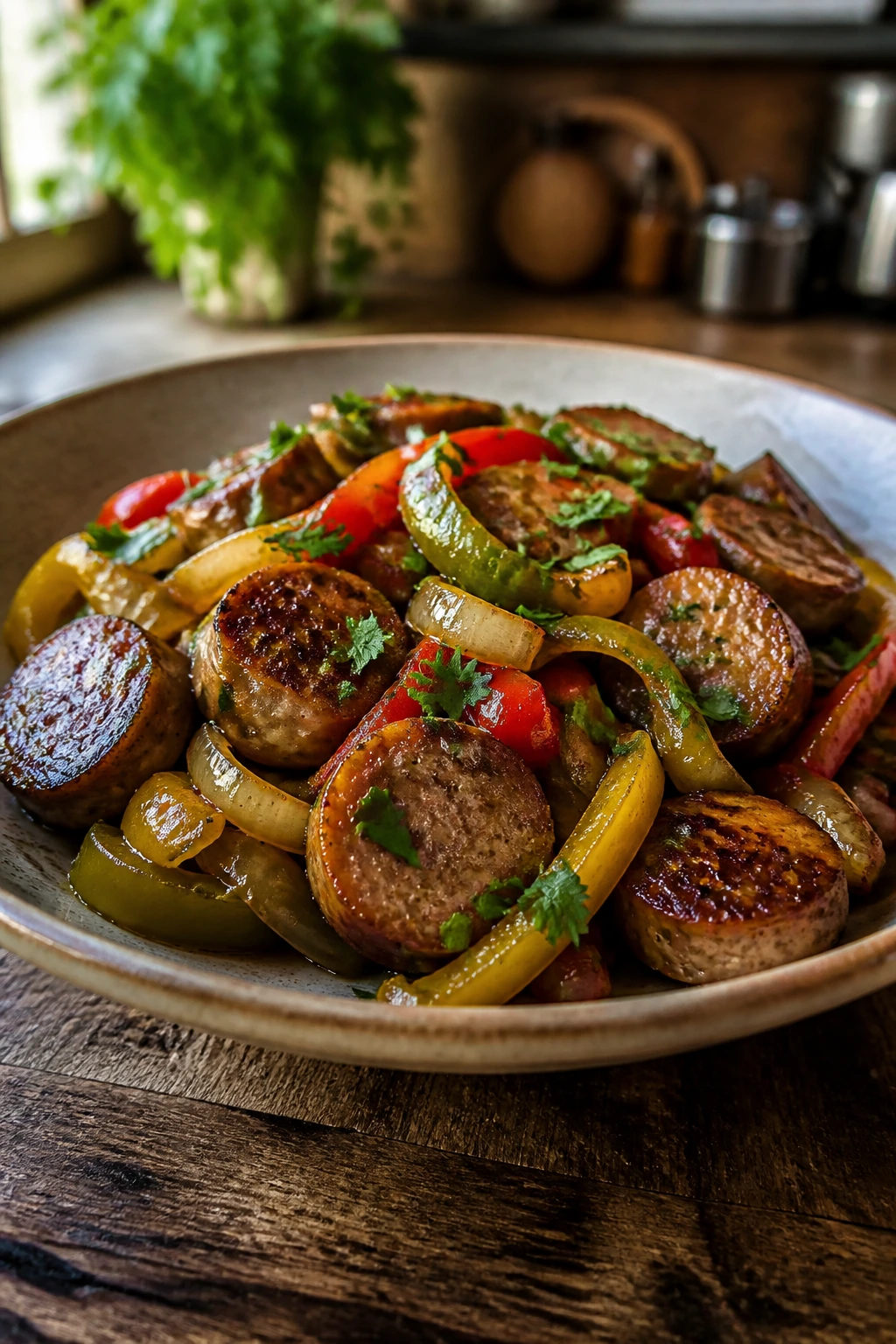
Presentation:
Serve skillet dishes in shallow bowls so the sausage and vegetables stay visible instead of sinking into a deep pile. For baked pasta and stuffed peppers, a bright green herb finish — parsley, basil, or scallions — gives the plate a clean edge. Soups and stews look better with a little texture on top, so think shaved Parmesan, a drizzle of olive oil, or a spoonful of yogurt rather than a blank surface.
Accompaniments:
A crusty loaf, garlic bread, simple green salad, or roasted broccoli works across most of these recipes. For the richer pasta dishes, keep sides plain and sharp: arugula salad with lemon, vinegar-dressed cucumbers, or steamed green beans. If the dinner already has potatoes or rice in it, skip the starch-on-starch instinct and bring in something crisp or acidic.
Portions:
Most of these sausage dinners feed 4 to 6 people, depending on how heavy your eaters are and whether you serve bread or salad alongside. Sheet pan dinners and soups stretch farther than pasta casseroles because they hold more vegetables and broth. If you’re feeding a crowd, add extra cabbage, beans, or potatoes before you start doubling the sausage.
Beverage Pairing:
Sparkling water with lemon works with everything here, which is convenient. For something with more character, a dry cider suits the apple and kielbasa skillet, while an ice-cold lager or pale ale plays nicely with peppery sausage and roasted vegetables. Tomato-based dinners also pair well with a simple red wine that isn’t too heavy.
Additional Tips and Flavor Boosters
Flavor Enhancement: A small spoonful of tomato paste browned in the pan for 30 seconds can make sausage dinners taste deeper and less one-dimensional. That trick helps especially in soups, rice dishes, and tomato sauces.
Customization: Add mushrooms, fennel, chopped kale, spinach, or frozen peas where they fit. These recipes are sturdy enough to absorb extra vegetables without falling apart, and the sausage keeps the meal from feeling diluted.
Serving Suggestions: Keep fresh herbs, grated Parmesan, hot sauce, Dijon mustard, and lemon wedges on the table. Those finishing touches give everyone a way to tune the bowl to their own taste, which is useful when one person wants heat and another wants brightness.
Make-It-Yours: For a lighter version, use turkey or chicken sausage and add a bit more olive oil in the pan. For a dairy-free approach, lean on tomato sauce, broth, and olive oil rather than cream and cheese; the dishes still have plenty of body.
Make-Ahead, Storage, and Reheating Guidance
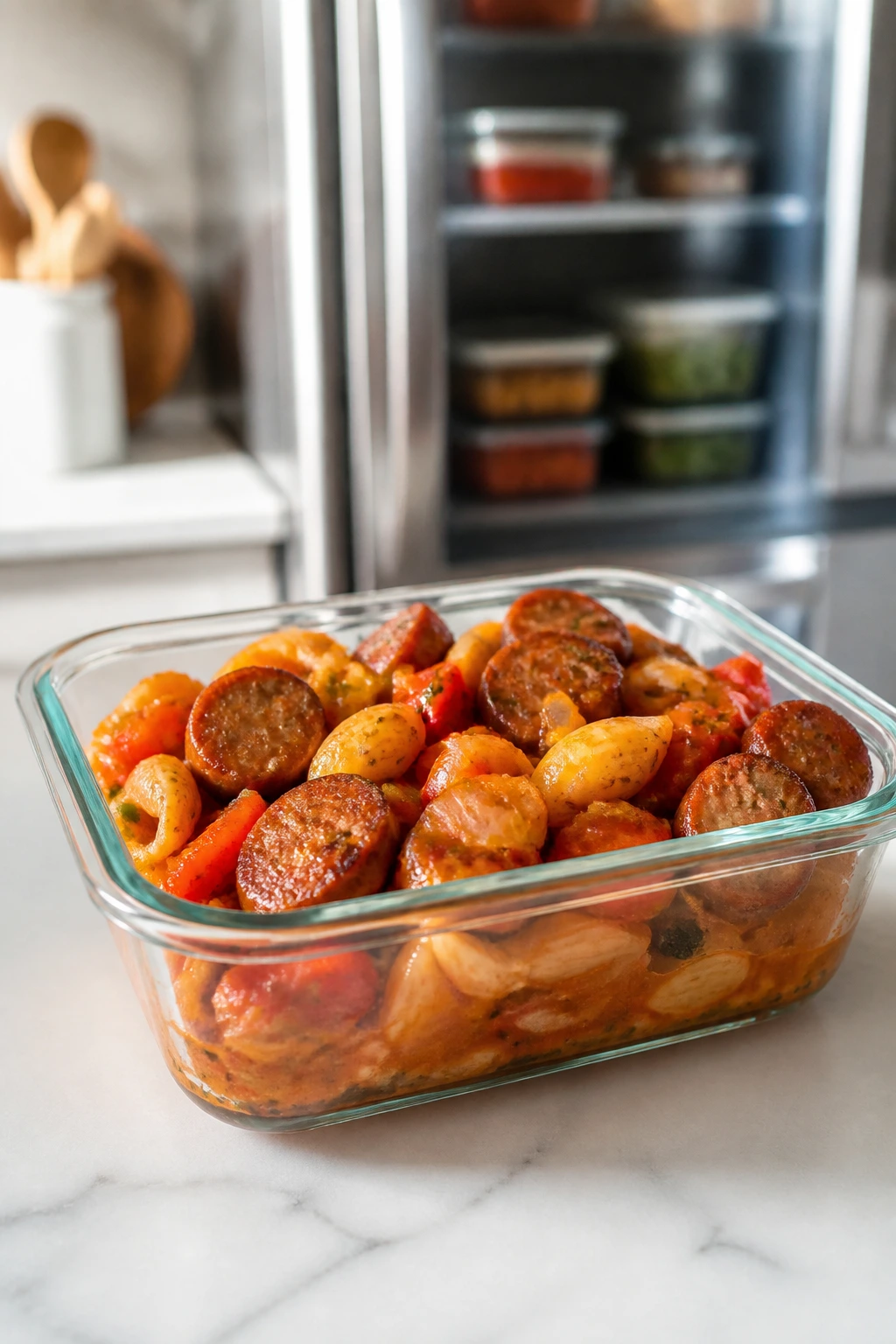
Most sausage dinners keep well for 3 to 4 days in the refrigerator if they’re cooled quickly and packed in shallow containers. Soups and stews usually hold the longest because they keep moisture better, while pasta bakes and creamy dishes are best eaten sooner, before the sauce starts to tighten or separate. If you’re making one of the pasta dishes ahead of time, undercook the noodles slightly so they don’t turn soft on reheating.
Freezing works best for tomato-based skillets, soups, stews, and baked pasta. Those can usually sit frozen for up to 2 months without losing too much texture. Cream-heavy sauces, gnocchi dishes, and dairy-forward pastas freeze less gracefully; they’re still safe, but the sauce may split or turn grainy when thawed. If you know you’ll freeze it, stop short of adding the cream and stir it in after reheating instead.
For reheating, use the cooking style that matches the dish. Skillet meals do well in a covered pan over low heat with a splash of broth or water. Pasta bakes warm best in the oven at 325°F / 165°C until hot in the center, loosely covered with foil so the top doesn’t dry out. Soups and stews can go straight back on the stove over medium-low heat. Stir now and then, and don’t let them boil hard.
A quick note on leftovers: sausage reheated from cold should be steaming throughout, not just warm at the edges. If you’re checking temperatures, aim for leftovers to reach a safe serving temperature of at least 165°F / 74°C. That’s one of those boring rules that saves trouble later.
Variations and Adaptations to Try
Turkey-Sausage Switch:
Swap in turkey or chicken sausage for any of these recipes if you want a lighter dinner. You may need an extra teaspoon or two of olive oil in the pan because leaner sausage doesn’t render as much fat. Flavor stays in the same neighborhood; the texture just changes a little.
Smoke and Spice Lane:
Use kielbasa, andouille, or another smoked sausage when you want a deeper savory note. This works especially well in the jambalaya, cabbage skillet, and rice dishes, where the smoked edge can take center stage without needing extra effort.
Dairy-Free Comfort:
Skip cream, ricotta, and heavy cheese, then lean on tomatoes, broth, olive oil, and a little pasta water for body. The soup, skillet, rice, and sheet-pan dinners all adapt well to this approach because they already have enough structure.
Vegetable-Forward Version:
Add mushrooms, extra peppers, kale, spinach, zucchini, or cauliflower rice where they fit. The point is not to hide the sausage; it’s to stretch it so the bowl feels fuller and a little greener.
Low-Carb Plate:
Serve the sausage and peppers, cabbage skillet, soup, and stew over cauliflower rice, sautéed greens, or roasted cauliflower instead of pasta or rice. You keep the bold flavor and lose the heaviest starch without making dinner feel stripped down.
Mild-to-Hot Control:
Choose sweet sausage for the kids, hot sausage for heat lovers, or split the difference with half and half. If you want more kick without changing the sausage, add crushed red pepper, Cajun seasoning, or a few dashes of hot sauce at the table.
Common Mistakes to Avoid
Crowding the Pan:
When sausage pieces are packed too tightly, they steam instead of browning. The symptom is pale sausage and a wet pan. Fix it by cooking in batches or using a wider skillet, because that browned surface is where a lot of the flavor lives.
Adding Every Ingredient at Once:
Potatoes, cabbage, rice, spinach, and tortellini all have different cooking windows. If you treat them the same, some will be mushy while others stay firm. Build in stages and respect the vegetables that need time.
Oversalting Too Early:
Sausage, broth, Parmesan, mustard, and canned tomatoes can all be salty on their own. Taste at the end, after the sauce has reduced and the flavors have settled. That’s the moment when you’ll know if the dish needs salt or just a splash of acid.
Overcooking Pasta or Gnocchi:
Pasta keeps softening after it leaves the water, and gnocchi can break down if left in a simmer too long. Pull them early and let the sauce finish the job. If you’re baking pasta afterward, keep it a little firm going in.
Using Weak Sausage:
A bland sausage can flatten the whole dinner. You don’t need the spiciest one in the case, but you do want a sausage that tastes seasoned on its own. If the raw sausage smells flat, it usually cooks flat too.
Skipping the Final Finish:
Herbs, lemon, pepper, Parmesan, mustard, or a vinegar splash often matter more than a second pinch of salt. Without that last lift, sausage dinners can taste dense in a dull way. With it, they taste finished.
Frequently Asked Questions
What kind of sausage works best for weeknight dinners?
Italian sausage, kielbasa, and smoked sausage are the easiest places to start because they already bring salt, fat, and seasoning. If you want more control over the final flavor, choose mild sausage and add heat or herbs yourself. That gives you more room to steer the dish.
Can I use pre-cooked sausage in these recipes?
Yes, and it can save a lot of time. Pre-cooked sausage works especially well in sheet-pan dinners, soups, rice dishes, and skillet meals where you mainly want browning and flavor transfer rather than a long cook. Just add it later so it doesn’t dry out.
Do I need to remove the casings?
Not always. For links in skillet dinners, sliced coins are fine. For pasta sauces, rice dishes, and soups, removing the casing lets you crumble the sausage and spread the flavor more evenly through the pan.
How can I make these sausage dinners a little lighter?
Use turkey or chicken sausage, then add more vegetables and a lighter hand with cream or cheese. Tomato-based dishes, soups, and cabbage skillets are naturally easier to lighten than Alfredo-style pasta, but the whole collection gives you room to adjust.
Which recipes are best for leftovers?
Soup, stew, baked ziti, sausage and peppers, and the cabbage skillet hold up especially well. Creamy pasta and gnocchi are still good the next day, but they’re better if you reheat them gently with a splash of broth or cream.
Can I freeze sausage pasta or soup?
Soup and tomato-based pasta bakes freeze well for about 2 months. Cream sauces can separate and gnocchi can turn soft, so those are better eaten fresh or frozen only if you accept a texture change. If freezing, cool the food quickly and use airtight containers.
What if my sausage gives off too much grease?
Spoon off the excess after browning, but leave a little behind. You want enough fat to cook the vegetables and carry the seasoning. If the pan looks oily, it usually means the sausage was richer than expected, not that the recipe is broken.
How do I keep the vegetables from turning mushy?
Add them in order of sturdiness. Potatoes and carrots go first, cabbage and peppers in the middle, spinach and herbs at the end. That timing keeps each ingredient from collapsing into the others.
Can I make these in one pot or one pan only?
Most of them are already built that way. The rice, soups, skillet meals, and cabbage recipes are especially good for one-pan cooking, while the baked pasta and stuffed peppers need a second dish because oven heat does the finishing work.
A Hearty Way to Clear the Deck
There’s a reason sausage keeps showing up in weeknight cooking. It’s steady, flexible, and forgiving in all the ways busy dinners need to be. You can brown it, simmer it, roast it, fold it into pasta, or let it perfume a pot of beans, and it almost always tastes like more than the sum of the pieces.
The real win here is not one perfect recipe. It’s having 14 different ways to get dinner on the table without staring into the fridge like it offended you. Pick the skillet when you want speed, the soup when you want comfort, the bake when you want leftovers, and the sheet pan when you want the oven to earn its keep.
| Recipe | Prep Time | Cook Time | Total Time | Servings | Standout Detail |
|---|---|---|---|---|---|
| Sausage and Peppers Skillet | 15 min | 25 min | 40 min | 4-6 | sweet peppers and browned sausage in one pan |
| Creamy Sausage and Spinach Pasta | 15 min | 25 min | 40 min | 4 | glossy sauce that clings to every noodle |
| Sheet Pan Sausage, Potatoes, and Green Beans | 15 min | 30 min | 45 min | 4-6 | crisp edges with almost no cleanup |
| Sausage, White Bean, and Kale Soup | 15 min | 35 min | 50 min | 6 | thick, brothy, and even better the next day |
| One-Pan Sausage and Rice | 15 min | 30 min | 45 min | 4-5 | rice soaks up all the sausage flavor |
| Sausage Stuffed Bell Peppers | 20 min | 35 min | 55 min | 4 | tidy, filling, and easy to make ahead |
| Sausage Gnocchi in Tomato Cream | 15 min | 20 min | 35 min | 4 | pillowy gnocchi in a silky sauce |
| Sausage and Broccoli Alfredo | 15 min | 25 min | 40 min | 4 | broccoli keeps the rich sauce from feeling heavy |
| Cajun Sausage Jambalaya | 20 min | 35 min | 55 min | 6 | smoky, spiced rice with real depth |
| Baked Ziti with Italian Sausage | 25 min | 35 min | 1 hr | 6 | bubbling cheese and sausage in every scoop |
| Sausage and Cabbage Skillet with Mustard | 15 min | 25 min | 40 min | 4-6 | sharp mustard cuts the richness |
| Sausage Tortellini Soup | 15 min | 25 min | 40 min | 6 | fast soup with built-in pasta comfort |
| Kielbasa, Apples, and Potatoes Skillet | 20 min | 30 min | 50 min | 4-6 | sweet-salty balance with browned edges |
| Sausage and Lentil Stew | 15 min | 45 min | 1 hr | 6 | freezer-friendly stew with real staying power |