



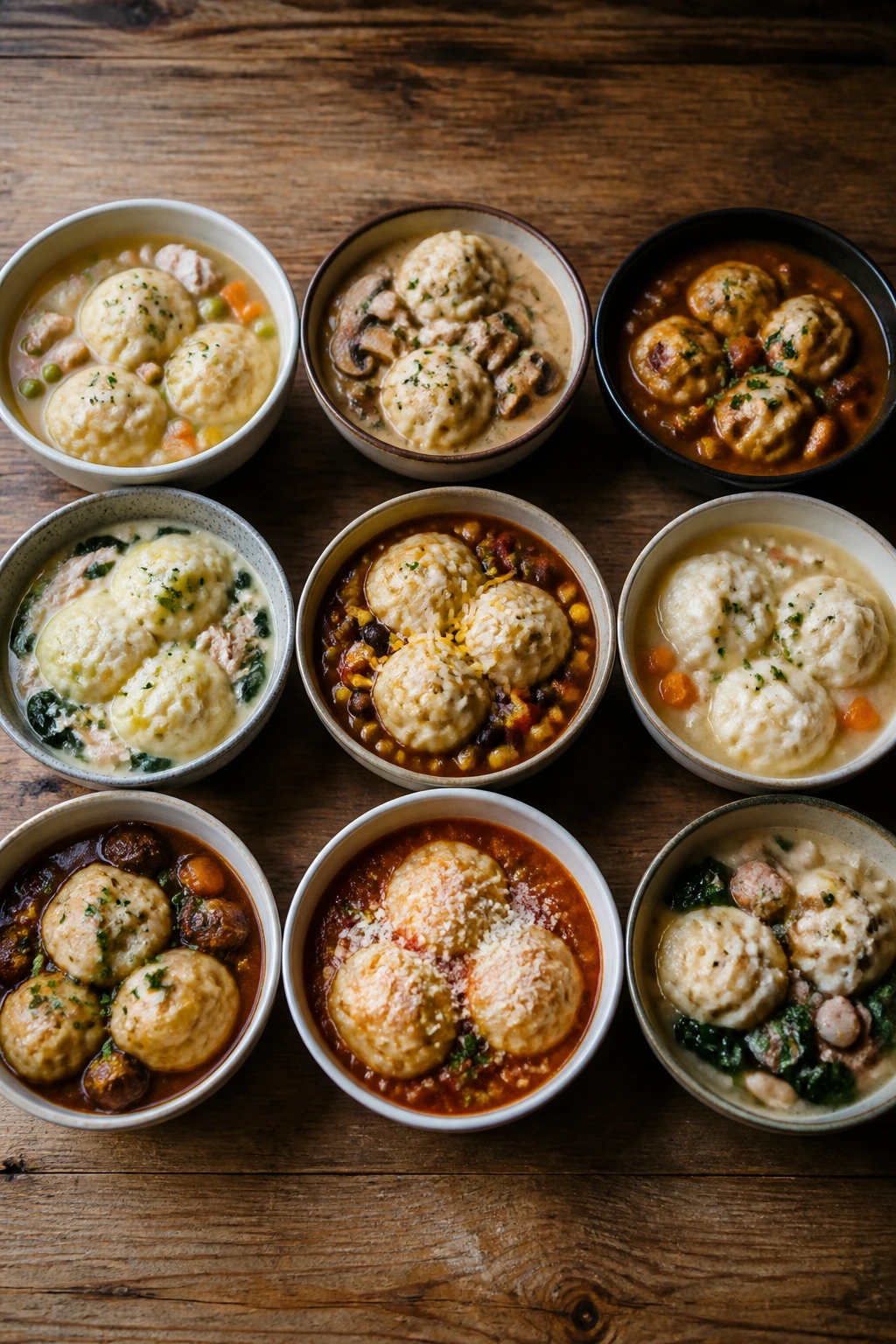
A pot of dumpling dinners has a way of pulling everyone toward the kitchen before anyone admits they’re hungry. The broth is steaming, the lid is rattling a little, and that first spoonful — tender meat or beans underneath, a fluffy dumpling on top, sauce clinging to the sides — feels like the kind of supper people remember.
That’s why dumpling dinners for family night work so well. They’re generous without being fussy. They stretch a pound of chicken, beef, sausage, or beans into something that looks like you put in far more effort than you did, which is a small miracle on any night when homework, laundry, and a half-empty fridge all seem to arrive together.
I’ve always liked dumplings because they solve the two hardest problems in weeknight cooking at once: what to make, and how to keep everyone happy at the table. The filling can lean classic, creamy, smoky, spicy, or vegetarian. The dumplings can be biscuit-like, herb-packed, cheesy, or light and spooned straight from the bowl. And if you get the steam level right, the whole thing tastes like it simmered for hours, even when it didn’t.
Why These Dumpling Dinners Earn a Spot on the Table
-
One pot, less cleanup: Most of these dinners finish in a Dutch oven or deep skillet, so you’re not left with a mountain of pans after supper.
-
Easy to stretch: Dumplings make a small amount of stew feel bigger, which is a quiet win when you’re feeding a crowd or trying to make leftovers count.
-
Family-friendly textures: A soft dumpling, a savory sauce, and tender filling usually land well with kids and adults alike — no need for separate meals.
-
Flexible ingredients: Chicken thighs, rotisserie chicken, leftover turkey, canned beans, frozen peas, and pantry broth all have a place here.
-
Comfort without boredom: The format stays cozy, but the flavors can move from thyme and parsley to curry, cheddar, ginger, or tomato without losing the point.
-
Make-ahead friendly: Most of the filling can be cooked ahead, then finished with fresh dumplings when it’s time to eat.
1. Classic Chicken and Herb Dumplings
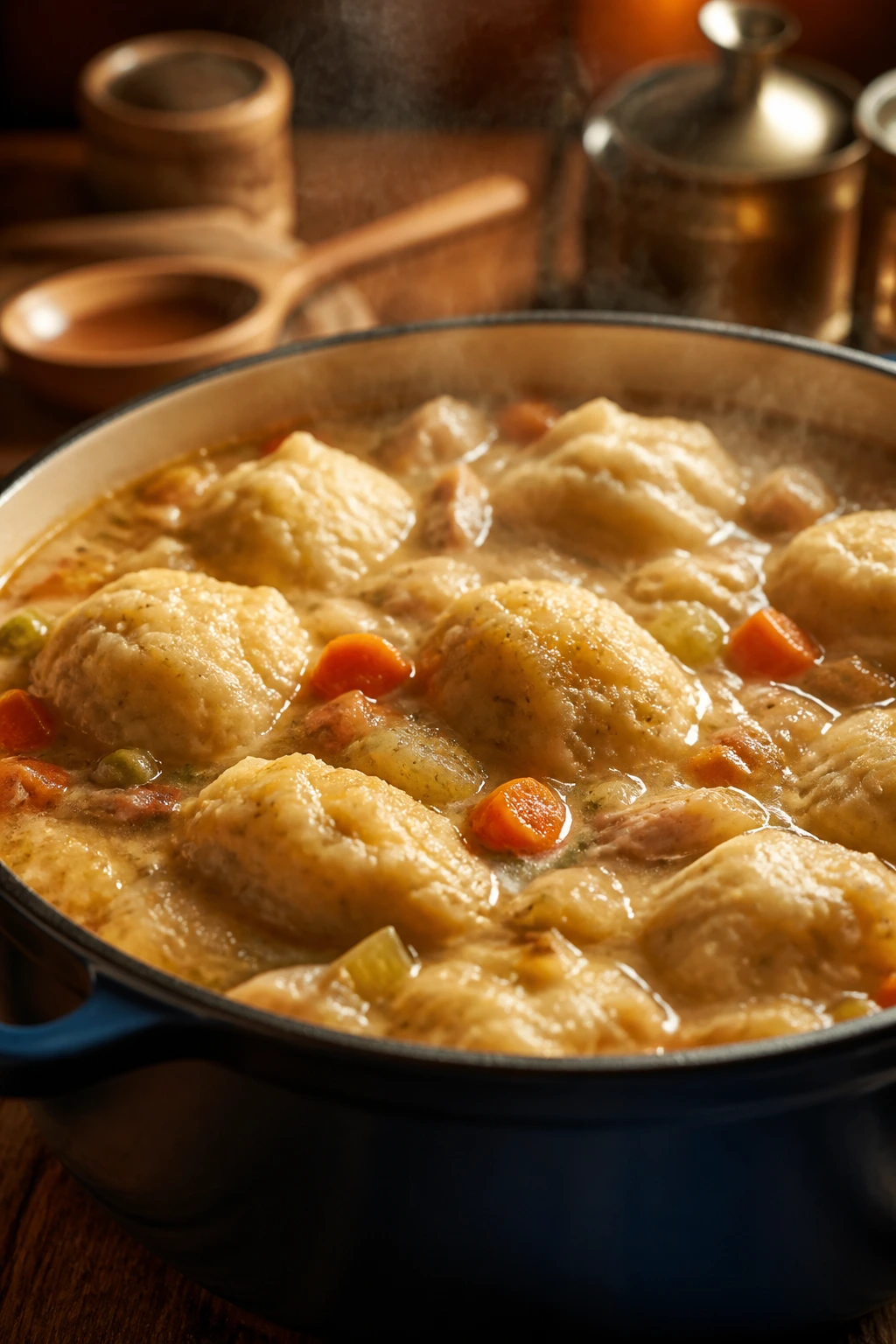
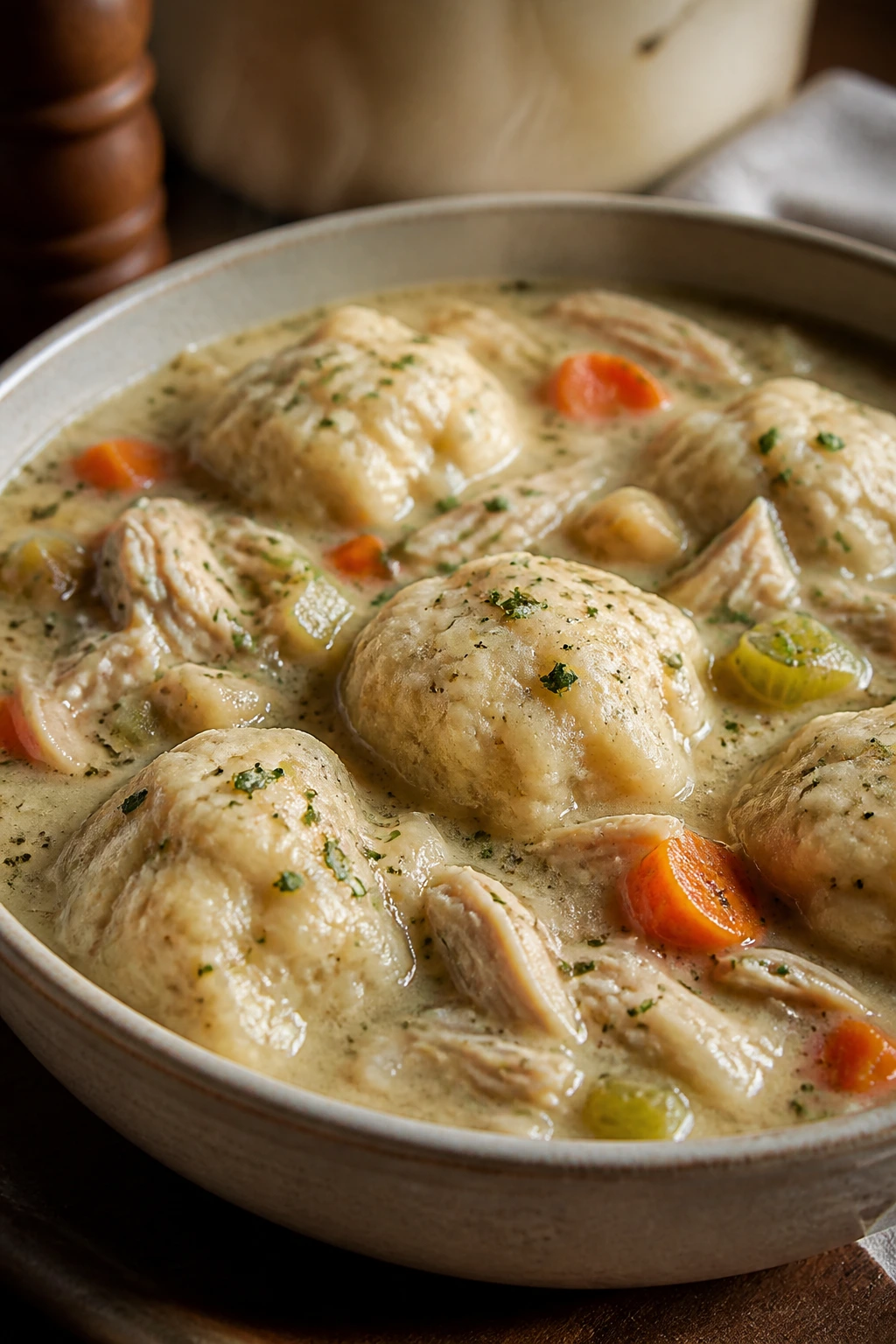
The smell alone tells you this one is a keeper: butter, onion, thyme, and chicken broth coming together in a way that fills the whole house. The stew is creamy but not heavy, with carrots and celery giving it a clean, sweet backbone, and the dumplings are tender enough to soak up the gravy without falling apart in the spoon.
I prefer chicken thighs here. They stay juicy under a long simmer, and they forgive you if dinner runs 10 minutes late, which is more useful than any glamorous ingredient ever will be.
The dumplings should feel soft and a little shaggy before they hit the pot. Smooth dough is the wrong goal. Smooth dough is how you end up with little hockey pucks floating in broth.
Why It Works: Chicken thighs bring enough fat and flavor to carry the broth, while the vegetables build a base that tastes like it had time to think. The dumplings cook by steam under a tight lid, so the tops stay pillowy instead of wet and gluey. If you keep the broth at a gentle simmer — not a rolling boil — the dumplings set evenly and the chicken stays tender rather than stringy.
Key Ingredients:
- 2 tablespoons unsalted butter
- 1 tablespoon olive oil
- 1 medium yellow onion, diced
- 2 carrots, diced
- 2 celery stalks, diced
- 3 cloves garlic, minced
- 1 1/2 pounds boneless, skinless chicken thighs, cut into 1-inch pieces
- 4 cups low-sodium chicken broth
- 1 cup whole milk or half-and-half
- 1 cup frozen peas
- 1 teaspoon fresh thyme leaves or 1/2 teaspoon dried thyme
- 1 teaspoon kosher salt, plus more to taste
- 1/2 teaspoon black pepper
For the Herb Dumplings:
- 1 1/2 cups all-purpose flour
- 2 teaspoons baking powder
- 1/2 teaspoon kosher salt
- 1 tablespoon chopped parsley
- 1 teaspoon chopped thyme
- 3 tablespoons cold unsalted butter, cubed
- 3/4 cup whole milk
Quick Steps:
- Brown the chicken: Warm the butter and oil in a Dutch oven over medium-high heat. Add the chicken in a single layer and cook for 3 to 4 minutes, just until the edges lose their raw sheen. You do not need deep browning here.
- Build the base: Stir in the onion, carrots, and celery. Cook for 5 to 6 minutes, until the onion turns translucent and the carrots start to soften. Add the garlic and cook for 30 seconds.
- Thicken lightly: Sprinkle the flour over the vegetables and stir for 1 minute so it turns pasty and coats everything evenly.
- Simmer the filling: Pour in the broth, then add the thyme, salt, and pepper. Bring it to a gentle simmer and cook for 12 to 15 minutes, until the chicken reaches 165°F and the broth thickens slightly.
- Add the creamy finish: Stir in the milk and peas. Keep the heat low so the soup does not boil hard.
- Mix and drop the dumplings: In a bowl, whisk the dumpling flour, baking powder, salt, parsley, and thyme. Cut in the butter, then stir in the milk just until a rough dough forms. Drop 2-tablespoon portions over the simmering stew.
- Steam and rest: Cover tightly and cook for 15 minutes without lifting the lid. Turn off the heat and rest for 5 minutes before serving.
Tips and Variations:
- Make-ahead: Cook the stew base earlier in the day, chill it, then reheat gently before topping with fresh dumplings.
- Flavor boost: A teaspoon of lemon juice at the end brightens the broth more than extra salt.
- Swap note: Rotisserie chicken works if you stir it in after the broth thickens; it only needs a few minutes to warm through.
2. Beef Stew with Parsley Dumplings
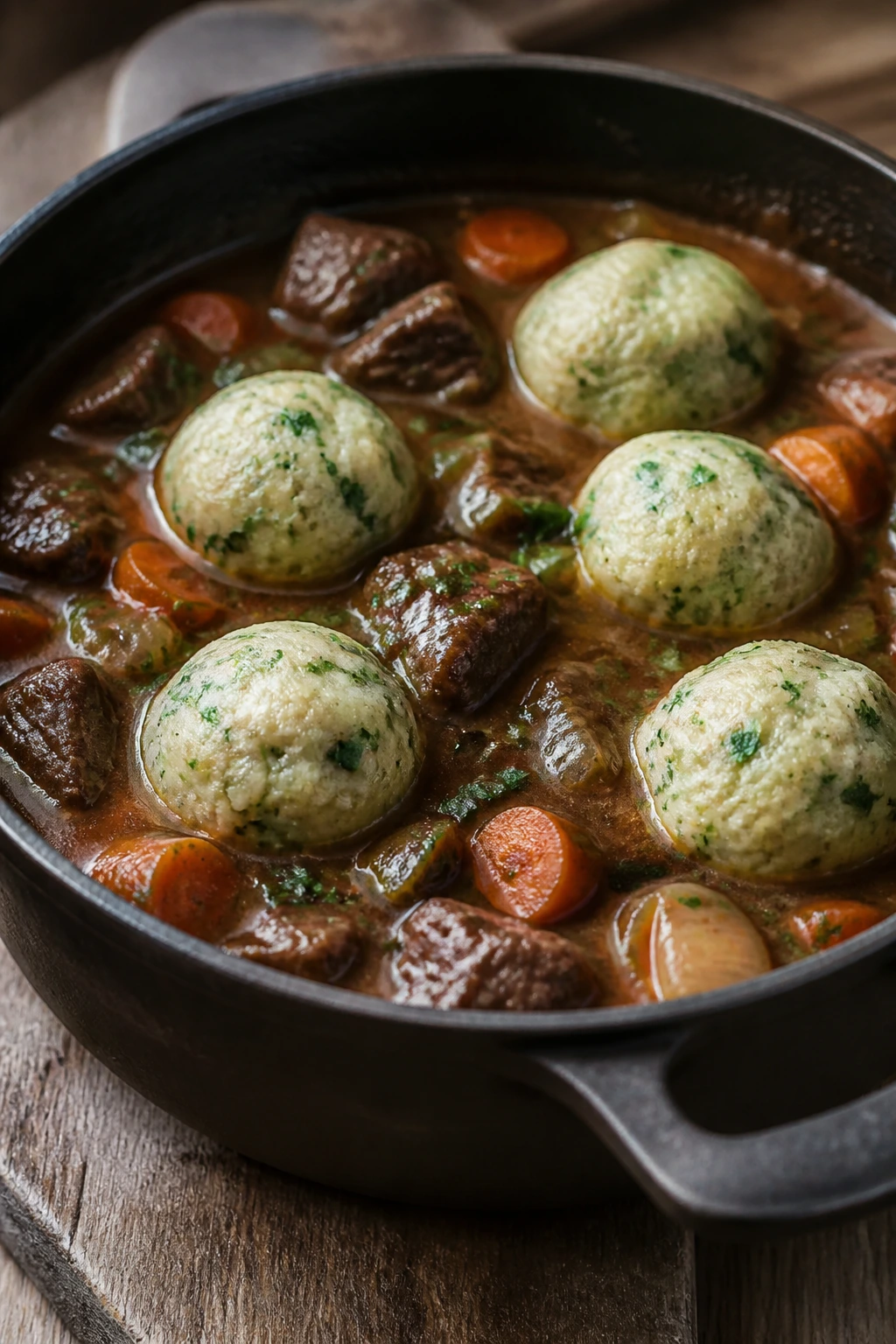
If chicken and dumplings is the soft-spoken comfort bowl, beef stew with dumplings is the one that walks in wearing boots. The beef gets deeply savory as it braises, the carrots turn sweet around the edges, and the parsley dumplings pick up just enough stew flavor to taste like they belong there from the start.
This is the dinner I make when I want people to stop wandering through the kitchen and sit down. It has weight. It has smell. It has that old-fashioned, spoon-required energy that makes a table go quiet for a minute.
The trick is patience. Chuck roast needs time to relax into tenderness, and the dumplings need the broth to stay calm while they steam on top.
Why It Works: Beef chuck has enough connective tissue to become spoon-tender after a steady simmer, which is exactly why it beats lean beef every time in a stew like this. Tomato paste and Worcestershire add depth without making the broth taste sour. The dumplings are a good match because parsley cuts through the richness and the steam keeps them airy rather than dense.
Key Ingredients:
- 2 pounds beef chuck, cut into 1 1/2-inch pieces
- 2 tablespoons all-purpose flour, for tossing
- 2 tablespoons vegetable oil
- 1 large yellow onion, chopped
- 3 carrots, cut into thick coins
- 8 ounces cremini mushrooms, halved
- 2 tablespoons tomato paste
- 1 cup dry red wine or additional beef broth
- 4 cups low-sodium beef broth
- 1 tablespoon Worcestershire sauce
- 2 bay leaves
- 1 teaspoon kosher salt
- 1/2 teaspoon black pepper
For the Parsley Dumplings:
- 1 1/2 cups all-purpose flour
- 2 teaspoons baking powder
- 1/2 teaspoon kosher salt
- 2 tablespoons chopped parsley
- 3 tablespoons cold unsalted butter, cubed
- 3/4 cup buttermilk or whole milk
Quick Steps:
- Sear the beef: Toss the beef with the flour, then brown it in the oil over medium-high heat for 5 to 7 minutes, working in batches so the pieces actually sear.
- Cook the vegetables: Add the onion, carrots, and mushrooms. Cook for 6 minutes, until the onion softens and the mushrooms release their liquid.
- Deepen the flavor: Stir in the tomato paste and cook for 1 minute. Pour in the wine and scrape the bottom of the pot to release the browned bits.
- Simmer until tender: Add the broth, Worcestershire, bay leaves, salt, and pepper. Bring to a simmer, cover partly, and cook for 60 to 75 minutes, until the beef is tender enough to cut with a spoon.
- Make the dumpling dough: Mix the flour, baking powder, salt, and parsley. Cut in the butter, then add the milk and stir only until combined.
- Steam the dumplings: Drop tablespoons of dough over the simmering stew. Cover tightly and cook for 15 minutes. Do not lift the lid early or the dumplings can turn gummy.
- Finish and serve: Remove the bay leaves, taste for salt, and ladle into wide bowls so the dumplings stay intact.
Tips and Variations:
- Wine-free version: Replace the wine with beef broth plus 1 tablespoon red wine vinegar for brightness.
- Hearty add-in: A handful of pearl onions or diced turnips gives this stew a deeper winter feel.
- Texture note: If the broth looks too thin before the dumplings go in, simmer uncovered for 5 to 10 minutes first.
3. Turkey Pot Pie with Biscuit Dumplings
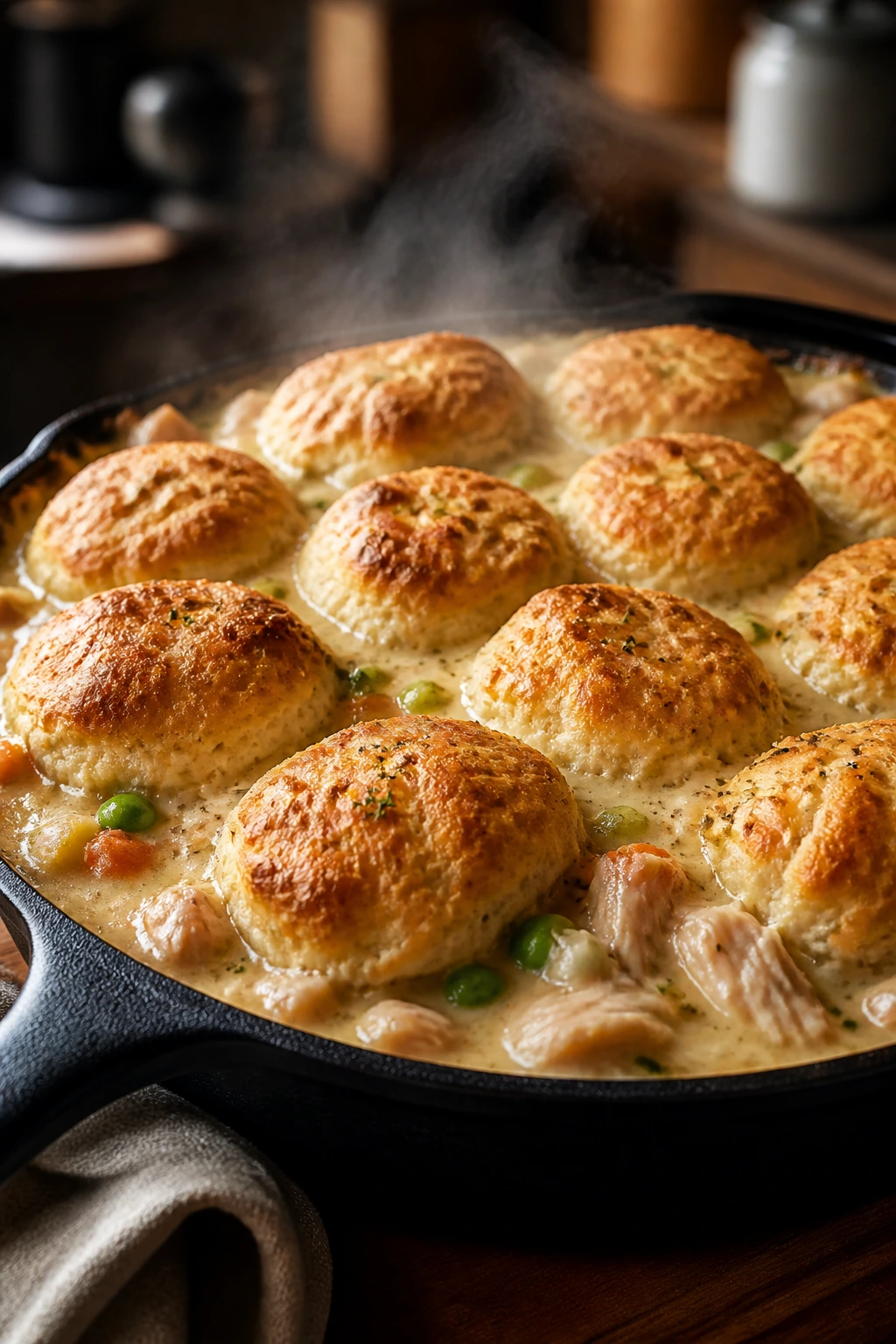
Leftover turkey stops feeling like leftovers the second it gets tucked under a creamy pot pie filling and topped with biscuit-style dumplings. The bottom layer tastes like classic pot pie — celery, carrots, onion, gravy — while the top bakes into golden, tender puffs that crack a little when you split them with a spoon.
This is the friendliest reset dinner in the bunch. If the fridge is crowded with turkey from another meal, this recipe clears space and makes everyone forget where the meat came from in the first place.
I like this version baked in a Dutch oven or ovenproof skillet because the dumplings get color on top. Soft is nice. Soft with browned edges is better.
Why It Works: Cooked turkey needs only enough heat to warm through, which makes it perfect for a creamy pot pie filling that’s already rich and seasoned. A roux made from butter and flour gives the sauce body so the dumplings don’t sink into soup. Baking the dumplings on top at 400°F gives you a crusty lid with a soft middle, which is the exact texture people hope for and rarely get with canned shortcuts.
Key Ingredients:
- 3 tablespoons unsalted butter
- 1 medium yellow onion, chopped
- 2 celery stalks, diced
- 2 carrots, diced
- 1/4 cup all-purpose flour
- 3 cups turkey broth or chicken broth
- 1/2 cup whole milk
- 3 cups cooked turkey, shredded or chopped
- 1 1/2 cups frozen mixed vegetables
- 1 teaspoon poultry seasoning
- 1/2 teaspoon kosher salt
- 1/2 teaspoon black pepper
For the Biscuit Dumplings:
- 2 cups all-purpose flour
- 2 teaspoons baking powder
- 1/2 teaspoon kosher salt
- 1 teaspoon dried sage or thyme
- 3 tablespoons cold unsalted butter, cubed
- 3/4 cup whole milk
Quick Steps:
- Preheat and prep: Heat the oven to 400°F and place a rack in the center. If your skillet isn’t oven-safe, transfer the filling to a baking dish.
- Cook the vegetables: Melt the butter over medium heat. Add the onion, celery, and carrots and cook for 6 to 7 minutes, until they soften and smell sweet.
- Make the gravy: Stir in the flour and cook for 1 minute. Slowly whisk in the broth and milk, then simmer for 3 to 5 minutes until the sauce thickens.
- Add the filling: Stir in the turkey, frozen vegetables, poultry seasoning, salt, and pepper. The mixture should be thick enough to mound slightly, not run like soup.
- Mix the dumpling dough: Combine the flour, baking powder, salt, and sage. Cut in the butter, then stir in the milk just until a soft dough forms.
- Top and bake: Drop 2-tablespoon portions of dough over the filling, leaving little gaps between them. Bake for 20 to 25 minutes, until the dumplings are puffed and golden and the filling is bubbling at the edges.
- Rest briefly: Let the pan stand for 5 minutes before serving so the gravy settles.
Tips and Variations:
- Shortcut: Use store-bought cooked turkey or rotisserie chicken when that’s what’s in the fridge.
- Flavor tweak: A pinch of nutmeg in the gravy makes the cream sauce taste rounder.
- Good to know: If you want a more biscuit-like top, brush the dumplings with melted butter before baking.
4. Creamy Sausage, Kale, and Potato Dumplings
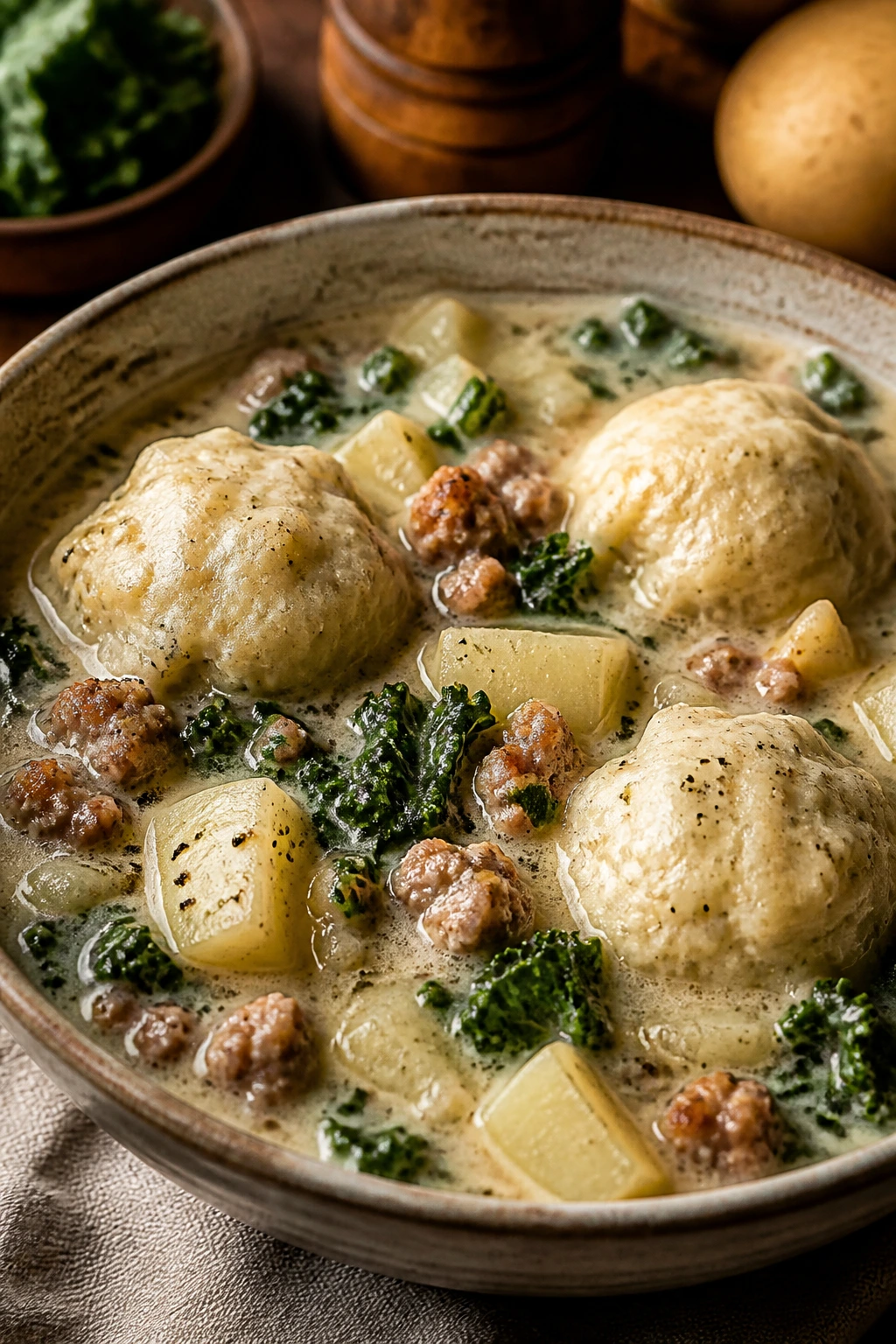
This one tastes like a cross between sausage soup and a farmhouse supper. The potatoes give the broth body, the kale keeps its green bite, and the sausage does the heavy lifting with fennel, pepper, and a little fat that spreads flavor through the whole pot. It’s hearty enough for cold-weather appetites, but it doesn’t sit like a brick.
I’d call this the least fussy dinner in the group. It asks for simple pantry food, a pound of sausage, and a pot with a lid. That’s the whole pitch.
If you want a dinner that feels substantial without needing a roast or a braise, this is the one I’d point to first.
Why It Works: Potatoes release starch as they simmer, which helps thicken the broth without adding a floury taste. Italian sausage seasons the entire pot from the inside out, so you do not need a long list of spices to make it taste complete. The dumplings, especially if you add Parmesan and sage, land somewhere between biscuit and savory sponge, which is exactly what this broth wants.
Key Ingredients:
- 1 pound Italian sausage, mild or hot
- 1 tablespoon olive oil, if needed
- 1 medium yellow onion, diced
- 3 cloves garlic, minced
- 1 pound Yukon gold potatoes, cut into 3/4-inch cubes
- 4 cups low-sodium chicken broth
- 1 cup half-and-half
- 4 cups chopped kale, stems removed
- 1 teaspoon dried thyme
- 1/2 teaspoon crushed fennel seed, optional
- 1/2 teaspoon black pepper
For the Sage Dumplings:
- 1 1/2 cups all-purpose flour
- 2 teaspoons baking powder
- 1/2 teaspoon kosher salt
- 2 tablespoons grated Parmesan
- 1 tablespoon chopped fresh sage or 1 teaspoon dried sage
- 3 tablespoons cold unsalted butter, cubed
- 3/4 cup whole milk
Quick Steps:
- Brown the sausage: Cook the sausage over medium heat until no pink remains, breaking it into crumbles. If the pan looks dry, add the olive oil.
- Soften the aromatics: Stir in the onion and cook for 4 minutes. Add the garlic and cook for 30 seconds, just until fragrant.
- Simmer the potatoes: Add the potatoes, broth, thyme, fennel seed, and pepper. Bring to a simmer and cook for 12 to 15 minutes, until the potatoes are tender at the edges.
- Finish the broth: Stir in the half-and-half and kale. Cook for 2 to 3 minutes, until the kale darkens and softens.
- Mix the dumplings: Combine the flour, baking powder, salt, Parmesan, and sage. Cut in the butter, then stir in the milk just until the dough comes together.
- Steam the dumplings: Drop spoonfuls of dough onto the simmering pot. Cover and cook for 15 minutes over low heat. Keep the simmer gentle so the dumplings rise instead of splashing apart.
- Serve hot: Taste and add salt only after the dumplings are done, since the sausage and Parmesan already bring plenty of salt.
Tips and Variations:
- Vegetable boost: Add sliced leeks with the onion for a sweeter base.
- Lighter option: Use chicken sausage and swap the half-and-half for whole milk.
- Finish idea: A spoonful of whole-grain mustard stirred into the broth gives this a sharper edge.
5. Coconut Curry Chicken and Dumplings
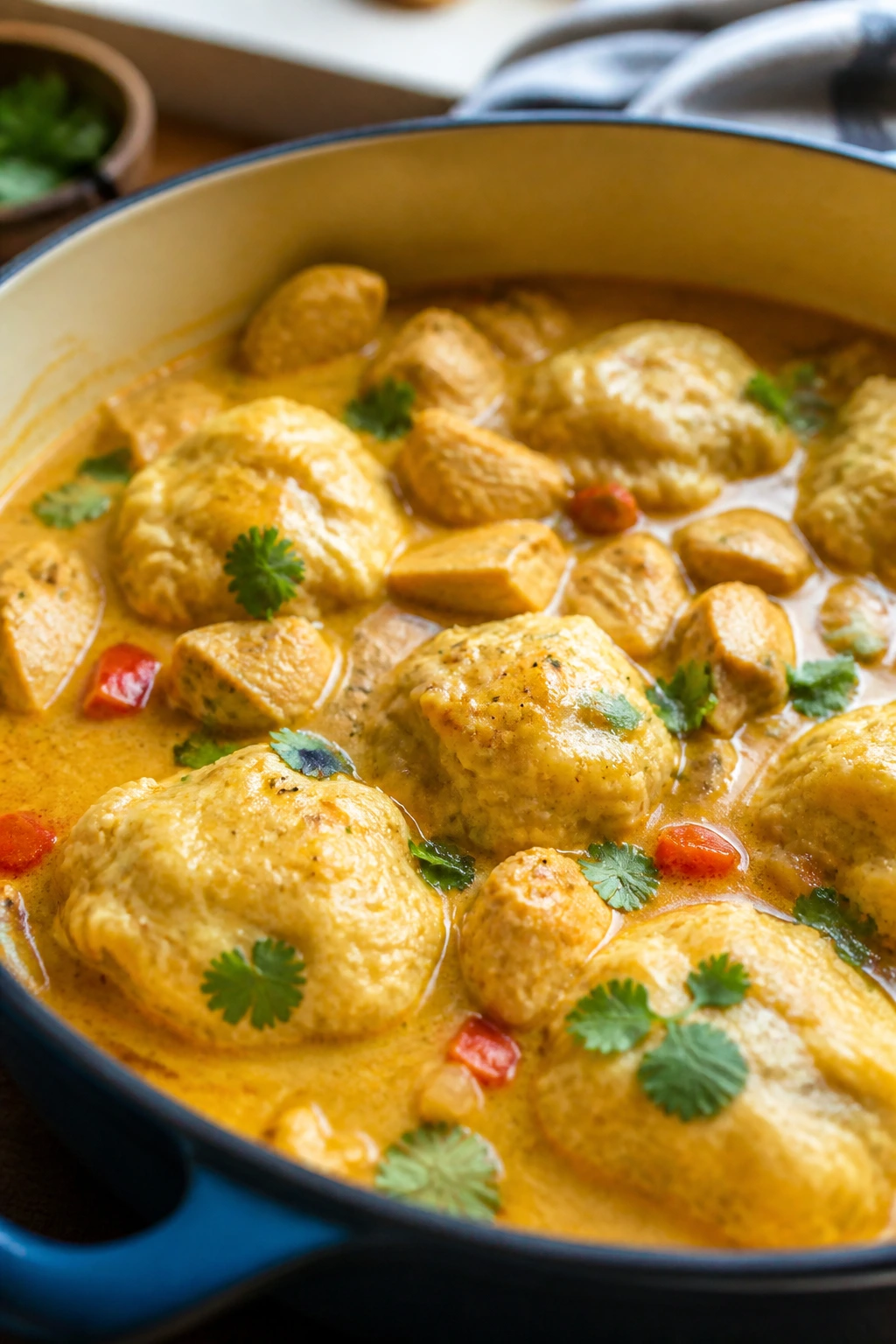
Curry and dumplings sound like they should argue, but they don’t. The coconut milk makes the broth silky, the red curry paste gives it warmth and color, and the dumplings soak up the sauce like they were built for the job. It’s a little different from the classic version, but not so different that it scares anyone away from the table.
This is the dinner I’d make when I want something cozy that doesn’t taste like the same old cozy. Ginger, garlic, curry, lime, and soft dumplings give the whole pot a lively smell before the first spoon hits the bowl.
The key is restraint with spice. You want the curry to be present, not loud enough to chase the kids from their chairs.
Why It Works: Coconut milk rounds out curry paste so the broth tastes rich instead of sharp. Chicken thighs hold up to the simmer, and the dumplings — especially with a little cilantro or coconut milk in the dough — echo the same soft, creamy feel without turning sweet. A splash of lime at the end keeps the whole pot from feeling heavy.
Key Ingredients:
- 1 1/2 pounds boneless, skinless chicken thighs, cut into bite-size pieces
- 1 tablespoon neutral oil
- 1 medium yellow onion, sliced
- 3 cloves garlic, minced
- 1 tablespoon grated fresh ginger
- 2 tablespoons red curry paste
- 1 can (13.5 ounces) full-fat coconut milk
- 2 cups low-sodium chicken broth
- 1 cup thinly sliced carrots
- 1 cup baby spinach
- 1 tablespoon soy sauce
- 1 tablespoon lime juice
For the Cilantro Dumplings:
- 1 1/2 cups all-purpose flour
- 2 teaspoons baking powder
- 1/2 teaspoon kosher salt
- 2 tablespoons chopped cilantro
- 2 tablespoons melted unsalted butter or coconut oil
- 3/4 cup coconut milk or whole milk
Quick Steps:
- Brown the chicken: Heat the oil over medium-high heat and cook the chicken for 3 to 4 minutes, just until lightly colored on the outside.
- Build the curry base: Add the onion and cook for 4 minutes. Stir in the garlic, ginger, and curry paste, then cook for 30 seconds to wake up the spices.
- Add the liquids: Pour in the coconut milk and broth, then stir in the carrots and soy sauce. Bring to a gentle simmer and cook for 12 to 15 minutes, until the chicken reaches 165°F and the carrots are tender.
- Mix the dumplings: Combine the flour, baking powder, salt, and cilantro. Stir in the melted butter and milk just until the dough comes together.
- Steam the dumplings: Drop spoonfuls of dough over the simmering curry. Cover tightly and cook for 15 minutes without opening the lid.
- Finish the greens: Stir in the spinach and lime juice after the dumplings are cooked. The spinach should wilt in less than a minute.
- Taste and adjust: Add more lime or soy sauce if the broth needs brightness or salt.
Tips and Variations:
- Heat control: If you know your crowd likes mild food, start with 1 tablespoon curry paste and add more at the end.
- Extra herb note: A little basil or mint with the cilantro gives the broth a fresher finish.
- Serving idea: Spoon this over rice if you want it to feed more people without making the pot feel thin.
6. Tomato Basil Meatball Dumplings
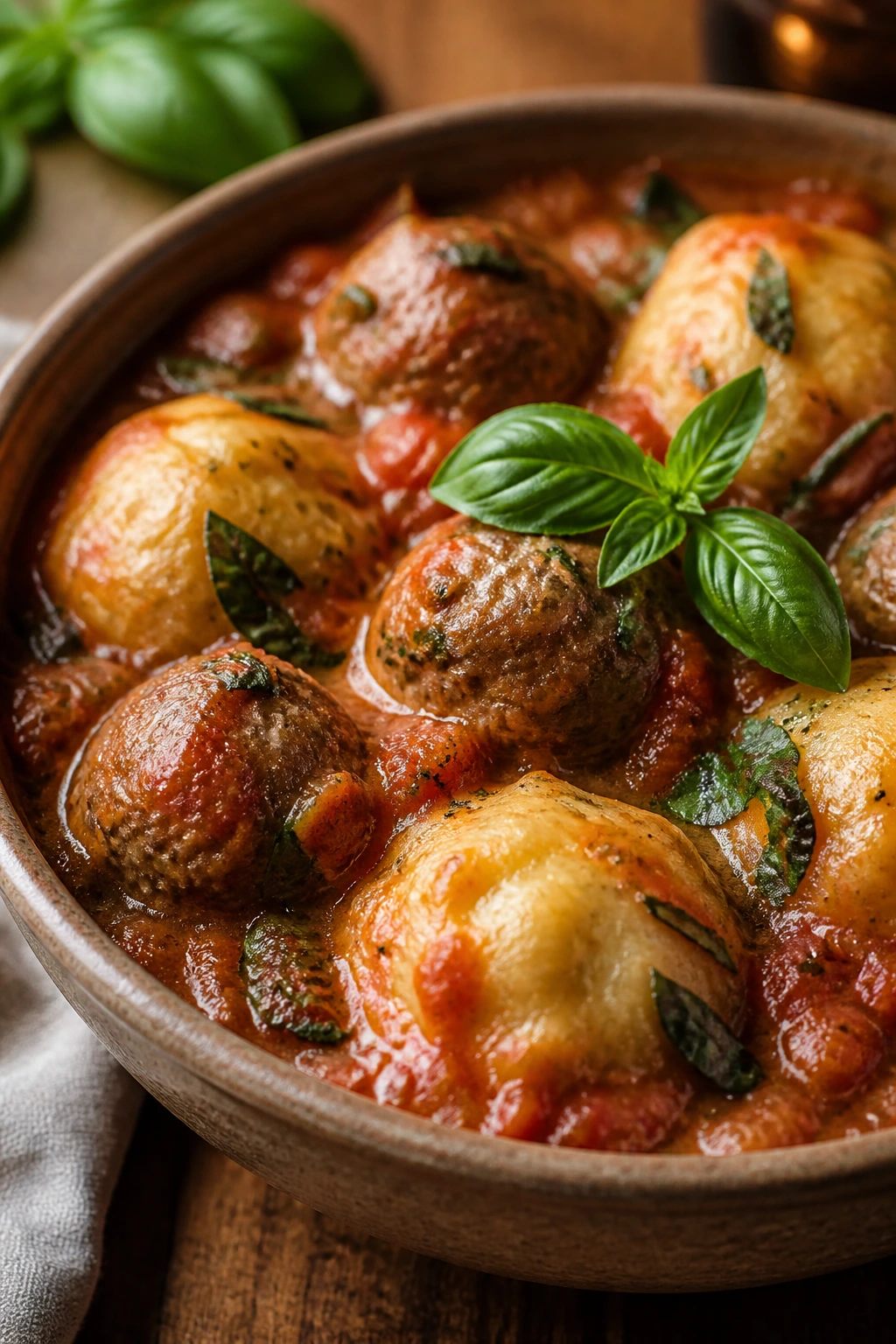
This is the dinner that sits somewhere between Italian wedding soup and a baked pasta mood, only less heavy and far easier to pull off on a school night. The tomato sauce is bright and savory, the meatballs stay juicy, and the dumplings cook right in the sauce so every bite tastes finished.
I like this one because it gives kids something to point at. Meatballs, dumplings, tomato sauce. Nothing mysterious. Nothing that needs a speech.
The basil belongs at the end, not the start. Let it keep some of its perfume.
Why It Works: Browning the meatballs first gives the sauce a deeper flavor than simmering raw meat directly in tomatoes. Crushed tomatoes hold enough body to support the dumplings without turning watery, and the dumplings themselves absorb tomato and herb flavor while staying soft in the center. A little Parmesan in the meatballs and a little basil in the dumplings tie the whole thing together.
Key Ingredients:
- 1 1/2 pounds ground beef, turkey, or a mix
- 1 large egg
- 1/2 cup plain breadcrumbs
- 1/4 cup grated Parmesan
- 2 cloves garlic, minced
- 1 teaspoon kosher salt
- 1/2 teaspoon black pepper
- 2 tablespoons olive oil
- 1 medium yellow onion, diced
- 2 tablespoons tomato paste
- 1 can (28 ounces) crushed tomatoes
- 1 cup low-sodium chicken broth or water
- 1 teaspoon dried oregano
- 1 tablespoon chopped basil, plus more for serving
For the Basil Dumplings:
- 1 1/2 cups all-purpose flour
- 2 teaspoons baking powder
- 1/2 teaspoon kosher salt
- 1 tablespoon chopped basil
- 3 tablespoons cold unsalted butter, cubed
- 3/4 cup whole milk
- 1/2 cup shredded mozzarella, optional
Quick Steps:
- Mix the meatballs: Combine the ground meat, egg, breadcrumbs, Parmesan, garlic, salt, and pepper. Roll into 1 1/2-inch meatballs.
- Brown the meatballs: Heat the oil in a wide pot over medium-high heat and brown the meatballs for 4 to 5 minutes, turning carefully so they keep their shape. They do not need to cook through yet.
- Build the sauce: Add the onion and cook for 4 minutes. Stir in the tomato paste and cook for 1 minute, then pour in the crushed tomatoes, broth, oregano, and basil.
- Simmer the meatballs: Return the meatballs to the sauce and cook for 10 to 12 minutes, until they reach 160°F for beef or turkey and the sauce tastes round, not raw.
- Make the dumplings: Mix the flour, baking powder, salt, and basil. Cut in the butter, then stir in the milk and mozzarella if using.
- Cook under the lid: Drop the dumpling dough over the simmering sauce. Cover and cook for 15 minutes over low heat.
- Finish with basil: Scatter fresh basil over the top right before serving so it stays bright.
Tips and Variations:
- Cheese swap: Provolone or fontina works if you want a softer, stretchier dumpling.
- Sauce note: If your tomatoes taste sharp, a pinch of sugar or a dab of butter smooths them out.
- Kid move: Make the meatballs smaller so they’re easier for little hands to spear or scoop.
7. Mushroom and White Bean Dumplings
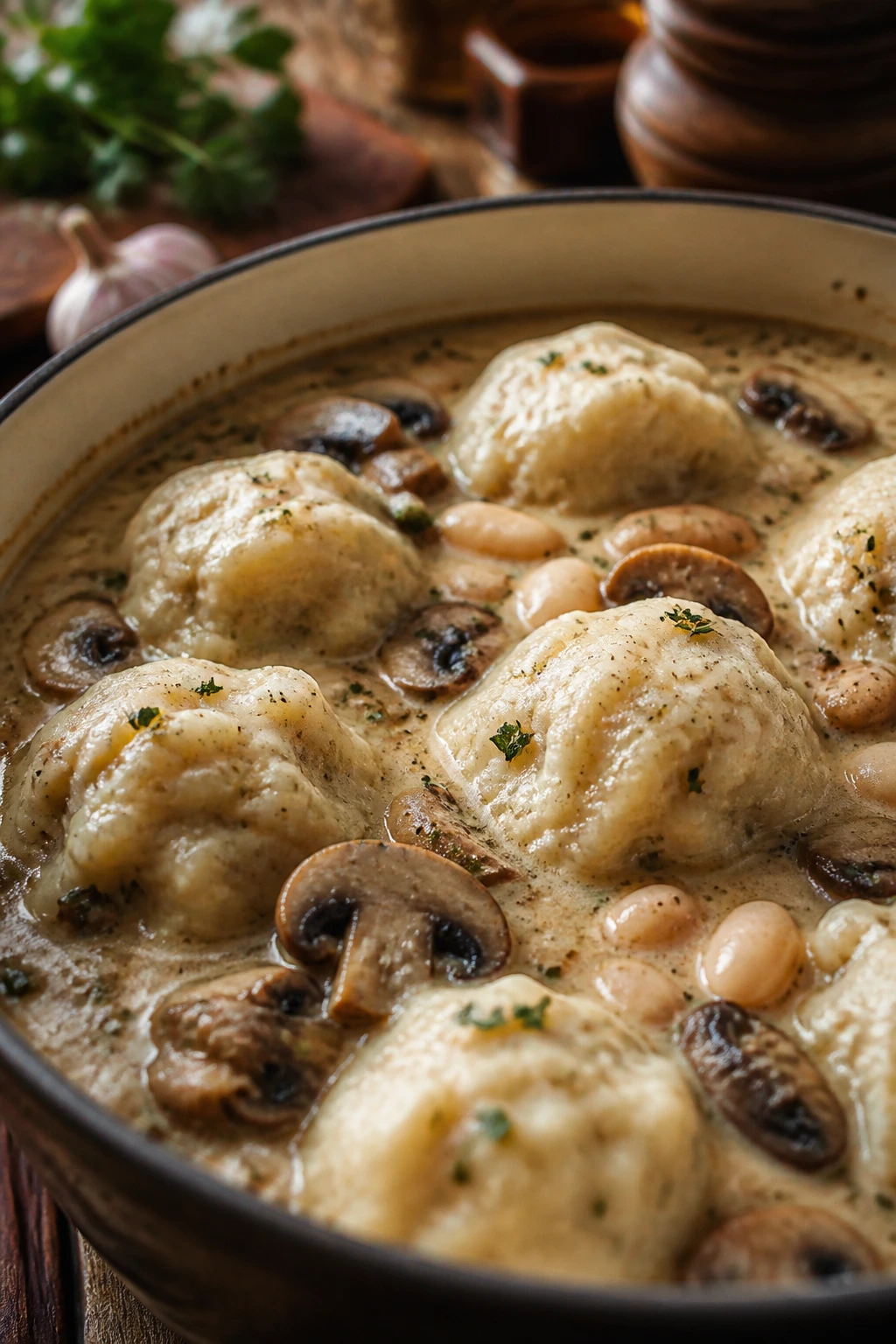
This is the vegetarian dinner that eats like a full meal instead of a side dish pretending to be dinner. Mushrooms bring the savory depth, white beans make the broth feel substantial, and the dumplings carry enough butter and parsley to keep the whole pot from tasting like penance.
I reach for this one when I want something comforting but don’t want to lean on meat or cheese to carry the flavor. Mushrooms are doing the hard work here, and they’re doing it well.
There’s also a nice rhythm to it: soft beans, slippery mushrooms, fluffy dumplings. It’s plain in the best sense.
Why It Works: Mushrooms brown before they simmer, which concentrates their flavor and keeps the broth from turning muddy. White beans add body and protein while staying mild enough to let the thyme and parsley shine. The dumplings bring the richness back, so the bowl doesn’t feel too lean or too brothy.
Key Ingredients:
- 2 tablespoons unsalted butter
- 1 tablespoon olive oil
- 1 pound cremini or baby bella mushrooms, sliced
- 1 medium yellow onion, diced
- 2 carrots, diced
- 3 cloves garlic, minced
- 2 cans (15 ounces each) cannellini beans, drained and rinsed
- 4 cups low-sodium vegetable broth
- 1 cup half-and-half or unsweetened oat cream
- 1 teaspoon dried thyme
- 1/2 teaspoon black pepper
- 2 cups baby spinach
For the Parsley Dumplings:
- 1 1/2 cups all-purpose flour
- 2 teaspoons baking powder
- 1/2 teaspoon kosher salt
- 2 tablespoons chopped parsley
- 3 tablespoons cold unsalted butter, cubed
- 3/4 cup whole milk
Quick Steps:
- Brown the mushrooms: Heat the butter and oil over medium-high heat. Add the mushrooms and cook for 6 to 8 minutes, until they release their liquid and start to brown at the edges.
- Add the vegetables: Stir in the onion and carrots and cook for 5 minutes. Add the garlic and cook for 30 seconds.
- Build the stew: Stir in the beans, broth, thyme, and pepper. Simmer for 10 minutes so the carrots soften and the broth picks up the mushroom flavor.
- Cream it lightly: Stir in the half-and-half and spinach. Cook just until the spinach wilts.
- Mix the dumplings: Combine the flour, baking powder, salt, and parsley. Cut in the butter, then add the milk and stir only until combined.
- Steam on top: Drop spoonfuls of dough over the simmering stew. Cover tightly and cook for 15 minutes.
- Rest and serve: Let the dumplings settle for 3 to 5 minutes before ladling into bowls.
Tips and Variations:
- More depth: A teaspoon of soy sauce or miso stirred into the broth deepens the savory note.
- Hearty add-in: A handful of diced potatoes gives the pot more body if you want a heavier dinner.
- Bright finish: Lemon zest over the top makes the mushrooms taste less flat.
8. Ham, Pea, and Cheddar Dumplings
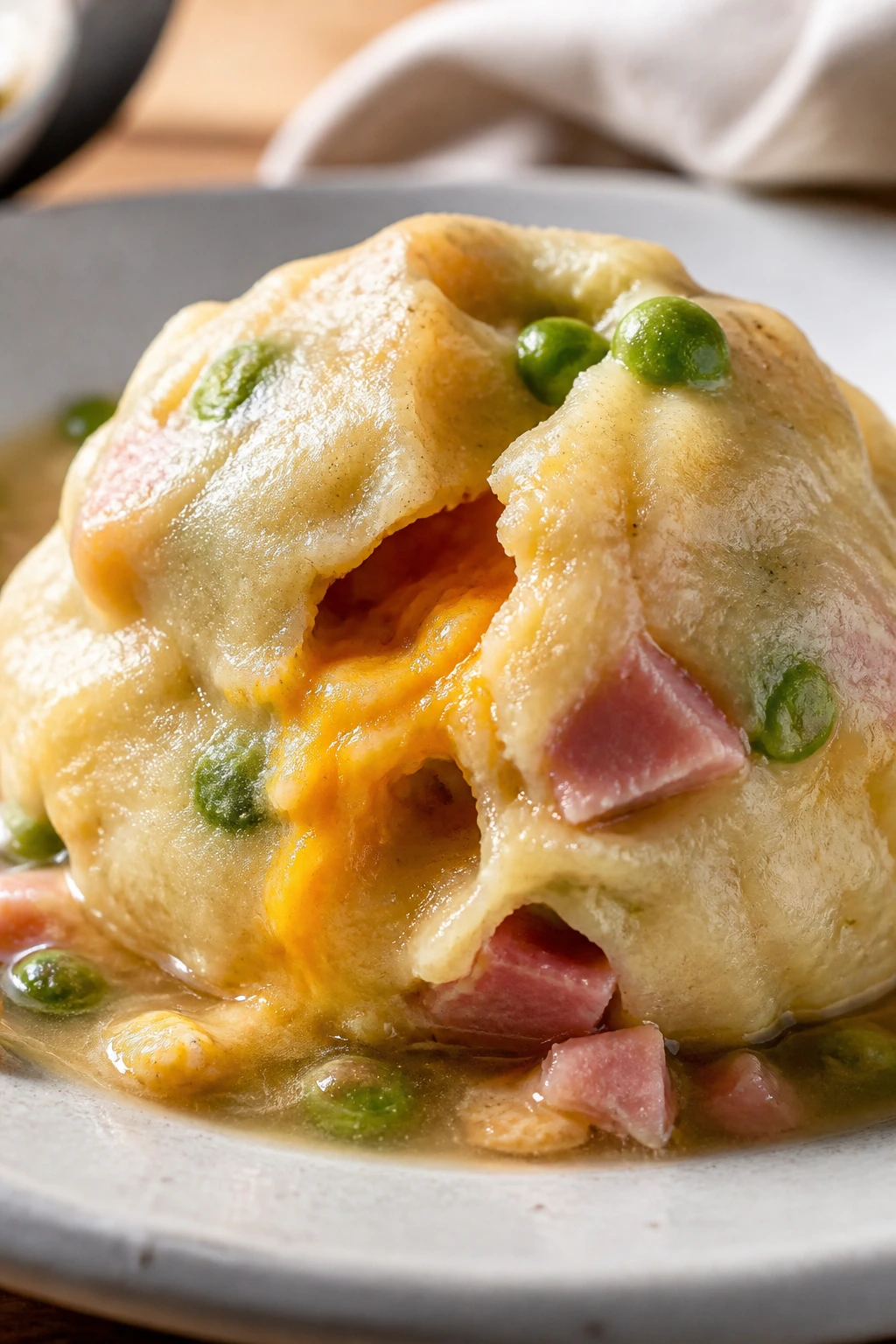
This one tastes like a smart use of leftovers, except nobody has to know that part. Ham gives the broth a salty backbone, peas bring sweetness, and cheddar in the dumplings turns every bite into something a little richer than you expected. It’s straightforward in the best way.
If your family likes split-pea soup, ham casserole, or anything with melted cheese on top, this dinner should make friends quickly. It’s also one of the easiest ways to make a fridge cleanout feel planned.
I especially like the sharp cheddar here. Mild cheese disappears. Sharp cheese shows up.
Why It Works: Ham seasons the broth from the start, which means you can keep the rest of the ingredients simple. Cheddar in the dumplings adds flavor and helps the dough bake into something with a little more body. Peas go in at the end so they stay bright and sweet rather than gray and mushy.
Key Ingredients:
- 2 tablespoons unsalted butter
- 1 medium yellow onion, diced
- 2 celery stalks, diced
- 2 carrots, diced
- 2 cups diced cooked ham
- 1 large potato, peeled and diced
- 4 cups low-sodium chicken broth
- 1 cup whole milk
- 1 cup frozen peas
- 1 tablespoon Dijon mustard
- 1/2 teaspoon black pepper
For the Cheddar Dumplings:
- 1 1/2 cups all-purpose flour
- 2 teaspoons baking powder
- 1/2 teaspoon kosher salt
- 1 cup shredded sharp cheddar
- 2 tablespoons chopped chives
- 3 tablespoons cold unsalted butter, cubed
- 3/4 cup whole milk
Quick Steps:
- Start the base: Melt the butter over medium heat. Add the onion, celery, and carrots and cook for 5 to 6 minutes, until the onion softens.
- Add the ham and potato: Stir in the ham, potato, broth, mustard, and pepper. Bring to a simmer and cook for 12 to 15 minutes, until the potato is tender.
- Add the milk and peas: Stir in the milk and peas and keep the pot at a gentle simmer.
- Mix the dumplings: Combine the flour, baking powder, salt, cheddar, and chives. Cut in the butter, then add the milk and stir just until combined.
- Drop and cover: Spoon the dumplings over the simmering pot and cover tightly. Cook for 15 minutes over low heat. Do not let the sauce boil hard or the dumplings can collapse at the edges.
- Taste before serving: Ham brings salt, so check the broth before adding more.
Tips and Variations:
- Ingredient swap: Cooked diced turkey works well in place of ham.
- Sharper finish: A spoonful of whole-grain mustard stirred in at the end gives the broth a little bite.
- Bread note: If you want a thicker pot, dice the potato a touch smaller so it breaks down slightly.
9. Pork, Cabbage, and Ginger Dumplings
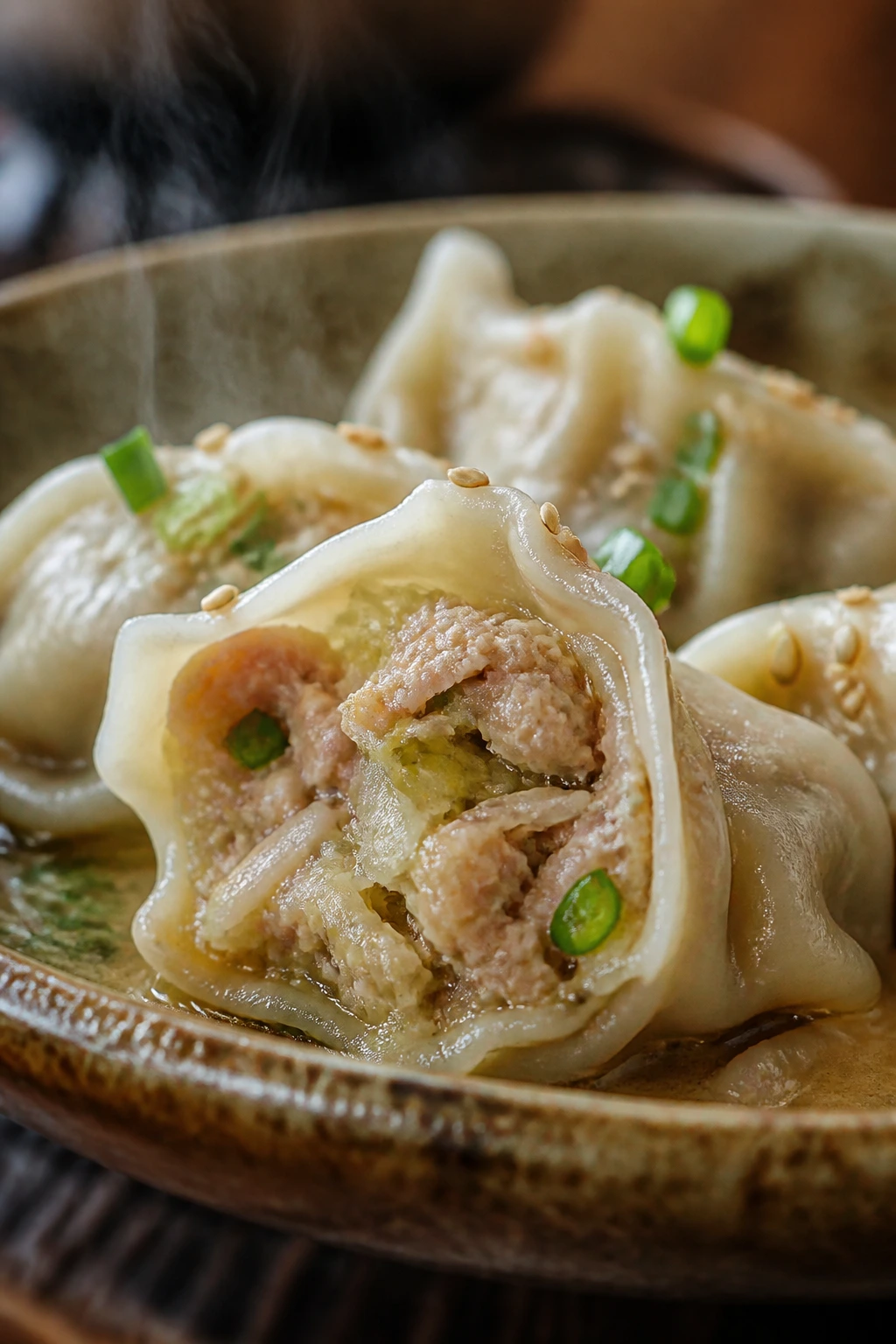
This is the boldest bowl in the group, and I mean that in a good way. Pork and cabbage have a long history together for a reason: the cabbage softens into the broth, the pork gives it body, and the ginger keeps the whole thing from feeling dull. The dumplings pick up a little sesame aroma and make the pot feel complete.
A lot of cabbage dinners go wrong because they taste watery. This one avoids that by browning the pork first and giving the broth enough seasoning to stand up to the cabbage’s sweetness.
It’s the kind of meal that tastes different from the usual chicken pot, but still comforting enough for a family table.
Why It Works: Ground pork seasons the broth more quickly than a whole cut of meat, and its fat carries ginger, garlic, and soy sauce through the pot. Cabbage softens into silky ribbons without losing all texture if you keep the simmer gentle. The dumplings, flavored with a touch of scallion or sesame, echo the savory profile without competing with it.
Key Ingredients:
- 1 pound ground pork
- 1 tablespoon sesame oil
- 1 medium onion, thinly sliced
- 3 cups green cabbage, thinly sliced
- 2 carrots, julienned or thinly sliced
- 3 cloves garlic, minced
- 1 tablespoon grated fresh ginger
- 4 cups low-sodium chicken broth
- 1 tablespoon soy sauce
- 1 tablespoon rice vinegar
- 1 teaspoon chili crisp or a pinch of red pepper flakes, optional
For the Scallion Dumplings:
- 1 1/2 cups all-purpose flour
- 2 teaspoons baking powder
- 1/2 teaspoon kosher salt
- 2 tablespoons chopped scallions
- 3 tablespoons cold unsalted butter, cubed
- 3/4 cup whole milk
Quick Steps:
- Brown the pork: Heat the sesame oil in a pot over medium-high heat. Add the pork and cook for 4 to 5 minutes, breaking it up until no pink remains.
- Add the aromatics: Stir in the onion, cabbage, carrots, garlic, and ginger. Cook for 5 minutes, until the cabbage starts to wilt.
- Simmer the broth: Add the broth, soy sauce, vinegar, and chili crisp if using. Simmer for 10 to 12 minutes, until the cabbage is tender but not mushy.
- Mix the dumplings: Combine the flour, baking powder, salt, and scallions. Cut in the butter, then add the milk and stir just until the dough comes together.
- Steam gently: Drop dumplings over the simmering pot, cover, and cook for 15 minutes. Keep the heat low so the broth stays at a soft bubble.
- Check the pork: The pork should reach 160°F before serving.
- Finish with taste: Add a touch more vinegar if the broth tastes too round.
Tips and Variations:
- Milder version: Skip the chili crisp and use only ginger for the main seasoning.
- Cabbage tip: Slice it thin so it melts into the broth instead of staying crunchy.
- Serving idea: A few drops of toasted sesame oil over the bowls make the aroma pop.
10. Lentil and Sweet Potato Dumplings
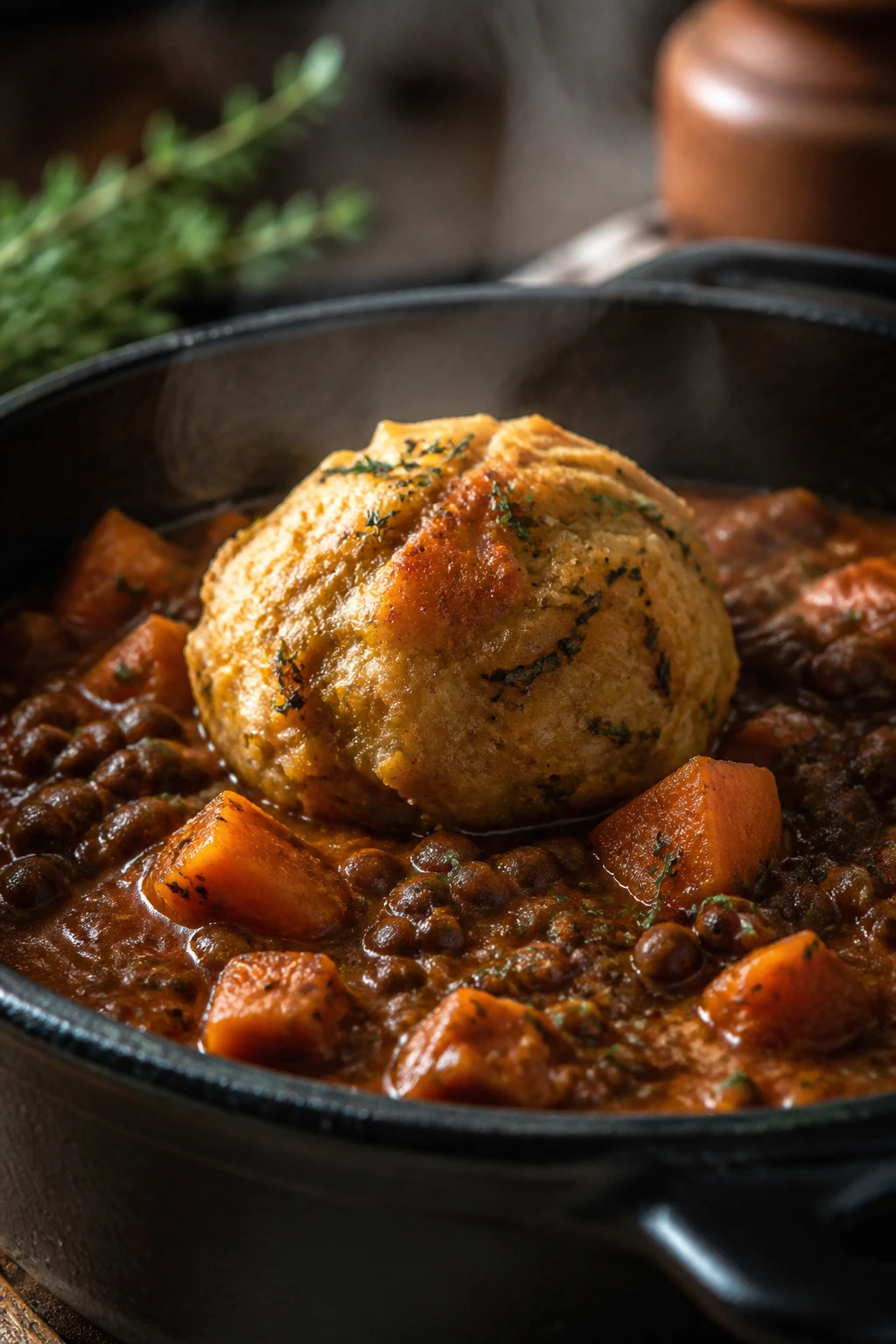
This is the vegetarian dinner that still feels sturdy enough for a table full of hungry people. The lentils give the broth body, the sweet potato brings a soft sweetness, and the dumplings soak up the smoked paprika and thyme like they were made for it. It’s rich without being heavy.
I like this recipe on nights when the fridge is more vegetable than meat, but nobody wants to hear the word “salad.” That’s where lentils earn their keep. They’re humble and dependable, and they play well with the dumplings.
The lemon at the end matters. Without it, the pot can taste a little sleepy.
Why It Works: Brown lentils hold their shape better than red lentils, so the stew stays textured instead of turning to mash. Sweet potato softens enough to thicken the broth naturally, and smoked paprika gives the whole pot a deeper, almost roasted flavor. The dumplings ride on top and keep the meal feeling like comfort food rather than a health project.
Key Ingredients:
- 2 tablespoons olive oil
- 1 medium yellow onion, diced
- 2 carrots, diced
- 1 medium sweet potato, peeled and diced
- 3 cloves garlic, minced
- 1 cup brown lentils, rinsed
- 6 cups low-sodium vegetable broth
- 1 tablespoon smoked paprika
- 1 teaspoon ground cumin
- 1 teaspoon kosher salt
- 1/2 teaspoon black pepper
- 4 cups baby spinach
- 1 tablespoon lemon juice
For the Herb Dumplings:
- 1 1/2 cups all-purpose flour
- 2 teaspoons baking powder
- 1/2 teaspoon kosher salt
- 2 tablespoons chopped parsley
- 3 tablespoons cold unsalted butter, cubed
- 3/4 cup whole milk
Quick Steps:
- Cook the vegetables: Warm the oil over medium heat. Add the onion and carrots and cook for 5 minutes, until the onion softens.
- Build the stew: Stir in the sweet potato and garlic, then add the lentils, broth, paprika, cumin, salt, and pepper.
- Simmer until tender: Bring to a boil, then reduce to a steady simmer and cook for 25 to 30 minutes, until the lentils are tender and the sweet potato starts to break at the edges.
- Add the spinach: Stir in the spinach and lemon juice. Cook just until the greens wilt.
- Mix the dumplings: Combine the flour, baking powder, salt, and parsley. Cut in the butter, then add the milk and stir until barely combined.
- Steam on top: Drop spoonfuls of dough over the simmering stew. Cover and cook for 15 minutes.
- Serve warm: The dumplings should be set through, and the stew should be thick enough to coat a spoon.
Tips and Variations:
- Protein bump: Stir in a can of drained chickpeas if you want the pot to feel even fuller.
- Flavor note: A little extra black pepper gives the sweet potato a better edge.
- Pantry-friendly: Frozen spinach works fine if you squeeze it dry first.
Why Dumpling Dinners Work So Well on Family Night
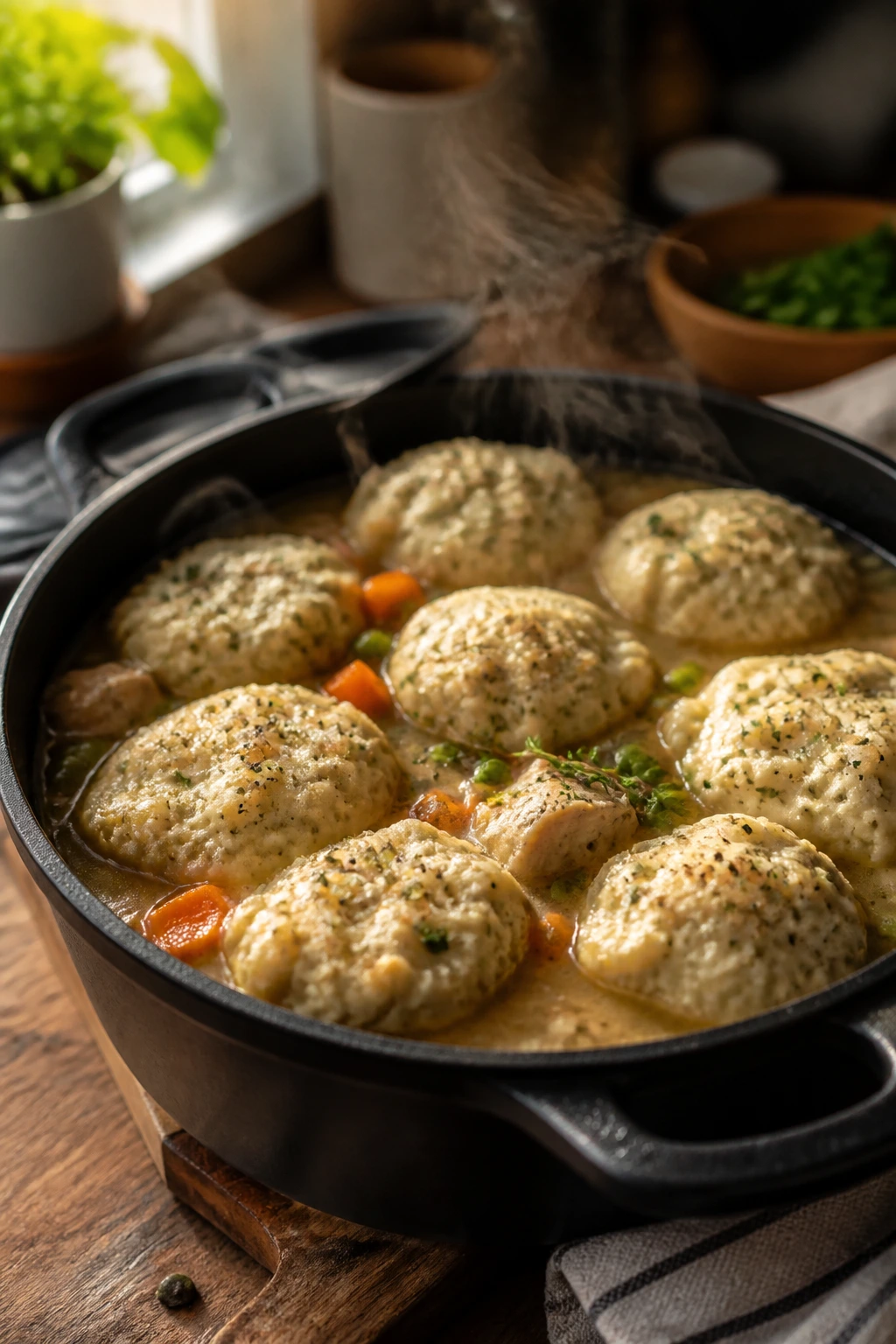
The best family-night food does three things at once: it feeds a group, it stays warm long enough for second helpings, and it doesn’t make you wash five pans before you sit down. Dumpling dinners do all three. The filling can simmer in a deep pot, the dumplings cook right on top, and the lid traps steam so the top turns tender instead of drying out.
The other trick is economics, and I don’t mean this in a dry spreadsheet way. Dumplings let you build dinner around a modest amount of meat or a few cans of beans, then stretch the meal with flour, milk, broth, and vegetables. That’s why these pots feel generous. They are generous.
There’s also a texture reason people keep coming back to them. Soft dumplings, savory broth, and a thick filling hit the table as one thing, not three competing parts. That matters more than it sounds. A family meal that serves itself in one bowl tends to calm the whole room down.
Essential Equipment for These Recipes
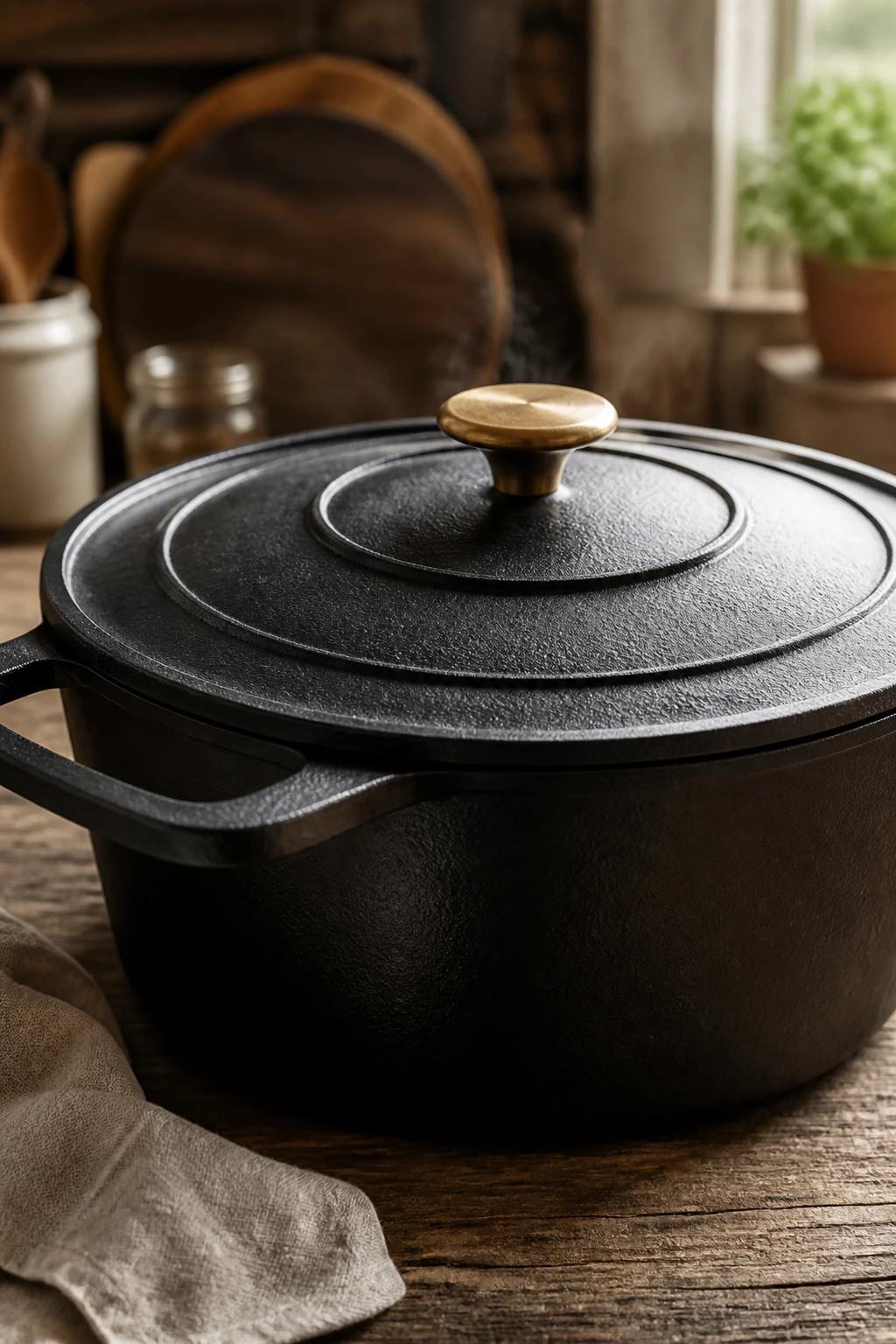
- Dutch oven with a tight lid: Best all-around pot for trapping steam and holding heat evenly.
- Large deep skillet: Useful for quicker recipes like tomato meatballs or turkey pot pie filling.
- Mixing bowls: You’ll want at least one for the dumpling dough and one for any meat mixture.
- Wooden spoon or heat-safe spatula: Better than a whisk for stirring thick fillings without tearing them up.
- Measuring cups and spoons: Dumpling dough is forgiving, but not if the baking powder gets guessed.
- Instant-read thermometer: The simplest way to know chicken and turkey are at 165°F and pork or beef are at safe doneness.
- Ice cream scoop or two spoons: Helps keep dumplings roughly the same size so they cook evenly.
- Chef’s knife and cutting board: A sharp knife saves time on onions, carrots, celery, cabbage, and herbs.
- Ladle: Makes serving less messy, especially with chunky stews.
- Oven-safe baking dish: Handy for the pot pie-style dumpling dinner if your skillet isn’t oven-safe.
- Airtight containers: Worth having for leftovers, because these recipes store better when chilled in shallow containers.
Smart Shopping and Ingredient Tips
Start with the meat. For chicken, thighs give you more forgiveness than breasts. For beef, chuck is the cut you want because it turns tender with time instead of tightening up. Pork should be fresh and not too lean, or the broth can taste thin. If you’re using sausage, choose one that’s already seasoned well enough to stand on its own.
Broth matters more than people think. Low-sodium broth gives you room to season the pot after the dumplings go in, which is smart because dumplings absorb salt fast. I’d rather add salt at the end than discover I’ve built a pot that tastes like the bottom of a soup can. For creamy recipes, whole milk or half-and-half gives better texture than skim milk, which can taste flat in a stew.
Dumplings want cold butter. Not softened. Cold butter. You want little pockets of fat that melt in the steam and leave the dumplings fluffy, not dense. The same goes for overmixing: stop when the dough looks rough and a little uneven. That’s the good version.
Frozen vegetables are fine in these recipes, especially peas, spinach, and mixed vegetables. No thawing needed in most cases. Canned beans also work well if you rinse them under cold water first, which cuts down on the tinny taste. If you’re making the mushroom or lentil versions, this is the kind of shortcut that saves time without making the dinner feel careless.
How to Serve These Recipes
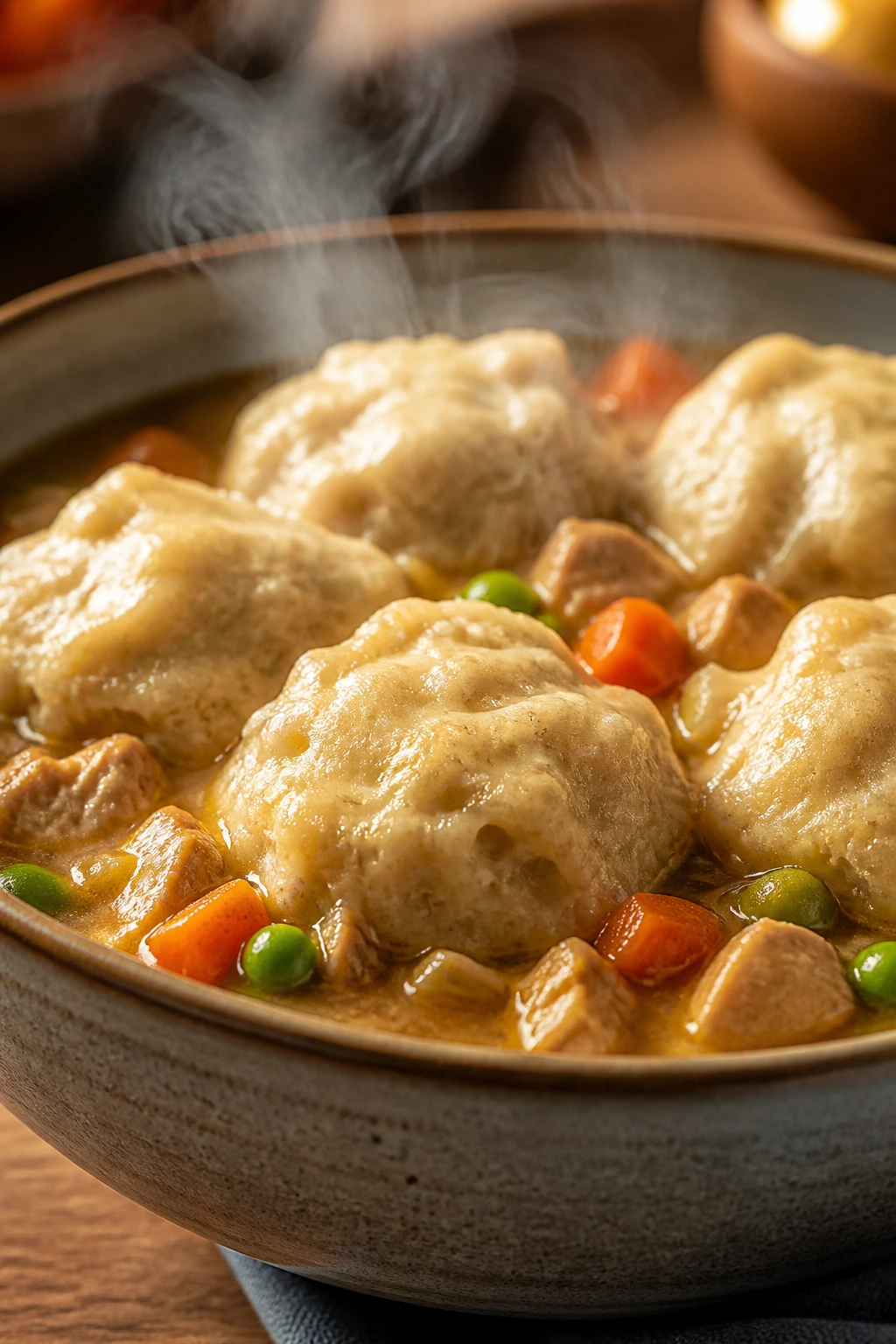
Presentation: Spoon the stew or filling into wide bowls so the dumplings sit on top instead of sinking into the broth. A scatter of chopped parsley, chives, or basil gives the bowl a fresh finish, and a crack of black pepper right before serving keeps the top from looking flat.
Accompaniments: Keep the sides simple. A crisp green salad, roasted green beans, buttered peas, or a little slaw works across the whole collection. Warm bread is fine, though with dumplings on the plate, you usually do not need much else.
Portions: Most of these recipes feed 4 to 6 people, depending on how hungry the table is and whether you’ve got a lot of kids asking for seconds. Two or three dumplings per adult is a good starting point; smaller kids usually do well with one or two plus plenty of filling.
Beverage Pairing: I like iced tea, sparkling water with lemon, or a light beer for the savory pots. The curry version takes nicely to ginger beer, and the tomato-based dinner likes a glass of red wine or even plain club soda with a squeeze of lime.
Additional Tips and Flavor Boosters
Flavor Enhancement: Finish most of these pots with a little acid. Lemon juice, white wine vinegar, rice vinegar, or a splash of sherry vinegar wakes up the whole bowl and keeps the broth from tasting sleepy after the dumplings steam.
Customization: Cheese belongs in the dumplings when the filling is mild — cheddar for ham, Parmesan for sausage, mozzarella for tomato, or even a little pepper jack for the curry version if your crowd likes heat. Herbs work the same way. Parsley, chives, dill, sage, thyme, and basil all change the feel of the dish without changing the structure.
Serving Suggestions: A little garnish goes a long way. Crispy bacon bits on ham dumplings, fresh dill on mushroom stew, lime zest on curry, or a spoonful of chili crisp on pork and cabbage can make the bowl feel finished with almost no extra effort.
Make-It-Yours: For dairy-free versions, swap in olive oil or vegan butter and use unsweetened oat milk or soy milk in the dumplings. For gluten-free cooking, use a 1:1 gluten-free flour blend with baking powder already in the mix, then mix the dough only until it holds together. For lower-carb dinners, keep the filling and skip the dumplings, but honestly, that’s a different meal.
Make-Ahead, Storage, and Reheating Guidance
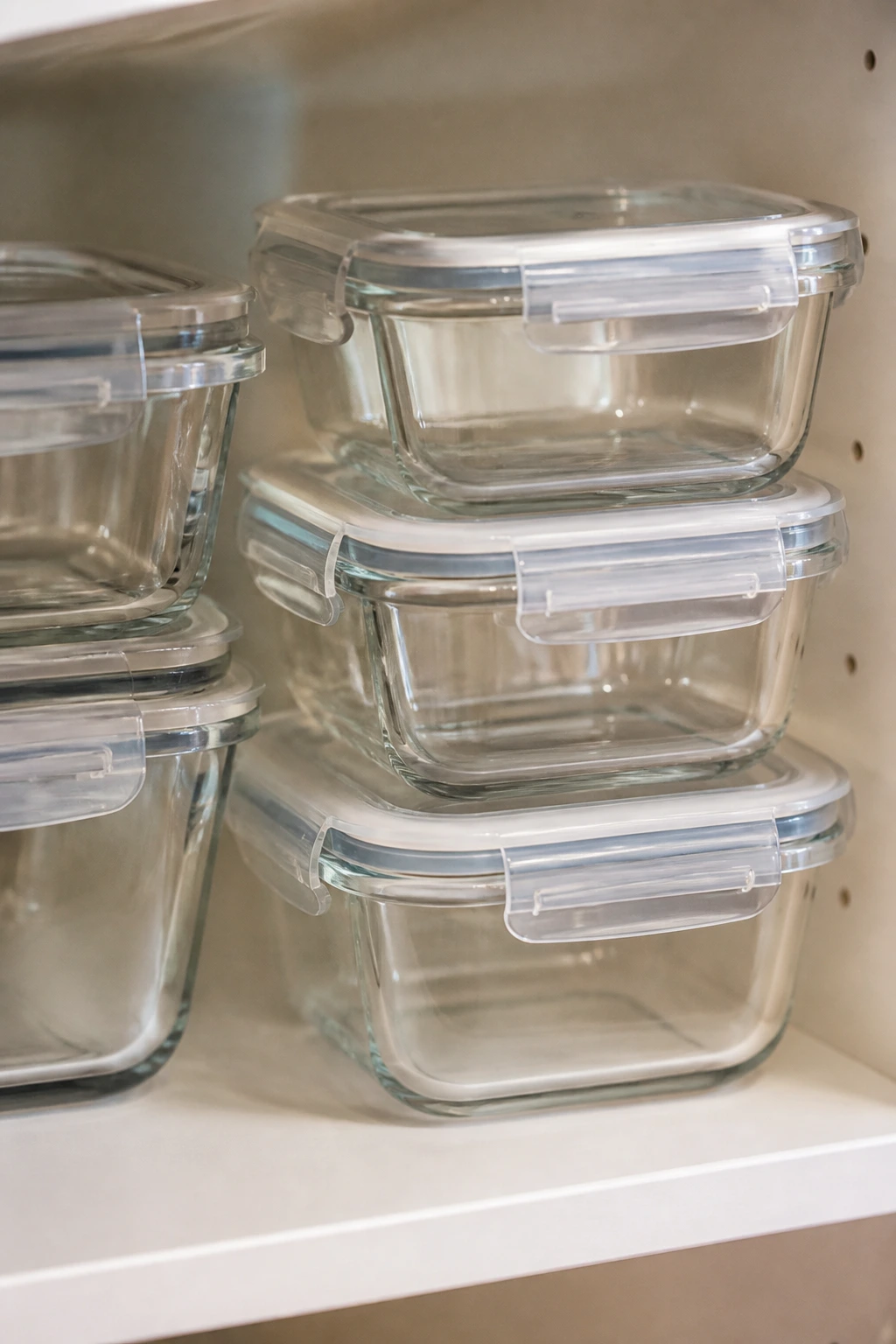
Most dumpling dinners keep well in the fridge for 3 to 4 days when stored in shallow, sealed containers. Let the pot cool first, but do not leave it at room temperature for more than 2 hours. That time limit matters with meat, dairy, and broth-based dishes, and it’s one of those boring rules that saves you from a bad night later.
Freezing works best if you freeze the filling and make fresh dumplings later. The dumplings themselves can be frozen after cooking, but they soften a bit when thawed, which is fine for some people and disappointing for others. For the best texture, freeze the stew or sauce base for up to 2 months, then make the dumplings fresh when you reheat it. If you do freeze the full dish, expect the dumplings to be softer.
Reheat gently on the stovetop over low heat with a splash of broth, milk, or water if the sauce has tightened up in the fridge. Stir every few minutes so the bottom does not catch. For the pot pie style, cover with foil and warm in a 325°F oven until the center is hot. Microwave reheating works in a pinch, but it tends to make dumplings chewy at the edges and oddly spongy in the middle. Not my favorite.
If you want to prep ahead, cook the filling earlier in the day, chill it, and store the dumpling dough separately in the fridge for up to 8 hours. That gives you a head start without sacrificing texture. Fresh dumplings dropped into a hot stew are better than reheated ones almost every time.
Variations and Adaptations to Try
Gluten-Free Comfort Pot: Use a 1:1 gluten-free flour blend for both the sauce thickener and the dumplings. Choose a blend that already contains xanthan gum if possible, and expect the dumplings to be a little more delicate when you serve them.
Dairy-Free Bowl: Swap butter for olive oil or vegan butter and use unsweetened oat milk or soy milk in the dumpling dough. Coconut milk works especially well in the curry version, and the vegetable or mushroom pots can handle a dairy-free finish without losing their charm.
Freezer-Ready Batch Dinner: Make the filling ahead, cool it quickly, and freeze it without the dumplings. When you’re ready to eat, reheat the base on the stove, then mix fresh dumplings and cook them on top. This keeps the dumplings fluffy instead of soggy.
Extra-Veggie Version: Add mushrooms, zucchini, spinach, kale, corn, or peas to the pot depending on what’s in the fridge. The trick is to add tender vegetables near the end and sturdier ones early so nothing dissolves into mush.
Lighter Hand, Same Comfort: Use chicken breast, turkey, or lean pork if that’s what you’ve got, but shorten the simmer a bit so the meat does not dry out. A splash of cream at the end can bring back the richness that lean meat doesn’t naturally give you.
Common Mistakes to Avoid
Overmixing the dumpling dough: If you stir until the dough looks smooth, you’ve gone too far. The result is dense dumplings that feel heavy instead of fluffy. Stop as soon as the flour disappears and the dough looks shaggy.
Boiling too hard: A hard boil tears dumplings apart and makes the broth cloudy in a bad way. Keep the pot at a soft, steady simmer so steam can do the work.
Lifting the lid early: I know. It’s tempting. But every peek lets steam escape, and steam is the whole cooking method for the dumplings. Hold the lid down for the full cooking time.
Crowding the pot: If the dumplings are packed too tightly, they can glue together into one giant mass. Leave a little room between spoonfuls, and use a bigger pot if needed.
Underseasoning the base: Dumplings absorb flavor, which means a bland broth turns even blander after they’re added. Season the filling before the dumplings go in, then taste again at the end.
Adding greens too early: Spinach and herbs can turn dark and tired if they simmer too long. Fold them in near the end so they stay fresh and bright.
Frequently Asked Questions About Dumpling Dinners
Can I use store-bought biscuit dough instead of making dumplings from scratch?
Yes, and it’s a useful shortcut on a busy night. Cut the biscuits into small pieces and cook them under the lid until the centers are no longer raw, but expect a different texture — more breadlike, less tender.
Why are my dumplings dense instead of fluffy?
Usually it comes down to overmixing or old baking powder. Stir only until the dough comes together, and check that your baking powder still has life in it. If it’s been sitting in the cupboard for a long time, replace it.
Can I make these dinners with rotisserie chicken?
Absolutely. Use rotisserie chicken in the chicken or pot pie versions, but stir it in after the broth has already thickened so it doesn’t dry out. You only need a few minutes to warm it through.
Do dumplings have to cook covered the whole time?
For the stovetop versions, yes. The lid traps the steam that cooks the dumplings from the top and bottom at the same time. If you open the lid too soon, the dumplings can stay wet in the center.
What if my broth is too thin?
Simmer it uncovered for a few minutes before adding the dumplings, or mash a few potatoes or beans into the liquid. Once the dumplings go in, you want to avoid stirring too much because that can break them apart.
Can I make these without dairy?
Yes. Olive oil or vegan butter works in the dumpling dough, and unsweetened oat milk or soy milk can stand in for dairy milk. Coconut milk is a good fit for the curry version and adds richness on its own.
Which pot is best if I don’t have a Dutch oven?
Use the deepest heavy pot you have with a lid that fits tightly. A wide skillet with a lid works too, but the sides need to be high enough so the dumplings can steam without boiling over.
How do I know the dumplings are done?
The tops should look matte and set, not wet or shiny, and a toothpick in the center should come out without raw dough sticking to it. If you cut one open, the middle should look fluffy rather than paste-like.
Can I freeze the whole finished dish?
You can, but the dumplings soften after thawing. For best texture, freeze the stew base separately and add fresh dumplings when you reheat it. That extra step pays off.
A Spoon Worth Passing Around
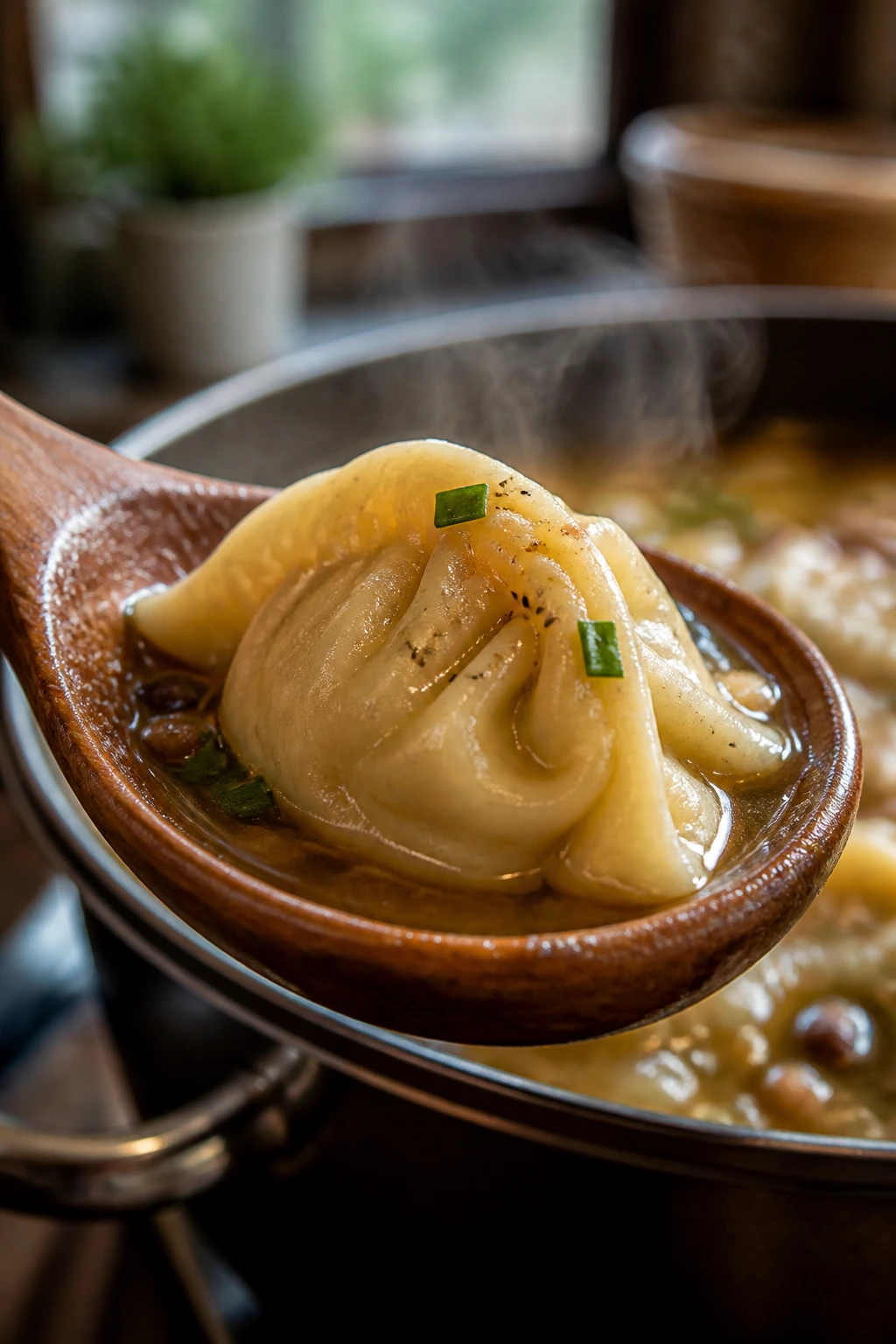
The real charm of dumpling dinners is that they feel old-fashioned without being stuck in the past. You can keep the chicken-and-herb classic on repeat, or wander into curry, tomato, mushroom, ham, or cabbage without losing the comfort that makes the whole format work.
That’s the thing I keep coming back to with family-night food: it should feed people and settle them. A good pot of dumplings does both. It arrives hot, it smells like you cared, and it has a way of making a normal evening feel stitched together a little better than before.
Recipe Collection Quick Reference Table
| Recipe | Prep Time | Cook Time | Total Time | Servings | Standout Detail |
|---|---|---|---|---|---|
| Classic Chicken and Herb Dumplings | 20 min | 35 min | 55 min | 6 | Tender chicken with fluffy herb dumplings |
| Beef Stew with Parsley Dumplings | 25 min | 1 hr 20 min | 1 hr 45 min | 6 | Spoon-tender beef in rich, savory gravy |
| Turkey Pot Pie with Biscuit Dumplings | 20 min | 30 min | 50 min | 6 | Best use for leftover turkey |
| Creamy Sausage, Kale, and Potato Dumplings | 20 min | 30 min | 50 min | 6 | Smoky sausage with sage-kissed dumplings |
| Coconut Curry Chicken and Dumplings | 20 min | 35 min | 55 min | 6 | Curry broth with a soft coconut finish |
| Tomato Basil Meatball Dumplings | 25 min | 35 min | 1 hr | 6 | Meatballs and dumplings in one skillet |
| Mushroom and White Bean Dumplings | 20 min | 30 min | 50 min | 6 | Deep savory flavor without meat |
| Ham, Pea, and Cheddar Dumplings | 20 min | 25 min | 45 min | 6 | Salty ham and sharp cheddar dumplings |
| Pork, Cabbage, and Ginger Dumplings | 20 min | 30 min | 50 min | 6 | Gingered broth with tender cabbage |
| Lentil and Sweet Potato Dumplings | 20 min | 35 min | 55 min | 6 | Hearty vegetarian pot with smoked paprika |