



Some nights, quick pasta dinners are the only thing standing between you and cereal-for-dinner resignation.
A box of pasta, a skillet, and a little salt can turn into a real meal faster than takeout can arrive, and that matters when everyone is hungry at the same time and your brain has already clocked out. The best versions are not fancy. They lean on smart shortcuts: canned tomatoes that taste bright, frozen peas that keep their shape, rotisserie chicken, a handful of parmesan, and the one detail too many people skip — a splash of pasta water to bring the sauce back to life.
The real beauty of pasta is how forgiving it is. Penne catches chunky sauce, linguine carries butter and lemon, shells hold cheese in little cups, and orzo cooks so fast it barely gives you time to wash a cutting board. If you keep a few shapes and a few pantry staples on hand, dinner stops feeling like a negotiation.
These 17 pasta dinners are built for tired hands, loud kitchens, and the kind of evenings where everyone wants food five minutes ago. Start with the first skillet that looks promising, and keep the fussiest ideas for a night when you’ve got more patience than you do today.
1. Lemon Garlic Parmesan Pasta with Peas
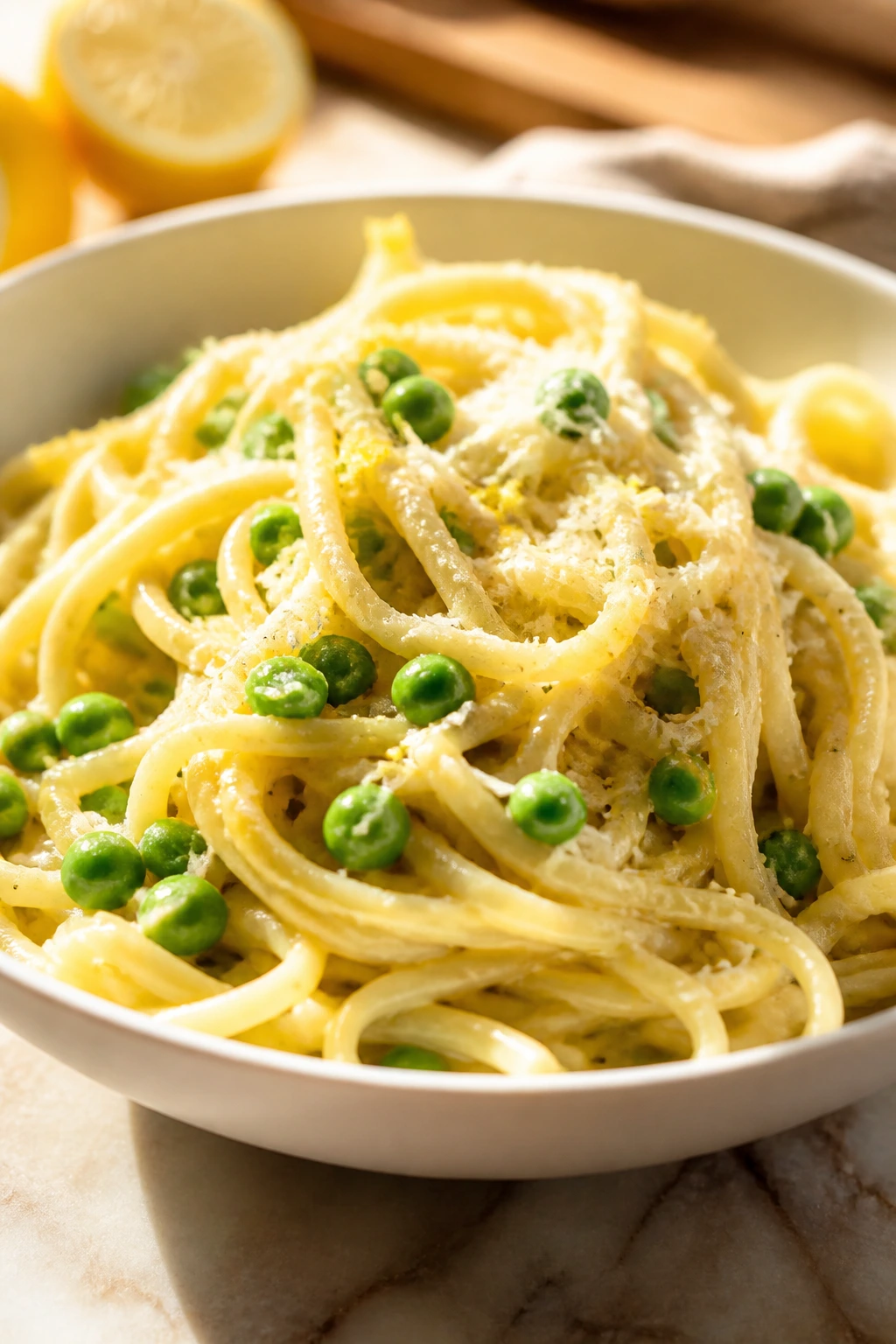
A bowl like this is what I make when the evening feels thin and everybody needs something warm fast. Lemon, garlic, parmesan, and peas give you brightness, salt, and a little sweetness in every forkful, and the whole thing comes together before the side eye from the kids turns into a full dinner mutiny.
This is the sort of pasta dinner that tastes clean without being plain. It feels light enough for a late meal, but the parmesan and butter still give it enough body to count as comfort food.
Why it works:
The sauce is built on a smart little trick: butter, olive oil, and starchy pasta water turn into a glossy coating without any heavy cream. Frozen peas keep their shape and taste sweet against the lemon, while the garlic stays gentle if you cook it only long enough to smell warm and nutty. The whole dish is done in about 20 minutes, which is exactly the kind of timing a tired cook can live with.
Key ingredients:
- 12 ounces spaghetti or linguine
- 2 tablespoons unsalted butter
- 2 tablespoons olive oil
- 4 garlic cloves, minced
- 1 cup frozen peas
- 1 lemon, zested and juiced
- 1 cup finely grated parmesan, plus more for serving
- 1/2 cup reserved pasta water, more if needed
- 1/2 teaspoon kosher salt, plus more for the pasta water
- 1/4 teaspoon black pepper
- 2 tablespoons chopped parsley, optional
Quick steps:
- Bring a large pot of water to a boil, salt it well, and cook the pasta until al dente, usually 8 to 10 minutes. Reserve at least 1 cup of the cooking water before draining.
- Warm the butter and olive oil in a large skillet over medium heat. Add the garlic and stir for about 30 seconds, until it smells sweet and turns barely golden at the edges.
- Stir in the peas and 1/2 cup of the pasta water. Let them simmer for 1 to 2 minutes until the peas are hot and the liquid looks cloudy.
- Add the drained pasta, lemon zest, lemon juice, parmesan, salt, and pepper. Toss hard until the cheese melts into a silky sauce and clings to the noodles.
- Add more pasta water, 2 tablespoons at a time, if the pan looks dry. Finish with parsley and extra parmesan.
Tips and variations:
- Add shredded rotisserie chicken if you want this to eat like a fuller dinner.
- Swap the peas for asparagus tips or baby spinach.
- Pecorino works if parmesan is what you’re out of, though it brings a sharper bite.
2. One-Pan Sausage, Spinach, and Tomato Penne
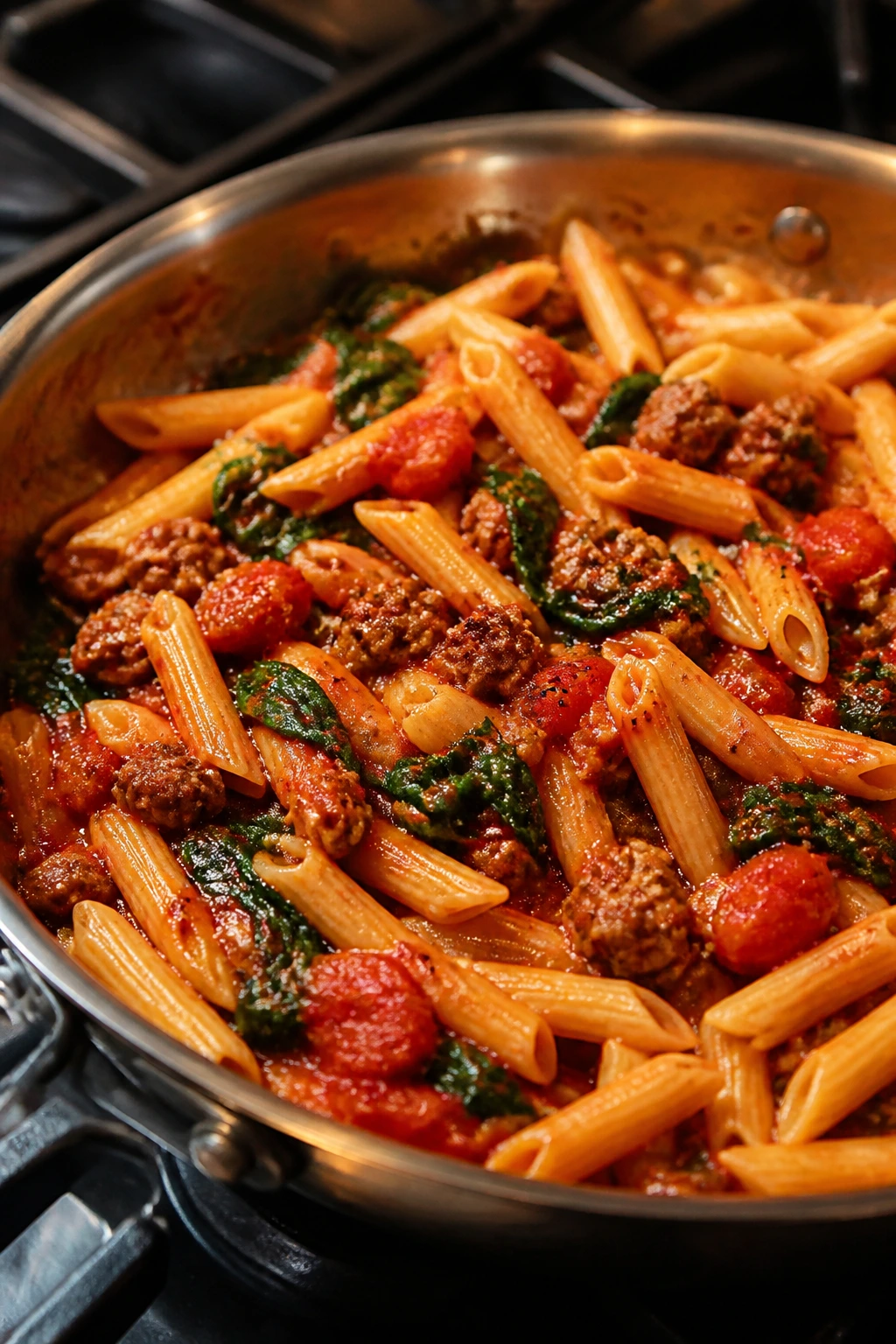
Sausage does the heavy lifting here. That’s the whole charm. It browns in little crisp bits, the tomatoes turn jammy, and the spinach collapses right at the end so the pan still tastes fresh instead of tired and reheated.
This is one of those weeknight pasta dinners that looks like more effort than it takes. The pot does most of the work while you deal with whatever else is making noise in the house.
Why it works:
Italian sausage seasons the entire pan, so you don’t need a long spice list or a separate sauce. Crushed tomatoes and broth simmer with the pasta in one skillet, which lets the penne drink in flavor as it softens. A little cream at the end smooths out the edges, but the dish still tastes tomato-forward rather than heavy.
Key ingredients:
- 1 pound Italian sausage, casings removed
- 1 tablespoon olive oil
- 1 small yellow onion, diced
- 3 garlic cloves, minced
- 1/2 teaspoon red pepper flakes
- 12 ounces penne
- 1 can crushed tomatoes, 28 ounces
- 2 cups low-sodium chicken broth or water
- 3 cups baby spinach, lightly packed
- 1/2 cup heavy cream, optional but nice
- 1/4 cup grated parmesan
- Salt and black pepper to taste
Quick steps:
- Heat the olive oil in a large deep skillet over medium-high heat. Add the sausage and onion, breaking the meat into crumbles, and cook for 6 to 8 minutes until the sausage is browned and the onion looks soft.
- Stir in the garlic and red pepper flakes for 30 seconds, just until the garlic smells sweet.
- Add the penne, crushed tomatoes, broth, salt, and black pepper. Bring the pan to a boil, then lower the heat and simmer uncovered for 12 to 14 minutes, stirring often, until the pasta is tender and most of the liquid is absorbed.
- Fold in the spinach and cream, if using. Cook for 1 more minute until the spinach is wilted and the sauce looks glossy.
- Finish with parmesan and a few extra grinds of pepper.
Tips and variations:
- Hot sausage gives the dish more kick; mild sausage is better if kids are sensitive to spice.
- Kale works in place of spinach, but chop it small so it softens fast.
- If the skillet gets dry before the penne is done, splash in 1/4 cup more broth.
3. Creamy Tuna Pasta with Capers and Lemon
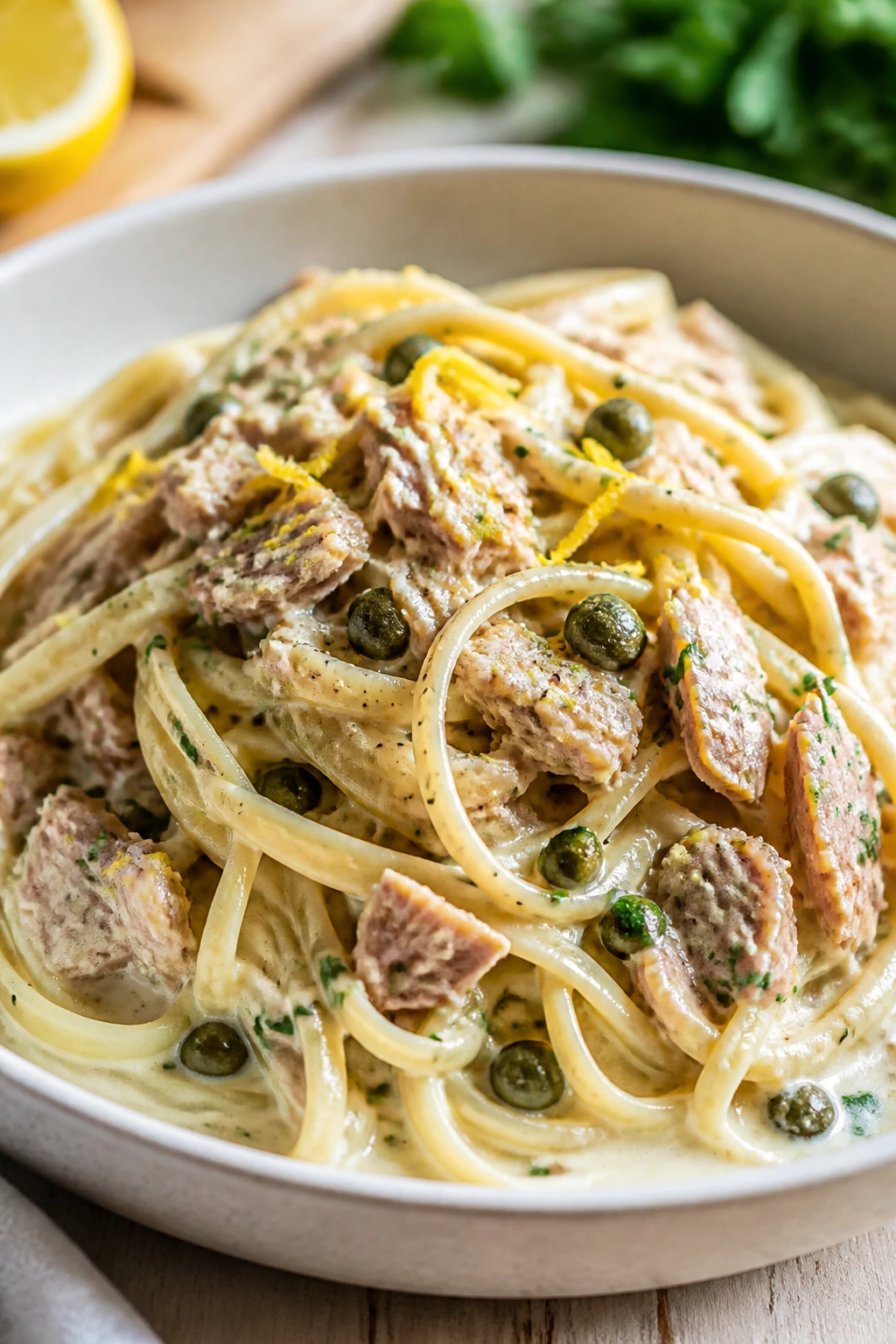
Cold tuna from a can sounds plain until capers and lemon wake it up. Then it becomes salty, bright, and a little briny in the best way, with enough creaminess to feel like dinner rather than a backup plan.
This is pantry pasta at its most practical. You can keep everything in the cupboard or fridge door and still land on a meal that tastes intentional.
Why it works:
Tuna is already cooked, which means the whole dinner is mostly about building flavor around it instead of babysitting protein in a pan. Capers bring a sharp, salty pop that cuts through the richness of sour cream or Greek yogurt, and lemon keeps the dish from feeling flat. Tossing the pasta with a little cooking water helps the sauce coat every twist and curl.
Key ingredients:
- 12 ounces rotini, shells, or fusilli
- 2 cans tuna packed in olive oil, drained
- 2 tablespoons butter
- 2 garlic cloves, minced
- 2 tablespoons capers, drained
- 1 cup frozen peas, optional
- 1/2 cup plain Greek yogurt or sour cream
- 1 lemon, zested and juiced
- 1/4 cup chopped parsley
- 1/2 cup reserved pasta water
- Salt and black pepper to taste
Quick steps:
- Cook the pasta in well-salted water until al dente. Reserve 1 cup of the cooking water, then drain.
- Melt the butter in a large skillet over medium heat. Add the garlic and capers and cook for 30 to 45 seconds until the garlic smells soft and warm.
- Stir in the peas, if using, and 1/2 cup of the pasta water. Let them heat through for 1 minute.
- Lower the heat and add the tuna, Greek yogurt or sour cream, lemon zest, lemon juice, and the pasta. Toss gently so the tuna stays in flakes instead of turning to paste.
- Add more pasta water, a little at a time, until the sauce looks creamy and clings to the noodles. Finish with parsley, salt, and pepper.
Tips and variations:
- Use tuna packed in olive oil if you can; it tastes fuller and less dry.
- Chopped celery or diced red onion adds a nice crunch.
- A handful of baby spinach can go in during the last minute if you want more greens.
4. Chicken Alfredo Skillet with Broccoli
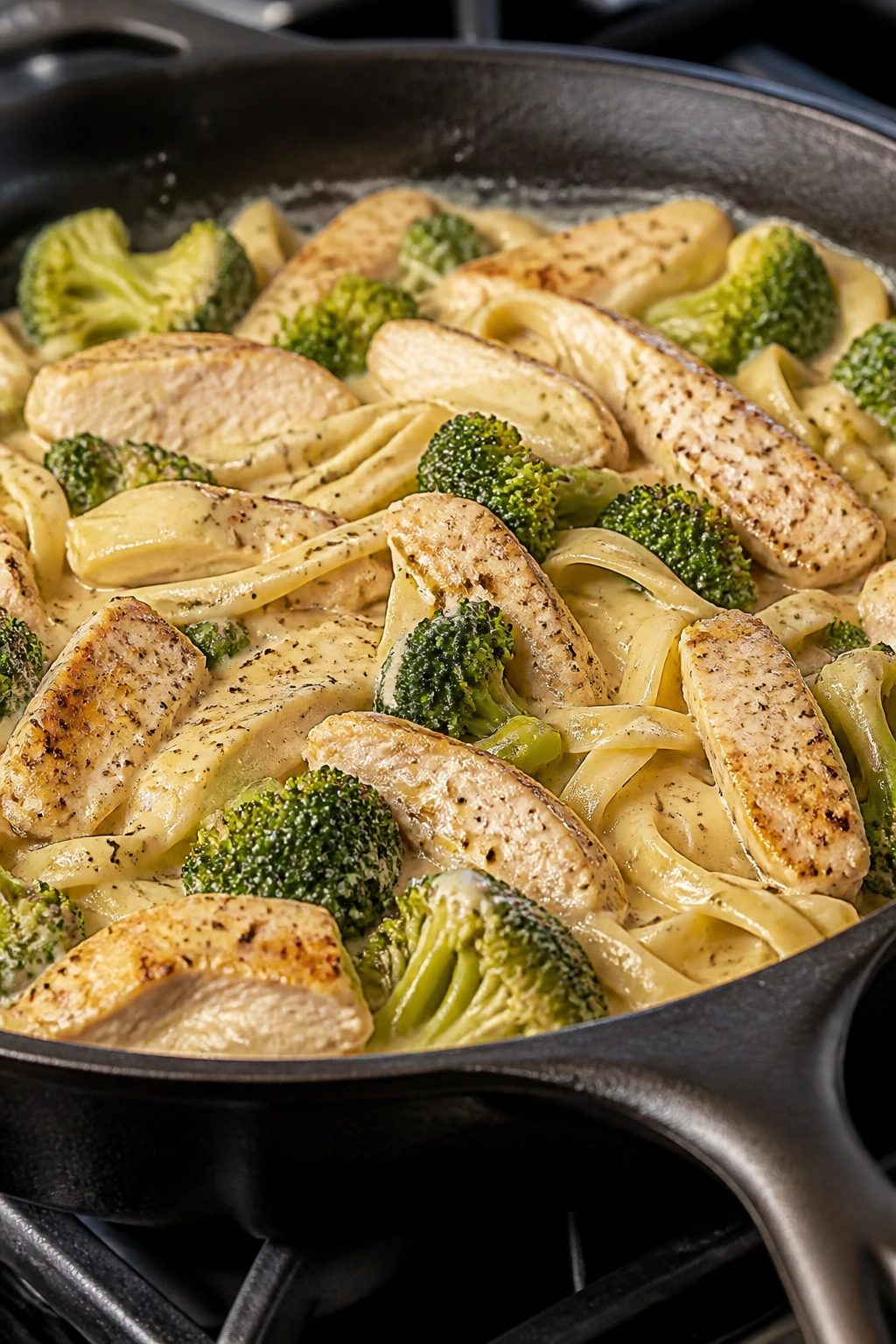
On the nights when broccoli sits in the crisper looking judgmental, this skillet dinner saves it. The chicken gets browned, the florets soften just enough, and the sauce goes creamy without turning into a gluey mess.
It’s rich, yes, but not fussy. And that matters when everyone at the table is already asking how long until dinner.
Why it works:
A quick Alfredo doesn’t need a giant pot of cream or a restaurant-style technique. Milk, a little cream, parmesan, and a spoonful of flour make a smooth sauce if you whisk them in the right order and keep the heat moderate. Broccoli cooks fast enough to finish in the same window as the pasta, so the whole thing stays simple.
Key ingredients:
- 12 ounces fettuccine or penne
- 1 pound boneless, skinless chicken breast, cut into bite-size pieces
- 2 cups broccoli florets
- 2 tablespoons butter
- 2 cloves garlic, minced
- 1 tablespoon all-purpose flour
- 1 1/2 cups whole milk
- 1/2 cup heavy cream
- 1 cup grated parmesan
- 1/4 teaspoon nutmeg, optional
- Salt and black pepper to taste
Quick steps:
- Cook the pasta in salted water. Add the broccoli during the last 2 minutes so it turns bright green and tender-crisp. Drain, reserving 1 cup of pasta water.
- Season the chicken with salt and pepper. Brown it in a large skillet with the butter over medium-high heat for 5 to 7 minutes, until the pieces are cooked through and lightly golden.
- Stir in the garlic and flour for 30 seconds, coating the chicken and smelling the flour cook off.
- Whisk in the milk and cream, then simmer for 2 to 3 minutes until the sauce starts to thicken.
- Add the parmesan, nutmeg if using, pasta, and broccoli. Toss until everything is coated and the sauce looks smooth. Use a splash of pasta water if it gets too tight.
Tips and variations:
- Cut the chicken evenly so the pieces finish at the same time.
- Frozen broccoli works in a pinch; thaw it first so it doesn’t flood the sauce.
- If you want a sharper sauce, replace 1/4 cup of the parmesan with pecorino.
5. Tomato Basil Mozzarella Pasta
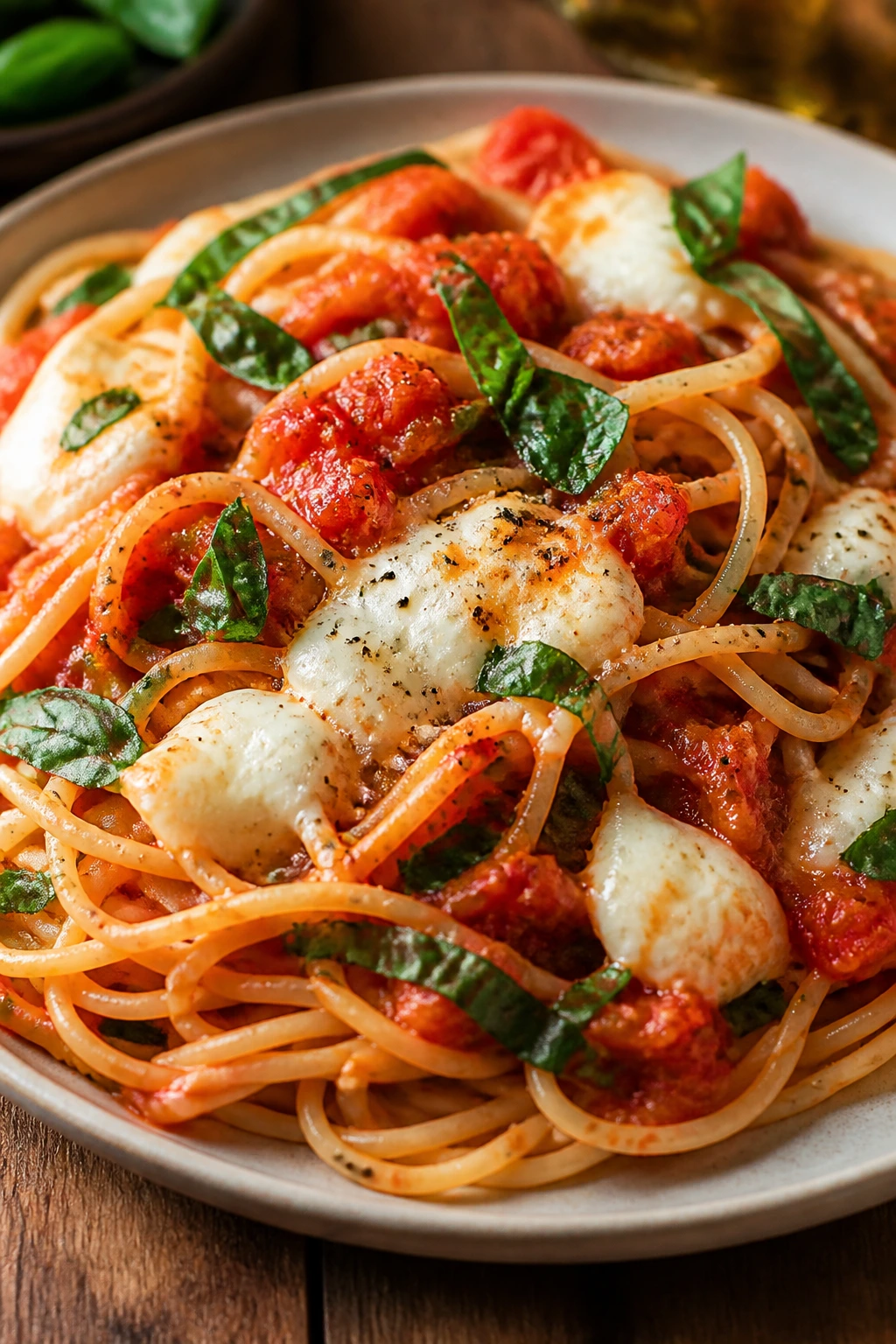
Tomato basil pasta smells like a small Italian kitchen the second garlic hits the oil. The sauce stays simple, but fresh basil and torn mozzarella make it feel polished enough to serve without apology.
This is the dinner I reach for when I want comfort without cream. It’s bright, saucy, and the kind of bowl that disappears faster than you expect.
Why it works:
Crushed tomatoes give you body fast, and a pinch of sugar smooths out the sharp edge if the tomatoes lean acidic. Fresh basil goes in at the end so it keeps its perfume, not boiled-down sadness. Torn mozzarella melts in soft patches instead of vanishing completely, which gives each bite a little stretch.
Key ingredients:
- 12 ounces spaghetti or linguine
- 2 tablespoons olive oil
- 4 garlic cloves, thinly sliced
- 1 can crushed tomatoes, 28 ounces
- 1 teaspoon sugar, optional
- 1 teaspoon kosher salt
- 1/2 teaspoon black pepper
- 1/2 teaspoon red pepper flakes, optional
- 1 cup fresh basil leaves, torn
- 8 ounces fresh mozzarella, torn into pieces
- 1/4 cup grated parmesan
- 1/2 cup reserved pasta water
Quick steps:
- Cook the pasta in salted water until al dente. Reserve 1 cup of pasta water before draining.
- Warm the olive oil in a skillet over medium heat. Add the garlic and cook for 1 minute until it is pale gold and fragrant, not brown.
- Pour in the crushed tomatoes, sugar, salt, pepper, and red pepper flakes if using. Simmer for 8 to 10 minutes until the sauce looks a little thicker and the color deepens.
- Add the pasta, basil, parmesan, and 1/2 cup of the pasta water. Toss until the sauce coats the noodles in a shiny layer.
- Fold in the mozzarella at the very end so it softens without fully disappearing.
Tips and variations:
- Add canned white beans if you want more protein without changing the flavor much.
- A spoonful of ricotta on top makes it extra cozy.
- Cherry tomatoes can be halved and sautéed with the garlic if you want a fresher tomato note.
6. Creamy Mushroom Pasta with Thyme
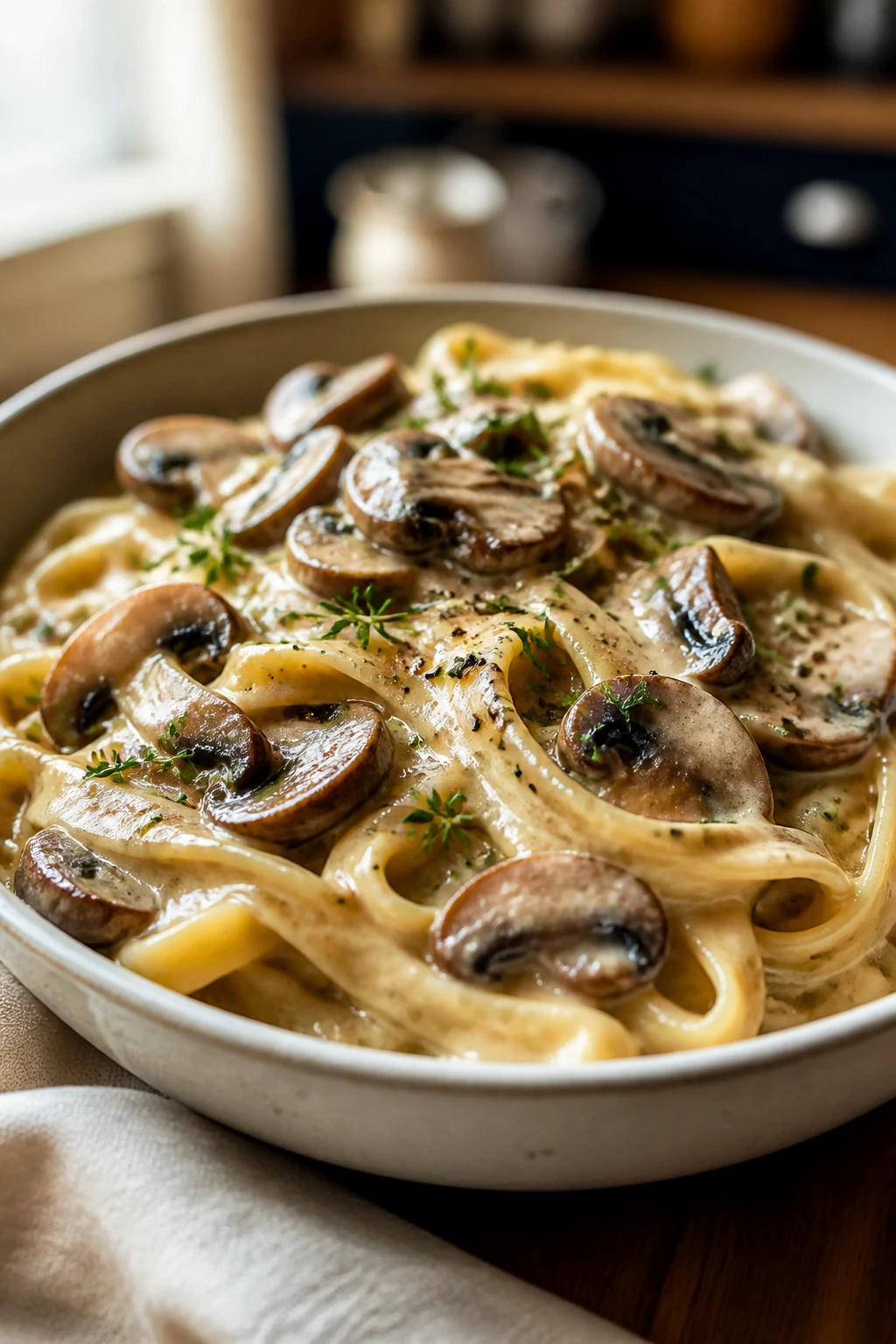
Mushrooms give you more dinner than you expect from such a short ingredient list. They taste deep, earthy, and a little meaty, which is exactly what makes this one feel like comfort food even though it comes together quickly.
The trick is to let the mushrooms brown instead of rushing them. That tiny bit of patience pays off in a sauce that tastes like it took longer than it did.
Why it works:
Mushrooms need space and heat if you want them to caramelize rather than steam. Once they’ve released their liquid and started picking up color, a splash of broth or white wine lifts the browned bits off the pan and becomes the backbone of the sauce. Cream and parmesan finish the job, but the real flavor comes from that first browning step.
Key ingredients:
- 12 ounces penne or rigatoni
- 1 pound cremini or button mushrooms, sliced
- 2 tablespoons butter
- 1 tablespoon olive oil
- 1 shallot, finely chopped
- 2 garlic cloves, minced
- 1 teaspoon fresh thyme leaves or 1/2 teaspoon dried thyme
- 1/2 cup dry white wine or broth
- 3/4 cup heavy cream
- 1/2 cup grated parmesan
- Salt and black pepper to taste
- Chopped parsley for serving
Quick steps:
- Cook the pasta in salted water until al dente. Reserve 1 cup of pasta water, then drain.
- Heat the butter and olive oil in a wide skillet over medium-high heat. Add the mushrooms in a single layer and cook for 6 to 8 minutes, stirring only now and then, until they are deeply browned.
- Stir in the shallot, garlic, and thyme. Cook for 1 minute until the shallot softens and the garlic smells sweet.
- Pour in the wine or broth and scrape up the browned bits from the bottom of the pan. Let it reduce by half.
- Add the cream, parmesan, pasta, and a splash of pasta water. Toss until the sauce turns glossy and clings to the rigatoni. Season with salt, pepper, and parsley.
Tips and variations:
- Don’t crowd the mushrooms or they’ll turn pale and soggy.
- A spoonful of mascarpone makes the sauce extra lush.
- Spinach folds in easily at the end if you want a little green in the bowl.
7. Taco Pasta with Ground Turkey
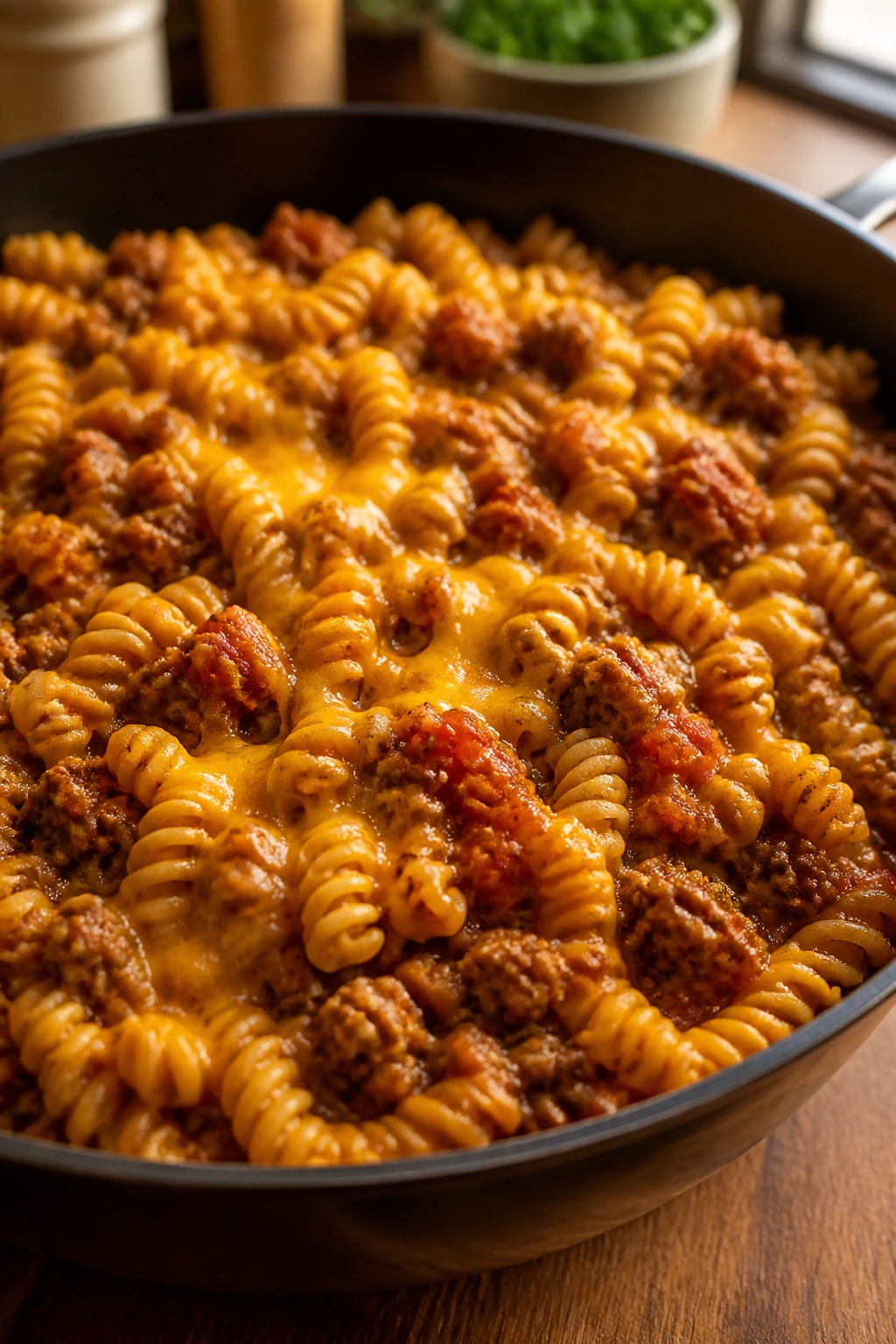
Taco night and pasta night meet in the middle here. You get seasoned meat, a little heat, cheddar, and that cozy starchiness that keeps everyone at the table from asking for snacks ten minutes later.
This one is loud in the right way. It tastes familiar enough for kids, but the salsa and taco seasoning keep it from feeling like a plain bowl of noodles.
Why it works:
Ground turkey picks up seasoning fast, and taco flavor does not need a long simmer to feel complete. Salsa gives you built-in tomato, onion, and spice, while corn adds sweetness and a tiny snap. If you finish with sour cream and cheddar, the whole pan turns creamy without needing a separate sauce pan.
Key ingredients:
- 12 ounces rotini or shells
- 1 pound ground turkey
- 1 small yellow onion, diced
- 2 tablespoons taco seasoning
- 1 cup salsa
- 1 can diced tomatoes, 15 ounces, drained slightly
- 1 cup frozen corn
- 1 cup shredded cheddar
- 1/2 cup sour cream
- 2 tablespoons chopped cilantro, optional
- Salt to taste
Quick steps:
- Cook the pasta in salted water until al dente. Drain and set aside.
- Brown the ground turkey and onion in a large skillet over medium-high heat for 6 to 7 minutes, breaking up the meat until no pink remains.
- Stir in the taco seasoning and cook for 30 seconds so it blooms in the pan.
- Add the salsa, diced tomatoes, corn, and 1/2 cup water. Simmer for 4 to 5 minutes until the sauce thickens slightly.
- Add the pasta, cheddar, and sour cream. Stir until the cheese melts and the sauce coats the shells. Finish with cilantro if you like it.
Tips and variations:
- Use mild salsa if spice tends to derail family peace.
- Black beans can replace some of the turkey if you want a cheaper, meat-light version.
- A handful of crushed tortilla chips on top gives it crunch.
8. Pesto Tortellini with Cherry Tomatoes
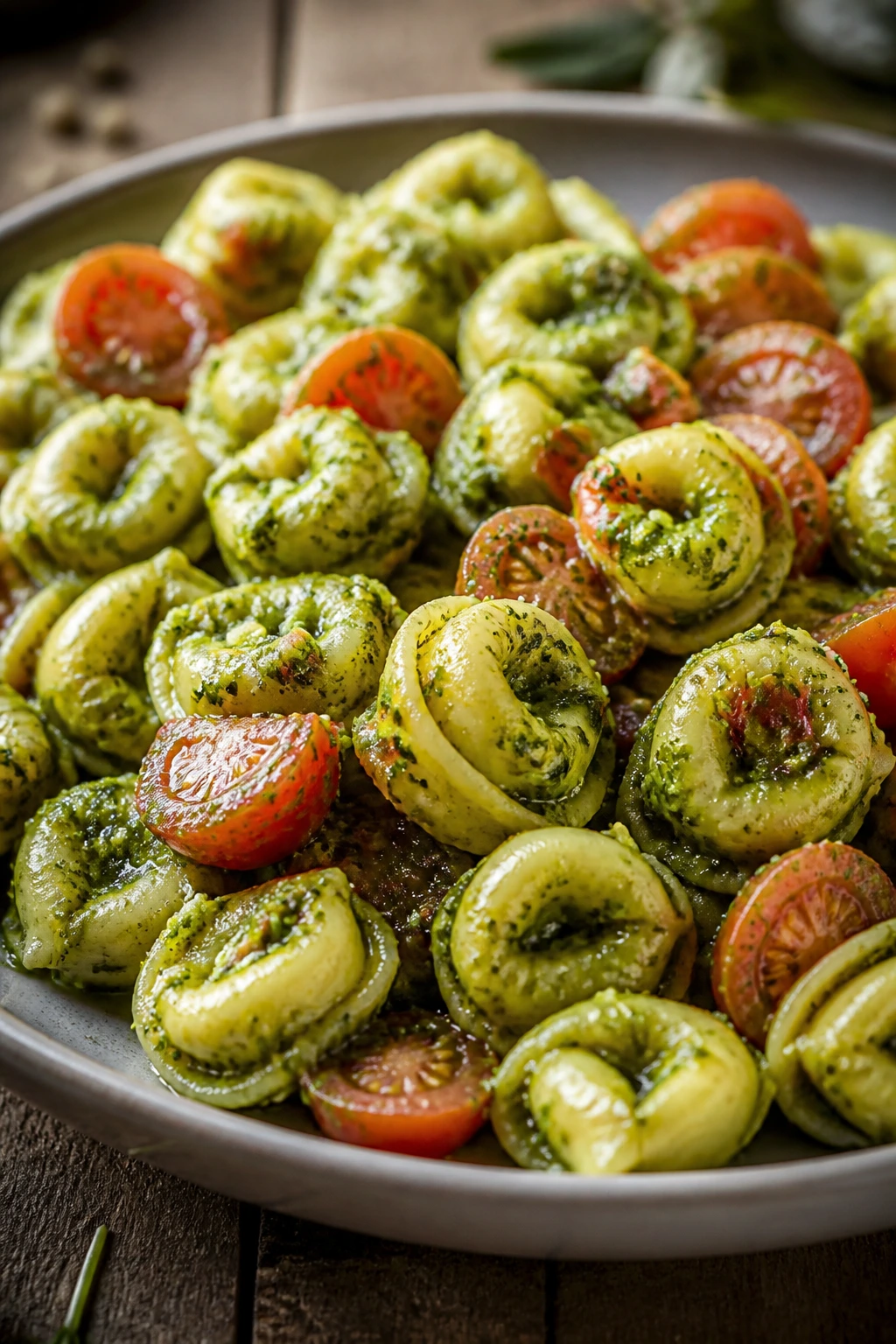
Tortellini is the cheat code nobody feels guilty about. It cooks fast, tastes rich on its own, and needs very little dressing up before it feels like dinner.
Here, pesto does the heavy lifting while cherry tomatoes burst into their own little sauce. It’s the sort of bowl that looks brighter than the effort it asked for.
Why it works:
Refrigerated tortellini cooks in a few minutes, which means the dinner moves fast without tasting rushed. Pesto brings herbs, garlic, nuts, and cheese in one spoonful, so you don’t need a long ingredient list to build flavor. Cherry tomatoes soften just enough to release juice, and that juice loosens the pesto into a proper sauce.
Key ingredients:
- 20 ounces refrigerated cheese tortellini
- 2 tablespoons olive oil
- 2 cups cherry tomatoes, halved
- 2 cups baby spinach
- 1 cup basil pesto
- 1/4 cup reserved pasta water
- 1/2 cup mozzarella pearls or shaved parmesan
- 1 tablespoon lemon juice
- Salt and black pepper to taste
Quick steps:
- Cook the tortellini according to package directions until tender. Reserve 1/2 cup of the cooking water, then drain.
- Warm the olive oil in a large skillet over medium heat. Add the cherry tomatoes and cook for 3 to 4 minutes until they soften and their skins start to split.
- Stir in the spinach and let it wilt down for 30 to 45 seconds.
- Add the tortellini, pesto, lemon juice, and a splash of pasta water. Toss gently until the sauce coats the pasta without clumping.
- Fold in the mozzarella or parmesan and season with salt and pepper.
Tips and variations:
- Add shredded rotisserie chicken if you want more protein.
- Sun-dried tomatoes work if you want a deeper, less juicy tomato flavor.
- A handful of toasted pine nuts gives the whole bowl more crunch.
9. Speedy Skillet Ziti with Cottage Cheese
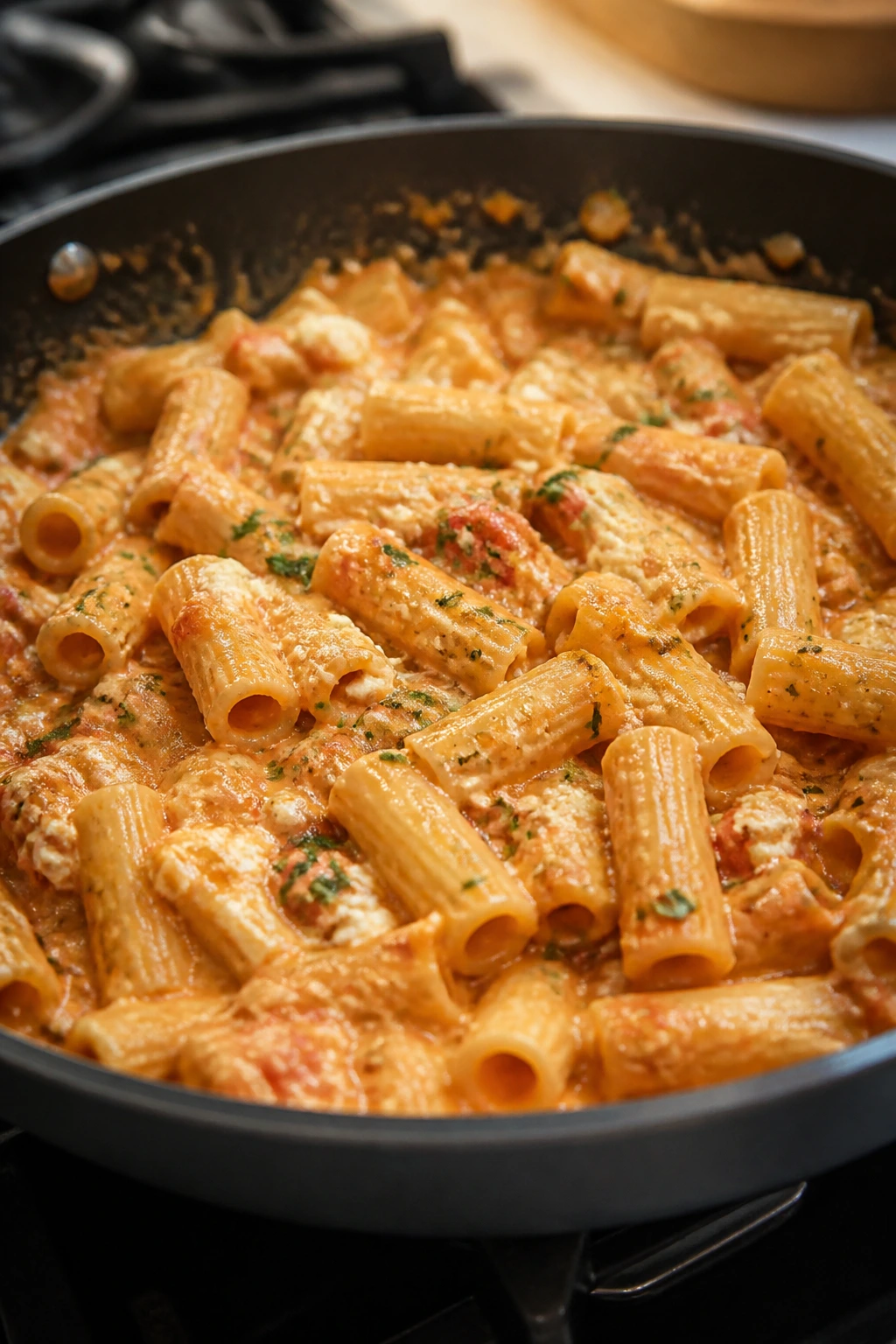
A skillet of baked ziti tastes like Sunday, but this version lands in a weeknight slot. The cottage cheese melts into the sauce and gives you a creamy, ricotta-like texture without needing to fuss with a separate filling bowl.
This is a smart compromise dish. It feels hearty and oven-ish, but it doesn’t ask you to spend half the evening layering anything.
Why it works:
Cottage cheese softens into marinara when it’s stirred in at the right moment, and that gives the sauce a creamy body without making it heavy. Ziti holds onto the sauce well, and mozzarella on top creates those stretchy patches kids tend to chase around their plates. The whole pan tastes richer than the steps suggest.
Key ingredients:
- 12 ounces ziti
- 1 tablespoon olive oil
- 1 small onion, finely chopped
- 3 garlic cloves, minced
- 24 ounces marinara sauce
- 1 cup cottage cheese
- 1 teaspoon Italian seasoning
- 1 cup shredded mozzarella
- 1/4 cup grated parmesan
- 1/2 cup pasta water
- Fresh basil for serving
Quick steps:
- Cook the ziti until it is about 2 minutes shy of done. Reserve 1 cup of pasta water, then drain.
- Warm the olive oil in a deep skillet over medium heat. Add the onion and cook for 4 to 5 minutes until soft. Stir in the garlic for 30 seconds.
- Pour in the marinara, cottage cheese, Italian seasoning, and 1/2 cup of pasta water. Stir until the cottage cheese breaks down into the sauce.
- Add the ziti and toss to coat. If the sauce looks too thick, add more pasta water a few tablespoons at a time.
- Sprinkle the mozzarella and parmesan over the top. Cover for 2 to 3 minutes until the cheese melts into soft, gooey patches. Finish with basil.
Tips and variations:
- Whole-milk cottage cheese gives a smoother texture.
- Ground beef or Italian sausage can be stirred in if you want a meatier pan.
- If you like a baked top, slide the skillet under a broiler for a minute, watching it closely.
10. Garlic Butter Shrimp Linguine
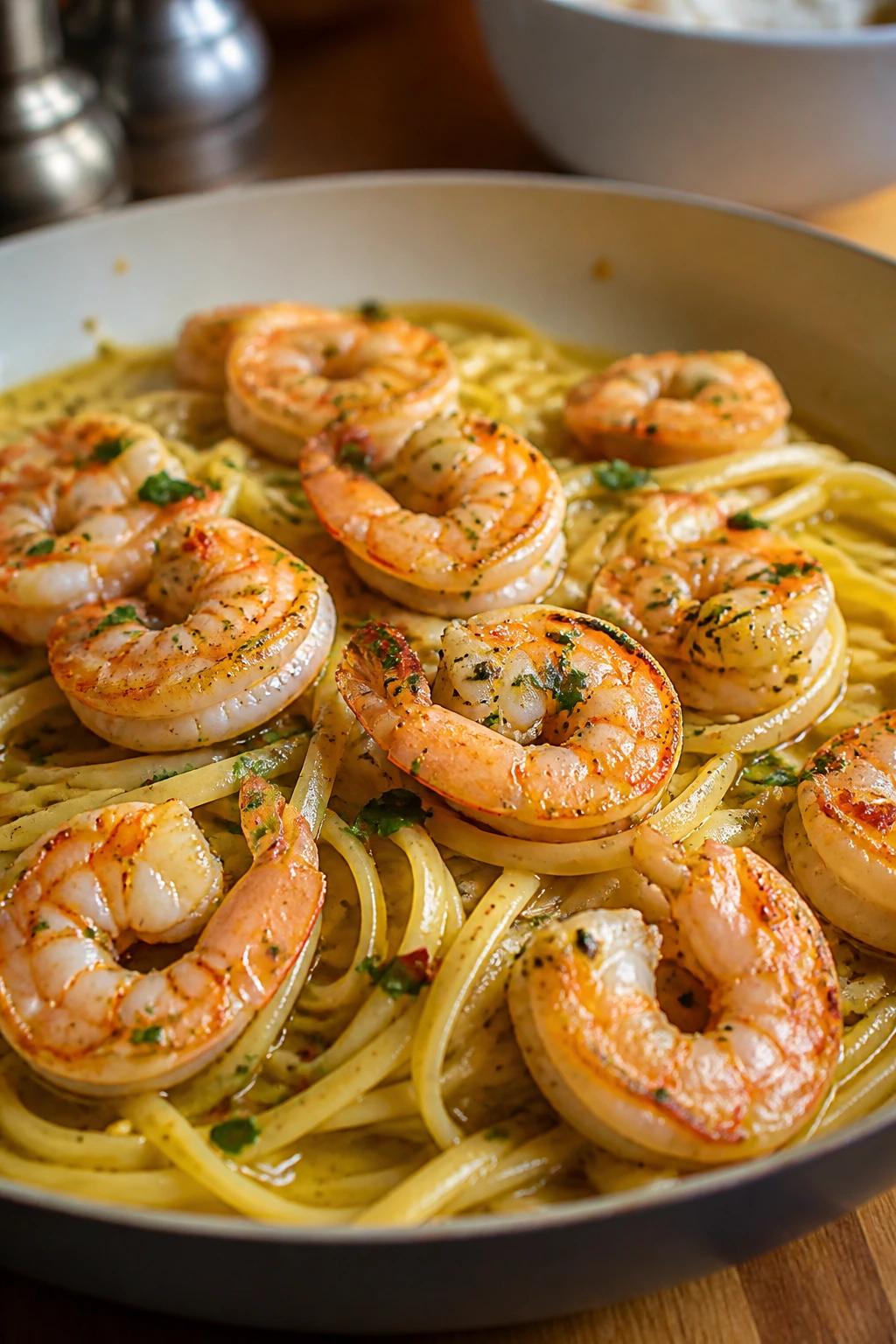
Shrimp cooks fast enough to keep this dinner honest. You get a glossy garlic butter sauce, a little heat from red pepper flakes, and pasta that tastes like it belongs in a place with linen napkins even if you’re eating it at the kitchen counter.
This is one of the fastest “real” dinners in the bunch. It feels special without being fussy, which is a rare and useful thing.
Why it works:
Shrimp need only a minute or two per side, so they fit into the rhythm of a quick pasta night without dragging the process down. Garlic and butter create the base, while white wine or broth loosens the pan and picks up the sweet bits left behind by the shrimp. Lemon at the end keeps the whole dish sharp and clean.
Key ingredients:
- 12 ounces linguine
- 1 pound large shrimp, peeled and deveined
- 4 tablespoons unsalted butter
- 4 garlic cloves, minced
- 1/2 teaspoon red pepper flakes
- 1/2 cup dry white wine or chicken broth
- 1 lemon, zested and juiced
- 1/4 cup chopped parsley
- Salt and black pepper to taste
- Grated parmesan, optional
Quick steps:
- Cook the linguine in salted water until al dente. Reserve 1 cup of the pasta water and drain.
- Pat the shrimp dry and season them with salt and pepper. Melt 2 tablespoons of the butter in a large skillet over medium-high heat.
- Cook the shrimp for 1 to 2 minutes per side until pink and curled. Transfer them to a plate so they do not overcook.
- Add the remaining butter, garlic, and red pepper flakes to the same skillet. Stir for 30 seconds, then pour in the wine or broth and scrape up the pan bits.
- Add the linguine, lemon zest, lemon juice, parsley, and a splash of pasta water. Toss until glossy, then return the shrimp to the pan and serve.
Tips and variations:
- Dry shrimp sear better than wet shrimp.
- Cherry tomatoes can go in with the garlic if you want a little sweetness.
- Skip the parmesan if you want the lemon to stay front and center.
11. Broccoli Cheddar Shells with Bacon
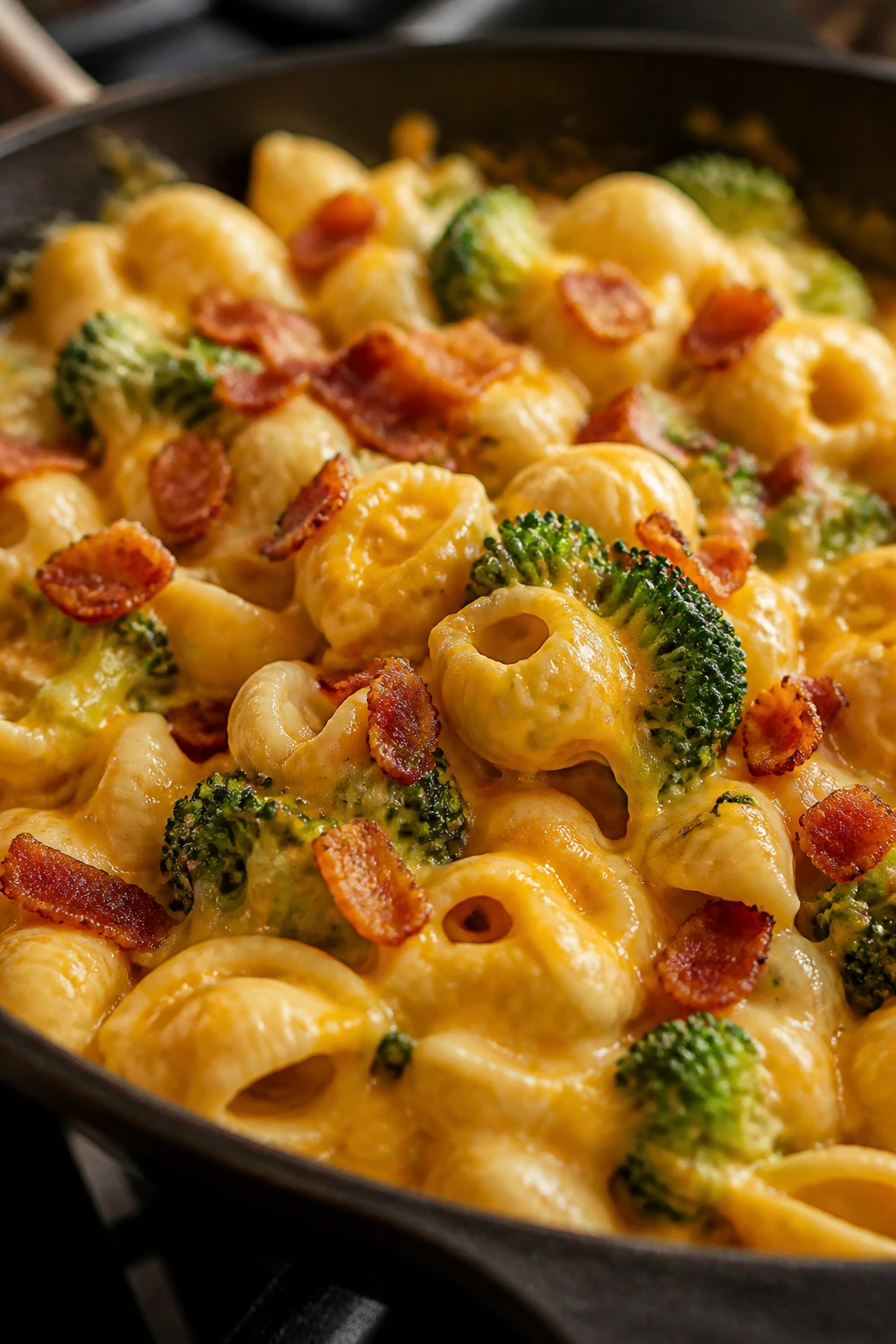
Broccoli and cheddar usually show up in a casserole dish, but shells make them easier to spoon. Add bacon and you’ve got a pasta dinner that feels familiar, salty, and just a little indulgent.
This is the kind of meal that gets eaten quickly, which is sometimes the highest compliment in a tired house.
Why it works:
Shells hold the cheese sauce inside their curves, so every bite tastes rich instead of bare. Bacon gives you smoky fat to build the sauce, and broccoli cuts through the richness with a little crunch and green color. The whole dish feels like comfort food, but it still has a vegetable woven right in.
Key ingredients:
- 12 ounces medium shells
- 6 slices bacon, chopped
- 3 cups broccoli florets, cut small
- 2 tablespoons butter
- 2 tablespoons all-purpose flour
- 2 cups milk
- 2 cups shredded sharp cheddar
- 1/4 teaspoon paprika
- Salt and black pepper to taste
Quick steps:
- Cook the shells in salted water until al dente, adding the broccoli for the last 2 minutes. Reserve 1 cup of pasta water, then drain.
- Cook the bacon in a large skillet over medium heat until crisp. Transfer it to a paper towel-lined plate, leaving 2 tablespoons of drippings in the pan.
- Add the butter and flour to the drippings and whisk for 1 minute until the mixture smells toasted.
- Slowly whisk in the milk and simmer for 2 to 3 minutes until it thickens slightly. Stir in the cheddar and paprika until smooth.
- Add the pasta, broccoli, and bacon. Toss until coated, adding a splash of pasta water if the sauce gets too thick.
Tips and variations:
- Use extra-sharp cheddar if you want the sauce to taste more grown-up.
- Turkey bacon works, though the sauce will be a little less smoky.
- A few breadcrumbs toasted in butter make a nice crunchy topping.
12. Spaghetti Aglio e Olio with White Beans
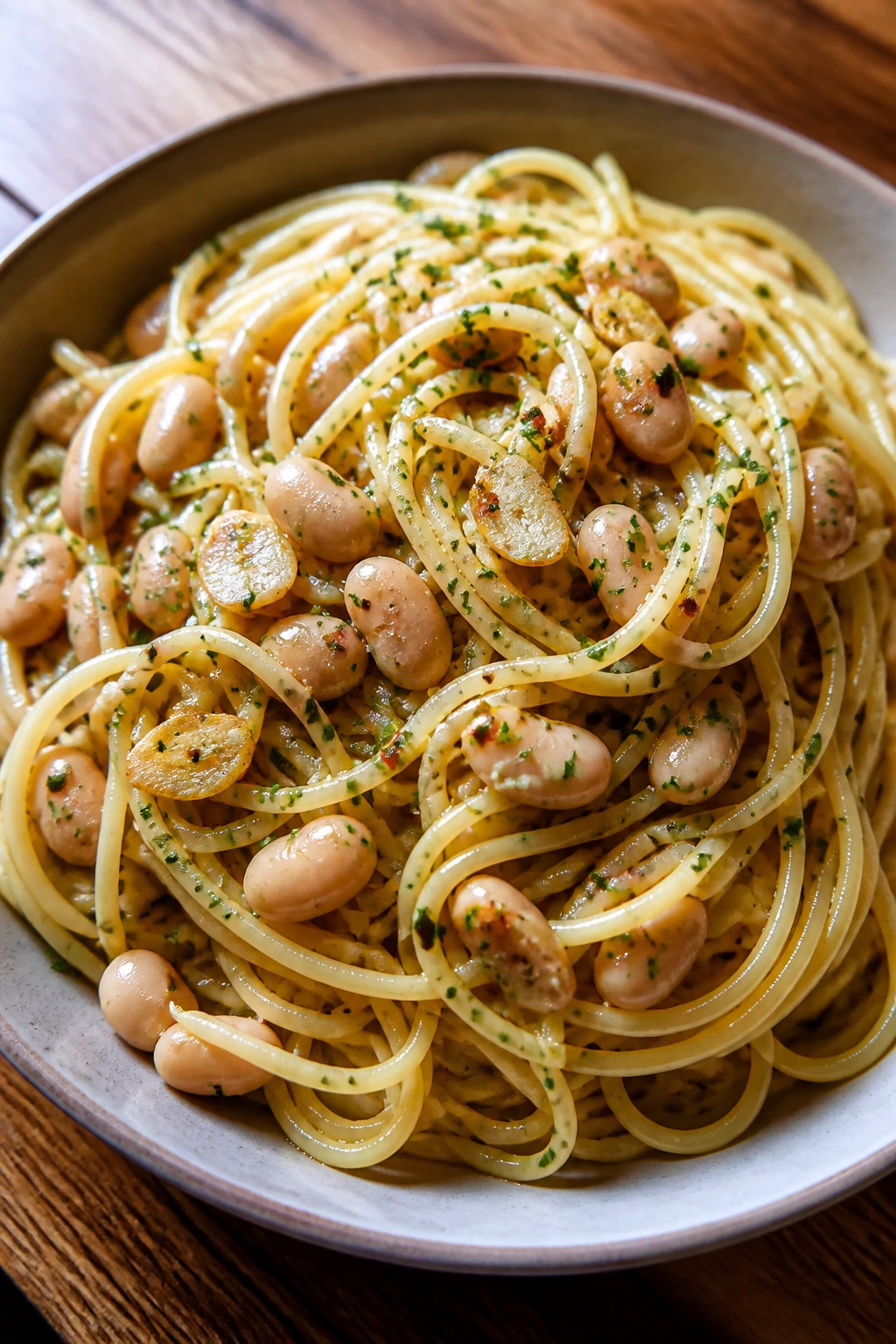
Garlic, olive oil, and white beans do a lot with almost nothing. That’s the whole appeal. It’s pantry food that eats like a proper meal, with enough texture from the beans to make it feel complete.
This is the dish I’d make if the fridge were nearly empty and I still wanted dinner to taste deliberate. It’s spare, but not sad.
Why it works:
Aglio e olio is all about timing. The garlic has to turn pale gold, not brown, or it goes bitter fast. White beans add protein and creaminess without changing the simple personality of the dish, and a bit of pasta water helps the olive oil cling to every strand of spaghetti.
Key ingredients:
- 12 ounces spaghetti
- 1/3 cup extra-virgin olive oil
- 6 garlic cloves, thinly sliced
- 1/2 teaspoon red pepper flakes
- 1 can white beans, such as cannellini, rinsed and drained
- 1/2 cup chopped parsley
- 1 lemon, zested
- 1/4 cup grated parmesan, optional
- Salt and black pepper to taste
Quick steps:
- Cook the spaghetti in salted water until al dente. Reserve 1 cup of pasta water and drain.
- Warm the olive oil in a large skillet over medium-low heat. Add the garlic and red pepper flakes and cook gently for 2 to 3 minutes until the garlic is pale gold at the edges.
- Stir in the white beans and 1/2 cup of pasta water. Let them warm through for 1 minute, lightly mashing a few beans with the back of a spoon to thicken the sauce.
- Add the spaghetti, parsley, lemon zest, parmesan if using, salt, and pepper. Toss until the noodles look slick and lightly sauced.
- Add more pasta water if needed, then serve hot.
Tips and variations:
- Keep the heat moderate; burnt garlic ruins the whole pan fast.
- A handful of baby arugula stirred in at the end gives a peppery bite.
- If you want more heft, add canned tuna or chopped leftover chicken.
13. Turkey Meatball Orzo in Marinara
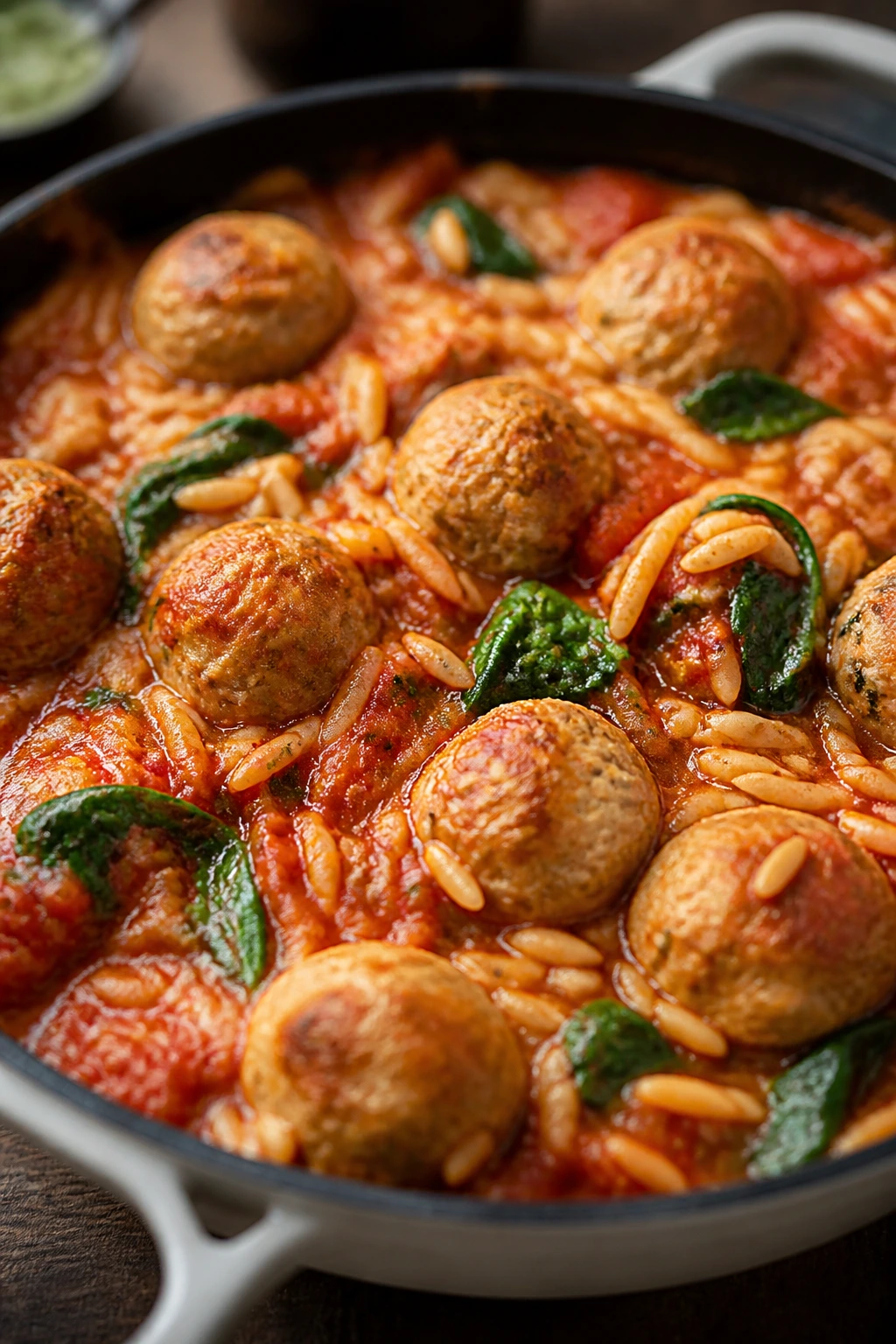
Turkey meatballs turn orzo into something that eats like a full meal. The grain-like pasta shape cooks fast, the sauce settles into every spoonful, and you end up with a bowl that feels hearty without taking much time.
This one is especially kind to leftovers. If you already have cooked meatballs, dinner lands even faster.
Why it works:
Orzo cooks quickly in sauce, which lets it absorb flavor instead of sitting off to the side like a separate starch. Marinara gives you a shortcut to depth, and spinach sneaks in at the end without changing the personality of the dish. Using pre-cooked meatballs keeps the whole thing on the right side of manageable.
Key ingredients:
- 12 ounces orzo
- 1 tablespoon olive oil
- 1 small onion, diced
- 2 cups cooked turkey meatballs, about 20 to 24 small meatballs
- 24 ounces marinara sauce
- 3 cups low-sodium chicken broth
- 2 cups baby spinach
- 1/2 cup grated parmesan
- 1 teaspoon Italian seasoning
- Fresh basil for serving
Quick steps:
- Warm the olive oil in a large skillet or Dutch oven over medium heat. Cook the onion for 4 to 5 minutes until soft and translucent.
- Stir in the orzo and toast it for 1 minute, which gives the finished dish a little nuttier flavor.
- Add the marinara, broth, Italian seasoning, and meatballs. Bring to a simmer, then cook for 8 to 10 minutes, stirring often, until the orzo is tender and the sauce looks thick and soupy rather than dry.
- Stir in the spinach and parmesan. Cook for 1 minute until the spinach wilts and the cheese melts.
- Taste and adjust with salt and pepper. Serve with basil on top.
Tips and variations:
- Frozen cooked meatballs work well; thaw them first if you want the sauce to stay hot.
- If the pan thickens too fast, add broth a splash at a time.
- A spoonful of ricotta on top makes the bowl creamier and softer.
14. Sun-Dried Tomato Chicken Pasta
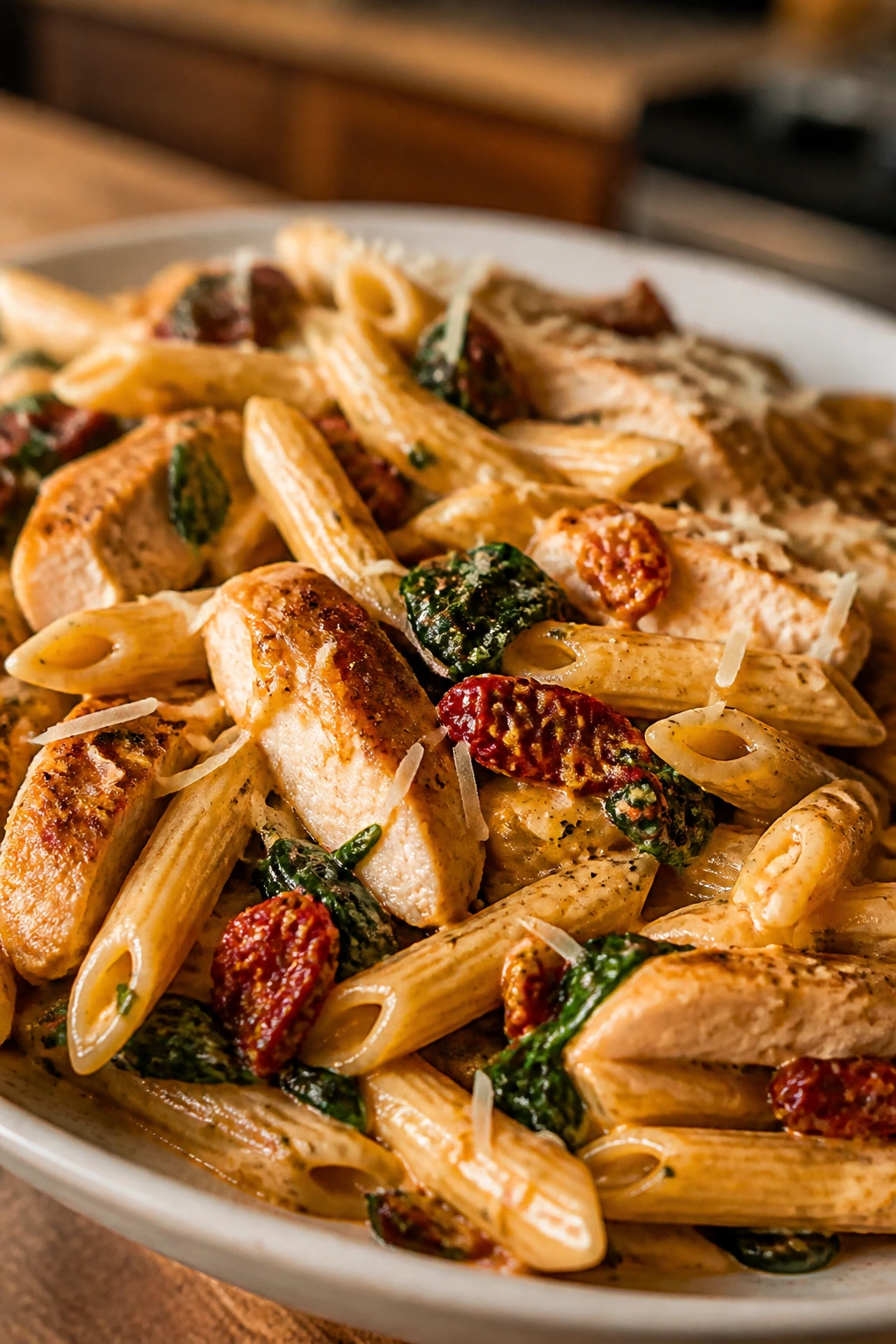
Sun-dried tomatoes bring the kind of deep flavor that makes a 20-minute pasta taste cooked all afternoon. Add chicken, spinach, and parmesan, and you’ve got a pan that feels rich without demanding much from you.
This is a good one for nights when plain chicken sounds dull but you still need dinner to behave.
Why it works:
The oil packed into sun-dried tomatoes carries a lot of flavor, so it helps season the skillet from the first minute. Chicken gives the dish substance, while broth and cream build a sauce that’s savory and a little tangy at the same time. Spinach softens into the pan at the end, so you get a little green without extra work.
Key ingredients:
- 12 ounces penne or rigatoni
- 1 pound chicken breast or thighs, sliced into thin strips
- 2 tablespoons oil from the sun-dried tomato jar
- 1/2 cup sun-dried tomatoes, sliced
- 3 garlic cloves, minced
- 2 cups baby spinach
- 1 cup low-sodium chicken broth
- 3/4 cup heavy cream
- 1/2 cup grated parmesan
- Salt and black pepper to taste
Quick steps:
- Cook the pasta in salted water until al dente. Reserve 1 cup of pasta water, then drain.
- Heat the sun-dried tomato oil in a skillet over medium-high heat. Season the chicken with salt and pepper and cook for 5 to 7 minutes until browned and cooked through.
- Add the sun-dried tomatoes and garlic. Stir for 30 seconds until the garlic smells sweet.
- Pour in the broth and cream, then simmer for 2 to 3 minutes until the sauce thickens a little.
- Add the pasta, spinach, and parmesan. Toss until the spinach wilts and the sauce coats the penne. Use pasta water if needed.
Tips and variations:
- Jarred sun-dried tomatoes packed in oil are easier and richer than dry ones.
- Baby kale can replace spinach if you want a sturdier green.
- A squeeze of lemon at the end keeps the cream from feeling too heavy.
15. Easy Lasagna Skillet
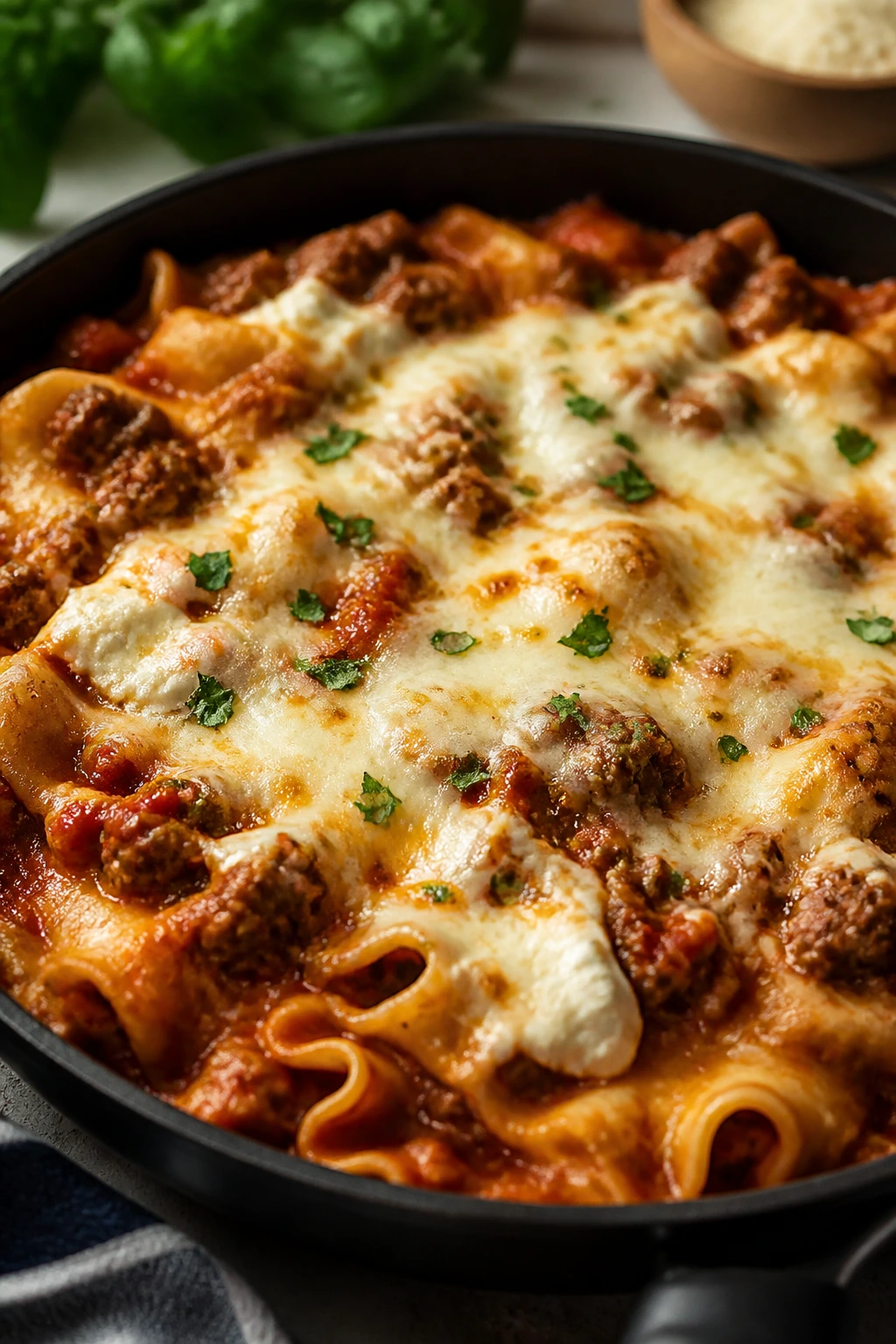
Lasagna without the layering marathon is a very good weeknight move. You get the meat, sauce, noodles, ricotta, and melted cheese all in one pan, and nobody has to wait for a casserole to cool enough to slice.
This is the dinner that satisfies the part of the brain that wants baked pasta, even though the stove did most of the work.
Why it works:
Broken lasagna noodles behave well in a skillet because they cook directly in the sauce. That means the starch helps thicken the pan while the noodles soften. Ricotta adds the familiar lasagna creaminess, and mozzarella on top gives you the pull and melt people expect from the baked version.
Key ingredients:
- 12 ounces lasagna noodles, broken into pieces
- 1 pound ground beef or Italian sausage
- 1 small onion, diced
- 3 garlic cloves, minced
- 24 ounces marinara sauce
- 2 cups low-sodium broth or water
- 1 cup ricotta
- 1 1/2 cups shredded mozzarella
- 1/4 cup grated parmesan
- 1 teaspoon Italian seasoning
- Fresh basil for serving
Quick steps:
- Brown the beef or sausage with the onion in a large deep skillet over medium-high heat, cooking until the meat is no longer pink and the onion is soft.
- Stir in the garlic and Italian seasoning for 30 seconds.
- Add the marinara, broth, and broken noodles. Bring to a simmer, then cook for 12 to 14 minutes, stirring often, until the noodles are tender and the sauce is thick.
- Drop the ricotta over the top in spoonfuls, then sprinkle with mozzarella and parmesan.
- Cover for 2 to 3 minutes until the cheese melts. Finish with basil.
Tips and variations:
- Sausage gives the skillet more seasoning; beef tastes a little milder.
- Add chopped spinach in the last 2 minutes if you want vegetables hidden inside.
- If the noodles look dry before they finish, add a bit more broth and keep stirring.
16. Cajun Chicken Pasta
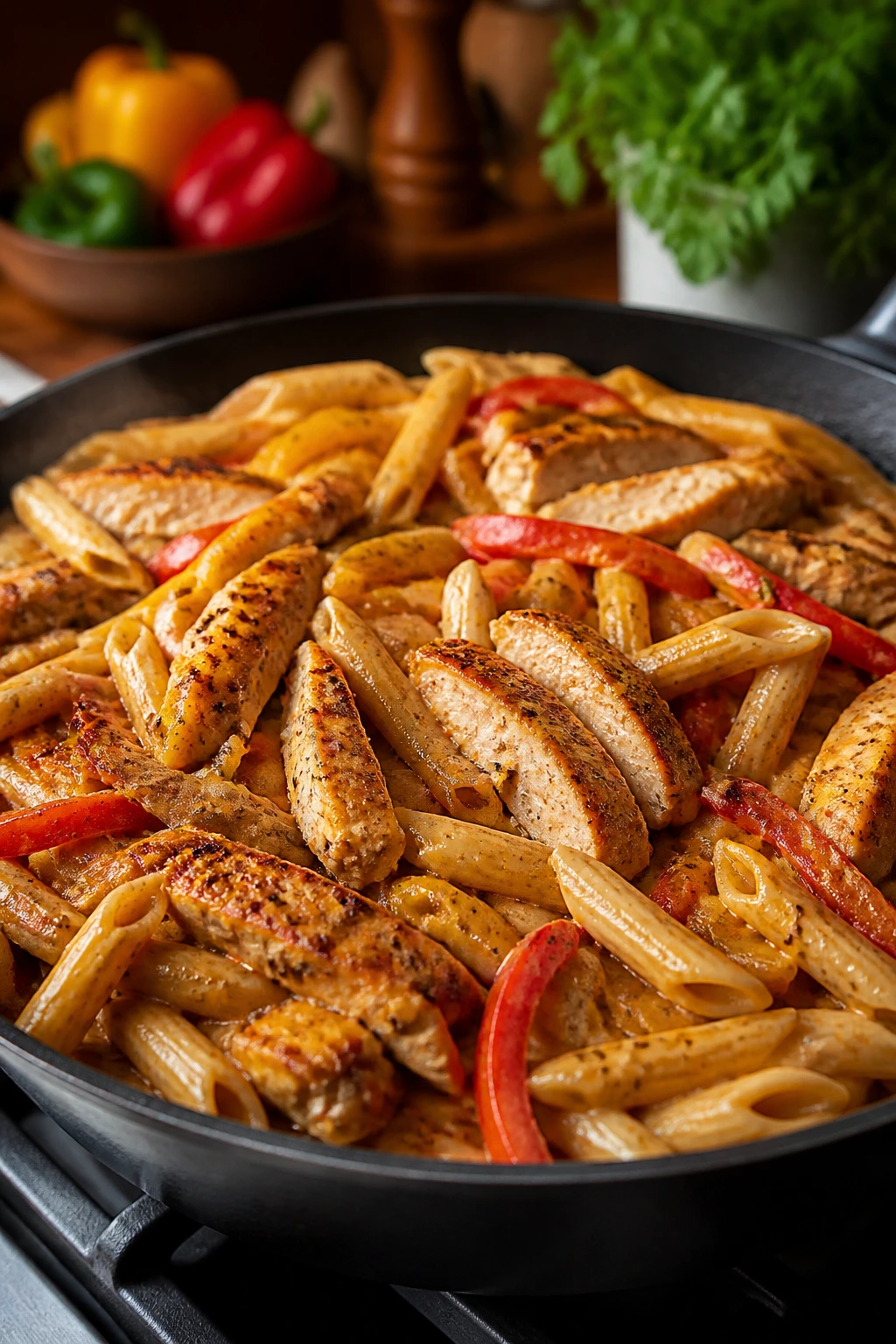
Cajun seasoning wakes up chicken, cream, and pasta in one hard-edged little rush. Bell pepper and onion soften underneath it, so the whole skillet tastes lively, smoky, and a touch spicy.
This is the bowl I want when dinner needs more personality than a plain cream sauce can give.
Why it works:
Cajun seasoning already brings salt, paprika, garlic, and heat, which means the flavor starts early and builds fast. Searing the chicken first gives the dish browned bits in the pan, and those bits pull into the sauce once the cream and broth go in. The result is rich, but it still has a little snap from the peppers.
Key ingredients:
- 12 ounces penne
- 1 pound boneless chicken breast, sliced into strips
- 2 tablespoons Cajun seasoning
- 1 tablespoon olive oil
- 1 bell pepper, sliced
- 1 small onion, sliced
- 2 garlic cloves, minced
- 1 cup heavy cream
- 1/2 cup chicken broth
- 1/2 cup grated parmesan
- Salt to taste, if needed
Quick steps:
- Cook the penne in salted water until al dente. Reserve 1 cup of pasta water and drain.
- Toss the chicken with Cajun seasoning. Heat the olive oil in a large skillet over medium-high heat and cook the chicken for 5 to 7 minutes until browned and cooked through.
- Add the bell pepper and onion. Cook for 4 minutes until the vegetables soften and pick up color.
- Stir in the garlic for 30 seconds, then pour in the cream and broth. Simmer for 2 to 3 minutes until the sauce thickens slightly.
- Add the pasta and parmesan. Toss until coated, adding a splash of pasta water if the sauce feels too tight.
Tips and variations:
- Use a low-sodium Cajun blend if yours runs salty.
- Shrimp can replace some of the chicken, but add it near the end so it doesn’t overcook.
- A little parsley on top cools the spice and freshens the bowl.
17. Buttered Parmesan Noodles with Peas and Ham
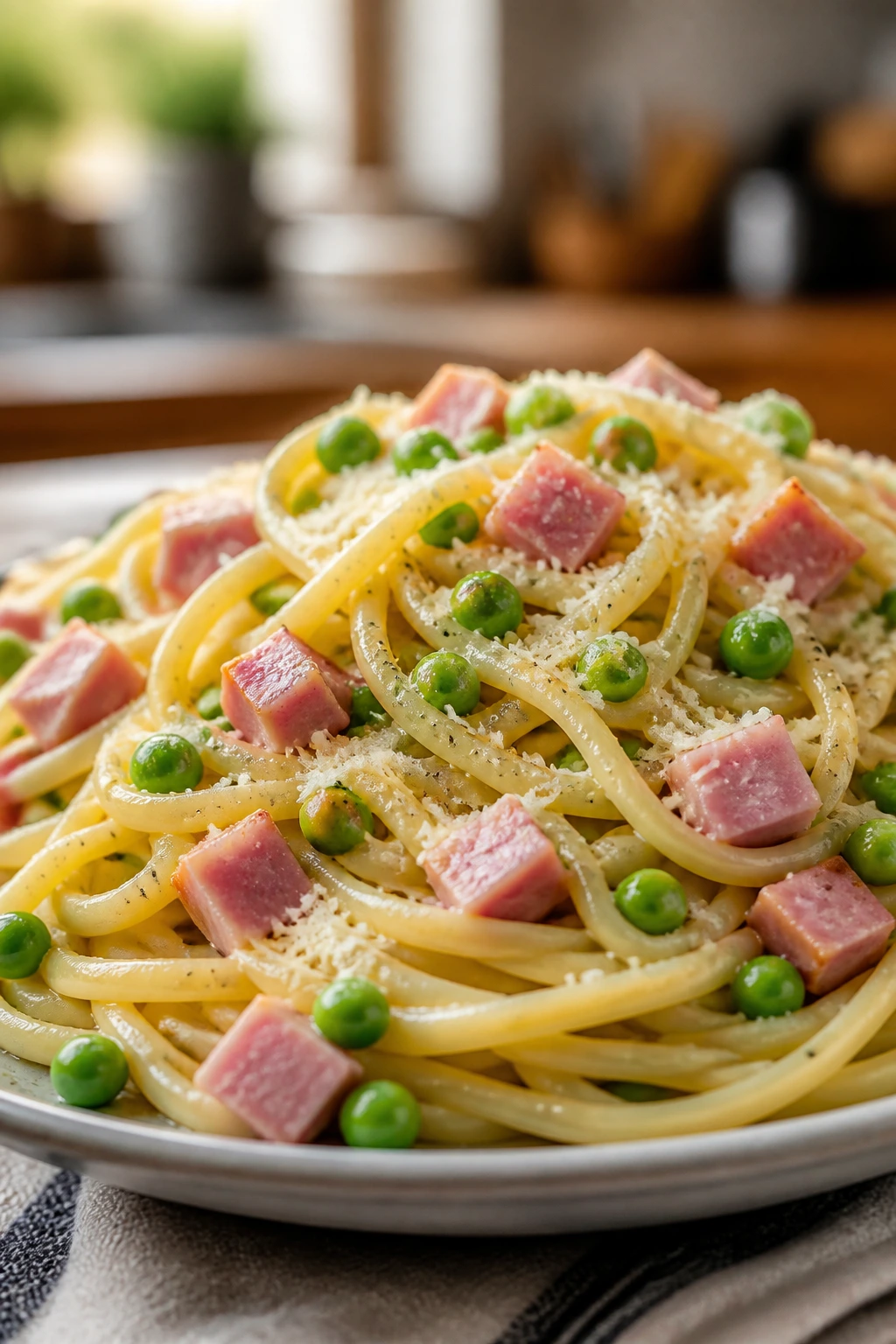
Butter, parmesan, peas, and ham are old-school pantry diplomacy. They settle arguments. They calm a hungry table. And they do it with the kind of ingredients most kitchens already have tucked away.
This is simple food, but not boring. The peas give it color, the ham gives it salt, and the butter plus cheese make it feel like a hug you can eat.
Why it works:
Egg noodles or rotini pick up butter easily, and peas add a sweet note that keeps the dish from leaning too salty. Ham is already cooked, so it only needs warming. A bit of pasta water helps the butter and parmesan turn into a coating instead of a pile at the bottom of the bowl.
Key ingredients:
- 12 ounces egg noodles or rotini
- 3 tablespoons unsalted butter
- 1 cup diced ham
- 1 cup frozen peas
- 2 garlic cloves, minced
- 3/4 cup grated parmesan
- 1/2 cup reserved pasta water
- 1/4 teaspoon black pepper
- 1 teaspoon lemon zest, optional
- Salt to taste
Quick steps:
- Cook the noodles in salted water until tender. Reserve 1 cup of the cooking water, then drain.
- Melt the butter in a large skillet over medium heat. Add the ham and cook for 2 to 3 minutes until warmed and lightly browned in spots.
- Stir in the garlic and peas. Cook for 1 minute until the peas turn bright and the garlic smells sweet.
- Add the noodles, parmesan, black pepper, and 1/2 cup of the pasta water. Toss until the butter and cheese coat the pasta.
- Add more pasta water if needed, then finish with lemon zest if you want a little lift.
Tips and variations:
- Leftover holiday ham works well here.
- A handful of spinach can go in with the peas if you want more green.
- If your parmesan is salty, taste before adding extra salt.
Why Pasta Handles a Rough Evening Better Than Most Dinners
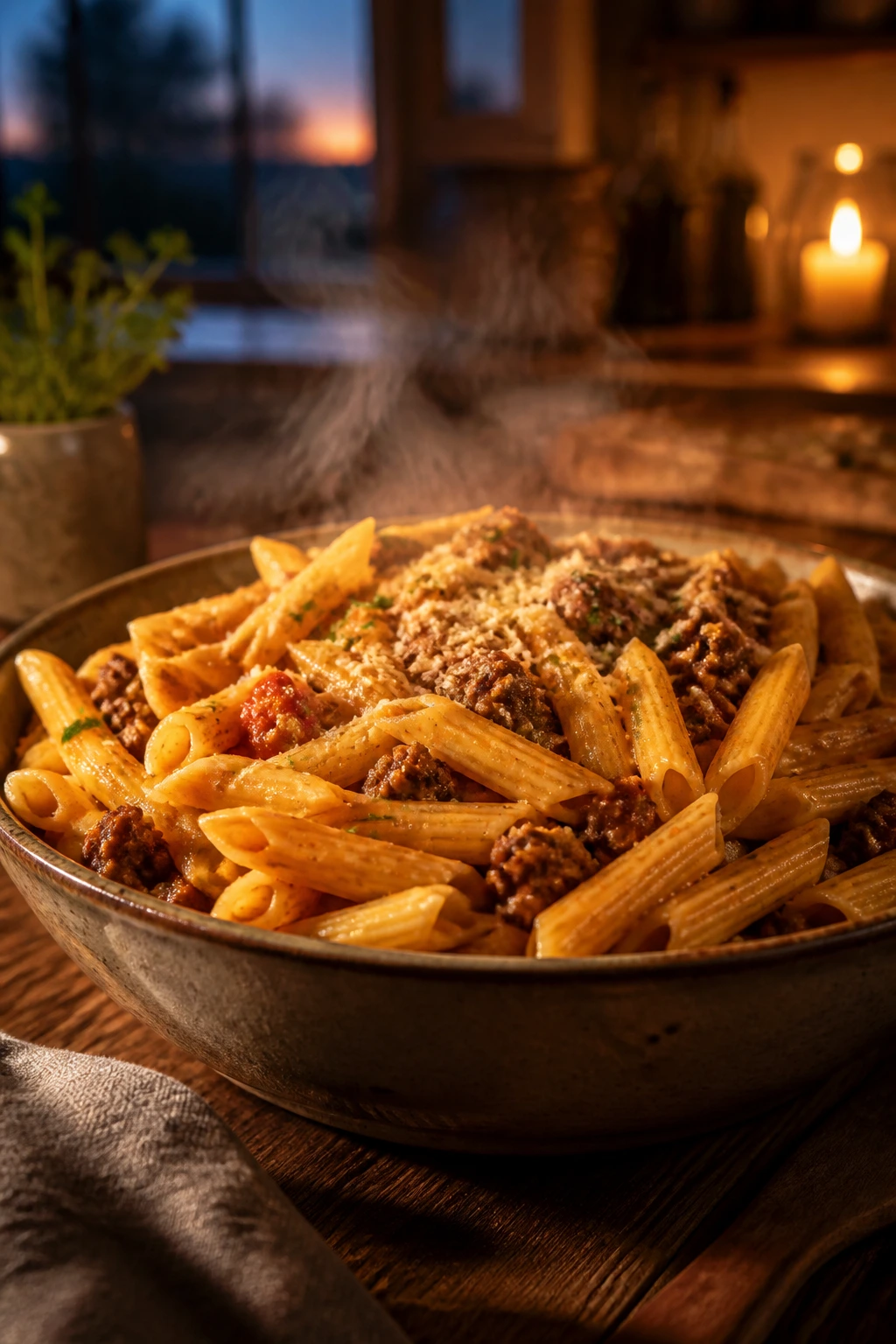
Pasta wins on tired nights because it gives you room to breathe. A pot of water, a skillet, and a short list of ingredients can become dinner in 15 to 25 minutes, and that’s a useful kind of magic when the day has already spent your energy.
The other reason it works is shape. Short pasta grips chunky sauces, long strands carry butter and lemon, and stuffed pasta brings built-in richness. You are not trying to force one sauce to do every job. You are matching the sauce to the pasta, which is why a pantry dinner can taste surprisingly finished.
A few old habits matter here, too. Salt the water well, save some of that starchy water, and stop cooking the pasta when it still has a little bite. Overcooked noodles make even a good sauce feel tired, and tired is not the goal.
Essential Equipment for These Recipes
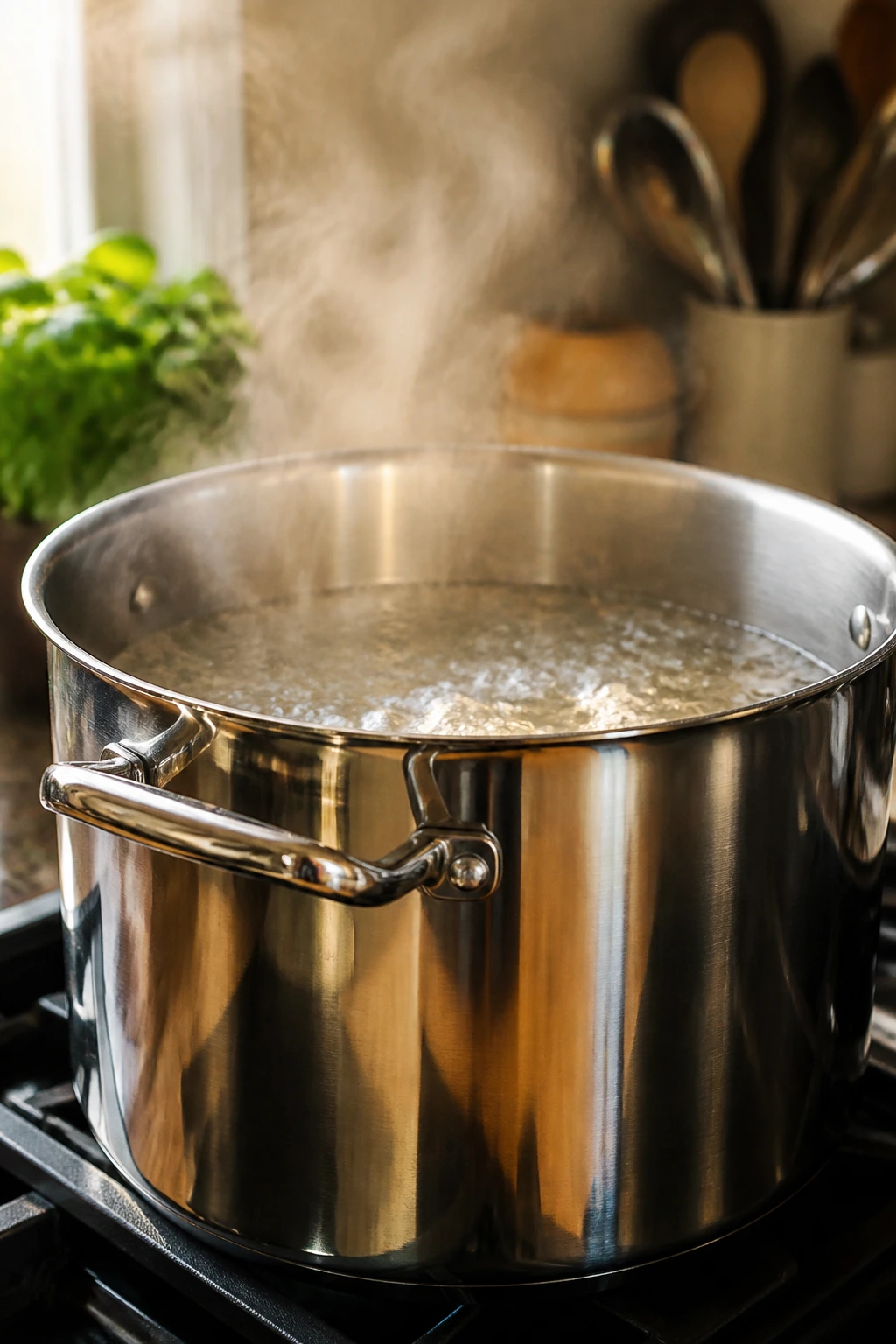
- Large stockpot: Needed for boiling pasta without crowding it.
- Deep skillet or sauté pan: Best for one-pan sauces and anything that needs room to toss.
- Colander: Drains pasta fast and safely.
- Wooden spoon or heatproof spatula: Good for stirring without scraping nonstick finishes.
- Tongs: Helpful for tossing long pasta into sauce.
- Measuring cups and spoons: Keeps sauce ratios steady, especially with cream and broth.
- Box grater or Microplane: Freshly grated parmesan melts better than the dusty pre-shredded stuff.
- Sharp knife and cutting board: For garlic, onion, herbs, and quick vegetable prep.
- Lid for your skillet: Useful when melting cheese or softening noodles in sauce.
- A ladle or heatproof measuring cup: Makes pasta water easy to add a little at a time.
Smart Shopping and Ingredient Tips
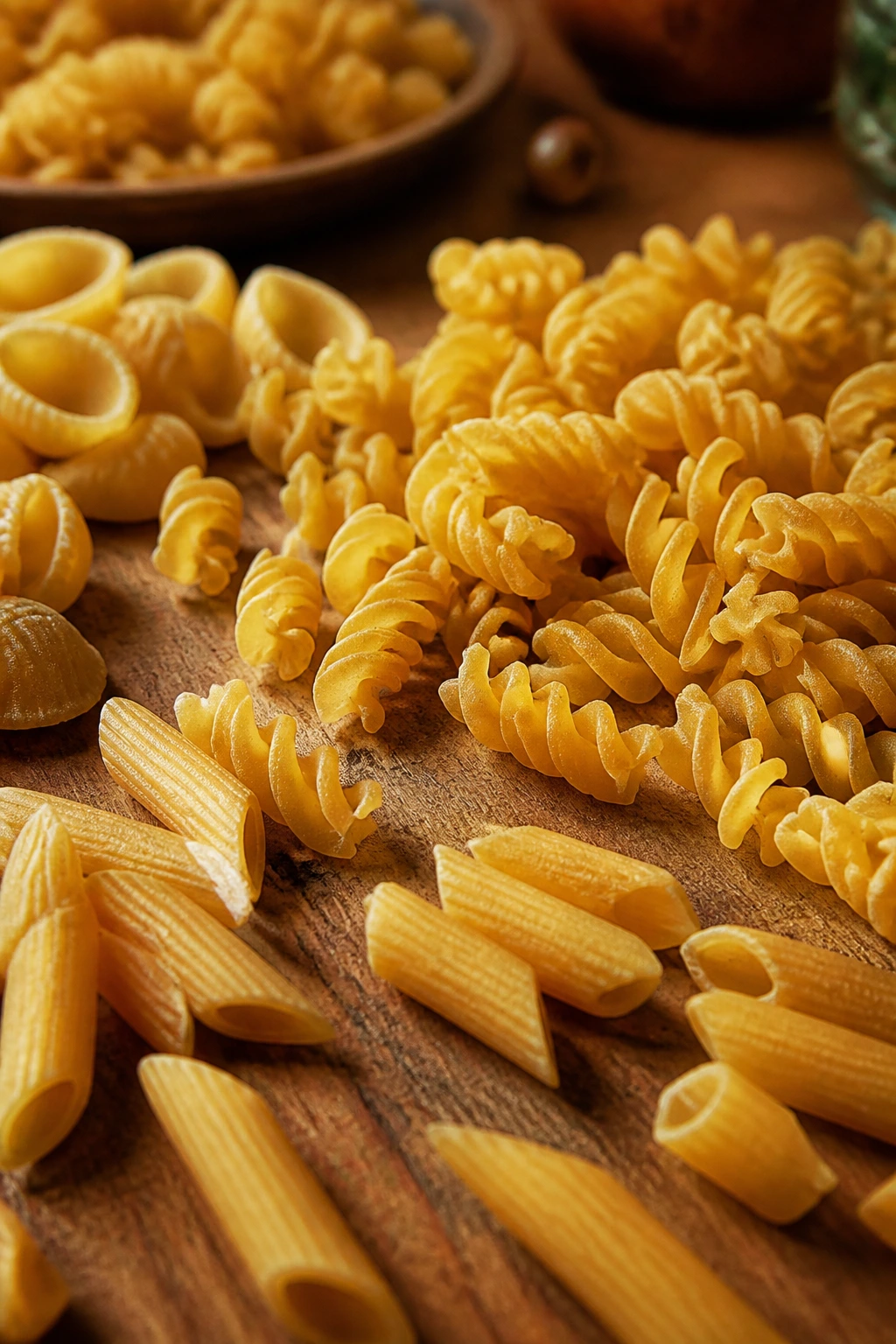
A good pasta dinner starts in the grocery cart long before it hits the stove. Choose bronze-cut dried pasta if you can find it; the rougher surface grabs sauce better than slick, shiny noodles. It’s a small thing, but it matters. So does parmesan: buy a block and grate it yourself if possible, because it melts cleaner and tastes sharper than the bagged version.
For sauces, canned tomatoes deserve more respect than they usually get. Look for crushed tomatoes or passata with a short ingredient list, and keep low-sodium broth around so you can control the salt yourself. Frozen peas, spinach, and broccoli are worth keeping on hand because they save you from chopping and they hold up well in fast pasta dishes.
Protein is where tired cooks can save the most time. Rotisserie chicken, cooked turkey meatballs, shrimp, canned tuna, sausage, and even diced ham can turn plain noodles into dinner without a lot of fuss. If you buy chicken breasts, slice them thin so they cook in minutes. If you buy shrimp, choose peeled and deveined to cut out the annoying part.
And one more thing: fresh herbs matter more than most people think in simple pasta. Basil, parsley, and thyme do not need a giant amount. A small handful at the end can make a heavy pan taste awake.
Make-Ahead, Storage, and Reheating Guidance
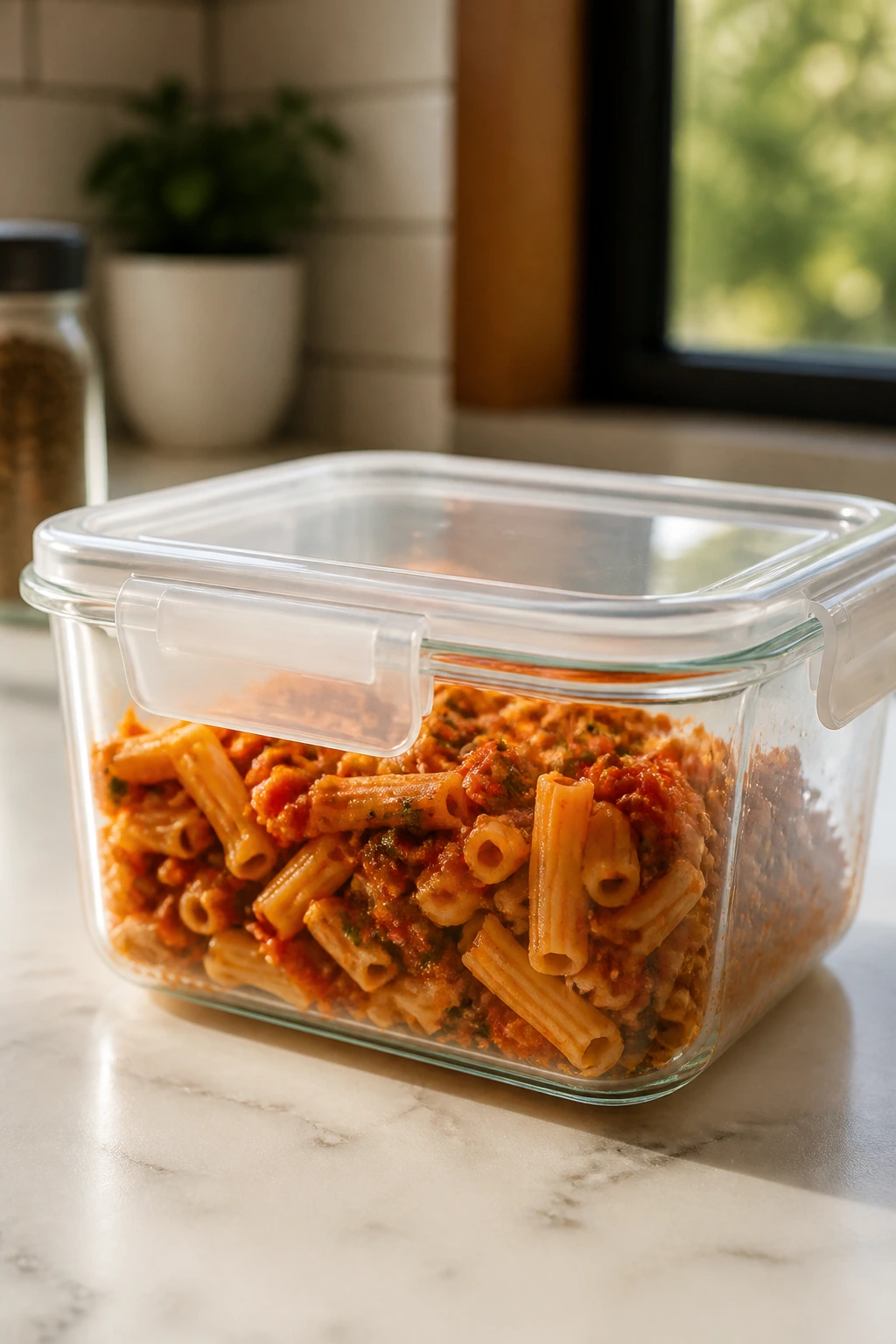
Most of these pasta dinners keep well in the fridge for 3 to 4 days if they’re cooled and stored in airtight containers within 2 hours of cooking. Seafood pasta, especially the shrimp and tuna versions, is best eaten within 2 to 3 days. Creamy sauces are safe in that same window, but the texture gets a little looser after chilling, which is normal.
Freezing works best for tomato-based and meat-based pasta dishes. Think sausage penne, lasagna skillet, taco pasta, turkey meatball orzo, and sun-dried tomato chicken pasta. They’ll hold for up to 2 months frozen in a tightly sealed container. Creamy dishes can be frozen, too, but the sauce may separate a bit when thawed. If you do freeze one, undercook the pasta by a minute and reheat it gently so it doesn’t turn mushy.
Reheat leftovers in a skillet with 2 to 4 tablespoons of water, broth, or milk depending on the sauce. Cover the pan for a minute or two so the steam loosens everything, then stir until hot. Microwaving works, but do it in short bursts and stir between rounds or the edges dry out before the center heats through.
Pasta with delicate greens tends to soften more on day two. That’s fine. Just add a spoonful of liquid and a small knob of butter or a shake of parmesan when you warm it up, and it comes back to life far better than people expect.
Variations and Adaptations to Try
Gluten-Free Pasta Nights
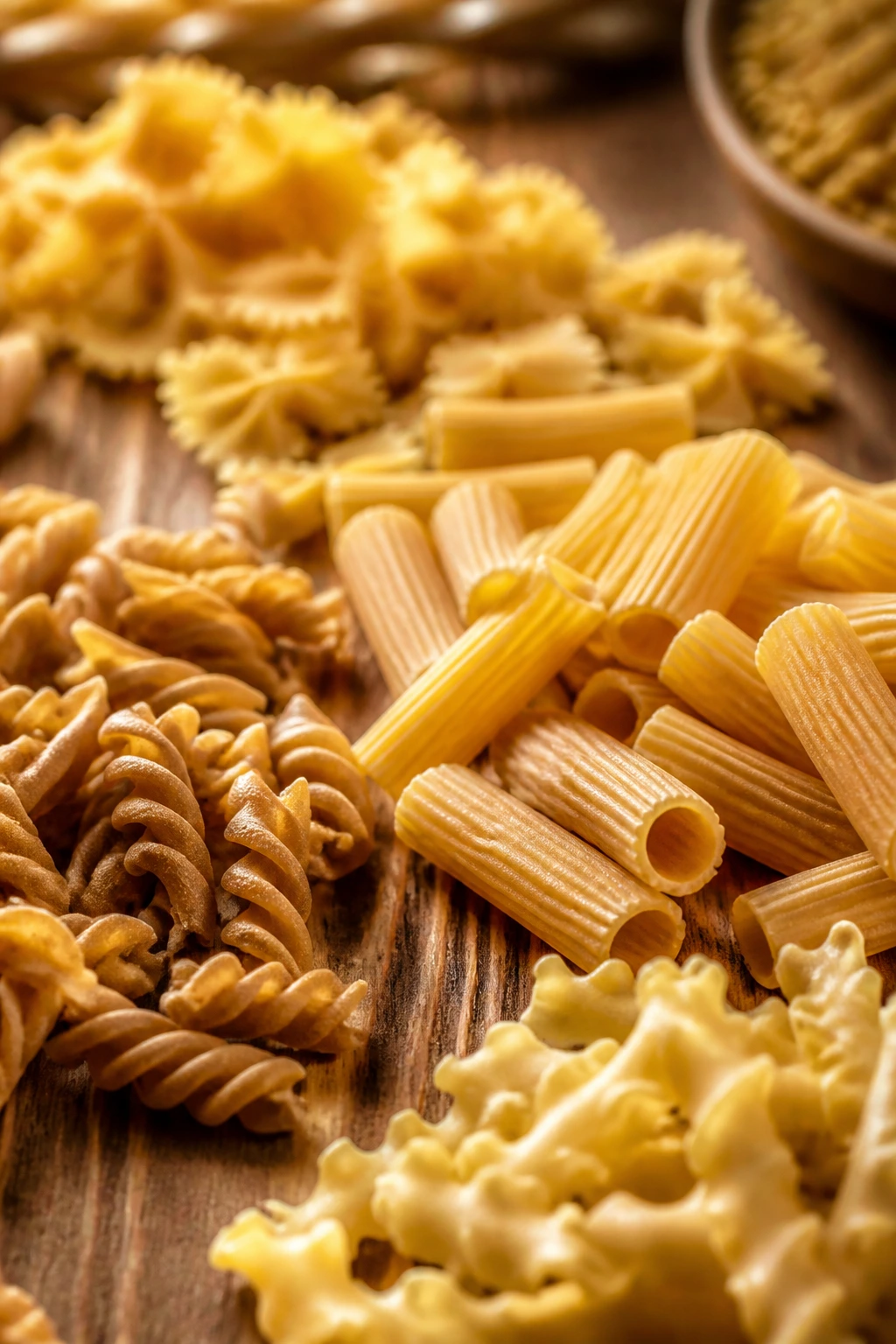
Use a gluten-free pasta shape that holds texture well, like penne, rotini, or shells. Cook it just shy of tender, because gluten-free pasta can turn soft faster once it sits in sauce. Tomato and sausage dishes usually behave the best here.
Dairy-Light Swaps
If you want less dairy, lean on olive oil, pasta water, and tomato-based sauces. Skip the cream in Alfredo-style dishes and finish with a smaller amount of parmesan or a spoonful of ricotta. The meal will taste lighter, not bare.
Vegetable-Heavy Bowls
Double the spinach, broccoli, mushrooms, or peas in any of these recipes and cut back slightly on the pasta. You’ll stretch the meal, add color, and make the bowl feel fuller without much extra effort. This works especially well with tomato sauces and sausage.
Protein Boosted Without More Cooking
Rotisserie chicken, canned tuna, pre-cooked meatballs, diced ham, or shrimp can step in whenever you need dinner to feel sturdier. The trick is to add already-cooked proteins near the end so they warm through without drying out. That keeps the texture better and saves time.
Kid-Calm Versions
Leave red pepper flakes off the table, use mild sausage, and keep stronger flavors like capers or sun-dried tomatoes more restrained. A little extra parmesan can smooth out sharp edges. Kids usually forgive a lot if the pasta is tender and the sauce is creamy enough to coat it.
Common Mistakes to Avoid
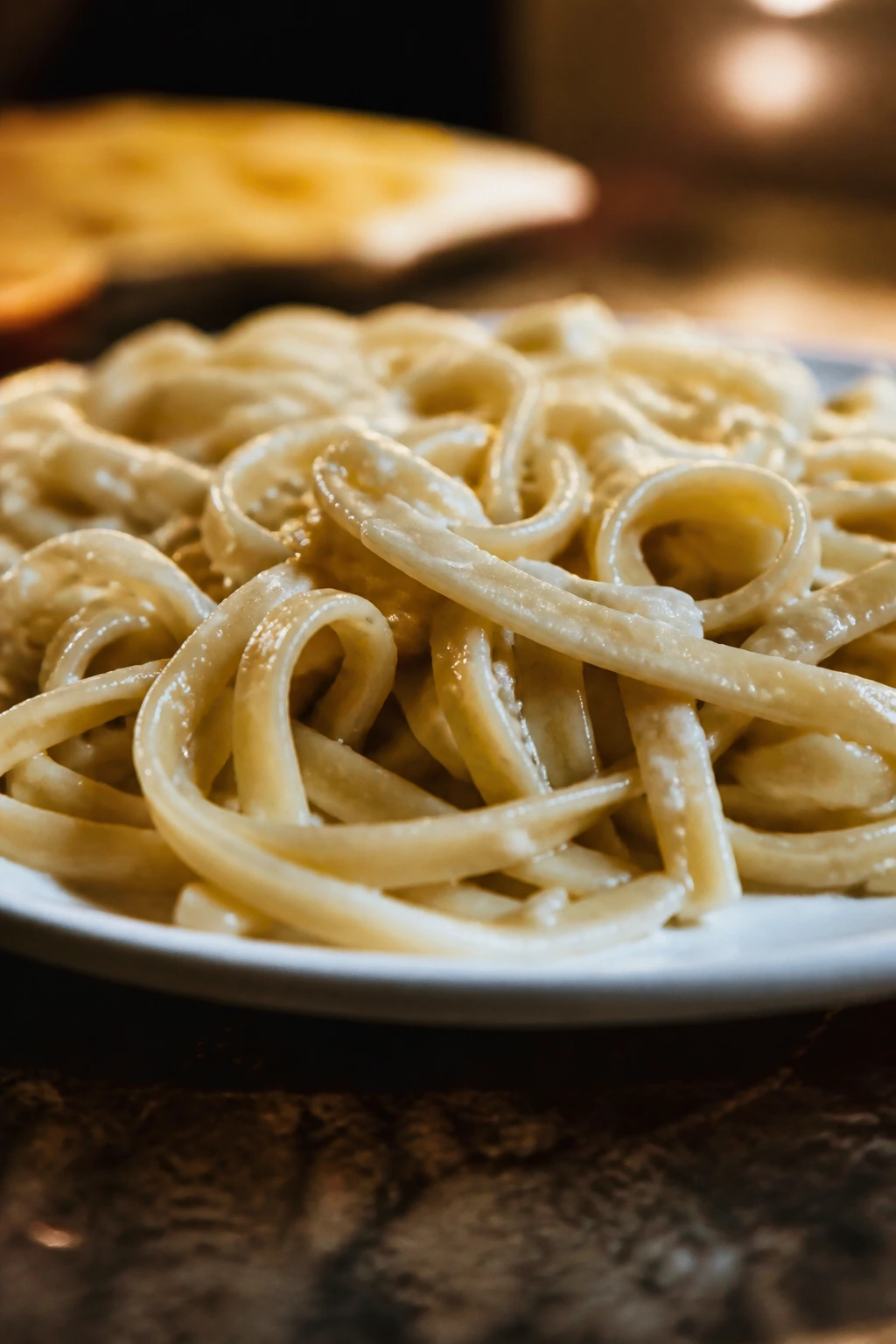
The biggest pasta mistake is plain and maddening: overcooking the noodles. Pasta keeps softening a little after you drain it, and if you start with mush, the finished dish turns heavy and dull. Pull it when it still has a firm center.
Second, don’t salt the cooking water timidly. Pasta water should taste pleasantly salty, because that seasoning gets carried into the sauce. A bland pot of water makes even a good sauce taste flatter than it should.
Third, don’t forget to reserve pasta water before draining. That starchy liquid is what helps butter, cheese, cream, and oil turn into a sauce instead of a puddle. If the skillet looks tight or dry, pasta water is usually the fix.
A fourth mistake shows up in creamy dishes: cranking the heat too high. Boiling cream hard can make it split or turn grainy. Keep the simmer gentle and stir often. And if you’re using cheese, take the pan off the heat before the last handful goes in so it melts smoothly.
Frequently Asked Questions
Can I use any pasta shape in these dinners?
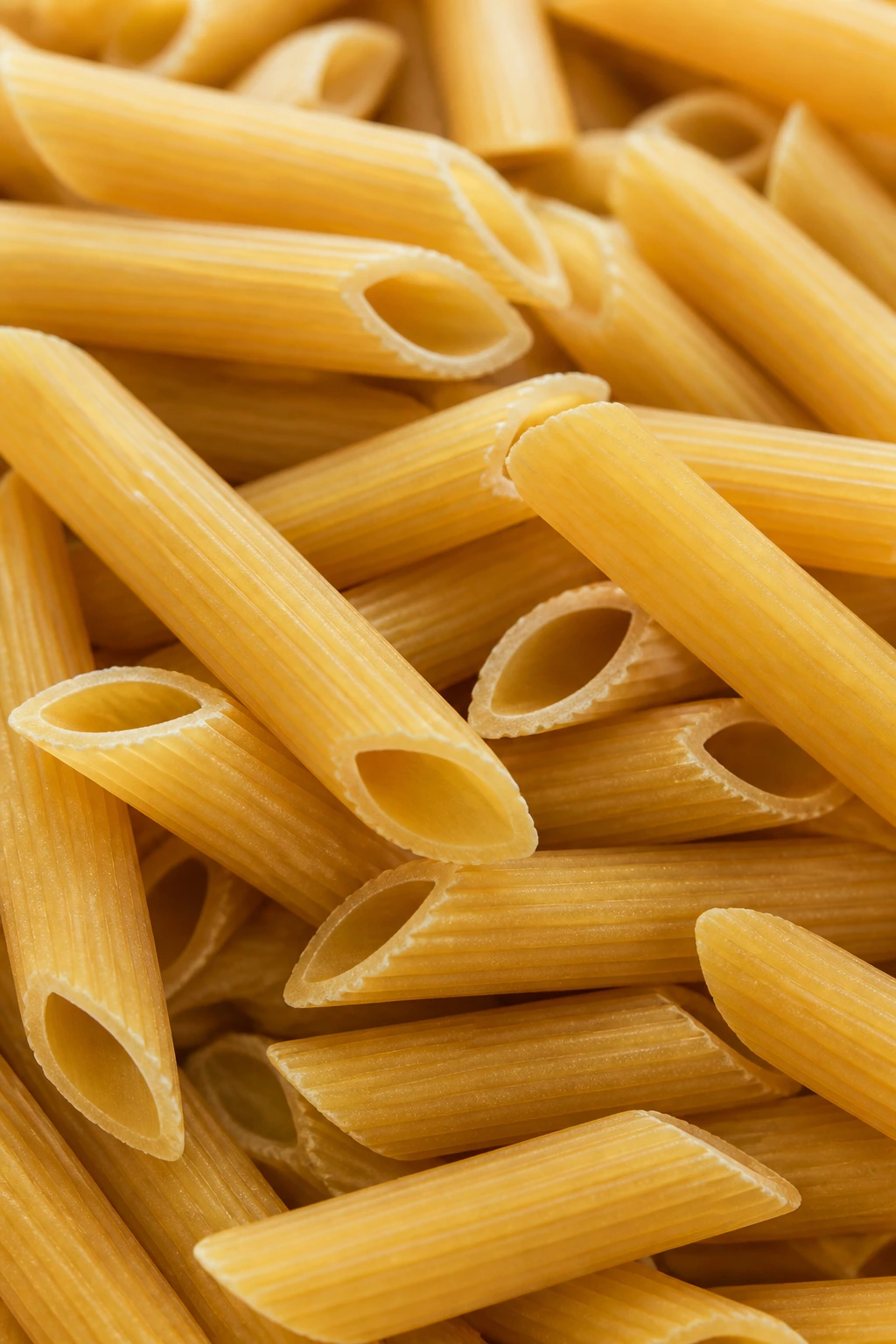
You can swap shapes more often than people think, but it helps to match the shape to the sauce. Short pasta like penne, rotini, and shells works best with chunky sauces, while spaghetti and linguine are better for butter, lemon, or olive-oil sauces.
Do I really need to save pasta water?
Yes, and not because it sounds clever. The starch in pasta water helps sauces cling, especially when you’re working with butter, parmesan, or pesto. Even 1/2 cup can fix a sauce that looks too thick or dry.
Can I make these with gluten-free pasta?
Absolutely, but watch the cooking time closely. Gluten-free pasta can go from firm to soft fast, especially after it sits in sauce. Drain it a little early and finish it in the skillet.
What’s the best way to keep creamy pasta from splitting?
Keep the heat moderate and add cheese or cream after the pan is no longer boiling hard. If the sauce gets too thick, loosen it with a splash of pasta water instead of pushing the heat higher.
Can I make these ahead for the next day?
Yes. Tomato-based pasta dishes hold up best, and many of them taste even better after the flavors settle overnight. Creamy and seafood pastas are fine too, though they’re at their nicest when reheated gently with a little liquid.
What if I only have leftover chicken or ham?
Use it. Leftover cooked meat is one of the best shortcuts in pasta cooking. Add it near the end so it warms through without drying out or getting stringy.
Can I use milk instead of cream?
In some dishes, yes. Milk works well if you add a little flour or use parmesan to help thicken the sauce. It won’t taste as rich as cream, but it still makes a decent weeknight bowl.
Bowls Worth Keeping in Rotation
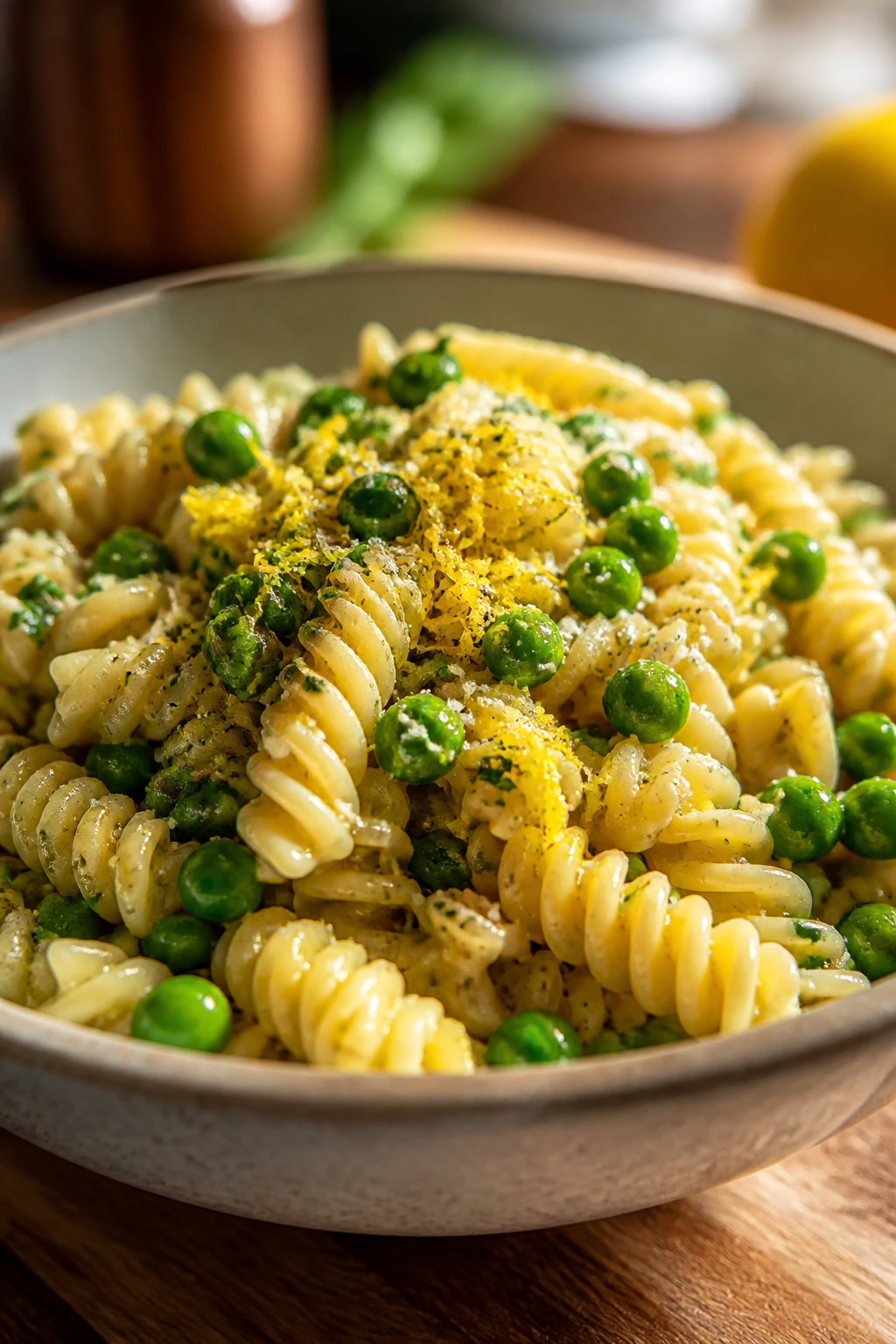
A good pasta dinner doesn’t need to look fancy to save the evening. It needs to be fast, warm, and forgiving enough to handle a tired cook with a full sink and a hungry table.
Keep a few of these in rotation and the hard part of dinner gets smaller. One night it’s lemon and peas. Another night it’s sausage, tomatoes, and a skillet doing the heavy lifting. That kind of flexibility is what makes pasta so useful, and it’s why these bowls earn their place on the fridge door and in the regular dinner repeat.