



The smell hits first: pepperoni fat warming in a skillet, brown sugar melting into a copper-dark syrup, red pepper flakes flashing a sharp little warning before the first bite even lands. Tender Spicy Pepperoni with Brown Sugar Glaze sounds almost too simple to take seriously, and that’s exactly why it works. A cured meat that salty needs sweetness and acid to stop feeling blunt; a sticky glaze needs heat to keep it from slipping into candy territory.
I prefer thick-cut pepperoni here. The thin stuff turns brittle fast, throws off more grease, and gives you those hard little curls that look better than they eat. Thick slices stay supple, catch the glaze, and keep a chewy bite that feels deliberate instead of accidental.
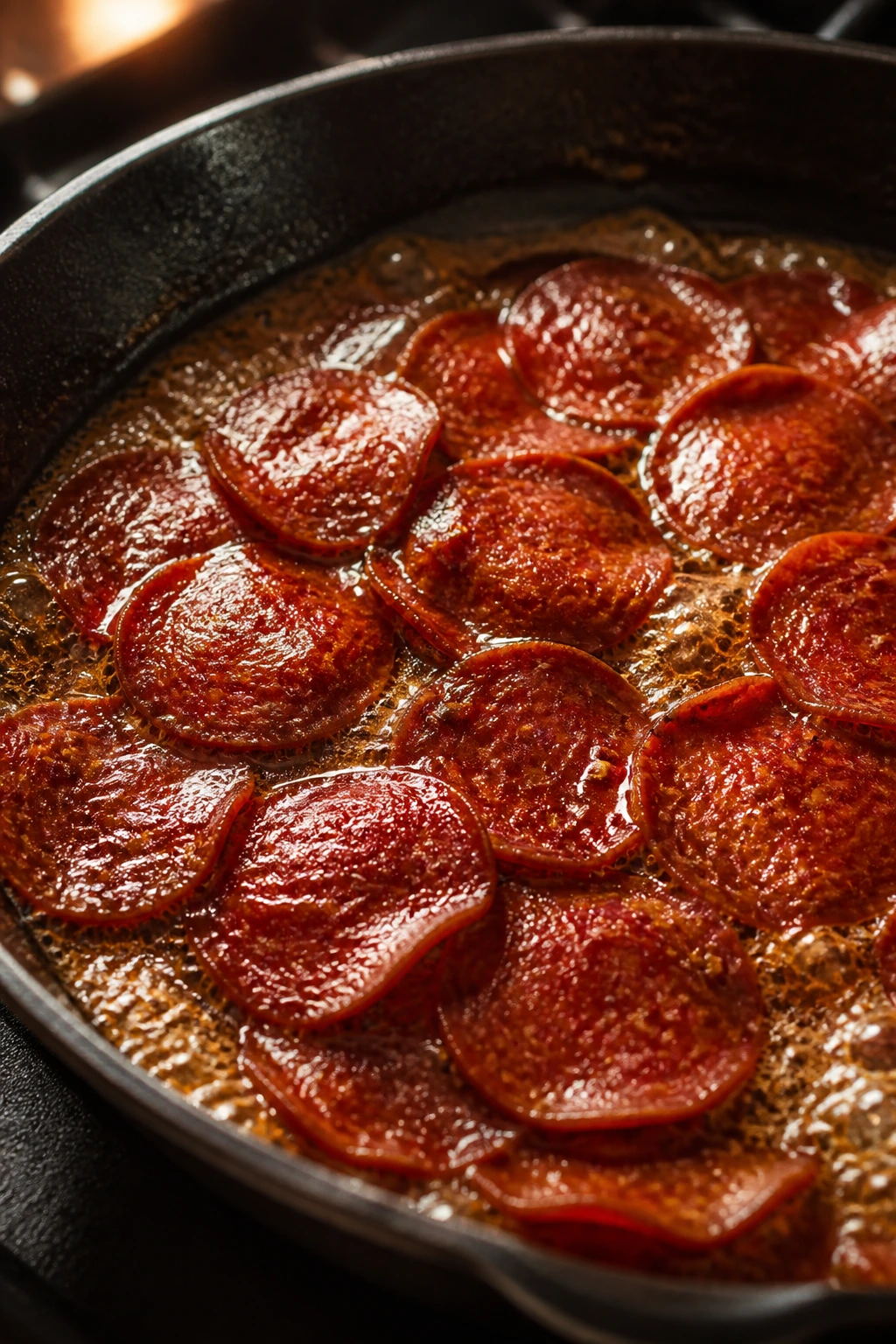
There’s also a narrow window where this dish turns from “warm meat with syrup on it” into something people keep circling back to with toothpicks. You want the glaze glossy, not scorched. You want the pepperoni coated, not fried into chips. Medium heat. Short cook. No wandering off to answer a text and then pretending the smell isn’t a warning.
Why This Snack Earns a Spot on the Tray
- Fast on the stove: The whole batch goes from pantry ingredients to sticky, spoonable pepperoni in about 15 minutes, with no marinating or oven preheat.
- Chewy, not brittle: Thick-cut slices soften in the glaze instead of curling into hard coins, which is the mouthfeel this recipe is really chasing.
- Sweet heat with balance: Brown sugar and honey round off the pepperoni’s salt, while vinegar and hot sauce keep the finish from tasting flat.
- Party-board friendly: It slides onto crackers, cubes of cheddar, or toothpicks without making a greasy mess if you give it a 2-minute rest.
- Useful beyond snacking: Leftovers make a sharp pizza topping, a sandwich layer, or a topper for baked mac and cheese.
- Easy to steer: A little more vinegar pushes it savory, a little more brown sugar pushes it sticky, and both changes still keep the recipe recognizable.
What One Batch Looks Like From the Stove
Yield: Serves 6 to 8 as an appetizer
Prep Time: 10 minutes
Cook Time: 6 to 8 minutes
Total Time: 16 to 18 minutes
Difficulty: Beginner — the only real skill here is keeping the heat steady and stopping at the right moment.
Rest Time: 2 minutes
Best Served: Warm, while the glaze is still glossy and the slices bend instead of crack.
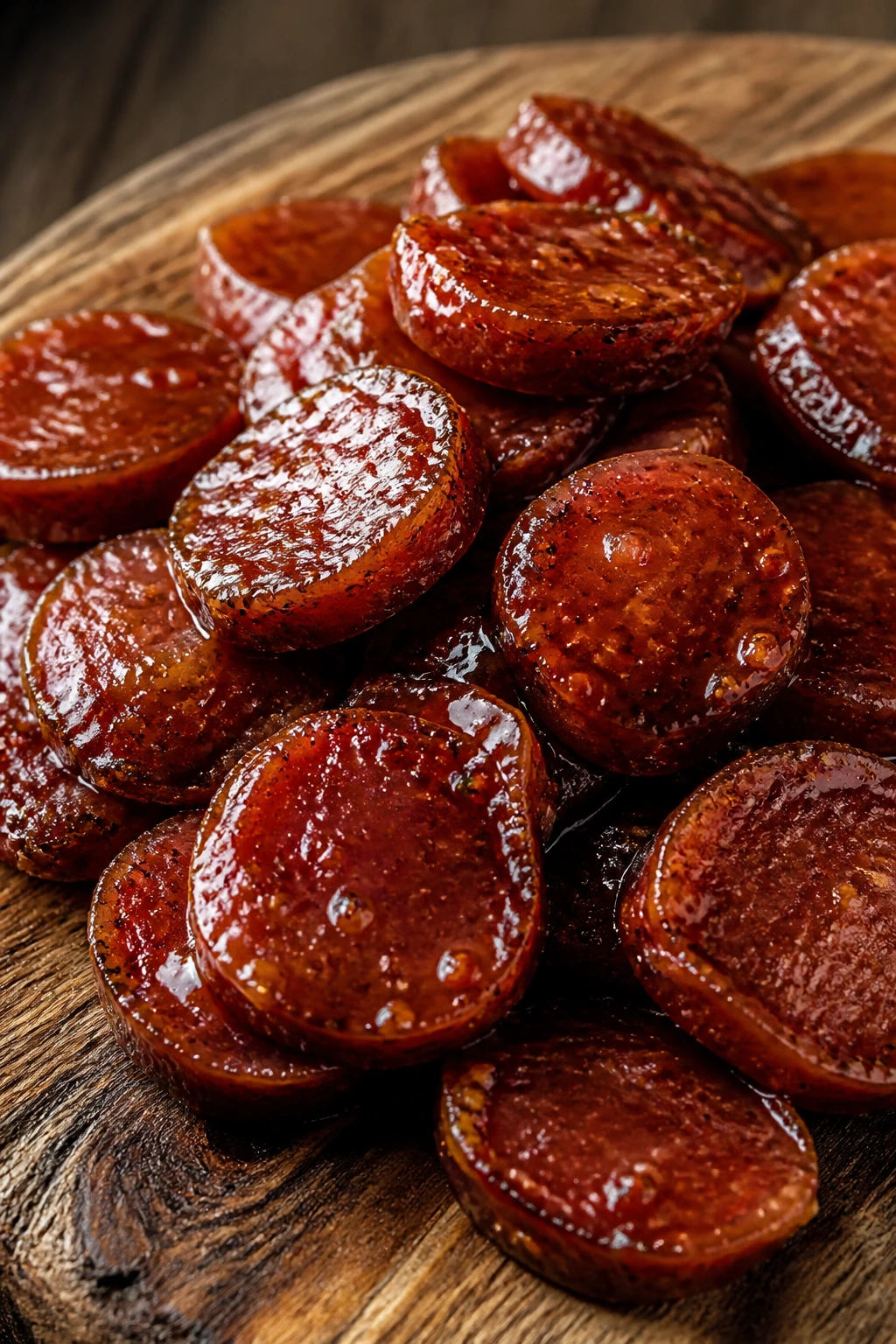
A finished pan should look lacquered, not wet. The pepperoni will glisten, the glaze will cling in a thin shiny layer, and the syrup pooled in the bottom will be just thick enough to coat a spoon. If you cook it properly, you should be able to smell brown sugar, pepper, and vinegar at the same time.
That balance matters. Too sweet, and the pepperoni feels like a novelty. Too spicy, and the sugar disappears under the heat. The good version lands in the middle, where every bite has salt, smoke, a little burn, and a sticky finish that hangs on the lip of the pan.
The Ingredient List That Keeps Sweet, Heat, and Salt in Balance
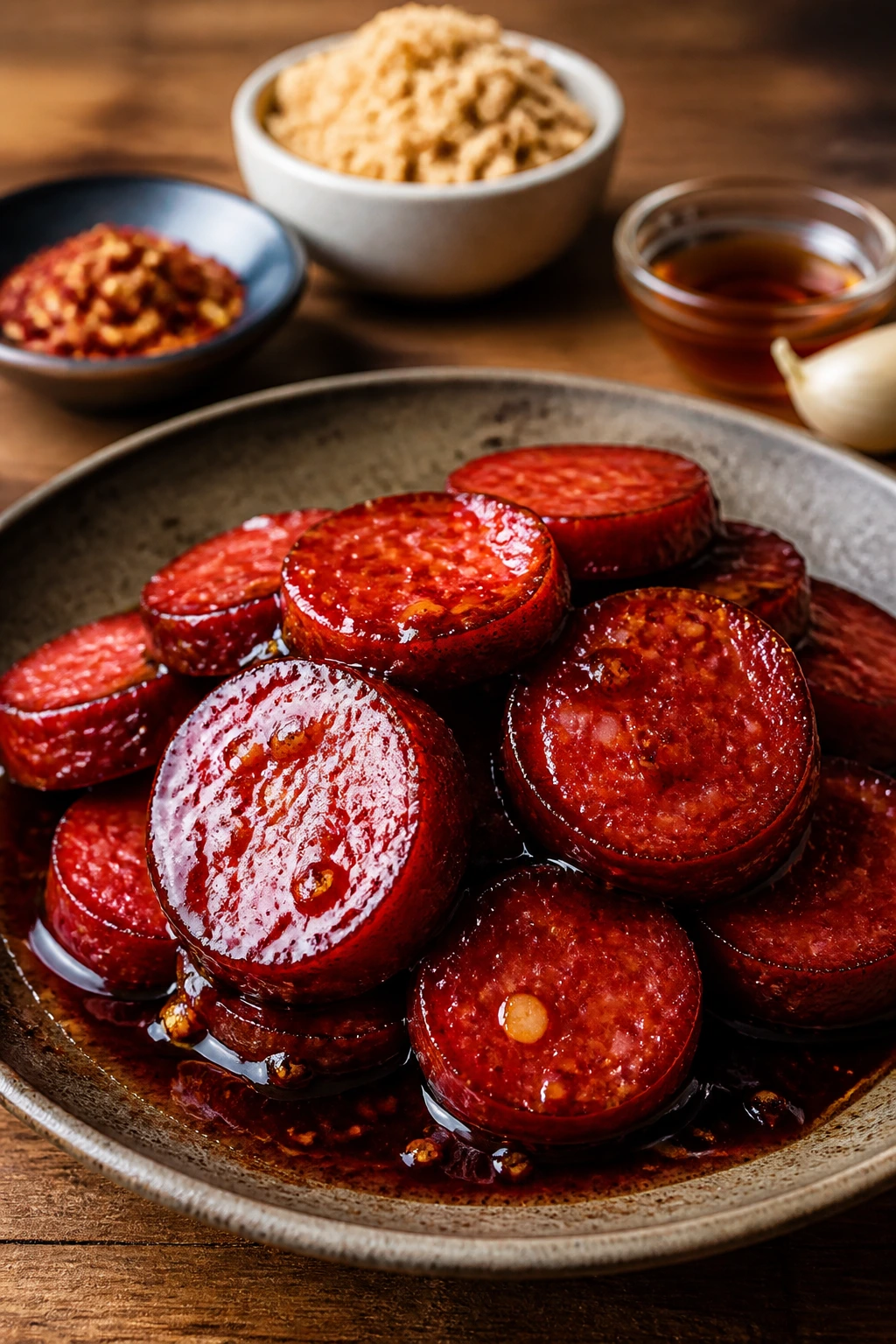
For the Pepperoni:
- 1 pound thick-cut pepperoni slices, about 1/4 inch thick, or 1 pepperoni stick, about 12 ounces, sliced into rounds
- 2 tablespoons unsalted butter, cut into pieces
For the Brown Sugar Glaze:
- 1/2 cup packed light brown sugar
- 2 tablespoons apple cider vinegar
- 1 tablespoon honey
- 1 tablespoon water
- 1 teaspoon Dijon mustard
- 1 teaspoon hot sauce
- 1/2 teaspoon red pepper flakes
- 1/2 teaspoon smoked paprika
- 1/4 teaspoon garlic powder
- 1/4 teaspoon black pepper
- Pinch kosher salt, only if your pepperoni tastes mild
The ingredient list is short on purpose. Pepperoni already brings salt, fat, and a strong cured-meat flavor; the glaze’s job is to sharpen and smooth that, not bury it under a pile of extras. If you start adding onions, garlic cloves, and three different sweeteners, you lose the clean line that makes the finished dish so easy to eat.
Why Each Ingredient Matters Once the Sugar Starts Bubbling
Thick-Cut Pepperoni
- What to use: 1 pound of thick-cut pepperoni, either pre-sliced or cut from a stick into rounds about 1/4 inch thick.
- Preparation: Pat the slices dry before they hit the skillet and separate any pieces that are stuck together.
- Substitutions: Turkey pepperoni works if you want a leaner result, though it gives off less fat and feels drier. Soppressata can stand in if you want a similar cured-meat chew with a different spice profile.
- Tips: Thin deli-style pepperoni cooks too fast and turns crisp before the glaze can cling. Thick slices stay soft enough to feel tender, which is the whole point of this recipe.
Brown Sugar and Honey
- What to use: 1/2 cup packed light brown sugar and 1 tablespoon honey.
- Preparation: Pack the brown sugar into the measuring cup so the glaze has enough body to coat the pepperoni instead of running off the pan.
- Substitutions: Dark brown sugar gives the glaze a deeper molasses note; maple syrup can replace the honey if you want a darker, woodier sweetness.
- Tips: Brown sugar gives you the sticky base, but the honey adds shine. Skip the honey and the glaze still works, but it loses a little of that glassy finish that makes the pan look so good.
Vinegar, Mustard, and Hot Sauce
- What to use: 2 tablespoons apple cider vinegar, 1 teaspoon Dijon mustard, and 1 teaspoon hot sauce.
- Preparation: Measure these before the pan gets hot; once the sugar starts melting, you will not want to fumble around with bottles.
- Substitutions: Red wine vinegar can replace the apple cider vinegar. Yellow mustard works if that’s what’s in the fridge, though Dijon tastes cleaner and less sharp.
- Tips: Acid matters here. It cuts the grease from the pepperoni and keeps the glaze from tasting sticky in the wrong way.
Heat Builders and Spices
- What to use: 1/2 teaspoon red pepper flakes, 1/2 teaspoon smoked paprika, 1/4 teaspoon garlic powder, and 1/4 teaspoon black pepper.
- Preparation: Mix the dry spices together before they go into the skillet so they disperse evenly instead of clumping into one bitter corner.
- Substitutions: Chipotle powder can replace the smoked paprika if you want a heavier smoky burn. Cayenne works if you want a cleaner, hotter edge.
- Tips: Smoked paprika adds depth more than fire. It makes the glaze taste like it had more work done on it than it really did.
Butter and Water
- What to use: 2 tablespoons unsalted butter and 1 tablespoon water.
- Preparation: Cut the butter into pieces so it melts quickly and blends with the sugar before the sugar can catch and scorch.
- Substitutions: Olive oil can replace the butter if you want a dairy-free version, though the glaze will taste a little sharper and less rounded.
- Tips: Water keeps the glaze loose long enough to coat the pepperoni evenly. Without it, the sugar can seize too fast and cling in gritty patches.
Shopping for Pepperoni Without Ending Up With a Grease Bomb
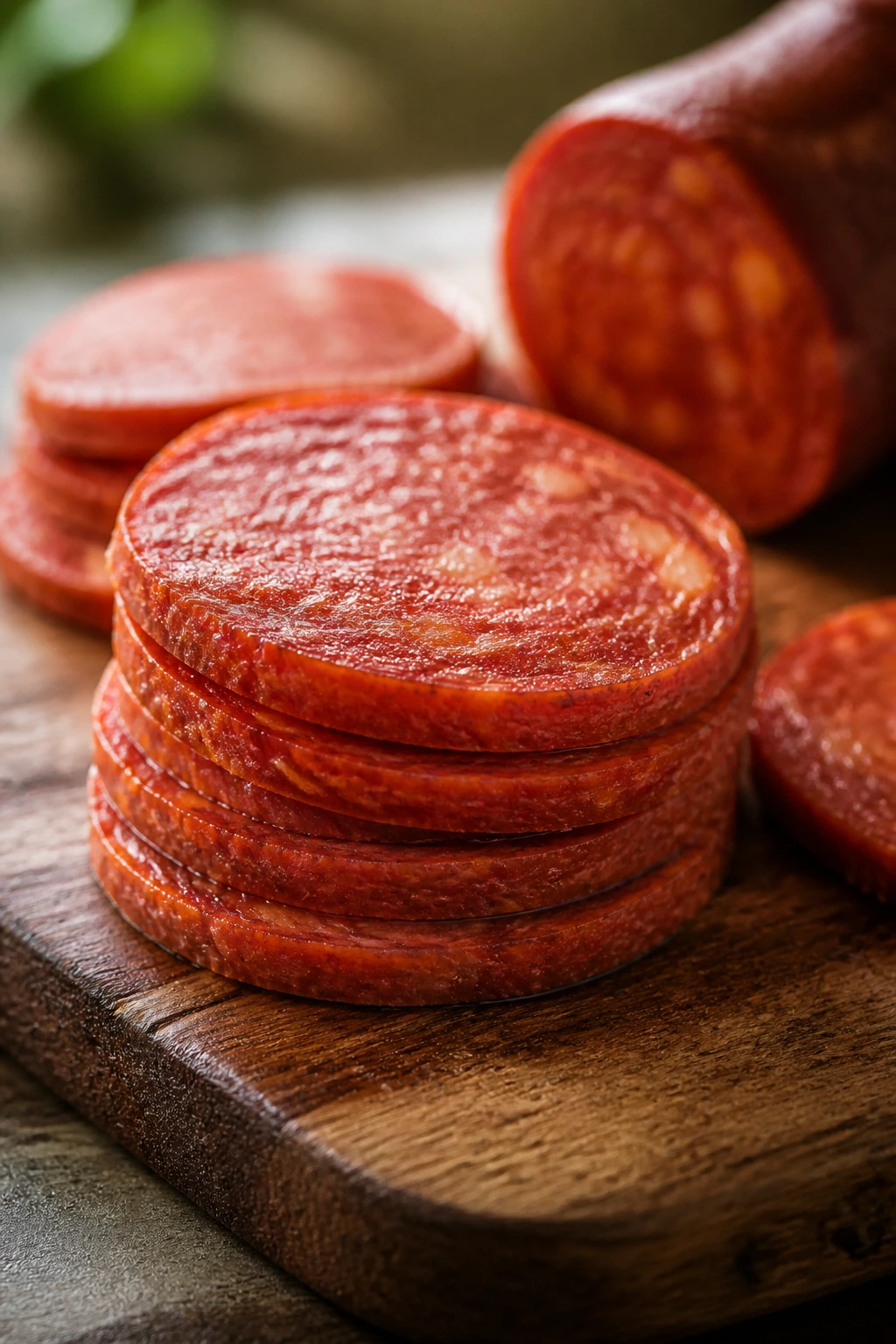
Pepperoni is one of those ingredients that seems interchangeable until you actually cook it. Then the differences show up fast. A very thin slice gives you crisp edges and a lot of rendered oil; a thick cut gives you a softer bite and enough structure to hold the glaze. I would take thick-cut every time for this recipe. It eats better, looks better, and lets the sweetness stay attached.
Look for pepperoni that smells clean and peppery, not stale or papery. If you’re buying from a deli counter, ask for the piece to be sliced about 1/4 inch thick. Too thin and it turns brittle. Too thick and the glaze won’t coat the surface evenly, which leaves you with a greasy center and a sticky edge. That’s an annoying bite.
The brown sugar matters too. Packed light brown sugar gives you a warmer, more familiar flavor. Dark brown sugar works if you want the glaze to lean deeper and less sweet, but it also darkens fast in the pan, so you need to watch it more closely. I usually stick with light brown sugar and let the hot sauce and Dijon do the work of pulling it away from dessert territory.
Apple cider vinegar is the acid I reach for because it has enough bite to cut through the fat without tasting harsh. White vinegar can work in a pinch, but it feels blunt. The same goes for hot sauce: you want one with some vinegar in it, not a thick, sweet sauce that just adds more sugar to a pan already full of sugar.
The Tools That Make a Sticky Glaze Easier to Control
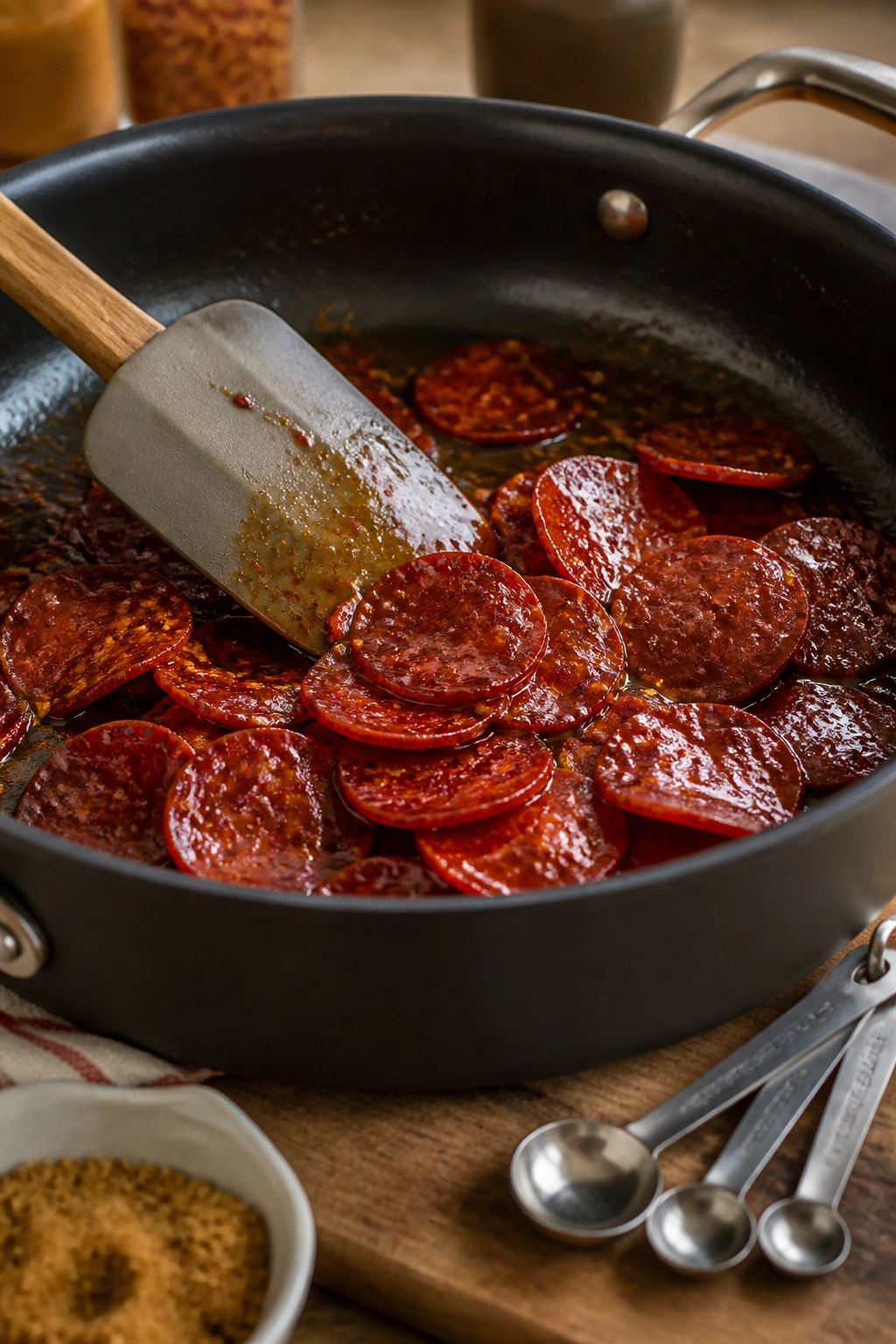
- 12-inch skillet with high sides: Stainless steel, enameled cast iron, or a good nonstick skillet all work; the high sides help keep the bubbling glaze from spitting onto the stove.
- Silicone spatula or wooden spoon: You need something that can scrape the glaze without scratching the pan and without melting.
- Measuring cups and spoons: The recipe is short, but the ratio matters. Eyeballing the sugar or vinegar changes the texture fast.
- Small bowl: Handy for mixing the dry spices before they hit the skillet.
- Slotted spoon or tongs: Useful for lifting the pepperoni into a serving bowl while leaving excess grease behind.
- Parchment-lined plate or shallow serving dish: The glaze sets better if the pepperoni has a clean landing spot instead of sitting in a puddle of fat.
A candy thermometer is not necessary here. You are not making brittle. You are not chasing hard crack stage. You are watching for a visual cue: glossy syrup that coats the spoon and clings to the pepperoni in a thin layer. If you know what that looks like, the recipe gets much easier.
How to Make the Glaze and Coat the Pepperoni
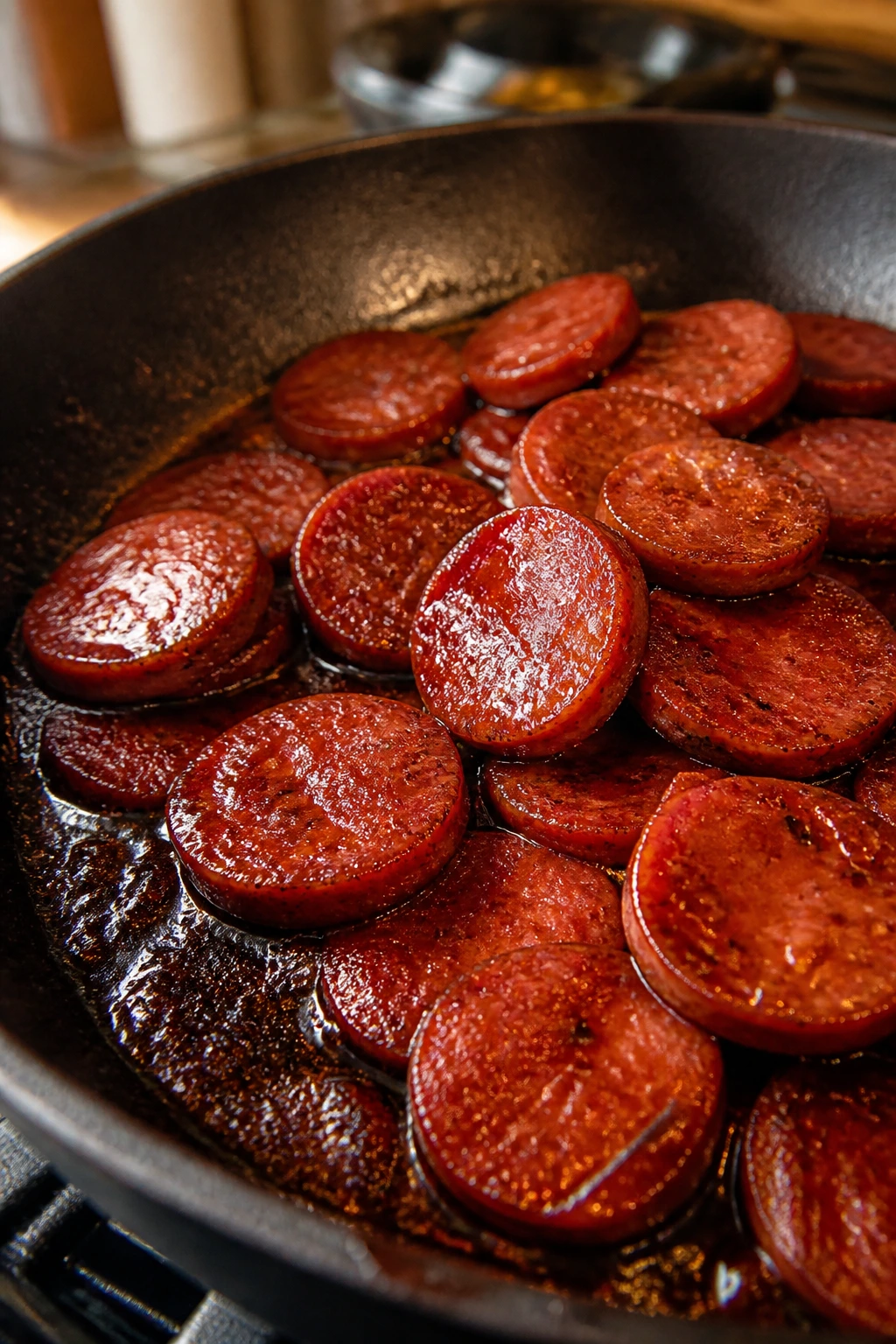
Prep the Pan and Pepperoni
-
Line a plate or shallow tray with parchment paper and set it near the stove. If you’re starting from a pepperoni stick, slice it into rounds about 1/4 inch thick. If you’re using pre-sliced pepperoni, separate the slices now so they’re easy to toss later.
-
Pat the pepperoni slices dry with a paper towel. Do not skip this step if the slices look shiny or damp from the package; extra surface moisture makes the glaze slide around before it can cling.
-
In a small bowl, mix the brown sugar, red pepper flakes, smoked paprika, garlic powder, and black pepper. Stir the dry seasonings together so they distribute evenly once they hit the pan.
Build the Glaze
-
Set a 12-inch skillet over medium heat and add the butter. When it melts, stir in the apple cider vinegar, honey, water, Dijon mustard, hot sauce, and the dry spice mixture. Cook for 1 to 2 minutes, stirring constantly, until the sugar dissolves and the mixture looks glossy with tiny bubbles around the edge.
-
Lower the heat to medium-low and add the pepperoni slices in a single layer as much as possible. Stir and flip them for 2 to 4 minutes, until the slices look softened and the glaze starts coating each piece in a thin sticky sheen. If the bubbles start popping hard or the pan smells like toasted candy, the heat is too high.
-
Keep cooking for another 30 to 60 seconds, just until the glaze tightens and clings to the pepperoni instead of pooling at the bottom of the skillet. If the pan seems dry before the pepperoni is fully coated, add 1 teaspoon water and stir quickly. The finished glaze should look shiny and slippery, not grainy.
Rest and Serve
-
Remove the skillet from the heat and let the pepperoni sit for 2 minutes. That short rest gives the glaze time to settle and keeps it from running all over the plate the second you move it.
-
Transfer the glazed pepperoni to the parchment-lined serving dish with a slotted spoon or tongs. Spoon any remaining glaze over the top and serve warm.
That’s the full method. Short list, yes, but the details matter. The whole recipe lives in heat control and timing. If you rush either one, you’ll still get pepperoni, but not the glossy sticky version that makes this worth making.
How to Serve It So the Glaze Stays Put
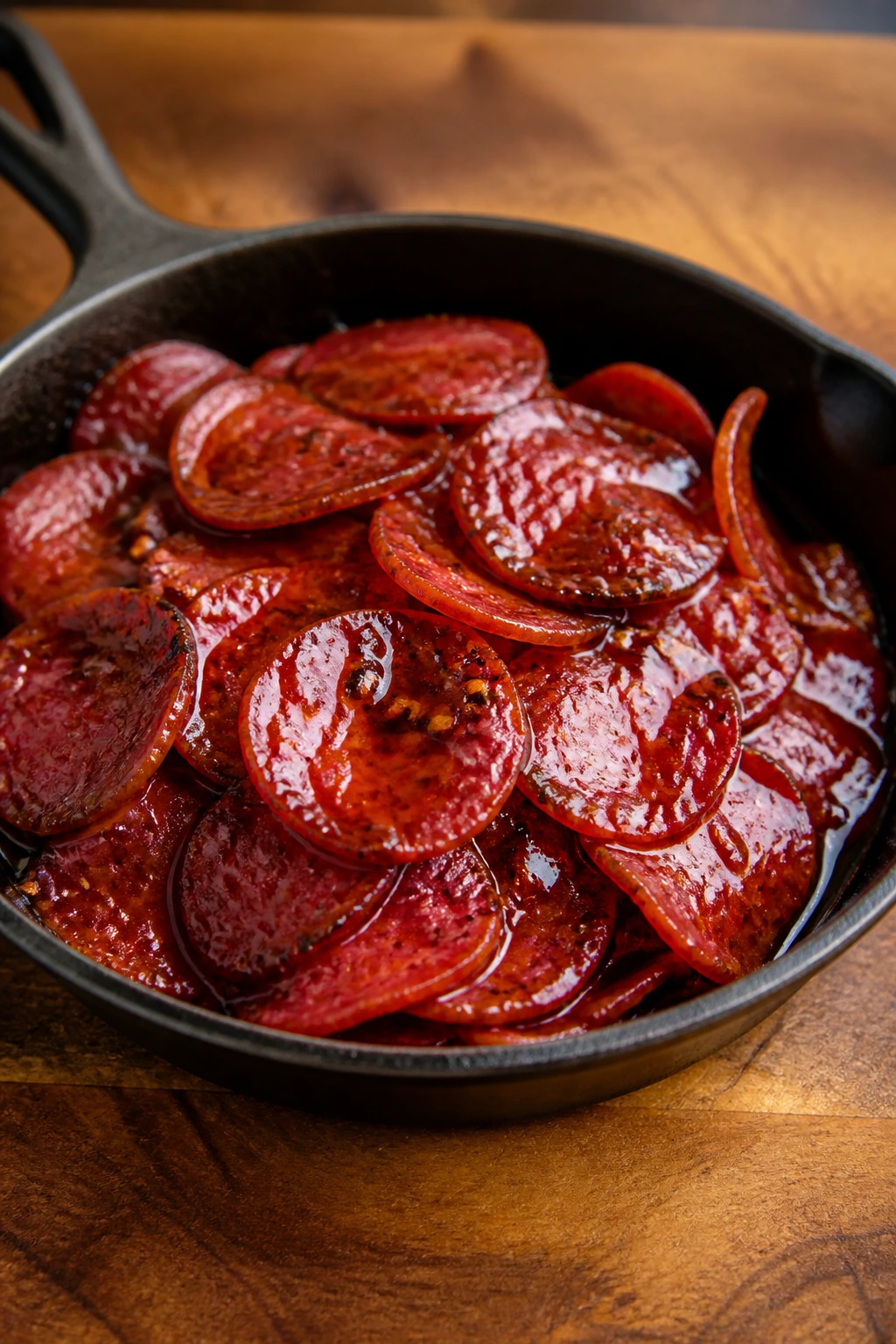
Presentation: I like this best in a shallow bowl or a small cast-iron skillet rather than spread across a flat platter. The glaze stays pooled beneath the pepperoni just enough to keep it glossy, and people can scoop pieces with toothpicks without dragging the whole pile around.
Accompaniments: Salted crackers, sturdy baguette slices, sharp cheddar, cubes of provolone, dill pickles, and celery sticks all work. If you’re building a board, add one cold, crunchy thing and one creamy thing; the salt and fat from the pepperoni need contrast. A spoonful on top of cream cheese with crackers is a very good move, and frankly it disappears faster than the plain tray.
Portions: As an appetizer, plan on 2 to 3 tablespoons per person. If you’re serving it as part of a larger spread with cheese, pickles, and bread, 6 to 8 servings is realistic. If you’re using it as a topping for pizza, mac and cheese, or sliders, this batch stretches to 4 portions because the pepperoni becomes an accent instead of the center.
Beverage Pairing: A cold lager, a dry hard cider, or unsweetened iced tea keeps the sweetness from feeling heavy. If you want something nonalcoholic with a little bite, sparkling water with lemon works better than a sweet soda, which can make the glaze taste clingier than it already is.
The one serving trick I’d insist on: do not serve it straight from the skillet if the pan is still pooling with grease. Give it that two-minute rest, then move it to a dish with some structure. The glaze looks cleaner, the pepperoni tastes cleaner, and the whole tray feels more composed.
Ways to Push the Flavor in Different Directions
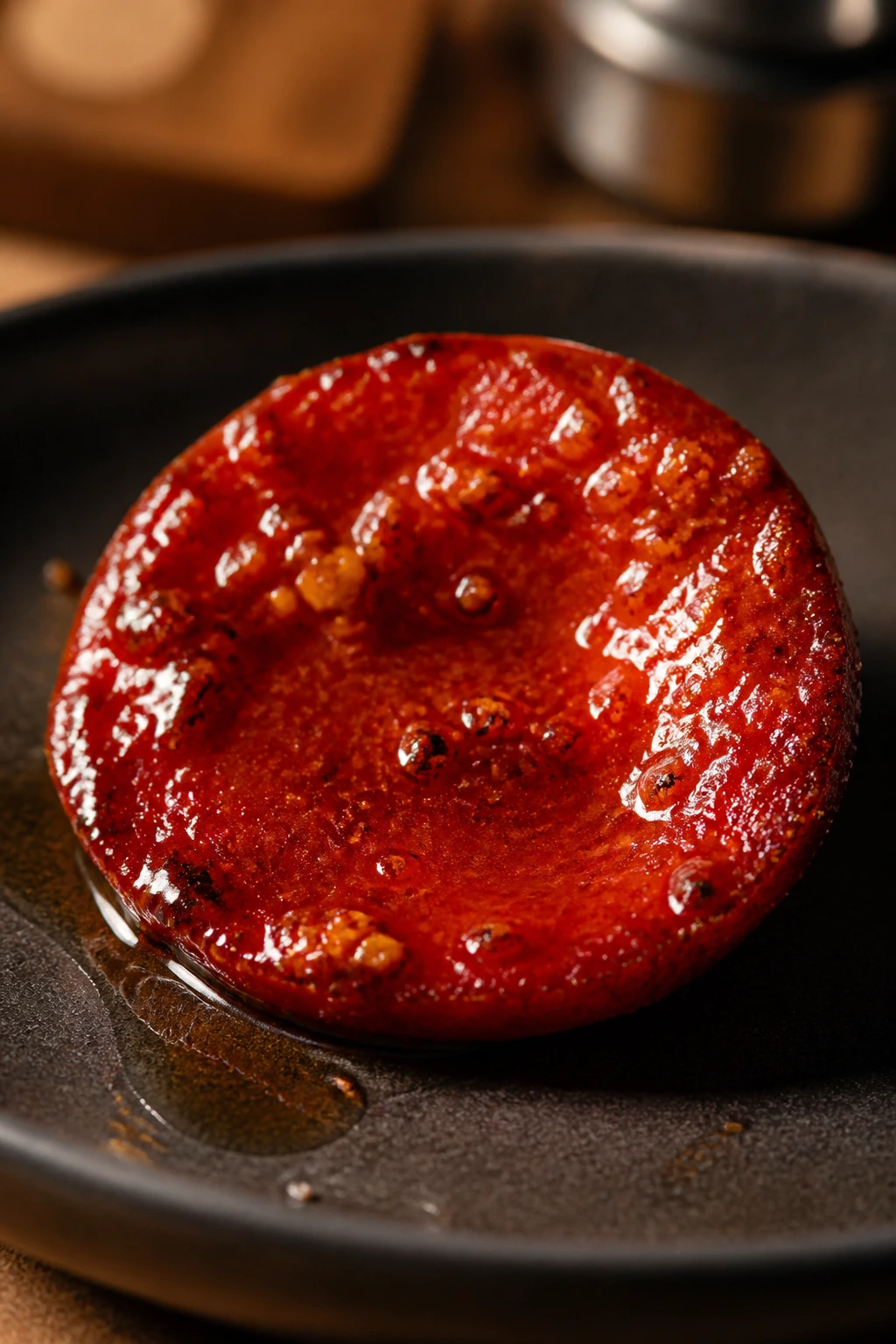
Flavor Enhancement: A teaspoon of Worcestershire sauce stirred into the glaze adds a savory backbone that fits pepperoni better than another spoonful of sugar ever would. It deepens the finish without making the dish taste like steak sauce.
Customization: If you want more heat, add a pinch of cayenne or swap the hot sauce for minced chipotle in adobo. If you want a softer sweetness, replace the honey with maple syrup and keep the vinegar where it is; the glaze will taste rounder and a little less sharp.
Serving Suggestions: A light sprinkle of chopped flat-leaf parsley after the pepperoni comes off the heat gives the tray a cleaner look and a fresher bite. A few thin pickle chips on the side do the same thing on the palate.
Make-It-Yours: For a dairy-free version, use olive oil instead of butter. For a lower-sugar version, drop the brown sugar to 1/3 cup and add 1 extra teaspoon vinegar so the glaze still has enough punch to stand up to the fat.
If you’re making this for people who like sweet snacks, don’t be shy about the brown sugar. If you’re making it for people who treat every sugar-heavy appetizer with suspicion, back the sweetness off a little and lean harder on the mustard and vinegar. The recipe can go either way without falling apart.
The Mistakes That Turn This Into a Salty Mess
-
Using thin pepperoni slices: Thin slices curl up, crisp too quickly, and shed grease before the glaze can stick. Use thick-cut slices or a pepperoni stick cut into rounds so the meat stays soft enough to take the coating.
-
Boiling the glaze too hard: If the heat is too high, the sugar can scorch and the brown sugar will taste bitter instead of sticky. Keep the skillet at medium to medium-low and watch for small, steady bubbles rather than aggressive popping.
-
Skipping the vinegar or mustard: Pepperoni plus brown sugar without acid turns heavy fast. The vinegar and Dijon are not decorative; they cut the grease, wake up the glaze, and stop the sweetness from flattening the whole pan.
-
Crowding the skillet with too much pepperoni: If the slices pile on top of each other, they steam and clump instead of glazing evenly. Use a 12-inch skillet and keep the pepperoni moving so each piece gets a thin coat.
-
Walking away during the final minute: The glaze can go from perfect to sticky grit in less time than you’d expect. The right moment arrives when the glaze coats the spoon and the pepperoni looks shiny; take it off then, even if the pan still looks a little loose.
-
Serving it too soon: A puddle of hot glaze can make the tray look messy and turn the first few bites greasy. Let it rest for 2 minutes, then plate it. That tiny pause is the difference between glossy and sloppy.
Variations for Smokier, Sharper, or Milder Plates
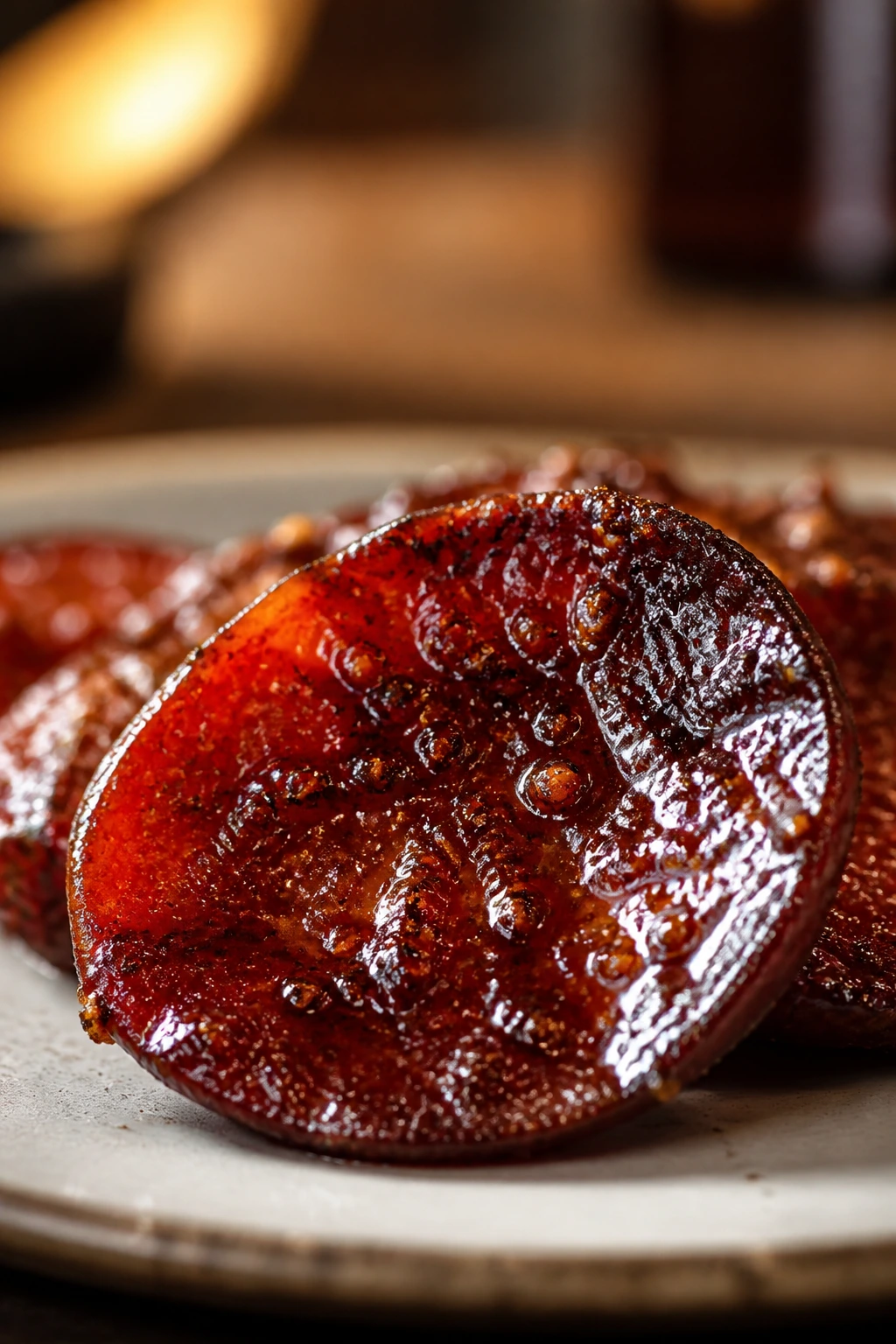
Smoky Chipotle Pepperoni: Replace the hot sauce with 1 teaspoon minced chipotle in adobo and add 1/4 teaspoon cumin. The glaze gets darker, smokier, and a little earthier, which works well if you’re serving it with sharp cheddar or cornbread crackers.
Maple-Dijon Brunch Version: Swap the honey for maple syrup and bump the Dijon to 2 teaspoons. This version tastes less like a snack aisle and more like something that belongs beside scrambled eggs, biscuits, or a brunch board.
Bourbon Brown Sugar Glaze: Stir in 1 tablespoon bourbon right after the sugar dissolves and let it simmer for 30 seconds before adding the pepperoni. The alcohol cooks off fast, but the flavor leaves a warm edge that suits the cured meat.
Lower-Sweet Party Tray: Reduce the brown sugar to 1/3 cup and add another tablespoon of vinegar. This is the version I’d serve if the pepperoni is going on a board with pickles, mustard, and bread, because it stays sharp instead of drifting toward candy.
Turkey Pepperoni Swap: Use turkey pepperoni in the same amount, but add an extra 1 tablespoon water and watch the pan a little more closely. Turkey pepperoni gives off less fat, so the glaze can look dry sooner; the extra water keeps it coating instead of tightening into a paste.
Keeping Leftovers Glossy, Not Sad
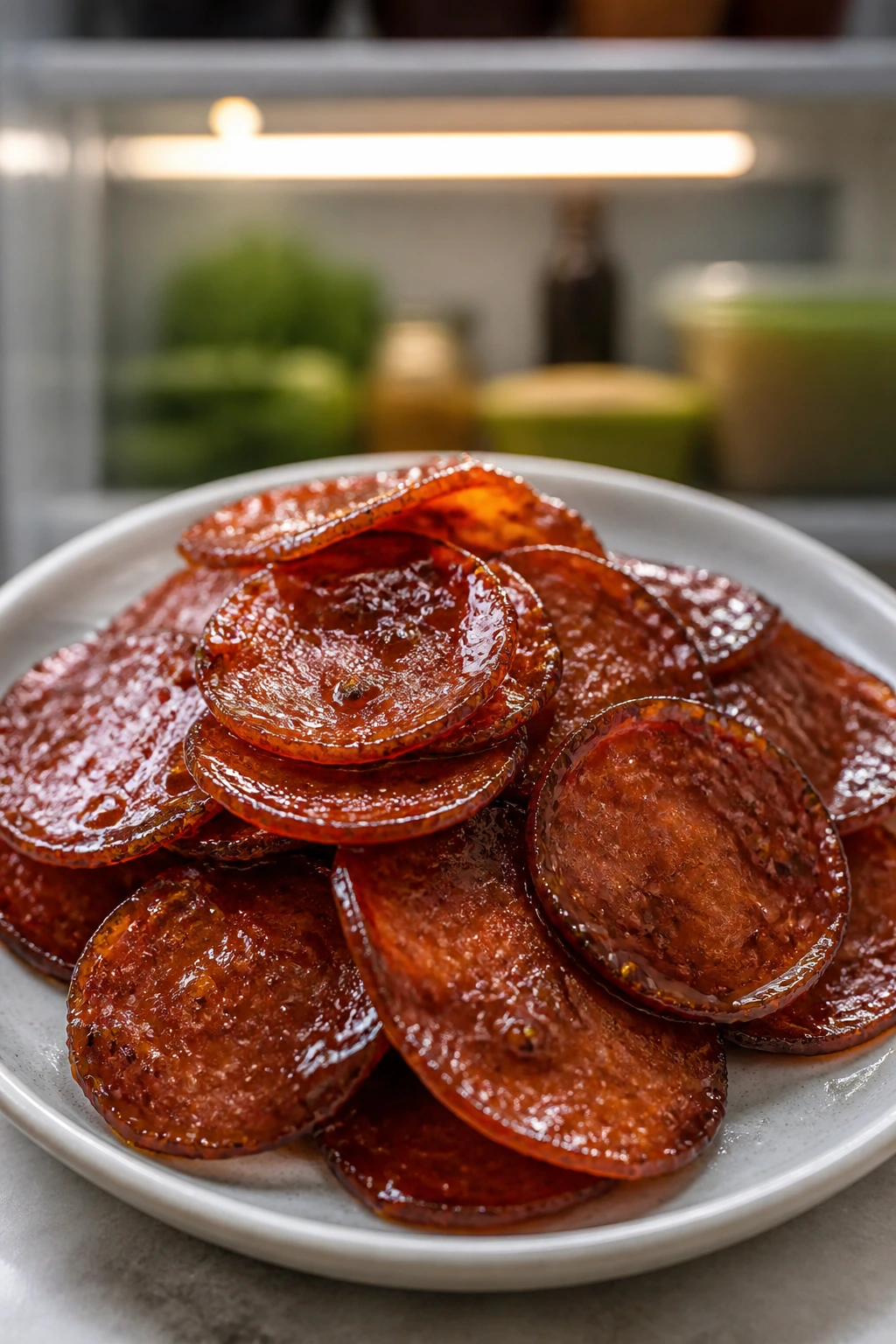
Room Temperature: Once glazed, the pepperoni should not sit out longer than 2 hours. If the room is warm or the tray is near other hot dishes, I’d cut that to 1 hour.
Refrigerator: Store leftovers in an airtight container for 3 to 4 days. The glaze will firm up in the fridge and the pepperoni may look a little dull on top, but that’s normal.
Freezer: You can freeze glazed pepperoni for up to 2 months, though the texture softens a bit after thawing. Freeze it in a single layer on parchment first, then pack it into a freezer bag so the slices don’t glue into one block.
Reheating: Reheat small portions in a skillet over low heat with 1 teaspoon water. Stir gently until the glaze loosens and turns glossy again. A microwave works in a pinch, but use 10 to 15 second bursts and stir between rounds so the sugar does not overheat and harden at the edges.
Make-Ahead: You can mix the dry spices and measure the glaze ingredients a day or two ahead. The whole dish also reheats well from the fridge if you want to serve it at a party, but it’s at its best when cooked close to serving time. Pepperoni always tastes a little sharper when it’s fresh from the pan.
If the glaze separates after chilling, don’t panic. A teaspoon of water and a minute of low heat usually brings it back. If it still looks broken, the pepperoni is fine; the sauce just needs a little coaxing.
Questions People Ask Before They Make the First Batch
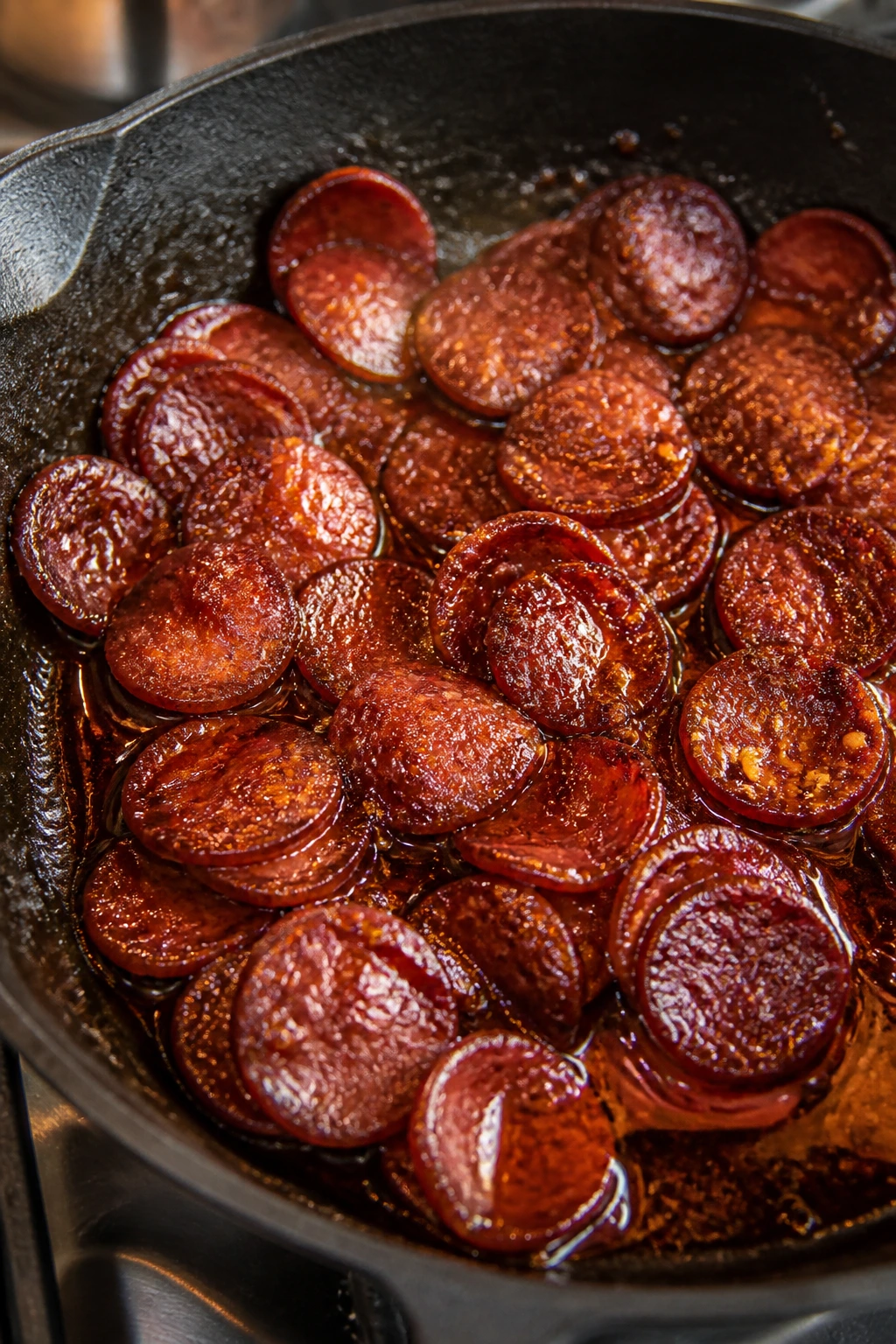
Can I use pre-sliced pepperoni from the store?
Yes, and it’s the easiest route. Just aim for thick-cut slices if you can find them, because very thin pepperoni tends to crisp before the glaze has time to cling.
Is this supposed to be crispy or soft?
Soft, glossy, and a little chewy is the goal. You want the edges to look lacquered, not browned and brittle. If it crisps up, the heat stayed on too long.
Can I bake this instead of using a skillet?
You can, but a skillet gives you more control and a better glaze. If you do bake it, use a parchment-lined sheet pan at 400°F and stir once or twice, but watch closely because sugar can move from glossy to too dark very quickly.
What if my glaze turns grainy?
That usually means the sugar cooked too hard or the pan got too dry. Pull it off the heat, add 1 teaspoon water, and stir until it smooths out. If it still feels gritty, the pepperoni is fine to eat; the glaze just won’t look as polished.
Can I make it less spicy without ruining it?
Yes. Cut the red pepper flakes in half, leave the hot sauce out, and keep the vinegar and Dijon in place. Those two ingredients are doing important work, and removing them would flatten the whole dish.
Does this work at room temperature on a cheese board?
It does, but it’s best warm or just slightly cooled. At room temperature, the glaze firms up a bit, which is nice for serving, but the pepperoni loses the soft chew that makes the first bite so good.
What should I do if it seems greasy?
Spoon the glazed pepperoni out with a slotted spoon and let it sit on parchment for a minute. Pepperoni is going to render some fat no matter what; the trick is separating the glossy glaze from the excess grease before it reaches the plate.
A Sticky Little Tray Worth Repeating
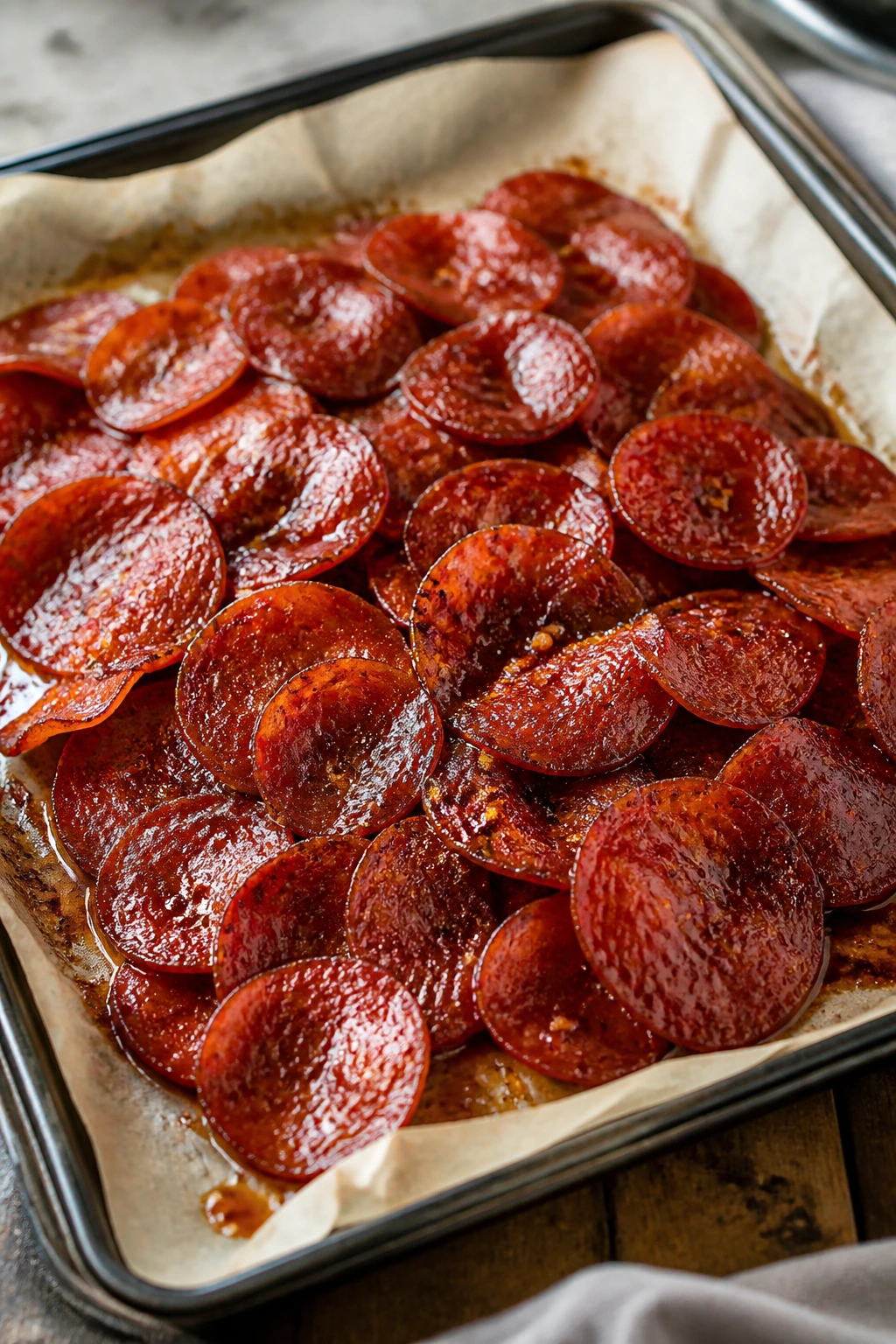
Pepperoni does not need a dramatic makeover. It needs the right company. Brown sugar gives it a shine, vinegar keeps it from going cloying, and a little heat wakes up all the salt and smoke that were already there.
That’s why this dish works when so many sweet-savory meat snacks fall flat. It knows exactly what it is: sticky, spicy, and meant to be eaten while the tray is still warm. Keep a skillet ready, because once a bowl of this hits the table, it tends to disappear in a hurry.
Tender Spicy Pepperoni with Brown Sugar Glaze — Recipe Card
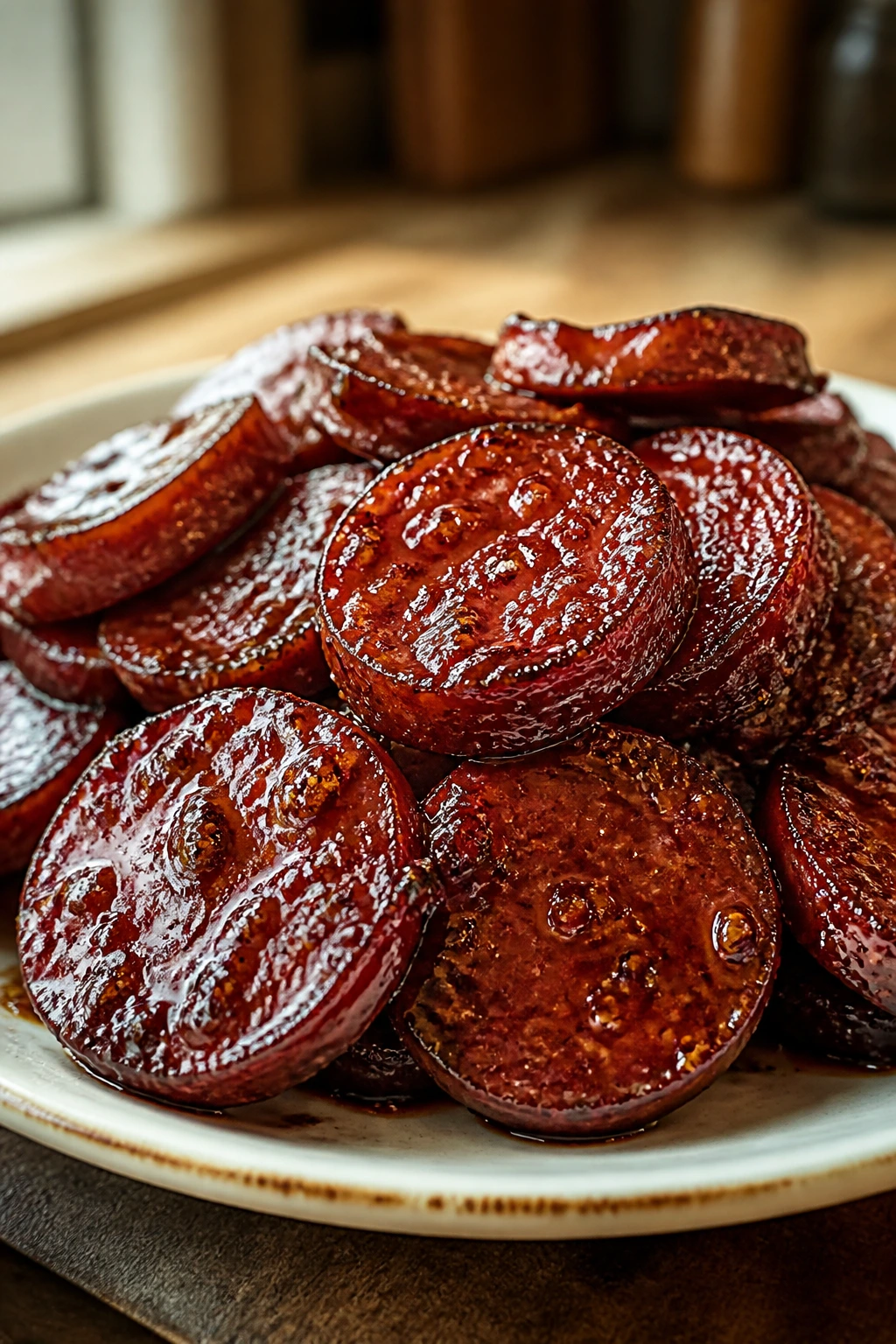
Recipe Name: Tender Spicy Pepperoni with Brown Sugar Glaze
Description: Thick-cut pepperoni gets coated in a sticky brown sugar glaze with vinegar, mustard, and red pepper flakes for a glossy sweet-heat appetizer. Serve it warm with crackers, cheese, or toothpicks.
Prep Time: 10 minutes
Cook Time: 6 to 8 minutes
Total Time: 16 to 18 minutes
Course: Appetizer, Snack
Cuisine: American, Italian-American
Servings: 6 to 8 servings
Calories: about 280 kcal per serving
Ingredients
For the Pepperoni:
- 1 pound thick-cut pepperoni slices, about 1/4 inch thick, or 1 pepperoni stick, about 12 ounces, sliced into rounds
- 2 tablespoons unsalted butter, cut into pieces
For the Brown Sugar Glaze:
- 1/2 cup packed light brown sugar
- 2 tablespoons apple cider vinegar
- 1 tablespoon honey
- 1 tablespoon water
- 1 teaspoon Dijon mustard
- 1 teaspoon hot sauce
- 1/2 teaspoon red pepper flakes
- 1/2 teaspoon smoked paprika
- 1/4 teaspoon garlic powder
- 1/4 teaspoon black pepper
- Pinch kosher salt, only if needed
Instructions
-
Line a plate or shallow tray with parchment paper and set it near the stove. Slice the pepperoni into 1/4-inch rounds if needed, then pat the slices dry.
-
Mix the brown sugar, red pepper flakes, smoked paprika, garlic powder, and black pepper in a small bowl.
-
Set a 12-inch skillet over medium heat and melt the butter. Stir in the vinegar, honey, water, Dijon mustard, hot sauce, and spice mixture. Cook for 1 to 2 minutes until glossy and bubbling at the edges.
-
Add the pepperoni in a single layer as much as possible. Cook for 2 to 4 minutes, stirring often, until the slices soften and the glaze starts to cling.
-
Lower the heat if needed and cook for another 30 to 60 seconds, until the glaze thickens and coats the pepperoni in a shiny layer. Add 1 teaspoon water if the pan looks dry too soon.
-
Remove from the heat and let the pepperoni rest for 2 minutes. Transfer to the parchment-lined dish and spoon any remaining glaze over the top.
Notes: Thick-cut pepperoni gives the best chewy texture. Serve warm for the glossiest finish. If the glaze gets too thick, loosen it with a teaspoon of water and a quick stir.