



The first spoonful should taste like smoke, salt, and bean broth that clings to the spoon. Brown sugar belongs here, but only in the way a good bass line belongs in a song: you feel it more than you notice it, and if it’s absent the whole thing goes flat. Smoky ham and beans with brown sugar glaze lives or dies on that balance.
Nope. This is not a sweet casserole wearing a ham costume. The best version has navy beans that turn creamy at the edges, bacon that leaves a little browned fat in the pot, a ham hock or bone that gives the broth a slow, meaty depth, and a glaze that tightens everything up at the end without making the whole thing taste like barbecue sauce.
I like this dish because it looks humble and eats like someone paid attention. A shallow bowl, a thick slice of cornbread, a little vinegar on the side, and suddenly the table feels sorted. Get the texture right and you end up with a pot that tastes older than the recipe card in the drawer — in the good way.
Why This Pot Is Worth the Trouble
-
Smoke in layers, not just one note: Bacon, smoked ham, and smoked paprika each bring a different kind of smoke, so the pot tastes built rather than dumped together.
-
The glaze stays savory: Dark brown sugar, Dijon mustard, vinegar, and molasses make the top glossy and sticky without turning the broth cloying.
-
Beans become the sauce: Navy beans split a little as they cook, which thickens the broth naturally and gives you that spoon-coating texture people usually try to fake with flour.
-
Leftovers improve instead of sagging: The beans keep soaking up the glaze overnight, so the next bowl tastes rounder and more unified.
-
It stretches meat without tasting thin: A pound of dried beans and a modest amount of ham turn into a full, hearty pot that doesn’t feel stingy.
-
It works in every season of the pantry: You can make it with dried beans, leftover ham, a ham bone, or the piece of bacon you already have tucked in the fridge.
What Goes Into the Dutch Oven
A bean pot is only as good as the liquid and the meat you give it, so I like to keep the ingredient list clear and practical. This version leans on pantry staples, but each one has a job to do.
Yield: Serves 6 to 8
Prep Time: 25 minutes
Cook Time: 1 hour 45 minutes
Total Time: 2 hours 10 minutes active, plus 8 to 12 hours soaking
Difficulty: Intermediate — dried beans, a smoked meat base, and a final glaze finish take some attention, but none of the steps are fussy.
Chill/Rest Time: 8 to 12 hours soaking
Best Served: Warm, after a 15-minute rest
For the Beans and Smoked Meat Base:
- 1 pound dried navy beans, sorted and soaked overnight
- 6 slices thick-cut bacon, diced
- 1 large yellow onion, finely chopped
- 2 celery ribs, finely chopped
- 2 carrots, peeled and finely diced
- 4 garlic cloves, minced
- 1 smoked ham hock or meaty ham bone, about 1 1/2 to 2 pounds
- 1 1/2 pounds cooked smoked ham, cut into 1/2-inch cubes
- 8 cups low-sodium chicken broth or water, plus more as needed
- 2 bay leaves
- 1 1/2 teaspoons smoked paprika
- 1 teaspoon black pepper
- 1 to 1 1/2 teaspoons kosher salt, to taste after cooking
For the Brown Sugar Glaze:
- 1/3 cup packed dark brown sugar
- 2 tablespoons Dijon mustard
- 2 tablespoons apple cider vinegar
- 2 tablespoons ketchup
- 1 tablespoon unsulfured molasses
- 2 tablespoons unsalted butter
- 1/4 cup reserved bean broth or additional broth
Why Each Ingredient Earns Its Place in the Pot
Navy Beans
What to use: 1 pound dried navy beans. They’re the backbone here, and I’d keep them plain rather than mixing in a lot of different bean types.
Preparation: Sort them carefully, rinse them well, and soak them in plenty of water until they’re plump and pale. If you forgot to soak overnight, use the quick-soak method: boil the beans for 2 minutes, turn off the heat, cover the pot, and let them sit for 1 hour.
Substitutions: Great northern beans stay a little firmer, and cannellini beans give you a larger, creamier bite. Both work, though the broth will feel different.
Tips: Buy beans from a store with decent turnover. Older dried beans can sit in a pot forever and still stay chalky, which is one of those quiet kitchen problems that ruins a good dinner.
Bacon
What to use: 6 slices thick-cut bacon, diced. Thick-cut gives you enough fat to build the base without disappearing into the pot.
Preparation: Dice it first so it renders evenly. You want small pieces that crisp lightly and leave behind browned bits, not long strips that curl and cook unevenly.
Substitutions: Pancetta works if that’s what you have. If the bacon is especially smoky, lean a little harder on the ham and a little lighter on the smoked paprika.
Tips: Cook it over medium heat, not high. Bacon that hurries burns at the edges before the fat has time to render, and that bitter edge shows up in the final broth.
Smoked Ham and Ham Hock
What to use: 1 smoked ham hock or meaty ham bone, about 1 1/2 to 2 pounds, plus 1 1/2 pounds cooked smoked ham cut into cubes.
Preparation: If you’re using leftover ham, trim away any hard rind and cut the meat into 1/2-inch cubes so it stays visible in the bowl. The ham hock can go in whole and come out later for shredding.
Substitutions: A smoked ham shank works in place of the hock. If you only have cubed ham, the flavor will still be good, but you’ll lose some of the gelatin that makes the broth silky.
Tips: The hock is not there just for smoke. It gives the pot body. That soft, sticky richness in the broth usually comes from connective tissue, and you feel it on the tongue even if you can’t name it.
Aromatics and Vegetables
What to use: 1 large yellow onion, 2 celery ribs, 2 carrots, and 4 garlic cloves.
Preparation: Dice the onion, celery, and carrots finely so they almost melt into the bean broth. Mince the garlic last so it doesn’t dry out while the other vegetables cook.
Substitutions: A sweet onion can replace yellow onion. If you like a softer, slightly sweeter background, add one chopped fennel stalk or a small piece of leek, though I usually keep this pot more old-school than that.
Tips: Don’t rush the onions. You want them translucent and beginning to gold at the edges before the liquid goes in, because that’s where the depth starts.
The Brown Sugar Glaze
What to use: 1/3 cup packed dark brown sugar, 2 tablespoons Dijon mustard, 2 tablespoons apple cider vinegar, 2 tablespoons ketchup, 1 tablespoon molasses, 2 tablespoons butter, and 1/4 cup reserved bean broth or extra broth.
Preparation: Whisk the glaze together before you add it to the pot. Dark brown sugar dissolves more evenly when it’s already broken up and mixed with the acid.
Substitutions: Light brown sugar works in a pinch, but it tastes thinner. Maple syrup can replace part of the sugar if you want a more woodsy finish, and whole-grain mustard adds a rougher, seedier bite.
Tips: Keep the glaze late in the process. Sugar wants to tighten and thicken near the end, not sit on the stove for an hour where it can catch and scorch.
Seasoning, Broth, and Finishing Salt
What to use: 8 cups low-sodium chicken broth or water, 2 bay leaves, 1 1/2 teaspoons smoked paprika, 1 teaspoon black pepper, and kosher salt added at the end.
Preparation: Measure the broth before you start cooking so you can add more hot liquid if the beans drink faster than expected. Bay leaves go in whole and come out whole.
Substitutions: Water is fine if the ham is especially salty or if the broth you have tastes too assertive. If you want a little heat, a pinch of cayenne or chipotle powder can go in with the paprika.
Tips: Low-sodium broth gives you control. Ham changes from brand to brand, and bacon changes even more, so a heavy hand with salt at the start is a good way to overshoot the finish line.
What the Brown Sugar Glaze Is Really Doing
Brown sugar is not there to make this sweet. It’s there to round the smoke, soften the salt, and give the beans a glossy finish that looks and tastes like it’s been worked in carefully. Dark brown sugar brings molasses notes; ketchup gives the glaze a little thickness and a soft tomato backbone; Dijon keeps the whole thing from drifting into candy territory.
That little hit of vinegar matters more than people think. Without acid, brown sugar can sit heavy on the tongue, especially when ham and bacon are already doing their salty thing. Apple cider vinegar sharpens the edges, and that clean snap is what makes the glaze feel intentional instead of sugary.
The timing matters too. If you add the glaze while the beans are still hard, the sugar has too much time to concentrate and stick to the bottom of the pot. Add it after the beans are tender, and the oven finish can do its job: the liquid tightens, the broth turns glossy, and the beans pick up a thin lacquer rather than a sticky crust.
I also like that the glaze changes as the pot rests. Straight out of the oven, it may look a touch loose. Fifteen minutes later, it settles into something thicker and more spoonable, which is exactly when the flavor starts to feel more connected.
The Tools That Make the Job Easier
A dish like this doesn’t need fancy gear, but a few specific tools make it calmer to cook.
-
6-quart Dutch oven or heavy oven-safe pot: The weight helps the beans cook evenly, and the tight sides keep the glaze from reducing too fast.
-
Large bowl for soaking beans: You want enough room for the beans to expand by a good margin.
-
Colander: For draining soaked beans and rinsing them clean.
-
Chef’s knife and sturdy cutting board: Onion, celery, carrots, garlic, and ham all need clean, even cuts.
-
Wooden spoon or heatproof spatula: Better than a flimsy spoon when you’re scraping the bottom and folding the glaze through.
-
Small whisk: Useful for blending the glaze into a smooth mixture before it goes into the pot.
-
Ladle: Makes serving easier and keeps the beans from breaking up too much at the table.
-
Instant-read thermometer, optional: Helpful if you’re reheating leftovers and want to be sure they reach 165°F without drying out.
Building the Beans, Layer by Layer
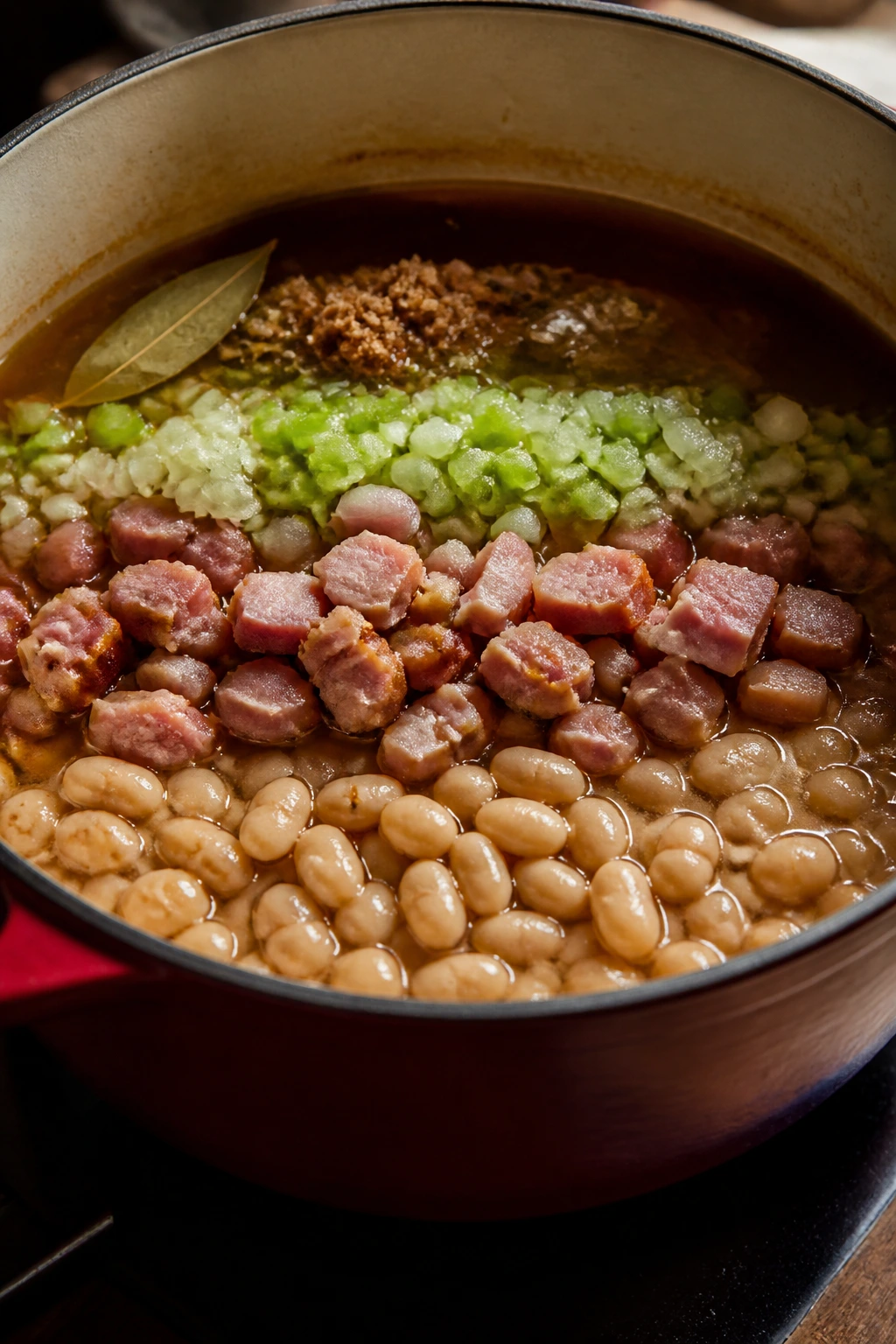
Soak. Render. Simmer. Finish. That’s the rhythm here, and if you keep it calm, the pot behaves.
Soak and Prep the Beans:
- Sort the beans carefully, pulling out any little stones, shriveled beans, or odd bits. Rinse them under cool water until the water runs mostly clear.
- Put the beans in a large bowl and cover them with at least 3 inches of cool water. Let them soak 8 to 12 hours, or overnight. If you forgot to soak them, use the quick-soak method noted above rather than rushing straight into the pot.
- Drain the soaked beans and rinse them once more. Set them aside while you build the base.
Build the Smoky Base: 4. Set a 6-quart Dutch oven over medium heat and add the diced bacon. Cook for 6 to 8 minutes, stirring now and then, until the fat has rendered and the pieces are lightly crisp. Transfer the bacon to a plate, leaving about 2 tablespoons of fat in the pot. 5. Add the onion, celery, and carrots to the bacon fat. Cook for 6 to 8 minutes, stirring often, until the onion is translucent and the carrots have softened at the edges. Stir in the garlic and cook for 30 seconds, just until fragrant. Do not let the garlic brown; bitter garlic shows up fast in a bean pot.
Simmer the Beans Until Tender: 6. Add the soaked beans, ham hock or ham bone, bay leaves, smoked paprika, black pepper, and 8 cups of broth or water. Bring everything to a boil over high heat, then immediately lower the heat to a gentle simmer. You want small, lazy bubbles, not a rolling boil. 7. Cover the pot partially and simmer for 60 to 75 minutes, stirring every 15 to 20 minutes so nothing settles and sticks. Add hot broth or water in 1/2-cup splashes if the beans start peeking above the liquid. The beans are ready when they’re tender but still hold their shape instead of collapsing into paste. 8. Remove the ham hock or bone and set it on a board. When it’s cool enough to handle, pull off any meat, chop it into bite-size pieces, and return it to the pot. Stir in the diced ham and the reserved bacon. Taste the broth and add salt only if it needs it.
Glaze and Finish: 9. In a small bowl, whisk together the brown sugar, Dijon mustard, vinegar, ketchup, molasses, butter, and 1/4 cup reserved bean broth. Stir the glaze into the pot until the liquid looks evenly tinted and glossy. 10. If your Dutch oven is oven-safe, transfer it to a 350°F oven and bake uncovered for 25 to 35 minutes, stirring once halfway through. The glaze should thicken, the edges should bubble lazily, and the broth should coat a spoon instead of running off it. 11. If you want a slightly darker top, broil the pot for 1 to 2 minutes at the end. Stay right there. Sugar turns from glossy to burned fast, and a bean pot does not forgive wandering. 12. Let the finished pot rest for 15 minutes before serving. The broth thickens as it cools a little, and the flavor settles into the beans instead of sitting on top of them.
How to Serve a Bowl Without Shortchanging It
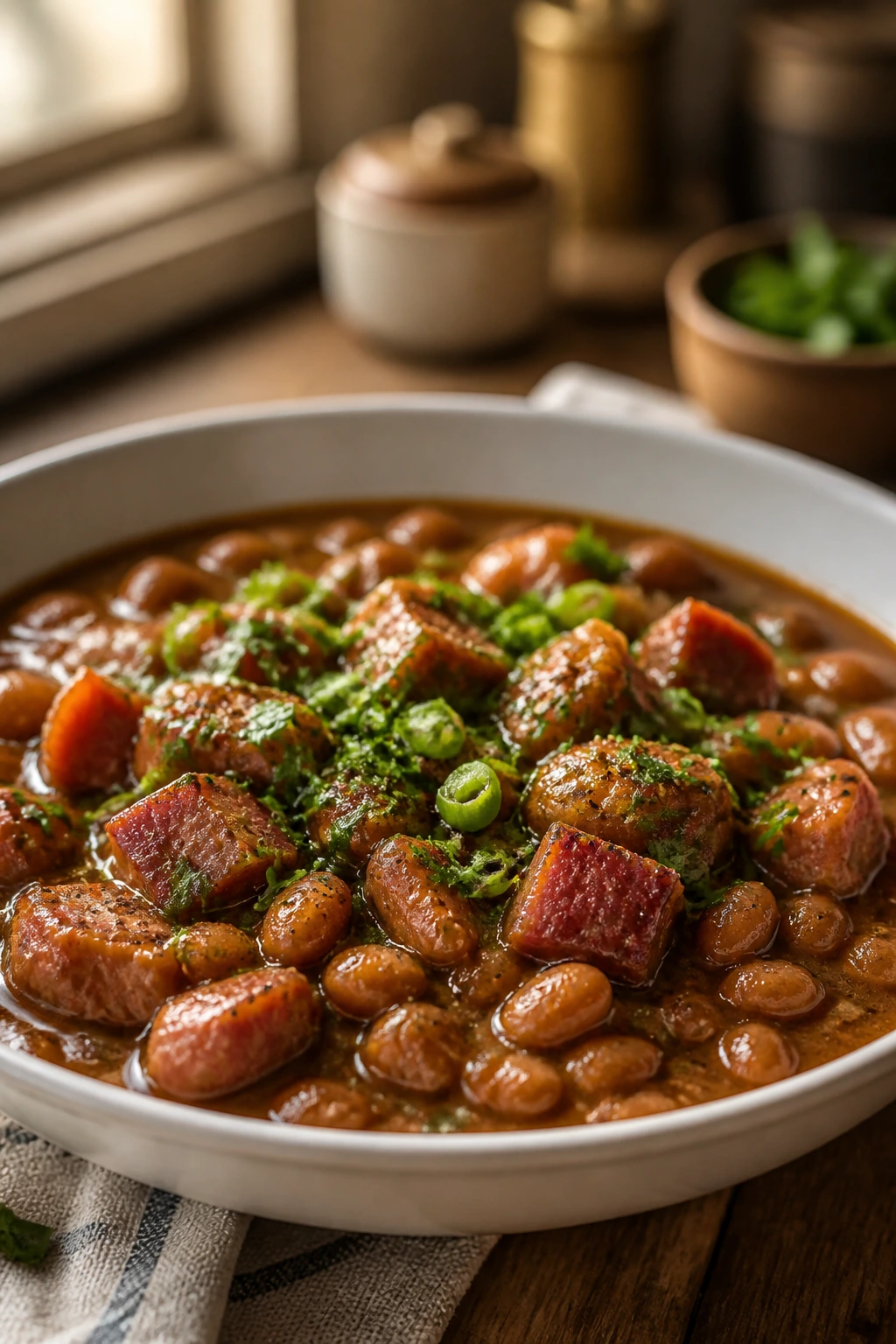
A bowl of these beans needs a little structure around it, or they can read as a side dish when they should feel like dinner.
Presentation: Spoon the beans into shallow bowls so the glossy broth spreads out and shows off the ham cubes instead of burying them. A scatter of chopped flat-leaf parsley or sliced scallions gives the top a fresh edge, and I like a few cracks of black pepper right before it hits the table. If the glaze has tightened nicely, you’ll get little shiny patches on the surface that look almost lacquered.
Accompaniments: Skillet cornbread is the move I reach for first. Split biscuits, buttered white bread, or even a thick slice of sourdough all make sense too, and a crisp vinegar slaw gives the plate the sharp note it needs. If you want something more old-fashioned, serve pickles or quick-pickled onions on the side; that little hit of acid cuts through the brown sugar better than any extra sauce.
Portions: As a main dish, plan on 1 to 1 1/4 cups per person, especially if there’s cornbread or bread next to it. As a side, 3/4 cup is plenty. The recipe scales well, but keep the seasoning conservative until the end because ham varies so much in salt.
Beverage Pairing: Unsweetened iced tea with lemon is the cleanest match. A cold lager or dry hard cider also handles the smoky-sweet edge without turning the meal heavy. If you want nonalcoholic and not sweet, sparkling water with a squeeze of lime works better than cola.
Useful Tricks for Better Flavor and Cleaner Texture
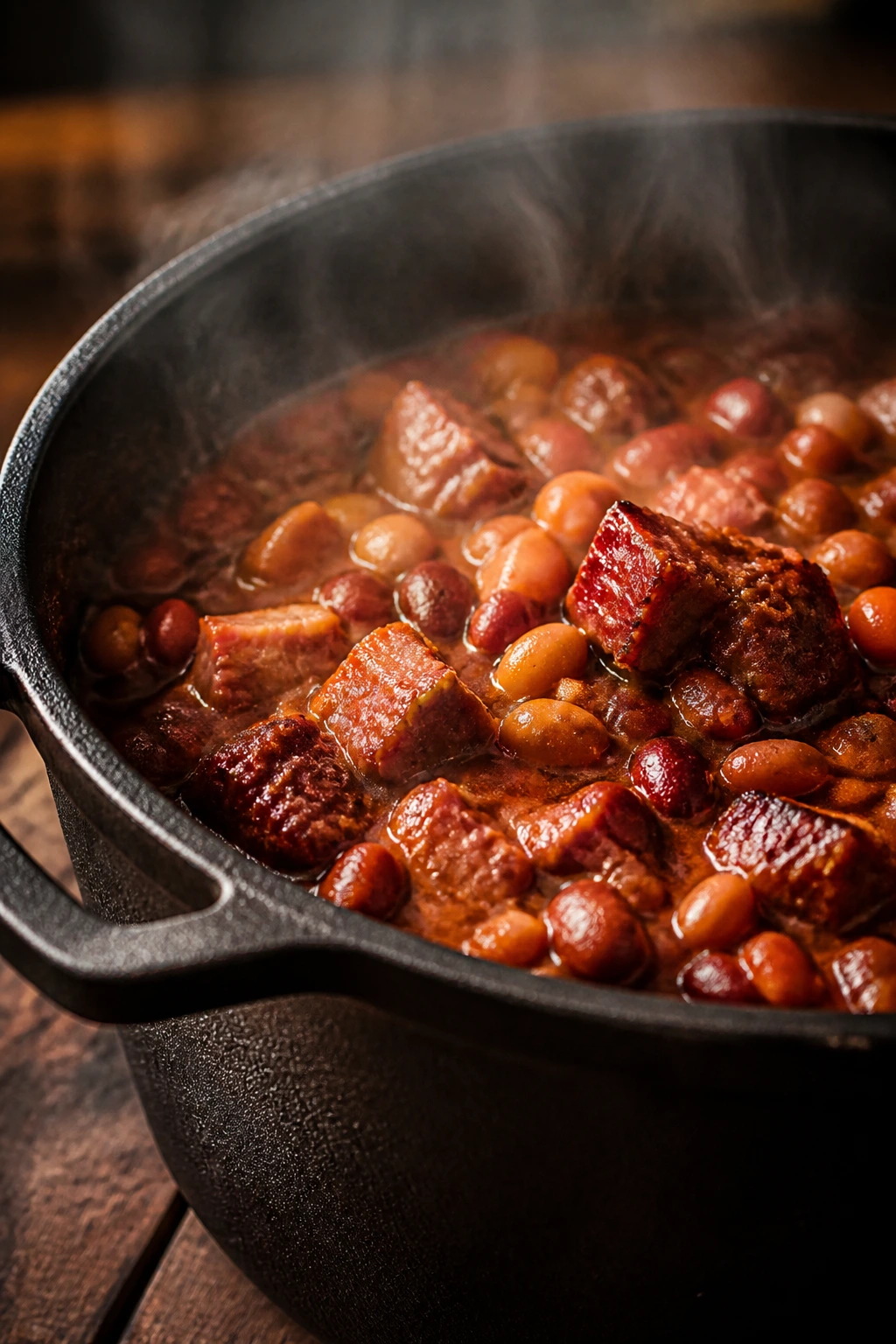
Flavor Enhancement: Stir in 1 teaspoon of apple cider vinegar and a few more grinds of black pepper right before serving. The vinegar wakes up the glaze after the oven finish, and the pepper keeps the sweetness from going dull.
Time-Saver: Quick-soak the beans if you forgot overnight, or soak them while you chop the vegetables. Dry beans don’t need babysitting at the start, they need planning. That’s the whole trick.
Pro Move: Mash about 1 cup of the beans against the side of the pot during the last 10 minutes before the oven finish. The starch thickens the broth in a softer way than flour or cornstarch, and you get that creamy, spoon-coating texture people try to fake with shortcuts.
Cost-Saver: Use a meaty ham bone and a smaller amount of diced ham instead of buying a huge chunk of meat. The bone does more than people expect, especially when it simmers with onions and bacon for an hour or more.
Heat Control: A pinch of chipotle powder or cayenne can go into the glaze if you want a little warmth under the smoke. Keep it tiny. The goal is a flicker of heat at the back of the throat, not a bean pot that fights the cornbread.
Mistakes That Can Sink a Bean Pot
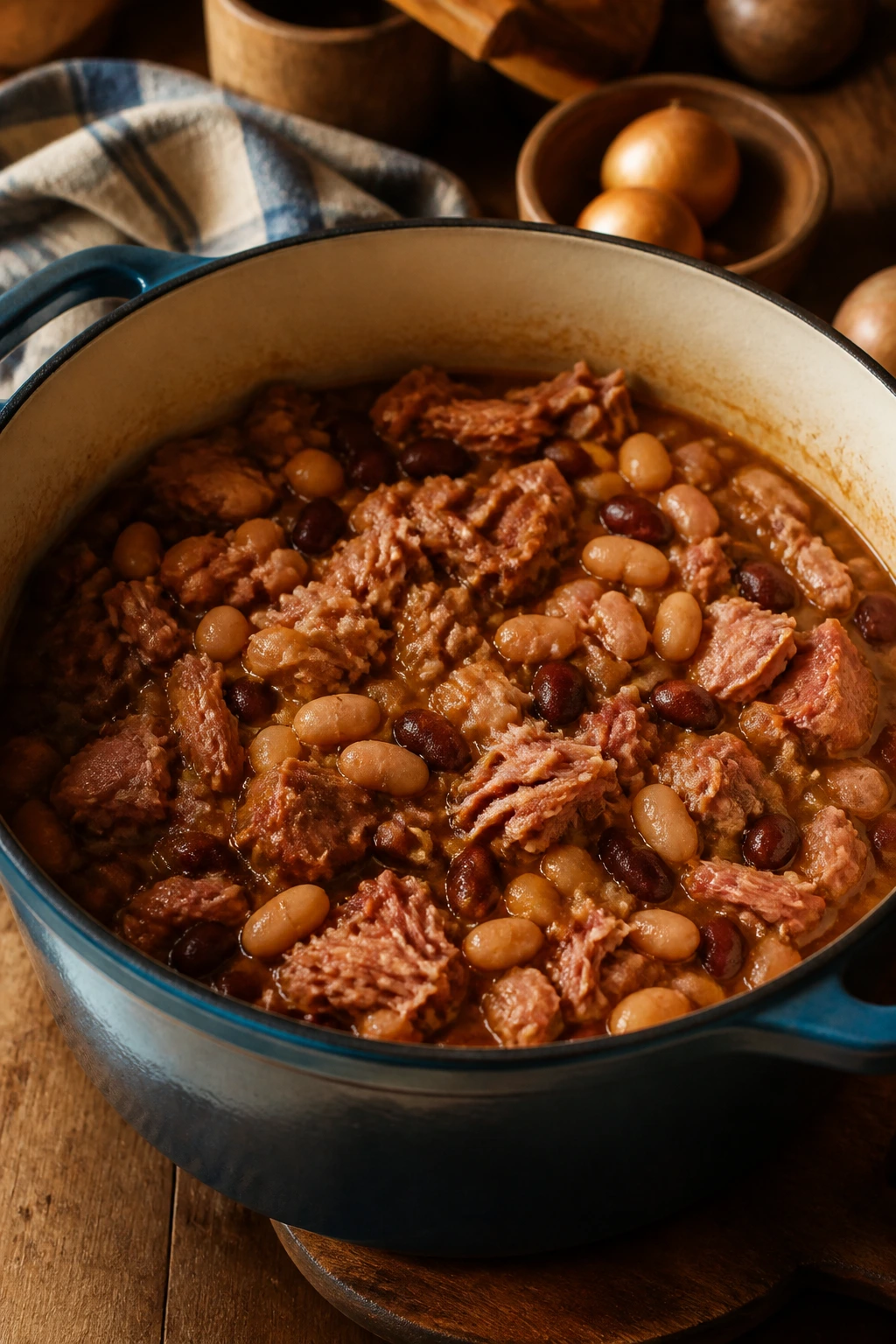
What ruins a pot like this fastest? Usually it’s not the ham. It’s the heat, the timing, or the salt.
-
Boiling the beans too hard: A hard boil splits the skins and clouds the broth, which makes the whole pot look rough and taste flatter than it should. Keep the liquid at a lazy simmer where only a few bubbles break the surface.
-
Adding all the salt too early: Ham, bacon, and broth all bring their own salt, and once the liquid reduces, the season can jump too far. Taste near the end, after the ham has gone back in, and season in small pinches.
-
Putting the glaze in before the beans are tender: Sugar likes to grab at the bottom of a pot if it sits too long over heat. Add it late, when the beans are already soft, so the oven can tighten the sauce without burning the edges.
-
Using beans that are too old: Dried beans that have lived in the pantry too long can stay stubbornly firm no matter how long you simmer them. If your beans are older or look dull and wrinkled, expect more cooking time, and don’t be shy about replacing them if they never soften.
-
Letting the liquid drop below the beans: Exposed beans dry out on top and cook unevenly, which gives you a pot with some creamy bites and some chalky ones. Keep hot broth or water nearby and top it up in small splashes when needed.
-
Choosing ham that’s too lean: Very lean ham cubes can taste dry and stringy after a long simmer. A meaty ham hock, ham bone, or a piece of ham with a little fat gives you a much better bowl.
Variations That Stay True to the Pot
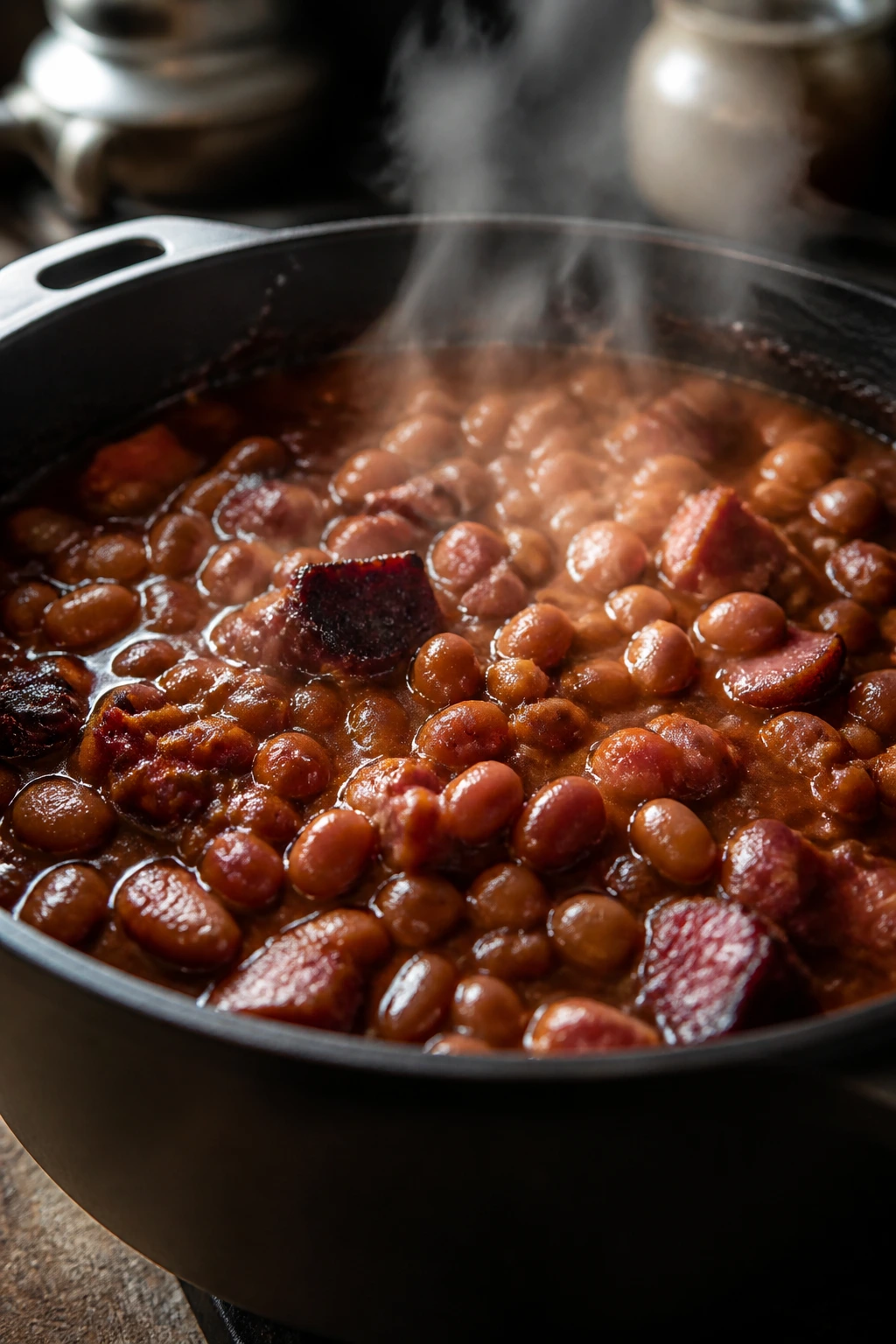
Maple-Mustard Finish: Swap 2 tablespoons of the brown sugar for 2 tablespoons of maple syrup and keep the Dijon in place. The flavor shifts a little woodier and softer, which I like when the ham itself is especially smoky.
Smoky Chipotle Pot: Stir 1 minced chipotle in adobo into the glaze and add an extra 1/4 teaspoon of smoked paprika. The heat stays in the background, and the glaze takes on a darker, deeper edge without overpowering the beans.
Weeknight Canned-Bean Shortcut: Use 3 cans navy beans, drained and rinsed, plus 4 cups broth instead of dried beans. Simmer the bacon, vegetables, ham, and glaze for 20 to 25 minutes, then bake for 15 minutes to bring the whole pot together. The result is looser and less creamy than the dried-bean version, but it works when time is short.
Bourbon Brown Sugar Glaze: Stir 2 tablespoons bourbon into the glaze and let it cook for a minute before it goes into the pot. The alcohol cooks off, but you keep a warm, oaky note that sits nicely under the ham.
Make-Ahead, Storage, and Reheating
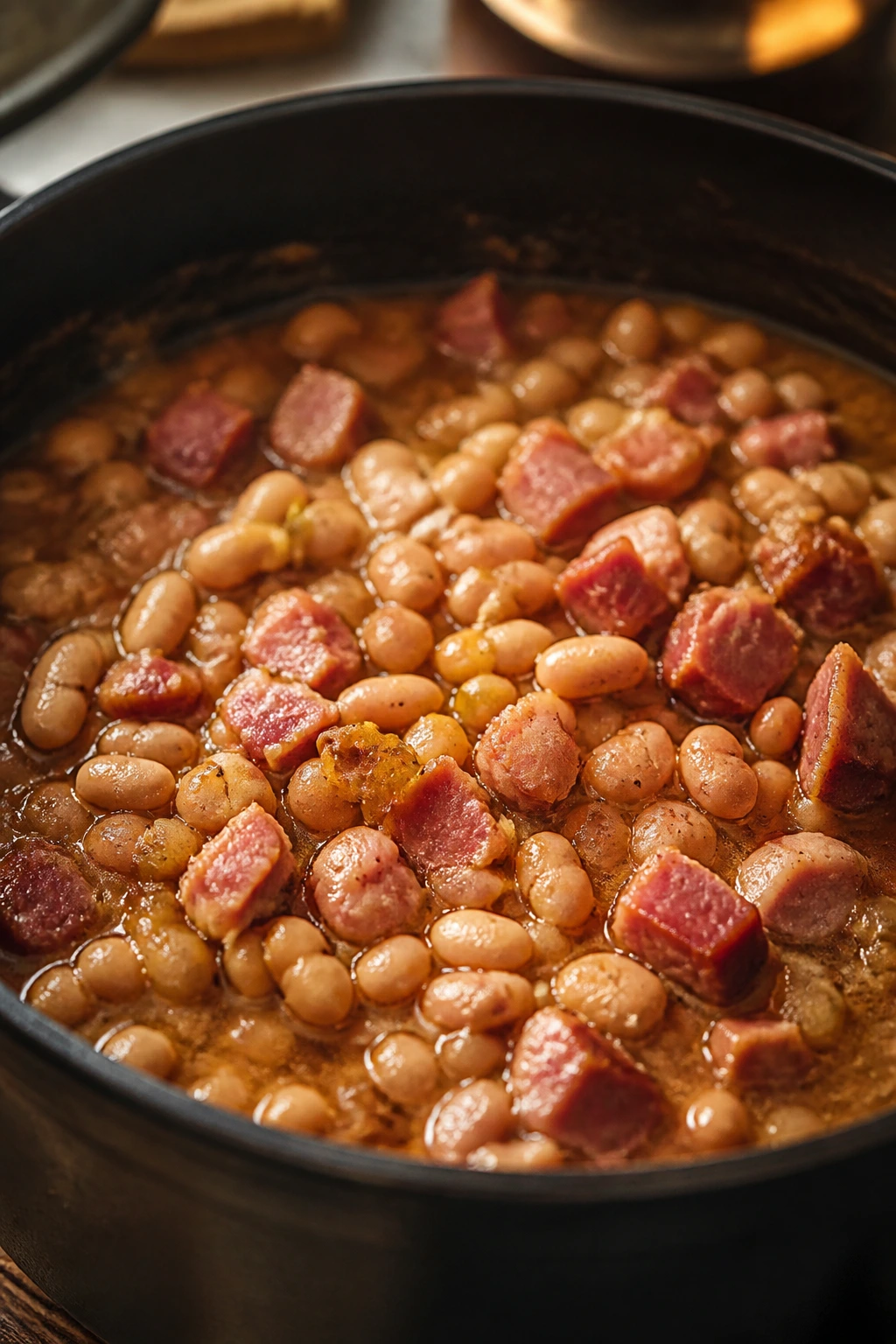
This is one of those dishes that settles down beautifully after a night in the fridge. The beans soak up more flavor, the glaze blends into the broth, and the whole pot tastes more even the next day.
Make-Ahead: Soak the beans and chop the vegetables up to 1 day ahead. You can also cook the entire pot a day in advance, cool it, and refrigerate it overnight; the flavor usually gets better, not worse. If you do that, hold back a little of the broth so you can loosen the pot while reheating.
Room Temperature: Don’t leave the finished beans out for more than 2 hours. After that, get them into shallow containers so they cool quickly.
Refrigerator: Store leftovers in airtight containers for 3 to 4 days. The pot will thicken a lot in the fridge, so expect the beans to look firmer until you reheat them.
Freezer: Freeze for up to 2 months. The texture softens a little after thawing, but the flavor holds up well, especially if you freeze it in flat, portioned containers.
Reheating: Warm the beans on the stovetop over medium-low heat with a splash of broth or water, stirring every few minutes until they loosen and reach 165°F in the center. The microwave works in a pinch, but use short bursts and stir between each one so the glaze doesn’t overheat in hot spots. If the sauce looks too tight after reheating, add another spoonful of liquid and let it sit for a minute before serving.
Smoky Ham and Beans Questions, Answered
Can I use canned beans instead of dried beans?
Yes. Drain and rinse three 15-ounce cans of navy beans, cut the broth to about 4 cups, and shorten the cooking time a lot. You’ll get a faster pot, but you won’t get quite the same creamy broth that dried beans give you.
Do I need a ham hock, or can I skip it?
You can skip it, but the pot loses some of its body. If you leave it out, use a meaty ham bone or add a little more bacon so the broth still has a deep, smoky base.
What if my beans stay firm after the simmer?
Keep cooking them gently and add hot liquid if the pot starts looking dry. Old beans, hard water, or an aggressive boil are usually the culprits, and none of them are fixed by turning the heat up harder.
Can I make this in a slow cooker?
Yes, but brown the bacon and onions first so the pot starts with some color. Cook on low for 7 to 8 hours, then stir in the glaze during the last 30 minutes so it thickens instead of disappearing into the liquid.
Why does the pot taste too sweet?
Add a small splash of apple cider vinegar, a little more black pepper, or a spoonful of Dijon. That usually pulls the sweetness back into line without making the bowl sour.
How do I thicken it without flour or cornstarch?
Mash some of the beans against the side of the pot, then let the whole thing bake uncovered for a bit longer. The starch from the beans gives you a thicker, silkier broth than a starch slurry does.
Can I freeze leftovers after they’ve been glazed?
Yes, and the glaze survives freezing well. Cool the beans fast, portion them into containers, and thaw them overnight in the fridge before reheating so the texture stays even.
A Pot Worth Making Again
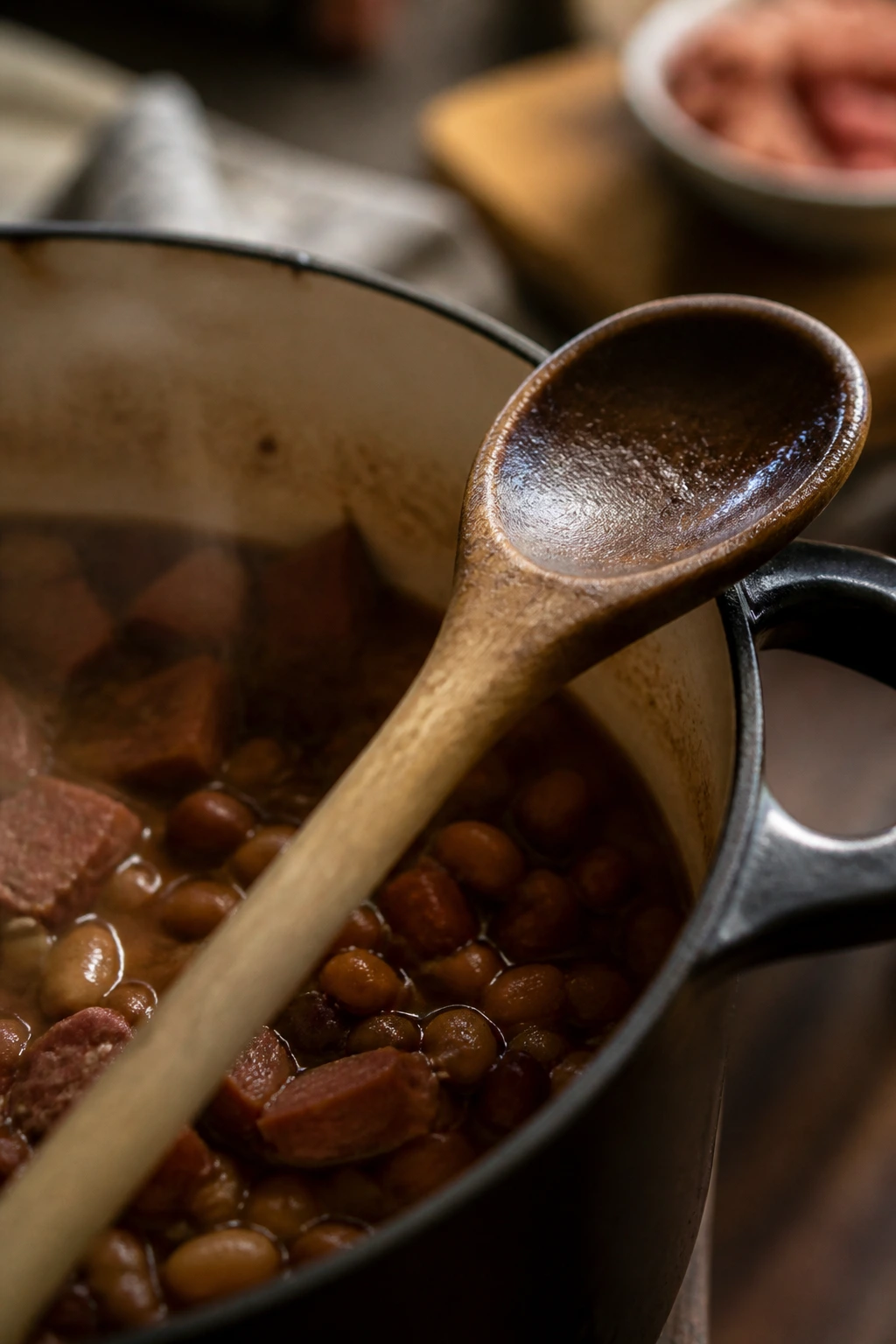
What I like most about this pot is how it keeps earning its place. The smoke comes from bacon and ham, the body comes from the beans and ham hock, and the brown sugar glaze only works because it shows up late and behaves itself. That’s the part too many bean recipes miss.
It’s a sturdy dish, but not a dull one. A squeeze of vinegar at the end, a thicker cornbread slice on the side, a little patience with the simmer — those small choices make the difference between a bowl that merely fills you up and one that people ask about before they’ve finished eating.
Smoky Ham and Beans with Brown Sugar Glaze — Recipe Card
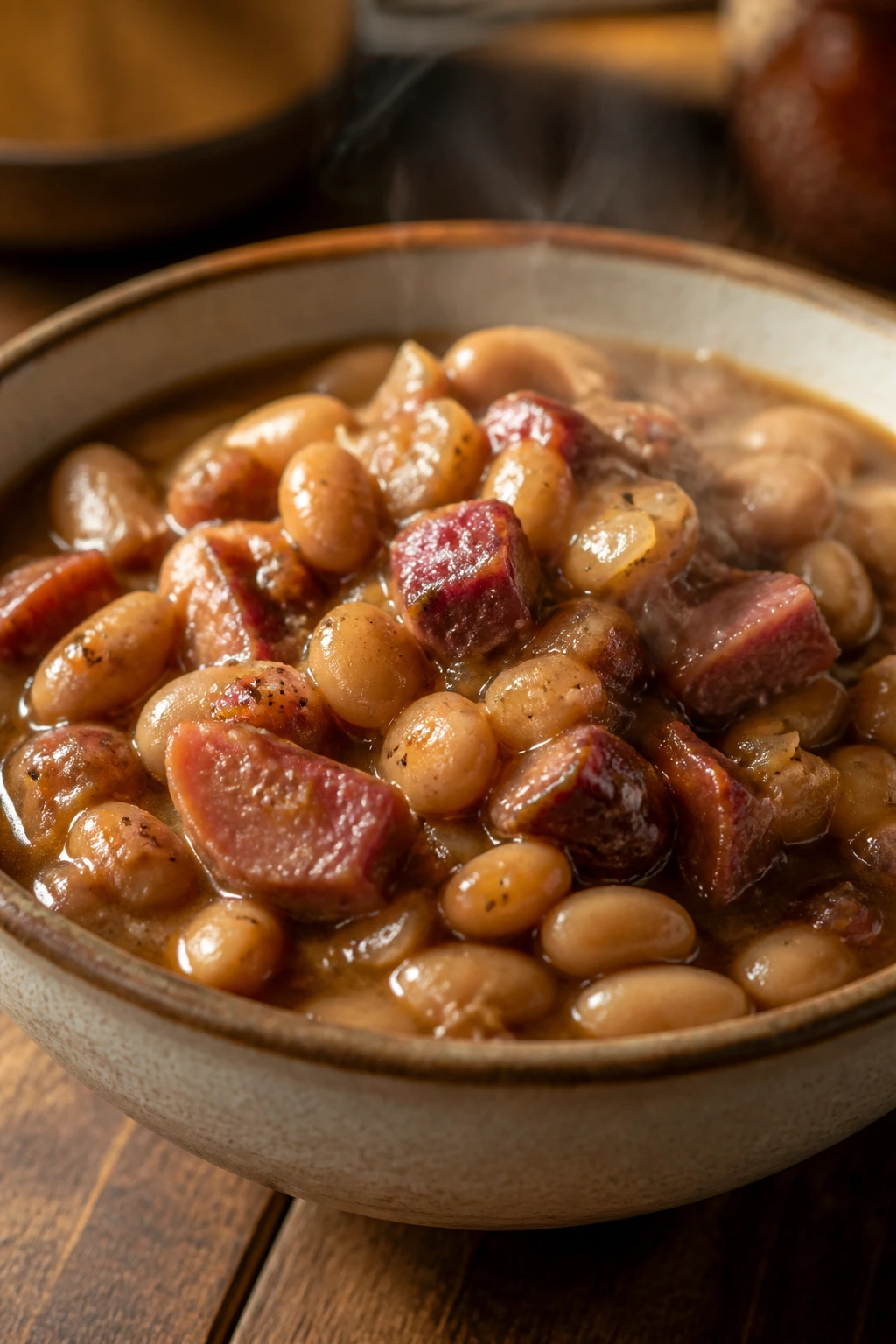
Recipe Name: Smoky Ham and Beans with Brown Sugar Glaze
Description: Navy beans simmer with bacon, smoked ham, onion, celery, and a brown sugar-mustard glaze until the broth turns glossy, smoky, and spoon-thick.
Prep Time: 25 minutes
Cook Time: 1 hour 45 minutes
Total Time: 2 hours 10 minutes active, plus 8 to 12 hours soaking
Course: Dinner, Main Course
Cuisine: American
Servings: 6 to 8
Calories: 430 kcal
Ingredients
For the Beans and Smoked Meat Base:
- 1 pound dried navy beans, sorted and soaked overnight
- 6 slices thick-cut bacon, diced
- 1 large yellow onion, finely chopped
- 2 celery ribs, finely chopped
- 2 carrots, peeled and finely diced
- 4 garlic cloves, minced
- 1 smoked ham hock or meaty ham bone, about 1 1/2 to 2 pounds
- 1 1/2 pounds cooked smoked ham, cut into 1/2-inch cubes
- 8 cups low-sodium chicken broth or water, plus more as needed
- 2 bay leaves
- 1 1/2 teaspoons smoked paprika
- 1 teaspoon black pepper
- 1 to 1 1/2 teaspoons kosher salt, to taste after cooking
For the Brown Sugar Glaze:
- 1/3 cup packed dark brown sugar
- 2 tablespoons Dijon mustard
- 2 tablespoons apple cider vinegar
- 2 tablespoons ketchup
- 1 tablespoon unsulfured molasses
- 2 tablespoons unsalted butter
- 1/4 cup reserved bean broth or additional broth
Instructions
-
Sort, rinse, and soak the navy beans in plenty of water for 8 to 12 hours, then drain and rinse again.
-
Render the bacon in a Dutch oven over medium heat for 6 to 8 minutes, then transfer it to a plate and leave about 2 tablespoons of fat in the pot.
-
Cook the onion, celery, and carrots in the bacon fat for 6 to 8 minutes until softened, then stir in the garlic for 30 seconds.
-
Add the beans, ham hock or bone, bay leaves, smoked paprika, black pepper, and broth. Bring to a boil, then reduce to a gentle simmer and cook for 60 to 75 minutes, stirring occasionally and adding hot liquid if needed.
-
Remove the ham hock or bone, shred or chop the meat, and return it to the pot with the diced ham and bacon. Taste and adjust salt only if needed.
-
Whisk the brown sugar, Dijon, vinegar, ketchup, molasses, butter, and reserved broth together, then stir the glaze into the beans.
-
Bake uncovered at 350°F for 25 to 35 minutes until the sauce is glossy and slightly thickened. Broil for 1 to 2 minutes at the end if you want a darker top, watching carefully.
-
Rest for 15 minutes before serving.
Notes: Taste before adding more salt; the ham and bacon may be enough. For a thicker pot, mash 1 cup of beans against the side of the pan before baking. Leftovers thicken overnight and reheat well with a splash of broth.