



Brunch-for-dinner ideas have a funny way of fixing a tired evening: one hot skillet, a few eggs, and suddenly the kitchen smells like you meant to make something special. There’s no rule that says eggs belong only before noon, and honestly, the late-day version often tastes better because you’re less rushed. You have time to let onions soften, bread toast properly, and yolks stay runny instead of getting bullied by the clock.
What makes eggs so useful at 7 p.m. is how far they can stretch. They can sit in tomato sauce, tuck into tortillas, puff in a hot cast-iron pan, or turn a pile of potatoes into dinner with enough body to feel complete. The trick is not to treat them like a breakfast afterthought. Give them salt, texture, acid, and something crisp on the side, and they stop reading as “breakfast for dinner” and start reading as a real meal.
I’ve always liked dinner recipes that can go from sleepy to lively in one pan. Eggs are built for that. They pick up the flavor around them fast, which means a jar of salsa, a crust of Parmesan, a spoonful of kimchi, or the last handful of herbs in the fridge can all matter more than a long grocery list.
Why These Brunch-for-Dinner Ideas Earn a Spot on the Table
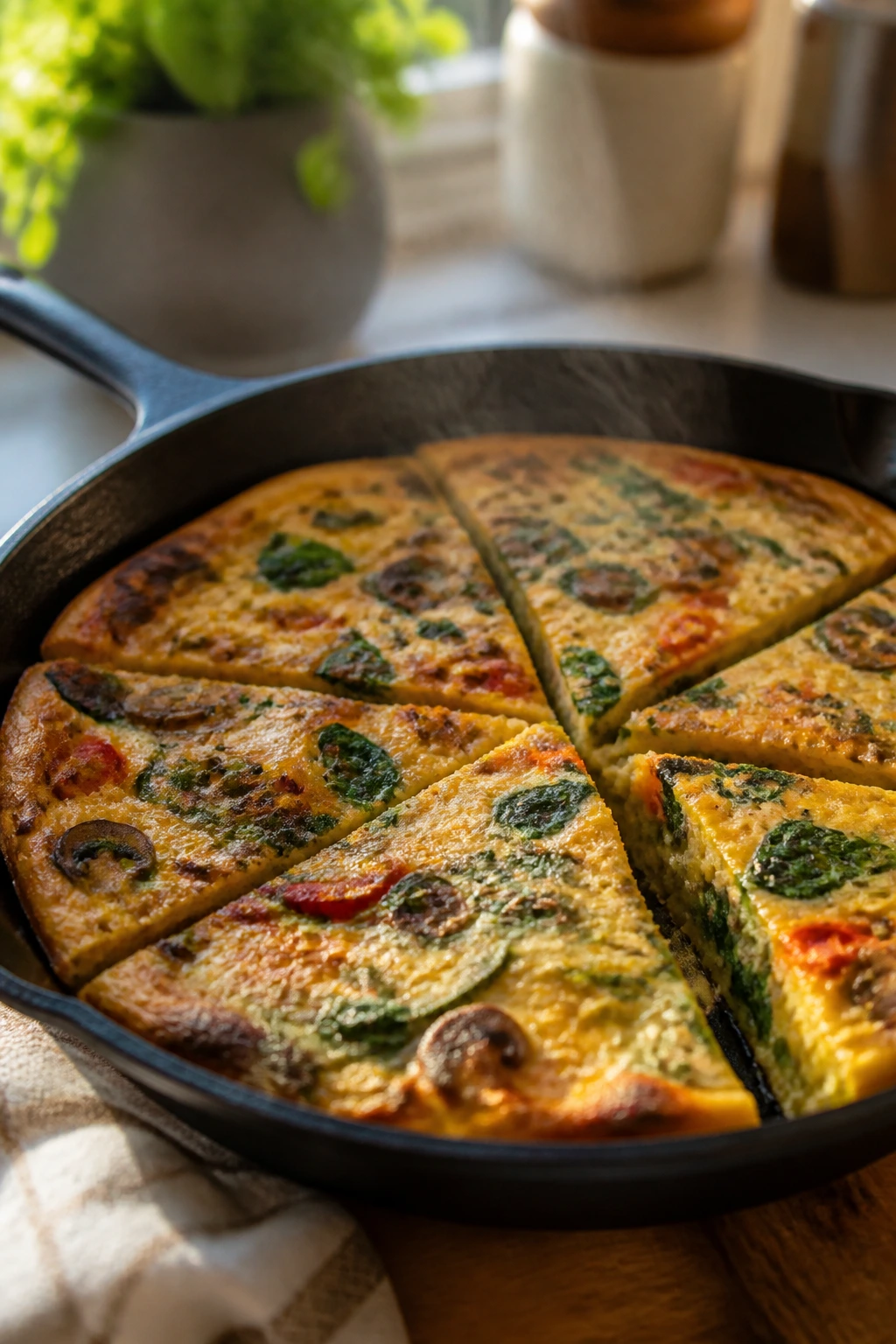
-
Fast without feeling thin: Most of these recipes are done in 20 to 45 minutes, but they still have enough texture—crisp tortillas, browned potatoes, toasted bread, or a baked top—to feel like dinner instead of a snack.
-
Eggs do the heavy lifting: A half-dozen eggs can bind a frittata, crown a rice bowl, finish a skillet of beans, or fill tacos with almost no extra work from you.
-
The leftovers behave well: Several of these hold up in the fridge, especially baked casseroles, fried rice, quiche, and bean dishes. Reheated eggs are a mixed bag, so I’ve built in recipes that don’t fall apart when warmed.
-
Pantry ingredients carry more weight here: Canned tomatoes, day-old rice, tortillas, potatoes, bread, beans, and cheese all have a job to do. That’s the beauty of a dinner built around eggs; the supporting cast doesn’t need to be fancy.
-
You can steer them rich or light: Add bacon, sausage, and cheese if the evening calls for it. Or keep things sharper and fresher with greens, herbs, lemon, salsa, and pickled onions.
-
No one gets bored halfway through: These ideas move from smoky and saucy to crispy and creamy to brothy and bright. Same hour. Different mood.
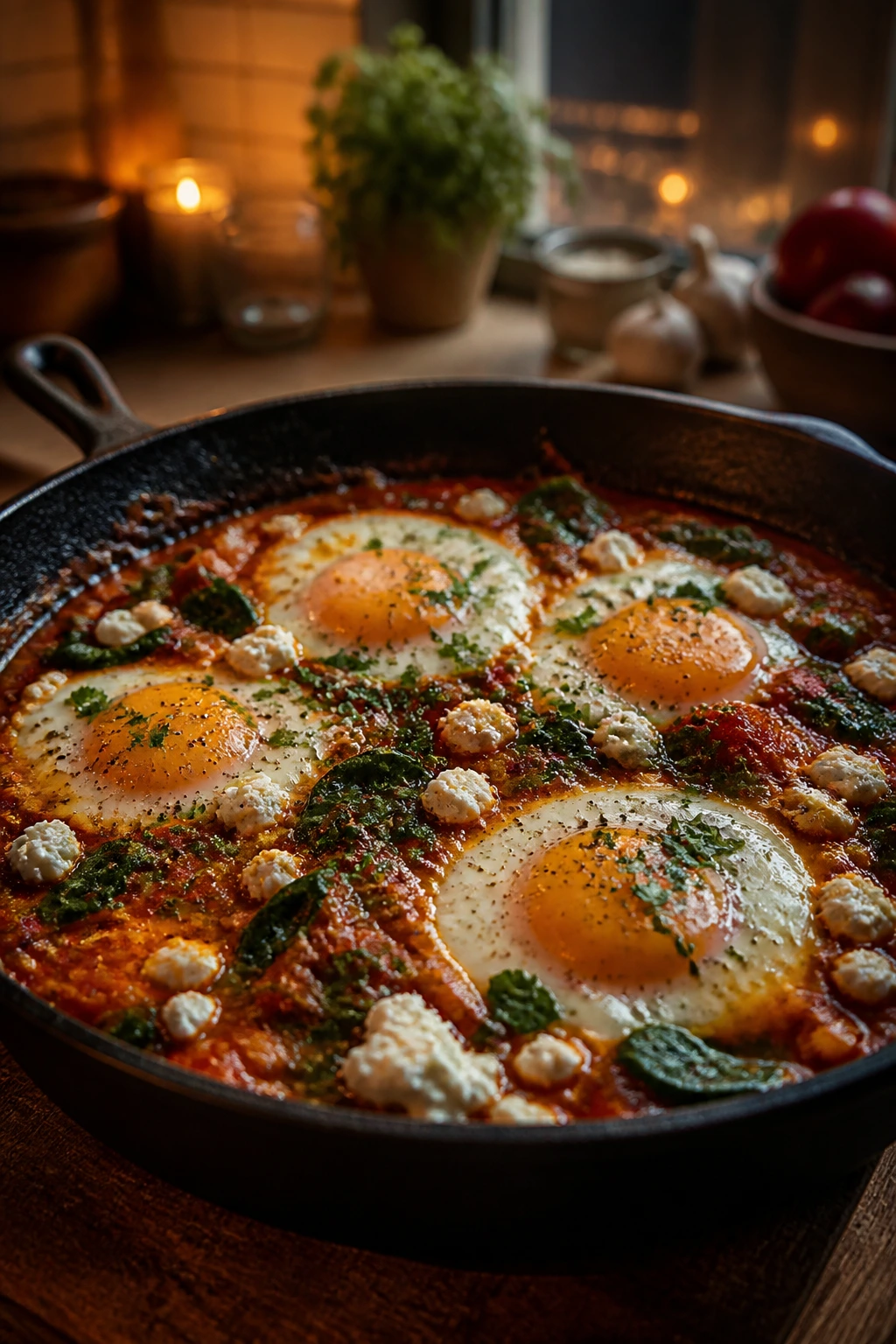
1. Skillet Shakshuka with Feta and Herbs
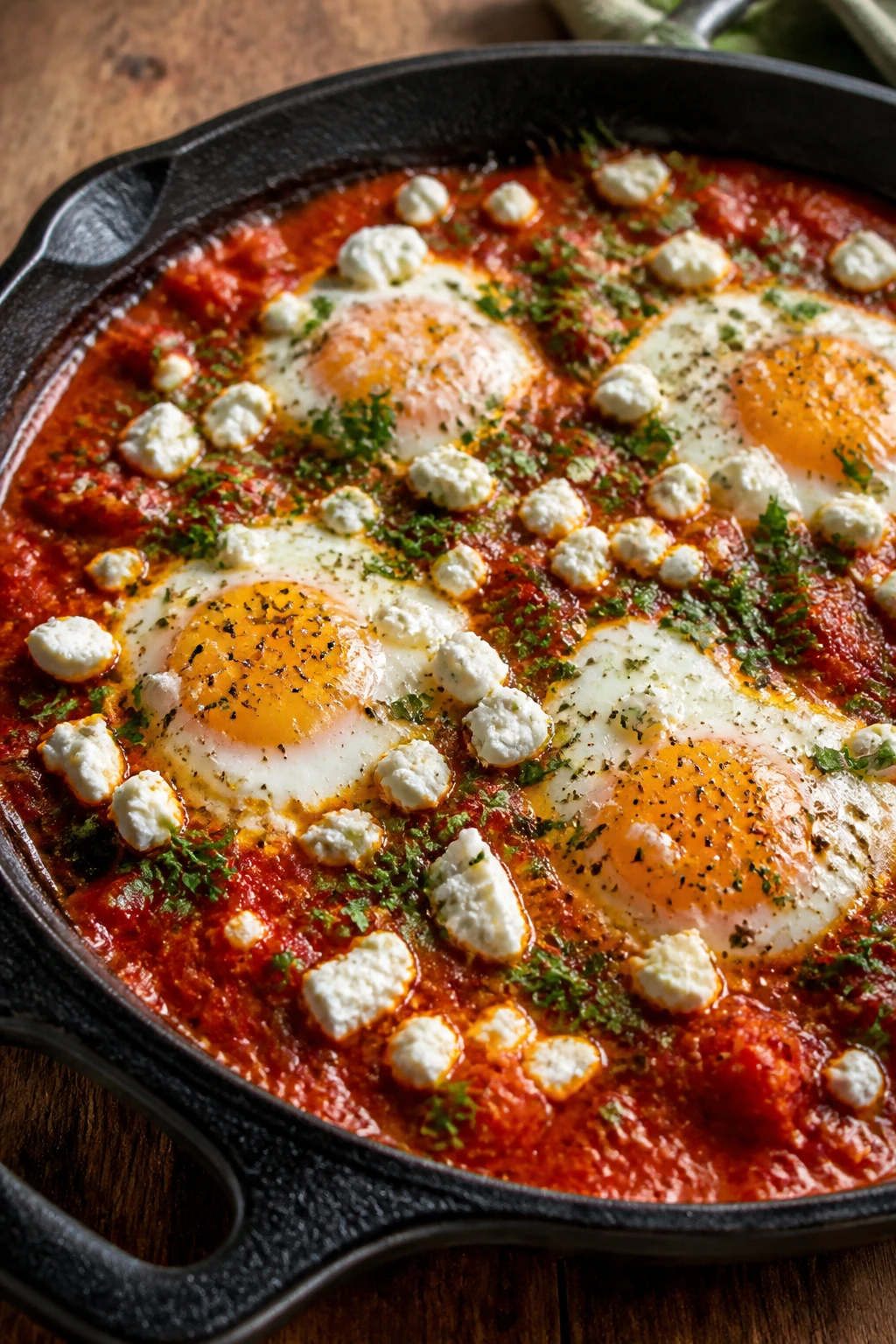
The smell hits first: onion, garlic, sweet peppers, and smoked paprika softening in olive oil until the whole skillet smells deep and red. Then the tomatoes go in, and the sauce turns glossy and thick enough to cradle eggs without letting them sink into the pan. This is the dish I make when I want dinner to feel warm and a little dramatic without actually doing much.
Why It Works:
Shakshuka works because the eggs cook right in the sauce, which means the whites set gently while the yolks stay soft and spoonable. The tomato base gives you body, acid, and enough sweetness to carry cumin and paprika. A splash of feta at the end cuts through the richness, and a hunk of bread turns the whole thing into something you can scoop, not just eat. The key is letting the sauce reduce until it no longer looks watery; if it still sloshes around, the eggs will overcook before the sauce tastes good.
Key Ingredients:
- 2 tablespoons olive oil
- 1 medium yellow onion, thinly sliced
- 1 red bell pepper, seeded and sliced
- 4 garlic cloves, minced
- 1 tablespoon tomato paste
- 1 teaspoon smoked paprika
- 1 teaspoon ground cumin
- 1/4 teaspoon red pepper flakes
- 1 can (28 ounces) crushed tomatoes
- 6 large eggs
- 1/2 cup crumbled feta
- 2 tablespoons chopped parsley or cilantro
- Salt and black pepper, to taste
Quick Steps:
- Sauté the vegetables: Heat olive oil in a 12-inch skillet over medium heat. Cook the onion and bell pepper with a pinch of salt for 8 to 10 minutes, until softened and lightly golden at the edges.
- Build the base: Stir in garlic, tomato paste, smoked paprika, cumin, and red pepper flakes. Cook for 1 minute until the spices smell toasted, not raw.
- Simmer the sauce: Add the crushed tomatoes, season with salt and pepper, and simmer for 10 to 15 minutes, stirring occasionally, until the sauce is thick enough to hold a spoon trail for a second or two.
- Add the eggs: Make 6 small wells in the sauce and crack an egg into each one. Cover the skillet and cook on low heat for 6 to 8 minutes, until the whites are set but the yolks still wobble.
- Finish and serve: Scatter feta and herbs over the top. Serve right away while the edges are still bubbling.
Equipment for This Recipe:
- 12-inch skillet with a lid
- Wooden spoon or heatproof spatula
- Small ladle or spoon for making wells
- Measuring spoons
- Sharp knife and cutting board
How to Serve This Dish:
Pile the skillet in the middle of the table and bring toasted sourdough, warm pita, or grilled flatbread alongside it. A spoonful of cucumber salad or a few olives on the side makes the plate feel sharper and less one-note. Serve 2 eggs per person if you’re also offering bread; 3 eggs each if this is the whole meal.
Pro Tips for This Recipe:
- Let the sauce reduce before adding eggs. Thin sauce is the easiest way to end up with set whites floating in tomato soup.
- Crack each egg into a small bowl first if you want clean placement. It saves you from fishing shell fragments out of hot sauce.
- If your skillet runs hot, pull it off the burner for 30 seconds before covering. That small pause can mean the difference between jammy yolks and chalky ones.
- Feta goes on at the end, not during the simmer. It stays brighter and less grainy that way.
Variations on This Dish:
- Green Shakshuka: Swap the tomato base for sautéed spinach, leeks, parsley, and a little cream. It turns softer and more herb-heavy.
- Sausage Shakshuka: Brown 8 ounces of sliced merguez or Italian sausage before the onion goes in. The rendered fat deepens the sauce.
- White Bean Shakshuka: Stir in 1 can of drained cannellini beans for a sturdier, spoonable dinner.
Common Mistakes to Avoid with This Dish:
- Watery sauce: If the tomatoes haven’t cooked down, the eggs will poach in a loose sauce and the flavor stays flat. Fix it by simmering uncovered a few extra minutes.
- Overcooked yolks: If you walk away while the lid is on, the eggs keep cooking fast. Start checking at 5 minutes.
- Underseasoning the tomato base: Tomatoes eat salt. Taste the sauce before the eggs go in and season boldly.
2. Breakfast Fried Rice with Bacon and Scallions
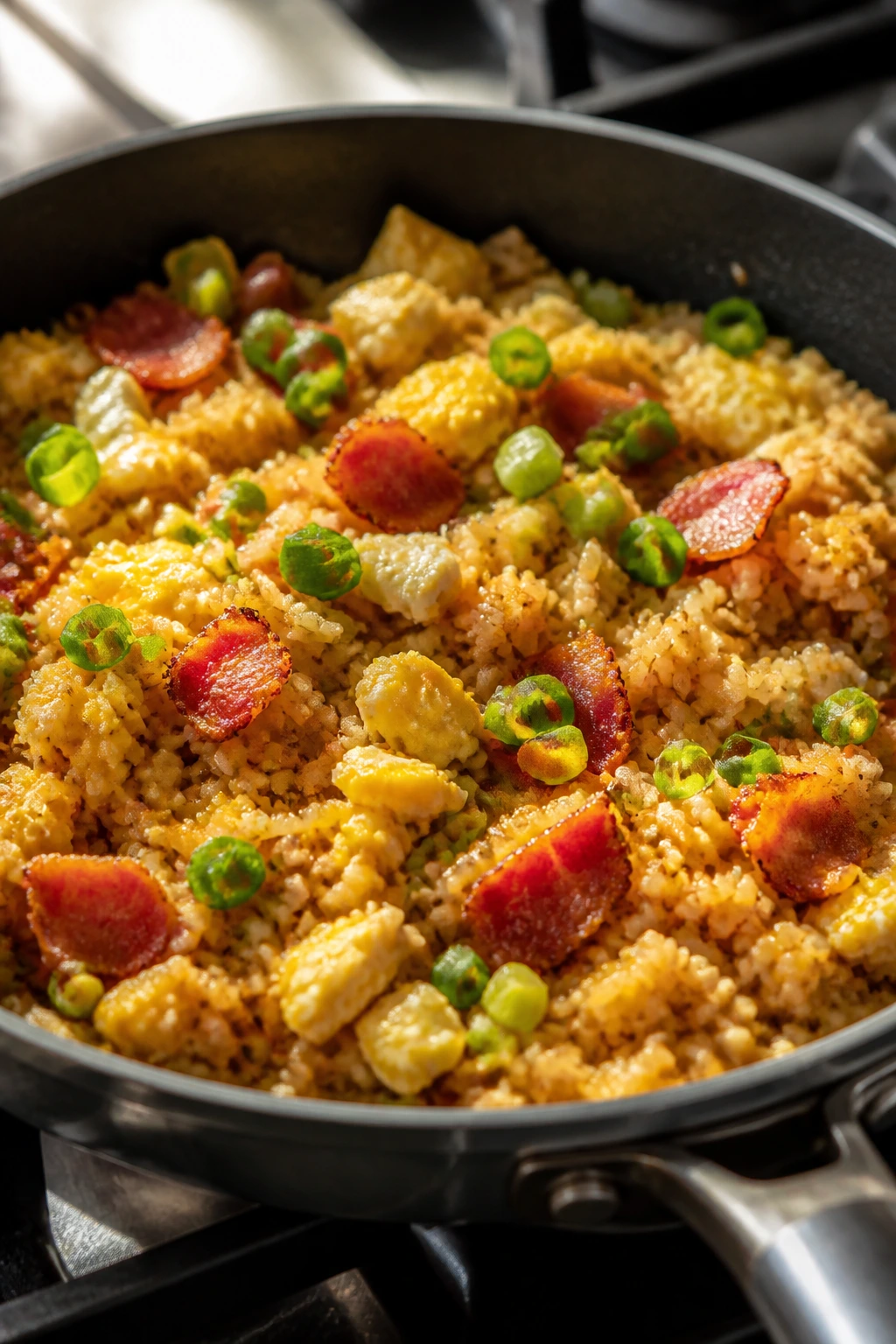
This is the move when you’ve got cold rice in the fridge and no patience for a complicated dinner. Bacon gives you smoky fat, the rice fries up into crisp little edges, and the eggs get scrambled into the pan so every bite has a bit of soft set yolk and savory grain. It tastes like the kind of meal that should have taken more effort than it did.
Why It Works:
Fried rice is one of the best brunch-for-dinner ideas because it rewards leftovers instead of punishing them. Cold rice is drier, so it fries instead of steaming, which gives you texture in a way fresh rice just can’t match. Eggs scramble into the hot rice and coat every grain, and bacon brings enough salt that you only need a small splash of soy sauce to finish. The trick is a hot pan and small batches; overcrowd it, and you’ll get soft rice instead of crisp rice.
Key Ingredients:
- 4 cups cooked white rice, chilled overnight
- 6 slices bacon, chopped
- 4 large eggs, lightly beaten
- 3 scallions, sliced
- 2 garlic cloves, minced
- 1 cup frozen peas, thawed
- 2 tablespoons soy sauce
- 1 teaspoon sesame oil
- 1 tablespoon neutral oil, if needed
- Black pepper, to taste
- 1 teaspoon rice vinegar, optional
Quick Steps:
- Crisp the bacon: Cook the bacon in a large skillet or wok over medium heat until browned and crisp, about 6 to 8 minutes. Remove it with a slotted spoon and leave about 1 tablespoon of fat in the pan.
- Scramble the eggs: Pour in the beaten eggs and stir gently until just set, about 30 to 45 seconds. Slide them out onto a plate; they’ll go back in later.
- Fry the rice: Add the rice to the hot pan with the garlic and peas. Press it into the pan, let it sit for 30 seconds, then stir. Keep frying for 4 to 6 minutes until some grains turn a little crisp.
- Season and finish: Add soy sauce, sesame oil, and black pepper. Return the bacon and eggs to the pan and toss just until everything is hot.
- Top and serve: Finish with scallions and a tiny splash of rice vinegar if you want sharper edges.
Equipment for This Recipe:
- Large skillet or wok
- Spatula or wooden spoon
- Mixing bowl for the eggs
- Measuring spoons
- Plate for holding the cooked bacon and eggs
How to Serve This Dish:
Serve it straight from the pan in shallow bowls with extra scallions or a spoonful of chili crisp on top. A crisp cucumber salad or quick pickled carrots make the bowl feel less heavy. If you want to stretch it, add a fried egg on each serving and let the yolk run into the rice.
Pro Tips for This Recipe:
- Day-old rice is nonnegotiable if you want good texture. Fresh rice clumps and steams.
- Keep the heat high enough that the rice sizzles when it hits the pan. If it goes quiet, the pan is too cool.
- Break up any rice clumps before cooking. Cold rice often hides hard little lumps that never fry evenly.
- If the bacon is very fatty, pour off more than you think you need. Too much fat makes the rice greasy instead of crisp.
Variations on This Dish:
- Kimchi Fried Rice: Replace peas with 1 cup chopped kimchi and 2 tablespoons kimchi juice. The tang makes the whole skillet pop.
- Veggie-Heavy Version: Swap bacon for 1 cup diced mushrooms and 1 cup shredded cabbage. Brown the mushrooms first so they don’t water down the rice.
- Sausage Rice: Use 8 ounces crumbled breakfast sausage instead of bacon for a meatier, softer version.
Common Mistakes to Avoid with This Dish:
- Using warm rice: Warm grains stick together and steam. Chill the rice first, even if it’s only for a few hours.
- Adding soy sauce too early: It can soak in and disappear. Add it near the end so the rice tastes seasoned, not muddy.
- Crowding the pan: If you’re making a double batch, cook it in two rounds. A packed pan ruins the texture.
3. Migas with Crispy Tortillas and Pico
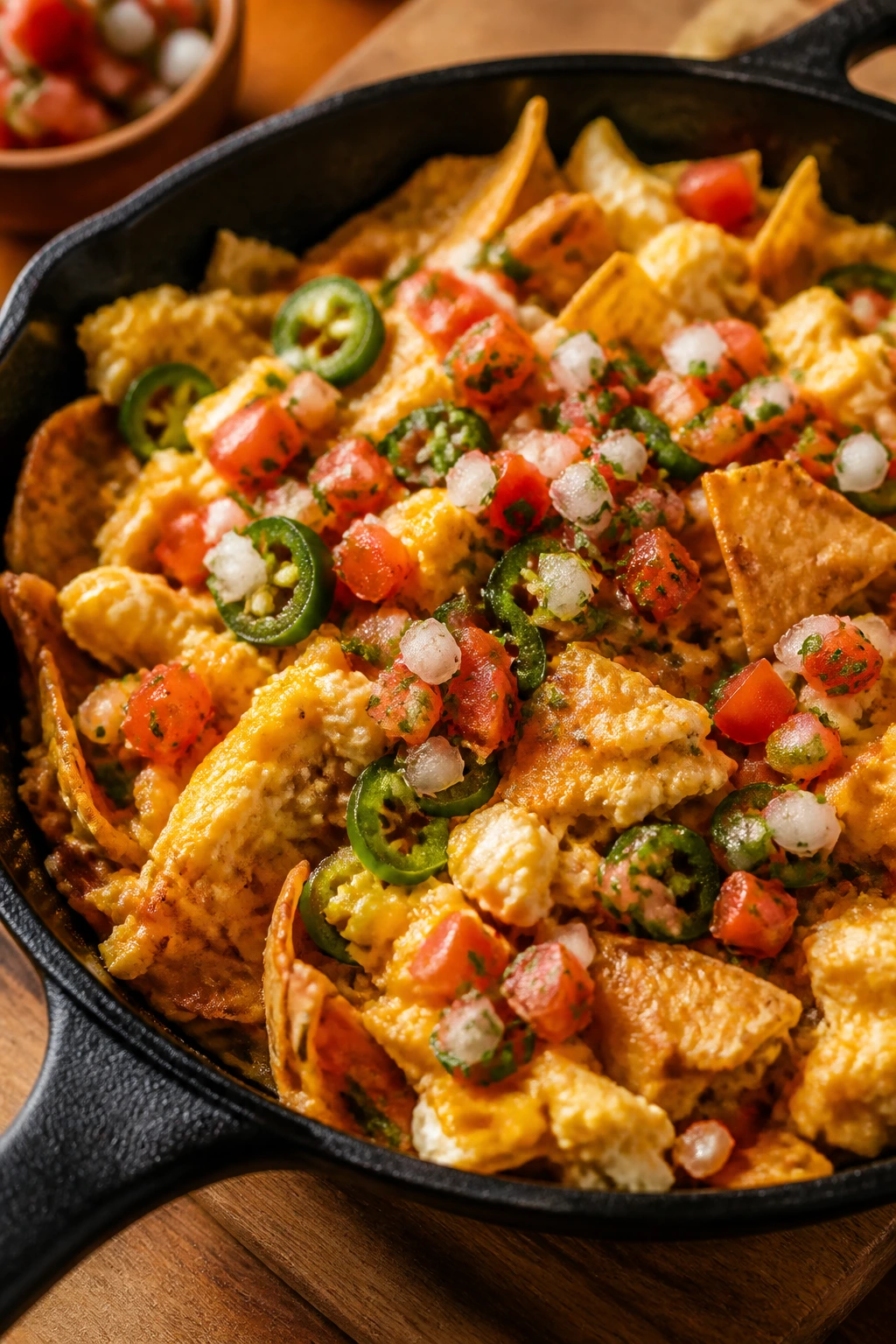
Migas smells like frying tortillas and onions, which is a better promise than most dinners make. Torn corn tortillas soak up just enough egg to feel soft at the edges while staying crisp in the middle, and the pile of pico on top keeps the whole thing bright. I like it because it feels casual but never lazy.
Why It Works:
Migas is one of those dishes that understands texture. You get soft scrambled eggs, browned tortilla strips, juicy tomato, and the occasional sting of jalapeño in one forkful. Corn tortillas matter here; they hold up better than flour and bring a real toasted corn flavor once they hit the pan. The best version starts with stale or day-old tortillas, because they fry more cleanly and turn golden instead of floppy.
Key Ingredients:
- 6 corn tortillas, torn into strips
- 2 tablespoons neutral oil
- 1 small white onion, diced
- 1 jalapeño, seeded and minced
- 6 large eggs
- 1/4 cup milk
- 1 cup diced tomato or prepared pico de gallo
- 1/2 cup shredded cheddar or Monterey Jack
- 1/4 cup chopped cilantro
- 1 avocado, sliced
- Salt and black pepper, to taste
Quick Steps:
- Crisp the tortillas: Heat oil in a large skillet over medium-high heat. Fry the tortilla strips in batches for 2 to 3 minutes until golden and crisp, then set them aside.
- Cook the vegetables: Lower the heat to medium and sauté the onion and jalapeño for about 4 minutes, until the onion looks translucent and sweet.
- Scramble the eggs: Whisk the eggs with milk, salt, and pepper. Pour them into the skillet and stir slowly for 1 to 2 minutes until the eggs are still soft.
- Add the tortillas and tomato: Fold in the crispy tortilla strips, tomato or pico, and cheese. Cook for 30 to 60 seconds just until the cheese starts melting around the edges.
- Finish: Top with cilantro and avocado. Serve immediately so the tortilla strips keep their crunch.
Equipment for This Recipe:
- Large nonstick or seasoned skillet
- Tongs for frying tortilla strips
- Mixing bowl and whisk
- Cutting board and sharp knife
- Spatula
How to Serve This Dish:
Serve migas with refried beans on the side if you want a fuller plate, or tuck it into warm tortillas for a second round of tacos. A spoonful of salsa roja or salsa verde gives it more punch. It works best in shallow bowls where the tortilla strips stay exposed instead of steaming under a pile of eggs.
Pro Tips for This Recipe:
- Fry the tortilla strips first and keep them separate until the end. If they sit in raw eggs too long, they lose the whole point.
- If your pico is watery, drain it a bit before adding it. Too much liquid makes the eggs loose.
- Use medium heat for the eggs. High heat gives you rubber; low heat gives you hesitation.
- Cotija is fine here if you want a saltier finish than cheddar.
Variations on This Dish:
- Chorizo Migas: Brown 6 ounces of Mexican chorizo first and cook the onions in the rendered fat. That one change makes the dish much richer.
- Bean Migas: Add 1 cup warmed black beans for more heft. It stretches the dish without making it heavy.
- Green Migas: Fold in chopped spinach or Swiss chard during the onion stage for a softer, greener version.
Common Mistakes to Avoid with This Dish:
- Soggy tortillas: Don’t let them sit in the egg mixture before cooking. Fry them separately and fold them in at the end.
- Too much cheese too soon: Cheese can gum up the eggs if it goes in while the skillet is scorching. Let the eggs partly set first.
- Skipping salt in the eggs: The tortillas and vegetables don’t season the eggs for you. Taste the mixture before it hits the pan.
4. Savory Dutch Baby with Lemon and Black Pepper
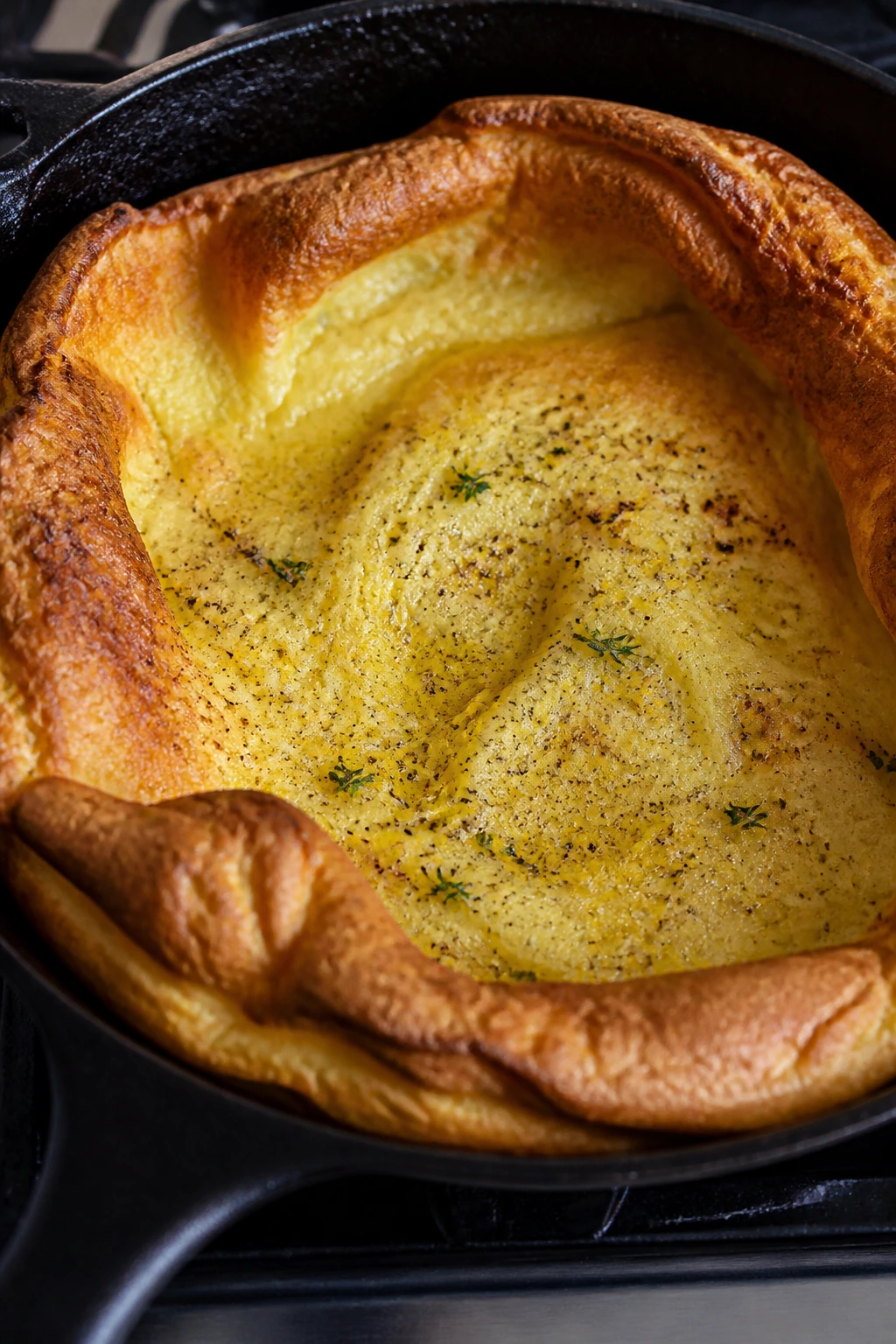
A savory Dutch baby lands on the table puffed and slightly ridiculous in the best possible way. The edges climb up the skillet, the center stays tender, and the smell of butter and black pepper makes the whole thing feel sharper than a sweet pancake ever could. Add lemon and greens, and suddenly it’s dinner.
Why It Works:
The batter is mostly eggs, so it puffs hard in a very hot pan and then settles into a tender, custardy middle. That gives you something between a crepe, an omelet, and a popover. Savory toppings matter because the base is mild; black pepper, Parmesan, and lemon are what keep it from tasting like breakfast gone sideways. The cast-iron skillet has to be hot before the batter goes in, or the rise won’t happen cleanly.
Key Ingredients:
- 3 large eggs
- 2/3 cup whole milk
- 2/3 cup all-purpose flour
- 1/2 teaspoon fine salt
- 1/2 teaspoon black pepper
- 2 tablespoons unsalted butter
- 1/4 cup grated Parmesan
- 1 cup arugula
- 1 lemon, cut into wedges
- 1 tablespoon chopped chives, optional
Quick Steps:
- Preheat the pan: Put a 10-inch cast-iron skillet in a 425°F oven and let it heat for at least 10 minutes.
- Blend the batter: Whisk or blend the eggs, milk, flour, salt, and black pepper until smooth. A few tiny lumps are fine; big ones are not.
- Add the butter: Carefully remove the hot skillet, add the butter, and swirl until melted and foamy.
- Bake the Dutch baby: Pour in the batter, sprinkle Parmesan over the top, and bake for 18 to 22 minutes until dramatically puffed and deeply golden around the edges.
- Top and serve: Add arugula, lemon juice, and chives right away while the center is still tender.
Equipment for This Recipe:
- 10-inch cast-iron skillet
- Blender or whisk
- Measuring cups and spoons
- Oven mitts
- Microplane or grater for Parmesan
How to Serve This Dish:
Cut it into wedges and serve it the way you would a thin crust pizza, except softer and more delicate in the middle. Smoked salmon, sliced radishes, or a side of sautéed mushrooms fit neatly next to it. It’s best served straight from the skillet, with the lemon squeezed over the greens right before eating.
Pro Tips for This Recipe:
- Warm the milk before mixing if your kitchen runs cold; it helps the batter bake more evenly.
- Don’t open the oven during the first 15 minutes. The puff needs steady heat.
- Use enough butter to coat the skillet, but don’t drown it. Too much butter pools and can make the edges greasy.
- Serve immediately. A Dutch baby falls fast, and that’s part of the charm.
Variations on This Dish:
- Mushroom Dutch Baby: Add sautéed mushrooms and thyme on top after baking. Earthy, savory, and good with a soft egg.
- Bacon and Chive Version: Scatter cooked bacon over the finished pancake and skip the arugula if you want a heavier plate.
- Gluten-Free Pan Bake: Use a 1:1 gluten-free flour blend. The rise is a little different, but the texture still works.
Common Mistakes to Avoid with This Dish:
- A cool skillet: If the pan isn’t hot enough, the Dutch baby stays flat. Give it the full preheat time.
- Overblending the batter: You want smooth, not foamy. Too much air can make the center collapse unevenly.
- Waiting to eat it: It starts sinking the minute it leaves the oven. Have the table ready.
5. Hash Brown Frittata with Spinach and Gruyère
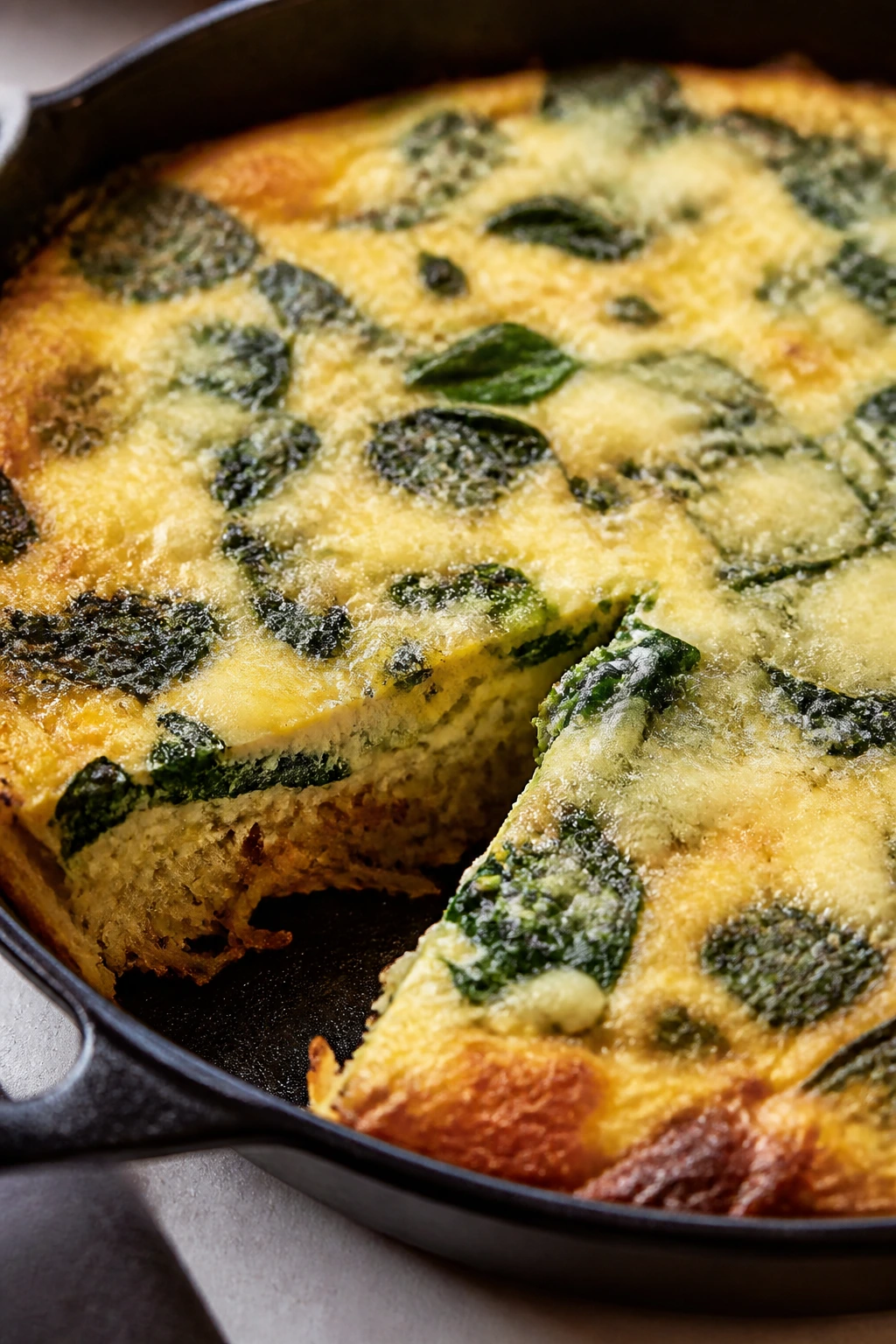
This is the kind of dinner that wears two hats and gets away with it. The bottom is a crisp potato layer, almost like a thin hash brown crust, and the top is a set egg custard dotted with spinach and Gruyère. It tastes richer than the ingredients list suggests, which is one of the reasons I keep making it.
Why It Works:
A frittata is already dinner-friendly, but the hash brown base gives it a much better edge and a clean slice. Potatoes soak up the egg mixture just enough to bind, while Gruyère melts into little pockets that go nutty and salty in the oven. Spinach adds color and a bit of moisture, though you need to cook that moisture off first or the whole thing gets watery. The goal is a skillet with a crisp bottom and a custardy middle, not a scramble with potatoes in it.
Key Ingredients:
- 2 cups frozen shredded hash browns, thawed and squeezed dry
- 2 tablespoons olive oil
- 1 small onion, diced
- 2 cups fresh spinach, chopped
- 8 large eggs
- 1/4 cup whole milk
- 1 cup grated Gruyère
- 1/2 teaspoon salt
- 1/4 teaspoon black pepper
- Pinch of nutmeg
- 1 tablespoon chopped chives
Quick Steps:
- Crisp the potato base: Heat olive oil in a 10- or 12-inch oven-safe skillet over medium heat. Press the hash browns into an even layer and cook for 6 to 8 minutes, until the underside is golden.
- Add the onion and spinach: Scatter onion over the potatoes and cook for 3 minutes. Add spinach and cook just until wilted and the moisture has evaporated.
- Mix the eggs: Whisk eggs, milk, salt, pepper, and nutmeg in a bowl until fully combined. Stir in half the Gruyère.
- Bake the frittata: Pour the egg mixture into the skillet, tilt the pan if needed, and cook over low heat for 2 minutes. Transfer to a 375°F oven and bake for 12 to 15 minutes, until the center barely jiggles.
- Finish: Top with the remaining cheese and chives. Let it sit for 5 minutes before slicing.
Equipment for This Recipe:
- 10- or 12-inch oven-safe skillet
- Mixing bowl and whisk
- Spatula
- Box grater
- Oven mitts
How to Serve This Dish:
Serve it in wedges with a sharp salad dressed in lemon vinaigrette. A spoonful of sour cream or hot sauce on the side gives each bite some lift. If you want to stretch dinner, add sliced tomatoes or a bowl of fruit beside it.
Pro Tips for This Recipe:
- Squeeze the thawed hash browns dry in a clean towel. Excess water keeps the base pale.
- Don’t rush the potato layer. If it hasn’t browned, it won’t slice cleanly.
- Gruyère melts well here, but sharp cheddar works if that’s what you’ve got.
- Let the frittata rest before cutting. The middle firms up in those 5 minutes.
Variations on This Dish:
- Bacon Hash Frittata: Add 4 chopped bacon slices after the onion stage. It makes the base more savory and a little smoky.
- Mushroom and Thyme Version: Swap spinach for sautéed mushrooms and thyme. Cook the mushrooms until all their moisture is gone.
- Dairy-Light Option: Use 2 tablespoons milk instead of 1/4 cup and reduce the cheese slightly. The texture gets firmer.
Common Mistakes to Avoid with This Dish:
- Wet spinach: Raw spinach can dump water into the eggs. Wilt it first and let the pan dry out.
- Skipping the rest time: Slicing too early makes the center slump. Wait 5 minutes.
- Undercooking the potato layer: Pale hash browns taste raw and soggy. Give them the full browning time before pouring in eggs.
6. Huevos Rancheros with Charred Salsa
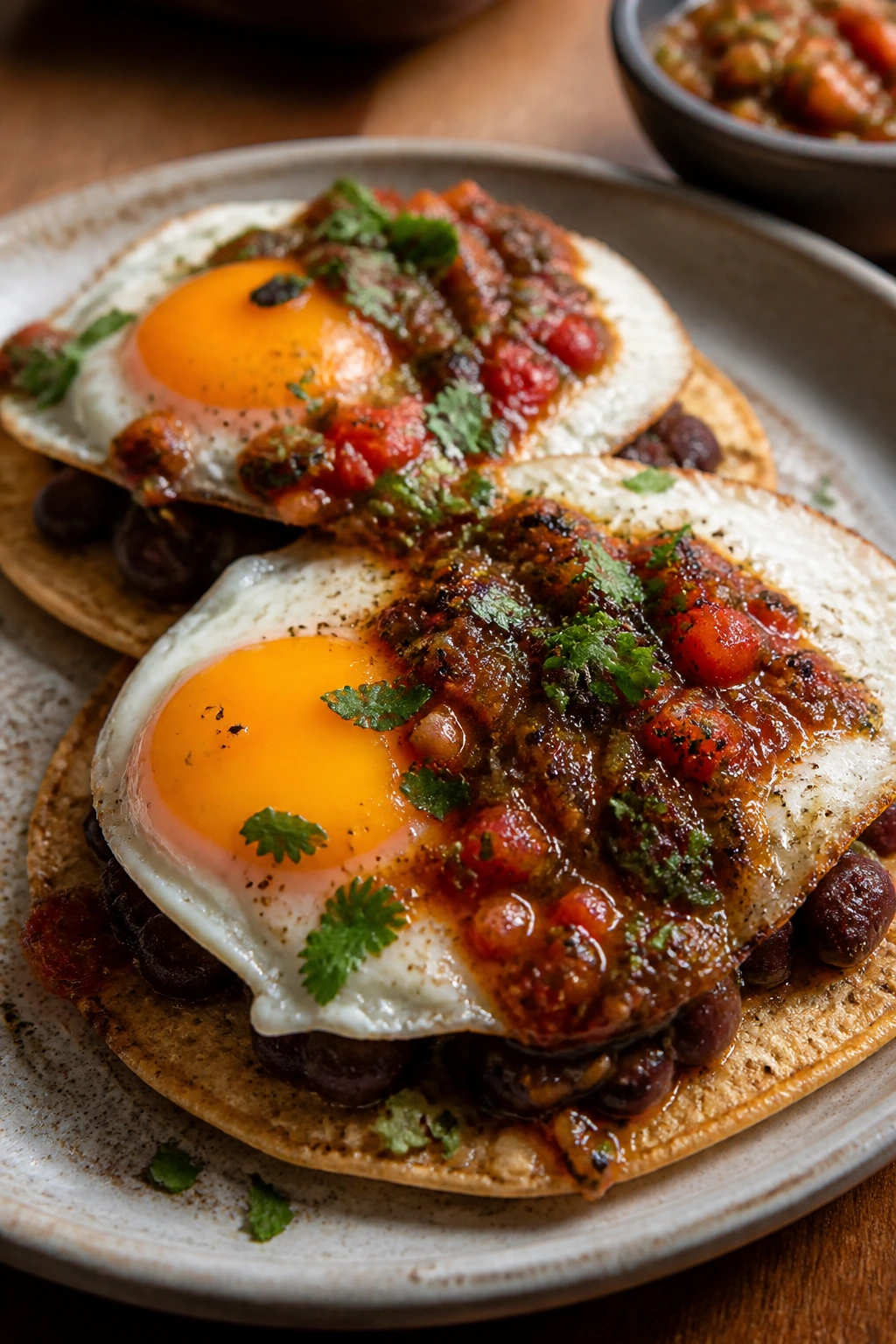
Huevos rancheros is what I make when I want dinner to feel awake. The tortillas get warm and a little crisp, the beans bring weight, and the salsa tastes brighter when the tomatoes have a little char on them. It’s a plate with edges. Good ones.
Why It Works:
The beauty of huevos rancheros is that every layer has a different job. Tortillas give you a base, beans make it filling, eggs add richness, and salsa keeps the whole thing from feeling heavy. A quick char on the tomatoes and jalapeños deepens the sauce more than simmering alone does. If you pile everything too early, the tortillas go soft fast, so the order matters more than people think.
Key Ingredients:
- 4 corn tortillas
- 1 tablespoon neutral oil
- 1 small onion, chopped
- 2 tomatoes, halved
- 1 jalapeño
- 2 garlic cloves
- 1 cup canned refried beans or well-seasoned pinto beans
- 4 large eggs
- 1/2 avocado, sliced
- 1/4 cup crumbled queso fresco
- 2 tablespoons cilantro
- Salt to taste
Quick Steps:
- Char the salsa ingredients: Dry-skillet the tomatoes, onion, jalapeño, and garlic over medium-high heat until black spots appear, about 6 to 8 minutes.
- Blend or chop the salsa: Pulse the charred vegetables with salt until you get a rustic salsa. Leave it textured, not smooth.
- Warm the beans and tortillas: Heat the beans gently in a small saucepan. Warm the tortillas in a separate skillet with a thin film of oil until soft with browned spots.
- Cook the eggs: Fry the eggs in the same skillet or another pan until the whites are set and the yolks are still loose.
- Assemble: Spread beans on tortillas, top with eggs, spoon over salsa, and finish with avocado, queso fresco, and cilantro.
Equipment for This Recipe:
- Cast-iron skillet or heavy skillet
- Small saucepan
- Blender, food processor, or knife for chopping
- Spatula
- Slotted spoon, if needed
How to Serve This Dish:
Serve each tortilla open-faced with a knife and fork, not folded into a soggy stack. A simple side of lime wedges or a pile of shredded cabbage gives the plate some crunch. Two tortillas per person is plenty unless you’re also serving rice.
Pro Tips for This Recipe:
- Char the salsa ingredients in a dry skillet first. That smoke gives the dish its depth.
- Keep the beans warm and spreadable, not stiff. Cold beans make the tortillas cool down too fast.
- If you want a cleaner yolk, fry the eggs in a little oil and spoon hot oil over the whites near the end.
- Use fresh tortillas if you can. They brown better and taste cleaner.
Variations on This Dish:
- Green Rancheros: Use salsa verde instead of tomato salsa and add sliced poblanos.
- Chorizo Rancheros: Brown 6 ounces of chorizo and spread it under the eggs. It turns the plate much richer.
- Black Bean Version: Mash black beans with garlic and cumin for a deeper, earthier base.
Common Mistakes to Avoid with This Dish:
- Soggy tortillas: Don’t let the assembled plates sit. Serve immediately.
- Thin salsa: If the salsa looks watery, drain off some juices or cook it down first.
- Cold beans: They drag the whole plate down. Warm them until they spread easily.
7. Croque Madame Casserole
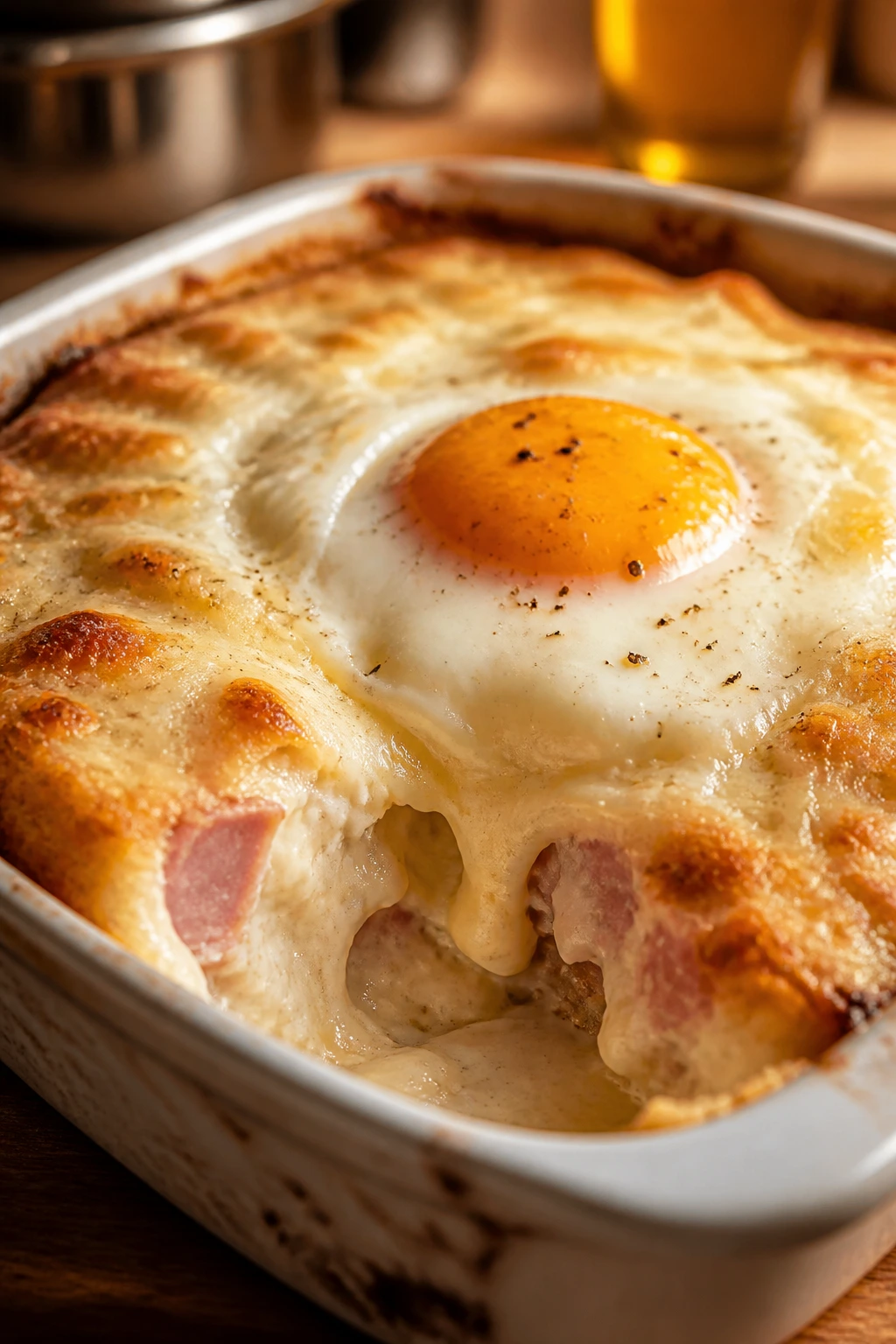
A croque madame casserole feels a little indulgent in the best way. You get ham, bread, cheese, and a creamy sauce under a layer of eggs, which means every bite has the salt of the sandwich and the soft richness of a baked dish. It’s the kind of dinner that makes toasted bread feel like a plan instead of an afterthought.
Why It Works:
Classic croque madame is already built from sturdy parts: ham, bread, béchamel, and cheese. Turning it into a casserole makes it easier to feed more than two people without standing over a skillet. The sauce keeps the bread from drying out, but the top still browns into a cheesy crust if you bake it uncovered for the right amount of time. Egg pockets on top make it feel like dinner, not just a hot sandwich in a dish.
Key Ingredients:
- 8 cups cubed brioche or sturdy white bread
- 8 ounces ham, chopped
- 2 tablespoons butter
- 2 tablespoons flour
- 2 cups whole milk
- 1 teaspoon Dijon mustard
- 1/4 teaspoon nutmeg
- 1 1/2 cups grated Gruyère
- 6 large eggs
- Salt and black pepper, to taste
- Chives, for finishing
Quick Steps:
- Make the béchamel: Melt butter in a saucepan over medium heat. Whisk in flour for 1 minute, then slowly whisk in milk until smooth. Cook 3 to 4 minutes until thick enough to coat a spoon.
- Season the sauce: Stir in Dijon, nutmeg, salt, pepper, and half the Gruyère.
- Assemble the casserole: Spread bread cubes and ham in a greased baking dish. Pour the sauce over the top and press lightly so the bread soaks it up.
- Add the eggs and cheese: Make 6 shallow wells, crack in the eggs, and scatter the remaining Gruyère around them.
- Bake: Cook at 375°F for 25 to 30 minutes until the whites are set and the top is deeply golden. Finish with chives.
Equipment for This Recipe:
- 9×13-inch baking dish
- Medium saucepan
- Whisk
- Measuring cups and spoons
- Small ladle or spoon
How to Serve This Dish:
Let it rest for 5 minutes, then scoop out squares with one egg per serving. A bitter green salad with mustard dressing cuts the richness fast. If you want the plate to feel more diner-like, add sliced tomatoes with salt and pepper on the side.
Pro Tips for This Recipe:
- Use bread that’s a day old or lightly toasted. Soft fresh bread can turn to paste.
- Keep the béchamel smooth and not too thin. If it looks runny, bake time won’t rescue it.
- Crack the eggs into small wells so they stay in place.
- Gruyère is the classic move here, but a mix of Gruyère and sharp white cheddar works too.
Variations on This Dish:
- Spinach Croque Bake: Add 2 cups wilted spinach under the bread for a greener version.
- Smoked Turkey Version: Swap ham for smoked turkey and use a bit more Dijon.
- Open-Faced Individual Bake: Divide the mixture into ramekins for neat portions with crispier edges.
Common Mistakes to Avoid with This Dish:
- Too much sauce: If the casserole swims, the bread never firms up. Aim for thick, not soupy.
- Overbaked eggs: Start checking early if your oven runs hot. The yolks can go from soft to chalky fast.
- Skipping the rest: Straight from oven to plate, the sauce runs everywhere. Give it a few minutes.
8. Breakfast Pizza with Sausage, Eggs, and Mozzarella
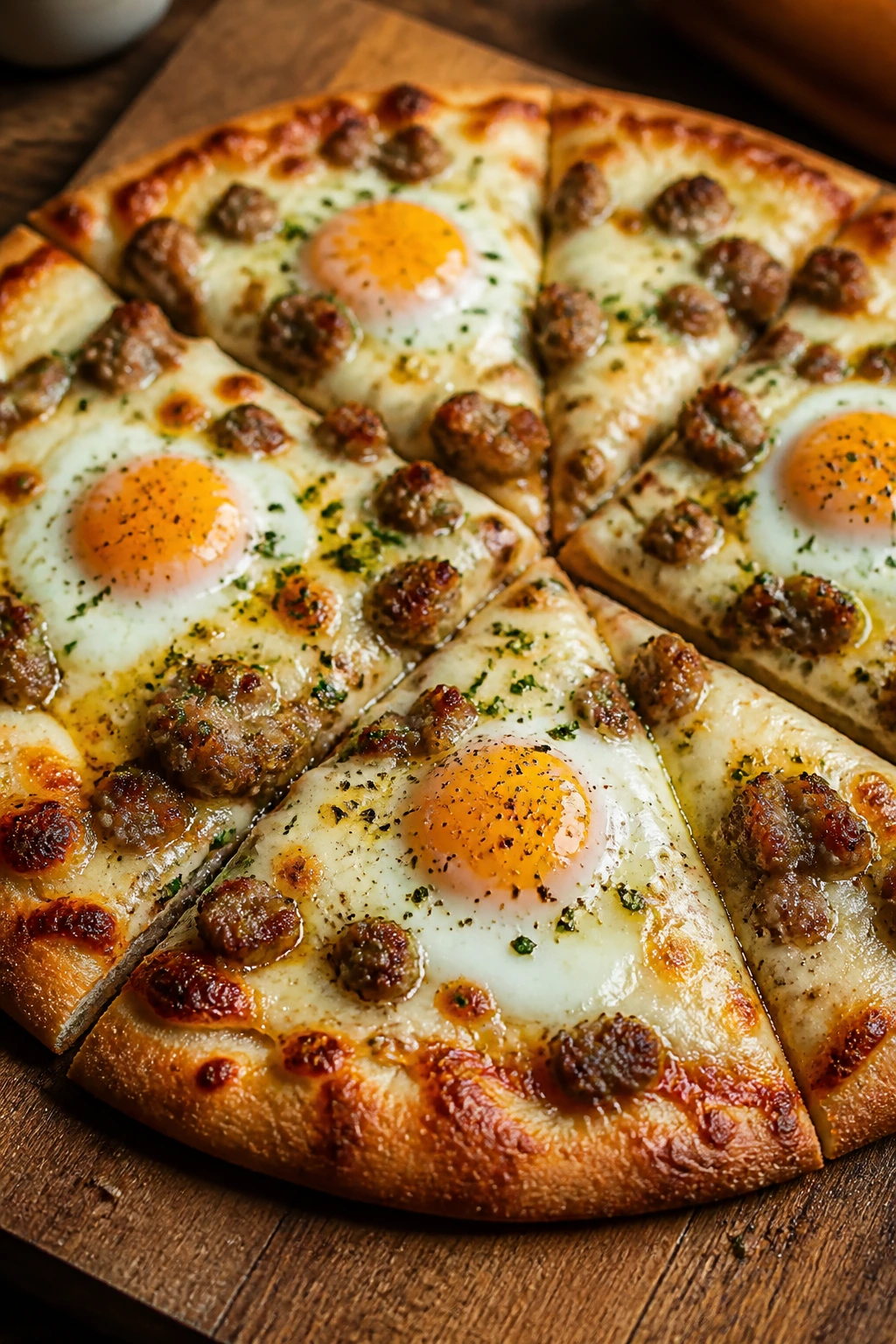
Pizza for dinner is obvious. Pizza with eggs on it at dinner is where things get interesting. The crust gets crisp, the sausage gives you salt and fat, and the eggs bake just enough to set while the yolks stay soft. It’s messy, which is fine. Some meals should be a little unruly.
Why It Works:
A breakfast pizza works because the crust acts like a sturdy edible plate. The sausage brings seasoned richness, mozzarella melts into the gaps, and the eggs cook on top without taking over the whole pie. The crucial part is parbaking the crust so the bottom doesn’t go soggy under the toppings. If you like a runny yolk, you pull it early; if you want cleaner slices, bake a minute or two longer.
Key Ingredients:
- 1 pound pizza dough
- 1 tablespoon olive oil
- 1/2 cup pizza sauce or thin tomato sauce
- 8 ounces breakfast sausage, cooked and crumbled
- 1 1/2 cups shredded mozzarella
- 4 large eggs
- 2 scallions, sliced
- 2 tablespoons grated Parmesan
- Red pepper flakes, optional
- Flour, for dusting
Quick Steps:
- Preheat and parbake: Heat the oven to 475°F. Stretch the dough on a floured surface, place it on a pizza stone or sheet pan, brush with olive oil, and bake for 5 to 7 minutes until the surface looks set but not browned.
- Add the sauce and toppings: Spread a thin layer of sauce, then scatter sausage and mozzarella over the crust.
- Crack on the eggs: Make 4 small spaces in the cheese and crack an egg into each one.
- Bake again: Return to the oven for 6 to 9 minutes until the whites are set and the yolks still jiggle.
- Finish: Add Parmesan, scallions, and red pepper flakes. Slice right away.
Equipment for This Recipe:
- Pizza stone or rimmed sheet pan
- Rolling pin, if needed
- Pizza peel or another sheet of parchment
- Small bowl for the eggs
- Sharp knife or pizza cutter
How to Serve This Dish:
Serve it in wedges with a simple salad dressed in vinegar and olive oil. The sharpness keeps the cheese from feeling heavy. If you want to stretch the meal, offer sliced fennel or a bowl of grapes alongside it.
Pro Tips for This Recipe:
- Keep the sauce thin and restrained. Too much sauce makes the crust damp.
- Use fully cooked sausage. The oven time is too short to cook raw sausage from scratch.
- Crack eggs one at a time into the cheese pockets so they don’t run off the crust.
- If you love a firmer yolk, cover the eggs with a loose foil tent for the last 2 minutes.
Variations on This Dish:
- Veggie Breakfast Pizza: Swap sausage for sautéed mushrooms and peppers.
- White Pizza Version: Use ricotta, olive oil, and garlic instead of tomato sauce.
- Spicy Pepperoni Breakfast Pie: Add pepperoni slices and a pinch of Calabrian chili.
Common Mistakes to Avoid with This Dish:
- Undercooked crust: Parbake it or the middle stays floppy.
- Raw sausage: Cook it first; the oven won’t give it enough time.
- Eggs cracked too early: If they sit too long before baking, the whites spread and the topping gets messy.
9. Kimchi Fried Eggs on Rice with Sesame
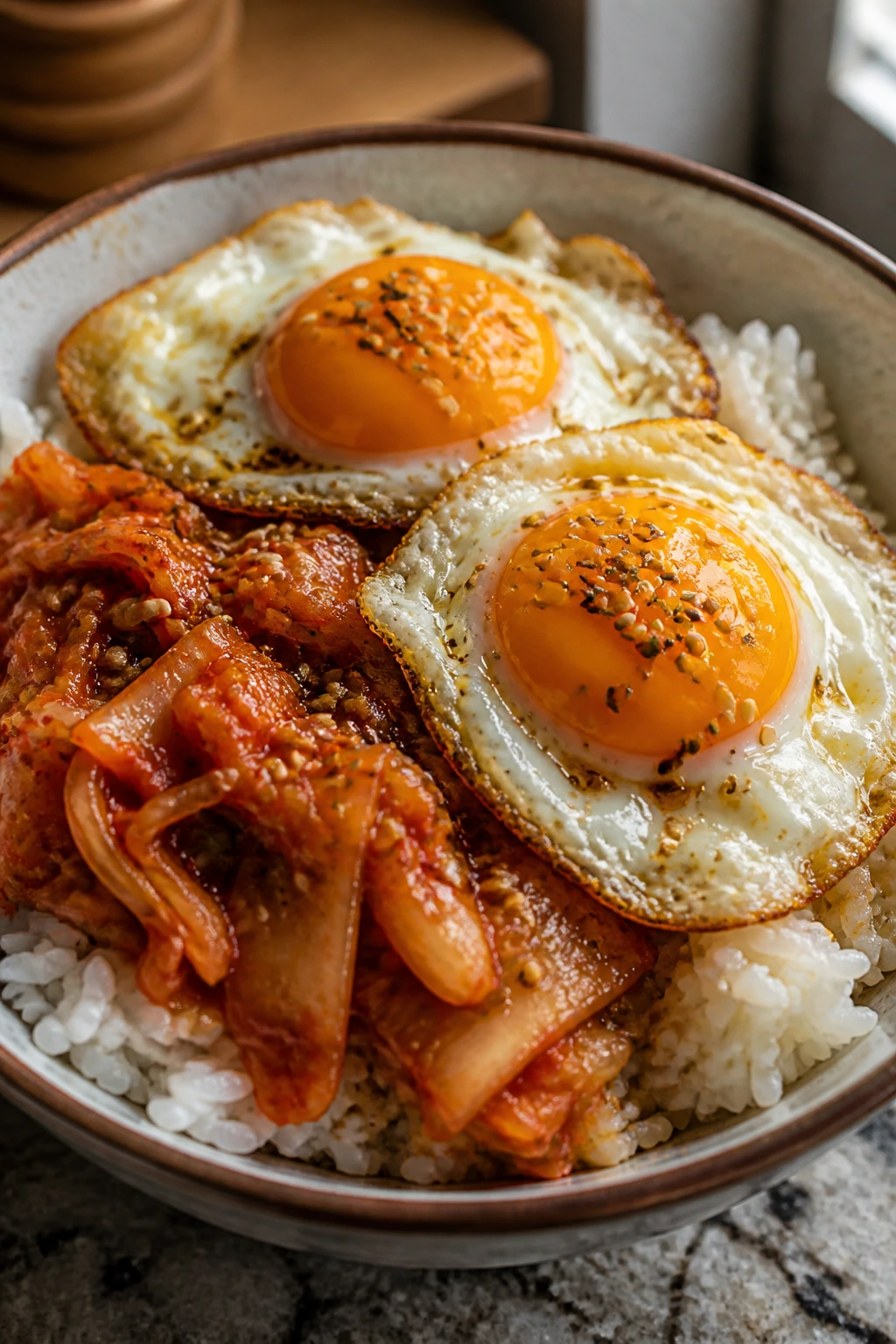
This one is sharp, salty, and fast. Kimchi hits the pan first and gets even funkier when it fries, then the rice picks up all that red-orange flavor while the eggs stay soft on top. It’s the dinner I make when I want heat, acid, and a bowl that feels awake.
Why It Works:
Kimchi fried rice has a built-in advantage: the kimchi brings seasoning, acidity, and a little crunch, so you don’t need a long list of extras. Eggs calm the heat and give the bowl a creamy finish when the yolk breaks. Day-old rice is the difference between proper fried rice and a sticky pile, and the sesame oil at the end matters more than people expect. Use a hot skillet and don’t be shy with the browning.
Key Ingredients:
- 4 cups cooked white rice, chilled
- 1 cup kimchi, chopped
- 2 tablespoons kimchi juice
- 2 tablespoons neutral oil
- 2 garlic cloves, minced
- 1 tablespoon soy sauce
- 4 large eggs
- 1 teaspoon sesame oil
- 2 scallions, sliced
- 1 teaspoon sesame seeds
- Optional cucumber slices for serving
Quick Steps:
- Fry the kimchi: Heat oil in a skillet over medium-high heat. Cook the chopped kimchi and garlic for 2 to 3 minutes until the edges darken and the smell turns deeper and less raw.
- Add the rice: Stir in the cold rice and break it up with your spatula. Cook for 4 to 5 minutes, letting some grains sit against the hot pan so they crisp a little.
- Season: Add soy sauce and kimchi juice. Stir until the rice turns evenly tinted.
- Cook the eggs: Fry the eggs in a separate skillet or in a cleared space in the pan until the whites are set and the yolks are still soft.
- Finish: Spoon the rice into bowls, top with eggs, drizzle with sesame oil, and scatter scallions and sesame seeds over the top.
Equipment for This Recipe:
- Large skillet
- Small frying pan, optional
- Spatula
- Cutting board and knife
- Serving bowls
How to Serve This Dish:
Serve it with cucumber slices, quick pickles, or a simple side of greens to cool the heat. If you want more substance, add a scoop of tofu or a few strips of seared beef. The bowl should look casual and a little messy; that’s part of the appeal.
Pro Tips for This Recipe:
- Use kimchi with some juice still clinging to it. Dry kimchi tastes flatter.
- Don’t drown the rice in soy sauce. Kimchi already brings salt.
- Fry the eggs separately if you want clean yolks and a prettier bowl.
- A small spoonful of gochujang can go in if you want more heat, but taste first.
Variations on This Dish:
- Spam and Kimchi Bowl: Fry diced Spam before the kimchi for a salty, old-school version.
- Tofu Rice Bowl: Add cubes of crisped tofu instead of meat.
- Sunny-Side Version: Top with one egg per bowl and let the yolk run into the rice.
Common Mistakes to Avoid with This Dish:
- Fresh rice: It sticks and steams instead of frying. Chill it first.
- Too much kimchi juice too early: Add it in small splashes or the rice gets wet.
- Burning the garlic: Garlic goes bitter fast on high heat, so keep it moving with the kimchi.
10. Smoked Salmon and Dill Egg Toasts
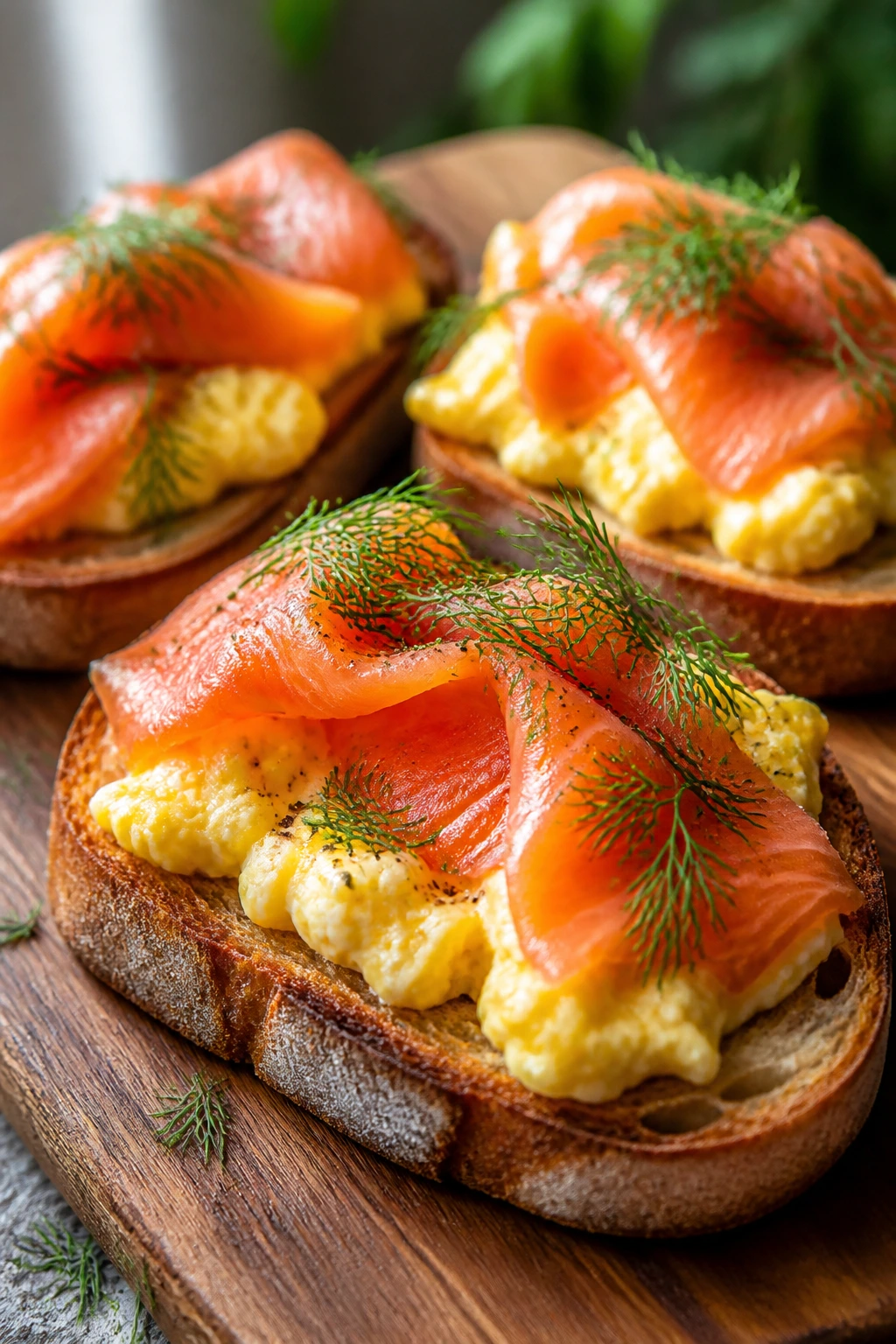
This is the brunch-to-dinner move for nights when you want something that feels composed without requiring a lot of actual work. Toasted bread gives you crunch, the eggs stay creamy, and smoked salmon adds that silky, salty edge that makes lemon and dill taste even sharper. It’s polished, but not fussy.
Why It Works:
Smoked salmon and eggs are a natural pair because the salt and smoke balance the softness of the eggs. A soft scramble works better than hard-cooked eggs here; it stays plush and doesn’t compete with the salmon. Cream cheese or butter on the toast adds a barrier so the bread doesn’t get soggy under the toppings. Capers, dill, and lemon are not decorative extras—they keep each bite from tasting too rich.
Key Ingredients:
- 4 thick slices sourdough or rye bread
- 6 large eggs
- 2 tablespoons butter
- 2 tablespoons heavy cream or whole milk
- 4 ounces smoked salmon
- 2 tablespoons cream cheese
- 1 tablespoon capers, drained
- 2 tablespoons chopped dill
- 1/2 lemon, for juice
- Black pepper, to taste
Quick Steps:
- Toast the bread: Toast the slices until crisp and deeply golden.
- Make the eggs: Whisk eggs with cream, salt, and pepper. Cook over low heat in butter, stirring slowly until the curds are soft and glossy.
- Spread the base: Add cream cheese to the toast while the bread is still warm.
- Assemble: Spoon the eggs over the toast, then lay smoked salmon on top.
- Finish: Scatter capers and dill over everything and squeeze lemon over the plate.
Equipment for This Recipe:
- Skillet
- Mixing bowl and fork or whisk
- Toaster or oven
- Spatula
- Small knife for spreading cream cheese
How to Serve This Dish:
Serve two toasts per person with a pile of arugula dressed in lemon and olive oil. A few cucumber ribbons or sliced radishes fit right in. Keep the plate simple; too many sides crowd the salmon.
Pro Tips for This Recipe:
- Cook the eggs low and slow so they stay soft. High heat turns them grainy in seconds.
- Salt lightly before tasting; smoked salmon and capers carry plenty of salt already.
- Rye bread gives the best contrast if you want a more savory, bakery-style plate.
- Add the lemon at the end, not in the eggs. It brightens the salmon without curdling anything.
Variations on This Dish:
- Avocado Salmon Toasts: Add thin avocado slices under the eggs for more richness.
- Cucumber-Dill Version: Layer sliced cucumber under the salmon for extra crunch.
- Bagel Board Style: Serve the same toppings with toasted bagels instead of bread.
Common Mistakes to Avoid with This Dish:
- Overcooked scramble: Remove the eggs while they still look a bit loose; carryover heat will finish them.
- Soggy toast: Spread the cream cheese first so the bread has a moisture barrier.
- Over-salting: Taste after the salmon and capers go on before reaching for more salt.
11. Sausage and Potato Breakfast Skillet
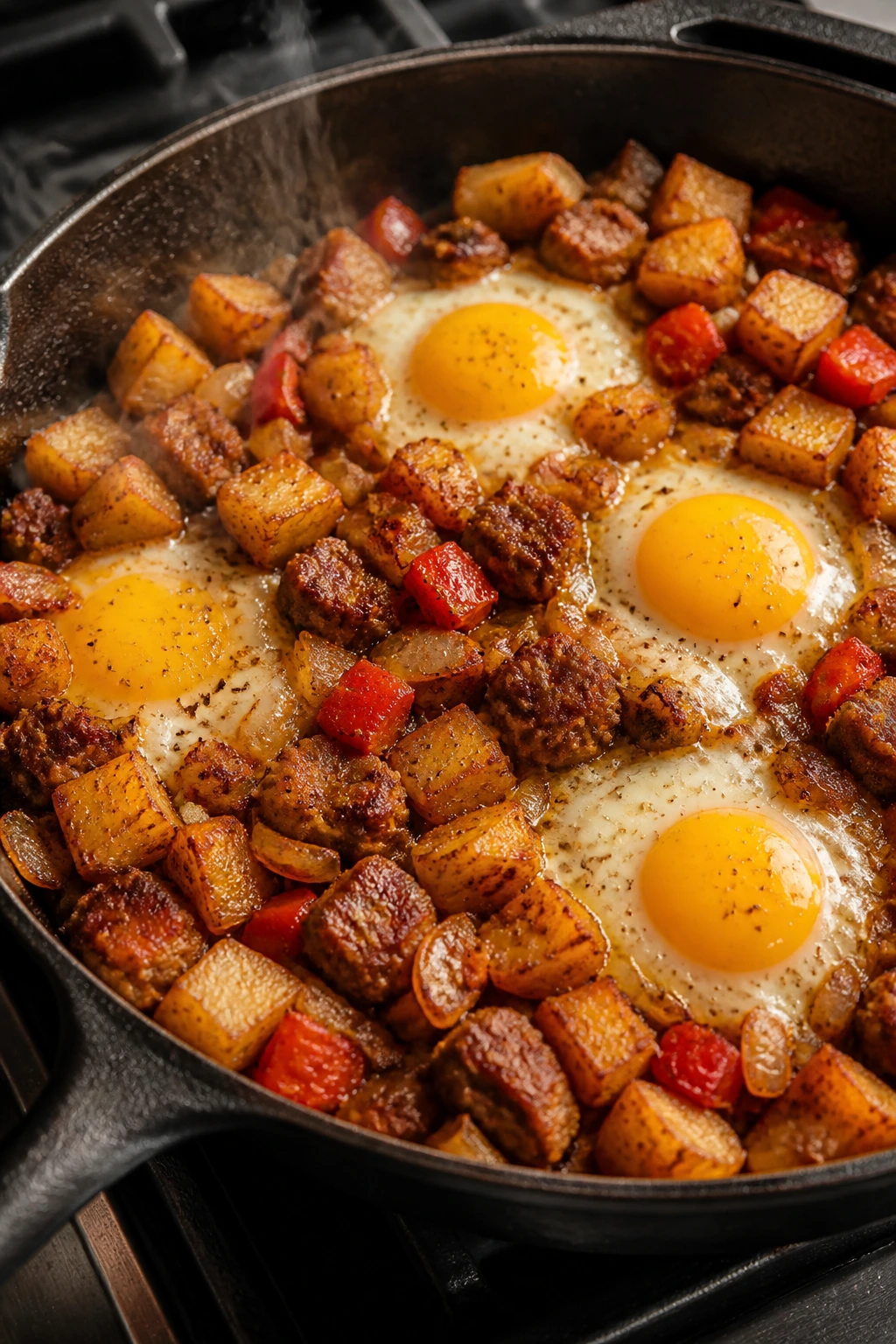
This is the sturdy one. Potatoes brown in the sausage drippings, onions soften, peppers add sweetness, and eggs finish the whole thing under a lid so the yolks stay soft. It’s the kind of dinner that makes a skillet feel like a full dinner plan, not just a shortcut.
Why It Works:
Sausage and potatoes are already a good pair, but eggs turn the skillet into a real meal. The potatoes need time to crisp, which means you’re building flavor before the eggs ever show up. Once the eggs are nestled into the skillet, the steam inside the pan cooks the whites quickly while keeping the yolks soft. If you use pre-cooked potatoes or parboil them first, the whole dish speeds up without losing texture.
Key Ingredients:
- 1 pound breakfast sausage
- 2 medium Yukon Gold potatoes, diced small
- 1 small onion, diced
- 1 bell pepper, diced
- 6 large eggs
- 1 cup shredded cheddar
- 2 tablespoons chopped parsley
- Salt and black pepper, to taste
- 1 tablespoon neutral oil, if needed
- Hot sauce, optional
Quick Steps:
- Brown the sausage: Cook the sausage in a large skillet over medium heat until browned and cooked through, about 6 to 8 minutes. Remove and leave some drippings in the pan.
- Crisp the potatoes: Add potatoes to the skillet and cook for 10 to 12 minutes, stirring only enough to brown the sides.
- Add vegetables: Stir in onion and bell pepper. Cook 4 to 5 minutes until softened and fragrant.
- Return the sausage and add eggs: Put the sausage back in, make 6 wells, crack in the eggs, and cover. Cook 5 to 7 minutes until the whites set.
- Finish: Sprinkle cheddar and parsley over the top. Cover for 1 minute so the cheese melts.
Equipment for This Recipe:
- Large skillet with lid
- Spatula
- Sharp knife and cutting board
- Measuring cups
- Small bowl for cracking eggs
How to Serve This Dish:
Serve it right in the skillet with hot sauce and toast or warm tortillas on the side. A green salad keeps the plate from feeling too heavy. If you want to feed hungrier people, add fruit or a side of beans.
Pro Tips for This Recipe:
- Cut the potatoes small so they cook through before the eggs go in. Big chunks make the timing awkward.
- Don’t stir the potatoes constantly; let them sit and brown.
- Use a lid that fits snugly so the egg tops set evenly.
- A little smoked paprika in the potato stage gives the skillet deeper flavor.
Variations on This Dish:
- Chorizo Skillet: Swap breakfast sausage for chorizo and add a pinch of cumin.
- Mushroom Potato Skillet: Use mushrooms instead of sausage for a meatless version with more browning.
- Cheddar and Green Onion Version: Keep it simple with extra cheese and sliced scallions.
Common Mistakes to Avoid with This Dish:
- Undercooked potatoes: If they’re not tender before the eggs go in, the eggs finish too soon.
- Too much moving around: Let the potatoes make contact with the pan. That browning matters.
- No lid on the eggs: The tops stay translucent if you don’t trap the steam.
12. Spinach and Mushroom Quiche
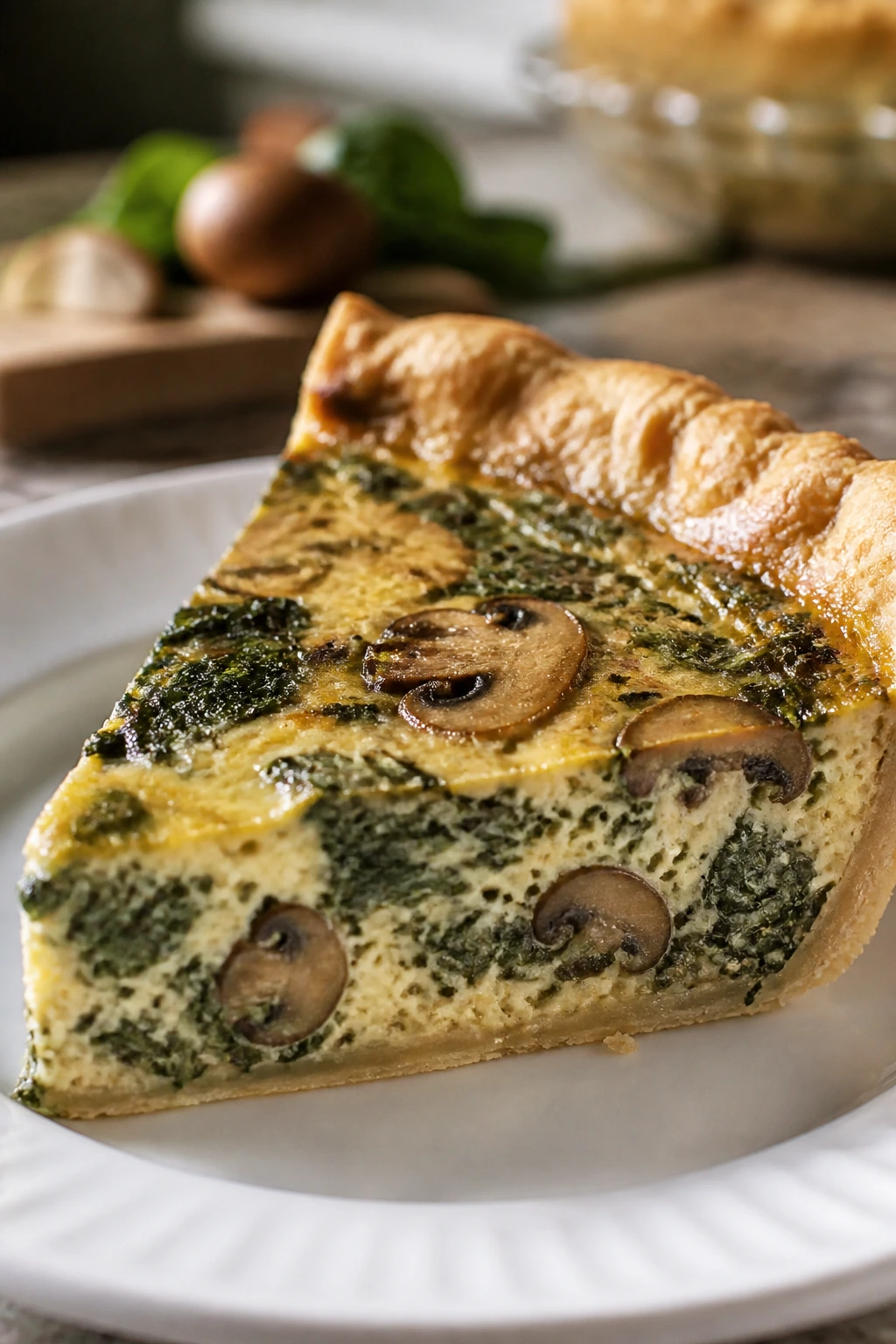
Quiche is one of those dishes that looks calm even when you’re slightly scrambling in the kitchen. The crust stays flaky if you treat it right, the custard sets into soft slices, and mushrooms give the filling enough earthiness to keep it from tasting too delicate for dinner. Spinach rounds it out without making it feel heavy.
Why It Works:
Quiche gives eggs a more formal job, which is why it works so well in the evening. The cream or milk makes the filling tender, while the crust adds a crisp frame around the edges. Mushrooms need to be cooked first so they don’t bleed moisture into the custard. If you rush the blind bake, the bottom crust stays pale and underwhelming, and that’s the part I care about most.
Key Ingredients:
- 1 9-inch pie crust, chilled
- 1 tablespoon butter
- 8 ounces mushrooms, sliced
- 2 cups spinach, chopped
- 6 large eggs
- 1 cup whole milk or half-and-half
- 1 cup shredded Swiss or Gruyère
- 1/2 teaspoon salt
- 1/4 teaspoon black pepper
- Pinch of nutmeg
Quick Steps:
- Blind bake the crust: Line the crust with parchment and pie weights, then bake at 375°F for 15 minutes. Remove the weights and bake 5 more minutes until the bottom looks dry.
- Cook the filling: Sauté mushrooms in butter over medium-high heat until browned and their liquid evaporates. Stir in spinach and cook until just wilted.
- Mix the custard: Whisk eggs, milk, salt, pepper, and nutmeg until smooth.
- Assemble: Scatter the mushrooms, spinach, and cheese over the crust. Pour the custard in slowly.
- Bake: Bake 35 to 40 minutes until the center still wobbles slightly when shaken. Rest 15 minutes before slicing.
Equipment for This Recipe:
- 9-inch pie plate
- Pie weights or dried beans
- Skillet
- Mixing bowl and whisk
- Baking sheet, if you want to catch drips
How to Serve This Dish:
Serve thin wedges with a dressed salad and maybe a bowl of soup if you want a more dinner-like spread. Quiche also works with sliced tomatoes and mustardy greens. It’s best warm, not piping hot, so the custard slices cleanly.
Pro Tips for This Recipe:
- Cook the mushrooms until all the moisture is gone. Wet mushrooms wreck the custard.
- Use half-and-half if you want a richer slice; whole milk makes it a bit lighter.
- Set the quiche on a sheet pan before baking so moving it to the oven is less stressful.
- If the crust edges brown too fast, shield them with foil.
Variations on This Dish:
- Bacon and Leek Quiche: Swap mushrooms for 4 strips of bacon and 1 leek.
- Crustless Quiche: Bake the filling in a greased pie dish for a lower-carb version.
- Goat Cheese Version: Replace half the Gruyère with goat cheese for a tangier finish.
Common Mistakes to Avoid with This Dish:
- Skipping blind baking: A raw crust under quiche usually means sadness.
- Overbaking: The center should still jiggle a little; it firms as it cools.
- Cutting too soon: Give it time or the slices won’t hold.
13. Breakfast Tacos with Soft Scrambled Eggs
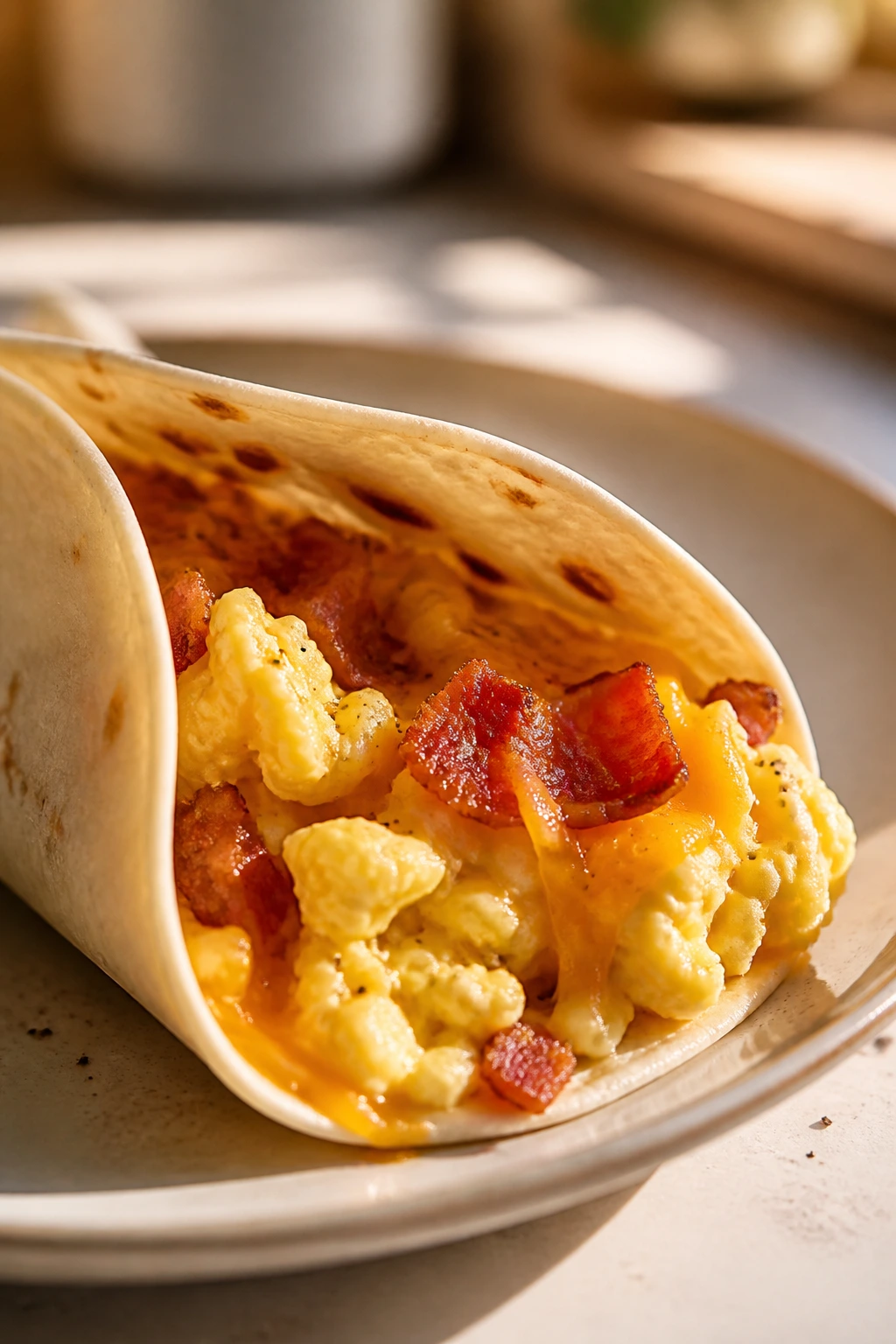
Breakfast tacos at dinner hit a sweet spot I never get tired of. The tortillas stay warm and pliable, the eggs are soft enough to fold, and the fillings can lean smoky, spicy, or mild depending on what’s in the fridge. They’re fast, but not flimsy.
Why It Works:
Soft scrambled eggs are the right texture here because they stay tender inside a warm tortilla and don’t crumble everywhere. Bacon or chorizo gives you salty depth, while salsa and avocado bring the acid and fat balance that tacos need. Warm tortillas matter almost more than the filling; cold tortillas crack, and then the whole taco collapses in your hand. Keep the assembly tight and the fillings modest.
Key Ingredients:
- 8 small corn or flour tortillas
- 6 large eggs
- 2 tablespoons butter
- 4 slices bacon or 6 ounces chorizo, cooked
- 1/2 cup shredded cheddar
- 1 avocado, sliced
- 1/2 cup salsa
- 2 tablespoons chopped cilantro
- 1 lime, cut into wedges
- Salt and black pepper, to taste
Quick Steps:
- Warm the tortillas: Heat them in a dry skillet or over a flame until soft and lightly spotted. Wrap them in a towel to keep them warm.
- Cook the eggs: Whisk eggs with salt and pepper. Melt butter in a skillet over low heat and cook the eggs slowly, stirring until soft curds form.
- Heat the meat: Warm the bacon or chorizo if it isn’t already hot.
- Fill the tacos: Add eggs to each tortilla, then top with meat, cheese, avocado, salsa, and cilantro.
- Finish: Squeeze lime over the top and serve immediately.
Equipment for This Recipe:
- Nonstick skillet
- Small pan for warming tortillas
- Mixing bowl and fork or whisk
- Towel for wrapping tortillas
- Knife and cutting board
How to Serve This Dish:
Serve the tacos on a platter with extra salsa and lime on the side. A quick cabbage slaw or black beans turns them into a more complete dinner. Two or three tacos per person usually feels right, depending on how much meat you use.
Pro Tips for This Recipe:
- Cook the eggs low and slow. That soft texture is the whole reason to make these.
- Don’t overload the tortillas. If they can’t fold without tearing, they’re too full.
- Warm the cheese slightly by putting it on the hot eggs first. It melts better.
- If you’re using corn tortillas, double them for each taco if they’re fragile.
Variations on This Dish:
- Potato Taco Version: Add crisped diced potatoes instead of meat.
- Bean and Egg Tacos: Use refried or black beans for a meatless plate.
- Street-Style Version: Add diced onion, cilantro, and a spoonful of salsa verde.
Common Mistakes to Avoid with This Dish:
- Dry eggs: High heat ruins the soft scramble. Keep the burner low.
- Cold tortillas: They crack and spill filling. Warm them right before serving.
- Too much filling: Tacos should fold. That’s the whole game.
14. Grits Bowl with Jammy Eggs and Cheddar
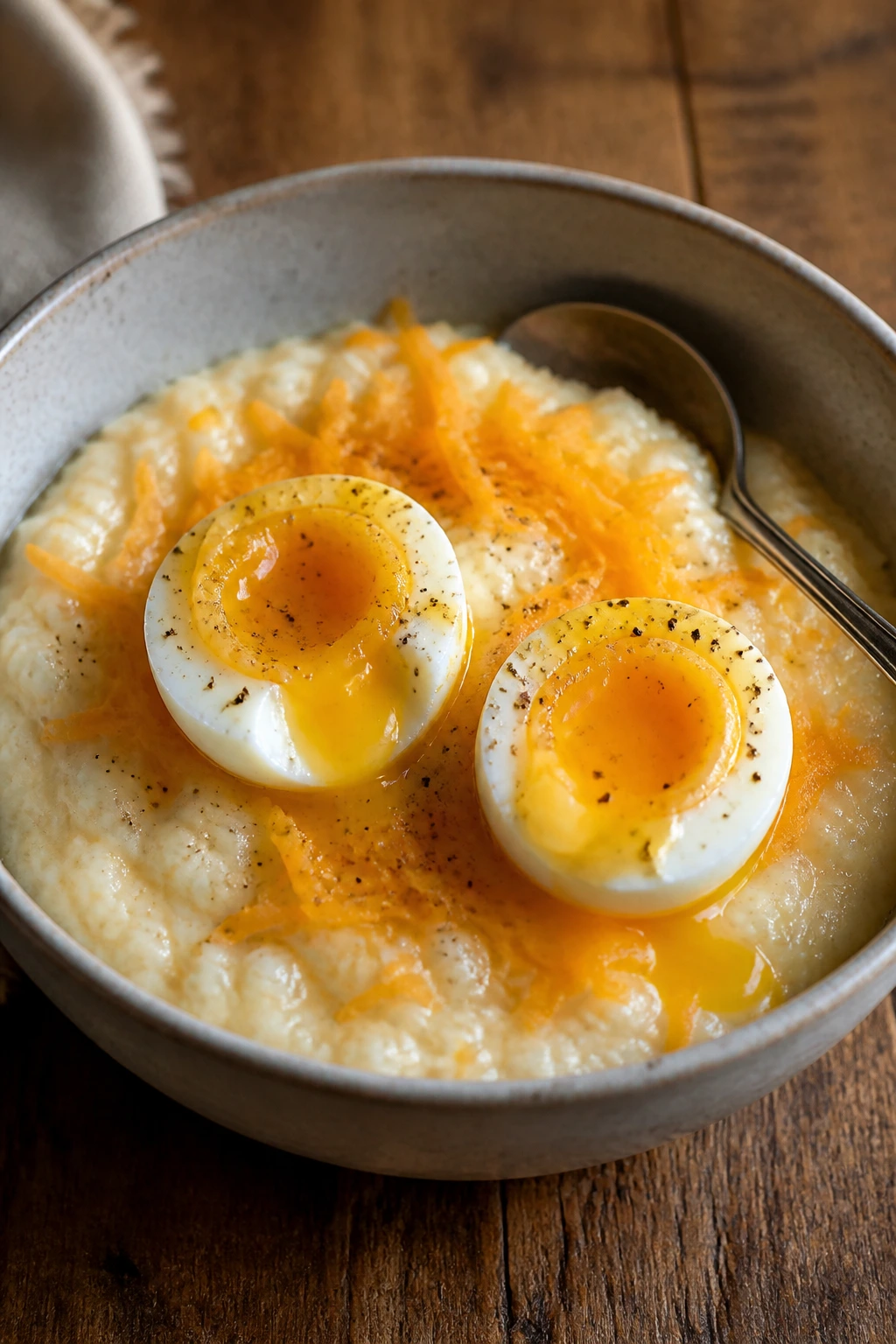
Grits are one of those quiet dinners that know how to comfort without turning mushy or boring. When you cook them with enough salt and butter, they taste creamy and grounded, and the jammy eggs on top give each bowl a rich center. A little cheddar and hot sauce go a long way here.
Why It Works:
Stone-ground grits have enough texture to feel substantial, which matters at dinner. Eggs bring the bowl together, and if you cook them to a jammy center—about 7 minutes for soft boiling—you get yolks that mix into the grits like sauce. Cheddar melts into the hot grains and gives the bowl a sharper edge. The trick is keeping the grits loose enough to spoon but not so loose that the eggs disappear into them.
Key Ingredients:
- 1 cup stone-ground grits
- 4 cups water or a mix of water and milk
- 1 teaspoon salt, plus more to taste
- 2 tablespoons butter
- 1 cup shredded sharp cheddar
- 4 large eggs
- 2 scallions, sliced
- Hot sauce, to taste
- Black pepper, to taste
- Optional: 4 slices cooked bacon or sautéed mushrooms
Quick Steps:
- Cook the grits: Bring water and salt to a simmer, whisk in the grits slowly, and cook over low heat for 20 to 30 minutes, stirring often, until creamy and tender.
- Finish the grits: Stir in butter and cheddar until smooth. Add a splash of water or milk if they get too stiff.
- Make the eggs: Soft-boil the eggs for 7 minutes, then move them to ice water. Peel carefully.
- Build the bowls: Spoon grits into bowls and top with halved eggs, scallions, black pepper, and hot sauce.
- Add extras: Bacon or mushrooms fit easily if you want more texture.
Equipment for This Recipe:
- Medium saucepan
- Whisk
- Slotted spoon
- Small bowl for ice water
- Serving bowls
How to Serve This Dish:
Serve in deep bowls while the grits are still glossy and loose. If you want more balance, add sautéed greens or roasted tomatoes on the side. This is one of those dinners that feels even better when the table holds a little extra hot sauce and a spoon.
Pro Tips for This Recipe:
- Whisk the grits in slowly so they don’t clump.
- Add the cheese off the heat so it melts cleanly.
- If the grits tighten up as they sit, loosen them with a tablespoon or two of hot water.
- Soft-boiled eggs peel more easily after an ice bath.
Variations on This Dish:
- Shrimp and Grits with Eggs: Add sautéed shrimp for a more classic Southern dinner.
- Mushroom Cheddar Bowl: Skip bacon and pile on browned mushrooms.
- Pimento Cheese Version: Stir a spoonful of pimento cheese into the grits instead of plain cheddar.
Common Mistakes to Avoid with This Dish:
- Thin, watery grits: Add liquid gradually and cook long enough for the starch to thicken.
- Rubbery eggs: Don’t hard-boil them unless you want a drier bowl.
- Under-salted grains: Grits need seasoning all the way through, not just on top.
15. Tomato-Braised White Beans with Eggs and Greens
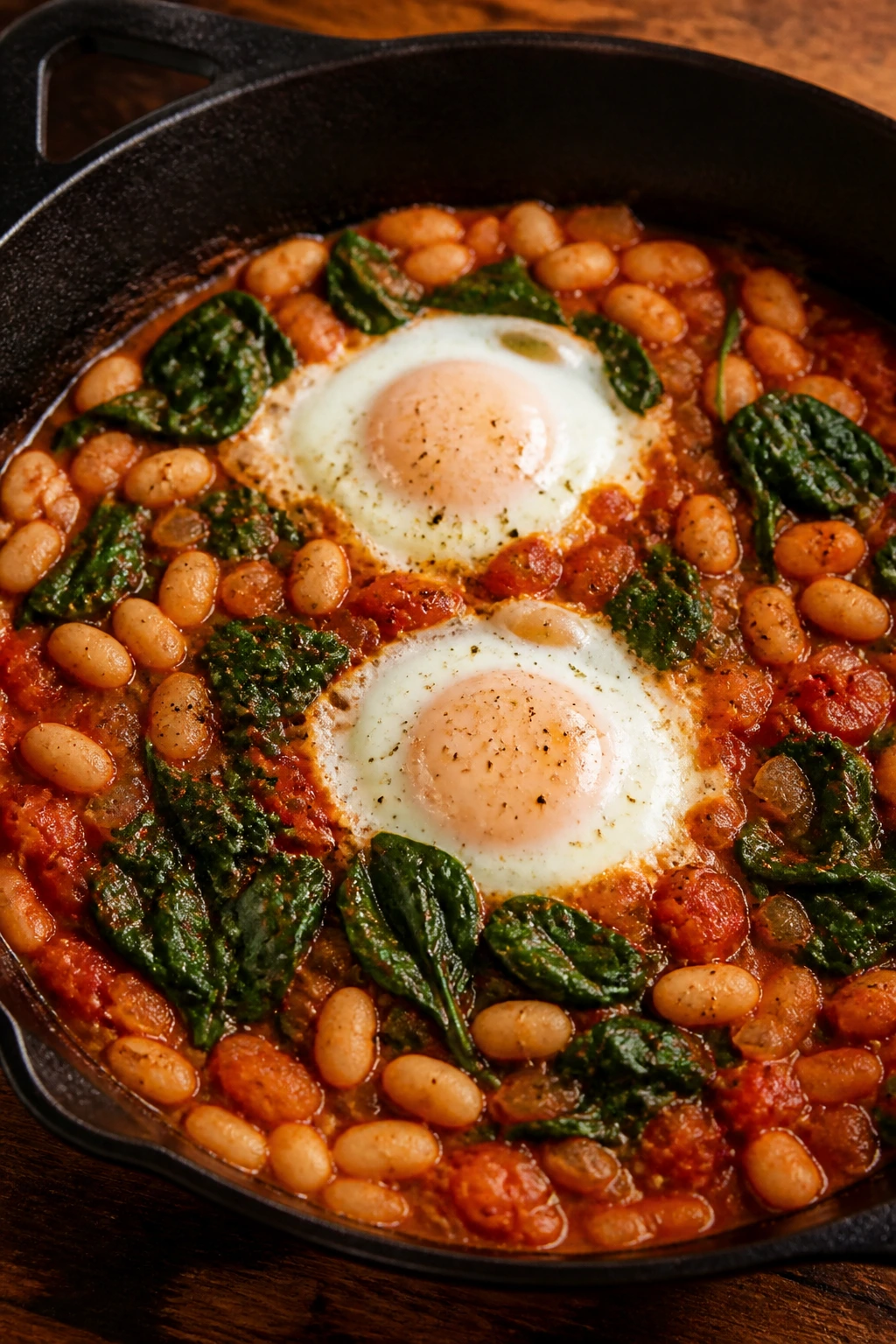
This is the one I make when I want something that tastes like it simmered longer than it did. Beans thicken the tomato sauce, greens melt into it, and the eggs cook right on top so you end up with a spoonable dinner that feels both rustic and smart. A crusty loaf of bread is not optional in my kitchen.
Why It Works:
White beans give the dish body, which means the eggs have something to sit in besides thin sauce. Tomato paste adds depth fast, while greens like kale or spinach soften into the braise without needing a separate pan. Cracking the eggs into the beans and covering the skillet lets the whites set gently while the yolks stay soft. It’s dinner that behaves like a skillet meal and a stew at the same time.
Key Ingredients:
- 2 tablespoons olive oil
- 1 small onion, diced
- 4 garlic cloves, minced
- 2 tablespoons tomato paste
- 1 can (28 ounces) crushed tomatoes
- 2 cans (15 ounces each) cannellini or great northern beans, drained and rinsed
- 2 cups chopped kale or spinach
- 4 large eggs
- 1/2 teaspoon red pepper flakes
- 1/4 cup grated Parmesan
- Salt and black pepper, to taste
- Crusty bread, for serving
Quick Steps:
- Build the base: Heat olive oil in a skillet over medium heat. Cook onion with a pinch of salt for 6 to 8 minutes until soft.
- Toast the tomato paste: Stir in garlic, red pepper flakes, and tomato paste. Cook for 1 minute until the paste darkens slightly and smells sweet.
- Add beans and tomatoes: Pour in the tomatoes and beans. Simmer for 10 minutes until the sauce thickens and the beans start to break down at the edges.
- Add the greens and eggs: Stir in the greens until wilted. Make 4 wells, crack in the eggs, cover, and cook on low for 6 to 8 minutes until the whites are set.
- Finish: Sprinkle with Parmesan and black pepper. Serve with bread.
Equipment for This Recipe:
- Large skillet or shallow Dutch oven
- Wooden spoon
- Can opener
- Knife and cutting board
- Lid that fits the pan
How to Serve This Dish:
Ladle the beans into shallow bowls and put the bread on the side so it can catch the sauce instead of dissolving in it. A drizzle of olive oil and a little extra Parmesan make the bowl look finished. If you want more bite, add a green salad with lemon dressing.
Pro Tips for This Recipe:
- Mash a spoonful or two of beans against the skillet as they simmer; it thickens the sauce naturally.
- Use kale if you want more chew, spinach if you want softness.
- Keep the heat low once the eggs go in so the yolks don’t set too hard.
- Bread should be toasted enough to stand up to the sauce, not just warmed.
Variations on This Dish:
- Sausage and Beans: Brown sausage before the onion for a meatier version.
- Herby White Beans: Add rosemary or thyme with the garlic for a woodsy note.
- Spicy Greens Version: Use escarole or mustard greens and add extra chili flakes.
Common Mistakes to Avoid with This Dish:
- Thin sauce: Let the tomatoes simmer long enough to thicken before the eggs go in.
- Overcooked greens: Add them near the end so they stay vivid instead of gray.
- Boiling the eggs hard: Low heat and a lid keep the whites tender.
Why Brunch-for-Dinner Ideas Work So Well at 7 P.M.
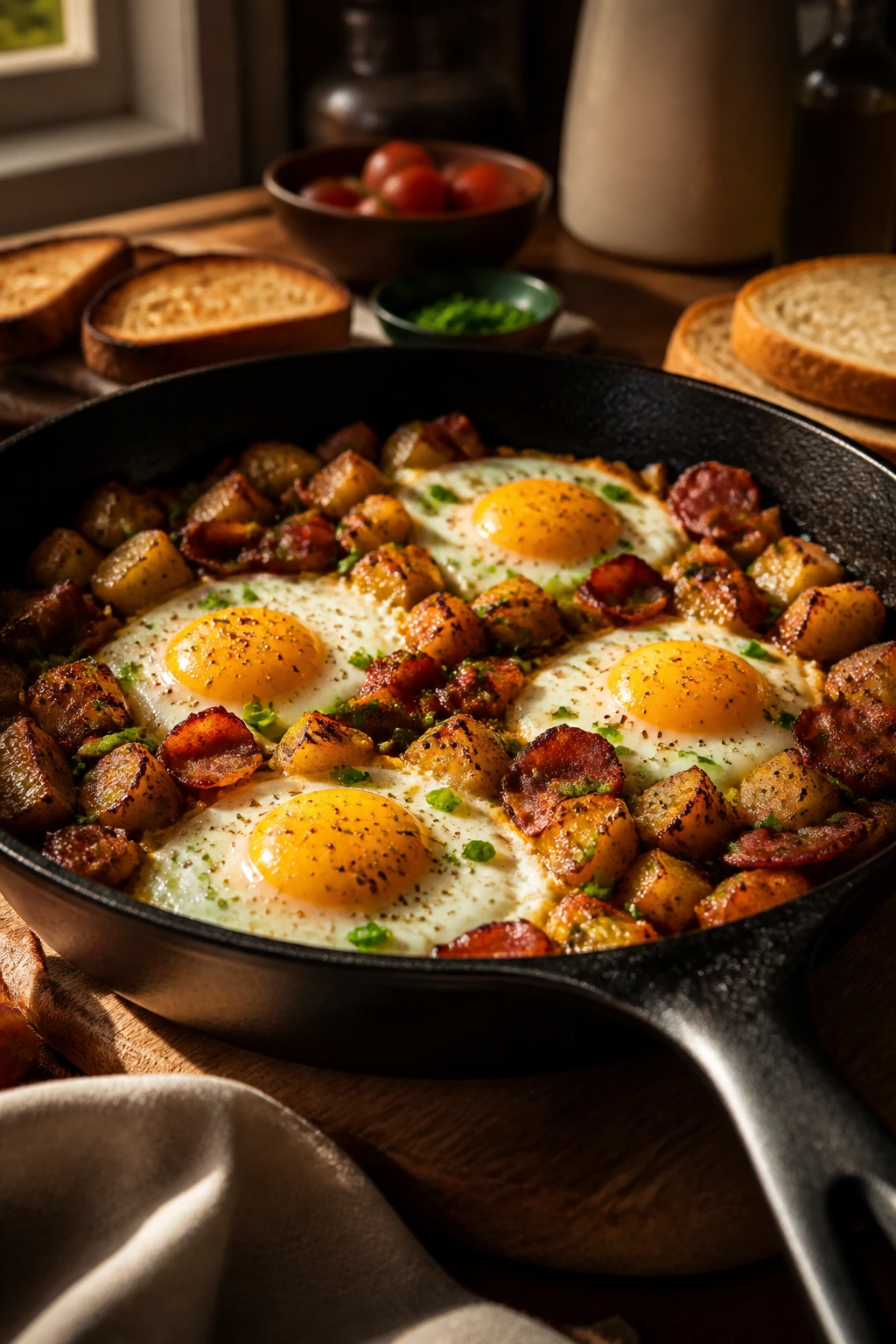
Eggs are cheap, fast, and surprisingly forgiving, but only if you give them something worth sitting on. A good brunch-for-dinner plate needs texture as much as flavor: crisp tortillas, browned potatoes, toasted bread, or a sauce thick enough to spoon. Without that, you’re just eating breakfast later than usual.
The recipes that keep showing up here all do one thing well: they give eggs a proper dinner role. Sometimes that means they’re the star, like in shakshuka or huevos rancheros. Sometimes they act as the glue, like in fried rice, quiche, or a skillet hash. Either way, the egg should feel intentional, not like a shortcut because the clock was annoying.
And that’s the real trick. A 7 p.m. egg dinner shouldn’t feel apologetic. It should feel warm, crisp in the right places, and a little bit generous.
Essential Equipment for These Recipes
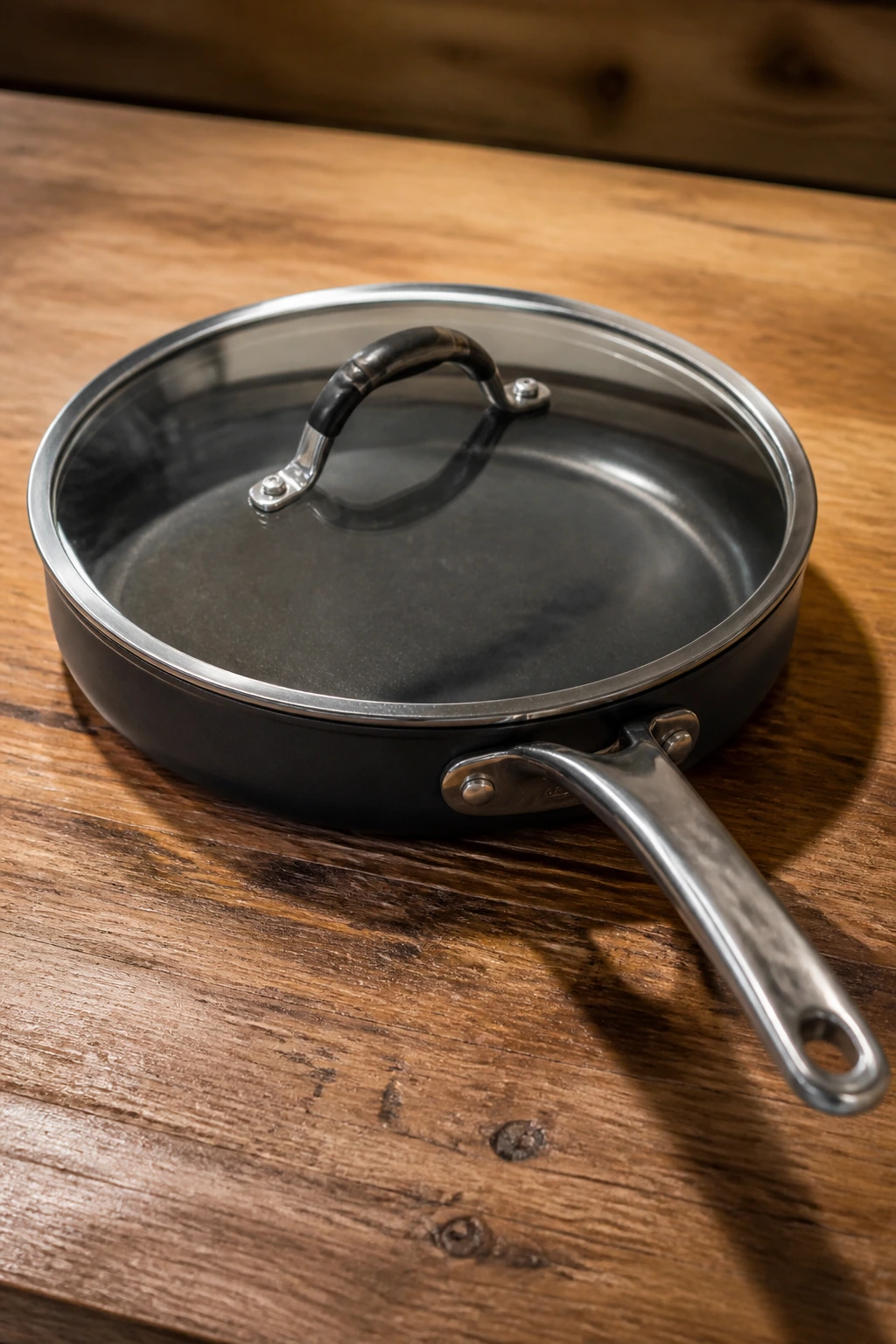
- 12-inch skillet with a lid: This covers shakshuka, migas, skillet hash, and the bean braise without crowding the eggs.
- 10-inch cast-iron skillet: Perfect for the Dutch baby and anything that needs aggressive heat retention.
- Oven-safe nonstick or cast-iron skillet: Handy for frittatas and skillet bakes that finish in the oven.
- 9×13-inch baking dish: Needed for the croque madame casserole and useful for feeding more people.
- Pie plate and pie weights: You’ll need these for the quiche if you want a crust that doesn’t go pale and soft.
- Large wok or deep skillet: Fried rice likes room to move.
- Whisk and mixing bowls: Small tools, huge difference.
- Sharp chef’s knife: Onions, peppers, herbs, and tomatoes all behave better when cut cleanly.
- Spatula and wooden spoon: A flexible spatula is ideal for eggs; a wooden spoon is better for rice and beans.
- Towel-lined bowl or colander: Use it to dry potatoes, rice, or tortillas when moisture is the enemy.
Smart Shopping and Ingredient Tips
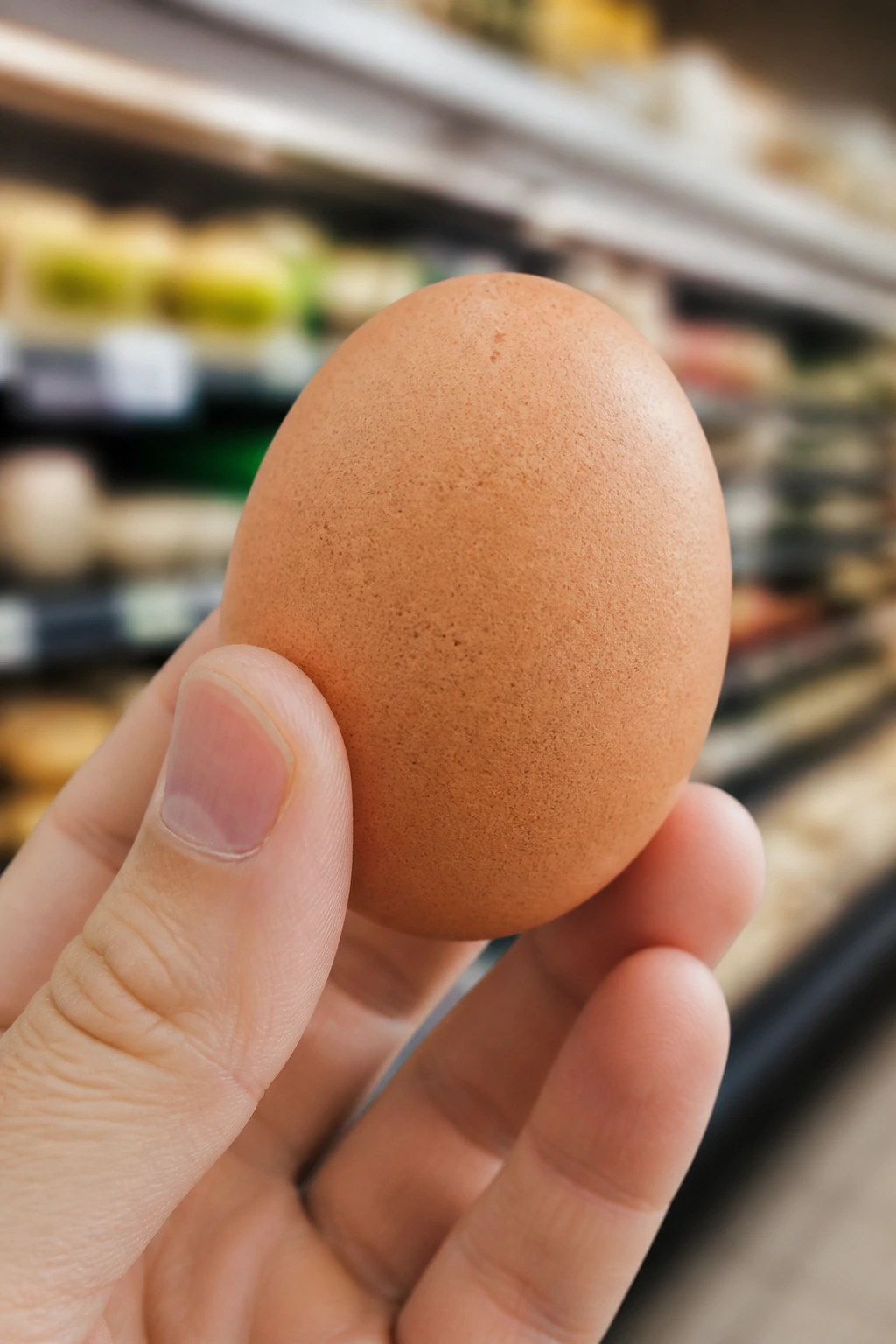
Egg quality matters here, but not in the precious way people sometimes pretend. Buy eggs with intact shells and use them within a reasonable window, but don’t chase the most expensive carton if you’re cooking them into sauces, casseroles, or bowls full of cheese and vegetables. What matters more is how you handle them: room-temperature eggs cook more evenly for shakshuka, Dutch babies, and quiches; colder eggs are fine for fried rice or tacos.
Bread and tortillas deserve more attention than they usually get. Sturdy sourdough, rye, brioche, and day-old sandwich bread hold up to sauce or custard better than soft, airy loaves. Corn tortillas should smell like corn, not cardboard, and if you can warm them before they hit the plate, do it. For fried rice, day-old rice is the gold standard because the grains dry out enough to fry cleanly.
Canned tomatoes are one of the few pantry staples that can swing a whole dinner. Buy crushed tomatoes with a short ingredient list if you’re making shakshuka or bean braises. Tomato paste in a tube or small can is worth keeping around too; a spoonful toasted in oil gives sauces more backbone. For cheese, choose the style that fits the job: feta for briny sharpness, Gruyère for melt, cheddar for heft, queso fresco for freshness.
And don’t sleep on acid. Lemon, lime, vinegar, pickled onions, salsa, capers, and kimchi all keep egg dinners from sinking into the same soft, rich note. Eggs are rich by nature. You need a bright counterpoint or the plate can go flat by the third bite.
How to Serve These Recipes
Presentation:
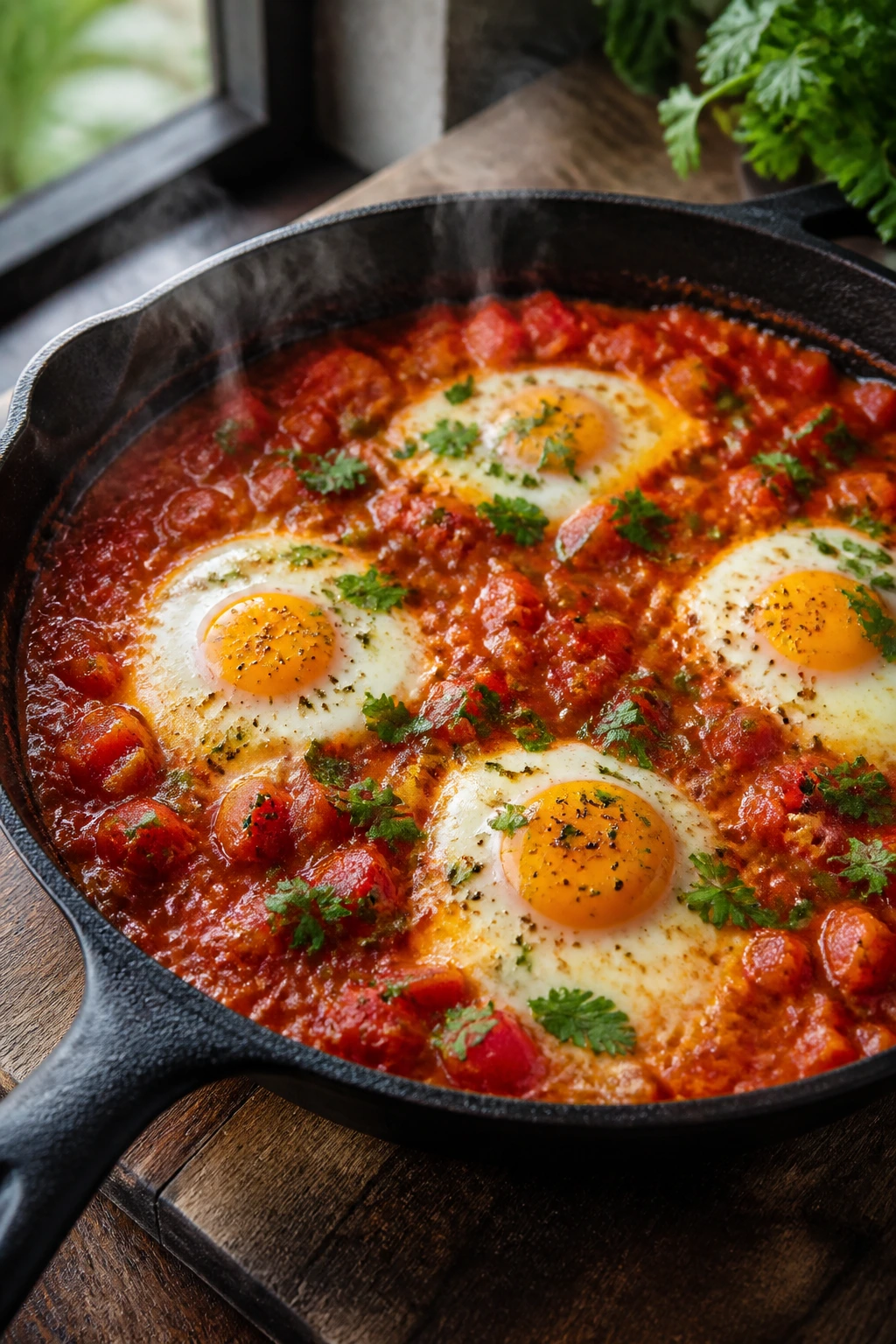
Serve skillet dishes in the pan whenever they’re meant to be scooped, like shakshuka, bean braises, and breakfast hash. Slice casseroles and quiches into clean wedges so they look deliberate, not scooped out. Tacos, toasts, and pizzas need to hit the table hot and immediately; they lose their best texture fast.
Accompaniments:
Crisp greens with vinegar dressing work across almost everything here. So do fruit, pickles, sliced avocado, and simple cucumber salads. Bread belongs next to shakshuka, bean braises, and croque madame. Tortillas belong next to migas, huevos rancheros, and the skillet hash. If a dish is rich, add something sharp. If it’s sharp, add something creamy.
Portions:
Most of these recipes serve 2 to 4 people, but the egg count tells the real story. Plan on 2 eggs per person if you’re also serving bread, rice, or potatoes. If eggs are the main event, 3 per person is more realistic. Casseroles, quiche, and bean dishes scale up well; fried rice and tacos usually taste better in smaller batches or cooked in rounds.
Beverage Pairing:
Coffee is obvious, but it isn’t the only answer. A dry sparkling water with lime keeps the richer dishes from feeling heavy. For savory plates, cold black tea with lemon or a tart grapefruit soda works well. If you’re serving the more brunch-like plates at dinner, a light lager or a crisp white wine can make the meal feel less like a compromise and more like a choice.
Additional Tips and Flavor Boosters
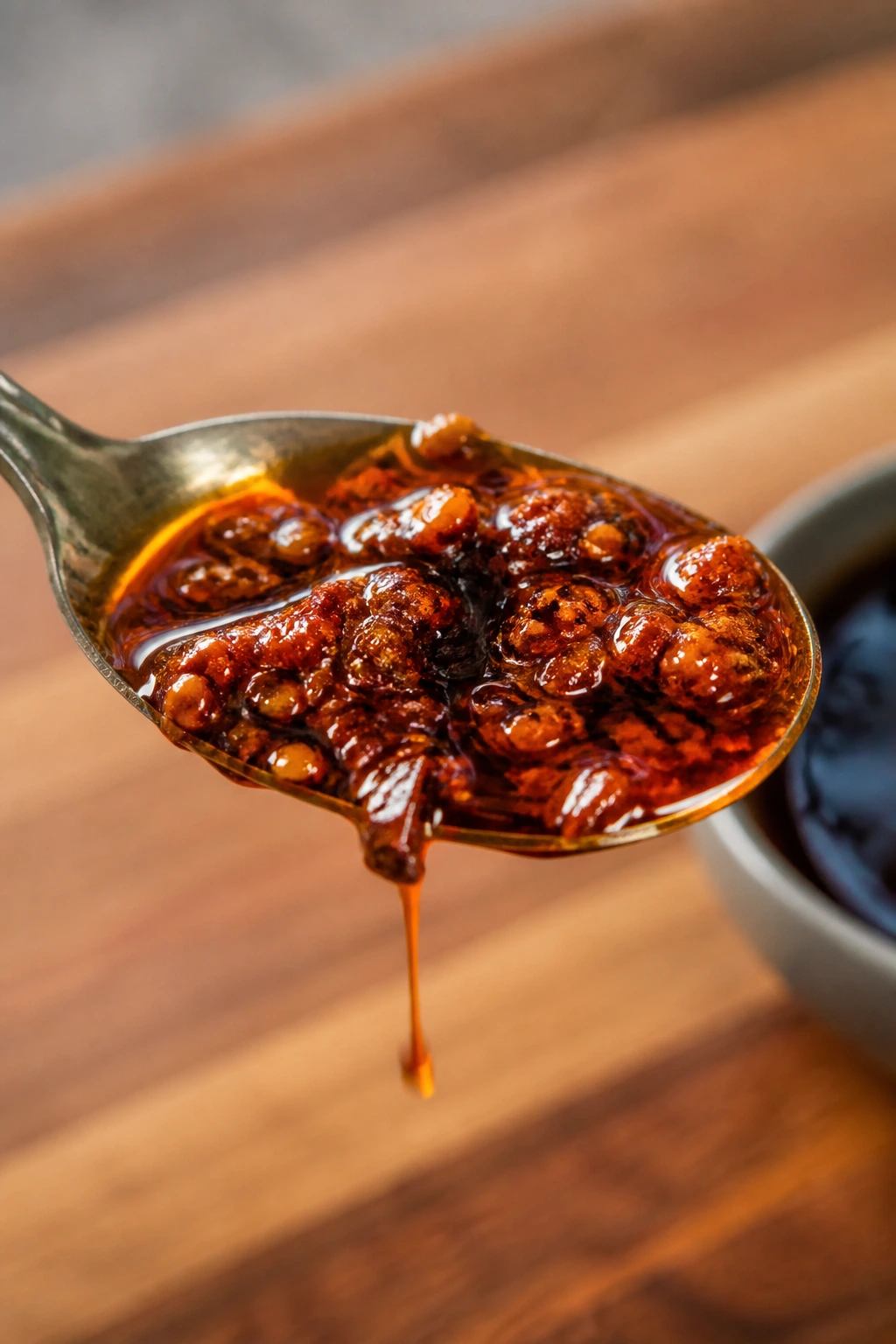
Flavor Enhancement:
A spoonful of chili crisp, a dusting of smoked paprika, or a splash of vinegar at the end can save an egg dinner that tastes too round and soft. I reach for acidic finishing touches more often than extra cheese. They wake up the whole plate.
Customization:
If you want these dishes to feel heartier, add potatoes, beans, sausage, or rice. If you want them lighter, lean on greens, herbs, tomatoes, and citrus. A lot of egg dinners are flexible enough to absorb whatever is left in the fridge, which is part of why they survive on repeat.
Serving Suggestions:
Pickled onions, chopped dill, cilantro, scallions, and lemon wedges do more than garnish. They create contrast. A handful of herbs on top of a hot skillet changes the smell at the table, and that matters more than people admit.
Make-It-Yours:
For dairy-free plates, use olive oil, omit creamy cheese, and lean on herbs and salsa. For gluten-free dinners, choose corn tortillas, rice, potatoes, grits, or a crustless bake. For higher-protein plates, add beans, sausage, salmon, or extra egg whites without changing the structure of the dish.
Make-Ahead, Storage, and Reheating Guidance
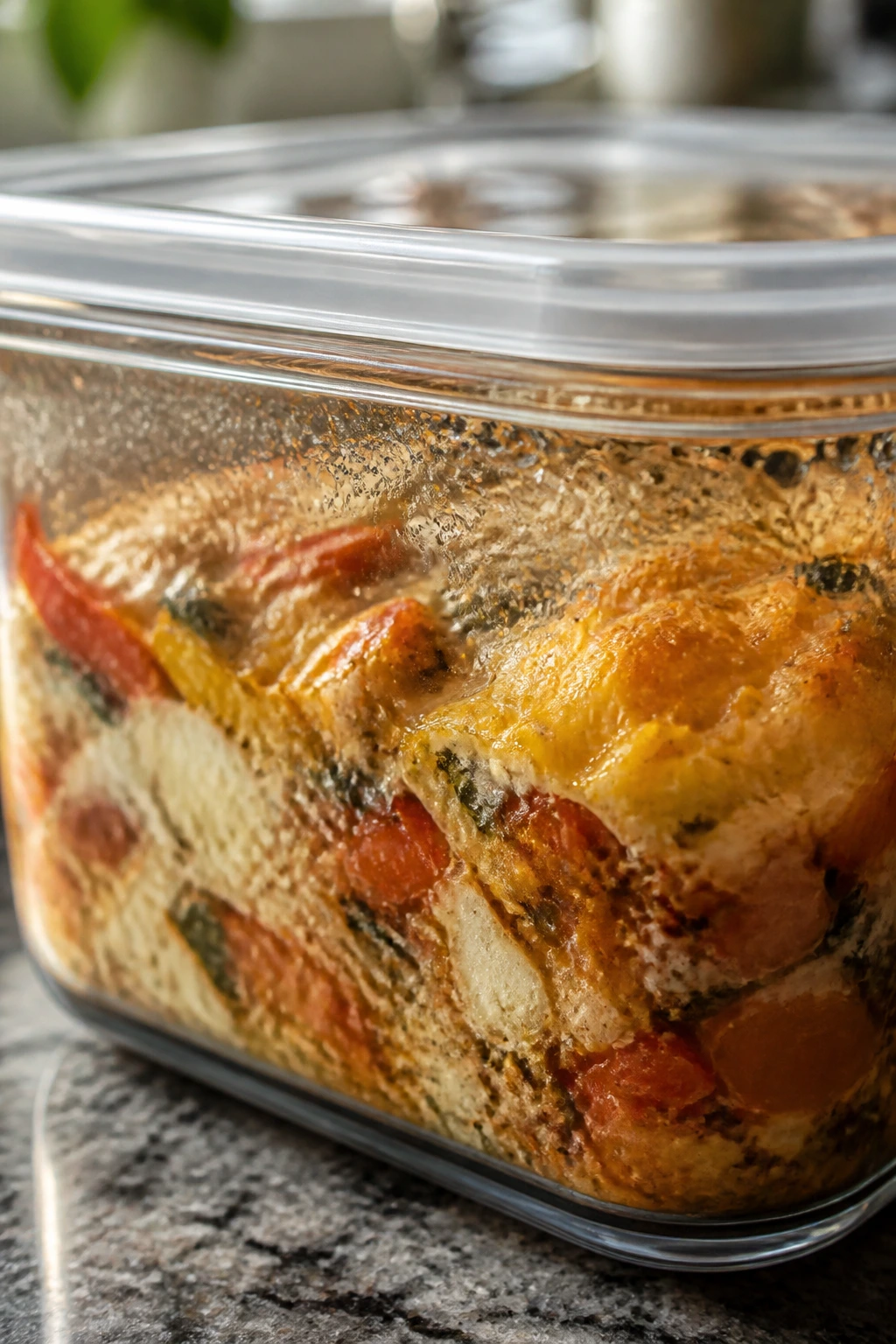
Some of these recipes are better fresh, and it helps to be honest about that. Fried eggs, soft scramble, and Dutch babies should be eaten right away. They don’t keep their best texture. On the other hand, shakshuka, bean braises, fried rice, quiche, casseroles, and breakfast skillets usually hold well for 3 to 4 days in the refrigerator when sealed in airtight containers. Quiche and casseroles can also go into the freezer for up to 2 months, though the texture gets a little softer after thawing.
Reheat saucy skillet dishes on the stovetop over low heat with a splash of water or broth. That keeps the tomato base or beans from tightening up. For casseroles and quiche, cover loosely with foil and warm in a 325°F oven until heated through, usually 15 to 25 minutes depending on the size of the portion. Fried rice reheats best in a hot skillet with a teaspoon of oil so the grains loosen again instead of drying out.
Make-ahead works best when you split the components. You can cook shakshuka sauce, bean braises, salsa, or sausage filling ahead, then add eggs at the last minute. You can also pre-brown potatoes, cook rice, or blind bake a crust earlier in the day. Egg dishes that are assembled and baked later often improve a little overnight, especially quiche and casserole, because the flavors settle in.
If you’re freezing, freeze the base rather than the eggs when possible. Tomato sauces, bean mixtures, sausage fillings, and quiche fillings all freeze better than cooked eggs sitting on top. Reheat the base, then add fresh eggs or finish with a new yolk if the recipe allows it. That small bit of extra effort keeps the dinner from tasting tired.
Variations and Adaptations to Try
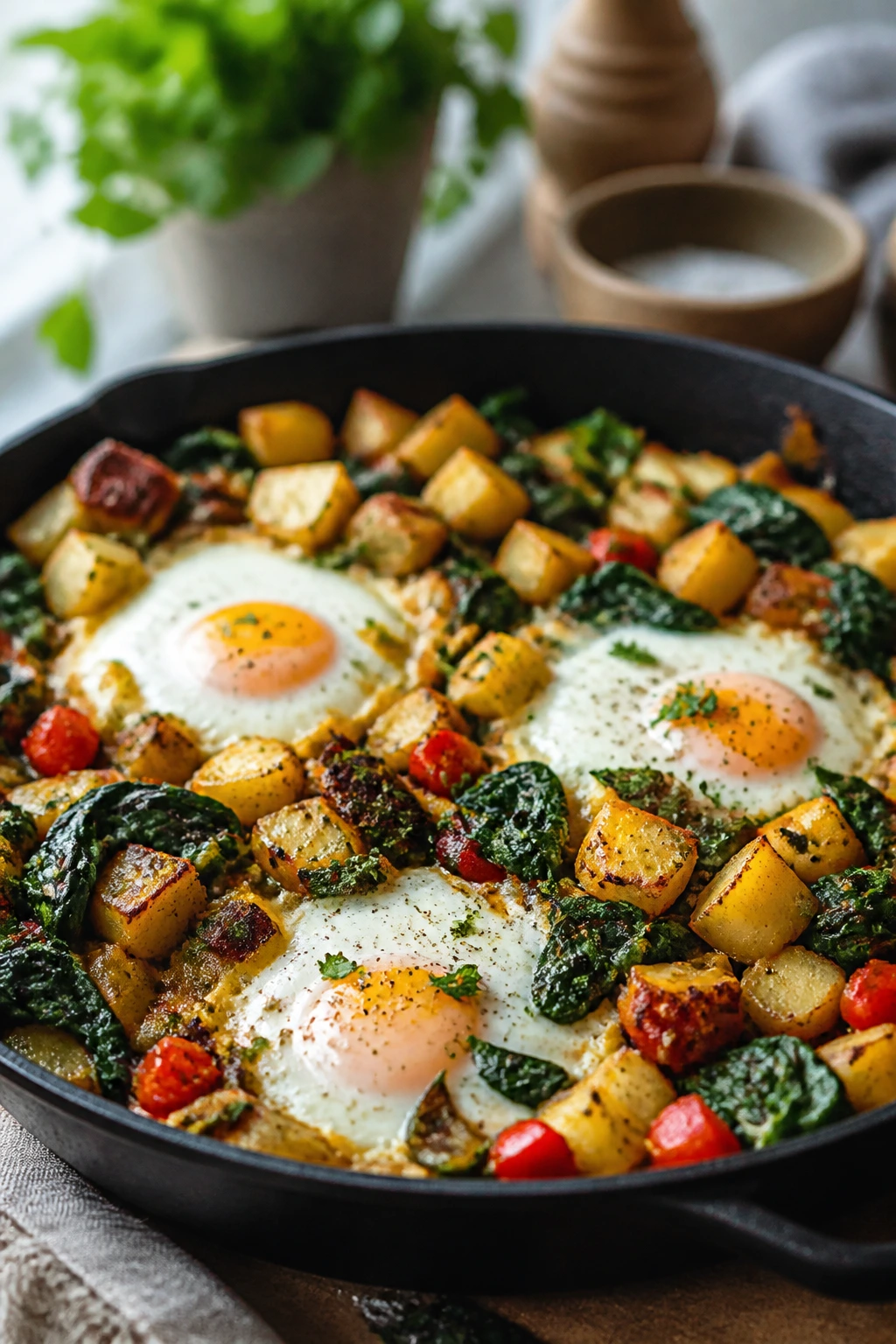
Gluten-Free Plate Swaps:
Use corn tortillas, rice, potatoes, grits, or a crustless egg bake instead of bread and pastry. Shakshuka, huevos rancheros, fried rice, and the bean braise already fit this lane with little adjustment. Just watch sauces and spice blends for hidden flour if you’re buying pre-made ingredients.
Dairy-Free Fixes:
Leave out cream, milk, and soft cheese where they aren’t doing structural work. Olive oil, avocado, salsa, capers, herbs, and beans add enough personality to carry the plate. In a quiche or casserole, you’ll need a different recipe design, but most skillet and toast-based dishes adapt cleanly.
Spice-Forward Versions:
Use jalapeños, red pepper flakes, chorizo, chili crisp, gochujang, or hot sauce to pull the whole meal in a hotter direction. I like this especially in tacos, migas, shakshuka, and kimchi fried rice. Spice works best when it has a cool or creamy counterbalance, so keep avocado or yogurt nearby.
Vegetarian Dinner Plates:
Beans, mushrooms, spinach, kale, potatoes, and cheese make more than enough substance. The breakfast skillet, quiche, bean braise, hash frittata, and migas all have easy meatless lanes. Brown the vegetables properly or they’ll taste like filler.
Low-Cleanup Nights:
Choose dishes that live in one pan: shakshuka, fried rice, bean braise, breakfast skillet, migas, and huevos rancheros. The fewer dishes you use, the more likely you are to make the meal again next week. This matters more than people think.
Brighter, Fresher Plates:
Add lemon, lime, herbs, pickled onions, raw radishes, or a quick vinegar salad. The richer the eggs and cheese, the more useful a sharp finish becomes. A plate doesn’t need to be heavy just because it happens after dark.
Common Mistakes to Avoid
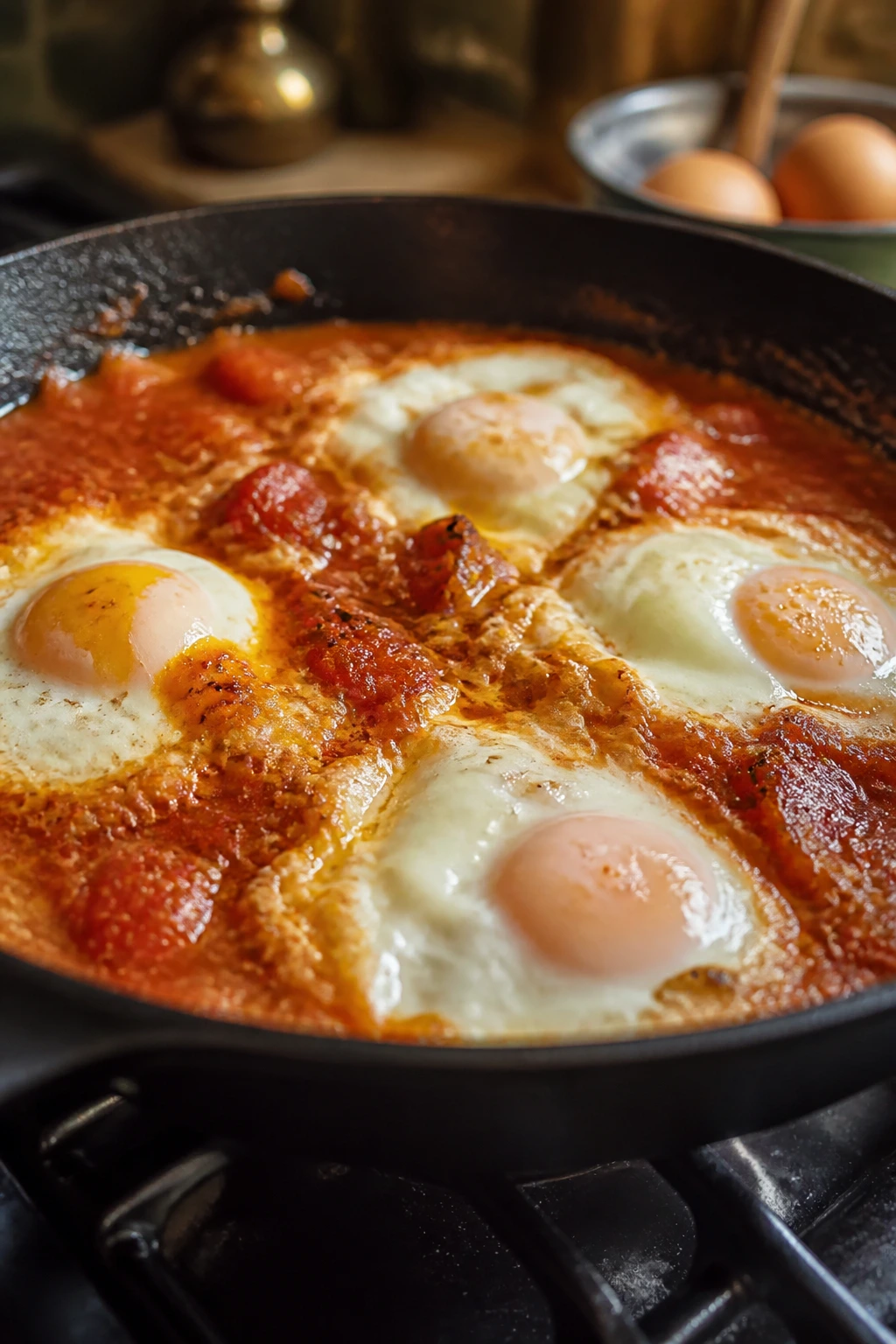
The first mistake is overcooking the eggs because you’re trying to make dinner look “finished.” Eggs keep cooking after the heat is off, especially in hot pans and casseroles. If the yolks are supposed to stay soft, pull the dish a little early and let the residual heat do the last bit.
Another problem is too much moisture. Watery tomatoes, wet spinach, uncooked mushrooms, and freshly made rice all sabotage texture in different ways. The fix is simple, though not always quick: cook off the extra liquid before the eggs go in. That one habit improves almost every recipe in this collection.
People also underseason egg dishes more often than they should. Eggs soften flavor, which means the vegetables, beans, bread, or rice around them need salt and acid to stay alive. Taste the base before the eggs go in. If it seems a little underwhelming at that stage, it will not magically wake up later.
A fourth mistake is using the wrong pan size. Too small, and the dish steams and clumps. Too large, and the sauce spreads thin, the eggs overcook, or the casserole dries at the edges. A 10- to 12-inch skillet handles most of these recipes well, which is why I keep one on the counter and stop pretending I don’t need it.
Finally, don’t build a dinner that has no contrast. Eggs, cheese, potatoes, and bread are all soft or rich. You need something crisp, acidic, or fresh to keep the meal from flattening out. That can be salsa, herbs, lemon, a vinegar salad, or even a handful of sliced cucumbers. Small move. Big difference.
Frequently Asked Questions

Can I make these brunch-for-dinner recipes without a cast-iron skillet?
Yes. A heavy stainless-steel skillet, oven-safe nonstick pan, or baking dish will work for most of them. The Dutch baby is the one that really prefers cast iron because the heat retention helps it puff.
What’s the best egg style for dinner recipes like this?
Soft eggs usually work best at night because they feel richer and less dry. Think jammy yolks, soft scramble, baked eggs, or eggs cooked gently in sauce. Hard-cooked eggs are fine in a salad or bowl, but they don’t bring much life to a skillet.
How do I keep eggs from turning rubbery when I’m feeding a group?
Cook the base first, then add the eggs at the very end and keep the heat low. If you’re making a casserole or quiche, pull it when the center still jiggles a little. Carryover heat finishes the job without drying the proteins out.
Can I make these ahead for a later dinner?
Some of them, yes. Sauce-based dishes, quiche, casseroles, and fried rice keep well; fried eggs and Dutch babies do not. If you want a make-ahead strategy, prep the filling, sauce, or crust earlier in the day and add the eggs later.
What side dish makes these feel like dinner instead of breakfast?
A crisp salad with vinegar dressing does more than people expect. Roasted vegetables, sautéed greens, pickles, or a bean salad also work. The point is to add a little chew or acid next to the eggs.
Can I use egg whites only?
You can, but the texture changes a lot. Whites set firmer and feel leaner, which is fine in a taco or skillet, but you lose the richness that makes these recipes satisfying at night. If you go that route, add a little extra cheese, avocado, or olive oil so the plate doesn’t feel thin.
What if my shakshuka or bean dish comes out too thin?
Keep simmering with the lid off until the sauce thickens. If it’s already cooked and still loose, mash a few beans or stir in a spoonful of tomato paste next time. The goal is a base that holds the eggs instead of washing over them.
Can I swap in other breads, grains, or tortillas?
Absolutely. Sourdough, rye, brioche, corn tortillas, flour tortillas, rice, potatoes, and grits all appear in these recipes because they each do a different job. Just match the starch to the method: sturdy bread for saucy dishes, crisp tortillas for tacos and migas, rice for fried rice, and potatoes for skillet dinners.
When Eggs Take the Evening Shift
A dinner built around eggs does not have to feel like a fallback. When you give them crisp edges, a good sauce, a little salt, and something sharp on the side, they turn into a meal with actual shape. That’s the part I like most: the food is fast, but it doesn’t taste rushed.
If you keep one thing from this list, let it be this: don’t let the eggs stand alone. Put them in tomatoes, beans, potatoes, rice, tortillas, cheese, or bread, and they start doing the kind of work that makes a weeknight feel less flat. The pan does half the talking; the rest is just choosing the version that fits your mood.
And on the nights when you’re staring at the kitchen thinking dinner has to be complicated to count, grab a skillet and make the eggs speak up.